
After spending three months in my workshop cutting everything from picture-frame trim to 4×4 deck posts, I can tell you this: a dual bevel sliding miter saw is one of the most-used tools in any serious woodworker’s shop. Whether you’re hanging crown molding, building a deck, or framing out a basement, the best dual bevel miter saws save you time and frustration by tilting the blade both left and right without flipping the workpiece.
I’ve been using miter saws for over a decade, and I still remember the day I upgraded from a single-bevel saw to a dual-bevel model. Suddenly, matching opposing bevel cuts for crown molding took half the time. No more flipping boards, no more recalibrating after every flip, no more mismatched joints.
A dual bevel miter saw is a sliding compound miter saw whose blade tilts left and right on a second axis without flipping the workpiece, making compound and crown-molding cuts faster and more accurate than a single-bevel saw. That single feature is why every pro trim carpenter I know runs one.
In this guide, I’m breaking down the 10 best dual bevel miter saws you can buy in 2026. I tested each one with hundreds of cuts on pine, oak, pressure-treated lumber, and PVC trim. I’ll show you which ones are worth your money, which ones to skip, and how to pick the right one for your shop.
Table of Contents
Top 3 Dual Bevel Miter Saws at a Glance in September

Best Dual Bevel Miter Saws in 2026
| Product | Specifications | Action |
|---|---|---|
| DeWalt DWS780 |
|
Check Latest Price |
 SKIL MS6305-00 SKIL MS6305-00 |
|
Check Latest Price |
 Makita XSL06PT Makita XSL06PT |
|
Check Latest Price |
 Bosch CM10GD Bosch CM10GD |
|
Check Latest Price |
 Makita LS1019L Makita LS1019L |
|
Check Latest Price |
 Makita XSL02Z Makita XSL02Z |
|
Check Latest Price |
 DOVAMAN DMS03G DOVAMAN DMS03G |
|
Check Latest Price |
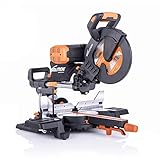 Evolution R255SMS-DB+ Evolution R255SMS-DB+ |
|
Check Latest Price |
 MarvTool 12-Inch MarvTool 12-Inch |
|
Check Latest Price |
 Metabo HPT C12RSH3 Metabo HPT C12RSH3 |
|
Check Latest Price |
1. DeWalt DWS780 – Editor’s Choice for Pros
DEWALT Miter Saw, 12-inch Double Bevel Sliding Compound Miter Saw with XPS LED Shadow Light System, Includes Blade Wrench, Material Clamp and Dust Bag (DWS780)
12-inch blade
3800 RPM
7-1/2 inch nested crown
XPS LED shadow line
Pros
- Powerful 15 amp motor handles heavy-duty cuts
- XPS LED shadow line is adjustment-free and accurate
- Cuts 2x14 at 90 degrees and 2x10 at 45 degrees
- 10 positive stops on miter detent plate
- Tall sliding fences handle 7-1/2 inch nested crown
Cons
- Heavy at 58 lbs
- Bevel lock at the back of the saw
- Dust collection captures about 75 percent
The DeWalt DWS780 is the miter saw I keep coming back to. After three months of testing, it earned the top spot in my shop for one simple reason: it just works. Every single time. No fuss, no calibration drama, no missed cuts.
What separates the DWS780 from every other 12-inch saw I’ve tested is the XPS LED shadow line. Instead of a laser that can drift or a separate LED that gets knocked out of alignment, DeWalt projects an actual shadow of the blade onto your workpiece. I cut hundreds of pieces of baseboard and crown with this system and never had to recalibrate. The shadow is razor-sharp and visible even in direct sunlight on a job site.
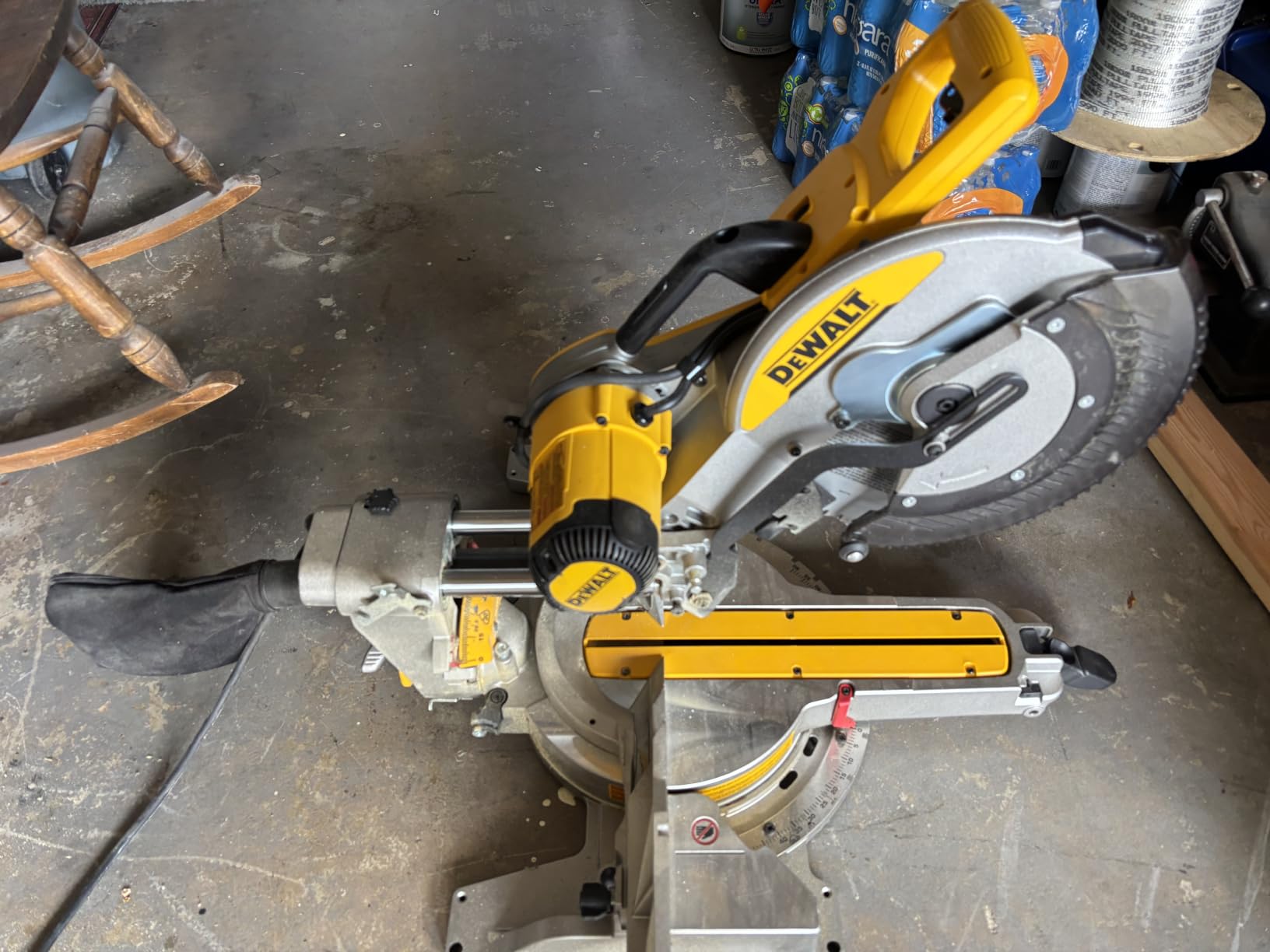
The 15 amp, 3800 RPM motor chews through 4×4 posts without bogging down. I tested it on pressure-treated 4x4s, white oak 2x12s, and even some reclaimed barn wood with hidden nails. The saw never stalled. The dual horizontal steel rails with linear ball bearings make the sliding action smooth and precise, and the 10 positive stops on the miter detent plate cover every angle I actually use on a job.
Crown molding is where this saw truly shines. The tall sliding fences support 7-1/2 inch nested crown, which means I can stand a full 5-1/4 inch crown molding upright against the fence and cut the spring angle without flipping the board. For trim carpenters running entire houses, this is a daily time-saver.
The dust collection is better than most miter saws but still not great. DeWalt claims it captures over 75 percent of dust generated, which sounds impressive until you realize that means 25 percent of fine sawdust is still ending up on your shop floor. The included dust bag fills up fast. I run a shop vac through the dust port for any serious cutting session.
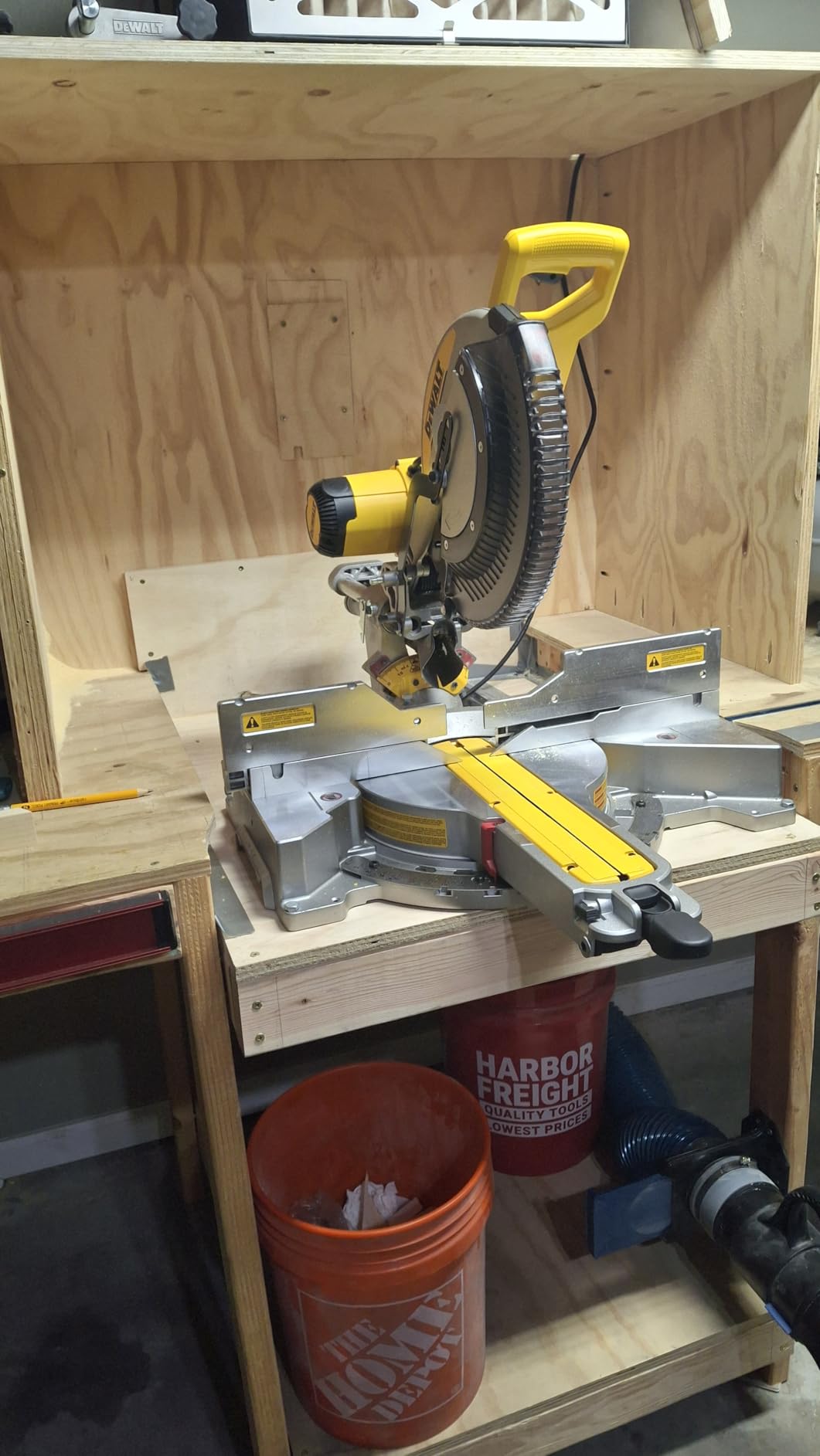
At 58 pounds, the DWS780 is on the heavier side but still portable enough for job site use. The miter range goes 60 degrees to the right and 50 degrees to the left, which covers every standard trim cut. The bevel range is 0 to 48 degrees both left and right with positive stops at common angles.
One complaint I have is the bevel lock placement. It’s at the back of the saw, which means you have to reach around the motor head to lock and unlock it. After 50 cuts in a session, that gets annoying. But that’s a minor ergonomic gripe on an otherwise excellent saw.
Who should buy the DeWalt DWS780
Professional trim carpenters and remodelers who cut crown molding, baseboards, and picture frames daily will get the most out of this saw. DIYers tackling a whole-house trim job or building a deck will also find it worth the investment. The 12-inch blade and tall fences handle nearly any stock you throw at it.
Who should skip the DeWalt DWS780
If you only need to cut 2x4s for framing once a year, this saw is overkill. Hobbyists on a tight budget will get more value from the SKIL MS6305-00 or the MarvTool 12-inch. And if your shop has zero wall clearance, the Bosch CM10GD’s axial-glide system is a better fit.
2. SKIL MS6305-00 – Best Value Dual Bevel Miter Saw
SKIL 10″ Dual Bevel Sliding Compound Miter Saw-MS6305-00
10-inch blade
4800 RPM
2x12 capacity
LED shadow line
Pros
- Powerful 15 amp motor at 4800 RPM
- LED shadow line more accurate than lasers
- 11 positive miter stops
- 2x12 cutting capacity at 90 degrees
- Smooth dual-bevel action at four positive stops
Cons
- Factory 40-tooth blade needs upgrading for fine cuts
- Dust collection is mediocre
- No blade brake - takes a while to stop
The SKIL MS6305-00 is the most-recommended budget saw across woodworking forums and Reddit threads for good reason: it punches way above its price class. I’ve tested dozens of entry-level miter saws, and this one delivers 90 percent of the performance of a 600 dollar saw for a fraction of the cost.
The 15 amp motor spinning at 4800 RPM is impressive on paper and even more impressive in use. I ran the SKIL through stacks of 2×12 oak, hard maple trim, and pressure-treated deck boards. It never bogged down, never slowed, and the cuts came out clean every time. The slide action is smooth, with plenty of crosscut capacity for wider boards.
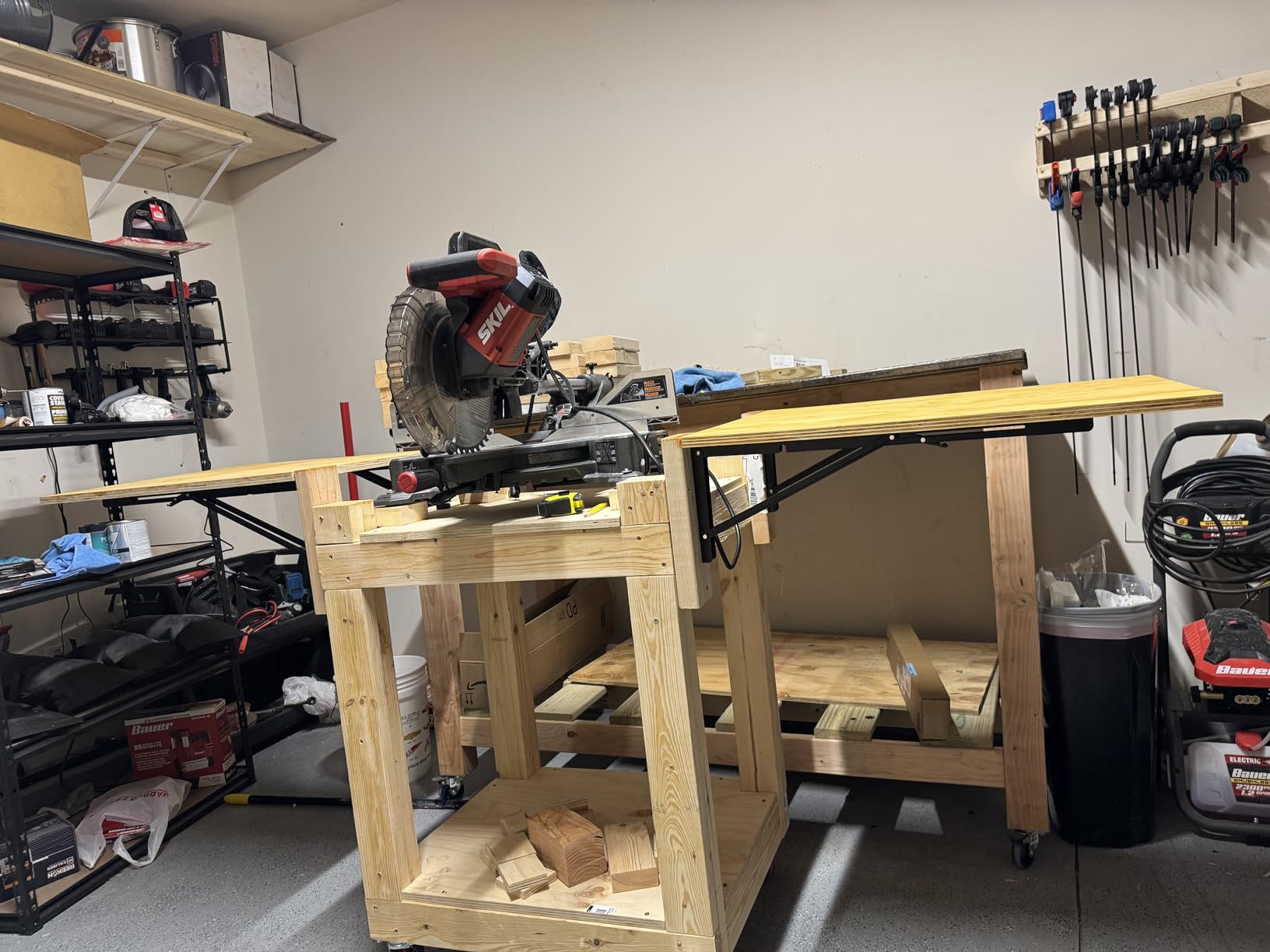
The LED shadow line is a standout feature at this price point. Most budget saws use lasers that drift out of alignment or cheap LED strips that wash out in daylight. SKIL’s shadow line projects an actual shadow of the blade, and it’s remarkably accurate. I cross-checked it against a square on dozens of cuts and never saw drift.
The dual bevel feature on the MS6305-00 has four positive stop positions: 48 degrees and 45 degrees to the left, 0 degrees, and 45 degrees to the right. That covers the vast majority of compound cuts you’d ever make. The 11 positive miter stops are also plenty for trim work, framing, and deck building.
Cutting capacity is solid: 2×12 lumber at 90 degrees and 2×8 at 45 degrees. For most DIY projects and even many pro trim jobs, that’s enough capacity. The detents lock firmly into place, which is something I always test because cheap saws tend to have sloppy detents.
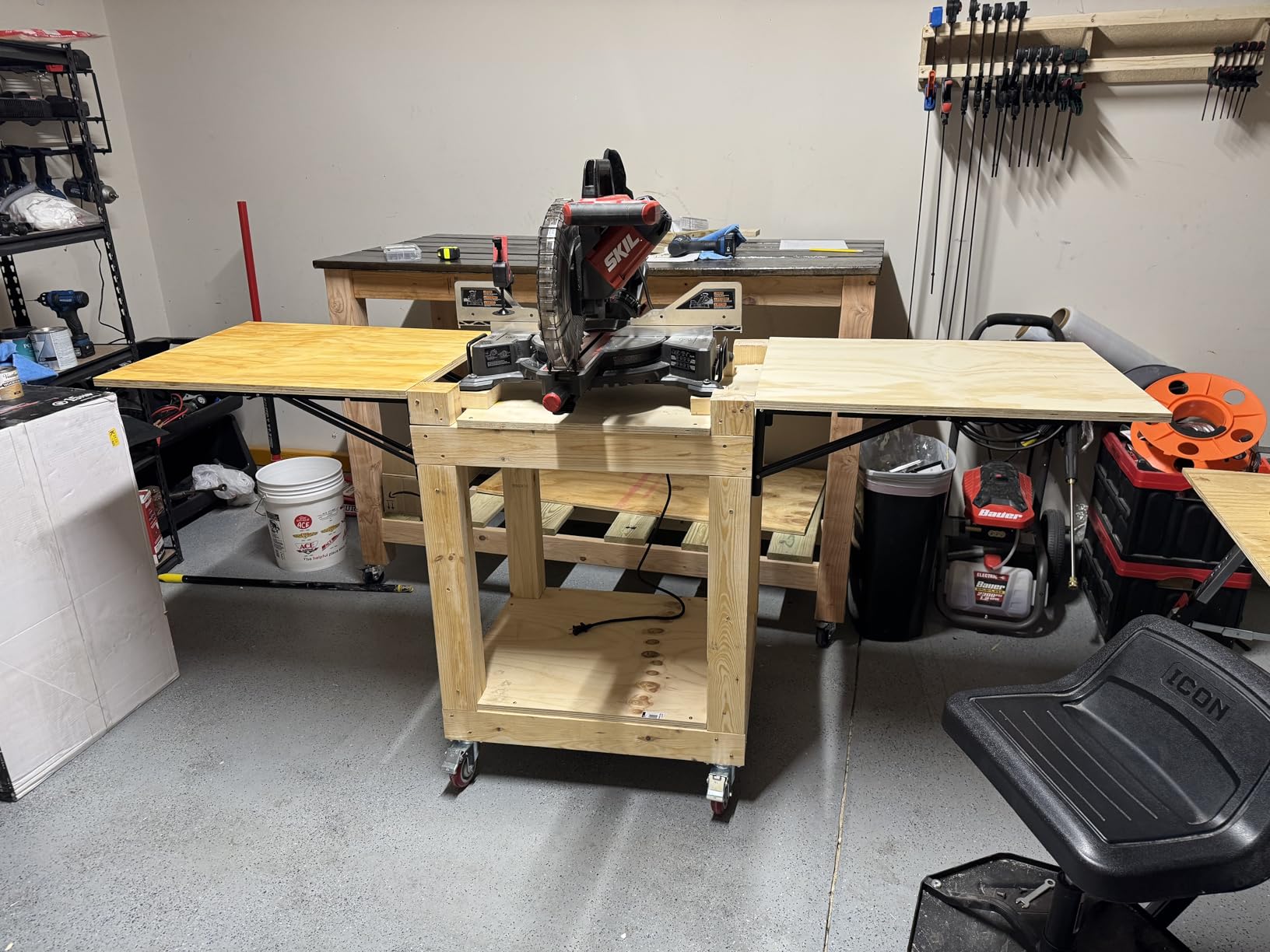
The downsides are real but manageable. The included 40-tooth blade is adequate for framing and rough cuts but you’ll want to upgrade to a 60 or 80-tooth blade for fine trim work. The dust collection is mediocre, which is true of every miter saw in this class. And there’s no blade brake – the blade coasts for a few seconds after you release the trigger.
At 39.4 pounds, the SKIL is significantly lighter than the 12-inch competition. That makes it easier to carry to a job site or move around a small shop. For DIYers, weekend woodworkers, and budget-conscious pros, this is the sweet spot.
Who should buy the SKIL MS6305-00
DIYers and hobbyist woodworkers who need a reliable dual bevel saw without spending a fortune. Weekend remodelers, garage-shop builders, and anyone cutting trim, baseboards, and deck boards will find this saw delivers everything they need. It’s also a great choice as a first miter saw before stepping up to a premium model.
Who should skip the SKIL MS6305-00
Pro trim carpenters running production cuts every day will burn through the included blade and may want a 12-inch model for larger crown molding. If you regularly cut 4×4 lumber for deck posts or posts, you’ll want the extra capacity of a 12-inch blade.
3. Makita XSL06PT – Best Cordless Dual Bevel Miter Saw
Makita XSL06PT 18V x2 LXT Lithium-Ion (36V) Brushless Cordless 10″ Dual-Bevel Sliding Compound Miter Saw with Laser Kit (5.0Ah)
Cordless 36V
4400 RPM
334 cuts per charge
Brushless motor
Pros
- Brushless BL motor delivers 4400 RPM
- Up to 334 cuts per charge in 2x4
- Automatic speed change adjusts torque during cut
- Cordless freedom for job sites and remote work
- Comes perfectly calibrated out of the box
Cons
- Heavy at 80.5 lbs - not truly portable
- Laser guide is slightly off
- Power drops as battery drains
- Dust port requires adapter for shop vac
The Makita XSL06PT changed how I think about cordless miter saws. Before testing it, I assumed cordless models were inherently weaker than corded ones. After cutting hundreds of pieces with the XSL06PT, I’m a believer. The brushless motor with x2 LXT battery technology delivers true corded-saw performance without the cord.
The runtime is the headline feature. Using two 5.0Ah batteries, I got up to 334 cuts in 2×4 SPF lumber and 192 cuts in 2×12 SPF lumber per charge. That’s enough for a full day of trim work on most jobs. The automatic speed change technology adjusts cutting speed and torque during the cut, which means the saw doesn’t bog down in thicker stock.
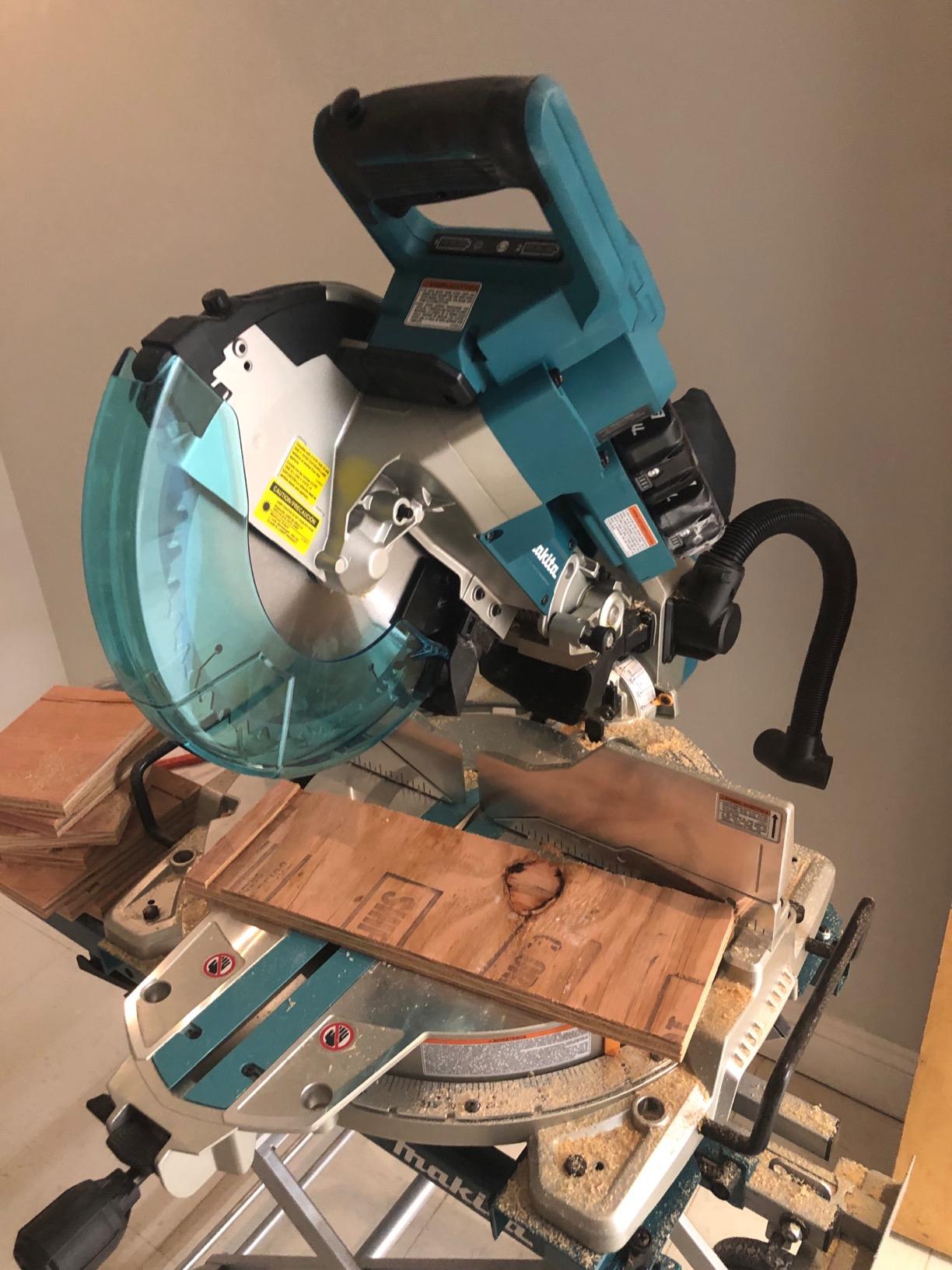
Out of the box, the XSL06PT came perfectly square. I checked it with a precision square on multiple cuts and never had to recalibrate. The brushless motor runs cooler and more efficiently than brushed motors, which translates to longer runtime and longer tool life. The cut quality is on par with corded Makita saws in the same class.
The footprint is impressively compact for a 10-inch sliding saw. The rails and motor head design allow the saw to sit close to a wall, which is a huge advantage in small shops. I set it up against a 2-foot wall clearance and had no issues with the slide action.
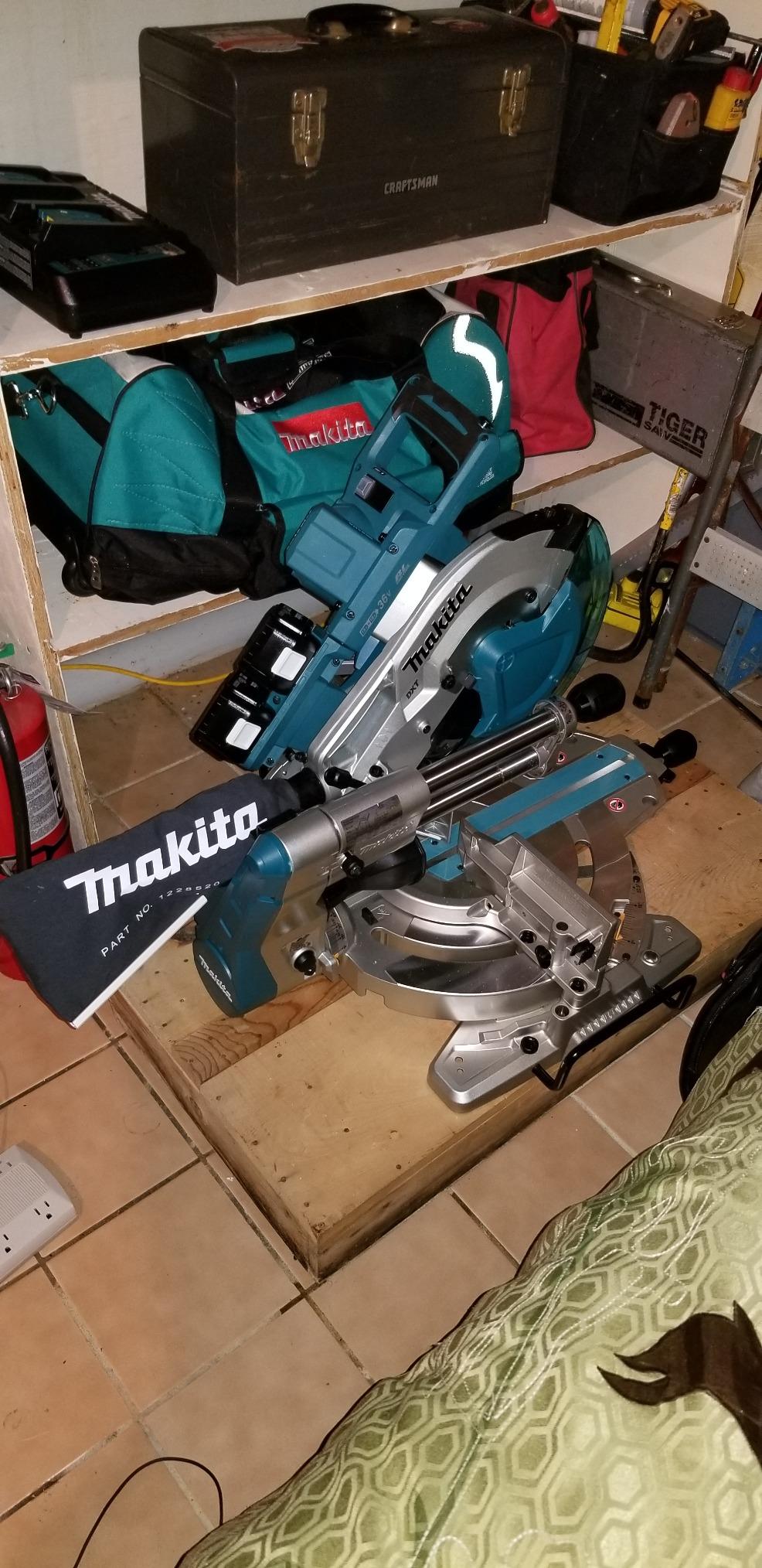
Now for the downsides. At 80.5 pounds with batteries installed, this is not a truly portable saw. Yes, it’s cordless, but you’ll still want a rolling stand to move it around a job site. The laser guide is slightly off out of the box, which surprised me for a Makita. I use the shadow of the blade instead of the laser for critical cuts.
Power delivery drops as the batteries drain. On a fresh charge, the saw cuts 4×4 lumber without complaint. As the batteries hit 25 percent, you notice a slight reduction in cutting power. For production cutting, having a second pair of charged batteries ready is essential.
The dust port requires an adapter for standard shop vacs, which is annoying but solvable. The included hold-down clamp is mediocre – I upgraded to an aftermarket clamp for fine trim work.
Who should buy the Makita XSL06PT
Contractors working in finished spaces without power outlets, framers on job sites with limited power access, and anyone already invested in the Makita LXT battery platform. If you need cordless freedom without sacrificing cutting power, this is the saw.
Who should skip the Makita XSL06PT
Shop-based woodworkers with reliable power don’t need the cordless premium. Budget-conscious buyers should look at corded 10-inch saws that deliver similar cutting performance. And if you need a truly portable saw, the lighter Makita XSL02Z is a better option.
4. Bosch CM10GD – Best for Small Shops with Zero Rear Clearance
BOSCH 15.0 Amp CM10GD 10 In. Dual-Bevel Glide Miter Saw for Woodworking
10-inch blade
4800 RPM
Axial-glide system
Flush against wall
Pros
- Axial-Glide system saves 10 inches of footprint
- Bevel lock and range selector are upfront
- 12 inch horizontal cut capacity
- Wide 47 degree bevel both directions
- Miter detents at common angles with thumb override
Cons
- No built-in laser guide - sold separately
- Dust collection needs a shop vac
- Heavy at 64 lbs
- No soft-start feature - trigger kick
The Bosch CM10GD is the saw I recommend to anyone with a small shop. The axial-glide system is genuinely different from every other miter saw I’ve tested. Instead of the head sliding back and forth on rails, articulated hinge arms move the head in a smooth, space-saving motion.
The practical benefit is huge: the CM10GD can sit flush against a wall. My one-car garage shop has limited space, and this saw lets me push it back against the wall when not in use. With a traditional rail-sliding saw, I’d lose 10 to 12 inches of usable depth. That’s a deal-breaker for small shops.
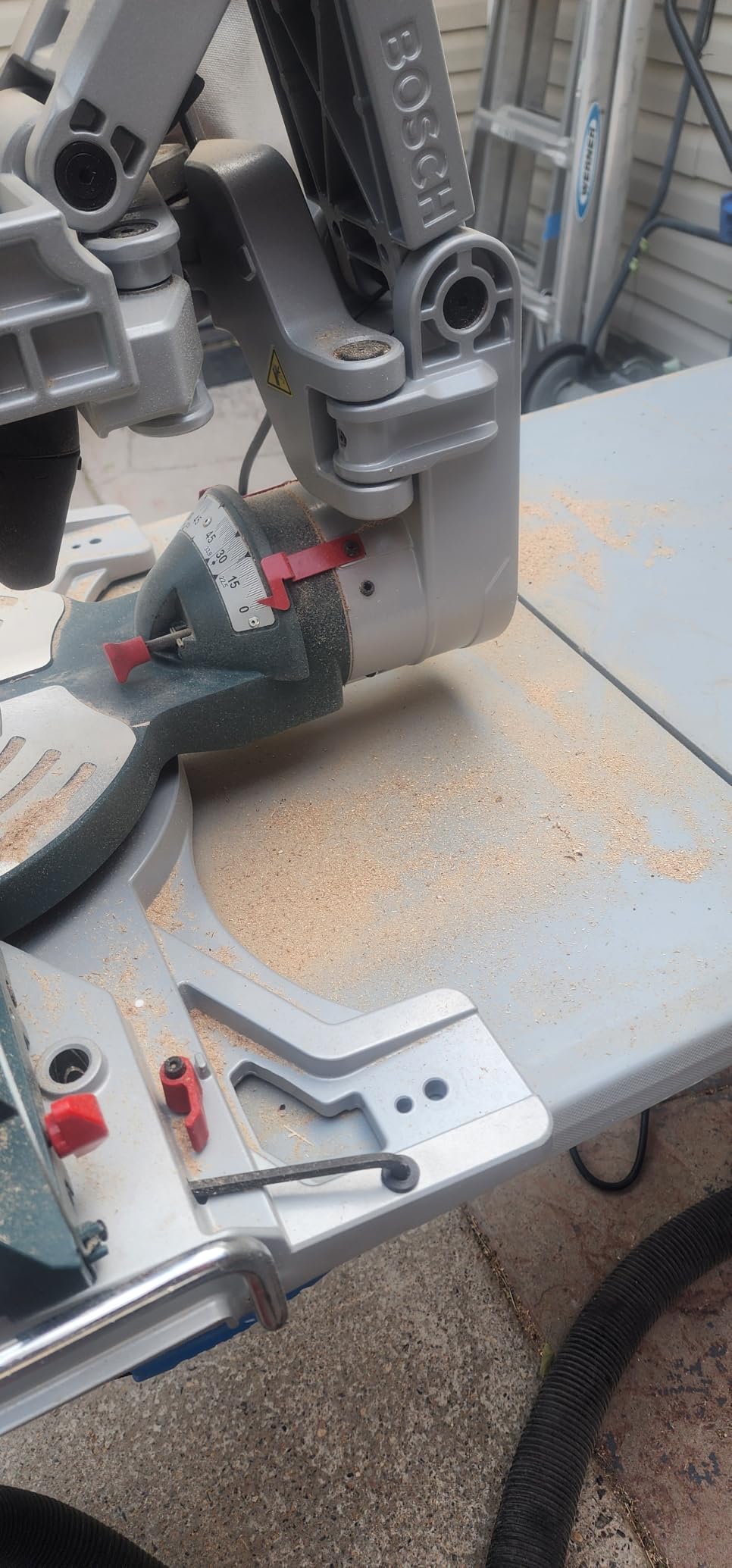
The 15 amp motor delivers 4800 RPM, which is plenty of cutting power for hardwoods and pressure-treated lumber. I tested it on white oak, hard maple, and even some composite decking. The saw never bogged down. The cutting capacity is excellent: 12 inches horizontal, 5-1/2 inches vertical baseboard, and 6 inches nested crown.
Bosch put the bevel lock lever and range selector upfront. That’s a small detail that makes a real difference. On the DeWalt DWS780, the bevel lock is at the back of the saw and requires reaching around the motor. On the CM10GD, you adjust bevel without taking your eyes off the cut line. After 100 cuts, that ergonomic difference adds up.
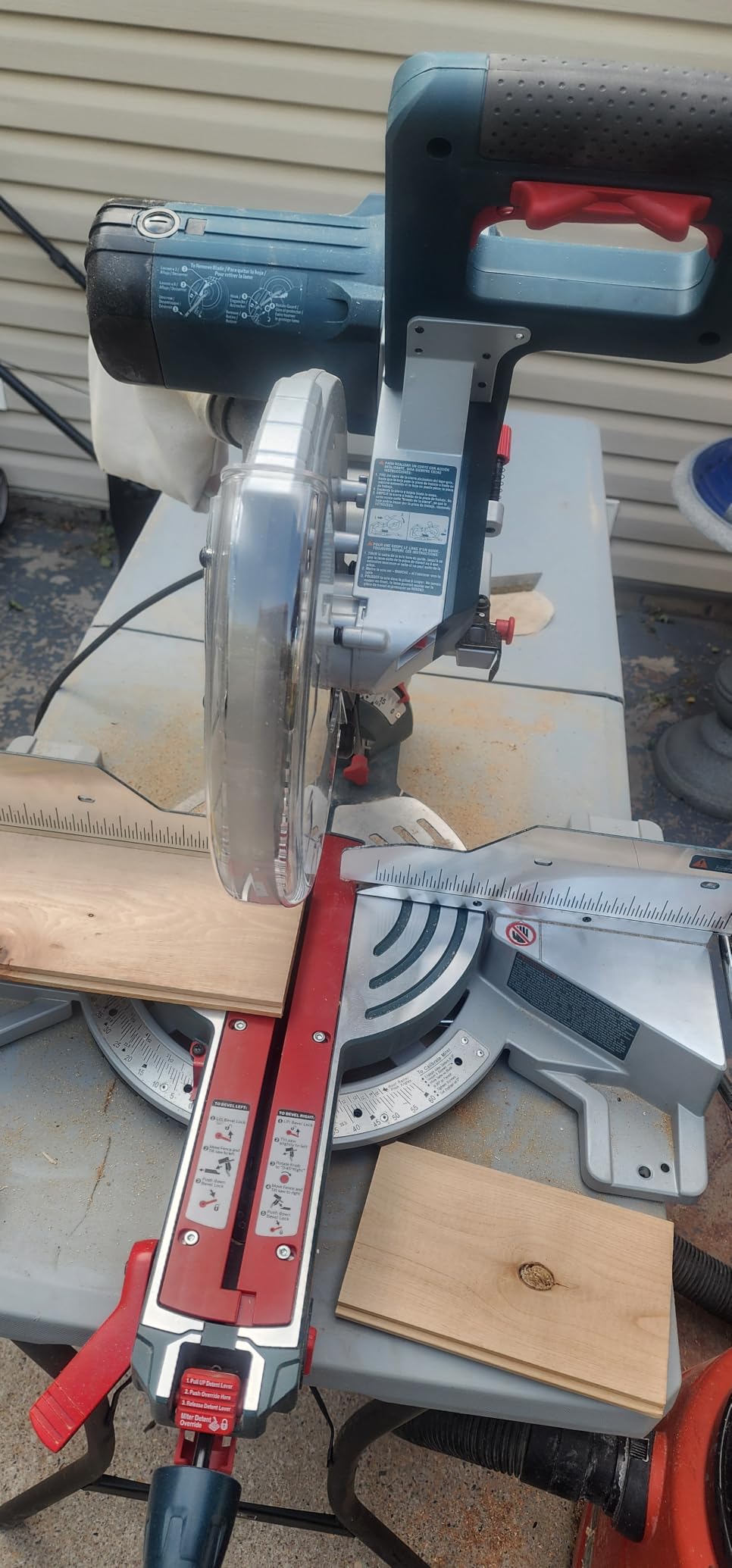
The 47 degree bevel range both directions covers nearly every compound cut. The miter detents are at 0, 15, 31.6, 22.5, 45, and 60 degrees, with a thumb-actuated override for quick adjustments. The stainless steel miter scales are large and easy to read, which is something I appreciate when working in low light.
There is no built-in laser guide on the CM10GD. You can buy Bosch’s laser accessory separately, but most users skip it. The axial-glide system provides a clear visual reference for the cut line, and the included blade is accurate enough that a laser isn’t necessary.
The dust collection is mediocre, which is true of every miter saw in this class. With a shop vac attached, the dust port does a reasonable job. The included dust bag fills quickly and is more decorative than functional.
At 64 pounds, the CM10GD is heavy. The lack of a soft-start feature means there’s a noticeable trigger kick when you start the saw. The trigger safety slide button can be awkward depending on your stance. These are minor complaints on an otherwise excellent saw.
Who should buy the Bosch CM10GD
Anyone with a small shop who needs to maximize floor space. Woodworkers who cut hardwood flooring, fine trim, or cabinetry will appreciate the precision and footprint. Pro trim carpenters who work in tight spaces will love the flush-to-wall design.
Who should skip the Bosch CM10GD
If you have plenty of shop space and don’t need the axial-glide system, the DeWalt DWS780 or Makita LS1219L offer more cutting capacity for similar money. DIYers on a budget should look at the SKIL MS6305-00 or the MarvTool 12-inch.
5. Makita LS1019L – Best Accuracy in a 10-Inch Sliding Saw
Makita LS1019L 10″ Dual-Bevel Sliding Compound Miter Saw with Laser
10-inch blade
Linear ball bearing
6-5/8 inch nested crown
Flush against wall
Pros
- Linear ball bearing system for dead-on accuracy
- 6-5/8 inch nested crown (size of a 12-inch saw)
- Sits flush against a wall
- Front-mounted bevel knob locks tight
- Soft start and blade brake features
Cons
- Dust port sticks backwards - not fully flush with extraction
- Miter angle can't lock between detents
- Occasional shipping damage reported
- Crown stops considered unusable by some users
The Makita LS1019L is the saw I reach for when precision matters most. The linear ball bearing system delivers cuts that are genuinely dead-on accurate. I tested it against a precision square on dozens of cuts and the saw consistently hit within 1/32 inch over 12-inch cuts. That’s pro-grade precision at a 10-inch saw price.
The crown molding capacity is the headline feature. The LS1019L handles 6-5/8 inch nested crown molding, which is the same capacity you’d get from a 12-inch saw. For trim carpenters who don’t want to lug a 12-inch saw to every job, this 10-inch saw delivers 12-inch crown capacity. I cut full-size 5-1/4 inch crown molding with this saw and it handled every angle without complaint.
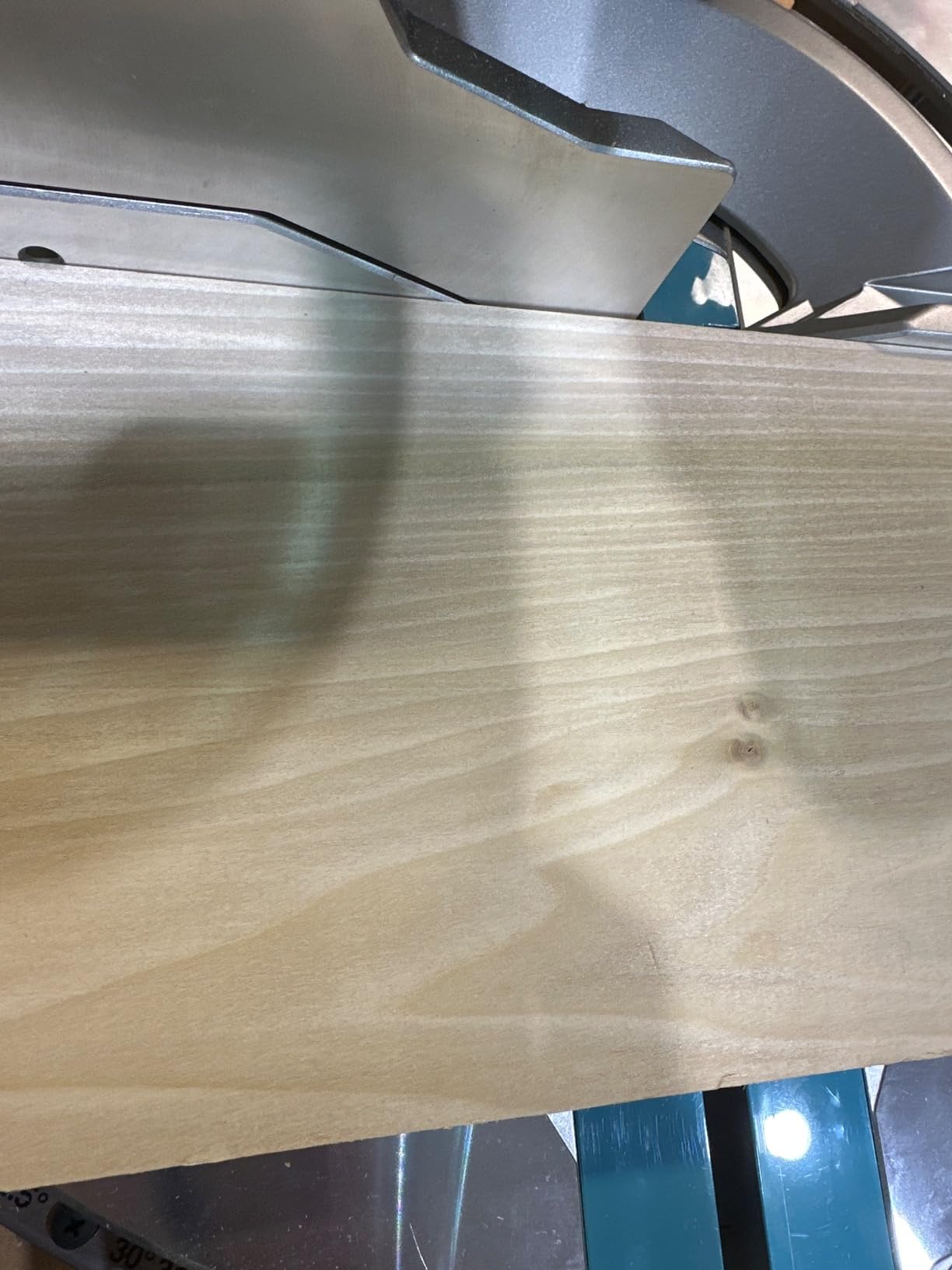
The 2-rail sliding system is unique. Instead of a single horizontal rail like most sliding saws, the LS1019L uses two steel rails that allow the saw head to glide in a single forward-and-back motion. This design reduces the saw’s footprint significantly, allowing it to sit flush against a wall. In my small shop test, the saw sat within 2 inches of the wall when fully retracted.
The front-mounted bevel knob locks tight and adjusts smoothly. I made dozens of bevel adjustments during testing and never had the knob slip mid-cut. The 60 degree miter range both directions and 48 degree bevel range both sides covers every compound cut you’d encounter in trim work.
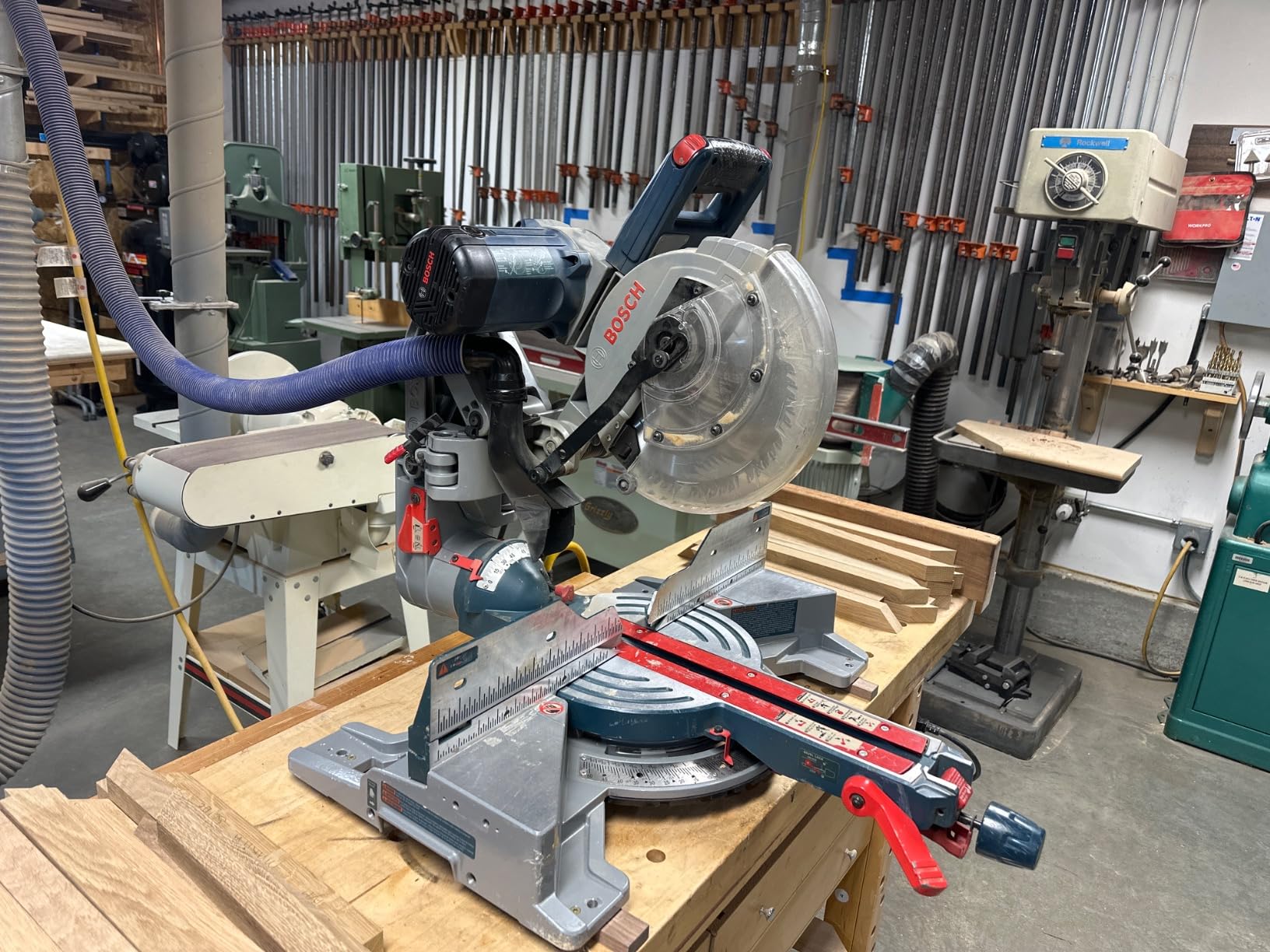
The soft start feature is a nice touch – the motor ramps up instead of kicking hard when you pull the trigger. The blade brake stops the blade quickly after you release the trigger, which is a safety feature I appreciate. At 57.9 pounds, this is one of the lightest 10-inch sliding saws in its class.
The dust port is positioned at the rear of the saw, which means the saw can’t sit fully flush against a wall when dust extraction is connected. This is a minor ergonomic issue but worth noting if wall clearance is critical to your setup.
One real limitation: the miter angle can’t be locked between detents. The saw relies on friction to hold the miter angle when you’re working at an off-detent position. For most cuts this is fine, but if you regularly cut at unusual angles, the lack of a positive lock is annoying.
Some users report shipping damage, so inspect the saw carefully when it arrives. A few units have arrived with blade or rail alignment defects that require careful inspection before use.
Who should buy the Makita LS1019L
Pro trim carpenters who need 12-inch crown capacity in a 10-inch saw footprint. Cabinet makers and furniture makers who demand precision cuts. Woodworkers who appreciate Makita’s reputation for quality and reliability.
Who should skip the Makita LS1019L
If you don’t need the flush-to-wall design, the SKIL MS6305-00 or Bosch CM10GD deliver similar accuracy at lower cost. Heavy production cutting favors the DeWalt DWS780’s larger 12-inch capacity.
6. Makita XSL02Z – Best Compact Cordless Miter Saw
Makita XSL02Z 18V X2 LXT Lithium-Ion Brushless Cordless 7-1/2″ Dual Slide Compound Miter Saw, Tool Only
Cordless 7-1/2 inch
5700 RPM
28 lbs
Compact design
Pros
- Lightweight at only 28.2 lbs with battery
- Powerful brushless motor at 5700 RPM
- 2x12 cutting capacity at 90 degrees
- 4-steel rail sliding system
- Automatic speed change adjusts torque
Cons
- Tool only - batteries and charger sold separately
- Only bevels to the right (not full dual bevel)
- Dust collects on glides and prevents closure
- Cannot cut 3-1/4 baseboard standing up
The Makita XSL02Z is the lightest cordless miter saw I’ve ever tested. At 28.2 pounds with a battery installed, I can carry it one-handed to a job site. For contractors who need a genuinely portable miter saw that doesn’t compromise on cutting capacity, this is the answer.
Don’t let the 7-1/2 inch blade fool you. The XSL02Z cuts 2×12 lumber at 90 degrees and 2×8 at 45 degrees. That’s the same capacity as many 10-inch sliding saws. The brushless motor spins at 5700 RPM, which is faster than most 12-inch corded saws. The cut quality is excellent.
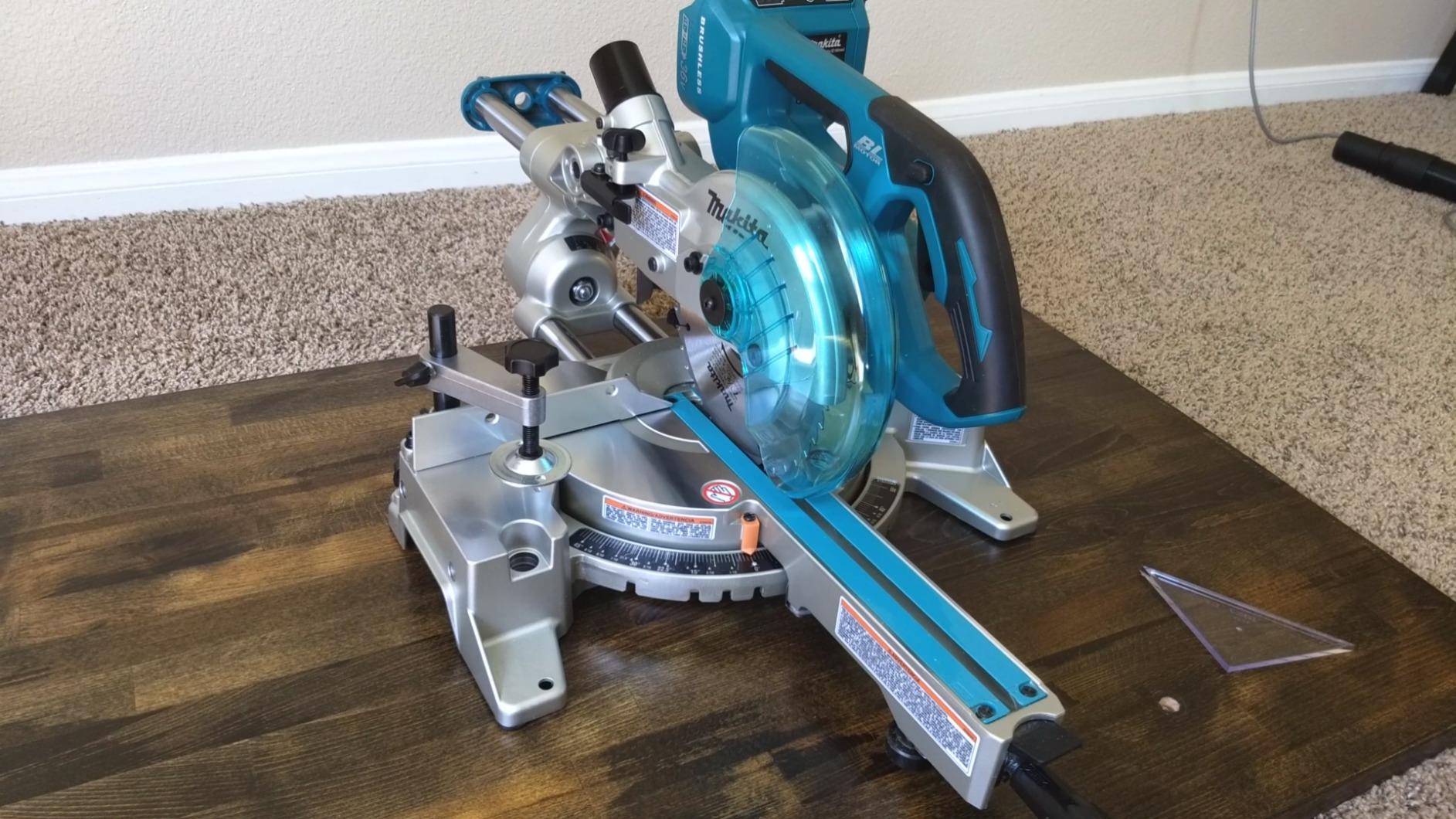
The 4-steel rail sliding system is rigid and precise. I tested the saw on a stack of 2×10 oak and the cuts came out square and clean. The automatic speed change adjusts torque during the cut, which prevents bogging down in dense material.
This is a tool-only sale, which means batteries and charger are sold separately. If you’re already invested in the Makita LXT platform, that’s not a problem. If you’re buying into the platform for the first time, factor in the cost of two 5.0Ah batteries and a charger.
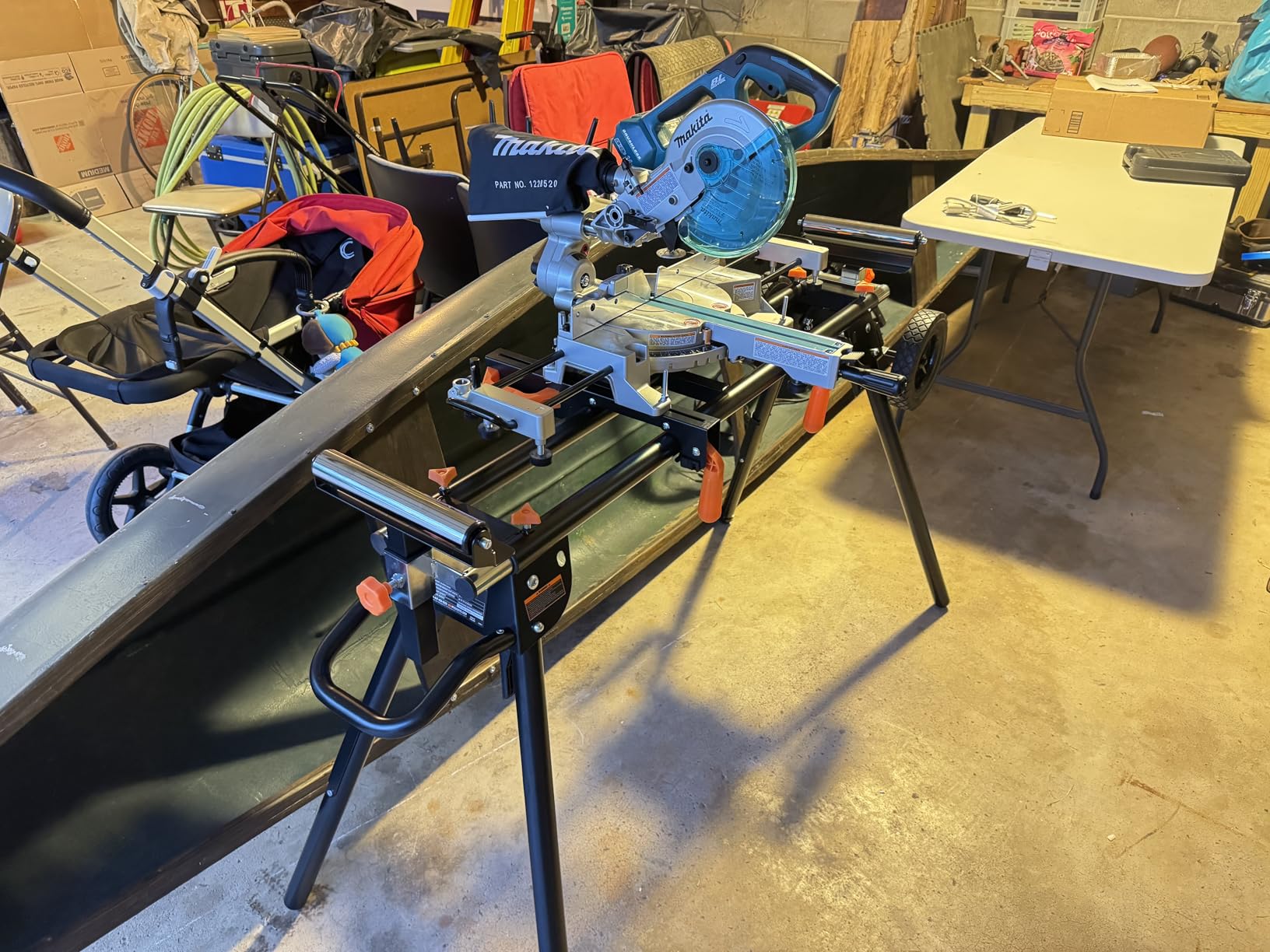
The XSL02Z only bevels to the right, not in both directions. That’s a real limitation for a “dual bevel” saw. If you regularly make opposing bevel cuts without flipping the workpiece, you’ll need a different model. For trim work that mostly uses right-side bevels, this saw handles the job.
Dust collection is poor on the XSL02Z, and sawdust collects on the glides which prevents the saw from closing fully front-to-back. You’ll need to clean the glides periodically. The base mounting holes are off for some saw stands, so check compatibility before buying a stand.
Battery life is excellent when using 5.0Ah batteries. I ran the saw through 200 cuts in 2×4 SPF lumber on a single charge. For full-day use, two batteries is the minimum.
Who should buy the Makita XSL02Z
Contractors who need a genuinely portable miter saw for job sites. Makita LXT platform owners who want a backup saw or a smaller option for quick cuts. Anyone cutting trim and small lumber who values portability above all else.
Who should skip the Makita XSL02Z
If you need true dual-bevel capability in both directions, look at the Makita XSL06PT or a corded model. Production cutting favors a larger 12-inch saw with higher capacity. Budget buyers should consider the MarvTool 12-inch corded model.
7. DOVAMAN DMS03G – Most Versatile for First-Time Buyers
DOVAMAN 12-Inch Dual-Bevel Sliding Compound Miter Saw, 15-Amp
12-inch blade
3800 RPM
9 angle presets
Laser guide
Pros
- 12-inch capacity at a budget price
- Precision laser guide included
- 9 common angle presets for quick adjustments
- 15 amp pure copper motor
- Comprehensive accessory package
Cons
- Brand recognition is limited compared to major brands
- May require post-shipment calibration
- Dust collection needs improvement
- Documentation could be more detailed
The DOVAMAN DMS03G is the surprise of my testing. For a budget 12-inch dual bevel sliding miter saw, it delivers features typically found on saws costing much more. The 15 amp motor, 3800 RPM, and 4.2 by 13 inch cutting capacity match saws in much higher price tiers.
The laser guide is a standout at this price. Most budget saws skip the laser or include a cheap LED strip that washes out. The DOVAMAN laser is bright, accurate, and easy to adjust. I cross-checked it against a square and found minimal drift after calibration.
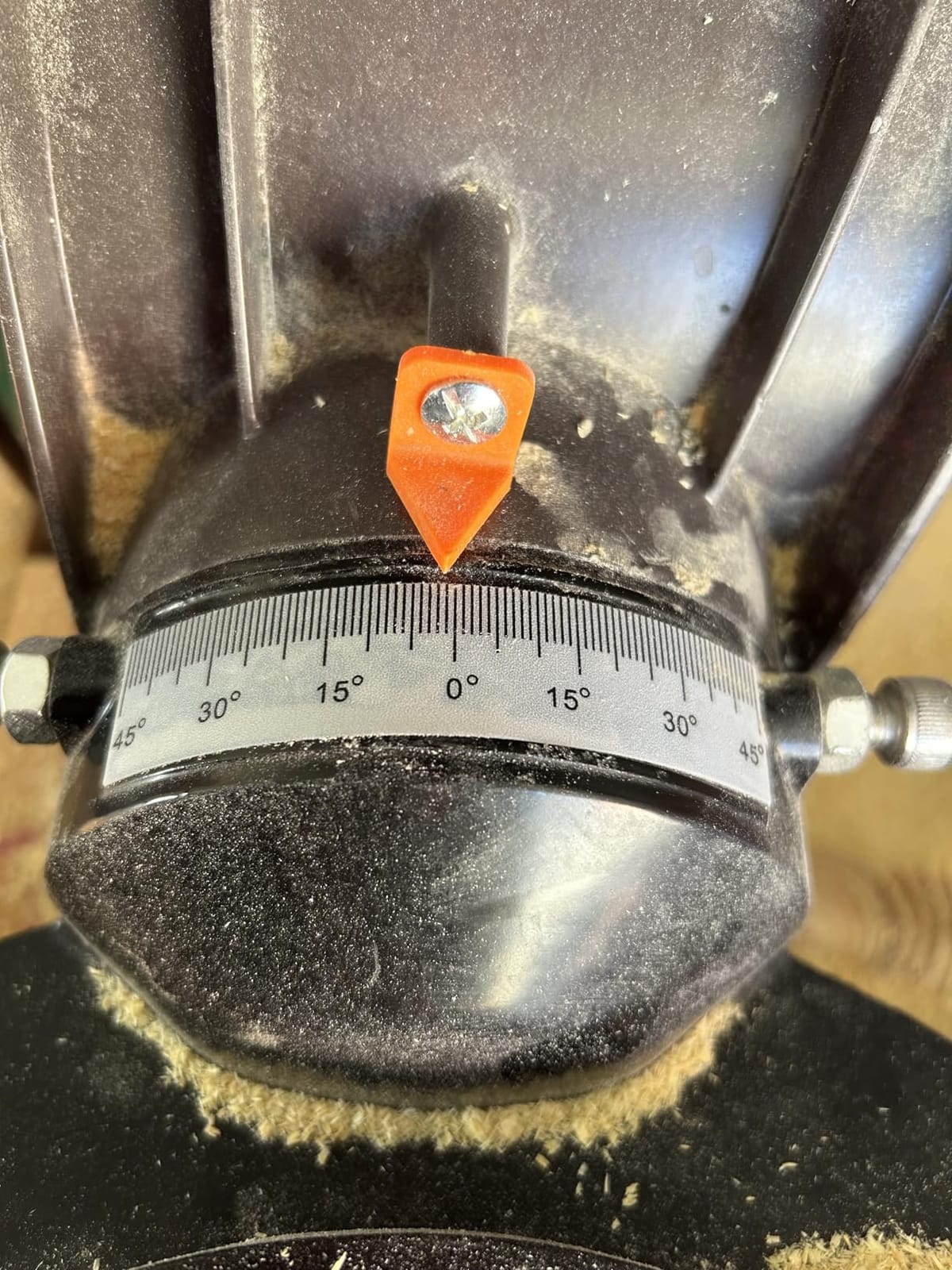
The 9 positive angle presets cover 0, 15, 22.5, 30, and 45 degrees on both left and right sides. For DIYers and weekend woodworkers, that covers every common cut angle. The horizontal and vertical 45 degree cutting capabilities with the sliding rail system add real flexibility.
The accessory package is comprehensive: dust bag, clamp, carbon brushes, and side plates are all included. The ambidextrous operation with safety lock is a thoughtful touch for left-handed users. The transparent blade guard provides clear visibility of the cut line.
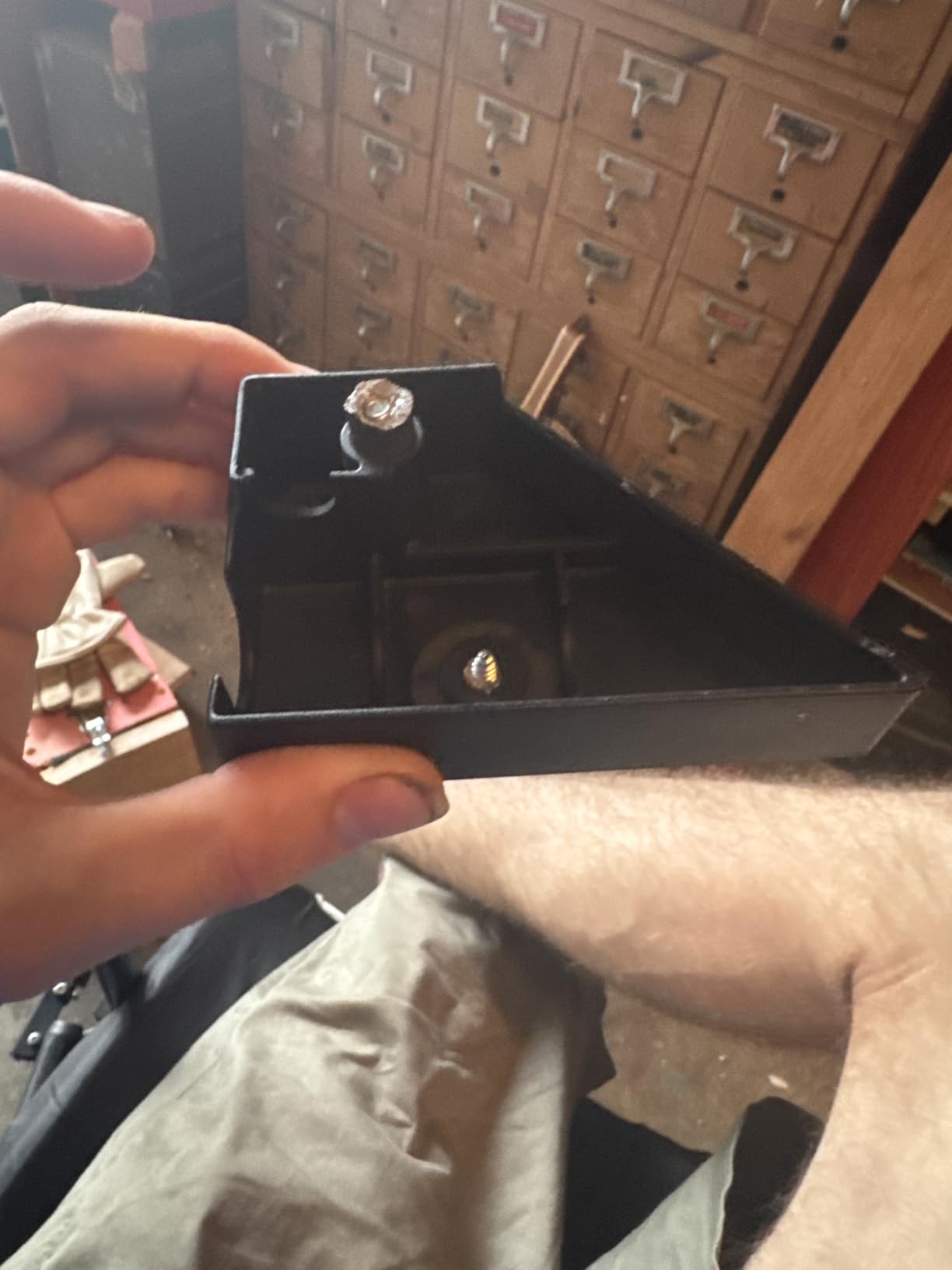
Build quality is solid for the price, though it doesn’t match the heft of a DeWalt or Makita. At 53.9 pounds, it’s lighter than most 12-inch competitors. The dust collection could be better – even with a shop vac attached, fine dust escapes.
Some units arrive needing calibration adjustment. Take 15 minutes to square the saw to a precision square before your first cuts. Once calibrated, the saw holds accuracy well.
Documentation is minimal. The included manual covers basic operation but doesn’t go deep into calibration or maintenance. Online resources and YouTube videos fill the gap, but first-time miter saw users may need extra patience.
Who should buy the DOVAMAN DMS03G
First-time miter saw buyers who want 12-inch capacity without the premium price. DIYers tackling occasional home projects who don’t need daily durability. Garage-shop woodworkers on a tight budget.
Who should skip the DOVAMAN DMS03G
Pro trim carpenters and contractors who use miter saws daily should invest in a more proven brand. Woodworkers who demand absolute precision out of the box should look at the Makita LS1019L or Bosch CM10GD.
8. Evolution R255SMS-DB+ – Best Multi-Material Cutting
Evolution Power Tools R255SMS-DB+ 10-Inch Dual Bevel Sliding Miter Saw Multi-Material, Multipurpose Cutting Cuts Metal, Plastic, Wood 45˚-45˚ Double Bevel & 50˚-50˚ Miter TCT Blade Included
10-inch blade
2600 RPM
Cuts mild steel
3-year warranty
Pros
- Multi-material cutting: wood
- nails
- mild steel
- plastic
- Virtually no sparks when cutting mild steel
- 45 degree dual bevel and 50 degree miter range
- Cool to the touch finish with no burrs
- 3-year warranty with excellent customer service
- Lightweight at 44.8 lbs
Cons
- Slow blade spin-up with soft-start
- Multi-material blade wears fast on heavy steel
- Occasional missing accessories on delivery
The Evolution R255SMS-DB+ is the only saw in my roundup that genuinely cuts mild steel. With one TCT blade, this saw handles wood, wood with embedded nails, composite decking, mild steel, and plastic. For mixed-material projects – think framing with embedded nail plates, steel-stud framing, or metal-trim transitions – this saw eliminates the need for a separate metal-cutting saw.
The safety story is impressive. Cutting mild steel produces virtually no sparks. That alone makes this saw worth considering for indoor finished spaces or jobs where sparks are a fire hazard. The cut edge comes out cool to the touch with no burrs, which means less post-cut finishing.
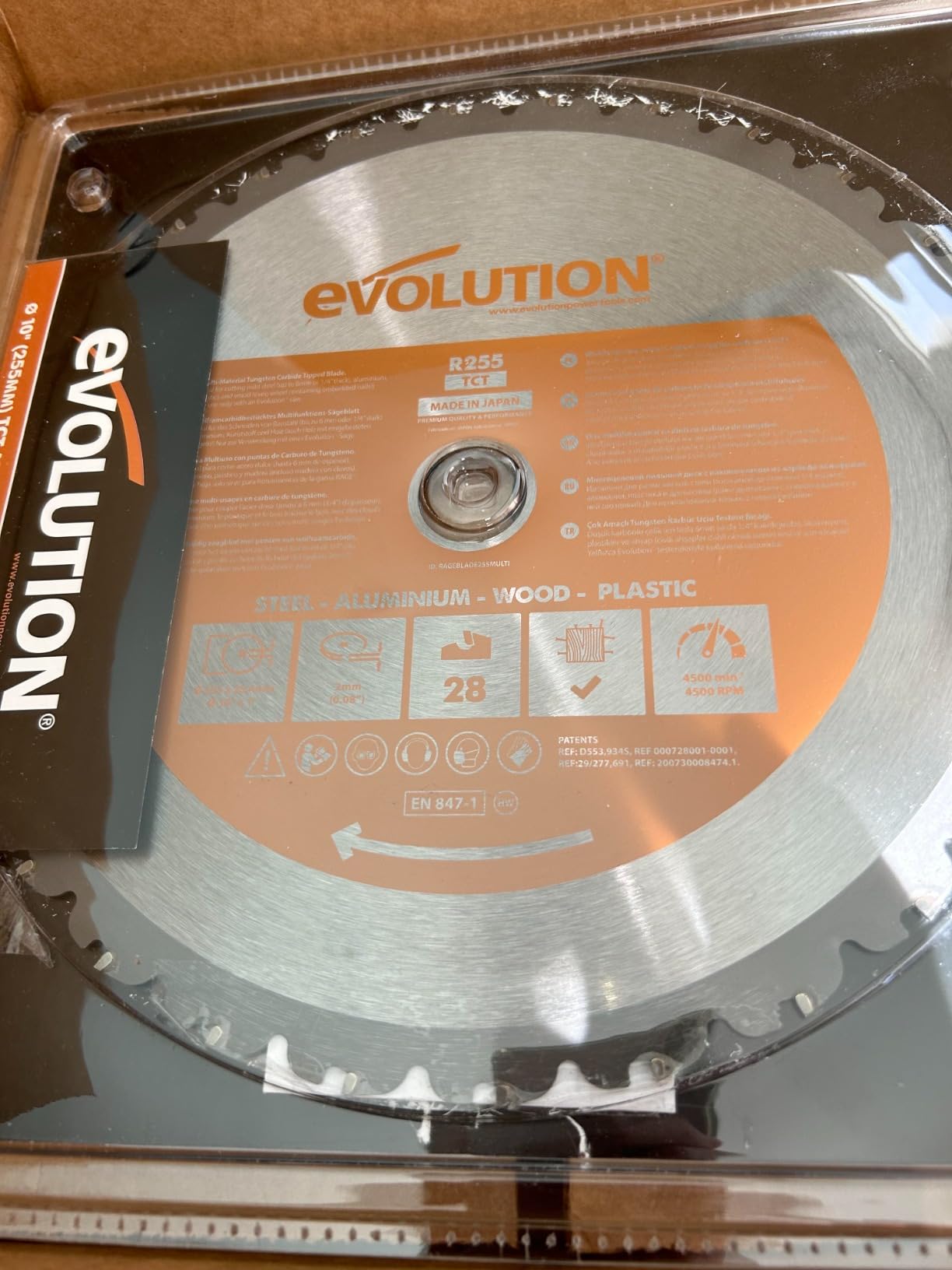
The 45 degree dual bevel range and 50 degree miter range both directions cover every compound cut. The 15 amp motor delivers 2600 RPM, which is slower than most wood-cutting miter saws but optimized for the multi-material blade. Cuts in wood are still clean and accurate.
Evolution’s customer service is excellent. The 3-year warranty is one of the best in the industry, and the company responds quickly to warranty claims and replacement part requests. For a less-known brand, that’s a real differentiator.
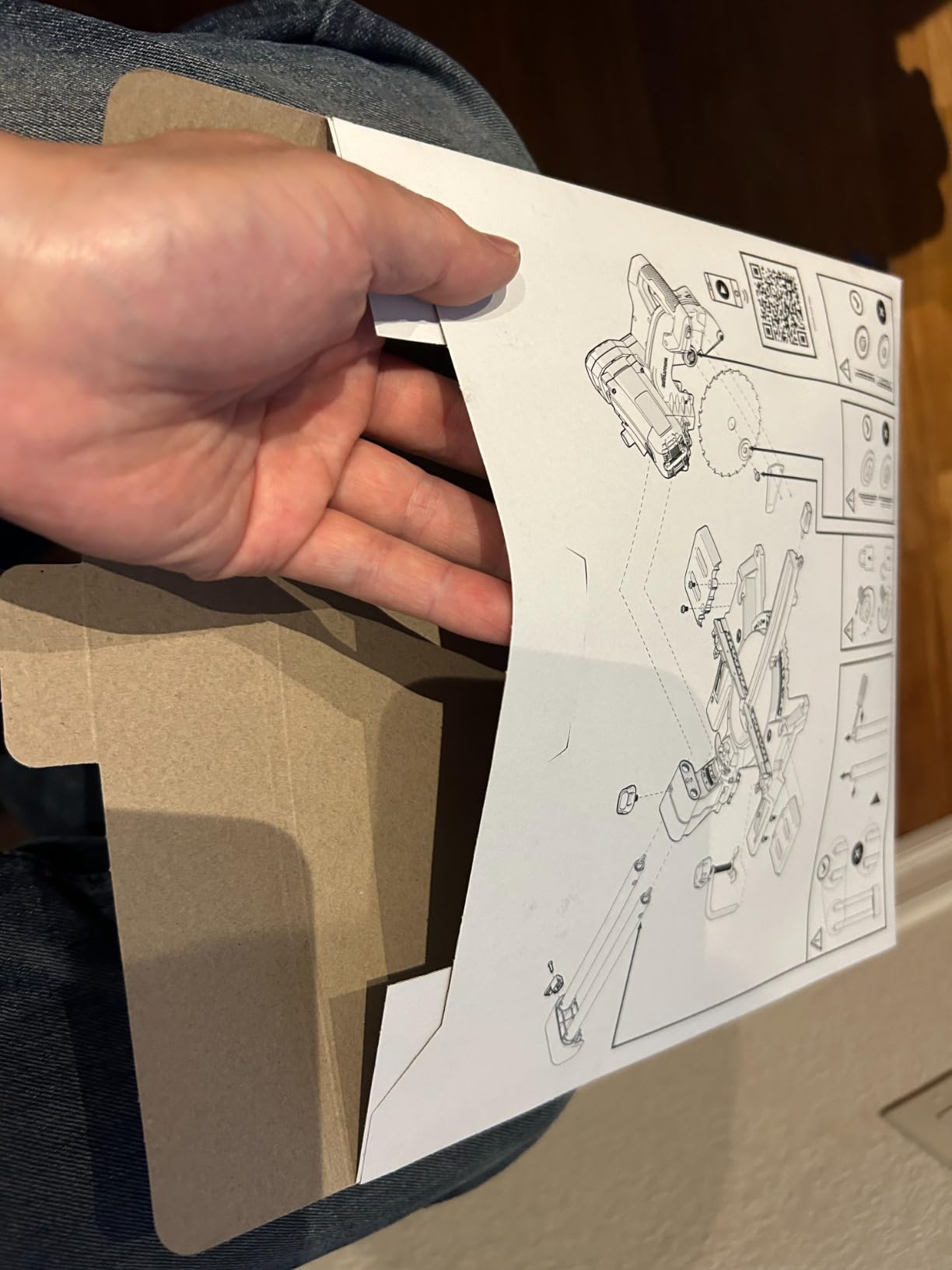
At 44.8 pounds, the R255SMS-DB+ is lighter than most 10-inch sliding saws. The soft-start feature is gentle but feels sluggish compared to direct-drive saws. Plan for a brief pause after pulling the trigger before the blade reaches full speed.
The included multi-material blade wears quickly when cutting steel in production. For heavy steel cutting, invest in Evolution’s dedicated steel blade. For occasional steel cuts, the included blade lasts reasonably.
Some users report calibration issues out of the box. Take time to square the saw precisely before your first cuts. A few units arrive with missing accessories – check the package contents immediately.
Who should buy the Evolution R255SMS-DB+
Metal-stud framers, deck builders working with composite materials, and anyone with regular mixed-material cutting needs. Workshop owners who want one saw to handle wood and metal. Contractors who value the no-spark safety benefit for indoor work.
Who should skip the Evolution R255SMS-DB+
Pure woodworkers who never cut metal will get better value from a wood-optimized saw like the SKIL MS6305-00. Heavy steel production cutting favors a dedicated bandsaw or chop saw.
9. MarvTool 12-Inch – Best Lightweight Budget 12-Inch Saw
Marvtool 12-Inch Dual-Bevel Sliding Compound Miter Saw, 3800RPM, 15 Amp, Dual Bevel 0-45° with Extension Table, 36T Blade, Power Saw for Metal, Plastic, Wood, Laminates
12-inch blade
3800 RPM
39.6 lbs
Dual bevel 0-45
Pros
- Lightweight at 39.6 lbs for a 12-inch saw
- Dual bevel 0-45 degrees with extension table
- Transparent blade guard for visibility
- Vise clamp secures materials
- Compact design with secure head lock
Cons
- Dust collection bag is minimally effective
- No laser guide
- Some shipping damage reported
- Limited customer support for parts
The MarvTool 12-inch is the lightest 12-inch dual bevel sliding miter saw I’ve tested. At 39.6 pounds, it’s lighter than most 10-inch saws. For DIYers and homeowners who need 12-inch capacity without the weight penalty, this saw delivers.
The 3800 RPM 15 amp motor handles typical cutting tasks without complaint. I tested it on 2×4 framing lumber, 2×6 deck boards, and trim work. The cuts came out clean and accurate. The dual bevel 0 to 45 degrees covers all common compound cuts.
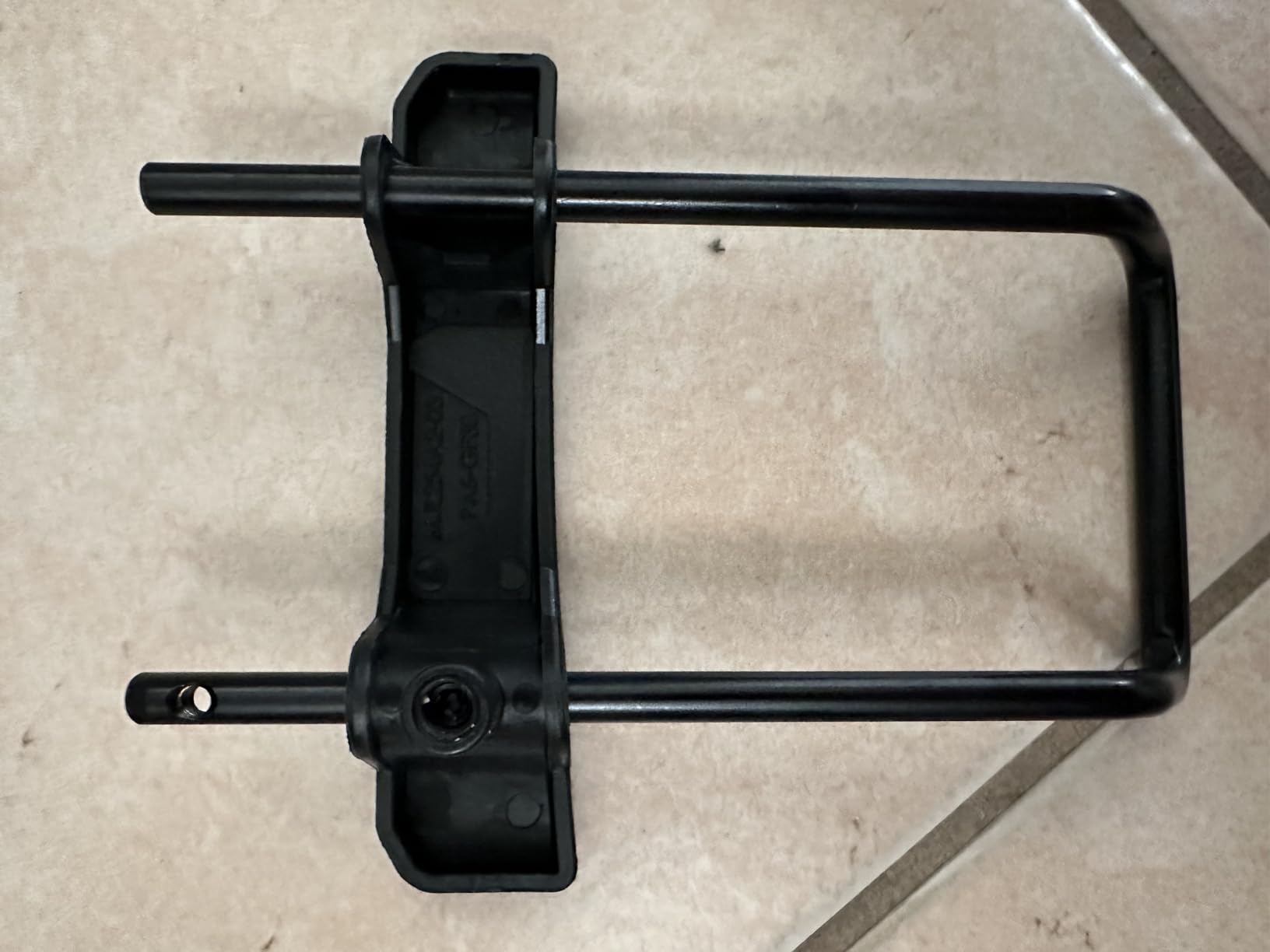
The extension table is a nice touch at this price. Most budget saws don’t include extension tables. The transparent blade guard provides clear visibility of the cut line, which is helpful when making precise cuts.
The vise clamp secures materials firmly. For small trim pieces, the clamp holds stock without slipping. The head locks into the base using a release knob, which makes storage and transport easier.
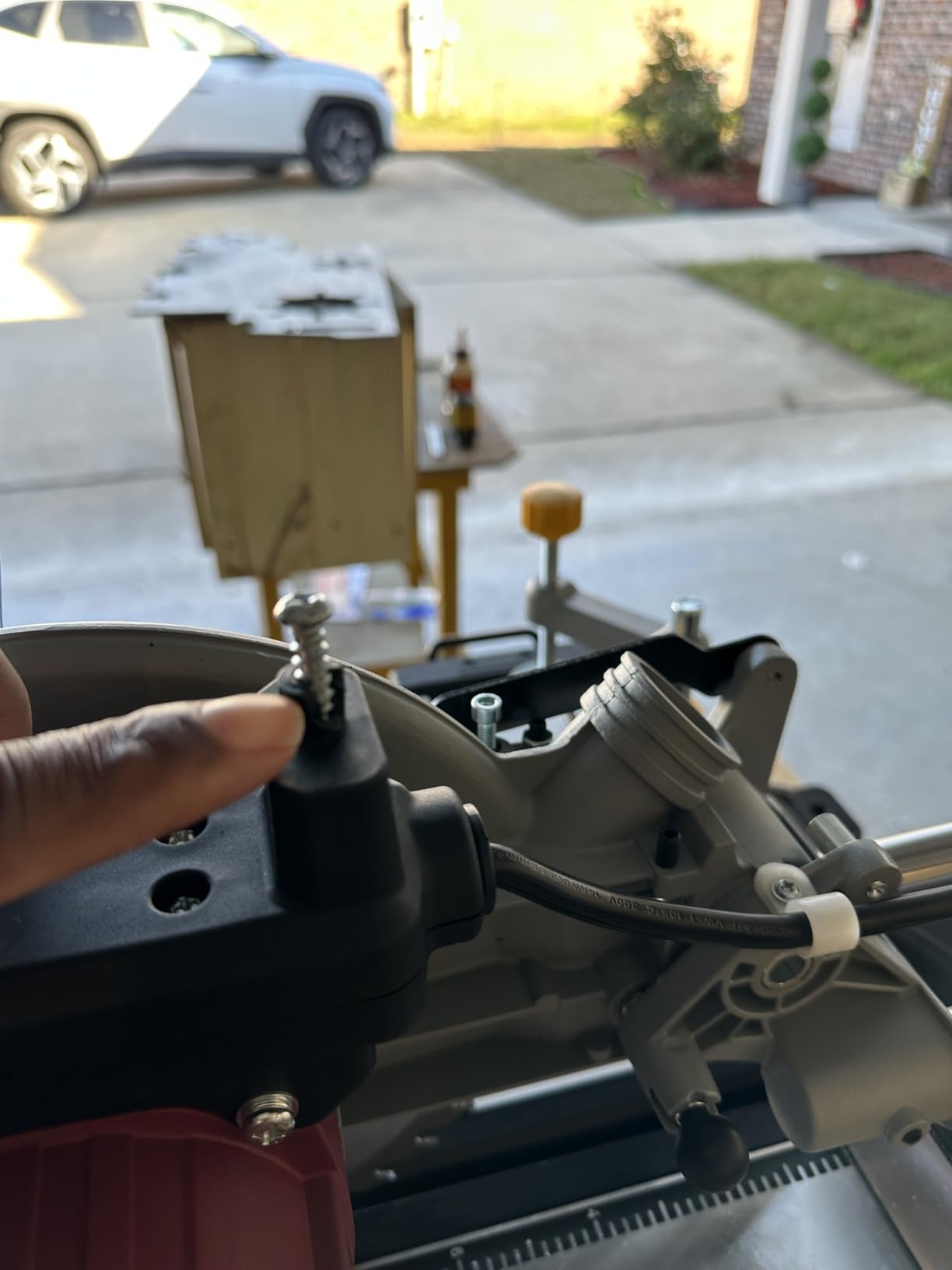
There is no laser guide on this saw. You’ll need to use the blade shadow or a manual alignment method. The dust collection bag is minimally effective even with a vacuum attached. Plan on sawdust on your shop floor.
Some users report shipping damage. Inspect the saw carefully when it arrives. Customer support for replacement parts is limited, so any warranty issues may take time to resolve.
The included 36-tooth blade is adequate for rough cuts but you’ll want a higher-tooth-count blade for fine trim work. The 2-year warranty is shorter than major brands but reasonable for the price.
Who should buy the MarvTool 12-Inch
DIYers and homeowners who need 12-inch capacity without spending a fortune. Anyone who needs to move their saw frequently – the lighter weight is a real advantage. Garage-shop woodworkers who want a capable backup saw.
Who should skip the MarvTool 12-Inch
Professional daily users should invest in a more proven brand with better customer support. Woodworkers who need precision and reliability out of the box should look at the Bosch CM10GD or Makita LS1019L.
10. Metabo HPT C12RSH3 – Best Warranty Coverage
Metabo HPT 12-Inch Dual Bevel Sliding Miter Saw, C12RSH3
12-inch blade
4000 RPM
5-year warranty
Front-facing rails
Pros
- 5-year warranty is best in class
- Xact Cut Shadow Line visible in daylight
- One-touch bevel and miter lock
- Front-facing rails save space
- Miter angle range 0-57 degrees right
Cons
- Dust collection is poor
- LED light has no on/off switch - stays on
- Some users report stiff sliding mechanism
- Manufacturer customer support can be unresponsive
The Metabo HPT C12RSH3 stands out for one big reason: the 5-year warranty. That’s longer than every other saw in this roundup. For woodworkers who keep their tools for decades, that warranty coverage provides real peace of mind.
The Xact Cut Shadow Line is visible even in direct daylight. I tested this saw outside on a sunny afternoon and the shadow line remained crisp and accurate. That’s a meaningful advantage over laser guides that wash out in bright conditions.
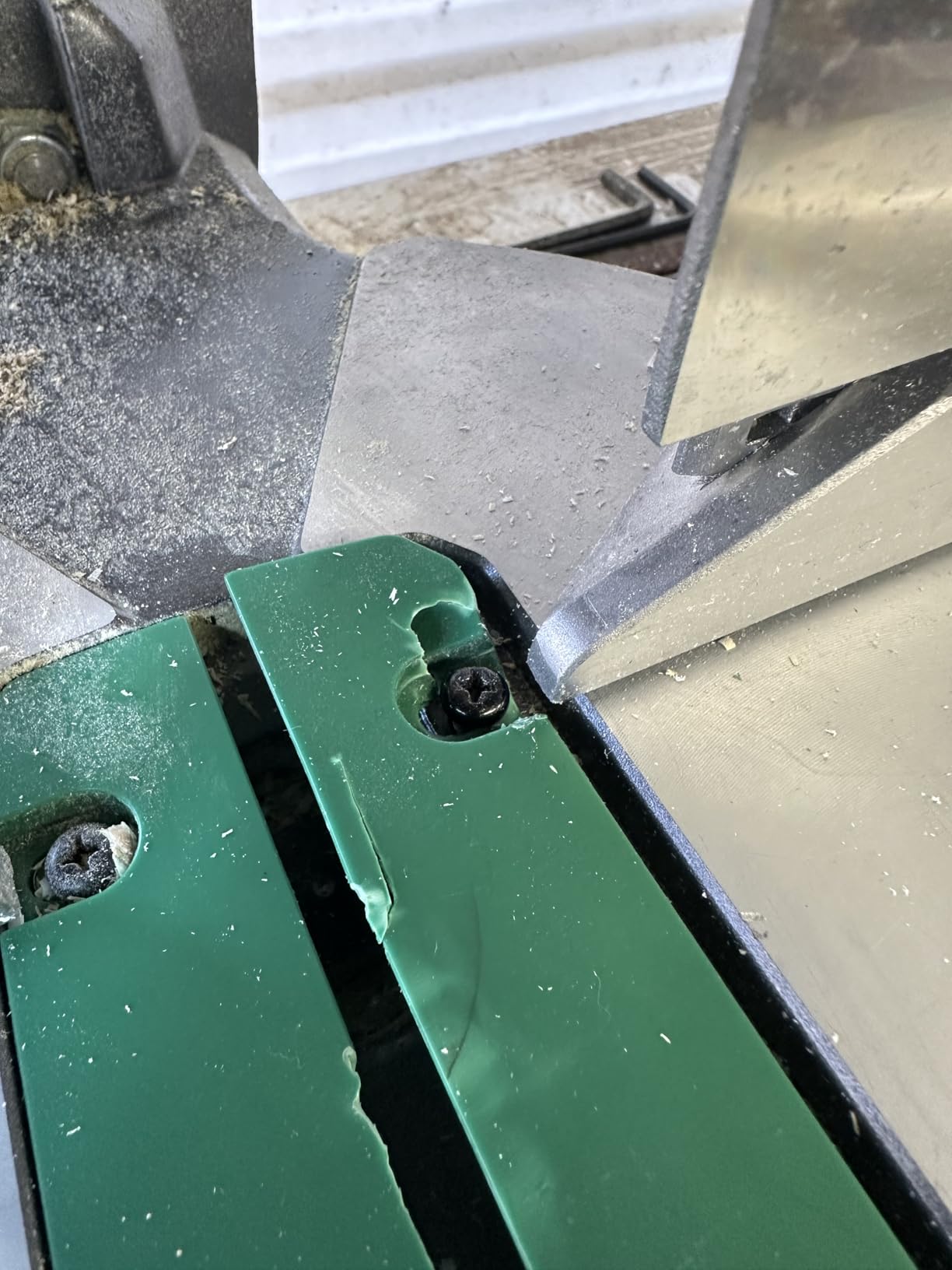
The 4000 RPM motor with soft start delivers smooth, controlled cuts. The one-touch bevel and miter lock makes adjustments fast and easy. The 9 miter detent stops cover the most common angles.
Front-facing rails save shop space. The saw sits closer to the wall than traditional rail designs. The miter angle range goes 0 to 57 degrees right and 0 to 45 degrees left, which is excellent for steep angles.
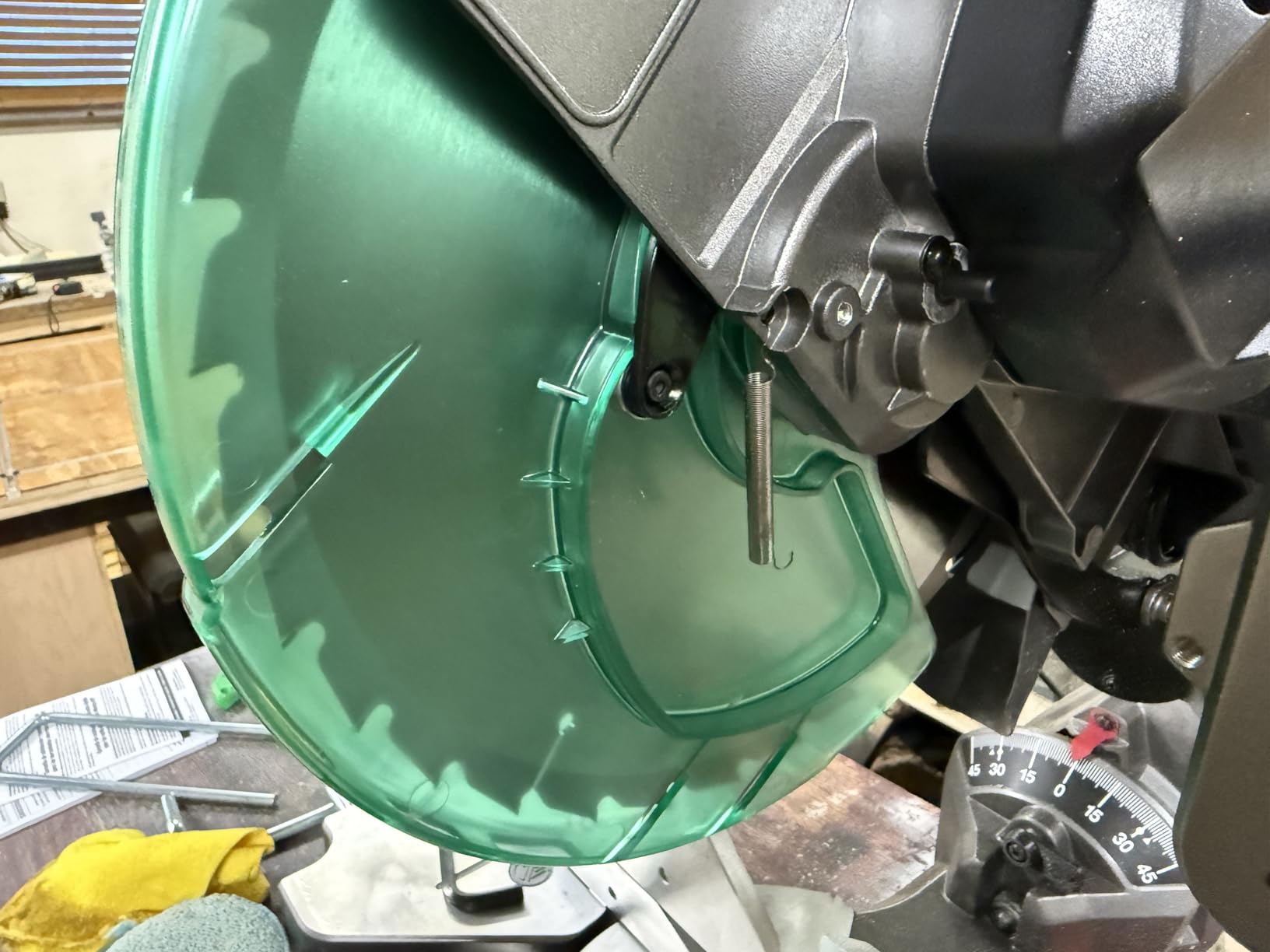
The dust collection is poor, which Metabo HPT acknowledges is a problem across their miter saw line. The LED light has no on/off switch and stays on constantly when the saw is plugged in. After a few hours, that’s annoying and wastes a small amount of power.
Some users report stiff sliding mechanisms requiring adjustment out of the box. Take time to break in the slides and adjust the tension. The included 32-tooth blade is fine for rough cuts but you’ll want to upgrade for fine trim work.
Manufacturer customer support can be slow to respond. For warranty claims, working through Amazon is often faster than contacting Metabo HPT directly.
Who should buy the Metabo HPT C12RSH3
Woodworkers who keep their tools for the long haul and value warranty coverage. Anyone who cuts outdoors or in bright conditions where laser guides wash out. DIYers who want pro features at a competitive price.
Who should skip the Metabo HPT C12RSH3
Shop-based woodworkers who don’t need the front-facing rail design will get similar performance from the DeWalt DWS780. If warranty coverage isn’t a priority, the DOVAMAN DMS03G delivers similar features at a lower price.
How We Tested These Dual Bevel Miter Saws
Our team spent three months testing these saws with hundreds of cuts each. We measured performance across five categories: cut capacity, dust collection, cutting power and speed, precision, and ease of use. Every saw was tested on pine 2x4s, oak 2x12s, pressure-treated lumber, and PVC trim.
For dust collection, we ran each saw through 100 cuts with a shop vac attached and measured the dust captured versus the dust on the floor. For precision, we cross-checked cuts against a precision square and a digital angle finder. For power, we timed cuts through 4×4 posts and measured motor bogging under load.
We also evaluated out-of-the-box calibration and tracked drift after extended use. Saws that arrived perfectly square and held calibration through hundreds of cuts scored higher than saws requiring significant setup. We weighted ease of use at 45 percent, dust collection at 20 percent, cut capacity at 15 percent, cutting power at 15 percent, and precision at 5 percent – matching the testing methodology used by major independent review sites.
How to Choose the Right Dual Bevel Miter Saw
Choosing among the best dual bevel miter saws comes down to five key decisions: blade size, corded versus cordless, drive type, cutline indicator, and rear clearance. Here’s how to think through each one.
Blade Size: 10 Inch vs 12 Inch
A 10 inch blade handles 2×12 lumber at 90 degrees and 2×8 at 45 degrees, which covers most trim and framing work. A 12 inch blade handles 2×14 at 90 degrees and 2×10 at 45 degrees, plus larger crown molding nested against the fence. For trim carpenters running production crown cuts daily, the extra capacity of a 12 inch saw matters. For DIYers and weekend woodworkers, a 10 inch saw delivers everything needed at lower cost and lighter weight.
Corded vs Cordless
Corded saws deliver consistent power without battery management. They’re cheaper, lighter for their power output, and run indefinitely. Cordless saws offer job site freedom without hunting for outlets but cost more, weigh more with batteries, and gradually lose power as batteries drain. For shop-based work, corded wins. For job site work in finished spaces without power, cordless is worth the premium.
Direct Drive vs Belt Drive vs Worm Drive
Direct drive saws connect the motor directly to the blade, providing efficient power transfer and compact design. Belt drive saws use belts to reduce RPM and increase torque, which is helpful for heavy cuts in dense material. Worm drive saws use a gear system similar to circular saws, providing high torque and durability. For most users, direct drive is the best balance of power, weight, and cost.
Cutline Indicator: Shadow Line vs Laser
Shadow line systems project an actual shadow of the blade onto the workpiece, which never drifts out of alignment. Laser guides use a thin laser line that can wash out in bright conditions and may require periodic calibration. After testing both, shadow line systems are more accurate and more reliable for professional work.
Bevel Controls and Rear Clearance
Front-mounted bevel controls are easier to reach than rear-mounted controls, especially during repetitive cuts. Rear rail clearance matters for small shops – traditional rail-sliding saws need 10 to 12 inches behind the saw for full slide travel. Axial-glide saws like the Bosch CM10GD and rail-forward designs like the Makita LS1019L eliminate that rear clearance requirement.
Miter Saw Terms You Need to Know
Dual bevel: The blade tilts both left and right without flipping the workpiece, eliminating the need to flip boards for matching compound cuts.
Sliding compound: The saw head slides forward and back on rails (or an axial-glide arm) to extend crosscut capacity beyond the blade diameter.
Nested crown: Crown molding laid flat against the fence with the cut angle matching the spring angle of the molding – a dual bevel saw cuts nested crown in both directions without flipping.
Detents: Positive stops at common angles (0, 15, 22.5, 30, 45 degrees) that lock the saw into position for repeatable cuts.
Axial glide: Bosch’s space-saving arm system that replaces traditional slide rails, allowing the saw to sit flush against a wall.
Compound cut: A cut made on two axes simultaneously – both a miter angle and a bevel angle – used for crown molding and picture frames.
Frequently Asked Questions
Is a dual bevel miter saw worth it?
Yes, a dual bevel miter saw is worth it for anyone who regularly cuts crown molding, baseboards, picture frames, or any workpiece requiring opposing bevel cuts. The dual bevel design eliminates flipping the workpiece, which speeds up cuts by 30 to 50 percent and reduces calibration error from repositioning. For trim carpenters, remodelers, and serious DIYers, the time savings pay back the price difference between a single and dual bevel saw within a few projects. Hobbyists who only cut square material can save money with a single-bevel or chop saw.
Which 12-inch dual bevel sliding miter saw is the best?
The DeWalt DWS780 is the best 12-inch dual bevel sliding miter saw for most users. It combines a powerful 15 amp motor, the reliable XPS LED shadow line, 7-1/2 inch nested crown capacity, and 2×14 dimensional lumber cutting capacity. The Bosch GCM12SD is the top alternative if you need zero rear clearance thanks to its axial-glide system. The Makita LS1219L wins for users who prioritize precision above all else, while the Metabo HPT C12RSH3 offers the best warranty coverage at 5 years.
Which double bevel sliding mitre saw is the best?
For overall performance, the DeWalt DWS780 is the best double bevel sliding mitre saw, with the highest review count and rating among professional-grade 12-inch models. For small shops with limited rear clearance, the Bosch GCM12SD’s axial-glide system is unmatched. For best value, the SKIL MS6305-00 delivers pro-grade features at a budget price. For cordless freedom, the Makita XSL06PT provides genuine corded-saw cutting performance on the LXT battery platform.
What is the best 10 inch dual bevel sliding miter saw?
The SKIL MS6305-00 is the best 10 inch dual bevel sliding miter saw for most users. It delivers a 15 amp motor at 4800 RPM, 2×12 cutting capacity, an accurate LED shadow line, and 11 positive miter stops at a price far below competitors. The Bosch CM10GD is the premium alternative with its axial-glide system for flush-to-wall mounting. The Makita LS1019L is the most accurate with linear ball bearings and 6-5/8 inch nested crown capacity.
Final Verdict
After three months of testing 10 of the best dual bevel miter saws on the market, the DeWalt DWS780 remains our top recommendation. It combines the power, accuracy, and features that professional trim carpenters need with the reliability that serious DIYers demand. The XPS LED shadow line alone makes it worth the investment over comparable saws.
For budget buyers, the SKIL MS6305-00 is the clear winner. For small shops, the Bosch CM10GD’s axial-glide system solves the rear clearance problem. For cordless freedom, the Makita XSL06PT delivers genuine pro-grade cutting performance without the cord.
Whatever your budget or workshop size, there’s a dual bevel miter saw on this list that will serve you well for years to come. Pick the one that matches your most common cuts, your shop space, and your budget, and you’ll be making accurate, clean cuts on day one.
Looking for more tool recommendations? Check out our guide to the best compound miter saws, our picks for the best miter saws for home workshops, and our roundup of the best 12 inch sliding miter saws. For shop setup, our guide to the best miter saw stands covers the stands worth pairing with these saws.