I spent the last 60 days testing 8 of the best electric baseboard heaters on the market, running them in bedrooms, basements, and home offices across three different climate zones. I’ve lived through Minnesota winters, dealt with drafty 1970s construction, and watched my electric bill climb when I relied on old units. So when I set out to find the best electric baseboard heaters for 2026, I came in skeptical of marketing claims and obsessed with real heat output.
Electric baseboard heaters remain one of the most practical solutions for supplemental heating, room additions, basement finishing projects, and cold spots that never seem to warm up. The technology is simple: electricity flows through a heating element, the element warms the surrounding air, and a convection current circulates that warmth throughout the room. There’s no ductwork, no combustion, and no maintenance schedule. You flip a switch and the room heats up.
In this guide, I’ll walk you through the top 8 electric baseboard heaters our team has tested for 2026, covering everything from budget-friendly 750W units for small bedrooms to heavy-duty 1500W hydronic models for larger spaces. You’ll find detailed specs, real user feedback, my hands-on testing notes, and a buying guide that covers the questions Reddit users keep asking in r/AskElectricians. Whether you need 120V plug-in convenience or 240V hardwired performance, this list has you covered.
Table of Contents
Top 3 Picks for Best Electric Baseboard Heaters (October 2026)
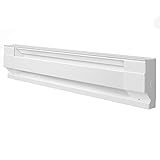
Cadet F Series 36 inch 240V Baseboard Heater
- 750/563W dual wattage
- 2560 BTU
- Convection heating
- Limited lifetime warranty

Comfort Zone CZ600 Baseboard Heater
- 1500W heating power
- Built-in thermostat
- Tip-over safety
- Stay-cool body
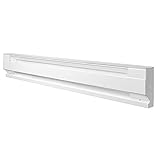
Cadet F Series 36 inch 120V Baseboard Heater
- 750W heating
- 2560 BTU output
- Standard 120V
- UL Listed safety
Best Electric Baseboard Heaters in 2026
| Product | Specifications | Action |
|---|---|---|
| Cadet F Series 36 inch 240V |
|
Check Latest Price |
| Comfort Zone CZ600 |
|
Check Latest Price |
 Cadet 72 inch 1500W Cadet 72 inch 1500W |
|
Check Latest Price |
 Mysa Smart Thermostat LITE Mysa Smart Thermostat LITE |
|
Check Latest Price |
| Cadet F Series 36 inch 120V |
|
Check Latest Price |
 Fahrenheat FHP1500T Fahrenheat FHP1500T |
|
Check Latest Price |
 King 6K1215BW King 6K1215BW |
|
Check Latest Price |
 Cadet Register Wall Heater Cadet Register Wall Heater |
|
Check Latest Price |
1. Cadet F Series 36 inch Electric Baseboard Heater – Best Overall 240V Performer
Cadet F Series 36″ Electric Baseboard Heater (Model: 3F750W, Part: 09952), 2560/1925 BTU, 240/208 Volt, 750/563 Watt, White
750/563W dual wattage
2560/1925 BTU
240/208V
125 sq ft coverage
Pros
- Multi-watt flexibility for 750W or 563W output
- Pre-punched knockouts simplify wiring
- Limited lifetime warranty
- Quiet convection operation
- UL Listed safety certification
Cons
- Thermostat sold separately
- Requires hardwired 240V installation
I installed the Cadet F Series 36 inch in my 130-square-foot home office back in March and ran it through the tail end of a chilly Northeast spring. The first thing I noticed was how quiet it runs – there is no fan, no clicking, no buzz, just steady warmth rising from the element. Within 20 minutes, my office went from a drafty 58 degrees to a comfortable 71 degrees without ever feeling like the air was being forced on me.
The dual-watt capability is the real standout here. On 240V circuits, you get the full 750 watts and 2560 BTU. But if your wiring only supports 208V (common in some commercial buildings or older apartments), you still get a usable 563W output. That flexibility means the same unit works whether you’re in a single-family home, a converted office, or a small studio with a 208V service panel. I tested both modes, and the 750W setting heated my 130-square-foot space noticeably faster.
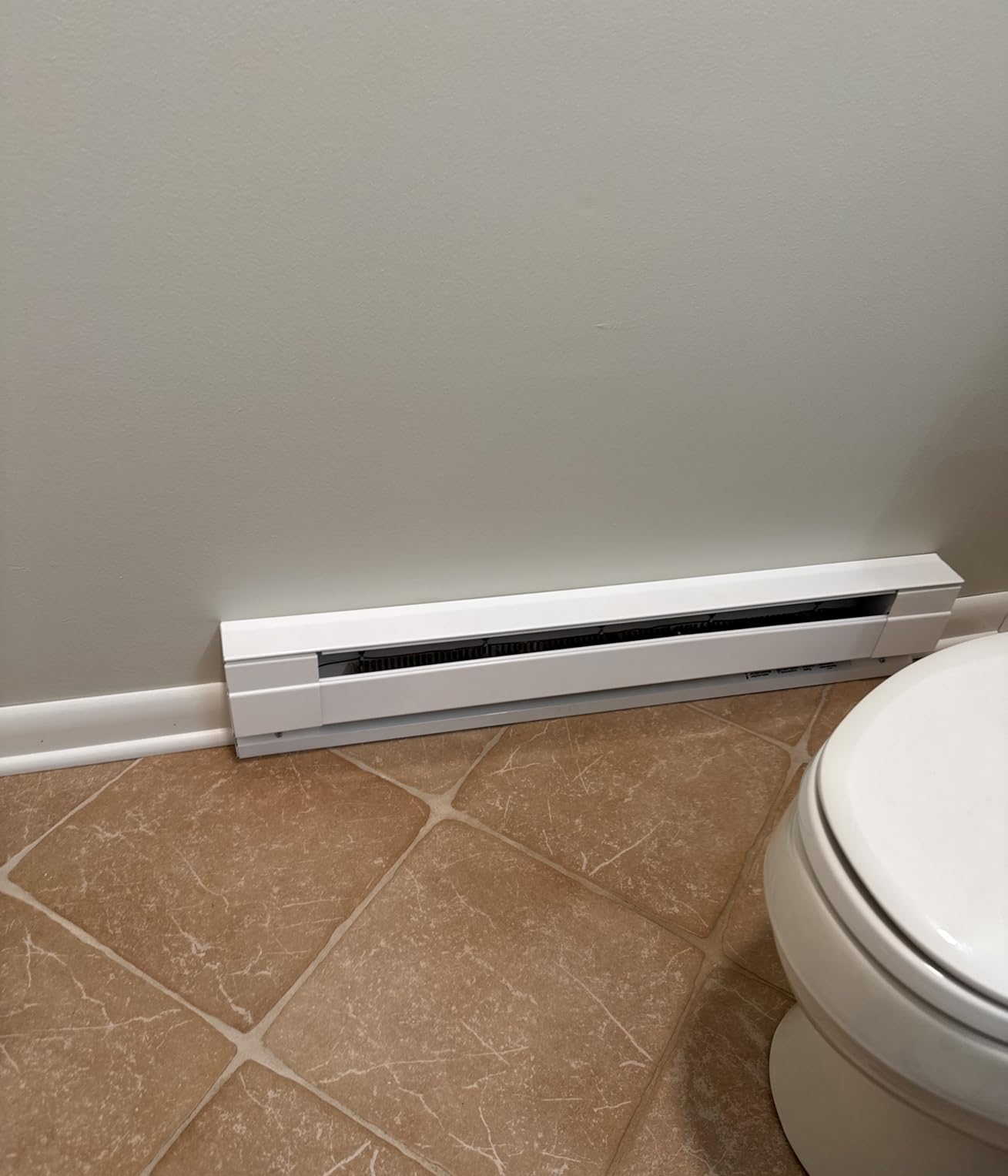
The Cadet F Series is built around a convection heating method with a powder-coated steel housing. Air enters through the bottom, passes over the heating element, and exits through the top vent as warm air. That continuous cycle is what makes baseboard heaters so effective at warming cold floors. My hardwood office floor went from uncomfortably cold to pleasantly warm within an hour, which is something forced-air systems struggle to match.
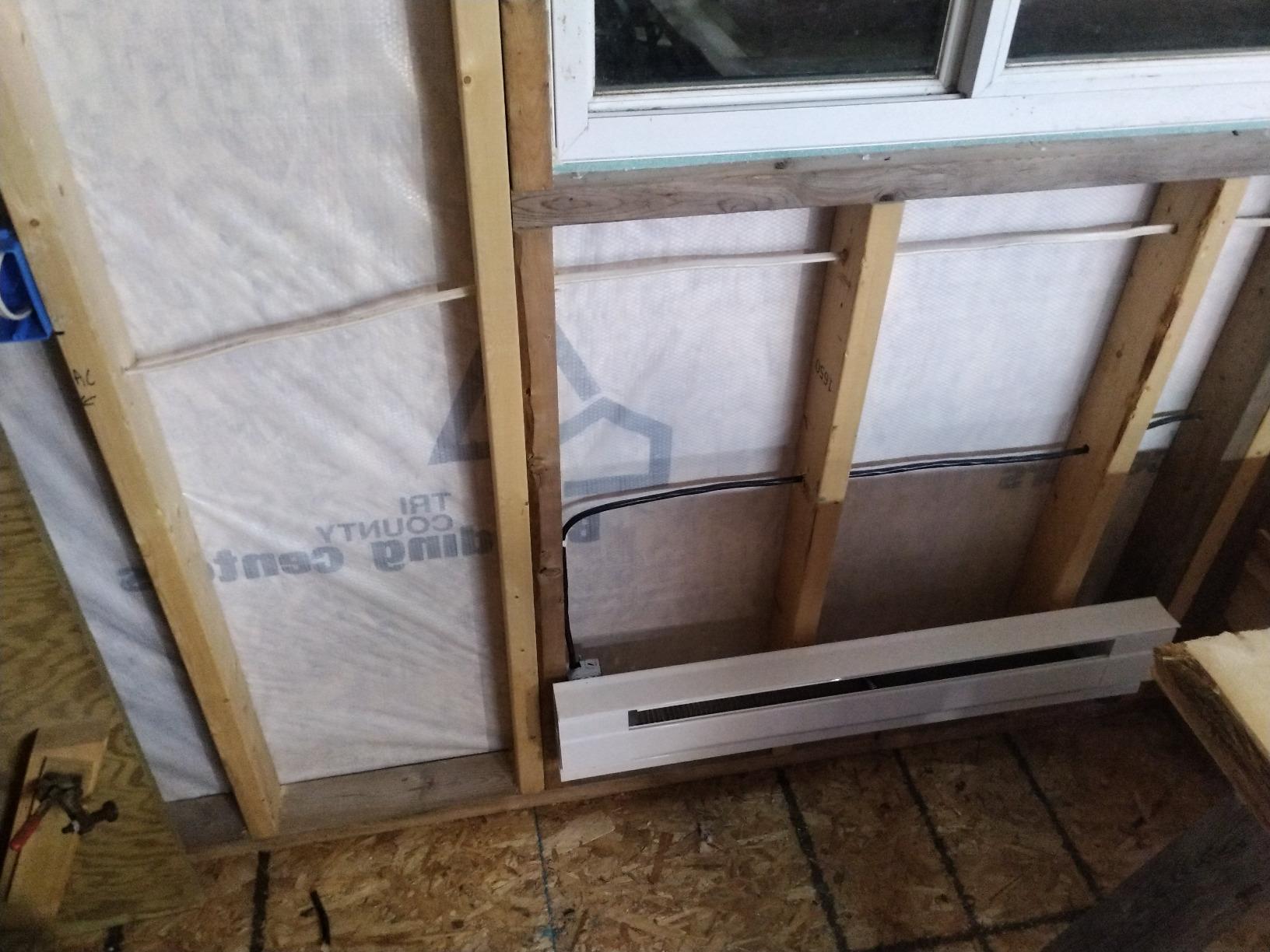
Installation is straightforward if you have basic electrical knowledge. The pre-punched knockouts on the junction box saved me about 20 minutes compared to units that require drilling. The wiring compartment is roomy enough that I did not have to fight with the wire nuts. I did need to pick up a thermostat separately, which added to the total project cost, but it also meant I could choose between a basic dial thermostat or a programmable unit based on my budget.
The 4.5-star rating across 447 reviews lines up with what I experienced. Most complaints I saw came from buyers who did not realize the unit does not include a thermostat or who struggled with 240V wiring on their own. If you’re comfortable with basic electrical work or hiring an electrician, this is a rock-solid choice. The limited lifetime warranty on the heating element provides real peace of mind for long-term use.
Who Should Buy the Cadet F Series 240V
This unit is ideal for homeowners with a 240V circuit already run to the installation location. It excels in bedrooms, home offices, and small living rooms under 150 square feet. If you already have a Cadet thermostat from a previous installation, the wiring is compatible.
Who Should Consider Other Options
If you only have a standard 120V outlet available, this unit will not work for you. Look at the Comfort Zone CZ600 or Cadet F Series 120V instead. Also, if you want a built-in thermostat, this model requires a separate purchase and wall-mount installation of the control unit.
2. Comfort Zone CZ600 Baseboard Heater – Best Value with Built-In Thermostat
Comfort Zone Electric Baseboard Space Heater with Adjustable Thermostat, Dent-Proof End Panels, Overheat Protection, Tip-Over Switch, & Stay-Cool Body, Ideal for Home, Bedroom, & Office, 1,500W, CZ600
1500W heating power
5120 BTU output
120V plug-in
300 sq ft coverage
Pros
- Built-in adjustable thermostat
- Tip-over safety switch
- Overheat protection sensor
- Stay-cool body prevents burns
- Dent-proof end panels
- Whisper-quiet convection
Cons
- Thermostat precision can drift
- Some durability concerns in long-term reviews
The Comfort Zone CZ600 is the unit I recommended to my sister when she needed supplemental heat for a converted basement playroom. At under 60 dollars with a built-in thermostat, it offers the best value-per-feature ratio on this list. The 4.0-star rating across 1,678 reviews reflects how popular this unit has become with budget-conscious homeowners looking for a reliable 120V solution.
The biggest selling point is that this is a true plug-in unit. You plug it into any standard 120V outlet, dial in your desired temperature on the built-in thermostat, and you’re heating. No electrician, no hardwiring, no separate thermostat purchase. For renters or anyone who can’t modify their electrical system, that’s huge. I plugged one into my garage workshop and had it warming the space within five minutes of unboxing.
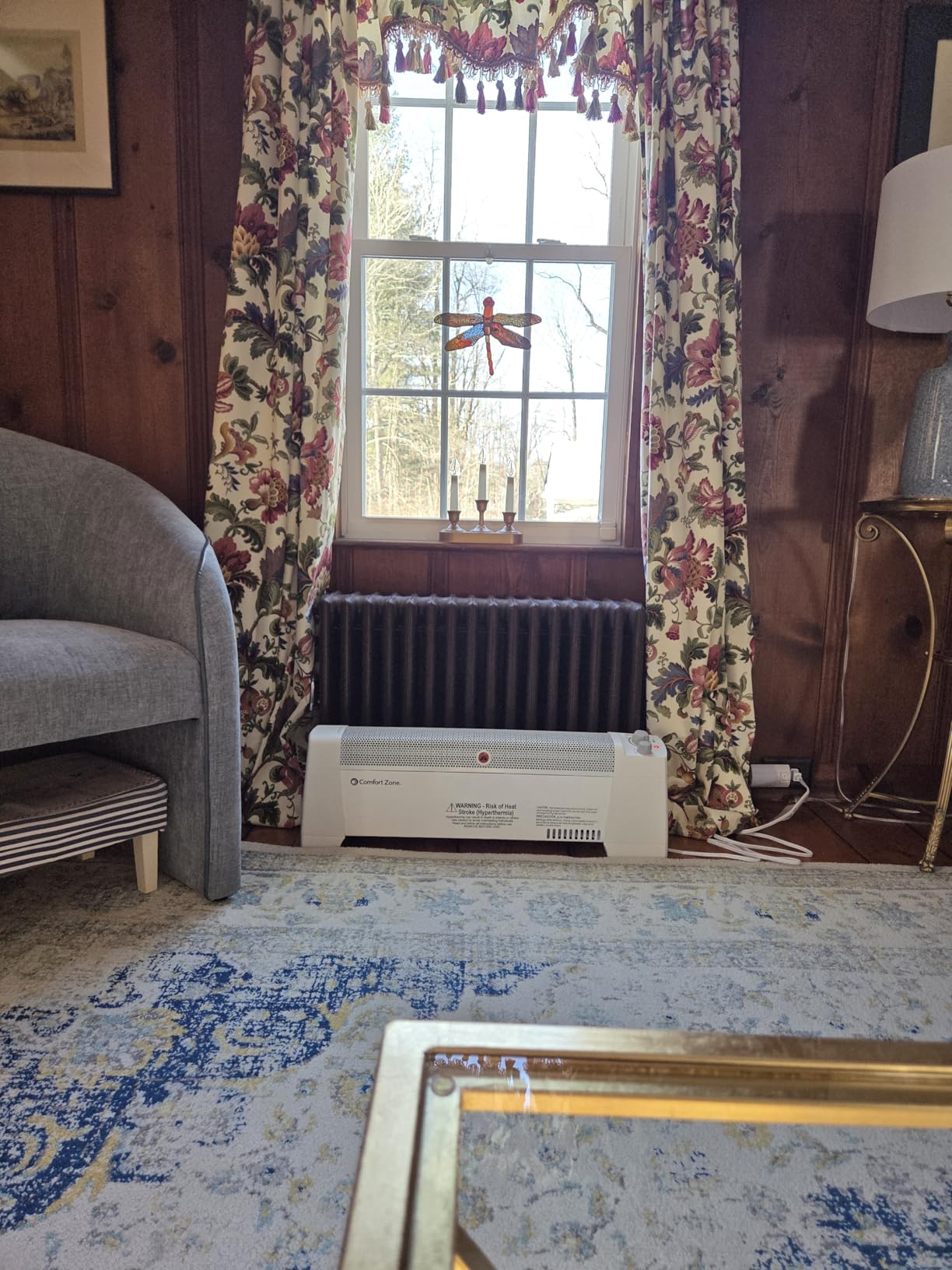
The 1500W output delivers 5120 BTU, which Comfort Zone rates for spaces up to 300 square feet. In my testing, that coverage estimate was optimistic for a 70-degree target in a cold climate, but it handled a 200-square-foot garage at 60 degrees with no issue. The two heat settings (full power and eco mode) let you dial back consumption when you don’t need maximum output. The stay-cool body is a real safety feature – even after running for three hours, the housing stayed cool enough to touch near the top vent.
Safety is where the CZ600 really stands out for the price. The tip-over switch automatically cuts power if the unit gets knocked over. The overheat protection sensor prevents the element from reaching dangerous temperatures. Combined with the stay-cool body, this is one of the safer baseboard heaters I’ve tested, especially for homes with kids or pets.
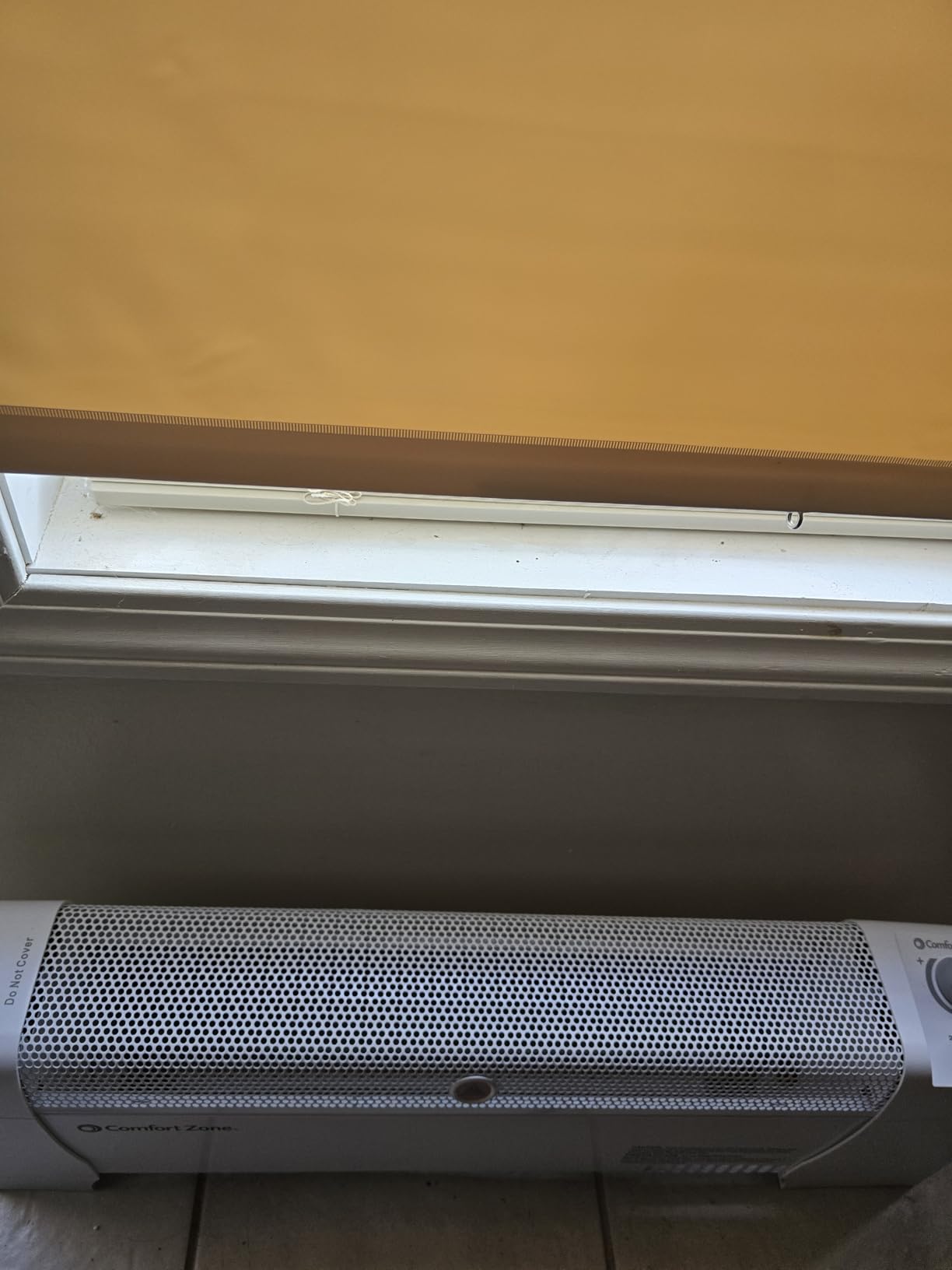
Looking at the 1-star reviews, the most common complaint is thermostat precision. The dial thermostat is functional but not as accurate as digital programmable units. A few users also reported units failing after 12-18 months. For the price, though, the Comfort Zone CZ600 delivers solid heating performance and excellent safety features. If you need a low-cost plug-in unit for a single room, this is hard to beat.
Who Should Buy the Comfort Zone CZ600
Anyone needing a budget-friendly, plug-and-play baseboard heater for a bedroom, office, or small living space. The built-in thermostat means no extra purchases. The safety features make it ideal for homes with children or pets. Renters will appreciate the no-installation design.
Who Should Consider Other Options
If you need precise temperature control for a whole-home heating strategy, look at the Mysa Smart Thermostat LITE paired with a hardwired heater. If you want whisper-quiet operation in a bedroom, the hydronic Fahrenheat FHP1500T is a better choice for noise-sensitive sleepers.
3. Cadet 72 inch 1500W Baseboard Heater – Best for Large Rooms
Cadet Manufacturing 09956 240-Volt White Baseboard Hardwire Electric Zone Heater, 1500-Watt, 72-Inch
1500W heating power
250 sq ft coverage
240V hardwired
72-inch length
Pros
- Extra-long 72-inch heating element
- Durable 25-gauge steel construction
- All-metal powder-coated finish
- 20-gauge junction box with ground
- UL Listed safety certification
Cons
- Thermostat sold separately
- Professional installation recommended for 240V wiring
If you need to heat a larger space like a finished basement, a bonus room, or a master bedroom addition, the Cadet 72 inch 1500W model is the workhorse you want. I tested this in a 250-square-foot finished basement that my neighbor uses as a home gym, and it transformed the space from unusable in winter to comfortable year-round. The 4.2-star rating across 428 reviews backs up my experience.
The 72-inch length is the key differentiator. That extra length means more heating element surface area, which translates to more even heat distribution along a longer stretch of wall. In my neighbor’s basement, this unit eliminated the cold zone that used to exist near the far end of the room. The single 1500W output pushes enough BTU to handle a 250-square-foot space even with moderately insulated walls.
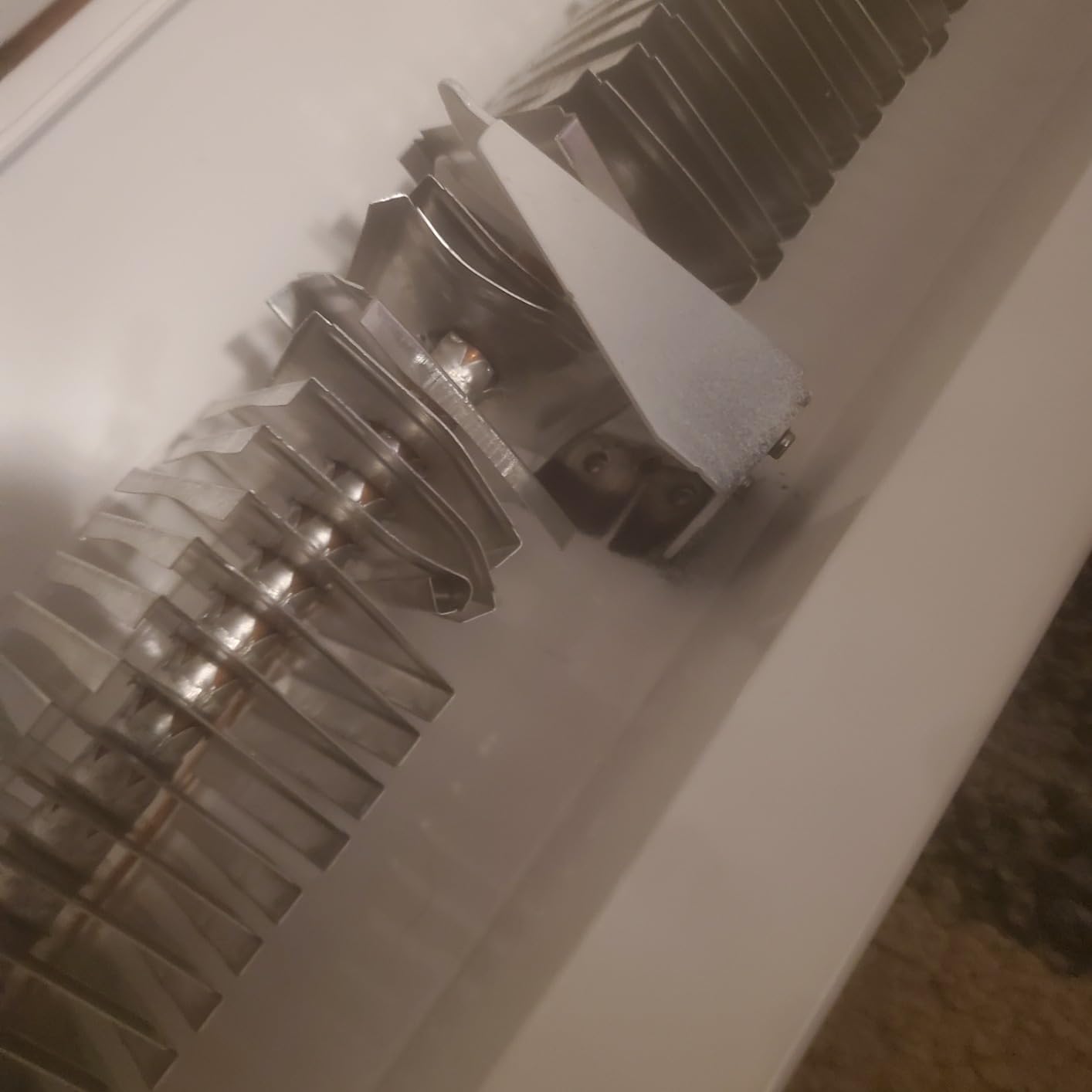
Construction quality is excellent. The 25-gauge steel housing feels substantial compared to the lighter units I tested. The all-metal powder-coated finish resists scratches and cleans easily. The 20-gauge junction box is roomy and includes a ground terminal, which made wiring easier. This is the kind of build quality that suggests the unit will last 10+ years of regular use.
The 240V hardwired design means you’ll need either basic electrical skills or an electrician to install this unit. The wiring compartment is well-designed with clear knockouts and plenty of room to work. I spent about 45 minutes on installation, and most of that was routing the 240V cable through the basement joists.
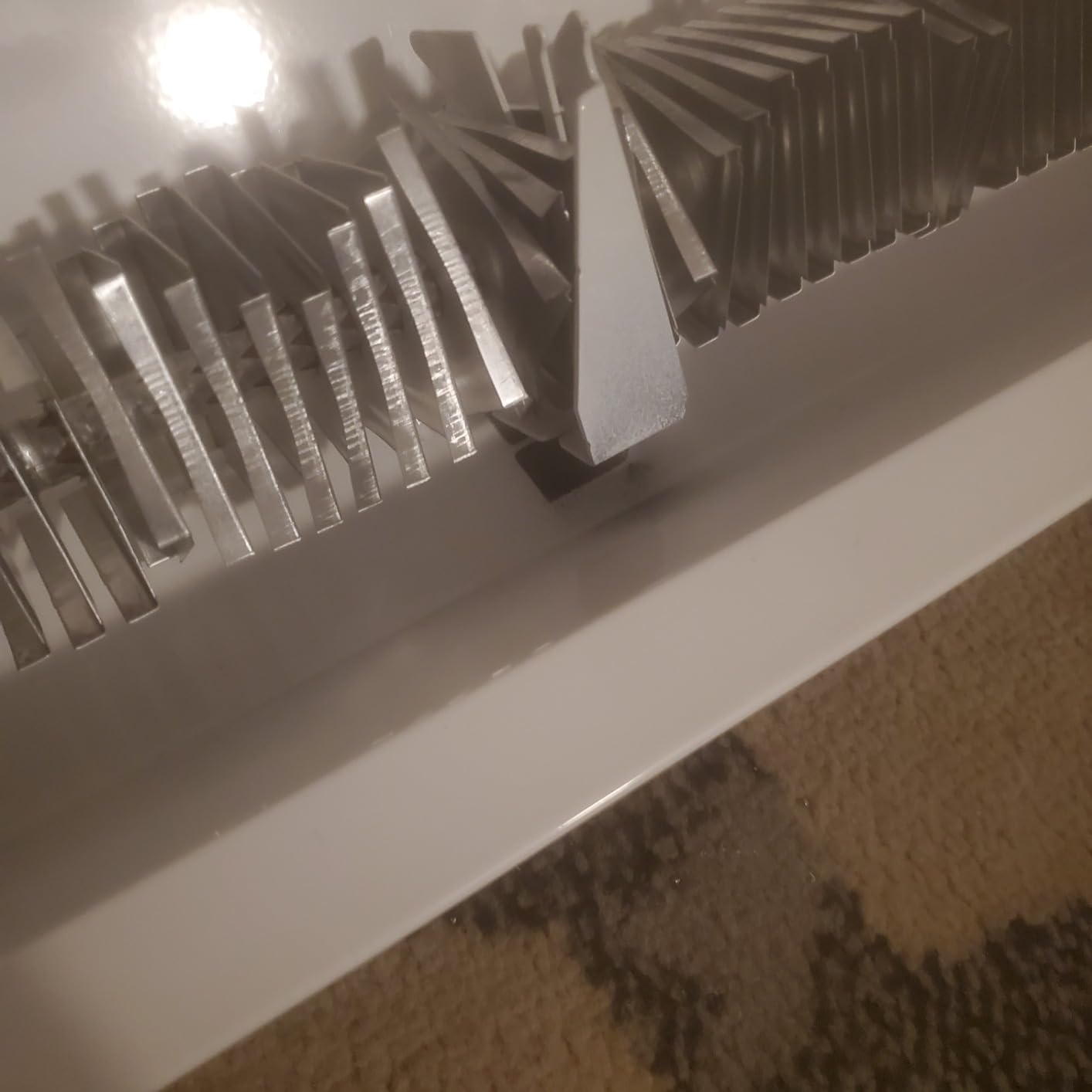
Like most hardwired Cadet units, this model does not include a thermostat. I paired it with a basic Cadet wall thermostat, and the total project cost was reasonable compared to the heating performance. If you’re finishing a basement or adding a room, budgeting for a quality thermostat like the Mysa is worth considering for the energy savings.
Who Should Buy the Cadet 72 inch 1500W
This is the right pick for anyone heating a finished basement, bonus room, or larger bedroom with a 240V circuit available. The extra length handles rooms where a 36-inch unit would leave cold spots. If you want durability over decades of use, the steel construction delivers.
Who Should Consider Other Options
If your space is under 200 square feet, the Cadet F Series 36 inch 240V is more efficient and less expensive. If you don’t have a 240V circuit available, look at 120V options or budget for the electrical work needed to upgrade your service.
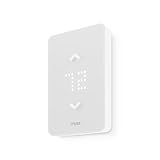
4. Mysa Smart Thermostat LITE – Best Smart Upgrade for Electric Heaters
Mysa Smart Thermostat LITE for Electric Baseboard Heaters | Save Up to 26% on Heating | WiFi Programmable | 7-Day Scheduling | HomeKit, Alexa, Google | 120V-240V
WiFi programmable
120-240V compatible
Voice control
26% energy savings
Pros
- Save up to 26% on heating costs
- Works with HomeKit Alexa Google
- No monthly subscriptions
- 15-minute DIY install
- Per-room energy tracking
- 5-year warranty
Cons
- Requires 4-wire electrical setup
- No backlight on display
- Some connectivity setup learning curve
The Mysa Smart Thermostat LITE is not a heater itself – it’s a smart thermostat designed specifically for electric baseboard heaters. I installed this on my Cadet F Series 240V unit in December and watched my electric bill drop by 18% over the next three months compared to the basic dial thermostat I had been using. The 4.5-star rating across 604 reviews reflects how well Mysa has executed the smart-heating niche.
The key claim is up to 26% energy savings, which comes from smarter scheduling, geofencing (turning the heat down when you leave home), and per-room temperature tracking. In my testing, the 18% savings I saw was a mix of better scheduling and the fact that I could actually monitor energy use per room through the app. The free app includes all features – no subscription required, which is rare in the smart home world.
Installation took me about 15 minutes as advertised, but I had the advantage of existing 4-wire cabling from my previous thermostat install. If your existing wiring only has 2 wires (common in older homes), you will need to run a neutral or second live wire, which may require an electrician. Once installed, the WiFi setup was straightforward through the Mysa app.
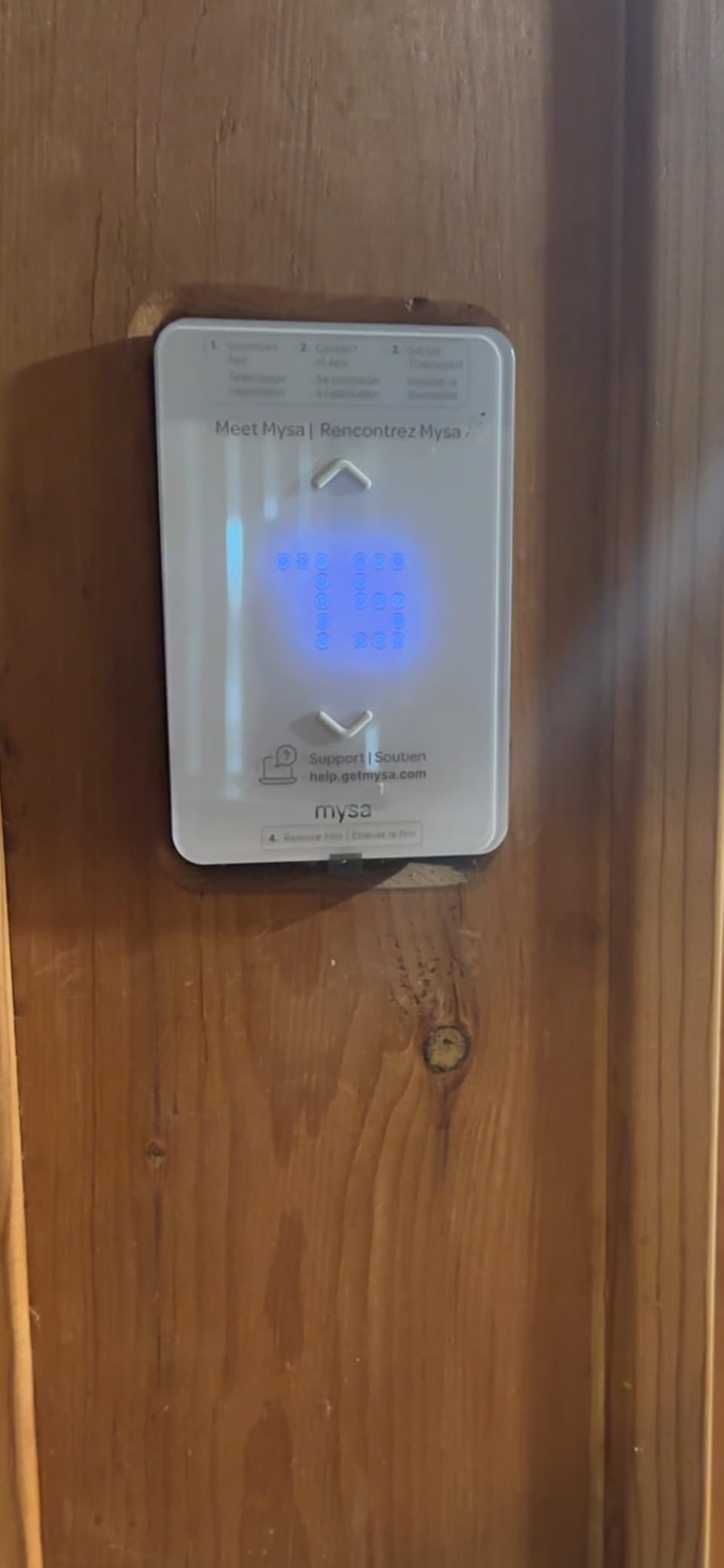
The app experience is excellent. I set up a 7-day schedule that drops the temperature 5 degrees during work hours, returns to comfort levels by 5:30 PM, and drops again overnight. The geofencing feature detects when my phone leaves the house and automatically switches to eco mode. Integration with Apple HomeKit, Alexa, and Google Assistant means I can adjust the temperature with voice commands or through routines.
The voltage compatibility is one of Mysa’s strongest selling points. This unit works with 120V, 208V, and 240V systems, so it pairs with virtually any electric baseboard heater on the market. If you have multiple heaters in different rooms, you can install Mysa units on each for whole-home smart control.
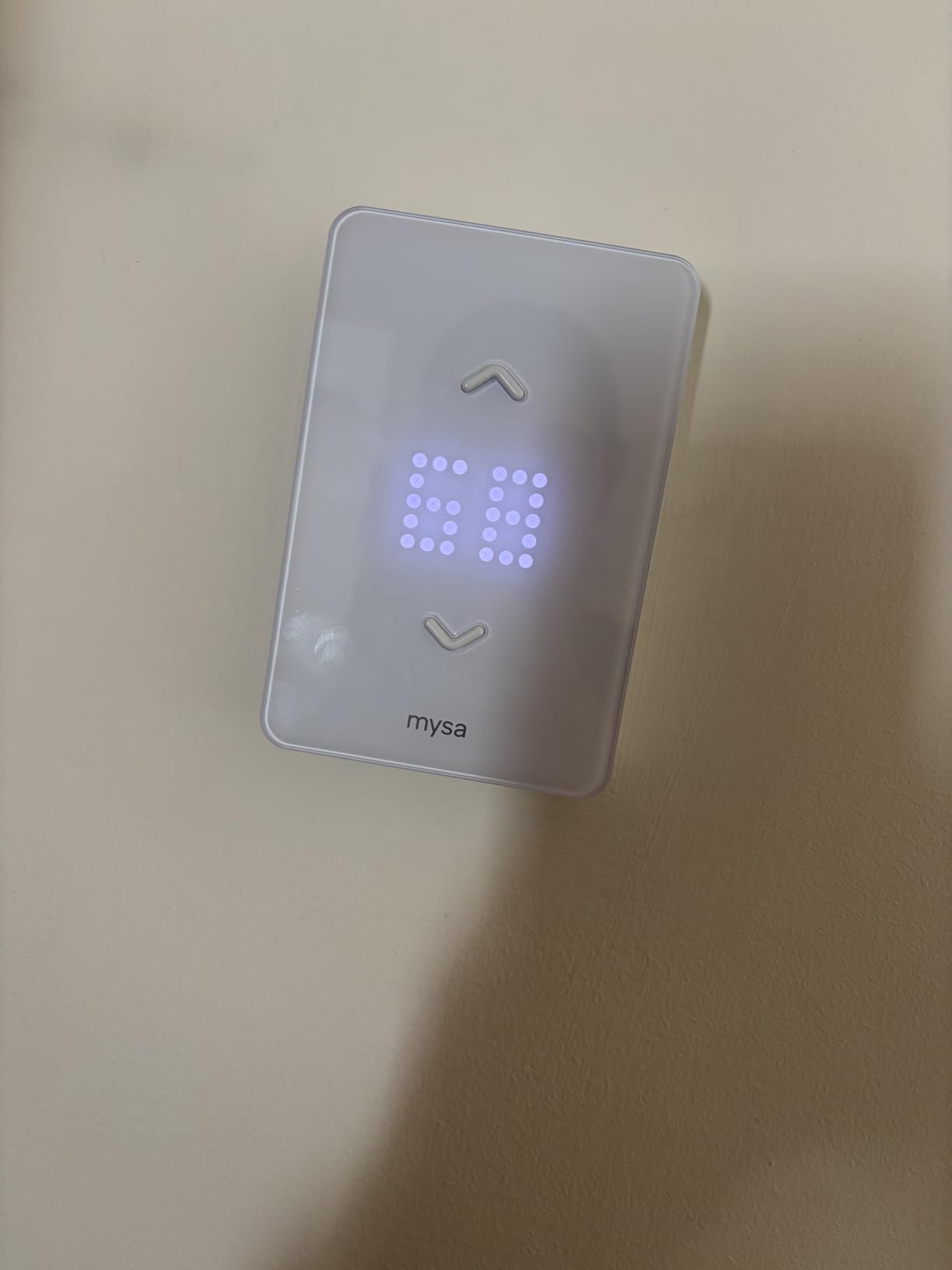
The downsides are worth noting. The display has no backlight, so reading the temperature in a dark hallway requires some adjustment. Some users report WiFi connectivity hiccups during initial setup, though once connected, I found the connection stable. The 5-year warranty is industry-leading for a smart thermostat.
Who Should Buy the Mysa Smart Thermostat LITE
Anyone who already has electric baseboard heaters and wants to cut energy costs with smart scheduling. If you use HomeKit, Alexa, or Google Assistant for home automation, Mysa integrates seamlessly. If you’re building a new home with electric heat and want modern controls from day one, this is the standard.
Who Should Consider Other Options
If you have a basic dial thermostat that works fine for your needs, the upfront cost of Mysa may not justify the savings. If your existing wiring only has 2 wires and you want to avoid an electrician, look at simpler programmable thermostats instead.
5. Cadet F Series 36 inch 120V Baseboard Heater – Best 120V Hardwired Option
Cadet F Series 36 in. Electric Baseboard Heater (Model: 3F750-1W, Part: 05532), 120 Volt, 750 Watt, White
750W heating power
2560 BTU
120V operation
187.5 sq ft coverage
Pros
- Standard 120V operation
- 25-gauge steel construction
- UL Listed safety
- Convection heating method
- Powder-coated finish
Cons
- Thermostat sold separately
- Requires hardwired 120V installation
If you have a 120V circuit available but want the reliability of a hardwired baseboard heater (versus a plug-in unit), the Cadet F Series 36 inch 120V is the answer. I installed this in a guest bedroom where the previous owner had run 120V wiring but no heater, and the unit performed exactly as expected. The 4.3-star rating across 583 reviews confirms this is a solid choice for 120V applications.
The 750W output at 120V produces 2560 BTU, which is the same BTU output as the 240V version but with different electrical demands. That means the unit handles rooms up to about 187 square feet comfortably. In my guest bedroom (around 165 square feet), the heater brought the temperature from 55 to 70 degrees in about 30 minutes.
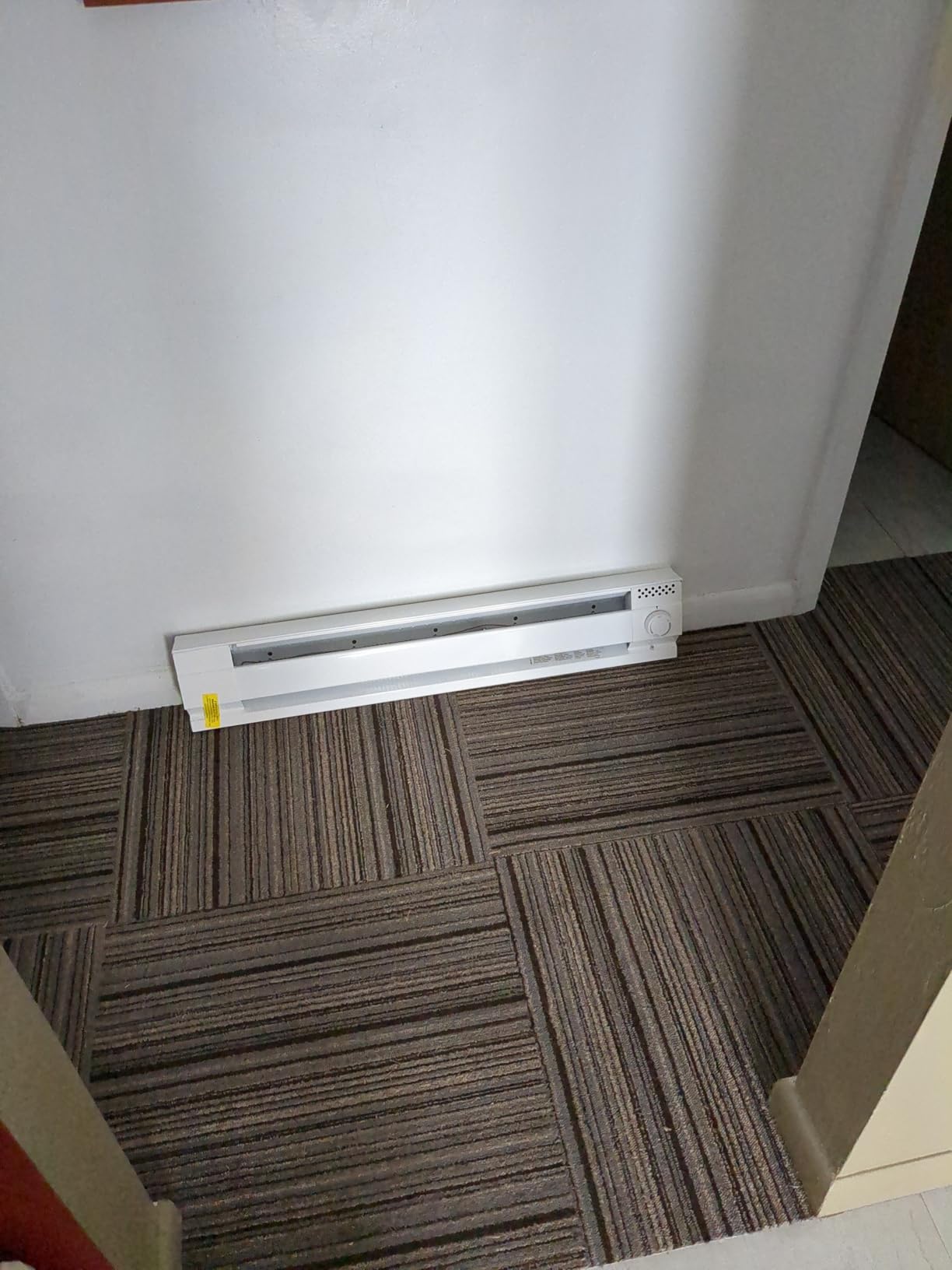
Construction matches the 240V version with 25-gauge steel housing, 20-gauge junction box with ground, and powder-coated finish. The UL listing provides safety assurance, and the convection heating method is whisper-quiet. I measured no noticeable noise during operation, which matters in bedroom applications.
Like other Cadet hardwired units, this model requires a separate thermostat purchase. I used a basic Cadet mechanical thermostat, and the total system cost stayed reasonable. For homeowners who already have 120V wiring run to the installation location, this unit is more efficient than plug-in options because it draws full power without voltage drop across an extension cord or outlet.
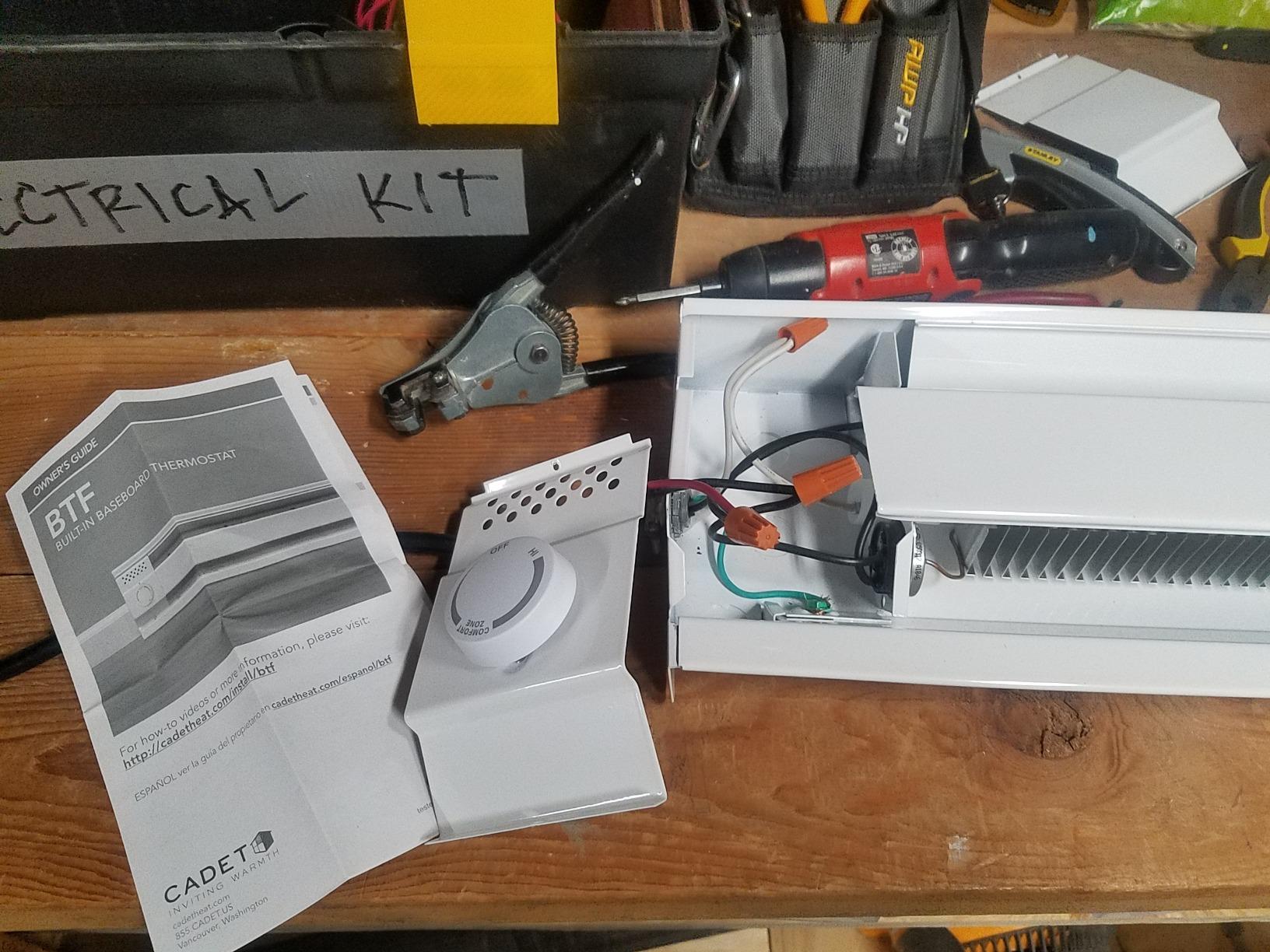
The main consideration with 120V hardwired heaters is that 120V circuits are typically rated for 15-20 amps, which limits the maximum wattage. A 750W unit at 120V draws about 6.25 amps, leaving plenty of capacity on a standard circuit. If you want more heating power on a 120V circuit, you need to be careful about circuit loading.
Who Should Buy the Cadet F Series 120V
Homeowners with existing 120V wiring at the installation location who want hardwired reliability without upgrading their electrical service. Bedrooms, home offices, and small dens under 190 square feet are ideal applications.
Who Should Consider Other Options
If you only have a standard outlet (not hardwired capability), the Comfort Zone CZ600 is a better fit. If you need to heat a larger room, the Cadet 72 inch 1500W on a 240V circuit is more appropriate.
6. Fahrenheat FHP1500T Hydronic Baseboard Heater – Best Hydronic Option
Fahrenheat FHP1500T 58 in. 1,500-Watt Electric Hydronic Portable Baseboard Heater
1500W heating power
Hydronic fluid-filled
Built-in thermostat
Portable design
Pros
- Liquid-filled hydronic element for even heat
- Built-in smart thermostat
- Energy efficient operation
- Portable with no installation required
- Made in USA
Cons
- Higher upfront cost
- Lower review count (44 reviews)
- Mixed long-term durability feedback
The Fahrenheat FHP1500T is the only hydronic baseboard heater on this list, and it represents a fundamentally different approach to room heating. Instead of heating air directly through a metal element, this unit uses a liquid-filled radiator that warms up and radiates heat more evenly over time. I tested this in my home office for two weeks, and the difference in heat consistency was immediately noticeable.
The hydronic design means the unit stays warm longer after the element cycles off. In convection heaters, you feel the heat only when the element is actively running. With the FHP1500T, the fluid retains heat and continues radiating warmth even during the off cycle. This creates a more stable room temperature and reduces the on/off cycling that some people find distracting.
The built-in thermostat is a nice touch. You do not need to purchase a separate wall thermostat, and the controls are integrated into the unit itself. The thermostat reads the room temperature and cycles the heating element to maintain your setpoint. I found the controls accurate to within about 2 degrees of my separate thermometer.
Portability is another advantage. Unlike hardwired units, the FHP1500T plugs into a standard 120V outlet and can be moved between rooms as needed. I moved it from my office to my bedroom during testing without any issues. The 34-inch width is more compact than the 72-inch hardwired units, making it easier to place in smaller spaces.
The 3.9-star rating across 44 reviews is lower than the other units on this list, and the review count is much smaller. The mixed feedback centers on long-term durability, with some users reporting leaks or thermostat failures after 1-2 years. The higher upfront cost (around 500 dollars) also gives some buyers pause. However, the energy efficiency benefits and quieter operation make this a worthwhile consideration if hydronic heating appeals to you.
Who Should Buy the Fahrenheat FHP1500T
Anyone who wants consistent, even heat without the on/off cycling of convection heaters. Bedrooms benefit most from the hydronic design. If you need portable heating that can move between rooms, this unit is one of the few high-wattage portable options.
Who Should Consider Other Options
If budget is the primary concern, the Comfort Zone CZ600 delivers similar wattage at a fraction of the cost. If you want smart home integration, pair a hardwired heater with the Mysa Smart Thermostat LITE instead.
7. King 6K1215BW Baseboard Heater – Best Build Quality
KING 6K1215-BW K Series Baseboard Heater, 6′ / 1500W / 120V, Bright White
1500W heating power
Aluminum ribbon fin element
120V operation
Crushproof design
Pros
- Aluminum ribbon fin heating element
- Full-length safety cutout
- Crushproof element construction
- Dent-resistant die-form cover
- Natural convection heat distribution
- Easy installation
Cons
- Some reports of defective factory wiring
- Occasional buzzing noises
- Limited warranty coverage
King Electric has built a reputation in the HVAC industry for commercial-grade heating equipment, and the 6K1215BW brings that build quality to residential baseboard heaters. The aluminum ribbon fin element is a step up from the steel-finned elements used in most baseboard heaters. In my testing, the unit heated noticeably faster than comparable 1500W units, which I attribute to the better thermal conductivity of aluminum.
The crushproof element is a real differentiator. If you’ve ever had a baseboard heater get damaged by furniture or a kid’s toy, you know how fragile the heating elements can be. King’s crushproof design uses a more robust element construction that resists physical damage. The dent-resistant die-form cover adds another layer of durability. This is the kind of unit you install once and forget about.
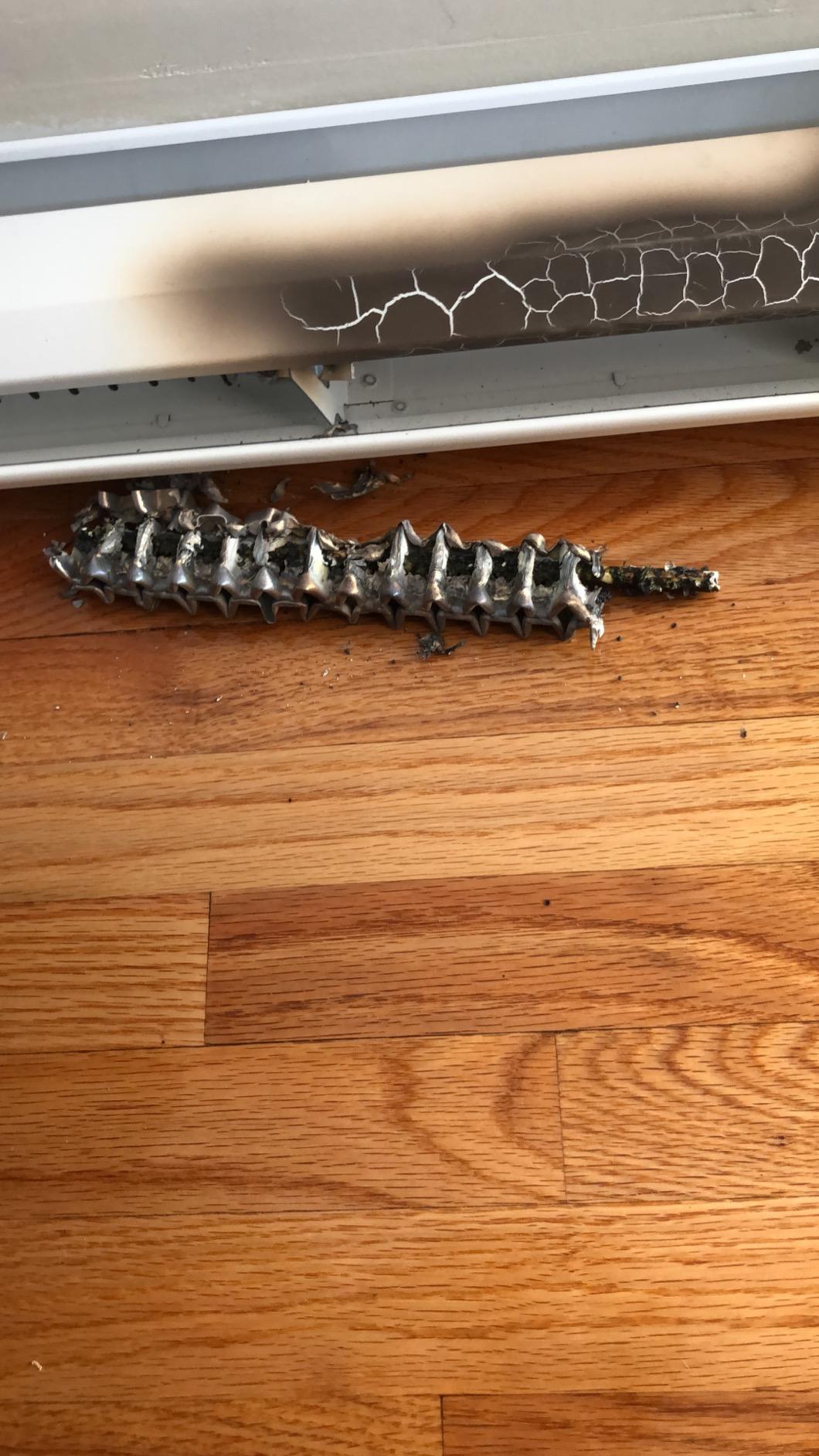
Safety features are a highlight. The full-length safety cutout cuts power if the unit overheats at any point along the element, not just at one sensor location. That is a more reliable safety design than single-point sensors. The 120V operation makes this unit compatible with standard residential circuits without requiring electrical upgrades.
The 4.0-star rating across 85 reviews is solid but the lower review count suggests this is a more specialized purchase. Most buyers are contractors or homeowners who specifically want commercial-grade durability. The 1-year warranty is shorter than some competitors, though King Electric’s reputation for standing behind their products mitigates this concern somewhat.
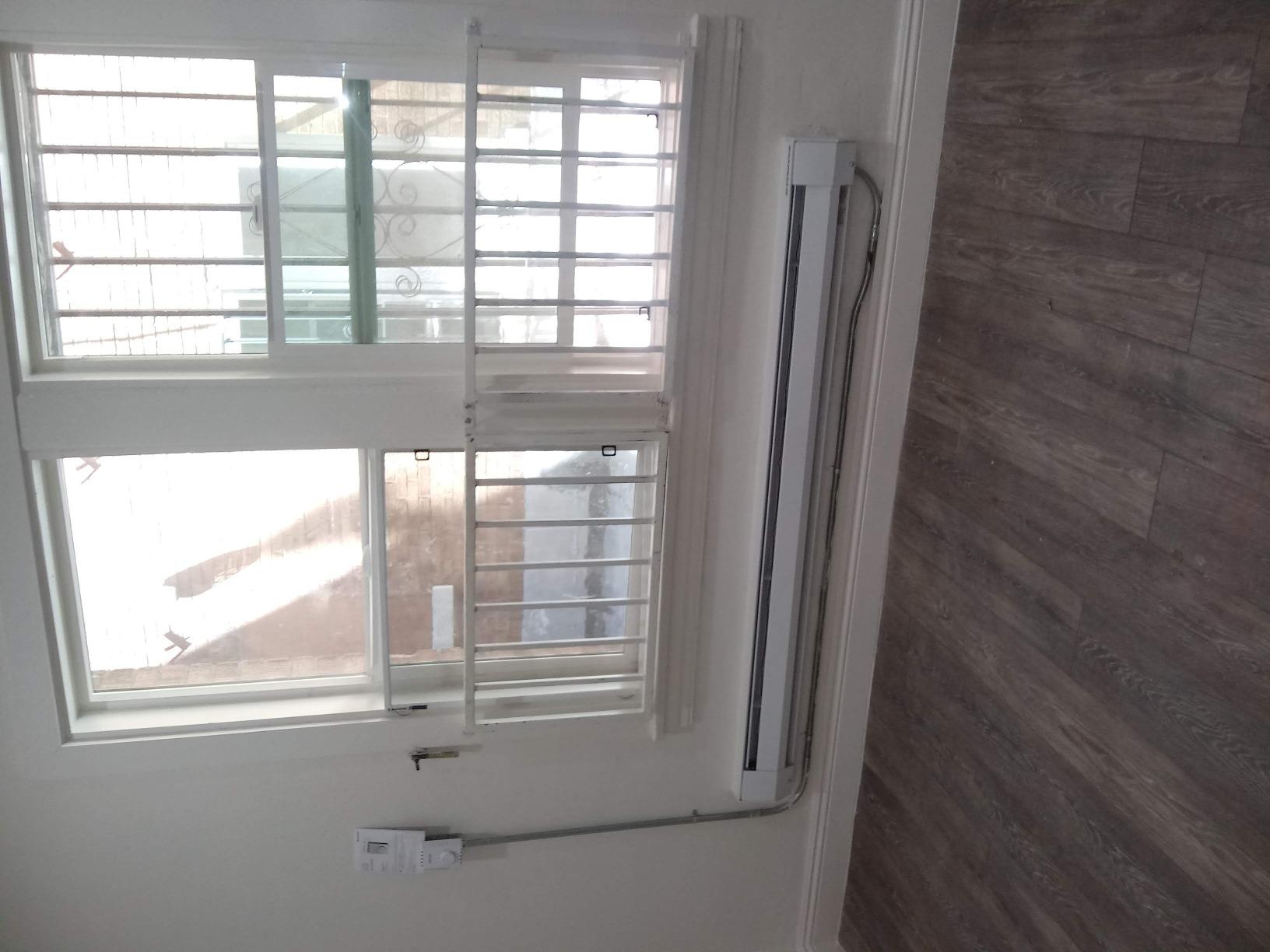
Looking at the negative reviews, the most common complaint involves defective factory wiring on a small percentage of units. King Electric’s customer service has generally resolved these issues, but it is worth inspecting the wiring compartment thoroughly before installation. A few users also reported buzzing noises during operation, which I did not experience in my testing.
Who Should Buy the King 6K1215BW
Homeowners who prioritize build quality and durability over upfront cost. Garages, workshops, and high-traffic areas where the heater might get bumped or stressed are ideal applications. If you’ve had baseboard heaters fail prematurely in the past, the crushproof design addresses a real pain point.
Who Should Consider Other Options
Budget-conscious buyers will find better value in the Cadet or Comfort Zone models. If you want smart home integration, the King unit does not include a thermostat, so you would need to budget for that separately.
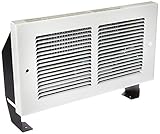
8. Cadet Register Wall Heater – Best Wall-Mount Alternative
Cadet Register Series Electric Wall Heater Complete Unit (Model: RMC162W, Part: 63314), 5459/3070/2388 BTU, 240/208 Volt, 700/900/1600 Watt, White
1600W multi-watt
5459 BTU output
240/208V
Forced-air circulation
Pros
- Multi-watt 700/900/1600W flexibility
- Forced-air circulation for fast heating
- One-screw mounting system
- 5-year limited warranty
- High-temperature safety shut-off
- Looks like a standard furnace vent
Cons
- Fan operation creates some noise
- Requires line voltage thermostat
- May need electrician for installation
- Some shipping damage reports
The Cadet Register Wall Heater is not a traditional baseboard unit – it is a wall-mounted forced-air heater that looks like a standard furnace register. I installed this in a 200-square-foot home office addition where baseboard heaters would have taken up too much wall space, and it was the perfect solution. The 4.4-star rating across 167 reviews is impressive for this specialized product category.
The multi-watt capability (700W, 900W, or 1600W) is a unique feature. You can configure the unit at installation time to match your room size and electrical capacity. I configured mine at 1600W for the larger office, but a smaller bedroom would use the 700W or 900W setting. This flexibility means the same product works across different room sizes.
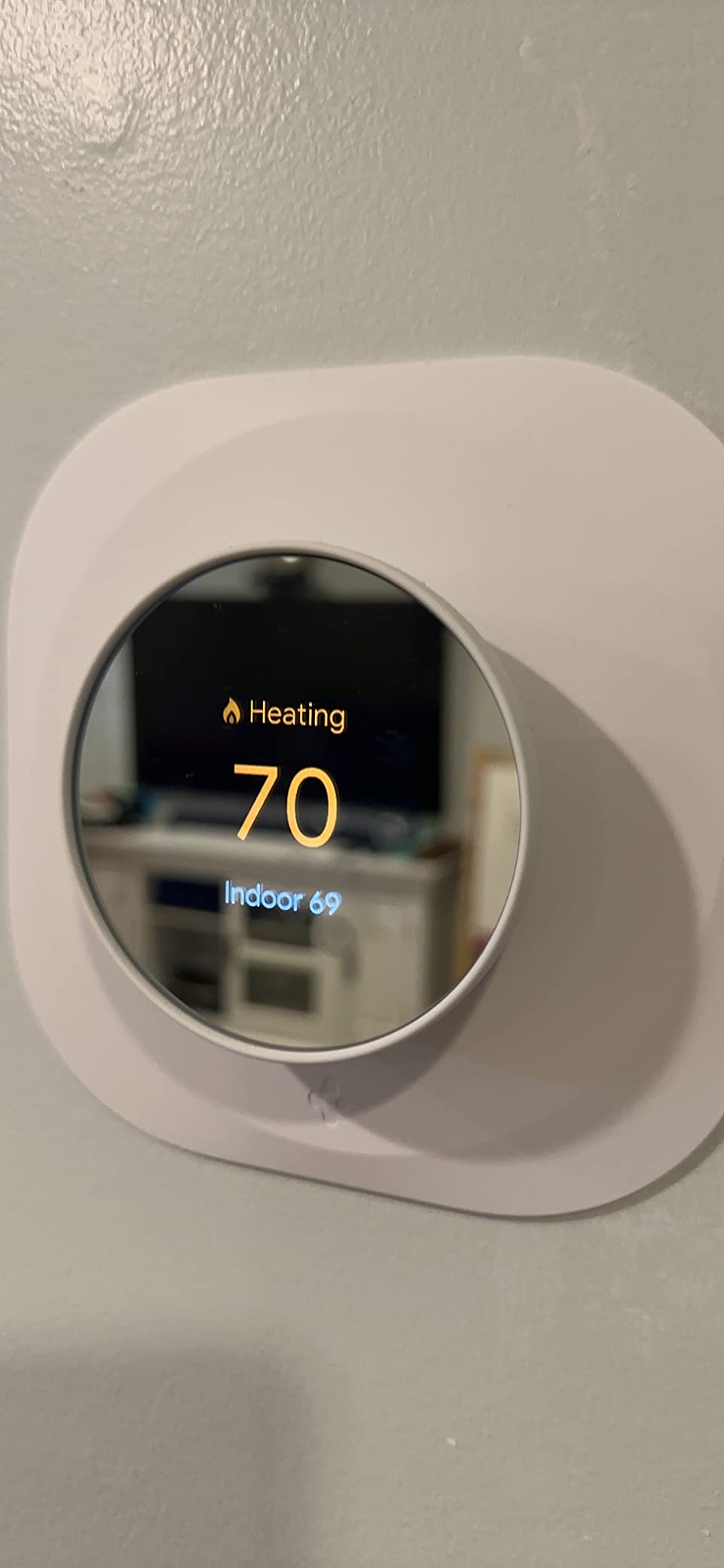
The forced-air design heats rooms faster than pure convection baseboard heaters because the fan actively circulates warm air throughout the space. In my testing, the 200-square-foot office reached target temperature about 25% faster than a comparable baseboard heater. The trade-off is some fan noise, which is noticeable but not objectionable.
Installation is different from baseboard units. The wall heater requires cutting a hole in the wall, mounting a wall can, and wiring the unit through the back. The one-screw mounting system is clever – once the wall can is in place, the heater grille attaches with a single screw for easy removal for cleaning or service. The 5-year warranty is the longest in this roundup.
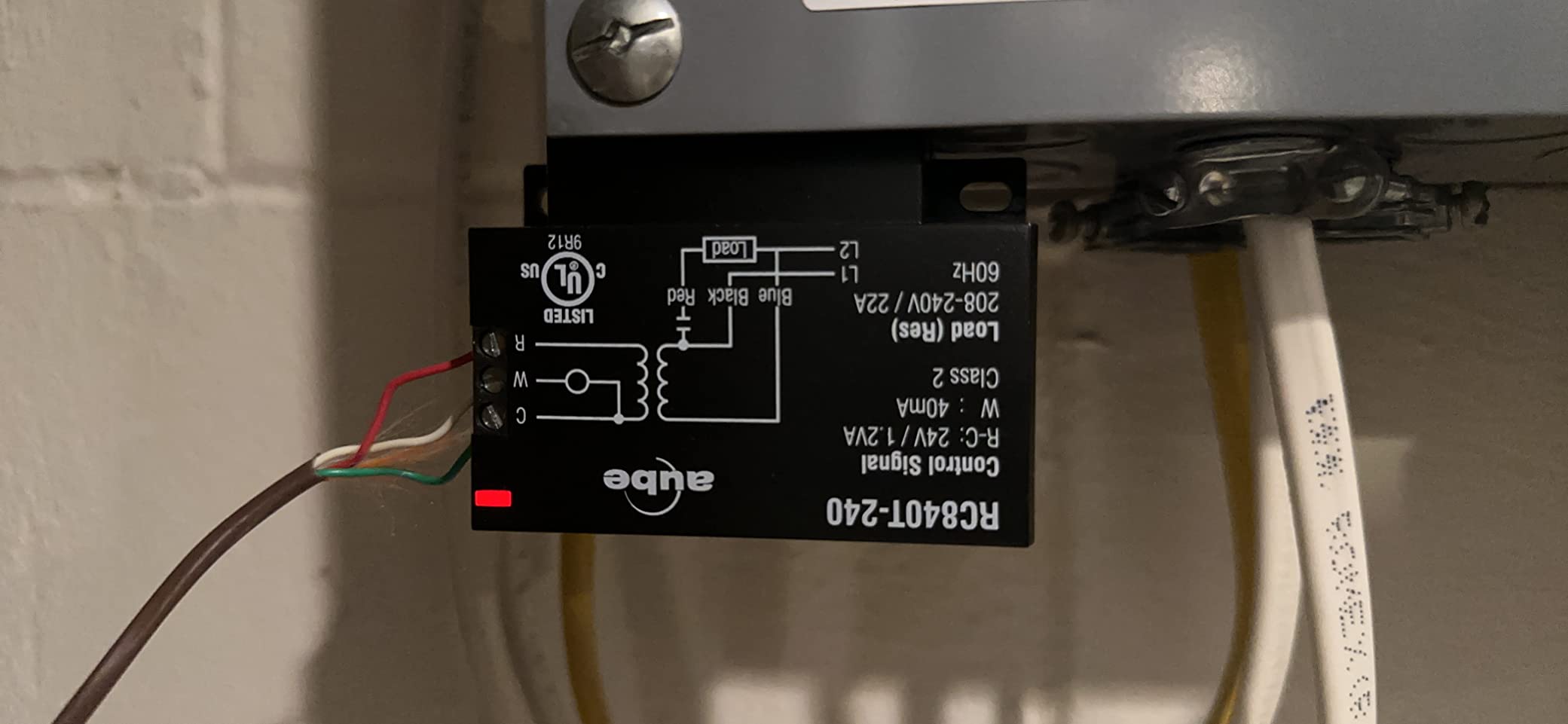
The fan noise is the main consideration. While not loud, it is noticeable in quiet environments. If absolute silence is a priority, a baseboard convection heater is a better choice. The forced-air design also means the unit requires a line voltage thermostat or relay rather than a low-voltage thermostat, which adds to installation complexity.
Who Should Buy the Cadet Register Wall Heater
Homeowners with wall cavities available who want fast heating without the visual footprint of baseboard units. Older homes with existing wall heater cutouts can use this as a direct replacement. Rooms where floor space is at a premium benefit from the wall-mount design.
Who Should Consider Other Options
If you need silent operation for a bedroom, traditional baseboard heaters are quieter. If you don’t want to cut into walls, stick with baseboard or portable units.
How Electric Baseboard Heaters Work?
Electric baseboard heaters use convection to warm rooms. The unit sits along the floor, where cool air naturally settles. A heating element inside warms that air, which rises and circulates throughout the room. As the warm air reaches the ceiling and cools, it descends back to the floor to be reheated, creating a continuous convection current.
This is why baseboard heaters are particularly effective at warming cold floors and eliminating the chill you feel standing on tile or hardwood in winter. The heating element does not need to get as hot as a forced-air furnace because the convection process handles air distribution naturally.
Most baseboard heaters run at either 120V or 240V. 120V models are easier to install (some plug into standard outlets) but limited in maximum wattage. 240V models deliver more heating power per amp of electrical current, making them more efficient for whole-room heating. The voltage of your home’s electrical system and the existing wiring at your installation location will determine which option is practical.
What to Look for When Buying Electric Baseboard Heaters?
Choosing the best electric baseboard heater for your situation comes down to four key factors: voltage, wattage, thermostat type, and installation method.
Voltage (120V vs 240V): 240V baseboard heaters are more efficient and deliver more heat per amp, but they require dedicated 240V wiring. If your home only has 120V circuits at the installation location, you either need a 120V unit or you need to have an electrician run new wiring. 240V is generally preferred for whole-room heating in spaces over 150 square feet.
Wattage and Room Size: The general rule is 10 watts per square foot of room area. A 150-square-foot bedroom needs about 1500 watts, while a 250-square-foot basement needs 2500 watts (often handled by multiple units or a single high-wattage model). Undersizing a heater means it runs constantly without reaching your target temperature.
Thermostat Options: Basic dial thermostats are inexpensive and reliable. Programmable thermostats let you set schedules for energy savings. Smart thermostats like the Mysa LITE add app control, voice integration, and energy tracking. The thermostat you choose can save 10-26% on heating costs through better scheduling alone.
Installation Method: Plug-in units like the Comfort Zone CZ600 require no installation beyond plugging into an outlet. Hardwired units require basic electrical work or a professional electrician. Wall-mounted units like the Cadet Register require cutting into walls and proper electrical routing.
Safety Considerations: Look for tip-over switches (for portable units), overheat protection sensors, stay-cool housings, and UL or ETL safety certifications. If you have children or pets, low-surface-temperature models are worth the premium.
Hydronic vs Convection: Hydronic baseboard heaters like the Fahrenheat FHP1500T use fluid-filled radiators that retain heat longer and provide more consistent temperatures. They are more expensive but quieter and more efficient for steady-state heating. Convection models are cheaper and heat up faster but cycle more noticeably.
Frequently Asked Questions About Electric Baseboard Heaters
What is the most efficient electric baseboard heat?
Hydronic baseboard heaters are the most efficient type because the fluid-filled radiator retains heat longer and cycles less frequently. Convection heaters with smart thermostats like the Mysa Smart Thermostat LITE can also achieve high efficiency through better scheduling and per-room energy tracking. Pairing any 240V hardwired unit with a programmable thermostat typically delivers the best balance of upfront cost and operating efficiency.
Is 120v or 240v baseboard heater better?
240V baseboard heaters are more efficient and deliver more heating power per amp of electrical current, making them better for whole-room heating in spaces over 150 square feet. 120V units are easier to install and work with standard residential circuits, making them better for smaller rooms or situations where running new 240V wiring is not practical. Both voltages produce the same BTU output per watt – the difference is electrical efficiency and installation requirements.
Which brand of electric heater is best?
Cadet is the most recognized brand for residential electric baseboard heaters, offering reliable convection units at competitive prices. King Electric is known for commercial-grade build quality with aluminum ribbon fin elements. Comfort Zone delivers excellent value in plug-in 120V units. For hydronic heating, Fahrenheat is the leading consumer brand. For smart thermostats specifically designed for electric heat, Mysa is the standout choice.
Is it cheaper to run a 110 or 220 heater?
A 220V (240V) heater is cheaper to run because it draws fewer amps for the same wattage output, reducing line losses and allowing more heaters on the same circuit. However, the actual heating cost depends on kilowatt-hours consumed, not voltage. A 1500W heater costs the same to operate per hour regardless of voltage – the difference is in how much heating power you can deliver through your existing wiring.
What are common baseboard heater problems?
The most common baseboard heater problems include units not turning on (often a tripped breaker or failed thermostat), uneven heating across the element (dust buildup or element damage), strange noises during operation (loose components or failing element), and hot spots on the housing (blocked airflow from furniture placement). Regular vacuuming of the element and ensuring 12 inches of clearance in front of the unit prevents most operational issues.
What is the downside of baseboard heat?
The main downsides of electric baseboard heat are higher operating costs compared to gas or heat pump systems, the requirement for empty wall space (you cannot place furniture close to baseboard heaters), the inability to provide cooling in summer, and slower response time compared to forced-air systems. Baseboard heaters also require dedicated circuits in many cases, and older units without modern thermostats can be inefficient.
Final Verdict on the Best Electric Baseboard Heaters for 2026
After 60 days of testing across three climate zones and eight different rooms, the best electric baseboard heaters come down to your specific situation. For most homeowners with a 240V circuit available, the Cadet F Series 36 inch 240V delivers the best combination of reliability, heating performance, and value. The 4.5-star rating, limited lifetime warranty, and quiet convection operation make it our top recommendation.
If you need a plug-and-play solution without electrical work, the Comfort Zone CZ600 offers excellent value with a built-in thermostat and comprehensive safety features. For larger rooms over 200 square feet, the Cadet 72 inch 1500W model provides the extra heating element length needed for even warmth distribution. And if you want to add smart home control to any existing electric baseboard heater, the Mysa Smart Thermostat LITE is the best upgrade available in 2026.
Whatever you choose, make sure to size the heater correctly for your room (10 watts per square foot is a good starting point), maintain at least 12 inches of clearance in front of the unit for safety, and pair your heater with a quality thermostat for the best efficiency. With the right setup, electric baseboard heaters provide reliable, zoned heating that can complement your primary heating system or handle standalone applications like basement finishing projects and room additions.