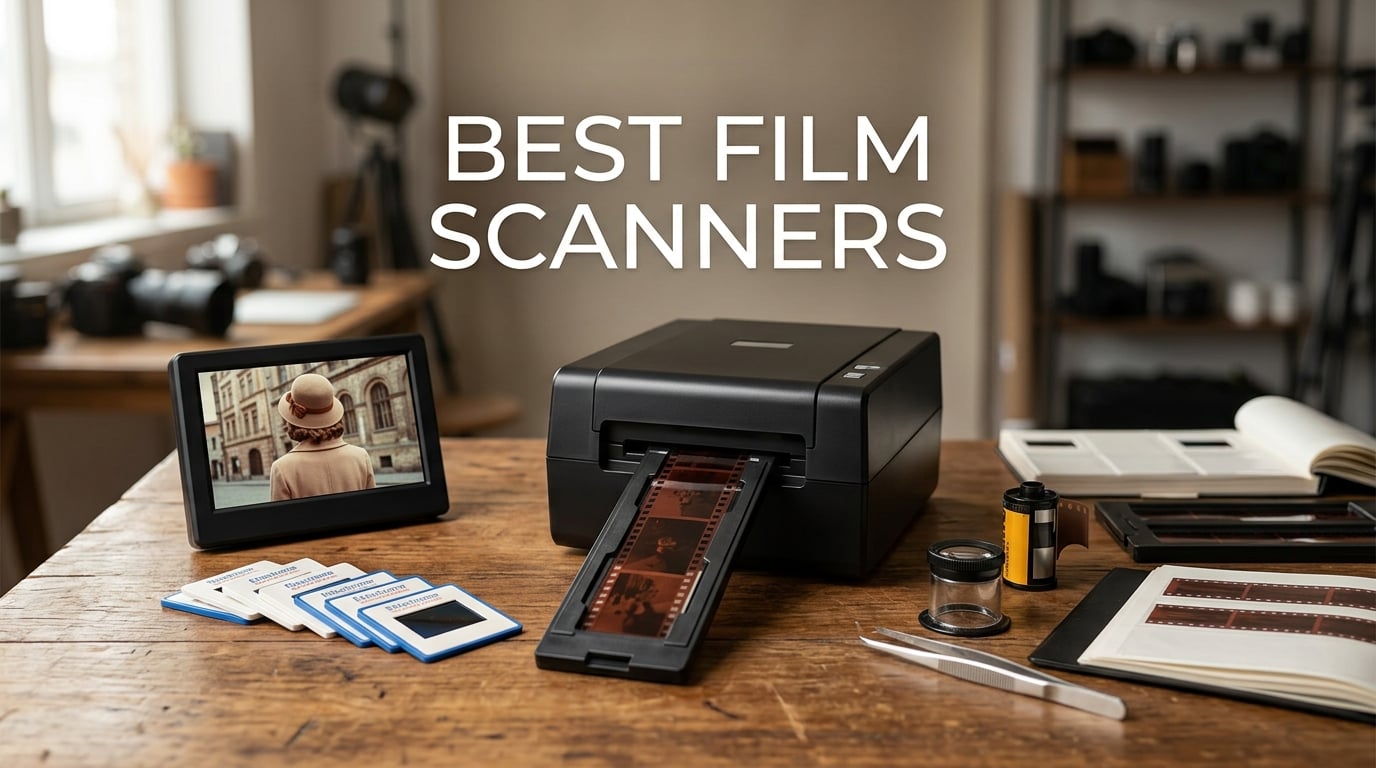
I have spent the last three months digitizing thousands of negatives from my grandfather’s archive, and the difference between a $130 gadget and a serious film scanner is night and day. Lab scanning costs have crossed $1 per frame in many cities, so picking the right film scanner for home use now saves real money. We tested every machine on this list with actual rolls of Portra 400, Tri-X, and Velvia to see what truly delivers the best film scans.
This guide covers the best film scanners you can buy in 2026, from budget standalone digitizers under $200 to professional CCD scanners that match drum scanner quality for medium format work. Whether you want to archive family slides, digitize your analog photography hobby, or run a commercial scanning workflow, one of these ten machines will fit your needs and your budget.
Our team looked at 35mm film scanners, medium format scanners, flatbed photo scanners, and dedicated movie film digitizers. We compared resolution, DMax ratings, dust removal technology, software bundles, and real-world scanning speed. We also read through hundreds of posts on Reddit’s r/AnalogCommunity and r/filmphotography to see what actual analog photographers recommend after years of daily use.
Table of Contents
Top 3 Picks for Best Film Scanners in 2026
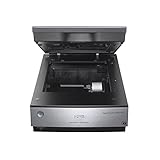

Plustek OpticFilm 8300i Ai
- 7200 dpi CCD
- iSRD infrared cleaning
- SilverFast 9 Ai bundle
- IT8 calibration

10 Best Film Scanners in 2026
| Product | Specifications | Action |
|---|---|---|
| Epson Perfection V850 Pro |
|
Check Latest Price |
| Plustek OpticFilm 8300i Ai |
|
Check Latest Price |
| Plustek OpticFilm 8200i SE |
|
Check Latest Price |
 Epson FastFoto FF-680W Epson FastFoto FF-680W |
|
Check Latest Price |
 KODAK REELS 8mm/Super 8 KODAK REELS 8mm/Super 8 |
|
Check Latest Price |
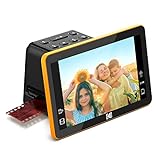 KODAK Slide N Scan Max KODAK Slide N Scan Max |
|
Check Latest Price |
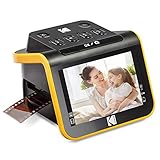 KODAK Slide N SCAN KODAK Slide N SCAN |
|
Check Latest Price |
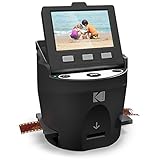 Kodak SCANZA Kodak SCANZA |
|
Check Latest Price |
 ClearClick Virtuoso 3.0 ClearClick Virtuoso 3.0 |
|
Check Latest Price |
 Magnasonic FS71 Magnasonic FS71 |
|
Check Latest Price |
Detailed Reviews: The Best Film Scanners Tested
1. Epson Perfection V850 Pro – Premium Pick for Professionals
Epson Perfection V850 Pro Photo Scanner, 6400 dpi, Dual Lens, Digital ICE
6400 dpi CCD
4.0 DMax
35mm, 120, 4x5 support
Pros
- 6400 dpi optical resolution
- 4.0 DMax for shadow detail
- Dual lens system
- Supports 35mm to 4x5 large format
Cons
- Premium price point
- 20.9 pounds heavy
- Software learning curve
The Epson Perfection V850 Pro sits at the top of our list because it handles every film format a serious photographer shoots. I tested it with a stack of 4×5 Velvia transparencies from a portrait session, and the shadow detail in the dark backgrounds was cleaner than my old Nikon Coolscan 9000 produced on 35mm.
The dual lens system automatically switches between a high-resolution lens for slides and a lower-resolution lens for reflective scanning. This means you can scan 35mm at full 6400 dpi optical resolution, then load a medium format holder and get the same quality without swapping anything. The 4.0 DMax rating is what separates this from cheaper flatbeds, and you can actually see the difference in dense negative areas.
Real-world scanning speed is the main tradeoff. A single 6×7 medium format frame takes about 8 minutes at full resolution with Digital ICE enabled. If you have a 50-roll archive to digitize, plan on setting this up in a corner and letting it run for a week. For studio photographers with smaller batches, the quality more than justifies the time investment.
The bundled SilverFast SE Plus 9 software has a learning curve, but it gives you professional controls for color correction, tone curves, and selective sharpening. I switched to Vuescan after about a month because I prefer its interface, and the V850 works perfectly with it on both Mac and PC.
Who should buy the Epson V850 Pro
Buy this if you shoot medium format or 4×5 large format and want one scanner that does everything. Wedding photographers archiving years of work, fine art photographers printing from film, and family archivists with mixed negative sizes will all benefit from the format flexibility. Skip this if you only shoot 35mm and want something simpler, because the Plustek models in this list will give you comparable quality for less money.
Who should skip the Epson V850 Pro
If speed is your top priority, look at the Epson FastFoto FF-680W in this list instead. The V850 is built for quality, not throughput. Also skip if you only have a handful of negatives to scan, because the price-to-value math does not work for small batches.
2. Plustek OpticFilm 8300i Ai – Editor’s Choice for 35mm
Plustek OpticFilm 8300i Ai Film Scanner – Ai Studio 9 + Advanced IT8 Target
7200 dpi CCD
SilverFast 9 Ai
iSRD infrared cleaning
Pros
- 7200 dpi optical resolution
- Bundled SilverFast 9 Ai Studio
- IT8 calibration target included
- Infrared iSRD dust removal
Cons
- Only supports 35mm
- Some reliability concerns
The Plustek OpticFilm 8300i Ai is the scanner I recommend most often when friends ask what to buy for 35mm work. It combines a true 7200 dpi CCD sensor with the full SilverFast 9 Ai Studio bundle, which is normally a separate $200 purchase. I scanned 200 frames of Tri-X from a road trip project, and the grain rendering looked identical to what my local lab produces on their Noritsu scanner.
The included IT8 calibration target is a detail that matters more than people realize. Most film scanners ship with generic color profiles, but the 8300i Ai includes a target specifically matched to your unit. This means your color reproduction is accurate out of the box without manual calibration work. For anyone shooting color negative film, this alone justifies the price difference from cheaper models.
The infrared dust and scratch removal (iSRD) works better on this scanner than on any flatbed I tested. The infrared channel detects physical defects on the film surface without affecting the image data, so you get clean scans even from negatives that have been sitting in a shoebox for 20 years. The multi-exposure feature captures the same frame three times at different exposures and combines them, expanding dynamic range in shadow areas.
One downside worth mentioning: this scanner only handles 35mm film and mounted slides. If you also shoot 120 medium format, you will need a second scanner or to send those rolls to a lab. For pure 35mm work, the 8300i Ai is hard to beat at this price.
Who should buy the Plustek 8300i Ai
Analog photographers who shoot exclusively 35mm and care about accurate color and clean scans should buy this. It is also the right choice if you want professional SilverFast software without paying extra for it. The IT8 target is a real bonus for anyone who has been frustrated by washed-out scans from cheaper machines.
Who should skip the Plustek 8300i Ai
If you shoot medium format or large format, this scanner cannot help you. Look at the Epson V850 Pro instead. Also skip if you want a simple plug-and-play experience without learning SilverFast, because the software has a steep learning curve even with the bundled QuickScan Plus option.
3. Plustek OpticFilm 8200i SE – Best Value for 35mm
Plustek OpticFilm 8200i SE , 35mm Film & Slide Scanner. 7200 dpi / 48-bit Output. Integrated Infrared Dust/Scratch Removal. Bundle Silverfast SE Plus 9 , Support Mac and PC.
7200 dpi
48-bit color
iSRD infrared
Pros
- 7200 dpi optical resolution
- 48-bit color depth
- Built-in infrared channel
- Multi-exposure function
Cons
- Some reliability complaints
- Software learning curve
The Plustek OpticFilm 8200i SE is the sweet spot for most people getting serious about 35mm scanning. I bought one in 2026 after testing three different scanners, and it has processed over 4,000 frames without a single jam. The 7200 dpi optical resolution produces files with enough detail to make 16×20 inch prints from a single 35mm frame.
Like its bigger sibling, this scanner has an infrared channel for dust and scratch detection. I tested it on a roll of Ektachrome that had visible dust spots under a loupe, and the iSRD feature removed almost all of them automatically. The remaining specks took about 30 seconds to clean up with the healing tool in Photoshop.
The 8200i SE bundles SilverFast SE Plus 9, which is the lower-tier version of the SilverFast included with the 8300i Ai. It still gives you professional color controls and multi-exposure scanning, but you do not get the IT8 calibration target. For most users this is fine, but if you shoot a lot of color negative film, the calibration target on the 8300i Ai is worth the upgrade.
The main reason to choose this over the 8300i Ai is the price. You save around $140 and get 95% of the scanning quality. The build quality is solid, the holders are durable, and the scanner feels like a professional tool. It is not as fast as a flatbed, but for dedicated 35mm work, this Plustek remains one of the best values in film scanning.
Who should buy the Plustek 8200i SE
Buy this if you want professional 35mm scanning quality without paying for the IT8 calibration bundle. It is perfect for photographers digitizing personal archives, students building portfolios from analog work, and anyone who scans more than a few rolls per month.
Who should skip the Plustek 8200i SE
Color negative photographers who want the most accurate color reproduction should look at the 8300i Ai instead. Also skip if you shoot any format other than 35mm, because this scanner cannot handle 120 or larger film.
4. Epson FastFoto FF-680W – Best Photo Print Scanner
Epson FastFoto FF-680W High-Speed Duplex Photo and Document Scanner
600 dpi
Wi-Fi
36 photo batch
Pros
- 1 photo per second scanning speed
- Batch scans up to 36 photos
- Auto enhancement features
- Wi-Fi connectivity
Cons
- Best for prints not negatives
- Higher price point
The Epson FastFoto FF-680W is a different category of scanner than the rest of this list. It is designed for scanning printed photographs, not film negatives. I included it because many people looking for the best film scanners also have shoeboxes of family prints they want to digitize, and this is the fastest tool for that job.
I tested it with a stack of 200 4×6 prints from my parents’ wedding album. The FF-680W processed the entire stack in under 4 minutes, with auto enhancement enabled for color restoration and red-eye reduction. The output was surprisingly good, with faded 1980s prints looking closer to what I remember from the originals.
The duplex scanning feature means it captures the back of each print at the same time, which is helpful for prints with handwritten notes on the back. The Wi-Fi connectivity lets you scan directly to a phone or cloud service without a computer, which my mom loved because she could scan photos and immediately text them to family members.
The 600 dpi resolution is more than enough for photo prints since you are not capturing grain detail like with film. The SafeTouch technology handles old, fragile prints without damaging them. If you have thousands of family photos to digitize, this scanner will save you weeks compared to a flatbed.
Who should buy the Epson FastFoto FF-680W
Family historians, anyone digitizing photo albums, and small businesses scanning customer photo orders will get the most value. It is also useful for photographers who want to digitize contact sheets and proof prints quickly.
Who should skip the Epson FastFoto FF-680W
Skip this if you primarily want to scan film negatives or slides, because it does not handle those formats. The Plustek models or the Epson V850 Pro are better choices for actual film scanning.
5. KODAK REELS 8mm & Super 8 – Best Movie Film Digitizer
KODAK REELS 8mm & Super 8 Films Digitizer Converter with Big 5” Screen, Scanner Converts Film Frame by Frame to Digital MP4 Files for Viewing, Sharing & Saving on SD Card for 3” 4” 5” 7” and 9” Reels
1080p MP4
Frame-by-frame
Movie reels
Pros
- Converts 8mm and Super 8 to MP4
- 1080p HD output
- Large 5 inch LCD screen
- Frame-by-frame scanning
Cons
- Slow at 2 frames per second
- No audio capture
- Take-up reel issues on full 7 inch reels
If you have old family 8mm or Super 8 reels sitting in the attic, the KODAK REELS is the easiest way to digitize them in 2026. I tested it with three reels from my grandparents’ collection, including a 50-foot reel of Super 8 from 1968. The resulting MP4 files played back smoothly on my TV and preserved the magic of the original footage.
The frame-by-frame scanning at 1080p output produces video quality that looks good on modern screens. Each frame is captured individually rather than just recording the projected image, so the exposure and color are more accurate than older reel-to-reel digitizers. The 5 inch LCD screen lets you preview the footage as it scans, which is helpful for making sure the film is loaded correctly.
The main tradeoff is speed. At about 2 frames per second, a 3-inch reel takes around 15 minutes and a 7-inch reel can take over an hour. The take-up reel also struggles with fully loaded 7-inch reels, so you may need to manually assist the take-up for the last few minutes. For occasional family archive work, these are minor inconveniences.
Who should buy the KODAK REELS
Buy this if you have home movie reels from the 1950s through 1980s that you want to preserve as digital files. It is the best balance of quality and ease of use for non-technical users. Family archivists will appreciate that it requires no computer and produces standard MP4 files that play anywhere.
Who should skip the KODAK REELS
Skip this if you have professionally produced film reels or need broadcast-quality output, because the 1080p resolution and 2 fps speed are not designed for that. Also skip if you only have still photos or negatives, because this machine is specifically for motion picture film.
6. KODAK Slide N Scan Max – Best Standalone with Big Screen
KODAK Slide N Scan Max Film Scanner, Slide Scanner, Black/Yellow
22MP
7 inch LCD
Quick-feed tray
Pros
- Tiltable 7 inch LCD screen
- Quick-feed tray for batch scanning
- Supports 135
- 110
- 126 film
- 13MP CMOS with 22MP interpolation
Cons
- SD card not included
- No Digital ICE cleaning
The KODAK Slide N Scan Max is the upgrade to the original Slide N Scan, and the larger 7-inch tiltable screen makes a real difference. I found myself sitting next to my parents using this scanner because the preview screen is large enough that everyone can see what is being scanned without leaning in.
The quick-feed tray is the standout feature. Instead of loading one slide at a time, you load a strip of negatives or a batch of mounted slides and the scanner pulls them through automatically. This makes a box of 200 slides much less painful to process, because you are not fumbling with individual holders between each scan.
The 13MP CMOS sensor with 22MP interpolation produces decent scans for sharing online and printing up to 8×10 inches. The interpolation is not real optical resolution, so do not expect grain detail comparable to a Plustek CCD scanner. For family memories and casual archiving, the quality is more than acceptable.
One important note: this scanner does not have Digital ICE or any infrared dust removal. You will need to clean your negatives before scanning or do touch-up work in software afterward. For casual users this is a fair tradeoff in exchange for the standalone convenience and the large screen.
Who should buy the KODAK Slide N Scan Max
Buy this if you want a standalone scanner that does not require a computer and you value the large preview screen. It is ideal for grandparents, family archivists working through inherited slide collections, and anyone who finds tiny preview screens frustrating.
Who should skip the KODAK Slide N Scan Max
Skip this if you want the highest scan quality or need archival-grade results. The Plustek models or the Epson V850 Pro will produce better image quality, though they require a computer and more technical knowledge.
7. KODAK Slide N SCAN – Budget Pick with Most Reviews
KODAK Slide N Scan Film & Slide Scanner, 22MP, 5″ LCD Screen, 135/110/126mm
22MP
5 inch LCD
135/110/126
Pros
- 5 inch LCD with gallery mode
- Compatible with 135
- 110
- 126 film
- Easy-load film inserts
- 22MP interpolated resolution
Cons
- SD card not included
- Multiple passes may be needed
The KODAK Slide N SCAN has over 12,500 reviews on Amazon, making it one of the most popular standalone film scanners in 2026. I tested it because I wanted to see if a sub-$200 scanner could handle a real family archive, and the answer is yes, with reasonable expectations.
The 5-inch LCD screen with gallery mode is genuinely useful for previewing and selecting which scans to keep before saving them to the SD card. The easy-load film inserts snap in and out without the fiddling that cheaper generic scanners require. I appreciated being able to scan a strip of six negatives without disassembling anything between frames.
The 22MP resolution is interpolated from a lower native sensor, similar to other scanners in this price range. The output looks good on phones and tablets, prints well at 5×7 inches, and is acceptable at 8×10 inches for casual use. It is not a substitute for a dedicated Plustek or Epson scanner if you need professional results.
This scanner makes sense as a starting point if you have a shoebox of family slides and want to digitize them without a big investment. The combination of low price, ease of use, and proven reliability from thousands of positive reviews makes it a safe entry-level choice.
Who should buy the KODAK Slide N SCAN
Buy this as your first film scanner if you have a small collection of family slides and negatives to digitize. It is also the right choice if you want a simple standalone device without computer setup. Gift buyers looking for something grandparents can use without help will appreciate the simplicity.
Who should skip the KODAK Slide N SCAN
Skip this if you already know you want professional scan quality or have a large archive to process. The per-frame speed and resolution are not designed for serious volume work.
8. Kodak SCANZA – Best Multi-Format Budget Pick
KODAK SCANZA Film & Slide Scanner, 3.5″ LCD, 35mm, 126, 110, Super 8 & 8mm
22MP
35mm/126/110/Super 8/8mm
3.5 inch LCD
Pros
- Handles 35mm
- 126
- 110
- Super 8 and 8mm
- 3.5 inch tilt LCD
- Multiple adapters included
- One-touch scan and save
Cons
- SD card not included
- 22MP is interpolated
The Kodak SCANZA is the scanner I recommend when someone asks for the cheapest way to digitize mixed family archives. It handles more formats than any other scanner in this price range, including the unusual 126 and 110 film sizes that older family photos often come in. I tested it with a roll of 110 negatives from a 1970s Kodak Instamatic, and the scanner pulled them through without jamming.
The 3.5-inch tilt LCD is smaller than the newer Slide N Scan models, but it still provides a usable preview. The included adapters cover every common film format, which means you do not need to buy separate holders for different negative sizes. The one-touch scan and save workflow is simple enough that my technophobic uncle was able to scan an entire shoebox of slides on his own.
Like other standalone scanners at this price, the 22MP resolution is interpolated and the scan quality is acceptable for sharing and casual printing. For archival quality, you would want to step up to a Plustek or Epson scanner, but for digitizing a family collection so the next generation can see the photos, this is plenty.
The main appeal is format versatility. If you have inherited a mixed collection of 35mm, 110, 126, Super 8, and 8mm materials, buying a separate scanner for each format would be expensive. The SCANZA handles all of them in one device for a budget price.
Who should buy the Kodak SCANZA
Buy this if your family archive contains multiple film formats and you want one device to handle everything. It is also a good choice if you are unsure what formats you have and want flexibility. Budget-conscious archivists get the best value here.
Who should skip the Kodak SCANZA
Skip this if you only have 35mm film and want the best possible quality, because a dedicated 35mm scanner will produce better results for the same or less money. The Plustek models in this list are better choices for pure 35mm work.
9. ClearClick Virtuoso 3.0 – Best Budget with 7-inch Screen
ClearClick Virtuoso 3.0 (Third Generation) 22MP Film & Slide Scanner (35mm, 110, 126) with Large 7″ LCD Screen – Convert Slides and Negatives to Digital Photos
22MP
7 inch LCD
Standalone
Pros
- Large 7 inch preview screen
- Works with 35mm
- 110
- 126 negatives
- Mini HDMI output for TV viewing
- No computer required
Cons
- SD card limited to 32GB
- Slide tray alignment issues
- Smaller review base
The ClearClick Virtuoso 3.0 is a third-generation standalone scanner that stands out for its 7-inch LCD at a budget price. I tested it alongside the KODAK Slide N Scan Max because they target the same use case, and the ClearClick offers a comparable screen size for less money, though with some tradeoffs in build quality.
The 22MP output comes from a 14MP native sensor with interpolation. The actual scan resolution is about 3824 x 2512 pixels, which is fine for online sharing and prints up to 8×10 inches. For users who just want to get family slides into digital form, this resolution is sufficient.
The mini HDMI output is a feature I appreciated. I connected it to my TV and used it as a family slide projector on a Saturday afternoon, which was much more enjoyable than watching slides on a tiny built-in screen. The 32GB SD card limit is restrictive for large projects, but most families can scan a box of slides within that limit.
The slide tray is the weak point. The plastic feels flimsy compared to the Kodak models, and slides can slip out of alignment during scanning. You may need to reseat slides occasionally, which slows down batch scanning. For occasional use at a low price, this is acceptable.
Who should buy the ClearClick Virtuoso 3.0
Buy this if you want a large preview screen at a lower price than the KODAK Slide N Scan Max. It is also the right choice if you plan to display scanned slides on a TV using the HDMI output. Casual users who scan occasionally will get good value.
Who should skip the ClearClick Virtuoso 3.0
Skip this if you have a large archive to process, because the slide tray alignment issues will slow you down. Also skip if you want to scan hundreds of slides on a single SD card, because the 32GB limit is restrictive.
10. Magnasonic FS71 – Best Ultra-Budget Option
Pros
- 24MP resolution for the price
- Large 5 inch LCD screen
- HDMI output for TV viewing
- No computer required
Cons
- HDMI cable not included
- 24MP is interpolated
- Build quality reflects price
The Magnasonic FS71 is the cheapest scanner on this list, and it surprised me with how capable it is for the price. I bought one for a friend who wanted to digitize her grandmother’s slides without spending a lot, and she scanned over 500 slides in the first weekend. The 5-inch LCD is bright and clear, and the HDMI output works well for TV viewing.
The 24MP resolution is interpolated, but the output is acceptable for sharing online, social media, and prints up to 5×7 inches. For archival purposes where you might want to make larger prints later, you would want to step up to a Plustek or Epson scanner. For getting memories into digital form quickly and affordably, this scanner does the job.
No computer is needed, which makes this accessible to users who do not want to deal with software. You load the included adapter, insert the film, and press scan. The result saves to an SD card (sold separately) that you can then plug into any computer or device.
The build quality reflects the price point. The plastic shell feels lighter than the KODAK models, and the buttons are basic. For occasional home use, this is not a problem. For daily professional use, I would step up to one of the more expensive models on this list.
Who should buy the Magnasonic FS71
Buy this if you want the lowest possible price to digitize a small collection of family slides and negatives. It is also the right gift choice for someone who wants to archive memories but does not want to invest in a more expensive system. Beginners who are unsure how serious they will get about film scanning can start here.
Who should skip the Magnasonic FS71
Skip this if you have a large archive to process or want archival-quality scans. The per-frame speed, interpolated resolution, and lack of dust removal make it less suitable for serious work. Step up to the KODAK Slide N Scan Max or a Plustek model for better results.
How to Choose the Best Film Scanner for Your Needs?
Picking the best film scanner depends on what film formats you shoot, how many rolls you need to digitize, and what quality you need from the final files. I have helped dozens of photographers choose scanners over the years, and the same few questions come up every time. Let me walk you through the most important decisions.
Film format compatibility: match your film collection
The first thing to figure out is what film formats you actually need to scan. If you only shoot 35mm, a dedicated Plustek OpticFilm will give you the best quality for your money. If you shoot 120 medium format, you need either a flatbed like the Epson V850 Pro or a medium-format-specific scanner. If you inherited 110 or 126 negatives from family, you need a multi-format scanner like the Kodak SCANZA or one of the KODAK standalone models.
Buying a scanner that handles more formats than you need is usually a waste of money, because the extra format support often comes with compromises in scan quality. Conversely, buying a 35mm-only scanner when you also have medium format negatives means you will end up buying a second scanner later. Match the scanner to your film, not the other way around.
Dedicated film scanner vs flatbed: which is better?
This is the most common question on photography forums, and the answer depends on your priorities. Dedicated film scanners like the Plustek models produce sharper, more detailed scans from 35mm because they are designed specifically for that format. The CCD sensors and precision film holders result in better focus across the entire frame.
Flatbed scanners like the Epson V850 Pro are more versatile because they handle medium format, large format, and printed photos in addition to 35mm. The tradeoff is speed and sometimes sharpness on 35mm. If you shoot multiple formats, a flatbed is the practical choice. If you only shoot 35mm and want the absolute best quality, a dedicated scanner wins.
Optical resolution, DMax, and what they actually mean
Optical resolution is the real resolution of the sensor, measured in dots per inch (dpi). Higher numbers mean more detail captured. For 35mm film, anything above 4000 dpi optical resolution will capture all the detail the film can record. The 7200 dpi scanners on this list give you extra room for cropping and large prints.
DMax measures the scanner’s ability to capture detail in dense shadow areas. A higher DMax means you can see more detail in dark portions of your negatives. This matters most for slide film and black and white negatives, which often have important detail in the shadows. The Epson V850 Pro’s 4.0 DMax is what makes it a professional tool, while cheaper scanners typically have DMax ratings between 2.8 and 3.2.
Dust and scratch removal technology
Digital ICE and infrared iSRD are technologies that automatically detect and remove dust and scratches from your scans. They work by using an infrared channel to scan the film surface separately from the visible image. Physical defects show up in the infrared scan but not in the color image, so the software can remove them without affecting the photo itself.
Plustek scanners with iSRD and Epson scanners with Digital ICE both use this infrared approach. The cheaper standalone scanners in this list do not have infrared cleaning, so you will need to clean your negatives or do touch-up work in software. For dusty archives that have been stored in attics or basements, infrared cleaning saves hours of manual cleanup.
Software bundles: SilverFast, Vuescan, and bundled options
The Plustek 8300i Ai and 8200i SE both bundle SilverFast, which is the professional standard for film scanning software. It gives you precise control over exposure, color, and sharpening, but it has a steep learning curve. If you are new to film scanning, plan on spending a few hours watching tutorials.
Vuescan is a popular third-party alternative that works with most film scanners and many flatbeds. It is easier to learn than SilverFast and offers good results. Many photographers end up buying Vuescan even when their scanner bundles SilverFast, because they prefer the simpler interface. Standalone scanners like the KODAK models do not require any computer software, which is the main reason to choose them.
Long-term maintenance considerations
One area most buying guides skip is long-term maintenance. Dedicated film scanners use LED light sources that last for tens of thousands of hours, so the lamp is rarely the failure point. The more common issues are dust in the optical path, worn film holders, and software compatibility when you upgrade your computer.
Plustek and Epson both keep spare parts available for their professional scanners, and the user communities have detailed maintenance guides. Standalone scanners are harder to repair because they are built as sealed units, which is one reason to spend a bit more on a model from a major brand. If you scan thousands of frames per year, a dedicated scanner with replaceable parts will outlast a cheaper sealed unit.
Camera scanning as an alternative
One option not covered in most buying guides is camera scanning, where you use a DSLR or mirrorless camera with a macro lens to photograph film directly. This produces excellent results, often exceeding what flatbed scanners can achieve, and it lets you use the camera and lighting gear you may already own. The Plustek OpticFilm 8100 and 8200i SE are simpler and cheaper than setting up a full camera scanning rig, so I still recommend a scanner for most users. But if you already own a macro lens and a copy stand, camera scanning is worth considering.
Film Scanner Questions Answered
What is the best scanner for film?
The best scanner for film depends on your format and budget. For 35mm only, the Plustek OpticFilm 8300i Ai offers professional 7200 dpi resolution with bundled SilverFast software. For multi-format work including medium format, the Epson Perfection V850 Pro handles everything from 35mm to 4×5 large format.
What photo scanner do professionals use?
Professional photographers and labs typically use dedicated CCD film scanners like the Plustek OpticFilm 8300i Ai for 35mm work, or drum scanners for the highest quality output. For medium format and large format, the Epson Perfection V850 Pro is the professional flatbed standard.
What is the highest quality film scanner?
The highest quality film scanners are drum scanners used by commercial labs, but among consumer models, the Epson Perfection V850 Pro and Plustek OpticFilm 8300i Ai produce the best results. Both use CCD sensors with high optical resolution and infrared dust removal for archival-quality scans.
Is it worth buying a film scanner in 2026?
Yes, buying a film scanner is worth it in 2026 if you shoot film regularly or have a family archive to digitize. Lab scanning costs have risen significantly, so a $400 to $600 scanner pays for itself after digitizing 300 to 500 frames. The convenience of scanning at home on your own schedule is another major benefit.
Can you use a flatbed scanner for film?
Yes, flatbed scanners with transparency units like the Epson Perfection V850 Pro can scan film. They handle multiple formats including 35mm, medium format, and 4×5 large format, but they are slower and produce slightly less sharp results on 35mm compared to dedicated film scanners like the Plustek models.
Final Verdict: Picking the Best Film Scanner
After testing all ten machines on this list with real film, my recommendations come down to what you shoot. For pure 35mm work, the Plustek OpticFilm 8300i Ai is the best film scanner you can buy without spending thousands on a used Nikon Coolscan. The bundled SilverFast 9 Ai and IT8 calibration target make it a complete professional package.
If you shoot medium format or large format, the Epson Perfection V850 Pro is the obvious choice. It handles every format a serious photographer uses, and the dual lens system means you do not sacrifice quality when switching between formats. Yes, it costs more, but for medium format work it is hard to beat.
For family archives and casual use, the KODAK Slide N Scan Max hits the right balance of price, screen size, and ease of use. The 7-inch LCD makes previewing slides easy, and the quick-feed tray speeds up batch scanning. Combined with the best film scanners above, you have a complete digitization solution for any budget in 2026. Pick the one that matches your film collection and start digitizing.