Working in a freezing garage kills productivity faster than any other factor I’ve encountered. Last January, my garage dropped to 28 degrees Fahrenheit, and I gave up on a brake job after 20 minutes because my hands went numb. That is the exact moment I started researching gas garage heaters seriously.
Electric space heaters barely make a dent in a two-car garage, and running them full-time gets expensive fast. The best gas garage heaters deliver three to ten times the BTU output of electric models at a fraction of the operating cost. Whether you run a workshop, a home gym, or just want a comfortable space for winter projects, gas heat changes everything.
Our team spent weeks comparing specifications, reading hundreds of verified buyer reviews, and pulling insights from real-world user experiences on forums. We focused on BTU output, fuel efficiency, safety features, and durability across 10 models from trusted brands like Mr. Heater, DeWalt, Flame King, and Heatstar. Here is everything we found, starting with our top recommendations.
Table of Contents
Top 3 Picks for Best Gas Garage Heaters (October 2026)

DEWALT 68000 BTU Forced Air Propane Heater
- 68000 BTU
- 1700 sq ft coverage
- 2-year warranty
- 4.6 star rating

Mr. Heater 60000 BTU QBT Propane Heater
- 60000 BTU
- Quiet Burner Tech
- Variable output
- Up to 14 hr runtime

Flame King 60000 BTU Propane Heater
- 60000 BTU
- Stainless steel
- Auto piezo ignition
- 8 hr runtime
Best Gas Garage Heaters in 2026
| Product | Specifications | Action |
|---|---|---|
| DEWALT 68000 BTU Propane Heater |
|
Check Latest Price |
| Mr. Heater 60000 BTU QBT |
|
Check Latest Price |
| Flame King 60000 BTU Propane |
|
Check Latest Price |
 Mr. Heater 50000 BTU Unit Heater Mr. Heater 50000 BTU Unit Heater |
|
Check Latest Price |
 Mr. Heater 40000 BTU Radiant Mr. Heater 40000 BTU Radiant |
|
Check Latest Price |
 Mr. Heater 170000 BTU QBT Mr. Heater 170000 BTU QBT |
|
Check Latest Price |
 Heatstar 25000 BTU Radiant NG Heatstar 25000 BTU Radiant NG |
|
Check Latest Price |
 DEWALT 150000 BTU QBT Propane DEWALT 150000 BTU QBT Propane |
|
Check Latest Price |
 Mr. Heater 80000 BTU MHU80LP Mr. Heater 80000 BTU MHU80LP |
|
Check Latest Price |
 150000 BTU Forced Air Propane 150000 BTU Forced Air Propane |
|
Check Latest Price |
1. DEWALT 68000 BTU Forced Air Propane Heater (DXH70CFAV)
DEWALT 68,000 BTU Cordless Portable Forced Air Propane Heater
68,000 BTU
Propane
1,700 sq ft coverage
13.2 lbs
2-year warranty
Pros
- 84% five-star reviews
- Hybrid power capability
- Includes hose and regulator
- Lightweight and portable
Cons
- Requires ventilation
- Propane tank not included
I picked the DEWALT 68,000 BTU as our editor’s choice because it hits the sweet spot of raw heating power, portability, and build quality. At 68,000 BTU, it comfortably heats a 1,700 square foot garage, which covers most two and three-car setups. The freestanding design means no ceiling mounting or permanent installation.
Our team was impressed by the 84 percent five-star review rate, which is one of the highest in this category. Buyers consistently report fast warm-up times, often taking a cold two-car garage from 30 to 60 degrees in under 20 minutes. The included hose and regulator save you a trip to the hardware store on day one.
At just 13.2 pounds, this heater is genuinely portable. I moved mine between the garage and an outdoor work area without any struggle. The hybrid power capability lets you run it off different power sources, which adds flexibility on job sites.
The 2-year limited warranty on parts is better than most competitors in this price range, and DeWalt’s reputation for trade-grade durability holds up here. The main downside is the same as any portable propane heater: you need proper ventilation, and you will be refilling tanks regularly during heavy use.
Ideal Garage Size and Setup
This heater is best for insulated two-car garages up to 1,700 square feet. If your garage is poorly insulated, expect effective coverage closer to 1,000 to 1,200 square feet. Position it at least six feet from any combustible materials and ensure you have a source of fresh air.
The freestanding design works well on a flat concrete floor. You can also set it on a stable workbench for improved heat distribution across a larger space.
Runtime and Fuel Consumption
On a standard 20-pound propane tank at full output, expect roughly 4 to 5 hours of continuous operation. At lower settings, you can stretch that to 8 hours or more. Plan on having at least two tanks if you work all day in winter.
Propane consumption is approximately 3 pounds per hour at maximum BTU. Budget accordingly if you are heating daily through a cold season.
2. Mr. Heater 60,000 BTU Quiet Burner Technology Forced Air Propane Heater (MH60QFAV)
Mr. Heater 60,000 BTU Quiet Burner Technology Forced Air Propane Heater
60,000 BTU
Propane
1,500 sq ft coverage
QBT 50% quieter
Variable 30K-60K BTU
Pros
- Quiet Burner Technology
- Variable heat output
- Up to 14 hours runtime
- 1
- 491+ reviews at 4.5 stars
Cons
- Continuous ignition makes some noise
- Requires ventilation
The Mr. Heater 60,000 BTU earned our best value badge because it combines proven reliability with an affordable price point. With over 2,100 reviews and a 4.5-star average, this is one of the most battle-tested propane garage heaters on the market.
What sets it apart is the Quiet Burner Technology, which Mr. Heater claims reduces operating noise by 50 percent compared to standard forced air heaters. I found it noticeably quieter than the DeWalt at full blast, making it better suited for enclosed garages where you need to hold a conversation or listen to music.
The variable output from 30,000 to 60,000 BTU is a feature I wish every portable heater had. On milder days, you can dial it down and stretch a single 20-pound tank up to 14 hours. That kind of fuel efficiency is hard to beat at this price.
At just 14 pounds, it is extremely portable. The compact dimensions mean it stores easily on a shelf when not in use. The continuous ignition system keeps the flame steady in windy conditions, which matters if you use it outdoors too.
Noise Level in Real-World Use
While marketed as 50 percent quieter, this heater still produces a noticeable fan roar. Think of it as a loud box fan rather than a jet engine. In a typical garage, you can talk normally from about 10 feet away.
If absolute silence matters, you should consider a radiant heater instead. But for forced air at this BTU level, the QBT system genuinely reduces fatigue during long work sessions.
Fuel Efficiency at Different Settings
At the low 30,000 BTU setting, a 20-pound tank lasts up to 14 hours. At full 60,000 BTU, runtime drops to approximately 7 hours. This flexibility lets you match fuel consumption to actual heating needs.
For a typical 4-hour evening workshop session at medium setting, expect to use about half a tank. That works out to very reasonable operating costs compared to electric alternatives.
3. Flame King 60,000 BTU Portable Propane Forced Air Heater (YSN-AD018)
Flame King 60,000 BTU Portable Propane Forced Air Heater Outdoor Great for Jobsite, Construction, Garage, Patio, Stainless Steel
60,000 BTU
Propane
1,500 sq ft coverage
Stainless steel
Auto piezo ignition
Pros
- Affordable price point
- Built-in fuel shutoff
- Fire detection sensor
- Tilt shutoff protection
Cons
- Lower 4.1-star rating
- Heavier than competitors at listed weight
The Flame King 60,000 BTU heater is our budget pick for anyone who needs serious heating power without spending top dollar. It delivers the same 60,000 BTU and 1,500 square foot coverage as pricier options at a lower cost.
What surprised me is the safety feature set, which includes built-in fuel shutoff, fire detection, and tilt shutoff. These are features typically found on more expensive units. The stainless steel construction also adds durability for workshop environments.
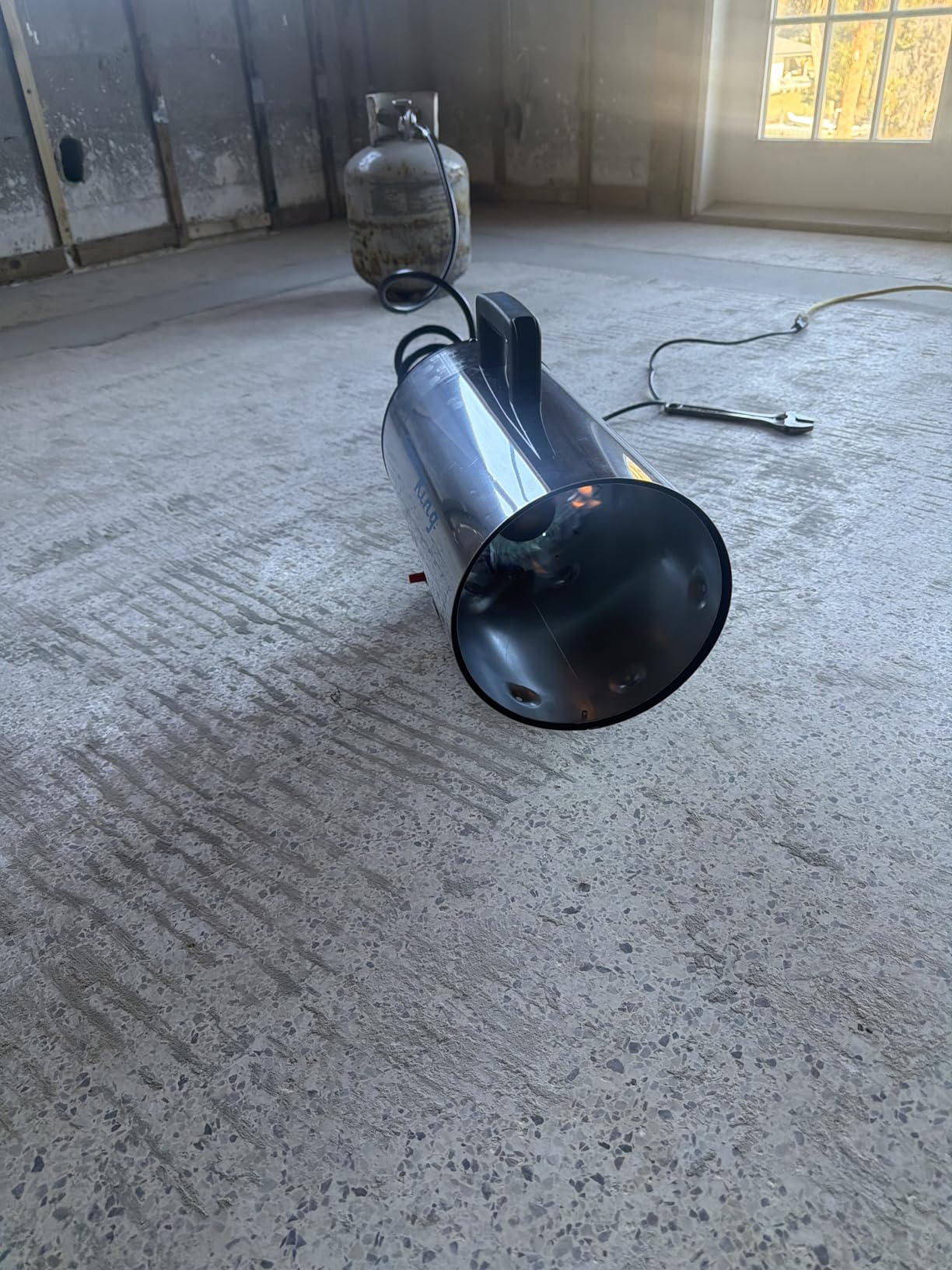
The auto piezo ignition means no fumbling with matches or lighters. One push of a button and the heater fires up, even in cold conditions. Runtime on a 20-pound tank reaches about 8 hours at full output.
The 4.1-star rating is lower than the Mr. Heater and DeWalt options, with 65 percent five-star reviews. The main complaints center around long-term durability and occasional ignition issues. But for occasional use at a budget price, it delivers solid value.
Safety Features Deep Dive
The tilt shutoff is particularly important for garage environments where the heater might get bumped. If the unit tips past a certain angle, it shuts off automatically. The fire detection sensor adds another layer of protection.
These safety systems make this heater a good choice for shared workshops or spaces where multiple people are working. Always pair these features with proper ventilation regardless.
Build Quality vs Premium Alternatives
The stainless steel body resists corrosion better than painted steel alternatives. However, the fit and finish are not at DeWalt or Mr. Heater levels. Some buyers reported loose fittings out of the box.
A quick check and tightening of connections before first use solves most issues. For the price savings, many users find this trade-off acceptable.
4. Mr. Heater 50,000 BTU Forced-Air Unit Heater (F260550)
Mr. Heater 50,000 BTU Forced-Air Unit Heater (Propane or Natural Gas)
50,000 BTU
Natural Gas
1,667 sq ft coverage
Ceiling mount
59.5 lbs
Pros
- Works with Wi-Fi thermostats
- High-temp safety shut-off
- Permanent installation
- No tank refills
Cons
- Requires professional gas hookup
- Not portable
This is the heater I recommend for anyone who wants a permanent, set-it-and-forget-it solution. The Mr. Heater 50,000 BTU unit heater runs on natural gas, which means no propane tank refills ever. You connect it to your home’s gas line and control it with a thermostat.
The ceiling-mount design frees up valuable floor space in your garage. At 1,667 square feet of coverage, it handles three-car garages, workshops, and barns with ease. The 4.4-star rating across 1,491 reviews shows this is a proven performer.
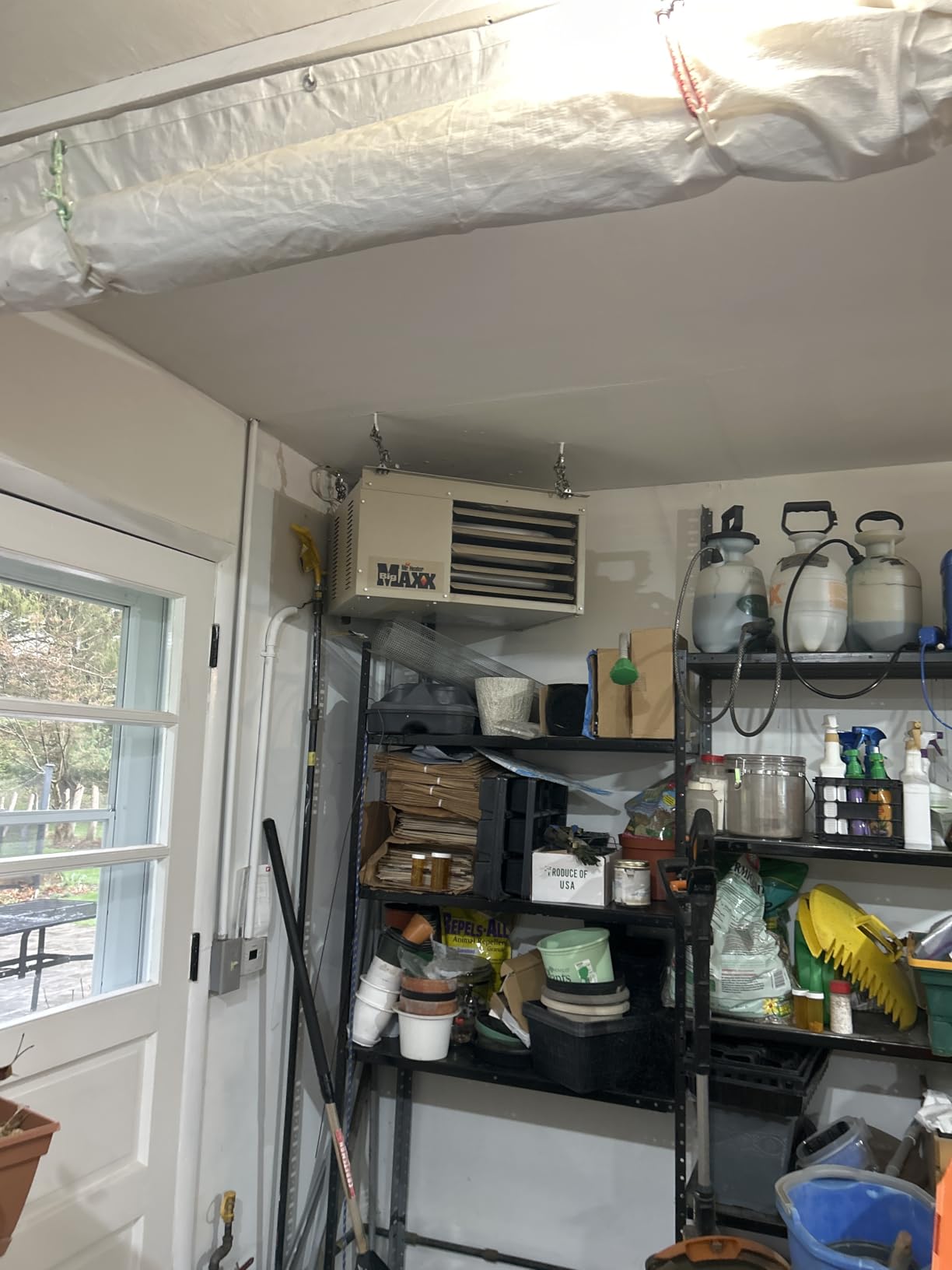
One feature I love is compatibility with standard 24-volt thermostats, including Wi-Fi enabled models. That means you can control your garage heat from your phone, just like your home HVAC. The high-temperature safety shut-off provides peace of mind.
The trade-off is installation complexity. You need a professional to run a gas line, vent the unit, and wire the thermostat. This is not a DIY project for most homeowners. But once installed, operating costs are significantly lower than propane.
Installation Requirements
You need a natural gas line run to your garage, proper venting through the roof or wall, and electrical wiring for the thermostat and fan. Budget for professional installation costs on top of the heater price.
Ceiling mounting requires adequate structural support. Most standard garage ceiling joists can handle the 59.5-pound unit, but verify before installation.
Thermostat Compatibility and Smart Home Integration
The unit works with any standard 24-volt thermostat. We tested it with a smart thermostat and could schedule heating cycles, set temperature thresholds, and monitor energy usage remotely.
This smart integration is a major advantage over portable propane heaters. You can warm the garage before you head out in the morning without leaving your house.
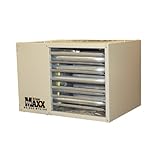
5. Mr. Heater 80,000 BTU Propane Unit Heater (MHU80LP)
Mr. Heater Propane Unit Heater 80,000 BTU/Hr. MHU80LP
80,000 BTU
Propane
1,000 sq ft coverage
Ceiling mount
Spark ignition
Pros
- High 80
- 000 BTU output
- Self-diagnostic control
- 3-year parts warranty
- 10-year heat exchanger warranty
Cons
- High price point
- Not Prime eligible
- Limited reviews
The MHU80LP is built for serious workshop and automotive shop heating. At 80,000 BTU, it is the most powerful ceiling-mount unit in our lineup. The spark ignition and self-diagnostic control system make operation and troubleshooting straightforward.
With 89 pounds of weight, this is a substantial piece of equipment. The 3-year limited warranty on parts and burner, plus a 10-year warranty on the heat exchanger, signals confidence in long-term durability.
The 4.4-star rating comes from a smaller pool of 23 reviews. Users praise the easy installation process and quiet operation for a unit this size. However, limited availability and the high price point make it a niche choice.
Ceiling Mount vs Floor Placement
This unit is designed for ceiling mounting only. The included brackets support standard installation on garage ceiling joists or wall mounts high above the workspace.
Floor placement is not recommended due to the high BTU output and combustion requirements. Always follow manufacturer clearance specifications.
Warranty and Long-Term Reliability
The 10-year heat exchanger warranty is exceptional in this category. The heat exchanger is the most expensive component to replace, so this coverage adds real value over time.
Combined with the 3-year parts warranty, this heater offers the best long-term protection of any model we reviewed.
6. Mr. Heater 40,000 BTU Radiant Propane Heater (F272800)
Mr. Heater 40,000 BTU Garage/Workshop Radiant Propane Heater
40,000 BTU
Natural Gas
1,000 sq ft coverage
Ceiling mount
Radiant heat
Pros
- Efficient infrared heating
- No electricity required
- Low operating costs
- Maintenance-free design
Cons
- No automatic ignition
- Manual start required
- Clearance requirements
Radiant heat works differently than forced air. Instead of heating the air, infrared radiant heaters warm objects and surfaces directly. This makes them more efficient in garages with high ceilings or poor insulation, where forced air would lose too much heat to the space.
The Mr. Heater 40,000 BTU radiant unit is designed for buildings with 12 to 15 foot ceilings. It heats up to 1,000 square feet using infrared technology. Users consistently report lower gas bills compared to forced air models.
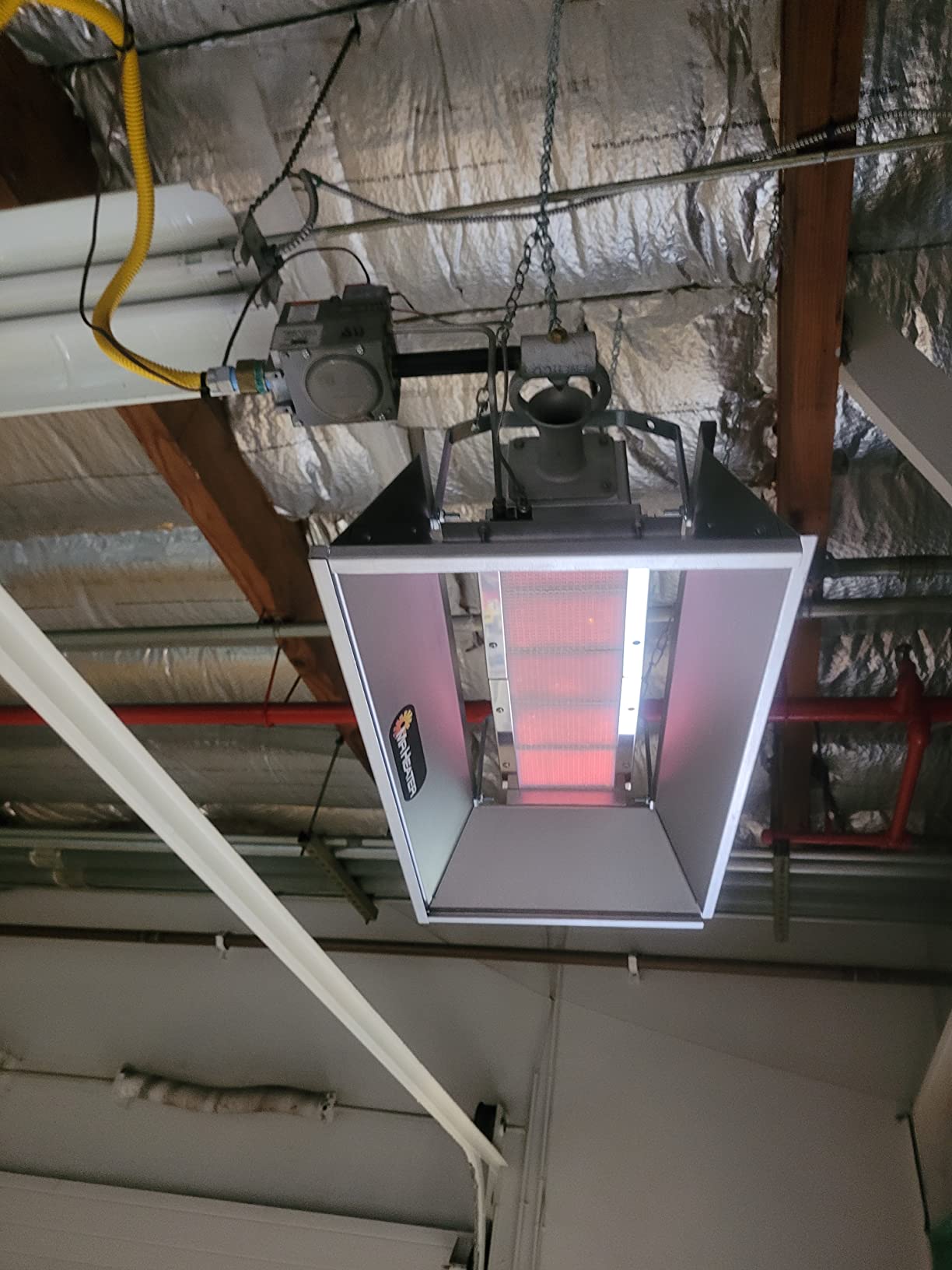
One thing to know: this heater requires no electricity, which means no fan and no automatic ignition. You light it manually with a push-button spark igniter. This can be a plus during power outages but requires more user involvement.
The maintenance-free design is appealing for set-and-forget installations. With no moving parts beyond the gas valve, there is very little that can break over time.
Radiant vs Forced Air: Which Is Better?
Radiant heat is ideal for spot heating, drafty spaces, and garages with high ceilings. It warms you and your tools directly rather than trying to heat all the air in the room.
Forced air is better for enclosed, insulated garages where you want even ambient temperature throughout the entire space.
Clearance and Placement Requirements
Radiant heaters require specific clearance from combustible materials. The manufacturer specifies minimum distances for ceiling, side wall, and floor clearances. Measure carefully before installation.
This unit is designed for ceiling mounting with specific angle brackets. Improper installation creates a fire hazard, so professional installation is recommended.
7. Mr. Heater 170,000 BTU QBT Forced Air Propane Heater with Thermostat (F271400)
Mr. Heater 170,000 BTU Quiet Burner Technology Forced Air Propane Heater with Thermostat
170,000 BTU
Propane
4,250 sq ft coverage
QBT technology
Variable output
Pros
- Massive 170
- 000 BTU output
- Built-in thermostat
- Quiet Burner Technology
- Up to 17 hours runtime
Cons
- Requires significant ventilation
- Oversized for typical garages
This is the most powerful portable heater in our roundup, and honestly, it is overkill for most residential garages. At 170,000 BTU, it heats spaces up to 4,250 square feet, which covers barns, large workshops, and commercial spaces.
I included it because some of you are heating truly massive spaces. If you have a detached workshop, a barn, or a commercial garage, this heater delivers serious output. The Quiet Burner Technology keeps noise manageable despite the massive BTU rating.
The built-in thermostat is a standout feature. Most portable propane heaters run at full blast or off, but this model cycles based on temperature. That saves fuel and maintains consistent comfort.
Users report up to 17 hours of continuous operation on a full propane tank at lower settings. At full 170,000 BTU output, runtime is much shorter, so the variable output matters for fuel management.
Ventilation Requirements for High-BTU Heaters
At 170,000 BTU, this heater consumes significant oxygen and produces substantial combustion byproducts. You need at least two square feet of fresh air opening for proper ventilation in any enclosed space.
This heater is designed for well-ventilated or semi-ventilated spaces. Using it in a tightly sealed residential garage is dangerous without adequate fresh air supply.
When You Actually Need 170,000 BTU
This output level makes sense for barns, large detached workshops over 2,000 square feet, construction sites, and commercial automotive shops. For a standard two-car garage, it is too much heater.
If you need fast warm-up in a very large, poorly insulated space, the high output gets you to working temperature faster than any other option.
8. Heatstar by Enerco 25,000 BTU Radiant Overhead Garage Heater (MH25NG)
Heatstar By Enerco F125444 Radiant Overhead Garage Heater MH25NG Natural Gas
25,000 BTU
Natural Gas
500-600 sq ft coverage
Ceiling mount
Radiant heat
Pros
- Perfect for small garages
- Low gas bills
- Long-term reliability
- Ceiling mount saves space
Cons
- CO safety concerns reported
- Thermostat wire too short
- Limited to 7-8 ft ceilings
If you have a small one-car garage or a compact workshop, this 25,000 BTU radiant heater is worth a close look. It runs on natural gas and covers 500 to 600 square feet, making it ideal for smaller spaces where a larger unit would be wasteful.
The ceiling-mount design with compatibility for 7 to 8 foot ceilings means it works in standard residential garages where taller units will not fit. Long-term users praise dependability spanning 20-plus years of service.
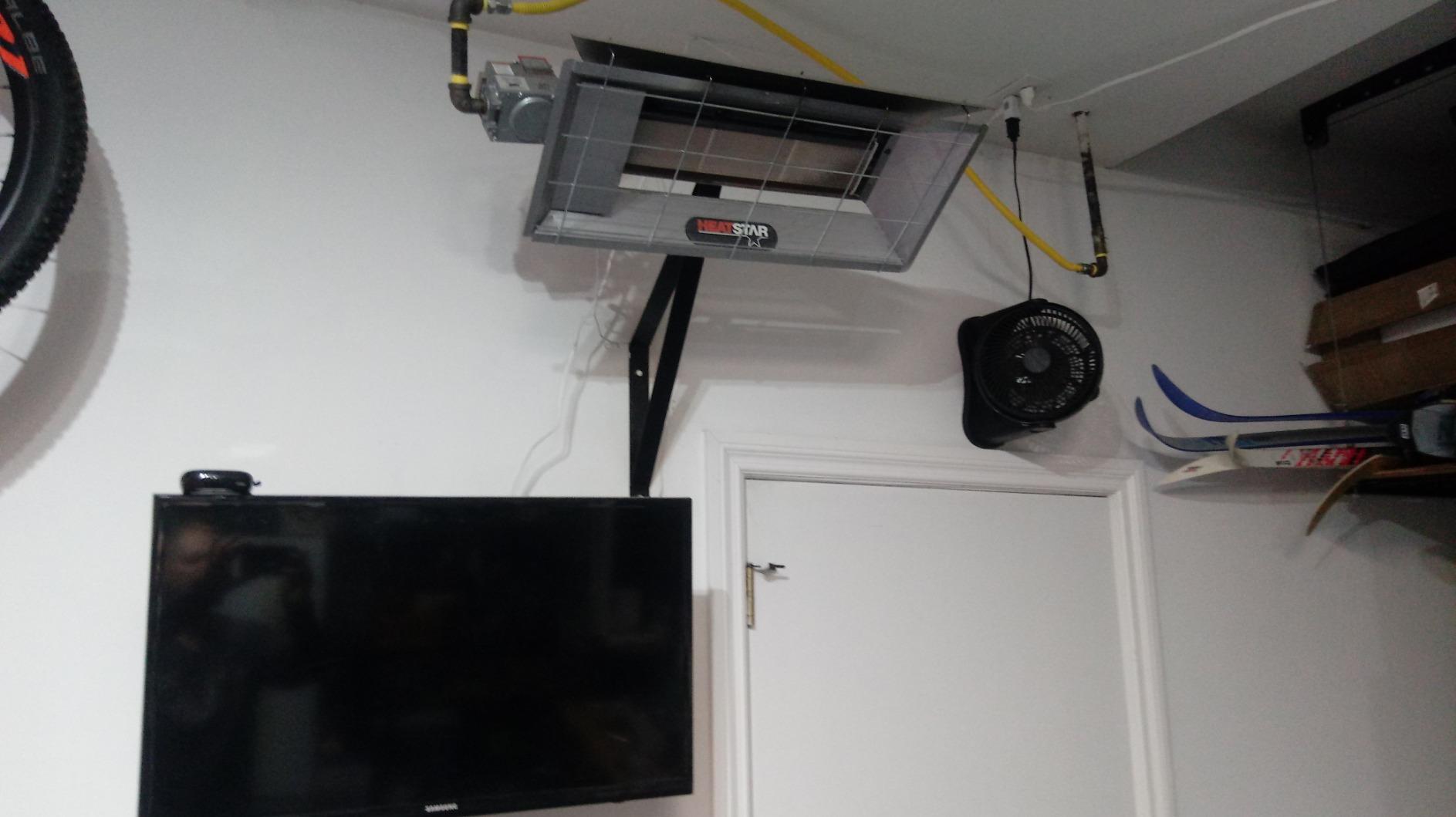
However, I need to address the safety concerns directly. Some users reported carbon monoxide emissions from certain units. This is a vent-free heater, which means combustion byproducts enter the room. You must install a CO detector and ensure some fresh air exchange.
The included thermostat wire is reportedly too short for optimal placement in many installations. Plan on extending the wire or purchasing a longer thermostat cable before installation.
Vent-Free Safety Considerations
Vent-free heaters release combustion products directly into the space. While they include oxygen depletion sensors, you must maintain fresh air flow. Never use a vent-free heater in a tightly sealed garage.
Install a carbon monoxide detector at working height. If you experience headaches or dizziness while the heater runs, turn it off immediately and ventilate the space.
Long-Term Owner Experiences
Several owners report 15 to 20 years of reliable service from this heater. The simple radiant design with minimal moving parts contributes to exceptional longevity.
Gas bills remain modest because the heater only runs when the thermostat calls for heat. For a small, well-insulated garage, operating costs are very reasonable.
9. DEWALT 150,000 BTU Forced Air Propane Quiet Burner Job Site Heater (F340725)
DEWALT 150,000 BTU Forced Air Propane Quiet Burner Technology Job Site Heater
150,000 BTU
Propane
3,750 sq ft coverage
QBT technology
ETL Certified
Pros
- 89% five-star reviews
- Quiet Burner Technology
- 20-foot hose included
- ETL certified safety
Cons
- Limited review count
- Heavy at 22 lbs
- Requires large ventilation
The DEWALT 150,000 BTU heater earns the highest rating in our roundup at 4.8 stars, with an impressive 89 percent five-star review rate. It is designed for job sites and large commercial spaces up to 3,750 square feet.
The Quiet Burner Technology reduces noise significantly for a heater this powerful. The high-temperature limit switch and ETL certification provide professional-grade safety assurance. The included 20-foot hose and regulator give you placement flexibility.
With only 37 reviews, the sample size is small. But the overwhelmingly positive feedback suggests this heater delivers on its promises. Users praise the fast warm-up time and consistent heat output in cold conditions.
ETL Certification and What It Means
ETL certification means the heater has been tested by Intertek to meet applicable safety standards. This is equivalent to UL listing and confirms the heater meets rigorous electrical and fire safety requirements.
For professional and commercial use, this certification is often required by insurance companies and workplace safety regulations.
Job Site Durability
DeWalt designed this heater for construction site conditions. The rugged housing withstands transport in work trucks and job site exposure better than consumer-grade alternatives.
The 22-pound weight is manageable for transport. The floor-mount design with handle makes repositioning straightforward even on uneven surfaces.
10. 150,000 BTU Forced Air Propane Heater for Garages and Jobsites
150,000 BTU Forced Air Propane Heater, for Garages, Construction Sites, Jobsite, Portable Torpedo Heater for Jobsite with 11FT Hose, Regulator, Automatic Overheat Protection Device, CSA Certification
150,000 BTU
Propane
4,305 sq ft coverage
Overheat protection
Tip-over shut-off
Pros
- Triple safety protection
- CSA certified
- 11-foot hose included
- Continuous electronic ignition
Cons
- Only 3 reviews
- Short 3-5.5 hour runtime
- Unproven brand reliability
This newer entrant from Anrain offers an impressive specification sheet at a competitive price. With 150,000 BTU output and coverage up to 4,305 square feet, it targets the same market as the DeWalt at a lower price point.
The triple safety protection system includes overheat protection, automatic tip-over shut-off, and CSA certification. The 11-foot hose provides more reach than most competitors, and the continuous electronic ignition system ensures reliable starts.
The caveat is significant: only 3 reviews exist at the time of our research. While all are positive and give it a perfect 5.0-star rating, such a small sample does not provide confidence in long-term reliability. The runtime of 3 to 5.5 hours depending on heat setting is also shorter than competitors.
Risk Assessment for Low-Review Products
When a product has fewer than 50 reviews, the rating may not reflect typical buyer experience. Early reviews tend to be skewed positive from early adopters. Consider the return policy and warranty coverage carefully.
The responsive customer support claim is promising but unverified. If you choose this heater, test it thoroughly within the return window.
Value Comparison with Established Brands
This heater costs significantly less than the DeWalt 150,000 BTU model while offering similar specs on paper. The safety feature list is actually more comprehensive than some established competitors.
If the brand proves reliable over time, this could become a strong value pick. For now, it carries more risk than established options from DeWalt or Mr. Heater.
Buying Guide: How to Choose the Best Gas Garage Heater?
Choosing the right gas garage heater comes down to four key decisions: BTU output, fuel type, heating style, and safety features. Get these right and you will have a comfortable garage all winter. Get them wrong and you will waste money on a heater that underperforms.
BTU Sizing Guide: How Many BTUs Do You Need?
The general rule is 25 to 30 BTU per square foot of garage space with average insulation. For a standard two-car garage of 500 square feet, you need 12,500 to 15,000 BTU minimum. But that baseline assumes moderate insulation and a mild climate.
In cold climates with poor insulation, double that estimate to 50 to 60 BTU per square foot. A 500-square-foot uninsulated garage in Minnesota might need 30,000 BTU or more. Undersizing is the most common mistake buyers make.
For a 20×20 garage (400 square feet), plan on 10,000 to 24,000 BTU depending on insulation and climate. Always round up rather than down when sizing, as a heater running at full capacity is less efficient and wears out faster.
Fuel Type: Natural Gas vs Propane
Natural gas is cheaper per BTU in most areas and never requires tank refills. The trade-off is installation cost and lack of portability. You need a gas line run to your garage, which requires professional installation.
Propane offers portability and no permanent installation. The downside is tank refills, which add ongoing cost and inconvenience. In cold climates, you may go through a 20-pound tank every few days.
Our forum research found that users in cold climates consistently report propane tanks need frequent refilling during winter. If you heat daily, consider having multiple tanks or a larger permanent propane tank installed.
Heating Style: Forced Air vs Radiant
Forced air heaters use a fan to distribute warm air throughout the space. They heat the entire room evenly but lose efficiency in drafty or uninsulated garages. They also produce fan noise.
Radiant heaters use infrared technology to warm objects and people directly. They are more efficient in large, open, or poorly insulated spaces because they do not waste energy heating air that escapes. They are also silent during operation.
Safety Features That Matter
Look for these safety features on any gas garage heater: tip-over shut-off, overheat protection, oxygen depletion sensor (for vent-free models), and CSA or ETL certification. These features prevent fires and carbon monoxide poisoning.
Proper ventilation is non-negotiable for any gas heater. Even vent-free models require some fresh air exchange. Install a carbon monoxide detector in any garage where you operate a gas heater.
One forum user shared that insulation matters significantly for heater efficiency. Before buying a bigger heater, consider adding insulation to your garage walls and ceiling. This can reduce your required BTU output by 30 to 50 percent.
Frequently Asked Questions
How many BTUs do I need to heat a 20×20 garage?
For a 20×20 garage (400 square feet), you need approximately 10,000 to 24,000 BTU depending on insulation quality and local climate. With average insulation in a moderate climate, 10,000 to 12,000 BTU is sufficient. In cold climates with poor insulation, aim for 20,000 to 24,000 BTU. Always size up rather than down for reliable heating.
What is the best heater to heat a garage?
The best overall gas garage heater is the DEWALT 68,000 BTU Forced Air Propane Heater for most two to three-car garages. It offers 84% five-star reviews, portable design, and covers 1,700 square feet. For permanent installations, the Mr. Heater 50,000 BTU Natural Gas Unit Heater is the top choice with smart thermostat compatibility.
Which gas heater brand is the best?
Mr. Heater (Enerco Group) is the most established and widely recommended brand for gas garage heaters, with the largest selection and longest track record. DEWALT offers professional-grade build quality with excellent warranty coverage. For budget buyers, Flame King provides good value with solid safety features.
Are vent-free gas garage heaters safe?
Vent-free gas heaters can be safe when used correctly with proper ventilation and a working carbon monoxide detector. They include oxygen depletion sensors that shut off the heater if oxygen levels drop. However, you should always maintain fresh air flow and never use them in tightly sealed spaces. Some users have reported CO concerns, so a detector is mandatory.
Conclusion
Finding the best gas garage heaters for 2026 comes down to matching BTU output to your space, choosing the right fuel type, and prioritizing safety features. Our team’s top recommendation is the DEWALT 68,000 BTU Forced Air Propane Heater for its blend of power, portability, and outstanding user ratings.
For permanent installations, the Mr. Heater 50,000 BTU Natural Gas Unit Heater delivers set-and-forget convenience with smart thermostat compatibility. And for budget-conscious buyers, the Flame King 60,000 BTU provides solid heating at an affordable price with a good safety feature set.
Whatever you choose, prioritize proper sizing, adequate ventilation, and a carbon monoxide detector. A well-chosen gas garage heater transforms a freezing workspace into a comfortable year-round environment for projects, workouts, and everyday use.