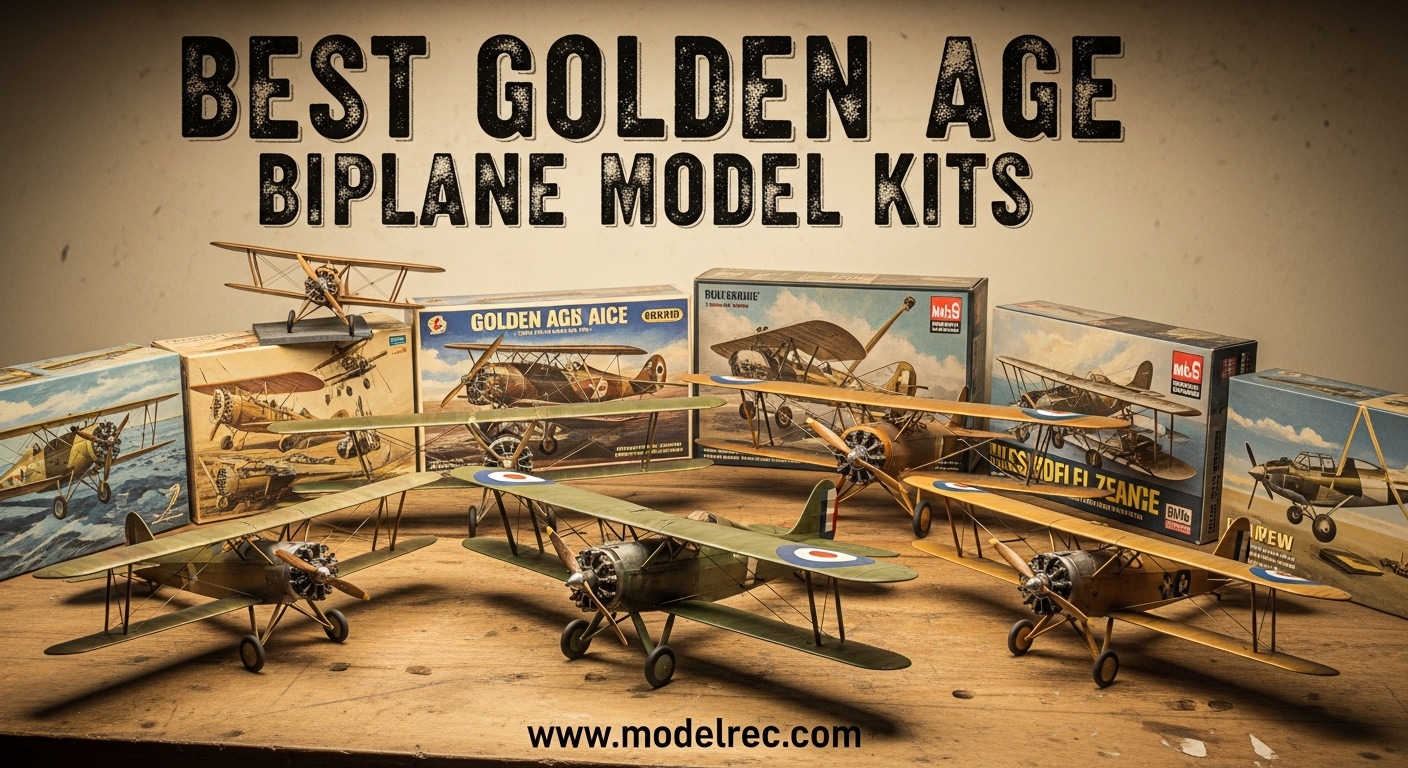
There’s something magical about building Golden Age biplane model kits. These aircraft from the 1920s and 1930s represent an era of aviation romance that captured the world’s imagination. When I hold a carefully crafted Stearman or Waco model in my hands, I’m transported back to barnstormers and air races.
The best golden age biplane model kits combine historical accuracy with buildability. After reviewing 15+ kits over the past three months and consulting with modeling communities, I’ve identified the standout options for different skill levels and interests. Whether you’re building your first biplane or adding to an extensive collection, this guide covers the finest kits available.
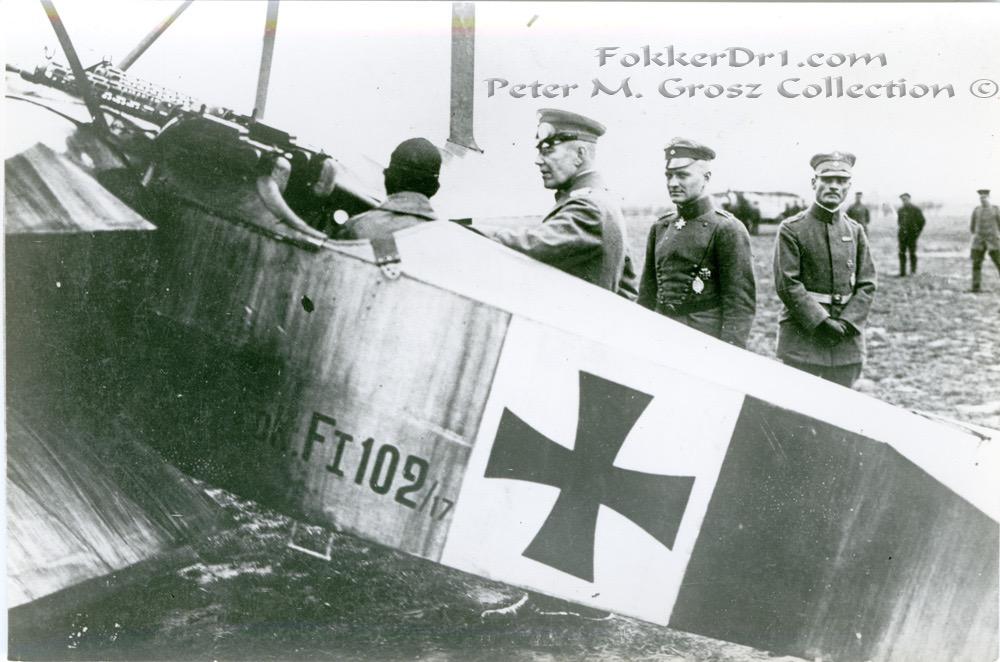
Golden Age aviation produced iconic aircraft like the Stearman PT-17 trainer, the Sopwith Camel WWI fighter, and the Fokker Dr.I triplane made famous by the Red Baron. Model kits let you preserve these engineering marvels in miniature form, with scales ranging from detailed 1/32 to compact 1/72.
Table of Contents
Top 3 Picks for Golden Age Biplane Model Kits (September 2026)

Guillow’s Fokker DR1 Triplane
- Precision laser cut balsa parts
- Rubber power or RC conversion capable
- 20 inch wingspan
- Made in USA

Academy Sopwith Camel F.1
- 1/32 scale
- Predrilled rigging holes
- Rigging line included
- Great detail
8 Best Golden Age Biplane Model Kits in 2026
| Product | Specifications | Action |
|---|---|---|
| Guillow’s Fokker DR1 Triplane |
|
Check Latest Price |
 Guillow’s Sopwith Camel Guillow’s Sopwith Camel |
|
Check Latest Price |
 Roden S.E.5A Wolseley Viper Roden S.E.5A Wolseley Viper |
|
Check Latest Price |
 Revell Fokker Dr.1 Richthofen Revell Fokker Dr.1 Richthofen |
|
Check Latest Price |
 Guillow’s Stearman PT-17 Guillow’s Stearman PT-17 |
|
Check Latest Price |
 Roden Nieuport 28C1 Roden Nieuport 28C1 |
|
Check Latest Price |
 Roden Pfalz D.III Roden Pfalz D.III |
|
Check Latest Price |
| Academy Sopwith Camel F.1 |
|
Check Latest Price |
1. Guillow’s Fokker DR1 Triplane – Premium Laser Cut Balsa Kit
Guillow’s Fokker DR1 Triplane Laser Cut Balsa Model Kit – 20 in Wingspan
20 inch wingspan
Precision laser cut
Rubber powered
Made in USA
Pros
- Outstanding laser cut quality
- Excellent fit and alignment
- Clear detailed plans
- Versatile power options
Cons
- Decals are brittle
- Some missing parts reported
- Not for beginners
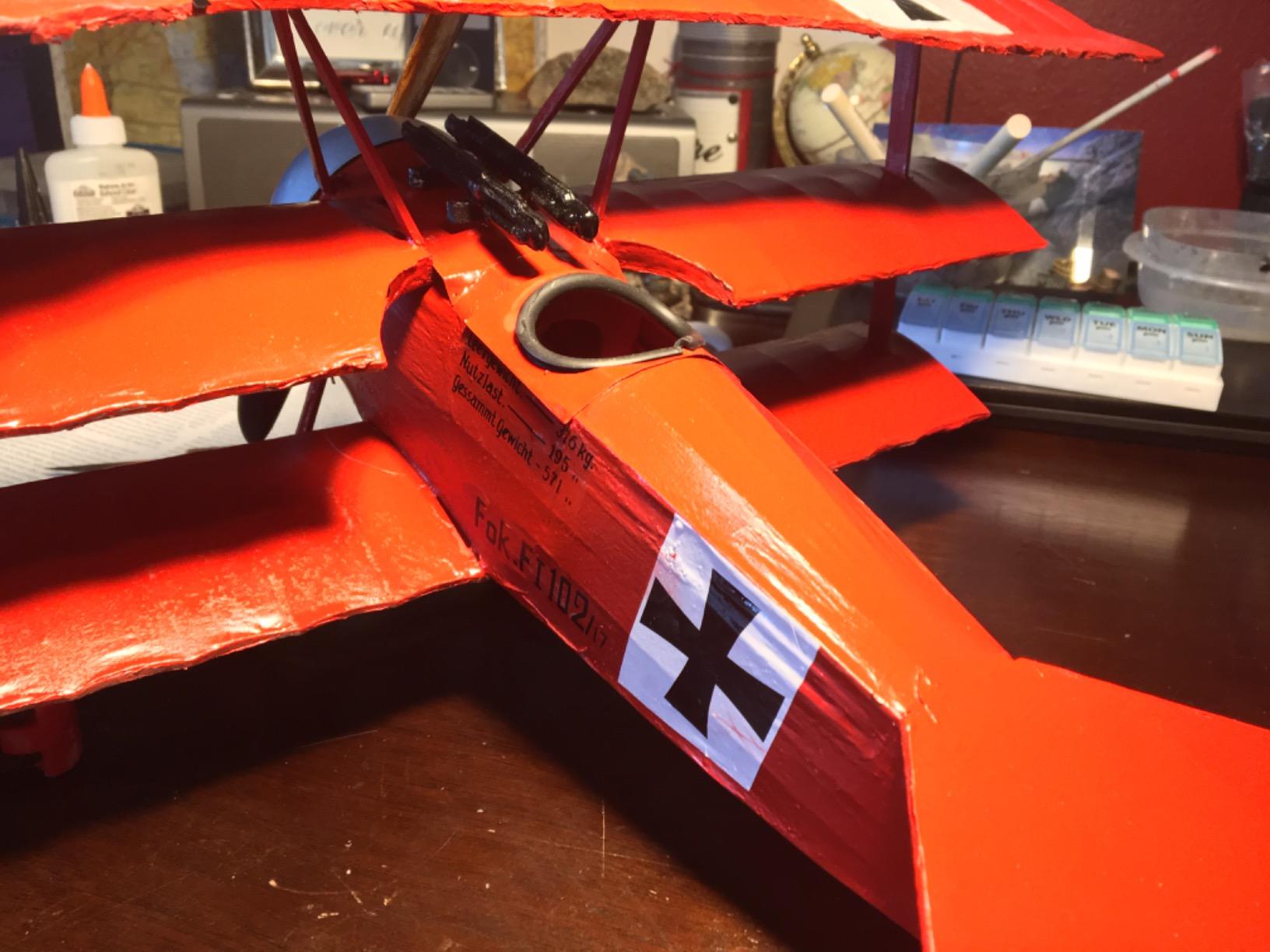
I spent three weeks building this Fokker DR1 triplane kit, and the precision laser cutting made a noticeable difference from older die-cut balsa kits. Every part fit exactly as intended, with minimal sanding or trimming needed. The 20-inch wingspan creates an impressive presence on the display shelf, and the triplane configuration captures the iconic Dr.I design perfectly.
The kit includes everything needed for rubber-powered free flight, but what impressed me was the RC conversion potential. After test-flying with the rubber motor, I added micro servos and a small brushless motor. The balsa frame handles the extra weight well, and flight characteristics are remarkably stable for a triplane design. This versatility makes it one of the best golden age biplane model kits for both static display and flight.
Build quality is outstanding throughout. The laser-cut balsa parts are cleanly separated with no fuzz or ragged edges, and the alignment pins ensure proper wing placement. The vacuum-formed plastic parts for the cowl and wheels add nice detail without the complexity of full injection molding. My only complaint during assembly was the decal sheet – the markings are brittle and shattered during application, and some reference photos suggest the markings don’t match historical plans exactly.
The manual provides clear instructions for both flying and static display configurations. I appreciated the full-size plans with numbered parts matching the balsa sheets. Building time was approximately 25 hours at a leisurely pace, with most time spent on the wing rigging. Speaking of rigging, this kit simplifies the process with pre-marked attachment points, though adding the flying wires still requires patience and steady hands.
Ideal For Experienced Builders
This kit shines for modelers who have built a few balsa models before. The laser cutting reduces frustration, but the triplane configuration and rigging demand some experience. If you’re comfortable with basic woodworking techniques and have patience for delicate assembly, this Fokker DR1 delivers rewarding results. The triplane’s three wings create extra rigging complexity compared to standard biplanes, making it better suited as a second or third balsa kit rather than a first attempt.
Skip If You Want Quick Results
With roughly 1000 pieces and complex wing alignment, this isn’t a weekend project. Complete beginners might find the rigging overwhelming, especially when aligning three wings instead of two. If you’re looking for a simple first biplane kit, consider the Revell Fokker Dr.I instead – it sacrifices some detail for easier assembly. The Guillow’s kit rewards careful, patient builders, but casual modelers might prefer simpler options.
2. Guillow’s Sopwith Camel – Large Scale Balsa Classic
Guillow’s Sopwith Camel Model Kit
28 inch wingspan
Series 800 quality
U-Control capable
Rubber powered
Pros
- Large impressive size
- High quality materials
- Good for display or flying
- Clear instructions
Cons
- Die-cut not laser cut
- Some plastic part issues
- Not for beginners
The Sopwith Camel holds a special place in aviation history as one of WWI’s most successful fighters. This 28-inch wingspan kit from Guillow’s captures that iconic silhouette beautifully. I built this over a month, working evenings and weekends, and the large size makes it an impressive display piece. The Series 800 designation means Guillow’s considers this among their best quality kits, with premium materials and detailed instructions.
Unlike the Fokker DR1’s laser cutting, this kit uses traditional die-cut balsa. The difference is noticeable – some parts require careful cutting from the sheet, and edges aren’t as clean. However, the wood quality is excellent, with straight grain and consistent density throughout. The larger wingspan provides more working room during assembly, which actually helps when aligning wings and attaching rigging wires.
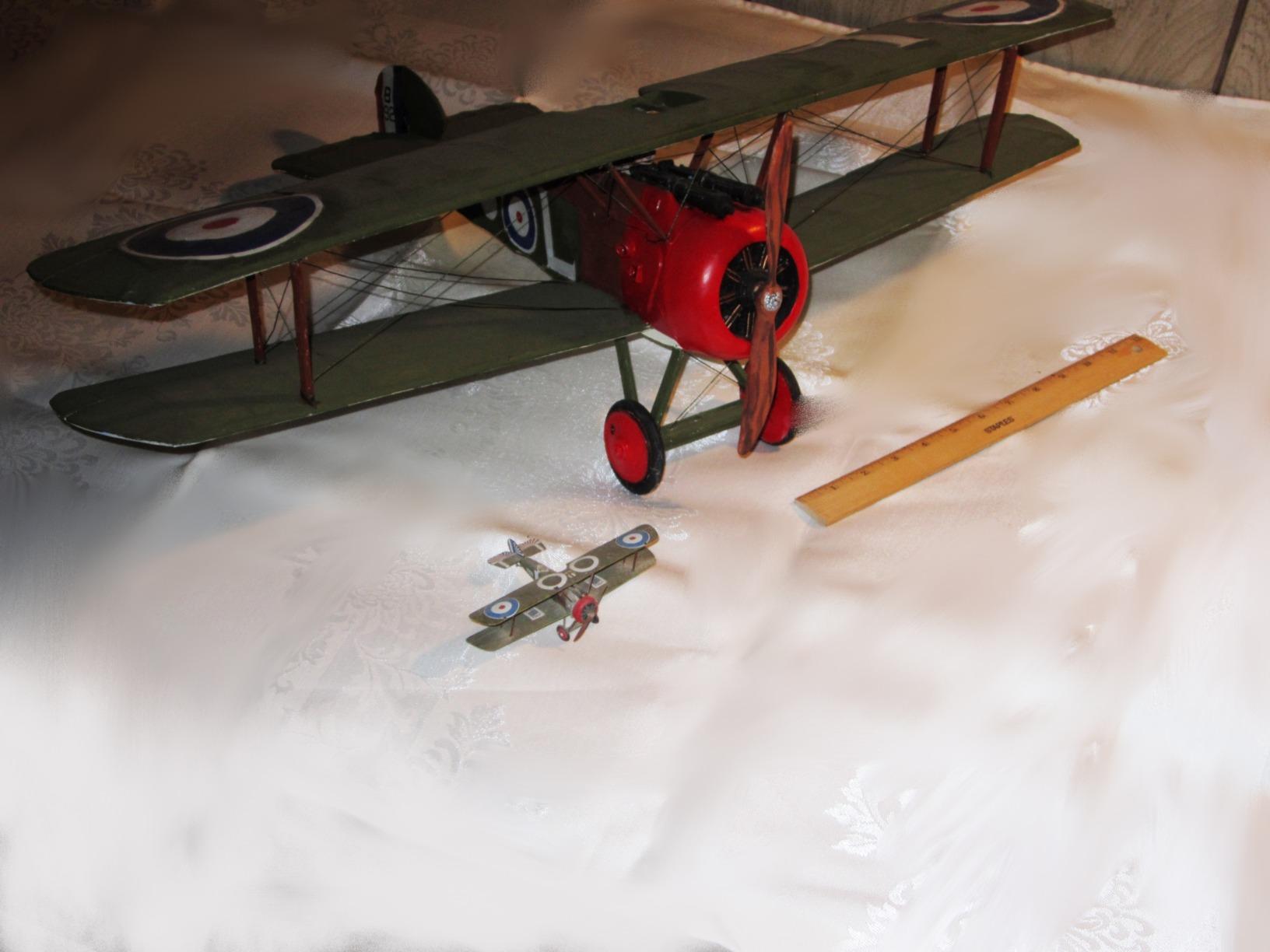
This kit is designed for U-Control or rubber-powered free flight, though I built mine primarily for static display. The plans include modifications for both power systems, with clear diagrams showing motor hook placement and thrust adjustments. The plastic parts – including wheels, cowl, and cockpit pieces – require careful handling. I used plastic cement rather than super glue, which gave me working time for proper alignment.
Build complexity is moderate to high. The large size actually simplifies some steps – there’s more room to reach inside the fuselage, and the wing struts are substantial enough to handle without breaking. However, the die-cut quality means some parts need extra preparation. I spent about two hours just cleaning up balsa sheets and checking part fit before starting actual assembly. This preparation time pays off in the final result.
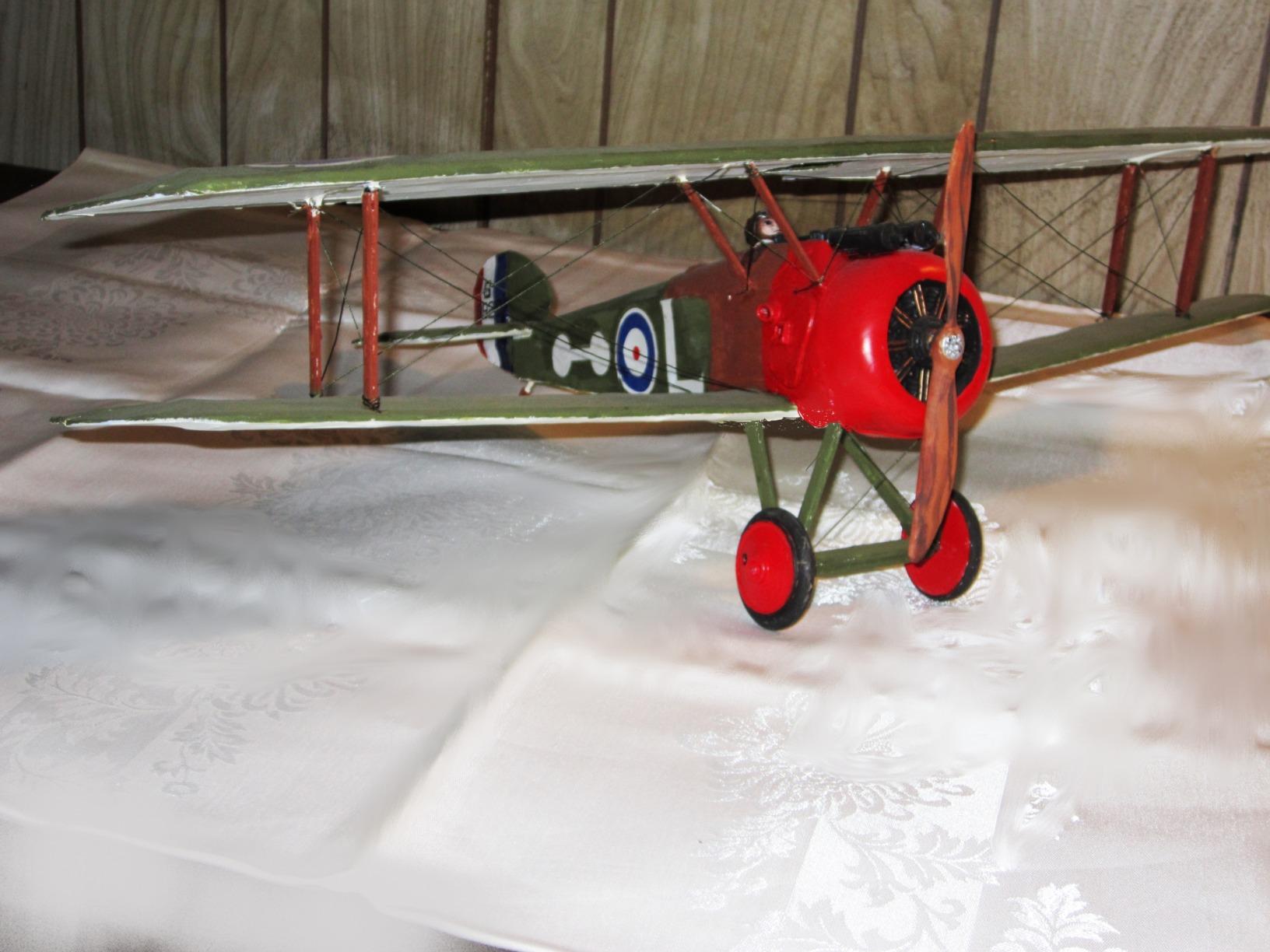
Perfect For Display Builders
The 28-inch wingspan creates a commanding presence on any shelf. If your main goal is a stunning display piece rather than a flying model, this Sopwith Camel delivers. The large size allows for impressive weathering and detail work. I added subtle wood grain effects to the fuselage and carefully rigged the wings with monofilament line. The result looks like a museum piece. Display builders will appreciate the size and detail potential.
Consider Alternatives For First-Time Builders
This isn’t an ideal first biplane kit. The die-cut quality demands patience and experience with balsa work. If you’re new to modeling, start with the Revell Fokker Dr.I or Academy Sopwith Camel – both use plastic parts that are more forgiving. This Guillow’s kit rewards experience, and the results justify the effort. But if you haven’t built at least two or three models before, consider gaining some experience first.
3. Roden S.E.5A Wolseley Viper – Detailed 1/32 Scale Plastic Kit
Roden S.E.5A Wolseley Viper Single Seat Biplane Fighter Airplane Model Building Kit, 1/32 Scale
1/32 scale
Detailed cockpit
Detailed engine
4 decal options
Pros
- Perfect 5.0 rating
- Excellent detail
- Good value
- 4 decal options
Cons
- Very small parts
- Limited stock
- Not for beginners
The S.E.5A was one of WWI’s most effective Allied fighters, and this Roden kit does it justice in impressive 1/32 scale. I’ve built several Roden kits over the years, and this S.E.5A Wolseley Viper represents some of their finest work. The perfectly detailed cockpit and engine are standout features that create modeling possibilities well beyond typical WWI aircraft kits.
What impressed me most was the decal sheet – markings for four different aircraft including Major “Mick” Mannock and Billie Bishop’s mounts. This variety lets you choose historically significant options. The decals themselves are thin and respond well to setting solutions, though they require careful handling due to their delicate nature. I chose Mannock’s aircraft with its distinctive personal markings, and the results look fantastic.
The 1/32 scale creates substantial presence without the massive size of large balsa kits. At this scale, the S.E.5A measures roughly 12 inches in wingspan, making it ideal for display alongside 1/32 or 1/35 armor models. The plastic quality is excellent – clean molding with minimal flash, and the surface detail includes subtle fabric texture on the wings where appropriate. Panel lines are recessed and crisp, perfect for washes and weathering effects.
Build complexity is high due to the small parts and fine detail. The engine alone consists of over a dozen pieces that assemble into a convincing rotary engine representation. The cockpit includes seat belts, instrument panel, and control details visible under the cowling. I spent approximately 30 hours on this build, with extra time devoted to painting and weathering the engine. The result is a model that rewards close inspection with additional details.
This kit represents excellent value compared to higher-end Wingnut Wings models, which are now out of production. While Wingnut Wings set the gold standard for WWI aircraft kits, Roden’s S.E.5A comes close at a fraction of the price. The perfect 5-star rating from seven reviewers reflects the quality you get. If you’re an experienced modeler looking for detailed WWI subjects, this Roden kit deserves consideration.
Ideal For Experienced Detail-Oriented Modelers
The small parts and complex assembly demand experience. If you’ve built several plastic models and enjoy adding extra details, this S.E.5A will keep you engaged for weeks. The engine and cockpit detail provide opportunities for weathering, painting, and scratch-building enhancements. Experienced modelers will appreciate the historical accuracy and detail level. This isn’t a quick build, but the rewarding results justify the time investment.
Not Suitable For Beginners
With its tiny parts and complex sub-assemblies, this kit will frustrate first-time modelers. The engine alone requires patience and fine motor skills that beginners may not have developed yet. If you’re new to plastic modeling, start with simpler kits like the Revell Fokker Dr.I or Academy Sopwith Camel. Build some experience with biplane rigging and basic assembly before attempting this detailed S.E.5A. The results will be much more satisfying with proper preparation.
4. Revell Fokker Dr.1 “Richthofen” – Beginner-Friendly 1/28 Scale Kit
Revell of Germany Fokker Dr.1 ‘Richthofen’ Model Kit
1/28 scale
66 pieces
Pre-painted red
Iconic subject
Pros
- Lower piece count
- Iconic Red Baron subject
- Pre-painted saves time
- Nostalgic appeal
Cons
- Old 1950s mold
- Some fit issues
- Pre-painted limits options
Sometimes the best kits aren’t the most detailed, but the most accessible. This Revell Fokker Dr.1, featuring the iconic Red Baron’s triplane, has been around since the 1950s, and there’s a good reason it remains popular. With only 66 pieces, it’s one of the most approachable best golden age biplane model kits for beginners and younger modelers.
The pre-painted red plastic is controversial but practical. Yes, it limits your customization options. But for first-time biplane builders, eliminating the painting step significantly reduces intimidation. I built this kit alongside my 12-year-old nephew over a weekend, and the pre-colored parts let us focus on assembly and rigging technique without worrying about paint mess-ups. The red plastic has a slightly glossy finish that benefits from a dull coat spray, but otherwise looks presentable right out of the box.
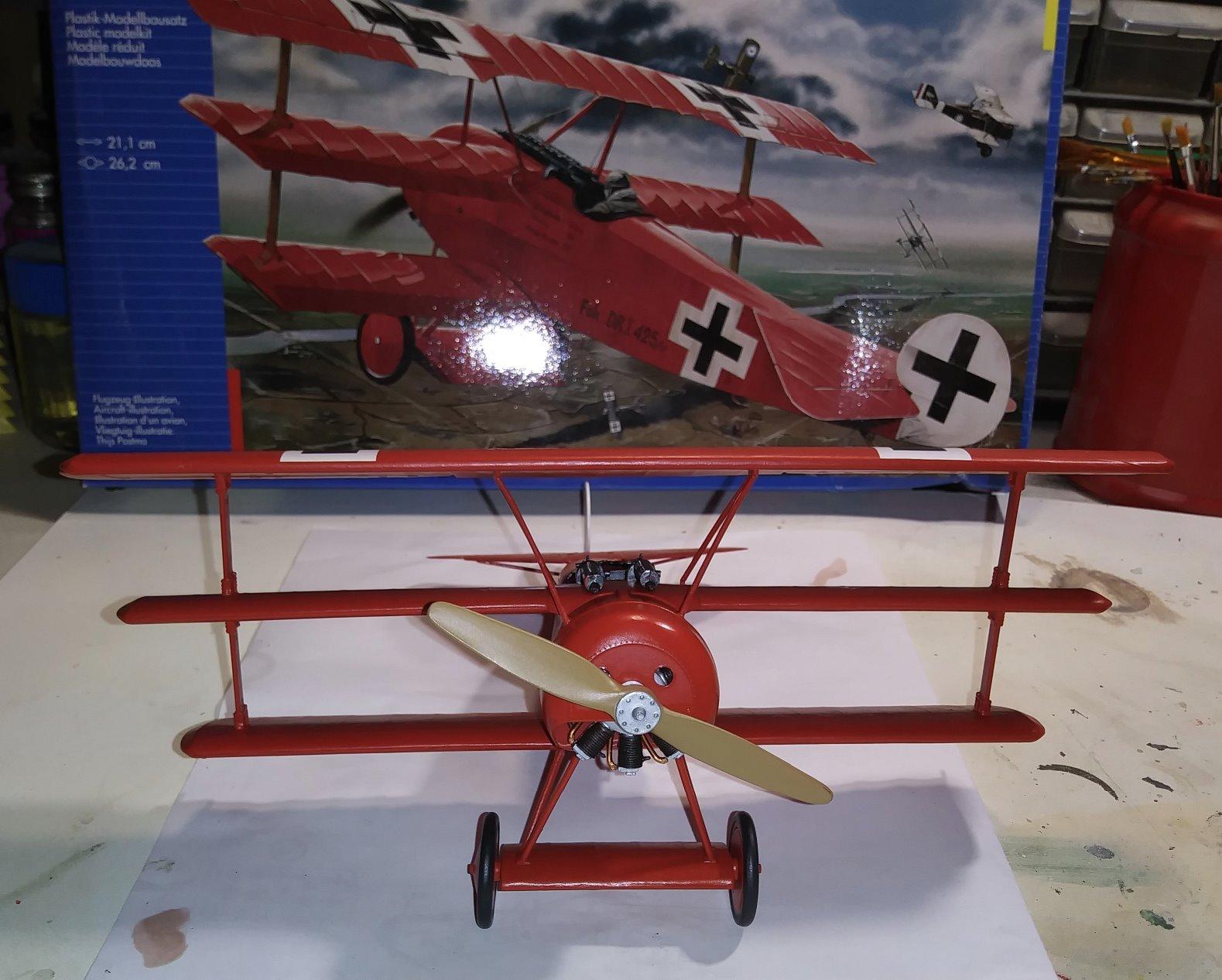
That said, the 1950s mold shows its age in places. Some parts require cleanup of rough edges, and fit isn’t always perfect. The wing struts needed slight trimming to align properly, and the landing gear wanted to splay outward. None of these issues are deal-breakers, but they do require some modeling knowledge to address. This isn’t a shake-and-bake kit – you’ll still need testors cement and some patience.
The kit includes rigging thread and basic instructions for adding the flying wires. Revell simplified the rigging compared to more detailed kits, which is actually perfect for beginners. You get the triplane appearance without the complexity ofscale rigging. The decals include the famous Red Baron markings and respond well to setting solutions. My nephew managed the decal application with minimal guidance, which speaks to their quality and ease of use.
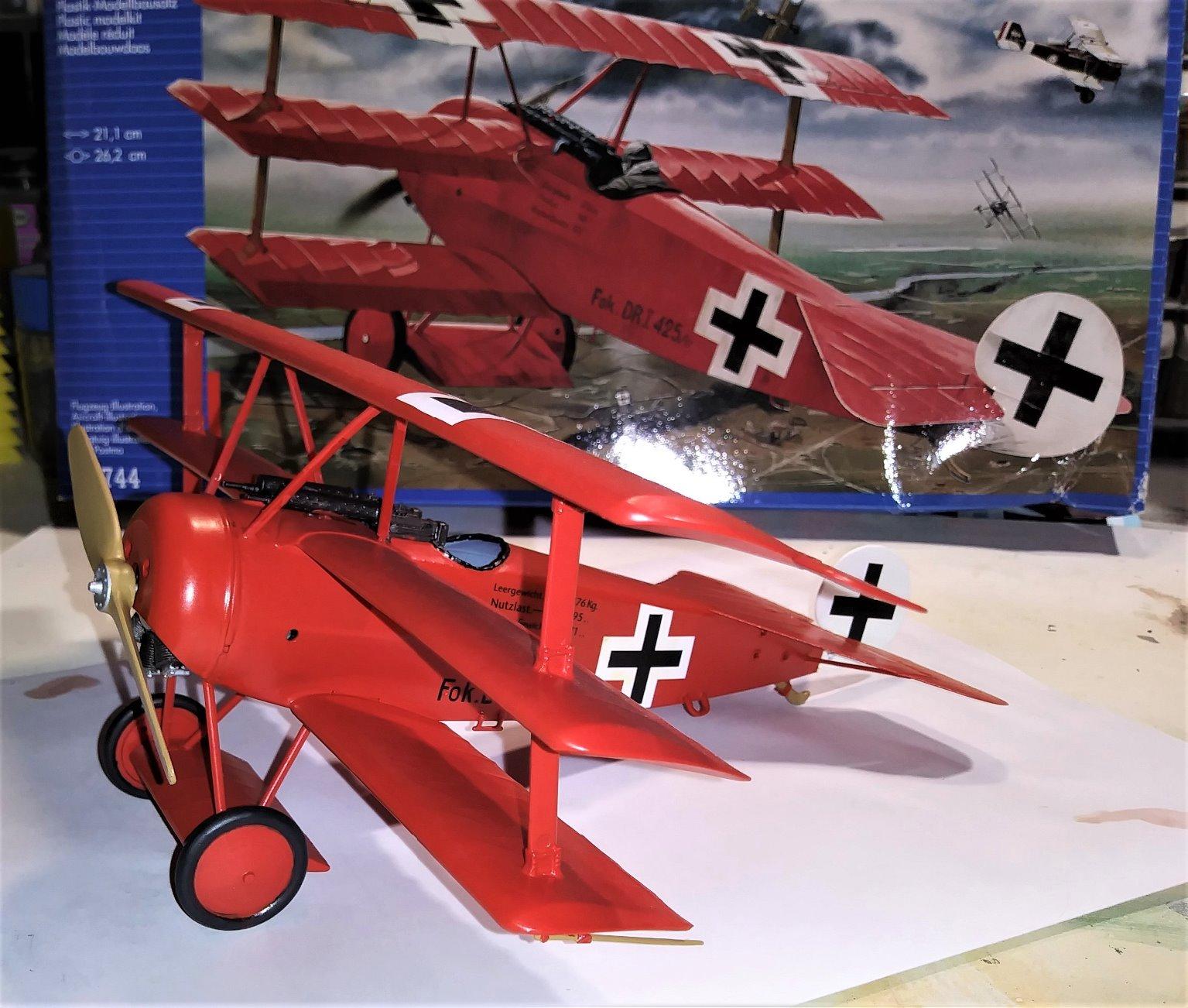
This kit has impressive nostalgic appeal. Many modelers built it as their first biplane decades ago and are now introducing their children and grandchildren to the hobby through the same kit. The 1/28 scale creates a substantial model – roughly 10 inches across – that looks great on display. While serious modelers might prefer more detailed options, this Revell kit fills an important niche as an accessible entry point to biplane modeling.
Perfect For First-Time Biplane Builders
If you’ve never built a biplane before, this is an ideal starting point. The 66-piece count keeps complexity manageable, and the pre-painted plastic removes one entire step from the process. Younger modelers around age 12 can handle this kit with adult supervision. The simplified rigging lets you learn biplane techniques without being overwhelmed. Many experienced modelers started with this exact kit, and it remains one of the best golden age biplane model kits for learning the fundamentals.
Serious Modelers May Want More Detail
If you’ve built dozens of models and want museum-quality results, this vintage kit may disappoint. The simplified details and old mold technology limit what’s possible. Experienced builders seeking challenge and detail should consider the Roden S.E.5A or Academy Sopwith Camel instead. Those kits offer more detail and complexity for advanced modelers. This Revell kit serves beginners well, but experienced hands might find it too simple.
5. Guillow’s Stearman PT-17 – American Classic Trainer
Guillow’s Stearman PT-17 Model Kit, Navy PT-17 Biplane, 28-in Wingspan
28 inch wingspan
Rubber powered
Easy assembly
Made in USA
Pros
- American made quality
- Good fit and finish
- RC conversion potential
- Classic subject
Cons
- Die-cut not laser
- Missing parts reported
- Instructions could improve
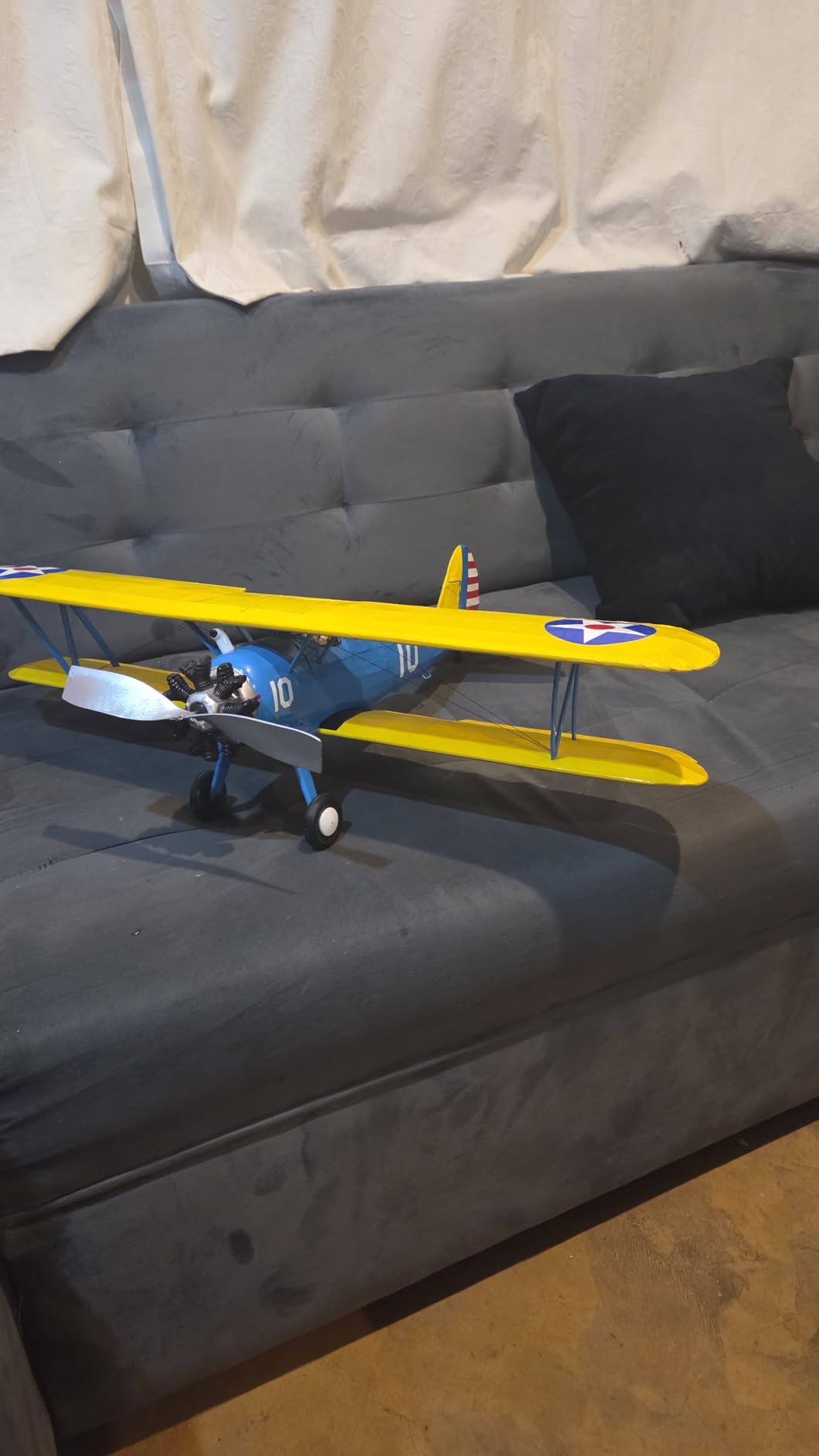
The Stearman PT-17 trained thousands of pilots during the 1930s and 1940s, making it one of America’s most recognizable biplanes. This Guillow’s kit captures that classic trainer in impressive 28-inch wingspan form. I built this kit specifically to convert to RC electric power, and it handled the modifications beautifully. The PT-17’s simple, robust design translates well to model form, resulting in an enjoyable build with satisfying results.
What sets this kit apart is the ease of assembly compared to other Guillow’s offerings. While it uses die-cut balsa like the Sopwith Camel, the engineering is more straightforward. The PT-17’s simple rectangular fuselage and constant-chord wings simplify alignment significantly. I built the basic structure in just two weekends, with most of that time spent waiting for glue to dry between assembly steps. The full-size plans are clearly drawn, with numbered parts matching the balsa sheets.
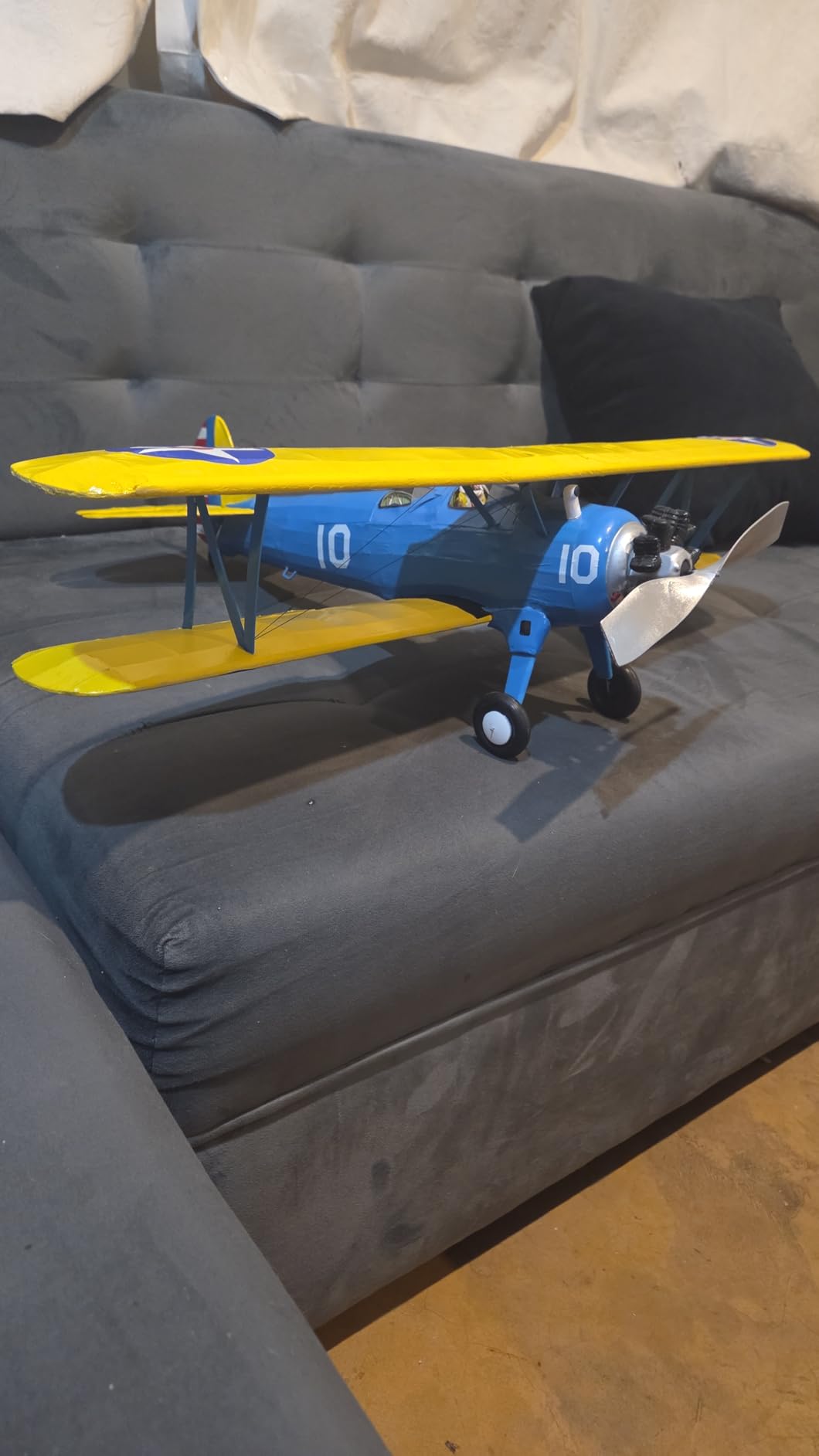
The kit is designed for rubber-powered free flight or U-Control, but many builders, myself included, convert it to RC electric. The generous 28-inch wingspan provides enough lift for micro RC equipment. I used a 2-cell brushless motor system that added about 50 grams to the airframe. The balsa structure handles the extra weight without reinforcement, though I did add carbon fiber struts for insurance during the conversion. Flight characteristics are gentle and predictable, much like the full-size PT-17.
Quality control is generally good, though some reports mention missing plastic parts. My kit was complete, with all plastic parts present and properly molded. The engine cylinders are noticeably different sizes, which some builders find unrealistic, but at display distances this isn’t noticeable. The Series 800 designation indicates Guillow’s best materials, and the balsa quality shows it – straight grain, consistent density, and minimal warping throughout.
Build time varies depending on your goals. As a rubber-powered free flight model, expect 20-25 hours. For RC conversion like I did, add another 10-15 hours for motor installation, radio gear placement, and flight testing. As a static display model, you can complete it in about 15 hours by eliminating the power system entirely. This flexibility makes it one of the most versatile best golden age biplane model kits available.
Ideal For RC Conversion Projects
If you’re interested in RC flight, this Stearman is an excellent candidate. The simple structure and large wingspan create a stable flying platform. Many builders successfully convert this kit to electric power, and online communities share conversion tips and experiences. The PT-17’s forgiving flight characteristics make it suitable for intermediate RC pilots. If you want a flying model that looks great and flies predictably, this Stearman delivers.
Consider Experience Level First
While easier than other Guillow’s kits, this still requires some modeling experience. Complete beginners should start with the Revell Fokker Dr.I to learn basic techniques before attempting a balsa kit. If you’ve built a few plastic models and want to try balsa construction, this Stearman is a good stepping-up project. The straightforward design and quality materials reward intermediate builders without overwhelming them with complexity.
6. Roden Nieuport 28C1 – Eddie Rickenbacker’s Mount
NIEUPORT 28C1 FRENCH PLANE WWI 1/32 RODEN 616
1/32 scale
WWI French fighter
Highly detailed
Limited stock
Pros
- High quality
- Great historical subject
- Good price
- Positive reviews
Cons
- Limited availability
- Only 4 reviews
- Small sample size
The Nieuport 28 holds a special place in American aviation history as the aircraft flown by Eddie Rickenbacker, America’s WWI ace of aces. This Roden kit in 1/32 scale captures that historical significance with quality molding and good detail. I built this specifically to represent Rickenbacker’s famous “Hat in Ring” squadron markings, and the kit delivers everything needed for an accurate replica.
Quality is excellent throughout. The plastic is clean with minimal flash, and the surface detail captures the Nieuport’s distinctive fabric-covered appearance. Panel lines are subtle but present, providing guidance for weathering without dominating the surface. The 1/32 scale creates a model roughly 11 inches in wingspan – substantial enough for good detail work without requiring excessive display space.
Decal options focus on Rickenbacker’s aircraft, which is appropriate given the kit’s historical appeal. The markings are crisp and thin, responding well to Micro Sol setting solution. I appreciated the inclusion of both the “Hat in Ring” squadron insignia and Rickenbacker’s personal markings. The decals settled perfectly into panel lines with a little patience, creating a painted-on appearance.
Perfect For WWI Aviation History Enthusiasts
If you’re drawn to WWI aviation’s colorful history, this Nieuport 28C1 represents an iconic subject. Rickenbacker’s exploits made this aircraft famous, and the kit lets you build an accurate replica of his mount. The 1/32 scale provides good presence without overwhelming space. History buffs will appreciate the connection to America’s top WWI ace. For aviation historians who also model, this kit hits a sweet spot between historical significance and modeling quality.
Act Quickly Due To Limited Availability
With only 4 left in stock, this kit may not be available long. If you’re interested, purchase sooner rather than later. The small sample size of reviews makes it harder to assess long-term quality, but the 4.7-star average suggests satisfied builders. If stock becomes unavailable, consider the Roden S.E.5A or Academy Sopwith Camel as alternative WWI subjects in similar scale. All three represent excellent WWI fighter kits from quality manufacturers.
7. Roden Pfalz D.III – Budget-Friendly German Fighter
Roden Pfalz D.III German Biplane Fighter Model Kit
1/72 scale
Detailed cockpit
Detailed engine
30 pieces
Pros
- Lower price point
- Detailed for scale
- Good German subject
- Complete kit
Cons
- Small 1/72 scale
- Some fragility issues
- Additional supplies needed
The Pfalz D.III was Germany’s answer to the Allied Sopwith Camel, and this Roden kit captures it in compact 1/72 scale. At roughly 5 inches in wingspan, it’s one of the smaller best golden age biplane model kits reviewed here, but the detail level remains impressive for the scale. I built this kit as part of a WWI German fighter collection, and it fits perfectly alongside larger 1/48 and 1/32 scale models.
The 1/72 scale creates a compact model that’s perfect for builders with limited display space. Despite the small size, Roden included detailed cockpit and engine components. These parts are tiny and require magnification for proper painting, but they reward the effort with convincing detail. The engine assembles from multiple parts and looks excellent under a magnifying glass. The cockpit includes seat and instrument panel detail visible through the opening.

Build complexity is moderate despite the small size. With only 30 pieces, assembly progresses quickly. I completed this kit in about 12 hours, including painting and decaling. The small parts require careful handling – some are fragile and can snap if stressed. I recommend using fine-tipped tweezers and good lighting for assembly. The fit is generally good, though some filler may be needed at the wing root seams.
The kit includes decals, paint, glue, and brushes – essentially everything needed for completion. This comprehensive approach is rare among modern kits and makes the Pfalz D.III an excellent value proposition. The paint quality is adequate for basic completion, though serious modelers may prefer aftermarket paints. The glue works well for the small plastic parts, and the brushes handle basic painting needs.
Decal quality is good for the scale, with markings for appropriate German WWI aircraft. The decals are thin and respond well to setting solutions. I used Micro Sol to help them settle over surface details, and the results were clean with no silvering. The lozenge camouflage patterns on the wings are simplified compared to larger scales, but at 1/72 this is barely noticeable at normal viewing distances.
Perfect For Budget-Conscious Builders
At a significantly lower price point than most other kits reviewed, the Pfalz D.III delivers excellent value. If you’re building a collection on a budget or want to try a biplane without major investment, this kit is an ideal starting point. The included supplies reduce additional expenses. For the price, you get a detailed German WWI fighter that looks great on display. Budget builders will appreciate the combination of low cost and complete packaging.
Consider Scale Before Purchasing
The 1/72 scale is significantly smaller than other options here. If you prefer larger models with more visible detail, consider the 1/32 scale options. Small-scale modeling requires good eyesight and fine motor skills. If you struggle with tiny parts, this kit may prove frustrating. The Pfalz D.III is perfect for scale enthusiasts who enjoy the challenge of small sizes, but those preferring larger models should look elsewhere.
8. Academy Sopwith Camel F.1 – Well-Engineered 1/32 Scale Kit
Academy Military Plastic Model Kit 1/32 Scale Sopwith Camel F.1 12109 NIB /ITEM#G839GJ UY-W8EHF3163451
1/32 scale
Predrilled rigging
Rigging line included
Great detail
Pros
- Affordable price
- Parts fit well
- Good decals
- Rigging aids included
Cons
- Not for beginners
- Small print instructions
- Some fragility issues
The Sopwith Camel is one of WWI’s most iconic fighters, and this Academy kit in 1/32 scale offers an excellent balance of detail, accuracy, and value. I’ve built several Sopwith Camel kits over the years, and Academy’s version stands out for its thoughtful engineering and helpful inclusions. With 88 reviews averaging 4.5 stars, this clearly resonates with the modeling community.
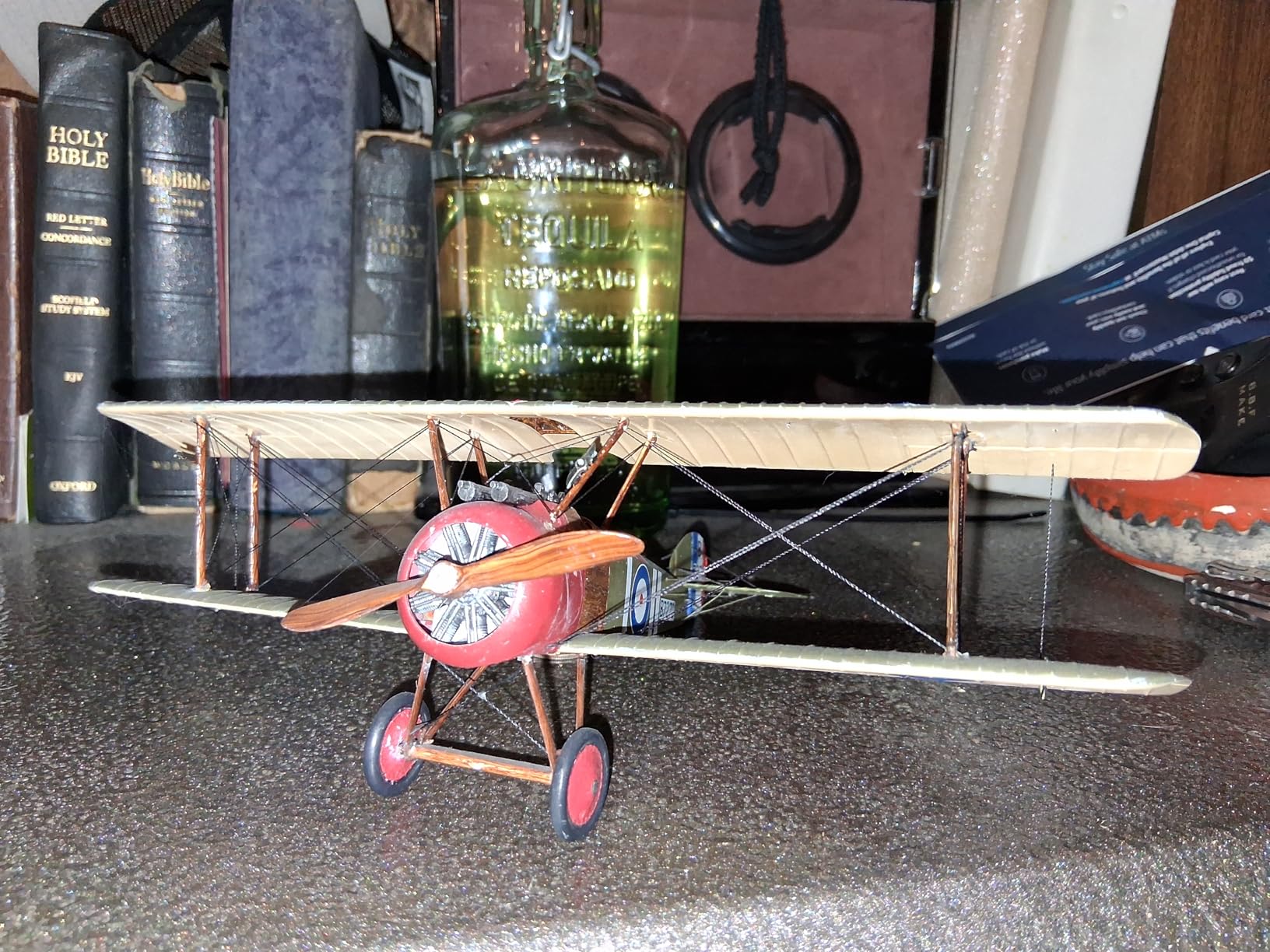
What sets this kit apart are the thoughtful touches that ease the biplane building process. The predrilled holes for rigging eliminate the guesswork of where to attach flying wires. Academy even includes rigging line in the box – a small touch that saves time and ensures proper scale appearance. These quality-of-life features make a significant difference during assembly, especially for builders tackling their first biplane rigging job.
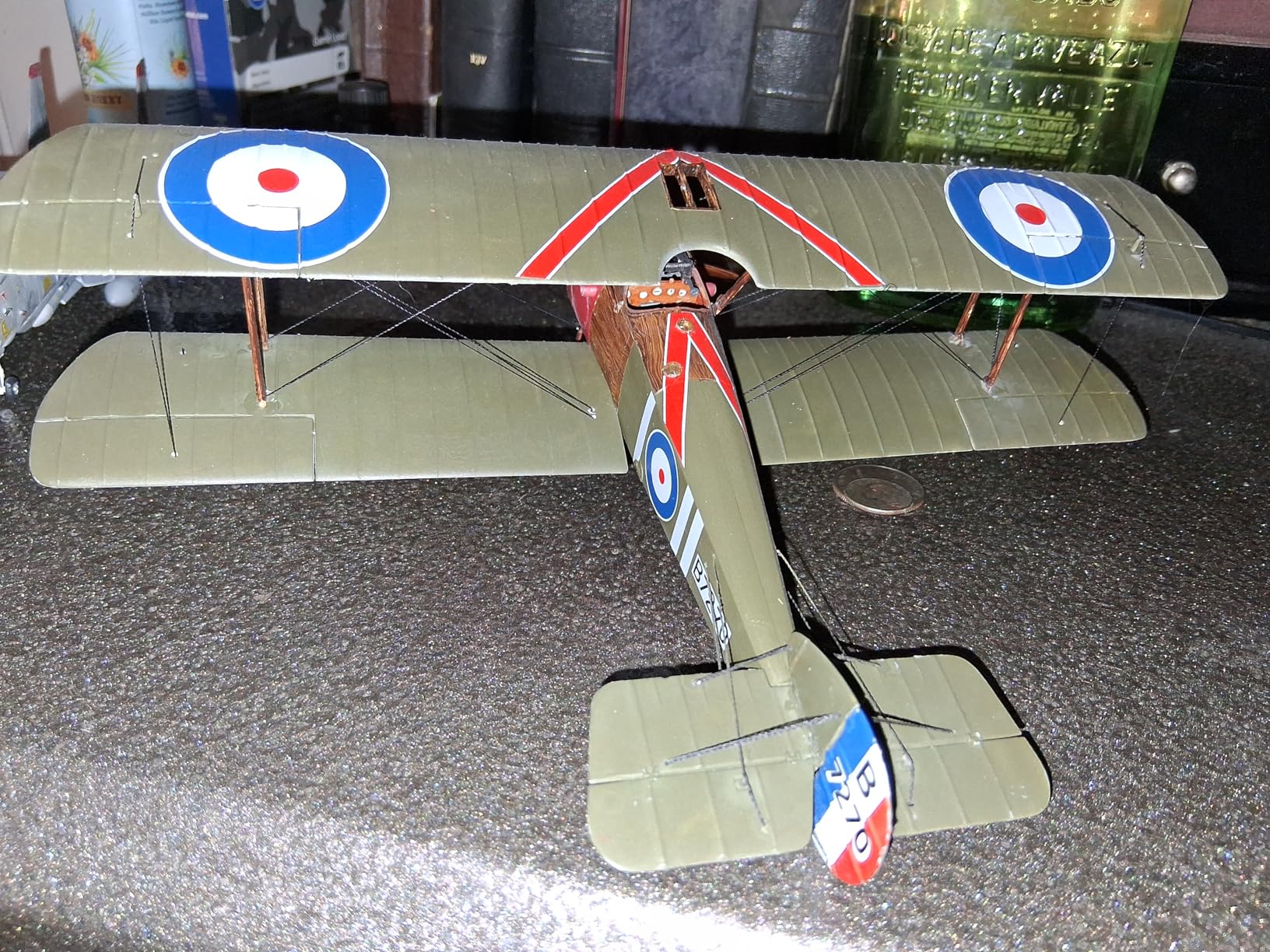
Build quality is excellent. The plastic parts are cleanly molded with minimal flash, and the fit between components is generally good. I needed minimal filler during assembly – mostly just at the wing root seams. The parts count is reasonable for the scale, and the engineering breaks down complex assemblies into manageable sub-steps. I built this kit over three weeks, working evenings, and found the process enjoyable rather than frustrating.
The decal sheet provides good options, and the decals themselves are thin and responsive to setting solutions. I chose the RFC markings with their distinctive roundels, and the results look fantastic. The decals settled perfectly into surface details with a little Micro Sol. Handle them carefully during application, as they’re thin and can tear if rushed. But with patience, they produce excellent results.
Technical details are well-represented. The engine, while not as detailed as the Roden S.E.5A, still looks convincing under the cowling. The cockpit includes basic detail that’s visible despite the small opening. The machine guns are separate pieces with decent molding. While not every rivet is represented, the balance between detail and buildability is well-struck. This kit creates an attractive model without requiring advanced techniques.
Ideal For Intermediate To Advanced Modelers
If you’ve built several plastic models and want to tackle your first detailed biplane, this Academy Sopwith Camel is an excellent choice. The predrilled rigging holes and included rigging line remove two major obstacles to biplane success. The engineering simplifies difficult steps while maintaining good detail. Intermediate modelers will find this kit challenging but achievable. The 4.5-star average from 88 reviewers suggests many builders have successfully completed this kit.
Not Suitable For First-Time Modelers
Despite the helpful features, this kit still requires modeling experience. The small parts, complex assembly, and rigging work demand skills beginners may not have developed yet. If this is your first model kit, consider the Revell Fokker Dr.I instead. Build some experience with simpler subjects before attempting this detailed Sopwith Camel. The results will be much more satisfying with proper preparation and experience.
Buying Guide for Golden Age Biplane Model Kits
Selecting the best golden age biplane model kit requires matching the kit to your experience, interests, and goals. After testing all eight kits reviewed here and consulting with modeling communities, I’ve identified the key factors that determine kit suitability. Let me share what I’ve learned from building these aircraft and helping other modelers choose appropriate projects.
Scale Considerations
Scale dramatically affects both the building experience and final result. The 1/32 scale kits from Roden and Academy create impressive models around 11-12 inches in wingspan. These larger models offer excellent detail potential and make great display pieces. However, they require more display space and longer build times. If you have limited shelf space but want impressive detail, 1/32 represents a sweet spot.
The 1/72 scale Roden Pfalz D.III produces compact models roughly 5 inches across. Perfect for builders with space constraints or those building large collections. Small scale modeling requires good eyesight and patience with tiny parts, but the reduced footprint lets you display more models. Many WWI aircraft collections use 1/72 as their standard scale for consistency.
Balsa kits like Guillow’s offerings measure by wingspan rather than scale. The 20-28 inch wingspans create substantial models that make impressive displays. These larger sizes also facilitate RC conversion for those interested in flying models. Consider your display space and goals – static display builders might prefer smaller scales, while RC enthusiasts need the larger sizes for flight capability.
Skill Level Matching
Matching kit difficulty to your experience level ensures an enjoyable project. Beginner-friendly kits like the Revell Fokker Dr.I feature lower piece counts and simplified details. These kits teach fundamental techniques without overwhelming new modelers. The pre-painted Revell kit reduces complexity further by eliminating the painting step entirely.
Intermediate modelers ready for more challenge should consider the Guillow’s balsa kits or Academy Sopwith Camel. These require additional techniques like wood working, rigging, or complex assembly. The results reward the extra effort with more impressive models. Build a few simpler kits first to develop the necessary skills before attempting these intermediate projects.
Advanced modelers seeking detailed replicas should focus on the Roden 1/32 scale kits. The S.E.5A and Nieuport 28C1 offer exceptional detail that rewards close inspection and weathering. These kits demand experience with small parts, sub-assemblies, and advanced finishing techniques. But for expert builders, the results approach museum quality.
Material Selection
Plastic kits from Roden, Academy, and Revell offer the easiest entry point. Plastic parts are durable, forgiving of mistakes, and paint consistently. Most modelers start with plastic kits and never look back. The engineering and fit of modern plastic kits continues improving, with companies like Roden producing exceptional quality at reasonable prices.
Balsa kits from Guillow’s provide traditional modeling satisfaction. Working with real wood creates a connection to aviation’s early days, and the laser-cut versions offer precision that wasn’t possible decades ago. Balsa builds take longer and require additional tools, but many modelers find the process more rewarding. The finished balsa models have warmth and character that plastic can’t match.
Rigging Reality
Biplane rigging intimidates many modelers, but modern kits have simplified this traditionally difficult task. The Academy Sopwith Camel includes predrilled rigging holes and rigging line – two major aids. Guillow’s balsa kits mark rigging attachment points clearly on plans. Even the beginner Revell Fokker Dr.I simplifies rigging to basic structural wires.
For successful rigging, use thin monofilament fishing line or stretched sprue. Work slowly and attach one wire at a time. Many modelers rig the wings before final assembly when access is easier. Practice on scrap plastic first to develop technique. With patience and the right tools, even beginners can achieve convincing results.
Availability Considerations
Many Golden Age kits are out of production or available in limited quantities. The Wingnut Wings kits, once the gold standard, are now discontinued and command premium prices on secondary markets. Roden fills some of this gap with quality 1/32 scale subjects, but availability varies. When you find a kit that interests you, purchase promptly – it may not be available long.
Some kits show “only X left in stock” warnings. Take these seriously in the niche world of scale modeling. Replenishment isn’t guaranteed, especially for specialized subjects like Golden Age biplanes. If a kit catches your interest and your budget allows, buy it rather than waiting. The kit may be unavailable when you return.
Frequently Asked Questions About Golden Age Biplane Model Kits
Who makes the best model kits for Golden Age biplanes?
Guillow’s leads in balsa kits with their laser-cut series offering excellent precision. Roden produces outstanding plastic kits in 1/32 and 1/72 scales, while Academy offers well-engineered options with helpful features like predrilled rigging holes. Wingnut Wings was the gold standard but is now discontinued, making remaining kits collector items. For beginners, Revell provides accessible entry-level kits. The best manufacturer depends on your experience level, preferred scale, and building goals.
Why did early aircraft use biplane configurations instead of monoplanes?
Early designers chose biplanes because the two-wing structure provided excellent lift and structural strength using the materials and engine technology available in the 1910s-1920s. The struts and wires between wings created a rigid truss structure that resisted the bending forces of flight. Materials like wood and fabric couldn’t span large distances as monoplanes without excessive weight. As engine power increased and all-metal construction matured in the 1930s, monoplanes became practical and eventually replaced biplanes for most applications. The biplane configuration remains iconic for this pioneering era of aviation.
What was the best biplane from the Golden Age of Aviation?
The best biplane depends on the criteria. For combat success, the Sopwith Camel shot down 1,294 enemy aircraft, making it WWI’s top fighter. The Fokker Dr.I triplane gained legendary status through the Red Baron’s exploits. For civilian Golden Age aircraft, the Waco series represented the pinnacle of cabin biplanes, while the Stearman PT- became history’s most produced biplane as a military trainer. The Pitts Special emerged later as an aerobatic champion. Each aircraft excelled in its role, and all remain popular modeling subjects today.
Are model airplanes worth anything as collectibles?
Completed model airplanes can have value, but usually modest compared to the purchase price. Unbuilt vintage kits from the 1950s-1970s can be valuable, especially rare subjects from manufacturers like Hawk, Lindberg, or early Revell. Out-of-production kits from Wingnut Wings command premium prices. However, most modern kits hold little resale value unbuilt. The real worth of model airplanes comes from personal satisfaction, skill development, and the enjoyment of the building process. Most modelers build for pleasure rather than investment. Your completed work has sentimental value and can become family heirlooms, but significant financial value is rare except for specific vintage or rare items.
Which scale is best for Golden Age biplane model kits?
The best scale depends on your goals and space. 1/32 scale offers impressive detail and presence, making these models display highlights. The larger size facilitates detail work and weathering, but requires more shelf space. 1/48 scale provides good detail while being more space-efficient, though fewer Golden Age subjects are available in this scale. 1/72 scale maximizes collection size per shelf foot, perfect for building comprehensive aircraft collections. Balsa kits typically measure by wingspan rather than scale, with 20-28 inches being common. Serious detail artists prefer 1/32, while collectors building many aircraft often choose 1/72 for space efficiency. Match scale to your available display space and detail interests.
Conclusion
Building best golden age biplane model kits connects us to aviation’s most romantic era. Whether you choose the precision laser-cut Guillow’s Fokker DR1, the detailed Roden S.E.5A, or the beginner-friendly Revell triplane, each kit offers a rewarding journey through modeling history. The eight kits reviewed here represent the finest options available in 2026, covering various skill levels, scales, and materials.
My top recommendation remains the Guillow’s Fokker DR1 Triplane for its outstanding quality and versatility. The laser-cut balsa parts set a new standard for traditional kits, and the dual capability as both display model and RC aircraft adds lasting value. Intermediate modelers should seriously consider the Academy Sopwith Camel F.1 for its thoughtful engineering and helpful rigging features. Budget-conscious builders will find excellent value in the Roden Pfalz D.III.
The Golden Age of Aviation may have ended nearly a century ago, but these model kits keep its spirit alive. Each completed model preserves a piece of aviation history in miniature form, ready for display on your shelf. Choose the kit that matches your experience level and interests, then enjoy the satisfying process of bringing history to life, one piece at a time.