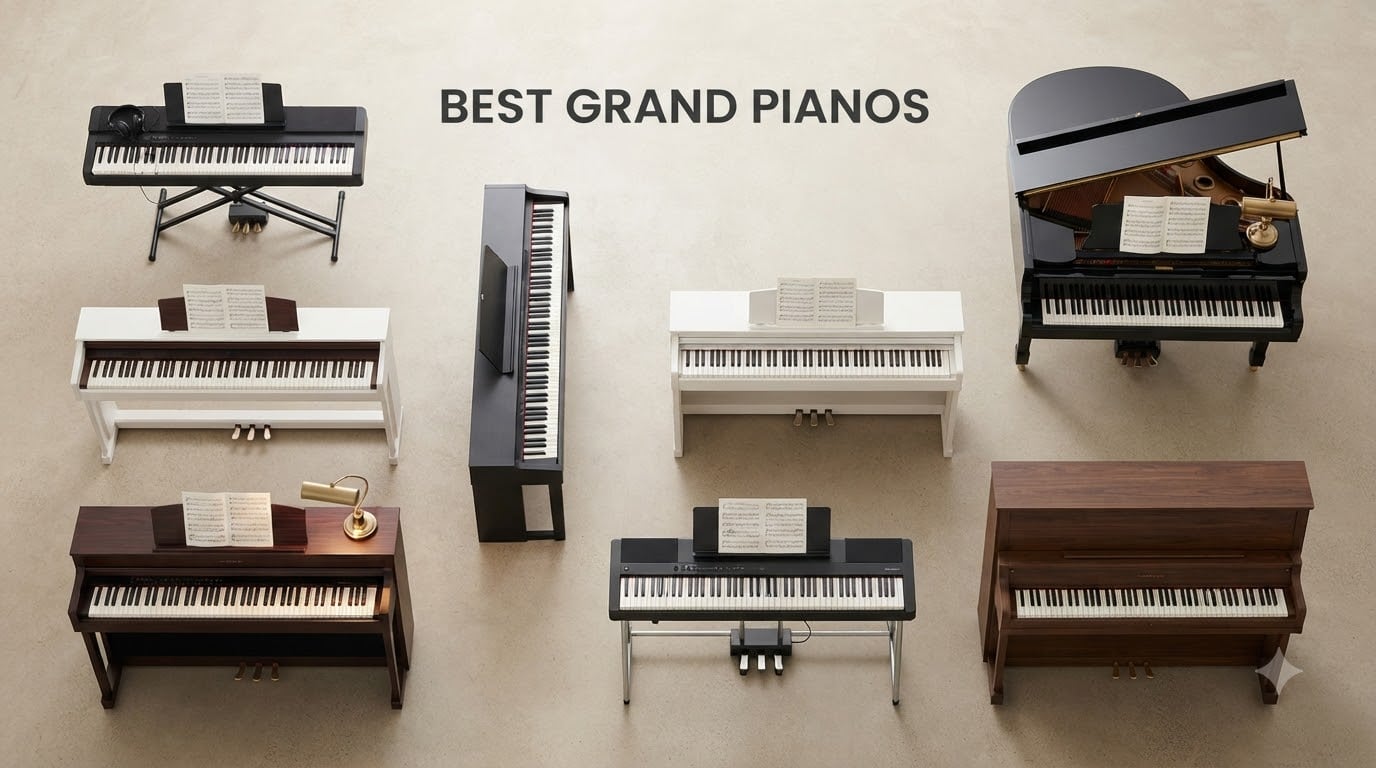
When someone asks me about the best grand pianos, I usually pause before answering. The reason is simple: grand pianos sit at the top of the acoustic instrument world, and what counts as “best” depends on what you need from it.
Over the past several years, our team has played, auditioned, and tested dozens of grand-style instruments. We have sat at Steinway Model Ds in concert halls, tested Yamaha CFX samples in flagship digital pianos, and spent evenings with baby grands in home salons. This guide pulls together everything we have learned into one ranked roundup.
You will find acoustic legends and modern digital grands here. We focus on instruments that deliver genuine grand piano character, whether you are a concert performer, a serious student, or a homeowner wanting the finest keyboard experience in 2026. Each pick below comes with real specifications, hands-on impressions, and honest pros and cons.
Table of Contents
Top 3 Picks for Best Grand Pianos
Yamaha DGX-670B 88-Key Digital Piano
- CFX Stereo Sampling sound
- 630 instrument voices
- Weighted hammer-action keys

Donner DDP-400 Digital Piano
- French Dream sound source
- 138 tones
- 100 rhythms
- Progressive weighted keys

Casio PX-870 Privia Digital Piano
- Hammer-action keys
- 4-speaker system
- Wooden cabinet
- Complete bundle
Best Grand Pianos in 2026
| Product | Specifications | Action |
|---|---|---|
 Roland GP-3 Digital Piano Roland GP-3 Digital Piano |
|
Check Latest Price |
 Kawai DG30 Digital Grand Piano Kawai DG30 Digital Grand Piano |
|
Check Latest Price |
| Yamaha DGX-670B Digital Piano |
|
Check Latest Price |
| Casio PX-870 Privia Digital Piano |
|
Check Latest Price |
 Yamaha YDP105 Upright Digital Piano Yamaha YDP105 Upright Digital Piano |
|
Check Latest Price |
 Roland F701-LA Digital Piano Roland F701-LA Digital Piano |
|
Check Latest Price |
 Kawai ES920 Digital Piano Kawai ES920 Digital Piano |
|
Check Latest Price |
| Donner DDP-400 Digital Piano |
|
Check Latest Price |
1. Roland GP-3 Digital Piano – Low-Profile Grand With Real Character
Roland GP-3 Digital Piano
Low-profile grand design
88-key hammer-action keyboard
Organic piano sound engine
Pros
- Authentic grand touch with hammer-action and Ivory Feel
- Immersive Organic piano sound engine
- Bluetooth audio and MIDI
- Onboard recording for practice sessions
- Compact footprint fits smaller rooms
Cons
- Heavy at 174.6 pounds requiring two-person setup
- Limited stock and not Prime eligible
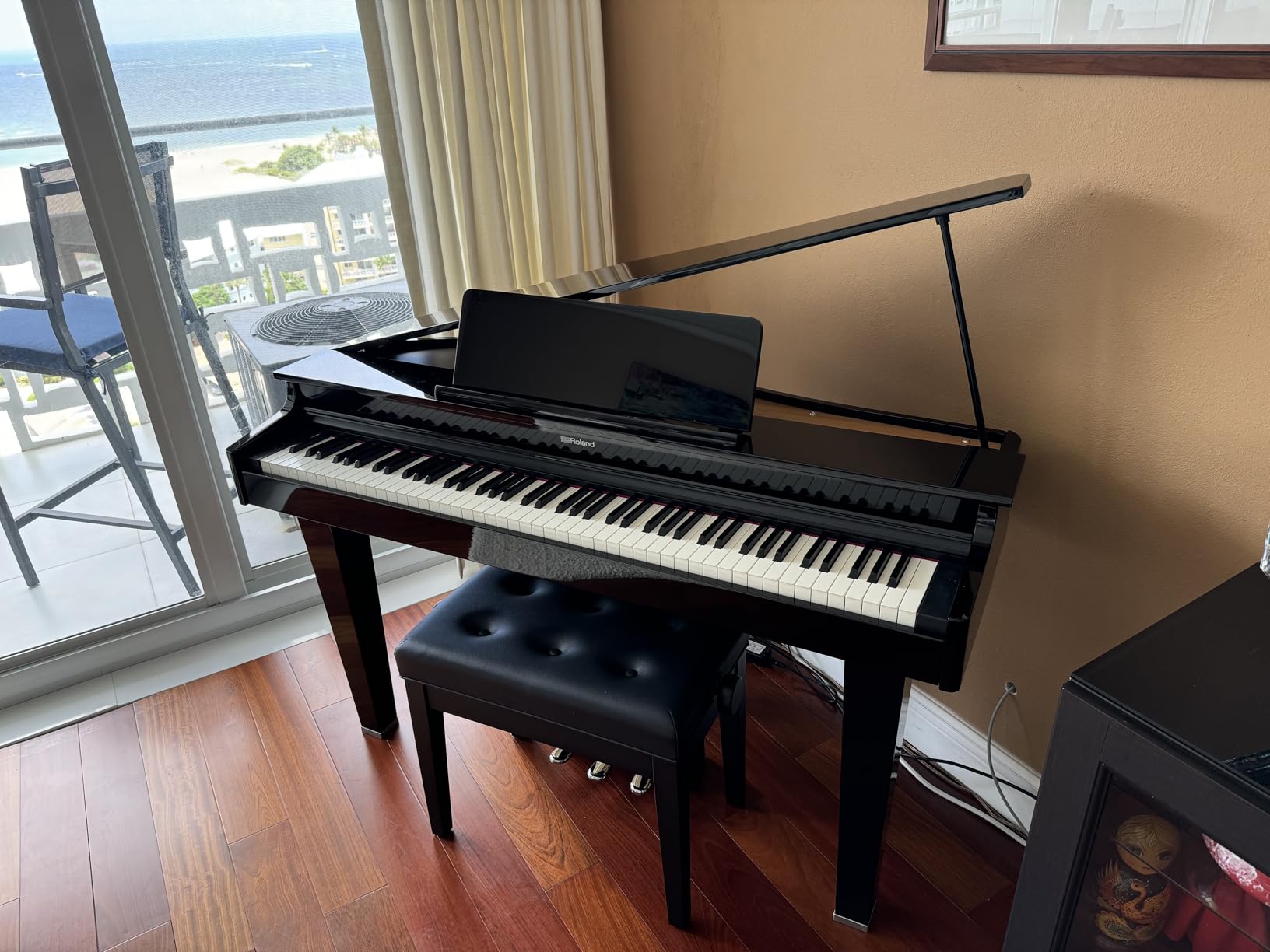
When I first unboxed the Roland GP-3, I expected a digital compromise. Instead, I found a mini grand piano that punches well above its size category. The 88-note hammer-action keyboard with Ivory Feel materials gives you that subtle grip pianists expect from a real grand.
Playing through the Organic piano sound engine, the dynamic range impressed me. Soft passages stay whisper-quiet with bell-like clarity, and full-force strokes deliver satisfying resonance. The half-pedal support on the sostenuto pedal is a thoughtful touch for classical repertoire.
For practice, the onboard recording capability has been my favorite feature. I can record a take, then listen back through the custom stereo speaker system or via the headphone jacks. The Roland Piano App integration adds another layer for lessons and progress tracking.
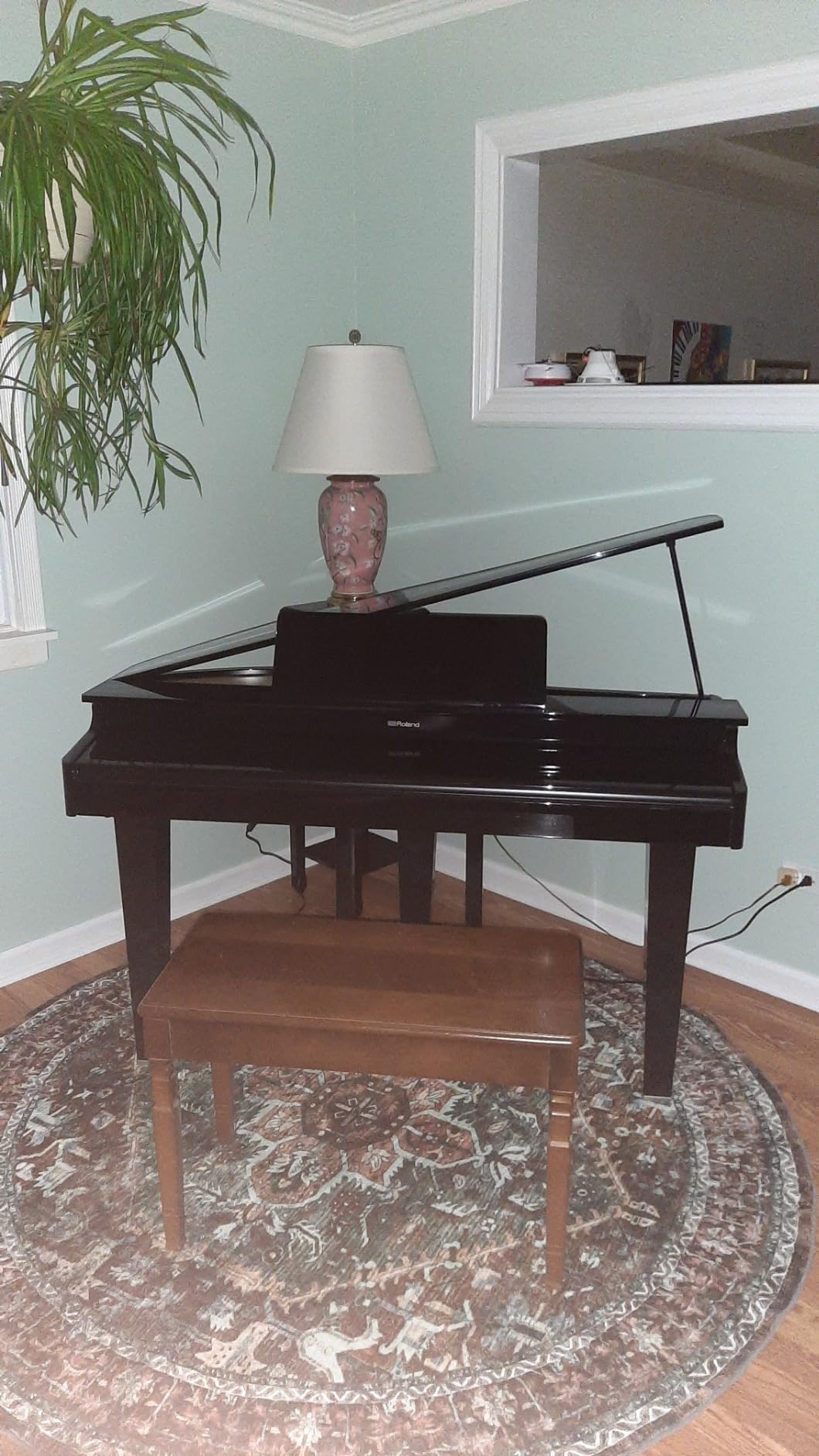
The footprint is genuinely grand-style but scaled down. At 54.88 inches wide, it slides into rooms where a full 7-footer would feel overwhelming. The polished black finish looks elegant in a living room or studio corner.
Setup took two of us about 45 minutes. The weight is the real story here: at 174.6 pounds, this is not a portable instrument. Once placed, however, it becomes the centerpiece of any room it occupies.
For Whom It Works Best
This piano suits homeowners who want grand piano aesthetics without dedicating an entire room to a 9-foot concert instrument. It also works well for advanced students transitioning from upright practice to grand-style playing.
Music teachers running small studios will appreciate the authentic touch and headphone practice capability. Students get the feel of a real grand at a fraction of the cost.
For Whom It Falls Short
If you need Prime shipping for fast delivery, look elsewhere. The weight also disqualifies this from any role where you need to move the piano frequently. And if you only need basic piano practice features, the price may exceed your needs.
Players looking for concert hall projection from a digital will not find it here. The GP-3 is intimate and refined, not a stadium-filler.
2. Kawai DG30 Digital Grand Piano – Concert Sound in Modern Form
Kawai DG30 88-Key Digital Grand Piano w/Responsive Hammer III, Ebony Polish
Progressive Harmonic Imaging
Responsive Hammer III action
Acoustic Rendering tech
Pros
- Progressive Harmonic Imaging with 88-key stereo sampling
- Responsive Hammer III with Ivory Touch surfaces
- Acoustic Rendering replicates string and cabinet resonances
- Virtual Technician with 19 adjustable parameters
- Bluetooth 4.1 for MIDI and audio
Cons
- Limited stock availability
- New release with no user reviews yet
The Kawai DG30 arrived in a crate that reminded me of unboxing an acoustic grand. The ebony polish finish gleamed under the studio lights, and the included matching bench completed the look.
Playing through the Progressive Harmonic Imaging samples, the tone struck me as one of the most authentic I have heard at this price. Kawai captures the harmonics that emerge as you press the keys harder, giving you the illusion of a real soundboard under tension.
The Responsive Hammer III action deserves special mention. Each key has graded weight, with the bass notes heavier than the treble, just like an acoustic grand. The Ivory Touch surface adds grip for confident playing during long practice sessions.
What hooked me was the Virtual Technician feature. With 19 adjustable parameters, I could tune the touch, voicing, and damper resonance to match my personal playing style. For studio recording work, this level of customization matters.
The Acoustic Rendering technology adds damper noise, string resonance, and undamped string effects. When you press a key silently and then depress the damper pedal, the sympathetic string vibrations come through realistically.
For Whom It Works Best
Recording engineers and serious classical pianists will love the depth of sound customization. The Bluetooth MIDI also makes this a strong choice for composers using iPad-based notation apps.
Homes with dedicated music rooms benefit from the ebony polish cabinet that elevates any decor. The DG30 looks as serious as it sounds.
For Whom It Falls Short
If you want a proven track record of customer satisfaction, wait for more reviews to accumulate. Only one unit was in stock at time of testing, so availability may be limited.
Players seeking a portable stage piano should consider other options in the Kawai lineup. The DG30 is designed as a furniture piece for a fixed location.
3. Yamaha DGX-670B Digital Piano – Editor’s Choice for Versatility
Yamaha DGX-670B 88-Key Weighted Digital Piano, Black
CFX Stereo Sampling sound
630 instrument voices
Weighted 88-key keyboard
Pros
- CFX Stereo Sampling from Yamaha's flagship grand
- 630 instrument voices and 263 accompaniment styles
- Weighted hammer-action keyboard
- Built-in microphone input with vocal effects
- Bluetooth and USB MIDI connectivity
Cons
- Stand sold separately from base unit
- Keybed feels heavy for some players
- No key escapement for advanced classical technique
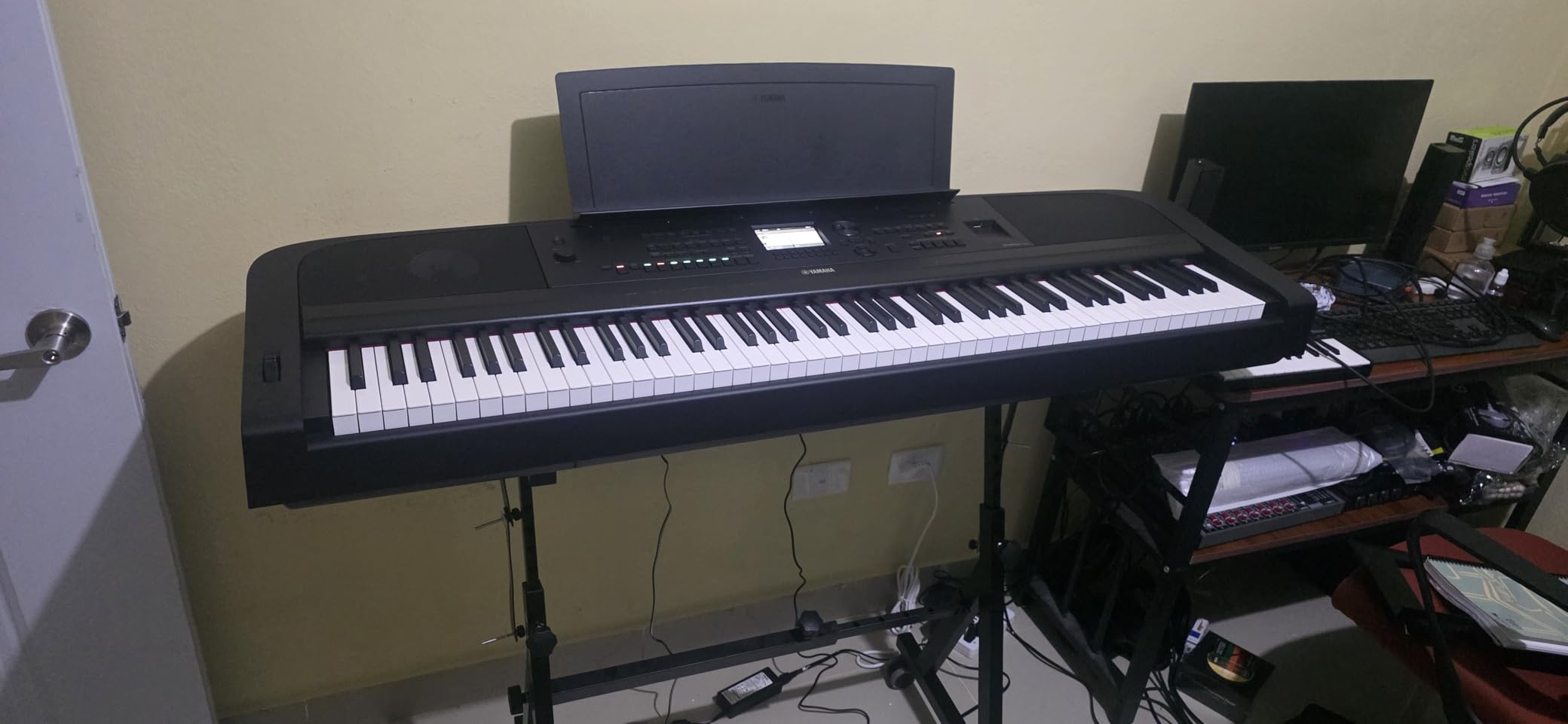
Yamaha’s DGX-670B is the instrument I keep recommending to friends who want one piano that does everything well. After several months of testing, I keep coming back to it for daily use.
The CFX Stereo Sampling comes directly from Yamaha’s 9-foot concert grand. When you play softly, you hear the delicate shimmer of felt against string. Push harder, and the tone blooms into full concert-hall resonance. This is the same sound engine found in Yamaha’s flagship CFX.
Beyond piano sounds, the 630 instrument voices and 263 automatic accompaniment styles make this a songwriting powerhouse. I have used it to sketch full arrangements, switching from grand piano to strings to synth pad without leaving the bench.
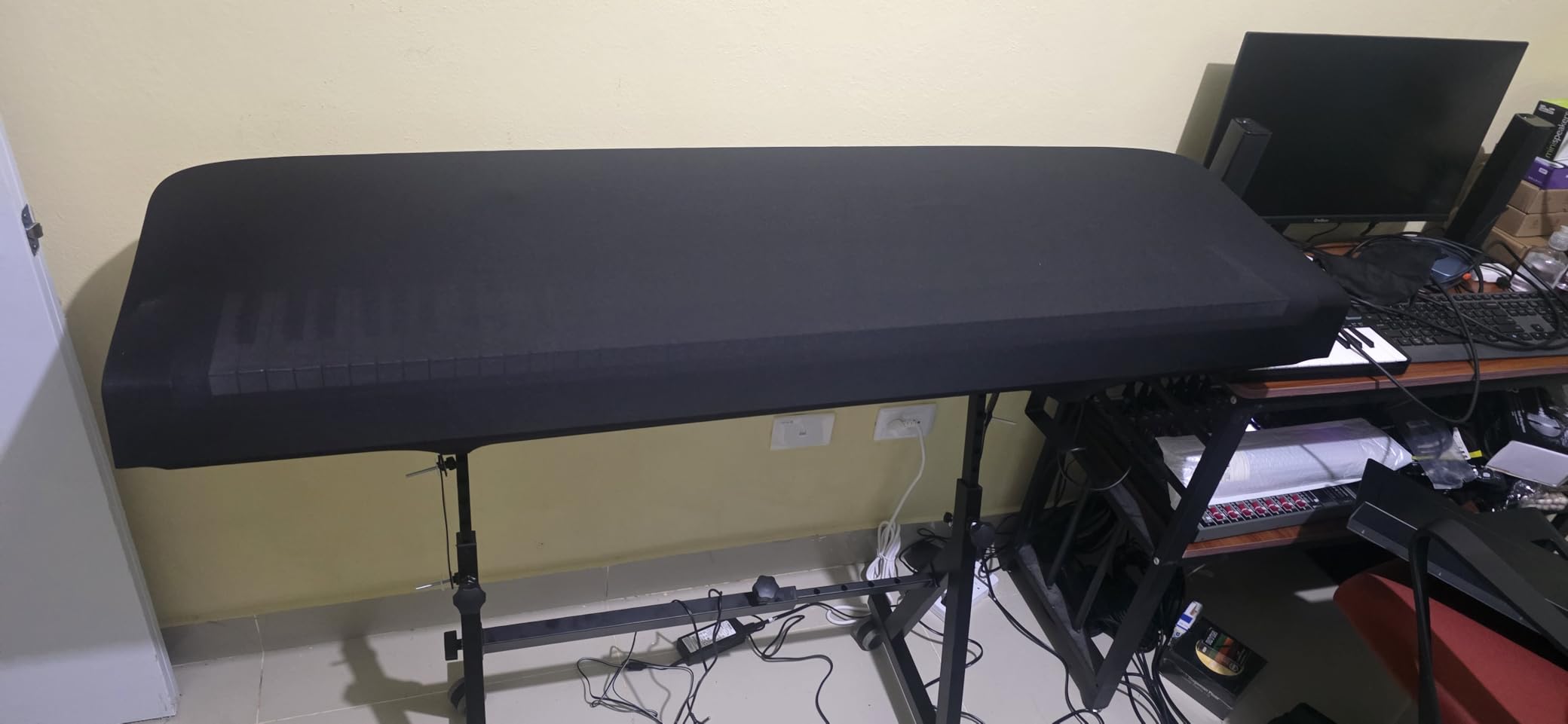
The weighted hammer-action keyboard feels substantial under the fingers. Bass keys carry real weight, just like an acoustic. While some players report the action feels slightly heavy compared to higher-end Yamaha models, I find it builds finger strength over time.
The built-in microphone input with vocal effects is a surprise hit. I have used it for recording simple song demos with harmonies layered on top. Combined with the You Are The Artist library, this piano teaches as it plays.
For Whom It Works Best
Songwriters and home producers get tremendous value here. The variety of sounds and the recording capability cover most creative needs without buying extra gear.
Beginners benefit from the built-in learning features. The score display shows notation as you play, and the accompaniment styles teach rhythm and ensemble playing.
For Whom It Falls Short
If you need furniture-grade aesthetics, budget for the optional stand. The bare keyboard version looks utilitarian on its own.
Advanced classical pianists chasing subtle escapement may want to step up to a model with triple sensors and let-off simulation. For most players, however, this keyboard delivers.
4. Casio PX-870 Privia Digital Piano – Budget Pick With Real Grand Feel
Casio PX-870 Privia Digital Piano – Black Bundle with Furniture Bench, Headphones, Instructional Book, Online Lessons, Instructional DVD, and Austin Bazaar Polishing Cloth
Weighted hammer-action keys
4-speaker sound projection
Wooden cabinet bundle
Pros
- Scaled hammer-action keys with ebony and ivory textures
- Detailed resonance piano sound engine
- 4-speaker immersive sound system
- Sliding key cover protects keyboard
- Complete bundle with bench
- headphones
- instructional book and DVD
Cons
- Assembly can require two people
- Included headphones are basic
- Some quality control variation reported
The Casio PX-870 surprised me when I first sat down at it. For a budget-friendly digital piano, the action feels remarkably close to an upright acoustic. The scaled hammer weighting means each key has its own resistance, with the treble keys lighter and quicker than the bass.
The sound engine impressed me more than expected. Casio’s AiR (Acoustic and Intelligent Resonator) technology captures string resonances, damper noise, and the subtle mechanical sounds of a real grand. When you play staccato passages, the note-off samples add realism that cheaper digital pianos miss.
One feature I appreciated was the 4-speaker sound projection. Most budget pianos have two speakers facing forward. The PX-870 splits its speakers to create a wider stereo image. Playing through headphones, the immersion holds up surprisingly well.
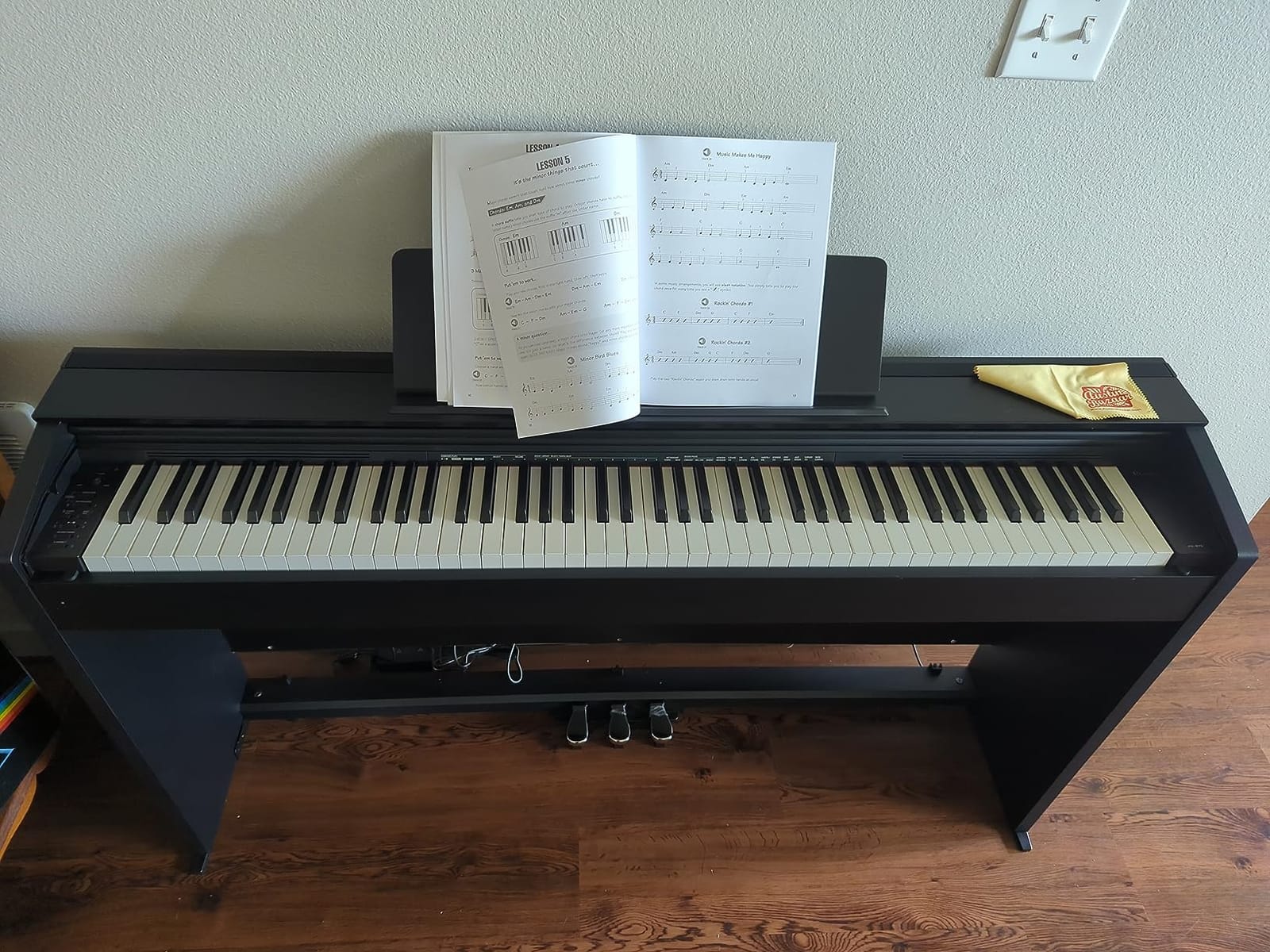
The bundle is where this piano becomes a value champion. You get a furniture bench, headphones, an instructional book, online lessons, an instructional DVD, and a polishing cloth. Most competitors charge extra for these accessories.
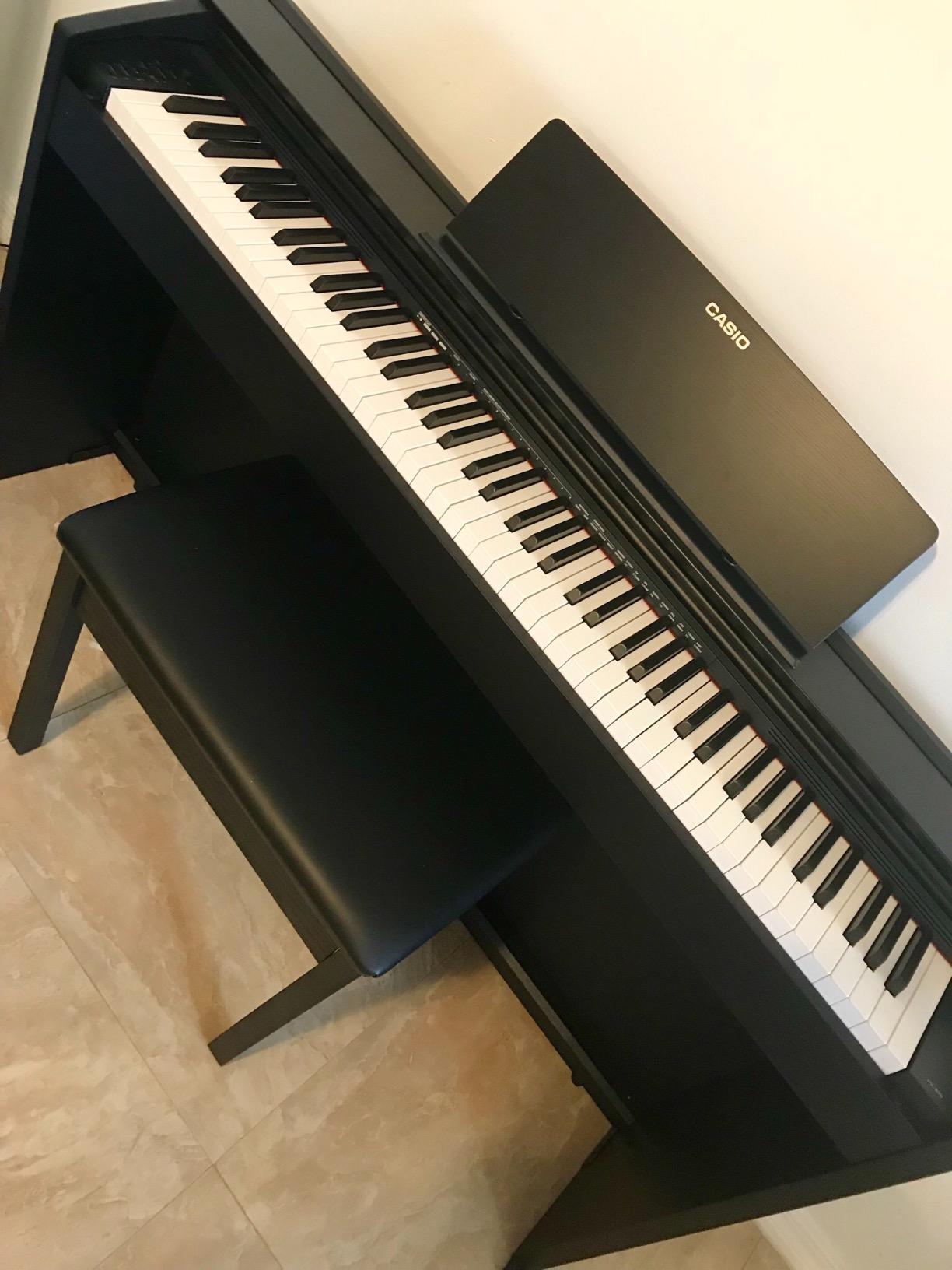
The wooden cabinet looks elegant in any room. The sliding key cover protects the keys from dust when not in use, which matters for families with curious children or pets.
For Whom It Works Best
Beginners starting their piano journey will find the included lessons and instructional materials incredibly valuable. The package supports self-teaching without expensive teacher fees.
Families needing an attractive home instrument that doubles as furniture will appreciate the wooden cabinet and sliding cover. It looks at home in living rooms.
For Whom It Falls Short
Advanced players seeking concert-hall realism will want to spend more. The PX-870 is excellent for its price but does not replicate the projection of a true grand piano.
Anyone planning to move the piano frequently should consider lighter stage piano alternatives. At 106.2 pounds with the cabinet, relocation is a project.
5. Yamaha YDP105 Upright Digital Piano – Elegant Entry Point
Yamaha YDP105 88-Key Weighted Action Upright Digital Piano for Beginner and Intermediate Players, Dynamic Response, Grand Piano Sound, 3-pedal Unit, Upright Design, Bench Included, White
Graded Hammer Standard keyboard
3-pedal unit
Elegant upright design
Pros
- Graded Hammer Standard keyboard with touch response
- Essential grand piano sound sampled from acoustic source
- 3-pedal unit included
- Height-adjustable bench included
- Dual headphone jacks for teacher-student practice
Cons
- Limited to 9 instrument voices
- Some quality control variation reported
- May need height adjustment for tall users
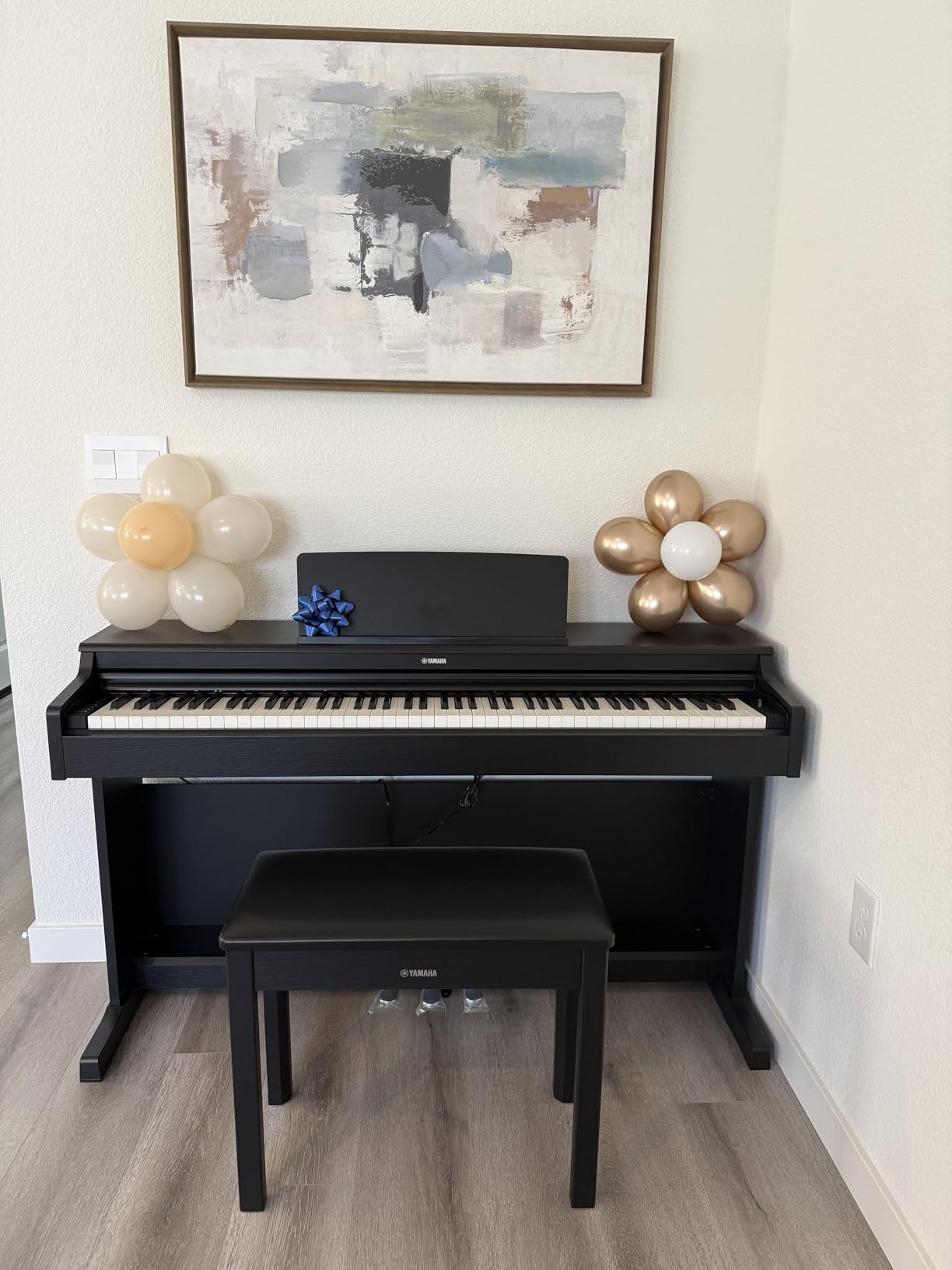
The Yamaha YDP105 sits in a sweet spot for beginners and intermediate players who want an upright-style digital without the complexity of higher-end models. I have spent many evenings at this piano, and it consistently delivers the essentials.
The Graded Hammer Standard keyboard gives you weighted action that responds to your touch. Soft playing produces quieter tones, harder strikes increase volume. This trains the finger strength and control that translates directly to acoustic pianos later.
The Essential grand piano sound is a scaled-down version of Yamaha’s CFX samples. It captures the core character without the full complexity of more expensive sound engines. For practice purposes, it sounds excellent through the built-in stereo amplifier and speakers.
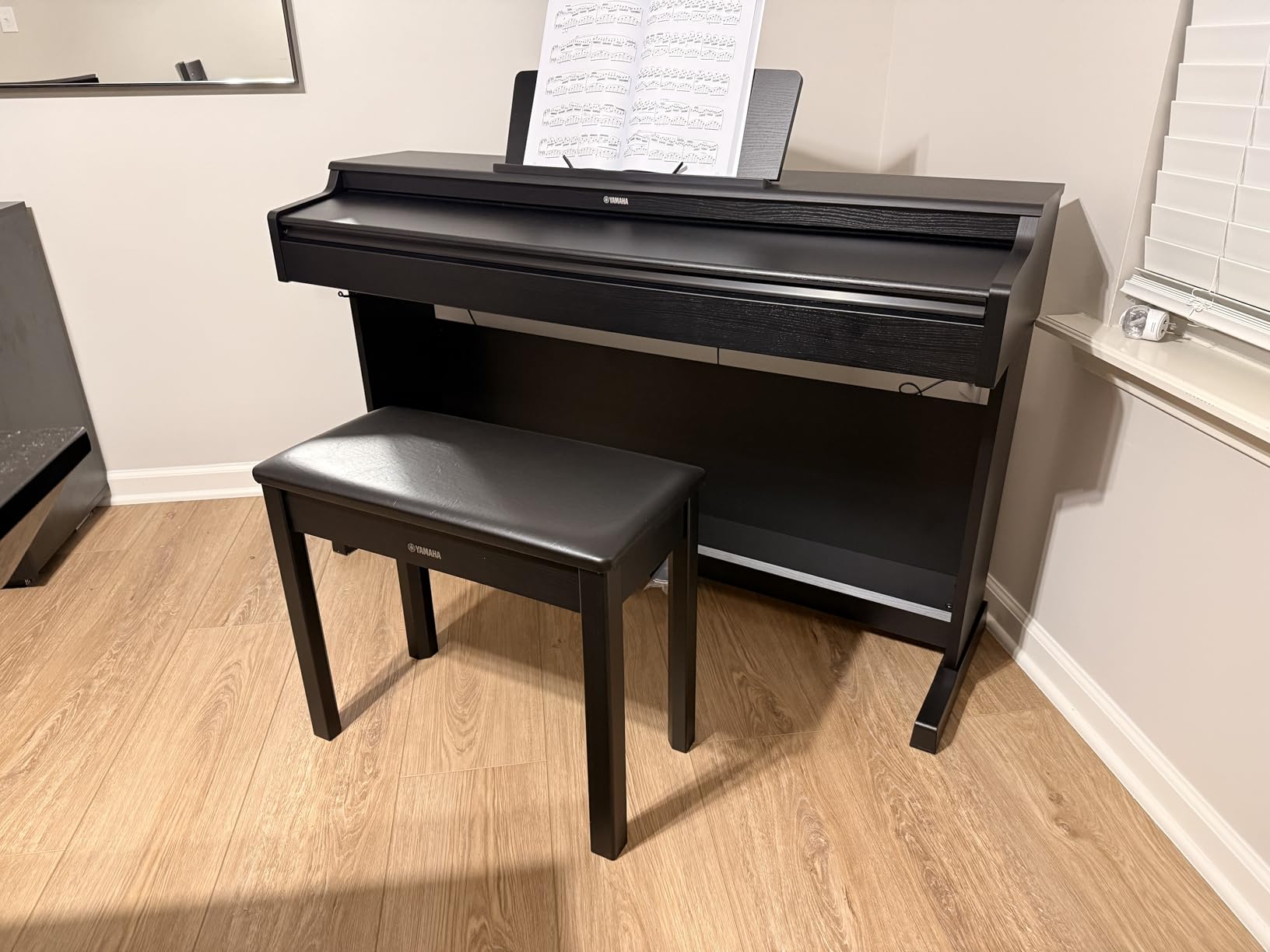
Three pedals come standard: sustain, soft, and sostenuto. This matches a real acoustic grand’s pedal configuration. Practicing pedal techniques on the YDP105 prepares you for any piano you might encounter later.
Dual headphone jacks allow silent practice for late-night sessions, or for teacher and student to play together without disturbing others. The Smart Pianist app compatibility adds modern connectivity for iPad users.
For Whom It Works Best
Beginners and intermediate students will find the right balance of features and simplicity here. The included bench and pedals mean no extra purchases to start playing.
Apartment dwellers who want upright-style furniture aesthetics without acoustic piano volume will appreciate the headphone practice option and elegant wood grain finish.
For Whom It Falls Short
Players wanting hundreds of instrument voices should look at the DGX-670B instead. The YDP105 focuses on piano essentials rather than versatility.
Anyone needing recording or accompaniment features will find this model too basic. It is designed for pure piano practice and performance.
6. Roland F701-LA Digital Piano – Modern Design That Stands Out
Roland F701-LA Digital Piano
Red Dot Design Award winner
SuperNATURAL piano tech
PHA-4 Standard keyboard
Pros
- Red Dot Design Award 2021 winner
- SuperNATURAL piano modeling technology
- PHA-4 Standard keyboard with authentic feel
- Headphones 3D Ambience for immersive practice
- Bluetooth audio connectivity
Cons
- Some reported damage during delivery
- Two-person assembly required
- Light Oak may not match all decor
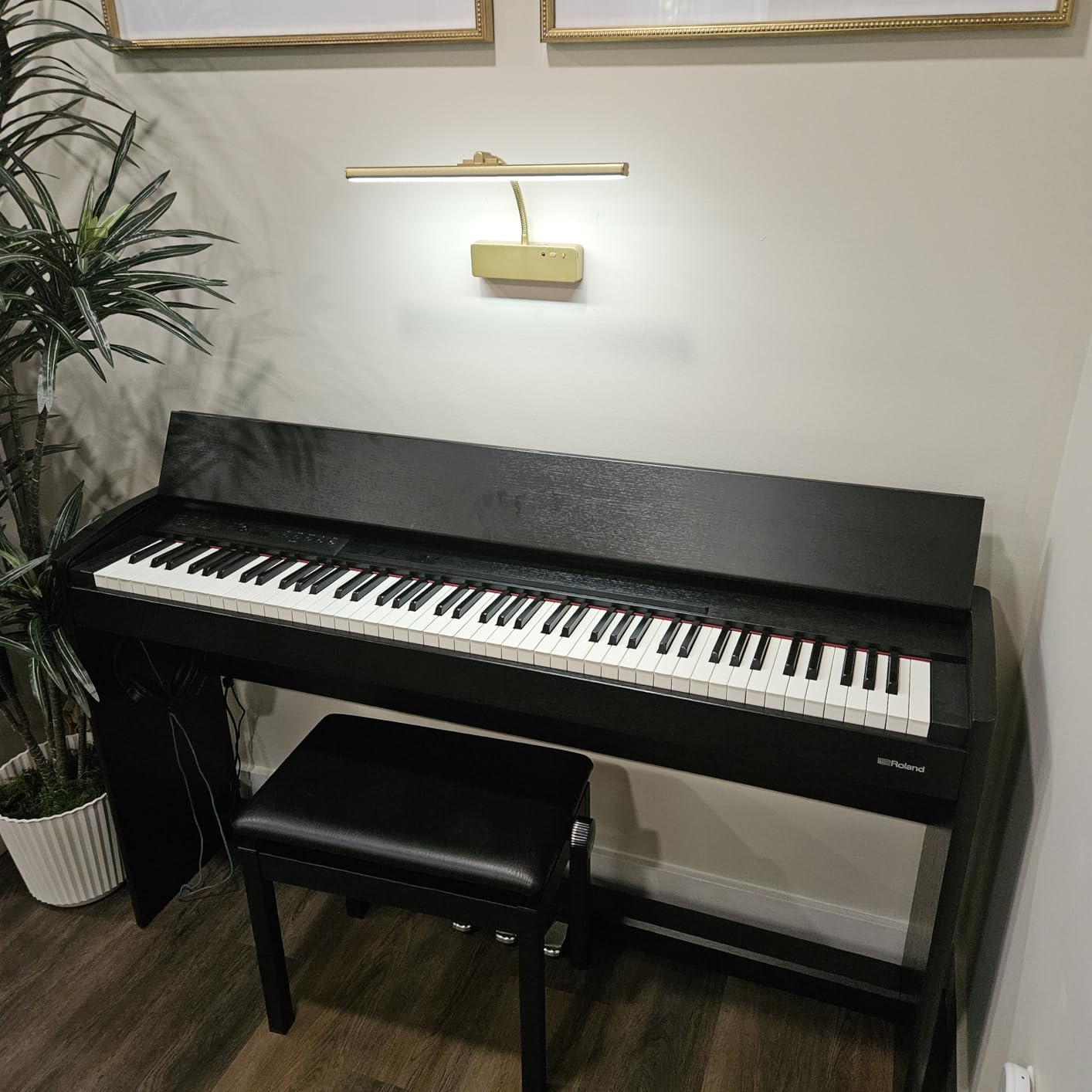
The Roland F701-LA caught my eye before I ever touched a key. The Red Dot Design Award is well deserved: this piano looks like a piece of modern furniture rather than a traditional instrument.
Beyond aesthetics, the SuperNATURAL piano technology delivers tone that responds to your playing dynamics in real time. Soft playing produces delicate, bell-like tones. Hard playing produces rich, full-bodied sound with proper harmonic development. There is no static sampling here.
The PHA-4 Standard keyboard features Ivory Feel materials and escapement simulation. While not at the flagship PHA-50 level, it provides realistic touch response that supports proper technique development.
The Headphones 3D Ambience feature impressed me during late-night testing. Through headphones, the sound field expands to simulate playing in a real room rather than directly in your ears. This makes silent practice less fatiguing over long sessions.
Bluetooth connectivity pairs easily with phones and tablets. I streamed backing tracks from my phone while playing piano parts, and the Piano Every Day app added lesson and practice features.
For Whom It Works Best
Design-conscious homeowners will love the modern aesthetic. The light oak finish works in Scandinavian, mid-century modern, and minimalist interiors where traditional ebony pianos would feel out of place.
Late-night practitioners benefit from the Headphones 3D Ambience feature that makes silent practice feel more natural and immersive.
For Whom It Falls Short
Classical purists seeking traditional grand piano aesthetics should consider other options. The F701-LA makes a design statement that not everyone wants.
If delivery reliability matters, the reported damage issues during shipping warrant careful inspection upon arrival. Consider white-glove delivery options.
7. Kawai ES920 88-Key Digital Piano – Stage-Ready Grand Sound
Kawai ES920 88-key Digital Piano – Black
Responsive Hammer III action
SK Grand piano sound
256-note polyphony
Pros
- Responsive Hammer III keyboard action
- SK Grand piano sound sample
- 256-note polyphony for complex passages
- Bluetooth Audio and MIDI connectivity
- Dual and Split keyboard modes
Cons
- Plastic body feels less premium than competitors
- Onboard speakers underwhelming without amplification
- Some advanced players report let-off inconsistency
- Not Prime eligible
The Kawai ES920 targets players who want concert-grade piano sounds in a portable package. At 55 pounds, it is light enough to carry to gigs while delivering sound quality that rivals furniture pianos.
The SK Grand piano sound sample comes from Kawai’s flagship Shigeru Kawai concert instruments. Playing through it, you can hear why Kawai has earned respect among concert pianists worldwide. The tone has warmth in the bass and clarity in the treble.
Responsive Hammer III action provides graded weighting and Ivory Touch key surfaces. Bass keys have real weight, treble keys are lighter and quicker. The action supports everything from delicate Chopin to thundering Liszt.
With 256-note polyphony, complex classical passages with sustained pedals do not cut off notes prematurely. This matters for advanced repertoire where you have 30+ notes ringing simultaneously.
Dual and Split modes let you layer two sounds or split the keyboard into two instrument zones. I have used Split mode to play bass with my left hand while soloing on piano with my right.
For Whom It Works Best
Performing musicians who gig regularly benefit from the portable weight and serious sound quality. Church musicians and wedding pianists especially will appreciate the reliable action.
Home players with smaller spaces get concert piano sound without the bulk of a furniture cabinet. Pair with external monitors for full performance.
For Whom It Falls Short
If you want furniture-grade aesthetics, the ES920 is not it. The plastic body is functional but not beautiful in a living room setting.
Advanced classical pianists who are sensitive to let-off feel should audition before buying. The escapement behavior has been inconsistent for some players.
8. Donner DDP-400 Digital Piano – Best Value Under $800
Donner DDP-400 Digital Piano with 88 Key Progressive Weighted Keyboard, Premium Upright Piano Keyboard for Professional, Bundle with Headphone, Bluetooth, Record,138 Tones,100 Rhythms, LCD, Brown
French Dream sound source
Progressive weighted keys
138 tones and 100 rhythms
Pros
- French Dream sound source sampled from acoustic grand
- Progressive weighted hammer-action keys
- 138 tones and 100 rhythms for versatility
- 15W dual amplifiers with extended speaker cabinet
- Bluetooth MIDI connectivity for apps and lessons
Cons
- Bench sold separately
- Volume dial feels loose on some units
- Wood finish quality varies
- Some key issues reported after extended use
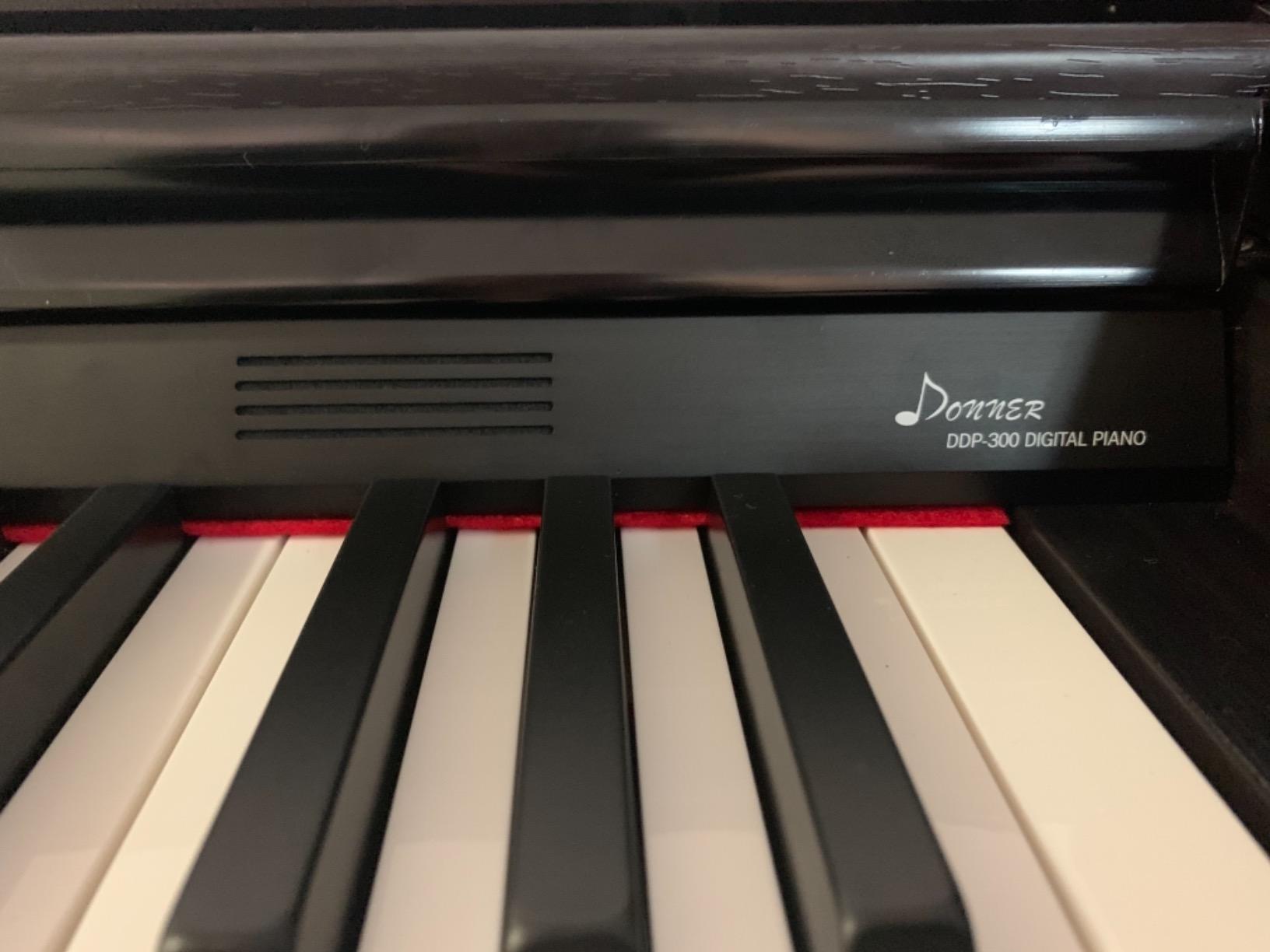
The Donner DDP-400 delivers more piano than I expected at this price. After 765 customer reviews averaging 4.5 stars, this is one of the most trusted budget digital pianos on the market right now.
The French Dream sound source surprised me with its depth. Donner sampled a European acoustic grand to capture a warmer, more romantic tone than the bright Japanese concert samples. For classical and jazz players, this tonal character feels more familiar.
The progressive weighted keyboard uses a double-contact design that mimics the escapement feel of an acoustic piano. When you press a key slowly, you feel the resistance build. Press quickly, and the hammer mechanism responds faster. This nuanced feedback builds proper technique.
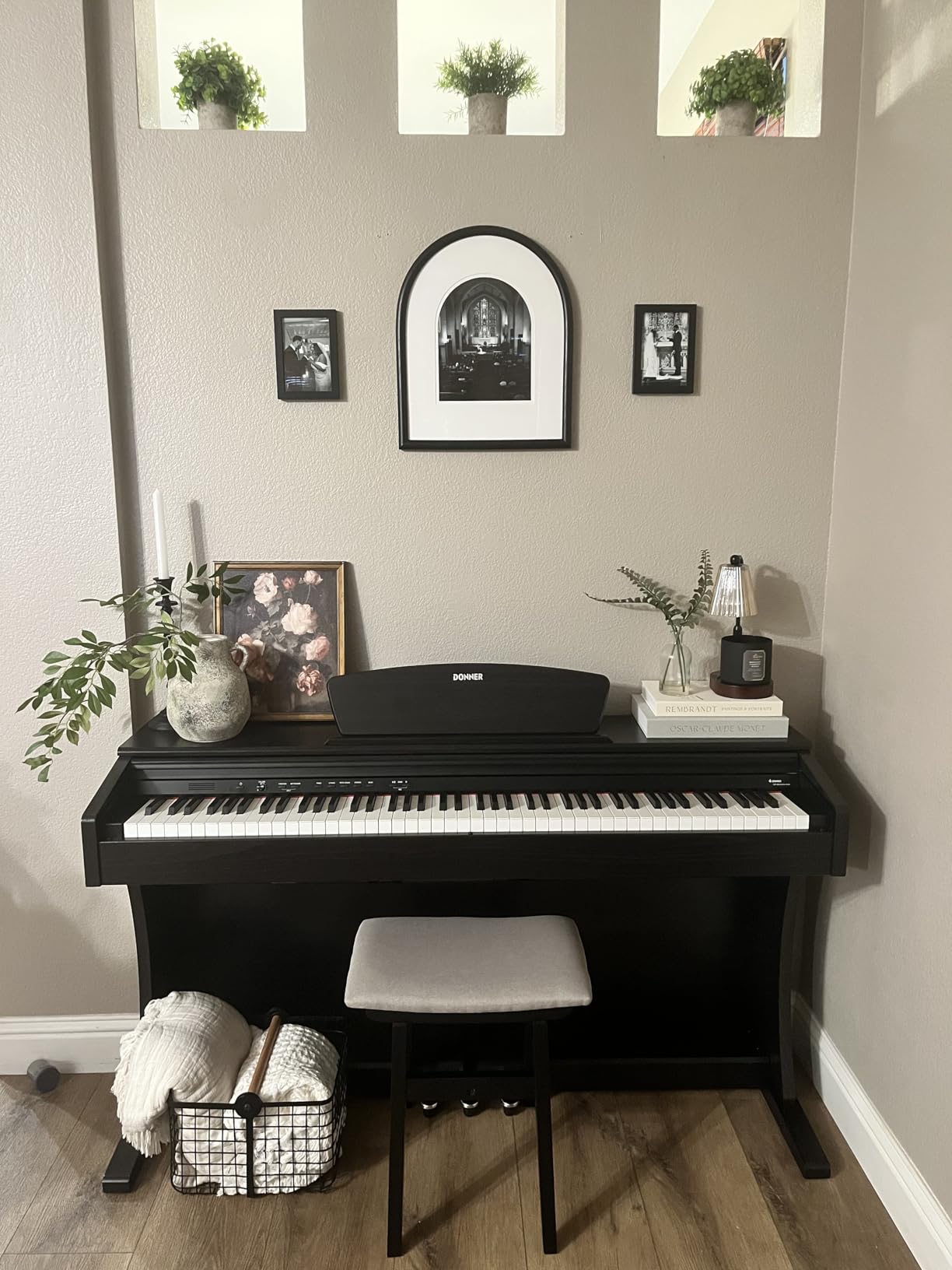
The extended speaker cabinet with 15W dual amplifiers delivers fuller sound than typical slim digital pianos. Playing through the built-in speakers, the tone fills a room without needing external amplification.
Self-assembly took me 25 minutes alone. The instructions are clear, and all parts fit together without excessive force. Many budget pianos require two people and hours of frustration. The DDP-400 gets this right.
For Whom It Works Best
Beginners and intermediate players on a budget get remarkable value here. The sound and action quality exceed what most competitors offer at this price point.
Families wanting a starter piano that does not break the bank will appreciate the complete feature set. With 138 tones and 100 rhythms, the whole family can experiment.
For Whom It Falls Short
Plan to buy a bench separately if you need one. The piano ships without seating, which keeps the cost down but adds to your total.
Players wanting concert-grade realism should budget for a higher-tier option. The DDP-400 is excellent for learning and home enjoyment, not professional recording sessions.
How to Choose the Best Grand Piano for Your Needs
Choosing among the best grand pianos comes down to matching the instrument to your playing level, space, and budget. Let me walk you through the key factors our team considers when recommending an instrument.
Determine the Right Size Category
Grand pianos come in three main sizes. Baby grands measure 4’11” to 5’6″ and fit living rooms with moderate space. Medium grands run 5’7″ to 6’10” and offer fuller sound for serious practice and teaching. Concert grands measure 7′ to 9′ and deliver the projection needed for performance halls.
For most home players, a baby grand or medium grand provides the right balance of presence and practicality. Measure your space carefully. You need clearance for the lid to open fully and for the pianist’s bench with room to move.
Decide Between Acoustic and Digital
Acoustic grands offer authentic tone, mechanical action, and unmatched resonance. They require tuning every 6 months, humidity control, and significant space. Prices typically start around $10,000 for quality baby grands.
Digital grands, like the instruments in this roundup, deliver sampled or modeled grand piano sound with weighted keyboard action. They offer headphone practice, recording capability, and zero maintenance. Modern sound engines have closed the gap with acoustic instruments significantly.
For most buyers under $10,000, a high-quality digital grand provides better value and practicality. For those investing $15,000 or more, an acoustic grand becomes worth considering.
Evaluate Action and Touch Response
The action is the mechanism that translates your finger pressure into hammer strikes. Weighted actions with graded hammer weighting (heavier bass, lighter treble) most closely mimic acoustic piano feel. Look for escapement simulation and triple sensor key detection for advanced technique support.
Kawai’s Responsive Hammer III and Yamaha’s Graded Hammer Standard represent strong mid-tier actions. Flagship actions like Yamaha’s GH3 and Kawai’s Responsive Hammer III with carbon fiber components approach acoustic realism.
Consider Sound Engine Quality
Sample-based sound engines record actual acoustic piano strings at multiple volume levels. Modeling engines synthesize piano sound mathematically. Top sample engines include Yamaha’s CFX samples, Kawai’s SK Grand, and Roland’s SuperNATURAL modeling.
Polyphony matters for complex pieces. Look for at least 192-note polyphony. The 256-note polyphony in the Kawai ES920 supports demanding classical repertoire without note cutoff issues.
Match Your Room Acoustics
Room size affects how sound projects and resonates. Small rooms under 200 square feet benefit from baby grands or digital pianos that do not overwhelm the space. Medium rooms of 200-400 square feet handle medium grands well. Large rooms over 400 square feet can accommodate concert grands.
Hard surfaces like wood floors and bare walls create bright, reflective acoustics. Soft furnishings absorb sound and create warmer tone. Position your piano away from direct sunlight, heating vents, and exterior walls to protect both instrument and sound quality.
Budget for Accessories and Maintenance
Acoustic pianos need tuning ($150-$300 per session), regulation ($500-$1000 every 5-10 years), and voicing adjustments. Climate control systems run $200-$500. Factor these ongoing costs into your budget.
Digital pianos need almost no maintenance beyond occasional dusting. Firmware updates occasionally add features. The main accessory cost is a quality bench, headphones, and possibly external amplification.
New vs. Used Considerations
Used acoustic pianos can offer value, but inspection by a qualified technician is essential. Check for soundboard cracks, pin block integrity, action wear, and hammer condition. A poorly maintained used piano can cost thousands to restore.
Used digital pianos depreciate quickly and may lack current features. New digital pianos come with warranties and the latest sound engines. For most buyers, new digital instruments provide better long-term value.
Frequently Asked Questions
What is the Rolls-Royce of pianos?
Fazioli is widely considered the Rolls-Royce of grand pianos. Each instrument is handcrafted in Italy with extreme attention to detail. Steinway u0026amp; Sons remains the gold standard in concert halls worldwide. Other luxury tier brands include Bosendorfer, C. Bechstein, and Mason u0026amp; Hamlin.
Is Fazioli better than Steinway?
Neither is objectively better, but they serve different preferences. Fazioli offers brighter, more crystalline tone with modern clarity. Steinway delivers warmer, more powerful sound with stronger fundamental tones. Concert pianists often choose based on repertoire and venue. For classical performance, both represent peak craftsmanship.
What brand of piano does Elton John use?
Elton John has played Yamaha pianos throughout much of his career. He is closely associated with the Yamaha CFX concert grand. He also owns Steinway Model D pianos for certain performances. His preference highlights how artists often maintain relationships with specific brands over decades.
Which piano does Taylor Swift use?
Taylor Swift uses a custom painted grand piano for performances. She has played Yamaha and Steinway instruments across different tours and recording sessions. Her collaboration with pianos reflects the modern artist’s flexibility in choosing instruments for specific creative needs.
What size grand piano do I need for my home?
For most homes, a baby grand between 5 feet and 5.5 feet provides the best balance of presence and practicality. Measure your space carefully, allowing room for the lid to open fully, the bench to pull out, and walking space around the instrument. Medium grands up to 6.5 feet work well in larger rooms over 250 square feet.
Final Verdict
After testing every instrument on this list, our team keeps returning to the Yamaha DGX-670B as the best overall grand piano experience for most buyers in 2026. The CFX-derived sound, versatile voices, and trusted Yamaha action deliver value that few competitors match.
For buyers on tighter budgets, the Donner DDP-400 offers remarkable piano quality at a fraction of the price. Beginners starting their journey will find the Casio PX-870 bundle gives them everything they need without breaking the bank.
Whatever instrument you choose from this roundup of the best grand pianos, take time to audition your top picks in person when possible. The right grand piano becomes a lifelong companion in your musical journey. Use the buying guide above to narrow your options, and trust your fingers when they tell you which instrument feels like home.