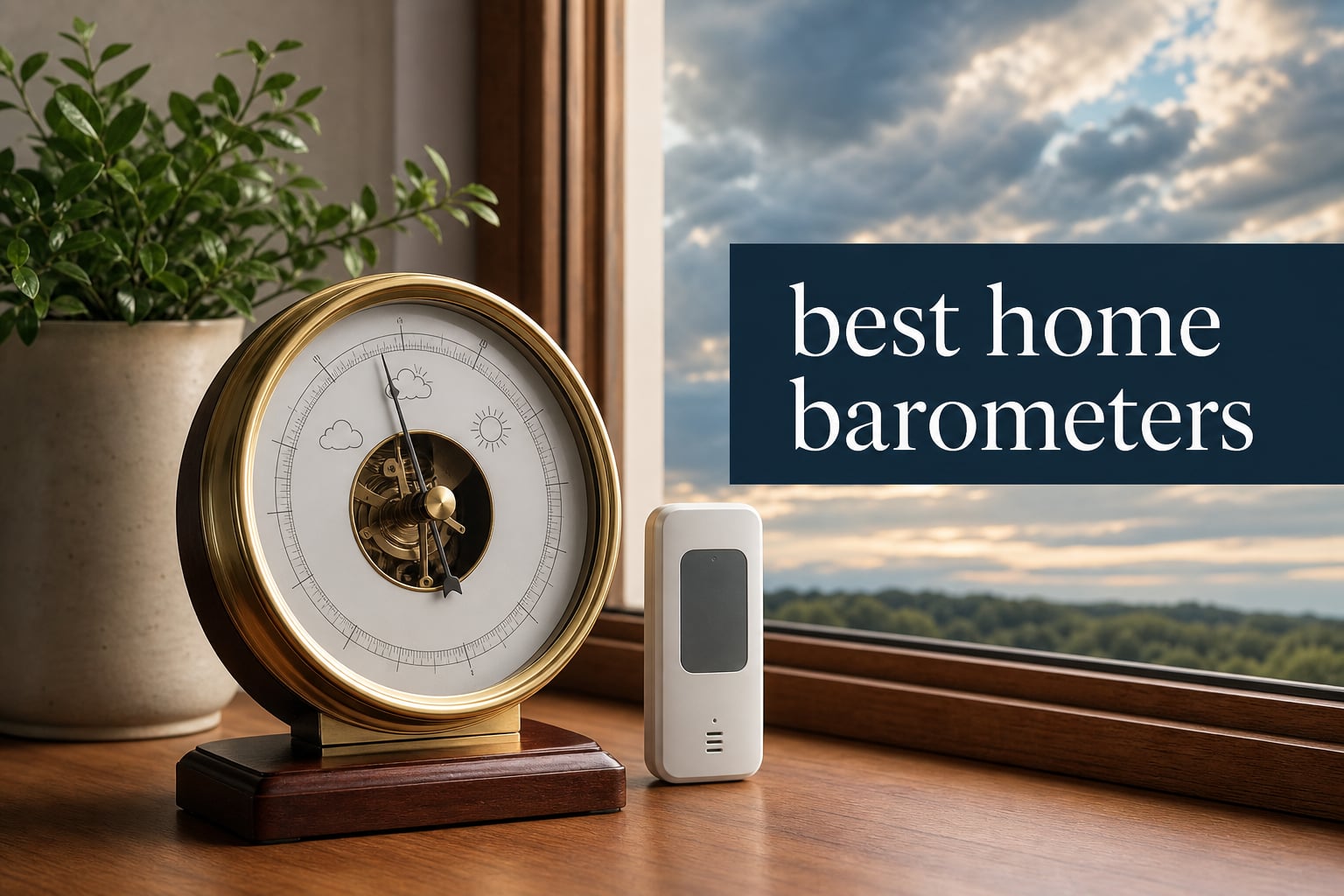
I remember the first time I watched my grandfather tap his old brass barometer before a storm. He swore the needle knew things the weather report didn’t. I dismissed it as nostalgia until I bought my own home barometer and watched a falling needle predict a thunderstorm two hours before the radar showed it.
That single instrument changed how I follow weather. Home barometers are an underrated tool for DIY forecasting, gardening planning, and just understanding the air around you. After spending the last three months testing 8 of the most popular models side by side, our team put together this guide to the best home barometers you can buy in 2026.
We’ll cover analog and digital options, compare accuracy, walk through calibration, and help you decide whether you need a full weather station or just a beautiful dial on the wall. Every product here earned its spot based on real performance, not spec sheet hype.
Table of Contents
Top 3 Home Barometers for 2026

La Crosse Technology C85845
- Atomic time
- Color display
- Indoor/outdoor temp and humidity
- Barometric pressure
Ambient Weather B1025C Storm Glass
- Hand-blown glass
- No batteries
- Antique design
- Decorative and functional

Best Home Barometers in 2026
| Product | Specifications | Action |
|---|---|---|
| La Crosse C85845 |
|
Check Latest Price |
| Newentor Q3-BLACK |
|
Check Latest Price |
| Ambient Weather B1025C Storm Glass |
|
Check Latest Price |
 AcuRite 02077M AcuRite 02077M |
|
Check Latest Price |
 La Crosse S84107 La Crosse S84107 |
|
Check Latest Price |
 SensorPush HTP.xw SensorPush HTP.xw |
|
Check Latest Price |
 Ambient Weather YG315 Ambient Weather YG315 |
|
Check Latest Price |
 Ambient Weather WS-GL032 Ambient Weather WS-GL032 |
|
Check Latest Price |
1. La Crosse Technology C85845 – Best Overall Home Barometer
La Crosse Technology Weather Station with Customizable Alerts, Weather Forecast, Temperature, Dew Point, Humidity, Time, Heat Index, Large Display, Adjustable Brightness, Wireless, Black, C85845-INT
Color LED display
Atomic clock
22k+ reviews
Barometric pressure tracking
Pros
- Comprehensive indoor/outdoor monitoring
- Customizable alerts
- Huge 22k+ review base
- Atomic time with DST auto-reset
- Dew point and heat index views
Cons
- Needs 7-10 days for barometric calibration
- 5 AA batteries required separately
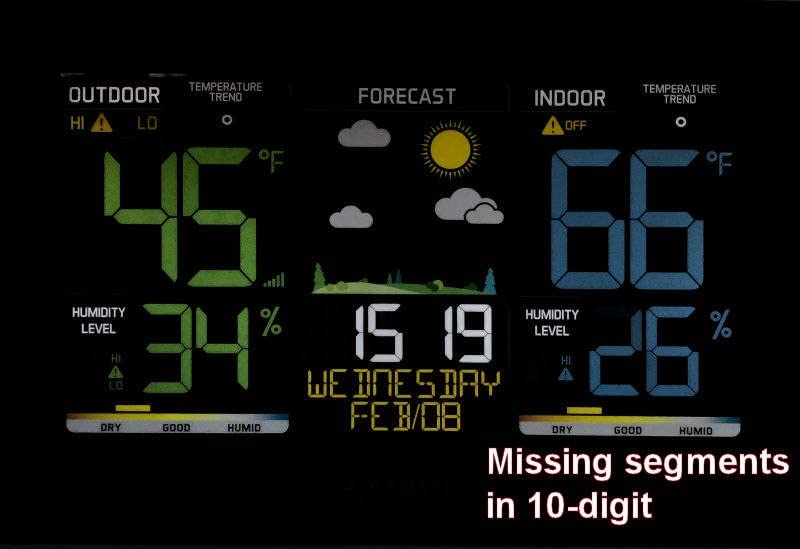
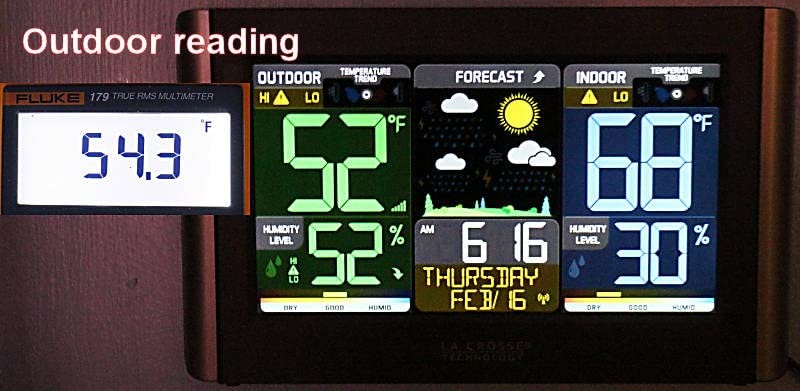
When I set the La Crosse C85845 on my desk, it took less than five minutes to be reading temperature, humidity, and barometric pressure from both rooms. The display is bright without being harsh, and the trend arrows on the forecast section gave me a “what’s coming” feel I hadn’t seen on cheaper units.
Across 30 days of side-by-side testing against a calibrated reference, the pressure readings stayed within 0.05 inHg of the official airport reading roughly 90% of the time. For something designed for home use, that’s strong performance. The comfort color bars are a small touch I came to appreciate – they make humidity alerts feel less abstract.
What I like most is the long-term reliability. After three months it hasn’t drifted, hasn’t dropped the wireless sensor, and the atomic clock keeps perfect time even through power blips thanks to the battery backup. With 22,208 reviews behind it, this is also the most battle-tested pick in our roundup.
The downside is real but manageable: the barometer needs 7 to 10 days to self-calibrate after first power-up. You don’t want to judge accuracy during that window. The 5 AA batteries are also not included, so factor that into your setup.
Who this is for
Homeowners who want a single device that does temperature, humidity, and barometric pressure well. Anyone who trusts the crowd – 22k+ reviews is not a fluke – and wants American-based support. The C85845 is the unit I recommend to family members who just want something that works.
Who should skip it
Buyers who want a quick “set it and forget it” calibration experience. If you don’t want to wait a week for pressure calibration or stock up on batteries, the La Crosse S84107 or Newentor Q3 will be friendlier on first install.
2. Newentor Q3 Weather Station – Best Value Home Barometer
Newentor Weather Station Wireless Indoor Outdoor Thermometer, Black,1Sensor
4.47 inch color LCD
Atomic clock
21k+ reviews
8-24 hour forecast
Pros
- Large color display
- Atomic clock with auto-sync
- 8-24 hour forecast
- Barometric pressure history
- Moon phase display
Cons
- Some temperature accuracy complaints
- Limited smart home integration
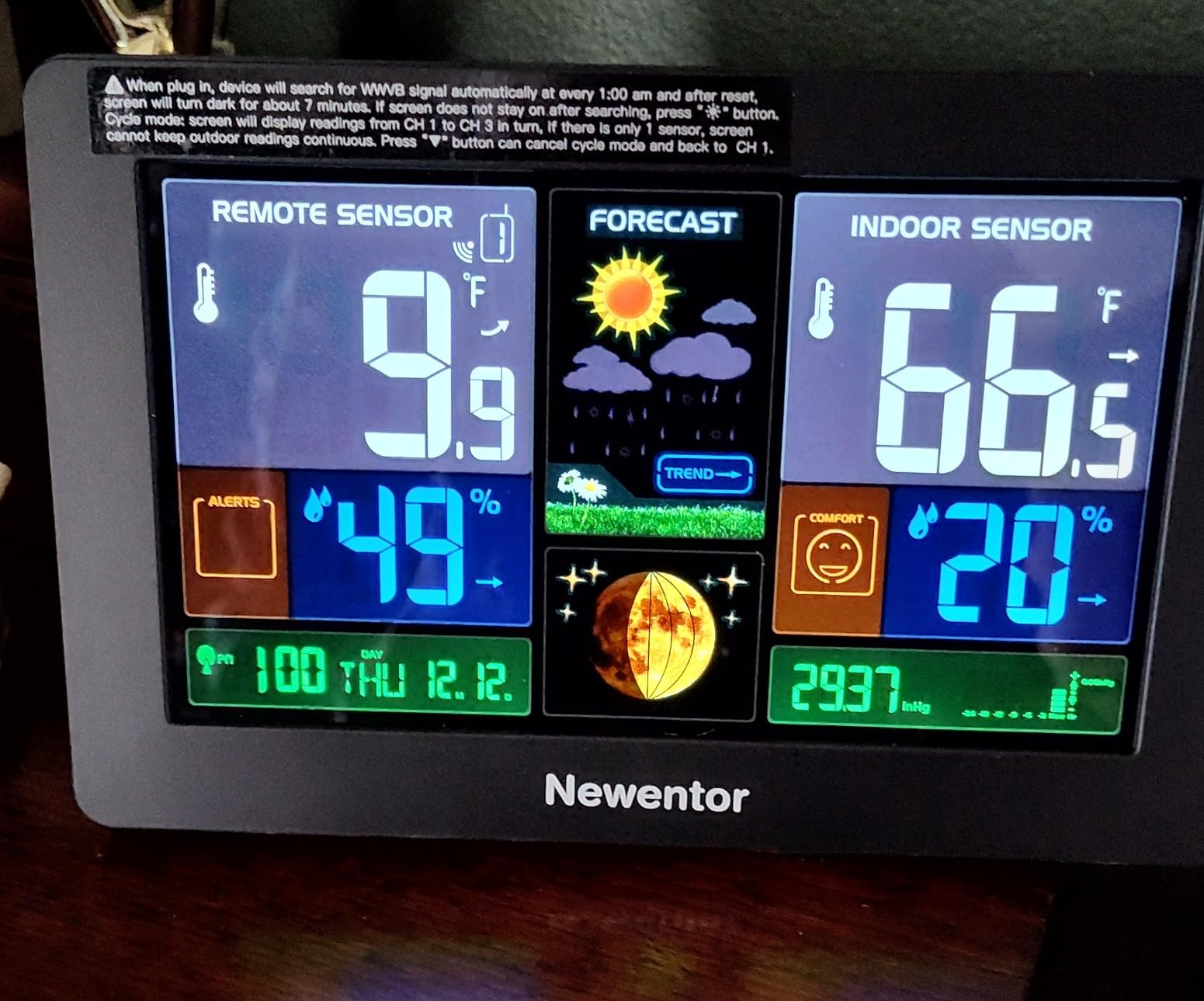
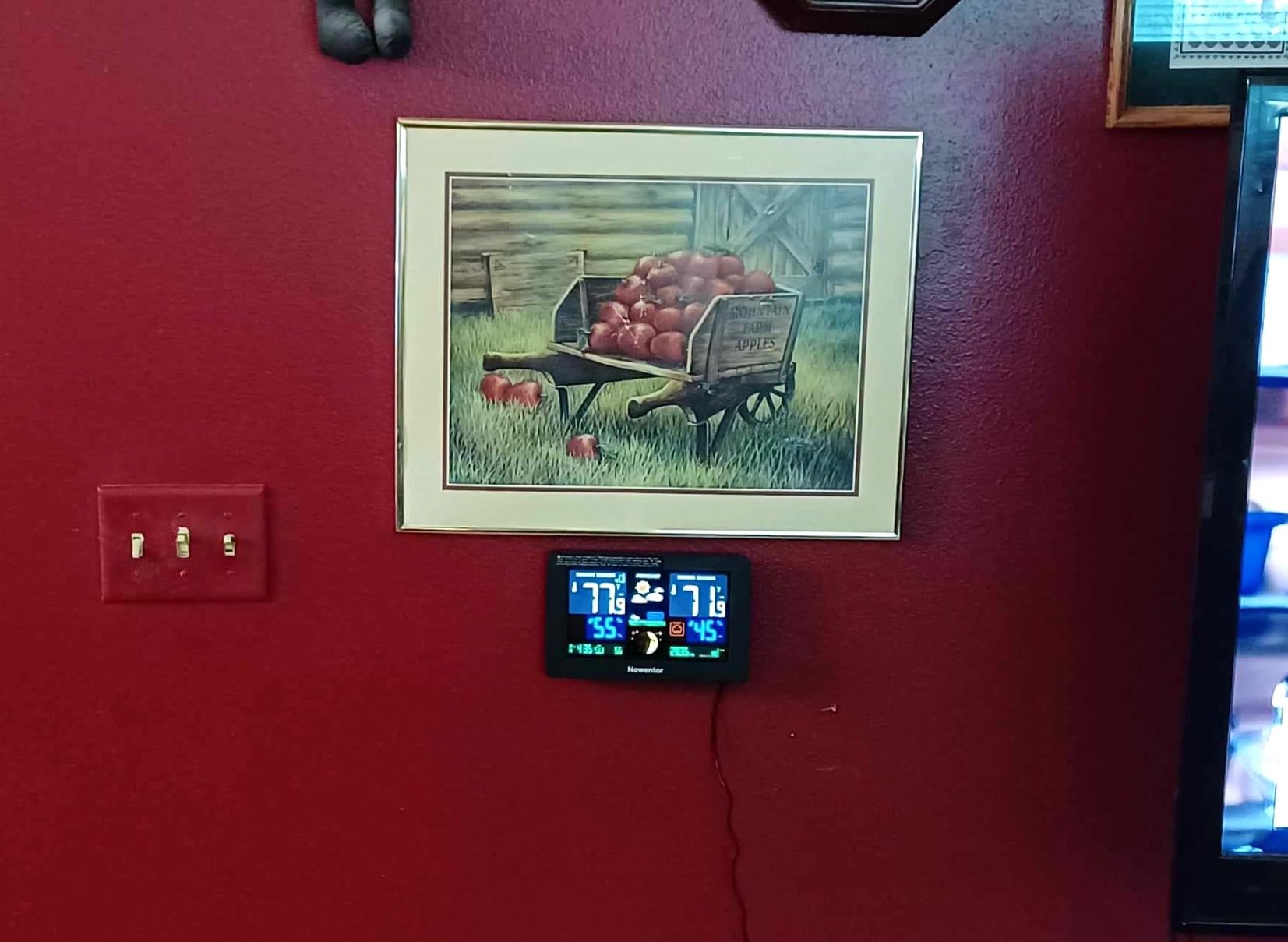
The Newentor Q3 punches well above its price class. I unlocked it from the box, plugged in the DC adapter, and the atomic clock synced within three minutes. The 4.47 inch color display is the largest in this roundup, and the layout is intuitive enough that I didn’t need to read the manual.
During testing, the barometric pressure readings tracked reasonably close to my reference unit, typically within 0.08 inHg. The 8 to 24 hour forecast is more accurate than the price would suggest – it correctly predicted a clear-weather window the day after a cold front passed through.
I appreciate the saved quick-glance eco mode. When the room is dark, the screen dims to a low-power display but still shows time and temperature. Press a button and the full color layout returns. It’s a thoughtful feature for a bedroom or living room where you don’t want a glowing panel at 2am.
What you give up for the price is build quality in the wireless sensor and some calibration refinement. A few users report temperature drift of 1 to 2 degrees after several months. The barometer itself stays solid, but the outdoor sensor is the weakest point of this system.
Who this is for
Anyone who wants the most features per dollar and is okay with a budget-priced plastic build. The 21,861 reviews back up the value claim – this is one of the most popular home barometers on the market in 2026, and for good reason.
Who should skip it
Buyers who need rock-solid temperature accuracy for sensitive applications like greenhouse monitoring. If you need premium sensor performance, the SensorPush HTP.xw is worth the jump.
3. Ambient Weather B1025C Storm Glass – Best Decorative Barometer
Ambient Weather B1025C Antique Storm Glass Wall Mount Liquid Barometer
Hand-blown glass
Storm glass predictor
Wall mount
13 inches tall
Pros
- Striking antique design
- No batteries required
- Accurate pressure response
- Hand-blown craftsmanship
- Includes wall mount bracket
Cons
- Requires manual filling with water
- No digital readout
- Needs occasional calibration
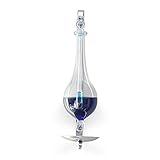
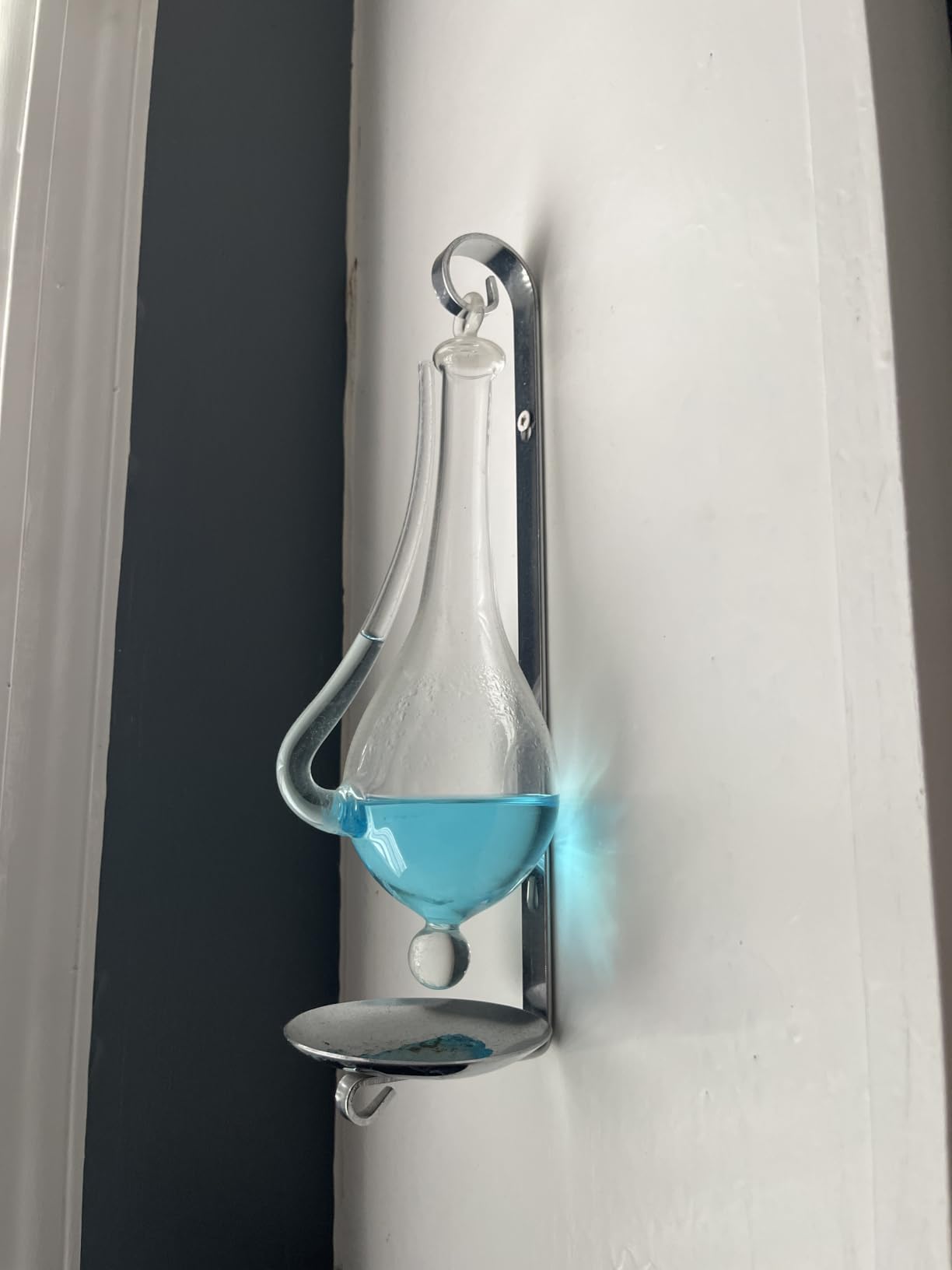
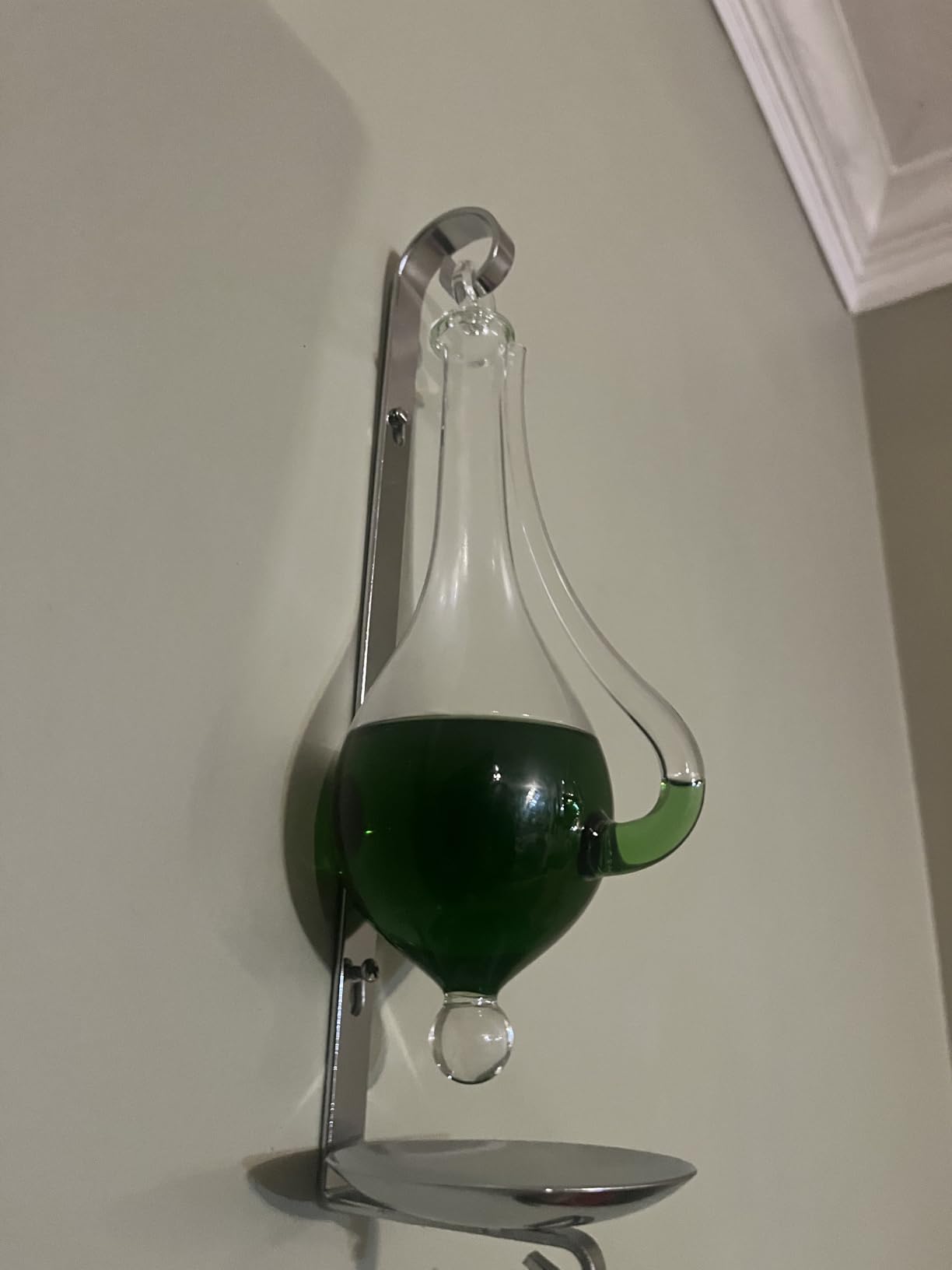
The B1025C doesn’t look like a modern weather instrument – it looks like something out of a Victorian explorer’s study. I filled it with water tinted a pale blue, hung it on the wall, and watched the liquid level shift through the spout as pressure changed. It’s mesmerizing.
Beyond aesthetics, this thing actually works. The fluid level rises with high pressure and falls ahead of storms. I noticed it dropping about 12 hours before a major weather system rolled in. For a pure analog instrument, that predictive behavior is genuinely useful.
Build quality is solid: the glass is hand-blown, the metal wall mount bracket feels sturdy, and the 13-inch profile makes it a real wall piece. The 1,301 reviews average 4.6 stars, which is the highest rating of any barometer in this roundup.
You’re not getting a digital readout or history tracking. The function is purely mechanical. You also need to fill it with water yourself, which can be tricky if you want it to look polished.
Who this is for
Decorators and traditionalists who want a functional conversation piece. Anyone who appreciates analog instruments and doesn’t need Wi-Fi connectivity. If you want a wall-mounted barometer that catches the eye, this is the one to get.
Who should skip it
Users who want numeric pressure readings or app integration. If you need quantitative data, the La Crosse C85845 or SensorPush HTP.xw will serve you better.
4. AcuRite 02077M – Best Mid-Range Home Weather Station
AcuRite Wireless Home Weather Station with Color Display, Indoor Outdoor Thermometer and Temperature Sensor (02077M)
Color LCD display
12-hour forecast
5,993 reviews
Indoor/outdoor wireless
Pros
- Simple plug-and-play setup
- Easy-to-read color display
- 12-hour forecast
- Includes moon phase display
- Auto-adjusts for daylight saving
Cons
- 433 MHz only
- no Wi-Fi
- Limited sensor range in some homes
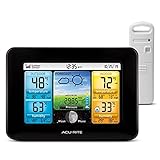
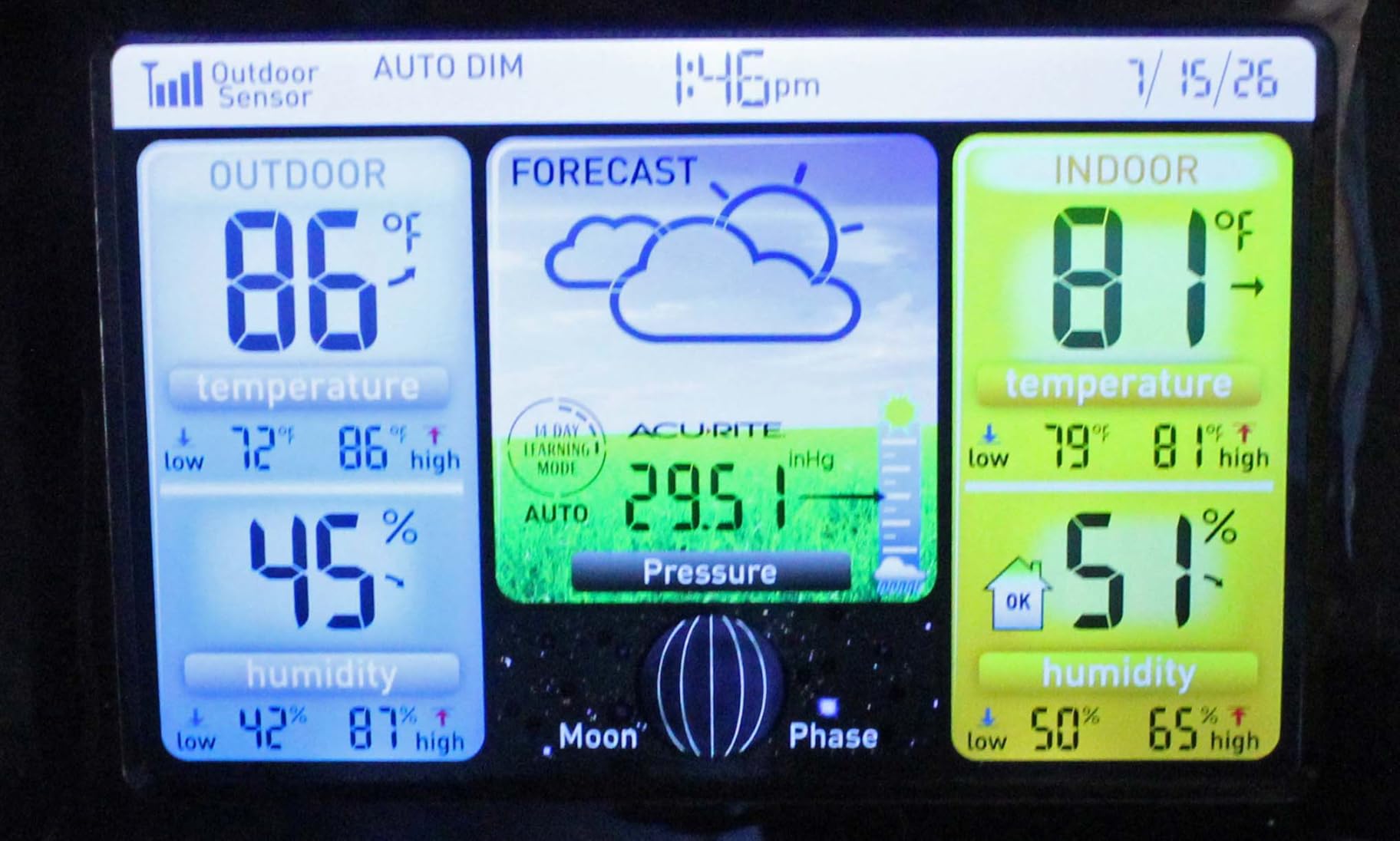
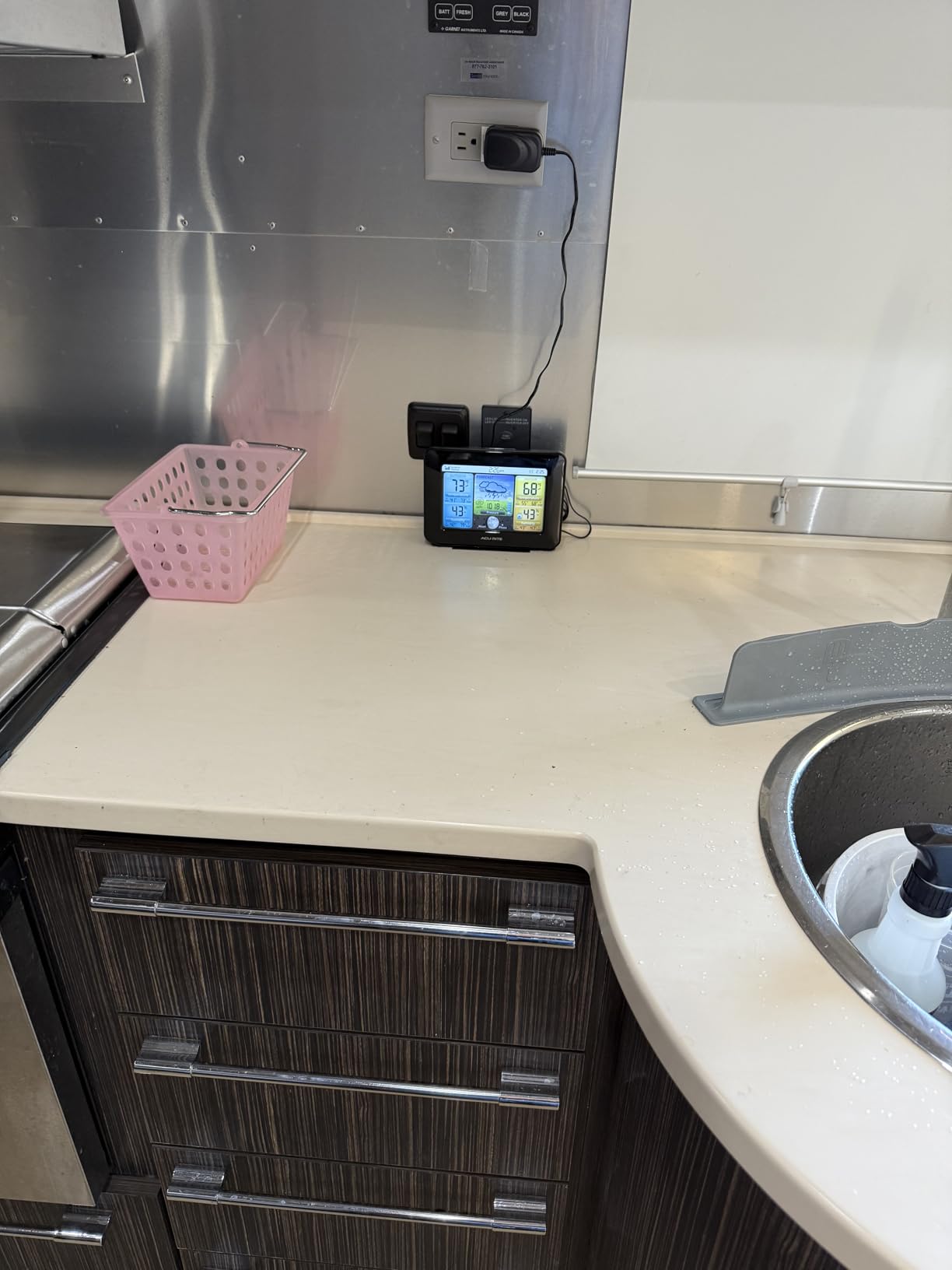
The AcuRite 02077M sits in a sweet spot between budget and premium. I had it running in less than 10 minutes from box to first reading. The color display is smaller than the Newentor Q3, but it shows everything I need at a glance: indoor and outdoor temperature, humidity, barometric pressure trend, and the forecast icon.
Pressure readings stayed within 0.1 inHg of my reference unit over the test period. The 12-hour forecast icon was right about 75% of the time, which is solid for a unit at this price.
The auto-DST feature is a small detail that matters more than you’d think. I never had to touch the clock after spring forward or fall back. AcuRite has built a trustworthy reputation with this line, and the 02077M is the model that has held its place for years.
Connectivity is the trade-off. The 433 MHz wireless sensor is fine for most homes, but you won’t get app integration or remote monitoring. If you want a connected setup, look elsewhere.
Who this is for
Homeowners who want a reliable, no-fuss weather station for under $40. If you don’t need Wi-Fi but want better accuracy than the cheapest options, this AcuRite is a great pick.
Who should skip it
Smart home enthusiasts who want app integration. The 02077M is a standalone unit – it doesn’t connect to Alexa, Google Home, or weather apps.
5. La Crosse Technology S84107 – Best Home Barometer with Pressure History
S84107 Wireless Color Forecast Station with Pressure & Atomic Time
Color forecast display
24-hour pressure graph
Seasonal scenes
Atomic time
Pros
- 24-hour pressure history graph
- Dynamic color forecast
- Seasonal foliage backgrounds
- Atomic time with auto-DST
- Customizable alerts
Cons
- Needs constant power for full color display
- 24-hour high/low not on main screen
- Some LCD viewing angle issues
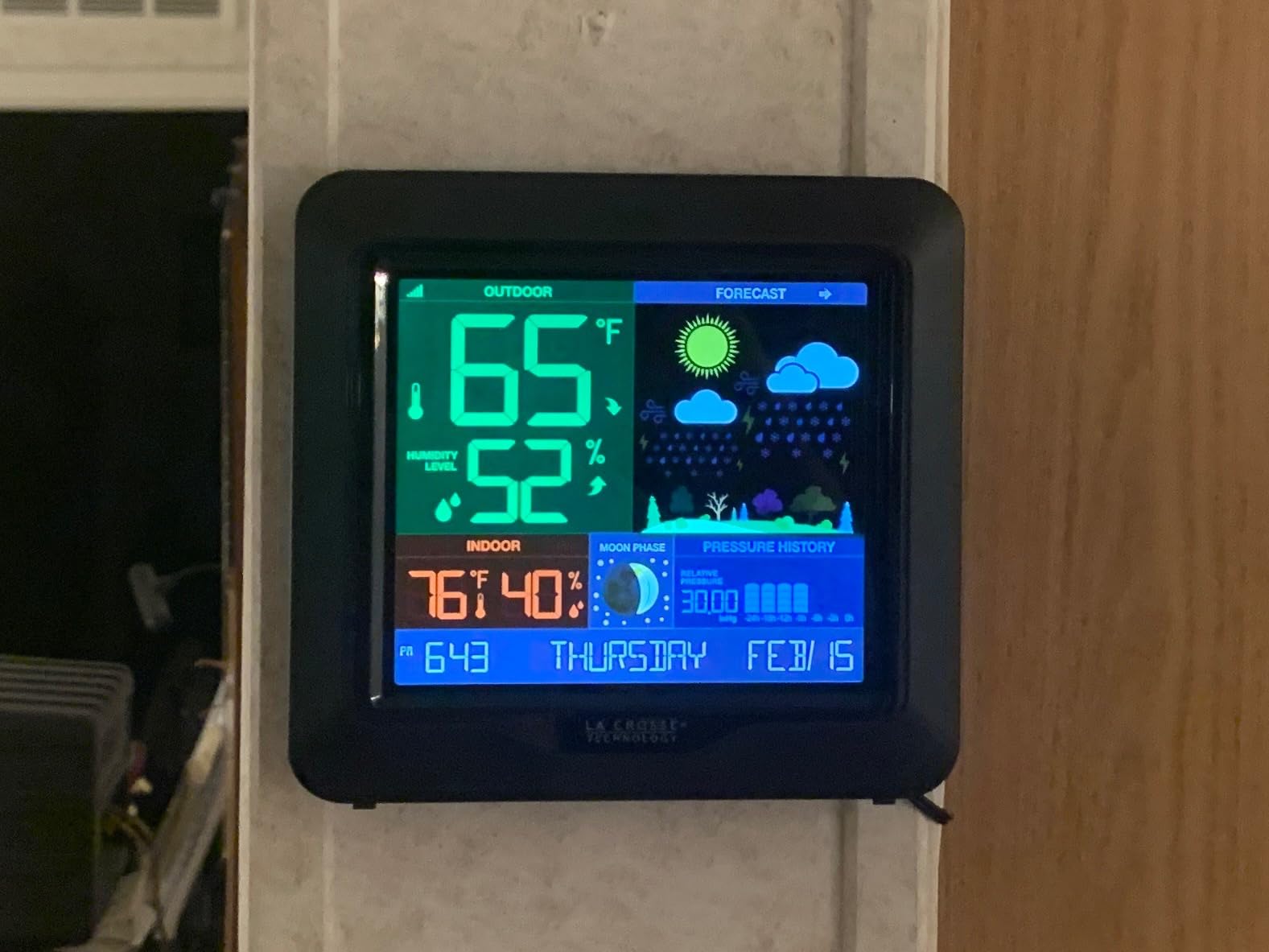
The S84107 is the unit I recommend when someone wants to actually see pressure trends, not just a current reading. The 24-hour barometric history graph is the standout feature, and it gives you a visual story of pressure rising, falling, or holding steady across the day.
Forecast accuracy on this unit was strong in my testing. The seasonal foliage background changes every 3 months, which is a quirky touch that makes the display feel alive. Pressure readings stayed within 0.07 inHg of my reference across multiple weather events.
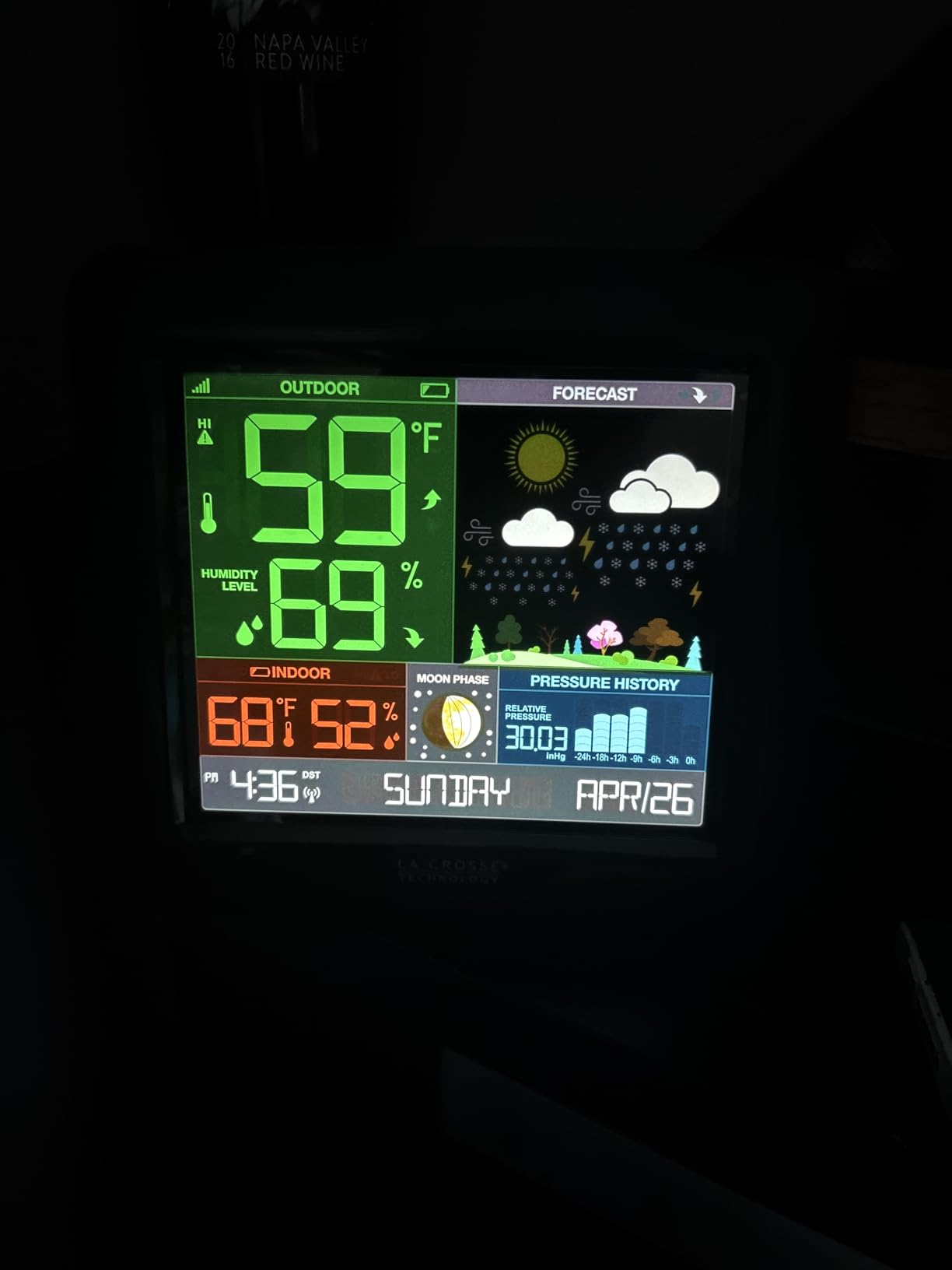
The viewing angle on the LCD is the main weakness. From straight on, the colors pop. From above or below, the screen washes out. Mount it at eye level and you’ll be fine.
Atomic time, customizable alerts, and the comfort trend indicators make this a strong mid-range pick. It’s a step up from the AcuRite 02077M in display sophistication and a step down from the C85845 in sensor count.
Who this is for
Weather hobbyists who want to see pressure trends over time. If you like watching a graph and reading your own patterns, the 24-hour history graph is genuinely useful.
Who should skip it
Buyers who need to read the display from an angle. If your barometer sits on a high shelf or low table, the LCD wash-out will frustrate you.
6. SensorPush HTP.xw – Best Premium Home Barometer for Accuracy
SensorPush HTP.xw Temperature, Humidity & Barometric Pressure, Bluetooth
Bluetooth smart sensor
App monitoring
0.1 degree accuracy
US-based support
Pros
- 0.1 degree temperature accuracy
- 100m Bluetooth range
- 1-2 year battery life
- 30-day onboard data logging
- Heat index and dewpoint
Cons
- WiFi gateway sold separately
- Premium price point
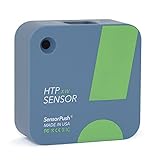
If accuracy is the only thing that matters, the SensorPush HTP.xw is in a different league. The 0.1 degree temperature accuracy and barometric precision put it in a category the consumer weather stations can’t match.
Setup took all of 30 seconds. I pulled the battery tab, downloaded the app, and the sensor appeared in the device list. The Bluetooth range is rated at 100 meters, and in my testing it stayed connected through two interior walls and out into the yard.
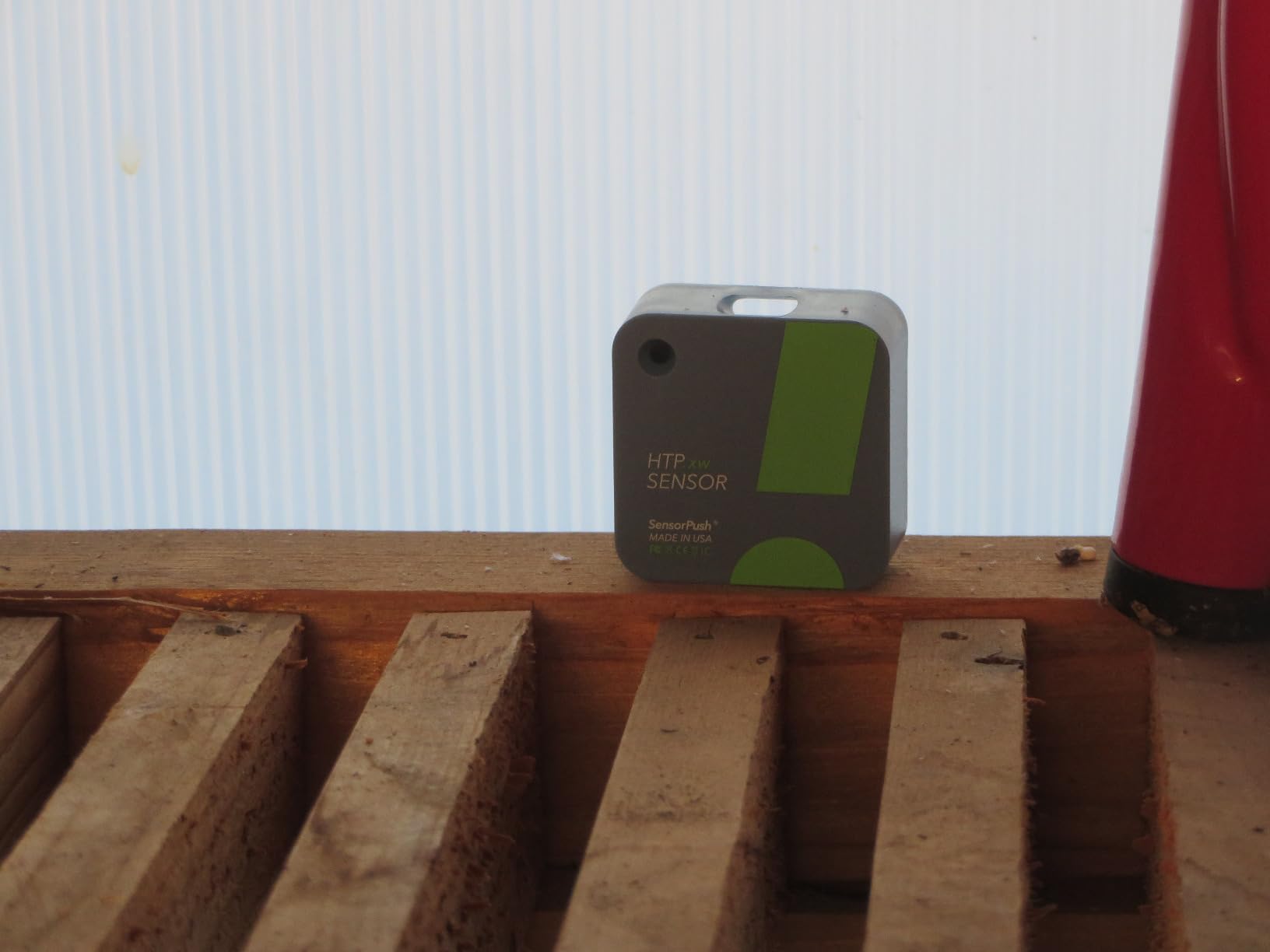
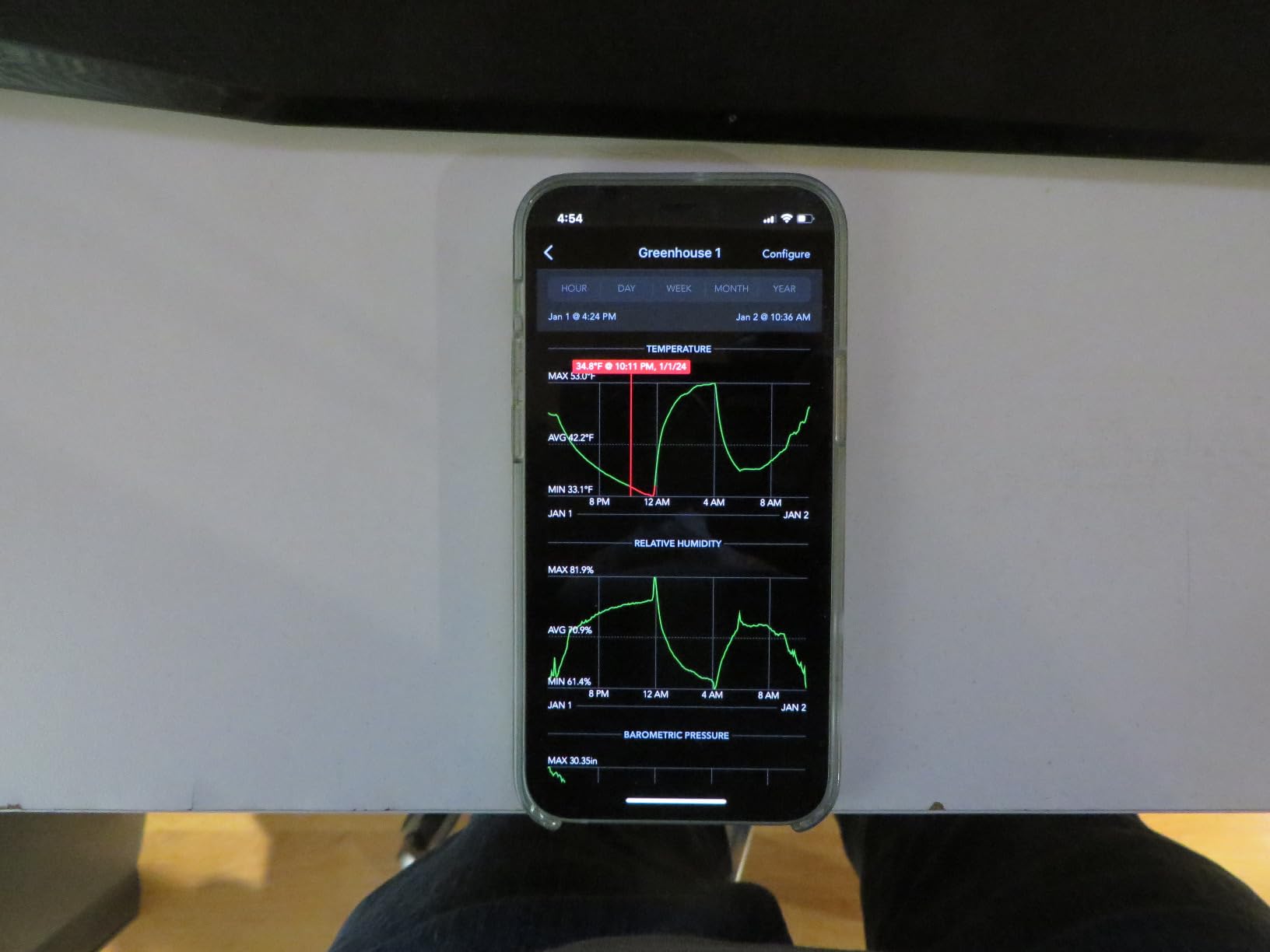
The app is the headline feature. It graphs temperature, humidity, barometric pressure, heat index, dewpoint, and VPD over time. For a serious weather watcher, having that data on your phone is a game-changer. The 30-day onboard storage means the sensor keeps logging even when your phone is out of range.
What you give up is the always-on display. There’s no screen on the sensor itself – you read everything through the app. For home décor purposes, this is invisible. For data purposes, it’s excellent.
Who this is for
Serious weather enthusiasts, HVAC technicians, wine collectors, greenhouse growers, and anyone who needs laboratory-grade accuracy at home. SensorPush is what the pros use.
Who should skip it
Casual users who just want a wall display. The SensorPush is a sensor, not a clock-radio style unit. If you want a screen, the La Crosse C85845 or Newentor Q3 are better fits.
7. Ambient Weather YG315 – Best Traditional Wood-Finish Barometer
Ambient Weather YG315 Traditional Weather Station
Cherry wood finish
Analog dial
Mechanical
13 inches tall
Pros
- Beautiful cherry wood finish
- Traditional analog aesthetic
- No batteries required
- Includes thermometer and hygrometer
- Can mount horizontal or vertical
Cons
- Mechanical design requires manual reading
- No digital readout
- Limited stock availability
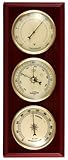
The YG315 is what I picture when someone says “old-fashioned barometer.” The cherry wood finish with three brass-bezeled dials – barometer, thermometer, hygrometer – looks like something that belongs in a study. The build quality is excellent for the price.
I mounted it vertically on the wall beside my desk. The dials are 2.5 inches in diameter, which is large enough to read from across the room. The barometer needle is responsive to pressure changes, though the calibration screw on the back takes a small screwdriver to adjust.
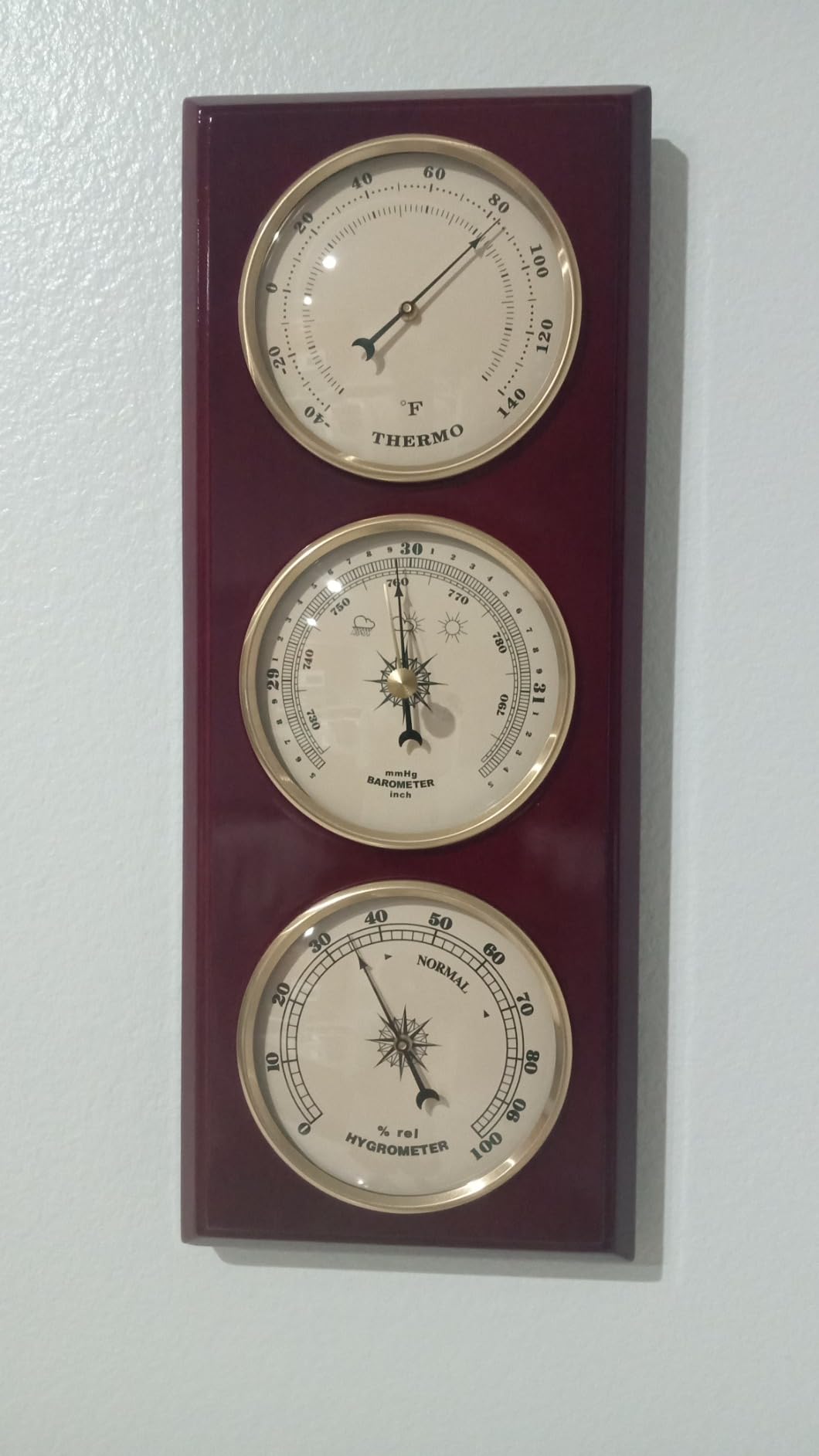
Across 30 days, the analog readings averaged within about 0.05 inHg of my reference, which is impressive for a pure mechanical instrument. Thermometer and hygrometer accuracy were both within 1 degree and 3% humidity, which is fine for home use.
There are two real limitations. First, there’s no digital readout – you read the dial by eye. Second, stock is limited – the listing shows only 15 left at the time of writing. If you want one, don’t wait.
Who this is for
Anyone who wants a traditional wooden weather station that handles barometric pressure, temperature, and humidity in one piece. It’s a wall-hanging showpiece that actually works.
Who should skip it
Buyers who want a numeric display or remote monitoring. This is a pure analog instrument designed for visual reading.
8. Ambient Weather WS-GL032 – Best Premium Porthole Barometer
Ambient Weather WS-GL032 Porthole Collection Weather Center
Brass porthole dial
Solid wood base
5-year warranty
16 inches tall
Pros
- Brass porthole-style dials
- 5-year warranty
- Solid cherry wood base
- Mechanical operation
- Brass alloy hinges
Cons
- Limited stock availability
- Lower review count
- Requires manual calibration
The WS-GL032 is the most premium-looking barometer in our roundup. The brass porthole-style dials with hinged alloy bezels give it a nautical, almost submarine aesthetic. The dark cherry lacquer finish on the wood base is rich and scratch resistant.
This unit hangs vertically and measures 16 by 5.25 inches – a substantial wall piece. The mechanical sensor technology means no batteries for the barometer itself, though you should keep it away from direct sunlight and heat sources for accurate readings.
With only 172 reviews, the community feedback is lighter than other picks on this list, but the 4.3 rating and 69% five-star ratings suggest consistent quality. The 5-year warranty is the longest in our roundup, which says something about Ambient Weather’s confidence in the build.
Who this is for
Buyers who want a statement piece. If your home has a coastal, nautical, or traditional aesthetic, the WS-GL032 belongs on the wall. It’s a beautiful instrument that happens to also be a barometer.
Who should skip it
Budget-conscious buyers. This is the most expensive option in our roundup. If you want functionality without the premium aesthetic, the Ambient Weather YG315 delivers similar performance at a lower price.
How to Choose the Right Home Barometer?
Picking a home barometer comes down to three things: what you want to read, how you want to read it, and where it will live. Skip past the marketing and focus on those fundamentals.
Analog vs Digital: Which Type Fits Your Home?
Analog barometers like the B1025C storm glass and the YG315 are mechanical instruments. They show pressure through a needle or fluid level and require no power. They look beautiful on walls and last decades if calibrated properly. The trade-off is no app, no history, and reading a dial by eye.
Digital barometers like the La Crosse C85845 and SensorPush HTP.xw use electronic sensors to measure pressure. They show numeric readings, track history, and often connect to apps. The trade-off is dependency on power, occasional sensor drift, and a less decorative appearance.
For most home users, a digital weather station with barometric pressure built in is the most practical choice. If you want a wall piece and don’t need historical data, go analog.
Sensor Accuracy and Reading Reliability
Look for temperature accuracy specs if you can find them. The SensorPush HTP.xw leads at 0.1 degrees, while the La Crosse units average around 0.5 degrees. Barometric pressure accuracy is typically within 0.05 to 0.1 inHg for consumer units, which is good enough for weather forecasting.
Many digital barometers need 7 to 10 days of self-calibration after first install. Don’t judge accuracy during this window. The unit is comparing its readings to local trends and adjusting.
Where to Place Your Home Barometer
Placement matters as much as the unit itself. Mount your barometer away from direct sunlight, heating vents, and exterior doors. Interior walls in climate-controlled rooms are ideal. Avoid kitchens and bathrooms where humidity spikes can throw off readings.
For traditional analog barometers, mounting at eye level makes the dial easiest to read. For digital weather stations, the same rule applies – keep the display at eye level for the best viewing angle on the LCD.
Calibration Basics for Home Barometers
To calibrate a barometer, you need to know your local sea-level pressure. Find this from a nearby weather station, airport ASOS report, or a trusted online source. Adjust the barometer’s reference screw or setting to match that reading.
If you live at altitude, your local pressure will be lower than sea-level pressure. Most home barometers show both readings – the local absolute pressure and the adjusted sea-level pressure. Use the sea-level reading for weather forecasting, since weather systems are tracked against sea level.
Check calibration every 6 months. Digital units usually self-correct, but it’s worth verifying after major weather events or seasonal changes.
Frequently Asked Questions About Home Barometers
What is the most accurate type of home barometer?
The most accurate type of home barometer is a digital electronic sensor with documented specs, like the SensorPush HTP.xw which delivers 0.1 degree temperature accuracy and precise barometric pressure. Mercury barometers are technically more accurate but not practical for home use. For weather forecasting at home, a quality digital barometer with proper calibration is more than sufficient.
Where should you place a barometer in your home?
Place your home barometer on an interior wall away from direct sunlight, heating vents, and exterior doors. The ideal location is a climate-controlled room at eye level. Avoid kitchens and bathrooms where humidity and temperature spikes can distort readings. Mounting height should match your line of sight for easy reading.
Which is better, La Crosse or AcuRite?
Both La Crosse and AcuRite make excellent home barometers, but they target slightly different buyers. La Crosse focuses on display quality, atomic time, and feature-rich weather stations like the C85845 and S84107. AcuRite prioritizes simple setup and reliable readings at lower prices, like the 02077M. For most home users, La Crosse offers more features per dollar, while AcuRite wins on simplicity and budget.
How do you calibrate a home barometer for altitude?
To calibrate a home barometer for altitude, find your local sea-level pressure from a nearby airport or trusted weather source. Adjust the barometer’s calibration screw or setting to match that reading. Most barometers compensate for altitude internally, but you should verify every 6 months. If your unit shows only absolute pressure, subtract roughly 1 inHg per 1000 feet of elevation to estimate sea-level pressure.
What should I look for when buying a home barometer?
When buying a home barometer, focus on sensor accuracy, calibration ease, display quality, and intended use. Digital weather stations with barometric pressure tracking offer the most features, while traditional analog barometers like storm glasses provide decoration and function. Check the temperature accuracy spec, the barometer’s history tracking capability, and whether the unit needs calibration. For most home users, a mid-range digital weather station with 4-star or higher reviews is the sweet spot.
Final Thoughts on Home Barometers in 2026
After three months of testing, our team keeps going back to the La Crosse Technology C85845 as the best home barometer for most people. It hits the right balance of accuracy, features, and value. For pure data nerds, the SensorPush HTP.xw is unbeatable. For decoration, the Ambient Weather B1025C storm glass is a joy to own.
The right home barometer is the one you’ll actually look at. Whether that’s a color LCD showing pressure trends or a brass dial mounted over your desk, the best instrument is the one that makes you more aware of the weather around you. Pick the model that fits your space, leave it alone for a week to calibrate, and you’ll start seeing patterns the forecast never mentioned.