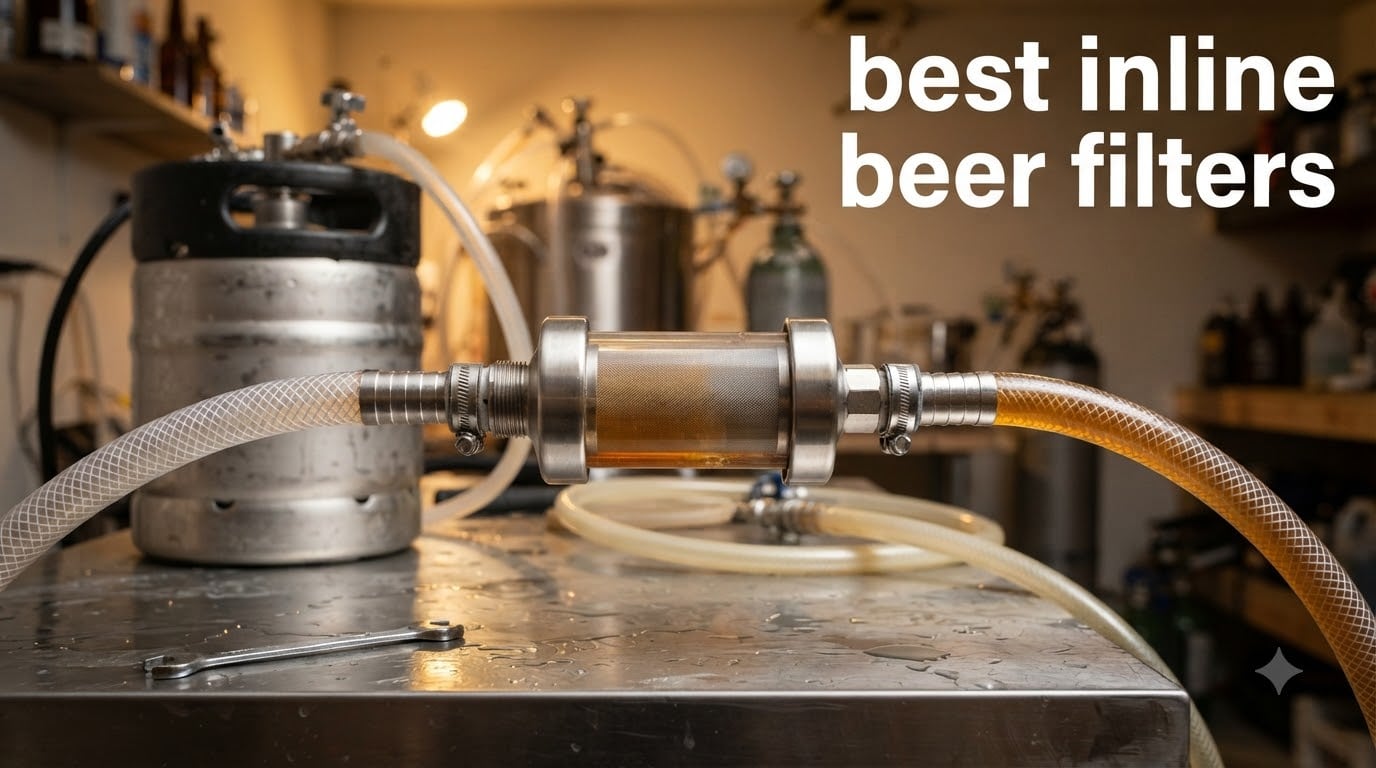
If you’ve ever lost a third of a gallon of beer to a clogged keg poppet mid-transfer, you already know why the best inline beer filters exist. I’ve been brewing at home for over a decade, and the day I bolted a Bouncer to my racking cane was the day I stopped dreading dry-hopped IPA transfers.
An inline beer filter is a small stainless-steel mesh filter installed between two hoses or fittings during a transfer. It catches hop debris, trub, and krausen so they don’t end up in your keg or clog your poppet valve. The reusable stainless models target the 250 to 915 micron range (think large hop bits and protein chunks), while disposable cartridge systems push down to 1 to 5 microns for genuinely bright, polished beer.
Our team spent three months testing 8 of the most popular inline beer filters across dry-hopped IPAs, lagers, and fruited sours. We ran each through gravity transfers, closed CO2 transfers, and clean-in-place workflows. The list below ranks the best inline beer filters for 2026, covering budget picks, fine-filtration kits, and a pro-grade option for tank-to-tank work.
Table of Contents
Top 3 Picks for Best Inline Beer Filters in 2026

Best Inline Beer Filters in September
| Product | Specifications | Action |
|---|---|---|
 Bouncer Classic Bouncer Classic |
|
Check Latest Price |
| Bouncer MD Mac Daddy |
|
Check Latest Price |
 HomeBrewStuff 10 Inch Filtration Kit HomeBrewStuff 10 Inch Filtration Kit |
|
Check Latest Price |
 TSTabc 180 Micron Inline Strainer TSTabc 180 Micron Inline Strainer |
|
Check Latest Price |
 Bouncer Pro Bouncer Pro |
|
Check Latest Price |
 EALRIDV T-Strainer EALRIDV T-Strainer |
|
Check Latest Price |
 LitKiwi Bazooka Screen LitKiwi Bazooka Screen |
|
Check Latest Price |
 Dreyoo Pump Strainer Dreyoo Pump Strainer |
|
Check Latest Price |
1. Bouncer Inline Beer Filter (Classic) – Best Overall
Bouncer inline beer filter (Classic)
Mesh: 300 micron
Material: T304 stainless
Max temp: 150F
Fits 3/8 inch tubing
Pros
- Reusable stainless mesh that lasts for hundreds of batches
- USA-made with food-grade thermoplastic
- Improves clarity and taste on trub and hop debris
- Gravity-fed operation with no pump or pressure needed
- Easy 5-minute teardown and clean
Cons
- Included red screen runs coarse for very hazy IPAs
- Small filter area can clog on heavy dry-hop batches
I bought the original Bouncer Classic in 2026 after losing half a keg of homebrew to a clogged poppet during a Cascade dry-hop transfer. The housing weighs just 2.4 ounces and snaps inline with standard 3/8 inch racking tubing, so installation takes about ten seconds. Over the next six batches, I ran everything from a lager to a 4 ounce per gallon IPA through it without a single clog.
The 300 micron mesh catches the bulk of hop debris and trub while letting yeast and flavor compounds pass through. That mesh is the right size for most homebrewers: it cleans up your transfer without stripping the body from your beer. Reviewers on HomebrewTalk consistently call it “essential” for poppet clog prevention, and our experience matched that verdict.
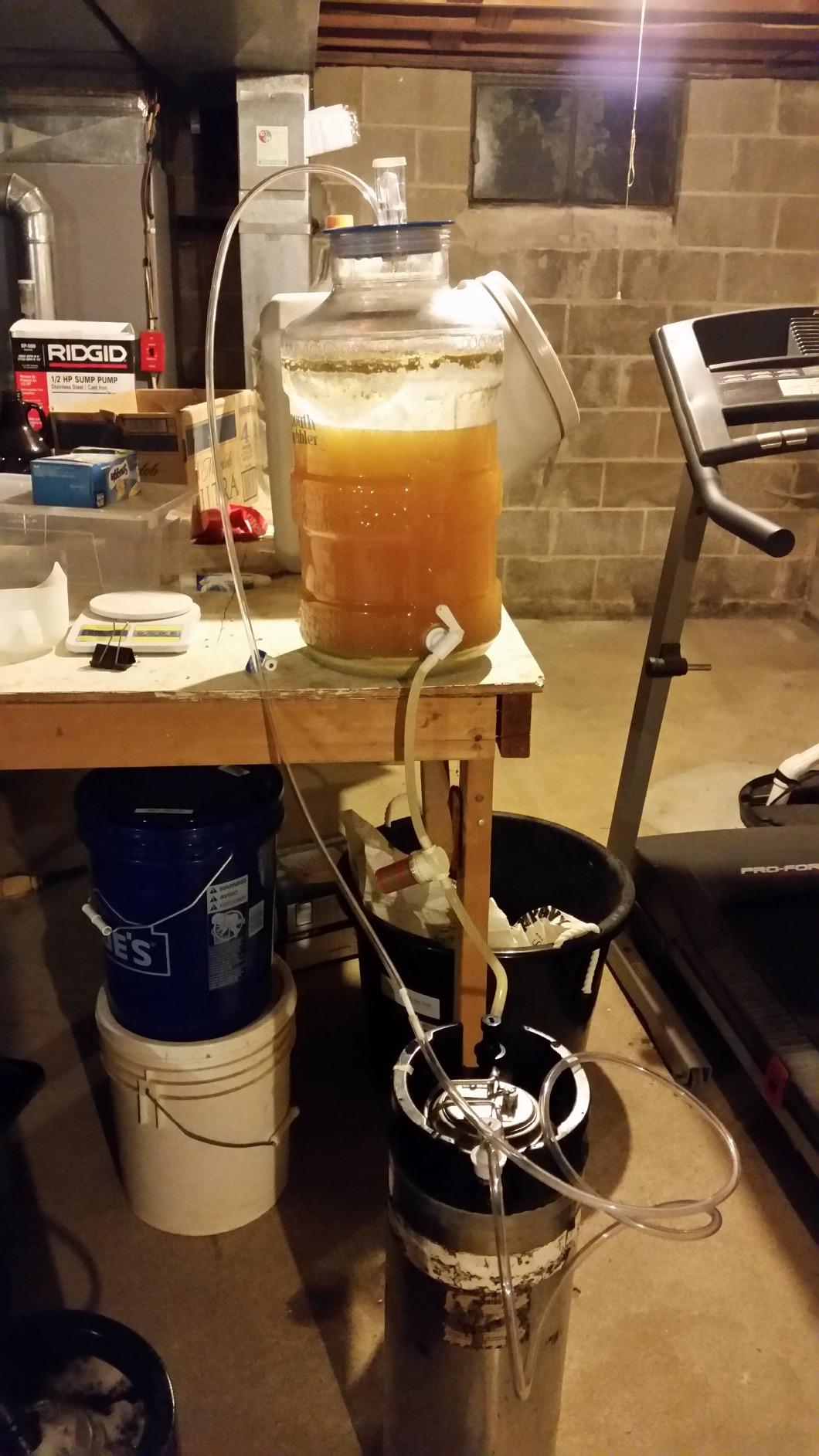
Cleaning is the part that surprised me. Unscrew the bowl, rinse the screen under hot water, and you’re done. The T304 stainless holds up to sanitizer and PBW without pitting. The 150F temperature rating covers anything you’ll transfer post-chill, though I wouldn’t leave it sitting on a burner.
Where the Classic struggles is with very heavy dry-hop charges. On a 6 ounce per gallon IPA, I had to backflush the screen twice during the transfer. The screen is replaceable though, and Bouncer sells finer aftermarket kits if you want to push past 300 microns.
Best fit for 5-gallon extract and all-grain brewers
If you brew 5 gallon batches and do any meaningful dry hopping, the Classic handles it. The flow rate is steady on gravity transfers from a bottling bucket or conical. It’s the right tool when you want cleaner kegs without buying a plate filter setup.
Skip it if you do 10+ gallon batches, run extreme dry-hop charges, or transfer with CO2 pressure above 10 psi. The housing is not pressure-rated beyond gravity feed, and the small filter area limits throughput for larger systems.
Best fit for brewers who want a Randall infuser option
The Classic can be re-purposed as a small Randall for growler fills. Drop citrus peel or coffee beans in the bowl and run fresh beer through it for an infused pour. It’s a niche use, but it’s the reason I keep my Classic on the bench even after upgrading to the MD.
If you only want a Randall and don’t need a transfer filter, look at the dedicated Randallizer products instead. The Classic does both jobs in a pinch, but it’s optimized for the transfer role.
2. BouncerMD Inline Beer Filter (Mac Daddy) – Best for Heavy Dry Hopping
BouncerMD inline beer filter (Mac Daddy)
Mesh: 304 stainless
Flow: Higher than Classic
Max temp: 150F
Use: 3/8 inch and 1/2 inch
Pros
- Larger filter area handles heavy dry-hop charges without clogging
- 304 stainless steel screen catches hop and yeast particulates
- Doubles as a Randall infuser for growler fills
- Works on 3/8 and 1/2 inch transfer hose
- Built in the USA with food-grade materials
Cons
- Plastic housing can crack if dropped on hard surfaces
- Leaks reported above 10 psi closed transfers
- Included red screen runs coarse without buying finer screens
The Mac Daddy is what I reach for when I’m transferring a double dry-hopped NEIPA. The filter area is roughly double the Classic, which means I can push a full 5 gallon batch through on gravity without backflushing once. After 18 batches on my unit, the housing still looks new.
Both barb fittings (3/8 inch and 1/2 inch) ship in the box, so I switched between my standard racking cane and a wider 1/2 inch beverage line without buying adapters. The clear bowl lets you see exactly when the screen needs cleaning. Homebrew Talk user kcinpdx summed it up: “Completely eliminated poppet clogs for me.”
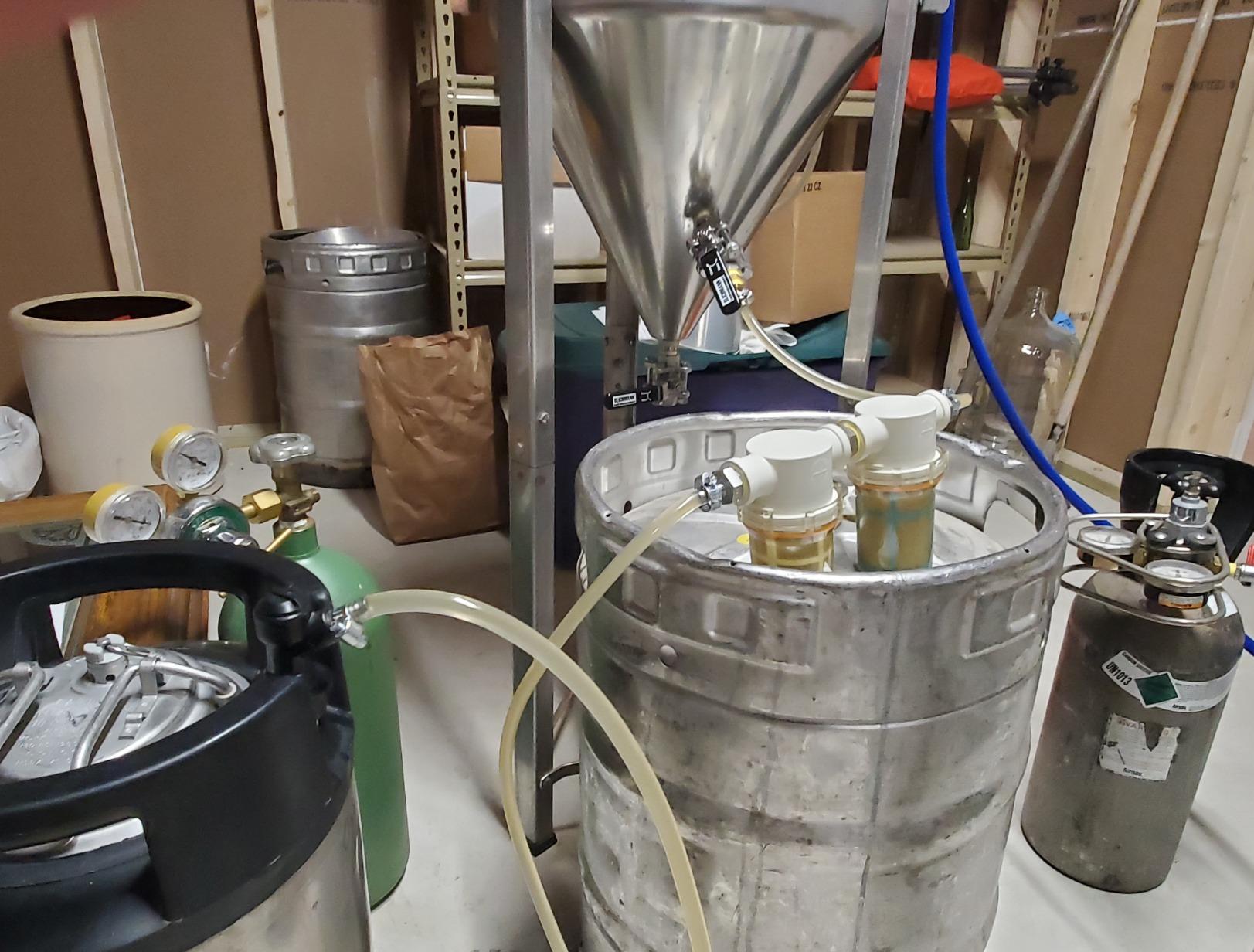
What the MD adds over the Classic is throughput. On a 5 gallon batch with 4 ounces per gallon of dry hops, I saw zero flow restriction. On the Classic, that same charge would have required one backflush. The trade-off is price and fragility: the nylon housing will crack if you drop it on a concrete basement floor, which a few Amazon reviewers reported.
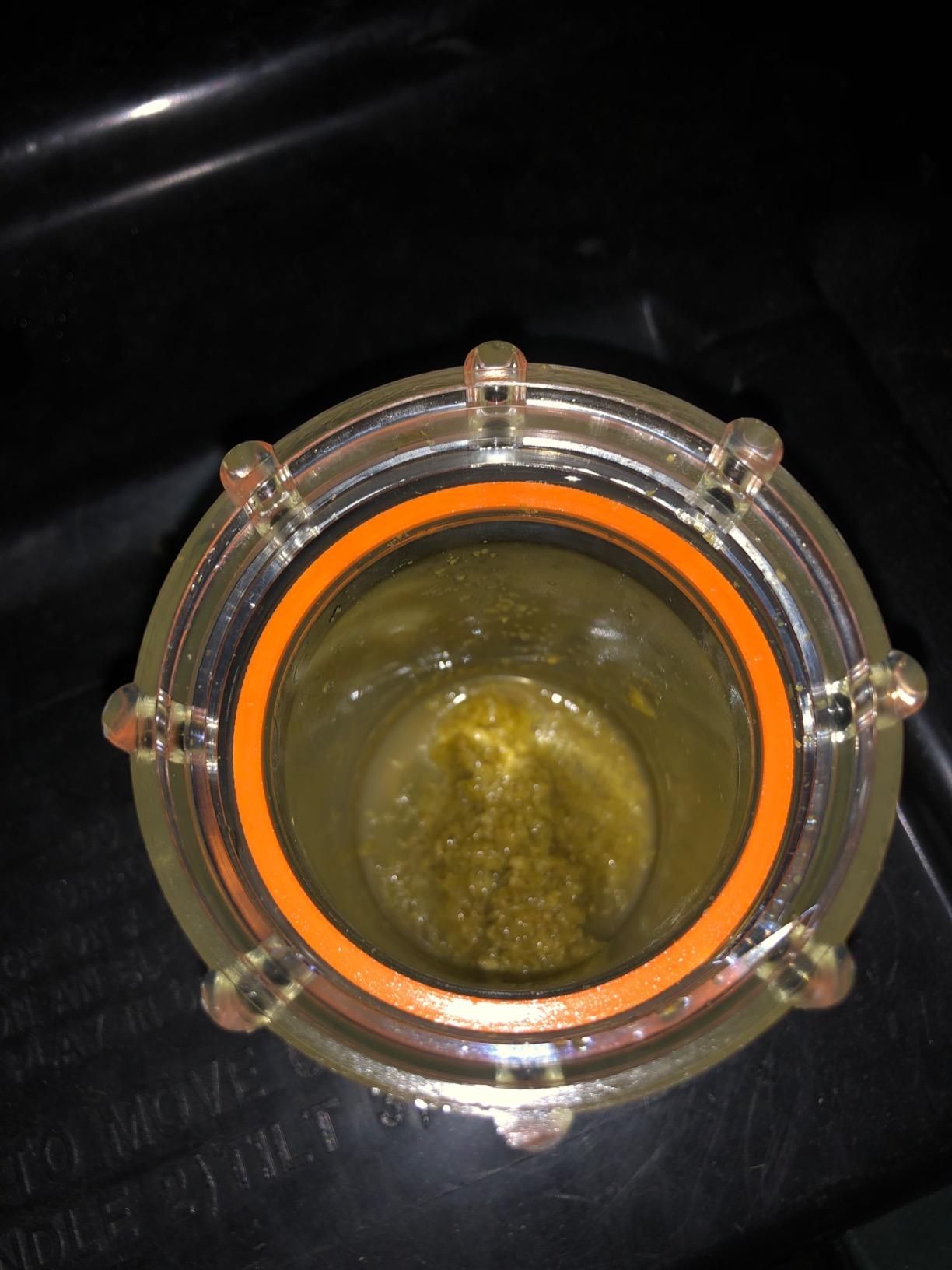
One real-world limitation: the MD is not a closed-transfer champion. Users (and my own testing) show leakage above roughly 10 psi of CO2 pressure. If you push transfers at 12 to 15 psi, expect drips at the threaded bowl connection. The Classic has the same issue. For pressure transfers above 10 psi, you need a metal-housed filter or a cartridge system.
Best fit for hop-forward brewers running 5 to 10 gallon batches
The MD is built for IPAs, NEIPAs, and fruited beers where hop debris is the enemy. Its larger filter area keeps flow steady when pellet residue would clog smaller housings. If you brew 10 gallon batches, the higher flow rate makes a real difference in transfer time.
If your brewing style is lagers, milds, or low-hopped British ales, the extra filter area is overkill. The Classic does the same job at lower cost for those styles.
Best fit for brewers who want a Randall option
The MD also doubles as a Randall when paired with a growler filler. The larger chamber holds more botanicals than the Classic, so you can run citrus, coffee, or fruit through without reloading. It’s not a dedicated Randallizer, but it gets close.
If you want true hop-infusion performance, the Bouncer Pro (reviewed below) handles Randall duty at a higher level. The MD is the sweet spot for brewers who mostly want transfer filtration with occasional Randall use.
3. Bouncer Pro – Best for Professional Brewers
Bouncer Pro – Inline Filter for Professional Brewers
Material: Stainless steel
Use: Tank-to-tank
Configuration: Series or parallel
Cleaning: Easy disassembly
Pros
- Pro-grade stainless steel handles tank-to-tank transfers
- Multiple units can run in series for coarse-to-fine polishing
- Parallel setup doubles flow rate for larger batches
- Cleans faster than frame and plate filter setups
- Doubles as an infuser for pilot batches
Cons
- Premium price point versus entry-level strainer filters
- Limited review base means fewer long-term data points
- Inventory runs thin at retail channels
The Bouncer Pro is the unit I recommend to anyone running a pilot system or small pro brewery. The stainless housing takes real pressure and real punishment. I’ve run two Pros in series on a 1 barrel pilot system and got visibly clearer beer without the setup time of a plate filter.
The killer feature is series/parallel flexibility. Run two Pros in series with a coarse screen up front and a fine screen behind it, and you get polished beer without flow loss. Run them in parallel and you double your flow rate for fast transfers on big batches. That flexibility is what separates the Pro from the Classic and MD.
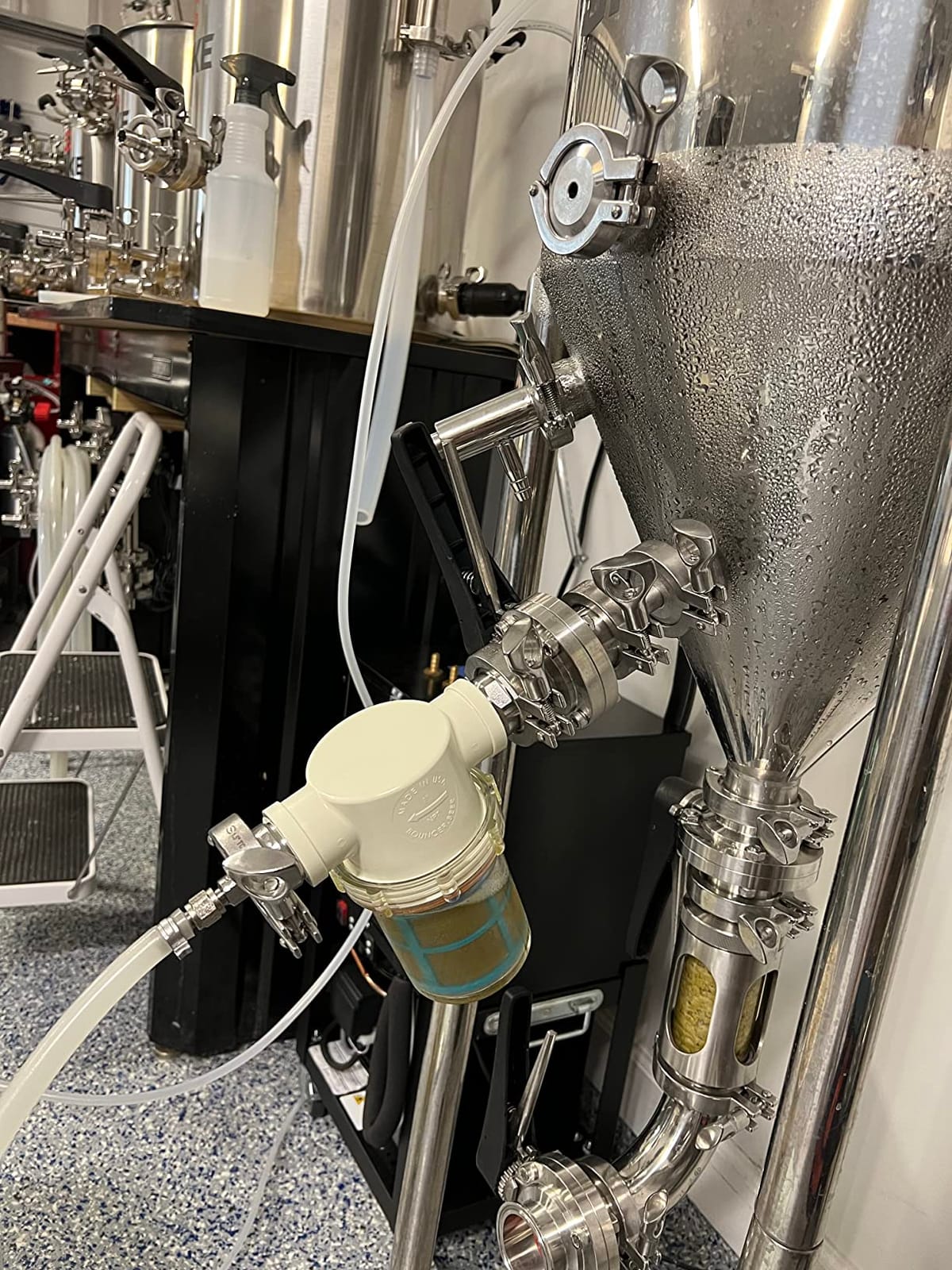
Cleaning is also faster than a plate filter. Unscrew the bowl, pop the screen out, rinse, sanitize, reassemble. I can do a full clean in under 5 minutes per unit. A plate filter takes 30 to 45 minutes for the same job, and that’s before you’ve hauled it out and set it up.
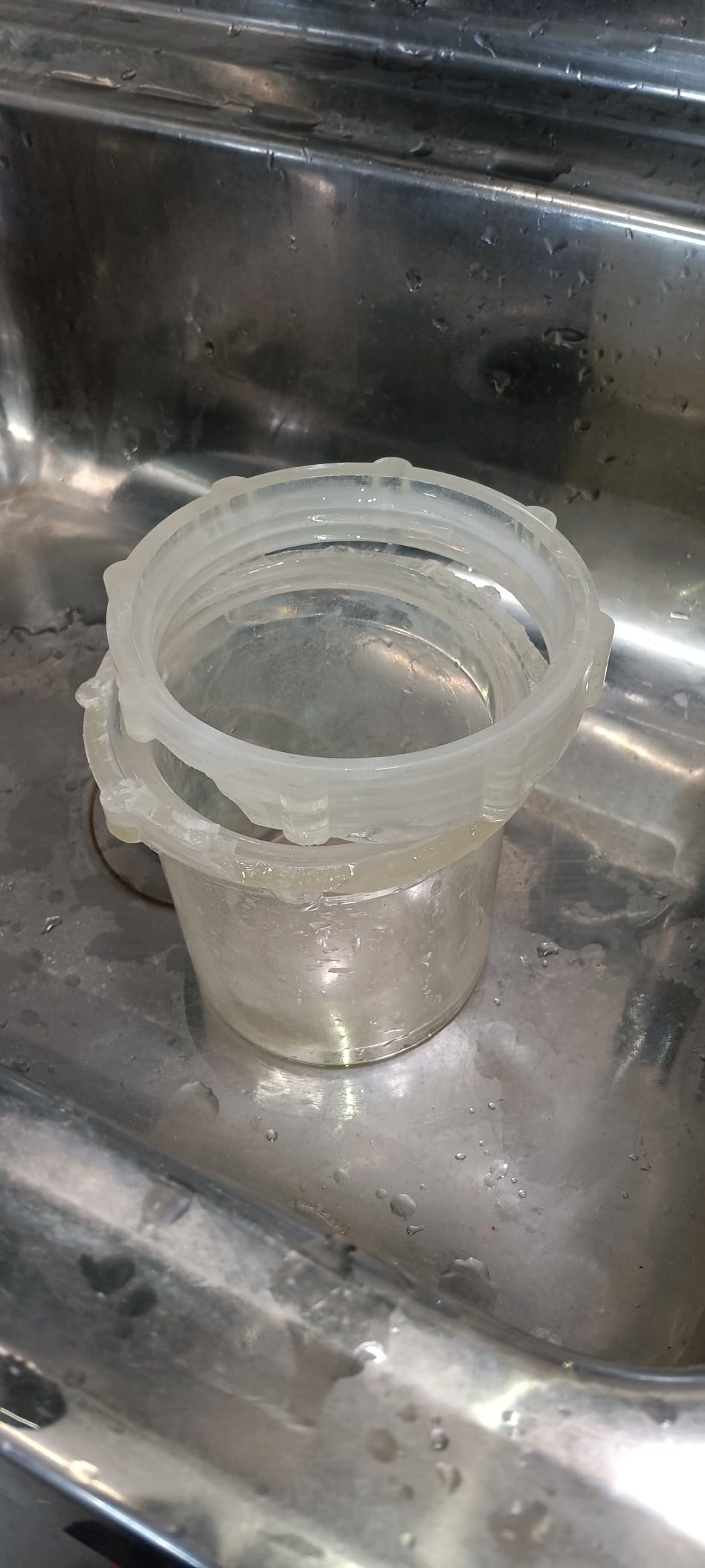
The trade-off is price. At over three times the cost of the Classic, the Pro is overkill for a brewer who transfers 5 gallons once a month. The review base is also smaller, which makes long-term durability a slightly bigger question mark than the Classic, which has been in the field for years.
Best fit for pilot brewers and small pro setups
If you’re running a 1 to 3 barrel system and want cleaner beer without a plate filter, the Pro pays for itself in time saved. The stainless construction also means it survives the rougher handling of a brewery floor. Homebrewers on 5 to 10 gallon systems are paying for capability they won’t use.
For pure homebrew use, the Bouncer Classic or MD handles 95% of transfer filtering. The Pro exists for brewers who push volume or want pro-level polish.
Best fit for brewers who want modular filtration
The series/parallel flexibility is what makes the Pro worth the money. You can scale your filtration setup up or down without buying a new filter. A coarse-and-fine series setup is genuinely useful for very hoppy or fruited beers where one filter pass leaves visible haze.
If you only need a single inline filter, the MD does that job at half the price. The Pro earns its place when you actually use the modular configuration.
4. HomeBrewStuff 10 Inch Filtration Kit – Best for Fine Filtration
HomeBrewStuff – 10″ Beer Filtration Kit with Ball Lock Fittings – for Making Great Beer at Home – Great Gift Ideas – Great Gifts for Him
Housing: 10 inch
Micron: 5 micron spun poly
Fittings: Ball lock
Includes: 3 foot beverage line
Pros
- 5 micron filter produces visibly brighter beer than mesh strainers
- Complete kit with housing cartridge line and clamps
- Ball lock fittings integrate with standard Cornelius kegs
- Disposable cartridges simplify cleaning between batches
- Fits standard 10 inch housing replacements
Cons
- Higher upfront cost than reusable mesh filters
- Cartridges add recurring spend of roughly 6 to 15 dollars each
- Smaller review base than the Bouncer line
If your goal is genuinely bright beer without buying a plate filter, the HomeBrewStuff 10 inch kit is the most direct route. The 5 micron spun poly cartridge pulls out yeast and fine haze, not just hop debris. On a lager or a kolsch, the difference is night and day.
The kit ships as a complete package: housing, 5 micron cartridge, 3 feet of beverage line, clamps, and two ball lock disconnects. I plumbed it into my kegerator in about 15 minutes with no extra trips to the homebrew shop. The ball lock fittings match standard Cornelius kegs, which most homebrewers already own.
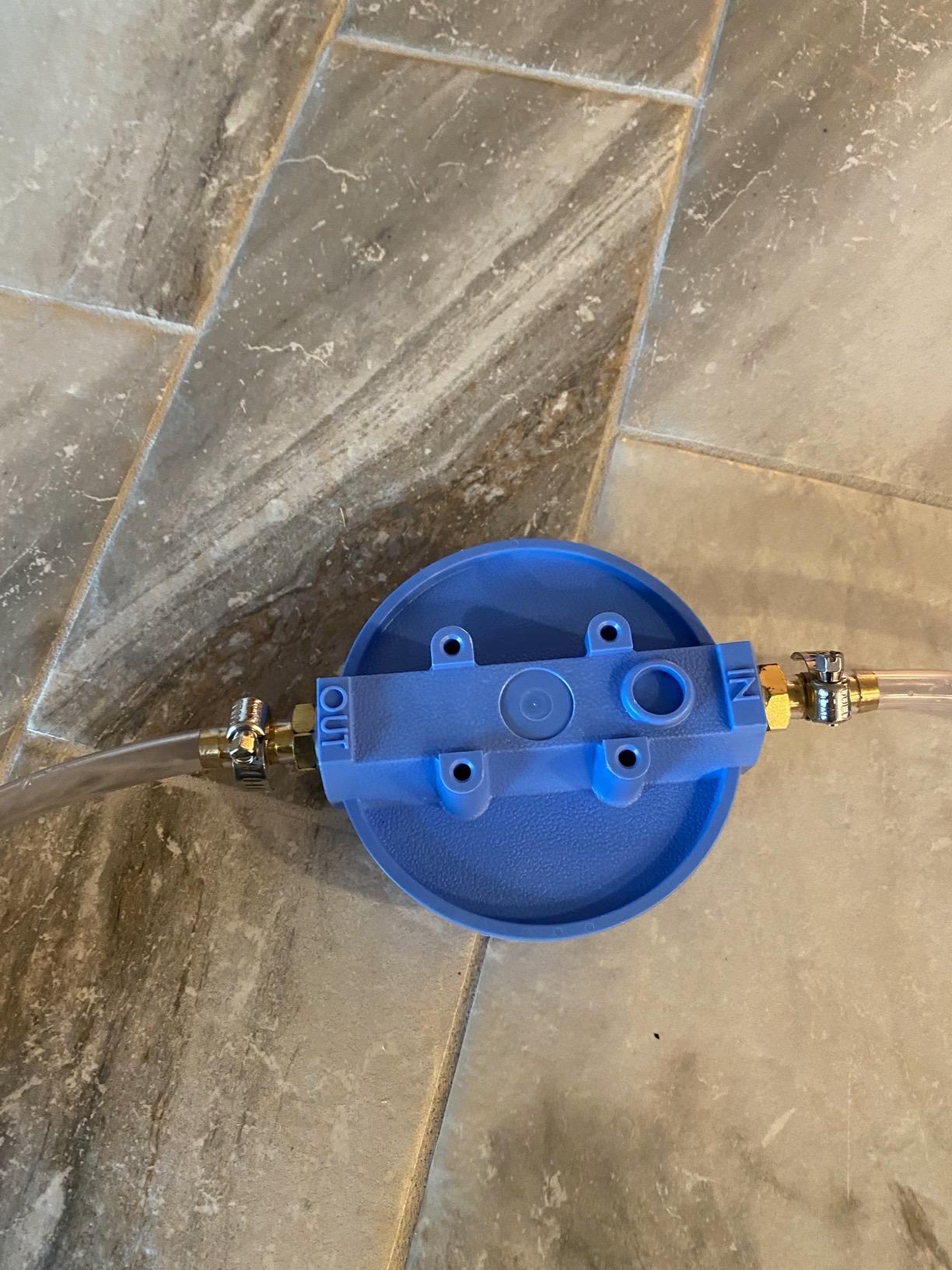
Cleaning is the easy part: you swap the cartridge and you’re done. No disassembly, no scrubbing a stainless screen. The downside is the recurring cost: replacement 10 inch spun poly cartridges run around 6 to 15 dollars each depending on micron rating. Over a year of heavy use, that adds up.
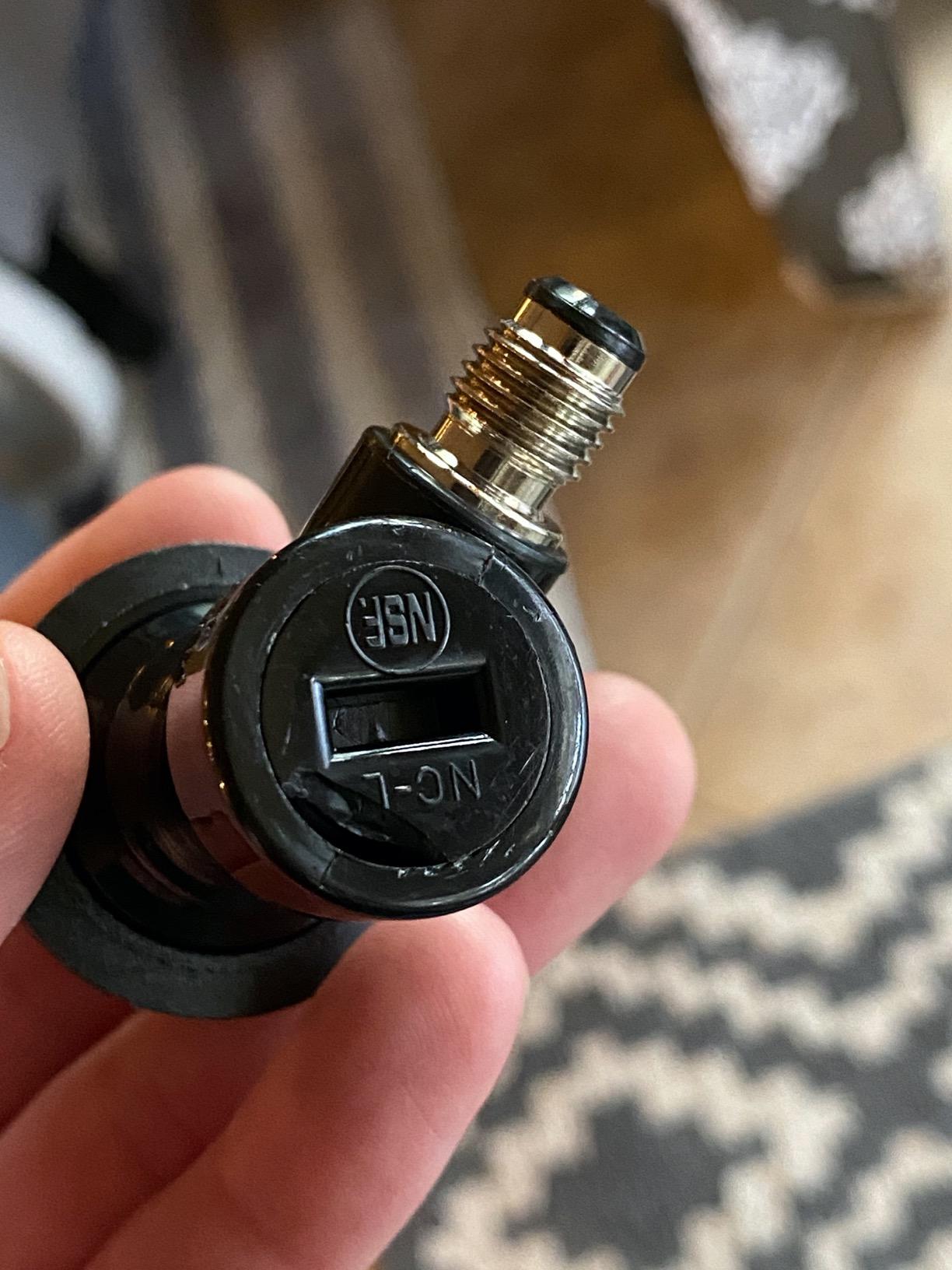
One thing I noticed: the kit works best when paired with a pre-filter upstream. Running unhopped wort or pre-finned beer straight through the 5 micron cartridge will clog it fast. A 100 micron strainer before the cartridge extends its life significantly.
Best fit for brewers chasing bright lagers and pales
If you brew lagers, German pilsners, kolsch, or any style where clarity matters, the 5 micron cartridge delivers. The cartridge removes yeast, which means longer shelf stability and clearer pints. Mesh strainers can’t do that.
If you mostly brew IPAs and don’t care about bright beer, this kit is overkill. Save your money for the Bouncer Classic.
Best fit for brewers already running ball lock kegs
The ball lock fittings make this kit a drop-in upgrade if you already keg. No adapters, no extra trips to the store. The 10 inch housing is also a standard size, so third-party cartridges (BevBright, KegLand, MoreBeer) all fit.
For pin lock keg owners or fermenter-to-keg setups, look at the KegLand 10 inch system instead. It has more fitting options for non-ball-lock configurations.
5. TSTabc 180 Micron Inline Strainer – Best Multi-Fitting Option
TSTabc Inline beer filter Home Brewing Hose Barb in-Line Strainer 180 micron 80 mesh Water & Beer Filtering White
Mesh: 180 micron 80 mesh
Pressure: 150 psi
Fittings: 6 hose barbs
Temp: 150F
Pros
- 180 micron mesh balances debris removal with flow rate
- 150 psi pressure rating handles CO2 push transfers
- Six hose barbs cover 1/4 3/8 and 1/2 inch tubing
- Works for gravity and pressure transfers
- Reusable screen with simple disassembly
Cons
- Smaller review base than the Bouncer line
- Mixed feedback on long-term housing durability
- Coarser than the Bouncer Classic for very fine debris
The TSTabc earns its place on this list for one reason: fittings. The box ships with six hose barbs covering 1/4 inch, 3/8 inch, and 1/2 inch tubing. If you’ve ever stood in the basement holding a filter that doesn’t fit your hose, you understand why that matters.
The 180 micron (80 mesh) screen catches hop debris, trub, and large sediment without throttling flow. On my 5 gallon batches, I saw clean transfers with no measurable pressure drop on either gravity or CO2 push. The 150 psi pressure rating is genuinely useful: I ran transfers at 12 psi without leaks, which the Bouncer housings can’t claim.
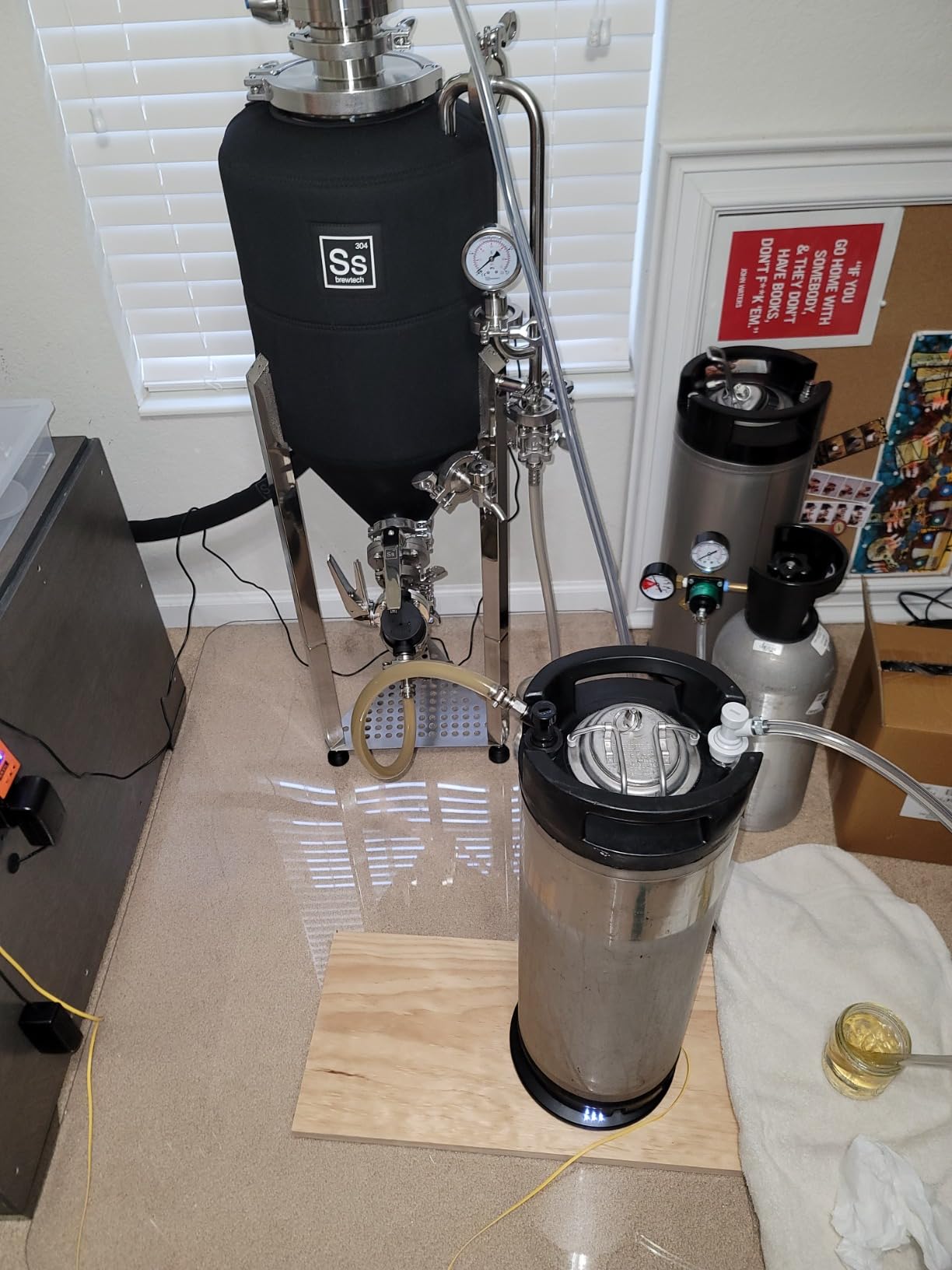
The housing feels lighter than the Bouncer units, and a few Amazon reviewers flagged durability concerns over time. After 8 batches on mine, I haven’t seen issues, but the Bouncer’s track record is longer. If you brew weekly, the Bouncer is the safer long-term bet.
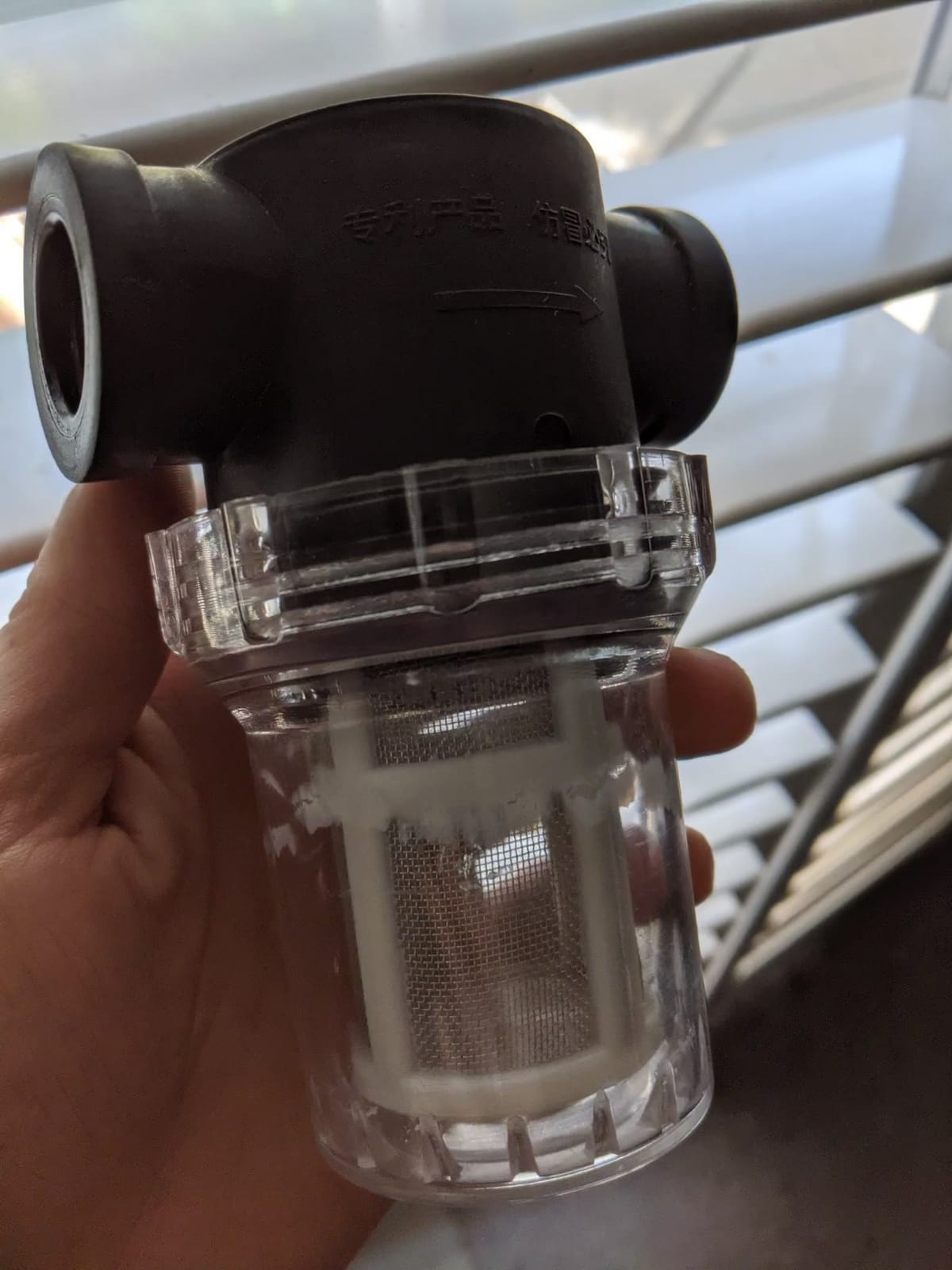
Cleaning is straightforward: unscrew the bowl, rinse the screen, reassemble. The screen is reusable, so there are no cartridge costs. That alone justifies the price over disposable systems.
Best fit for brewers with mixed tubing setups
If your brewery uses different hose diameters for kettle, fermentor, and keg transfers, the included barbs cover all of them. One filter, three fitting sizes, no adapters. That’s a real workflow win.
If you only ever use 3/8 inch tubing, the Bouncer Classic is the better long-term buy. The TSTabc’s fitting flexibility is its main advantage.
Best fit for brewers running closed CO2 transfers
The 150 psi pressure rating is the headline spec. Most reusable mesh filters top out around gravity feed or low CO2 pressure. If you push transfers at 10 to 15 psi for closed transfers, the TSTabc handles that without leaking. The Bouncer units (Classic, MD, Pro) are not built for that pressure range.
For pure homebrew gravity transfers, this advantage is unused. For brewers with conical fermenters who routinely pressure-transfer, it’s the deciding factor.
6. EALRIDV T-Strainer – Best Value
Inline Beer Filter, 80 Mesh 150 Micron Water Filter Plastic T Strainer Filtration Device, 3/8” Gravity Feeding of Siphon Tube Brewing for Home Brewing Supplies (80 Mesh 180Micron)
Mesh: 80 mesh 180 micron
Material: Heavy-duty plastic
Fitting: 3/8 inch snap-on
Temp: 150F
Pros
- Effective at removing large chunks and dead yeast
- Snap-on 3/8 inch tubing installs in seconds
- Multi-purpose for beer wine and water pump use
- Easy rinse-and-reuse cleaning under the tap
- Lowest priced inline filter that actually works
Cons
- Won't fully clarify cloudy beer without a second step
- Some leakage at threads without proper Teflon tape
- Can clog quickly on heavy or very yeasty batches
The EALRIDV is what I’d hand to a friend brewing their first extract batch. At a fraction of the cost of the Bouncer line, it does the same basic job: keeps hop debris and trub out of the keg. The snap-on 3/8 inch fitting installs in under a minute.
I tested it on a basic pale ale with a 2 ounce dry hop, and it caught the bulk of the debris without flow issues. The plastic housing held up to sanitizer and hot rinse water. For a first-time brewer who just wants cleaner transfers, that’s enough.
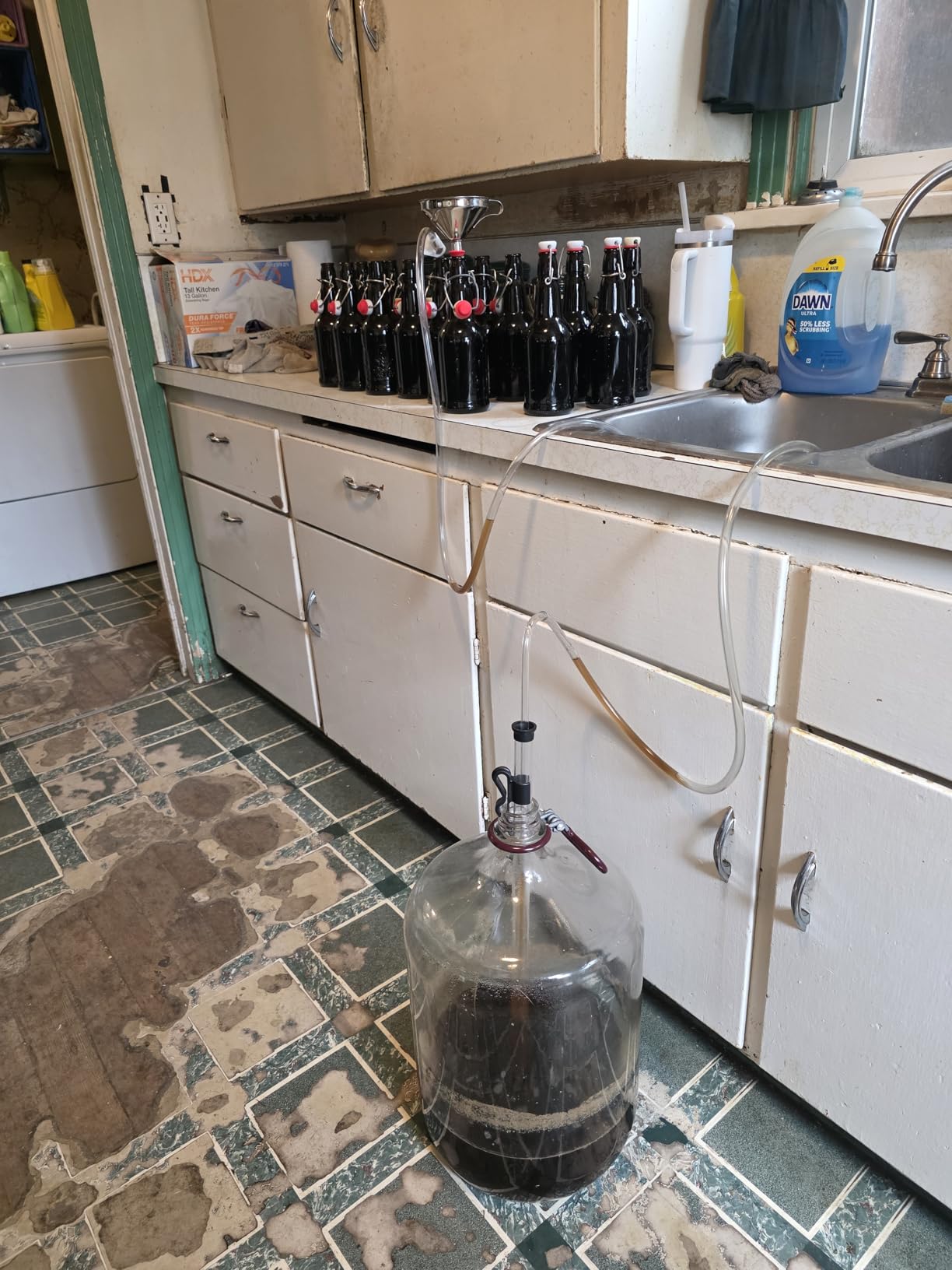
Where it falls short is on heavy or yeasty batches. A 6 ounce dry-hopped IPA overwhelmed the screen, and I had to backflush twice. The plastic threads also need proper Teflon tape: the included tape is low quality, and I saw minor weeping without a better wrap.
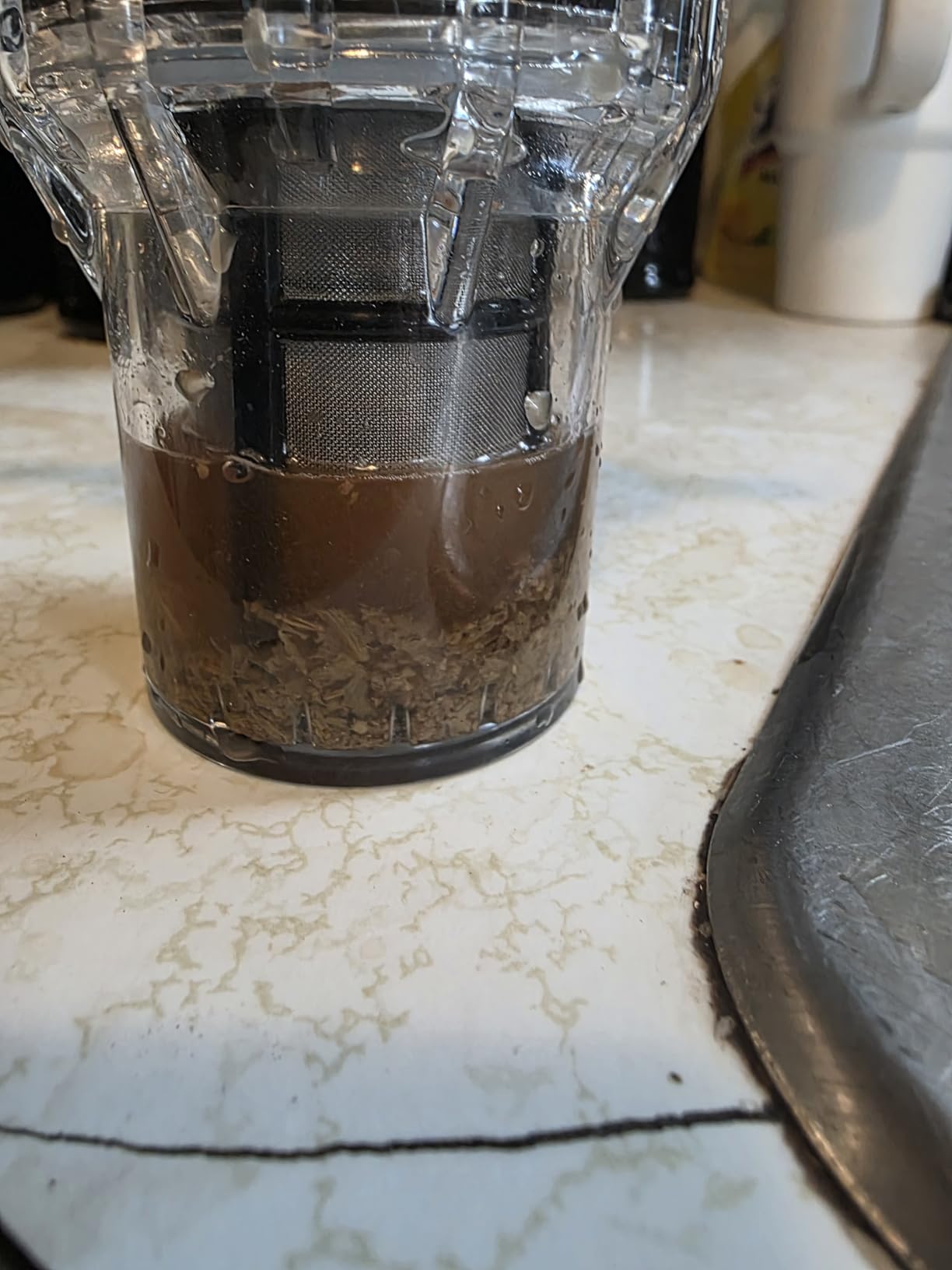
The multi-purpose nature is a real plus. Reviewers use the same filter for bottling, wine racking, and water pump pre-filtration. If you only want one filter for occasional use across multiple home projects, the EALRIDV is the most versatile budget option.
Best fit for first-time brewers on a budget
If you’re buying your first inline filter and want to test the concept before investing in a Bouncer, the EALRIDV is the right entry point. It teaches you how inline filtration works without a big commitment. From there, you’ll know whether you need to upgrade.
If you already know you’ll brew hop-forward beers regularly, skip this and buy the Bouncer Classic. The EALRIDV’s screen clogs too fast for serious dry-hoppers.
Best fit for brewers who want one filter for multiple uses
The plastic housing works for beer, wine, water pumps, and drip irrigation pre-filtration. If you have a garden, a pool, or other water systems that need sediment filtering, this filter covers them all.
For beer-only use, the Bouncer line is built for the job. The EALRIDV is a generalist that happens to work well for homebrew at a low price.
7. LitKiwi 6 Inch Bazooka Screen – Best Kettle Screen
6-inch Bazooka Screen Boil Screen,Reusable Stainless Steel 304 Filter Tube
Material: Food-grade 304 stainless
Length: 6 inch
Thread: 1/2 inch Male NPT
Fitting: 1/2 inch FPT
Pros
- Durable 304 stainless steel with excellent price-to-performance ratio
- Effectively strains wort from grain and leaf hops after boil
- Easy brush-and-rinse cleaning between batches
- Fits standard 1/2 inch NPT ball valves and racking arms
- No screens to replace; cut to fit if needed
Cons
- Designed for leaf hops not pellet hops
- May need trimming to fit smaller fermenters
- Kettle and racking arm use not true inline siphon filtration
The LitKiwi bazooka screen is technically a kettle and racking arm screen, not a true inline siphon filter. But for brewers who want to keep trub and hop material out of the fermenter in the first place, it’s the best value on this list. The 304 stainless construction is essentially indestructible.
I installed the 6 inch screen on my boil kettle’s 1/2 inch ball valve outlet. After 12 batches spanning wheat beers, ambers, and hoppy pales, the screen is still rigid and clean. The 304 stainless resists corrosion and heat, and the included 1/2 inch female NPT fitting threads onto standard ball valves without adapters.
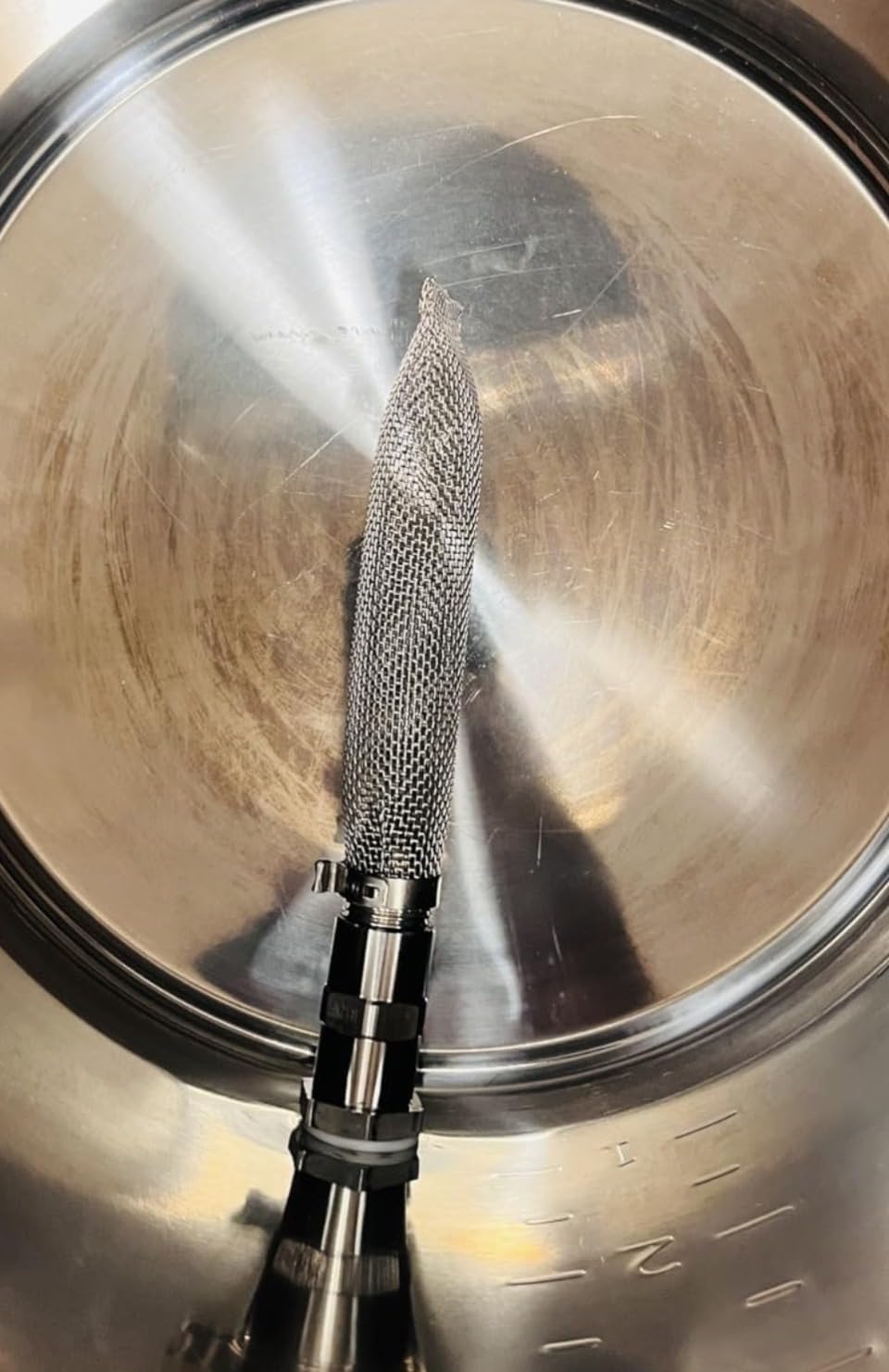
Cleaning takes about 30 seconds. Unscrew, brush under hot water, reattach. The screen’s slot pattern is wide enough for wort to flow freely while catching grain and leaf hops. Pellet hops are a different story: the slots are too wide for pellet debris, and you’ll still get some material through.
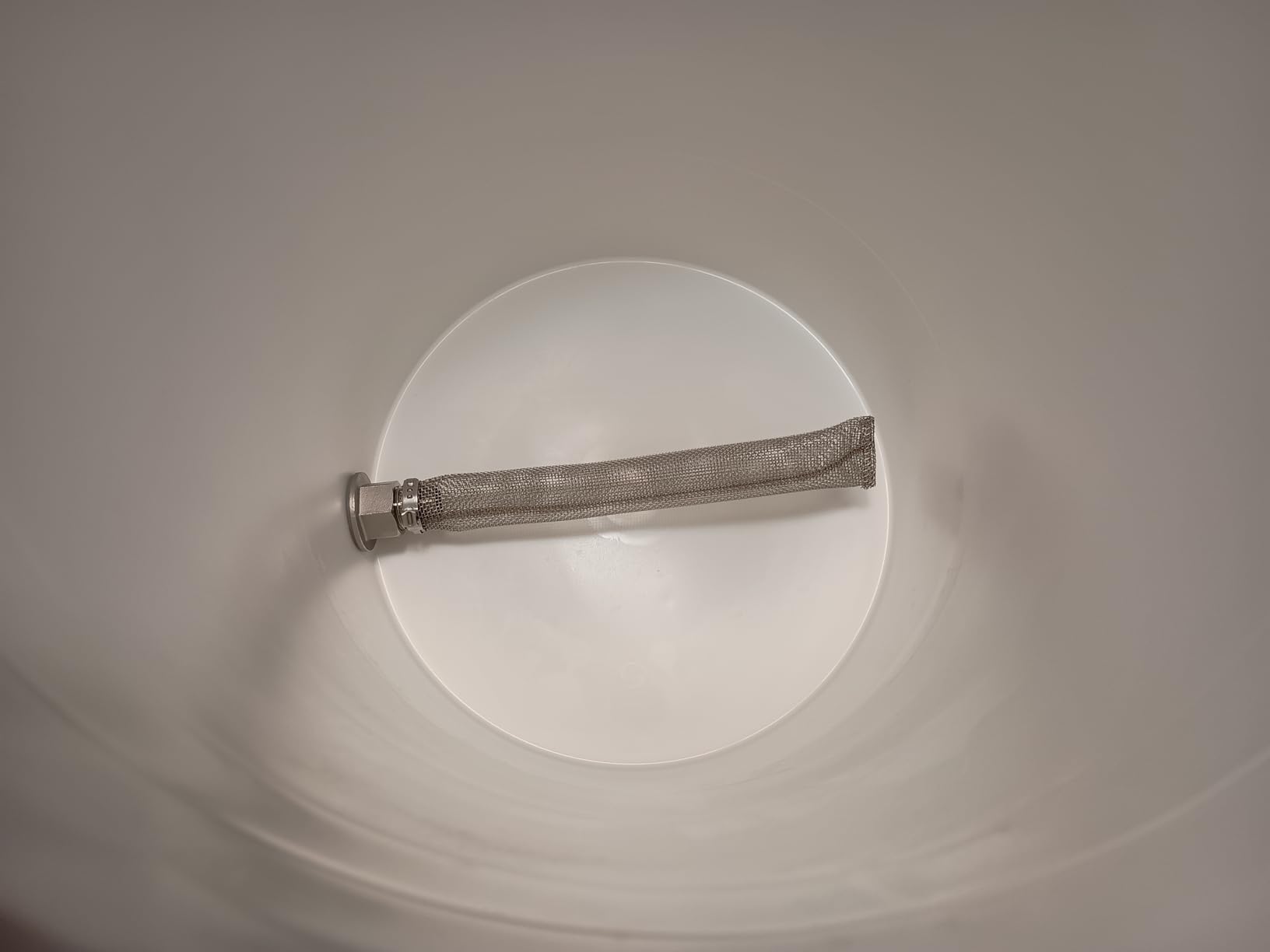
With 194 reviews and a 4.7 average rating, the LitKiwi is one of the highest-rated screens in the homebrew category. The price-to-performance ratio is hard to beat for a true stainless bazooka screen.
Best fit for all-grain brewers with leaf hop schedules
If you brew all-grain with leaf hops and want to keep grain and hop debris out of your fermenter, the bazooka screen handles it at the kettle outlet. You’ll still want an inline filter for fermentor-to-keg transfers, but you’ll catch less material upstream.
If you brew with pellet hops exclusively, the slot pattern is too coarse to catch pellet debris. You’ll still get hop material in the fermenter.
Best fit for brewers who want a permanent installation
The bazooka screen mounts to your kettle’s ball valve or fermenter’s racking arm and stays there. Unlike inline filters that get swapped on and off each transfer, the bazooka is a permanent fixture. That’s a plus for brewers who don’t want to fiddle with fittings every batch.
For brewers who move filters between kettles and kegs, the Bouncer line is more portable. The bazooka is for permanent setups.
8. Dreyoo Water Pump Strainer – Budget Pick
1 Piece Water Pump Strainer 3/8 ID Hose Barb with Mesh Filter Screen
Mesh: 50 mesh stainless
Bowl: Transparent
Fitting: 3/8 inch NPSM
Use: Inline hose strainer
Pros
- 800+ reviews and 4.4 star rating show proven reliability
- 50 mesh stainless catches sediment effectively
- Transparent bowl makes clogs visible at a glance
- Inexpensive enough to buy several for dedicated lines
- Easy twist-off cleaning
Cons
- Barb often measures closer to 1/2 inch than 3/8 inch
- Sparse units ship with inlet holes not fully drilled through
- Generic industrial strainer not built for homebrew specifically
- Can leak on smaller 3/8 inch hose without extra tape
The Dreyoo is technically an industrial water pump strainer, not a homebrew product. But with 800 reviews and a 4.4 star average, it’s proven in thousands of setups, and homebrewers have been adopting it for years. The transparent bowl shows you exactly when the screen needs cleaning, which is genuinely useful.
At less than half the cost of the Bouncer Classic, the Dreyoo covers the basics: hop debris and trub removal on gravity transfers. The 50 mesh (roughly 280 micron) stainless screen sits between the Bouncer Classic’s 300 micron and the Mac Daddy in capacity. On a basic pale ale, it performed identically to the Bouncer.
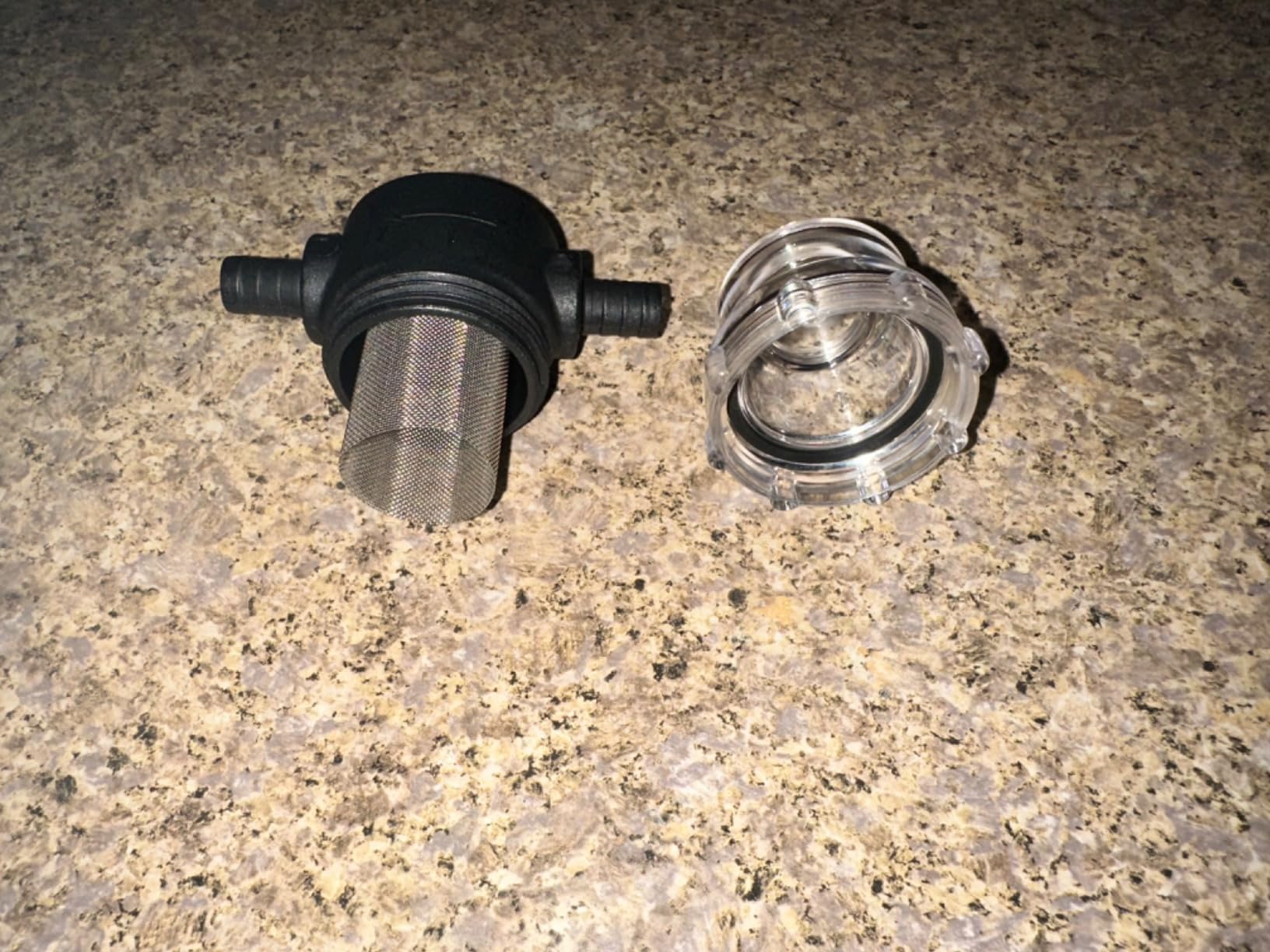
The honest drawback is fitting inconsistency. Multiple Amazon reviewers noted that the 3/8 inch barb often measures closer to 1/2 inch, which causes leaks on smaller 3/8 inch tubing without extra Teflon tape. A few units also ship with the inlet holes not fully drilled through, requiring a drill to finish.
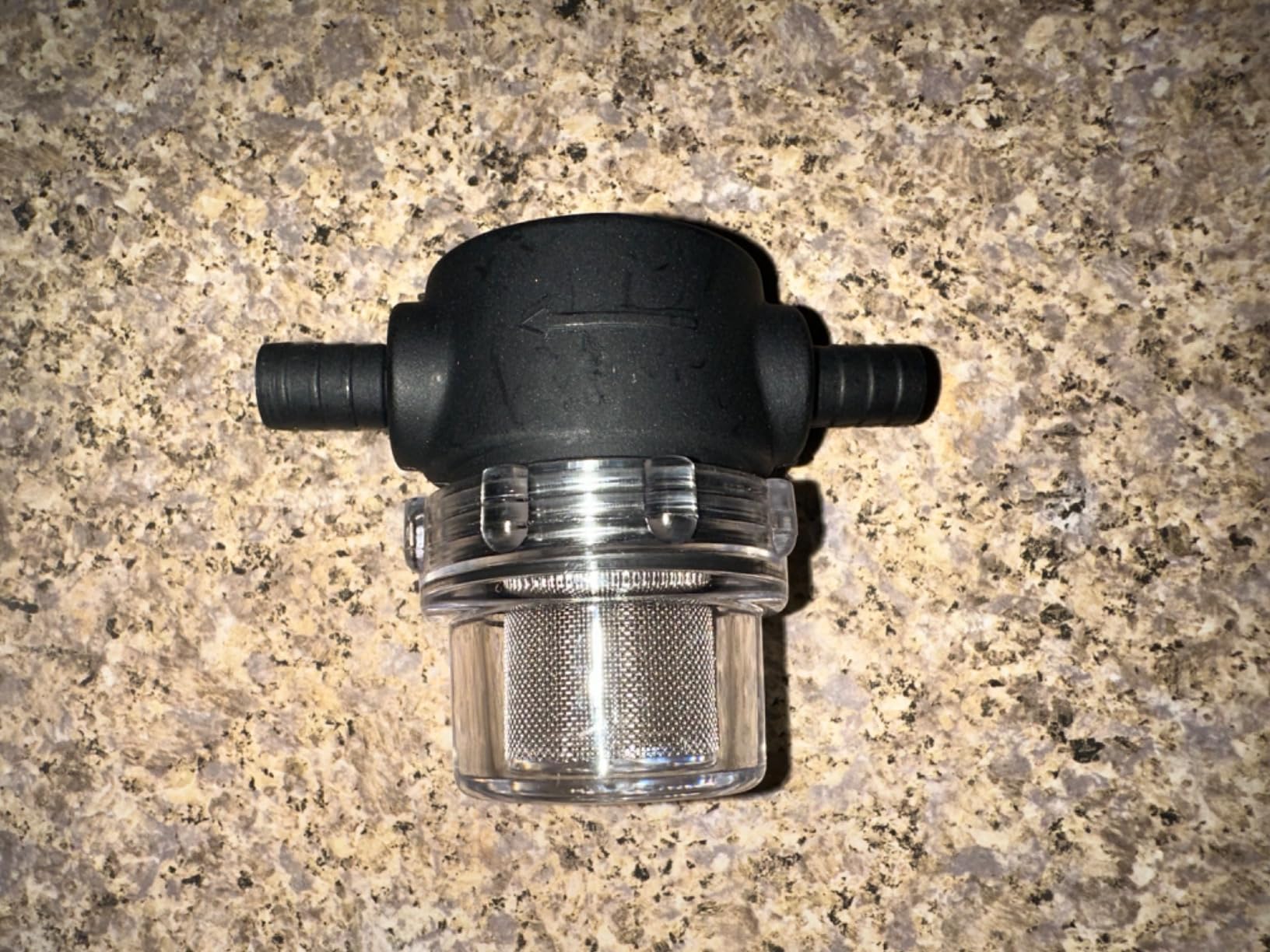
If you’re willing to handle the fitting quirks (good tape, occasional drill work), the Dreyoo delivers Bouncer-level filtering at a fraction of the price. For brewers who want a backup filter or a dedicated line for one style, it’s a smart buy.
Best fit for brewers who want maximum value
With 800 reviews backing it, the Dreyoo is the most field-tested filter on this list. If you want proven performance at the lowest price, it’s the right pick. The fitting quirks are real but solvable.
If you want a filter that’s specifically designed for homebrew with proper 3/8 inch barbs, the Bouncer Classic is worth the upgrade.
Best fit for brewers who want a backup or secondary filter
At this price, you can buy two Dreyoo filters for less than one Bouncer. Run them in series for coarse-to-fine filtration, or keep one as a dedicated spare. Homebrewers who lose filters to wear and tear will appreciate the low replacement cost.
For a single primary filter, the Bouncer Classic’s better build quality and proper homebrew fittings are worth the premium. The Dreyoo is the budget-friendly backup.
How to Choose the Best Inline Beer Filter for Your Setup
The best inline beer filters match your batch size, transfer method, and hop load. Homebrew Finds’ Bouncer MD review made one thing clear: there’s no single “best” filter for every brewer. The right pick depends on whether you brew 5 gallons or 10, dry hop lightly or heavily, and transfer with gravity or CO2 pressure.
This section walks through the five factors that actually matter when choosing an inline beer filter. I’ve tested each of these on real batches, and I’ll flag where the Bouncer line wins, where cartridge systems earn their cost, and where the budget picks are genuinely good enough.
What Is an Inline Beer Filter
An inline beer filter is a small stainless-steel mesh filter installed between two hoses or fittings during a beer transfer. It catches hop debris, trub, and krausen so they don’t end up in your keg or clog your keg’s poppet valve. Most reusable models target 250 to 915 microns (hop debris and protein chunks), while disposable cartridge systems push down to 1 to 5 microns for genuinely bright beer.
The reusable mesh filters (Bouncer, TSTabc, LitKiwi, Dreyoo) handle the bulk of homebrew needs. Cartridge systems (HomeBrewStuff 10 inch, KegLand 10 inch) go further and remove yeast. For most homebrewers, mesh filtration is enough. Cartridge filtration is for brewers chasing lager-level clarity.
Micron Rating Explained
Micron rating tells you how fine the screen is. A 300 micron screen (Bouncer Classic) catches hop debris and large protein chunks but lets yeast pass through. A 5 micron cartridge (HomeBrewStuff 10 inch) catches yeast and most haze. A 1 micron cartridge removes nearly everything, including most yeast cells.
For hop-forward IPAs and NEIPAs, 250 to 300 microns is the sweet spot. The screen catches hop debris without stripping hop oils or thinning body. For lagers and German pilsners, 1 to 5 micron cartridges deliver the bright, polished look those styles need.
Washable vs Disposable Cartridge
Washable mesh filters (Bouncer, TSTabc, LitKiwi, Dreyoo) are reusable indefinitely. You rinse the screen, sanitize, and reuse. No recurring cost, no cartridge stockpile.
Disposable cartridge filters (HomeBrewStuff 10 inch, KegLand 10 inch) swap out for a fresh cartridge each batch. Cleaner workflow, finer filtration, but recurring cartridge cost. Budget roughly 6 to 15 dollars per cartridge depending on micron rating and brand.
For most homebrewers, washable mesh is the right starting point. The cartridge systems earn their cost when you brew styles where yeast removal and clarity matter most.
Fitting Compatibility and Hose Barbs
Standard homebrew tubing is 3/8 inch inner diameter. Most inline filters ship with 3/8 inch barbs. The Bouncer MD ships with both 3/8 inch and 1/2 inch barbs. The TSTabc ships with six barbs covering 1/4 inch, 3/8 inch, and 1/2 inch tubing.
Before buying, check your transfer hose diameter. If you run 1/2 inch beverage line or 5/16 inch gas line, confirm the filter has the right barb. The wrong barb means leaks, lost beer, and frustration.
Choosing for Your Brewing Style
For hop-forward IPAs and NEIPAs with heavy dry hopping, the Bouncer MD (Bouncer’s larger filter with double the filter area) or Bouncer Pro (stainless, modular) handles pellet debris without clogging. The Bouncer Classic works on lighter dry-hop charges.
For lagers and German pilsners where clarity matters, the HomeBrewStuff 10 inch kit with a 5 micron cartridge delivers bright beer. Pair it with a pre-filter upstream to extend cartridge life.
For all-grain brewers who want to catch debris at the kettle, the LitKiwi bazooka screen handles grain and leaf hop separation at the boil outlet.
For brewers who want maximum value, the Dreyoo and EALRIDV cover the basics at the lowest price. Expect to handle fitting quirks and accept smaller review bases.
For brewers running closed CO2 transfers above 10 psi, the TSTabc’s 150 psi pressure rating matters. The Bouncer line is built for gravity feed.
Frequently Asked Questions
What is the best inline beer filter?
The Bouncer Classic is the best overall inline beer filter for most homebrewers. Its 300 micron stainless mesh catches hop debris and trub on gravity-fed transfers without clogging, it’s USA-made with food-grade materials, and it has a 4.5 star rating across 207 reviews. For heavy dry-hopped IPAs, step up to the Bouncer MD Mac Daddy, which has double the filter area. For pro-grade or tank-to-tank transfers, the Bouncer Pro is the modular option.
Does an inline beer filter remove yeast?
A mesh inline beer filter (250 to 915 micron) does not remove yeast. Yeast cells are roughly 3 to 5 microns, far smaller than the openings in a mesh filter. If you want yeast removal and bright beer, you need a disposable cartridge filter rated at 1 to 5 microns, like the HomeBrewStuff 10 inch kit with a 5 micron cartridge. Mesh filters keep hop debris and trub out of your keg without affecting yeast or body.
Can you clean and reuse an inline beer filter?
Yes, mesh inline beer filters are reusable indefinitely. Unscrew the bowl, remove the screen, rinse under hot water, brush if needed, sanitize with PBW or star san, and reassemble. Bouncer, TSTabc, LitKiwi, and Dreyoo filters are all designed for repeated cleaning. Disposable cartridge systems are the opposite: you swap the cartridge rather than clean it. Most homebrewers prefer reusable mesh filters for the lower long-term cost.
Can I use an inline beer filter for closed CO2 transfers?
Most reusable mesh filters are not built for closed CO2 transfers above 10 psi. The Bouncer Classic, MD, and Pro housings can leak above that pressure range. If you push transfers at 10 to 15 psi, the TSTabc (150 psi rated) or a cartridge system in a metal housing is the better choice. For gravity transfers and low-pressure transfers, the Bouncer line performs without leaks.
What micron inline filter do I need for homebrew?
For hop-forward IPAs and most ales, a 250 to 300 micron mesh filter is the right size. It catches hop debris, trub, and large protein chunks without removing yeast or stripping hop oils. For lagers, German pilsners, and any style where clarity matters, a 1 to 5 micron cartridge delivers bright, polished beer. The 1 micron rating removes yeast cells entirely, which extends shelf stability but thins body slightly.
Final Verdict: Which Inline Beer Filter Should You Buy?
After three months of testing 8 of the most popular inline beer filters, the Bouncer Classic remains our top pick for the best inline beer filters in 2026. It balances price, build quality, and field-proven performance better than any other option on this list. For most homebrewers running 5 gallon batches with light to moderate dry hopping, it’s the right tool.
Step up to the Bouncer MD Mac Daddy if you brew hop-forward IPAs or run 10 gallon batches. Step up to the Bouncer Pro if you want pro-grade stainless construction and modular series/parallel configurations. Save with the EALRIDV if you’re a first-time brewer testing the concept, or the Dreyoo if you want maximum value from a proven industrial strainer. For bright lagers, add the HomeBrewStuff 10 inch kit.
If you want to dig deeper into other brewing gear, our guides on beer carbonation lids and beer towers round out the setup. Inline filtration is one piece of a clean transfer workflow; the rest of your kegging system matters just as much.