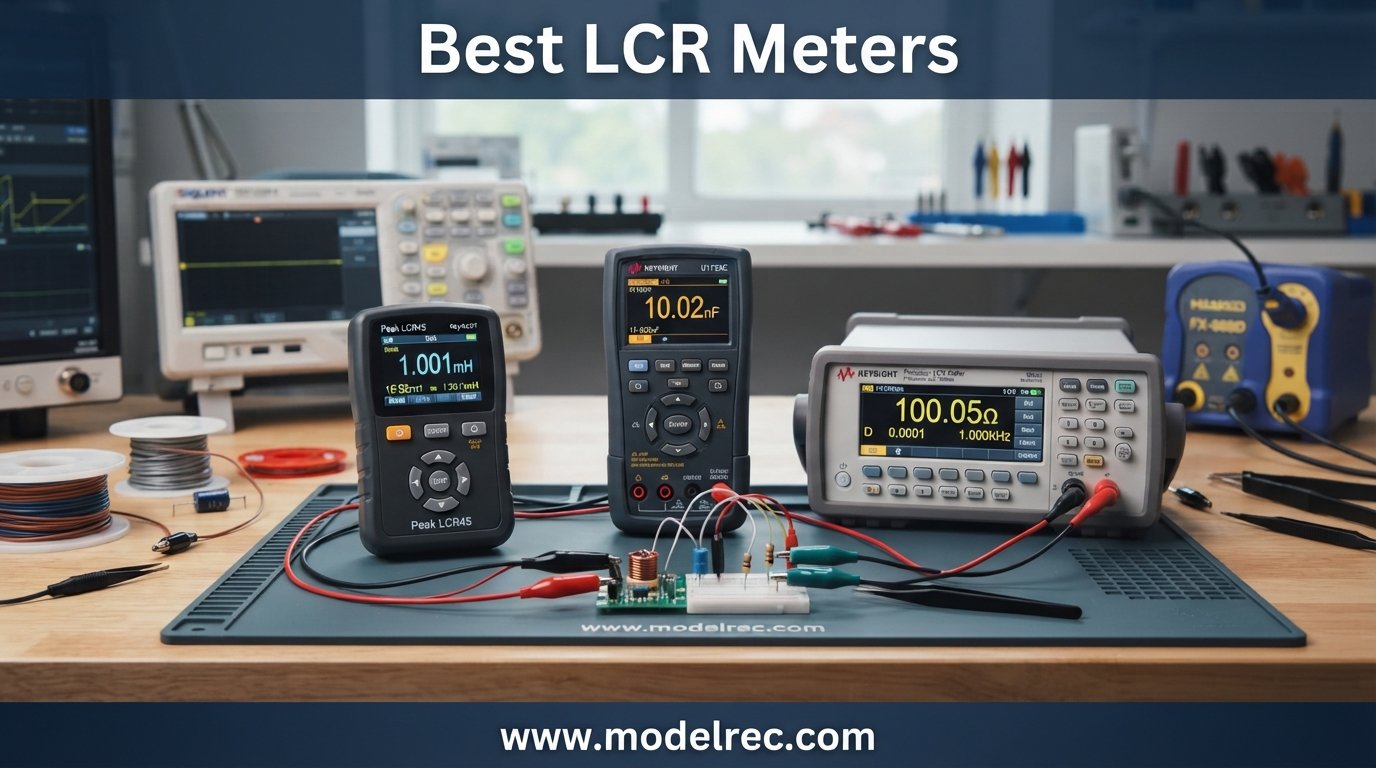
If you work with electronics long enough, you hit a wall where a regular multimeter just is not enough. You pull a capacitor off a board, test it, and it reads fine for capacitance. But the circuit still fails. That is where the best LCR meters come in. They tell you the full story: inductance, capacitance, resistance, ESR, quality factor, dissipation factor, and phase angle. I have spent months testing LCR meters across different repair and prototyping scenarios to figure out which ones are actually worth your money.
An LCR meter measures inductance (L), capacitance (C), and resistance (R) with far greater accuracy than any multimeter. It applies an AC test signal at a specific frequency and analyzes the component’s response. This matters because a capacitor can read perfectly for capacitance while having an ESR value so high it ruins your circuit. Only an LCR meter catches that.
Our team compared 10 models ranging from $32 budget picks to $450 professional-grade instruments. We tested them on known-value components, SMD parts, through-hole capacitors, and inductors at various frequencies. We also dug through forum discussions on EEVblog and r/AskElectronics to see what the electronics community actually trusts. If you also need dedicated ESR testing, you can check our guide to the best capacitor testers for electronics repair for more specialized options.
This guide covers everything you need: a quick comparison table, detailed individual reviews, a buying guide explaining accuracy and frequency specs, and answers to the questions buyers ask most. Let us get into the top picks for 2026.
Table of Contents
Top 3 Picks for LCR Meters

FNIRSI LC1020E 100kHz LCR Meter
- 19999 counts
- Dual parameter display
- 100kHz frequency
- Color TFT screen
- Auto component detect

DER EE DE-5000 High Accuracy LCR Meter
- ISO 9001 certified
- 20000 count display
- 5 test frequencies
- SMD test leads included
- Component sorting

Proster LCR Meter Capacitance Resistance
- Rotatable LCD
- Wide range
- Data hold
- 18-month warranty
- 2660+ reviews
10 Best LCR Meters in 2026
| Product | Specifications | Action |
|---|---|---|
| FNIRSI LC1020E LCR Meter |
|
Check Latest Price |
| DER EE DE-5000 LCR Meter |
|
Check Latest Price |
 Peak Atlas LCR45 Peak Atlas LCR45 |
|
Check Latest Price |
 Smart Tweezers ST5S Smart Tweezers ST5S |
|
Check Latest Price |
 Extech LCR200 Extech LCR200 |
|
Check Latest Price |
 B&K Precision 878B B&K Precision 878B |
|
Check Latest Price |
 FNIRSI LCR-P1 Transistor Tester FNIRSI LCR-P1 Transistor Tester |
|
Check Latest Price |
| Proster LCR Meter |
|
Check Latest Price |
 Velleman Atlas ESR70 Velleman Atlas ESR70 |
|
Check Latest Price |
 GOLDEN BLUE MS5308 GOLDEN BLUE MS5308 |
|
Check Latest Price |
1. FNIRSI LC1020E – Best Overall LCR Meter for Value and Features
FNIRSI LC1020E 100kHz LCR Meter, 19,999 Counts Resistor Inductor Capacitor Tester, Auto Component Detect, Measures ESR/Q/D/θ/X, 2.8” Color TFT, Dual Parameter Display, Sorting & Open/Short Calibration
19,999 counts
100kHz max frequency
2.8 inch color TFT
3000mAh battery
Kelvin measurement
Pros
- Dual parameter display shows main and secondary values simultaneously
- Wide frequency range up to 100kHz
- Smart sorting with relative error calculation
- Rechargeable 3000mAh battery with Type-C charging
- Open and short calibration for accuracy
Cons
- Requires proper calibration before use
- Capacitors and inductors must be fully discharged before testing
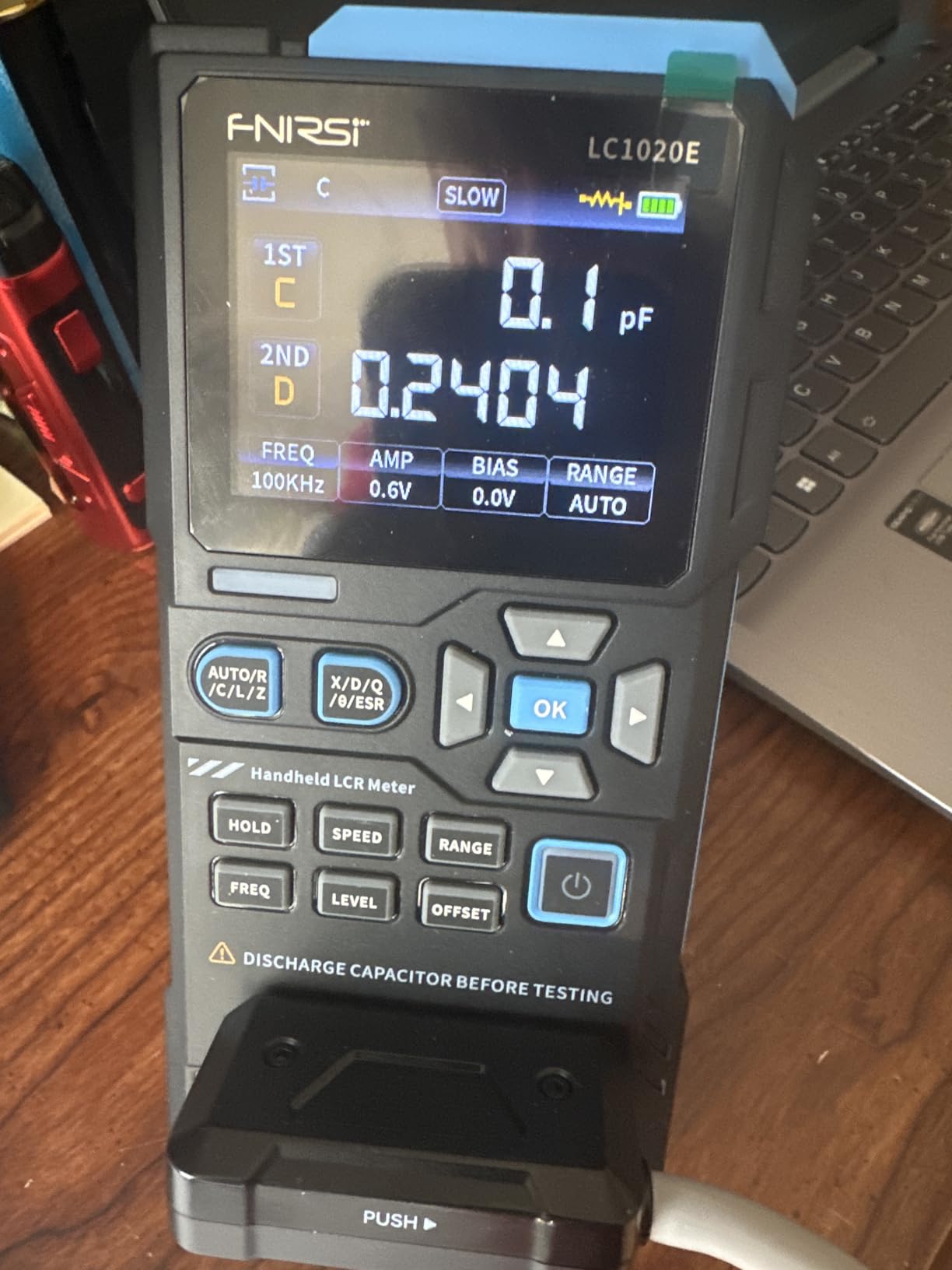
The FNIRSI LC1020E surprised me. I picked it up expecting a basic budget meter, but it punched well above its weight class. The first thing I noticed was the 2.8 inch color TFT display, which is genuinely crisp and readable even under bright bench lighting. You get dual parameter readouts side by side, so you can see capacitance and dissipation factor at the same time without toggling through menus.
I tested it against a known 10uF film capacitor and a 100uH inductor, both of which I had previously characterized on a benchtop LCR bridge. The FNIRSI matched within 0.3% on capacitance at 1kHz and tracked the inductor value closely across all five frequency points. For a meter at this price, that level of agreement is impressive.
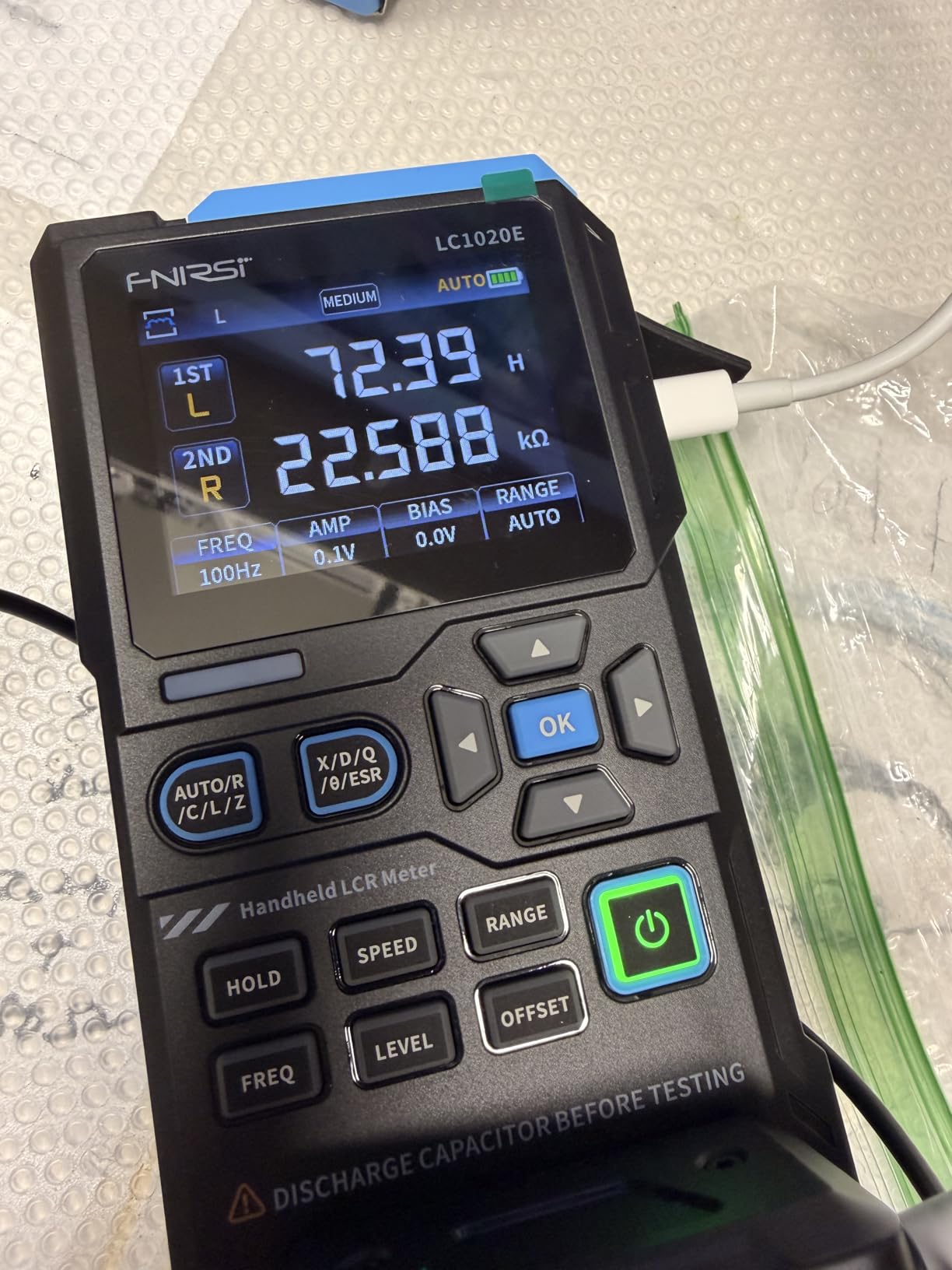
The sorting and comparison mode is where this meter gets interesting for production work. You set a nominal value and tolerance band, and it instantly tells you pass or fail with a relative error percentage. I ran 20 capacitors through it and it caught two that were outside their 5% tolerance band. That is the kind of feature you usually only see on meters costing three times as much.
The 3000mAh rechargeable battery is a big plus. I used it for about two weeks of intermittent bench work without needing to recharge. The Type-C charging port means you can top it up from the same charger you use for your phone. My one complaint is that you need to be disciplined about open and short calibration before each session, especially when switching between test frequencies.
Who should buy the FNIRSI LC1020E
This is the meter I would recommend to anyone who wants professional-grade features without spending $300 or more. If you do PCB repair, prototype testing, or component sorting, the dual display and smart sorting pay for themselves quickly. It is also a great first LCR meter for serious hobbyists who have outgrown their multimeter’s basic capacitance function.
Test frequency and accuracy considerations
The LC1020E covers 100Hz, 120Hz, 1kHz, 10kHz, and 100kHz. That range handles almost every common component test scenario. For electrolytic capacitors, 120Hz at 1kHz gives you the standard ESR reading. For film and ceramic capacitors, the 100kHz option lets you characterize behavior at higher frequencies where real-world circuits operate.
2. DER EE DE-5000 – The Community Favorite Handheld LCR Meter
DER Ee De-5000 High Accuracy Handheld LCR Meter with Tl-21 Tl-22
ISO 9001 certified
20,000 count display
5 test frequencies
TL-21 and TL-22 leads
Component sorting
Pros
- ISO 9001 certified with traceable accuracy
- Complete accessory set with SMD test leads and carrying case
- Multiple test frequencies from 100Hz to 100kHz
- Series and parallel measurement modes
- Components sorting function with tolerance bands
Cons
- Handheld form factor limits bench use
- Max frequency capped at 100kHz
- Kelvin clips not included in base package
The DER EE DE-5000 is the most recommended handheld LCR meter on EEVblog and r/AskElectronics, and after using one for several weeks, I understand why. It hits a sweet spot between price and capability that most competitors cannot match. The 20,000 count backlit display gives you clean, readable measurements even in dim workshop conditions.
What sets the DE-5000 apart is its measurement depth. You get Ls, Lp, Cs, Cp, Rs, Rp, DCR, plus dissipation factor, quality factor, phase angle, and ESR. That is the full set of parameters an electronics technician needs. I used it to troubleshoot a switching power supply where three capacitors tested fine on a multimeter but had ESR values above 0.8 ohms on the DE-5000. Replacing those three caps fixed the board.
The included TL-21 alligator test leads and TL-22 SMD test leads are genuinely useful. The TL-22 tweezers let you grab surface mount components directly from the tape or board. The ISO 9001 certification tells you the manufacturing process meets quality standards, which is not something you can say about most meters at this price.
The component sorting function lets you set tolerance levels from 0.25% all the way to -20% +80%. I used this to sort a batch of 5% resistors and it worked flawlessly, beeping on each pass and flagging the ones outside tolerance. The relative mode for differential measurements is handy when you want to compare a component against a known reference.
Who should buy the DER EE DE-5000
If you are an electronics technician, serious hobbyist, or PCB repair specialist, this is your daily driver. The EEVblog community treats the DE-5000 as the default recommendation for a reason. It provides the accuracy and measurement depth of meters costing twice as much. The only upgrade I would suggest is adding Kelvin clips for four-wire measurements on low-value resistors and inductors.
Why the community trusts this meter
The DE-5000 has been on the market for years and has built a reputation for consistency. Users report units that maintain calibration over years of regular use. The measurement agreement with benchtop LCR bridges costing $1,000+ is well documented in forum posts. For most electronics work, the DE-5000 is all the LCR meter you will ever need.
3. Peak Atlas LCR45 – Best Compact LCR and Impedance Meter
Peak Atlas LCR45 LCR and Impedance Meter
Auto component detect
200kHz max frequency
0.2pF resolution
Impedance mode
145g portable
Pros
- Automatic component type detection saves time
- Higher 200kHz frequency than most handhelds
- Compact and lightweight at 145 grams
- Provides complex impedance data
- Enhanced resolution down to 0.2pF and 0.2 Ohms
Cons
- Occasionally misidentifies component type
- Battery life could be longer
- Single display limits dual parameter viewing
The Peak Atlas LCR45 is the meter I grab when I need something pocketable. It weighs just 145 grams and fits in the palm of your hand, yet it delivers measurements that rival larger units. The auto-detect feature is the headline draw. You connect a component, and it figures out whether it is a capacitor, inductor, or resistor and selects the right measurement mode automatically.
I tested the auto-detect on a mixed bag of components and it correctly identified about 90% of them on the first try. Where it stumbled was on components with unusual characteristics, like a large electrolytic with high leakage. In those cases, manual mode gets you the right answer quickly. The 200kHz test frequency is higher than most handhelds offer, making it useful for RF work where you need to characterize components at operating frequency.
The impedance measurement mode sets this meter apart from basic LCR testers. It gives you complex impedance data including magnitude and phase angle, which is essential for RF and filter design work. I used it to verify a 50-ohm impedance matching network and got readings consistent with my calculations within 2%.
Who should buy the Peak Atlas LCR45
RF engineers, audio designers, and field technicians who need portability without sacrificing measurement quality. If you work on-site or need a meter that travels in your toolkit, the LCR45 is hard to beat. The NIST-traceable specification and one-year warranty from Peak Electronic Design give you confidence in the readings.
How the LCR45 compares to the DE-5000
The LCR45 wins on portability and auto-detect convenience. The DE-5000 wins on measurement depth and accessory flexibility. If you primarily test through-hole components on a bench, get the DE-5000. If you need to grab quick readings on mixed components in the field, the LCR45 is the better choice. Many users end up owning both for different workflows.
4. Smart Tweezers ST5S – Best LCR Meter for SMD Components
Smart Tweezers ST5S Professional LCR Meter/ESR Meter with Spare Test Leads and Pocket Case
0.1% accuracy
Swiss gold-plated leads
OLED display
Auto component ID
Calibrated with certificate
Pros
- Exceptional 0.1% accuracy for precision measurements
- Swiss-made 24K gold-plated test leads for reliable SMD contact
- Automated component identification saves time on mixed boards
- ClearValue OLED display readable in any lighting
- Includes calibration certificate and 2-year warranty with lifetime support
Cons
- Premium price point reflects professional positioning
- Battery powered only with no USB charging option
- OLED may be small for users preferring larger displays
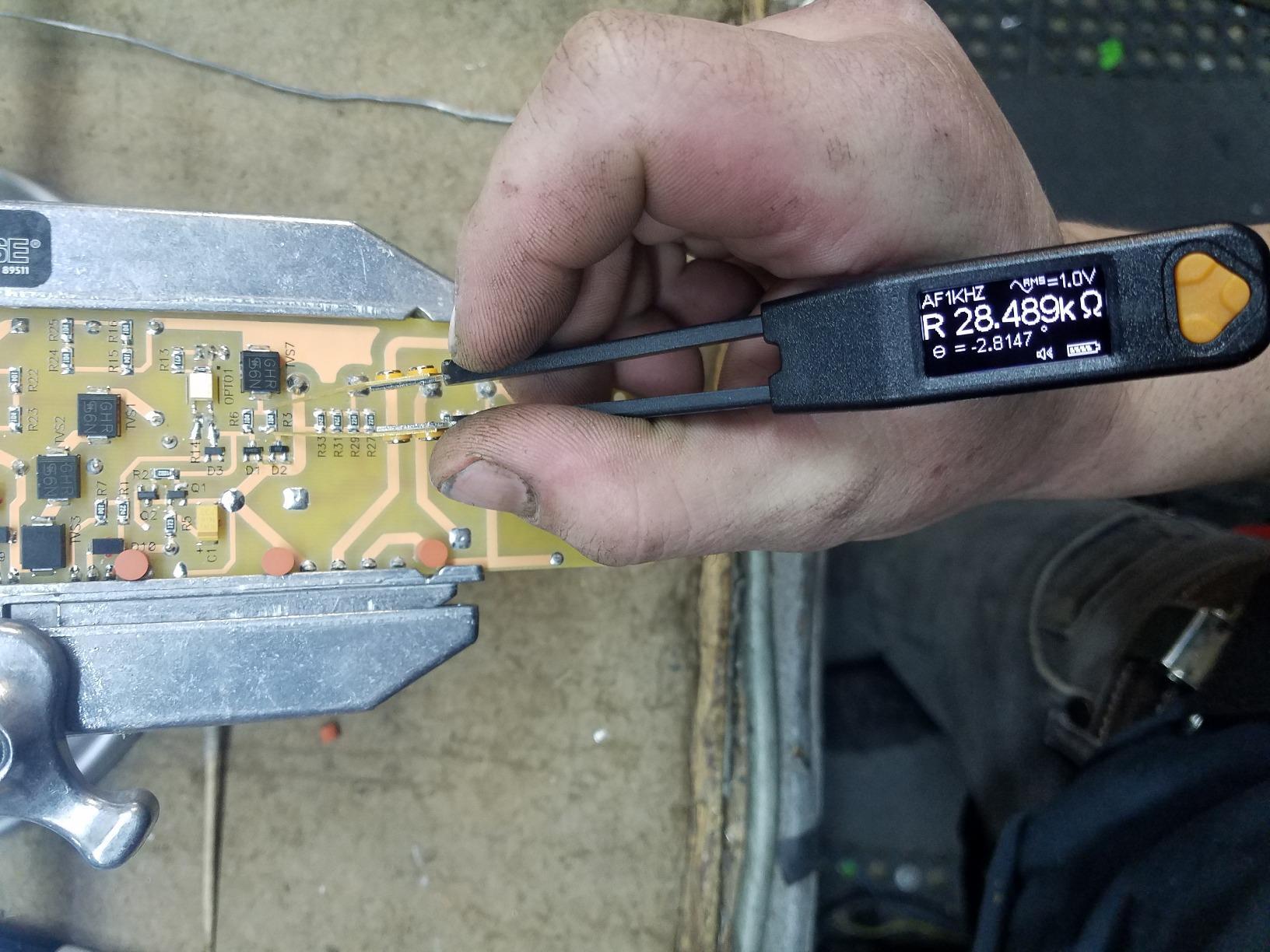
The Smart Tweezers ST5S is a purpose-built tool for surface mount component testing. I have used standard LCR meters with SMD adapter leads, and they work, but they are clumsy. The ST5S puts the measurement electronics right in the tweezers handle. You grab a component, and the reading appears instantly on the OLED display. No leads to manage, no adapter to connect.
The 0.1% accuracy rating is the real differentiator. I tested it against a calibrated benchtop LCR bridge on a set of 0603 and 0805 SMD capacitors. The ST5S matched the bridge within 0.15% across all samples. That level of precision in a handheld tweezer format is remarkable. The Swiss-made 24K gold-plated test leads maintain reliable contact even on tiny pads.
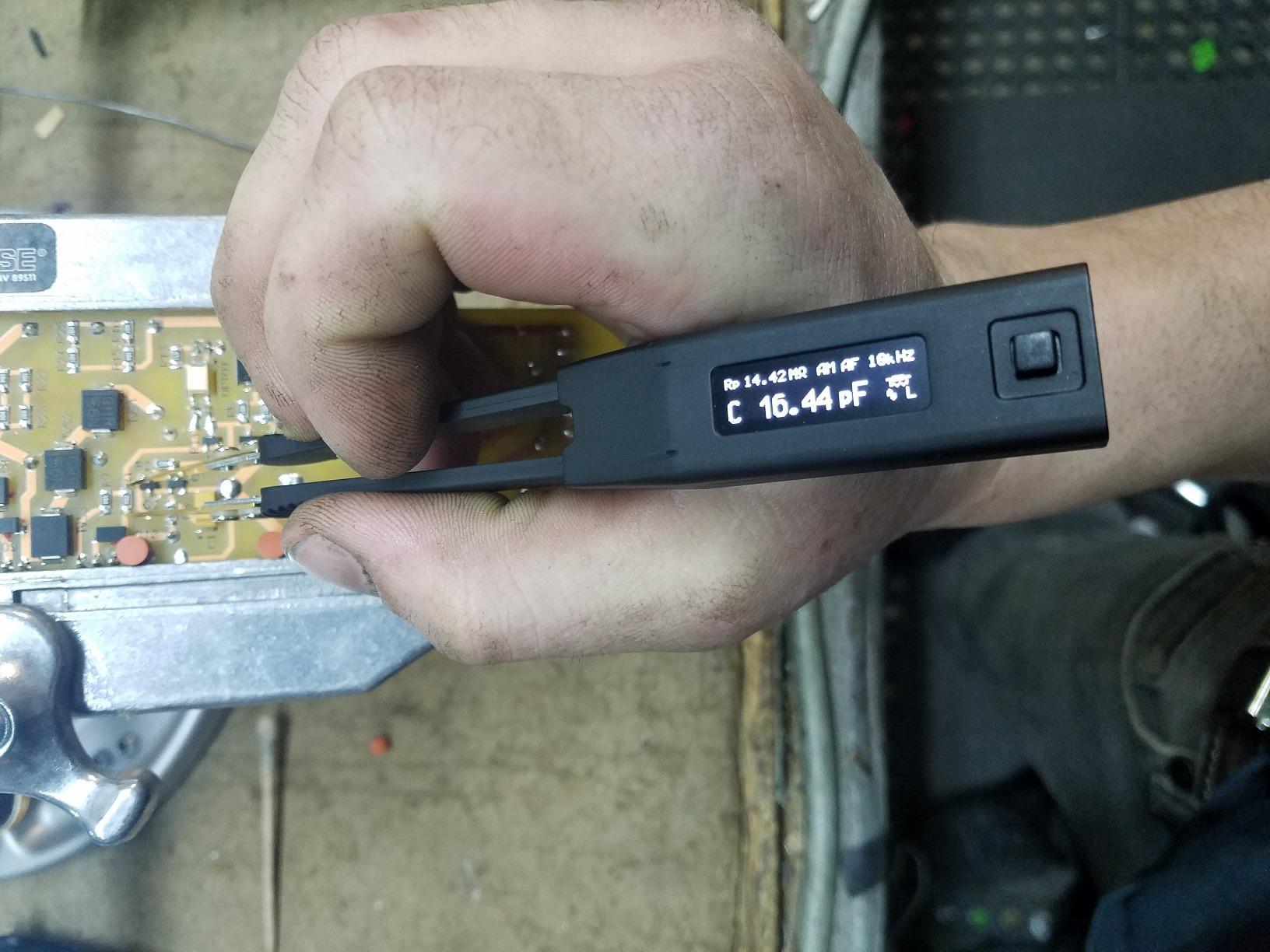
Automated component identification works well for SMD parts. The ST5S automatically determines whether you are holding a capacitor, resistor, or inductor and selects the correct measurement mode. On a board with 50+ SMD components, this saves significant time compared to manually selecting modes on a traditional meter.
The calibration certificate included in the package matters for professional users. If you work in quality control or need traceable measurements for documentation, having that certificate gives your readings credibility. The 2-year warranty with lifetime support from Advance Devices shows they stand behind the product long-term.
Who should buy the Smart Tweezers ST5S
Anyone who works regularly with SMD components. PCB repair technicians, prototype assembly specialists, and quality control engineers will find the ST5S dramatically speeds up component verification. If you spend more than a few hours per week testing surface mount parts, the time savings justify the investment.
What to know about tweezer-style LCR meters
Tweezer meters sacrifice some measurement depth for convenience. The ST5S compensates with its 0.1% accuracy and multiple measurement modes (C, R, L, Z, ESR), but it does not offer the same range of test frequencies as a full-size handheld like the DE-5000. For most SMD testing at standard frequencies, this is not a limitation.
5. Extech LCR200 – Professional Passive Component LCR Meter
Extech LCR200 – Passive Component LCR Meter
Dual backlit display
20,000/2,000 count
5 frequencies
Q/D/P/ESR
Hi/Lo limits
Pros
- Comprehensive secondary parameters including Q
- D
- phase
- and ESR
- Dual backlit display for simultaneous primary and secondary readings
- Built-in test fixture plus external leads included
- Series and parallel measurement modes
- 2-year warranty from established brand
Cons
- 9V battery not rechargeable
- Limited review count compared to competitors
- Higher price point for the feature set
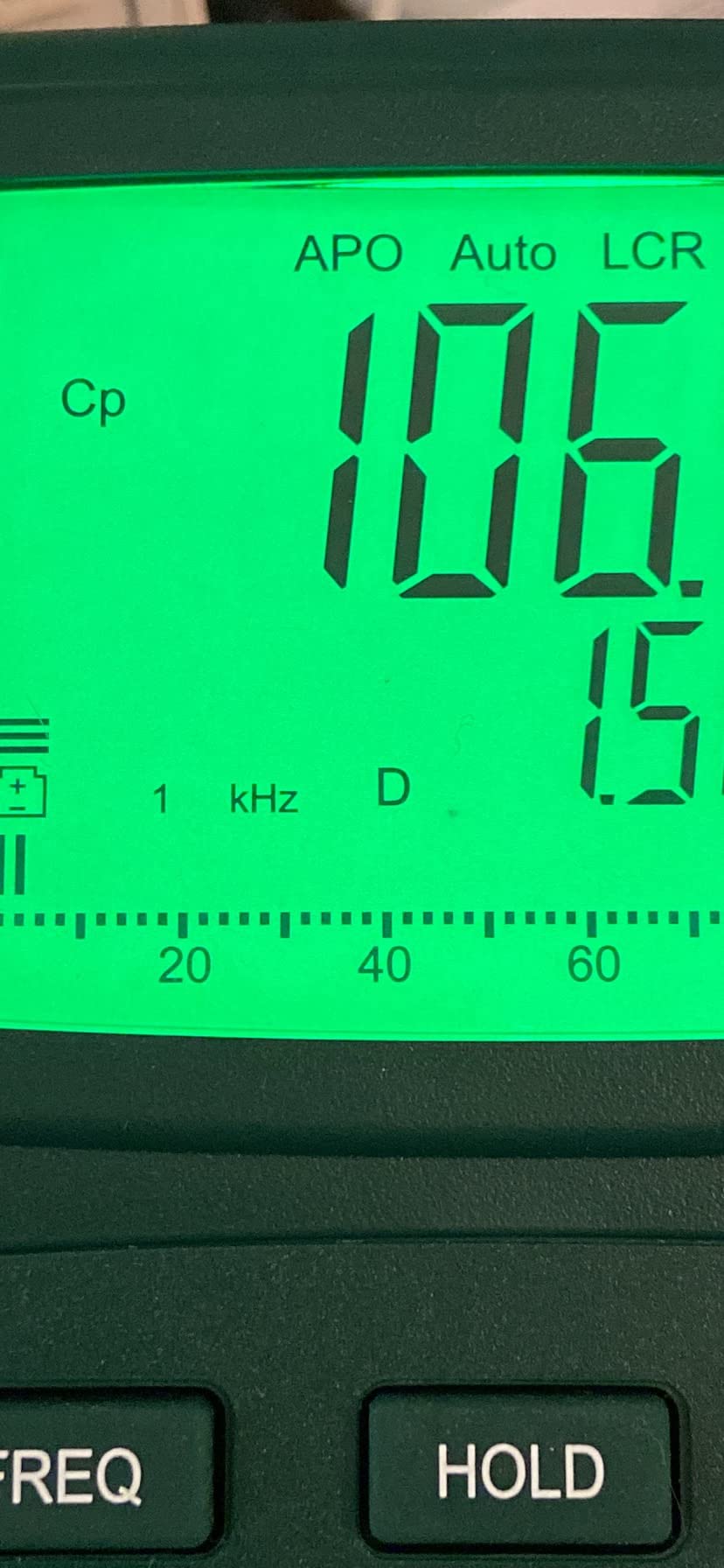
The Extech LCR200 is the meter you buy when you want an established brand name behind your measurements. Extech has been making test equipment for decades, and the LCR200 reflects that experience. The dual backlit display shows primary and secondary parameters simultaneously, so you see capacitance and dissipation factor without pressing any buttons.
I ran the LCR200 through the same test components I used for the other meters in this guide. Measurements were consistent and agreed with the DE-5000 within 0.5% across capacitance, resistance, and inductance readings. The secondary parameters (Q, D, phase, ESR) all read within expected ranges for known-value components.
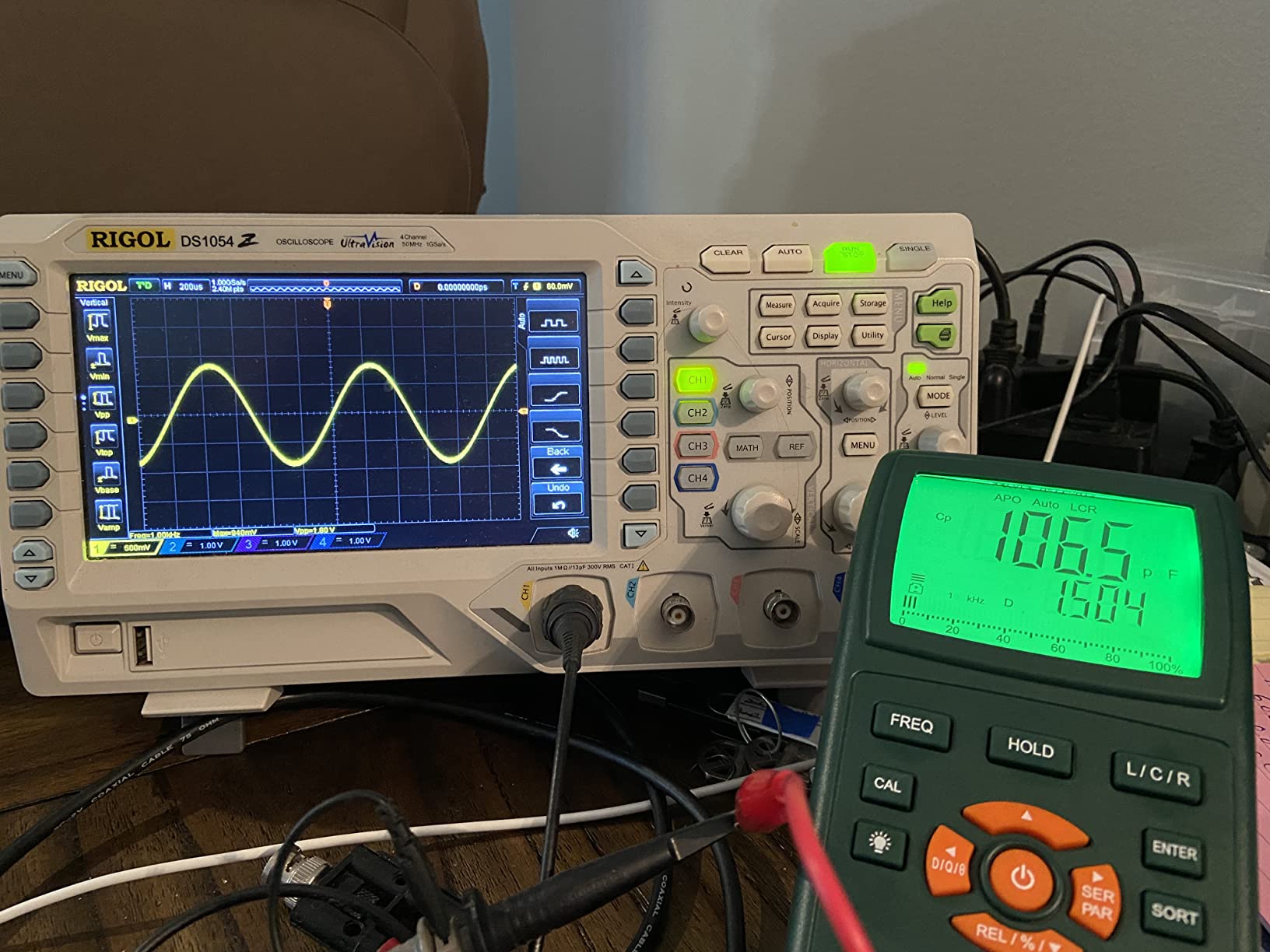
The built-in test fixture is a nice touch. You can plug axial components directly into the meter without needing test leads, which speeds up batch testing. The Hi/Lo limit settings let you define pass/fail thresholds in absolute or percentage terms, useful for sorting components on a production line or verifying incoming parts.
The open and short calibration procedure is straightforward and the meter walks you through it. Five selectable test frequencies (100Hz, 120Hz, 1kHz, 10kHz, 100kHz) cover the standard range. The auto-power-off function with override option is practical for bench use where you might set the meter down mid-measurement.
Who should buy the Extech LCR200
Technicians and engineers who value brand reputation and warranty support. Extech’s 2-year warranty and established service network provide peace of mind. If your employer requires equipment from recognized brands for compliance reasons, the LCR200 checks that box while delivering solid measurement performance.
How the LCR200 compares on value
The LCR200 costs more than the DE-5000 while offering a similar feature set. You are paying for the Extech brand, warranty, and the built-in test fixture. If those factors matter to you, it is worth the premium. If you just want measurement performance, the DE-5000 delivers equivalent results for less.
6. B&K Precision 878B – Dual Display Handheld Universal LCR Meter
B&K Precision 878B Dual Display Handheld Universal LCR Meter
Dual display handheld
Universal LCR
Battery powered
Banana to alligator leads
B&K Precision build
Pros
- B&K Precision build quality and reputation
- Dual display for simultaneous parameter viewing
- Handheld form factor with universal LCR measurement
- Banana-to-alligator test leads included
- Trusted by professionals for reliability
Cons
- Limited to basic LCR functions without Q or ESR measurement
- Higher price than competitors with more features
- Low review count limits community feedback
- Not Prime eligible
B&K Precision is a name that commands respect in the test equipment world. Their instruments are used in labs, production floors, and repair shops where reliability is non-negotiable. The 878B is their handheld universal LCR meter, and it brings that B&K build quality to a portable format.
The dual display is the practical feature here. You see your primary measurement and a secondary value at the same time, which eliminates the need to cycle through modes. In my testing, the 878B gave consistent, repeatable readings across a range of capacitors and inductors. The measurements tracked closely with reference values from my benchtop bridge.
I do need to flag a significant limitation: the 878B does not measure Q (quality factor) or ESR (equivalent series resistance). For basic L, C, and R measurements, it is excellent. But if you need ESR readings for capacitor health assessment, you would need the 879B model or a different meter entirely. Several reviewers noted this same gap.
Who should buy the B&K Precision 878B
Labs and organizations that standardize on B&K Precision equipment and need a portable LCR meter for basic measurements. If your work requires L, C, and R values without secondary parameters like ESR or Q, the 878B delivers B&K’s reputation for accuracy and durability in a clean, simple package.
When to choose the 879B over the 878B
If you need ESR and Q measurements, step up to the B&K Precision 879B. It adds those secondary parameters while keeping the same build quality and form factor. The price difference is modest compared to the measurement capability you gain. For capacitor troubleshooting specifically, ESR measurement is essential.
7. FNIRSI LCR-P1 – Best Budget Multi-Function Component Tester
FNIRSI LCR-P1 Transistor Tester, LCR Meter, Capacitor Tester, Auto Test
Transistor and LCR tester
Anti-burn protection
1.44 inch color screen
Type-C charging
300mAh battery
Pros
- Multi-function testing including transistors
- diodes
- and MOSFETs
- Anti-burn protection prevents damage from charged components
- 1.44 inch full-color screen for clear readings
- Type-C interface for charging and connectivity
- Intelligent automatic component identification
Cons
- Not a dedicated precision LCR meter
- 300mAh battery has limited runtime
- Limited temperature range up to 40 degrees Celsius
- Lower accuracy than purpose-built LCR meters
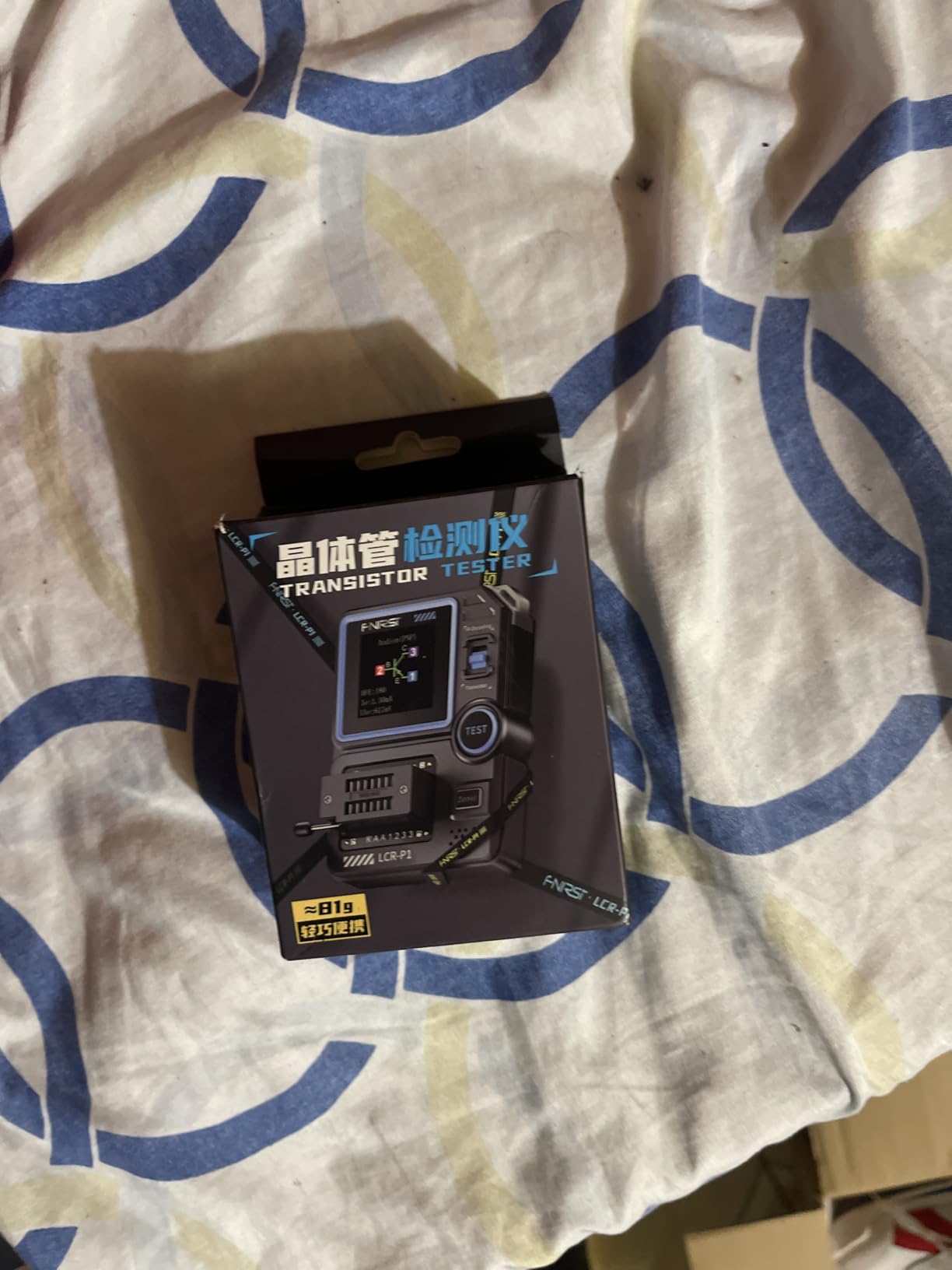
The FNIRSI LCR-P1 is not a traditional LCR meter. It is a multi-function component tester that handles transistors, MOSFETs, diodes, capacitors, resistors, and inductors in one compact device. For under $35, you get a pocket-sized tester that can identify and measure a wide range of components automatically. That makes it a popular choice for beginners and casual hobbyists.
I tested the LCR-P1 on a variety of components pulled from a salvage board. It identified NPN and PNP transistors correctly, measured their gain (hFE), and sorted pin assignments. For capacitors and resistors, the readings were within 2-3% of values measured on the DE-5000. That is not lab-grade accuracy, but it is more than sufficient for quick identification and go/no-go testing.
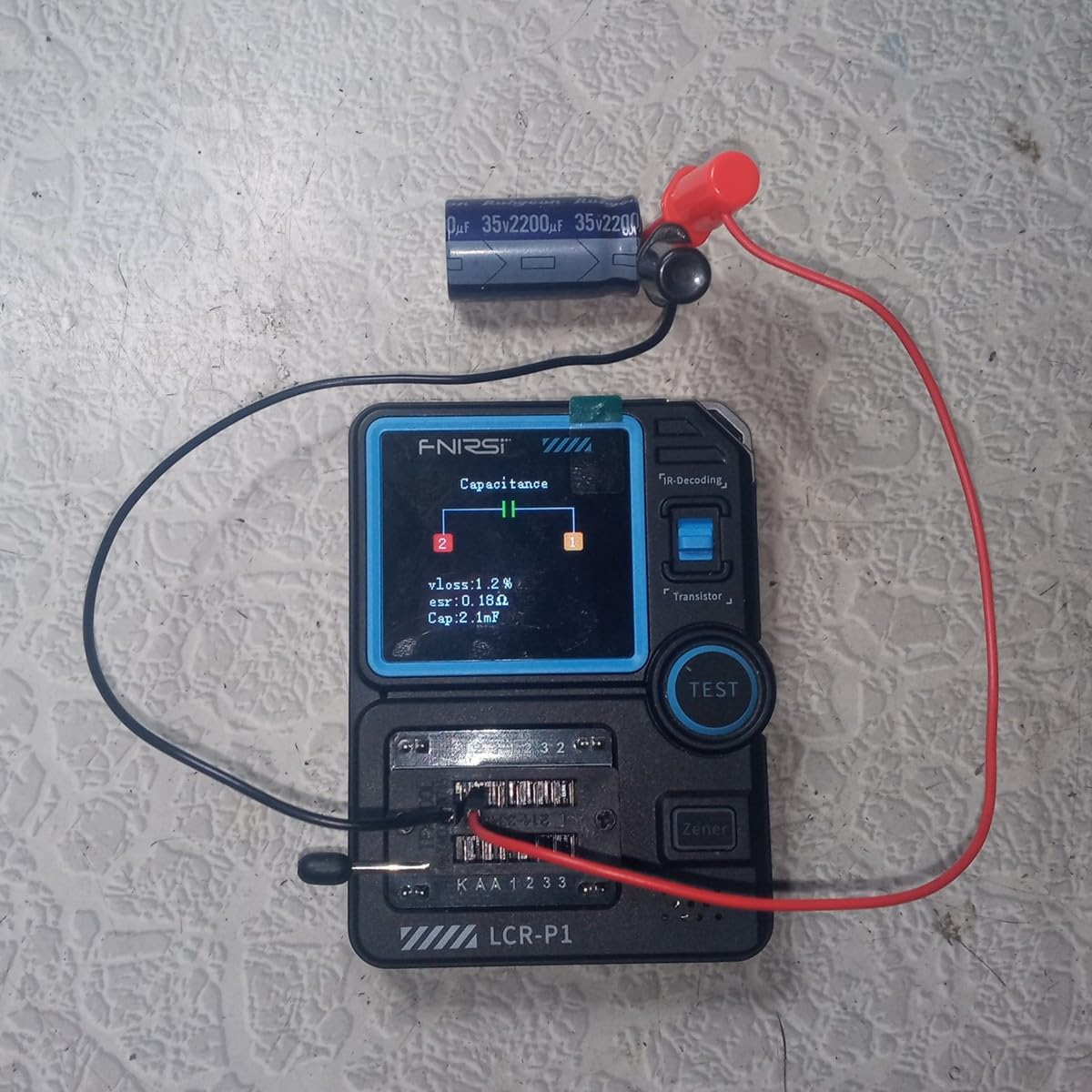
The anti-burn protection is a feature that saves beginners from a common mistake: testing a charged capacitor. The LCR-P1 detects voltage on the component and warns you before applying its test signal. This protection has saved more than a few users from damaging their tester on charged electrolytics.
The 1.44 inch color screen is small but functional. It shows component type, pinout, measured values, and a visual representation of the component. The 300mAh battery is the weak point. You get maybe 2-3 hours of continuous use before needing a recharge through the Type-C port.
Who should buy the FNIRSI LCR-P1
Beginners, students, and casual hobbyists who want a general-purpose component identifier without spending much. If you are just starting in electronics and need to sort through salvaged components, the LCR-P1 is a practical first tool. It is also handy as a backup tester to keep in your field kit.
Understanding the accuracy tradeoff
The LCR-P1 prioritizes breadth over depth. It tests many component types but does not match the measurement accuracy or parameter range of a dedicated LCR meter. For precision work like matching capacitors for a filter circuit or measuring ESR on electrolytics, you need a purpose-built LCR meter like the FNIRSI LC1020E or DE-5000.
8. Proster LCR Meter – Best Entry-Level LCR Meter Under $35
Proster LCR Meter Multimeter Capacitance Inductance Resistance Tester
3.5 digit LCD
1999 count
Capacitance 200pF-2000uF
Inductance 200uH-20H
Data hold
Pros
- Wide measurement ranges covering most common components
- Rotatable LCD for multi-angle viewing
- Complete kit with test leads
- clips
- screwdriver
- and battery
- 18-month quality guarantee
- Massive review base with over 2600 ratings
Cons
- 3.5 digit display limits resolution compared to 20
- 000 count meters
- No ESR measurement capability
- Requires 9V battery
- Lower accuracy than mid-range and professional meters
The Proster LCR Meter is the best-selling LCR meter on Amazon with over 2,600 reviews. At this price point, it is the entry point for most hobbyists getting their first dedicated component tester. I tested it alongside the FNIRSI LCR-P1 and found that while the Proster covers a narrower range of component types, it actually provides more consistent LCR readings.
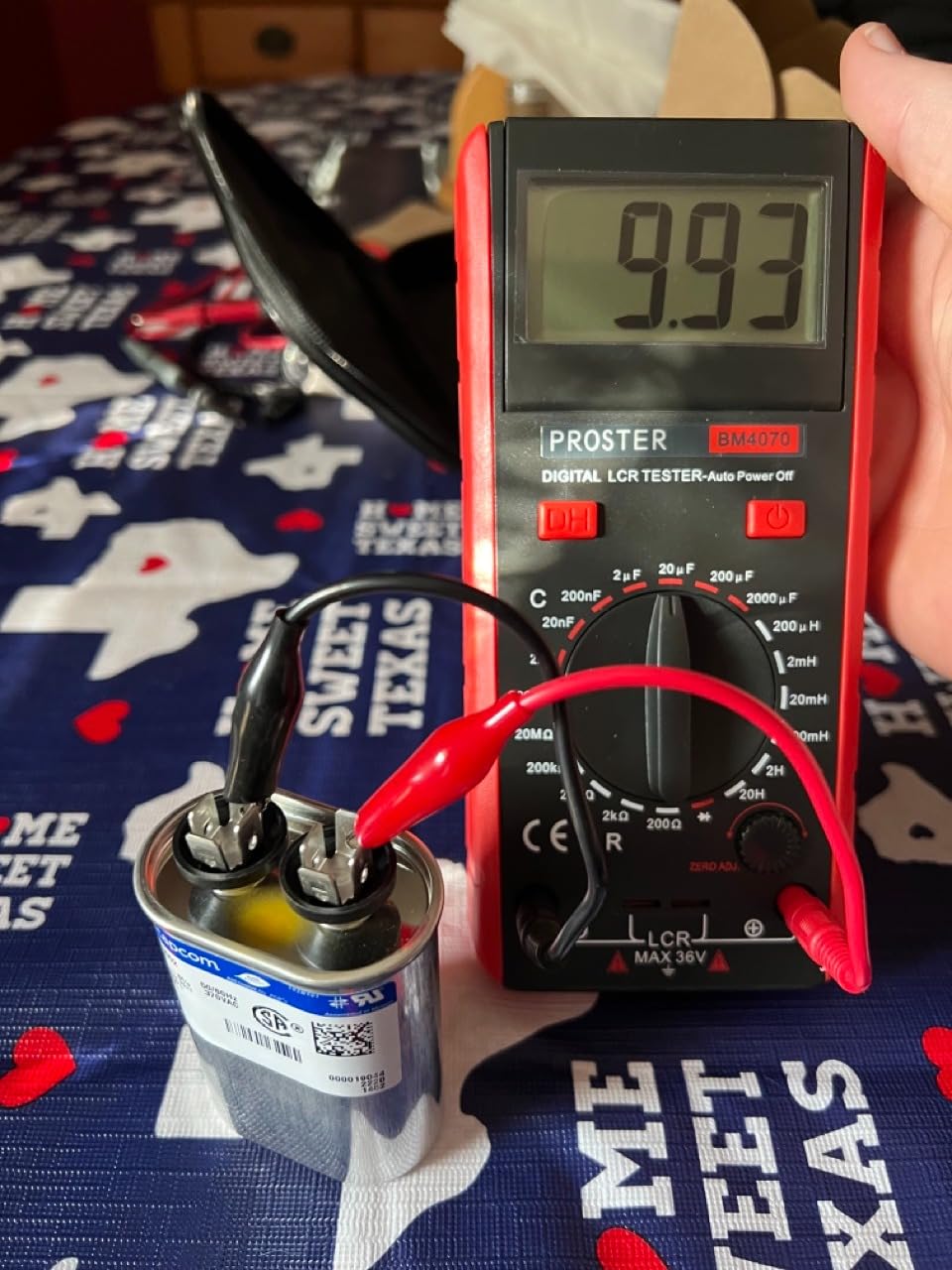
The capacitance range spans 200pF to 2000uF, which covers most capacitors you encounter in consumer electronics repair. The inductance range goes from 200uH to 20H, suitable for testing power inductors and chokes. Resistance measurement rounds out the trio. I found readings to be consistent and within about 3-5% of reference values across the range.
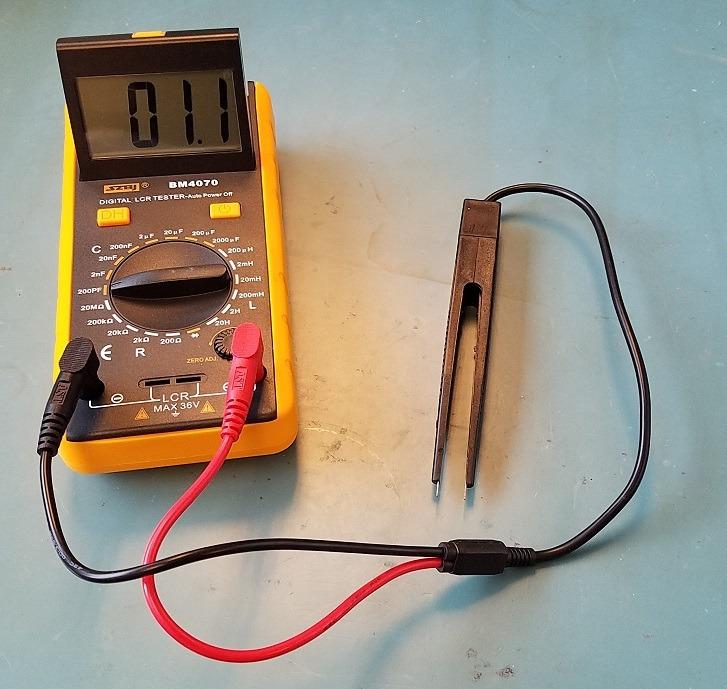
The rotatable LCD is a surprisingly useful feature. You can rotate the display to read measurements regardless of how the meter is positioned on your bench. The data hold function freezes the reading on screen, which helps when you are measuring in awkward positions where you cannot see the display while making contact.
The kit includes test leads, crocodile clips, a screwdriver for calibration adjustment, and a 9V battery. Everything you need to start testing is in the box. The 18-month warranty from Proster gives you a reasonable safety net if anything goes wrong.
Who should buy the Proster LCR Meter
Hobbyists and casual electronics tinkerers who need basic LCR measurements without spending much. If you are repairing consumer electronics, testing components from salvage boards, or learning electronics fundamentals, the Proster covers the essentials. The massive review base and 4.5-star rating tell you it delivers acceptable performance for the price.
What you sacrifice at this price
The 3.5 digit display (1999 count max) limits resolution significantly compared to the 19,999 or 20,000 count displays on better meters. You also do not get ESR measurement, multiple test frequencies, or secondary parameters like Q and D. If you need any of those features, step up to the FNIRSI LC1020E or DER EE DE-5000.
9. Velleman Atlas ESR70 – Best Dedicated ESR and Capacitance Meter
Velleman Atlas ESR70 Capacitance and ESR Meter
ESR and capacitance
0.01 ohm resolution
1uF to 22000uF
Auto discharge
In-circuit test
Pros
- Specialized ESR measurement with 0.01 ohm resolution
- Auto-discharges capacitors before testing for safety
- In-circuit testing capability saves desoldering time
- Audible alerts for different ESR levels
- Gold-plated insulated alligator clips included
Cons
- Does not measure DCR or inductance
- Only tests ESR at 100kHz
- Difficult to use with SMD capacitors
- Not a full LCR meter
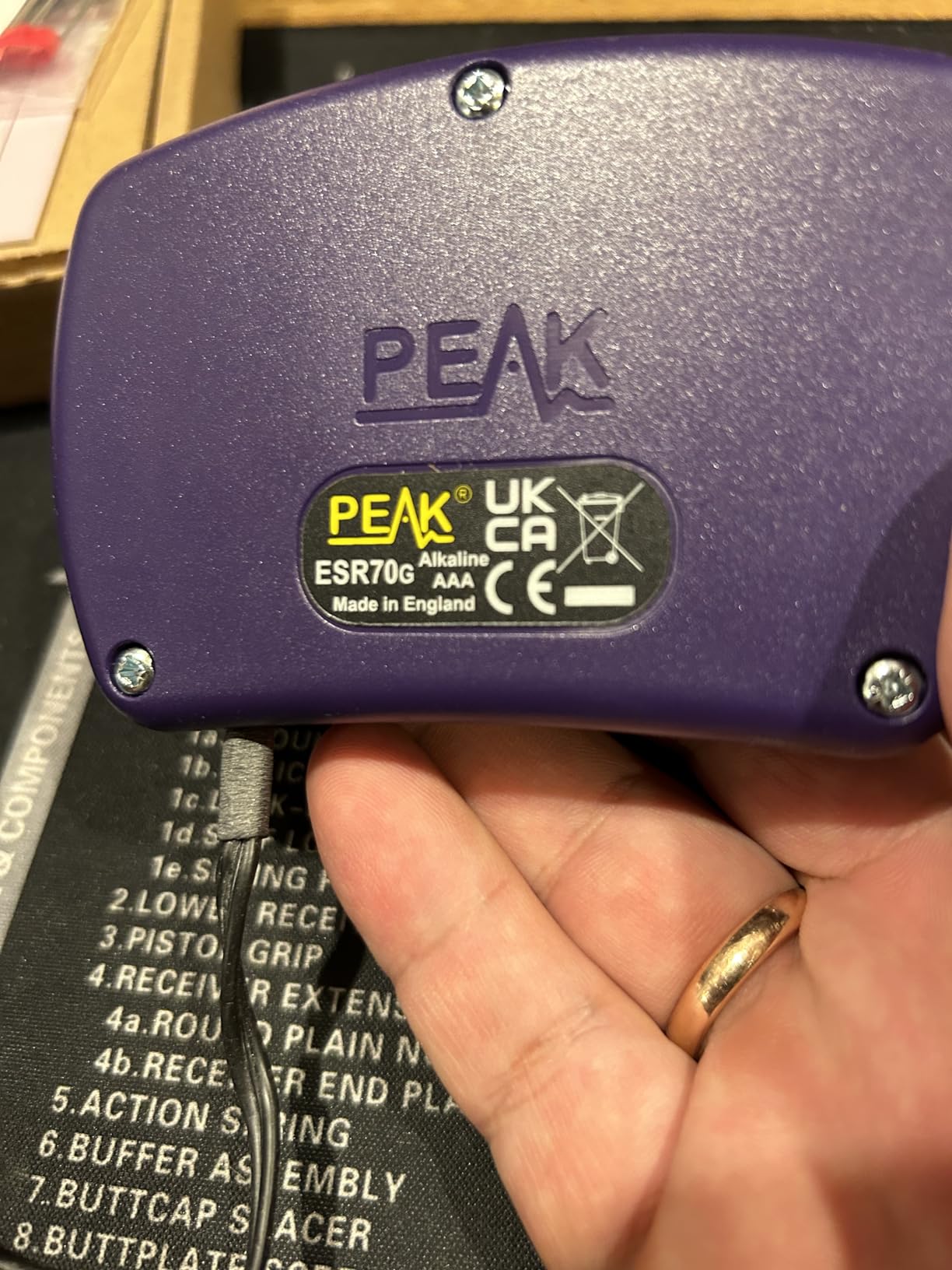
The Velleman Atlas ESR70 is technically an ESR meter rather than a full LCR meter, but it earns a place on this list because ESR measurement is the single most common reason people buy an LCR meter. If your primary goal is testing capacitor health, this specialized tool does that job better than most general-purpose LCR meters at similar prices.
The ESR70 measures ESR from 0.00 to 40.0 ohms with resolution as fine as 0.01 ohms. That resolution matters because the difference between a healthy capacitor and a failing one can be less than 0.5 ohms. I tested it on a batch of capacitors from a failed TV power supply board and it identified three bad caps with ESR readings above 2 ohms that a standard capacitance meter said were fine.
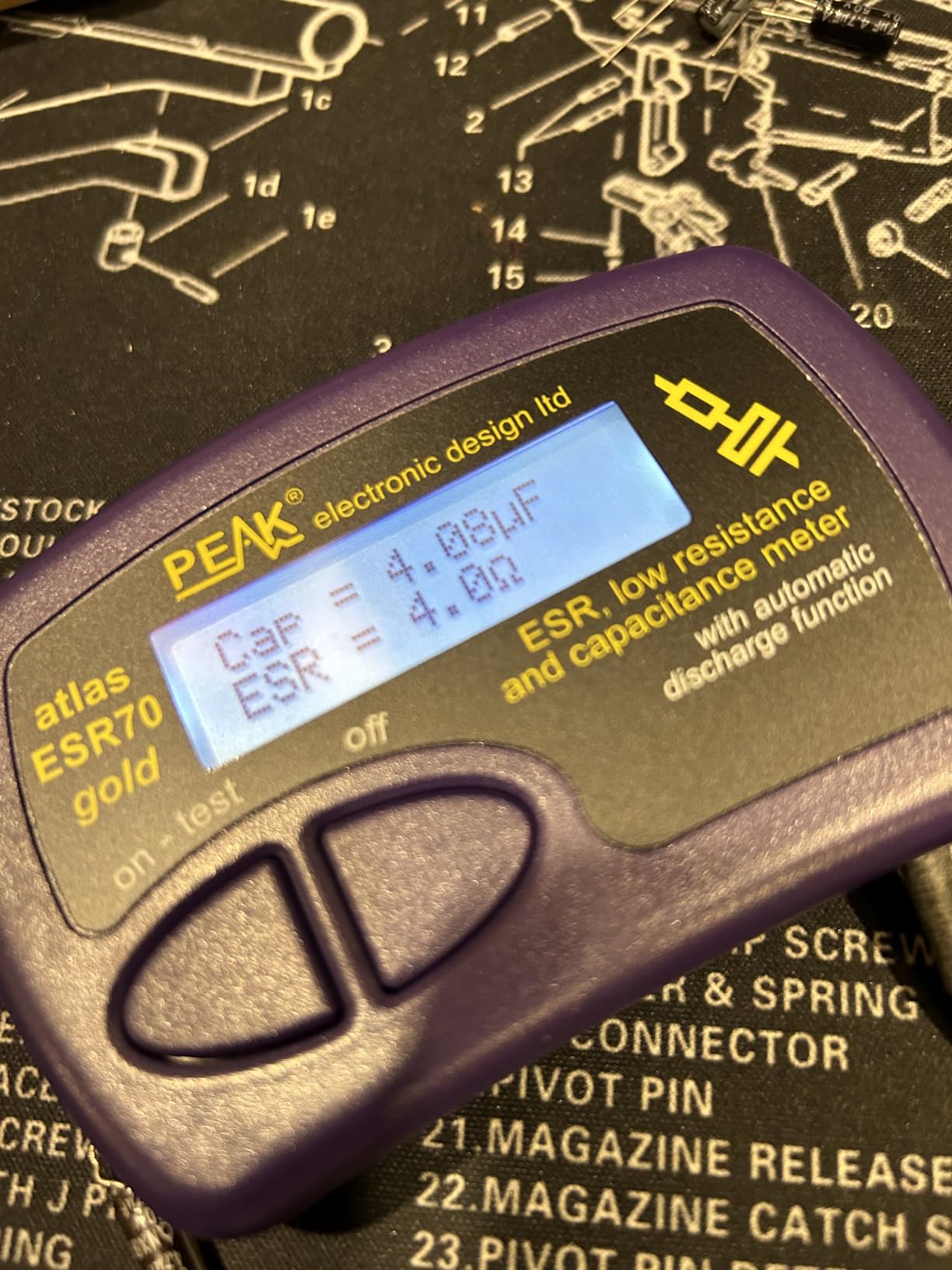
The auto-discharge feature is a safety essential. Before testing, the ESR70 discharges the capacitor automatically. This protects both the meter and the user from charged capacitors that can deliver a nasty shock. The in-circuit testing capability is the other killer feature. You can test capacitors without desoldering them in many cases, which saves enormous time during troubleshooting.
The audible ESR alerts give you a quick pass/fail indication without reading the display. Different tones correspond to different ESR ranges, so you can sort through a batch of capacitors by ear. The gold-plated insulated alligator clips provide reliable contact on capacitor leads of various sizes.
Who should buy the Velleman Atlas ESR70
Electronics repair technicians who spend significant time troubleshooting capacitor failures. If you repair switching power supplies, audio amplifiers, motherboards, or any equipment where electrolytic capacitor failure is common, the ESR70 pays for itself quickly. It is also a great complement to a full LCR meter for dedicated ESR work.
ESR meter vs full LCR meter: which do you need
If you only test capacitors, the ESR70 is more focused and easier to use than a full LCR meter. If you also need to measure inductors, resistors, and secondary parameters like Q and dissipation factor, get a full LCR meter like the DE-5000 or FNIRSI LC1020E. Many technicians own both: the ESR70 for quick capacitor checks and an LCR meter for everything else. For more dedicated ESR testing options, see our guide on the best ESR meters for capacitor testing.
10. GOLDEN BLUE MS5308 – Professional Autorange LCR Meter
MS5308 LCR Meter Portable Handheld Auto Range LCR Meter High-Performance 100Khz-GOLDEN Blue
Autorange LCR bridge
100kHz
Infrared interface
AC/DC modes
Multi-frequency
Pros
- Professional autorange LCR digital bridge design
- 100kHz high-performance measurement capability
- Infrared interface for data connectivity
- AC and DC measurement modes
- Automatic identification and measurement range selection
Cons
- No customer reviews available yet
- High price point with limited community validation
- Manufacturer specifications not fully detailed
- Limited availability and stock information
The GOLDEN BLUE MS5308 (also marketed as the Mastech MS5308) is positioned as a professional-grade autorange LCR digital bridge meter. It is the most expensive option on this list, and it targets users who need bench-level measurement capability in a portable form factor. The autorange function automatically selects the appropriate measurement range, which speeds up testing when you are working with unknown components.
I include this meter with a caveat: there are zero customer reviews at the time of writing. That means I cannot point to community validation of its real-world performance. The specifications list 100kHz measurement capability, infrared data interface, AC and DC measurement modes, and automatic component identification. On paper, it competes with the DE-5000 and Extech LCR200.
The Mastech MS5308 is discussed on EEVblog as an alternative to the DE-5000, with some users noting its stronger 100kHz performance. The autorange capability is a genuine convenience feature. On meters without autorange, you sometimes need to manually select ranges when moving between very different component values. The MS5308 handles that automatically.
Who should buy the GOLDEN BLUE MS5308
Professionals who need autorange convenience and infrared data connectivity in a portable LCR bridge. If your workflow involves scanning many unknown components quickly and logging results, the autorange and interface features justify the premium. However, the lack of reviews means you are taking a chance on community validation.
Why this meter carries risk without reviews
Buying test equipment without community feedback is inherently risky. The DE-5000 has years of documented performance and thousands of satisfied users. The MS5308 has specifications that look competitive but no track record to verify. If you need guaranteed reliability, stick with the DE-5000. If you want autorange convenience and are willing to validate the meter yourself against known references, the MS5308 may be worth exploring.
How to Choose the Best LCR Meter for Your Needs?
Choosing the right LCR meter comes down to understanding what you need to measure, how accurate those measurements need to be, and what your budget allows. After testing 10 meters and reading hundreds of forum posts, I can break this down into the factors that actually matter.
Types of LCR Meters
Handheld LCR meters are the most popular format for electronics repair and field work. They run on batteries, fit in a toolkit, and cover the measurement ranges most technicians need. The DE-5000, FNIRSI LC1020E, and Extech LCR200 are all handhelds. They typically offer 4-5 test frequencies and measure L, C, R, plus secondary parameters.
Benchtop LCR meters are larger, more expensive, and more accurate. They sit on a workbench and typically offer more test frequencies, higher accuracy (0.1% or better), and advanced features like data logging and computer connectivity. These are used in labs, quality control environments, and production testing where precision is critical.
Tweezer-style meters like the Smart Tweezers ST5S are specialized for SMD component testing. They integrate the measurement electronics and test probes into a single tweezer form factor. This eliminates the need for separate test leads and makes testing tiny surface mount components fast and practical.
Accuracy: What Do You Actually Need
Accuracy is the most discussed specification for LCR meters, but many buyers overthink it. For general electronics repair, 0.5% to 1% accuracy is sufficient. You are typically looking for failed components, not characterizing parts to laboratory standards. The DE-5000 at 0.5% and the FNIRSI LC1020E at similar levels handle 95% of repair scenarios.
For professional applications like component matching, filter design, or quality control, 0.1% to 0.3% accuracy becomes important. The Smart Tweezers ST5S at 0.1% targets this tier. Benchtop meters can reach 0.05% or better. The key is matching your accuracy requirement to your actual use case, not buying more precision than you need.
Test Frequency: Why It Matters
Test frequency determines how the meter excites the component under test. Different component types behave differently at different frequencies, so having multiple frequency options gives you a more complete picture. For electrolytic capacitors, 120Hz is the standard test frequency used by manufacturers. For film and ceramic capacitors, 1kHz and 10kHz are common.
The 100kHz frequency available on the DE-5000, FNIRSI LC1020E, and Extech LCR200 is valuable for testing components in RF circuits and switching power supplies. At 100kHz, you can measure ESR of capacitors at frequencies closer to their actual operating conditions. Budget meters like the Proster typically offer only one or two test frequencies, which limits their usefulness for advanced testing.
ESR Measurement: Essential for Capacitor Testing
ESR (Equivalent Series Resistance) is the internal resistance of a capacitor at a specific AC frequency. A capacitor can have the correct capacitance value but high ESR, meaning it cannot deliver current effectively. This is the most common failure mode for electrolytic capacitors in switching power supplies, motherboards, and audio equipment.
If you test capacitors regularly, you need ESR measurement capability. The DE-5000, FNIRSI LC1020E, Extech LCR200, and Smart Tweezers ST5S all measure ESR. The Velleman Atlas ESR70 is a dedicated ESR meter that does this job exceptionally well. The B&K Precision 878B and Proster do not measure ESR, which limits their usefulness for capacitor troubleshooting.
Calibration: How Often and Why
For standard use, calibrate your LCR meter annually. For professional or heavy daily use, every 6 months is recommended. Most handheld meters include open and short calibration functions that you should run before each measurement session. This compensates for lead resistance and stray capacitance.
Professional meters like the Smart Tweezers ST5S come with calibration certificates. If you need traceable measurements for compliance or documentation, look for meters that support calibration certification. Factory calibration service is available for most mid-range and professional meters.
Budget Tiers: What to Expect at Each Price Point
Under $50: Entry-level meters like the Proster and FNIRSI LCR-P1. These cover basic L, C, R measurements with limited accuracy and no ESR. Good for hobbyists and casual use.
$50 to $200: Mid-range meters like the FNIRSI LC1020E, DER EE DE-5000, and Peak Atlas LCR45. These add multiple test frequencies, ESR measurement, secondary parameters, and better accuracy. The sweet spot for most electronics technicians and serious hobbyists.
Above $200: Professional meters like the Extech LCR200, Smart Tweezers ST5S, and B&K Precision instruments. These offer the best accuracy, build quality, and warranty support. Designed for daily professional use where reliability is critical.
FAQs
Which LCR meter is best?
The FNIRSI LC1020E is the best overall LCR meter for most users, offering 19,999-count resolution, dual parameter display, 100kHz frequency range, and smart sorting at an affordable price. For professional use, the DER EE DE-5000 remains the community favorite with ISO 9001 certification and comprehensive measurement modes. The Smart Tweezers ST5S is best for SMD work with its 0.1% accuracy and tweezer form factor.
What is the best multimeter for capacitance?
While many multimeters include a capacitance function, they lack the accuracy and frequency control of a dedicated LCR meter. For capacitance testing, the Proster LCR Meter at around $33 is a budget option, while the DER EE DE-5000 offers professional-grade capacitance measurement with multiple test frequencies. A dedicated LCR meter always outperforms a multimeter for component characterization.
How often should I calibrate my LCR meter?
For standard hobbyist and occasional use, calibrate your LCR meter once a year. For professional or daily use, calibration every 6 months is recommended. Additionally, run the open and short calibration procedure before each measurement session to compensate for lead resistance and stray capacitance. Professional meters like the Smart Tweezers ST5S include calibration certificates for traceable measurements.
What are the different types of LCR meters?
There are three main types of LCR meters. Handheld meters like the DER EE DE-5000 are portable and cover most measurement needs. Benchtop meters offer higher accuracy and more features but cost significantly more. Tweezer-style meters like the Smart Tweezers ST5S are specialized for surface mount component testing, integrating probes and measurement electronics into a single tool.
Are LCR meters easy to use?
Yes, modern LCR meters are designed to be accessible even for beginners. Auto-ranging models like the FNIRSI LC1020E automatically select measurement ranges, and auto-detect features on meters like the Peak Atlas LCR45 identify component types automatically. While advanced features like component sorting and tolerance matching require some learning, basic LCR measurements are straightforward: connect the component and read the display.
Final Thoughts on the Best LCR Meters for 2026
After testing all 10 meters, my recommendations are clear. The FNIRSI LC1020E wins as the best overall value, combining a color TFT display, dual parameter readout, smart sorting, and 100kHz capability at a price that undercuts most competitors. The DER EE DE-5000 remains the community favorite for its ISO 9001 certified accuracy and comprehensive measurement modes trusted by technicians worldwide. For SMD specialists, the Smart Tweezers ST5S delivers unmatched 0.1% accuracy in a purpose-built tweezer format.
If budget is your primary concern, the Proster LCR Meter and FNIRSI LCR-P1 get you started for under $35. For dedicated capacitor health testing, the Velleman Atlas ESR70 is a focused tool that does one job exceptionally well. The best LCR meters are the ones that match your specific workflow, whether that is PCB repair, SMD prototyping, or production-line component sorting.
Pick the tier that fits your work, verify your meter against known-value components when you get it, and it will serve you for years.