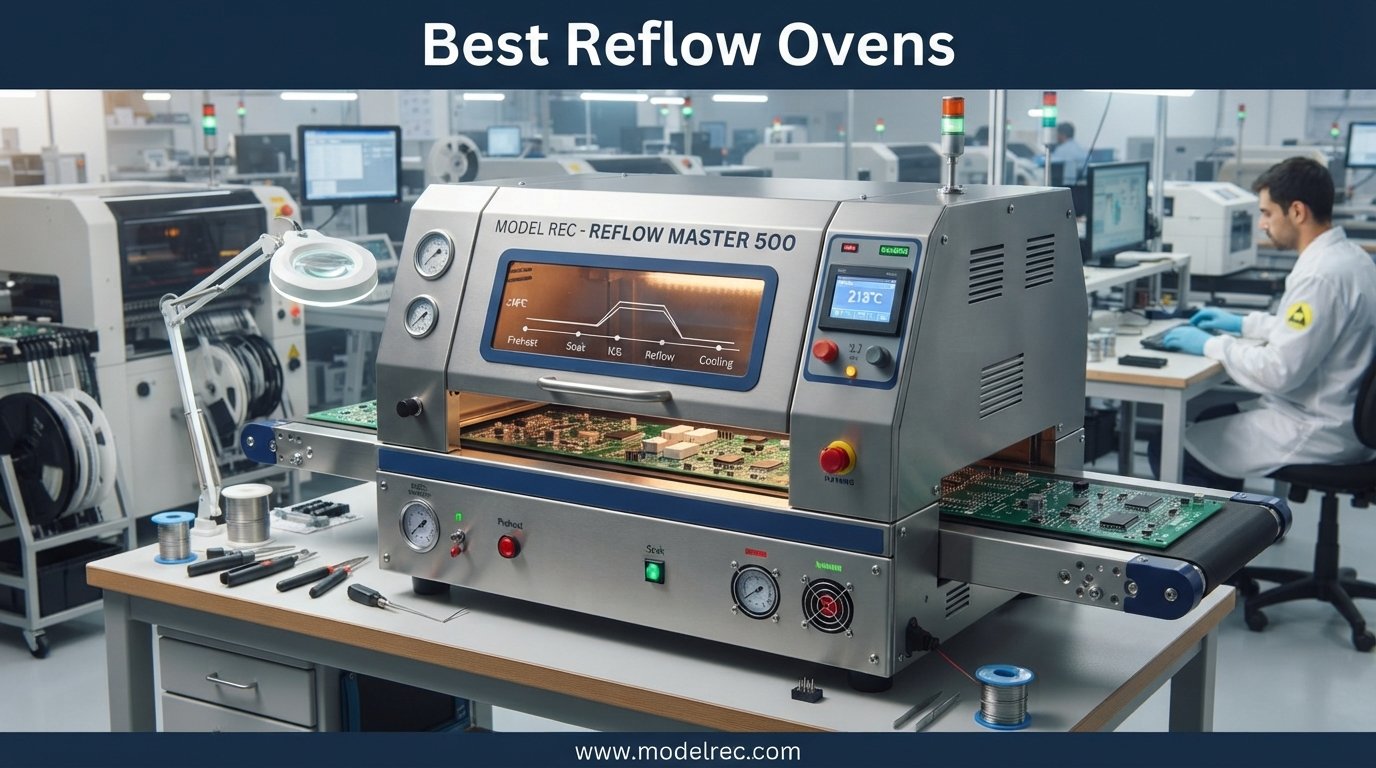
If you are serious about PCB assembly, a reflow oven is one of the most important investments you will make. A reflow oven is a specialized heating device used in electronics manufacturing that melts solder paste through a controlled temperature profile, bonding surface-mounted components to circuit boards with consistency that hand soldering simply cannot match. Whether you are a hobbyist working on prototypes in your garage or running a small batch production line, finding the best reflow oven for your needs can mean the difference between clean, reliable solder joints and a pile of scorched boards.
Our team spent weeks analyzing every popular desktop and benchtop reflow oven on the market, digging through forum discussions on EEVblog and Reddit communities like r/PrintedCircuitBoard to understand what real users experience day to day. We looked at heating methods, temperature accuracy, board capacity, programmability, and the common pain points that nobody else talks about, like hot spots on T962 models and ventilation concerns with budget units. This guide covers ten of the best reflow ovens available in 2026, ranging from compact entry-level infrared units under $300 to powerful large-capacity machines built for serious production work.
Every product in this guide was evaluated based on actual specifications, real user feedback, and practical considerations like how easy the temperature curves are to program and whether the unit includes proper exhaust provisions. We also considered the issues that forum users repeatedly raise, from inconsistent heat distribution on cheaper infrared heaters to the challenge of getting lead-free solder profiles dialed in correctly. By the end of this article, you will have a clear understanding of which reflow oven fits your workflow, your board sizes, and your budget.
Table of Contents
Top 3 Picks for Reflow Ovens
10 Best Reflow Ovens in 2026
| Product | Specifications | Action |
|---|---|---|
 PROFIXXERS T962 Infrared Reflow Oven PROFIXXERS T962 Infrared Reflow Oven |
|
Check Latest Price |
 SPIRICH T962-V2.0 Intelligent Reflow Oven SPIRICH T962-V2.0 Intelligent Reflow Oven |
|
Check Latest Price |
 INTBUYING T962A 1500W Reflow Oven INTBUYING T962A 1500W Reflow Oven |
|
Check Latest Price |
 SPIRICH T962A-V2.0 1500W Reflow Oven SPIRICH T962A-V2.0 1500W Reflow Oven |
|
Check Latest Price |
 AiXun Precision 1600W Reflow Oven AiXun Precision 1600W Reflow Oven |
|
Check Latest Price |
 ITECHSMT RF-A350 Dual Heating Reflow Oven ITECHSMT RF-A350 Dual Heating Reflow Oven |
|
Check Latest Price |
 INTBUYING T962A+ 2300W Reflow Oven INTBUYING T962A+ 2300W Reflow Oven |
|
Check Latest Price |
 INTBUYING T962C 2900W Reflow Oven INTBUYING T962C 2900W Reflow Oven |
|
Check Latest Price |
 Banfluxion T-937 2.3KW Reflow Oven Banfluxion T-937 2.3KW Reflow Oven |
|
Check Latest Price |
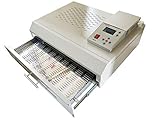 TECHTONGDA 2500W Reflow Soldering Oven TECHTONGDA 2500W Reflow Soldering Oven |
|
Check Latest Price |
1. PROFIXXERS T962 Infrared Reflow Oven – Best Budget Entry Point
PROFIXXERS T962 Infrared Reflow Oven Furnace IC Heater BGA Rework Station Professional Infrared Heater Soldering Automatic Reflow Machine
800W Power
180x235mm Soldering Area
100-350C Range
8 Memory Curves
110V
Pros
- Affordable entry into reflow soldering
- Automatic preheat-soak-reflow-cool cycle
- Handles single and double PCB panels
- Compact desktop footprint
Cons
- Limited soldering area for larger boards
- Infrared heating can create hot spots
- Small LCD display hard to read
The PROFIXXERS T962 is the reflow oven that most hobbyists start with, and for good reason. It delivers genuine automated reflow soldering at a price point that makes sense for someone just getting into SMT work. I have seen countless Reddit threads where beginners ask if the T962 is good enough, and the consensus is that it absolutely is for learning and small prototype runs. The 800W infrared heating system takes boards up to 180x235mm, which covers most hobbyist PCB sizes comfortably.
What makes this unit appealing is the microcomputer automatic control that handles the full reflow cycle from preheat through soak, reflow, and cooling without any manual intervention. You get 8 preset temperature curves stored in memory, so once you dial in a profile that works for your solder paste and board layout, you can recall it instantly for repeat runs. The unit runs on standard 110V power, meaning no special electrical work is needed.
That said, the T962 platform has well-documented limitations that every buyer should understand. Forum users on EEVblog consistently report hot spots, particularly near the infrared heating elements, which can cause uneven soldering on larger boards. The LCD display is basic and can be difficult to read in bright lighting. These are tradeoffs you accept at this price tier, and many users compensate by adding reflective foil modifications or upgrading the internal fans.
For someone producing small boards in low volume, maybe a few panels a week for personal projects or prototype development, the T962 gets the job done. It is not the machine for production runs, but it will teach you the fundamentals of reflow profiling and SMT assembly without breaking the bank.
Best Use Case and Board Compatibility
This oven shines with smaller single-board designs, LED panels, and prototype PCBs that fit within the 180x235mm work area. It handles standard leaded solder paste well and can manage basic lead-free profiles, though you may need to push the temperature curves toward the upper end of the 350-degree range for reliable lead-free joints.
Common Upgrades and Modifications
The T962 modding community is extensive. Popular improvements include adding reflective tape inside the chamber to redirect infrared energy more evenly, upgrading the cooling fans for faster thermal cycling, and replacing the stock thermocouple for better temperature accuracy. These modifications can significantly improve results but require some technical comfort.
2. SPIRICH T962-V2.0 Intelligent Infrared IC Heater – Smart Budget Upgrade
SPIRICH T962-V2.0 Intelligent Infrared IC Heater PCB Soldering Furnace Reflow Oven with Online Funtion and Exhaust Pipe
800W Power
Rapid IR Heating
Serial Port Control
8 Temp Curves
Exhaust Pipe
Pros
- Online function for PC connectivity
- Includes exhaust pipe for ventilation
- Fuzzy temperature control technology
- Visualized drawer-type workbench
Cons
- Same compact size as standard T962
- Limited review track record
- Display clarity could be better
The SPIRICH T962-V2.0 takes the proven T962 platform and adds meaningful upgrades that address real user complaints. The standout feature is the online function with serial port connectivity, which lets you monitor and adjust temperature curves from a computer rather than being limited to the onboard controls. For anyone who has squinted at a tiny LCD trying to program a custom profile, this is a genuinely useful improvement.
The inclusion of an exhaust pipe addresses one of the biggest pain points forum users raise about budget reflow ovens, which is fume management. Solder paste creates flux vapors during reflow that you absolutely do not want to breathe, and having a proper exhaust connection means you can vent fumes outside or through a filtration system. This alone makes the V2.0 a smarter choice than the base T962 for indoor use.
SPIRICH uses fuzzy temperature control technology combined with rapid infrared radiation heating and dedicated cooling fans. In practice, this means more stable temperatures during the soak phase and faster transitions between profile stages. The drawer-type workbench with visual window lets you watch the reflow process in real time, which is both practical and oddly satisfying.
The 800W power output and 180x235mm soldering area match the standard T962, so you are getting the same board capacity with smarter controls and better safety features. For a modest price premium over the base model, the online function and exhaust system represent solid value.
Software and PC Integration
The serial port connection works with the included software to display real-time temperature curves on your computer screen. This is invaluable for dialing in profiles on new board designs or when switching solder pastes. You can see exactly where the temperature deviates from your target curve and make adjustments accordingly.
Ventilation Setup Requirements
The exhaust pipe connects to a standard fitting that can be routed to an external vent or combined with an inline fan and carbon filter. If you are working in a spare room or basement without dedicated ventilation, this feature is not optional, it is essential for your health and safety.
3. INTBUYING T962A 1500W Reflow Oven – Best Value Mid-Range
INTBUYING 110 V Reflow Oven T962A 1500 W Micro-computer Control Reflow Soldering Machine with 11.8×12.6 Inch Soldering Area Drawer Type Lead Infrared IC Heater Free Reflow Soldering Machine
1500W Power
300x320mm Soldering Area
0-280C Range
8 Curves
110V
Pros
- Large soldering area for the price
- Strong 1500W heating power
- Vent pipe interface included
- Handles BGA and QFP components
Cons
- Heavier than standard T962
- Peak temperature limited to 280C
- Drawer mechanism needs break-in
The INTBUYING T962A hits what I consider the sweet spot in the reflow oven market for serious hobbyists and small workshops. Stepping up to 1500W from the base 800W models gives you noticeably faster heating cycles and better temperature stability on larger boards. The 300x320mm soldering area is nearly double the standard T962, opening up possibilities for bigger PCBs and panelized designs.
I appreciate that INTBUYING kept the drawer-type workbench design while increasing the capacity. The visual drawer lets you load boards easily and monitor the process through the viewing window. The digital display is clearer than the basic T962 LCD, making it easier to select and adjust temperature curves without guessing. Eight preset curves cover common solder paste profiles, and the curve display shows your active profile graphically.
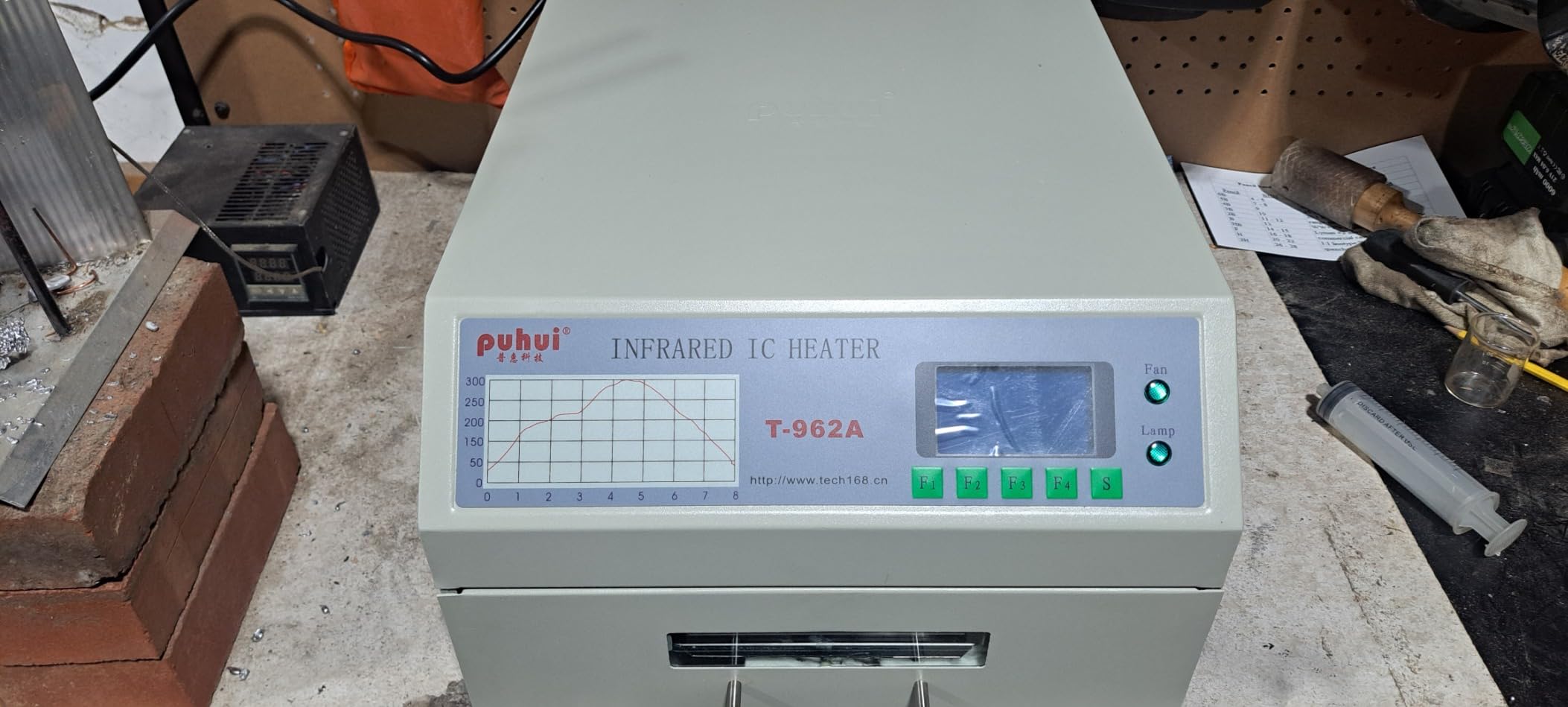
The heating system combines fast infrared radiation with circulating air, which helps mitigate the hot spot issues that plague pure infrared budget ovens. The circulating air distributes heat more evenly across the board surface, resulting in more consistent solder joints. This is particularly important when working with boards that have varying component densities, where pure infrared heating might overheat some areas while underheating others.
The vent pipe interface for smoke exhaust is a 110mm fitting compatible with standard ventilation ducting. This is a practical necessity for lead-free soldering, which requires higher temperatures and generates more flux fumes. The oven handles CHIP, SOP, PLCC, QFP, and BGA components, covering virtually all SMD package types you are likely to encounter.
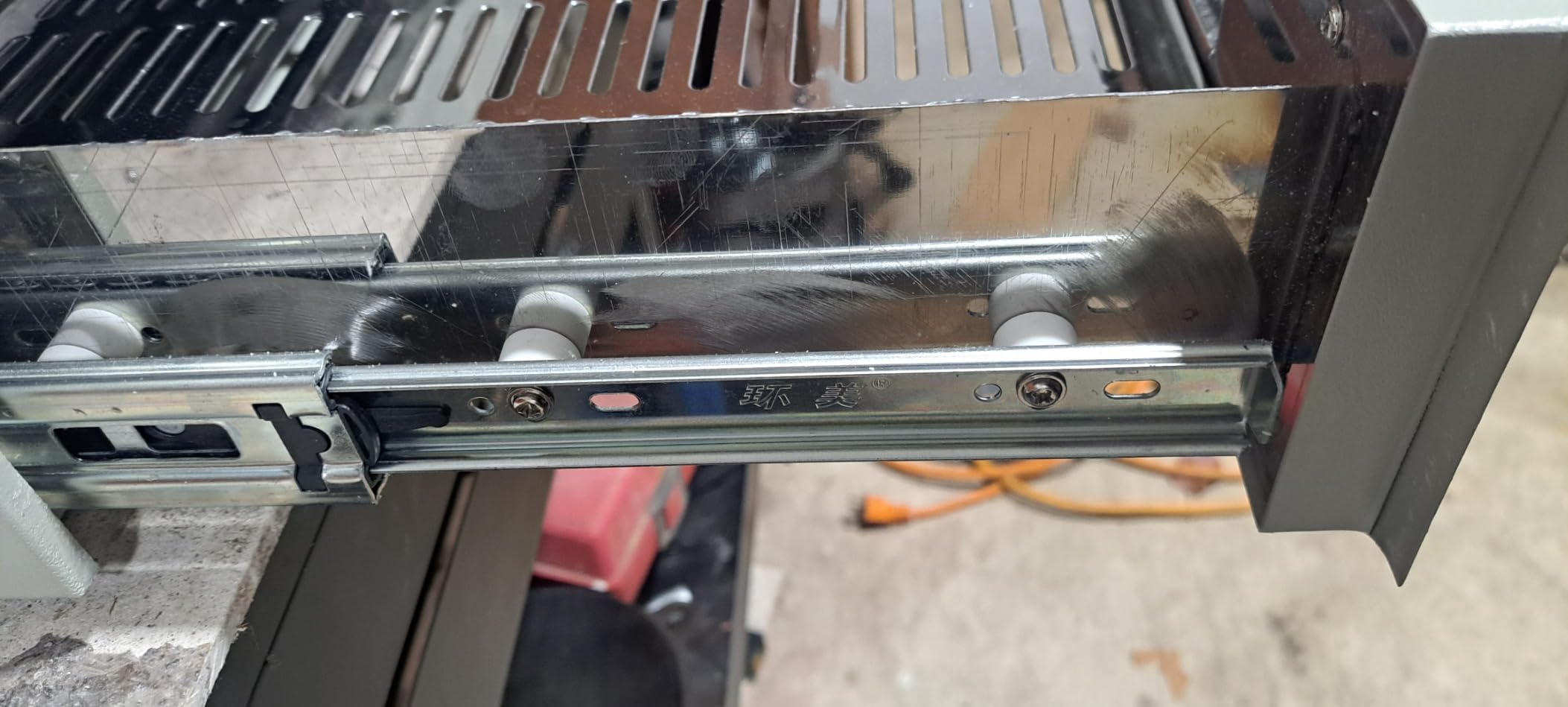
At this power level and capacity, the T962A fills the gap between entry-level hobbyist ovens and professional desktop SMT equipment. For makers producing small batches for sale or running prototype services, this is where the value proposition starts making real business sense.
Power and Electrical Requirements
The 1500W rating means this oven draws significant current on a standard 110V circuit. Make sure your outlet and circuit breaker can handle the load. Running other high-draw devices on the same circuit during reflow cycles is not recommended and could cause nuisance tripping.
Temperature Profile Tuning
While the 8 preset curves work for common applications, getting optimal results requires tuning profiles to your specific solder paste and board design. Start with the manufacturer recommended profile for your paste, then adjust soak time and peak temperature based on your results. Keep notes on what works for future reference.
4. SPIRICH T962A-V2.0 1500W Intelligent Reflow Oven – Smart Mid-Range
T962A-V2.0 Infrared IC Heater PCB Soldering Furnace 1500W Reflow Oven
1500W Power
300x320mm PCB Capacity
8 Curves
IR with Temp Fan
LCD Display
Pros
- Online function for monitoring
- Large 300x320mm capacity
- Temperature equalizing fan
- Exhaust pipe included
Cons
- Limited review history available
- Heavier unit requires sturdy bench
- Programming interface has learning curve
The SPIRICH T962A-V2.0 combines the larger 1500W heating capacity with the smart features that make the V2.0 line stand out. You get the same 300x320mm PCB capacity as the INTBUYING T962A, but with the addition of serial port connectivity for real-time curve monitoring and the exhaust pipe system for proper fume management. This positions it as a strong option for users who want both capacity and intelligent controls.
The infrared heating system on this model includes a temperature equalizing fan that actively circulates heated air throughout the chamber. This is a significant upgrade over pure infrared designs, because it addresses the fundamental problem of uneven heating that causes tombstoning on small components and incomplete reflow on thermal pads. The fan works during both heating and cooling phases, giving you more control over ramp rates.
The LCD display provides visual feedback on the current temperature, active curve, and cycle stage. With 8 temperature curves stored in memory and the ability to define custom settings through the online function, this oven offers flexibility that grows with your needs. The manual heating and forced cooling functions let you override the automatic cycle when you need to handle unusual situations.
SPIRICH designed this unit for reflow soldering, drying, insulation, shaping, and rapid cooling, making it more versatile than a single-purpose reflow oven. The multi-function capability means you can use it for pre-drying moisture-sensitive components or for thermal stress testing in addition to standard reflow work.
Online Function and Real-Time Monitoring
The serial connection provides live temperature data to your computer, displaying the actual curve alongside your target profile. This real-time feedback is invaluable when troubleshooting solder defects, because you can see exactly what happened thermally during each phase of the cycle.
Component Compatibility and Limitations
This oven handles all common SMD package types including CHIP, SOP, PLCC, QFP, and BGA. However, very large BGAs with high thermal mass may require extended soak times or higher peak temperatures that push the limits of the 300-degree maximum rating.
5. AiXun Precision 1600W Reflow Oven – Precision Control Focus
Precision 1600W Infrared PCB Soldering Furnace Reflow Oven for PCB Soldering with Hot Cyclic Wind Function
1600W Power
Far Infrared Heating
Distributed Thermocouple
Fault Detection
44 lbs
Pros
- Distributed thermocouple for accuracy
- Automatic fault detection alarm
- Handles lead-free solder alloys
- High efficiency far IR elements
Cons
- 44 pound weight is substantial
- No online PC connectivity
- Higher price than 1500W competitors
The AiXun Precision 1600W reflow oven stands out for its focus on temperature accuracy through distributed thermocouple measurement. Instead of relying on a single temperature sensor, this unit uses multiple thermocouples positioned throughout the heating chamber to build a complete picture of the thermal environment. This translates to more accurate profile execution and better consistency across different areas of the board.
The high efficiency far infrared heating elements deliver rapid thermal response while the microcomputer control system maintains precise curve tracking. I find the automatic fault detection alarm particularly valuable, because it catches problems like thermocouple failure or heating element issues before they result in damaged boards. This is a feature typically found only on more expensive industrial equipment.
At 44 pounds, this is a substantial piece of equipment that requires a sturdy bench or dedicated workstation. The weight reflects the heavier heating elements, better insulation, and more robust construction compared to budget models. The 1600W power rating provides excellent heating capacity for the A250 size class, giving you faster ramp rates and shorter cycle times.
The oven is specifically designed to handle various alloys including lead-free solder reflow requirements, which demand higher peak temperatures and tighter profile control. Lead-free soldering is increasingly the standard rather than the exception, and having equipment that handles it properly without struggling to reach temperature is important for long-term usability.
Temperature Measurement Architecture
The distributed thermocouple system samples temperature at multiple points in the chamber, feeding data to the microcomputer which adjusts heating element output to maintain uniform conditions. This closed-loop approach compensates for the thermal mass of different board designs and component layouts automatically.
Maintenance and Fault Handling
The automatic fault detection monitors heating element function, thermocouple integrity, and system communication. When a fault is detected, the alarm sounds and the system can shut down safely to prevent damage. This protective feature adds peace of mind during unattended production runs.
6. ITECHSMT RF-A350 Dual Heating Reflow Oven – Advanced Hybrid System
ITECHSMT Precision Lead Free Reflow Oven RF-A350, Desktop SMT Reflow Soldering Oven with 3D Hot Air & Infrared Heating, Multiple Temp Curves, Online PC Control for PCB Prototype and Production
2400W Power
Dual Heating System
3D Hot Air and IR
PC Control via DB9
220V
Pros
- Dual heating eliminates hot spots
- Real-time PC curve monitoring
- Lead-free capable
- Compact desktop design
Cons
- Requires 220V power supply
- No reviews yet to verify reliability
- Higher cost than single-heating ovens
The ITECHSMT RF-A350 introduces a genuinely different heating approach with its dual system combining 3D hot air circulation with infrared radiation. This hybrid method addresses the fundamental weakness of pure infrared ovens by adding convective heating that fills in the cold spots between IR elements. The result is measurably more uniform temperature distribution across the entire board surface.
The 2400W power rating provides serious heating capacity, enabling fast ramp rates and the ability to maintain stable temperatures even with thermally demanding board layouts. Real-time temperature curve monitoring through the DB9 serial connector lets you track the actual thermal profile as it happens, comparing it against your target values and making adjustments on the fly.
This oven is designed for R&D labs and small-batch production environments where getting the thermal profile exactly right matters. Multiple preset curves cover standard applications, and the working modes can be customized for specialized alloys or unusual board designs. The lead-free soldering capability means it can handle modern ROHS-compliant manufacturing requirements.
The desktop form factor saves bench space while delivering industrial-grade heating performance. This is the kind of oven that bridges the gap between hobbyist equipment and professional SMT lines, making it ideal for startups and prototype shops that need consistent results without investing in conveyor-style production equipment.
Dual Heating Technology Explained
The 3D hot air circulation creates a uniform thermal environment by actively moving heated air in multiple directions throughout the chamber. Combined with the infrared elements that provide rapid initial heating, this system achieves both speed and uniformity that single-method ovens cannot match.
Power Supply Considerations
This oven requires 220V power, which means you will need an appropriate outlet or a dedicated circuit. Standard US household outlets are 110V, so verify your electrical setup before purchasing. The 2400W draw on 220V is manageable on a standard circuit, but plan accordingly.
7. INTBUYING T962A+ 2300W Reflow Oven – High Power Large Capacity
INTBUYING 110V Reflow Oven T962A+ 2300W Micro-computer Control Reflow Soldering Machine with 17.7×14.6 Inch Soldering Area Drawer Type Lead Infrared IC Heater Free Reflow Soldering Machine
2300W Power
450x370mm Area
110V Operation
8 Curves
Drawer Type
Pros
- Massive 17.7x14.6 inch soldering area
- 2300W for rapid heating
- Standard 110V operation
- Vent pipe included
Cons
- High power draw on 110V circuit
- Large footprint needs bench space
- Limited user reviews available
The INTBUYING T962A+ steps up to 2300W of heating power while maintaining standard 110V operation, making it one of the most powerful reflow ovens you can run on a standard US household circuit. The 17.7×14.6 inch soldering area handles genuinely large boards and panelized designs that smaller ovens simply cannot accommodate.
This is the oven for makers working on LED panel arrays, large control boards, or multiple PCBs panelized together for batch efficiency. The infrared radiation combined with circulating air heating maintains reasonable temperature uniformity across the larger surface area, though you should expect some variation at the extremes of such a large chamber.
The 8 preset intelligent temperature curves cover common profiles, and the microcomputer control system manages the full reflow cycle automatically. The visual drawer-type workbench provides easy loading and unloading, while the vent pipe interface handles smoke exhaust through standard 110mm ducting.
Running 2300W on a 110V circuit means this oven draws over 20 amps, which is close to the limit of a standard household circuit. You should ideally have this on a dedicated circuit to avoid breaker trips, especially if you have other equipment running in the same workspace. The performance tradeoff for this power demand is genuinely impressive heating capacity.
Large Format Board Handling
The 450x370mm drawer accommodates boards that would not fit in standard desktop ovens. This includes large LED driver boards, industrial control panels, and multi-up panelized PCB designs where you run several identical boards through reflow simultaneously to increase throughput.
Circuit and Electrical Planning
Before purchasing, verify that your workspace has a 20-amp or higher dedicated circuit available. Sharing a 15-amp circuit with lighting or other devices will likely cause nuisance breaker trips during heating cycles. An electrician can install a dedicated circuit if your current setup cannot handle the load.
8. INTBUYING T962C 2900W Reflow Oven – Maximum Capacity Powerhouse
INTBUYING 110V Reflow Oven T962C 2900W Micro-computer Control Reflow Soldering Machine with 23.6×15.7 Inch Soldering Area Drawer Type Lead Infrared IC Heater Free Reflow Soldering Machine
2900W Power
600x400mm Area
0-280C Range
Digital Display
110V
Pros
- Largest soldering area in this lineup
- 2900W maximum heating power
- 8 intelligent curves
- Handles production-size boards
Cons
- Very high power consumption
- Substantial physical size
- Temperature stability at 280C max
The INTBUYING T962C is the heavy hitter of this lineup, offering a massive 23.6×15.7 inch soldering area backed by 2900W of heating power. This is a production-capable machine that can handle the kind of large-format boards and high-volume panelized runs that smaller ovens cannot touch. If you have graduated beyond hobbyist projects into small-scale manufacturing, this is the tier where the equipment starts matching professional needs.
The 600x400mm chamber accommodates full-size production panels, LED signage boards, and large industrial PCBs. At 2900W, the heating system brings the chamber to reflow temperatures quickly and maintains stability even when loading cold boards. The infrared radiation and circulating air combination provides the best available temperature distribution in this form factor.
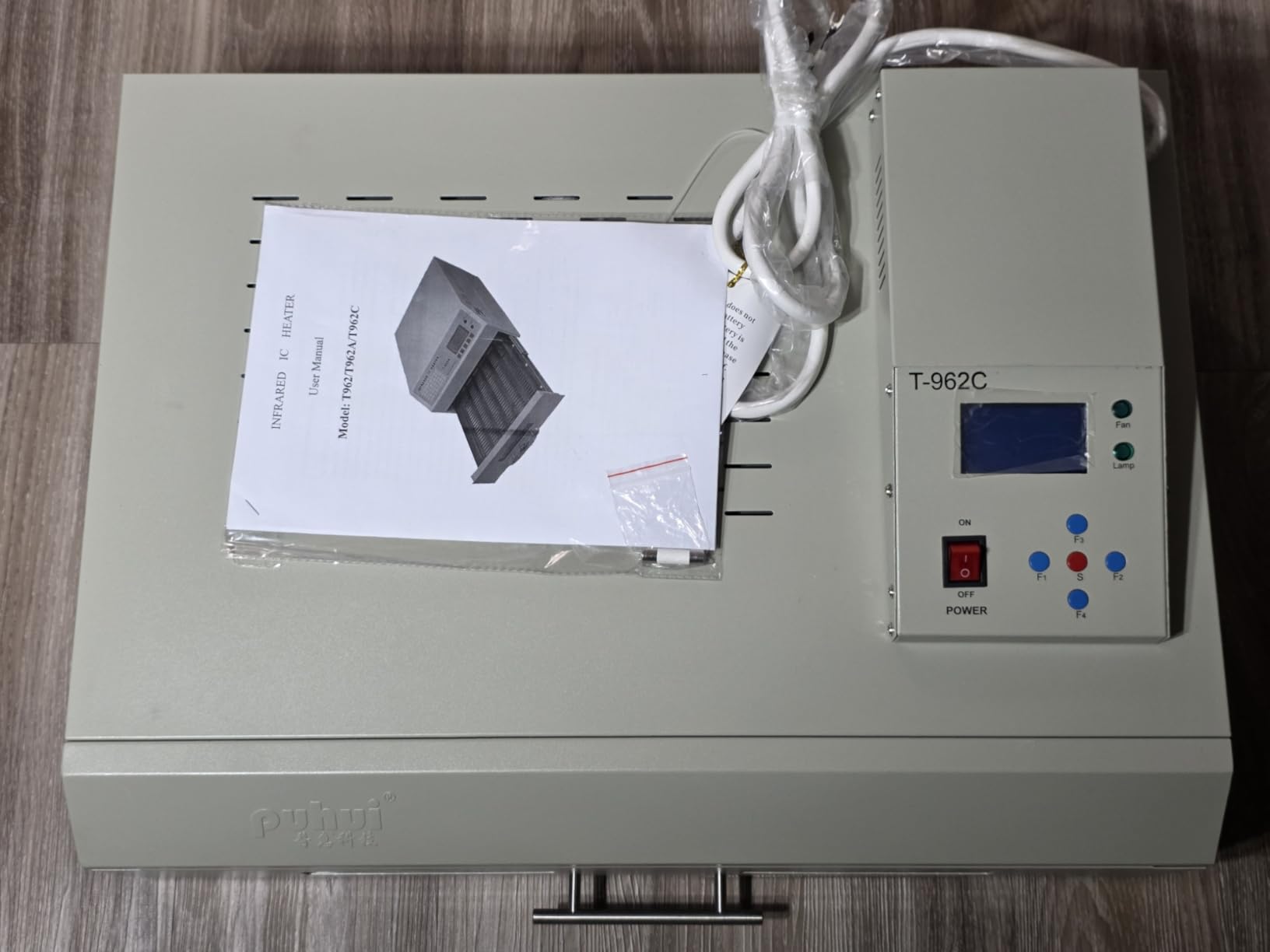
The digital graphical display shows temperature curves visually, making it easier to verify your profile before starting a run. Eight preset curves handle common solder paste specifications, and the microcomputer control manages preheat, soak, reflow, and cooling automatically. Temperature stability is rated at 280 degrees Celsius, which covers most lead-free solder profiles.
The cycle time of 1 to 9 minutes gives you flexibility for different profile requirements. Longer cycles with extended soak times are useful for boards with heavy ground planes or large thermal mass components. The vent pipe interface handles fume extraction through standard ducting.
Production Capability Assessment
This oven is suitable for small production runs of identical boards, prototype service operations, and educational makerspaces where multiple users need reliable reflow capability. The large chamber means fewer batch cycles for multi-board jobs, directly translating to time savings in production environments.
Infrastructure Requirements
At 2900W on 110V, this oven requires careful electrical planning. A dedicated 30-amp circuit is strongly recommended. The physical size also requires substantial bench space, and the weight means you need a sturdy work surface. Consider these infrastructure requirements as part of your total investment.
9. Banfluxion T-937 2.3KW Professional Reflow Oven – Closed-Loop Precision
Banfluxion Micro-computer Control Reflow Oven T-937 Professional Automatic Infrared Heater 2.3KW 110V Reflow Soldering Oven with 12×12.7in Drawer Area
2.3KW Power
300x315mm Area
Closed Loop Control
8 Curves
Exhaust Sealed
Pros
- Closed-loop temperature accuracy
- Sealed smoke vent system
- Handles SMD BGA QFP components
- Professional micro-processor control
Cons
- Higher price point
- No customer reviews yet
- Not Prime eligible
The Banfluxion T-937 brings professional-grade closed-loop temperature control to the desktop reflow oven category. Closed-loop control means the system continuously measures actual chamber temperature and adjusts heating element output in real time to maintain your programmed profile. This is the same control methodology used in industrial reflow equipment, and it delivers noticeably better profile accuracy than open-loop infrared heaters.
The 2.3KW heating system provides ample power for the 300x315mm soldering area, achieving rapid ramp rates and stable soak temperatures. The 8 intelligent temperature curves with visual display cover standard solder paste profiles, and the closed-loop thermocouple feedback ensures the actual temperature tracks your programmed curve closely throughout every phase.
I particularly appreciate the pre-installed exhaust pipe connectors with a sealed smoke vent system. Unlike budget ovens where the exhaust connection feels like an afterthought, the T-937 integrates fume extraction properly into the chamber design. This means more efficient fume removal and less leakage of flux vapors into your workspace.
The micro-processor controlled automatic operation handles the complete reflow cycle without intervention. The oven is designed for SMD, BGA, CHIP, SOP, PLCC, and QFP components, covering the full range of surface mount package types you will encounter in modern PCB assembly.
Closed-Loop vs Open-Loop Control
Open-loop ovens apply fixed power levels and assume the temperature follows a predictable path. Closed-loop systems continuously measure actual temperature and adjust power to maintain the target profile. The difference matters most during the reflow phase, where temperature accuracy of plus or minus 5 degrees can make or break solder joint quality.
Sealed Exhaust System Benefits
The sealed vent design prevents flux fumes from escaping through gaps in the chamber construction. All exhaust air routes through the designated pipe connection, making your ventilation system more effective and reducing exposure to solder fumes in your breathing zone.
10. TECHTONGDA 2500W Reflow Soldering Oven – Observation Window Design
TECHTONGDA Reflow Oven 110V Reflow Soldering Station 2500W Reflow Soldering Oven Professional Infrared Heater with 15.7×23.6in Soldering Area for PCB Chip Aluminum Substrate Lamp Bead Reflow Heating
2500W Power
600x400mm Area
LCD Display
Heat-Resistant Glass Window
Push-Pull Track
Pros
- Real-time observation window
- Large 600x400mm capacity
- 8 intelligent curves
- Push-pull loading track
Cons
- Not Prime eligible
- No customer reviews yet
- Heavy and bulky unit
The TECHTONGDA 2500W reflow oven earns its place in this guide partly because of one feature that sounds simple but matters enormously in practice, which is the heat-resistant glass observation window. Being able to watch the reflow process in real time, seeing the solder paste melt and flow, gives you immediate visual feedback on whether your profile is working correctly. This is something you cannot get from a closed chamber design.
The 600x400mm effective soldering area matches the largest capacity in this lineup, handling production-size boards and panelized designs. The 2500W infrared heating with air circulation provides uniform heat distribution across the full chamber area. Eight intelligent temperature curves with LCD interface control give you programming flexibility for different solder pastes and board requirements.
The push-pull track design for board loading is a thoughtful ergonomic feature. Instead of lifting a drawer straight out, the track mechanism lets you slide boards in and out smoothly, reducing the risk of disturbing component placement during loading. The micro-processor control manages the complete reflow cycle automatically once you have selected your profile.
Temperature stability is rated at 280 degrees Celsius, covering standard and lead-free soldering requirements. The pre-installed smoke exhaust interface connects to standard ducting for fume management. At this capacity and power level, the TECHTONGDA is positioned as a professional tool for serious assembly work.
Observation Window Practical Value
The heat-resistant glass window lets you see when solder paste transitions from paste to liquid, which is the single most important visual indicator in reflow soldering. You can immediately spot problems like paste not flowing in certain areas, components shifting during reflow, or excessive outgassing that indicates profile issues.
Push-Pull Track Operation
The track mechanism supports the board weight along its full travel, preventing the tilting or bouncing that can occur with drawer-style loaders on larger ovens. This is particularly valuable when loading heavy multi-layer boards or full production panels where even slight movement could misalign components before the solder solidifies.
Buying Guide: How to Choose the Best Reflow Ovens?
Choosing the right reflow oven means matching the machine capabilities to your actual needs. This buying guide breaks down the critical factors that should drive your decision, based on our analysis of specifications, user feedback, and practical PCB assembly experience.
Heating Method: Infrared vs Convection vs Hybrid
Infrared heating is the most common method in desktop reflow ovens. IR elements heat the board directly through radiation, which is fast and energy-efficient. The downside is potential hot spots near element positions and uneven heating on boards with varying thermal mass. Pure IR works well for small, uniform boards but struggles with complex layouts.
Convection heating uses circulating hot air to transfer heat uniformly across the board. This method produces more even temperatures but typically costs more and has slower ramp rates. Hybrid systems combining IR and convection offer the best of both worlds, using infrared for rapid initial heating and convection to even out the temperature distribution. The ITECHSMT RF-A350 with its 3D hot air plus IR system is an excellent example of the hybrid approach done well.
Temperature Range and Profile Control
Look for ovens that reach at least 250 degrees Celsius for leaded solder and 260 to 280 degrees for lead-free work. Most ovens in this guide handle lead-free requirements, but verify the maximum temperature rating matches your solder paste specifications. The ability to store multiple temperature curves is essential if you work with different paste types or board designs.
Profile control means being able to define preheat ramp rate, soak temperature and duration, peak reflow temperature, and cooling rate. Ovens with online PC connectivity give you the most control, because you can see the actual curve overlaid on your target profile and adjust in real time. Closed-loop control systems like the Banfluxion T-937 maintain better profile accuracy than open-loop designs.
Board Capacity and Soldering Area
The soldering area determines the maximum board size you can process. Compact ovens like the T962 handle 180x235mm boards, which covers most hobbyist projects. Mid-range options like the T962A offer 300x320mm capacity for larger designs. Production-focused ovens like the T962C and TECHTONGDA provide 600x400mm areas for full-size panels.
Consider not just your current largest board but what you might work on in the future. Buying an oven with some headroom in capacity costs less than replacing an undersized unit later. Also think about panelization, because running multiple small boards in one cycle dramatically improves throughput.
Power, Voltage, and Circuit Requirements
Power ratings in this guide range from 800W to 2900W. Higher wattage means faster heating and better temperature stability under load, but also greater electrical demands. Most 110V ovens up to about 1500W can run on standard household circuits. Ovens rated 2000W and above on 110V require dedicated circuits with appropriate amperage ratings.
The ITECHSMT RF-A350 requires 220V power, which may require electrical work if your workspace only has standard 110V outlets. Always verify your electrical infrastructure can support the oven before purchasing. An overloaded circuit will trip breakers mid-cycle, potentially ruining boards.
Ventilation and Safety Features
Proper fume extraction is non-negotiable for reflow soldering. Flux vapors generated during reflow contain chemicals you should not breathe. Look for ovens with exhaust pipe connections like the SPIRICH V2.0 models or the INTBUYING units with vent interfaces. Route exhaust to an external vent or through an activated carbon filtration system.
Other safety considerations include grounded electrical connections, heat-resistant exterior surfaces, and automatic shutdown features. The AiXun oven with its fault detection alarm represents good safety engineering. Never operate a reflow oven in an unventilated space, and always follow the manufacturer safety guidelines for your specific solder paste chemistry.
Programmability and User Interface
The ability to create and store custom temperature profiles separates useful ovens from frustrating ones. Eight preset curves is the standard among desktop ovens, covering common applications. However, the interface for adjusting those curves matters enormously. LCD displays with visual curve representation are easier to work with than basic numeric displays.
PC connectivity through serial ports allows real-time monitoring and more intuitive profile editing. If you plan to work with multiple solder pastes, different board designs, or unusual component packages, the online function available on SPIRICH V2.0 and ITECHSMT models is worth the investment. Being able to see your actual temperature curve during the cycle helps enormously with troubleshooting.
FAQs
What is the best reflow oven for under $1000?
The INTBUYING T962C 2900W offers the largest capacity and highest power under $1000, with a 600x400mm soldering area and 8 temperature curves. For smaller budgets, the INTBUYING T962A 1500W at around $470 delivers excellent value with 300x320mm capacity. The TECHTONGDA 2500W and Banfluxion T-937 are also strong options under $1000 for users who need large board capacity or closed-loop precision respectively.
What are most home hobbyists using for reflow ovens?
The T962 platform is by far the most popular choice among home hobbyists, as confirmed by Reddit communities like r/PrintedCircuitBoard and the EEVblog forum. The base T962 models from PROFIXXERS and SPIRICH dominate entry-level use due to their low cost. Users who want better features typically upgrade to the SPIRICH T962-V2.0 for PC connectivity and exhaust systems, or step up to the INTBUYING T962A for larger board capacity.
Is a reflow oven right for me?
A reflow oven is right for you if you regularly assemble surface-mount PCBs, work with packages smaller than 0805 or fine-pitch components like QFP and BGA, or need consistent results across multiple boards. If you only solder occasional through-hole components or large SMD parts, a good soldering iron may suffice. For anyone doing prototype runs, small batch production, or complex SMD layouts, a reflow oven dramatically improves quality and speed compared to hand soldering.
What should I look for when buying a reflow oven?
The key factors are heating method (hybrid IR plus convection is best for uniformity), temperature range (at least 280C for lead-free soldering), board capacity matching your largest expected PCB, power and voltage compatibility with your electrical setup, ventilation provisions for fume safety, and programmability with at least 8 storable temperature curves. PC connectivity for real-time monitoring is valuable for precision work.
Can I use a regular toaster oven for reflow soldering?
While some hobbyists convert toaster ovens for reflow soldering using aftermarket controller boards, this approach is strongly discouraged by professionals. Toaster ovens lack proper temperature control accuracy, have poor heat distribution, offer no fume extraction, and create safety hazards with solder paste fumes. A dedicated reflow oven like the budget-friendly T962 provides dramatically better results and safety for a modest investment.
Conclusion: Finding Your Best Reflow Oven in 2026
The best reflow ovens in 2026 cover a wide spectrum of needs and budgets, and the right choice depends entirely on your specific use case. For hobbyists just starting with SMT assembly, the PROFIXXERS T962 provides an affordable entry point that teaches the fundamentals of reflow profiling. The SPIRICH T962-V2.0 adds smart features like PC connectivity and proper exhaust that make it a better long-term investment for only slightly more money.
For users who need larger board capacity, the INTBUYING T962A at 1500W with its 300x320mm area represents the best overall value in this lineup. Production-focused makers should look at the INTBUYING T962C 2900W or TECHTONGDA 2500W for their massive 600x400mm chambers and high heating power. And for precision-focused applications where temperature accuracy is paramount, the AiXun with distributed thermocouples and the Banfluxion T-937 with closed-loop control deliver professional-grade profile management.
Whatever you choose, invest in proper ventilation, take time to dial in your temperature profiles, and keep detailed notes on what works for each board design and solder paste combination. A reflow oven is a tool that rewards careful setup with years of consistent, reliable solder joints. Choose based on your actual board sizes and production volume, not just on price or power specs, and you will have a machine that serves your PCB assembly needs well into the future.