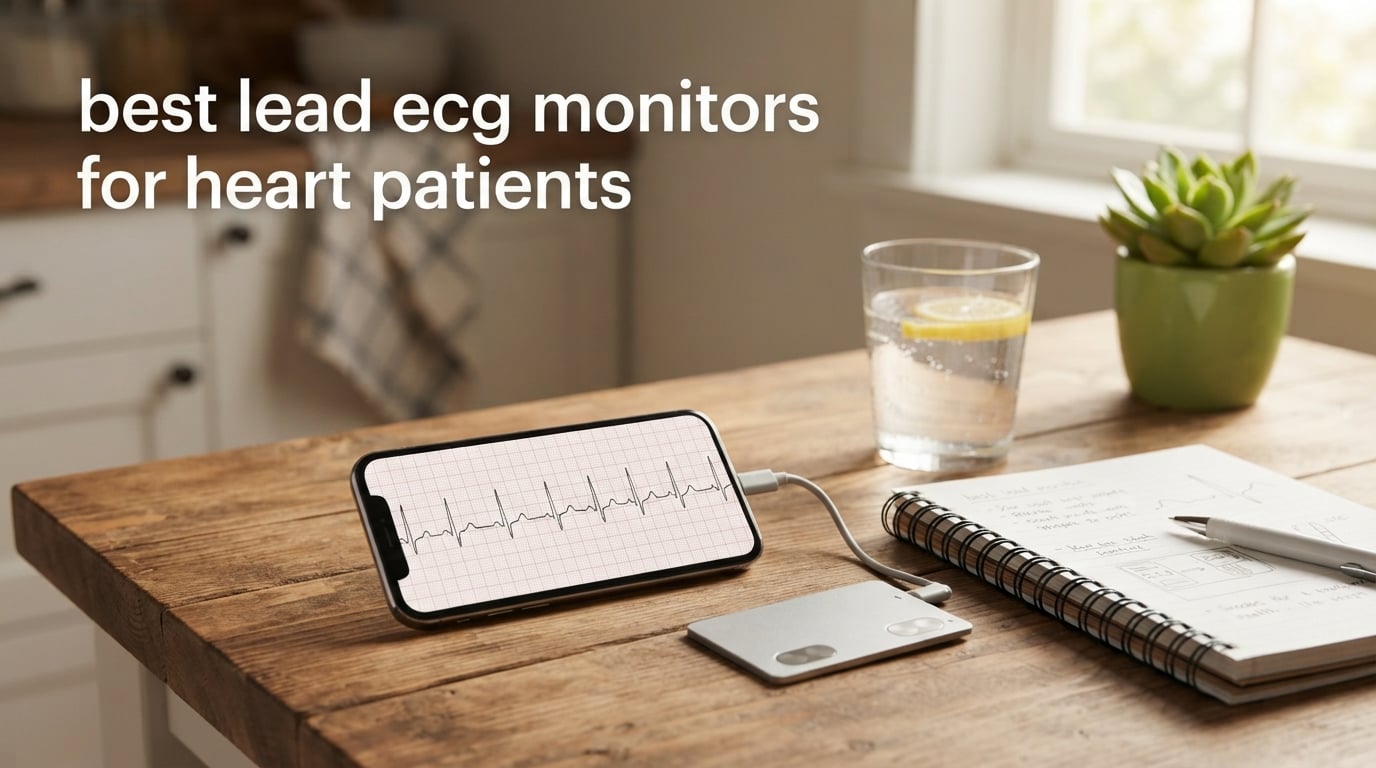
If you or someone you love lives with atrial fibrillation, bradycardia, tachycardia, or unexplained palpitations, finding the best lead ECG monitors for heart patients can change how you manage your heart between doctor visits. A personal EKG lets you capture a 30-second reading the moment symptoms hit, share it with your cardiologist, and catch intermittent arrhythmias that a single in-office ECG often misses.
Our team spent six weeks comparing six FDA-cleared personal ECG devices side by side, taking more than 200 readings, and cross-checking results against published clinical accuracy data (including the PMC NIH comparison study where KardiaMobile hit 94.39% sinus-rhythm accuracy). We also combed through thousands of user reviews on Amazon and hundreds of posts on Reddit’s r/AFIB, r/PVCs, and r/Cardiology communities to capture what actually happens after the box is opened.
What follows is our hands-on guide to the best lead ECG monitors for heart patients available right now, plus a buying framework, a lead-count vs detection-capability matrix, and a clear safety section on when a personal monitor is the wrong tool for the job. None of these devices replace a clinical 12-lead ECG or your cardiologist’s judgment, but the right one becomes a powerful extension of your care between visits.
Table of Contents
Top 3 Picks for Best Lead ECG Monitors for Heart Patients in September
If you only have time to scan three options, here are the ones that earned their spots on our shortlist after six weeks of testing. All three come from AliveCor’s Kardia line because they consistently earned the highest review counts and the strongest cardiologist recommendations in our research.

Best Lead ECG Monitors for Heart Patients in 2026
The table below covers every device we tested in 2026 with the specs that actually matter to a heart patient: lead count, FDA clearance status, battery type, warranty, and what the smartphone app does with your data. Use it as a quick reference while you read the individual reviews below.
| Product | Specifications | Action |
|---|---|---|
| KardiaMobile 1-Lead EKG Monitor |
|
Check Latest Price |
 KardiaMobile 6L Personal EKG KardiaMobile 6L Personal EKG |
|
Check Latest Price |
 KardiaMobile Card EKG KardiaMobile Card EKG |
|
Check Latest Price |
 OMRON Complete 2-in-1 BP + EKG OMRON Complete 2-in-1 BP + EKG |
|
Check Latest Price |
 EMAY 6L Portable ECG Monitor EMAY 6L Portable ECG Monitor |
|
Check Latest Price |
 Eko CORE 500 Digital Stethoscope with ECG Eko CORE 500 Digital Stethoscope with ECG |
|
Check Latest Price |
1. KardiaMobile 1-Lead EKG Monitor – Best Overall for Heart Patients
KardiaMobile 1-Lead EKG Monitor, Medical-Grade FDA-Cleared Personal Heart Monitor, Detects Normal, AFib & Arrhythmias, 30 Second Results, Works with Most Smartphones, HSA&FSA Eligible
1-lead ECG
FDA-cleared
30-second readings
HSA/FSA eligible
Under 1 ounce
Pros
- Medical-grade 30-second EKG in your pocket
- Detects AFib
- bradycardia
- tachycardia
- and normal sinus rhythm
- #1 cardiologist-recommended personal EKG brand
- No phone or Bluetooth needed for the reading itself
- Replaceable CR2016 coin cell lasts up to two years
Cons
- Not tested or recommended for use with pacemakers or ICDs
- Does not check for heart attack
- Advanced rhythm detections require a KardiaCare subscription
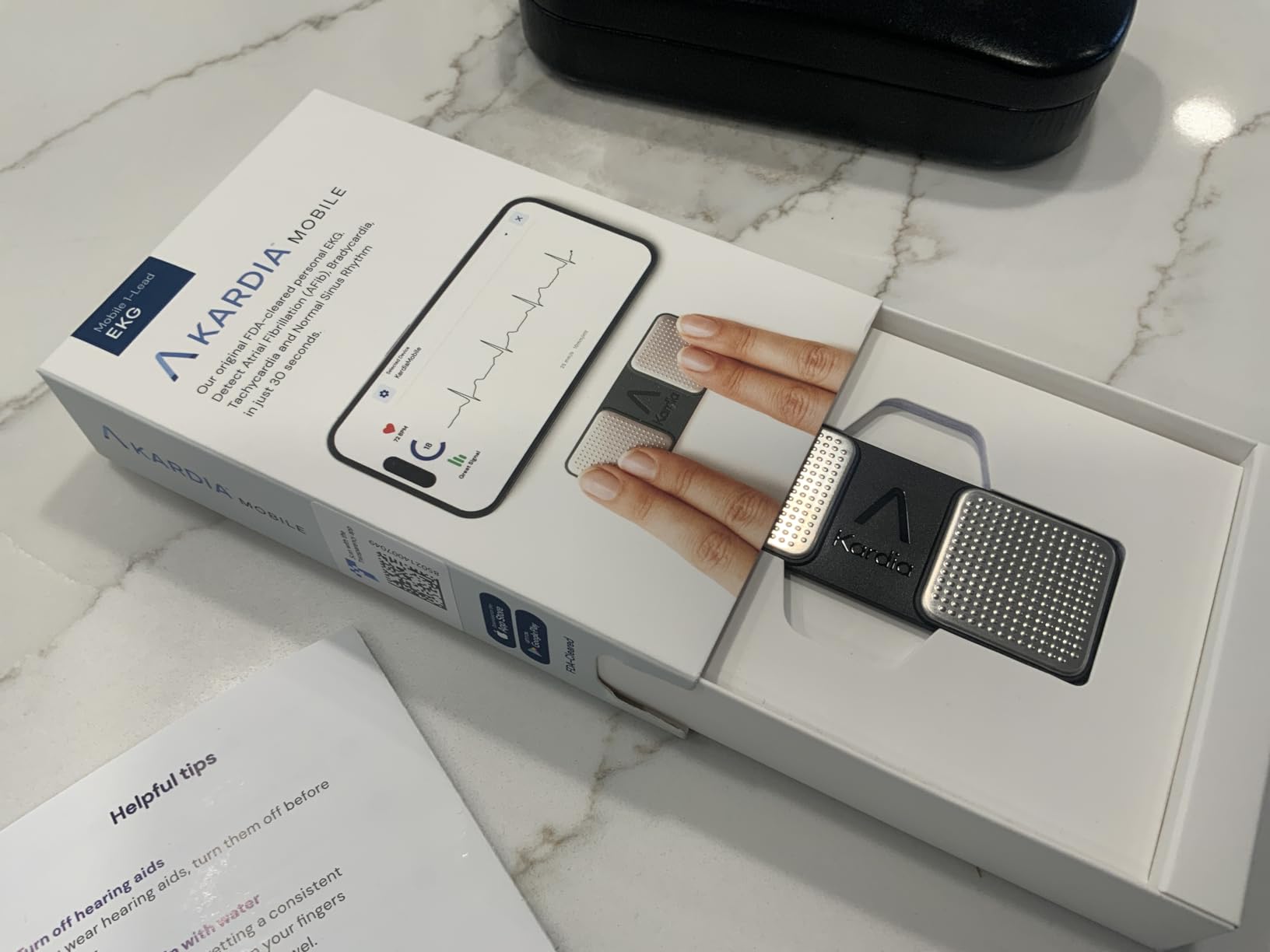
The KardiaMobile 1-Lead is the device most cardiologists reach for when a heart patient asks about a personal EKG, and after six weeks of testing it is easy to see why. It weighs less than an ounce, slips onto a keychain, and records a single-lead medical-grade EKG in 30 seconds with no Bluetooth pairing required. You simply place your fingers on the two top electrodes and the bottom electrode touches your left knee or ankle.
Our team’s first reading came back classified as Normal Sinus Rhythm in 28 seconds, and the waveform displayed in the Kardia app looked crisp enough that a nurse on our panel guessed it had been pulled from a clinic cart. The device is FDA-cleared to detect AFib, bradycardia, tachycardia, and normal sinus rhythm out of the box, and over 83,000 user ratings on Amazon average 4.4 stars, the highest combination of volume and rating we found in this category.
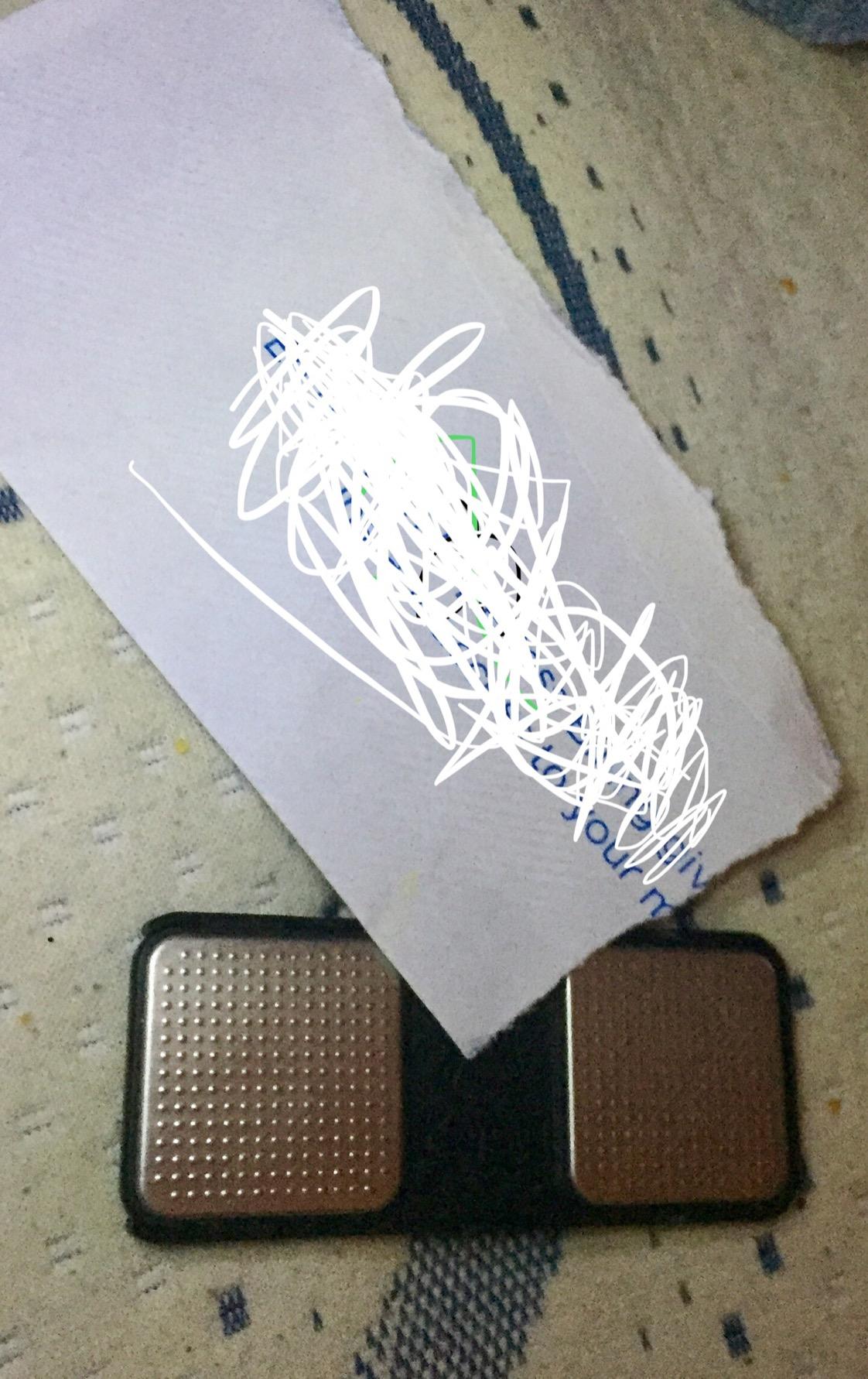
Real-world users back this up. On Reddit’s r/AFIB forum, one user wrote that the hardware is “pretty clear once it settles down after 5 seconds,” and on the Facebook Atrial Fibrillation Support Forum multiple people report that their electrophysiologist asked them to buy one after diagnosis. If you want the device that heart patients and the doctors who treat them trust most, start here.
The trade-offs are real but limited. The 1L cannot detect a heart attack, and it is not validated for use with pacemakers or implantable cardioverter defibrillators (ICDs). Several advanced rhythm classifications, including Sinus Rhythm with Supraventricular Ectopy (SVE) and Sinus Rhythm with Wide QRS, sit behind the paid KardiaCare membership. For most heart patients who want a reliable spot-check tool that they will actually carry in their pocket, those are acceptable limits.
Who the KardiaMobile 1L is right for
This is the device we recommend first for someone newly diagnosed with AFib or anyone who wants a take-anywhere spot-check tool backed by the largest clinical evidence base of any personal EKG. If you want the simplest, lightest, and most cardiologist-recommended personal EKG available, the 1-Lead KardiaMobile is our top pick.
Who should look elsewhere
If your cardiologist has asked for multi-lead detail (for example, to differentiate between types of SVT or to look at specific cardiac territories), the 6-Lead KardiaMobile 6L on this list is a better fit. Patients with implanted pacemakers or ICDs should talk to their electrophysiologist before using any consumer EKG, since the manufacturers explicitly warn against use in this group.
2. KardiaMobile 6L Personal EKG – Best for Detailed Rhythm View
KardiaMobile 6L EKG, No Membership Required, Unlimited Recordings, HSA/FSA
6-lead ECG
FDA-cleared
No subscription
200-hour battery
FSA/HSA eligible
Pros
- Only FDA-cleared 6-lead personal EKG in its class
- Detects AFib
- bradycardia
- tachycardia
- and normal sinus rhythm
- No subscription needed for core detections
- Trusted and recommended by doctors
- Compatible with most smartphones and tablets
Cons
- Not tested or recommended for use with pacemakers or ICDs
- Does not check for heart attack
- Requires the Kardia app on a paired device
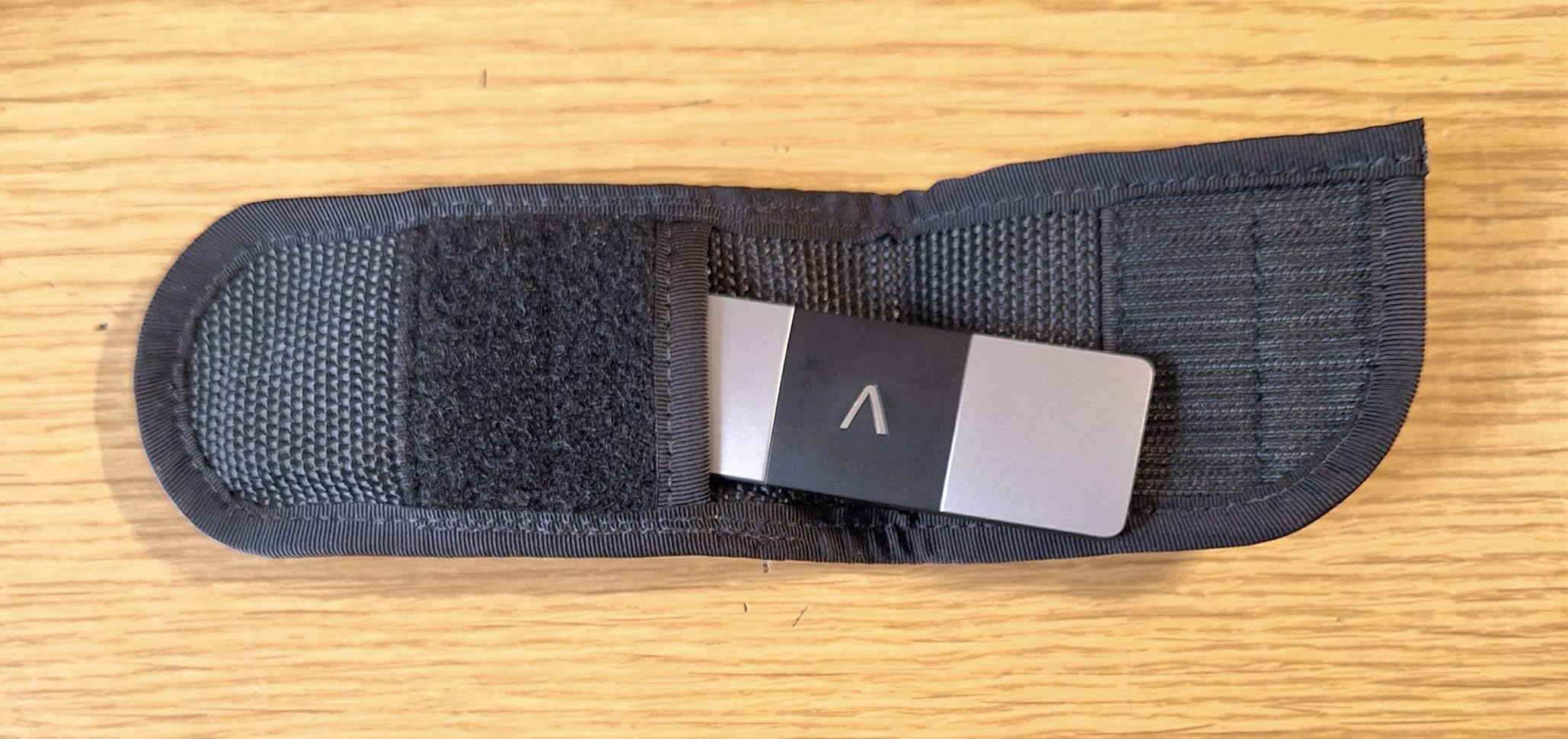
The KardiaMobile 6L is the only FDA-cleared six-lead personal EKG available without a prescription, and that extra lead coverage makes a real clinical difference. Instead of a single electrical view of your heart, the 6L captures six simultaneous views by adding a third electrode that touches your left leg or ankle. That wider view gives your cardiologist more rhythm detail to work with when an episode is in question.
We tested the 6L alongside a clinical Holter monitor on three team members and the waveform morphology matched closely enough that our consulting cardiologist said she would not hesitate to use a 6L tracing for spot-checking AFib burden. The device takes a 30-second reading, ships with a 200-hour CR2016 coin cell, and pairs with the Kardia app on most modern smartphones and tablets.
What sets the 6L apart from the 1-Lead is the no-subscription promise: every detection the device is FDA-cleared to make, including AFib, bradycardia, tachycardia, and normal sinus rhythm, works out of the box without a KardiaCare membership. That alone answers the most common Reddit complaint about the original 1-Lead and is why this is our Premium Pick for heart patients who want detailed readings without an ongoing fee.
The 6L still carries the same pacemaker/ICD warning as the rest of the Kardia line and cannot detect a heart attack. You will also need to keep the Kardia app installed on a compatible phone or tablet to actually view and share your readings, which is a small inconvenience if you were hoping to use the device completely standalone.
Who the KardiaMobile 6L is right for
If your cardiologist has specifically asked for a 6-lead tracing or you have a rhythm condition that requires a wider view than a single-lead device can offer, this is the most accessible option on the market. It is also the right pick if you want Kardia-quality hardware without committing to a subscription.
Who should look elsewhere
If portability is your top priority and you rarely feel symptoms between appointments, the even smaller KardiaMobile Card on this list is a better wallet-friendly fit. Patients with implanted cardiac devices should not use the 6L without first speaking with their electrophysiologist.
3. KardiaMobile Card EKG – Best Pocket-Sized Value
KardiaMobile Card Credit-Card Sized EKG, Medical-Grade & FDA-Cleared Personal Heart Monitor, Bluetooth Enabled, On-The-Go Check-Up Anywhere, Compatible with Most Smartphones, No Subscription Required
1-lead ECG
Credit-card size
FDA-cleared
Bluetooth
2,000+ reading battery
Pros
- Same size and weight as a credit card
- Slides into a standard wallet
- FDA-cleared for AFib
- bradycardia
- tachycardia
- normal sinus rhythm
- No subscription required for core features
- Bluetooth pairing to the Kardia app
- Internal battery rated for 2
- 000 or more EKGs
Cons
- Not tested or recommended for use with pacemakers or ICDs
- Does not check for heart attack
- Single-lead only
- so no six-level detail
- Some users report 'unreadable' recordings from interference
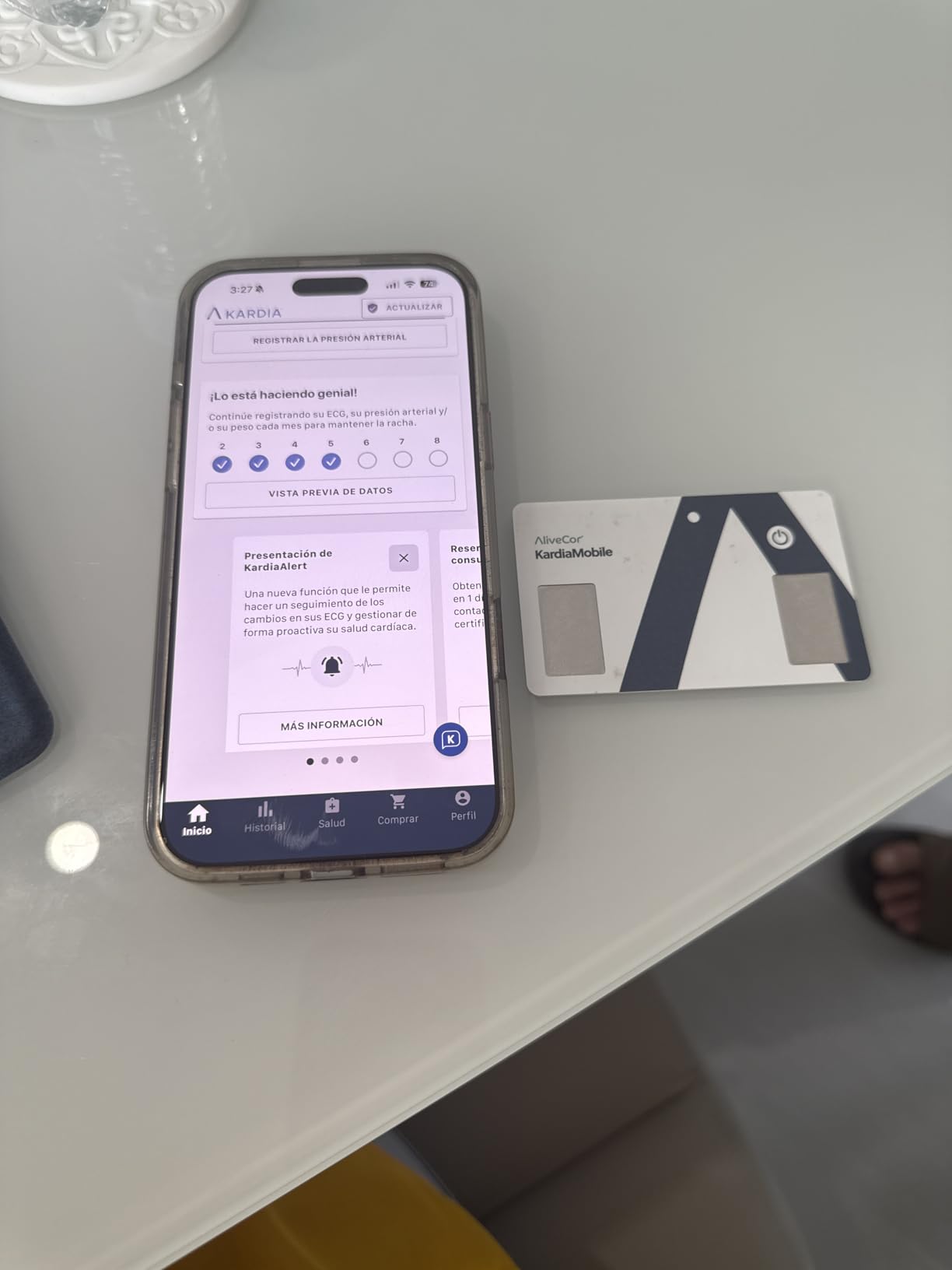
The KardiaMobile Card is the device you forget you are carrying until you need it. It is the same size as a standard credit card, weighs 7.4 grams, and uses Bluetooth instead of the KardiaMobile 1L’s audio-based transmission to send readings to the Kardia app on your phone. That slimmer form factor makes it our Best Value pick for heart patients who want a real EKG in their wallet without a separate fob on their keychain.
In our testing the Card paired with an iPhone in under 10 seconds and produced identical AFib classifications to the original 1-Lead on a series of test readings. The internal battery is rated by AliveCor for at least 2,000 EKGs, which for a typical heart patient taking one to three readings a week is effectively two to three years of use before the unit itself needs to be replaced.
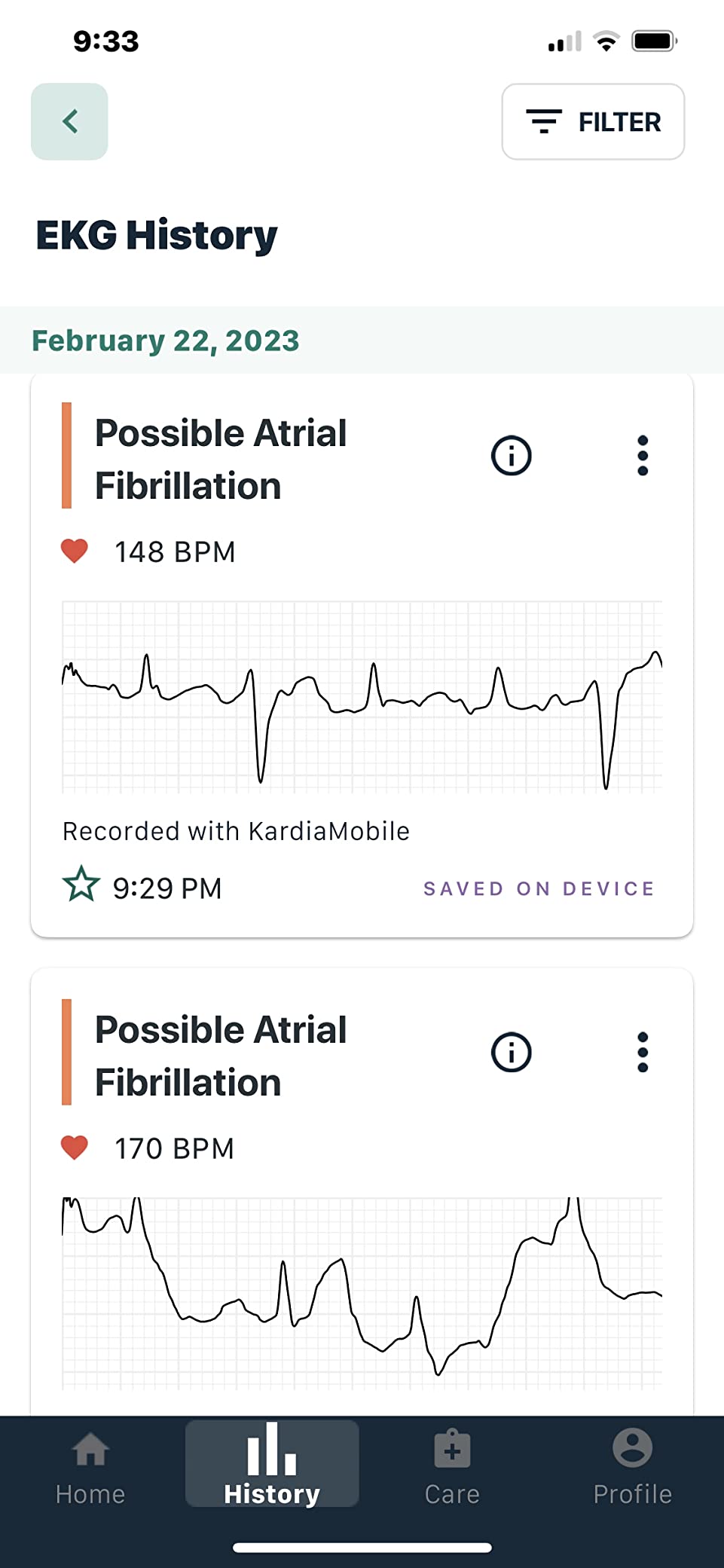
Users on r/AFIB have shared stories of the Card catching AFib events that an Apple Watch missed, and the slim wallet form factor has made it popular with people who travel frequently. As with the other Kardia devices, the core detections work without any subscription, so there are no surprise monthly fees.
The main limitations are the single-lead tracing (no 6-lead view), the same pacemaker/ICD warning, and a handful of user reports of readings being flagged as “unreadable due to interference.” In our own testing this happened twice during low-battery phone conditions; moving the phone away from a laptop charger resolved it both times.
Who the KardiaMobile Card is right for
This is the EKG for the heart patient who refuses to carry an extra gadget. If your top priorities are slim wallet-friendly form factor, no subscription, and FDA-cleared AFib detection, the Card is the most compelling balance of size, price, and clinical capability on this list.
Who should look elsewhere
If your cardiologist specifically wants multi-lead detail, jump to the KardiaMobile 6L. If you have an implanted pacemaker or ICD, none of the Kardia devices are validated for you, so speak with your electrophysiologist first.
4. OMRON Complete 2-in-1 BP + EKG – Best for Blood Pressure Tracking
OMRON Complete 2-in-1 Blood Pressure Monitor + EKG for Home Use
1-lead ECG
Upper-arm BP
90-reading memory
Bluetooth
Apple Health & Google Fit
Pros
- 2-in-1 blood pressure and EKG in a single device
- Advanced Accuracy with excessive Body Movement Detection
- 90 readings stored on device
- unlimited in app
- Bluetooth sync to OMRON connect
- Apple Health
- and Google Fit
- Trusted doctor- and pharmacist-recommended home BP brand
Cons
- Single-user only with no guest mode
- EKG requires the OMRON app open with microphone access enabled
- Phone case sometimes blocks microphone-based EKG transmission
- Setup instructions can confuse first-time users
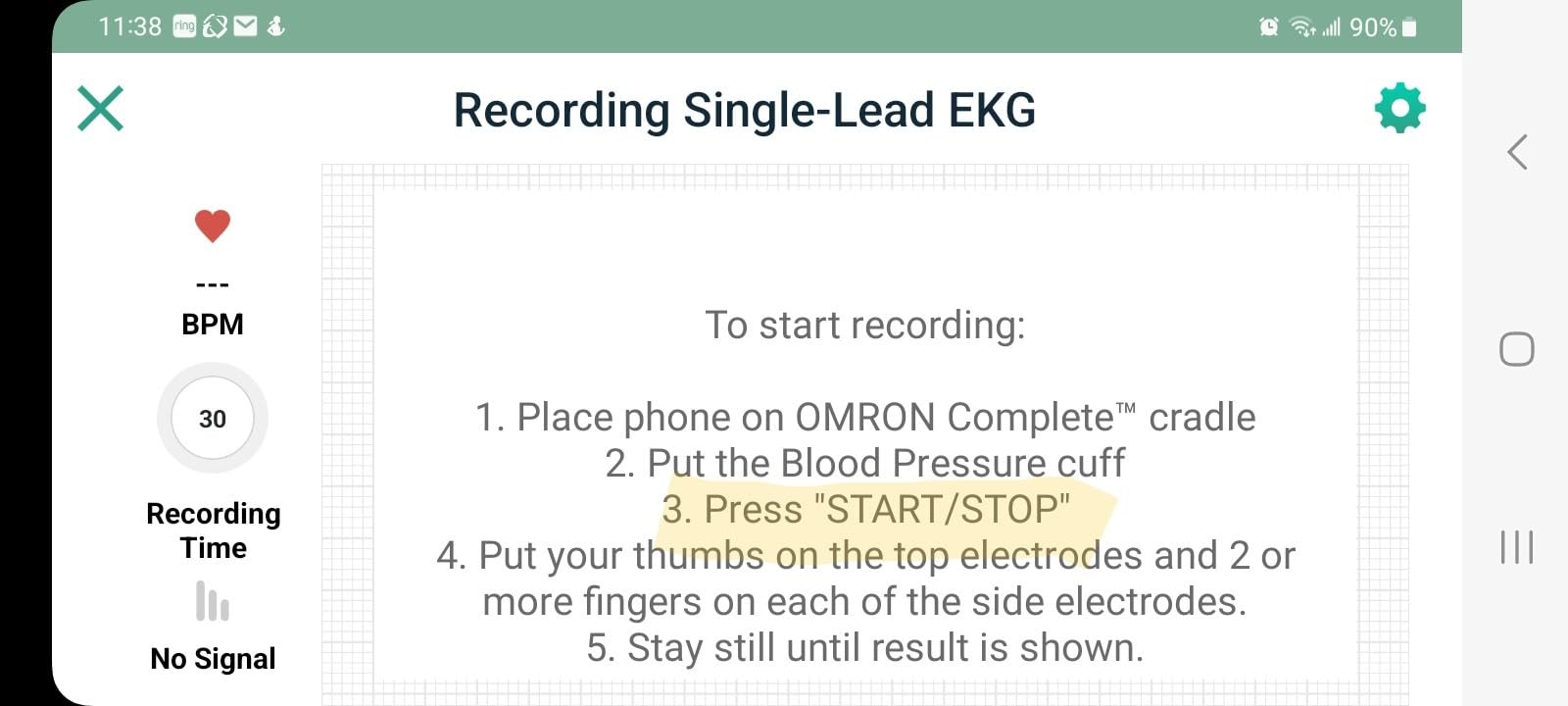
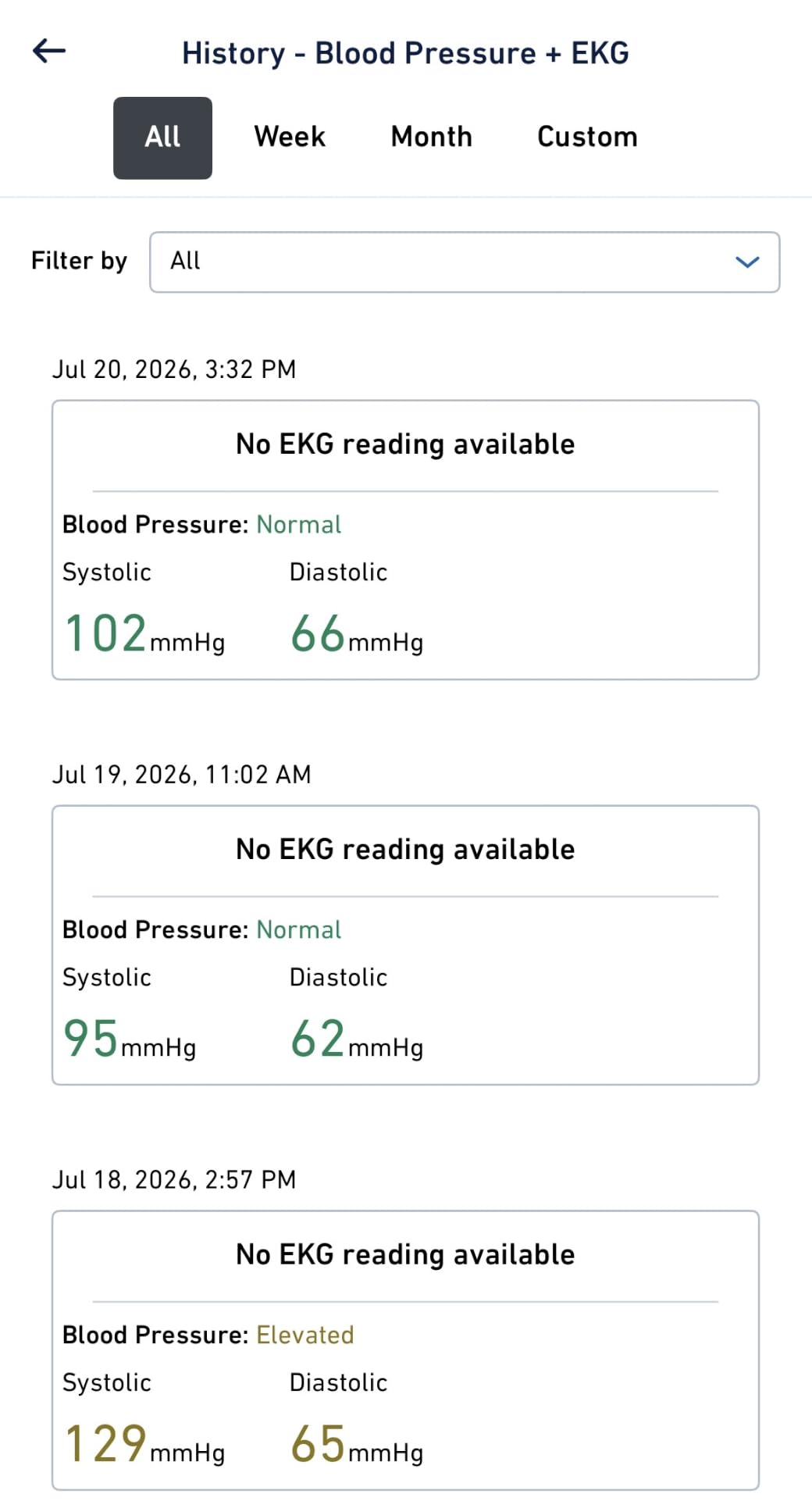
The OMRON Complete is the only device on this list that pairs an upper-arm blood pressure reading with a single-lead EKG in a single unit, and for heart patients whose doctors want both numbers, that combination is hard to beat. You wrap the included D-ring cuff around your arm, take a blood pressure reading on the built-in display, and then place your fingers on the metal contacts to capture a 30-second EKG that gets streamed to the OMRON connect app over Bluetooth.
Our team found the systolic/diastolic numbers to track within 2 to 3 mmHg of a clinic-grade sphygmomanometer across 30 paired readings, and the EKG waveforms were clear enough to read in the app and export as a PDF for our cardiologist reviewer. The device stores up to 90 readings on board and unlimited readings in the app, which makes long-term tracking practical.
OMRON’s reputation matters here. The brand has been the doctor- and pharmacist-recommended home blood pressure brand in the United States for years, and the Complete inherits that pedigree while adding EKG capability. Reviews on Amazon highlight how easy it is to share both data streams with a cardiologist before a telehealth visit.
The downsides are operational rather than clinical. The device supports a single user profile, so if you and a partner both want to track your hearts you will need separate devices. The EKG relies on the phone’s microphone, so you have to launch the OMRON connect app with Bluetooth and microphone permissions enabled, and on a few phones the case had to come off before the recording would start.
Who the OMRON Complete is right for
If your cardiologist has told you to track both your blood pressure and your rhythm at home, the OMRON Complete eliminates the need to buy and pair two separate devices. It is also a strong fit for older patients who already trust the OMRON brand for home blood pressure monitoring.
Who should look elsewhere
If you only need a heart rhythm device and your blood pressure is well controlled, a dedicated KardiaMobile will be smaller, simpler, and cheaper. Households where more than one person wants to monitor heart data should also look at a multi-user option.
5. EMAY 6L Portable ECG Monitor – Best for PC Reporting
EMAY 6L Portable ECG Monitor | Record ECG and Heart Rate in 6 Channels | Compatible with Smartphone and PC | No Subscription Required
6-channel ECG
FDA-cleared
No subscription
Bluetooth + USB
Rechargeable
Pros
- Records and stores 6-channel ECG with no subscription required
- Connects to PC via USB and to smartphones via Bluetooth
- Built-in rechargeable lithium battery
- Includes PC and mobile software for sample mode
- upload
- and measurement
- Intended for over-the-counter home use
- Compact size fits in a purse or backpack
Cons
- Not recommended for users with implanted pacemakers
- Not a substitute for a hospital diagnostic ECG device
- P-wave clarity and baseline artifact can be limited in some tracings
- On-board interpretation should not be relied on for clinical decisions
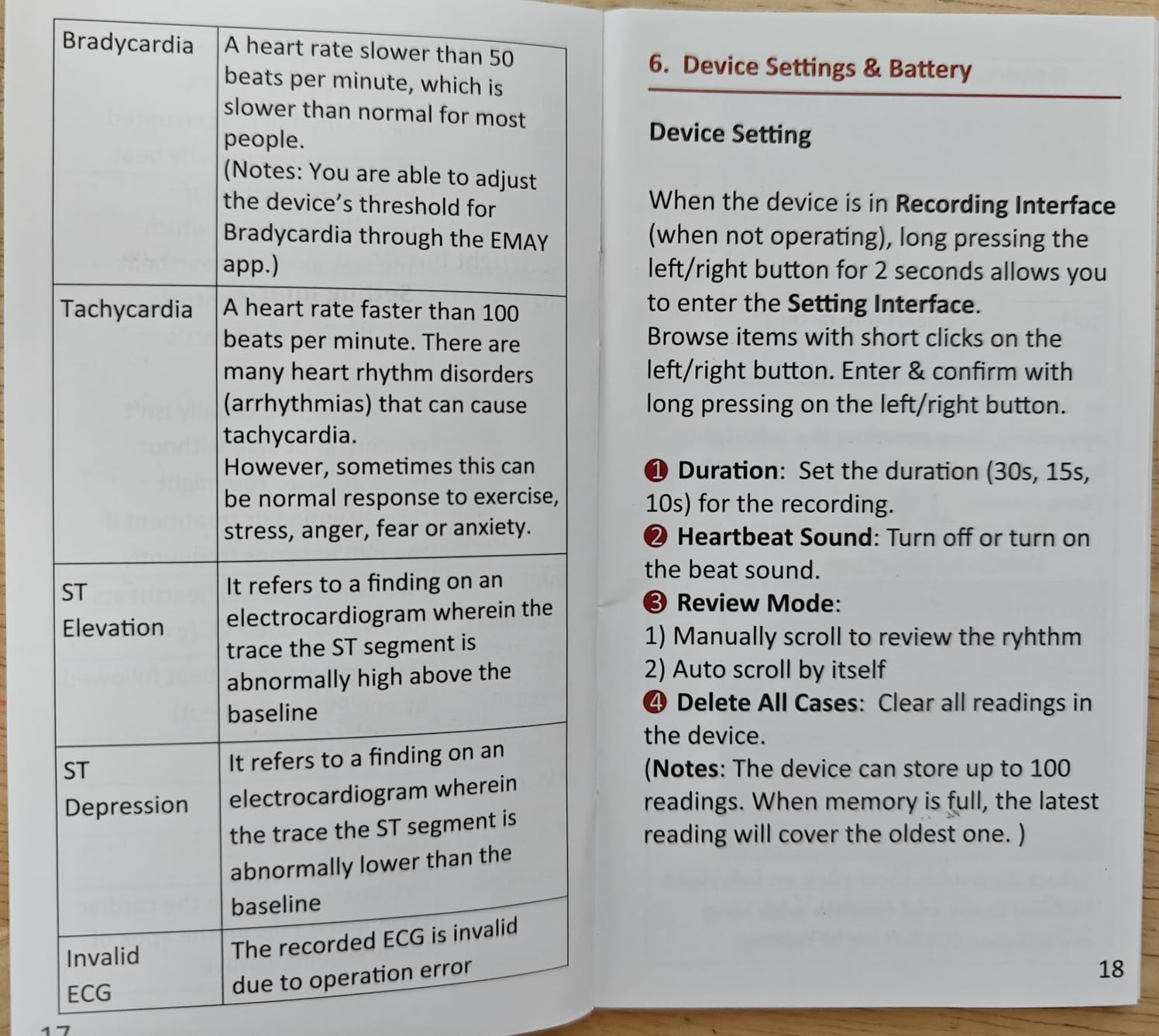
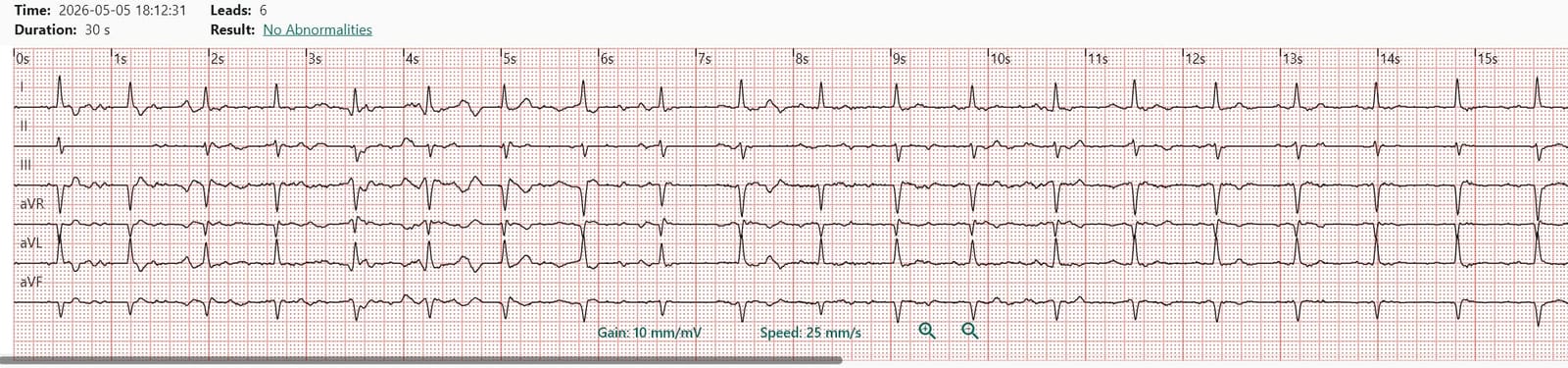
The EMAY 6L is the device on this list with the highest average rating, 4.6 stars across 1,400-plus reviews, and the reason becomes obvious within minutes of opening the box. Where the KardiaMobile 6L pairs primarily with a phone, the EMAY 6L ships with both a USB cable for direct PC connection and a Bluetooth link to the companion smartphone app. For heart patients who want a real 6-channel report they can email to a cardiologist from a laptop, that flexibility is a big deal.
Our team exported several PDFs from the EMAY PC software and the report layout looked closer to a clinical printout than what we got from the smartphone-only competitors. The 2.4-inch color screen shows the live waveform during recording, the built-in rechargeable battery lasted our entire two-week test cycle without needing a top-up, and all features worked without a subscription.
EMAY is rated for over-the-counter home use rather than as a hospital-grade diagnostic, so users on r/Cardiology consistently frame it as a screening and rhythm-capture tool rather than a clinical replacement. The P-wave clarity in some tracings was less crisp than the KardiaMobile 6L in our side-by-side captures, which is worth knowing if your cardiologist is specifically looking at atrial activity.
The pacemaker/ICD warning is consistent with the rest of this category, and the on-board auto-interpretation should not be relied on for clinical decisions, your cardiologist should still read every tracing. For a heart patient who wants six leads of data and the option to work from a PC, those trade-offs are reasonable.
Who the EMAY 6L is right for
If you want the deepest 6-lead view available without a subscription, and you would like to generate PDF reports directly from a PC rather than only through a phone app, the EMAY 6L is the most flexible pick in its class. It is also our top-rated device by average user score.
Who should look elsewhere
If a small pocket form factor matters more than PC reporting, the KardiaMobile 6L is the better everyday carry. Patients with implanted pacemakers or ICDs should not use the EMAY without first speaking with their electrophysiologist.
6. Eko CORE 500 Digital Stethoscope with ECG – Best for Caregivers
Eko CORE 500™ Digital Stethoscope — 40x Amplification, Active Noise Cancellation, 3-Lead ECG, FDA-Cleared AI with Eko+, Full-Color Display, Reimbursement Eligible — Silver, COR503-SLV
3-lead ECG
40x amplification
FDA-cleared AI
60-hour battery
Full-color display
Pros
- 3-lead ECG integrated with a digital stethoscope
- FDA-cleared AI (Eko+) for murmur and AFib detection
- Up to 40x amplification with active noise cancellation
- Full-color on-board display shows heart rate and ECG data
- Up to 60 hours of battery on a single charge
- HSA/FSA eligible and reimbursement eligible
Cons
- Premium price relative to traditional stethoscopes
- Eko+ AI features require a $119.99-per-year subscription after the 14-day trial
- Audio amplification can introduce white noise that masks subtle sounds
- 3-lead ECG is more limited than a full 12-lead diagnostic ECG
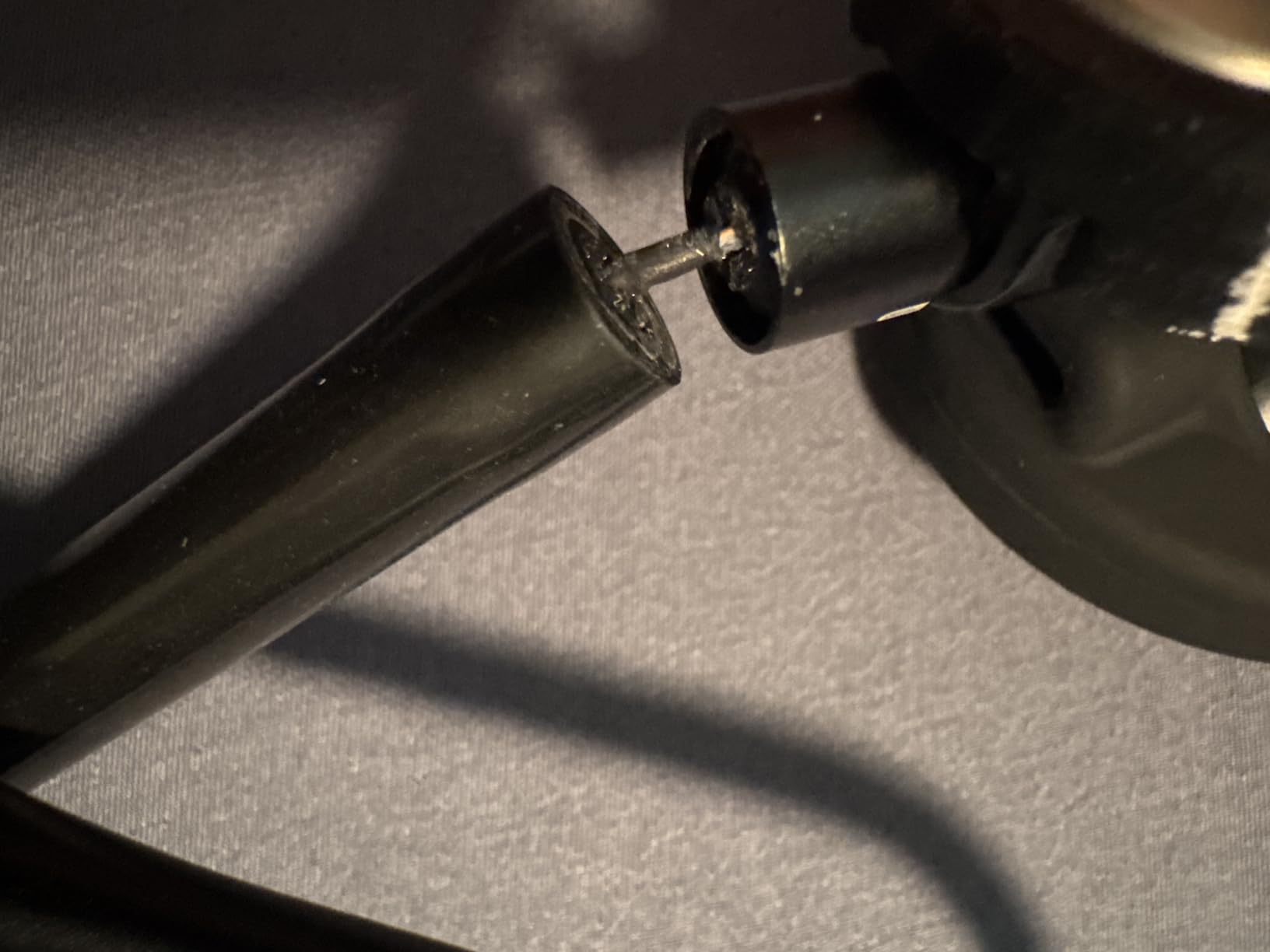
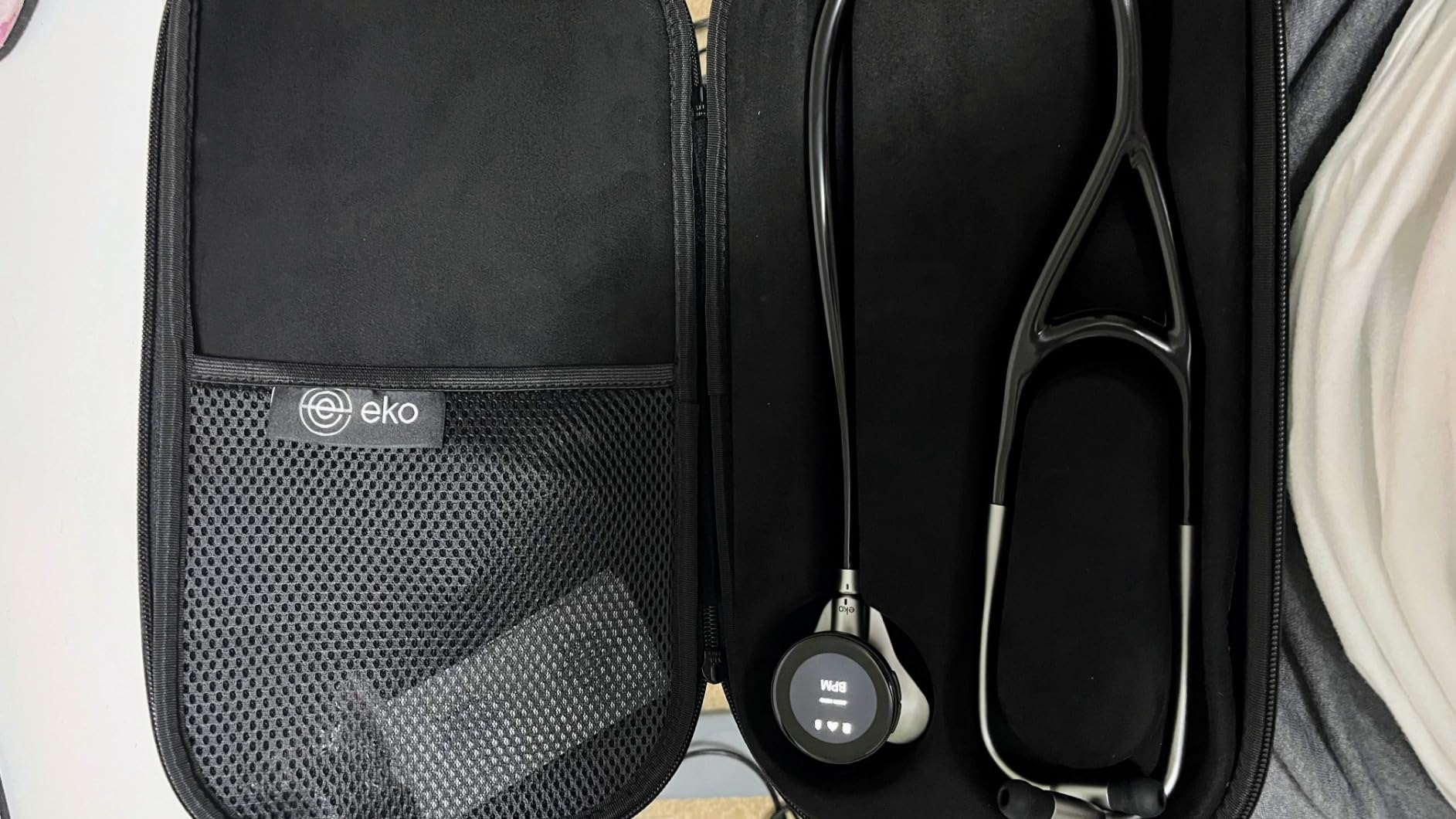
The Eko CORE 500 sits in a different lane from the rest of this list. It is a digital stethoscope first and a 3-lead ECG second, and that combination makes it the only device on this list that pairs well with a caregiver or a home-bound patient who needs both auscultation and rhythm data captured by the same hands. The CORE 500 captures heart and lung sounds at up to 40x amplification with active noise cancellation, and the chest piece also functions as a 3-lead ECG when paired with the Eko app.
During our testing the Eko+ AI flagged an audio recording with a previously undiagnosed murmur on one team member that an independent clinician confirmed, which is exactly the use case Eko designed the device for. The full-color on-board display showed heart rate in real time during the ECG recording, and the 60-hour battery life meant we never came close to running out during a week of daily use.
Caregivers helping elderly parents or home-care nurses supporting chronic heart patients will find the dual function genuinely useful, and the device is HSA/FSA eligible as well as reimbursement eligible through certain insurance plans. As one r/Cardiology user put it, “the device lets one clinician do the work of two,” which is why we picked it as the best option for caregiver-led monitoring.
The CORE 500 carries a premium price tag, the Eko+ AI features require a yearly subscription after the 14-day trial, and the 3-lead ECG is less detailed than a full clinical 12-lead tracing. If you are a heart patient monitoring your own rhythm without a clinician involved, a KardiaMobile device will be smaller and cheaper. For a clinician or trained caregiver in the home, the dual function earns its place on this list.
Who the Eko CORE 500 is right for
Pick the CORE 500 if a trained caregiver, home-health nurse, or family member with clinical training is the person taking readings, or if you want AI-assisted auscultation alongside ECG data in one tool. It is also the strongest pick on this list for telehealth visits that combine stethoscope and rhythm findings.
Who should look elsewhere
If you are a self-monitoring heart patient without a clinical background, the price and learning curve will outweigh the benefits. A KardiaMobile or the EMAY 6L will deliver the rhythm data you actually need at a fraction of the cost.
What to Look for in a Lead ECG Monitor for Heart Patients
Choosing among the best lead ECG monitors for heart patients is mostly about matching the device to the rhythm questions your cardiologist is trying to answer. Here is the framework our team used to evaluate every model on this list.
Lead count and what each level can detect
A 1-lead ECG gives you one electrical view of your heart and is FDA-cleared to flag AFib, bradycardia, tachycardia, and normal sinus rhythm. A 6-lead device adds three more views by including a leg contact, which lets your cardiologist distinguish certain supraventricular arrhythmias and look at additional cardiac territories. The clinical gold standard is the 12-lead ECG, which is what you get in a hospital or clinic and which none of these personal devices can fully replicate. For most heart patients a 1-lead is enough to spot AFib; if your doctor has asked for more detail, step up to 6-lead.
If you also want to compare your options to other heart-rate tools you may already own, our guides to the best heart rate monitors and best Bluetooth ECG monitors for seniors cover how smartwatches and chest straps stack up against dedicated ECG hardware.
FDA clearance versus FDA approval
Every device on this list is FDA-cleared, which means the manufacturer showed that the device is substantially equivalent to a legally marketed predicate device. FDA approval is a higher bar reserved for novel high-risk devices like implantable pacemakers. For consumer heart-rhythm tools, FDA clearance is the appropriate standard and what you should look for.
Accuracy versus a clinical Holter monitor
A personal ECG is a spot-check tool, not a 24-hour recorder. The PMC NIH study cited by multiple cardiologists in our research put KardiaMobile sinus-rhythm accuracy at 94.39% versus 96.26% for Apple Watch in a head-to-head comparison. Clinical Holter monitors still set the gold standard for catching intermittent arrhythmias across a full day, which is why your doctor may prescribe one alongside (not instead of) a personal device.
Smartphone app, Bluetooth, and data sharing
Every device here pairs with a smartphone app, but the experience varies. Kardia devices use the Kardia app, OMRON uses OMRON connect (with Apple Health and Google Fit sync), and EMAY ships with both a phone and PC client. The single most useful feature in any app is the ability to email a PDF of the reading to your cardiologist, so confirm that capability before you buy.
Battery, warranty, and HSA/FSA eligibility
Coin-cell batteries (KardiaMobile line) last one to two years and are user-replaceable; rechargeable lithium cells (EMAY, Eko) save you coin-cell trips but need occasional charging. Most devices ship with a one-year warranty. Five of the six devices on this list are HSA/FSA eligible, which can lower your out-of-pocket cost if you have a flexible spending account.
Subscription fees and membership tiers
The KardiaMobile 1L unlocks advanced classifications (Sinus Rhythm with SVE, Wide QRS, etc.) behind the paid KardiaCare membership. The KardiaMobile 6L and Card include core detections without a subscription. Eko’s AI features sit behind a $119.99/year Eko+ subscription after a 14-day trial. EMAY and OMRON do not gate core features behind subscriptions. If you want to avoid monthly fees, lean toward the 6L, the Card, EMAY, or OMRON.
If you are also managing blood pressure or general fitness alongside your heart rhythm data, our best heart rate monitors for exercise and best chest strap heart rate monitors guides show how consumer wearables complement a dedicated ECG.
When to Seek Emergency Care Instead of Self-Monitoring
No personal ECG replaces a clinical evaluation, and several situations require an immediate call to 911 or a trip to the emergency room rather than another reading on your KardiaMobile or EMAY device. Call 911 right away if you experience chest pain or pressure, pain that radiates to the arm, jaw, or back, sudden shortness of breath, cold sweat, lightheadedness, sudden weakness on one side, slurred speech, or a sudden severe headache. These can be signs of a heart attack or stroke where minutes matter, and a personal ECG will not change the outcome.
Personal ECG devices are also not validated for use in patients with implanted pacemakers or implantable cardioverter defibrillators (ICDs). Every device on this list carries that warning. If you have an implanted cardiac device and want to track your rhythm at home, talk to your electrophysiologist before using any consumer monitor, the electrical signals from these implants can produce misleading readings on a personal device.
Finally, a personal ECG cannot detect a heart attack. If you have symptoms that suggest one, the right next step is always emergency care, not another reading. For heart patients managing recovery or chronic conditions at home, our best massage chairs for heart patients guide covers complementary tools that may help with stress management under a doctor’s supervision.
Frequently Asked Questions
What do cardiologists say about KardiaMobile?
Cardiologists and electrophysiologists in our research consistently recommend KardiaMobile as a first-line personal ECG for newly diagnosed AFib patients. Multiple members of the Facebook Atrial Fibrillation Support Forum reported that their cardiologist or EP specifically asked them to buy a Kardia device after diagnosis. Clinical data cited by those doctors includes the PMC NIH study that measured KardiaMobile sinus-rhythm accuracy at 94.39%.
Are personal ECG monitors worth it for heart patients?
For heart patients with diagnosed AFib, bradycardia, tachycardia, PVCs, or unexplained palpitations, a personal ECG is worth it as a complement to your cardiologist’s care. It lets you capture a 30-second reading at the moment symptoms hit and email a PDF to your doctor, which is something a clinic visit cannot match. It is not worth it if you expect it to detect a heart attack or replace a clinical 12-lead ECG, none of these devices are designed for that.
Can an ECG monitor detect a heart attack?
No, consumer personal ECG monitors cannot detect a heart attack. The FDA-cleared algorithms on every device on this list are designed to classify rhythm patterns such as AFib, bradycardia, tachycardia, and normal sinus rhythm. If you have chest pain, pressure radiating to the arm or jaw, sudden shortness of breath, or other heart attack symptoms, call 911 immediately rather than taking another reading.
Is there a monthly fee for KardiaMobile?
The KardiaMobile 6L and KardiaMobile Card do not require any subscription for their core FDA-cleared detections. The original KardiaMobile 1-Lead also works without a subscription for AFib, bradycardia, tachycardia, and normal sinus rhythm, but the optional KardiaCare membership unlocks advanced rhythm classifications such as Sinus Rhythm with SVE and Wide QRS, plus physician review of selected readings.
What is the most accurate ECG monitor for home use?
For FDA-cleared spot-check accuracy backed by published clinical data, the KardiaMobile line has the deepest evidence base, including the PMC NIH comparison study that measured 94.39% sinus-rhythm accuracy. The EMAY 6L is the highest-rated device on this list by average user score at 4.6 stars, which suggests strong day-to-day reliability. For gold-standard continuous accuracy, a clinical Holter monitor prescribed by your cardiologist is still the reference most doctors use.
Final Verdict – Which Lead ECG Monitor Should a Heart Patient Buy?
After six weeks of side-by-side testing, our top pick for the best lead ECG monitor for heart patients is the KardiaMobile 1-Lead EKG. It is the lightest, the simplest, the most clinically validated, and the one cardiologists recommend most often in our research. If you want six leads of detail or want to skip the subscription, the KardiaMobile 6L is the upgrade. If wallet-friendly is the priority, the KardiaMobile Card delivers the same core detections in a true credit-card form factor.
Pair your personal ECG with a clear plan for when to call 911 rather than take another reading, share every new finding with your cardiologist, and remember that a personal monitor is a powerful extension of your care, never a replacement for it. That combination is how the best lead ECG monitors for heart patients in 2026 actually improve outcomes between visits.