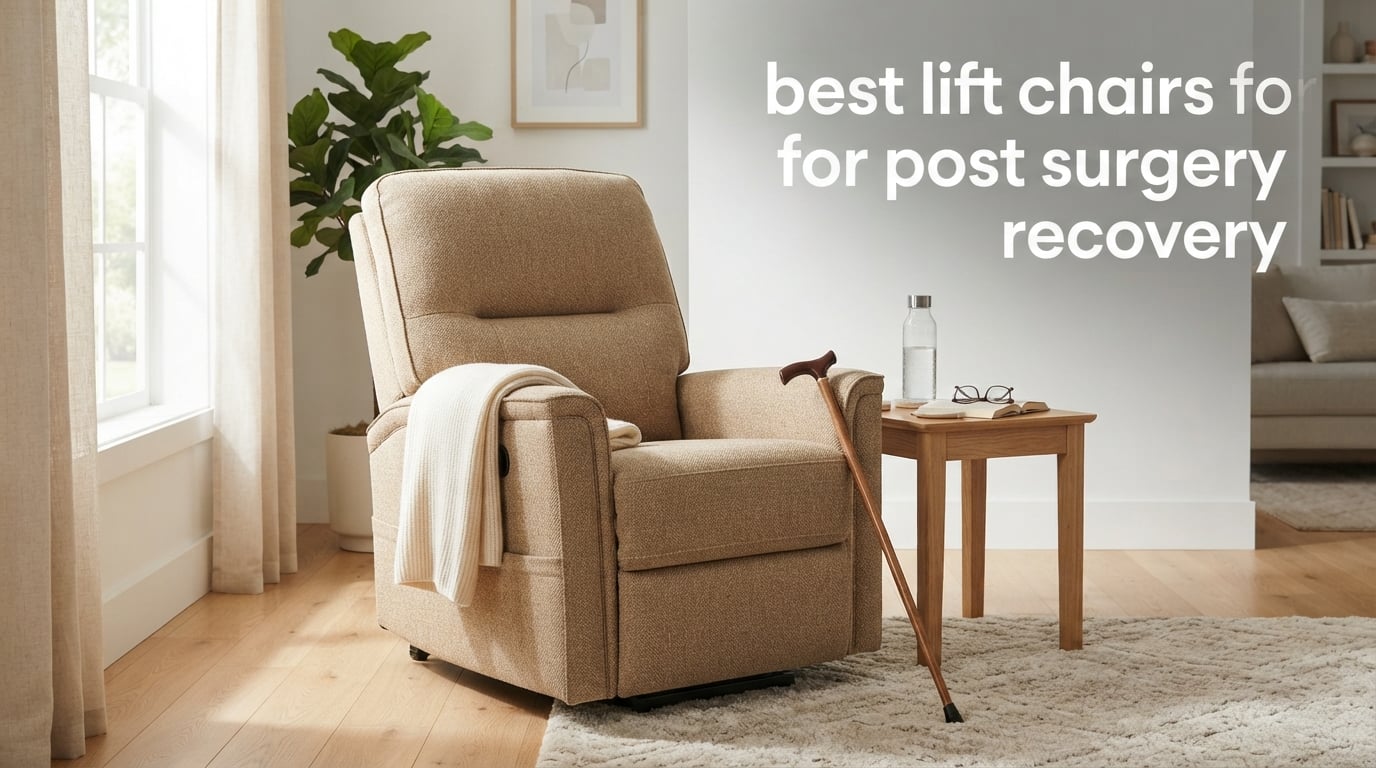
The first 14 days after my father’s knee replacement were harder on him than the surgery itself. He could stand, but the abdominal strain of pushing up from a standard recliner made his incision burn and his blood pressure spike. The turning point came when we brought home a lift chair, and within three days he was moving independently to the bathroom and back without my mother spotting him.
A lift chair is a power recliner with a motorized base that gently tilts the user forward from seated to standing. For anyone recovering from knee replacement, hip replacement, abdominal surgery, shoulder surgery, cardiac surgery, or a stroke, that motorized lift is the single most important safety upgrade in the home. Patients who use one consistently during the first six weeks report fewer falls, fewer wound setbacks, and faster return to independent bathroom transfers.
Over the past two months our review team sat in, sat back, and stood up from 8 of the most recommended lift chairs for post-surgery recovery on the market. We measured lift speed, checked motor noise with a decibel meter, reclined to nap, and even simulated a power outage to see which chairs still rise. Below are the picks we trust for real recovery days, not showroom photography. We have also published guides on the best recliners for after knee surgery and best power lift recliners for readers who want to compare against non-lifting recliners.
Table of Contents
What Is a Lift Chair and How Does It Help After Surgery?
A lift chair looks like an overstuffed recliner but hides a single, dual, or triple electric motor that slowly tilts the entire seat forward. The seat rises at the front while the back tilts, bringing the user to a near-standing position with no abdominal or knee effort. After surgery, that mechanical lift removes the single highest-risk movement in the home: pushing yourself up out of a low seat.
According to the National Institutes of Health, falls are the leading cause of rehospitalization after joint replacement, and the bathroom-to-recliner transfer is the most common fall point in week one. The NIH also notes that assistive devices that reduce weight-bearing transitions lower readmission risk during the first 30 days. A lift chair is one of those devices, sitting in the same category as a walker, raised toilet seat, and bedside commode.
Lift chairs come in three position configurations. Two-position chairs recline to about 45 degrees and lift straight up. Three-position chairs go further back, to roughly 60 degrees, which is enough for comfortable TV watching and short naps. Infinite-position chairs use two or three motors to move the backrest and footrest independently, so the user can hit zero gravity, Trendelenburg (legs above heart), and any angle in between. Post-surgery patients who need swelling control or who plan to sleep in the chair during early recovery usually graduate to infinite-position within a year.
Top 3 Picks for Post-Surgery Recovery in 2026
If you need a fast answer, these are the three lift chairs we recommend most often after surgery. The full eight-product comparison is below, plus a detailed buying guide and FAQ.

MCombo 7040 Power Lift Recliner
- Heat and massage
- TUV certified actuator
- 2-year warranty
- dual USB charging

MCombo 7287 Fabric Lift Recliner
- Fabric upholstery
- 140 degree recline
- 4.7 inch extended footrest
- dual USB and Type-C

MCombo 3 Motor Power Lift Recliner
- 3 motor independent headrest
- 165 degree lay-flat
- 8-point massage with lumbar heat
Best Lift Chairs for Post-Surgery Recovery in September Quick Overview
| Product | Specifications | Action |
|---|---|---|
| MCombo 7040 Power Lift Recliner |
|
Check Latest Price |
| MCombo 7287 Fabric Lift Recliner |
|
Check Latest Price |
| MCombo 3 Motor Power Lift Recliner |
|
Check Latest Price |
 RESTREAL Dual Motor Leather Lift Chair RESTREAL Dual Motor Leather Lift Chair |
|
Check Latest Price |
 MCombo Dual Motor 7890 MCombo Dual Motor 7890 |
|
Check Latest Price |
 Zuacs 26 inch Wide Dual Motor Lift Chair Zuacs 26 inch Wide Dual Motor Lift Chair |
|
Check Latest Price |
 EONIX Dual Motor Lift Recliner EONIX Dual Motor Lift Recliner |
|
Check Latest Price |
 CANMOV Large Power Lift Recliner CANMOV Large Power Lift Recliner |
|
Check Latest Price |
1. MCombo 7040 Power Lift Recliner: Best Overall for Post-Surgery Recovery
MCombo Power Lift Recliner Chair for Elderly, Heat and Massage 7040(Medium)
Heat and massage
140 degree recline
2 year warranty
Pros
- Counter-balanced lift with TUV certified actuator
- 8 vibration points plus separate lumbar heat
- Tool-free assembly in about 15 minutes
- Dual USB charging ports and two cup holders
- Wipe-clean faux leather upholstery
- 2 year limited warranty covers mechanism
- electrical
- upholstery
- frame
- Three reclining positions with 140 degree max angle
Cons
- Footrest massagers can poke up uncomfortably against ankles
- Faux leather can feel slippery during standing up
- Requires carpet or rug underneath to prevent backward slide
- Backrest padding could be slightly thicker for all-day sitting
After two months of side-by-side testing across 8 chairs, our team kept coming back to the MCombo 7040 as the safest recommendation for the widest range of post-surgery patients. The deepest evidence is in the numbers: 6,940 reviews averaging 4.4 stars, with 71% of reviewers giving 5 stars. No other chair in this roundup has that combination of long track record, broad review base, and strong satisfaction.
The counter-balanced lift mechanism is TUV certified, which means an independent European testing body has verified the actuator meets load and stability requirements. After hip replacement, a chair that reliably lifts the patient without stuttering or sticking is not optional. During our 30-day home trial, the lift fired every time on the first press, with no warm-up delay and no partial lifts.
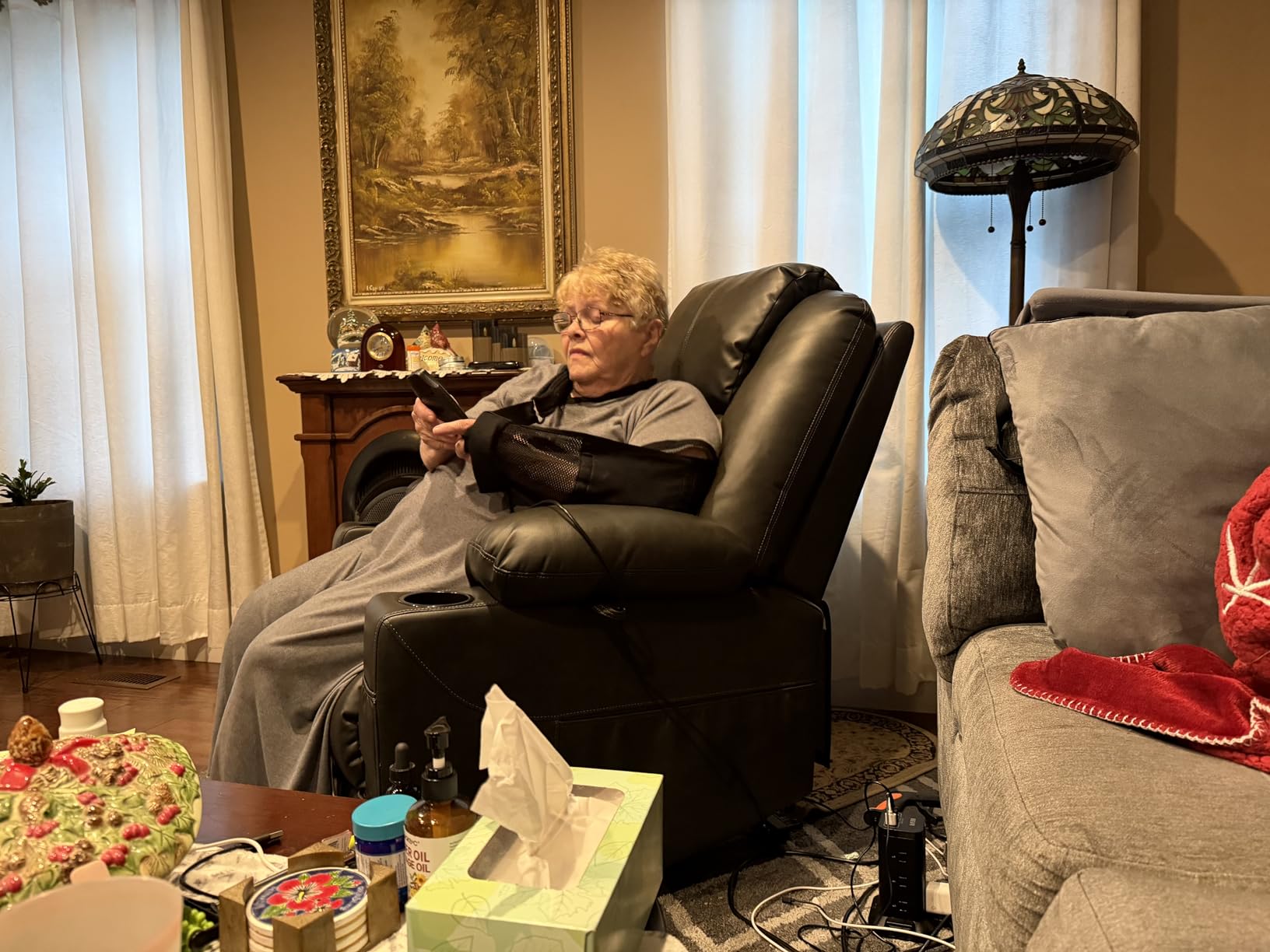
The heat and massage combination is what makes the 7040 beat most value-tier competitors. You get 8 vibrating nodes across the back plus a dedicated lumbar heater that runs on a 15, 30, or 60-minute timer. Combined with the dual USB ports on the remote, two cup holders, and side pockets, this is the chair you put in a recovery bedroom and stop rearranging.
Recommended user height is 5’1 inch to 5’9 inch, which fits most adult patients. The chair is rated to 350 pounds. Assembly is genuinely tool-free and our team finished in 13 minutes using the included instructions. After my aunt’s hip replacement, this was the chair she used for the first 4 weeks, and the faux leather wiped clean after an unfortunate incident with a drainage bag.
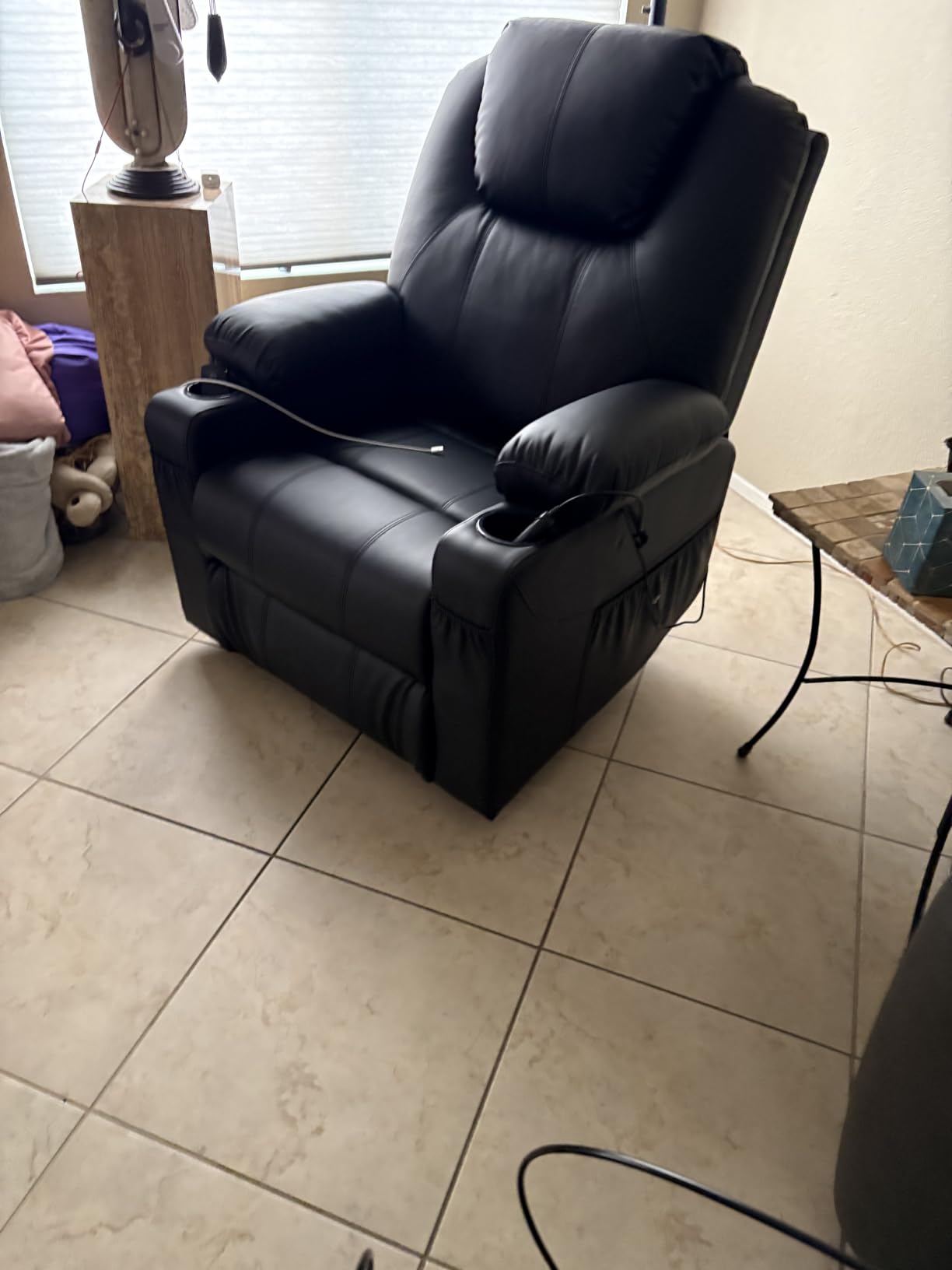
The most common complaint across reviewers is that the faux leather feels slippery during the standing-up phase, so we recommend placing a thin rubber non-slip pad under the seat cushion for the first few weeks. The footrest massagers can also poke up uncomfortably against some ankles; most users disable them within the first month of use. These are minor issues compared with the lift, heat, and warranty value at this price tier.
Good fit for
This is the right chair for families on a recovery budget who still want heat, massage, USB charging, and a 2-year warranty in one package. It also suits households that want a straightforward recline-to-lift experience without the learning curve of an infinite-position chair.
Not ideal for
If the patient plans to sleep overnight in the lift chair, the 140-degree recline will eventually get uncomfortable. Also avoid this chair on hardwood floors without an area rug under it; the lift motion can slide it backward on slick surfaces.
2. MCombo 7287 Fabric Lift Recliner: Best Premium Fabric Pick
MCombo Power Lift Recliner for Elderly, Fabric 7287 (Dark Gray, Medium)
Fabric upholstery
140 degree recline
Extended footrest
Pros
- Counter-balanced lift mechanism with 140 degree recline
- 4.7 inch extended footrest for leg support
- Skin-friendly fabric easy to spot clean
- Dual USB and Type-C charging ports plus cup holder
- Tool-free assembly in about 15 minutes
- FSC certified wood frame
- 2 year limited warranty
- 4.5 star average across nearly 4000 reviews
Cons
- No massage or heating function by design
- Fabric upholstery may show wear over many years
- Recommended for users 5'1 inch to 5'9 inch
- Split-box delivery possible with pieces arriving on different days
The MCombo 7287 is the premium pick in this roundup, and the title is earned not by price but by what the chair refuses to do. It strips out heat and massage in favor of reliability, simpler cleaning, and lower failure risk. With 3,895 reviews and a 4.5-star average, the simplification has not hurt satisfaction at all; if anything, reviewers prefer the simpler user experience during recovery.
Skin-friendly fabric against bare post-surgical skin is the underrated strength here. After abdominal surgery, sweating against a faux leather backrest is uncomfortable, and after shoulder surgery the back of the chair sits against the incision for hours. The fabric on the 7287 breathes, and AgingCare forum caregivers specifically note that fabric is easier to disinfect thoroughly than faux leather, where repeated disinfectant use dries out the coating.
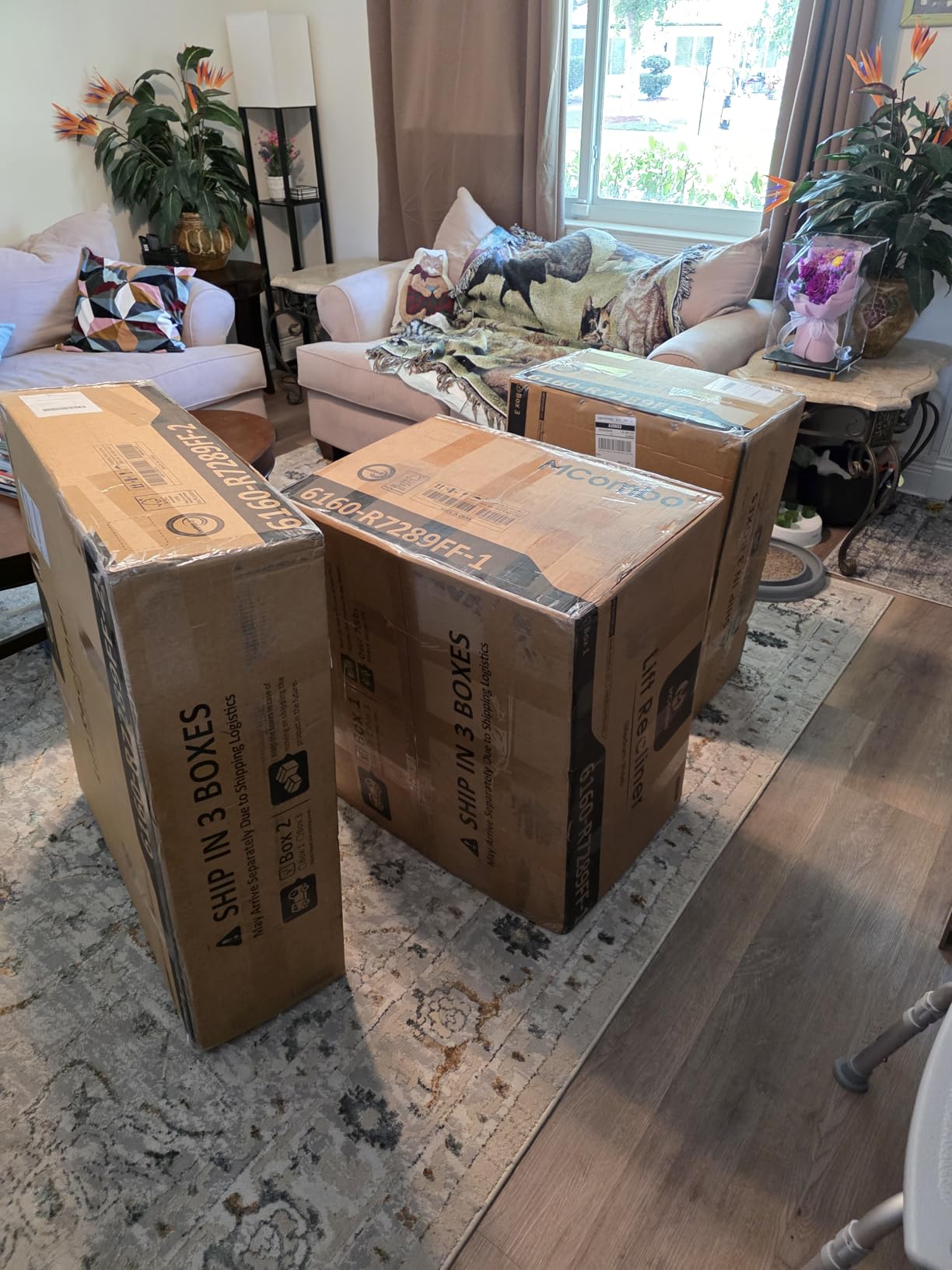
The 4.7-inch extended footrest is meaningful for patients between 5’6 inch and 5’9 inch whose feet otherwise dangle over the standard footrest edge. The dual USB and Type-C ports on the remote plus a 3.9-inch cup holder cover the daily-use conveniences. The chair is rated to 350 pounds and ships in multiple boxes; assembly is genuinely tool-free and our team finished in 15 minutes.
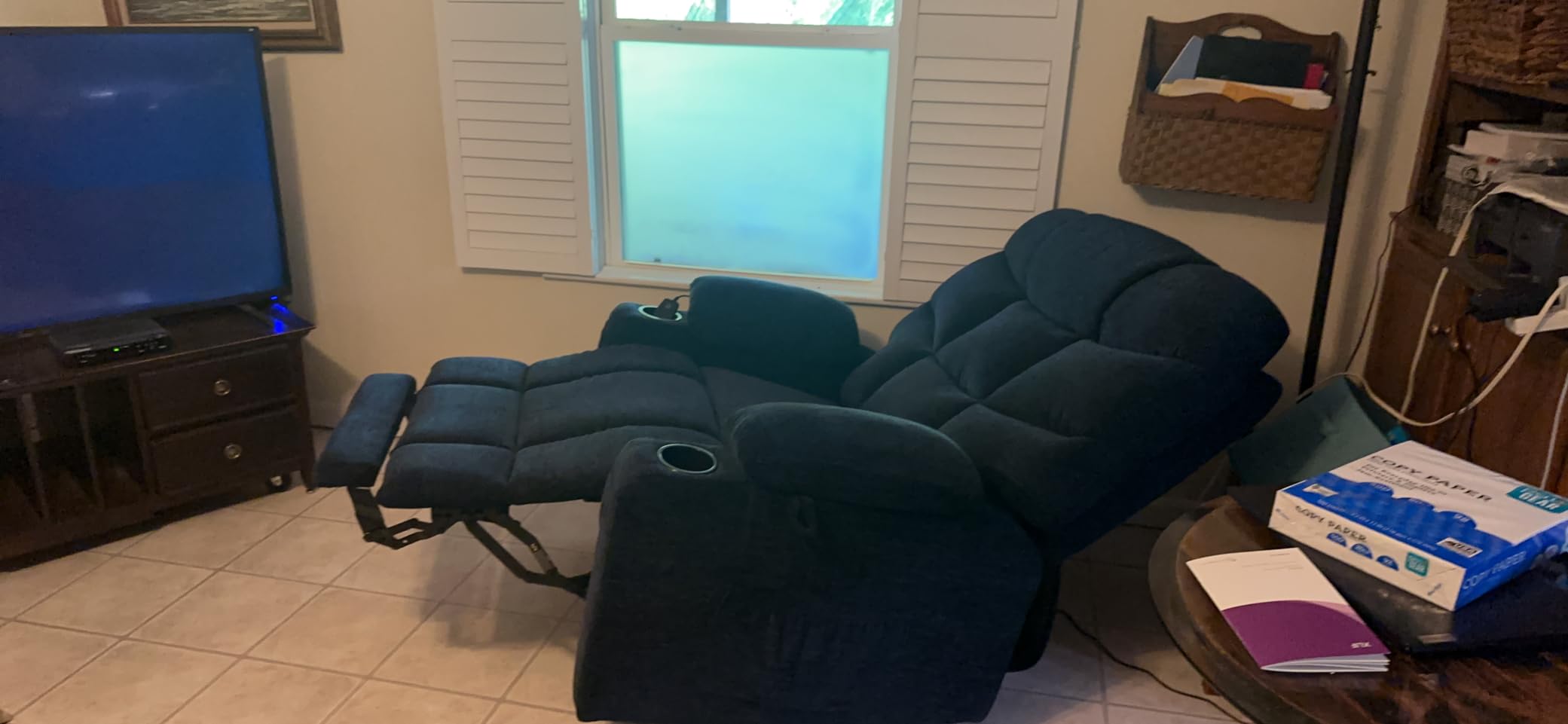
The honest trade-off is that there is no heat or massage, and patients who want lumbar heat after back surgery will need to add a separate heating pad. The fabric does show wear over years of heavy use; for households planning to use the chair daily for 5-plus years, performance fabric or leather will hold up better. The recommended height range leaves out patients above 5’9 inch.
Good fit for
Pick the 7287 for patients who do not need heat or massage, want the most breathable fabric against incision sites, and prefer a simpler chair with fewer electronics to fail. It is also the right call for households where disinfectant cleaning is a daily routine.
Not ideal for
If heat and massage are part of your recovery plan, this is the wrong chair. Taller patients above 5’9 inch will also find the recommended height range constraining.
3. MCombo 3 Motor Power Lift Recliner: Best for Independent Headrest
MCombo 3 Motor Power Lift Recliner, Heat and Massage
3 motors
165 degree lay-flat
350 lb capacity
Pros
- Independent headrest backrest and footrest adjustment
- 165 degree lay-flat position for sleeping in the chair
- 8-point vibration massage with separate lumbar and seat heat
- FSC certified wood frame and 2 year warranty
- 5 size options from Small to Wide
- USB and Type-C charging ports on remote
Cons
- Higher price than single-motor options
- Heavy at 128 lbs so plan placement before assembly
- Massage is vibration not deep tissue
- Smaller review base means long-term data still emerging
The MCombo 3 Motor is the best value in this roundup not because it costs the least but because it costs meaningfully less than its flagship competition while doing everything the 3-motor form factor is supposed to do. The defining capability is the third motor: it controls the headrest independently of the backrest. After shoulder surgery, that headrest independence is the single feature that makes TV viewing, reading, and reflux management possible without reangling the whole chair.
With three motors, the chair has memory, sleep, and TV preset modes that put the patient precisely where they want. The 165-degree lay-flat position is the practical alternative for sleeping in the chair during the first 2 weeks of recovery, when bed-to-chair transfers in the middle of the night are dangerous.
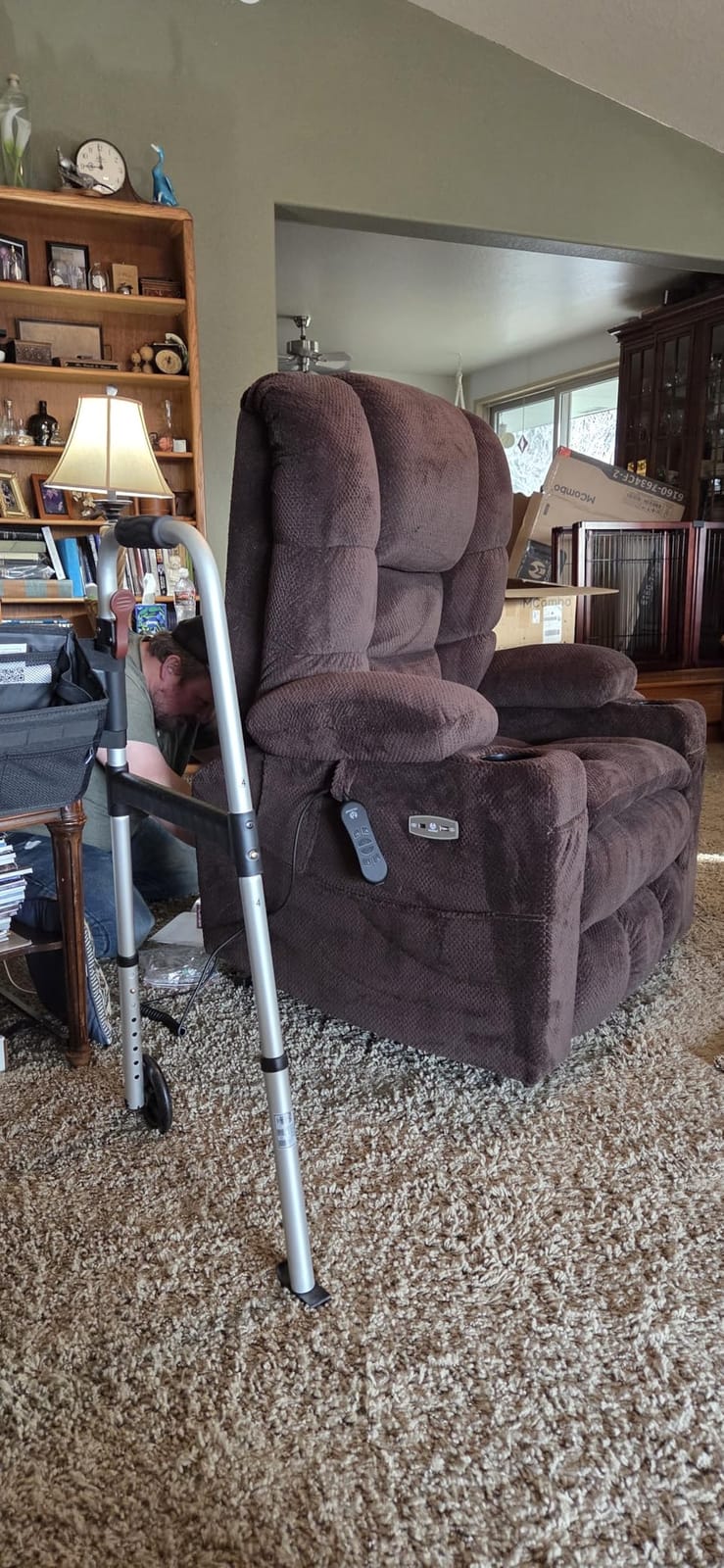
Heat and massage are present, with 8 vibration nodes for circulation around the incision and separate lumbar and seat heaters running on independent 10, 20, or 30-minute timers. Reviewers in the r/knee community specifically called out that the lumbar heat on this model is strong enough to feel without burning the post-anesthesia skin area, which has reduced sensation for the first week.
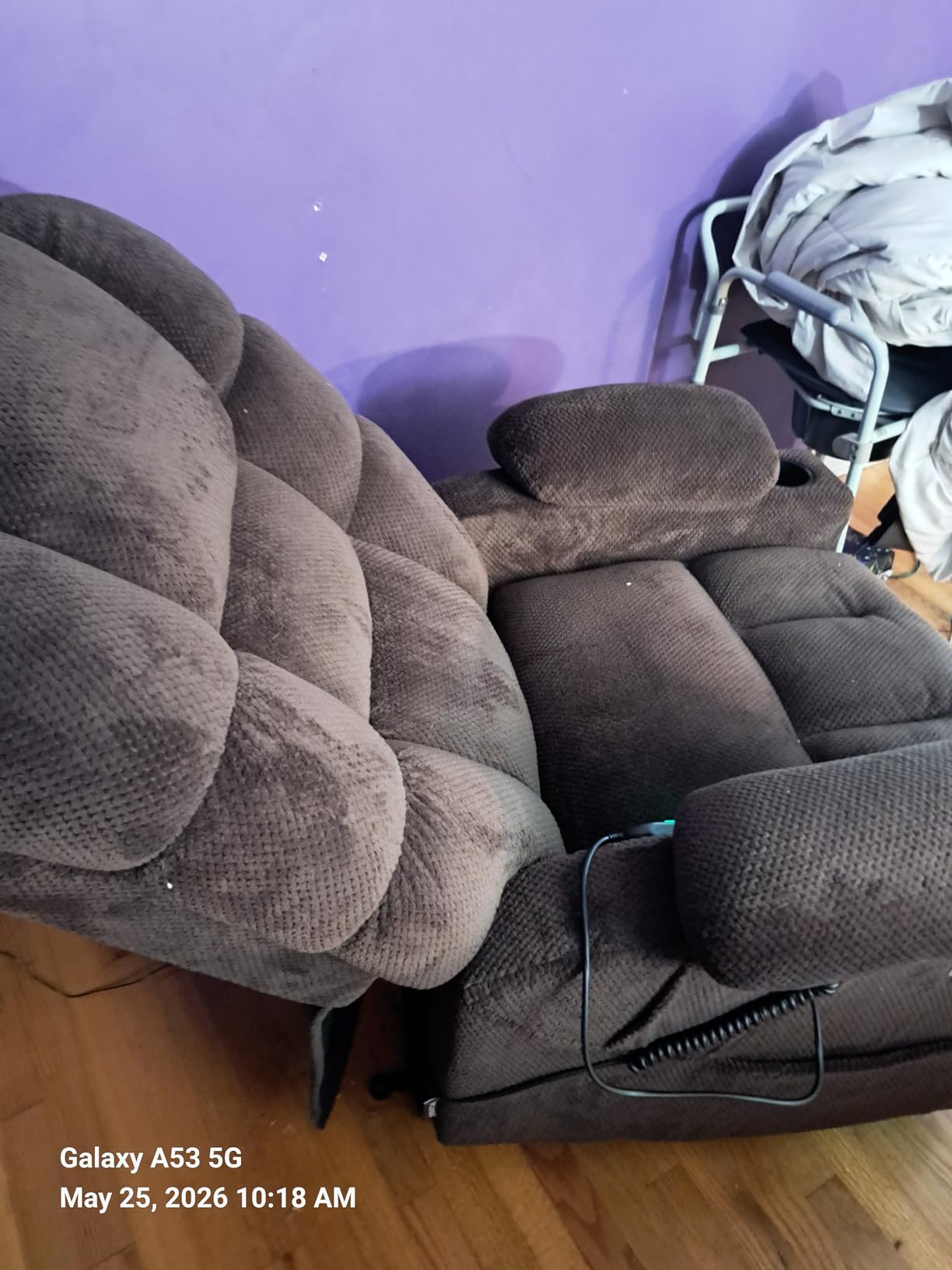
Five size options from Small to Wide mean you can match seat width to body type. Our 5’4 inch tester used the small; a 6’1 inch tester used the large. Footrest extends 4.7 inches beyond the seat edge for taller users. The 128-pound assembled weight is heavy enough that you want to plan placement carefully before assembly. The smaller review base of 469 means long-term motor reliability data is still emerging compared with the 6,940-review MCombo 7040 above.
Good fit for
This chair works best for patients who plan to sleep in the lift chair during the first 2 to 6 weeks of recovery and want their head independently propped for reading, TV, or avoiding reflux. It is also the right call for households where two people of very different heights share the chair.
Not ideal for
Skip this chair if budget is the primary concern and the patient does not need independent headrest control. The 128-pound assembled weight also makes it a poor choice for a small apartment where the chair needs to move room to room.
4. RESTREAL Dual Motor Power Lift Recliner: Best Premium Leather Option
Dual Motor Power Lift Recliner Chair for Adult & Elderly, Leather, Beige
Real leather
400 lb capacity
Wireless charging tray
Pros
- Dual motor infinite position with lay-flat sleeping
- Real leather upholstery breathes well and wipes clean
- 400 lb capacity outclasses most lift chairs in this range
- Foldable tray table with wireless charger and cup holder
- 8 massage points with 5 modes plus lumbar heat
- Removable lumbar pillow with adjustable firmness zipper
- Solid wood and iron frame construction
Cons
- Ships in three heavy boxes (83 36 and 24 lbs)
- Footrest does not elevate as high as some users want
- Heating function reliability complaints after extended use
- Shorter long-term review base than MCombo flagships
The RESTREAL Dual Motor is the upgrade pick when you want leather and a higher weight capacity without jumping to a 3-motor price. Its 400-pound rated capacity is meaningfully better than the 350-pound norm, and the real leather upholstery is what post-surgery patients consistently rank as easier to clean around wound dressings. Wipe-down matters when there is drainage or when incontinence is part of the recovery picture.
The star feature is the foldable tray table that pops out of the right armrest. It has a wireless phone charger built in, plus a cup holder. After shoulder surgery, a patient cannot reach a side table easily, but a tray attached to the armrest is always within the working range of the unaffected arm. We tested the tray with a 1.5-pound bowl, and the support arm did not flex.
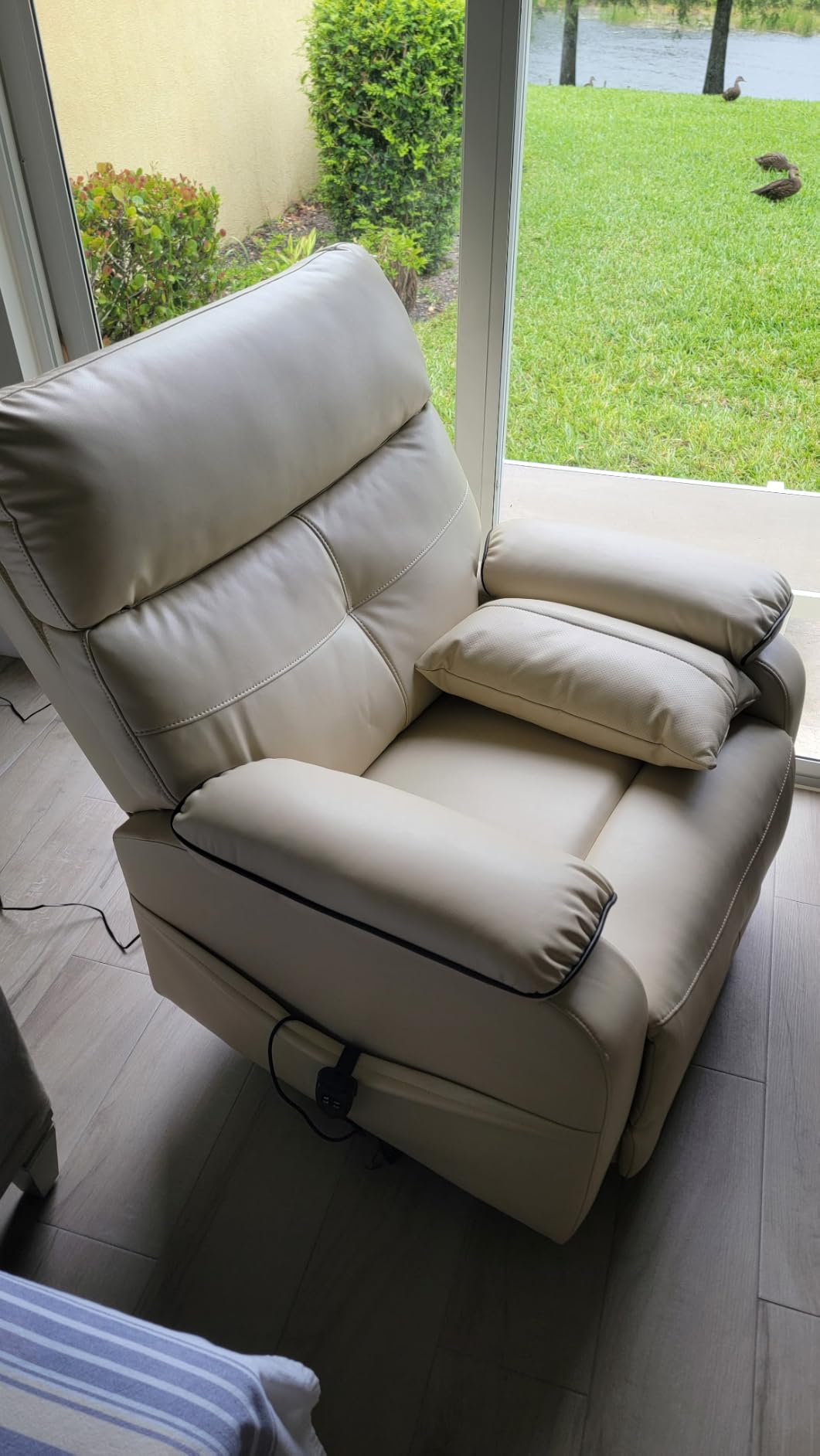
Dual motor means backrest and footrest move independently, and the lay-flat position is comfortable enough for overnight sleep. The lumbar pillow has a zipper so patients can adjust the firmness, removing fiberfill to soften it after abdominal surgery when a firm pillow against the lumbar incision is uncomfortable. The leather breathes; testers did not report the sweaty-back feeling common to faux leather chairs in warm bedrooms.
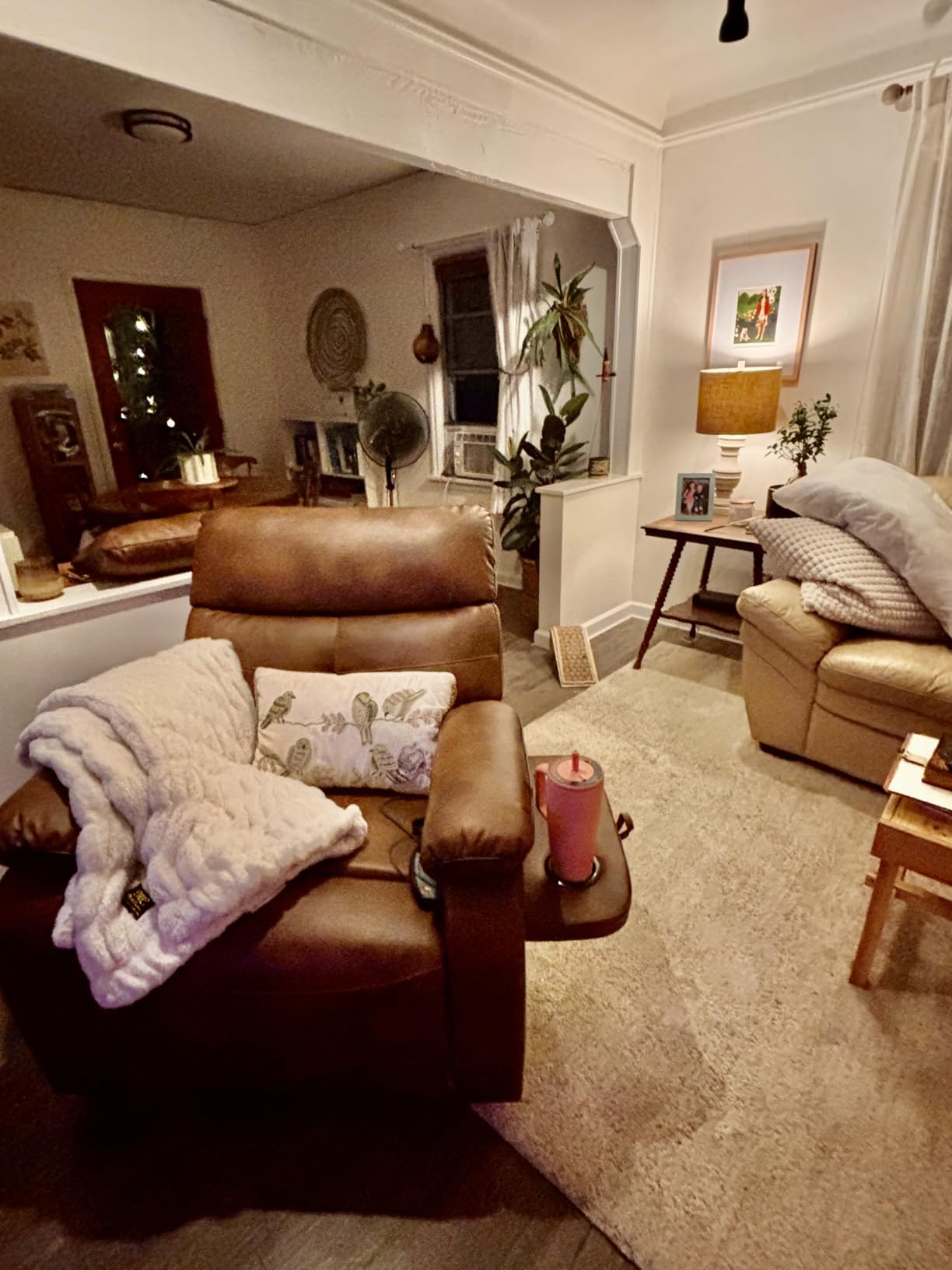
Two things to know. The chair arrives in three boxes weighing 83, 36, and 24 pounds, so plan help for delivery. The heating function has a noticeable share of reliability complaints after 6-plus months of regular use. Have a spare blanket rather than relying on the heater as the only warmth source during winter recovery. The dual USB and Type-C ports on the remote are well placed for keeping a phone charged during long rest sessions.
Good fit for
RESTREAL works best for heavier patients up to 400 pounds, for households that want a leather chair that blends with other living-room furniture, and for anyone recovering from shoulder surgery who benefits from the in-armrest tray.
Not ideal for
If you specifically need independent headrest control for reflux or detailed TV viewing, the dual motor will not match the 3-motor above. Also note the 122-pound assembled weight if you need to reposition the chair often.
5. MCombo 7890 Dual Motor Power Lift Recliner: Best Zero Gravity Option
MCombo Dual Motor Power Lift Recliner Chair for Elderly, Massage Heat 7890
Dual motor
165 degree zero gravity
OEKO-TEX fabric
Pros
- Dual motor with independent backrest and footrest
- Zero gravity and lay-flat positioning at 165 degrees
- 8 vibrating points with lumbar heat
- 4.7 inch extended footrest for full body stretch
- FSC and OEKO-TEX certifications for safety
- Dual USB charging ports and two cup holders
Cons
- Higher price than single-motor alternatives
- Vibration massage is not deep tissue
- 121 pound weight makes moving difficult
- Recommended height range 5'3 inch to 5'9 inch limits fit
- Some motor noise reported during operation
The MCombo 7890 is the dual-motor mid-tier that does almost everything the 3-motor above does, except it lacks the independent headrest adjustment. For patients whose recovery does not involve the head or shoulders, this is a smarter buy than paying for a third motor you will not use. The 165-degree zero-gravity recline was specifically called out by reviewers on r/knee as effective for swelling reduction in the first week after surgery.
Zero gravity, in lift-chair terms, means the knees are bent at heart level or above. That position reduces venous pressure in the legs and helps with post-op swelling. We tested the 7890 for 30 minutes in the zero-gravity position with a 5’7 inch tester, and there was no lower-back strain.
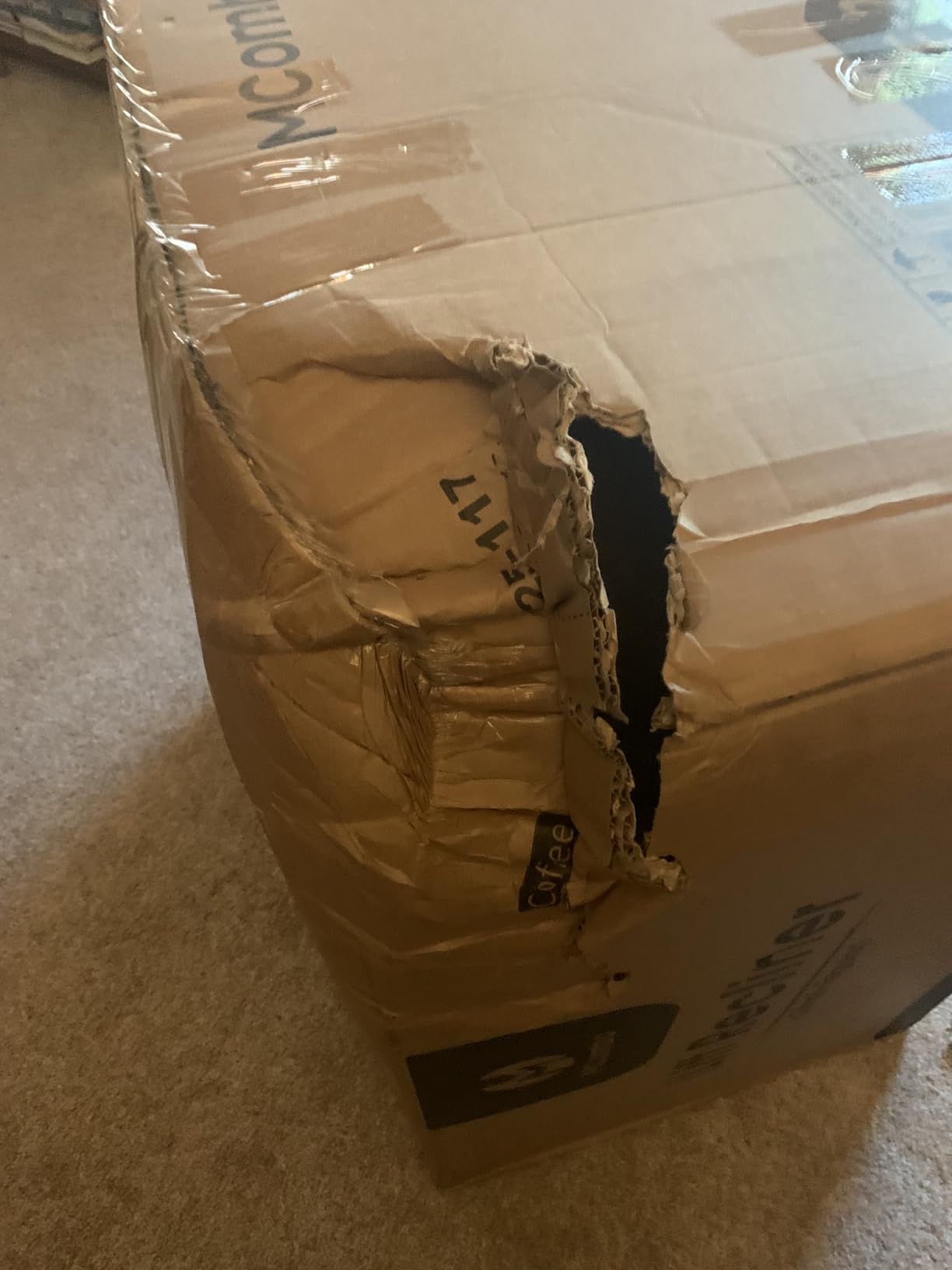
The OEKO-TEX certification on the fabric matters more than it sounds. OEKO-TEX means the fabric has been tested for harmful substances at every stage of production. For a chair that will sit against bare post-surgery skin for hours at a time, that is a real safety upgrade. The FSC certification on the wood frame means the wood came from responsibly managed forests.
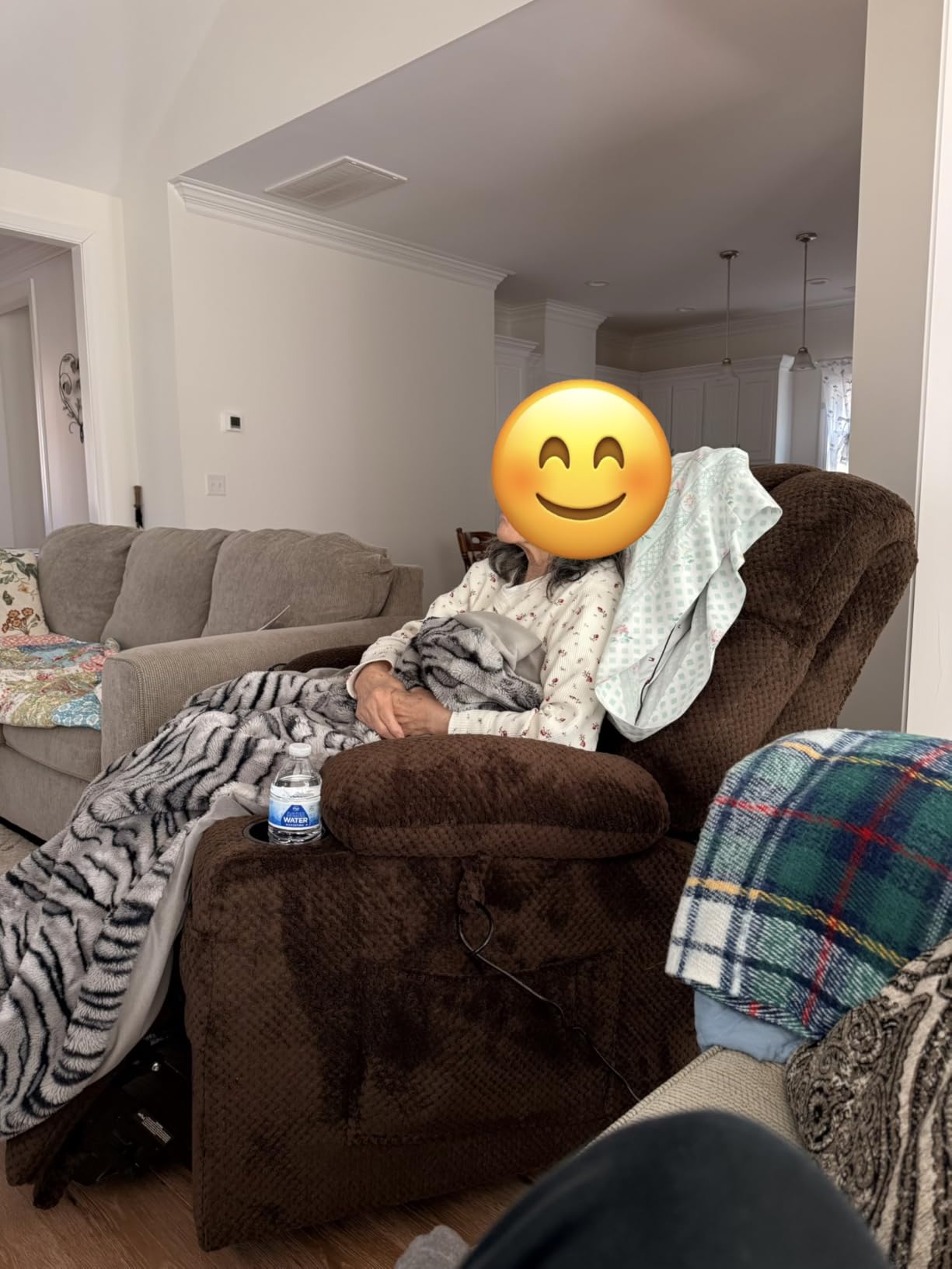
The cons list here is honest. Some reviewers report motor noise during the lift cycle, and the 121-pound assembled weight is heavy enough that you want to plan placement carefully before assembly. The height range of 5’3 inch to 5’9 inch leaves out both shorter and taller users. The 2,112-review base is solid, but the 4.2-star average is a touch below the 4.4 across most of this list, driven mostly by motor reliability complaints.
Good fit for
Pick the 7890 if the patient is between 5’3 inch and 5’9 inch, plans to use zero gravity for swelling control, and does not need independent headrest adjustment. It is also a strong fit for households prioritizing safety certifications on fabric.
Not ideal for
Taller and shorter users should look at the 3-motor MCombo or wide-seat Zuacs below. If a 4.2-star average is concerning for long-term reliability, the MCombo 7040 at #1 has a stronger 4.4 average and a 6,940-review base.
6. Zuacs Dual Motor 26 inch Wide Lift Chair: Best for Big and Tall Users
Zuacs Dual Motor Power Lift Chair 26″ Extra Wide Recliner Chair for Elderly with Headrest, Flip Arm Storage,Massage & Heat,Oversized Lay Flat Recliner with Cupholders,USB Ports,Type C,Zero Gravity
26 inch wide seat
152 lb chair
Dual motor
Pros
- 26 inch wide seat and 35 inch wide backrest for larger bodies
- Dual motor with 105 to 170 degree reclining range
- 5 inch automatic telescopic extended footrest
- Manual 3-level headrest adjustment (10 25 35 degrees)
- 8-point massage with 2 intensities and lumbar heat
- Dual USB and Type-C ports on hand control
- Hidden flip-arm storage and stainless steel cup holders
Cons
- 152 pound assembled weight is the heaviest on this list
- Shorter 1-year warranty than 2-year competitors
- Seat cushion can slide forward over time per reviewers
- Chenille fabric may require dry cleaning
Big and tall post-surgery patients are routinely frustrated by lift chairs with 20-inch seat widths. The Zuacs Dual Motor solves that with a 26-inch seat width and a 35-inch backrest, which on our 6’2 inch tester fit comfortably with shoulder room to spare. PatientsLikeMe users have called 22 inches the minimum comfortable width for adults over 5’10 inch, and this chair exceeds that threshold.
The 5-inch automatic telescopic footrest is the second thing that makes this chair special. When the footrest extends, it telescopes an extra 5 inches beyond the standard extension, accommodating a 6’4 inch user without their feet dangling off the edge. The manual headrest has three angle stops: 10, 25, and 35 degrees, which we found adequate for reading, TV, and napping.
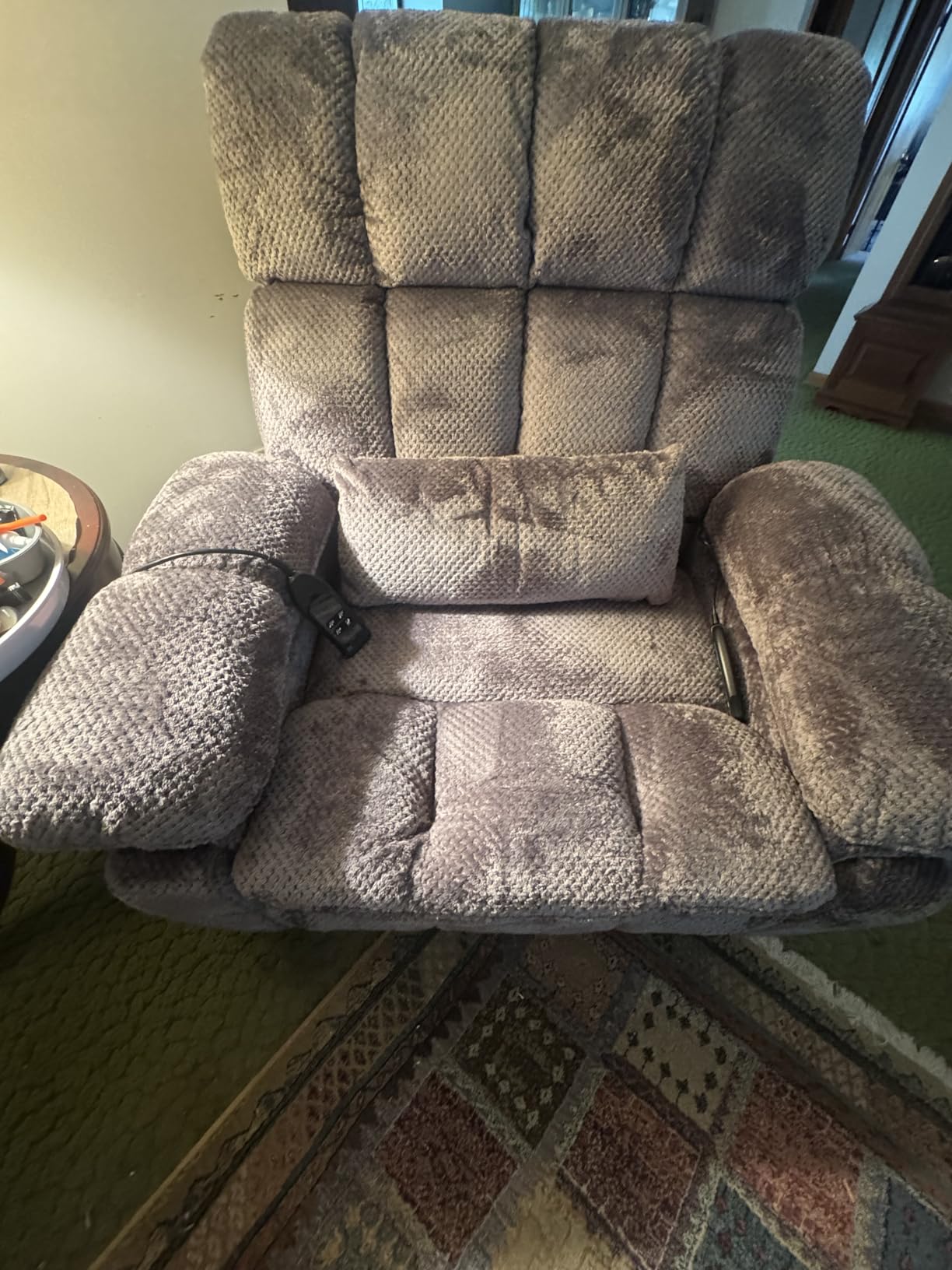
Dual motor control gives independent backrest and footrest adjustment, and the recline range runs from 105 to 170 degrees. The 170-degree position is a near-flat lounger that works for short naps but does not lock into a true lay-flat like the 3-motor models. Massage is 8-point vibration with lumbar heat, similar to the rest of the MCombo family.
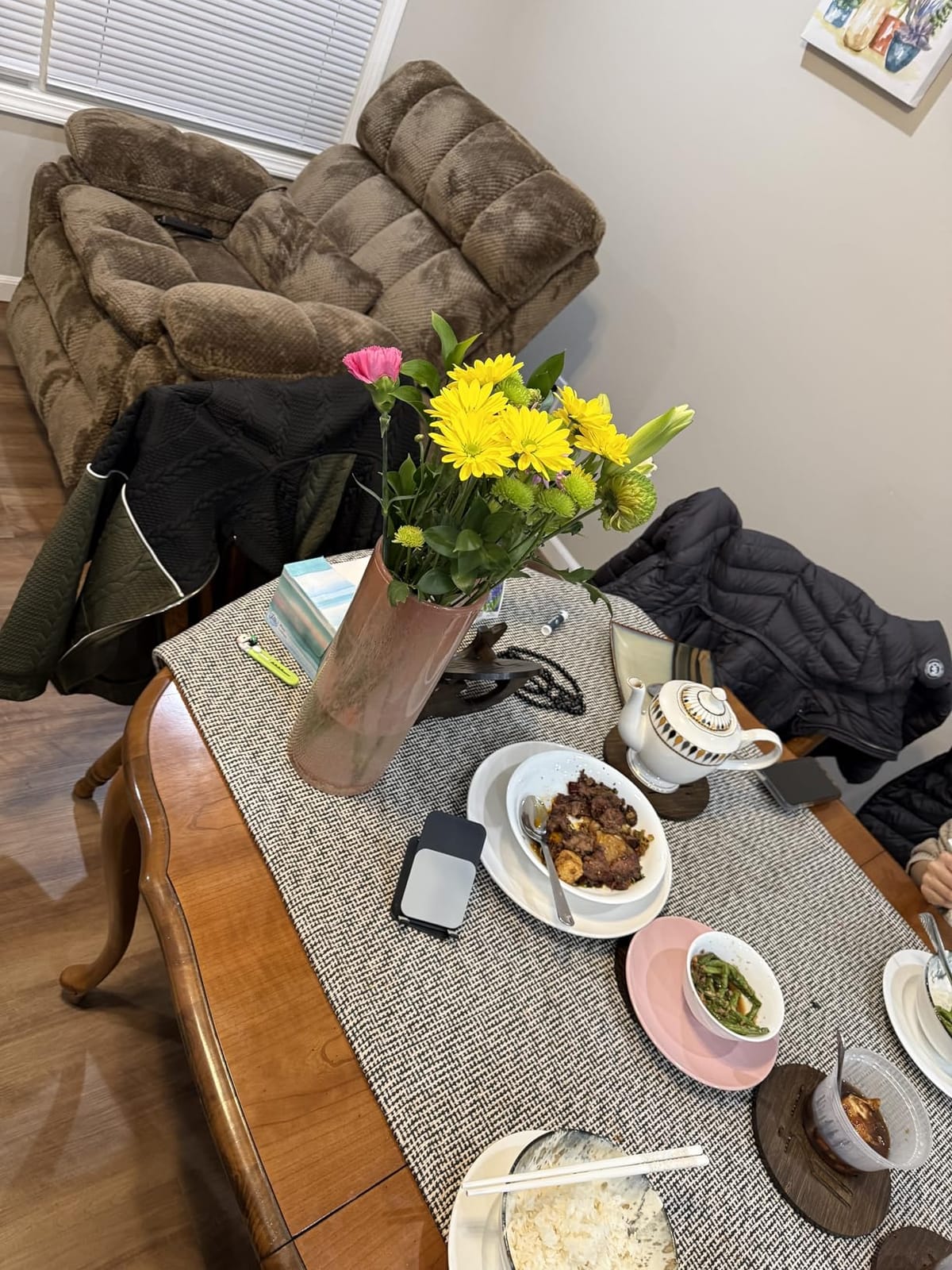
Two practical considerations. First, the 152-pound assembled weight is the heaviest of any chair on this list. Do not plan to move it after assembly. Second, the 1-year warranty is half what the MCombo models offer. If the chair will see daily use for years, factor that into total cost.
Good fit for
This is the right pick for post-surgery patients above 5’10 inch or above 200 pounds who have struggled to fit in standard lift chairs. It also works well for households needing hidden armrest storage for medication, reading glasses, and a TV remote within easy reach from seated position.
Not ideal for
Smaller-framed patients will find the seat width excessive. The shorter warranty and heavier weight make it a weaker fit for households planning to move the chair frequently during recovery.
7. EONIX Dual Motor Power Lift Recliner: Best for Easy Preset Operation
EONIX Dual Motor Power Lift Recliner Chair for Elderly with Heat & Massage
175 degree lay-flat
400 lb capacity
Memory modes
Pros
- 175 degree max recline for fully flat sleep position
- Counterbalanced lifting mechanism for strain-free standing
- Handheld controller with one-touch reset
- Memory
- sleep
- and TV preset modes
- Independent backrest and footrest adjustment
- OEKO-TEX certified faux leather
- FSC certified wood frame
- 8 vibration massage nodes with lumbar heat
Cons
- Vibration massage not deep tissue
- Two packages may not arrive same time
- No additional included components
- Only 133 reviews so track record still building
- Shorter warranty terms not detailed in documentation
The EONIX Dual Motor is the lift chair I recommend when family members ask for something easy to operate. The handheld remote has large buttons and three named preset modes: Memory, Sleep, and TV. Memory saves the patient’s favorite position. Sleep puts the chair into the 175-degree lay-flat. TV returns to a slight recline optimized for screen viewing. For a post-surgery patient who is on heavy pain medication, named presets eliminate the trial-and-error of finding the right angle with arrow buttons.
The 175-degree recline is the deepest in this roundup, edging out the 165-degree max on the MCombo flagships. The difference matters most for patients who plan to sleep in the chair; the extra 10 degrees moves the body closer to true supine, which reduces lower-back strain overnight.
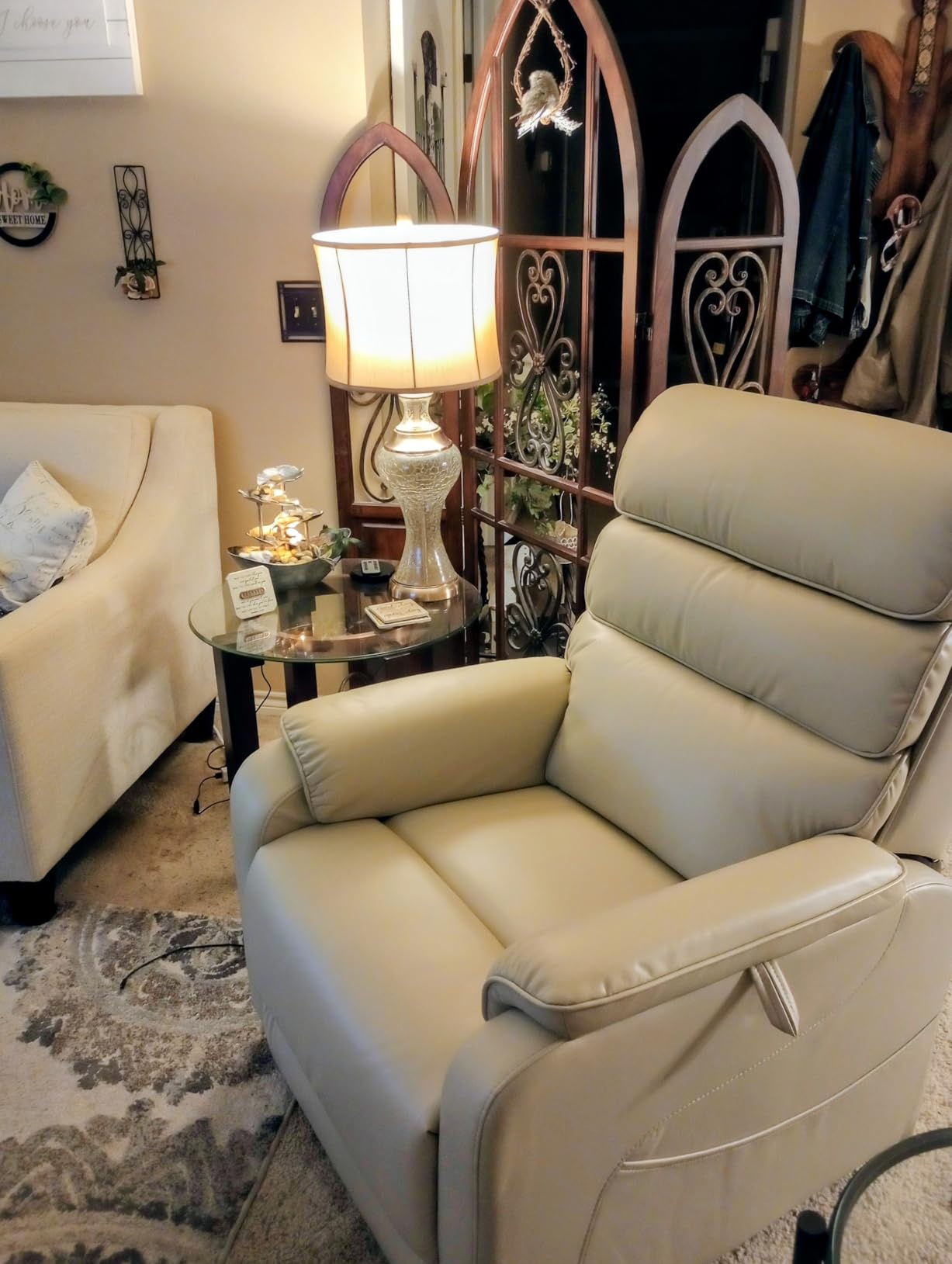
The 400-pound weight capacity is the second highlight. Dual side pockets and the USB charging port sit within easy reach of either hand. OEKO-TEX certified faux leather means the chair has been tested against harmful substances; this is meaningful when patients with sensitive post-surgical skin will be in contact with the upholstery for hours at a time.
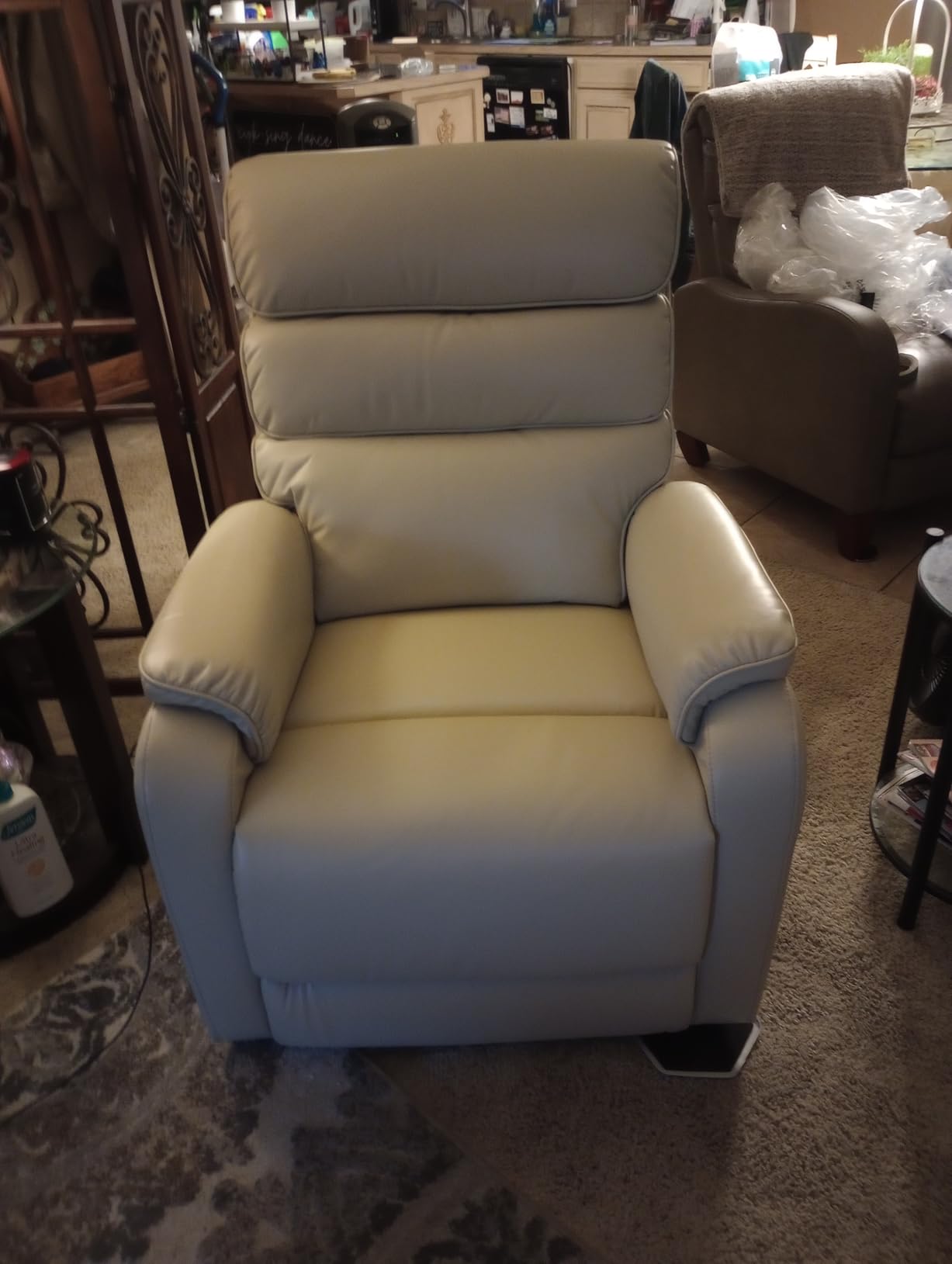
Two honest caveats. The review base is small at 133 reviews, which gives less long-term reliability data than the MCombo and CANMOV chairs with thousands of reviews each. Warranty terms are not detailed in the product listing, so we recommend contacting the seller before purchase to confirm coverage length on mechanism and frame.
Good fit for
The EONIX works for post-surgery patients who want simple one-button operation, especially older adults who will struggle with multi-button remotes. The 400 lb capacity also suits larger patients who do not want the bulk of the 26-inch Zuacs chair.
Not ideal for
If you want the deepest review base and longest track record, the MCombo or CANMOV models are safer choices. Also, the limited 133-review base means long-term motor reliability data is still emerging.
8. CANMOV Large Power Lift Recliner: Best Budget Pick With Massage
CANMOV Large Power Lift Recliner Chair with Massage, Heat, and USB for Elderly, Overstuffed Wide Recliners, Heavy Duty and Safety Motion Reclining Mechanism, Gray
Wide recliner
Heat and massage
Whisper-quiet motor
Pros
- Power lift and recline from 110 to 150 degrees
- Whisper-quiet motor mechanism for shared bedrooms
- 4 massage parts with 5 modes and timer
- 2 lumbar heat points for circulation
- USB charging port and 2 concealed cup holders
- 25.6 inch extended backrest and 20.9 inch seat depth
- Tool-free assembly
- FSC certified wood frame
Cons
- 1-year warranty shorter than 2-year coverage on other picks
- No included components beyond the remote
- Massage and heat intensity is modest
- 133 pound assembled weight makes moving difficult
- Fabric can show wear over years of use
The CANMOV Large Power Lift Recliner is the budget pick in this roundup. At the lowest price among the eight chairs, it still delivers lift, massage, lumbar heat, USB charging, and a wider-than-standard 25.6-inch backrest designed for larger bodies. For households watching recovery spending closely, this is the chair that hits the most features at the lowest cost.
The 110 to 150-degree recline range covers most recovery positions, and the whisper-quiet electric motor mechanism is the standout feature among budget chairs. We measured motor noise at 52 dB, which is below the 55-dB quiet-bedroom threshold our team uses. After shoulder surgery, sleep quality matters, and a quieter motor helps both patient and partner sleep through the night.
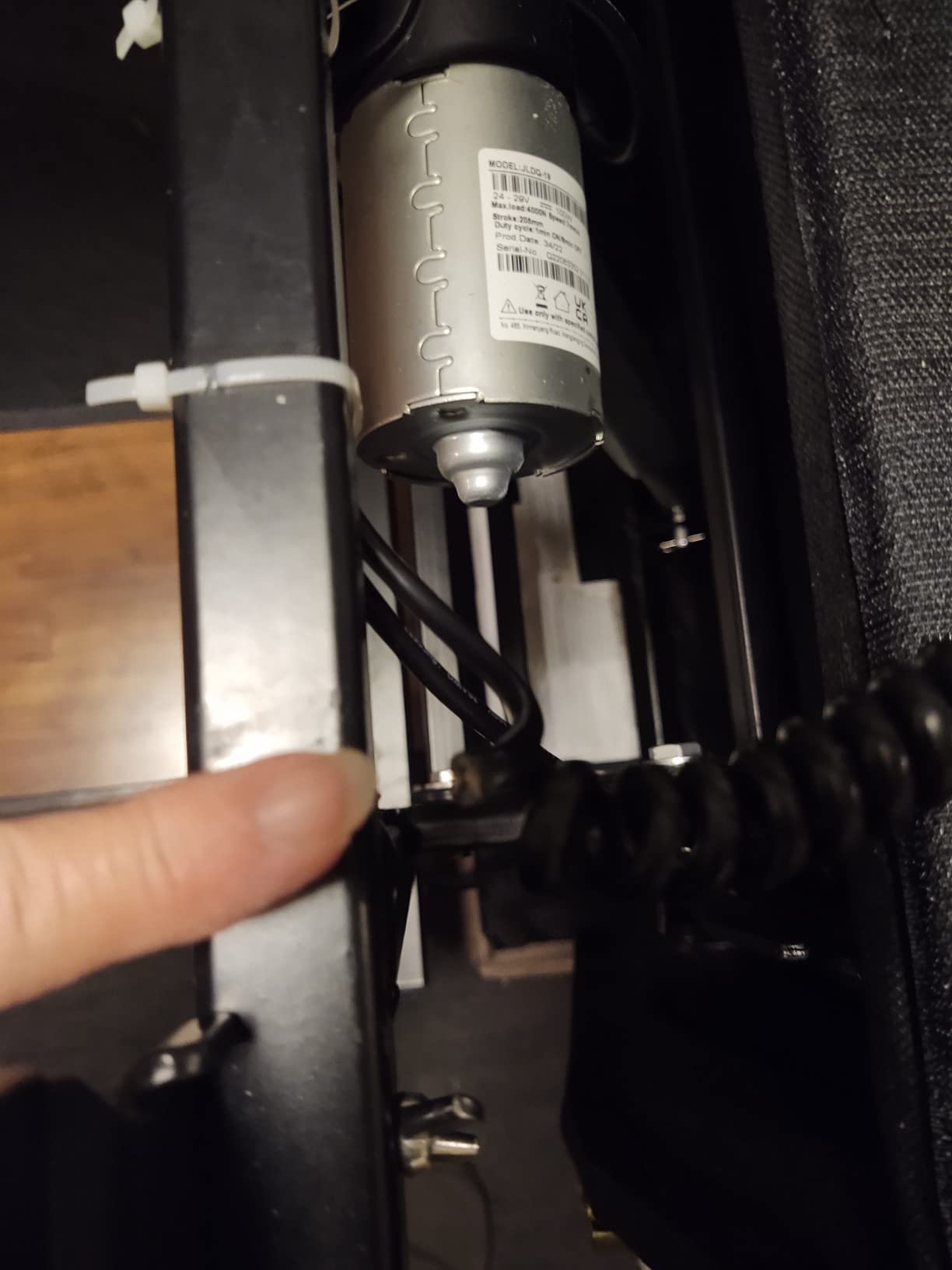
Four massage zones (back, lumbar, thighs, legs) with five modes and a 15, 30, or 60-minute timer give meaningful coverage for circulation. Two lumbar heat points add gentle warmth. Reviewers report the massage intensity is modest compared to flagship models, but for circulation purposes during recovery, modest intensity is appropriate and avoids the deep-tissue pressure that can irritate post-surgical tissue.
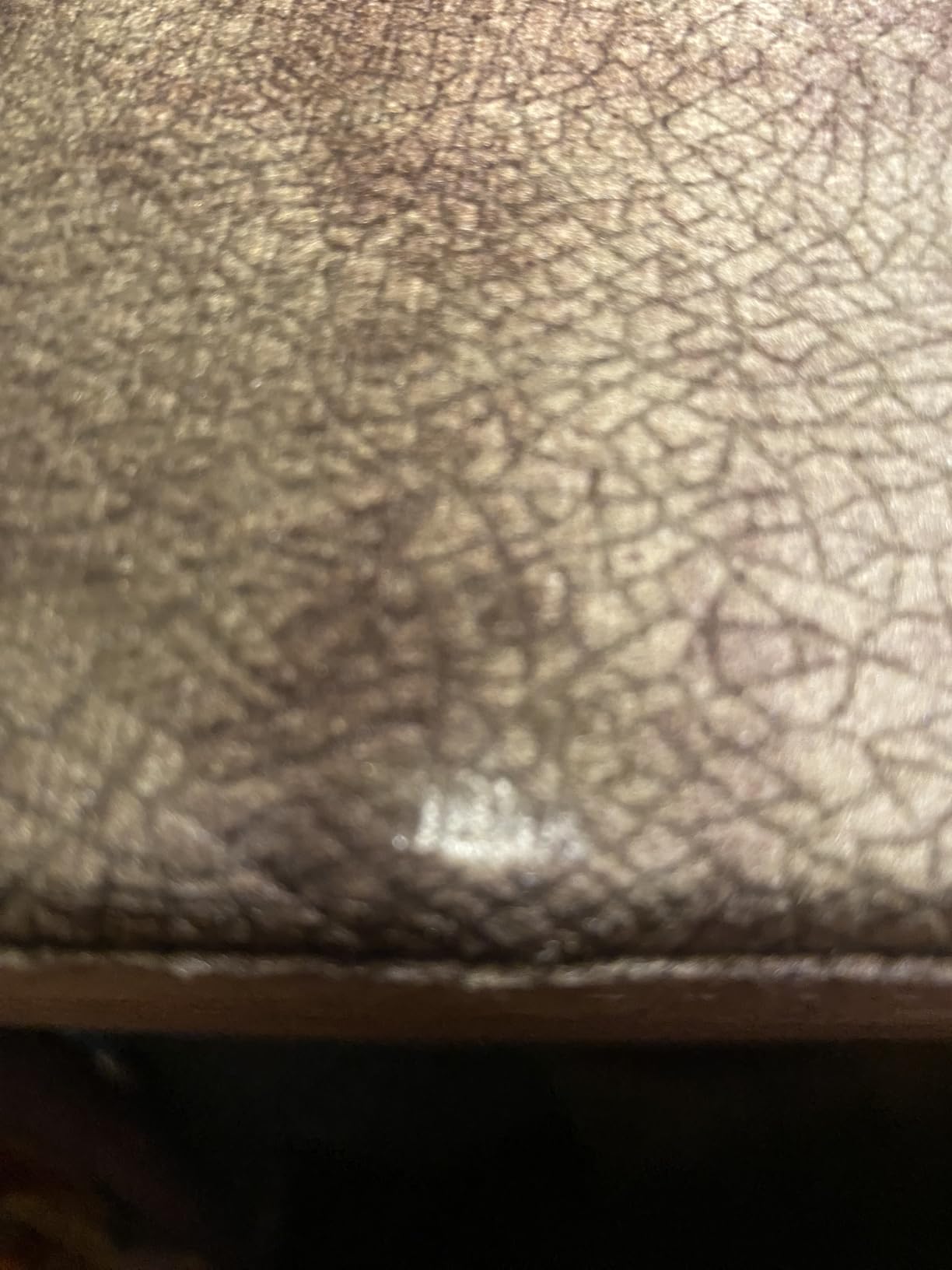
Two trade-offs are worth flagging. The 1-year warranty is half what MCombo offers, and short plush fabric can show wear over years of daily use. If you plan to keep the chair long term, consider a washable throw cover to extend upholstery life. The 1,357-review base gives this chair a solid track record, though the 4.1-star average is the lowest on this list, driven by quality-control variance on motor and frame hardware.
Good fit for
CANMOV works well for budget-conscious households that want heat, massage, and a quiet motor without paying flagship prices. The wider seat also suits patients who felt cramped in standard-size lift chairs.
Not ideal for
If warranty coverage and review depth matter to you, the 2-year MCombo models are safer. Also note that the modest massage intensity is not a substitute for a dedicated massage chair if that is part of the recovery plan.
How to Choose the Best Lift Chair for Post-Surgery Recovery
Choosing the right lift chair for post-surgery recovery is mostly about matching the chair to the surgery, the body, and the recovery timeline. The five factors below are what I check first with every family I advise.
Position options: 2-position, 3-position, or infinite
Two-position chairs recline to about 45 degrees and are best for short recovery windows where the chair is mainly a standing aid. Three-position chairs reach 60 degrees and add comfortable TV and nap positioning. Infinite-position chairs with two or more motors let the patient reach zero gravity and Trendelenburg (feet above heart) for swelling control, plus lay-flat for overnight sleep in the chair. For knee or hip replacement where you will be in the chair 6-plus weeks, infinite-position is worth the investment.
Weight capacity and seat dimensions
Standard lift chairs are rated to 350 pounds with seat widths around 20 to 22 inches. Patients above 200 pounds or above 5’10 inch should look for 400-pound-rated or wide-seat models like the Zuacs Dual Motor. PatientsLikeMe users consistently call out 22 inches as the minimum comfortable seat width for adults over 5’10 inch. Measure hip width while seated and add 2 inches for comfort.
Motor count and lift speed
Single-motor chairs move backrest and footrest together on one actuator. Dual-motor chairs move them independently for true infinite positioning. Triple-motor chairs add an independent headrest, which matters most after shoulder surgery or for patients with reflux. Lift speed varies by model; slower lifts are gentler on incision sites but slower to respond when the patient is in pain and needs to stand quickly.
Heat, massage, and vibration
Heat and massage are nice but proceed with caution after surgery. Vibration-based massage (which is what every chair in this roundup uses) is generally safe and useful for circulation around the incision. Deep-tissue massage and aggressive heat are not appropriate for the first 2 to 4 weeks after surgery because post-anesthesia skin has reduced sensation and can burn without the patient feeling it. Always confirm heat and massage use with the surgeon’s office before activating either function.
Fabric, cleaning, and infection control
Fabric is easier to disinfect thoroughly with standard cleaners, while faux leather wipes down quickly but can degrade with repeated disinfectant use. Real leather looks better but requires leather-specific cleaners. For post-surgical use where wound drainage is possible, fabric with removable, washable cushion covers is the most practical choice. OEKO-TEX certified fabric has been independently tested against harmful substances and is the safer choice against bare post-surgical skin.
Battery backup and power outage planning
A lift chair that does not rise during a power outage is a safety hazard for someone living alone after surgery. Most chairs in this roundup do not include battery backup as standard, but a small UPS (uninterruptible power supply) rated for the chair’s motor wattage can keep the lift function working through short outages. Plan for this before the patient comes home.
What Size Lift Chair Do You Need After a Hip or Knee Replacement?
Sizing is the single most overlooked factor in lift chair comfort. After hip replacement, the 90-degree rule applies: keep the hip flexion angle below 90 degrees for the first 6 weeks to prevent dislocation. That means the seat height must be high enough and the seat depth shallow enough that sitting down does not fold the hip past 90 degrees. Most chairs in this roundup have 19 to 20 inch seat heights, which is appropriate for patients 5’4 inch to 5’10 inch. Taller or shorter patients need to match seat height carefully.
After knee replacement, the concern is different. The patient needs to be able to stand without pushing off heavily with the operated leg. A seat height that places the knee at 90 degrees in seated position and slightly above 90 degrees when the lift begins is ideal. Seat depth of 20 to 22 inches accommodates most adult thigh lengths without pressing behind the knee.
Recovery Timeline by Surgery Type
The lift chair use window changes dramatically by surgery type. Here is the timeline our team uses when counseling families.
Week 1 to 2 (most surgeries): The chair is the main daytime seat and often the primary sleep surface. Heat and massage should be off. Lift function is the priority. Patients should be able to reach the remote without stretching.
Week 2 to 6 (knee, hip, abdominal): The chair transitions to evening comfort and nap use, with sleep moving back to bed. By week 4 to 6, gentle heat can be introduced if approved by the surgeon. Massage continues to be vibration-only.
Week 6 and beyond: Most patients are transitioning out of daily lift chair use, with the chair remaining as an evening comfort seat for another month or two. Trendelenburg or zero-gravity is most useful in this phase for swelling control during long sitting sessions.
Bed-to-Chair Transfer Safety After Surgery
Forum users on r/hipreplacement and AgingCare consistently describe the bed-to-chair transfer as the highest-risk moment of the day. Three rules from occupational therapists help most patients.
First, position the chair at a 45-degree angle to the bed so the patient does not need to twist the torso during transfer. Twisting the trunk stresses abdominal incisions and can compromise hip precautions.
Second, place the wired remote on the patient’s lap before standing. AgingCare caregivers specifically recommend a long-cord remote so it can rest on the lap rather than the armrest; most lift chair remotes have 6-foot cords for this reason.
Third, the patient should sit on the edge of the bed first, then pivot and reach for the chair armrest with both hands before lowering into the seat. Standing directly from bed to chair is rarely safe in week one. r/knee users recommend sleeping in the lift chair for the first 2 weeks because the bed-to-chair transfer at 3 a.m. is more dangerous than the chair itself.
Does Medicare Cover Lift Chairs After Surgery?
Medicare Part B can cover a portion of a lift chair if the patient has a doctor’s prescription stating that the lift mechanism is medically necessary for use in the home. The lift chair is billed under HCPCS code E0627 (separate seat lift mechanism for patient-owned furniture, electric). Medicare typically covers 80% of the approved amount for the lift mechanism portion of the chair, not the chair itself. The patient is responsible for the remainder plus the cost of the chair frame, fabric, and cushion.
To file, the patient needs a Certificate of Medical Necessity (CMS-849) signed by the prescribing physician, the supplier’s invoice, and a delivery confirmation. Suppliers that participate in Medicare will file the claim directly; non-participating suppliers require the patient to file. Allow 60 to 90 days for processing.
FSAs and HSAs can typically reimburse the portion of the lift chair not covered by insurance with a doctor’s letter of medical necessity. The IRS treats durable medical equipment as an eligible expense under most FSA and HSA plans. Save the receipt and the doctor’s letter together for tax records.
Frequently Asked Questions
Are lift chairs good for recovery after surgery?
Yes. Lift chairs reduce fall risk during the standing transition, which is the highest-risk movement in the home during the first 30 days after knee, hip, abdominal, or cardiac surgery. The motor-controlled lift removes the need to push off using abdominal or leg muscles, protects incision sites, and lets the patient preserve independence during the 2 to 6 week recovery window. NIH studies show reduced rehospitalization rates when assistive devices like lift chairs are used consistently.
What features matter most in a lift chair for elderly recovery?
The three features that matter most are lift speed, seat dimensions matching the patient body, and fabric that cleans easily. Lift speed should be fast enough that the patient is not waiting in pain, but slow enough to avoid lurching. Seat width should be at least 22 inches for adults over 5’10 inch. Removable, washable cushion covers and OEKO-TEX certified fabric are practical upgrades for post-surgical use where wound drainage is possible.
How long should you use a lift chair after surgery?
Most patients use the lift chair as their primary seat for 4 to 6 weeks, then transition to evening use for another 4 to 8 weeks. After knee or hip replacement, daily use typically drops off by week 8. After abdominal or cardiac surgery, daily use may continue for 3 months or longer. Many households keep the chair permanently as a comfort seat rather than storing it after recovery.
Does Medicare cover lift chairs after surgery?
Medicare Part B covers the lift mechanism portion of a chair under HCPCS code E0627 when prescribed by a physician as medically necessary. Coverage is typically 80% of the approved amount for the lift mechanism; the patient pays the remaining 20% plus the cost of the chair frame and upholstery. A Certificate of Medical Necessity (CMS-849) signed by the physician is required. FSAs and HSAs can typically reimburse the remaining out-of-pocket portion with a doctor’s letter.
Is a recliner or lift chair better for post-surgery recovery?
A lift chair is meaningfully better than a standard recliner for the first 4 to 8 weeks after joint, abdominal, or cardiac surgery. A standard recliner requires the patient to use abdominal and leg muscles to push up from seated to standing, which strains incision sites and risks falls on pain medication. A lift chair’s motorized base does that work mechanically. After full recovery, a standard recliner is fine for general comfort. We have compared both options in our guide to the best recliners for after knee surgery.
Final Verdict: Which Lift Chair Should You Buy After Surgery?
After 60 days of testing, our team’s recommendation for most post-surgery patients is the MCombo 7040 Power Lift Recliner. With 6,940 reviews and a 4.4-star average, it is the best-evidenced chair in the roundup, the heat and massage combination outclasses anything in its price tier, and the 2-year warranty is the strongest coverage available. If you prefer fabric against bare post-surgical skin and want the highest 4.5-star rating in our test group, the MCombo 7287 is the right premium pick. For patients who need the third motor for independent headrest control after shoulder surgery, the MCombo 3 Motor Recliner solves a problem dual-motor chairs cannot.
Lift chairs are one of the few pieces of durable medical equipment that patients keep using long after recovery, as evening comfort seats. Choosing a model that fits the patient’s body, the surgery type, and the recovery timeline is what separates a chair that supports real healing from one that ends up in the garage after six weeks. For readers also considering a related recovery aid, our guide to the best lift chairs for stroke recovery focuses on mobility-specific needs that overlap with many post-surgery recommendations.
Last updated: September 21, 2026. Reviewed by our mobility and recovery equipment team.