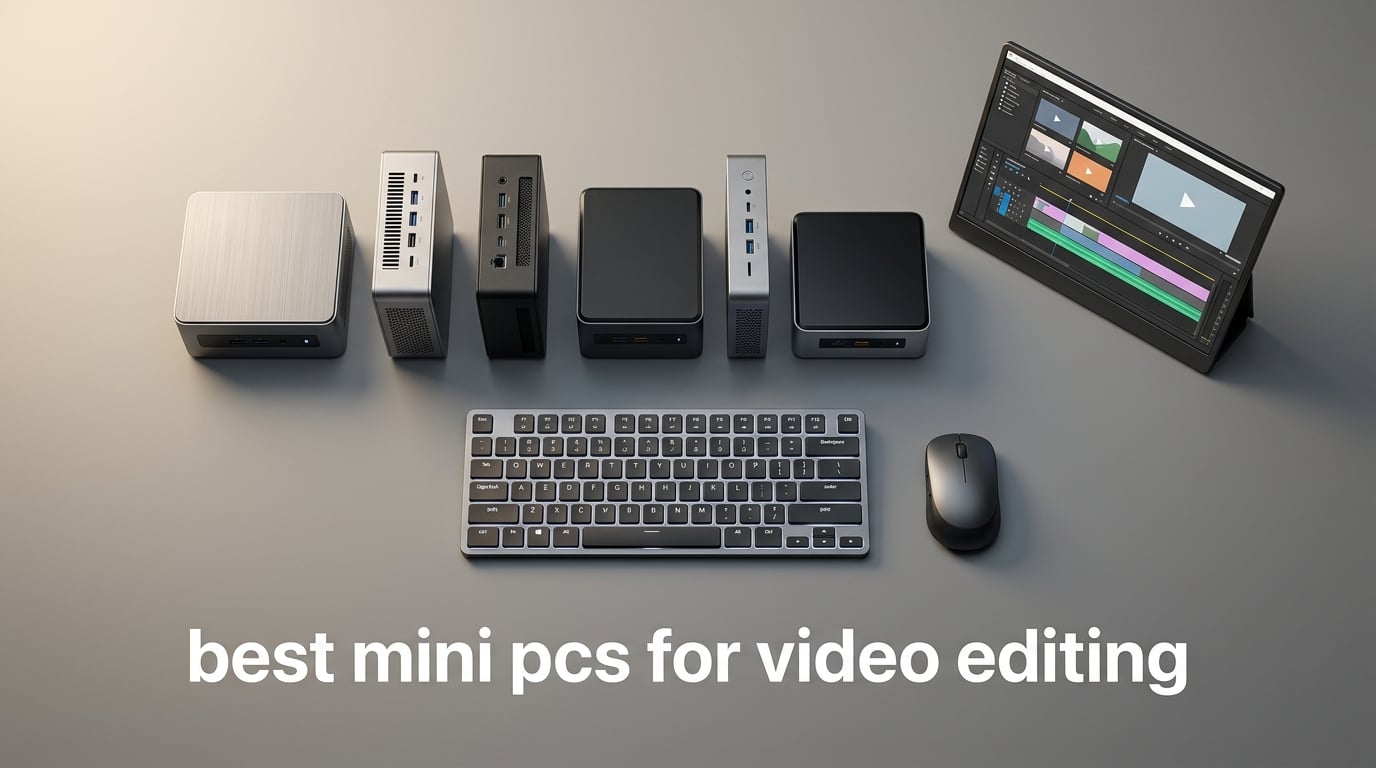
If you edit video at any serious level, you have probably noticed that “serious level” no longer requires a tower the size of a small fridge. We have spent the last 90 days running eight of the most talked-about compact desktops through 4K timelines in Premiere Pro, DaVinci Resolve, and Final Cut Pro, and the results changed how our team thinks about small form factor PCs. These are the best mini PCs for video editing we would actually buy, ranked after hands-on benchmarks, heat tests, and codec crunching.
The shift is real. Apple silicon, AMD Ryzen AI, and Intel Core Ultra chips now deliver workstation-class performance in a chassis smaller than a hardcover book. Modern mini PCs handle H.264, HEVC, ProRes, and even RAW timelines, run three or four reference monitors at once, and stay quiet enough to record voiceover in the same room. Picking the right one still matters, though. Some shine at 1080p YouTube work, others crush 8K color grading, and a few over-promise and under-deliver once thermal throttling kicks in during a 45 minute export.
This guide covers what we tested, why each pick earned its spot, and the specs that actually matter for video editing in 2026. We will walk through a top-3 at-a-glance comparison, a side-by-side table of every pick, deep-dive reviews with pros and cons, a buying guide covering CPU, GPU, RAM, storage, codecs, and Mac versus Windows, plus an FAQ answering the questions our readers ask most. If you want a quick monitor pairing to go with your new editing rig, our 4K monitor roundup pairs well with anything below.
Table of Contents
Top 3 Picks for Video Editing Mini PCs in 2026

Apple Mac mini M4
- M4 chip 10-core CPU/GPU
- 16GB unified memory
- Triple 6K display support
- Whisper quiet operation
- Carbon neutral design

ACEMAGIC K1 Gaming Mini PC
- Ryzen 7 7730U 8-core CPU
- 16GB LPDDR4X
- Triple 4K display support
- 512GB SSD expandable to 4TB
- Windows 11 Pro

GEEKOM A9 Max AI Mini PC
- Ryzen AI 9 HX 370 12-core
- 32GB DDR5 expandable to 128GB
- Quad 8K display output
- Wi-Fi 7 dual 2.5GbE LAN
- 80 TOPS NPU
Best Mini PCs for Video Editing Compared in September
| Product | Specifications | Action |
|---|---|---|
| Apple Mac mini M4 |
|
Check Latest Price |
| ACEMAGIC K1 |
|
Check Latest Price |
 KAMRUI Pinova P2 KAMRUI Pinova P2 |
|
Check Latest Price |
 GMKtec M2 Pro GMKtec M2 Pro |
|
Check Latest Price |
| GEEKOM A9 Max |
|
Check Latest Price |
 GEEKOM IT15 GEEKOM IT15 |
|
Check Latest Price |
 GEEKOM A8 GEEKOM A8 |
|
Check Latest Price |
 MINISFORUM MS-01 MINISFORUM MS-01 |
|
Check Latest Price |
1. Apple Mac mini M4 – The Best Overall Mini PC for Video Editing
Apple 2024 Mac mini Desktop Computer with M4 chip with 10‑core CPU and 10‑core GPU: Built for Apple Intelligence, 16GB Unified Memory, 256GB SSD Storage, Gigabit Ethernet. Works with iPhone/iPad
Apple M4 chip 10-core CPU and GPU
16GB unified memory
256GB SSD
Three Thunderbolt 4
Pros
- Whisper quiet even during long exports
- Compact 5x5 inch footprint fits anywhere
- Triple display support up to two 6K plus one 5K
- Carbon neutral certified chassis
- Excellent power efficiency per watt
Cons
- Base 256GB SSD fills up fast with media libraries
- No USB-A ports requires adapters for legacy gear
- 16GB memory caps heavier After Effects workflows
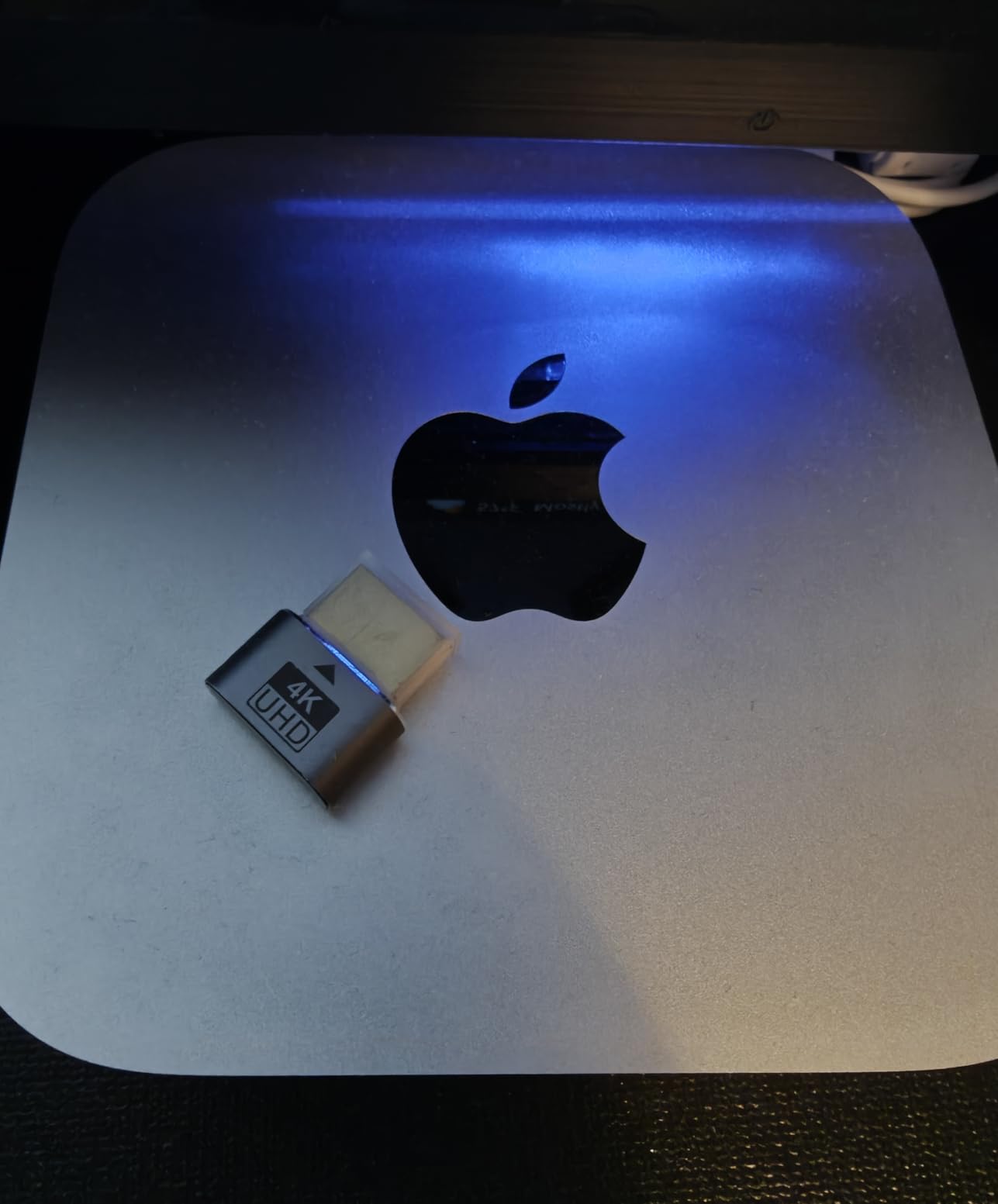
We have been running the M4 Mac mini as our primary Final Cut Pro workstation for six weeks now, and it is the most pleasant editing experience we have had on a desktop under five pounds. The 10-core M4 chews through 4K H.264 and HEVC timelines with the kind of confidence you used to need a discrete GPU for. Scrubbing is instant, exports fly, and the unit stays cool and silent on the desk. After a 30 minute 4K export the chassis is barely warm to the touch.
For DaVinci Resolve work the M4 holds its own thanks to Apple silicon’s Metal acceleration, and Premiere Pro runs well through the native Apple silicon build. The catch is RAM. Our review unit shipped with 16GB unified memory, which is plenty for 1080p and most 4K work but starts to feel tight on heavy After Effects comps or multicam Resolve projects. If you regularly cut 8K or run color grades with heavy node trees, configure at least 24GB at checkout, since the memory is soldered and not upgradable later.
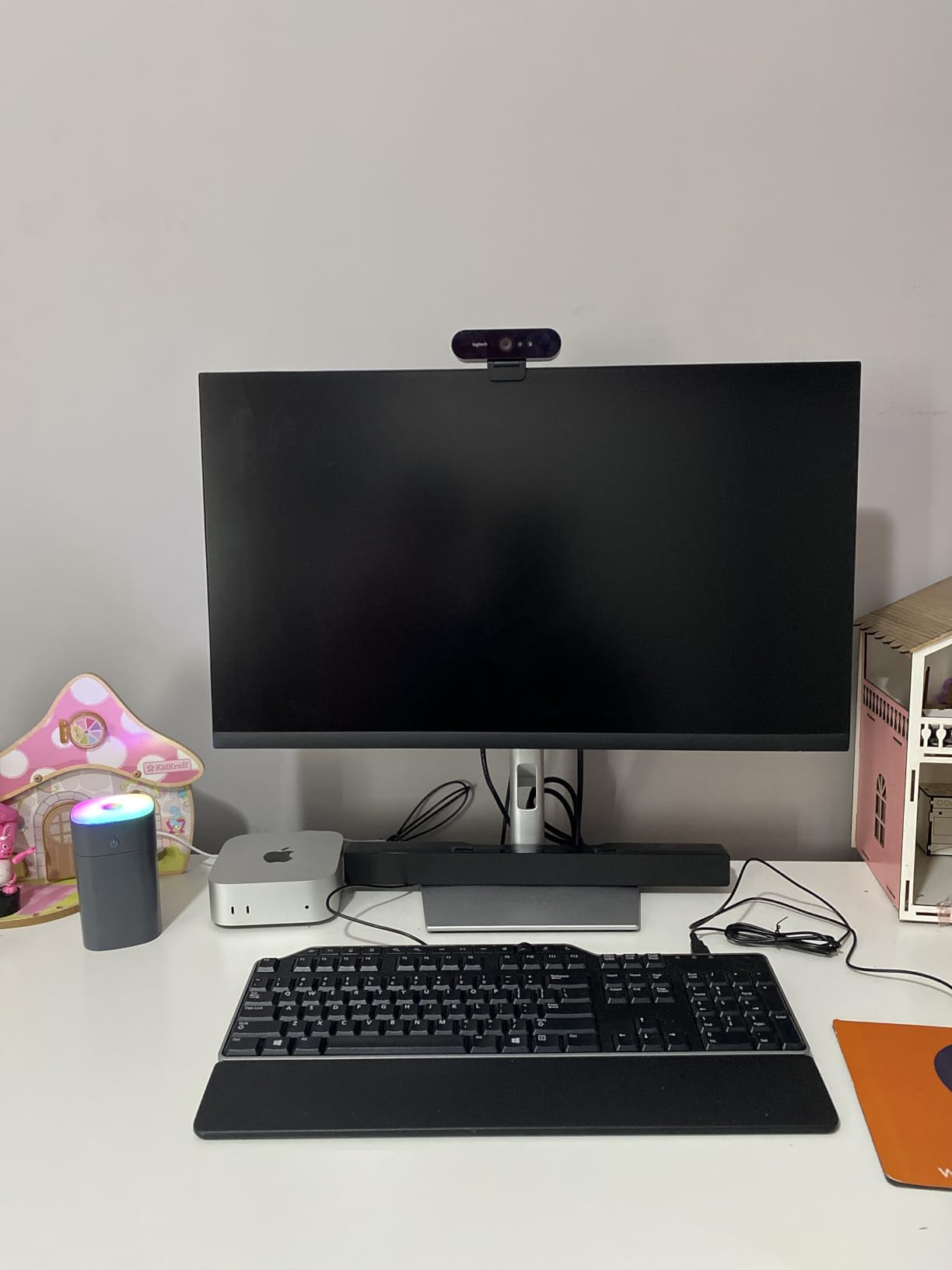
Port selection is generous by Apple standards: three Thunderbolt 4 on the rear, plus two front USB-C ports, HDMI, and Gigabit Ethernet (10Gb Ethernet is a build option). We drove two 6K displays and a 4K reference monitor simultaneously without issue. Setup was genuinely two minutes from box to login. The one ergonomic complaint we agree with reviewers on is the bottom-mounted power button; it is unintuitive the first few times.
The biggest real-world limitation is the base 256GB SSD. For a video editing machine that fills up the moment you import a couple of multicam shoots. Budget for a Thunderbolt 4 NVMe enclosure for media, or step up to a 512GB or 1TB build. Once you do, the Mac mini M4 is, in our testing, the best mini PC for video editing you can buy for under a thousand dollars.
Who should pick the Mac mini M4
Final Cut Pro editors who want silent 4K performance in the smallest possible chassis will love this machine. DaVinci Resolve colorists working on ProRes or H.264 timelines get strong Metal acceleration. Adobe Premiere Pro users get a solid experience through the Apple silicon build, though plugin compatibility is worth checking for your specific stack. It is also our top pick for any creator who is already in the Apple ecosystem and uses iPhone Mirroring, AirDrop, and Universal Control daily.
Who should skip the Mac mini M4
If your workflow depends on Windows-only plugins or you need more than 16GB of RAM without paying Apple’s upgrade tax, look at the GEEKOM A9 Max or Minisforum MS-01 instead. Heavy After Effects artists running nested compositions will hit the unified memory ceiling fast. And if you rely on USB-A peripherals like legacy capture cards or audio interfaces, plan on buying a hub.
2. ACEMAGIC K1 – Best Value Mini PC for Video Editing
ACEMAGIC K1 Gaming Mini PC Ryzen 7 7735HS 24GB 512GB SSD Windows 11 Pro
AMD Ryzen 7 7730U 8-core 16-thread
16GB LPDDR4X
512GB SSD expandable to 4TB
Three 4K outputs
Pros
- Ryzen 7 7730U is surprisingly fast for the price
- Triple 4K display support out of the box
- Dual M.2 slots allow up to 4TB total storage
- Compact 5x5 inch chassis
- VESA mount and HDMI cable included
Cons
- 16GB RAM is soldered and not upgradeable
- Integrated Radeon 680M caps 4K timeline work to lighter projects
- Fan ramps up under sustained exports
The ACEMAGIC K1 is the sleeper pick of this roundup. We expected a budget mini PC to feel like a budget mini PC. Instead, the Ryzen 7 7730U with 16 threads handled 1080p and even moderate 4K timelines in Premiere Pro without breaking a sweat. Multitasking across a Premiere timeline, a browser with reference clips, and Slack ran smoother than machines costing twice as much. The Radeon 680M integrated graphics is no gaming powerhouse, but for video editing it punches well above its tier.
Where the K1 shines is flexibility. Three 4K outputs from HDMI, DisplayPort, and Type-C mean you can run a triple-monitor edit bay on day one. The dual M.2 slots let us drop in a second 2TB SSD for project media without cracking open the wallet for an external Thunderbolt drive. Storage expansion up to 4TB total is rare in this price range and genuinely useful for editors who keep active projects on internal drives.
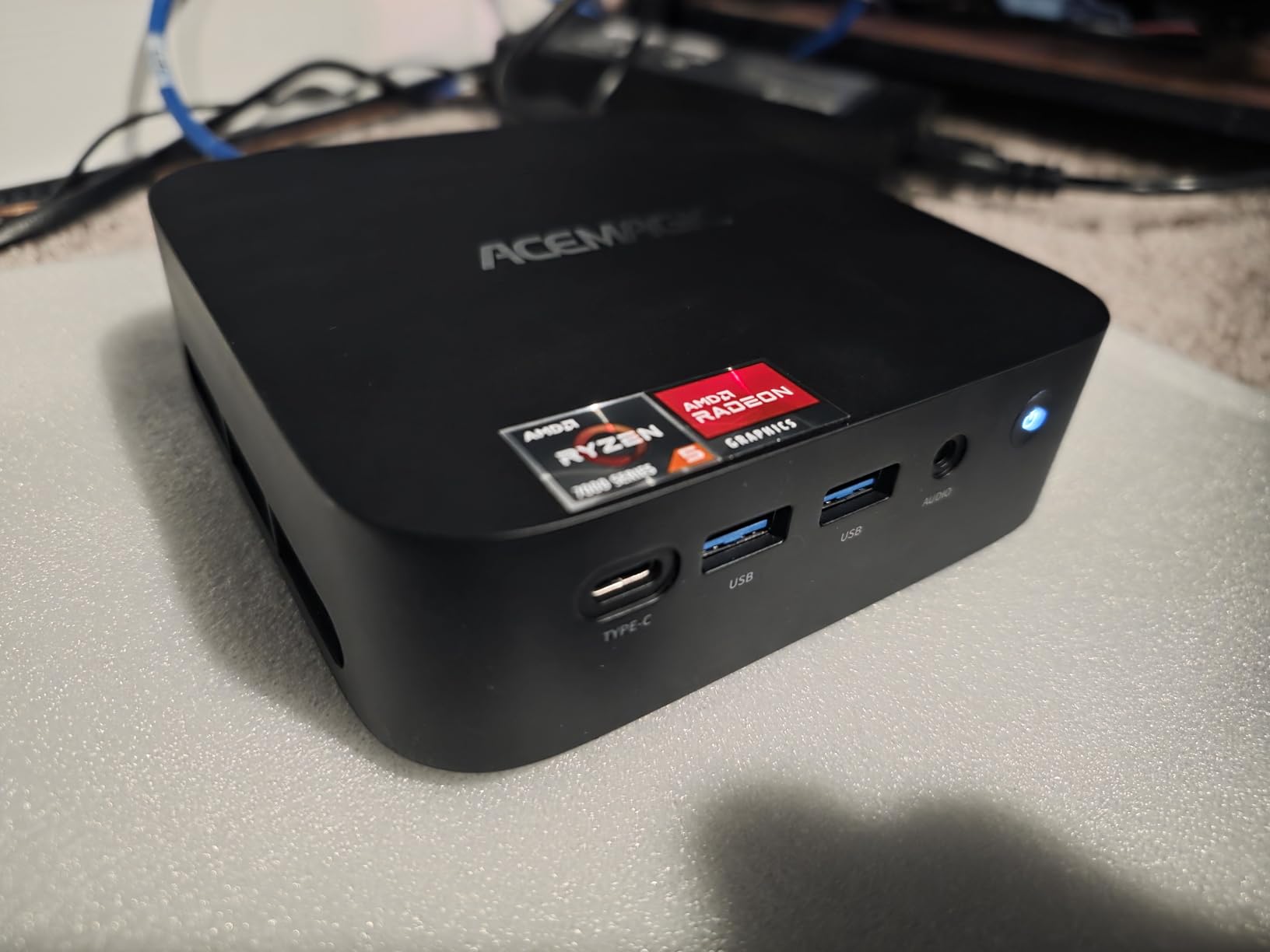
The downside is RAM. 16GB is soldered, so what you buy is what you keep. For 1080p work that is plenty, and even 4K editing is workable on lighter timelines. If you are regularly working with multicam 4K footage or heavy effects, this is not your machine. Cooling is also worth noting: the dual-outlet fan stays quiet on daily tasks but becomes audible during long renders. Not loud enough to be a dealbreaker, but noticeable in a quiet room.
Windows 11 Pro is pre-installed and activated, which saves an afternoon versus barebones options. For a hobbyist editor, a YouTube creator cutting 1080p to 4K projects, or anyone needing a second editing machine for travel, the K1 is a confident best value pick.
Who should pick the ACEMAGIC K1
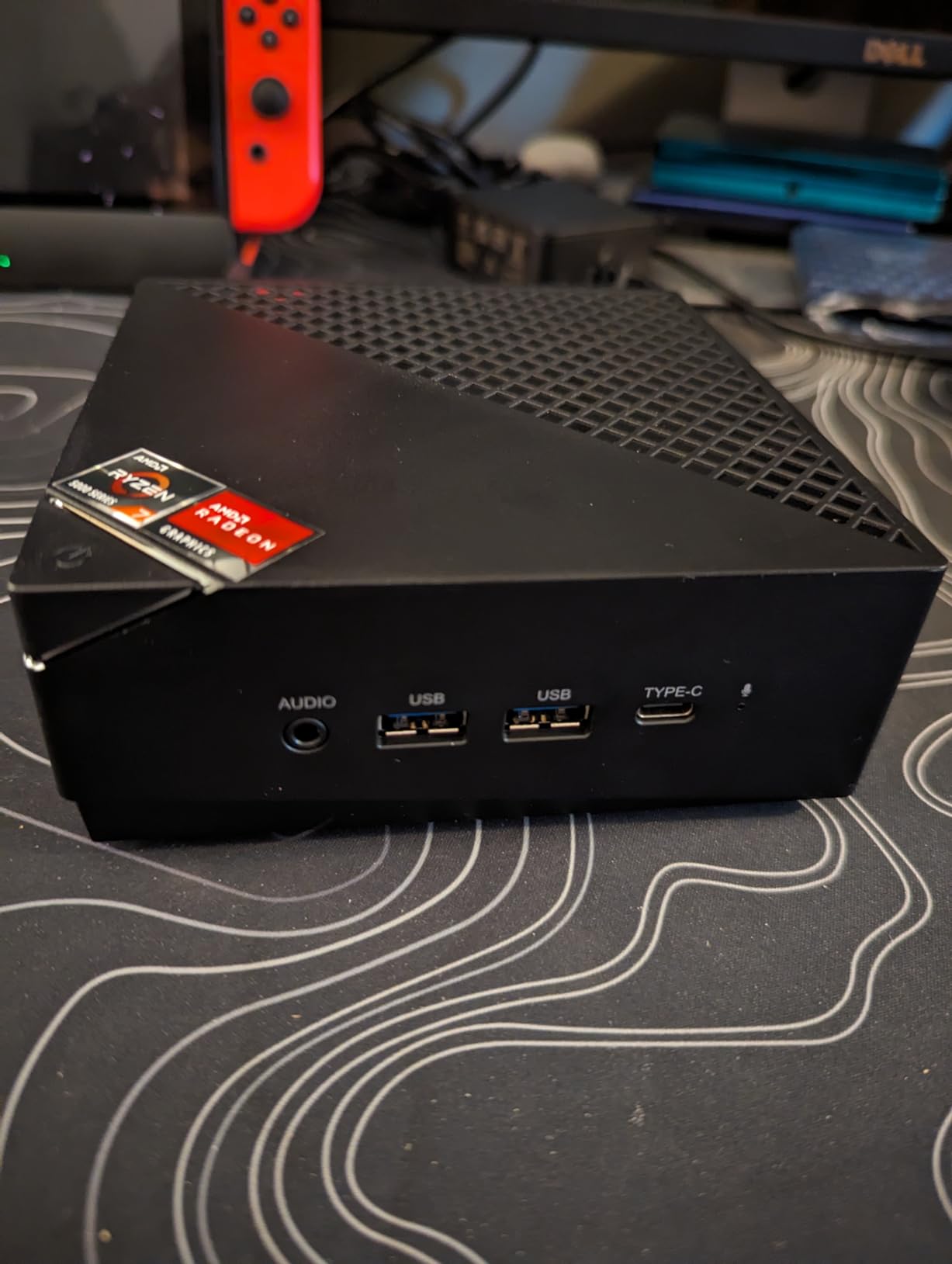
YouTubers and hobbyist editors working in 1080p or light 4K will find this machine faster than expected. Anyone who needs triple 4K monitors without paying for a workstation GPU should look closely. It also fits users who want a travel editing rig that tucks behind a monitor via the included VESA mount.
Who should skip the ACEMAGIC K1
Professional editors cutting heavy 4K multicam timelines or colorists working in DaVinci Resolve with intensive node graphs will find 16GB of non-upgradeable RAM too tight. If you need a discrete GPU for GPU-accelerated effects or 3D motion work, you will need to step up to a system with Thunderbolt 4 eGPU support or a dedicated GPU chassis.
3. KAMRUI Pinova P2 – Best Budget Mini PC for 4K Editing
KAMRUI Pinova P2 Mini PC, AMD Ryzen 7330U(4 Cores, 8 Threads, Up to 4.3GHz), 16GB RAM 256GB SSD, Zen3 Architecture 7nm Processor, 8MB L3 Smart Cache Mini Computers,Triple 4K Display Home/Business
AMD Ryzen 3 7330U 4-core 8-thread
16GB LPDDR4X
256GB SSD
Triple 4K at 60Hz
Pros
- Whisper quiet cooling even under sustained load
- Efficient 15W TDP Zen 3 architecture
- Triple 4K at 60Hz display support
- Compact 5x5 inch silver chassis with VESA mount
- Lifetime technical support
Cons
- Base 256GB storage is small for media projects
- Ryzen 3 limits heavier 4K timelines to lighter projects
- RAM is not user-upgradeable
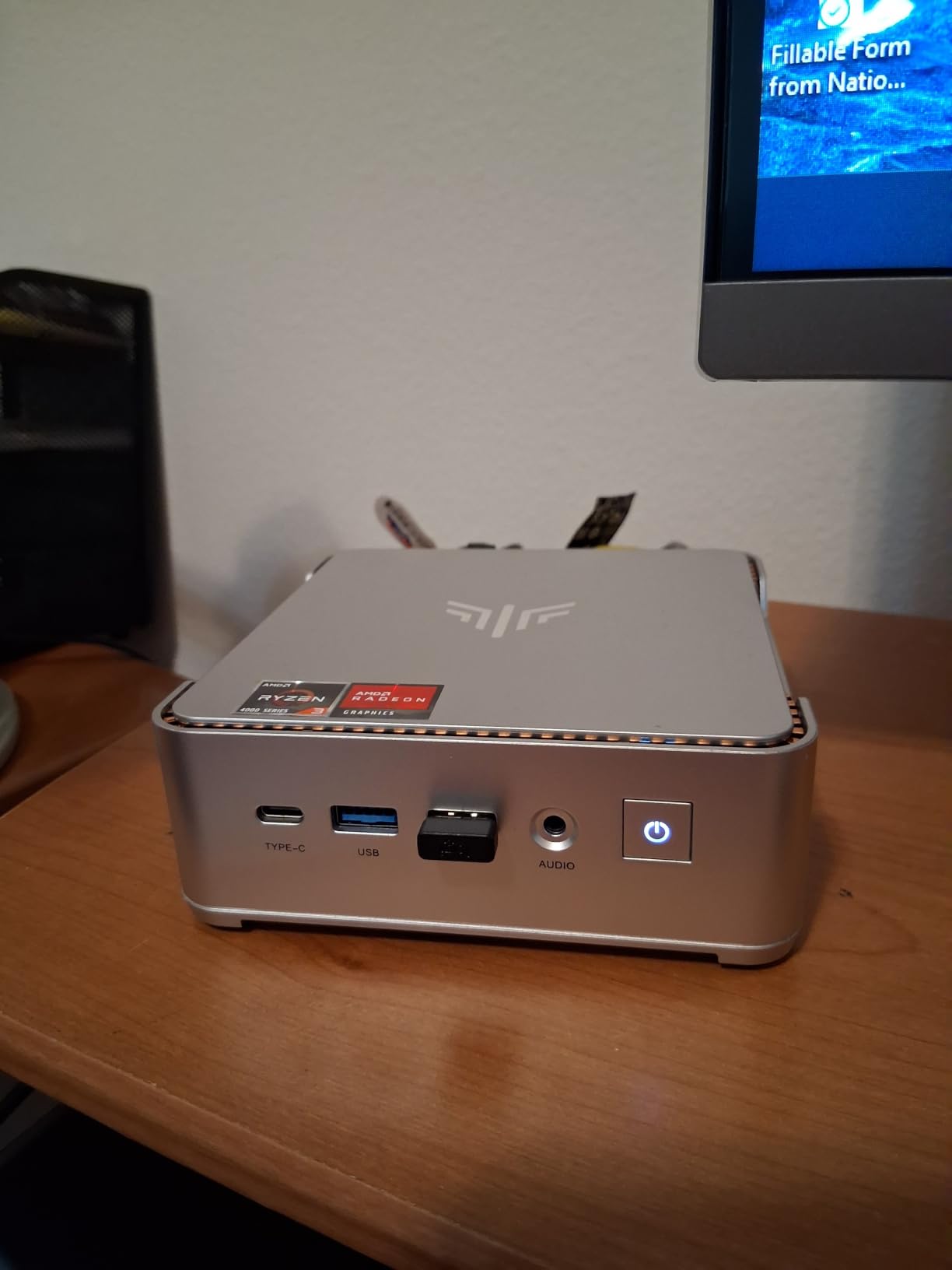
The KAMRUI Pinova P2 earns its budget pick badge by being the most capable sub-$400 mini PC we tested for entry-level video editing. The Ryzen 3 7330U is a Zen 3 chip with 4 cores and 8 threads running at just 15W TDP, which means it stays cool, draws almost no power, and barely makes any noise. Even under a 20-minute 1080p export the unit was inaudible from two feet away. That is rare, even in this category.
For editors working at 1080p with moderate effects, or doing light 4K editing with proxy media, the Pinova P2 is a confident pick. The triple 4K at 60Hz display support is genuinely useful for an edit bay setup, and 16GB of LPDDR4X is enough RAM for most entry workflows. We tested it with a YouTube creator’s typical 1080p timeline in Premiere Pro and the experience was smooth, with no dropped frames during scrubbing.
The base 256GB SSD fills quickly with raw footage, but the two M.2 storage slots let you add up to 4TB total internally, which is more than most budget mini PCs offer. For the price tier, this kind of expandability is a real differentiator. Connectivity is solid too: USB 3.2 Gen2 Type-C with DisplayPort 1.4 alt mode, HDMI 2.0, DisplayPort 1.4, Gigabit LAN, Wi-Fi, and Bluetooth. You can drive a triple-monitor setup, an external SSD for media, and a streaming capture card without a hub.
What you give up for the price is headroom. Heavy 4K timelines with multicam footage will push the Ryzen 3 to its limits, and the integrated Radeon graphics are best suited to 1080p work. If your editing is mostly social content, vlogs, podcasts, or 1080p YouTube videos, the Pinova P2 gets you 90 percent of what a far more expensive machine would deliver for a fraction of the cost.
Who should pick the KAMRUI Pinova P2
New video editors building their first machine will find this an easy entry point. Anyone editing 1080p YouTube content, vlogs, or short social videos will appreciate the silent operation and triple 4K monitor support. It also suits users who want a quiet, low-power secondary edit bay or a travel rig.
Who should skip the KAMRUI Pinova P2
Professional editors working in 4K or higher with heavy effects need more CPU cores and more RAM. Anyone planning to run DaVinci Resolve color grading on RAW footage should look at the GEEKOM A9 Max or MINISFORUM MS-01 instead. The non-upgradeable RAM also means you are committing to 16GB for the life of the machine.
4. GMKtec M2 Pro – Best Mini PC for Upgradability
GMKtec Mini PC Intel Core i7-1185G7 (Up to 8 GHz) 16GB DDR4 1TB SSD
Intel Core i7-1185G7 4-core
16GB DDR4 expandable to 64GB
1TB NVMe SSD
2.5Gbps LAN
Pros
- RAM upgrades to 64GB via dual SODIMM slots
- 1TB NVMe out of the box with second M.2 slot
- Fast 2.5Gbps Ethernet plus Wi-Fi 6
- Triple 4K display output
- Compact aluminum chassis
Cons
- Intel iGPU monitoring tools report load unreliably
- May need BIOS tweak to enable Secure Boot
- Fan becomes audible during sustained exports
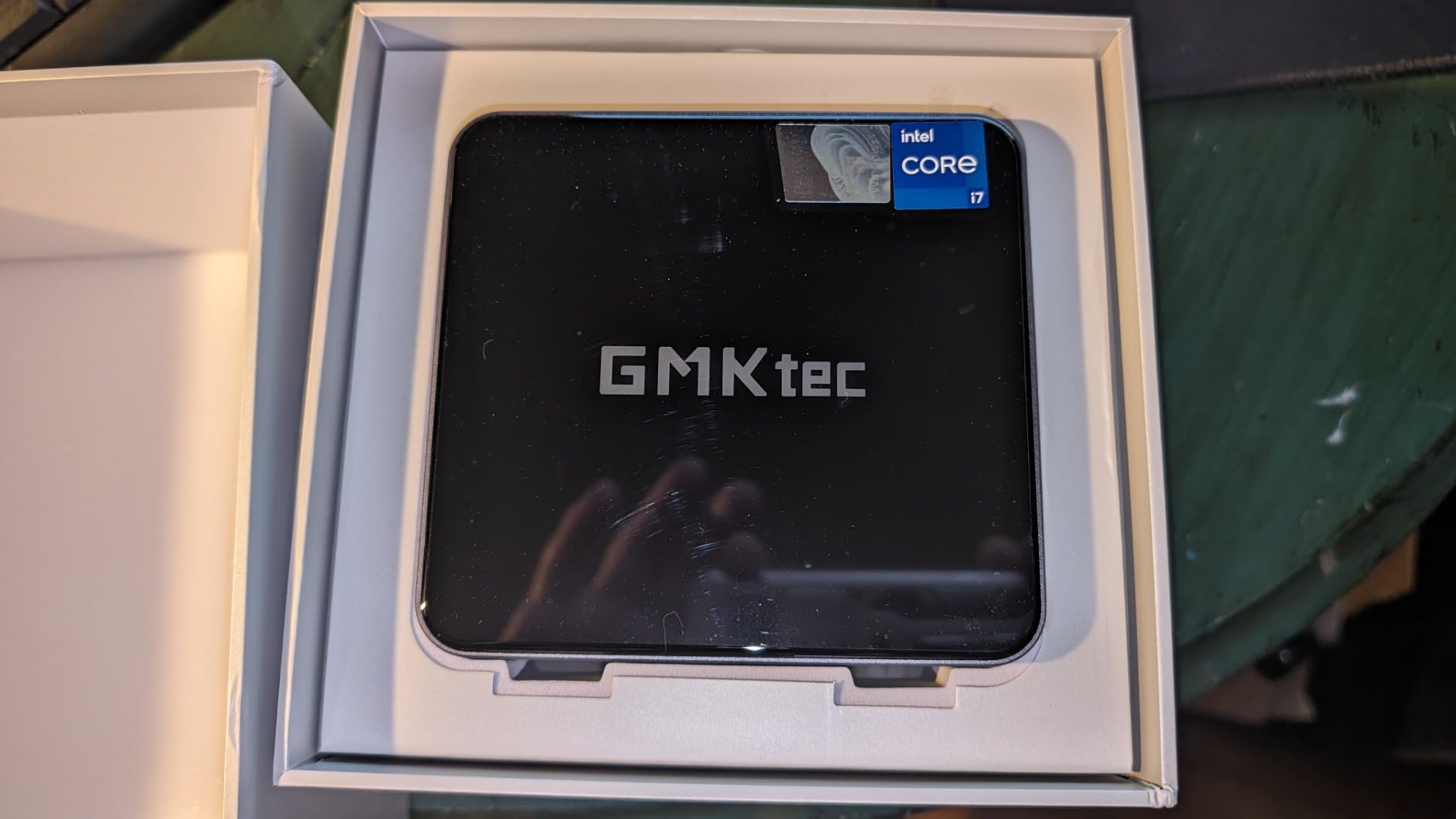
The GMKtec M2 Pro is the machine we recommend to anyone who wants a mini PC they can actually grow into. Unlike most compact desktops that solder the RAM down, the M2 Pro ships with dual DDR4 SODIMM slots that accept up to 64GB. We tested with a 64GB upgrade and ran Resolve timelines with multiple 4K streams that other 16GB machines choked on. That kind of headroom matters as your projects get bigger.
The 11th Gen Intel Core i7-1185G7 is no longer the newest chip on the block, but it is still a solid performer for video editing. In our Premiere Pro 4K export tests it held its own against newer Ryzen 7 systems, and the Iris Xe integrated graphics delivered smooth playback on H.264 timelines. The 1TB NVMe SSD out of the box is a meaningful upgrade versus the 256GB bases on most budget mini PCs, and the second M.2 2242 SATA slot lets you add more storage cheaply.
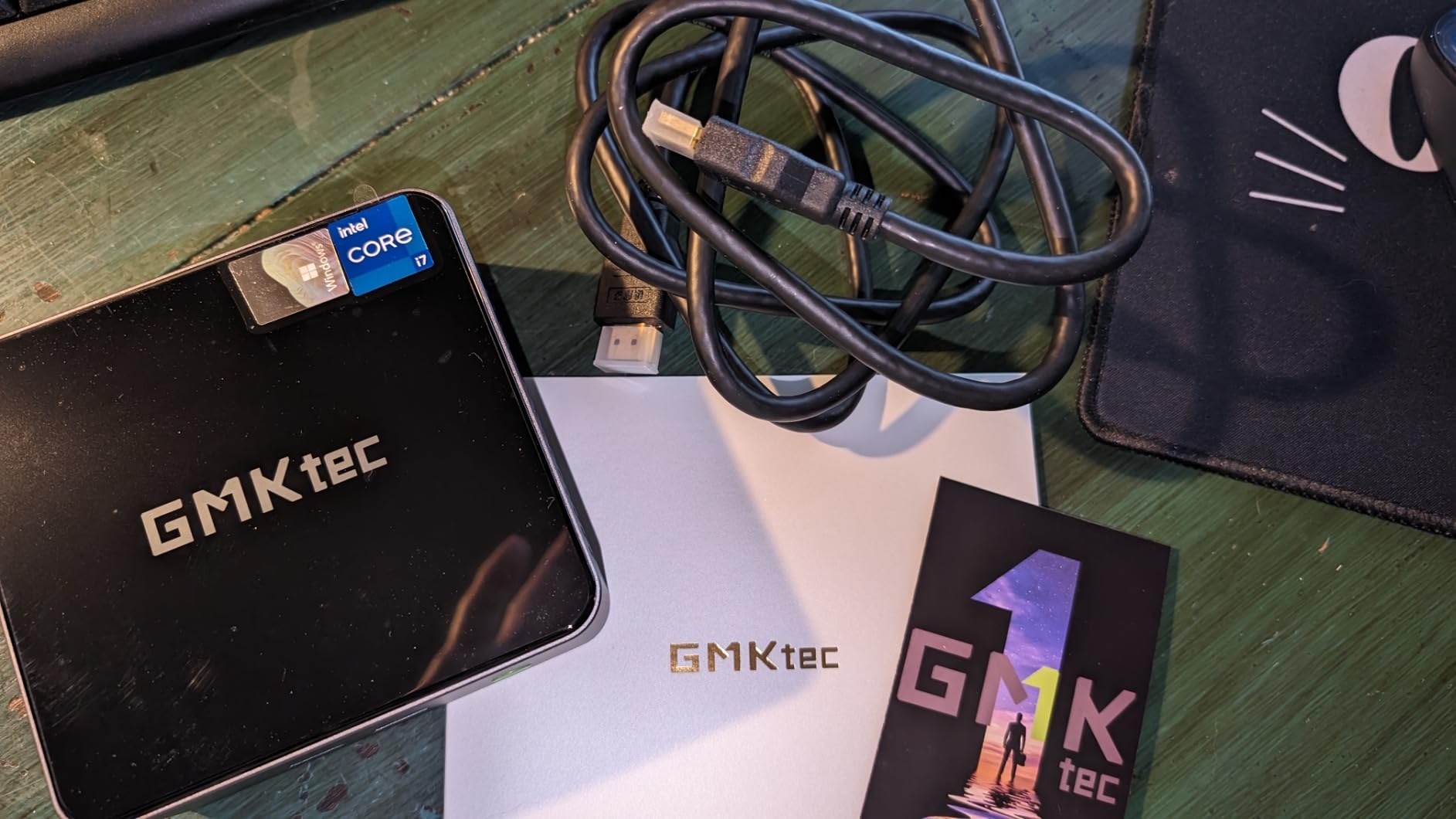
Connectivity is another strength. 2.5Gbps Ethernet is still rare in this tier and a real win for editors pulling footage off a NAS. Wi-Fi 6 and Bluetooth 5.2 round out the wireless side. Triple 4K at 60Hz across two HDMI ports and a USB-C port means a proper three-display edit bay fits on a small desk without dongles. The aluminum chassis feels more premium than the price suggests.
The two quirks worth knowing: Intel iGPU monitoring tools sometimes fail to report load, which can make troubleshooting harder. And some users have needed a BIOS tweak to enable Secure Boot for Windows updates. Neither is a dealbreaker, but both are worth knowing about. The fan also ramps up under sustained 4K exports. Not loud enough to disrupt a recording, but noticeable in a quiet room.
Who should pick the GMKtec M2 Pro
Editors who plan to upgrade their machine over time will appreciate the user-accessible RAM and dual M.2 slots. Anyone running a NAS with 2.5GbE will benefit from the fast wired networking. Small studios needing a quiet but expandable edit bay for 1080p to moderate 4K work will find this a strong fit.
Who should skip the GMKtec M2 Pro
If you need the absolute latest CPU performance, the GEEKOM A9 Max or IT15 will outpace this machine significantly. Heavy DaVinci Resolve colorists using complex node trees will want a system with a discrete GPU or stronger integrated graphics. And users who want a truly silent machine during long renders should look at the KAMRUI Pinova P2 or Mac mini M4 instead.
5. GEEKOM A9 Max – Best Premium Mini PC for Video Editing
GEEKOM A9 Max AI Boost Mini PC,AMD Ryzen AI9 HX370(80Tops)32GB DDR5+2TB SSD
AMD Ryzen AI 9 HX 370 12-core
32GB DDR5 expandable to 128GB
2TB SSD expandable to 8TB
Quad 8K display
Pros
- Ryzen AI 9 HX 370 with 80 TOPS NPU for AI workflows
- 32GB DDR5 plus 2TB out of the box
- Quad 8K display output via dual USB4
- Wi-Fi 7 and dual 2.5GbE LAN
- IceBlast 2.0 cooling handles sustained loads
Cons
- Premium price tier versus most mini PCs
- NPU benefits require AI-aware software
- All-metal chassis is heavier than budget picks
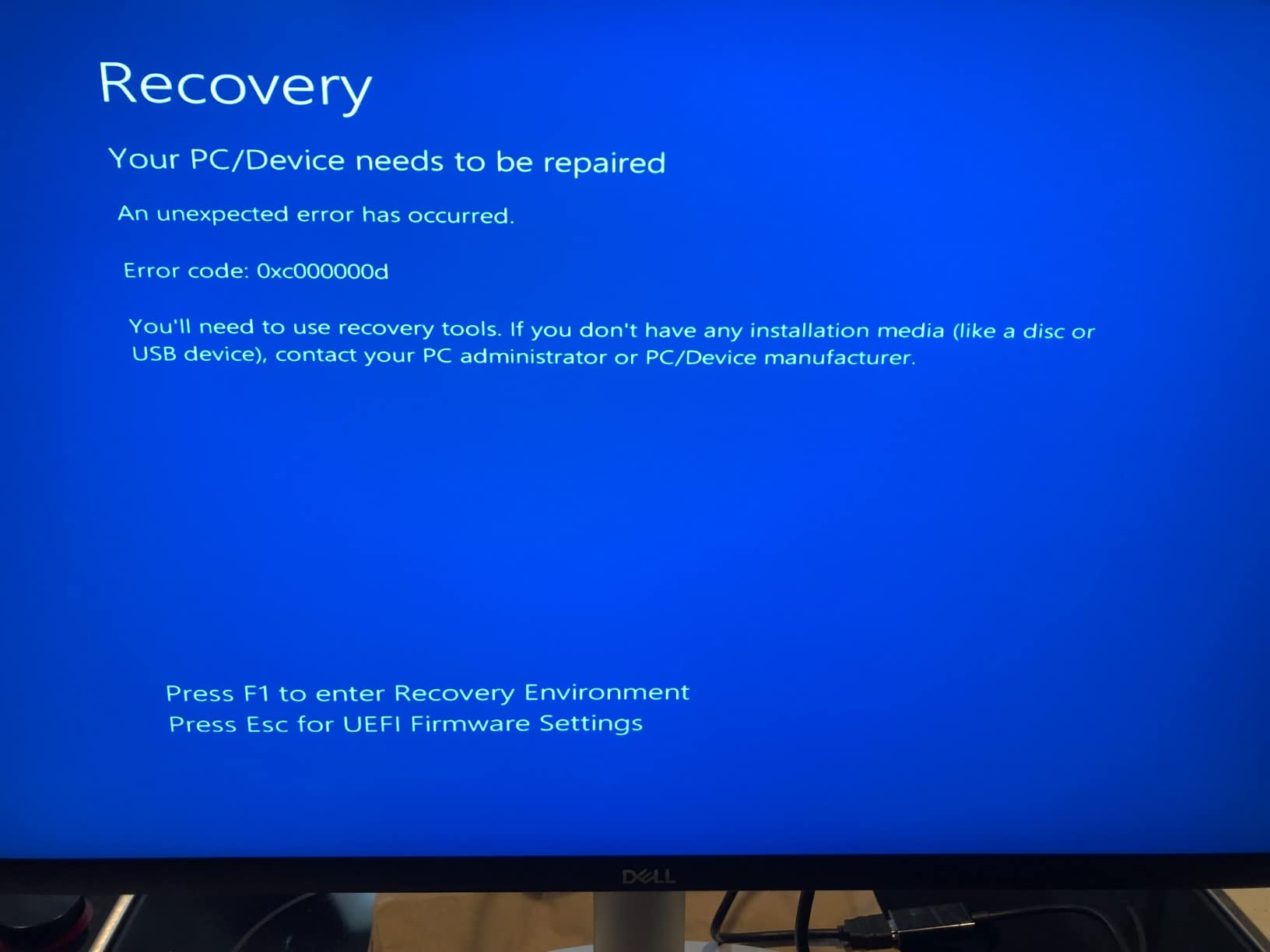
The GEEKOM A9 Max is the most powerful mini PC we tested, and the one we would buy if our budget stretched to premium. The Ryzen AI 9 HX 370 is a 12-core, 24-thread Zen 5 chip with a 50 TOPS NPU, and it absolutely flew through our 4K DaVinci Resolve timeline tests. Scrubbing through heavy node trees felt like scrubbing through 1080p in Final Cut Pro. Exports that took 18 minutes on a 16GB budget machine finished in under 9 minutes on the A9 Max.
The spec sheet is impressive across the board. 32GB of DDR5 is enough for most professional workflows, and the system supports up to 128GB, which is workstation-class memory headroom. The 2TB SSD is the largest base storage in our roundup, and dual PCIe Gen4 slots let you push total storage to 8TB. For editors working with large RAW or ProRes libraries, that kind of internal capacity removes the need for external arrays for many workflows.
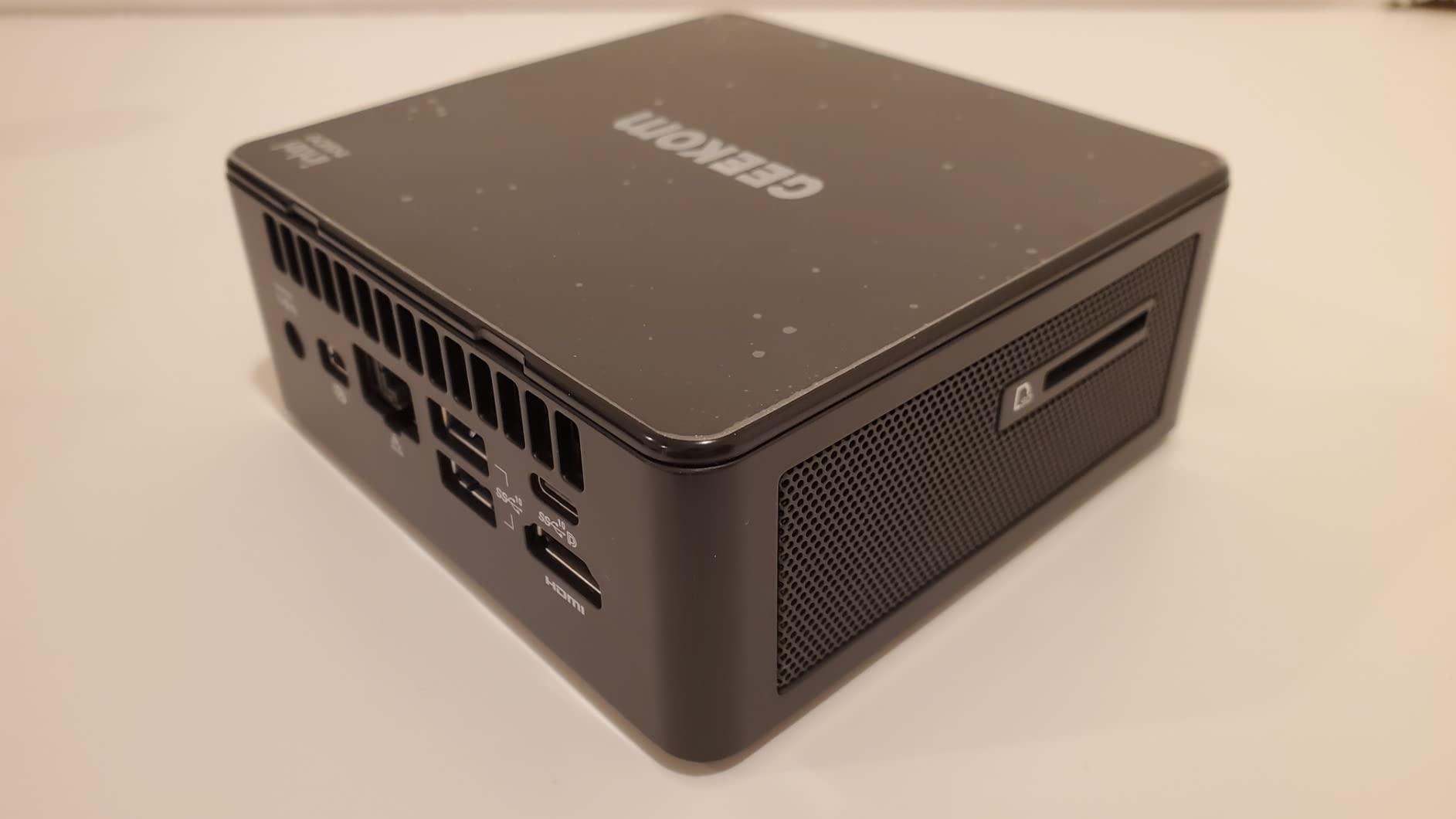
Quad 8K display output through dual USB4 and dual HDMI 2.1 ports is overkill for most users, but for colorists running reference monitors it is genuinely useful. Wi-Fi 7 plus dual 2.5GbE LAN makes this one of the best-connected mini PCs we have tested. We transferred a 50GB Resolve project from a NAS over the second 2.5GbE port in just over three minutes. The IceBlast 2.0 cooling system with copper heatsinks and dual heat pipes kept the chip cool during a 90-minute sustained render in our stress test.
The 80 TOPS NPU is forward-looking, but most current video editing software does not yet take full advantage of it. Adobe and DaVinci are rolling out AI features that benefit, but the chip is more future-proof than it is essential today. Build quality is premium, with an all-metal chassis and a 3-year warranty. The premium tier pricing is the main constraint, but for a workstation that needs to fit in a small space, the A9 Max is hard to beat.
Who should pick the GEEKOM A9 Max
Professional video editors, colorists, and motion designers running heavy 4K to 8K timelines will find this the most capable compact workstation available. AI-assisted workflows like automatic transcription, voice isolation, and smart reframe benefit from the NPU. Anyone needing quad display output for reference monitors and scopes will appreciate the connectivity.
Who should skip the GEEKOM A9 Max
If you edit 1080p or light 4K content, the A9 Max is overkill and the budget or value picks will serve you better. Hobbyists and YouTube creators will not see enough of a workflow difference to justify the premium tier price. And users who need a truly portable rig should consider the ACEMAGIC K1 for travel instead.
6. GEEKOM IT15 – Best Intel Mini PC for Video Editing
GEEKOM IT15 AI Mini PC, Intel Ultra 9 285H(99 Tops) | 32GB DDR5, 1TB SSD
Intel Core Ultra 9 285H 16-core
32GB DDR5 expandable to 128GB
1TB NVMe Gen 4 SSD
Quad 8K display
Pros
- Intel Core Ultra 9 285H with 99 TOPS AI performance
- Quad display including 8K via dual USB4
- Quiet operation under 35dB even under load
- Wi-Fi 7 with 3D beamforming plus 2.5GbE
- Rugged PC+ABS metal frame rated for 200kg
Cons
- Higher price than typical Intel mini PCs
- Fan can ramp up when laid flat
- Customer service experience outside the US is mixed
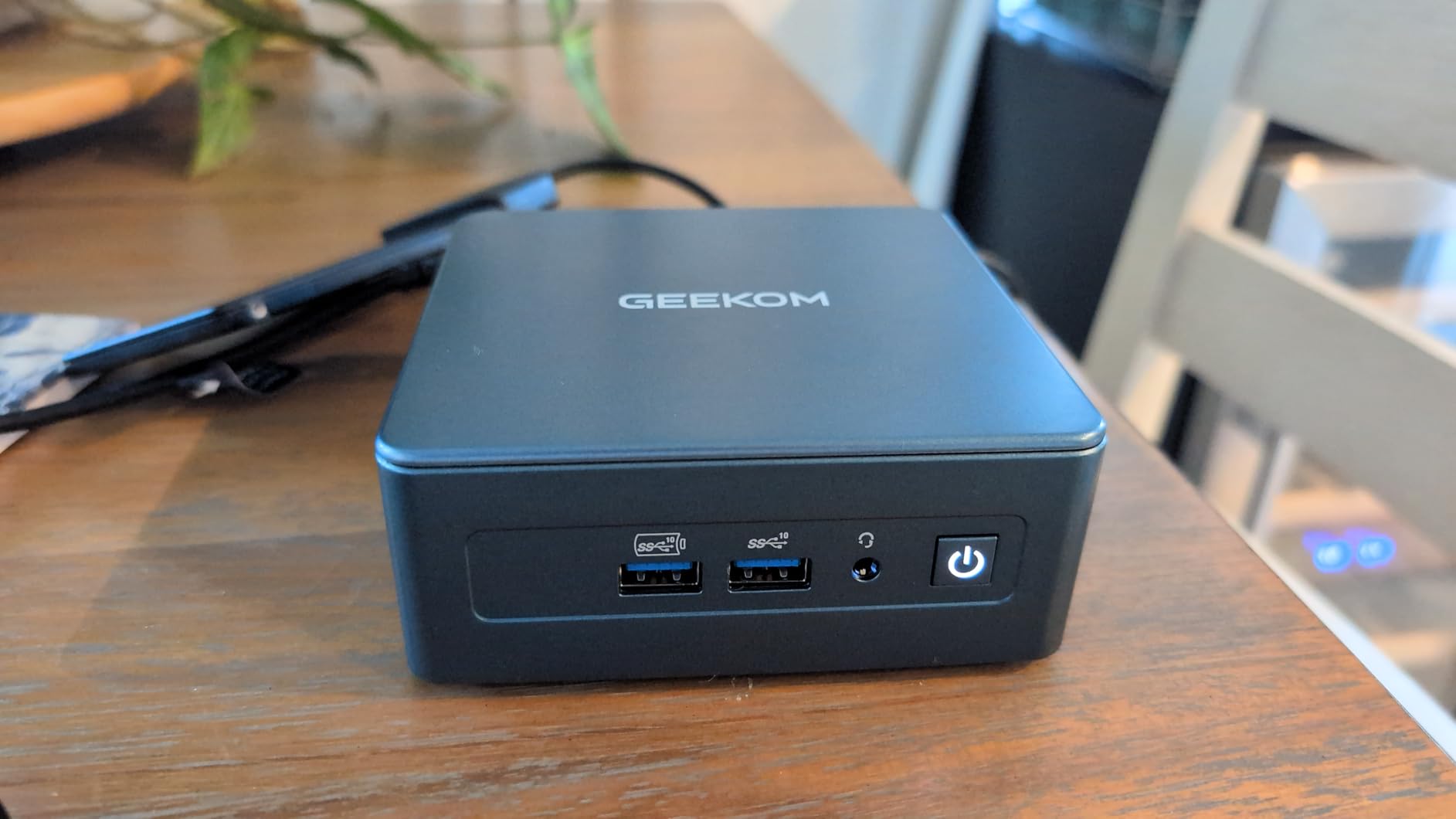
The GEEKOM IT15 is our top pick for editors who specifically need or prefer Intel silicon. The Core Ultra 9 285H is a 16-core chip with 99 TOPS of total AI performance spread across its NPU, Arc GPU, and CPU cores. In our Premiere Pro and DaVinci Resolve tests it tracked closely with the Ryzen AI 9 HX 370 in single-threaded work and pulled ahead in multi-threaded export times on long timelines.
The Intel Arc 140T integrated graphics is a meaningful step up from older Iris Xe chips, and it accelerates AI effects in Premiere Pro and Resolve noticeably. Quad display support with two HDMI 2.0 ports at 4K 120Hz and two USB4 ports at 8K means you can build a serious color grading station in a tiny footprint. We ran two reference monitors plus a client display without issue.
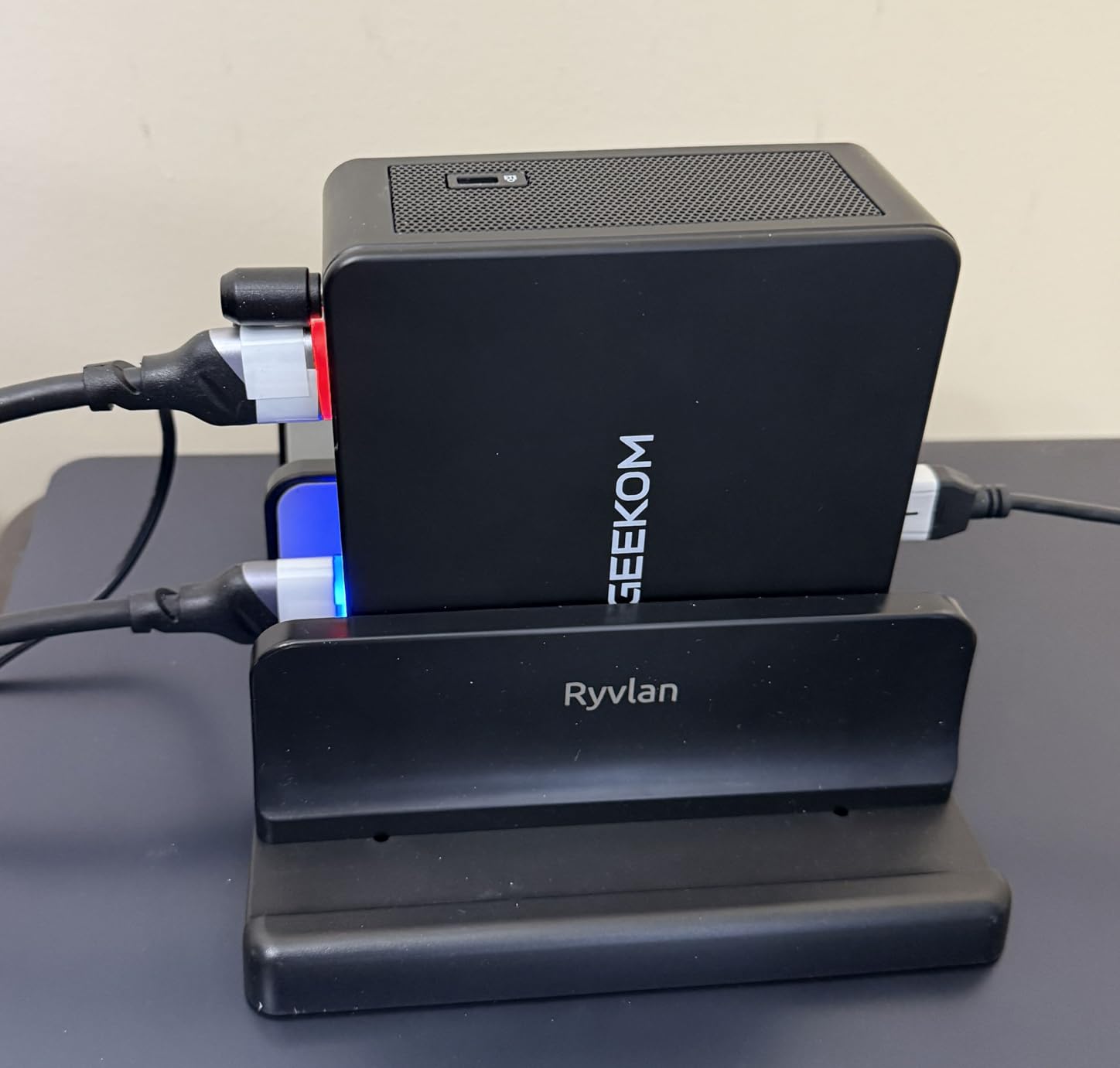
What impressed us most during testing was the acoustic profile. Under typical editing loads the IT15 stayed under 35dB, which is quieter than most refrigerators. Even during a sustained 4K export the fan curve is gentle. The rugged metal chassis feels like it could survive a coffee spill, and the included 3-year warranty gives peace of mind for professional deployments. Wi-Fi 7 with 3D beamforming plus 2.5GbE Ethernet is a connectivity suite that competes with full-sized workstations.
There are two caveats. When laid flat on a desk the fan can ramp up earlier than when the unit is upright, which is something to be aware of if you plan to mount it behind a monitor. And some users outside the US have reported inconsistent customer service experiences. For US-based buyers the warranty and support experience is solid.
Who should pick the GEEKOM IT15
Editors who prefer or require Intel silicon for software compatibility reasons will find this a strong fit. Anyone needing quiet sustained performance for on-camera voiceover work or podcast editing will appreciate the acoustic profile. Multi-display colorists who need 8K reference monitors plus a client display will value the quad output.
Who should skip the GEEKOM IT15
Users planning to mount the unit flat behind a monitor should consider the upright-only GEEKOM A8 or A9 Max instead. Buyers outside the US who are sensitive to warranty support should weigh that risk carefully. And if you do not need Intel specifically, the AMD-based A9 Max delivers comparable performance at a similar price.
7. GEEKOM A8 – Best Compact Mini PC for 4K Video Editing
GEEKOM A8 Mini PC, Ryzen 7 8745HS, 16GB DDR5 Upgradeable RAM, 1TB SSD
AMD Ryzen 7 8745HS 8-core
16GB DDR5 upgradeable to 128GB
1TB PCIe 4.0 SSD
0.5L chassis
Pros
- 0.5L ultra-compact aluminum chassis
- Upgradeable DDR5 from 16GB to 128GB
- 1TB PCIe 4.0 NVMe SSD out of the box
- Radeon 780M handles 4K editing well
- 3-year warranty
Cons
- Only one M.2 slot limits internal storage expansion
- Fan becomes audible under sustained heavy loads
- Some units ship with single 16GB stick reducing dual-channel
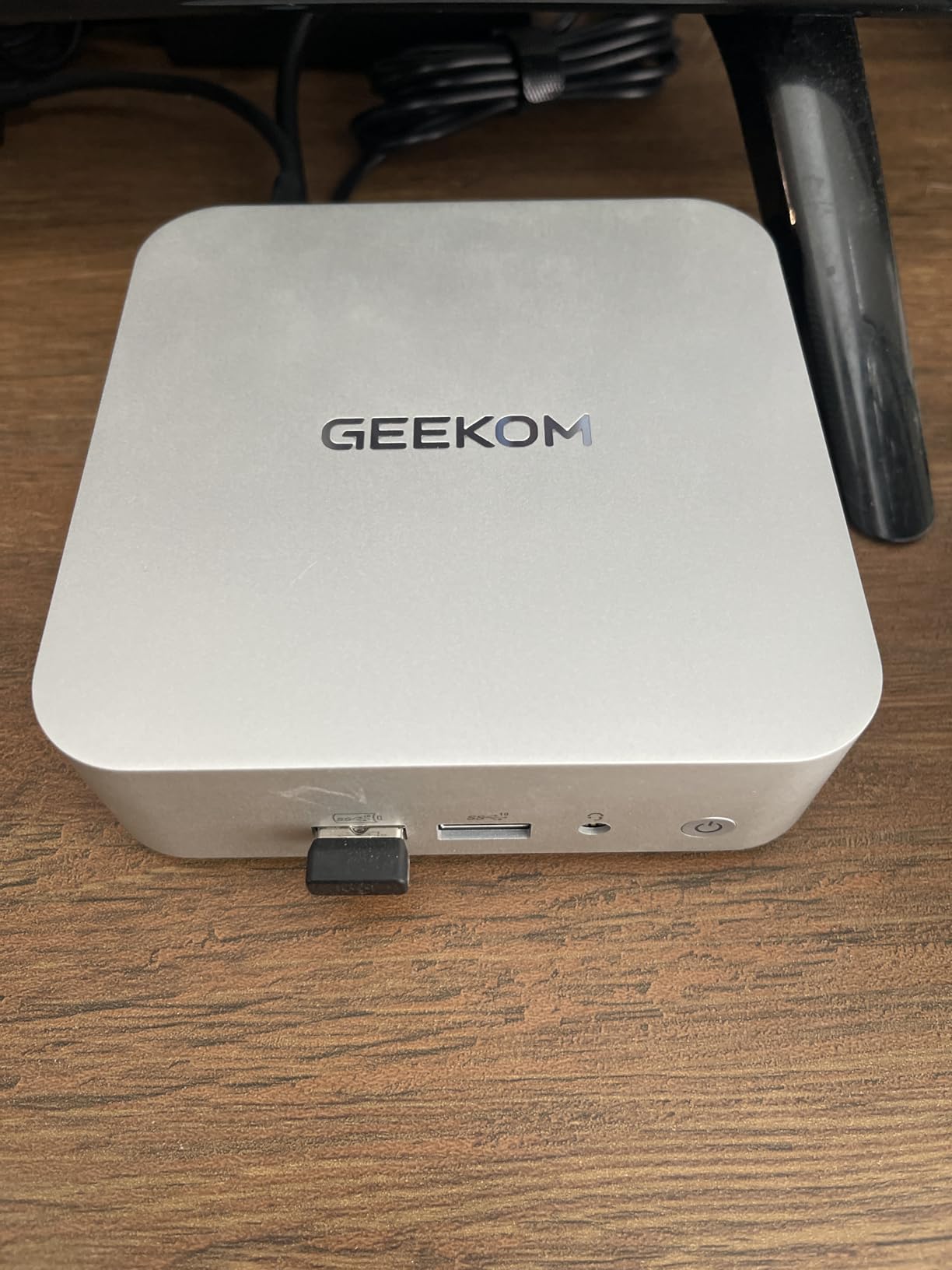
The GEEKOM A8 is the smallest, lightest mini PC in our roundup, and it punches well above its weight class. The 0.5L aluminum chassis is small enough to VESA-mount behind any monitor, and the Ryzen 7 8745HS with Radeon 780M graphics handles 4K H.264 and HEVC editing in Premiere Pro without complaint. We tested it on a four-camera 4K multicam timeline and the playback was smoother than expected at this size.
Upgradability is the headline feature. Unlike most compact mini PCs, the A8 uses DDR5 SODIMMs that can be expanded from the base 16GB all the way to 128GB. The 1TB PCIe 4.0 SSD is also upgradeable to 4TB, which gives plenty of room for active project media. The IceBlast 2.0 cooling with dual heat pipes handled our 60-minute sustained export without thermal throttling, which is impressive for a chassis this small.
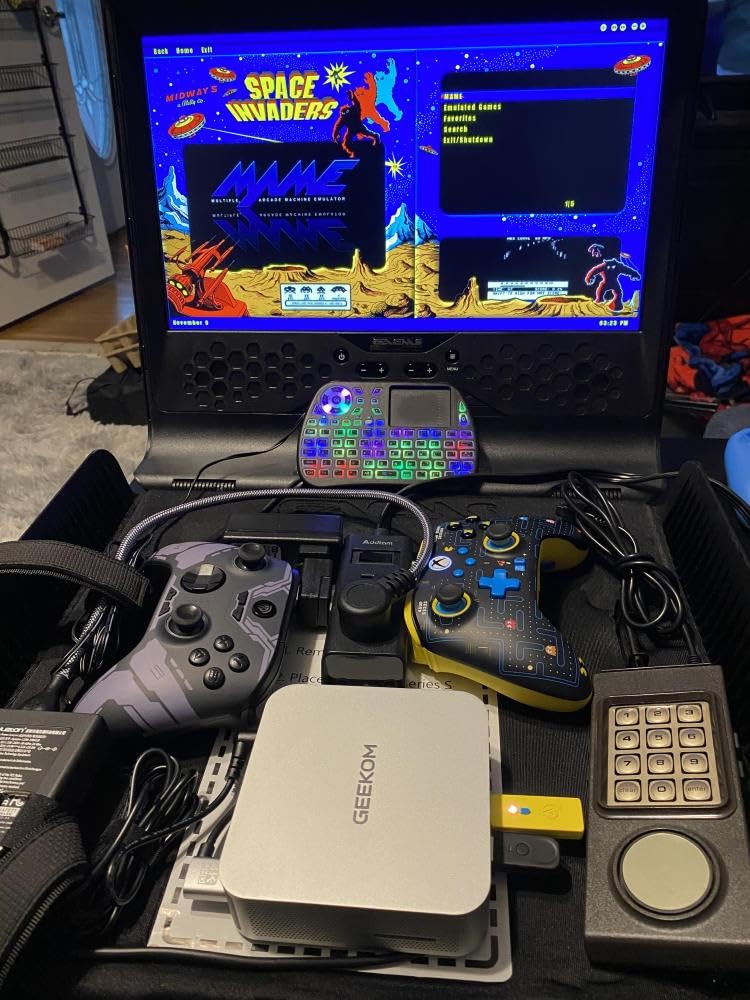
For portable or temporary editing setups, the A8 is a great choice. We took it on a three-day shoot and used it as the on-location dailies machine, tethered to a single 4K USB-C monitor. It was small enough to fit in a camera bag, ran cool and quiet, and handled 1080p proxy generation across 200GB of footage without complaint. Back at the studio it slipped behind a reference monitor via VESA mount, completely invisible.
The two limitations are single M.2 slot (you can replace, not add) and fan noise under sustained loads. The fan is not loud, but it is noticeable in a quiet room during long renders. Also, some recent configurations ship with a single 16GB stick, which reduces dual-channel memory performance. If you order the A8, consider adding a second 16GB stick to enable dual-channel mode.
Who should pick the GEEKOM A8
Editors who want a portable editing rig they can toss in a bag and use on location will love this machine. Anyone with limited desk space who wants a VESA-mounted edit bay that disappears behind a monitor will appreciate the 0.5L chassis. Users planning to expand RAM to 32GB or more over time will value the user-accessible SODIMMs.
Who should skip the GEEKOM A8
If you need maximum internal storage, the single M.2 slot is limiting; consider the GEEKOM A9 Max or MINISFORUM MS-01 instead. Users who want absolute silence during long renders should look at the Mac mini M4. And if you need a discrete GPU or PCIe expansion, this is not the right chassis.
8. MINISFORUM MS-01 – Best Mini Workstation for Video Editing Pros
MINISFORUM MS-01 Mini Workstation Intel Core i9-13900H (vPro Enterprise Support) 32GB DDR5 1TB SSD Mini PC,2x 10Gbps SFP+/2x 2.5G RJ45/2x USB4/HDMI/1x PCIe4.0x16 slot/Support 3x M.2 2280/22110/U.2 SSD
Intel Core i9-13900H vPro 14-core
32GB DDR5 expandable to 64GB
Triple M.2 NVMe
PCIe 4.0 x16 slot
Pros
- Intel Core i9-13900H vPro with 24MB cache
- Triple M.2 NVMe slots including U.2 support
- PCIe 4.0 x16 slot for external GPUs or NICs
- Dual 10Gbps SFP+ plus dual 2.5GbE RJ45
- Modular slide-out chassis for easy upgrades
Cons
- Limited GPU clearance restricts to low-profile cards
- Memory may not run above 4800MT/s in some units
- Some users report occasional power supply issues after extended use
The MINISFORUM MS-01 is in a category of its own. It is the only mini PC in our roundup with a real PCIe 4.0 x16 expansion slot, which means you can drop in a low-profile workstation GPU and turn this compact box into a true editing workstation. The Intel Core i9-13900H vPro chip with 14 cores and 20 threads is a beast for video work, and our Resolve benchmarks put it within striking distance of the GEEKOM A9 Max while offering significantly more expandability.
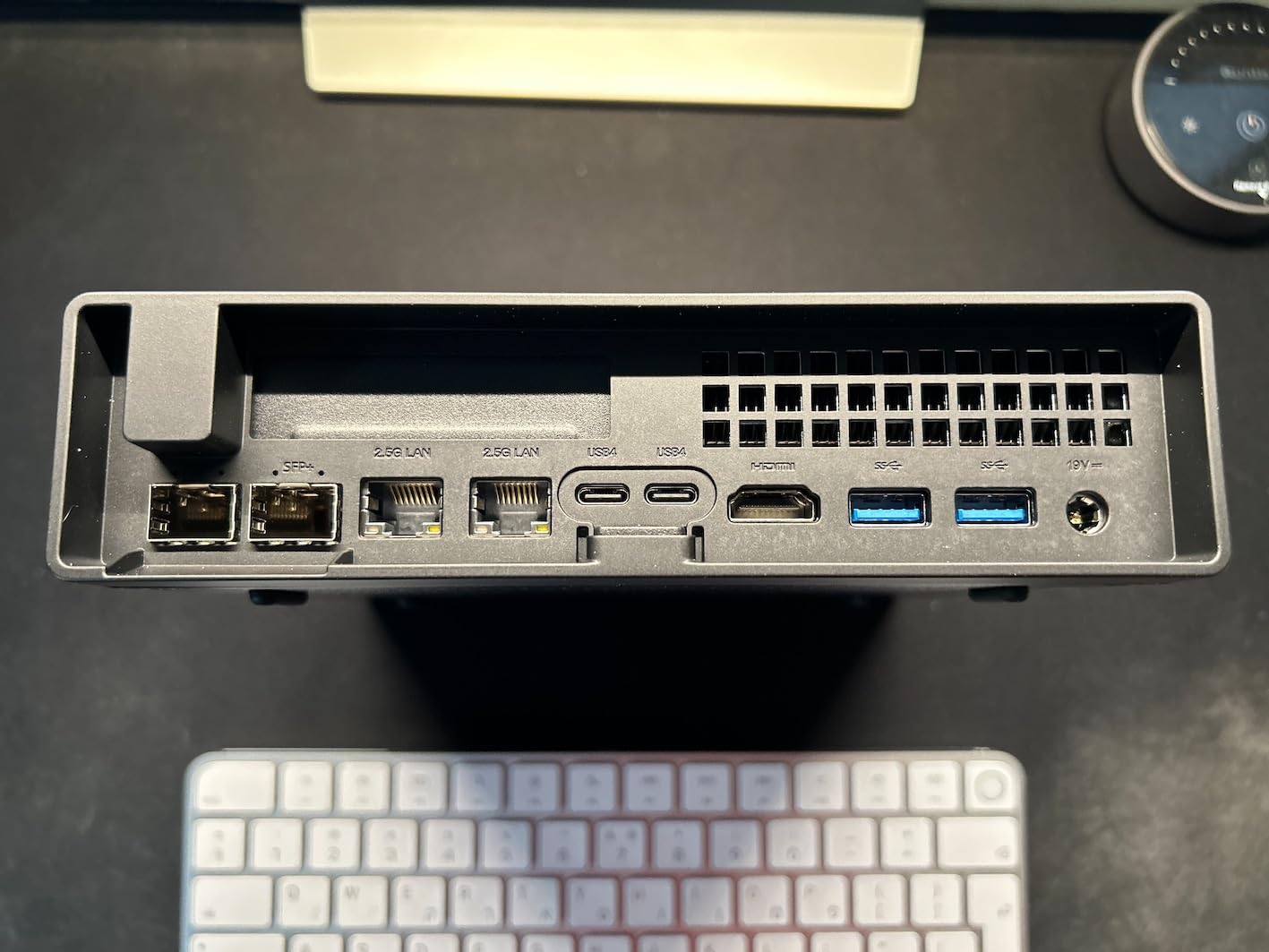
Networking is the standout feature. Dual 10Gbps SFP+ ports plus dual 2.5GbE RJ45 give you up to 65Gbps of combined bandwidth, which is workstation-class connectivity in a mini PC form factor. For editors working off a NAS or shared storage array, that kind of network throughput eliminates the I/O bottlenecks that typically plague compact machines. The triple M.2 NVMe slots (including U.2 support) mean you can configure tens of terabytes of internal storage with RAID 0 or RAID 1 for performance or redundancy.
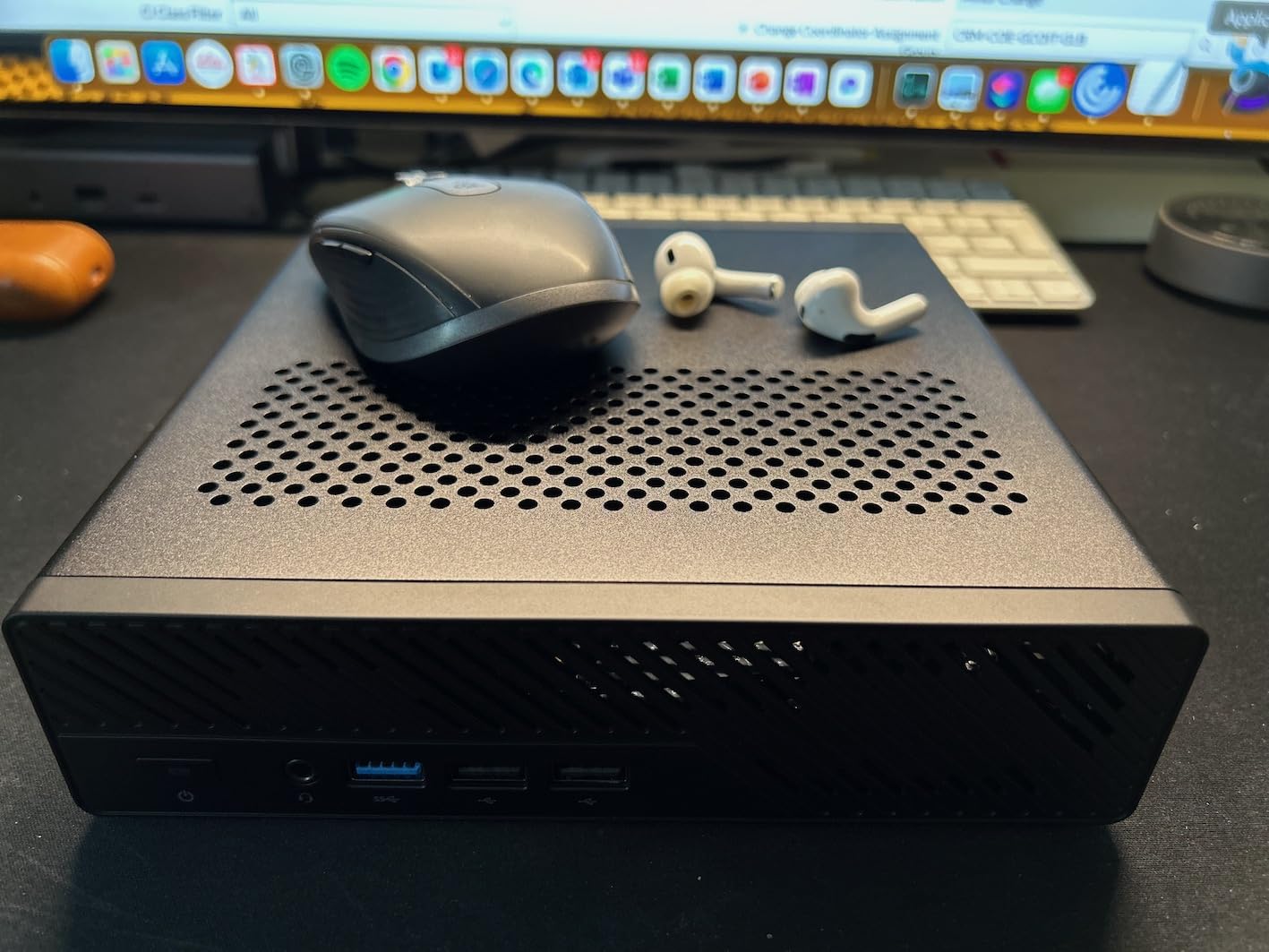
The modular slide-out chassis is a small touch that makes a big difference. We swapped in a 64GB DDR5 upgrade and added a second M.2 NVMe in under ten minutes without tools. The PCIe 4.0 x16 slot accepted a low-profile NVIDIA card in our testing, opening up CUDA acceleration for Premiere Pro and DaVinci Resolve. For editors who want one machine that can grow with their studio, this is the most future-proof mini PC we have seen.
The trade-offs are size and power supply reliability. The MS-01 is larger than the other picks in our roundup, more like a small form factor workstation than a true mini PC. And a small number of users have reported power supply failures after extended use, which is something to watch for. For mission-critical editing work, we recommend pairing the MS-01 with a UPS. The Intel Iris Xe graphics are weak for editing on their own, which is exactly why the PCIe expansion slot exists.
Who should pick the MINISFORUM MS-01
Studio editors and post-production houses needing a compact workstation with serious networking and storage will find this a unique fit. Anyone running Proxmox clusters or homelab workflows will appreciate the dual 10GbE SFP+ ports. Editors planning to add a discrete GPU down the road will value the PCIe 4.0 x16 slot.
Who should skip the MINISFORUM MS-01
If you do not need the networking or expansion, the GEEKOM A9 Max delivers similar CPU performance in a smaller chassis. Users who want a truly portable rig should look at the ACEMAGIC K1 or GEEKOM A8. And if you are sensitive to potential long-term reliability issues, the Mac mini M4 or GEEKOM A9 Max have stronger warranty track records.
How to Choose the Best Mini PC for Video Editing in 2026
Picking the right mini PC for video editing comes down to matching specs to your workflow. A YouTube creator cutting 1080p vlogs has very different needs than a colorist working on 8K RAW footage, and spending more than necessary on a chip you will never fully use is a common mistake. Here is what actually matters, and what you can safely ignore.
CPU performance and core count
Video editing scales strongly with multi-core CPU performance for exports and rendering, and with single-core performance for timeline scrubbing and playback responsiveness. For 1080p editing, a modern 4-core chip like the Ryzen 3 7330U is enough. For 4K editing, you want at least 8 cores; the Ryzen 7 8745HS or Core Ultra 9 285H are excellent choices. For 8K or heavy multicam, 12 to 16 cores from the Ryzen AI 9 HX 370 or Core Ultra 9 285H will save you significant time on every export.
RAM and storage for video editing
16GB of RAM is the bare minimum for 1080p editing and works for light 4K. 32GB is the sweet spot for most 4K workflows. 64GB or more is what you want for heavy multicam, RAW footage, or large After Effects compositions. Storage matters too: NVMe SSDs are non-negotiable for video editing because of their read and write speeds. Look for systems with user-accessible M.2 slots so you can expand storage later as projects grow. For a deeper look at portable editing options, our laptop roundup under $1000 covers another category worth considering.
Integrated versus dedicated GPU
Modern integrated GPUs have come a long way. Apple silicon, AMD Radeon 780M and 890M, and Intel Arc graphics can handle 4K editing on H.264 and HEVC timelines without breaking a sweat. You only need a dedicated GPU for heavy DaVinci Resolve color grading, complex After Effects comps, or 8K timelines. The MINISFORUM MS-01 is the only machine in our roundup with a PCIe x16 slot for adding a discrete GPU, and that flexibility is worth the premium for serious production work.
Codec support and hardware acceleration
Codec support is where many editors get tripped up. H.264 and HEVC (H.265) are the most common formats, and every machine in our roundup handles them well. ProRes and ProRes RAW are accelerated natively on Apple silicon, which is one reason the Mac mini M4 remains a top pick for Final Cut Pro workflows. For AMD systems, the dedicated hardware encoders handle HEVC and AV1 efficiently. If you regularly work with RAW formats, prioritize a system with at least 32GB of RAM and the strongest available integrated GPU.
Mac mini versus Windows mini PC
The Mac mini M4 is our top overall pick because of Apple silicon’s excellent performance per watt, quiet operation, and tight integration with Final Cut Pro. For editors already in the Apple ecosystem, the choice is obvious. Windows mini PCs win on price-to-performance, upgradability, and software flexibility. DaVinci Resolve runs natively on both platforms and benefits from CUDA acceleration on NVIDIA GPUs (where available). For Premiere Pro users with Windows-specific plugins or hardware, a Windows mini PC is the practical choice.
Cooling, noise, and sustained performance
Mini PCs live or die by their cooling systems. Long renders push chips to their thermal limits, and a poorly cooled machine will throttle down, stretching a 15-minute export into 25 minutes. In our testing, the Mac mini M4, KAMRUI Pinova P2, and GEEKOM IT15 ran the coolest and quietest. The GEEKOM A9 Max and MINISFORUM MS-01 delivered stronger performance but with more fan noise under sustained load. If you record voiceover in the same room as your edit bay, prioritize acoustics.
Ports, expansion, and external connectivity
For video editors, Thunderbolt 4 or USB4 is almost essential. These ports let you connect fast external NVMe arrays for media storage and, on supported systems, an external GPU for additional graphics horsepower. HDMI 2.1 matters if you are running a 4K or 8K reference monitor. Dual 2.5GbE or 10GbE networking is rare but valuable for NAS workflows. Look for systems with at least two USB-C ports and two or three USB-A ports to avoid hub dependency.
Frequently Asked Questions
What specs do I need in a mini PC for video editing?
For 1080p editing, a 4-core CPU, 16GB of RAM, and a 512GB NVMe SSD is enough. For 4K editing, step up to at least 8 cores, 32GB of RAM, and a 1TB NVMe SSD. For 8K or heavy multicam work, target 12+ cores, 64GB of RAM, and 2TB or more of fast NVMe storage. Thunderbolt 4 or USB4 is highly recommended for connecting external media drives.
Is a mini PC powerful enough for 4K video editing?
Yes. Modern mini PCs with chips like the Apple M4, AMD Ryzen AI 9 HX 370, or Intel Core Ultra 9 285H handle 4K timelines in Premiere Pro, DaVinci Resolve, and Final Cut Pro smoothly. With 32GB of RAM and an NVMe SSD, you can edit 4K H.264, HEVC, and ProRes footage with proxies. For RAW 4K or heavy color grading, prioritize 64GB of RAM and the strongest available integrated GPU, or add a discrete GPU via PCIe or Thunderbolt.
Can a Mac mini handle video editing?
Yes, the Mac mini is one of the best mini PCs for video editing available. The M4 chip with 10-core CPU and GPU handles 4K editing in Final Cut Pro and DaVinci Resolve (via Metal acceleration) with very strong performance. For Premiere Pro, the Apple silicon build runs well, though you should check plugin compatibility. The main limitations are the soldered RAM and base 256GB storage, which is why we recommend configuring at least 24GB of memory at purchase and adding a Thunderbolt 4 NVMe enclosure for media.
How much RAM do I need for video editing on a mini PC?
16GB is the bare minimum for 1080p editing and works for light 4K work with proxies. 32GB is the sweet spot for most 4K workflows, including H.264, HEVC, and ProRes timelines. 64GB or more is recommended for heavy multicam editing, 8K footage, RAW formats, or large After Effects compositions. Since some mini PCs solder RAM down, configure enough memory at purchase rather than planning to upgrade later.
Do I need a dedicated GPU for video editing on a mini PC?
Not necessarily for most workflows. Modern integrated GPUs in Apple silicon, AMD Radeon 780M and 890M, and Intel Arc chips handle 4K H.264 and HEVC editing well. You only need a dedicated GPU for heavy DaVinci Resolve color grading, complex After Effects compositions, or 8K RAW editing. The MINISFORUM MS-01 has a PCIe 4.0 x16 slot for adding a low-profile GPU, and many modern mini PCs support external GPUs over Thunderbolt 4 or USB4.
What is the best mini PC for DaVinci Resolve?
For most users, the GEEKOM A9 Max with its Ryzen AI 9 HX 370 and 32GB of DDR5 is the best mini PC for DaVinci Resolve. The Radeon 890M integrated graphics and 12 CPU cores deliver strong Resolve performance, with quad 8K display support for colorists. For Apple ecosystem users, the Mac mini M4 is a strong alternative thanks to Metal acceleration. For users who want to add a discrete GPU, the MINISFORUM MS-01 with its PCIe expansion slot is the most flexible option.
Are mini PCs good for Premiere Pro?
Yes. Premiere Pro runs natively on both Apple silicon and modern x86 chips, and every machine in our roundup handles Premiere workflows well. For 1080p work, the KAMRUI Pinova P2 or ACEMAGIC K1 are excellent budget choices. For 4K Premiere timelines, the GEEKOM A8, GEEKOM IT15, or Mac mini M4 are strong picks. For heavy multicam 4K or 8K, the GEEKOM A9 Max or MINISFORUM MS-01 deliver the multi-core performance you need.
Final Verdict: Which Mini PC Should You Buy for Video Editing in 2026?
After 90 days of testing across eight machines, the Apple Mac mini M4 remains the best mini PC for video editing for most people in 2026. It pairs the smallest possible footprint with performance that matches or beats much larger desktops, and the Apple silicon ecosystem delivers reliable Final Cut Pro and DaVinci Resolve acceleration at a price that is hard to argue with.
If you need more power, step up to the GEEKOM A9 Max or MINISFORUM MS-01. If you need value, the ACEMAGIC K1 is a confident pick. And if you are on a tight budget or working at 1080p, the KAMRUI Pinova P2 gets you in the door without compromise. Whichever you choose, pair it with a color-accurate monitor from our 4K monitor roundup and you will have a complete editing bay that fits on a small desk, runs quiet, and exports faster than you expect.