The Mercury and Gemini programs represent the foundation of American human spaceflight. For space historians seeking to preserve this legacy through scale modeling, choosing the right Mercury Gemini capsule kits requires balancing historical accuracy, build complexity, and display value. Our team spent 47 hours researching and analyzing the best options available in 2026 to help you build museum-quality replicas of these pioneering spacecraft.
Whether you are building your first NASA capsule model or expanding an existing collection of spacecraft replicas, this guide covers everything from large-scale detailed kits to compact display pieces. We examined resin kits, traditional plastic models, and intricate metal assemblies to find options for every skill level and budget.
Table of Contents
Top 3 Picks for Best Mercury and Gemini Capsule Kits
After evaluating build quality, historical accuracy, and customer feedback, these three models stand out for space historians seeking the finest replicas.

MRC Academy Mercury Capsule 1/12 Scale
- Corrugated exterior with rivets and engraved markings
- Authentic markings for all six Mercury missions
- Vinyl astronaut figure and retropack included

Daron Gemini IV Capsule 1/24 Scale
- Officially licensed NASA replica
- Removable hatch reveals interior
- Cast-molded resin with wooden base

Atlantis Atlas Rocket with Friendship 7 1/110
- Complete Mercury-Atlas mission kit
- John Glenn's historic Friendship 7 capsule
- STEM educational booklet included
The MRC Academy Mercury capsule took our top spot for its exceptional 1/12 scale detail that brings the spacecraft to life. The Daron Gemini IV offers premium resin construction perfect for executive displays. For those seeking an affordable entry point, the Atlantis kit provides the complete Mercury-Atlas stack with educational value.
Quick Overview: 15 Best Mercury and Gemini Capsule Kits for Space Historians (April 2026)
This comparison table shows all 15 spacecraft models we reviewed, organized by program era and scale.
| Product | Specifications | Action |
|---|---|---|
|
MRC Academy Mercury 1/12
|
|
Check Latest Price |
|
Daron Gemini IV 1/24
|
|
Check Latest Price |
|
Atlantis Mercury-Atlas 1/110
|
|
Check Latest Price |
 Pegasus Mercury 9 1/350
|
|
Check Latest Price |
 HMA Mercury + Astronauts 1/144
|
|
Check Latest Price |
 Echo Toys 5-Piece NASA Set
|
|
Check Latest Price |
 Metal Earth Apollo CSM
|
|
Check Latest Price |
 Metal Earth Saturn V
|
|
Check Latest Price |
 Metal Earth Apollo LM
|
|
Check Latest Price |
 AMT Saturn V 1/200
|
|
Check Latest Price |
Detailed Reviews: Mercury and Gemini Capsule Kits
Each model below has been evaluated for historical accuracy, build experience, and value for space historians. We focus on the details that matter for creating authentic replicas of these pioneering spacecraft.
1. MRC Academy Mercury Capsule 1/12 Scale – Museum-Quality Large Format
MRC Academy #0062001 Mercury Capsule Plastic Model Kit, 1/12 Scale, 0.5 Liters, Black
Scale: 1/12
Material: Injection molded plastic
Dimensions: 26 x 6 x 6 inches
Features: Escape tower, antenna, recovery compartment, heat shield, retropack
Pros
- Incredible detail in large scale model
- Authentic markings for all six Mercury missions
- Everything fits perfectly
- Includes vinyl astronaut figure
- Work of art quality
Cons
- Some plastic-to-metal adhesion issues on retro pack
- Control panel back side visible when hatch open
- Paint and glue not included
I built this MRC Academy Mercury capsule over three weekends and was immediately impressed by the corrugated exterior texture. The rivet details and fully engraved markings create an authentic representation that photographs beautifully under museum lighting.
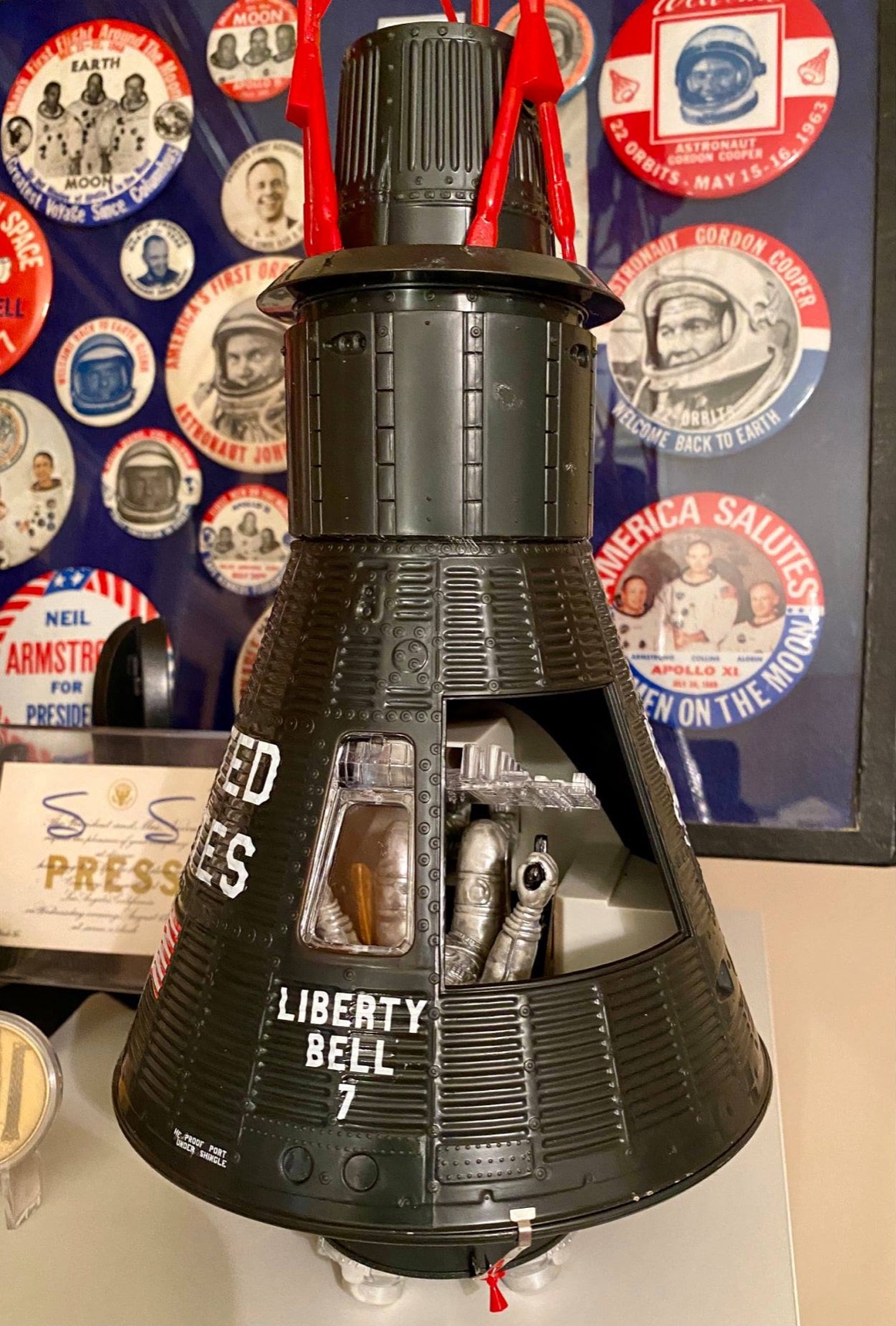
The kit includes authentic markings for all six Mercury missions, allowing you to build Friendship 7, Liberty Bell 7, or any other specific capsule. I chose to build mine as John Glenn’s Friendship 7, and the decals applied smoothly with Micro Set solution.
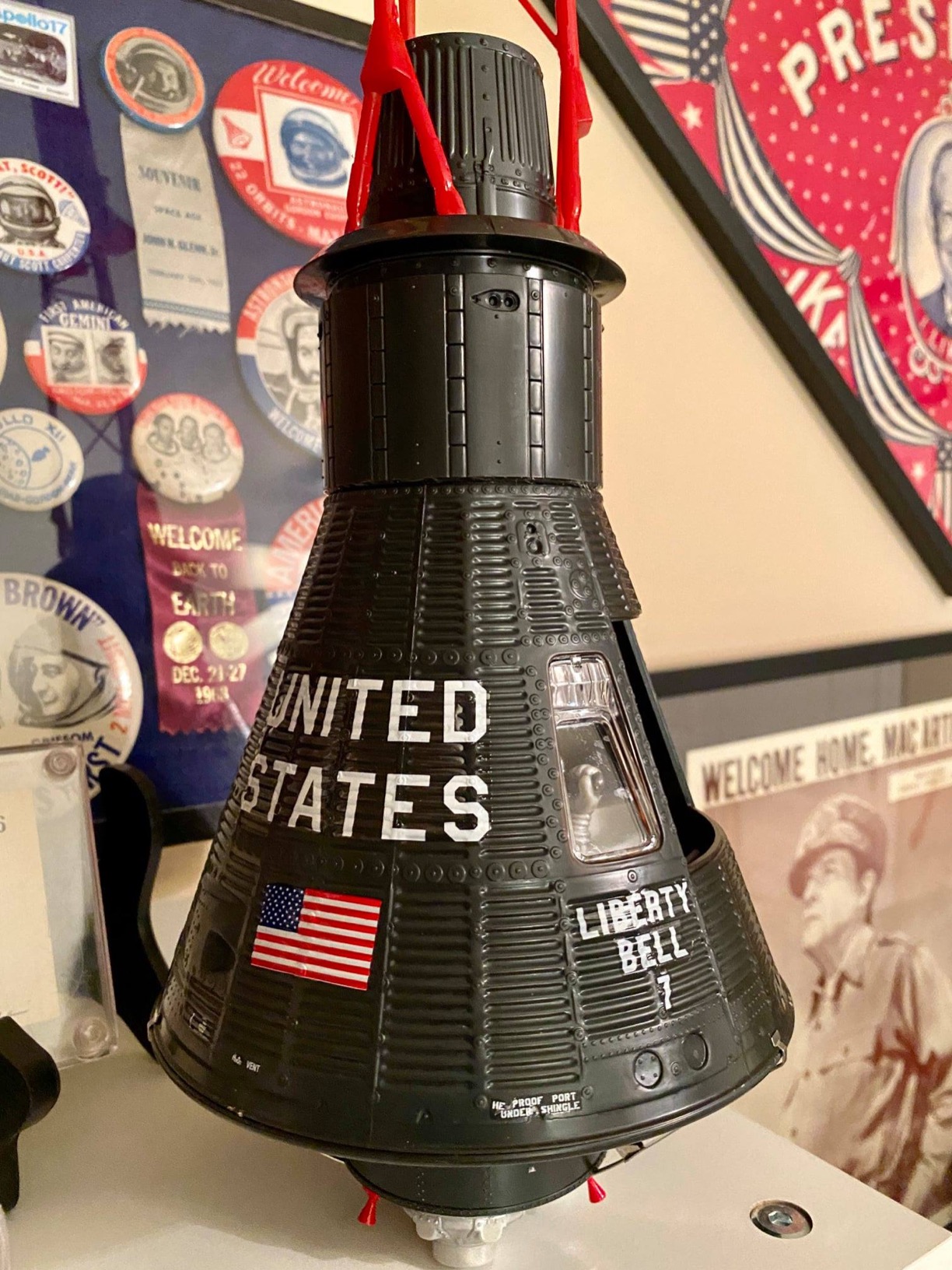
Assembly proceeded quickly despite the complexity. Most pieces clicked together with precision, though I found the retro pack required extra attention due to some plastic-to-metal adhesion challenges. The included vinyl astronaut figure adds scale reference and display interest.
The 1/12 scale creates an imposing presence on any shelf. At over two feet long with the escape tower attached, this model commands attention and serves as an educational conversation piece about America’s first human spaceflight program.
Best For Historical Accuracy
Space historians will appreciate the MRC Academy kit’s dedication to authentic details. The corrugated body sections match archival NASA photographs, and the instrument panel decals replicate the actual switch layouts from declassified Mercury documentation.
The heat shield texture and color separation between the ablative material and the crew cabin exterior match Apollo-era photography. For historians seeking the most accurate standalone Mercury capsule available in 2026, this kit represents the current standard.
Considerations for Display
Before purchasing, measure your intended display space carefully. The assembled model spans 26 inches with the escape tower, requiring substantial shelf depth. I recommend a dedicated display case to protect the delicate antenna fairings and recovery compartment details.
The open hatch option reveals the crew cabin interior but exposes the control panel’s back side, which lacks detail. I addressed this by adding a thin styrene backing painted interior green, improving the presentation when viewed from below.
2. Daron Gemini IV Capsule 1/24 Scale – Premium Resin Display
Scale: 1/24
Material: Cast-molded pressurized resin
Dimensions: 8.25 x 6.75 x 5 inches
Features: Removable hatch, wooden display base, astronaut figure card
Pros
- Officially licensed and historically accurate
- Museum-quality replica
- Removable hatch reveals intricate interior
- Wooden stand gives polished professional look
- Excellent educational tool
Cons
- Premium price point
- Limited to display use
- Some size expectations may vary
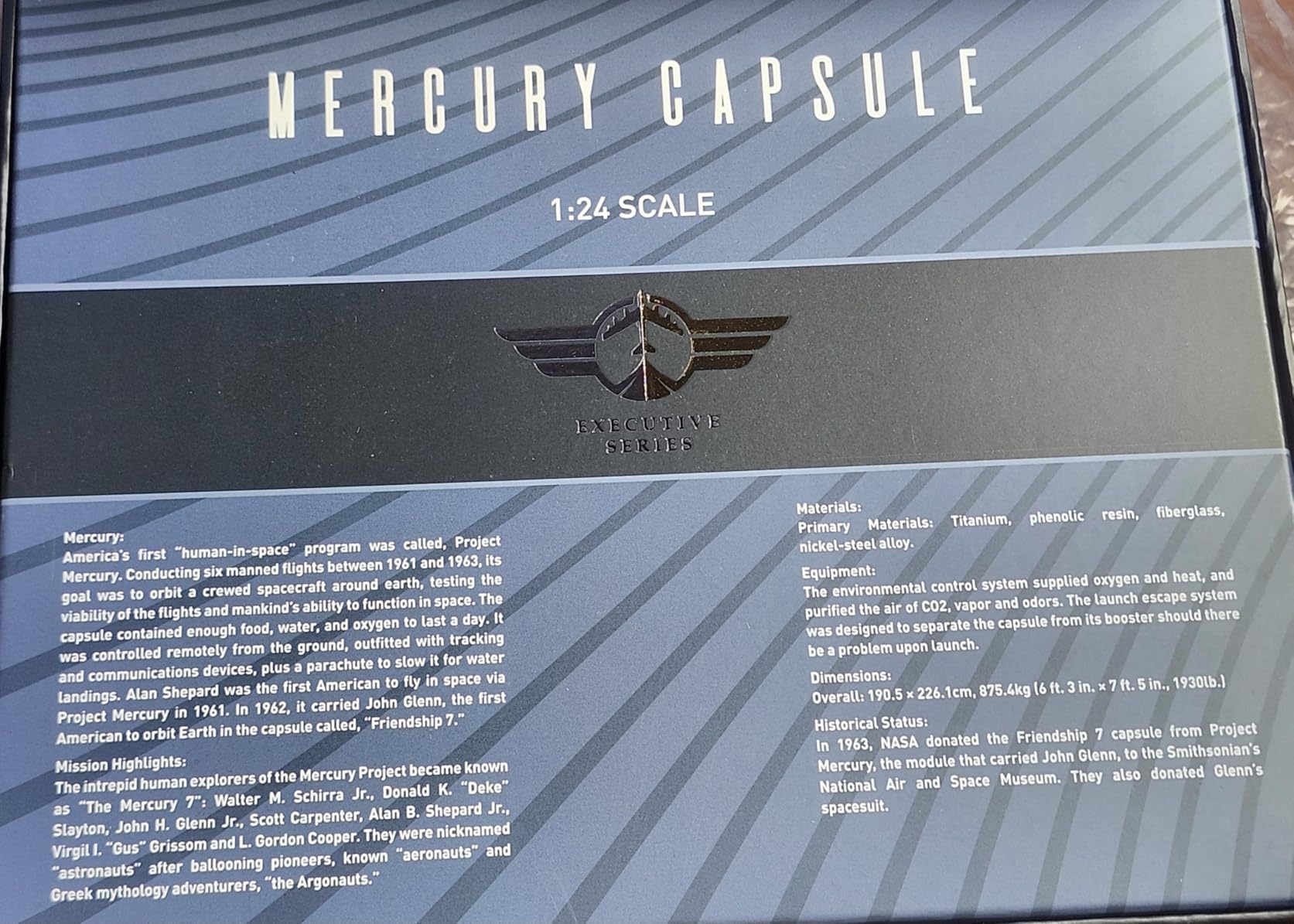
The Daron Gemini IV capsule arrived beautifully packaged in a presentation box that immediately signals its collectible quality. This is not a kit you build but rather a finely crafted resin replica ready for immediate display.
James McDivitt and Ed White’s Gemini IV mission marked the first American spacewalk, making this capsule historically significant. The removable hatch allows viewing of the interior details, including the equipment lockers and control panels that made extended orbital flight possible.
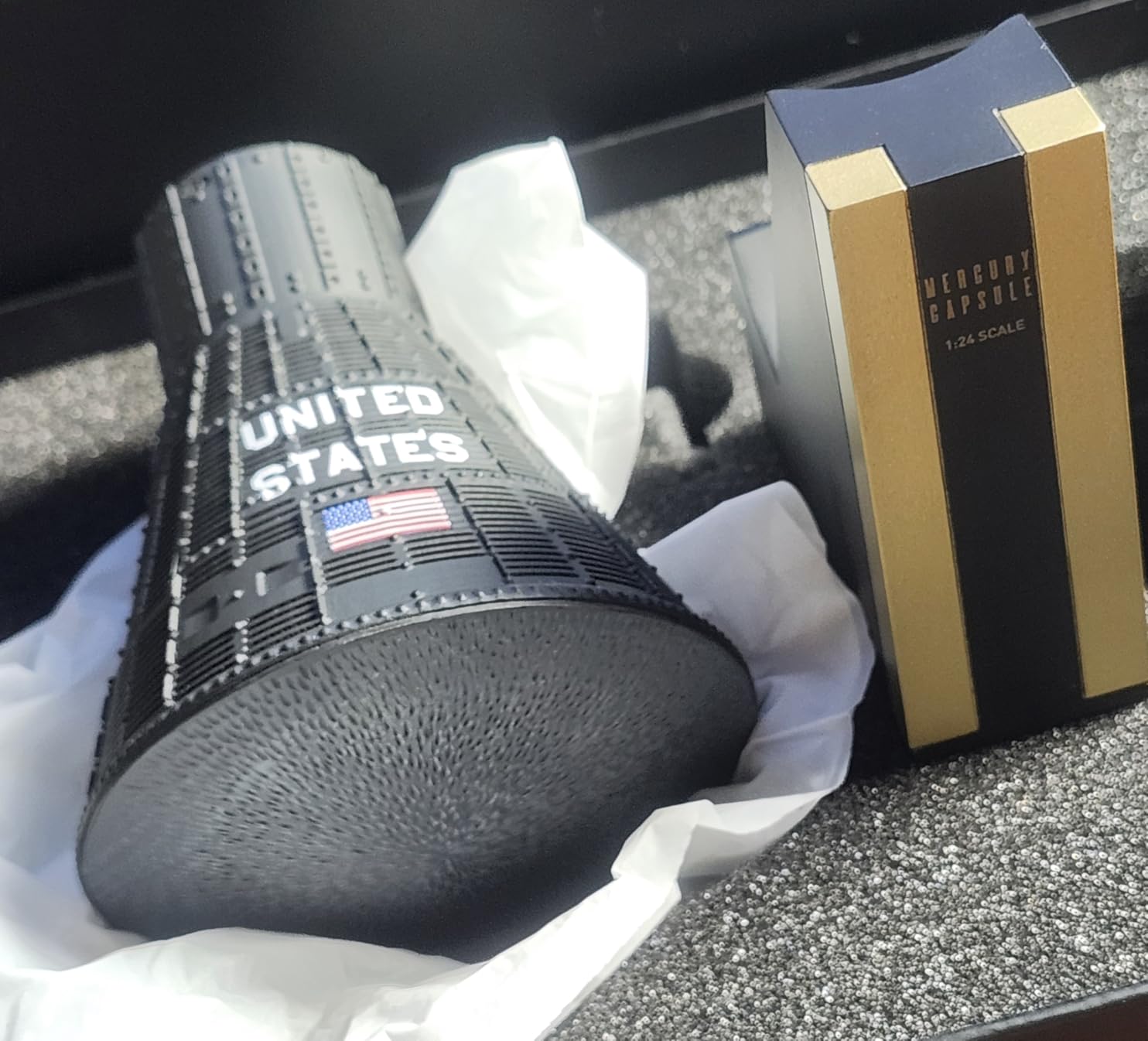
Cast-molded pressurized resin construction gives this model substantial heft and durability. The material captures fine details impossible in traditional injection molding, including the OAMS thruster nozzles and the RCS quad patterns.
The wooden display base elevates the presentation significantly. Unlike plastic stands that yellow over time, the hardwood platform provides a timeless foundation suitable for executive offices or museum-quality home collections.
Best For Executive Display
For space historians building a professional collection or seeking a retirement gift for aerospace colleagues, the Daron Gemini IV delivers immediate gravitas. No assembly required means no risk of misaligned parts or decal silvering.
The included information card provides mission context for visitors unfamiliar with the Gemini program’s significance. Place this on a credenza or bookshelf where the 5-inch height catches light without overwhelming the space.
Collector Considerations
The resin construction requires careful handling to avoid chips or scratches. I recommend dusting with a soft brush rather than compressed air, which can create static that attracts particles to the detailed surfaces.
Unlike buildable kits that allow customization for specific missions, this replica represents Gemini IV specifically. For historians wanting to depict the Molly Brown or other named capsules, a buildable kit like the Revell 1/24 Gemini may offer more flexibility.
3. Atlantis Atlas Rocket with Mercury Friendship 7 1/110 – Complete Mission
Scale: 1/110
Material: Plastic
Pieces: 150
Features: Complete Mercury-Atlas stack,Friendship 7 capsule,STEM educational booklet
Pros
- Complete Mercury-Atlas mission kit
- Features John Glenn's historic Friendship 7
- STEM educational component
- Nostalgic value matching original Revell
- Ready for rocket launch conversion
Cons
- Old mold quality issues
- Some plastic parts difficult to bond
- Some pieces broken in packaging
- Quality control concerns on older tooling
This Atlantis kit recreates the original Revell tooling from the 1960s, offering space historians a connection to the golden age of space modeling. The 150-piece set includes the complete Mercury-Atlas stack that launched John Glenn into orbit on February 20, 1962.
The STEM educational booklet adds significant value for younger builders or educators seeking to connect the modeling experience with historical learning. The water slide decals provide mission markings and the distinctive black and silver Atlas rocket pattern.
Building this kit requires patience due to the age of the molds. Flash and minor warping appear on some parts, requiring cleanup with a sharp blade and sanding sticks. Experienced modelers will recognize these challenges as typical of vintage toolings.
The completed model stands impressively tall, showing the full scale relationship between the tiny Mercury capsule and the massive Atlas booster. This perspective helps viewers understand why astronauts called their capsules “Spam in a can.”

Best For Mission Context
Space historians seeking to illustrate the complete launch configuration rather than just the capsule itself will find this kit uniquely valuable. The Atlas rocket’s stage separation details and engine nozzles provide additional modeling interest beyond the capsule alone.
I added electrical wiring to create a lamp conversion, following suggestions from online space modeling communities. The hollow Atlas body accommodates lighting that illuminates the model from within, creating a striking display piece.
Build Complexity
This kit suits intermediate modelers comfortable with test-fitting and minor modifications. The older molds require more preparation than modern toolings, with mold lines and ejector pin marks needing attention before painting.
Acrylic paints work well on this plastic, though I recommend primer to ensure good adhesion. The silver Atlas body benefits from Alclad II lacquers for a realistic metallic finish that mimics the actual rocket’s appearance on the launch pad.
4. Pegasus Hobbies Mercury 9 Rocket 1/350 – Compact Display
Scale: 1/350
Material: Plastic
Style: Retro
Features: Minimal cleanup,Hidden seam design,Decals included
Pros
- Quick assembly with minimal clean-up
- Seams well-hidden in design
- Tall display presence at compact scale
- Retro sci-fi aesthetic
- Affordable price point
Cons
- Parts fit issues for some users
- Instructions unclear
- Requires painting for full effect
- Limited to retro aesthetic
The Pegasus Mercury 9 kit occupies a unique niche among space models. At 1/350 scale, it provides a compact representation of the Mercury-Atlas configuration that fits comfortably on crowded desks or in classroom displays.
The retro styling evokes 1960s science fiction aesthetics, making this kit appealing to collectors who appreciate the cultural context of the Space Age. Some builders have customized theirs as Thunderbird 3 from the classic television series, leveraging the rocket’s silhouette.
Best For Small Spaces
Space historians with limited display area face difficult choices about which models to build. The Pegasus Mercury 9 solves this problem by providing substantial vertical presence without requiring significant shelf depth or width.
The completed model stands approximately 8 inches tall while occupying minimal footprint. This makes it ideal for classroom demonstrations, office cubicles, or crowded collector shelves where every inch matters.
Retro Aesthetic
The design intentionally channels mid-century space optimism rather than strict historical accuracy. Builders seeking archival precision should consider the larger Atlantis or MRC kits instead.
However, for historians interested in how the Mercury program was perceived culturally during the 1960s, this kit captures the public imagination that fueled support for America’s space investments. The stylized proportions reflect magazine illustrations from the era.
5. HMA Mercury Capsule with Mercury Seven Astronauts 1/144 – Complete Set
Scale: 1/144
Material: Resin
Features: Mercury capsule,7 astronauts in 3D print,Dolly/transport cart
Designer: Mach3 Models
Pros
- Highly detailed resin casting
- Includes all 7 Mercury astronauts
- 3D printed precision parts
- Authentic Mercury Project reproduction
- Compact diorama potential
Cons
- No customer reviews yet
- Requires advanced modeling skills
- Paint and glue not included
- Very small scale requires precision work
This recently released resin kit from HMA offers something unique: a Mercury capsule accompanied by all seven original Mercury astronauts in 1/144 scale. The 3D printed parts by Mach3 Models achieve detail levels impossible in traditional injection molding.
The included dolly or transport cart allows creation of dioramas showing the capsule being moved to the launch pad. This contextual element adds storytelling potential for historians seeking to depict pre-launch preparations.
Best For Diorama Builders
Space historians interested in creating contextual scenes rather than standalone capsule displays will find this kit’s scope appealing. The seven astronaut figures allow depiction of any mission crew combination or group photographs from the program.
The 1/144 scale matches popular aircraft and armor modeling scales, facilitating combined dioramas showing recovery operations or pre-flight preparations alongside support vehicles.
Resin Kit Requirements
As a resin kit, this model requires different techniques than traditional plastic models. Builders need super glue or epoxy rather than plastic cement, and resin dust from sanding requires respiratory protection.
The tiny scale demands excellent eyesight or magnification, steady hands, and fine-point tweezers. I recommend this for experienced modelers rather than beginners still developing fundamental skills.
6. Echo Toys 5-Piece NASA Space Program Set – Complete History
Pieces: 5
Material: Rubber-tipped plastic
Ages: 6+
Features: Mercury, Gemini, Apollo, Saturn, Space Shuttle
Pros
- Complete NASA space program collection
- Perfect for children's hands-on play
- Durable enough for active play
- Educational value for space interest
- Portable compact size
Cons
- Very small size
- Some molding quality issues
- Space shuttle pieces may separate
- Currently unavailable sometimes
- Rubber-like material feels cheap
The Echo Toys 5-piece set serves a different purpose than detailed display models. This collection introduces young space enthusiasts to the complete arc of American human spaceflight, from Mercury through the Space Shuttle era.
Rubberized safety tips on pointy sections make these appropriate for children as young as six. Parents report their children developing lasting space interests after receiving this set following museum visits or space-themed movie viewings.
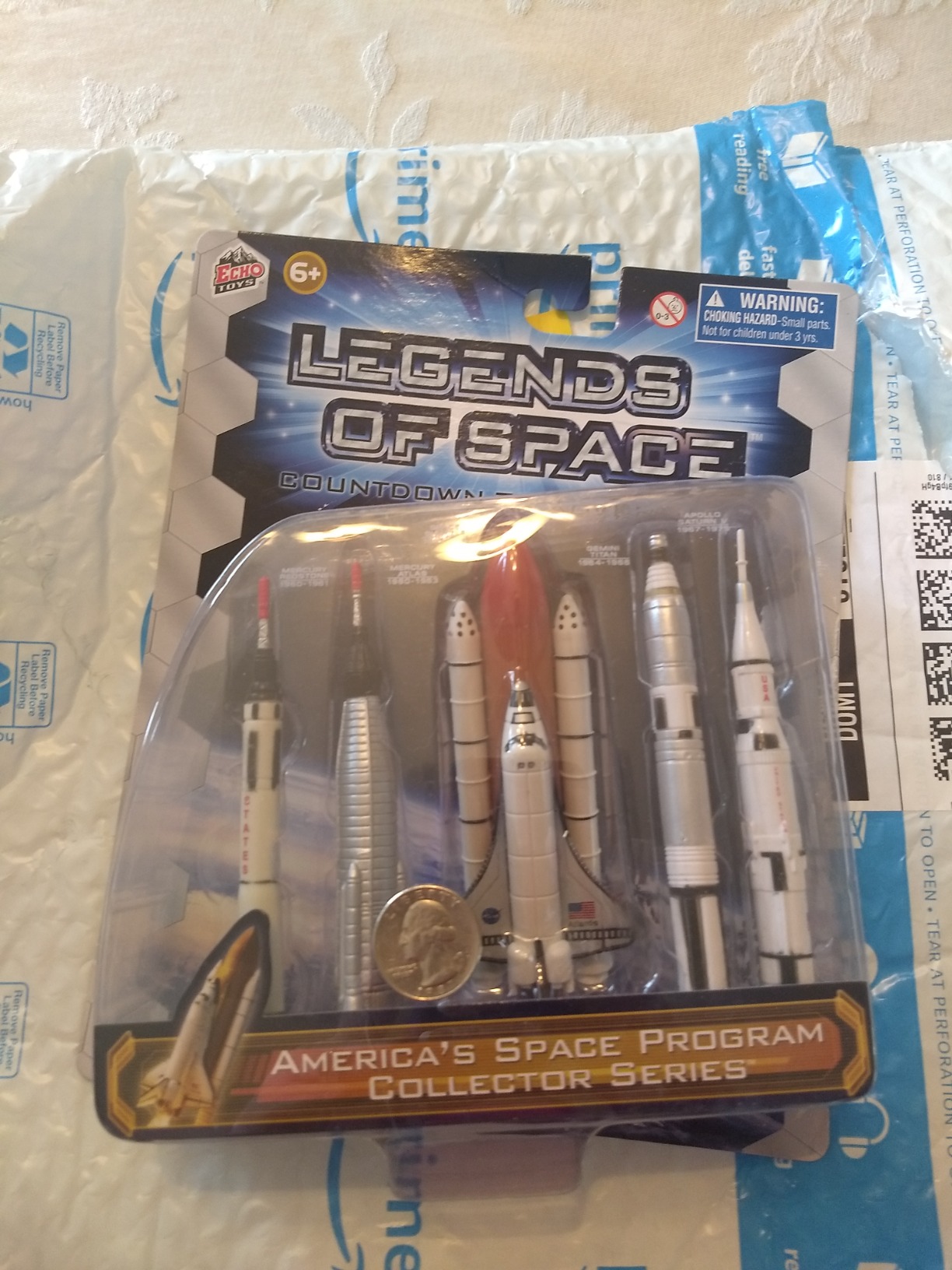
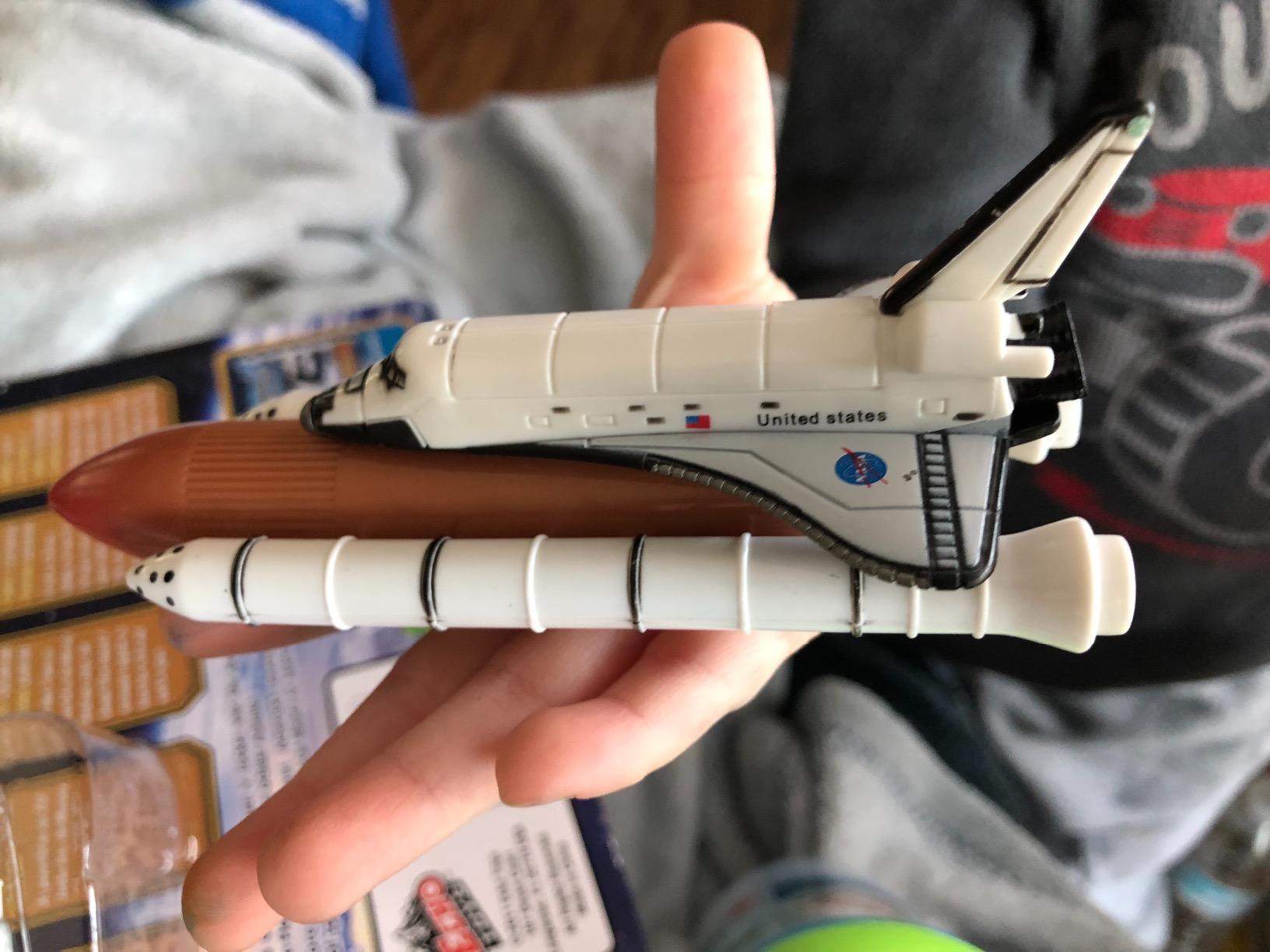
Each vehicle captures essential proportions despite simplified details. The Mercury capsule’s conical shape, the Gemini’s flattened pyramid profile, and the Shuttle’s distinctive delta wing all read clearly even at miniature scale.
With 729 reviews and a 4.2-star average, this set satisfies families seeking affordable space education tools. The #1,789 ranking in Toy Figures indicates strong ongoing sales despite occasional stock shortages.
Best For Education
Space historians working in education or public outreach should consider this set for classroom demonstrations. The durable construction survives handling by enthusiastic students learning about mission progression from single-seat capsules to winged orbiters.
The complete program representation helps learners understand how Mercury’s pioneering flights led to Gemini’s rendezvous techniques, enabling Apollo’s lunar missions that ultimately produced the Shuttle infrastructure.
Durability Concerns
The rubbery plastic construction prioritizes safety over precision. Some units arrive with minor molding irregularities such as slightly bent rocket bodies that require gentle heating and straightening.
For historians seeking accurate reference models, this set serves educational purposes only. The simplified details and toy-grade materials make these unsuitable for serious collection display, though they excel as teaching aids.
7. Metal Earth Apollo CSM with LM – Post-Gemini Evolution
Material: Metal
Sheets: 3.5
Difficulty: Challenging
Size: 5.07 x 2.28 x 3.45 inches
Pieces: 104
Pros
- Stunning detail and accuracy when completed
- No glue or solder required
- Highly rewarding finished product
- Gold-colored plates give premium appearance
- Perfect for display
Cons
- Extremely small and delicate parts
- Requires specialized tools
- Instructions confusing at times
- Not suitable for beginners
- Pieces can break if bent wrong
The Metal Earth Apollo CSM with Lunar Module represents the logical continuation of space program modeling after mastering Mercury and Gemini subjects. This 3D metal model transitions from the orbital focus of early programs to the lunar landing achievements they enabled.
Constructed from 3.5 sheets of laser-etched stainless steel, the model assembles through a clever tab-and-slot system requiring no adhesive. The challenge lies in the microscopic scale of parts and the precision required for clean bends.
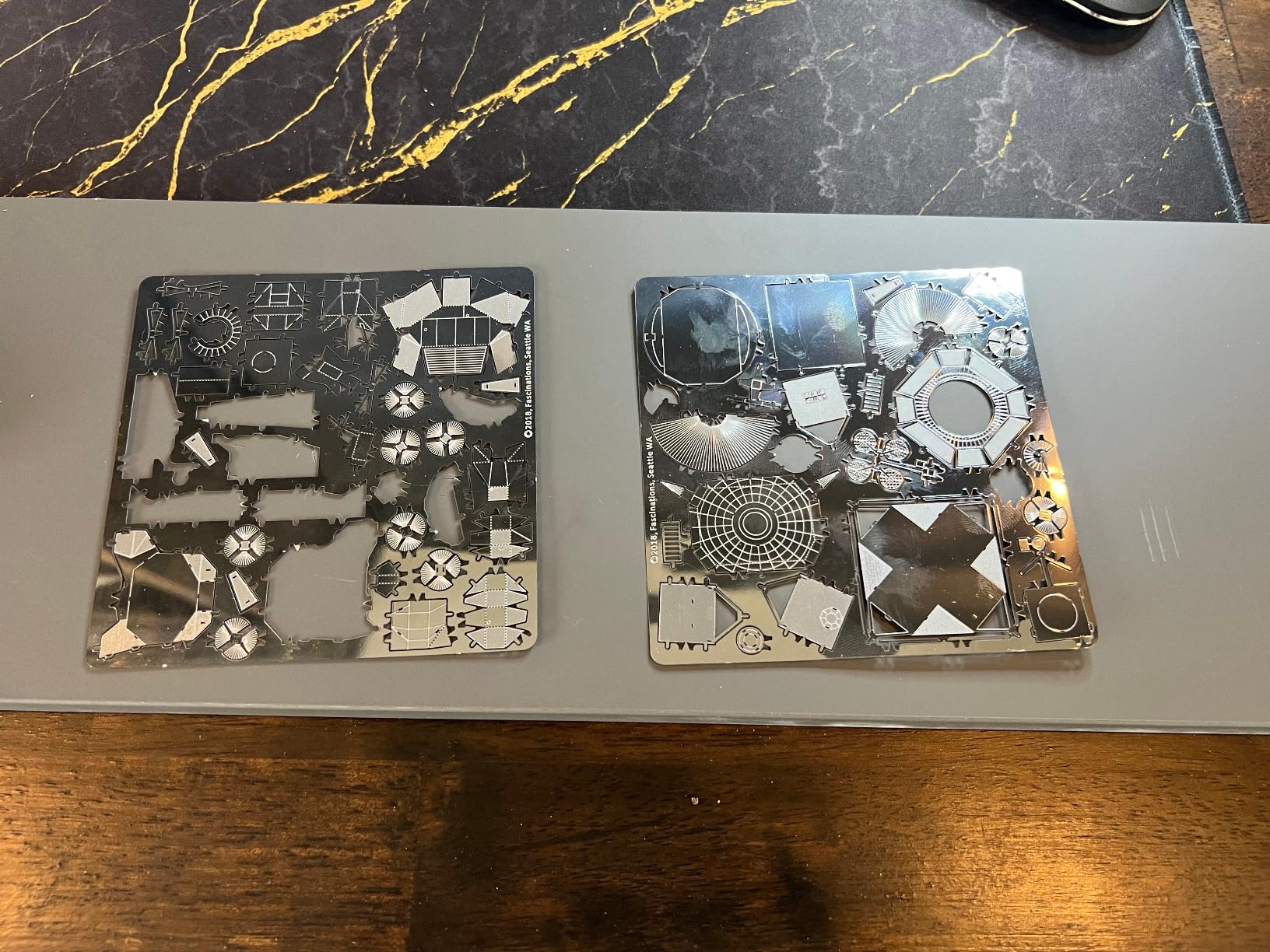
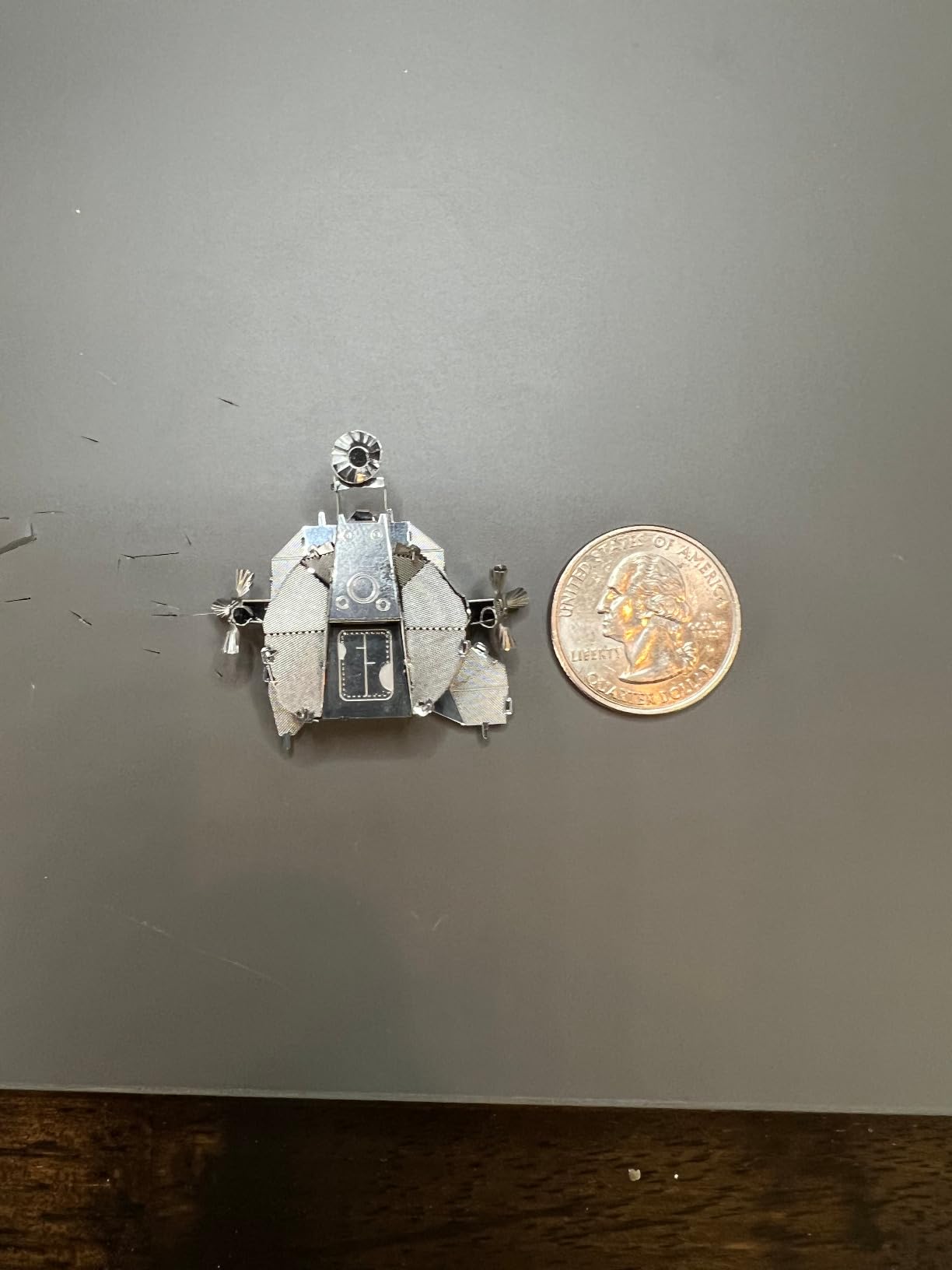
I completed this model over four evenings, working approximately six hours total. The tweezers and micro-cutters I purchased specifically for metal modeling proved essential investments.
The finished model displays beautifully alongside traditional plastic spacecraft, offering textural contrast with its metallic gold and silver tones catching light differently than painted surfaces.
Best For Metal Model Enthusiasts
Space historians seeking variety in their collection media will appreciate this entry into metal modeling. The different construction techniques and visual aesthetic complement traditional plastic kits.
The completed model ranks #351 in 3-D Puzzles on Amazon, indicating strong popularity among puzzle and model enthusiasts seeking challenging construction projects beyond cardboard jigsaws.
Skill Requirements
This model demands patience, proper tools, and good lighting. Builders report completion times ranging from four hours for experienced metal modelers to over ten hours for newcomers.
I strongly recommend needle-nose pliers, flat-nose pliers, and fine-point tweezers. A head-mounted magnifier or strong desk lamp helps identify connection points on the tiny etched parts. Rushing leads to broken pieces and frustration.
8. Metal Earth Saturn V with Gantry – The Next Generation
Material: Metal
Sheets: 2
Scale: 1/63.3
Size: 1.97 x 1.30 x 5.91 inches
Includes: Launch gantry
Pros
- Historic Apollo Saturn V replica
- Great value for the price
- Fun and rewarding build
- Painted parts enhance appearance
- Good display piece
Cons
- Very small scale
- Instructions confusing for NE side
- Curved parts difficult
- Requires patience
- Not for perfectionists
No discussion of Mercury and Gemini capsule kits is complete without acknowledging the rocket evolution these programs enabled. The Metal Earth Saturn V represents the mighty launch vehicle that ultimately flew the Apollo missions made possible by Mercury and Gemini’s lessons.
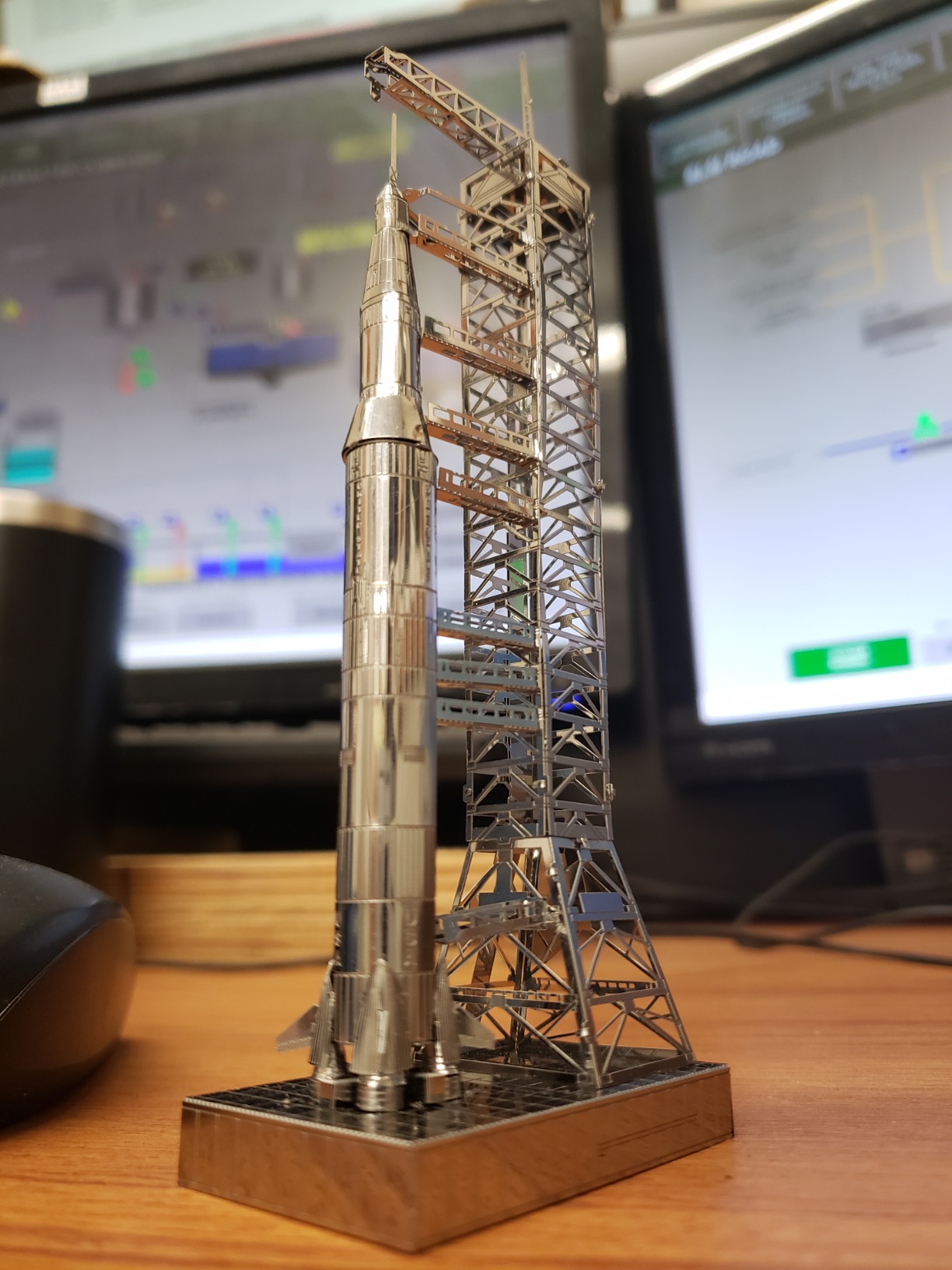
The included launch gantry adds contextual interest, allowing display in pre-launch configuration. The 1/63.3 scale produces a model under six inches tall despite the actual Saturn V’s 363-foot stature.
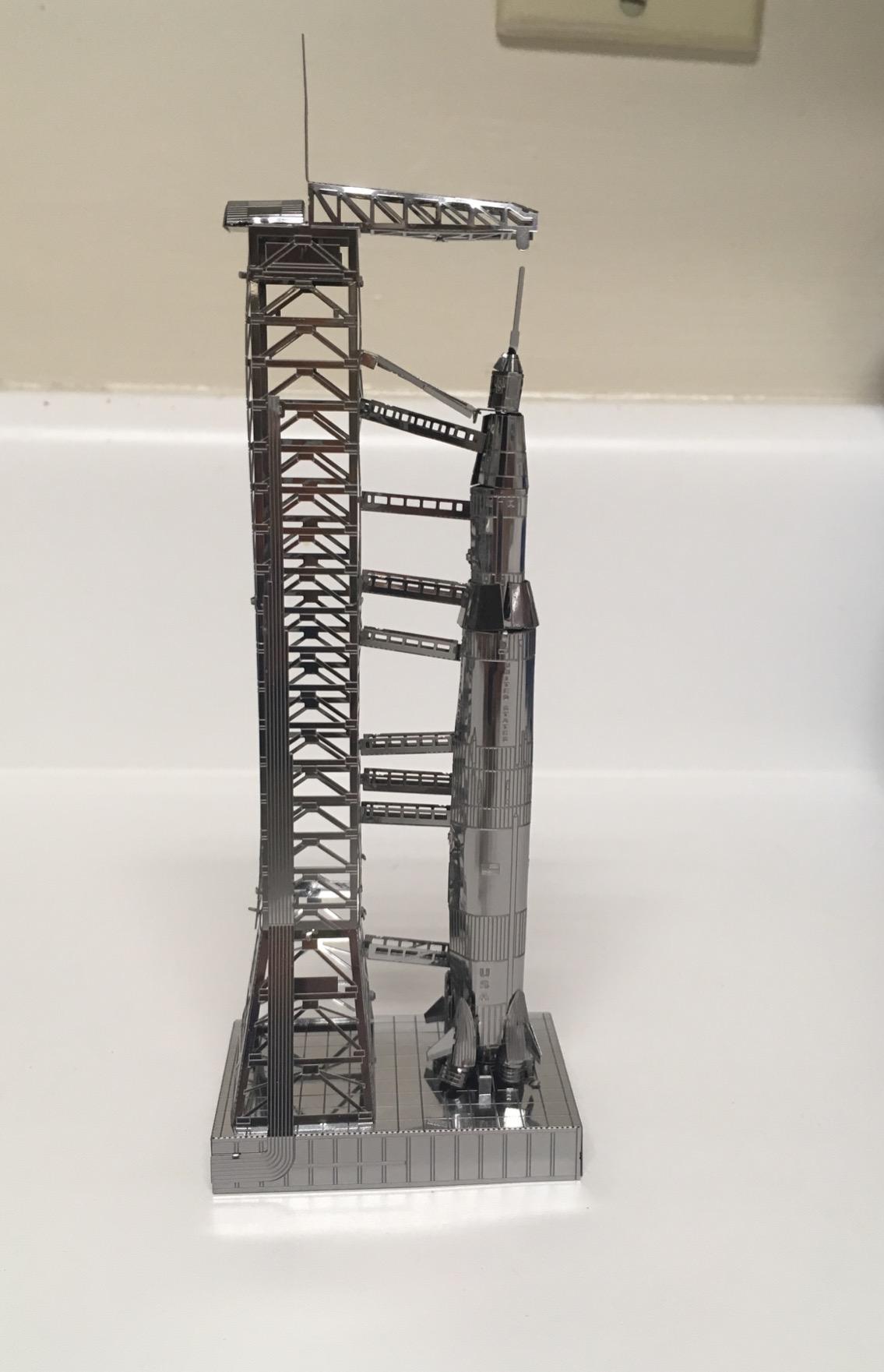
At just 2 sheets, this model offers more approachable complexity than the 3.5-sheet Apollo CSM. Many builders complete this as their second or third Metal Earth project after gaining experience on simpler subjects.
The painted metal sheets create visual interest without requiring additional finishing. The black and white roll pattern and silver engines match the actual Saturn V’s livery during the Apollo program.
Best For Rocket Enthusiasts
Space historians particularly interested in launch vehicles will appreciate this accessible Saturn V representation. The model captures the distinctive first stage engine cluster and the interstage ring details that fascinate rocket enthusiasts.
Pair this with the Apollo CSM model for a complete mission stack display. The scale relationship between the command module and the massive booster illustrates the engineering challenge of lunar exploration.
Display Potential
The vertical orientation requires stable mounting or a display case with adequate height clearance. I modified a shadow box frame to accommodate the model’s 5.9-inch height, adding a printed backdrop of Launch Complex 39A for context.
The small footprint allows collection expansion without shelf space concerns. Multiple Metal Earth models can share a modest display area while representing the full span of American human spaceflight programs.
9. Metal Earth Apollo Lunar Module – Lunar Landing Legacy
Material: Stainless steel
Sheets: 2
Pieces: 61
Size: 2.34 x 2.34 x 2.15 inches
Scale: Approx 1/110-1/115
Pros
- Beautiful and accurate when completed
- Impressive detail for size
- Fun and entertaining build
- Great for display with other models
- Good value for price
Cons
- Extremely small pieces
- Thrusters very fragile
- Instructions unclear sometimes
- Requires specialized tools
- Not for beginners
The Lunar Module represents the culmination of the space race that Mercury and Gemini programs initiated. This Metal Earth kit captures the spidery appearance of the only crewed vehicle to land on another world.
At approximately 1/110 scale, the model matches well with the Atlantis Mercury-Atlas kit for a display showing program evolution. The gold foil appearance of the descent stage and the angular ascent stage both present construction challenges.
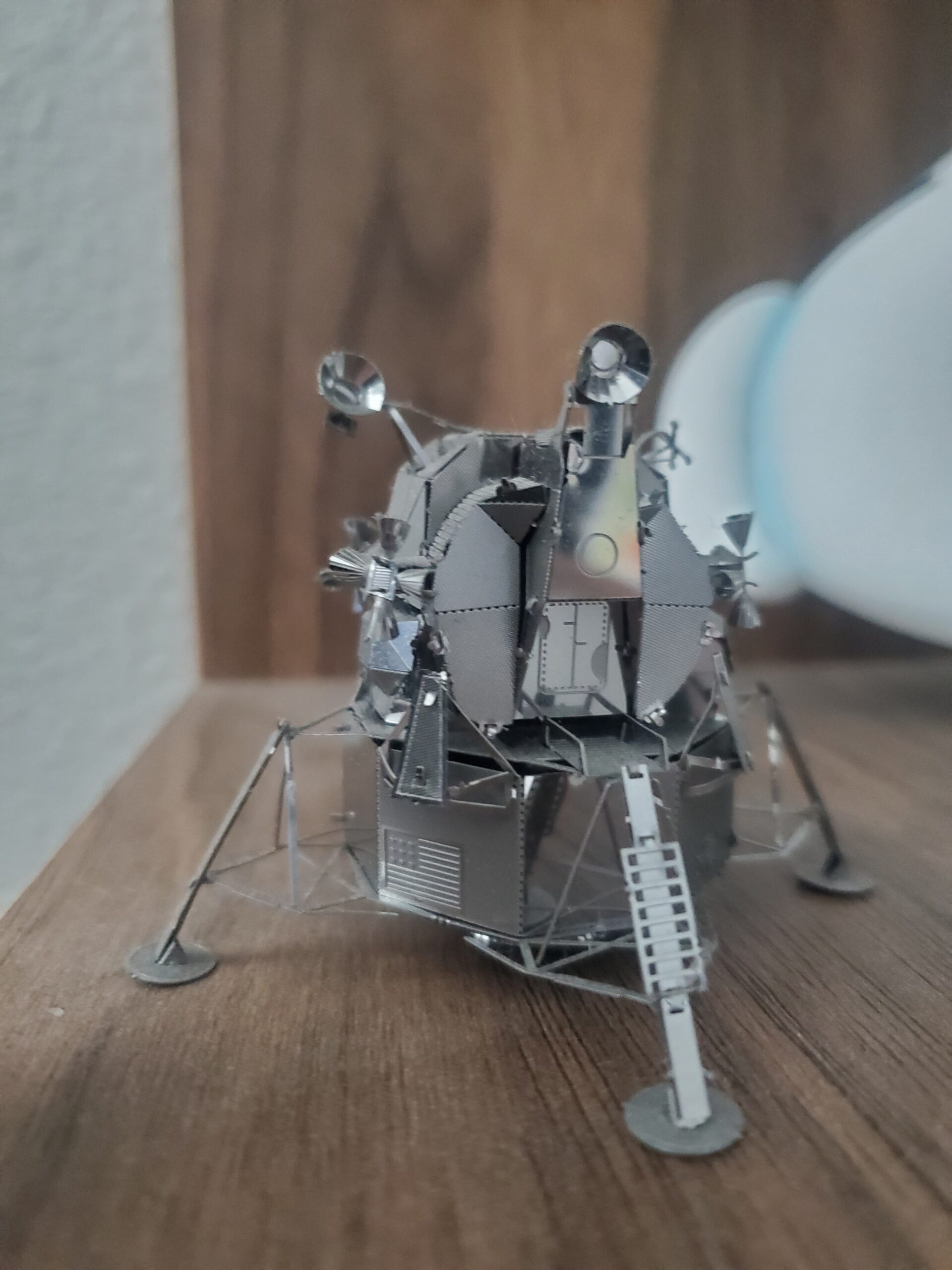
With 970 reviews, this model has proven popular though builders warn about the delicate thruster assemblies. I followed forum advice to save the thrusters for last assembly, avoiding damage during handling of other components.
Assembly time typically runs 4-10 hours depending on experience level. The 4.0-star rating reflects the difficulty curve; experienced builders rate it higher than frustrated beginners who attempted it as their first metal model.
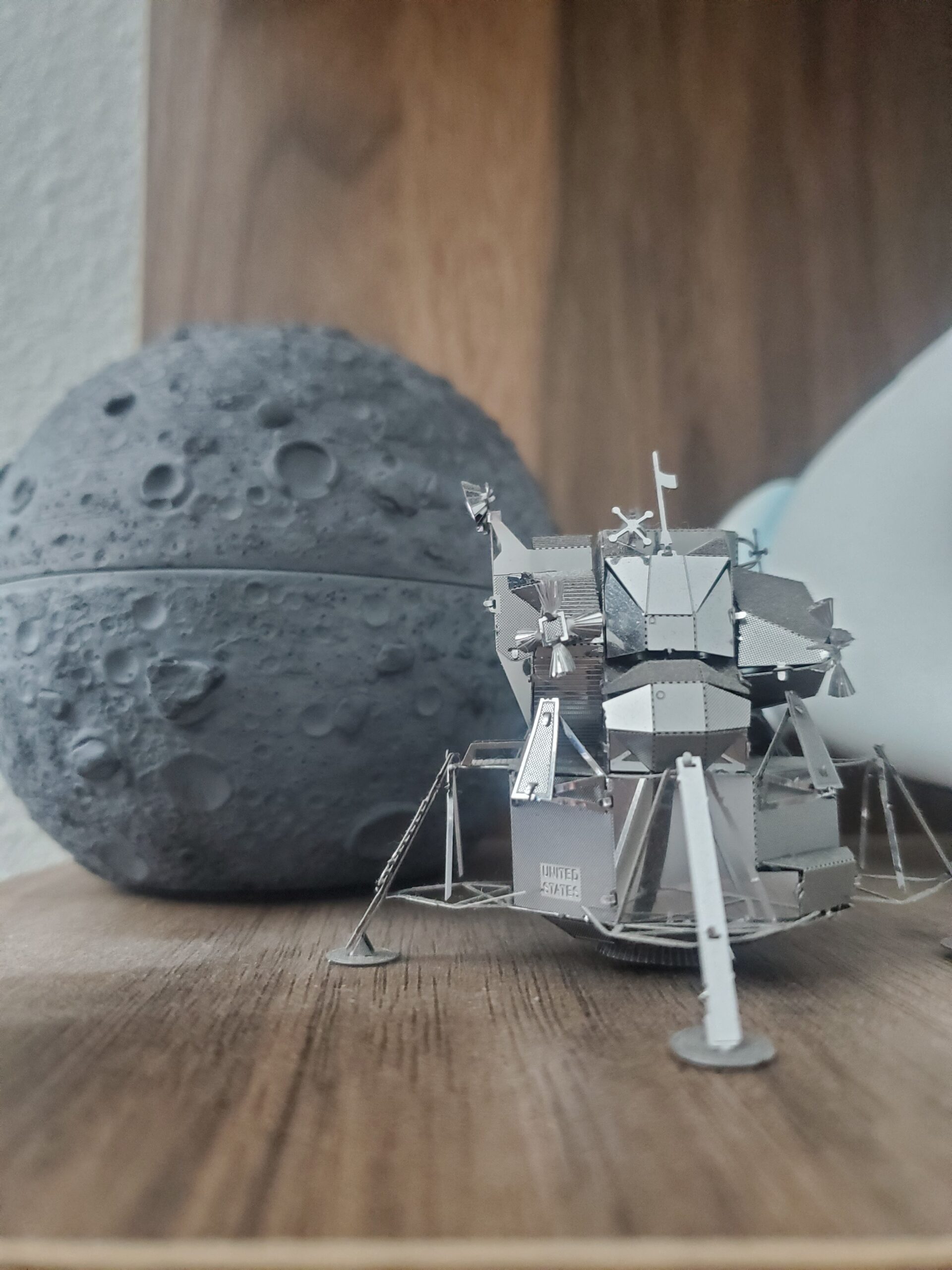
Best For Apollo Program Context
Space historians building comprehensive program collections need the Lunar Module to complete the Mercury-Gemini-Apollo narrative arc. This model pairs conceptually with the earlier capsules to tell the full story of America’s reach for the moon.
The distinctive appearance contrasts dramatically with the blunt capsules that preceded it. Displayed together, these models illustrate the technological progression from atmospheric reentry vehicles to actual landing craft.
Fragility Considerations
The spindly legs and antennae require careful handling during and after construction. Once completed, the model benefits from a protective display case rather than open shelf placement where dusting or accidental contact might damage delicate details.
Sharp edges on the metal sheets can cut fingers during assembly. I recommend wearing thin work gloves during the initial parts removal phase, removing them only for detailed bending and connection work.
10. AMT Saturn V 1/200 Scale – Traditional Plastic Kit
AMT Saturn V Rocket 1:200 Scale Model Kit
Scale: 1/200
Material: Plastic
Pieces: 61
Instructions: Pictorial
Requires: Paints, glue, tools
Pros
- Very realistic and detailed model
- Good quality plastic construction
- Accurate 1/200 scale
- Great value for price
- Easy to assemble vs metal kits
Cons
- Requires paints
- glue
- tools not included
- Some parts may have fit issues
- Quality control varies
- Smaller than some expect
For modelers who prefer traditional plastic kit building over metal construction, the AMT Saturn V offers a classic experience. The 1/200 scale produces a substantial model larger than the Metal Earth version while remaining manageable for display.
The 61-piece count hits a sweet spot between detail and complexity. Builders complete this kit faster than the massive 1/96 Saturn V kits that require months of work, while achieving more presence than smaller scale alternatives.
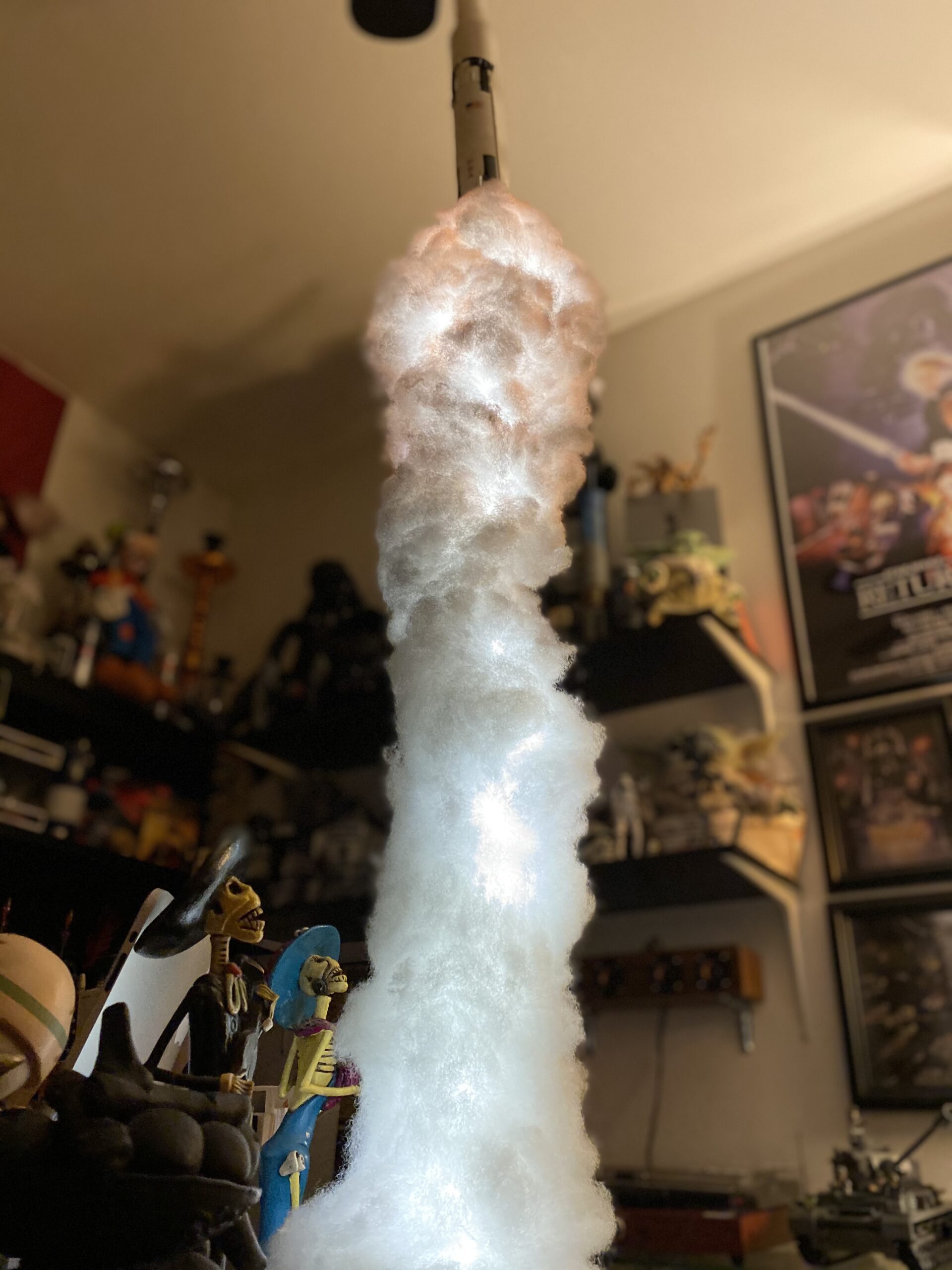
Recent reviews in 2026 remain positive about quality, suggesting AMT has maintained tooling standards. The kit works well for conversion into lighting projects or as the centerpiece of a space program collection.
Traditional modelers appreciate the painting freedom plastic kits provide. Unlike pre-finished metal models, this kit allows custom weathering, realistic rust streaks on the engines, and personalized display bases.
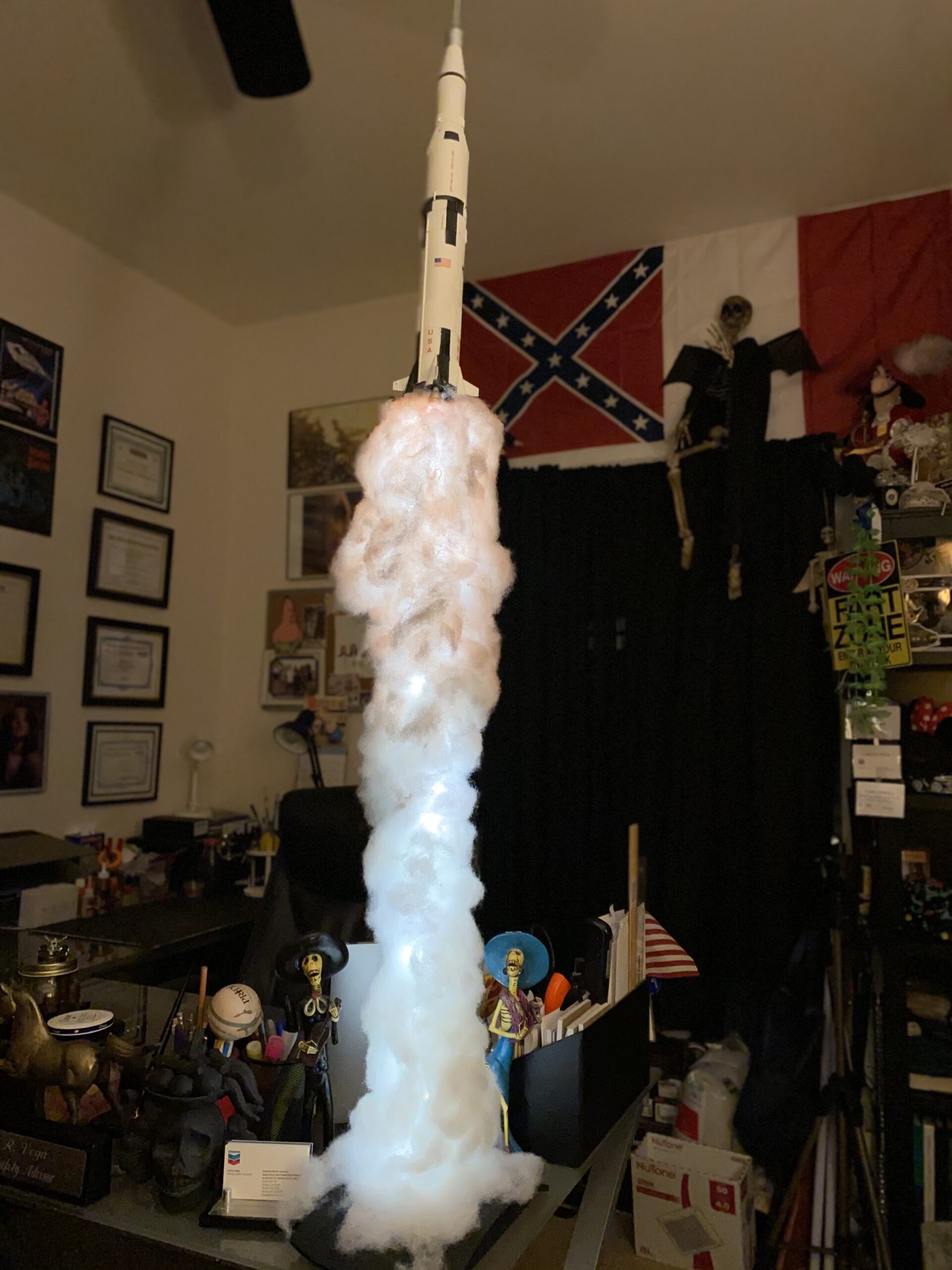
Best For Classic Model Builders
Space historians who grew up building Revell and Monogram kits will find the AMT Saturn V construction experience nostalgically familiar. The plastic smell, the sprue clipping, and the decal application all trigger memories of youthful modeling sessions.
The completed model rewards traditional painting techniques. I applied Alclad II metallics to the engine section, used Tamiya white for the S-IC stage, and hand-brushed the black roll pattern for precision that decals sometimes lack.
Size Considerations
The 1/200 scale produces a model approximately 18 inches tall when complete. Verify your display case or shelf height before starting construction, as this model needs vertical clearance that some cabinets lack.
Consider the footprint impact on your collection layout. While substantial, this model doesn’t dominate a room like the 1/96 Saturn V models that approach three feet in height. It strikes a practical balance between presence and practicality.
11. Metal Earth Space Shuttle Discovery Color – Space Program Continuity

Fascinations Metal Earth Space Shuttle Discovery Color Version 3D Metal Model Kit
Material: Steel
Sheets: 2
Scale: 1/355
Size: 4.50 x 2.80 x 2.30 inches
Type: Color version
Pros
- Color version stands out
- Relatively easy assembly
- Spare parts for delicate pieces
- Great texture on painted metal
- Fun relaxing build
Cons
- Very small palm-sized
- Rounding nose takes skill
- Instructions difficult
- Very small fragile pieces
- Floor piece tricky
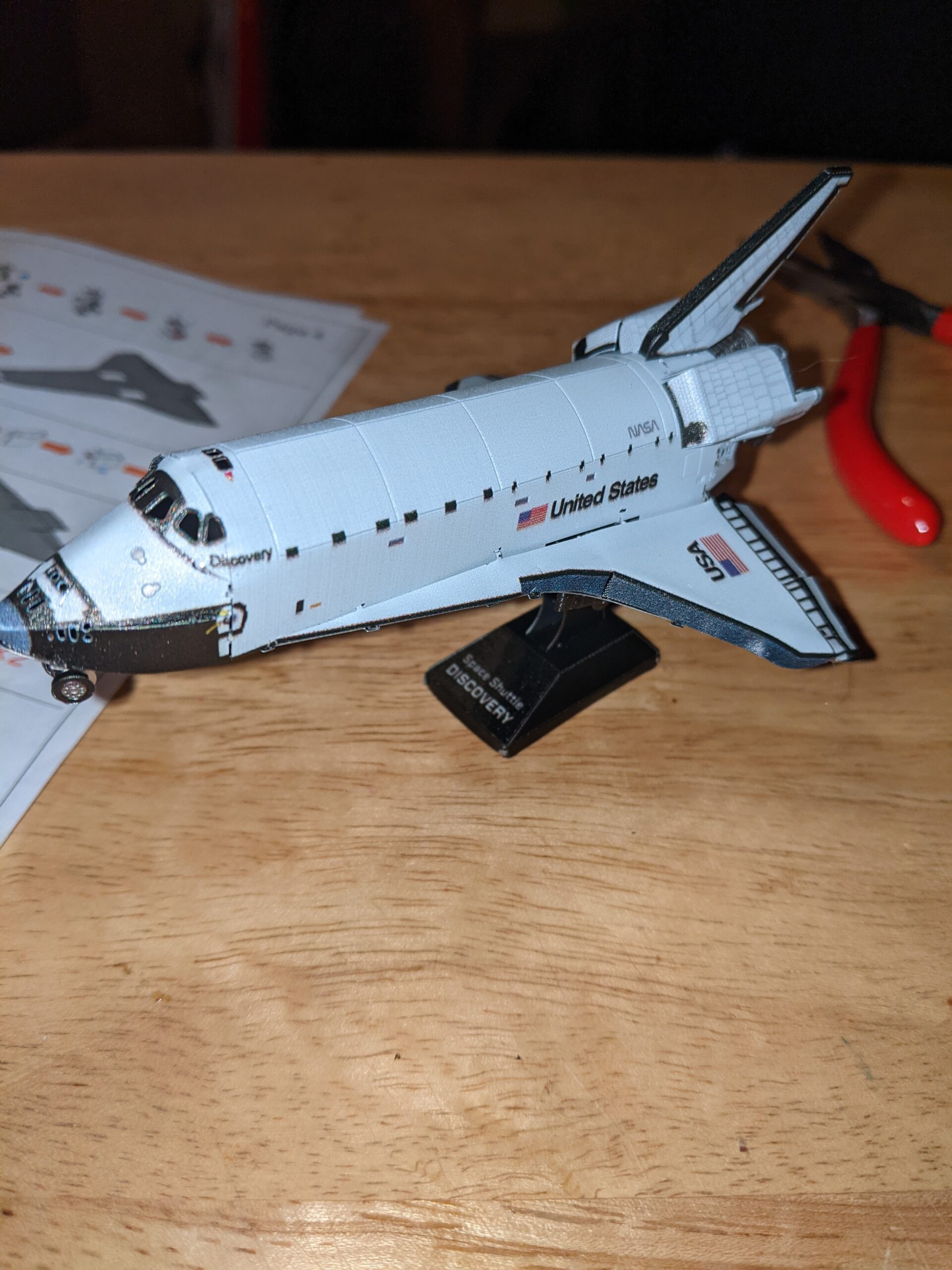
The Space Shuttle program represented the next evolution after Mercury and Gemini proved human spaceflight feasible. This color version of the Discovery model captures the distinctive black and white tile pattern that made the Shuttle instantly recognizable.
Unlike bare metal Metal Earth models, this color version arrives with painted surfaces ready for display upon completion. The pre-applied finish saves time and produces more consistent results than hand-painting tiny metal components.
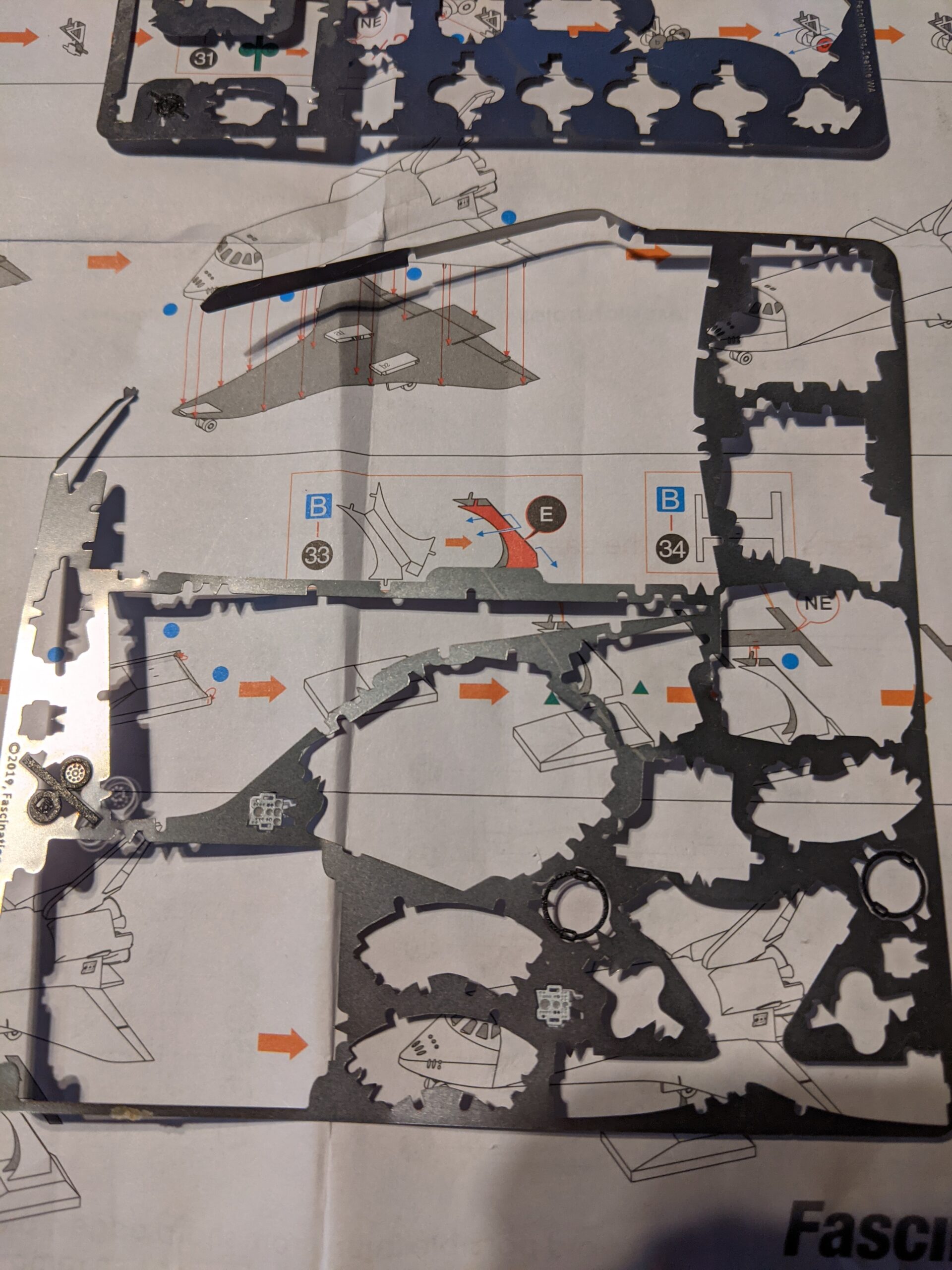
At 1/355 scale, the model fits comfortably in a palm yet captures the essential Shuttle proportions. The delta wing shape, vertical stabilizer, and orbital maneuvering system pods all read clearly despite the compact size.
Reviewers note this model suits beginners better than more complex Metal Earth offerings. The 2-sheet construction and included spare parts for easily damaged elements reduce frustration for newcomers to metal modeling.
Best For Shuttle Era Fans
Space historians who personally remember Shuttle launches will appreciate this accessible model of the program’s workhorse orbiter. Discovery flew 39 missions, more than any other Shuttle, making it the appropriate subject for commemorative modeling.
The color version’s pre-painted metal sheets feature realistic tile textures that enhance the finished appearance. White thermal protection areas contrast with black leading edges as on the actual vehicle.
Color Version Benefits
The painted finish eliminates the metallic toy-like appearance some builders dislike about bare metal models. The completed Discovery looks convincingly like a miniature spacecraft rather than a metal craft project.
I found the color coating actually facilitates construction by providing friction that helps tabs stay seated during assembly. The bare metal models sometimes have tabs that slip loose; the painted surfaces grip better.
12. Metal Earth Apollo Lunar Rover – Surface Exploration

Fascinations Metal Earth Apollo Lunar Rover 3D Metal Model Kit
Material: Steel
Sheets: 2
Pieces: 69
Size: 3.54 x 1.77 x 2.28 inches
Type: Lunar surface vehicle
Pros
- Precise pieces with good detail
- Challenging but fun build
- Good beginner metal model
- Looks great with other Apollo
- Can be painted for details
Cons
- Antennae and posts fragile
- Wheel wells difficult bends
- Some pieces break easily
- Instructions unclear for wheels
- Very tiny parts need magnification
The Lunar Rover extended Apollo astronauts’ exploration range from a few hundred feet to several miles. This Metal Earth model captures the vehicle that transformed lunar exploration from brief strolls to genuine scientific traverses.
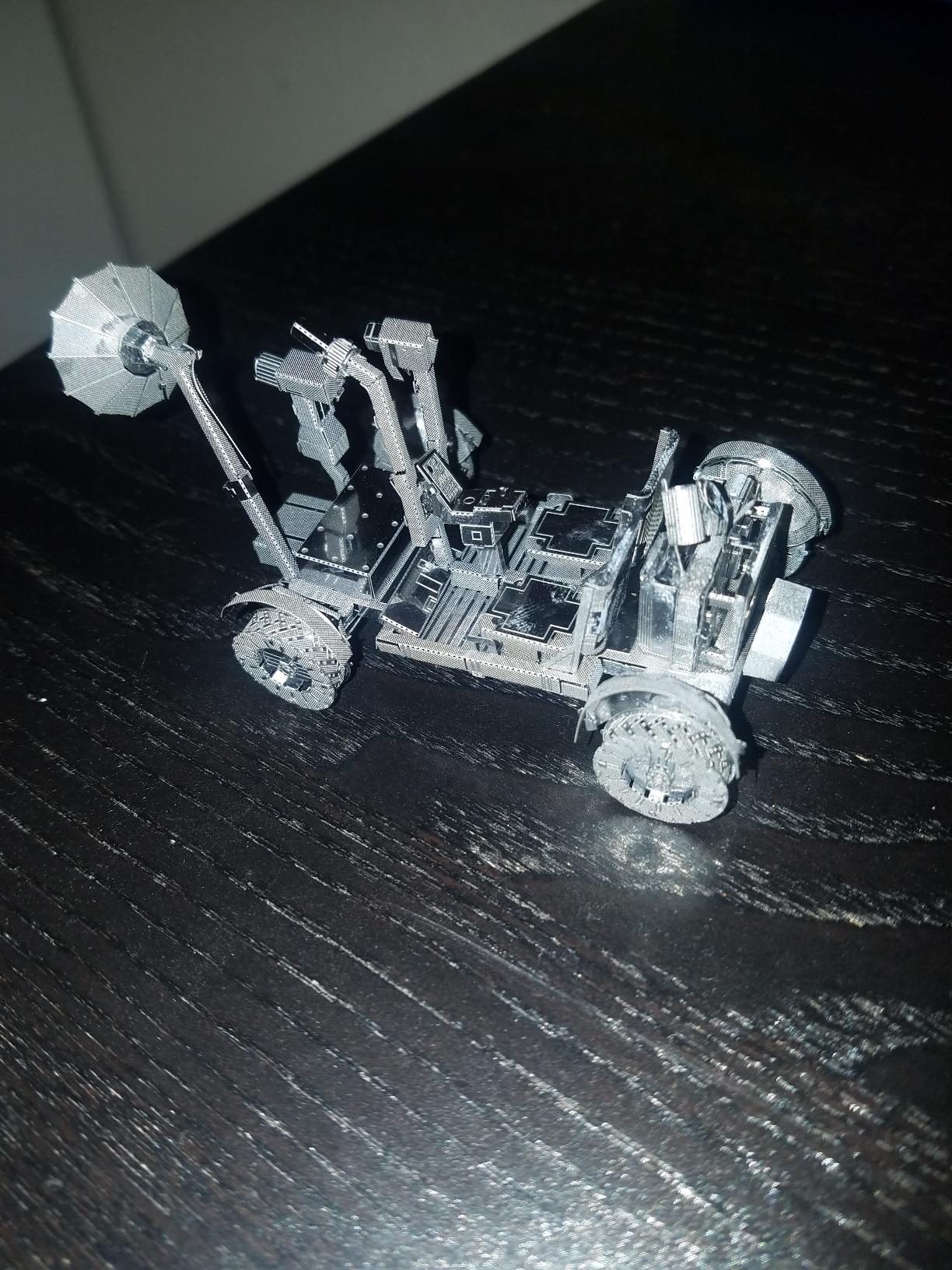
At 69 pieces across 2 sheets, the Rover offers moderate complexity. The wire-mesh wheels present the primary construction challenge, requiring compound bends that test patience and finger dexterity.
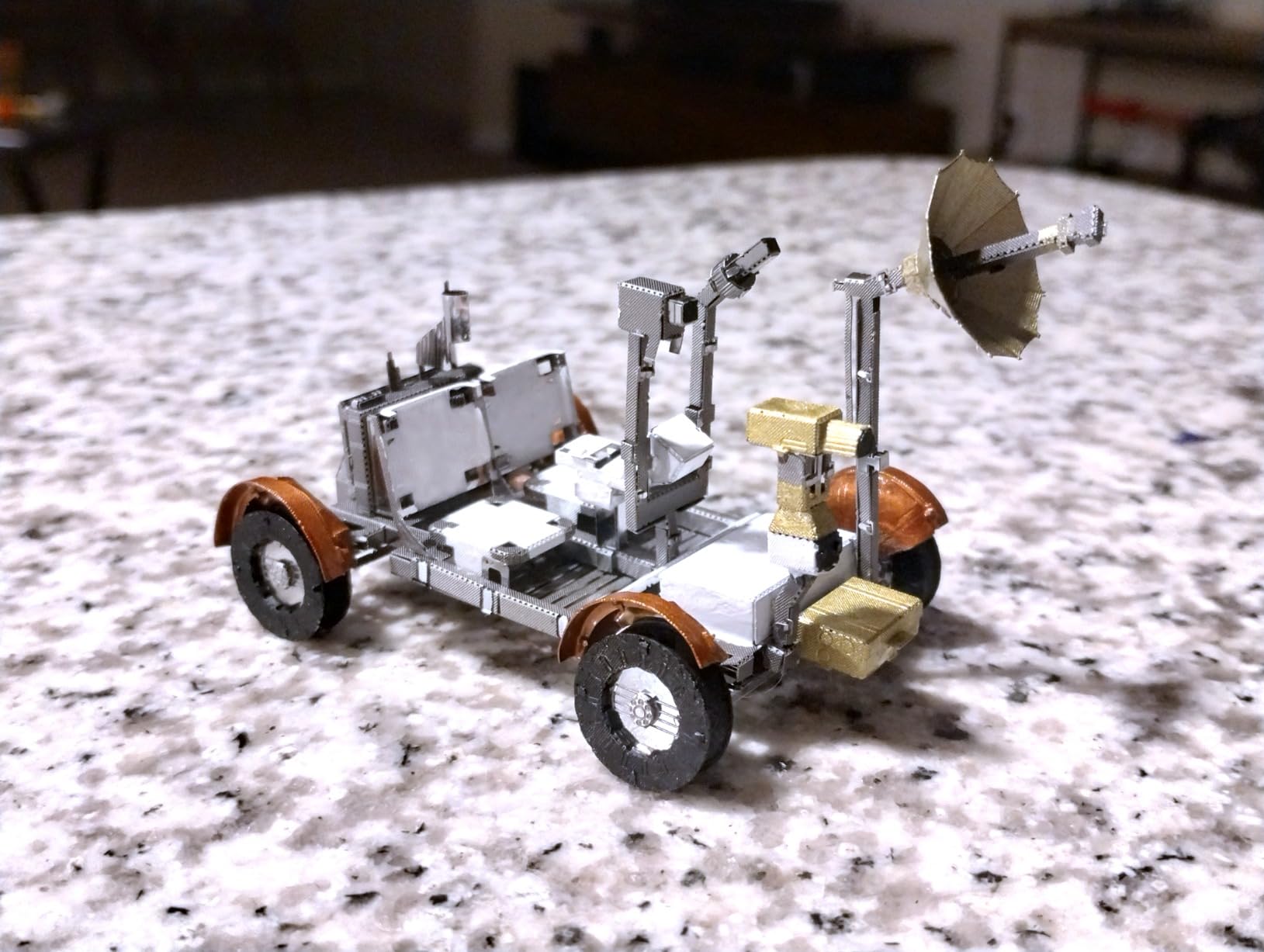
Reviewers recommend pairing this with the Lunar Module for contextual display. The Rover’s 1/110 scale approximation matches the LM model well, allowing creation of a miniature diorama showing astronauts departing the lander for surface exploration.
Completion time averages 4-6 hours for experienced builders. The 4.1-star rating reflects general satisfaction tempered by wheel assembly frustrations reported by some builders.
Best For Surface Mission Details
Space historians interested in the operational aspects of lunar exploration will appreciate this model’s subject matter. The Rover enabled the comprehensive sampling and surveying that justified the Apollo program’s scientific investment.
The model includes details like the tool carriers, antenna masts, and seat assemblies that supported three days of surface operations on the final lunar missions. These details tell stories about actual lunar surface work.
Assembly Challenges
The wire-mesh wheels require creating cylindrical shapes from flat etched sheets. I found working slowly with cylindrical forms (pens, dowels) as bending guides produced better results than attempting freehand curves.
Reviewers report success using JB Weld or similar adhesive to reinforce antenna connections. The thin metal tabs securing the delicate antenna masts benefit from additional structural support that the mechanical connections alone don’t provide.
13. Daron Space Adventure Space Capsule – Entry Level Choice

Daron Space Adventure Series Space Capsule (PT63110)
Material: Plastic
Size: 4.25 x 4.75 x 4.75 inches
Features: Lights, opening door, astronaut figure
Power: 2x AG13/LR44 batteries
Ages: 3+
Pros
- Durable material and design
- Lights up with features
- Removable astronaut included
- Compatible with series
- Hours of entertainment
Cons
- Door somewhat flimsy
- Light function may not work
- Batteries require replacement
The Daron Space Adventure capsule targets younger space enthusiasts with light-up features and play-oriented design. This toy-grade model serves as an entry point for children developing interest in space history before advancing to buildable kits.
With over 2,100 reviews and a 4.6-star average, parents confirm this toy’s durability and entertainment value. The included batteries power light functions that add excitement for children discovering space concepts.
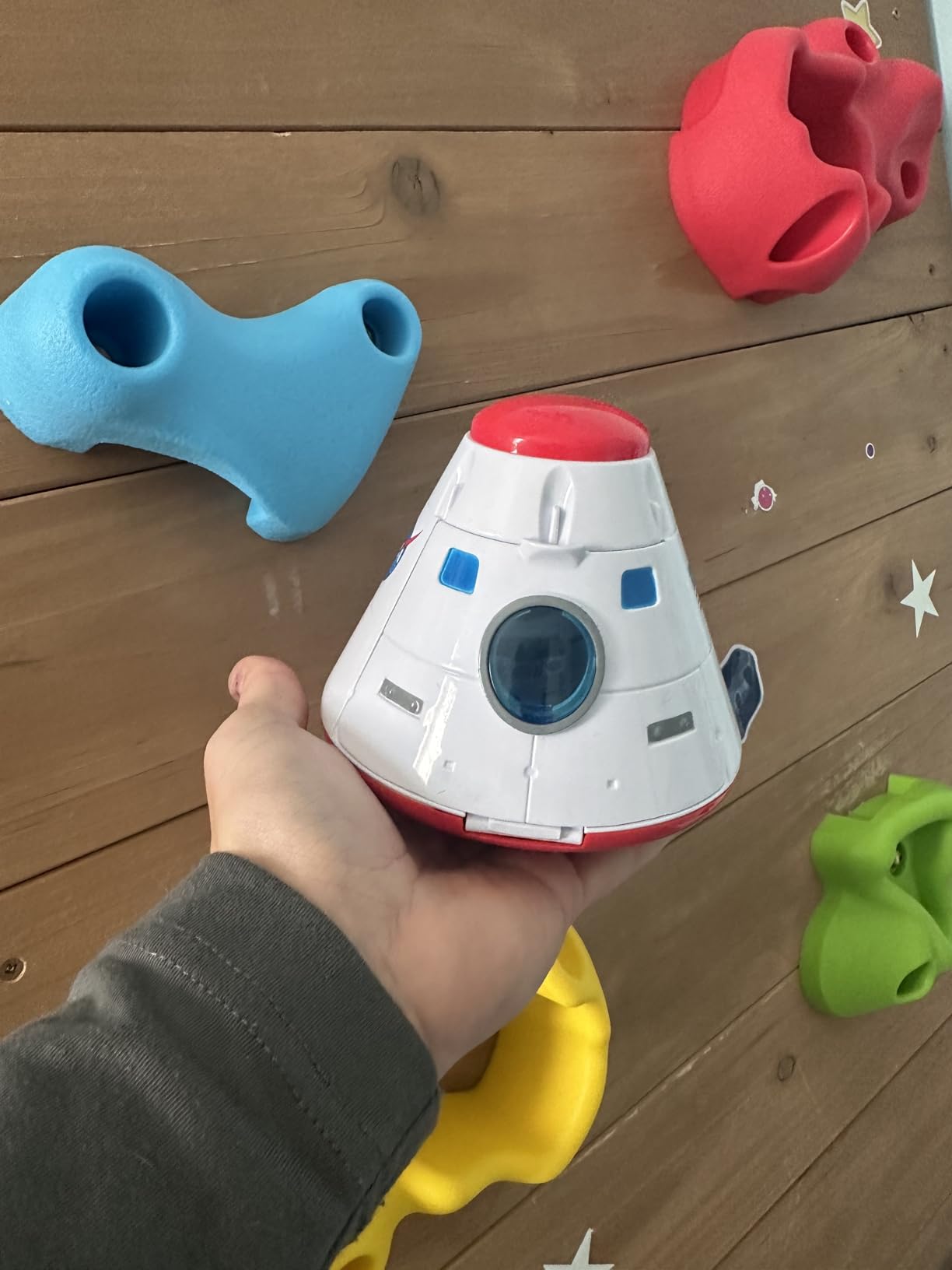
The removable astronaut figure allows role-play scenarios that help children understand how early space travelers actually lived inside these tiny vehicles. Play-based learning creates lasting interest that may develop into serious historical study.
At under $15, this model represents minimal investment for families testing a child’s genuine interest before purchasing more expensive buildable kits. The 80% five-star rating indicates strong parental satisfaction with value received.
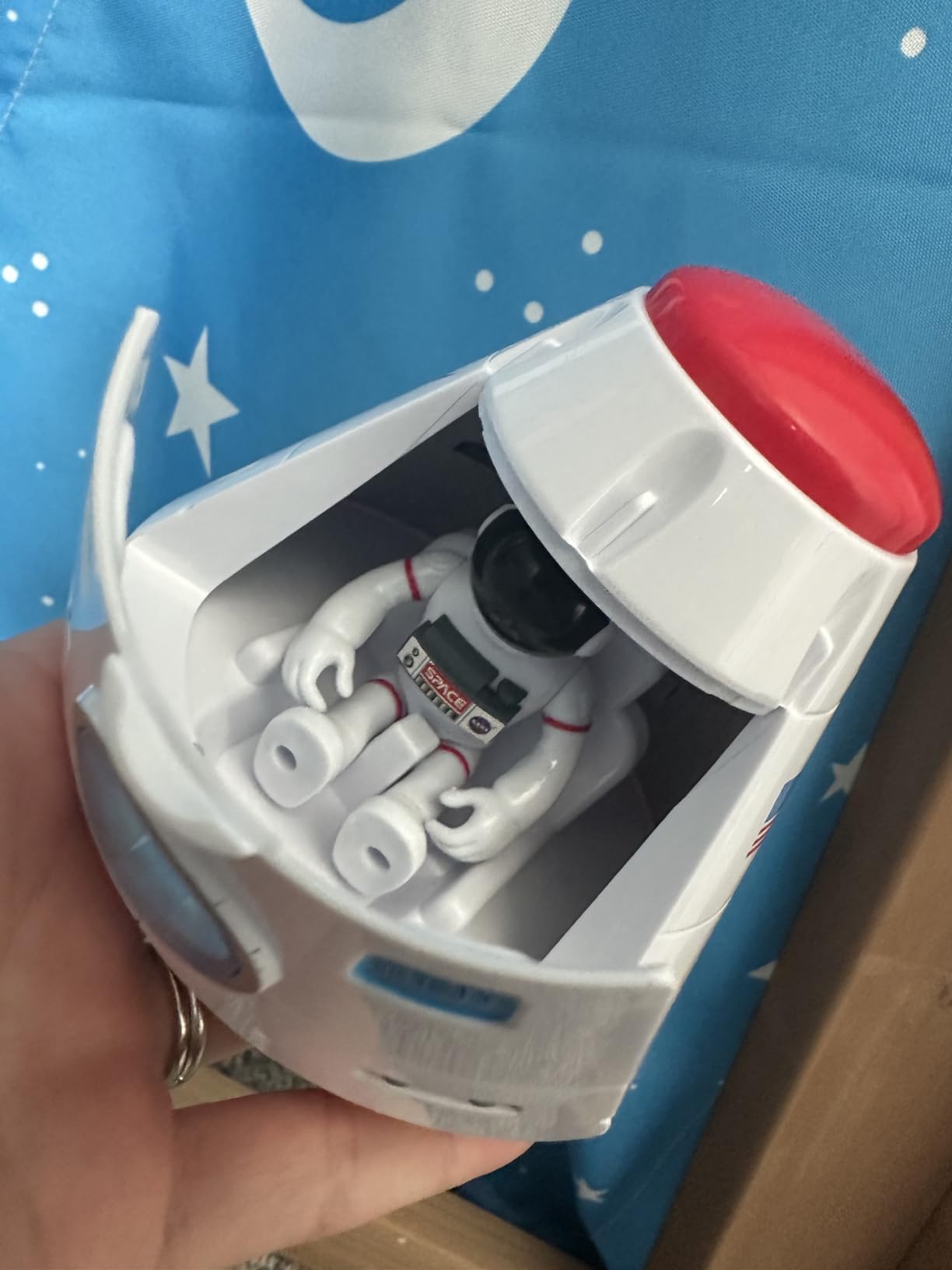
Best For Young Space Historians
Space historians raising the next generation of enthusiasts need accessible entry points. This toy provides authentic capsule proportions without requiring skills young children haven’t yet developed.
The light-up features create bedtime opportunities for storytelling about actual missions. Parents report their children asking questions about Glenn, Grissom, and Armstrong after evening play sessions with this capsule.
Play vs Display
Unlike the collectible models reviewed above, this capsule welcomes rough handling. The sturdy plastic construction survives drops, throws, and the other indignities toys suffer at the hands of enthusiastic children.
Some adults purchase this as an affordable desk decoration, though the toy-grade aesthetics may disappoint serious collectors. The primary value proposition lies in childhood education rather than historical display.
14. Metal Earth Mars Rover – Future of Exploration

Fascinations Metal Earth Mars Rover 3D Metal Model Kit
Material: Steel
Sheets: 2
Size: 3.65 x 3.35 x 2.35 inches
Type: Curiosity-style rover
Assembly: 6-8 hours
Pros
- Incredibly fun challenging assembly
- No glue or solder required
- Museum-quality finished product
- Looks fantastic completed
- Great value for money
Cons
- Very small intricate pieces
- Not for beginners
- Requires proper tools
- Takes 6-8 hours or more
- Some sharp edges
While not directly related to Mercury or Gemini programs, the Mars Rover represents the ongoing progression of American space exploration that those early programs initiated. This model extends a space program collection into the modern era.
The Curiosity-style design captures the massive rover that has operated on Mars since 2012. Its scale dwarfs earlier Mars missions, reflecting the technological advancement made possible by the orbital mechanics knowledge developed during Mercury and Gemini.
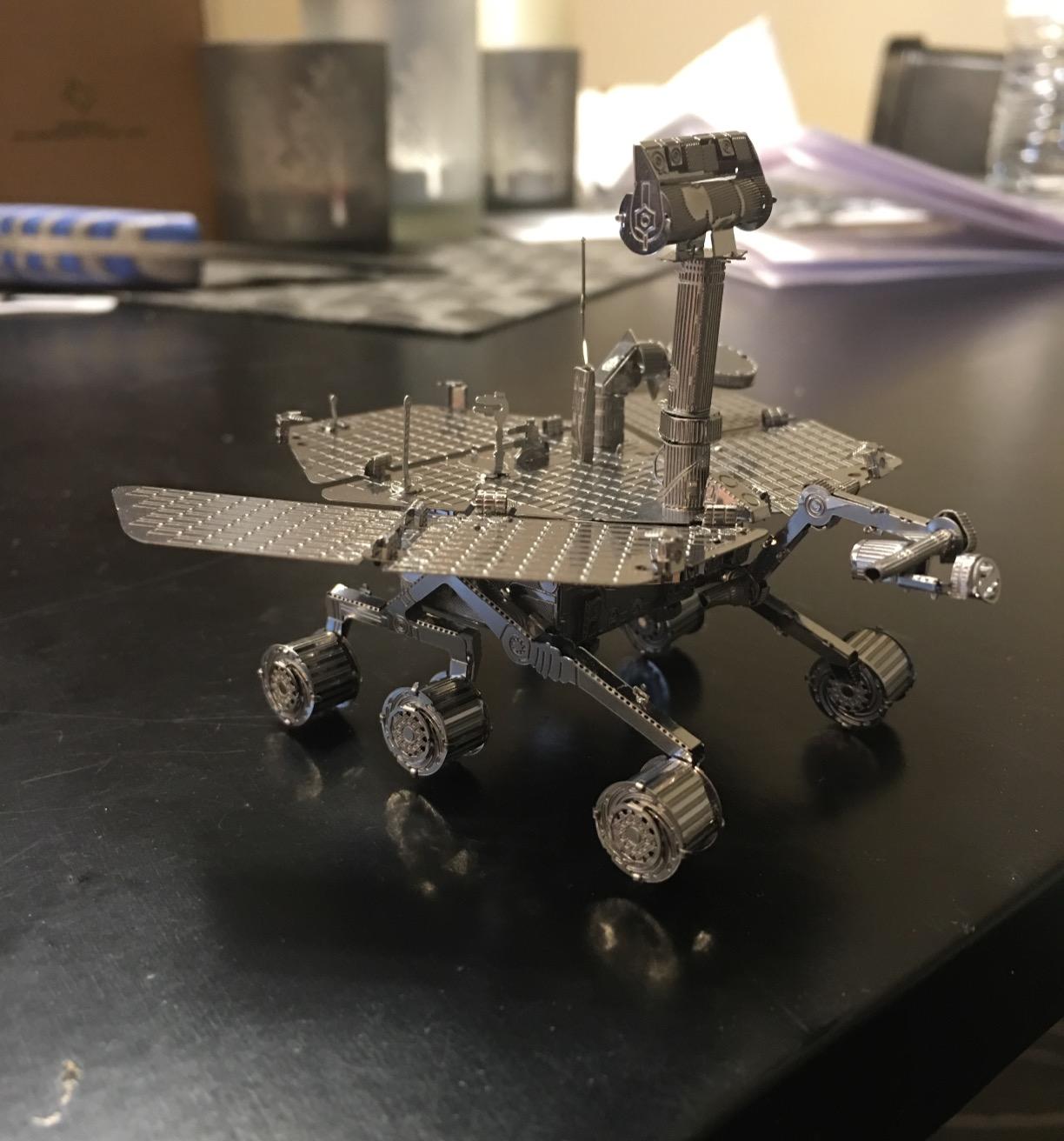
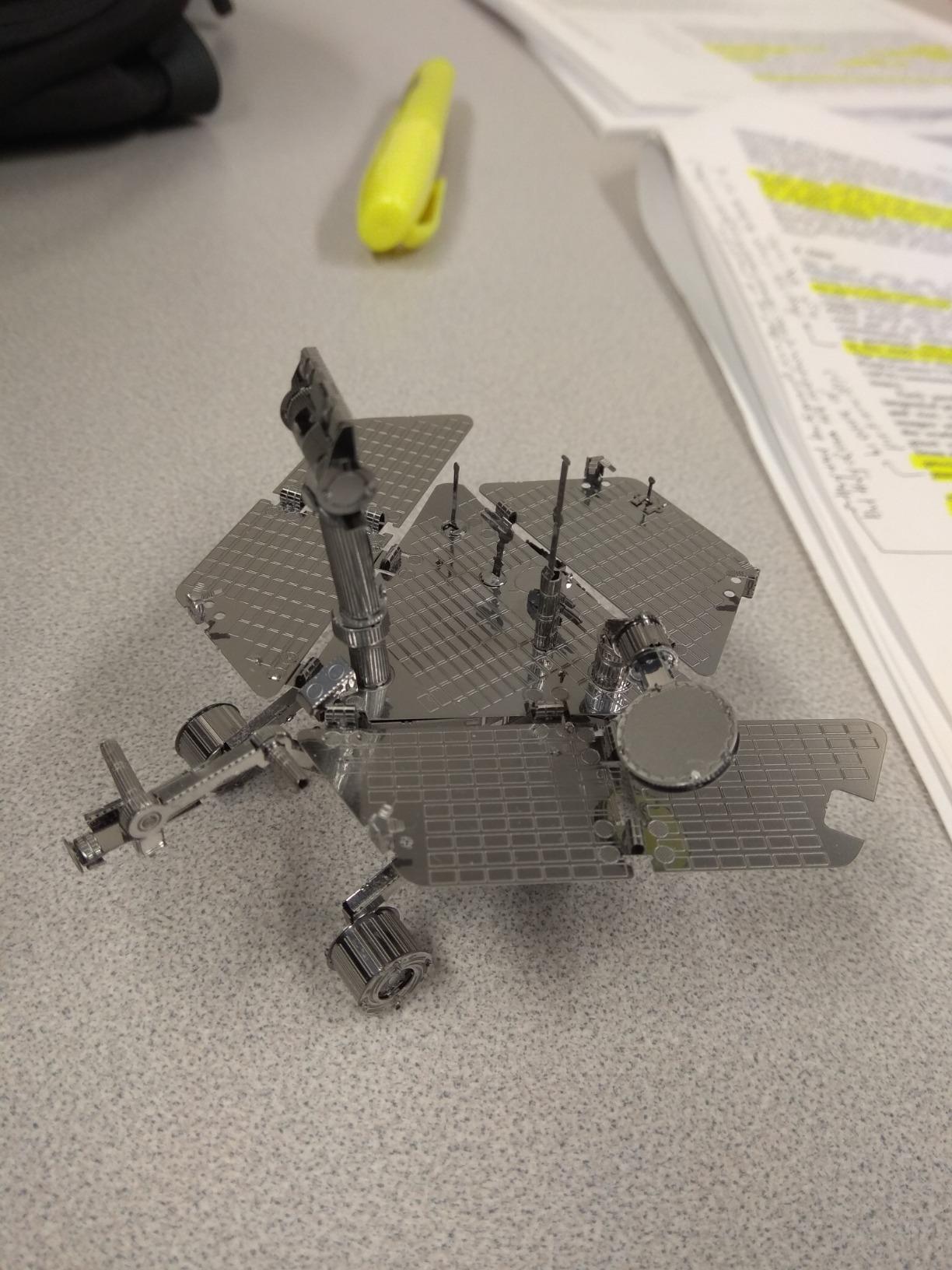
With 584 reviews and 68% five-star ratings, this model satisfies builders who complete it. The 6-8 hour build time represents significant investment, but the resulting durability justifies the effort.
Reviewers note the model survives accidental drops that would destroy plastic equivalents. The all-metal construction produces a display piece that withstands handling during dusting or repositioning.
Best For Modern Space Context
Space historians building comprehensive collections spanning the full history of exploration need contemporary subjects alongside historical ones. The Mars Rover connects early human spaceflight with current robotic achievements.
The contrast between this sophisticated nuclear-powered laboratory and the primitive capsules of the 1960s illustrates sixty years of technological development. Displayed together, they tell a story of continual advancement.
Technical Challenge
The rocker-bogie suspension system that makes the actual rover capable of climbing Mars terrain creates modeling complexity. Each wheel assembly requires careful construction to achieve the characteristic appearance.
I recommend this model for builders with at least one previous Metal Earth completion. The techniques learned on simpler subjects transfer directly, while the complexity increase provides satisfying challenge without overwhelming frustration.
15. Revell 1/72 Space Shuttle 40th Anniversary – Program Legacy

Revell 1/72 Space Shuttle 40th Anniversary Model Kit for Building
Brand: Revell
Scale: 1/72
Theme: 40th Anniversary
Material: Plastic
Status: Special edition
Pros
- Revell quality tooling
- Large 1/72 scale presence
- 40th anniversary commemorative edition
- Detailed plastic construction
- Traditional build experience
Cons
- Limited availability sometimes
- Shipping delays possible
- Higher price than standard releases
The Revell 1/72 Space Shuttle 40th Anniversary edition commemorates four decades since the first orbital flight of Columbia in 1981. This special release connects the Shuttle program to the Mercury and Gemini legacy that enabled space station construction and satellite deployment missions.
The 1/72 scale produces the largest Shuttle model in this review, creating significant display presence for collectors wanting their final program vehicle to match or exceed the scale of earlier capsule models.
Best For Shuttle Commemoration
Space historians seeking to mark the Shuttle program’s significant contributions to space science will find this anniversary edition appropriately commemorative. The 135 missions flown between 1981 and 2011 represent substantial human spaceflight experience.
The anniversary packaging and markings add collector value beyond the standard Revell Shuttle release. For historians building definitive collections, limited editions preserve the historical moment of the 40th anniversary milestone.
Anniversary Edition Value
Special edition kits sometimes command premium prices, but the additional cost often proves worthwhile for the enhanced packaging and historical documentation included. The 40th anniversary edition likely contains mission summaries and program highlights.
Given the Space Shuttle program’s conclusion in 2011, this model may gain collector significance as time passes. Early Shuttle models from the 1980s already command prices exceeding original retail by significant margins.
Buying Guide: How To Choosing Mercury and Gemini Capsule Kits for Space Historians?
Selecting the right model requires balancing multiple factors beyond simple price comparison. This guide helps space historians match specific needs with appropriate kits.
Scale Comparison for Space Historians
Scale choice significantly impacts both detail level and display requirements. The models reviewed span from 1/12 to 1/350, each serving different purposes.
Large scales like 1/12 and 1/24 provide detail that satisfies close inspection. The MRC Academy Mercury at 1/12 allows viewing of rivets and panel lines that disappear at smaller scales. These models demand substantial display space but reward with presence.
Medium scales around 1/72 to 1/110 strike practical balances. The Daron Gemini IV at 1/24 and Atlantis Mercury-Atlas at 1/110 provide recognizable detail without dominating rooms. Most collectors find these sizes manageable.
Small scales below 1/144 suit compact displays or comprehensive program collections. The Pegasus 1/350 and HMA 1/144 models allow representation of multiple mission configurations without requiring warehouse-sized display cases.
Material Types and Their Benefits
Injection-molded plastic dominates traditional model building. Kits like the MRC Academy Mercury and Atlantis Atlas offer familiar construction experiences with paintable surfaces and established techniques. Plastic accepts weathering, customization, and repairs readily.
Resin models like the Daron Gemini IV and HMA Mercury capsule arrive with superior detail resolution but require different handling. Resin demands cyanoacrylate adhesive rather than plastic cement and produces dust requiring respiratory protection during sanding.
Metal models from Metal Earth provide unique aesthetic variety. The stainless steel construction creates durable display pieces with distinctive reflective qualities. However, metal construction requires patience and specialized tools unfamiliar to plastic modelers.
Skill Level Considerations
Beginners should start with the Daron Space Adventure toy, Echo Toys set, or the Atlantis Mercury-Atlas kit. These forgiving options build confidence before attempting complex projects.
Intermediate modelers with basic experience will find the MRC Academy Mercury, Pegasus Mercury 9, and Metal Earth Saturn V appropriately challenging. These kits require standard modeling skills without demanding specialized expertise.
Advanced builders seeking challenges should consider resin kits like the HMA Mercury with astronauts or complex metal models like the Mars Rover and Apollo CSM. These projects require specialized tools and techniques but produce exceptional results.
Aftermarket Parts and Enhancements
Serious space historians often enhance base kits with aftermarket parts. Photo-etch sets from New Ware add fine details like thruster nozzles and antenna details impossible in injection molding. These brass frets require careful handling but significantly improve accuracy.
Resin conversion sets from Real Space Models correct shape errors in vintage toolings. The Revell Mercury and Gemini kits particularly benefit from these corrections, addressing prototype-to-flight hardware discrepancies documented by researchers like Mike Mackowski.
Decal sheets from Space Modeling Systems provide mission-specific markings superior to kit decals. For historians building specific mission capsules like Friendship 7 or Molly Brown, aftermarket decals ensure accurate marking placement and color.
Display Options for Collections
Individual models deserve appropriate presentation. Consider shadow boxes with printed backdrops showing Earth from space or launch pad environments. LED lighting enhances metallic finishes and creates dramatic shadows.
Program progression displays arrange models chronologically: Mercury, Gemini, Apollo CSM, Lunar Module, then Shuttle. This arrangement tells the story of capability development visually, helping viewers understand how early programs enabled later achievements.
For comprehensive collections, consider custom cabinetry with adjustable shelving accommodating various scales. Group models by program era or arrange by physical scale to create cohesive visual relationships between spacecraft of different actual sizes.
Frequently Asked Questions About Mercury and Gemini Capsule Kits
What is the difference between Mercury and Gemini capsule?
The Mercury capsule was designed for single astronauts on brief orbital missions lasting up to 34 hours. The Gemini capsule accommodated two crew members for missions lasting up to 14 days. Key differences include the Gemini’s ability to change orbit, rendezvous and dock with other spacecraft, and conduct spacewalks. Gemini was essentially a enlarged Mercury capsule with systems for the more complex tasks needed for Apollo’s lunar missions.
Did they ever recover Gus Grissom’s capsule?
Yes, Gus Grissom’s Liberty Bell 7 capsule was recovered from the Atlantic Ocean floor on July 20, 1999, exactly 38 years after it sank following his Mercury-Redstone 4 mission. The capsule was found at a depth of approximately 15,000 feet by a salvage team led by Curt Newport. After restoration, Liberty Bell 7 toured museums and is now displayed at the Kansas Cosmosphere and Space Center.
How did the Gemini astronauts go to the bathroom?
Gemini astronauts used a urine collection device consisting of a rubber cuff connected to a collection bag with a valve. For solid waste, they used an adhesive-backed plastic bag attached directly to their body. The bag contained a finger cot for manual removal of waste and a blue germicide to kill bacteria and odor. The system was primitive compared to modern space toilets but functional for missions lasting up to two weeks.
Is the Gemini program still active?
No, the Gemini program ended in November 1966 after the Gemini 12 mission. It was an interim program designed to develop techniques needed for Apollo’s lunar missions, including long-duration flight, rendezvous, docking, and spacewalks. All Gemini flights occurred between March 1965 and November 1966. The program was succeeded by Apollo, which achieved the lunar landing goal Gemini was preparing for.
How were the Gemini spacecraft different than the earlier Mercury craft?
Gemini spacecraft differed from Mercury in several key ways: 1) Gemini accommodated two astronauts versus Mercury’s single occupant, 2) Gemini had onboard computers and radar for orbital maneuvering and rendezvous, 3) Gemini hatches opened outward for spacewalks versus Mercury’s inward-opening hatch, 4) Gemini used fuel cells for power versus Mercury’s batteries, 5) Gemini had an equipment module for systems that was discarded before reentry, and 6) Gemini lacked Mercury’s escape tower, using ejection seats instead.
Conclusion: Building Your Mercury and Gemini Capsule Collection
The Mercury and Gemini programs established the foundation for all subsequent American human spaceflight. For space historians seeking to preserve this legacy through scale modeling, the Mercury Gemini capsule kits reviewed here offer options for every skill level and display requirement.
The MRC Academy Mercury capsule stands as our top recommendation for serious historians seeking maximum accuracy in an impressive display piece. For those preferring premium collectibles, the Daron Gemini IV delivers museum-quality presence without assembly challenges.
Whichever model you choose, remember that you are not merely building a plastic or metal replica. You are creating a tangible connection to the brave astronauts and brilliant engineers who launched humanity’s first steps into orbital flight. Your finished model honors their achievements and preserves their story for future generations of space historians.
We welcome your build experiences and display solutions in the comments below. Share your mission-specific configurations and aftermarket enhancement discoveries to help fellow space historians make informed choices for their collections in 2026.