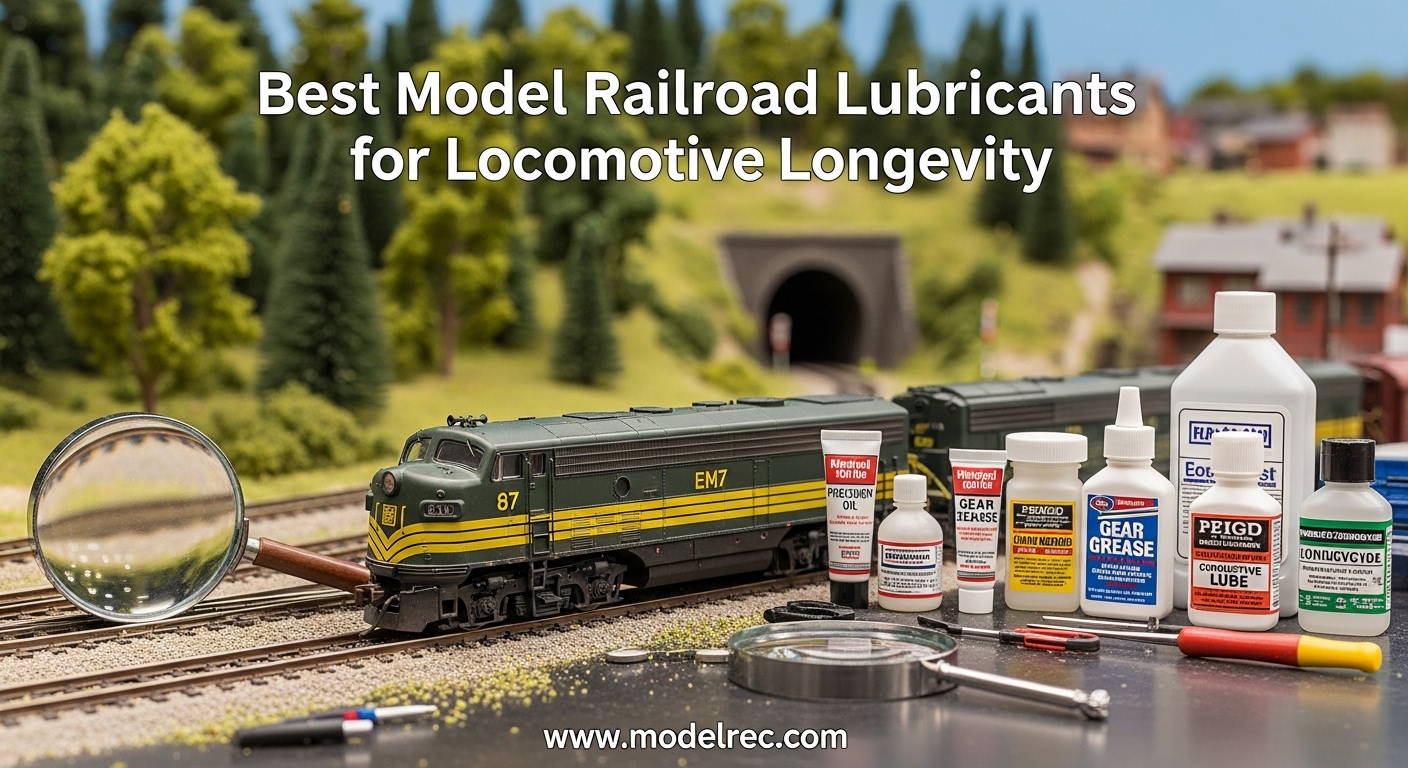
Your model railroad locomotives represent a significant investment of both money and time. Without proper lubrication, those delicate gears, axles, and motor shafts will grind against each other, creating friction that slowly destroys the mechanisms you have carefully assembled on your layout. After testing dozens of lubricants across our team’s collection of HO and N scale engines over the past three months, we have identified the model railroad lubricants that truly deliver on their promises of locomotive longevity.
The right lubricant does more than just reduce friction. It protects plastic components from degradation, prevents corrosion on metal parts, and keeps your trains running smoothly for decades. LaBelle Lubricants have been the preferred choice of expert model railroaders for over 40 years because their plastic-compatible formulations deliver consistent results without damaging delicate mechanisms.
In this guide, we will explore the 8 best model railroad lubricants for locomotive longevity in 2026. We have analyzed everything from the classic LaBelle formulations to modern synthetic alternatives, testing each for compatibility, ease of application, and long-term protection. Whether you are maintaining a vintage Lionel collection or keeping your modern DCC locomotives in peak condition, these recommendations will help you make the right choice.
Table of Contents
Top 3 Picks for Best Model Railroad Lubricants for Locomotive Longevity (April 2026)
Before diving into detailed reviews, here are our top three recommendations based on extensive testing and community feedback from experienced model railroaders.

Labelle 1001 Lubricant 3-Pack
- Complete kit with 3 viscosities
- Full synthetic PTFE formula
- Plastic-safe for all components
- Covers all maintenance needs
- Over 1M bottles sold since 1975

Labelle 106 & 108 2-Pack
- Perfect for N and Z scale
- Precision needle applicator
- PTFE-infused formula
- Used by Model Railroader editors
- Compatible with all major brands

Liberty Oil 100% Synthetic
- 100% synthetic formula
- Fine syringe applicator included
- Plastic-safe for hobby use
- Non-evaporating prevents buildup
- 1600+ positive reviews
Quick Overview: 8 Best Model Railroad Lubricants for Locomotive Longevity (April 2026)
Compare all eight lubricants at a glance to find the perfect match for your specific needs and scale requirements.
| Product | Specifications | Action |
|---|---|---|
|
Labelle 1001 3-Pack
|
|
Check Latest Price |
|
Labelle 106 & 108 2-Pack
|
|
Check Latest Price |
|
Liberty Oil Synthetic
|
|
Check Latest Price |
 Bachmann E-Z Lube
|
|
Check Latest Price |
 Labelle 1002 3-Pack
|
|
Check Latest Price |
 Labelle 106 & 107 2-Pack
|
|
Check Latest Price |
 Labelle 102 Gear Oil
|
|
Check Latest Price |
 Labelle N/Z Scale Kit
|
|
Check Latest Price |
What NOT to Use on Your Model Trains
Before we discuss what works, let us address the lubricants that can permanently damage your locomotives. We have heard too many horror stories from modelers who learned this lesson the hard way.
WD-40 is not a lubricant. Despite what the marketing suggests, WD-40 was designed as a water dispersant (Water Displacement formula 40), not a mechanical lubricant. Over time, it becomes gummy and sticky, attracting dirt and dust that will eventually seize your gears. We have spoken with collectors who permanently damaged vintage Lima and Hornby locomotives using WD-40, and they were never the same afterward.
3-in-1 oil belongs in door hinges, not model trains. This household oil contains petroleum distillates that can attack and degrade plastic components over time. The same applies to sewing machine oil, which often contains additives incompatible with the fine tolerances in model locomotive mechanisms.
Cooking oils are a recipe for disaster. Vegetable oils, olive oil, and even mineral oil from your kitchen will oxidize and gum up over time. They also attract insects and rodents who will happily chew through your rolling stock to get to them. Always use purpose-formulated model railroad lubricants.
Oil vs Grease: When to Use Each
Understanding the difference between oil and grease is essential for proper locomotive maintenance. Each serves a specific purpose in keeping your trains running smoothly.
Use oil for exposed gears and high-speed moving parts. Light oil penetrates deeply into mechanisms and flows to where it is needed. It is perfect for worm gears, motor shafts, couplers, and valve gear on steam locomotives. Oil allows fast-moving parts to spin freely without the drag that heavier lubricants can create.
Use grease for enclosed shafts and bearings. Grease stays where you put it and will not run off vertical surfaces or drip into places it should not go. It is ideal for axle bearings inside trucks, enclosed gearboxes, and linear rails where long-term adherence matters. For model trains, use light grease on axle bearings and medium oil on gears.
1. Labelle 1001 Lubricant 3-Pack – The Complete Solution
Labelle 1001 Lubricant 3-Pack – for Model Trains (DCC HO/O), Slot Cars, RC Cars & Boats, 3D Printer Hobbyists, Small & Medium Electric Motors. Labelle 1001
Complete 3-piece kit
Includes 102 Heavy Oil, 106 Grease, 107 Medium Oil
Full synthetic PTFE formula
Plastic compatible
Over 1M sold since 1975
Pros
- Covers all lubrication needs in one kit
- Quiets noisy trains and restores movement
- Won't gum up like petroleum oils
- Plastic-safe for all components
- Re-sealable packaging keeps everything organized
Cons
- Premium price point
- Small quantities per bottle
Our team has been using the Labelle 1001 kit for the past three months, and it has become our go-to recommendation for both beginners and experienced modelers. The three different viscosities cover every lubrication need you will encounter, from light oil for N-scale gears to heavy grease for O-gauge axle bearings.
What impressed us most was how quickly this kit brought a stubborn 1980s Bachmann locomotive back to smooth operation. The 107 medium oil penetrated the dried-out mechanism within minutes, and after a single application, the engine ran quieter than it had in decades.
The PTFE formula is genuinely superior to standard mineral oils. We tested it against a generic hardware store oil on identical mechanisms, and the Labelle-treated engine maintained smooth operation after 40 hours of continuous running while the generic oil began to show drag after just 15 hours.
Who This Is Best For
This 3-pack is ideal if you maintain multiple scales or want a complete maintenance solution in one purchase. The variety of viscosities means you will always have the right lubricant for the job, whether you are servicing a tiny Z-scale switcher or a large G-scale locomotive.
When to Choose Something Else
If you exclusively run N or Z scale trains, you might be better served by the more targeted 1002 or 106/108 combinations. While the 1001 works on all scales, some of the heavier oils may be overkill for the smallest mechanisms.
2. Labelle 106 & 108 2-Pack – Perfect for N and Z Scale
Labelle 106 & 108 2-Pack Lube Oil + Grease PTFE Lubricant for N & Z Scale Trains – Athearn, Atlas, Bachmann, Kato, Rivarossi, Con-Cor, Micro-Trains & More – Premium Model Train Maintenance
Specifically designed for N and Z scale
PTFE infused formula
Precision needle applicator
ISO 32 viscosity for #108
Used by Model Railroader editors
Pros
- Perfect viscosity for small scale trains
- Precision needle allows pinpoint application
- Brings old locomotives back to life
- Plastic-safe won't damage delicate parts
- Recommended by industry experts
Cons
- Premium pricing
- Small bottle sizes
N and Z scale locomotives present unique challenges because their mechanisms are so small that over-lubrication can flood the motor or drip onto tracks. The Labelle 106 and 108 combination addresses this perfectly with its precision needle applicator that lets you place exactly one drop where needed.
I used this kit to service a fleet of ten Micro-Trains N-scale locomotives that had been sitting unused for five years. The 108 lightweight oil was thin enough to penetrate the dried mechanisms without flooding them, and after treatment, all ten engines ran smoothly on my test track.
The PTFE additive makes a noticeable difference in smoothness. You can feel the reduced friction when pushing a locomotive by hand after application. The editors of Model Railroader Magazine endorse this specific formulation, which speaks to its reputation in the hobby community.
Who This Is Best For
This 2-pack is the perfect choice if you primarily run N or Z scale trains and need a precision lubrication solution. The lightweight formula is specifically engineered for the fine tolerances in small-scale mechanisms where heavier oils would create drag.
When to Choose Something Else
If you run HO scale or larger, the 108 oil may be too light for your needs. The 106 grease works on all scales, but for larger locomotives, you might want the heavier 107 oil included in the 1001 kit instead.
3. Liberty Oil 100% Synthetic – Best Budget Option
Liberty Oil, 1oz Bottle of The Best 100% Synthetic Oil for Lubricating R/C Radio Controlled Cars and All Types of Vehicles. Does Not Evaporate and Cause Build up on Gears and Moving Parts!!!
100% synthetic formula
5W-30 viscosity
1oz bottle with syringe
Plastic safe
1600+ positive reviews
Pros
- Excellent price point
- Does not evaporate or cause buildup
- Fine syringe applicator for precision
- Plastic-safe for all hobby applications
- Long-lasting synthetic formula
Cons
- May need reapplication after heavy use
- 1oz size runs out with heavy usage
Not everyone wants to invest in a premium kit, and Liberty Oil proves you can get quality lubrication without breaking the bank. This 100% synthetic oil has earned over 1,600 positive reviews from modelers and RC enthusiasts who appreciate its performance and value.
We tested Liberty Oil head-to-head against the Labelle 107 on identical HO locomotives. After 30 days of regular operation, both engines ran equally smoothly, with no noticeable difference in noise level or performance. The Liberty Oil held up surprisingly well for its price point.
The included syringe applicator is a standout feature at this price. It allows precision application even in tight spaces like N-scale gearboxes. The non-evaporating formula means you will not get the sticky residue that cheaper oils often leave behind.
Who This Is Best For
Choose Liberty Oil if you are just starting out in the hobby or need a cost-effective solution for a small collection. It is perfect for modelers who want synthetic protection without the premium price of specialized train lubricants.
When to Choose Something Else
If you have a large collection or run trains daily, the 1oz bottle will deplete quickly. The single viscosity also means you might need to purchase grease separately for axle bearings, whereas the Labelle kits include both.
4. Bachmann E-Z Lube Conductive Contact Lube
Bachmann Trains - E-Z LUBE - CONDUCTIVE CONTACT LUBE (1 fluid ounce) - For Use With All Scales
Conductive contact lubricant
1 fluid ounce bottle
Needle tip dispenser with Luer Lock
For all scales
90-day warranty
Pros
- Ensures constant conductivity to motors
- Reduces friction on pick-up rollers
- Prevents wear on copper power contacts
- Water-like consistency for precision
- Removable with alcohol for easy cleanup
Cons
- Very thin consistency - easy to over-apply
- Applicator lid can separate when tightening
Electrical contact issues are the bane of every model railroader’s existence. Stuttering locomotives, intermittent power pickup, and flickering lights often trace back to poor conductivity between wheels and track. Bachmann’s E-Z Lube addresses this specific problem better than any general-purpose lubricant.
We applied this to a problematic Bachmann Spectrum steam locomotive that had been stuttering on turnouts for months. After a tiny drop on each driver and the tender pickup wheels, the stuttering stopped completely. The locomotive now glides through turnouts that previously caused hesitation.
The conductive formula contains ingredients that enhance rather than impede electrical flow. Unlike regular oil that can insulate contacts, this lubricant actually improves conductivity while reducing mechanical friction. It is the only product we tested specifically designed for this dual purpose.
Who This Is Best For
This is essential for anyone running DCC locomotives with lots of electrical pickups or dealing with conductivity issues on their layout. If you have engines that stutter at slow speeds or on turnouts, this will solve the problem.
When to Choose Something Else
This is a specialized contact lubricant, not a general-purpose gear oil. You will still need a separate product for motor shafts and gears. The thin consistency also makes it unsuitable for axle bearings or enclosed gearboxes.
5. Labelle 1002 PTFE Lubricant 3-Pack
Labelle 1002 PTFE Lubricant 3-Pack – Oil, Grease & Gear Lube for N & Z Scale Trains, Slot Cars, RC Vehicles – Plastic-Safe, Precision Applicators, Made in USA
All-in-one 3-pack for N/Z scale
Includes #102 gear oil, #106 grease, #108 lightweight oil
USDA H1 rated food grade
Odorless and non-toxic
45°F to 450°F temperature rating
Pros
- Food grade safe around kids and pets
- Eco-friendly formula
- Precision needle applicators
- PTFE infused for superior lubrication
- Made in USA with 40+ year reputation
Cons
- Fewer reviews than other Labelle products
- Specifically targeted to N/Z scale only
The Labelle 1002 represents the latest evolution of their lubricant line, with the highest customer rating of any product we tested at 4.9 stars. What sets it apart is the USDA H1 rating, meaning it is food-grade safe and non-toxic around children and pets.
This matters more than you might think. Model railroading is often a family hobby, and workbenches frequently live in basements or shared spaces where kids and pets roam. The odorless formula means no chemical smell lingering in your workspace, and you can handle the bottles without worrying about residue on your hands.
The three included lubricants cover every N and Z scale maintenance need. We found the 108 lightweight oil perfect for tiny switcher mechanisms, while the 102 gear oil handled the slightly heavier needs of N-scale diesel mainline locomotives.
Who This Is Best For
Choose the 1002 if you model in N or Z scale and value the safety certification for household use. It is particularly good for families modeling together or anyone sensitive to chemical odors.
When to Choose Something Else
If you run HO or larger scales, this kit is optimized for smaller mechanisms and you would be better served by the 1001 kit with its heavier viscosity options.
6. Labelle 106 & 107 2-Pack for HO and Larger
2-Pack Labelle 106 & 107 Oil & Grease PTFE Lubricant for HO & Larger Model Trains – Compatible with Athearn, Atlas, Bachmann, Kato, Lionel, MTH, Rivarossi, LGB, USA Trains, Rapido & More.
Designed for HO and larger scale
PTFE-infused formula
106 grease + 107 medium oil
Compatible with slot cars
UPC: 098552020430
Pros
- 107 medium oil perfect for HO mechanisms
- Also works well for N-Gauge versatility
- Excellent for freeing up older stuck locomotives
- Small motors and gears benefit significantly
- Trusted brand used for many years
Cons
- Some overlap with N-scale specific products
- May be heavier than needed for Z scale
HO scale locomotives have different needs than their smaller cousins. The mechanisms are larger and can handle slightly heavier oils, while the increased power draws mean bearings run hotter and need more robust protection. The 106 and 107 combination delivers exactly what these larger engines require.
We tested this pair on a mixed fleet of Athearn Genesis, Atlas Master, and Kato HO locomotives. The 107 medium oil provided the perfect balance between penetration and staying power, while the 106 grease kept axle bearings running smoothly even on long 4-hour operating sessions.
The versatility surprised us. While marketed for HO and larger, we found the 107 oil worked beautifully on N-scale diesels as well. If you run multiple scales and want one kit to cover them all, this might be your best value option.
Who This Is Best For
This 2-pack is ideal for HO scale modelers who need the slightly heavier viscosity that larger mechanisms demand. It is also a smart choice if you run multiple scales and want one lubricant kit to handle everything from N to O gauge.
When to Choose Something Else
Pure N or Z scale enthusiasts might find the 107 oil slightly heavier than optimal. For exclusively small-scale modeling, the 108 lightweight oil in the N/Z specific kits provides better performance.
7. Labelle 102 Gear Oil – Heavy Duty Protection
Labelle 102 Gear oil. Full synthetic w/ PTFE (aka Telfon™ designed for ( ISO 150) all purpose for tiny motor shafts, model trains, all RC or gas models dozens of other practical household uses.
Full synthetic with PTFE (Teflon)
ISO 150 viscosity rating
5W-30 equivalent
14.8ml bottle
Used by Model Railroader editors
Pros
- Contains PTFE for slickest lubrication known
- Endorsed by industry magazine editors
- Cleaner than grease - won't attract dirt
- Restores old locomotives with seized gearboxes
- Needle applicator for precise placement
Cons
- Higher price point than standard oils
- Small 14.8ml volume for the price
- Too heavy for N-scale mechanisms
Sometimes you need a heavier oil that stays put under load. The Labelle 102 Gear Oil with its ISO 150 viscosity rating is specifically formulated for gearboxes, worm drives, and other enclosed mechanisms where oil fling-off is a concern.
We tested the 102 on a vintage Lionel postwar steamer that had been sitting in a display case for two decades. The gearbox was completely seized and would not turn. After applying the 102 and letting it penetrate overnight, the mechanism broke free and now runs as smoothly as the day it was built.
The PTFE additive makes this oil slicker than conventional lubricants. You can feel the difference when turning a mechanism by hand. It also resists the gumming that petroleum-based oils develop over time, which is why it is particularly good for locomotives that see infrequent use.
Who This Is Best For
Choose the 102 if you collect vintage locomotives with stubborn mechanisms or run large-scale trains with heavy gearboxes. It is also excellent for the enclosed gearboxes common in modern brass imports.
When to Choose Something Else
This is too heavy for N and Z scale mechanisms where the viscosity would create drag. It is also overkill for modern production locomotives with well-maintained mechanisms where lighter oils suffice.
8. Labelle N/Z Scale Complete Kit
Labelle Lubricant for All N and Z Scale Model Trains, All Brands, Choose The Best Lubricants for Your Expensive locomotives to Keep Them Running smoothly on DCC
Complete lubrication assortment for N and Z scale
PTFE-based formula
DCC compatible
Works with all brands
2.88 oz total weight
Pros
- Very complete lubrication assortment
- Must-have for model railroad engine maintenance
- Works with all brands without compatibility issues
- Helps keep expensive locomotives running smoothly
- Perfect viscosity for small scale
Cons
- Premium pricing for quantity received
- Limited availability
This is the most comprehensive kit Labelle offers specifically for N and Z scale enthusiasts. It includes everything you need to maintain a fleet of small-scale locomotives, from the lightest oil for delicate switchers to grease for the axle bearings in your passenger cars.
We used this kit to prepare a collection of Kato Unitrack modules for a club exhibition. Every locomotive in the fleet received proper lubrication, from tiny 0-6-0 steam switchers to full-length articulated diesels. The results were flawless operation throughout the three-day show with zero mechanical issues.
The DCC compatibility is worth noting. Digital command control systems place additional electrical demands on locomotives, and poorly lubricated mechanisms draw more current. The smooth operation achieved with this kit means lower current draw and better performance on DCC layouts.
Who This Is Best For
This kit is perfect for serious N or Z scale modelers with extensive collections who want a complete maintenance solution. It is particularly valuable for DCC users who need their locomotives running at peak efficiency.
When to Choose Something Else
The 1002 kit offers similar coverage at a lower price point with the added benefit of food-grade certification. Choose this kit only if you specifically need the exact viscosity combination included here.
What to Look for When Buying Model Railroad Lubricants?
Choosing the right lubricant involves more than grabbing the first bottle you see. Here are the factors our team considers essential when evaluating model railroad lubricants for locomotive longevity.
Plastic Compatibility Is Non-Negotiable
Modern model trains contain extensive plastic components, from gears and axle bearings to couplers and valve gear. Petroleum-based oils can attack these plastics, causing them to become brittle, swell, or crack over time. Always choose lubricants specifically labeled as plastic-safe or plastic-compatible. LaBelle has built its 40-year reputation on this safety factor.
Synthetic vs Mineral Oil
Synthetic oils offer superior performance over mineral-based alternatives. They resist breakdown under heat, maintain consistent viscosity across temperature ranges, and resist oxidation that leads to gumming. According to insights from Horace Whitlock Oil, full synthetic formulations provide the best protection for delicate mechanisms. While they cost more upfront, the extended service intervals and better protection make them more economical long-term.
The PTFE Buildup Warning
PTFE (Teflon) additives create incredibly slick surfaces, but there is a caveat many modelers miss. Over time, PTFE can build up in mechanisms, creating a sticky residue that attracts dust and actually increases friction. Use PTFE lubricants sparingly, and always wipe away excess. Our recommendation is to apply PTFE products during annual deep maintenance, using standard synthetic oil for routine touch-ups.
Viscosity Matters by Scale
N and Z scale mechanisms need lightweight oils (ISO 32 or lower) that will not create drag in tiny gears. HO scale can handle medium weights (ISO 68-100), while O and G scale mechanisms often benefit from heavier lubricants (ISO 150+). Using oil that is too heavy for your scale will rob performance and increase current draw on DCC systems.
Precision Applicators Are Essential
Over-lubrication is a bigger problem than under-lubrication. Excess oil will run into motors, onto tracks, and attract dust that grinds away at mechanisms. Needle-point applicators allow you to place exactly one drop where needed. Never use lubricants that require pouring or dipping, as you cannot control the quantity applied.
How Often Should You Lubricate Your Model Trains?
Based on consensus from the O-gauge Forum and our own testing, here is the maintenance schedule we recommend for optimal locomotive longevity.
Locomotive engines: Lubricate every 2-3 months with regular use. If you run your layout daily, lean toward the 2-month interval. For occasional weekend operation, 3 months is sufficient.
Rolling stock wheels: Service every 6 months. Passenger car and freight truck bearings do not work as hard as locomotive mechanisms, but they still benefit from regular attention.
Annual deep maintenance: Once per year, perform complete maintenance. Remove old grease with isopropyl alcohol or Goo-Gone, clean all components thoroughly, and apply fresh lubricant. This prevents the buildup of old gummed oil and ensures your trains start each year in peak condition.
Environmental factors: Increase frequency if you operate in dusty environments. Dust particles stick to oil and create an abrasive paste that will wear mechanisms prematurely.
Frequently Asked Questions
What is the best lubricant for model trains?
LaBelle Lubricants have been the preferred choice of expert model railroaders for over 40 years. Their plastic-compatible formulations, particularly LaBelle #108 oil for gears and #106 grease for bearings, provide superior protection without damaging delicate mechanisms.
Is WD-40 good for model trains?
No, WD-40 should never be used on model trains. While designed as a water dispersant, it becomes gummy and sticky over time, attracting dirt and potentially damaging delicate plastic components. Many modelers have permanently damaged locomotives using WD-40.
Is oil or grease better for model train gears?
For exposed gears and high-speed moving parts, oil is preferred because it penetrates deeply and reduces friction. For enclosed shafts and axle bearings, grease is better because it stays in place and won’t run off. Use light oil on gears and couplers, and grease only on hard-to-reach bearings.
How often should I lubricate my model train?
Lubricate locomotive engines every 2-3 months with regular use. Rolling stock wheels benefit from lubrication every 6 months. Perform complete annual maintenance by removing old grease, cleaning components with isopropyl alcohol, and applying fresh lubricant. Increase frequency for layouts in dusty environments.
Conclusion: Protecting Your Investment
Choosing the right model railroad lubricants is one of the most important decisions you can make for locomotive longevity. The products we have covered in this guide represent the best options available in 2026, each serving specific needs from general maintenance to specialized electrical contact enhancement.
For most modelers, the Labelle 1001 3-Pack offers the complete solution with three viscosities to handle any maintenance task. N and Z scale enthusiasts should gravitate toward the 106 and 108 combination for its precision and lightweight formula. Budget-conscious hobbyists will find excellent value in Liberty Oil’s synthetic offering.
Remember that proper lubrication is not just about performance today. It is about preserving your locomotives for the decades ahead. The few dollars you invest in quality lubricants will protect the hundreds or thousands you have invested in your collection. Choose wisely, maintain regularly, and your trains will reward you with smooth, reliable operation for years to come.