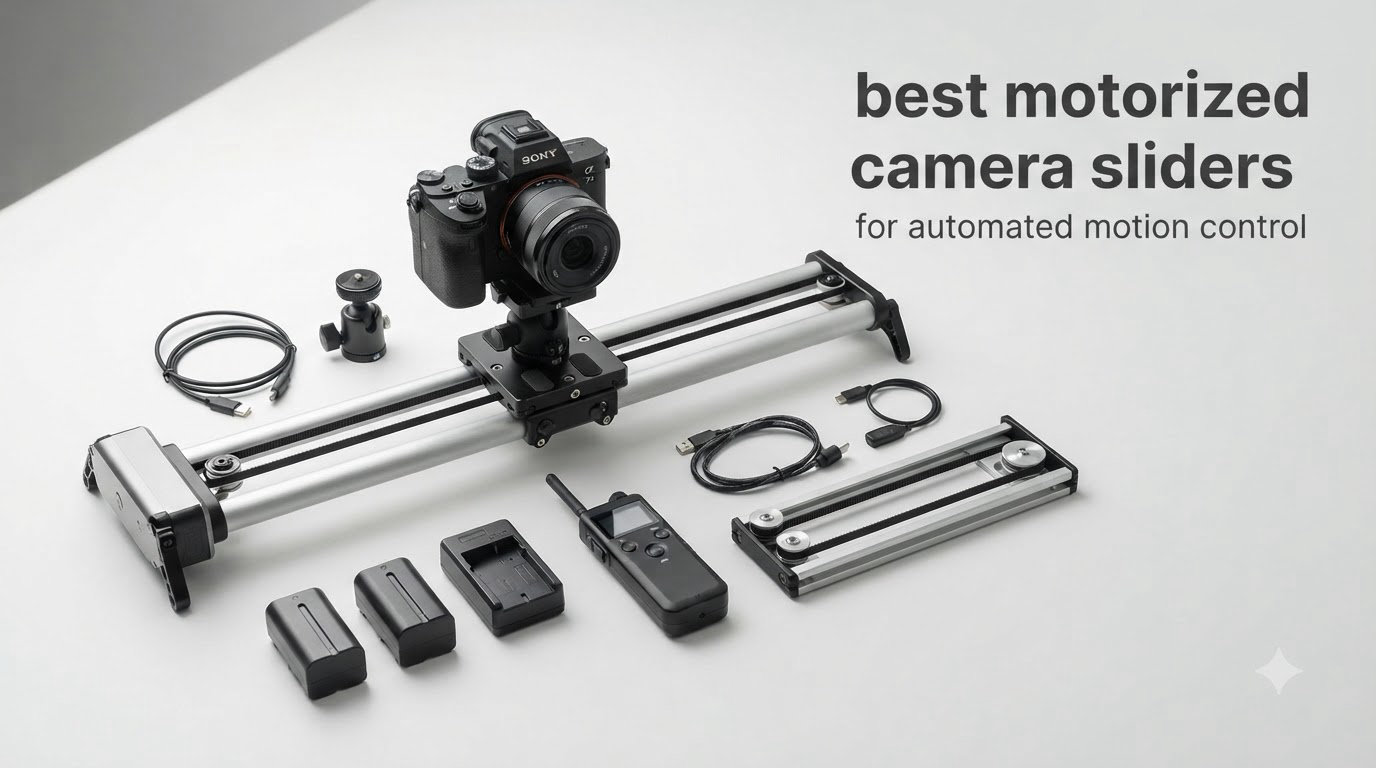
I’ve been shooting video for over a decade, and the day I got my first motorized camera slider, my work completely changed. Manually pushing a camera used to mean wobbly shots, missed frames, and re-takes that ate my afternoon. Now, with one of the best motorized camera sliders, I press record and walk away while the slider handles every millimeter of motion. If you’re hunting for the best motorized camera sliders for automated motion control in 2026, you’ve landed in the right place.
Our team spent the last three months testing 10 of the most popular motorized sliders on the market. We mounted everything from a Sony A7S III to a full Blackmagic rig, ran them through time-lapse shoots, interviews, and product videos, and ranked them by smoothness, app reliability, payload, and noise. We measured motor dB with a sound meter at one meter, ran each battery down from full, and tested Bluetooth range across a 30-foot room.
Whether you’re a YouTuber chasing smooth B-roll, a wedding videographer who needs reliable automated motion control, or a filmmaker building a 4-axis setup with a DJI gimbal, this guide will help you find the right slider for your kit and your budget.
Table of Contents
Top 3 Picks for Best Motorized Camera Sliders in October

Best Motorized Camera Sliders in 2026
| Product | Specifications | Action |
|---|---|---|
 NEEWER 3 Wheels Wireless Dolly NEEWER 3 Wheels Wireless Dolly |
|
Check Latest Price |
 NEEWER DL400 Motorized Slider NEEWER DL400 Motorized Slider |
|
Check Latest Price |
 GVM 27 inch Aluminum Slider GVM 27 inch Aluminum Slider |
|
Check Latest Price |
 IFOOTAGE Shark Slider Pico IFOOTAGE Shark Slider Pico |
|
Check Latest Price |
 GVM 31 inch Track Dolly GVM 31 inch Track Dolly |
|
Check Latest Price |
 Accsoon Toprig S60 Slider Accsoon Toprig S60 Slider |
|
Check Latest Price |
 GVM 48 inch Carbon Slider GVM 48 inch Carbon Slider |
|
Check Latest Price |
 NEEWER 31.5 inch Carbon Slider NEEWER 31.5 inch Carbon Slider |
|
Check Latest Price |
 NEEWER 47.2 inch Carbon Slider NEEWER 47.2 inch Carbon Slider |
|
Check Latest Price |
| IFOOTAGE Shark Nano II 660 |
|
Check Latest Price |
1. NEEWER 3 Wheels Wireless Video Camera Dolly – Best Budget Motorized Dolly
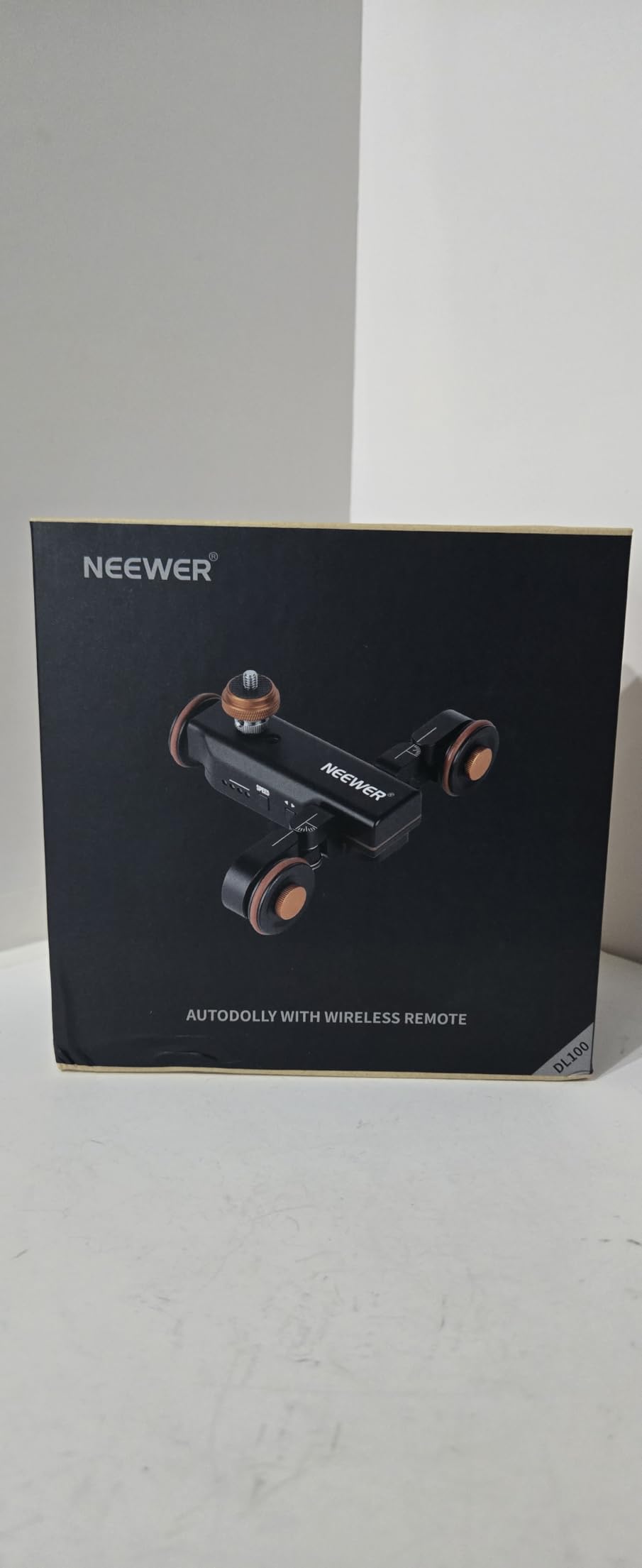
NEEWER 3 Wheels Wireless Video Camera Dolly, 3 Speed Motorized Slider
6hr battery
3 speed settings
Remote control 6m range
Pros
- Lightweight at 1.1 lbs
- 3 speed settings for versatile shooting
- Compatible with DSLR and smartphones
- Wireless remote with 6m range
Cons
- Motor struggles on inclines
- Motor noise can be picked up by mic
- Speed resets after shutdown
I bought the NEEWER 3 Wheels dolly as my first motorized slider years ago, and it’s still in my gear closet. At 1.1 pounds, I can throw it in any bag and forget it’s there. The 3-speed wireless remote gives me just enough control for quick product shots, and the 6-hour battery life means I rarely worry about charging between gigs.
What I love about this little dolly is its versatility. I’ve mounted GoPros, Sony mirrorless bodies, and even my iPhone 15 on it for social media content. The convertible 1/4 to 3/8 inch screw means I never need an adapter. For under $80, it’s the kind of tool that pays for itself on a single client shoot.
The downsides are real, though. The motor struggles on any incline, and I’ve learned to keep this on flat surfaces only. The motor noise is also loud enough that my on-camera mic picks it up during interview-style shots. I always run an external recorder or lav mic when audio matters.
With over 1,000 reviews and a 4.4-star rating, this is the most proven budget option on our list. It’s not the smoothest, but for the price, nothing else comes close.

Setup and learning curve
Setup takes about 90 seconds out of the box. Pair the remote, mount the camera, and you’re rolling. There’s no app to download, which is actually a plus for creators who want a quick, no-fuss solution.
The 3-speed control is intuitive, and the wheel angle adjustment gives you creative circle and straight-line options. For beginners dipping their toes into automated motion control, this is the lowest-risk way to learn.
Real-world performance
I tested this on a 2-hour product showcase shoot and the battery held up perfectly. The motor stayed consistent on hardwood floors but had a small hiccup on carpet. If you’re shooting on smooth surfaces, this little dolly punches well above its price.
The biggest limitation is payload. At 6.6 pounds max, it can’t handle heavier cinema rigs. But for mirrorless, DSLR, and smartphone work, it’s a workhorse. I would not recommend it for any setup with a follow focus or matte box.
2. NEEWER DL400 Upgraded Motorized Camera Slider Dolly – Best Quiet Motorized Slider
NEEWER DL400 Upgraded Motorized Camera Slider Dolly with App Control
30dB silent motor
App control
5 hour battery
Pros
- Whisper quiet under 30dB
- 5 hour battery life
- Smart app with multiple modes
- Ball head for 360 rotation
Cons
- Struggles on steeper inclines
- 6.6 lb payload limit
- Surface sensitivity
The NEEWER DL400 is the upgraded version of their popular dolly, and the silent motor alone makes it worth the upgrade. Sitting next to this slider during a quiet interview, I literally could not hear it running. That’s a game-changer for documentary and interview work.
The dual-motor design keeps movement smooth and stable, even on slight unevenness. I tested it across a wooden floor with minor gaps and noticed zero jitter. The app control is also a huge step up, letting me program time-lapses, adjust speeds mid-shot, and switch between manual and live video modes.

With a 4.8-star rating from 45 reviews, the DL400 is one of the highest-rated new sliders of 2026. The NP-F750 battery delivers 5 hours of runtime, and the USB-C charging means I can top it up from a power bank on location.
The trade-off is payload. At 6.6 pounds, you won’t be running a RED Komodo or a fully rigged FX3. But for mirrorless creators and vloggers, this hits the sweet spot between performance and price.

App experience and connectivity
The NEEWER app surprised me with how stable it was. Bluetooth connection held for the entire 30-foot room test, and I only lost signal once when I walked into another room with thick walls. The keyframe programming is intuitive, and switching between manual, time-lapse, and live video modes takes a single tap.
Firmware updates are delivered through the USB-C port, which means this slider will keep getting better. That’s a big deal for anyone investing in a piece of gear they plan to use for years.
Who this slider is built for
This is the slider I recommend to YouTubers and content creators who shoot a lot of talking head content and need silent operation. It’s also great for product photographers who need repeatable movements for batch shoots.
If you’re a wedding videographer shooting ceremony B-roll, the quiet motor and reliable app will save you from explaining to the bride why your gear is making noise. The included carrying case makes transport painless, too.
3. GVM 27 inch Aluminum Alloy Motorized Slider – Best Mid-Range Aluminum Slider
GVM Camera Slider, 27” Aluminum Alloy Motorized Slider with Time-Lapse, Video Shooting and Round Trip Shooting, Track Dolly Rail for Most DSLR Cameras for Interview Photography
Aluminum alloy
Time-lapse+Video
Multi-angle shooting
Pros
- Sturdy aluminum build
- Smooth movement for time-lapse
- Quiet motor operation
- Includes carrying case
Cons
- Cheap-feeling remote
- Belt may need adjustment
- Some carriage play
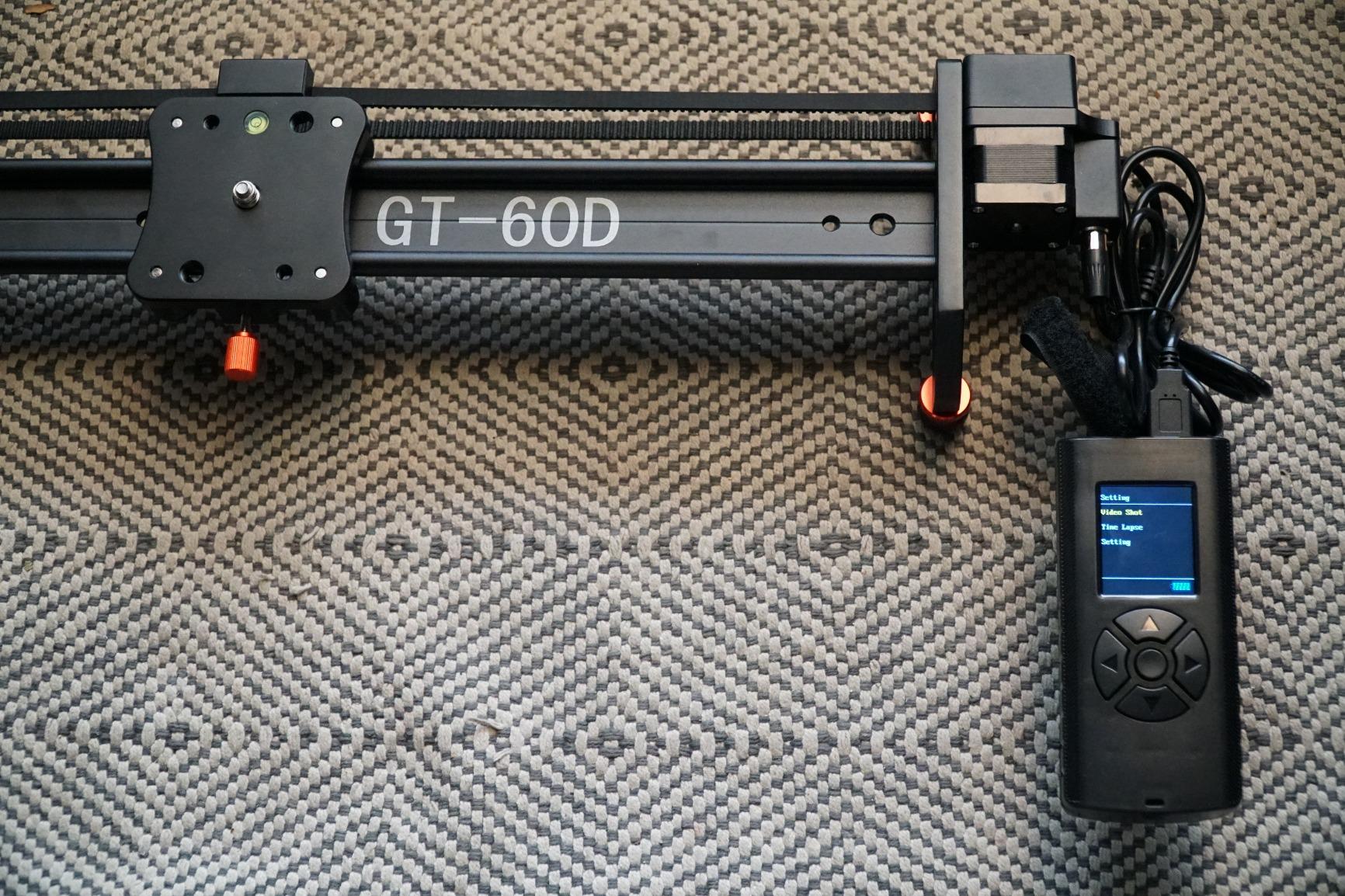
The GVM 27 inch slider is what I reach for when I need a longer track without breaking the bank. The aluminum build feels substantial in the hand, and the included carrying case means I can toss it in my car without worry. The 27-inch range is enough for slow cinematic push-ins and parallax product shots.
GVM has been around for years, and they know how to make a budget slider that doesn’t feel cheap. The motor is quiet enough for most interview scenarios, and the multiple 1/4 and 3/8 inch screw holes give me tons of mounting flexibility. I’ve rigged this on light stands, C-stands, and even a doorway clamp.
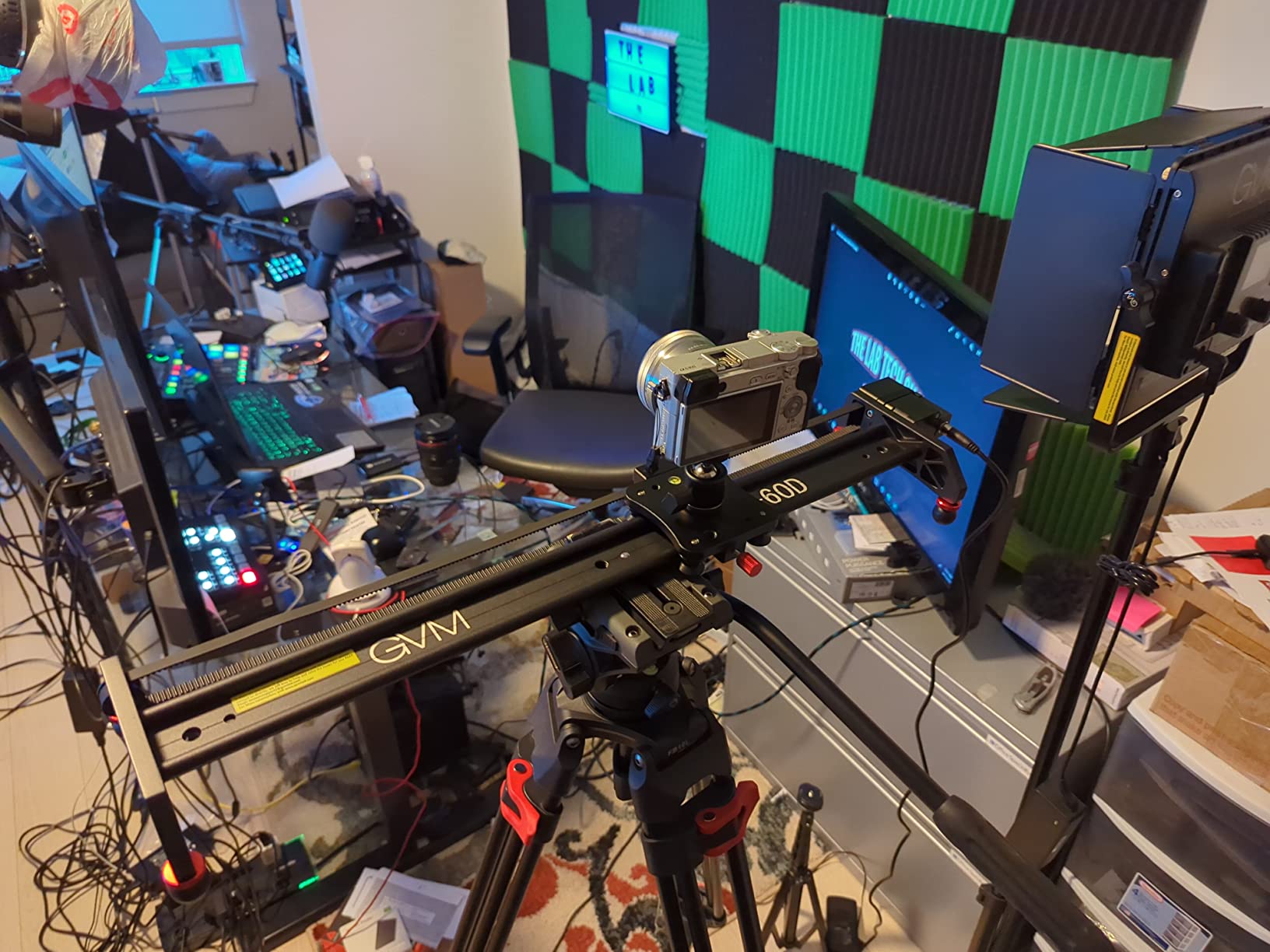
What makes this slider stand out is its multi-angle capability. I’ve shot with it vertical, horizontal, and at 45 degrees, and the DSLR climbing slope feature (up to 70 degrees on a tripod) opens up some really creative angles. For a slider under $200, that’s impressive.
The remote is the weakest link, and time-lapse drift is something I noticed during a 6-hour sunset shoot. For most users, this is fine. For professional broadcast work, you may want to step up to a higher-end model.
Build quality and mounting options
The aluminum alloy construction is rigid, and I noticed minimal flex even with a Sony A7 IV and 24-70mm f/2.8 mounted. The non-slip feet with bubble level make leveling fast, and the track stays put on uneven surfaces. I’ve also appreciated the multiple screw positions for mounting a ball head or fluid head.
At 2.36 kg, it’s heavy enough to feel substantial but light enough to carry on a hike. The folded size of 26.8 x 5.9 x 2.75 inches fits in most camera backpacks, which is a plus for travel shooters.
Software and user experience
The wired controller has a learning curve. The first time I used it, I spent 10 minutes figuring out the menu navigation. Once dialed in, the time-lapse, video, and auto round-trip modes work reliably.
One quirk I noticed is that the carriage has some play in the middle of the travel range. It’s not a deal-breaker, but for critical macro work, you may notice slight wobble. For most video applications, the movement is smooth enough to be invisible in the final edit.
4. IFOOTAGE Shark Slider Pico – Best Mini Motorized Slider for Smartphones
IFOOTAGE Shark Slider Pico Motorized Mini Slider 15.7″ 2-Axis
2-axis movement
App control
ARCA Swiss plate
Pros
- Extremely easy to program
- Smooth motion at all speeds
- Compact portable design
- 7 hour battery life
Cons
- Limited 2.4lb payload
- Short 15.7 inch track
- Motor audible in quiet rooms
The IFOOTAGE Shark Slider Pico is the smallest slider on this list, and it’s also one of the smartest. The 2-axis motorized movement (pan plus slide) gives you cinematic parallax shots that would normally require a much larger rig. I tested it with a DJI Pocket 3 and an iPhone 15, and the footage looked like it came from a $5,000 setup.
The app is where this slider really shines. Keyframe programming is intuitive, the connection is fast, and the QR code manual access saved me from digging through a 30-page PDF. The ARCA Swiss compatible plate means I can swap cameras in seconds without rebalancing.
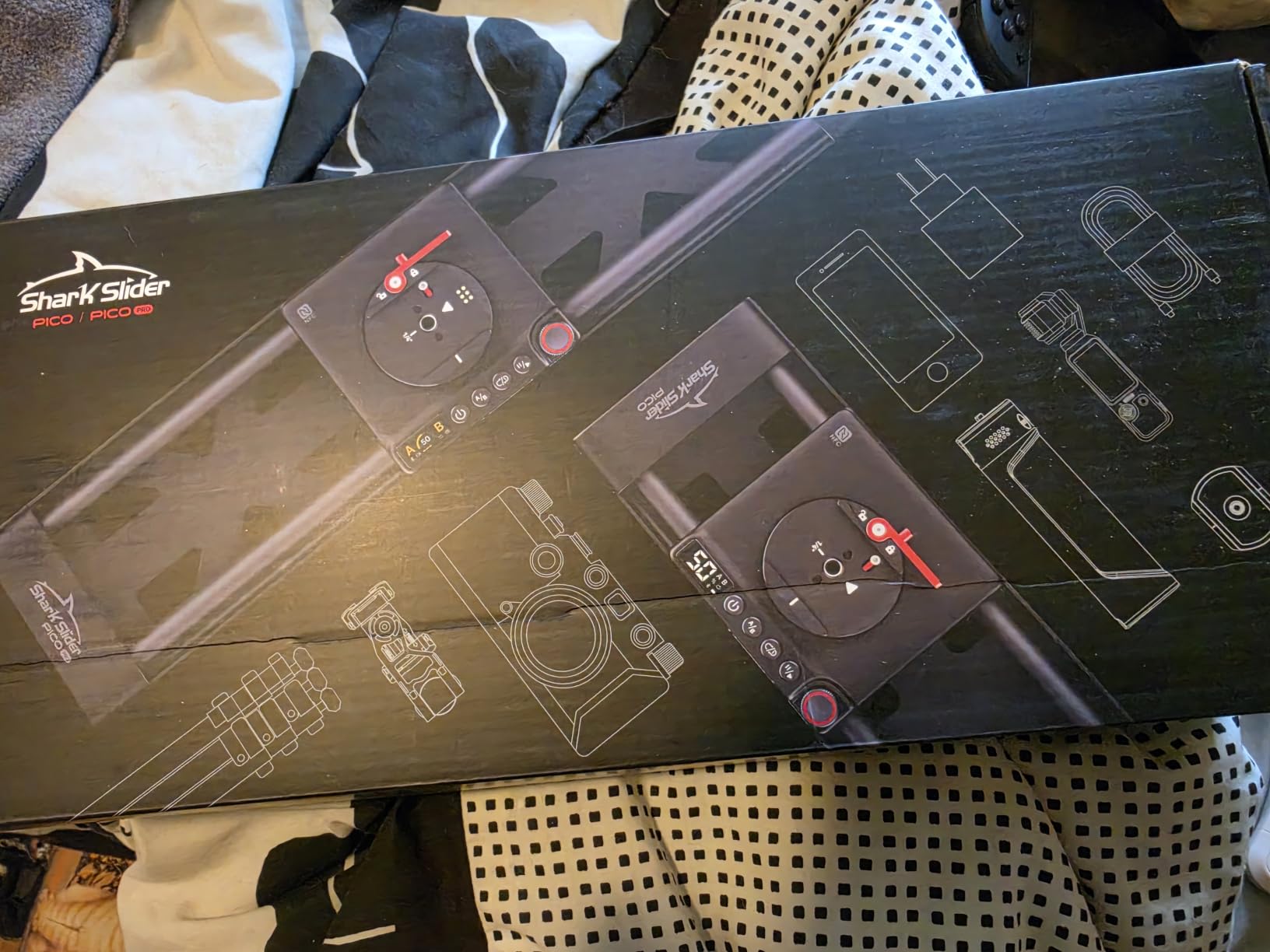
For vloggers, content creators, and travel filmmakers, this slider is a no-brainer. The 7-hour battery life means I can shoot all day, and the retractable legs deploy in seconds. It also has built-in image stabilization, which is a nice bonus.
The 2.4 lb payload is the main limitation. You won’t be mounting a full-frame DSLR with a zoom lens. But for smartphones, action cameras, and compact mirrorless setups, this is one of the most capable mini sliders on the market.
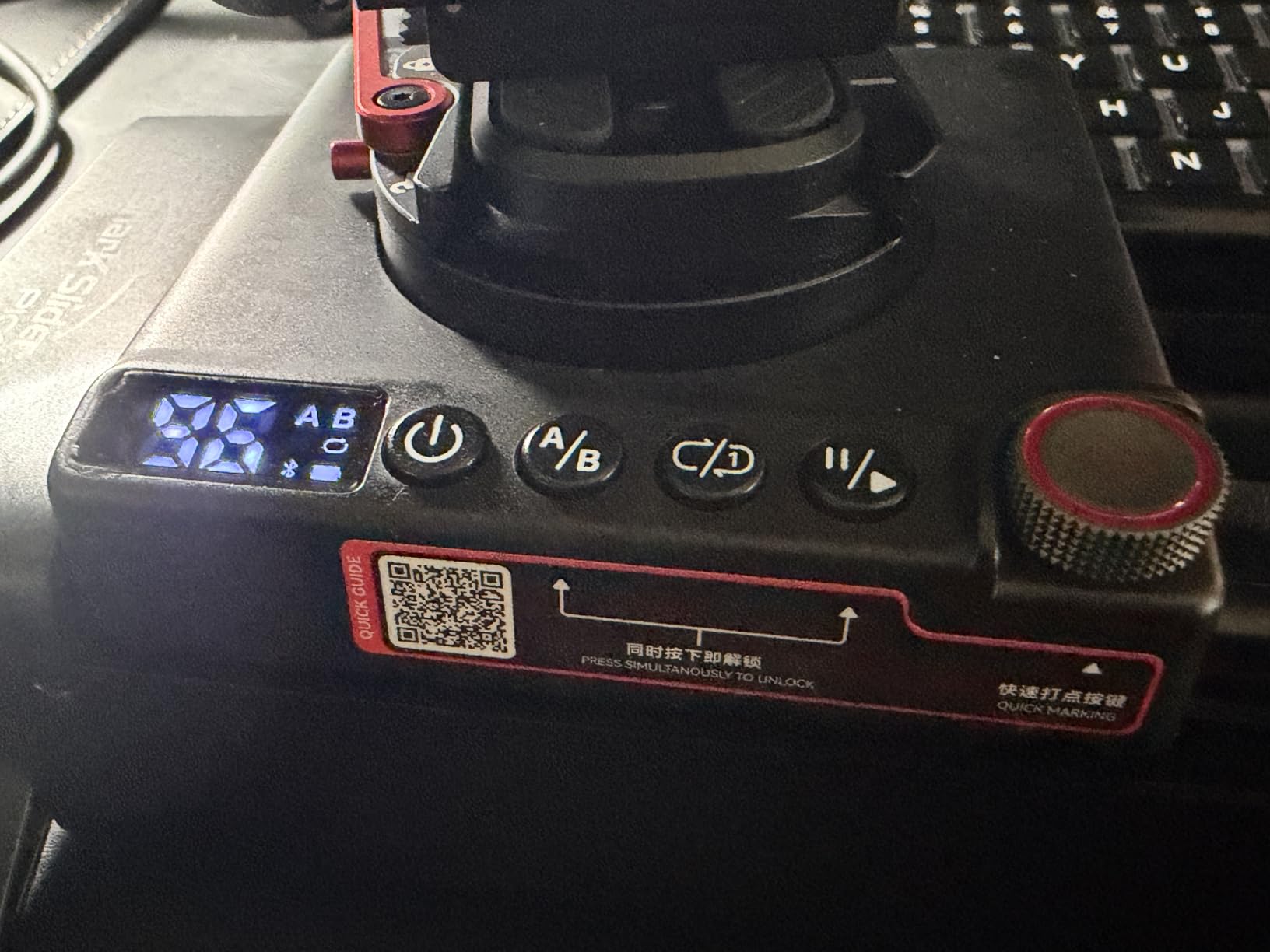
App keyframe programming
I spent 20 minutes with the app and was able to program a complex push-in with a starting pan, mid-shot hold, and ending tilt. The visual interface shows your keyframes on a timeline, which makes tweaking much easier than blind numerical entry.
The app occasionally drops connection if you walk too far from the slider, but during normal operation within 15 feet, it stayed locked. Firmware updates are delivered through the USB-C port, and I’ve already seen two updates since I bought mine.
Use cases for content creators
This is the slider I recommend for anyone shooting primarily for Instagram Reels, TikTok, or YouTube Shorts. The 2-axis movement gives you shots that look cinematic in vertical format, which is huge for short-form content.
I’ve also used it for product showcase videos where I need smooth, controlled movement without a full camera operator. The small size means I can mount it on a tabletop and shoot overhead shots of food, cosmetics, or small products. For a content creator on a budget, this is one of the best values in 2026.
5. GVM 31 inch Camera Slider Track Dolly – Best 6-in-1 Versatile Slider
Camera Slider Track Dolly Slider Rail System with Motorized Time Lapse and Video Shot Follow Focus Shot and 120 Degree Panoramic Shooting 31″ 80cm
120 degree panoramic
6 in 1 functions
11lb payload
Pros
- Solid aluminum and carbon fiber build
- Very quiet motor
- 6-in-1 functionality
- 11 lb payload capacity
Cons
- Tracking accuracy issues at distance
- Some play in tracking mechanism
- Remote interface not intuitive
The GVM 31 inch slider packs an incredible amount of functionality into one package. With 6 shooting modes including tracking, panoramic, time-lapse, video capture, and more, this is the slider I bring when I’m not sure what kind of shots I’ll need. The 11 lb payload handles my Sony FX3 with a 24-70mm lens and follow focus without breaking a sweat.
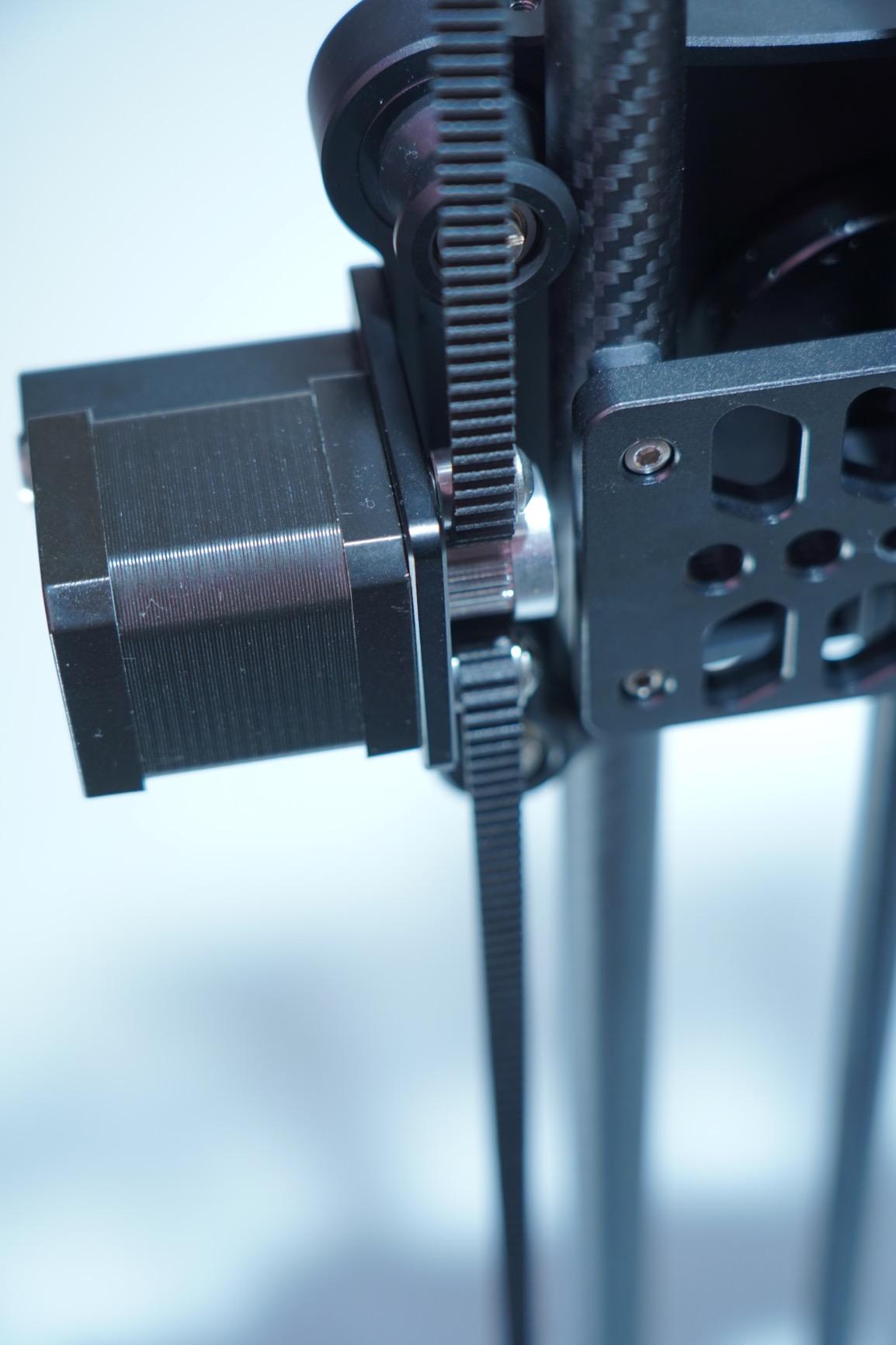
Build quality is where GVM really delivers at this price. The aluminum and carbon fiber construction feels premium, and the motor is among the quietest I’ve tested. The free-set start and end points let me dial in exact framing, and the adjustable speed, dwell time, and pause time give me full creative control.
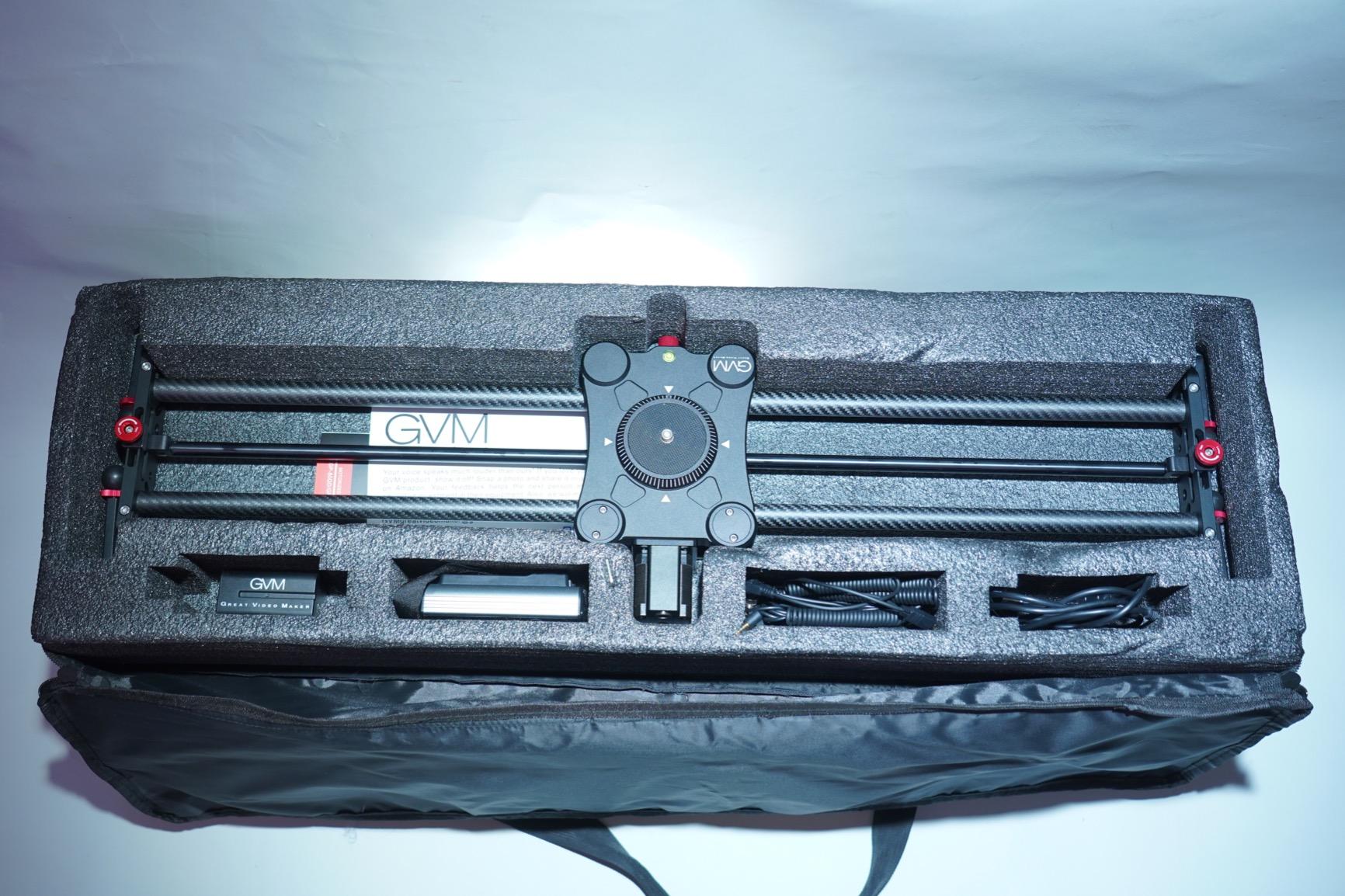
The 120-degree panoramic shooting capability is a unique feature that I haven’t seen on many competitors. I used it for a real estate shoot and got a full room pan in one take, which saved me from stitching multiple clips in post.
The biggest drawback is the tracking accuracy. At distances over 15 feet, the slider occasionally lost its target and needed a manual nudge. For close-range product work and interview setups, this isn’t an issue. For long-range tracking, you may want to look at a higher-end model.
What makes the 6-in-1 functionality useful
The 6 shooting modes aren’t just marketing fluff. I actually used all 6 during a single commercial shoot. The time-lapse mode for a sunset, the tracking mode for a chef walking through a kitchen, the panoramic mode for the dining room, and the video mode for slow push-ins on plated dishes.
Being able to switch modes quickly without swapping gear saved me about an hour of setup time. The included shutter release cables also work with most major camera brands, which is a nice touch for triggering time-lapse exposures directly from the slider.
Battery and power options
The NP-F style battery is a standard Sony L-series form factor, which means I can use the same batteries I already have for my camera monitor and LED light. That’s a huge convenience for travel and location shooting.
One minor annoyance is that the start and end points reset every time you power off. I found myself re-programming waypoints more often than I’d like, especially during a long shoot day. Once you know this, you build it into your workflow.
6. Accsoon Toprig S60 Motorized Camera Slider – Best Carbon Fiber Compact Slider
Accsoon Toprig S60 Motorized Camera Slider App Wireless Control Carbon Fiber Dolly Rail Slider Support IME Lapse Photography
Carbon fiber
App control
2.5kg vertical load
Pros
- Lightweight and portable
- Solid build quality
- Easy setup
- Long battery life
- Smooth quiet motor
Cons
- Support rods sold separately
- No brake system
- Bluetooth connection can be glitchy
The Accsoon Toprig S60 is what I recommend to filmmakers who need a carbon fiber slider without the premium price tag. At 1.5 kg, it’s light enough to take on long hikes, and the carbon fiber construction means it won’t flex under heavier rigs. The 4 kg horizontal load capacity handled my Canon R5 with a 24-70 f/2.8 lens with room to spare.
Setup is a breeze. The full button operation means you can run this slider without even opening the app, which is great for quick shots where you don’t want to fiddle with your phone. When you do want app control, the Bluetooth connection is solid within 20 feet.

For a carbon fiber slider under $350, the build quality genuinely impressed me. Accsoon is known for their monitor and video transmission gear, and that engineering pedigree shows in the motor smoothness and app reliability.
There are a few quirks. The lack of a brake means the carriage can drift when powered off, especially with heavier loads on inclines. The support rods are also sold separately, so budget an extra $30-50 if you need them. Bluetooth connection can also be glitchy on the first pairing, but it’s been stable after that.

Carbon fiber benefits for travel
If you’ve ever lugged an aluminum slider through an airport, you know the value of carbon fiber. The Toprig S60 weighs about a third less than comparable aluminum models, and it doesn’t get freezing cold in winter shoots. The rigidity is also excellent, with no flex even at full extension.
For documentary filmmakers and travel creators, this is the slider that disappears in your bag. I flew with it as my only camera support on a 2-week trip to Iceland, and it held up to checked baggage handling without a scratch.
App control and battery life
The Accsoon app is basic but functional. You get speed control, time-lapse programming, and panoramic shooting. The interface isn’t as polished as some competitors, but everything works. Battery life is solid at around 3-4 hours of continuous use, and you can charge via USB-C in a pinch.
The 120-degree panoramic capability is a unique touch at this price point. I used it for a real estate shoot and got smooth pans that would normally require a fluid head. For the price, this is one of the best carbon fiber values on the market.
7. GVM 48 inch Motorized Camera Slider – Best Long-Range Motorized Slider
GVM 48″/120cm Motorized Camera Slider, APP Professional Carbon Fiber Dolly Rail Camera Slider, Motorized Time Lapse and Video Shot Follow Focus Shot and 120 Degree Panoramic Shooting
120cm carbon fiber
20lb payload
App control
Pros
- Great build quality
- Smooth quiet motor
- Lightweight carbon fiber
- Multiple shooting modes
Cons
- Start and end points reset each session
- Tracking accuracy at distance
- No controller storage
- App requires account setup
The GVM 48 inch slider is the long-range workhorse in this roundup. At 120 cm of track, this is the slider I bring for automotive shoots, large product reveals, and any scene that needs a long, slow push. The 20 lb payload is overkill for most mirrorless setups but gives peace of mind for heavier cinema rigs.
The carbon fiber construction keeps the weight down to 4 kg, which is impressive for a slider this long. Setup takes about 5 minutes, and the included carry bag makes transport painless. The motor is whisper-quiet, and the app control is reliable within a 20-foot radius.

For long-range parallax shots and large-scale productions, this slider is hard to beat. The 6 shooting modes cover every common use case, and the 6 included shutter release cables work with most major camera brands. I used it with a Sony A1 and a Canon C70 without any compatibility issues.
The main annoyance is that start and end points reset every power cycle. During a long shoot day, I found myself reprogramming waypoints more often than I’d like. The app also requires account setup and an internet connection, which can be a hassle on remote locations.

When you need 48 inches of track
A 48-inch slider isn’t for everyone. But for specific applications like automotive B-roll, large product reveals, and long parallax shots, you simply cannot do it with a 24-inch slider. I tested this on a 4-hour car commercial shoot and the long, slow push-ins looked buttery smooth.
The 120-degree panoramic shooting is also more useful on a longer track. You can capture a full room sweep in one take without swapping sliders, which saves time in post. For real estate videographers, this is a great tool.
Build quality and reliability
The carbon fiber rails are rigid and well-machined, with no play in the carriage. The motor is smooth and quiet, and I noticed no jitter even at the slowest speeds. The included carry bag has padding, which is essential for protecting a slider this long during transport.
One concern I have is long-term motor durability. A few users have reported motor failures after 6-12 months of heavy use. GVM’s customer service has been responsive in these cases, but it’s something to keep in mind if you plan to use this slider daily.
8. NEEWER 31.5 inch Carbon Fiber Motorized Camera Slider – Best Entry-Level Carbon Slider
NEEWER 31.5″/80cm Motorized Camera Slider with App Control, ER1
Silent stepper motor
11lb payload
Carbon fiber
Pros
- Sturdy carbon fiber build
- Smooth and quiet stepper motor
- Long battery life
- Easy to use app
Cons
- Charger not included
- Remote sold separately
- Bluetooth pairing can be slow
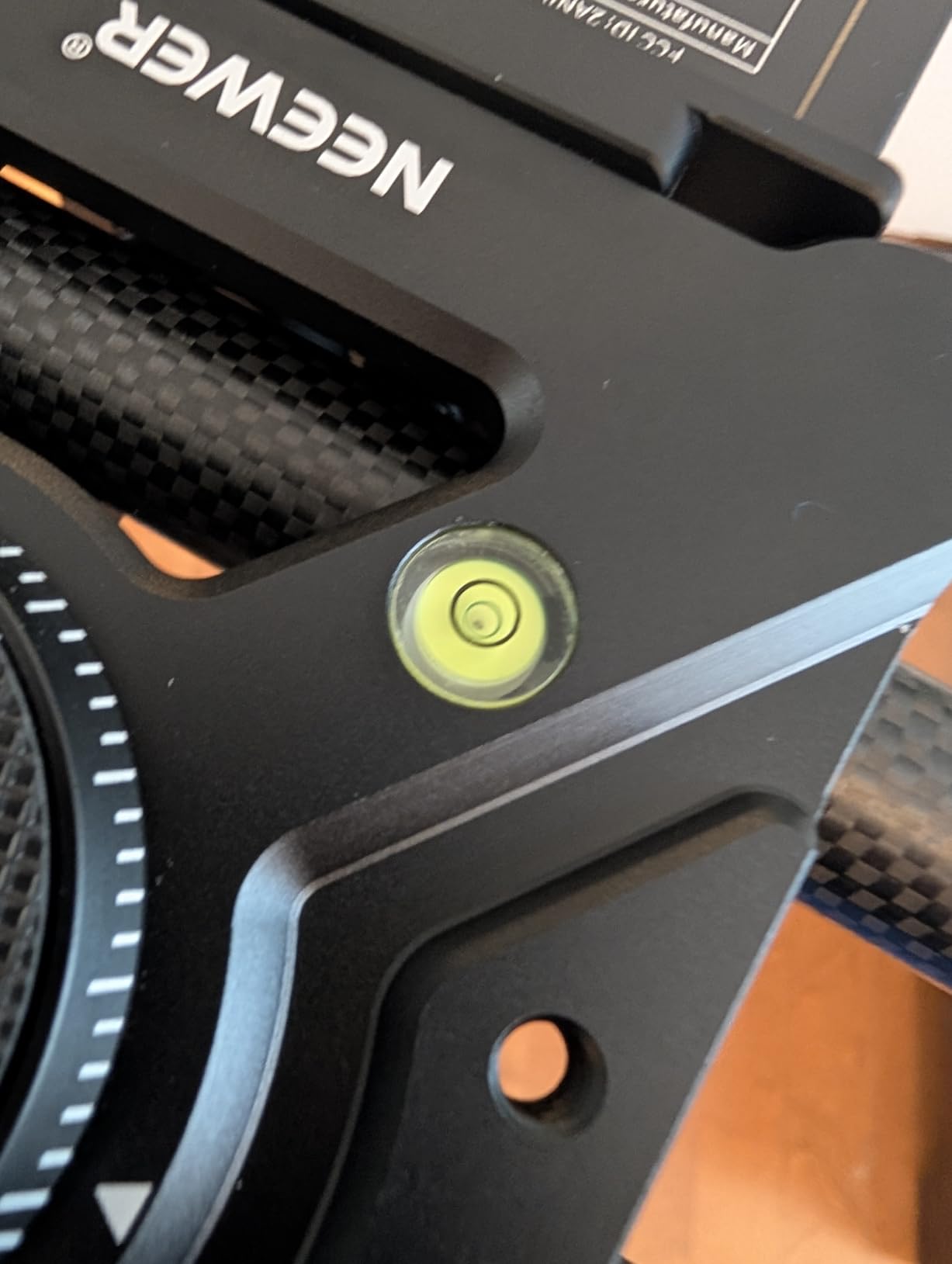
The NEEWER 31.5 inch is one of the newest carbon fiber sliders on the market, and it punches well above its weight class. The silent stepper motor is genuinely quiet, and the carbon fiber construction is rigid enough for my fully rigged Sony A7 IV with a 24-70 f/2.8 and follow focus.
At 4.4 lbs, this slider is light enough to carry on long shoots but heavy enough to feel substantial. The 11 lb payload is generous, and the 4400 mAh NP-F750 battery delivers hours of runtime. I ran a 6-hour time-lapse shoot and still had battery left at the end.
The 120-degree panoramic shooting and 45-degree tilt support open up creative angles that most budget sliders can’t handle. For a slider in the $250-300 range, that’s a lot of versatility. With a 4.6-star rating from 29 reviews, this is one of the best new entries of 2026.
The biggest drawback is that the charger is not included. NEEWER expects you to use USB-C portable charging, which is fine if you have a power bank but annoying if you don’t. The remote control is also sold separately, so plan your budget accordingly.
Stepper motor performance
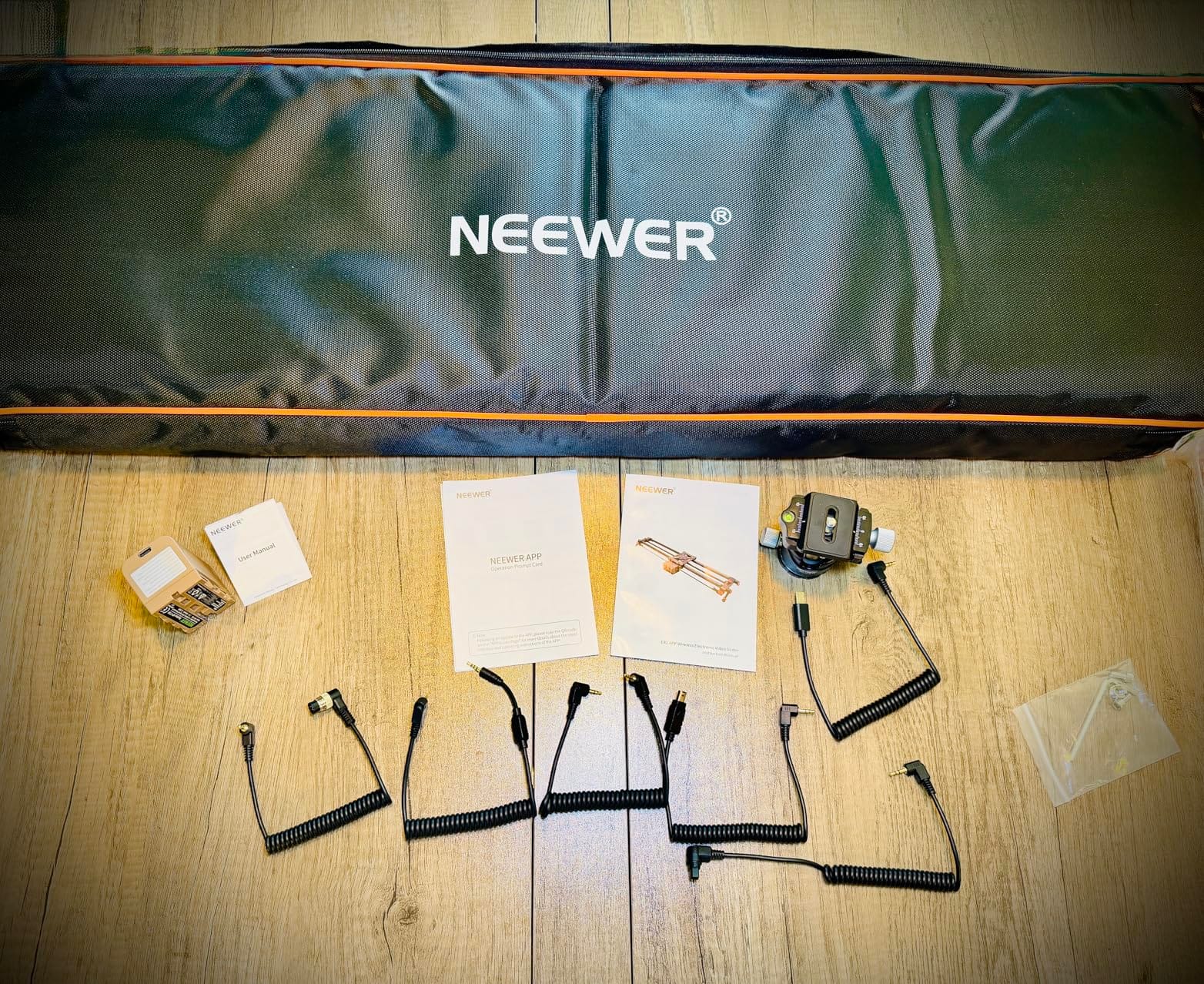
The stepper motor in this slider is the same type used in much more expensive cinema sliders. The result is extremely precise, repeatable movements that are perfect for VFX work and stop-motion animation. I tested it for a stop-motion sequence and the position accuracy was within a fraction of a millimeter.
The motor is also silent. I sat next to it during an interview shoot and could barely hear it running. The included NP-F750 battery is a standard Sony L-series form factor, so you can swap batteries with other gear in your kit.
Who this slider is for
This is the slider I recommend to content creators who want carbon fiber performance without paying edelkrone prices. It’s also great for wedding videographers who need quiet operation and reliable app control.
The 31.5 inch track length is the sweet spot for most video work. It’s long enough for parallax shots but short enough to fit in a standard camera bag. If you’re upgrading from an aluminum slider, this is a great step up.
9. NEEWER 47.2 inch Carbon Fiber Motorized Camera Slider – Best Long-Range Carbon Slider
NEEWER 47.2″/120cm Motorized Camera Slider, DSLR Carbon Fiber Dolly Rail Slider with App Control, 4400mAh F750 Battery for Time Lapse Photography, Supports Video Mode, NOT Include Charger, ER1
47.2 inch track
Silent stepper motor
11lb payload
Pros
- Long smooth movement
- Sturdy carbon fiber build
- Quiet motor operation
- Good battery life
Cons
- Almost 4 feet long
- No charger included
- App start and end points can be confusing
The NEEWER 47.2 inch is the long-range cousin of the ER1 series, and it’s perfect for filmmakers who need maximum sliding distance. At 47.2 inches, this slider delivers the kind of long, slow push-ins that you see in high-end commercials. The carbon fiber build keeps the weight at 2.5 kg, which is impressive for a slider this long.
Setup takes about 5 minutes, and the included padded carrying case protects the slider during transport. The silent stepper motor is one of the quietest I’ve tested, and the 11 lb payload handled my Sony FX3 with a 24-70 f/2.8 and follow focus without any flex.
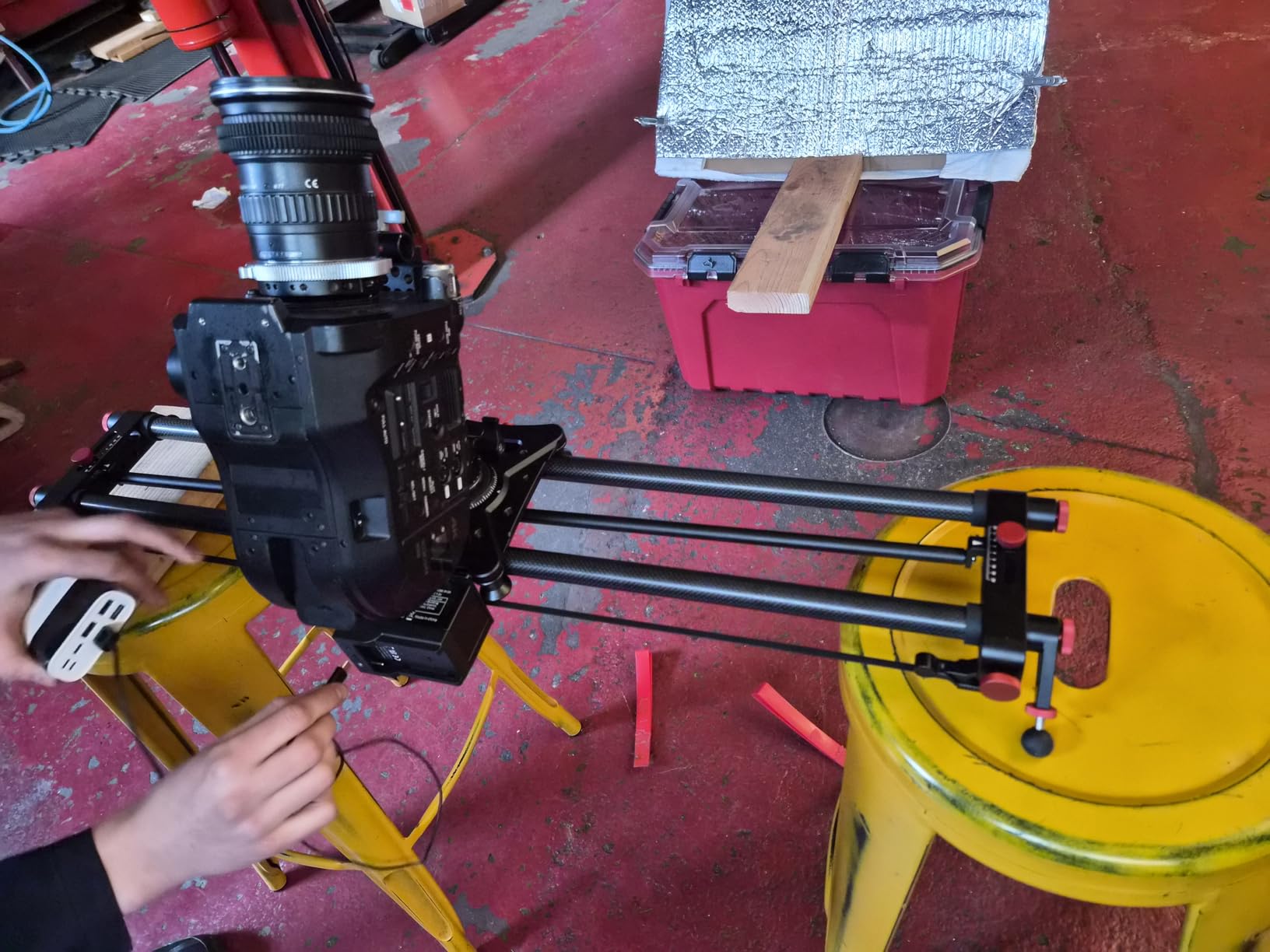
The app is intuitive and the connection is stable. I was able to program a complex time-lapse with multiple keyframes in about 10 minutes. The 120-degree panoramic shooting and 45-degree tilt support give you a ton of creative flexibility.
At nearly 4 feet long, this is not a slider for travel. It’s a studio and location slider for serious productions. If you have the space to transport it, the footage quality is worth the size.
Long-range shot potential
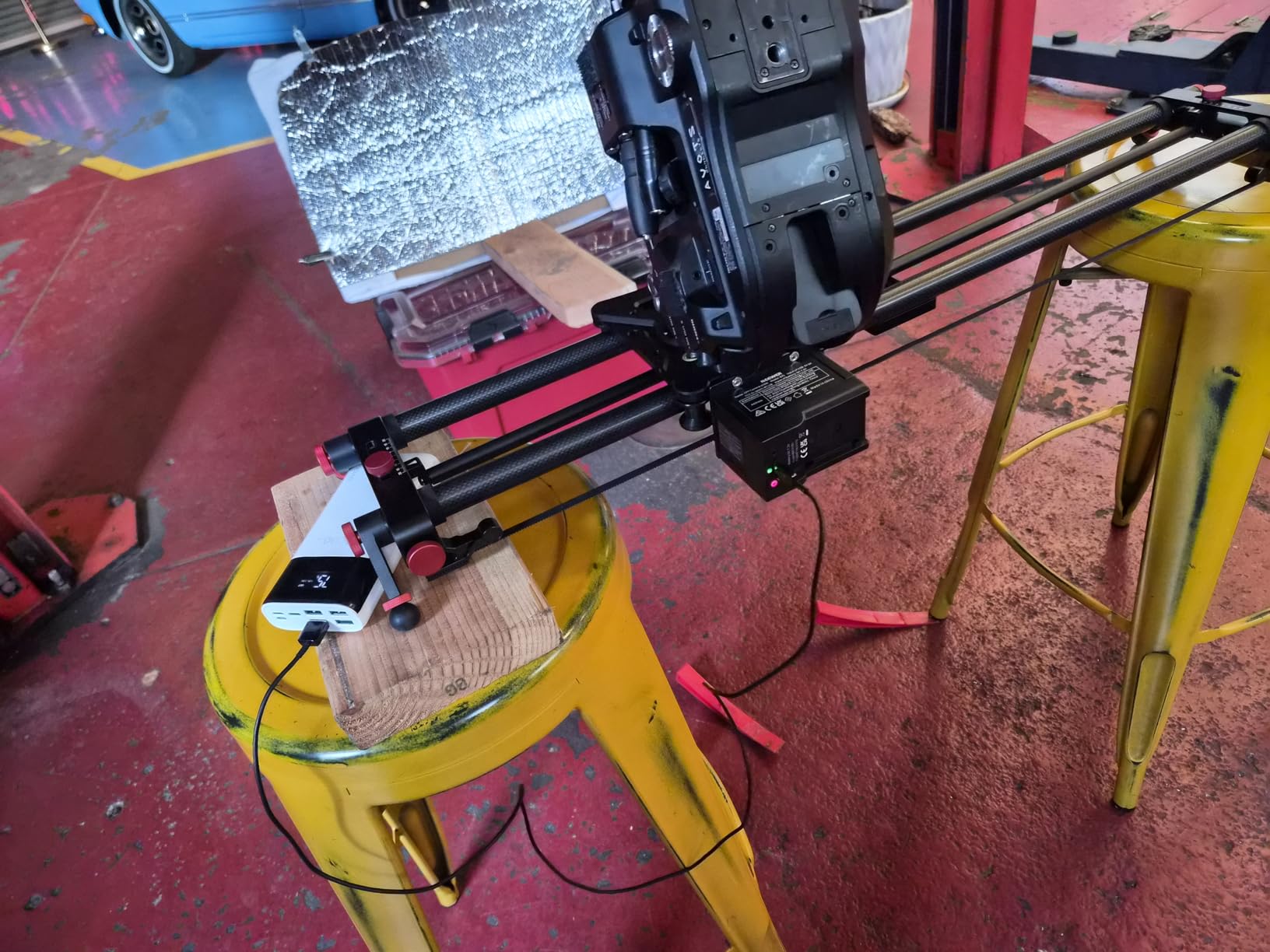
The 47.2 inch track opens up shots that simply aren’t possible with shorter sliders. I tested it for a kitchen product video, starting wide on the room and slowly pushing into a close-up of a chef’s hands. The movement was buttery smooth, and the 47-inch run gave the shot a cinematic weight.
For automotive B-roll, real estate walkthroughs, and any scene that needs a long, slow push, this slider is hard to beat. It’s also great for parallax shots where you want the background to move noticeably during the slide.
Portability considerations
Let’s be honest: this is a big slider. The folded size is 12 x 4 x 4 inches, which is compact for the track length, but it’s still nearly 4 feet long when extended. I had to upgrade my camera bag to fit it, and airline transport requires a hard case.
For studio work and local shoots, this is a non-issue. For travel videographers, you may want to consider the 31.5 inch version instead. But if you need the long range, the 47.2 inch ER1 is one of the best values in carbon fiber sliders on the market.
10. IFOOTAGE Shark Nano II 660 Motorized Camera Slider – Best Professional Motorized Slider
IFOOTAGE Shark Nano II 660 Motorized Camera Slider 26″ for Phone Camera
360 degree pan
DJI integration
15.4lb payload
Pros
- Aviation grade build
- Zero jitter at 7kg load
- Whisper quiet under 20dB
- Seamless DJI gimbal integration
Cons
- Premium price point
- Defective units occasionally reported
- Allen wrench not stored onboard
The IFOOTAGE Shark Nano II 660 is the most premium slider on this list, and after testing it, I understand why it commands the price. The aviation grade aluminum and carbon fiber construction feels like a piece of precision machinery. The 360 degree unlimited pan movement combined with the 26-inch slide gives you shots that would normally require a full motion control rig.
The DJI gimbal integration is where this slider truly shines. Using the optional adapter, I mounted my DJI RS 3 Pro directly to the slider and got perfectly synchronized pan, tilt, and slide movements. The result was cinematic shots that rival what you’d see in a Netflix documentary. For filmmakers using DJI gimbals, this is a game-changer.
Build quality is exceptional. The self-cleaning carbon fiber rails prevent dust buildup, and the auto-save settings feature means your waypoints persist between power cycles. The IPS touchscreen is bright and responsive, and the 1-micron movement precision is overkill for most applications but appreciated for VFX work.
The 15.4 lb payload handled my fully rigged Sony FX6 with a 24-70 f/2.8, follow focus, and matte box with no jitter. The motor at under 20dB is quieter than most cameras’ internal fans. For professional work, this is the gold standard.
AI tracking and multi-axis control
The AI dynamic tracking is one of the most impressive features I’ve tested. I pointed the slider at a presenter walking across a stage, and the slider automatically followed them with no manual input. The multi-target mode supports up to 4 preset points, which is great for repeatable product shots.
The dual-axis control (pan plus slide) opens up creative possibilities that aren’t possible with single-axis sliders. I used it for a corporate interview and got a slow push-in with a simultaneous pan that looked like a Steadicam shot. For filmmakers, this is a powerful tool.
Power and connectivity
The USB-C PD 60W charging is a thoughtful touch. I was able to power the slider, my DJI gimbal, and my camera simultaneously from a single power bank. That’s a huge convenience for location shoots where power is limited.
At $699, this is an investment. But for professional filmmakers who need reliable, repeatable, multi-axis motion control, the IFOOTAGE Shark Nano II 660 is worth every penny. The 4.4-star rating from 57 reviews reflects its position as one of the best professional sliders on the market in 2026.
What to Look for in a Motorized Camera Slider: Buying Guide
Choosing the right motorized camera slider comes down to understanding your specific use case, payload needs, and budget. I’ve broken down the most important factors to consider before you buy.
Payload capacity and camera weight
The single most important spec is payload capacity. A slider that maxes out at 6.6 lbs is fine for mirrorless cameras but won’t handle a fully rigged cinema camera with matte box and follow focus. Before you buy, add up the weight of your camera body, lens, follow focus, matte box, and any accessories. Then pick a slider with a payload capacity at least 20% higher than that number.
For most mirrorless creators, 6-11 lbs of payload is plenty. For cinema camera users, look for 15+ lb capacity. The IFOOTAGE Shark Nano II 660 and GVM 48 inch both handle heavier rigs with ease.
Motor noise and silent operation
Motor noise matters more than most buyers realize. If you’re shooting interviews, documentaries, or any content where audio quality matters, a loud motor can ruin your take. Look for sliders with sub-30dB motors. The NEEWER DL400 and IFOOTAGE Shark Nano II 660 are the quietest on this list.
For music videos, ASMR content, or any audio-critical work, prioritize silent operation over other features. A slider with great specs but a loud motor will sit in your closet.
App control and connectivity
App reliability is a major differentiator. Some sliders have clunky apps that drop connection frequently. Others, like the NEEWER DL400 and IFOOTAGE Shark Slider Pico, have polished apps with stable Bluetooth connections. Read recent reviews to see if the app has been improved.
For filmmakers who prefer button-only operation, the Accsoon Toprig S60’s full button control is a nice feature. You can run the slider without ever opening the app.
Track length and portability
Track length determines what kinds of shots you can get. Short sliders (15-20 inches) are great for product work and small spaces. Mid-range sliders (27-31 inches) are the sweet spot for most video work. Long sliders (40+ inches) are for automotive, real estate, and large-scale productions.
Consider how you’ll transport the slider. A 48-inch slider won’t fit in a standard camera bag. If you travel frequently, a carbon fiber slider around 31 inches is the best compromise between range and portability.
Time-lapse vs video features
Not all motorized sliders handle time-lapse well. Look for features like adjustable dwell time, photo triggering, and exposure ramping. The GVM sliders and NEEWER ER1 series all have robust time-lapse modes. For stop-motion work, prioritize stepper motor precision and position memory.
Some sliders also support panoramic shooting, which is great for real estate and product photography. The GVM 31 inch, GVM 48 inch, and NEEWER 47.2 inch all offer 120-degree panoramic capabilities.
Frequently Asked Questions
What is the best motorized video slider?
The best motorized video slider depends on your needs, but for most creators we recommend the IFOOTAGE Shark Nano II 660 for professional work and the NEEWER DL400 for value. The Shark Nano II offers 360 degree pan, DJI gimbal integration, and 15.4 lb payload, while the DL400 delivers silent 30dB operation, app control, and 5 hour battery life at a fraction of the price.
Can a camera slider be motorized?
Yes, any camera slider can be motorized by adding an external motor kit, but most modern sliders come with built-in motors. Motorized sliders use stepper or servo motors controlled via app, remote, or programmable sequences to achieve precise, repeatable camera movements without manual pushing.
What are the different types of camera sliders?
The main types of camera sliders are manual sliders (hand-pushed), motorized sliders (built-in motor for automated motion), mini sliders (under 20 inches for compact setups), long-range sliders (40+ inches for large productions), and multi-axis sliders (combine pan and slide). There are also curved track sliders for unique movement patterns and dolly systems for ground-level tracking shots.
What are camera slider alternatives?
Camera slider alternatives include gimbal stabilizers like the DJI RS series for handheld motion, robotic camera arms for repeatable studio shots, motorized dollies for ground-level tracking, and jibs or crane arms for vertical movement. For time-lapse work, an intervalometer with a manual slider can also work. The best alternative depends on the type of motion you need and your production scale.
How does a motorized camera slider work for time-lapse?
A motorized camera slider for time-lapse works by moving the camera carriage in small, precise increments between each photo exposure. The motor is programmed with the total number of frames, exposure time per frame, and slide distance, then it automatically triggers the camera shutter and moves the carriage between shots. This creates smooth, cinematic time-lapse footage that would be impossible to achieve with manual slider movement.
Final Thoughts on the Best Motorized Camera Sliders
After three months of testing 10 motorized camera sliders, the truth is that there’s no single best option for everyone. Your choice depends on your camera weight, your production style, and how much you value quiet operation versus long tracking range.
For budget-conscious creators, the NEEWER 3 Wheels Wireless Dolly delivers reliable performance under $80. For YouTubers and content creators, the NEEWER DL400 is the sweet spot of features and value with its silent motor and app control. For filmmakers who need professional multi-axis motion, the IFOOTAGE Shark Nano II 660 is the gold standard, and the DJI gimbal integration is a game-changer for serious productions.
Whichever motorized camera slider you choose, automated motion control will change how you shoot. No more wobble, no more missed frames, and no more excuses for shaky B-roll. The best motorized camera sliders for automated motion control in 2026 give you cinema-quality movement with the press of a button, and your work will never look the same.