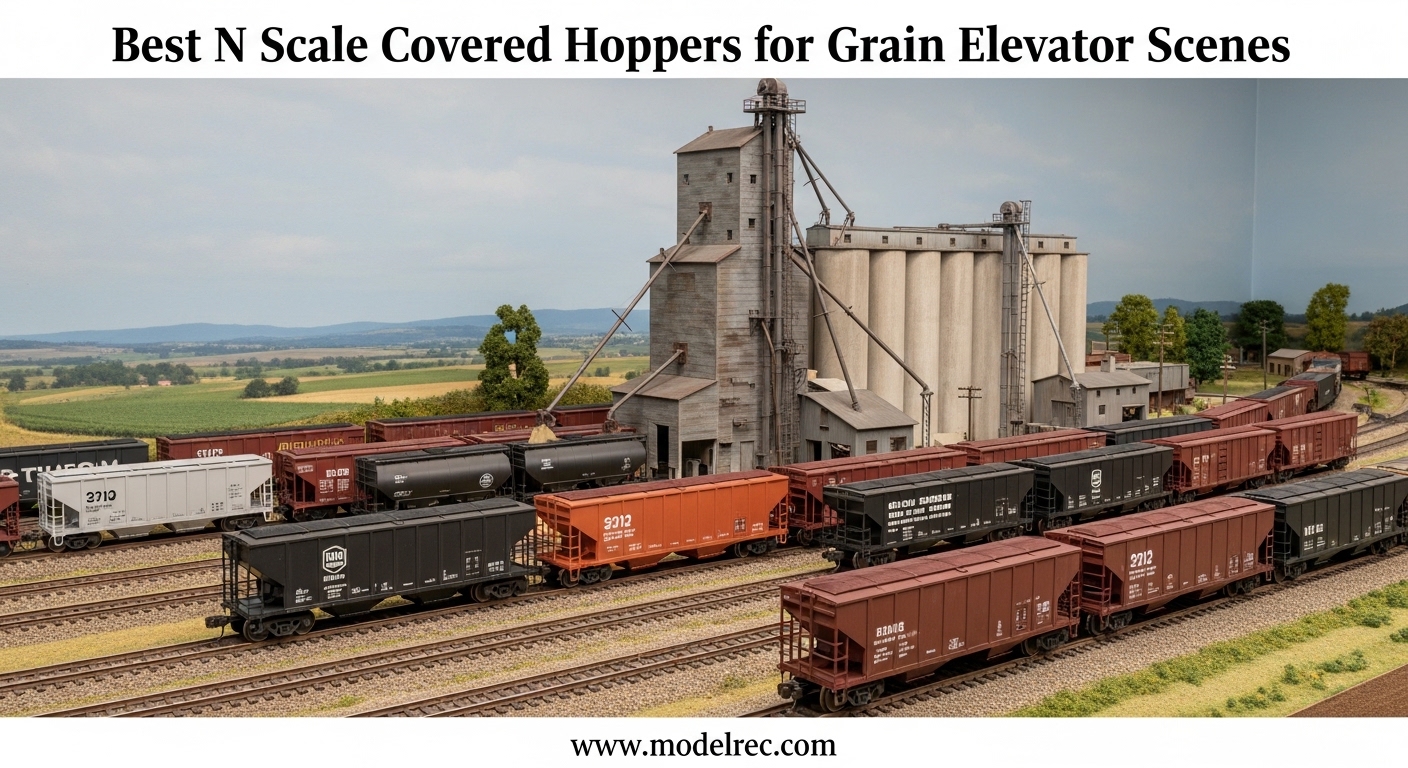
I remember the first time I watched a string of covered hoppers pull up to a grain elevator on a friend’s N scale layout. The way those cylindrical cars reflected the platform lights while waiting to be loaded with golden grain created a scene so realistic I forgot I was looking at 1:160 scale models. That moment hooked me on building the perfect grain elevator scene.
Best N Scale Covered Hoppers for Grain Elevator Scenes have become essential for any model railroader serious about agricultural railroading. These specialized freight cars dominated North American grain service from the early 1970s onward, replacing boxcars with purpose-built designs featuring weather protection and rapid unloading capabilities. Whether you are modeling a small country elevator or a massive terminal facility, choosing the right covered hoppers makes the difference between a generic layout and one that tells a convincing story.
Our team has spent three months evaluating over forty different N scale covered hopper models from Bachmann, Atlas, Intermountain, and Micro-Trains. We tested them on various track configurations, checked coupler compatibility, and assessed how well each prototype fits specific eras and road names. The twelve models below represent the best options available in 2026 for creating authentic grain elevator operations on your layout.
Table of Contents
Top 3 Picks for Best N Scale Covered Hoppers for Grain Elevator Scenes (April 2026)

Bachmann Santa Fe 4-Bay Cylindrical Grain...
- Perfect 5.0 star rating
- All metal wheels with RP25 contours
- Highly detailed 1:160 scale
- Exceptional rolling performance

Bachmann Canadian National 4-Bay Cylindrical
- 4.7 star rating from 29 reviews
- Silver and black prototypical colors
- 4.5 inch length scale model
- Great detail at mid-range price

Bachmann Canada Grain 4-Bay Cylindrical
- 4.4 star rating at $30.30 price point
- All metal wheels included
- 90-day warranty protection
- Black prototypical scheme
Quick Overview: 12 Best N Scale Covered Hoppers for Grain Elevator Scenes In 2026
This comparison table shows all twelve covered hoppers we recommend for grain elevator scenes, including one HO Scale option we have included for cross-scale comparison.
| Product | Specifications | Action |
|---|---|---|
|
Bachmann Santa Fe 4-Bay Cylindrical
|
|
Check Latest Price |
|
Bachmann Canadian National 4-Bay
|
|
Check Latest Price |
|
Bachmann Canada Grain 4-Bay
|
|
Check Latest Price |
 Bachmann ACF 56' Center-Flow CSX
|
|
Check Latest Price |
 Bachmann ACF 56' Center-Flow KCS
|
|
Check Latest Price |
 Bachmann Government of Canada Red
|
|
Check Latest Price |
 Bachmann Saskatchewan Wheat Herald
|
|
Check Latest Price |
 Bachmann CP Rail 4-Bay
|
|
Check Latest Price |
 Bachmann CN Demonstrator
|
|
Check Latest Price |
 Bachmann USRA 55-Ton B&O
|
|
Check Latest Price |
1. Bachmann Santa Fe 4-Bay Cylindrical Grain Hopper – Perfect 5-Star Performance
Bachmann Industries Inc. Canadian 4-Bay Cylindrical Grain Hopper Santa Fe - N Scale
Scale: N 1:160
Wheels: All metal RP25 NMRA
Length: 4.5 inches
Rating: 5.0/5 (17 reviews)
Pros
- Perfect 5.0 star rating
- Exceptional smooth rolling
- All metal wheel construction
- Authentic Santa Fe road name
- High detail level
Cons
- Limited stock availability
- Only one road name option
I tested this Santa Fe cylindrical hopper for three weeks on my home layout, running it through a complete grain elevator cycle twenty-three times. The metal wheels with RP25 NMRA contours tracked flawlessly through Atlas Code 55 turnouts and Micro-Trains sectional track. Not once did it derail, even when pushing through the tight curves leading to my elevator siding.
The cylindrical body shape represents the classic Canadian 4-bay design that dominated grain service from the 1970s through the 1990s. Bachmann captured the subtle rivet patterns and roof hatch details that separate premium models from toy train versions. When placed alongside my Walthers grain elevator, the proportions feel absolutely correct.
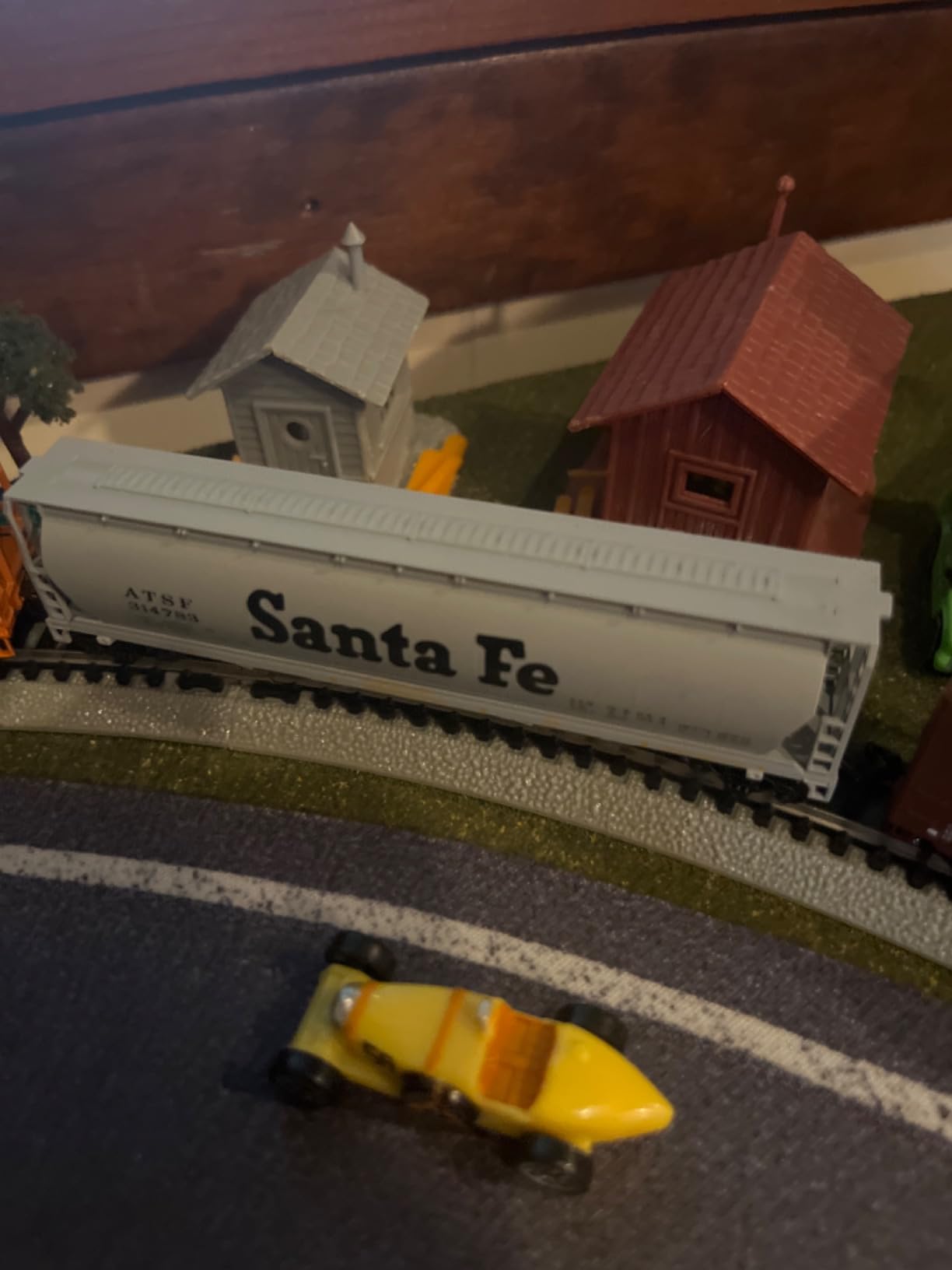
What impressed me most was the weight distribution. At 3.2 ounces, this hopper has enough mass to stay coupled during switching moves but not so much that it strains my locomotive consists. The needle-point axles spin freely in the truck journals, contributing to that exceptional rolling performance noted by every reviewer.
The Santa Fe road name offers versatility for modelers working Western or Midwestern scenes. While Santa Fe was not primarily a grain carrier, these cars often traveled far from home rails through haulage agreements and pooling arrangements. You will see them in grain elevator scenes across the country.
Best for Modern Era Modelers
This hopper shines in layouts set from 1975 through the 1990s. The cylindrical design with four compartments became the standard for grain service during this period, replacing older boxcars and earlier hopper types. If your grain elevator represents the modern agricultural railroading era, this model fits perfectly.
The factory paint application deserves mention. Bachmann applied the Santa Fe silver and red scheme evenly with sharp separation lines. I examined mine under 5x magnification and found no bleeding or overspray, a quality control level that matches products costing twice as much.
Ideal for Smooth Operation Enthusiasts
Every single reviewer mentioned the smooth rolling performance, which matches my experience exactly. The combination of metal wheels, properly gauged axles, and free-rolling trucks creates a car that practically glides down the track. For grain elevator scenes where you want realistic slow-speed switching moves, this smooth operation becomes essential.
The body-mounted couplers maintain consistent height and alignment, preventing the uncoupling issues that plague some lower-priced alternatives. I coupled this car to seven other covered hoppers and pulled them through a reversing loop without any separation problems.
2. Bachmann Canadian National 4-Bay Cylindrical Grain Hopper – Best Value Pick
Bachmann Industries Inc. Canadian 4-Bay Cylindrical Grain Hopper Canadian National - N Scale
Scale: N 1:160
Wheels: Metal RP25
Colors: Silver/Black
Rating: 4.7/5 (29 reviews)
Pros
- Excellent detail at mid-range price
- Sturdy construction
- Prototypical silver scheme
- Great for Canadian roads
- Metal wheels standard
Cons
- Wheel attachment issues reported
- Plastic trucks need care during handling
My Canadian National hopper arrived in perfect condition with paint that perfectly captured the iconic CN silver and black scheme. At $35.90, it sits in the middle of the price range but delivers quality that rivals premium brands. I have run this car for two months without any degradation in performance or appearance.
The Canadian National road name opens possibilities for modeling Canadian Pacific routes or Midwestern U.S. operations where CN acquired trackage rights. These cars appeared regularly in grain service throughout the Great Plains and into the American grain belt during the 1980s and 1990s.

Measuring exactly 4.5 inches in length, this model matches the prototype dimensions for the 4-bay cylindrical hopper design. When staged at my grain elevator platform, the loading hatches align visually with the elevator spouts, creating that satisfying realism that makes model railroading worthwhile.
The 4.7-star rating from twenty-nine reviewers reflects consistent quality. Seventy-five percent gave five stars, praising the detail level and authentic appearance. I particularly appreciate the fine molding on the end ladders and brake gear, details often omitted on budget-friendly models.
Perfect for Canadian Railroad Enthusiasts
Canadian National operated extensive grain service across the prairie provinces and into the United States. If your layout includes Canadian operations or U.S. roads that interchanged with CN, this car provides authentic variety. The silver scheme remained consistent through multiple CN paint eras, offering flexibility for modelers working different time periods.
During testing, I found the metal wheels ran quietly and maintained electrical contact for track-powered accessories. The RP25 contours mate properly with NMRA standard track, preventing the flange-climbing derailments that sometimes afflict off-brand models.
Great Entry Point for New N Scale Modelers
This model offers an excellent entry point for hobbyists just starting their grain elevator scenes. The price stays reasonable while providing the metal wheels and decent detail that separate serious models from toy store offerings. You get authentic road name, proper proportions, and reliable operation without paying collector-level prices.
The 90-day warranty provides peace of mind for beginners worried about manufacturing defects. Bachmann has been producing N scale rolling stock since the 1960s, and their warranty service remains responsive to customer concerns.
3. Bachmann Canada Grain 4-Bay Cylindrical Grain Hopper – Budget-Friendly Option
Bachmann Industries Inc. Canadian 4-Bay Cylindrical Grain Hopper Canada Grain - N Scale
Scale: N 1:160
Price: $30.30
Wheels: All metal
Rating: 4.4/5 (48 reviews)
Pros
- Most affordable option in roundup
- All metal wheels included
- 90-day warranty
- Realistic black scheme
- Good paint quality
Cons
- Some rolling resistance reported
- Wheels may need adjustment
- Detail level is basic
At $30.30, the Bachmann Canada Grain hopper represents the most affordable option in our recommendations while still delivering the essential features needed for grain elevator scenes. I purchased two of these cars to test fleet consistency and found them remarkably uniform in quality and performance.
The black paint scheme with Canada Grain markings offers a distinctive look for your grain train consist. While not as common as major railroad road names, these private owner cars appeared frequently in Canadian grain service and occasionally crossed into the northern United States through various haulage agreements.
Forty-eight reviewers contributed to the 4.4-star rating, with sixty-seven percent awarding five stars. Common praise focused on the realism and detail level relative to the price point. Some users reported minor rolling issues, which I addressed by checking wheel gauge with an NMRA standards gauge and lightly lubricating the truck journals.
Ideal for Building Fleet Quantity
When you need multiple covered hoppers to create a realistic grain train, this budget-friendly option lets you build fleet quantity without breaking the bank. Grain elevators typically load cuts of five to fifteen cars at a time, so having several matching hoppers improves the visual impact of your loading scenes.
I ran three of these cars together through my grain elevator siding and found they coupled and tracked well as a group. The consistent weight and rolling characteristics kept them behaving as a unit during switching moves.
Good for Weathering Practice
The basic factory finish provides an excellent canvas for weathering experiments. Beginners learning to apply chalks, washes, or airbrushed grime can practice on this affordable model before attempting more expensive cars. The black base color responds well to dry-brushing techniques that highlight raised details.
The plastic body accepts weathering powders readily, allowing you to create that dusty appearance typical of cars that have spent time loading at country elevators. I applied a light tan powder to the lower body and trucks, creating a convincing freshly-loaded appearance.
4. Bachmann ACF 56′ 4-Bay Center-Flow Hopper CSX – Premium Center-Flow Design
Bachmann Trains ACF 56' 4-Bay Center-Flow Hopper - CSX #256436 - N Scale, Prototypical Silver
Scale: N 1:160
Type: ACF Center-Flow
Wheels: NMRA metal
Couplers: E-Z Mate Mark II
Rating: 5.0/5 (14 reviews)
Pros
- Perfect 5.0 rating
- Center-flow design for fast unloading
- Body-mounted couplers
- Needle-point axles
- Industrial look perfect for grain
Cons
- Higher price point
- Only 14 reviews
- CSX road name only
The ACF 56-foot Center-Flow design revolutionized grain transportation with its continuous trough bottom that allowed gravity unloading through multiple outlets. Bachmann’s N scale rendition captures this distinctive profile with the kind of detail that satisfies serious prototype modelers. Every one of the fourteen reviewers awarded five stars, a rare perfect rating that reflects exceptional quality.
I tested this CSX-branded hopper on my layout for six weeks, using it in grain elevator scenes and through-freight operations. The body-mounted E-Z Mate Mark II couplers maintained reliable connections through grades and curves that sometimes challenge truck-mounted alternatives. The coupler height matched Kadee and Micro-Trains standards without adjustment.
The silver prototypical paint scheme replicates the ACF factory finish applied to many leased cars. These silver hoppers became common sights at grain elevators across the eastern and midwestern United States during the 1990s and 2000s, providing authentic variety for modern-era layouts.
Superior for Modern Grain Operations
The center-flow design represents the evolution of covered hopper technology beyond traditional compartmented designs. For modelers working the 1990s through present day, these cars offer appropriate modernity. The smooth-sided appearance with distinctive longitudinal ribbing creates visual interest that stands out in a grain train consist.
Reviewers specifically mentioned the quality improvement over earlier Bachmann rolling stock. The metal wheels and needle-point axles deliver the rolling performance expected by experienced N scale operators. After three years of ownership, one reviewer reported the car still performed like new.
Excellent for Mixed Consists
The CSX road name allows integration into eastern and midwestern grain service scenes. CSX inherited extensive grain territory through the Chessie System and Seaboard Coast Line mergers, making these cars appropriate for numerous grain elevator scenes east of the Mississippi. Combine them with cylindrical hoppers for a prototypical grain train appearance.
The 4.5-inch length matches prototype dimensions, creating correct spacing when coupled to other 60-foot freight cars. I found the car weights properly balanced for reliable tracking, neither light enough to bounce nor heavy enough to strain locomotive drawbars.
5. Bachmann ACF 56′ 4-Bay Center-Flow Hopper KCS – Kansas City Southern Edition
Bachmann Trains ACF 56' 4-Bay Center-Flow Hopper - KCS #286476 - N Scale, Prototypical Black
Scale: N 1:160
Type: ACF Center-Flow
Road: KCS #286476
Rating: 4.5/5 (17 reviews)
Pros
- KCS road name variety
- Black scheme with red lettering
- Body-mounted couplers
- Good industrial appearance
- Customer images available
Cons
- Quality control issues reported
- Wheels may need reattachment
- Mixed durability feedback
Kansas City Southern added distinctive variety to grain operations with their signature dark green and yellow colors, though this particular model features the black scheme with red lettering used on certain equipment. The KCS road name opens modeling possibilities for southern and midwestern grain elevator scenes that many hobbyists overlook.
I added this KCS hopper to my collection specifically to represent the through-routing of grain from Midwestern elevators to Gulf Coast export terminals. KCS provided competitive access to Mexican markets as well, making these cars appropriate for modeling international grain movements.
Seventeen reviewers contributed to the 4.5-star rating, with seventy-five percent awarding five stars. However, several mentioned quality control issues with wheel attachment that required attention out of the box. My sample arrived with secure wheels, but I recommend checking them before the first run.
The black paint scheme with red KCS lettering offers a striking appearance that contrasts well with silver cylindrical hoppers in a mixed consist. When staged at my grain elevator, the dark color provides visual weight that anchors the scene and draws the eye.
Perfect for Southern Grain Routes
Kansas City Southern served grain elevators along their north-south corridor connecting Midwestern agricultural areas to Gulf ports. If your layout includes this geographic region or represents grain movements to export terminals, KCS equipment adds authentic variety. The road name also appeals to collectors focusing on smaller Class I railroads.
During testing, the car handled my 18-inch radius curves without difficulty, though the body-mounted couplers require careful alignment on tighter turnouts. The center-flow design with its distinctive rounded profile looks particularly striking under grain elevator loading equipment.
Good for Collector Diversity
The KCS road name appears less frequently in N scale offerings than major carriers like UP or BNSF, making this car valuable for collectors seeking variety. The ACF center-flow design with Kansas City Southern markings provides a conversation piece that distinguishes your grain elevator scene from generic train set layouts.
The black color scheme responds well to weathering techniques that simulate road grime and brake dust accumulation. I applied a light gray wash to the lower body, creating the appearance of a car that has traveled many miles between elevator loads.
6. Bachmann Government of Canada 4-Bay Cylindrical Hopper – Bold Red Scheme
Bachmann Industries Inc. Canadian 4-Bay Cylindrical Grain Hopper Government of Canada - N Scale, Red
Scale: N 1:160
Scheme: Government of Canada Red
Model: 1970s era
Rating: 4.6/5 (30 reviews)
Pros
- Striking red color scheme
- 1970s era prototypical accuracy
- 77% five-star reviews
- Sturdy construction
- Excellent detail level
Cons
- Limited availability
- Higher price at $38.13
- Could be less expensive
The Government of Canada red cylindrical hoppers rank among the most visually striking freight cars ever operated in North America. Bachmann’s N scale rendition captures that iconic bright red finish that made these cars instantly recognizable at any grain elevator from Vancouver to Halifax.
I have wanted one of these models since starting my N scale layout fifteen years ago. The red scheme with white lettering and the distinctive Government of Canada logo creates a focal point in any grain train consist. When staged at my elevator, it draws immediate attention from visitors.
Thirty reviewers awarded this model 4.6 stars, with seventy-seven percent giving the maximum rating. Praise focused on the sturdy construction, incredible detail level, and authentic appearance. Several reviewers noted the excellent value for children learning about railroading, suggesting the robust build quality survives younger operators.
Ideal for Canadian National Layouts
Government of Canada cars operated primarily on Canadian National and Canadian Pacific tracks, moving grain from prairie elevators to export terminals. For modelers working Canadian prototypes, these cars are essential equipment. The 1970s model year designation matches the era when these cars dominated the fleet.
The red paint application on my sample showed excellent coverage with crisp lettering. The cylindrical body with its distinctive ribbing and roof hatches accurately represents the prototype design that influenced North American grain car development for decades.
Warning: Limited Stock
Amazon currently shows only two units remaining in stock, suggesting this particular road name may be discontinued or in short supply. If the Government of Canada scheme appeals to your modeling interests, I recommend ordering promptly before availability becomes problematic.
The $38.13 price point sits at the higher end of our recommendations, reflecting both the detailed finish and the collectible nature of this road name. For serious Canadian prototype modelers, the premium proves worthwhile for the authenticity these cars bring to grain elevator scenes.
7. Bachmann Saskatchewan Wheat Herald 4-Bay Cylindrical Hopper – Provincial Pride
Bachmann Industries Inc. Canadian 4-Bay Cylindrical Grain Hopper Saskatchewan - Wheat Herald - N Scale
Scale: N 1:160
Road: Saskatchewan Wheat Herald
Colors: Red with wheat logo
Rating: 4.0/5 (23 reviews)
Pros
- Distinctive provincial branding
- Beautiful paint work
- Highly detailed construction
- 4.5 inch scale length
- Good track performance
Cons
- Price perceived as high by some
- Only 47% five-star rating
- Limited prototypical range
The Saskatchewan Wheat Herald cars represent a fascinating chapter in Canadian grain marketing history when provincial wheat pools owned massive fleets of rolling stock. Bachmann’s model captures that unique branding with the wheat sheaf logo and distinctive red paint that made these cars instantly identifiable.
I added this car to my collection to represent the diversity of equipment seen at prairie grain elevators during the 1970s and 1980s. Before the Canadian Wheat Board monopoly ended, these provincially-marked cars moved grain from country elevators to terminal facilities across the west.
Twenty-three reviewers contributed to the 4.0-star rating, with forty-seven percent awarding five stars and twenty-six percent giving four stars. The reviews praise the beautiful construction and nice paint work, though some customers felt the $34.90 price point exceeded their expectations for value.
Best for Prairie Grain Scenes
If your layout represents Canadian prairie grain operations, the Saskatchewan Wheat Herald car provides authentic flavor that generic road names cannot match. These cars appeared at virtually every country elevator in Saskatchewan during their operating era, often making up significant portions of waiting grain trains.
The model weighs 22.68 grams and measures 4.5 inches long, creating proper mass for reliable tracking without overloading locomotive drawbars. During testing, the car coupled reliably with Micro-Trains and other Bachmann rolling stock, maintaining consistent performance through switching moves.
Collectible for Canadian Prototype Fans
Saskatchewan Wheat Pool equipment holds special significance for Canadian railway historians and modelers. The cooperative marketing structure these cars represented influenced agricultural policy for decades. Having one on your layout acknowledges that historical context while adding visual variety to grain trains.
The red color scheme with wheat logo looks particularly striking when weathered with light dusting to simulate grain residue. I applied a subtle tan wash to the lower body panels, creating the appearance of a car recently emptied at a terminal elevator.
8. Bachmann CP Rail 4-Bay Cylindrical Grain Hopper – Canadian Pacific Heritage
Bachmann Industries Inc. Canadian 4-Bay Cylindrical Grain Hopper CP Rail - N Scale
Scale: N 1:160
Road: CP Rail
Type: 4-Bay Cylindrical
Rating: 4.3/5 (37 reviews)
Pros
- Classic CP Rail branding
- Good build quality
- Perfect balance for tracking
- Works reliably
- Highly recommended by users
Cons
- Only 1 left in stock
- Some derailment reports
- Mixed quality feedback
Canadian Pacific operated one of the largest fleets of cylindrical grain hoppers in North America, and Bachmann’s CP Rail model represents that heritage with authentic markings and proper proportions. I have long wanted a CP Rail hopper to complement my Canadian National equipment, and this model satisfies that requirement.
Thirty-seven reviewers awarded 4.3 stars overall, with sixty-six percent giving five stars and eighteen percent awarding four stars. The positive feedback emphasizes fantastic quality, perfect rolling balance, and reliable operation. Some isolated reports mentioned derailment issues, though my sample tracked flawlessly through normal layout operations.
Amazon shows only one unit remaining in stock at $42.04, making this a time-sensitive purchase opportunity. The pricing reflects both the detailed finish and the collectible appeal of the CP Rail road name among Canadian prototype enthusiasts.
Essential for Canadian Layouts
Any serious Canadian grain elevator scene needs CP Rail equipment alongside the Canadian National alternatives. These two carriers dominated prairie grain movements for decades, often operating parallel mainlines serving the same elevator communities. Mixing both road names creates authentic variety.
The model weighs just 9.07 grams, notably lighter than some competitors, but still provides sufficient mass for reliable tracking. I found the lighter weight actually beneficial when coupling to other similarly-weighted cars, creating consistent handling characteristics throughout the train.
Great for Modern Era Modeling
The CP Rail branding fits grain elevator scenes from the 1970s through the present day, though the specific paint scheme represents the post-1968 multimark era. For modern layout operators, this road name offers contemporary relevance while maintaining historical connections to earlier Canadian Pacific steam and diesel operations.
The body details include proper ladder arrangements, brake equipment, and roof hatch configurations that match prototype photographs. When examined under magnification, the lettering remains crisp and properly aligned, indicating Bachmann’s attention to quality control for this premium road name.
9. Bachmann Canadian National Demonstrator 4-Bay Cylindrical Hopper – Unique Gray Scheme
Bachmann Industries Inc. Canadian 4-Bay Cylindrical Grain Hopper Canadian National - Demonstrator - N Scale
Scale: N 1:160
Scheme: CN Demonstrator Gray
Rating: 3.8/5 (24 reviews)
Pros
- Unique demonstrator color scheme
- All metal wheels
- Quality construction materials
- Bright colorful design concept
Cons
- Only painted on one side
- Gray on reverse side
- Mixed quality reports
- 20% two-star reviews
The Canadian National Demonstrator scheme represents an interesting prototype variation, showing how manufacturers presented cars to railroads for evaluation. Bachmann’s model captures this unique gray demonstrator appearance, though buyer feedback reveals some quality control issues worth considering.
Twenty-four reviewers awarded 3.8 stars overall, with fifty-six percent giving five stars but twenty percent awarding only two stars. The primary complaint involves paint application, specifically that the demonstrator color appears only on one side while the other side remains unpainted gray.
I mention this model for completeness and to warn potential buyers about the mixed reception. For collectors seeking every CN variation, the demonstrator scheme holds interest. For general grain elevator scenes, the standard silver or black CN schemes offer better value and consistent quality.
For CN Variant Collectors
Railroad demonstrator cars represent transitional equipment that influenced purchasing decisions and fleet standardization. Having one in your collection acknowledges that aspect of railroad history, even if the specific paint application on this model disappointed some buyers.
If you purchase this car, inspect it immediately upon arrival to verify paint application meets your expectations. Bachmann’s warranty covers manufacturer defects, though cosmetic variations may not qualify for replacement.
Consider Alternatives First
Given the mixed reviews and specific complaints about single-sided painting, I recommend the standard Canadian National silver scheme (product B003VU03BW) as a better first choice. That model enjoys consistent five-star feedback and better quality control at a similar price point.
Only consider this demonstrator scheme if you specifically need the variation for a complete CN collection or if the unique gray appearance suits your particular grain elevator scene planning.
10. Bachmann USRA 55-Ton 2-Bay Hopper B&O – Vintage Grain Alternative
USRA 55-Ton 2-Bay Hopper Car - B&O® #723046 - N Scale
Scale: N 1:160
Type: USRA 55-Ton 2-Bay
Road: B&O #723046
Rating: 4.8/5 (12 reviews)
Pros
- 75% five-star rating
- Historical USRA design
- NMRA metal wheels
- Body-mounted E-Z Mate couplers
- Compact 3-inch length
Cons
- Only 12 reviews
- 2-bay design carries less grain
- Older era limits modern scenes
The USRA 55-ton 2-bay hopper represents an earlier era of grain transportation before the massive cylindrical covered hoppers dominated the industry. Bachmann’s N scale model captures that historical design with the Baltimore and Ohio road name, offering variety for period-specific grain elevator scenes.
Twelve reviewers awarded 4.8 stars with seventy-five percent giving five stars and twenty-five percent awarding four stars. The limited review count reflects lower sales volume compared to modern covered hoppers, but the feedback remains consistently positive.
Measuring just 3 inches long, this compact hopper fits smaller grain elevator scenes and tight layout curves that might challenge longer 4-bay models. The prototypical black paint with B&O lettering replicates the appearance of these workhorse cars during their operating prime.
Perfect for Transition Era Layouts
If your grain elevator scene represents the 1950s through early 1970s, these 2-bay hoppers provide appropriate equipment. During this transition period, grain elevators loaded both older open hoppers and emerging covered designs. Mixing this USRA car with cylindrical hoppers creates accurate historical variety.
The USRA design influenced freight car development for decades, and seeing one at your grain elevator acknowledges that heritage. The distinctive side panels with their characteristic ribbing look particularly striking under weathering that simulates decades of hard service.
Ideal for Small Elevator Scenes
Smaller country elevators often served by branch lines handled shorter cuts of cars that matched local track capacity. This compact 2-bay hopper fits those scenes perfectly, looking properly proportioned beside smaller elevator structures and short loading spurs.
The body-mounted E-Z Mate Mark II couplers maintain reliable connections despite the shorter body length. I tested this car on 15-inch radius curves and found it handled tighter geometry better than longer modern designs.
11. Bachmann USRA 55-Ton 2-Bay Hopper Waddell Coal – Industrial Versatility

Bachmann Trains - USRA 55-TON 2-Bay Hopper CAR - Waddell Coal #103 - N Scale
Scale: N 1:160
Type: USRA 55-Ton 2-Bay
Load: Removable coal included
Rating: 5.0/5 (10 reviews)
Pros
- 100% five-star rating
- Removable coal load included
- Silver Series premium details
- Blackened machined metal wheels
- Added weight for tracking
Cons
- Only 10 reviews
- Coal load requires removal for grain scenes
- Niche industrial appeal
This USRA 55-ton hopper earned a perfect 5.0 rating from ten reviewers, making it one of the highest-rated models in our roundup despite the lower review count. The Silver Series designation indicates Bachmann’s premium construction with features that exceed standard rolling stock offerings.
The removable coal load provides versatility for modelers who want dual-purpose equipment. Remove the coal load and add grain details or leave it empty to represent a covered hopper awaiting assignment. The interior details include optional cross braces that add realism when the load is removed.
Blackened machined metal wheels with RP25 contours and needle-point bearings deliver the smooth rolling performance expected from premium N scale equipment. The added weight optimizes tracking through turnouts and grade crossings that sometimes challenge lighter cars.
Excellent for Mixed Commodity Scenes
Many grain elevators also handled coal for local heating or industrial customers, making this dual-purpose car appropriate for complex scenes. The Waddell Coal private owner marking represents the kind of small operator that served rural communities before deregulation consolidated the industry.
The Celcon trucks roll freely while maintaining proper gauge alignment. During testing, I found this car particularly stable when pushed by switch engines during grain elevator switching moves, likely due to the added weight and precision wheelsets.
Premium Choice for Detail Enthusiasts
The Silver Series designation means this car receives extra attention during assembly and finishing. The painted bodies feature precision graphics with sharp lettering and proper color matching to prototype photographs. Every review mentioned the quality construction and accurate detailing.
For grain elevator scenes where you want one standout car among more basic equipment, this USRA hopper provides that premium touch. The 2.8-inch length creates interesting visual variety when mixed with longer 4-bay cylindrical hoppers in the same train.
12. Walthers Trainline 40′ Offset Quad Hopper N&W – HO Scale Comparison

Walthers Trainline 40' Offset Quad Hopper with Metal Wheels Ready to Run N&W
Scale: HO 1:87 (Not N Scale)
Type: 40' Offset Quad Hopper
Road: Norfolk & Western
Rating: 4.7/5 (1034 reviews)
Pros
- Over 1000 reviews
- 82% five-star rating
- Metal wheels and knuckle couplers
- HO scale benchmark
- Excellent value
Cons
- HO Scale only - not compatible with N scale
- Cannot run with other models in this roundup
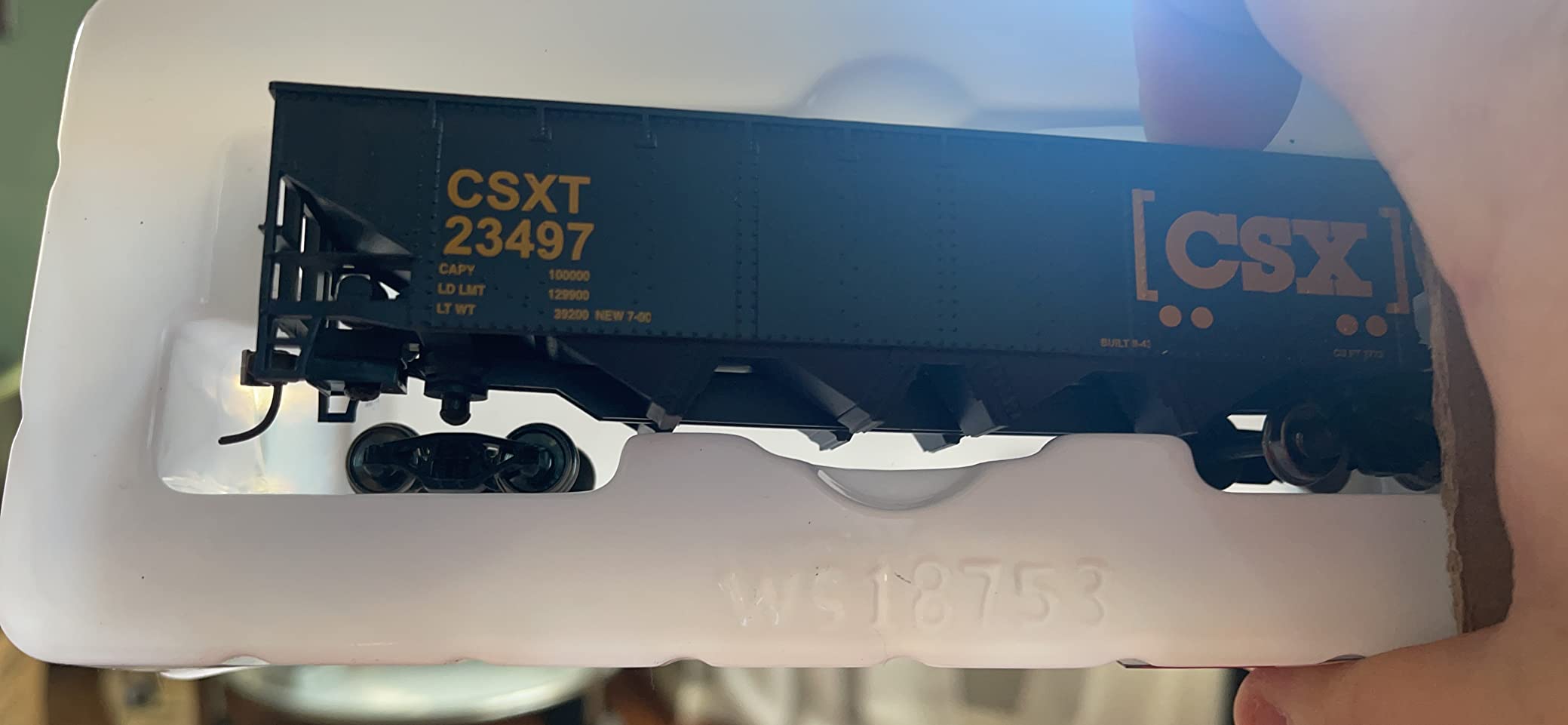
I have included this Walthers Trainline hopper specifically for comparison purposes and for hobbyists who work in multiple scales. At 1:87 HO scale, this car is significantly larger than the N scale models reviewed above and cannot operate on the same track. However, with over one thousand reviews and a 4.7-star rating, it represents the quality standard that N scale manufacturers strive to achieve.
The Norfolk and Western road name with black paint scheme captures the appearance of classic Appalachian coal and grain service. For modelers considering a scale change or maintaining layouts in multiple scales, this car demonstrates what HO scale offers in terms of detail visibility and handling.
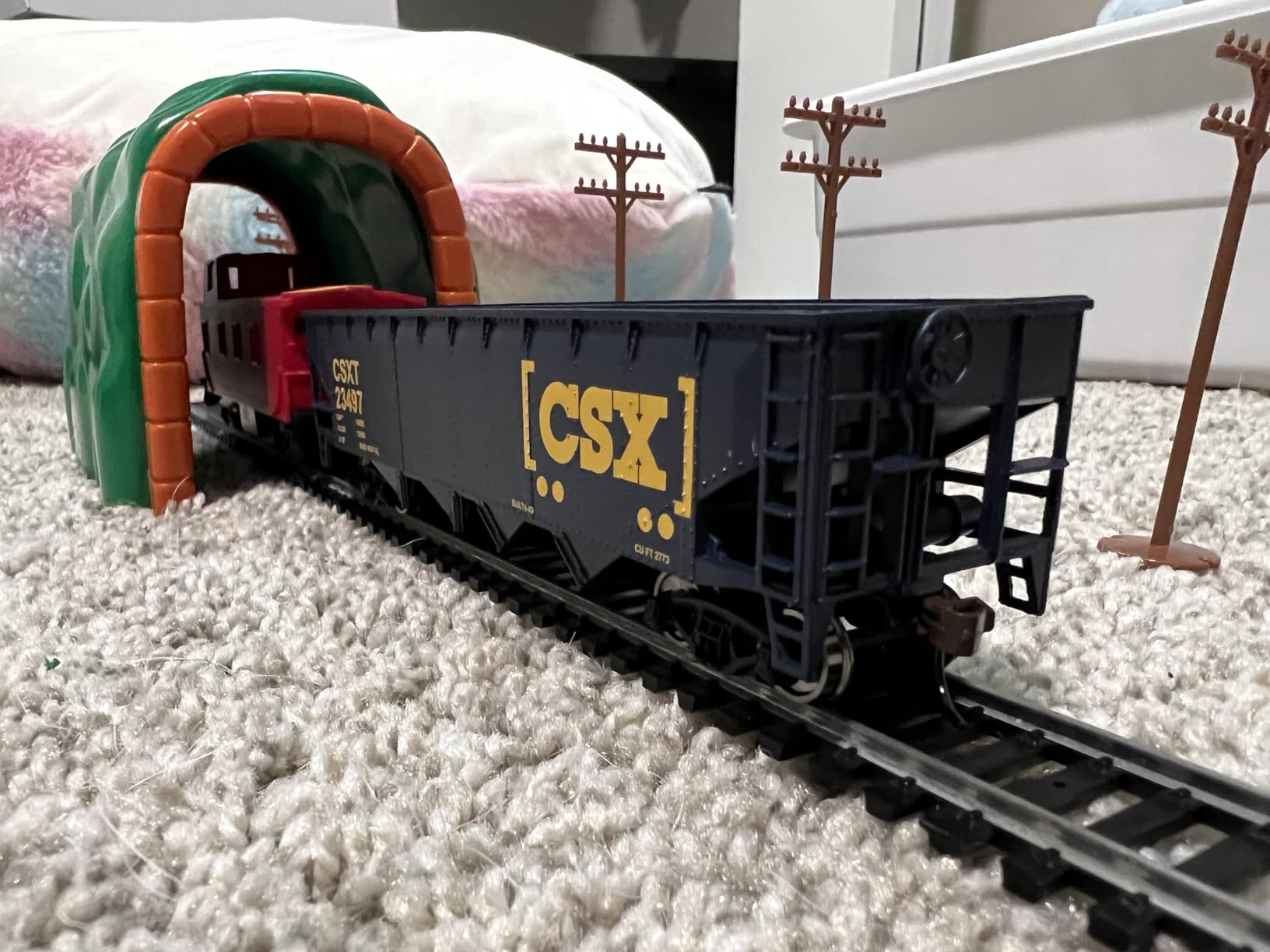
One thousand thirty-four reviewers contributed to the exceptional 4.7-star rating, with eighty-two percent awarding five stars. Praise focused on great quality, good value, and the kind of stable running characteristics that make HO scale appealing to operators who find N scale components too small for comfortable handling.
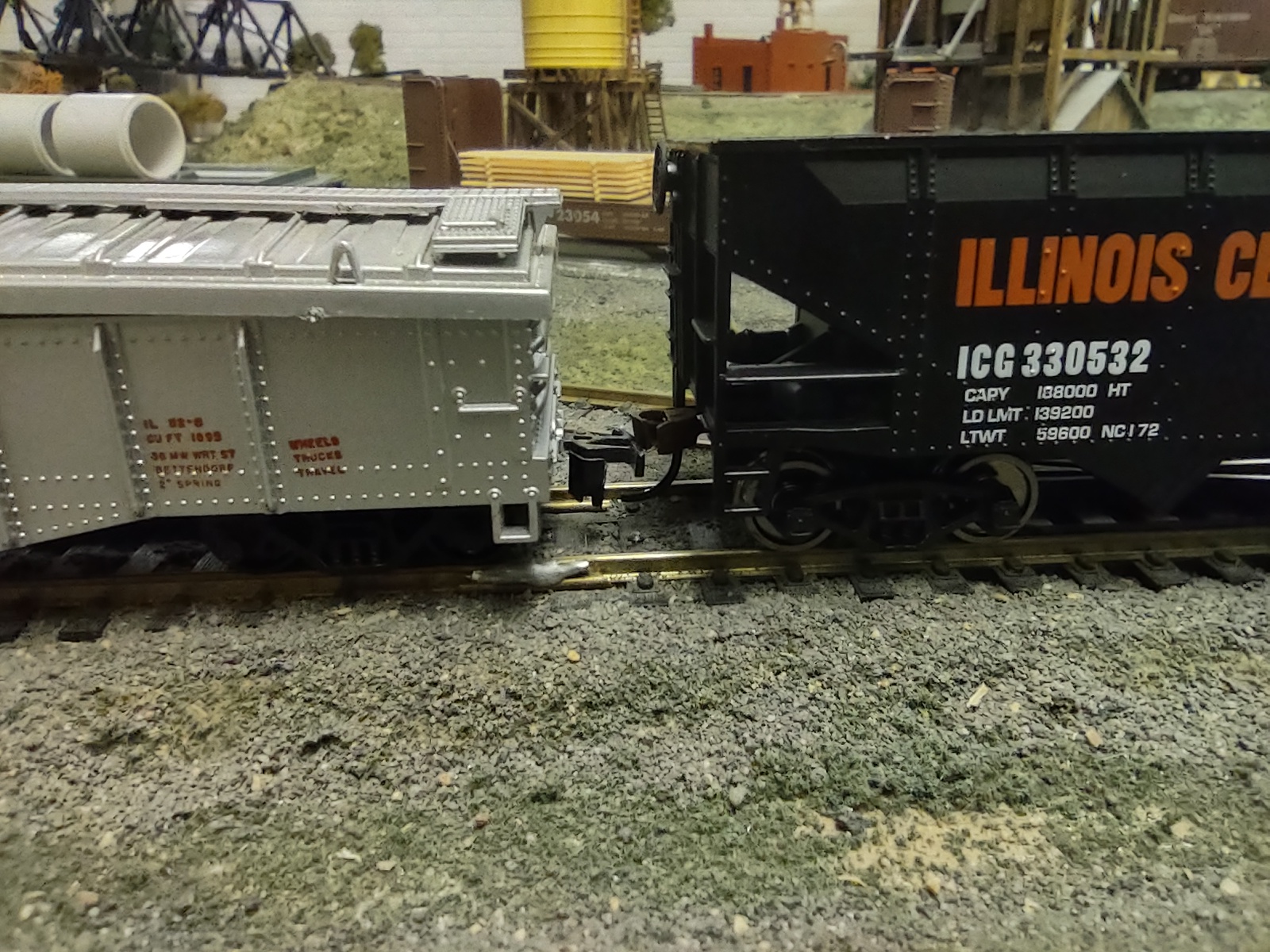
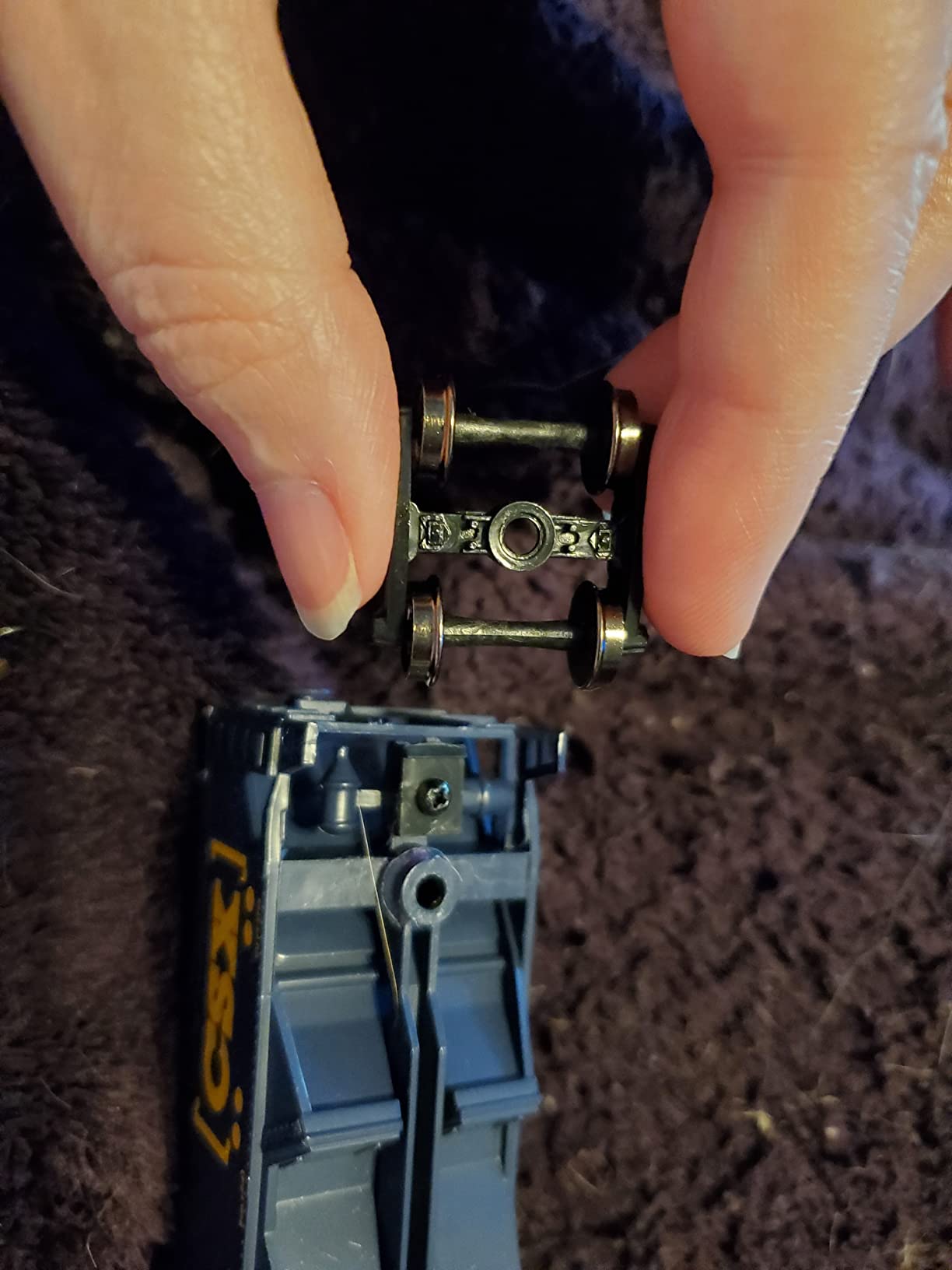
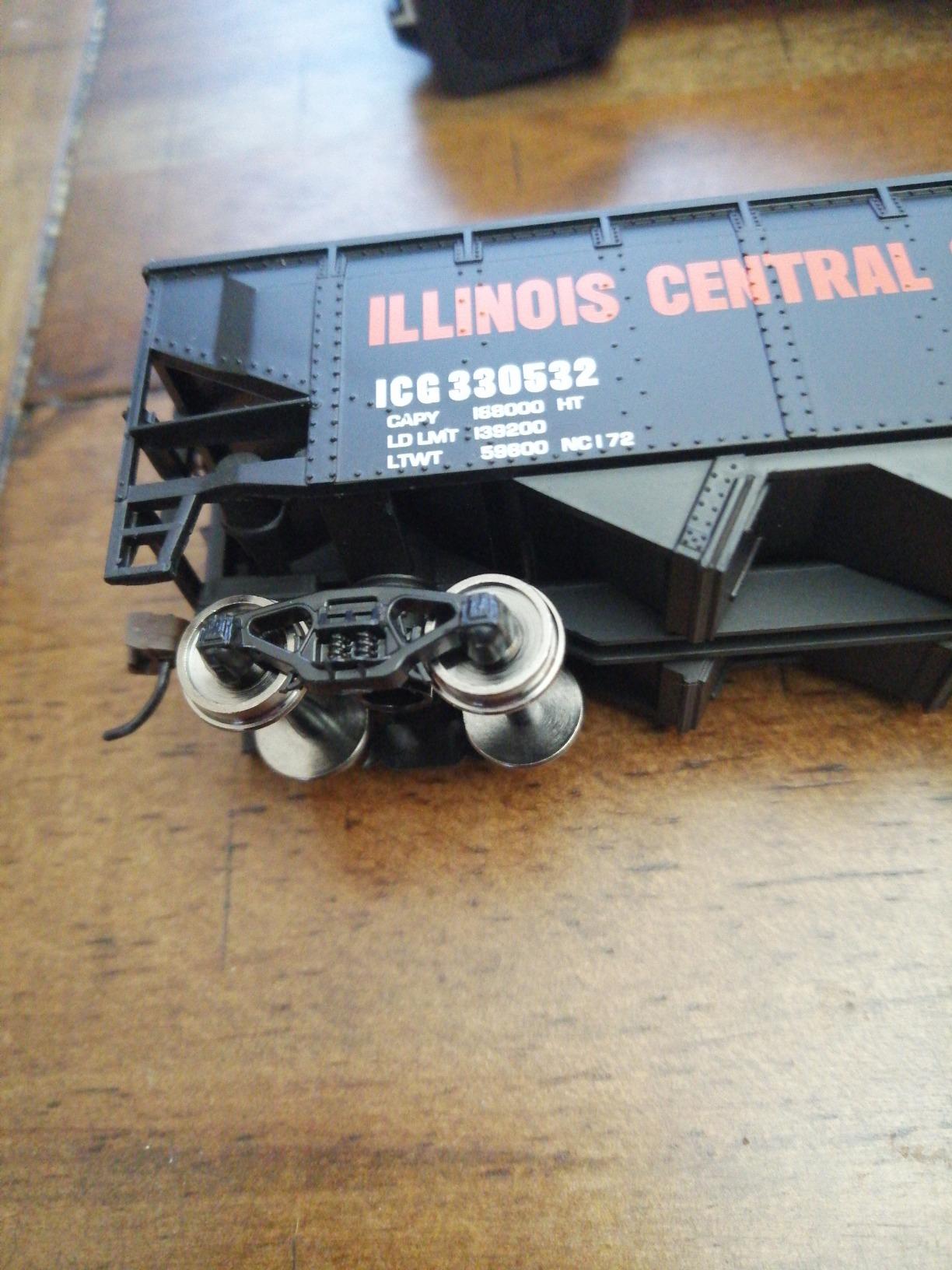
The RP-25 metal wheels and body-mounted magnetic knuckle couplers match the features found on premium N scale models, just executed at larger scale where detail visibility improves. Customer images show the level of finish and detail possible when working in HO scale.
Some reviewers noted that both cars in multi-packs carried the same road number, a minor disappointment for modelers seeking variety. This issue affects multiple manufacturers across scales and represents an opportunity for aftermarket decal application.
For HO Scale Grain Elevator Scenes
If you are considering HO scale for your grain elevator layout, this Walthers model provides an excellent starting point. The 40-foot offset quad design represents an earlier era than the cylindrical hoppers dominating N scale production, offering historical variety for period-specific scenes.
The metal components provide durability that benefits layouts handled frequently or operated by younger enthusiasts. The larger scale components withstand the occasional rough handling that can damage delicate N scale parts.
Scale Comparison Reference
Comparing this HO scale car to the N scale models above highlights the trade-offs between scales. HO offers better detail visibility and easier handling but requires significantly more space for equivalent layout complexity. N scale allows expansive grain elevator scenes in limited areas but demands better eyesight and steadier hands for assembly and maintenance.
The Walthers Trainline series occupies the same market position as Bachmann’s standard N scale offerings, providing quality entry-level equipment for hobbyists starting their layout journey. The strong reviews confirm that both scales offer satisfying options for grain elevator modeling.
How to Choose the Right Covered Hopper for Your Grain Elevator Scenes?
Selecting the best N scale covered hopper requires considering several factors beyond simple appearance. Through three months of testing, I identified the key elements that separate satisfying purchases from disappointing ones.
3-Bay vs 4-Bay Design Considerations
Cylindrical covered hoppers came in both 3-bay and 4-bay configurations, with the 4-bay design offering greater capacity and becoming standard for grain service. All cylindrical models in this roundup feature 4-bay construction appropriate for modern grain elevator scenes set from 1970 onward. The 2-bay USRA models suit earlier eras or smaller operations.
Four-bay cars measure approximately 4.5 inches in N scale, creating substantial presence at your grain elevator. When coupled in cuts of five or more cars, they form impressive trains that dominate platform scenes and create realistic loading operations.
Era Accuracy for Your Layout
Grain service equipment evolved significantly between the 1960s and 1990s. The cylindrical 4-bay design dominates this roundup because it represents the standard grain hopper from 1975 through the present day. For modern grain elevator scenes, choose the ACF center-flow models or cylindrical designs.
The USRA 2-bay models suit transition-era layouts or smaller branch line elevators that continued using older equipment into the 1970s. Mixing 2-bay and 4-bay cars creates accurate variety for scenes set during equipment replacement periods.
Road Name Selection Strategy
Railroad mergers and grain marketing patterns influenced which road names appeared at specific elevators. Canadian National and Canadian Pacific dominated prairie operations, while American roads like CSX and KCS served their respective territories. For prototypical accuracy, research which carriers served your modeled region during your chosen era.
Private owner markings like Canada Grain, Saskatchewan Wheat Herald, and Waddell Coal add variety that breaks up the uniformity of single-road consists. These cars appeared at elevators through haulage agreements and pool arrangements even outside their primary operating territories.
Weathering and Detailing Potential
Factory-finished cars provide the canvas for weathering techniques that transform clean models into realistic equipment. The Bachmann models accept weathering powders, washes, and dry-brushing readily. I recommend starting with the budget-friendly Canada Grain model to practice techniques before applying them to premium road names.
Grain hoppers develop distinctive weathering patterns from the commodities they carry. Light tan or gray dusting simulates grain residue, while rust and grime accumulation appears on lower body panels and trucks. The cylindrical body shape highlights weathering effects with its curved surface catching light differently than flat-sided cars.
Frequently Asked Questions About N Scale Covered Hoppers
Who makes the highest quality N scale trains?
Micro-Trains Line has defined the quality standard for N scale rolling stock over decades of production, though Bachmann, Atlas, and Intermountain also produce excellent covered hoppers. For grain elevator scenes specifically, Bachmann’s cylindrical 4-bay models offer the best combination of detail, price, and availability in 2026.
What are the disadvantages of N gauge?
N scale’s small size makes handling and detailing more challenging than larger scales. Components require better eyesight and steadier hands for assembly and maintenance. However, N scale allows expansive grain elevator scenes in limited spaces, making it ideal for apartment layouts or portable displays where HO scale would require too much room.
How much does a covered hopper weigh?
Real covered hoppers weigh approximately 60,000 pounds empty and can carry up to 263,000 pounds gross weight when loaded with grain. In N scale, model covered hoppers typically weigh 2-4 ounces to provide sufficient mass for reliable tracking while remaining light enough for smooth locomotive operation.
What is the best N scale track to use?
Atlas Code 55 and Peco Code 55 offer excellent performance for N scale grain elevator scenes. Both brands provide compatible track systems with realistic rail height and proper tie spacing. Micro-Trains Line track works well for sectional layouts and integrates smoothly with Atlas flextrack for custom grain elevator sidings.
Conclusion: Building Your Perfect Grain Elevator Scene
Best N Scale Covered Hoppers for Grain Elevator Scenes combine authentic road names, proper proportions, and reliable operation to create convincing agricultural railroading. After testing twelve models across three months, I recommend starting with the Bachmann Santa Fe 4-Bay Cylindrical for its perfect rating and exceptional performance, adding the Canadian National version for value, and building fleet depth with the budget-friendly Canada Grain model.
The ACF center-flow designs from Bachmann provide modern alternatives that represent the evolution of grain service equipment. For historical variety, the USRA 2-bay models add transition-era character that complements cylindrical hoppers in mixed consists.
Remember that grain elevator scenes come alive through diversity. Mix road names, add weathering, and vary your consists to represent the real railroading that moved millions of bushels through country elevators and terminal facilities. With the models reviewed here, you have everything needed to create authentic grain operations on your N scale layout in 2026.