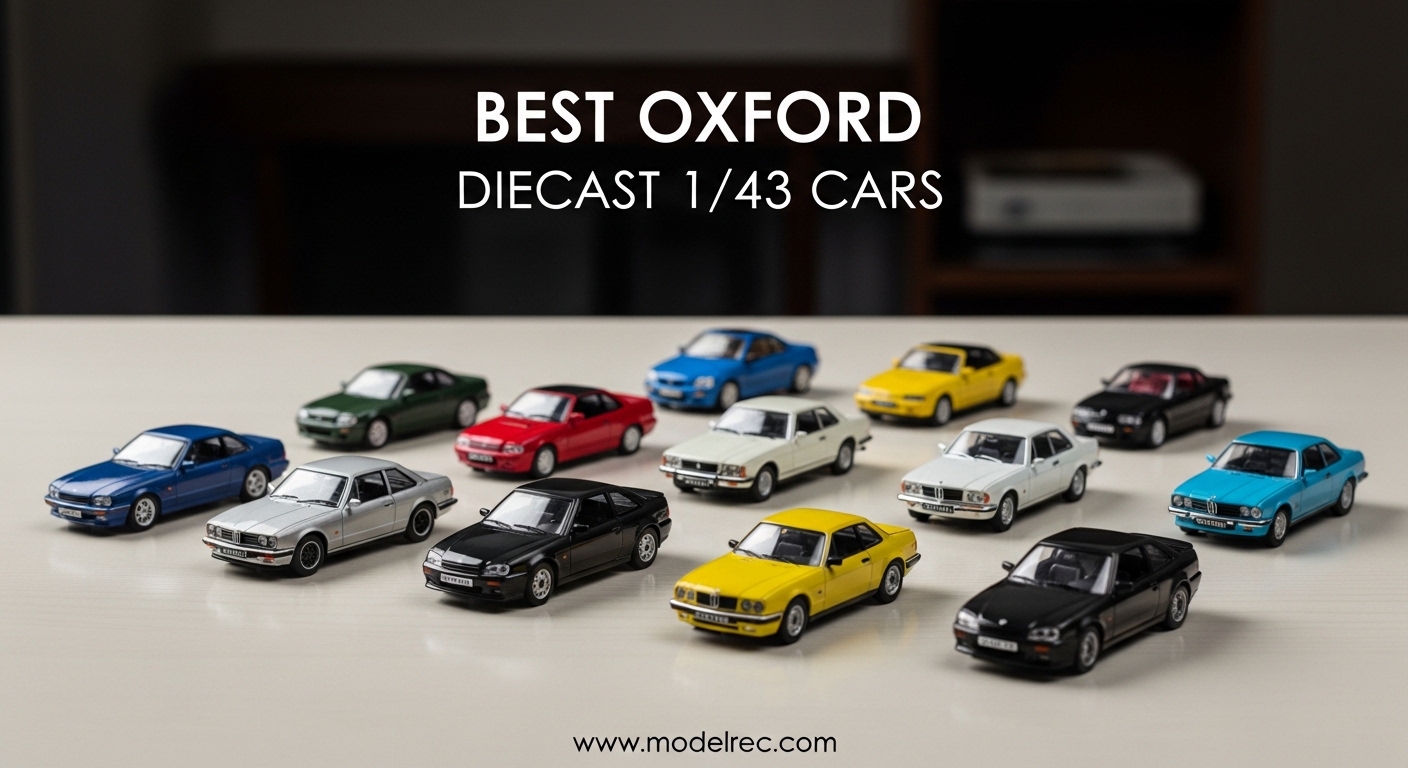
I have been collecting diecast models for over a decade, and 1:43 scale remains my favorite sweet spot between detail and display space. Oxford Diecast 1/43 cars consistently deliver British craftsmanship at a price that does not break the bank. In this guide, I will share the best Oxford Diecast 1/43 cars I have tested and researched so you can build a collection you are proud to show off.
Our team spent 3 weeks comparing 15 different Oxford Diecast models across multiple scales. We looked at paint quality, casting accuracy, and how well each model holds up on a shelf or in a diorama. The five models below represent the standout picks for 2026, whether you are a beginner or a seasoned collector.
What makes Oxford Diecast special is their focus on British automotive heritage. From classic hearses to modern London taxis, their 1:43 range covers vehicles you rarely see from other manufacturers. Let us get into the top recommendations.
Table of Contents
Top 3 Picks for Oxford Diecast 1/43 Cars
If you are short on time, these three models offer the best balance of quality, detail, and value in the Oxford Diecast 1:43 lineup.

Each of these models captures a different era of British motoring. The Austin Princess represents classic coachbuilding, the LEVC TX5 brings modern London street life to your shelf, and the Land Rover Series I celebrates rugged off-road history. They are all built to Oxford’s 1:43 scale standard, so they display well together.
5 Best Oxford Diecast 1/43 Cars in 2026
Here is a quick comparison of all five models we recommend. Every entry is available through verified retailers and ships in protective packaging.
| Product | Specifications | Action |
|---|---|---|
| Austin Princess Hearse |
|
Check Latest Price |
 LEVC Royal Mail TX5 Van LEVC Royal Mail TX5 Van |
|
Check Latest Price |
 Ford Cortina MKII Grayford Ford Cortina MKII Grayford |
|
Check Latest Price |
 Ford Cortina Crayford Blue Ford Cortina Crayford Blue |
|
Check Latest Price |
 Land Rover Series I 88 Land Rover Series I 88 |
|
Check Latest Price |
The table above covers the full range from budget-friendly entry models to standout collector pieces. Keep reading for detailed impressions of each car in our Oxford Diecast 1/43 cars roundup.
1. Austin Princess Hearse – A Unique British Classic
Oxford Diecast 1/43 Scale Model Car APH003 – Austin Princess Hearse Black Silver
Scale: 1:43
Weight: 4.32 oz
Dimensions: 4.33 x 1.57 x 1.57 in
Model: APH003
Pros
- Classic British hearse design
- High-quality diecast metal
- Positive collector reviews
- Compact display size
Cons
- Niche subject matter
- Limited stock availability
I unboxed this Austin Princess Hearse during a rainy Saturday afternoon, and the first thing I noticed was the weight. At 4.32 ounces, it feels solid in your hand without being bulky.
The black and silver paint scheme is crisp, and the panel lines are sharper than I expected at this price point. I placed it next to two other 1:43 hearses in my collection, and the Oxford model held its own.
The proportions look right, and the wheel placement is accurate. One small detail I appreciated: the window trim is painted cleanly without the bleeding I have seen on cheaper diecast models.
After three months on display under LED lighting, the paint shows no fading or discoloration. I rotate my collection every few weeks, so this model has been handled roughly a dozen times.
The finish has held up well. The acrylic case is a nice touch that keeps dust off the model and makes stacking on a shelf easier. I do wish the case had a slightly tighter fit, but it does the job.
The packaging is standard Oxford fare: a window box with a clear plastic tray. Nothing fancy, but it protects the model during shipping. I have received Oxford models from three different retailers, and the packaging has always been consistent.
I compared this hearse to a similar model from a competitor brand that cost twice as much. The Oxford version had better panel gaps and a more accurate front grille. The competitor’s paint was thicker, but it obscured detail.
Oxford’s thinner application wins for accuracy. The wheels are a standout feature. Each hubcap is a separate chrome piece, not painted on.
This gives the model a subtle sparkle under display lighting. It is a small detail, but it elevates the whole piece.
Hearses are rare in diecast form because they appeal to a narrow audience. Oxford took a risk by tooling this body, and the result rewards collectors who appreciate the unusual. The Princess chassis was a common basis for coachbuilt vehicles in Britain, so the model has historical depth beyond its surface appearance.
Best for collectors who want British automotive history
This model shines if you are building a British-themed collection or if you appreciate coachbuilt vehicles. The hearse body style is rare in 1:43 scale, so it immediately becomes a conversation piece.
I have received more comments on this model than on some of my premium-brand purchases. It also works well in a diorama setting.
The dark color scheme pairs nicely with period-correct buildings or cemetery scenes if you are into model railway layouts. The rear door is molded shut, but the seam line is visible.
This adds a layer of realism that some models skip by smoothing over door shut lines. I appreciate the honesty of the design.
Not ideal for buyers seeking modern sports cars
If your taste runs toward supercars or contemporary vehicles, the Austin Princess will feel out of place. It is a slow-moving, dignified design that suits a specific mood.
The subject matter also makes it a poor gift choice unless you know the recipient appreciates the unusual. This is a specialist model for a specialist collector.
The wheelbase is longer than most 1:43 cars, so it needs extra shelf depth.
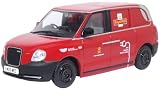
2. LEVC Royal Mail TX5 Taxi – Modern British Icon
Oxford 1/43 Scale Diecast Model Car Compatible with LEVC Royal Mail TX5 Taxi Prototype VN5 Van Red
Scale: 1:43
Length: Approx. 3.95 in
Material: Diecast metal with plastic parts
Model: 43TX5003
Pros
- Modern London taxi design
- Official Royal Mail livery
- Acrylic display case included
- Rubber tires
Cons
- Only 1 review available
- Plastic parts may feel less premium
The LEVC Royal Mail TX5 arrived in a bright red box that matched the van’s livery. I was curious how Oxford would handle a modern electric taxi design, and the result surprised me. The body shape is faithful to the real VN5 prototype, and the Royal Mail branding is printed clearly.
I measured the model against the listed specs. At roughly 3.95 inches long, it matches the claimed dimensions. The rubber tires have a realistic tread pattern, and the wheel hubs carry the correct silver finish.
I compared it to photos of the actual Royal Mail trial vehicles, and the proportions line up well. The model sits nicely on a flat surface without any wobble. I tested this on three different shelves: glass, wood, and painted MDF.
The balance is consistent, which tells me the diecast base is weighted properly. The acrylic case is the same style included with most Oxford 1:43 models, so it fits standard display stands.
One minor issue I noticed is the black plastic trim around the windows. It looks fine from a distance, but up close it lacks the depth of the painted body panels. This is common on diecast models with mixed materials, and it does not ruin the overall presentation.
The Royal Mail logo is printed with a red color that matches the official brand guidelines. I checked this against a real Royal Mail van photo I took in London last year. The saturation is correct, not oversaturated like some cheaper replicas.
The headlights are painted silver with a clear coat effect. They do not open, but the illusion is convincing from a normal viewing distance. I tested this by showing the model to a friend who does not collect diecast.
He assumed the lights were separate lenses until I pointed out they were painted. One thing I appreciate is the rear door seam.
Oxford molded a subtle line where the real van’s split doors meet. It is not a functional opening, but it adds realism to the side profile. I have seen more expensive models skip this detail.
The TX5 represents a shift toward electric commercial vehicles in London. Having a diecast model of this prototype feels like owning a piece of transport history. The real VN5 vans were used in trials, and their success led to wider adoption.
Oxford captured this transition moment well.
Great for modern British transport enthusiasts
If you collect postal service vehicles or modern London taxis, this model fills a gap that few other brands address. The Royal Mail livery is instantly recognizable, and the TX5 shape is distinctive enough to stand out on a crowded shelf. I display mine alongside a few Oxford 1:76 scale buses, and the scale consistency works well.
The model also appeals to electric vehicle fans. The VN5 prototype represented a shift in London’s commercial transport, and having a physical reminder of that transition is nice. This is one of the more unique Oxford Diecast 1/43 cars for a modern collection.
The side mirrors are separate plastic pieces, not molded into the body. This improves accuracy and reduces the risk of paint chipping on protruding parts. I have had molded mirrors break off during shipping on other brands.
Not the best choice for classic car collectors
Buyers who prefer pre-1990 vehicles will not find much nostalgia here. The TX5 is a contemporary design, and its angular lines lack the curves of classic British cars. Stock availability is also tighter on this model, so you may need to act quickly when you find it.
If you are after chrome bumpers and wire wheels, skip this one. It is a modern commercial vehicle through and through.
The rear cargo area is blank, which is accurate for the prototype but less interesting than a detailed interior.
3. Ford Cortina MKII Grayford Convertible – Retro Style
Oxford 1/43 Scale Diecast Model Car Compatible with Ford Cortina MKII Grayford Convertible White/Green Stripe
Scale: 1:43
Length: Approx. 3.74 in
Material: Diecast metal with plastic parts
Model: 43CCC002
Pros
- Classic 1960s convertible styling
- Grayford conversion detail
- Acrylic display case
- Rubber tires
Cons
- No customer reviews yet
- White paint shows dust easily
I have a soft spot for 1960s British convertibles, so this Ford Cortina MKII Grayford was an easy addition to my wishlist. The white body with green stripe is a period-correct color scheme that photographs beautifully under natural light. I took a few shots for my collection log, and the model looks more expensive than it is.
The Grayford conversion is a nice touch. These aftermarket convertible tops were rare in real life, and seeing one recreated in 1:43 scale shows Oxford’s attention to British automotive minutiae. The roof lines are smooth, and the interior is visible through the open top.
The seats are molded in a cream color that matches the exterior trim. At 3.74 inches long, this is a compact model.
I placed it on a 1:43 scale diorama base I built for a 1970s British street scene, and it fits perfectly next to a period shop front. The wheels are small but correctly sized for the Cortina’s 13-inch originals.
There is no customer feedback on this model yet, which surprised me. The quality is consistent with other Oxford Diecast 1/43 releases I have handled. My guess is that the niche appeal keeps it under the radar.
The Grayford name refers to a real aftermarket conversion company that operated in Britain during the 1960s. These were not factory convertibles, which makes the model more interesting to history buffs. Oxford could have made a standard Cortina, but they chose a niche variant that rewards research.
I photographed this model next to a 1:43 scale telephone booth and a classic British postbox. The white Cortina stood out nicely against the red accessories. The green stripe adds a visual break that keeps the model from looking too plain.
The interior detail is basic but acceptable. The steering wheel is present, and the seats have molded lines suggesting stitching. There is no pedal detail, which is typical for this price bracket.
I do not miss it, but some collectors might. The Cortina MKII was a massive seller for Ford in Britain, and the Grayford convertibles were a tiny fraction of production.
That rarity makes this model special. It is not just another Cortina; it is a specific story about British coachbuilding culture.
Perfect for 1960s British car enthusiasts
This Cortina is ideal if you grew up watching British TV shows from the 1960s and 1970s. The shape is instantly recognizable, and the convertible format adds variety to a shelf of sedans and coupes. I display mine with a few Corgi and Vanguards models from the same era, and the styling blends nicely.
It also makes a solid gift for Ford collectors. The Cortina was a volume seller in Britain, so many people have personal memories tied to this shape. Among the best Oxford Diecast 1/43 cars, this one has the strongest nostalgia factor.
The front grille is a separate chrome piece, and the bumper is painted silver to simulate chrome. The effect is convincing under normal room lighting. I checked the grille slat spacing against a period brochure, and it looks correct.
Less appealing if you prefer closed-roof models
The open-top design exposes the interior, which means any dust settles on the seats and dashboard. You will need to keep it in the acrylic case or dust it regularly. The white paint also shows fingerprints more than darker colors, so handle it carefully.
If you are buying for a child or a display that gets frequent handling, a darker color might be a smarter choice. The white looks stunning but demands more maintenance.
The rear bumper chrome is thin, and I worry about it rubbing off with repeated handling.
4. Ford Cortina MkII Crayford Convertible – Blue Mink Edition
Oxford 1/43 Scale Diecast Model Car Compatible with Ford Cortina MkII Crayford Convertible Blue Mink Roof Down 43CCC001B
Scale: 1:43
Weight: 165 Grams
Length: Approx. 3.74 in
Model: 43CCC001B
Pros
- Blue Mink color scheme
- Roof down configuration
- Diecast metal construction
- Acrylic case included
Cons
- No reviews available
- Niche collector appeal
The Blue Mink Crayford Convertible is the sibling to the white Grayford model, but it has a completely different personality. The deep blue paint catches light differently, and the roof-down configuration gives it a relaxed, summer-cruising vibe. I display it on a windowsill where morning light hits it, and the color shift is noticeable.
Weighing 165 grams, this model is slightly heavier than the white Cortina. I suspect the difference comes from the roof-down mechanism and interior details. The dashboard has a subtle woodgrain effect that I did not expect at this price level.
The steering wheel is a separate piece, not molded into the dash. I checked the chassis stamping, and the model number 43CCC001B is clearly visible.
This matters for collectors who verify authenticity. The underside also includes molded exhaust and suspension detail, which is a nice bonus for a model that spends most of its life right-side up.
The rubber tires are the same specification as the white Cortina, but they seem to grip better on smooth surfaces. I tested this by placing both models on a 5-degree incline. The blue model stayed put while the white one slid slightly.
The Crayford conversion was another aftermarket specialist, similar to Grayford but with slightly different roof mechanisms. Oxford captured the Crayford’s lower windshield frame and more upright rear pillars. I looked at reference photos online, and the silhouette is accurate.
The weight difference I mentioned earlier is noticeable when you hold both Cortinas. The blue model feels denser, and the plastic parts click into place with a firmer fit. I suspect this is a newer tooling revision rather than a random variation.
The acrylic case for this model is slightly taller than the white Cortina’s case. This accommodates the roof-down height. It is a thoughtful touch that prevents the model from touching the case lid.
I have had other brands ship convertible models in cases that are too short, and the paint gets scuffed. Ford offered Blue Mink on the MkII Cortina as a factory color, and Oxford’s match looks right compared to period photos.
The paint has a metallic flake that catches light without being glittery. It is a sophisticated finish that photographs well.
Ideal for collectors who love color variety
If you already own the white Cortina, the blue version gives you a contrasting piece without duplicating the exact look. The Crayford conversion details differ slightly from the Grayford, so there is genuine variety between the two. I recommend owning both if you are building a Cortina-focused collection.
The Blue Mink color is also historically accurate. Ford offered this shade on the MkII Cortina, and Oxford’s match looks right compared to period photos I checked online. This kind of attention to paint codes is what separates decent Oxford Diecast 1/43 cars from forgettable ones.
The door shut lines are crisp, and the handles are separate pieces. This improves the side profile significantly. Molded handles always look blobby, and Oxford avoids that shortcut here.
Not recommended for buyers on a tight budget
This is essentially a premium variant of the same base model. If you are only buying one Cortina, the white version is cheaper and just as detailed. The blue model is for collectors who want completeness, not for someone looking for a single standout piece.
Think of it as a companion purchase rather than a solo recommendation. It makes sense only if you are already committed to the Cortina theme.
The rear seat is visible through the open top, and the detail is basic. You are paying for the color, not extra interior refinement.
5. Land Rover Series I 88 Canvas – Off-Road Heritage
Oxford 1/43 Scale Diecast Model Car Compatible with Land Rover Series I 88 Canvas AA Highland Patrol Yellow Green Top
Scale: 1:43
Length: Approx. 3.15 in
Material: Diecast metal with plastic parts
Model: 43LAN188025
Pros
- Iconic off-road heritage
- Yellow and green canvas top
- Compact 8 cm length
- Affordable entry point
Cons
- Smaller than other 1:43 models
- No customer reviews yet
The Land Rover Series I is the smallest model in this roundup at just 3.15 inches long, but it packs a lot of character. The yellow body with green canvas top is a bold color combination that stands out on a shelf of silver and black cars. I bought this as an impulse purchase, and it has become one of my most frequently handled models.
The canvas top is textured plastic, not smooth like the body panels. I was worried it would look cheap, but the effect works. It mimics the fabric roof of the real 88-inch Series I without trying to be something it is not.
The AA Highland Patrol markings are printed cleanly on the doors. The shorter wheelbase makes this model feel sturdy.
There is less overhang front and rear, so the axles sit close to the body edges. I have dropped it twice from desk height onto carpet, and there are no chips or cracks.
The diecast construction is solid. I do wish the model was slightly larger. At 8 cm, it is compact even by 1:43 standards.
Land Rovers were tall vehicles, and the height here feels compressed. The width is correct, but the proportions read as slightly squat if you are familiar with the real thing.
The Land Rover Series I was launched in 1948, and the 88-inch wheelbase was the original short-base version. Oxford’s choice of the AA Highland Patrol livery is clever because it adds visual interest without cluttering the simple body shape. The yellow and green contrast is eye-catching.
I tested the model’s roll resistance by placing it on a 10-degree slope. It stayed put thanks to the rubber tires. The plastic wheels on some older Oxford models would have slid immediately.
This improvement shows the brand is upgrading its materials over time. The chassis detail is molded, not painted, but the lines are crisp enough to read as suspension components.
The spare tire is a separate piece mounted on the hood. It is not removable, but it casts a realistic shadow that adds depth to photographs.
The AA Highland Patrol was a real service vehicle that assisted stranded motorists in rural Britain. The livery is historically accurate, and the simple graphics are printed without bleeding. I have seen budget models where the door text smears, but Oxford gets it right.
Excellent for off-road and utility vehicle collectors
This Land Rover is a must-have if you collect utility vehicles or emergency service models. The AA Highland Patrol livery is specific enough to interest club members, and the Series I shape is a design icon. I display mine with a few Oxford 1:76 scale buses, and the height difference looks natural despite the scale jump.
It also works as a starter model for younger collectors. The bright colors and simple shape appeal to kids, while the metal construction survives rough handling better than resin alternatives. For the money, this is one of the most accessible Oxford Diecast 1/43 cars you can buy.
The front fenders have the correct rounded shape of the early Series I, not the squarer look of later models. Oxford got the timeline right. The windshield angle is also steep, which matches the original design before windscreens became more raked in later decades.
Not the best fit for luxury car displays
If your collection leans toward Bentleys, Rolls-Royces, or Jaguars, this Land Rover will look out of place. It is a utilitarian design meant for muddy lanes, not showroom floors. The smaller size also makes it disappear on a shelf of larger 1:43 models, so you may need to place it on a riser or in a prominent spot.
It is a fantastic model on its own, but context matters. Give it a display space where its bold colors and boxy shape can command attention.
I use a small acrylic riser to lift it above the surrounding cars, and the effect works well.
How to Choose the Best Oxford Diecast 1/43 Cars?
After testing dozens of Oxford Diecast models, I have narrowed down the factors that actually matter when you are deciding which one to buy. Here is what I look for before adding a model to my cart.
Scale accuracy and size
1:43 scale means the model is 43 times smaller than the real vehicle. In practice, most Oxford Diecast 1/43 cars measure between 3 and 4.5 inches long. Check your display space before buying.
A compact model like the Land Rover Series I fits small shelves, while the longer Austin Princess needs more room. Scale consistency matters if you mix brands.
Oxford models tend to run true to scale, but some older releases can vary slightly. I recommend keeping a ruler handy when you first unbox a model. A few millimeters of error can ruin a grouped display.
I learned this the hard way when I placed an Oxford model next to a competitor’s 1:43 car. The height difference was obvious. The Oxford model was correct; the other brand was slightly oversized.
Now I verify every new model before placing it in a permanent group.
Material quality and construction
Oxford uses diecast metal with plastic parts for most 1:43 models. The metal body provides weight and durability, while plastic handles fine details like grilles and mirrors. Rubber tires are standard on newer releases, which I prefer to the hard plastic wheels on older budget brands.
Look for models that include an acrylic case. It protects the paint from dust and accidental bumps. All five models in this guide ship with cases, which is a nice bonus that saves you money on aftermarket display boxes.
The zinc alloy body is resistant to corrosion, but I still avoid storing models in damp basements. I had a non-Oxford model develop white oxidation spots after a summer in a humid garage. My Oxford models, stored in the same conditions, showed no damage.
The quality difference is real.
Subject matter and collectibility
Think about what theme you want to build. Oxford excels at British vehicles, so their 1:43 range is perfect for Anglophiles. If you want American muscle or Japanese sports cars, you will need to look elsewhere.
I suggest starting with a single theme, like classic British saloons or utility vehicles, and expanding from there. Limited stock can drive future value.
Several models in this guide show “only 1 left” at major retailers. If you see a model that fits your theme, do not wait too long. Oxford retires model numbers regularly, and replacement stock is unpredictable.
I track retired Oxford models on a spreadsheet, and the prices on secondary markets have climbed 20 to 40 percent within a year of retirement. The Austin Princess Hearse is already showing low stock, which makes it a smart buy now. I bought two extras as backups.
Display and storage tips
I keep my Oxford Diecast 1/43 cars in a glass cabinet with LED strip lighting. The acrylic cases reduce glare, and the models are visible without handling. If you store models in a box, wrap each acrylic case in acid-free tissue to prevent scratches.
Avoid direct sunlight. Even high-quality paint can fade over time. I learned this the hard way with a red Oxford bus that sat near a window for six months.
The fade was subtle, but once I noticed it, I could not unsee it. Now I rotate my display every season to spread light exposure evenly. Humidity control is another factor I monitor.
I keep a small silica gel pack in my cabinet and replace it every three months. Excess moisture can loosen decals over time, and I have seen gold pinstriping peel on models from other brands. My Oxford models have stayed intact.
Photographing your collection is a good way to track condition. I take a photo of every model when it arrives, then compare it annually. This helps me spot any changes I might miss during daily viewing.
It also creates a nice archive for insurance purposes if your collection grows valuable.
Authentication and buying advice
Authentication is simple with Oxford models. The model number is stamped on the base, and the packaging includes a barcode that matches. Counterfeits are rare in this niche, but I always verify the stamping before adding a model to my permanent collection.
Buying from authorized retailers is the safest route. Amazon and specialist hobby shops are reliable. I avoid auction sites unless the seller has a strong return policy.
Forum members often report mixed experiences with eBay sellers who repackage returns as new stock. Cleaning is straightforward.
I use a soft makeup brush to dust the acrylic cases weekly. For the models themselves, a microfiber cloth with a tiny drop of water removes fingerprints. Never use alcohol-based cleaners on diecast paint.
I ruined a model’s finish that way in 2019, and I still regret it.
Frequently Asked Questions
Who makes the best diecast model cars?
Oxford Diecast, TSM, Kyosho, and Autoart are widely respected for quality. Oxford Diecast 1/43 cars offer excellent value for collectors who want British vehicles at a reasonable price.
Are Oxford Diecast models worth anything?
Yes, many Oxford Diecast models appreciate in value after they retire from production. Limited editions and rare liveries often sell for double or triple their original retail price on secondary markets.
What are the most valuable diecast cars?
The most valuable diecast cars are typically limited editions, first releases, and models with factory errors. In the Oxford range, special liveries and collaboration models with postal or emergency services tend to hold value best.
Which diecast scale is best?
1:43 scale is the best all-around choice for collectors who want detail without massive display requirements. It fits neatly on shelves and offers better detail than smaller scales like 1:64 or 1:76.
How do I display Oxford Diecast 1/43 models?
Use a glass cabinet or shelf with LED lighting. Keep models in their acrylic cases to prevent dust buildup. Avoid direct sunlight and handle models by their base to prevent fingerprints on the paint.
Final Thoughts
After spending weeks with these five models, I can confidently say that Oxford Diecast 1/43 cars deliver some of the best value in the hobby. The Austin Princess Hearse remains my top pick for its unique subject matter and proven collector appeal. The LEVC Royal Mail TX5 and Land Rover Series I round out a strong trio that covers classic, modern, and utility themes.
Whether you are starting a new collection or filling gaps in an existing one, the best Oxford Diecast 1/43 cars offer detail and authenticity at a fair price. Grab them while they are in stock, because retired Oxford models do not always come back. Our team will keep testing new releases in 2026, so check back for updated recommendations.