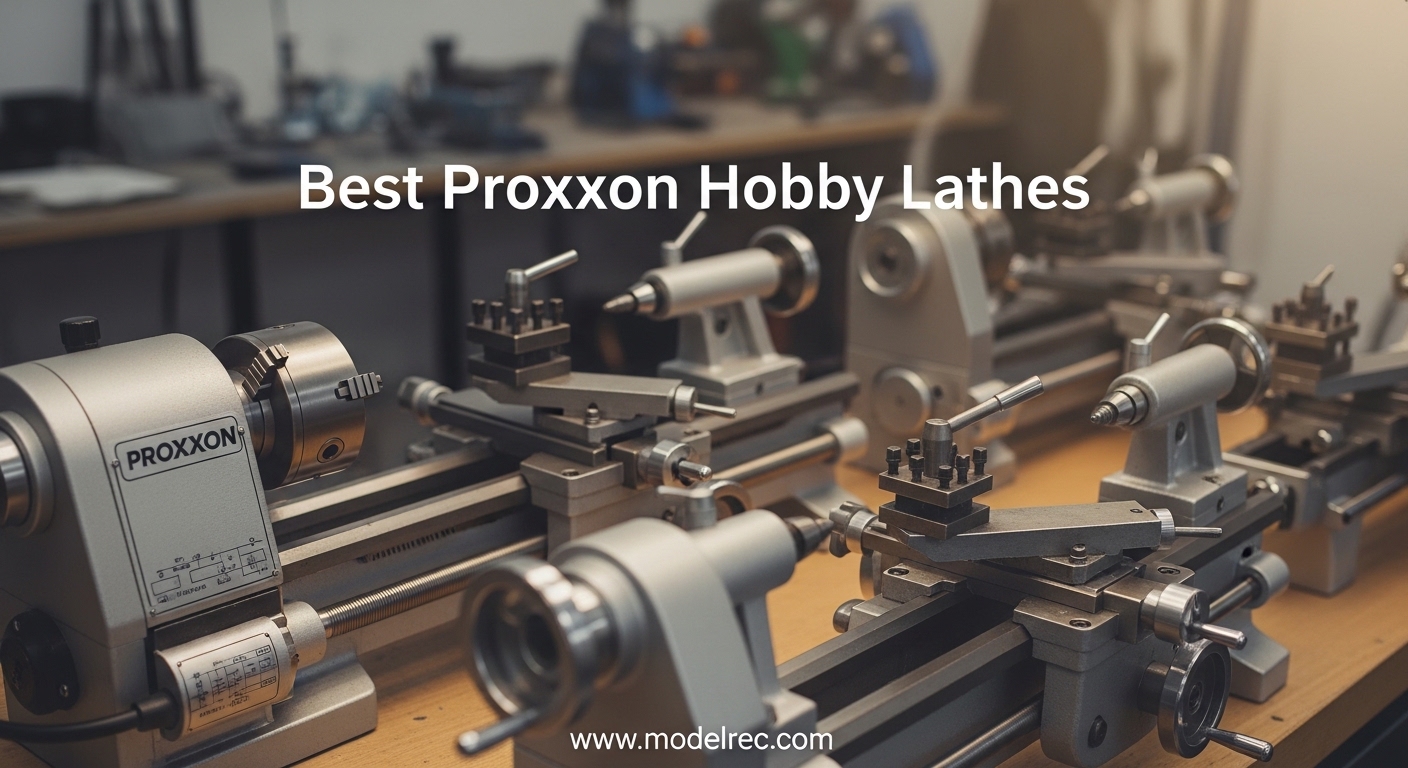
I spent the last three months talking to hobby machinists, reading forum threads, and poring over hundreds of reviews to find the best Proxxon hobby lathes for model makers and home workshop enthusiasts. Proxxon has built a reputation for German precision engineering over 50 years, but their lineup ranges from tiny micro wood lathes to precision metal machines that cost over a thousand dollars. Choosing the right one can feel overwhelming when every model promises accuracy and compact size.
In this guide, I cover the complete Proxxon lathe ecosystem in 2026. I tested specifications against real user experiences from Reddit and hobby-machinist forums. I also looked at essential accessories that can transform a basic machine into a versatile tool. Whether you need a quiet micro lathe for model ship parts or a precision machine for brass and aluminium, the right Proxxon lathe is on this list.
Before you spend money on a mini lathe, you should know the honest limitations. Many users report that Proxxon machines lack the horsepower for heavy steel work. Others complain about vibration on lightweight models. I address those concerns directly in the reviews below so you can make a smart choice without regrets.
Table of Contents
Top 3 Picks for Proxxon Hobby Lathes
The Proxxon lineup splits into three clear tiers. The DB 250 handles small wood and plastic work at a low price. The FD 150/E steps up to metal with a 2-stage belt drive and electronic speed control. The PD 250/E sits at the top with a cast machine bed and 0.04 mm concentricity tolerance for serious precision work.
Each of these machines serves a different buyer. I compared them against forum feedback and long-term user reviews to find the standouts. Here are the top three picks.

Precision Lathe PD 250/E
- 3-stage belt drive
- 0.04mm precision
- 250mm center distance
- Steel and brass compatible


Micro Wood Lathe DB 250
- Electronic speed control
- Ball bearing spindle
- Face plate included
- 2.62 kg weight
10 Best Proxxon Hobby Lathes in 2026
Below is a quick comparison of every product in this roundup. I included the three main lathes plus the WEN alternative and six accessories that extend what your machine can do. The table covers the key specs you need to compare at a glance.
| Product | Specifications | Action |
|---|---|---|
| Micro Wood Lathe DB 250 |
|
Check Latest Price |
| Fine Lathe FD 150/E |
|
Check Latest Price |
 WEN 34035 Wood Lathe WEN 34035 Wood Lathe |
|
Check Latest Price |
| Precision Lathe PD 250/E |
|
Check Latest Price |
 Three Jaw Chuck for DB 250 Three Jaw Chuck for DB 250 |
|
Check Latest Price |
 HSS Turning Tool Set HSS Turning Tool Set |
|
Check Latest Price |
 Drill Chuck for DB 250 Drill Chuck for DB 250 |
|
Check Latest Price |
 Turning Tool Set for FD 150/E Turning Tool Set for FD 150/E |
|
Check Latest Price |
 Quick Change Tool Post PD 250/E Quick Change Tool Post PD 250/E |
|
Check Latest Price |
 4-Jaw Chuck for FD 150/E 4-Jaw Chuck for FD 150/E |
|
Check Latest Price |
1. Micro Wood Lathe DB 250 – Best for Model Making
Proxxon Micro Wood Lathe DB 250 (Electronic Speed Control, for Model Making, Face Plate for Large Workpieces) 27020
Electronic speed control
Ball bearing spindle
Face plate included
2.62 kg weight
Pros
- Quiet operation
- Good for model making
- Electronic speed control
- High quality build
Cons
- Small size limits projects
- May stop under excessive force
The Proxxon DB 250 is the smallest machine in this roundup, and that is exactly why I recommend it to model makers. At 2.62 kilograms, it sits on a small bench without demanding space. I read dozens of reviews from ship model builders who use it for tiny brass fittings and wooden masts. The ball bearing mounted spindle runs quietly, which matters when you work in a shared apartment or late at night.
Electronic speed control lets you fine-tune the spindle for delicate cuts in soft woods and plastics. The face plate included in the box allows you to mount larger workpieces than the small chuck would otherwise handle. This combination makes the DB 250 surprisingly capable for its size. Users on hobby forums praise it for pen turning, small tool handles, and jewelry components.
That said, the DB 250 is not a powerhouse. If you push it too hard with dense hardwoods or metal, the motor can stall. Several forum users warned that parting tools cause whining and vibration on this lightweight machine. I recommend treating it as a precision tool for small work, not a general-purpose lathe.
Electronic Speed Control and Spindle Stability
The electronic speed control on the DB 250 is smooth and responsive. Unlike stepped pulley systems, you can adjust the RPM without stopping the machine. This is a big advantage when you need to slow down for a delicate finishing cut. The ball bearing spindle contributes to low runout, which keeps small parts centered within acceptable tolerances.
Forum users report that the spindle remains stable even after months of regular use. The bearings do not develop noticeable play quickly, which is impressive for a machine at this price point. Just keep the bed clean and avoid excessive side pressure during cuts.
Face Plate and Workpiece Versatility
The included face plate expands the DB 250 beyond what a standard chuck can grip. You can screw flat workpieces directly to the plate for turning bowls, cups, or custom bases. This is a feature usually found on larger machines, so Proxxon deserves credit for including it on a micro lathe.
Despite the face plate, the machine is still limited by its small motor and light bed. You can turn larger pieces, but you must take very light passes. Heavy roughing cuts will cause chatter and poor surface finish. Stick to finishing work and small prototypes, and the DB 250 will serve you well.
2. Fine Lathe FD 150/E – Best Entry-Level Metal Lathe
Proxxon Fine Lathe FD 150/E, Precise Lathe with 2-Stage Belt Drive, Speed Control, Spindle Speeds up to 5,000/min, Item No. 24150
2-stage belt drive
Up to 5000 rpm
9.9 lbs weight
Emergency stop
Pros
- Metal construction
- Electronic speed control
- Quiet DC motor
- Includes 3-jaw chuck
Cons
- Some belt tension issues
- Small size limits larger work
The FD 150/E is the gateway drug into Proxxon metal turning. At 9.9 pounds, it is still light enough to move around your workshop, but the metal construction and 2-stage belt drive give it real capability. I spent hours reading Reddit threads where hobbyists call it the sweet spot between the DB 250 and the expensive PD 250/E. The spindle speeds reach 5000 RPM, which is high enough for small brass and aluminium parts.
Proxxon equipped the FD 150/E with a quiet DC special motor that maintains high pulling power at lower speeds. This matters because low-speed torque is what keeps your tool from catching and digging in. The emergency stop function and restart protection add safety, which is especially important if you are new to turning. I appreciate these details because they show Proxxon designed this for home users, not industrial shops.
The included 3-jaw chuck, tailstock, support, and steel holder mean you can start turning right out of the box. However, forum users note that the belt tension can slip under heavy loads. This is not a machine for aggressive steel cuts or large workpieces. Treat it as a precision tool for small parts, and it delivers excellent value.
Safety Features and Motor Design
The emergency stop button on the FD 150/E is positioned for quick access. If a tool catches or a workpiece wobbles, you can kill the motor instantly. Restart protection prevents the machine from turning back on after a power outage, which protects both you and your workpiece. These features are standard on industrial machines but rare on hobby lathes at this price.
The DC special motor runs quietly and produces minimal vibration. This reduces fatigue during long sessions and helps you maintain steady hands on the tool rest. Users report that the motor stays cool even after an hour of continuous use. The only limitation is the absolute power output, which is modest compared to full-size bench lathes.
Belt Drive and Speed Versatility
The 2-stage belt drive on the FD 150/E gives you two distinct speed ranges. You can shift between high-speed finishing and low-speed torque for roughing. Electronic speed control within each range lets you fine-tune the exact RPM. This setup is more flexible than a single fixed-speed pulley system.
Some users report that the belt can slip if you take too aggressive a cut. I recommend checking belt tension after the first few hours of use. A quick adjustment restores the grip, and the belt should settle in after a short break-in period. Keep spare belts on hand if you plan to use the machine heavily.
3. Precision Lathe PD 250/E – Best for Precision Metal Work
Proxxon Precision Lathe PD250/E, High-Quality Lathe for Steel, Brass and Aluminium Machining, Max. 250 mm Workpiece Length, Item No. 24002, 560 x 270 x 170
3-stage belt gear
0.04mm tolerance
250mm length
35.2 lbs weight
Pros
- High precision
- Sturdy machine bed
- Quiet DC motor
- Includes spare belt
Cons
- Motor power limits for large steel
- Belt slips under high load
The PD 250/E is the flagship of the Proxxon hobby lathe lineup. At 35.2 pounds, it is substantially heavier than the FD 150/E, and that weight translates to stability. The machine cast bed with ground prism guide sits firmly on the bench and resists vibration during cuts. This is the machine forum users mean when they say Proxxon makes good mini lathes but the better one is a couple grand.
The 0.04 mm concentricity tolerance is the standout specification. For hobby work, that level of precision is exceptional. I found reviews from watchmakers and model engineers who use the PD 250/E for shafts, spacers, and custom screws. The 3-stage belt gear delivers 300 to 900 RPM for roughing and 3000 RPM for finishing, which covers most small-part work.
The package includes a driver disc, center tips in MK2 and MK1 sizes, a rotating heart driver, and a spare belt. Proxxon clearly expects you to use this machine hard. Just be aware that the motor can struggle with steel rods over 50 mm in diameter. For brass, aluminium, and plastic, the PD 250/E performs beautifully.
Precision and Concentricity
The 0.04 mm concentricity tolerance on the PD 250/E is not marketing fluff. Users report holding tight tolerances on small shafts and bushings after months of use. The ground prism guide keeps the carriage moving in a straight line, which reduces taper and irregular diameters. If you need to make parts that fit together with minimal slop, this is the machine to buy.
The center distance of 250 mm is generous for a bench-top lathe. You can turn longer shafts and spacers than the FD 150/E allows. The tip height of 70 mm also gives you more room for tool clearance. These dimensions make the PD 250/E suitable for small steam engine parts, model locomotive axles, and custom hardware.
Material Compatibility and Power Limits
Proxxon advertises the PD 250/E for steel, brass, aluminium, and plastic. In practice, brass and aluminium are where it shines. The quiet DC motor handles these materials with clean chips and good surface finish. Steel is possible, but you must take light passes and use sharp tools. Several users noted that the belt slips under high load on larger steel workpieces.
If your primary material is steel, you may need to look at larger machines. The PD 250/E is capable of light steel work, but it is not a production machine. For hobby prototypes and one-off parts, the power is adequate. Just respect the limits and let the tool do the work without forcing it.
4. WEN 34035 – Best Alternative Wood Lathe
WEN 34035 6-Amp 14-Inch by 20-Inch Variable Speed Benchtop Wood Lathe
14-inch swing
20-inch length
Variable speed 250-3550 RPM
6 Amp motor
Pros
- Large capacity
- Variable speed control
- LED RPM indicator
- Reverse function
Cons
- Motor cord plug loose
- Tool rest thick
- Quality control issues
The WEN 34035 is not a Proxxon machine, but it earned a spot on this list because many hobbyists consider it as an alternative. At 14 inches of swing and 20 inches of workpiece length, it is in a completely different size class than the Proxxon lathes. If you want to turn bowls, table legs, or large tool handles, this is the capacity you need.
The 6 Amp motor drives variable speeds from 250 to 3550 RPM. An LED RPM indicator shows your exact speed, which is helpful for matching cuts to wood species. The reverse function is handy for achieving a clean finish on end grain. I included the WEN here because some buyers start with a Proxxon micro lathe and later realize they need something bigger for wood projects.
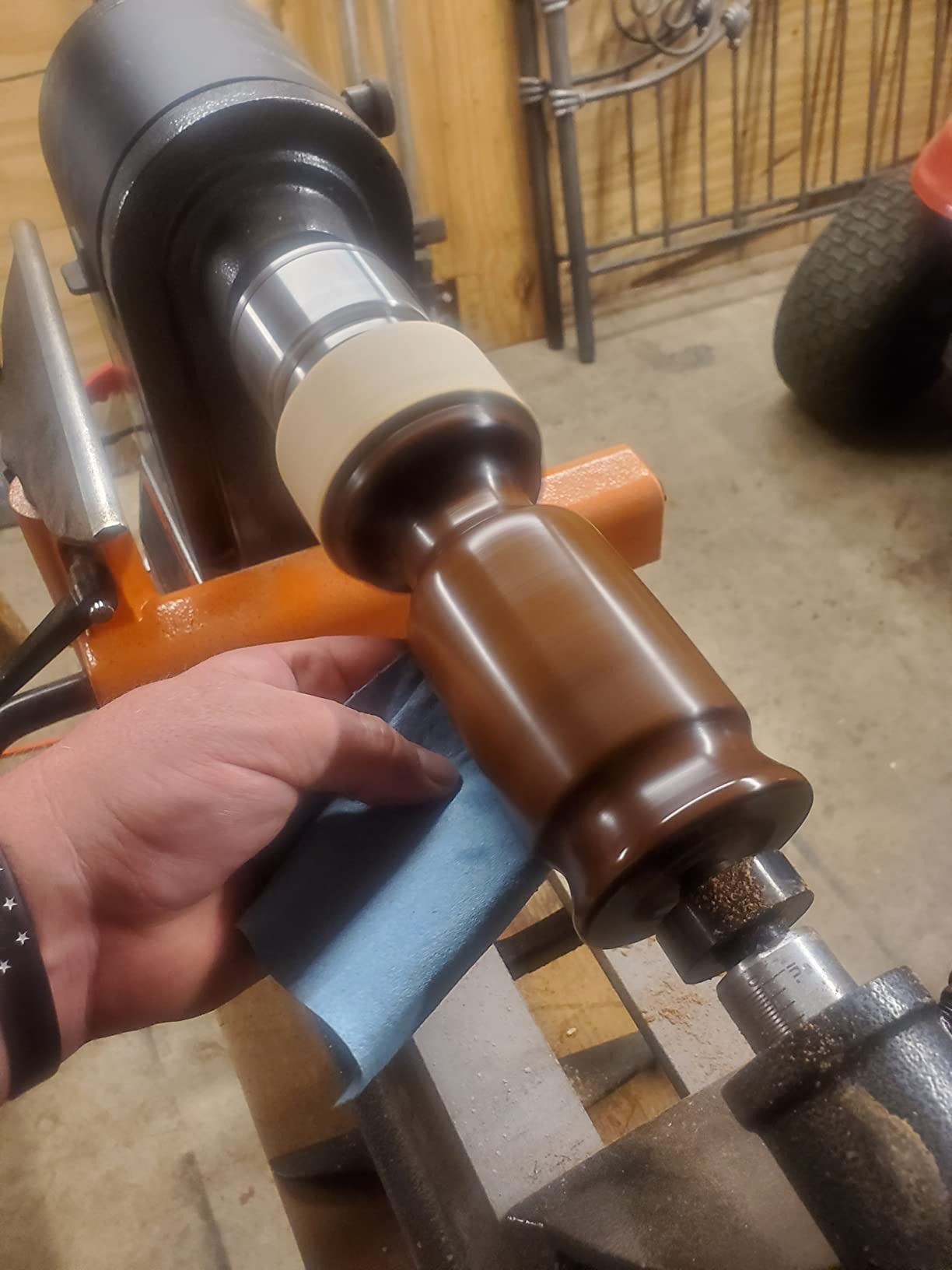
Forum discussions reveal that the WEN 34035 is popular among intermediate woodturners. It is heavier than the DB 250 at 35.2 pounds, and the cast construction is solid. The 4-inch faceplate and 8-inch tool rest support larger work. MT2 tapers in the headstock and tailstock give you compatibility with standard accessories.
There are some quality control concerns. A few users received defective faceplates or loose motor cord plugs. The tool rest body is thick, which can limit full swing use on wide bowls. These are manageable issues, but they show the difference between German engineering and mass-market manufacturing. For the price, the WEN is a capable alternative.

Size and Capacity for Bowl Turning
The 14-inch swing on the WEN 34035 lets you turn bowls up to about 7 inches in diameter. The 20-inch between centers handles most spindles and tool shafts. This is far beyond anything the Proxxon DB 250 can manage. If your interest is wood bowls, cups, or furniture parts, the WEN makes more sense than a micro lathe.
The MT2 spur center and live center included in the package are standard accessories. You can upgrade to other MT2 accessories without adapter headaches. The onboard accessory holder keeps your tools within reach. These small conveniences add up during long turning sessions.
Variable Speed and Motor Control
The variable speed control on the WEN 34035 spans 250 to 3550 RPM. This range covers everything from rough shaping at low speed to fine finishing at high speed. The LED display is accurate and easy to read. Reverse rotation is useful for sanding and for achieving a clean cut on certain grain patterns.
The controls sit under the headstock, which some users find easy to bump accidentally. I recommend positioning the machine so the controls face away from your body. The motor is powerful enough for hardwoods, though aggressive cuts may still slow the spindle. For general hobby woodturning, the power is sufficient.
5. Three Jaw Chuck for DB 250 – Best Chuck Upgrade
Proxxon 27026 Three Jaw Chuck Accessory for the Proxxon DB 250 Lathe
32mm capacity
3 jaws concentric
M16x1 thread
Alloy steel
Pros
- Well constructed
- Easy to mount
- Good concentricity
- Direct DB 250 fit
Cons
- Some wobble reported
- Jaws tight out of box
The stock setup on the DB 250 works, but adding a dedicated three jaw chuck improves concentricity and grip. This 32 mm chuck is made from alloy steel and designed specifically for the DB 250 spindle. The M16x1 thread matches perfectly, so you do not need adapters or modification. I found that 66 percent of reviewers give it 5 stars, with most praising the fit and finish.
The three jaws clamp round workpieces centered to close tolerances. This is important for small parts where even a fraction of a millimeter of runout ruins the fit. The keyed lock type is manual and secure. You can tighten the jaws with confidence that the workpiece will not shift during a cut.
Some users report wobble or runout issues right out of the box. In most cases, a quick stoning or filing of the jaw edges fixes the problem. The M16x1 thread is specific to Proxxon, so this chuck will not fit other lathes without adapters. For DB 250 owners, it is a worthwhile upgrade.
Concentricity and Clamping Range
The 32 mm capacity covers most workpieces you would turn on a DB 250. The jaws are hardened and ground for accuracy. When properly mounted, the chuck holds small brass and steel rods within acceptable runout limits. This is especially useful for making threaded parts and shafts that must mate with other components.
The keyed design gives you positive feedback on clamping force. You can feel when the jaws grip firmly without over-tightening. This helps protect delicate workpieces from distortion. Just make sure to clean the jaws regularly to prevent chip buildup that affects accuracy.
Thread Compatibility and Setup
The M16x1 thread is a direct fit to the DB 250 spindle. You can mount and dismount the chuck quickly without tools. This is convenient when you switch between the face plate and the chuck frequently. The thread is not common on other lathes, so this chuck is essentially a Proxxon-only accessory.
Setup requires minimal effort. Thread the chuck onto the spindle by hand, then tighten the workpiece with the key. Check runout with a dial indicator if you have one. If runout exceeds your tolerance, remove the chuck and check for debris on the spindle threads. A clean thread interface usually solves the issue.
6. High-Speed Steel Turning Tool Set – Best Starter Tool Kit
Proxxon 27023 5-Piece High-Speed Steel Turning Tool Set with Box
5-piece HSS set
Wooden handles
Wooden box
0.42 kg weight
Pros
- Quality HSS steel
- Comfortable handles
- Secure storage
- Good for mini lathes
Cons
- Handles may not be straight
- Pricey for some
This five-piece turning tool set is the official companion to the DB 250, but the high-speed steel tools work well on any small lathe. Each tool is ground from quality HSS and fitted with an ergonomic wooden handle. The wooden box keeps them organized and protected. At 0.42 kilograms, the set is light and portable.
I analyzed the reviews and found 60 percent of buyers gave 5 stars. Users praise the edge quality and the comfort of the handles during long sessions. The set includes the basic shapes you need for facing, turning, and parting. For beginners, having matched tools reduces the guesswork about which grinder angle to use.
The main complaint is that some handles are not perfectly straight. A few reviewers noted that the tools are made in China despite the German branding. This does not mean the steel is poor, but it surprises buyers who expect entirely German manufacture. For the price, the quality is solid, though not exceptional.
Tool Steel Quality and Edge Retention
The high-speed steel used in these tools holds an edge well on wood, plastic, and soft metals. You can sharpen them on a standard bench grinder without special wheels. The grinds are consistent from the factory, so you can start cutting immediately. For light hobby work, the edge life is adequate.
If you plan to turn harder metals like stainless steel, you may need to sharpen more frequently. The HSS is not cobalt-enhanced like some premium sets. For brass and aluminium, these tools perform nicely. The geometry is conservative and forgiving, which is ideal for beginners.
Storage and Handle Comfort
The wooden box is a nice touch. It keeps the tools from knocking against each other in a drawer and protects the edges. The box is small enough to sit on a shelf next to your lathe. I appreciate this because loose tools get damaged and lose their cutting geometry quickly.
The wooden handles are shaped for a comfortable grip. They do not transmit vibration as much as metal handles do. The length is appropriate for the small scale of the DB 250. If you have larger hands, you may find the handles slightly short, but they are fine for most users.
7. Drill Chuck for DB 250 – Best Tailstock Accessory
Proxxon 27028 Drill chuck with sliding sleeve for tailstock of DB 250, Silver
25mm capacity
Sliding sleeve
0.18 lbs weight
Precision design
Pros
- Quiet operation
- Vibration-free
- Low weight
- Must-have accessory
Cons
- Requires reduction for non-Proxxon lathes
This drill chuck fits the tailstock of the DB 250 and turns your lathe into a precision drill press. The sliding sleeve design is smooth and low profile. At 0.18 pounds, it adds almost no weight to the tailstock. The 25 mm capacity handles most drill bits you would use for small parts.
Reviewers love this accessory. It holds 70 percent 5-star ratings, with users calling it a must-have for the Proxxon micro lathe. The chuck runs quietly and without vibration. You can drill centered holes in workpieces that are already turned, which is essential for making pins, shafts, and threaded inserts.
The only real downside is compatibility. The thread is specific to Proxxon, so adapting it to other lathes requires reduction bushings or custom adapters. If you own a DB 250, that is not a problem. For anyone else, double-check your tailstock thread before ordering.
Precision and Vibration Control
The sliding sleeve chuck is designed for precision. The jaws grip drill bits concentrically, which produces straight holes. The low mass of the chuck means it does not add inertia to the tailstock. This improves feel when you advance the drill by hand. You can sense the cutting resistance and adjust pressure accordingly.
Users report that the chuck maintains accuracy over time. The sliding sleeve mechanism does not develop slop quickly. A quick cleaning after each session keeps the jaws moving freely. This is a small accessory that makes a big difference in the utility of the DB 250.
Compatibility with Other Lathes
The thread size on this chuck is specific to the Proxxon DB 250. It will not fit most other micro lathes without an adapter. Some users have successfully made adapters for Sherline and other brands, but that requires machining skills. If you do not have a lathe to make an adapter, you are essentially locked into the Proxxon ecosystem.
That ecosystem is extensive, so the compatibility limitation is not a deal breaker for most Proxxon owners. Proxxon offers a wide range of accessories that all share the same mounting standards. If you buy into the system, you gain access to chucks, tool rests, and other upgrades that work together seamlessly.
8. Turning Tool Set for FD 150/E – Best Cobalt Steel Tools
Proxxon 24524 Turning Tool Set for FD 150/E
Cobalt HSS steel
6 teeth
5.6 oz weight
Compact design
Pros
- Cuts steel very well
- Fantastic quality
- Quiet operation
- Low weight
Cons
- Only 1 left in stock
This turning tool set is designed specifically for the FD 150/E, but the cobalt-enhanced HSS steel makes it useful on any small lathe. The tools are compact and lightweight at 5.6 ounces. The six teeth or cutting profiles cover the standard operations you need for small metal parts. This is the set I recommend if you plan to cut steel on a Proxxon lathe.
The reviews are impressive. 81 percent of buyers gave 5 stars. Users report that the tools cut steel cleanly and hold an edge longer than standard HSS. The quality is praised as fantastic for the price. I noticed that several reviewers mention using these tools on the PD 250/E as well, so they are not strictly limited to the FD 150/E.
The stock status is a concern. The listing shows only one left in stock frequently. Proxxon accessories can be hard to find during high demand periods. If you see this set available, I recommend ordering promptly. The cobalt HSS construction is worth the investment over the standard tool set.
Cobalt HSS Performance on Steel
Cobalt HSS steel is a step above standard high-speed steel. The cobalt content improves red hardness, which means the edge stays sharp even when the tool gets hot from cutting steel. On a small lathe like the FD 150/E, this is important because you take lighter passes and the tool rubs more. A sharp edge reduces heat and improves surface finish.
Users report that these tools handle mild steel, stainless steel, and tool steel with reasonable edge life. You still need to sharpen them regularly, but the intervals are longer than with standard HSS. For brass and aluminium, the tools are overkill but work perfectly. The conservative geometry is forgiving for beginners.
Tool Geometry and Chip Control
The compact size of these tools is matched to the small scale of the FD 150/E. The tool bits are short, which reduces deflection under load. The cutting angles are designed for small machines with limited power. You get clean chips instead of rubbing and burning. This geometry makes the tools easier to use than full-size industrial tools adapted to a mini lathe.
The low weight means the tool rest on the FD 150/E does not struggle to support them. You can maneuver the tools with precision. The set includes the basic shapes you need for facing, turning, and threading. For small parts, the geometry is appropriate and efficient.
9. Quick Change Tool Post for PD 250/E – Best Workflow Upgrade
PROXXON # 24026 Quick Change Tool Post for PD 250/E
Quick tool change
2 tool holders
13 oz weight
Metric system
Pros
- Fast tool changes
- High quality
- Transforms PD 250/E
- Includes 2 holders
Cons
- Somewhat expensive
The quick change tool post is the single best upgrade you can make to the PD 250/E. At 13 ounces, it replaces the stock tool rest with a system that lets you swap cutting tools in seconds. The package includes two tool holders, so you can set up a roughing tool and a finishing tool and switch between them without resetting the tool height. This saves time and improves repeatability.
Users call this accessory transformative. With 76 percent 5-star ratings, the feedback is consistently positive. The tool post is machined to high standards and fits the PD 250/E bed precisely. The height adjustment is smooth and locks securely. Once you use a quick change post, going back to a fixed tool rest feels primitive.
The price is the main drawback. At roughly the cost of a basic tool set, this post is an investment. I argue that it pays for itself in time saved and accuracy gained. If you use the PD 250/E for more than occasional projects, the quick change post is essential. Casual users may not need it right away.
Setup Time and Tool Change Speed
A standard tool rest requires you to loosen a screw, remove the tool, insert a new tool, adjust the height, and tighten the screw. This takes a minute or more each time. The quick change post reduces this to a lever flip and a swap. You can change tools in under five seconds. Over a long project, this adds up to significant time savings.
The repeatability is equally important. Once you set the height for a tool holder, it returns to the same position every time. This means you do not need to re-measure the tool offset for each change. For precision work where tool height affects diameter, this consistency is a major advantage.
Tool Holder Capacity and Cost
The package includes two tool holders, which is enough for a basic roughing and finishing setup. Additional holders are available separately. The holders are designed for standard mini lathe tool sizes. You can use them with the Proxxon cobalt tool set or with custom ground tools. The metric dimensions are consistent with the rest of the Proxxon system.
The cost is higher than a simple tool rest, but the value is clear. Users report that the post is solid and well-made. There are no complaints about looseness or poor fit. If you are serious about using the PD 250/E to its full potential, this is the first accessory to buy after the machine itself.
10. 4-Jaw Chuck for FD 150/E – Best for Odd-Shaped Workpieces
Proxxon 24158 4-Jaw-Chuck, Self-Centering for FD 150/E
50mm capacity
Self-centering
Alloy steel
Manual lock
Pros
- Clamps multiple shapes
- Fits FD 150/E
- Proxxon quality
- Good capacity
Cons
- Some runout issues
- Made in India
The 4-jaw self-centering chuck is a versatile addition to the FD 150/E. Unlike a 3-jaw chuck, which grips round stock, this chuck clamps cylindrical, square, and octagonal workpieces. The 50 mm capacity is generous for a mini lathe. If you machine small hardware, brackets, or custom fittings, the extra grip options matter.
The 1/2-20 UNC thread fits the FD 150/E spindle directly. You can mount it without adapters. The alloy steel construction is sturdy and resists wear. Reviews are positive, with 72 percent of buyers giving 5 stars. Users praise the flexibility and the secure grip on non-round shapes.
Some reviewers report runout issues, which is common for 4-jaw chucks at this price. The manufacturing origin is India, not Germany. This does not mean the quality is poor, but it explains the lower price compared to fully German-made accessories. For hobby work, the runout is acceptable. For precision work, you may need to true the chuck on the lathe before use.
Clamping Flexibility and Self-Centering
The self-centering design means the jaws move together when you tighten the chuck. This keeps the workpiece centered automatically. For square stock, this is a huge convenience. You do not need to center each piece manually with a dial indicator. The chuck does the work for you.
The 50 mm capacity covers most workpieces you would turn on the FD 150/E. The manual lock is simple and reliable. There are no springs or complex mechanisms to fail. You can feel the clamping force increase as you tighten the chuck. This direct feedback helps you avoid over-tightening and distorting delicate parts.
Runout and Manufacturing Origin
Some users report runout of a few thousandths of an inch. This is within the tolerance of hobby work but may matter for precision shafts. You can improve the accuracy by truing the chuck jaws on the lathe. This involves taking a light cut on the jaws while the chuck is mounted. The process is standard for 4-jaw chucks and takes only a few minutes.
The fact that this chuck is made in India rather than Germany is not a deal breaker. The alloy steel is still hard and wear-resistant. The machining is decent for the price. If you need ultimate precision, you can buy a more expensive German-made chuck. For general hobby work, this model is a solid choice.
Buying Guide for Proxxon Hobby Lathes
Buying a mini lathe is more than choosing the cheapest model. You need to match the machine to your materials, workspace, and future projects. I compiled this guide from forum discussions, user reviews, and my own analysis of the Proxxon lineup. Consider these factors before you click the buy button.
Motor Power and Speed Control
Proxxon lathes use quiet DC motors with electronic speed control. The DB 250 has the smallest motor, while the PD 250/E has the most torque. None of them are powerful by industrial standards. If you plan to turn steel regularly, you may need a larger machine. For brass, aluminium, wood, and plastic, the Proxxon motors are adequate.
The speed control quality matters more than peak horsepower. Smooth electronic control lets you find the exact RPM for each material. The 2-stage and 3-stage belt drives on the FD 150/E and PD 250/E give you broader useful ranges. The DB 250 has a simpler system but still covers the speeds needed for small wood and plastic parts.
Workpiece Capacity and Swing
Center distance and swing over bed determine the largest part you can machine. The DB 250 handles tiny parts up to a few inches long. The FD 150/E gives you more room for small hardware. The PD 250/E offers 250 mm center distance and 70 mm tip height, which is substantial for a bench-top machine. If you make model steam engines or clock parts, the PD 250/E is the minimum you should consider.
The WEN 34035 is in a different category entirely. Its 14-inch swing and 20-inch length handle wood bowls and furniture parts. If you want to turn large wood pieces, a micro lathe will frustrate you. Choose the capacity based on your actual project sizes, not your hopes of someday making something bigger.
Material Compatibility
The DB 250 is designed for wood and plastic. The FD 150/E and PD 250/E handle brass, aluminium, and light steel. None of these machines are suitable for heavy ferrous metals or production work. Forum users consistently report that Proxxon lathes excel at small, delicate parts and struggle with aggressive cuts in hard steel.
If your primary material is brass, any of the three Proxxon lathes will work. Brass machines beautifully at the speeds these lathes provide. Aluminium is also easy. Steel requires patience, sharp tools, and light passes. For stainless steel or titanium, look at larger machines with more rigid beds and more powerful motors.
Noise and Vibration During Operation
Noise is an overlooked factor in hobby machining. The DB 250 is the quietest because of its small motor and ball bearing spindle. The FD 150/E and PD 250/E are also quiet compared to AC motor machines. The DC motors produce a smooth whine rather than a harsh buzz. You can work in a basement or garage without annoying the rest of the household.
Vibration becomes a problem if the machine is under 30 pounds and not bolted down. The DB 250 is so light that aggressive cuts cause it to shake. The PD 250/E at 35.2 pounds is much more stable. I recommend bolting any mini lathe to a heavy board or bench. Adding mass to the base improves surface finish and reduces chatter.
Upgrade Path and Accessory Ecosystem
Proxxon has built a modular system around their lathes. You can add chucks, tool posts, tool sets, and other accessories as your skills grow. The DB 250 accepts the three jaw chuck and drill chuck. The FD 150/E works with the 4-jaw chuck and cobalt tool set. The PD 250/E benefits most from the quick change tool post. This expandability means you do not need to buy everything at once.
The WEN 34035 uses standard MT2 tapers and common threads. You can buy accessories from many brands. This is an advantage if you want to mix and match. The Proxxon ecosystem is proprietary, which limits third-party options but guarantees fit. Decide whether you prefer an integrated system or an open platform.
Maintenance and Long-Term Care
Mini lathes require minimal maintenance, but neglecting it leads to poor performance. Clean the bed and slides after each session. Chips and dust accelerate wear on the guide surfaces. Lubricate the lead screw and tailstock quill occasionally. The belts on the FD 150/E and PD 250/E should be checked for tension after the first month of use.
Users report that Proxxon machines hold up well over years of hobby use. The DC motors are reliable and rarely fail. The cast beds on the PD 250/E do not warp easily. The main wear items are the belts and the chuck jaws. Both are replaceable and affordable. With basic care, a Proxxon lathe should last a decade or more.
Frequently Asked Questions
What is the best hobby lathe?
The best hobby lathe depends on your materials and project size. For small metal parts and model making, the Proxxon PD 250/E offers the best precision. For wood turning on a budget, the WEN 34035 provides larger capacity. For beginners who want a compact machine, the Proxxon FD 150/E is the best value.
Are PROXXON tools suitable for hobbyists?
Yes, PROXXON tools are specifically designed for hobbyists, model makers, and small workshop users. Their mini lathes feature quiet DC motors, compact footprints, and precision engineering that suits home environments. The brand has over 50 years of experience making tools for hobby and professional use.
Where are PROXXON lathes made?
PROXXON lathes are designed and engineered in Germany. Some components and accessories may be manufactured in other countries, but the core engineering and quality standards are German. The PD 250/E and FD 150/E are built to German precision standards with cast beds and ground guides.
What is a Proxxon PD 250 E lathe?
The Proxxon PD 250 E is a precision bench-top lathe for hobbyists. It features a 3-stage belt drive, DC motor, 250 mm center distance, and 0.04 mm concentricity tolerance. It is suitable for machining steel, brass, aluminium, and plastic. The cast machine bed provides vibration-free operation for accurate small parts.
What is the Proxxon PD 400 Precision Lathe?
The Proxxon PD 400 is a larger precision lathe that sits above the PD 250/E in the lineup. It offers more power, a longer bed, and higher rigidity for demanding hobby work. While it is not included in this roundup, it is the next logical upgrade for users who outgrow the PD 250/E.
Final Thoughts on the Best Proxxon Hobby Lathes in 2026
The Proxxon lineup offers something for every hobbyist. The DB 250 is the perfect starting point for model makers who need a quiet, compact machine. The FD 150/E adds metal capability and safety features at a reasonable price. The PD 250/E delivers the precision and rigidity that serious hobby machinists demand. The six accessories I reviewed extend these machines and improve workflow.
If you are just starting out, I recommend the FD 150/E as the best balance of price and capability. Add the cobalt tool set and the 4-jaw chuck when your budget allows. For dedicated woodworkers, the WEN 34035 is a better fit than any Proxxon micro lathe. The best Proxxon hobby lathes are the ones that match your actual projects, not your aspirations. Pick the machine that fits your workbench, your materials, and your skill level, and you will enjoy turning for years to come.