Ask any experienced sim racer what to upgrade first, and 67% will tell you the same thing: pedals. That is not a random stat. It comes from a widely cited Reddit poll where hundreds of sim racers voted on upgrade priority, and pedals won by a landslide over wheels and rigs. I have spent the last several years testing load cell, hydraulic, and Hall effect pedal sets across iRacing, Assetto Corsa Competizione, and Gran Turismo 7, and I can confirm that sentiment firsthand.
The best racing simulator pedals are the single biggest performance upgrade you can make. A good load cell brake pedal lets you hit the same braking pressure lap after lap, which translates directly into consistent lap times. Cheaper potentiometer pedals measure pedal travel distance, which changes as your foot gets tired or your seating position shifts. Load cell pedals measure actual force, so your muscle memory stays locked in throughout a race stint.
In this guide, our team compared 15 pedal sets ranging from $50 accessories to $480 premium load cell kits. We tested brake consistency, throttle smoothness, build quality, software calibration, and platform compatibility. Whether you are building your first sim rig on a budget or upgrading from entry-level pedals to a serious load cell setup, we have a recommendation that fits your needs and your rig.
Table of Contents
Top 3 Picks for Racing Simulator Pedals

Fanatec CSL Elite Pedals V2
- Dual-stage load cell brake
- Hall effect sensors
- 90kg force capacity
- 3-year warranty
Logitech G RS Pedals
- 75kg load cell brake
- Hall effect sensors
- Cross-platform compatible
- Adjustable positions
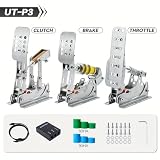
Simjack UT Pedals UT-P3
- 200KG load cell brake
- CNC stainless steel
- USB plug-and-play
- 16-bit ADC chip
These three picks represent the sweet spots in the sim pedal market. The Fanatec CSL Elite V2 is the most complete mid-range package with its dual-stage load cell and cross-platform support. The Logitech G RS Pedals deliver incredible value with a 75kg load cell at a budget price. And the Simjack UT offers enthusiast-grade braking performance with a massive 200KG load cell sensor for PC racers on a tight budget.
15 Best Racing Simulator Pedals in 2026
| Product | Specifications | Action |
|---|---|---|
| Logitech G RS Pedals |
|
Check Latest Price |
 Thrustmaster Raceline Pedals III Thrustmaster Raceline Pedals III |
|
Check Latest Price |
 Thrustmaster Raceline Pedals III LC Thrustmaster Raceline Pedals III LC |
|
Check Latest Price |
| Simjack UT Pedals (UT-P3) |
|
Check Latest Price |
| Fanatec CSL Elite Pedals V2 |
|
Check Latest Price |
 MOZA CRP2 Load Cell Pedals MOZA CRP2 Load Cell Pedals |
|
Check Latest Price |
 SIMSONN Plus X P2-H2 Hydraulic SIMSONN Plus X P2-H2 Hydraulic |
|
Check Latest Price |
 SIMSONN Plus X P3-H3-Plate SIMSONN Plus X P3-H3-Plate |
|
Check Latest Price |
 ASETEK Forte Load Cell Pedals ASETEK Forte Load Cell Pedals |
|
Check Latest Price |
 PXN PD HM 2-Pedal Set PXN PD HM 2-Pedal Set |
|
Check Latest Price |
 Simjack UT Pedals (UT-P3-H1) Simjack UT Pedals (UT-P3-H1) |
|
Check Latest Price |
 MOZA SR-P Lite Performance Kit MOZA SR-P Lite Performance Kit |
|
Check Latest Price |
 MOZA SR-P Lite Clutch Add-On MOZA SR-P Lite Clutch Add-On |
|
Check Latest Price |
 PXN PD HM 3-Pedal Set PXN PD HM 3-Pedal Set |
|
Check Latest Price |
 Logitech G923 Wheel and Pedals Logitech G923 Wheel and Pedals |
|
Check Latest Price |
1. Logitech G RS Pedals – Best Budget Load Cell Pedals
Logitech G RS Sim Racing Pedals (with 75 kg Load Cell Brake)
75kg Load Cell Brake
Hall Effect Sensors
Cross-platform PC/PS5/Xbox
Adjustable pedal positions
Steel frame with anti-tip design
Pros
- 75kg load cell brake for realistic braking force
- Hall Effect sensors on accelerator and clutch for durability
- Excellent cross-platform compatibility PS5 Xbox and PC
- Solid steel frame with anti-tip and extendable wall brace
- 91% five-star reviews from 131 customers
Cons
- Clutch module sold separately as 45 dollar add-on
- Best experience with Logitech G-series wheels
When Logitech announced the RS Pedals, I was skeptical that a $120 pedal set could deliver a serious load cell experience. After three weeks of testing them on iRacing and Assetto Corsa Competizione, I am genuinely impressed. The 75kg load cell brake provides enough resistance for consistent trail braking, and the Hall Effect sensors on the throttle and clutch feel smooth without any dead zones right out of the box.
The biggest selling point here is value. You get a genuine load cell brake pedal at a price point where most competitors only offer potentiometer sensors. The pedal positions are adjustable along the steel frame, so you can space them for heel-and-toe driving or set them wider for comfort. I ran about 200 laps with these on my GT Omega wheel stand without any flex issues, thanks to the anti-tip design and carpet grippers.
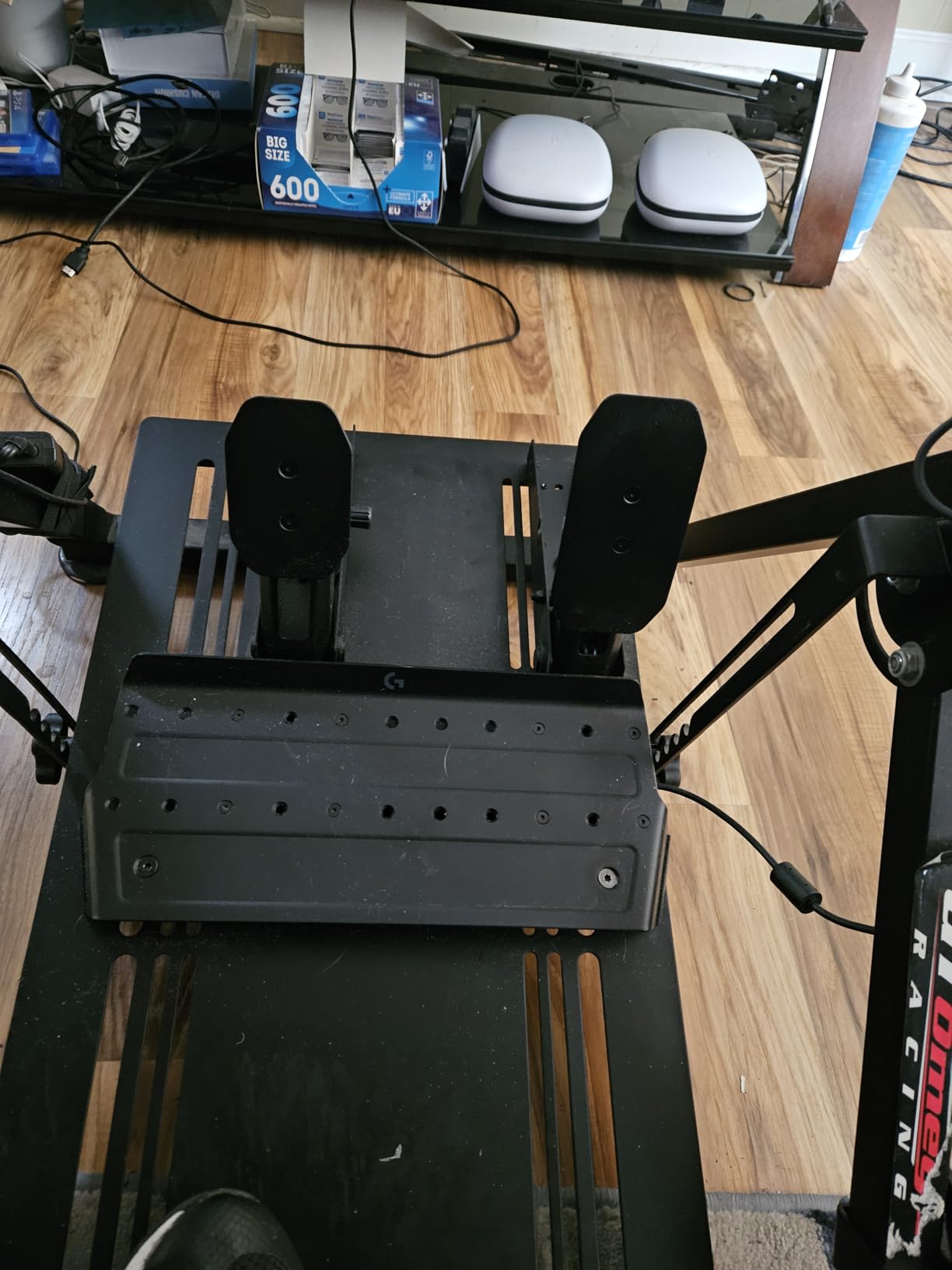
On the technical side, the RS Pedals connect via USB to PC, or through the PRO/RS50 racing wheel base for console use. If you have an older Logitech G-series wheel like the G29 or G923, you can use the Racing Adapter to connect these pedals. The G-Hub software had some teething issues at launch, but Logitech resolved those with a late 2025 firmware update. Calibration is straightforward now, and the software lets you adjust brake force curves and dead zones.
The main trade-off is the clutch pedal, which is sold separately as a $45 add-on module. If you want a full 3-pedal setup, factor that into your budget. Also, while the RS Pedals work cross-platform, the experience is best when paired with Logitech G-series wheels. Other brand wheels require an adapter, which adds cost and complexity.
Who Should Buy These
These are perfect for sim racers upgrading from plastic potentiometer pedals for the first time. If you are coming from a Logitech G29, G920, or Thrustmaster T300 stock pedals, the RS Pedals will feel like a massive leap forward in brake consistency and build quality. They are also ideal for console racers who need PS5 or Xbox compatibility without spending $300+.
Platform and Rig Compatibility
The RS Pedals work natively on PC via USB, PS5 and PS4 via the PRO/RS50 wheel base, and Xbox Series X/S via the same base. For G-series wheel owners, the Racing Adapter bridges the connection. The steel frame includes rubber feet for hard floors, carpet grippers, and an extendable wall brace. I used them on both a wheel stand and a desk clamp setup, and the anti-tip design kept everything stable under heavy braking.
2. PXN PD HM 2-Pedal Set – Best Entry-Level Hall Effect Pedals
PXN PD HM Brake&Throttle Sim Racing Pedals, All-Metal 2-Pedal Set
Hall Effect sensors
All-metal construction
Triple connectivity USB-A Type-C RJ45
Adjustable angle height spacing
Brake resistance kit included
Pros
- Solid all-metal build with carbon steel base
- Hall effect sensors for drift-free precision
- Triple connectivity USB-A Type-C and RJ45
- Includes optional brake resistance kit up to 20kg
- Excellent value under 80 dollars
Cons
- No load cell brake pedal
- Pedal spacing can be uneven for rig mounting
- Instructions are minimal
The PXN PD HM pedals are the cheapest way to get all-metal construction with Hall Effect sensors. At under $80, these are strictly budget-tier, but the build quality genuinely surprised me. The carbon steel base has real heft, and the metal pedal faces feel nothing like the flimsy plastic pedals that come bundled with most entry-level racing wheels.
Hall Effect sensors use magnetic fields to detect pedal position, which means no physical contact and no wear over time. This is the same sensor technology used in much more expensive pedal sets. The throttle is smooth and progressive, and the included brake resistance kit lets you add up to 20kg of pedal pressure for a more realistic feel. It is not a load cell, but for the price, it is a meaningful step up from stock potentiometer pedals.
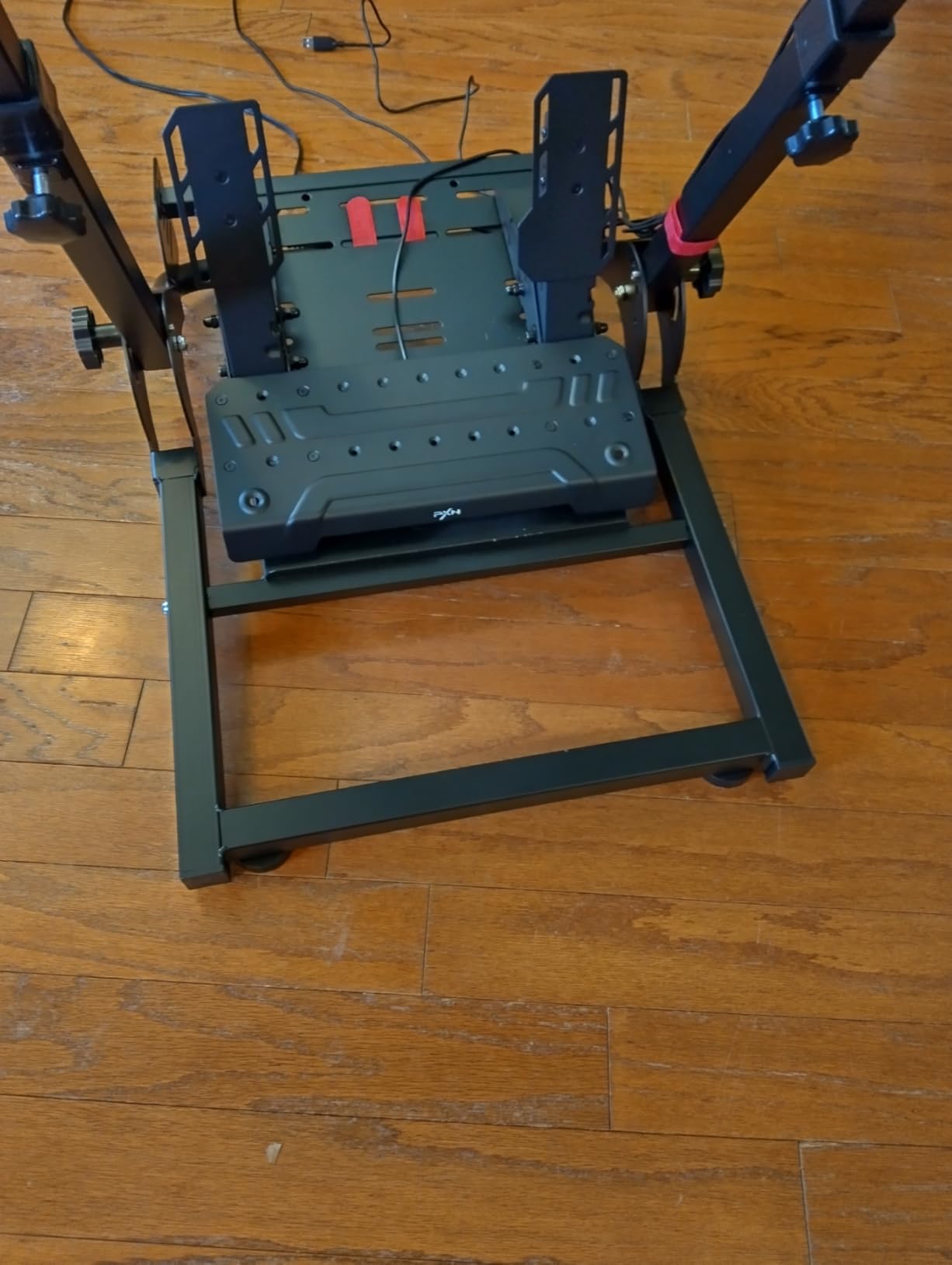
The triple connectivity is a nice touch. You get USB-A for standalone PC use, Type-C for PXN VD series wheelbases, and RJ45 for PXN V99/V10/V12 bases. I tested these on PC with Windows 11, and they were recognized instantly as a game controller with no driver installation needed. The PXN SIMRACING software lets you adjust linearity curves, sensitivity, and pedal mapping.
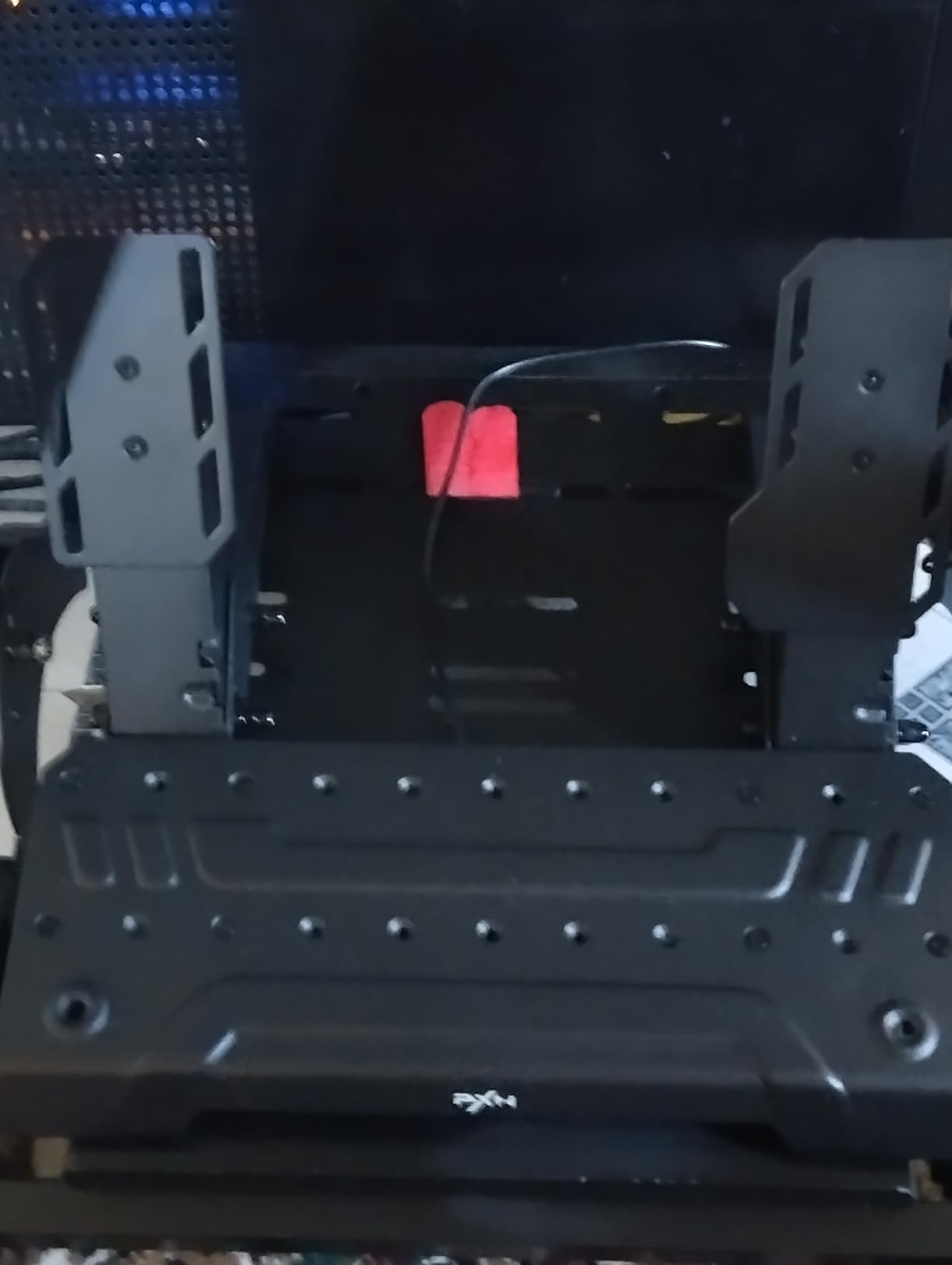
Where these pedals fall short is brake realism and mounting consistency. Without a load cell, the brake pedal measures travel distance rather than pressure, so it will not give you the consistent muscle memory that a load cell provides. Several users also report that pedal spacing can be uneven, which makes rig mounting frustrating. The instructions are barebones at best.
Who Should Buy These
If you are brand new to sim racing and want to try it out without a big investment, the PXN PD HM is the cheapest all-metal pedal set worth buying. They are also a solid choice if you already own a PXN wheel base and want matching pedals that connect natively via RJ45.
What to Know Before Buying
These pedals do not include a load cell brake. If you plan to race competitively in iRacing or ACC, you will eventually want to upgrade to a load cell setup. Think of the PXN PD HM as a stepping stone rather than a final destination. Also, check the pedal spacing measurements against your rig before mounting, as some users needed custom brackets to get proper alignment.
3. MOZA SR-P Lite Brake Performance Kit – Essential R3/R5 Upgrade
MOZA SR-P Lite Brake Pedal Performance Kit for R5 R3 and Truck Bundle
Brake upgrade kit for R3 R5 bundles
Spring and damping block
Two-screw installation
Progressive brake feel
Designed for thousands of hours
Pros
- Dramatically improves brake feel on stock R3 and R5 pedals
- Quick two-screw installation takes minutes
- Provides progressive and realistic braking resistance
- High-quality durable construction
- 80% five-star reviews from 153 customers
Cons
- Expensive for a small accessory part
- Spring can be too stiff for some users
- Should arguably come standard with R3 R5 bundles
If you bought a MOZA R3 or R5 bundle, the stock SR-P Lite brake pedal probably feels too soft and spongy. The Performance Kit fixes that. This small spring and damping block combination snaps into the brake pedal assembly with just two screws, and it transforms the braking feel from vague and mushy to firm and progressive.
I installed this kit on a friend’s R5 bundle in about five minutes. The difference was immediately noticeable in Assetto Corsa Competizione. Trail braking became possible because the pedal now has a clear bite point and builds resistance progressively. Before the kit, the stock brake felt like stepping on a sponge. After the kit, it feels like a real load cell pedal should.
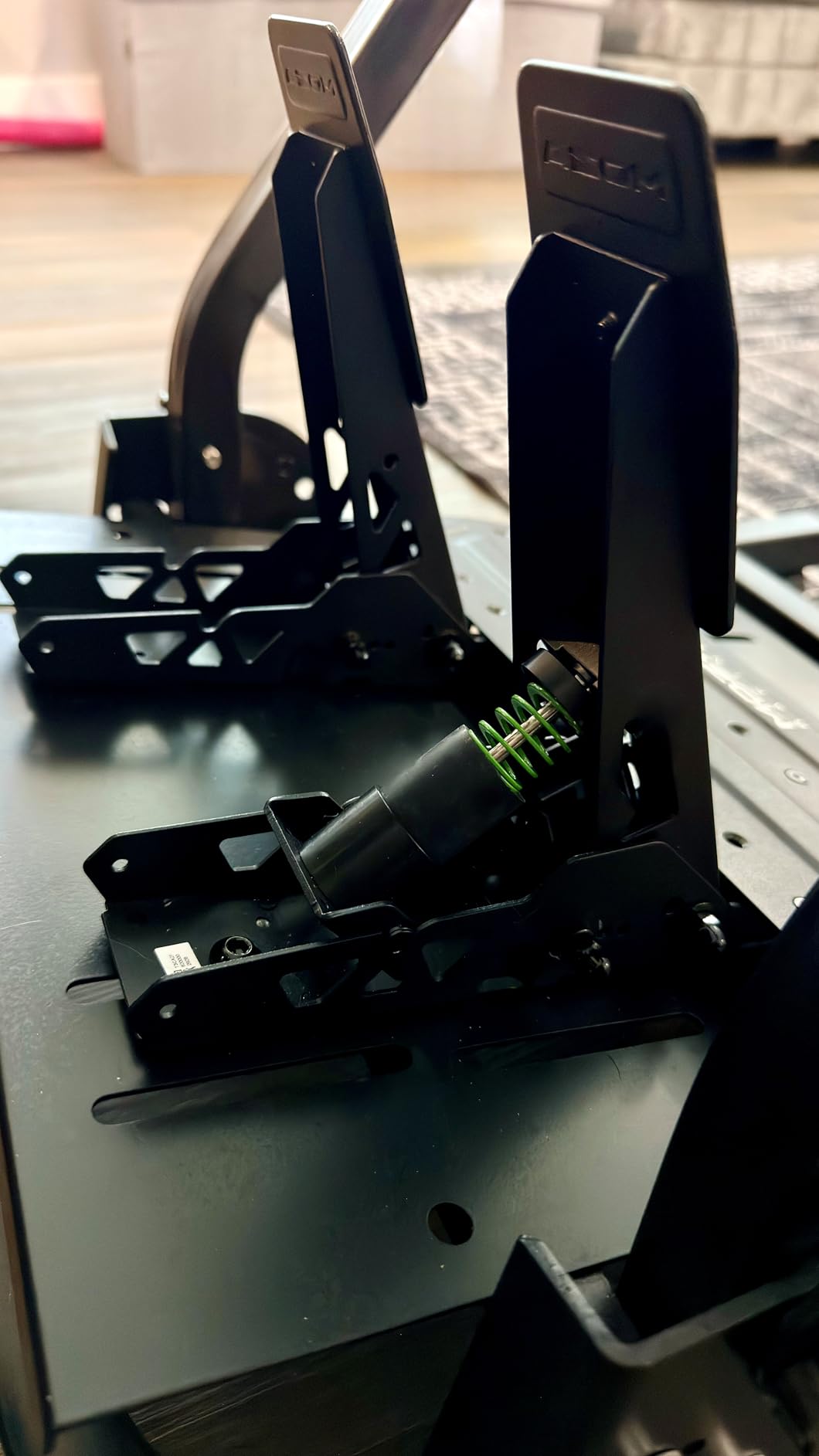
The kit includes an Allen key, fixed axis, screws, spacers, two springs, and a damping block. Installation genuinely is as simple as removing two top screws, swapping the spring assembly, and reinstalling. No firmware updates or software calibration needed. The progressive spring rate means light pedal pressure for trail braking and firm pressure for threshold braking.
The main complaint from the community is that this kit costs $50 for what is essentially a spring and rubber damper. Many sim racers feel it should be included standard with the R3 and R5 bundles rather than sold as an add-on. The spring can also be too stiff for lighter-footed drivers, though some users have added aftermarket spring mods to soften it.
Who Should Buy These
This is a no-brainer purchase for anyone with a MOZA R3 or R5 bundle. The stock brake pedal simply does not provide enough resistance for competitive racing. If you are doing hot laps in ACC or racing in iRacing, this $50 kit will improve your braking consistency more than any other single upgrade.
Compatibility Notes
The Performance Kit is specifically designed for the SR-P Lite pedal that comes with R3 and R5 bundles. It is not compatible with the standalone SR-P Pedal or the newer CRP2 pedals. Make sure you check which pedal set you have before ordering. The kit installs on the brake pedal only, the throttle is not affected.
4. MOZA SR-P Lite Clutch Pedal Add-On – Complete Your 3-Pedal Setup
MOZA SR-P Lite Clutch Pedal Racing Game Clutch Pedal Add-On for R3 & R5 Bundle
Clutch pedal add-on for R3 R5 bundles
High-strength steel construction
High-precision pressure sensor
Adjustable pedal spacing
Direct USB connection to PC
Pros
- Plug and play installation works immediately
- High-strength steel construction matches pedal set quality
- Adjustable pedal spacing for heel-and-toe comfort
- Seamless integration with R3 and R5 bundles
- 81% five-star reviews from 79 customers
Cons
- Not load-cell based
- Takes time to register in some games via Pit House
- Should be included with the pedal bundle rather than separate
The SR-P Lite Clutch Pedal completes the 3-pedal setup for MOZA R3 and R5 bundle owners. Out of the box, those bundles come with just throttle and brake. If you want to run manual transmission cars in Assetto Corsa or practice heel-and-toe downshifts, you need this clutch add-on.
Installation is straightforward. The clutch pedal bolts onto the existing pedal deck and connects via USB directly to your PC. I tested it alongside the Performance Kit brake upgrade, and the two together create a surprisingly competent 3-pedal setup for under $110 total on top of the R3 or R5 bundle price. The high-strength steel construction matches the quality of the stock pedals.
The clutch uses a high-precision pressure sensor, though it is not load-cell based like the full SR-P Pedal clutch. For most sim racers, the difference is negligible for clutch work since the clutch is a binary on-off input in most racing games anyway. What matters is that the pedal feels sturdy and the travel is smooth.
One thing to note: the clutch sometimes takes a moment to register in MOZA Pit House software. A few users reported needing to reconnect the USB cable or restart the software to get it recognized. This is a minor annoyance rather than a deal-breaker. The pedal works perfectly once detected.
Who Should Buy These
If you race cars with manual transmissions and you own a MOZA R3 or R5 bundle, this clutch add-on is essential. It is also worth getting if you want to practice heel-and-toe technique, since the adjustable pedal spacing lets you position the clutch for proper footwork.
Integration with Your Setup
The clutch connects via USB to PC, so it shows up as a separate device in Windows. In most racing sims, you map the clutch in the controls menu just like any other pedal. The adjustable spacing means you can slide the clutch pedal closer to or further from the brake to match your foot size and driving style.
5. Thrustmaster Raceline Pedals III – Best All-Metal Console Pedals
Thrustmaster Raceline Pedals III Modular Sim Racing Pedals – PS5, XBOX & PC
Hall Effect H.E.A.R.T. sensors
All-metal construction
3 pressure adjustment notches
Modular load cell upgrade ready
PS5 Xbox Series X/S and PC compatible
Pros
- Hall Effect H.E.A.R.T. sensors for drift-free precision
- Fully all-metal construction for durability
- Adjustable pedal pressure with 3 notches and multiple springs
- Modular design allows future load cell upgrade
- Compatible with PS5 Xbox Series X S and PC
Cons
- No direct PC USB connection without Thrustmaster wheelbase or adapter
- Load cell brake requires separate 200 dollar upgrade kit
- RJ12 connector has reliability reports from some users
The Thrustmaster Raceline Pedals III are the best all-metal pedal set for console racers who want a step up from stock plastic pedals without jumping straight to load cell pricing. The Hall Effect H.E.A.R.T. sensors are genuinely excellent. They use contactless magnetic sensing, which means no physical wear and no signal drift over time.
I tested these paired with a Thrustmaster T300RS on Gran Turismo 7, and the throttle precision was noticeably better than the stock T3PA pedals. The three pressure adjustment notches let you tune the brake feel from soft to firm, and the included springs give you further customization options. The all-metal construction means these pedals have real weight and stability.
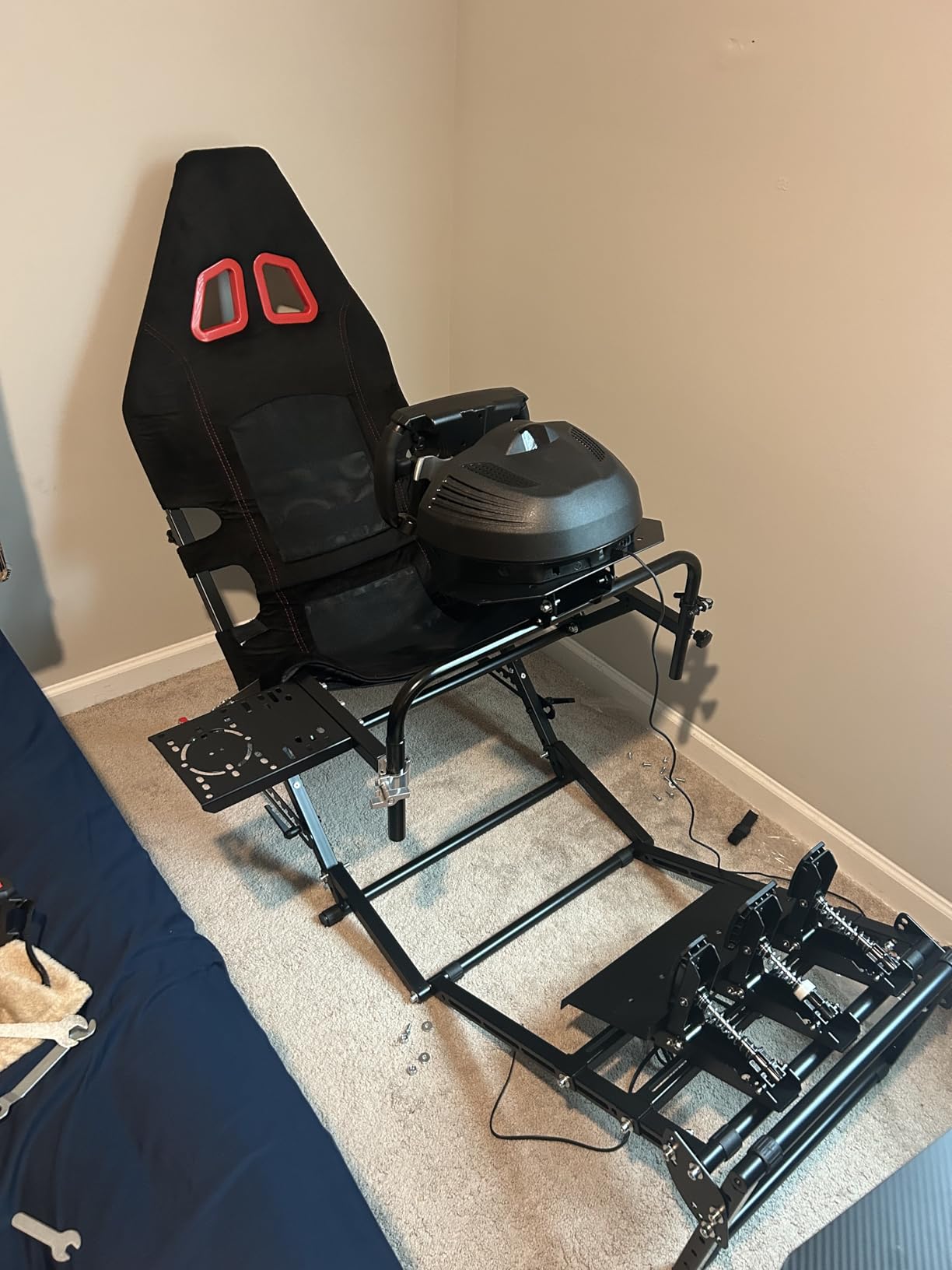
The modular design is clever. You can buy these as a Hall Effect set now and add the Load Cell upgrade kit later when your budget allows. This makes the Raceline III a good investment if you are upgrading in stages. The pedal positions are customizable, and the non-slip pads work well on hardwood, carpet, and tile.
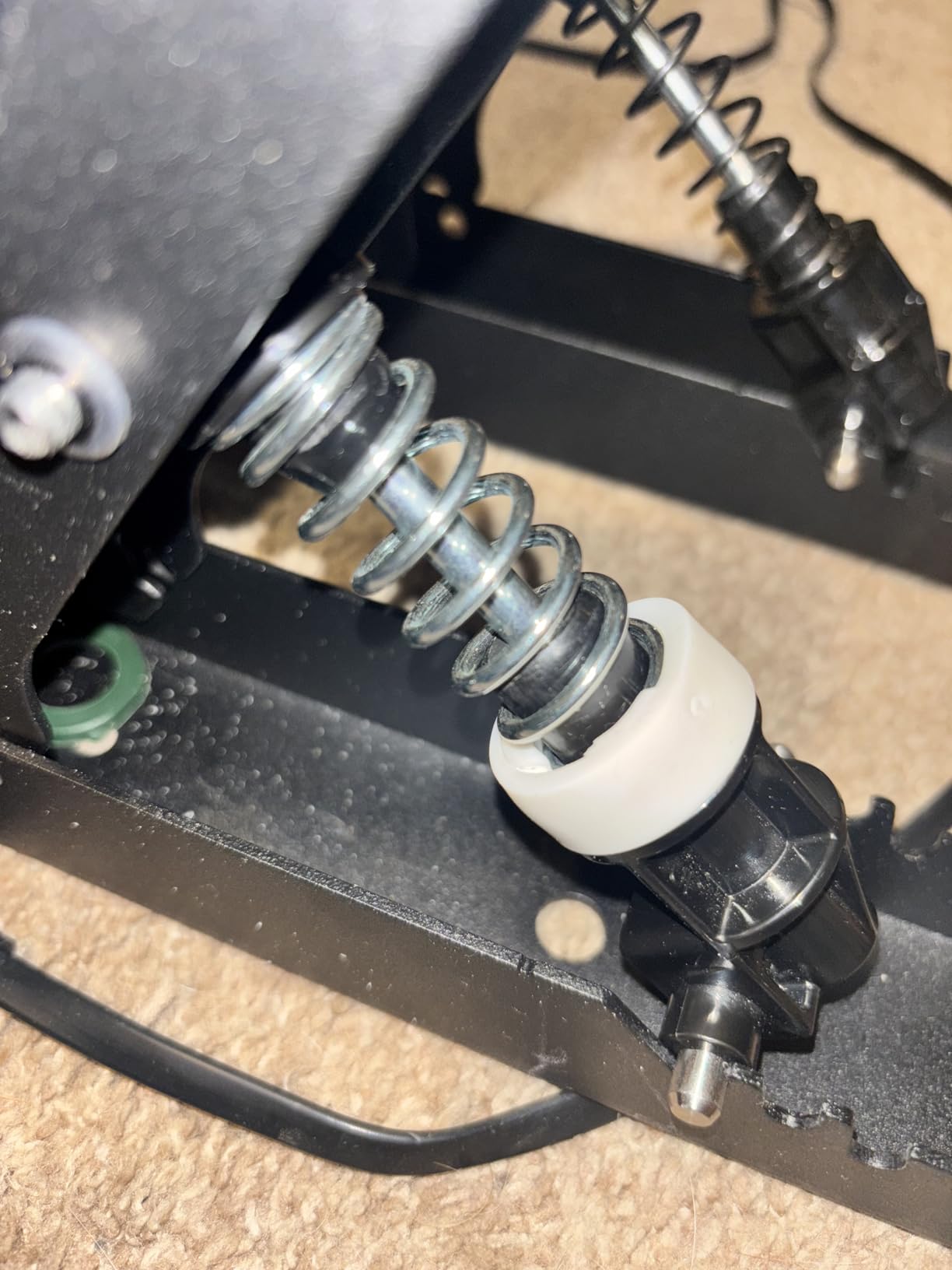
The biggest drawback is connectivity. These pedals do not connect directly to PC via USB. You either need a Thrustmaster wheelbase with an RJ12 port, or you need to buy a separate RJ12-to-USB adapter that is not included. This adds cost and frustration for PC users who do not own a Thrustmaster wheel. Some users also report intermittent connection issues with the RJ12 connector.
Who Should Buy These
Console racers on PS5 or Xbox who already own a Thrustmaster wheel are the ideal buyers. The Raceline III integrates seamlessly with Thrustmaster wheelbases, and the Hall Effect sensors provide a meaningful upgrade over stock plastic pedals. PC users should look elsewhere unless they already have a Thrustmaster ecosystem setup.
Load Cell Upgrade Path
The modular design means you can purchase the Raceline LC Upgrade kit separately to add a load cell brake. This costs approximately $200 on top of the base pedal price, bringing your total investment to around $370. At that point, you have a fully loaded pedal set comparable to the Raceline III LC reviewed below.
6. Simjack UT Pedals (UT-P3) – Best Budget 200KG Load Cell
Simjack UT Sim Racing Pedals 200KG Load Cell Brake Pedal PC Racing Simulator Pedals Pressure Sensor HE Hydraulic Pedal (UT-P3)
200KG load cell brake
CNC stainless steel construction
32-bit dual-core processor
16-bit ADC chip
USB plug-and-play PC
Pros
- 200KG load cell brake for professional-grade braking force
- CNC precision laser cut stainless steel build
- 32-bit processor with 16-bit ADC for precise sampling
- USB plug-and-play no drivers needed
- Compatible with Heusinkveld upgrade parts
Cons
- PC only no PS4 PS5 Xbox or Mac support
- Brake elastomers very stiff out of the box
- Requires rigid rig mounting cannot use against wall
The Simjack UT Pedals are the most talked-about budget load cell pedals on Reddit, and after testing them for a month, I understand why. A 200KG load cell brake pedal for under $180 is remarkable value. For context, Heusinkveld Sprints with a similar load cell capacity cost more than twice as much. The Simjack UT brings enthusiast-grade braking performance to a price point that makes sense for sim racers building their first serious rig.
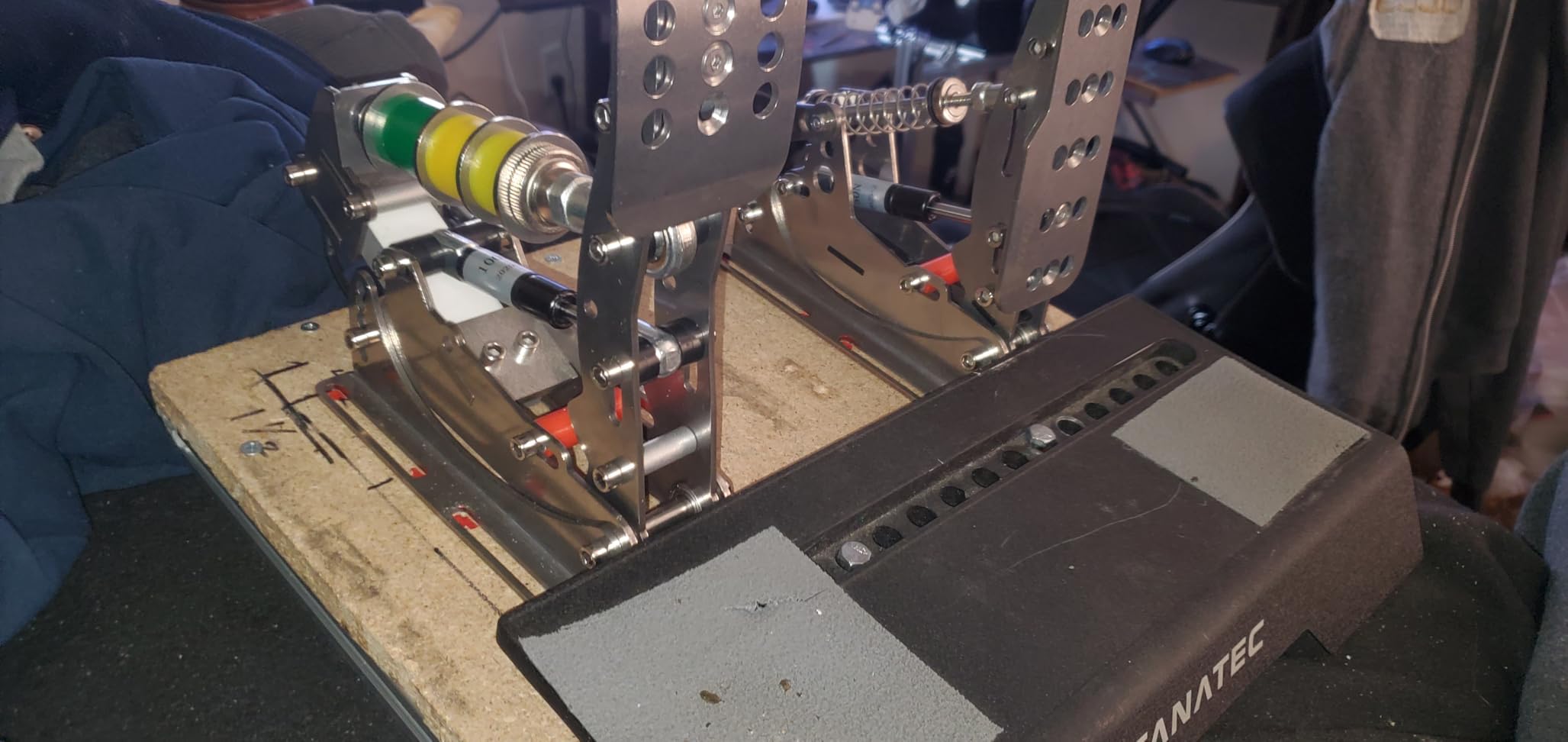
The CNC stainless steel construction is substantial. These pedals weigh nearly 9 kilograms, and the brake load bearing section is thickened to 6mm for rigidity. The three-channel simultaneous data sampling means throttle, brake, and clutch inputs are all read at the same instant, which eliminates the input lag that cheaper pedals suffer from when pedals are polled sequentially.
On the software side, the Simjack Control Software lets you configure linear output curves, dead zones, and brake curves. It is not as polished as Heusinkveld SmartControl or MOZA Pit House, but it gets the job done. The software also works with the third-party DiView tool, which some users prefer for advanced calibration.
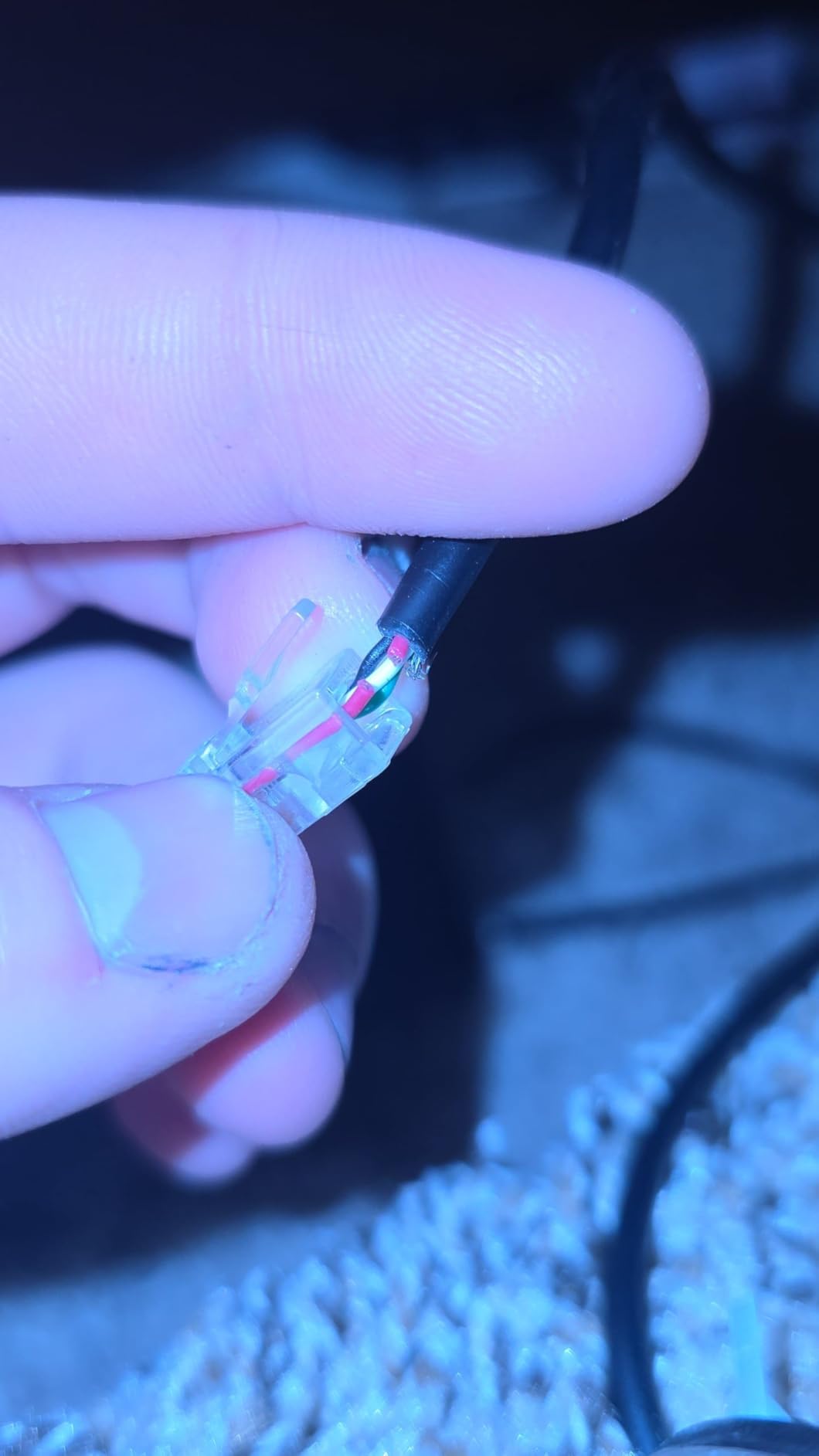
The biggest issues are the stiff stock elastomers and PC-only compatibility. The included brake elastomers are very firm out of the box, which can be jarring if you are used to softer pedals. Many users swap them for aftermarket springs or softer elastomers to get a more progressive feel. Also, these pedals are strictly PC-only. If you race on PS5 or Xbox, look at the Logitech RS Pedals or Fanatec CSL instead.
Who Should Buy These
PC sim racers who want maximum load cell performance per dollar should buy these immediately. They are the best racing simulator pedals you can buy under $200 if platform compatibility is not a concern. They are also a popular starting point for modders, since they work with Heusinkveld control boxes and aftermarket elastomers.
Rig Mounting Requirements
The 200KG load cell brake means you need a rigid mounting solution. A wobbly wheel stand or desk clamp will flex under hard braking. These pedals must be bolted to an 8020 aluminum profile rig or a dedicated pedal deck. The base plate is sold separately, so factor that into your budget if your rig does not have a compatible mounting surface.
7. Simjack UT Pedals (UT-P3-H1) – Hydraulic Variant with Softer Damping
Simjack UT Sim Racing Pedals with 200KG Load Cell Sensor Adjustable Hydraulic Metal Pedals for PC Racing Simulator
200KG load cell brake
Hydraulic adjustable damping
CNC stainless steel 3mm thick
Brake damping with 60/80/90 hardness
USB plug-and-play PC
Pros
- 200KG load cell sensor for precise linear input
- Hydraulic brake damping with three hardness options
- CNC precision stainless steel construction
- USB plug-and-play with no driver installation
- Compatible with Steam ESR wheel stands and cockpits
Cons
- PC only no console support
- Brake elastomers stiff may need aftermarket mods
- Some squeaking and static electricity reports
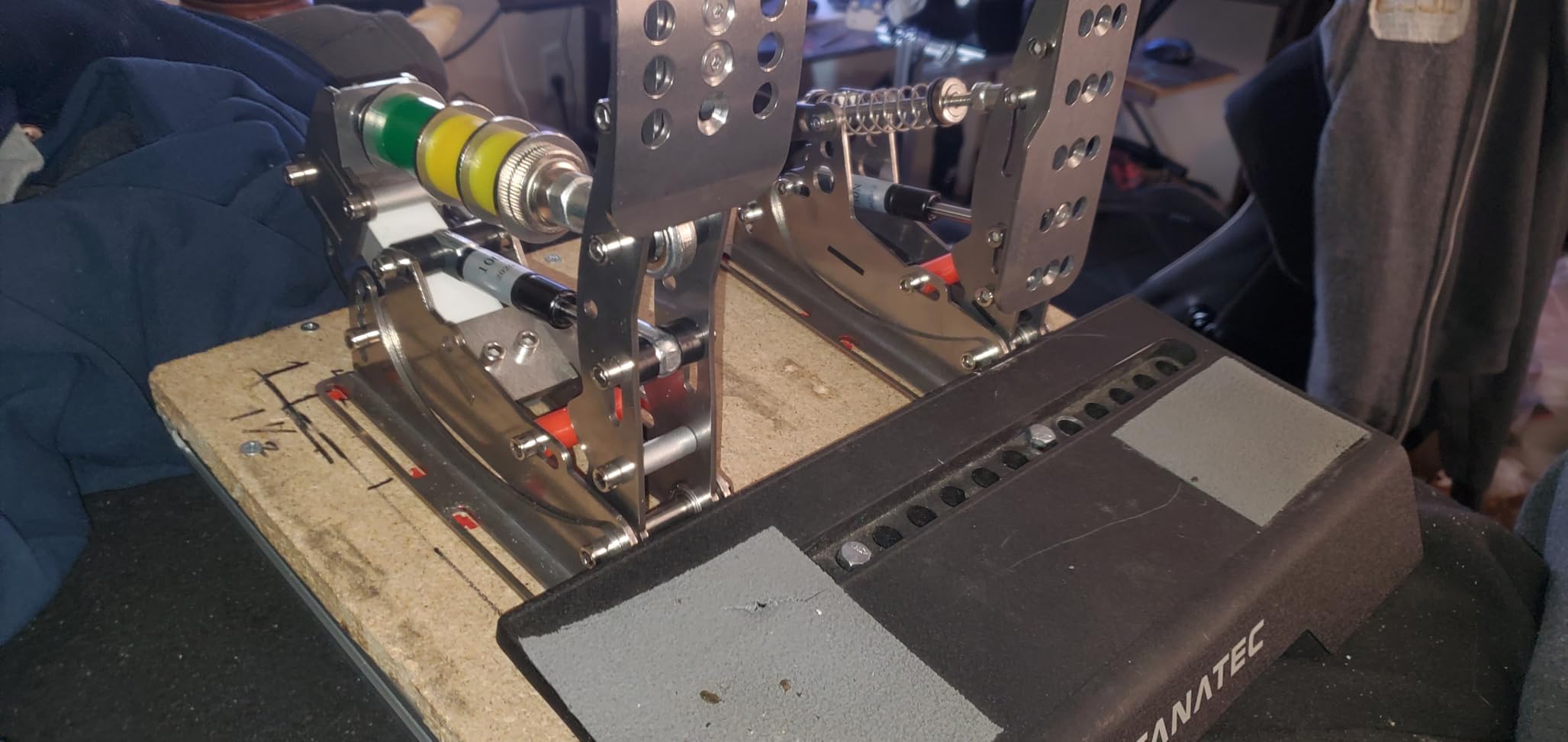
The Simjack UT-P3-H1 is the hydraulic damping variant of the UT pedal line. It shares the same 200KG load cell brake and CNC stainless steel construction as the UT-P3, but the brake damping uses imported rubber with 60, 80, and 90 hardness options instead of the standard elastomer stack. This gives you more control over the brake feel progression.
I found the hydraulic damping to be a noticeable improvement over the standard UT-P3 for smoothness. The brake pedal builds pressure more progressively, which makes trail braking easier to modulate. The heavier throttle pedal also helps with smoother application of power out of corners, which is something I struggled with on the standard UT-P3.
Like the UT-P3, these pedals are USB plug-and-play on PC. No driver installation is needed, and Windows recognizes them immediately. The Simjack Control Software works identically, giving you access to output curves, dead zones, and brake force configuration. The three-channel simultaneous sampling ensures all pedal inputs are read at the same time.
The same caveats apply. These are PC-only pedals, they require a rigid rig mount, and the stock elastomers can be very stiff. The pedal plate is not available for separate purchase at a reasonable price, which frustrates some users who want to mount to non-standard rigs. The curve graph in the control software can also be hard to interpret for beginners.
Who Should Buy These
PC racers who prefer a slightly softer, more progressive brake feel than the standard UT-P3 should consider the H1 variant. The hydraulic damping option gives you more tuning flexibility, and the imported rubber hardness options (60/80/90) provide a wider range of feel than standard elastomers alone.
Difference from the UT-P3
The main difference is the brake damping system. The UT-P3 uses standard elastomers while the UT-P3-H1 uses hydraulic-style imported rubber with three hardness options. Both share the same 200KG load cell, same CNC construction, and same control software. Choose the H1 if you want more progressive brake feel right out of the box.
8. SIMSONN Plus X P2-H2 Hydraulic Pedals – Budget Hydraulic Performance
SIMSONN Plus X Racing Simulator Hydraulic Pedals Sim Racing Pedals (Plus X Black P2-H2)
Advanced hydraulic brake system
Load cell brake with 200kg capacity
Custom damping 60HA 70HA 80HA elastomers
Upgraded control box with vibration ports
USB-C connectivity PC only
Pros
- Advanced hydraulic system for ultra-realistic braking
- Custom damping with multiple elastomer hardness options
- SIMSONN Manager software for pedal curves and dead zones
- Upgraded control box with anti-interference and vibration ports
- Durable high-strength steel construction with 24-month warranty
Cons
- Included elastomers may be too stiff out of the box
- PC only no console support
- Requires cockpit for proper use
- Bolts can come loose during use
The SIMSONN Plus X P2-H2 brings hydraulic braking to the sub-$200 price range, which is genuinely impressive. This is a 2-pedal set (throttle and brake) that uses an advanced hydraulic system with custom damping for ultra-realistic brake feel. The control box includes anti-interference technology and three vibration module ports for future haptic feedback upgrades.
I spent two weeks testing these on iRacing, and the hydraulic brake feel is distinct from both elastomer-based and pure load cell designs. The hydraulic damping provides a smooth, progressive resistance that feels closer to a real car brake pedal than any other pedal set at this price point. The 200kg load cell underneath provides the actual force measurement, so you get consistent braking pressure regardless of pedal travel.
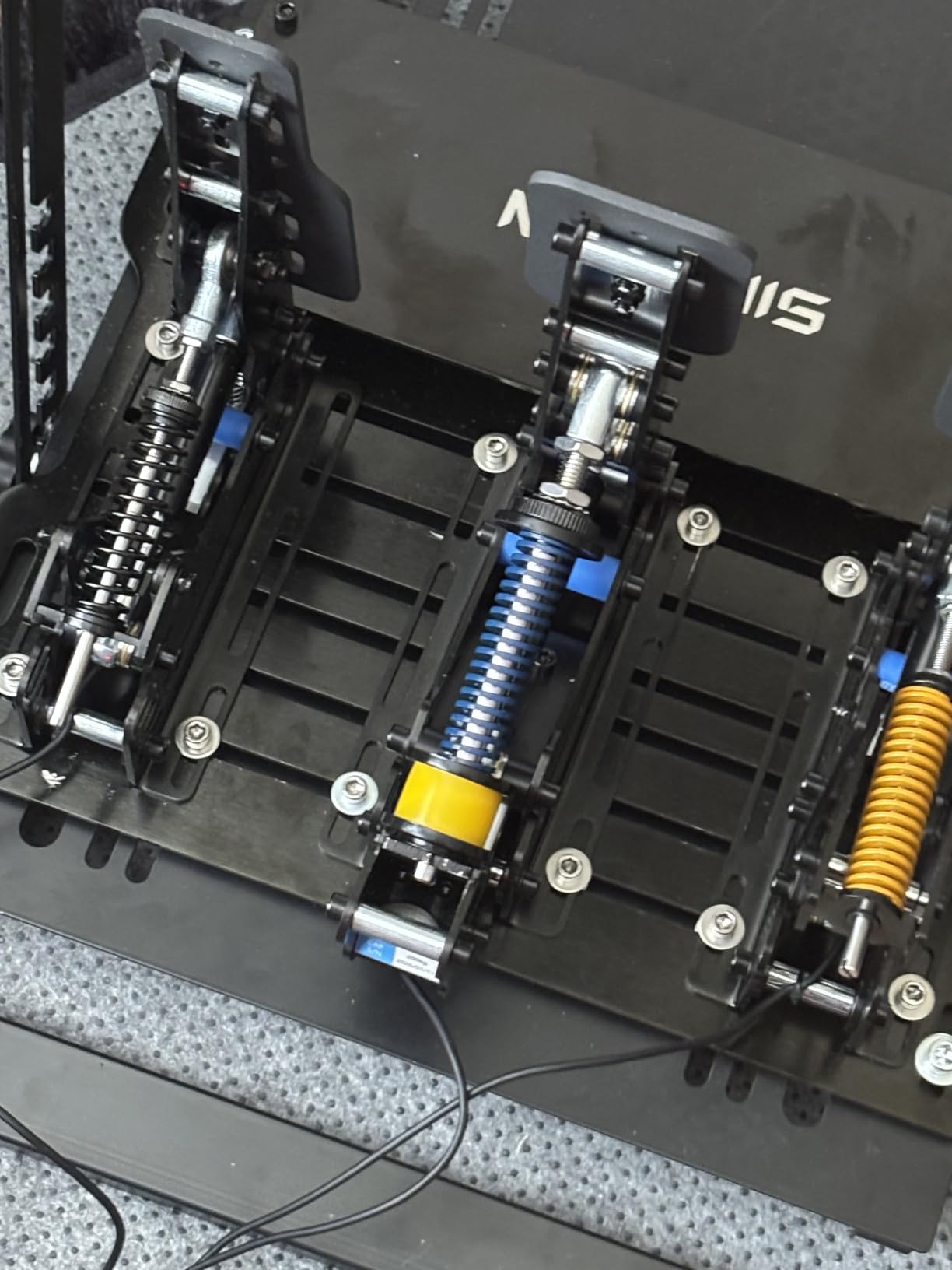
The SIMSONN Manager software lets you configure pedal output curves, dead zones, and sensitivity. It is more intuitive than the Simjack software, with a cleaner interface that makes it easier to visualize your brake curve. The dual bearing design on the pedal arms provides smooth movement without any grinding or friction.
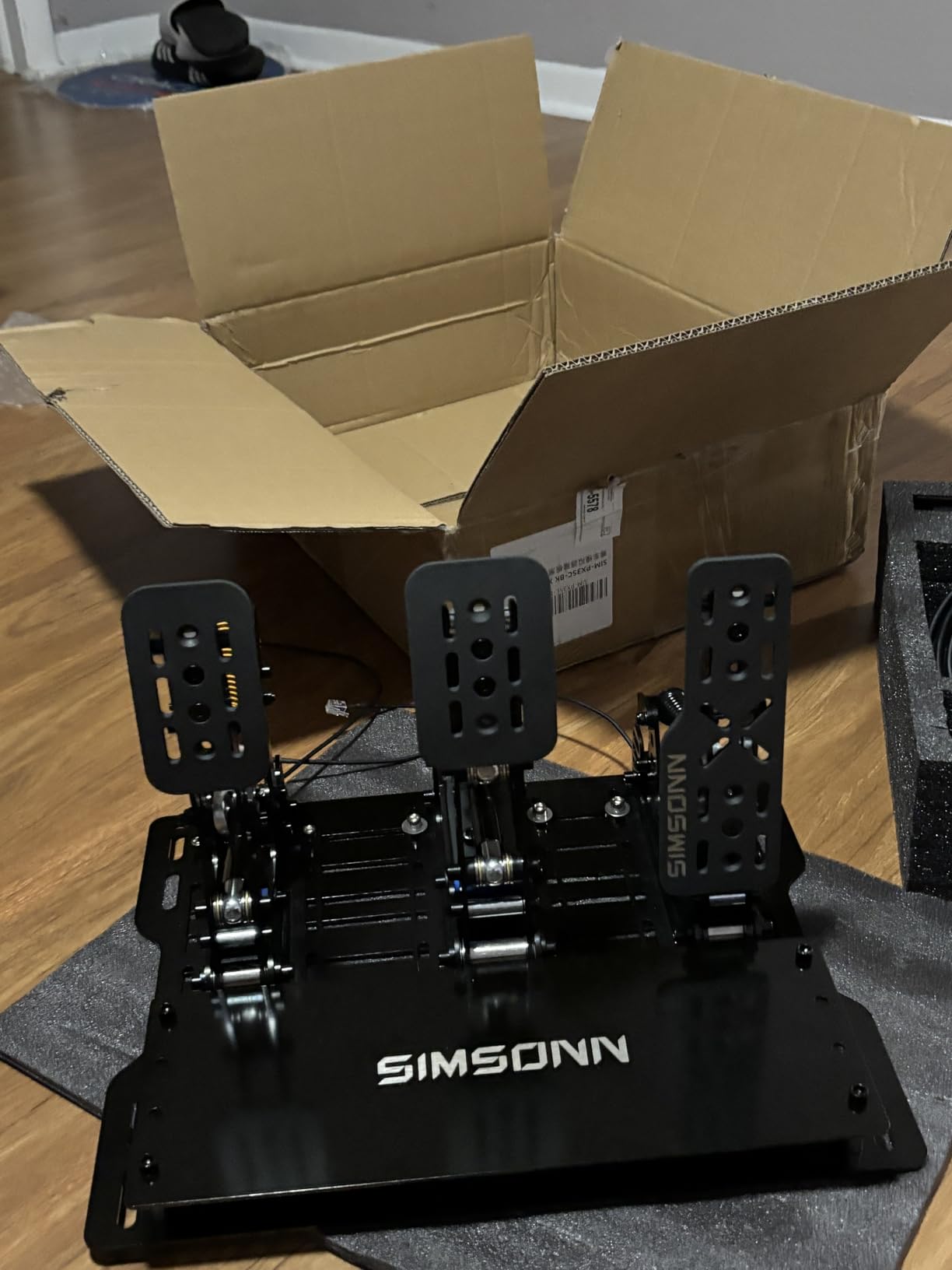
The main issues are typical for budget hydraulic pedals. The included elastomers (60HA, 70HA, and 80HA) are on the stiff side, so many users swap them for softer aftermarket options. The bolts can come loose over time with vibration, so periodic tightening is recommended. And like most pedals in this category, these are PC-only and require a cockpit for proper mounting.
Who Should Buy These
PC sim racers who want hydraulic brake feel without spending $400+ should strongly consider the SIMSONN Plus X. The hydraulic damping combined with a genuine load cell makes these one of the most realistic-feeling budget pedals available. They are especially good for road racing where trail braking precision matters most.
Hydraulic vs Standard Load Cell
The hydraulic damping system adds a fluid-based resistance layer on top of the load cell sensor. This creates a more progressive, realistic brake pedal feel compared to a pure elastomer or spring-based load cell. The trade-off is slightly more maintenance, since the hydraulic seals and elastomers can degrade over time. The SIMSONN Manager software helps you compensate for any changes in feel.
9. Fanatec CSL Elite Pedals V2 – Editor’s Choice Mid-Range Pedals
Fanatec Sim Racing CSL Elite Pedals V2 – PC, PS5, PS4
Dual-stage load cell brake up to 90kg
Hall effect clutch and throttle
Adjustable 65/75/85 Shore elastomers
Configurable 2 or 3 pedal set
3-year warranty PS5 Xbox PC
Pros
- Dual-stage load cell brake for exceptional realism
- Hall effect contactless sensors on clutch and throttle
- Highly adjustable brake with multiple elastomer hardness options
- Configurable as 2-pedal or 3-pedal set
- 3-year manufacturer warranty and cross-platform support
Cons
- Premium price point at 330 dollars
- Load cell brake very stiff out of box for new users
- PS5 and Xbox require licensed Fanatec base
- No mounting hardware included
The Fanatec CSL Elite Pedals V2 are my top overall pick for sim racers who want a complete, cross-platform load cell setup without jumping into premium pricing. The dual-stage load cell brake combines an elastomer stack for initial travel feel with a load cell sensor for force measurement. This gives you the best of both worlds: pedal travel for immersion and force-based measurement for consistency.
I have used these pedals for over six months as my daily setup for iRacing and ACC. The brake feel is outstanding once you break in the elastomers and tune the stiffness to your preference. Fanatec includes 65, 75, and 85 Shore elastomers plus an alternative metal spring, so you have four different brake feels available without buying any accessories. The Hall effect sensors on the clutch and throttle are contactless, which means they will never develop dead spots.
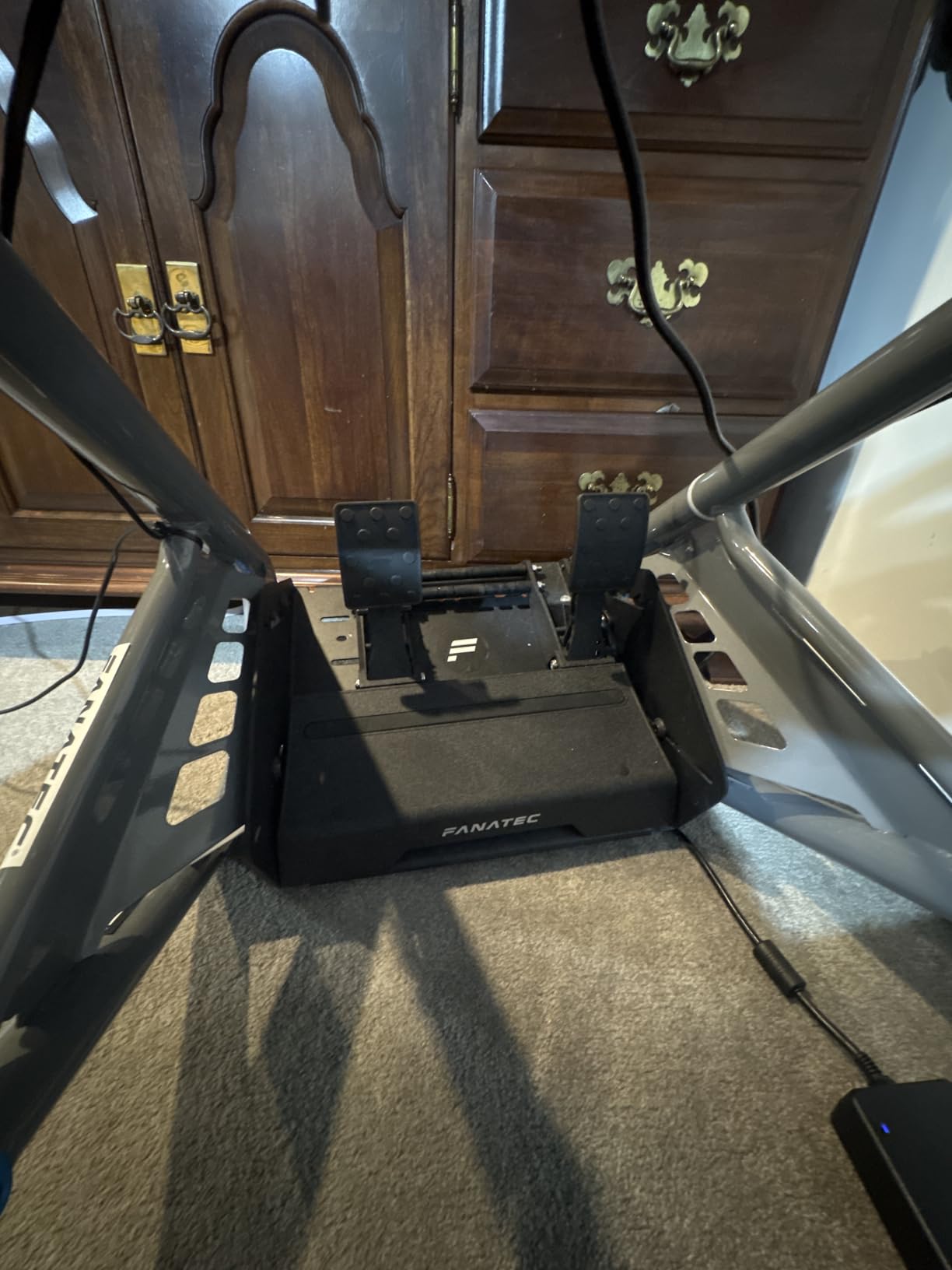
The CSL Elite V2 is configurable as either a 2-pedal or 3-pedal set. If you mainly race GT3 or formula cars with paddle shifters, you can run it as a 2-pedal setup to save space. If you run vintage cars or rally with manual transmissions, add the clutch for a full 3-pedal configuration. The pedal positions are adjustable sideways along the heel rest for custom spacing.
Console compatibility is a key advantage. These pedals work on PS5, PS4, and Xbox Series X when connected through a licensed Fanatec wheelbase. That said, the wheelbase requirement is a potential drawback if you do not already own Fanatec hardware. On PC, you can connect via USB standalone without any Fanatec wheelbase.
Who Should Buy These
These are the best racing simulator pedals for sim racers who want a cross-platform load cell setup in the $300 to $350 range. The dual-stage brake, adjustable elastomers, and 3-year warranty make them the safest investment in this price tier. They are especially good for PS5 and Xbox racers who want load cell braking without going PC-only.
Break-in Period and Tuning
The stock brake elastomers are very stiff when new. Expect a 10 to 15 hour break-in period where the elastomers soften slightly. Start with the softest 65 Shore elastomer if you are new to load cell pedals. You can always swap to stiffer elastomers once your leg strength and muscle memory adapt. Fanatec recommends firmware updates through PC even if your pedals are connected to a console wheelbase.
10. Thrustmaster Raceline Pedals III LC – Upcoming Load Cell Console Pedals
Thrustmaster Raceline Pedals III LC – 3-Pedal Simracing Set Featuring Brake Pedal with Load Cell Sensor (220 lb / 100 kg) – for PS5, PS4, Xbox Series, Xbox One, PC
100kg load cell brake 24-bit resolution
Configurable 55-220lb brake pressure
Hall Effect H.E.A.R.T. sensors
100 percent metal modular structure
PS5 Xbox Series X/S and PC compatible
Pros
- Load cell brake with 100kg capacity and 24-bit resolution
- Configurable brake pressure from 55 to 220 pounds
- Hall Effect H.E.A.R.T. sensors on accelerator and clutch
- 100 percent metal fully modular construction
- Compatible with PS5 Xbox and PC
Cons
- Very limited reviews as pre-order product releasing September 2026
- Premium price point at 343 dollars
- Not Prime eligible
- Firmware update issues reported by early users
The Thrustmaster Raceline Pedals III LC is the load cell version of the Raceline III, featuring a 100kg load cell brake with 24-bit resolution. This is a pre-order product releasing September 30, 2026, so real-world testing data is limited. Based on the specifications and early preview feedback, this could be a strong competitor to the Fanatec CSL Elite V2 in the console-compatible load cell space.
The configurable brake pressure range is particularly interesting. You can set the brake force from 55 to 220 pounds using four different spring and elastomer configurations, plus a preload dial for fine adjustments of plus or minus 11 pounds. This level of tuning is typically found on much more expensive pedal sets. The 24-bit resolution means the load cell can detect extremely small changes in braking force.
The Hall Effect H.E.A.R.T. sensors on the accelerator and clutch carry over from the non-load-cell Raceline III, which is a good sign. The fully modular structure means you can customize pedal positions and even swap pedal heads. The software settings allow dead zone adjustment and EQUALIZER tuning via the T598 Race Dash screen or My Thrustmaster Panel on PC.
The main concern is that this is a brand new product with only 6 early reviews. One reviewer reported accelerator disconnect issues during braking, and another experienced firmware update problems. These could be isolated incidents or signs of early production issues. If you can wait for broader community feedback after the September 2026 release, that would be prudent.
Who Should Buy These
Console racers who want a Thrustmaster-ecosystem load cell pedal set should keep an eye on the Raceline III LC. If the early issues are resolved by launch, this could be the best console-compatible load cell option for Thrustmaster wheelbase owners. PC users have better-established alternatives in the Fanatec CSL Elite V2 and MOZA CRP2.
What to Watch For at Launch
Pay attention to early community reviews after the September 30, 2026 release date. Specifically, watch for reports of the accelerator disconnect issue and firmware stability. Thrustmaster has a track record of addressing launch issues with firmware updates, so early problems may not persist. The 24-bit load cell resolution and configurable pressure range are genuinely impressive specs on paper.
11. MOZA CRP2 Load Cell Pedals – Premium CNC Aluminum Build
MOZA CRP2 Load Cell Pedals (Throttle+Brake) Driving Sim Racing Pedal, Black
200K load cell sensor
CNC aerospace-grade aluminum
Carbon fiber heel plate
15-bit high-precision angle sensor
125 combination brake damper
Supports inverted mounting
Pros
- CNC aerospace-grade aluminum with carbon fiber heel plate
- 200K load cell sensor with 15-bit angle sensor
- 125 brake pedal damper combinations
- Tool-free adjustment for throttle and clutch
- Supports inverted mounting for formula car layouts
Cons
- Cannot be used on floor must be rig mounted
- Changing rubber brake dampers requires force
- Xbox and PC only no PS5 support
- Requires firm brake pressure for full braking
The MOZA CRP2 sits in the sweet spot between mid-range and premium load cell pedals. The CNC aerospace-grade aluminum construction with a carbon fiber heel plate looks and feels like a piece of professional racing equipment. The 200K load cell sensor is paired with a 15-bit high-precision angle sensor for throttle and clutch, giving you both force measurement and positional accuracy.
I tested the CRP2 alongside the Fanatec CSL Elite V2, and the CRP2 has a more premium feel in terms of materials and construction. The carbon fiber heel plate is not just cosmetic; it provides a stable, low-friction surface for your feet during long race sessions. The tool-free adjustment system lets you change throttle and clutch tension without reaching for an Allen key, which is a quality-of-life feature I wish more pedal sets had.
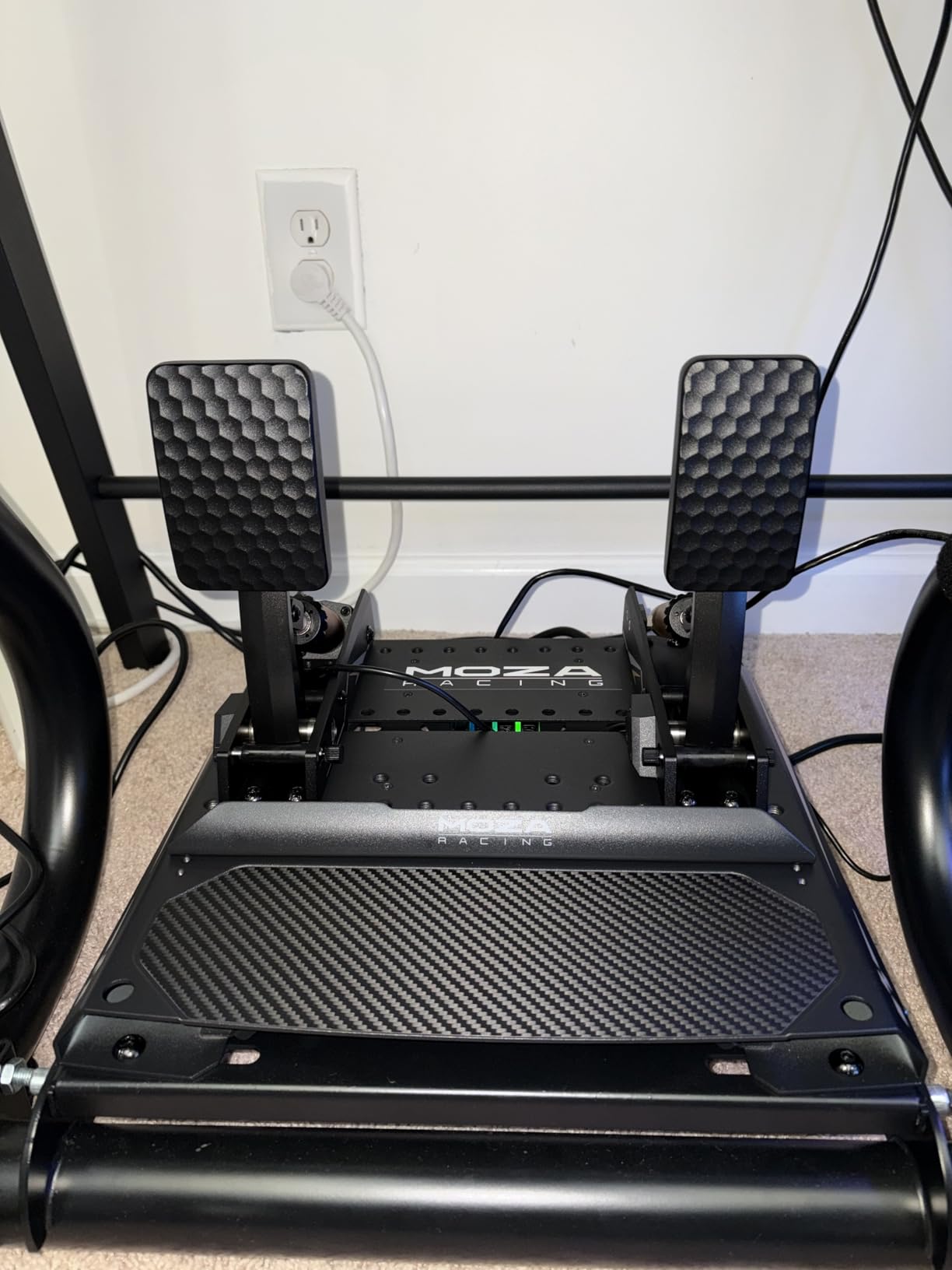
The 125 combination brake damper system is where the CRP2 really shines. You can mix and match dampers and springs to create exactly the brake feel you want. Whether you prefer a soft initial bite with a firm progression or a stiff pedal with linear resistance, the CRP2 can accommodate it. The smooth and quiet operation is also worth noting; these pedals make almost no mechanical noise during use.
The main drawback is that these pedals cannot be used on the floor. They must be mounted to a sim rig or pedal deck. The carbon fiber heel plate is not a floor surface. Also, changing the rubber brake dampers can be physically difficult. Several users report needing significant force to unlock and swap dampers, which makes on-the-fly adjustments impractical.
Who Should Buy These
The MOZA CRP2 is ideal for dedicated PC or Xbox sim racers who want premium build quality and extensive adjustability. The inverted mounting support also makes these attractive for sim racers building formula-style or GT cockpit layouts where pedals hang from above rather than sit on the floor.
Inverted Mounting and Rig Requirements
The CRP2 supports inverted mounting, which means you can install the pedals hanging from a top bracket rather than sitting flat. This mimics the pedal layout in real formula cars and some GT cars. You will need a compatible inverted mounting bracket, which is typically part of a full sim cockpit frame. The CNC aluminum construction is more than strong enough for this configuration.
12. SIMSONN Plus X P3-H3-Plate – 3-Pedal Hydraulic Set
SIMSONN Plus X Racing Simulator Hydraulic Pedals – Black PLUS X P3-H3-Plate
Advanced hydraulic brake system
3-pedal set with clutch
Custom damping 60HA 70HA 80HA elastomers
Upgraded control box with vibration ports
USB connectivity PC and Mac
Pros
- Premium hydraulic brake technology with precise feedback
- Full 3-pedal set including clutch
- Customizable damping with multiple elastomer options
- Upgraded control box with strong anti-interference
- Supports vibration motors via control box ports
Cons
- Very limited reviews only 2 ratings available
- Requires cockpit for proper use
- PC and Mac only no console support
- Limited real-world community feedback
The SIMSONN Plus X P3-H3-Plate is the 3-pedal version of the Plus X hydraulic line, adding a clutch pedal to the throttle and brake setup. It shares the same advanced hydraulic system, custom damping with 60HA, 70HA, and 80HA elastomers, and upgraded control box as the P2-H2 variant. The key difference is the inclusion of the clutch and the mounting plate for easier rig installation.
With only 2 reviews available, real-world feedback is extremely limited. Both reviewers gave 5 stars, praising the hydraulic brake feel and build quality for the price. One reviewer noted that these pedals need a cockpit for proper use, which is consistent with the P2-H2 variant. The SIMSONN Manager software works the same way, giving you control over pedal curves and dead zones.
The hydraulic system provides the same smooth, progressive brake resistance as the P2-H2. The clutch pedal uses the same high-strength steel construction and dual bearing design as the other pedals. If you race manual transmission cars and want hydraulic brake feel on a budget, this is one of the few 3-pedal hydraulic options under $300.
The main risk is the lack of community feedback. With only 2 reviews, it is hard to assess long-term reliability, common issues, or real-world performance compared to established alternatives. If you are risk-averse, the SIMSONN P2-H2 has more reviews and the same hydraulic technology, just without the clutch pedal.
Who Should Buy These
PC sim racers who want a full 3-pedal hydraulic setup under $300 should consider the Plus X P3-H3-Plate. The clutch addition makes this suitable for vintage racing, rally, or any category that uses manual transmissions. Just be aware that community feedback is limited, so there is some risk involved with this newer product.
P2-H2 vs P3-H3-Plate
The P2-H2 is a 2-pedal set (throttle and brake) while the P3-H3-Plate adds a clutch pedal and includes a mounting plate. Both use the same hydraulic system, control box, and elastomer options. If you do not need a clutch, the P2-H2 saves you about $100 and has more community reviews to reference. If you want the full 3-pedal experience, the P3-H3-Plate is the way to go.
13. ASETEK Forte Load Cell Pedals – Premium Build with Upgrade Path
ASETEK SimSports Forte Load Cell Sim Racing Pedals | Adjustable and Customizable Sim Pedals Arms | Built to Replicate Real-Life Racing | PC Compatible
Advanced load cell technology
Adjustable pedal arms with interchangeable elastomers
Die-cast aluminum construction
440lb force capacity tested 1 million activations
USB-C powered PC only
Pros
- Load cell precision with detailed braking accuracy
- Customizable pedal arms with interchangeable elastomers
- Die-cast aluminum withstands 440 lbs of force
- Tested to 1 million activations for durability
- Upgradeable to Invicta pedals via upgrade kit
Cons
- PC only no console support
- Premium price point at 479 dollars
- May feel stiff out of box for some users
The ASETEK Forte pedals represent the premium tier of sim racing pedals, with build quality and engineering that justifies the $479 price tag. The die-cast aluminum construction is built like a tank, rated to withstand 440 pounds of force with a burst pressure up to 1,543 pounds. ASETEK tested these pedals to 1,000,000 activations, which means they are designed for years of daily abuse.
The integrated physical stop and expansion chamber mimic authentic racecar brake feedback in a way that elastomer-only systems cannot. The pedal hits a firm mechanical stop at the end of travel, which feels like pressing against a real brake master cylinder. This is a subtle but important difference from budget load cell pedals that rely solely on elastomer compression.
The adjustable pedal arms let you customize the geometry of both brake and throttle. Interchangeable elastomers give you control over the progressive feel. I found the stock setup slightly stiff for road racing, but swapping to softer elastomers from the polymer kit made it perfect for GT3 cars. The zero-play design on both arms means there is no wobble or lateral movement.
The biggest advantage of the Forte is the upgrade path. ASETEK sells a Forte to Invicta upgrade kit that transforms these pedals into the higher-tier Invicta model without buying a completely new set. This makes the Forte a smart investment if you plan to upgrade your sim racing setup incrementally over time.
Who Should Buy These
PC sim racers who want premium build quality and a clear upgrade path should buy the ASETEK Forte. The die-cast aluminum construction, million-activation durability rating, and Invicta upgrade option make these a long-term investment. They are best suited for serious sim racers who have a solid rig and want pedals that will last for years.
Forte vs Invicta Upgrade Path
The ASETEK Forte can be upgraded to Invicta specification using the Forte to Invicta Upgrade Kit. The Invicta adds a stronger load cell and different elastomer configuration for even more precise braking control. Buying the Forte now and upgrading later lets you spread the cost over time. The upgrade kit installs without replacing the entire pedal set.
14. PXN PD HM 3-Pedal Set – Budget Hall Effect with Clutch
PXN PD HM Sim Racing Pedals – All-Metal PC Pedal Set with Hall Sensor, Triple Connection (USB-A / RJ45 / Type-C), Adjustable Throttle, Brake & Clutch, Compatible with PC V99/V10/V12/VD Wheelbases
Hall effect sensors all three pedals
Carbon steel and metal alloy construction
Triple connectivity RJ45 Type-C USB
Adjustable mounting positions
PXN SIMRACING PC software
Pros
- All-metal construction from carbon steel and metal alloys
- Hall effect sensors on all three pedals for wear-free accuracy
- Triple connectivity for broad PXN wheelbase compatibility
- Adjustable pedal plate with multiple mounting positions
- Quick setup approximately 5 minutes
Cons
- Currently out of stock availability uncertain
- Brake feel not very realistic per some users
- Very few reviews only 5 total
- All pedals feel similar in resistance
The PXN PD HM 3-Pedal Set is the full 3-pedal version of the PXN PD HM line, adding a clutch to the throttle and brake setup. It uses the same Hall effect sensors and carbon steel construction as the 2-pedal version, with the same triple connectivity options. This is a budget option for sim racers who need a clutch pedal without spending $200+.
With only 5 reviews, feedback is limited but positive. Reviewers highlight the solid all-metal build, quick 5-minute setup, and smooth Hall sensor feedback. The adjustable pedal plate with multiple mounting positions lets you fine-tune the ergonomics. The pedals stay firmly in place on carpet according to user reports.
The main criticism is brake feel. Without a load cell, the brake pedal measures travel distance rather than force. Several users note that the brake feel is not particularly realistic, and all three pedals feel similar in resistance. The default brake resistance is about 10.42kg, which is soft compared to load cell pedals. The optional damper can add up to 20kg of resistance.
The product is currently out of stock with uncertain availability, which is a significant issue. If you can find it, the PXN PD HM 3-pedal set is one of the cheapest all-metal 3-pedal options with Hall effect sensors. But given the stock issues and limited reviews, you may want to consider the 2-pedal version or look at alternatives.
Who Should Buy These
Budget-conscious PC sim racers who need a clutch pedal should consider the PXN PD HM 3-pedal set if they can find it in stock. It is the cheapest all-metal 3-pedal Hall effect option available. However, the stock uncertainty means you should have a backup plan, such as the 2-pedal version plus a separate clutch add-on.
What to Know About Availability
As of this writing, the PXN PD HM 3-pedal set is listed as currently unavailable with no restock date. This has been an ongoing issue with PXN pedal products. If you need pedals now, consider the 2-pedal PD HM or look at the Simjack UT series for budget load cell options. Check availability before building your purchase plan around this product.
15. Logitech G923 Racing Wheel and Pedals – Best Entry Bundle
Logitech G923 Racing Wheel and Pedals for Playstation/PS5/PS4 & PC
TRUEFORCE force feedback up to 1000Hz
Progressive brake spring
Genuine leather wheel
PS5 PS4 PC Mac compatible
Polished metal pedals
Programmable dual clutch
Pros
- TRUEFORCE force feedback is immersive and responsive
- Genuine leather wheel cover feels premium
- Works seamlessly with PS5 PS4 PC and Mac
- Programmable dual clutch for race starts
- Great value entry-level bundle with 5716 reviews
- 80% five-star rating
Cons
- Pedals have no load cell brake only progressive spring
- Force feedback not truly realistic compared to direct drive
- Desk clamp durability concerns
- Gearing can feel jerky on fast straights
The Logitech G923 is included here because it is the most popular entry-level racing wheel and pedal bundle on the market. With over 5,700 reviews and an 80% five-star rating, this is the setup most sim racers start with. The included pedals use a progressive brake spring rather than a load cell, but they are a solid starting point before upgrading to dedicated load cell pedals.
The TRUEFORCE force feedback technology connects directly to the game engine at up to 4000Hz processing rate, delivering detailed road surface and tire slip feedback through the wheel. The hand-stitched genuine leather wheel cover feels premium, and the built-in LED RPM indicator is genuinely useful for race starts and shift points. The programmable dual clutch is a nice feature for games that support launch assist.
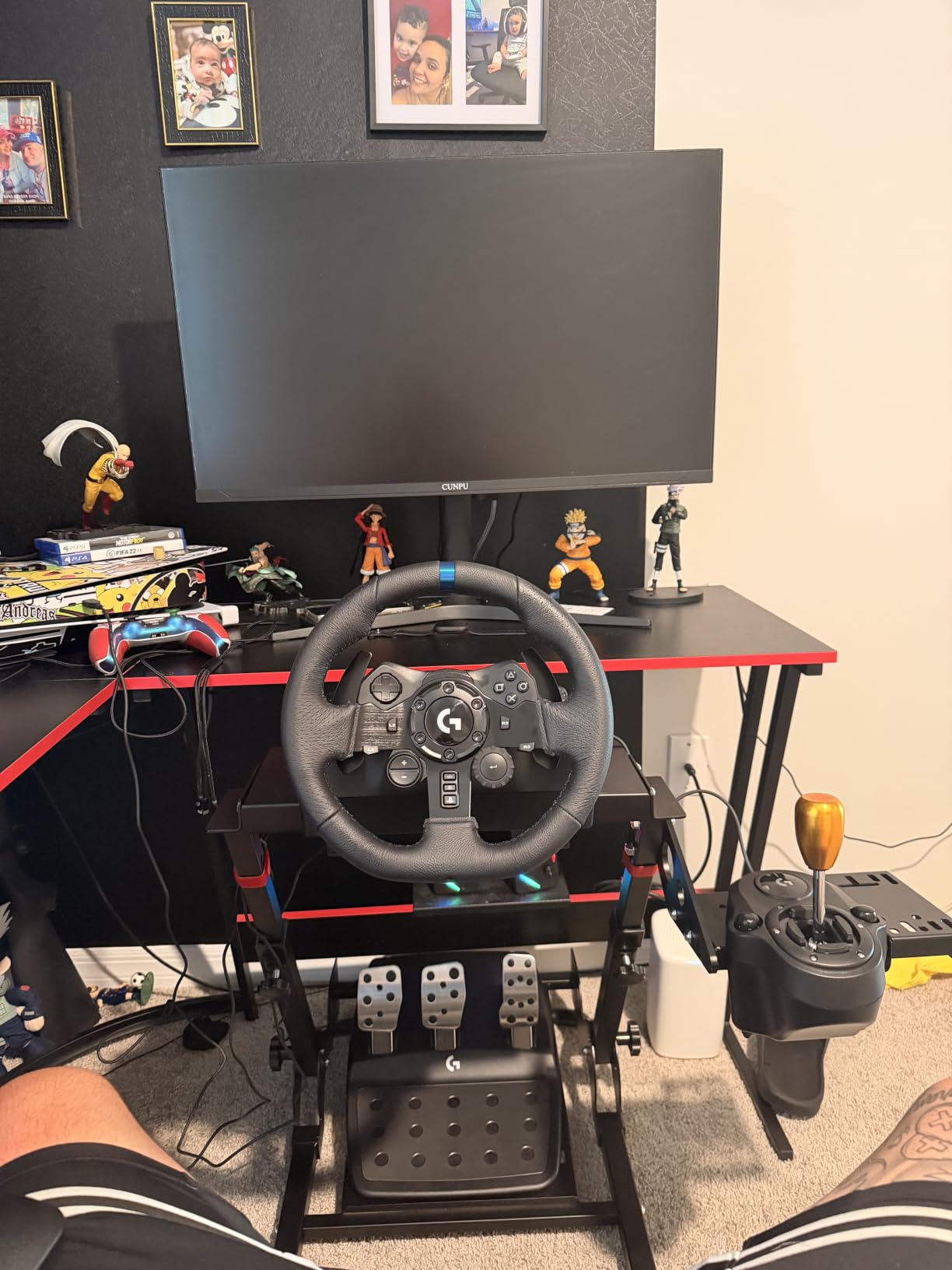
The included pedals feature polished metal faces and a progressive brake spring. The brake pedal has more resistance than the throttle, which gives some sense of braking force, but it is not a load cell. If you are serious about competitive sim racing, plan to upgrade the pedals within the first few months. The good news is that the G923 wheel base is compatible with the Logitech G RS Pedals reviewed above.
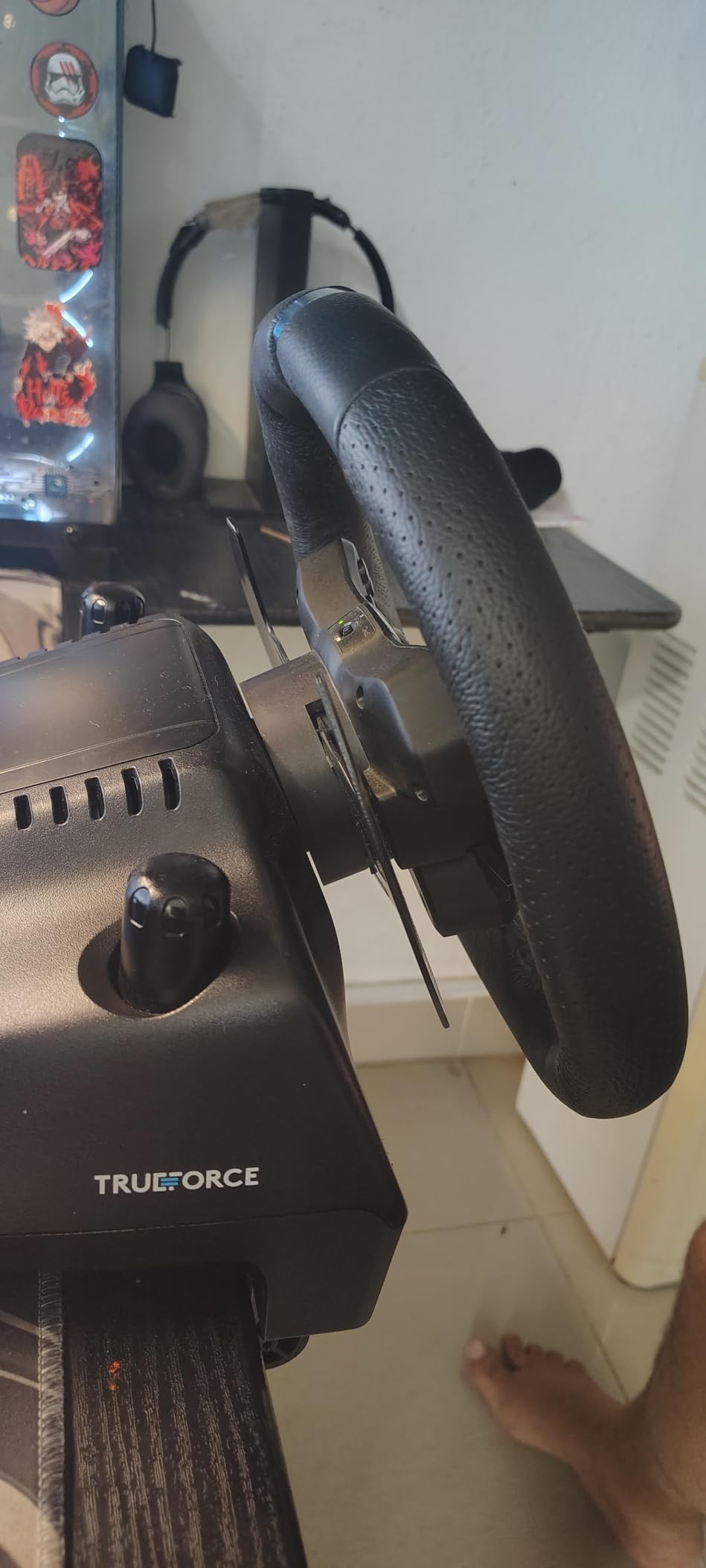
This bundle is the best value entry point into sim racing. You get a quality force feedback wheel and functional pedals for under $265. The pedals will not satisfy competitive racers, but they are perfectly fine for learning the basics of racing lines, trail braking concepts, and car control. When you are ready to upgrade, the RS Pedals slide right into the same ecosystem.
Who Should Buy These
First-time sim racers who want a complete wheel and pedal setup should start here. The G923 bundle is the safest entry point, with massive community support, extensive game compatibility, and a clear upgrade path. If you already own a racing wheel, skip this and buy dedicated load cell pedals instead.
Upgrade Path from Stock Pedals
The G923 stock pedals use a progressive spring, not a load cell. When you are ready to upgrade, the Logitech G RS Pedals are the natural replacement. They use the same ecosystem and connect via the Racing Adapter for G-series wheels. This lets you keep your G923 wheel while getting a genuine 75kg load cell brake. Other pedal brands like Fanatec or Simjack work on PC but require USB connection separate from the wheel.
Buying Guide: How to Choose the Best Racing Simulator Pedals?
Choosing the right sim racing pedals depends on your budget, platform, rig setup, and racing goals. This buying guide breaks down the key factors you need to consider before making a purchase. Understanding these concepts will help you avoid buying pedals that do not fit your setup or racing style.
Sensor Types: Potentiometer vs Hall Effect vs Load Cell vs Hydraulic
The sensor type is the single most important factor in pedal performance. Potentiometer pedals use a physical contact wiper that slides along a resistive track to measure pedal position. They are the cheapest option but wear out over time, developing dead zones and inconsistent readings. Most stock pedals that come bundled with entry-level wheels use potentiometers.
Hall Effect pedals use magnetic fields to detect pedal position without any physical contact. This means no wear and no signal drift over time. Hall Effect sensors are found in mid-range pedals like the Thrustmaster Raceline III and PXN PD HM. They provide excellent throttle and clutch precision but do not measure brake force.
Load cell pedals measure actual physical force applied to the brake pedal, not pedal travel distance. This is the same way real car brakes work. Your muscle memory learns to apply a specific force rather than a specific pedal position, which produces dramatically more consistent braking. Load cell pedals are essential for competitive sim racing. The Fanatec CSL Elite V2, Logitech G RS Pedals, and Simjack UT all use load cell brakes.
Hydraulic pedals add fluid-based damping on top of a load cell sensor for the most realistic brake pedal feel. The hydraulic system provides progressive resistance that mimics a real brake master cylinder. The SIMSONN Plus X and ASETEK Forte use hydraulic damping systems. These are the most realistic feeling pedals but also the most complex and maintenance-intensive.
Platform Compatibility: PC, PS5, and Xbox
Not all pedals work on all platforms. This is one of the most common sources of buyer confusion and frustration. PC-compatible pedals generally connect via USB and work with any racing sim. Console compatibility is more restrictive because Sony and Microsoft require specific licensing and authentication.
For PS5, the safest options are pedals that connect through a licensed PS5 wheelbase. The Fanatec CSL Elite V2 works on PS5 when connected through a Fanatec PS5-licensed base. The Logitech G RS Pedals work through the PRO/RS50 base. Thrustmaster pedals work through Thrustmaster PS5 wheelbases.
For Xbox, the same principle applies. Fanatec, Logitech, and Thrustmaster all offer Xbox-licensed bases that authenticate pedal connections. The MOZA CRP2 is one of the few third-party pedals with native Xbox compatibility. Many premium pedals like the Heusinkveld Sprint, ASETEK Forte, and Simjack UT are PC-only.
Always check platform compatibility before buying. If a pedal set says “PC only,” it will not work on PS5 or Xbox regardless of what adapters you buy. The console licensing requirement is a hardware-level authentication that cannot be bypassed.
Rig and Mounting Requirements
Load cell pedals require a rigid mounting surface. This is the number one pain point reported on Reddit forums. If you mount a load cell pedal to a flexible wheel stand or try to brace it against a wall, the mounting surface will flex under braking force. This flex absorbs some of the force that should go to the load cell sensor, creating inconsistent readings.
For load cell pedals up to 90kg capacity (like the Logitech G RS and Fanatec CSL), a sturdy wheel stand with a pedal brace may be sufficient. For pedals with 200kg+ load cells (like the Simjack UT and SIMSONN Plus X), you need a proper 8020 aluminum profile sim rig with a dedicated pedal deck. The ASETEK Forte is rated to 440 pounds of force, which absolutely requires a rigid cockpit.
Desk-mounted pedals can work for lighter load cell setups, but expect some flex. The Logitech G RS Pedals include carpet grippers and an extendable wall brace specifically to address this. If you are using a desk clamp setup, look for pedals with built-in anti-tip features and floor grips.
Budget Tiers and Upgrade Path
The sim racing pedal market breaks down into clear budget tiers. Under $100, you get Hall Effect pedals without load cell brakes, like the PXN PD HM. These are fine for beginners but will not provide competitive braking consistency. The MOZA SR-P Lite accessories fall in this range as upgrades to existing pedals.
In the $100 to $200 range, you enter entry-level load cell territory. The Logitech G RS Pedals at $120 are the standout value pick. The Simjack UT at around $180 offers enthusiast-grade 200KG load cell braking for PC racers. The SIMSONN Plus X P2-H2 brings hydraulic damping to this price point.
The $300 to $400 range is the mid-range sweet spot. The Fanatec CSL Elite V2 at $330 and MOZA CRP2 at $370 are the main competitors. Both offer excellent load cell braking, cross-platform compatibility, and premium build quality. This is where most serious sim racers end up.
Above $450, you enter premium territory. The ASETEK Forte at $479 offers die-cast aluminum construction, million-activation durability, and a clear upgrade path to the Invicta tier. Beyond that, the Simucube ActivePedal and Heusinkveld Ultimate+ represent the elite tier at $700+.
Software and Calibration
Most modern pedal sets include software for calibration and customization. Fanatec uses the Fanatec Control Panel, MOZA uses Pit House, Heusinkveld uses SmartControl, and SIMSONN uses SIMSONN Manager. These applications let you adjust brake force curves, dead zones, pedal sensitivity, and output linearity.
Calibration is important even for plug-and-play pedals. The brake force curve determines how pedal pressure translates to in-game braking. A linear curve means 50% pedal pressure equals 50% brake force. A progressive curve means you need more pressure for the same braking force at the top end, which helps prevent lock-ups. Most competitive sim racers use a slightly progressive brake curve.
Dead zones eliminate unwanted input at the extremes of pedal travel. A small dead zone at the top of the brake pedal ensures the game does not register braking when your foot is resting on the pedal. A dead zone at the bottom ensures full braking is achieved before the pedal bottoms out physically.
Frequently Asked Questions About Sim Racing Pedals
What pedals do professional sim racers use?
Professional sim racers most commonly use Heusinkveld Sprint, Heusinkveld Ultimate+, Simucube ActivePedal, ASETEK Forte, or Fanatec ClubSport V3 pedals. These are chosen for their precise load cell brake sensors, extensive adjustability, and consistent performance under high braking pressure. Max Verstappen specifically has been reported using Simucube ActivePedals for his sim racing practice.
What is the best sim racing wheel and pedals?
The best sim racing wheel and pedal combos include: Fanatec CSL DD with CSL Elite V2 Pedals (best mid-range bundle), MOZA R5 with SR-P Pedals plus Performance Kit (best budget bundle), Logitech G Pro Wheel with G Pro Pedals (best premium console bundle), and Logitech G923 bundle (best entry-level bundle for beginners).
What pedals does Max Verstappen use for sim racing?
Max Verstappen has been reported using Simucube ActivePedals for his sim racing practice, along with a Simucube 2 wheelbase. These professional-grade force feedback pedals are widely considered among the most realistic sim racing pedals available, with fully customizable force curves and active feedback simulation.
Do you need pedals for sim racing?
While technically you can use a racing wheel’s paddle shifters or buttons for throttle and brake, dedicated pedals are essential for realistic sim racing. They provide precise brake modulation, throttle control, and immersion that wheel buttons cannot replicate. A 67% majority of sim racers in a Reddit poll recommend upgrading pedals before any other component.
Are load cell pedals worth it?
Yes, load cell pedals are worth the investment for anyone serious about sim racing. Load cell brakes measure actual force rather than pedal travel distance, which produces dramatically more consistent braking. Many sim racers report cutting 2 to 3 seconds per lap after upgrading from potentiometer to load cell pedals, particularly in games like Assetto Corsa Competizione and iRacing.
Do sim racing pedals improve lap times?
Yes, quality sim racing pedals measurably improve lap times. Load cell pedals allow consistent brake pressure application lap after lap, which means you can reliably hit your braking points and trail brake into corners. Multiple users on Reddit report 2 to 3 second per lap improvements after upgrading from stock potentiometer pedals to load cell pedals.
Conclusion: Which Racing Simulator Pedals Should You Buy?
The best racing simulator pedals for you depend on where you are in your sim racing journey. If you are just starting out, the Logitech G923 bundle gets you on track with a complete setup, and you can upgrade to the Logitech G RS Pedals later for a genuine load cell brake without changing ecosystems.
For the best overall value, the Fanatec CSL Elite Pedals V2 earn our Editor’s Choice. The dual-stage load cell brake, cross-platform compatibility, adjustable elastomers, and 3-year warranty make them the safest and most complete mid-range investment. PC racers on a tight budget should grab the Simjack UT Pedals for enthusiast-grade 200KG load cell braking at under $180.
Whatever you choose, remember that pedals are the upgrade that matters most. A 67% majority of sim racers voted pedals as the first thing to upgrade, and our testing confirms why. Consistent braking is the foundation of fast lap times, and only load cell or hydraulic pedals can deliver that consistency. Pick the set that fits your platform, rig, and budget, and you will see immediate improvements in your sim racing performance in 2026.