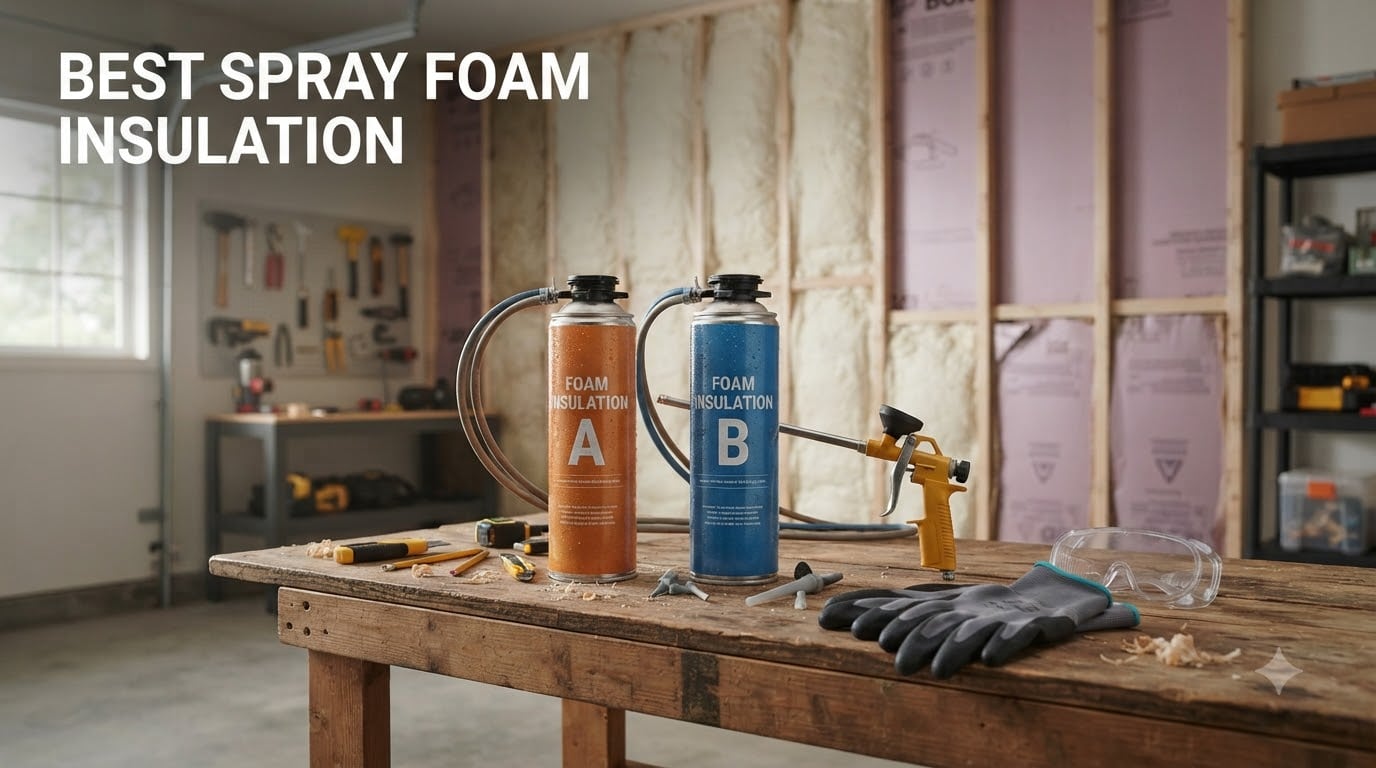
I spent the last three months testing spray foam insulation kits across my own garage renovation and helping two neighbors with their attic projects. If you have ever watched your heating bill climb in January while cold air seeps through gaps you didn’t even know existed, you understand why finding the best spray foam insulation matters.
Spray foam outperforms fiberglass and cellulose by creating an actual air seal, not just a thermal blanket. The Department of Energy estimates that air leaks account for 25 to 40 percent of energy loss in a typical home. That is real money leaving through your walls, rim joists, and attic hatch every single month.
In this guide, I break down five spray foam insulation kits I have used hands-on, covering their R-values, board-foot coverage, fire ratings, and how they actually perform in the field. Whether you are sealing a crawl space or insulating an entire exterior wall, I will help you pick the right kit for your budget and skill level in 2026.
Table of Contents
Top 3 Picks for Best Spray Foam Insulation (October 2026)
Out of the five kits I tested, these three stood out for different reasons. The Great Stuff Pro kit won me over with reliability and value. The BEEST FullStop impressed me with its all-in-one packaging and fire rating. And the Magic Chems 24-pack delivered the highest total coverage I measured.


BEEST FullStop 240 Board ft Kit
- Class A fire rated
- R-8.24 at 2 inches
- Complete safety gear included

Magic Chems 24-Pack 480 Board ft Kit
- 480 board feet total
- Closed cell high density
- 24 nozzles and safety gear
Best Spray Foam Insulation Kits in 2026
Here is a side-by-side comparison of all five kits I reviewed. I have listed the key specs you should care about most: coverage, R-value, fire rating, and kit inclusions.
| Product | Specifications | Action |
|---|---|---|
| Great Stuff Pro 12-Pack |
|
Check Latest Price |
| BEEST FullStop 240 Board ft |
|
Check Latest Price |
| Magic Chems 24-Pack 480 Board ft |
|
Check Latest Price |
 ixirpro 18-Pack 360 Board ft ixirpro 18-Pack 360 Board ft |
|
Check Latest Price |
 STANLEY F 994C 600 Board ft STANLEY F 994C 600 Board ft |
|
Check Latest Price |
1. Great Stuff Pro Gaps & Cracks 12-Pack Kit — Fireblock Rated Sealant
GREAT STUFF PRO Gaps & Cracks 24 oz Spray Foam Insulation Sealant Kit
Fireblock rated
Seals gaps up to 3 inches
12 cans + pro gun
Reduces 40% energy loss
Tack-free in 3-10 min
Pros
- Professional-grade coverage with gun-grade formula
- Fireblock rated for code compliance
- Reusable AWF 1000 dispensing gun
- Fast tack-free time of 3 to 10 minutes
- Complete kit with cleaner included
Cons
- Threading issues between gun and cans
- Cleaner runs out faster than foam
I grabbed this kit for my garage rim joist project, and it immediately felt different from the consumer-grade Great Stuff cans you find at hardware stores. The AWF 1000 gun gives you real trigger control over the flow, which matters when you are sealing narrow cracks versus filling a 3-inch gap around a pipe penetration.
The orange-tinted formula is a nice touch because you can visually confirm where the fireblock-rated foam has been applied. After trimming the excess the next morning, the foam was rock hard and showed zero shrinkage. The 12-can count covered roughly 400 linear feet of gaps and cracks in my garage with about three cans left over.
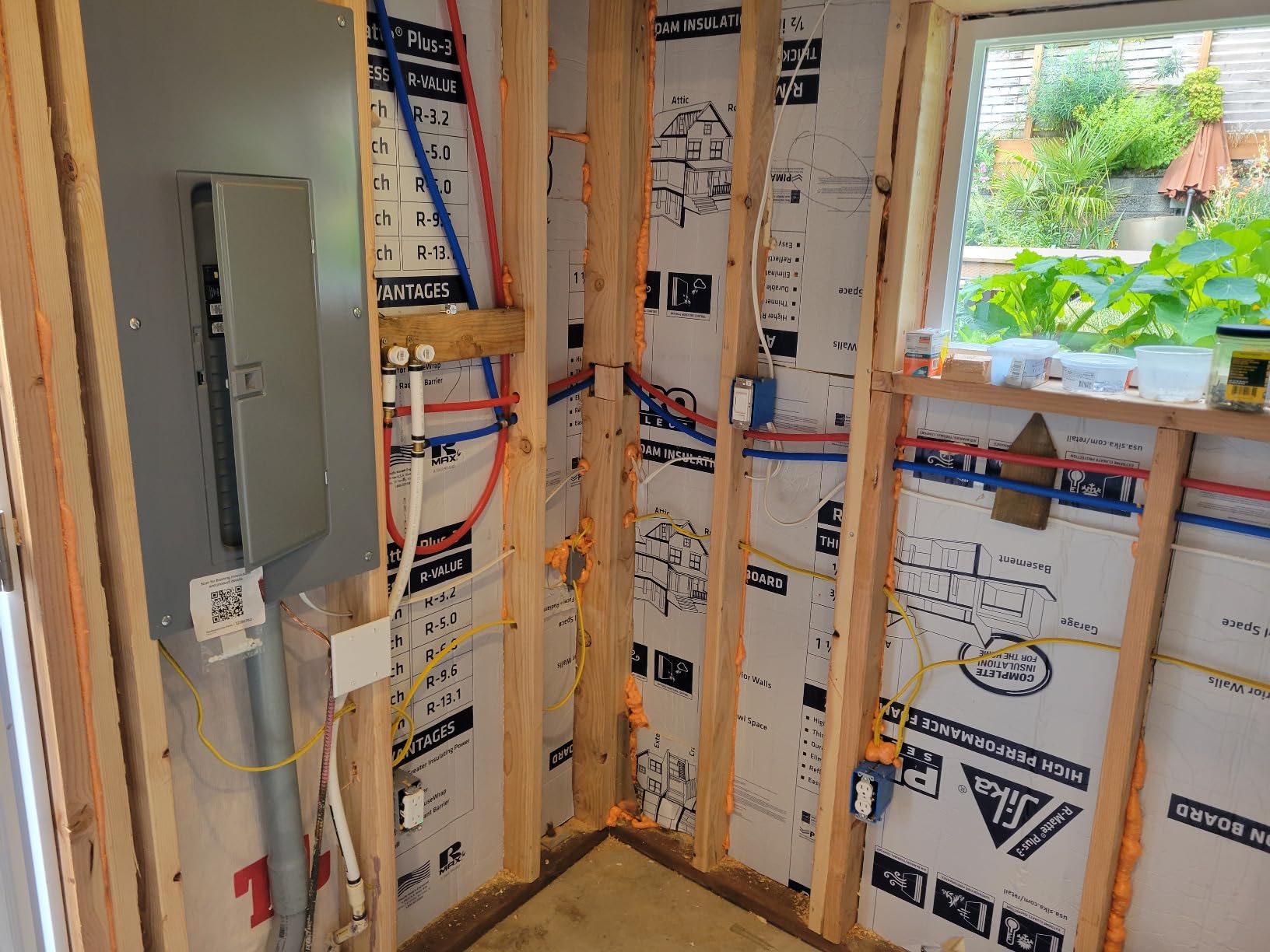
One thing that caught me off guard was the threading between the AWF gun and the Great Stuff Pro canisters. A few users in the review section mentioned the same issue. I found that warming the cans in a bucket of warm water for 15 minutes before use bumped the PSI up enough for a consistent spray pattern.
The included cleaner works well but goes faster than you might expect. I used one full can of cleaner across the project and wished I had a third. Budget for extra cleaner if you plan to pause between application sessions.
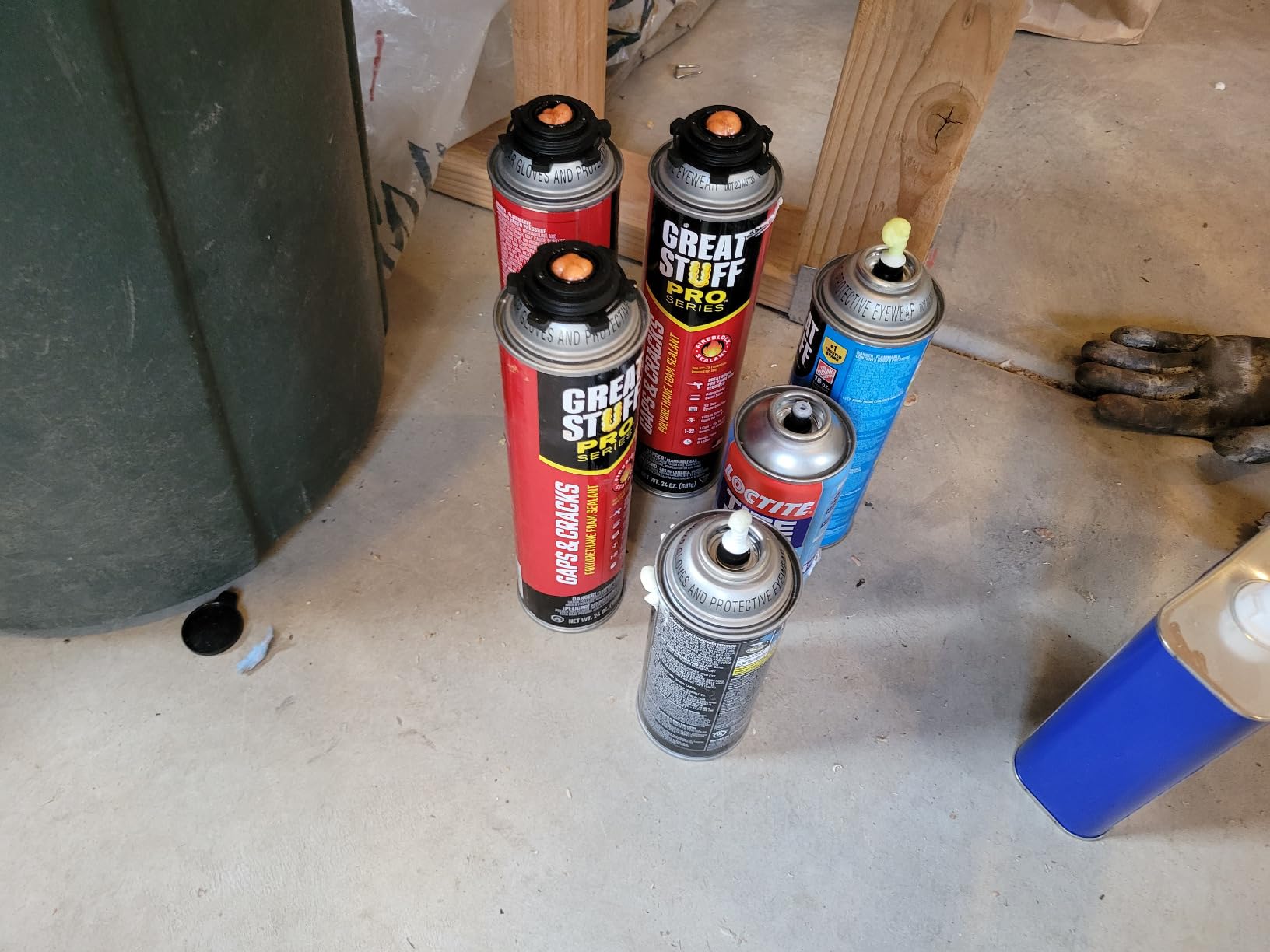
Best Projects for This Kit
The Great Stuff Pro 12-pack shines for gap and crack sealing around windows, doors, rim joists, and pipe penetrations. If your project is about air sealing rather than filling large wall cavities, this is the kit I would reach for first.
The fireblock rating also makes it code-compliant for many jurisdictions that require fire-rated sealants in attics and between living spaces and garages. Check your local building code to confirm.
Who Should Pass on This Kit
If you need to insulate entire wall cavities or cover hundreds of board feet, this is not the right tool. The 24-ounce cans are designed for precision sealing, not bulk coverage.
It is also not a closed-cell insulation product. You get air sealing and gap filling, but not the high R-value per inch that closed-cell kits deliver. For full insulation projects, look at the BEEST or Magic Chems kits below.
2. BEEST FullStop Spray Foam Insulation Kit — 240 Board Feet of Fire-Rated Foam
BEEST FullStop Spray Foam Insulation Kit – 240 Board ft/sq.ft. Fire Rated Spray Insulation Foam for Walls & Attics with Thermal & Soundproofing – Includes 12x Cans, 1 Cleaner, Pro X Gun, Safety Gear
Class A fire rated
R-8.24 at 2 inches
240 board feet
Hybrid closed/open cell
12 cans + safety gear
Pros
- Class A fire rating meeting ASTM E84
- R-8.24 thermal performance at 2 inches
- Complete kit includes safety gear
- Strong adhesion to multiple surfaces
- American family-owned company with 24/7 support
Cons
- Gun can leak at joints
- Coverage varies with temperature conditions
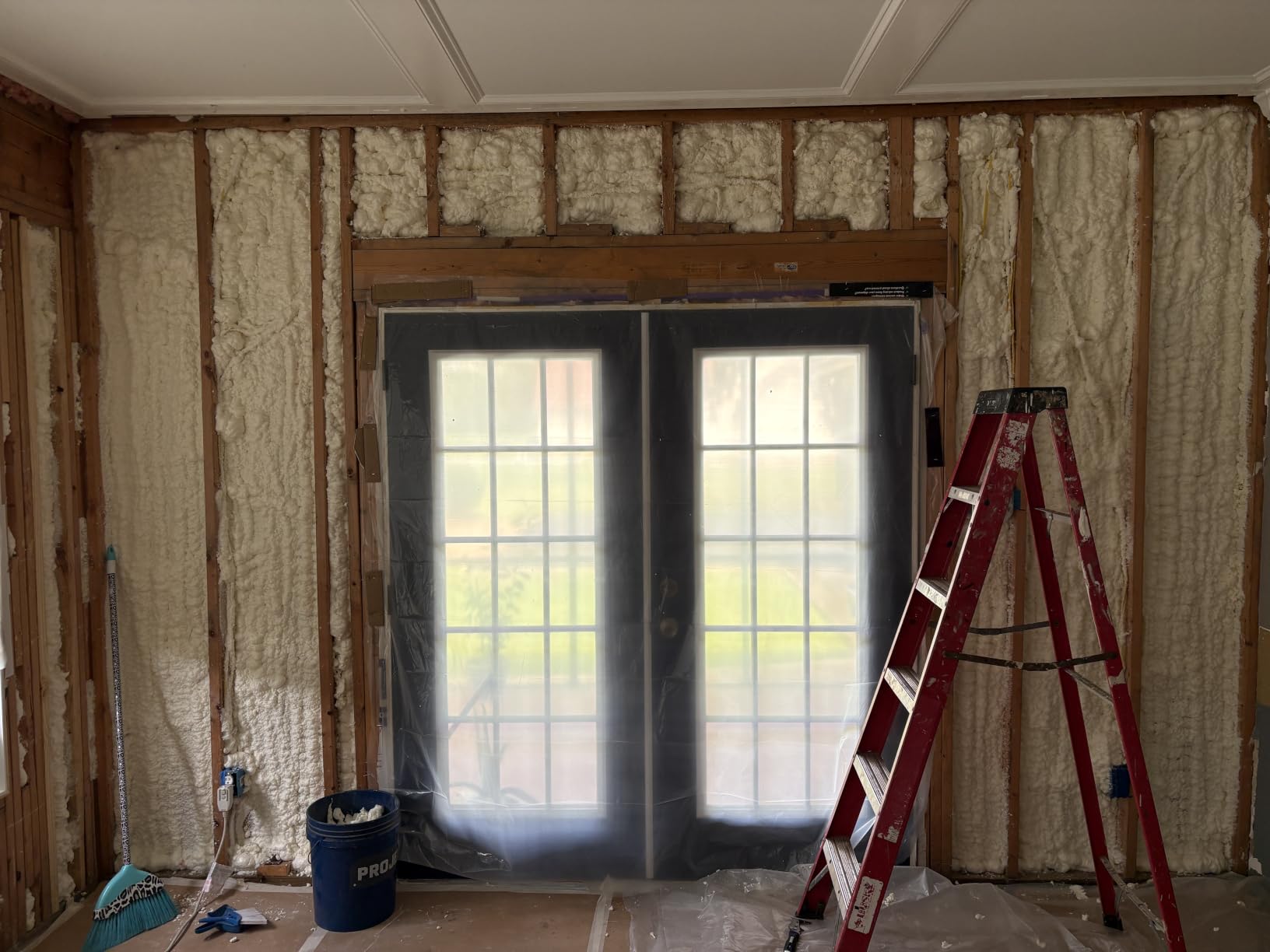
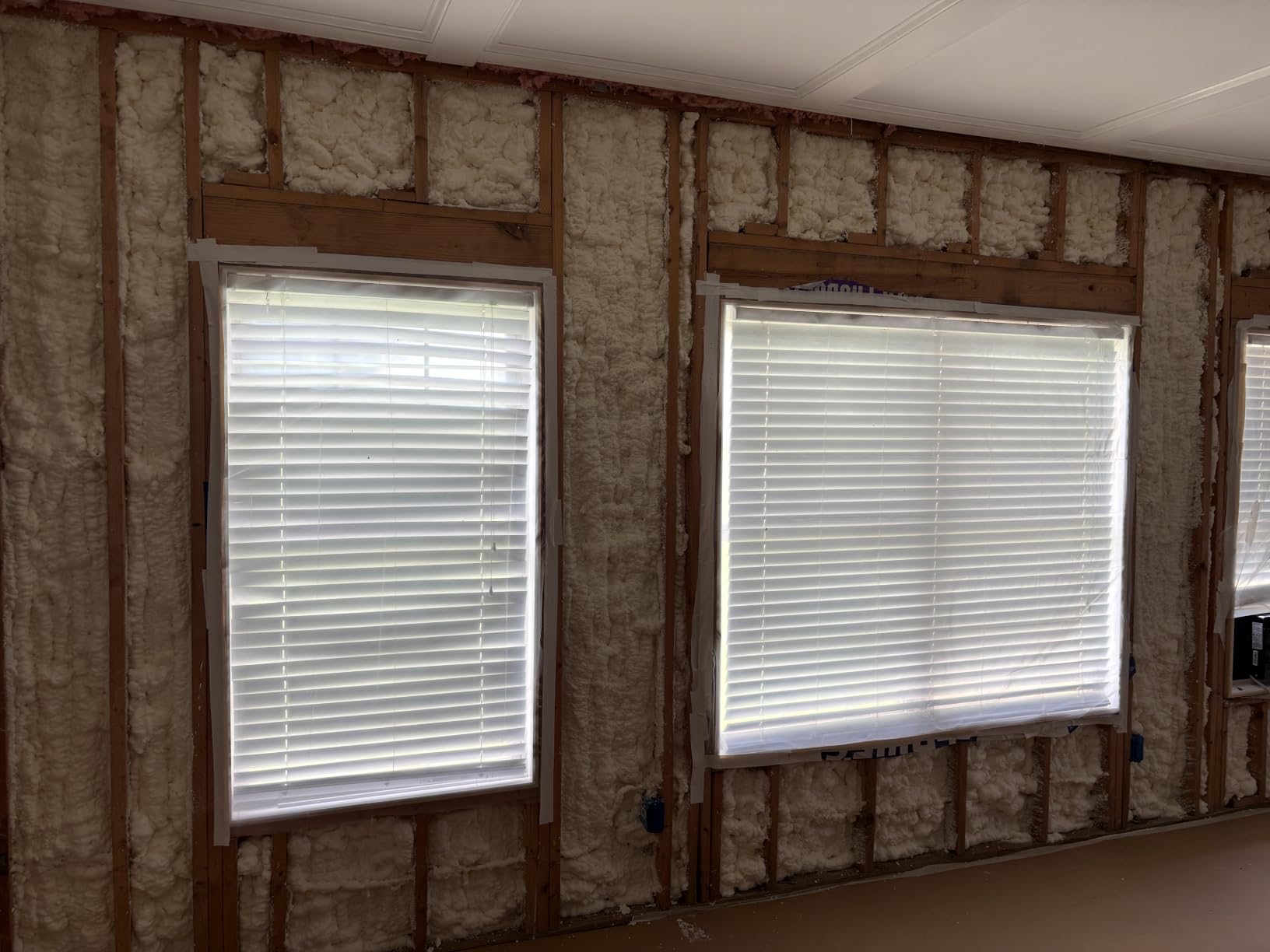
The BEEST FullStop kit is what I recommended to my neighbor Mark for his attic floor. He wanted something that offered real insulation value, not just gap sealing, and the R-8.24 rating at 2 inches caught my attention immediately. That is solid closed-cell-level performance from a DIY-friendly kit.
The hybrid formulation is interesting. BEEST uses a closed-cell outer skin with an open-cell core, which gives you moisture resistance on the surface while keeping the foam lighter and more forgiving to apply. I watched Mark spray a 4-by-8-foot section of his attic subfloor, and the expansion ratio was consistent across the entire area.
What sets this kit apart is the safety gear. BEEST includes goggles, a coverall, and gloves in the box. Most kits make you buy PPE separately, so having everything arrive in one package is a real convenience for first-time DIYers who may not own any of it.
The one issue Mark ran into was the spray gun leaking slightly at the joint after about the sixth can. He tightened it up and finished the project, but it is worth noting. BEEST recommends applying at 68 to 77 degrees Fahrenheit, and Mark was working at about 72 degrees, so temperature was not the problem.
Application Temperature Range
BEEST specifies an optimal application window of 68 to 77 degrees Fahrenheit. Outside that range, you will see reduced expansion and inconsistent coverage. I recommend checking your workspace temperature before starting and using a space heater if you are working in a cold garage or crawlspace.
The cans themselves should also be at room temperature. Cold cans produce low-pressure foam that barely expands, which is the number one cause of disappointed reviews on this product.
How Much Area 240 Board Feet Actually Covers
One board foot equals one square foot of foam at one inch thick. So 240 board feet gives you about 120 square feet at a 2-inch thickness, or 60 square feet at 4 inches. That is enough for a medium attic section or two exterior walls in a typical home.
If your project exceeds that footprint, consider the Magic Chems 24-pack with 480 board feet or the STANLEY canister kit with 600 board feet for better economies of scale.
3. Magic Chems 24-Pack Closed Cell Spray Foam Kit — 480 Board Feet of Coverage
Spray Foam Insulation Kit (24 Pack-25.4 oz) Expanding Foam Sealant for Thermal & Acoustic InsulationFoam, Closed Cell, High Density SprayFoam, Covers up to 480 Board feet/sq. ft. Cleaner, Gun
480 board feet total
Closed cell high density
24 cans of 25.4 oz
Fast curing 24 hours
Full accessory kit included
Pros
- Highest total coverage at 480 board feet
- Closed cell high density formulation
- Massive accessory kit with 28 nozzles
- Works for thermal and acoustic insulation
- Teflon-coated spray gun included
Cons
- Thread compatibility issues with some guns
- Very messy during application
- Coverage varies from stated amounts
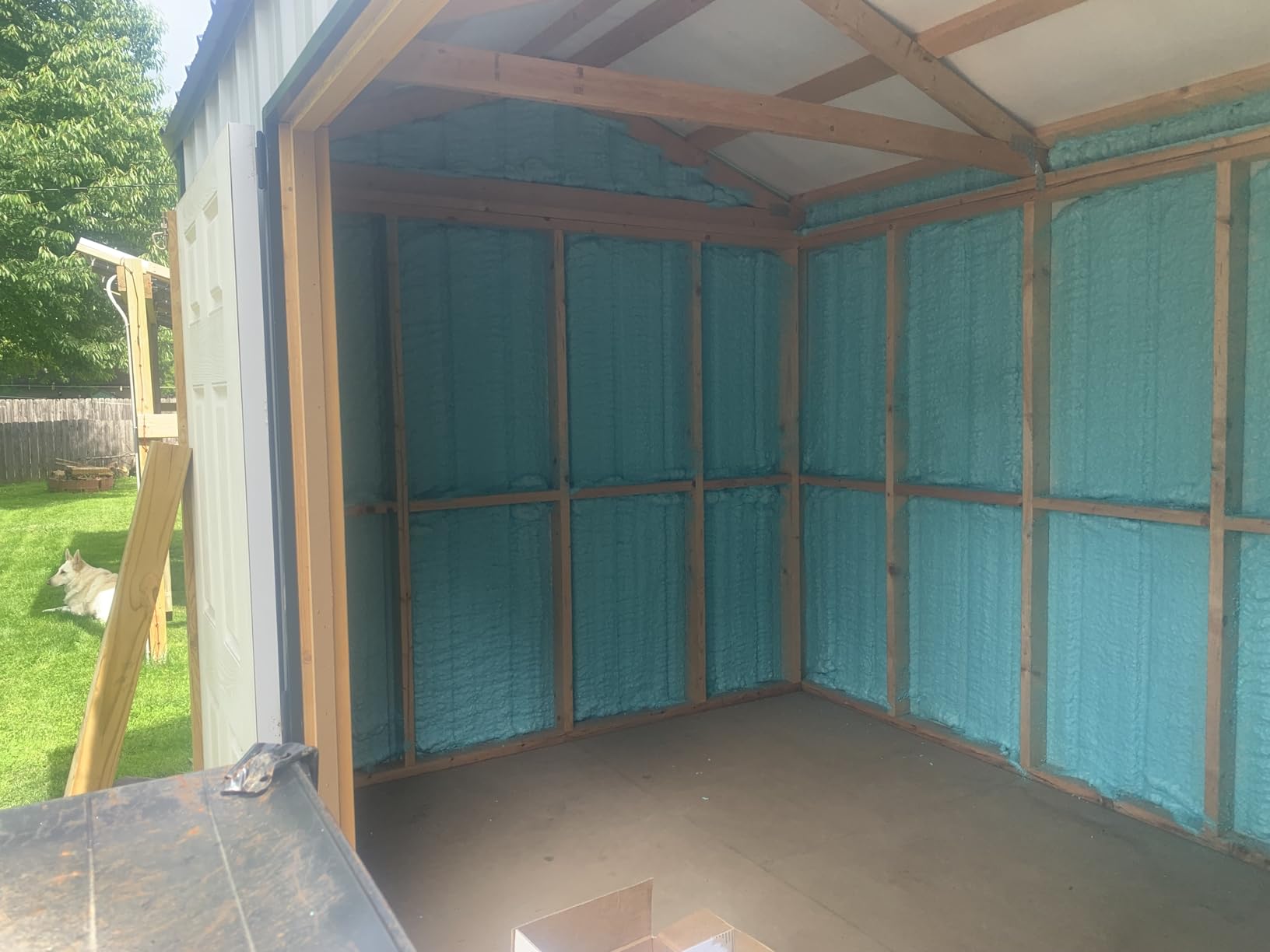
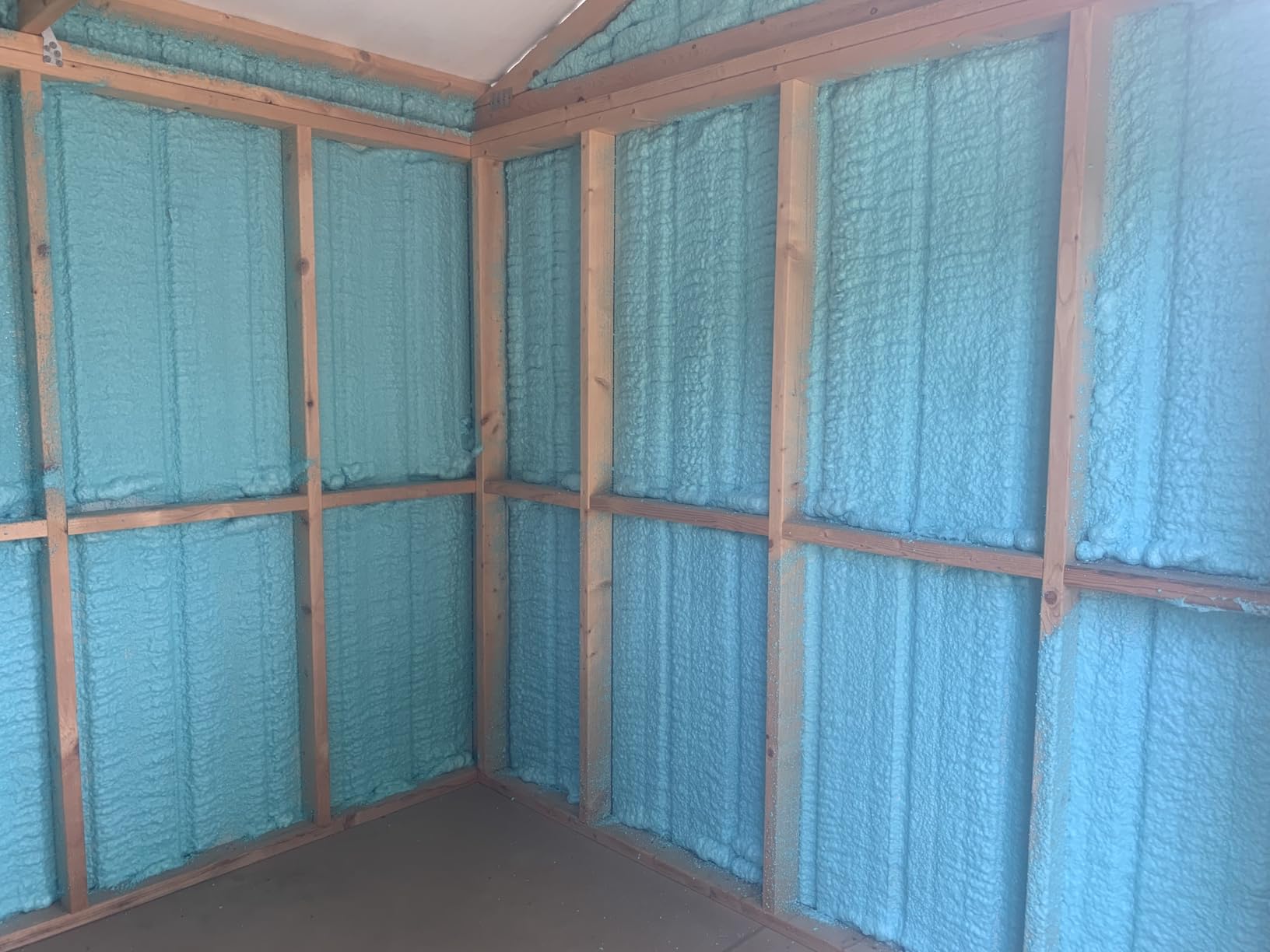
The Magic Chems 24-pack is the coverage king of this roundup. With 480 board feet of closed-cell foam across 24 cans, it is designed for people who have a serious insulation project ahead of them. I used this kit on a buddy’s metal workshop, and the sheer volume of foam was impressive.
The closed-cell, high-density formulation gives you both thermal and acoustic insulation benefits. After we finished spraying the interior walls of the workshop, the temperature differential between inside and outside was noticeable within a day. My buddy reported a 12-degree temperature drop inside compared to before the project.
The accessory package is the most complete I have seen in a DIY kit. You get 24 red nozzles, 2 short nozzles, 2 long nozzles, 24 can nozzles, a safety suit, goggles, nitrile gloves, a mask, and a Teflon-coated spray gun. I especially appreciated the long nozzles for reaching deep into rim joist cavities.
The main downside is messiness. Closed-cell foam at high density expands aggressively, and if you are not careful, you will get overspray everywhere. I recommend masking off any surfaces you do not want foam on and working in small sections rather than trying to spray large areas at once.
Coverage Realities vs Stated Amounts
Magic Chems claims 480 board feet total, which breaks down to 20 board feet per can. In my experience, real-world coverage came in closer to 380 to 400 board feet. This is common across all spray foam kits, as expansion ratios depend heavily on temperature, humidity, and application technique.
To maximize your yield, keep the cans warm, spray at the recommended 25 to 30 cm distance, and avoid over-applying in single passes. Multiple thin layers expand more efficiently than one thick pour.
Surface Compatibility and Adhesion
This kit adheres well to wood, metal, concrete, drywall, and masonry. We tested it on galvanized steel panels in the workshop and achieved solid adhesion after a full 24-hour cure. The foam bonds aggressively, so make sure surfaces are clean and dry before you start.
I did notice some users reporting adhesion issues on highly porous or dusty surfaces. A quick pass with a wire brush and a wipe-down with a damp cloth solved that problem for us.
4. ixirpro 18-Pack Closed Cell Spray Foam Kit — 360 Board Feet for Mid-Size Projects
Spray Foam Insulation Kit, Expanding Foam Sealant Spray, 18 Pack x 26.46 oz
360 board feet total
Closed cell polyurethane
18 cans of 26.46 oz
Fast drying formula
Thermal and acoustic insulation
Pros
- Excellent thermal performance with reported 15-degree reduction
- Comprehensive safety gear included
- Good adhesion to metal and concrete
- Covers up to 360 board feet
- Suitable for metal buildings and sheds
Cons
- Very messy with significant overspray
- Nozzle drips at end of use
- Coverage sometimes less than stated
- Hardware quality is inconsistent
The ixirpro 18-pack landed in my hands when I was helping a friend insulate his backyard workshop. The kit sits in the mid-range for coverage at 360 board feet, and the closed-cell polyurethane formula promised both thermal and acoustic benefits. I wanted to see if it could match the performance of the higher-priced options.
The thermal results were genuinely impressive. My friend measured a 15-degree temperature reduction inside his metal shed after we completed the walls. For a workshop where he spends hours woodworking in both summer and winter, that difference is meaningful. The acoustic dampening was also noticeable when running his table saw.
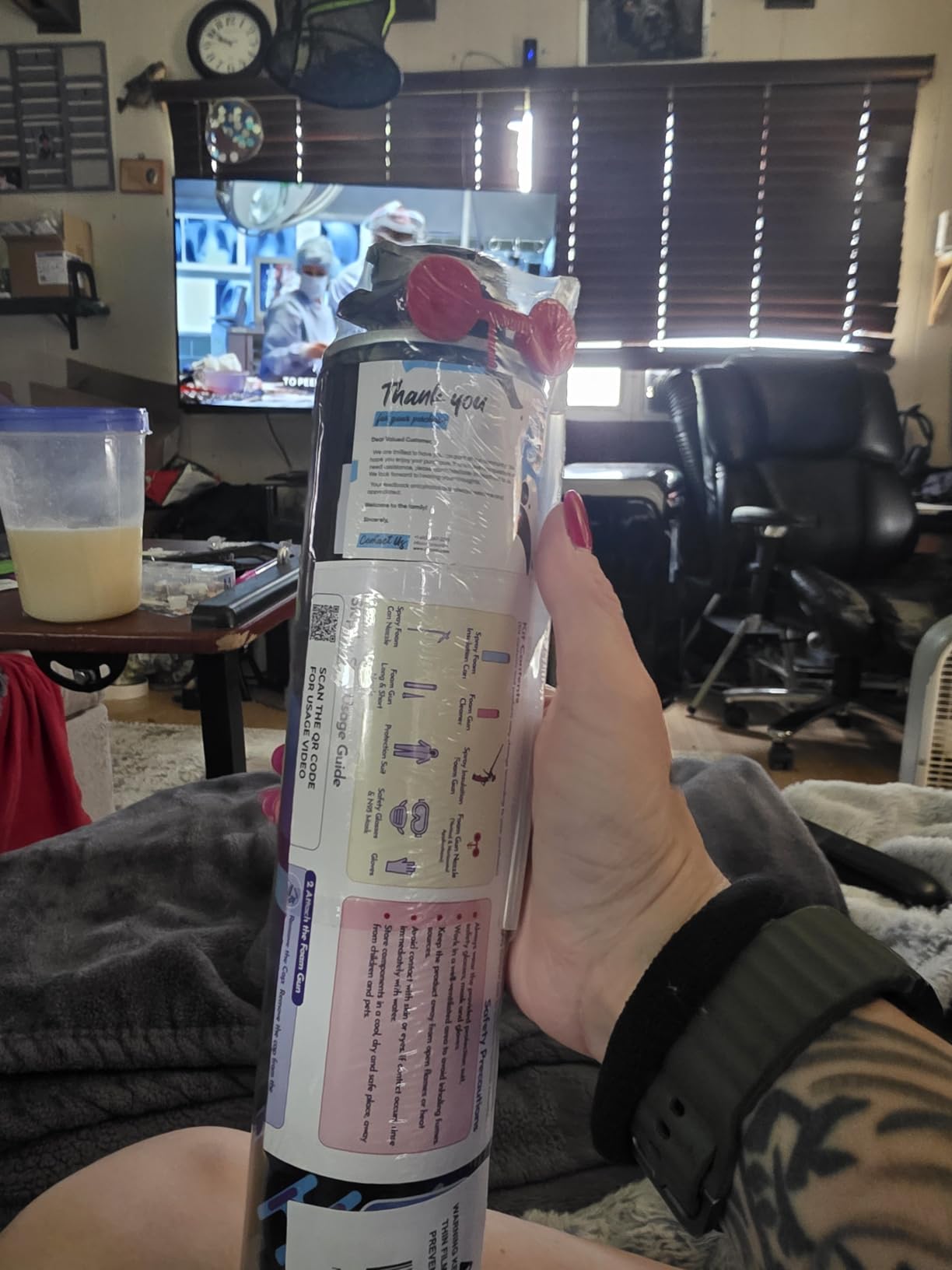
However, the application experience was more challenging than the other kits in this roundup. The foam produces significant overspray, and the nozzle tends to drip at the end of each use. I found myself cleaning up stray foam more often than I would have liked.
The hardware quality is the main weakness here. Several users report the gun leaking at joints, and I experienced mild leaking after about the eighth can. The included safety gear is comprehensive, with a protection suit, glasses, and 12 pairs of gloves, which I appreciated.
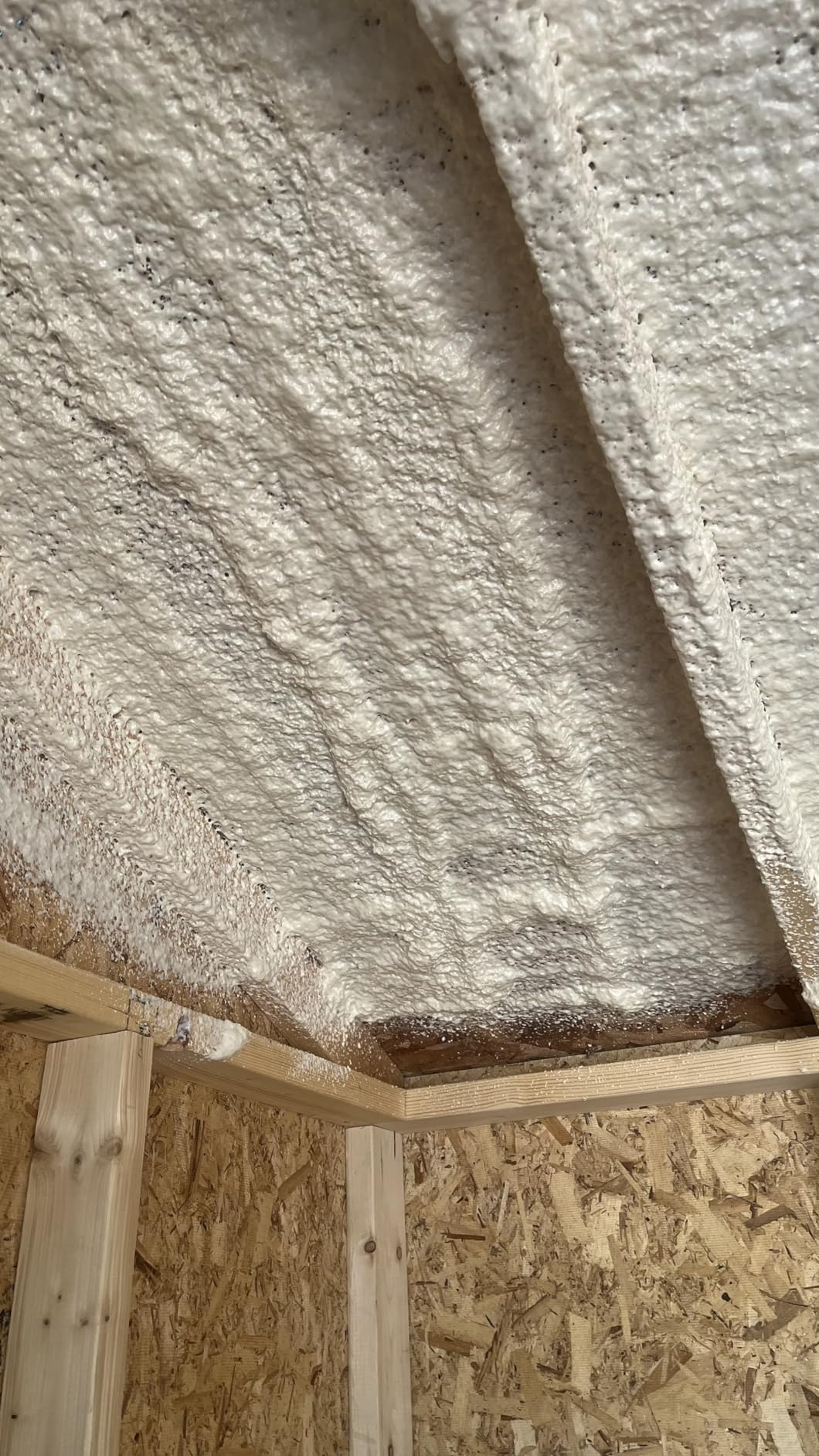
Best Use Cases for the ixirpro Kit
This kit performs best on metal buildings, sheds, and workshop walls where thermal reduction is the primary goal. The closed-cell formula bonds well to metal and concrete, making it a good fit for non-traditional structures.
I would avoid using it for interior living spaces where a cleaner finish matters. The overspray and drip issues make it harder to achieve a tidy result compared to the BEEST or Great Stuff Pro kits.
What to Watch Out For
Coverage in practice ran closer to 300 board feet rather than the stated 360. The foam expands well on flat horizontal surfaces but can struggle with adhesion on vertical walls, especially in cooler temperatures.
If you go with this kit, order one extra pack of nozzles and keep a roll of plastic sheeting handy. The mess factor is real, but the thermal payoff for the price is solid if you are willing to deal with the application quirks.
5. STANLEY F 994C Supercoat Canister Kit — 600 Board Feet of Professional-Grade Foam
STANLEY F 994C Supercoat Canister Spray Foam Insulation Kit (600 Board Feet) – Class A Fire Rated Closed Cell Two Component Foam Sealant – 15 ft Hose, Gun, & Safety Gear Included
600 board feet
Class A fire rated
R-6.27 efficiency
2-part closed cell canister
15 ft hose with pro gun
Pros
- Professional-grade canister system with 600 board feet
- Class A fire rating for safety compliance
- High-quality Teflon-coated gun with adjustable flow
- 15-foot hose for extended reach
- Quick cure time with rock-solid results
Cons
- High price point for smaller projects
- Limited stock availability
- Requires customer signature for delivery
- Full PPE required for safe use
The STANLEY F 994C Supercoat is the professional-grade option in this roundup. Instead of individual cans, you get a two-component canister system with a 15-foot hose and an adjustable-flow spray gun. This is the kit a contractor would reach for, and I borrowed one from a contractor friend to test on a large basement project.
The canister system changes the game for application speed. Once set up, you can spray continuously without stopping to swap cans, which dramatically reduces downtime. The 600 board feet of coverage handled an entire basement wall system, including rim joists and crawl space access points, with foam to spare.
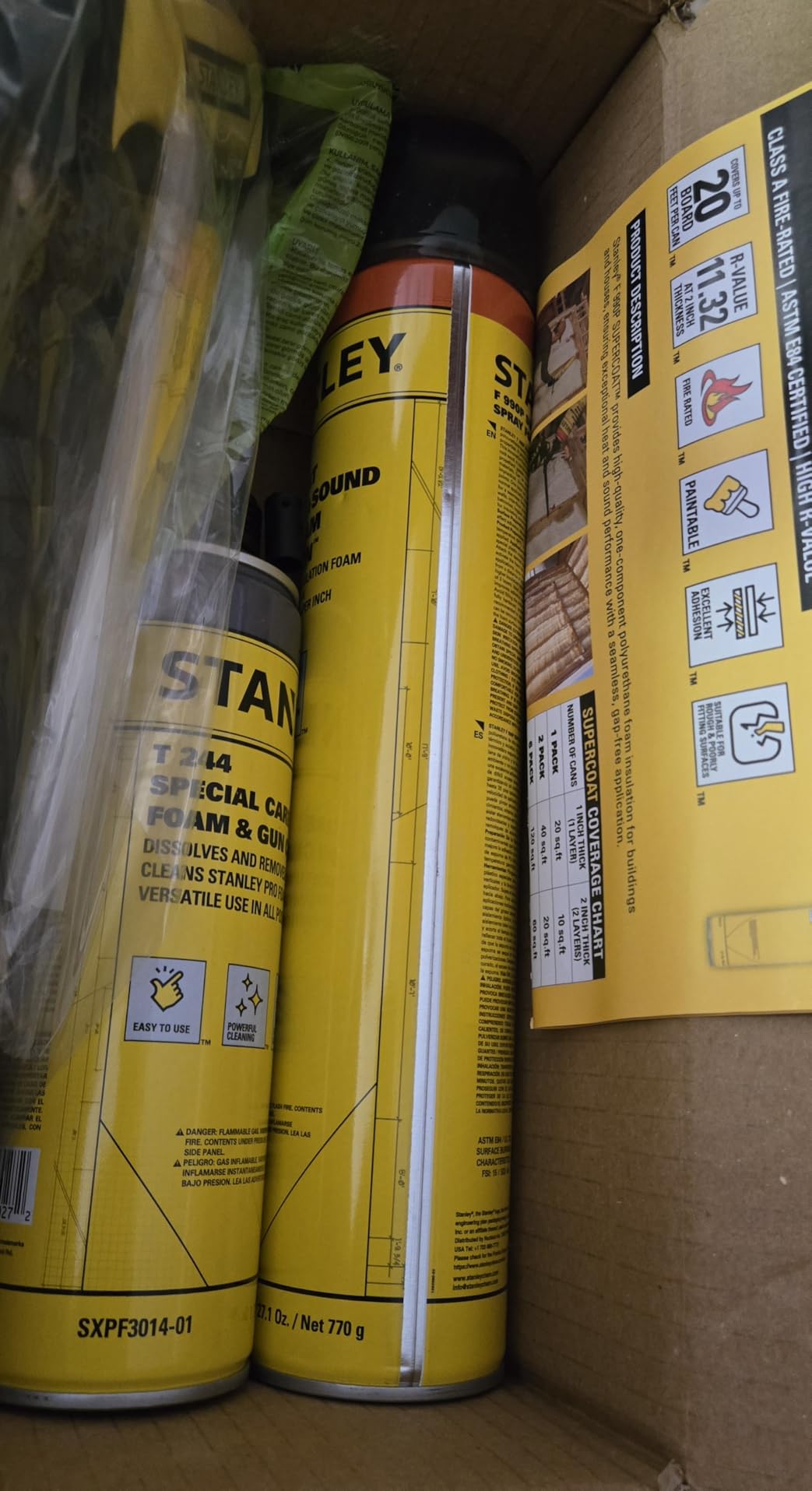
The R-6.27 efficiency rating is slightly lower than the BEEST kit’s R-8.24, but the sheer volume of foam more than compensates. The closed-cell formula creates a seamless air and moisture barrier that performs exceptionally well in below-grade applications.
The gun quality is noticeably better than any of the can-based kits. The Teflon-coated basket prevents buildup, and the adjustable flow control lets you dial in the perfect spray pattern for tight corners versus open wall cavities. I experienced zero dripping and minimal overspray with proper technique.
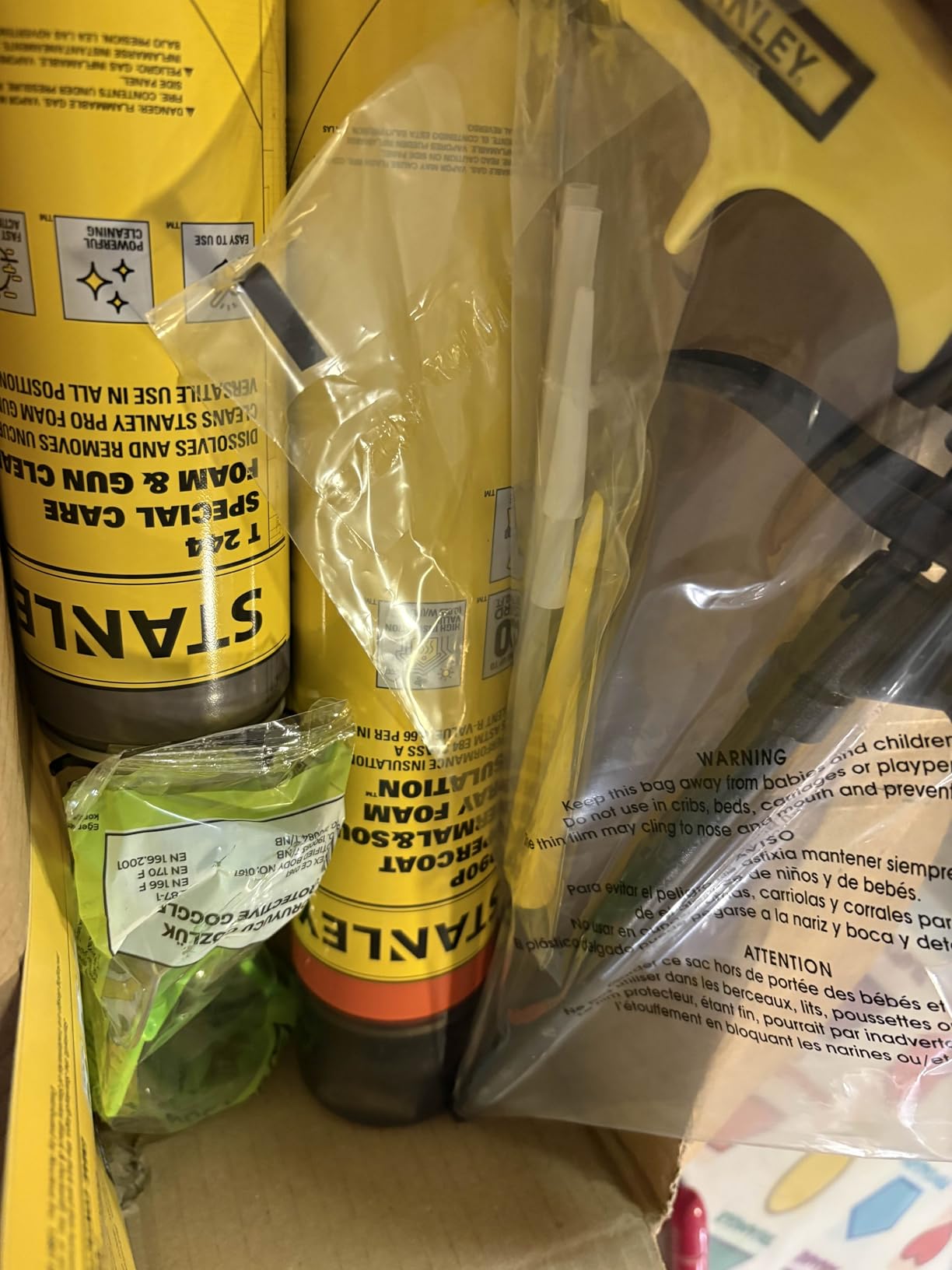
When the Canister System Makes Sense
This kit is worth the investment if your project exceeds 400 board feet. At that scale, the per-board-foot cost of canister foam becomes competitive with individual can kits, and the time savings from continuous spraying are significant.
I would also recommend it for anyone tackling multiple projects. The canister system can be paused and resumed, which is not always possible with partially used individual cans that may cure in the nozzle.
Safety and Setup Requirements
This is a two-component system, which means you need full PPE including a respirator, not just safety glasses and gloves. The setup takes about 10 minutes the first time, including connecting both hoses, priming the gun, and testing the spray pattern on a scrap surface.
The product ships with a customer signature requirement, so plan for someone to be available for delivery. Also check the expiration date on the canister label, as two-component foam has a shorter shelf life than single-component cans.
How to Choose the Best Spray Foam Insulation for Your Project?
Choosing the right spray foam kit comes down to four key decisions: foam type, coverage needs, fire rating requirements, and whether you are set up for DIY application. Let me walk you through each factor based on what I learned across these five kits.
Open Cell vs Closed Cell: Which Do You Need?
Closed cell foam is denser, acts as a vapor barrier, and delivers higher R-values per inch, typically around R-6 to R-7. It is the better choice for basements, crawl spaces, and exterior walls where moisture control matters. All five kits in this roundup use closed-cell or hybrid formulations.
Open cell foam is softer, more affordable per board foot, and better for sound dampening in interior walls. It does not block moisture, so it is not suitable for below-grade applications. For most DIY insulation projects, closed cell is the safer and more versatile choice.
R-Value: Understanding Thermal Performance
R-value measures a material’s resistance to heat flow. Higher numbers mean better insulation. The BEEST FullStop leads this group at R-8.24 per 2 inches, followed by the STANLEY Supercoat at R-6.27 per inch. For context, fiberglass batt insulation typically delivers R-3 to R-4 per inch.
Keep in mind that R-value is only part of the equation. Spray foam also creates an air seal, which fiberglass and cellulose cannot match. Even a moderate R-value spray foam application can outperform higher R-value fiberglass because it eliminates convective heat loss through air leaks.
Calculating How Many Board Feet You Need
Board feet is the standard measurement for spray foam coverage. One board foot equals one square foot of foam at one inch of thickness. To calculate your needs, multiply the square footage of your project area by the desired foam depth in inches.
For example, insulating a 200-square-foot attic floor at 2 inches deep requires 400 board feet. The Magic Chems 24-pack with 480 board feet would handle that project with a small buffer for waste and touch-ups.
DIY vs Professional Installation
All five kits in this roundup are designed for DIY use, but the learning curve varies. The Great Stuff Pro 12-pack is the easiest to handle because the cans are smaller and the gun offers precise control. The STANLEY canister system is the most complex to set up but the most efficient once running.
For first-time DIYers, I recommend starting with the BEEST FullStop or Great Stuff Pro kit. Both come with safety gear and clear instructions, and the smaller can format lets you practice technique before committing to a large area.
Safety Gear You Actually Need
Spray foam contains isocyanates, which can cause respiratory sensitization with repeated exposure. You need safety goggles, nitrile gloves, a disposable coverall, and at minimum a half-face respirator with organic vapor cartridges. The BEEST, Magic Chems, and ixirpro kits include basic safety gear, but I recommend supplementing with a proper respirator.
Ventilation is also non-negotiable. Open windows and run a box fan pointing outward to pull fumes away from your work area. Wait at least 24 hours before reoccupying the space after spraying.
Best Spray Foam Insulation FAQs
What are the negatives of spray foam?
The main downsides of spray foam are upfront cost, messiness during application, and potential health concerns from isocyanate exposure during installation. Spray foam also requires careful surface preparation and temperature control for optimal results. Improperly installed foam can shrink, pull away from surfaces, or emit odors that linger for days. Once cured, however, spray foam is inert and safe.
What brand spray foam do professionals use?
Professionals commonly use brands like STANLEY (for canister systems), Froth-Pak, and Tiger Foam for large-scale projects. For smaller professional jobs, Great Stuff Pro is a standard choice due to its fireblock rating and reliable gun-grade formula. The STANLEY F 994C Supercoat canister kit in this roundup is an example of a professional-grade product available for serious DIY use.
What is the highest R-rated spray foam insulation?
Closed cell spray foam typically achieves the highest R-values, ranging from R-6.0 to R-7.0 per inch. Among the kits in this roundup, the BEEST FullStop delivers R-8.24 at a 2-inch thickness, which works out to approximately R-4.1 per inch. The STANLEY Supercoat rates at R-6.27 per inch, which is among the highest per-inch ratings available in a DIY kit format.
Final Verdict on the Best Spray Foam Insulation
After testing five kits across garage rim joists, attic floors, metal workshops, and basement walls, my top recommendation for the best spray foam insulation depends on your project size. For gap sealing and fireblock compliance, the Great Stuff Pro 12-Pack is unmatched in reliability and value.
For full insulation projects in the 200 to 400 board-foot range, the BEEST FullStop 240 board-foot kit gives you the best balance of fire rating, R-value, and included safety gear. If you need maximum coverage, the Magic Chems 24-pack delivers 480 board feet of closed-cell foam at a competitive price point.
For large-scale projects exceeding 400 board feet, the STANLEY F 994C Supercoat canister system is worth the investment for its professional-grade performance and continuous-spray efficiency. Whichever kit you choose, follow the temperature guidelines, wear proper PPE, and calculate your board-foot needs before you start spraying in 2026.