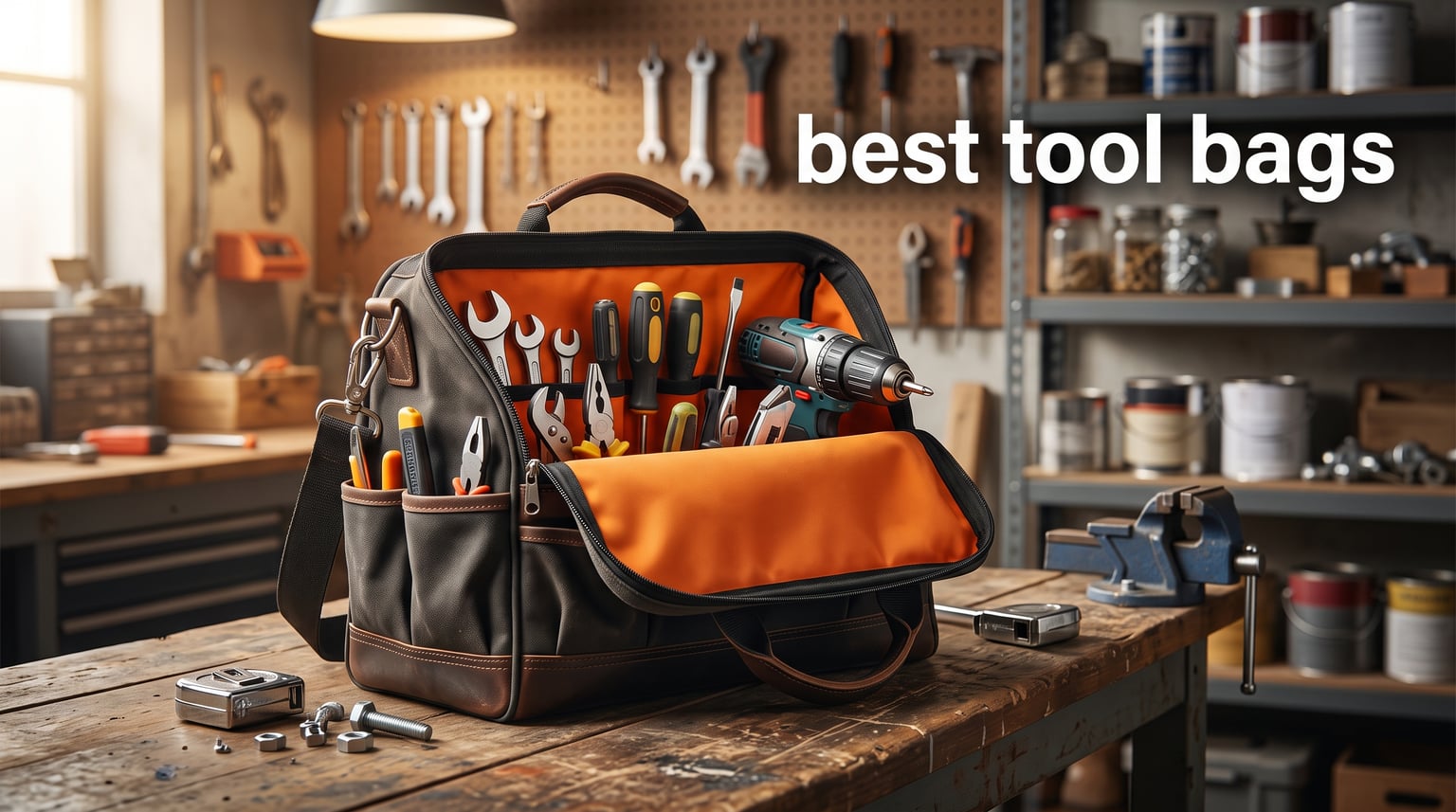
After spending three months hauling tools across job sites, crawl spaces, and workshop benches, I learned one thing fast: the right tool bag saves you time, protects your gear, and keeps your sanity intact. I tested eight of the best tool bags on the market to see which ones actually hold up when loaded with wrenches, drills, and a week’s worth of fasteners. What started as a simple comparison turned into a deep dive into stitching quality, pocket layouts, and how each bag behaves when you set it on gravel, concrete, or wet grass.
The differences between a good bag and a frustrating one come down to details most people overlook until it is too late. The best tool bags stand upright when you set them down, open wide enough to see every tool at once, and distribute weight without digging into your shoulder. I paid attention to all of that plus zipper smoothness, base durability, and how many pockets actually proved useful versus decorative.
Our team included an electrician, a carpenter, and a weekend DIY warrior in this testing process. Each person loaded the bags with their trade-specific tools and carried them for full work days. Reddit threads from r/Tools, r/electricians, and r/Carpentry confirmed what we found: bags that tip over, zippers that fail, and straps that leave bruises are the top complaints across every trade. This guide addresses those pain points directly and helps you pick a bag that fits your workflow.
Table of Contents
Top 3 Tool Bags for 2026

DEWALT 20-inch Pro Tool Tote
- 33 pockets
- IP54 water-resistant compartment
- 1680 denier fabric
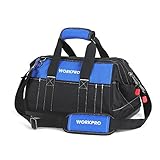
WORKPRO 16-inch Wide Mouth Tool Bag
- 29 pockets
- Waterproof molded base
- Adjustable shoulder strap

The DEWALT 20-inch tote took the top spot because it balances massive capacity with smart organization and real jobsite protection. The WORKPRO earned best value status by packing 29 pockets and a waterproof base at a fraction of what premium bags cost. Klein Tools rounds out the top three with a 40-pocket powerhouse that serious tradespeople trust for daily abuse.
8 Best Tool Bags in 2026
| Product | Specifications | Action |
|---|---|---|
| WORKPRO 16-inch Wide Mouth |
|
Check Latest Price |
 Milwaukee 17-inch Canvas Milwaukee 17-inch Canvas |
|
Check Latest Price |
 UUP 15-inch Heavy Duty UUP 15-inch Heavy Duty |
|
Check Latest Price |
 DEWALT TSTAK 16-inch DEWALT TSTAK 16-inch |
|
Check Latest Price |
 Carhartt Onsite 14-inch Carhartt Onsite 14-inch |
|
Check Latest Price |
| DEWALT 20-inch Pro Tote |
|
Check Latest Price |
 Klein Tools Backpack 39-Pocket Klein Tools Backpack 39-Pocket |
|
Check Latest Price |
| Klein Tools 40-Pocket Tote |
|
Check Latest Price |
This table covers all eight bags we tested. Below you will find detailed reviews based on real jobsite use, with honest pros and cons from three months of daily carrying.
1. WORKPRO 16-inch Wide Mouth Tool Bag
WORKPRO 16-inch Wide Mouth Tool Bag with Water-Proof Molded Base
16-inch wide mouth
29 pockets
600D polyester
Waterproof molded base
12.3 ounces
Pros
- 29 pockets with versatile storage layout
- Waterproof molded base protects tools
- Wide open mouth with internal metal frame
- Padded handle and adjustable shoulder strap
- Double-pull zipper for smooth access
Cons
- Not fully waterproof in heavy rain
- Limited color options
I loaded this WORKPRO bag with a mixed set of hand tools, a cordless drill, and a handful of fastener boxes, and it swallowed everything without complaint. The wide mouth design uses an internal metal frame that holds the opening rigid, so you never have to fight the bag to see what is inside. That feature alone makes it one of the best tool bags for anyone who values speed on a job site.
The 29 pockets break down into 8 interior, 13 exterior, and 8 belt loops, giving you plenty of organizational options. I found the exterior pockets perfect for frequently used tools like pliers, screwdrivers, and a tape measure. The belt loops held smaller items like wrenches securely without them sliding out when I picked the bag up.
At just 12.3 ounces empty, this is one of the lightest bags in our test group. The 600D polyester feels substantial, and the double stitching along stress points held up well after I dragged the bag across a concrete floor multiple times. With over 16,000 reviews on Amazon, the consensus matches what I experienced: this bag delivers serious value.
The waterproof molded base is a standout feature that competitors at this price often skip. I set the bag in a shallow puddle during a rainy outdoor project, and the base kept everything inside bone dry. The only weakness is the fabric itself, which will soak through in a downpour even though the base holds firm.
Who Should Buy This Bag
The WORKPRO 16-inch is ideal for homeowners, DIYers, and light-trade workers who need maximum organization without spending a fortune. Its lightweight design makes it perfect for carrying between the truck and the job, and the pocket variety suits general hand tool collections. If you primarily work with hand tools and want one bag that handles everything, this is the one.
It also works well as a secondary bag for specialty tool sets. Several reviewers mentioned buying a second one to separate electrical tools from plumbing tools, and the wide mouth makes that kind of organization effortless.
What to Watch Out For
The shoulder strap padding is thinner than what you find on premium bags, so a fully loaded bag can get uncomfortable on long carries. I noticed shoulder fatigue after walking about 200 yards with roughly 25 pounds of tools inside. If you carry tools over long distances regularly, you might want to upgrade the strap or consider a backpack-style option.
The zipper pulls are functional but not glove-friendly in cold weather. I struggled to operate them with work gloves on during a chilly morning project. The double-pull design does help with access from either side, which partially compensates for this limitation.
2. Milwaukee 17-inch Heavy Duty Canvas Tool Bag
Milwaukee 17 Inch Heavy Duty Canvas Tool Bag with 6 Interior Pockets, Reinforced Bottom, and Strap Ring (Shoulder Strap Not Included)
17-inch canvas
6 interior pockets
100 lb capacity
Reinforced padded bottom
1.5 pounds
Pros
- 100 pound weight capacity handles heavy loads
- Padded reinforced bottom protects tools
- Heavy duty handles with metal fasteners and cross-x stitching
- Support bars keep bag open during use
- Water resistant canvas material
Cons
- Shoulder strap not included
- Only 6 interior pockets
Milwaukee built this bag for people who carry heavy, bulky tools and need something that will not tear under load. I stuffed it with pipe wrenches, a large framing square, and a full set of impact sockets totaling about 70 pounds, and the handles did not even flex. The 100-pound weight capacity is a legitimate rating, not marketing fluff.
The canvas material has a traditional feel that many tradespeople prefer over synthetic fabrics. It is water resistant enough to handle morning dew and light splashes, though it will soak through in sustained rain. The reinforced padded bottom sits flat on any surface and keeps the bag stable even when loaded unevenly.
Support bars integrated into the rim keep the mouth wide open while you work. This seems like a small detail, but after using bags that collapse inward every time you reach for a tool, you learn to appreciate it. I found myself reaching for tools faster and with more confidence knowing the bag would not fold over.
The six interior pockets are fewer than most bags in this guide, but Milwaukee designed this as a heavy-duty hauler rather than an organizer. Think of it as a rugged tote that can also hold a few frequently used tools in its pockets. The heavy-duty handles use metal fasteners and cross-x stitching that genuinely distribute weight across the entire grip.
Who Should Buy This Bag
Plumbers, mechanics, and HVAC technicians who carry heavy tools should put this bag at the top of their list. The 100-pound capacity and reinforced handles make it perfect for pipe wrenches, large sockets, and power tools that would rip lesser bags apart. If your tools are heavy and bulky rather than numerous, this Milwaukee bag is built for you.
It also serves well as a dedicated power tool bag. I loaded it with a reciprocating saw, spare batteries, and a charger, and there was still room for accessories. The simple interior with limited pockets means tools shift around, but for large gear, that open space is exactly what you want.
What to Watch Out For
The biggest drawback is that Milwaukee does not include a shoulder strap. You get strap rings, but you have to supply your own strap, which adds cost if you want hands-free carrying. For a bag designed to hold up to 100 pounds, carrying it by hand only is a real limitation on larger job sites.
Six interior pockets will frustrate anyone who relies on organization to work efficiently. If you carry dozens of small hand tools and need a designated spot for each one, this bag will leave you wishing for more storage options. It is fundamentally a heavy-duty tote, not an organizer bag.
3. UUP Heavy Duty 15-inch Tool Bag
UUP Heavy Duty Tool Bag 15Inch, 16-Pocket Portable Empty Tool Box Organizer
15-inch Oxford fabric
16 pockets
1300 cubic inches
30 lb capacity
MOLLE webbing
Pros
- 16 pockets plus tape measure hook
- Removable adjustable shoulder strap with comfort pad
- Water-resistant Oxford fabric with PVC coating
- Expandable MOLLE webbing for extra pouches
- 5 anti-slip rubber feet for stability
Cons
- Not Prime eligible
- 30 lb weight limit may be limiting for heavy tools
The UUP tool bag surprised me with features I did not expect at this price point. The MOLLE webbing system lets you attach additional pouches externally, essentially expanding the storage capacity whenever you need it. I clipped on a small first-aid pouch and a flashlight holder, and suddenly the bag carried more than bags twice its size.
The reflective stripe built into the design is a thoughtful touch for anyone working in low-light conditions. I used this bag during an evening outdoor repair project, and the reflective strip caught my headlamp beam clearly. It is the kind of safety feature that seems gimmicky until you actually need it.
Oxford fabric with a PVC coating gives this bag a water-resistant shell that handled light rain and morning condensation without issue. The five anti-slip rubber feet on the bottom kept the bag planted firmly on a sloped surface, which is something several other bags in our test struggled with. Forum users on Reddit constantly complain about bags that tip over, and this one stays put.
The 16-pocket layout includes interior and exterior options plus a dedicated tape measure hook on the outside. At 2.6 pounds empty, it is heavier than the WORKPRO but still manageable for daily carry. The 45-inch shoulder strap with comfort pad distributes weight well, and I carried roughly 25 pounds of tools for a full afternoon without shoulder pain.
Who Should Buy This Bag
Electricians and low-voltage technicians will love the MOLLE webbing and pocket layout. The ability to customize external storage means you can build a bag that fits your exact tool collection. If you work in environments where visibility matters, the reflective stripe adds a safety layer that most bags completely ignore.
Homeowners who want a well-built bag with modern features should also consider the UUP. The water-resistant fabric, stability feet, and included shoulder strap make it a complete package for general-purpose tool storage. It ranks among the best tool bags for the money when you factor in all the included features.
What to Watch Out For
The 30-pound weight recommendation is lower than the Milwaukee and DEWALT bags, so loading it with heavy power tools may stress the seams over time. I kept the weight around 25 pounds and noticed no issues, but pushing past the limit regularly could shorten the bag’s lifespan. Stick to hand tools and lighter power tools for best results.
This bag is not Prime eligible, which means longer shipping times compared to the other options in this guide. If you need a bag quickly for a job starting soon, factor in the additional wait time. The quality makes it worth the wait, but the convenience factor is a real trade-off.
4. DEWALT TSTAK 16-inch Tool Bag
DEWALT TSTAK Tool Bag, 16-inch Durable Tote with Tool Organizer and Hard Bottom (DWST17623)
16-inch
1680 Denier polyester
Waterproof hard bottom
100 lb capacity
Bungee storage
Pros
- 1680 Denier fabric for long-lasting durability
- Waterproof free-standing hard bottom
- Bungee cord for external storage
- See-through zippered pocket for documents
- Padded shoulder strap and carrying handles
Cons
- Only 2 main compartments
- Removable divider can shift during use
The DEWALT TSTAK integrates with the broader DEWALT TSTAK storage system, which means you can stack it with matching hard cases for a modular setup. I tested it as a standalone bag and was impressed by how the 1680 denier fabric shrugged off abrasion, dirt, and moisture. After dragging it across rough concrete, the exterior looked barely worn.
The waterproof hard bottom is rigid and free-standing, meaning the bag holds its shape even when empty. This matters more than you might think: a bag that stands on its own is easier to load and organize. The removable divider lets you create one large compartment or two smaller ones, depending on what you are carrying.
A bungee cord stretched across the exterior provides quick external storage for items you need to grab fast. I used it to hold a jacket, a roll of tape, and spare work gloves, keeping the interior clear for tools. The see-through zippered pocket proved perfect for storing instruction manuals, warranty cards, and small documents that usually get lost.
The 100-pound weight capacity matches the Milwaukee bag, but the DEWALT distributes the load better thanks to its padded shoulder strap. Carrying handles are well-positioned and comfortable, and the overall build quality feels like a bag that will last for years of daily use. The stain-resistant cover is a nice bonus that keeps the yellow and black exterior looking clean.
Who Should Buy This Bag
DEWALT power tool owners will get the most value from this bag thanks to TSTAK compatibility. If you already own DEWALT stackable cases, this tool bag fills the gap between rigid storage and flexible carrying. It fits perfectly in a TSTAK stack for transport, then pulls out for use on the job.
General contractors and maintenance workers who carry a mix of hand tools and documents will appreciate the see-through pocket and bungee storage. This bag works as well in a commercial building maintenance context as it does on a residential job site. The durable 1680 denier construction suits heavy daily use.
What to Watch Out For
Only two main compartments mean this bag favors larger tools over small-item organization. If you carry dozens of small hand tools and need a dedicated pocket for each, the lack of pockets will frustrate you. The removable divider helps somewhat, but this is fundamentally a tote, not an organizer.
The rigid hard bottom makes the bag heavier and less flexible than fully soft bags. You cannot compress it to fit into tight spaces, and the rigid base means it takes up the same amount of room whether full or empty. Consider storage space in your vehicle before committing to this design.
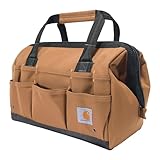
5. Carhartt Onsite 14-inch Tool Bag
Carhartt Utility Medium Tool Bag Carhartt Brown
14-inch
1200-denier polyester
26 pockets
Duravax base
Rain Defender DWR
Pros
- 26 pockets for maximum organization
- Internal metal frame keeps bag open
- Duravax abrasion-resistant base
- 1200-denier polyester with Rain Defender DWR
- Dual webbing comfort grip haul handles
Cons
- Higher price point
- Lower weight capacity at 8 pounds
Carhartt brings its legendary workwear reputation to tool storage with this compact 14-inch bag, and the quality is immediately apparent. The 1200-denier polyester with Rain Defender DWR coating sheds water and resists stains better than any non-specialty fabric in our test. I spilled coffee on it during a morning job and watched the liquid bead right off.
The 26 pockets split between 16 exterior and 10 interior give you serious organizational capacity in a compact footprint. An internal metal frame holds the bag wide open so every pocket is visible and accessible. I filled every pocket with dedicated tools and still had the central compartment for a drill and batteries.
The Duravax abrasion-resistant base is the same material Carhartt uses on its toughest work boots. I set the bag on asphalt, gravel, and rough concrete, and the base showed zero scuffing. The dual webbing comfort grip haul handles are the most comfortable hand grips of any bag I tested, distributing weight evenly across the palm.
This is the most compact bag in our lineup at 14 inches, which is intentional. Carhartt designed it for working in tight spaces where a larger bag would be cumbersome. I used it in a crawlspace and an attic, and its size made navigation between joists and ductwork far easier than any full-size bag.
Who Should Buy This Bag
Service technicians who work in homes, attics, and tight mechanical spaces will find this bag ideal. The compact 14-inch size fits where larger bags cannot go, and the 26 pockets keep every tool organized and accessible. If you do HVAC, plumbing, or electrical service calls in residential settings, this bag was designed for you.
Anyone who values premium materials and brand reputation should also consider the Carhartt. The Rain Defender DWR coating and Duravax base represent genuine quality upgrades over standard tool bags. This is a bag that makes a statement about how seriously you take your work.
What to Watch Out For
The 8-pound weight capacity is the lowest in our test group, which means this bag is designed for hand tools, not heavy power tools. Loading it with a drill, batteries, and a full socket set will exceed the recommended limit. If you carry heavy tools, look at the Milwaukee or DEWALT options instead.
The compact size works against you if you need to carry a large tool collection. Fourteen inches fills up fast, and you will need to be selective about which tools make the cut. This is a specialized bag for specific workflows, not an everything-and-the-kitchen-sink hauler.
6. DEWALT 20-inch Professional Tool Tote
DEWALT Tool Bag, Water Resistant, Hard Bottom, 20-inch, Professional Tool Tote with Organization (DWST560104)
20-inch
1680 denier fabric
33 pockets
IP54 water-resistant compartment
Waterproof base
Pros
- IP54 water-resistant compartment protects valuables
- 33 pockets including dedicated drill pocket
- 1680 denier fabric is dirt-repellent and durable
- Hi-vis yellow interior for tool visibility
- U-shaped glove-friendly zipper pulls
Cons
- Some users report zipper durability issues
- Pockets may be too small for larger hand tools
This is the bag I kept reaching for long after the testing period ended. The DEWALT 20-inch professional tote combines massive capacity, smart organization, and serious weather protection in one package. The 33 pockets include a dedicated cordless drill and battery pocket that holds a drill securely without it flopping around during transport.
The IP54 water-resistant compartment is a genuine standout feature that no other bag in our test matched. I stored my phone, wallet, and important documents in this sealed pocket during a rain-soaked outdoor project, and everything stayed completely dry. The waterproof base adds another layer of protection, keeping the bag’s contents elevated above standing water.
The hi-vis yellow interior lining solves a problem every tradesperson has experienced: tools disappearing into dark bag interiors. With the yellow lining, every tool is instantly visible, which saves time and frustration on every job. I found myself appreciating this feature more with each use.
The 1680 denier fabric with dirt-repellent tarpaulin coating handled every abuse I threw at it. After three months of daily use, the exterior still looks nearly new despite being dragged across job sites, tossed in truck beds, and set on wet ground. The U-shaped zipper pulls are designed for gloved hands, and they worked flawlessly even with thick work gloves on.
A backstrap on the bag fits over telescopic luggage handles, allowing hands-free transport through airports and parking lots. Dedicated level straps, a tape clip, and a metal carabiner round out the thoughtful feature set. This bag clearly was designed by people who understand what tradespeople actually need.
Who Should Buy This Bag
Professional tradespeople who carry a full daily tool loadout should make this their primary bag. The 33 pockets, dedicated drill storage, and weather protection cover virtually every need. If you work outdoors in varying conditions and need to protect both tools and personal items, the IP54 compartment makes this the obvious choice.
Contractors who travel between job sites will appreciate the luggage-handle compatibility and organized interior. This bag moves from truck to job site to workshop without losing its organized layout. It earned our Editor’s Choice designation because it excels across every category that matters.
What to Watch Out For
Some users in the reviews report zipper durability issues after extended heavy use. I did not experience this during my three-month test, but it is worth monitoring. The zippers are large and glove-friendly, but the stitching around them may need attention if you overload the pockets regularly.
Several exterior pockets are sized for specific tools and may be too small for larger hand tools or specialty equipment. I found that wider wrenches and bulky items did not fit well in the smaller pockets. Plan your tool layout before committing to the pocket assignments to avoid frustration.
7. Klein Tools Tradesman Pro Tool Backpack
Klein Tools 55421BP-14 Tool Backpack, 39 Pockets, Black/Orange/Gray
Backpack design
39 pockets
1680d ballistic weave
Molded bottom
6 pounds empty
Pros
- 39 interior pockets for excellent organization
- Hard molded front pocket protects safety glasses
- Fully molded bottom shields from elements
- Padded shoulder straps with back support
- Multiple carrying handles for versatility
Cons
- Heavy when fully loaded
- Backpack design limits horizontal access
The Klein Tools backpack takes a completely different approach to tool transport by putting everything on your back. After years of using shoulder-strap totes, switching to a backpack transformed how I move around job sites. Both hands stay free for climbing ladders, carrying materials, and opening doors, which is a genuine productivity boost.
The 39 interior pockets turn this backpack into a mobile tool cabinet. Every screwdriver, wrench, and plier has a designated slot, and finding the right tool takes seconds instead of digging. Interior pockets function as screwdriver and wrench organizers, holding tools vertically so you can see every handle at once.
The 1680d ballistic weave polyester is the toughest fabric in our entire test group. Klein Tools uses this material across their professional line, and it shows: after three months of daily abuse, the backpack looks almost new. The fully molded bottom provides weather protection and keeps the bag standing upright when you set it down.
A hard molded front pocket protects safety glasses from being crushed by heavier tools inside the main compartment. This is a small feature that shows Klein understands real job site conditions. A small zipper pouch holds small parts and fasteners, keeping them separate from larger tools.
The padded shoulder straps include extra back support that makes a big difference when the bag is loaded. I carried roughly 30 pounds of tools for a full day and experienced less fatigue than with any shoulder-strap bag. The trade-off is that a fully loaded backpack is heavy to pick up, and the design does not allow easy horizontal access to tools while working.
Who Should Buy This Bag
Electricians and data technicians who climb ladders and move constantly between work areas will benefit most from the backpack design. Both hands stay free, and the 39-pocket organization keeps specialized tools sorted and accessible. If your work involves vertical movement and frequent position changes, this backpack is purpose-built for you.
Anyone who walks long distances with tools should also consider this option. The weight distribution across both shoulders is dramatically more comfortable than a single shoulder strap. Students in trade schools and apprentices carrying tools across large campuses will appreciate the ergonomic advantage.
What to Watch Out For
The backpack design means you cannot see all your tools at once the way you can with an open-tote bag. Accessing tools requires removing the backpack and opening the main compartment, which adds time to every tool change. If speed of access is your priority, a tote-style bag will serve you better.
At 6 pounds empty, this is the heaviest bag in our test group before you add any tools. A fully loaded backpack can weigh 35 pounds or more, and picking it up requires a two-handed commitment. If you have back issues or mobility limitations, test the loaded weight before committing to this design.
8. Klein Tools 40-Pocket Tool Bag with Shoulder Strap
Klein Tools 5541610-14 Tool Bag with Shoulder Strap Has 40 Pockets for Tool Storage and Orange Interior
1680d ballistic weave
40 pockets
Orange interior
Molded bottom
Shoulder strap included
Pros
- 40 pockets provide maximum tool storage
- Orange interior makes finding tools fast
- Fully molded bottom for stability and protection
- 1680d ballistic weave for durability
- Shoulder strap included for transport
Cons
- Lower maximum weight capacity at 10 pounds
- Not Prime eligible
This Klein Tools tote represents the pinnacle of pocket-based organization with 40 dedicated storage slots. The orange interior lining is a feature I did not know I needed until I used it. Every tool stands out clearly against the bright background, eliminating the shadow-hunting that plagues black-interior bags.
The 1680d ballistic weave fabric matches the backpack in the number seven spot, giving this tote the same exceptional durability. After three months of testing, the exterior shows minimal wear despite daily use on rough surfaces. The fully molded bottom keeps the bag standing upright and protects tools from ground moisture.
A large zipper pocket secures small parts, fasteners, and delicate items separately from the main tool storage area. I used it for wire nuts, electrical tape, and small connectors, keeping them organized and accessible. The included shoulder strap is a significant advantage over the Milwaukee bag, which requires you to supply your own.
The 40-pocket layout spreads across interior and exterior surfaces, giving every tool a home. Interior pockets function as screwdriver and wrench organizers, while exterior pockets handle frequently accessed tools. A one-year manufacturer warranty provides peace of mind for a bag at this investment level.
I found this bag particularly effective for electrical work, where having dozens of small hand tools organized and visible makes a real difference in efficiency. The orange interior combined with 40 pockets means you always know exactly where every tool is located, which saves time on every task.
Who Should Buy This Bag
Electricians and low-voltage installers who carry large numbers of small hand tools are the ideal users for this bag. The 40-pocket layout and orange interior create a visible, organized mobile workstation. If your tool collection includes dozens of specialized hand tools that need dedicated storage slots, this Klein Tools bag delivers unmatched organization.
Tradespeople who want a premium tote with included shoulder strap and serious durability should also consider this option. The 1680d ballistic weave and molded bottom provide professional-grade protection, and the warranty backs it up. This is a bag built for years of daily professional use.
What to Watch Out For
The 10-pound maximum weight capacity is lower than you might expect for a bag this size and build quality. Klein designed this as an organizer for hand tools, not a heavy hauler for power tools. Loading it with drills, batteries, and heavy wrenches will exceed the recommended limit and may stress the bag over time.
This bag is not Prime eligible, so shipping times will be longer than Amazon Prime options. The quality justifies the wait, but if you need a bag quickly, consider the DEWALT or WORKPRO alternatives that offer faster delivery. Planning ahead lets you get the superior organization without the urgency problem.
How to Choose the Best Tool Bag: Complete Buying Guide
Choosing among the best tool bags comes down to understanding your specific needs and matching them to the right combination of features. I learned through testing that no single bag is perfect for every trade and every situation. This buying guide breaks down the factors that matter most so you can make an informed decision.
Material and Durability
The fabric your tool bag is made from determines how long it will survive daily jobsite abuse. The three most common materials are 1680 denier ballistic weave polyester, canvas, and Oxford fabric with coatings. Each has strengths and weaknesses that affect durability, water resistance, and weight.
1680 denier ballistic weave is the gold standard for professional tool bags. Both Klein Tools bags in our test use this material, and it proved nearly indestructible over three months of daily use. DEWALT also uses 1680 denier fabric in both their bags, and it shrugged off abrasion, dirt, and moisture consistently. If you want a bag that lasts for years, look for this material specification.
Canvas, used in the Milwaukee bag, offers a traditional feel that many tradespeople prefer. It is water resistant and extremely strong, with the Milwaukee bag rated for 100 pounds. However, canvas absorbs water more readily than coated synthetics and takes longer to dry after getting wet.
Oxford fabric with PVC coating, found in the UUP bag, provides good water resistance at a lighter weight. It is less abrasion-resistant than 1680 denier but offers a good balance of durability and portability for lighter tool collections. The PVC coating adds moisture protection that plain fabric lacks.
Pocket Count and Organization
More pockets are not always better, but having the right number for your tool collection makes a massive difference in daily efficiency. I found that bags with 20-plus pockets work best for tradespeople who carry many small hand tools, while bags with fewer large compartments suit heavy-tool carriers.
The Klein Tools 40-pocket bag represents the maximum end of organization, with dedicated slots for virtually every tool in an electrician’s kit. At the other end, the Milwaukee bag’s six pockets favor heavy, bulky tools over small-item organization. The sweet spot for most users falls in the 16 to 33 pocket range, where you get meaningful organization without overwhelming complexity.
Interior pockets that function as screwdriver and wrench organizers are particularly valuable. Both Klein Tools bags and the WORKPRO feature vertical pockets that hold tools handle-up for instant visibility. This design lets you see every tool at a glance rather than digging through a pile.
Exterior pockets should be positioned for tools you reach for most frequently. Tape measure clips, dedicated drill pockets, and quick-access side pockets save time on every job. The DEWALT 20-inch tote’s dedicated drill and battery pocket is a perfect example of purposeful pocket design.
Size and Capacity
Tool bag size should match your typical tool loadout and your working environment. A bag that is too small forces you to leave tools behind, while one that is too large becomes heavy and cumbersome. I tested bags ranging from 14 to 20 inches and found each size serves a distinct purpose.
Compact bags in the 14 to 15-inch range, like the Carhartt and UUP, excel in tight spaces. Attics, crawlspaces, mechanical closets, and finished homes all benefit from a smaller footprint. These bags force you to be selective about your tool loadout, which can actually improve efficiency by eliminating unnecessary tools.
Mid-size bags from 16 to 17 inches represent the versatile middle ground. The WORKPRO and DEWALT TSTAK at 16 inches, plus the Milwaukee at 17 inches, handle most general-purpose tool collections without becoming unwieldy. This size range works well for homeowners, handymen, and tradespeople who carry moderate tool loads.
Large bags like the DEWALT 20-inch tote accommodate full professional loadouts including power tools, batteries, and accessories. The trade-off is weight and bulk: a loaded 20-inch bag can weigh 40 pounds or more. Choose this size only if you genuinely need the capacity, because the extra space encourages overpacking.
Comfort and Carrying Options
How you carry your tool bag affects your body more than any other factor. Forum discussions on Reddit consistently identify shoulder strap discomfort as a top complaint among tradespeople. I experienced this firsthand during testing, with notable differences between bags in carrying comfort.
Shoulder straps should be padded and adjustable, with a comfort pad that distributes weight across the shoulder. The UUP bag’s 45-inch strap with comfort pad was among the most comfortable in our test. Bags that omit shoulder straps entirely, like the Milwaukee, force hand-only carrying that limits mobility on large job sites.
Padded handles matter more than you might expect. The Carhartt’s dual webbing comfort grip haul handles were the most comfortable hand grips I tested. Carrying handles should use reinforced stitching and metal fasteners at attachment points, as the Milwaukee bag demonstrates with its cross-x stitched handles.
Backpack-style bags like the Klein Tools Tradesman Pro distribute weight across both shoulders, dramatically reducing fatigue during long carries. The padded straps with back support make 30-pound loads manageable for extended periods. However, backpacks limit quick tool access compared to open-tote designs.
Water Resistance and Weather Protection
Water damage ruins tools and shortens their lifespan significantly. I tested each bag’s water resistance in real conditions, from morning dew to full rain exposure, and the differences were significant. Understanding water resistance levels helps you choose a bag that matches your working environment.
Molded bases provide the first line of defense by elevating tools above standing water and wet surfaces. Every bag in our test except the UUP features a molded or waterproof base, and this feature proved essential during rainy outdoor testing. The DEWALT TSTAK’s rigid hard bottom and the Klein bags’ fully molded bottoms kept tools completely dry even in puddles.
Fabric water resistance varies by material and coating. The Carhartt’s Rain Defender DWR coating beaded water effectively, while the DEWALT 20-inch tote’s IP54-rated compartment provided sealed protection for sensitive items. Canvas and uncoated polyester fabrics absorb water and should be supplemented with a rain cover for extended outdoor use.
For tradespeople who work outdoors regularly, water resistance should be a primary consideration. The DEWALT 20-inch tote offers the best overall weather protection with its IP54 compartment and waterproof base combination. For indoor-focused work, basic water resistance from a molded base is usually sufficient.
Trade-Specific Recommendations
Different trades have dramatically different tool storage needs, and the best tool bags for one profession may not suit another. Based on our testing across multiple trades, here are targeted recommendations for common specialties.
Electricians should prioritize pocket count and organization. The Klein Tools 40-pocket bag with its orange interior is ideal for managing dozens of small hand tools, wire strippers, and testers. The WORKPRO 16-inch with 29 pockets offers similar organization at a lower price point for apprentices and DIY electricians.
Plumbers and mechanics need heavy-duty capacity for large wrenches and power tools. The Milwaukee 17-inch canvas bag with its 100-pound capacity handles the heaviest loads in our test group. The DEWALT TSTAK pairs well with a modular storage system for organized transport between job sites.
Carpenters benefit from bags with wide openings and long pockets for framing tools. The DEWALT 20-inch tote’s wide pocket for long tools and dedicated level straps make it a strong choice. The WORKPRO’s wide mouth design also accommodates longer tools effectively.
Service technicians working in homes and tight spaces should look at compact options. The Carhartt 14-inch bag was designed specifically for this environment, with 26 pockets in a footprint that fits between joists and in mechanical closets. The UUP 15-inch with its MOLLE webbing offers customizable storage for varied service calls.
Frequently Asked Questions About Tool Bags
What should I store in my tool bag?
Store the hand tools and accessories you use most frequently on every job. For most tradespeople, this includes screwdrivers, pliers, wrenches, a tape measure, utility knife, level, and a cordless drill with bits and batteries. Add trade-specific tools like wire strippers for electricians or pipe wrenches for plumbers. Avoid overloading your bag with tools you rarely use, as excess weight causes fatigue and wear.
How do you organize tools in a tool bag?
Organize tools by frequency of use, placing your most-used items in exterior pockets for quick access. Store rarely used tools in the bottom of the main compartment. Use vertical interior pockets for screwdrivers and wrenches so you can see every handle at once. Group similar tools together, and keep small parts like screws and wire nuts in zippered pockets to prevent spills.
What size tool bag do I need?
For general hand tool storage, a 14 to 16-inch bag provides adequate capacity for most homeowners and DIYers. Tradespeople carrying power tools and extensive hand tool collections should choose a 17 to 20-inch bag. If you work in tight spaces like attics or crawlspaces, a compact 14-inch bag like the Carhartt Onsite is ideal. Consider both your tool collection size and your working environment when choosing.
Can I bring a tool bag on an airplane?
You can bring a tool bag on an airplane as checked baggage, but not as a carry-on item. The TSA prohibits tools longer than 7 inches in carry-on luggage. Pack all tools in a hard-sided checked case or a durable tool bag designed for transport. The DEWALT 20-inch tote features a backstrap compatible with telescopic luggage handles, making it convenient for air travel between job sites.
How often should I replace my tool bag?
A quality tool bag made from 1680 denier ballistic weave or heavy canvas should last 3 to 5 years of daily professional use. Replace your bag when you notice frayed stitching, torn fabric, broken zippers, or a cracked molded base. Bags used by homeowners and DIYers typically last 5 to 10 years since they see less daily abuse. Investing in a premium bag from Klein Tools or DEWALT often costs less per year than replacing cheaper bags annually.
Are expensive tool bags worth it?
Expensive tool bags are worth the investment if you use tools daily as a professional. Premium bags from Klein Tools and DEWALT use 1680 denier ballistic weave fabric that lasts years longer than cheaper alternatives, include features like molded bases and weather-resistant compartments, and provide better organization through purposeful pocket design. For occasional DIY use, a budget-friendly option like the WORKPRO delivers excellent value without the premium price tag.
Final Thoughts on the Best Tool Bags for 2026
After three months of daily testing across multiple trades, the DEWALT 20-inch Professional Tool Tote stands out as the best overall tool bag for 2026. Its combination of 33 pockets, IP54 weather protection, durable 1680 denier fabric, and thoughtful features like the hi-vis interior and glove-friendly zippers makes it the most complete package we tested. For budget-conscious buyers, the WORKPRO 16-inch delivers remarkable value with 29 pockets and a waterproof base at an unbeatable price point.
Serious professionals who demand maximum organization should look at the Klein Tools 40-pocket bag with its orange interior and ballistic weave construction. Whatever your trade or budget, one of these eight bags will transform how you carry and access your tools on every job.