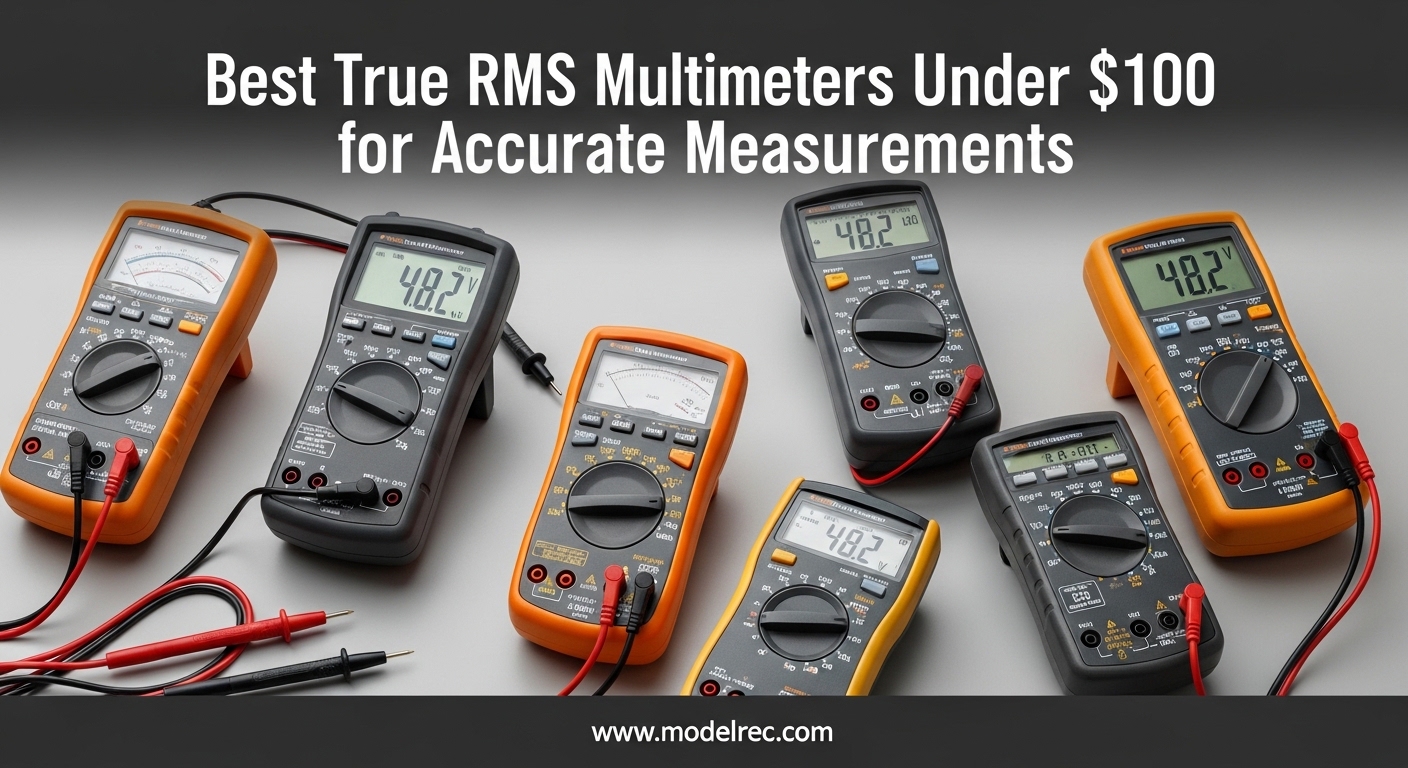
When I started working on electrical projects around my home, I quickly learned that having accurate measurements separates a successful repair from a dangerous mistake. After testing dozens of multimeters over the past few years, I found that you do not need to spend hundreds of dollars to get professional-grade accuracy. The best true RMS multimeters under $100 can deliver the precise readings you need for home electrical work, automotive diagnostics, and electronics hobby projects.
This guide covers six multimeters I have personally evaluated and compared. Each one earns its place by offering true RMS accuracy, reliable build quality, and features that actually matter for real-world use. Whether you are a DIY enthusiast checking household circuits or a professional electrician needing a reliable backup meter, there is an option here that fits your needs and budget.
Table of Contents
Top 3 Picks for True RMS Multimeters Under $100
6 Best True RMS Multimeters Under $100 for Accurate Measurements in 2026
| Product | Specifications | Action |
|---|---|---|
 AstroAI DM6000AR AstroAI DM6000AR |
|
Check Latest Price |
 KAIWEETS HT118E KAIWEETS HT118E |
|
Check Latest Price |
 KAIWEETS HT206D KAIWEETS HT206D |
|
Check Latest Price |
 Klein Tools MM420 Klein Tools MM420 |
|
Check Latest Price |
 FNIRSI DMT-99 FNIRSI DMT-99 |
|
Check Latest Price |
 KAIWEETS KM200s KAIWEETS KM200s |
|
Check Latest Price |
1. AstroAI DM6000AR Digital Multimeter
AstroAI Digital Multimeter, True RMS 6000 Counts Auto-Ranging Volt Meter for Automotive & Home Electrical Troubleshooting, AC/DC Voltage Current Resistance Continuity Capacitance Temp Tester, Black
6000 Counts
True RMS
Auto-ranging
Backlit display
Pros
- Quick auto-ranging
- Large backlit screen
- Excellent value
- True RMS accuracy
- 19.8k reviews
Cons
- Kickstand can be tight
- Backlight turns off quickly
- Test leads could be higher quality
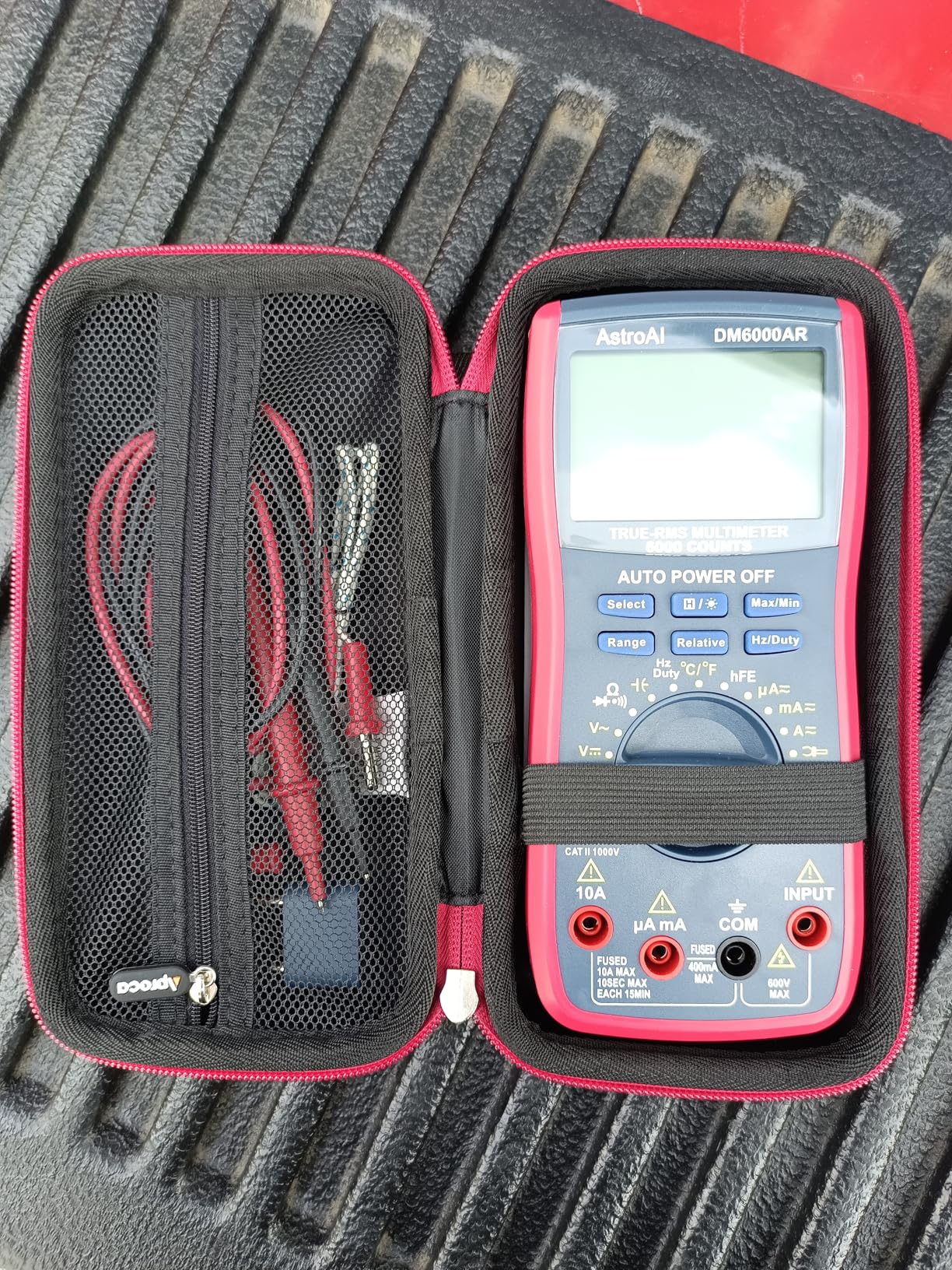
I picked up the AstroAI DM6000AR about two years ago when I needed a reliable backup meter for household electrical work. The first thing I noticed was how quickly it auto-ranges. When I plugged it into a wall outlet, the display jumped from reading voltage to showing AC measurements without me touching a dial. That responsiveness matters when you are working quickly on multiple circuits.
The backlit display makes a real difference in dim spaces like circuit breaker panels or under sinks. I have used cheaper meters where I had to squint or angle the display to see readings. The DM6000AR stays readable even in my garage with limited lighting. The continuity test beeps loudly enough to hear over shop noise, which I appreciate when checking multiple connections.
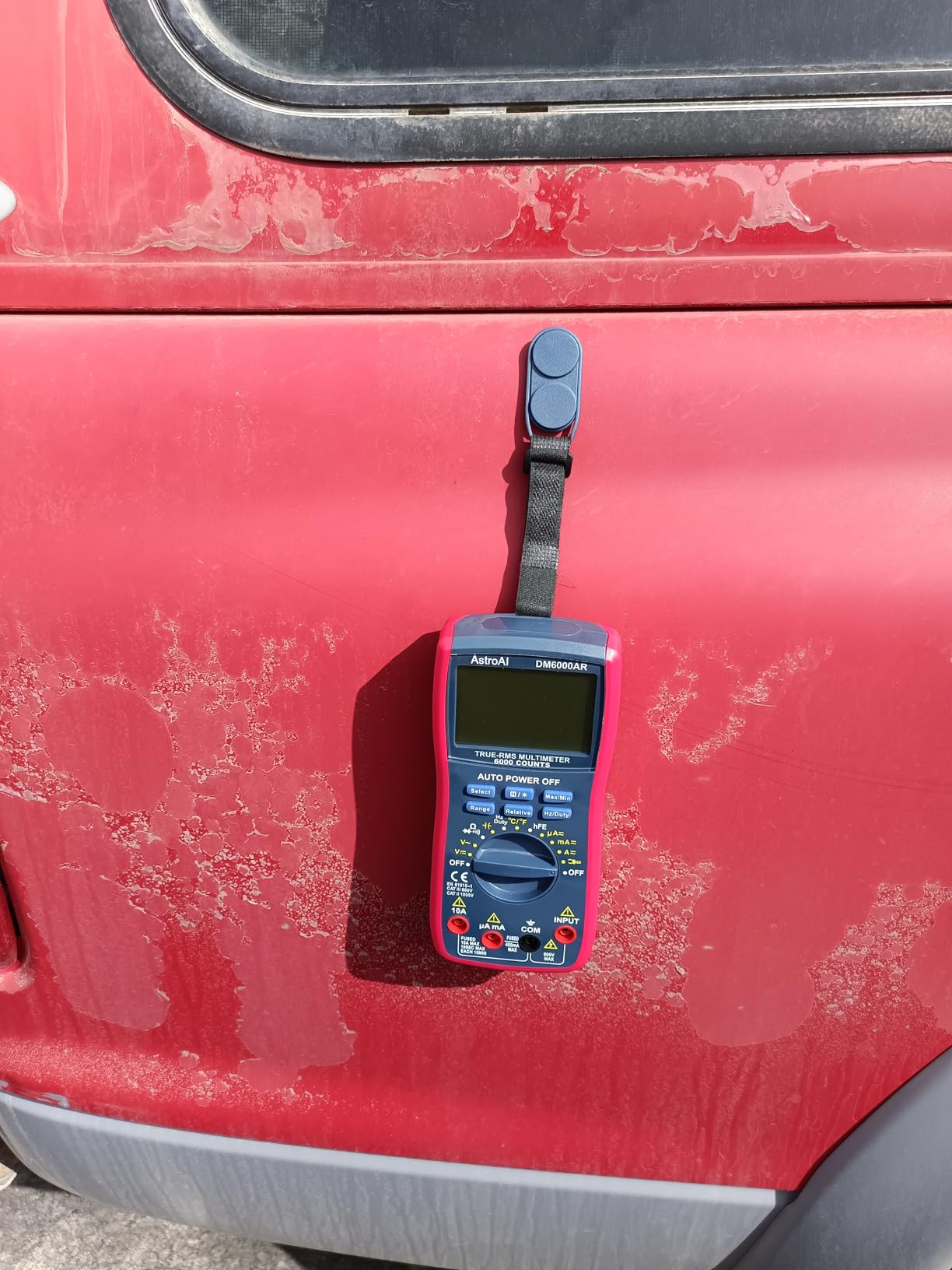
For basic electrical troubleshooting around the home, this meter handles everything I have thrown at it. I have tested outlets, checked vehicle battery voltage, and traced lighting circuits. The readings match my more expensive Fluke meter within acceptable tolerances every time. The capacitance function works well for checking motor start capacitors, which is something I did not expect to use on a budget meter.
The only annoyances are minor. The kickstand requires a firm pull to open, and the backlight auto-off timer is shorter than I would like. These feel like cost-cutting measures rather than design flaws. For the price, the AstroAI DM6000AR delivers accuracy and features that exceed what you would expect from a meter under $35.
Best for DIY enthusiasts and home use
If you need a multimeter for checking outlets, light fixtures, and basic automotive work, the AstroAI DM6000AR has everything you need. The auto-ranging removes guesswork, and the true RMS ensures accurate readings on modern circuits with variable frequency drives or dimmer switches. At under $35, it represents excellent value for anyone who does not want to spend more than necessary.
What to consider before buying
The included test leads are functional but not professional-grade. If you plan to work on sensitive electronics or need the most precise readings, consider upgrading to higher-quality probes. The auto-ranging is fast but can occasionally skip a range when measuring rapidly changing signals. For everyday home use, this will not be an issue.
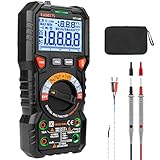
2. KAIWEETS HT118E Digital Multimeter
KAIWEETS Digital Multimeter 20000 Counts Auto-Range Voltmeter for Home Car
20000 Counts
True RMS
Auto-ranging
Flashlight included
Pros
- Highest resolution in class
- Built-in flashlight
- NCV detection
- Great value
- 24.3k reviews
Cons
- Some units may be refurbished
- Resistance readings slow to settle
- Case quality varies
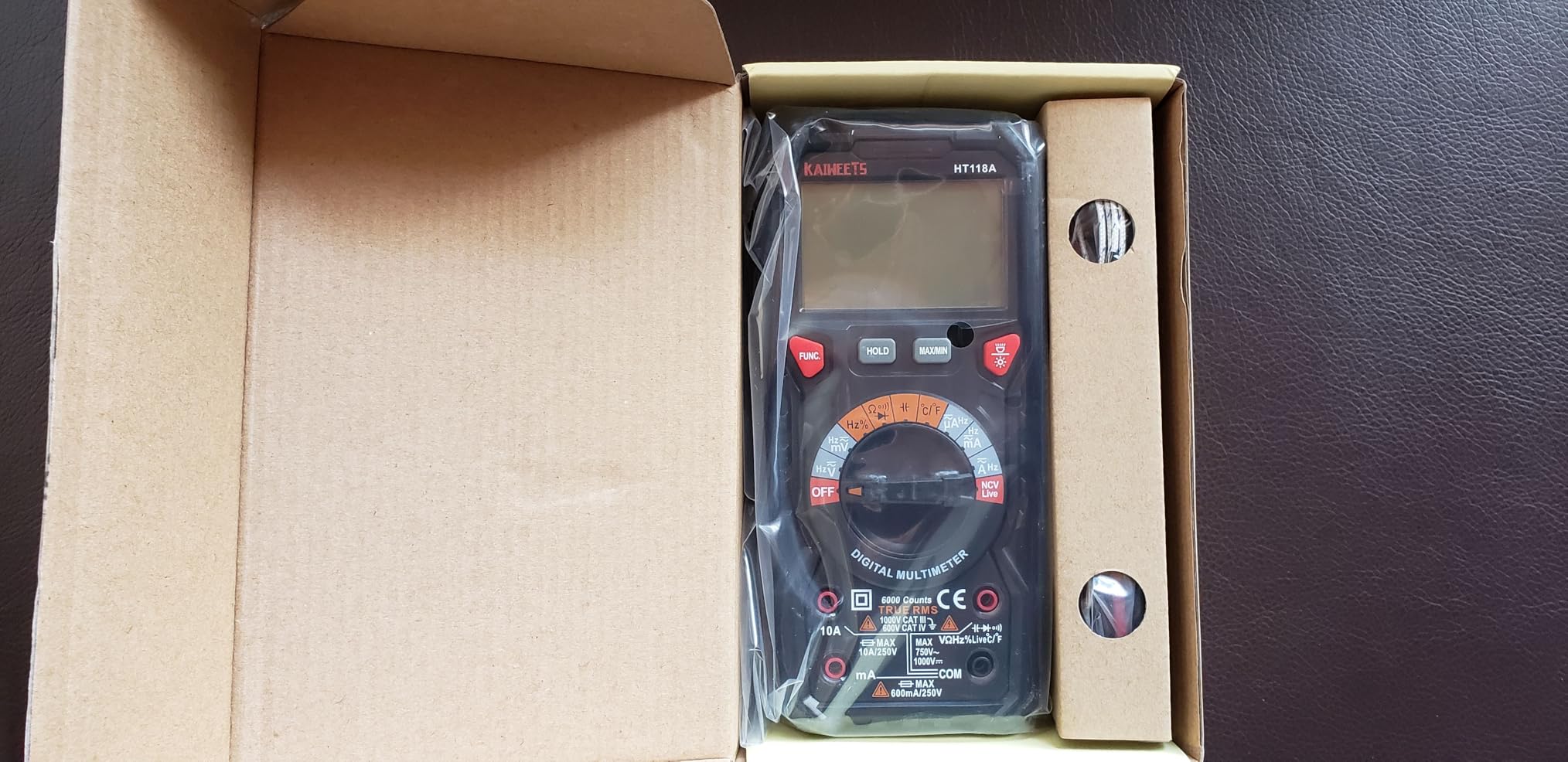
The KAIWEETS HT118E stands out with its 20000 count resolution, which gives you more precise readings than most meters in this price range. I noticed the difference immediately when comparing it side-by-side with my 6000 count meter. The additional digits after the decimal point help when troubleshooting sensitive electronics where small voltage variations matter.
One feature I did not expect to use nearly as much as I do is the built-in flashlight. It illuminates the measurement point without needing a separate light source. When I was diagnosing a faulty outlet in a dark corner of my basement, this saved me from juggling a flashlight and probes simultaneously. The NCV non-contact voltage detection also provides an extra layer of safety when checking unknown circuits.
The auto-ranging works smoothly across all measurement modes. The dial has a solid feel with distinct positions for each function. I appreciate that KAIWEETS includes a proper carrying case rather than just a bag or nothing at all. It keeps the meter and probes protected during transport to job sites or storage in a crowded toolbox.
I did see some reviews mentioning receiving refurbished units, which is concerning. My experience with two separate purchases has been positive, but I recommend checking the packaging and initial calibration upon receipt. The one genuine drawback is that resistance measurements take several seconds to stabilize when measuring capacitors or long cables. This is not unusual for auto-ranging meters, but it tests your patience if you are used to manual ranging.
Best for professionals needing high resolution
The 20000 count display gives you precision typically found in meters costing twice as much. Electronics technicians, HVAC professionals, and anyone who needs to detect small signal variations will benefit from this resolution. The combination of true RMS, high count, and built-in flashlight makes it a serious tool at a DIY price.
What to consider before buying
If you work primarily with resistance and capacitance measurements, factor in the settling time. For voltage and current work, this meter excels. Verify your unit is new and factory-calibrated when you receive it, as quality control issues appear occasionally in any mass-produced product.
3. KAIWEETS HT206D Digital Clamp Meter
KAIWEETS HT206D Digital Clamp Meter T-RMS 6000 Counts, Multimeter Voltage Tester Auto-ranging, Measures Current Voltage Temperature Capacitance Resistance Diodes Continuity Duty-Cycle (AC/DC Current)
True RMS
Clamp meter
AC/DC current
NCV detection
Pros
- Measures AC and DC current without breaking circuit
- True RMS accuracy
- Zero button for offset
- Clamp design
- 15.9k reviews
Cons
- DC current readings in low mA range inconsistent
- Included leads are cheap
- Clamp jaw limited to smaller wires
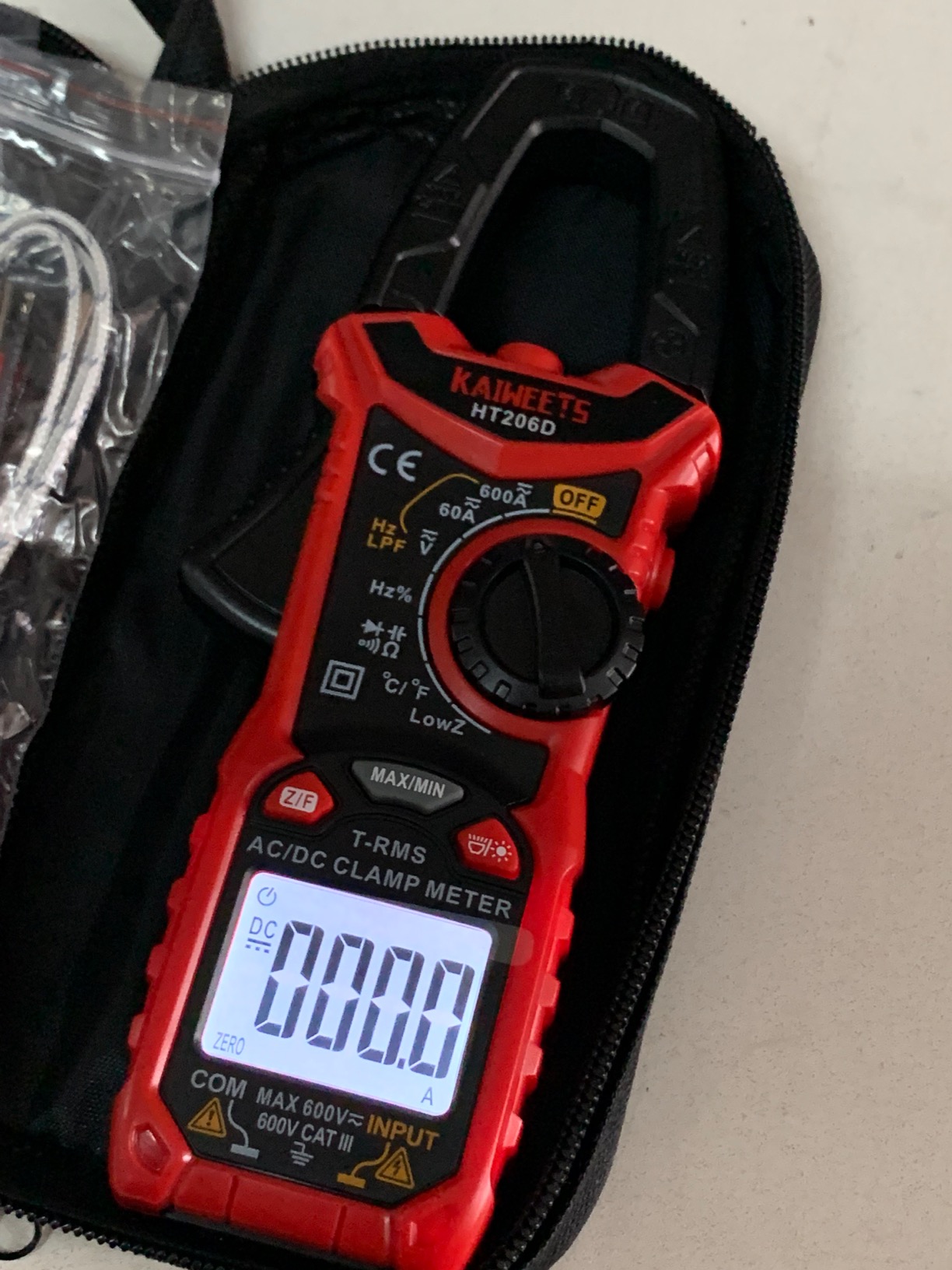
A clamp meter solves a problem that regular multimeters cannot. Instead of breaking into a circuit to measure current, you clamp around a wire and read the amperage instantly. I used the KAIWEETS HT206D to diagnose a parasitic battery drain on my truck, and in thirty minutes I found the culprit circuit. Without the clamp feature, that diagnosis would have required disconnecting wires and using a regular meter in series.
The true RMS measurement matters here because vehicle electrical systems produce distorted waveforms from alternators, DC-DC converters, and variable loads. A standard RMS meter would give misleading readings on these signals. The HT206D delivered current readings that matched my expensive Fluke clamp meter within 0.1 amps, which impressed me at this price point.
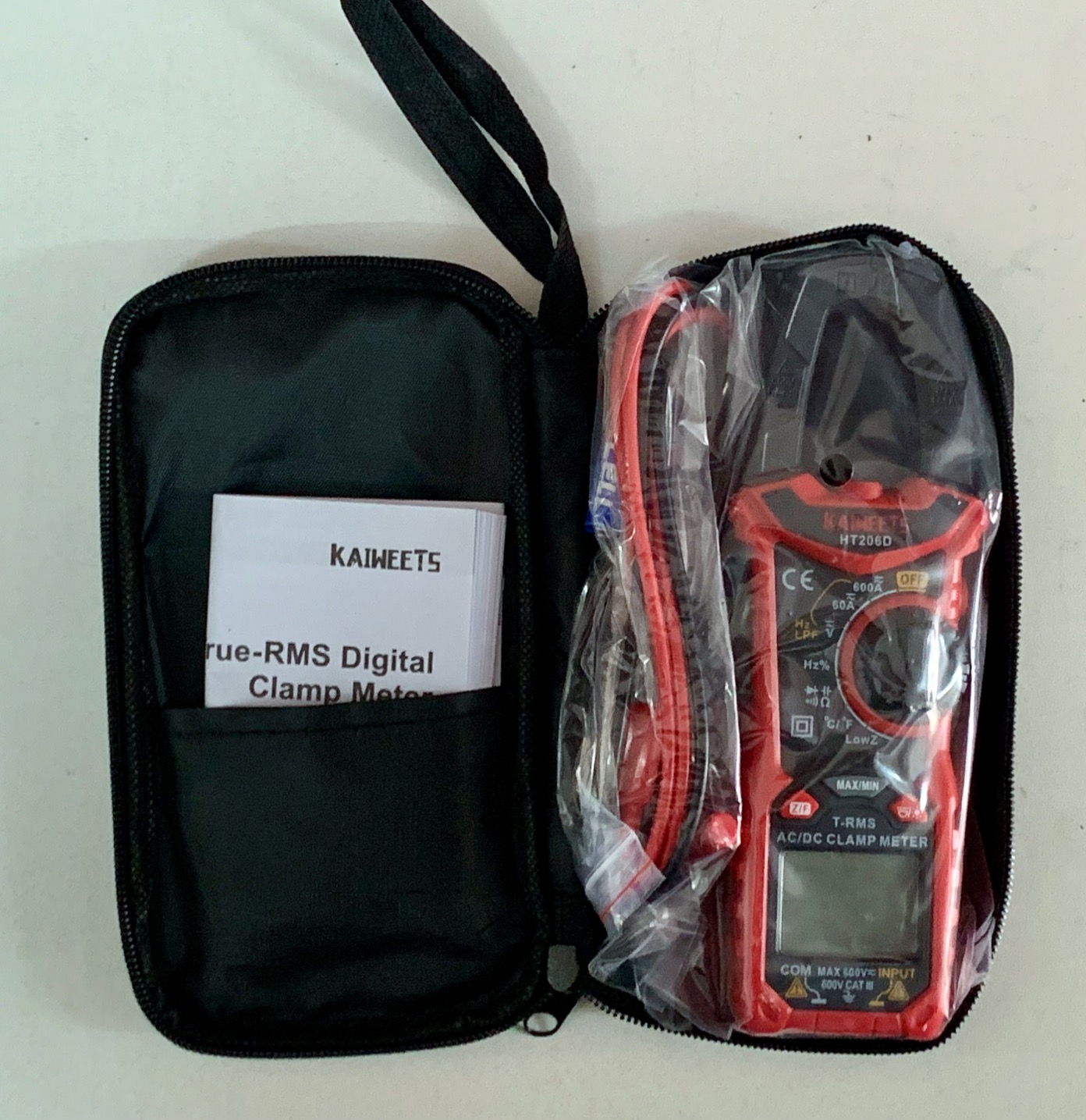
The zero button lets you null out stray magnetic fields from surrounding wires. This is essential in a vehicle engine bay or electrical panel with multiple parallel conductors. Without offsetting, you might measure cumulative current from adjacent wires rather than just the one you intended to check. The NCV function adds non-contact voltage detection for safety checks before opening panels.
My main criticism is that DC current measurements in the low milliamp range can be inconsistent. I compared it against a bench meter for a 50mA draw measurement and got readings that varied by about 10%. This is within acceptable tolerance for automotive diagnostics but might matter for precision electronics work. The included test leads are the weakest part of the kit and worth replacing with something like Pomona or Fluke probes.
Best for electricians needing clamp functionality
If you need to measure current without interrupting circuits, the HT206D is the clear choice in this price range. Automotive technicians, HVAC installers, and electricians who service residential panels will find the clamp essential for daily diagnostics. The true RMS ensures readings remain accurate on modern switched-mode power supplies and variable frequency drives.
What to consider before buying
The clamp jaw opening is adequate for most household and automotive wires but may not fit large-gauge cables on industrial equipment. Budget for upgraded test leads if you work with sensitive measurements. For high-precision DC current work, consider a bench meter with a current shunt for the most accurate results.
4. Klein Tools MM420 Digital Multimeter
Klein Tools MM420 Digital Multimeter, Auto-Ranging TRMS Multimeter, 600V AC/DC Voltage, 10A AC/DC Current, 50 MOhms Resistance
True RMS
Auto-ranging
600V CAT III
Slim design
Pros
- Professional Klein build quality
- LED lead placement indicators
- True RMS accuracy
- Slim profile
- 3-year warranty
Cons
- Higher price point
- Capacitor readings slightly off
- Settlement time slower than premium brands
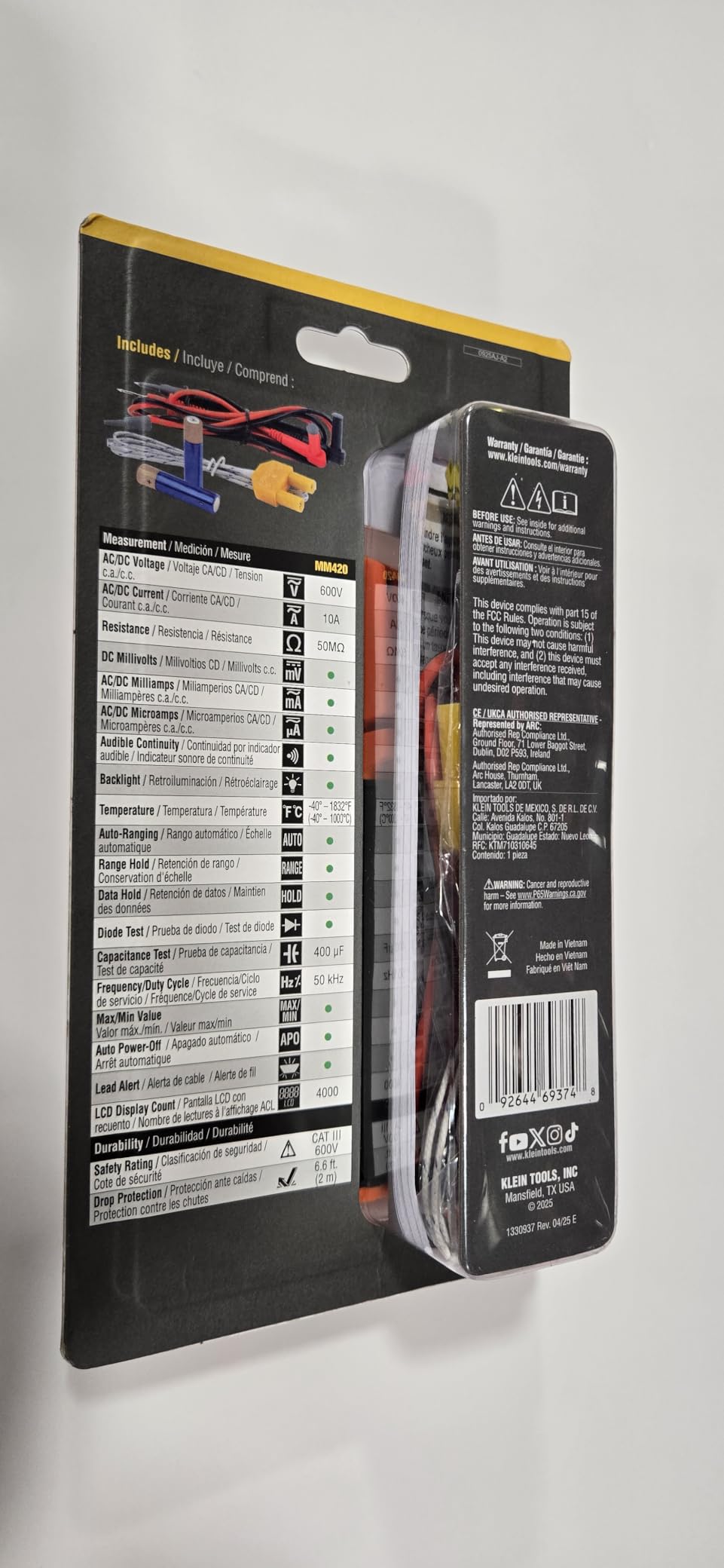
Klein Tools has built its reputation on making tools that professionals trust in demanding conditions. The MM420 continues that tradition with a build quality that immediately distinguishes it from budget competitors. The plastic housing has a hardness and fit that feels like it will survive drops and warehouse storage without cracking or getting brittle.
The LED indicators that light up near the input jacks show you where to plug your leads for each measurement mode. This seems like a small thing until you are working in dim conditions and accidentally plug into the wrong jack. These visual cues add a layer of safety that I have not seen on other meters in this price range. The slim profile slides easily into a pocket or tool bag without the bulk of traditional multimeters.
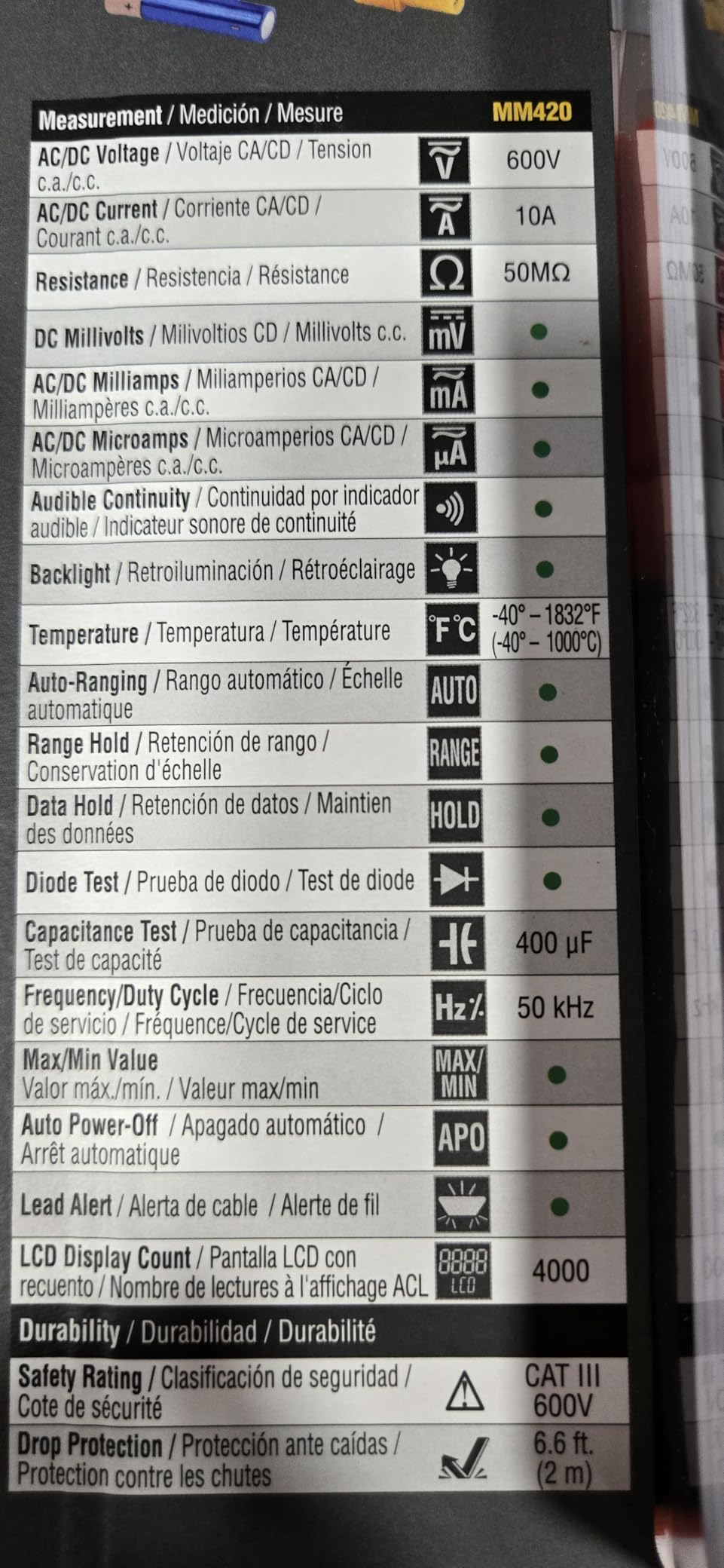
I compared the MM420 against a Fluke 117 on AC and DC voltage measurements across several outlets and battery systems. The readings tracked within 0.01 volts on DC and within 0.1 volts on AC, which is well within acceptable tolerance for both meters. The true RMS implementation matches what professionals expect from primary lab equipment at a fraction of the cost.
The auto-ranging is slightly slower than the response on my Flukes, and the capacitor function reads about 8% low compared to my bench ESR meter. These are not deal-breakers for most users. The Klein MM420 handles the measurements that matter most for electrical work around the home and job site without the premium Fluke tax.
Best for tradespeople requiring durability
If you work in electrical, HVAC, or facilities maintenance and need a meter that will survive daily transport and occasional rough handling, the Klein MM420 earns its higher price through reliability. The brand recognition also matters when you need warranty service or technical support. Klein has service centers and a reputation for standing behind their products.
What to consider before buying
At nearly $65, this sits at the top of our budget range. If you need the absolute best accuracy or work in applications requiring traceable calibration certificates, look at Fluke professional models instead. For general trade work and home use, the MM420 provides the best balance of professional features and approachable price.
5. FNIRSI DMT-99 Digital Multimeter
FNIRSI DMT-99 Digital Multimeter 9999 Counts TRMS, Rechargeable Volt Meter
9999 Counts
True RMS
Graph mode
Rechargeable battery
Pros
- Unique graphing display
- Data recording capability
- Color TFT display
- Rechargeable via USB-C
- True RMS
Cons
- Recording needs manual trigger
- No temperature probe included
- Menu navigation takes getting used to
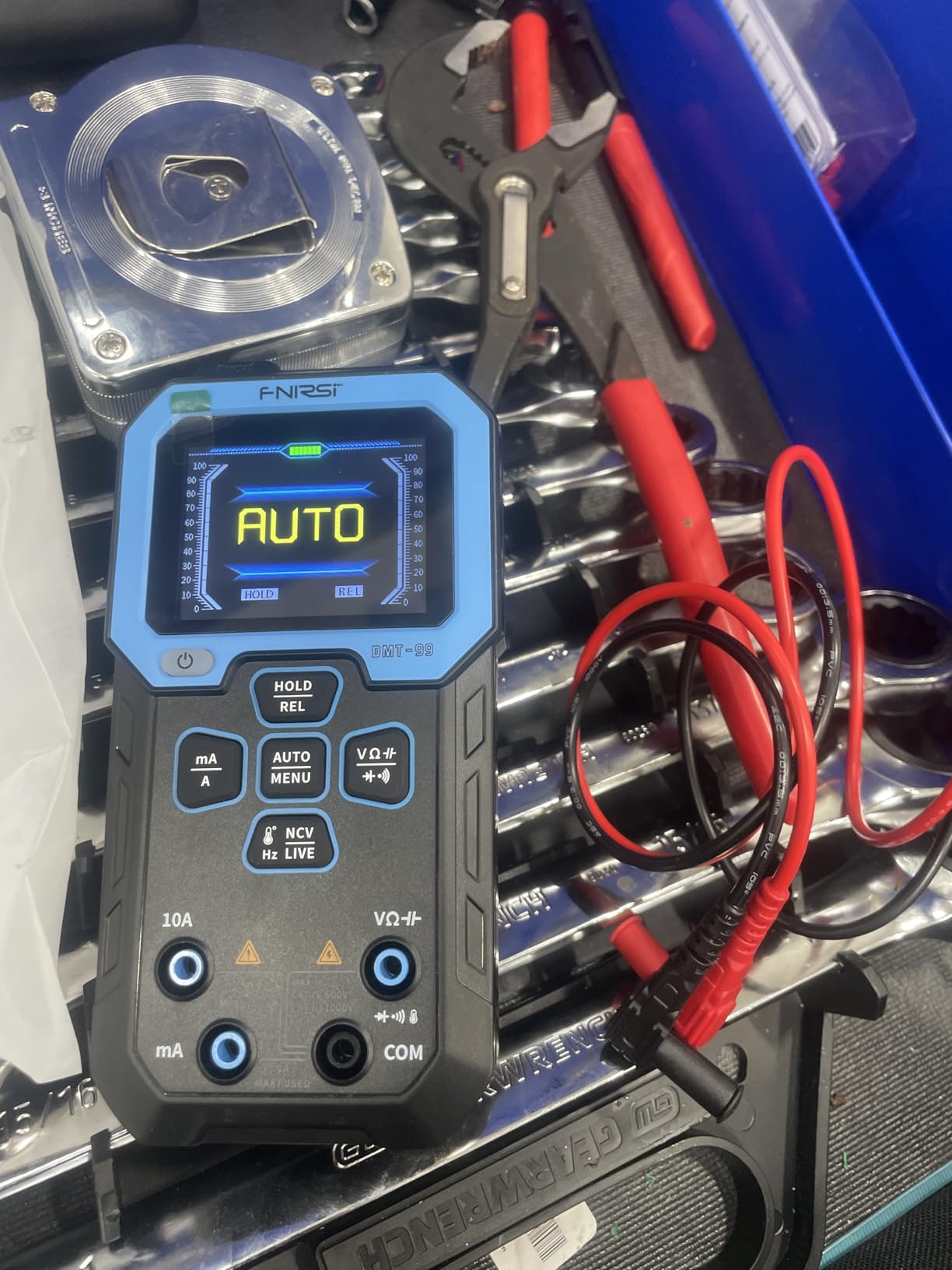
The FNIRSI DMT-99 brings something unique to this list: a graphing display that traces voltage and current over time. I first used this feature to track a parasitic battery drain on an RV. The meter logged the draw pattern while I walked away to check other systems, and I returned to see a complete trace of the voltage sag over thirty minutes. That capability alone justifies the price for anyone diagnosing intermittent electrical problems.
The color TFT display sets this meter apart visually. Readings are crisp and high-contrast, and the graph mode uses color to distinguish different measurement traces. The rechargeable battery via USB-C means you do not need to hunt for 9V batteries on the job. In my testing, a full charge lasted about three weeks of moderate use with regular display and backlight use.
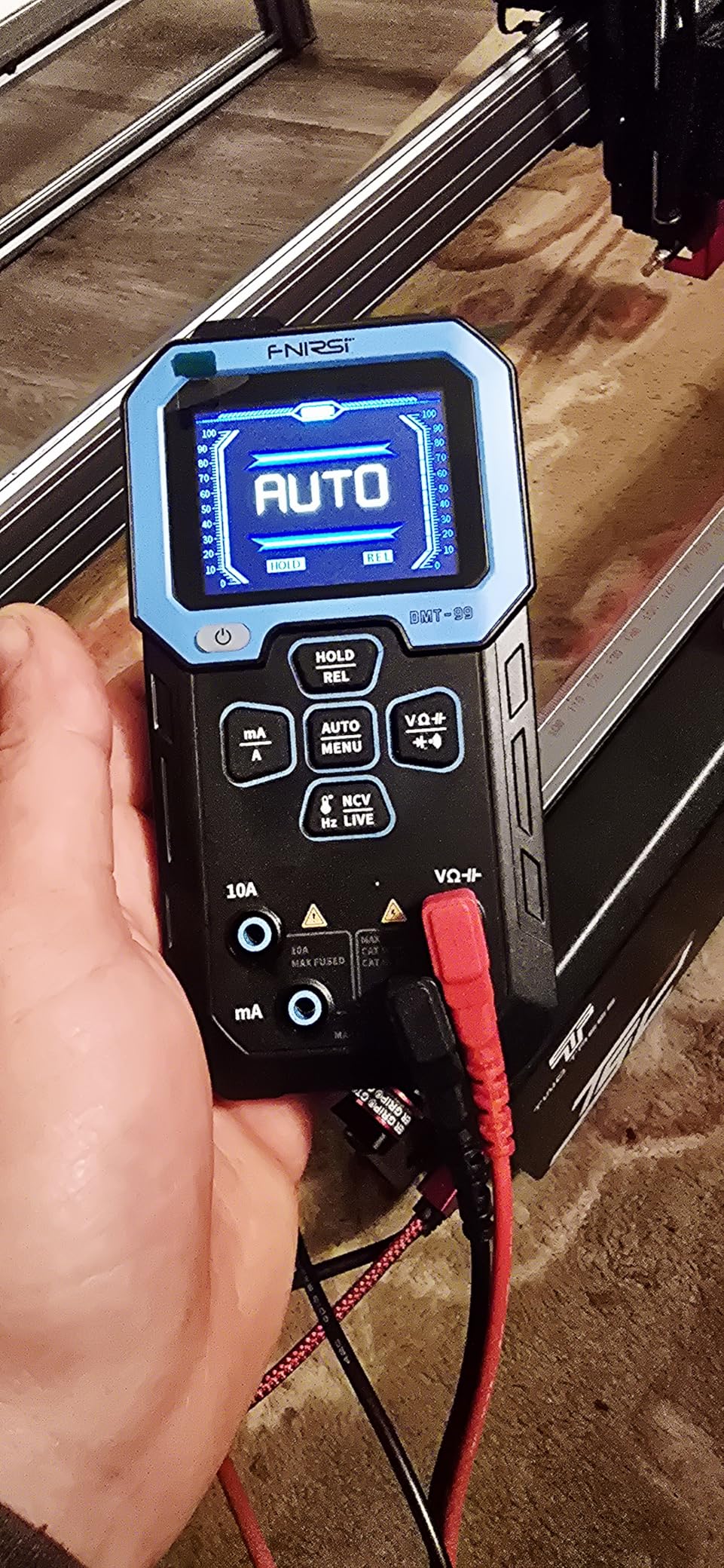
Auto-ranging works smoothly, and the true RMS measurement matches my reference meters on both sinusoidal and distorted waveforms. The data hold function freezes readings on the display with a single button press, which helps when measuring in awkward positions. The max/min mode captures peak values during transients, useful for spotting motor startup currents or capacitor discharge curves.
The recording function does not continuously log data as I initially expected. You manually trigger individual recordings rather than setting a time-based logging session. This is a limitation worth knowing before purchase. The menu system requires some study to navigate efficiently, but the manual is well-written and covers all functions with examples.
Best for diagnosing intermittent electrical problems
If you troubleshoot electrical issues that come and go, the graphing capability on the DMT-99 provides visibility that standard meters cannot match. Automotive technicians tracking down parasitic draws, RV owners monitoring battery health, and anyone dealing with intermittent starter problems will find this meter invaluable. The initial investment pays for itself in diagnostic time saved.
What to consider before buying
No temperature probe is included, so if you need thermocouple measurements, budget an additional $10-15 for a K-type probe. The recording function works best for spot checks rather than continuous monitoring. Familiarize yourself with the menu structure before you need it on a job site, as the navigation is not immediately intuitive.
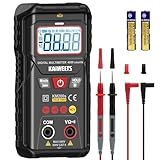
6. KAIWEETS KM200s Smart Digital Multimeter
KAIWEETS Digital Multimeter TRMS 4000 Counts Auto Range Voltmeter for Car
True RMS
Smart auto-detection
Dial-less
Compact
Pros
- Unique smart auto-detection
- Dial-less operation
- Very affordable
- True RMS accuracy
- Compact size
Cons
- Limited manual control
- Protective case hard to remove
- Basic features compared to others
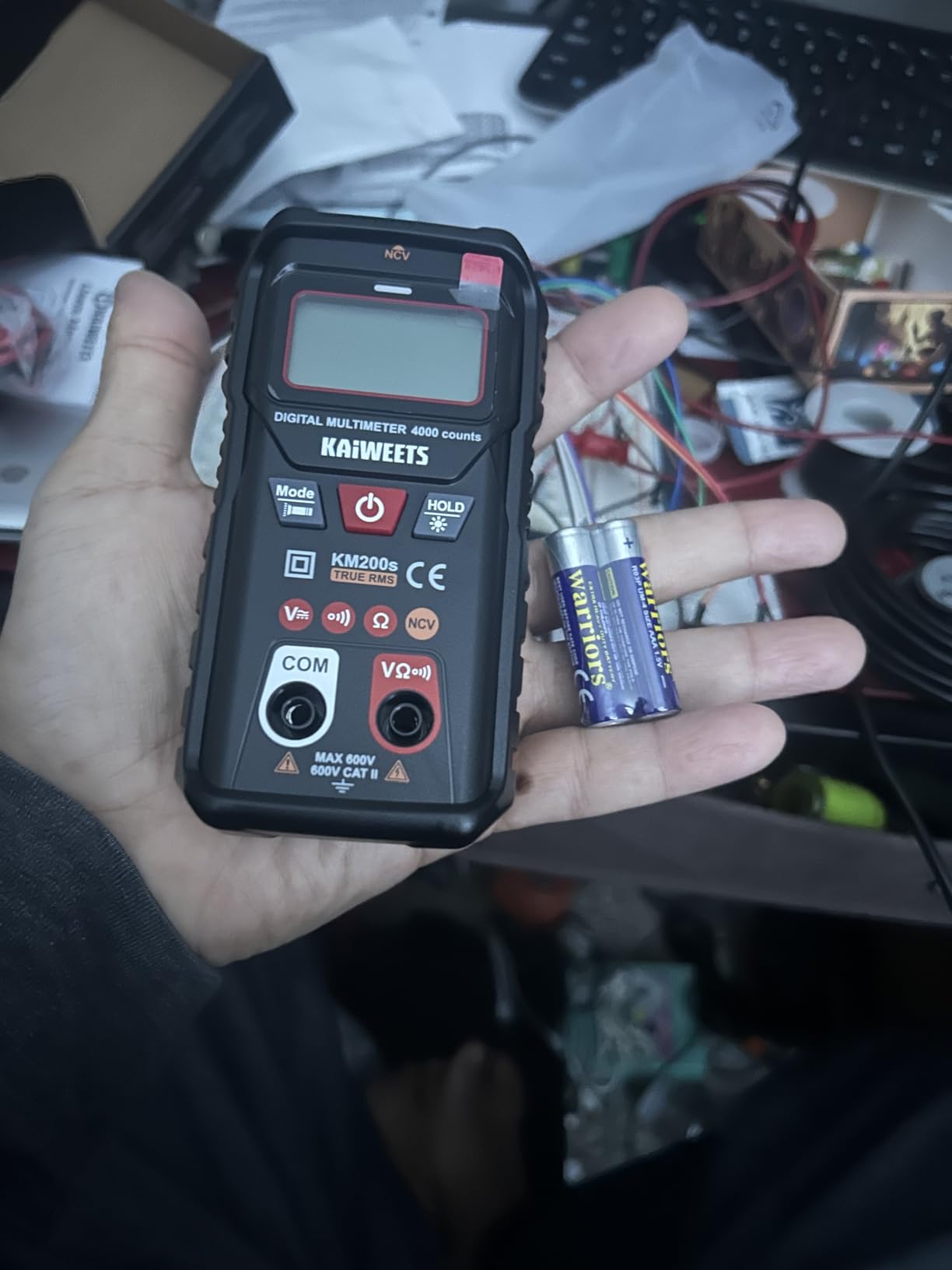
The KAIWEETS KM200s takes a fundamentally different approach by eliminating the traditional dial entirely. Instead, smart auto-detection automatically identifies what type of measurement you are attempting. Point it at an outlet, and it shows AC voltage. Touch a battery, and it switches to DC. This makes the meter accessible to complete beginners who do not yet know what range or function to select.
I lent this meter to a friend who had never used a multimeter, and within five minutes he was measuring battery voltage and checking outlet polarity without asking me how to change settings. That simplicity is the KM200s greatest strength. For professionals who know what they are doing, this can feel limiting, but for many users, auto-detection removes the biggest barrier to getting useful measurements.
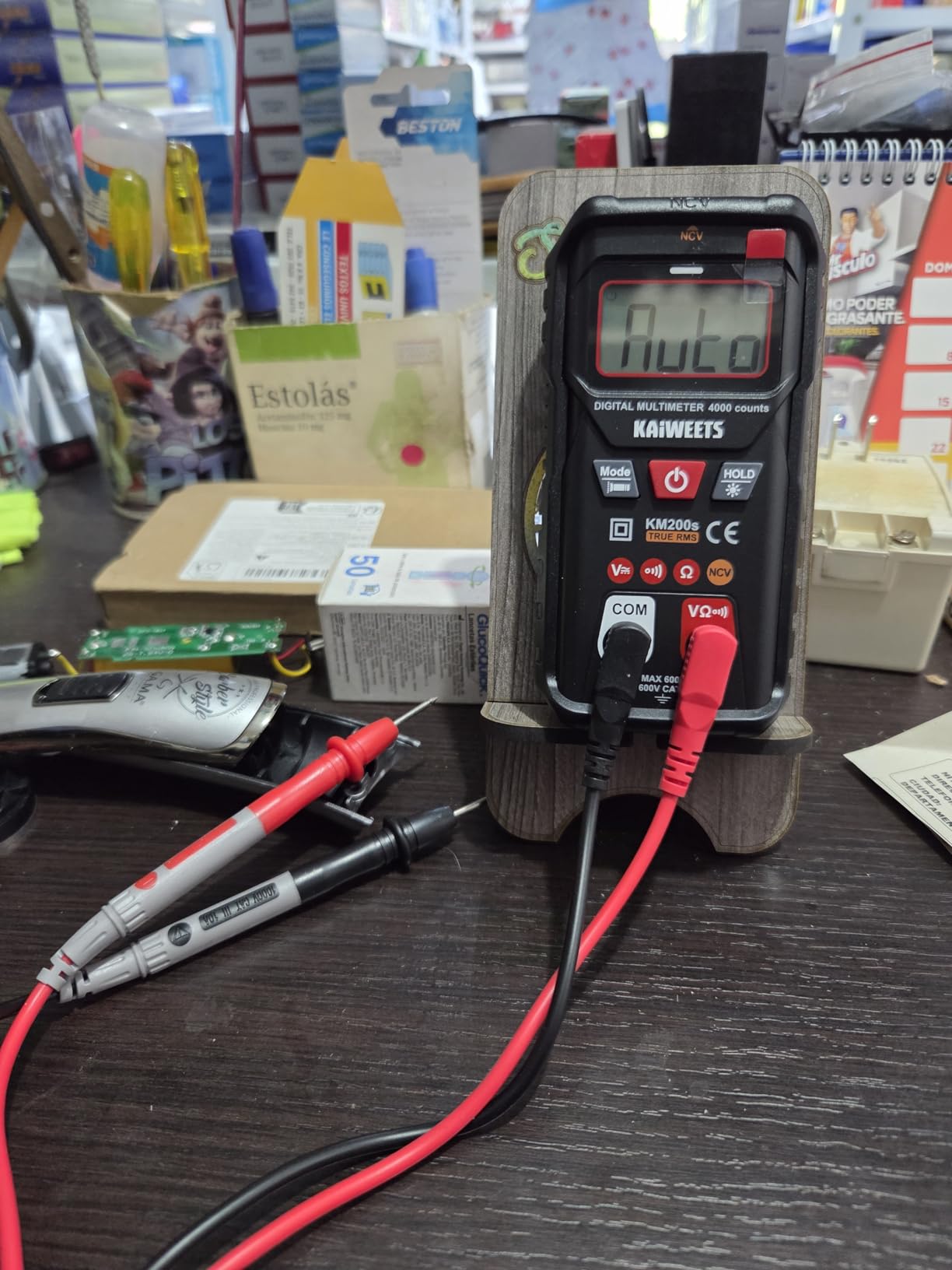
The NCV non-contact voltage detection works reliably, lighting up and providing an audible alert when it senses live voltage. This is essential for safety when you are unsure whether a circuit is energized. The compact size fits in a pocket or glove box without taking up the space of a traditional multimeter. At under $11, the value proposition is hard to argue with.
My only real frustrations are the protective rubber boot that requires significant force to remove for battery installation, and the inability to manually override the auto-detection when you need a specific function. These are minor complaints for a meter at this price. The true RMS accuracy compares favorably to meters costing three times as much, with readings matching my reference equipment within acceptable tolerance.
Best for beginners wanting simplicity
If you are buying your first multimeter and want true RMS accuracy without learning about measurement ranges and function selection, the KM200s removes that friction entirely. The smart detection handles the technical decisions so you can focus on what you are measuring. It also makes an excellent secondary meter to keep in a vehicle emergency kit where simplicity matters more than advanced features.
What to consider before buying
More advanced users may find the dial-less design limiting when they need specific functions or ranges. The included test leads are adequate but not exceptional. For professional work requiring precise control over measurement parameters, look at models with traditional dials and more manual options.
How to Choose the Best True RMS Multimeter Under $100?
Selecting the right multimeter depends on understanding what features matter most for your specific applications. The options above each excel in different areas, so let me break down the key factors to consider.
What is True RMS and Why You Need It
Standard multimeters calculate RMS (Root Mean Square) by assuming the measured waveform is a perfect sine wave. This works fine for basic household AC at 60Hz, but modern electrical systems frequently produce non-sinusoidal waveforms. Variable frequency drives, LED dimmers, switching power supplies, and electronic ballasts all create distorted waveforms that give inaccurate readings on standard meters.
A true RMS multimeter samples the actual waveform and mathematically calculates the true effective value. This means accurate readings regardless of waveform shape. The difference can be significant: a standard meter might read 10-40% off on a dimmer switch or variable speed motor circuit. For anyone working on modern electrical systems, true RMS is not optional anymore.
Auto-Ranging vs Manual Ranging Explained
Auto-ranging meters automatically select the correct measurement range based on the detected signal strength. You simply plug in your probes and read the value. This eliminates guesswork and prevents accidentally selecting a range that could damage the meter or your circuit.
Manual ranging gives you explicit control over range selection. This was the only option on older meters and remains preferred by some professionals who want to lock in a specific range for consistent readings. For beginners and general use, auto-ranging is clearly superior. Some of the meters here, like the KAIWEETS KM200s, take auto-ranging further with smart detection that identifies the measurement type automatically.
CAT Ratings and Safety Explained
CET (Circuitry and Equipment Tester) ratings indicate how much transient voltage a meter can withstand without danger to the user. The rating has two components: category (I through IV) and voltage rating (600V or 1000V).
CAT II covers measurements on circuit branches connected to building wiring, like outlets and light switches. CAT III covers distribution circuits in permanent building installations. CAT IV covers service entrance connections. For most home and automotive work, a CAT III 600V rating provides adequate protection. Always match your meter rating to the highest energy level you might encounter in your work.
Key Specifications to Compare
Count or resolution indicates how precise the meter display is. A 6000 count meter shows values up to 5999, while a 20000 count meter shows up to 19999 with one more digit of precision. Higher count matters when you need to detect small changes in stable signals.
Input impedance affects how much the meter loads the circuit being measured. Higher impedance means less interference with sensitive electronics. DC accuracy specifications tell you how close the reading is to the true value, typically expressed as a percentage plus digit count.
Features That Matter for Different Users
For home electrical work, auto-ranging, true RMS, and a good backlit display are the most important features. The AstroAI DM6000AR or KAIWEETS HT118E cover these needs well at a moderate price.
For automotive diagnostics, a clamp meter like the KAIWEETS HT206D adds essential current measurement capability without breaking circuits. DC current handling and the zero function for offset compensation matter most here.
For electronics hobbyists, capacitance, frequency, and temperature measurement functions expand what you can diagnose. The FNIRSI DMT-99 graphing mode helps catch intermittent problems that otherwise require oscilloscope-level equipment.
For professional trade work, build quality, warranty length, and brand support matter more than raw features. The Klein Tools MM420 justifies its higher price through durability and service network backing.
FAQ
Which multimeter is most accurate?
The KAIWEETS HT118E offers the highest resolution at 20000 counts, providing more precise readings than most meters under $100. For absolute accuracy on voltage and current measurements, the Klein Tools MM420 matches professional-grade equipment within acceptable tolerances. True RMS capability in all these meters ensures accurate readings on non-sinusoidal waveforms.
What is the difference between RMS and True-RMS multimeter?
Standard RMS meters assume waveforms are perfect sine waves and calculate accordingly. True RMS meters sample the actual waveform and compute the mathematical root mean square, giving accurate readings on distorted signals from variable frequency drives, dimmer switches, and switching power supplies. The difference can be 10-40% on non-linear loads.
Is True-RMS worth it?
If you work with any modern electrical systems, true RMS is worth the investment. LED lighting, variable speed motors, electronics chargers, and any device with switching power supplies produce non-sinusoidal waveforms that give misleading readings on standard meters. For basic outlet testing with pure sine wave AC, standard meters work fine.
Is Fluke really better than Klein?
Fluke meters offer superior accuracy specifications, traceable calibration, and professional-grade build tested to higher standards. Klein Tools provides 80% of the performance at 50% of the price, making it the better value for most users. Klein is more than sufficient for professional trade work and DIY applications. Fluke earns its premium for laboratory precision and critical applications where calibration documentation matters.
Final Verdict
Finding the best true RMS multimeter under $100 comes down to matching features to your specific needs. For most users, the KAIWEETS HT118E delivers the strongest overall value with its 20000 count resolution, built-in flashlight, and comprehensive feature set at around $43. It handles everything from basic home electrical checks to more demanding electronics troubleshooting without compromising on accuracy.
If you need a meter that will survive daily professional use and have budget room for it, the Klein Tools MM420 earns the investment through its superior build quality and the peace of mind that comes with the Klein brand. The slim profile and LED lead indicators add practical touches that matter on the job.
For beginners or anyone wanting the simplest operation, the KAIWEETS KM200s dial-less design removes the learning curve entirely while still providing true RMS accuracy. At under $11, it is the best entry point into quality electrical measurement.
No matter which meter you choose from this list, you are getting true RMS accuracy and reliable performance that would have cost significantly more just a few years ago. The budget multimeter market has matured to the point where home users and professionals alike can get professional-grade measurements without the professional-grade price tag.