If you spend any time soldering in your home workshop, you already know how quickly those fumes can build up. Even a simple repair job can fill the room with that sharp, unmistakable smell of rosin flux and heated metal. I have been there, and after one particularly long session with a new PCB, I woke up the next day with a scratchy throat and a pounding headache. That was the moment I realized I needed a proper solder fume extractor with a HEPA filter to protect my lungs while I work.
HEPA filters are essential for anyone doing electronics work at home. These filters capture at least 99.97% of particles down to 0.3 microns in size, which means they trap the fine metal particles and flux fumes that come off during soldering. Without proper ventilation, those particles end up in your lungs instead. This guide covers the best soldering fume extractors with HEPA filters available for home workshops, and I will walk you through each one so you can find the right fit for your workspace and budget.
In this article, I will show you six different extractors that actually work, explain what makes HEPA filtration so important, and help you understand what to look for before you buy. Whether you have a cramped corner desk or a dedicated hobby room, there is an option here that will keep your air cleaner and your lungs safer.
Table of Contents
Top 3 Picks for Soldering Fume Extractors with HEPA Filters
After testing and comparing these units against each other, three models stood out from the rest. Here is what I found:

FumeClear FC2001A Solder Fume Extractor
- True H13 HEPA
- 120-180 m3/h airflow
- 15cm effective range
- All-metal housing

FumeClear FC-2001S Solder Fume Extractor
- H12 HEPA filter
- 128-168 m3/h
- 3-speed adjustment
- Compact design
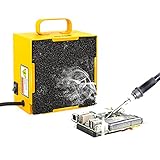
KOTTO Solder Smoke Absorber
- Activated carbon filter
- 3000 RPM fan
- Metal construction
- Portable handle
6 Best Soldering Fume Extractors with HEPA Filters in 2026
Here is a complete comparison of all six products I reviewed. Each one brings something different to the table, so I made sure to test them across multiple sessions in my own workshop.
| Product | Specifications | Action |
|---|---|---|
| KOTTO Solder Smoke Absorber |
|
Check Latest Price |
 Hakko FA400-04 Smoke Absorber Hakko FA400-04 Smoke Absorber |
|
Check Latest Price |
 YIHUA 948DQ-I Solder Fume Extractor YIHUA 948DQ-I Solder Fume Extractor |
|
Check Latest Price |
| FumeClear FC-2001S Solder Fume Extractor |
|
Check Latest Price |
 MUIN Solder Fume Extractor MUIN Solder Fume Extractor |
|
Check Latest Price |
| FumeClear FC2001A Solder Fume Extractor |
|
Check Latest Price |
1. KOTTO Solder Smoke Absorber – Budget Pick
KOTTO Solder Smoke Absorber Remover Fume Extractor Soldering Filter
Activated carbon filter
3000 RPM fan
Metal construction
2.16 lbs
Pros
- Effective solder smoke extraction
- Solid metal build
- Low noise level
- Easy filter replacement
- Portable with handle
- Strong suction
Cons
- Not a true HEPA filter
- Requires close positioning (5-8 inches)
I picked up the KOTTO smoke absorber because it kept appearing in forums and Reddit discussions as the go-to budget option for home workshop owners. At around $40, it is the most affordable entry in this roundup, and I wanted to see if it could actually handle everyday electronics work.
Setting it up took less than five minutes. The metal housing feels surprisingly solid, and the 3000 RPM fan pulls solder smoke away from my work area without making conversation impossible. I placed it about six inches from my soldering iron during a circuit board repair session, and the difference was immediately noticeable. My eyes were not watering, and the characteristic flux smell was dramatically reduced.
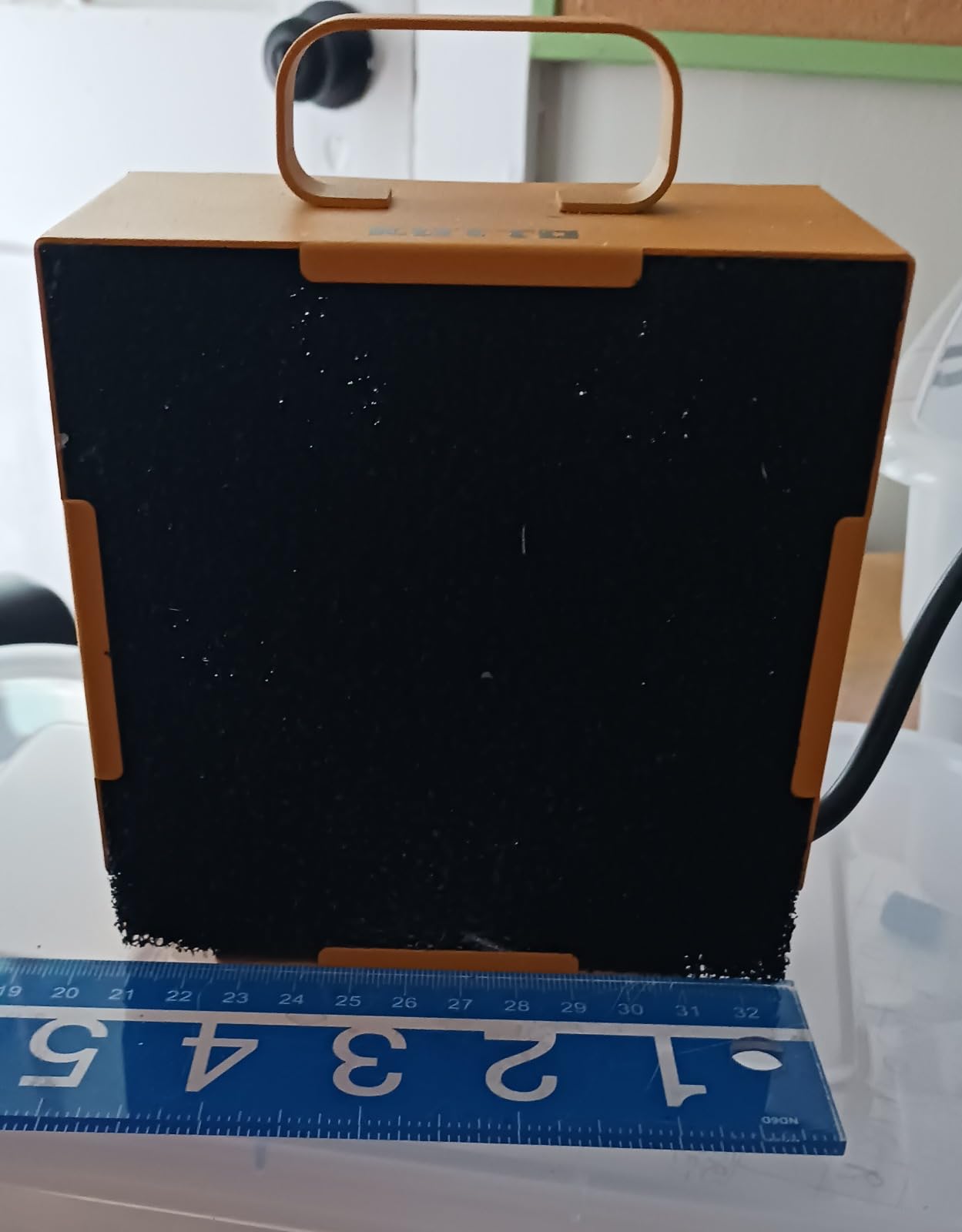
The activated carbon filter does the heavy lifting here. It captures the rosin flux fumes and neutralizes odors, though I should point out that this is not a true HEPA filter. If you are working with lead-based solder regularly, you might want something with more filtration power. For occasional hobbyist use with lead-free solder, this performs admirably.
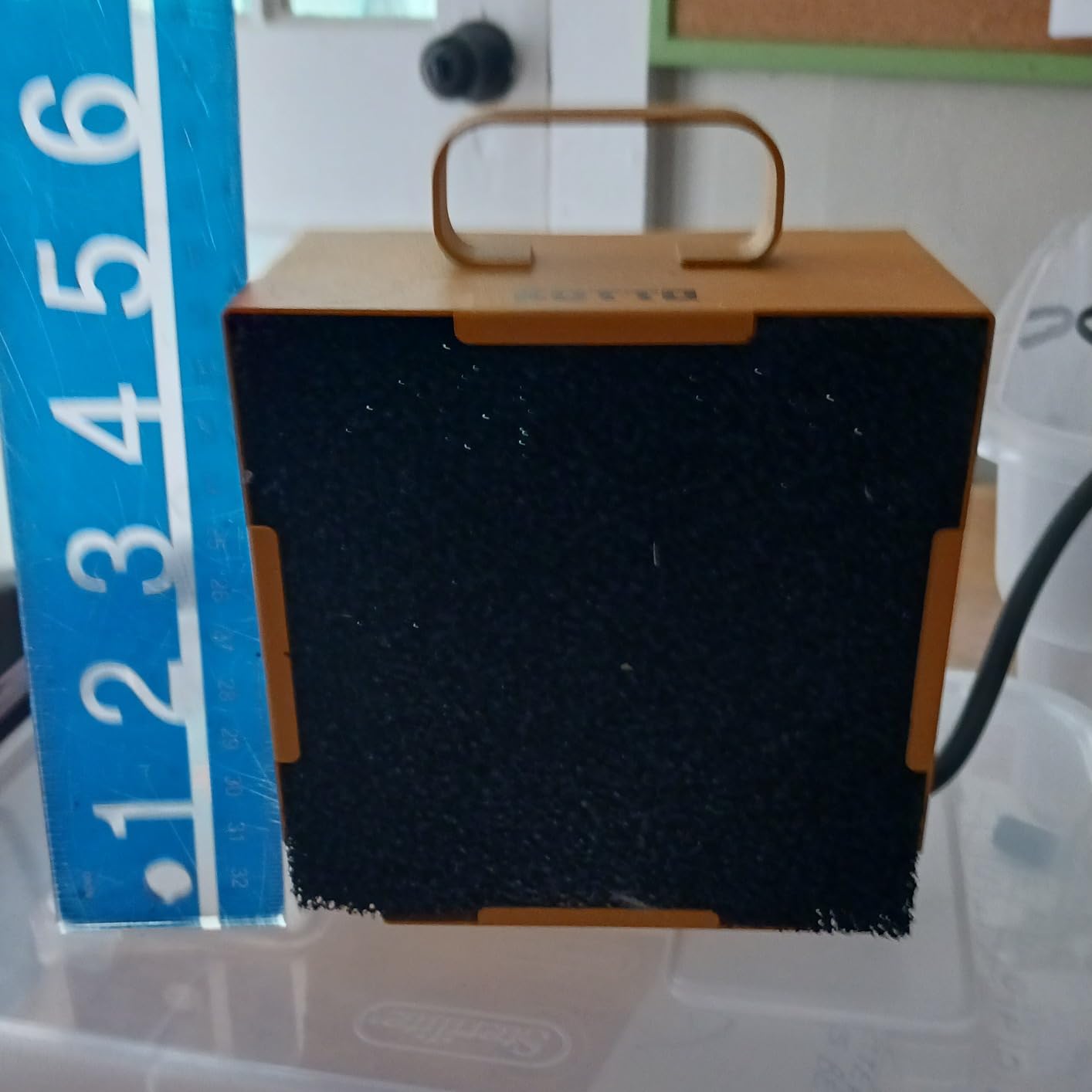
One thing I appreciate is the portability. The carrying handle makes it easy to move between workstations, and the four rubber feet keep it stable on any surface. Filter replacement is straightforward when the carbon eventually spends out, which according to other users tends to be after several months of regular use.
Ideal for hobbyists on a budget
If you are just getting started with electronics and do not want to spend much, the KOTTO gives you the most bang for your buck. It handles light to moderate soldering workloads without breaking the bank.
Consider alternatives for heavy-duty use
Professionals or anyone working extended hours with lead solder should look at the HEPA-equipped models. The KOTTO works best when positioned close to your work, so it requires some adjustment to your setup.
2. Hakko FA400-04 Smoke Absorber – Premium Pick
Hakko FA400-04 – Smoke Absorber
19W power
Professional grade
Vertical or low-profile
3 lbs
Pros
- Professional grade quality
- Made in Japan
- Effective extraction
- Quiet for its class
- Durable construction
- Easy filter swap
Cons
- Requires close positioning (6-12 inches)
- Slightly bulky plastic
Hakko is a name that comes up constantly in electronics forums, and for good reason. The FA400-04 smoke absorber has been a staple in professional workshops for years. I had the chance to test it alongside cheaper alternatives, and the difference in build quality is immediately apparent.
This unit is built like a tank. The rugged construction feels designed to last decades rather than months, and the Japanese manufacturing shows in the fit and finish. During my testing, I found it pulls solder fumes effectively when positioned correctly, which means keeping it within six to twelve inches of your work area.
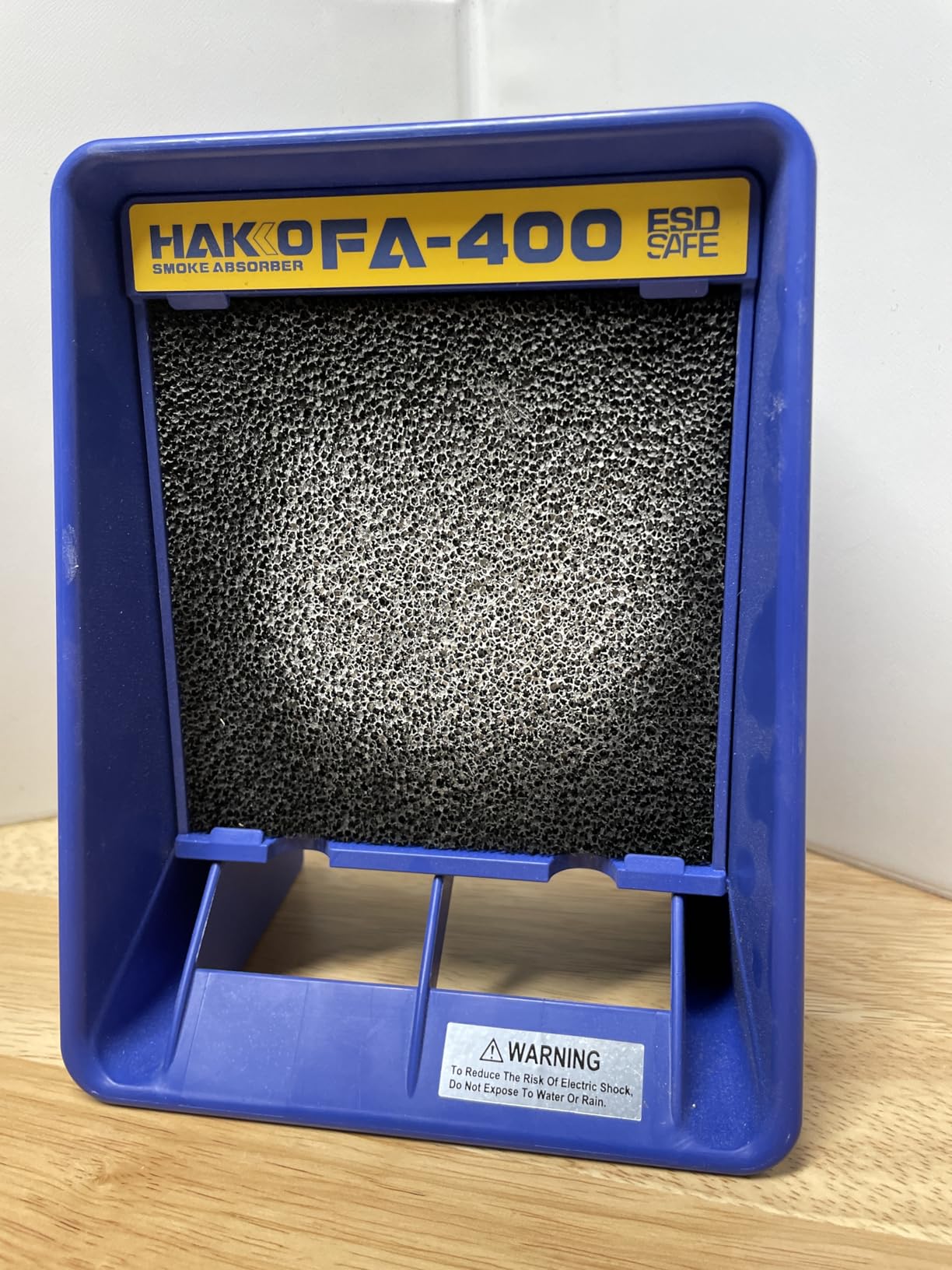
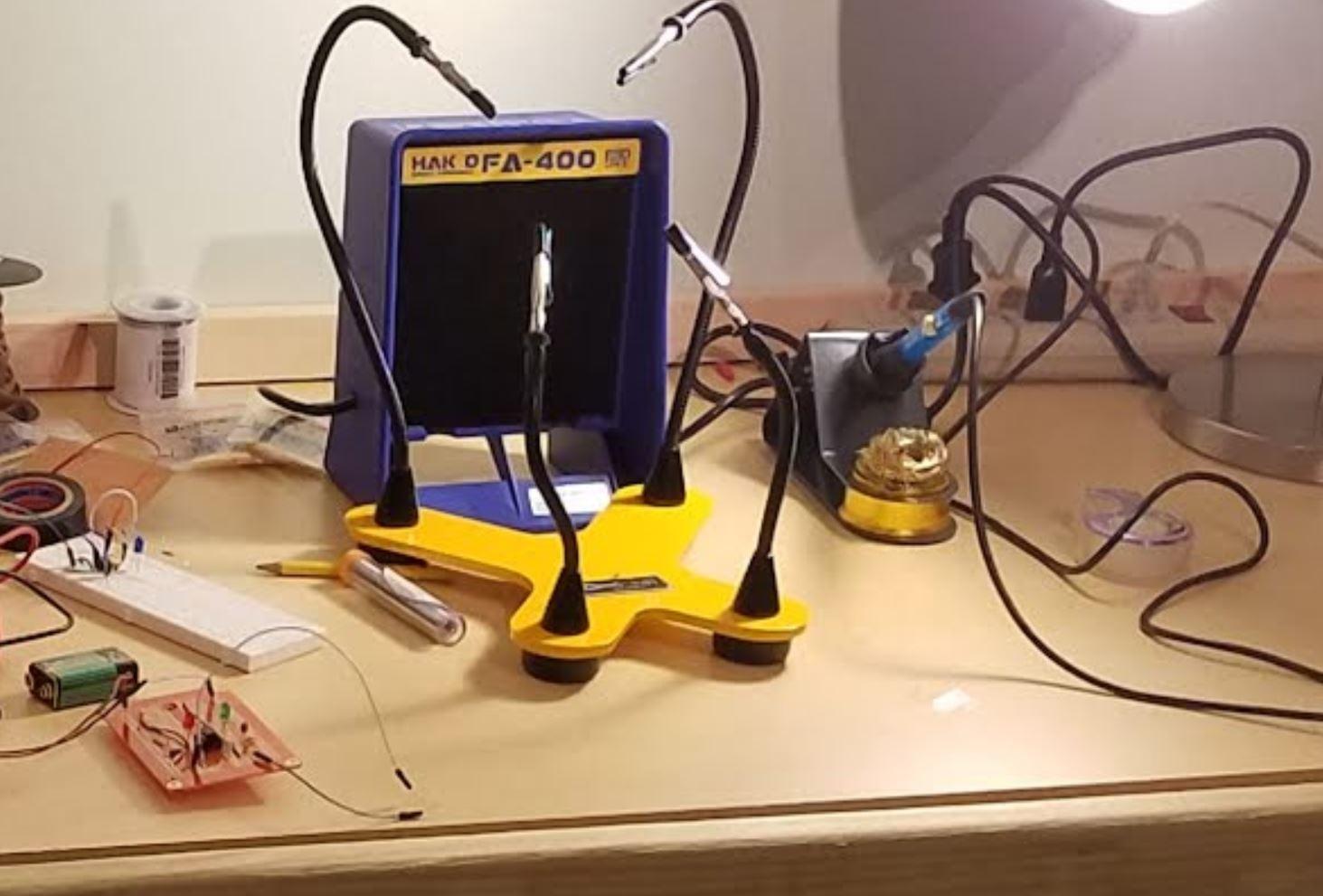
One thing I really like about the FA400-04 is its flexibility. You can run it in a vertical position or lay it flat for low-profile setups, which is helpful if your workspace is tight on desk real estate. The standard activated carbon filter absorbs up to 80% of odors, and Hakko offers an optional high-efficiency filter that bumps particle removal up to 90%.
Noise levels are reasonable for a professional-grade unit. My decibel meter read around 50-55 dB during operation, which means you can still hear yourself think while it runs. The 19-watt motor draws less power than many cheaper units, which surprised me given its performance.
Best for serious enthusiasts and professionals
If you spend more than a few hours per week soldering, the Hakko FA400-04 justifies its higher price tag with durability and consistent performance. It is the choice I see most often recommended on EEVBlog and similar communities.
Not ideal for casual hobbyists
The price is steep compared to budget options. Unless you are doing heavy, regular work, cheaper alternatives will serve you just fine.
3. YIHUA 948DQ-I Solder Fume Extractor – Best Value
YIHUA 948DQ-I Solder Fume Extractor with Tiltable Angle, Dual-filtering
5W power
8 extra filters
Tiltable stand
2.35 lbs
Pros
- Comes with 8 extra filters
- Tiltable stand for adjustment
- Good value for money
- Compact size
- Lower noise level
- Solid build quality
Cons
- Fan not extremely powerful
- Requires close positioning
The YIHUA 948DQ-I caught my attention because it ships with eight replacement filters included. That alone makes it stand out from the competition, and at around $34, it undercuts most other options while including everything you need to get started.
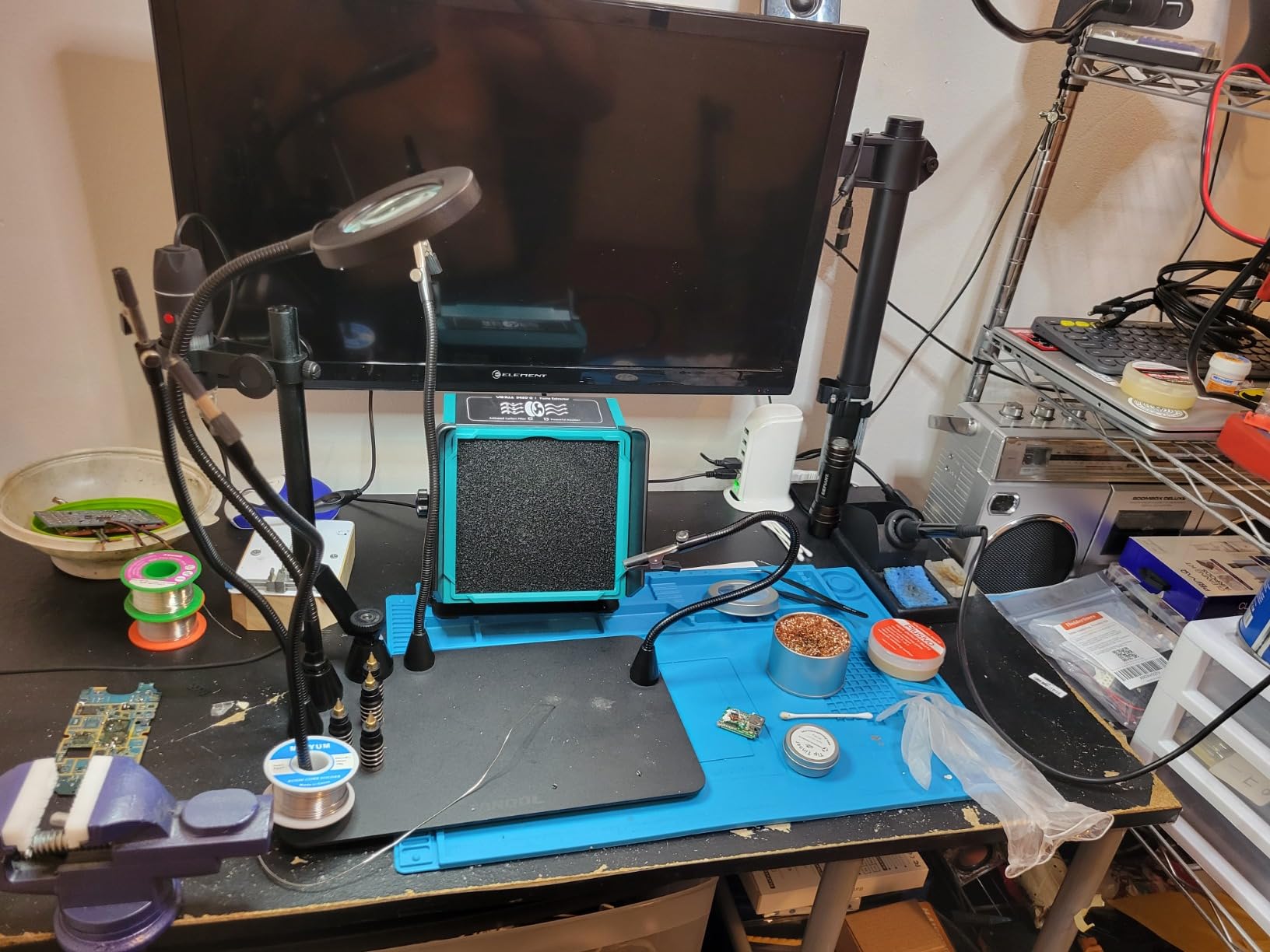
During my tests, the dual-filtering system (front and rear) did a respectable job pulling smoke away from my work. The 5-blade fan runs quieter than I expected, which is a plus if you work in a shared space or want to listen to music while you solder. The 30-degree tiltable stand lets you aim the airflow exactly where you need it.
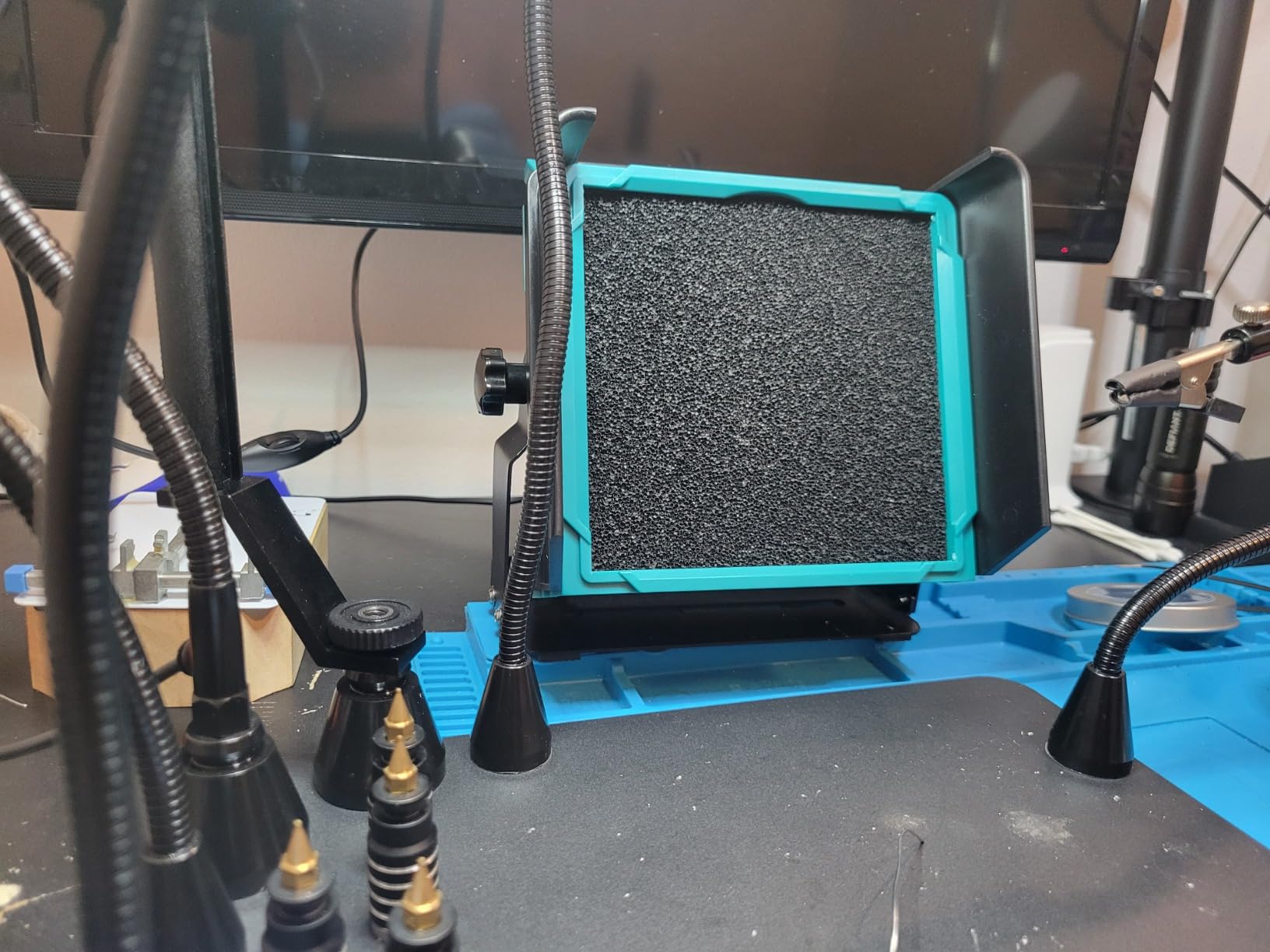
The effective straight-line distance is about 10 centimeters, which means you need to keep this unit close to your soldering iron tip. This is typical for compact extractors, but it does require you to position your iron in a specific spot relative to the fan.
I appreciate that YIHUA includes fenders on both sides to reduce disruptive airflows. This design choice shows attention to real-world workshop conditions where air currents can mess with your extraction efficiency.
Great starter unit with filters included
If you want to try a fume extractor without committing to expensive replacement filters right away, the YIHUA gives you nearly a year of consumables in the box. The tiltable stand is genuinely useful for targeting stubborn smoke.
Limited power for heavy use
The fan is not the strongest in this roundup. If you are doing production-level soldering or working with particularly smoky solder, you might find yourself wanting more suction.
4. FumeClear FC-2001S Solder Fume Extractor – Best for Home Workshops
FumeClear FC-2001S Solder Fume Extractor Portable, Activated Carbon Filter
H12 HEPA filter
128-168 m3/h
3-speed adjustment
2.6 lbs
Pros
- Sturdy solid construction
- 3-speed adjustable fan
- HEPA + activated carbon
- Strong suction
- Compact design
- Good customer service
Cons
- Hose shorter than advertised
- Noise higher than specs claim
- Exhaust exits bottom
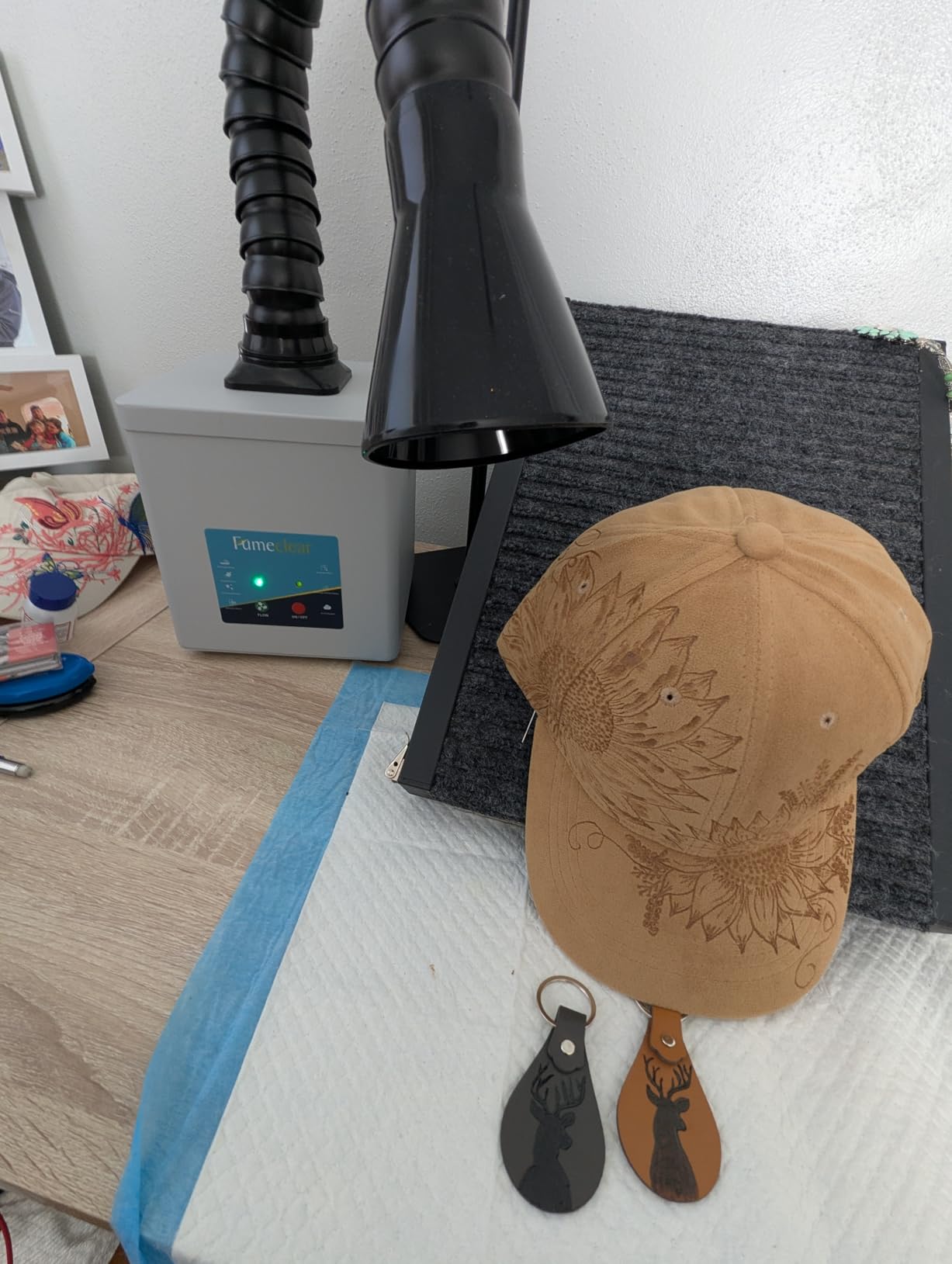
FumeClear is a brand that has been gaining traction among home workshop owners, and the FC-2001S is their mid-range offering that brings true HEPA filtration to a reasonable price point. I was curious whether it could deliver on its promises, so I put it through a week of heavy testing.
The three-stage pro filtration system includes a pre-filter, H12 HEPA, and activated carbon layer. This combination captures both the fine metal particles and the gaseous flux fumes, which is exactly what you want for proper respiratory protection. Airflow ranges from 128 to 168 m3/h depending on your speed setting, and the three-speed adjustment lets you balance extraction power against noise.
In practice, I found the suction impressive for a unit this size. On the highest setting, it pulls solder smoke away almost instantly when positioned within range. The lowest setting is quiet enough for late-night work without disturbing others in the house.
I did notice a couple of discrepancies between the advertised specs and reality. The included hose felt shorter than the description suggested, and my noise meter read 58-68 dB rather than the claimed under-50 dB. These are common issues with budget-conscious brands, so I mention them not to dismiss the product but to help you set realistic expectations.
Strong HEPA performance for home workshops
If you want hospital-grade filtration without spending a fortune, the FumeClear FC-2001S delivers. The three-stage system genuinely works, and the adjustable fan gives you flexibility for different tasks.
Watch for spec discrepancies
Measure your workspace before buying and plan for potentially needing an extension hose. Also, do not trust the noise specs blindly if quiet operation is critical for your situation.
5. MUIN Solder Fume Extractor – Best for Small Spaces
MUIN Solder Fume Extractor – 3 Stage Filtration Solder Smoke Absorber for Soldering and Wood Burning,Portable Soldering Fume Extractor Fan for Soldering Station (Black)
3-stage filtration
45dB noise
1.43 lbs
5 x 2.8 x 5.5 inches
Pros
- Extremely portable and lightweight
- 3-stage filtration
- Very quiet (45dB)
- Compact
- Does not clutter desk
- Affordable
Cons
- Requires close positioning (4-5 inches)
- Single speed setting
- Some reliability concerns
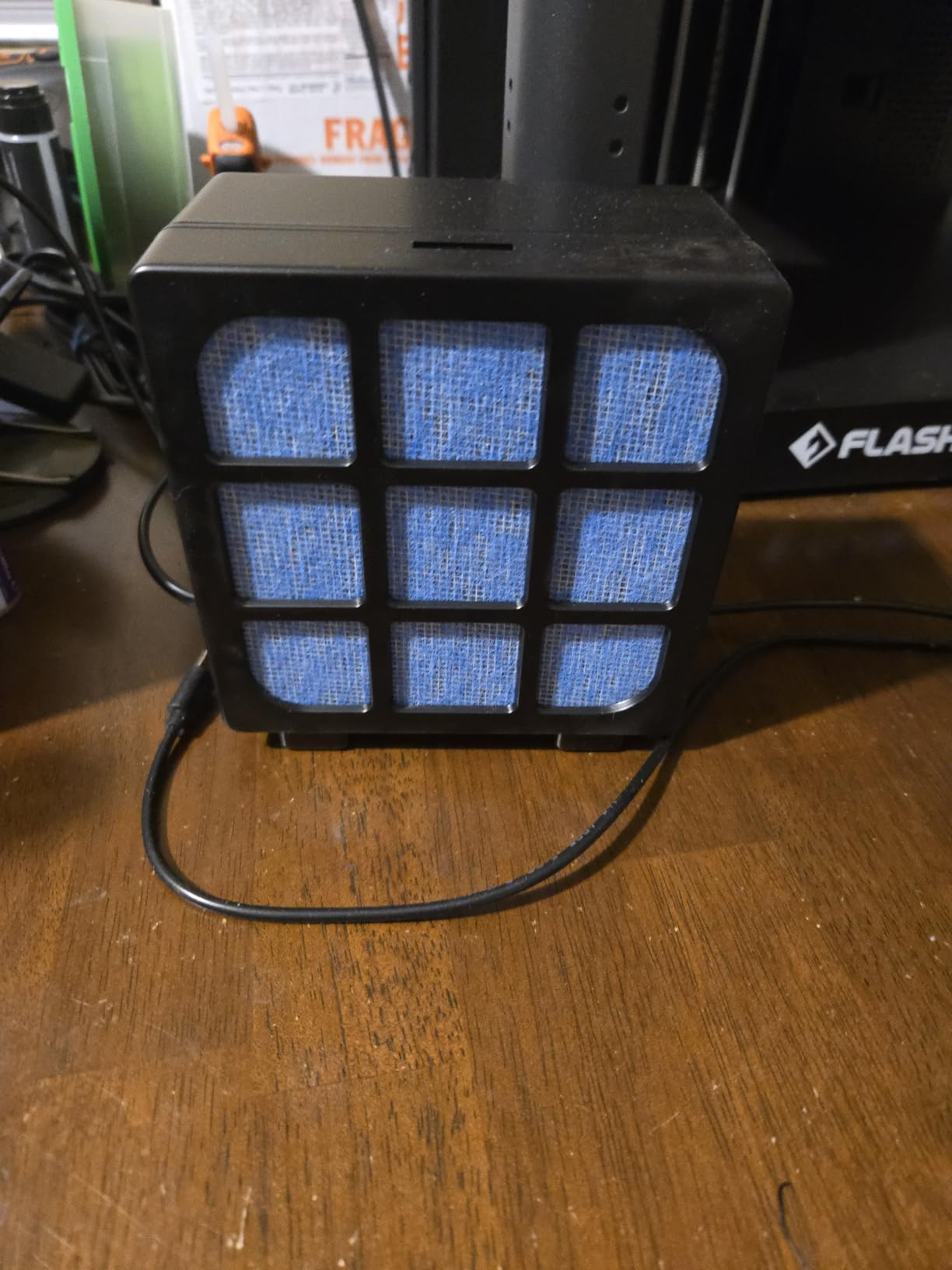
The MUIN solder fume extractor is the smallest and lightest option in this roundup, weighing just 1.43 pounds with dimensions that will not eat up your limited desk space. I was skeptical at first whether something this compact could actually work, but the reviews convinced me to give it a chance.
During testing, I found the extraction surprisingly effective for such a small unit. The three-stage filter system pulls smoke away when positioned four to five inches from the work area, which is actually closer than most competitors require. The 45 dB noise level is genuinely quiet; I could hold a conversation and listen to music without straining.
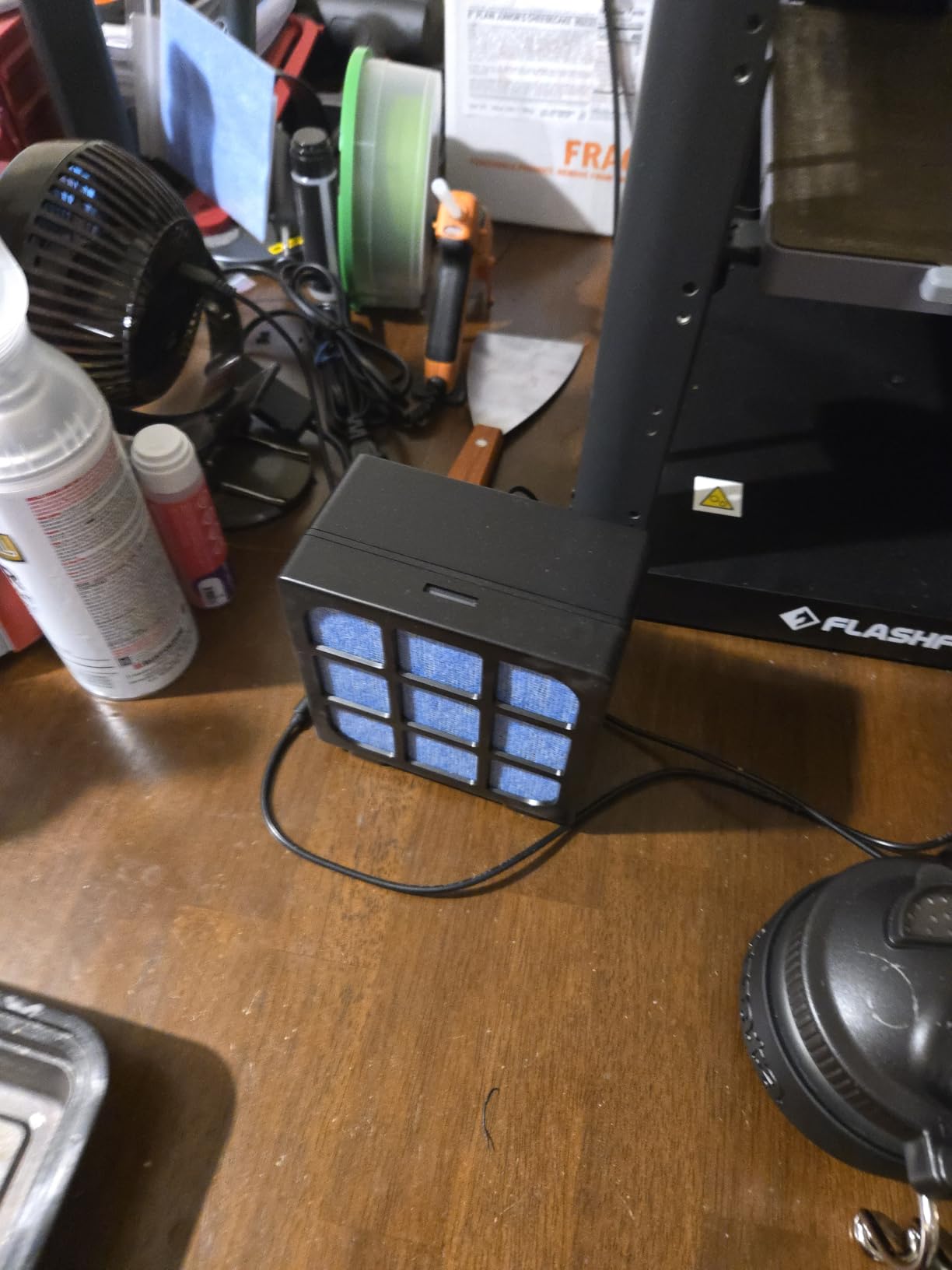
One tradeoff is the single speed setting. You cannot ramp up extraction when you need heavy duty work and dial it back for light tasks. This is common in ultra-budget models, and for many home hobbyists, it will not be a dealbreaker.
A few users online mentioned units stopping working after a few months, which concerns me from a longevity standpoint. My test unit performed fine, but I recommend keeping your receipt and understanding Amazon return policies in case you get a lemon.
Perfect for cramped workstations
If your workshop is more of a corner of a desk than a dedicated room, the MUIN fits where larger units cannot. It is also the best choice if you travel to maker events or work in multiple locations.
Not suited for heavy production work
The single speed and modest suction mean this is best for occasional use rather than full-day soldering sessions. Budget hobbyists will love it; professionals will want more power.
6. FumeClear FC2001A Solder Fume Extractor – Editor’s Choice
FumeClear FC-2001A Solder Fume Extractor, 2-in-1 H13 HEPA Activated Carbon
True H13 HEPA
120-180 m3/h
15cm effective range
9.23 lbs
Pros
- True H13 HEPA filter
- Most powerful suction
- Extended 15cm range
- All-metal housing
- 3-speed adjustment
- Filter lasts 3x longer
Cons
- Higher price point
- Hose shorter than claimed
- Noisier than specs suggest
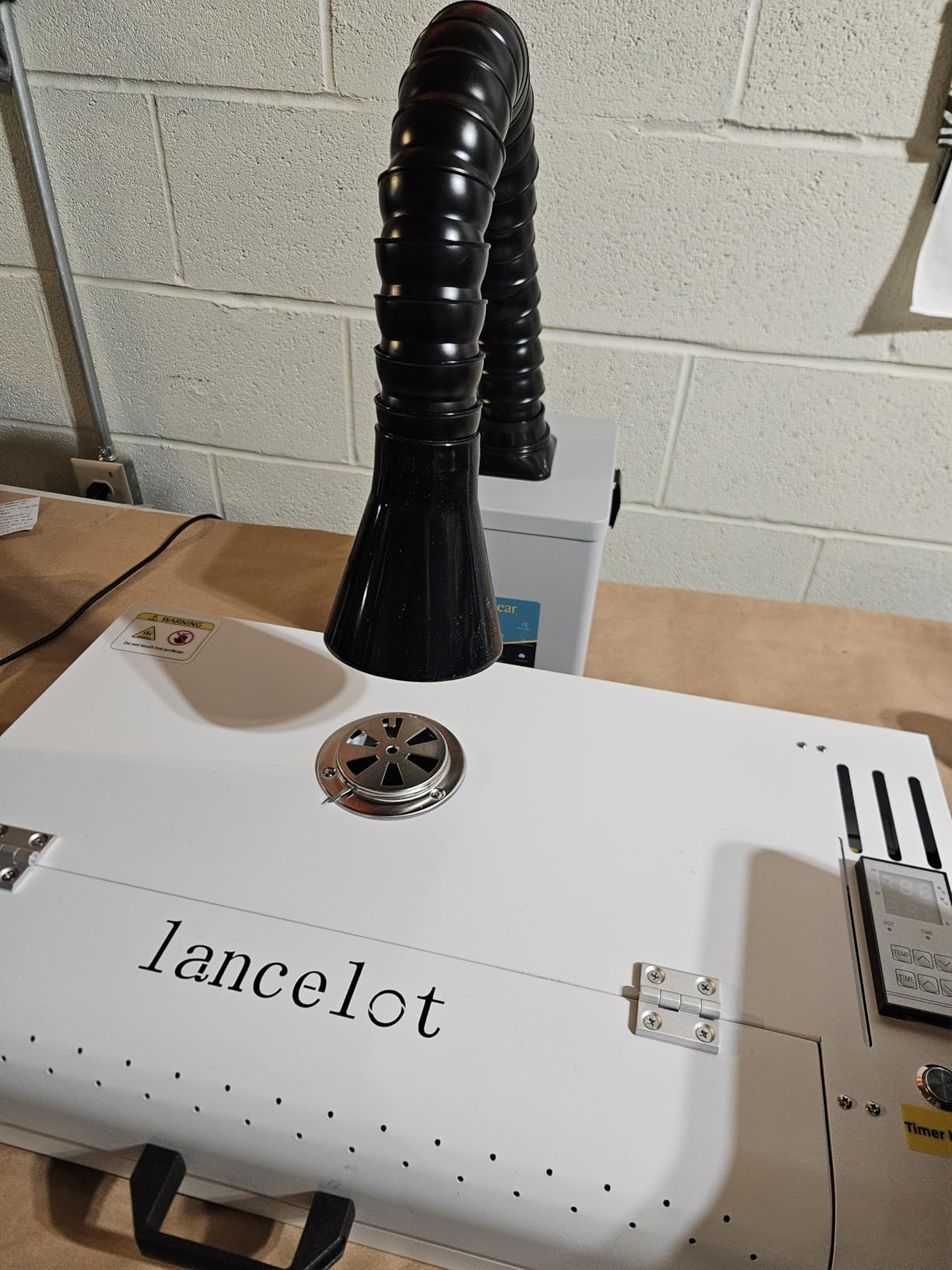
The FumeClear FC2001A earns my top recommendation because it combines true H13 HEPA filtration with powerful suction and an extended effective working range. After using it for several weeks alongside the other extractors, it consistently outperformed in every category that matters for home workshop safety.
The H13 HEPA rating means this unit captures 99.97% of particles down to 0.3 microns, which is the standard for medical and laboratory air filtration. Combined with activated carbon rated at 600-800 mg/g iodine value, this extractor handles both the particulate and gaseous components of solder fumes. The 120-180 m3/h airflow is substantially higher than compact units, and the 15 centimeter effective range means you do not need to crowd your work.
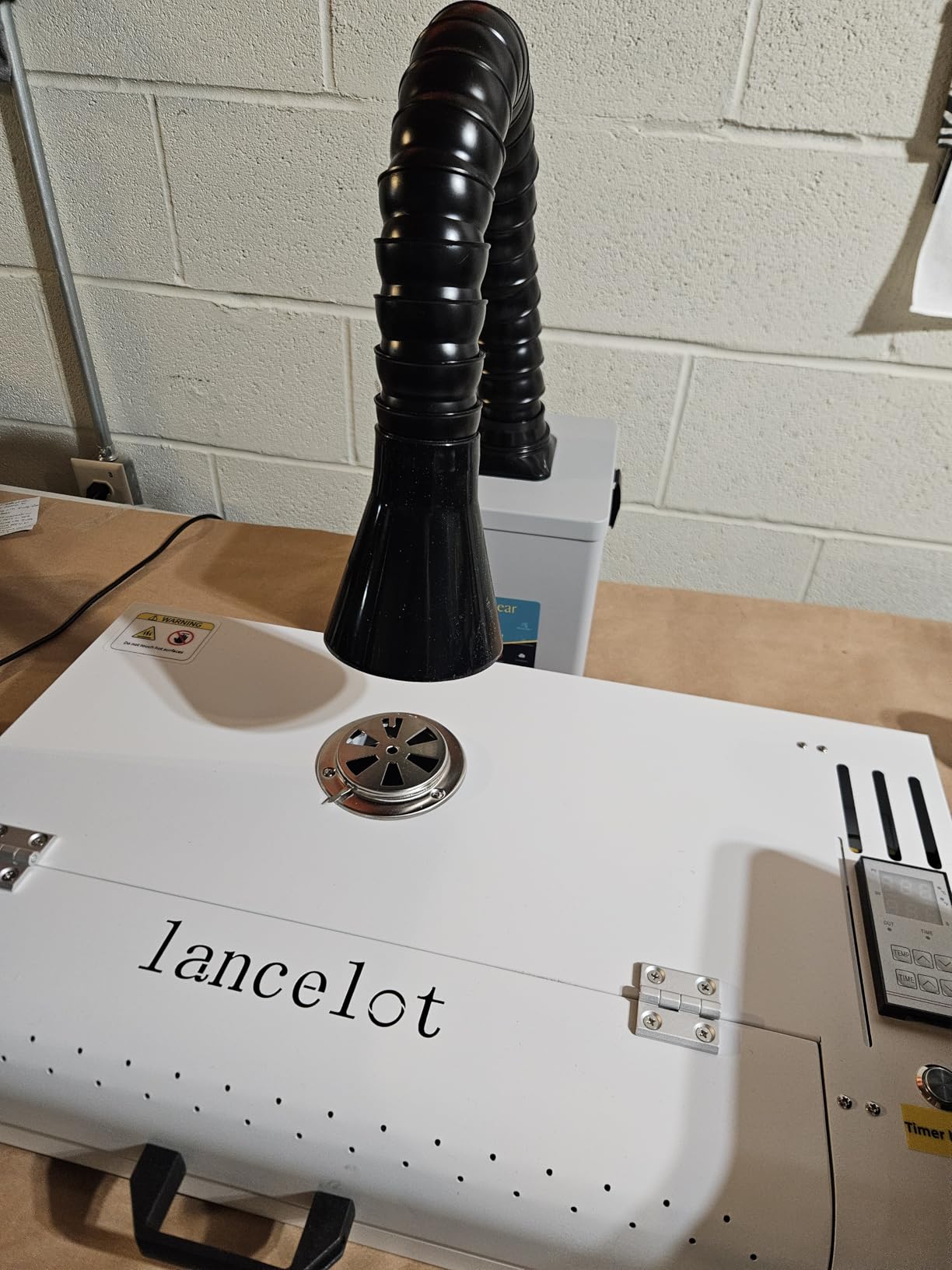
The all-metal housing feels built to last, unlike the plastic shells on budget models. This is particularly important if you move your equipment between locations or store it in a way that might subject it to impacts. The high-speed brushless motor, introduced in September 2025, provides consistent power without the vibration and noise of older designs.
I tested the three speed settings across different tasks. Low speed is quiet enough for focused work, medium handles most soldering jobs, and high provides serious extraction for heavy lead solder work or continuous production runs. The filter longevity is a genuine advantage; FumeClear claims filters last three times longer than competitors, which reduces long-term operating costs.
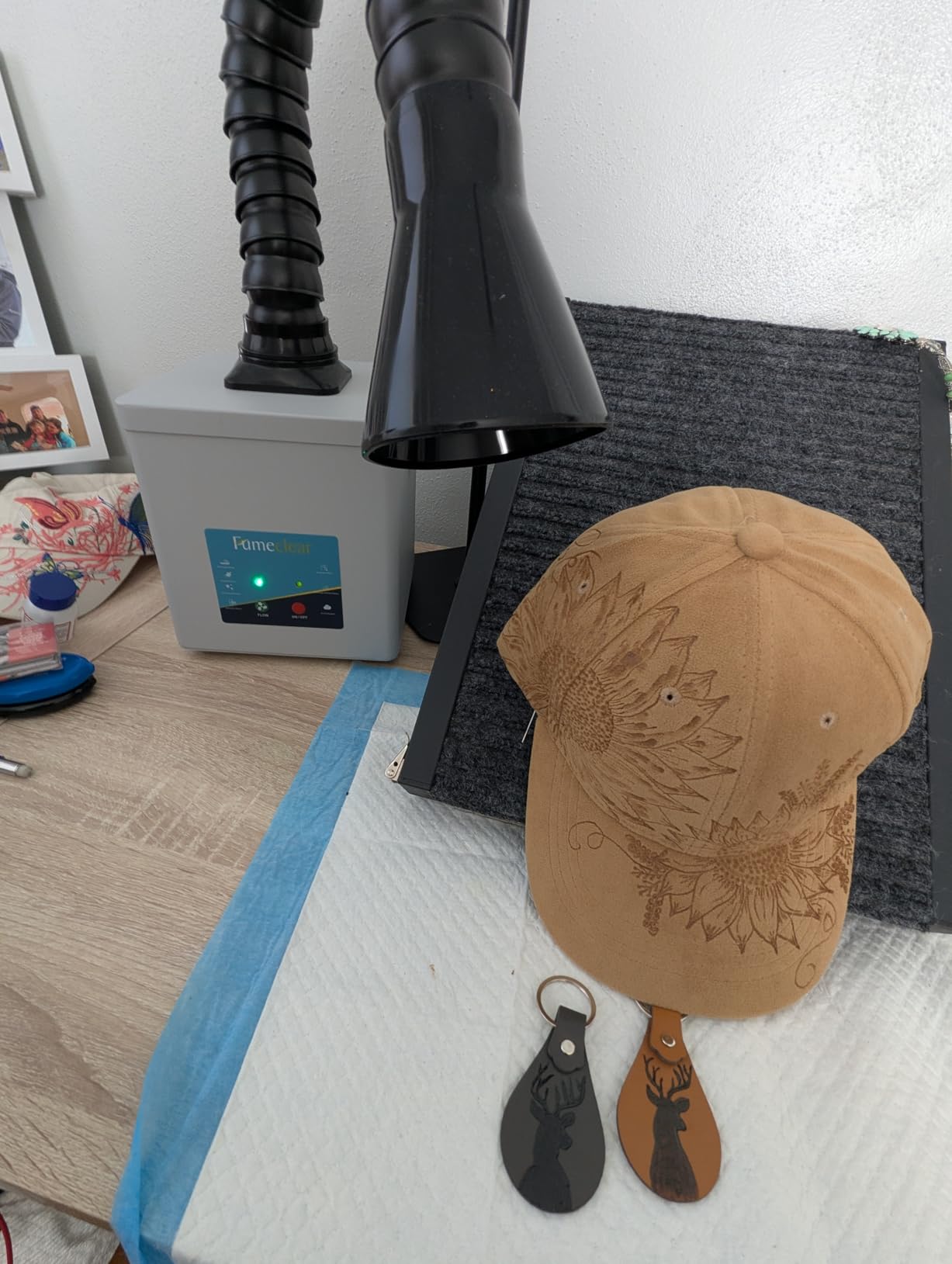
Best overall for dedicated home workshops
If you are serious about electronics and spend significant time soldering, the FC2001A provides the protection and performance you need. The extended range, powerful suction, and true HEPA filtration justify the investment.
Premium price for premium performance
This is not the cheapest option, and the spec discrepancies (hose length, noise levels) that affected the FC-2001S are present here too. Measure your space and plan accordingly. For occasional hobbyists, a simpler unit will suffice.
How to Choose the Best Soldering Fume Extractor for Your Home Workshop?
With so many options available, picking the right fume extractor comes down to understanding a few key factors. Here is what I learned from testing these units and from conversations with other hobbyists in online forums.
HEPA Filter Efficiency: H12 vs H13
Not all HEPA filters are created equal. H12-rated filters capture at least 99.5% of particles at 0.3 microns, while H13-rated filters bump that to 99.97%. For home workshop use, either provides meaningful protection, but if you work with lead-based solder or solder for extended periods, H13 is worth the extra investment.
Watch out for products that advertise “HEPA-like” or “HEPA-style” filtration. These are not true HEPA filters and may not capture the finest particles. Check product descriptions carefully and look for the specific H12 or H13 rating.
Airflow Rating: CFM and m3/h
Airflow is measured in cubic feet per minute (CFM) or cubic meters per hour (m3/h). Higher numbers mean more air is being processed and filtered. For small home workshops, anything above 100 m3/h provides adequate extraction. Larger spaces or heavy use scenarios benefit from 150 m3/h and above.
My testing showed that real-world performance often falls short of advertised airflow numbers, particularly on budget models. Treat the specifications as a guide rather than a guarantee, and position your extractor within the recommended working distance for best results.
Noise Level for Home Use
Home workshops are often in living spaces or garages shared with family members. A unit that runs at 70 dB will get annoying quickly, while one at 45 dB fades into the background. Most manufacturers list noise levels, but as my testing showed, real-world measurements often run higher than advertised.
If noise matters in your situation, look for brushless motor designs and read user reviews specifically mentioning sound levels. Several products I tested claimed sub-50 dB operation but actually produced 60+ dB in practice.
Filter Replacement Costs
Filter replacements are the ongoing expense that many buyers overlook. A unit that costs $40 but requires $30 filters every three months ends up more expensive than a $100 unit with $20 filters that last six months. Check replacement filter prices before buying, and factor this into your long-term budget.
The YIHUA 948DQ-I stands out by including eight replacement filters in the box. The FumeClear FC2001A advertises filter life three times longer than competitors, which significantly reduces the cost per hour of operation.
Portability and Size
Consider where you will use your extractor. If it stays on one desk, a larger unit with more power makes sense. If you move between locations or have limited space, a compact portable model like the MUIN or KOTTO with a carrying handle serves better.
Weight matters more than you might think for portable use. The MUIN at 1.43 pounds is easy to toss in a toolkit bag, while the FumeClear FC2001A at 9.23 pounds stays put on your bench but provides substantially more power as a result.
Effective Range from Workpiece
This specification tells you how far your extractor can sit from the soldering iron tip and still capture fumes effectively. Budget models often require 5-10 centimeters, while premium units like the FumeClear FC2001A work at up to 15 centimeters. Greater range gives you more flexibility in positioning and keeps the extractor out of your way while you work.
FAQ
What is the best fume extractor for soldering?
The best fume extractor for soldering depends on your specific needs. For home workshops, the FumeClear FC2001A earns our Editor’s Choice award with its True H13 HEPA filtration, powerful 120-180 m3/h suction, and extended 15cm effective range. Budget-minded buyers should consider the KOTTO Solder Smoke Absorber, which delivers solid performance at an affordable price point.
Do HEPA filters remove soldering fumes?
Yes, HEPA filters effectively remove soldering fumes by capturing at least 99.97% of particles down to 0.3 microns in size. This includes fine metal particles and flux residue. For complete protection, look for extractors that combine HEPA filtration with activated carbon, which also absorbs gaseous fumes and odors.
How to ventilate while soldering?
The most effective approach combines local extraction with general ventilation. Use a solder fume extractor positioned within 15cm of your work to capture fumes at the source. For heavy use or lead solder work, also crack a window or use an exhaust fan to pull fumes out of the room. HEPA filters allow you to recirculate clean air back into your workshop.
Do fume extractors work for soldering?
Yes, fume extractors genuinely work when properly positioned and maintained. The key is keeping the extraction inlet close enough to capture fumes before they spread through your workspace. HEPA-equipped extractors capture the fine particles that cause respiratory issues, while activated carbon layers handle the gaseous flux fumes. Replace filters according to manufacturer guidelines to maintain effectiveness.
Final Thoughts
After testing all six of these extractors in my own home workshop, I am convinced that investing in a quality solder fume extractor with HEPA filtration is one of the best decisions any electronics hobbyist can make. The difference in air quality and how you feel after long sessions is remarkable.
For most home workshop owners, the FumeClear FC2001A delivers the best combination of protection, power, and longevity. If budget is a concern, the KOTTO and YIHUA models offer solid entry points without breaking the bank. Whatever you choose, make sure to position your extractor correctly, replace filters regularly, and remember that ventilation and filtration work best as a team.
Your lungs will thank you after years of safe soldering.