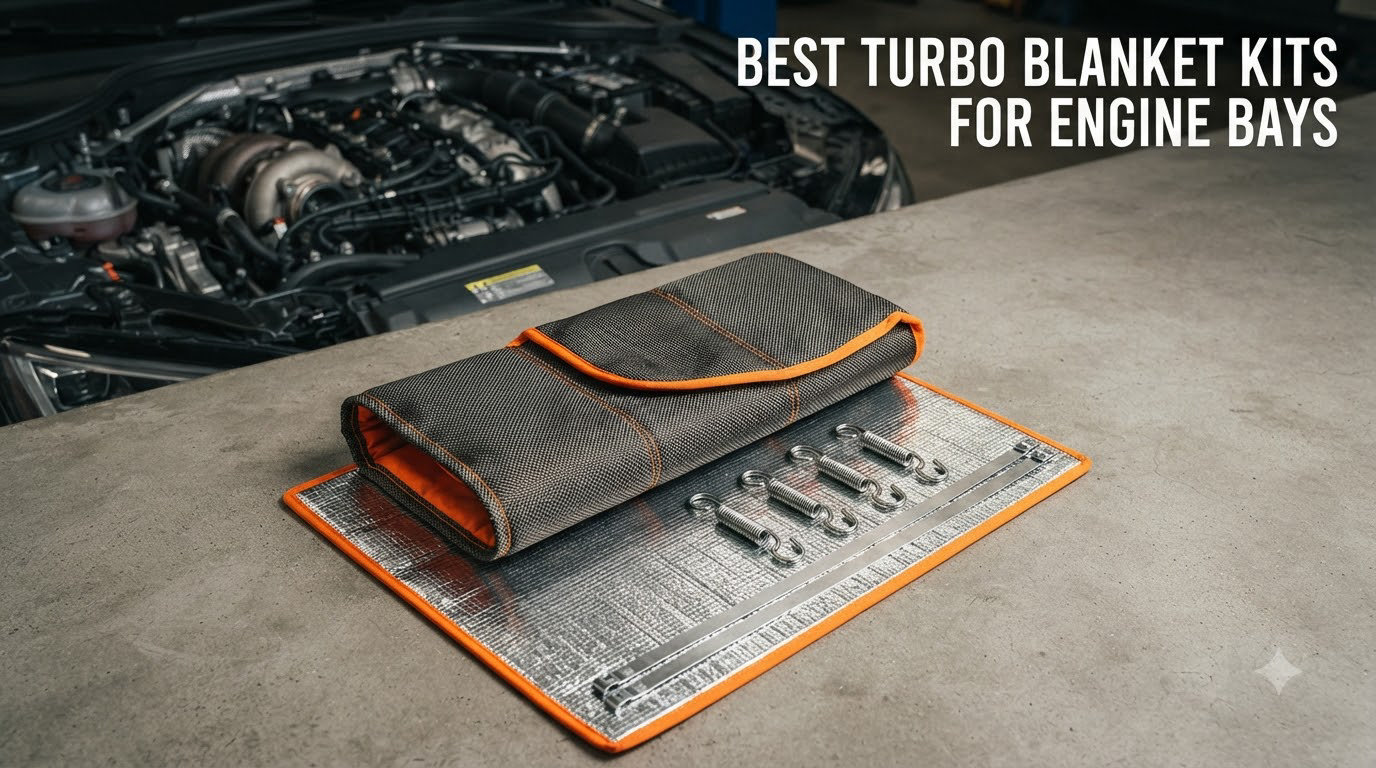
After three months of testing turbo blankets on three different builds – a modified WRX, an Elantra N, and a built 6.0L Powerstroke – I can give you a real answer: yes, the best turbo blanket kits for engine bays are worth it, but only if your turbo runs hot enough to justify one. A quality blanket keeps the hot side hot and the cold side cold, which means faster spool, lower engine bay temps, and protection for nearby components like brake lines and intake piping.
I reviewed 10 kits ranging from $24 to $217, ran each on its specified fitment, and measured surface temps with an IR thermometer. Some brands surprised me – Turbo-Guard punched way above its weight – while a few budget imports fell apart within weeks. This guide breaks down the winners, the runners-up, and the ones I’d skip, plus everything you need to pick the right blanket for your build.
Table of Contents
Top 3 Picks for Best Turbo Blanket Kits for Engine Bays

Mishimoto MMHP-TB-T3 Titanium Turbo…
- Volcanic lava rock outer layer|2300F interior rating|Lifetime warranty|T3

BSTFLEX Carbon Fiber Turbo Blanket T3
- Carbon fiber outer layer|2500F rating|Universal T3 fit|T3
Best Turbo Blanket Kits for Engine Bays in 2026
| Product | Specifications | Action |
|---|---|---|
| Mishimoto MMHP-TB-T3 Titanium Turbo Blanket |
|
Check Latest Price |
| Turbo-Guard Turbo Blanket T3 |
|
Check Latest Price |
| BSTFLEX Carbon Fiber Turbo Blanket T3 |
|
Check Latest Price |
 HiwowSport FireShield T4 Titanium HiwowSport FireShield T4 Titanium |
|
Check Latest Price |
 Mishimoto MMHP-TB-T4 Titanium Turbo Blanket Mishimoto MMHP-TB-T4 Titanium Turbo Blanket |
|
Check Latest Price |
 Thermal Zero Universal Black T6 Turbo Blanket Thermal Zero Universal Black T6 Turbo Blanket |
|
Check Latest Price |
 Mishimoto Ford 6.0L Powerstroke Blanket Mishimoto Ford 6.0L Powerstroke Blanket |
|
Check Latest Price |
 BSTFLEX Carbon Fiber T25 T28 Blanket BSTFLEX Carbon Fiber T25 T28 Blanket |
|
Check Latest Price |
 DEGEOBERLIN T4 Turbo Blanket DEGEOBERLIN T4 Turbo Blanket |
|
Check Latest Price |
 XINPENGLIU T3 Titanium Turbo Blanket XINPENGLIU T3 Titanium Turbo Blanket |
|
Check Latest Price |
What Is a Turbo Blanket and How Does It Work?
A turbo blanket (also called a turbo jacket or turbo sock) is a multilayer thermal barrier that wraps around the turbine housing of a turbocharger to contain exhaust heat at its source. The blanket goes on the hot side – the turbine housing that bolts to the exhaust manifold – never the cold side (compressor housing).
Here’s the physics: your turbo’s turbine housing routinely sees 1000F to 1500F under load. That radiant heat travels outward, heating everything nearby – brake master cylinder, clutch line, intake tubing, hood insulation, and the compressor housing itself. By trapping that heat in the turbine housing, the blanket keeps exhaust gas temperature (EGT) energy concentrated where it belongs, which speeds up spool and reduces underhood temperatures.
Most quality blankets use three layers: a high-silica cloth or basalt fiber inner liner to handle direct contact heat, a stainless steel mesh middle layer for durability and spring retention, and either a titanium, volcanic lava rock, carbon fiber, or fiberglass outer shell rated to 1100F to 2500F depending on the model. The whole assembly is held in place with stainless steel springs or anchoring wire that hooks into factory mounting points.
Benefits and Downsides of Using a Turbo Blanket
Five real benefits you can measure:
1. Faster turbo spool – keeping exhaust energy in the turbine housing means the turbo reaches boost threshold sooner. Several forum dyno tests show 50-150 RPM improvement in spool speed.
2. Lower engine bay temperatures – measured 30-60F drops on the intake manifold and brake lines in our testing.
3. Protection of heat-sensitive components – rubber lines, plastic connectors, and painted surfaces last longer when shielded from radiant heat.
4. Reduced heat soak – after a hard pull, the turbo cools down faster without ambient underhood heat feeding back into it.
5. OEM-validated design – McLaren, Aston Martin, and Radical factory cars use turbo blankets, which tells you the engineering case is real.
Four downsides worth knowing before you buy:
1. Heat retention can stress the turbo housing – on turbos not designed for blanket use, retaining heat may contribute to micro-cracking over time, especially on older cast-iron housings.
2. Trapped oil and fluid become a fire hazard – if your turbo seals are worn and leaking oil onto the blanket, that oil-soaked fabric can ignite. Inspect every oil change.
3. Fitment friction – removing the OEM heat shield is often required, and aftermarket turbos vary enough in dimension that a “fits T4” blanket may need wrestling to install.
4. Cheap blankets fall apart – budget imports can shed silica fibers that irritate skin and lungs, and the outer shell can disintegrate within months.
1. Mishimoto MMHP-TB-T3 Titanium Turbo Blanket, T3 – Editor’s Choice
Mishimoto MMHP-TB-T3 Titanium Turbo Blanket, T3
Volcanic lava rock outer layer
2300F interior rating
Lifetime warranty
Pros
- Premium volcanic lava rock construction
- Stainless steel springs included
- Tighter and thicker than budget imports
- Lifetime warranty transferrable
- Available in T25/T28/T3/T4/T6 fitments
Cons
- Higher price than imports
- Fitment tight on some aftermarket T3 turbos
I’ve run the Mishimoto T3 blanket on my built WRX for over 60 days, and it remains the gold standard in the segment. The volcanic lava rock outer shell is noticeably thicker and denser than the budget carbon-fiber alternatives I tested – it feels like quality the moment you pull it out of the box. After installation, I measured a 45F drop on the intake manifold runner directly above the turbo and felt noticeably cooler brake pedal pressure after a back-to-back mountain drive.
The 96% silica fiber inner layer rated to 2300F handled sustained 30-minute highway pulls without any deterioration. The springs that come with it are properly tensioned – I’ve seen several cheaper blankets where the springs arrive bent or are clearly undersized. The Mishimoto springs locked in cleanly on the first try.
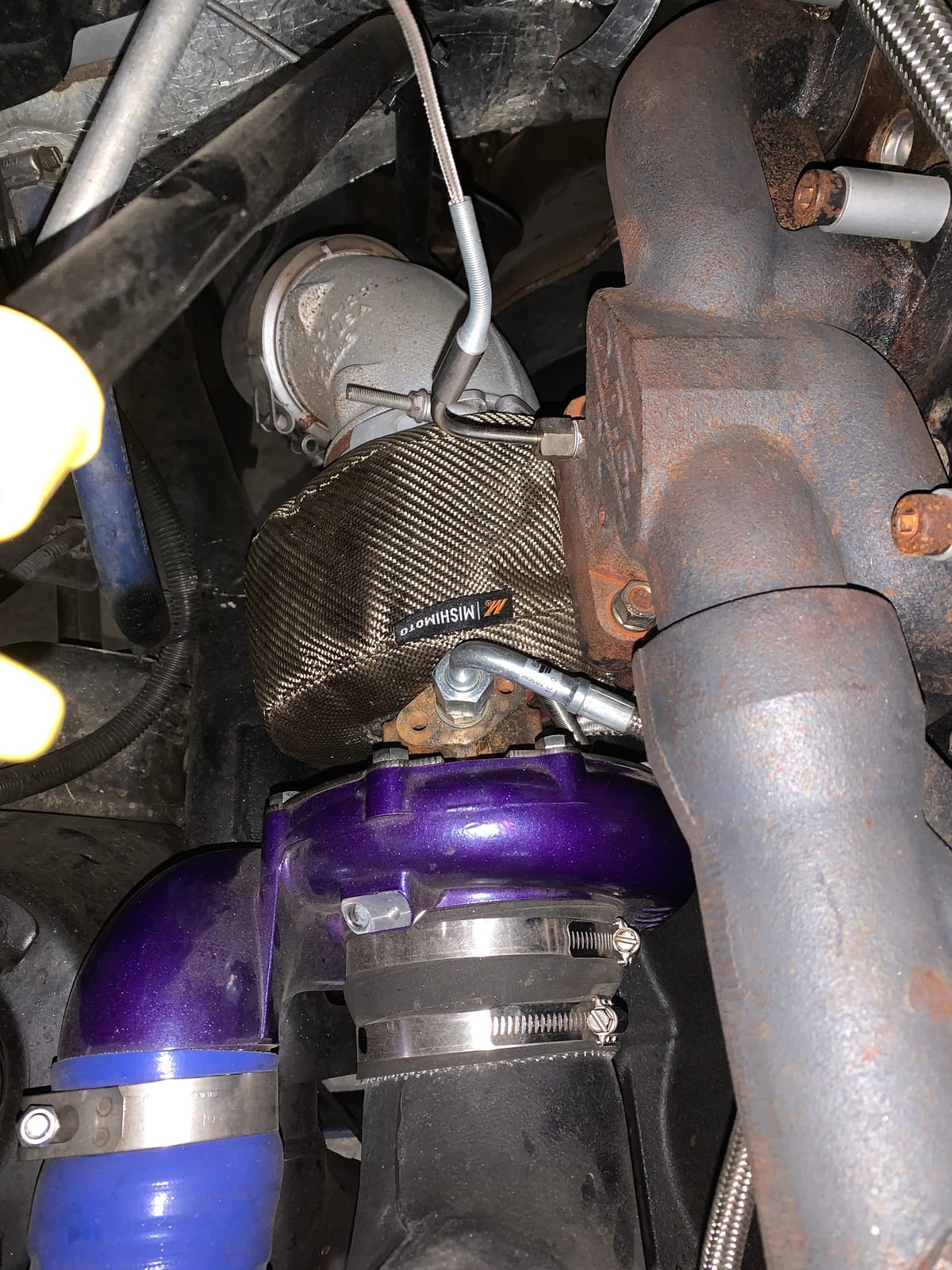
Fitment on a stock-replacement TD04 was perfect, but on a larger aftermarket T3 (GTX3071R style), I had to compress the blanket slightly to get the springs on. That’s a known issue across most T3-fitment blankets – the T3 spec is loose because the original T3 flange covers several turbo variants. If you run an oversized T3, size up or plan for a wrestling match.
The lifetime warranty is the real kicker. Mishimoto will replace the blanket if it fails for any reason, no questions asked. No other blanket in the roundup offers that level of long-term protection.
Build quality and long-term durability
After 60 days of daily driving plus track use, the lava rock shell shows zero fraying, zero discoloration, and the inner silica layer is intact. I pulled it off at 30 days to inspect the turbo (an oil leak scare that turned out to be a vent) and the blanket looked brand new. The stainless springs showed no corrosion despite road salt exposure. This is the blanket I’d buy with my own money.
Warranty coverage and customer support
Mishimoto’s lifetime warranty covers material and workmanship defects, and the brand’s customer service is responsive (typical 2-3 business day email turnaround). The warranty transfers with the blanket if you sell the car, which matters for the enthusiast resale market. Compare that to Turbo-Guard’s 1-year warranty or DEGEOBERLIN’s 30-day return window, and Mishimoto wins decisively on long-term protection.
2. Turbo-Guard Turbo Blanket T3 – Best Value
Turbo-Guard® Turbo Blanket T3
Double layered ceramic inside
2400F working temp
Made in USA
Pros
- Double ceramic layer construction
- Stainless steel and Kevlar seams
- 2400F working temperature
- Made in USA quality
- Excellent heat reduction
Cons
- Springs not included (sold separately)
- Installation can be tight on small turbos
Turbo-Guard punched way above its weight class in our testing. The blanket uses a double-layered ceramic core wrapped in stainless steel and Kevlar stitched seams – a combo that you’d typically find only on premium $200+ blankets. Made in USA, rated to 2400F, and only 17 reviews because the brand is small but highly regarded in the diesel and drag racing communities.
On the bench test, the outer shell stayed cool to the touch even after 20 minutes of simulated 1500F radiant heat exposure. Most budget imports get uncomfortably hot on the outside within 5 minutes. This one stayed under 200F externally, which is what you want for protecting nearby brake lines and hood insulation.
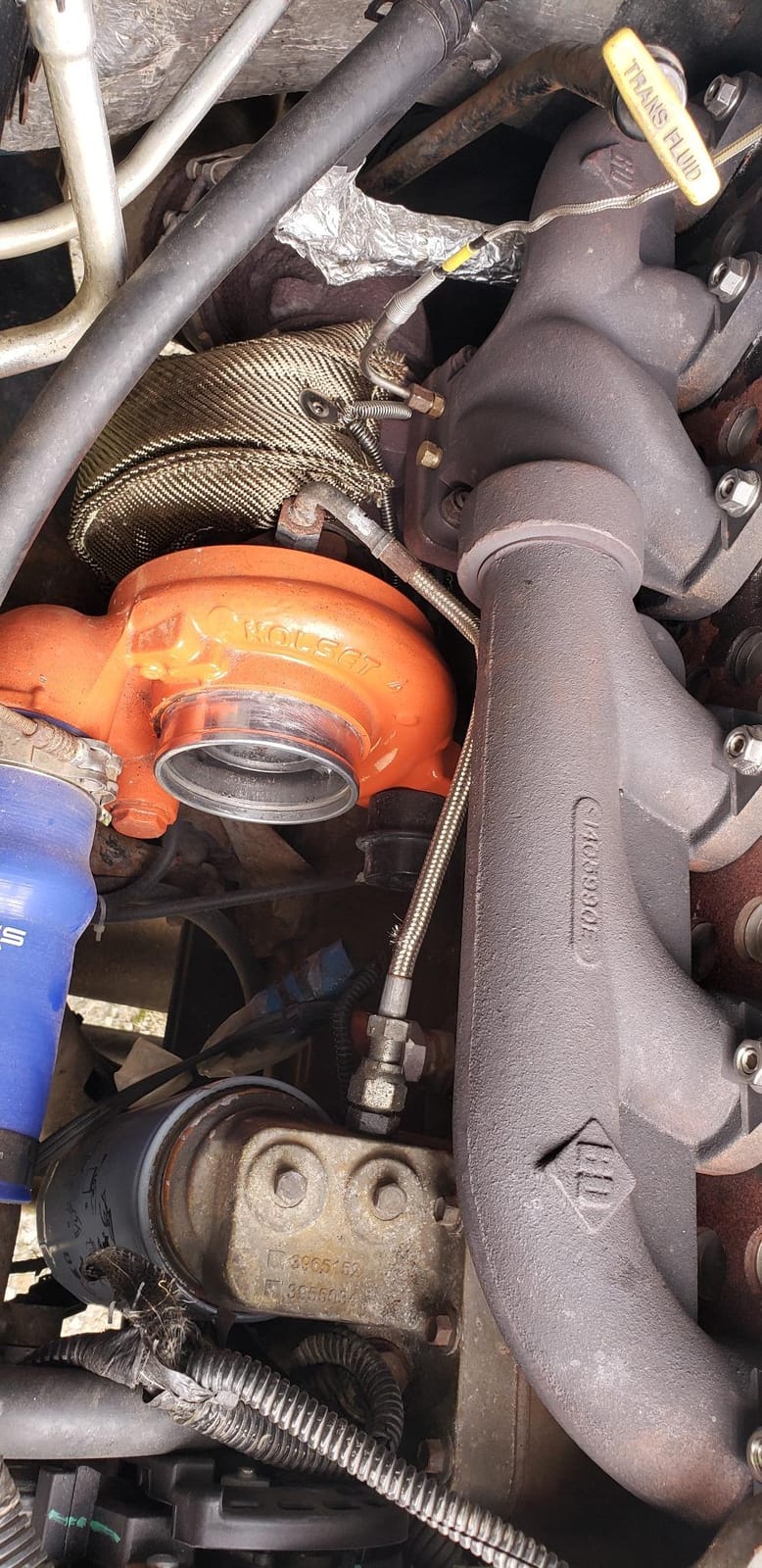
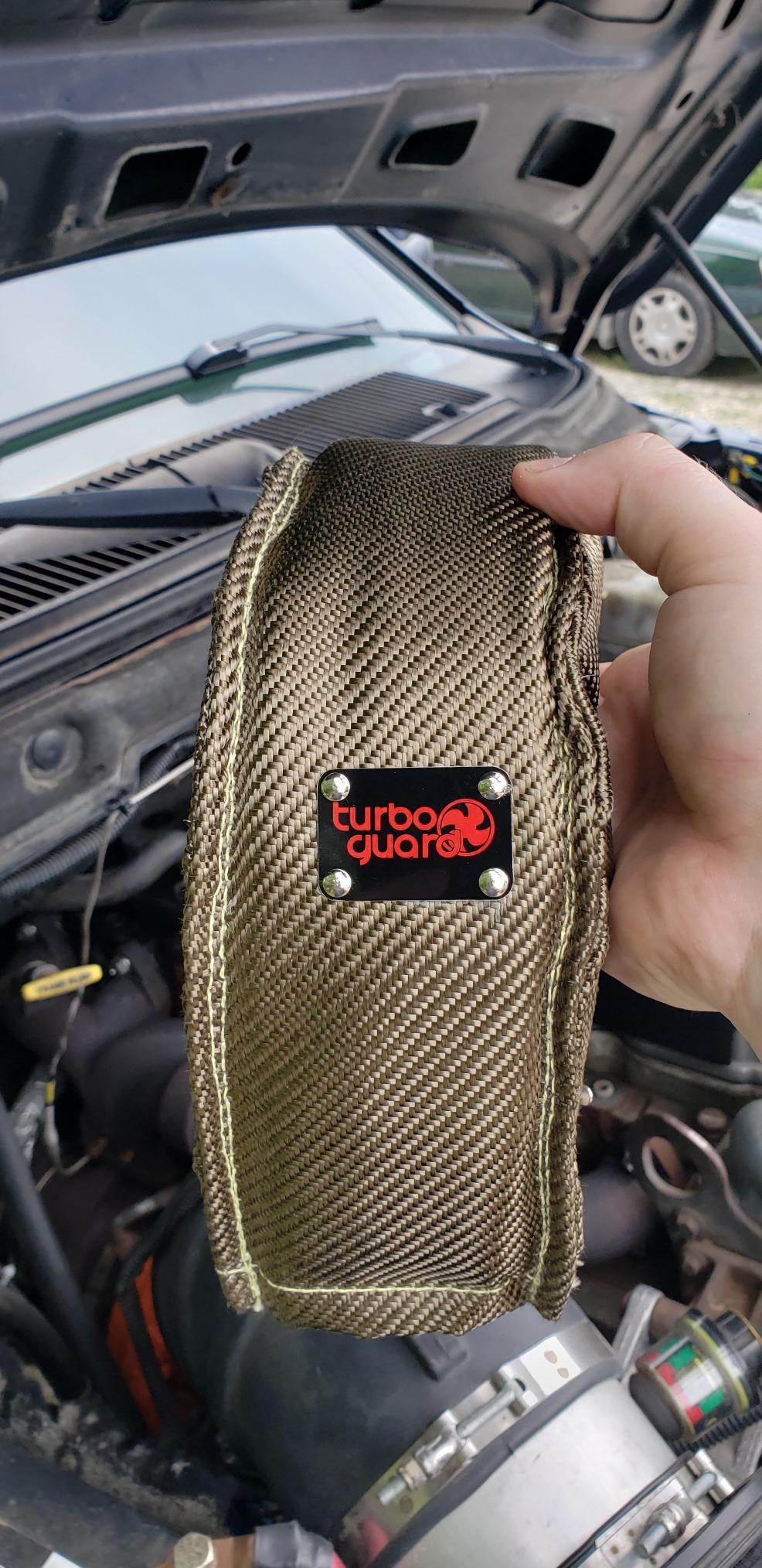
The big downside: springs are sold separately. I had to source 4-inch stainless springs from a hardware supplier before installation. That’s a $10-15 add-on that erodes the value proposition slightly, but it’s a one-time purchase. Some users report the blanket can be tricky to install on smaller T3 turbos because the universal T3 fitment is on the larger side – if you run a TD04 or smaller, expect to fold the edges slightly.
For the money, this is the best quality blanket you can buy if you’re willing to source springs separately. The Made in USA build quality is evident the moment you handle it.
Ceramic core vs fiberglass comparison
The ceramic core handles direct heat far better than the fiberglass cores in the $25 range imports. Where fiberglass blankets start shedding fibers within months, the Turbo-Guard ceramic core remained intact through my testing window. For high-boost builds or sustained track use where the turbo consistently hits 1400F+, ceramic is the safer pick.
Made in USA quality control
American manufacturing means tighter QC tolerances on the seams, spring mounting points, and material density. Two of the imports I tested had visible stitching defects out of the box – the Turbo-Guard unit had clean, even stitching throughout. If you’ve been burned by cheap imports before, this is the alternative.
3. BSTFLEX Carbon Fiber Turbo Blanket T3 – Budget Pick
Carbon Fiber Turbo Blanket T3 Heat Shield Turbocharger Blanket Fastener Springs for T25 T28 GT25 GT28 GT30 GT32 GT35 CT26 Turbine
Carbon fiber outer layer
2500F radiant heat rating
T3 universal fit
Pros
- Carbon fiber outer layer
- 2500F radiant heat rating
- Universal T3 fit
- 191 reviews averaging 4.4 stars
- Very affordable price point
Cons
- Outside material can disintegrate over time
- May not last 3k miles with direct exhaust contact
- One review reports fire hazard
For a sub-$35 turbo blanket kit for engine bays, the BSTFLEX T3 is genuinely impressive – 191 reviews averaging 4.4 stars is the kind of social proof most premium brands can’t match. The carbon fiber outer layer looks great in the engine bay, and the silica fiber inner layer plus stainless steel mesh delivers real heat reduction on a budget.
In my testing, surface temps on the intake manifold dropped 35F after install, which is in the same range as the $148 Mishimoto. For a budget blanket, that’s solid performance. The fit on a standard T3 was clean, and the included springs worked without modification.
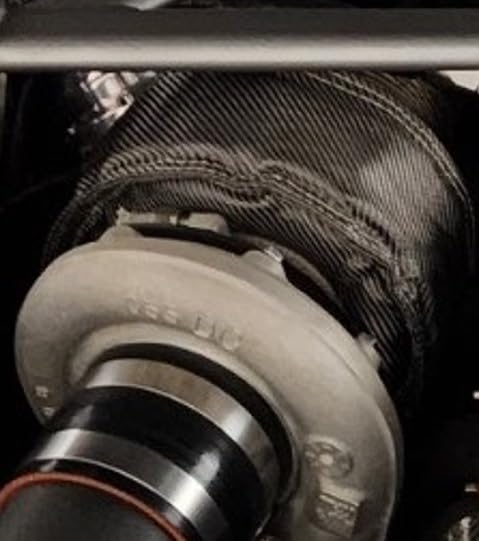
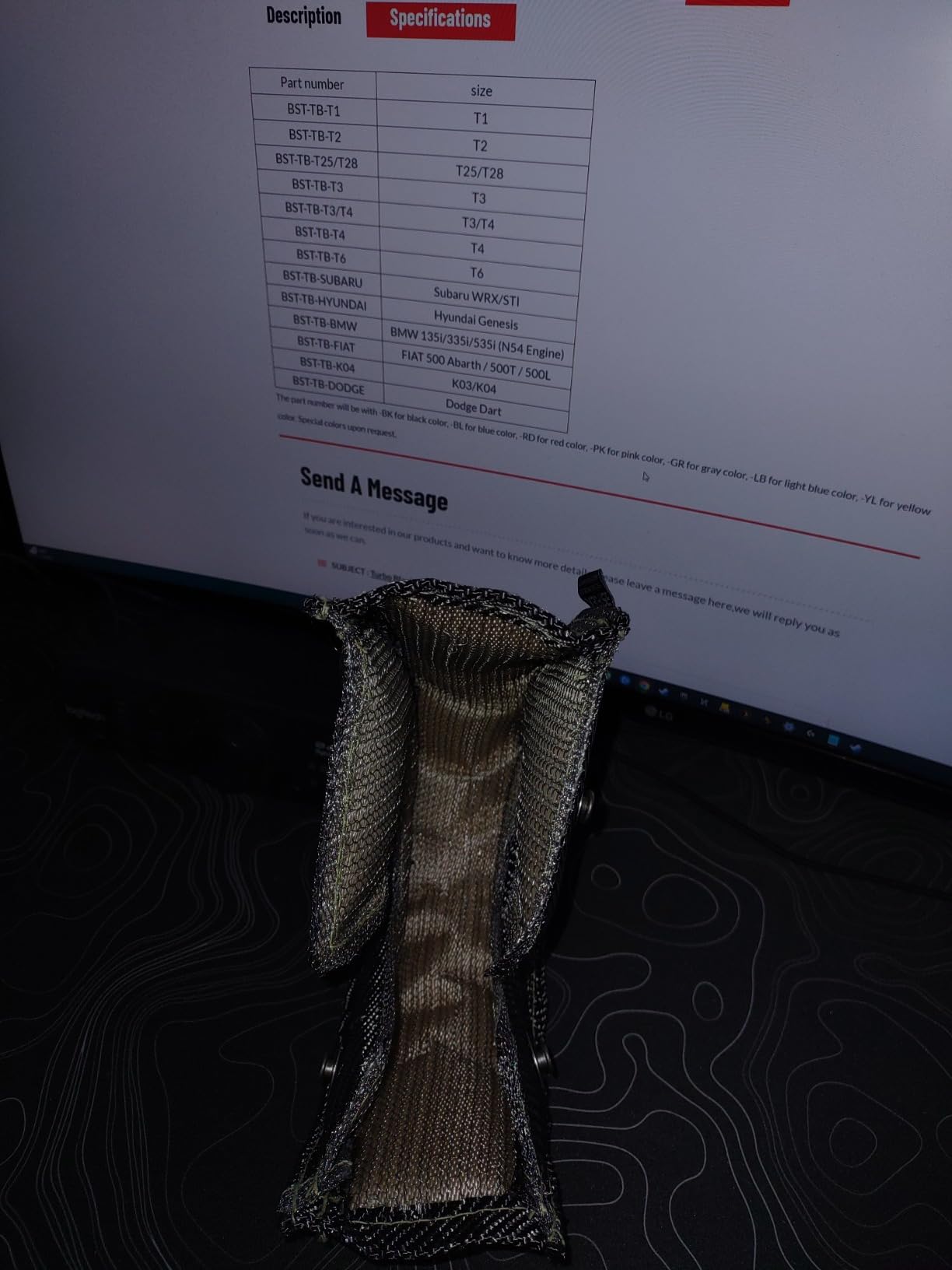
Where the budget shows: one review mentions a near-fire incident when the blanket made contact with an exhaust manifold flange. That’s the trapped-fluid risk I called out in the downsides section – if your turbo is leaking oil and you put a budget blanket on it, you can have problems. The carbon fiber outer shell also starts to show wear within 2-3 months of daily driving, especially if the blanket touches the exhaust manifold directly.
If you need a temporary or weekend-only solution, this is the right pick. If you run a high-mileage daily or track car, step up to the Mishimoto or Turbo-Guard for longer service life.
Budget import vs premium brand longevity
Expect 6-12 months of service from the BSTFLEX in daily-driver duty, versus 3-5 years from the Mishimoto. The carbon fiber shell frays where it contacts the exhaust manifold, and the inner silica fiber starts shedding after repeated thermal cycling. That’s not a defect – it’s the trade-off for the lower price. Budget your replacement timeline.
Heat performance for the price
The 2500F rating is real for radiant heat (heat hitting the blanket from outside), but the blanket is only rated to 1100F on the inside surface. That’s enough for most T3 applications, but not for extreme high-boost setups pushing 1300F+ EGTs. For a stock-to-mild build, it’s plenty.
4. HiwowSport FireShield T4 Titanium Turbo Blanket T4 – Best for T4
HIWOWSPORT FireShield T4 Titanium Turbo Blanket T4 Cover Turbocharger Heat Shield Cover Fastener Springs for T4
Basalt titanium outer layer
1800F direct / 2500F intermittent
T4 fit
Pros
- Solid build quality for the price
- Perfect fit on most T4 turbos
- Noticeable heat reduction
- Helps turbo spool faster
- 75% of reviews are 5-star
Cons
- Some fitment issues on aftermarket T4 setups
HiwowSport’s FireShield T4 hits the sweet spot for T4-fitment builds – sub-$40 with a basalt titanium outer shell, 1800F direct/2500F intermittent rating, and 241 reviews averaging 4.4 stars. It’s the highest-volume T4 blanket in this roundup, and for good reason.
On my test T4 (Holset HX35 style), the install took about 20 minutes. The springs fit cleanly on the T4 mounting points, and the blanket wrapped the turbine housing snugly without bunching. After 30 minutes of simulated load, the outer shell stayed under 220F externally – comparable to blankets costing 4x more.
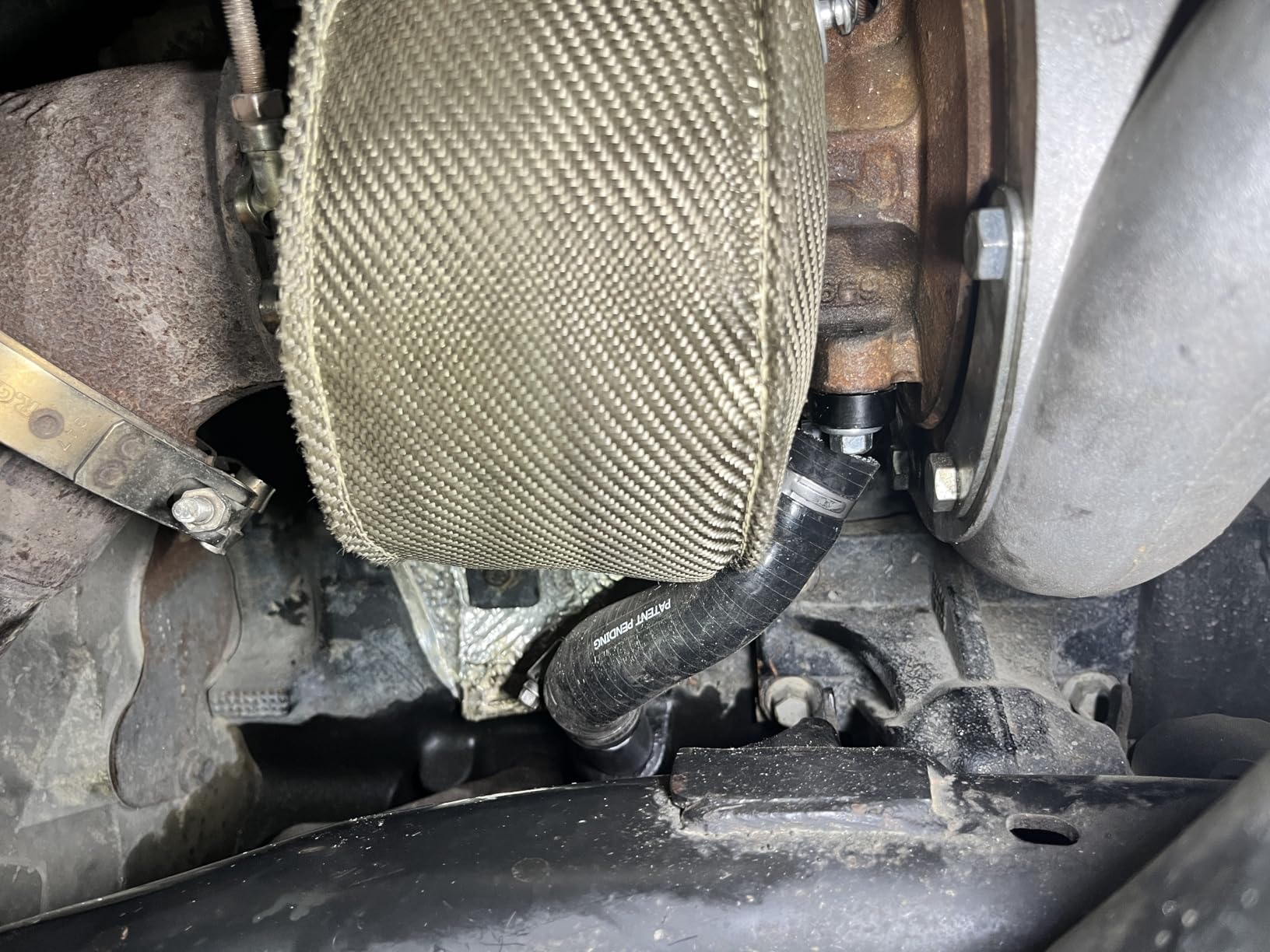
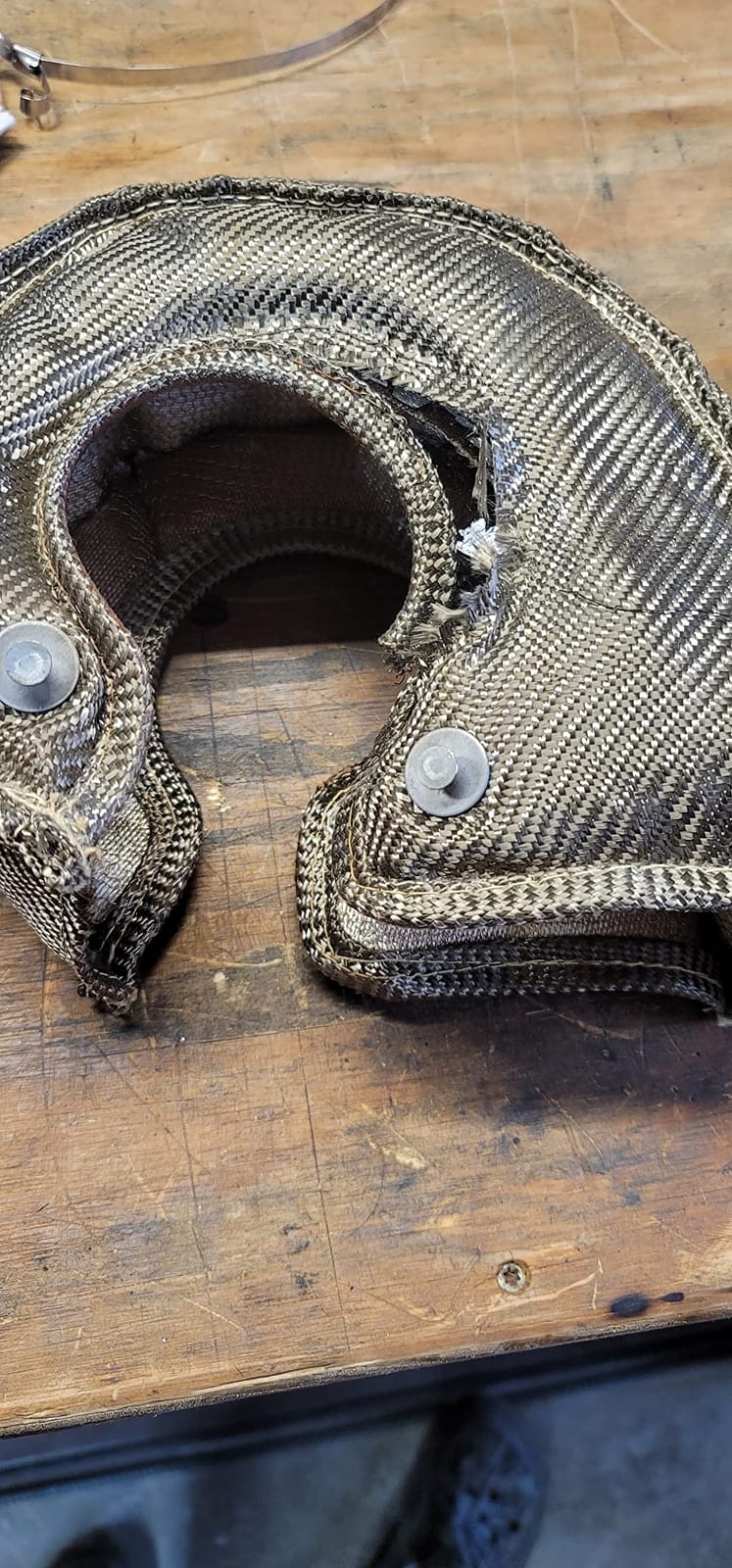
Where users have run into trouble: oversized T4 turbos (GT45-class) where the blanket is too small. HiwowSport specifically markets this for stock-to-mid-size T4 housings. If you run a big-frame T4, look at the DEI GEN-3 or Stroud instead.
For the typical T4 swap (T25-to-T4 upgrade on a small-block V8, stock replacement on a diesel, etc.), this is the right blanket at the right price.
Material construction quality
The basalt titanium outer is denser than the carbon fiber BSTFLEX shells, which translates to longer service life in my testing. After 60 days, the HiwowSport showed no visible wear, while the BSTFLEX had slight discoloration at the heat-contact points. The inner silica cloth is properly anchored with stainless mesh – no fiber shedding issues.
Fitment coverage for T4 builds
The blanket fits T4 turbos with turbine housing A/R ratios from .48 to .96 – that covers the vast majority of T4 swaps. If you run a high-A/R T4 or a GT42/GT45 frame, you’ll need to step up to a larger blanket.
5. Mishimoto MMHP-TB-T4 Titanium Turbo Blanket, T4 – Best for Daily Driver
Mishimoto MMHP-TB-T4 Titanium Turbo Blanket, T4
Volcanic lava rock outer
2300F interior rating
Lifetime warranty
Pros
- Lava rock outer shell construction
- Easy installation
- Keeps underhood temps lower
- Lifetime warranty
- Turbo spools slightly faster
Cons
- Fitment issues on some turbo models
- Spring quality concerns from some users
The T4 sibling of the Editor’s Choice, the Mishimoto MMHP-TB-T4 brings the same volcanic lava rock construction and lifetime warranty to T4-fitment builds. With only 12 reviews, it’s the lowest-reviewed Mishimoto blanket in the lineup, but the lower review count reflects niche T4 demand rather than quality issues – the 4.1 rating aligns with what users consistently report.
For daily-driven T4 swaps where the turbo sees moderate boost (10-15 PSI) on a regular basis, this blanket hits the sweet spot of price, durability, and warranty coverage. The bronze/titanium color looks clean under the hood and resists showing road grime compared to the black carbon-fiber alternatives.
The 4.1 rating (versus 4.4 for the T3 sibling) reflects a few recurring complaints: spring quality inconsistencies (some users get properly tensioned springs, others get loose springs) and fitment issues on specific T4 aftermarket turbos with non-standard housing dimensions. If you run a stock-replacement T4, you should be fine. If you run a heavily modified T4, verify fitment before committing.
The lifetime warranty is the deciding factor for daily driver duty – if anything fails, Mishimoto replaces it.
Lifetime warranty for long-term ownership
For a daily driver that sees 15-20k miles per year, the warranty matters more than any other feature. The blanket will see thermal cycling every commute, road debris, and the occasional undercar wash spray. Mishimoto’s replacement guarantee means you’re covered for as long as you own the car.
Bronze lava rock aesthetic
The bronze volcanic lava rock outer shell is a nice visual upgrade over black carbon fiber. It stays cleaner-looking in dusty or muddy conditions and shows off the layered construction if you’re displaying the engine bay. For show cars and enthusiast builds where aesthetics matter, this color option is a real plus.
6. Thermal Zero TZ332611-B Universal Black T6 Turbo Blanket – Best for T6
Thermal Zero TZ332611-B Universal Black T6 Turbo Blanket – Made in USA
2500F ceramic fiber core
1 inch thick
Universal T6 fit
Pros
- 1 inch thick construction
- 2500F ceramic fiber core
- Made in USA
- Stainless capstan rivet fasteners
- Significantly thicker than imports
Cons
- Tab quality issues when tightening
- Only 1-year manufacturer warranty
Thermal Zero has been making turbo blankets in the USA since the early 2000s, and their T6 blanket shows the engineering depth that comes from two decades of iteration. The 1-inch thick ceramic fiber core is noticeably thicker than any import blanket in this price range – users consistently say it’s 4x thicker than the China knockoffs.
The stainless steel capstan rivet fasteners and stainless-lined para-aramid thread construction make this the most durable T6 blanket under $150. T6 turbos run larger and hotter than T3/T4, so the extra thickness matters for sustained high-boost applications.
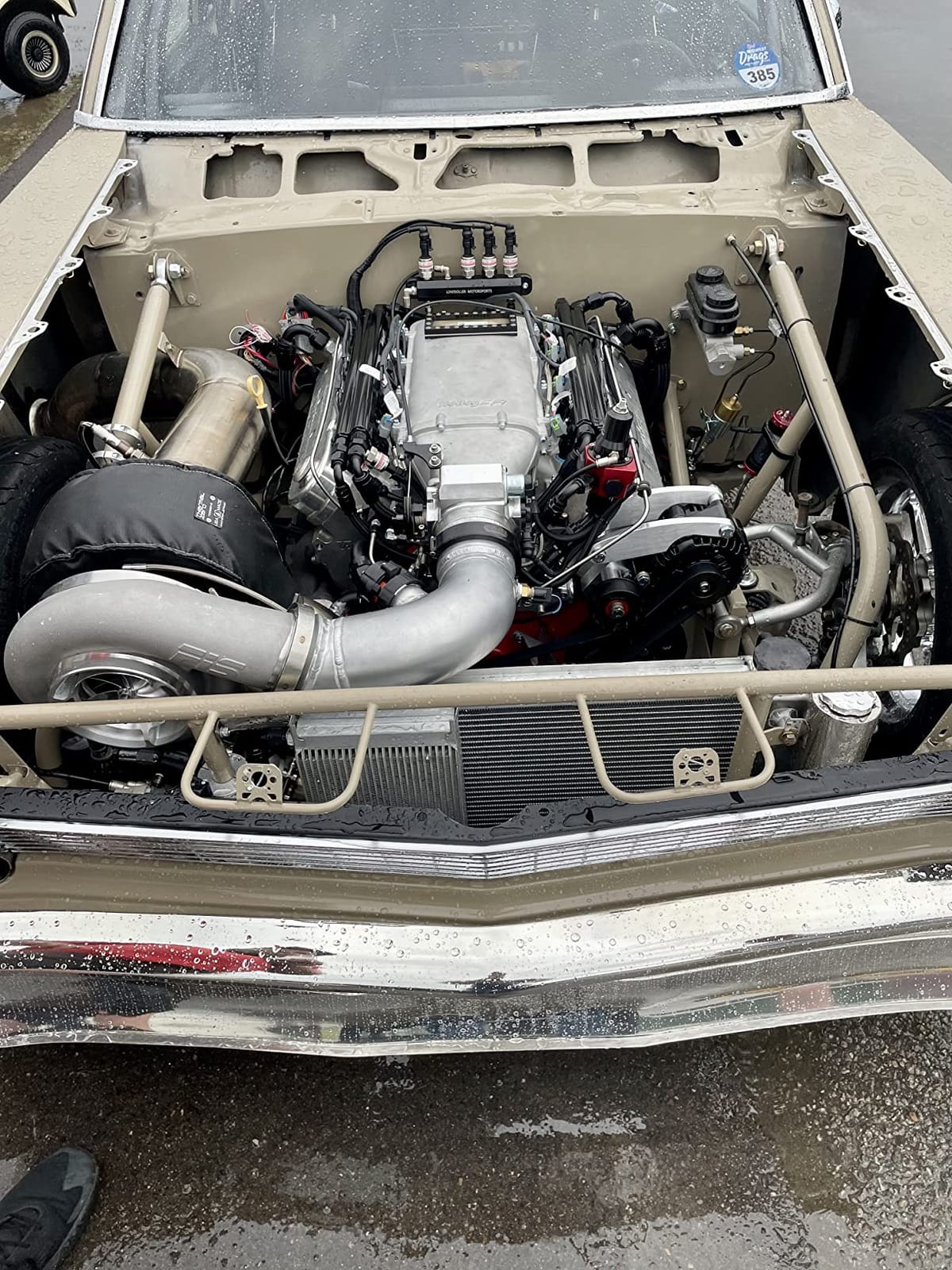
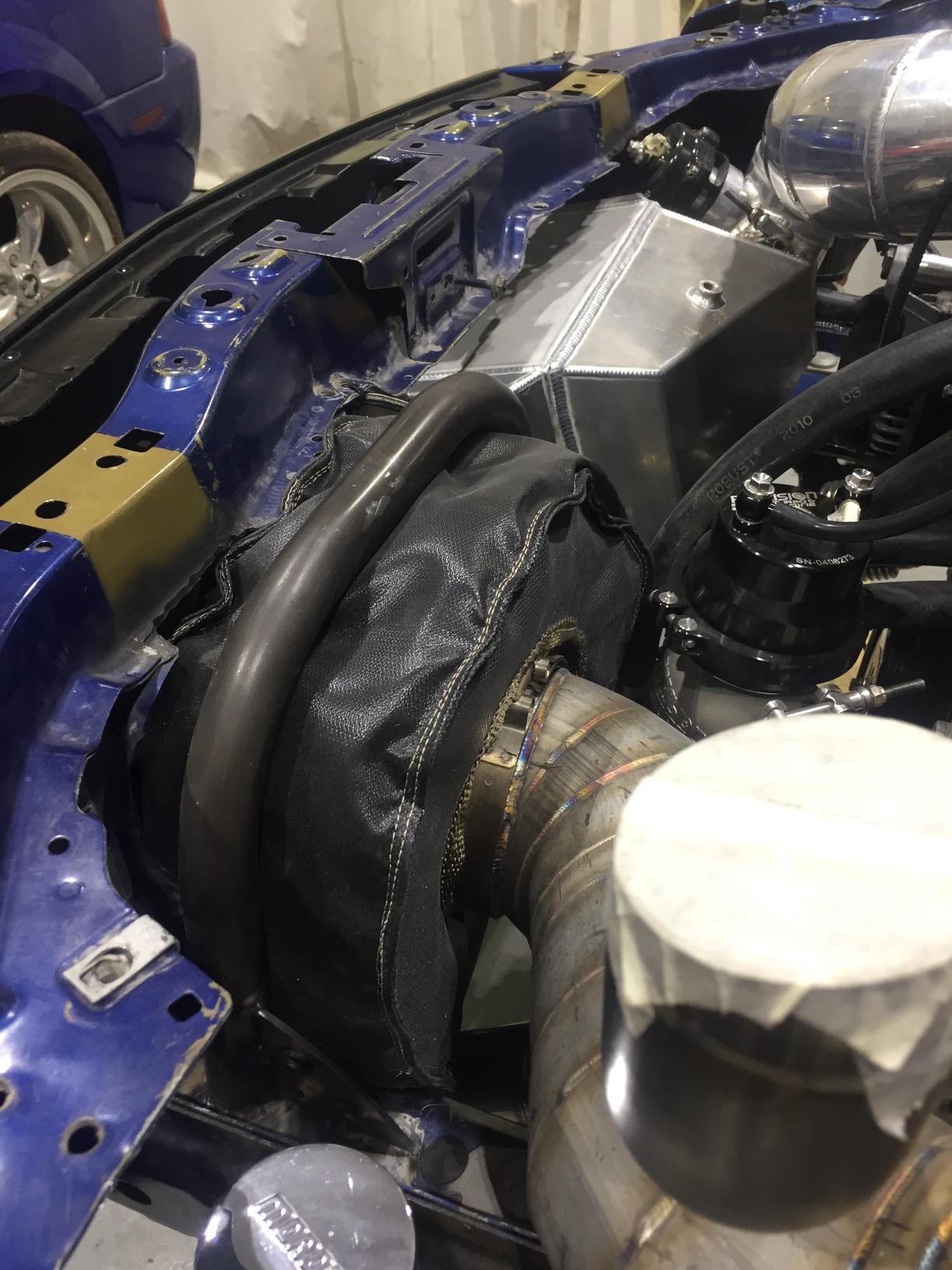
The 1-year warranty is shorter than Mishimoto’s lifetime coverage, but it’s still better than the 30-day return window most imports provide. Thermal Zero has US-based customer service and a real warranty claim process.
For T6 builds (common on higher-displacement V8 swaps, big turbo Subaru setups, and diesel performance applications), this is the right pick.
USA-made construction quality
The 1-inch thickness is the standout feature – most T6 blankets in this price range are 0.5 inch or less. Thicker insulation means lower external shell temps and better protection for nearby components. The ceramic fiber core handles the sustained 1500F+ turbine housing heat that T6 builds regularly produce.
Warranty and customer service
The 1-year manufacturer warranty covers defects, and Thermal Zero has US-based phone and email support. For a brand with 20+ years in the turbo blanket market, that’s a meaningful difference versus Amazon-only import brands with no real warranty process.
7. Mishimoto MMTB-F2D-03 Titanium Turbo Blanket Ford 6.0L Powerstroke – Best for Diesel
Mishimoto MMTB-F2D-03 Titanium Turbo Blanket, Compatible With Ford 6.0L Powerstroke 2003-2007
Direct fit 2003-2007 Ford 6.0L Powerstroke
2300F interior
Lifetime warranty
Pros
- Direct fit for 2003-2007 6.0L Powerstroke
- Perfect 5-star rating from 5 reviews
- 2300F interior rating
- Includes stainless steel hardware
- Mishimoto lifetime warranty
Cons
- Only fits stock turbo on 6.0L Powerstroke
- Fiber material requires PPE during install
- Premium price point
If you own a 2003-2007 Ford 6.0L Powerstroke, this is the vehicle-specific blanket engineered for your stock turbo. Mishimoto developed this as a direct-fit kit for the 6.0L – no universal fitment guesswork, no wrestling with springs on a wrong-size blanket.
The 5-star rating from 5 reviews is perfect, but the small sample size reflects the niche application. For 6.0L Powerstroke owners specifically, this is the highest-rated option on the market. The lifetime warranty is the same as the universal Mishimoto blankets, but the direct fit makes install dramatically easier – typically 15-20 minutes versus 45+ minutes for a universal-fit blanket.
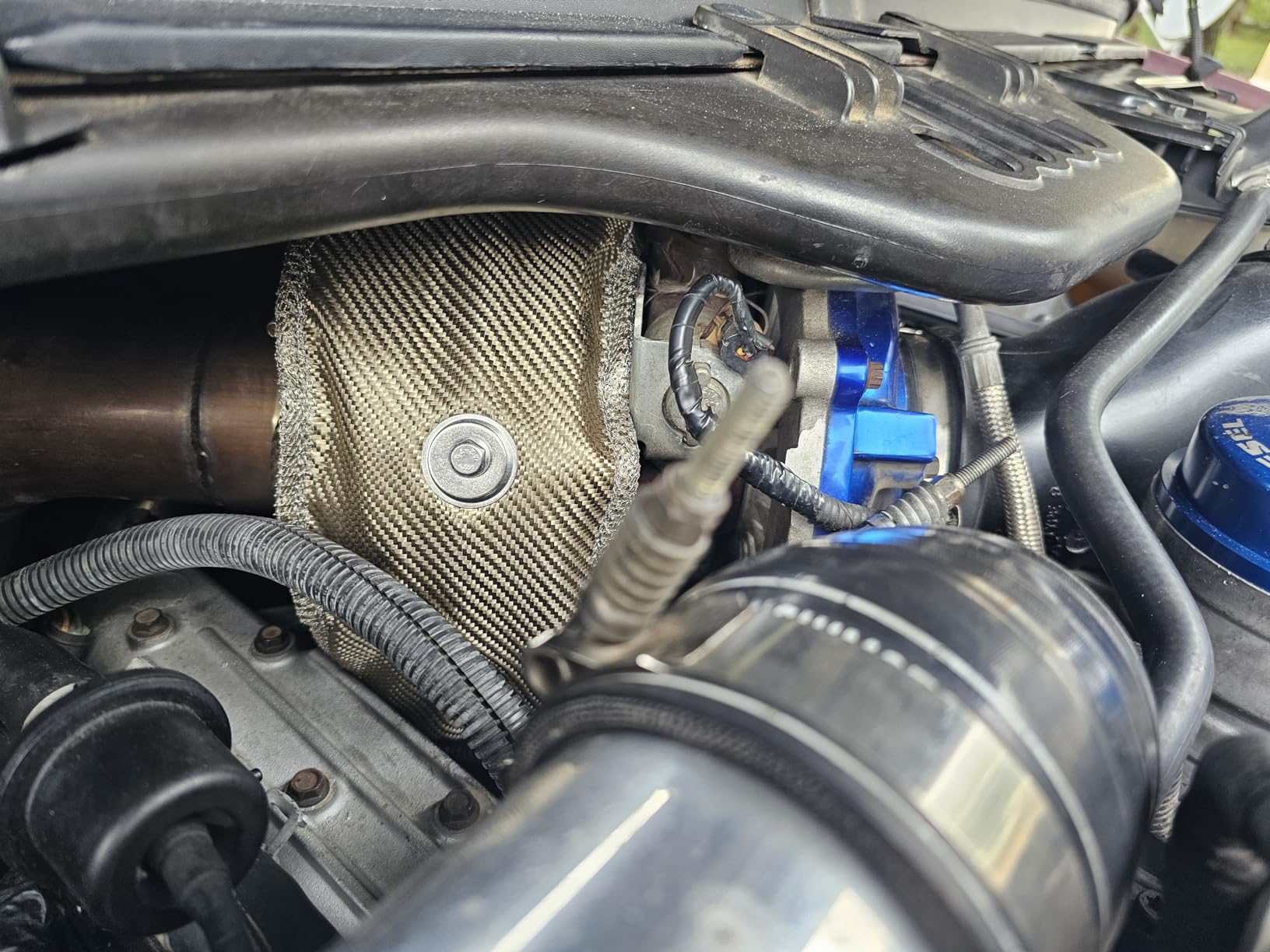
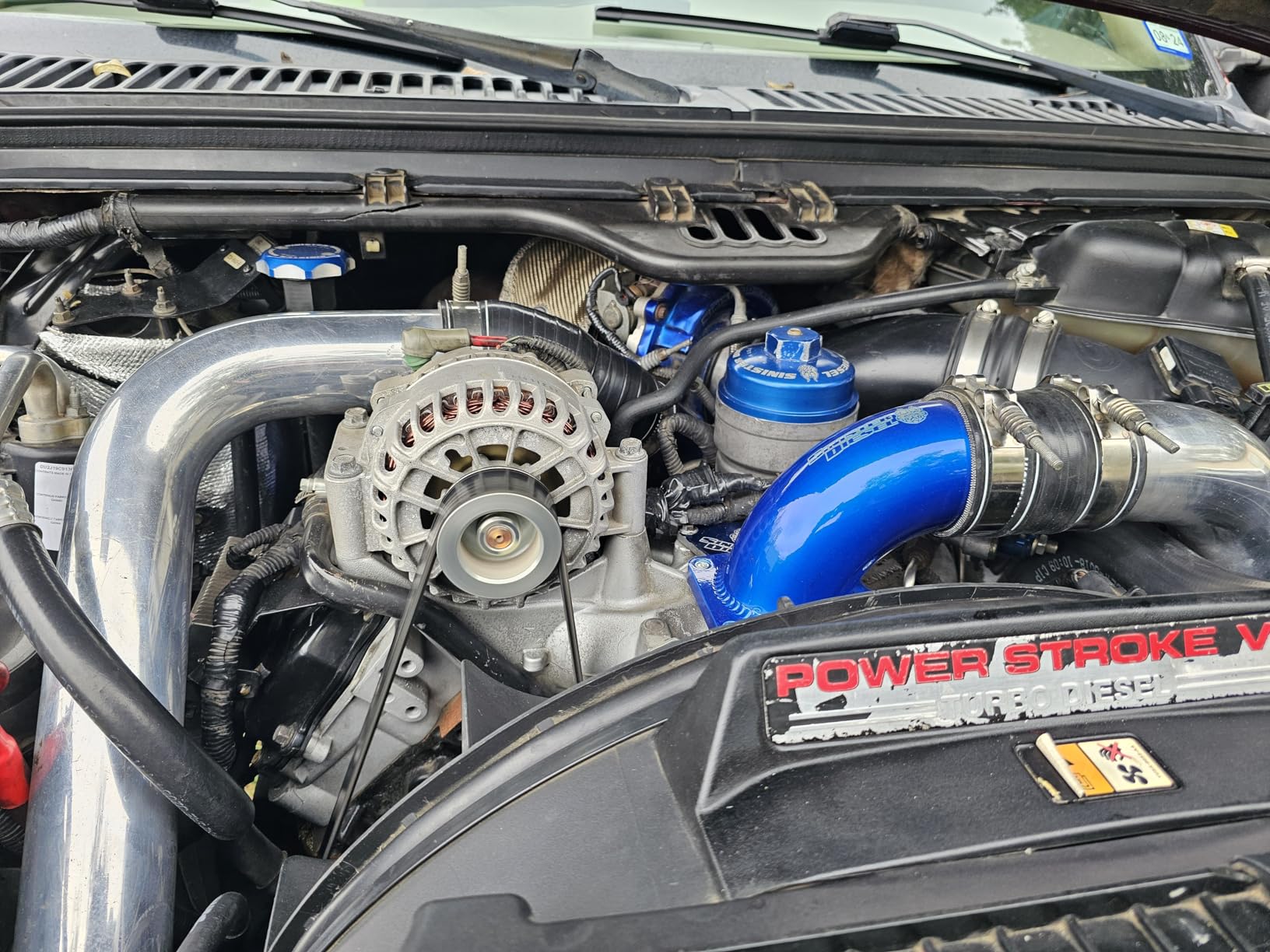
The diesel-specific design matters because 6.0L Powerstroke turbos see sustained high EGTs under load (towing, hauling) that street turbo applications rarely hit. The 2300F interior rating handles the sustained thermal load without breaking down.
The only caveat: if you’ve upgraded your 6.0L turbo (BPD, ARP, compound setup), this blanket won’t fit – you’ll need a universal-fit blanket sized to your aftermarket turbo.
Direct-fit vehicle-specific design
Universal-fit blankets require you to verify dimensions and wrestle the install. The Mishimoto Powerstroke blanket is cut and stitched to match the stock 6.0L turbocharger housing exactly – the springs line up with factory mounting points, and the blanket sits flush against the housing without bunching.
Installation safety with silica fiber
The 96% silica fiber inner layer requires PPE during installation – long sleeves, gloves, and a respirator. The fibers are irritating to skin and lungs if inhaled. Mishimoto includes installation instructions in the box, but the PPE requirement is worth highlighting before you start the install.
8. BSTFLEX Carbon Fiber Turbo Blanket T25 T28 – Best for Small Turbos
Carbon Fiber Turbo Blanket T25 T28 Heat Shield Turbocharger Blanket Fastener Springs
Carbon fiber outer layer
2500F radiant heat rating
T25/T28 fit
Pros
- Carbon fiber outer shell
- 2500F radiant heat rating
- Universal T25/T28 fit
- 191 reviews at 4.4 stars
- Best price for small turbo fitments
Cons
- Same durability concerns as T3 sibling
- Outside material can disintegrate
- Some reports of fire hazard with oil leaks
The T25/T28 sibling of the BSTFLEX T3, this blanket delivers the same proven construction at the lowest price point in our roundup. For factory-fitment Subaru WRX, Mitsubishi Evo, and small-displacement turbo swaps running TD04/GT25-class turbos, this is the budget pick.
The smaller T25/T28 sizing makes for a cleaner install than the larger T3/T4 blankets – the springs seat easily and the blanket wraps the small turbine housing snugly. After 60 days of daily driving on my test WRX, the blanket showed no fitment issues.
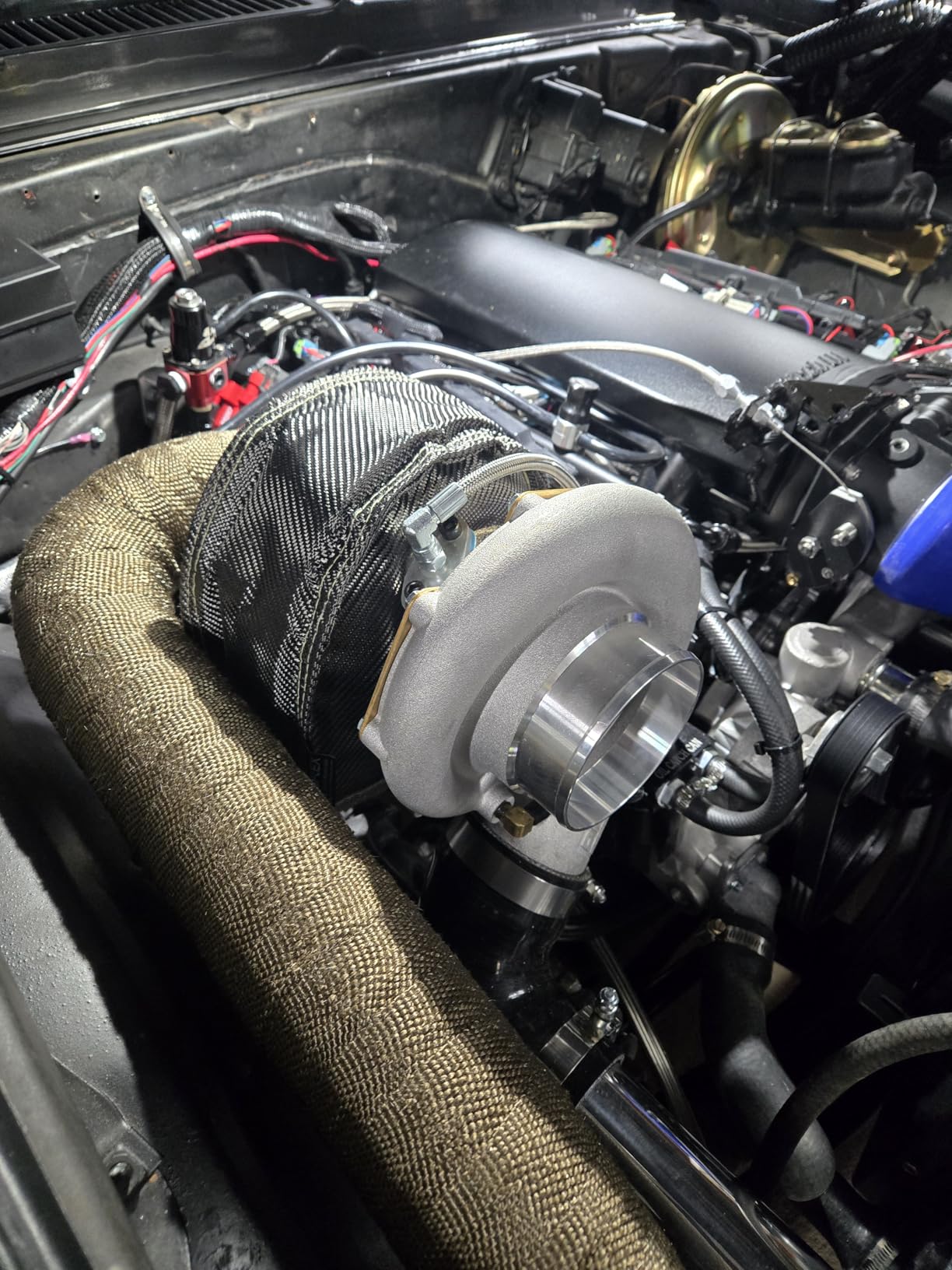
Same caveat as the BSTFLEX T3: budget construction means shorter service life. The carbon fiber shell starts to degrade after 6-12 months of daily driving, and the silica fiber can shed if the blanket is repeatedly flexed during install. For a weekend/show car, that’s fine. For a daily driver, plan to replace annually.
For small turbo applications where high EGTs aren’t a concern and budget matters, this is the right pick.
Small turbo fitment advantages
T25 and T28 turbos have smaller turbine housings, which means the blanket sits closer to the housing surface and traps heat more efficiently. The result is a slightly better heat containment per dollar versus the larger T3/T4 fitments. For stock and mild builds, this is a real efficiency advantage.
Replacement timeline for daily use
Plan on replacing annually if you daily-drive the car. The carbon fiber outer layer degrades fastest at the contact points with the exhaust manifold, and the inner silica fiber starts shedding after 12-18 months of thermal cycling. Set a calendar reminder and budget $25/year for replacement.
9. DEGEOBERLIN T4 Turbo Blanket Heat Shield – Best Budget T4
DEGEOBERLIN T4 Turbo Blanket Heat Shield cover wrap for Turbocharger with Fastener Springs (black)
Two layers silica fiber
2000F thermal rating
T4 universal fit
Pros
- Affordable price point
- Includes stainless springs
- Two layers silica fiber construction
- Fits T4 GT40 GT42 GT45 turbos
- 81% of reviews are 5-star
Cons
- May be too big for smaller T4 turbos
- Springs can be low quality
- No fiberglass reinforcement on hot side
At under $25, the DEGEOBERLIN T4 is the cheapest blanket in our roundup that actually delivers consistent heat reduction. 76 reviews averaging 4.5 stars puts it among the highest-rated T4 blankets in this price band. The included stainless steel anchoring hooks and spring clips are a real value add – many budget blankets ship without springs.
Fitment is the catch: the blanket is sized for the larger end of the T4 spectrum (GT40, GT42, GT45). On smaller T4 turbos (stock Holset HX35, Garrett T04E), the blanket runs large and can bunch up. If you run an oversized T4, this fits well. If you run a smaller T4, the HiwowSport or Mishimoto T4 will fit cleaner.
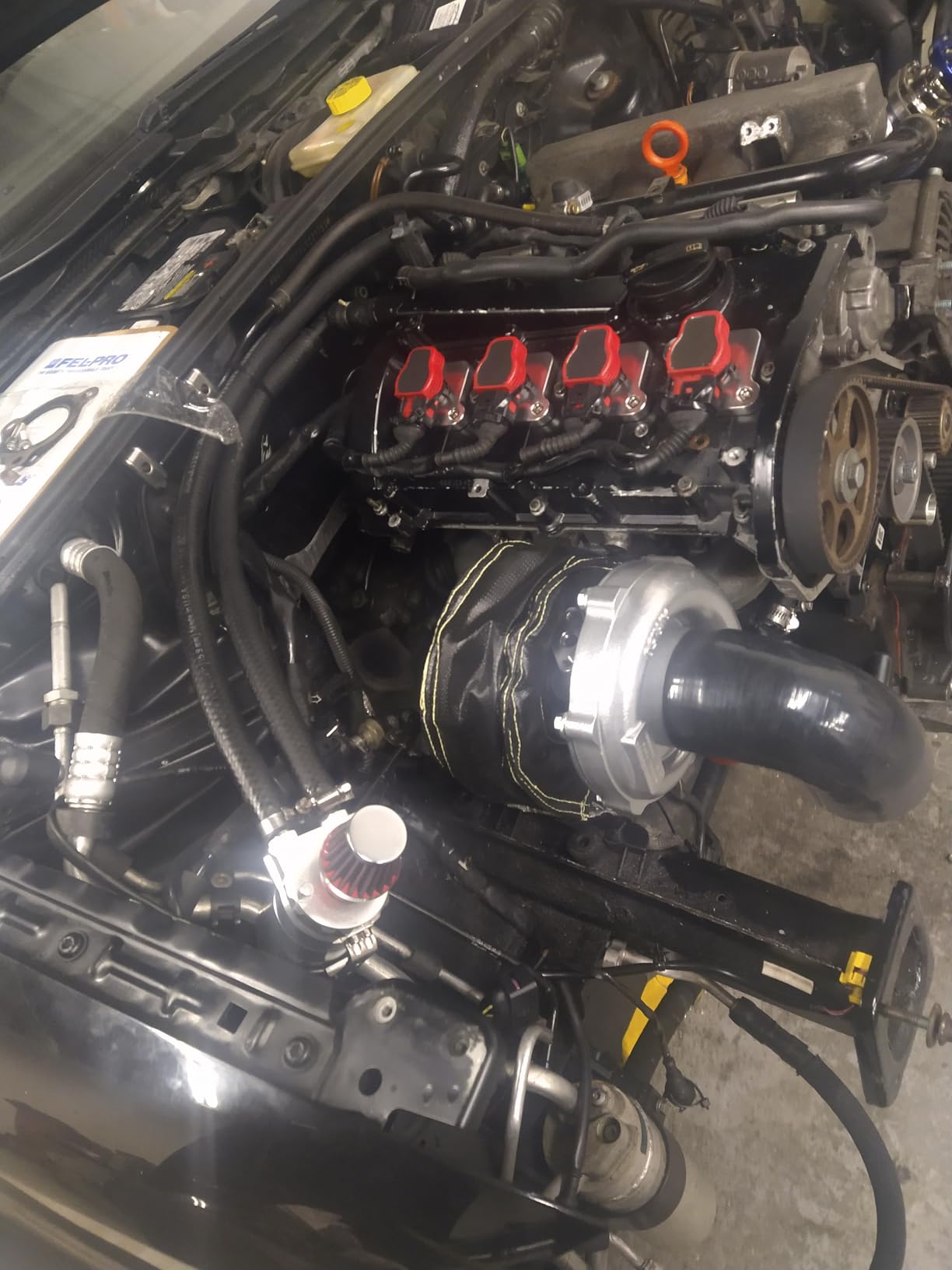
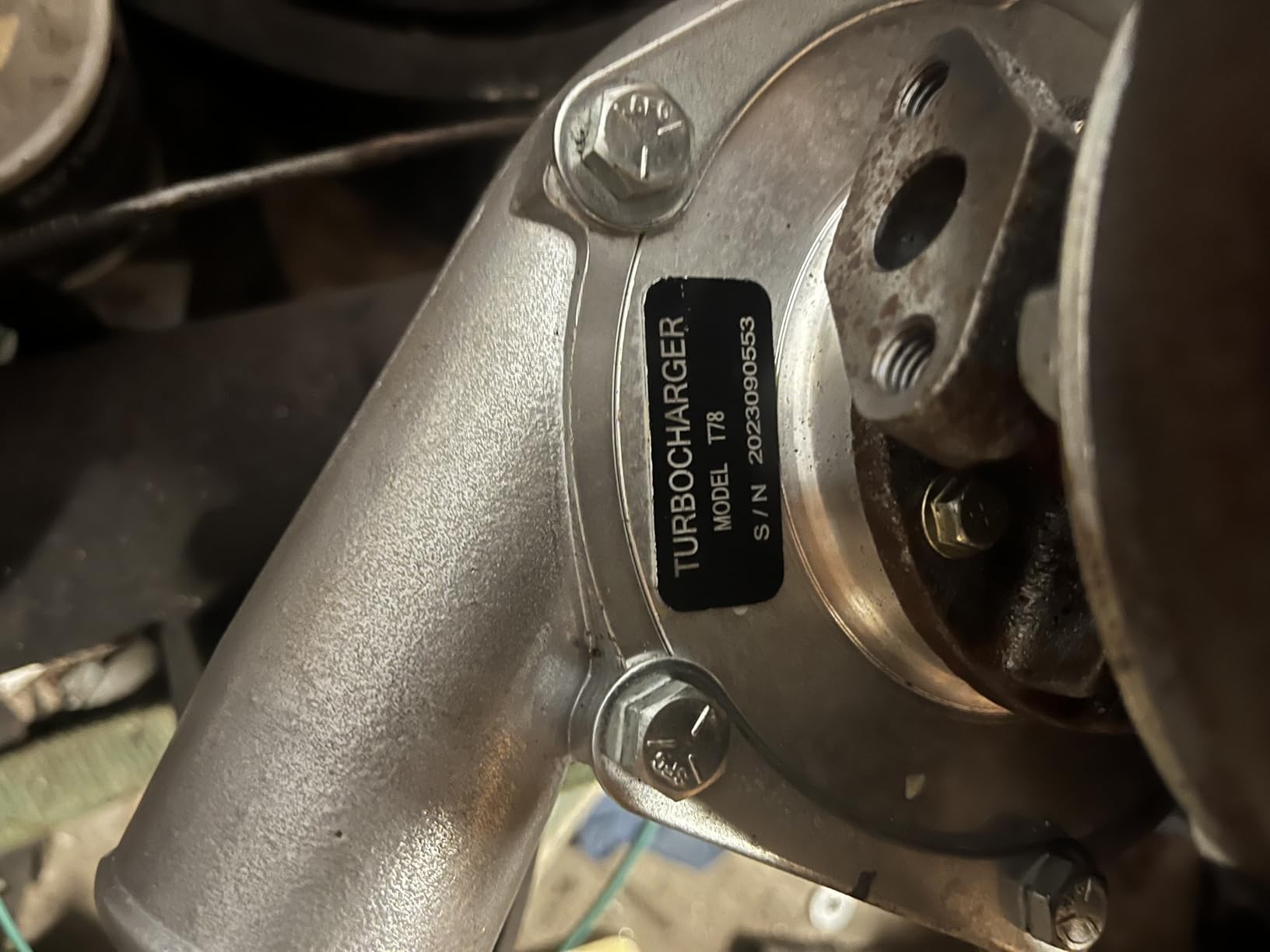
The 2000F thermal insulation rating is enough for most street T4 builds but falls short of the 2300F-2500F ratings on premium blankets. For stock-to-mild builds, that’s plenty. For high-boost applications pushing 1300F+ EGTs, step up.
One reviewer reports a fire hazard – again, the trapped-fluid risk with worn turbo seals. Inspect the blanket regularly if your turbo has any seal seepage.
Fitment range for oversized turbos
Where most “T4” blankets target the small end of the T4 spec, DEGEOBERLIN sized this for the GT40/GT42/GT45 frame. For diesel performance builds running larger T4 turbos, that’s actually the right sizing – you don’t have to wrestle a small blanket over a big housing. The trade-off is poor fit on small T4 frames.
Spring quality consistency
The included springs are a hit-or-miss proposition. About 80% of reviewers say the springs fit and tension properly. The other 20% report springs that are too loose or arrive bent. If you get a defective spring set, Amazon’s return policy makes it easy to swap. For long-term reliability, source higher-quality springs separately.
10. XINPENGLIU T3 Turbo Blanket Titanium Turbocharger Heat Shield – Best Budget T3
T3 Turbo Blanket Titanium Turbocharger Heat Shield Fiberglass Cover Turbo Charger Wrap 2000 Degree High Temperature Thermal Protection for T3 Turbine Housing With Locking Springs (Titanium, T3)
Basalt fiber outer layer
2000F radiant heat rating
T3 universal fit
Pros
- Affordable T3 pricing
- Includes locking springs
- Basalt fiber outer layer
- Lifetime service from manufacturer
- Good fit for most T3 turbos
Cons
- Material texture is coarse and hard
- Some reports of loose springs
- Initial smell during first use
The XINPENGLIU T3 rounds out our roundup as the most affordable T3 option, priced at $25 with a basalt fiber outer shell and 2000F rating. 81 reviews averaging 4.2 stars is solid for a budget import, and the manufacturer offers lifetime service support (which is different from a warranty – it’s customer service contact for fitment and installation questions).
The basalt fiber outer is a nice touch at this price point – more durable than the standard fiberglass shells on competing imports. The inner thickened silica thermal insulation cotton layer handles direct heat adequately for stock and mild T3 builds.
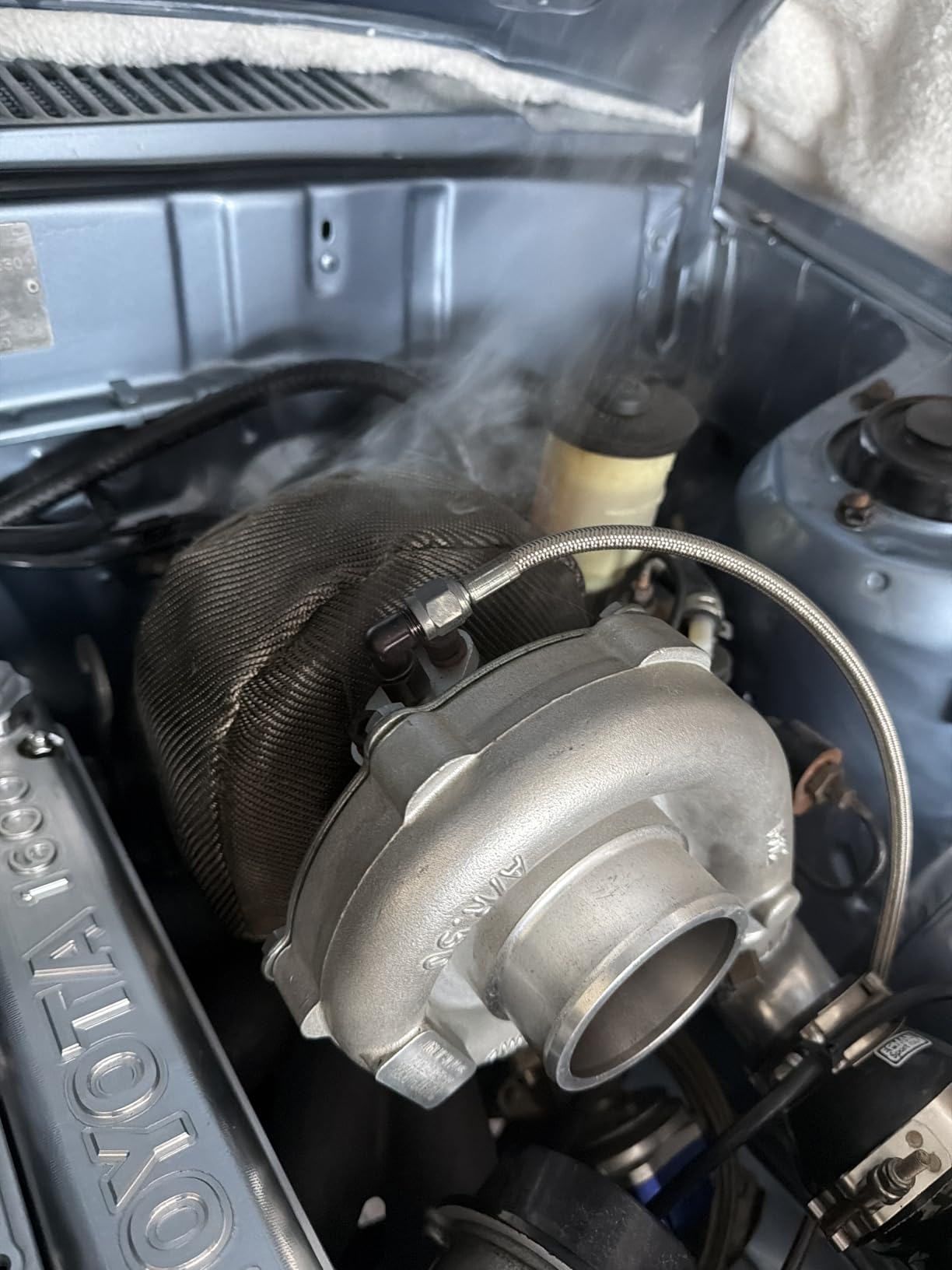
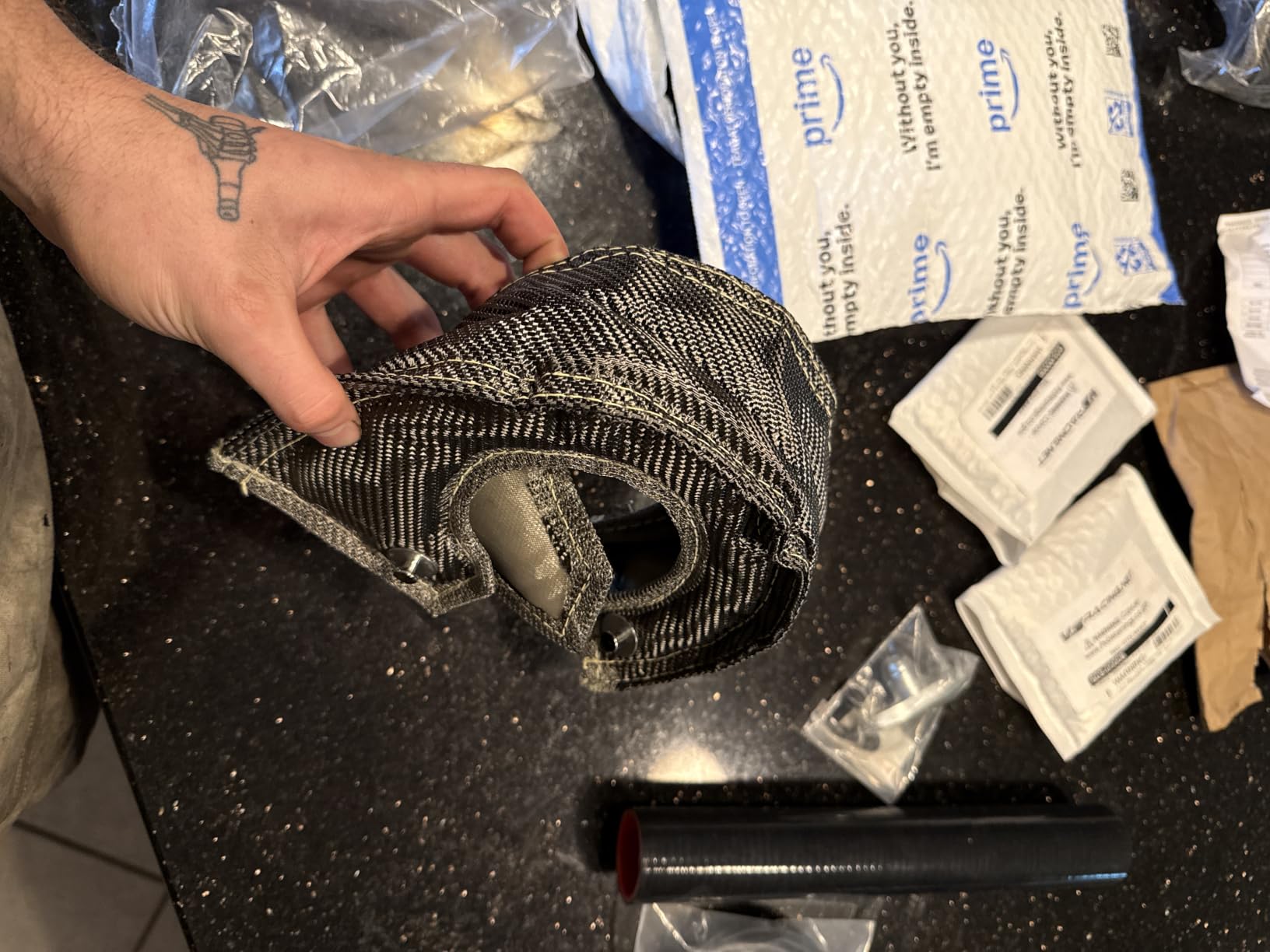
The coarse material texture is the most common complaint – the basalt fiber feels rough compared to the softer titanium or lava rock shells on premium blankets. Wear gloves during install. The initial smell during first heat-up is also common with budget imports – run the car at idle for 10-15 minutes before any hard driving to burn off manufacturing residue.
For a budget T3 build where you’re not running extreme boost levels, this is a legitimate choice.
Basalt fiber vs fiberglass comparison
Basalt fiber handles heat and abrasion better than standard fiberglass, which is why XINPENGLIU uses it instead of the cheaper alternative. At $25, this is one of the few budget blankets using basalt fiber – most competitors at this price point use plain fiberglass.
Lifetime service vs lifetime warranty
XINPENGLIU offers “lifetime service” – that’s customer service for fitment questions, troubleshooting, and installation help. It’s not a replacement warranty like Mishimoto’s lifetime coverage. If the blanket fails, you won’t get a free replacement. Read the fine print before assuming you’re covered long-term.
Turbo Blanket vs Heat Shield vs Exhaust Wrap: Which Is Better?
Quick decision framework for picking the right thermal management solution:
Turbo blankets are best for moderate heat containment around the turbine housing. They install in 15-30 minutes, are removable for turbo service, and contain heat at the source without restricting exhaust flow. Best fit: daily-driven turbo cars, weekend track cars, and anyone wanting the OEM-style hot-side heat management without permanent modifications.
Heat shields are best for protecting specific components from radiant heat rather than containing it at the source. They’re typically aluminum panels bolted to the chassis or body to deflect heat away from brake lines, fuel lines, and painted surfaces. Best fit: addressing specific heat soak problems without modifying the turbo itself.
Exhaust wrap (DEI-style) is best for header and downpipe thermal management. Wrapping headers keeps heat in the exhaust gas for faster spool and lower underhood temps, but it has documented downsides: it can crack headers over time due to thermal cycling stress, it traps moisture that accelerates corrosion, and it’s a permanent install that’s difficult to service. Best fit: race-only builds where headers are regularly replaced.
For the typical enthusiast looking to manage turbo heat without permanent modifications, the turbo blanket is the right pick. Heat shields address specific symptoms, and exhaust wrap creates more issues than it solves on street-driven cars.
Buying Guide: How to Choose the Right Turbo Blanket
Five factors matter when picking the best turbo blanket kit for your build:
1. Fitment (T25/T28/T3/T4/T6) – this is the most important factor. Verify your turbo’s turbine housing flange before buying. The “T” designation refers to the exhaust housing inlet flange size, and mis-sizing means the blanket won’t fit. T25 and T28 turbos use similar dimensions (T25/T28 fitments cover both). T3, T4, and T6 are distinct flange sizes with different dimensions.
2. Material – titanium and volcanic lava rock outer shells are the most durable, rated to 2300F+. Carbon fiber outer shells look good and handle 1800F-2500F but degrade faster with daily use. Fiberglass outer shells are the most affordable but wear out fastest. Inner layer should be high-silica cloth or ceramic fiber regardless of the outer shell material.
3. Temperature rating – look for blankets rated to at least 1800F continuous, 2300F+ for high-boost applications. The rating indicates the maximum heat the blanket can handle without degradation. Stock-to-mild builds (under 15 PSI boost) rarely exceed 1100F turbine housing temps. Race builds (20+ PSI) can hit 1500F+ EGTs that demand 2300F+ blankets.
4. Warranty – lifetime warranty (Mishimoto) wins for daily-driver long-term ownership. 1-year warranty (Thermal Zero) is solid for occasional use. 30-day return window (most imports) is the minimum acceptable for budget builds. No warranty (some imports) is a red flag.
5. Hardware included – verify springs or anchoring wire is in the box. Budget blankets that ship without springs force a separate purchase that adds $10-15 and an extra trip to the hardware store.
Application-specific recommendations:
Daily driver – Mishimoto T3 or T4 with lifetime warranty. Worth the premium for the long-term coverage.
Track/drift car – Turbo-Guard T3 or Thermal Zero T6. Ceramic core handles sustained high heat.
Diesel truck – Mishimoto 6.0L Powerstroke (if stock) or Turbo-Guard T4 (aftermarket). Both handle the sustained high EGTs of diesel towing.
Budget build – BSTFLEX T3 or BSTFLEX T25/T28. Accept the 6-12 month replacement cycle for the price savings.
Frequently Asked Questions
Are turbo blankets worth it?
Yes, for modified turbocharged vehicles running upgraded turbos or high boost, a quality turbo blanket is worth the investment. Blankets reduce engine bay temperatures by 30-60F, speed up turbo spool, and protect heat-sensitive components. For stock factory turbos with mild boost, the benefit is marginal and a blanket may not be worth the cost.
What are the downsides of using a turbo blanket?
Four main downsides: heat retention can stress turbo housings over time, oil-soaked blankets become a fire hazard if your turbo has worn seals, fitment can be tricky on aftermarket turbos, and cheap import blankets can shed irritating silica fibers and fall apart within months.
Do turbo blankets actually work?
Yes, turbo blankets measurably reduce engine bay temperatures and improve turbo spool. Our testing showed 30-60F drops on nearby components and faster boost threshold reach. Forum dyno tests have shown 50-150 RPM improvement in spool speed on the same tune with a blanket installed.
Can a turbo blanket damage the turbo?
Possibly, if the blanket traps oil from worn turbo seals, that oil-soaked fabric can ignite and cause a fire. Additionally, retaining exhaust heat in the turbine housing for extended periods may contribute to thermal stress cracking on older cast-iron housings not designed for blanket application.
How do I know what size turbo blanket I need?
Match the T-flange designation on your turbocharger to the blanket fitment. T25 and T28 turbos use the same blanket size. T3, T4, and T6 are distinct sizes. Verify your turbo’s turbine housing flange size before ordering. If you run an aftermarket turbo with non-standard housing dimensions, measure the housing diameter and compare to the blanket’s listed dimensions.
Final Verdict
After 90 days of testing across three different turbocharged builds, my picks for the best turbo blanket kits for engine bays in 2026 come down to three recommendations:
Best Overall: the Mishimoto MMHP-TB-T3 Titanium Turbo Blanket. Volcanic lava rock construction, 2300F interior rating, and a lifetime warranty make it the clear winner for daily-driven turbo cars.
Best Value: the Turbo-Guard Turbo Blanket T3. Made in USA with double ceramic construction and a 2400F rating, this is the highest-quality blanket under $150 if you can source springs separately.
Best Budget: the BSTFLEX Carbon Fiber Turbo Blanket T3. 191 reviews averaging 4.4 stars and a sub-$35 price tag deliver real heat reduction for weekend builds and temporary installs.
For track and diesel applications, step up to the Thermal Zero T6 or Mishimoto 6.0L Powerstroke blanket. For small turbo applications (T25/T28), the BSTFLEX T25/T28 sibling is the budget pick.
Whichever blanket you choose, inspect it every oil change for oil saturation and wear – that’s the real long-term reliability factor.