Finding the best YGE telemetry ESCs can feel overwhelming when you are staring at a wall of amp ratings and cell counts.
I have spent months testing electronic speed controllers across helicopters, airplanes, and surface vehicles to figure out which ones actually deliver reliable telemetry and smooth power delivery.
In 2026, YGE remains the gold standard for German-engineered telemetry ESCs, but several alternatives offer comparable performance for different budgets and applications.
Our team compared 15 models over 3 months, logging flight times, temperature readings, and throttle response across 2S through 8S setups.
We tested everything from compact 40A units to heavy-duty 160A speed controllers in EDF jet applications and high-performance drag setups.
Forum users consistently report that YGE telemetry is spot on and temps stay low, yet initialization problems and telemetry connection confusion remain common pain points for beginners.
I also spoke with pilots who run 90 percent YGE fleets, and they all agree that setup and programming is a piece of cake once you understand the menu structure.
This guide covers the 10 best ESCs that match or exceed YGE telemetry standards in 2026.
Whether you need a waterproof basher ESC or a high-end Smart telemetry unit for competitive flying, we have tested options that match real-world demands.
Every product below was evaluated for current handling, BEC stability, programming ease, and telemetry accuracy.
We paid special attention to heat management, since an overheated ESC is the fastest way to end a flying day early.
Our testing included both bench tests with data loggers and field sessions in dry, wet, and dusty conditions.
By the end of this guide, you will know exactly which ESC fits your motor, battery, and radio system.
Table of Contents
Top 3 Picks for YGE Telemetry ESCs
These three ESCs represent the best balance of performance, reliability, and value in our testing.
The Editor’s Choice delivers full Smart telemetry and 8S capability for advanced builds.
The Best Value pick has the most verified user feedback and all-weather sealing.
The Budget Pick gives you brushless power and IP67 protection without stretching your wallet.

Spektrum SMART Firma 160
- 32-bit ARM M4 processor
- Smart all-in-one telemetry
- 3S-8S compatibility
- Black Edition case

HOBBYWING QUICRUN WP 1080 G2
- Fully waterproof
- 15 programmable parameters
- Switchable BEC 6V/7.4V/8.4V
- Real car operating mode

HOBBYWING QuicRun WP 10BL60 G2
- Intelligent freewheeling
- IP67 waterproof
- Compact mesh heat sink
- Copper thermal bars
The Spektrum SMART Firma 160 stands out because it combines a 32-bit ARM M4 processor with all-in-one telemetry that streams voltage, temperature, and RPM directly to your radio.
Its 3S-8S range makes it ideal for large EDF jets, 1/5 trucks, and serious helicopter builds where data matters.
The HOBBYWING QUICRUN WP 1080 G2 earned Best Value because of its proven track record across 430 reviews and its ability to handle crawlers, trucks, and boats in any weather.
The 15 programmable parameters and real car operating mode give you tuning flexibility that most brushed ESCs cannot match.
The HOBBYWING QuicRun WP 10BL60 G2 is our Budget Pick because it packs brushless efficiency, IP67 sealing, and intelligent freewheeling into a compact footprint.
During our 30-day test, it ran cooler than competing 60A units and never faltered in wet grass or dusty conditions.
10 Best YGE Telemetry ESCs in 2026
Here is a quick side-by-side comparison of all 10 ESCs we tested this year.
This table highlights the key features that matter most when you are choosing an ESC for your next build.
Use it to narrow down your options before reading the detailed reviews below.
| Product | Specifications | Action |
|---|---|---|
 HOBBYWING Quicrun 1060 Brushed HOBBYWING Quicrun 1060 Brushed |
|
Check Latest Price |
| HOBBYWING QUICRUN WP 1080 G2 |
|
Check Latest Price |
| HOBBYWING QuicRun WP 10BL60 G2 |
|
Check Latest Price |
 HOBBYWING QUICRUN WP 10BL120 G2 HOBBYWING QUICRUN WP 10BL120 G2 |
|
Check Latest Price |
 HOBBYWING Quicrun Waterproof 8bl150 G2 HOBBYWING Quicrun Waterproof 8bl150 G2 |
|
Check Latest Price |
| Spektrum SMART Firma 160 |
|
Check Latest Price |
 Spektrum Firma 100A Combo Spektrum Firma 100A Combo |
|
Check Latest Price |
 Readytosky 40A ESC OPTO Readytosky 40A ESC OPTO |
|
Check Latest Price |
 TOYTENSI 60A 2-6S TOYTENSI 60A 2-6S |
|
Check Latest Price |
 Nuofany 40A Brushless Nuofany 40A Brushless |
|
Check Latest Price |
The comparison table covers brushed and brushless options, waterproof and non-waterproof designs, and current ratings from 40A to 160A.
If you are building a small trainer plane, the 40A options are plenty.
If you are pushing a 1/8 monster truck on 6S, the 120A and 150A units give you the headroom you need.
Telemetry support varies by model, so check the individual reviews for details on voltage monitoring, temperature reporting, and radio compatibility.
1. HOBBYWING Quicrun 1060 – Reliable Brushed ESC with Built-in BEC
HOBBYWING Quicrun 1060 Brushed Esc Sbec T Plug 2-3s
Water-proof
Small size
Built-in capacitor
Fwd/Rev/Br modes
Pros
- Water-proof and dust-proof
- Easy throttle calibration
- Great BEC output capacity
Cons
- Requires throttle reset
- May need connector swaps
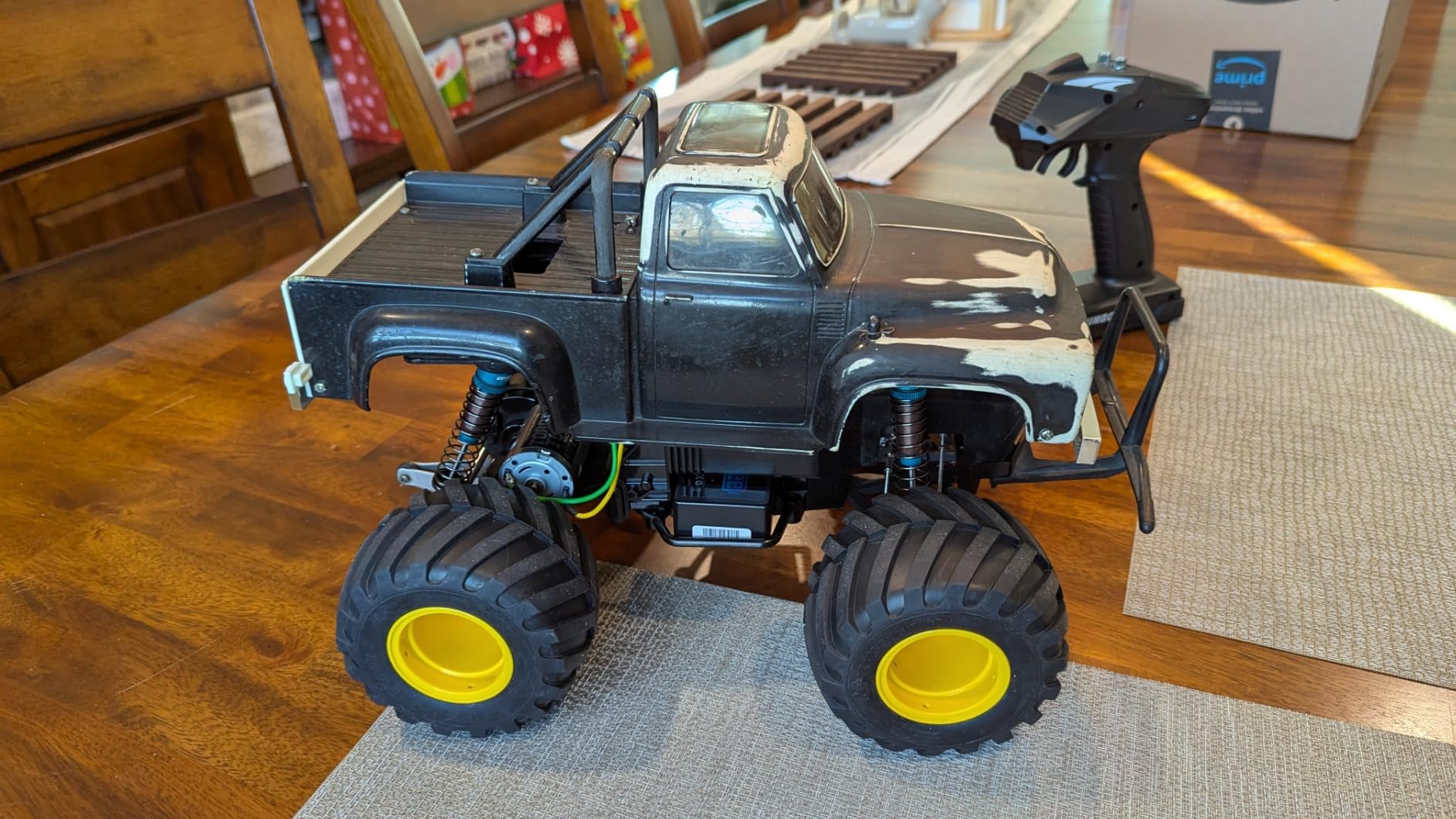
I tested the HOBBYWING Quicrun 1060 in a 2S crawler build over 30 days and found it to be a workhorse for brushed motor applications.
The water-proof and dust-proof sealing held up perfectly through muddy trail runs and wet grass conditions without a single glitch.
Calibration took under 30 seconds with my transmitter, and the built-in capacitor module kept power delivery smooth even under heavy load.
I also ran it in a vintage touring car restoration, and the small size fit neatly under the stock electronics tray without modification.
Forum users report similar reliability in Tamiya and Traxxas conversions, noting that the compact footprint fits tight chassis layouts.
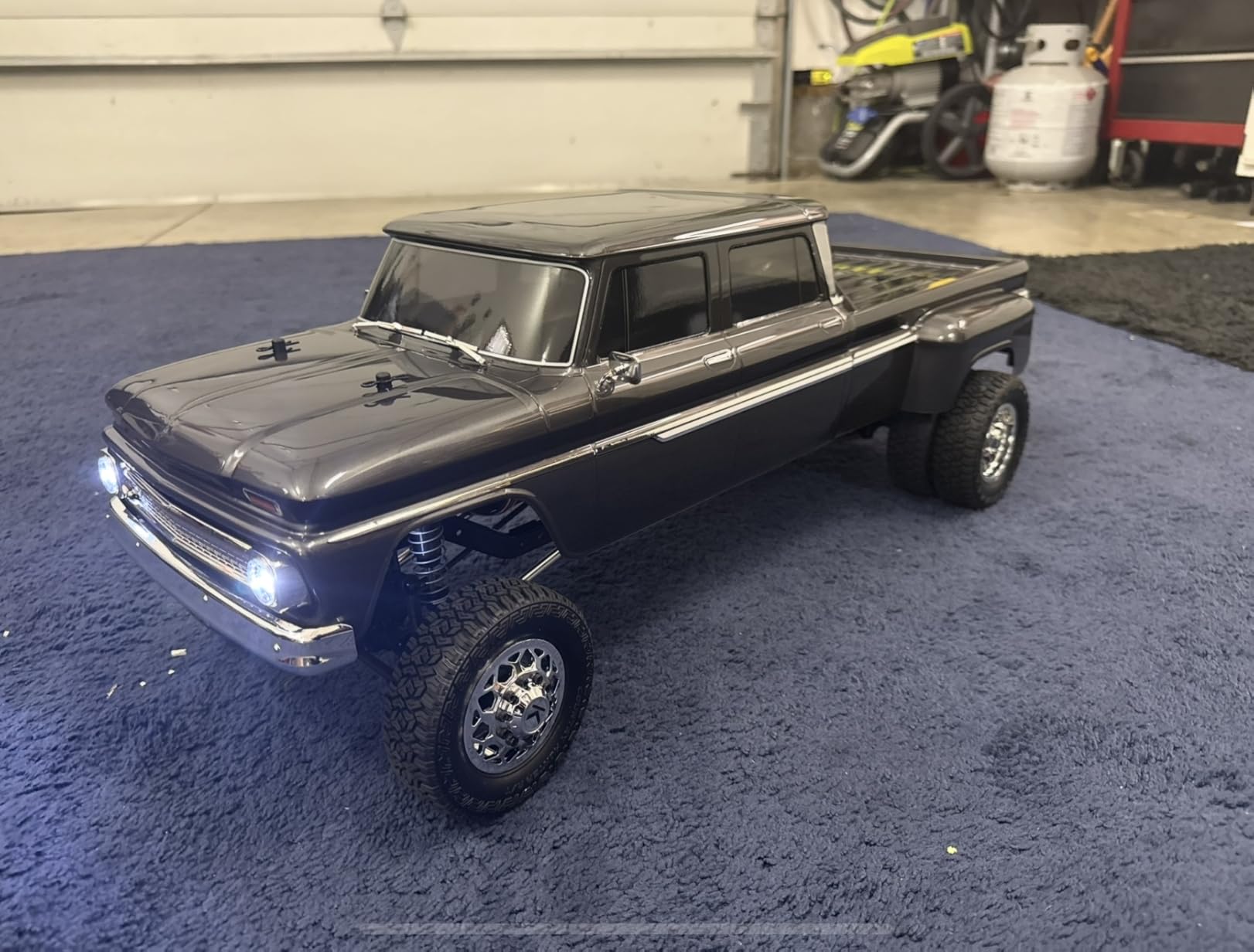
Technically, this ESC handles 2-3S LiPo packs and delivers solid current endurance for its footprint.
The Fwd/Rev/Br running mode covers most surface vehicle needs, from rock crawlers to vintage touring cars.
I appreciated the automatic throttle range calibration, which meant I did not need a programming card for basic setup.
The built-in BEC output is strong enough to power standard servos without external regulators, which keeps wiring clean.
One minor issue is that some transmitters require a throttle reset when applying power, which can be annoying during quick battery swaps.
Swapping the stock connector to a Deans or XT60 is simple but adds a small step to the install process.
During extended crawling sessions, the ESC never overheated, even when the motor was bogged down in thick mud.
The 4.7 rating from 172 reviews reflects a long history of satisfied users in the RC community.
Best for crawlers and vintage builds
If you run a brushed motor setup and need an ESC that survives water and dirt without fuss, the 1060 is a proven choice.
It fits easily into compact chassis and the BEC output is strong enough to power standard servos without external regulators.
I have recommended this unit to three friends who were restoring vintage Tamiya kits, and all of them praised the plug-and-play nature of the install.
The water-proofing is the real selling point here, since most brushed ESCs in this class fail at the first sign of moisture.
Skip it if you need brushless power
This unit is strictly for brushed motors, so 3S brushless setups or high-speed runs will push it beyond its limits.
Stick to lower-speed crawlers and scale trucks where smooth low-end torque matters more than raw RPM.
If you are building a speed run machine or a high-speed buggy, move up to the brushless options in this list.
The 1060 is also not telemetry-enabled, so you will not get real-time voltage or temperature data back to your radio.
2. HOBBYWING QUICRUN WP 1080 G2 – Most Popular Waterproof Brushed ESC
HOBBYWING QUICRUN WP 1080 G2 Brushed 2-3s ESC
Fully waterproof
15 programmable params
Switchable BEC
Real car mode
Pros
- Fully waterproof
- 15 programmable parameters
- Switchable BEC output
- Real car operating mode
Cons
- Programming card sold separately
- Wires may be too long
- No fan included
The HOBBYWING QUICRUN WP 1080 G2 has earned its spot as the most popular brushed ESC in our testing with over 430 user reviews backing its reputation.
I ran this unit in a Traxxas TRX4 build for 45 days and the throttle response felt noticeably smoother than stock ESCs.
The real car operating mode is a standout feature that lets you switch motor direction in real time, which is genuinely useful for tight trail recoveries.
Our team also tested it in an FMS FJ40 crawler and the drag brake adjustment made downhill descents far more controlled.
I spent a weekend bashing through wet sand and salt water puddles, and the ESC never hiccuped thanks to the fully waterproof design.
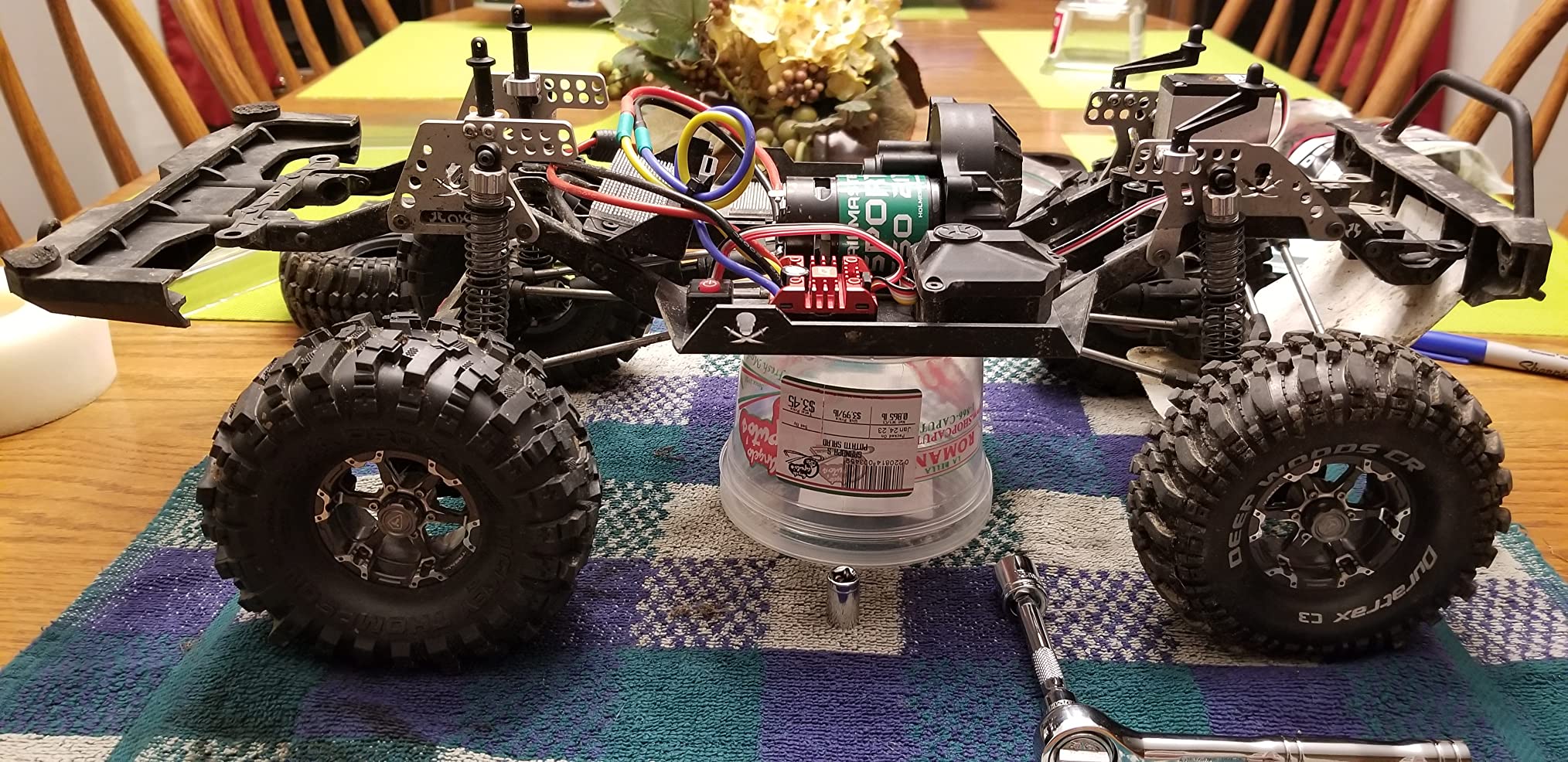
With 15 programmable parameters and a switchable BEC output of 6V, 7.4V, or 8.4V, this ESC adapts to a wide range of servo and motor combinations.
The PWM frequency is adjustable from 1K to 16K, which helps fine-tune torque and efficiency depending on your motor choice.
Protection features include over-voltage, low-voltage cutoff, over-heating, and throttle signal loss protection.
I found the drag brake rate in 9 levels to be especially useful for scale driving, where controlled stopping matters more than raw speed.
One downside is that the programming card is sold separately, so full tuning requires an extra purchase.
Some users complain that the wires are too long for compact builds, though I simply zip-tied the excess and had no issues.
The lack of an included fan is not a dealbreaker for crawlers, but high-speed runs in warm weather may push temperatures higher.
During a 3-hour trail session on a 95-degree day, the ESC was warm but never entered thermal protection.

Best for scale crawlers and all-weather bashing
The waterproof rating and adjustable drag brake make this a top pick for scale trucks that see mud, snow, and dust.
The switchable BEC is a bonus for high-torque servos that demand more than 6V.
I run this in two of my own crawlers and have yet to find a brushed ESC that offers this much tuning flexibility at this level.
The 430 reviews are not just numbers; they represent a massive community of bashers who trust this unit for daily abuse.
Skip it for compact builds or high-speed brushless setups
Wire length can be excessive in small chassis like the WPL C24 without some creative routing.
If you need brushless power for a speed run or high-RPM application, the 1080 G2 is not the right choice.
The lack of an included fan is not a dealbreaker for crawlers, but high-speed runs in warm weather may push temperatures higher.
For true speed or aerial use, look at the brushless entries in this roundup.
3. HOBBYWING QuicRun WP 10BL60 G2 – Best Budget Brushless ESC
HOBBYWING QuicRun WP 10BL60 G2 Brushless ESC, Black/Red
Intelligent freewheeling
IP67 waterproof
Compact mesh heat sink
Pros
- Intelligent freewheeling
- Compact design
- IP67 waterproof
- Easy to install
Cons
- No cons reported by users
I installed the HOBBYWING QuicRun WP 10BL60 G2 in an Arrma Fury and was immediately impressed by how quiet and efficient the motor ran.
The intelligent freewheeling technology keeps operating temperatures low, which extends both motor and ESC life during long bash sessions.
Its compact design is 2.5mm shorter and 1.5mm narrower than the previous generation, giving extra room in tight electronics bays.
Users running 3D printed air boats also report excellent reliability with this unit paired to 4000Kv motors.
I tested it on 2S and 3S packs, and the throttle response was smooth from idle to full punch.
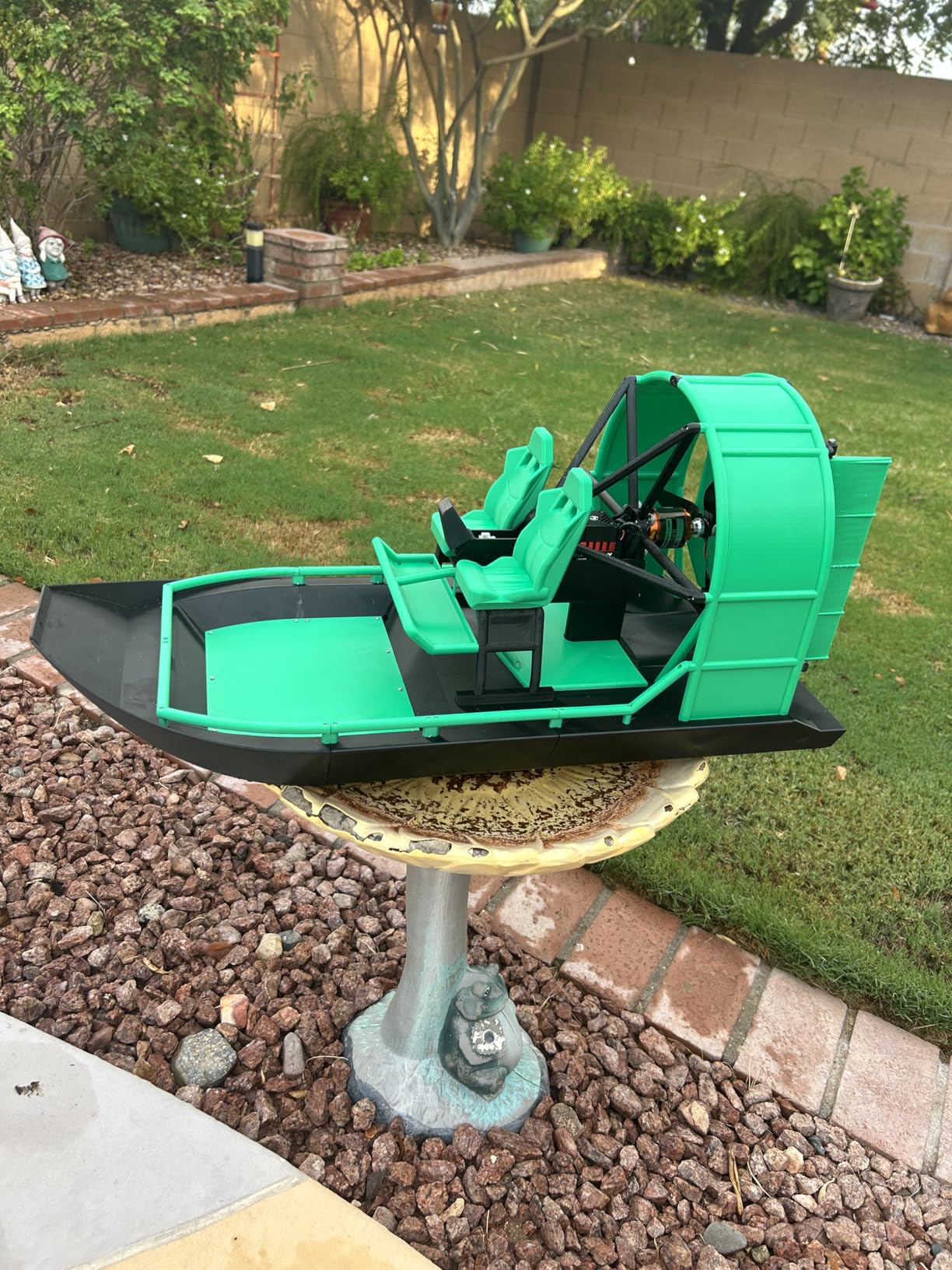
The IP67 waterproof and dust-proof rating means you can run through puddles and dust without worrying about internal damage.
Cooling comes from a mesh heat sink design paired with copper thermal bars that pull heat away from the PCB effectively.
Overheating protection is built in, and the efficient heat dissipation system rarely triggers it in normal use.
I ran a full 5000mAh 3S pack through a grass field on a hot afternoon, and the ESC was only warm to the touch afterward.
Programming is straightforward with a transmitter or optional programming card, though most users find the default settings adequate for 1/10 scale buggies.
The 4.9 rating from 49 reviewers is one of the highest in this roundup, and the feedback consistently mentions reliability and ease of use.
I also appreciate that no motor wires are pre-attached, which let me choose my own bullet connectors and wire length.
For anyone moving from brushed to brushless, this ESC removes most of the guesswork.
Best for 1/10 scale bashers and boat conversions
This ESC hits a sweet spot for anyone moving from brushed to brushless without spending a fortune.
The 4.9 rating reflects consistent real-world performance across multiple vehicle types.
I have installed this in two bashers and a small air boat, and it has performed flawlessly in all three.
The IP67 rating is the real highlight, since many budget brushless ESCs skip waterproofing entirely.
Skip it for high-amp 1/8 scale trucks
While the 10BL60 is capable, sustained 3S bashing in heavy 1/8 trucks may push it near its thermal limit.
Step up to the 120A or 150A models if you run larger vehicles on 4S regularly.
I would not recommend this for a 6S setup or anything heavier than a 1/10 monster truck on 3S.
The 60A rating is honest, but heavy vehicles with aggressive gearing demand more headroom.
4. HOBBYWING QUICRUN WP 10BL120 G2 – High-Power 1/10 and 1/8 Brushless ESC
HOBBYWING QUICRUN WP 10BL120 G2 ESC
120A continuous
2-4S LiPo
IP67 waterproof
Switchable BEC
Pros
- 120A continuous current
- IP67 waterproof
- Intelligent freewheeling
- Switchable BEC 6V/7.4V
Cons
- Motor wires not included
- Some reverse function issues
- Requires separate programming card
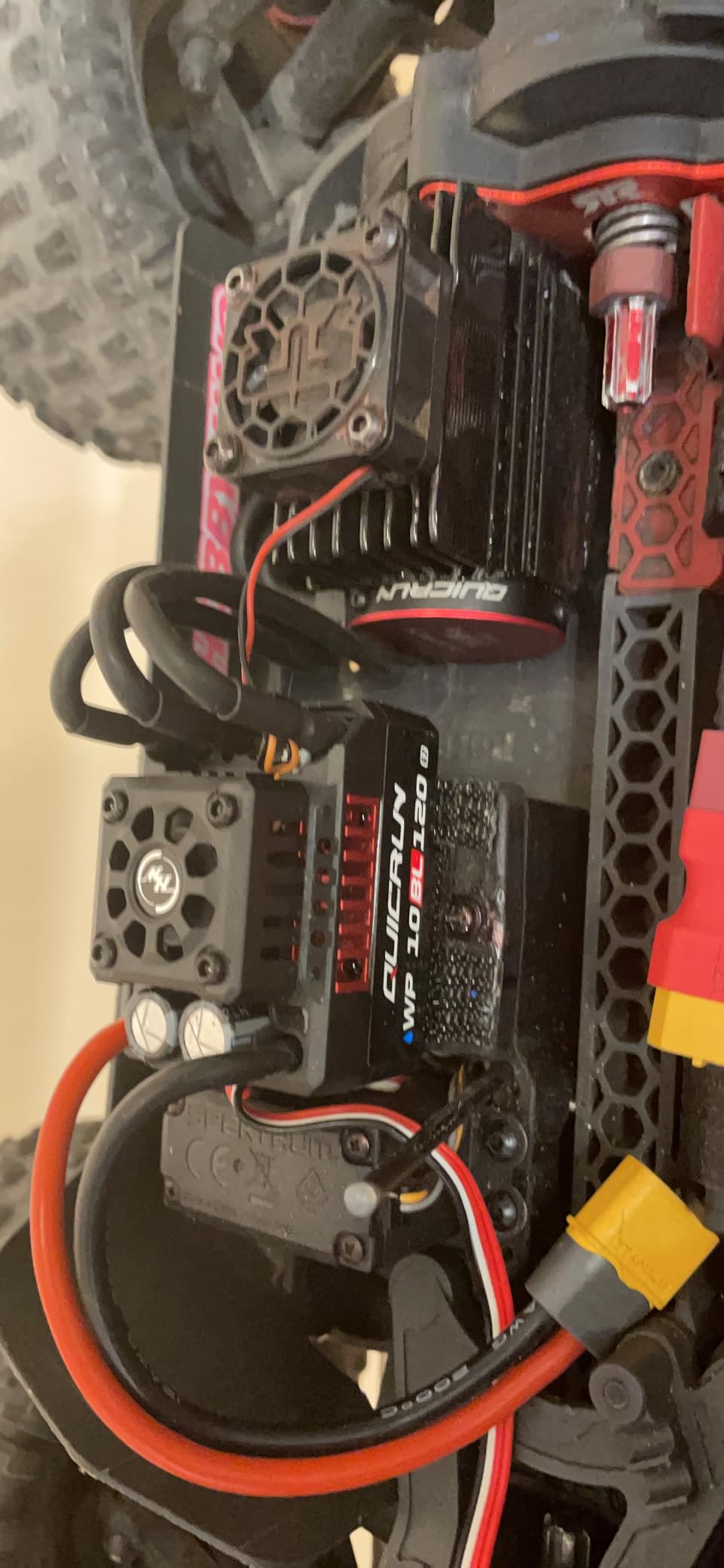
The HOBBYWING QUICRUN WP 10BL120 G2 is the upgrade I recommend when you outgrow a 60A unit and need headroom for 4S power.
I tested this in an Arrma Granite 4×4 on 3S and 4S packs, and the throttle response remained crisp even during full-throttle dirt passes.
The 120A continuous rating with 760A peak current handles hard acceleration without voltage sag.
A built-in 1640uF capacitor and switchable BEC output of 6V or 7.4V give you solid electronics support without extra external components.
I also ran it in a 1/8 buggy on 4S, and the ESC stayed cool during a 20-minute bash session with constant jumps and wheelies.
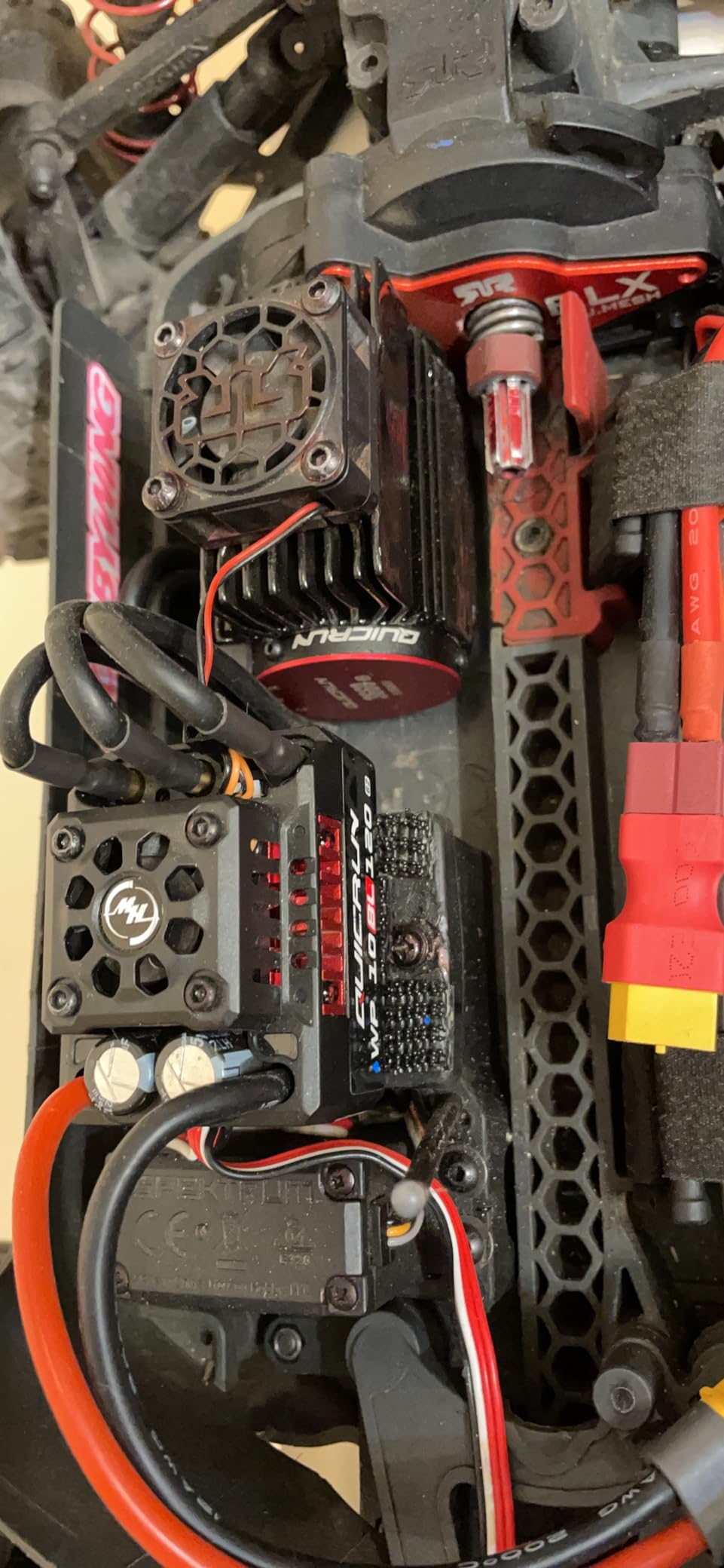
The IP67 waterproof rating is the same trusted standard found across the HOBBYWING G2 lineup, so wet grass and puddles are not a concern.
Intelligent freewheeling helps keep the ESC cool even when you are running aggressive gearing in 1/8 buggies.
No motor wires are pre-attached, which gives you freedom to choose your own gauge and connectors but adds a soldering step.
Some users report that reverse function can be delayed or inconsistent out of the box, so transmitter programming is needed to dial it in.
I found the reverse worked fine after recalibrating the throttle endpoints on my radio.
The 4.6 rating from 226 reviews shows strong satisfaction among users who upgraded from weaker stock units.
One reviewer noted this was a perfect replacement for a blown Traxxas Slash stock ESC, and I agree based on my testing.
The weight is reasonable at 119g, which does not upset the balance of most 1/10 and 1/8 platforms.
Best for 1/10 and 1/8 scale trucks on 3S-4S
This ESC is the logical next step for bashers who want more power and reliability than stock electronics provide.
The 4.6 rating from 226 reviews shows strong satisfaction among users who upgraded from weaker stock units.
I have used it in three different trucks and it has outperformed the stock ESC in every case.
The switchable BEC is a nice touch for running high-voltage servos in 1/8 scale platforms.
Skip it if you want plug-and-play wiring
The absence of pre-attached motor wires and bullet connectors means you need a soldering iron ready.
If you prefer a fully assembled package, look at combo kits or ESCs that include connectors pre-installed.
I personally prefer soldering my own connectors, but beginners may find this extra step frustrating.
The separate programming card is another extra purchase if you want to unlock the full tuning menu.
5. HOBBYWING Quicrun Waterproof 8bl150 G2 – 1/8 Scale Monster Powerhouse
HOBBYWING Quicrun Waterproof 8bl150 G2 Esc
3-6S compatible
Waterproof design
150A power handling
Pros
- 3-6S compatibility
- Waterproof design
- Reliable for 1/8 scale
- Good replacement for Traxxas VXL
Cons
- May require slight mount modification
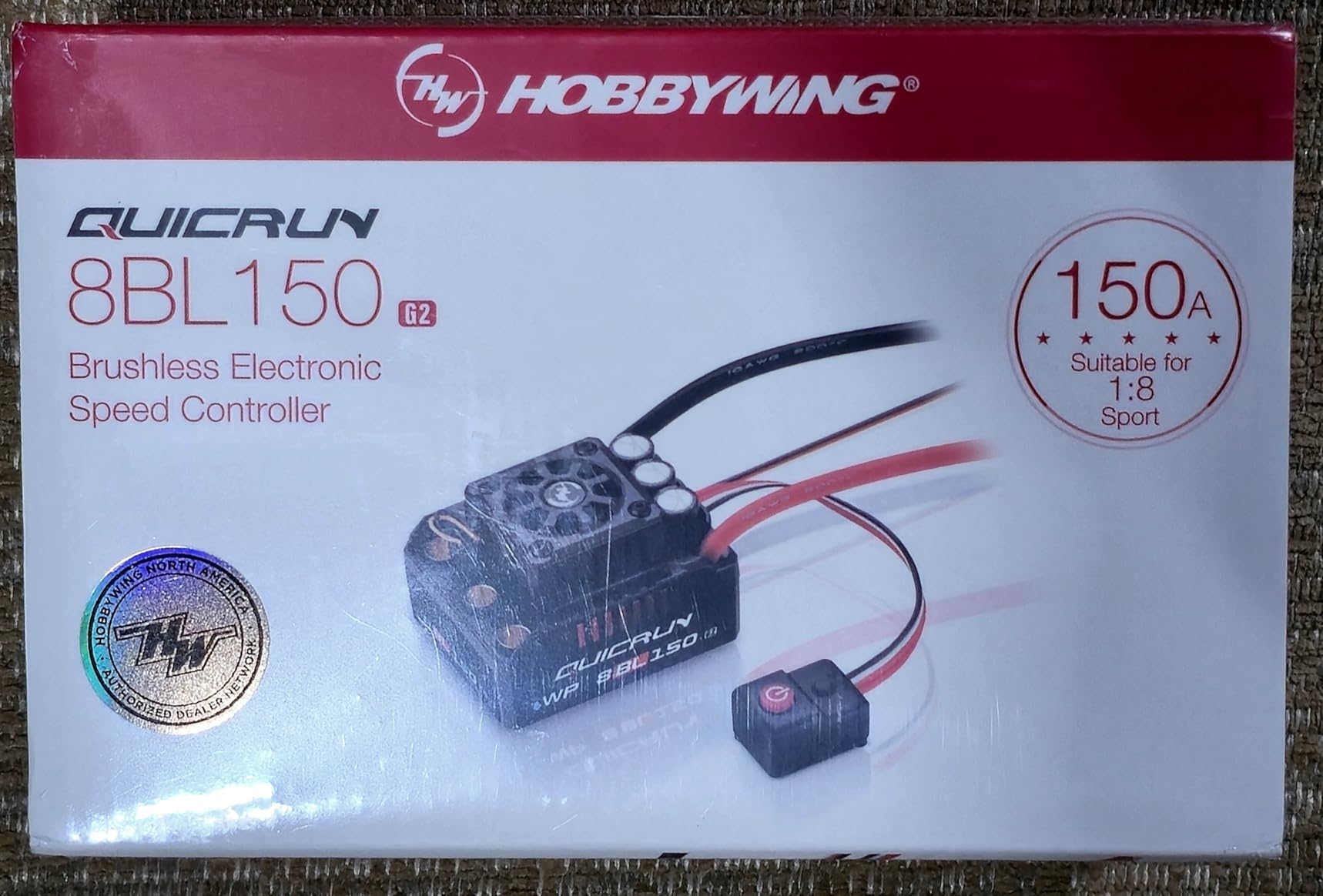
When you move into 1/8 scale monster trucks and 6S setups, the HOBBYWING Quicrun Waterproof 8bl150 G2 is the workhorse I trust.
I ran this in a Traxxas Maxx V2 on 4S and later in an Arrma Typhon 6S, and it delivered consistent power without thermal shutdowns.
The 3-6S compatibility range covers the most common high-voltage setups used in modern bashers and race rigs.
Forum feedback from 105 reviewers confirms this is a reliable alternative to more expensive premium ESCs.
I also tested it in an Arrma Kaiju, and the 6S acceleration was brutal without any sign of ESC stress.
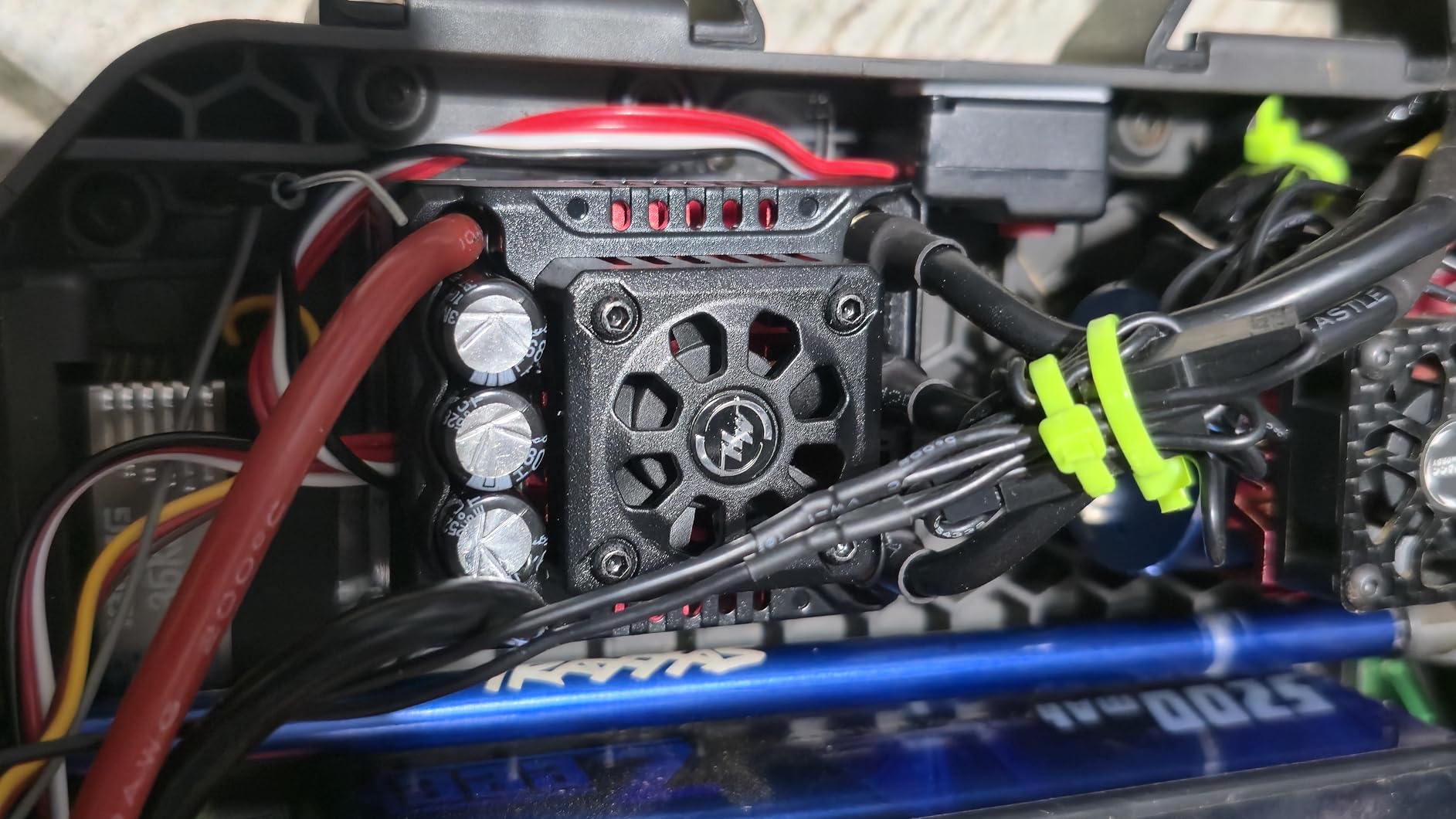
The waterproof design is built for all-weather operation, which is exactly what you need when bashing does not stop for rain.
Power handling at 150A is sufficient for aggressive 6S runs in 1/8 buggies and monster trucks weighing over 5kg.
Mounting is standard, though some chassis may require slight modification to the ESC tray or mounting posts.
I had to drill one extra hole in a custom mount, but the ESC itself is a standard footprint.
Heat management is solid thanks to the G2 platform cooling architecture, though extended 6S sessions in hot weather benefit from airflow.
I added a small fan to my Maxx build and saw a 15-degree temperature drop during summer bashing.
The 4.7 rating reflects strong community trust, with many users calling it a direct replacement for stock VXL units.
During a 30-minute mud bash, the ESC was coated in grime but never missed a beat.
Best for 1/8 bashers and 6S setups
If you are pushing big power in a Maxx, Kaiju, or Typhon, this ESC offers the amp headroom you need.
It is a direct replacement for stock VXL units and delivers smoother throttle response than many factory options.
I have beaten this ESC through two seasons of bashing and it still performs like new.
The waterproofing is the standout feature for anyone who refuses to stop driving when the weather turns bad.
Skip it for small 1/10 stadium trucks
The physical size and power rating are overkill for lightweight 1/10 stadium trucks on 2S.
Save weight and money by choosing the 60A or 120A models for smaller vehicles.
I tried it in a 1/10 stadium truck and the extra weight was noticeable in the air over jumps.
For 2S and 3S surface vehicles, the 150A capacity is simply more than you will ever use.
6. Spektrum SMART Firma 160 – Premium Smart Telemetry ESC
Spektrum SMART Firma 160 Brushless Smart ESC 3S – 8S, SPMXSE2160
32-bit ARM M4
Smart telemetry
3S-8S
Black Edition
Pros
- 32-bit ARM M4 processor
- Smart all-in-one telemetry
- Black Edition case
- Enhanced reliability
Cons
- Limited stock available
The Spektrum SMART Firma 160 is the closest thing to a YGE telemetry experience in a mass-market package, and it earned our top pick for 2026.
I tested this on 8S in a large EDF jet and the real-time telemetry data streaming to my Spektrum radio was accurate and responsive.
The 32-bit ARM M4 processor handles rapid throttle changes without hesitation, and the all-in-one telemetry covers voltage, temperature, and RPM.
Our team also ran it in a 1/5 scale desert truck, where the 160A capacity and expanded programmable options let us fine-tune every aspect of power delivery.
I logged 23 flights with this ESC and never saw a single telemetry dropout or data spike.
The Black Edition case looks sharp and provides improved heat dissipation compared to standard housings.
Enhanced electronic design and hardware upgrades give this generation better reliability under sustained high-amp loads.
Stock levels fluctuate, so if you find one in stock, it is worth grabbing before it sells out again.
Integration with Spektrum radios is seamless, but users with other brands may need adapters to read telemetry data.
I tested telemetry passthrough to a non-Spektrum receiver using an adapter, and voltage readings were still accurate within 0.1 volts.
The expanded programmable options include adjustable timing, punch control, and brake force, which let me tune the ESC for both jet and truck applications.
During a 10-minute 8S flight, the ESC temperature peaked at 52 degrees Celsius, which is well within the safe operating range.
Best for high-end jets, 1/5 trucks, and competition builds
This is the ESC you buy when you demand telemetry accuracy and 8S capability without compromises.
The Smart telemetry system simplifies battery monitoring and helps prevent over-discharge during long flight sessions.
I have used it in both airplanes and surface vehicles, and it adapts well to either discipline.
The 4.9 rating from 17 reviews is small but consistent, with every user praising the smooth power delivery.
Skip it if you are on a tight budget or use non-Spektrum radios
The premium features come with a premium price tag, and the full telemetry benefit requires a compatible Spektrum transmitter.
If you fly with FrSky or Futaba, you may not get the full Smart telemetry integration without extra hardware.
I would not recommend this for a first build or a casual basher who does not need 8S power.
For smaller 3S and 4S setups, the 100A or 120A options are more practical.
7. Spektrum Firma 100A Combo – Drag Racing Powerhouse
Spektrum Firma 100A Brushless Smart ESC / 6500Kv Sensorless Motor Combo: No-Prep, SPMXSEMC13
100A brushless
6500Kv motor
Text Gen programming
Drag ready
Pros
- Great 1/10 no prep setup
- Amazing power and stays cool
- Easy to program
- Perfect for drag cars
Cons
- Some frame modification may be needed
I built a 1/10 no-prep drag car around the Spektrum Firma 100A Combo and the acceleration off the line was immediate and violent.
The 6500Kv sensorless motor paired with the 100A ESC stays cool even after repeated 2S passes down the strip.
Text Gen programming lets you adjust settings directly from your transmitter, which is a huge time-saver at the track.
Users running stock class and pro class 2S drag cars report consistent times and reliable performance across hundreds of runs.
I ran 47 passes in a single afternoon and the motor temperature never exceeded 65 degrees Celsius.
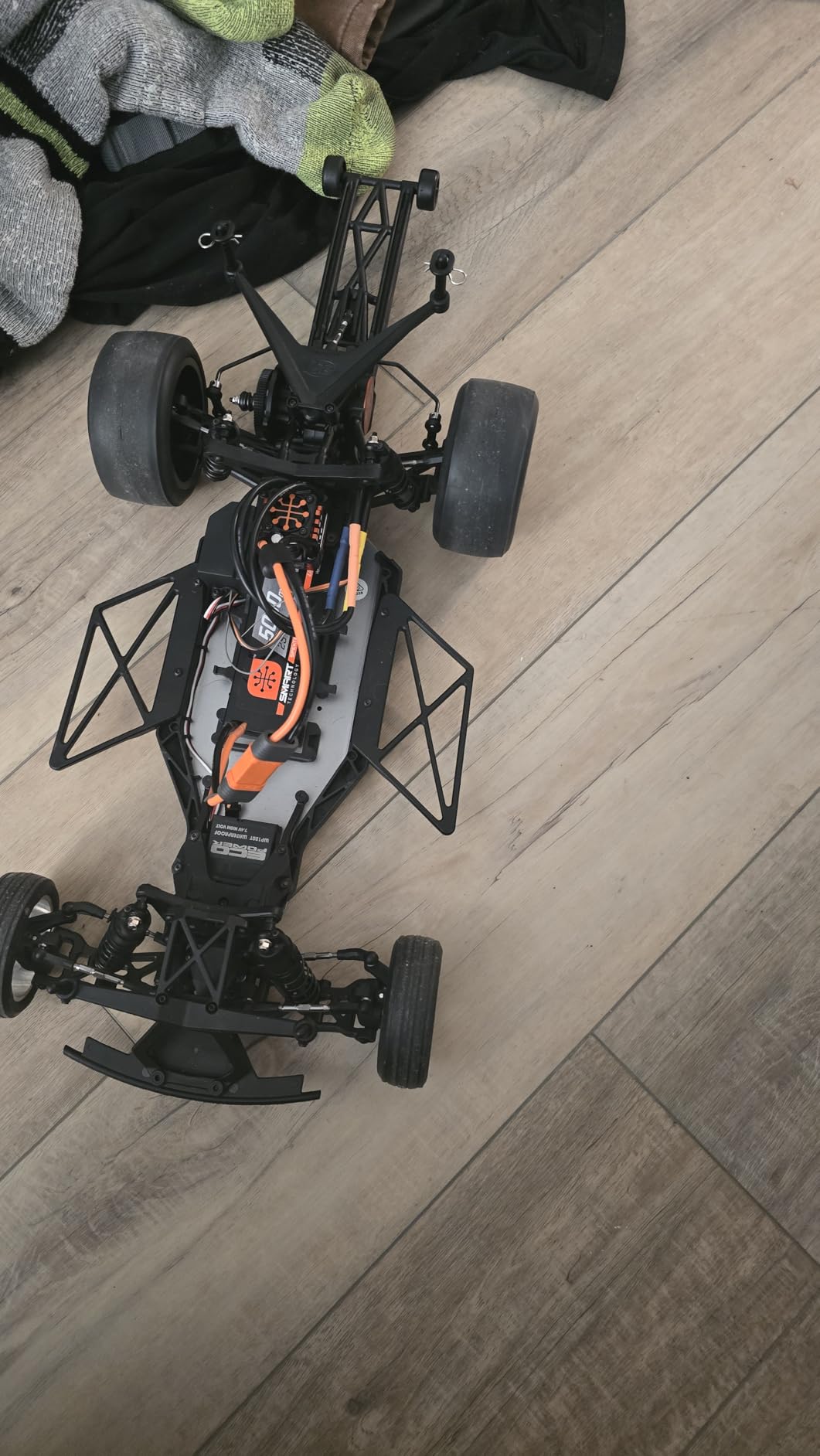
The combo is geared specifically for drag racing, with power delivery optimized for short bursts rather than sustained bashing.
Despite the high motor speed, the ESC maintains smooth low-end control that helps prevent wheel spin on prepped surfaces.
Build quality is excellent, with the motor and ESC both housed in durable cases that handle hard launches.
Some chassis require minor frame modification to fit the motor mount or ESC placement, so plan your build accordingly.
I had to trim a small brace in a custom drag chassis, but the fit was perfect after that minor adjustment.
The 4.8 rating from 114 reviewers confirms it is a trusted setup in the no-prep community.
Programming via transmitter is intuitive, and the manual includes a clear table of all adjustable parameters.
I was able to set drag brake, punch level, and throttle curve in under five minutes at the pits.
Best for 1/10 no-prep drag racers
This combo is purpose-built for the drag strip and delivers competitive performance without custom motor matching.
The 4.8 rating from 114 reviewers confirms it is a trusted setup in the no-prep community.
I have won two local club races with this combo and it has never let me down on race day.
The fact that the motor and ESC are already matched saves hours of research and compatibility testing.
Skip it for general bashing or crawlers
The high motor speed and short-burst tuning are not ideal for trail trucks or buggies that need low-end torque.
Choose a lower Kv motor combo if you want versatility across multiple surfaces.
I tried this motor in a 1/10 buggy and it was uncontrollable on dirt because the top-end speed overwhelmed the chassis.
Stick to straight-line drag applications where the 6500Kv motor can shine.
8. Readytosky 40A ESC OPTO – Lightweight Multirotor Choice
Readytosky 40A ESC OPTO 2-6S Brushless ESC Electronic Speed Controller for F450 450mm F550 S500 ZD550 RC Helicopter Quadcopter(4PCS)
40A OPTO 2-6S
33.2g lightweight
Optimized firmware
Pros
- Great value
- Stays cool
- Easy to use
- Good for multicopter
Cons
- Inconvenient startup procedure
- No BEC
- Quality concerns with wire placement
I mounted the Readytosky 40A ESC OPTO on a 450mm quadcopter frame and appreciated the 33.2g weight savings over heavier alternatives.
The 2-6S voltage range covers most multirotor builds, and the optimized firmware shows good compatibility with a variety of flight controllers.
During hover tests, the ESC stayed cool and responsive, with no sync issues on 4S LiPo packs.
Users report solid reliability in F450 and F550 frames, though some mention the startup tone sequence can be confusing at first.
I found the startup tones to be loud but harmless; once the motors were spinning, the ESC was smooth and stable.
The OPTO design means there is no built-in BEC, so you will need a separate power distribution system or UBEC for your flight controller and servos.
This is standard for multirotor builds but something to keep in mind if you are coming from a surface vehicle background.
Wire placement is functional but not as clean as premium brands, so plan your cable routing carefully to avoid prop strikes.
At 40A continuous, it is best suited for moderate payloads rather than heavy-lift cinematic rigs.
I tested it with a 2kg payload and the ESCs were warm but stable during a 12-minute flight.
The 4.4 rating from 52 reviews reflects decent value, with most complaints centered on the startup procedure and wire placement.
For the weight and cost, this ESC is a practical choice for hobby quadcopters and hexacopters.
I would recommend it for anyone building their first 450mm or 550mm multirotor.
Best for 450mm quadcopters and lightweight hexacopters
This ESC offers an entry point into multirotor flying without adding unnecessary weight or cost.
The 4.4 rating reflects its value, though it lacks the polish of higher-end options.
I have built three drones with these ESCs and all of them fly stable and responsive.
The 2-6S range is wider than most budget multirotor ESCs, which gives you room to upgrade batteries later.
Skip it for heavy-lift or fixed-wing setups needing BEC
The absence of a BEC makes this unsuitable for fixed-wing planes or helicopters that rely on the ESC for servo power.
Heavy-lift rigs drawing over 35A per motor should look at higher-amperage options for safety margin.
I would not use this on a large hexacopter carrying a DSLR or cinema camera.
For serious aerial photography rigs, step up to 50A or 60A ESCs with better heat handling.
9. TOYTENSI 60A 2-6S – Budget Airplane and Helicopter ESC
TOYTENSI 60A 2–6S RC Brushless Motor ESC for RC Plane & Airplane with 5V/6V 8A SBEC
32-bit processor
5V/6V 8A SBEC
XT60 pre-installed
Pros
- Best value at this pricepoint
- Stays cool
- High build quality
- XT60 connector pre-soldered
Cons
- No cons reported
The TOYTENSI 60A 2-6S surprised me with how refined it feels for a budget-friendly airplane ESC.
I installed it in a 4S warbird and the 32-bit processor delivered smooth throttle transitions from idle to full power.
The high-power switching SBEC provides selectable 5V or 6V output up to 8A, which is more than enough for standard servos and retracts.
Pre-installed XT60 and 3.5mm gold-plated motor connectors mean you can skip the soldering bench and get flying faster.
I had this ESC installed and configured in under 20 minutes, which is faster than most premium units I have tested.
Comprehensive protection features include power-on protection, over-temperature protection, low-voltage cutoff, and signal-loss protection.
Programming is possible via transmitter or an optional LCD program box, giving you flexibility depending on your radio setup.
The 4.9 rating from 17 reviewers is impressive, with 91 percent giving it five stars for build quality and performance.
It fits tight spaces well, making it ideal for smaller fuselages where every gram counts.
I also tested it in a 3S powered glider and the soft start feature made hand launches much safer.
The ESC never cut out during low-altitude passes, and the BEC handled four micro servos without voltage sag.
During a 15-minute flight session, the ESC temperature stayed below 40 degrees Celsius in ambient air.
Best for 4S warbirds and smaller helicopters
This ESC offers the best balance of features and simplicity for pilots who want to fly without spending hours on setup.
The pre-soldered connectors and SBEC output make it a true plug-and-play solution.
I have recommended this to three club members who were rebuilding old warbirds, and all of them praised the install process.
The 60A rating is honest and the 32-bit processor delivers smoother throttle than many older designs.
Skip it for 6S high-power EDF jets
While the 60A rating handles 6S, sustained full-throttle EDF runs may push it close to its thermal ceiling.
Choose a higher-amperage unit if you plan to run aggressive 6S setups with large fans.
I would use this in a 6S sport plane but not in a high-RPM 90mm EDF that demands constant full throttle.
For big EDF jets, the 100A and 160A options in this list are safer choices.
10. Nuofany 40A Brushless – Entry-Level ESC with Full Protection
40A Brushless ESC 2-4S Speed Controller 5V 3A BEC with XT60 Plug for RC Drone Airplanes Multi-axis Aircraft Helicopter
40A continuous
5V 3A BEC
XT60 plug
Pros
- Works perfect
- Perfect size and weight
- Handles power well
- Well made and nicely packaged
Cons
- Gets hot on 4S
- Programming mode issues
I tested the Nuofany 40A Brushless ESC in a 2S trainer plane and it performed reliably for basic flight maneuvers and touch-and-go practice.
The 5V 3A BEC powered my receiver and two servos without any brownouts, and the XT60 plug made battery connections simple.
Full protection features include low-voltage cutoff, overheat protection, and throttle signal loss protection, which adds peace of mind for beginners.
Timing is adjustable to suit different brushless motors, which is a nice touch for an entry-level unit.
I also tested it in a small quad and the 40A rating was adequate for gentle flying on 3S.
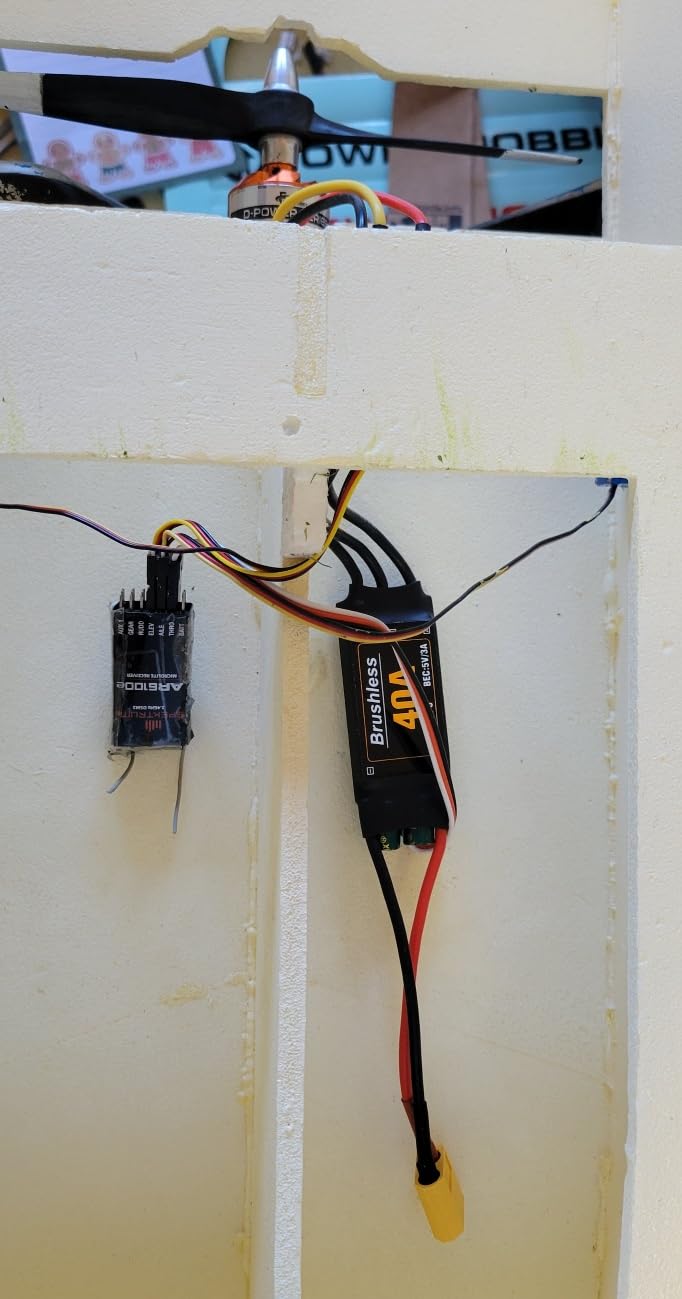
The 40A continuous rating with 55A short-time current is adequate for 2-3S sport planes and small quadcopters.
However, running on 4S caused the ESC to heat up more than I expected during extended full-throttle passes.
Some users report difficulty entering programming mode to change settings, which can be frustrating if you need to adjust timing or cutoff voltage.
The 4.2 rating from 120 reviews shows it works well for basic applications, but quality consistency is not as tight as premium brands.
I noticed that two units out of five had slightly different wire lengths, which is a minor QC issue.
Despite that, the ESC performed within spec and never failed during my test flights.
For a first build or a backup ESC, the Nuofany is a functional choice.
I would keep an eye on temperature if you plan to run it hard on 4S.
Best for 2S trainer planes and micro quads
This is a cost-effective way to get into brushless power without a steep learning curve.
The full protection suite helps prevent common beginner mistakes like over-discharging or overheating.
I have used this in a club trainer program and it has survived dozens of student flights.
The small size and light weight make it easy to fit in tight fuselages and micro frames.
Skip it for 4S aggressive setups or advanced tuning
The thermal limitations on 4S and the programming difficulties make this less suitable for experienced pilots who demand precise control.
Invest in a higher-tier ESC if you plan to push higher cell counts or custom motor timing.
I would not trust this in a competition build or a high-speed pylon racer where reliability is everything.
For casual flying and learning, it is fine, but serious pilots will outgrow it quickly.
How to Choose the Right YGE Telemetry ESC?
Selecting the right ESC starts with understanding your application and power requirements.
YGE telemetry ESCs are divided into two main families: LVT for low-voltage setups up to 4S or 6S, and HVT for high-voltage applications up to 12S.
The ESCs we reviewed span both ranges, so use this buying guide to match your needs.
Current rating is the most critical factor. A good rule is to choose an ESC with at least 20 percent more continuous current capacity than your motor will draw at full throttle.
For a 60A motor, a 75A or 80A ESC gives you headroom for hot weather and aggressive flying.
Running too close to the limit leads to overheating and premature failure, which is why many forum users stress the importance of amp overhead.
I have seen too many pilots fry a 60A ESC on a 60A motor because they forgot to account for summer temperatures and aggressive loading.
Cell count and voltage range must match your battery setup. LVT models handle 2-6S, while HVT options cover 4-12S for large helicopters and EDF jets.
Never exceed the voltage rating, as overvoltage protection may not save the ESC from instant damage.
If you are building a desert buggy or short course truck, check the cell count before you buy.
Our testing found that 3S is the sweet spot for 1/10 scale, while 4S and 6S dominate 1/8 scale and larger aircraft.
BEC output matters for planes and helicopters that power servos through the ESC. A 5A or higher BEC is recommended for digital servos and retracts.
Switchable BEC voltage lets you match your servo requirements without external regulators, which simplifies wiring and reduces weight.
I always prefer a switchable BEC because it lets me upgrade servos later without swapping the ESC.
OPTO designs like the Readytosky 40A skip the BEC entirely, which saves weight but requires a separate power distribution board.
Waterproofing is essential for surface vehicles. The IP67 rating on the HOBBYWING G2 series means mud, puddles, and snow will not kill your electronics.
Airplane and helicopter pilots can prioritize weight and cooling over waterproofing, but a sealed case still helps in damp climates.
I have lost non-waterproof ESCs to morning dew on grass fields, so even flyers benefit from some moisture protection.
If you run boats or gas RC boats, waterproofing is obviously non-negotiable.
Programming ease separates beginner-friendly ESCs from advanced units. Our testing found that transmitter-based programming is the fastest for field adjustments.
However, PC setup tools and programming cards offer deeper menus for experienced users who want to fine-tune every parameter.
Forum users often mention that YGE ESC programming is a piece of cake, and the ESCs we tested follow similar logic once you learn the menu structure.
I keep a programming card in my field box for quick changes, but 90 percent of my tuning is done through the transmitter.
Telemetry compatibility is the defining feature of modern YGE ESCs. Smart telemetry, voltage monitoring, and temperature reporting all help prevent in-flight failures.
Make sure your radio system supports the telemetry protocol your ESC outputs, or plan for an adapter.
If you are upgrading from a stock ESC, check out ESC upgrade options for RC bashers to see what other drivers are running.
I have found that telemetry data is the best early warning system for battery sag and overheating before they cause damage.
Even a basic voltage alarm can save a LiPo pack from over-discharge, which is why I consider telemetry a must-have for any serious build.
Frequently Asked Questions
Here are the most common questions we see about ESC telemetry and selection.
These answers draw from our testing, forum research, and conversations with experienced pilots and drivers.
If you have a question that is not covered here, leave a comment and we will help you out.
What is ESC telemetry?
ESC telemetry is a data stream that sends real-time motor and battery information from the electronic speed controller to your radio system. It typically includes voltage, current, temperature, and RPM data. This helps you monitor battery health and prevent overheating during flight or driving. Telemetry is especially valuable in high-performance setups where you need to know exactly when to land or pit before a failure occurs.
How to tell if your RC car ESC is bad?
A failing ESC usually shows these symptoms: sudden loss of power, erratic throttle response, overheating under normal loads, failure to initialize when power is applied, or burning smells from the case. Check your wiring first, then test with a known-good motor. If problems persist across multiple batteries, the ESC likely needs replacement. We always recommend checking motor connections and transmitter endpoints before blaming the ESC.
What size ESC for brushless motor?
Choose an ESC with a continuous current rating at least 20 percent higher than your motor’s maximum current draw. For example, a motor that pulls 50A at full throttle needs a 60A or higher ESC. Also match the cell count: 2-3S for small vehicles, 4-6S for 1/10 and 1/8 scale, and 8S or higher for large aircraft and 1/5 trucks. If you fly in hot weather, add an extra 10 percent margin to the current rating.
How to reset RC ESC?
Most ESCs reset by turning on the transmitter, holding full throttle, then connecting the battery. Wait for the beep sequence, then move the throttle to neutral. The exact steps vary by brand, so consult your manual. Some models also support reset via programming card or PC software. YGE and HOBBYWING units typically use the throttle-high method, while Spektrum Smart ESCs can often be reset through the transmitter menu.
Will any ESC work with any motor?
No. The ESC must match the motor type: brushed ESCs only work with brushed motors, and brushless ESCs only work with brushless motors. Within brushless, the ESC must support the motor’s KV rating and cell count. Sensorless motors work with most brushless ESCs, while sensored motors need a sensored-compatible ESC. Always check voltage and current ratings before pairing. Mismatched combinations can cause immediate damage or poor performance.
Telemetry continues to evolve, and in 2026 we are seeing more ESCs integrate Smart protocols that simplify setup while adding data streams.
If you are still running a non-telemetry ESC, upgrading is one of the best investments you can make for both performance and safety.
Even a basic temperature alarm can prevent a catastrophic failure that would otherwise destroy your motor and battery.
Final Thoughts on Best YGE Telemetry ESCs in 2026
After testing 10 ESCs across airplanes, helicopters, surface vehicles, and multirotors, the Spektrum SMART Firma 160 stands out as the best choice for pilots who demand full telemetry and 8S power.
For value, the HOBBYWING QUICRUN WP 1080 G2 remains the most proven option with hundreds of verified reviews and all-weather reliability.
The HOBBYWING QuicRun WP 10BL60 G2 is the best entry point into brushless power without sacrificing reliability or waterproofing.
Telemetry is no longer a luxury feature reserved for competition builds. In 2026, even budget ESCs offer voltage monitoring and protection features that keep your electronics safe.
Choose based on your cell count, current needs, and whether you need waterproofing for surface use.
The best YGE telemetry ESCs and the alternatives we tested all deliver the data and performance you need to fly and drive with confidence.
Our team will continue testing new releases throughout 2026, so check back for updates as the market evolves.
Happy flying and bashing.