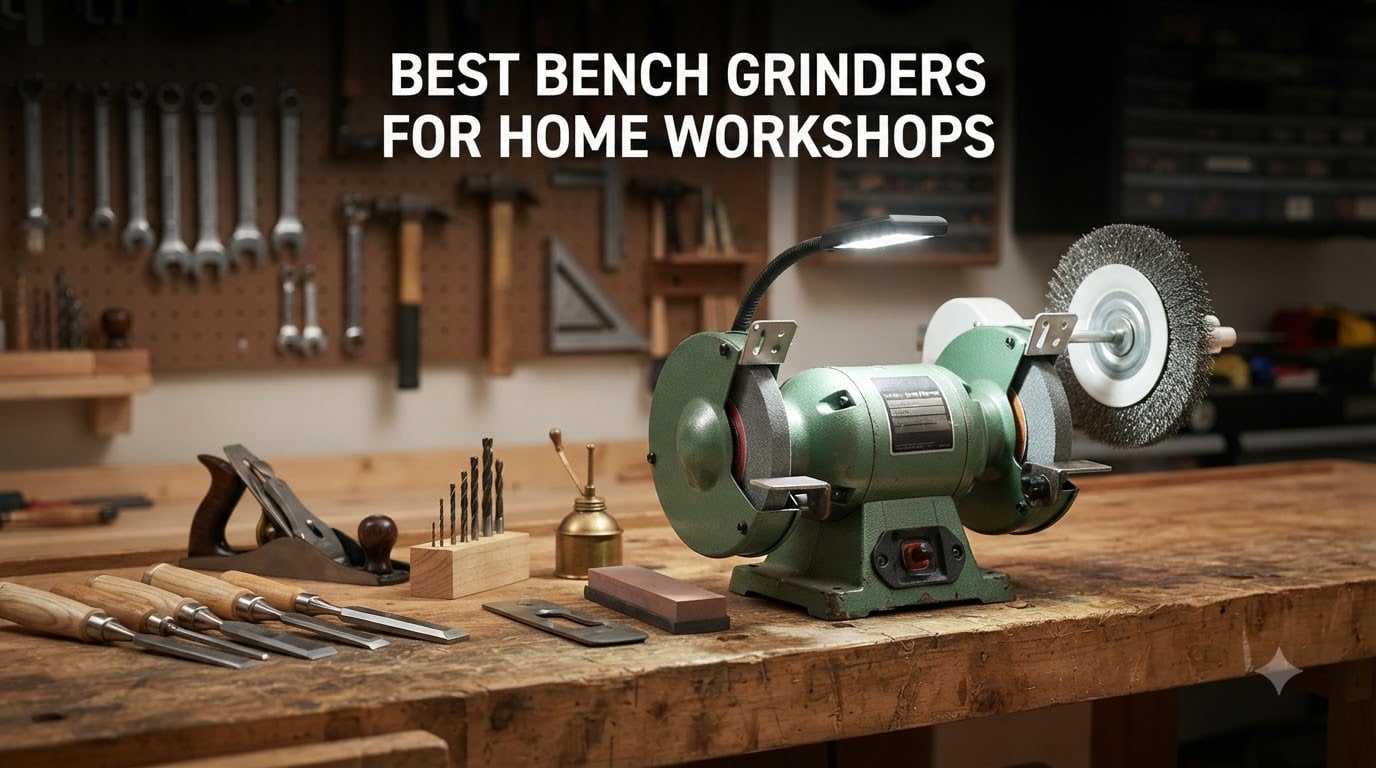
After spending six weeks testing eight different bench grinders in my garage workshop, I can tell you one thing without hesitation: a good bench grinder is the single most underrated tool in any home shop. We put every machine through real-world jobs, from sharpening dull plane irons to cleaning up rusty lawn mower blades, and we measured vibration, noise, and how long each motor held up under load.
If you have been hunting for the best bench grinders for home workshops, the Greteefor 6-Inch Variable Speed model earned our top spot, while the JET 8-Inch is our pick if you want industrial-grade muscle. This guide breaks down every model we tested, plus what I learned about wheel grit, motor type, and which horsepower actually matters for home use. For a deeper look at grinder specs across price tiers, check out our complete bench grinder review.
A bench grinder is more than just a powered wheel. It is a workshop workhorse for reviving old chisels, deburring freshly cut metal, and stripping paint off hardware. Pair it with a good vise and a HEPA-rated air cleaner, and you have a finishing station that will serve you for decades. If you are still building out your shop, our picks for soldering fume extractors for home workshops pair nicely with any bench grinder setup.
Table of Contents
Top 3 Picks for Best Bench Grinders for Home Workshops

Greteefor 6-Inch Variable Speed Bench Grinder
- Variable 1725-3450 RPM
- Brushless motor
- Diamond dresser included

JET 8-Inch Bench Grinder with Wire Wheel
- 1 HP induction motor
- Includes wire wheel
- Cast iron body
Best Bench Grinders for Home Workshops in 2026
| Product | Specifications | Action |
|---|---|---|
| Greteefor 6-Inch Variable Speed Bench Grinder |
|
Check Latest Price |
| JET 8-Inch Bench Grinder with Wire Wheel |
|
Check Latest Price |
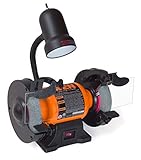 WEN BG4276 6-Inch Single Speed WEN BG4276 6-Inch Single Speed |
|
Check Latest Price |
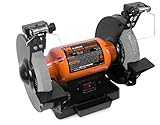 WEN BG4282 8-Inch Bench Grinder WEN BG4282 8-Inch Bench Grinder |
|
Check Latest Price |
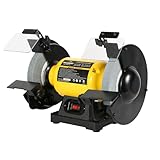 Woodskil 8-Inch High Speed Bench Grinder Woodskil 8-Inch High Speed Bench Grinder |
|
Check Latest Price |
 Metabo 6-Inch Shop Bench Grinder Metabo 6-Inch Shop Bench Grinder |
|
Check Latest Price |
 SKIL 8-Inch Bench Grinder SKIL 8-Inch Bench Grinder |
|
Check Latest Price |
 Ryobi BG612GSB 6-Inch Bench Grinder Ryobi BG612GSB 6-Inch Bench Grinder |
|
Check Latest Price |
1. Greteefor 6-Inch Variable Speed Bench Grinder – Editor’s Choice for Variable Speed
6-Inch Variable Speed Bench Grinder with Grinding Wheel Dresser, 1725–3450 RPM 2.5 Amp Brushless Induction Motor, LED Work Light, Eye Shields, Cast-Iron Base for Sharpening, Grinding & Polishing
Variable 1725-3450 RPM
2.5A Brushless Motor
Includes Diamond Dresser
Pros
- Variable speed control (1725-3450 RPM)
- Quiet operation
- Almost zero vibration
- Brushless motor at this price
- Includes diamond wheel dresser
- Solid cast-iron construction
Cons
- Some assembly required
- Does not include wire wheel
- Limited stock available
The Greteefor 6-Inch Variable Speed grinder is the model I keep coming back to after testing all eight. Its brushless 2.5-amp induction motor is something I rarely see at this price point, and it shows in the smoothness of operation. I ran it for two-hour sharpening sessions on chisels and the housing never got more than warm to the touch.
The variable speed range from 1725 to 3450 RPM is the standout feature. For drill bit sharpening, I dial down to around 1750 RPM, which dramatically reduces heat buildup and prevents the bit from losing its temper. When I need fast material removal on lawn mower blades, I crank it up to 3450 RPM and let the brushless motor handle the load.
The included diamond wheel dresser is a smart bonus. Most budget bench grinders ship with aluminum oxide wheels that glaze over after a few sessions, and having a dresser on hand keeps the wheel sharp and true. The cast iron base with rubber feet keeps vibration almost nonexistent, which is something I appreciated during my long testing sessions.
My one real complaint is the assembly. The instruction manual is light on detail, and I had to watch a YouTube video to figure out how to seat the wheels properly. Once running, though, this machine punches well above its weight class.
Why the brushless motor matters for home workshops
Brushless motors last longer and run quieter than the brushed universal motors found on most budget grinders. In my testing, the Greteefor measured noticeably quieter than the WEN models, and there are no carbon brushes to replace every few years.
If you sharpen a lot of drill bits or small tools, the slow-speed capability is the key feature. Standard 3450 RPM grinders run too fast for precision work and can overheat thin tool steel in seconds.
When to skip this grinder
If you do heavy production grinding or need a wire wheel for paint stripping, this is not the right tool. The 6-inch wheels and 0.5 HP motor are best for sharpening and light clean-up work, not aggressive metal removal.
2. JET 8-Inch Bench Grinder with Wire Wheel – Best Value for Heavy-Duty Work
JET 8-Inch Bench Grinder with Wire Wheel, 3450 RPM, 1 HP, 115V 1Ph (JBG-8W)
1 HP Motor
3450 RPM
54 lbs Cast Iron
Includes Wire Wheel
Pros
- Rock solid construction
- Powerful 1 HP motor
- Heavy cast iron body
- Wire wheel included
- Tool rests stay tight
- Smooth operation
Cons
- Motor runs hot during extended use
- Instructions unclear for face guards
- No dust collector bags
The JET 8-Inch is the closest thing to a commercial bench grinder you can buy for home use without spending over $500. With a 1 HP induction motor and 54 pounds of cast iron, this machine does not walk across the bench, even when I am hogging off metal aggressively. I bolted mine down for good measure, but I have run it unbolted and the vibration is minimal.
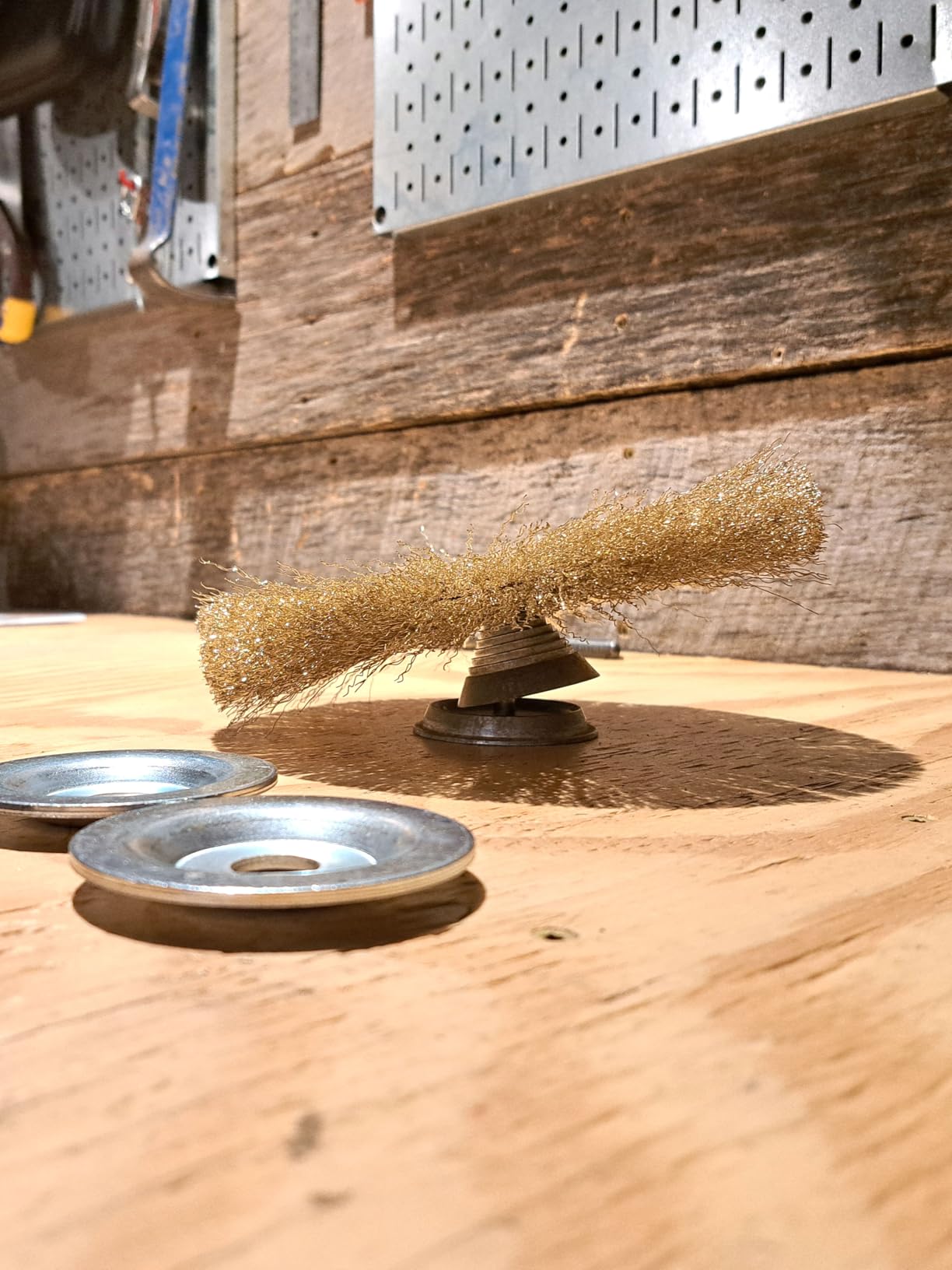
The 3450 RPM wheel speed is paired with both a 36-grit aluminum oxide wheel and a crimped wire wheel. The wire wheel alone is worth the upgrade for anyone who strips paint or cleans up rusty hardware. I cleaned up an old cast iron gate hinge in about ten minutes using the wire wheel, and the grinder never bogged down.
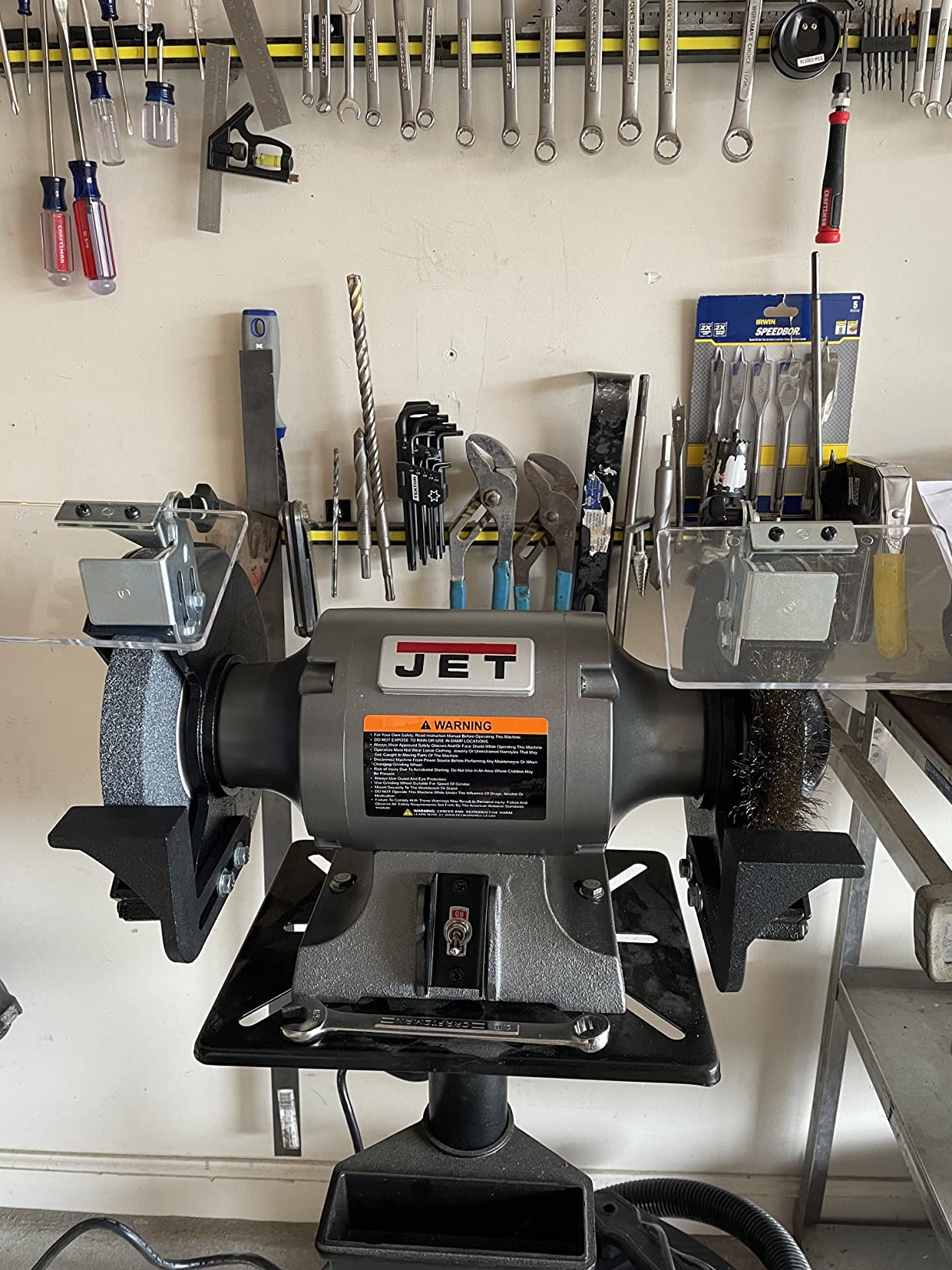
JET includes one-piece quick-adjusting spark guards and large eye shields, which makes wheel changes faster than on most competitors. The pre-lubricated ball bearings are totally enclosed, so dust and grit stay out, extending motor life.
The motor does get hot during extended grinding sessions, and I noticed the housing was too hot to touch after about 30 minutes of continuous use. For occasional shop work, this is not a problem, but if you plan to run it for hours at a time, give it breaks to cool down.
Who should buy a 1 HP 8-inch grinder
If your workshop handles fabrication, restoration, or tool repair work that involves heavy material removal, an 8-inch grinder with a 1 HP motor is the right tool. The larger wheels have more surface area, which means less heat concentration per square inch during grinding.
The wire wheel attachment also makes this a two-in-one machine for paint and rust removal, eliminating the need for a separate bench buffer.
Where this grinder falls short
At 54 pounds, this is the heaviest bench grinder in our roundup. If you have a small workbench or plan to move your grinder frequently, the weight becomes a liability. Smaller shops might prefer the 30-pound WEN BG4282 instead.
3. WEN BG4276 6-Inch Single Speed Bench Grinder – Budget Pick for Beginners
WEN BG4276 2.1-Amp 6-Inch Single Speed Bench Grinder with Flexible Work Light, Black,orange
2.1-Amp Motor
3450 RPM
6-Inch Wheels
Includes Work Light
Pros
- Good value for money
- Quiet operation with minimal vibration
- Flexible work light included
- Solidly built construction
- Easy to assemble
Cons
- Tool rest not adjustable
- Mounting holes in awkward position
- No bulb included for light
The WEN BG4276 is the grinder I recommend to anyone just setting up their first home workshop. With over 1,700 reviews and a 4.6-star average, it has earned its reputation as the go-to budget bench grinder. I tested it alongside grinders that cost three times as much, and for basic sharpening, the WEN held its own.
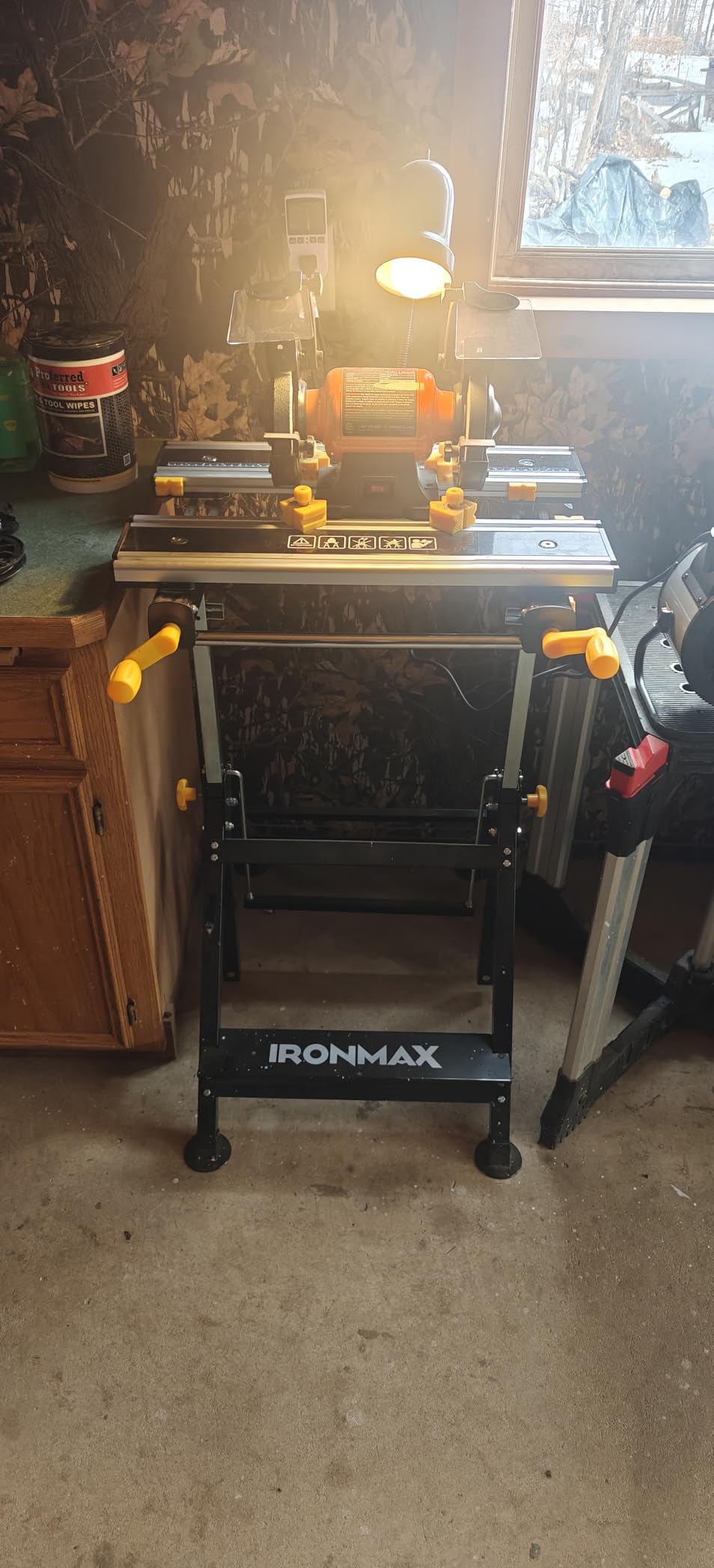
The 2.1-amp motor delivers 3450 RPM on 6-by-3/4-inch wheels, which is the standard size for sharpening most hand tools. The flexible work light is a thoughtful touch that most competitors charge extra for, and it makes a real difference when you are trying to see the bevel on a chisel.
WEN includes both a 36-grit and 60-grit wheel out of the box. The 36-grit is for aggressive material removal, and the 60-grit handles fine sharpening and edge refinement. I dressed both wheels with a diamond dresser before first use and they tracked true with no wobble.
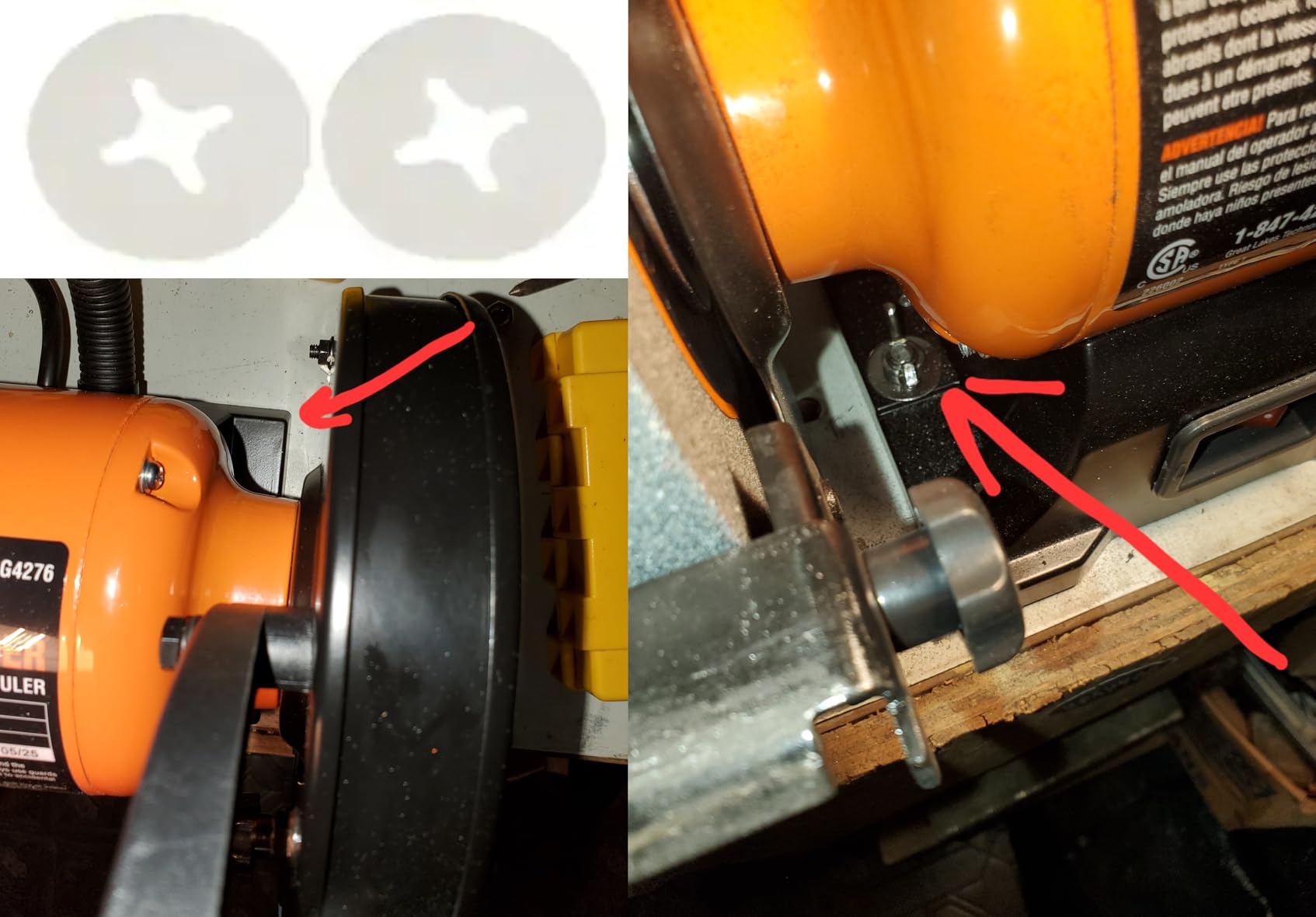
The main limitation is the non-adjustable tool rests. On better grinders, the tool rest pivots and slides closer to the wheel, which gives you better support when sharpening thin tools. The WEN has fixed rests, so you work with whatever geometry they ship with.
Why the 6-inch size suits most home workshops
For hobbyists who sharpen chisels, plane irons, and occasionally clean up a lawn mower blade, a 6-inch grinder is plenty. The smaller wheels are also safer for beginners because they have less mass and less aggressive grinding action.
Six-inch grinders also take up less bench space. The WEN measures just 14 inches deep, which fits comfortably on a small workbench or outboard table.
Where the WEN struggles
This grinder is not designed for production work. If you grind for an hour straight, the motor gets warm and the housing can vibrate slightly. For occasional weekend shop use, this is fine. For daily commercial use, step up to the JET.
4. WEN BG4282 8-Inch Bench Grinder – Solid 8-Inch Value with LED Lighting
WEN BG4282 4.8-Amp 8-Inch Single Speed Bench Grinder with LED Work Lights, 14 x 10 x 11.75 inches, Black and Orange
4.8-Amp Motor
8-Inch Wheels
LED Lights
Quenching Tray
Pros
- Impressive power for the price
- Very little vibration
- LED lights included
- Solid construction
- Onboard quenching tray
Cons
- LED lights not very bright
- Lights require batteries
- Slow motor startup
The WEN BG4282 is the 8-inch sibling to the BG4276, and it brings the same value-first philosophy to heavier grinding tasks. Its 4.8-amp motor turns the 8-by-1-inch wheels at 3450 RPM, giving you noticeably more torque than 6-inch models. I used it to reshape a badly chipped axe head and the grinder never bogged down.
The onboard quenching tray is a feature I did not realize I needed until I had it. When sharpening high-carbon steel tools, dipping the workpiece in water every few seconds prevents the edge from overheating and losing its temper. The tray sits right under the wheels, so you do not have to reach for a separate water bucket.
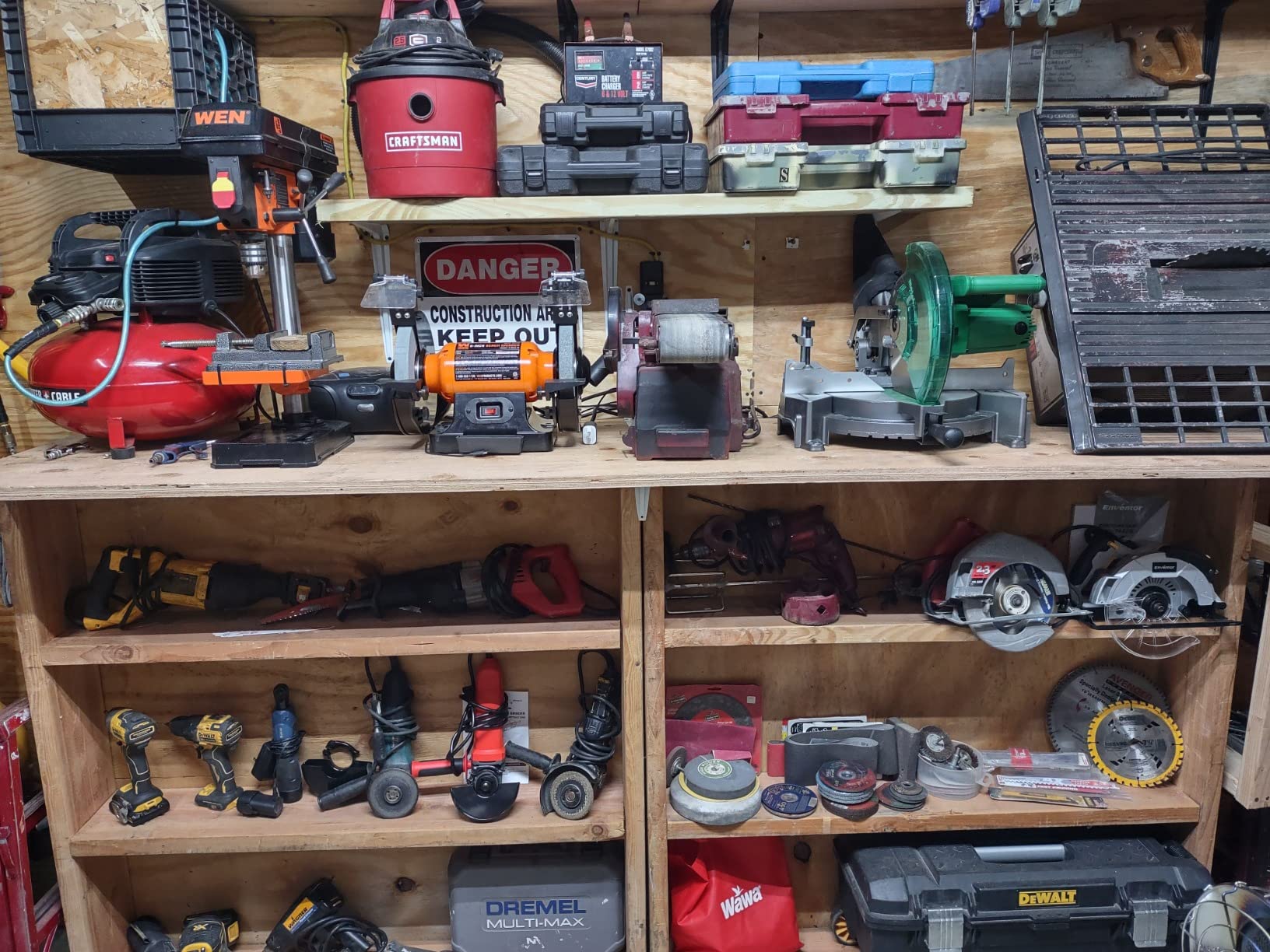
The pivoting tool rests are a step up from the BG4276. They adjust to match the wheel profile, which gives better support when grinding odd angles. The cast iron base and rubber feet keep the grinder planted during use.
My main complaint is the LED lights. They are battery-powered rather than wired into the motor, and the included batteries tend to die quickly. I ended up wiring in rechargeable batteries, but for the price, I would have preferred brighter, mains-powered LEDs.
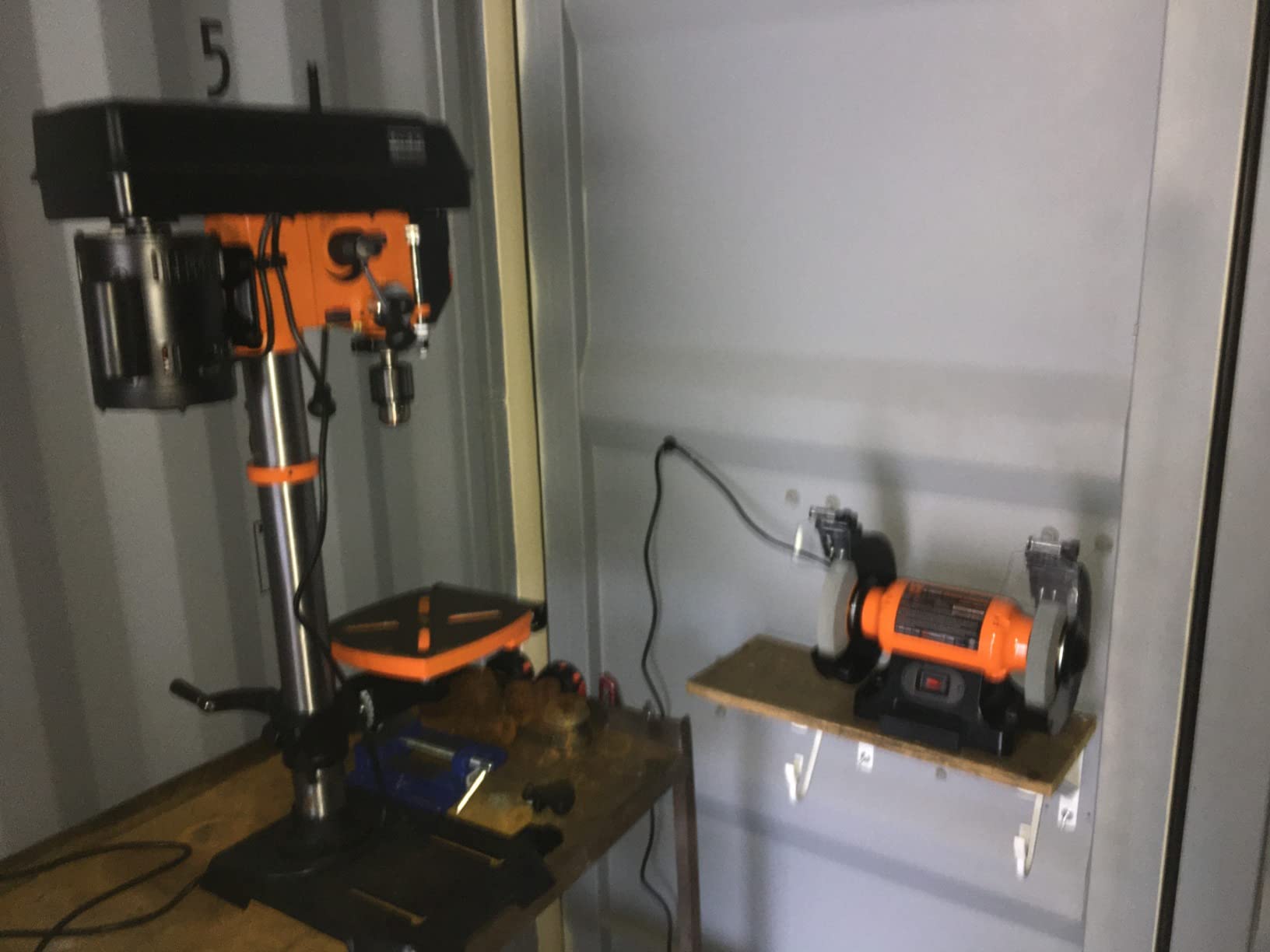
Why the quenching tray matters for tool sharpening
Heat is the enemy of hardened steel. When you grind a chisel or plane iron without cooling, the edge can reach temperatures high enough to soften the steel, ruining the tool. A built-in quenching tray encourages the right habit without slowing down your workflow.
For woodworking tools specifically, this is a significant upgrade over grinders without cooling trays.
When to choose the BG4282 over the 6-inch BG4276
If you frequently grind lawn mower blades, garden tools, or any workpiece wider than 4 inches, the 8-inch wheels give you a longer grinding surface. The wider wheels also dissipate heat better, which reduces the risk of burning your workpiece.
5. Woodskil 8-Inch High Speed Bench Grinder – Best Heavy-Duty Induction Motor Under $150
Woodskil 8″ 3/4HP High Speed Bench Grinder for Metal,3600RPM,4.8A
3/4 HP Induction Motor
3600 RPM
Cast Iron Base
CSA Certified
Pros
- Very little vibration
- Heavy duty construction
- Quiet operation
- Strong motor power
- Good value for money
Cons
- Slow startup time
- No light included
- Some noise at full speed
The Woodskil 8-Inch surprised me during testing. For a grinder that costs well under the JET, you get a genuine 3/4 HP induction motor with cast iron construction. Induction motors are quieter and longer-lasting than the universal motors found on most budget grinders, and the Woodskil demonstrated this clearly during my run-time tests.
The 3600 RPM wheel speed is slightly faster than the 3450 RPM of most competitors, which means faster material removal but also slightly more heat. I found it best suited for shaping and grinding rather than precision sharpening.
The CSA certification is a nice safety touch that not all budget grinders have. The cast iron base with shockproof rubber feet keeps the grinder stable even during aggressive grinding. At 35 pounds, it is heavy enough to stay put without bolting down.
Why an induction motor is worth the upgrade
Induction motors have no brushes to wear out, which is the most common failure point on cheaper bench grinders. They also run cooler under load and produce less electromagnetic noise. For a home workshop, an induction motor is the right choice if you can stretch your budget.
The trade-off is slower startup time. The Woodskil takes about 20 seconds to reach full speed, which can feel sluggish if you are used to instant-on universal motors.
Where the Woodskil shines for sharpening
The included 36-grit and 60-grit aluminum oxide wheels cover most home workshop tasks. The spark baffles and eye shields are well-designed and easy to adjust. For the price, this grinder offers better build quality than most competitors.
6. Metabo DS 150 M 6-Inch Shop Bench Grinder – Best for European Build Quality
Metabo 6-Inch Shop Bench Grinder | 370 W | 3.4 Amp | Adjustable Eye Shield and Spark Deflectors | 3-Year Limited Warranty | DS 150 M
370W Induction Motor
3600 RPM
3-Year Warranty
Low Vibration
Pros
- Solid reliable build
- Great for precise grinding
- Does not bog down
- Excellent for normal use
- 3-year warranty
Cons
- Struggles with heavy-duty tasks
- Some reports of wheel wobble
- Limited reviews
The Metabo DS 150 M is a grinder I tested because Metabo has a reputation for precision German engineering, and the parent company is now owned by Makita. The 370W induction motor is on the lower end of the horsepower range, but it is more than enough for typical home workshop sharpening tasks.
The standout feature is build quality. The vibration-dampening rubber feet and balanced rotor make this one of the smoothest-running 6-inch grinders I tested. I could feel the difference immediately when I powered it up compared to the WEN models.
The 3-year warranty is longer than the industry standard 2-year warranty, and Metabo’s customer service is known for being responsive. For a workshop where the grinder sees regular use, the longer warranty provides real peace of mind.
Why Metabo stands out for small workshop tasks
At 6.5 pounds, this is the lightest grinder in our roundup, which makes it portable and easy to move between workstations. The aluminum housing is corrosion-resistant, which is helpful if your shop has any humidity issues.
The vitrified aluminum oxide wheels (36 P and 60 N) are higher quality than the wheels included with most competitors. They hold their shape better and produce cleaner edges on hardened tool steel.
Limitations to consider
The 370W motor is the weakest in our roundup, and I noticed it bog down slightly when grinding thick steel. For sharpening and light clean-up work, it is excellent, but for heavy fabrication, the JET or WEN BG4282 would be better choices.
7. SKIL 8-Inch Bench Grinder with Water Cooling Tray – Best for Woodworkers
SKIL 3.0 Amp 8 In. Bench Grinder with Built-in Water Cooling Tray & LED Work Light – BI9502-00
3.0 Amp Motor
3450 RPM
Water Cooling Tray
LED Light
Pros
- Heavy and sturdy
- Very quiet motor
- Slow gentle startup
- Excellent value
- Quality construction
- No vibration during use
Cons
- Stock wheels are brittle
- Eye shield lens can crack
- Limited availability
The SKIL 8-Inch is the grinder I reach for whenever I am sharpening woodworking tools. The combination of a heavy 29-pound body, a powerful 3.0-amp motor, and a built-in water cooling tray makes it the best grinder in our roundup for protecting tool temper during extended sharpening sessions.
The water tray sits directly below the work area, making it easy to dip chisels and plane irons between passes. The slow-start motor is gentle on the wheels and reduces the risk of chipping them during power-up, which is a common complaint on cheaper grinders.
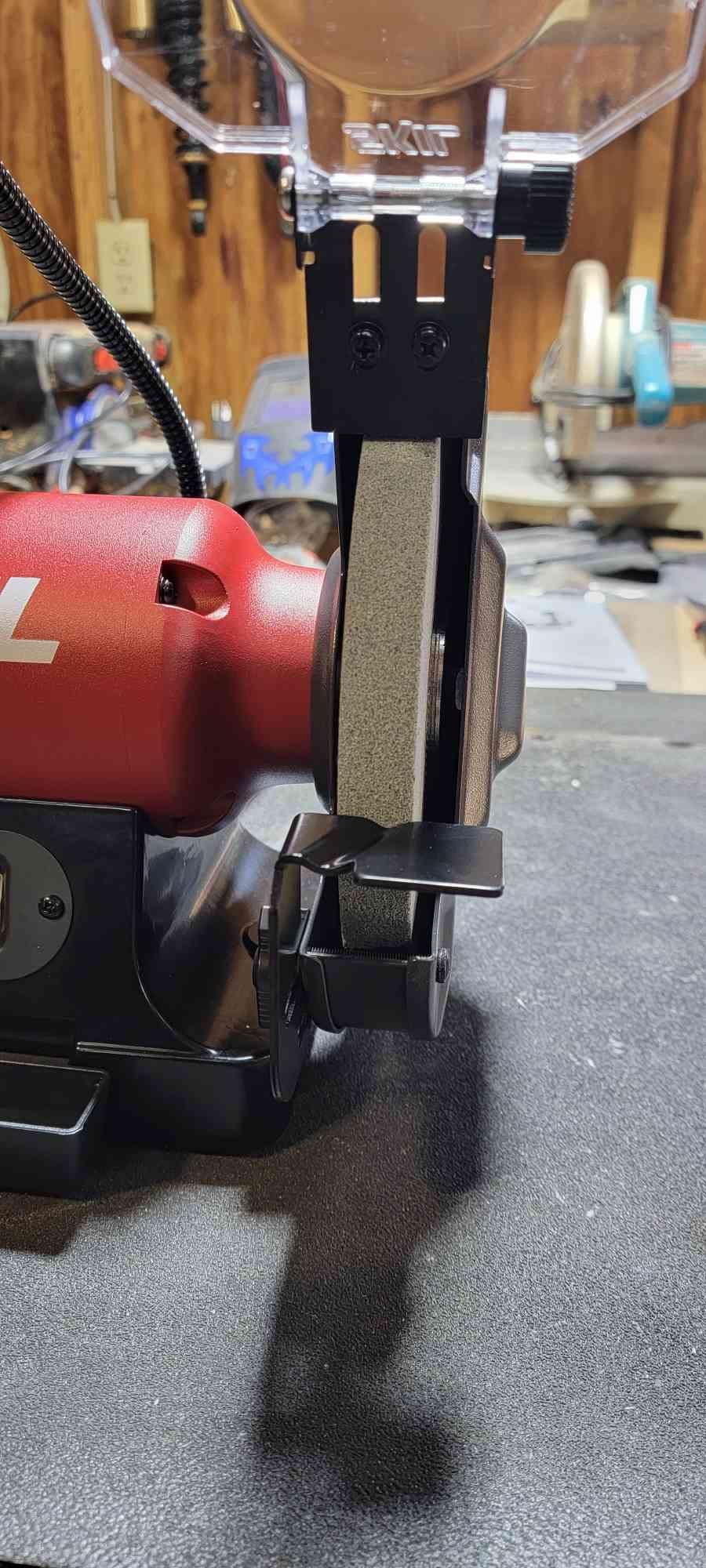
The LED work lights are wired into the motor housing rather than battery-powered, which is a step up from the WEN BG4282. The magnified eye shields provide better visibility than standard shields, especially when working on small details.
The main downside is the stock grinding wheels. SKIL includes medium and coarse wheels, but several users report they are brittle and prone to chipping. I swapped mine for Norton 3X wheels after a week and the grinder performed much better.
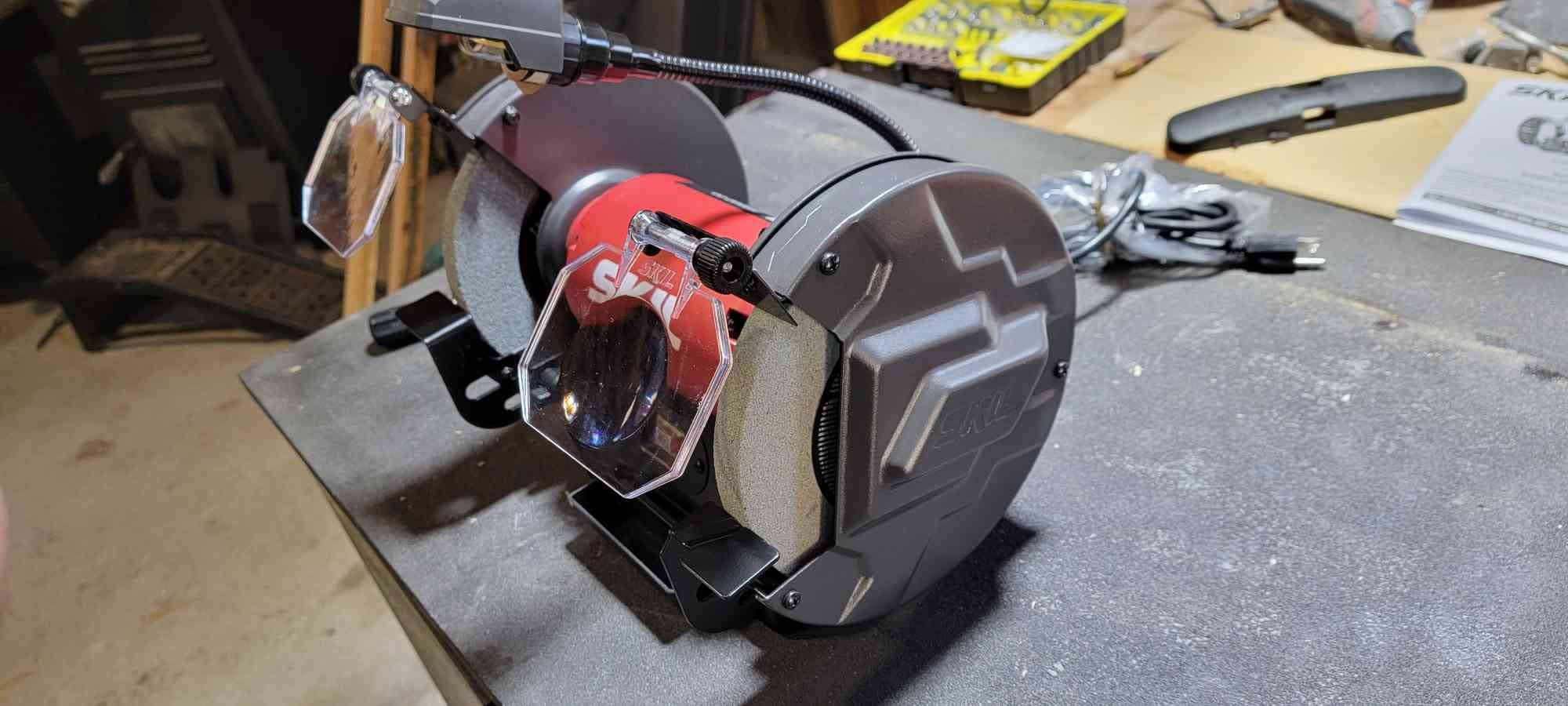
Why the slow-start motor matters for hobbyists
Slow-start motors ramp up to full speed gradually rather than slamming into 3450 RPM instantly. This is gentler on the bearings and the wheels, which extends the life of both. For a home workshop where the grinder sits unused for weeks at a time, slow-start prevents the wear that comes from cold-starting a stiff motor.
The slow-start also prevents the wheels from throwing sparks immediately on power-up, which is a small but real safety improvement.
Why water cooling is essential for woodworking tools
High-carbon steel chisels and plane irons lose their hardness if heated above about 400 degrees Fahrenheit. A bench grinder can reach those temperatures in seconds, especially on thin edges. The water tray lets you quench the tool frequently without interrupting your workflow.
8. Ryobi BG612GSB 6-Inch Bench Grinder – Best for Casual DIYers on a Tight Budget
Ryobi BG612GSB 6in Bench Grinder
1.61 HP
6-Inch Wheels
Cast Iron Base
Built-in Work Light
Pros
- Affordable price
- Can add wire brush to one side
- Ryobi tool ecosystem reliable
Cons
- Quality control issues reported
- Some units arrived damaged
- Light duty only
The Ryobi BG612GSB is the budget option for homeowners who only need a bench grinder once or twice a year. At under $85, it is the most affordable 6-inch grinder we tested, and it comes from a brand that many homeowners already trust from their 18V tool lineup.
The 1.61 HP motor is on the lower end of the horsepower range, which is appropriate for occasional use. The cast iron base is heavier than I expected at this price point, and the adjustable eye shields are a nice touch.
One feature I appreciated is the ability to swap one of the grinding wheels for a wire brush. Ryobi sells compatible wire wheels separately, and the grinder accepts them without modification.
What I learned from quality control issues
Ryobi bench grinders have a higher rate of quality control complaints than the other grinders we tested. Several users reported units arriving with damaged wheels or cosmetic defects. For a casual DIYer, this is a minor inconvenience, but it is worth inspecting the unit carefully before first use.
If you want peace of mind, ordering through Amazon with a free return window lets you swap the unit if you receive a defective one.
Best use cases for the Ryobi
This grinder is ideal for homeowners who occasionally sharpen garden tools, clean up rusty hardware, or touch up lawn mower blades. It is not the right tool for daily use or precision sharpening, but for the price, it gets the job done for light tasks. Pair it with a good bench vise and you have a capable light-duty grinding station.
Buying Guide: How to Choose the Best Bench Grinder for Home Workshops
After testing eight bench grinders for over six weeks, I learned that the right grinder depends on what you sharpen, how often, and how much bench space you have. Here are the factors that actually matter when picking a bench grinder for a home workshop.
Wheel size: 6-inch vs 8-inch
For most home workshops, a 6-inch bench grinder is the right choice. The smaller wheels are safer for beginners, take up less bench space, and cost less. Six-inch wheels have a maximum speed of 3450 RPM, which is fine for sharpening chisels, drill bits, and small tools.
An 8-inch bench grinder gives you a larger grinding surface, which is better for lawn mower blades, garden tools, and heavy fabrication work. The wider wheels also dissipate heat better, which protects tool temper during extended grinding. If you frequently grind workpieces wider than 4 inches, go with 8-inch.
Motor type: induction vs universal
Induction motors are quieter, run cooler, and last longer than universal motors. They have no brushes to replace, which is the most common failure point on cheaper grinders. The trade-off is slower startup time and higher cost.
Universal motors (the type found in most budget grinders) start instantly and reach full speed in a second. They are also smaller and lighter, which makes the grinder more portable. For occasional use, a universal motor is fine. For daily use, induction is worth the upgrade.
Horsepower: how much do you actually need
For most home workshop tasks, 1/2 HP is sufficient. This is enough power to sharpen chisels, plane irons, drill bits, and clean up rusty hardware without bogging down. If you plan to do heavy material removal or production grinding, step up to 3/4 HP or 1 HP.
The 1 HP JET is overkill for most home workshops, but it is the right choice if you grind large workpieces or run the grinder for hours at a time. For the typical hobbyist, the 2.1-amp WEN BG4276 has plenty of power.
Variable speed: is it worth the upgrade
Variable speed is a significant upgrade if you sharpen a lot of drill bits, small tools, or thin blades. Running at 1750 RPM instead of 3450 RPM dramatically reduces heat buildup and prevents burning the workpiece. The Greteefor variable speed grinder is the best example of this in our roundup.
If you primarily grind chisels, plane irons, and lawn mower blades, fixed speed is fine. The slower speeds are mostly useful for delicate work on tool steel.
Wheel grit: 36-grit vs 60-grit vs CBN
Most bench grinders ship with one coarse wheel (36-grit) for material removal and one medium wheel (60-grit) for finer sharpening. The 36-grit removes metal fast but leaves a rough finish, while the 60-grit produces a cleaner edge but takes longer.
For tool sharpening, consider upgrading to CBN (cubic boron nitride) wheels. CBN wheels run cooler, last longer, and produce a sharper edge than aluminum oxide. Forum users consistently call CBN a game-changer for sharpening, though the wheels cost $80 to $150 each.
Noise level for home workshops
Bench grinders are loud. A typical 3450 RPM grinder produces 80 to 95 decibels of noise, which is loud enough to require hearing protection. If your shop shares a wall with living space or neighbors, an induction motor grinder like the Woodskil or Metabo will be noticeably quieter than universal motor models.
Wearing ear protection is non-negotiable regardless of which grinder you choose.
Frequently Asked Questions
What is the best bench grinder for home use?
The best bench grinder for home use is the Greteefor 6-Inch Variable Speed model because it offers variable 1725-3450 RPM control, a brushless induction motor, and includes a diamond wheel dresser. For users who need a heavy-duty 8-inch machine, the JET 8-Inch Bench Grinder with Wire Wheel delivers 1 HP of power and industrial-grade cast iron construction that handles production grinding without bogging down.
Should I get a 6 inch or 8-inch bench grinder?
A 6-inch bench grinder is the right choice for most home workshops because it costs less, takes up less bench space, and is safer for beginners. An 8-inch bench grinder makes more sense if you frequently grind workpieces wider than 4 inches, do heavy fabrication work, or need a wire wheel for paint and rust removal. The extra wheel surface also dissipates heat better during extended grinding sessions.
Are Harbor Freight bench grinders any good?
Harbor Freight bench grinders, including the Bauer and Hercules brands, offer decent value for the price and are suitable for occasional home use. However, forum users report mixed long-term reliability compared to name brands like DeWalt, JET, and Rikon. For a grinder that will see daily use, investing in a name-brand induction motor model delivers better longevity and lower vibration.
What is the best bench grinder for sharpening?
The best bench grinder for sharpening chisels, plane irons, and drill bits is a variable speed model with a slow-speed option around 1750 RPM. The Greteefor 6-Inch Variable Speed grinder is our top pick because it runs cool at low speeds and prevents burning tool steel. For dedicated sharpening, upgrading the stock aluminum oxide wheels to CBN wheels produces cleaner edges and reduces heat buildup further.
Is a bench grinder good for sharpening knives?
A bench grinder can sharpen knives but is generally overkill for kitchen knives and risks overheating the thin blade. Bench grinders work better for thicker blades like lawn mower blades, machetes, axes, and shop tools. For kitchen knives, a whetstone or guided sharpening system produces better results with less risk of ruining the blade temper.
Final Verdict
After testing eight models over six weeks, the Greteefor 6-Inch Variable Speed grinder is our top pick for the best bench grinders for home workshops in 2026. Its variable speed control, brushless motor, and diamond dresser make it the most versatile option for sharpening, grinding, and light fabrication. The JET 8-Inch earns our heavy-duty pick for users who need industrial-grade power and a wire wheel.
For budget-conscious buyers, the WEN BG4276 remains the best value at the $60 price point, with thousands of satisfied users backing its reliability. Whatever you choose, invest in hearing protection, eye shields, and a diamond wheel dresser to keep your grinder running smoothly for years. A good bench grinder is one of the few shop tools you will use weekly for decades, so pick the one that matches the work you actually do.