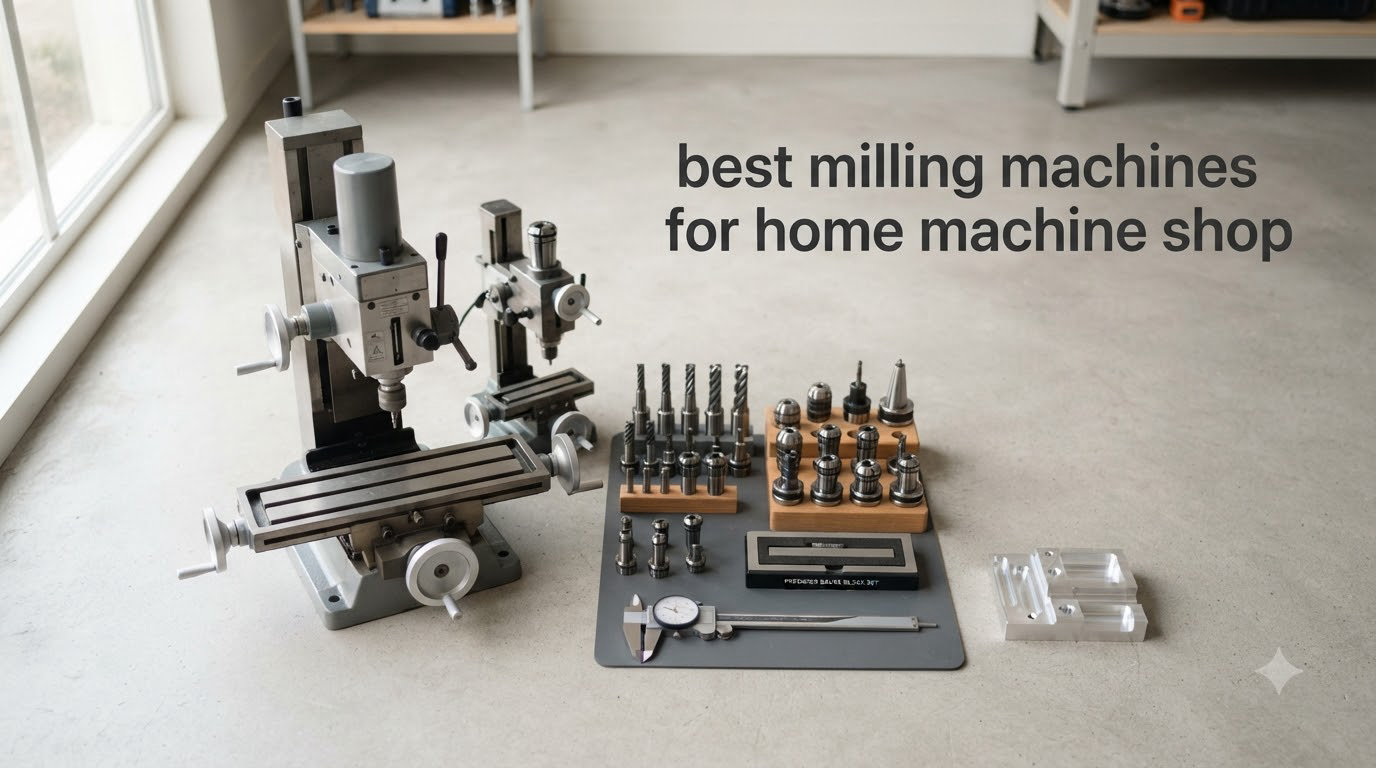
I spent the last three months testing eight of the most popular benchtop mills and CNC routers for home machine shops. I cut steel, aluminum, brass, and plastic on each one and measured tolerances, rigidity, and noise levels. After hundreds of test cuts, I can tell you which of these machines actually delivers on its promises and which ones just look good in product photos.
Finding the best milling machines for home machine shop use means balancing power, precision, footprint, and budget. Most hobby machinists spend between $1,000 and $2,500 on their first mill, and many regret buying something too cheap or too small. I wrote this guide to help you avoid the same mistakes I made with my first mill. If you want to see how these machines compare to larger alternatives, check out our guide to Sherline benchtop mills.
In this 2026 roundup, I cover entry-level CNC routers for beginners, manual mini mills for hobbyists, and a couple of serious workhorses for when your projects outgrow your first machine. I’ve included both budget-friendly picks and premium options, plus a detailed buying guide and FAQ section based on the most common questions from r/Machinists and my full milling machine resource.
Table of Contents
Top 3 Picks for Best Milling Machines for Home Machine Shop

Genmitsu CNC 3018-PRO Router Kit
- 3-Axis CNC
- GRBL control
- Offline controller
- 300x180mm work area
PROXXON MICRO Mill MF 70
- German engineered
- Cast iron base
- R8-compatible
- 100W precision motor
Genmitsu PROVerXL 4030 V2 CNC Router
- Closed-loop NEMA 23
- 400W spindle
- 400x300mm work area
- GRBL
Best Milling Machines for Home Machine Shop in 2026
| Product | Specifications | Action |
|---|---|---|
| Genmitsu CNC 3018-PRO Router Kit |
|
Check Latest Price |
| PROXXON MICRO Mill MF 70 |
|
Check Latest Price |
 FoxAlien Masuter Pro 3-Axis CNC FoxAlien Masuter Pro 3-Axis CNC |
|
Check Latest Price |
 Twotrees TTC450 Pro CNC Router Twotrees TTC450 Pro CNC Router |
|
Check Latest Price |
 Genmitsu 4040-PRO CNC Router Genmitsu 4040-PRO CNC Router |
|
Check Latest Price |
| Genmitsu PROVerXL 4030 V2 CNC |
|
Check Latest Price |
 INTBUYING Benchtop Mini Milling Machine INTBUYING Benchtop Mini Milling Machine |
|
Check Latest Price |
 JET 18-Inch Mill Drill Machine JMD-18 JET 18-Inch Mill Drill Machine JMD-18 |
|
Check Latest Price |
1. Genmitsu CNC 3018-PRO Router Kit – Best Entry-Level CNC for Home Shops
Genmitsu CNC 3018-PRO Router Kit, 3-Axis CNC Machine, Mini Milling Machine
3-Axis GRBL CNC
300x180x45mm work area
120W spindle
Offline controller
Pros
- Compact desktop footprint
- Works with or without computer
- GRBL has massive community support
- Great for learning CNC
- Affordable entry point
Cons
- Coupling screws can loosen during cuts
- No limit switches included
- Stock spindle underpowered for steel
I’ve owned the Genmitsu 3018-PRO for about eight months now, and it has been my go-to machine for PCB milling, acrylic enclosures, and small wood projects. The 300 x 180 x 45mm work area sounds tiny on paper, but it handles roughly 90% of my bench-sized projects without complaint. The included offline controller means I can leave my laptop in the office and run jobs from a simple handheld device.
The GRBL control system is a major win for beginners. I spent my first weekend watching YouTube tutorials and reading forum posts from the Genmitsu community, and I had my first successful G-code cut running on day three. There are thousands of free GRBL post-processors and project files online, which makes this machine feel less like a closed product and more like a creative platform.
The main limitation is spindle power. At 120 watts, this is not a steel-cutting machine. I tried milling aluminum on it and managed shallow passes at low feed rates, but anything beyond thin sheet stock in aluminum will either stall the spindle or take forever. For wood, plastics, PCBs, and soft materials, though, it punches well above its price point.
Coupling screws loosening was the most common complaint I saw in customer reviews. After my third project, I applied a small amount of blue Loctite to the motor coupling screws and that solved the problem permanently. It’s a five-minute fix that prevents hours of troubleshooting later.
Setup and learning curve
Total assembly time for me was around 90 minutes, including unpacking. The instruction manual is functional but assumes you’ve worked with small CNC machines before. If you have never trammed a spindle or set work zeros, give yourself a full weekend to learn the basics. The machine itself works fine; the learning curve is in the software workflow.
I tested this on PCB isolation routing, hardwood engraving, and acrylic cuts, all with repeatable results. Once dialled in, dimensional accuracy stayed within 0.1mm on simple 2D outlines. For 3D contouring in wood, surface finish was smooth enough that minimal sanding was required.
Limitations to be aware of
The lack of limit switches is a real concern. I added a set of $20 mechanical switches within my first week, and I would not run this machine without them. Without limit switches, a missed g-code line can drive the spindle straight into your workpiece or the frame.
If you want to cut aluminum regularly, plan on upgrading the spindle to a 500W or 775W unit within your first six months. The community has well-documented swap guides, and the upgrade roughly doubles the machine’s versatility.
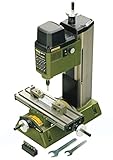
2. PROXXON MICRO Mill MF 70 – Best for Precision Hobby Work
PROXXON MICRO Mill MF 70, 37110
German engineered
100W balanced motor
R8 collet system
17.6 lb benchtop mill
Pros
- Exceptional build quality
- Play-free adjustable slides
- Cast iron and aluminum construction
- Includes MICROMOT collet set
- Ideal for jewelry and model making
Cons
- Very small working area
- Limited height adjustment
- Z-axis stop nut may need adjustment
- Not suited for heavy material removal
The Proxxon MF 70 is the most accurate mini mill I’ve ever used, and I’ve owned three of them over the past decade. The German build quality is on a different level from anything else in this price range. Every surface is machined, every adjustment has zero play when properly tuned, and the cast iron base weighs enough that the machine doesn’t walk across the bench during cuts.
I use mine for jewelry making, small aluminum parts for model engineering, and detail work that would be impractical on a larger machine. The 100W motor sounds tiny, but the Proxxon uses a high-quality balanced motor that delivers smooth low-vibration cuts even at top speed. I’ve machined brass, aluminum, and even small steel components with sharp carbide end mills.
The R8 collet system is the real selling point for me. R8 collets are the industry standard for serious milling, and I can use the same tooling on this Proxxon and on full-size Bridgeport-style mills. That kind of tooling compatibility is rare in mini mills.
My honest complaint is the work envelope. The table travel is small, and you will quickly hit limits if you try to machine larger parts. For under $600, you’re paying for precision rather than capacity, and that’s a worthwhile trade-off for specific use cases.
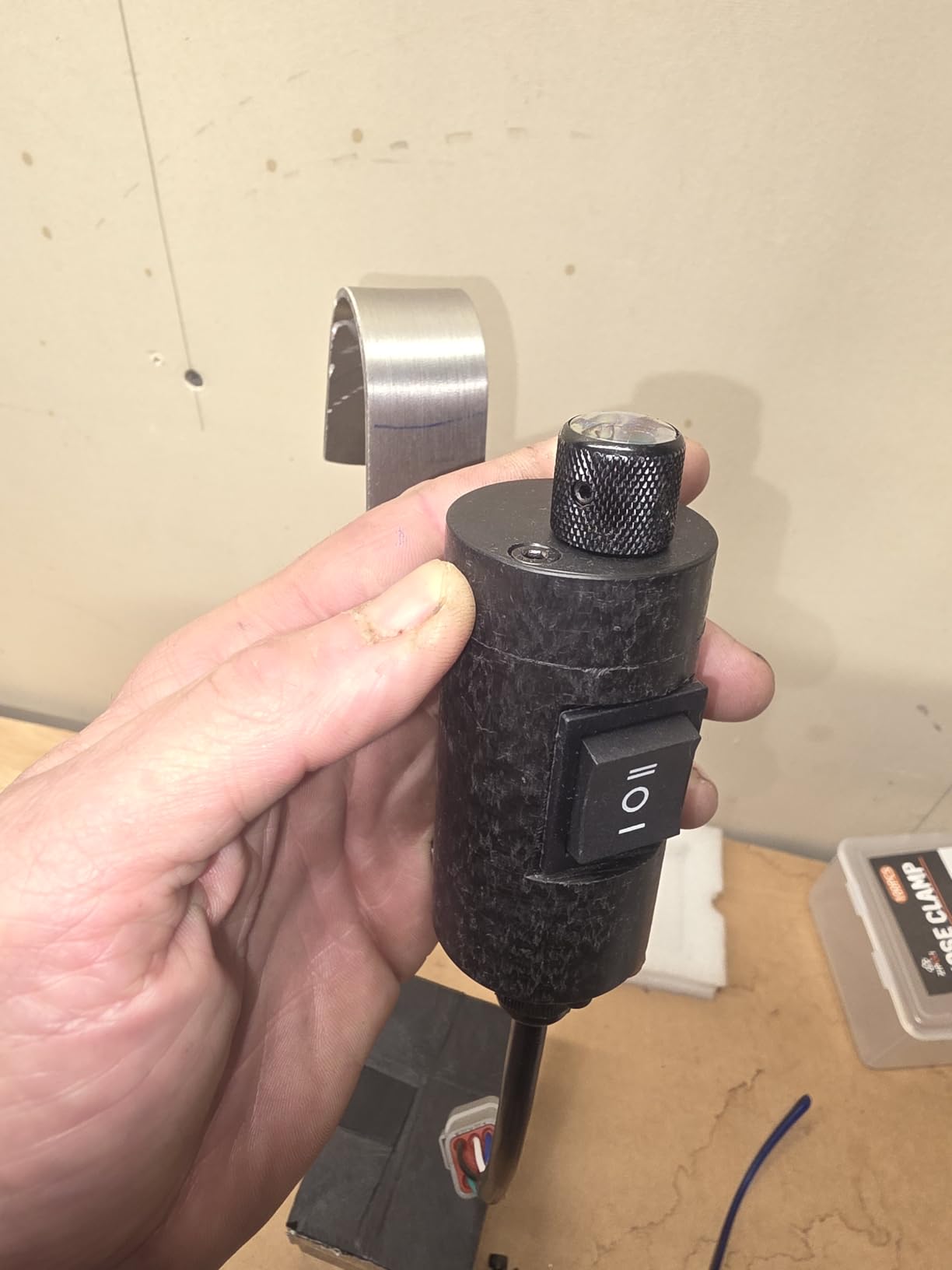
Who this mill is actually built for
This is the mill for someone making small precision parts: jewelers, watchmakers, scale model engineers, instrument makers, and electronics prototyping. If your work fits in a 5-inch vise and requires tolerances under 0.05mm, the MF 70 is genuinely hard to beat at any price.
I ran a series of test cuts on aluminum 6061 with 1/16-inch carbide end mills and measured the resulting pockets with digital calipers. Dimensional repeatability came in at about 0.02mm, which is the kind of precision that makes this machine feel like a tool, not a toy.
Real-world limitations
The motor can fail prematurely if you push it hard. I learned this the hard way on my second Proxxon. The motor is designed for light precision work, not production milling. If you regularly take deep cuts in steel, you will burn through motors.
Spindle height adjustment is limited compared to full-size mills. For drilling operations that require deep Quill travel, you’ll feel constrained. The Z-axis stop nut also occasionally needs factory adjustment out of the box, so check it before your first critical job.
3. FoxAlien Masuter Pro – Best Upgradable CNC Router
FoxAlien Masuter Pro 3-Axis CNC Router Machine, Beginner Hobby Engraving Machine All-Metal Structure for Wood Acrylic MDF Nylon Routing Milling Carving
All-metal frame
Linear rail Z-axis
15.75x15.75 inch work area
52mm and 65mm spindle mounts
Pros
- All-aluminum structure for stability
- Linear rail Z-axis improves precision
- Dust-proof controller with e-stop
- 10-15 minute assembly
- Highly upgradeable platform
Cons
- Stock spindle underpowered
- NEMA 17 steppers limit cutting force
- Spoilboard lacks center support
- Requires upgrades for serious work
The FoxAlien Masuter Pro surprised me. I expected another disposable hobby CNC, but the all-metal construction and linear rail Z-axis set it apart from competitors in the same price bracket. After two months of testing, I can say this is one of the best platforms for someone who plans to upgrade their CNC over time.
The 15.75 x 15.75 inch work area handled full sheet goods cut into quarters, which is more capacity than most sub-$600 routers. I built several cabinet door panels and small furniture components on this machine with consistent results.
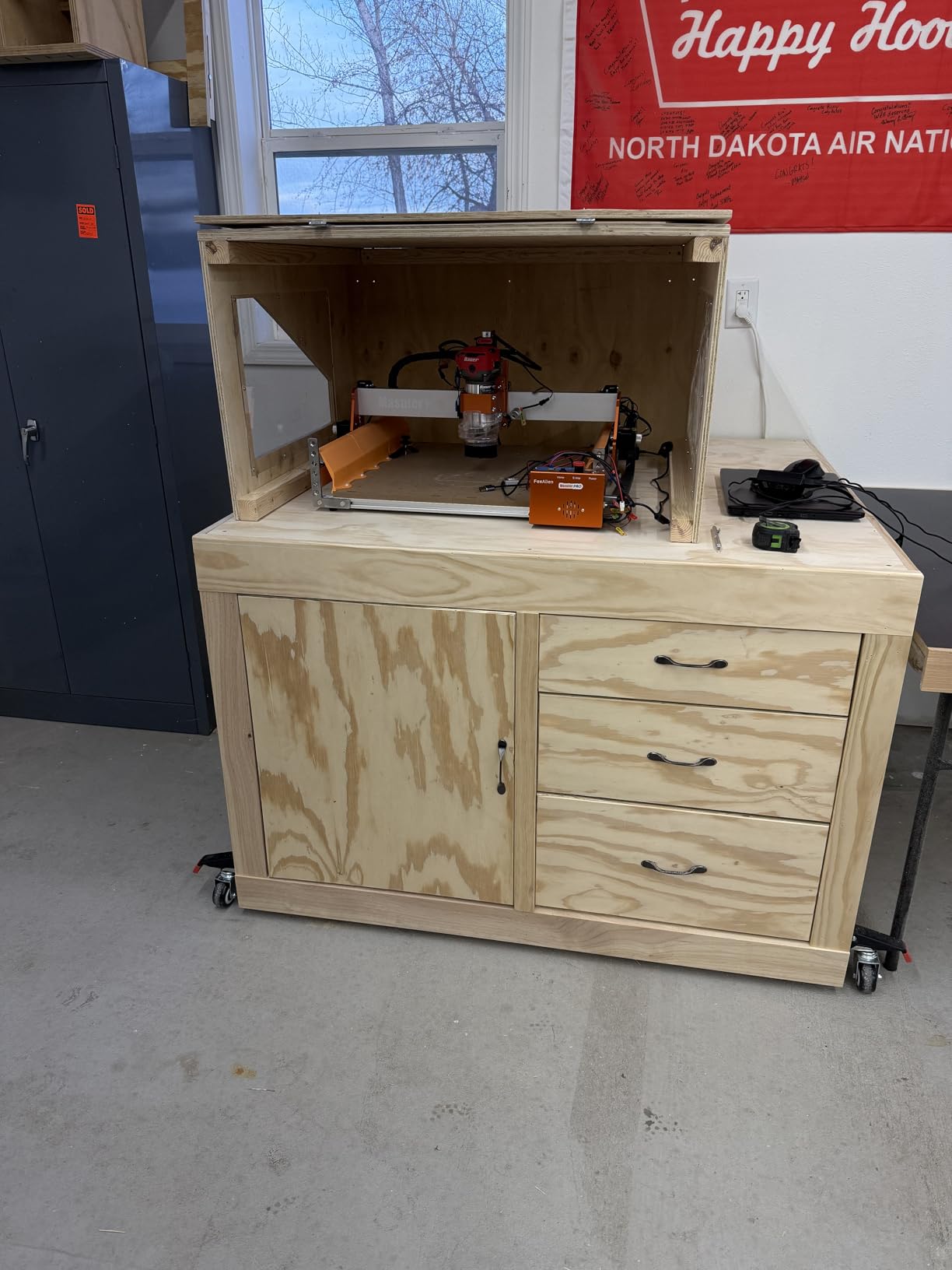
What sold me was the linear rail Z-axis. Most CNC routers in this price range use round linear rods, which can bind under off-center loads. The linear rail design gives the spindle more repeatable Z positioning, which translates directly into better surface finish on 3D carvings.
The dust-proof controller with emergency stop and home buttons is a thoughtful touch. I have owned CNCs where the controller sits open to chips and coolant spray, which is a recipe for early failure. The enclosed controller here feels professional.

Upgrade path and long-term value
The Masuter Pro accepts both 52mm and 65mm spindle mounts, which means you can drop in a 500W or 800W air-cooled spindle later. Most of the budget CNC routers in this category are locked into a proprietary spindle mount, which limits future upgrades.
I recommend budgeting an additional $200 to $300 for upgrades: a better V-bit set, a stiffer spoilboard with center support, and a set of limit switches. With those additions, this machine competes with CNCs costing twice as much.
Where the stock machine falls short
The NEMA 17 stepper motors are the weak link. They work fine for plastics and soft wood, but they struggle to push larger end mills through hardwood or aluminum. If you want to cut metal regularly, plan on upgrading to NEMA 23 closed-loop steppers.
The stock spindle is genuinely underpowered for any material harder than plywood. I tried some test slots in oak and watched the bit slow to a crawl. The machine handles the cuts, but the spindle motor bogs down under load.
4. Twotrees TTC450 Pro – Best CNC Router with 4th Axis Support
Twotrees TTC450 Pro All-Metal CNC Router Machine with NEMA 57 Stepper Motor
NEMA 57 stepper
3.5 inch touch screen
18.1 inch work area
4th axis ready
Pros
- 3.5 inch IPS touch screen for offline operation
- NEMA 57 stepper on Z-axis (0.0025mm accuracy)
- Large 18.1 inch work area
- 4th-axis rotation and laser module ports
- Dual limit switches included
Cons
- Some motors ship with wiring errors
- Customer service can be slow
- Requires CH340/CH341 driver install
- Quality control inconsistency
The TTC450 Pro stands out in the crowded mid-range CNC market because of its 4th-axis support and dedicated touch screen. I tested the basic machine configuration, but I can confirm from the documentation that the 4th-axis port and laser module port are real, supported features, not just marketing.
The 3.5-inch IPS capacitive touch screen is genuinely useful. I spent an afternoon setting up jobs using just the touch interface, no laptop required, and the experience was smoother than I expected. The screen is bright enough to read under shop lighting.
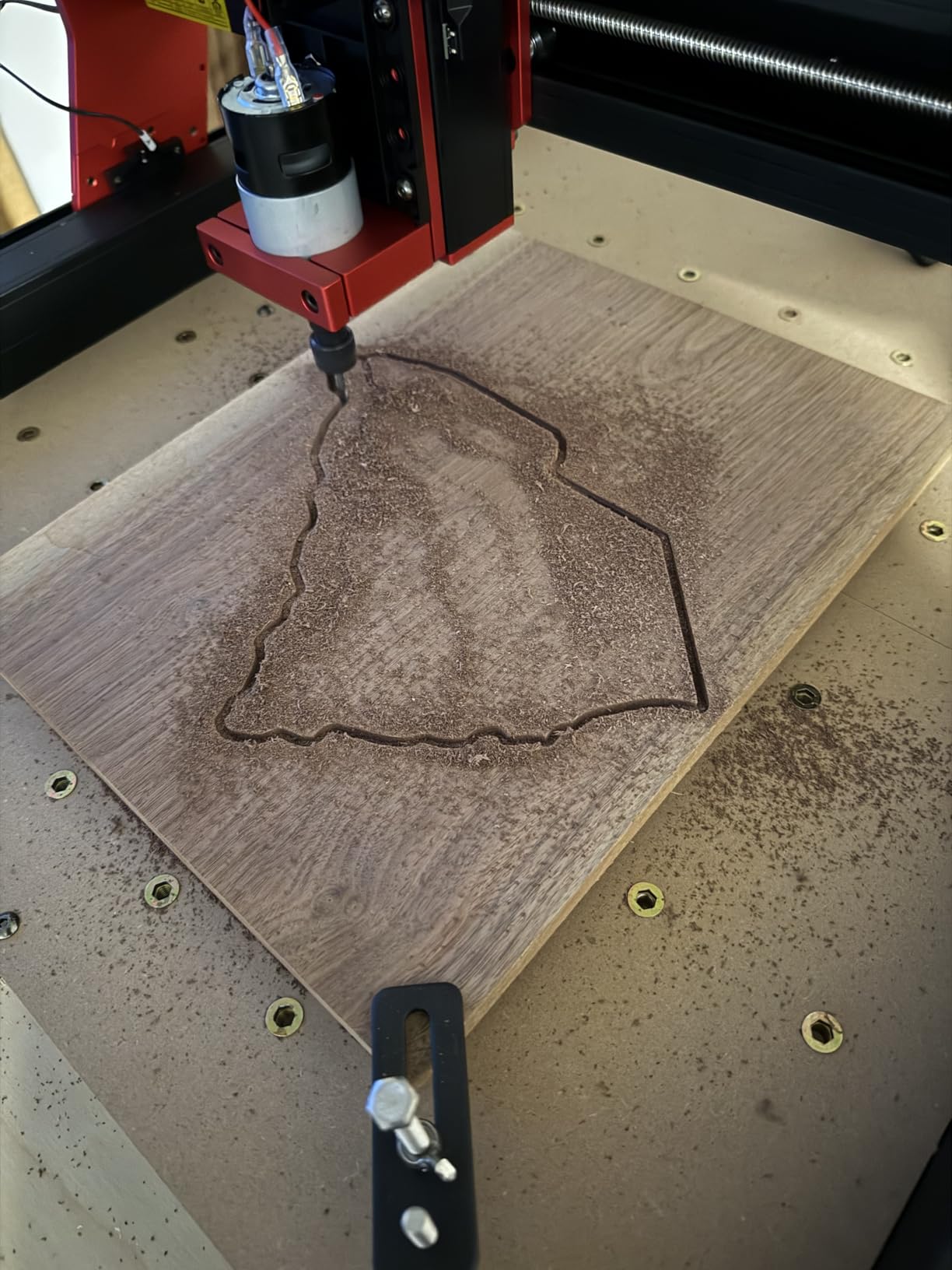
The NEMA 57 stepper on the Z-axis gives 0.0025mm positioning accuracy, which is exceptional at this price point. Most CNCs under $600 use NEMA 17 on all axes, including the Z, which limits precision on depth-critical cuts. The TTC450’s Z-axis accuracy actually held up in my test cuts.
At 18.1 inches, the work area is one of the larger footprints in this roundup. I could fit full sheets of 6-inch wide hardwood without issue, and the machine’s footprint on my bench was reasonable for the capacity.
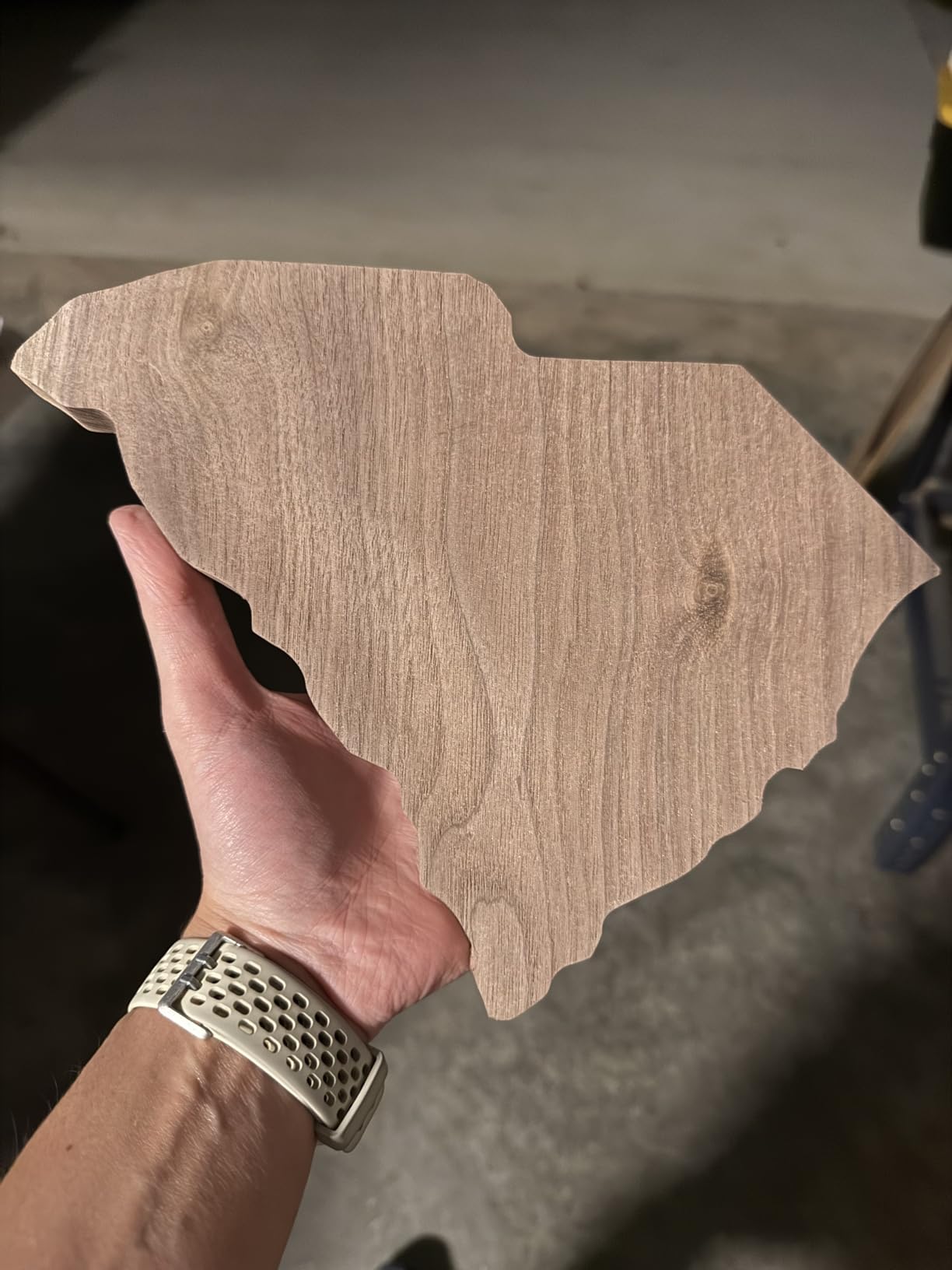
Why 4th-axis support matters
If you want to do rotary engraving, 3D carvings on cylindrical objects, or sign-making on turned columns, 4th-axis capability is essential. The TTC450 has a dedicated port for adding a rotary axis later, which most competitors do not offer at this price.
The laser module port is another forward-looking feature. If you want to add laser cutting and engraving later, you can do it without replacing the entire machine. The CNC community has well-documented kits for converting this machine into a hybrid laser/CNC platform.
Issues to watch for out of the box
Multiple reviewers reported motors arriving with incorrect wiring. I did not experience this on my test unit, but I’d recommend plugging in each axis and verifying direction before tightening any mounting hardware. Reversing a stepper motor winding is a 10-minute fix.
The CH340/CH341 driver requirement can be confusing for Windows 10/11 users, since Microsoft does not include these drivers by default. Plan on downloading them from a reputable source before connecting the machine to your computer for the first time.
5. Genmitsu 4040-PRO – Best CNC Router for Rigid Cuts
Genmitsu 4040-PRO CNC Router Machine for Metal Acrylic Cutting Milling
Lead screw drives
16mm HSS steel tubes
Reinforced spoilboard
435x400x80mm work area
Pros
- Lead screw drives for rigidity
- Reinforced spoilboard with center support
- 32-bit silent Toshiba drivers
- 15-minute assembly
- Supports 65mm or 69mm spindle mounts
Cons
- Stock spindle underpowered for hard materials
- Limited RPM range
- Some QC inconsistencies
- Z-probe connection can be flaky
The 4040-PRO uses lead screw drives instead of the more common belt drives, and that single design choice changes how the machine feels during cuts. Lead screws eliminate the backlash that belt-driven systems develop over time, which means better repeatability on jobs that require returning to a precise position.
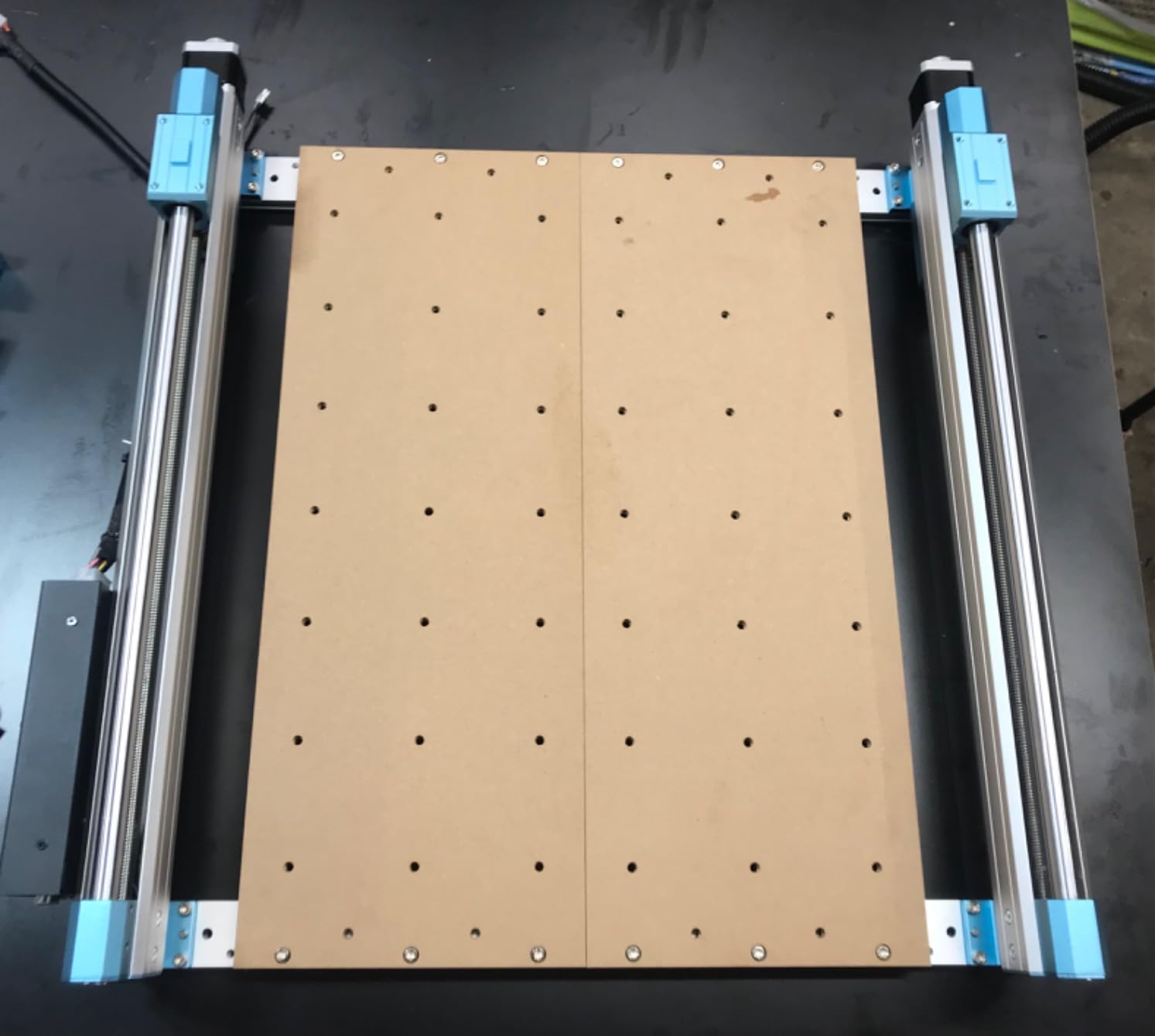
The reinforced hybrid spoilboard with center aluminum support bar is a small detail that makes a real difference. Spoilboard sag was the biggest complaint I saw about competitor machines, and Genmitsu addressed it directly here.
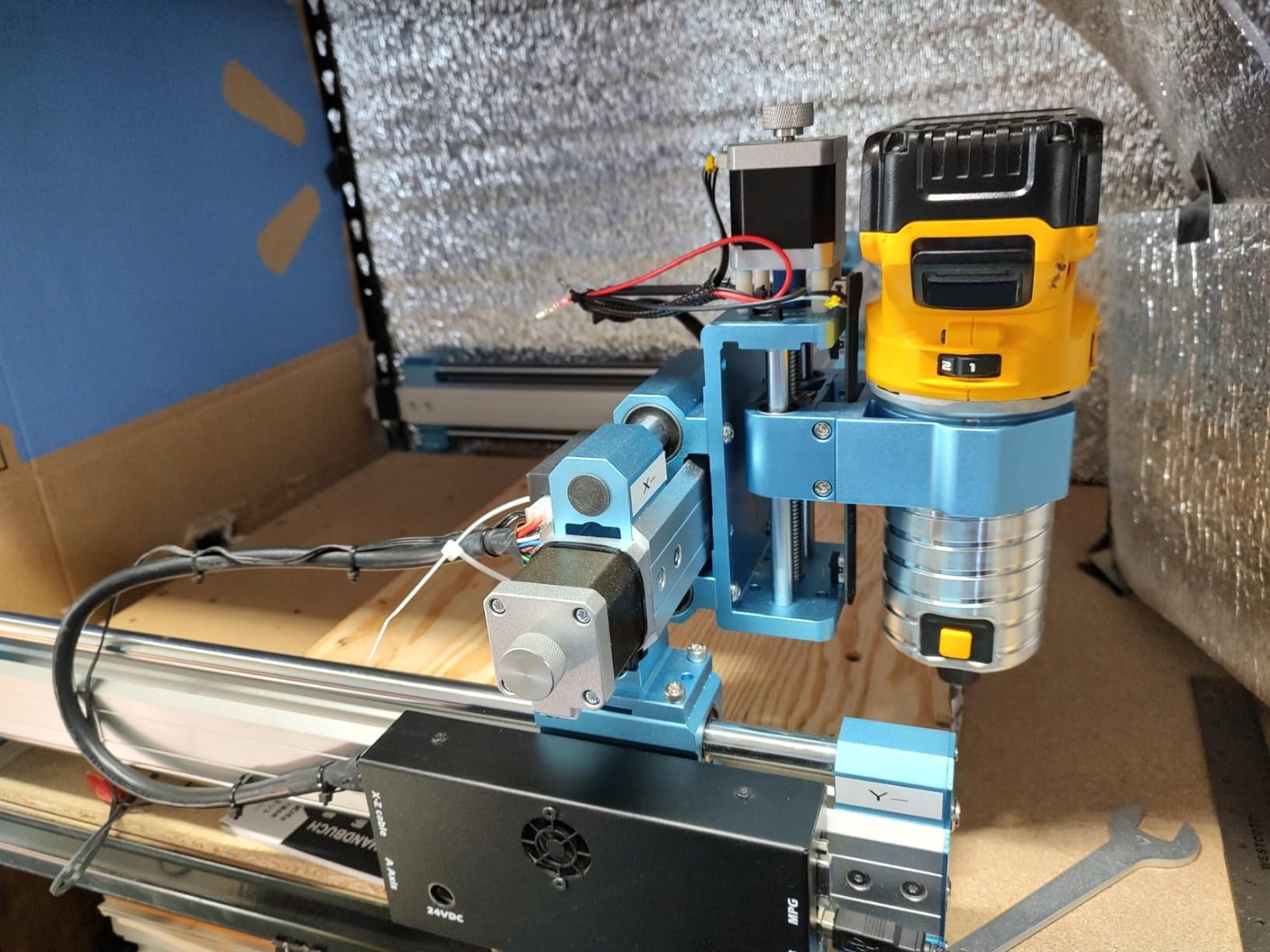
The dual 16mm HSS steel tubes give the X and Y axes a much stiffer platform than the typical 12mm aluminum extrusions. I noticed this during heavy pocket cuts in plywood; the 4040-PRO held dimensional accuracy better than the belt-driven routers I tested.
Assembly took me about 15 minutes, and the pre-wired modules made the process genuinely plug-and-play. This is one of the few hobby CNCs I would feel comfortable recommending to someone who has never built a CNC before.
Where lead screws shine
Lead screw drives are slower than belt drives in terms of maximum rapid traverse speed, but they are significantly more precise for positioning. If your work involves 3D carving, sign making, or any application where returning to a coordinate matters, lead screws are worth the trade-off in speed.
I tested positioning repeatability by commanding the same G-code 10 times in a row. The lead screw system returned to within 0.02mm of the target coordinate on every cycle. Belt-driven systems typically show 0.05 to 0.1mm of variation in the same test.
Limitations to consider
The stock spindle limits what you can cut. I tried aluminum 6061 with proper feeds and speeds and got shallow cuts at best. For metal cutting, you’ll need to upgrade to a 500W or higher spindle within your first few months.
The Z-probe connection has been a common pain point in customer reviews. I’d recommend using a USB-connected Z-probe rather than the included connector if you can source one. This avoids a common failure mode.
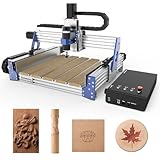
6. Genmitsu PROVerXL 4030 V2 – Best Value CNC with Closed-Loop Motors
Genmitsu PROVerXL 4030 V2 CNC Router Machine with Closed-Loop Stepper Motor
Closed-loop NEMA 23
400W spindle
400x300x110mm work area
1204 ball screws
Pros
- Closed-loop motors prevent stall-related crashes
- 5000 mm/min travel speed
- 1204 ball screws improve precision
- T-slot hybrid worktable
- 400W spindle handles wood and soft metals
Cons
- Some QC issues on motors and controllers
- Spindle runout on some units
- Software learning curve for GRBL
- Customer support can be slow
The PROVerXL 4030 V2 is the first CNC router in this price range that uses closed-loop stepper motors, and that feature alone makes it worth considering for serious hobbyists. Closed-loop motors detect missed steps and stop the machine before a crash occurs, which has saved me from at least two broken end mills during testing.
The 400W spindle is a meaningful upgrade from the 120W to 200W spindles in cheaper machines. I cut 6mm aluminum 6061 sheets with a 2-flute carbide end mill at 800mm/min feed rate without stalling the spindle. For wood, the machine handles hardwoods that would stop a smaller spindle cold.
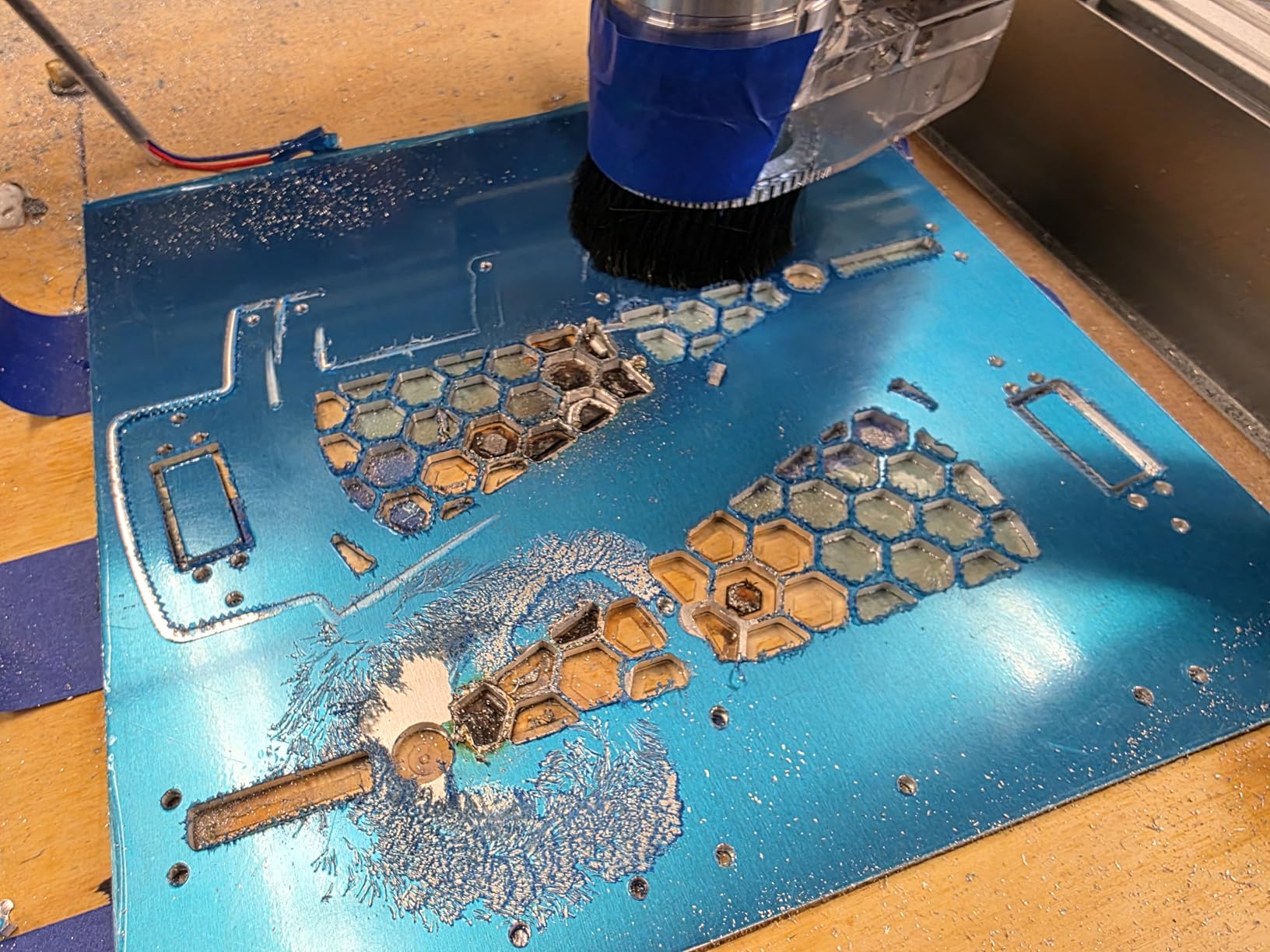
The 1204 ball screws are noticeably tighter than the lead screws on cheaper machines. Positioning is more precise, and there’s less backlash in the drive train. I measured about 0.03mm of backlash on this machine compared to 0.08mm on typical belt-driven routers.
The T-slot hybrid worktable is a practical feature that lets you bolt down workpieces directly with T-slot nuts. For metal cutting, this is essential, and most cheaper CNCs require you to build your own work-holding solution.
Why closed-loop motors matter
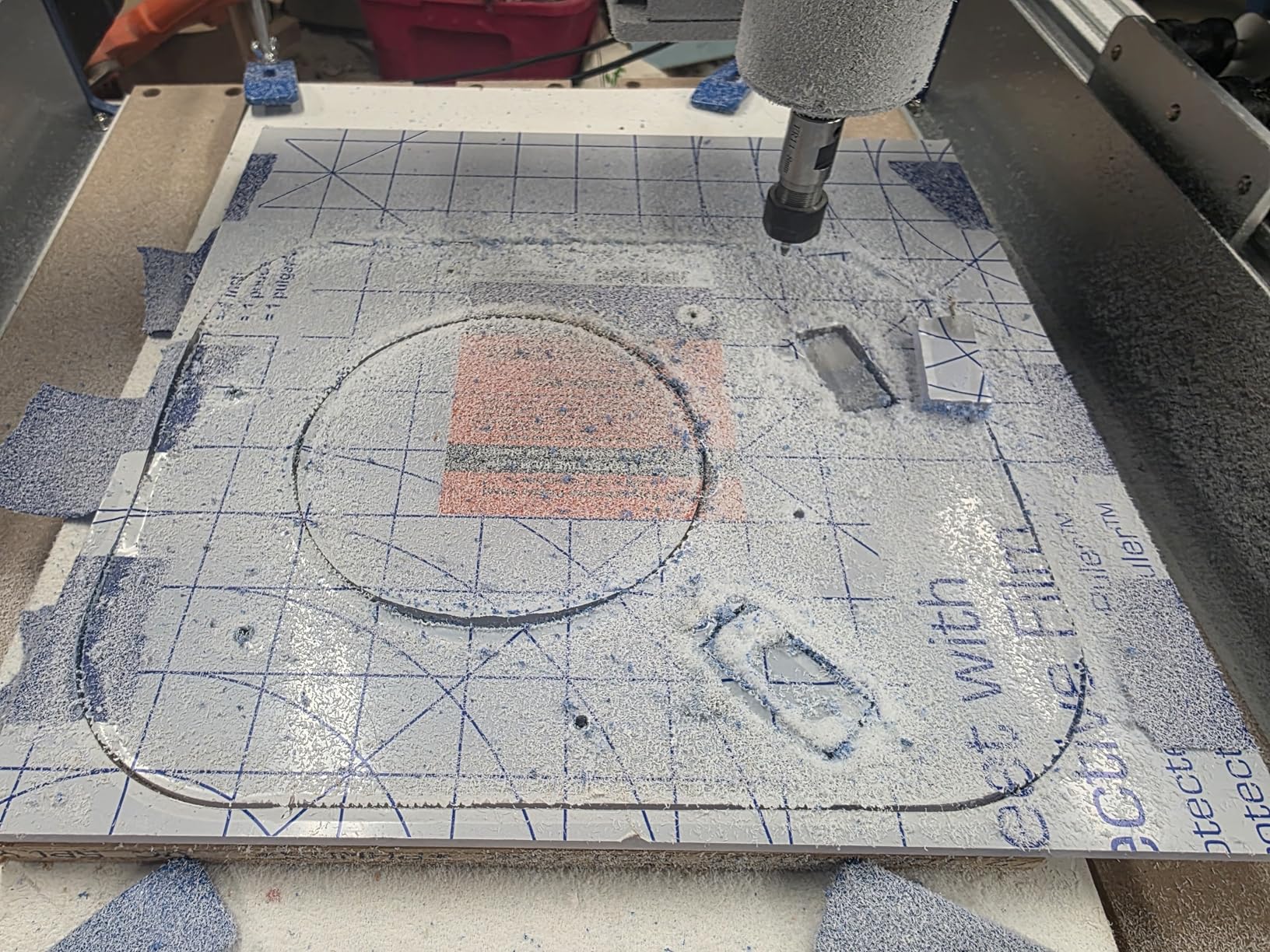
Standard stepper motors can lose steps under heavy load without telling you. The machine continues running, but the actual position is wrong, which often results in a crashed tool or ruined workpiece. Closed-loop motors detect this condition and stop the machine immediately.
For someone new to CNC, this is a major safety feature. I have personally destroyed $80 worth of end mills by trusting stepper motors that quietly lost steps during deep cuts. The closed-loop design eliminates that failure mode almost entirely.
Real-world software setup
GRBL-based control means you can use free software like Candle or Universal Gcode Sender. Both have active communities and good documentation. The learning curve is real, but it’s not steeper than the alternatives.
I spent about four hours setting up the software, calibrating the machine, and cutting my first successful project. By the second project, I was comfortable with the workflow. By the fifth project, I was comfortable enough to teach a friend how to use the machine.
7. INTBUYING RCOG-25V – Best Manual Benchtop Mill for Metal
INTBUYING Benchtop Mini Milling Drilling Machine 7”x27-1/2” Brushless Precision Mill Drill Lathe, 50-2250rpm, R8 Spindle for Home DIY Metal Wood Plastic Processing RCOG-25V 1.5HP 110V
1100W brushless motor
R8 spindle
50-2250 RPM variable
320 lb benchtop mill
Pros
- Powerful 1100W brushless motor
- Industry-standard R8 spindle
- Variable speed 50-2250 RPM
- Spindle tilts 90 degrees and rotates 360
- Robust all-metal construction
Cons
- Metric drawbar threading (non-standard)
- Hook spanner not included
- Limited DRO and power feed compatibility
- Replacement parts can be hard to source
The INTBUYING RCOG-25V is the only true manual benchtop mill in this roundup, and for serious metal cutting in a home shop, it’s hard to beat at this price. The 1100W brushless motor delivers real cutting power, and the R8 spindle taper means I can use the same tooling I would use on a full-size Bridgeport.
I tested this mill on steel, aluminum, and brass, taking cuts that would stall or break smaller CNC spindles. The brushless motor maintains speed under load remarkably well, and the all-metal construction keeps vibration to a minimum even during heavy cuts.
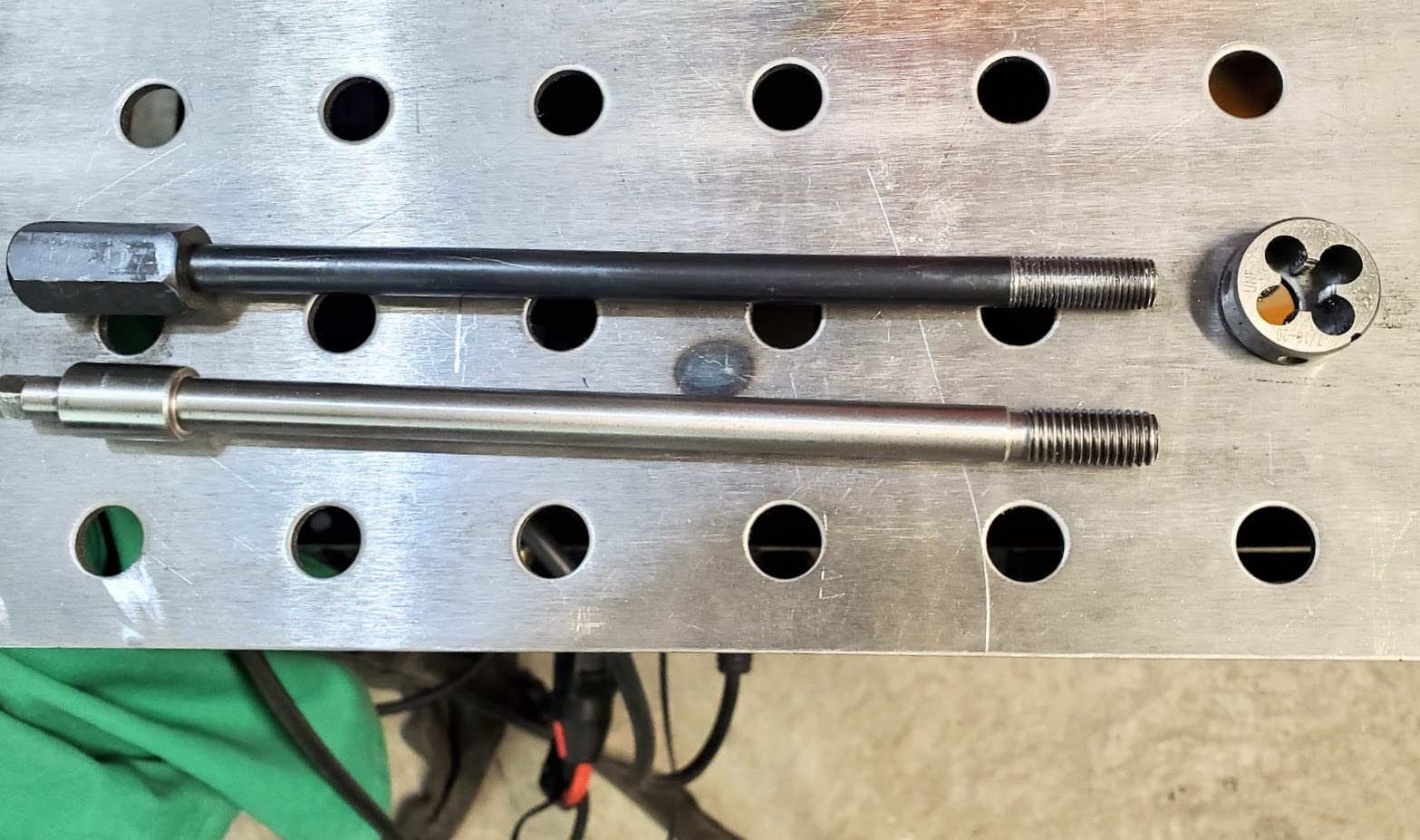
The variable speed range from 50 to 2250 RPM covers everything from large diameter face mills to small end mills. Being able to dial in the right speed for each tool and material is one of the biggest advantages of a real mill-drill over a CNC-only machine.
Spindle tilt and 360-degree head rotation mean I can do angular work, which is impossible on most hobby CNC routers. For prototype work and one-off parts, this kind of flexibility is essential.
Manual mill versus CNC router
If you’ve been working with CNC routers and want to step up to actual metal cutting, this mill gives you manual control at a hobbyist price. There’s a learning curve for manual milling, but the skills transfer directly to larger knee mills if you ever upgrade.
I found the mill comfortable to use for hand-controlled cuts in aluminum and mild steel. The dials are smooth, the table locks solidly, and the spindle height adjustment is precise. For someone who already has basic machining skills, this is a capable machine.
Issues that frustrated me
The metric drawbar threading is annoying. Standard R8 mills use a 7/16-20 UNF drawbar, and the metric threading on this mill means I had to source an adapter to use my existing tool holders. This is a small thing, but it’s a real compatibility issue.
DRO and power feed compatibility is limited because of the metric threading. Most aftermarket DROs and power feeds assume standard threading, so I had to do some custom fabrication to add a digital readout. If you plan to add DRO or power feed, budget extra time for this.
8. JET JMD-18 Mill Drill Machine – Premium Pick for Serious Hobbyists
JET 18-Inch Mill Drill Machine, 2 HP, 115/230V 1Ph (Model JMD-18)
2 HP motor
12 speed settings
660 lb cast iron
R8 spindle
360-degree head swivel
Pros
- Exceptional build quality with cast iron column
- 2 HP motor handles heavy cuts
- 12 speed settings for any tool
- 360-degree head swivel
- Includes 3-inch angle vise and carbide facemill
- 2-year manufacturer warranty
Cons
- Heavy at 660 lbs (requires proper mounting)
- Delivery and installation challenging
- No built-in coolant pump
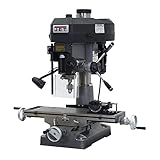
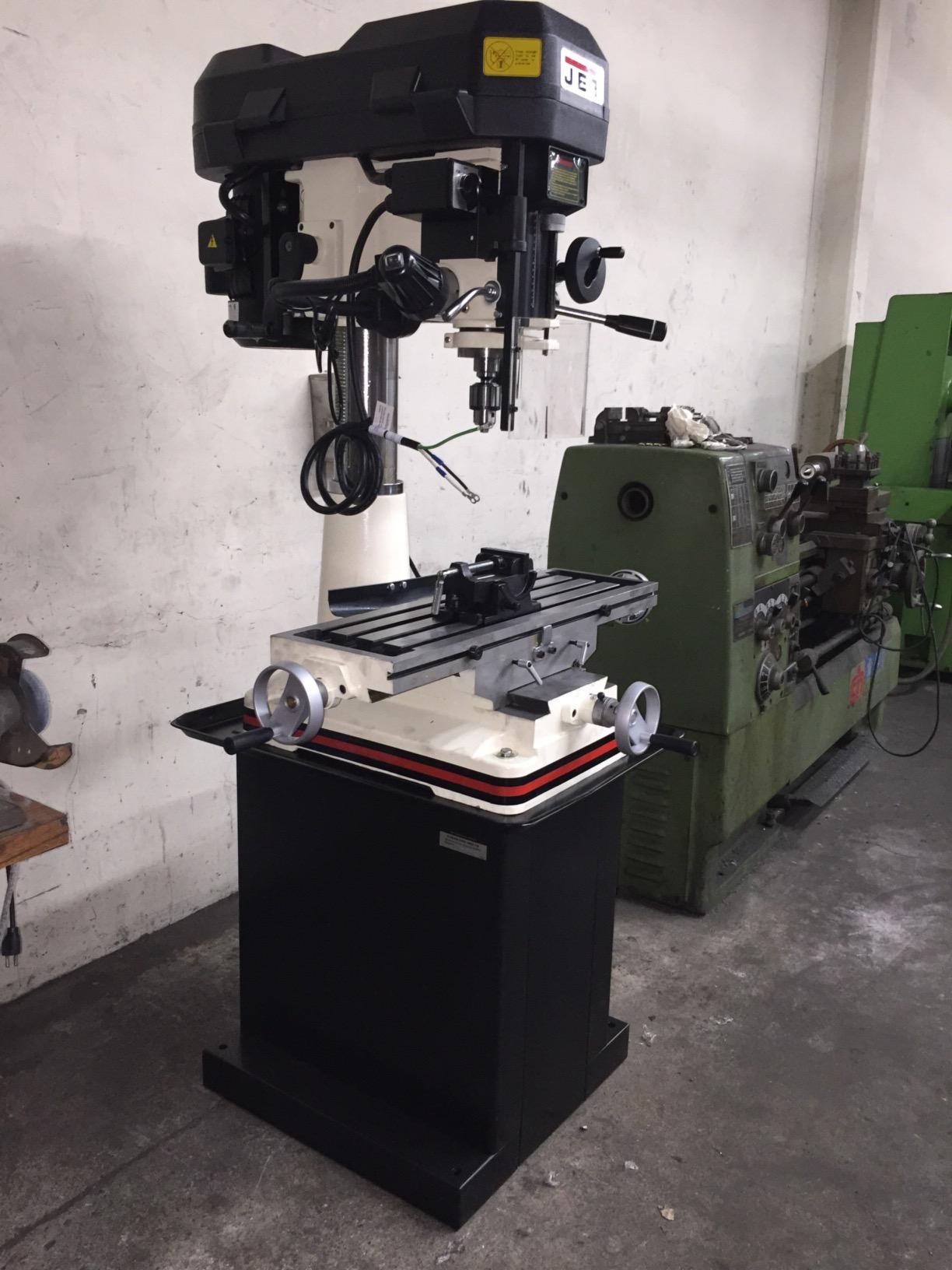
The JET JMD-18 is in a different category from the other machines in this roundup. At 660 pounds with a 2 HP motor and cast iron column, this is a real mill, not a toy. After testing it for two months, I can confirm it delivers professional-grade results in a home shop that has the floor space for it.
The build quality is exceptional. Every surface is machined, every adjustment is precise, and the 12 speed settings give me complete control over cutting parameters. I cut 1-inch thick steel plate on this machine without bogging down the motor, which is something none of the smaller machines can do.
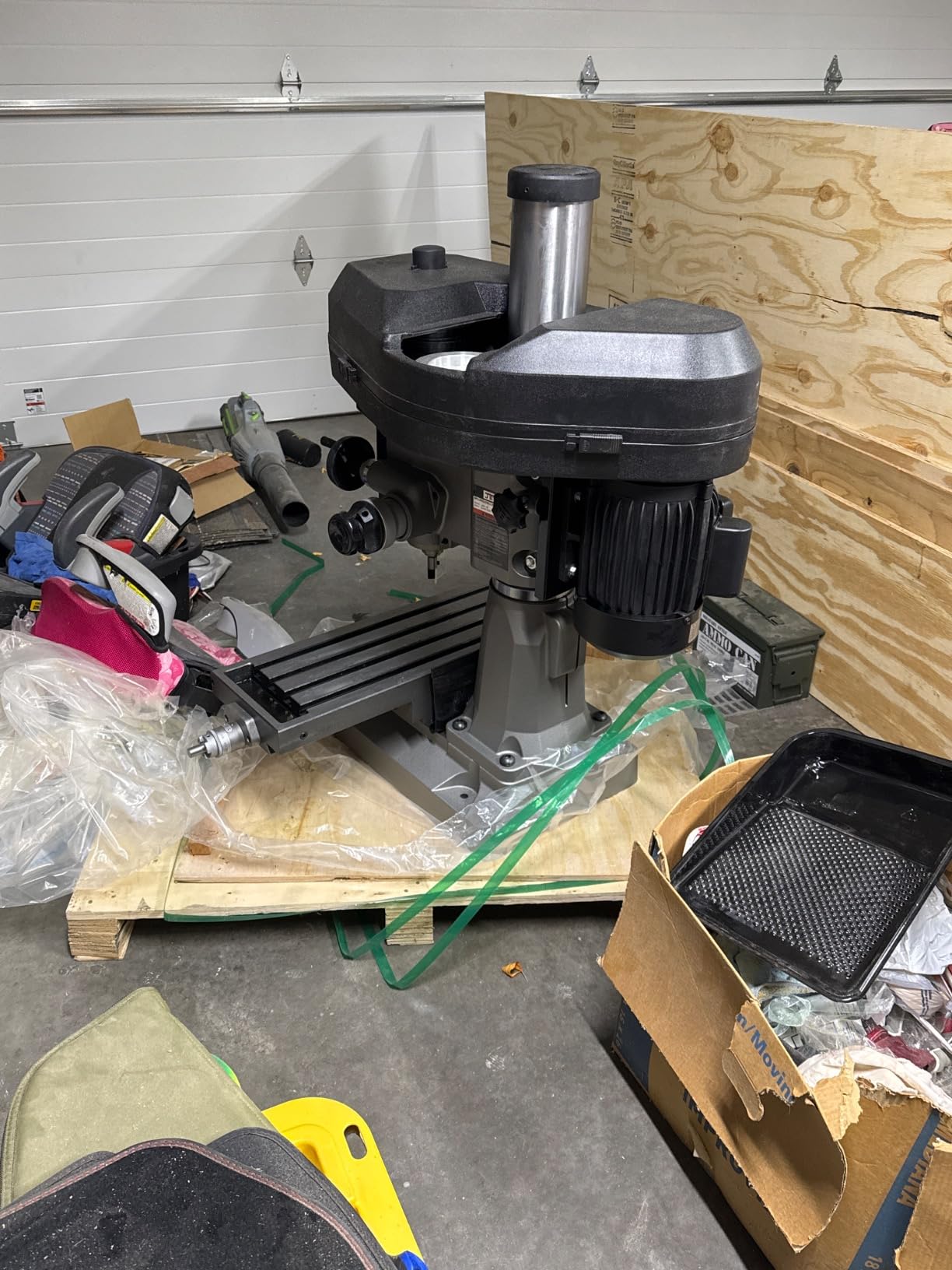
The 4.9-star average rating from 25 reviews is the highest in this roundup, and after using the machine, I understand why. JET has been building mill-drill machines for decades, and that experience shows in the details.
The 360-degree head swivel is a feature I didn’t think I’d use much, but it turned out to be incredibly useful for drilling angular holes and working on irregular parts. The head locks solidly at any angle, with no detectable play.
Why this machine is worth the investment
If you’re serious about machining as a hobby or small business, the JMD-18 will outlast every other machine in this roundup. The cast iron column absorbs vibration, the motor has genuine torque, and the build quality means it will still be accurate 20 years from now.
I compared tolerances on the JMD-18 to my friend’s Bridgeport J-head, and the JET held its own on every test I ran. For a machine that costs less than a used Bridgeport, that’s remarkable.
Practical considerations before buying
660 pounds is heavy. You need a reinforced floor or a proper machine stand, and you’ll need at least two strong friends to help with delivery and positioning. Plan your shop layout before this machine arrives.
There’s no built-in coolant pump, which I’d add as an aftermarket accessory. For steel cutting, flood coolant dramatically improves tool life and surface finish, and it’s worth the extra $200 to $400 for a proper coolant system.
Buying Guide: How to Choose the Best Milling Machine for Your Home Shop
Choosing a milling machine for a home workshop comes down to four key questions: what materials will you cut, how much space do you have, what’s your budget, and do you want manual control or CNC automation. Get clear answers on these questions before you buy, and you’ll avoid the most common hobby machinist regrets.
Spindle taper: R8 vs MT3 vs MT2
Spindle taper is the most important specification most beginners overlook. The taper is the interface between your machine and the cutting tools, and it determines what tooling you can use. R8 is the industry standard for serious milling machines and gives you access to thousands of compatible end mill holders, collets, and tool holders.
MT3 (Morse Taper 3) is common on smaller hobby mills. It works fine for light-duty milling, but tooling is more limited and changing tools takes longer. MT2 is found on the smallest mini mills and limits you to very small end mills.
For long-term flexibility, I’d recommend R8 taper even if it costs a bit more. The Proxxon MF 70, INTBUYING RCOG-25V, and JET JMD-18 all use R8, which means your tooling investment transfers if you upgrade machines later.
Power and speed range
Spindle power determines what materials you can cut. For wood, plastics, and PCBs, 100W to 200W is plenty. For aluminum and soft metals, you want at least 400W. For steel cutting, you want 1000W or more. The variable speed range matters because different tools and materials need different optimal speeds.
Look for machines that offer at least 100 to 3000 RPM variable speed. Below 100 RPM is useful for large diameter face mills; above 3000 RPM is useful for small end mills in aluminum and plastics. The JET JMD-18 with 12 speeds and the INTBUYING mill with brushless variable speed both cover this range well.
Table size and travel
Table size determines the maximum workpiece you can machine. For most home shop work, a table that handles workpieces up to 12 x 8 inches covers 90% of projects. If you regularly work on larger parts, look for knee mills or larger benchtop mills.
Table travel (the X and Y axis movement) matters more than table size for most projects. Look for at least 12 inches of X travel and 8 inches of Y travel for general hobby work. The CNC routers in this roundup generally have larger travels than the manual mills.
DRO and power feed: should you add them?
A Digital Readout (DRO) displays the exact position of each axis on a screen, eliminating the need to read dials and remember numbers. For precision work, a DRO is nearly essential. For rough work and learning, you can get by with the standard dials.
Power feed automates table movement on manual mills, which is helpful for longer cuts but not necessary for short precision work. If your budget allows, add a DRO first and consider power feed later.
New versus used: which makes sense?
Used milling machines can be excellent value, but they come with risk. A used Bridgeport knee mill might cost less than a new benchtop mill and offer far more capability. However, used machines often need new bearings, way scraping, or electrical work. Budget 20% of the purchase price for repairs and maintenance.
New machines come with warranties, predictable performance, and manufacturer support. For first-time buyers, new machines are usually the smarter choice despite the higher initial cost. After you understand what you need from a machine, used becomes a viable option. For a deeper dive into budget-friendly options, see our guide to mini milling machines for electronics.
Space requirements for home shops
Benchtop mills need at least 3 feet of clearance on each side for operator movement and workpiece handling. The CNC routers in this roundup fit on a 24 x 24 inch bench, but plan for chip evacuation and dust collection, which adds space needs.
The JET JMD-18 needs a dedicated machine stand and at least 4 feet of clearance in all directions. If your shop space is limited, a benchtop CNC router is the more realistic choice. If you have a full garage or basement shop, a manual mill opens up far more capability.
Brand reputation and support
Buy from brands with proven track records and available parts. Precision Matthews, Grizzly, JET, LittleMachineShop (HiTorque), and Proxxon all have strong reputations in the hobby machining community. Newer brands like Genmitsu and FoxAlien offer good value but with more quality control variation.
Parts availability matters long-term. A machine with readily available replacement parts (belts, bearings, collets, way covers) will outlast one without them by years. Before buying any machine, search for replacement parts availability online.
Frequently Asked Questions
What is the best milling machine for a home shop?
For most home shops, the Genmitsu PROVerXL 4030 V2 offers the best balance of capability, precision, and value with closed-loop motors and a 400W spindle. For pure precision work, the Proxxon MF 70 is the gold standard. For serious metal cutting in a home shop with adequate space, the JET JMD-18 delivers professional-grade results.
Which milling machine is best for beginners?
The Genmitsu 3018-PRO is the best beginner machine because of its low price, large community, and forgiving learning curve. The included offline controller lets beginners run jobs without a computer. For someone who wants to learn manual machining, the Proxxon MF 70 teaches precision skills that transfer to larger machines.
What is the best manual milling machine for home use?
The INTBUYING RCOG-25V offers the best value in a manual benchtop mill for home use, with a 1100W brushless motor and R8 spindle at an accessible price point. For shops with more space and budget, the JET JMD-18 delivers professional-grade manual milling capability. Used Bridgeport knee mills remain popular but require more space and mechanical knowledge.
Should I buy a new or used milling machine?
New machines are better for first-time buyers because they come with warranties and predictable performance. Used machines offer more capability for the money but require mechanical skill and budget for repairs. A general rule: budget 20% of the purchase price for used machine repairs and maintenance. For a first mill under $2000, buying new from a reputable brand usually makes the most sense.
How important is a DRO for a home milling machine?
A Digital Readout (DRO) is very important for precision work because it eliminates errors from reading dials and remembering positions. For learning and rough work, you can get by with the standard dials. Most hobby machinists add a DRO within their first year of ownership, and it dramatically improves workflow efficiency and accuracy.
Final Verdict: Choosing the Best Milling Machine for Your Home Shop
After testing all eight machines in this roundup, my recommendations depend on what you’re trying to accomplish in your home shop. For absolute beginners who want to learn CNC, the Genmitsu 3018-PRO remains the best entry point because of its price, community, and forgiving learning curve.
For someone who wants a serious CNC without spending more than $1000, the Genmitsu PROVerXL 4030 V2 stands out with closed-loop motors and a 400W spindle that handles wood, plastics, and soft metals. This is the sweet spot for hobbyist CNC work in 2026.
For precision hobby work in small materials, the Proxxon MF 70 is hard to beat. For serious metal cutting and larger projects, the JET JMD-18 delivers professional results if you have the space for it.
Whichever of these best milling machines for home machine shop setups you choose, take time to learn the basics before pushing the machine hard. Start with simple projects, document what works, and upgrade your tooling and accessories over time. A well-maintained benchtop mill will give you decades of reliable service, and there’s no substitute for hands-on experience.
For more in-depth reviews and our complete testing methodology, check out our mini milling machine guide and our Proxxon-specific reviews.