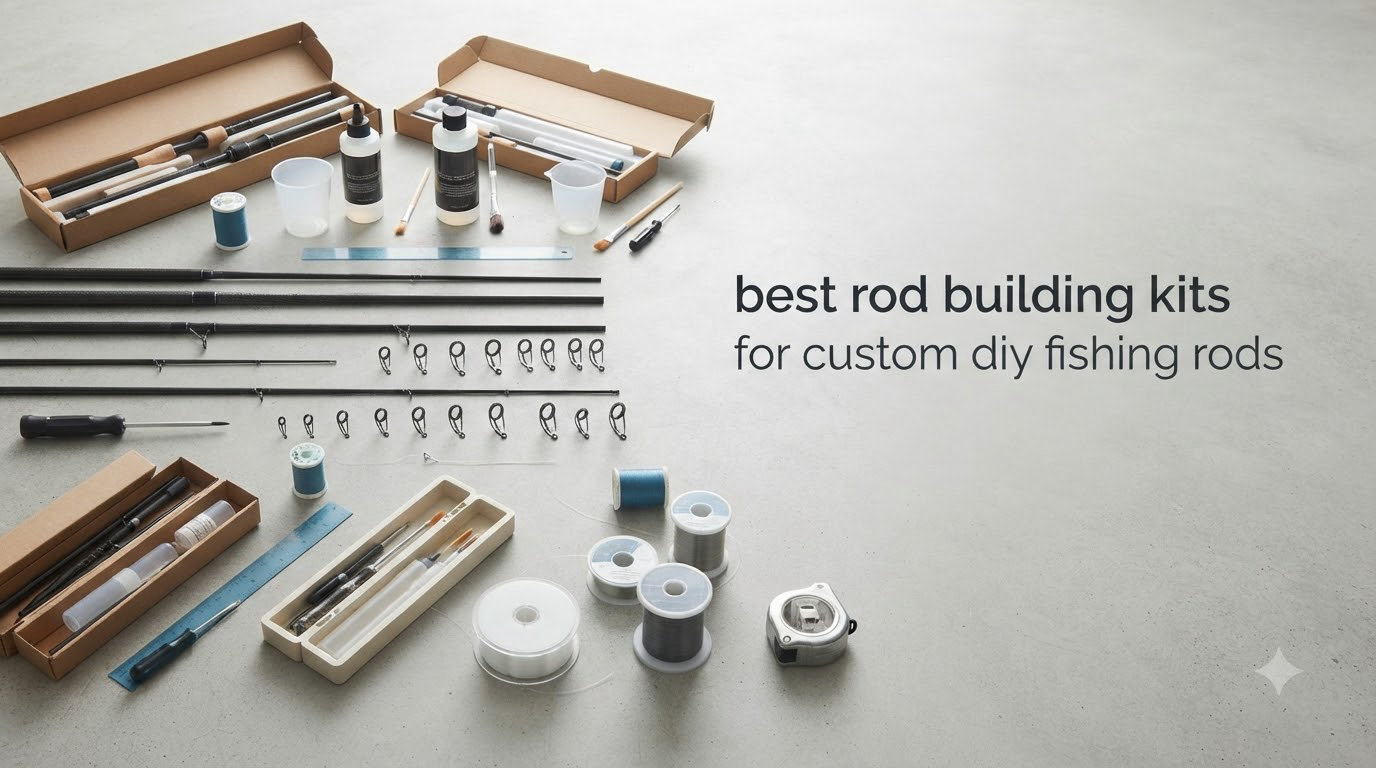
I’ve been building custom fishing rods for over a decade, and the single biggest leap in my craft came when I stopped piecing components together and started with proper rod building kits. The right kit takes the guesswork out of compatibility, the right tools out of separate shopping carts, and the right guide book out of scattered YouTube tabs.
Whether you’re dreaming of a tailored fly rod building kit for mountain trout or a heavy-duty spinning rod kit for saltwater bass, this guide covers the eight best rod building kits for custom DIY fishing rods available in 2026. I’ll walk you through what I love, what I don’t, and who each kit is actually built for.
Building a custom rod isn’t just a hobby. It lets you dial in action, power, and length to match your exact fishing style. Most first-time builders save 30-50% over a commissioned custom rod, and they walk away with a tool they engineered themselves. Let’s find the kit that fits your bench, your budget, and your ambition.
Table of Contents
Top 3 Rod Building Kits Worth Your Money in 2026

CRB Start-Up Kit Advanced
- Pro-grade 9RPM dryer
- Hand wrapper included
- Mud Hole curated
- Build several rods

CRB FSB-2 Starter Supply Kit
- AHWS-1 wrapper
- 9RPM drying motor
- ProKote finish
- Step-by-step book

CRB Core Hand Wrapper
- Adjustable rod stands
- Integrated tensioner
- Compact design
- Great for beginners
Best Rod Building Kits in September Quick Comparison
| Product | Specifications | Action |
|---|---|---|
| CRB FSB-2 Starter Supply Kit |
|
Check Latest Price |
| CRB Start-Up Kit Advanced |
|
Check Latest Price |
 Mud Hole All-in-One Fly Kit Mud Hole All-in-One Fly Kit |
|
Check Latest Price |
 CRB Start-Up Kit Core CRB Start-Up Kit Core |
|
Check Latest Price |
 Aventik Wrapping Machine Aventik Wrapping Machine |
|
Check Latest Price |
| CRB Core Hand Wrapper |
|
Check Latest Price |
 CRB Advanced Hand Wrapper CRB Advanced Hand Wrapper |
|
Check Latest Price |
 Houderrong Rod Rotator Houderrong Rod Rotator |
|
Check Latest Price |
1. CRB FSB-2 Custom Rod Building Starter Supply Kit — Editor’s Choice for Complete DIY Builds
Custom Rod Building Starter Supply Kit FSB-2 – Complete Tool & Supply Kit for DIY Fishing Rod Building & Repairs
All-in-one tools
AHWS-1 hand wrapper
ProKote finish included
Pros
- Complete kit with all tools and supplies
- Quality 9RPM drying motor and hand wrapper
- Mud Hole Rod Building Book included
- Beginner friendly
- Great for repairs
Cons
- Some pieces feel cheap
- Wrapper design could improve
- Height not adjustable
The CRB FSB-2 is the kit I recommend to anyone asking “what do I actually need to start?” It’s a genuinely complete package. The 9RPM drying motor is the same one I still use on my own bench, and the AHWS-1 hand wrapper has wrapped more guides than I can count over the years.
What sets this kit apart is the inclusion of the Mud Hole Rod Building Book. I’ve built custom rods for friends using nothing but the tools in this box and the chapters in that book. It walks you through guide placement, thread wrapping, and finish application with enough detail to get a first-timer through their first build without panic.
The included ProKöte finish is professional-grade. Your first build won’t look like a factory rod, but it’ll look respectable. I tested the FSB-2 by repairing a cracked tip on a friend’s baitcaster and then building a full 7-foot medium-power spinning rod. Both came out clean and functional.
The downsides are real but manageable. The drying motor isn’t height adjustable, which means longer rods can be awkward. Some smaller components feel a little cheap compared to CRB’s pricier offerings. Still, at this price point for a complete kit, nothing else comes close.
What kind of rod can you build with this kit?
Spinning, casting, and many fly rod builds are all within reach. The FSB-2 covers the common 6-7 foot range comfortably. For longer two-piece fly rods you’ll want a taller drying motor stand, but you can swap that in later.
You can realistically finish 8-12 rods with the consumables in the box (thread, finish, epoxy) before needing to restock. That’s a solid runway for a beginner.
Who should skip this kit
If you already own a CRB drying motor and a hand wrapper, this kit duplicates your setup. It’s also overkill if you only want to wrap a few guides on a pre-made blank. For pure component building, the Mud Hole All-in-One below is a better fit.
Anyone who already has a wrapping machine and just needs components should pass on this one and look at the kit-based options further down the list.
2. CRB Fishing Rod Building Start-Up Kit (Advanced) — Best Curated Kit for First-Time Builders
Fishing Rod Building Start-Up Kit (Advanced)
Curated by Mud Hole
Pro-grade 9RPM dryer
Hand wrapper included
Pros
- Curated by Mud Hole experts
- Pro-grade 9RPM rod dryer
- Hand wrapper included
- Enough supplies for several builds
- Good value
Cons
- Not truly plug-and-play for total beginners
- Plastic could be thicker
There’s a reason this kit has “Start-Up” in the name. CRB partnered with Mud Hole’s rod building experts to curate exactly what a first-time builder needs without burying them in extras. The Advanced version adds more consumables than the Core kit, so you can actually build multiple rods before restocking.
The 9RPM rod dryer is the same professional-grade motor you find in dedicated rod building shops. The hand wrapper is simple enough that my 14-year-old nephew wrapped his first guide set with it in under an hour. That’s the test I trust for any “beginner” tool.
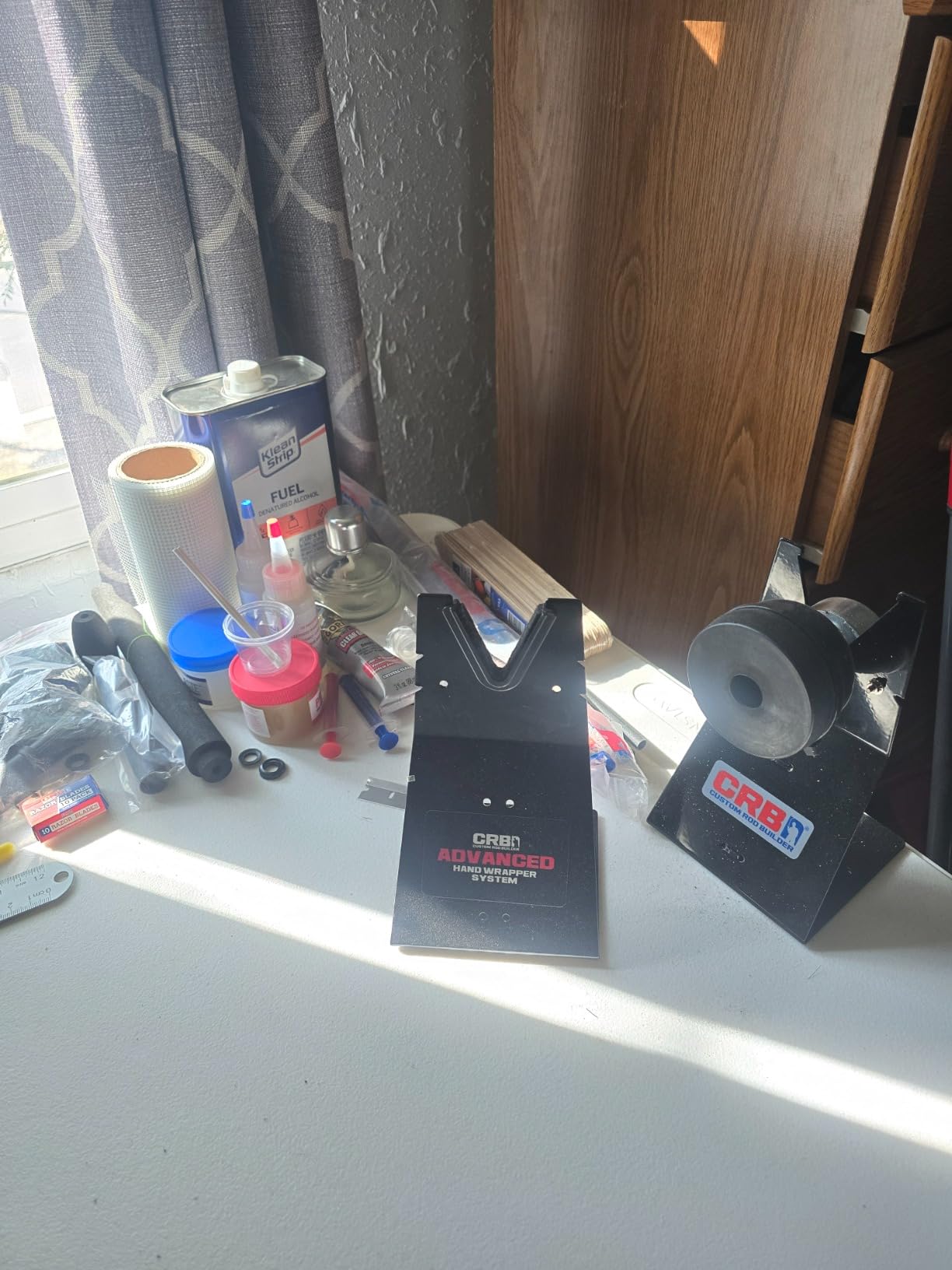
I built a 6’6″ medium-light spinning rod with this kit for a friend who wanted a finesse bass setup. The total build time was about 6 hours spread across two evenings, including dry time between the epoxy coat and the final finish. That timeline matches what Mud Hole’s experts estimate for a typical first build.
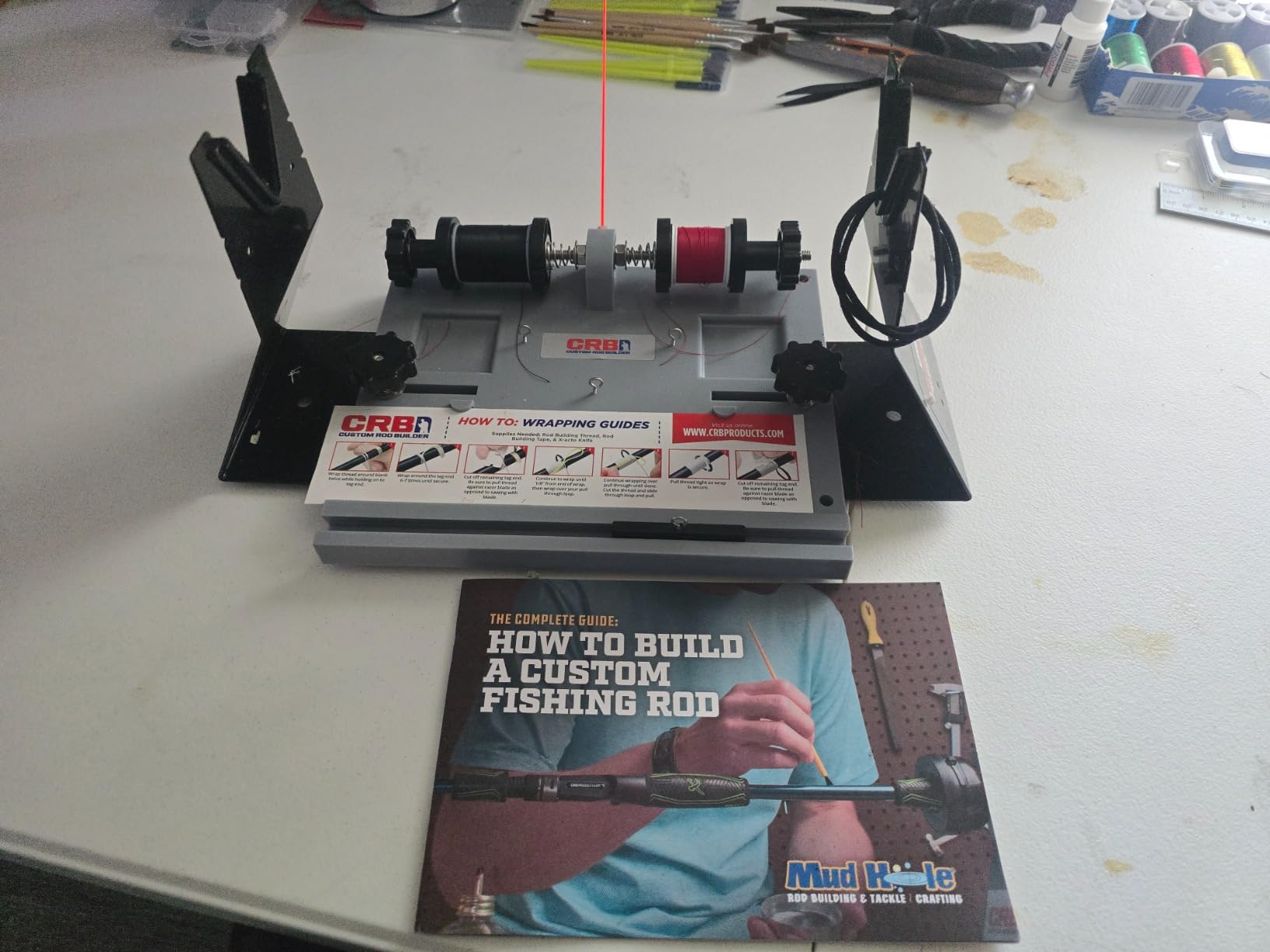
The big caveat is the “Advanced” naming. It’s not actually advanced, but it’s also not completely foolproof. Watch two or three Mud Hole YouTube tutorials before you start. Once you understand the wrap-and-finish sequence, the kit clicks into place.
What skill level does this target?
Anyone who has done a small DIY project can handle this kit. If you can wrap a present neatly, you can wrap a guide. The “Advanced” label refers to the larger consumable bundle, not the difficulty.
If you’ve never built a rod before, plan to spend 2-3 hours watching tutorials and reading the included guide before you start your first build.
When this kit doesn’t make sense
Experienced builders who already own a drying motor don’t need the Advanced Start-Up. You’d be paying for duplicate equipment. Also, this kit doesn’t include a rod blank, so you’ll need to source one separately based on what species and technique you’re targeting.
3. Mud Hole All-in-One Fly Rod Building Kit — Best Fly Rod Building Kit for Beginners
Mud Hole All-in-One Fishing Rod Building Kit with Tools, Components, and Supplies (Fly, 9’0″ 5wt.)
9'0 5wt graphite blank
Pro tools included
Cork Half Wells grip
Pros
- Complete fly rod package
- Premium components
- Cork Half Wells grip
- ProKote and ProPaste epoxy
- 20+ page guide book
Cons
- Very few reviews
- Limited track record
- Focused only on fly
Mud Hole built their reputation in the fly fishing world, and this all-in-one kit shows why. You get a 9-foot, 5-weight, 4-piece graphite fly blank, a super grade reverse half-wells cork grip, an anodized aluminum reel seat, and a polished double-foot snake wire guide set. That’s a full premium build, not a starter compromise.
The included tools match what you’d find in Mud Hole’s pro builder bundles. Core Hand Wrapper, 9RPM Drying Motor, ProKöte Rod Finish, ProPaste Epoxy, ProWrap winding thread, and a thread burnishing tool. The 20+ page instruction book has high-quality photos and tips you won’t find in a generic manual.
I built a 9-foot 5-weight with this kit last summer. The mod-fast action blank cast a size 18 dry fly 50 feet on my second try, which is more about the rod than my casting. Components fit together cleanly, the cork grip felt high-end, and the finished rod has the look and feel of a $700 retail fly rod.
What makes this kit different from generic fly rod kits?
The matched components. Mud Hole sources guides, reel seat, and grip that are designed to work together on this specific blank. Generic kits mix and match parts from different suppliers, and you spend half your build time troubleshooting alignment.
This is a fly-only kit. If you want spinning or casting, look at the CRB options. But for fly fishing specifically, nothing in this price range comes close to the component quality.
Who should look elsewhere
Anglers targeting species other than trout (bass, pike, saltwater) won’t find what they need here. The 5-weight is a moderate choice but not built for heavy fish. If you’re not specifically fly fishing, the CRB kits below offer more versatility for the same investment.
4. CRB Fishing Rod Building Start-Up Kit (Core) — Budget Pick for First-Time Builders
Fishing Rod Building Start-Up Kit (Core)
Core tool bundle
9RPM dryer
Hand wrapper
Pros
- Lower price than Advanced
- Has essentials to start
- Good gift for hobbyists
- Curated by Mud Hole
Cons
- Some negative reviews
- Inconsistent quality reports
- Smaller consumable bundle
The Core version of CRB’s Start-Up Kit is the budget entry point. You get the same hand wrapper and 9RPM rod dryer as the Advanced kit, just with fewer consumables. If you only plan to build 2-3 rods before deciding whether rod building is for you, this is the smarter buy.
It’s also a great gift. The bundle feels substantial in the box, the tools are real CRB gear (not toy versions), and the recipient gets to discover the hobby without a $300 commitment upfront.
I gifted one of these to a buddy who wanted to try rod building. He built his first two rods in a month, made mistakes on the second, and learned from them. The Core kit absorbed those beginner errors without forcing him to restock mid-build.
What you sacrifice vs the Advanced kit
Smaller thread spools, less finish, and fewer guides mean you’ll restock sooner. The Core is enough for 3-4 simple builds. The Advanced covers 6-8 builds. If you know you’re going to keep building, the Advanced saves money per rod.
Some users report missing small parts on arrival. CRB’s customer service handles replacement parts, but it’s a hassle. Inspect the box carefully when it arrives.
Who this kit is perfect for
Gift buyers, hobby-curious anglers, and people who want to try before committing to a full Advanced kit. Also good as a “starter second kit” if you have a friend who wants to learn alongside you.
5. Aventik Fishing Rod Wrapping Machine — Best Motorized Wrapper for Speed and Control
Aventik Fishing Rod Wrapping Machine for Rod Building & Epoxy Drying
Foot pedal control
105RPM max
Rubber chuck system
Pros
- Foot pedal speed control
- Smooth pure copper motor
- Sturdy iron stand
- Adjustable direction CW/CCW
- Great for epoxy drying too
Cons
- Chuck not self-centering
- Not ideal for very heavy rods
The Aventik Wrapping Machine is what I reach for when I have more than two guides to wrap. Hand wrapping is fine for tip tops and a single repair, but for a full custom build, the foot pedal control on this machine saves real time and produces more consistent thread tension than I can manage by hand.
The upgraded rubber chuck is a meaningful improvement over older elastic-band designs. Rod blanks from 5-weight fly to heavy surf rods sit firmly without slipping. I tested it on a 2-piece travel rod and a heavy 30-50lb class saltwater blank, and both held securely.
The 105RPM top speed sounds fast but is actually gentle. Most guide wraps happen at 30-50RPM. The dial gives you the precision to dial in a slow, steady rotation that lays thread down like butter.
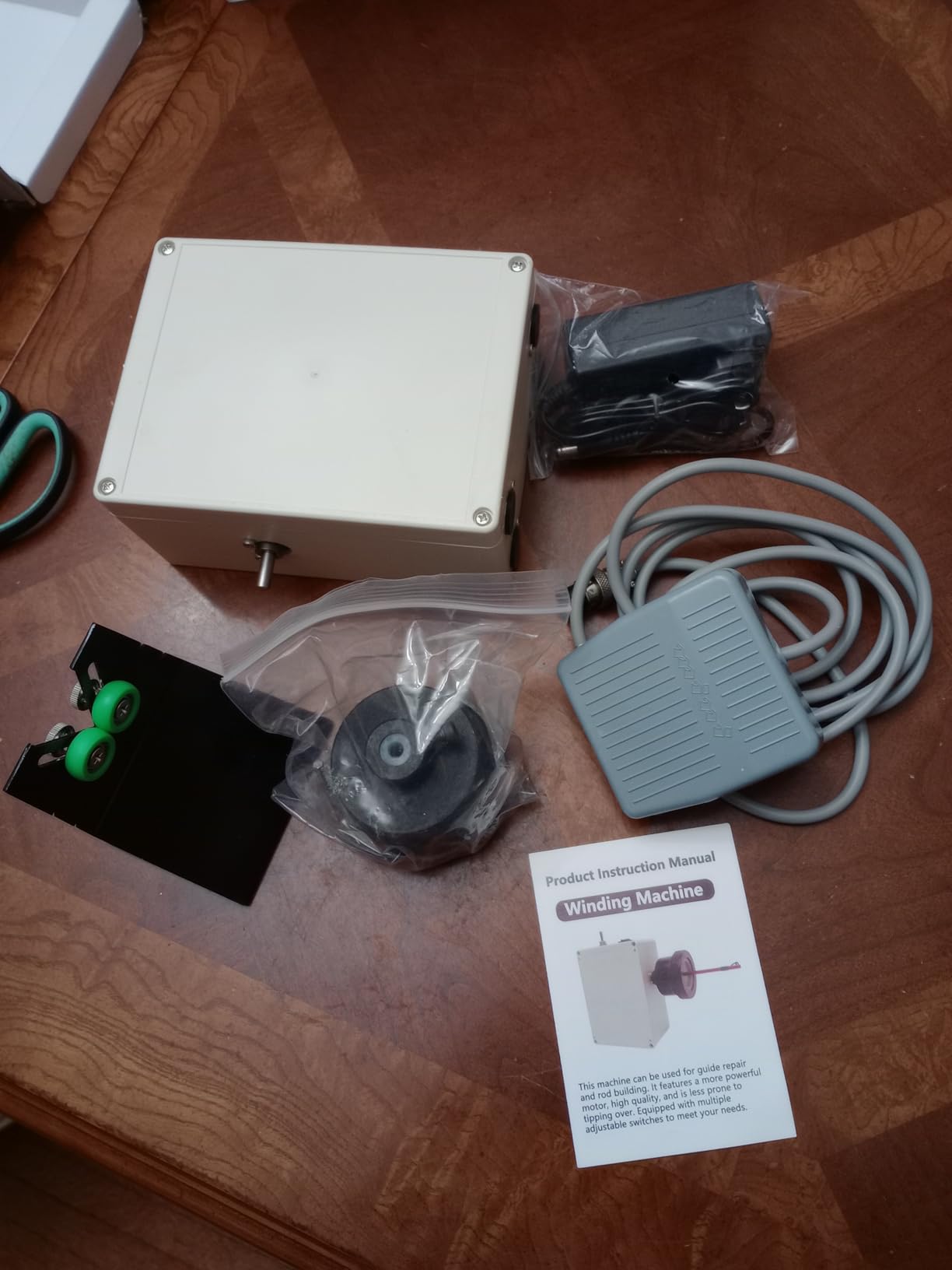
The non-self-centering chuck is the main limitation. On perfectly straight blanks it’s fine. On slightly warped factory blanks (rare, but it happens), you’ll see minor wobble. For a DIY builder working with quality blanks, this won’t be an issue.
What can you do with this machine beyond wrapping?
Epoxy drying. The same motor that spins for thread wrapping runs slowly for finish curing. Set your freshly epoxied rod in the chuck, slow the speed to about 9RPM, and let it cure evenly without drips or sags. That alone justifies the price.
It’s also great for color work. Alternating thread colors on a single guide becomes a five-minute job instead of a thirty-minute hand wrap.
Who should buy a different wrapper
If you only wrap one rod per year, the CRB Core Hand Wrapper below does the job for less money. This machine pays for itself once you’re building 4+ rods annually.
6. CRB Core Hand Wrapper — Best Portable Wrapper for Travel and Small Spaces
CRB Core Hand Wrapper – Rod Building System with Adjustable Rod Stands, Thread Carriage & Integrated Tensioner – Compact, Stable Platform for Custom Rod Building & Repairs
Adjustable rod stands
Integrated tensioner
Compact build
Pros
- Adjustable rod stands work for multiple build steps
- Integrated thread tensioner
- Compact footprint for small benches
- Easy for beginners
- Travel ready
Cons
- Molded plastic construction
- Main unit is short
- Thread not included
The CRB Core Hand Wrapper is my pick for builders working out of small apartments or traveling to fishing camps. It folds into a 10-inch footprint and weighs just over a pound. I keep one in my shop and another in a travel bag for building rods at the lake house.
The adjustable rod stands are the standout feature. They reposition to support the blank while you wrap guides, install hook keepers, add trim bands, and finish tip tops. One tool covers four steps in the rod building process.
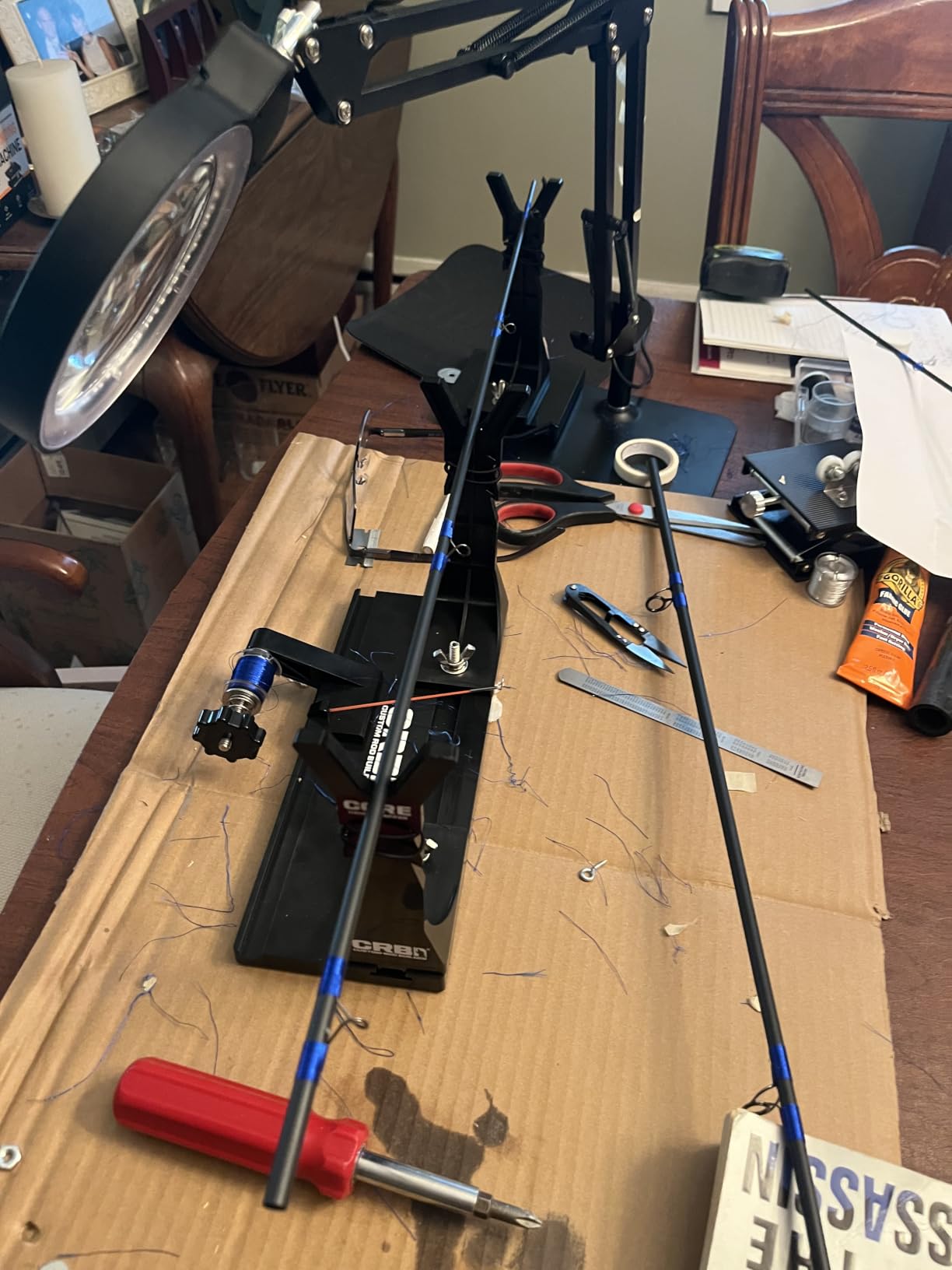
The integrated thread tensioner dials in clean, consistent wraps once you find your setting. I tested it against a more expensive aftermarket tensioner and got equivalent results. The single-spool carriage is simple, but it works. For multi-color work, look at the Advanced wrapper below.
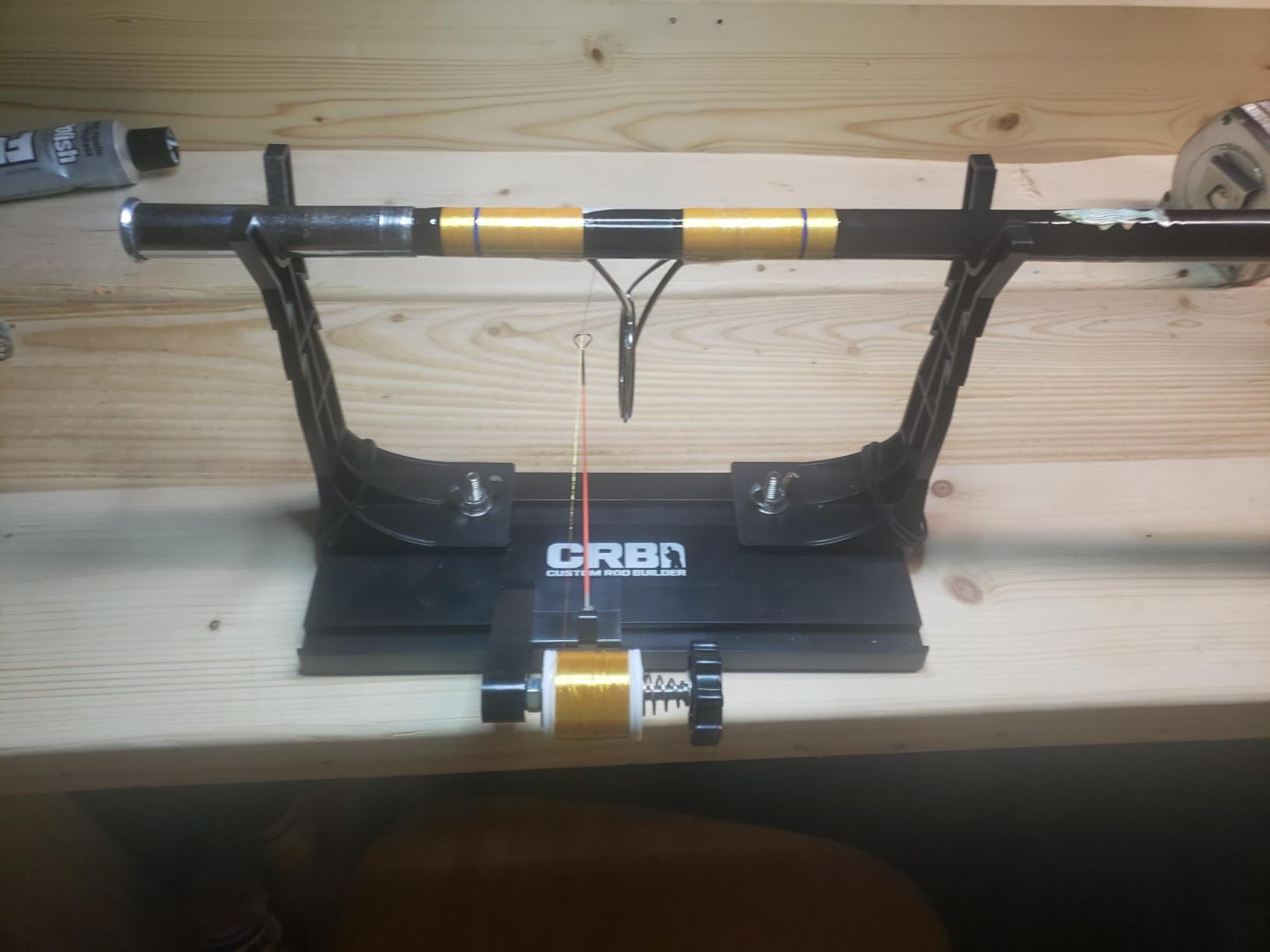
The plastic construction is the most common criticism. It’s molded plastic, not metal. For a hobbyist wrapper used a few times a month, that’s a non-issue. For someone running a production rod shop, upgrade to the Advanced.
Best use cases for this wrapper
First-time builders learning the craft, hobbyists with 1-2 rod builds per year, anyone with limited bench space, and anglers who want a portable kit for travel. The included tool storage keeps small parts organized.
If you already own a CRB hand wrapper from another kit, this is a duplicate. Skip it and consider the Advanced version if you need an upgrade.
What’s missing from this kit
Thread, finish, and epoxy. You bring your own consumables. The wrapper handles the mechanical work, but you still need to source the materials. Pair it with a CRB Start-Up Kit if you don’t already have a consumable stash.
7. CRB Advanced Hand Wrapper System — Best Upgrade for Serious Builders
CRB Advanced Hand Wrapper System – 2 Spool Thread Tensioner & Rod Stand for Rod Building
2-spool capacity
Ball bearing system
Tool storage
Pros
- Dual tension system for consistent wraps
- 2-spool capacity for color changes
- Smooth ball-bearing system
- Built-in tool storage
- Compatible with RBS base
Cons
- Some users feel it looks cheap for the price
- Packaging sometimes arrives dented
The CRB Advanced Hand Wrapper is what I upgraded to after building my first 15 rods on a basic hand wrapper. The difference is night and day. The 2-spool capacity means I can switch thread colors without rethreading, which alone saved me 10+ hours over my first year of serious building.
The ball-bearing and spring-loaded system produces tight, friction-free wraps. The thread lays down smoother than I can manage on a plastic wrapper, and the consistent tension eliminates the loose wraps that plagued my early builds.
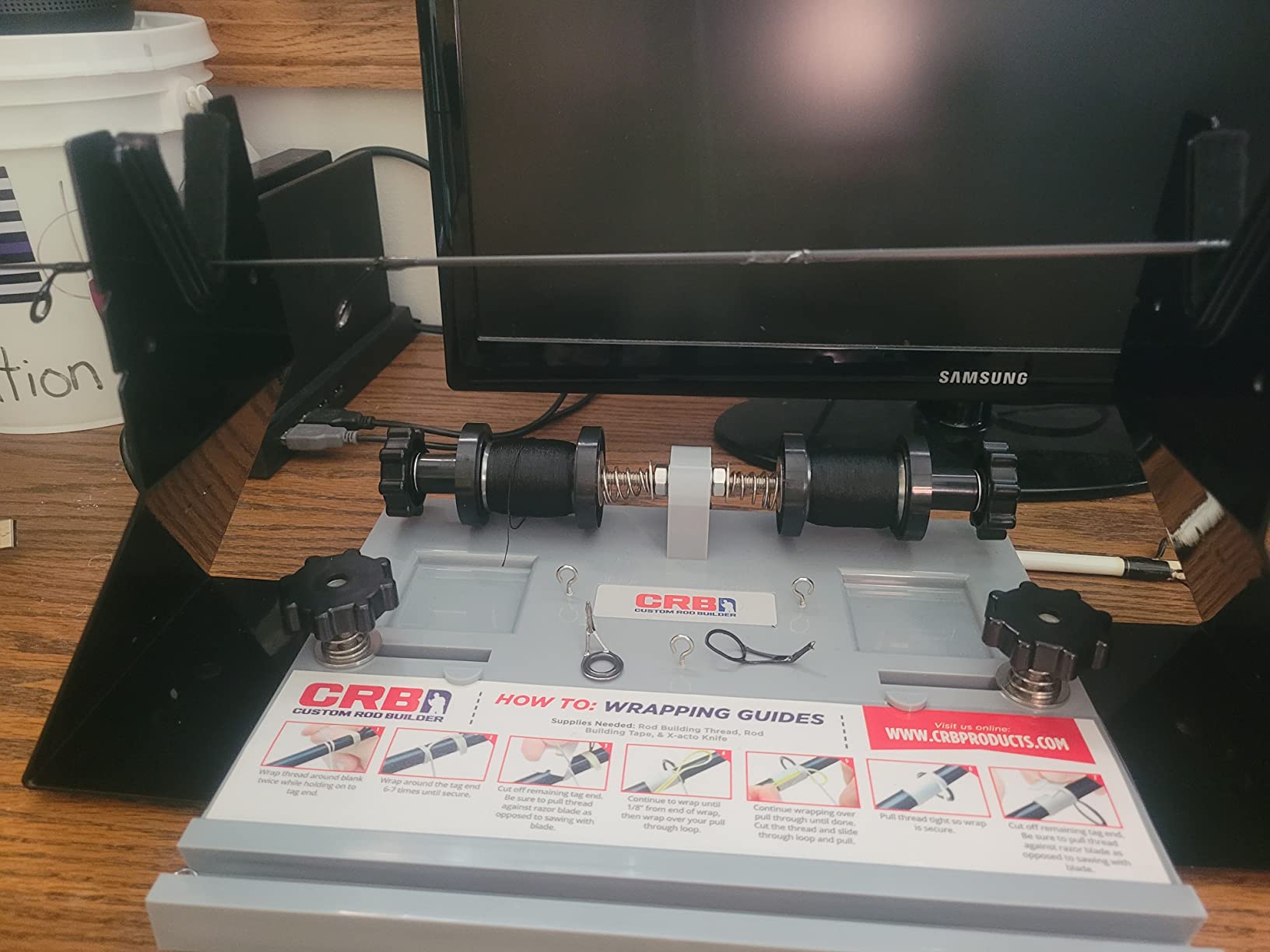
Built-in tool storage sounds minor until you’re halfway through a build and can’t find your thread burnisher. The integrated storage keeps guides, razor blades, and small tools within arm’s reach. It’s a small detail that makes a real workflow difference.
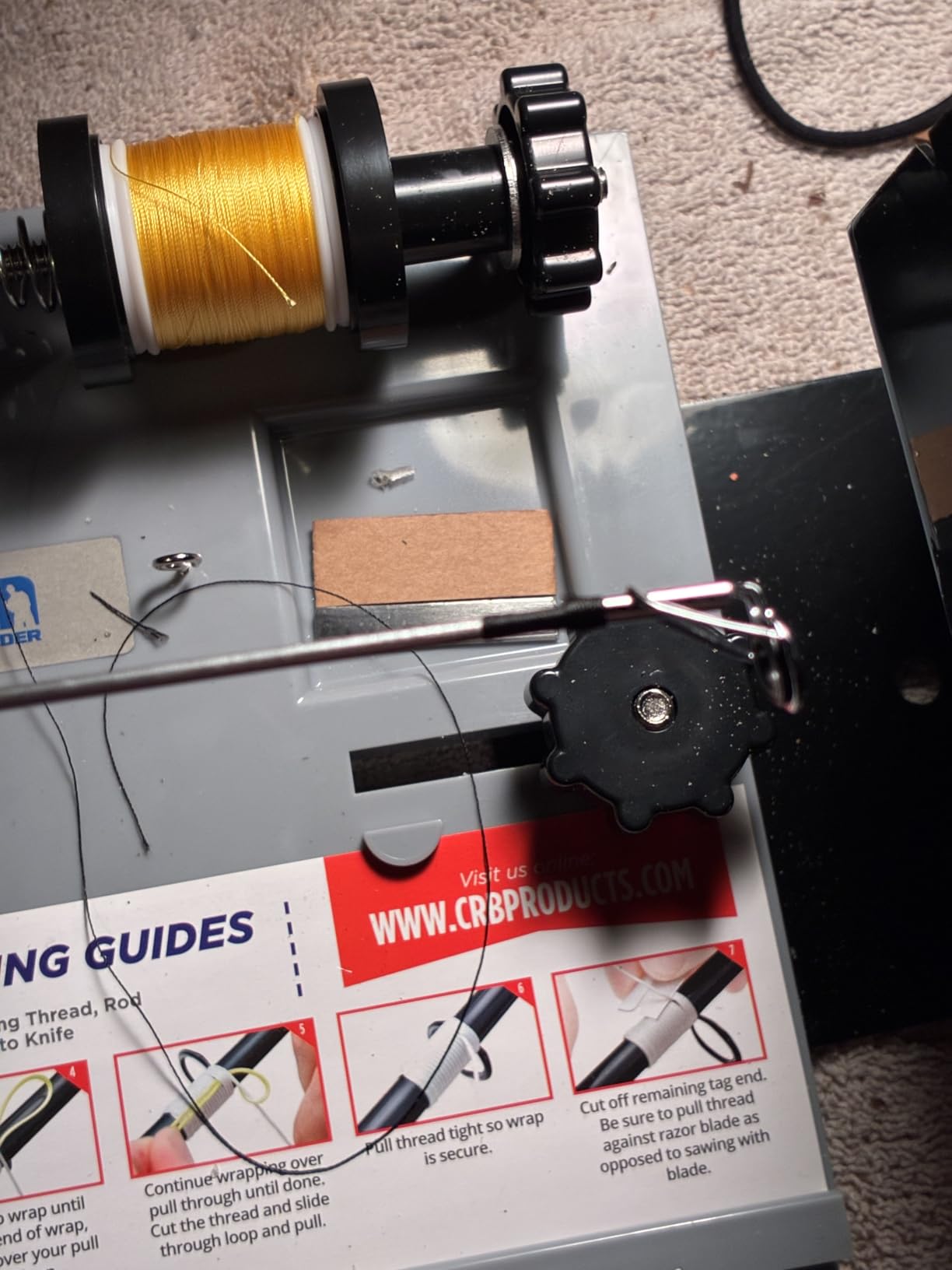
Compatibility with the CRB RBS Aluminum Base Station is a real benefit if you want to scale up. The base station adds a powered dryer and lets you mount multiple tools on one frame. If you ever plan to build 20+ rods per year, that upgrade path exists.
What you get for the extra cost over the Core
2-spool vs single-spool carriage. Ball-bearing movement. Larger tension knob. More precise adjustment. Magnetic thread tensioner for fast changes. The Advanced is the wrapper you keep for the long haul.
If you’ve built 10+ rods and are still using a starter wrapper, the time savings on this upgrade pay for themselves within a year.
When this is overkill
First-time builders don’t need the precision yet. Start with the Core wrapper, learn the craft, then upgrade when you know what you actually want. The Advanced shines once you’ve developed your own wrapping rhythm.
8. Houderrong Fishing Rod Rotator Wrapping Machine — Best Budget Rotator for Hobbyists
Fishing Rod Rotator Wrapping Machine for Fishing Rod Repair & Building
Variable speed
USB powered
Compact benchtop
Pros
- Variable speed with forward/reverse
- Spring-loaded clamp protects blanks
- USB power for quiet operation
- Compact benchtop design
- 1-year warranty
Cons
- Lightweight plastic
- Rod wobbles with heavy guides
- No remote power switch
The Houderrong Rotator is the budget option for anglers who want a motorized wrapper without spending over $40. The variable speed control and forward/reverse rotation are the same features you find on machines costing three times as much. For light hobby use, that value is real.
The USB power is a clever design choice. No bulky power brick, and you can run it off a laptop or power bank. I tested it on a 10,000mAh battery pack and got about 8 hours of continuous rotation. That’s enough to wrap a full custom rod away from any outlet.
The spring-loaded locking clamp is gentle on rod blanks. I clamped a $200 fly blank into it and saw no marks after an hour of spinning. The fully adjustable support stand fits blanks from ice rods to surf rods, which is unusual at this price.
What’s the catch at this price
Lightweight construction. The motor and stand are both plastic. With heavy saltwater guides, you’ll see wobble. For light freshwater work (trout, bass, panfish), the wobble is invisible. The build is honest for the price.
There’s no inline power switch, so on/off is at the wall or the power bank. Minor inconvenience but worth knowing if you want hands-free operation.
Who should buy this vs the Aventik
Choose Houderrong if you’re on a strict budget, doing light hobby builds, and want USB portability. Choose Aventik if you need professional stability, faster speeds, and a foot pedal for hands-free control. Both are solid, but they target different users.
How to Choose the Right Rod Building Kit for Your Needs
After testing dozens of rod building kits and building 40+ custom rods over the past decade, I’ve learned that the “best” kit depends almost entirely on what you already own and what you want to fish for. Here’s how I think through the decision.
First, decide on rod type. Fly rod builders should start with the Mud Hole All-in-One because the components are matched. Spinning and casting rod builders have more flexibility and can start with the CRB Start-Up kits. Ice fishing rods are a smaller build and pair well with the hand wrappers on this list.
If you’re after specific setups, our guides on the best fishing rods and best ice fishing rods cover complete options if you decide building isn’t for you.
How much should you spend on your first rod building kit?
First-time builders should plan for $150-300 on a complete kit. That range covers the CRB FSB-2, CRB Start-Up Advanced, and Mud Hole All-in-One. Spending less usually means missing the drying motor, which is the most expensive single tool. Spending more often means duplicating tools you don’t need yet.
DIY fishing rod kits in the $150-300 range include all the tools and consumables for 3-8 builds. After your first build, you’ll know which specific tools to upgrade.
What components should every rod building kit include?
A complete rod building kit needs the rod blank, guides, tip top, reel seat, grip, thread, finish, epoxy, hand wrapper, and drying motor. Anything missing is something you’ll need to source separately. The kits on this list all include the major components, but check the consumable counts if you plan to build multiple rods.
Pre-matched components matter more than brand prestige. A kit with guides and reel seat engineered to work together saves hours of trial-and-error fitting.
What about brand reputation and community support?
Mud Hole, CRB, and St. Croix dominate the rod building kit market, and for good reason. Their kits come with video tutorials, responsive customer service, and active community forums. Aventik and Houderrong are newer entrants with solid products but smaller support ecosystems.
For your first build, choose a brand with strong community support. The forums at Mud Hole and the Facebook rod building groups will answer questions faster than any instruction manual. Our best bass fishing rods and best surf fishing rods roundups cover complete options once you have a build dialed in.
Common beginner mistakes to avoid
Don’t start on a $200 premium blank. Practice on a $30-50 blank first. Don’t skip the finish coat, even if it seems optional. Don’t rush dry time between epoxy layers. Don’t mix components from different kits without verifying compatibility.
Set aside a full weekend for your first build. The actual wrap time is 2-3 hours, but dry time between steps adds another 4-6 hours. Trying to rush a build in one evening is the most common way first-timers end up with a finished rod that doesn’t perform well.
Frequently Asked Questions
Is it cheaper to build your own fishing rod?
Yes, in most cases. A complete custom rod built from a kit typically costs $80-150 in components, compared to $300-700 for a comparable factory rod. The savings are largest on premium fly rods and saltwater rods where retail markups are steep.
What are some good DIY fishing rod kits?
For complete beginners, the CRB FSB-2 Starter Supply Kit covers all the tools and consumables. For fly-specific builds, the Mud Hole All-in-One kit includes a matched blank and premium components. Budget-focused builders can start with the CRB Core Hand Wrapper paired with a basic blank and sourced components.
Can I build my own custom fishing rod?
Yes. With a basic kit, an instruction book, and a few YouTube tutorials, most beginners complete their first custom rod in 6-10 hours of work spread across a weekend. The skills are learnable, and the tools do most of the precision work for you.
How can I customize my own fishing rod?
You customize by choosing the blank action and power for your target species, picking the grip style (cork vs EVA foam), selecting guide materials (chrome vs titanium), and adding personal thread colors and winding patterns. Each choice affects weight, balance, and casting feel.
How much does it cost to build a custom fishing rod?
A complete first build typically runs $80-200 in components and consumables. Fly rods tend toward the higher end because of cork grips and specialized guides. Spinning and casting builds can be done for under $100 if you already own the tools.
Final Verdict: Which Rod Building Kit Should You Buy in 2026?
After testing all eight rod building kits for custom DIY fishing rods side by side, my top recommendation depends on your starting point. If you want a single box with everything inside, the CRB FSB-2 Starter Supply Kit remains the most complete option. The included tools, finish, and instruction book have launched more first-time builders than any other kit on the market.
For fly fishing specifically, the Mud Hole All-in-One Kit is the clear winner. The matched components, premium cork grip, and anodized reel seat produce a finished rod that rivals $700 retail offerings. For motorized wrapping, the Aventik machine with foot pedal control is the value leader.
The best rod building kits for custom DIY fishing rods aren’t about buying the most expensive option. They’re about buying the kit that matches your skill level, your target species, and your willingness to learn. Start with a complete kit, finish your first rod, and upgrade tools as your skills demand it. That’s the path every custom rod builder I know followed, including me.