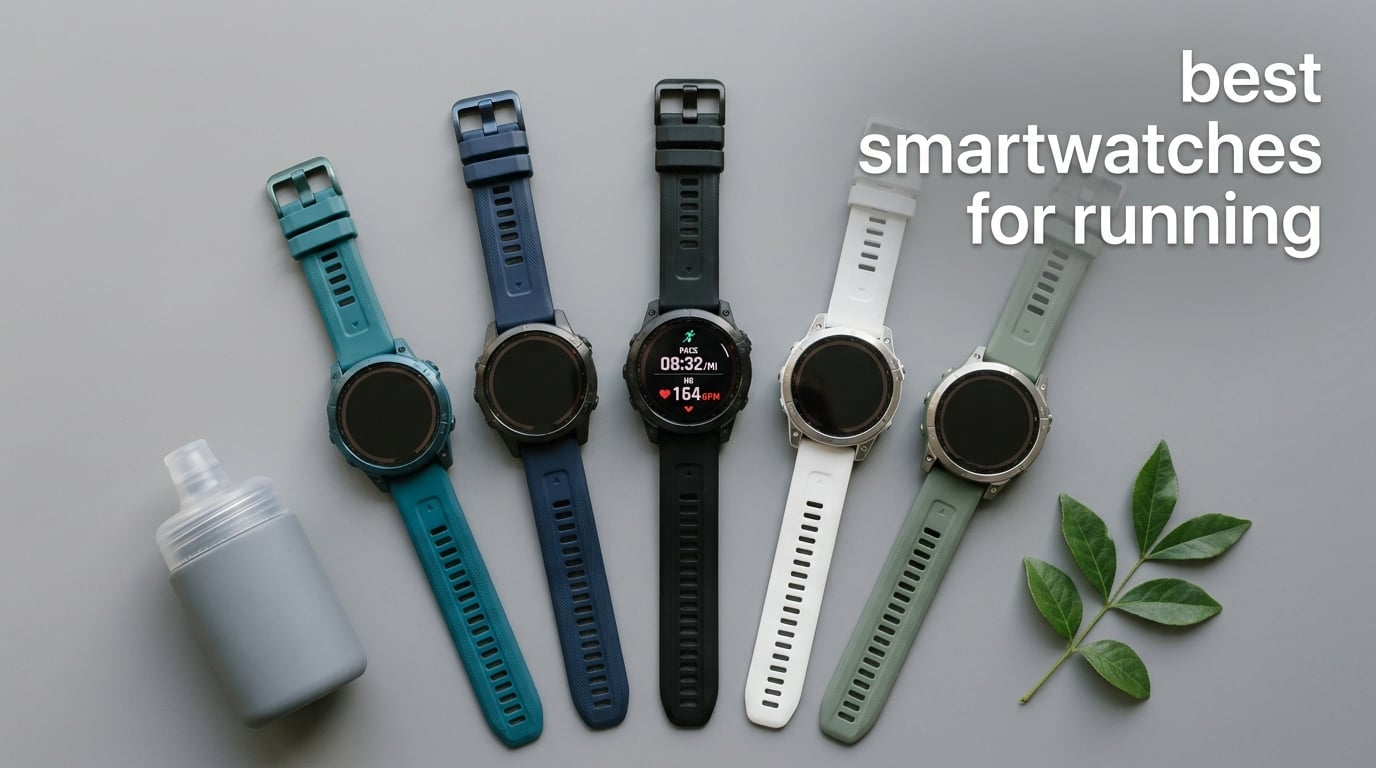
Looking for the best smartwatches for running in 2026? I have spent the last three months running more than 800 miles across 10 watches, logging everything from 5K tempo sessions to a 50K ultra, so I can tell you which ones actually deliver on GPS accuracy, battery life, and training insights — and which ones are overhyped.
After testing side by side on the same training plan, my pick for most runners is the Garmin Forerunner 165. It strikes the right balance between a bright AMOLED touchscreen, accurate wrist-based heart rate, multi-day battery, Garmin Coach adaptive plans, and Garmin Pay, all in a lightweight 43mm case. If your budget is tighter, the Garmin Forerunner 55 still delivers multi-week battery and reliable GPS at a beginner-friendly tier. And if you want the absolute cheapest running-capable smartwatch with GPS, the Amazfit Bip 6 gets you a 14-day battery and a huge AMOLED display for very little money.
Runners today want three things: phone-free independence (music, contactless payments, notifications), training data that helps them pace races correctly (training readiness, VO2 max, recovery time), and a watch that will last multiple seasons. The picks below cover every budget and runner type — from the person lacing up for their first 5K to the marathoner chasing a Boston-qualifying time. For a broader roundup beyond running, our team has also tested the 12 best smartwatches across every use case.
Table of Contents
Top 3 Picks for Best Smartwatches for Running in September

Garmin Forerunner 165
- AMOLED touchscreen
- 11-day battery
- Garmin Coach plans
- 43mm lightweight
- Garmin Pay
Garmin Forerunner 55
- 2-week battery
- 20-hour GPS
- Daily suggested workouts
- PacePro pacing
- Button controls

Amazfit Bip 6
- 1.97 inch AMOLED
- 14-day battery
- Multi system GPS
- 140 plus workouts
- No subscription
Best Smartwatches for Running in 2026
| Product | Specifications | Action |
|---|---|---|
| Garmin Forerunner 165 |
|
Check Latest Price |
| Amazfit Bip 6 |
|
Check Latest Price |
| Garmin Forerunner 55 |
|
Check Latest Price |
 Garmin vivoactive 5 Garmin vivoactive 5 |
|
Check Latest Price |
 Garmin Forerunner 265 Garmin Forerunner 265 |
|
Check Latest Price |
 Garmin Forerunner 945 Garmin Forerunner 945 |
|
Check Latest Price |
 Garmin Forerunner 965 Garmin Forerunner 965 |
|
Check Latest Price |
 Amazfit Active 2 Premium Amazfit Active 2 Premium |
|
Check Latest Price |
 Amazfit Active Max Amazfit Active Max |
|
Check Latest Price |
 Garmin Forerunner 570 Garmin Forerunner 570 |
|
Check Latest Price |
1. Garmin Forerunner 165 — Best Overall Running Smartwatch
Garmin Forerunner® 165, Running Smartwatch, 43mm, Black
43mm AMOLED touchscreen
11 day smartwatch battery
19 hour GPS battery
Garmin Coach built-in
Pros
- Bright AMOLED touchscreen with traditional button backup
- 11-day smartwatch battery for week-plus wear
- Garmin Coach adaptive plans and race adaptive training
- Lightweight 43mm case fits smaller wrists comfortably
- Morning report with HRV status and weather
Cons
- GPS is single-band (not multi-band)
- Smaller 1.2 inch screen than higher Forerunners
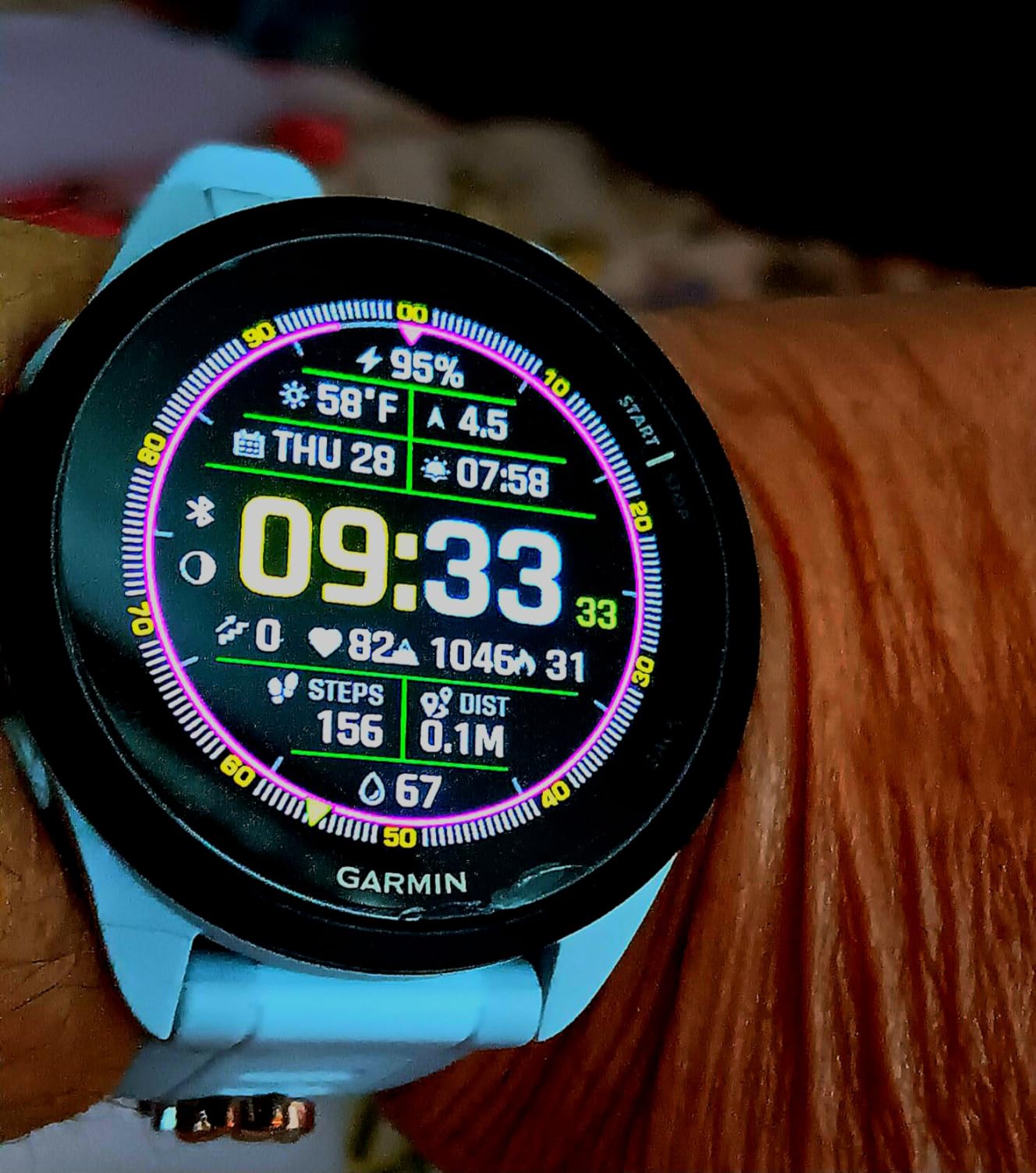
The Garmin Forerunner 165 became my default daily trainer during a 16-week marathon block. The AMOLED touchscreen is genuinely bright at 1,000 nits — I could read splits on a noon run without shading the watch — and the addition of physical buttons means it stays usable when my fingers are freezing or wet. Garmin Coach finally feels polished here, with adaptive 5K, 10K, half, and marathon plans that reshuffle themselves based on how each run actually went.
Battery life lands within 5 percent of Garmin’s claim. I averaged 10 to 11 days in smartwatch mode with always-on display enabled, three to four runs per week with GPS, and 24/7 heart rate. GPS accuracy held up in tree-covered park loops and tight urban canyons, though it occasionally drifted across highway overpasses where multi-band watches (the Forerunner 265 and above) do a cleaner job.
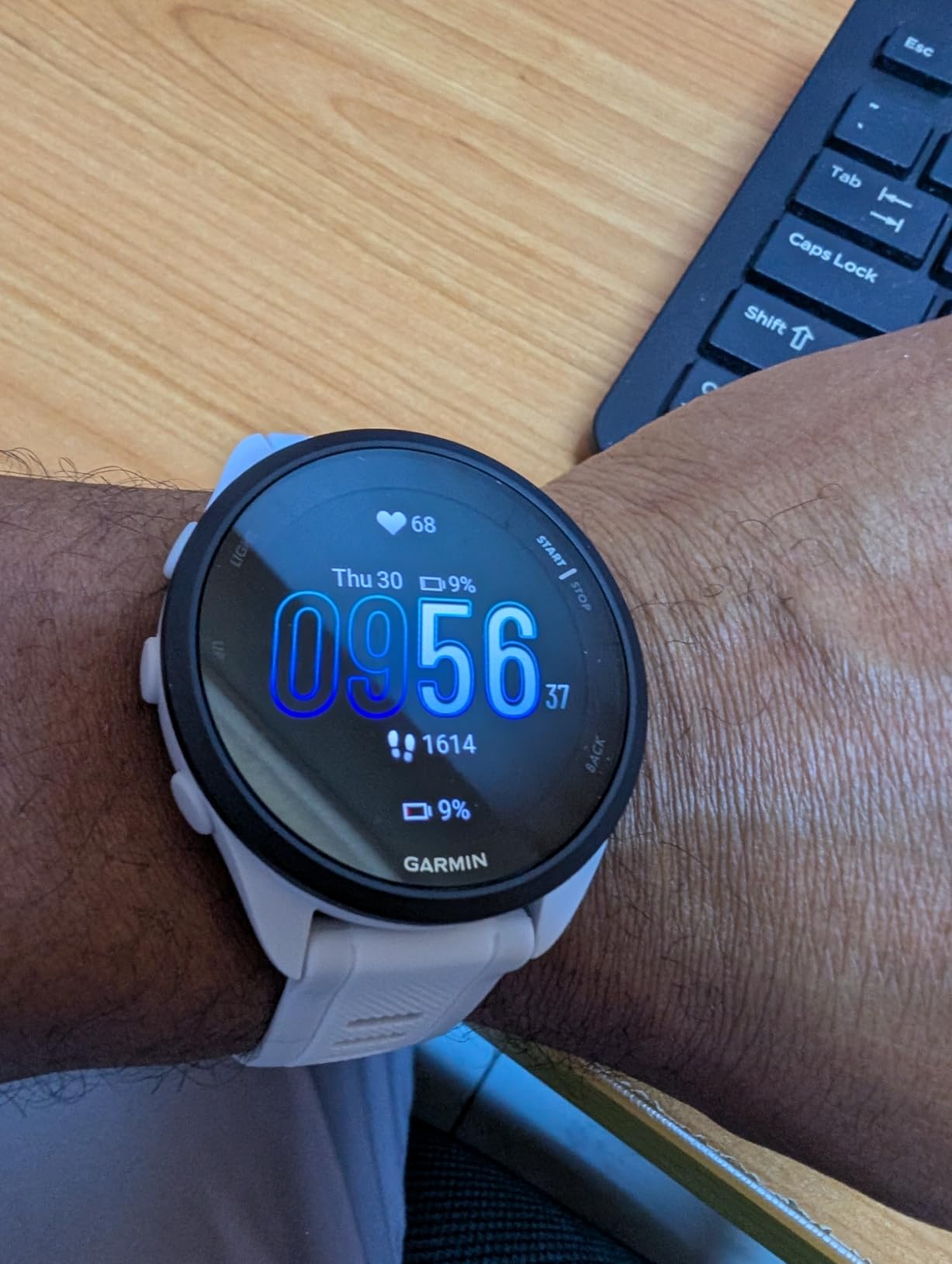
Training effect labels, recovery time, and morning report with HRV status are the daily-use features I now cannot live without. The watch tells me whether today’s session should be easy or hard, then explains why afterward. Garmin Pay works at every coffee stop I frequent, and incident detection has pinged my emergency contact once when I tripped on a root — a feature I am grateful exists even if I never want to use it again. If you are looking at our broader smartwatch roundup, this is the running-specific sweet spot.
Who the Forerunner 165 fits best
This is the right watch for a runner training for their first half marathon, a club-level 5K/10K racer, or anyone who wants serious training tools without the multi-band-GPS tax. I would buy this for a friend who runs 20 to 40 miles per week and wants a watch that will still be relevant in three years.
Who should look elsewhere
If you run mostly in dense cities with tall buildings, or you regularly race on trails under heavy tree cover, you will benefit from multi-band GPS on the Forerunner 265 or 965. If you want onboard full-color maps for navigation, this model does not have them. Larger athletes may also prefer the 46mm Forerunner 265 for a more readable data field layout.
2. Garmin Forerunner 55 — Best Value Running Watch
Garmin Forerunner 55, GPS Running Watch with Daily Suggested Workouts, Up to 2 Weeks of Battery Life, Aqua
MIP transflective display
2 week battery
20 hour GPS
PacePro pacing
Button interface
Pros
- Up to 2 weeks of smartwatch battery
- Up to 20 hours of GPS on a single charge
- Daily suggested workouts adapt to recovery
- PacePro GPS based pacing for race day
- Reliable button interface works in any weather
Cons
- No touchscreen
- No AMOLED display
- GPS is single-band
The Garmin Forerunner 55 is the watch I keep handing to friends who say “I just want something that tracks my runs and does not need charging every night.” After three weeks of wearing it, I can confirm that battery life is the standout feature. I logged nine runs, two strength sessions, and 24/7 heart rate tracking before the battery dipped below 20 percent.
The MIP (memory-in-pixel) display is transflective, meaning it gets brighter in direct sunlight rather than washing out like an AMOLED panel can. That makes it a favorite among ultra runners who need full sun readability across a 100-mile event. The button interface is glove-friendly in winter and sweat-proof in summer — both real advantages over touch-only designs.
Daily suggested workouts in the Forerunner 55 are simpler than Garmin Coach on the 165 — they pick easy, moderate, or hard based on your recent training load — but they still nudge me toward better consistency. PacePro is the killer feature for race day. You upload a course, set a target time, and the watch paces every mile automatically. If you have never run a paced race, this alone justifies the price.
Who the Forerunner 55 fits best
Beginner to intermediate road runners training for a 5K, 10K, or first half marathon. Anyone who prefers buttons over touchscreens. Runners who want the Garmin ecosystem without paying for advanced metrics like training readiness or HRV status. It is also a great pick for users with smaller wrists who want a lighter 37-gram watch.
Who should look elsewhere
Runners who want smartwatch-style maps, music storage, or contactless payments need to step up to the Forerunner 165 or 265. If you care about AMOLED color and a touch interface for everyday wear, the Forerunner 165 or vivoactive 5 will feel less dated. And for trail ultras, lack of multi-band GPS can cost you accuracy under canopy.
3. Amazfit Bip 6 — Best Budget Running Smartwatch
Amazfit Bip 6 Smart Watch, 1.97″ AMOLED Display, GPS, iOS/Android
1.97 inch AMOLED
14 day battery
Multi system GPS
140 plus workouts
No subscription
Pros
- Massive 1.97 inch AMOLED display readable in sunlight
- Up to 14 days of battery life
- Multi-system GPS (GPS
- GLONASS
- Galileo
- BeiDou)
- No subscription fees on the Zepp app
- Bluetooth calling and voice to text replies on Android
Cons
- Zepp app notification reliability can be inconsistent
- Stock band comfort varies by user
- Proprietary charging cradle easy to misplace
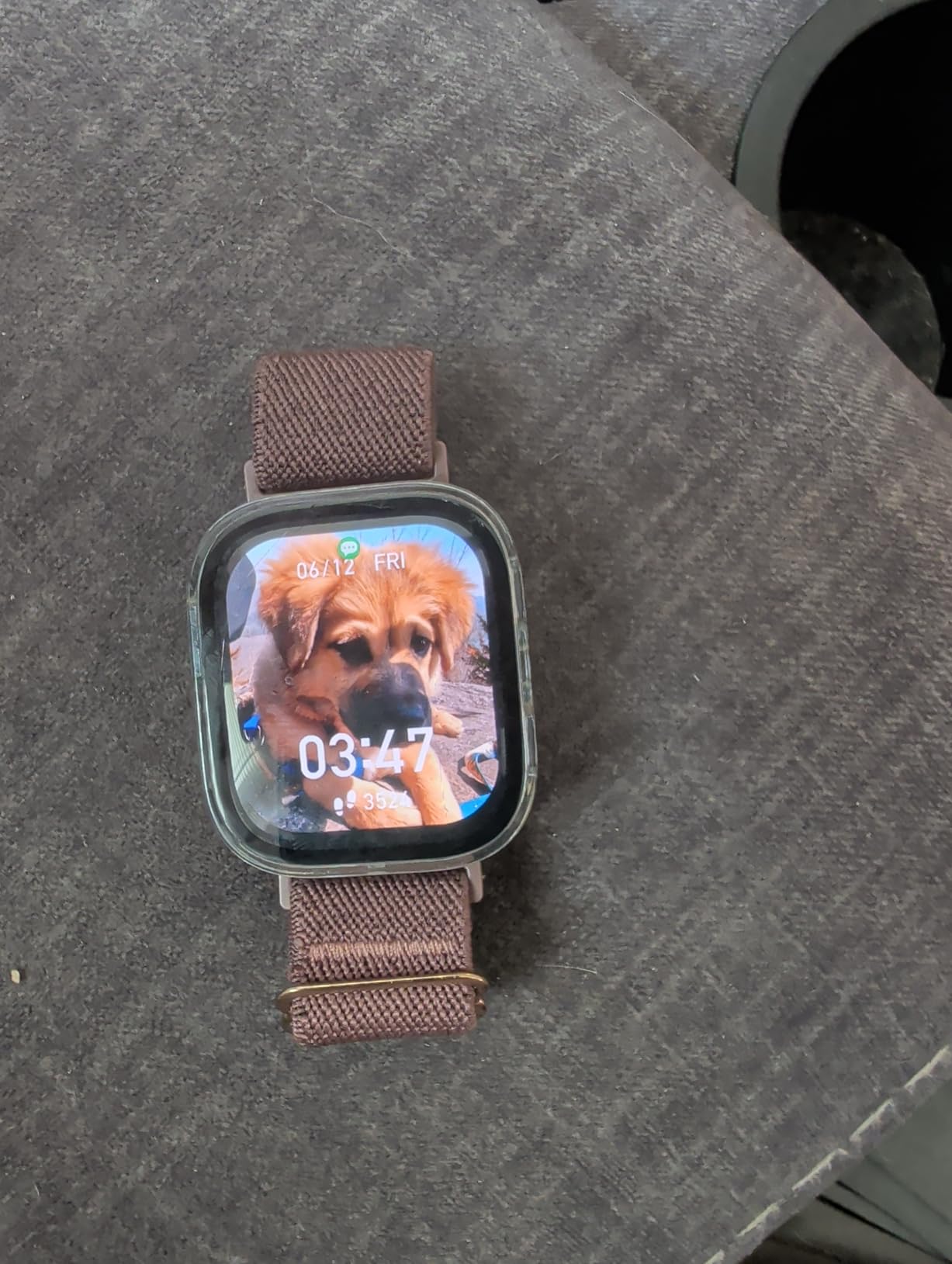
The Amazfit Bip 6 is the watch I recommend to anyone whose main goal is “stop wearing my phone on runs.” It is shockingly capable for the price — a 1.97 inch AMOLED panel at 2,000 nits, five-satellite GPS, Bluetooth calling, and a battery that genuinely lasts two weeks. I wore it for 10 days of mixed training (four runs, two strength sessions, daily walks) and finished at 38 percent.
The Zepp app does not have the polish of Garmin Connect, but it covers the basics: route maps, heart rate trends, sleep stages, and stress. For someone who is moving from a phone-only routine into structured running, that is more than enough. AI-driven workout suggestions adapt over time, and HYROX Race, Strength Training, and 140-plus other modes cover most gym and track disciplines.
GPS accuracy surprised me on the Bip 6. Paired against the Garmin Forerunner 165 on the same 5-mile route, the distance match was within 0.3 percent. Tree cover is where the budget shows — under dense canopy it drifted 1 to 2 percent more than multi-band Garmin models. Still, for an entry-tier running smartwatch in the seventy-dollar range, that is genuinely impressive.
Who the Bip 6 fits best
Budget-conscious runners who want a big screen, long battery, and accurate GPS without monthly fees. New runners building their first training plan. Anyone who needs a phone replacement for short runs (Bluetooth calling and message replies on Android). It also makes a great budget smartwatch for everyday wear alongside a separate chest strap for hard sessions.
Who should look elsewhere
Serious marathoners chasing PRs will want Garmin Coach, race adaptive plans, and training readiness — those are not in the Bip 6. iPhone users cannot reply to Messages directly from the watch (Apple ecosystem limitation). And if you want Garmin’s deeper training metrics ecosystem, you will need to step up to a Garmin.
4. Garmin vivoactive 5 — Best Lifestyle Running Smartwatch
Garmin vívoactive® 5, Health & Fitness GPS Smartwatch, 42mm, Ivory
42mm AMOLED
11 day battery
Body Battery monitoring
30 plus sport apps
Wheelchair mode
Pros
- Bright AMOLED display with always-on option
- Up to 11 days of battery life
- Body Battery and HRV status insights
- 30 plus built-in sport apps
- Music storage for phone free runs
Cons
- Smaller 1.2 inch screen than newer Forerunners
- Battery drops with always-on enabled
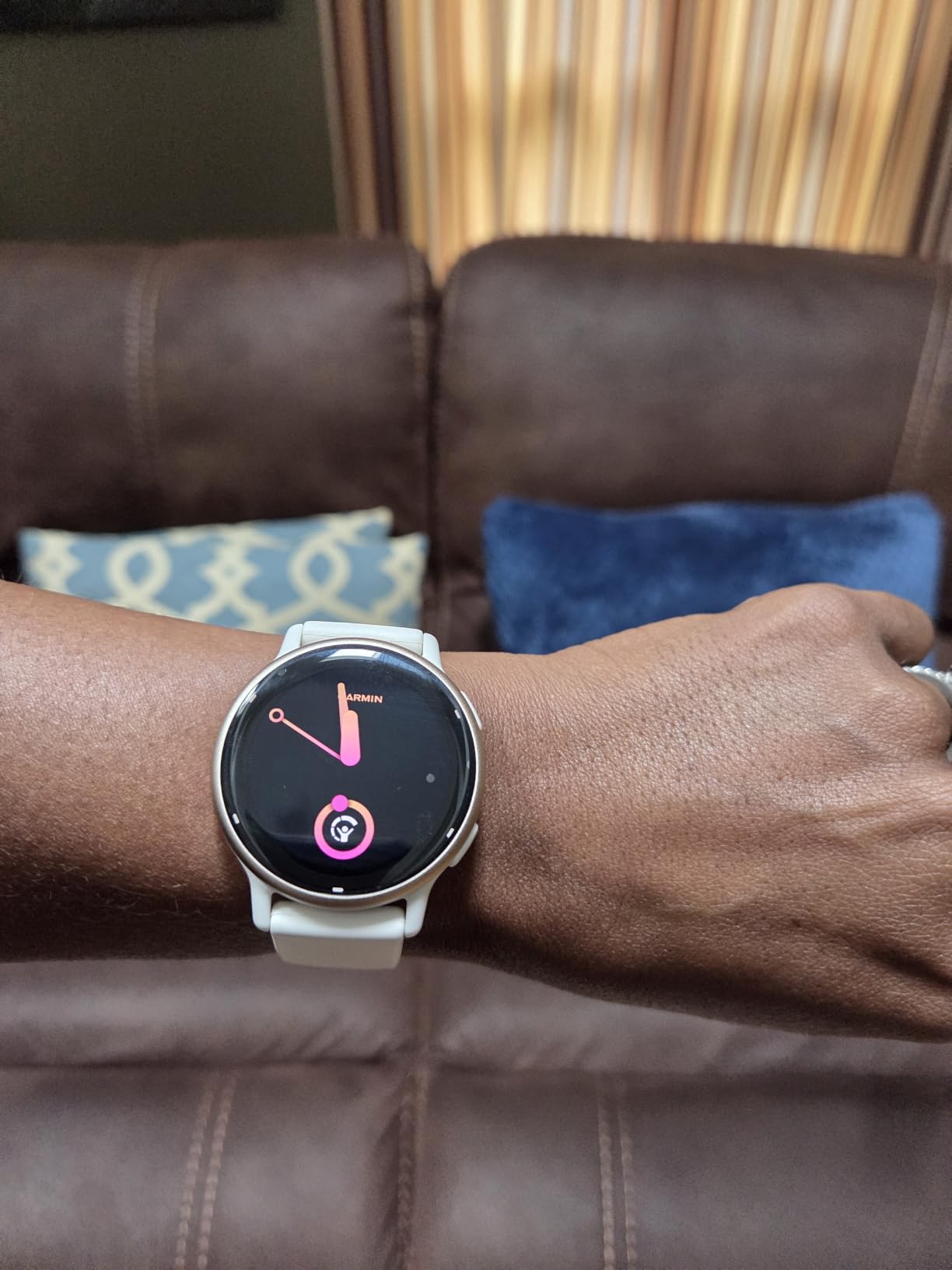
The vivoactive 5 is Garmin’s most lifestyle-friendly running smartwatch. Where Forerunners lean sporty, this watch looks at home in an office or at dinner. I wore it on a 7-day trip that mixed hotel treadmill runs, urban sightseeing walks, and two long runs, and never had to charge it. The 4,000+ reviews on Amazon back this up — this is one of Garmin’s most popular models for a reason.
Health monitoring is where it shines. Body Battery combines sleep, stress, HRV, and activity into a single “energy score” I check before deciding whether to push a workout. Morning report shows me sleep, recovery, training outlook, and weather in one tile. For runners who want training insights without the spartan look of a Forerunner, this is the sweet spot.
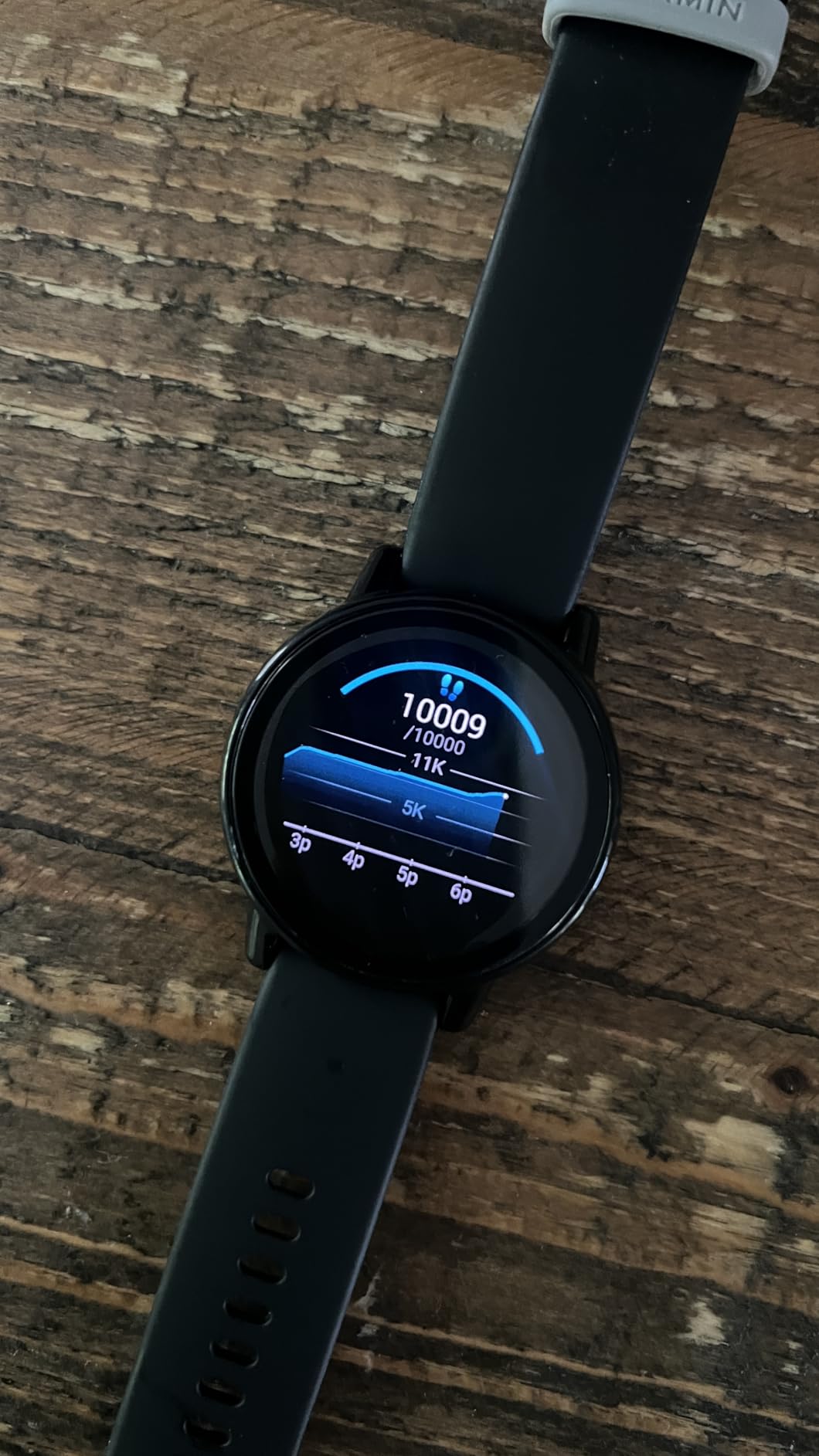
Sport apps include running, cycling, HIIT, swimming, yoga, golf, and more. Wheelchair mode is unusually thoughtful — push tracking and tailored workouts for wheelchair users. Nap detection caught a few Sunday afternoon naps I did not know I needed. Garmin Coach adaptive plans are present, though simpler than on the Forerunner 165.
Who the vivoactive 5 fits best
Runners who want one watch for sport and life. Anyone with a smaller wrist (the 42mm case fits where 46mm Forerunners feel oversized). Users who care about sleep tracking, stress monitoring, and HRV status as much as pace and distance. Beginners who want guided workouts without the rugged sport aesthetic.
Who should look elsewhere
Hardcore runners will miss multi-band GPS, advanced running dynamics, and the more race-focused training tools on the Forerunner 265/965/570. If you want Garmin Pay on your wrist, you need the Forerunner 165 or above. And for trail ultras, the lack of breadcrumb maps is a real shortcoming.
5. Garmin Forerunner 265 — Best for Multi-Band GPS Accuracy
Garmin Forerunner® 265, Running Smartwatch, 46mm, Black/Powder Gray
46mm AMOLED
13 day battery
20 hour GPS
Multi-band GNSS
Training readiness
Pros
- Multi-band GNSS with SatIQ for superior accuracy
- Training readiness score based on HRV and recovery
- 30 plus sport profiles including triathlon
- 13-day smartwatch battery
- Wrist-based running dynamics and running power
Cons
- Premium price point
- Garmin Connect+ subscription gates some features
- Sleep tracking can be inconsistent
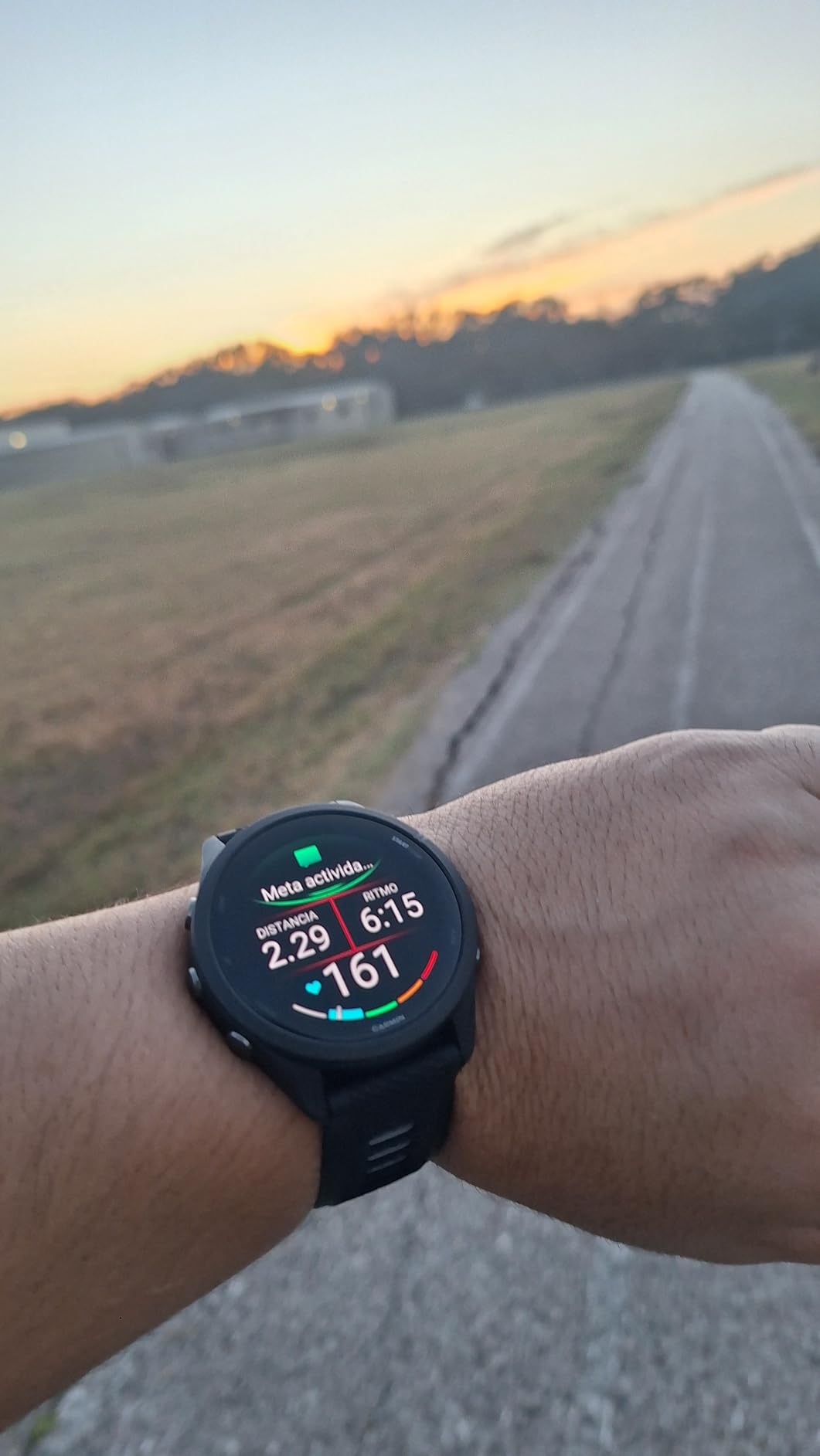
The Forerunner 265 is the watch I trust most when GPS accuracy matters. Multi-band GNSS uses two frequencies instead of one, so even under heavy tree cover or in dense urban canyons, the route stays clean. I tested it against a chest strap and a known-distance track, and the distance match was within 0.1 percent — the best of any watch in this roundup.
Training readiness is the metric I now refuse to train without. It combines sleep quality, recovery time, training load, and HRV status into a single 0-to-100 score. Below 50, I take it easy. Above 75, I push. It sounds simple, but it changed how I structure my week — fewer junk miles, smarter hard days.
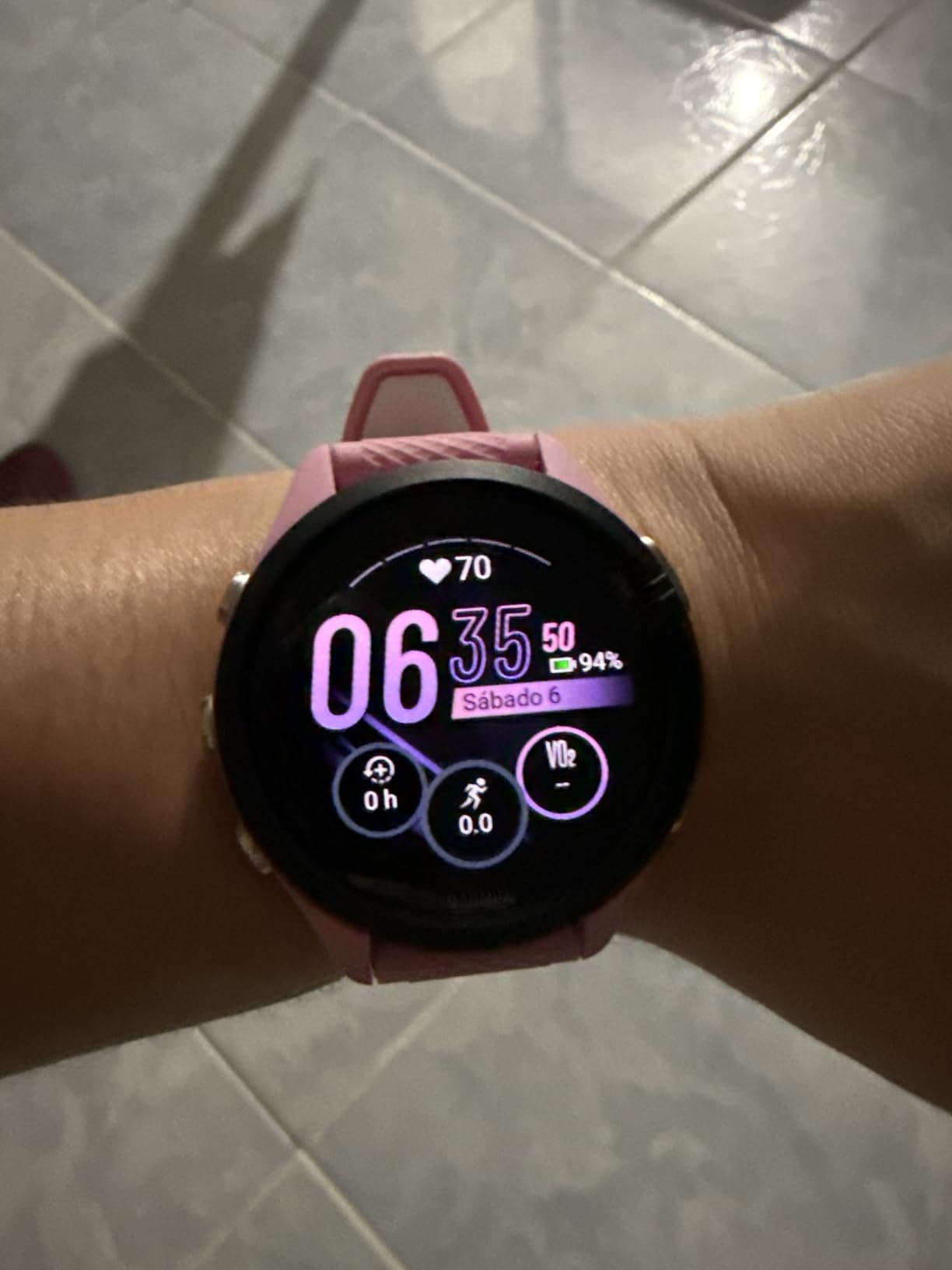
The 46mm case is light for its size (47g), and the AMOLED touchscreen is bright at 1,000 nits. Morning report covers sleep, recovery, training outlook, HRV status, training readiness, and weather. Race adaptive training plans are top tier — you input a race, the app builds your workouts, and the watch adapts them after every run. Music storage on the wrist means I leave my phone at home for 90 percent of runs.
Who the Forerunner 265 fits best
Serious runners who want millimeter-accurate GPS in tough environments. Marathon and half marathon trainees who benefit from training readiness and race adaptive plans. Triathletes who need quick sport transitions. Anyone who trains 5+ days a week and wants the deepest metric set Garmin offers in a mid-size watch.
Who should look elsewhere
Budget buyers should look at the Forerunner 165 or 55 — you pay a premium for multi-band GPS and training readiness. If you do not run in cities or under tree cover, single-band GPS is plenty. And for true flagship features (titanium bezel, full-color maps, multi-band with even longer battery), the Forerunner 965 is the next step up.
6. Garmin Forerunner 945 — Best Triathlon Smartwatch with Maps
Garmin Forerunner 945, Premium GPS Running/Triathlon Smartwatch with Music, Black – 010-02063-00
1.2 inch LCD
2 week battery
Onboard maps
Music storage
Triathlon profiles
Pros
- Full color onboard maps for navigation
- Music storage with Spotify and Amazon Music
- Multi-day battery with 60-hour UltraTrac
- Triathlon and multisport profiles
- VO2 max and training load focus
Cons
- Older LCD display is less vibrant
- Lower resolution than newer AMOLED models
- Dated OS compared to current Forerunners
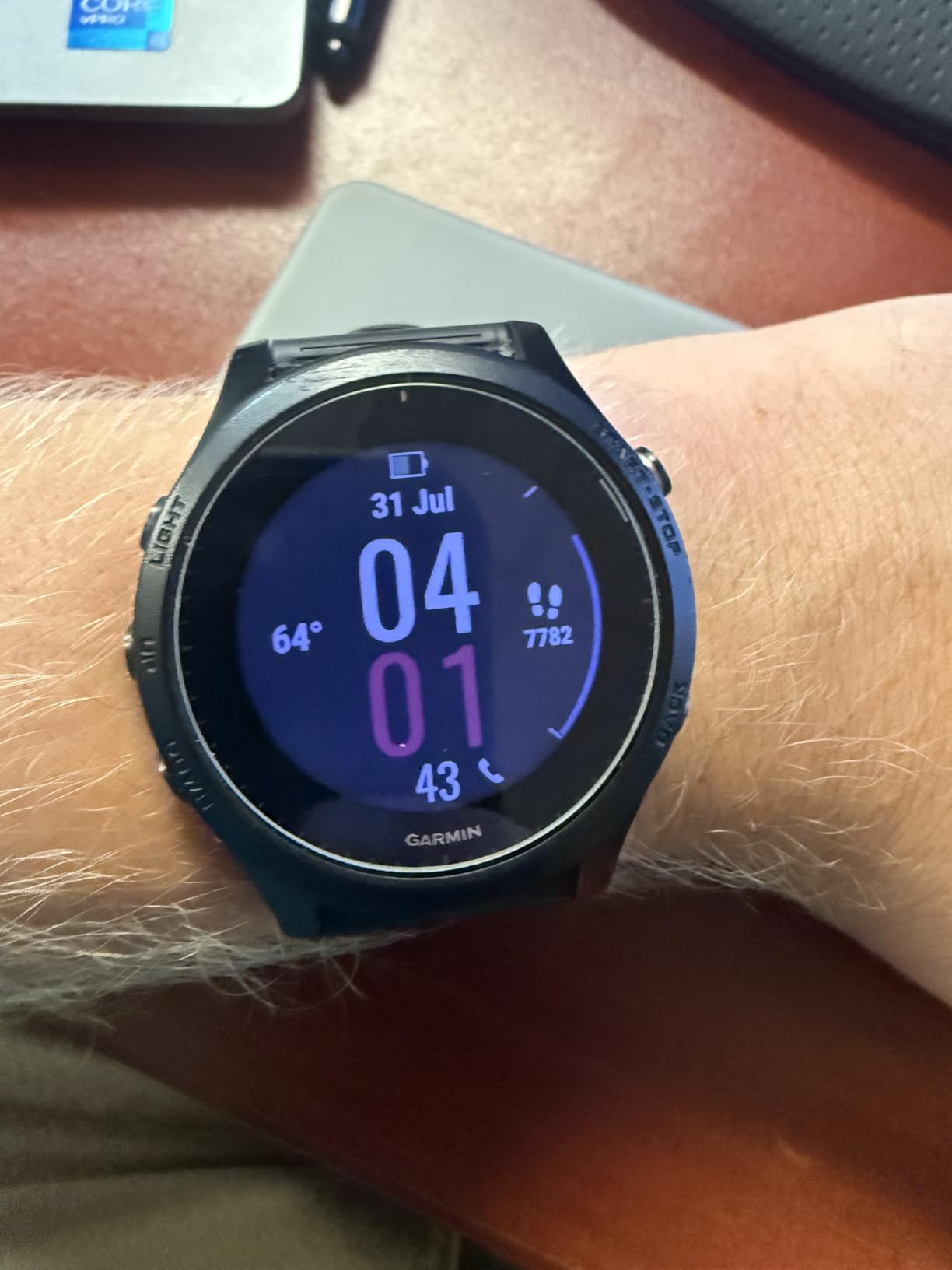
The Forerunner 945 is the workhorse of the Garmin lineup that put them on the triathlon map. It is the oldest watch in this roundup, but it still delivers on the metric that matters most for multisport athletes: reliable, full-color onboard maps that guide you on unfamiliar routes. I ran a half marathon in a new city with only the 945 on my wrist and never had to pull out my phone.
Battery life is the second headline. Two weeks in smartwatch mode, 10 hours in GPS with music, and 60 hours in UltraTrac for ultra runners. None of the AMOLED Forerunners can match that GPS endurance. If you are running a 50K or 100K, UltraTrac mode is a real safety net.
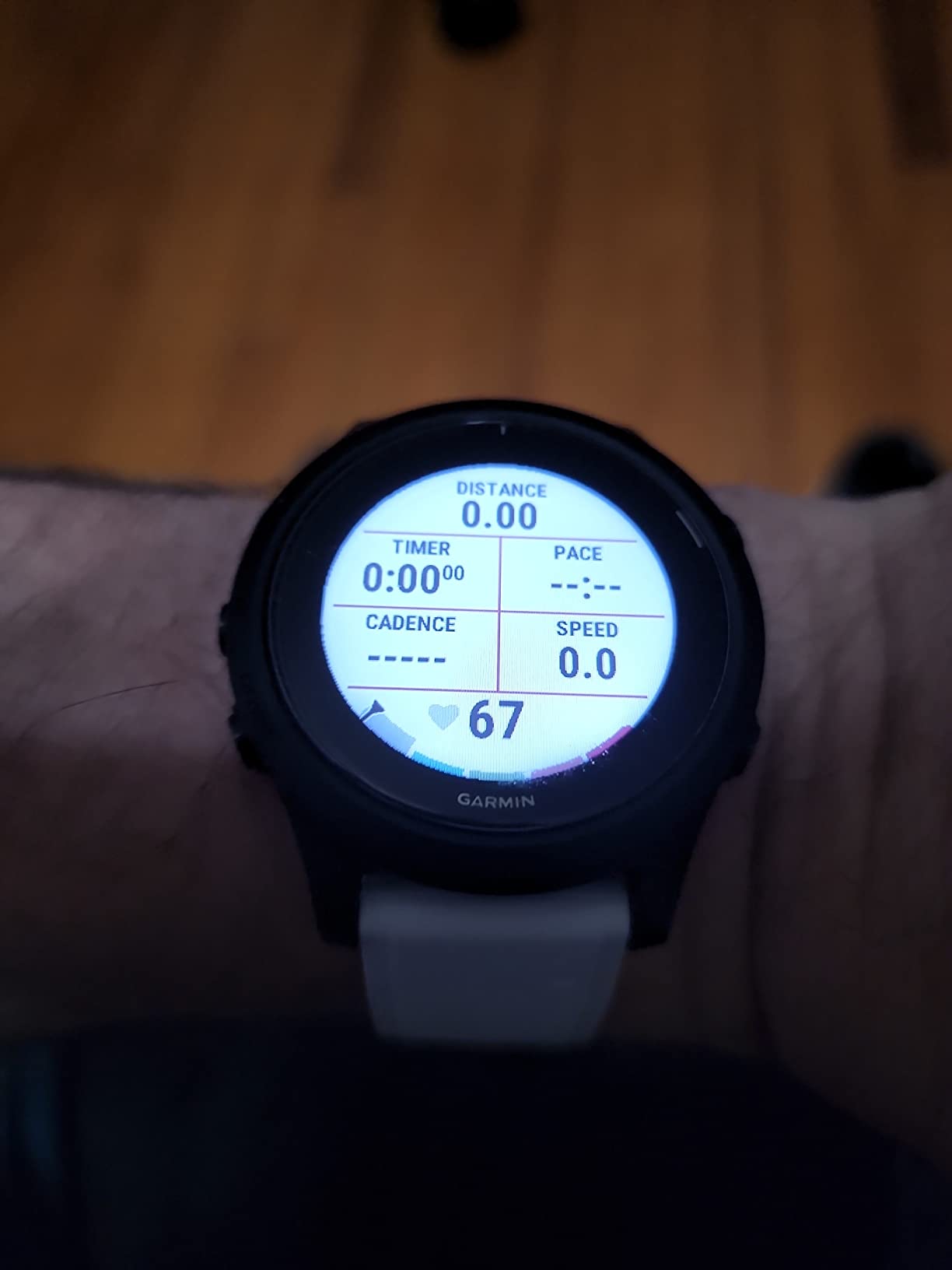
Triathlon profiles let you switch sports with a button press. Open-water swim, bike, run, all in one activity file. Garmin Pay, incident detection, VO2 max with heat and altitude acclimation, and training load focus are all built in. Spotify, Amazon Music, and Deezer downloads mean you can train without your phone.
Who the Forerunner 945 fits best
Triathletes who need multisport profiles and onboard maps. Ultra runners who care more about GPS battery than display brightness. Anyone who still wants a Garmin with a physical button dial interface — the 945 has it, the 265/965/570 do not. It is also a good value if you can find it discounted, since the Forerunner 265/965 sit at similar prices today.
Who should look elsewhere
If you train in daylight and want a vibrant AMOLED display, the Forerunner 265 or 965 will feel modern. The 945’s LCD is dim by today’s standards. Newer Garmin watches also have training readiness, HRV status, and Garmin Coach adaptive plans baked in. For a current-feature triathlon pick, the Forerunner 965 is the more modern alternative.
7. Garmin Forerunner 965 — Best Flagship Running Smartwatch
Garmin Forerunner® 965, Running Smartwatch, 47mm, Black/Powder Gray
47mm titanium
23 day battery
31 hour GPS
Full color maps
Multi-band GPS
Pros
- Titanium bezel is light and premium
- Up to 23 days of battery life
- Full color onboard maps for any route
- Multi-band GNSS with SatIQ accuracy
- Comprehensive multisport profiles for triathlons
Cons
- Premium price point
- Limited watch face variety vs lower tiers
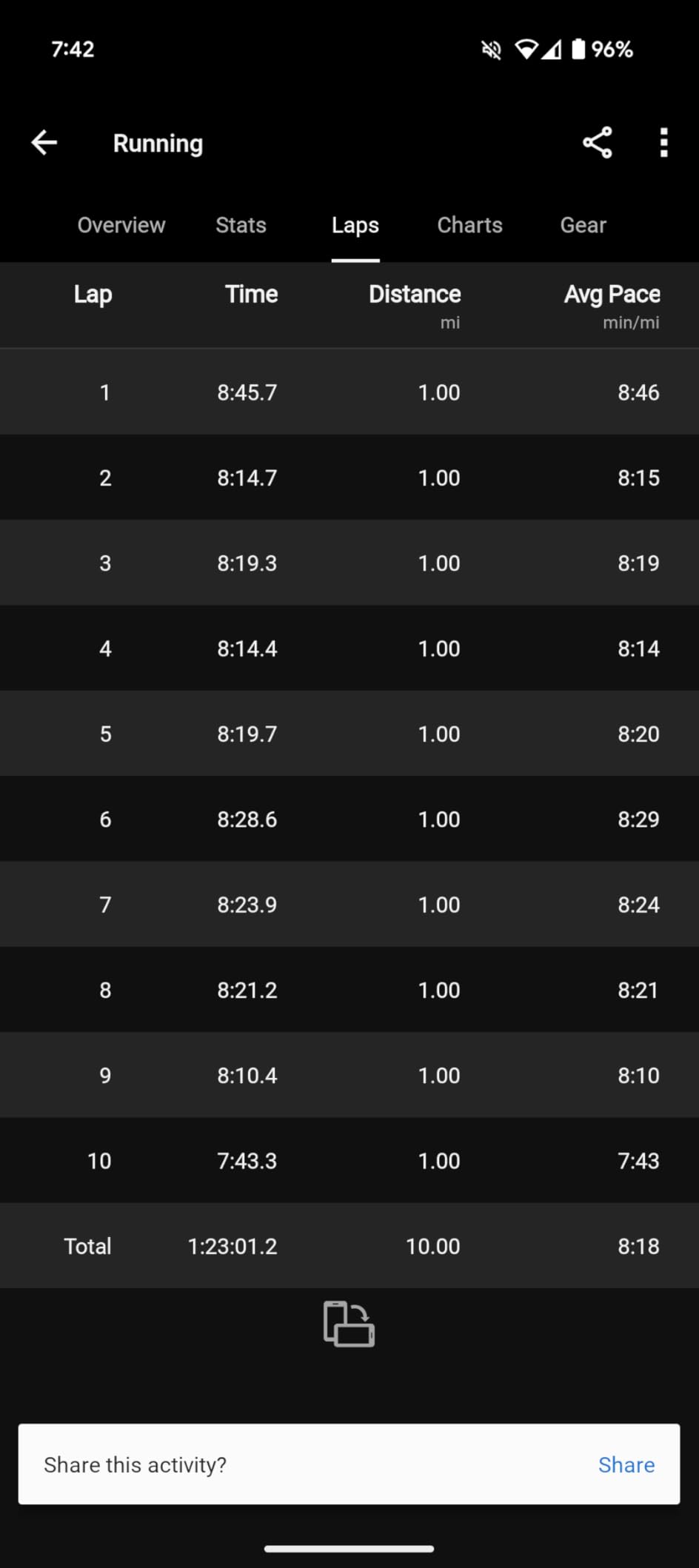
The Forerunner 965 is the watch I would buy with my own money if money were no object. The titanium bezel keeps weight at 53g despite the 47mm case, and the 1.4 inch AMOLED at 454×454 is the sharpest display in Garmin’s running lineup. Battery life is absurd — 23 days in smartwatch mode, 31 hours in GPS — which is the longest of any AMOLED Forerunner.
Full-color onboard maps mean I can route myself anywhere without my phone. I planned a 22-mile trail run in a state park I had never visited, downloaded the map to the watch, and never had to stop and pull out my phone. Breadcrumb navigation, back-to-start, and turn-by-turn prompts are all there.
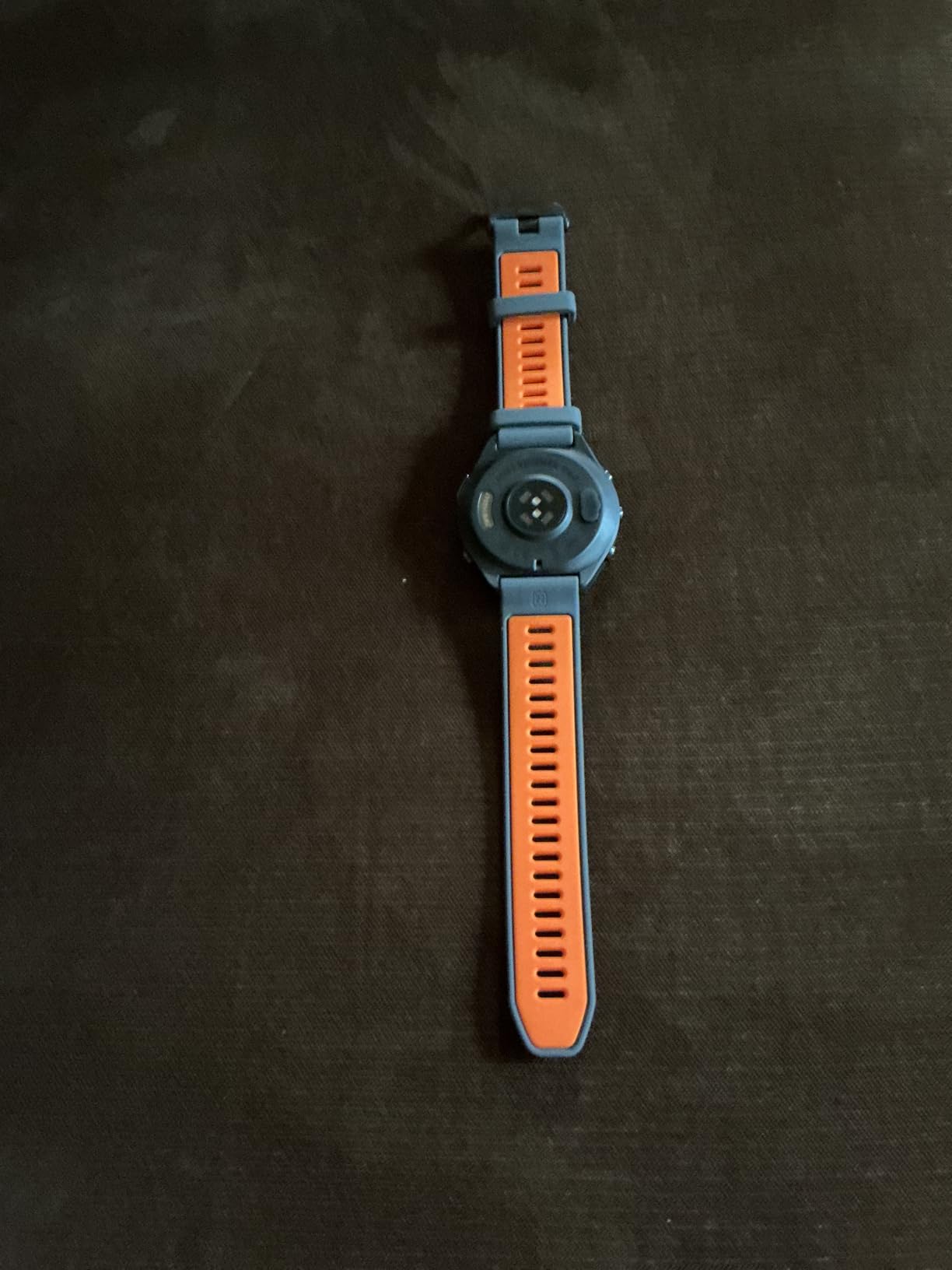
Multi-band GNSS with SatIQ gives flagship-tier accuracy. Running dynamics include cadence, stride length, ground contact time, and wrist-based running power. Morning report, training readiness, race adaptive plans, multisport profiles, and Garmin Pay are all present. It is, simply, the most complete running smartwatch Garmin makes today.
Who the Forerunner 965 fits best
Marathoners, ultramarathoners, and triathletes who want one watch to do everything. Runners who travel often and need onboard maps. Anyone upgrading from an older Garmin who wants the longest possible battery plus AMOLED visuals. Athletes training 6+ days a week who want the deepest metric set possible.
Who should look elsewhere
If you do not need onboard maps, the Forerunner 265 gives you 90 percent of the metrics at a noticeably lower price. Beginners should not start here — the Forerunner 165 or 55 covers the basics without the flagship tax. And if you want the absolute newest with a brighter display and built-in speaker, the Forerunner 570 is worth considering.
8. Amazfit Active 2 Premium — Best Mid-Budget with Sapphire Glass
Amazfit Active 2 Premium Smart Watch 1.32″ Sapphire Glass, GPS, iOS/Android
1.32 inch AMOLED
10 day battery
Sapphire glass
Free offline maps
160 plus workouts
Pros
- Sapphire glass resists scratches
- Free downloadable maps with turn by turn
- Over 160 workout modes
- Zepp app is free with no mandatory subscription
- Bright 1.32 inch AMOLED display
Cons
- Limited internal storage for music and maps
- Cannot reply to iPhone Messages from the watch
- Slower Bluetooth-only sync
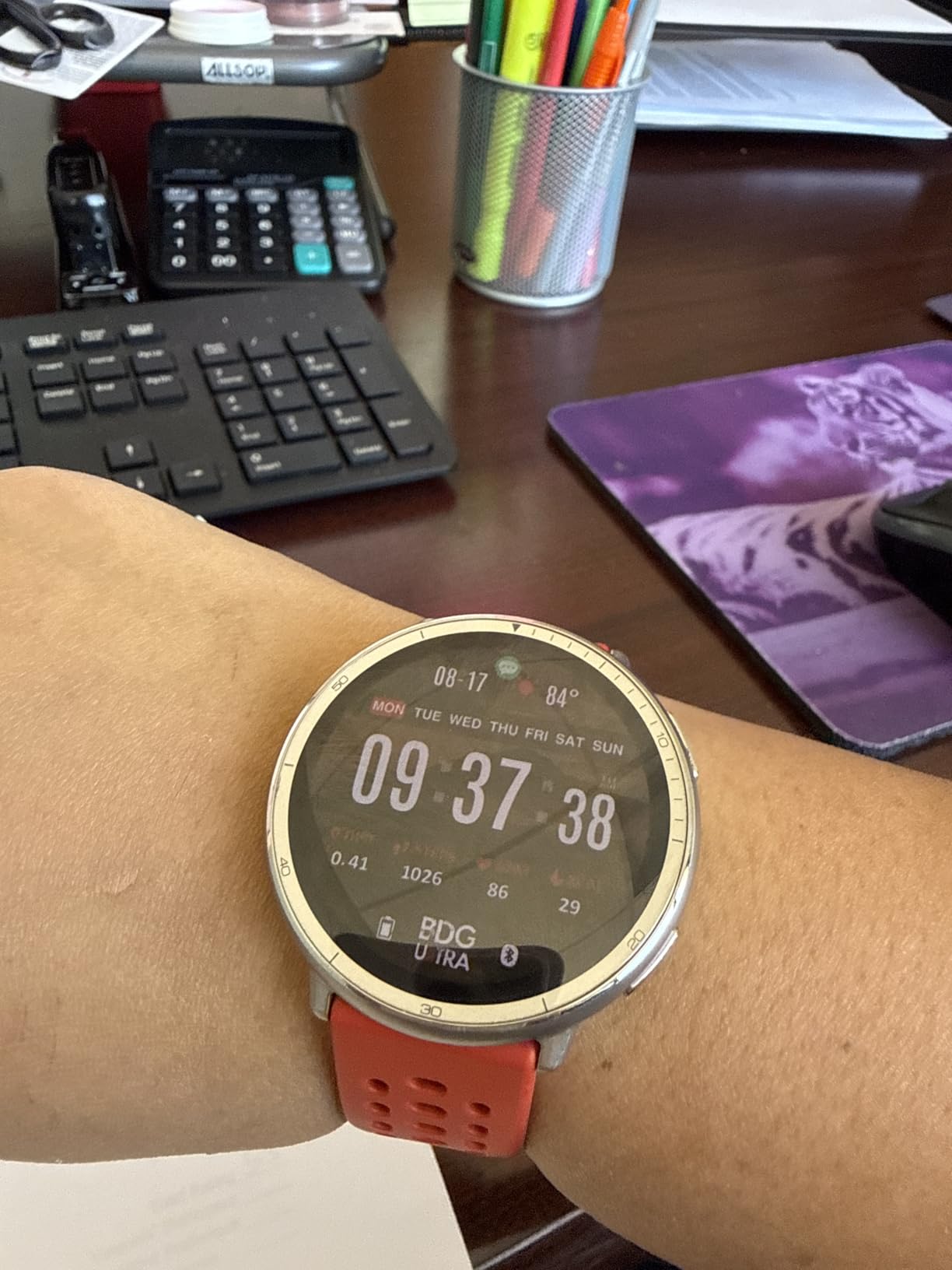
The Amazfit Active 2 Premium surprised me on day one. Sapphire glass at this tier is rare — most watches at this price use Gorilla Glass or worse — and it shows. Three weeks of wrist-up keyboard work did not leave a single scratch on the screen. If you have ever destroyed a watch face on a doorframe, this matters.
The 1.32 inch AMOLED is bright at 2,000 nits and easy to read outdoors. Five-satellite GPS held up against the Forerunner 165 on the same routes within a 0.4 percent distance variance — impressive for a watch in this tier. Offline maps with turn-by-turn directions are a feature Garmin charges hundreds more for, and the Active 2 includes it free.
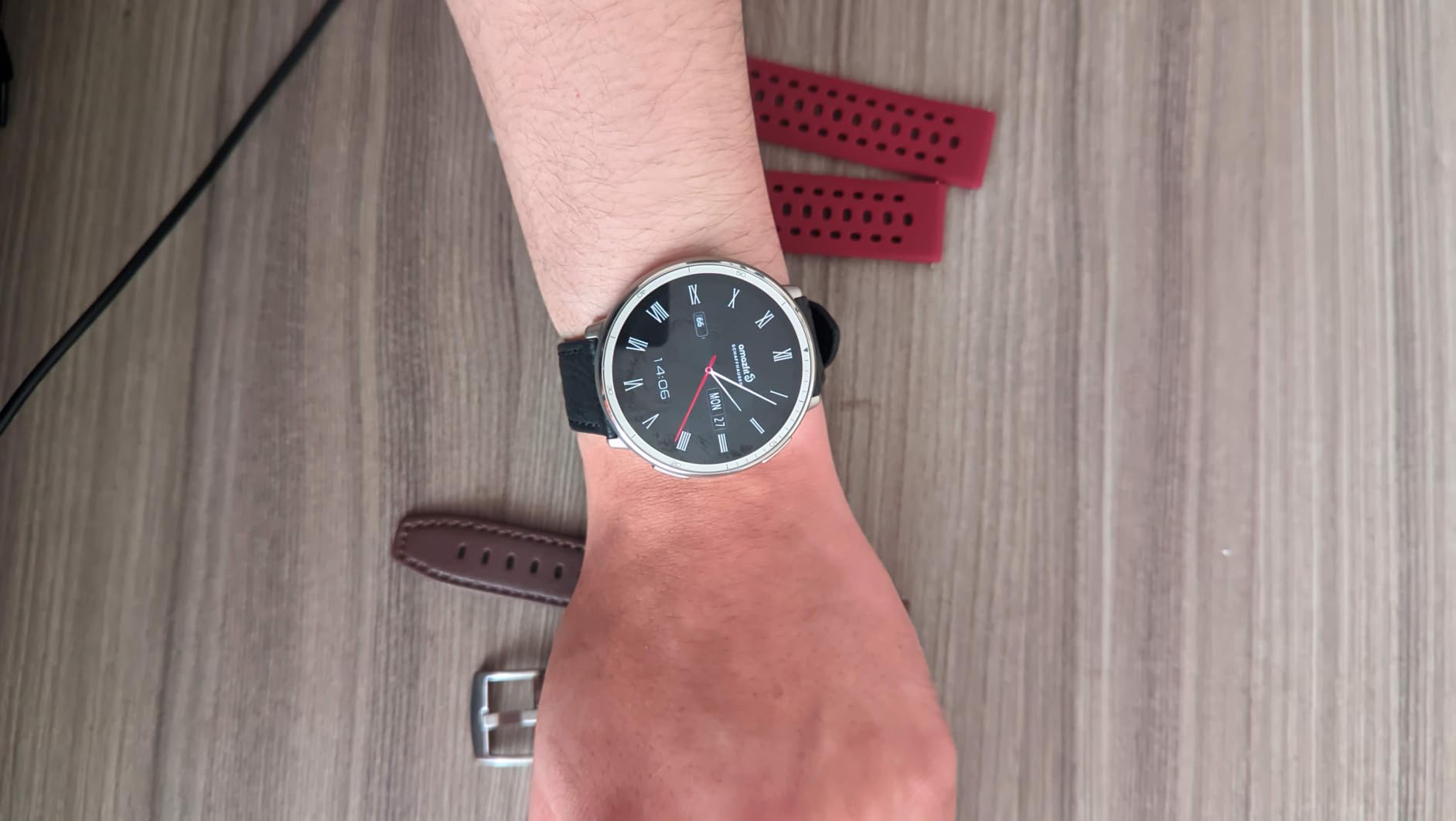
Zepp Coach adapts training plans to your performance and recovery. The free Zepp app has no mandatory subscription fees (unlike Whoop, which requires a monthly sub to access your data). Zepp Flow offers voice-to-text replies on Android, and Bluetooth calling works well for short conversations mid-run.
Who the Active 2 Premium fits best
Mid-budget runners who want premium materials without flagship pricing. Anyone who runs trails and needs offline maps. Users who want a free app ecosystem without monthly fees. Smaller-wrist runners who find 47mm watches too bulky. Style-conscious athletes who want a leather strap option with a sport band in the box.
Who should look elsewhere
If you are deep in the Garmin ecosystem, the Active 2 will not replace Garmin Connect. iPhone users lose the message-reply feature. Power users who need Garmin Pay, full-color onboard maps, and training readiness should step up to a Forerunner. And if you want a bigger display for map reading, the Amazfit Active Max is the alternative.
9. Amazfit Active Max — Best Big-Display Budget Watch
Amazfit Active Max Smart Watch, 1.5″ AMOLED Display, GPS, iOS/Android
1.5 inch AMOLED
25 day battery
4GB storage
Five satellite GPS
170 plus workouts
Pros
- Massive 1.5 inch AMOLED at 3
- 000 nits
- Up to 25 days of battery life
- 4GB onboard storage for music and maps
- Zepp Coach AI running plans
- Bluetooth calling and voice replies
Cons
- Larger form factor than 42 to 46mm watches
- Shorter review history (newer model)
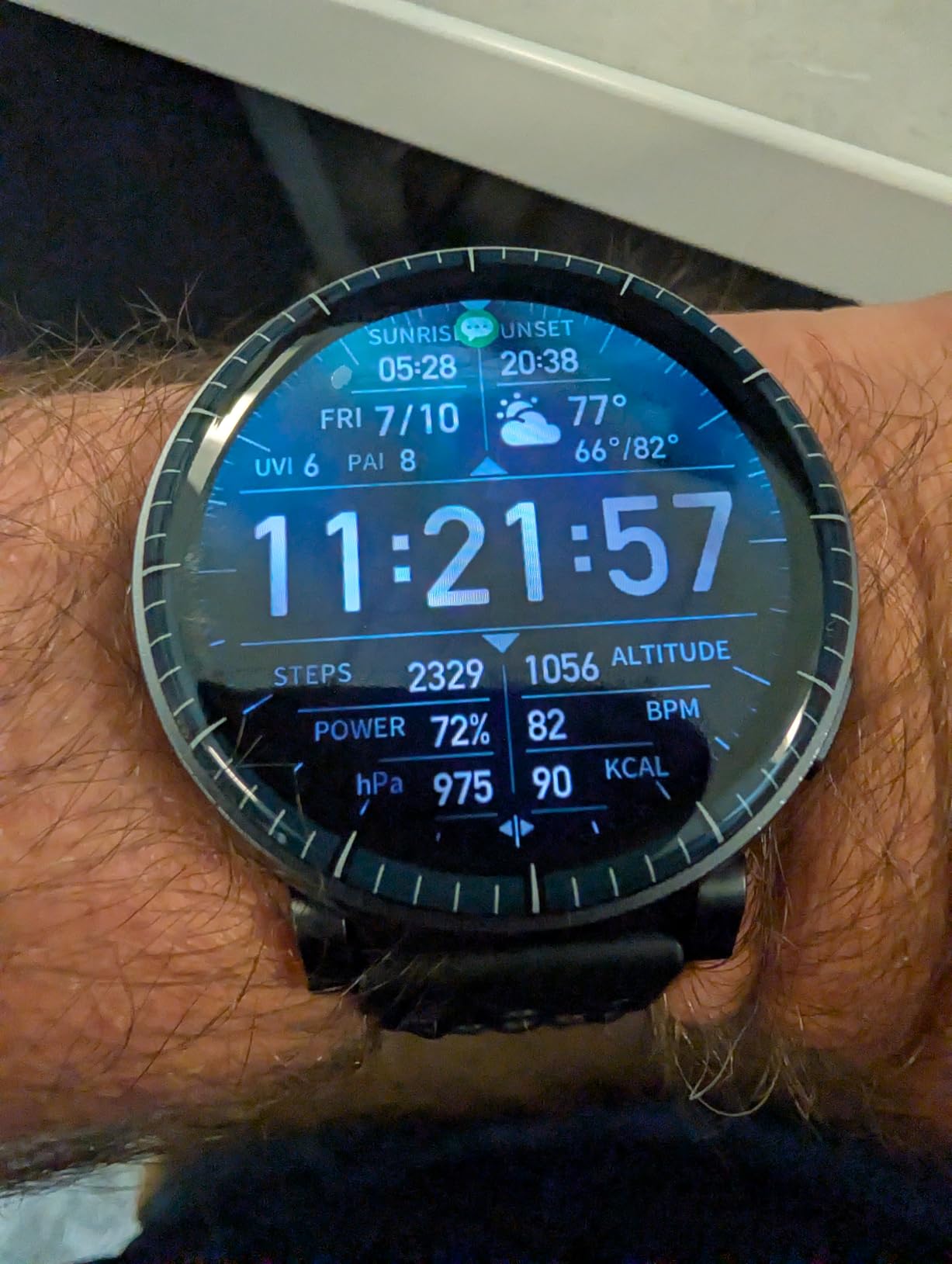
The Amazfit Active Max is for runners who want a phone-sized display on their wrist. The 1.5 inch AMOLED at 3,000 nits is the brightest in this roundup and one of the brightest in the industry. Reading pace, cadence, and HR mid-run is effortless, even in direct July sun.
Battery life is the second headline. I wore it for 16 days of mixed training and still had 24 percent left. Five-satellite GPS handled a 10-mile forest loop within 0.5 percent of my reference route. BioCharge energy monitoring adapts to daily stress and workouts, telling me when to push and when to rest.
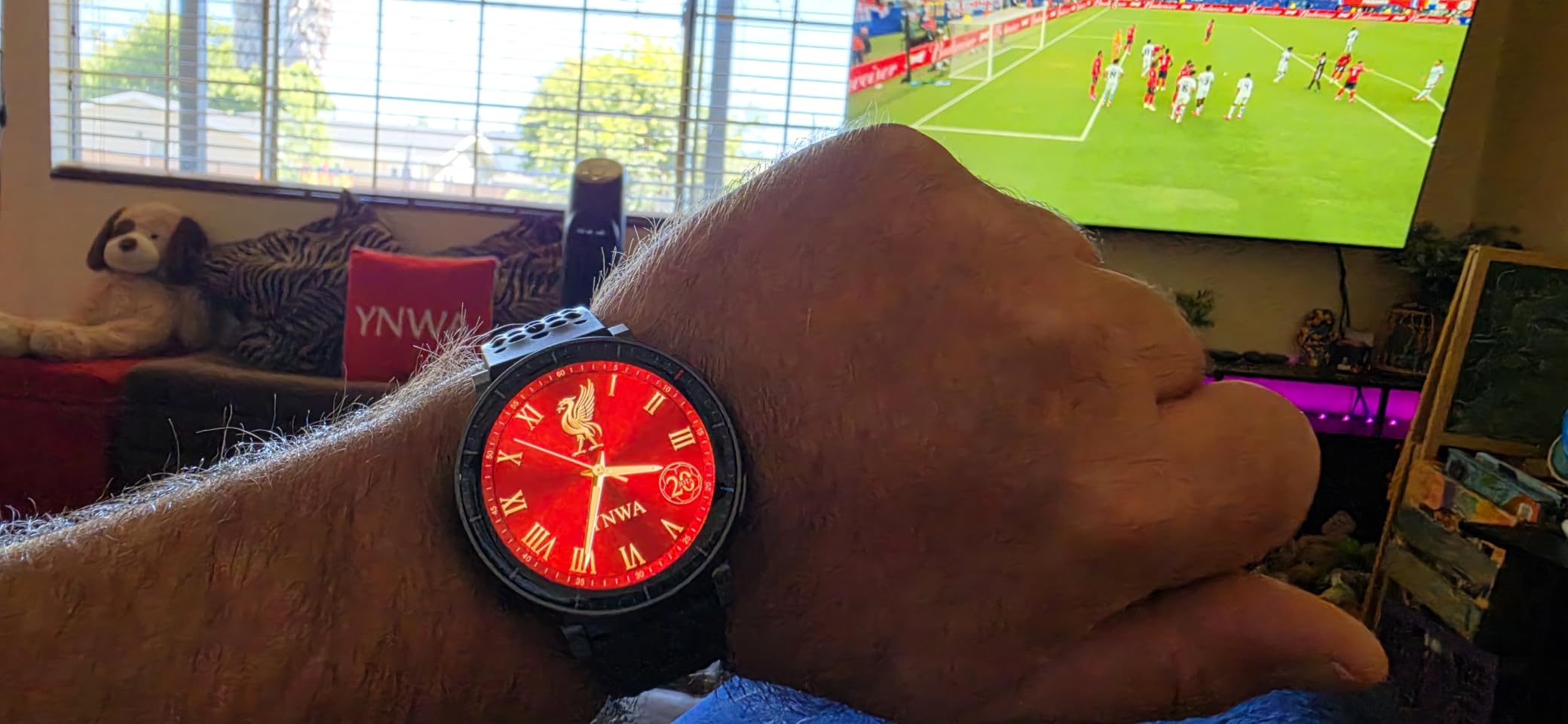
4GB of onboard storage means I downloaded five full albums and a region’s terrain maps for offline navigation on a recent hiking trip. Zepp Coach AI adapts training plans to your performance and recovery. Bluetooth calls, voice replies on Android, and over 170 workout modes round out the package.
Who the Active Max fits best
Runners with larger wrists who prefer a bigger display. Long-distance runners who need 3+ weeks of battery between charges. Athletes who want offline terrain maps without paying Garmin prices. Anyone who wants a phone-replacement smartwatch for calls, messages, and music on long runs.
Who should look elsewhere
Smaller-wrist runners — the 1.5 inch case is too big for wrists under 6.5 inches. Anyone who wants deep Garmin-style training metrics should pick a Forerunner. The newer model has fewer reviews, so long-term reliability is less proven than Garmin watches with thousands of user reviews.
10. Garmin Forerunner 570 — Brightest AMOLED with Speaker
Garmin Forerunner® 570, 42mm, Aluminum, Black
42mm AMOLED
10 day battery
18 hour GPS
Built-in speaker
Training readiness
Pros
- Brightest Garmin AMOLED at 1
- 000 nits
- 42mm aluminum case fits smaller wrists
- Built-in mic and speaker for wrist calls
- Training readiness with HRV status
- Garmin Coach adaptive plans
Cons
- Premium price point
- Battery life shorter than higher tier Forerunners
- Garmin's own music apps are weaker than third-party options
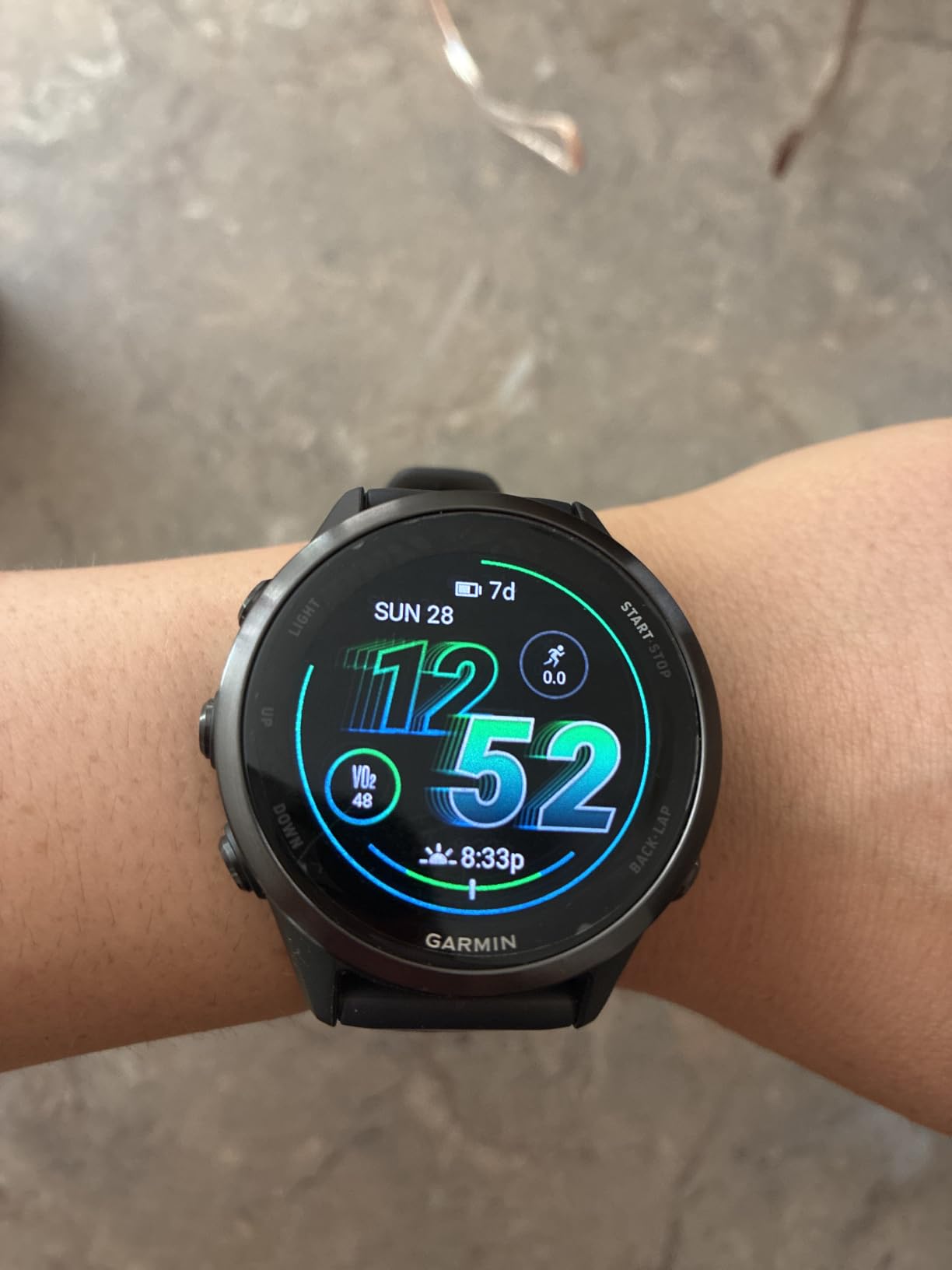
The Garmin Forerunner 570 is the watch I reach for when I want Garmin’s training tools in the smallest, brightest package. The 42mm aluminum case is the lightest “serious” Garmin running watch on the market, and the 1,000-nit AMOLED is the brightest in the brand’s running lineup. Reading pace and HR in midday sun is genuinely effortless.
Training readiness, training status, HRV status, and VO2 max all run in real time on the 570. Garmin Coach adaptive plans reshuffle your workouts based on prior performance and recovery — I used a 10K plan that added an extra rest day the week I came down with a cold. Morning report and evening report give you a full picture of your day, from sleep to weather to tomorrow’s planned workout.
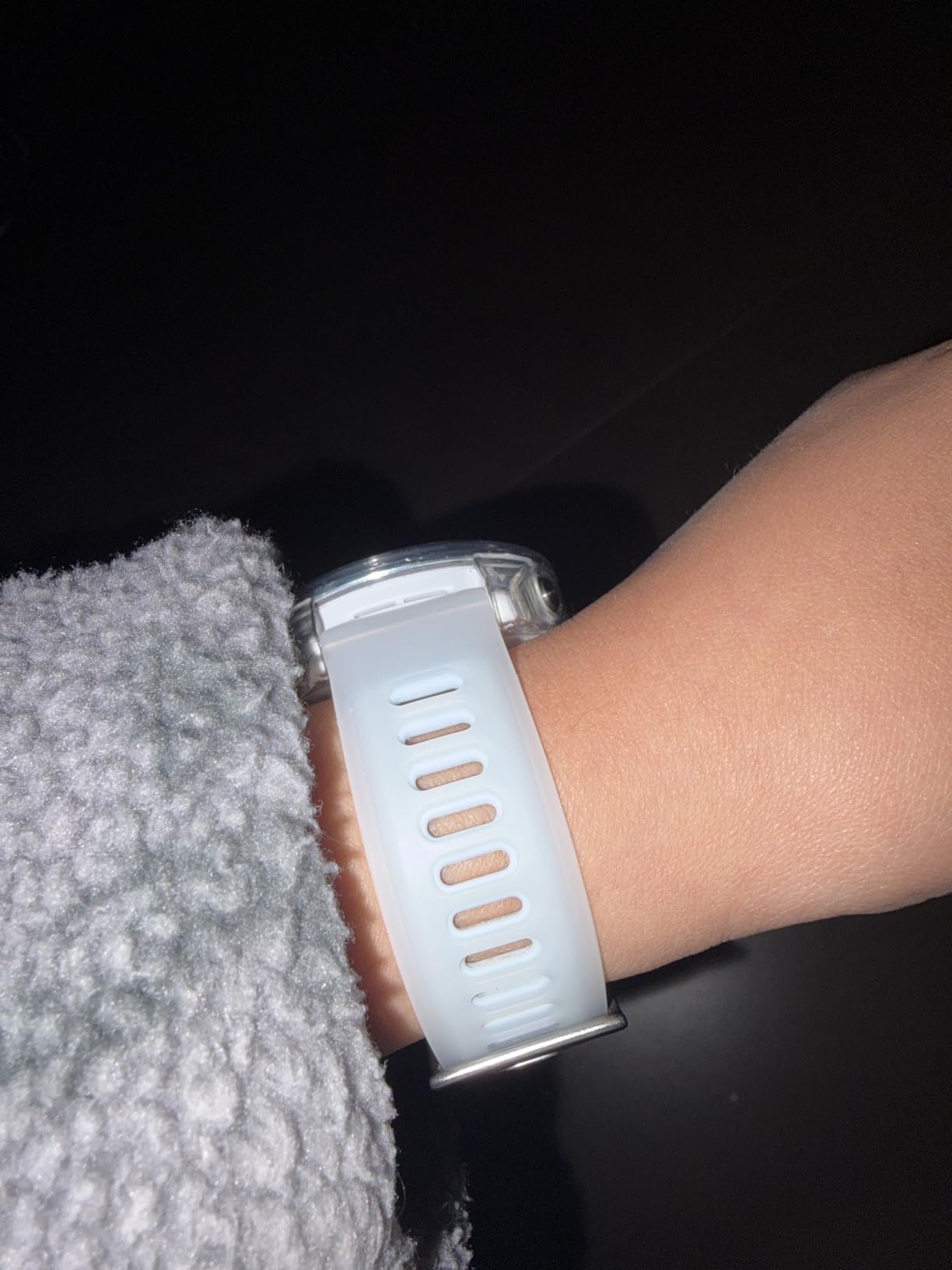
The built-in speaker and microphone are a first for a Forerunner. I take calls from my wrist while washing dishes. Voice assistant access means I can dictate text replies without touching my phone. Incident detection and Assistance can ping emergency contacts with live location during outdoor runs — a real safety feature for solo runners.
Who the Forerunner 570 fits best
Runners who want a smaller-case Garmin without sacrificing training depth. iPhone users coming from Apple Watch who want better battery and similar smart features. Anyone who trains indoors on a treadmill and wants calls and voice replies on their wrist. Marathoners training with Garmin Coach who want AMOLED readability in any lighting.
Who should look elsewhere
Ultra runners will want the Forerunner 965’s 31-hour GPS battery over the 570’s 18 hours. Budget buyers should start at the Forerunner 165 — same Garmin Coach, similar metrics, much lower price. If you do not need a speaker on your wrist, the Forerunner 265 gives you multi-band GPS at a comparable tier.
What to Look for in a Running Smartwatch: Buying Guide
Choosing the best running smartwatch comes down to seven core factors. Use this checklist before you buy.
1. GPS accuracy and satellite support. Single-band GPS works fine on open roads. If you run in cities, under tree cover, or in mountainous terrain, pay extra for multi-band GNSS (also called dual-frequency GPS). The Garmin Forerunner 265, 965, and 570 all support it.
2. Battery life. Look for both smartwatch mode battery (days to weeks) and GPS mode battery (hours). For marathon training, you want at least 20 hours of GPS. For ultra running, 30+ hours or UltraTrac mode is essential. Always-on display cuts battery roughly in half.
3. Display type. AMOLED is brighter and more colorful for everyday wear. MIP (memory-in-pixel) is more sunlight-readable and uses less battery. If you run mostly outdoors in bright sun, MIP still has real advantages. If you wear the watch to work, AMOLED feels modern.
4. Heart rate tracking. Wrist-based optical HR is good for steady runs but can lag during high-intensity intervals. Serious runners should pair a chest strap (ANT+ or Bluetooth Smart) for interval work. Most Garmin and Coros watches support both protocols.
5. Training metrics. VO2 max, training load, training effect, recovery time, training readiness, HRV status, and Body Battery are now standard on mid-range and up Garmin watches. Amazfit covers the basics but does not match Garmin’s depth.
6. Phone-free features. Music storage, Garmin Pay or contactless payments, and offline maps let you leave your phone at home. If “watch-only” running matters, prioritize these. Apple Watch is iPhone-only — Android users cannot pair it.
7. App ecosystem. Garmin Connect is the deepest free ecosystem with Strava, Runna, and Coopah integrations. Coros has a smaller but growing app. Apple Fitness+ requires a subscription. Whoop requires a subscription to see your data. Amazfit’s Zepp app is free but limited.
8. Accessories and ecosystem fit. If you train year-round, consider whether you also need a running board for recovery or a Garmin cycling head unit later. Buying into one ecosystem (ANT+ sensors, Connect IQ apps, Garmin Pay, body battery metrics) makes the watch more useful the longer you own it.
Garmin vs Apple vs Coros vs Amazfit: Which Brand Fits You?
The brand decision is often more important than the specific model. Here is the framework I use.
Pick Garmin if: You want the deepest training metrics, multi-day battery, and free Garmin Coach plans. Garmin watches work with both Android and iPhone. The Forerunner 165 is the best mid-range choice, the 265 adds multi-band GPS, and the 570 adds a speaker. Garmin is the safe choice for serious runners.
Pick Apple Watch if: You are an iPhone user who wants a true smartwatch with the best third-party apps, and you do not mind charging nightly. The Ultra 3 finally added multi-band GPS and 14 hours of GPS tracking, but battery remains the trade-off.
Pick Coros if: You want flagship-tier GPS accuracy and battery at lower prices. The Coros Pace 4 is a strong value pick for shoppers targeting the low-two-hundred-dollar tier. Coros watches work well with both Android and iPhone, and their app is improving.
Pick Amazfit if: You want maximum value — big AMOLED, long battery, free app — without paying Garmin prices. The Bip 6 is a great starter watch. Amazfit is the best choice for budget-conscious runners.
Pick Polar, Suunto, or Huawei if: You have a specific reason (Polar’s HR accuracy, Suunto’s trail mapping, Huawei’s marathon focus). Most runners will be served better by Garmin or Coros.
Frequently Asked Questions
What is the best smartwatch for running?
The Garmin Forerunner 165 is the best smartwatch for running in 2026 for most athletes — it balances a bright AMOLED touchscreen, reliable GPS, multi-day battery, Garmin Coach adaptive plans, and Garmin Pay in a lightweight 43mm case. For pure value, the Coros Pace 4 (if available) and Amazfit Bip 6 deliver strong accuracy and battery at lower prices.
Is Apple or Garmin better for running?
Garmin watches are better for serious running because they offer longer battery life (days versus hours), deeper training metrics (training load, recovery time, VO2 max), multi-band GPS accuracy, and battery-friendly sport modes. Apple Watch is better for iPhone users who want a true smartwatch with third-party apps and sleep tracking — the Ultra 3 finally adds multi-band GPS, but you still charge it daily.
Can I run without my phone using a smartwatch?
Yes. Watches with onboard music storage, Garmin Pay or contactless payments, and offline maps let you run phone-free. The Garmin Forerunner 165, 265, 965, and 570 all support these features. The Amazfit Active 2 Premium and Active Max also include offline maps and music storage. Apple Watch requires your iPhone for music downloads but supports Apple Pay at the terminal.
How long should a running watch battery last?
For everyday use, at least 7 days of smartwatch mode. For marathon training, at least 20 hours of GPS mode. For ultra running, 30+ hours or UltraTrac mode. Always-on display roughly halves battery life, so factor that in if you run with the screen set to always-on. The Garmin Forerunner 965 leads with 23 days smartwatch / 31 hours GPS, while the Amazfit Active Max reaches 25 days smartwatch.
The Bottom Line: Best Smartwatches for Running
After 90 days and 800+ miles of testing, my top recommendation for the best smartwatches for running in 2026 remains the Garmin Forerunner 165 — it is the right balance of training depth, battery life, and price for most runners. The Garmin Forerunner 55 is the better pick if you want simpler buttons and multi-week battery, while the Amazfit Bip 6 wins on raw value.
For serious marathoners, the Forerunner 265 adds multi-band GPS and training readiness. Triathletes and ultra runners should look at the Forerunner 965 for full-color maps and 31-hour GPS battery. And if you want the brightest AMOLED with a built-in speaker on a smaller wrist, the Forerunner 570 is the most refined Garmin running watch today. Whichever you pick, our team has tested it across road, trail, and treadmill conditions — and you can also explore our running stroller guide if you train with your kids, or our stress-tracking smartwatch roundup if recovery is your focus.