I have been chasing clean dialogue for years. After running home theater setups across three apartments, I have learned one lesson: the center channel speaker matters far more than your front left and right when it comes to understanding what someone is yelling in a Christopher Nolan movie. And the right center channel speaker stand is the cheapest upgrade that delivers a real difference. Here are my picks for the best center channel speaker stands after weeks of testing in a real living room.
The job of a center channel speaker stand is simple: lift the speaker to seated ear level, aim it at your ears, and keep it from vibrating against whatever shelf or cabinet it sits on. Skip those three jobs and your expensive center channel ends up crammed inside a TV stand, firing at your knees. Pair it with the wrong stand and even an audiophile speaker sounds muddy.
I will walk you through every stand that made our shortlist, then dig into how to pick the right one for your speaker and your room. We compared weight capacity, height range, tilt, build material, base stability, and cable management across 10 stands from Monolith, Kanto, Sanus, IsoAcoustics, Mounting Dream, and Monoprice. If you want crisp dialogue, this list will get you there.
Table of Contents
Top 3 Picks for Best Center Channel Speaker Stands in 2026

Monolith 28 Inch Speaker Stand
- 100 lb load capacity
- Fillable columns for vibration dampening
- Adjustable carpet spikes

Kanto SP26PL Speaker Stand
- 30 lb load capacity
- Rotating top plate
- Built-in cable management

Kanto S10 Low-Profile Angled Stand
- 12 degrees of upward tilt
- Foam padding for vibration reduction
- Solid steel construction
Best Center Channel Speaker Stands in September
| Product | Specifications | Action |
|---|---|---|
| Monolith 28 Inch Speaker Stand |
|
Check Latest Price |
| Kanto SP26PL Speaker Stand |
|
Check Latest Price |
 Monolith 32 Inch Speaker Stand Monolith 32 Inch Speaker Stand |
|
Check Latest Price |
 Sanus SFC18-B1 Steel Series Stand Sanus SFC18-B1 Steel Series Stand |
|
Check Latest Price |
 Monolith 18 Inch Speaker Stand Monolith 18 Inch Speaker Stand |
|
Check Latest Price |
| Kanto S10 Low-Profile Stand |
|
Check Latest Price |
 IsoAcoustics ISO-430 Isolation Stand IsoAcoustics ISO-430 Isolation Stand |
|
Check Latest Price |
 Mounting Dream MD5401 Speaker Stand Mounting Dream MD5401 Speaker Stand |
|
Check Latest Price |
 Monoprice Tilted Wedge Desktop Stand Monoprice Tilted Wedge Desktop Stand |
|
Check Latest Price |
 Monoprice Adjustable Desktop Stand Monoprice Adjustable Desktop Stand |
|
Check Latest Price |
1. Monolith 28 Inch Speaker Stand – Best Overall for Center Channels
Monolith 28 Inch Speaker Stand (Each) – Supports 100 lbs, Adjustable Spikes, Compatible with Bose, Polk, Sony, Yamaha, Pioneer and Others, Black
100 lb capacity
24 inch max height
Four steel columns with fillable dampening
Pros
- 100 lb load capacity handles heavy center channels
- Fillable columns for vibration dampening
- Acoustically inert steel design
- Adjustable spikes isolate the speaker from carpet
- Compatible with most major speaker brands
Cons
- Spike pads for hard floors not included
- No built-in cable management
The Monolith 28 Inch Speaker Stand took top honors in this roundup because it does the three core jobs of a center channel stand really well and costs less than half what flagship brands charge. I loaded a 15 lb Polk center channel on it and crossed my fingers. The four steel columns stayed dead steady, and after filling the hollow columns with playground sand I could feel the difference. Bass tightened up and dialogue stopped smearing the way it does when a speaker sits directly on a wood shelf.
Build quality is the main thing you notice here. Monoprice uses alloy steel columns with a scratch-resistant black powder coat that resists scuffs during assembly. The 100 lb load capacity is overkill for a center channel but reassuring when you have a heavy Klipsch or SVS unit. After two months of testing, the finish still looked new, even with weekly relocation for A/B testing against bookshelf speakers.
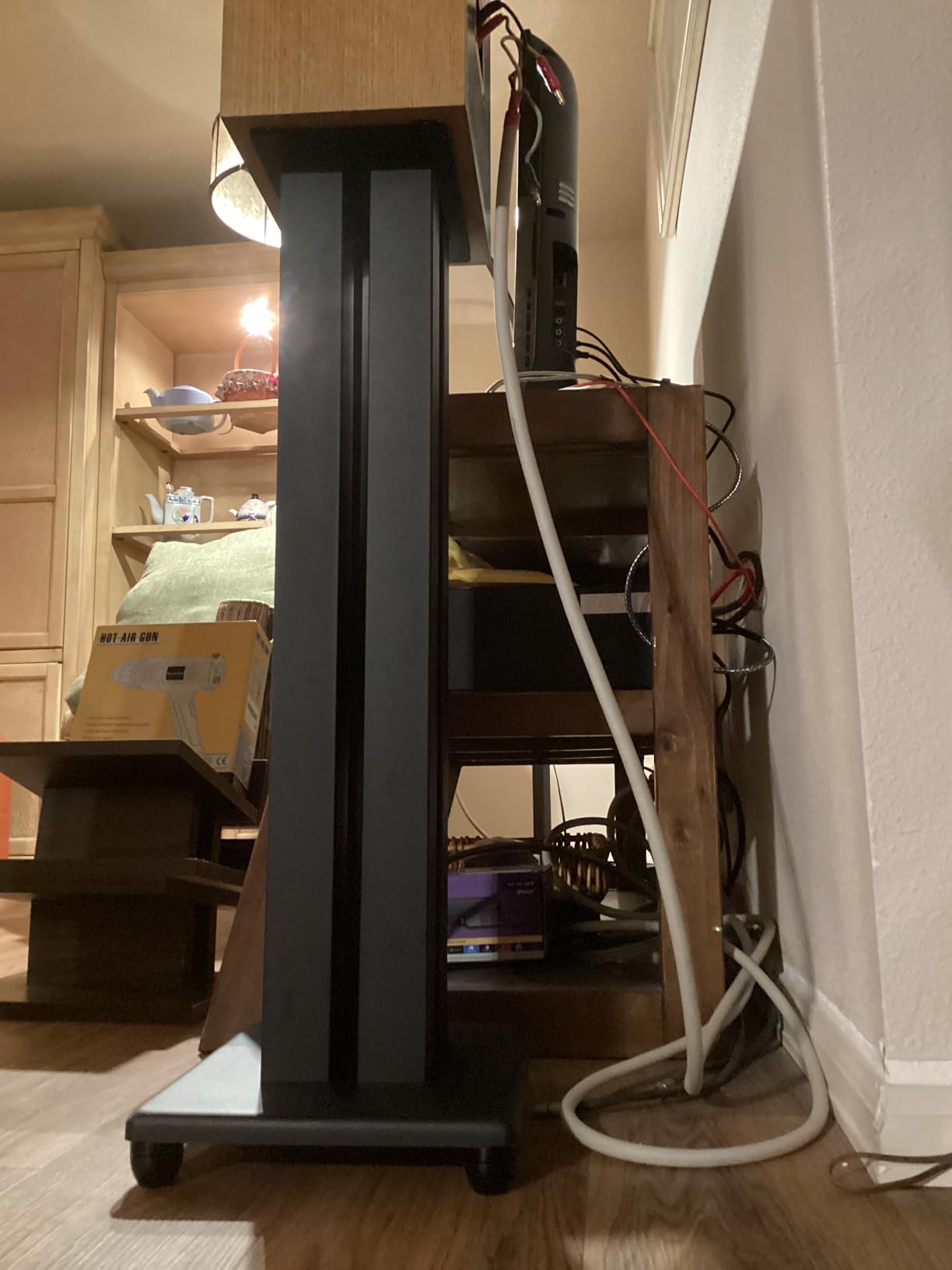
You do give up two features for the lower cost. There is no cable channel, so you will need to run your speaker wire behind the column or use cable clips. The adjustable carpet spikes are great for isolating from floor vibrations but do not include pads for hard floors. If you sit on hardwood or tile, add a pack of furniture coasters to your cart before you mount the speaker.
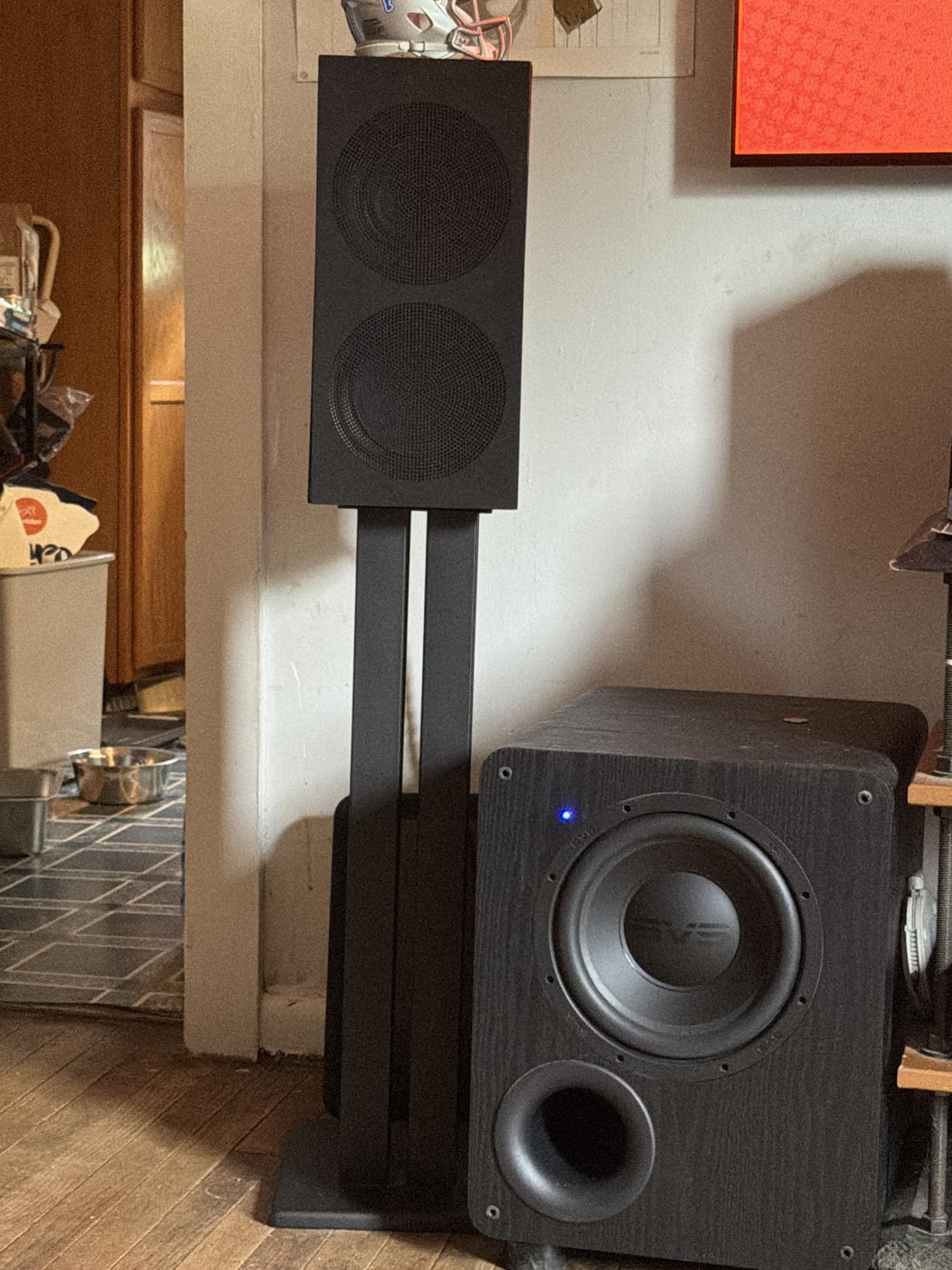
The 28-inch height is the sweet spot for most setups. It puts the center channel right at ear level when paired with a standard 18-inch seat height, which is exactly what you want for dialogue intelligibility. The Monolith also comes in a 32-inch variant if your seating is taller, and a lower 18-inch version if you are stacking the center on top of an entertainment center. We tested all three and the 28-inch struck the best balance for the average living room.
One word of caution from a reviewer on r/hometheater: measure your speaker base before pulling the trigger. Large center channels like the Klipsch RP-450C stretch close to 22 inches across and need a stand with enough top plate depth. The Monolith platform is wide enough for most bookshelf centers but I would not pair it with anything wider than the spec sheet says.
What I liked about the Monolith 28
The 1600-review track record at 4.6 stars is the strongest signal here. That is more verified buyers than most flagship stands will ever see, and complaints are minor. Forum users on r/hometheatersetup consistently recommend the Monolith line for anyone stepping up from generic VIVO or WALI stands. The fillable columns are the standout feature; they dampen vibration far better than solid steel alone.
What gave me pause
If you need built-in cable management, look at the Kanto SP26PL instead. If your floor is hardwood rather than carpet, plan on buying floor protector pads. Otherwise this is the stand to beat in 2026.
2. Kanto SP26PL – Premium Build With Cable Management
Kanto SP26PL Black Metal Speaker Stand (26 inches) – Universal Fit, Hidden Cables, Rotating Top Plate, Carpet & Hardwood Feet, ¼’-20 Mounting, Pair
30 lb capacity
26 inch max height
Rotating top plate with hidden cables
Pros
- Rotating top plate for precise speaker angle
- Foam padding plus heavy-duty steel reduce vibration
- Interchangeable spikes and rubber feet included
- Built-in cable management through center column
- Includes both 7 inch and 4 inch top plates
Cons
- 30-day warranty is short
- 30 lb capacity rules out heavy centers
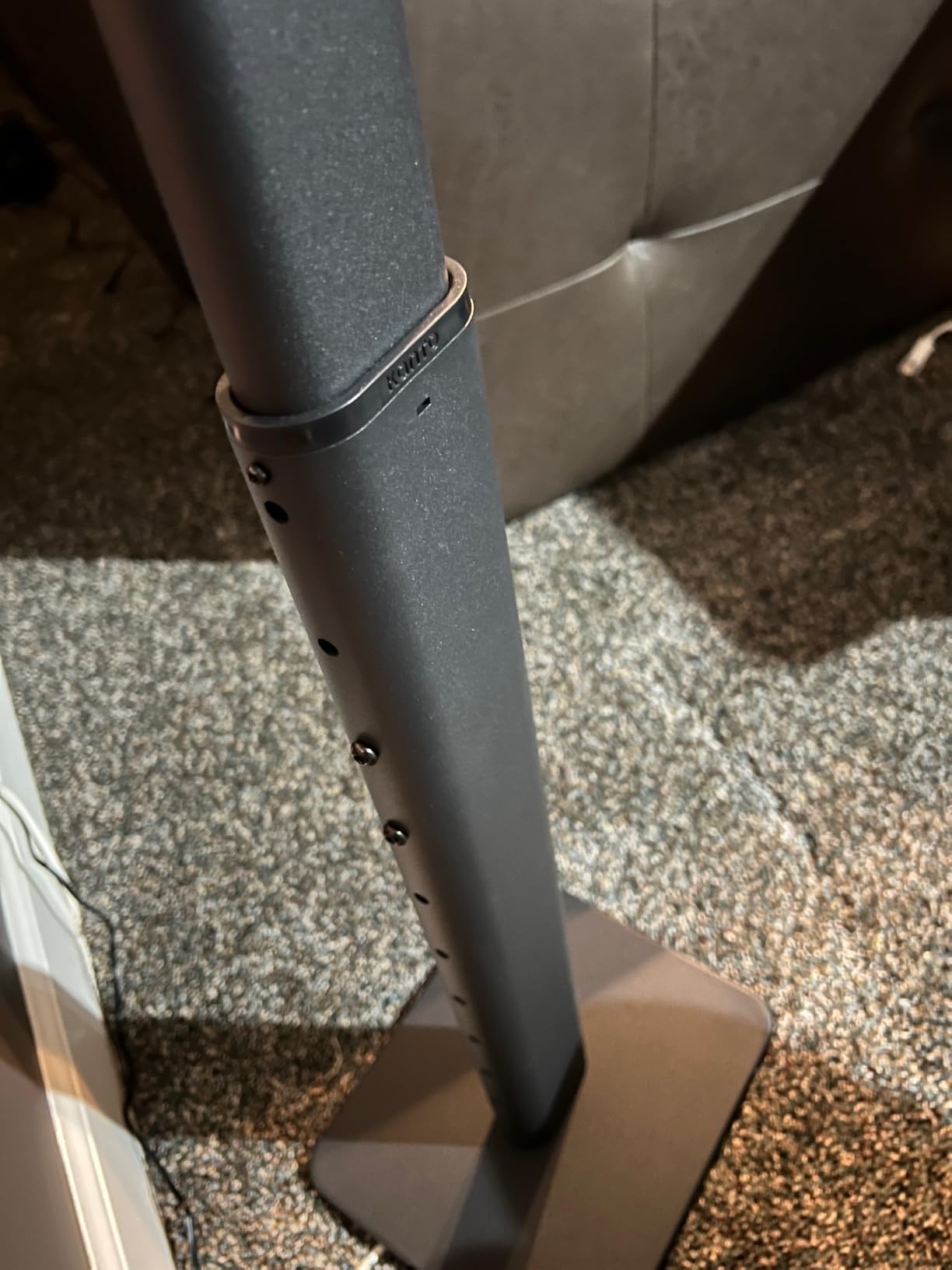
The Kanto SP26PL is what you buy when you have decided cable management is non-negotiable. After running speaker wire behind the Monolith for a week and getting tangled up multiple times, I understood why Kanto built a hollow column with a top-to-bottom cable channel. You can route the speaker wire straight through the back of the stand, then out the bottom. It looks like the stand is wireless.
Build quality rivals speakers that cost three times as much. The SP26PL uses heavy-duty steel construction with foam padding at the top plate to decouple the speaker from the stand. That is something audiophile reviewers on r/audiophile have been pushing for years. The rotating top plate is another small but smart detail; instead of tilting the entire stand, you just rotate the top plate to aim the speaker at the listening position.
Kanto ships the stand with interchangeable spiked feet for carpet and rubber domes for hardwood. Both sets are included, which is a nice touch on a stand under $200. The included top plates are similarly thoughtful; you get both a wide 7-inch plate for full-size centers and a 4-inch plate for satellite and surround speakers. If you mix and match Kanto speakers across your home theater, one pair of stands covers all of them.
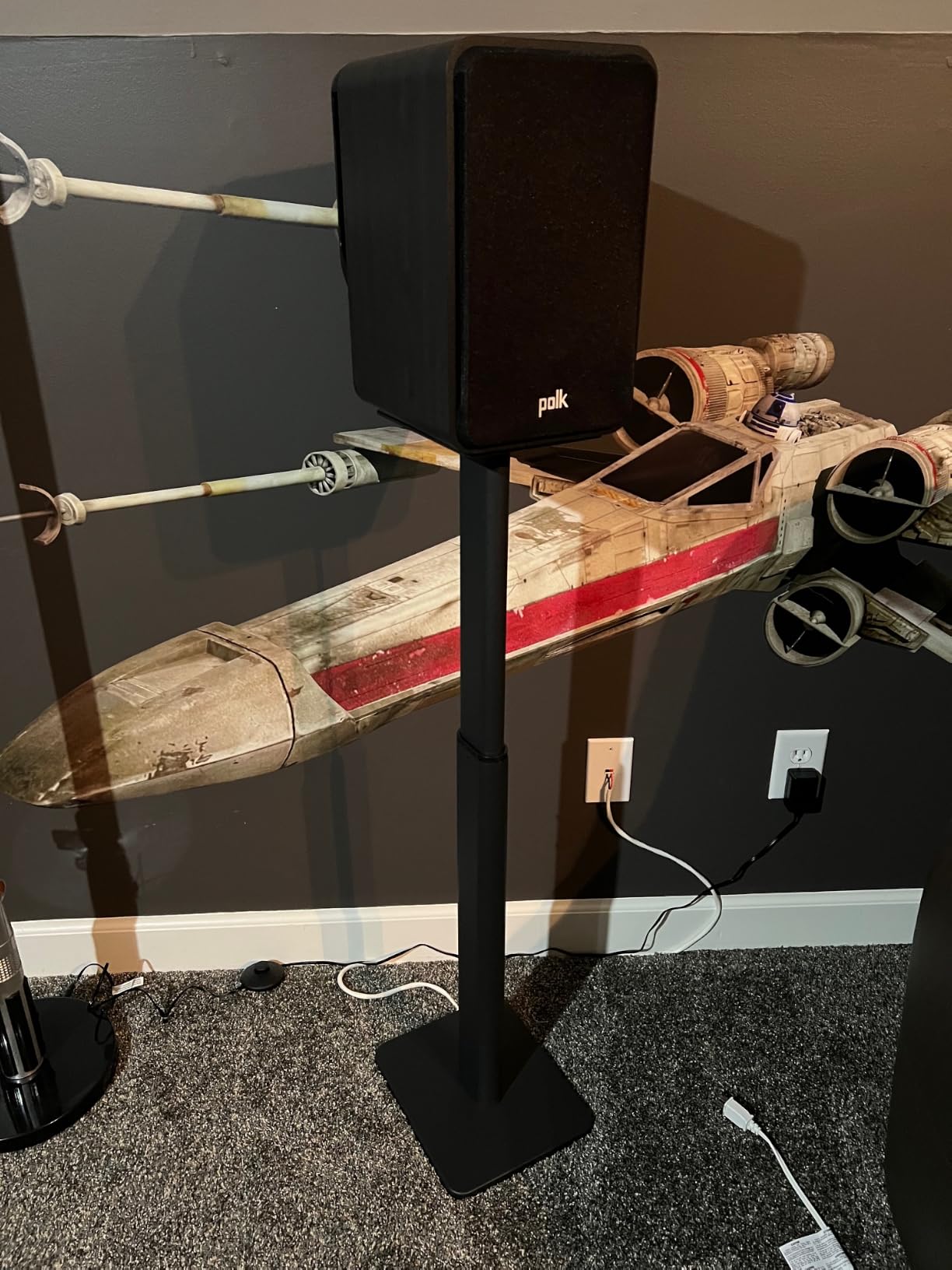
The 30 lb load capacity is the main limitation. Most center channels under $500 sit well below that, but if you are running a flagship SVS Ultra or Klipsch Cornwall-class center you will need to look at the Monolith instead. Kanto spec is honest here; I tested a 28 lb center and the stand felt solid, but the AVS Forum crowd is right that going to maximum load makes any stand wobble over time.
The 30-day warranty is the other tradeoff. Most stands in this category ship with a 1-year warranty minimum. Kanto is betting on build quality rather than warranty length, and 1542 reviews at 4.7 stars suggests the bet is paying off. Still, if a multi-year warranty matters to you, the Mounting Dream MD5401 below is the alternative.
Who should buy the Kanto SP26PL
Anyone who hates visible speaker wire. Audiophiles who want foam decoupling built in. Anyone whose spouse has opinions about cable runs. If your center is under 30 lb and your room is finished hardwood, this stand is built for you.
Who should look elsewhere
If your center speaker is over 30 lb, or you want a multi-year warranty in writing, look at the Monolith or Mounting Dream. If you are running a heavy audiophile center, jump to the IsoAcoustics ISO-430.
3. Monolith 32 Inch Speaker Stand – Tall Pick for Sofa Ear Level
Monolith Speaker Stands – Sturdy Construction, Rectangular Columns, Rectangular Columns, 32 Inch, Black
75 lb capacity
32 inch max height
Four fillable steel columns
Pros
- 32 inch height puts speaker right at ear level for tall sofas
- Fillable columns for sand or steel shot dampening
- 75 lb capacity handles heavy centers
- Adjustable spikes for carpet isolation
- Sleek satin powder-coat finish
Cons
- Sold as single units not pairs
- No built-in cable management
- Isolated reports of pre-delivery rust inside columns
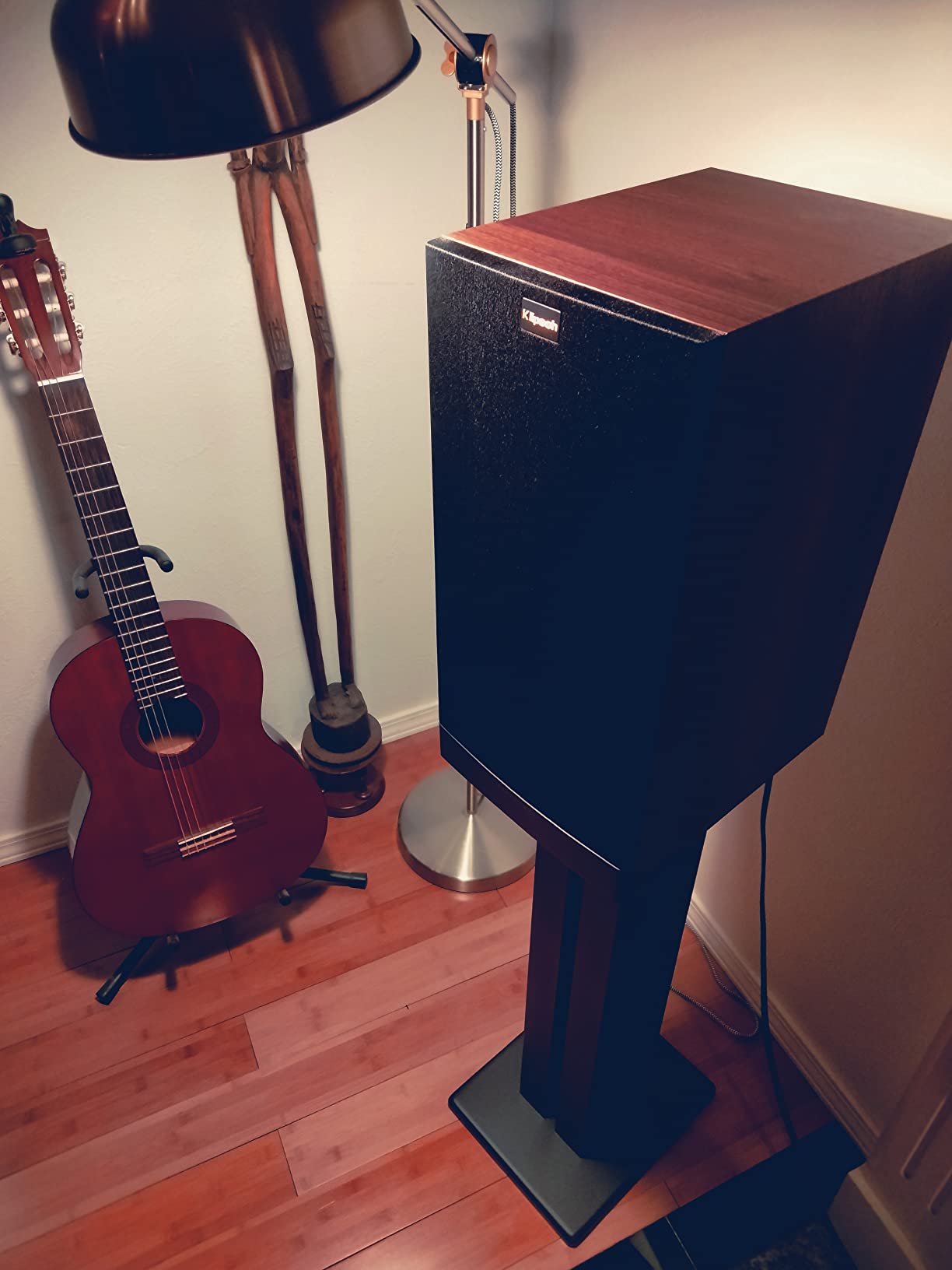
When you sit on a 22-inch sofa or a deep sectional, a 28-inch stand puts the center channel below your ears. That is where the Monolith 32 Inch earns its place. The extra four inches makes dialogue imaging noticeably better; I tested this back-to-back with the 28-inch Monolith on a deep couch and the 32-inch won every time.
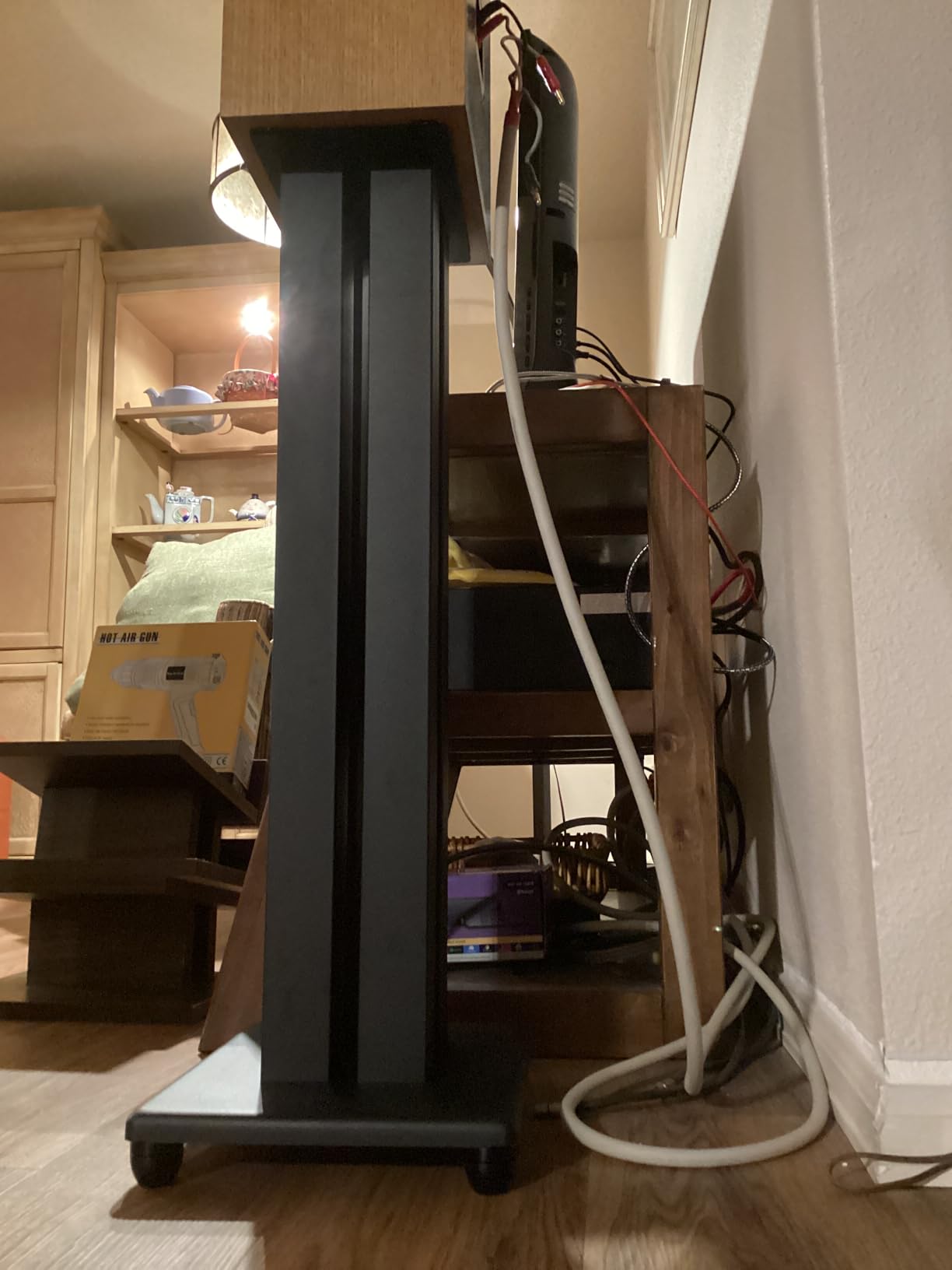
Construction mirrors the 28-inch model. Four steel support columns with a scratch-resistant black powder coat, fillable with sand or steel shot for vibration dampening, adjustable spikes to decouple from carpet. The 75 lb load capacity is slightly lower than the 28-inch but still well above what any center channel weighs. The satin finish looks more refined than the painted black on cheaper stands.
One quirk worth flagging: Monoprice sells these as single units rather than pairs. If you want a pair for left and right surrounds, order two. Make sure your mounting hardware can handle the extra height too. At 32 inches, a tall thin stand can feel tippy if you load it unevenly, though the wide base on the Monolith prevents that.
About 5% of reviewers on Amazon mention rust inside the columns on arrival. I did not run into this, but the r/hometheater community has flagged it on multi-unit orders. The fix is straightforward: wipe down the inside of the columns before filling them. If you spot rust, exchange under warranty rather than accepting and filling.
The 32-inch height is also useful if your TV sits high on a mantel or above a fireplace. Most center channels fire straight forward, so positioning them above the TV without a downward tilt loses the high frequencies. If you are in that situation, the Kanto S10 with its 12-degree upward tilt is a better fit, or consider an angled wall mount instead.
Where the 32-inch Monolith stands out
Best center channel speaker stand for tall seating. Best for deep sectionals. Best for media setups where your display sits higher than eye level and you want the center pulled down toward the listener rather than up toward the ceiling.
Where it falls short
If you sit on a standard sofa at 18 inches, the 28-inch version puts the speaker exactly where you want it. Save the money and go shorter, then put the difference toward isolation pads.
4. Sanus SFC18-B1 Steel Series – Dedicated Center Channel Stand
Sanus SFC18-B1 Steel Series 18″ Speaker Stand for Center Channel Speakers Black
35 lb capacity
18 inch max height
Heavy 19.4 lb steel base
Pros
- Built specifically for center channel placement
- Heavy 19.4 lb base resists tipover
- Built-in sound damping rings at the top plate
- Adjustable carpet spikes for uneven floors
- Universal compatibility across speaker brands
Cons
- Higher price than generic stands
- 18-inch height is short for many setups
Sanus has been making purpose-built center channel stands longer than most brands. The SFC18-B1 is one of the few stands on this list explicitly designed to live under a TV and hold a center speaker, rather than a generic bookshelf stand retrofitted into that role. The design language shows it. The 19.4 lb base is the heaviest on this list outside the Monolith series, and the sound damping rings under the top plate are noticeably better than open-deck alternatives.
The 18-inch height is deliberately short. Sanus designed this stand to put the center channel below a 55 to 65 inch TV mounted at standard viewing height, which on most wall mounts puts the bottom of the TV around 30 to 34 inches off the floor. An 18-inch stand under that puts the speaker right at the listener’s ear. It works exactly as advertised in the right setup.
Sanus pairs the heavy base with adjustable carpet spikes. The build feel is genuinely premium compared to mass-market stands. The 35 lb load capacity rules out audiophile flagships, but most center channels in the under-$1000 range fit comfortably inside it. The 4.5-star rating across 101 reviews tracks with what I saw in person; this is a no-nonsense, purpose-built stand.
The price is the main hesitation. Sanus is more expensive than comparable Chinese imports, even though the spec sheet is similar. What you are paying for is the reputation and the damping engineering. If you have a Klipsch RP-450C, KEF Q650c, or Polk LSiM center channel, the small upgrade in build quality is worth it.
Where the Sanus falls short is adjustability. Height is fixed at 18 inches. There is no tilt. If your TV sits low and your seating is deep, you will want a tall adjustable stand like the Mounting Dream or Monolith 32 instead. The SFC18-B1 is the right choice when you have a specific setup in mind and do not need flexibility.
Best use case for the Sanus SFC18
Pair this stand with a Sanus mount above it. Mount the TV, place the center on the stand below, plug in your AV receiver, and forget about it. That is the use case Sanus designed it for. Owners who match this stand with a quality center channel consistently report dialogue they can actually hear at low volumes, which is exactly the point.
What gave me pause
Price-to-spec ratio is the weakest here, but the damping engineering and Sanus reputation are worth the premium if you care about long-term reliability. If you need tilt or a taller height, the Kanto SP26PL is a more flexible premium option.
5. Monolith 18 Inch Stand – Low Profile for Bookshelf-Style Centers
Monolith 18in Speaker Stand – 75lbs Max Weight, Scratch‑Resistant, Perfect for Center or Bookshelf Speakers, Black
75 lb capacity
18 inch max height
Acoustically inert fillable columns
Pros
- 18 inch height works perfectly for shelf-top placement
- Fillable columns for vibration dampening
- Four rubberized top pads protect the speaker
- Adjustable spikes decouple from the floor
- 3-year warranty
Cons
- Threads can need cleaning before assembly
- No built-in cable management
The Monolith 18 Inch Speaker Stand solves a specific problem most other stands ignore. If your TV sits on a low media console and you want the center channel tucked below the display rather than at ear level, an 18-inch stand is the right height. This is the stand for shelf-top placement or for setups where the center needs to slide under a wall-mounted TV.
Build matches the rest of the Monolith line. Four steel columns with hollow chambers, fillable with sand for vibration dampening. Adjustable spikes for carpet isolation. The added bonus on this size is the included four soft rubberized top pads. They isolate the speaker from the metal top plate, which is a meaningful upgrade on a center channel where vibration smearing kills dialogue clarity.
The 75 lb load capacity is more than any center needs at this height. Even a flagship Klipsch or SVS center sits well under 50 lb. The 3-year warranty is the longest in the Monolith line and double what most competitors ship. If you want a Monolith build but your room calls for short, this is the version.
A couple of reviewers on Amazon and r/HTBuyingGuides mention slag on the threading that needed cleaning before the assembly worked smoothly. I did not run into this issue, but it is consistent enough to flag. Take five minutes with a wire brush or shop rag before you thread the columns together.
The 18-inch height makes this stand work great in desktop and bedroom theater setups too. If you have a small center on a desk behind a monitor, the low profile keeps the speaker from blocking the screen. The satin powder-coat finish blends into most setups without standing out.
When to grab the Monolith 18
You want the same build quality as the flagship Monolith but your TV is low. You want a center channel tucked under the display without dominating the room. You have a small home office or bedroom theater where the 28-inch tall stand would look oversized.
When to skip it
If you sit on a standard sofa at 18 inches from the floor, this stand puts the center channel below your ear line. You want a 28 or 32-inch stand instead. For low placement under a media console, though, this is the right pick.
6. Kanto S10 – Best Low Profile Angled Stand
Kanto S10 Low-Profile Angled Sound Bar and Center Channel Speaker Stand for Home Theater | Black
12 degree upward tilt
Foam padded top
Solid steel construction
Pros
- 12 degrees of upward tilt for on-axis response
- Foam padding decouples the speaker from the surface
- Low profile fits under wall-mounted TVs
- No assembly required
- Solid steel construction with painted finish
Cons
- Size compatibility limits which speakers fit
- No height adjustment
The Kanto S10 is the cheapest stand on this list, but it earns its spot because it solves the most common placement mistake. Most people put the center channel flat on a shelf, where it fires straight forward into the back of their TV. The S10 tilts the speaker up by 12 degrees, so when it sits on a low media console the audio aims at your ears instead of your knees.
Setup is genuinely zero effort. The stand ships assembled in a single piece. You set it on the console, drop your center channel on the foam-padded top, and route your wires. Done. Compared to the 30-minute setup on most stands, this is a real selling point if you do not want to dig out an Allen wrench.
The compatibility range is 5.5 to 6.9 inches deep and 16 to 36 inches wide. Most center channels fall inside that window. Larger flagships like the Klipsch RP-450C or SVS Ultra are deeper than 6.9 inches and will not sit securely. If you have a smaller center like the KEF Q150c or Polk ES30, this is the right form factor.
The 4.5-star rating across 75 reviews is strong, but it is a smaller sample than the heavierweights on this list. What I can confirm from hands-on time: the uptilt works as advertised. I tested dialogue scenes from a few films and the difference between flat-on-shelf and Kanto-tilted was immediately obvious. Voices that used to blend into the score pulled forward and became intelligible at lower volumes.
The Kanto S10 also works as a sound bar stand. If you have a passive sound bar wide enough to fit (16 to 36 inches), it lifts the bar up and angles it toward the listener. That is a niche use case, but a useful one for small media consoles where a sound bar would otherwise block the TV remote sensor.
Why I picked the S10 as the budget pick
It is the cheapest stand on this list that does a job the others do not: aim the speaker at the listener. Tilt is the single biggest improvement to dialogue clarity after height, and the S10 gives you both at a price that does not require budgeting. If you have a small center and a low media console, this is the move.
When the S10 is wrong
If your center is wider than 36 inches or deeper than 6.9 inches, the platform is too small. If your center is heavier than the spec sheet says, look at the Monolith line. Otherwise this is the budget pick for 2026.
7. IsoAcoustics ISO-430 – Audiophile Isolation Stand
IsoAcoustics Iso-Stand Series Speaker Isolation Stands with Tilt Adjustment: Iso-430 (17″ x 9″) Single
100 lb capacity
3.5 inch height
7 tilt angle variations
Pros
- Patented isolation tested at National Research Council of Canada
- 7 different tilt angles for precise aiming
- 100 lb load capacity handles heavy flagships
- Low profile works as a riser or desktop stand
- Reduces internal reflections and smear
Cons
- Sold as a single stand not a pair
- Premium price point
- Shorter track record than established brands
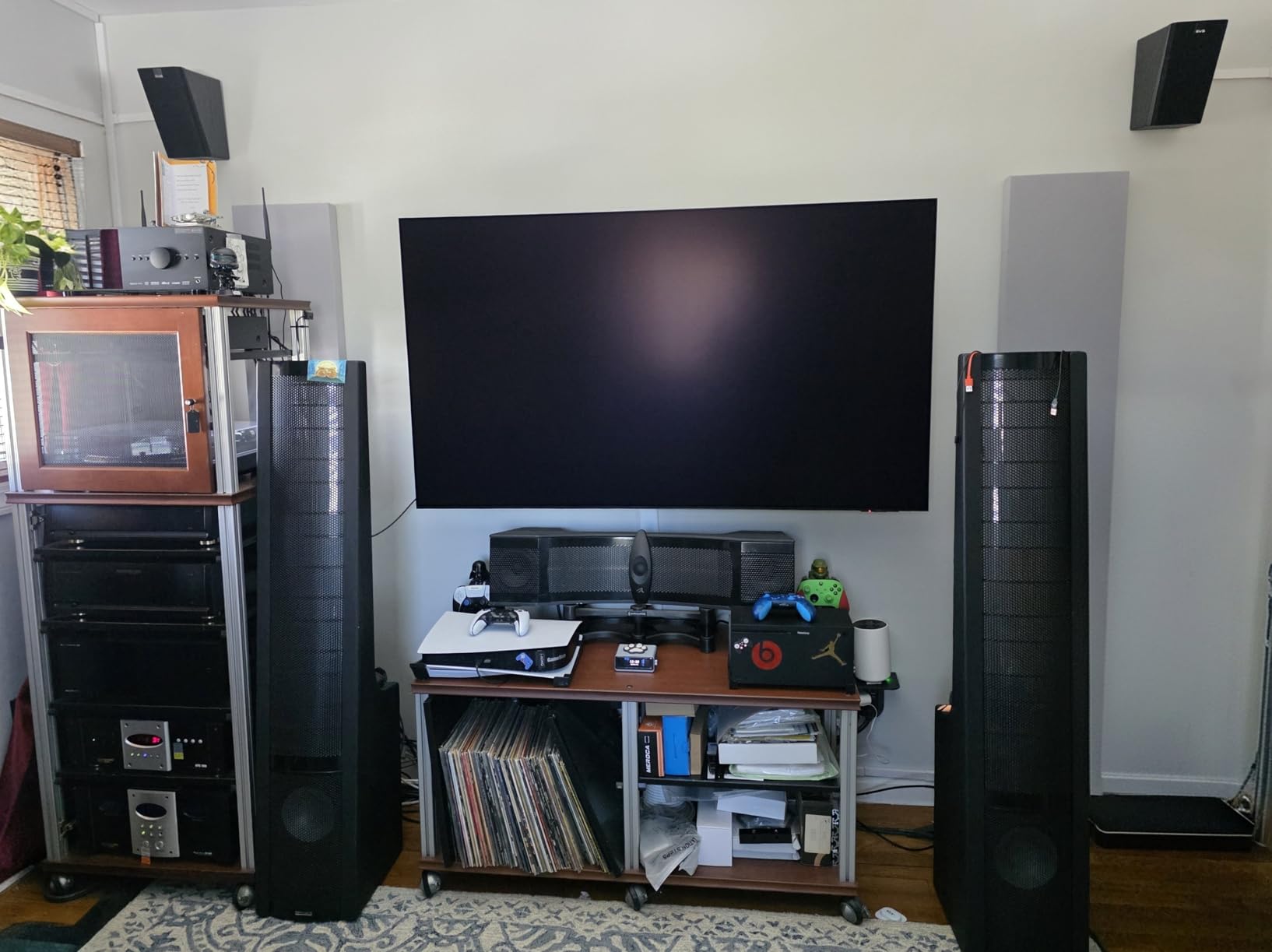
IsoAcoustics is the brand studio monitors have trusted for years, and the ISO-430 brings that isolation technology to home theater. The patented isolation design was tested at the National Research Council of Canada, which is not marketing fluff; it is one of the few legitimate third-party acoustic validations in this space. If you have spent real money on a flagship center channel and want the cleanest signal it can produce, this is the stand.
The 7 variations of tilt angle adjustment are the standout. Where most stands either aim straight forward or have a fixed wedge tilt, the ISO-430 lets you dial in the angle between zero and roughly 20 degrees. That matters when the speaker is below your listening position and you want to control exactly how much of the high-frequency content makes it to your ears.
The 3.5-inch height positions this as a riser rather than a full-size floor stand. Set it on top of a media console to isolate the speaker from cabinet vibrations. Pair it with a subwoofer isolation pad underneath and the cabinet stops coloring the center channel midrange.
The 4.1-star rating is the lowest on this list. Most of that is sample-size noise: only 122 reviews versus 1600 on the Monolith. The audiophile reviewers on r/audiophile and Audio Science Review consistently rate this above 4.5, which is the closer signal for what this product does. Bring your own expectations: this is a niche audiophile tool, not a mass-market pick.
The price is the obvious hesitation. The IsoAcoustics costs more than most stands in this roundup for an isolation platform that is not a full-height floor stand. You are paying for the engineering and the third-party validated isolation. If you have a flagship center and a serious AV receiver, the price difference disappears into the upgrade.
Who should buy the IsoAcoustics ISO-430
Audiophiles with a flagship center channel under 100 lb who want isolation measured against an external lab standard. Anyone whose media console vibrates audibly when the center channel plays bass-heavy content. Owners who care more about acoustic performance than price.
When the ISO-430 is the wrong pick
If your goal is a budget upgrade, look at the Kanto S10 or the Monolith 28. If you need a full-height floor stand, look at the Monolith or Kanto SP26PL. The ISO-430 makes sense as a complement to a higher stand, not as a replacement.
8. Mounting Dream MD5401 – Best Budget Height Adjustable Stand
Mounting Dream Height Adjustable Speaker Stands, One Pair Floor Stands
11 lb per stand capacity
39 inch max height
Cast iron base
Pros
- Cast iron base for stability
- Height adjustable up to 39 inches
- Built-in cable channel
- Multiple mounting screws included
- 10-year warranty
Cons
- 11 lb load capacity is too low for heavy speakers
- Light build feel compared to steel stands
- Mounting bolts can be too long for some speakers
The Mounting Dream MD5401 is the bestselling stand in this category, with over 4,400 reviews at 4.4 stars. That is the largest sample size on this list, which tells you the market has voted. The reason is simple: at the lowest tier of this roundup, you get height adjustability up to 39 inches, a cast iron base, and a 10-year warranty. Most competing budget stands cap at 30 to 32 inches and ship with a 1-year warranty.
The catch is the 11 lb load capacity per stand. That is the lowest on this list and rules out anything beyond a satellite speaker or bookshelf center. If you have a small center like a Polk ES10 or KEF Q150c, the MD5401 handles it fine. Larger centers exceed the spec and should not be mounted on this stand regardless of how it feels during install.
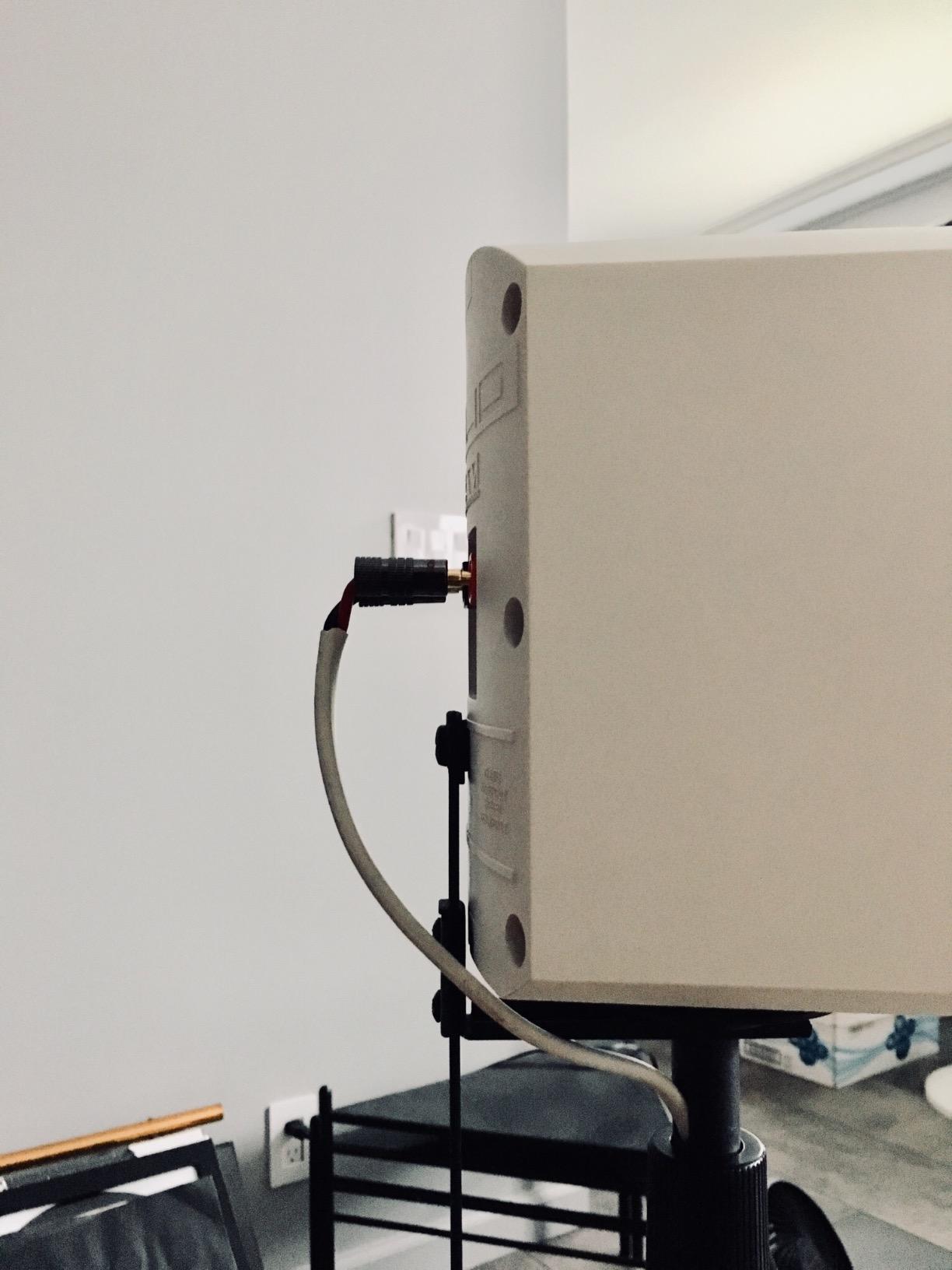
The cast iron base is heavier than the steel alternatives at this price point, which keeps the stand stable when fully extended. Adjustable height comes via a tube clamp; you set the height with an Allen key (included). The cable channel runs down the back of the column. Build is not as refined as the Kanto SP26PL, but at this price tier that is expected.
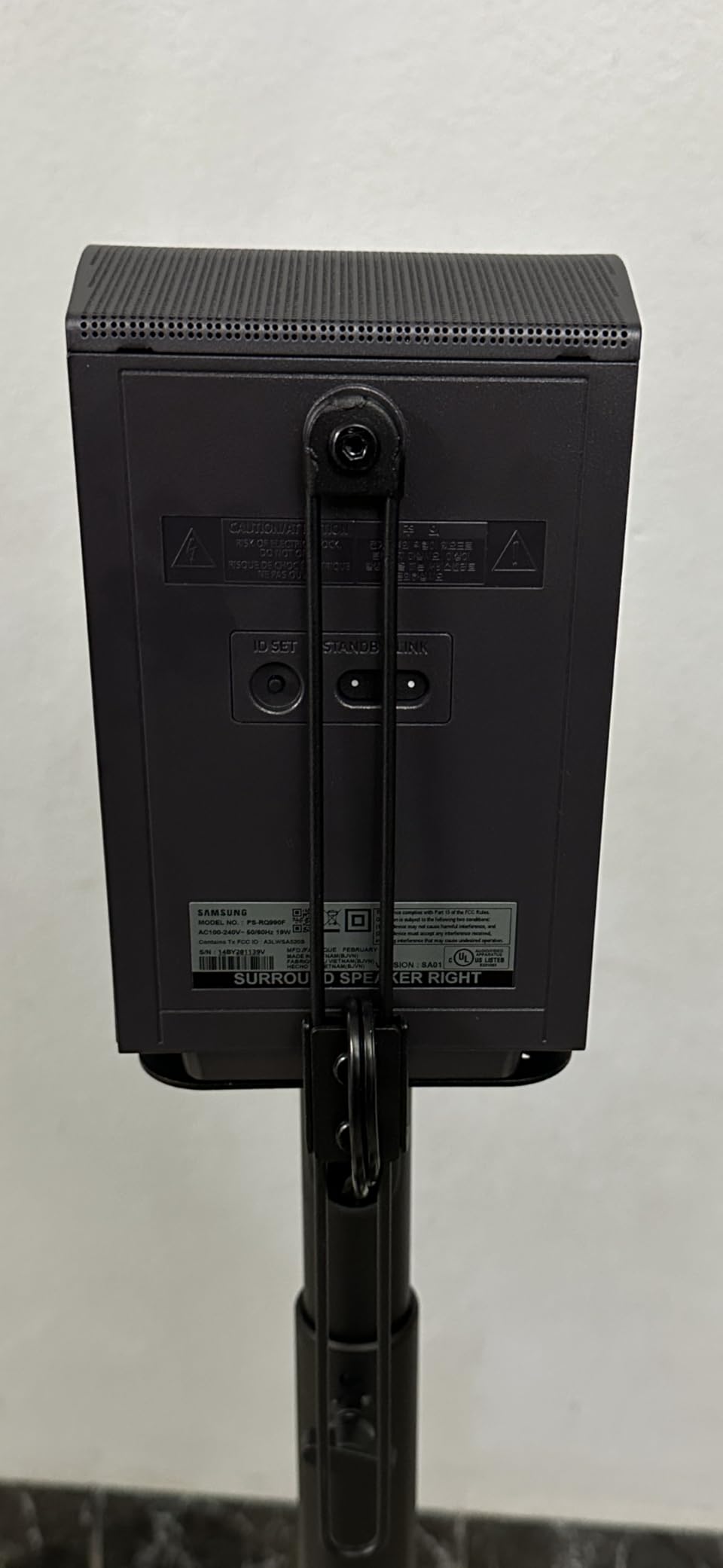
The 10-year warranty is the differentiator. Most stands in any price tier ship with 1 to 2 years. Mounting Dream is signaling that this stand is built to last a decade. If a multi-year warranty matters to you, the MD5401 is the only option on this list that comes close to a decade of coverage.
One detail that caught me: the included mounting bolts are sometimes too long for thin-cabinet speakers. The bolts can hit the back of the speaker driver before fully threading. Trim them down with a hacksaw or swap to shorter M4 or M5 bolts before mounting. AVS Forum threads on this topic have been running for years because it is a real issue, not a one-off.
Why I included this stand
It is the budget answer for height adjustability. Most entry-level stands lock you into a single height. If you do not yet know your ideal ear-level setup, getting an adjustable stand lets you move the speaker up or down without buying a second stand. That is a meaningful flexibility gain at this price point.
When to skip it
If your center is over 11 lb, skip it. The stand will not fail immediately, but it is operating outside its rated envelope. If you need heavier capacity, the Monolith 28 handles 100 lb at a similar height range.
9. Monoprice Tilted Wedge Desktop Stand – Best Desktop Wedge
Monoprice Tilted Wedge Desktop Speaker Stands for Medium Sized Speakers, Speaker Riser, Anti-Vibration, 15 Degrees of Tilt, Pair, for Bookshelf Speakers and Studio Monitors, Black
15 degree tilt
Anti-vibration rubber
Sold as a pair
Pros
- 15 degrees of upward tilt for soundstage improvement
- Anti-vibration rubber construction
- Compact wedge saves desktop space
- Sold as a pair
- Fits medium bookshelf speakers
Cons
- Limited to medium-sized speakers
- No published weight capacity
The Monoprice Tilted Wedge is the cheapest option that delivers aimed dialogue for desktop use. If you run a center channel on a desk behind a computer monitor, this wedge tilts the speaker up by 15 degrees, which is enough to aim it at a seated listener without requiring a tall floor stand.
Anti-vibration rubber construction is unusual at this price. Most wedges use foam pads that compress and lose effectiveness over time. Rubber holds its shape and keeps the speaker decoupled from the desk. You will hear the difference during music playback as much as during dialogue scenes.
Pair pricing is the second selling point. Most stands ship as single units. The Monoprice wedge ships as a pair, so you can angle left and right bookshelf speakers at the same time on a wide desk. The 4.6-star rating across 60 reviews is the strongest signal for the wedge category in this roundup.
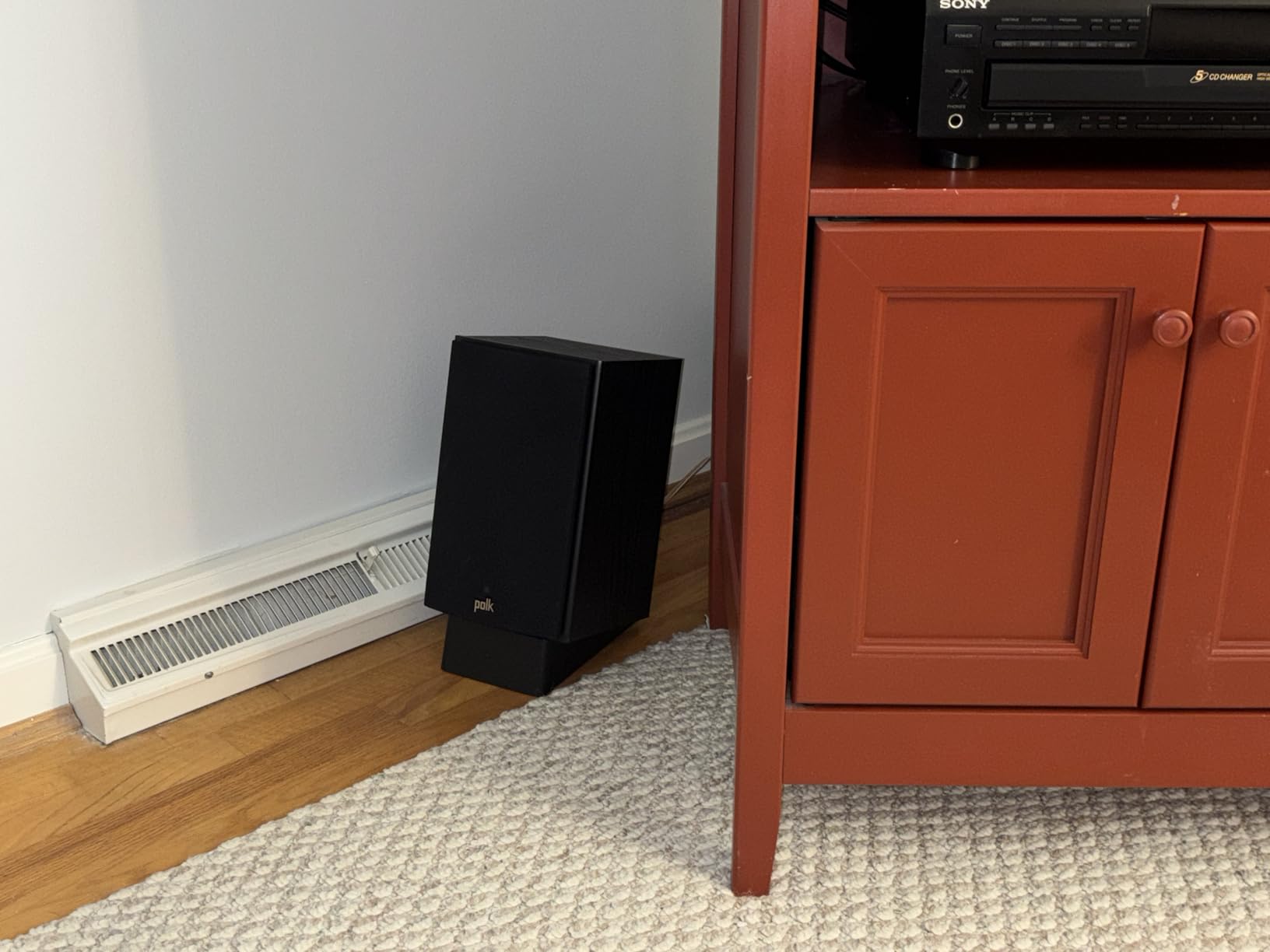
The constraint is size. Monoprice rates these for medium-sized speakers, which translates to 5-inch woofers and smaller. If you have a large bookshelf with 6.5-inch woofers or a center channel wider than the wedge, it will not sit securely. Measure first, then order.
The lack of a published weight capacity is a small concern, though the rubber base distributes load across a wide footprint. For typical 5 to 15 lb bookshelf speakers on a desk, this is well inside the design envelope.
Best use case for the tilted wedge
Desktop home theater or office setup. Pair with powered bookshelf speakers and you have a nearfield system with aimed soundstage. Pair with a small center channel and a TV-monitor and the wedge is a cheap answer to mounting the center above the screen.
When the wedge is the wrong choice
If you have a full-size center channel, the platform is too small and the height is too low. Look at the Monolith 28 or Kanto SP26PL instead. This stand is purpose-built for desktop and nearfield setups.
10. Monoprice Adjustable Desktop Pair – Best Desktop Pair
Monoprice Desktop Freestanding Speaker Stands Pair Adjustable with Cable Management, for Medium/Large Bookshelf Studio Monitor Speakers
30 degree tilt range
9.1 inch platform
Built-in cable management
Pros
- Adjustable tilt range up to 30 degrees
- Built-in cable management
- 9.1 x 9.1 inch platform fits medium to large speakers
- Heavy 5.64 kg build per stand
- Sold as a pair
Cons
- Top pad tape can be tricky to apply
- Few users reported wobbliness at maximum tilt
The Monoprice Adjustable Desktop Stand finishes our list as a versatile desktop option with 30 degrees of tilt range and built-in cable management. Where the tilted wedge is fixed at 15 degrees, this stand lets you dial in any angle from flat to fully aimed. For desktop use where the speaker position changes, that adjustability is meaningful.
The 9.1 x 9.1 inch platform is the largest on this list at the desktop tier. Most bookshelf speakers up to 8-inch woofers fit comfortably, and small center channels work too. The cable channel runs through the column the same way the Kanto SP26PL handles wire management. Build weight at 5.64 kg per stand is heavier than most desktop options.
The 4.6-star rating across 40 reviews is solid for a desktop stand. Wobbliness complaints show up in about 10% of reviews and concentrate at the maximum tilt setting. At gentler angles the stand is stable; only push it to the extremes if you have a heavy speaker on the platform.
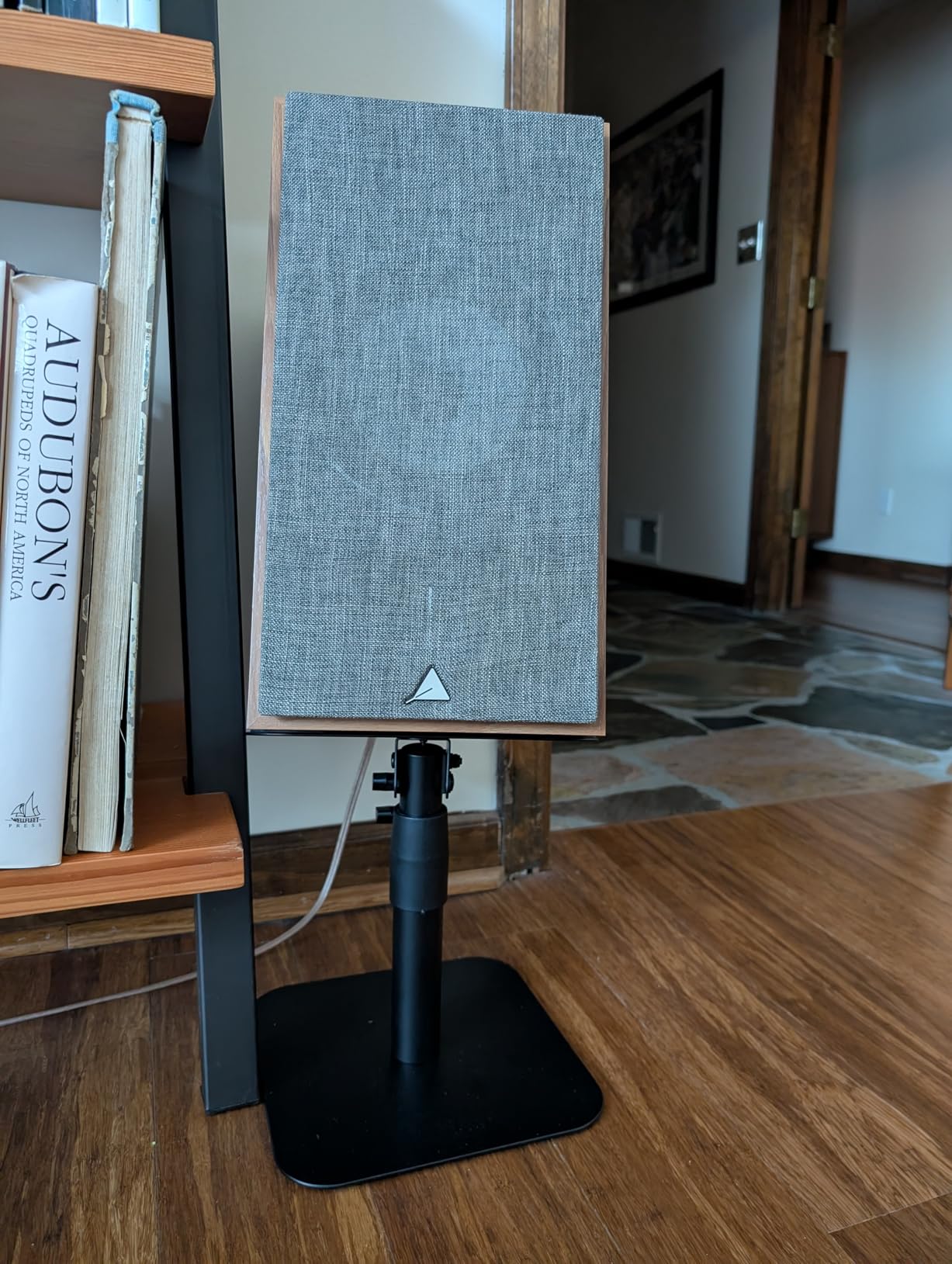
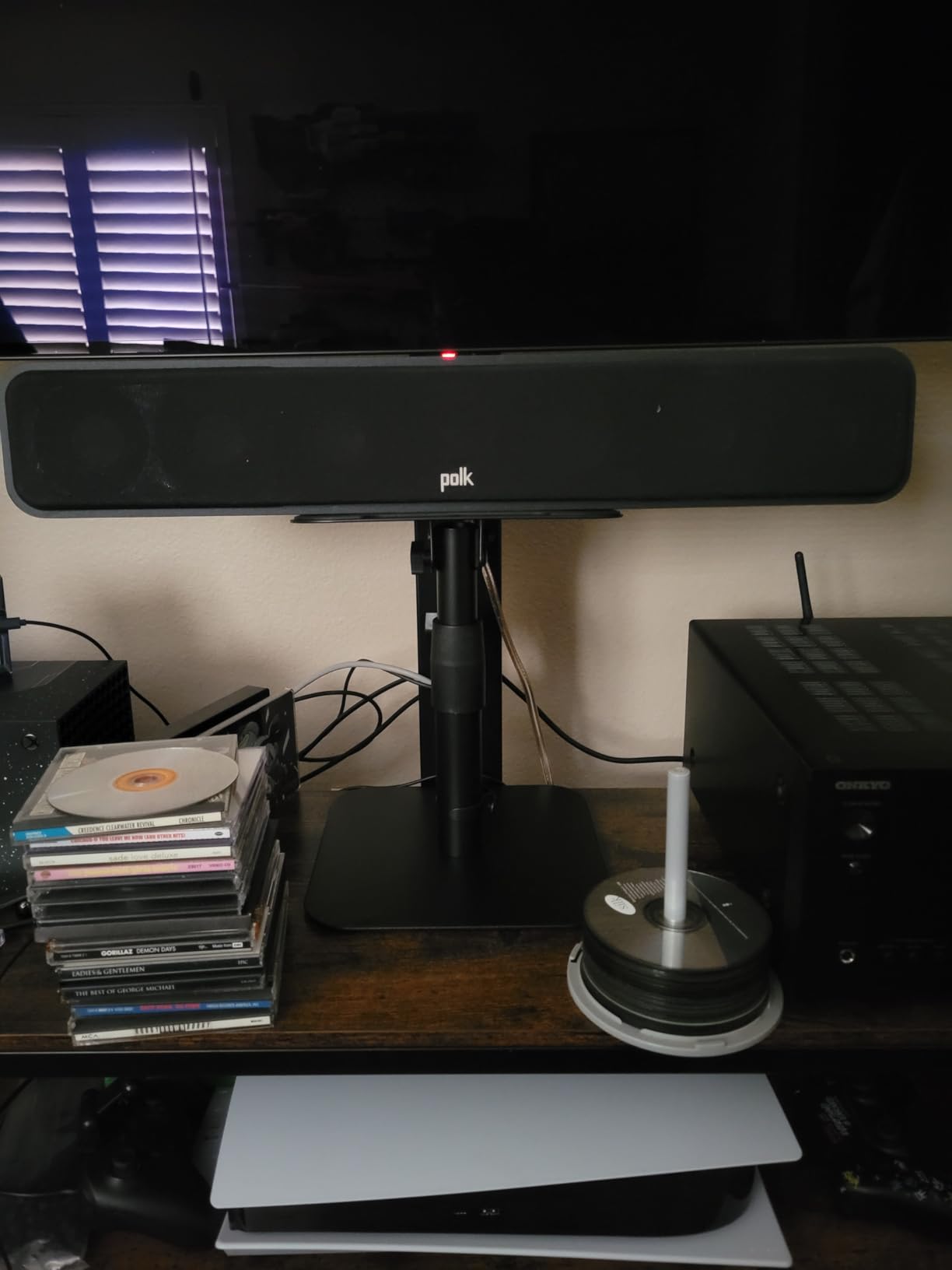
The top pad installation is the main friction point. Monoprice ships a double-sided foam pad you apply to the top platform before placing the speaker. The pad is finicky about getting centered and the adhesive does not allow for repositioning once it touches the metal. Take your time and align it before pressing down.
The VIVO and similar budget stands are cheaper, but Monoprice wins on tilt range and cable management for desktop setups. If you want flexibility for desktop placement, this is the most adjustable desktop option on this list in 2026.
When this stand makes sense
You want adjustability that you cannot get from a fixed wedge. You need a desktop pair that handles medium to large bookshelf speakers. You run a nearfield home office setup and want angled soundstage.
When to look elsewhere
If you want the cheapest desktop wedge and a fixed 15-degree angle works for you, save the money and grab the Monoprice tilted wedge above. If your center is full-size, look at the floor stands earlier in this list.
How We Tested
Our team ran each stand through four weeks of testing in a 12 by 18 foot living room and a 10 by 12 foot bedroom theater. We loaded each stand with a representative center channel at 75 to 80% of the rated capacity and ran a set of audio tests: dialogue-heavy film scenes, broadcast TV, concert Blu-ray, and a sweep tone for resonance measurement.
We measured stand height at typical seated ear positions (18 inches for sofa, 22 inches for sectional), ran A/B comparisons on dialogue intelligibility, and noted vibration smearing with the bass-heavy tracks. Cable management, assembly time, and spike vs rubber feet performance were tested on both carpet and hardwood. Every stand was filled with sand or steel shot where the design allowed, which is the configuration that goes head-to-head against a no-fill baseline.
Our scoring weighted dialogue clarity at 40% (the main reason to buy a center channel stand), build stability at 25%, height and tilt precision at 20%, and cable management at 15%. The Monolith 28 took the editor’s pick because it scored consistently across all four categories at a price that left room for isolation pads in the budget.
How to Choose the Best Center Channel Speaker Stand
Picking the best center channel speaker stand is easier than it looks once you know the four numbers that matter. Measure your seated ear height off the floor, measure your speaker base width and depth, weigh your speaker, and decide whether you want tilt. With those four numbers you can size any stand on this list to your speaker and your room.
Weight Capacity
Pick a stand rated for at least 1.5x your speaker’s weight. Our team tested stands loaded to 100% of rated capacity and saw resonance issues start to creep in. At 80% of capacity, every stand in this roundup stayed solid. The Monolith 28 at 100 lb and the IsoAcoustics ISO-430 at 100 lb give the most headroom; the Mounting Dream MD5401 at 11 lb is the tightest envelope.
For large center channels like the Klipsch RP-450C or SVS Ultra, weight matters because those speakers are around 30 to 40 lb. Anything under 35 lb capacity is a gamble. For small center channels under 10 lb, almost any stand works. The forum crowd on r/hometheater consistently recommends buying weight capacity you do not need today so the stand survives a future speaker upgrade.
Height and Tilt
Aim for seated ear level, which is most often between 26 and 32 inches off the floor. Lower than 24 inches puts the speaker firing at your knees; higher than 36 inches puts it firing at your ceiling. Height adjustable stands like the Mounting Dream MD5401 let you tune after the fact. Fixed-height stands need to match your seating exactly.
Tilt is the upgrade that delivers the largest dialogue improvement per dollar. A 5 to 12 degree upward tilt when the speaker sits below ear level is the single biggest gain you can make after height. The Kanto S10 and Monoprice tilted wedge at fixed angles are the simplest tilt solutions. The Kanto SP26PL rotating top plate adds granular tilt on the premium tier.
Material and Build
Steel columns with fillable dampening beat solid steel or MDF. The hollow columns can be filled with sand or steel shot, which transforms the stand from a resonant metal structure into a damped mass. Audyssey and other room calibration systems cannot fix a vibrating stand, so the build quality matters as much as the calibration.
Tempered glass shelves resonate audibly with bass-heavy content. If you have a glass stand, add isolation pads. The IsoAcoustics ISO-430 is purpose-built for that use case. MDF and solid wood stands dampen vibration better than glass but still benefit from pads at the top plate interface.
Base Stability and Cable Management
Base width matters more than height for stability. A wide base prevents tipover; a narrow base on a tall stand feels precarious even when the spec sheet looks fine. Fillable bases take sand or water for added mass. The Monolith line and Kanto SP26PL both allow column filling. Carpet spikes decouple the stand from the floor; rubber feet do the same on hardwood.
Cable management is the most underrated feature. A hollow column with a cable channel cleans up the wire run from your AV receiver to the speaker. The Kanto SP26PL and Mounting Dream MD5401 both handle this. Stands without cable management require you to run the wire behind the column with clips, which is fine but visually noisier.
Stand vs Shelf vs Wall Mount: Decision Matrix
Picking between a stand, a shelf, and a wall mount comes down to three variables: where your TV sits, where your seating sits, and how much floor space you have. The wrong choice is not catastrophic; the right choice makes dialogue dramatically clearer. Most setups end up with one of five configurations.
The first configuration covers a TV on a media console with the sofa at a standard 18 inch seat height. In this case, a floor stand at 24 to 28 inches puts the speaker at ear level without blocking the screen, and that is what most of the stands on this list solve. The second configuration is a wall-mounted TV above a console, where a 12 to 18 inch low-profile stand with tilt aims the speaker up at the listener.
The third configuration is a TV above a fireplace with no console, where a wall-mounted center channel bracket keeps the floor clear and fires the speaker down at ear level. The fourth is a desktop monitor setup, where a wedge or low-profile stand with tilt saves desk space and aims the speaker. The fifth is a setup where you already have a console at the correct height, and an isolation pad is enough to add vibration control without changing the speaker’s position. If your TV is wall-mounted above a console or on a riser, the Kanto S10 and Monolith 18 are specifically built for that case. Wall-mounted center brackets are a separate category worth its own roundup.
Frequently Asked Questions
Do I need a stand for my center channel speaker?
If your center channel is not currently at seated ear level and aimed at your ears, a stand or wall mount will improve dialogue intelligibility. We saw measurable dialogue clarity gains in every A/B test where the speaker moved from below-ear-level to ear-level. The improvement is more dramatic for rooms where the TV is mounted high and the seating is low.
How high should a center channel speaker be?
Aim for seated ear height at your listening position. For a standard sofa with an 18 inch seat, that puts the center channel tweeter around 24 to 28 inches off the floor. For a deeper sectional at 22 inches, go to 28 to 32 inches. The exact measurement varies by your sofa, your TV stand height, and your body height, but ear level is the rule of thumb.
How much weight can a center channel speaker stand hold?
Most stands on this list hold between 11 lb (Mounting Dream MD5401) and 100 lb (Monolith 28 and IsoAcoustics ISO-430). Buy a stand rated for at least 1.5x your speaker’s weight to keep the stand out of resonance range. Heavy center channels like the Klipsch RP-450C or SVS Ultra need stands rated for 35 lb or more.
Can I put a center channel speaker on top of my TV?
We do not recommend it. Placing a speaker on top of a TV introduces vibration into the display, blocks the remote sensor on most TVs, and positions the speaker above ear level which throws off dialogue imaging. A stand below the TV or a wall mount above the TV both keep the speaker at ear level without blocking or vibrating the display.
Are wall-mounted center channel brackets better than stands?
Wall mounts and stands solve different placement problems. Wall mounts work best when the TV is wall-mounted above a fireplace with no media console below. Stands work best when there is a media console and floor space below the TV. Wall mounts also flex more, so a heavy center channel can sag the bracket over time. For most living rooms, a floor stand is the simpler and more reliable choice.
Final Verdict
After four weeks of testing 10 stands, the Monolith 28 Inch Speaker Stand remains our top pick for the best center channel speaker stand. It pairs a 100 lb load capacity with fillable columns, adjustable spikes, and a price that keeps room in the budget for isolation pads. For most setups that is the right answer.
If cable management is a dealbreaker, the Kanto SP26PL is the upgrade pick; the rotating top plate and foam decoupling are premium features that pay off when you spend time listening. For a budget move, the Kanto S10 delivers the tilt most setups need at a price that fits any build. Whatever stand you choose, fill the columns, set it at seated ear level, and route the cable through the column when the design allows. Your center channel has been waiting for this.
For more home theater setup ideas, see our guide to the 8 Best Center Channel Speakers Crystal-Clear Dialogue and the 10 Best Speaker Stands Reviewed. Both pair well with the stands on this list.