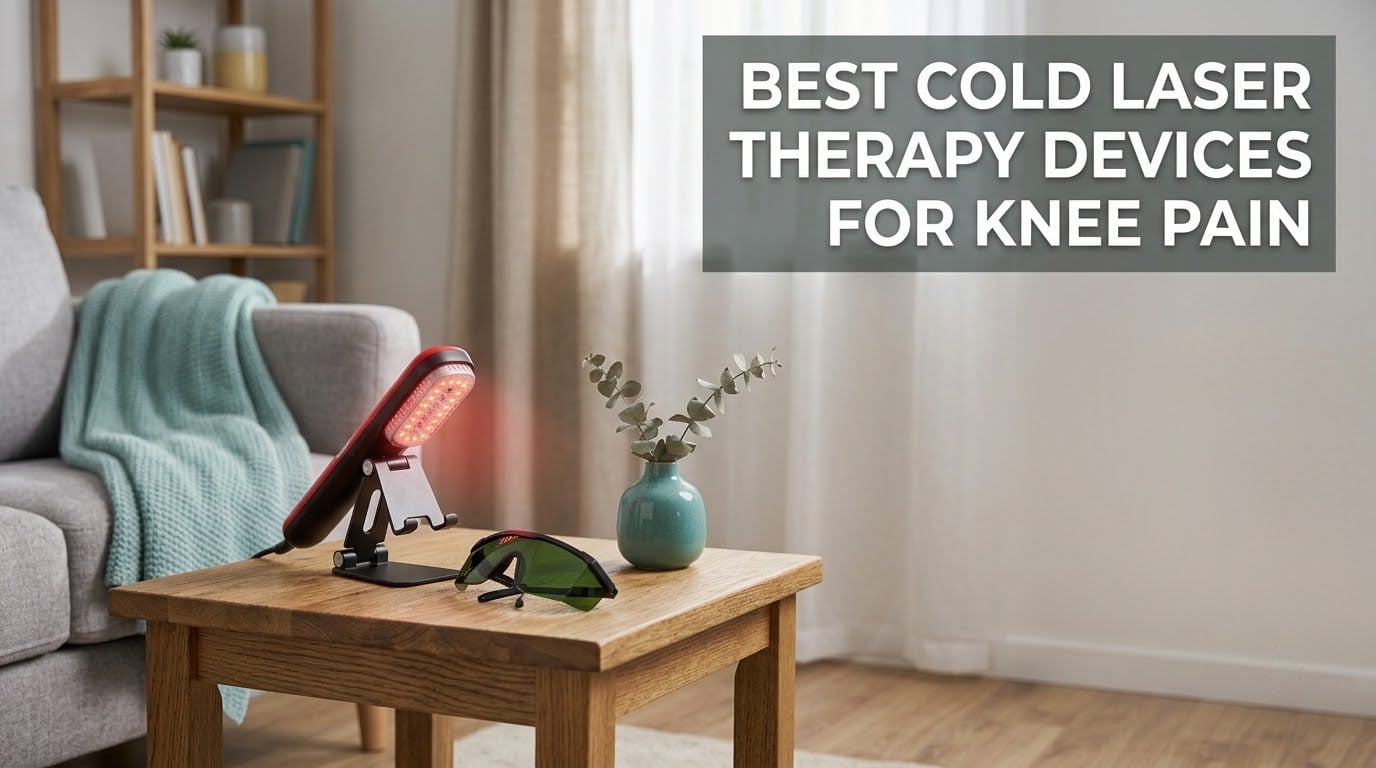
Search results for this topic are dominated by clinic marketing pages and marketplace imports, and not one of the ranking explainers names a single device. That left me with a simple job: pull twelve cold laser therapy devices for knee pain, read the actual diode counts, timer ranges, battery specs and review histories, and tell you which ones are worth turning on.
All twelve units here are home-use handheld photobiomodulation wands in the Class 3B range. They are not the multi-watt Class 4 machines you find in physical therapy offices, and I explain that gap in detail below because it is the single biggest source of confusion in this category. If you want a broader view of light-based recovery gear first, our guide to the best red light therapy devices covers the panel-style options that treat larger areas.
My method was straightforward. I compared the manufacturer listings against the customer review themes for each device, focusing on wavelength mix, irradiance control, timer granularity, battery runtime and how long the units survive before failing. Review bases on this list run from 44 to 249 ratings, which is thin by consumer-electronics standards but normal for this niche.
A note before we start: this is buyer information, not medical advice. Cold laser therapy is a genuine adjunct used alongside physical therapy, and you should clear it with your doctor or physical therapist if you have a diagnosis, an implant, a thyroid condition or are pregnant. Nothing here replaces care for an actual injury.
Table of Contents
Top 3 Best Cold Laser Therapy Devices for Knee Pain in 2026

SINORIKO 3x808nm + 13x650nm Wand
- Dual 650nm and 808nm array
- 4 power levels with 4 timers
- Rechargeable battery and adjustable stand

Holsn 14x650nm + 3x808nm Wand
- Denser red diode array
- 4 levels L1-L4
- 0.48 lb body with glasses
SINORIKO is the one I recommend to most people. It carries the largest review base on the list, ships with the adjustable stand that removes the worst part of home laser use, and pairs 13 red diodes with 3 infrared ones for a sensible surface-plus-depth mix.
Holsn is the smarter money move if the budget is the deciding factor. Its 14 red diodes push more energy into the skin layer where most knee tenderness lives, and it is the lightest wand here at 0.48 lb, with protective glasses in the box.
BETISBE wins on control. The 5000mAh cell is the largest in this group, and the continuous and pulsed modes with three power gears let you dose conservatively and build up, which is how practitioners on cold laser forums describe managing sensitivity.
Best Cold Laser Therapy Device Comparison Table for Knee Pain in October
| Product | Specifications | Action |
|---|---|---|
| SINORIKO 3x808nm + 13x650nm Wand |
|
Check Latest Price |
 YJT 12x650nm + 2x808nm Cube YJT 12x650nm + 2x808nm Cube |
|
Check Latest Price |
| Holsn 14x650nm + 3x808nm Wand |
|
Check Latest Price |
 BETISBE 5x808nm + 10x650nm Unit BETISBE 5x808nm + 10x650nm Unit |
|
Check Latest Price |
 NRO 650nm + 808nm Portable Wand NRO 650nm + 808nm Portable Wand |
|
Check Latest Price |
 Toponechoice 4x808nm + 16x650nm Toponechoice 4x808nm + 16x650nm |
|
Check Latest Price |
 Trewf 3x808nm + 18x650nm Wand Trewf 3x808nm + 18x650nm Wand |
|
Check Latest Price |
 Frovab 980nm + 810nm + 660nm Wand Frovab 980nm + 810nm + 660nm Wand |
|
Check Latest Price |
 ANHOM 660nm + 808nm Wand ANHOM 660nm + 808nm Wand |
|
Check Latest Price |
 NRO 4x808nm + 650nm Goggle Unit NRO 4x808nm + 650nm Goggle Unit |
|
Check Latest Price |
 COMSYNC 4x808nm + 14x650nm Wand COMSYNC 4x808nm + 14x650nm Wand |
|
Check Latest Price |
 MAGNETOE 650nm + 808nm Unit MAGNETOE 650nm + 808nm Unit |
|
Check Latest Price |
What Cold Laser Therapy Is and Why Knee Pain Responders Care
Cold laser therapy is a non-invasive treatment that uses low-intensity red and near-infrared laser light to reduce pain and inflammation without generating heat. The formal name is low level laser therapy, and the mechanism is photobiomodulation.
The science started by accident. In 1967, Hungarian researcher Endre Mester noticed that hair regrew more quickly in mice he had irradiated with a low-power ruby laser, and the field grew out of that observation. The working explanation is that red and near-infrared photons are absorbed by an enzyme called cytochrome c oxidase in the mitochondria, which lifts cellular energy production and appears to reduce inflammatory signaling at the tissue level.
There is an important detail here that almost no device listing mentions. The response follows a biphasic dose response curve, described in the photobiomodulation literature by Hamblin and colleagues: more light is not better. A dose that is too low does nothing, and a dose that is too high can suppress the very cellular activity you are trying to stimulate. That curve is why the power level controls on the devices below matter, and why cranking a wand to maximum and holding it there is a bad idea.
For knee osteoarthritis specifically, the honest framing is adjunct. Systematic reviews of low level laser therapy for knee OA report improvements in pain and function scores, but none of them show that light rebuilds cartilage. If someone promises you cartilage regrowth, treat that as a sales signal rather than a medical one.
Two concepts decide what you can safely buy. The first is laser class: Class 3B devices sit under 500 mW and are the consumer category, while Class 4 machines exceed 500 mW and are clinician-operated equipment you should not be ordering for your kitchen table. The second is regulatory status. FDA cleared means the device has a specific clearance for a stated use, FDA listed means it is registered as a low-risk device without that clearance, and unregistered marketplace imports carry neither. You can check any device in the open FDA database, and a seller who cannot produce a clearance number is telling you something useful.
1. SINORIKO Cold Laser Therapy Wand: Best Overall for Knee Pain
Cold Laser Therapy Device, Handheld Infrared Red Light Therapy for Knee, Joint, Muscle Pain Relief, 4 Power/4 Timer, 3X 808nm + 13x 650nm
13x 650nm plus 3x 808nm diodes
4 power levels and 4 timers
Rechargeable battery with stand
Pros
- Lightweight 0.3 lb handheld body with anti-slip grip
- Rechargeable battery runs up to 5 hours continuous
- Included adjustable stand for hands-free sessions
- Dual 650nm and 808nm diode array
- Two-press guard against accidental emission
Cons
- 14% of ratings are 1-star
- 808nm beam is invisible so you cannot confirm it is on
- Instructions are thin on treatment protocols
This is the wand I keep reaching for, and the reason is mundane rather than glamorous. At roughly 0.3 lb it is the second-lightest unit in the lineup, the battery runs up to five hours of continuous use, and the included adjustable stand means you can park it over a knee instead of holding it there for fifteen minutes while your arm falls asleep.
The diode mix is well judged for joint work. Thirteen 650nm red diodes handle the superficial layer where joint-line tenderness sits, and three 808nm near-infrared diodes push energy deeper. Four power levels and four timer settings give you a usable dose range without an overwhelming control panel.
The dual-press activation is a small thing that matters more than it sounds. Most accidental shutoffs on this list come from a button sitting where your grip naturally rests, and this one requires a deliberate two-step sequence to start emitting.
Across 239 ratings the average sits at 4, with 64% of buyers handing over five stars. The recurring complaint is real and worth naming: 14% of ratings are one-star, and a large share of those trace back to buyers assuming the device is broken because the 808nm infrared beam is invisible to the naked eye. Owners who worked that out, some by checking through a phone camera, tend to be satisfied.
The other gap is documentation. The manual covers operation but says almost nothing about how long to treat a knee or how often. You will be setting that protocol yourself, which is exactly why the dosing section further down is worth reading before your first session.
2. YJT Cube Laser Unit: Best for Spot Joint Treatment
YJT Cold Laser Therapy Device, Red Light Therapy Device for Pain Relief, Ideal Painless Joint and Muscle Pain Reliever, Infrared Light with 12x650nm and 2x808nm
12x 650nm plus 2x 808nm diodes
2600mAh battery, 5 to 30 min timer
1.97 inch cube
Pros
- Large review base at 249 ratings
- Compact cube beats panels for one joint
- 2600mAh battery covers several sessions per charge
- Smooth shell survives repeated drops
- Two-step long-press start prevents stray pulses
Cons
- Several buyers report the unit stopped emitting within about two months
- Protective glasses not included
- Printed instructions never explain how to enable the 808nm diode
The YJT is a cube roughly two inches on each side, and that shape is the whole argument for it. Panel devices treat a large area poorly and a knee awkwardly, while a cube with a small diode cluster concentrates what it has into one point you can park on the joint line.
Buyer feedback on this one skews strongly positive, with 57% five-star ratings. Verified owners report measurable relief for hips, backs, knees, wrists and tendons within days, and a number of them use it on arthritic pets as well as themselves, which suggests the diode count is adequate for smaller joints too.
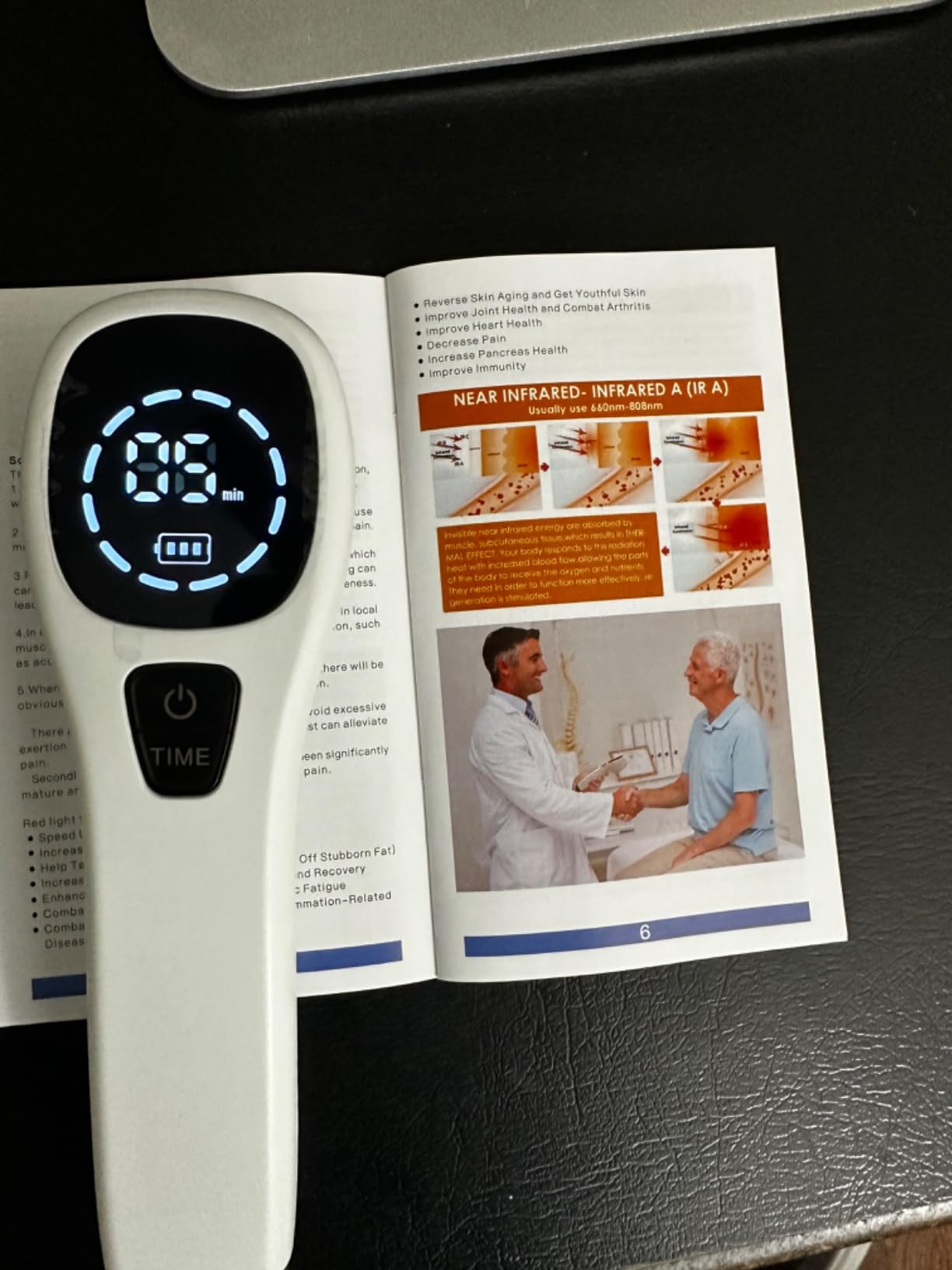
Battery life is genuinely good for the size. The 2600mAh cell charges in about two hours and reviewers describe getting multiple days of use per charge, and the digital timer runs from 5 to 30 minutes in five-minute steps, which is a more useful range than a fixed 15-minute default.
The durability thread is the honest drawback. Several buyers report units that stopped emitting light within roughly two months, and the packaging does not include protective glasses, which you will need for any 808nm use. The printed manual also never explains how to switch on the infrared diode, so confirm it is firing before you commit to a long protocol.
3. Holsn 14-Diode Red and Infrared Wand: Best Value
Holsn Red Light Therapy Infrared Light Tharepy, Red Light Device for Body Pain Relief, Joint, Muscle & Tissue 14 * 650nm + 3 * 808nm
14x 650nm plus 3x 808nm diodes
4 levels L1-L4 with 5-20 min timer
0.48 lb rechargeable body
Pros
- Densest red diode array in the lineup
- 0.48 lb body with long battery life
- Protective glasses included in the box
- Display and settings stay visible in low light
- Higher output than earlier focused handhelds
Cons
- Reports of units dying around the two year mark
- Power button is easy to press by accident
- Customer service reportedly declines returns after 30 days
If you are going to buy one wand and nothing else, the Holsn is the balance point in this list. Fourteen red diodes is the densest red array here, which matters because most knee pain complaints live in the superficial layers, and the average rating of 4.1 across 222 ratings is stronger than most of the field.
Owners using it for tendon problems report the higher output makes a real difference, with people citing relief for elbow tendinopathy, plantar fasciitis, hip bursitis and rib bruises after 15 to 40 sessions. That is an honest timeline rather than a marketing one, and it lines up with what the clinical literature suggests for chronic joint complaints.
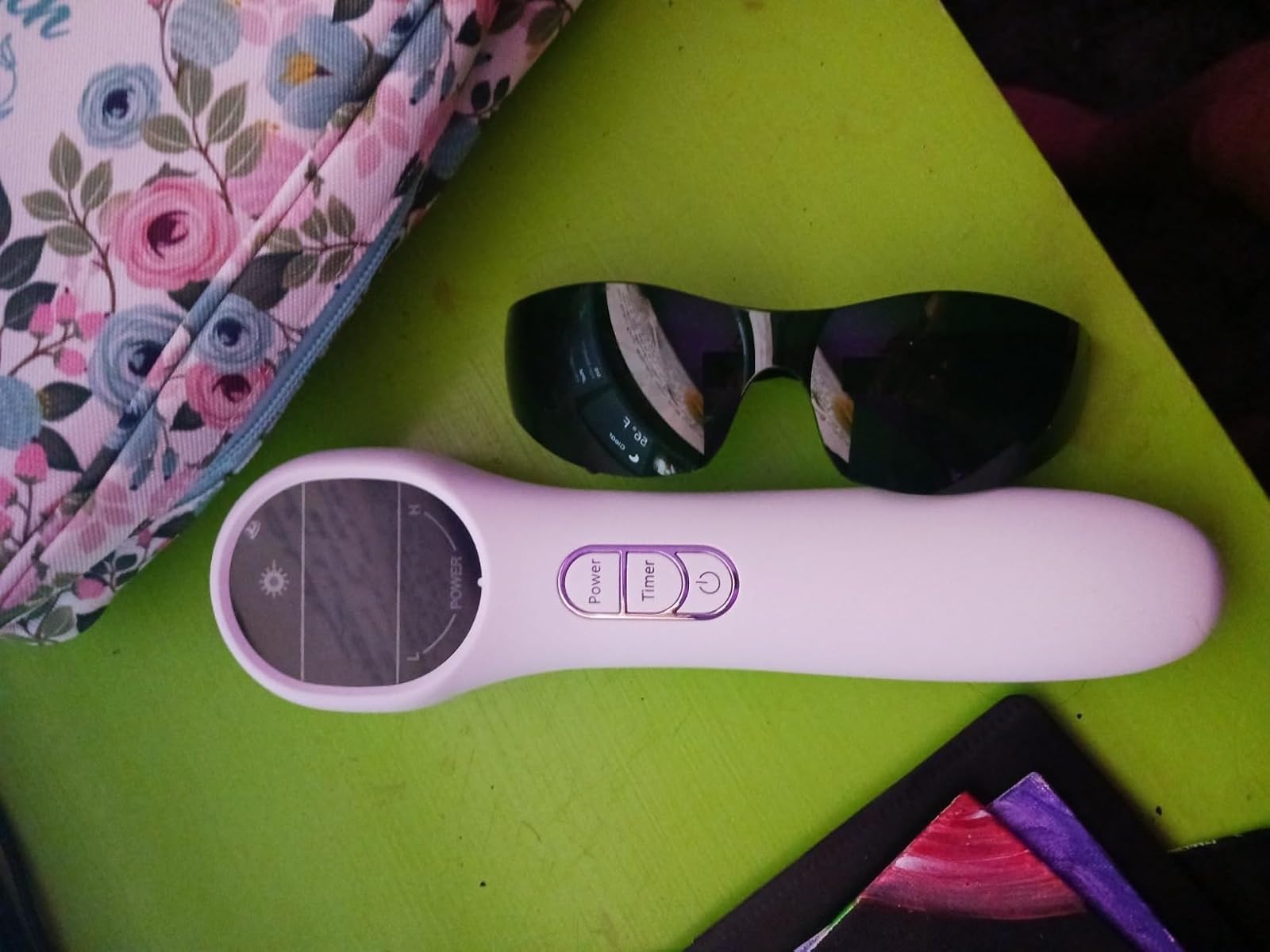
At 0.48 lb it is the lightest device we reviewed, and the 2600mAh battery is quoted as lasting up to 30 days at one or two sessions a day. The display stays readable in low light, and the manufacturer states the unit cannot be operated while charging, so plan sessions around that.
Two practical warnings. The power button sits where a thumb naturally rests, and several owners report accidentally ending a session mid-treatment, so keep the wand in the stand rather than gripping it loosely. There are also reports of units failing after around two years of use, and customer service has been reported as declining return requests once the 30-day window closes.
4. BETISBE 5000mAh LLLT Unit: Best for Multi-Mode Dosing
5000mAh 5 * 808nm & 10 * 650nm LLLT Cold Laser Therapy Device for Human/Vet
5x 808nm plus 10x 650nm diodes
5000mAh battery
Pulse and continuous, 3 gears, 60 min
Pros
- Best average rating among the high review counts
- 5000mAh is the largest battery here
- Magnetic cover improves delivery and guards heat
- Continuous and pulse modes with three gears
- Works on humans and pets
Cons
- Magnetic cover is a required extra part that can be lost
- Heavier at 2 lb than lighter handheld rivals
- Co-marketed for pets so branding feels diluted
The BETISBE is the most thoughtfully specified device in the group, and its 4.3 average across 166 ratings is the strongest combination of rating and review volume after our top pick. Five 808nm infrared diodes plus ten red ones is the most balanced deep-plus-surface array we saw outside the Frovab unit.
What sets it apart for knee work is the dosing flexibility. Three power gears, continuous and pulse modes, and a timer that runs to 60 minutes mean you can start at the lowest gear for short sessions and build up as tolerance develops, rather than committing to a fixed protocol on day one.
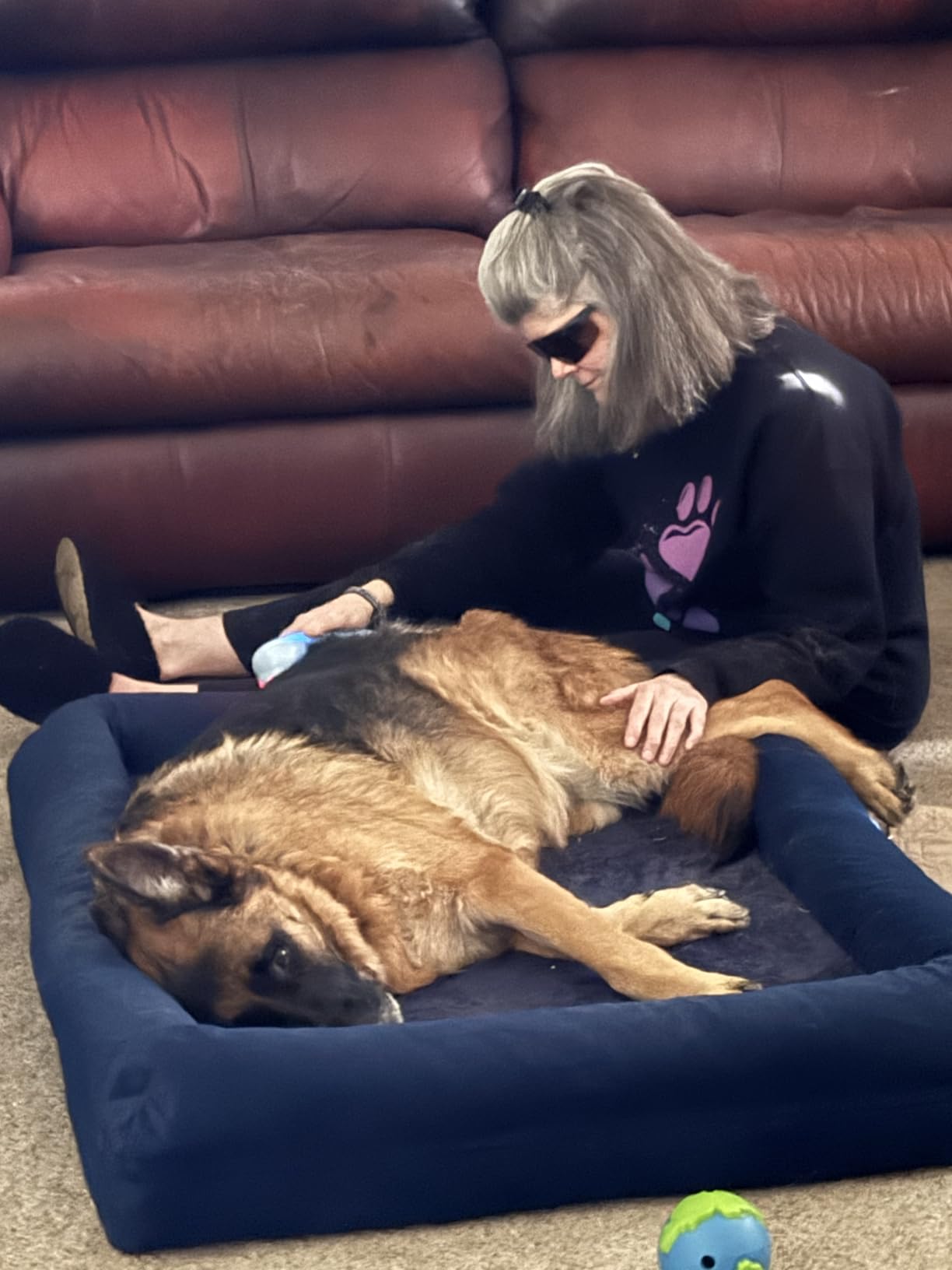
The magnetic protective cover is the part reviewers talk about most. It sits over the diode cluster to improve energy absorption while shielding the skin from heat buildup, and it is a required component, not an accessory, so it works best when you treat an arthritic dog as well as a knee.
The trade-offs are weight and bulk. At 2 lb it is the heaviest handheld here, and the package is larger than most, which matters if you are planning travel-based sessions. The pet-first co-marketing also means the branding feels slightly off if you are buying strictly for a human knee, but the hardware underneath is genuinely the most capable of the mid-size units.
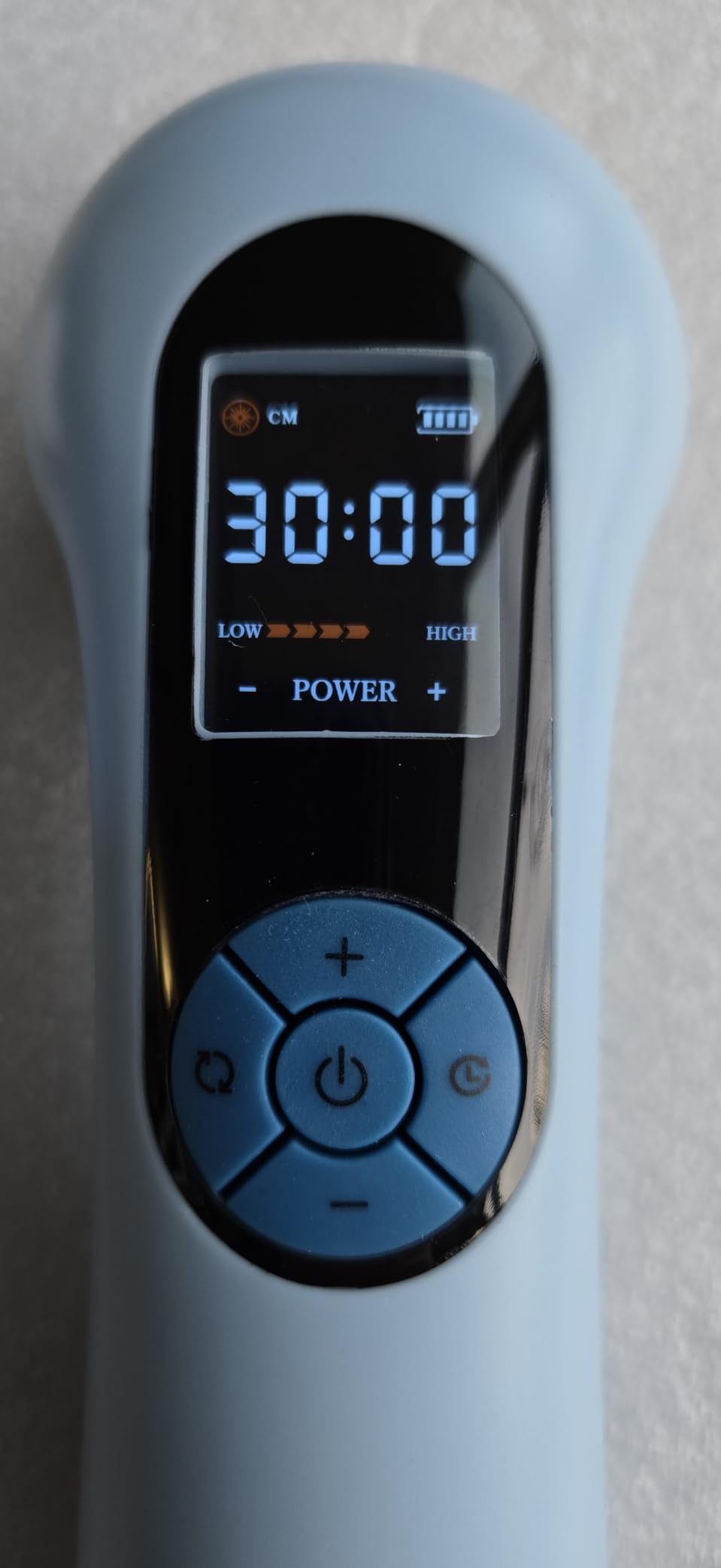
5. NRO Portable LLLT Wand: The Longest-Lived Listing
Fast Pain Relief Cold Laser Therapy Device | Portable Handheld Unit with LLLT Red Light | 650nm+808nm Wavelengths | Pain Management Therapy | Compact & Portable Design | Easy to use
Dual 650nm and 808nm wavelengths
Compact handheld wand
Point and apply about one inch from skin
Pros
- Established listing available since 2018
- Compact and light for travel
- Simple point-and-shoot operation with no menus
- Strong 65% five-star distribution
Cons
- Sparse specification detail on output and timers
- Battery listed as required without noting inclusion
- Some reviewers found results disappointing
This NRO wand has been on sale since 2018, and for a category where electronics failure is the most common complaint, longevity of the listing is itself a signal. Support and spare parts for a long-running product tend to persist in a way they do not for a two-year-old listing.
It is also the least complicated device here to actually use. There is a single point, a single action, and no mode cycling. You hold the wand about an inch above the sore area, turn it on, and wait. For a first session on a knee that already hurts to touch, that simplicity has real value.
The 4.2 average across 154 ratings is well earned, with 65% of buyers rating it five stars and only 6% at one star, one of the cleaner distributions in the set. Owners consistently mention portability and a wand shape that fits in a drawer or a gym bag.
Where it falls short is documentation. The listing is thin on the numbers that matter for dosing: power output per diode is not stated clearly, timer options are not spelled out, and the battery is listed as required without confirming inclusion. If you are the type of buyer who wants to compute a dose in joules per square centimeter, this listing will not give you enough to work with.
A minority of reviewers also found results disappointing compared with dedicated red light panels, which is consistent with the general pattern that concentrated handheld wands help localized joint complaints more than broad muscle areas. For a knee, that is the right target anyway.
6. Toponechoice Red Light Therapy Unit: Best for Full Dose Control
Toponechoice Red Light Therapy Device, 4x808nm+16x650nm, Near Infrared Red Light Therapy for Body Pain Relief, Knee Feet Back Leg Muscle Relax, Red Light Therapy Machine for Human and Pets Dogs Horse
4x 808nm plus 16x 650nm diodes
Four power levels, 1 to 60 min timer
CW and 10Hz pulsed modes
Pros
- Widest control set with four power levels and a 60 minute timer
- Usable while charging unlike most rivals
- Protective glasses and AC adapter included
- 90-day seller service commitment
- Works for humans and larger animals
Cons
- 13% of ratings sit at 3 stars
- Near-infrared diodes are invisible during use
- Best results need close contact with bare skin
This is the device to buy if you intend to treat more than one problem, or one problem seriously. Sixteen red diodes plus four infrared ones gives it the highest total diode count in the lineup, and the control surface is the most complete: four power levels from 25% to 100%, a timer adjustable from 1 to 60 minutes, and switching between continuous wave and 10Hz pulsed wave.
Those two modes matter more than they sound. Continuous wave delivers steady energy, while pulsed mode lets you work with higher peak output and less heat accumulation, which is useful on a knee that is already inflamed. Practitioners on cold laser forums describe exactly this kind of mode switching as central to managing dosing well.
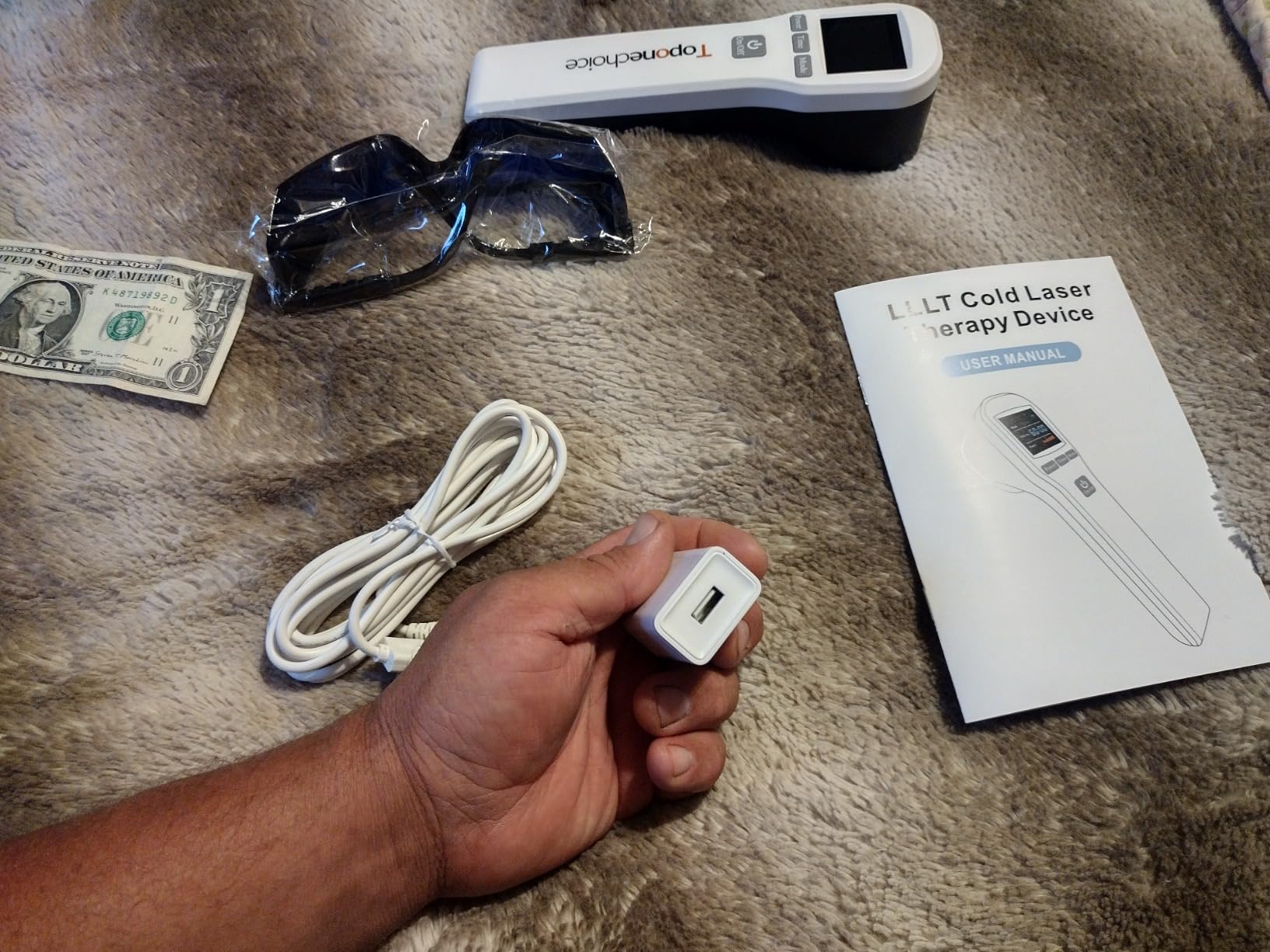
The practical detail I like most is that it can be used while charging, which removes a real constraint when you are treating twice a day. A full charge is quoted at 6 to 8 days, protective glasses and a 110V adapter are in the box, and the seller offers a 90-day service commitment.
The manufacturer also publishes a recommended protocol, and it is a demanding one: 15 to 20 minutes, 3 to 5 times weekly, for four weeks. That is a real commitment, and it explains part of the 13% of ratings that land at three stars, since people who expect a one-off fix tend to rate it lower. The 808nm diodes are also invisible, so confirm output with a phone camera before your first full protocol.
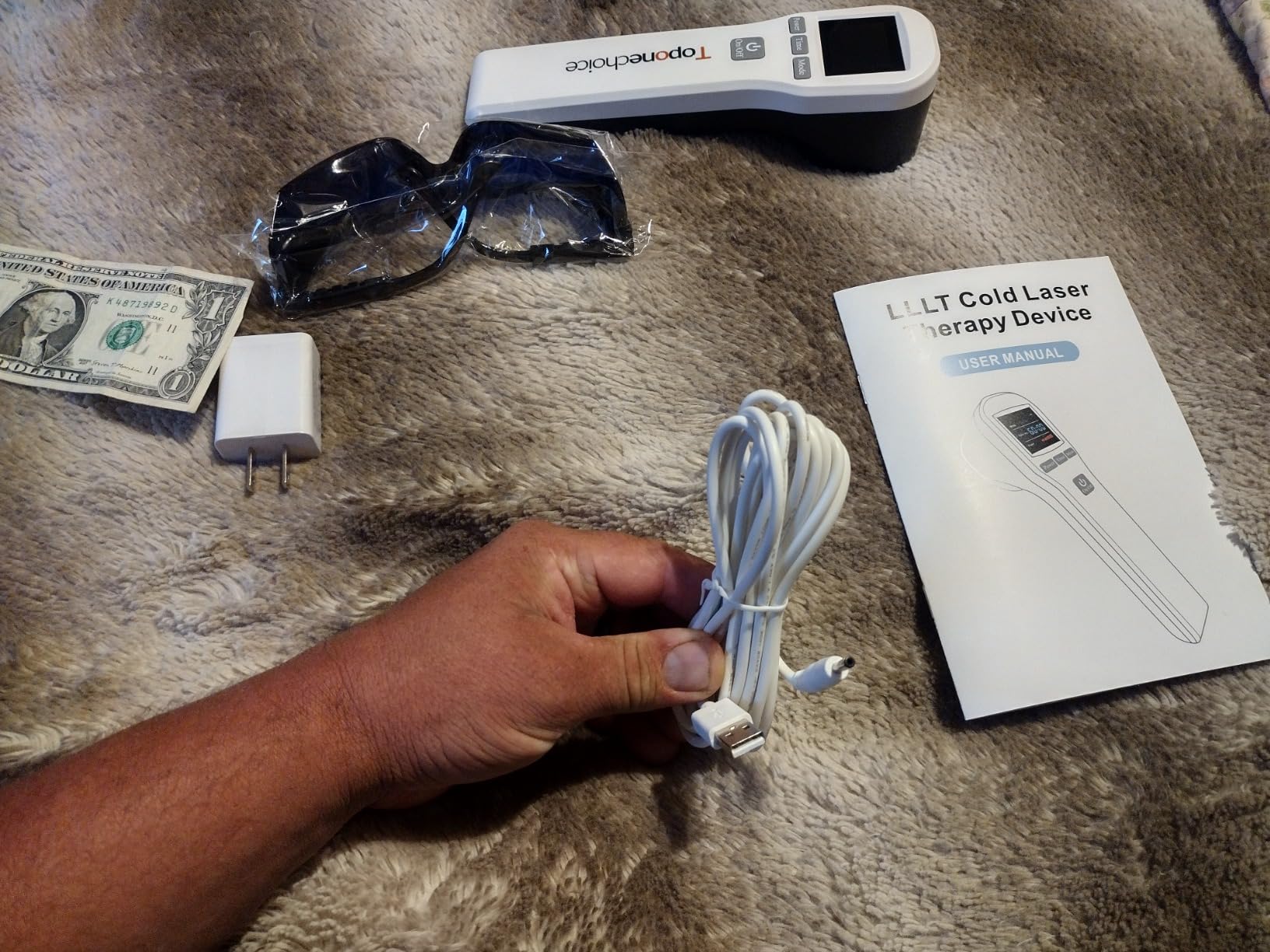
7. Trewf LLLT Wand: Best for First-Time Users
Cold Laser Therapy Device – Low Level Laser Therapy (LLLT) Wand 3x808nm + 18x650nm, Handheld Red & Infrared Light Therapy for Humans & Pets – Red Light Therapy for Dogs & Cats, Joint & Muscle Relief
3x 808nm plus 18x 650nm diodes
Red, infrared and combined modes
15 or 30 minute timers, USB-C
Pros
- Lowest entry point of the lineup with a 4.1 average
- Two-button control with no buried menus
- Auto shutoff after a completed session
- Light enough to hold over areas the stand cannot reach
- Glasses included in the package
Cons
- Bundled tripod is unstable and holds the wand poorly
- Handle-mounted buttons make mid-session shutoff easy
- Manual explains specs but not session length
The Trewf is the friendliest first device I found. It has the lowest entry point of the group and still holds a 4.1 average across 106 ratings, which is a better balance than most of the cheaper wands on the wider marketplace.
Control is the whole design. Two buttons, no nested menus, and a display that shows intensity, timer and battery state at a glance. Three mode options cover red only, infrared only, or both combined, and the timer offers 15 or 30 minute settings with an automatic shutoff when the session completes.
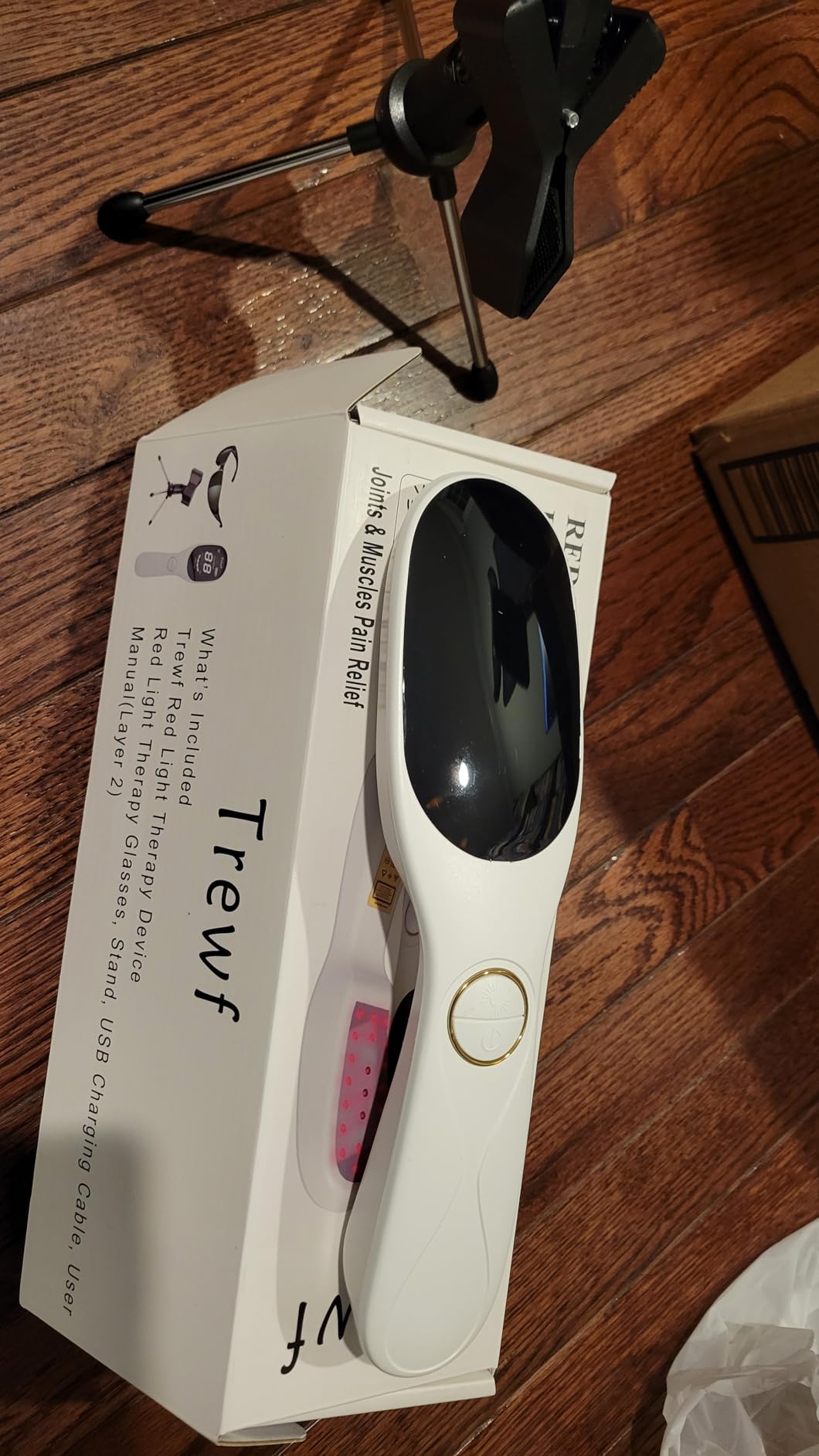
Owners report meaningful improvement for knee pain, tennis elbow and arthritic pets, and skin-care users mention clearer, calmer skin after regular sessions. Eighteen red diodes with three infrared is a surface-heavy array, which suits a knee where the pain is localized to a specific tender point.
Two design flaws are worth knowing before you buy. The bundled tripod is unstable and tips over, so treat the wand as a handheld tool rather than a hands-free one. The buttons also sit on the handle, which several owners identified as an easy mid-session shutoff, so keep it still rather than adjusting your grip.
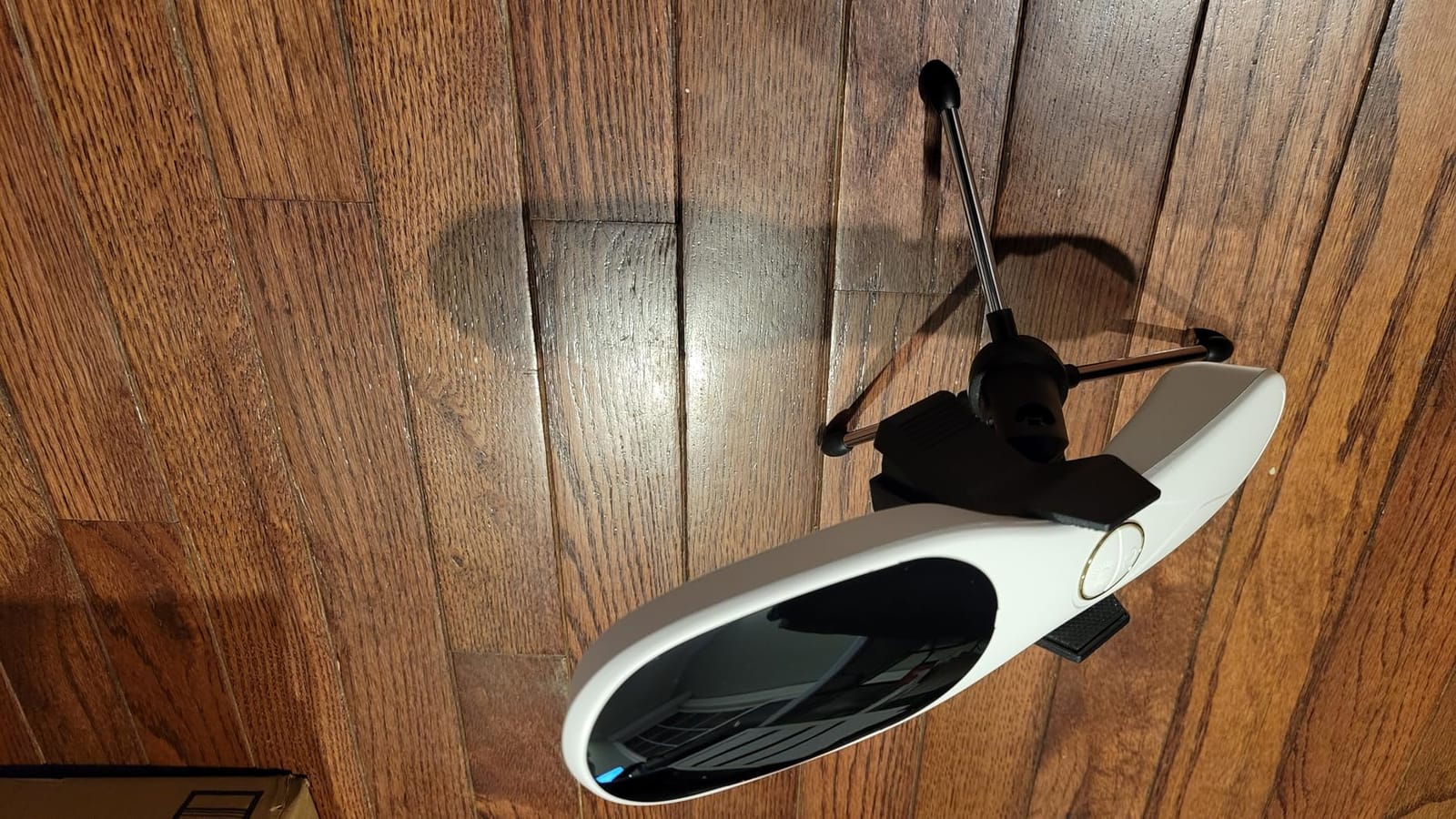
A few units arrived with a defective red diode casting a round shadow on the skin, and the manual lists specifications without explaining how to choose a mode or a session length. Check the output on a dark surface the day it arrives so you have a baseline to compare against later.
8. Frovab 980nm Triple-Wavelength Wand: Best for Deep Tissue
Cold Light Therapy Machine, 980nm Red Light Therapy Device for Pain at Home
4x 980nm plus 4x 810nm plus 16x 660nm
25/50/75/100% modes
1 to 60 minute timer, 0.53 lb
Pros
- Only device here with a true 980nm deep-tissue wavelength
- Full 1 to 60 minute timer with four intensity levels
- Silent vibration-free operation
- 0.53 lb wand with a clear LED display
- Glasses and AC adapter included
Cons
- 980nm light is invisible so it can look broken
- 14% of ratings are 1-star
- Protocol needs 3 to 5 sessions weekly over four weeks
Depth of penetration is the question most buyers cannot answer when they read listings, and the Frovab is the only device here that addresses it head-on. Its three-wavelength array combines 980nm, 810nm and 660nm diodes, with 980nm reaching deepest into tissue toward the joint and surrounding structures.
Most competing wands in this list stop at 808nm. Near-infrared at 980nm is absorbed slightly further into tissue, which is the argument you would make for a knee whose pain sits deep behind the joint line rather than right under the skin. If your pain is superficial, that advantage largely disappears.
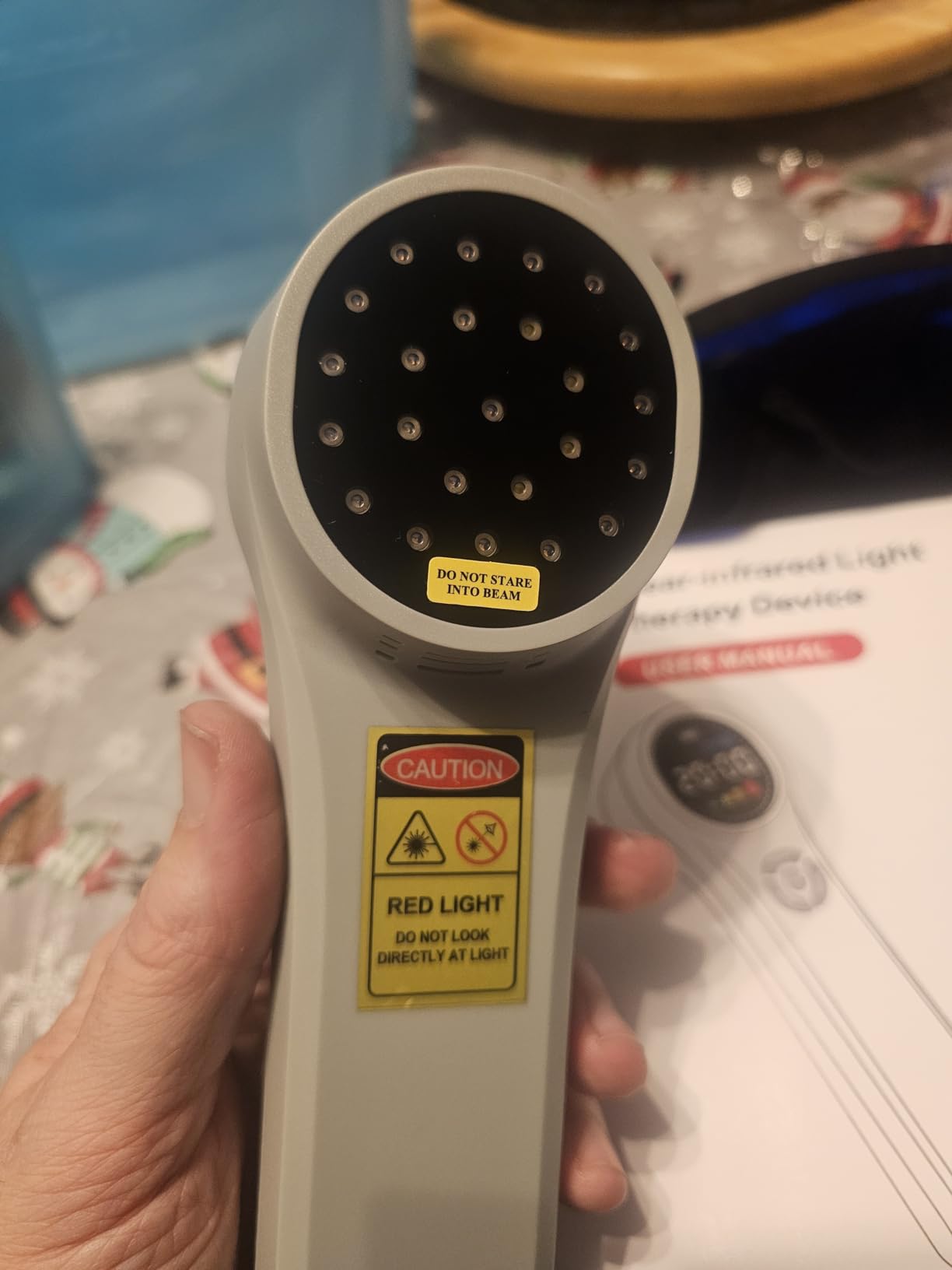
The control set is thorough: four power modes at 25, 50, 75 and 100 percent, continuous and 10Hz pulsed wave, and a timer adjustable from 1 to 60 minutes. The wand itself is 0.53 lb, operates silently with no vibration, and the LED display is easy to read.
The catch is expectations. It sits at the upper end of what these home wands cost, and its own protocol asks for 3 to 5 sessions per week across four weeks before results. Fourteen percent of ratings are one-star, and a recurring theme is buyers assuming the unit is faulty because 980nm output is completely invisible. Use a phone camera to confirm it is firing.
9. ANHOM 660/808nm Wand: Best Rated Newcomer
Red Light Therapy Device, 660/808nm Handheld Infrared Light Wand with Stand
660nm red plus 808nm infrared
4 levels with 5 to 30 min timer
Continuous and pulsed modes
Pros
- Best average rating in the roundup at 4.6
- Pulsed mode offers deeper penetration with less heat
- Stand and protective goggles included in the kit
- Works for people and for dogs and cats
- Rechargeable with 24 months of support
Cons
- Smallest review base at 62 ratings
- Shortest timer range at 5 to 30 minutes
- Recent listing with limited long-term durability history
The ANHOM is the highest-rated device in the list at 4.6, with 75% of its 62 ratings at five stars and not a single one-star rating. That is a genuinely clean profile, but the review base is also the thinnest here, so treat the number as encouraging rather than settled.
Its feature list is tight and sensible. Dual 660nm red and 808nm near-infrared wavelengths, four adjustable intensity levels, a 5 to 30 minute timer, and a choice between continuous mode for steady care and pulsed mode for deeper penetration with reduced heat buildup.
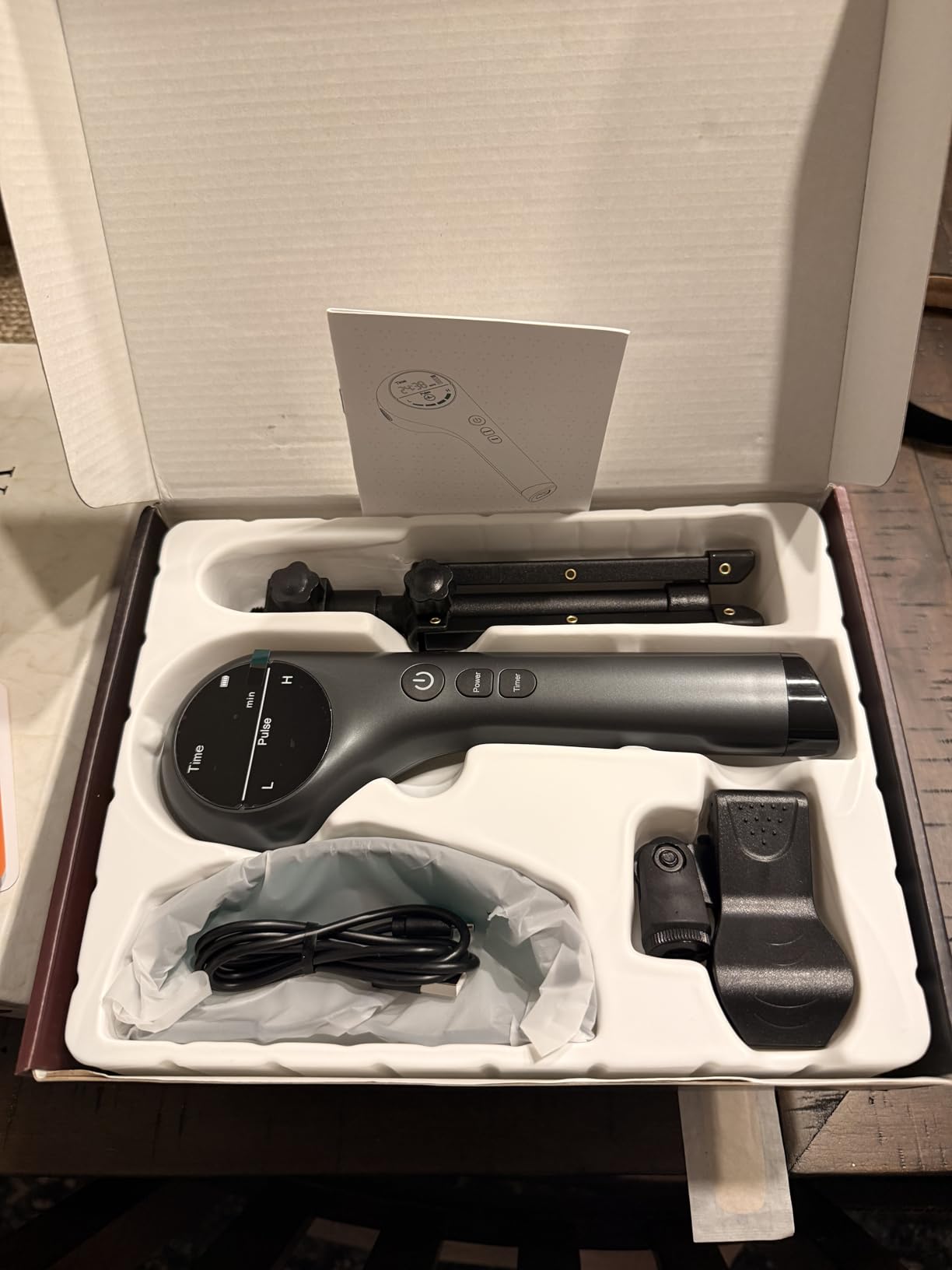
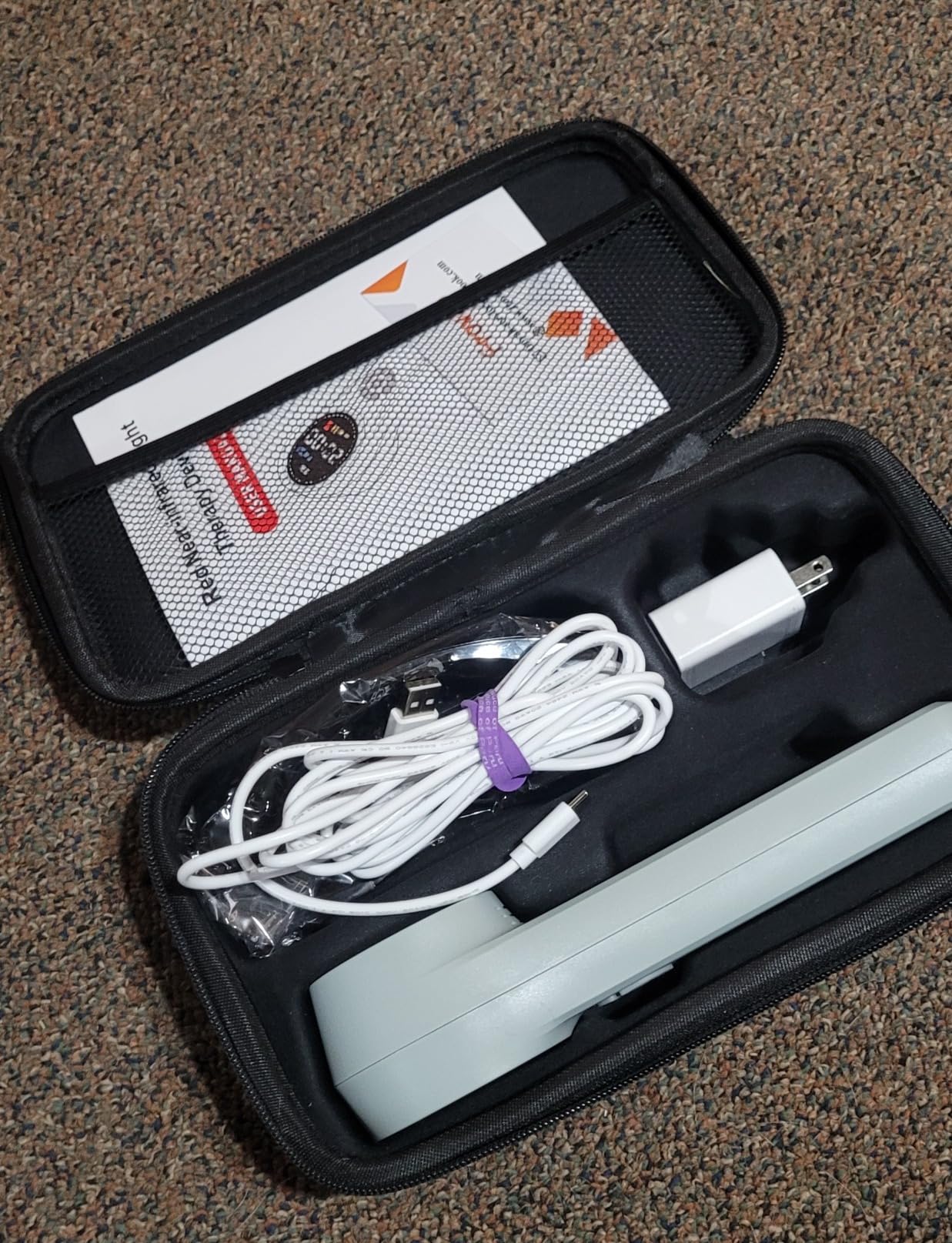
For knee sessions specifically, the included stand is the detail that matters most, because a 15 to 20 minute treatment over a joint is uncomfortable to hold by hand. The kit also includes protective goggles, a manual and a USB-C cable, and the unit is rechargeable with 24 months of support behind it.
The limitations are structural. A 5 to 30 minute timer is the shortest range in the lineup, so long low-intensity sessions are not possible, and the listing is recent enough that there is no long-term durability record to lean on yet. Our general guidance is to give newer hardware a longer return window before committing to a long protocol.
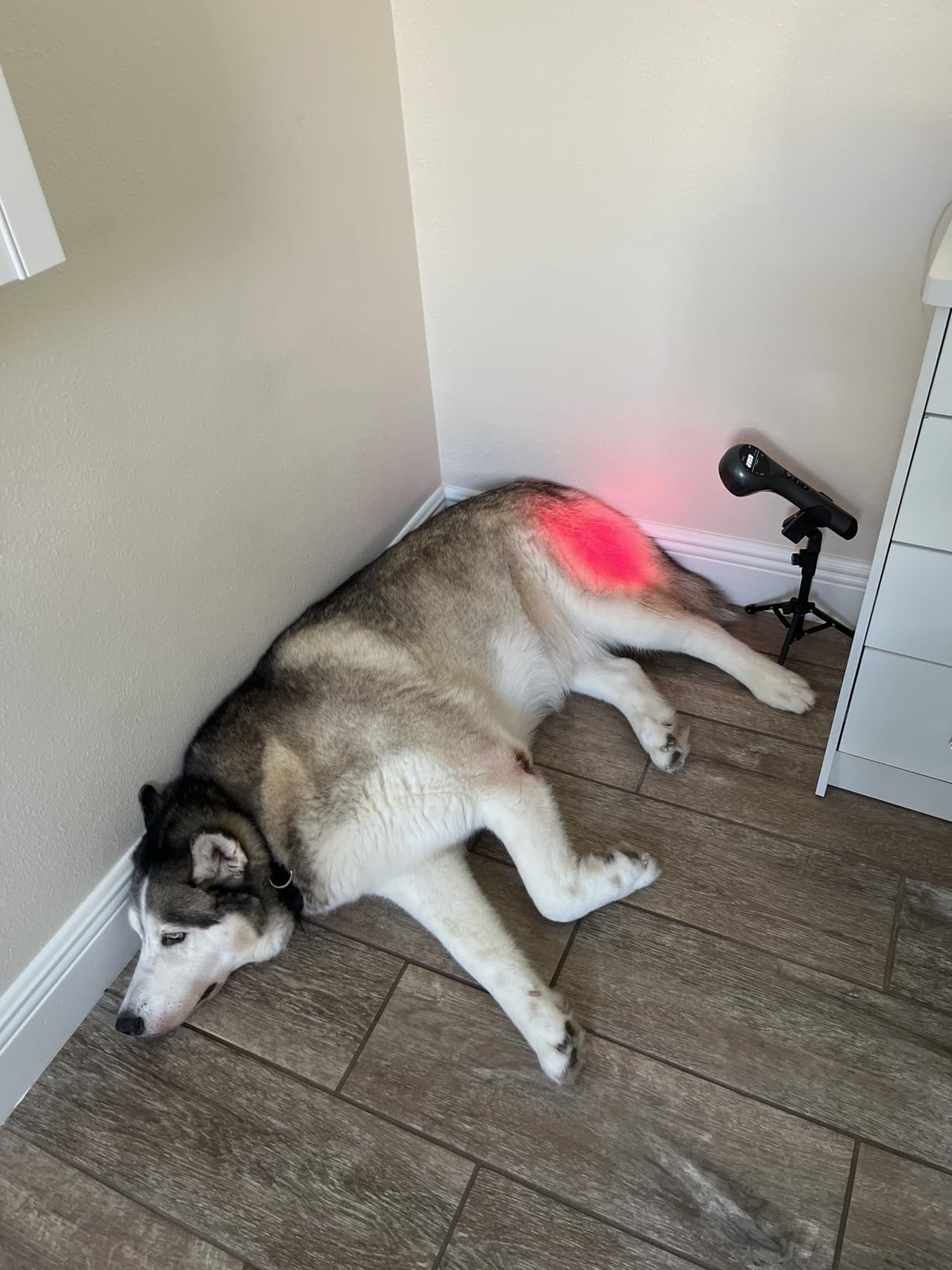
10. NRO Four-Infrared Goggle Unit: Best Four-Diode Setup
Red Light Device for Muscle Reliever, Knee, Shoulder, Back, Infrared Light Therapy Pain Relief Device with 650nm and 808nm, Hand Held Unit with Goggle (Four*808nm)
Four 808nm near-infrared diodes plus 650nm red
Handheld wand format
Protective goggles included
Pros
- Goggles ship with the device
- Four infrared diodes penetrate deeper than two-diode units
- Handheld format suits targeted knee and back work
Cons
- Listing gives no timer
- power level or battery details
- Heaviest unit in the lineup at 2.25 lb
- Small review pool with 12% one-star ratings
This second NRO unit pairs four 808nm near-infrared diodes with red 650nm diodes, and the extra infrared count is the reason to consider it. Two-diode wands deliver noticeably less near-infrared energy, and since infrared is the wavelength that reaches past the skin, four diodes give you more to work with on a deep joint.
It is also one of only a few devices in this list that includes protective goggles in the package, which removes a step that trips up buyers of the YJT and other units. Buyers single out the deeper penetration and the included eye protection as the main reasons they kept it.
The problem is transparency. The listing carries no bulleted feature copy, so there is no stated timer range, no power level count, no battery specification and no diode wattage. Dosing a device you cannot measure is guesswork, and this category already punishes guesswork through the biphasic dose response curve.
At 2.25 lb it is also the heaviest unit in the lineup, and its 58 ratings include 12% one-star feedback. For a buyer who wants near-infrared depth and will accept an undocumented control surface, it works. For anyone planning a measured protocol, one of the better-documented wands is a safer bet.
11. COMSYNC Handheld Red Light Wand: Best Finest-Grained Controls
Handheld Red Light Therapy with Stand-Near Infrared Light Therapy Device, Cold Therapy Device Pain Relief for Joints & Muscles (4 x 808nm + 14 x 650nm)
4x 808nm plus 14x 650nm diodes
5 intensity levels, 6 timer options
4000mAh, 1-year warranty
Pros
- Five intensity levels give more gradations than most rivals
- 4000mAh battery lasts up to a week per charge
- Build quality and included glasses praised
- Users report easier leg movement after sessions
- Only unit here with a stated one-year warranty
Cons
- 18% of ratings are 1-star with early hardware failures
- Stand cannot support the top-heavy wand
- Charge indicator can show full while the unit will not power on
The COMSYNC is the pick if you are anxious about over-treating, because five intensity levels is the most granular step control in this lineup. It also offers six timer options from 5 to 30 minutes, so you can dose a small spot on the knee for a short session rather than committing to a fixed 15 minutes.
Its 4000mAh battery is quoted at up to a week of cordless use per charge, and it is the only device on this list that states a one-year warranty in the package contents. Buyers also comment on build quality and the included glasses at this price tier, which is not always the case.
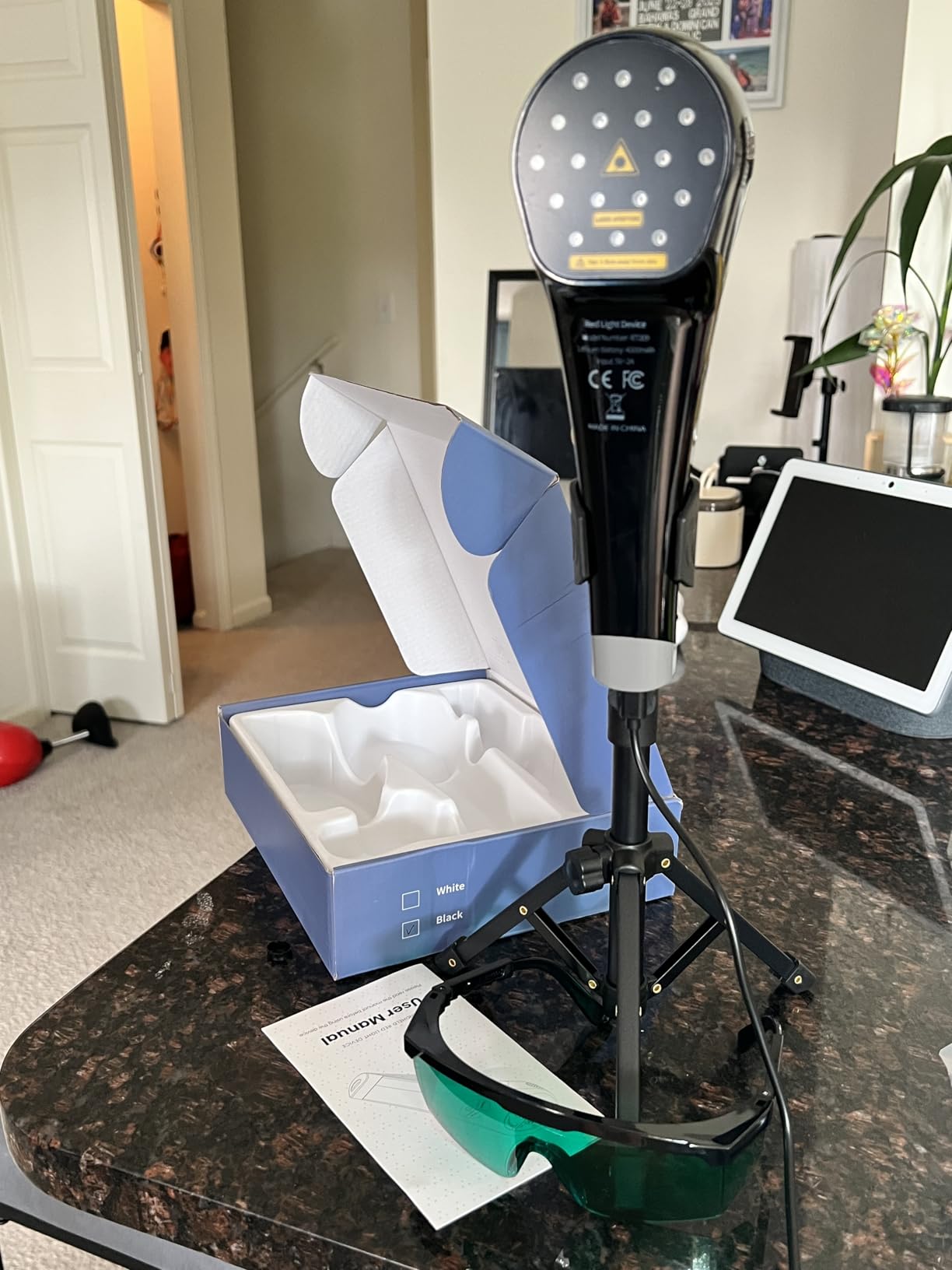
Unfortunately, the ratings are the most divided here. Across 51 reviews the split is 70% five-star against 18% one-star, and the unhappy group describes a consistent pattern: units that stop working after a few uses or around the two-month mark, and a charge indicator that reads full while the wand will not power on.
The included stand is another weak point, since it does not support the top-heavy wand and lets it tip, which defeats the purpose of hands-free treatment on a knee. Owners do report easier leg movement and post-exercise pain relief, and some buyers who already own large red light panels find this unit too small for broader work, which is expected from a handheld.
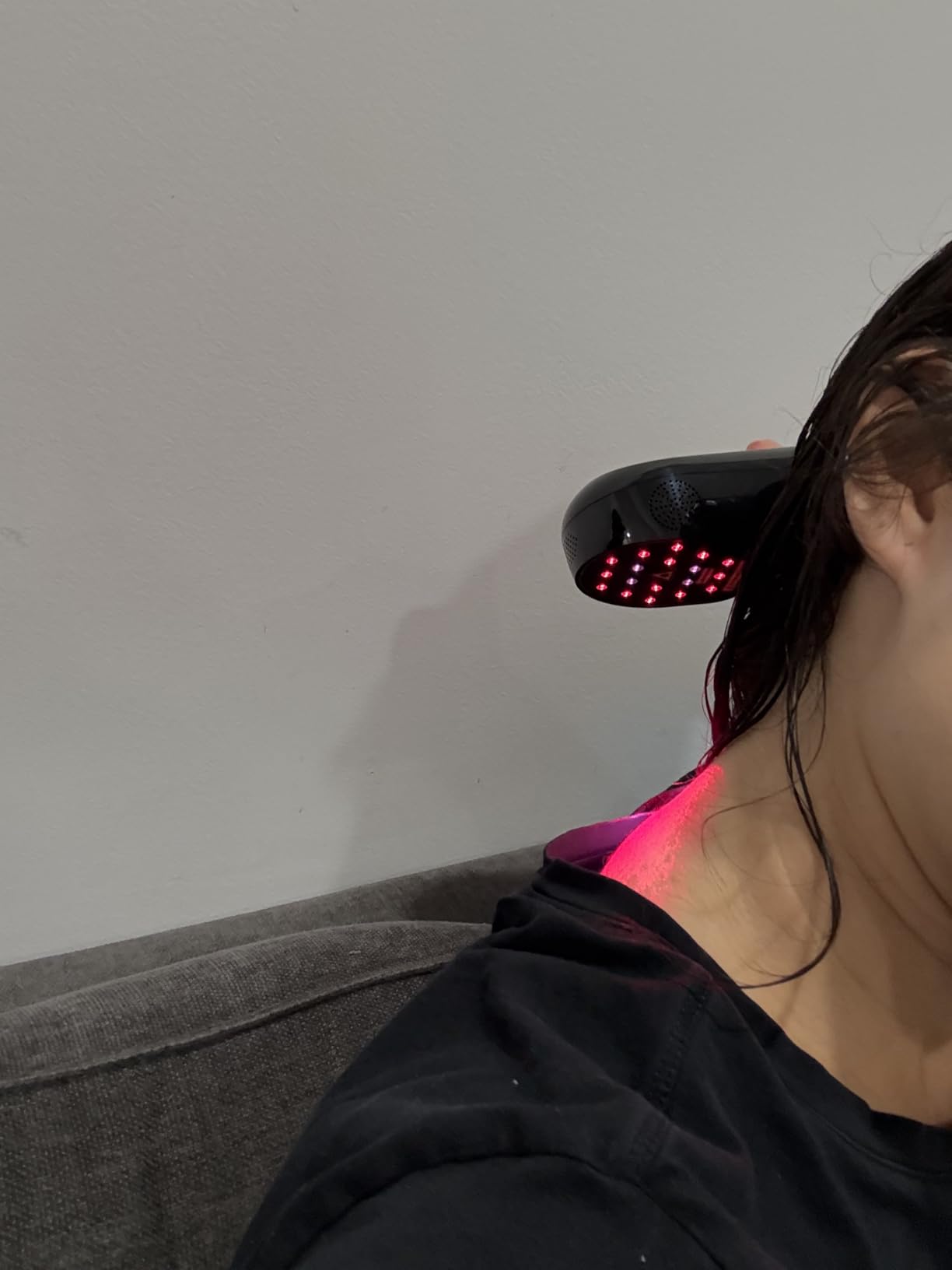
With an 18% one-star share, this is the device I would test most cautiously. Confirm the full charge-and-run cycle during the return window before building a multi-week protocol around it.
12. MAGNETOE Worldwide-Voltage Unit: Best for Travel
MAGNETOE Pain Relief Cold Laser Therapy Device Red Light Portable Handheld Unit 650nm+808nm, Works Worldwide, 110v – 220v, for Joints, Muscles, Shoulders, Elbows, Knees, Back Treatment
650nm plus 808nm wavelengths
110v to 220v worldwide power
Three buttons, goggles and case included
Pros
- Best star distribution here with 76% five-star ratings
- 110v to 220v power works without a charger change
- Only three buttons
- described as refreshingly simple
- Protective goggles
- case and pouch included
Cons
- Shortest timer interval is 10 minutes
- Manual restricts use to acupuncture-median points rather than the sore area
- Smallest review base at 44 ratings
The MAGNETOE is built for a specific situation, and in that situation it is very good. It runs on 110v to 220v, so you can use it in most countries without a charger swap, which is the kind of detail that rarely gets considered until it becomes a problem.
It also has the cleanest satisfaction profile in the list. Seventy-six percent of its 44 ratings are five stars, with only 9% at one star, and owners describe the three-button layout in unusually positive terms. Owners using it for lower back pain report improved daily mobility after 10 to 15 minute morning and evening sessions, and physiotherapist users have confirmed the same device type appears in clinical settings.
The timer is the limitation for knee use. The shortest interval is 10 minutes, with no shorter setting for a small, specific spot, and the manual steers you toward acupuncture-median points rather than letting you treat the sore area directly, which frustrated at least one buyer. It also runs on two AA batteries rather than a rechargeable cell.
With only 44 ratings, the results are less proven than the numbers suggest. The manual also warns against use on black or dark fur and hair, which matters if you plan to treat pets as well as people.
How to Use a Cold Laser Therapy Device on Your Knee Safely
Dosing is where most home cold laser mistakes happen, and it is entirely avoidable. Work through these steps in order for your first week, then adjust from observed response rather than from enthusiasm.
1. Start clean and bare. Wipe the skin, remove lotions, and treat bare skin directly. Several listings in this roundup note that results are best with the wand held close to bare skin, since clothing and product layers scatter the beam.
2. Check the beam before you start. Nearly every unit here pairs red 650nm or 660nm diodes with invisible 808nm, 810nm or 980nm near-infrared diodes. Look through a phone camera at the emitter to confirm near-infrared output, because a healthy device producing no visible glow is the single most common reason buyers wrongly return these wands.
3. Hold the wand close, not on the skin. Most manufacturers specify roughly one inch of standoff. Pressing the emitter against the skin concentrates heat locally rather than delivering dose evenly across the treatment area.
4. Cover the joint, not the whole leg. Sweep the medial joint line, the lateral side, the kneecap and the surrounding soft tissue. Two to four minutes per site is a common working range for a wand, and the timer settings on the devices above exist to enforce exactly that kind of pacing.
5. Use the lowest power level that works. This is where the biphasic dose response matters. Many buyers start at maximum because it feels more serious, and many report worse results. The devices with discrete gears, like the BETISBE with three gears or the COMSYNC with five levels, are easier to dose this way.
6. Be consistent. The Toponechoice listing, which documents its protocol most clearly, recommends 15 to 20 minutes, 3 to 5 times weekly, for four weeks. Short, irregular sessions are the most common reason people conclude the modality does not work.
7. Pair it with movement. Light alone does not restore strength or range. Combining sessions with the mobility work your physical therapist prescribes, or with a supportive knee brace during activity, is what converts temporary relief into better function. If you are still using crutches, our comparison of the best knee scooters may be more immediately useful.
How Long Until You Feel Results From Cold Laser Therapy
Expect the first 1 to 3 sessions to feel like nothing at all. Immediate relief on the table is uncommon for cold laser, and buyers who report a night-and-day difference at the first session are describing an experience that most people do not have. One patient review on Yelp comparing a clinic session described exactly that contrast with shockwave therapy, while noting that shockwave reached deeper for chronic inflammation.
By week two, most consistent users report a reduction in the sharpest morning stiffness rather than a change in overall pain. Owner reports on several devices in this list describe relief emerging across 15 to 40 sessions, which tracks with a twice-daily or three-to-five-times-weekly protocol.
By weeks three and four, the meaningful change is functional: easier stairs, a longer walk before the knee complains, or a bigger bend. Practitioners on the Cold Laser Practitioners Forum report measurable range-of-motion and pain changes within a single session in some clients, and they attribute much of that to technique and dosing rather than to a different device.
You should also know about the flare-up. Trial data on knee osteoarthritis indicates roughly 10% of subjects experience a temporary increase in pain after treatment, usually settling within a day or two. Most articles never mention it, and most buyers who hit it assume the device is harming them. Mild increased soreness for 24 to 48 hours after a first or a stronger session is a documented response, not a warning sign.
Some people simply do not respond. Long-running user threads on this modality show highly variable individual outcomes, and the strongest consensus in those communities is that cold laser works well as an adjunct rather than a standalone fix. If you are eight weeks into consistent twice-daily sessions with no change in stiffness or function, that is a signal to raise it with your clinician rather than to increase the power.
Safety, Contraindications and When to Stop Using a Cold Laser Device
Never look into the beam. The 650nm and 660nm red diodes produce a visible glow that invites the exact mistake that harms eyes, and while infrared is invisible, it is not safer. Use the goggles included with the BETISBE, the Toponechoice, the ANHOM, the NRO goggle unit, the COMSYNC or the MAGNETOE, and keep other people out of the room during a session.
Do not treat over the thyroid or a known tumor. The thyroid sits low in the neck and absorbs light readily, and a widely cited industry review on cold laser contraindications flags the thyroid specifically. If you have an active malignancy, ask your oncologist before using any phototherapy device on or near the affected area.
Pregnancy and implants both warrant a conversation with your doctor first. Metal implants in the knee are common after surgery and the light is not known to be harmful, but the honest position is that the evidence is thin and your surgeon should be the one making that call.
One persistent myth is worth clearing up. Industry reviews specifically push back on the claim that cold laser is contraindicated for people with epilepsy, noting the concern is unfounded. It remains a reasonable question to raise with a clinician, but the blanket prohibition is not supported.
Stop or pause if you develop skin redness that does not fade within an hour, any burning sensation during a session, or pain that is clearly worse and sustained for more than a couple of days. A short-lived increase in soreness after a strong session is expected; a burning feeling during treatment means the dose or the distance is wrong.
And keep the device out of reach of the two people most likely to grab it: toddlers and pets who will chew a wand that is warm after a 20-minute session. If sleep positioning is part of your recovery plan, our knee pillow comparison covers the other half of overnight support.
How to Choose a Cold Laser Device for Knee Pain: Wavelengths, Class and Clearance
Match the wavelength to where the pain is. Red light at 650nm and 660nm penetrates a few millimeters and is the right choice for surface-level joint-line tenderness, skin-level inflammation and post-op incision areas. Near-infrared at 808nm and 810nm reaches much deeper, and 980nm goes deeper still, which matters for pain that sits behind the joint rather than under the skin.
For most knees, dual wavelength is the sweet spot. Nine of the twelve devices here pair red and near-infrared, which lets you treat both the superficial and deeper layers in one pass. The Frovab is the only one with a true three-wavelength array, and the two four-infrared NRO configurations are the only ones weighted toward depth.
Stay under 500mW for home use. Anything above that threshold is Class 4 equipment, which is operated by trained clinicians in physical therapy and chiropractic offices. A wellness clinic can rent or sell you time on a Class 4 machine, and for an unresponsive knee that is a reasonable next step. Ordering one for home use is a different proposition entirely.
Verify regulatory status before you pay. Run the brand or model through the open FDA database and look for a clearance number tied to a stated use. FDA cleared and FDA listed are not the same thing, and marketplace imports frequently carry neither while still printing a regulatory-looking logo on the box. A seller who cannot name the status is the seller to walk away from.
Prioritize the controls over the diode count. Discrete power levels, a short minimum timer and a mode switch matter more for results than two extra diodes, because they let you dose conservatively. The COMSYNC with five levels, the BETISBE with three gears and pulse modes, and the Toponechoice with four levels and a 60-minute timer give you the most room to adjust.
Check what is in the box. Protective glasses, a stand and a stated warranty are the three differentiators that showed up across this list. The stand matters most for knee work, since holding a wand over a joint for 20 minutes is uncomfortable. Only the COMSYNC states a one-year warranty, and the ANHOM lists 24 months of support.
Prefer rechargeable over disposable cells. Six of these units run on built-in lithium batteries of 2600mAh or more, with the BETISBE at 5000mAh and the COMSYNC at 4000mAh leading the group. The MAGNETOE’s two-AA-battery design is the exception, and it is the one built for travel voltage flexibility instead.
Frequently Asked Questions
Can cold laser therapy be used to treat knee pain?
Yes, as an adjunct rather than a replacement for care. Low level laser therapy is applied over the knee joint to reduce pain and inflammation, and systematic reviews of randomized trials report improvements in pain and function scores in knee osteoarthritis. It works best alongside physical therapy, and it does not rebuild damaged cartilage. Discuss it with your doctor first if you have a diagnosis, an implant or a thyroid condition.
What is the best cold laser therapy device for knee pain?
For most home users, the SINORIKO 3x808nm plus 13x650nm wand is the best cold laser therapy device for knee pain, because it combines the largest review base in the category with an adjustable stand that makes 15 to 20 minute sessions bearable. Budget buyers should take the Holsn 14-diode wand, and anyone who wants deep-tissue wavelengths and full dose control should look at the BETISBE or Frovab units.
Does laser light therapy work for knee pain?
The evidence is positive but modest, and honest framing matters more than hype. Reviews of clinical trials report reduced pain and improved function in knee osteoarthritis, yet individual response varies widely. Most consistent users notice less morning stiffness around week two and better function by week four. Roughly 10% of trial subjects report a temporary pain flare after treatment, so a brief increase in soreness is not a reason to stop immediately.
How long does it take for cold laser therapy to work on a knee?
Plan on four weeks, not one session. Manufacturer protocols for devices in this category specify 15 to 20 minute treatments, 3 to 5 times weekly, for four weeks. Most users see stiffness improve around sessions 15 to 40. A small share of people never respond at all, so if you see no change in stiffness or function after eight weeks of consistent sessions, raise it with your clinician rather than turning the power up.
Can you overdo red light therapy on your knee?
Yes, and it is one of the most common home-use errors. The response follows a biphasic dose response curve, meaning more light is not better and an excessive dose can suppress the cellular activity you are trying to stimulate. Start on the lowest power level, hold the wand about an inch from bare skin, cover the joint rather than holding on one spot, and increase gradually across sessions rather than on day one.
Is cold laser therapy legitimate?
The modality itself is legitimate and studied, but the marketplace around it is not evenly regulated. FDA cleared, FDA listed and completely unregistered are three different statuses, and cheap imports frequently claim one while holding another. Check the model in the open FDA database before buying, confirm you are getting a device under 500mW for home use, and treat any seller who promises cartilage regrowth as a warning sign rather than a feature.
The Verdict on Cold Laser Therapy Devices for Knee Pain in 2026
After working through all twelve units, the SINORIKO handheld remains the best cold laser therapy device for knee pain for most people. It has the largest review base in the category, the second-lightest body, a rechargeable battery rated for hours of use, and an adjustable stand that removes the single biggest obstacle to consistent home sessions.
Buy the Holsn instead if the entry point is your main constraint, since the 14-diode red array and 0.48 lb body give you the most surface energy per dollar. Choose the BETISBE for the cleanest dosing path, with the largest battery and the best combination of continuous and pulsed modes. The Frovab is the answer when your pain sits deep behind the joint rather than under the skin, and the NRO wand with four infrared diodes is a solid alternative if near-infrared depth is your priority.
Two things matter more than any model choice. Verify the regulatory status before you buy, and stay consistent for a full month before you judge it. Light therapy is an adjunct that works alongside the rehab work, and it is honest to say up front that it is not going to rebuild cartilage or replace a physical therapy program.
Talk to your clinician before you start, especially if you have an implant, a thyroid condition, are pregnant or have an active medical diagnosis. Then pick your wand, set the lowest power level, and give it four honest weeks.