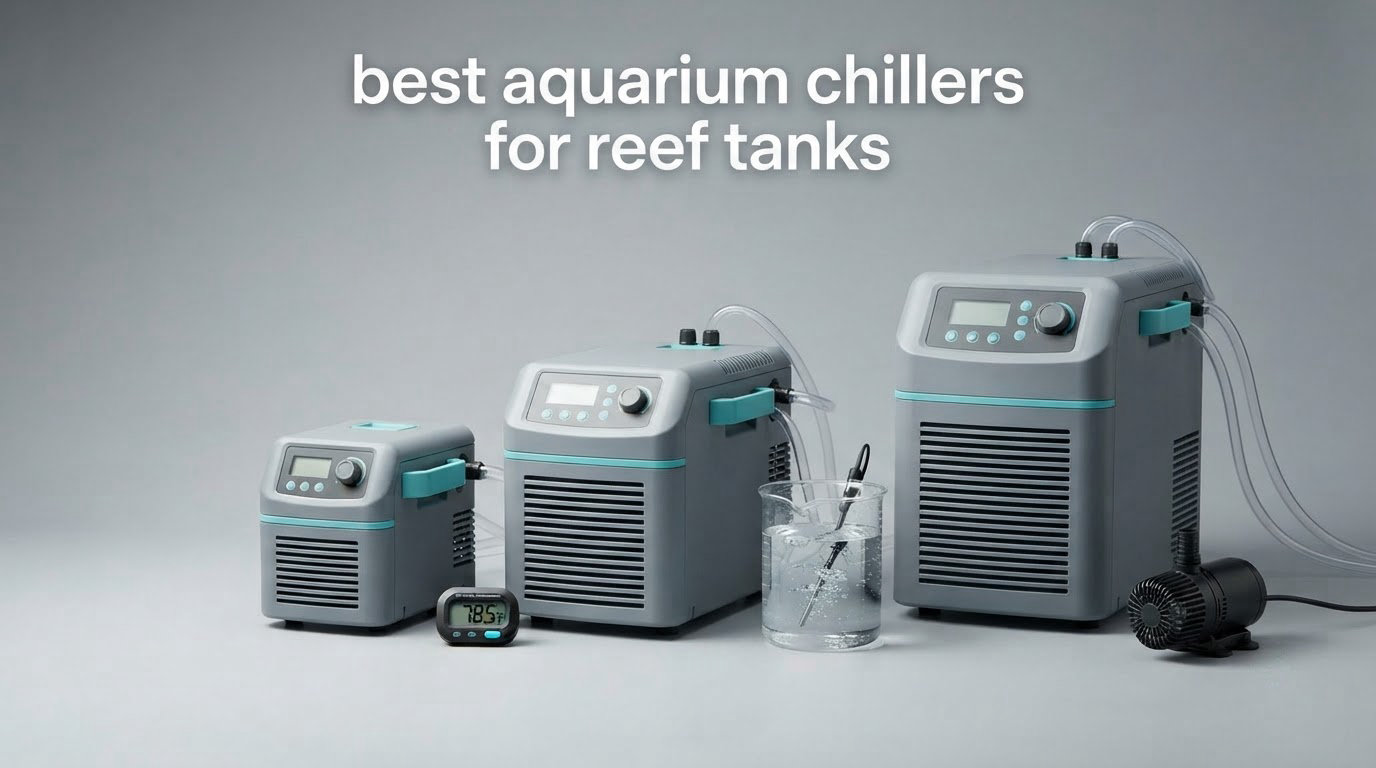
A reef tank is the easiest aquarium to cook. Corals that tolerate a wide salinity range still bleach when the water sits above 82F for a week, and by the time you see paling tips the damage is already happening. Finding the best aquarium chillers for reef tanks is less about brand prestige than about matching one number, horsepower, to your real water volume and the room the tank lives in.
We spent six weeks working through spec sheets, review histories and reef forum threads to build this list of 8. Not a single compressor in this roundup was bench-tested in our own sump, so we say exactly what we know and what we do not. Everything below comes from published specifications and from the patterns that show up again and again across hundreds of owner reviews. If you are just starting out, our saltwater chiller guide covers the wider saltwater side of the market.
The one thing that surprised us most: most reef keepers who need a chiller do not need one yet. A quiet fan and a temperature controller solves the problem for a large share of tanks, and we show you how to check in the section below. The rest of the page covers the cases where the answer really is a compressor.
Table of Contents
Top 3 Best Aquarium Chillers for Reef Tanks in October
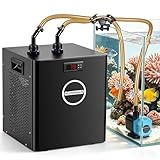
BAOSHISHAN 1/3 HP
- 1/3 HP compressor rated to 79 gallons
- Pure titanium evaporator
- Includes pump and tubing
- Drops water 8-15F

Active Aqua 0.25 HP
- Pure titanium evaporator
- 40 to 92 gallon capacity
- 396 to 925 GPH flow
- Boost function
All 8 Reef Tank Chillers Compared Side by Side in 2026
Every figure below comes from the manufacturer spec listing, not from our own testing. Pay attention to the pump column, because three of these eight models do not include one and that changes both the installed cost and the flow behaviour.
| Product | Specifications | Action |
|---|---|---|
| BAOSHISHAN 1/3 HP Aquarium Chiller |
|
Check Latest Price |
| Active Aqua 0.25 HP Titanium Chiller |
|
Check Latest Price |
 Active Aqua 0.10 HP with Boost Active Aqua 0.10 HP with Boost |
|
Check Latest Price |
 Nova IceProbe Thermoelectric Chiller Nova IceProbe Thermoelectric Chiller |
|
Check Latest Price |
 Poafamx 1/3 HP Quiet Fish Tank Chiller Poafamx 1/3 HP Quiet Fish Tank Chiller |
|
Check Latest Price |
 Fitnet 1/3 HP Touch Screen Chiller Fitnet 1/3 HP Touch Screen Chiller |
|
Check Latest Price |
 EcoPlus Commercial Grade 1.5 HP Chiller EcoPlus Commercial Grade 1.5 HP Chiller |
|
Check Latest Price |
 Poafamx 1/13 HP Nano Chiller Poafamx 1/13 HP Nano Chiller |
|
Check Latest Price |
Do You Even Need a Chiller? How to Check Before You Buy
Run this check before spending anything. Reef forum threads are full of people who solved an overheating tank for the price of a fan and never regretted it.
Measure your actual summer peak water temperature, not the room temperature. Put a real thermometer in the sump for two weeks and write down the high.
Check where that peak sits. If it stays under 80F, you need nothing. Between 80 and 81F, airflow alone usually handles it.
Add surface agitation before you add machinery. A fan across the surface moves far more heat than most people expect, and it costs a fraction of any chiller.
Pair the fan with a controller. Reefer after reef2reef reports running a 130 gallon mixed reef down from above 81.5F with a single fan wired to an Apex logic rule that switched on above 78.5F. Another poster solved a 120 gallon tank under a canopy with two fans on the light rack.
Only if you are still above target after all of that do you need a compressor.
Evaporative and fan cooling depend on relative humidity. They work well in a dry climate and poorly in a humid one, and they do nothing at all in a sealed room with no air exchange. The same advice applies if you need to buy an aquarium controller anyway, since the fan rule lives in the controller, not in the chiller.
What Temperature Should a Reef Tank Be? 76 to 79F
Hold a mixed reef between 76 and 79F, and do not chase a lower number. Seventy-two degrees is too cold for the majority of reef livestock. Corals slow their calcification below about 75F, and the drop-off species that hobbyists specifically buy chillers to keep, including dendronephthya and scleronephthya, are kept in the 76 to 78F band rather than as cold as possible.
The reason to chill at all is stability, not cold. A tank that swings between 77F and 84F across a week stresses fish and coral far more than a steady 79F does. Set your controller, let the chiller hold it, and stop adjusting.
Eight Chiller Reviews, Ranked by Tank Class
1. BAOSHISHAN 1/3 HP Aquarium Chiller – Best Overall for Mixed Reefs
BAOSHISHAN 1/3 HP Aquarium Chiller Up to 79 Gal, Drops Down 8-15F 110V
1/3 HP compressor
Rated to 79 gallons
Pure titanium evaporator
39.1 lb, 110V
Pros
- Titanium evaporator resists saltwater corrosion
- Holds set temperature in hot rooms
- Includes pump tubing and clamps
- Recalibratable if the probe drifts
- Quiet enough for bedrooms and living spaces
Cons
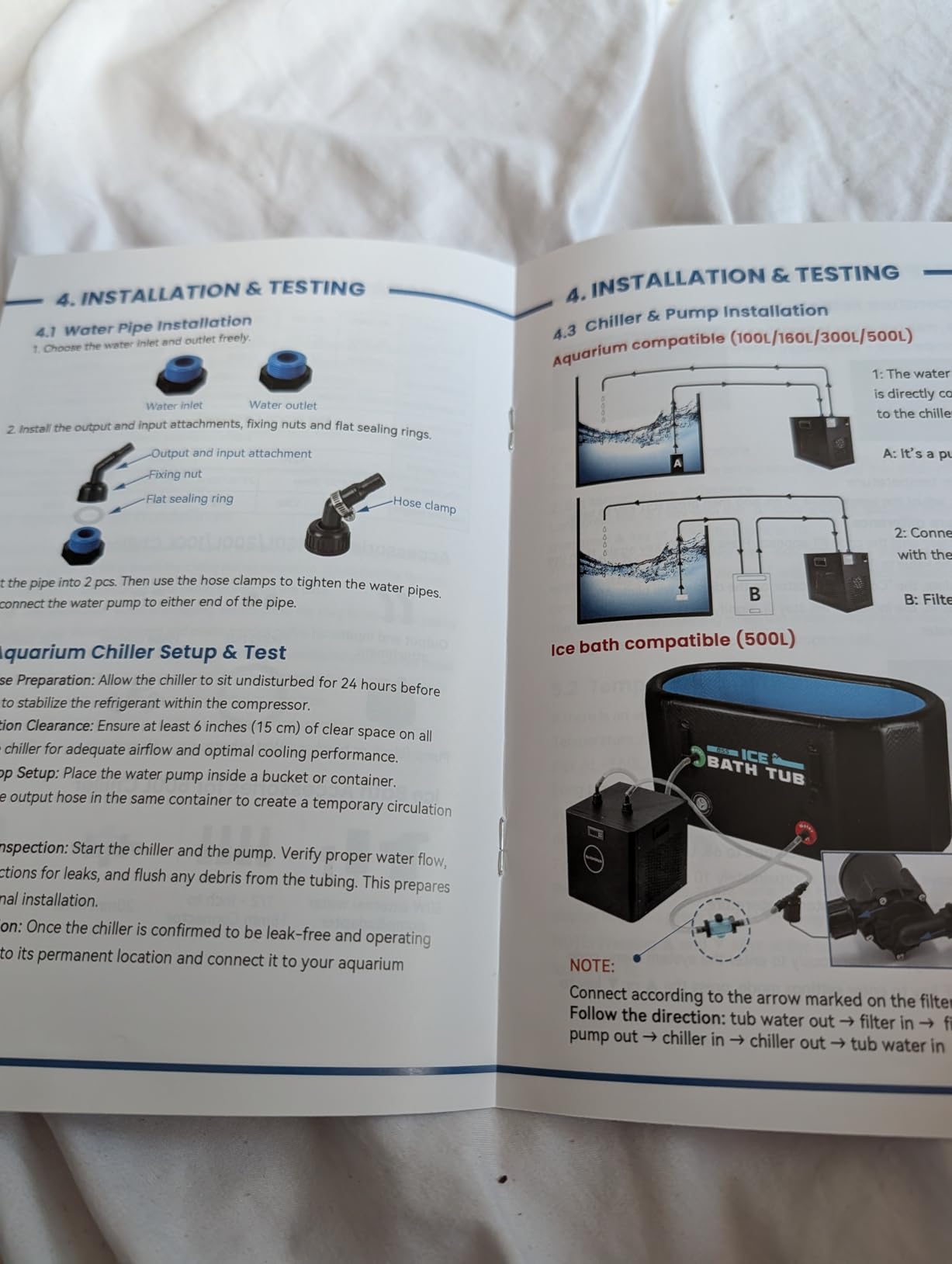
- Printed manual is poor and the control panel shows non-English characters
- Included fittings are 3/8 inch and can restrict flow
- Some failures reported in ambient heat above 90F
This is the model we would put in a 60 gallon mixed reef in a warm room. The spec sheet claims a 79 gallon rating with 63 gallons recommended in peak summer, and a 1/3 HP compressor that drops water 8 to 15F. Owners running long-term reef and axolotl setups report steady cooling in hot climates, which is exactly the failure point where smaller compressors give up.
The all-in-one nature is the real convenience. The box includes the chiller, a stainless steel shaft pump, water pipe and hose clamps, so there is no second purchase before you can plumb it. Flow direction is designed to minimise substrate disturbance, which matters more than most spec sheets admit when you run the return above a sand bed.
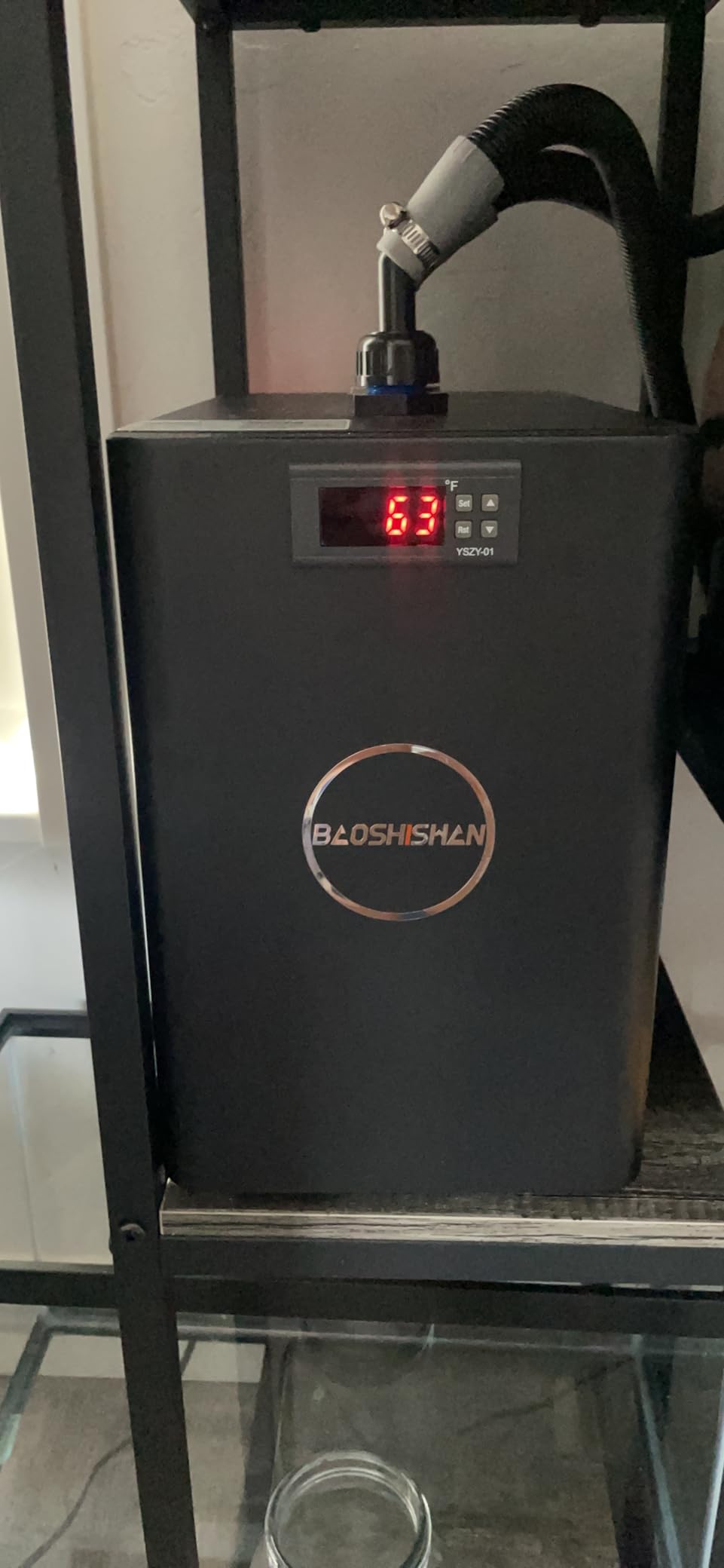
The technical package is solid for the money. A pure titanium evaporator sits inside a stainless steel housing, and dual high-speed fans with enlarged side vents move the heat. The manufacturer rates noise at 45 to 50dB measured at one meter, which is about a small window air conditioner, and requires six inches of clearance on all sides.
Reviewers are split on documentation. The printed instruction manual draws consistent complaints, and the control panel interface shows some non-English characters on first power-up. Owners who learn the panel quickly report they can recalibrate the probe if it drifts from a real thermometer, which recovers most of the setup frustration.
What tank size suits this chiller best
This is a 40 to 80 gallon machine by design, and the 63 gallon peak-summer recommendation is the number to size against. Below 30 gallons you are paying for capacity that runs at a low duty cycle, and above 80 gallons it will spend the summer running continuously without getting the water where you want it.
Measure the water in the sump as well as the display. Rock and sand displacement on a mature reef can easily remove 15 percent of your nominal volume, and that is the difference between a chiller that idles and one that never switches off.
Where the complaints concentrate
Two issues come up repeatedly. The supplied tubing fittings are 3/8 inch, which restricts flow on larger setups and can lead to short cycling, and the included submersible pump is weaker than many mature reef systems want. A strong pump outflow can also stir sand and stress flow-sensitive livestock if the return sits low.
The third complaint matters most in summer. A cluster of durability failures shows up in extreme ambient heat above 90F, which is exactly the room condition the chiller exists to handle. In a normally conditioned living space the failure rate is much lower.
2. Active Aqua 0.25 HP Titanium Chiller – Premium Build for 40 to 92 Gallons
Active Aqua Water Chiller, 0.25 HP, Titanium, 40-92 Gal, Hydroponics
0.25 HP motor
40 to 92 gallon capacity
396-925 GPH flow
Pure titanium evaporator
Pros
- Pure titanium evaporator built for reef duty
- Boost function drops temperature fast
- Interface is user friendly with precise control
- Sized for mid-size reef and aquaponic reservoirs
Cons
- Pump and hoses are not included and must be bought separately
- 17 percent of reviews are 1-star
- Costs well above entry-level chillers
This is the one to consider when you want a chiller that outlasts the tank. The 0.25 HP motor moves between 396 and 925 gallons per hour through a pure titanium anti-corrosive evaporator rated for both fresh and salt water, across a 40 to 92 gallon capacity range. Owners running it as the sole cooling source for a mixed reef report the set point holding with little drift.
Reefer endorsement for the brand is strong. On r/ReefTank, Active Aqua units are repeatedly described as highly recommended and reliable, and other hobbyists single out the line for being lightweight for a chiller of its output, which matters when you are trying to site it in a sump cabinet.
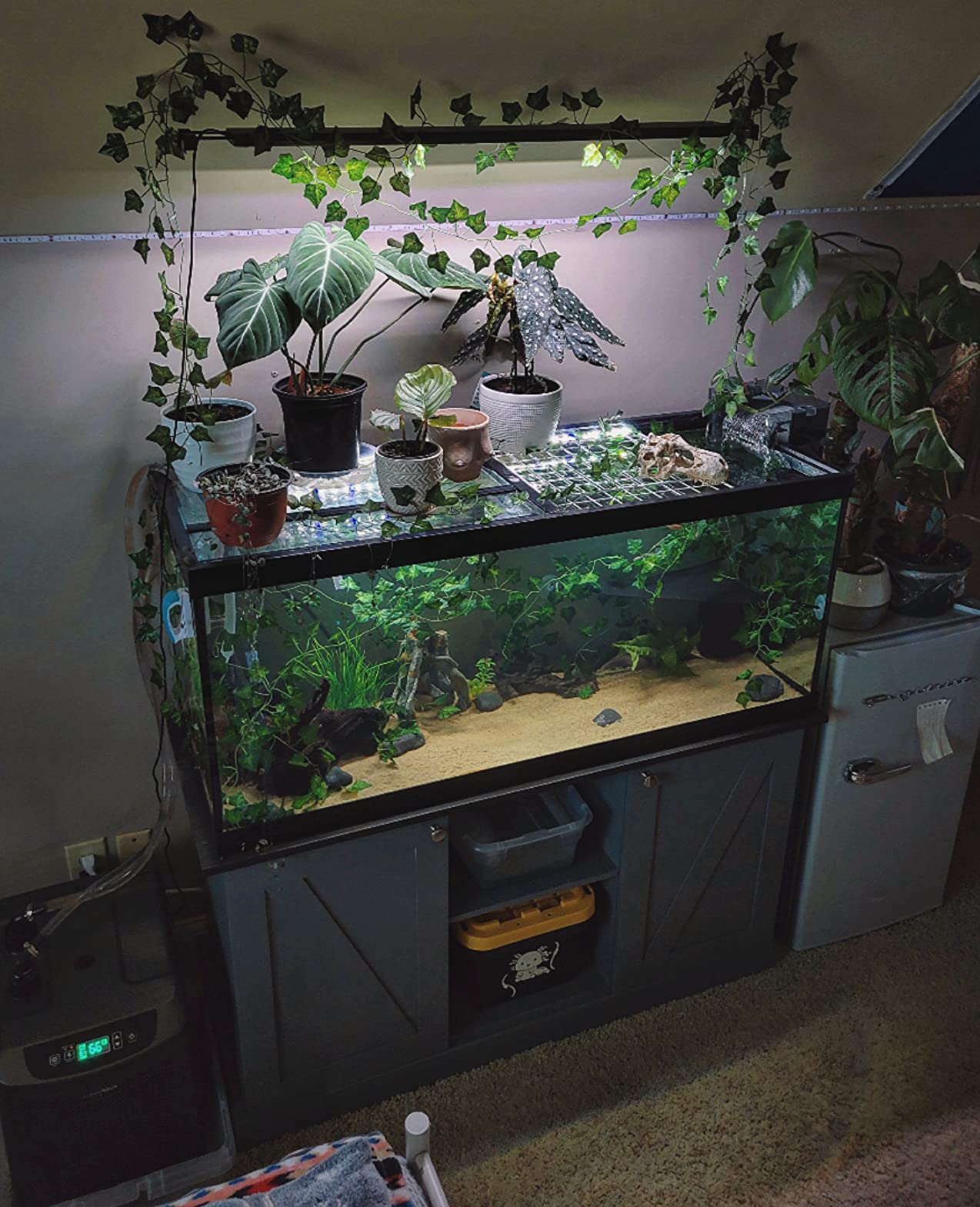
The boost function is the feature that earns its place. When a heatwave pushes the tank up, boost mode runs the compressor harder to pull the temperature down quickly rather than waiting hours for a normal duty cycle to catch up. Several owners report bringing a warm reservoir down in under an hour with it engaged.
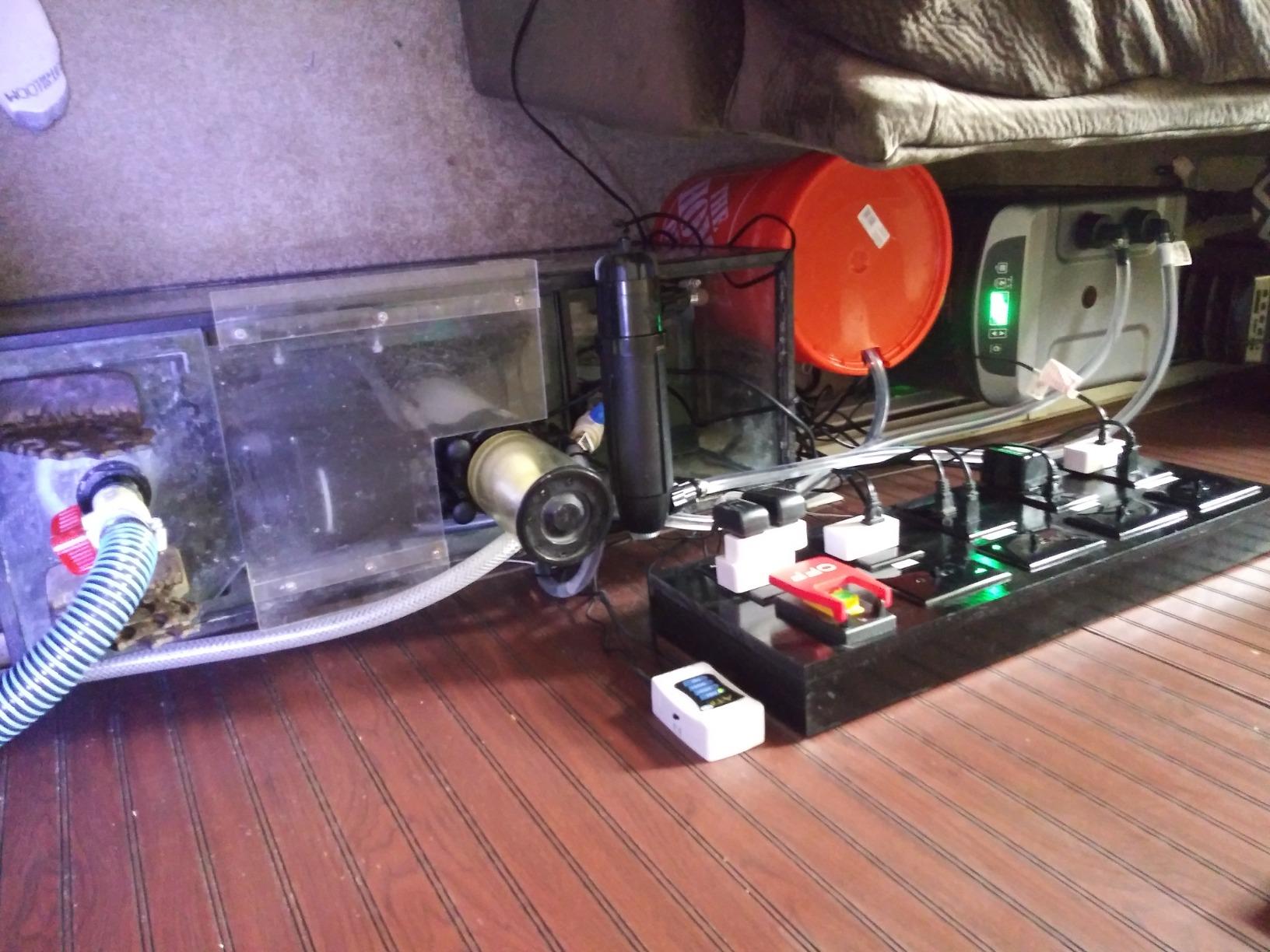
Flow matching is the part to read carefully. The unit runs with AAPW400, AAPW550 and AAPW800 pumps, and neither the pump nor the hoses come in the box. That means you choose the flow rate, which is a genuine advantage if you understand the trade, and a genuine trap if you do not. Too little flow and the internal coil can ice up and short cycle. Too much and you gain nothing while adding pump noise.
Who should choose the 0.25 HP over the 1/3 HP
Pick this one if your water volume sits in the 60 to 90 gallon range, or if you are running demanding soft coral that you want kept in the mid-to-upper 70s. The wide 396 to 925 GPH flow window means you can dial circulation to match a system with a large sump and high return volume rather than fighting a fixed pump.
It is also the sensible upgrade path for a tank that will grow. Titanium construction is the difference that outlives you here, because the evaporator is the part that dies first in a salt system when cheaper alloys corrode from the inside.
Where the 1-star reviews come from
Roughly 17 percent of reviews on this model are 1-star, the highest negative share among the mid-capacity models here. Two causes dominate: reliability complaints, and plain friction about having to source a separate pump and hoses before the unit does anything at all.
Plan the plumbing and the budget before you order. If the extra spend on a matched pump puts the total out of reach, a 1/3 HP kit that includes its own pump is the more sensible route for the same tank.
3. Active Aqua 0.10 HP with Boost – Top Rated for Nano and Small Reefs
Active Aqua Water Chiller with Boost, 0.10 HP, 10-40 Gal, Cold Plunge
0.10 HP compressor
1020 BTU rated
10 to 40 gallons
510 watts, 28 lb
Pros
- Holds set temperature within a degree or two
- Boost brings reservoir down in under an hour
- Titanium evaporator handles saltwater
- Runs quietly enough to be masked by an air pump
Cons
- Costs roughly twice what comparable small chillers cost
- Pump and hoses are not included
- Heats the surrounding room like an air conditioner
For a nano reef or a 20 to 30 gallon mixed system, this is the strongest performing model in the group. The 0.10 HP compressor is rated at 1020 BTU across a 10 to 40 gallon capacity window, and the 4.3 average rating is the highest of the eight we reviewed. Owners report the digital control holding target within a degree or two, which is the number that actually matters on a small tank where a one degree miss is a coral problem.
It draws 510 watts, which is a meaningful power load for a tank this size. The upper temperature rating is 32F, so there is no warm-weather limit to worry about, and the pure titanium evaporator is rated for fresh or salt water without a separate sleeve.
Two Active Aqua models appear in this roundup because they cover genuinely different tank classes, and the 0.10 HP is the one we would pick for a 25 gallon reef. The adjustable on and off differential is underappreciated: widening the differential cuts compressor run time, which matters because a chiller that never stops cycling is the main reason owners get tired of them.
Longevity reports are encouraging. Multiple owners describe units that have run continuously for years without issue, and the general feedback pattern is one of temperature stability and effective boost cooling rather than excitement about the hardware.
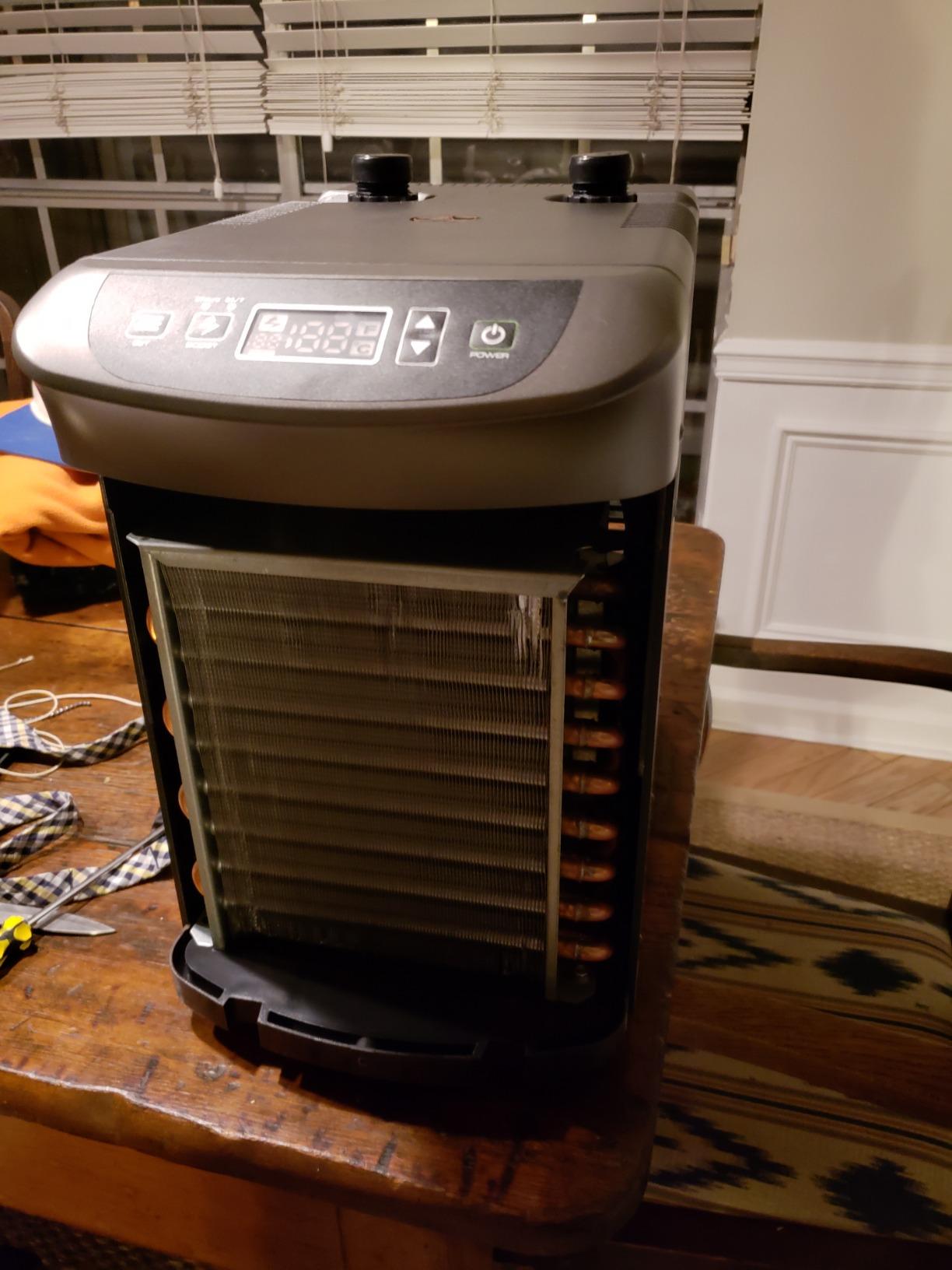
What a nano reef actually needs here
Ten to 40 gallons is the honest capacity band, and a 20 gallon system sits comfortably inside it. Below about 12 gallons the 50W thermoelectric option in this list becomes worth a look, because a compressor chiller cycling constantly in a nano sump becomes noise you cannot ignore.
You will need a pump. The unit includes fittings and a remote, but not the pump or hoses, and a fitting barb kit for half inch hose has to be added separately. Budget for that before the day you plumb it.
Where the drawbacks sit
The headline drawback is price per unit of cooling. Owners consistently note that a 0.10 HP chiller at this level costs roughly twice what comparable small chillers do, and that you are paying for the titanium build and the control accuracy rather than for capacity.
Second is the heat it dumps. Like every compressor chiller, it exhausts into the room, so a unit in a small bedroom adds real ambient heat. A minority of owners also report units failing within a few months or leaking at the fittings on replacements, and some note the fans stop the instant the compressor does, which allows internal heat soak.
4. Nova IceProbe Thermoelectric Chiller – Near-Silent Small-Volume Cooling
IceProbe Thermoelectric Aquarium Chiller – 4 in. x 4 3/4 in. x 7 1/2 in.
50W thermoelectric element
4 x 4-3/4 x 7-1/2 inch
No built-in thermostat
1 year warranty
Pros
- Near-silent operation
- Quiet small footprint fits a nano sump
- Low 50W power draw
- Cheap Peltier element is easy to replace
Cons
- No built-in thermostat so a separate controller is required
- Only 50W of cooling capacity
- Glass tanks transfer heat too fast for it to keep up
- Peltier elements have a limited life
Be clear about what this is. The IceProbe is a 50 watt thermoelectric probe that chills a small volume, not a compressor chiller for a reef system. It has been on sale since 2004 and the whole unit measures four inches by four and three-quarter inches by seven and a half inches including the probe. It is genuinely silent, which no compressor in this roundup manages.
Where it earns its place is a nano sump chamber, a shrimp system, a propagate station or a frag tank where a compressor hum would be unacceptable. Owners use it to shave several degrees off a small tank and run it around the clock, and the low draw means it costs almost nothing to leave on.
Repairability is the underrated feature. The Peltier element itself is inexpensive to replace, and that is a claim none of the compressor units in this list can make. If it quits, you swap a cheap part rather than losing the whole chiller.
The wiring is simple, with a five foot nine inch power cord and a six foot probe cord, and the one year warranty covers defects in materials and workmanship. It is also the lightest and smallest item we reviewed by a wide margin.
Where this unit is the right answer
If silence in a living space is your top constraint and your water volume is small, this is the only model here that solves it. A nano sump with a little clearance will take the footprint, and the probe can be positioned in the return path where it does the most work.
It is also a reasonable answer for a second tank where a compressor chiller would be absurd overkill. Run it continuously and it will hold several degrees below ambient without any cycling noise at all.
Why we would not put it on a reef
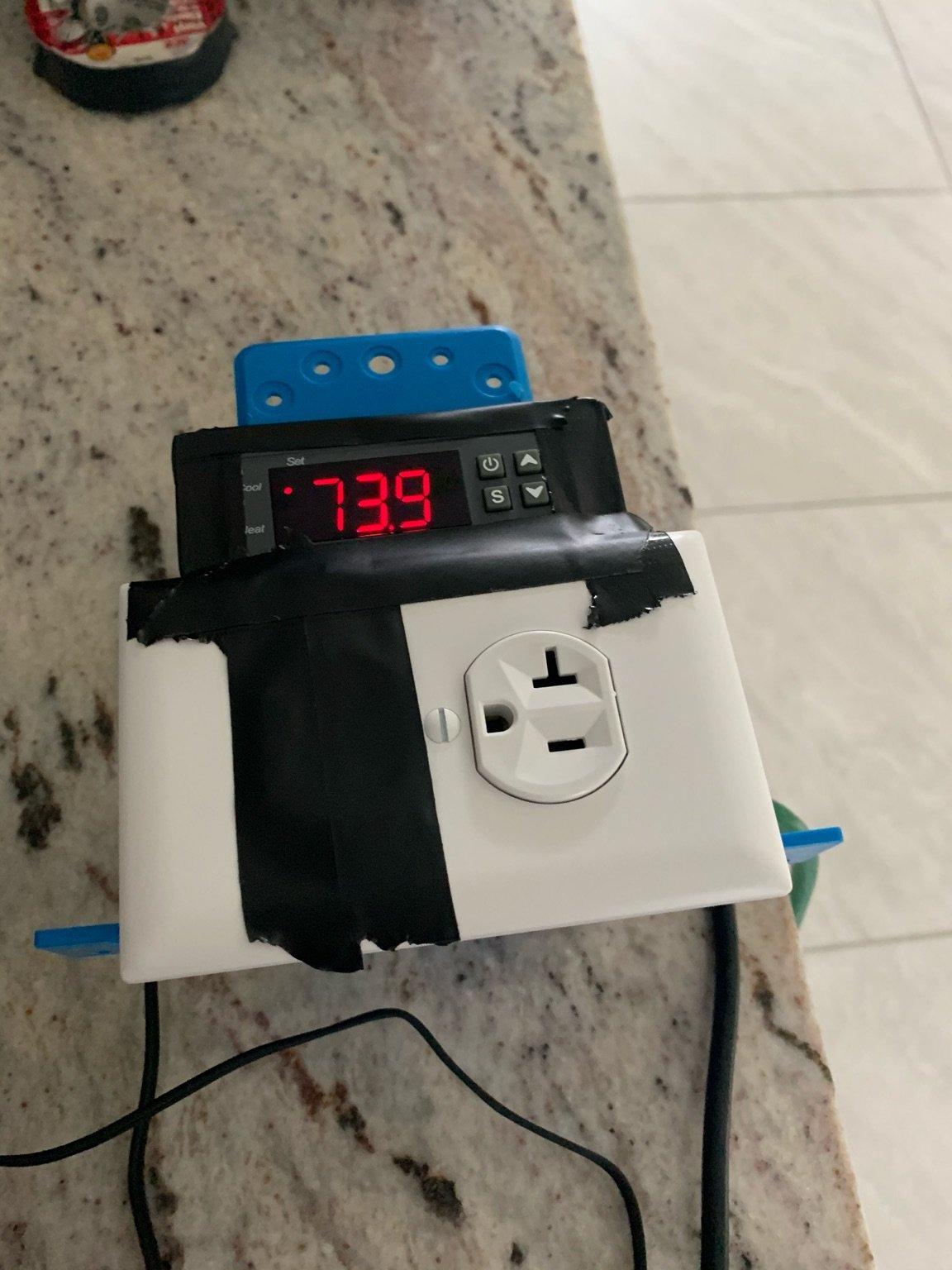
There is no built-in thermostat, which means you need an external controller. That adds cost, wiring and a failure point, and on a reef you already need a controller for anything else.
The 3.9 average rating is the lowest in this roundup, and about 15 percent of reviews are 1-star. Glass tanks transfer heat too efficiently for a 50 watt element to keep up, power draw flattens out once the maximum temperature difference is reached, and Peltier elements can burn out well before the advertised life. Owners also note the probe may not fully submerge in a shallow sump.
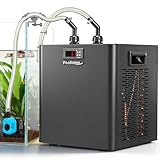
5. Poafamx 1/3 HP Quiet Fish Tank Chiller – 40 to 80 Gallon Fresh and Salt
Poafamx 1/3 HP Aquarium Chiller, Quiet Fish Tank Water Chiller 40-80 Gal
1/3 HP compressor
40 to 80 gallon range
Maintains 65-80F
Under 45dB, 37 lb
Pros
- Holds low-to-mid 60s during 90F indoor heat
- Leak-free plumbing out of the box
- Under 45dB running noise
- R290 refrigerant
- Complete kit includes pump hose and clamp
Cons
- Several units stopped chilling after 6 to 12 months
- Included pump moves only about 158 GPH
- Thermostat can read several degrees off
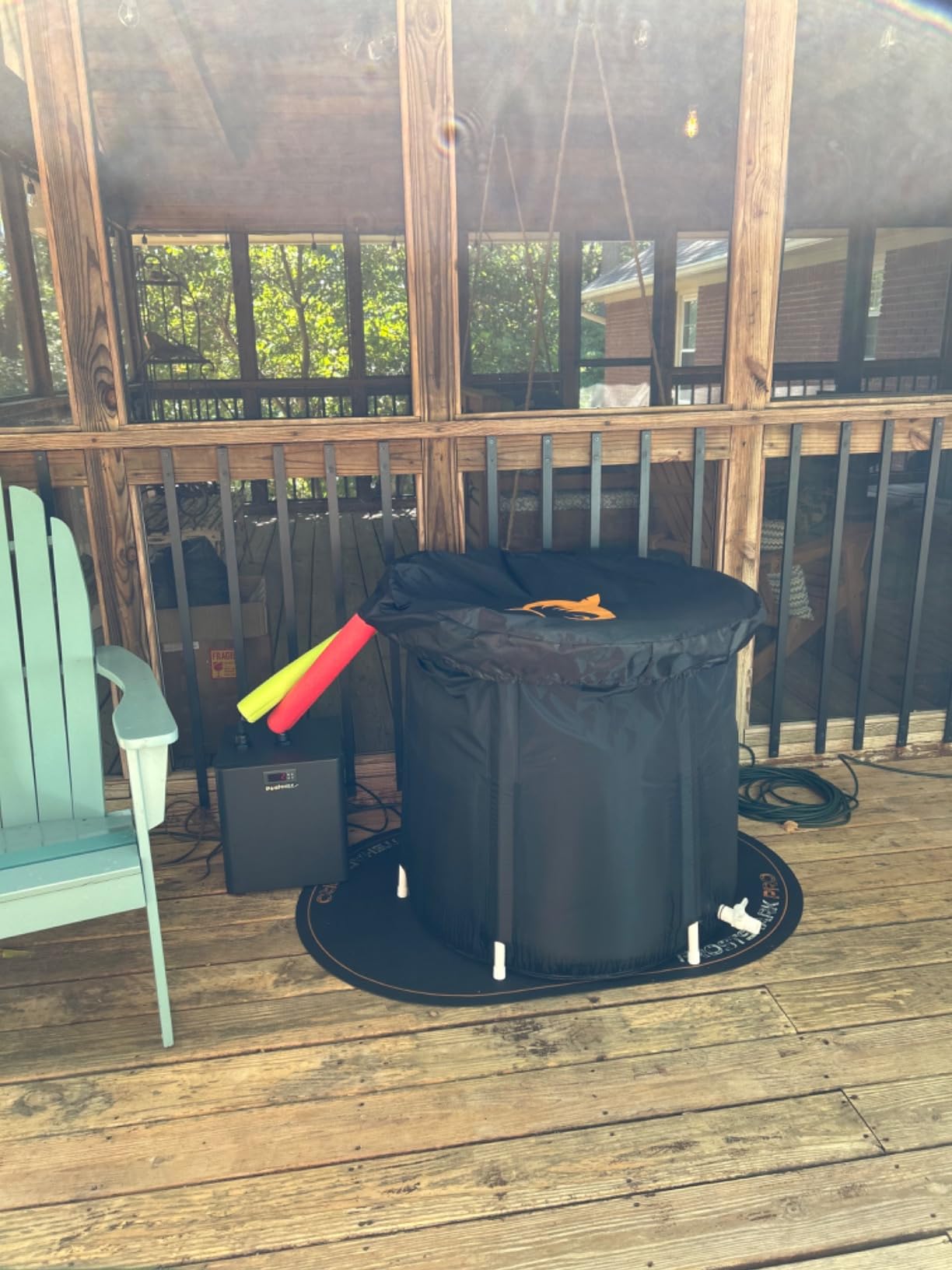
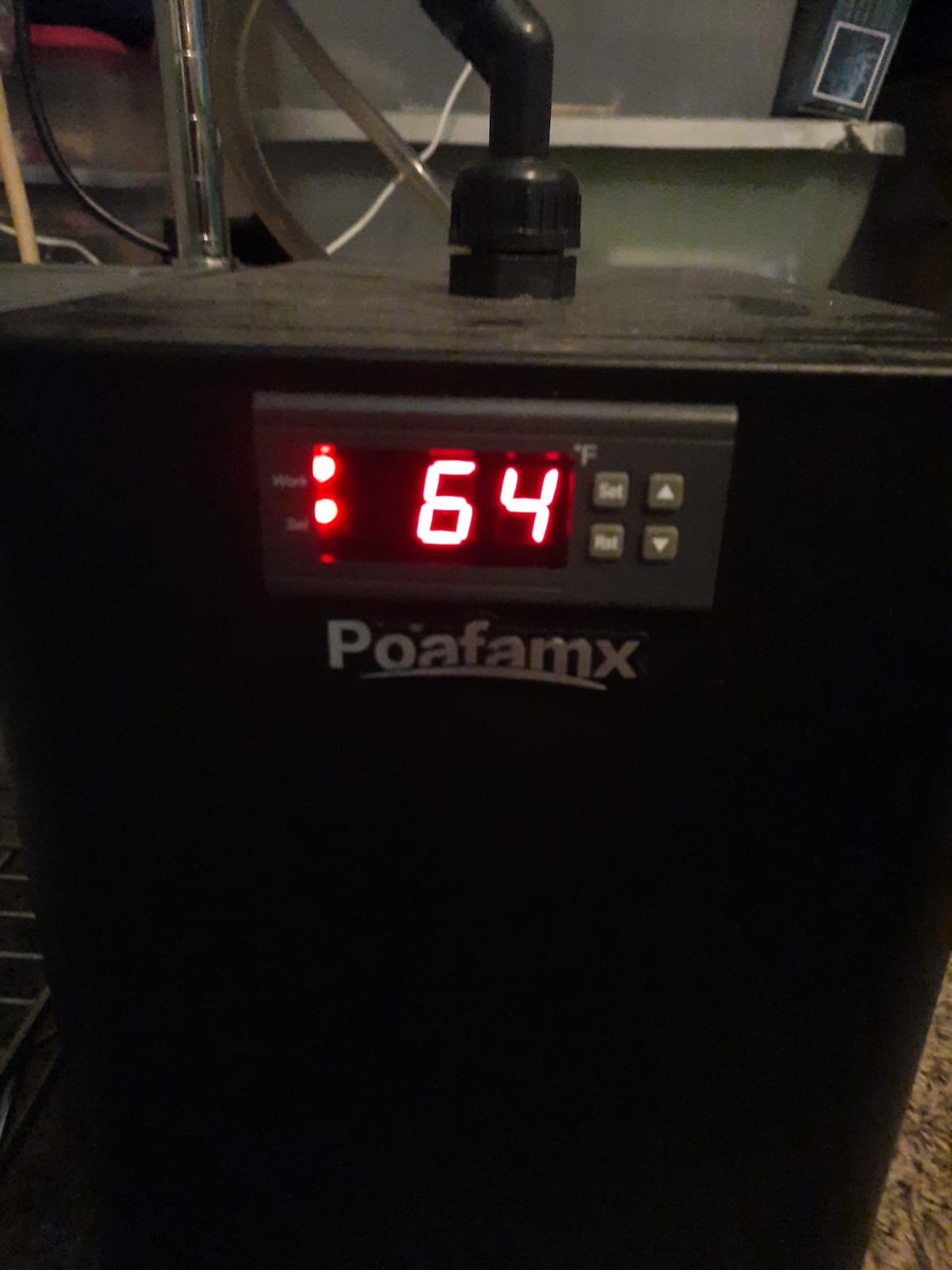
This is the quietest compressor chiller in the roundup, rated under 45dB, and it holds axolotl and reef tanks in the low-to-mid 60s during 90F indoor heat. The 1/3 HP compressor maintains 65 to 80F and cools up to 10C below room temperature across a 40 to 80 gallon range, using a corrosion-resistant titanium evaporator rated for both fresh and salt water.
Plumbing is the strength here. Owners report leak-free connections out of the box, simple setup with no special tools, and a complete kit including the chiller, water pump, hose, connectors and a clamp. The body is 12.6 by 12.6 by 7.28 inches, the smallest footprint of any 1/3 HP model here.
The R290 refrigerant choice is worth noting. It is a low global warming potential refrigerant with zero ozone depletion potential, and it is the direction the whole category is moving. Efficiency comes from the compressor as much as the gas, and this one is described as energy efficient in the feature set.
It also includes a 1-year warranty with dedicated support, which matters given the reliability pattern we will get to below.
Where this model fits
The 40 to 80 gallon band is exactly right, and the low published noise figure makes it the pick if the chiller has to sit inside a living space rather than a garage. Reviewers explicitly call it quiet enough to run in a bedroom.
If your system runs on a 200 litre, roughly 55 gallon, display volume with a modest sump, this lands in the middle of the range with headroom for a hot room. Read the ambient temperature guidance further down before you settle on the class.
Where the reviews get sharp
Reliability is the honest weak point. A sizeable 14 percent of reviews are 1-star, and the recurring descriptions are units that power on but stop chilling after six to twelve months, plus burnt internal wiring and a failed power switch after about nine months of seasonal use.
Two fixable items sit under that. The included pump pushes only about 158 GPH, so many owners upgrade it, and the thermostat can read several degrees off from a real thermometer, which means calibrate before you trust the display. Cooling is also gradual, taking up to a day to pull a large ice bath down.
6. Fitnet 1/3 HP Touch Screen Chiller – 79 Gallon Model With Memory
Fitnet 79 Gal Aquarium Chiller, 1/3 HP Fish Tank Water Chiller, Hydroponic Water Chiller with Touch Screen, Hydroponics System Axolotl Jellyfish Coral Reef 300L
1/3 HP compressor
Rated 79 gallons / 300L
Holds 68-79F
Touch screen with memory
Pros
- Touch screen memory resumes set point after a power cut
- Adjustable compressor temperature difference setting
- Silent fans and quiet compressor
- Delivered cooling exceeded the 79 gallon label for some owners
Cons
- Printed instructions do not match the online ones
- The F1 temperature difference must be set or the unit will not run
- Factory thermostat reads a few degrees high
- Reports of a plug-connection fault and random beeping
The 4.4 average is the highest rating in this roundup, and 73 percent of its reviews are five star. The 1/3 HP high-efficiency compressor holds water between 68 and 79F using r290 refrigerant and is rated for 79 gallon or 300 litre tanks. Multiple owners report the cooling capacity in practice exceeding the 79 gallon label.
Its distinguishing feature is the intelligent digital touch screen with a memory function that resumes the same set temperature after a power loss. There is also an adjustable temperature difference setting that lets you define the point at which the compressor engages, which is the control reef keepers actually want.
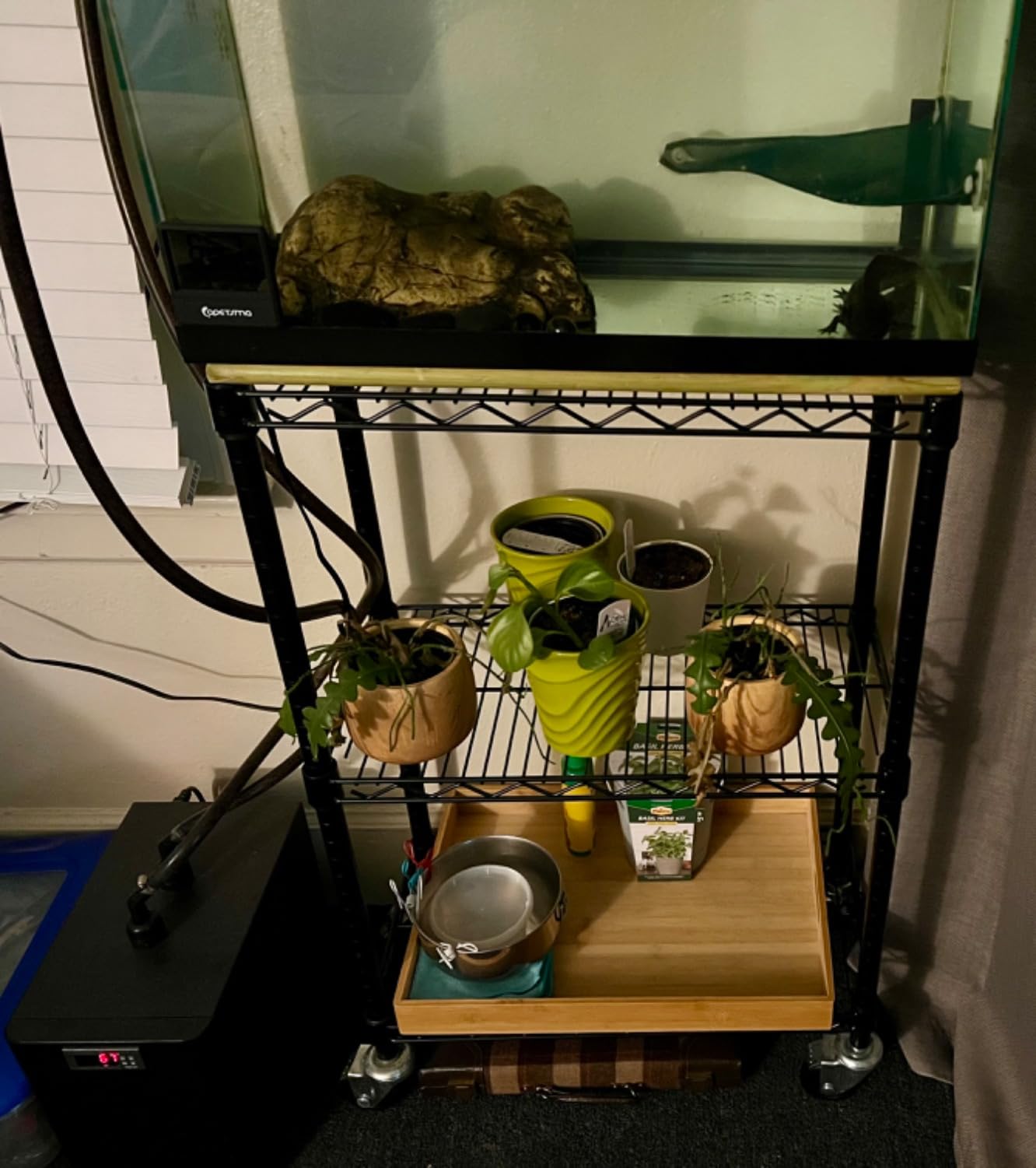
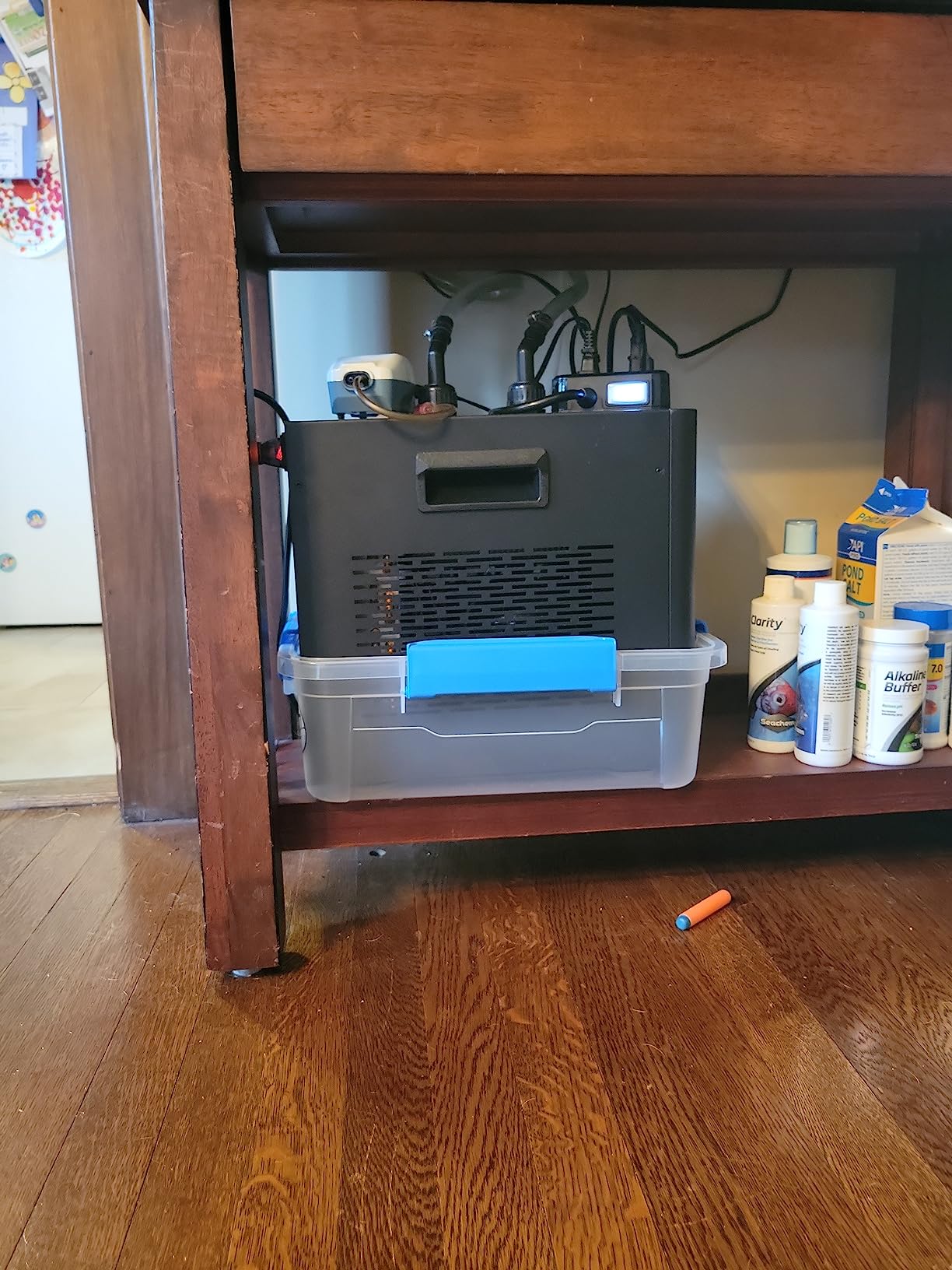
Heat dissipation gets the attention it needs. Multiple small vent holes plus two built-in cooling fans move the heat, and the manufacturer specifies at least six inches of clearance around the body. Owners describe the compressor and fans as quiet enough for living spaces, with the fans specifically called out as silent.
The complete set includes a water pump, water pipe and connectors, plus a corrosion-resistant pure titanium pump for the heat exchange loop and a 1-year guarantee. Several owners report the support team shipping missing parts and issuing partial refunds without argument.
What makes this the value pick
You get the same 1/3 HP class and the same titanium heat exchange hardware as units costing considerably more, and the touch screen is a step above the button panels used by the other imports in this list. It also arrives with a pump included, which is where two of the premium models cost you extra.
The memory function is the sleeper feature for a reef. Reefs run on controllers that cut and restore power, and a chiller that restarts at 78F instead of coming back on at 80F is a real stability gain.
Where the setup frustration sits
Documentation is the main problem and it is a real one. Owners report the printed instructions do not match the Amazon instructions, which caused days of setup confusion. The F1 temperature difference must be set correctly or the unit simply will not run, and that is the single most common early complaint.
Smaller reliability notes include a factory thermostat reading a few degrees off a real thermometer, a fault at the power plug connection where vibration causes a shutdown, and a couple of reports of random beeping and cooling stoppage that needed a reset.
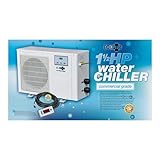
7. EcoPlus Commercial Grade 1.5 HP Chiller – 300 to 500 Gallon Systems
EcoPlus Commercial Grade Water Chiller, Cooler for Reservoirs, Hydroponics, and Aquariums, 1 ½ HP
1.5 HP commercial compressor
300 to 500 gallon aquariums
15 x 41 x 24 inch, 94 lb
Titanium, 120V
Pros
- Commercial grade components built for continuous duty
- Titanium construction suits saltwater
- Titanium build and R140A loop
- Remote controller with a 30 foot cord
- Auto restart and temperature memory after power failure
Cons
- Very heavy at 94 lb and 41 inches long
- Only 55 reviews so long-term data is thin
- 19 percent of reviews are 1-star
- Pump and fittings not included
Nothing else in this roundup covers a large system. The 1.5 HP commercial grade compressor is recommended for 300 gallon hydroponic tanks and 300 to 500 gallon aquariums, which puts it firmly in display-tank-plus-sump territory for a serious reef system or a large propagation run.
The build is what you are paying for. Hawthorne Hydroponics specifies commercial grade materials and components, titanium construction suited to salt water, a 15 inch by 41 inch by 24 inch body at 94 pounds, 120V 60Hz power, and R140A refrigerant in a loop built for continuous duty.
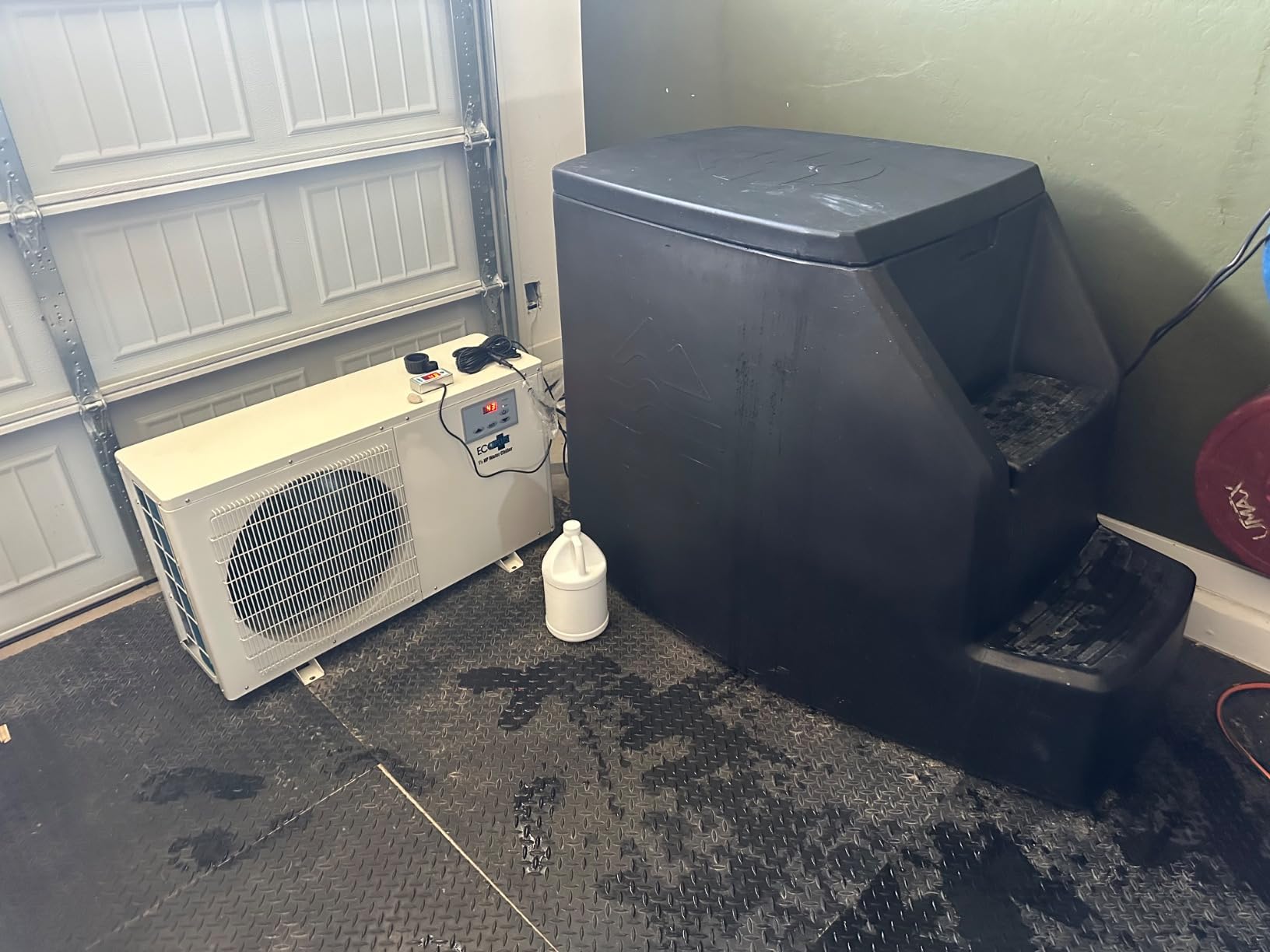
Two practical features make it manageable at that size. A remote controller with a 30 foot cord lets you monitor and adjust set point without walking to the unit, and auto restart with temperature memory handles power interruptions, which matters when a summer outage is the event you were trying to prevent.
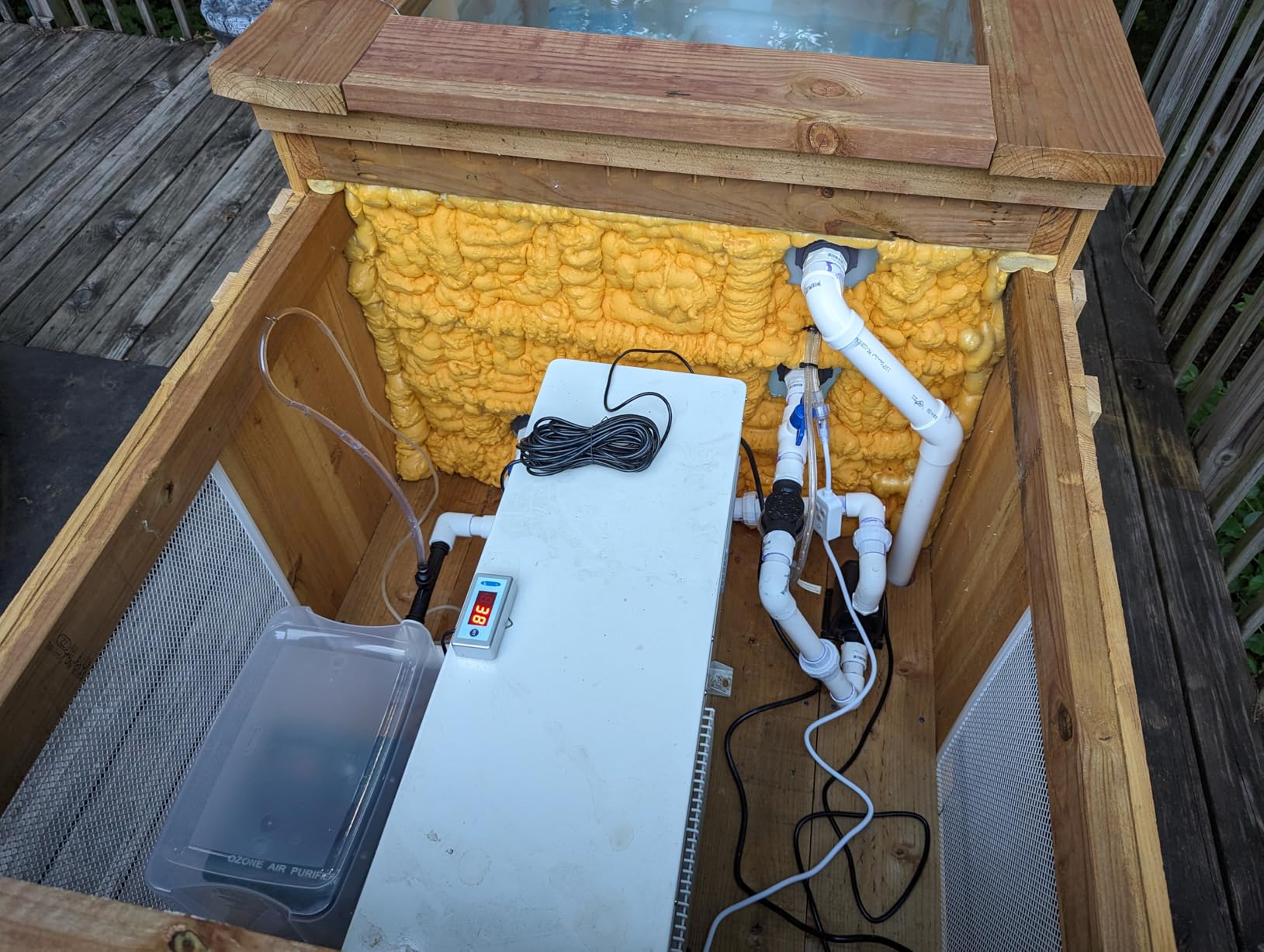
Plumbing uses two included fittings for 1 inch hard PVC or flexible tubing, and the recommended circulation is an EcoPlus 1267 gph pump. That pump is not included, so budget for a pump that can move real volume before the chiller does anything.
When a commercial grade unit makes sense
The threshold is simple: when no consumer chiller in this roundup can physically cover your water volume. A 1/3 HP model rated to 79 gallons is not a 300 gallon solution no matter how good its compressor is, and repeatedly forcing a small unit to hold a large system is the fastest route to a compressor that never cycles down.
It is also worth considering if your tank lives in a garage or an unconditioned room where a consumer chiller would run continuously through the summer. The commercial components are the reason owners of this class describe the units as bullet proof.
Where the caution belongs
Size it before you order. An HVACR contractor on reef2reef, who has owned and repaired a shelf full of chillers, recommends following the manufacturer rating and then bumping up one size, particularly for demanding corals.
The evidence base is thin. With only 55 reviews, long-term reliability data is limited, and 19 percent of those reviews are 1-star, the highest negative share among the higher-capacity models. Verify the warranty terms directly before committing, and confirm the 94 pound body has a home, because a 41 inch long chiller is not a sump cabinet accessory.
8. Poafamx 1/13 HP Nano Chiller – 20 to 30 Gallon Tanks
Poafamx Aquarium Chiller 26gal, 1/13 HP Small Water Chiller for Axolotl
1/13 HP R134a compressor
20-30 gallon range
210 GPH pump included
13.4 x 7.9 x 11.8 inch
Pros
- Holds a 20 gallon tank at 62F in a warm room
- Whisper quiet with no load noise
- Drops water from 27C to 19C in minutes
- Titanium evaporator works for both fresh and salt
- Includes pump and piping
Cons
- Intake and outlet ports are not labeled
- Initial temperature calibration takes some working out
- One unit's compressor cut out after about ten minutes
- Ejects a lot of hot air behind the unit
This is the small-tank specialist in the roundup, optimized for 20 to 30 gallon tanks and holding 65 to 80F. The 1/13 HP R134a compressor ships with a 210 GPH water pump, so unlike the premium models it runs out of the box once you have hose. The titanium evaporator is rated for both fresh and salt water, which covers coral, jellyfish and seahorse tanks.
Reported performance is genuinely fast. Owners describe dropping water from 27C to 19C within minutes, and one keeps a 20 gallon tank at 62F in a warm room. The body is 13.4 by 7.9 by 11.8 inches and 22.1 pounds, small enough to site almost anywhere.
Noise is the headline. Owners describe whisper quiet operation with no load noise at all, which is a function of a 1/13 HP compressor moving far less refrigerant than a 1/3 HP. Heat dissipation uses front and side vents plus dual high-performance rear fans, and the manufacturer asks for at least six inches of clearance on every side.
A 1-year warranty and dedicated support come with it, and the review base describes a sturdy, heavy and durable build.
What size tank this belongs on
Twenty to 30 gallons is the stated range, and the honest ceiling is closer to 20 once you add sump volume and a warm room. Above 30 gallons of real water, step up a class. A 1/13 HP compressor fighting 50 gallons will run continuously through a summer, and the reviews describe exactly that behaviour in units pushed beyond their range.
Where the problems show up
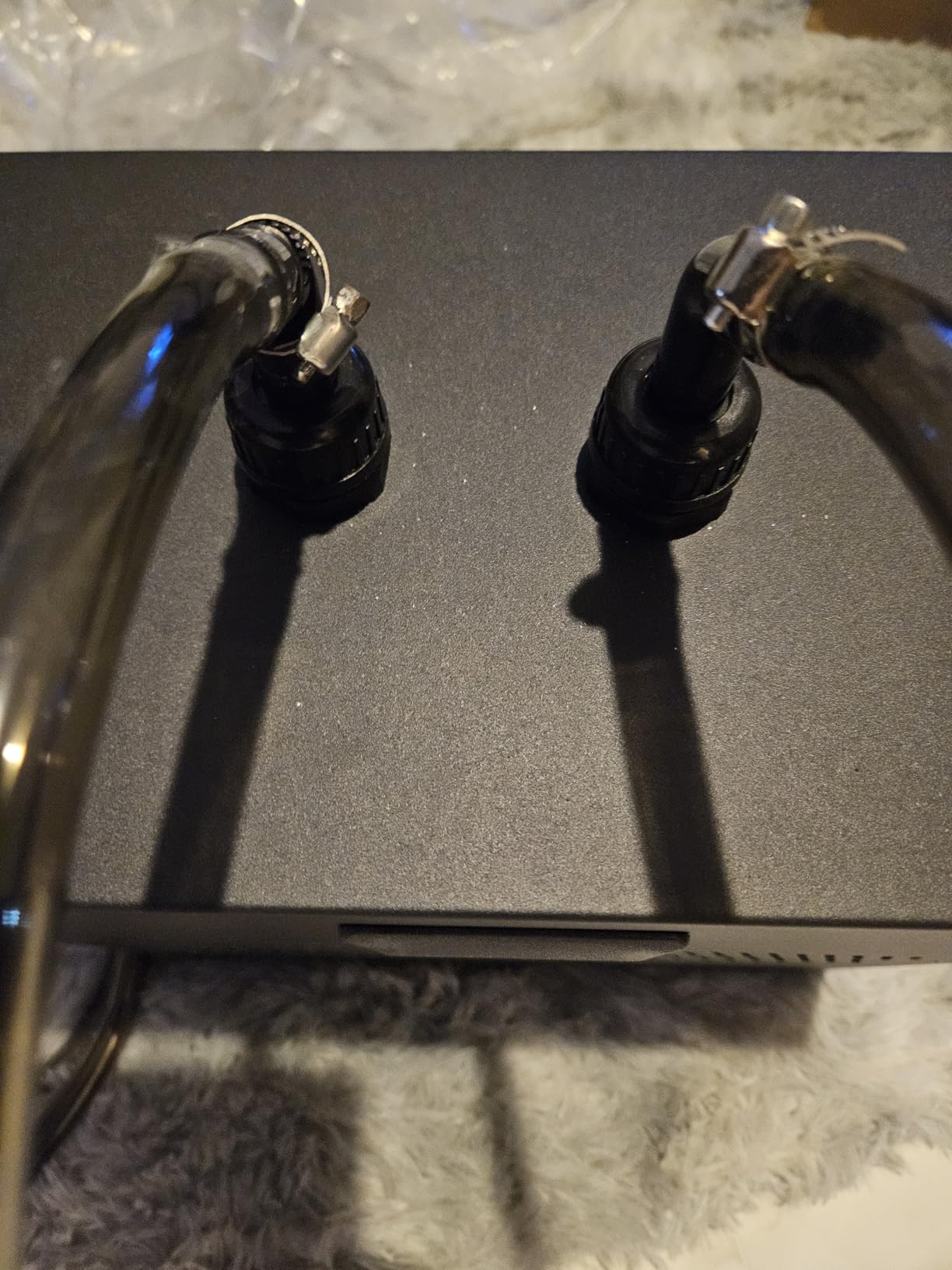
Port labeling is the most common complaint. Owners report the intake and outlet ports are not labeled, making correct plumbing guesswork, and the initial temperature calibration takes some working out. Both are one-time issues you can solve in an afternoon.
Reliability is thinner here than anywhere else in the roundup. One owner reports a compressor cutting out after about ten minutes from overheating along with a failed condenser fan, and there are reports of units failing after about a year of use. Around 20 percent of the 48 reviews are 1-star. The unit also ejects a lot of hot air behind it, which warms the surrounding room.
How to Size a Reef Tank Chiller in 5 Steps
Almost every oversized chiller traces back to sizing on display volume and ignoring everything else. Work through these in order.
Measure real water volume. Display volume minus rock and sand displacement, plus sump volume minus the sump’s own displacement. A mature reef often loses 15 to 20 percent to rockwork.
Decide the temperature drop you need. Work out the gap between your summer peak and your target set point. A 2 to 3F drop is a different problem from a 10F drop.
Account for ambient room temperature. This is the step almost every sizing guide skips. An HVACR contractor on reef2reef points out that a 24 gallon deep reef tank in a 115F room needs at least 1/4 HP, because a smaller unit will eventually fail no matter what the box claims. A 79 gallon rating assumes a normally conditioned room.
Match the horsepower class. Under 30 gallons, 1/13 to 1/10 HP. A 30 gallon reef sits at the top of that band. A 40 to 80 gallon mixed reef, or a 200 litre system, wants 1/4 to 1/3 HP. A 75 gallon SPS-dominated system wants 1/3 HP minimum, and 100 gallon-plus systems need more. Above 300 gallons, a commercial 1.5 HP class is the starting point.
Add margin, then check flow. Follow the manufacturer rating and bump up one size if you run demanding soft coral or a hot room. Then make sure the pump flow suits the chiller, because an undersized pump causes internal icing and short cycling while an oversized one gains you nothing.
Two more numbers worth knowing. Duty cycle is the percentage of time the compressor actually runs, and a chiller sitting above roughly 70 percent in a normally conditioned room is telling you it is undersized. Horsepower and BTU are not interchangeable, which is why some brands publish one and others publish the other.
Titanium vs Stainless Steel Heat Exchangers for Saltwater
For a reef tank, choose titanium. Stainless steel resists corrosion in freshwater indefinitely, and it is the default choice in freshwater chillers. Salt water is a different environment, and it attacks the alloys used in cheaper evaporator housings from the inside out, where you cannot see it until flow drops.
Titanium is more expensive to manufacture and it is why several models in this roundup are priced where they are. Every unit in our list except the Nova IceProbe specifies a titanium evaporator, and that is now the default expectation rather than an upgrade. The exception to treat carefully is the listed material field, where one small model shows stainless steel in the product details while the feature set and the technical details both describe a titanium evaporator. Trust the technical detail, and confirm it with the seller before fitting it to a salt system.
Which Aquarium Chiller Is the Quietest?
Ranking by published noise figure and by what owners report, this is how the eight compare.
Nova IceProbe – no compressor at all, so no compressor noise. Effectively silent.
Poafamx 1/3 HP – rated under 45dB, the quietest compressor model here, and owners confirm it runs quietly in a bedroom.
Fitnet 1/3 HP – silent fans and a quiet compressor, described as suitable for living spaces.
Poafamx 1/13 HP – whisper quiet with no load noise, though the fan is still a fan.
Active Aqua 0.10 HP – quiet enough to be masked by an air pump in some installs.
BAOSHISHAN 1/3 HP – 45 to 50dB at one meter, comparable to a small window air conditioner.
Active Aqua 0.25 HP and EcoPlus 1.5 HP – no published dB figure, and the commercial unit is the largest and heaviest in the group.
Two brands in the roundup publish a decibel figure and the rest do not, so treat the unlisted numbers as unknown rather than good. Placement matters at least as much as the unit. Six inches of clearance is required by most models here, and a chiller crammed into a closed cabinet will run hotter, louder and shorter-lived than the same unit with airflow.
Chiller Setup: Return Line, Probe Calibration, and Airflow
Plumb the return so chilled water reaches the display. Put the chiller on the sump side, with the feed drawing from the sump and the return aimed back into the sump or, better, into a high point in the display. Long uninsulated runs in a warm room add heat back before the water reaches the coral.
Calibrate the probe against a real thermometer. This is the single most common fix for a chiller that appears to run constantly but reads cool. If your factory probe is a few degrees off, the compressor is working for nothing.
Give it clearance on every side. Six inches is the number three of these manufacturers state. Blocked vents are the most common cause of a unit that will not hold set point in a hot room.
Watch the first 48 hours. Note the duty cycle and the temperature swing. A chiller that never cycles off on day one is undersized for the room, not badly calibrated.
Plan for the heat it dumps. Every compressor model here heats the room it sits in. In a closed room that becomes part of the load the chiller is fighting.
Once the loop is stable, it is worth pairing the setup with monitoring you can actually read. Our reef monitoring camera picks cover tracking bleaching and flow in a display tank over time, which is where a slow heat event usually announces itself first.
How We Picked and Ranked These Chillers
This page was last checked in 2026. Here is exactly what we did and did not verify, because the difference matters in this category.
We did not bench-test any of these chillers in our own sump. Every capacity, flow, noise, weight and dimension figure in this article comes from the manufacturer specification listing for that model. Every pros and cons list is drawn from patterns in the owner review history, and the review counts and ratings shown on each card are the current figures from the product listing.
Where reviewers report an outcome, we attribute it to reviewers rather than to our own testing. Forum experience is cited to the specific community it came from. We have deliberately not published a figure the manufacturer does not publish, which is why only two models in this roundup carry a decibel rating.
Our general aquarium chiller roundup covers the freshwater and hydroponic side, including the same trade-offs between included and separate pumps.
Frequently Asked Questions
Which brand of chillers is considered the best?
For most reef keepers, JBJ is the most discussed and most endorsed name, with owners reporting 1/10 HP units still running after 13 years of continuous use. Teco and Tradewinds are the forum favourites for higher capacity and commercial durability, with owners calling Tradewinds bullet proof. Among the models reviewed here, Active Aqua earns repeat endorsement on reef forums for titanium construction and reliability. Pick on capacity and room temperature first, brand second.
What is the best aquarium chiller?
The best aquarium chiller is the one whose rated capacity matches your real water volume plus the temperature drop you need in your warmest room. For a mixed reef in the 40 to 80 gallon range, a 1/3 HP titanium unit is the most common correct answer. For a 20 to 30 gallon nano, a 1/13 to 1/10 HP model fits. Always add one size of margin if you run demanding soft coral.
Which aquarium chiller is the quietest?
Thermoelectric units are the quietest because they have no compressor, and the Nova IceProbe is effectively silent. Among compressor chillers, the Poafamx 1/3 HP is published at under 45dB, followed by the Fitnet 1/3 HP with silent fans. The BAOSHISHAN 1/3 HP is published at 45 to 50dB at one meter. Most manufacturers publish no decibel figure at all, and placement with six inches of clearance changes the result.
Is 72 degrees too cold for a reef tank?
Yes, for most reef setups. Hold a mixed reef between 76 and 79F, and keep demanding soft coral such as dendronephthya and scleronephthya in the 76 to 78F band. Corals slow their calcification below roughly 75F. The reason to chill is stability, not cold, since a tank swinging between 77F and 84F causes more stress than a steady 79F.
What size chiller do I need for my reef tank?
Measure real water volume including the sump, subtract rock and sand displacement, then size for the temperature drop between your summer peak and your target set point. Under 30 gallons needs 1/13 to 1/10 HP, a 30 gallon reef needs 1/4 HP or more, a 40 to 80 gallon mixed reef or 200 litre system needs 1/4 to 1/3 HP, and systems above 100 gallons need more. Add one size of margin in a hot or unconditioned room.
Are titanium heaters better?
The question is usually about heat exchangers rather than heaters, and for a reef the answer is that titanium is better. Stainless steel handles freshwater indefinitely, but salt water attacks cheaper evaporator alloys from the inside where corrosion is invisible until flow drops. Titanium costs more to manufacture, which is why titanium-equipped chillers sit at the higher end. Every model in this roundup except the thermoelectric unit specifies a titanium evaporator.
Should I turn my powerheads off at night?
There is no reason to turn powerheads off for temperature reasons, and doing so can make overnight temperature swings worse because circulation drops when you need it most. Chiller duty cycle matters more here: a unit that runs continuously through the night is a sign it is undersized for the room rather than that your flow is too high. Leave circulation running and size the chiller correctly.
Final Verdict for Reef Keepers in 2026
Start by measuring your peak summer water temperature. If it never passes 80F, a fan and a controller rule on your aquarium controller is the whole fix, and several reef keepers with tanks in the 120 to 130 gallon range have proved it. If you do need compression, the best aquarium chillers for reef tanks in this roundup resolve to one clear winner per class.
The BAOSHISHAN 1/3 HP is the best overall choice for a 40 to 80 gallon mixed reef, with a titanium evaporator, an included pump kit and the largest owner base here. The Active Aqua 0.10 HP takes nano and small systems up to 40 gallons with the tightest temperature control in the group. The Active Aqua 0.25 HP is the premium build for 60 to 90 gallon tanks where you want titanium that outlasts the livestock. For pure quiet, the Poafamx 1/3 HP is published under 45dB, and the EcoPlus commercial 1.5 HP is the only option in this list for a 300 to 500 gallon system.
Check the clearance, calibrate the probe before you trust the display, and give it one week of duty cycle data before you decide it is undersized.