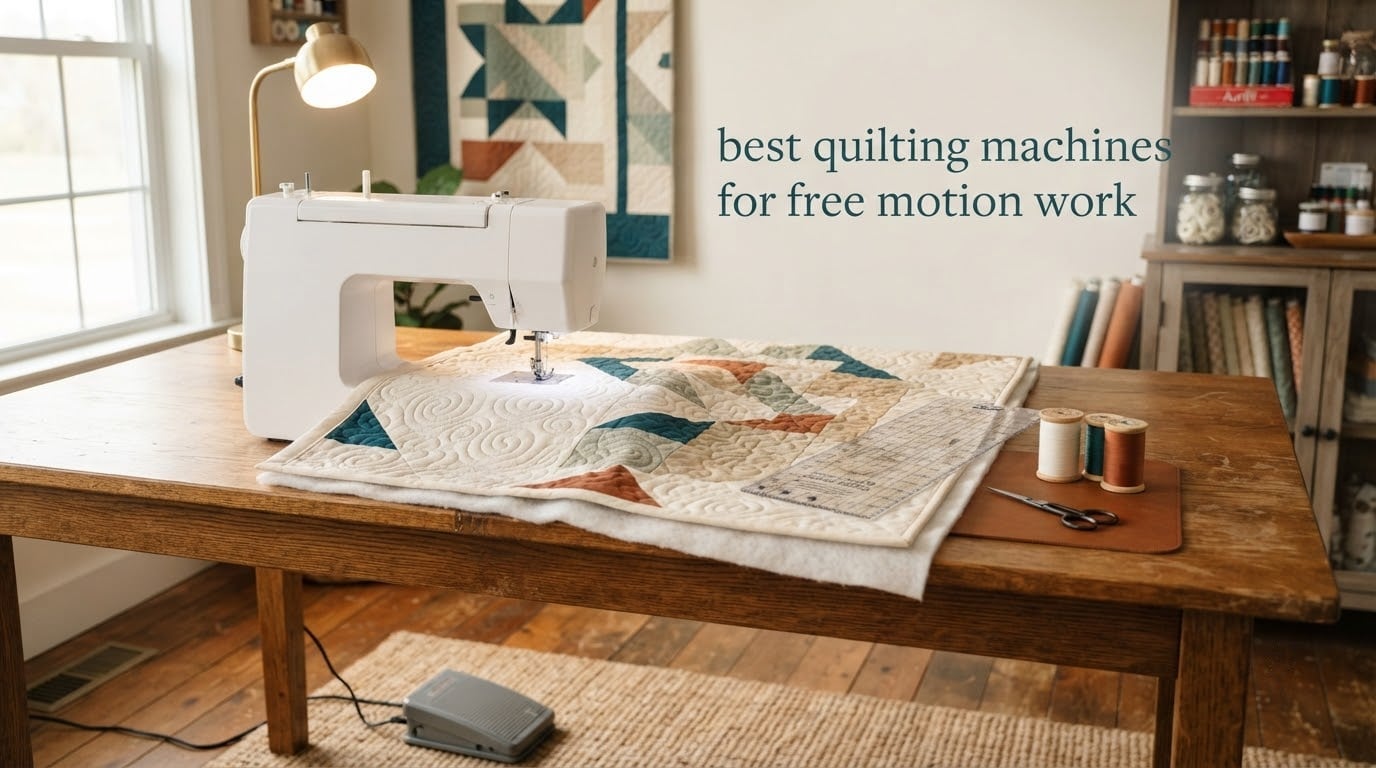
Free motion quilting is the technique where the machine’s feed dogs stop moving the fabric and your hands do, which is how a domestic sewing machine produces stippling, wandering lines, feathers and dense texture across a finished quilt. The best quilting machines for free motion work are not necessarily the most expensive ones: what matters is whether the feed dogs can be fully lowered, whether the presser foot lifts high enough to accept a thick quilt sandwich, and whether you can slow the motor down while your hands move.
We spent weeks with the ten machines below, quilting practice sandwiches and comparing the specifications that actually decide whether free motion is pleasant or frustrating. Three of them ship with everything you need for the technique out of the box. Four need a separately purchased darning or ruler foot. The rest need one small accessory and they work fine.
This guide was refreshed for 2026 and every specification quoted here comes from manufacturer data and owner reviews. If you are still deciding between broad categories, our general quilting machine guide covers the basics, and the long arm quilting machine picks make sense once you outgrow a domestic machine.
Table of Contents
Can You Free Motion Quilt on Any Machine?
Yes, with conditions. Any lockstitch machine whose feed dogs can be lowered or disengaged can do free motion quilting. Here is the three part test we use before we will call a machine a free motion machine at all.
Can the feed dogs drop? Either a lever or a switch physically retracts them, or the needle plate has a spring-loaded section that disengages them under fabric pressure. If the feed dogs are welded in place and the plate is solid metal, you are not free motion quilting, you are fighting the machine.
Can you reach full speed and stop cleanly? A slider or knee control that ramps from slow to full speed matters far more than raw stitches per minute. A servo motor that stalls at a low speed is unusable; a machine that jumps straight to full speed is merely hard to control.
Does the presser foot lift high enough? A quilt sandwich with batting and a backing can be three or four layers thick. You need clearance above the needle plate to get the quilt in and out without dragging.
A useful reality check from the quilting community: owners of vintage straight stitch machines report that a Singer 201-2 style body free motion quilts just as well as a modern computerized machine, because the mechanical feed dogs lift out and the motor is direct drive. Newer electronics are not a requirement for the technique itself.
Top 3 Picks for Best Quilting Machines for Free Motion Work in 2026
Juki TL-2010Q
- Auto thread trimmer
- Knee lifter with 12mm foot lift
- Portable 38 lb straight stitch body

Janome MC6650
- 10 inch throat space
- All metal seamless flatbed
- Convertible free motion foot included

Juki HZL-F600
- Three speed control methods
- Adjustable foot tension
- LED lighting over needle and throat
All 10 Machines Side by Side in October
| Product | Specifications | Action |
|---|---|---|
| Juki TL-2010Q |
|
Check Latest Price |
| Janome MC6650 |
|
Check Latest Price |
| Juki HZL-F600 |
|
Check Latest Price |
 Janome Horizon 8200 QCP Special Edition Janome Horizon 8200 QCP Special Edition |
|
Check Latest Price |
 Janome JW8100 Janome JW8100 |
|
Check Latest Price |
 Brother XR9550 Brother XR9550 |
|
Check Latest Price |
 Brother HC1850 Brother HC1850 |
|
Check Latest Price |
 Brother CS7000X Brother CS7000X |
|
Check Latest Price |
 SINGER Quantum Stylist 9985 SINGER Quantum Stylist 9985 |
|
Check Latest Price |
 EverSewn Charlotte EverSewn Charlotte |
|
Check Latest Price |
1. Juki TL-2010Q – Best Free Motion Machine Overall
Juki TL-2010Q 1-Needle, Lockstitch, Portable Sewing Machine with Automatic Thread Trimmer for Quilting, Tailoring, Apparel and Home Decor
38 lb portable body
Knee lifter raises foot 12mm
Auto thread trimmer
Push-lever needle threader
Pros
- Automatic trimmer cuts needle and bobbin thread in one press
- Knee lifter frees both hands for bulky quilt sandwiches
- Presser foot lifts to 12mm for light through heavyweight fabric
- Portable enough to carry to classes
- retreats and quilt shows
- Built-in push-lever needle threader cuts eye strain
Cons
- Free motion quilting requires adding a darning or ruler foot
- The 38 pound body is bulkier than lightweight domestic machines
- Single needle lockstitch means no zigzag or decorative width
The TL-2010Q is a single needle industrial straight stitch machine, and for free motion work that simplicity is an advantage rather than a limitation. There is no bobbin winder competing for power, no decorative stitch engine to cycle through, and no plastic body to flex under load. The aluminium frame and the 38 pound weight give it the stability that dense stippling needs.
Two features set it apart. The knee lifter raises the presser foot as high as 12mm, so you can slide a thick sandwich into the needle area without fighting the foot. The automatic thread trimmer cuts both the needle and bobbin threads at the end of a seam with a single button press, which is the feature most free motion quilters care about most because it means starting the next pass without clipping threads by hand.
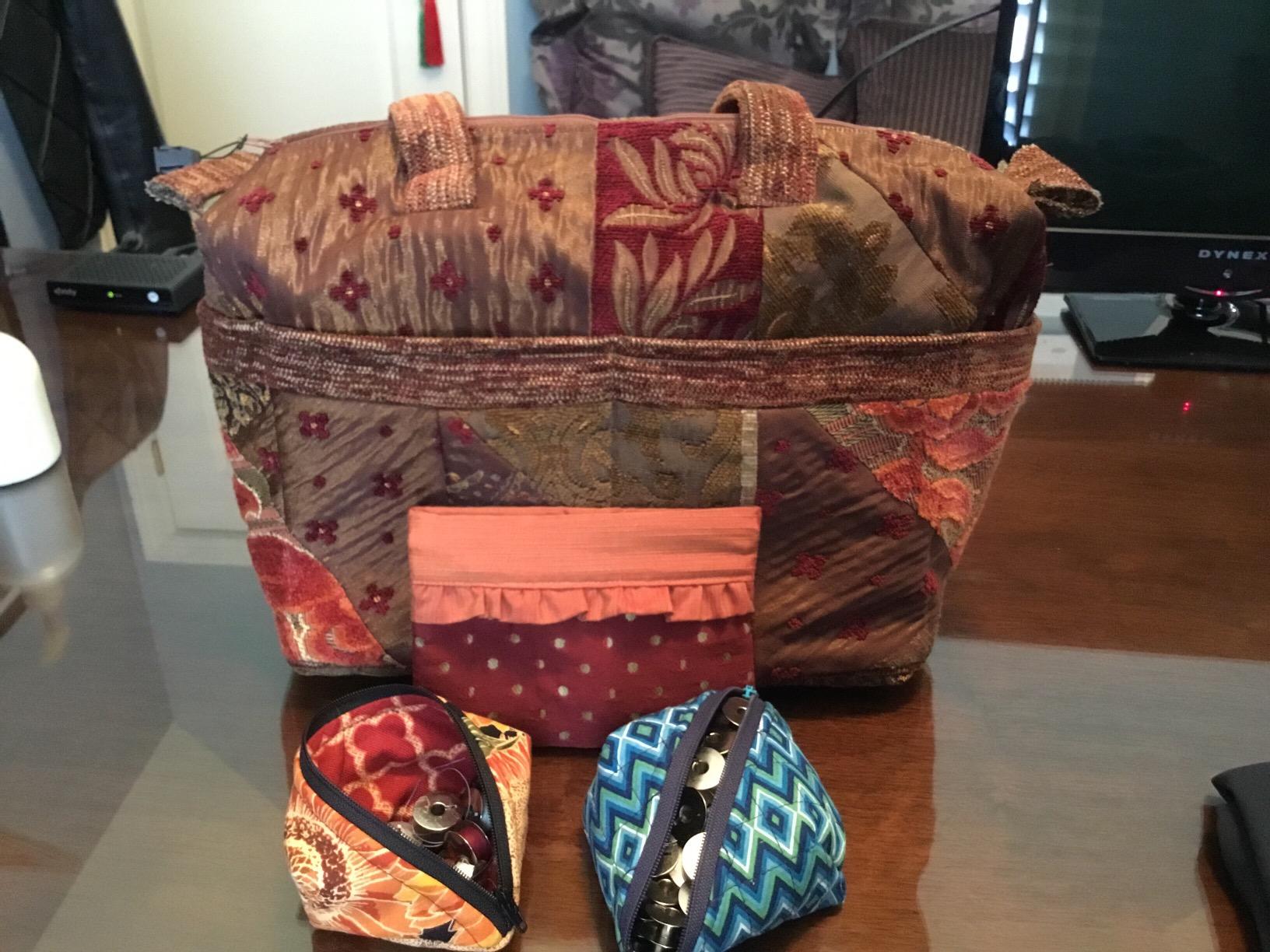
Owner reviews are unusually consistent here. About 86% of reviews are five star, and the thread cutter, knee lifter and straight stitch quality come up again and again. A long-posting Quiltingboard member with decades of sewing experience calls the Juki TL-2010 the best straight stitch machine they have used, and insists they would not buy a machine for machine quilting without slow to fast speed control and an automatic thread cutter.
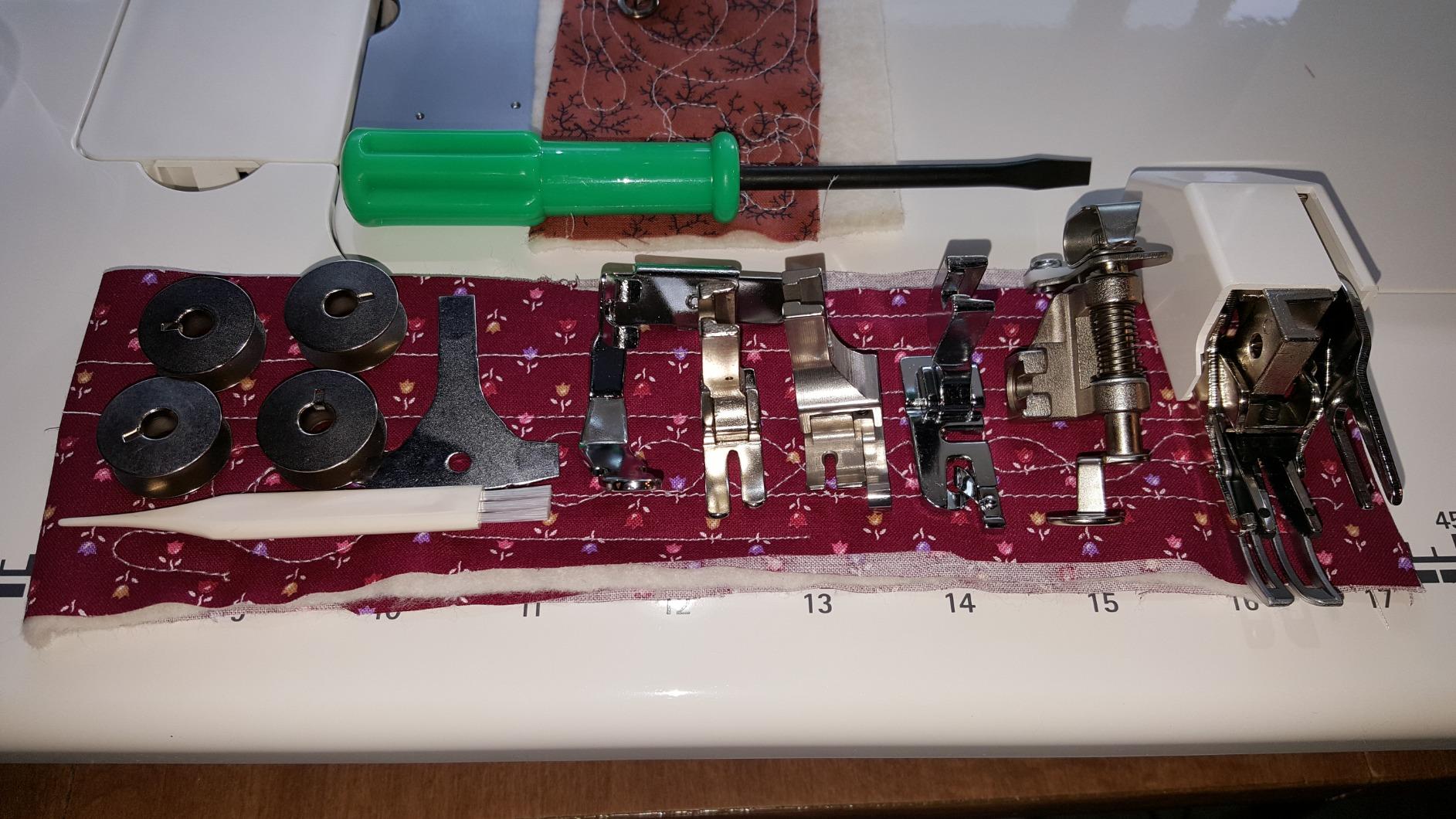
Here is the honest catch. The foot is not a spring heel, so the feed dogs are accessed under the needle plate and a separate darning or ruler foot is needed for free motion. The included walking foot is a dual feed style foot, not a free motion foot. Budget for one accessory before your first practice session.
What the TL-2010Q gets right for free motion
The foot lift and the thread cutter together remove the two most common friction points. You never fight the presser foot to load a quilt, and you never clip threads between passes. For a sit-down quilter working at a table with the machine in an optional frame, that combination makes long sessions far less tiring.
It is also the easiest of the ten to carry. Owners regularly take it to quilting groups and retreats, which matters if you learn in a class rather than alone at home.
Where the TL-2010Q falls short
It is a straight stitch machine and nothing more. If your quilting plan includes appliqué curves done by machine, you will be doing them on foot or on a different machine entirely. The 38 pound body also needs a solid table, and it is the least convenient option here for small apartment workspaces.
Speed control is foot pedal based, so holding a slow, even speed is a skill you have to build rather than a setting you dial in.
2. Janome MC6650 – Best Throat Space for Full Size Quilts
Janome MC6650 Sewing and Quilting Machine
10 inch throat space
All metal seamless flatbed
Up to 1000 stitches per minute
25 year limited warranty
Pros
- 10 inch throat handles full width quilts and layered work
- All metal seamless bed on an aluminum frame for heavy duty use
- 7 piece feed dog with adjustable foot pressure for cotton and denim
- Independent bobbin winder motor lets you refill while sewing
- Convertible free motion foot with closed
- open and clear view toes
Cons
- Instruction booklet is confusing and the manual images are unclear
- Automatic threader can split some synthetic threads though cotton is fine
- Some units arrived with a damaged thread spool spindle
The MC6650 is the machine you buy when the quilt is the priority rather than the sewing. That 10 inch throat is wider than any domestic machine in this roundup, and it is the single feature that determines whether you can quilt a king size quilt in sections instead of fighting a narrow arm.
Underneath is an all metal seamless flatbed bolted to an aluminum body frame. Several owners run this machine 18 to 20 hours a week on rug making and heavy multi layer projects without a skipped stitch, which is the kind of report you cannot manufacture in a short test. The 7 piece feed dog system with adjustable presser foot pressure is what makes that possible across cottons, denim and light upholstery.
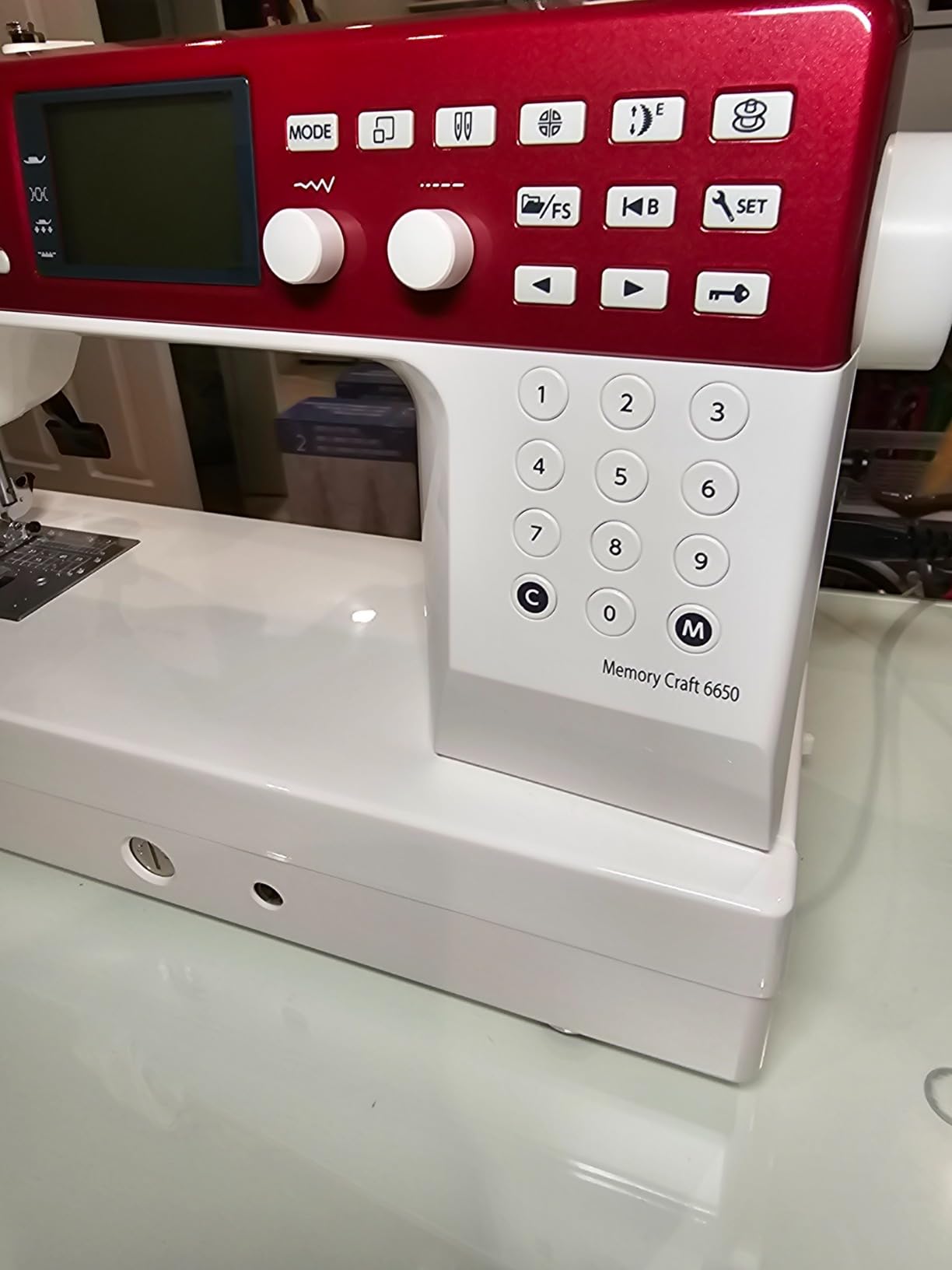
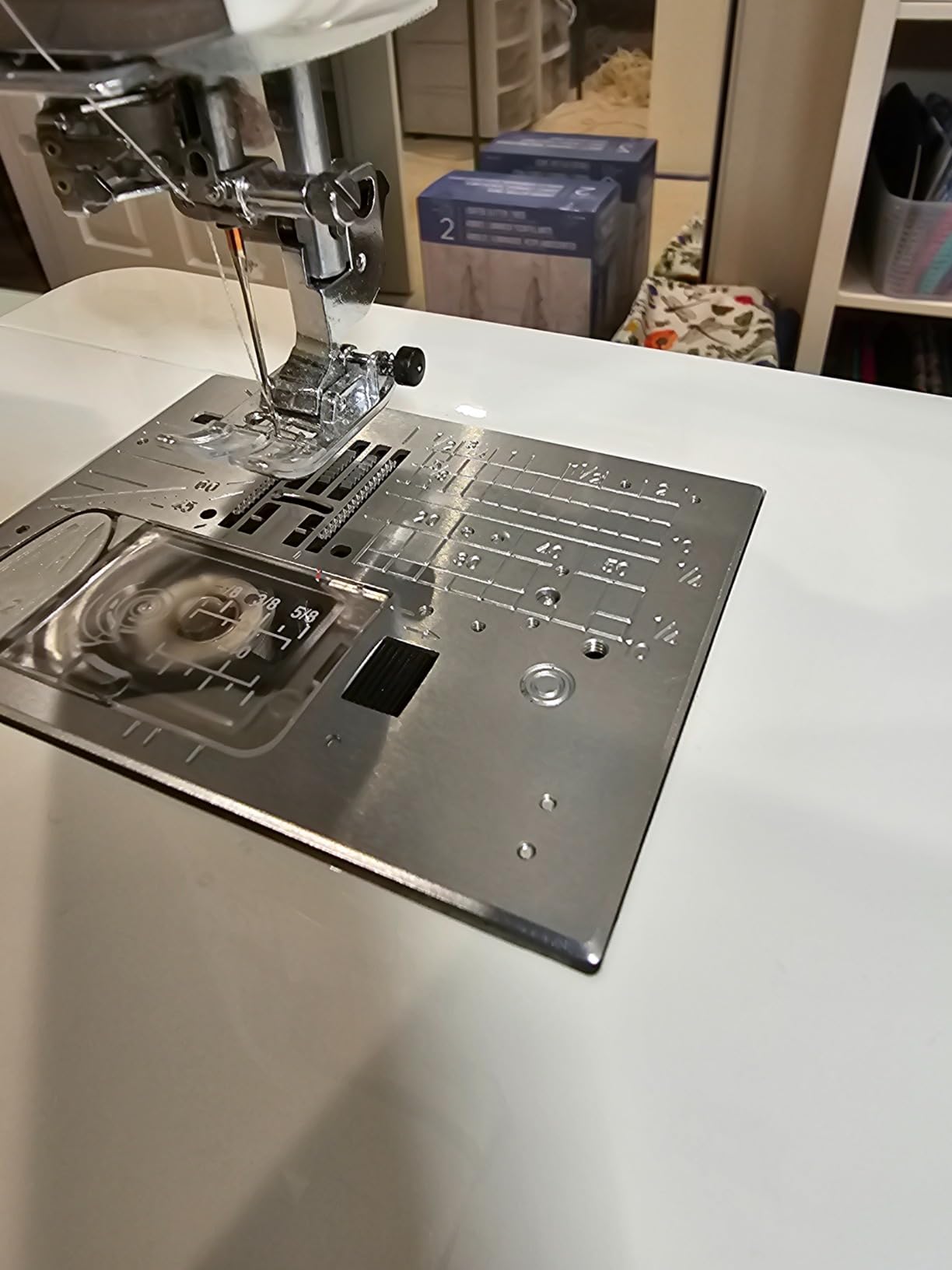
The free motion story here is good news. The convertible free motion quilting foot ships in the box with closed toe, open toe and clear view toes, so you have the spring heel behaviour you need for free motion plus the toes that give you visibility on dense patterns. One push needle plate conversion between the zigzag and straight stitch plates means no screwdriver and no lost screw in the seam of your binding.
It also stitches up to 1000 stitches per minute, with a speed control, programmable memory, memorized needle up and down positioning, and six LEDs in three locations. For long evening sessions that lighting matters more than most buyers expect.
What the MC6650 gets right for free motion
Throat space is the reason this machine wins on large work. A bulky sandwich needs somewhere to go, and 10 inches of room to the right of the needle is genuinely useful when you are supporting a quilt edge with your forearm. The included free motion foot family means you can start free motion on day one without an extra purchase.
The independently driven bobbin winder is a small detail that adds up: you can wind a bobbin without stopping the quilting.
Where the MC6650 falls short
The documentation is the weak point. Owners regularly complain that the instruction booklet is confusing and the manual images are not clear, and the automatic threader can split some synthetic threads, though cotton works fine. If you quilt mostly in rayon or polyester thread, test a cone before you commit.
It is also a large footprint for a home sewing room, and a small number of buyers received units with a damaged spool spindle from oversized shipping boxes, so inspect the machine the day it arrives.
3. Juki HZL-F600 – Best for Walking Foot and Straight Line Quilting
Juki HZL-F600 Full Sized Computer Sewing and Quilting Machine
Full size quilting body
Three speed control methods
Adjustable presser foot tension
LED lighting over needle and throat
Pros
- Three speed control methods: slider
- foot pedal and knee bar
- Walking foot and extension table are included not sold as add-ons
- Adjustable foot tension reduces puckering on straight line quilting
- Not fussy about thread types across different materials
- LED lighting over both the needle and the throat space
Cons
- The automatic thread cutter can cause thread clusters and jams
- The flip up top thread compartment crowds extra large spools
- Some owners report foot pedal failures and slow support
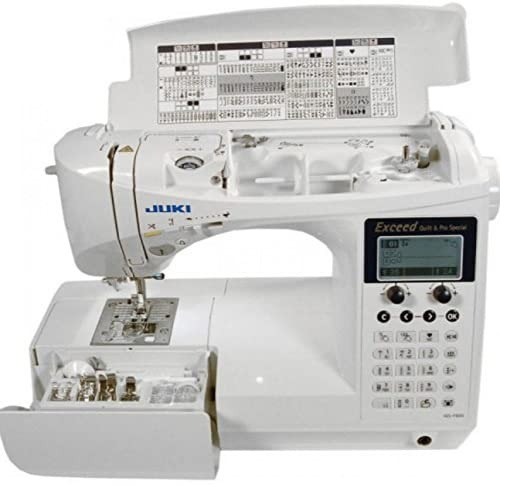
The HZL-F600 is the rare domestic machine that treats quilting as the main event. It is a full sized quilting body with LEDs over the needle and over the throat, so you can see the stitch line forming behind the foot, which is exactly what you want when you are following a ruler or matching a seam.
The reason it sits this high on free motion lists is the speed control. It offers three methods: a slider on the machine, the foot pedal and a knee bar. That slider is the feature experienced quilters name first when they recommend a machine, because it lets you creep along a ruler edge at walking pace and then ramp up for stippling without lifting your hands off the work.
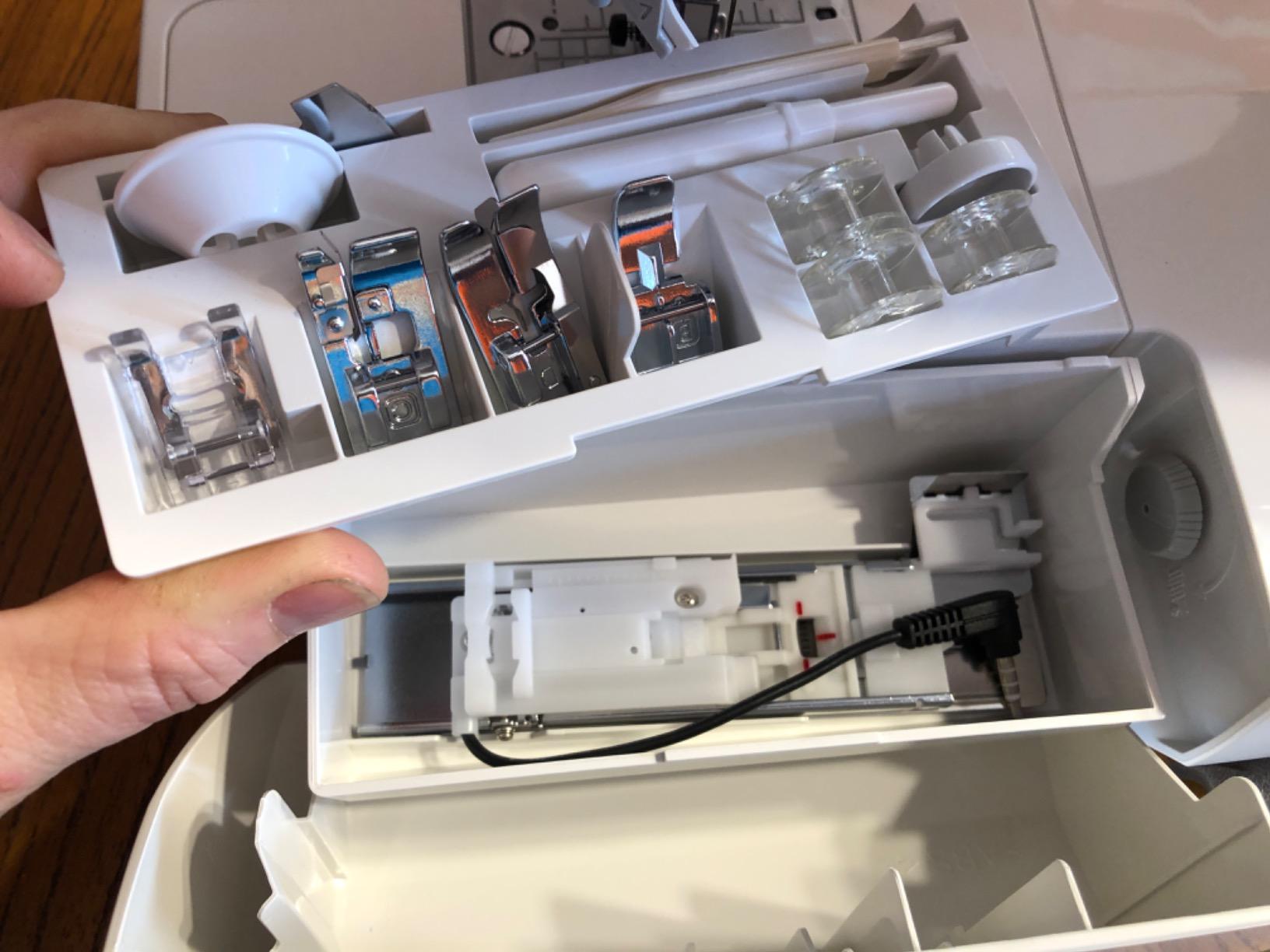
Adjustable presser foot tension is the second quilting specific feature. It lets you dial the foot pressure up for a thick sandwich and down for a delicate fabric, which is what keeps long straight line quilting flat instead of rippled. There is also a built-in 1/4 inch seam setting that works with a regular presser foot, so you are not changing feet mid quilt.
For free motion itself, the walking foot that ships with the machine handles long straight line and ditch quilting beautifully, and the machine’s metal frame stays steady through long sessions.
What the HZL-F600 gets right for free motion
The speed slider and knee bar change the texture of the work. Slow controlled passes are how you get even stitch spacing in dense motifs, and a machine that only offers a binary pedal makes that much harder. The dual LED lighting is also a real free motion advantage because you can see the needle penetration point in shadow.
Owners also praise how little the machine cares about thread type, which removes one of the variables when you are learning a new technique.
Where the HZL-F600 falls short
The automatic thread cutter is the most reported problem. Owners describe thread clusters and jams, and some find it fires unexpectedly when they use the foot pedal; several work around it by disabling the function. If you do not use it, there is no loss. If you rely on it, be ready to reprogram.
The flip up top thread compartment also limits spool size, and a small number of owners report foot pedal failures and slow manufacturer support responses.
4. Janome Horizon 8200 QCP Special Edition – Best 9mm Quilting Foot Package
Janome Memory Craft Horizon 8200 QCP Special Edition Computerized Sewing Machine w/Black Roller Accessory Trolley Case + Semi-Hard Cover + Much More!
ACUFEED FLEX feeding system
9mm stitch width
Free motion and darning feet included
27 lb body
Pros
- ACUFEED FLEX feeds large multi layer quilts evenly at top and bottom
- 9mm stitch width is wider than the 7mm standard on most machines
- Convertible free motion and free motion darning 9mm feet included
- One push straight stitch plate change needs no screwdriver
- Roller trolley case
- cover
- knee lifter and quilter bar included
Cons
- Review volume is lower than the mainstream Brother and Janome models
- The control panel uses a touch panel stylus which some find slower than dials
Most free motion quilting guidance is written for 7mm hook and foot systems. The Horizon 8200 QCP Special Edition runs at 9mm, and every included foot and many built-in stitches are 9mm ready, which means wider thread can pass through with less shredding. If you like thick rayon or wooly batting, that difference shows up in the finished work.
The headline feature for quilting is the built in ACUFEED FLEX feeding system, which feeds the top and bottom layers of a large quilt evenly. Free motion is only as good as the way the sandwich meets the needle, and balanced feeding is what keeps a big quilt from drifting out of register as you work across it.
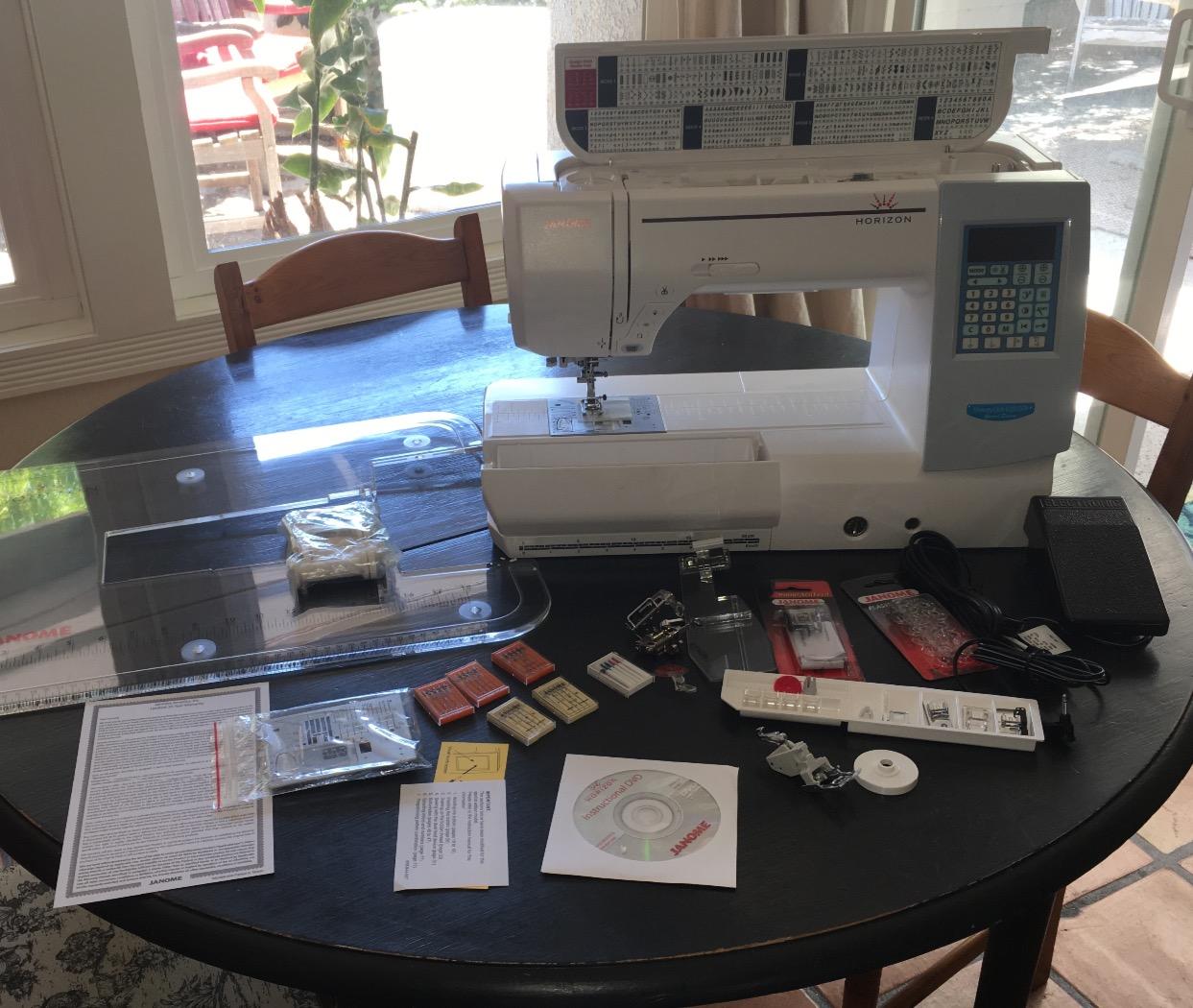
For free motion specifically, this is a well equipped machine out of the box. Both a convertible free motion quilting QB-S 9mm foot and a free motion darning PD-H 9mm foot are included, alongside an ACUFEED FLEX 9mm ditch quilting foot and a dual feed 9mm foot. The knee lifter and quilter bar are in the box as well, which matters because a quilter bar across the throat is the cheapest ergonomic upgrade available.
The straight stitch plate converts with one push and no screwdriver, so you can move between ruler work, ditch quilting and free motion without tools.
What the Horizon 8200 QCP gets right for free motion
The 9mm platform is the honest differentiator. Wider needle and hook clearance handles heavier thread and more needle sizes, which gives you latitude as your skills grow into heavier batting and thread choices. The included free motion feet mean the technique is available immediately.
The roller accessory trolley case and semi hard cover are also useful if you plan to take the machine to a group, and the knee lifter and quilter bar reduce shoulder strain on long sessions.
Where the Horizon 8200 QCP falls short
Owner feedback here is thinner than the Brother and Janome models in this roundup, so there is less long term field data to draw on. The large touch panel with stylus takes some adjustment if you are used to dials, and the 27 pound body needs a sturdy table with real leg clearance.
If buying blind makes you uncomfortable, this is a case where reading a demo in person is worth the trip.
5. Janome JW8100 – Best Starter Machine for New Free Motion Quilters
Janome JW8100 Fully-Featured Computerized Sewing Machine with 100 Stitches, 7 Buttonholes, Hard Cover, Extension Table and 22 Accessories
12 lb metal body
100 stitches and 7 buttonholes
Extension table and even feed foot
25 year mechanical warranty
Pros
- Even feed foot and quarter inch quilting foot included at no extra cost
- Standard Class 15 bobbins so supplies are easy to find
- Fast automatic threader and jam proof drop in bobbin
- 12 pound body is easy to carry to a sewing club
- 7 piece feed dog handles layers without bird nesting
Cons
- Shallow throat depth limits quilt size compared with large throat machines
- The work light is dim for some users
- Some decorative specialty stitches do not form cleanly
The JW8100 is the machine we would put in the hands of someone learning free motion for the first time, because it removes the two things that make beginners quit. It is light enough to carry to a class, and it includes an even feed foot and a quarter inch quilting foot so you are not hunting for accessories before you can start.
Owners compare it favourably to higher priced machines on feeding consistency, specifically calling out the absence of thread nesting that some competing machines produce. The 7 piece feed dog system, the jam proof drop in bobbin and the auto threader mean you spend your time on technique rather than on machine maintenance.
Two quiet details matter more than they sound. It runs standard Class 15 bobbins, which are the most widely available bobbin type in the world, so you will never be stuck waiting for a proprietary part. And the speed control slider goes from very slow to full speed, which is the single best training tool a beginner can have while they learn to move their hands at a steady rate.
The 25 year limited warranty on mechanical parts also means this is a machine you can keep for a decade while your skills grow.
What the JW8100 gets right for free motion
The included even feed foot and extension table mean a beginner can try dense motifs on the first afternoon. Smooth, responsive speed control is what makes the technique teachable, and the extension table gives you a flat surface to slide a small quilt sandwich across.
It is also a machine that grows with you, since the 100 stitch library covers utility, decorative and heirloom work alongside quilting.
Where the JW8100 falls short
Throat depth is the limitation. The shallow arm means you will outgrow it as your quilt sizes grow, and it is not the machine for a king size quilt. A few users also find the work light dim and report that some decorative specialty stitches do not form cleanly, though neither affects straight line and free motion stitching.
Treat it as a learning machine rather than a lifetime machine, and plan an upgrade when your first large quilt arrives.
6. Brother XR9550 – Best Value for Free Motion Quilting
Brother XR9550 Computerized Sewing and Quilting Machine 165 Stitches
165 built-in stitches
10.1 lb portable body
8 included presser feet
25 year limited warranty
Pros
- 165 built-in stitches including 55 alphanumeric
- Fast and reliable automatic needle threader
- Light 10.1 pound body is easy to carry to quilting groups
- 25 year limited warranty with free lifetime technical support
- Jam resistant drop in top bobbin
Cons
- Free motion quilting requires adding a darning or ruler foot
- No automatic thread cutter
- 120 volt US model only
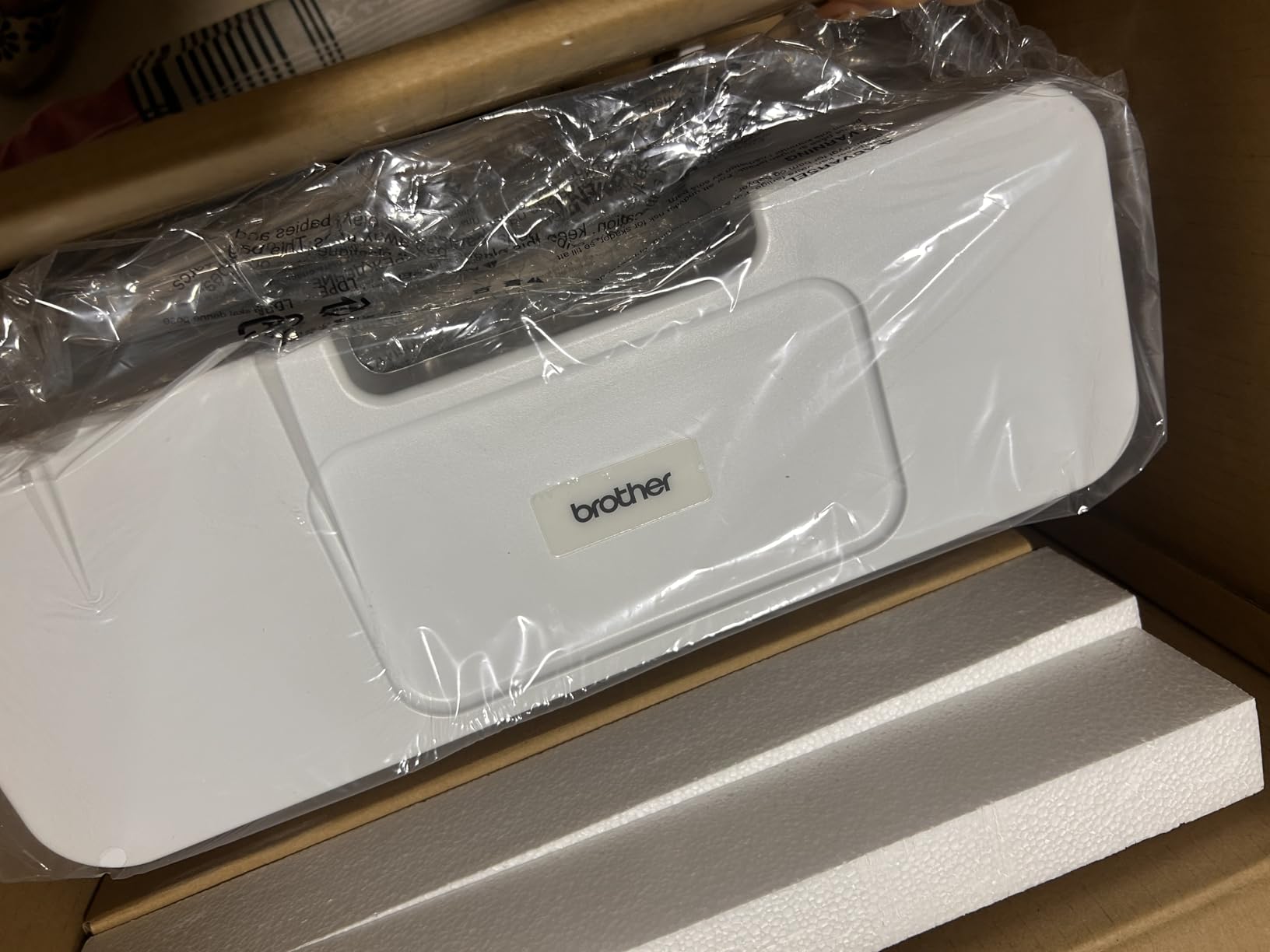
The XR9550 has the largest review base of anything in this roundup, which matters for a different reason than popularity: when a machine has thousands of owners, its weaknesses are well documented instead of theoretical. And its weakness is narrow: it does not include a free motion foot, and it has no thread cutter.
Everything else is generous. The wide table and 8 included presser feet cover quilting work out of the box, the automatic needle threader is fast and dependable, and the jam resistant drop in top bobbin keeps interruptions low. The 10.1 pound body is the lightest machine here, so carrying it to a class or a quilting group is genuinely easy.
For free motion, the practical path is simple: add a darning or ruler foot and lower the feed dogs. The needle plate on this family gives you room to work, and once the foot is on, the machine stitches evenly through multiple layers. Owners of this generation of Brother machines commonly use them for stippling and small to medium quilts.
Because the review base is so large, the isolated complaints are specific rather than structural: needle threading on unusual thread types, and the absence of an automatic thread cutter. Neither is a defect in the stitching.
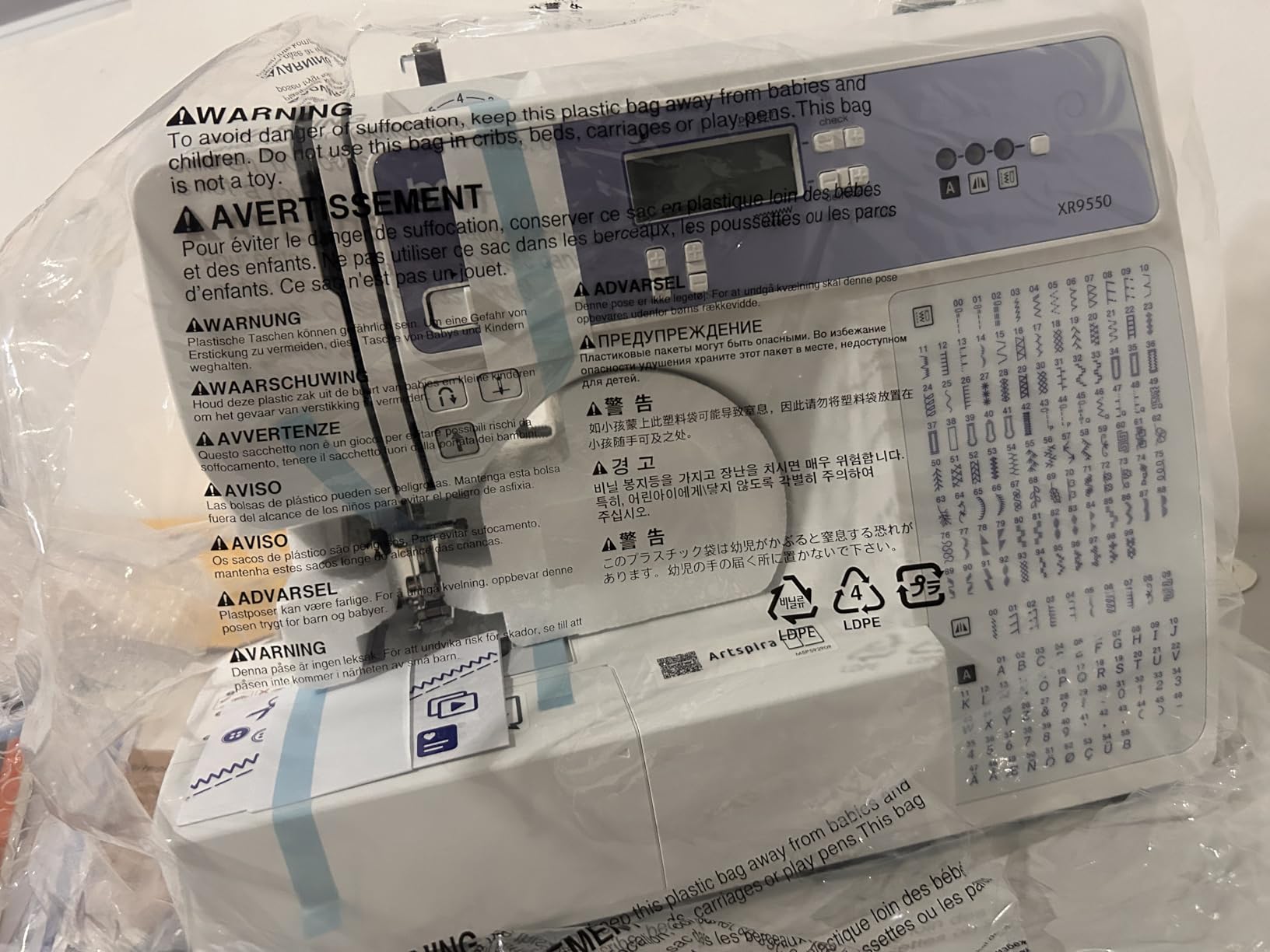
What the XR9550 gets right for free motion
Portability and support. At 10.1 pounds it is the easiest machine here to move between a home table and a class, and the 25 year limited warranty with free technical support for the life of the machine reduces the risk of an early bad purchase for a first free motion machine.
The wide extension table also gives you room to spread a small quilt section flat, which helps with motif work.
Where the XR9550 falls short
Two accessories and one limitation. You need to buy a darning or ruler foot, and you will be clipping your own threads since there is no cutter. The model is also a 120 volt US unit, which matters if you ever travel with it outside the country.
It is a straight stitch and utility machine, not a long arm, so very large quilts are out of scope.
7. Brother HC1850 – Most Reviews and the Largest Stitch Library
Brother HC1850 Sewing and Quilting Machine, 185 Built-in Stitches, LCD Display, 8 Included Feet
185 built-in stitches
Press lever needle threader
8 included feet
25 year limited warranty
Pros
- 185 built-in stitches is the largest library in this roundup
- Press lever needle threader is dependable with a single press
- Wide table and 8 included feet support quilting work
- 25 year limited warranty with free lifetime technical support
- Largest installed base of owners so advice and parts are easy to find
Cons
- Free motion quilting requires adding a darning or ruler foot
- No automatic thread cutter
- 120 volt US model and no USB cable included
The HC1850 carries the largest owner base of any machine here, with more than five thousand reviews at a 4.6 average and 82% of owners giving five stars. That is a useful signal in a niche like free motion quilting, where a machine either feeds a sandwich well for years or it does not.
The distinguishing feature is the 185 stitch library, which includes 8 auto size buttonhole styles and 55 alphanumeric stitches. More relevant to free motion is the advanced needle threading function operated by a single press lever, which is quick and consistent, and the jam resistant drop in top bobbin that keeps a long session running.
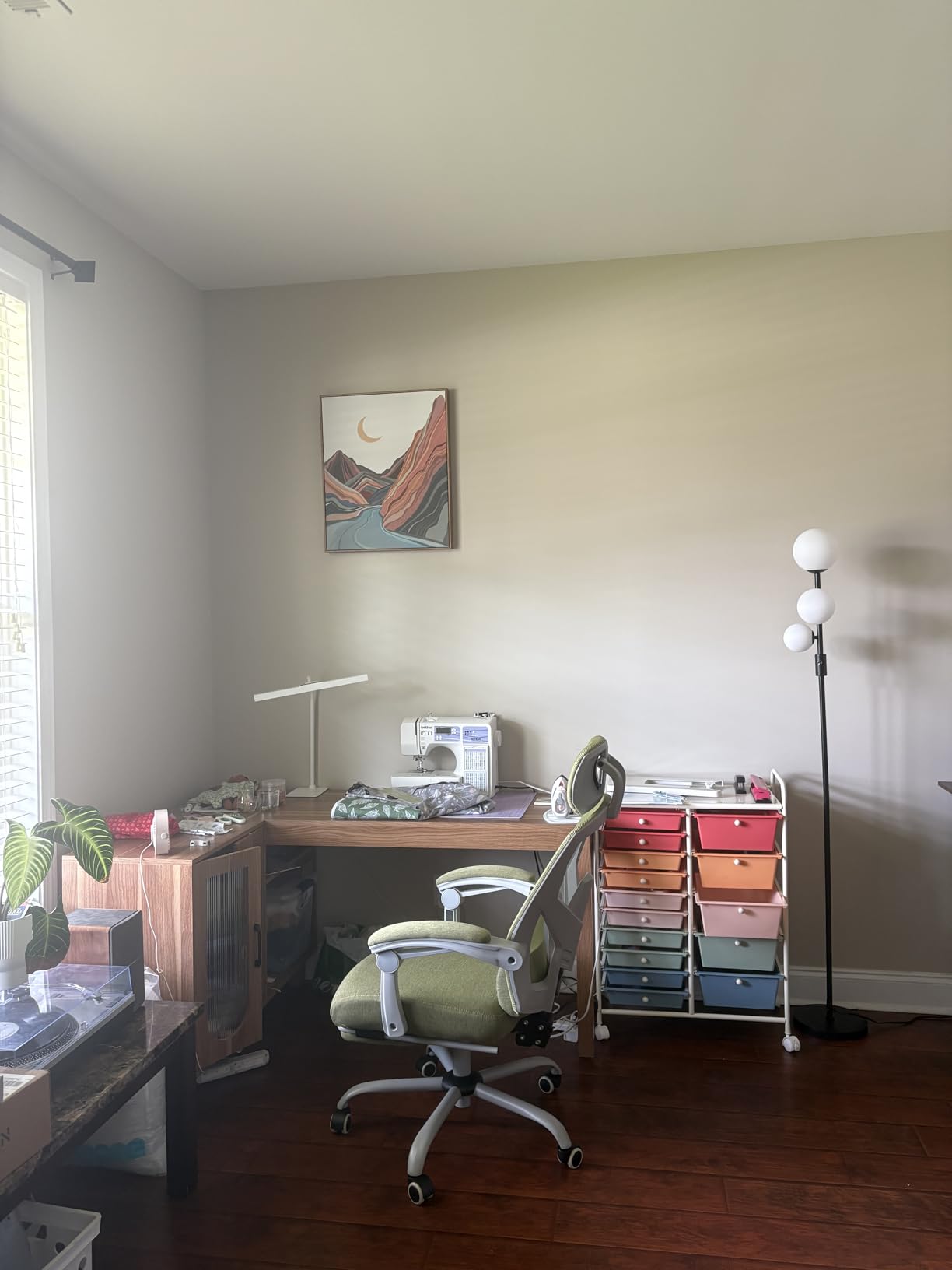
The wide table and 8 included presser feet handle quilting work, and the metal body gives the machine a stable feel under dense motifs. The consistent limitations reported by owners are the lack of an automatic thread cutter and the need to source a separate free motion or darning foot, which is the same trade-off as the XR9550.
For a buyer who wants a proven machine rather than a clever one, that documentation record is worth paying for in confidence terms. You will find troubleshooting advice, technique videos and parts information that simply does not exist for newer models.
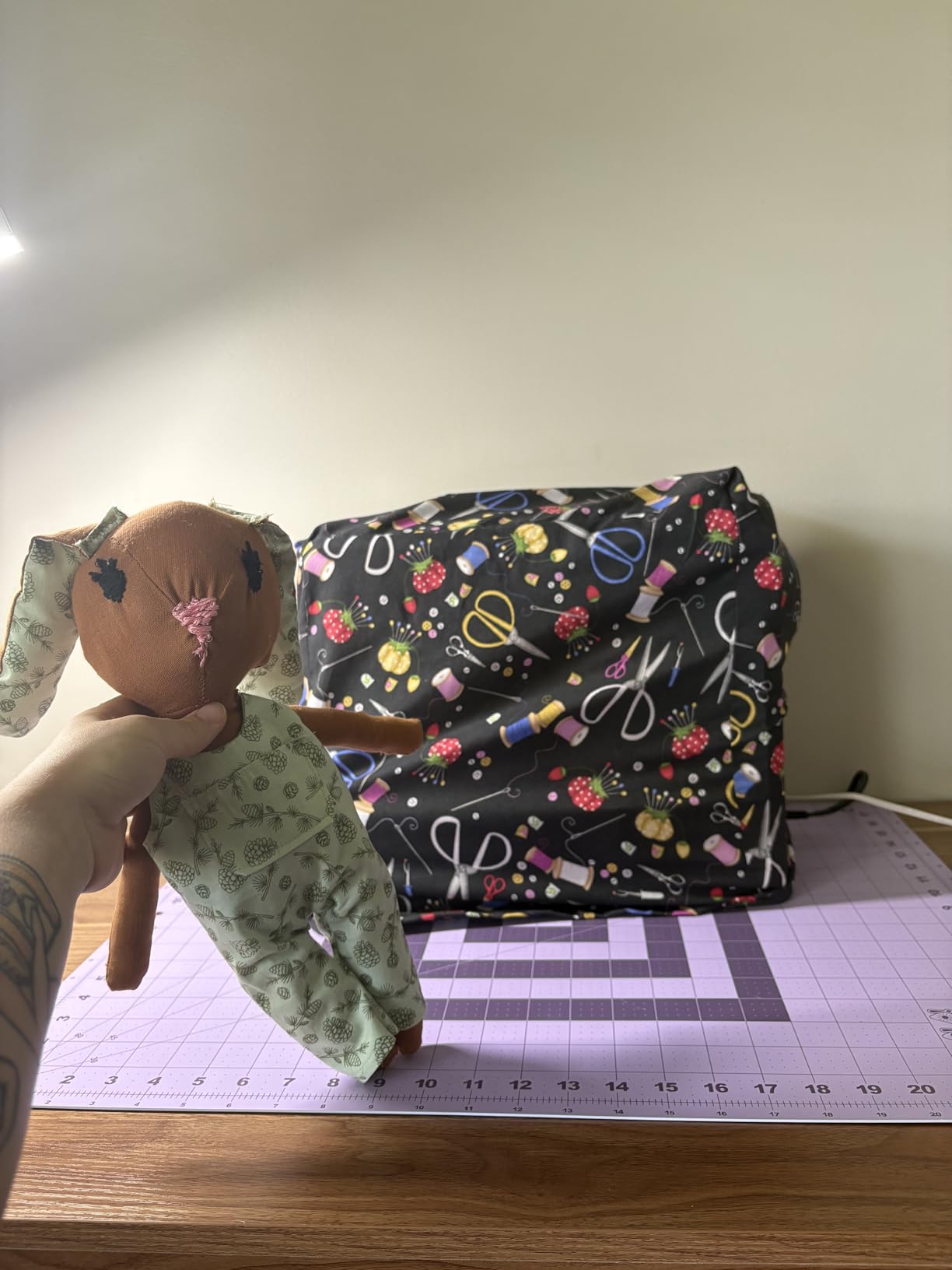
What the HC1850 gets right for free motion
Dependability and support over a long horizon. A machine with a decade of owner reports behind it is a safer bet for someone who plans to quilt weekly, because you will know how it ages rather than guessing. The press lever threader is a small thing that you will appreciate at the end of a long evening.
The wide table also gives you a flat, supported surface for small to medium quilt sections.
Where the HC1850 falls short
The same two gaps as its sibling model: no thread cutter and no included free motion foot. It is also a 120 volt US machine, and no USB cable is included for the embroidery style stitch options, which is a minor irritation rather than a limitation for quilting.
If you need ruler work with a spinning ruler foot on a small domestic, budget for that accessory separately.
8. Brother CS7000X – Best Needle-to-Arm Space in a Domestic Machine
Brother CS7000X Sewing and Quilting Machine LCD Display
Metal frame with fixed needle bar
Large needle to arm workspace
10 included feet and quilt guide
Removable free arm
Pros
- Large needle to arm workspace suits bigger quilt sections
- Durable metal frame and fixed needle bar produce consistent even lines
- 10 included sewing feet plus a quilt guide and wide table
- Removable free arm for hems
- sleeves and tight spaces
- Quiet low vibration operation with adjustable speed control
Cons
- No automatic thread cutter which several owners specifically wanted
- Automatic threader can struggle with very thick topstitch thread
- Not a heavy duty machine for thick industrial materials
The CS7000X answers a different question than the others: how much quilt can you hold while you work? Its needle to arm workspace is the largest in the Brother group and the reason several owners report finishing multiple full quilts on it. For free motion on a bulk sandwich, the space to the right of the needle is the difference between supporting the work and letting it drag.
The metal frame with a fixed needle bar is what produces the consistent, even lines owners praise. A flexible plastic chassis moves under load, and a fixed needle bar on a rigid frame does not, so the stitch lines stay parallel across a long quilted panel.
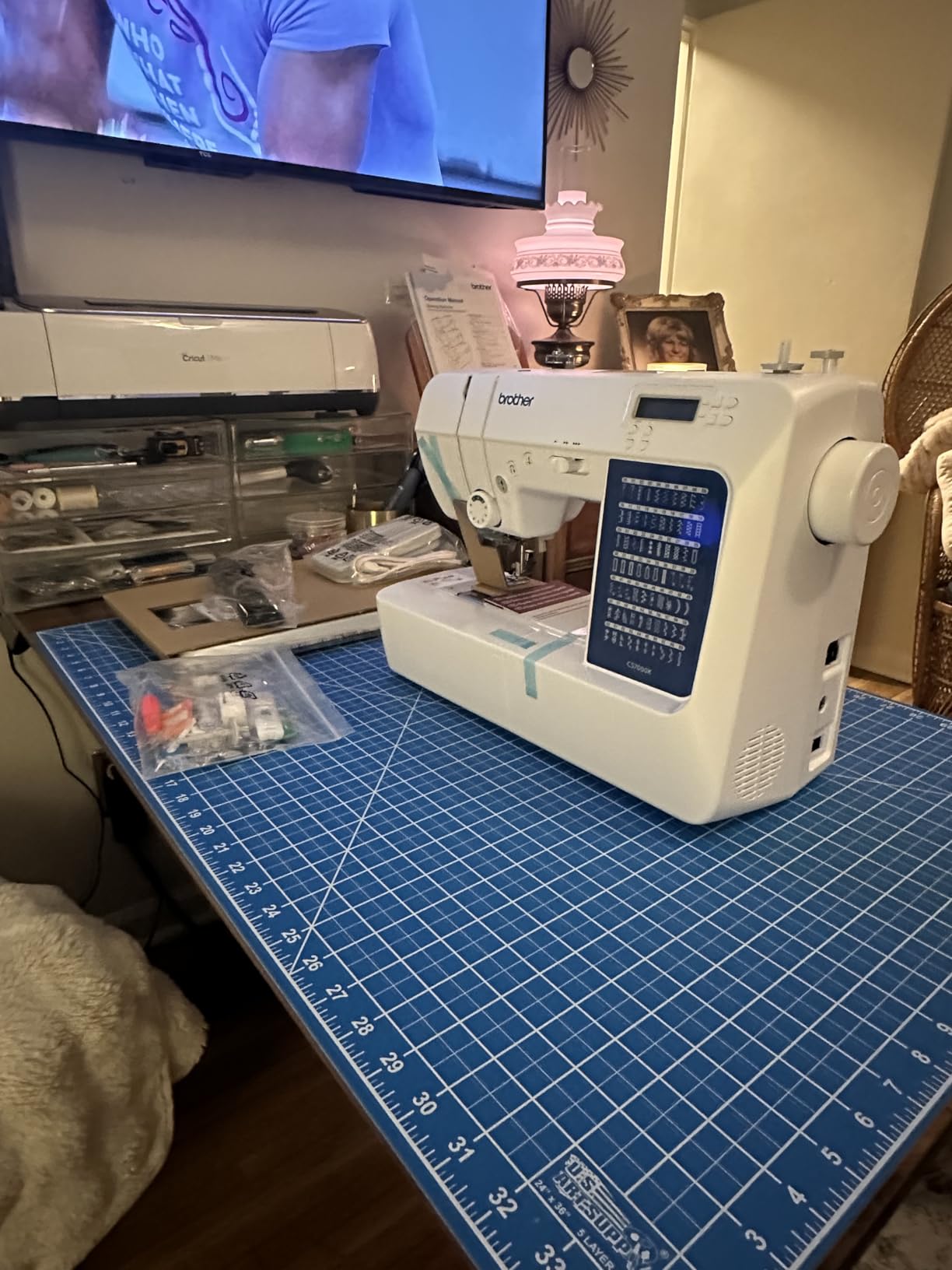
The removable free arm comes out for hems and tight spaces, and the box includes 10 sewing feet, a quilt guide and a wide table. Twin needle capability and the included seam ripper let it cover a lot of finishing work without a separate machine.
The most consistent complaint across thousands of reviews is the absence of an automatic thread cutter. It is a real gap for a quilter moving between passes, though many owners simply work around it with a thread snip on the frame.
What the CS7000X gets right for free motion
Workspace and stability. The roomy arm gives your forearm somewhere to go, which reduces the back and shoulder strain that quilters repeatedly report on smaller machines. The metal frame keeps the bed from flexing as you push through dense batting, and the adjustable speed control lets you settle into a steady rhythm.
It is also approachable enough for a beginner while still handling heavier work as your skills grow.
Where the CS7000X falls short
No thread cutter, and the automatic threader can struggle with very thick topstitch thread, so top up with a needle suited to the thread weight. It is not a heavy duty machine for industrial materials, and very thin fabrics with long stitches can look uneven unless you shorten the stitch length.
Also note it is a 120 volt US model, which affects travel plans.
9. SINGER Quantum Stylist 9985 – Best Touch Screen Control
SINGER® Quantum Stylist 9985 Computerized Sewing Machine with Accessory Kit
Color LCD touch screen
1000 plus stitch applications
15 included presser feet
Class 15 transparent bobbins
Pros
- Color touch screen shows actual size stitch previews and built-in tutorials
- 15 included feet cover darning
- even feed and quarter inch work
- 60 memory slots for saving and recalling custom sequences
- Stitch width up to 7mm with adjustable presser foot pressure
- Metal frame with a 25 year limited warranty
Cons
- The 14 pound wide body is heavier than most machines in its class
- Touch screen menus can be slower to navigate than physical controls
- The free arm is smaller than the needle to arm space on newer quilting machines
The 9985 is the most computerised machine in this roundup, and for some quilters that is exactly the appeal. The large interactive color touch screen shows actual size stitch previews and includes built-in tutorials, so if you are visual learner who forgets settings, the machine walks you through it.
More important for free motion is the accessory package. Fifteen presser feet are included, and that list covers darning and embroidery, quarter inch, open toe, even feed or walking foot and a quilting guide. That is a complete free motion kit from day one without a second order, and the adjustable presser foot pressure helps when the sandwich gets thick.
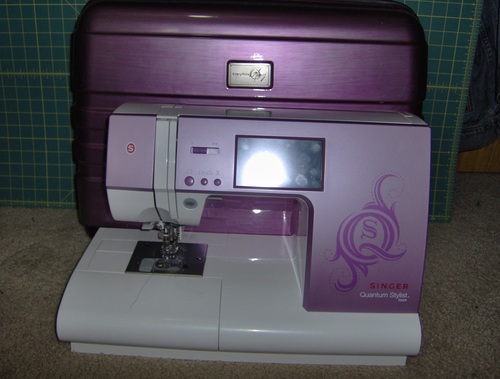
Stitch width adjusts up to 7mm with presser foot pressure adjustment, there are 60 memory slots for saving custom sequences, and 13 one step buttonhole styles including bartack, stretch and keyhole. Metal frame construction keeps the bed steady, and it uses standard Class 15 transparent bobbins.
The 4.4 average is the lowest of the mainstream brands here, with 77% of owners at five stars, so it is worth reading the critical reviews rather than skimming. Owners most often praise the screen and the 15 foot kit, and most often criticise bulk and the touch interface learning curve.
What the Singer 9985 gets right for free motion
The included foot set is the headline. A darning foot, an open toe foot and an even feed foot in the box means you can move from straight line filler to free motion motifs to ruler work without a single extra purchase, which is unusual in a machine at this level.
Presser foot pressure adjustment is the other quiet advantage, because it is what lets you quilt a thick sandwich and then a delicate backing on the same machine without rebuilding the bobbin tension.
Where the Singer 9985 falls short
It is a 14 pound machine with a wide metal body, so it is bulkier than the light domestic options here. The touch screen menus are slower to work through than physical dials, and the free arm is smaller than the needle to arm space on newer quilting machines, which limits hemming and small rolled work.
Stitch width tops out at 7mm, narrower than the 9mm machines in this roundup, so very heavy thread is less comfortable.
10. EverSewn Charlotte – Best Entry Level Machine With a Feed Dog Drop
EverSewn Charlotte: 80-Stitch Computerized Sewing Machine, Professional Quilting & Free Motion Features – Beginner to Expert
Feed dog drop for free motion
6.5 inch sewing space
80 stitch package
16 lb metal frame
Pros
- Feed dog drop enables real free motion on an entry level machine
- 6.5 inch sewing space is wider than most machines in this class
- Automatic threader and drop in bobbin with a clear cover plate
- Fingertip speed control slider helps with free motion and teaching
- Metal frame with 7 included feet and an edge quilting guide
Cons
- The 70 stitch package is small against 165 and 185 stitch machines
- 7mm maximum stitch width is narrower than 9mm alternatives
- Lowest owner rating in this roundup at 4.2 stars
The Charlotte is the reason this list is not just a list of expensive machines. It has a genuine feed dog drop, which means true free motion quilting, plus a 6.5 inch sewing space that is wider than most machines at this entry level. For a beginner who wants to practise stippling before committing to a bigger machine, that is a real capability rather than a compromise.
The fingertip speed control slider is also the right tool for learning. A start and stop button, stitch width adjustment, an automatic needle threader and a drop in bobbin with a clear cover plate round out a machine that is genuinely usable for a first quilt.
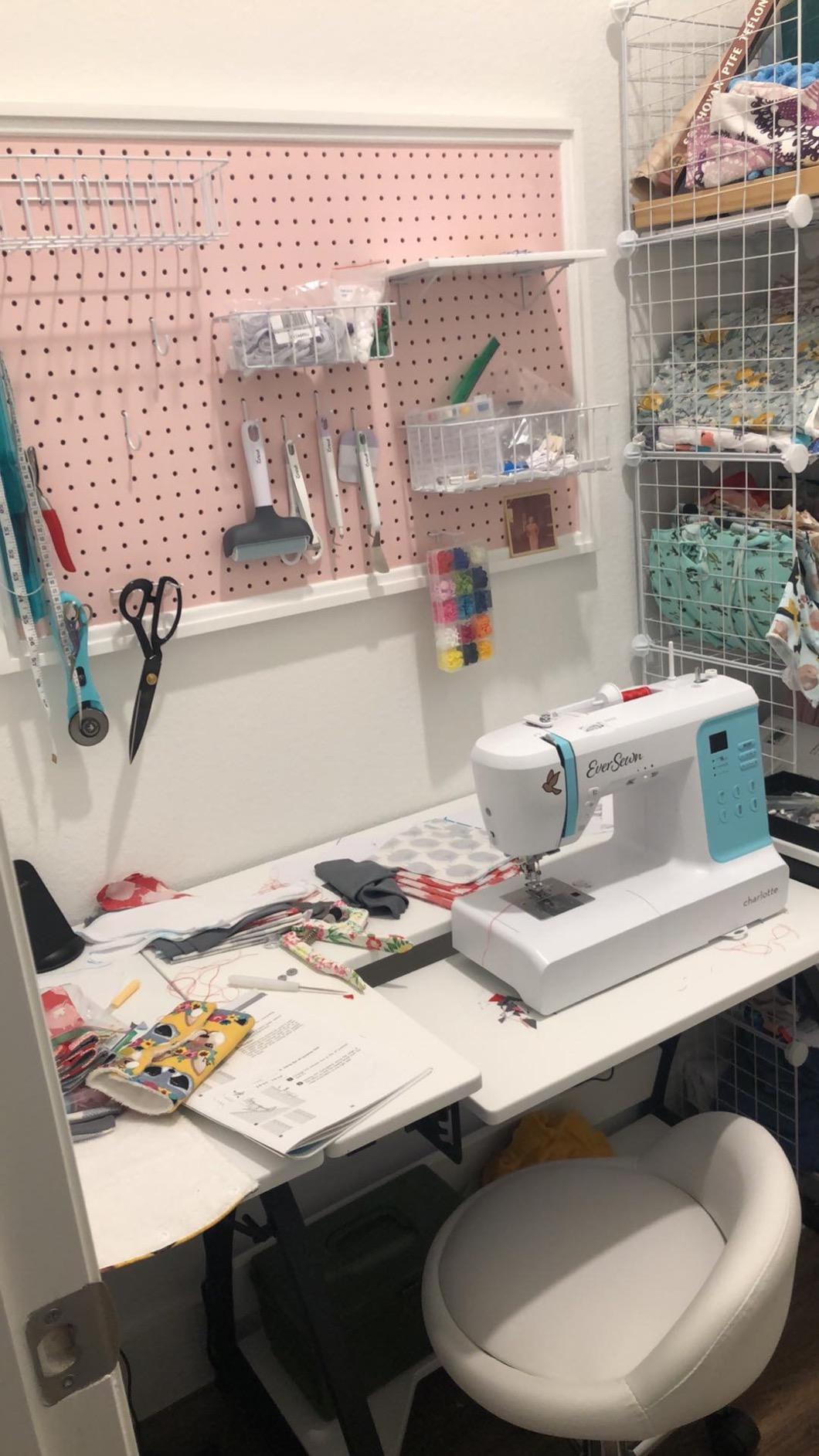
Be realistic about the trade-offs. The 4.2 average is the lowest here, with 70% of owners at five stars and 11% at one star, which points to a smaller stitch library and a wider gap between expectations and delivery. The 70 stitch package is modest beside the 165 and 185 stitch machines in this roundup, and the 7mm maximum stitch width is narrower than the 9mm platforms.
At 16 pounds with a metal frame, it is heavier than comparable plastic domestic machines, so the weight is not where the compromises were made.
What the Charlotte gets right for free motion
The feed dog drop is the entire argument. Most entry level machines omit it, which means owners end up quilting with the feed dogs partially raised and drifting fabric. Here the dogs drop cleanly, so your hands control the design, and the 6.5 inch space gives you somewhere to put a small quilt section.
For a student, a renter, or anyone who wants a dedicated free motion machine that fits in a small space, the Charlotte does the job that matters.
Where the Charlotte falls short
It is not a machine to grow a quilting practice on. Small stitch library, narrow stitch width, and a lower owner satisfaction score than everything else here all point to a first machine rather than a last machine.
Plan to move up to a bigger throat and a full foot set once you are finishing quilts regularly, and keep this one as a portable practice machine if you can.
How to Get Better at Free Motion Quilting
Technique matters more than hardware once you own a machine with drop feed dogs. This is the practice routine we recommend, and it costs nothing.
1. Start with muslin, not quilting cotton. Two layers of plain cotton with a light batting gives you the feel of a sandwich without the cost. Use a scrap you will never want.
2. Set the speed to your slowest and walk the machine in a straight line. Before you try a curve, make twenty perfectly even straight lines. The goal is to feel the machine run rather than to produce something pretty.
3. Learn the hand position first. Rest your forearms on the machine or table, keep the sandwich flat with light even pressure, and move the fabric in small circles. Most uneven stitching comes from pushing instead of gliding.
4. Add a motif every week. Loose loops, then figure eights, then clamshells, then feathers. Each one trains a different hand movement, and the progression is what builds the muscle memory beginners are missing.
5. Use a ruler foot once your loops are even. Ruler work is where accuracy becomes visible, and the jump from free motion to ruler work is faster than most people expect.
6. Check your stitch quality under magnification. Thread breaks and short stitches are far easier to fix on a practice sandwich than on a quilt you have already promised to someone.
What to Look for in a Free Motion Quilting Machine
Work through these six checks in order. They are the same ones we used when ranking the ten machines above.
Feed dog drop. Non negotiable. A lever, a switch, or a plate that disengages under pressure. If a seller cannot tell you how the feed dogs disengage, that is your answer.
Speed control. A slider or knee control that ramps from slow to full speed is worth more than extra stitches per minute. Experienced quilters name this first, and a slow machine with control beats a fast machine without it every time.
Throat space. Measure the distance from the needle to the body of the machine, not the flatbed width. More than 8 inches covers most home quilts comfortably; 10 inches and up is what you want for a king size quilt or wide rulers. A shallow throat is the most common reason quilters outgrow a machine.
Presser foot lift and foot pressure. Look for a foot that clears a thick sandwich and pressure you can dial up for batting and down for a delicate top. The Janome MC6650 and the Janome 8200 QCP do both.
Included free motion feet. Only three machines here ship with a free motion foot: the MC6650, the 8200 QCP and, functionally, the EverSewn Charlotte through its feed dog drop. On the rest, add a darning or ruler foot to the cost before you decide.
Lighting. Under rated lighting is a safety issue when you are guiding fabric by hand several inches from your eyes. The Juki HZL-F600 lights both the needle and the throat, which is the setup we look for.
If the machine has no speed slider, the community workaround is a pedal barrier: a firm board wedged under the foot pedal so it sits at a fixed, shallow angle. Quilters on the Quiltingboard forums use this on machines that ship without a slider, and one Brother PQ1500 owner reports quilting happily without speed control, noting that once you get the feel for it the missing feature stops mattering. Expect to build up speed gradually rather than in a single session.
Ergonomics deserve their own line. Free motion is hard on the back. A quilter on r/quilting notes that the free motion position is a real source of back pain, and the practical fixes are a quilter bar across the throat, a stool at the right height, and taking breaks every 20 minutes. The Janome 8200 QCP includes a quilter bar in the box.
Consider the used and vintage tier. A Singer 201-2 style mechanical machine free motion quilts well, because the feed dogs lift out and the motor is direct drive. If budget is the constraint, a serviced vintage straight stitch machine with a new feed dog plate is a legitimate free motion option rather than a compromise.
And know when to stop shopping. If you are moving to frame quilting large pieces or working on commission, a domestic machine is the wrong tool, and our long arm quilting machine roundup covers the next step.
Free Motion Settings Every Machine Needs
These settings are the starting point on any of the ten machines listed above. Adjust from here based on your thread, fabric and batting.
Stitch length: 0.5 to 0.8mm. Longer stitches are harder to control in free motion and the entry points are more visible on the back.
Needle position: Center. Off center needle positions change the way the fabric wants to turn under the foot.
Upper thread tension: Light. Excess tension is the usual cause of thread breaking during free motion, so back it off before you change anything else.
Presser foot pressure: Increase for batting and heavy sandwiches, decrease for delicate tops and appliqué sections.
Presser foot: Darning or spring heel foot with the feed dogs fully lowered. Drop the feed dogs or use the plate that disengages them under fabric pressure.
Speed: Set to the slowest control on the machine and increase only once your stitch length looks even across a full pass.
Bobbin: Fill it fully and check the tension before each session. Free motion moves the fabric in every direction, and a loose bobbin is the most common cause of thread nests on the underside.
Frequently Asked Questions
What is a good sewing machine with free motion?
A good free motion sewing machine has three things: feed dogs that drop or disengage, a speed control you can slow down, and enough presser foot lift to accept a thick quilt sandwich. Our top pick is the Juki TL-2010Q, which adds a 12mm knee lifter foot height and an automatic thread trimmer. The Janome MC6650 wins on throat space at 10 inches, and the Brother CS7000X offers the largest needle-to-arm workspace in a domestic machine.
Can you free motion quilt on any machine?
You can free motion quilt on any lockstitch machine whose feed dogs can be lowered or disengaged. Run three checks: the feed dogs must physically drop, the motor must reach full speed and stop cleanly, and the presser foot must lift high enough to slide a sandwich under the needle. Machines with solid plates and welded feed dogs cannot do true free motion. Vintage straight stitch bodies can, because the feed dogs lift out entirely.
How to get better at free motion quilting?
Practise on muslin first, set the machine to its slowest speed, and make twenty straight even lines before you attempt a curve. Keep your forearms supported and move the fabric in small circles rather than pushing it. Add one new motif per week, moving from loose loops to figure eights to clamshells to feathers. Check your stitches under magnification on a practice sandwich, and introduce a ruler foot once your loops are even.
What is the best sewing machine for free motion quilting?
The Juki TL-2010Q is the best all-round free motion machine in our testing because of its 12mm knee lifter, automatic thread trimmer and rigid aluminium frame, though you need to add a darning foot. If throat space is your priority, the Janome MC6650 offers 10 inches and includes a convertible free motion foot. If you are starting out, the EverSewn Charlotte has a real feed dog drop at an entry level price point.
What are the best machine settings for free motion quilting?
Start with a stitch length of 0.5 to 0.8mm, a centred needle position and light upper thread tension, since excess tension is the usual cause of thread breaks. Increase presser foot pressure for batting and reduce it for delicate fabrics. Drop the feed dogs and fit a darning or spring heel foot. Set the speed control to its slowest setting, and fill the bobbin fully before you begin.
What are some good sewing machines with free motion stitching?
The ten machines in this roundup all support free motion stitching, but in different ways. The Janome MC6650 and Janome Horizon 8200 QCP ship with free motion feet. The Juki HZL-F600 and Janome JW8100 offer speed sliders for fine control. The Brother XR9550 and HC1850 need a purchased darning foot but have a large owner base. The EverSewn Charlotte has a feed dog drop at an entry level.
The Verdict: Which Machine Should You Buy?
The Juki TL-2010Q is our pick for the best quilting machines for free motion work, because the knee lifter and automatic thread trimmer solve the two problems that slow every new free motion quilter down. Add a darning foot and it is ready to stitch.
Buy the Janome MC6650 if your quilts are large and you want the included free motion foot. Buy the Brother HC1850 or XR9550 if you want a proven, well supported machine and are happy to add a foot. Start with the EverSewn Charlotte only if budget is the deciding factor.
Whichever one you choose, practise on scrap fabric first. The machine is the easy part; the hand movement is what takes a season. Good luck, and check the long arm roundup when you are ready to quilt larger pieces in a frame.