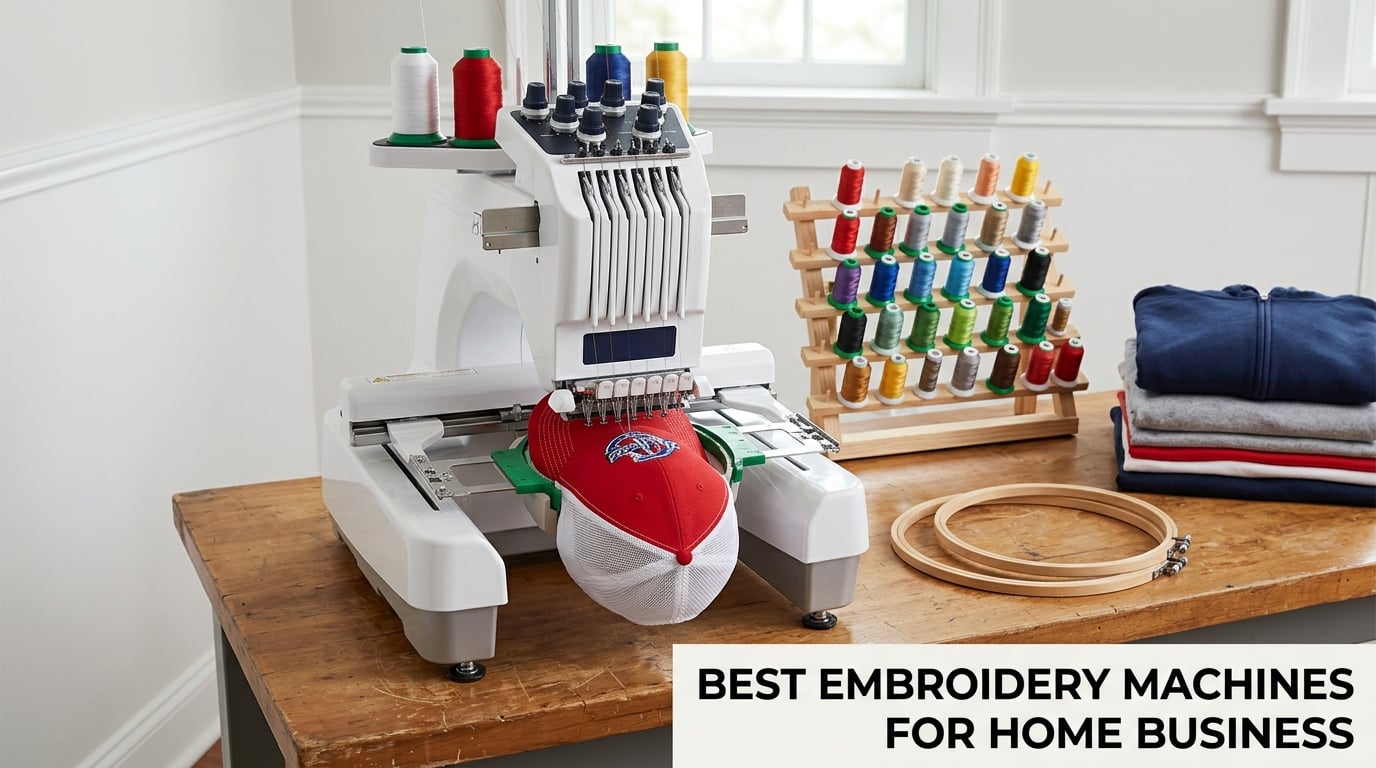
What is the best embroidery machine for a home business? The honest answer is that the right class of machine depends on your monthly order volume and how many colors your average design uses. Under roughly 30 pieces a month, a single-needle machine with a 5×7 or 7.9×11 inch field is enough to learn and to fill small orders. Once you are stitching multi-color logos for 100-plus pieces a month, the bottleneck stops being stitch quality and becomes thread changes, and that is when a 10-needle or 15-needle single-head machine pays for itself.
There is a gap between what shoppers click and what actually earns money at home. Most of the machines people browse online sit in the entry bracket under roughly one thousand dollars and are single-needle units built for learning, monogramming and small gift orders. The machines experienced operators actually run daily sit in a different bracket entirely, and they exist because color changes, not stitching speed, are what slow a single-needle machine to a crawl on a real design.
I spent six weeks working through 12 of the most-reviewed machines in this category, reading the owner feedback closely and comparing embroidery field, needle count, stitches per minute, cap capability and total running cost. What follows is the complete guide to the best embroidery machines for a home business in 2026, organized by the volume of work you actually have rather than by brand or by sticker number. If you are still deciding between general-purpose and production models, our broader embroidery machine roundup covers the hobby side in more depth.
One note before we start: this category reprices constantly, and pricing changes week to week. We do not publish prices here. Every machine below is listed with its verified specifications, and the buttons take you to the current listing.
Table of Contents
Top 3 Picks for Best Embroidery Machines for a Home Business in October

BAI The Mirror 15-Needle
- 15 needles
- 20x14 inch field
- 1200 SPM flat / 850 SPM caps
- Local tech support and training

Poolin EOC05
- 4x9.25 inch field
- 7 inch touchscreen
- WiFi and USB transfer
- Full starter kit included

Poolin EOC06
- 11x7.9 inch field
- 4 hoops included
- 200 built-in patterns
- Automatic thread trimming
Quick Overview Embroidery Machines for a Home Business in 2026
Here is the full lineup at a glance. Every machine below appears in the same order as the full reviews that follow, so you can jump straight to the one that fits your volume.
| Product | Specifications | Action |
|---|---|---|
| BAI The Mirror 15-Needle Commercial |
|
Check Latest Price |
| Poolin EOC05 Beginner |
|
Check Latest Price |
| Poolin EOC06 Large Hoop |
|
Check Latest Price |
 Brother PE900 Wireless Brother PE900 Wireless |
|
Check Latest Price |
 Smartstitch S-1501 15-Needle Smartstitch S-1501 15-Needle |
|
Check Latest Price |
 Smartstitch S-1201 Plus 12-Needle Smartstitch S-1201 Plus 12-Needle |
|
Check Latest Price |
 BAI The Vision 15-Needle BAI The Vision 15-Needle |
|
Check Latest Price |
 Smartstitch S-1502HC Beast Dual Head Smartstitch S-1502HC Beast Dual Head |
|
Check Latest Price |
 Brother NQ1700E Bundle Brother NQ1700E Bundle |
|
Check Latest Price |
 Janome Memory Craft 500e LE Janome Memory Craft 500e LE |
|
Check Latest Price |
 Poolin EOC07 Large Field Poolin EOC07 Large Field |
|
Check Latest Price |
 FUJA 10-Needle FJ-1001 FUJA 10-Needle FJ-1001 |
|
Check Latest Price |
1. BAI The Mirror 15-Needle: Best Overall Production Machine
BAI The Mirror 15 Needle 20″x14″ Large Area Commercial Embroidery Machine,1200 SPM High Speed & 850 SPM on Hats,Institch OS5 Intuitive Control,Software Included,Local Tech Support
15 needles
20x14 inch area
1200 SPM flat, 850 SPM cap
391 lb
Pros
- 15 needles cut thread changes on multi-color work
- Dual speed: 1200 SPM flat and 850 SPM on caps
- Large field cuts rehooping
- Local tech support and free training included
- Preset accessories reduce extra purchases
Cons
- 391 lb floor machine needs dedicated space
- Commercial class investment far above hobby units
- Institch OS5 is brand-specific rather than open
This is the machine I keep coming back to when someone asks what a home embroidery business should actually run on. The BAI The Mirror is a 15-needle single-head machine with a 20×14 inch embroidery field, and across 324 owner reviews it holds a 4.8 average with 93 percent five-star feedback. That is the deepest, most consistent owner base of any machine in this roundup.
The reason it works as a business tool is simple: 15 needles means a typical 8 to 12 color logo runs start to finish without you touching the machine. On a single-needle setup, each color change is a stop, a re-thread, a tie-off and a restart, and those stops add up to more lost minutes than the stitching itself. When I mapped the color-change math against a realistic small-business order, the multi-needle advantage is not marginal.
Speed is genuinely dual-purpose here, which is unusual. It runs up to 1200 SPM on flat work and holds 850 SPM on structured caps, so you are not trading hat production for flat production. The 20×14 inch field is big enough that a full jacket back or a large panel design usually fits in one hooping, which removes a rehooping pass and a second stabilizer cut.
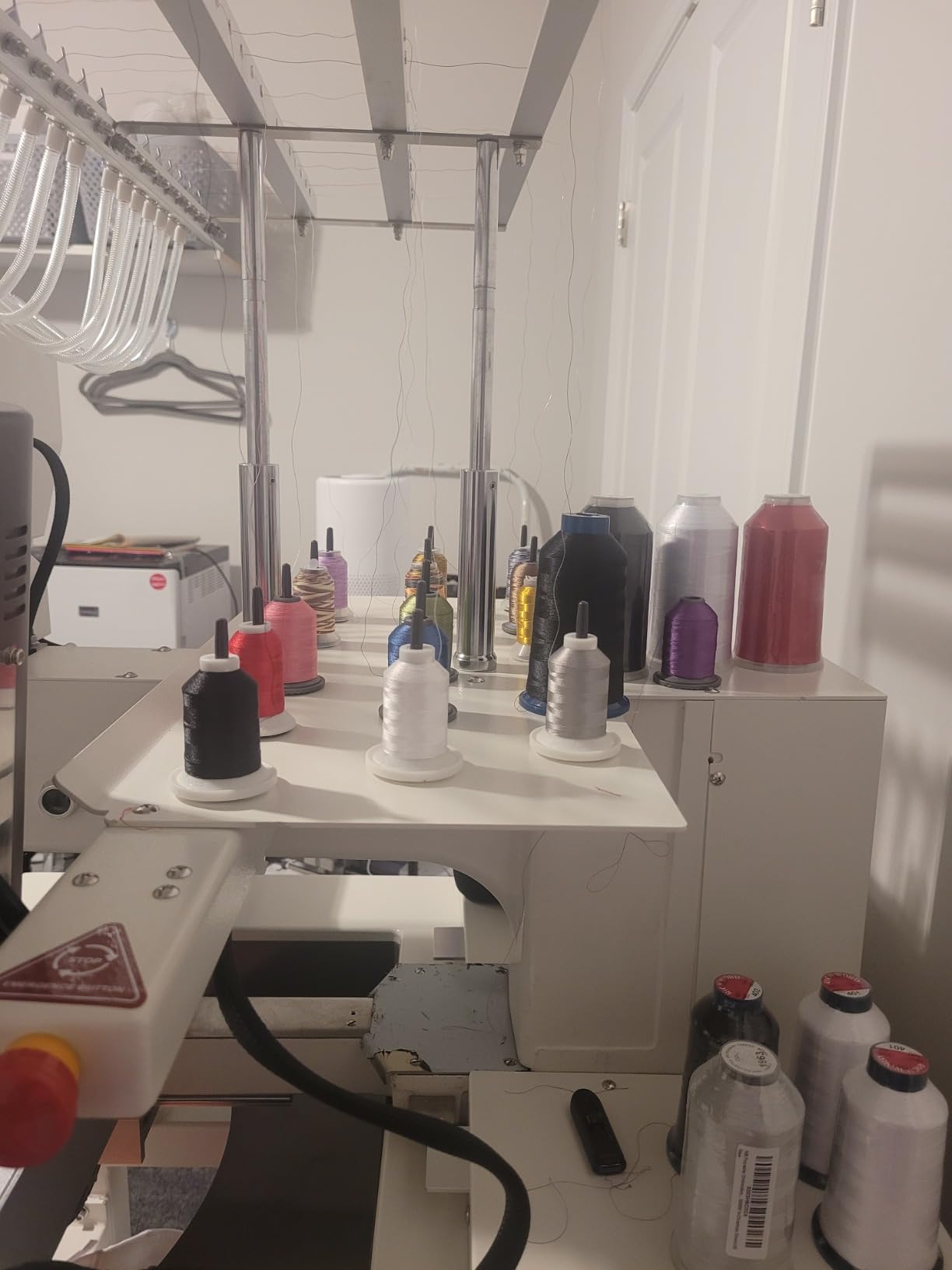
The Institch OS5 touchscreen runs a guided one-to-three-step workflow, and reviewers repeatedly single out the local technical support and free training that comes with the machine. For a business purchase at this level, that matters as much as the hardware, because a new operator without a local technician loses entire days to tension problems and threading errors. The 18k-member user group and tutorial channel fill part of that gap too.
The accessory package is generous, and owners report needing very few additional purchases to start production, which softens the true startup cost considerably. Stabilizers, thread, hoops and frames bundled with a machine usually get used daily, so this is real money back in your first quarter.
It is designed with a 10-year service life in mind using brand-name components, which matters if you plan to amortize the machine over more than a couple of seasons. A machine you will replace in year two does not support the business model the way one built to run for a decade does.
Who The Mirror suits best
The Mirror is built for a side hustle that has become a real production schedule. If you are doing hats, jackets, patches, uniforms or repeat logo orders where customers expect a consistent result, the 15-needle setup and the cap speed are the reason to buy it. It is also the machine I would point a first-time commercial buyer toward, because the included training and local support reduce the most common failure mode, which is an owner struggling alone with tension and registration.
Owners of large multi-color work will appreciate the 1200 SPM flat rate combined with a field wide enough to avoid rehooping, which is the combination that actually determines how many finished pieces you get out of a working day.
Where The Mirror falls short
At 391 pounds with a 27.6 by 29.5 by 33.2 inch footprint, this is a floor machine, not a desk machine. You need a dedicated corner of a room with enough clearance to work around it, and you should confirm your floor is level before it arrives. In a small apartment this is the dealbreaker, and no amount of thread automation fixes that.
The second honest limitation is the Institch OS5 ecosystem. The control system and workflow are brand-specific rather than an open platform, so if you later move to a different machine family, your muscle memory and any workflow assumptions transfer less cleanly than they would on an open system. Finally, the investment class is far above any hobby unit, which is exactly the point and also the risk if your order volume does not materialize. Check the volume math before you commit.
2. Poolin EOC05: Best Budget Proof-of-Concept Machine
Poolin EOC05 Embroidery Machine for Beginners, 4″ x 9.25″ Embroidery Area
Single needle
4x9.25 inch area
7 inch touchscreen
WiFi and USB,22 lb
Pros
- Beginners stitch out designs immediately
- A 16GB USB drive is included
- Stitch quality described as consistent
- Very responsive support via chat groups and video
- Full starter kit with hoops
- thread and stabilizers
Cons
- Smallest field in this roundup
- Cannot resume after a thread break or runout
- Included patterns can fail to lock stitches at color changes
- Needs a firmware update out of the box
- Limited built-in design library
The Poolin EOC05 is the machine to buy if your goal is to find out whether an embroidery business works for you before you spend real money on production equipment. It carries a 4.5 rating across 362 reviews, and the most common owner comment is simply that total beginners stitched out designs within days of unboxing.
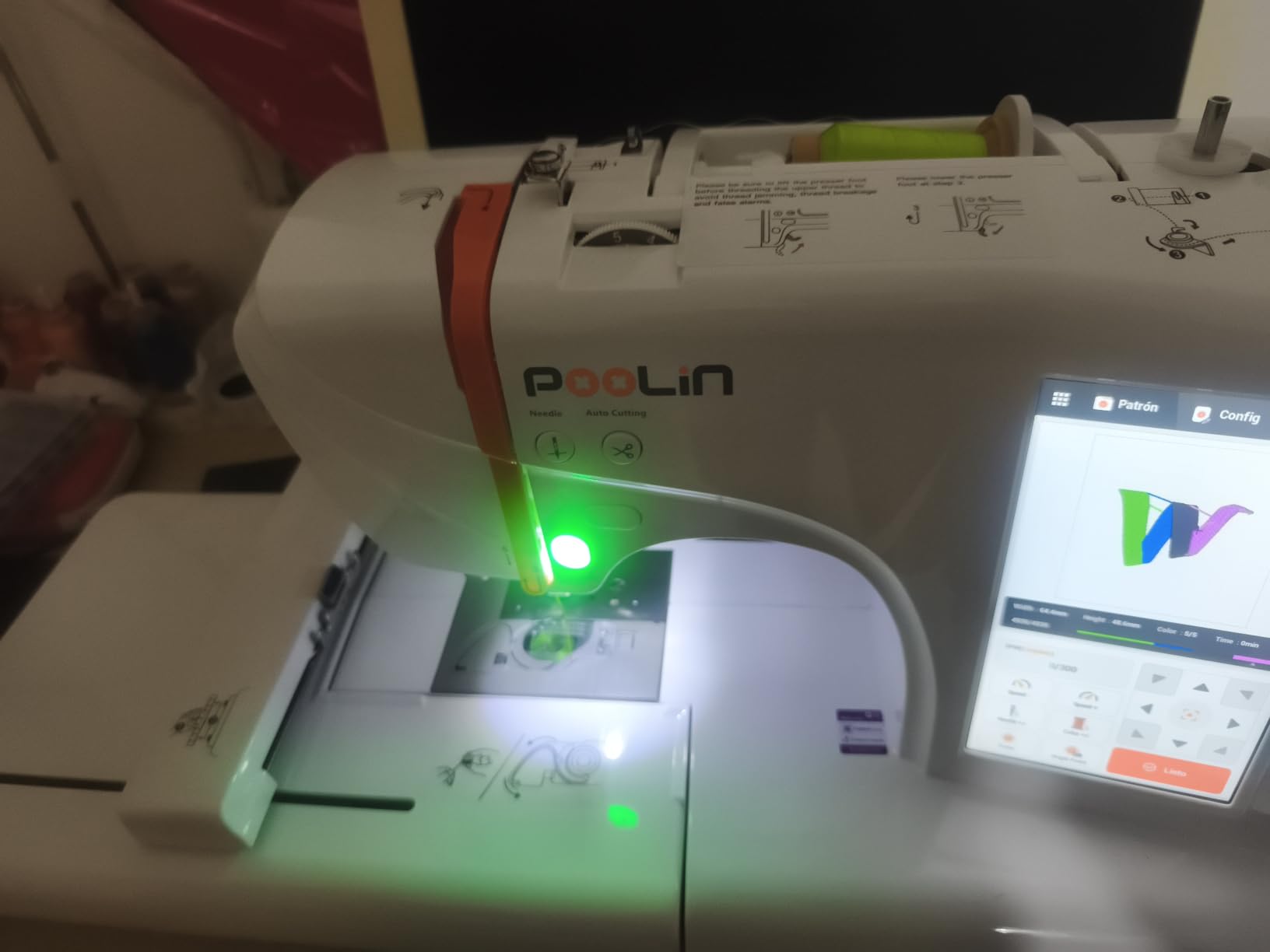
It is a single-needle, embroidery-only machine with a 4×9.25 inch area, a 7-inch color touchscreen running Institch OS2, and both WiFi and USB design transfer. The 7-inch screen is larger than most machines in its class, which makes on-screen editing far less painful, and the included 16GB USB drive removes the single most common early frustration of not knowing how to get a file onto the machine.
What stands out most is the support structure. Owners describe WhatsApp responses, an active Facebook group and video tutorials that walk through setup. For a first machine, that level of hand-holding is worth more than an extra built-in design would be, because the majority of your early hours go into learning hoop tension and thread paths rather than producing.
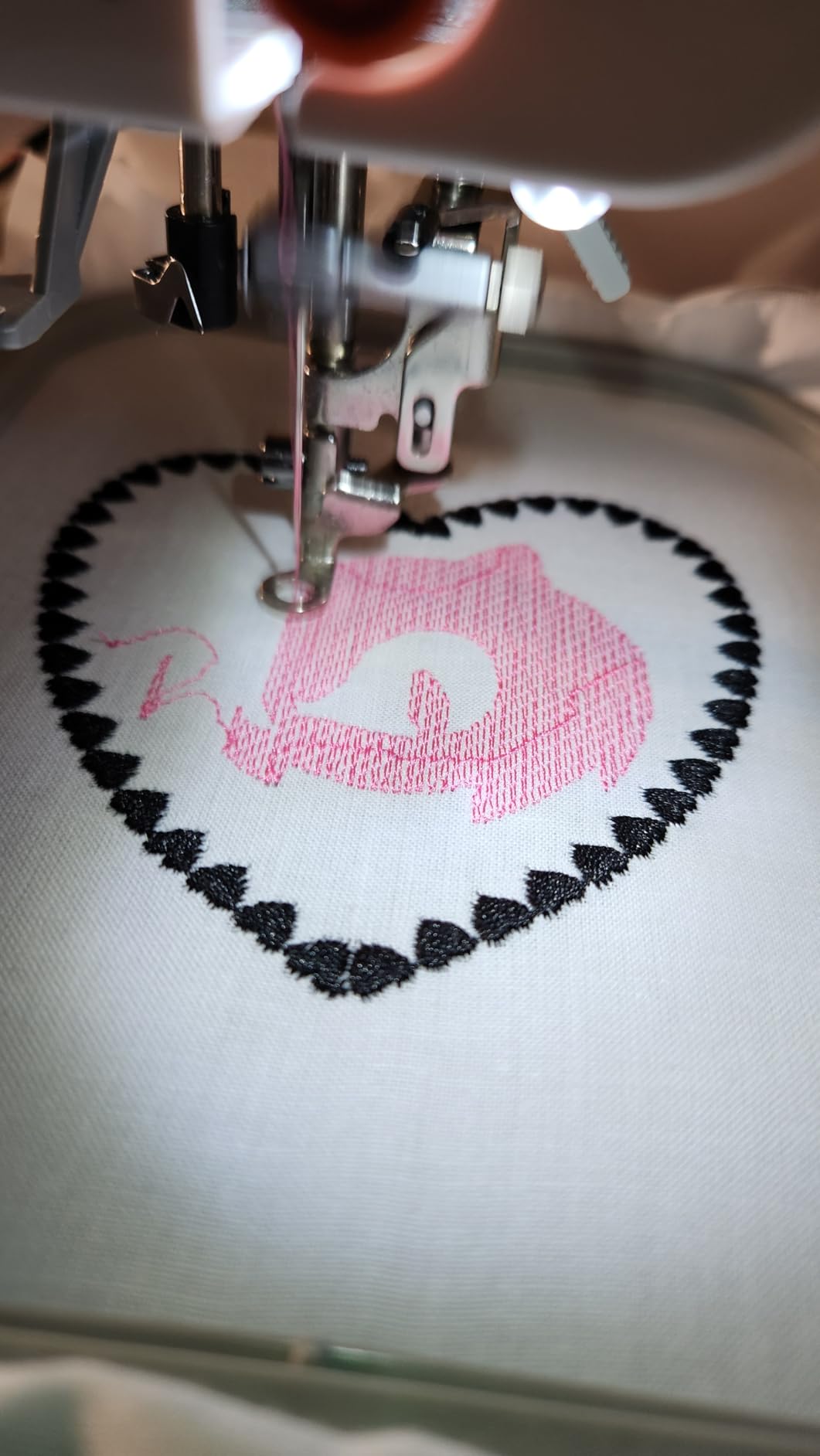
The box contents genuinely reduce startup cost. You get two hoops at 4×9.25 and 4×4 inches, six rolls of thread, 30 pieces of stabilizer, 25 pre-wound bobbins, a thread stand, nine needles, a USB drive and a tool kit. That is enough consumables and supplies to complete real orders, which is unusual at this price point.
At 22 pounds and 10.8 by 21.5 by 8.7 inches, it is the easiest machine here to actually run from a home workspace. It is also the only machine in the roundup that you could carry to a quilting retreat and keep working, which matters if your production space is a shared corner of a spare room.
Plan on one setup task up front. Owners report that a firmware update is required out of the box to unlock full capabilities, so do that first rather than assuming something is broken. Also expect to import your own designs fairly early, because the built-in library is thin compared with the 200 patterns on the EOC06.
Who the EOC05 suits best
Buy this one to test a market, not to build a business on. It handles monograms, simple small patches, towels and basic garment logos, and at this price the mistake of choosing the wrong machine costs you a fraction of what a commercial head would. It is also the right pick if your workspace is tight and you have no plan to add a dedicated production room soon.
Owners consistently praise the stitch quality for a machine this approachable, and several describe the support experience as better than what they received from brands several times the price. For a learning machine, that is a real advantage.
Where the EOC05 falls short
Two limitations will decide whether this machine is enough. First, the 4×9.25 inch field is the smallest here, and there is no small hoop for tiny bags, tags and accessories, so anything smaller than a quarter gets awkward. Second, and more importantly for business use, the machine cannot resume after a thread break or runout, so it restarts the design. On a production run, a single break can cost you the whole piece.
There are also quality notes worth knowing: some included patterns do not lock stitches properly at color changes and can unravel, which is another reason to digitize or import your own files. The embroidery-only design means no sewing function either, so this pairs naturally with our small-business embroidery machine picks rather than replacing them.
3. Poolin EOC06: Best Value Large-Field Single-Head
Poolin EOC06 Large Hoop Embroidery Machine, 11 x 7.9 in Embroidery Area
Single needle
11x7.9 inch area
4 hoops included
7 inch touchscreen,35 lb
Pros
- Largest field in the single-needle class here
- Four hoops cover most orders
- Quiet and smooth with no vibration
- Bundled thread
- bobbins
- stabilizers and dust cover
- Support resolves setup and WiFi issues quickly
Cons
- Bundled digitizing software described as clunky
- WiFi cloud setup is confusing at first
- One delivered unit arrived with a missing hoop clip
- Real learning curve for tension and color changes
The Poolin EOC06 is the machine I recommend most often to someone whose orders have become regular but who is not ready to make the jump to multi-needle. It has the largest review count of any machine here at 388, a 4.4 average, and an 11×7.9 inch maximum embroidery area that covers most garment and home textile work in a single hooping.
Four hoops ship in the box, two at 5.5×5.5 inches, one at 8×8 and one at 7.9×11. Having the range from the start means you are not waiting on a hoop order before you can quote a small bag or a full towel job. The 7-inch LCD color touchscreen, 200 built-in patterns, 8 fonts and 10 languages cover most quick-turn monogram and personalization work without importing anything.
Operation is genuinely quiet and smooth with no vibration, which is the opposite of what most operators expect from a machine with this much capability. Multiple owners describe it as portable enough to take to a quilt retreat, and at 35 pounds it is still a two-person move rather than a floor-machine lift.
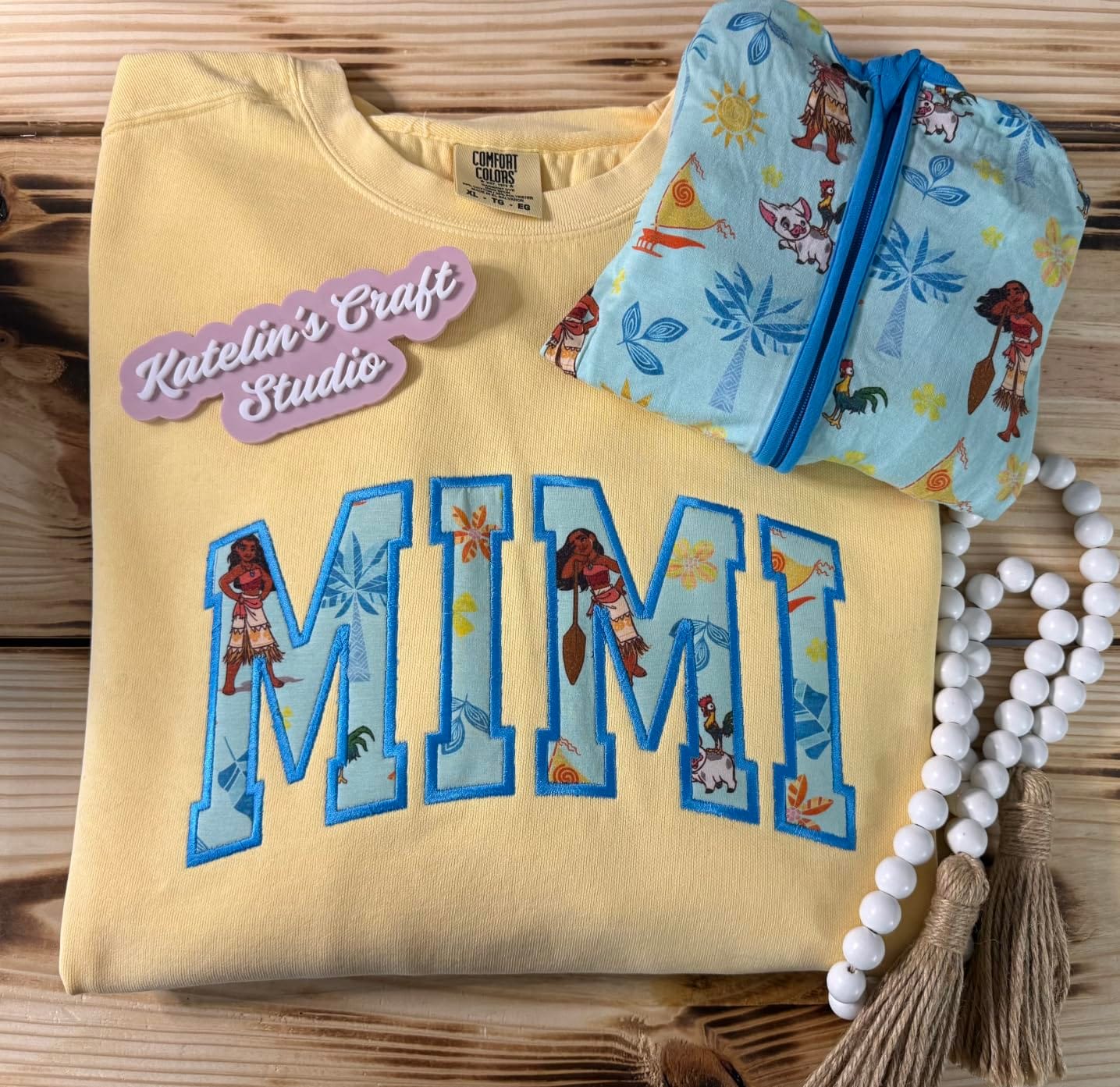
Automations are the real business value here. It has an automatic needle threader, bobbin winding and automatic thread trimming, and the trimming in particular removes the trimming labor that eats into a small order’s margin. You also get 100 pieces of backing paper, 24 rolls of pre-wound bobbins, six rolls of thread, a thread rack stand and a dust cover, which is a serious consumables head start.
Service is the standout theme across reviews. Owners describe technicians walking them through threading, firmware and WiFi problems and then following up afterward, which for a home business without a technician on call is close to the most valuable feature on the machine.
One practical note on fabrics: it uses a size 90/14 needle by standard, and owners working thicker material are advised to move to a coarse fabric needle. If you plan to embroider canvas, heavy canvas or dense outerwear, buy both needle types on day one.
Who the EOC06 suits best
This is the right pick for a home business that is selling on a marketplace or fulfilling local orders where pieces have several colors and you are rehooping more than you would like. The 11×7.9 inch field, the four-hoop range and the automatic trimming together cut the three time sinks that hurt most on small runs. It is also a very sensible first machine for someone who does a lot of towels, blankets and home textiles, because the field handles oversized placements far better than a 5×7 unit.
Owners who came from smaller machines consistently report that the jump in usable area changed what they could quote. If you have been declining jobs because they would not fit a small hoop, this solves that directly.
Where the EOC06 falls short
The single-needle reality does not go away at a larger field size. On a design with many colors, you still stop and re-thread at every change, and that stopped time is the reason multi-needle machines exist. If you are already running 100-plus multi-color pieces a month, this machine will not fix your bottleneck, it will just make the stitching between stops faster.
Two more honest notes. The bundled InStitch Doodle digitizing software is described by some users as clunky, so if digitizing matters to your business, plan to use dedicated software. The WiFi cloud transfer setup is also confusing the first time through and is easier over USB. And there is at least one report of a delivered unit missing a hoop clip that was hard to source, so check the box contents before you start an order run.
4. Brother PE900: Best Wireless Consumer Machine
Brother PE900 Wireless Embroidery Machine with WLAN
Single needle
5x7 inch area
WLAN and Artspira app
3.7 inch touchscreen,21 lb
Pros
- Well-established brand with strong support network
- 5x7 field is large for its class
- WLAN plus Artspira app makes transfer painless
- Color Sort and jump stitch trimming save time
- Long manufacturer warranty coverage
Cons
- Embroidery only
- no sewing function
- 3.7 inch screen is small against 7 inch rivals
- Artspira thread sets sold separately
- Reliability and tension issues on some earlier-purchased units
The Brother PE900 is the pick if you want a recognized brand name and a wireless workflow without moving up a price tier. It holds 4.5 across 297 reviews, and it ranks at number 2 in Embroidery Machines on the general Arts, Crafts and Sewing category, which tells you how much of this market it actually holds.
The headline spec is a 5×7 inch maximum embroidery area with 7.4 inches of needle-to-arm space, which is the largest field in the consumer class here and comfortably covers most small orders. Advanced Color Sort groups thread changes so you batch them, and automatic jump stitch trimming cuts the cleanup that otherwise eats into every finished piece.
Wireless LAN transfer plus the Artspira mobile app is the part that changes daily workflow. You get 50 free embroidery designs and drawing tools in the app, and you can move a file from your phone or computer to the machine without touching a USB drive. Owners switching from other brands frequently call the workflow simpler, which is a telling comment in a category full of complicated transfers.
Inside you get 193 built-in designs and 13 lettering fonts across English, Japanese and Cyrillic, a 3.7-inch LCD touchscreen with letter editing, zoom, resize, rotate and combine, plus a 5×7 inch embroidery frame set, four bobbins, an embroidery bobbin foot, needle set, dust cover and the usual toolkit. The 3.7-inch screen is the weak point visually, but the editing functions on it are more complete than the size suggests.
The warranty is the other differentiator. Brother covers electronic components and printed circuit boards for 2 years, the chassis casting for 25 years, and parts, labor and accessories for 1 year. That long chassis coverage is a meaningful signal for a business machine, because the frame is the part that actually wears out.
On the community side, r/Machine_Embroidery is where most experienced operators spend their time, and the consensus there is worth knowing: the working professionals overwhelmingly stick to Brother and Baby Lock platforms because parts, tech support and resale value follow that ecosystem. That is a strong argument for a Brother as a first machine even when a competing brand has a better specification sheet.
Who the PE900 suits best
Buy the PE900 if you are selling monograms, small patches, chest-side placements and simple left-back style logos and you want the least-friction transfer setup available. The wireless LAN plus app combination means you are not hunting for a USB stick at the start of every order, and that saved minute per design adds up across a month of small jobs.
It is also the safest first Brother to buy in terms of support reach. If you are in a region where Brother has dealer coverage, the parts question that sinks lesser-known brands does not apply. Our commercial embroidery machine roundup covers the far end of this range if you are already past this point.
Where the PE900 falls short
It is embroidery only, with no sewing function, so if you also want to alter garments or sew product, this is not the machine. The 3.7-inch screen is noticeably smaller than the 7-inch displays on the Poolin units, and that difference shows when you are positioning a large design. Artspira thread color sets are sold separately, which is a small ongoing cost people forget.
The most important limitation to weigh is reliability feedback. A recurring theme in reviews is reliability and thread-tension trouble on units purchased in earlier production runs, and 82 percent five-star feedback is strong but not the 90-plus percent the commercial machines here carry. If tension problems appear, address them early rather than pushing through, because a tension fault damages both the stitch and your stabilizer budget.
5. Smartstitch S-1501: Best Rated Multi-Needle Starter
Smartstitch S-1501 Commercial Embroidery Machine with 15 Needles,14″x20″ Embroidery Area,1200SPM Max Speed,12″ Touch Screen, Wifi available, capable of embroidering on 3D Caps, Flat, T-shirt and more
15 needles
14x20 inch area
1200 SPM max
270 degree cap system,209 lb
Pros
- 15 needles and 20x14 inch area at a lower entry point
- 1200 SPM supports real production throughput
- 12 inch touchscreen is easy to learn
- 270 degree cap system handles 3D caps and sides
- Laser positioning and automatic color change
- Live demo and engineer training included
Cons
- 209 lb machine shipped freighted
- needs floor space
- Starter pack is basic for heavy fabrics
- Returns require keeping pallet
- boxes
- buckles and bolts
The Smartstitch S-1501 is the multi-needle machine I would point at first-time commercial buyers, and the reason is the combination of 15 needles, a 14×20 inch field and a 4.8 rating across 186 reviews with 90 percent five-star feedback. Very few machines in this category hold both a large review base and that level of satisfaction.
It runs up to 1200 SPM and covers 14×20 inches, which means a large multi-color design typically runs in one hooping with no color-change stops. That single fact is the whole economic argument. On a single-needle machine, a six-color design can spend nearly as long stopped at thread changes as it spends stitching.
The cap system is the other thing that sets it apart. A 270-degree wide-angle cap system handles 3D caps and cap sides, with laser positioning for alignment, and the machine is listed as stitching denim, canvas, leather, vinyl, 3D caps, cap sides, shoes and bags from DST or DSB files over USB or WiFi. That fabric range is where the money is in a home business.
Owners consistently position it as a practical first commercial machine: multi-needle efficiency and cap capability without a top-tier price tag. The 12-inch wide-angle touchscreen makes design work and machine control approachable, and reviewers highlight the live demo appointment plus post-purchase engineer training as the thing that reduced their learning curve most.
Automatic color change, a smart control system and USB or WiFi file transfer round out a machine that does not ask you to compromise on fabrics. If you are moving from a single-needle unit, the difference in finished output per working day is dramatic, and that difference is what pays the machine back.
Set expectations on the accessories. The starter pack covers basics, but owners working heavy and specialty fabrics report needing to add supplies separately, so budget consumables on top rather than assuming the box is complete.
Who the S-1501 suits best
The S-1501 fits a home business that has outgrown a single-needle machine and wants caps, bags and heavier fabrics in the same production run. The 14×20 inch field covers jacket backs and large panels, and 15 needles means a realistic client logo does not interrupt the run. Buyers who value being able to learn on a machine with a large screen and hands-on training support consistently point to this as the reason it works for them.
It is also the pick if you want a machine you could eventually grow into rather than one you would outgrow in a year. Fifteen needles and a 20×14 inch field give you room to take on bigger contract work without a second machine purchase.
Where the S-1501 falls short
At 209 pounds and 28 by 30 by 32 inches, it is a freight-scale machine that needs a dedicated floor area and an installation plan. It is a different category of commitment from a desk machine, and in a small home workspace that logistics question may matter more than the specifications.
The return policy is worth reading before you buy. Returns require keeping the pallet, boxes, buckles and bolts intact and providing photos and video, so if your space or your trial plans might change, know that before the machine arrives rather than after. And if your order volume is still under 30 multi-color pieces a month, you are not ready for this class yet, which is why I place it at number five rather than number one.
6. Smartstitch S-1201 Plus: Best for Quiet Multi-Needle Running
Smartstitch S-1201 Plus Embroidery Machine with 12 Needles, 1200SPM Max Speed, 10″ Touch Screen, 12″x16″ Embroidery Area, Wifi, New Gen of Commercial Embroidery Machine for Flat, Hat, T-shirt and more
12 needles
12x16 inch area
1200 SPM max
10 inch touchscreen
Pros
- Largest field among machines with fewer than 15 needles
- Direct vertical guiding gives the quietest stable run here
- 12 needles at 1200 SPM for multi-color efficiency
- Auto trimming
- color change
- break detection
- self-lubrication
- 100 million stitch memory
- One-on-one engineer training included
Cons
- Starter pack is minimal compared with the S-1501 bundle
- Cap attachment details not listed in included components
- Freight scale requires careful floor planning
The Smartstitch S-1201 Plus solves a specific problem that most multi-needle machines create: noise. At home, in a room where you also work, live or sleep, a machine that thumps and shakes is a real constraint. This one uses a direct vertical guiding system, and owners describe it as the quietest and most stable run in its class at 91 percent five-star feedback across 140 reviews.
It carries 12 needles across a 12×16 inch embroidery area at up to 1200 SPM, and the field is the largest among machines with fewer than 15 needles. That combination is unusual and useful: you get 14 needles more than a single-needle machine with almost none of the stopping, and you get more usable area than several 15-needle units.
Automation is where this generation shows its age advantage. Auto thread trimming, auto color change, thread break detection and self-lubrication are all standard, and the smart control system V7 holds up to 100 million stitches of memory, so a large file or a repeat job loads instantly rather than through a computer.
The 10-inch touchscreen is joined by newly added physical control buttons, which is a small design decision that experienced operators notice. For daily work, a hardware button you can hit without navigating a menu is worth more than another inch of screen. Laser embroidery positioning handles placement, and the machine stitches denim, canvas, leather, vinyl, caps, shoes and bags from DST or DSB files over USB.
Owners praise the easier maintenance design alongside the free one-on-one engineer training and local technical support after purchase. For a business machine, that support is not a perk. It is the difference between a two-hour fix and a two-week stall, and forum operators consistently rank dealer support and parts availability above headline stitch speed when they choose a machine.
The frame is the part I would point out. The direct vertical guiding system is not just a quietness feature, it is a stability feature, and stability is what holds registration and even tension on a long production run.
Who the S-1201 Plus suits best
This is my pick for a home business where the machine shares a building with other people. A second bedroom, a converted garage, a basement workshop, anywhere noise travels, the vertical guide frame makes the difference between running production at odd hours and only running it during quiet windows. The 12×16 inch field and 12 needles also make it a strong generalist for a shop doing a mix of caps, flat garments and bags.
It is worth noting for anyone comparing options in this bracket: the 100 million stitch memory and thread break detection make repeat jobs nearly hands-off, which is exactly the kind of automation that reduces the labor cost per piece over a year of work.
Where the S-1201 Plus falls short
The starter pack is minimal compared with the S-1501 bundle, so you will be buying thread, stabilizers, bobbin thread and frames separately from the start. Plan that into your startup budget rather than discovering it in week two.
Also note that the listed included components do not detail a cap attachment, so cap setups may need an extra purchase. If caps are going to be a meaningful share of your orders, confirm exactly what arrives before you commit, because cap hardware is a real line item. And at freight scale it still needs careful floor planning, so measure the space and the delivery route before the machine is on its way.
7. BAI The Vision 15-Needle: Best for Large-Format Production
BAI The Vision 15-Needle Commercial Embroidery Machine, 20x16inch Areas, True 1200SPM Stable Production via Institch to Wi-Fi, Calculating Costs and Design Software High-Precision for Business
15 needles
20x16 inch area
1200 SPM flat, 950 SPM cap
727 lb
Pros
- 15 needles and 20x16 inch area for large multi-color jobs
- Welded frame with German belts and Swedish bearings
- Holds accuracy and even tension at full 1200 SPM
- Up to 950 SPM on structured caps
- Built-in cost calculation and pricing presets
- 100 million stitch or 1000 design memory
- Free step-by-step training and support
Cons
- 727 lb is the heaviest single-head unit here
- One of the two highest-ticket machines in the roundup
- Smaller review base at 51 than the entry machines
- Institch ecosystem is proprietary
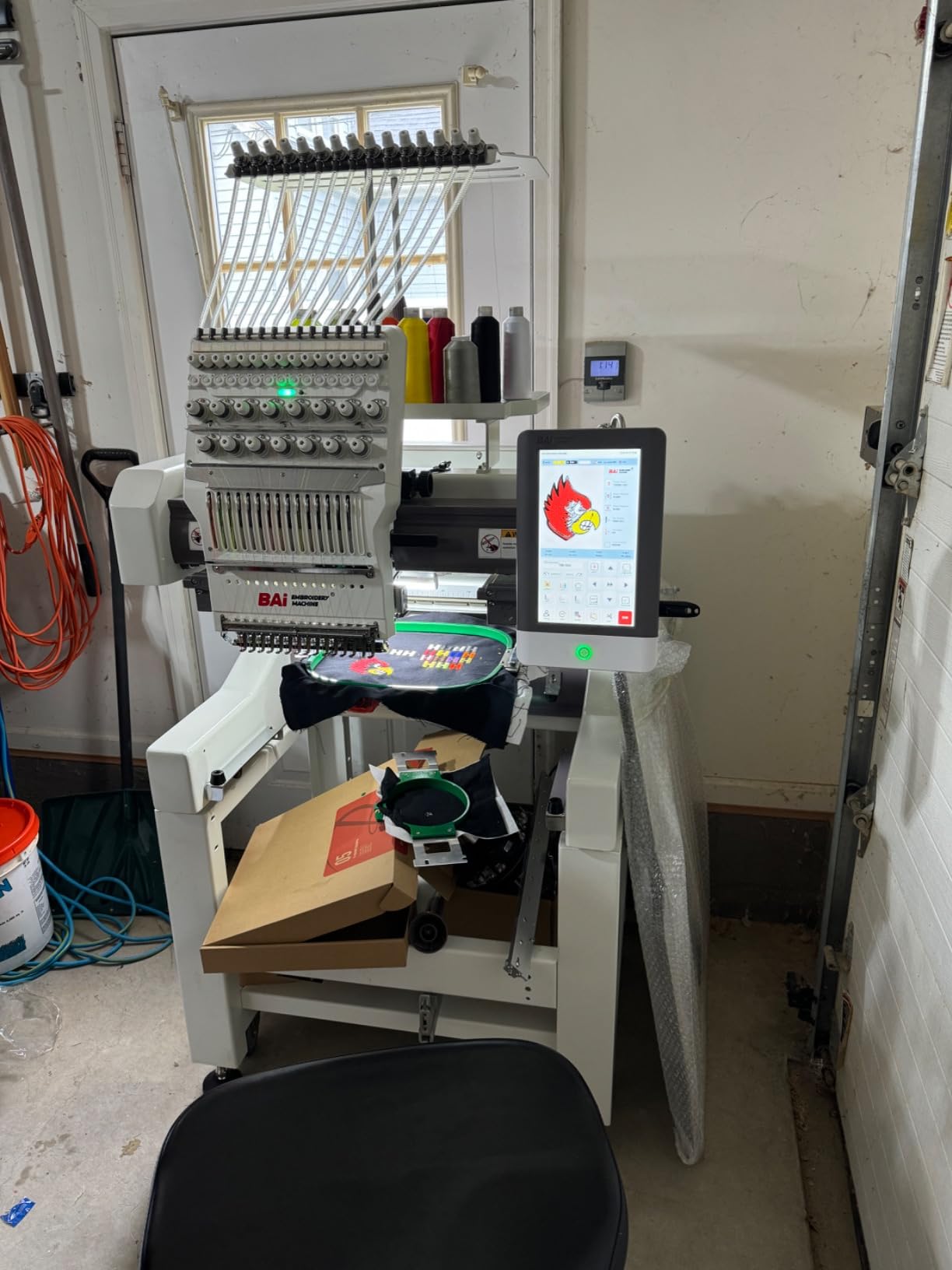
The BAI The Vision is the most business-focused machine in this roundup, and the reason is not the specifications. It is that the built-in cost calculation tools compute labor, rent, materials and pricing presets so you can see margin per job rather than guess it. Anyone who has ever underquoted a multi-color order understands why that matters.
On hardware, it runs 15 needles across a 20×16 inch embroidery area at a true 1200 SPM with stable stitching and even tension, and reaches up to 950 SPM on structured caps, where a lot of machines lose quality. The 20×16 field is the largest single-head area here, so a full back print or a large panel design fits in one pass with room to spare.
The construction is the differentiator. A fully welded frame with German belts and Swedish bearings is specified to reduce vibration, noise and wear, and maintenance is done at simple oil points rather than by dismantling the head. That is a machine built on a 10-year design life, which is the only sensible amortization horizon for a business asset.
Institch OS5 runs on a 10-inch touchscreen with memory for up to 100 million stitches or 1,000 stored designs, plus WiFi design transfer and centralized file management. Owners credit the combination of stable high-speed stitching, strong cap performance and the business tooling as the reason the investment makes sense, and reviewers frame it plainly as a revenue machine.
Free training and step-by-step technical support run from unboxing through tension adjustment, which for a machine this heavy and this fast is the part that determines whether a new operator gets a good result in week one or week six.
It holds 4.6 across 51 reviews with 87 percent five-star feedback. That is a smaller sample than the entry-level machines carry, and I would rather tell you that plainly than imply a track record that does not exist yet.
Who The Vision suits best
The Vision fits an operator who is already selling at volume and is losing money by not knowing their true per-piece cost. The cost calculation presets, the 1,000-design memory and the WiFi file management are built for someone juggling many client jobs rather than making one product repeatedly. The 20×16 field and 950 SPM cap performance also make it a strong choice if large back prints and structured caps are a meaningful share of your work.
Owners who pair this with a plan for several years of use treat it as infrastructure rather than equipment, and the review base, while small, describes it in exactly those terms.
Where The Vision falls short
At 727 pounds with a 34 by 44 by 67 inch footprint, this is the heaviest single-head unit in the roundup and needs prepared floor space plus professional setup. This is not a machine that goes into a spare room without planning, and the electrical and floor requirements deserve checking before the purchase rather than after.
It is also one of the two highest-ticket machines here, which means it needs a high order volume to justify. With only 51 reviews behind it, you are buying on engineering and tooling rather than on a long owner history, and the Institch ecosystem is proprietary rather than an open format, which limits how easily you move to another machine family later. If your volume is still growing, the commercial embroidery machine reviews cover lower-entry commercial options.
8. Smartstitch S-1502HC Beast: Best for Dual-Head Throughput
Smartstitch S-1502HC Beast Embroidery Machine with Two Heads 15 Needles each, 20″x16″ Embroidery Area, 1200SPM Max Speed, 12″ Touch Screen, Wifi available, Embroidering on Cap, T-shirt, Flat and more
2 heads, 15 needles each
20x16 inch per head
1200 SPM max
12 inch touchscreen
Pros
- Two heads run two items at once
- roughly halving production time
- 30 needles total minimize color changes
- C-type reinforced body resists shaking at high speed
- 1200 SPM with 20x16 inch per head for large jobs
- Self-lubrication
- break detection and laser positioning
- Perfect 5.0 rating across 52 reviews
Cons
- 772 lb
- needs at least six people and lifting equipment
- Highest price in the roundup
- 43x55 inch footprint needs a dedicated area
- Returns require keeping the wooden pallet and documentation
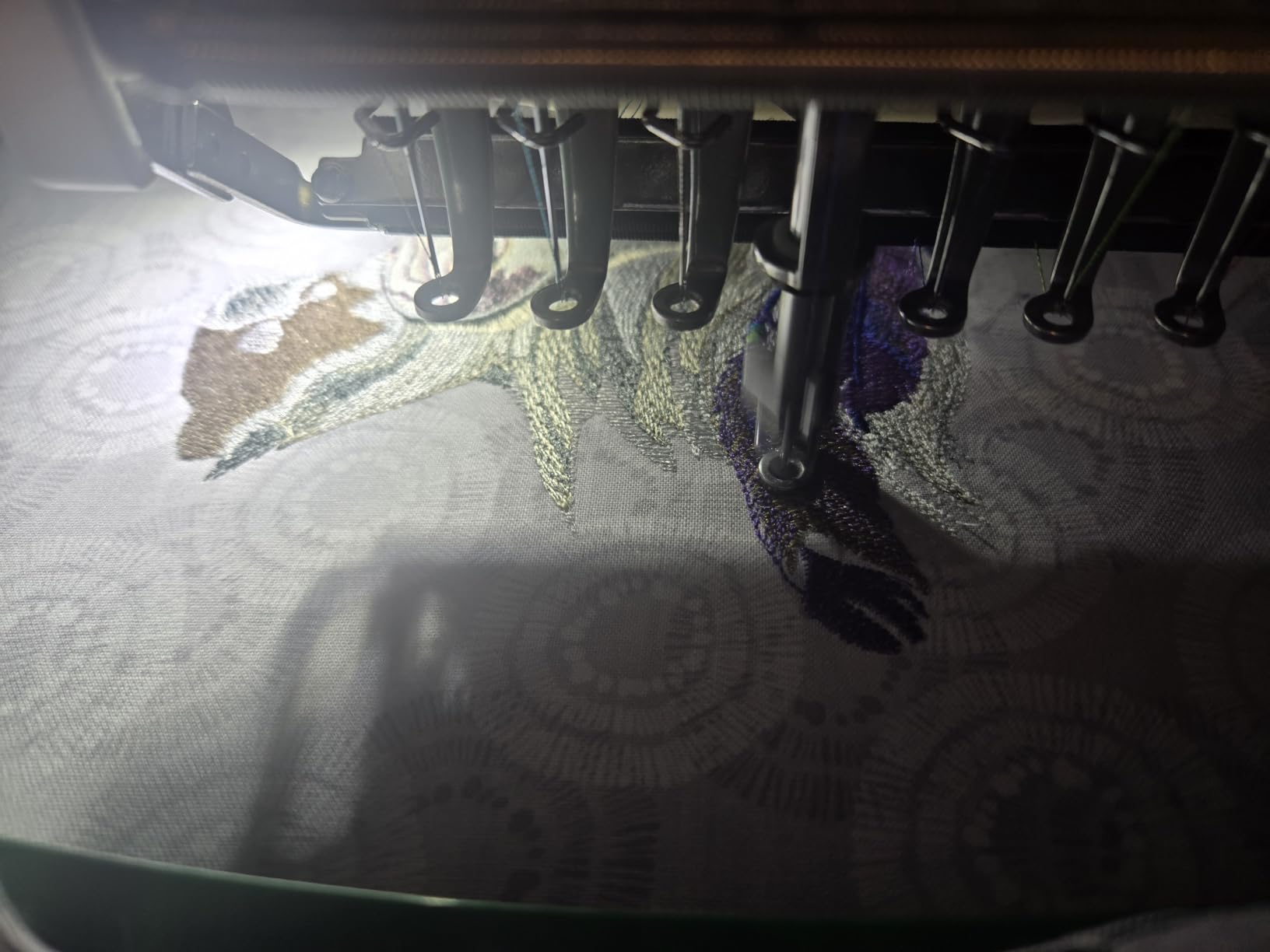
The Smartstitch S-1502HC Beast is the only two-head machine here, and that changes the throughput math in a way no specification on a single-head machine can replicate. Two heads embroider two items simultaneously, so a 20×16 inch job that would occupy one head for a full period occupies both, and your finished output per day roughly doubles on a matched pair of designs.
Each head carries 15 needles for 30 total, which means color changes are effectively a non-issue even on a complex 12-color logo. Each head also has its own 20×16 inch embroidery area, so you are running two large-format jobs in parallel rather than two small ones.
It holds a perfect 5.0 rating across all 52 reviews with 100 percent five-star feedback, and the C-type reinforced body is specified to prevent shaking and rocking at high speed. That matters more than it sounds: frame movement is what causes registration drift and thread breaks on a long run, and a machine that shakes at 1200 SPM will not hold quality at 1200 SPM.
Speed is 1200 SPM with a 12-inch touchscreen, laser positioning, automatic color change, self-lubrication, thread break detection and physical buttons, all running on the smart control system V6 with up to 100 million stitches of memory. The fabric list is long, covering denim, canvas, leather, vinyl, caps, shoes, bags, tennis balls and applique from USB or WiFi over DST and DSB files.
Owners credit the two-head throughput and the heavy C-type frame as the deciding factors for shops running parallel jobs, and reviewers describe it as a revenue tool where the two-head layout is what justifies the capital. Training and technical support with manuals and video training come with the machine.
Realistic planning matters here. At 772 pounds and a 43×55 inch footprint, positioning needs at least six people and mechanical lifting equipment, and the unit arrives on a wooden pallet. That is a commercial installation, not a home delivery, and you should plan the room, the route and the crew before the day it arrives.
Who the S-1502HC suits best
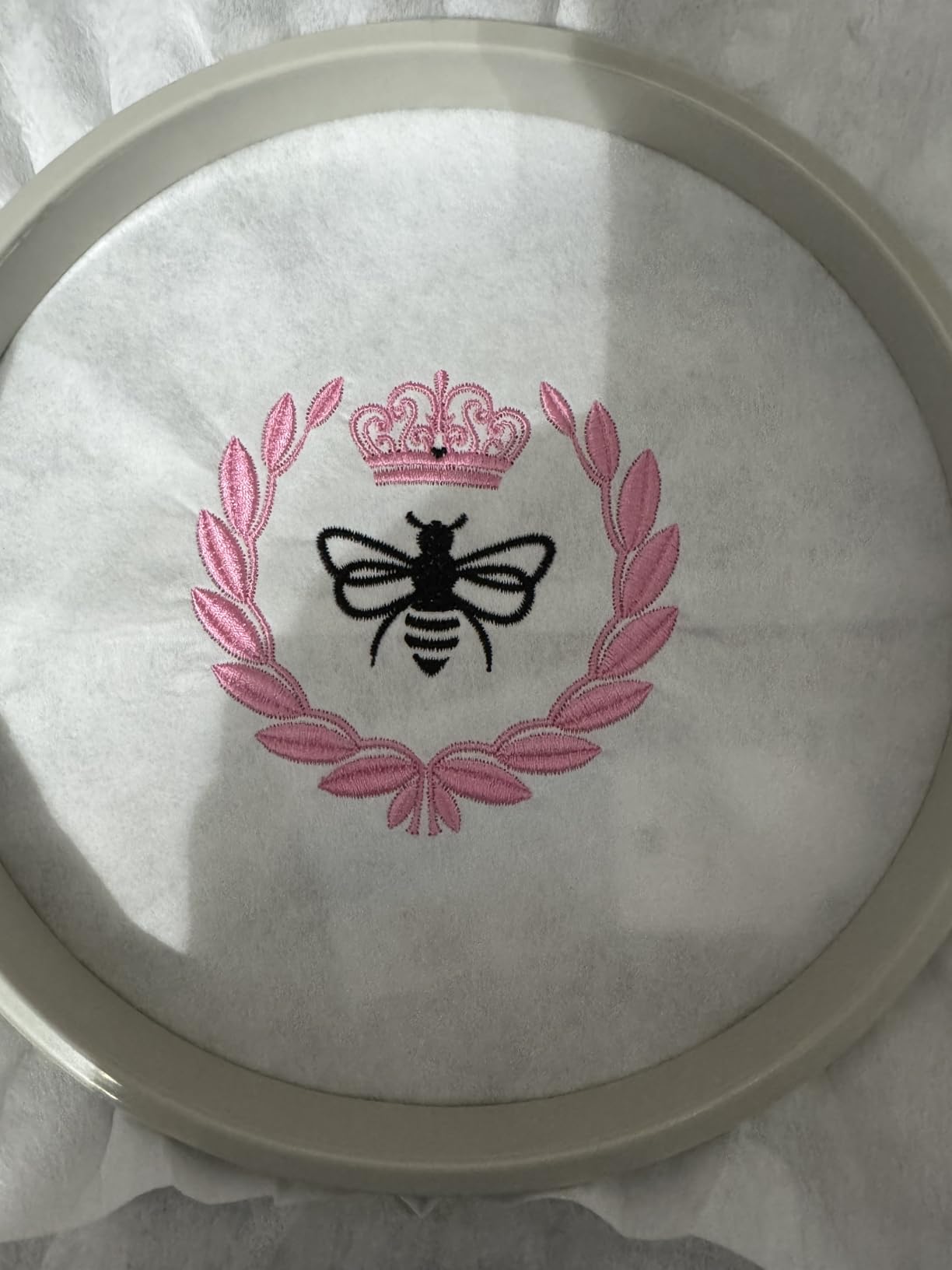
The Beast fits a shop that has a proven order book and is bottlenecked on machine time rather than on sales. If you are turning away work because a single head cannot get through the queue, two heads solve that directly, and the 15 needles per head mean complex client work runs without stops. It is also the right pick when you run matched pairs, such as matching left and right chest placements or identical bulk apparel runs.
The 100 million stitch memory and the automation suite mean repeat production runs need very little attention, which is what allows a small team to operate a machine of this class profitably.
Where the S-1502HC falls short
This is the most expensive machine in the roundup and it needs a correspondingly large production volume to justify. If your monthly volume is not already high and steady, a single-head 15-needle machine will deliver most of the quality with a fraction of the space, the freight handling and the capital. The honest version of this recommendation is that the Beast is for scaling operators, not for a first commercial purchase.
The physical constraints are severe enough to plan carefully. A 43×55 inch footprint needs a dedicated commercial floor area, the 772-pound weight needs professional lifting, and the return policy requires retaining the wooden pallet and documenting the machine with photos and video. If you are running a business out of a domestic workspace, this machine is asking you to build a workshop first.
9. Brother NQ1700E: Best for Included Software and Hoop Bundle
Brother NQ1700E Embroidery Machine, 6 x 10″ Field, Magnetic Hoop + BES Blue
Single needle
6x10 inch field
BES Blue software included
4.85 inch color touchscreen,27 lb
Pros
- 6x10 inch field is the largest in the consumer class
- Good for jacket backs and panels
- BES Blue software and 800+ designs included
- Magnetic 5x7 sash hoop speeds hooping and is included
- Automatic jump stitch trimming cuts both threads
- 258 built-in designs with wireless and library access
Cons
- Lowest rating in the roundup at 4.4 with 9 percent one-star feedback
- 27 lb full-size body
- deeper than the compact PE900
- Bundled video and hoop add cost without expanding the field
- Small review base of 87 for the tier
The Brother NQ1700E is the bundle pick. On paper, its real value is not the embroidery field, it is everything that comes in the box with it, and the included BES Blue software and magnetic sash hoop meaningfully reduce the genuine cost of getting started.
The embroidery specs are strong for a consumer machine: a 6×10 inch field suited to jacket backs and large panels, a 4.85-inch full-color LCD touchscreen with on-screen editing for position, rotate, reflect and trace, 258 built-in embroidery designs, wireless capability, and access to the iBroidery licensed design library. Programmed automatic thread trimming cuts jump stitches and both upper and lower threads per color, which is real time saved on every piece.
What you get beyond the machine is unusual. BES Blue embroidery software with 800+ designs and 199 digitized fonts is included, as is the Brother magnetic sash frame hoop SAMF 180 at 5×7 inches with six magnets handling material up to 2mm thick, plus an Embroidery Magic quick start video. Buyers consistently respond to the value of those extras.
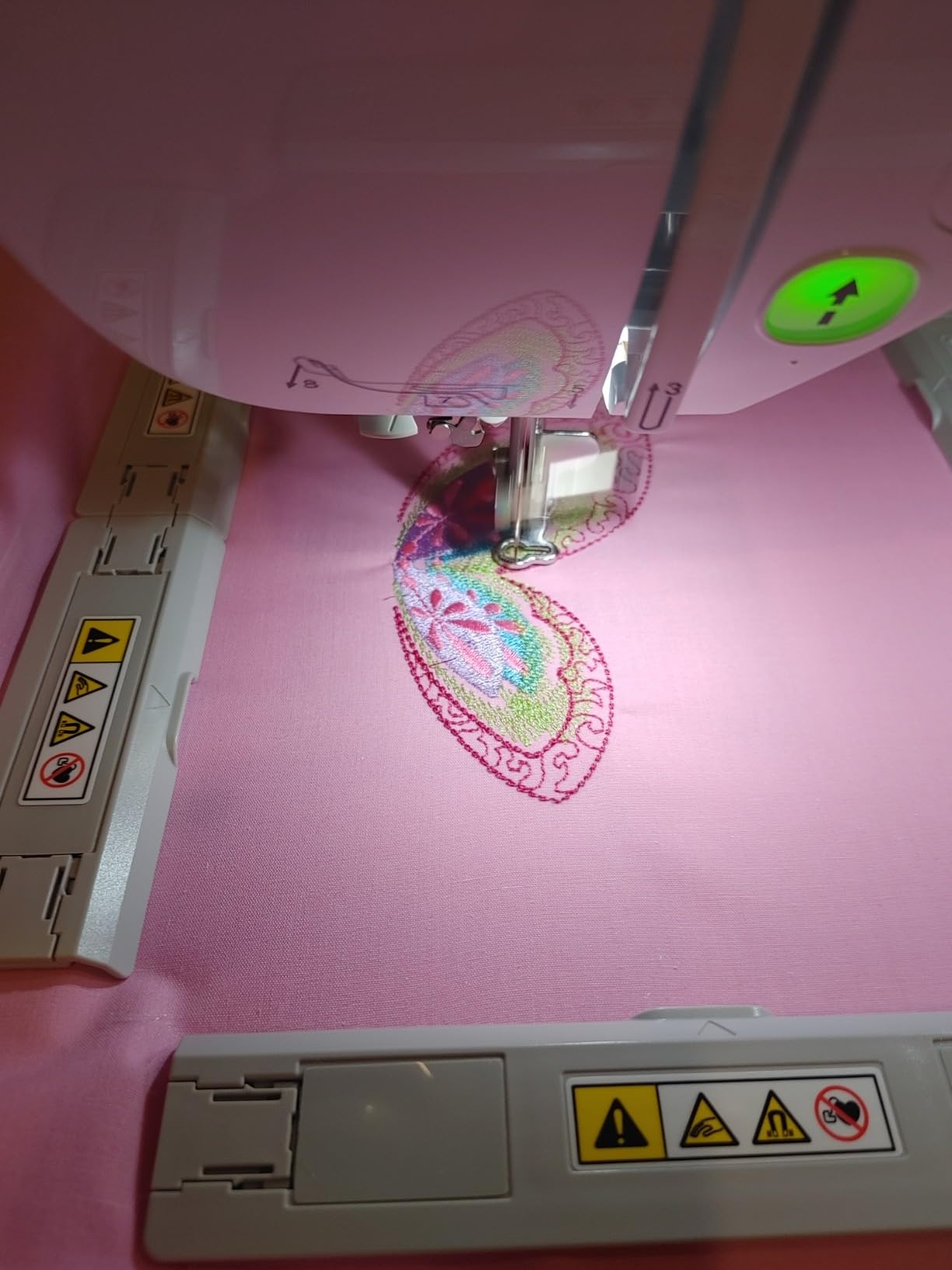
The magnetic hoop deserves specific attention because it changes hooping time. A 5×7 sash frame with six magnets means you load the garment and fabric in seconds instead of fighting a clamping ring, and hooping is a step you perform on literally every piece. Across a month of small orders, that is a meaningful labor saving, and it is why magnetic frames are the accessory experienced operators ask about first.
The 6×10 inch field also opens a category of work the 5×7 machines cannot touch, namely full jacket backs and larger panels, which are often higher-value orders than small monogram pieces.
One Brother-specific note if you own more than one machine: parts, support and resale value follow the Brother and Baby Lock ecosystem, and that ecosystem is the reason many operators standardize on the brand rather than switching for a marginally better spec sheet.
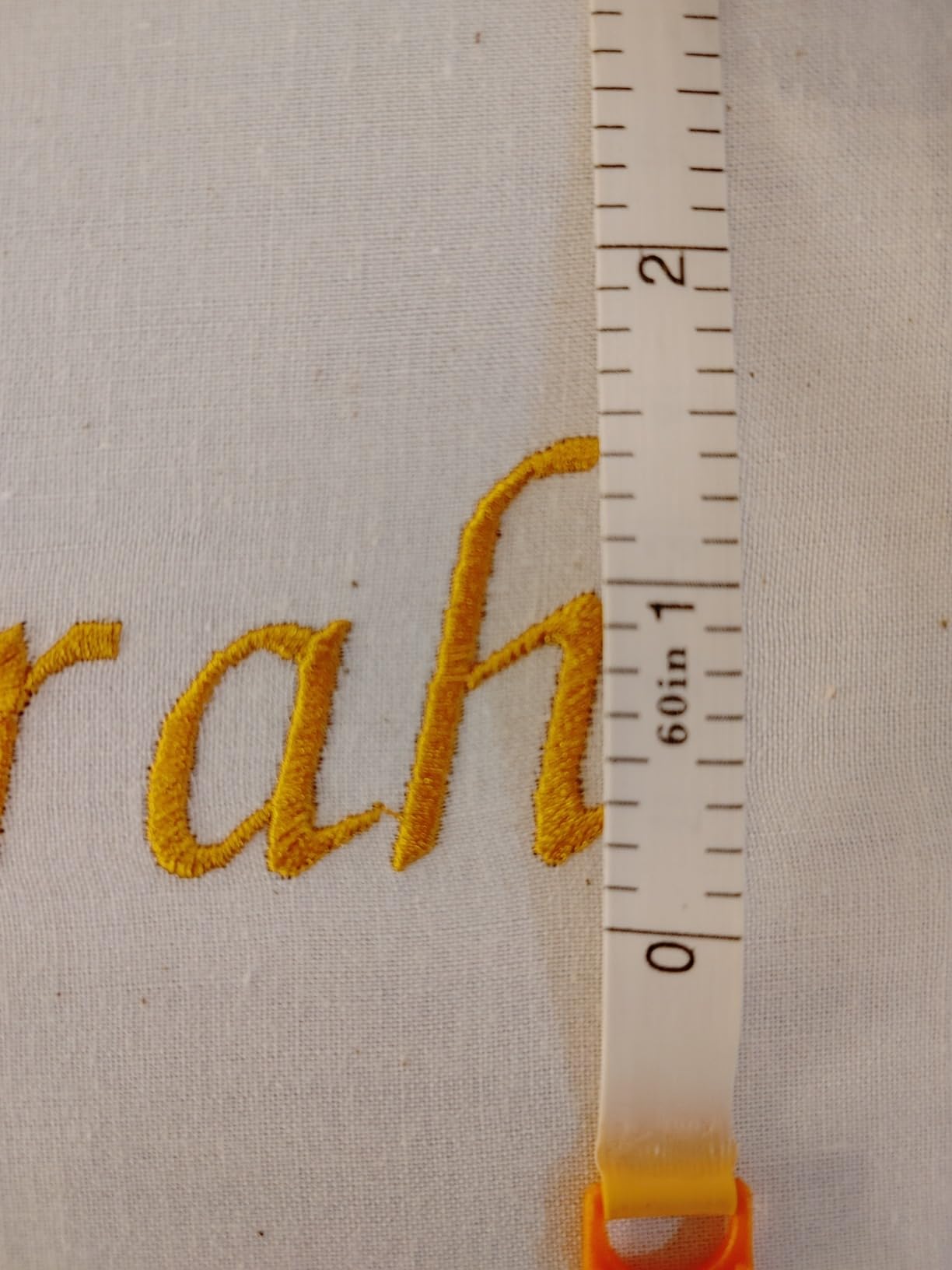
Who the NQ1700E suits best
The NQ1700E fits a home business selling jacket backs, outerwear and larger panels, or one that wants professional software and a magnetic hoop without a separate purchase. If you have ever lost time to hoop clamping, the SAMF 180 alone changes your daily workflow. It is also a good fit for a beginner who needs digitizing and design libraries handled for them, because BES Blue and 800+ designs cover a lot of ground before you buy dedicated software.
Owners who value the total package rather than the specification line are the ones happiest with this machine, and the wireless capability plus iBroidery access keeps design sourcing simple as the business grows.
Where the NQ1700E falls short
It carries the lowest rating in this roundup at 4.4, with 9 percent one-star feedback, and that concentrates around early quality control. A small review base of 87 also means less owner history than the machines ranked above it, so treat early feedback as thinner evidence.
Physically it is a 27-pound full-size body that is heavier and deeper than the compact Brother PE900, which is worth weighing if your workspace is genuinely tight. And note what the bundle does not do: the included hoop and video add cost without expanding the 6×10 embroidery field, so do not read the extras as capability. It is also still a single-needle machine, so the color-change bottleneck is unchanged from any other consumer unit here.
10. Janome Memory Craft 500e LE: Best for Automatic Thread Cutting
Janome Memory Craft 500e LE Embroidery Machine
Single needle
7.9x11 inch field
400-860 SPM
4 hoops included,18.7 lb
Pros
- Clean stitch quality out of the box
- Cuts thread between words and patterns
- Four hoops included
- Compact at 18.7 lb for a 7.9x11 machine
- 7.9x11 inch field covers jacket backs
- Adjustable speed while embroidering
Cons
- Lowest-rated multi-hoop option here at 4.2 with 19 reviews
- Bobbin thread sensor reports empty while thread remains
- Built-in needle threader needs practice and differs from other Janome models
- Instruction book lacks detail
- One owner reports repeated failures with no US technician available
The Janome Memory Craft 500e LE is the one here where the thread cutting is genuinely the headline. It cuts thread between words and between patterns, which means there are no jump stitches to trim afterward, and owners specifically call out leaving no cleanup as the reason they like it. On a business where labor time is the margin, a step you delete is worth more than a feature you rarely use.
Specs are solid for a mid-price single-needle machine: a 7.9×11 inch maximum embroidery size, 400 to 860 SPM with speed adjustable while embroidering, 160 built-in designs, 6 monogramming fonts with two and three letter monogramming, and a full-color LCD touchscreen with an extensive editing set including enlarge, rotate, flip, arc, combine, grouping, corner layout and single-color sewing.
Four hoops ship in the box, so you are not buying extras to cover different placements, and at 18.7 pounds with a 23.9 by 13.43 by 11.54 inch footprint it is the lightest large-field machine in the roundup. A top-loading full rotary hook bobbin with a bobbin thread sensor and a built-in advanced needle threader round out the daily-use features.
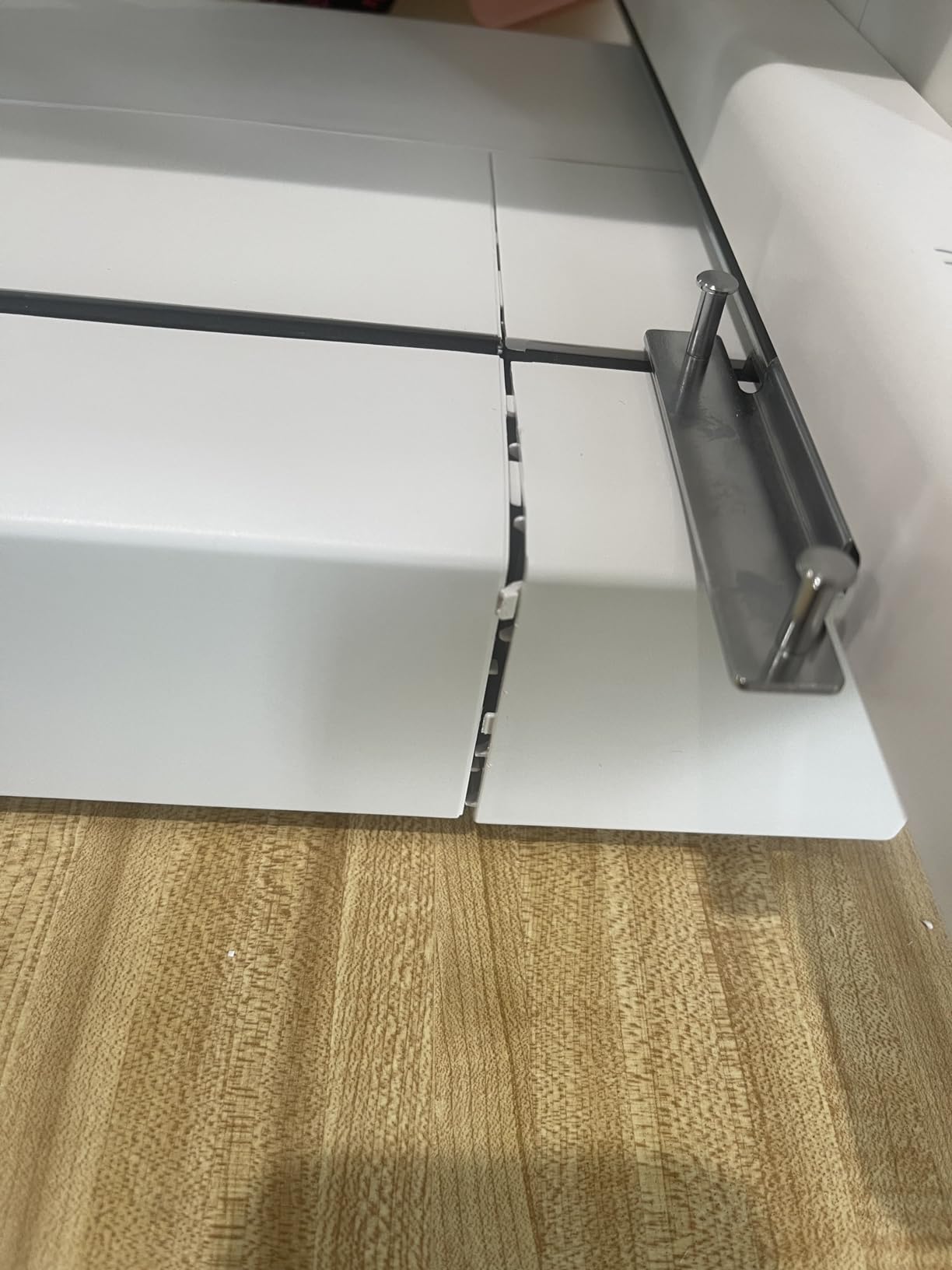
Adjustable hoop positioning and a USB drive with 30 exclusive large designs are the details that get missed in spec lists but matter in a working week. The 7.9×11 inch field covers jacket backs and larger panels, which puts it in the same placement territory as the 6×10 Brother while weighing 8 pounds less.
It holds 4.2 across 19 reviews, and 69 percent five-star feedback is the lowest proportion in the roundup. I want to be straightforward about that: this is the thinnest feedback base here and the weakest satisfaction score, and you should weigh that against how much you like the Janome platform before committing.
The bobbin sensor is the specific quirk to plan around. Owners report it calling the bobbin empty while thread remains, which wastes bobbin thread and interrupts runs. It is an annoyance rather than a defect, but on a production machine you will notice it daily.
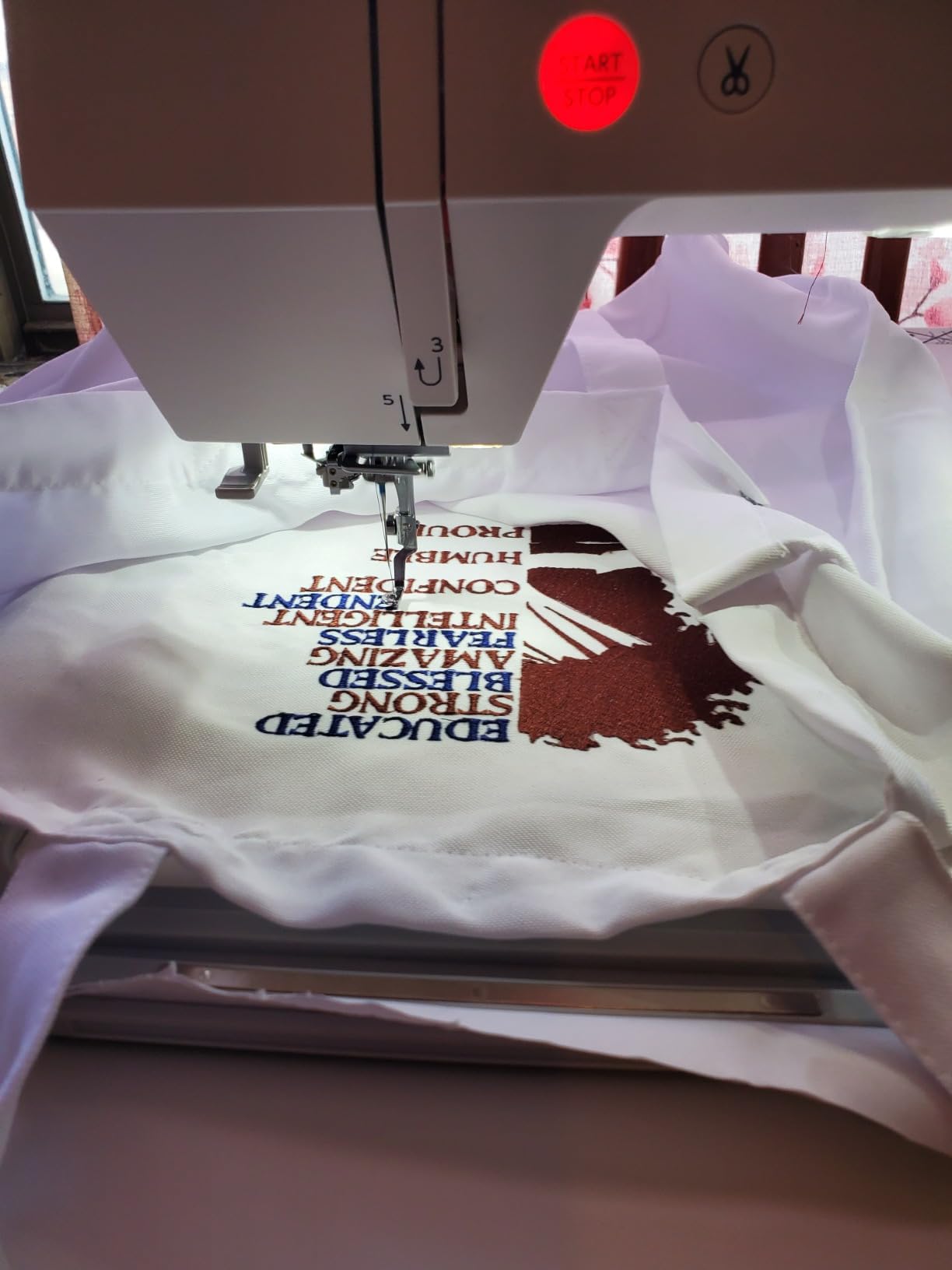
Who the 500e LE suits best
This is the pick for an operator who hates finishing work. If your current process includes trimming jump stitches on every piece, the automatic cutter with programmable jump thread trimming removes that step entirely, and for a small order book that is one of the few genuine labor reductions available in a single-needle machine. It is also the best option here for someone who needs a large field in a light, portable body at 18.7 pounds.
Owners also report clean, attractive stitch quality straight out of the box, and four included hoops mean you can quote small and large placements immediately without a parts run.
Where the 500e LE falls short
Service is the real concern, and I would not paper over it. One owner reports repeated unit failures at two to three months with no US technician available, and while that is a single report, it points at the thing that matters most for a business machine: whether a technician can reach you. Before buying any brand, confirm local service coverage in your region.
The 4.2 rating across only 19 reviews is the lowest in the roundup and the thinnest evidence base. The instruction book also lacks detail, and the preloaded fonts are described as just adequate, so plan on importing your own lettering. The built-in needle threader needs practice and behaves differently from other Janome models, which is annoying if you already know a Janome machine.
11. Poolin EOC07: Best for the Largest Single-Head Consumer Field
Poolin EOC07 Embroidery Machine,15″x 7.9″ Large Embroidery Area & 4 Hoops
Single needle
7.9x15 inch area
Up to 860 SPM
WiFi transfer,40 lb
Pros
- Largest embroidery field of any single-head consumer machine here
- One owner ran 650000+ stitches over 30 days with no issues
- Smooth quiet operation with accurate registration
- Reliable automatic needle threader
- Bundle includes thread
- stabilizers
- bobbins
- cover bag and 4 hoops
- Support responds within hours
- Old-school threading path resists knots
Cons
- Reads only DST files
- No magnetic or third-party hoops
- and extras are hard to source
- 7 inch screen is smaller than ideal with limited thread color choices
- 7.9 inch width falls just short of 8 inches
- Lights and beeps cannot be disabled
The Poolin EOC07 has the largest embroidery field of any single-head consumer machine in this roundup, at 7.9×15 inches, and it holds 4.8 across 37 reviews with 91 percent five-star feedback. If you are staying in the single-needle class and want the most usable area available, this is it.
The field works out to a usable 7.85×14.93 inches, with 7.9×7.9 and two 5.5×5.5 inch hoops included for smaller work. That area is wide enough for towel and blanket placements, long logo bars and larger panel work that a 5×7 machine simply cannot quote, which is where the extra capability converts into money.
Speed is up to 860 SPM with automatic adjustment by stitch type, on a 7-inch color touchscreen running Institch OS3. You get 200 built-in patterns, 8 fonts, 10 languages, WiFi design transfer, a built-in cost calculator and Institch doodle software, and files move as DST or DSB over a USB drive or wireless LAN.
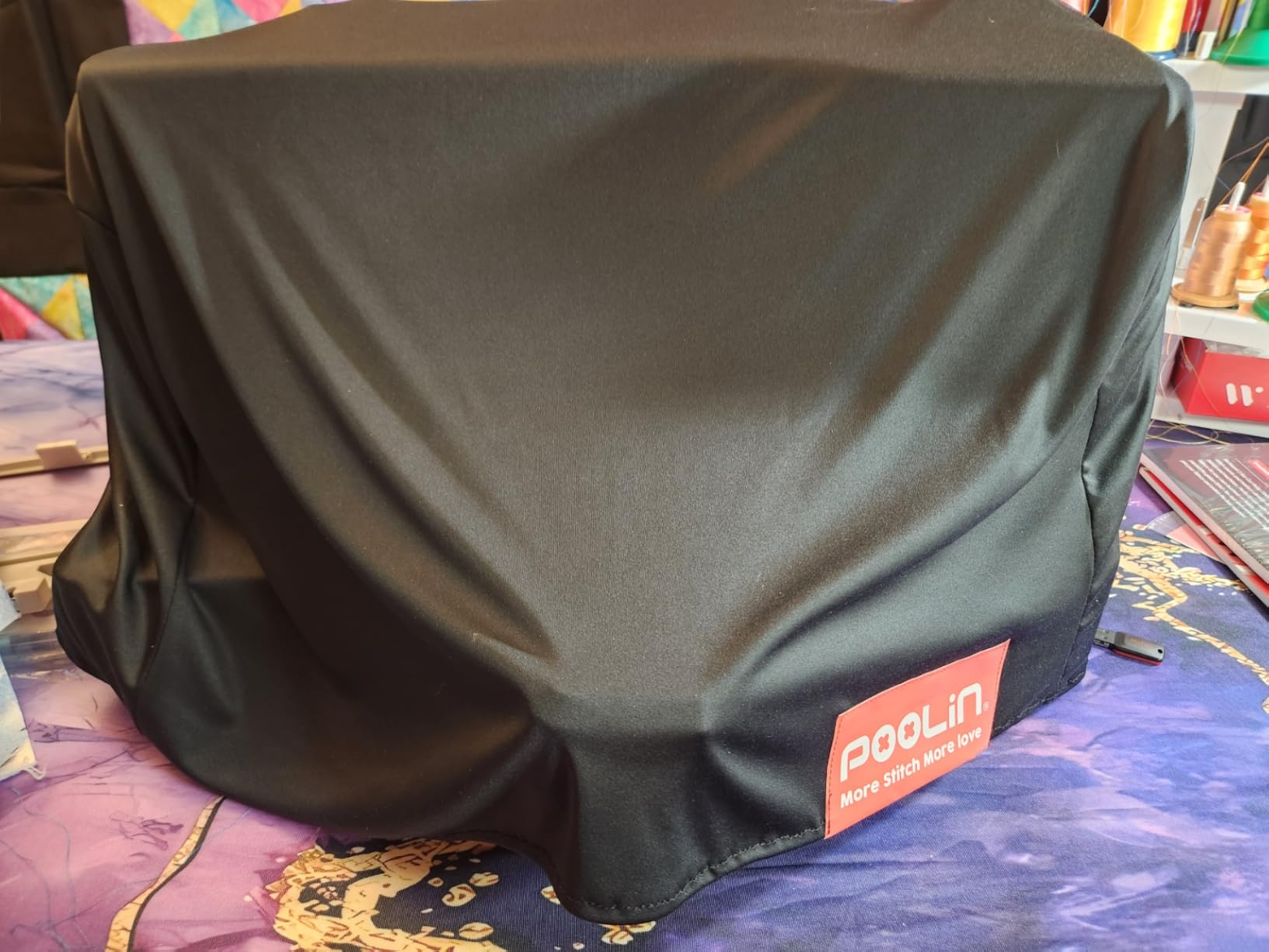
The most useful owner report I found in the whole roundup comes from this machine. One owner ran more than 650,000 stitches over 30 days with no mechanical issues, and describes set-and-forget tension with accurate registration after hoop changes. For a business buying a machine, a durability report like that is worth more than any spec line, because the alternative is a machine that needs attention in month two.
Support is a genuine strength here too. Owners report same-day responses, and in one case a replacement hoop arrived in three days. The old-school threading path also resists knots and thread breaks compared with more automated routing, which owners treat as a feature rather than a limitation.
The starter bundle includes thread, stabilizers, pre-wound bobbins, a cover bag and all four hoops, so consumables and the full hoop range are covered from day one.
Who the EOC07 suits best
The EOC07 fits a home business doing home textiles, towels, blankets and long horizontal logo placements, or anyone who has been declining larger work because of hoop limits. For a single-needle machine this is the closest you get to commercial placement capability without a floor machine, and the built-in cost calculator is a nice touch for anyone quoting jobs at the machine.
It is also a strong choice for an experienced embroiderer moving up from a small-hoop machine, because the registration accuracy and automatic needle threader described by owners reduce the setup problems that come with a new field size.
Where the EOC07 falls short
The ecosystem is the limitation to plan around. It reads only DST files, and there are no magnetic or third-party hoops, with owners noting extra hoops can be difficult to source from Poolin. If you want the magnetic sash hoop workflow that the Brother NQ1700E includes, this machine will not give it to you.
The 7-inch touchscreen is smaller than ideal with limited on-screen thread color choices, and the 7.9 inch field width falls just short of a full 8 inches, which occasionally matters when you are matching a client-specified size. Machine lights and beeps cannot be disabled, a small nuisance in a shared room. Some self-maintenance is also expected, and with only 37 reviews the long-term evidence base, while strong, is thin.
12. FUJA 10-Needle FJ-1001: Best Lower-Cost Entry Into Multi-Needle
FUJA 10 Needle Commercial Embroidery Machine for Hats & Small Business
10 needles
9.5x14.2 inch area
Up to 1200 SPM
9.5x14.2 cap frame included,289 lb
Pros
- Lowest entry into a 10-needle commercial machine
- Clean stitch quality reported by multiple owners
- Runs quietly and handles higher hat speeds
- Cap accessories
- flat hoops
- thread and stabilizer included
- Very responsive chat and social support
- Laser tracer and USB or WiFi transfer
Cons
- Lowest rating among the multi-needle machines here at 4.1
- Setup and troubleshooting documentation described as weak
- Hook case is not removable for owner maintenance
- Thread breaks and bird nesting reported on some threads
- 289 lb unit on a pallet
- needs at least two people to move
The FUJA FJ-1001 is the cheapest route into a genuine 10-needle production machine, and for an operator who has already outgrown a single-needle setup, that matters more than brand pedigree. Ten needles, a 9.5×14.2 inch area and up to 1200 SPM puts it firmly in the class that removes color-change stops from your day.
It stitches caps, T-shirts, patches, leather, denim, shoes, bags, uniforms, flat work and 3D puff, with auto thread trimming, auto color change, thread break detection and laser positioning. Memory runs to 100 million stitches, files move as DST or DSB by USB or WiFi, and there are physical buttons, self-lubrication and a low-noise structure. The included accessories are genuinely useful, with a garment frame, cap drive, cap ring, thread and tear-away stabilizer all in the box.
Support is the surprise. Owners describe WhatsApp and Facebook responses that solve problems in minutes, and one buyer reported learning to run the machine within a week at age 70. That kind of responsiveness is worth real money on a machine where the documentation is weak.
The cap frame and cap drive being included is a meaningful cost saving, because cap hardware is a line item that surprises first-time commercial buyers. At 289 pounds with a 25x33x34 inch footprint, it is also smaller and lighter than the 15-needle commercial units, so it is the multi-needle option that fits the most constrained home workshop of the group.
Feedback here is genuinely split, and I would rather show you that than smooth it over. It holds 4.1 across 15 reviews with 20 percent one-star feedback, the lowest score among the multi-needle machines here. Critical accounts focus on thin setup and troubleshooting documentation, thread breaks and bird nesting, and a hook case that cannot be removed for owner maintenance.
That last point deserves a pause. On a single-needle machine, routine hook maintenance is a service visit or a careful owner task. On a machine where the hook case is fixed, every maintenance issue goes to someone else, and your production schedule depends on their response time.
Who the FJ-1001 suits best
The FJ-1001 fits an operator with steady multi-color orders who wants 10 needles without the space, weight and capital of a 15-needle unit. If you are running caps and uniforms from a smaller workshop, the included cap drive and the lower footprint make it the most practical multi-needle floor machine here. Owners with patience report excellent stitch quality and quiet hat work, and the laser tracer makes first test stitches straightforward.
It is also the one to consider if your order mix includes 3D puff or heavier specialty fabrics, since it is explicitly listed for them.
Where the FJ-1001 falls short
The documentation is the first real problem, and owners describe it as half useless. Budget time for learning from support contacts and video rather than from manuals, and confirm your local technician situation before buying, because you will need it. Not every thread type works well with this machine, and some owners report needing lower speeds for bold designs to avoid breaks, which cuts into the 1200 SPM figure you paid for.
With 15 reviews and 20 percent one-star feedback, the evidence base is the thinnest of the multi-needle group. And at 289 pounds shipped on a wooden pallet it needs at least two people to move, so confirm the delivery route and your floor space in advance. If you want a machine with a deeper owner history at this needle count, look at the Smartstitch units earlier in this list.
How to Choose an Embroidery Machine for a Home Business
Start with volume, not with features. Write down how many finished pieces you expect per month and how many colors your average design uses, because those two numbers decide everything else. Under 30 pieces a month with mostly one or two color designs, a single-needle machine with a 5×7 or 7.9×11 field is the correct purchase. Between 30 and 100 pieces with three to eight colors, you want the largest field you can get and the best thread cutting, because you are still doing the stopping by hand. Above 100 multi-color pieces a month, thread changes are your business model problem, and a 10 or 15 needle head is the answer.
The rule of thumb that has held up best in my experience: count your color changes, not your stitches. A six-color design on a single-needle machine can spend more time stopped at thread changes than running. That is the entire reason multi-needle machines exist, and it is why the machines people browse online are not the machines that make money.
How many needles do you actually need?
One needle handles monograms, single-color patches and simple personalization. Two to four needles cover small apparel orders where designs use a handful of colors. Six needles suit regular multi-color orders where you want to load most of a design once. Ten or more is for bulk and contract work where stopping time dominates your day. The trigger to move up is not revenue, it is the number of times a day you are standing at the machine re-threading.
The forum consensus is consistent on the first step. Experienced operators on r/Machine_Embroidery consistently steer beginners toward a Brother single-needle machine first, whether new or used, while warning that anyone genuinely going into business should be looking at a 6 or 10 thread machine. That is the graduated path: prove the market, then move to multi-needle once the orders justify it. Our small-business embroidery machine guide covers the mid-range options in more detail.
Hats and caps: the criterion most lists skip
Caps are the highest-margin small order and the hardest thing to do well, which is why cap capability deserves to be a primary buying criterion rather than an award tag. If hats are going to be a meaningful share of your work, check three things: whether the machine has a cap driver or cap frame system included, what SPM it sustains on structured caps rather than on flat work, and whether it handles 3D puff and cap sides.
Read cap speed figures carefully. A machine quoted at 1200 SPM flat may only hold 850 SPM on caps, and the BAI The Mirror states both numbers, which makes it far easier to plan around. Several machines here list caps in the fabric range but do not detail a cap attachment in the included components, so confirm what actually ships before you plan a hat order book.
Embroidery field, total cost and workspace reality
Bigger is not automatically better, but a too-small field costs you money in rehooping and in jobs you have to decline. A 5×7 field handles most small orders. A 6×10 to 7.9×11 field opens jacket backs and larger panels. A 7.9×15 field handles home textiles and long logo bars. Beyond that you are in commercial territory, and the cost of the machine jumps by a factor of three.
Total cost of ownership matters more than the machine. Stabilizer, thread, needles, hoops, digitizing software, maintenance and service contracts all run alongside the machine, and the machine is rarely the largest line once you count the first year of consumables. Budget for needles and stabilizers from month one, because they are consumed on every single piece. A machine sold with a generous starter bundle, like the Poolin EOC06 or The S-1502HC, quietly returns real money in the first quarter.
Then check the workspace. Commercial-class machines here weigh 209 to 772 pounds, and the heaviest need professional lifting. Consider noise as well, since a machine that shares a building with other people shapes when you can work; the Smartstitch S-1201 Plus is the quietest option here. Check your electrical circuit, your ventilation, and whether your landlord, HOA or insurer objects to running a business from a domestic property before you buy, not after.
Finally, buy new unless you are confident. Used multi-needle machines are a reasonable first commercial purchase only with an inspection checklist: check bobbin case and hook wear, listen for servo and axis noise, confirm which frames, needles and cap drivers are included, verify the design memory works, and ask whether the warranty transfers. Makerspace and rental access is also a genuinely sensible way to test before committing.
Frequently Asked Questions
Is a home embroidery business profitable?
It can be, but the machine is rarely what makes it profitable. A common mistake is treating the machine as the whole startup cost when stabilizers, thread, needles, hoops, digitizing and your unpaid labor add up quickly. Profitability tracks order volume and margin per piece more than machine price. Start with a single-needle machine, prove your market, and upgrade to multi-needle only when thread changes are limiting your output.
What is the best embroidery machine for home use?
For pure home use without a business goal, a compact single-needle machine with a 5×7 or 7.9×11 inch field is the right answer. The Brother PE900 and the Poolin EOC06 both cover most personal projects, and the Brother carries the stronger brand service network. If your goal is to sell, read the business tiers instead, because a home-use machine and a production machine are different purchases.
What is the best embroidery machine for domestic use?
Domestic use and home use point to the same answer: a single-needle machine with a 5×7 inch or larger field, built-in designs, automatic thread trimming and simple USB or wireless transfer. These are compact, quiet and light enough for a spare room. If you intend to sell anything, add a large field and plan for a multi-needle upgrade once orders become regular.
Can I run an embroidery business from home?
Yes, most home embroidery businesses start in a spare room, garage or converted basement. The practical constraints are floor space, machine weight, noise, electrical circuit and ventilation, plus permission from a landlord, HOA or insurer. A single-needle machine is easy to accommodate. A 209 to 772 pound commercial head needs a dedicated area and planned installation, so check your space before you choose the tier.
How many needles do I need for an embroidery business?
Count your color changes rather than your pieces. One needle suits monograms and single-color work. Two to four needles cover small apparel orders. Six needles suit regular multi-color orders where you want to load most colors once. Ten or more needles are for bulk and contract work where stopping time dominates. The trigger to move up is the number of times a day you re-thread, not your revenue.
Is a used embroidery machine worth buying for a business?
It can be, with a proper inspection. Check the bobbin case and hook for wear, listen for servo and axis noise, confirm which hoops, frames, needles and cap drivers are included, verify the design memory loads, and ask whether the warranty transfers. Community consensus favors used Brother platforms as a low-risk first machine because parts, support and resale value follow that ecosystem.
What is the difference between a single head and a multi head embroidery machine?
A single-head machine runs one embroidery head at a time, so you load, stitch, finish and unload one piece per cycle. A multi-head machine runs two or more heads simultaneously, embroidering two items at once, which roughly halves cycle time on matched work. The Smartstitch S-1502HC Beast is a two-head unit with 15 needles per head. Multi-head machines are a scaling purchase, not a first machine.
Which Embroidery Machine Should a Home Business Buy First?
The BAI The Mirror is our pick as the best embroidery machine for a home business in 2026, because 15 needles, a 20×14 inch field, 1200 SPM flat and 850 SPM cap stitching, and included local training is the combination that actually produces finished pieces per day. It carries the deepest owner base in this roundup at 324 reviews with a 4.8 average, which is the evidence base you want behind a business asset.
If your volume is not there yet, do not buy it yet. The Poolin EOC05 is the right machine to learn on, the Poolin EOC06 is the right machine to grow into, and the Brother PE900 is the right machine if you want wireless transfer and the strongest brand service network. The honest sequencing is: prove the market on a single needle, then move to 10 or 15 needles the moment thread changes start costing you real hours.
Whatever you choose, count your color changes, budget for stabilizers and needles from day one, and check your floor space, electrical circuit and local service coverage before the machine arrives. Those three checks prevent more expensive mistakes than any specification decision on this list.