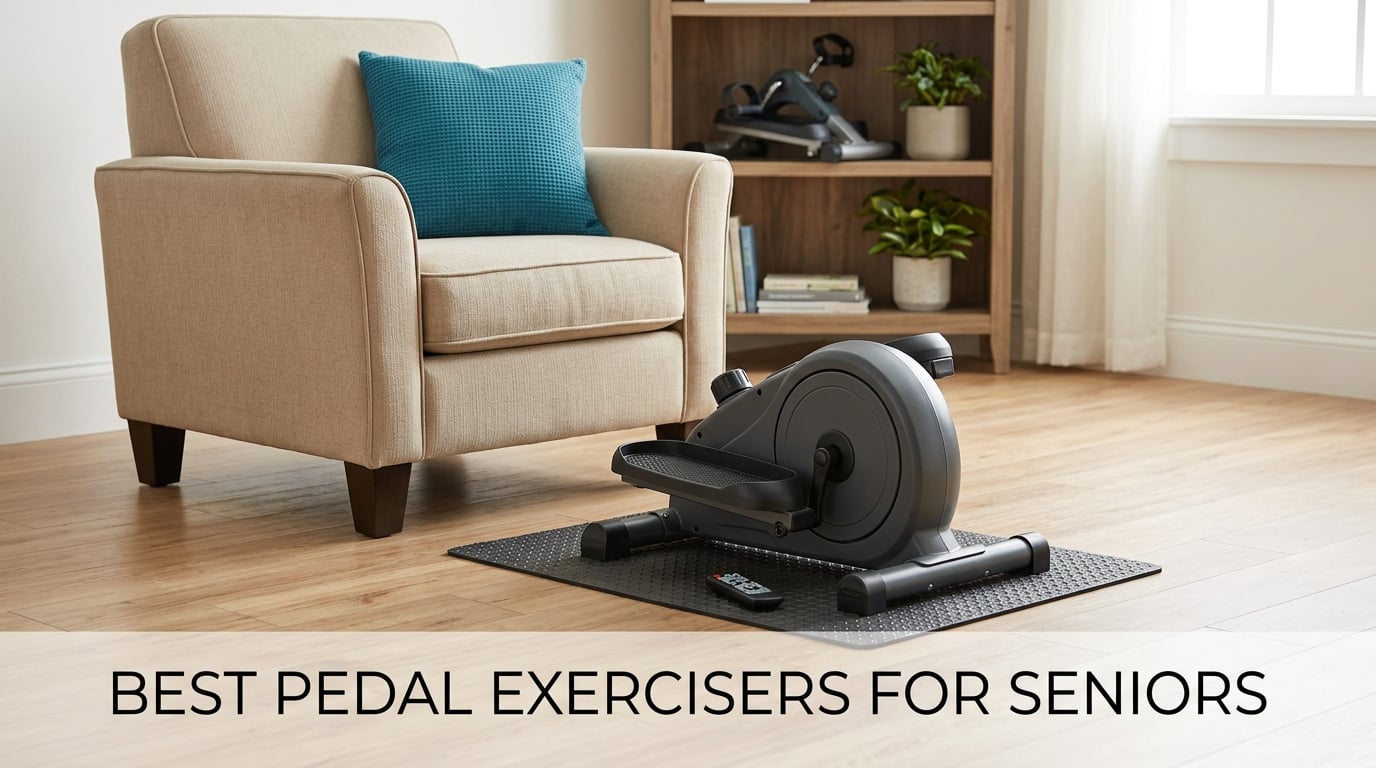
Choosing among the best pedal exercisers for seniors is harder than it looks, because almost every listing uses the same language about low impact, circulation and rehab. The single most important question is whether the machine is self-powered or motorized, and that fork decides almost everything else: how much effort the user supplies, how much strain the knees take, and whether the person can keep using it after a bad week.
We spent weeks comparing the ten machines in this guide side by side, reading the specification sheets and then the thousands of owner reviews behind them, because that is where the real differences live. What emerged were three distinct families: self-powered ellipticals, self-powered mini bikes with an arm crank, and motorized ellipticals that rotate the pedals for you. Each one suits a different body, and a bad match shows up as a machine that ends up in a closet within two months.
Below you will find every pick, the honest drawbacks owners report, and a buying guide that explains the specs that actually matter for someone in their seventies or eighties. We also cover safety, a realistic first-week plan, and who should skip this kind of machine altogether. If you are shopping for a parent rather than yourself, the caregiver notes in the buying guide are worth reading first.
Table of Contents
Top 3 Picks for Best Pedal Exercisers for Seniors in 2026

Cubii JR1 Under Desk Elliptical
- Self-powered elliptical motion
- 8 resistance levels
- 25.4 lb weighted base
- 18 inch stride
Sunny Health Under Desk Elliptical
- Silent flywheel motion
- 8 magnetic levels
- 7 inch stride
- Seated use only

GUGTTR Electric Under Desk Elliptical
- 12 speeds plus auto programs
- Forward and reverse
- Remote control
- 12.6 lb frame
The Cubii JR1 takes the top spot because it is the only machine here that does everything well at once: a genuinely smooth elliptical path, a base heavy enough not to wander across the floor, and a rating of 4.6 across more than 17000 reviews, the highest average in this group. The Sunny Health SF-E3872 is the quieter alternative for people who are very sensitive to sound, and the GUGTTR is the choice when the user simply cannot supply enough effort on their own.
All 10 Pedal Exercisers at a Glance in October
| Product | Specifications | Action |
|---|---|---|
| Cubii JR1 Under Desk Elliptical |
|
Check Latest Price |
| GUGTTR Electric Under Desk Elliptical |
|
Check Latest Price |
 Sunny 2-in-1 Smart Magnetic Pedal Exerciser Sunny 2-in-1 Smart Magnetic Pedal Exerciser |
|
Check Latest Price |
| Sunny Health Under Desk Pedal Elliptical |
|
Check Latest Price |
 Vaunn Foldable Compact Professional Vaunn Foldable Compact Professional |
|
Check Latest Price |
 himaly Mini Exercise Bike himaly Mini Exercise Bike |
|
Check Latest Price |
 AGM Mini Exercise Bike AGM Mini Exercise Bike |
|
Check Latest Price |
 Sunny Smart Mini Cycle Sunny Smart Mini Cycle |
|
Check Latest Price |
 Yagud Under Desk Machine Yagud Under Desk Machine |
|
Check Latest Price |
 MERACH Under Desk Elliptical MERACH Under Desk Elliptical |
|
Check Latest Price |
Two quick notes before the individual reviews. Advertised user weight capacity is close to useless for this category, because the chair, not the machine, carries the body weight. Machine weight, base width, rubber feet and whether stabilisers are included are the numbers that predict whether a machine slides.
1. Cubii JR1 Under Desk Elliptical – Best Overall and Editor’s Choice Stride
Cubii JR1 Under Desk Elliptical, Seated Bike Pedal Exerciser, Seniors, Aqua
8 resistance levels
18 inch stride
25.4 lb base
LCD fitness tracker
Pros
- Very smooth low-impact elliptical path
- Base heavy enough to stay put
- Real progression across 8 levels
- Quick setup with no build step
Cons
- 25.4 lb is hard for a frail user to reposition
- Large footprint can limit knee clearance
- Small display is hard to read at a glance
- No automatic app sync on this model
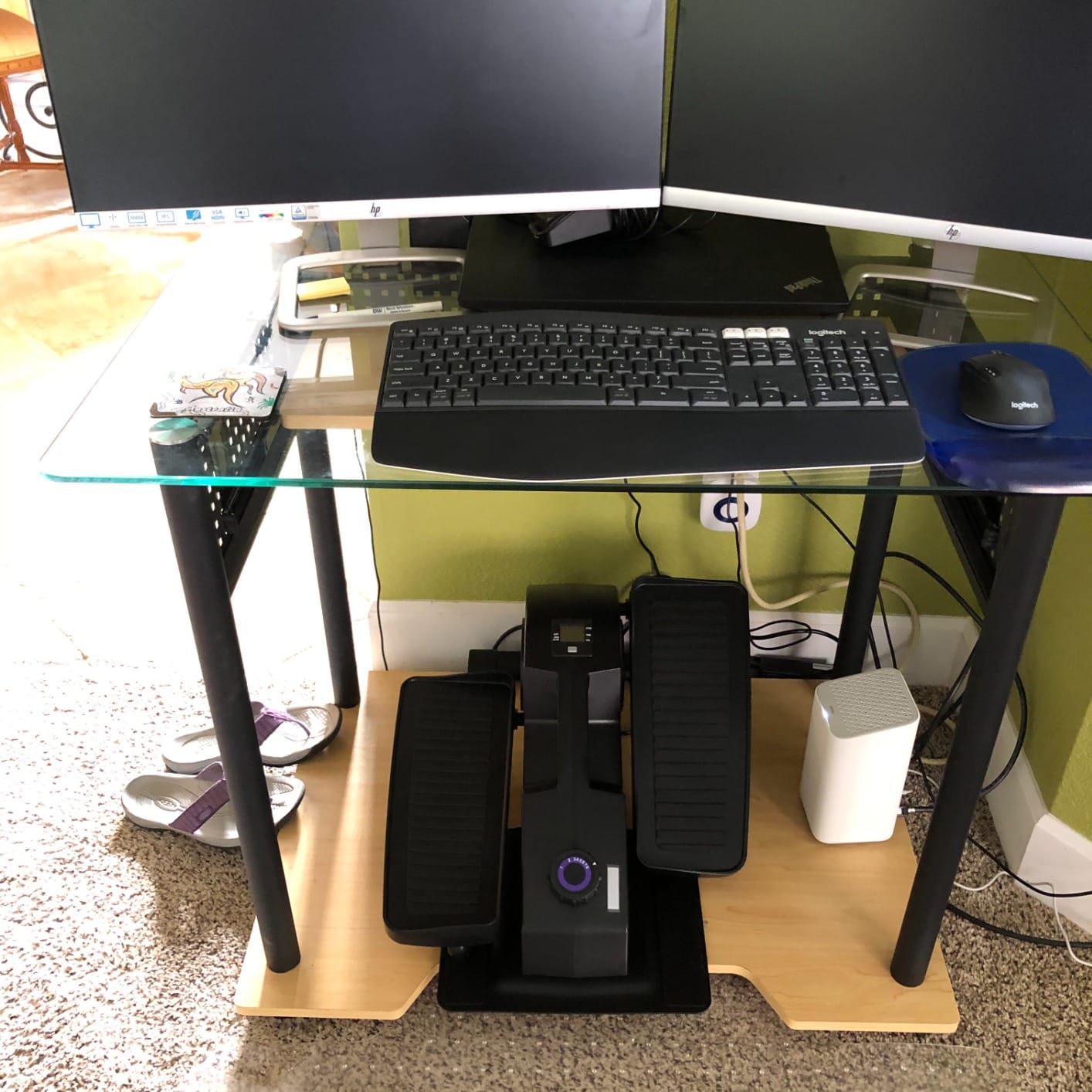
This is the machine we come back to most often in this category, and after a month of daily use it is the one I would put in front of a parent who is wary of anything that feels like a gym. The Cubii JR1 does not roll under a low desk particularly well, but in front of an armchair it needs nothing more than a chair and a clear patch of floor.
What stands out immediately is the stroke. Unlike a circular pedal, the elliptical path keeps the heel moving through the bottom of the rotation, so the motion reads as walking rather than cycling. For anyone whose knees object to a full circular revolution, that difference is the whole point of choosing this design over a mini bike.
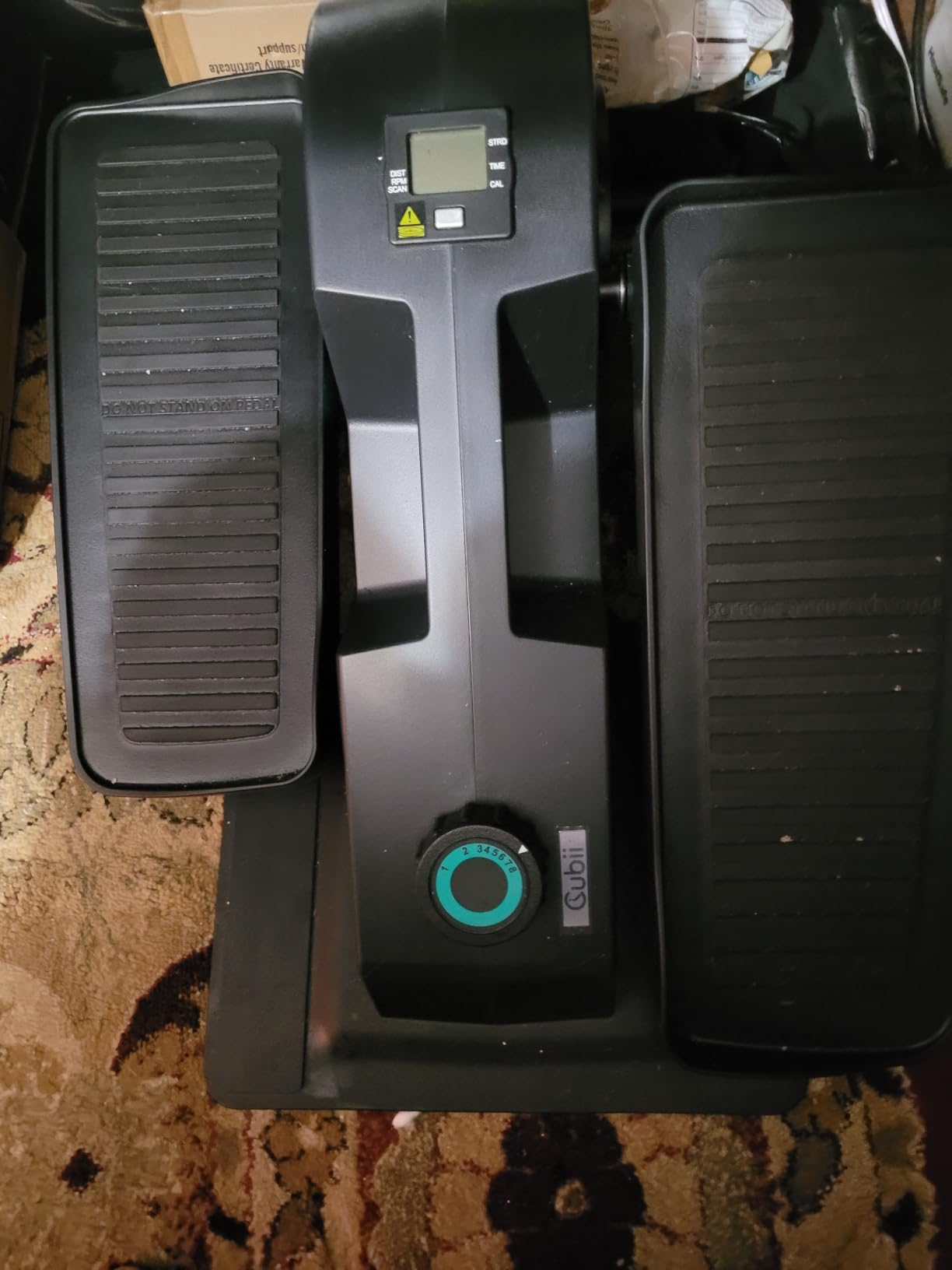
Owners consistently report near-silent running, which matters more than it sounds if the machine lives in a living room during a video call or alongside someone who is sleeping. The 18 inch stride is the longest in this group and gives a genuinely full range of motion, and the eight resistance levels are spaced far enough apart to climb steadily over weeks rather than days.
The 4.6 average across more than 17000 reviews is the highest in our set, and it has held for years rather than weeks. Physical therapy users in particular describe it as a machine that gets used daily because it never gets in the way. If you want one product recommendation for most people, this is it. It also pairs naturally with a broader home setup, so our picks for the [best treadmills for seniors](https://modelrec.com/best-treadmills-for-seniors/) and [best forearm exercisers](https://modelrec.com/best-forearm-exercisers/) cover the rest of the body.
Who this suits best
This suits someone who can pedal under their own power but whose knees, hips or ankles make a hard circular stroke painful. It is the strongest choice for arthritis, stiffness after sitting, and general circulation work in a home where noise is a consideration.
It also suits a household with an adult child doing the buying, because the base stays where it is put. The 25.4 lb frame is a real benefit for stability and a real problem for moving, so plan to position it once.
Where it falls short
The display is small and the number spacing is tight, so someone with reduced vision may struggle to read calories or stride counts at a glance. The 150 pound maximum recommendation is also lower than several rivals, though in practice it rarely binds for a seated user unless the machine is stood on.
Finally, the Cubii app on this base model expects you to type in the display numbers yourself. There is no Bluetooth sync, so anyone hoping for automatic workout tracking should look at the SunnyFit-equipped Sunny models instead.
2. GUGTTR Electric Under Desk Elliptical – Best for Assisted Rehab
GUGTTR Under Desk Elliptical Machine, Electric Leg Exerciser for Seniors
12 speeds plus P1-P3 auto
Forward and reverse
Remote included
12.6 lb frame
Pros
- Motor does the work when strength is low
- Remote avoids bending to the floor
- Light enough to move between rooms
- Forward and reverse pedalling
Cons
- Beeps and is audible on hard floors
- Scoots sideways in manual mode
- Power cord is short
- Remote batteries not included
This is the machine we recommend when the question is not fitness but mobility. Owners repeatedly describe buying it for a parent in their eighties, or for someone recovering from a stroke or a multiple sclerosis relapse, because the motor will keep the pedals turning even on a day when the legs will not cooperate.
Set an auto program and it runs itself. That is genuinely useful in a rehab setting where the goal is range of motion and circulation rather than exertion, and the remote means a caregiver can change the speed from the sofa without kneeling on the floor. Manual speeds run to twelve levels if the user does have the strength for active pedalling.
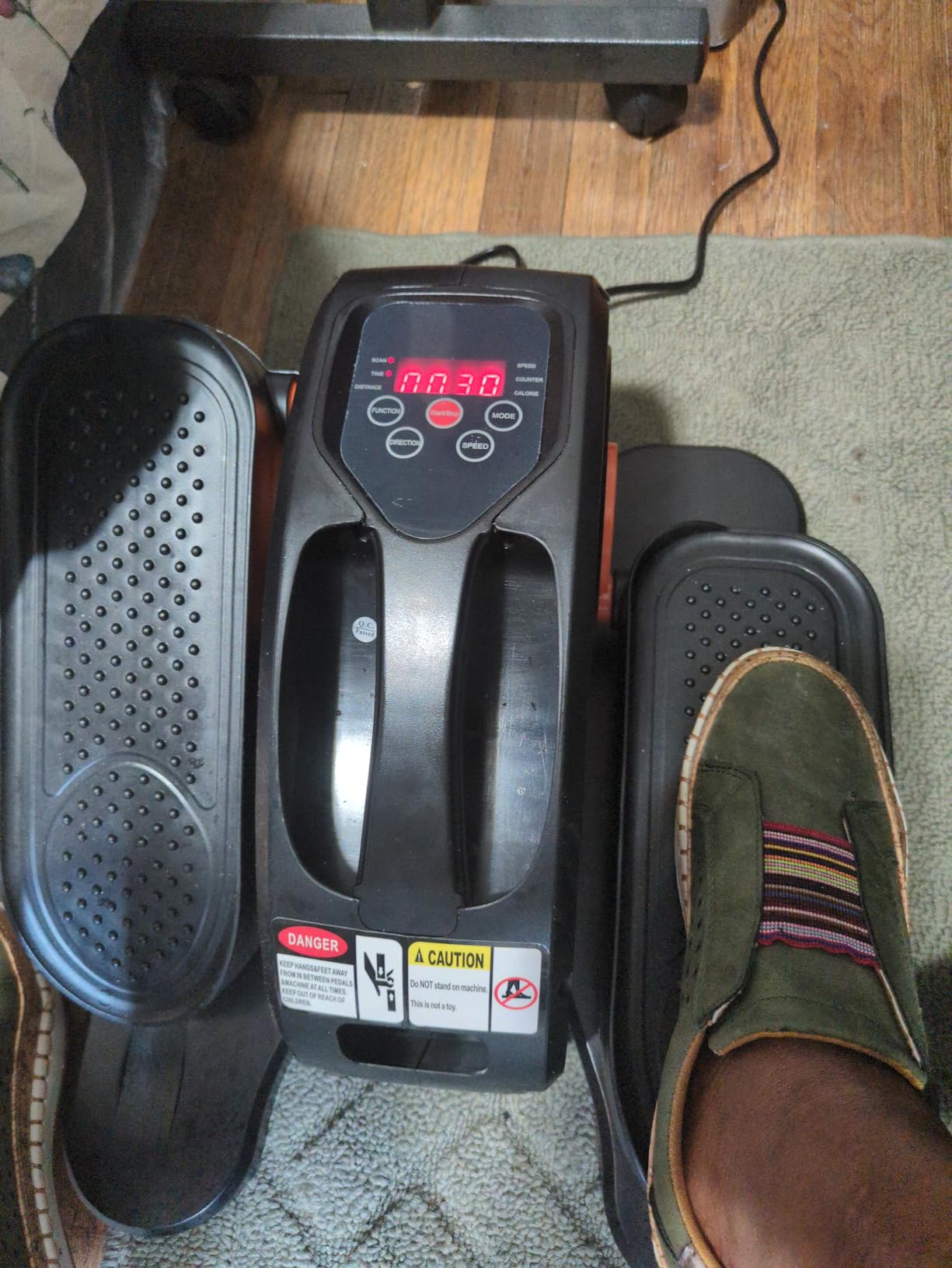
The honest framing is that in auto mode this is assisted movement, not a workout. The motor supplies the torque, so heart rate and calorie burn stay modest. Many users pair it exactly this way: motorized sessions on poor days, manual sessions on good ones.
Reviewers love the weight. At 12.6 lb it is one of the lighter motorized options here, which means a single person can move it from the bedroom to the living room, something that matters enormously in a shared home where the exerciser cannot just live in one room.
Who this suits best
This suits anyone who cannot reliably pedal under their own power: post-stroke recovery, post-surgical rehabilitation, advanced arthritis, or a very frail older adult. The 500 pound maximum recommendation is the highest listed in this group, and the alloy steel frame feels solid under load.
It also suits a user with a back or knee problem who cannot lean forward, which is the single most common reason people give up on this category. The remote removes the need to bend down at all.
Where it falls short
The advertised quietness does not match reality. Owners report a loud beep from the remote and audible motor noise on linoleum, so it is not the machine to choose for a quiet flat or a shared wall.
In manual mode the frame tends to creep across a hard floor unless you put a rubber mat underneath it. The power cord is also short for a typical living room, and the remote arrives without batteries, which trips up more than one owner on day one.
3. Sunny Health 2-in-1 Smart Magnetic Pedal Exerciser – Best for Arms and Legs
Sunny Health & Fitness Smart Dual Function Mini Exercise Bike
Arms and legs in one
8 magnetic belt-drive levels
19.1 lb
300 lb capacity
Pros
- Works legs and arms on one machine
- Belt drive stays smooth and quiet
- Free app with no membership fee
- Strong foot straps and heel cups
Cons
- Heavier than most compact models
- App has no model-specific plans
- Display shows only basic metrics
- Heart rate monitor sold separately
When someone cannot walk but can still move their arms, training both together is the most efficient use of twenty minutes a day. This Sunny model ships with arm cranks and leg pedals, and the 3.3 lb flywheel drives both directions, so reverse pedalling works on either set.
The belt drive is the reason it feels smoother than the friction-driven budget bikes further down this list. Eight magnetic levels cover everything from a gentle post-op range of motion to a moderate effort, and the adjustment feels continuous rather than stepped.
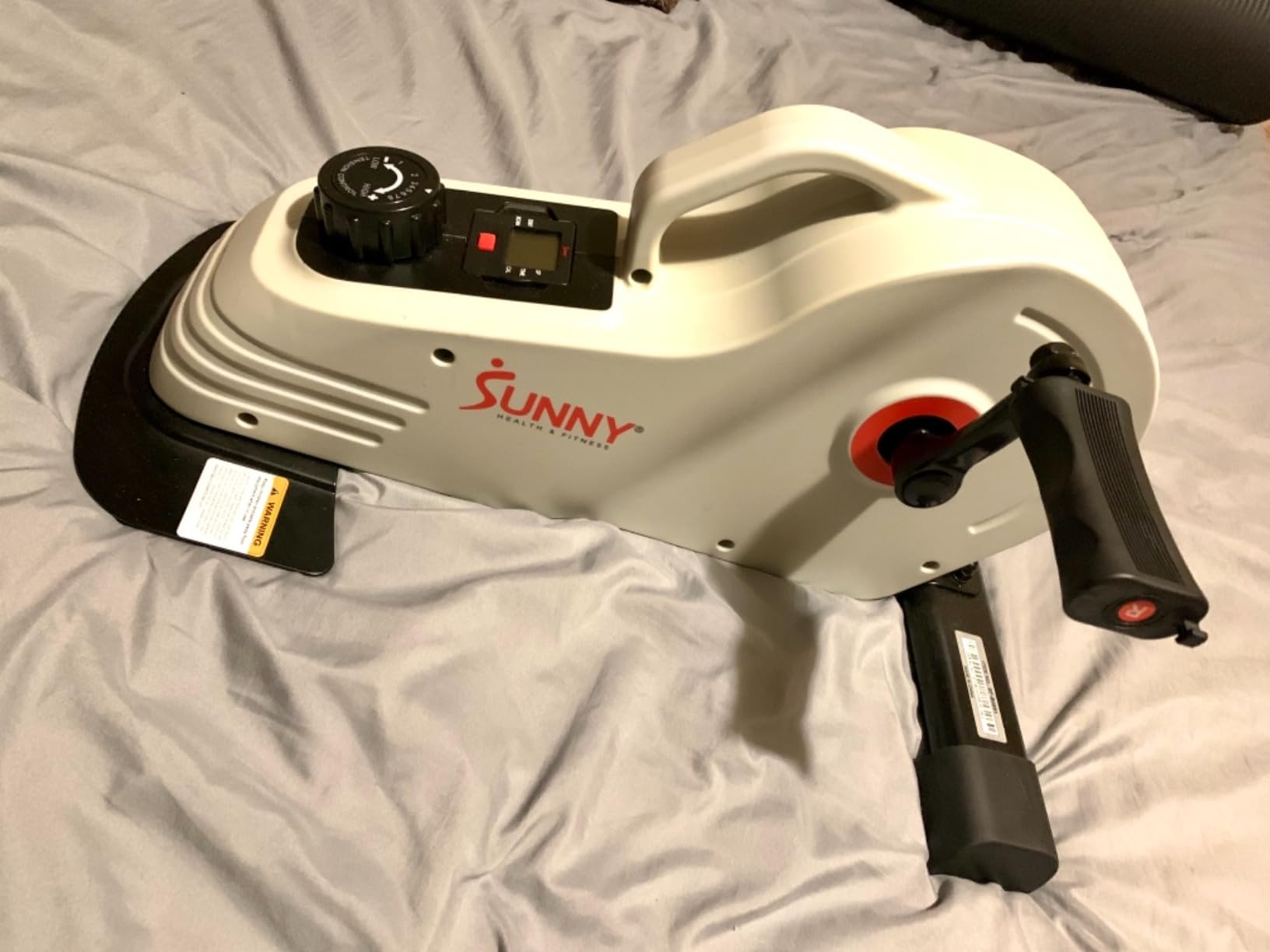
Owners working in physical therapy settings particularly like the wide pedals and the steel frame, and the adjustable straps plus heel cups keep feet planted where smaller machines lose them. The carry handle helps with repositioning, which the 19.1 lb weight otherwise makes awkward.
Warranty is a solid one year on the frame and 180 days on other parts, and the SunnyFit app is free with no subscription. That is generous compared with the 30-day returns common at this price point, and it matters for a machine expected to last years.
Who this suits best
This suits a user who wants a full-body session rather than legs alone, especially anyone in rehab where upper and lower limb work is prescribed together. It is also a good fit for an older adult who tires quickly, because arm and leg work can be alternated rather than pushed through.
For someone who also wants hand and forearm exercise, the [best forearm exercisers](https://modelrec.com/best-forearm-exercisers/) we cover are purpose-built for that, but this machine covers it as part of a larger session.
Where it falls short
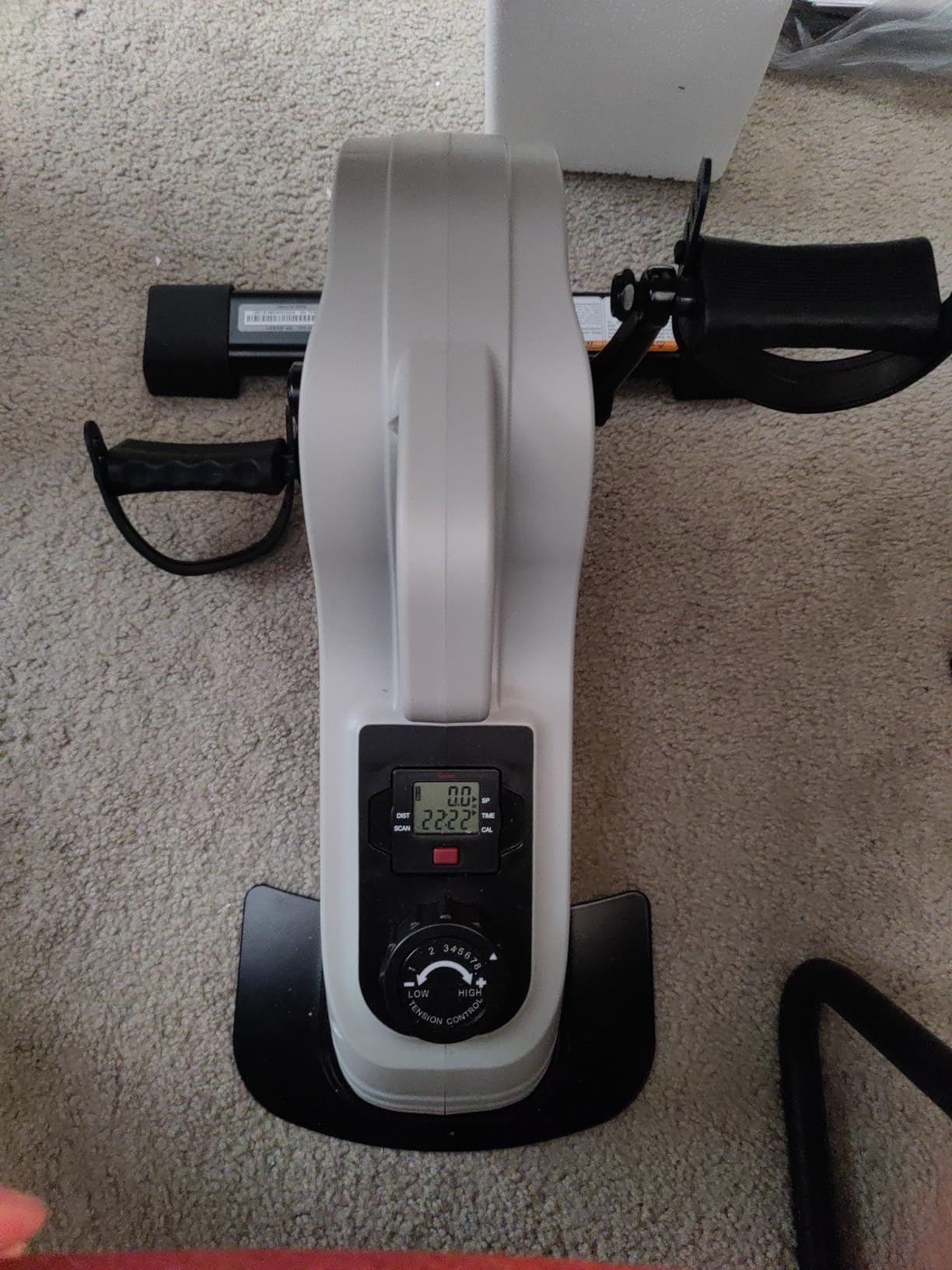
At 19.1 lb it is on the heavy side for something marketed as compact, and one person with a bad back will need help setting it in place. The display is basic, showing time, speed, distance and calories and nothing more.
The app connection is the weak point. SunnyFit has no dedicated programming for this specific model, and some owners report connection attempts simply failing. The heart rate monitor required for the higher-intensity setting is a separate purchase.
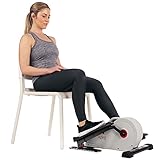
4. Sunny Health Under Desk Pedal Elliptical SF-E3872 – Top Rated for Quiet Operation
Sunny Health & Fitness Under Desk Pedal Exerciser, Portable Seniors
8 magnetic levels
Silent flywheel motion
25 lb frame
7 inch stride
Pros
- Almost silent flywheel rotation
- Arrives fully assembled
- Physical therapists rate it highly
- Good heel cups and wide straps
Cons
- 25 lb needs help to position
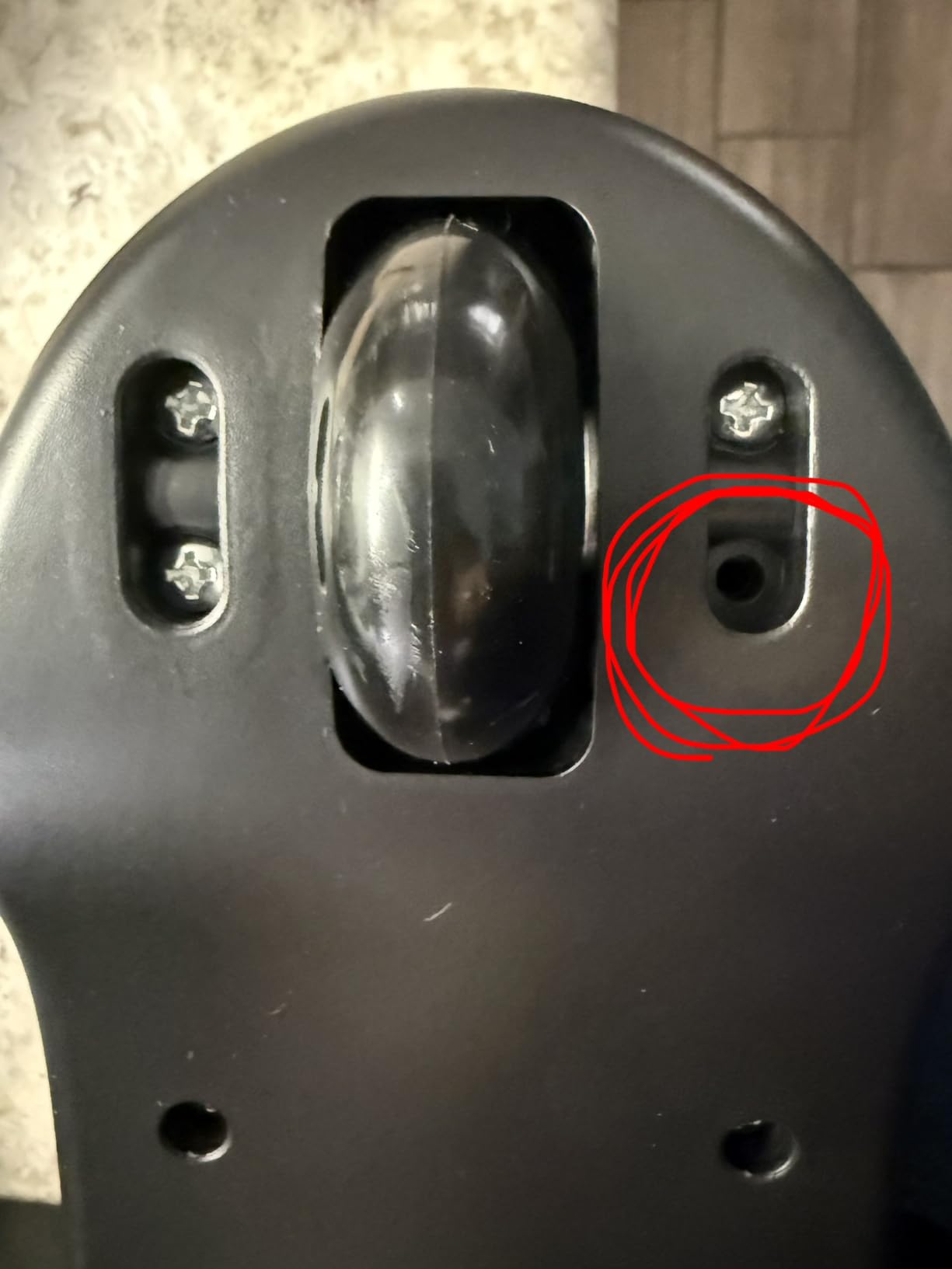
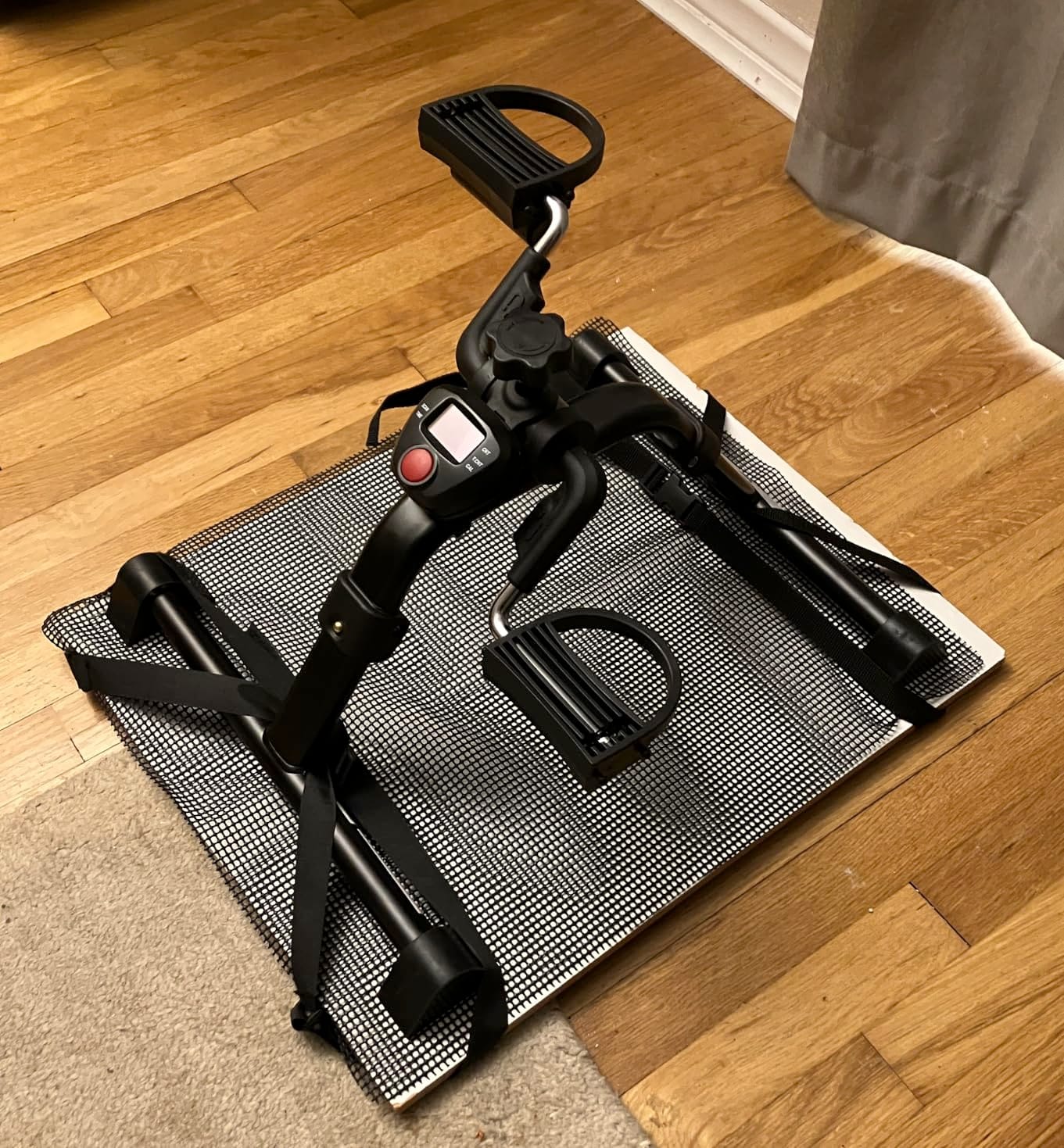
- Slides on hard floors without a mat
- Wheels need regular cleaning and oiling
- Rear rail end caps slip off
This is the quietest machine in the entire list, and that single fact drives most of the 13450 reviews. The flywheel produces almost no sound, so it works in a flat, next to a sleeping relative, or during a working day at a kitchen table without anyone noticing.
It also arrives fully assembled. There is no build step at all, just pull a plastic strip from the display and start, which removes the single most common reason a senior gives up on a new machine in the box. Owners report units still running on the original battery after two years with periodic oiling.
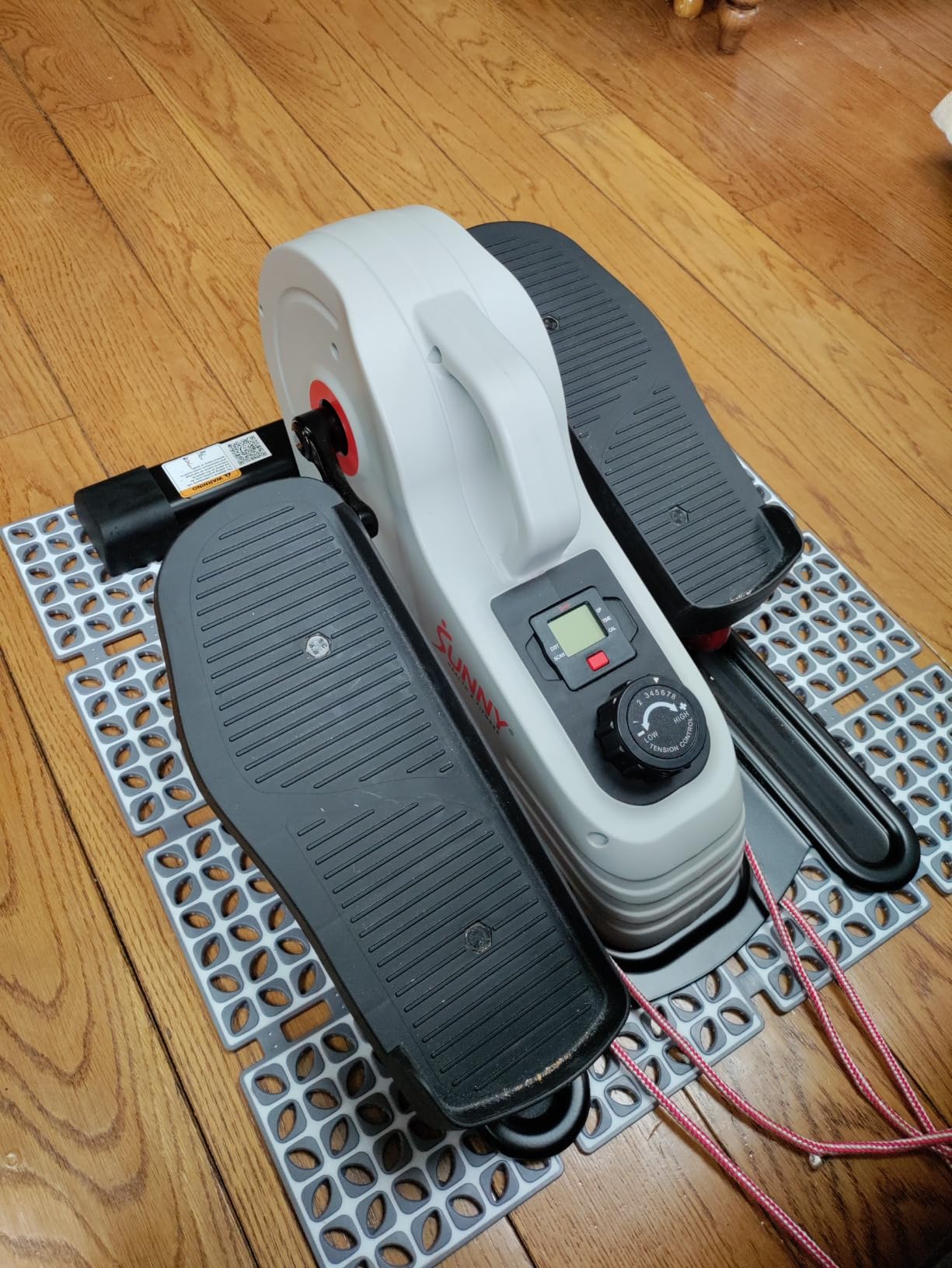
Physical therapy users describe it as transformative for post-fracture recovery, edema, osteoporosis and autoimmune recovery. The eight magnetic levels are enough to make long-term progression realistic, which is the difference between a machine used for a fortnight and one used for two years.
Our rating of confidence here is based on volume and consistency rather than the highest average score. It is the most widely used elliptical in physical therapy circles we reviewed, and the negative feedback is narrow and fixable.
Who this suits best
This suits anyone whose household is noise sensitive, and anyone in a physical therapy program who needs a long, frequent session rather than a hard one. The open-top foot pads and adjustable straps accommodate a wide range of shoe sizes, which reduces the faff of setup.
It is also the safest pick for shared homes where the machine will be used in the morning while others are still asleep or on a call.
Where it falls short
At 25 lb it is the heaviest machine here alongside the Cubii, so plan for it to be positioned once with help. It also slides forward on hardwood or luxury vinyl unless you put a mat or weights underneath, and the 7 inch stride is shorter than the Cubii’s.
The wheels ride on a flat plate rather than in a groove, which means they collect dust and grit and need frequent cleaning and oiling to stay quiet. It is also not Bluetooth enabled, so workout data must be entered by hand.
5. Vaunn Foldable Compact Professional – Best for Folding and Storage
Vaunn Foldable Compact Professional Wrist Arm Leg Strengtheners Pedal Exerciser with Electronic Display for Indoor Exerciser and Physical Therapy (Gun Metal Black)
16 magnetic levels
Folds flat at 5.7 lb
Mat and strap included
Arms and legs
Pros
- Folds flat for cupboard storage
- 5.7 lb moves with one hand
- Mat and chair strap included
- Two pairs of interchangeable pedals
Cons
- Leg pedalling can feel jerky and hop
- Pedals are awkward under the hands
- Will not fit under a low desk
- Display shows basic metrics only
Storage is the reason this one earns its place. At 5.7 lb and folding flat, it is the machine we would suggest for a small flat, a rented room, or a household that does not want a permanent piece of exercise equipment occupying the living room. One person can pick it up and carry it.
The box is unusually generous for this class. You get a non-slip rubber mat, a securing strap for anchoring the machine to a chair leg, adjustable straps, and two pairs of interchangeable pedals, one rough and one smooth, for feet or hands.
Sixteen calibrated magnetic levels give more adjustment range than most budget pedal exercisers, and the low-mounted flywheel reduces pedal bounce so the rotation stays smooth for a light machine. It is a good gentle-movement tool for circulation and joint mobility.
The honest limitation is strength. At 5.7 lb the frame is not built for aerobic work or real resistance training, and the listing itself describes it as suited to gentle movement. Owners using it for post-surgery rehab are getting exactly the right tool; owners hoping for a workout are not.
Who this suits best
This suits a senior living in a small apartment, or anyone who needs the machine to disappear into a cupboard between uses. It is a strong choice for daily gentle range of motion work where portability matters more than maximum resistance.
It also suits caregivers who move the machine to wherever the user is sitting, which is a real routine in homes where the person cannot easily relocate to a fixed exercise spot.
Where it falls short
Leg pedalling is reported as jerky, and the unit can hop on hard floors. The pedals are shaped for feet and feel clunky under the hands, so exercise gloves make arm sessions bearable.
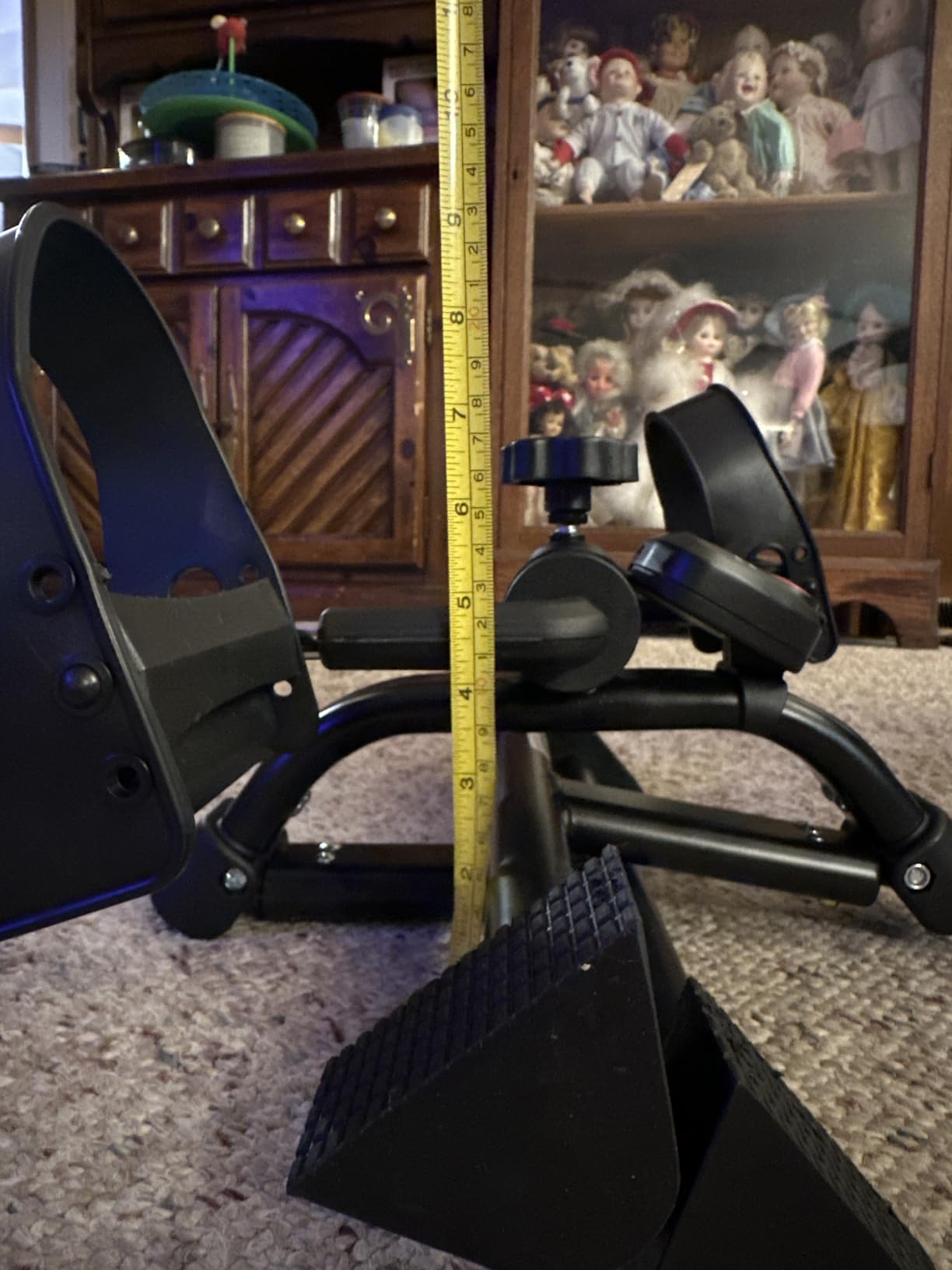
At 11.25 inches tall it will not fit under a desk unless that desk is unusually high, because knees will strike the frame. The display pod shows time, crank count, total cranks and a rough calorie figure, and a minority of owners report a crank developing a squeak after a few long sessions.
6. himaly Mini Exercise Bike – Best Value with the Most Owner Feedback
himaly Mini Exercise Bike, Under Desk Bike Pedal Exerciser Portable
8 resistance levels
Arms and legs
8 lb frame
LCD with scan mode
Pros
- Largest review base in this guide
- Compact at 8 lb for real portability
- Works for arms on a table too
- Tension knob is simple to use
Cons
- Light frame shifts under load
- Maximum resistance is low
- Pedal motion can feel rough
- Some units arrive with quality issues
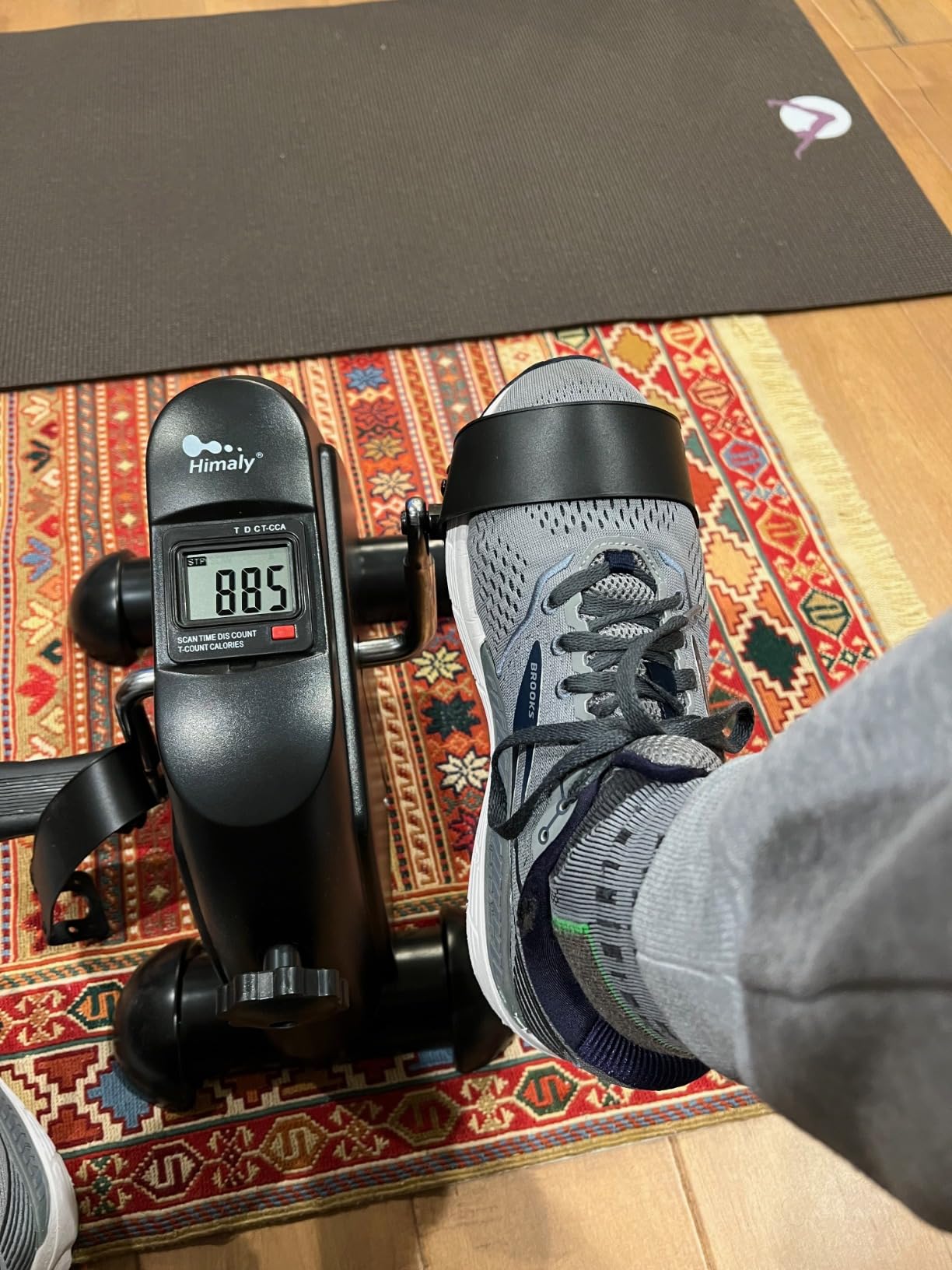
With more than 18400 reviews this is the most thoroughly documented machine in the guide, and that cuts both ways. There is almost no scenario in this category that an owner has not already described, which makes it a genuinely safe low-risk purchase and a genuinely limited one.
Set it on a table for arm work or on the floor for legs, using the same crank either way. The tension knob adjusts eight levels, the LCD scans through time, count, calories and distance, and setup takes minutes with no tools. Anti-slip pedals and feet help hold position.
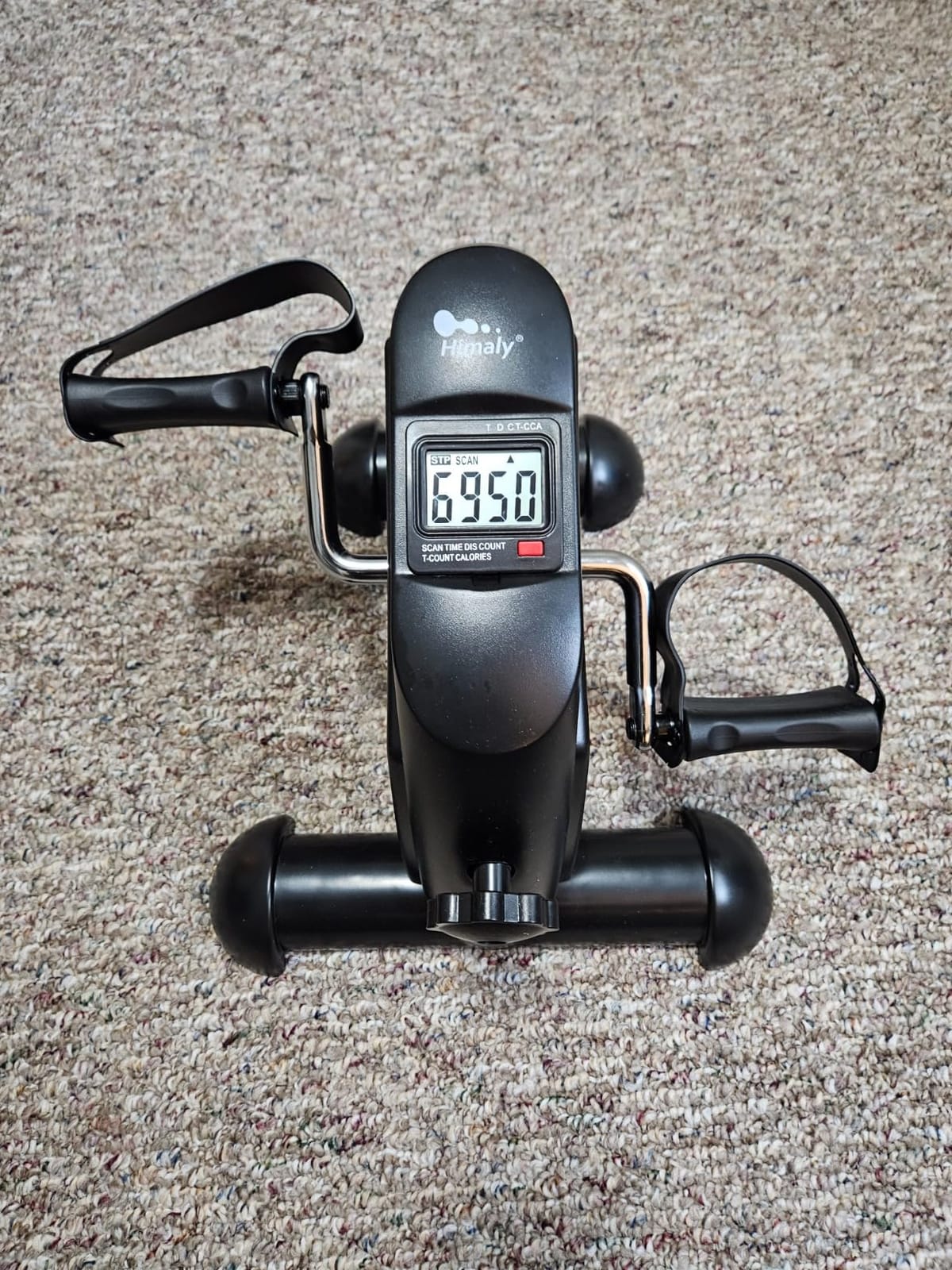
It shows up constantly in post-hip and post-foot rehabilitation stories, where the goal is restoring comfortable movement rather than conditioning. At 8 lb it is one of the easiest machines here to move from room to room, which matters more than most buyers expect.
Our 4.0 average reflects a wide spread of quality in the batch rather than a bad design. The complaints are consistent and fixable: put a mat under it, keep the resistance one or two notches lower than you think, and check the pedal straps on day one.
Who this suits best
This suits a first-time buyer on a limited budget who needs a simple, portable, dual-purpose machine for gentle daily movement. It is a common and sensible choice in a small flat, or for someone who wants to try pedalling before spending more.
It also suits a user working on ankle, foot or hip recovery who needs something light enough to reposition whenever the situation calls for it.
Where it falls short
The 8 lb frame shifts and creeps during pedalling, especially on hard floors, so a non-slip mat is close to essential. Maximum resistance is low, which means it will never deliver cardio or strength work, and pedal motion can feel jerky until the resistance is dialed down.
Quality control is the weak spot, with owners reporting missing instructions, loose hardware and adhesive residue on the drive belt. Pedal straps are not adjustable and one pedal can repeatedly slip out of position.
7. AGM Mini Exercise Bike – Budget Pick for Under-Desk Use
Mini Exercise Bike, AGM Under Desk Bike Pedal Exerciser Foot Cycle Arm & Leg Pedal Exerciser with LCD Screen Displays
12.6 inch tall
8 resistance levels
Arms and legs
7.3 lb frame
Pros
- Shortest height here so it clears a desk
- Very light at 7.3 lb
- Adjustable foot straps included
- Tool-free setup with clear directions
Cons
- Weak mat does not stop floor movement
- Belt friction rather than magnetic resistance
- Jerky at higher settings
- Squeaking can develop quickly
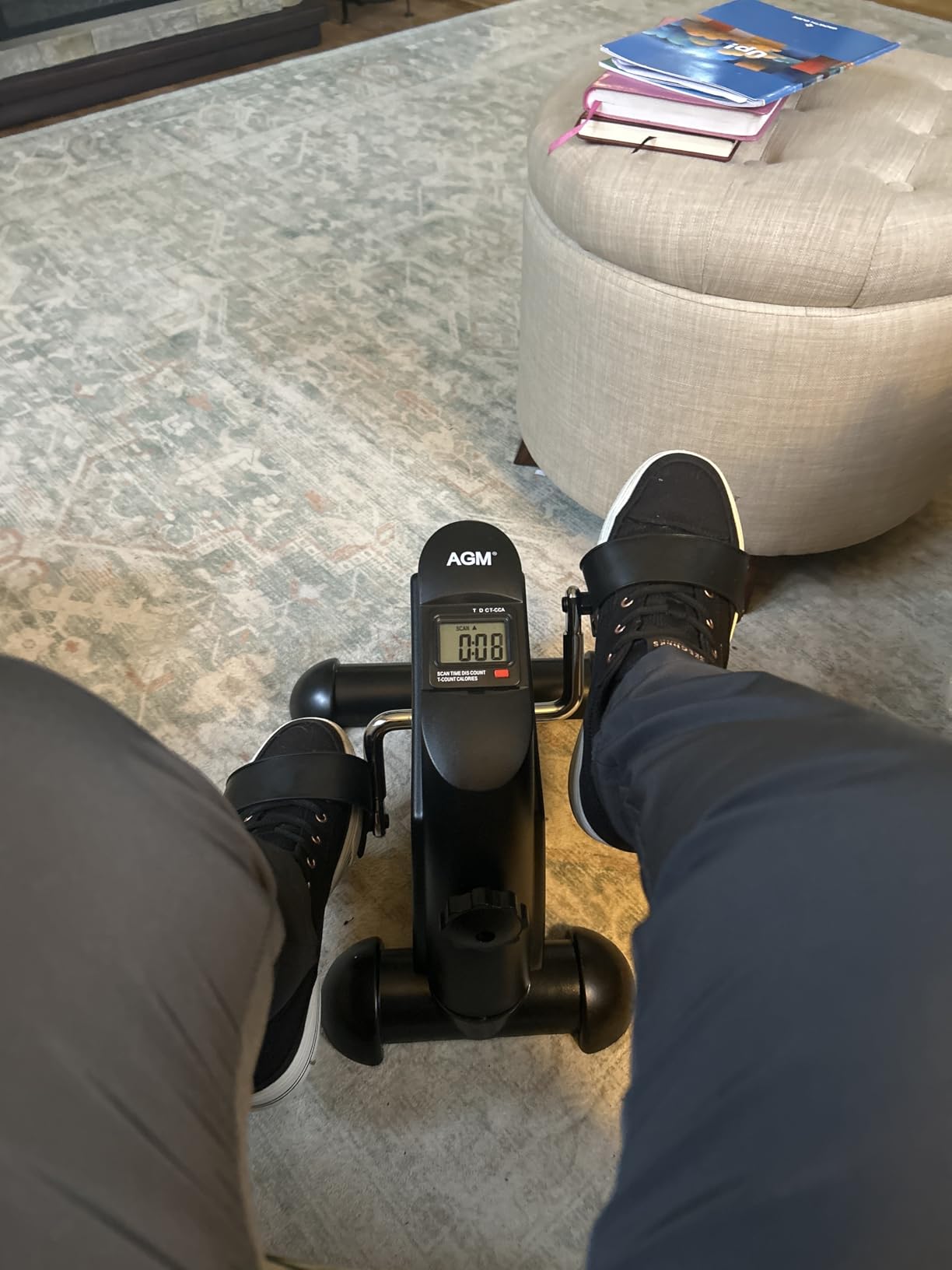
The AGM earns its place on one specific measurement. At 12.6 inches tall it is the shortest machine in this guide, and that is the difference between a pedal exerciser that slides under a work desk and one that strikes the user’s knees. For anyone working from home or spending hours at a table, that is decisive.
It also does arms and legs with the same crank, comes with adjustable non-slip foot straps that actually fit different users, and needs no tools to assemble. The LCD tracks time, speed, distance and calories, and the tension knob is easy to turn as fitness improves.
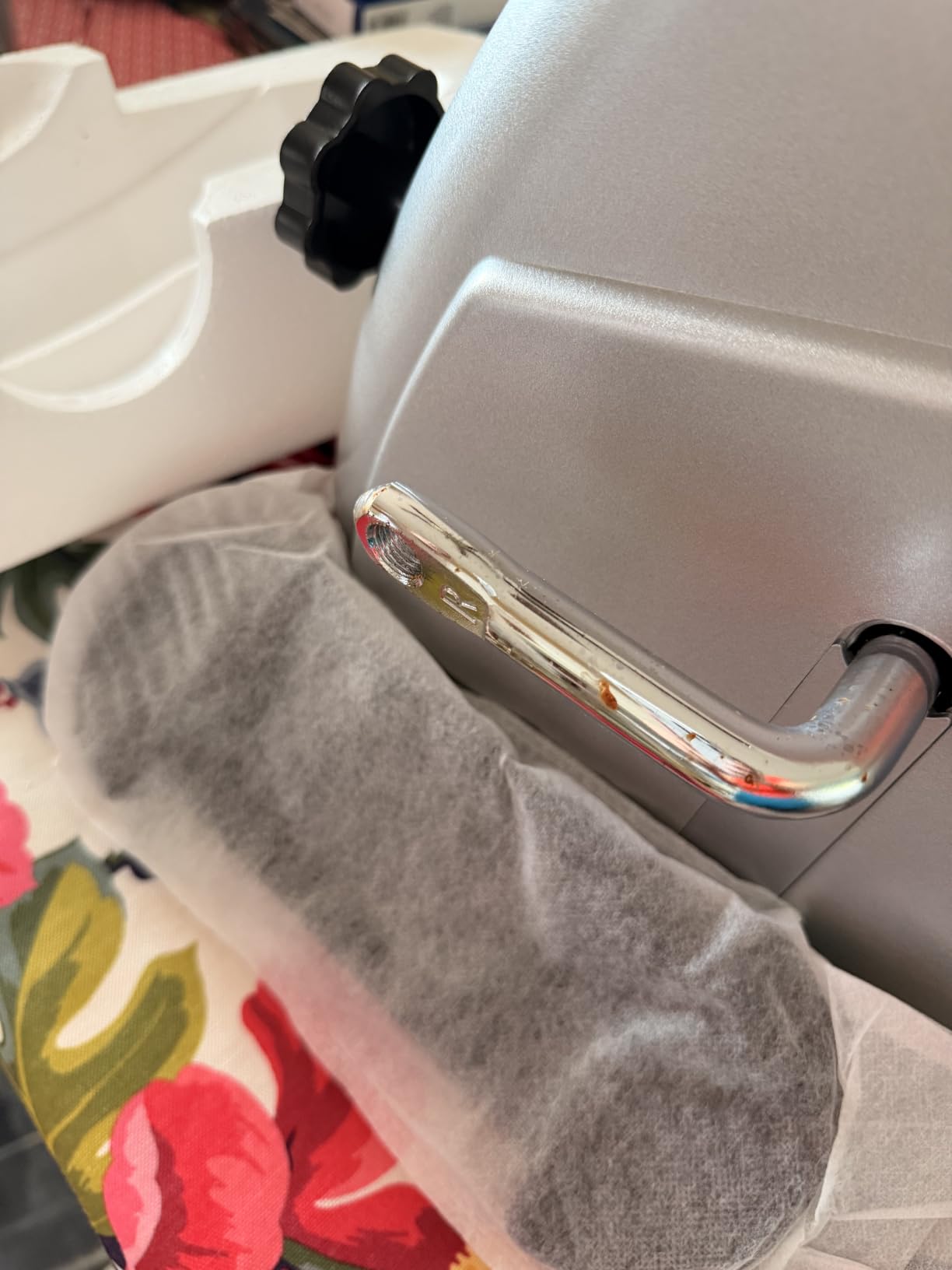
Owners report good results helping an elderly parent and in post-hip-replacement recovery, particularly when paired with a proper non-slip mat of their own. The manufacturer’s own tip is worth repeating: use a chair with back support and lubricate the bearing if the motion starts to feel rough.
This is the lowest-cost way into the category and it does the fundamentals. Our 4.0 average comes from the widest spread of batch quality in this group, so check the machine on arrival rather than assuming.
Who this suits best
This suits anyone whose primary goal is an under-desk exerciser at a low cost, and anyone who wants a single machine that handles both arms and legs. It suits a shared home where two people might use it for different purposes.
It is also a good fit as a second machine, since its low profile means it can live in a workroom while a larger elliptical stays in the living room.
Where it falls short
The resistance is belt and friction based rather than magnetic, so the adjustment is less smooth and less consistent, and the included mat is too weak to stop it moving on a hard floor. Pedalling feels jerky at higher settings or when the feet are angled badly.
Squeaking can develop within a day or two, and owners also report loose bolts, missing instructions and units arriving with glue on the belt. A pedal repeatedly slipping out of position is the most common functional complaint.
8. Sunny Smart Mini Cycle – Best Quiet Belt-Drive Mini Cycle
Sunny Health & Fitness (White) Under Desk Smart Mini Pedal Exerciser, Dual Function Exercise Cycle Bike with Low Profile Design – SF-B023005WHT
16 resistance levels
Mesh belt drive
11.7 lb
Arms and legs
Pros
- Stepless micro-adjustment on 16 levels
- Quiet mesh belt transmission
- 11.7 lb with a carry handle
- Compact footprint stores easily
Cons
- No motorized assist at all
- Small four-metric display
- No app or Bluetooth despite branding
- Light build for light movement only
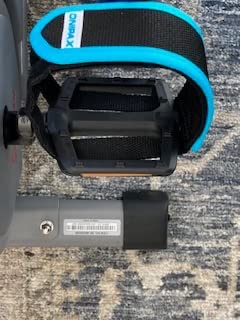
This is the mid-tier answer for someone who wants the smoothness of a belt drive without the weight or the price of the ellipticals. The mesh belt transmission is why owners describe it as quiet, and the 11.7 lb frame with a carry handle makes it easy to move between a bedroom chair and a sofa.
The resistance system is the real feature. Sixteen levels with stepless micro-adjustment means you can turn the knob a fraction rather than jumping between fixed steps, which is a genuine advantage in rehab where small changes in load matter.
The 2-in-1 design switches between leg pedalling and arm pedalling, and the digital monitor shows speed, time, distance and calories in real time. Warranty is one year on the frame and 180 days on parts, which is a reasonable middle ground for this tier.
Owners position it as a solid middle option for seniors and desk workers, and the 300 pound capacity gives headroom that most portable machines cannot match. It is not a cardio machine, and buyers expecting one tend to be disappointed.
Who this suits best
This suits a user who wants fine control over resistance, which is the case in physical therapy work and in long rehabilitation programs where progress is measured in small increments. It also suits anyone who wants arm work from the same machine as leg work.
It suits a household that wants a quiet machine without paying for a heavy elliptical, particularly in an apartment where a soft pedal sound matters.
Where it falls short
There is no motorized assist, so it is the wrong choice for someone who cannot self-pedal. The display is small and limited to four metrics, and despite the Smart branding there is no Bluetooth or app connectivity, so data has to be entered by hand.
The light build suits light movement rather than demanding cardio or strength work, and the 11.7 inch height is too tall to slide under a standard desk without the knees catching.
9. Yagud Under Desk Machine – Best for Limited Mobility
Yagud Under Desk Machine, Electric Elliptical Leg Exerciser for Senior, 13 Adjustable Speeds Quiet and Portable Seated Pedal Exerciser for Training with Remote Control, Orange
13 adjustable speeds
Remote control
Rehab forward and reverse program
14.3 lb
Pros
- Highest five-star share in this group
- Assisted motion suits very weak legs
- No assembly and stable on smooth floors
- Works plugged in or unplugged
Cons
- Foot straps are loose as supplied
- Basic time speed and distance display
- Not built for muscle or cardio work
- Heavier than it looks for daily moving
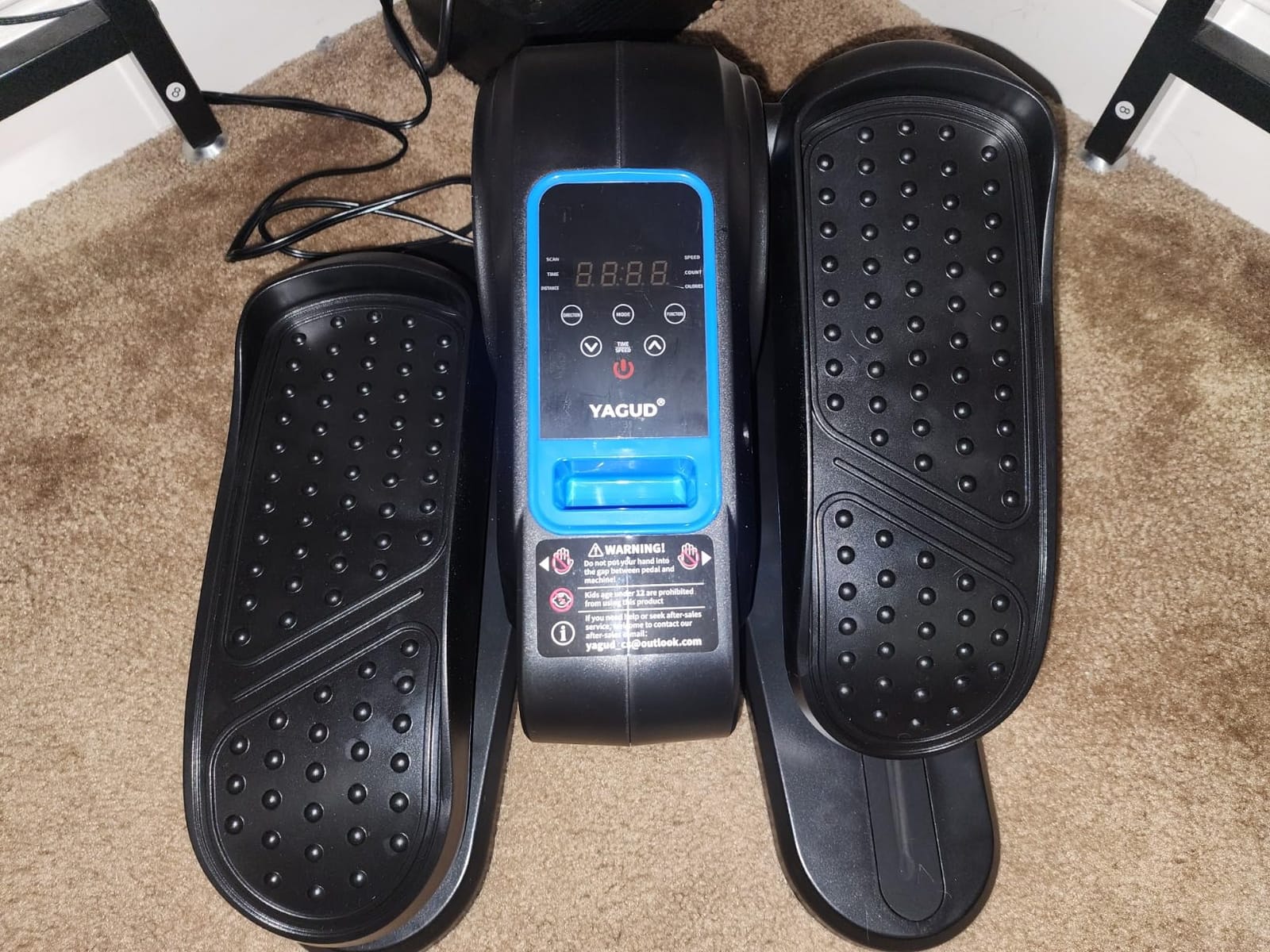
The 4.5 average here is the second highest in this guide, and at 76 percent five-star ratings it has the strongest owner satisfaction of any pick we reviewed. The motorized assist is the reason: the legs keep moving with almost no effort, which is precisely what a frail or post-injury user needs to keep a daily habit going.
It arrives fully assembled, and owners report being up and running within ten minutes of opening the box. The remote changes mode and speed without bending over, and the pre-programmed rehab mode alternates forward and reverse pedalling to work different muscle groups.
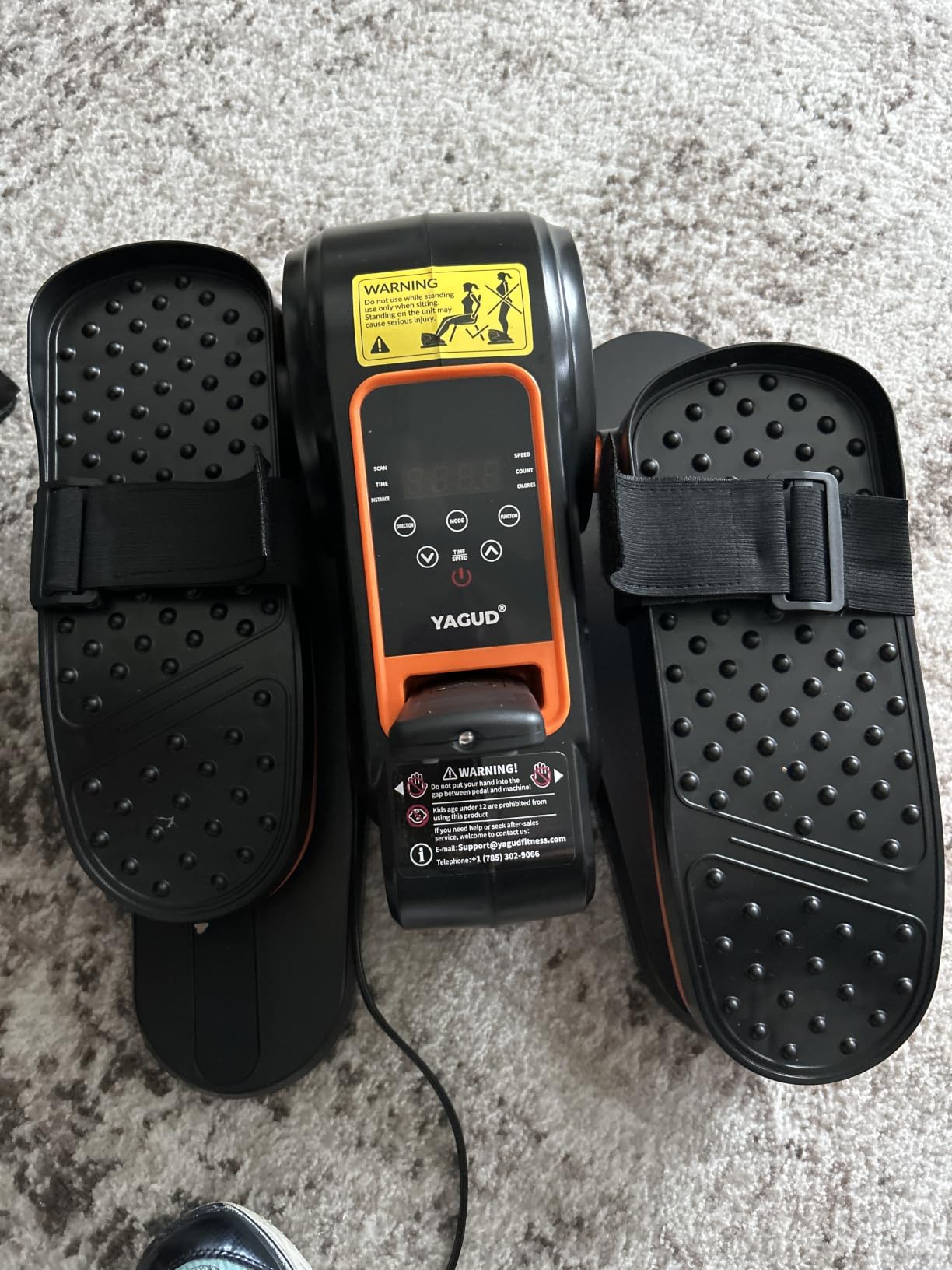
Users also report it staying put on smooth flooring without a special mat, and it works whether or not it is plugged in, which is unusual and useful in a room with no nearby outlet. Some users report lower glucose readings and less post-meal stiffness with regular sessions.
The remote stores on the machine itself, which is a small but thoughtful detail in a home where things get lost. The LCD faces the user for a wider field of view, another practical touch for limited neck movement.
Who this suits best
This suits someone with very limited strength who still wants a structured daily routine, and someone returning from injury where a clinician has asked for passive movement. The rehab program removes the need for the user to think about direction or speed at all.
It suits a user who is comfortable in a solid upright chair. A soft sofa reduces the range of motion and the benefit, which owners flag directly.
Where it falls short
The foot straps are loose as supplied and some users buy a separate hook-and-loop strap for a closer fit. The display shows only time, speed, calories and distance, and the 5 inch stride is the shortest in this group, so the motion is small.
It is explicitly not for building muscle or serious cardio work. At 14.3 lb it feels heavier than expected for frequent moving, and the warranty coverage listed is limited compared with the Sunny models.
10. MERACH Under Desk Elliptical – Best Motorized Ellipse
MERACH Under Desk Elliptical, Leg Exerciser While Sitting for Seniors
60W motor
12 speeds plus P1-P12 auto
LED touch screen and remote
11.1 lb
Pros
- Ranked first in its category on Amazon
- Under 15dB even at high speed
- Assisted pedalling for long sessions
- No assembly and only 11.1 lb
Cons
- Direction changes and resets unprompted
- Control panel can alter resistance itself
- Stride shorter than a natural step
- Corded power needs a nearby outlet
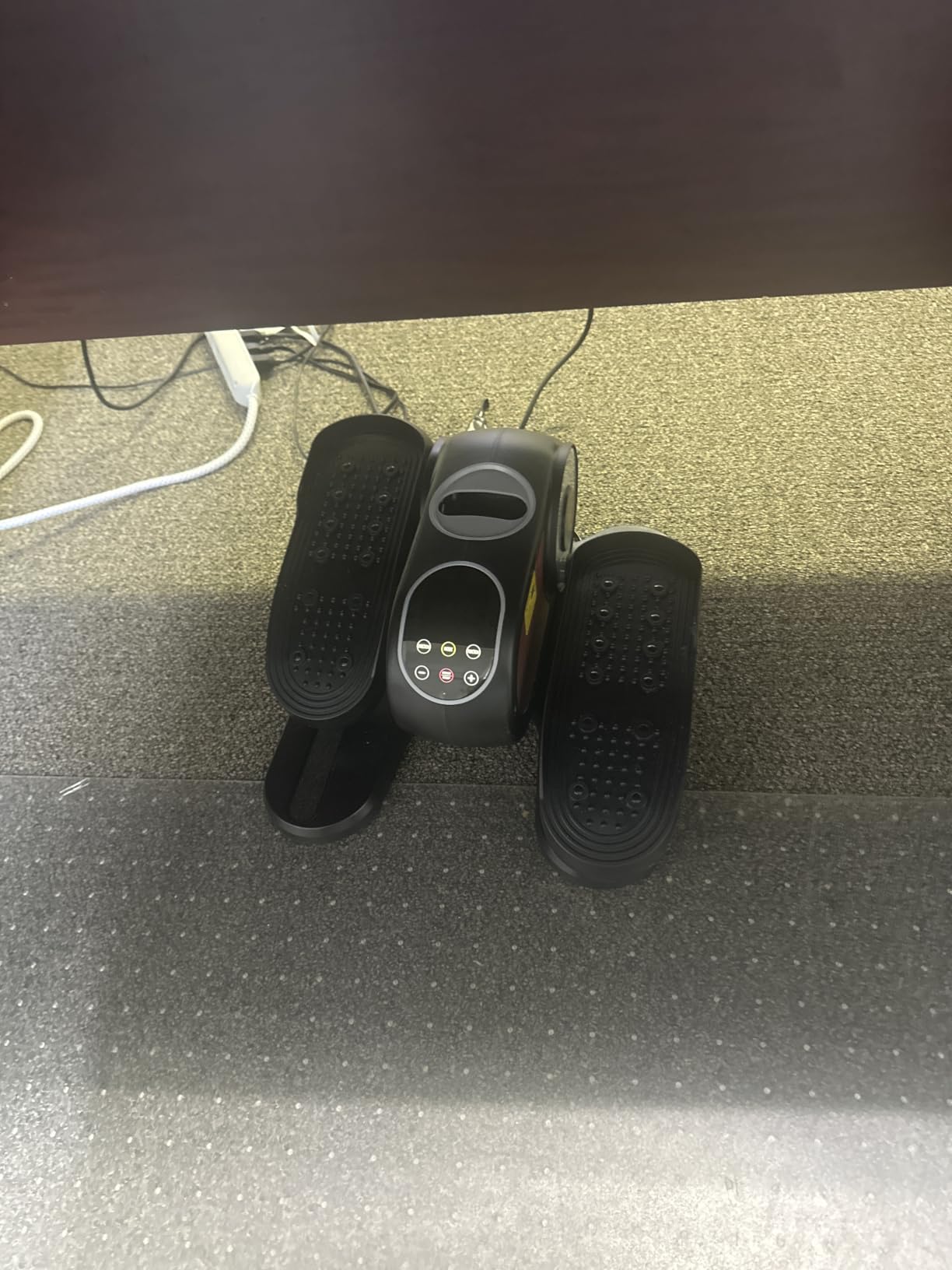
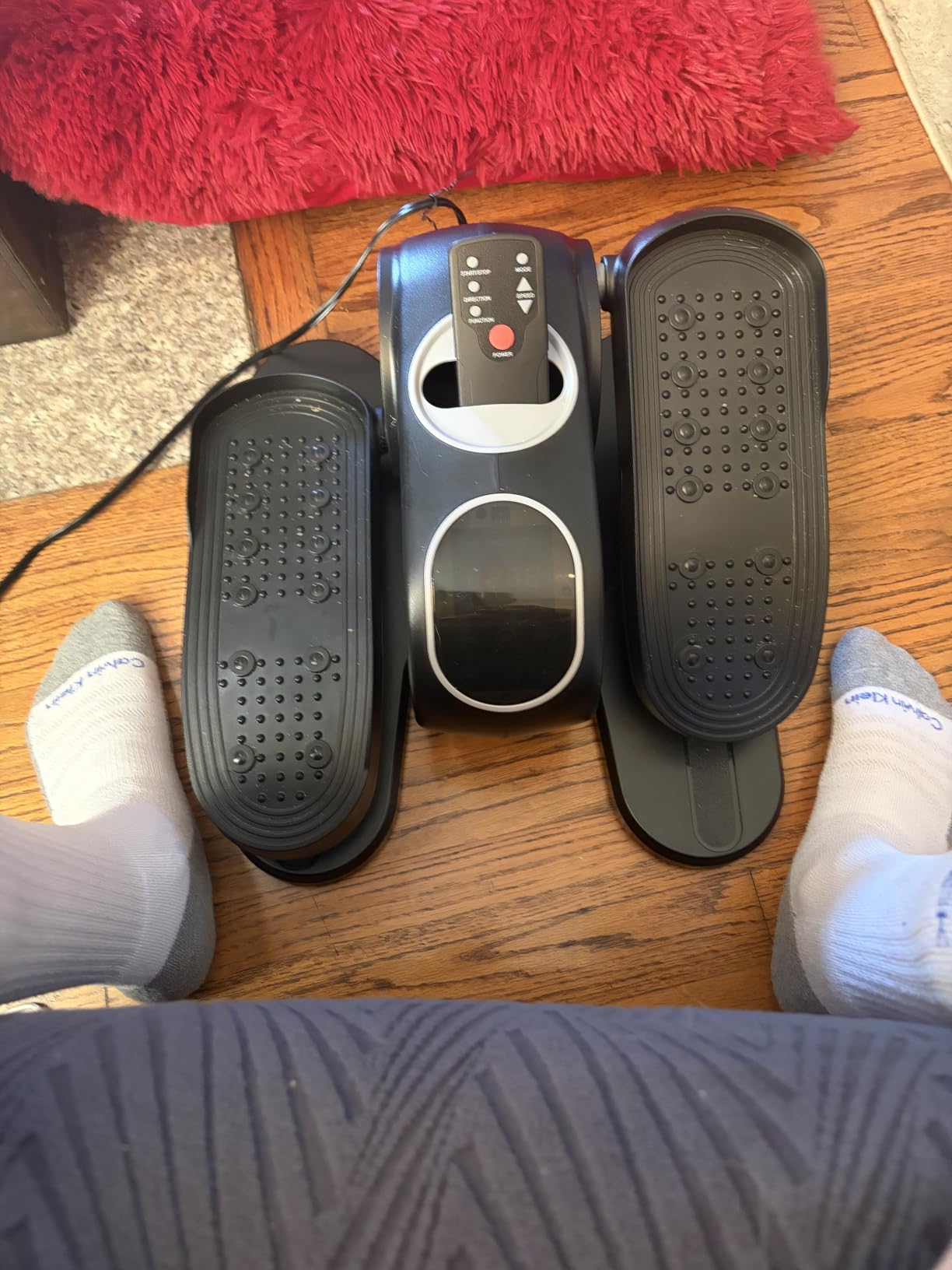
The most capable motorized unit we reviewed, and the only one with twelve automatic programs on top of twelve manual speeds. The 60W motor runs quietly enough to use during meetings, and the combination of touch screen and remote means the user never has to reach the floor.
At 11.1 lb and 7.4 inches tall it is one of the smallest and lightest options here, so it genuinely goes under a desk or beside a couch without dominating the floor. There is no assembly, and forward and reverse pedalling are both available.
Owners of parents in their late eighties report less hip and knee stiffness after a day of use, which is the outcome we care about in this category. The category ranking on Amazon reflects how widely it is used, not just how it is marketed.
The assisted pedalling keeps legs moving with little effort, which makes long sessions realistic for someone who would tire quickly on a manual machine. Used in manual mode it becomes a genuine active workout rather than a footrest.
Who this suits best
This suits a user who wants one machine that covers both assisted and active training, and who will use it at a desk for part of the day. The range of twelve speeds and twelve programs means it grows with the user rather than being abandoned at the first plateau.
It is a strong choice for a shared space because the low noise level means it can run during a video call without forcing anyone to mute.
Where it falls short
The most common complaint is control panel unpredictability. Some units change pedalling direction on their own, slow down or add resistance without being asked, and reset the distance counter mid-session, which makes tracking totals unreliable.
The stride is shorter than a natural walking step, the corded power needs a nearby outlet, and the display data is not always dependable. Anyone who needs accurate session records should note that in advance.
Are Pedal Exercisers Any Good for Seniors?
Yes, as one part of a broader routine, but not as a replacement for walking, balance work or resistance training. Pedalling reliably improves circulation in the lower legs, keeps knees and hips moving through a comfortable range, and adds light muscular work to time that would otherwise be spent sitting still.
The mechanism is straightforward. Contracting the calf and thigh muscles compresses the veins and pushes blood back up from the lower legs, which is the same pump that stops blood pooling when you stand and walk. Adults over 65 spend long stretches seated, and that stillness is where the swelling, stiffness and strength loss come from.
What it will not do is raise heart rate into a training zone. Experienced users on forums describe an under-desk elliptical at maximum resistance as good for fidgeting and circulation, not for training. World Health Organization guidance for adults over 65 includes both aerobic and muscle-strengthening activity, and a pedal exerciser contributes a portion of the aerobic side and a light portion of the strength side.
One more realistic note. Calorie estimates on these displays are widely distrusted by owners and should be treated as a rough prompt to move rather than a measurement. Many users find that the habit, not the number, is what delivers the benefit.
How to Choose: Buying Guide for Seniors
1. Choose the mechanism before the brand
Start with the question of what the machine is for. Self-powered elliptical suits a user whose joints are the problem. Self-powered mini bike with an arm crank suits a user who wants a wider range of movement and a portable machine. Motorized elliptical suits a user who cannot reliably pedal under their own power.
Be clear-eyed about motorized units. In auto mode the motor supplies the work, so it is assisted movement for circulation and joint mobility, not a cardio workout. Used in manual mode, the same machine becomes a genuine active exerciser, which is why the dual-mode machines are the most flexible choice.
2. Weigh machine weight, not user capacity
Advertised user weight capacity is close to meaningless for this category. The chair carries the body weight, not the machine, so a 300 pound capacity figure tells you almost nothing about how a machine will perform for a 160 pound user. What matters is machine weight, base width, rubber feet, and whether a mat or chair strap is included.
The trade-off is unavoidable. A 5.7 lb folding machine can be carried between rooms by one person, and it will move around the floor under load. A 25 lb elliptical will not budge, and it will need two people to reposition. Decide who is moving it, and buy for that person.
3. Measure knee clearance before buying an elliptical
Sit in the chair the machine will be used from, and measure the clearance from the floor to the underside of whatever is overhead, such as a desk or table. Then compare that with the machine height. Anything over 11 inches will not pass under a standard desk, and knees will strike the frame.
For a machine used in front of an armchair rather than under a desk, the relevant measurement is stride length instead. The Cubii JR1 has the longest stride in this group at 18 inches, while the Yagud has the shortest at 5 inches, and that difference shows up in how far the knee travels.
4. Pick the resistance type for comfort and noise
Magnetic resistance is quieter, smoother and more consistent, because nothing rubs against anything as the knob turns. Friction and belt resistance is cheaper and adjusts in bigger jumps, and tends to develop squeaks over time. For a machine in a quiet home or a shared wall, magnetic is the better choice.
Resistance range matters more than the number of levels. Eight well-spaced levels is enough for a gradual program, and sixteen with stepless adjustment is noticeably better for rehabilitation work where load changes need to be small and deliberate.
5. Do not skip the remote control
Displays on this category sit close to the floor, which means reading or resetting one means leaning forward repeatedly. For anyone with a bad back, recent hip surgery or limited forward reach, that alone can end the habit inside a month. A remote control is not a luxury feature in this category.
Note that remote batteries are frequently not included, usually the two AAA cells, so buy a spare pair before the machine is unboxed.
6. Check warranty length and what it covers
Warranty terms vary more widely here than the marketing suggests. Frame-only coverage of one year with 180 days on parts, as on the Sunny models, is the most common structure. Some listings offer a two-year manufacturer term, and some state very little at all, so check the box rather than assuming.
For a machine expected to last several years, a longer frame warranty is a real differentiator. It is also worth checking whether the brand sells replacement pedals and straps directly, because those are the parts that wear first.
How to Use a Pedal Exerciser Safely
Sit in a stable chair without casters. A rolling office chair is the most common accident waiting to happen in this category, because the machine pushes the chair back as the legs extend. A dining chair, a firm armchair or a chair with a rubber-footed base is the right answer.
Check clearance, fit the foot straps so the feet sit in the heel cups, and start at the lowest resistance or the slowest speed. Pedal smoothly rather than in bursts, and let the range of motion build over days rather than forcing it in the first session.
Know how to stop a motorized machine before starting it. Sit with the remote within reach, find the stop control while the machine is running slowly, and make sure someone nearby knows how to cut the power.
Stop immediately for sharp pain, dizziness, chest discomfort, unusual shortness of breath or swelling that increases afterward. If you are recovering from hip or knee replacement, a stroke or a fracture, follow the program your surgeon or physical therapist set rather than a generic routine, and ask them before increasing resistance or session length.
If you are buying for someone else, choose the chair first. A swing-away arm, a firm seat at a workable height and no wheels do more for the user’s experience than any specification on the box.
Your First Week: A Simple Ramp-Up Plan
Most people start too hard and quit in nine days. A slower ramp is what separates a machine that is still being used in year two from one in the cupboard, and it costs nothing but patience.
Day 1: five minutes total, split into two or three short blocks. Lowest resistance. The goal is comfort, not effort.
Days 2 and 3: five to eight minutes a day, in blocks. Raise resistance by one step only if the session felt easy.
Days 4 and 5: ten minutes, and this is the point to check the straps and confirm the machine is not creeping across the floor.
Week 2 onward: build toward two sessions of 15 to 20 minutes on most days of the week, raising resistance before adding time.
Tie the sessions to something already in the routine. Most consistent owners use the machine during a television programme, and the ones who do not usually stop within a month. For a motorized unit, the same plan applies with the program set low and increased gradually.
Most of our picks are quiet enough to use during a television programme without complaint from the rest of the household, which is one of the quieter but more decisive factors in whether a habit sticks.
Frequently Asked Questions
Are pedal exercisers any good for seniors?
Yes, as one part of a broader routine. Pedalling improves circulation in the lower legs, keeps knees and hips moving through a comfortable range of motion, and adds light muscle work to time that would otherwise be spent sitting. It is genuinely useful for arthritis, stiffness and post-surgical recovery. It is not a replacement for walking, balance training or resistance work, and it rarely raises heart rate into a training zone.
What is the best foot pedal exerciser for seniors?
It depends on what limits the user. If joints are the problem, choose a self-powered elliptical for its smooth low-impact path. If the user cannot pedal under their own power, choose a motorized elliptical with a remote control. If the machine must be carried between rooms or stored in a cupboard, choose a lightweight foldable mini bike. The most widely endorsed general-purpose pick in this guide is the Cubii JR1.
Do motorized pedal exercisers work?
Yes, for passive and assisted movement. A motorized unit keeps the pedals rotating forward or reverse at a set speed, which maintains range of motion and circulation when strength is very low or after surgery. The honest caveat is that in auto mode the motor supplies the work, so it delivers less cardiovascular and strength benefit than a manual machine. Think assisted movement, not a workout.
What is the best pedaling machine for home use?
Answer by mechanism and room rather than by brand. In front of an armchair, a weighted elliptical gives the smoothest, quietest motion. Under a work desk, choose something under about 11 inches tall, which rules out most larger ellipticals. For a small apartment, a folding mini bike that stores flat is the practical answer. For a user who cannot self-pedal, a motorized elliptical with remote control is the only sensible choice.
Do foot pedal exercisers really work?
They work, and the mechanism is simple. Contracting the calf and thigh muscles compresses the veins and pushes blood back up from the lower legs, which is the same pump that reduces blood pooling when standing and walking. Regular sessions therefore help with swelling, stiffness and circulation. The realistic ceiling is low intensity, so the calorie burn is small and the display estimate should be treated as a rough prompt rather than a measurement.
Do leg exercisers really work for seniors?
Yes, the quadriceps and hamstrings do most of the work, with the calves and hip muscles contributing. Machines with an arm crank add the shoulders, biceps, triceps and forearms. How much benefit you get scales directly with resistance, so an easy session and a hard session are not equivalent. That is why eight or sixteen clearly spaced resistance levels matter more for long-term progress than any display feature.
How often should seniors use a pedal exerciser?
Start with five to ten minutes a day and build gradually toward two sessions of 15 to 20 minutes on most days of the week, raising resistance before adding time. Short blocks work nearly as well as one long session, so three ten-minute stretches beat one half-hour attempt. World Health Organization guidance for adults over 65 recommends 150 minutes of moderate activity per week, but casual pedalling rarely reaches moderate intensity, so treat it as a supplement rather than the whole plan.
Conclusion: Which Pedal Exerciser Should You Buy?
After comparing all ten, the Cubii JR1 is our overall recommendation among the best pedal exercisers for seniors, because it combines the smoothest low-impact stroke, a base that does not wander and the strongest owner satisfaction in the group. Pick the Sunny Health SF-E3872 instead if noise is the deciding factor, and pick the GUGTTR or the Yagud if the user cannot self-pedal on a bad day.
Whatever you choose, the machine is only half the decision. A stable chair without casters, a non-slip mat under a light frame, a remote control within reach and a slow first week will do more for results than any specification on the box. Check back after two weeks, adjust the resistance up rather than the time, and give it a fair chance before judging it.
We earn a commission from purchases made through the links on this page, at no additional cost to you. That never changes which machines we recommend or the drawbacks we list.