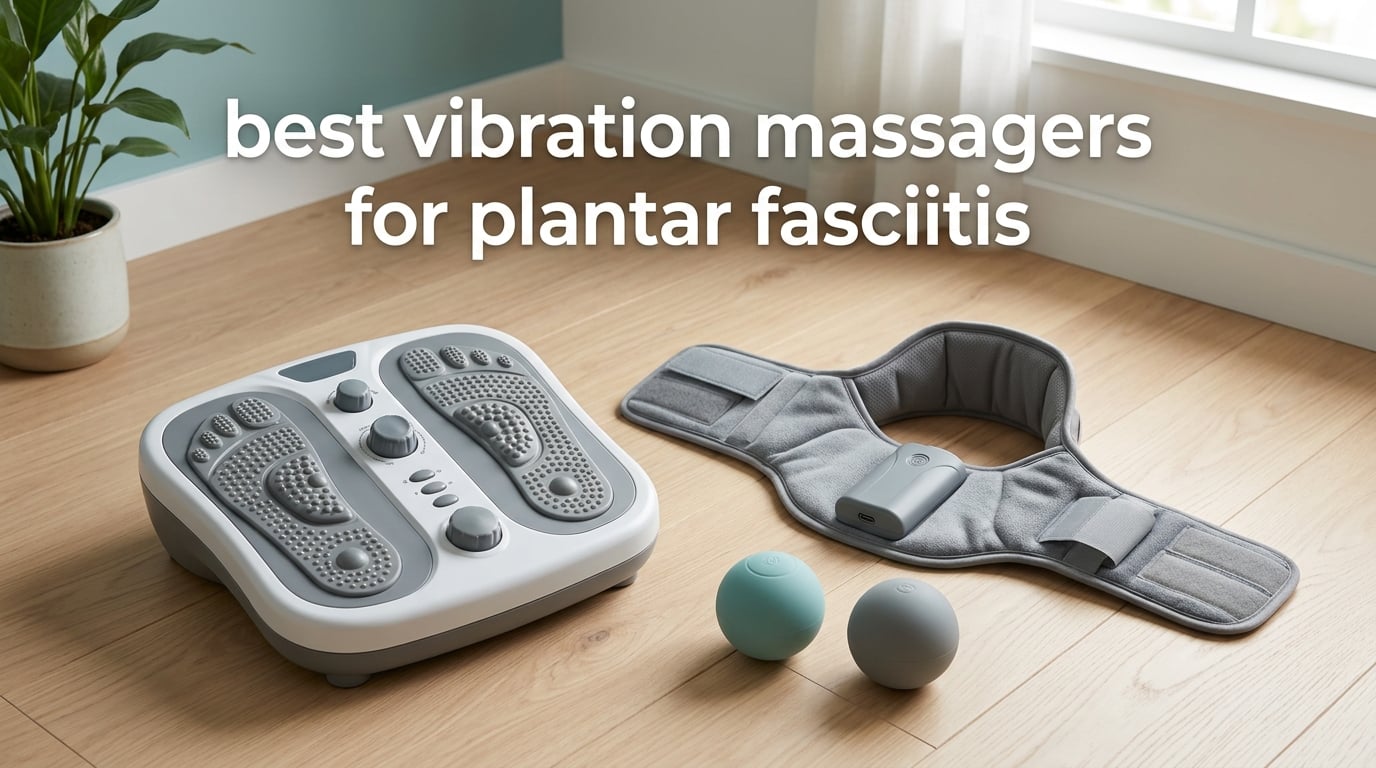
Do vibrating massagers work for plantar fasciitis? Yes, as symptom relief. Rhythmic oscillation into the arch and heel loosens tight fascia and increases local blood flow, which takes the edge off that first-step-of-the-morning pain. What it does not do is stretch the plantar fascia or correct the mechanical cause.
That distinction matters more than any spec sheet. A vibration massager for plantar fasciitis is a flare-up tool, in the same category as a heating pad and a foam roller, and it works best alongside stretching and foot-strength work rather than instead of it.
We compared 10 vibrating foot massagers across three form factors: full oscillating plates, open-platform and enclosed machines, and handheld vibrating balls and wraps. We logged vibration levels, heat, foot coverage, controls, weight, and the drawbacks that surface in owner reviews after a few months. Last updated for 2026.
Table of Contents
Top 3 Best Vibration Massagers for Plantar Fasciitis in 2026


All 10 Best Vibration Massagers for Plantar Fasciitis (October)
| Product | Specifications | Action |
|---|---|---|
| Lifepro VibraFlow Foot Massager |
|
Check Latest Price |
| Daiwa Felicity Foot Vibe Pro |
|
Check Latest Price |
 Snailax SL-591 Vibration Massager Snailax SL-591 Vibration Massager |
|
Check Latest Price |
 FEELNOW Cordless Heated Wrap Pair FEELNOW Cordless Heated Wrap Pair |
|
Check Latest Price |
 Snailax Shiatsu with Compression Snailax Shiatsu with Compression |
|
Check Latest Price |
 LilStones Cordless Wrap 2-Pack LilStones Cordless Wrap 2-Pack |
|
Check Latest Price |
 FAUAID Open-Platform Shiatsu FAUAID Open-Platform Shiatsu |
|
Check Latest Price |
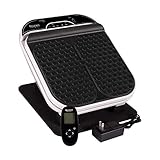 Quake Plate High RPM Oscillating Quake Plate High RPM Oscillating |
|
Check Latest Price |
 NHO Vibrating Massage Ball NHO Vibrating Massage Ball |
|
Check Latest Price |
 JIEJUNJIE Vibrating Peanut Ball JIEJUNJIE Vibrating Peanut Ball |
|
Check Latest Price |
How Vibration Actually Helps Plantar Fasciitis
The plantar fascia is a thick band running from the heel bone to the toes. When it is chronically shortened, the first steps of the day pull on stiff tissue, and that is where the sharp heel pain comes from. Vibration helps twice: the oscillation relaxes the fascia and calf so the tissue stops holding the arch contracted, and the movement pushes blood through the area so it tolerates loading better.
Not all mechanisms are equal. Pure vibration is rhythmic and stays put under the heel. Rolling kneading drags nodes along the sole and is the only mode here that physically moves tissue. Percussion is fast tapping, air compression squeezes the whole foot, and EMS or TENS adds electrical stimulation on top of the mechanical action.
Owners on r/PlantarFasciitis also flag a consistent pattern: the first 30 seconds at a high setting feels worse before it turns relieving. Start on the lowest level and ramp up across several sessions. If you use larger vibration devices elsewhere, our guides to the best vibration plates and best whole body vibration machines cover the larger format.
1. Lifepro VibraFlow Review: The Widest Intensity Range in the Group
Lifepro VibraFlow Foot Massager for Neuropathy
30 speed levels
108-113F heat
3-zone feet and calves
14.3 pounds
Pros
- 30 levels plus 5 presets give fine control for severe pain
- Flips from soles and arches to calves
- Quiet 35-45dB motor with mat included
- Lifetime repair and replace support
Cons
- Lowest setting is still intense so sessions must start short
- Some owner reports of failure after roughly 8 months
- Drifts across hard flooring without a mat
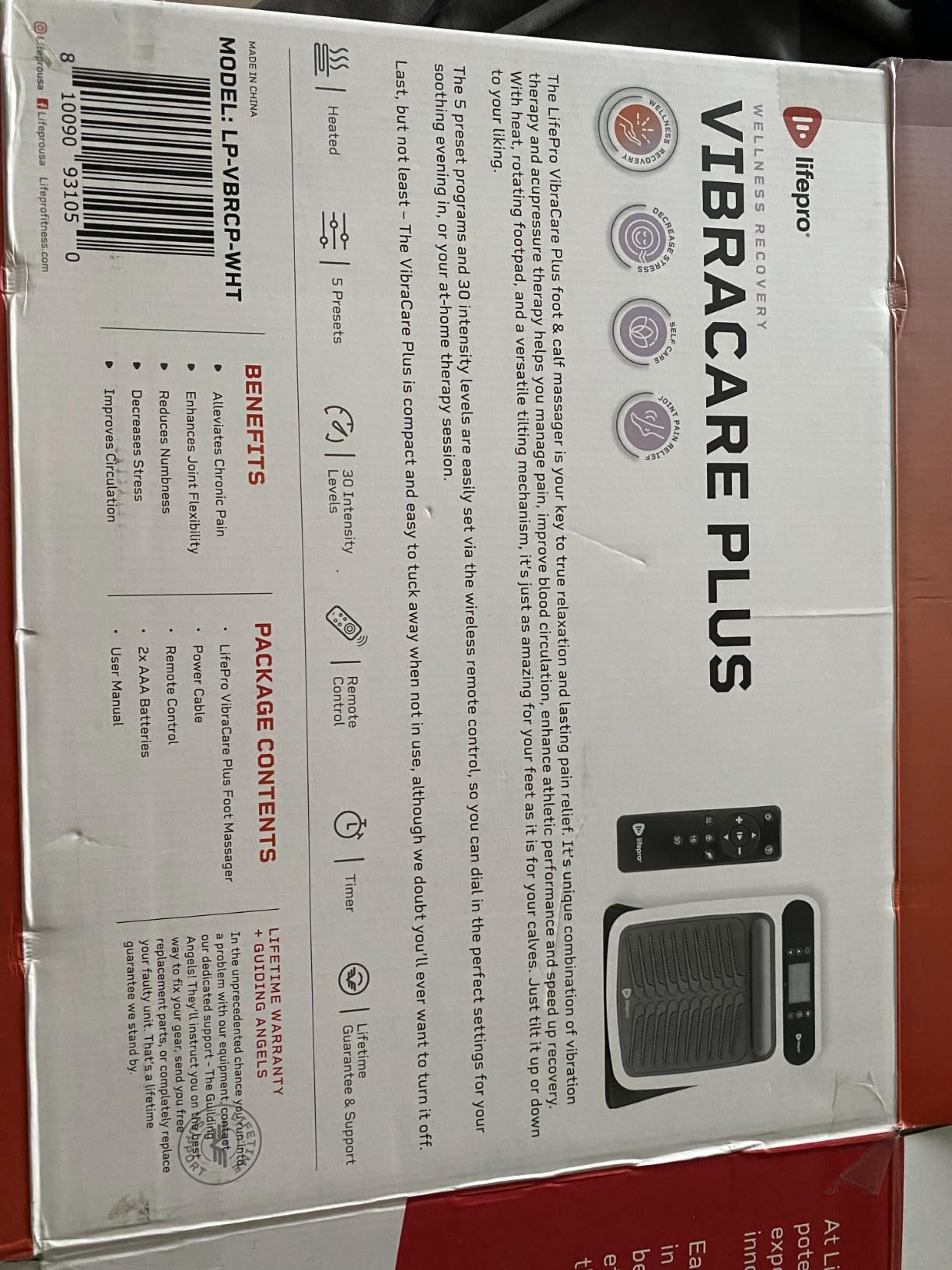
With 3454 ratings at 4.2, the Lifepro VibraFlow is the most widely reviewed device in this roundup, and the reason is the 30 speed levels. Most competing plates give you three.
That range is the most useful spec here for fascia work, because severity changes day to day and you need to back off without losing the machine’s usefulness. Because the lowest setting is still genuinely powerful, owners with sensitive heels start at three or four minutes.
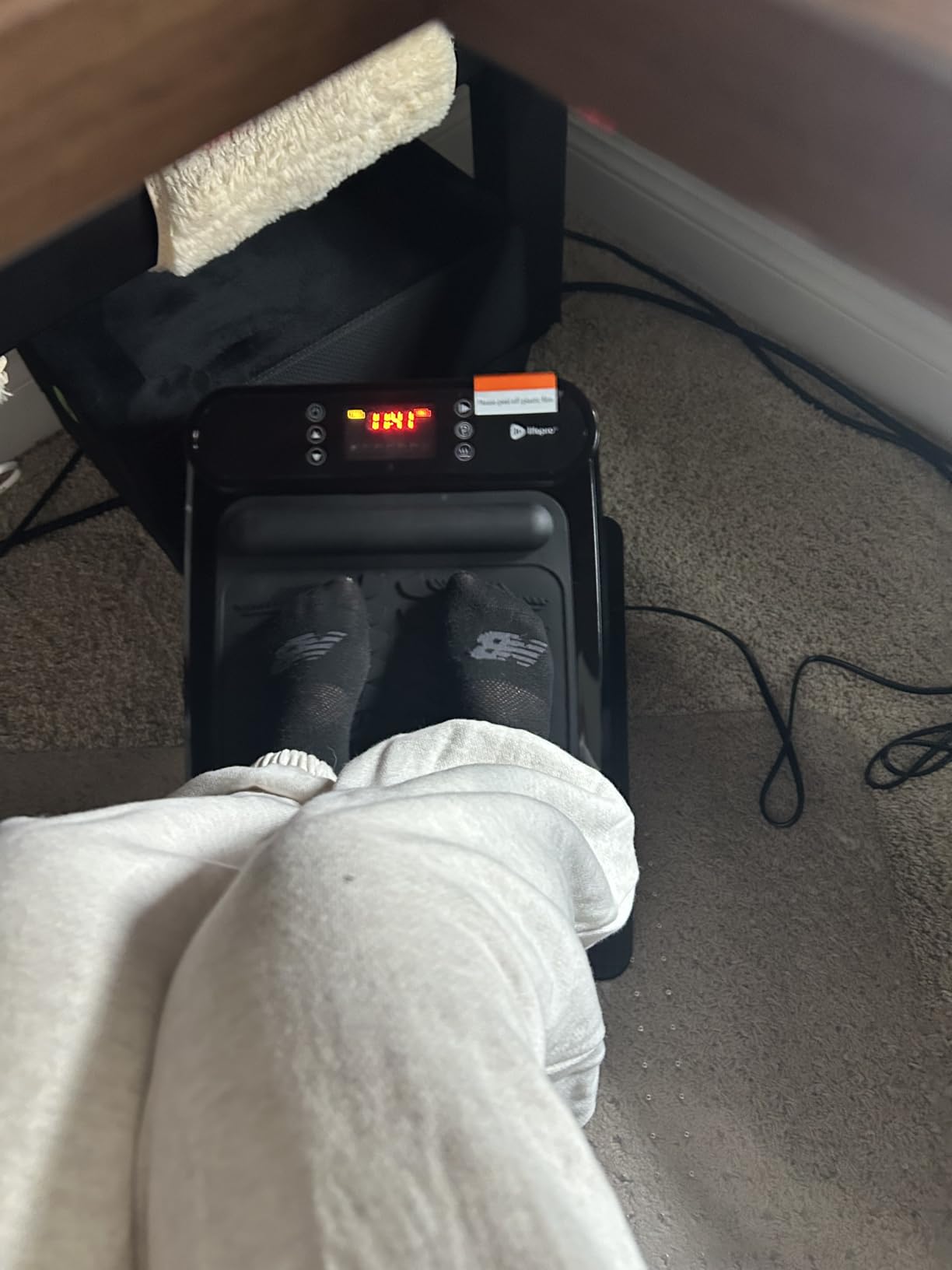
The three-zone design separates it from cheaper open platforms. An adjustable tilt bar with six position legs moves the platform up to the calves, so one session covers the sole and then the calf that drives the whole chain.
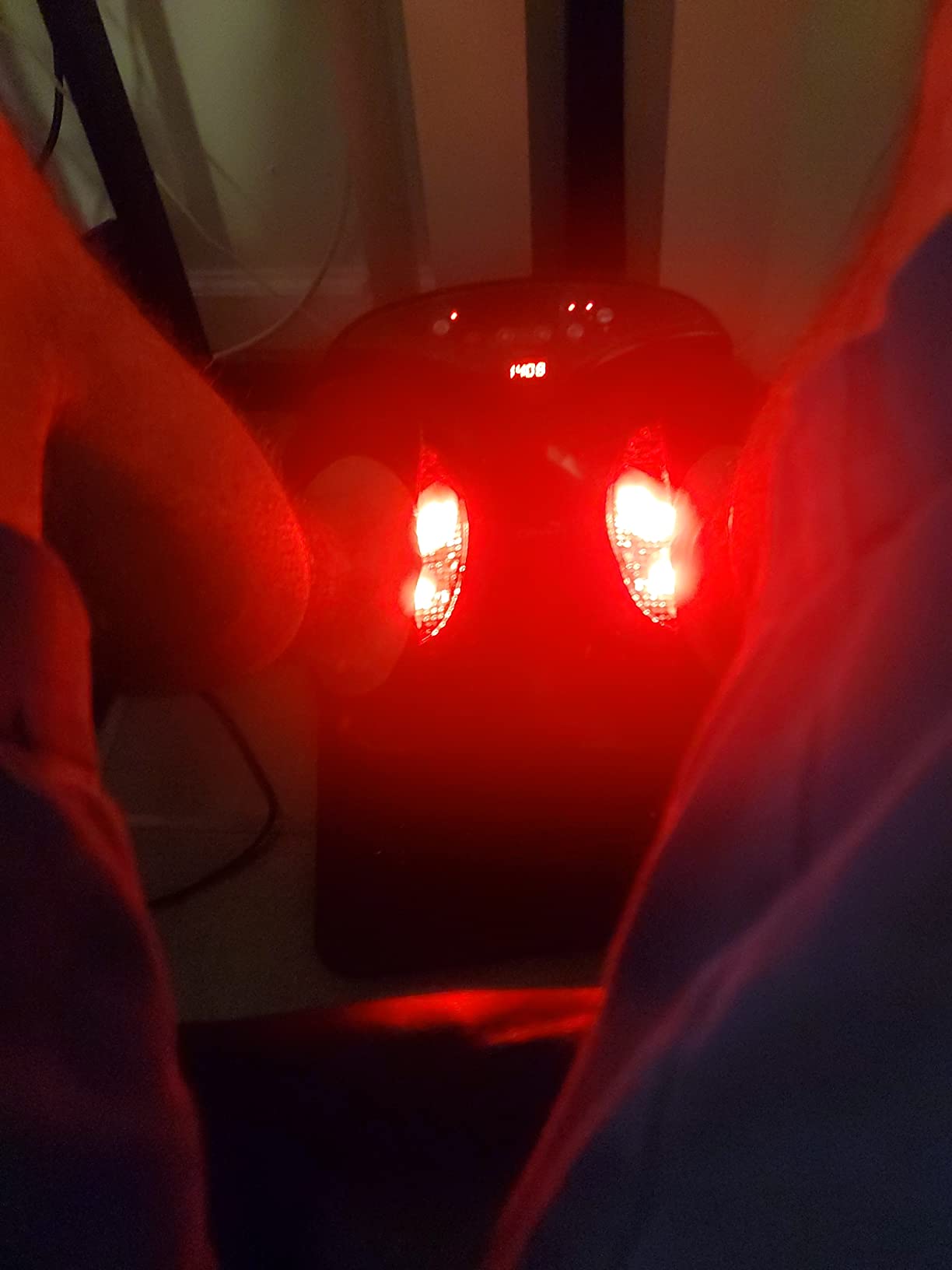
Heat runs at 108-113F and reaches temperature in three to five minutes, enough to soften stiff tissue first. Five auto presets run ten minutes each, and manual mode takes one to fifteen minutes, which makes short morning sessions easy to program.
Owners managing chemotherapy-induced and peripheral neuropathy report the most dramatic results, and the remote means you can start a session without bending to the floor.
Who the VibraFlow suits best
Anyone whose pain is bad enough that a three-speed machine becomes useless after two weeks, and anyone who needs a wide intensity dial to dose a session. The calf mode makes it a two-in-one for people who also run.
It pairs well with the neck and back tools in our best back massagers and best neck massagers roundups.
Where the VibraFlow falls short
It vibrates and nothing else. No kneading, no rolling, no compression, so if your fascia responds to dragged nodes rather than oscillation you will be disappointed. At 14.3 pounds it is the heaviest device here and does not move between rooms.
A steady 9% of ratings are one star, mostly durability reports with a rattling noise, and the plate walks across hard floors without the included mat.
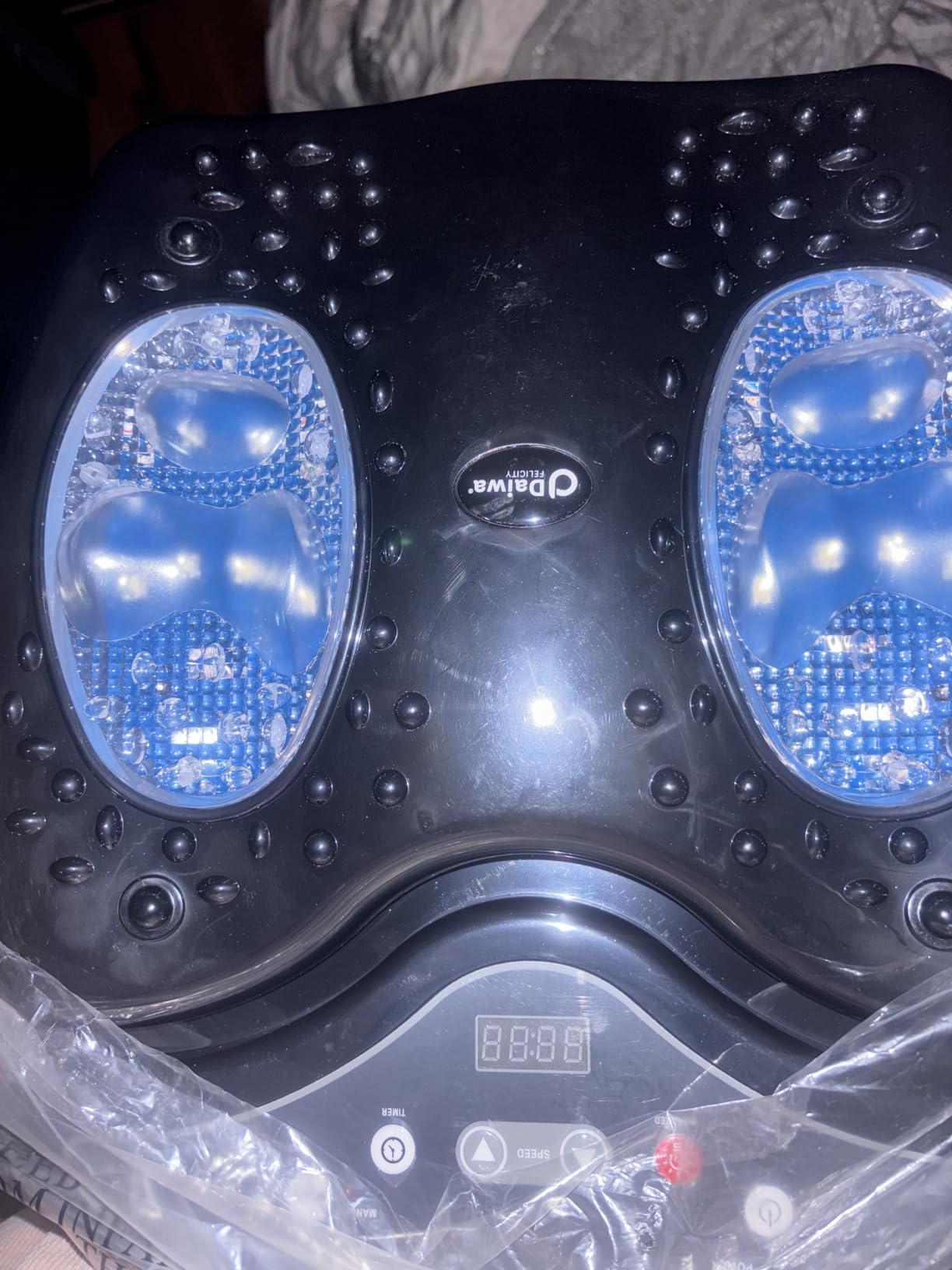
2. Daiwa Felicity Foot Vibe Pro Review: The One Owners Keep for Years
Daiwa Felicity Foot Vibe Pro Massager – Vibrating Electric Shiatsu Foot Massagers for Plantar Fasciitis Pain Relief Circulation Neuropathy – Calf Leg Feet Massage
12 speeds and 2 programs
8 infrared levels
Feet calves thighs hands
12.23 pounds
Pros
- Long ownership history with many years of reported use
- 12 speeds allow dialing down for sensitive feet
- Acupressure nodes target specific arch areas
- Works on hands and thighs too
Cons
- Infrared panels rarely touch the feet so the feature is largely ineffective
- Foot platforms sit fixed very close together
- Non-slip mat is required to protect carpet
On the market since 2012 and still carrying 2344 ratings at 4.2, this machine’s headline is longevity. A meaningful share of one-star reviews across this category mention motors giving out within a year.
The 12 speed levels with two program modes sit in a useful middle ground. Not the fine control of a 30-speed plate, but enough to start low and climb, and owners with sensitive feet say the lower third is genuinely gentle.
The targeted acupressure nodes get singled out most, because they let you park pressure on a specific tender spot in the arch instead of moving around. That is a real advantage for trigger point work.
Multi-area use is genuine rather than marketing. The same platform works on calves, thighs, and hands, so it becomes a leg and hand massager for post-shift recovery. A wireless remote, onboard controls, and a countdown auto shut-off handle the rest.
The infrared light therapy is what we would skip. Multiple owners report the panels sit too far from the feet to make meaningful contact, which fits with the tight foot spacing complaint.
Who the Foot Vibe Pro suits best
People who want one device for feet, calves, and hands, and people who value longevity over maximum intensity. The 12-speed range suits a moderate chronic case better than an acute flare-up.
It also works well from a sofa, since the remote and panel both reach you when reclined, and the 14 by 10 by 17.2 inch footprint fits an apartment corner.
Where the Foot Vibe Pro falls short
The fixed, close-set platforms force an unnatural foot position, and plenty of owners mention it. There is no air compression, so it cannot squeeze the arch the way the Snailax compression model does, and the infrared panel is a spec you pay for and do not use.
Some units also developed a high-pitched squeak after limited use, and the remote cannot change the session timer.
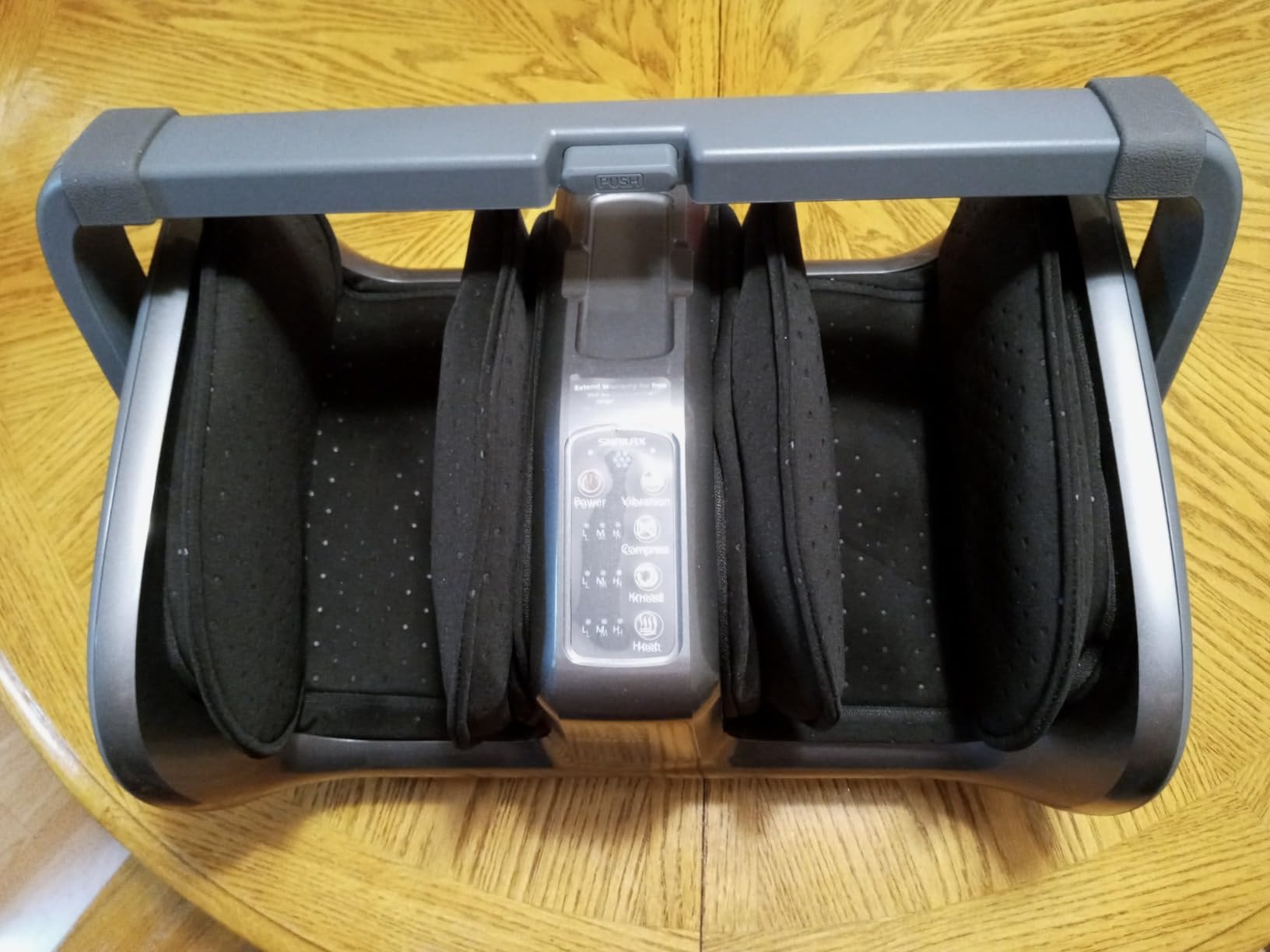
3. Snailax SL-591 Review: Best Lightweight Platform With Heat and a Remote
Snailax Vibration Foot Massager with Heat for Plantar Fasciitis Pain & Circulation, High RPM Oscillating Deep Tissue Foot & Calf Massager, 3 Speeds Vibrating 2 Heat Settings with Remote, FSA Eligible
100+ massage nodes
3 modes and 3 levels
2 heat settings
6.15 pounds
Pros
- Open platform fits most foot sizes comfortably
- Remote changes mode intensity and heat while seated
- Light enough to use on calves ankles and lower back
- Removable washable cover
- 2-year warranty
Cons
- Only 3 speed levels so the range is narrow
- Vibration only with no kneading or compression
- Some owners found it gentler than expected for deep work
At 6.15 pounds this is a quarter the weight of the plates above, and the open platform means you drop your feet on, start it with the remote, and get back to work. That low friction is what makes a twice-daily habit stick.
Over 100 massage nodes spread across the platform create more surface sensation than a three-speed machine has any right to deliver. Three modes, three levels, and two heat settings give a gentle morning session and a firmer evening one.
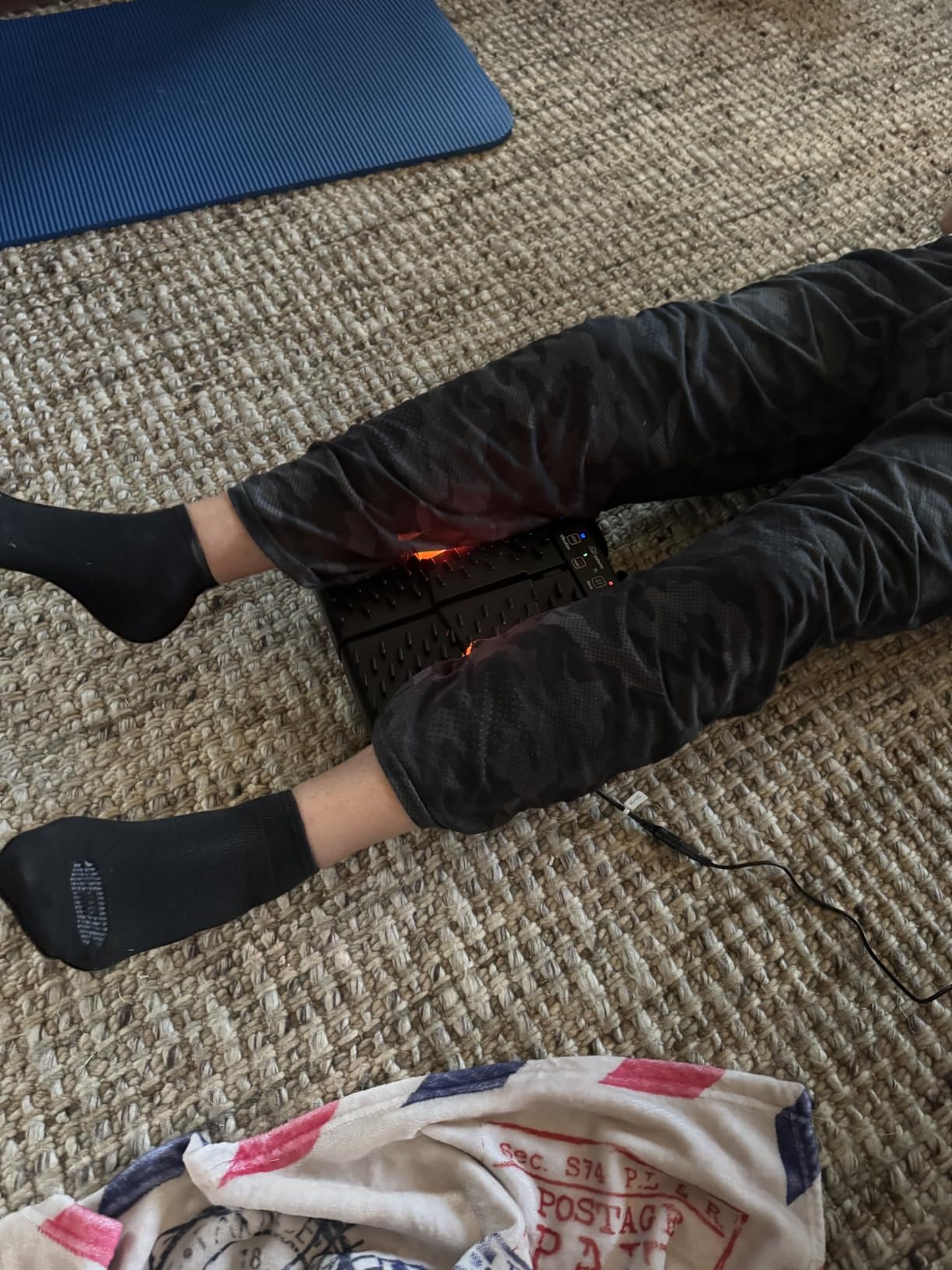
The remote handling mode, intensity, and heat together is the combination most people undervalue until they are lying down and cannot reach the panel. The open platform also suits people whose feet get sweaty in an enclosed chamber.
It is the most versatile unit here per pound, working on calves, legs, ankles, and lower back. The removable washable cover makes the hygiene story simple, and the two-year warranty is the longest explicit warranty among enclosed machines here.
Runners treat this category as a recovery tool rather than a medical device, and at this weight it fits in a gym bag.
Who the SL-591 suits best
Beginners, people with moderate pain, and anyone who needs a device they can carry from bedside to desk. If your use is post-run recovery across calves and arches rather than one stubborn heel knot, the multi-area design earns its place.
It is also the pick for anyone with limited bending mobility, since both the panel and the remote stay within reach.
Where the SL-591 falls short
Do not buy it expecting deep plantar fascia work. There is no kneading, no compression, and only three steps of intensity, so once your foot adapts to the top setting there is nowhere to go.
Owners managing significant fascia tension report the vibration felt gentler than they needed, and the narrow 12.8 inch width means it treats one foot at a time in a slim frame.
4. FEELNOW Cordless Heated Wrap Pair Review: Treat Both Feet While You Rest
FEELNOW 2Pcs Foot Massager for Neuropathy Plantar Fasciitis Pain Relief, Cordless Heated Vibrating Cloud-Soft Ankle Wrap Feet Massage, 5 Heats, 5 Modes
2 cordless wraps
5 heat and 5 vibration modes
1 pound total
Wearable
Pros
- Cordless so you can treat both feet while resting
- Five heat levels give fine control for stiff cold feet
- Cloud-soft interior suits sensitive or neuropathy-affected feet
- Runs quietly with no plugged-in power
Cons
- Wrap action cannot reach the depth of a powered roller or plate
- Vibration is gentle and may feel underpowered for severe cases
- Pressure and coverage cannot be adjusted while worn
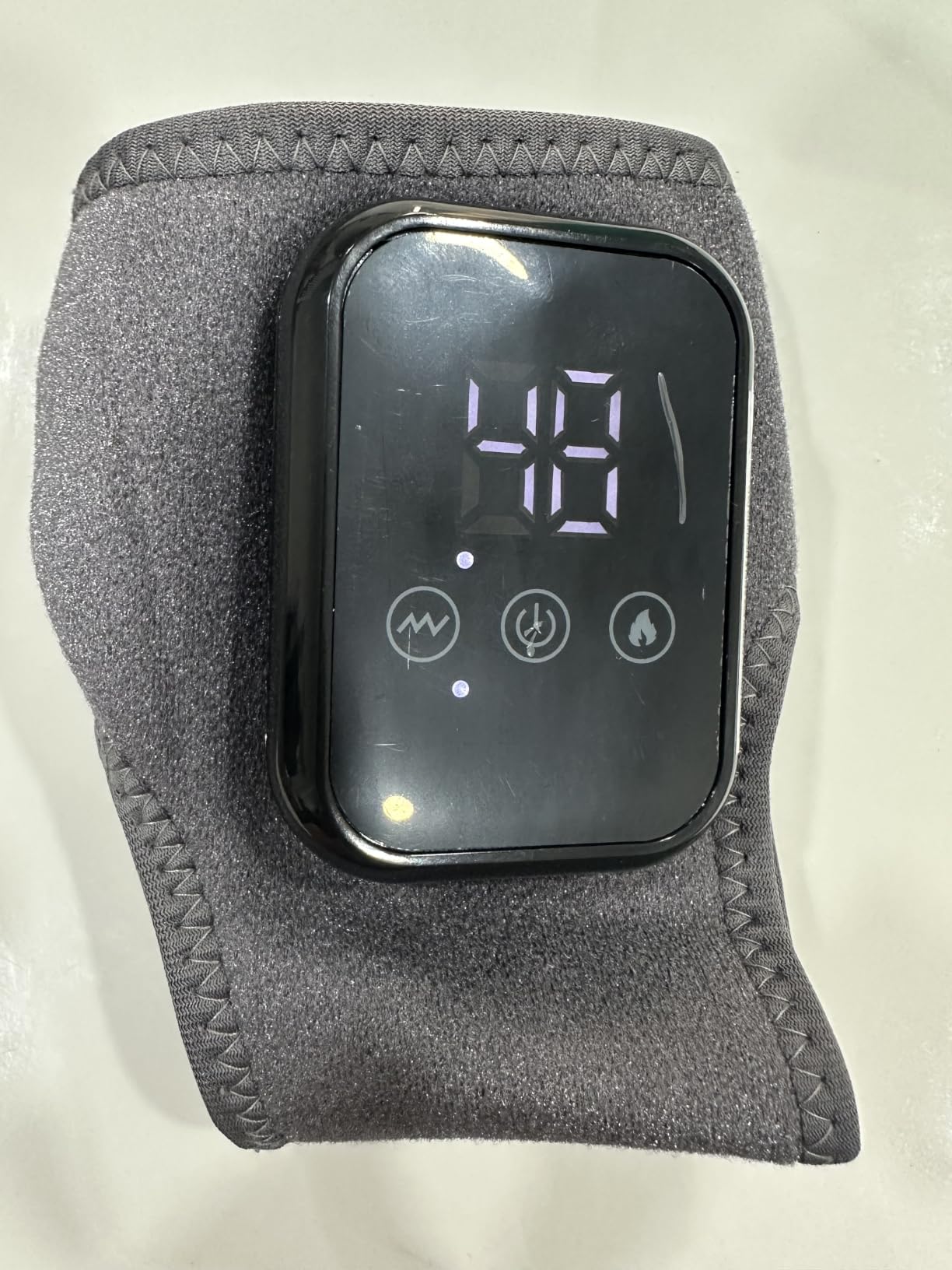
This is the category bigger roundups keep skipping: wearable vibrating wraps. Two of our ten picks are cordless wraps, and they solve a problem no enclosed machine can. You slip them on, elevate your feet, and keep working.
Five heat levels and five vibration modes give more adjustment than most people expect from something a little over a pound for the pair. The flexible wrap works around the ankle or sits under the heel.
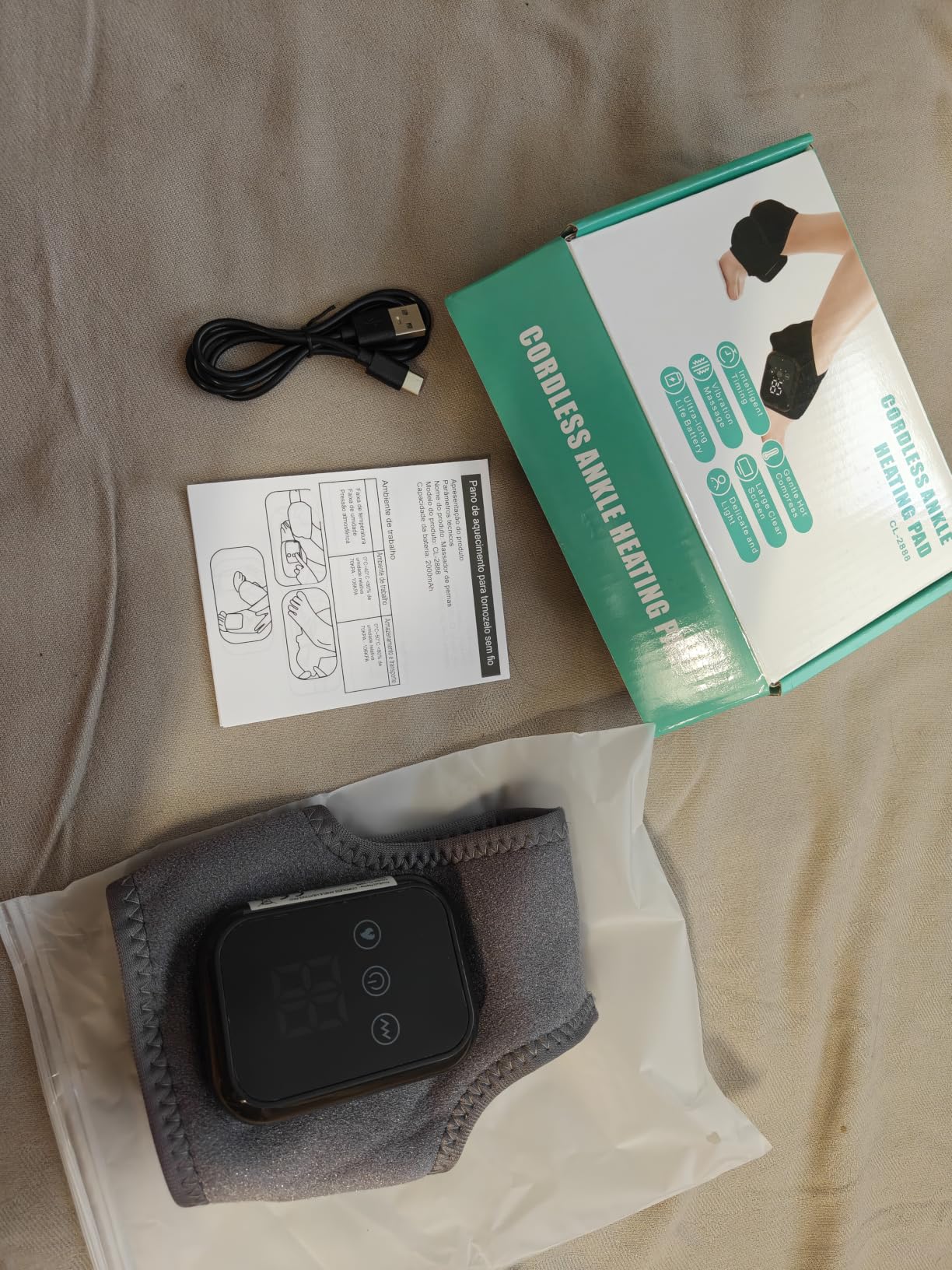
The cloud-soft interior is the reason several owners with sensitive or neuropathy-affected feet mention it specifically, and the two-pack means you are not alternating feet mid-session.
Users report it fits an end-of-day routine after a shift on their feet, which is where a wrap earns its keep. Runners and standing workers use the same category this way, treating it as recovery rather than treatment.
Be clear-eyed about the mechanism. A wrap produces broad, gentle surface oscillation with no localized pressure, so it cannot deliver a focused counter-force to the plantar fascia.
Who the FEELNOW wraps suit best
People with mild to moderate discomfort, people who cannot comfortably sit still for a session, and anyone who wants heat and vibration without an outlet nearby. It is also the easiest option to travel with and to share.
If your heels are cold and stiff after a long day rather than acutely painful in the morning, the five heat levels are the feature you will use most.
Where the FEELNOW wraps fall short
There is no way to adjust pressure once it is on, and no concentrated vibration for a specific trigger point. Severe or long-standing plantar fasciitis needs a mechanism that pushes into the tissue, and this does not.
Treat it as a warm-up tool before stretching, not as the treatment. Owners who pair a wrap session with calf and plantar fascia stretches report better results than those who use it alone.
5. Snailax SL-52A2 Review: Best Combination of Kneading, Compression, and Heat
Snailax Shiatsu Foot Massager, Heat, Compression, Vibration, FSA Eligible
Rotating-node kneading
3-level air compression
Heat to 131F
Fits up to size 13
Pros
- Compression plus kneading reaches deeper into the plantar fascia
- Owners with severe plantar fasciitis report targeted relief
- Separate settings for kneading compression and vibration
- 100-240V adapter works across travel voltages
Cons
- Kneading balls do not reach the toes
- Compression function failed on at least one after about four months
- No remote so on-unit buttons are required after lying down
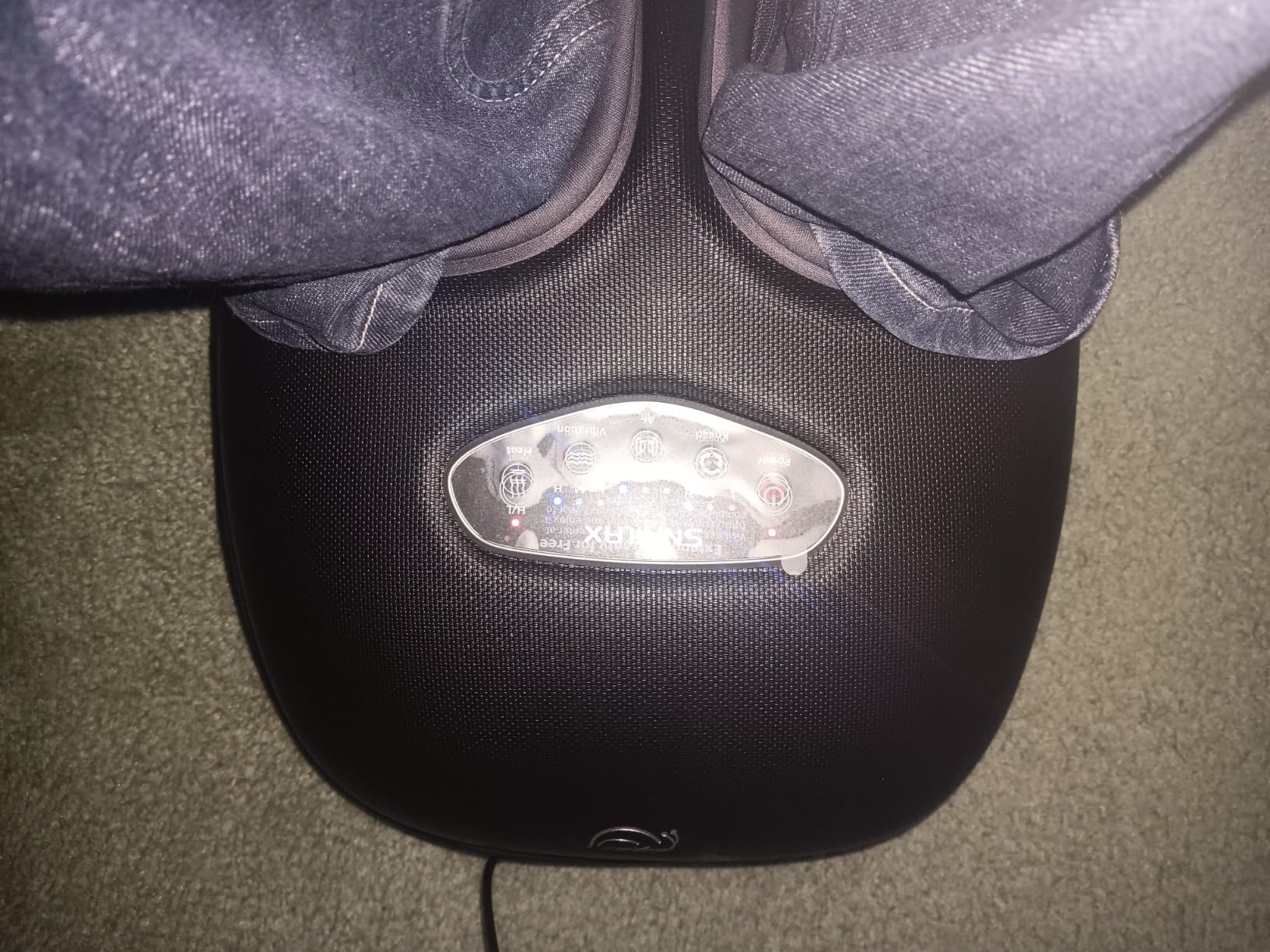
This is the only machine here combining all three mechanical actions: rotating-node kneading, three-level air compression, and three-level vibration. If your pain is localized and stubborn, the compression is the differentiator.
Squeezing the arch while the nodes work underneath is a fundamentally different stimulus from vibration alone, and owners with severe plantar fasciitis describe it as the most direct relief in this category.
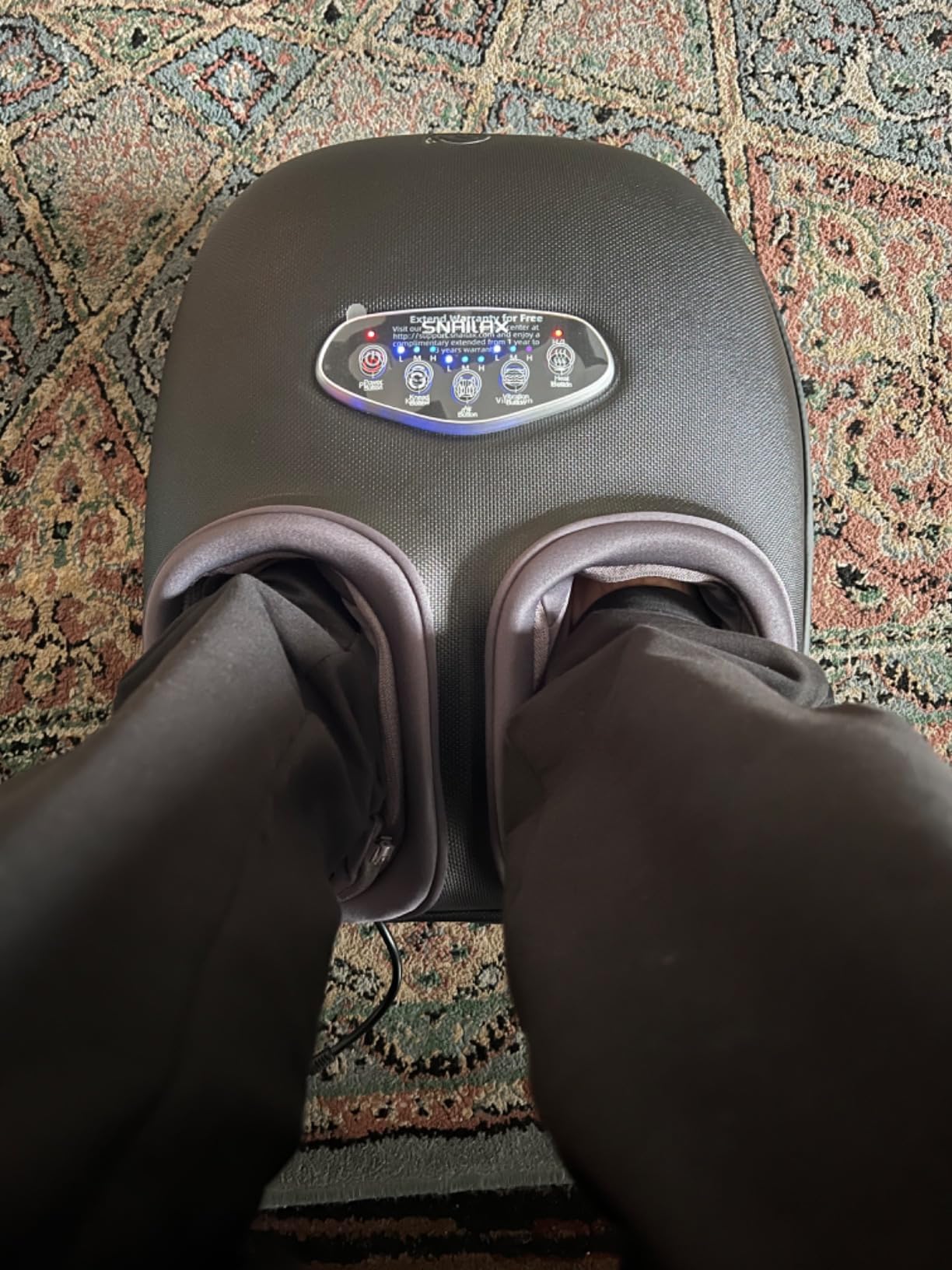
Fast heat-up to 131F means tissue is warm by the time kneading starts. Each function has its own three settings, so you can run compression light with vibration high, which is the control pattern that lets you dose a session.
It fits feet up to size 13, covering more people than most enclosed units, and the 100-240V adapter runs on travel voltage without a converter. At 5.29 pounds it moves between rooms easily.
A 15-minute auto shutoff is a sensible guardrail, and the warranty extends from one year to three.
Who the SL-52A2 suits best
People with localized, stubborn heel or arch pain who have already tried a vibration-only machine and found it insufficient. Reviewers with larger foot sizes specifically call out the size 13 fit.
It also suits people whose pain worsens in the evening, since you can run a long, hot, compressed session without holding a position.
Where the SL-52A2 falls short
The kneading balls stop short of the toes, so forefoot tightness is out of scope. There is no remote, so once reclined you press buttons on the unit itself.
Some owners found maximum pressure and warmth weaker than hoped, and at least one unit’s compression failed after about four months, which matters if the squeeze is why you bought it.
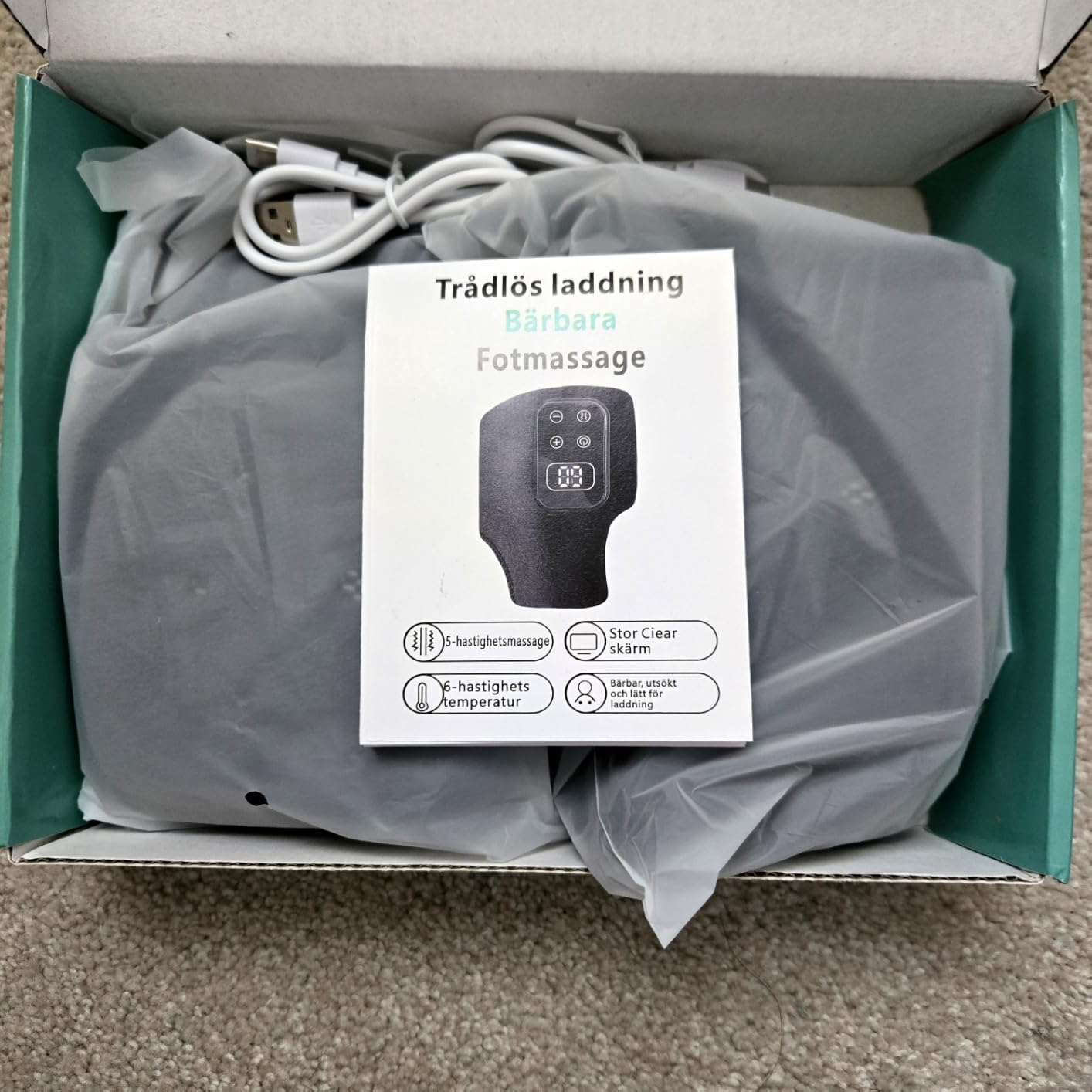
6. LilStones Cordless Wrap 2-Pack Review: Quiet, Adjustable, and Built for Ankles
2 Pack Ankle Massager with Heat and Vibration, Cordless Foot Wraps, Black
2 cordless wraps
5 vibration and 5 heat levels
55dB
10-minute auto shut-off
Pros
- Quiet operation around 55dB for shared spaces
- Wireless charging suits travel and office use
- Ten heat and vibration steps combined
- Both feet or ankles treated at once
Cons
- Gentle vibration aimed at mild to moderate discomfort
- No kneading or compression mechanism
- Some review text on this listing relates to unrelated products
At 4.7 across 338 ratings, the reason this leads its category is not intensity. It is that the wrap is quiet, cordless, and adjustable, with five vibration levels plus five heat levels.
That is the widest combined adjustment on any wrap here, and 55dB means you can use it in a shared room or beside someone sleeping. The ten-minute auto shutoff is built in and the wraps arrive partially charged.
Wireless charging is a small decision that changes daily use. You set it on a pad and it is ready, with no adapter to pack, which is why it suits office and travel use.
Owners point to relief for ankle and Achilles soreness after long days standing, a real use case that foot-only machines miss. Both wraps work on either foot or ankle, so you can treat ankle and heel at the same time.
One caution on this listing: some customer review text on the page relates to unrelated decor products, so lean on the aggregate rather than individual reviews.
Who the LilStones wraps suit best
People who need to use a massager in a shared space, at work, or in a bedroom with someone sleeping. Anyone whose pain sits in the ankle or Achilles as much as the heel.
It is a good companion to a plate rather than a replacement. Run your focused minutes on a machine, then put these on for heat and gentle vibration while you rest.
Where the LilStones wraps fall short
They will not handle a severe case alone. There is no deep mechanism, so a stubborn trigger point in the mid-arch is exactly what a wrap cannot address, and the 10-minute timer means long relaxation sessions are not the use case.
Anyone with numb feet should talk to a clinician first, because the point of that conversation is that you cannot reliably feel how hot your foot is getting.
7. FAUAID FE-5502 Review: Best Open Platform With Synchronized Heel Vibration
FAUAID Foot Massager with Vibration for Plantar Fasciitis & Neuropathy
36-node counter-rotating rollers
Dual heel vibration
3 modes and 3 speeds
4.9 pounds
Pros
- Kneading rollers and heel vibration run together in one session
- 36 nodes follow the curve of the toes forefoot and arches
- Open platform keeps air circulating
- Light enough to slide under a desk
Cons
- No heat function at all
- No air compression unlike comparable kneading models
- Heel vibration is not a substitute for a high-RPM plate
The FAUAID has the highest average rating in this roundup at 4.8, and its design explains why. It runs counter-rotating rollers with four rotating heads and 36 nodes at the same time as dual heel vibration modules synced to roller speed.
So the arch and the heel are worked in the same minute rather than one after the other, which is the specific thing plantar fascia work needs.
Those 36 nodes following the curve of the toes, forefoot, and arches separate it from enclosed machines, where kneading balls stop well short of the forefoot. Three modes change roller direction, and three speeds are shown by blue, green, and red lights.
No customer images were available on this listing when we reviewed it, so our read comes from the 314 written ratings, which are unusually consistent: owners favor the kneading plus heel-vibration pairing and the breathable platform.
At 4.9 pounds and 12.2 by 11.8 by 2.8 inches it is the most slideable-under-a-desk option here, with both panel and remote control and a 10-minute auto shutoff.
Who the FAUAID suits best
People whose pain is not limited to the heel. If you have forefoot tightness, arch tension, and a sore heel in the same foot, the node coverage that reaches the toes is what you are buying.
It is also the best choice for hot-footed people, since the open flat-step platform circulates air instead of trapping it. Office workers get a lot out of it.
Where the FAUAID falls short
No heat removes the tissue-softening step many people rely on before a session, and no air compression means you get kneading and vibration but not the squeeze. You will want a warm-up from another device first.
It is also the newest product here with the smallest review base, which is worth remembering when weighing a 4.8 average against the 3454 ratings behind the top pick.
8. Quake Plate Review: Highest Power Output for Nerve Stimulation
Foot Massager for Neuropathy Pain & Circulation by Quake Plate High RPM Oscillating Deep Tissue Foot & Calf Massager for Plantar Fasciitis Pain Relief, 30 Speed Vibrate with Gen 2 RF Remote
500-4000 RPM oscillation
30 intensity settings
Arch bar
RF remote
Pros
- Highest power output in the group at up to 4000 RPM
- Thirty intensity settings for nerve pain
- Heavy-duty metal frame feels solid
- Owners report sensation returning to numb areas
Cons
- Very loud on higher settings and transfers into the floor
- Mat does not stop it travelling on hard flooring
- One owner reported the unit and remote stopped responding
This plate is the power outlier. Where most enclosed machines run a single fixed oscillation, the Quake Plate sweeps 500 to 4000 RPM across 30 programmable settings on a clinical-grade metal frame.
For someone whose fascia pain is compounded by peripheral neuropathy, owners report the vibration waking up sensation in areas that had gone quiet, which is a different job than relaxing a sore arch.
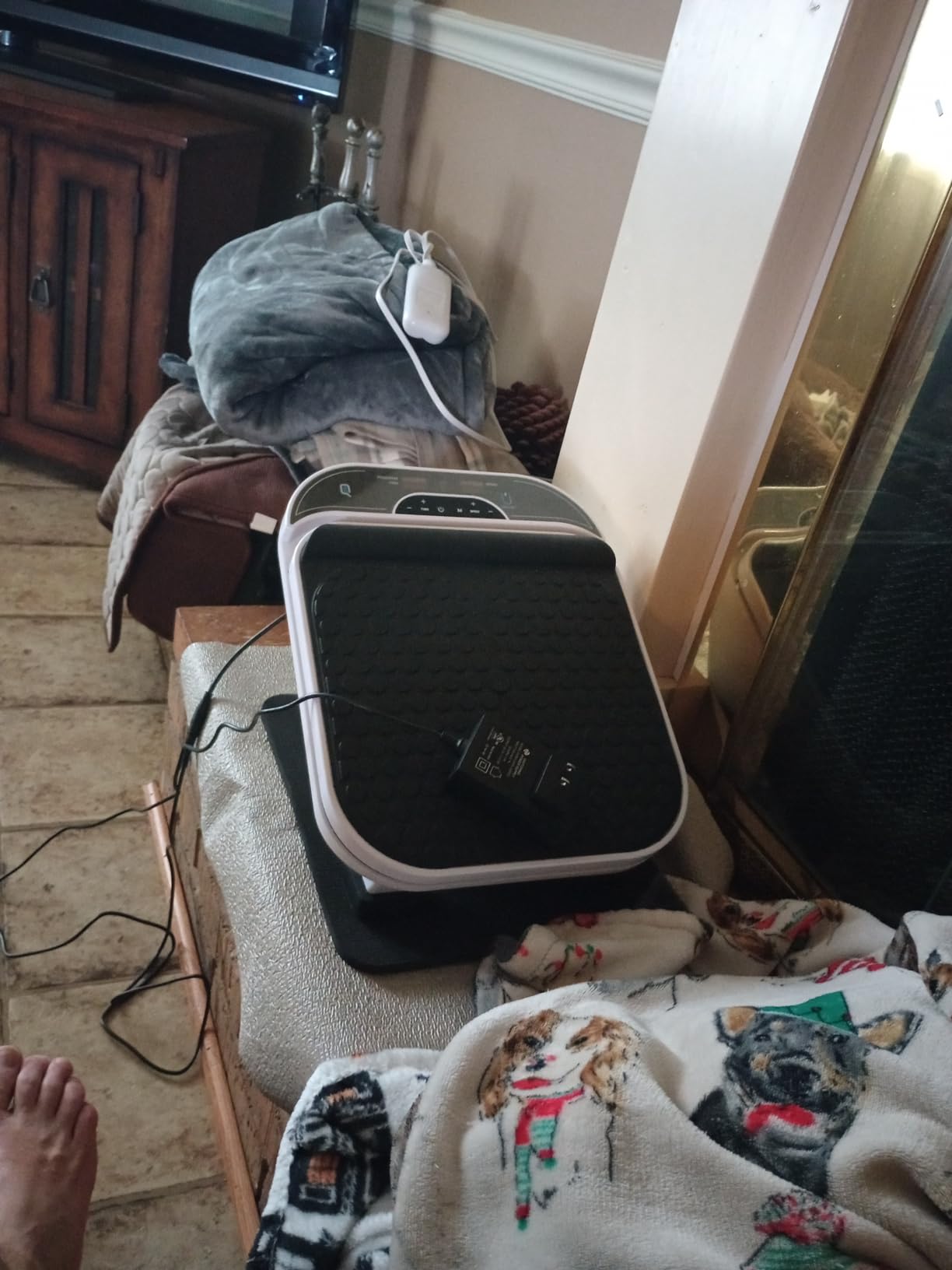
The arch bar with a pressure-point targeting surface changes where the vibration lands. Instead of a flat pad, the sole sits against a contoured surface that concentrates sensation through the arch.
It ships with a Gen 2 RF remote, which is unusual at this level and saves reaching to the floor. The full-sized pad covers calves as well as feet, and it moves between home and office despite the 13.23 pound weight.
The cost of that power is noise. Owners describe it as very loud on higher settings with vibration transferring into the floor, and the included mat helps with sound but not with the machine travelling across laminate.
Who the Quake Plate suits best
People whose foot pain includes numbness or tingling alongside the heel ache, and anyone who has tried a gentler machine and found it did not reach far enough. Thirty settings let you find sensation without the bruising gentler devices sometimes cause.
It also suits anyone who can work in a space where noise is not an issue.
Where the Quake Plate falls short
It vibrates only. No kneading, no compression, no heat, so there is no warm-up phase and no squeeze. In a shared apartment or a bedroom at night it is disruptive at the settings most people settle on.
With 177 ratings the history is thinner than the top three, and one owner found the warranty information hard to locate, so check that before buying.
9. NHO Vibrating Massage Ball Review: Smallest Trigger Point Tool That Stays Put
NHO Vibrating Massage Ball, Vibrating Foam Roller for Muscle Pain Relief, 4-Speed Myofascial Release Ball for Trigger Point Therapy, Deep Tissue Foot for Plantar Fasciitis, Neck, Shoulder
4 speeds 900-3000 RPM
Corn-shaped body
USB-C rechargeable
9.88 ounces
Pros
- Corn shape stays in place instead of rolling away
- Four speeds including a pulsating mode
- Silicone surface wipes clean
- Works for feet calves neck shoulders and back
Cons
- Nub texture can feel intense for very sensitive feet
- Vibration only with no sustained heat or kneading
- Lowest average rating here at 4.0 with 15 percent one-star reviews
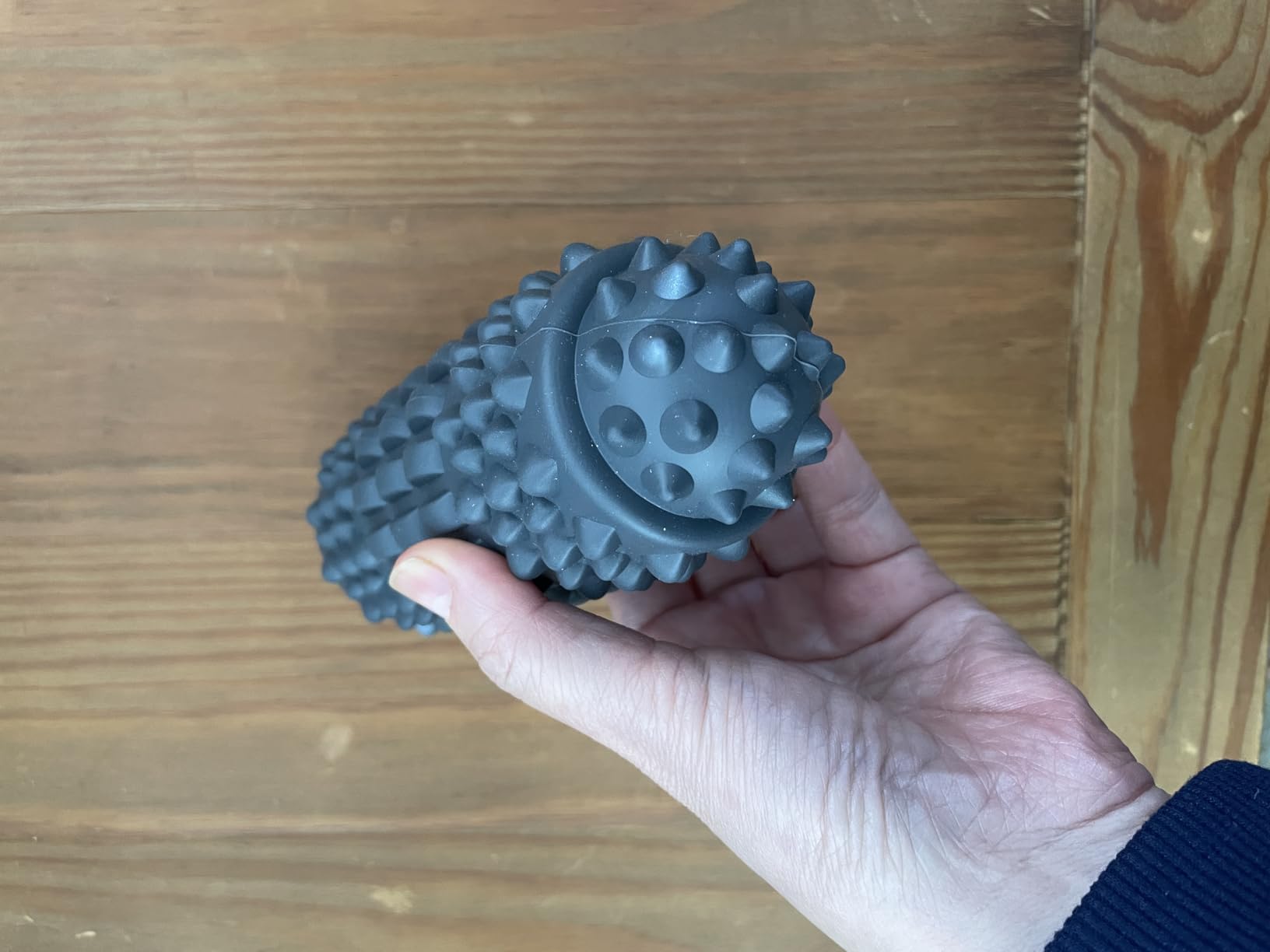
The NHO ball solves something machines cannot. If you have one stubborn point in the mid-arch, you can park a vibrating ball on it and lean your bodyweight in. The corn-shaped body is the reason it belongs here, since traditional balls roll away the moment you load them.
Four speeds run 900 to 3000 RPM, and the fourth mode pulses rhythmically rather than buzzing continuously, which owners say feels better over several minutes on a tender spot.
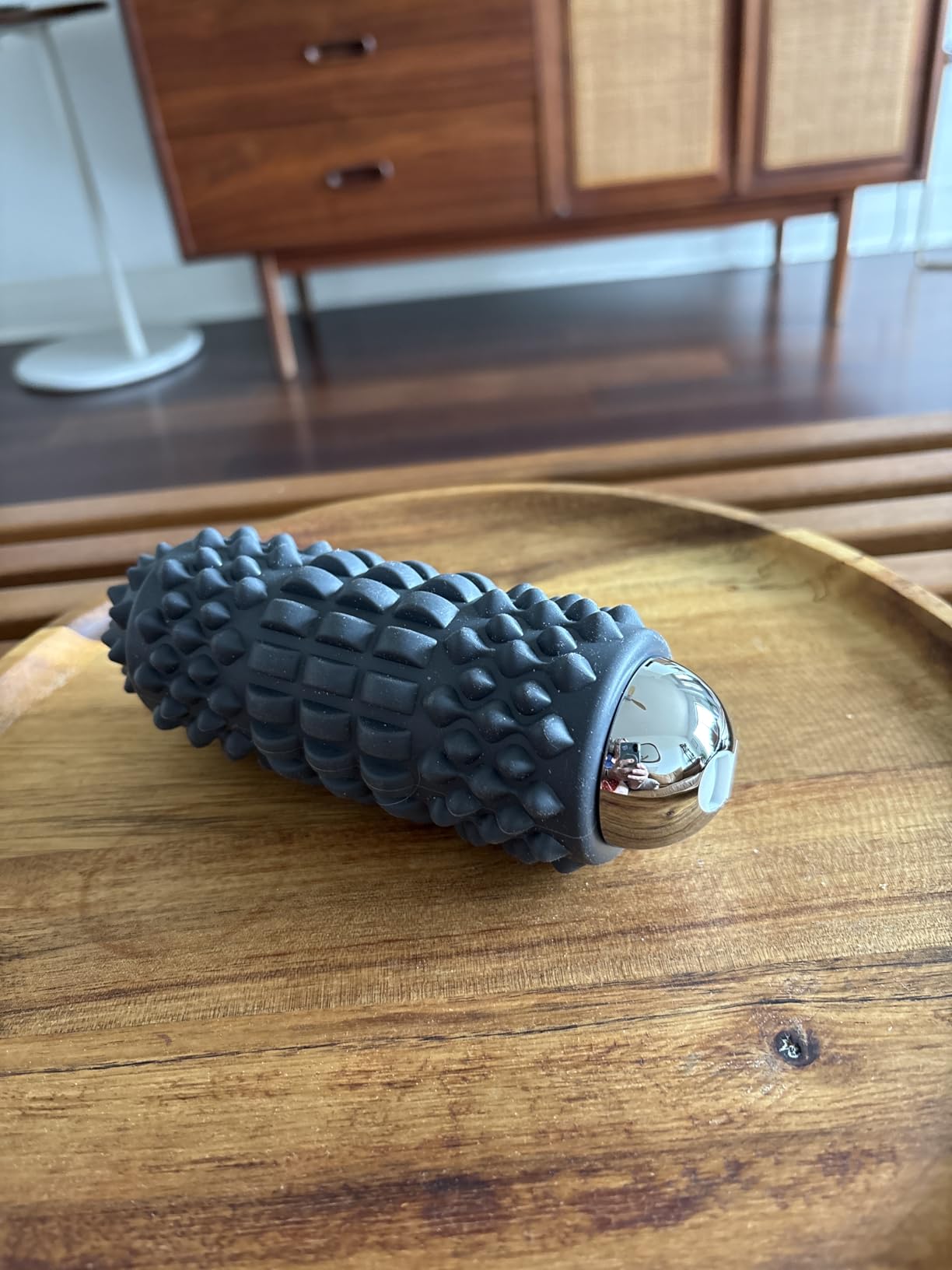
The silicone surface carries small nubs for trigger point work, and at 9.88 ounces with a 1500mAh USB-C battery it is genuinely portable. It also works along the arch, up the calf, and across neck and shoulders.
Posters on r/PlantarFasciitis describe using vibrating rollers as recovery tools after runs rather than as medical devices, and this fits that pattern exactly.
We want to be straight about the numbers. At a 4.0 average this is the lowest-rated product in the roundup, and 15% of its 153 ratings are one star, the largest 1-star share here. Those complaints cluster around intensity that is too much for sensitive feet and around durability.
Who the NHO ball suits best
People with one or two defined tender points rather than diffuse arch soreness, and anyone who travels or has no outlet nearby. The downside if it does not suit you is small, which makes it a reasonable first purchase.
Start on the lowest speed and build up, treating the nubs as something to work into rather than sit on.
Where the NHO ball falls short
No heat and no kneading, so it cannot soften tissue before working it, and there is no intensity control between the four discrete speeds, which makes a slow ramp awkward.
Its 4.0 average and 15% one-star share are the weakest aggregate numbers here. If you are buying one vibrating tool and want the most proven one, this is not it.
10. JIEJUNJIE Vibrating Peanut Ball Review: Best Portable Option for Arch and Calf
JIEJUNJIE Vibrating Peanut Massage Ball for Plantar Fasciitis, 4-Speed Portable Massage Roller for Foot, Neck, Back, and Body – Deep Tissue Myofascial Release Mobility Ball Muscle Relaxer (Black)
Peanut dual-ball shape
4 vibration levels
10-minute auto shut-off
1.31 pounds
Pros
- Peanut shape cradles the arch and calf without pressing on bone
- Heavier than most portable balls so it stays put
- Four speeds from light circulation to deep knots
- 10-minute timer prevents overworking one spot
Cons
- Battery runtime drops to about 80 minutes on the high setting
- Loud when used on hard flooring
- Silicone shell attracts pet hair and carpet lint
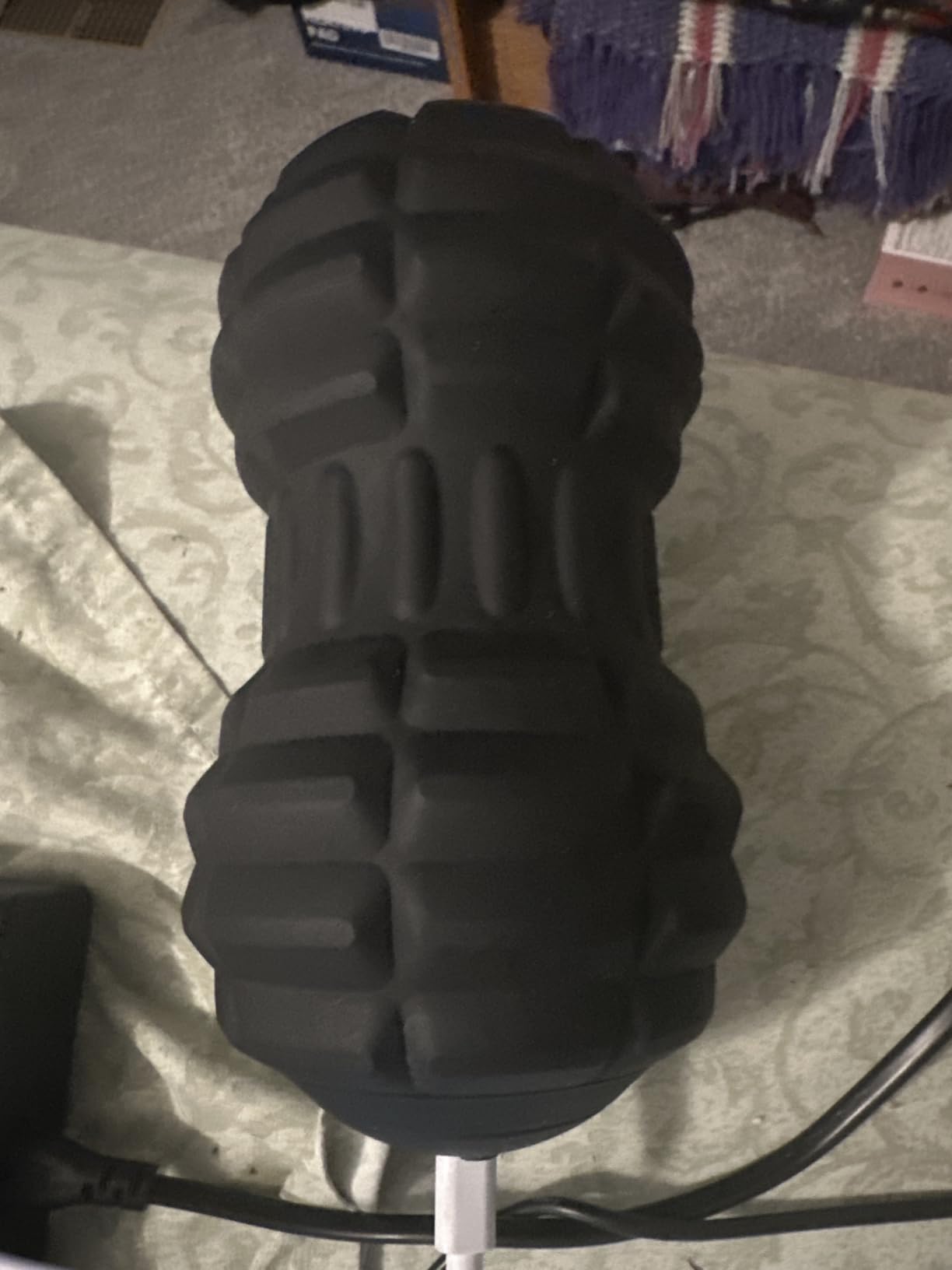
The JIEJUNJIE is the larger, steadier sibling of the small trigger point tools. At 1.31 pounds and 7.87 inches long, the peanut dual-ball shape cradles the arch and calf without pressing a bone edge into a sensitive spot.
That size does something specific. Reviewers describe deeper relief than a plain foam roller or lacrosse ball gives them, particularly through the arch and lower back.
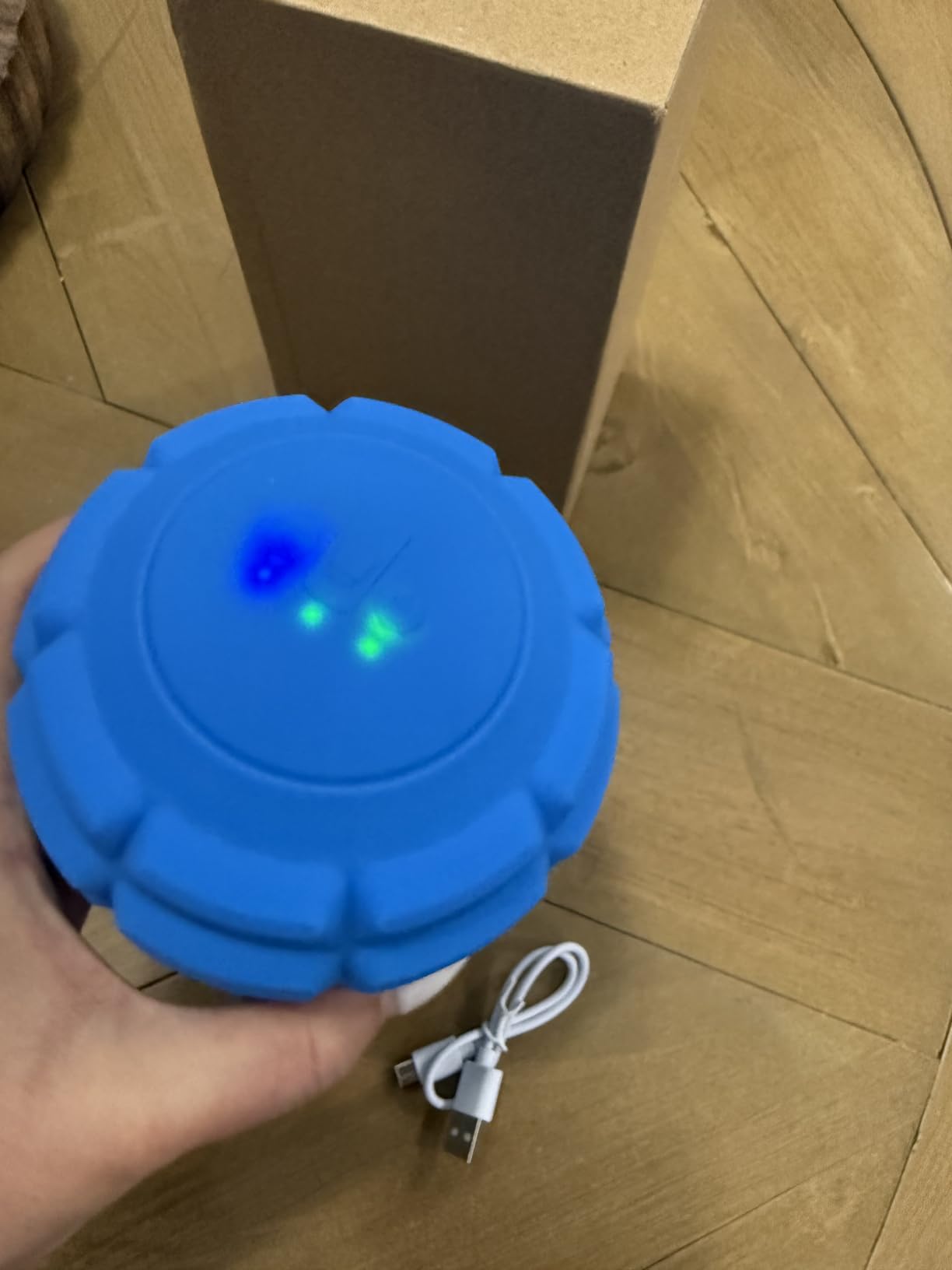
Because it is heavy enough to stay put, you can use body weight through it rather than just resting the foot on top. The silicone-wrapped exterior over a rigid ABS core grips without sliding, and the grooved surface keeps contact where you want it.
Four vibration levels give a real spread from light circulation to deep knots, and the 10-minute auto shutoff is a sensible guardrail against overworking one spot.
The battery spec is the deciding number: up to 550 minutes on the lowest setting, which makes it a daily tool for months, but only about 80 minutes on high, roughly one focused session.
Who the JIEJUNJIE ball suits best
People who want to self-trigger-point the arch and calf at home, after a run, or at a desk. The dual-ball shape suits rolling a tight calf with your leg resting on top of it, and the long low-setting battery means it lives in a drawer rather than on a charger.
Anyone already using a foam roller and finding it too soft will notice the difference.
Where the JIEJUNJIE ball falls short
Short runtime on the highest setting limits long deep-tissue sessions, it is noticeably loud on hard flooring, and the silicone exterior attracts pet hair and lint through static.
Owners report relief is real but temporary and takes sustained regular use. With 119 ratings it is a good tool, but a thinner-proven one than anything in the top three.
How to Use a Vibration Massager for Plantar Fasciitis
Ten to fifteen minutes, twice a day, with roughly 60% of that time on the arch and heel and 40% on the calf. That is the dosing most podiatry guidance points to, and it is the number to judge any device against. A plan built on twenty minutes every evening is doing too much.
Start on the lowest setting for the first three or four sessions. Owners repeatedly describe the first half-minute at a high level as actively painful before it becomes relieving, which is normal and not a reason to push harder. If your heel feels bruised the next morning, lower the setting rather than adding time.
Use heat first when tissue is stiff and vibration second, because warm tissue tolerates loading better. A built-in 10-minute auto shutoff is a better default than your own timer. And if you cannot comfortably use a device in socks, do not use it on a numb foot.
What Actually Resolves Plantar Fasciitis Long-Term
The honest answer, and the one that shows up repeatedly in forum discussions about this category, is that a massager is not what fixes plantar fasciitis. Stretching and foot-strengthening work make the largest difference over months, and a massager makes a flare-up easier to get through. Users describe these devices as symptom management rather than treatment, and we agree.
That is not an argument against buying one. It is an argument for timing. A ten-minute vibration session right after waking, when morning heel pain is worst, buys a window in which your calf and plantar fascia stretches are more comfortable and more effective. Run the session, then stretch, and you get more out of both.
If symptoms are not improving after a few weeks of consistent conservative work, or you are training through pain with the massager, that is a signal to see a podiatrist rather than upgrade to a more powerful machine.
Who Should Not Use a Vibration Massager
Some people should not use any of these devices without medical clearance. If you have diabetes-related numbness, you cannot reliably feel heat or pressure, which is the safeguard that stops you burning or bruising yourself. The same applies to peripheral arterial disease or poor circulation, where increased blood flow and compression in the foot is not something to self-direct.
Peripheral neuropathy is a clear case for caution. Owners with neuropathy do report relief, and several wraps here are marketed for it, but loss of protective sensation changes the risk calculation entirely. Open wounds, active swelling, an acute injury, or recent surgery on the foot or ankle are all reasons to wait.
Stop the session and see a clinician if you notice numbness spreading, discoloration, swelling that does not settle, or pain that worsens during or after a session. Worsening pain is a dosing error, and repeating it is how people end up with a bruised heel that takes weeks to settle.
How to Choose a Vibration Massager for Plantar Fasciitis
Start with intensity range, not wattage. A three-speed machine is fine for moderate pain and useless once you adapt to the top setting, while 30 levels let you dose a session and back off during a flare-up. If you can only afford one spec upgrade, make it this one.
Then pick a form factor. A powered plate or open platform gives concentrated pressure and is the only category that reaches severe, localized pain. A cordless wrap gives gentle heat and vibration while you rest, which suits mild discomfort or an elevated-feet routine. A vibrating ball is a targeted trigger point tool for specific spots rather than a whole-foot session.
Heat and compression decide whether you can work on stiff tissue. Heat softens before you load, and air compression adds a squeeze vibration alone cannot, which matters for deep arch pain. If you work nights or live in a shared apartment, weigh the quiet and cordless options more heavily and check noise at the settings you will actually use.
Finally, check what decides whether you will still be using it in a year: whether it fits your foot size, whether controls are reachable from a reclined position, whether the cover is removable and washable, and what the warranty actually covers. Our top pick is the one where intensity range, calf mode, and a lifetime support commitment all held up.
Frequently Asked Questions
Do vibrating massagers work for plantar fasciitis?
Yes, for symptom relief. Rhythmic vibration relaxes the plantar fascia and the calf so the tissue stops holding the arch in a contracted position, and the mechanical movement increases local blood flow, which reduces the sharp first-step heel pain. It does not stretch the fascia or correct the mechanical cause, so it works best alongside stretching and foot-strength training.
How long should I use a vibration massager for plantar fasciitis?
Ten to fifteen minutes per session, twice a day, with about 60% of the time on the arch and heel and 40% on the calf. Start on the lowest setting for the first three or four sessions and assess the response over three to five sessions. If your heel feels bruised the next morning, reduce pressure rather than adding time.
Is a vibrating roller enough, or do I need a full machine?
A vibrating roller or peanut ball is enough for localized trigger points and post-run recovery, and it is the only realistic option for travel. Severe, diffuse arch pain needs a machine with heat and either kneading nodes or air compression. Many people own both: a machine for the focused session and a portable ball for specific spots.
Can I use a vibrating foot massager if I have diabetes or neuropathy?
Ask your clinician first. If you have diabetes-related numbness, you cannot reliably feel heat or pressure, which is the safeguard against burning or bruising. Peripheral arterial disease and poor circulation are also reasons to avoid self-directed use. Anyone with numb feet should get the underlying cause diagnosed rather than treating sensation loss with a massager.
What actually resolves plantar fasciitis long-term?
Stretching, foot-strengthening work, and orthotics or footwear changes outrank any massager for lasting improvement. A vibration massager manages flare-ups and makes stretching more comfortable to perform, so treat it as support rather than the fix. If symptoms persist after a few weeks of consistent conservative work, see a podiatrist.
Our Verdict: The Best Vibration Massager for Plantar Fasciitis in 2026
The Lifepro VibraFlow is our pick for the best vibration massager for plantar fascia pain, because 30 speed levels and a three-zone platform give you the control the condition actually demands, backed by more owner ratings than anything else we reviewed. If you want the deepest mechanical work rather than the widest range, the Snailax compression model reaches further into a stubborn arch.
Whichever you choose, use it for ten to fifteen minutes twice a day, start low, and pair it with stretching. That habit does more for plantar fasciitis than any device on this list, and it is why your results outlast the purchase. Re-checked and updated for 2026.