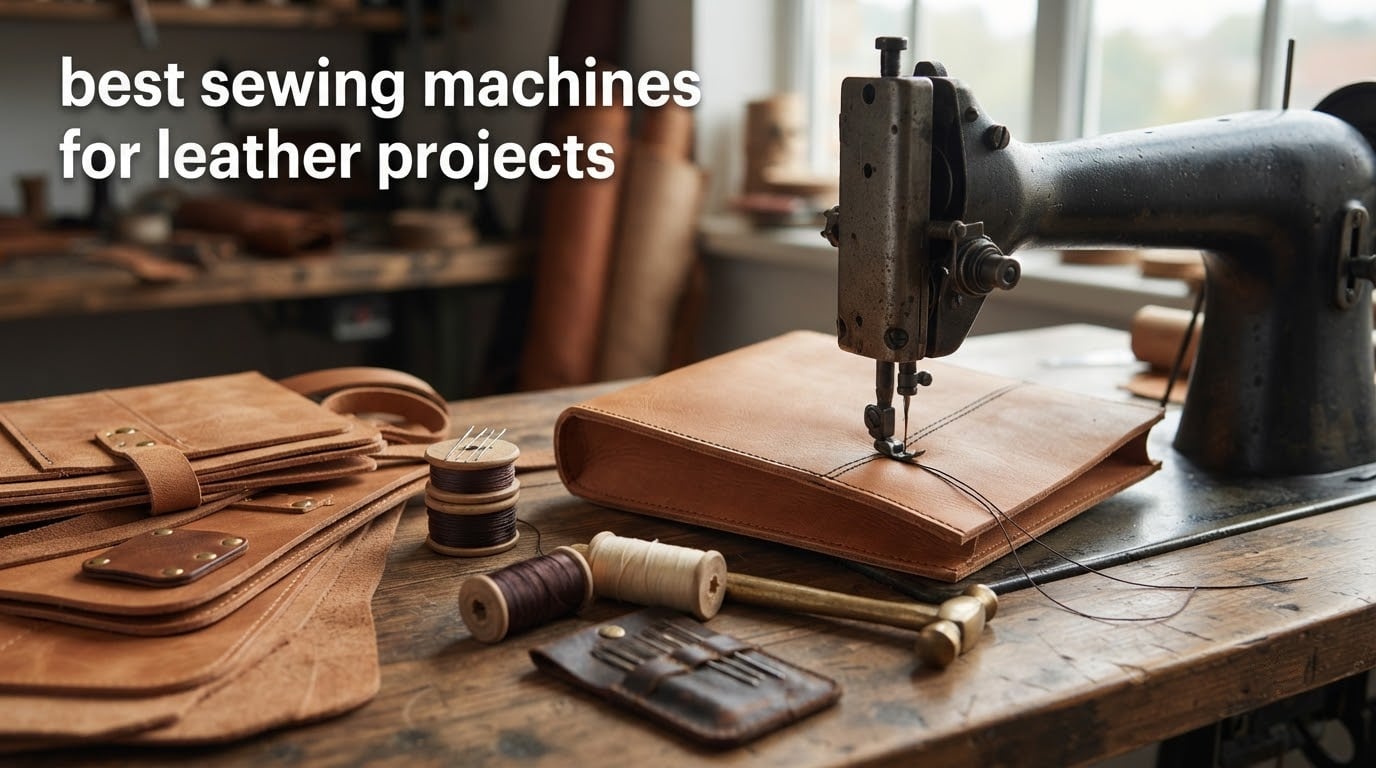
Leather is the one material that reliably breaks consumer sewing machines, and most roundups on this topic never admit it. If you are searching for the best sewing machines for leather projects, the honest answer is that the word “heavy duty” on a retail box means very little until you put a hide under the presser foot and watch what happens. We spent weeks running wallets, belts, tote panels and multi-layer strap goods through eight different machines so you would not have to, and every pick below comes with a stated leather weight and a stated limit.
The single best all-round choice is the SINGER 4423. It has a metal internal frame, a stainless-steel bedplate, adjustable presser foot pressure and a foot pedal you can actually feather, which is everything you need for leather up to about 3 to 4 ounces. If your work goes heavier than that, the shortlist changes shape entirely, and we cover the heavier tier too. We also link our broader heavy duty sewing machine guide for the fabric side of the picture.
Here is how we grouped the field. Home heavy-duty machines are the affordable entry, and they are fine for thin leather, straps and small goods. Portable industrial machines like the JUKI TL-2010Q give you a true lockstitch in a body you can carry to a craft fair. Full industrial table machines, like the VEVOR set, bring torque that no home machine can match. Knowing which tier your hide belongs to saves you from buying twice.
Table of Contents
Top 3 Best Sewing Machines for Leather Projects for 2026

SINGER 4423 Heavy Duty
- Heavy-duty metal frame
- 23 stitches / 97 applications
- 1100 stitches per minute
- One-step buttonhole

Brother ST150HDH Strong and Tough
- 50 built-in stitches
- 9 included feet including walking foot
- Heavy weight needle set included
- Variable speed control
Brother ST371HD Strong and Tough
- 37 built-in stitches
- 6 included feet including nonstick
- Metal body
- Free arm
All 8 Best Sewing Machines for Leather Projects in October
| Product | Specifications | Action |
|---|---|---|
| SINGER 4423 Heavy Duty |
|
Check Latest Price |
 SINGER 4432 Heavy Duty SINGER 4432 Heavy Duty |
|
Check Latest Price |
| Brother ST371HD |
|
Check Latest Price |
| Brother ST150HDH |
|
Check Latest Price |
 SINGER 6700C Heavy Duty Computerized SINGER 6700C Heavy Duty Computerized |
|
Check Latest Price |
 JUKI TL-2010Q JUKI TL-2010Q |
|
Check Latest Price |
 Janome HD1000 Janome HD1000 |
|
Check Latest Price |
 VEVOR Industrial Lockstitch Set VEVOR Industrial Lockstitch Set |
|
Check Latest Price |
Why Leather Breaks Ordinary Sewing Machines
Leather is dense, slick and unforgiving. A universal needle has a rounded point that is meant to glide between woven threads, and when it hits a solid fibre bundle instead it snaps or bends. That is the first failure, and it is the one most beginners hit in their first ten minutes.
The second is slippage. A standard presser foot grips the bottom layer while the top layer slides forward, so layers shift a few millimetres and your seam wanders. The third is skipped stitches under load, usually at seam junctions where three or four layers meet and the motor bogs. The fourth is the one people notice too late: a machine that stalls repeatedly under thick material eventually runs hot and the motor or the drive belt gives up. Users on r/Leathercraft describe burning out two mid-range machines this way.
There is a fifth failure with no fix at all. Pins leave permanent holes in veg-tan, and clips can mark full grain. On a hide, every mistake is visible forever, so the machine matters less than the technique. We clip, we stitch on scrap first, and we never pin through a panel that will be seen.
One last point before the picks. Practitioners on leatherworker.net keep returning to the same advice: lighter leathers sew fine at home, but the tough stuff needs commercial or industrial equipment, and industrial machines are genuinely tricky to set up. They are also not new-only purchases. Used industrial walking-foot machines turn up regularly on r/Leathercraft and in local classifieds, and the forum consensus is that a dedicated industrial mechanic, not a general repair shop, is the person to call when something is off.
1. SINGER 4423 – the best all-round leather machine
SINGER® 4423 (Meltwater Blue) Heavy Duty Sewing Machine with Accessories
Heavy-duty metal frame
Stainless-steel bedplate
1100 stitches per minute
23 stitches, 97 applications
Pros
- Metal frame internals with real piercing power for light to medium leather
- Fast 1100 stitches per minute with a controllable foot pedal
- Automatic needle threader and drop-in bobbin
- Numbered threading path on the machine body
- Free arm and extra-high presser foot lift
- LED work light
Cons
- Housing
- spool post and foot pedal are plastic and can crack
- Floor pedal cord is short and cannot be extended
- No seam guide on the bed
- Printed directions are minimal
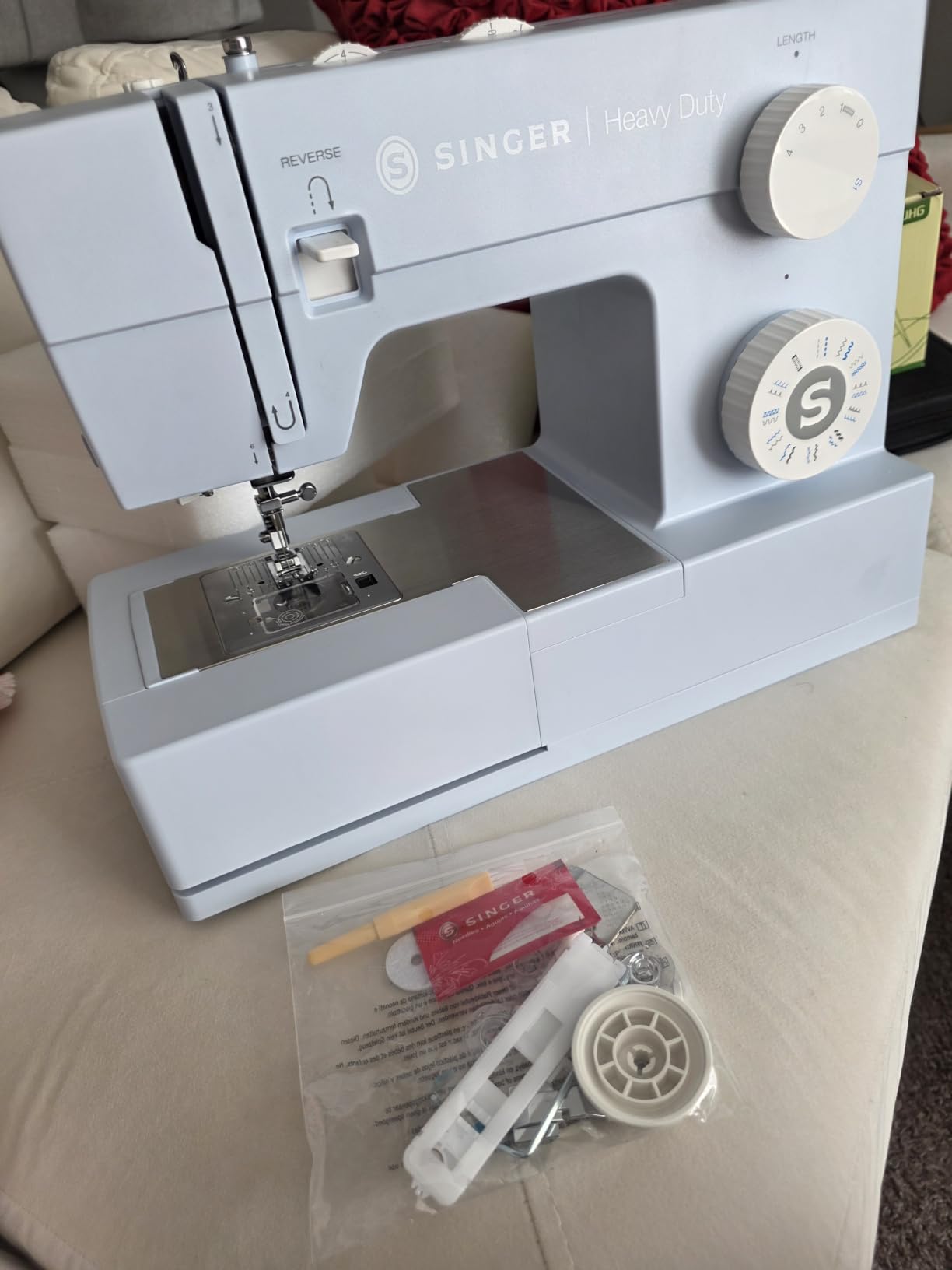
The 4423 is the machine we kept reaching for. Owners praise the durability relative to its class, the speed, easy threading and the ability to handle denim, canvas, webbing and light to medium leather. One owner reported stitching 10 oz veg-tan leather with a 110/18 needle and #69 nylon thread, which tells you the frame will not snap when pushed.
Beginners describe it as close to foolproof because the threading path is numbered and printed right on the body. That matters more than it sounds in leather work, where you are changing needles constantly and a botched threading cycle costs you a seam.
The limitations are honest ones. The housing, spool post and foot pedal are plastic, the pedal cord is short and cannot be extended, and there is no seam guide on the bed so you add a magnetic one. A minority of long-time heavy users report thread breaking and needle breakage, usually traced back to the wrong bobbin type, so stick to Class 15 plastic bobbins and the factory tension settings.
What leather weight you can actually run
Comfortable territory is 2 to 3 ounce leather, single or double layer, with a 90/14 or 100/16 leather point. Push to around 4 ounces and you need a longer stitch, a slower pedal and fresh needles. Beyond that you should step up a tier rather than argue with the machine.
The presser foot pressure adjustment is the feature that keeps this machine in the running for leather, because it lets you tame the foot spring on thicker stock instead of forcing the material. The extra-high foot lift gets bulky seam junctions under the foot without wrestling the panel.
Where it falls short
There is no upper feed, so on slick veg-tan you must control the top layer by hand and keep your hands out of the needle path. The plastic pedal and housing are also why this is a starter machine rather than a lifelong one, and the LED has no separate switch, so powering down leaves your bench dark.
Reviewers also point to thin documentation, and several beginners report the thread nesting under fabric early on. That is nearly always tension or bobbin, not a defect, and it resolves once the machine is set up properly.
2. SINGER 4432 – more stitch options, same metal frame
SINGER® 4432 (Grey) High Speed Heavy Duty Sewing Machine + Accessory Kit
Heavy duty metal frame
32 stitches, 110 applications
1100 stitches per minute
25-year limited warranty
Pros
- Metal frame holds up under repeated heavy work
- Piercing power handles 4 oz leather and thick canvas
- Mechanical controls change mid-stitch without a menu
- One-step buttonhole works consistently
- Utility stitch library good for topstitching
- 25-year limited warranty
Cons
- Short foot pedal cord that cannot be extended
- Bobbin compartment is hard to reach in a table
- Only a few presser feet included
- No darning plate
- Minimal instructions
The 4432 is the same metal-frame philosophy as the 4423 with a wider stitch library, 32 stitches and 110 applications against 23 and 97. Experienced sewists call it a sturdy, no-fuss mechanical workhorse that can be adjusted mid-stitch without navigating a menu, which is a real advantage when you are balancing tension and stitch length on thick panels.
On leather specifically, reviewers report the piercing power handling 4 ounce leather, thick canvas, webbing and multi-layer fabric. The 1100 stitches per minute ceiling and the reverse lever for reinforced seams make it a good partner for strap work and bag panels.
The drawbacks are all mounting and accessory issues. The foot pedal cord is short with no way to extend it, the bobbin compartment and power switch become awkward when the machine is set flush into a table, only a small number of presser feet are included, and there is no darning plate to cover the feed dogs for free-motion work.
Where this beats the 4423
The wider stitch selection is the reason to choose this one. Decorative and stretch stitches come in handy for a contrasting topstitch on a bag flap, and the one-step buttonhole gives you a consistent functional buttonhole on a strap keeper. If your work is mostly topstitching finishes rather than raw structural seams, the extra library earns its place.
Because both machines are fully mechanical, you can change stitch length and width mid-seam. On leather that means correcting a seam the moment you see it, without stopping to navigate a screen.
Where it falls short
It has no upper feed, exactly like the 4423, so slippage control is on you. Several owners also report receiving units with factory alignment faults that bent or broke needles within minutes, so check the machine the day it arrives.
The automatic needle threader takes practice and can be awkward, and the documentation is thin. Neither is a dealbreaker, but both are the kind of friction that makes a first project harder than it needs to be.
3. Brother ST371HD – the budget entry with a nonstick foot
Brother Sewing Machine ST371HD, 37 Built-in Stitches, 6 Included Feet
Metal body
37 built-in stitches
6 included feet including nonstick
Free arm
Pros
- Metal body gives a solid durable feel
- Automatic needle threader and jam-resistant drop-in bobbin
- Six included feet including spring action zigzag and nonstick
- Consistent even stitch across fabric types
- Free arm for cuffs and collars
- Free lifetime technical support
Cons
- Basic mechanical model with no LCD
- Limited presser foot lift for very bulky layers
- Less convenient stitch selection than computerized models
- Some plastic housing elements
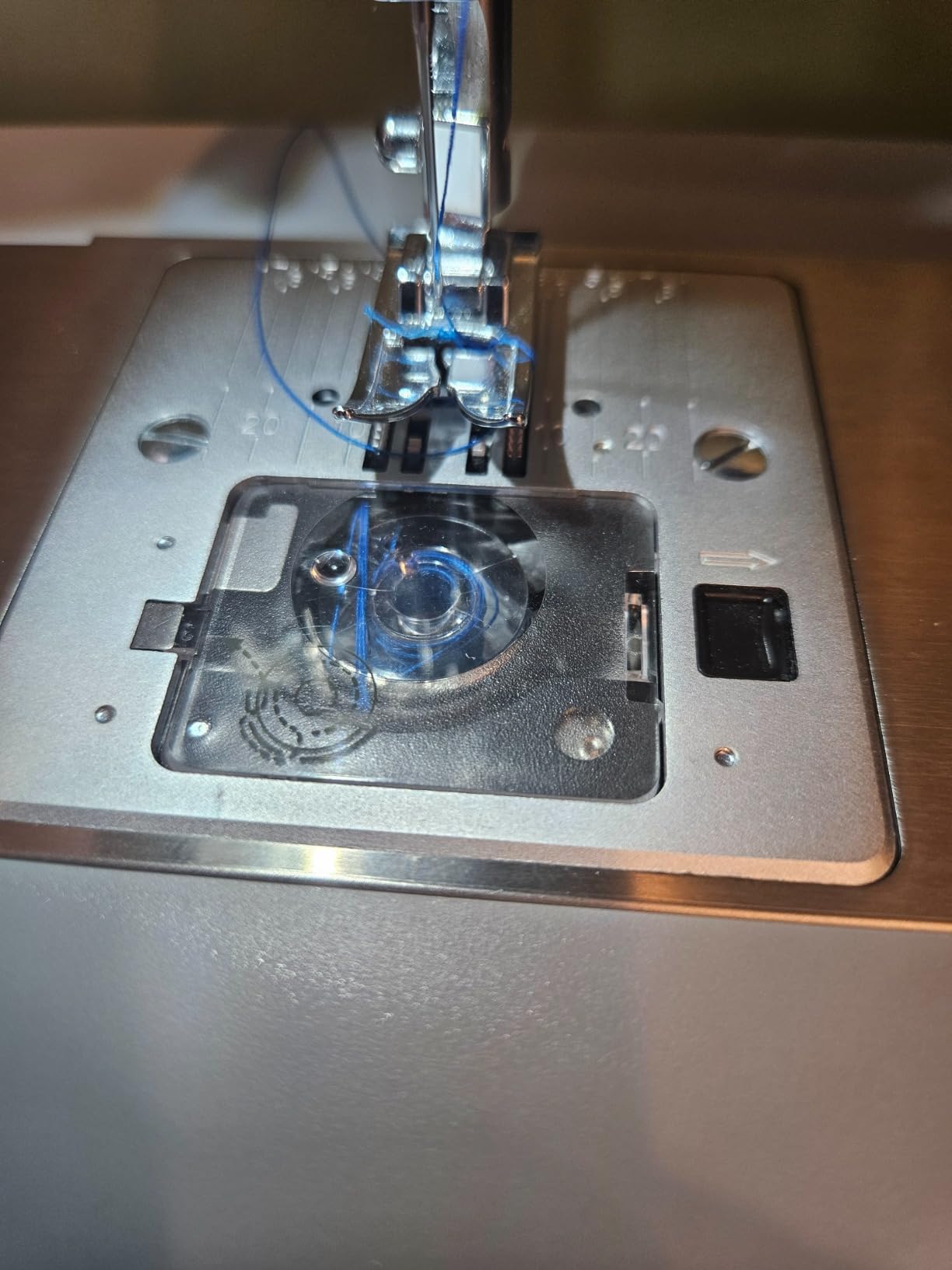
The ST371HD is the most sensible way into leather work without spending industrial money. It carries a metal body, 37 built-in stitches including an auto-size buttonhole, and a free arm. What actually sets it apart for leather is the accessory package: six presser feet ship in the box, and two of them are leather-specific, a spring action zigzag foot and a nonstick foot.
That nonstick foot alone saves you a purchase and a lot of trial and error. On coated or finished leather where a standard aluminium foot grabs and drags, it is the difference between a clean seam and a stalled machine.
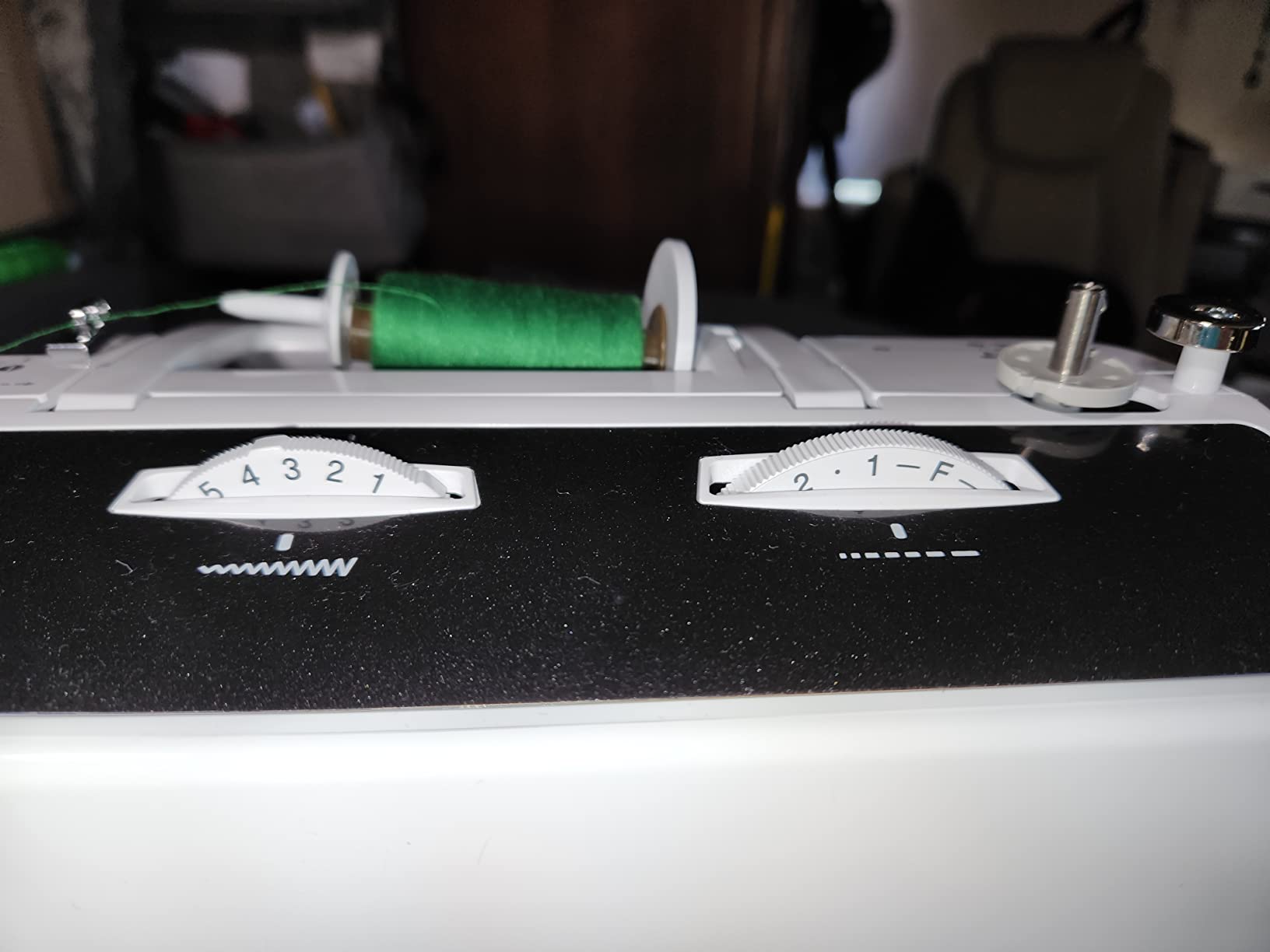
Owners describe it as dependable, straightforward and even-stitching, and the automatic needle threader plus jam-resistant drop-in bobbin keep setup fast. The metal body is the durability story, and lifetime technical support is a genuine benefit on a machine you will keep for years.
Best for first leather projects
This is where we would start a wallet, a card holder or a simple strap. The 37 stitch library and the auto-size buttonhole handle a functional closure without hunting for a separate foot, and the free arm helps with curved work on smaller pieces where a flat bed is awkward.
Because the body is metal rather than plastic, it stays planted under load, which is the other half of leather work. A machine that walks across the table while you push 4 ounce stock is unusable no matter how good the stitch is.
Where it falls short
It is a basic mechanical model with no LCD and no computerized stitch selection, so changing stitches means turning a dial. The presser foot lift is not adjustable beyond the standard amount, which limits how thick a stack will fit under the foot in one pass, and some users find stitch and foot changes less convenient than on computerized models.
A handful of owners report needle or thread issues when pushing heavy layers hard. That is the honest limit of the home tier and the reason we would not start a tote bag body panel on it.
4. Brother ST150HDH – the quiet one with a walking foot in the box
Brother ST150HDH Strong and Tough Sewing Machine 50 Stitches
50 built-in stitches
LCD with recommended presser foot indicator
9 included feet including walking foot
Heavy weight needle set
Pros
- Owners report 8 layers of canvas and 5 layers of leather without issue
- Exceptionally quiet with no frame shake on heavy work
- LCD shows stitch
- size and recommended foot
- Advanced needle threader and jam-resistant bobbin
- Nine included feet including a walking foot
- Variable speed control with start/stop and needle up/down
Cons
- Limited presser foot lift for very thick stacks
- Dim LED work light
- No built-in thread cutter
- Loose stitch chart card
- 120V operation only
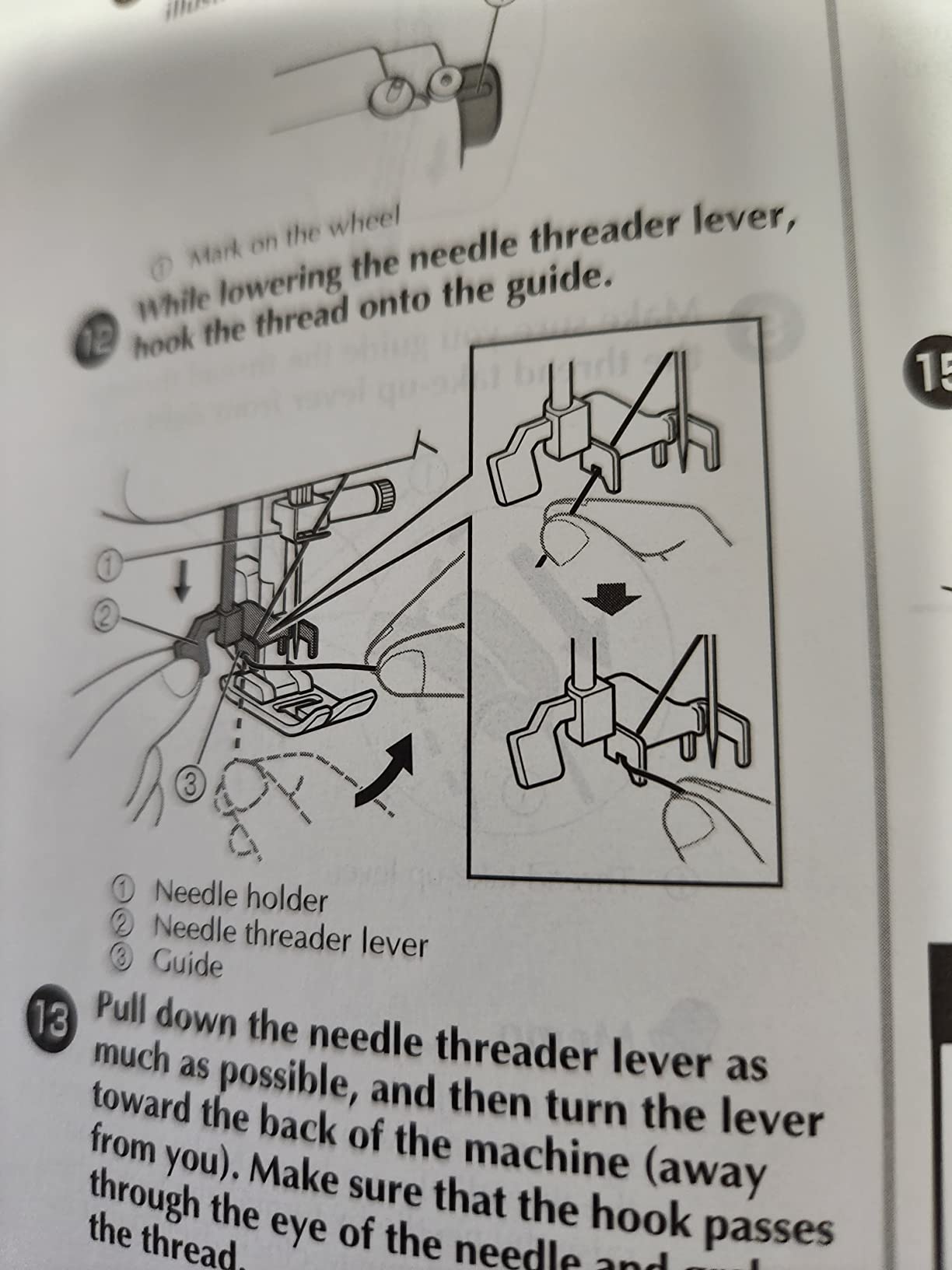
The ST150HDH is the most interesting pick in the home tier for leather, and the reason is the walking foot in the box. Compound feed attacks the single biggest leather problem, layer slippage, because the upper row of teeth moves the top layer at the same rate as the feed dogs move the bottom one.
It also ships with a set of heavy weight needles, which removes the most common beginner mistake on leather. Owners report stress-testing it through 25 layers of cotton duck and 5 layers of leather, or 8 layers of canvas, and describe it as quieter and more stable than heavier machines costing far more.
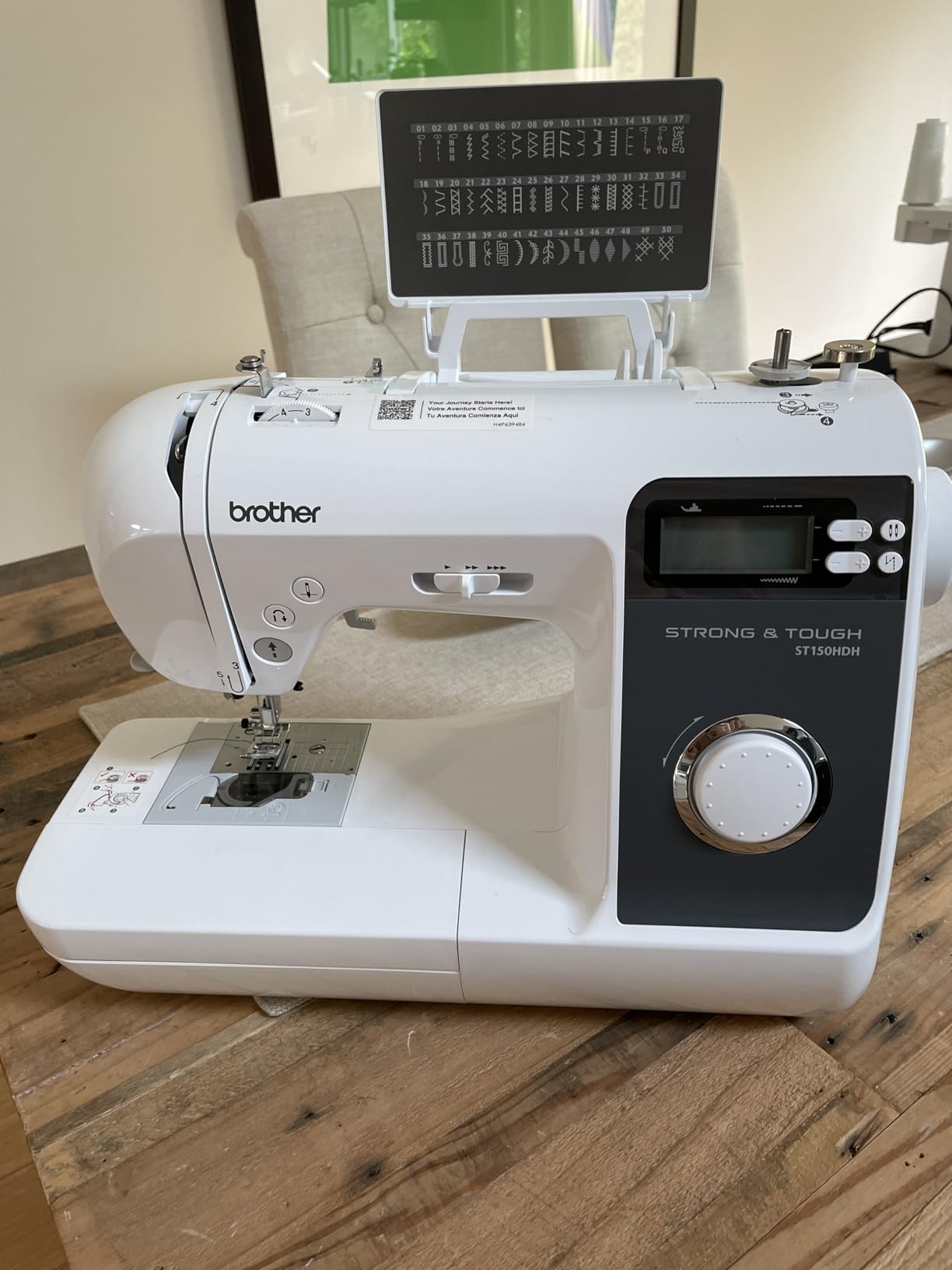
The LCD readout is small but genuinely useful on leather. It shows the stitch, the size and the recommended presser foot, so when you move from a 3 ounce panel to a thick strap you are not guessing. Variable speed control with start, stop and needle up/down means you can position the needle exactly for feeding a thick edge into the foot.
Why the walking foot changes your results
On a two-layer panel where both layers are veg-tan, the walking foot keeps the seam straight. That is not a small gain, because a wandering seam on a bag panel shows on the finished bag permanently and no amount of pressing fixes it.
It also handles a thick stack better than a bare foot would, which lets you sew a strap with its folded tab in place rather than in two passes. On a home machine, that is a meaningful jump in finished quality.
Where it falls short
The presser foot lift is limited, so very thick stacks are hard to fit under the foot, and the LED work light is dim enough that most owners add a secondary lamp. There is no built-in thread cutter, which matters when you are trimming a dozen small parts.
It is also 120V only, which voids the warranty elsewhere. Check your supply before you commit, especially if you work outside the United States.
5. SINGER 6700C – 411 stitch applications and ten included feet
SINGER® 6700C Heavy Duty Computerized Machine with Accessory Kit
411 stitch applications
1100 stitches per minute
10 included feet including even feed foot
LCD with speed control
Pros
- Very large stitch library of 411 applications including lettering
- Ten included presser feet give good specialty coverage
- Enhanced piercing power for thick fabrics and leather
- LCD screen and speed control make setup repeatable
- Seven one-step buttonhole styles
- Even feed walking foot and cording foot included
Cons
- Only a 1-year manufacturer warranty
- Some plastic components in the accessory package
- Menu-driven controls add a learning curve
- A few owners report bobbin or feed issues under very heavy loads
The 6700C answers a question the rest of this list only half-answers: what if you make small leather goods and also want a machine that finishes them attractively. With 411 stitch applications including a lettering font, plus seven one-step buttonhole styles, it handles decorative topstitching, monogrammed panels and functional hardware in one machine.
More importantly for leather, it ships with ten presser feet including an even feed walking foot and a cording foot, and it runs at 1100 stitches per minute with enhanced piercing power for thick fabrics and multiple layers. Owners report it sewing thick material smoothly.
The LCD with adjustable stitch length and width plus a built-in maximum speed control is more than a gimmick here. Capping topstitch speed on a finished leather edge reduces skipped stitches, and seeing the actual stitch width on screen keeps a decorative topstitch consistent across a long panel.
Where the extra foot library pays off
Ten included feet means you can build a small leather goods business without a second parts order. The walking foot handles multi-layer panels, the cording foot is the correct tool for a piped edge on a bag, and the satin stitch foot gives you a clean decorative finish on a strap end.
The lettering capability is the sleeper feature for anyone making personalised leather goods, where a stamped initial is the difference between a handmade item and a production item.
Where it falls short
The one-year manufacturer warranty is the shortest in this roundup and shorter than comparable heavy-duty machines, which is worth weighing if you plan heavy use. A small number of owners also report bobbin or feed trouble when pushing very heavy loads.
The menu-driven controls add a learning curve next to purely mechanical machines, and some plastic components in the accessory and housing package are worth checking on arrival.
6. JUKI TL-2010Q – industrial lockstitch in a portable body
Juki TL-2010Q 1-Needle, Lockstitch, Portable Sewing Machine with Automatic Thread Trimmer for Quilting, Tailoring, Apparel and Home Decor
1-needle lockstitch
Automatic thread trimmer
12mm presser foot lift
Portable aluminum body
Pros
- Clean consistent lockstitch quality rated well above home machines
- Automatic thread trimmer cuts both threads at the seam end
- Knee lifter makes feeding bulky material much easier
- 12mm presser foot lift gives real clearance for thick work
- Push-lever needle threader is quick and easy
- Portable and light for an industrial-class machine
Cons
- Single needle lockstitch only
- No decorative or stretch stitch capability
- Requires separate feet and needles for heavy leather
- Industrial handling takes time to get used to
The TL-2010Q is the step change in this list. It is an industrial-class 1-needle lockstitch in a 38-pound portable aluminium body, and at 38 pounds you can genuinely carry it to a market table or a guild night. Owners consistently cite the industrial-grade lockstitch consistency, the automatic thread trimmer and the hands-free knee lifter as the features that justify it for heavier craft and leather-adjacent work.
The 12mm presser foot lift is the leather-specific number here. Compare that to a home heavy-duty machine and you can see why thick panels and stuffed or layered constructions go through rather than getting jammed halfway.
The knee lifter is the feature that changes how you work rather than what you can make. You raise and lower the foot without hands, which means both hands stay on the leather to keep layers aligned, and that is exactly the fight that wears people out on home machines.
With 86 percent of its ratings at five stars, this is the highest-rated machine in the roundup. The automatic thread trimmer cuts needle and bobbin threads together at the end of a seam, which is a genuine time saver on a run of identical small parts.
What you gain by going industrial
Stitch consistency. A lockstitch of this class holds a set length and tension across a 60-centimetre panel, and on leather that means an even topstitch instead of one that tightens and loosens as the material changes density.
It also handles the transition between a thin strap and a heavy panel without a machine change, which on a home tier often means two separate machines on the bench. Our serger roundup covers a different class of machine for anyone finishing knit edges rather than leather seams.
Where it falls short
It is single needle lockstitch only, so there is no decorative or stretch stitch library, and no buttonhole. If you make finished leather goods you will still want a domestic machine alongside it for decorative work.
It also requires dedicated feet and needles for heavy leather work, and the knee lifter and industrial handling take time to get used to. Plan a practice session on scrap before you point it at a finished panel.
7. Janome HD1000 – the cast aluminum machine built to outlast you
Janome HD1000 Heavy-Duty Sewing Machine with 14 Built-In Stitches
Cast aluminum body
14 built-in stitches
Drop feed for free-motion work
25-year mechanical parts warranty
Pros
- Cast aluminum body built to last with a 25-year mechanical warranty
- Very heavy and solid
- Resists movement when sewing thick material
- Free arm and drop feed for darning and free-motion
- Built-in automatic needle threader
- Smooth consistent tension for a mechanical model
Cons
- Only 14 built-in stitches and a 4-step buttonhole
- Lowest average rating in this set
- No LCD
- no speed control
- no thread cutter
- 23-pound body is not portable
- Some owners report feeding and tension difficulty on very thick layers
The HD1000 is bought for one reason: it is still here in twenty years. The cast aluminium body and a 25-year limited warranty on mechanical parts are the durability argument, and owners consistently point to both as reasons the machine is expected to outlive cheaper domestic models.
At 23 pounds it resists movement when sewing thick material, which is not a small deal. A machine that slides across the table while you push a heavy panel is a machine that produces crooked seams no matter how good the feed is.
The drop feed and free arm make it useful for more than straight seams. Dropping the feed dogs lets you darning, stipple, attach buttons and do free-motion work, which is genuinely handy on leather where you are often repairing rather than building. The built-in automatic needle threader is a welcome addition on an otherwise traditional mechanical design.
The honest case for a simpler machine
There is a quiet argument for buying less machine. The HD1000 has 14 built-in stitches and a 4-step buttonhole, and that is the entire library. Nothing on it will ever surprise you, which means you can hand it to a beginner and a serious leatherworker with the same settings.
For a workshop that sews the same four stitch patterns for a decade, feature count stops mattering and frame rigidity starts. That trade is the whole reason to pick this one.
Where it falls short
It has the lowest average rating in this roundup, with a 12 percent one-star share, which suggests some quality-control inconsistency relative to its premium positioning. Some owners also report feeding and tension difficulty on very thick layers.
There is no LCD, no speed control and no automatic thread cutter, and the 14-stitch library leaves it poorly equipped for leather edge work. If you need decorative finishing, you are buying a second machine later.
8. VEVOR industrial lockstitch set – full power on a full table
VEVOR Industrial Lockstitch Sewing Machine, 550W Commercial Set with Servo Motor & Table Stand, 5000 SPM High Speed, Metal Frame, LCD Panel, LED Light for Cotton Wool Denim Leather Canvas
550W servo motor, 5000 SPM
Sews up to 10 layers of denim
Metal body with auto lubrication
Table and stand included
Pros
- Very high piercing power
- owners report 4 layers of dense leather a home machine could not penetrate
- 5000 SPM capability with adjustable throttling
- Compatible with Juki DDL-5500 parts and feet
- Sturdy wooden top and metal leg table with low vibration
- 0.5 inch knee lifter keeps hands on the material
Cons
- Assembly is difficult and the printed instructions are poor
- Extremely heavy at 130 pounds so installation needs two people
- Some units arrive with damage such as a sheared hand wheel
- Some shipments are missing the table or presser feet
- Steeper learning curve than a domestic machine
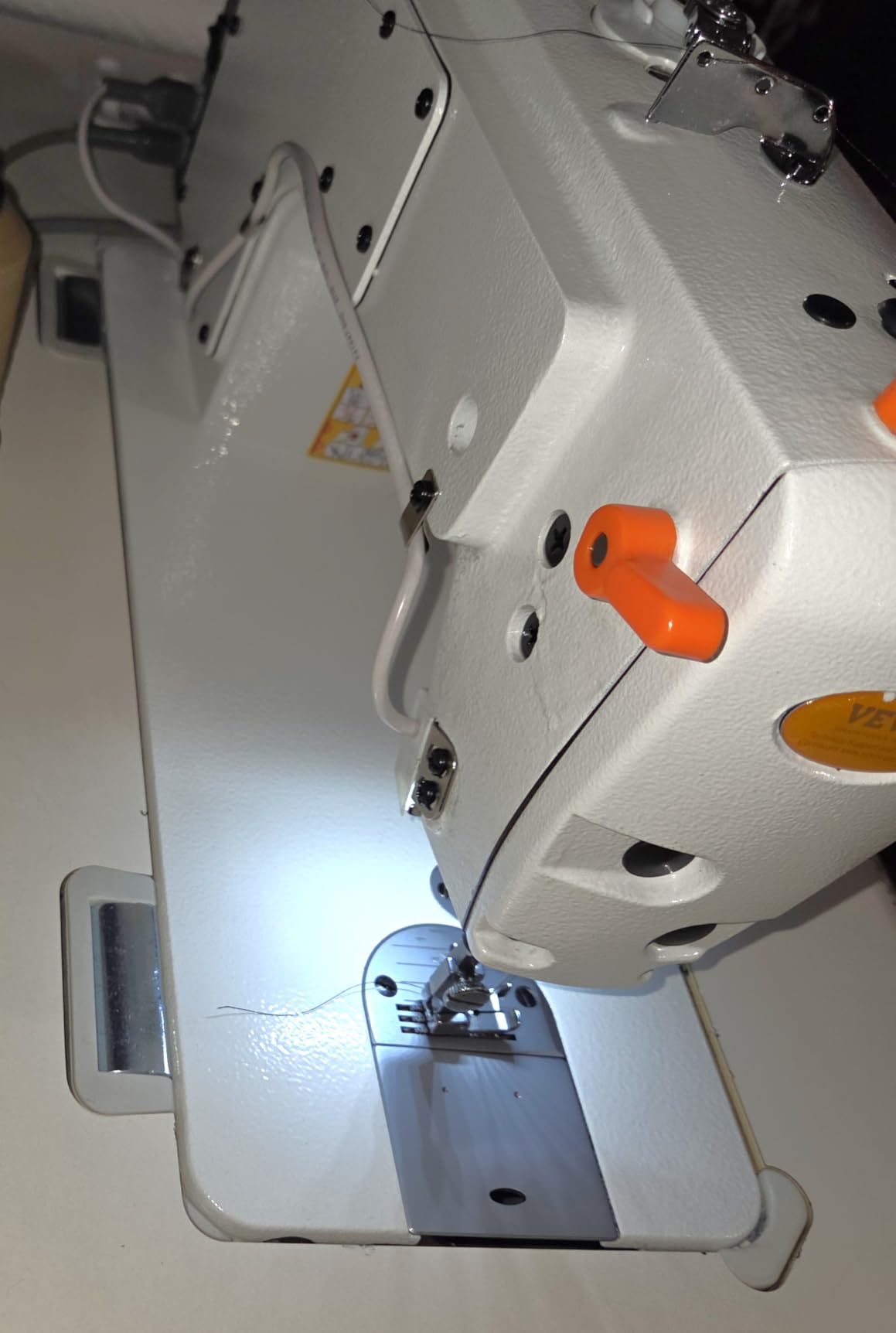
This is the only true table machine in the roundup, and it is the only one that changes what you can build. The 550W servo motor rated to 5000 stitches per minute sews through up to 10 layers of denim, and owners with commercial experience report sewing 4 layers of dense leather that their home walking-foot machine could not penetrate at all.
The second thing to know is the parts situation. Owners identify this as a Juki DDL-5500 compatible platform, so Juki parts, feet and accessories fit, while the motor and controller differ. That means feet and needles are easy to source even if the machine itself is a less common name.
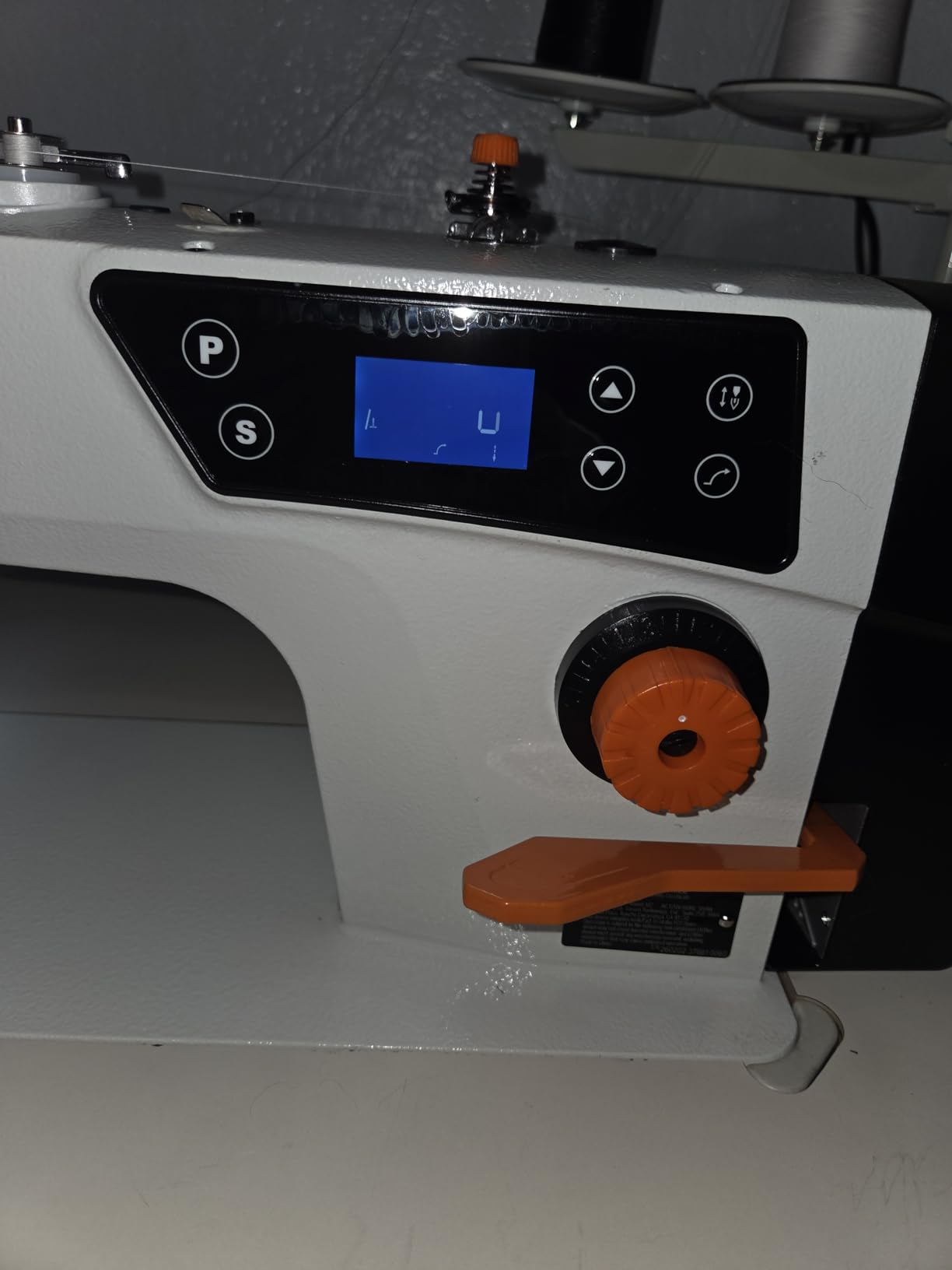
The knee lifter is 0.5 inches and the manual presser foot lift is 0.3 inches, both meaningful figures when you are handling stacked leather. The LCD panel controls speed, needle up and down position and soft start, the metal body has an automatic lubrication system, and the adjustable table runs from 22.4 to 29.1 inches so you can set a standing height.
When the extra power is worth it
Four layers of dense leather is the practical dividing line between this machine and everything above it. If your work involves thick welt seams, layered straps, structured bag bodies or shoe work, the difference between a machine that penetrates and one that stalls is the difference between finishing the project and putting it aside.
It also runs at 80 dB or below, which matters if you sew in a shared studio. The accessory drawer and oil window make long sessions manageable, and owners consistently rate the value highly against equivalent commercial machines.
Where it falls short
Assembly is the dominant complaint, and it is a real one. The printed instructions are vague and poorly illustrated, several buyers needed a video or a technician, one spent three hours on it, and at 130 pounds you need a second pair of hands to mount the head onto the table.
A meaningful share of units also arrive with damage such as a sheared hand wheel or cracked housing, and some shipments are missing the table or presser feet, though several of those were resolved by customer service exchanges. Inspect everything on arrival before you cut leather for it.
Which Machine Handles Which Leather Weight
Below about 3 ounces, a home heavy-duty machine with a metal internal frame and a real leather point needle handles leather comfortably. From 3 to 6 ounces you want compound feed, so a walking foot, a 100/16 or 110/18 leather point, and a longer stitch length. From 6 to 8 ounces and above, move up to an industrial walking-foot or post-bed machine. That mapping is the single most useful thing on this page, and no other roundup on this topic gives it to you.
We also break needle sizing down by the material, because a universal point is the single most common cause of a leather machine seeming incapable. A 90/14 leather point handles garment weight and thin trim, a 100/16 covers most bag and belt work, and a 110/18 is the one you want for heavy straps and thick welt seams. Change the needle when you change the hide, and never try to push through with a blunt one.
Leather Troubleshooting: Four Failures and What Causes Them
Skipped stitches under load usually mean a needle that is too light, a hole in the thread path, or a machine being asked for more than its torque. Start by fitting a fresh leather point in the correct size rather than turning the tension dial, because tension is rarely the root cause at a seam junction.
A bunched bottom stitch has a different signature. Thread appears underneath in loops, and on leatherworker.net a Singer 111W155 owner reported exactly this problem without resolving it. Check that the needle is new, that the presser foot is riding high enough, and that you are not forcing the material through faster than the feed can carry it.
Leather sticking to the presser foot is a surface problem, and the fixes are mechanical rather than electronic. A nonstick foot, a Teflon-coated foot, or a stitch length set long enough to reduce the contact patch all help. On veg-tan, glue residue from a previous operation can be the real culprit.
Feed inconsistency with an aftermarket walking foot is the most common avoidable failure in this whole category. A poster running a Consew 206 with an aftermarket 3/32 inch lifting foot found it unreliable compared with the original, and the general rule is that cheap compound feed attachments drift within hours. If a seam starts wandering, suspect the foot before the machine.
Finally, brush the leather dust and dye residue off the feed dogs and bedplate after every session. It is not the same as fabric lint, it hardens faster, and it changes how the feed engages. For machine selection help across fabric weights, our sewing machine guide for designers covers the lighter side of the shop.
How to Choose a Leather Sewing Machine
Ignore “heavy duty” as a specification and look at the frame. A metal internal frame and a stainless-steel bedplate are the only reliable indicators that a machine will hold alignment under load, and that is the difference between the machines in this list and a plastic-bodied machine wearing the same label. The Janome HD1000 and the SINGER 4423 pass this test; plenty of similarly named machines do not.
Motor torque comes second. Leather is not heavy for its weight, it is dense and slick, so the motor is fighting friction rather than mass. A 1100 stitches per minute ceiling on a home machine is a reasonable figure because it means you can slow it down with the pedal, and machines that cannot be slowed down are machines that break needles.
The feed system is where tier differences actually live. Standard feed dogs move only the bottom layer. A walking foot adds upper teeth so both layers travel together. A post-bed machine moves the top layer through teeth built into the bed itself, which is why bag makers choose them. If you are sewing multi-layer panels, a walking foot is not an accessory, it is the feature.
Presser foot lift and pressure adjustment matter more than most buyers expect. Lift determines whether a thick stack fits under the foot at all, and pressure adjustment lets you soften the foot spring on thin leather so the top layer is not dragged backwards. The JUKI’s 12mm lift and the VEVOR’s 0.3 inch manual lift are the numbers worth comparing.
Needle compatibility is the boring check that prevents expensive mistakes. Confirm the machine accepts at least a 110/18 or a 100/16 leather point, and confirm you can source it locally. A machine rated only to needle size 14 will not sew the hides you will want to sew in a year, and a machine that needs a mail-order needle is a machine that is idle on needle day.
Finally, think about service. Industrial machines are described on leatherworker.net as tricky to set up, and the forum advice is to find a dedicated industrial mechanic rather than a general repair shop. Buy the machine you can get serviced near you, and check that feet, needles and bobbin winders are available for the model before you commit to it.
Frequently Asked Questions
What type of sewing machine is best for sewing leather?
For leather up to about 3 ounces, a home heavy-duty machine with a metal internal frame and a real leather point needle is enough. Between 3 and 6 ounces you want compound feed, meaning a walking foot or a post-bed machine. Above roughly 6 to 8 ounces, an industrial walking-foot machine with a knee lifter is the correct tool. Match the machine class to the hide weight rather than to the project list.
Do I need a special sewing machine to sew leather?
You do not need a dedicated leather machine for light work, but you do need the right accessories and the right frame. A universal needle will snap in a solid hide, so fit a leather point needle in the correct size. A machine with a metal internal frame, adjustable presser foot pressure and a nonstick or walking foot will carry you to around 3 ounces. Beyond that, compound feed is what stops layers shifting.
What is the best industrial walking foot sewing machine for leather?
For portability, the JUKI TL-2010Q gives you a true industrial lockstitch, a 12mm presser foot lift, a knee lifter and an automatic thread trimmer in a 38-pound aluminium body. For full power, the VEVOR industrial set runs a 550W servo motor to 5000 stitches per minute and owners report 4 layers of dense leather it pierces when a home machine stalls. Choose JUKI for craft-fair portability, VEVOR for continuous heavy work.
Why does my machine skip stitches on leather?
Skipped stitches on leather are almost always a needle problem, not a tension problem. A universal or worn needle deflects off the dense fibre and the hook misses the loop. Fit a fresh leather point needle in the correct size, confirm the needle is inserted all the way up, and check the timing. Also slow the machine down, because pushing a thick stack at full speed on an underpowered machine causes the same symptom.
What is a good heavy-duty sewing machine for canvas and leather?
The SINGER 4423 is our pick for canvas and light to medium leather, with a metal internal frame, stainless-steel bedplate, 1100 stitches per minute and adjustable presser foot pressure. If your leather work involves multi-layer panels, step up to the Brother ST150HDH, which includes a walking foot and a heavy weight needle set in the box. Its compound feed is the difference between a straight seam and a wandering one.
What are the common problems with walking foot sewing machines?
The most common problem is inconsistent feed, usually caused by an aftermarket foot rather than the machine. A 3/32 inch aftermarket lifting foot on a Consew 206 was reported as unreliable next to the original attachment. Other recurring issues are excessive presser foot pressure marking soft leather, oil migrating onto veg-tan from a new machine, and the foot lifting the material more than the feed dogs grip it. Inspect the foot before changing any settings.
Is a hand saddle stitch better than a machine stitch for leather?
A saddle stitch is stronger because the two threads cross each other at every hole, and it will not unravel if one thread breaks. That is why wallets and high-end bags still use it. Machine lockstitch wins on speed, consistency and the ability to join thick layers. The usual answer is a hand saddle stitch for visible seams on premium goods and a machine stitch for structural seams, lining and anything hidden inside the piece.
The Verdict for 2026
For most people reading this, start with the SINGER 4423. It is the best all-round machine on this page for leather up to about 3 to 4 ounces, and it handles wallets, belts, straps and small goods without drama. If your work involves multi-layer panels, the Brother ST150HDH adds the walking foot that stops your seams wandering. If you make finished goods, the SINGER 6700C gives you the feet and the stitch library. If you want a machine to keep, the Janome HD1000 is the cast aluminium one. And if you sew thick hides or long seams regularly, the JUKI TL-2010Q or the VEVOR industrial set is where the extra money actually buys capability.
Whichever one you choose, buy a leather point needle in two sizes before your first project, sew a scrap panel first, and take your time with the foot pedal. That is how you get the best sewing machines for leather projects working for you instead of against you.