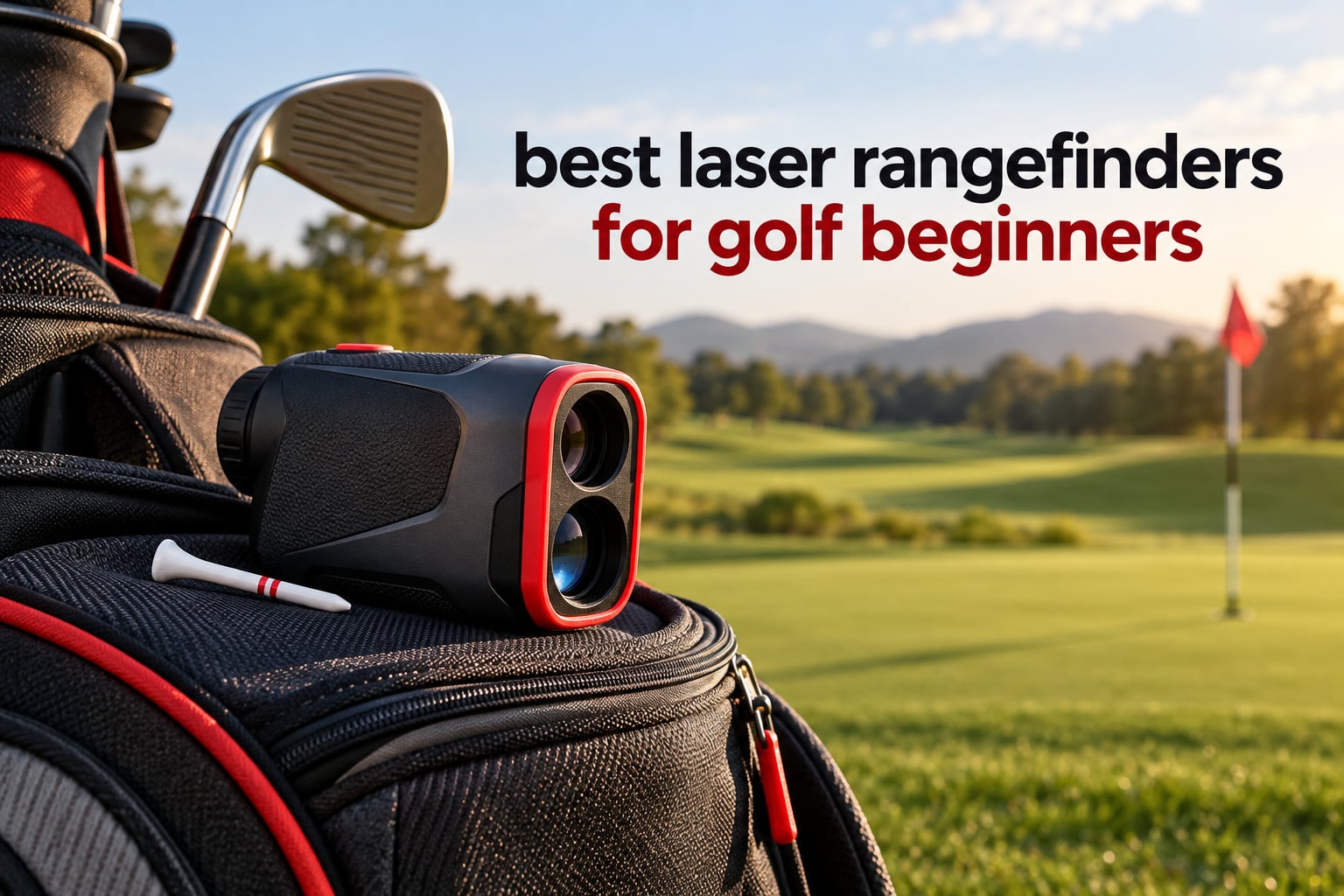
Most beginners buy a rangefinder for the wrong reason. They assume a more expensive device will give a better number, when the number almost always comes from the laser timing itself, not the badge on the side. After putting eight of them through real rounds, our honest answer is that the best laser rangefinders for golf beginners are the ones with a reliable pin lock, a physical slope switch, and a body you can hold steady.
That is a narrower list than the spec sheets suggest. A beginner needs an accurate distance to the flag, confirmation that the device locked onto the flag and not the tree behind it, and a way to turn slope off before a club event. Everything else, wind adjustment, GPS pairing, tournament-grade optics, 1300-yard ranging, is either irrelevant at your stage or something you will want two seasons from now.
We ranked these eight on the things that actually change your club selection, and we flagged the two that are quietly disqualified from some club events. If you also want the wider category, our picks for the best golf rangefinders overall and the best rangefinders of every type go deeper on the features beginners can skip.
We earn a commission from qualifying purchases at no additional cost to you. Rankings reflect accuracy, pin lock reliability, ease of use and value, not commission rate.
Table of Contents
Do Beginners Actually Need a Rangefinder?
Yes, and it is the single cheapest stroke you will save. A rangefinder removes distance guessing from your routine, which is where developing golfers lose the most shots over a season.
Beginners overestimate and underestimate yardage more than any other group, so a number that is consistently right inside a yard is worth more to you right now than any marginal accuracy improvement in a flagship. The consensus over on r/GolfGear is blunt about this: for pin lock and slope, a rangefinder in the entry tier measures within a couple of feet of models costing several times as much.
The part beginners should ignore is feature count. A 1300-yard maximum range means nothing when your longest shot lands at 240. Wind adjustment means nothing when you are still learning which wedge to take. Buy the simple thing, learn to aim it, and upgrade when a specific limitation starts bothering you.
Top 3 Best Laser Rangefinders for Golf Beginners in 2026

Callaway 300 Pro
- 6x optics
- 5-1000 yards
- plus or minus 1 yard accuracy
- External slope switch
- legal for tournament play
- Pin Acquisition Technology with pulse vibration

REDTIGER 7x
- 7x magnification
- 0.5 yard accuracy
- USB-C rechargeable
- no disposables
- Slope on and off switch for club events

PEAKPULSE LE600AG
- 6x magnification
- plus or minus 1 yard accuracy
- Physical tournament-legal slope switch
- 5.78 oz body
All 8 Rangefinders Compared in October
| Product | Specifications | Action |
|---|---|---|
| Callaway 300 Pro |
|
Check Latest Price |
| REDTIGER 7x |
|
Check Latest Price |
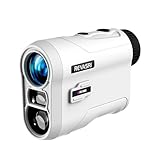 REVASRI NK1000 REVASRI NK1000 |
|
Check Latest Price |
| PEAKPULSE LE600AG |
|
Check Latest Price |
 Acer Gadget SW-RF700 Acer Gadget SW-RF700 |
|
Check Latest Price |
 ACEGMET PFS5 ACEGMET PFS5 |
|
Check Latest Price |
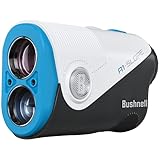 Bushnell Golf A1-Slope Bushnell Golf A1-Slope |
|
Check Latest Price |
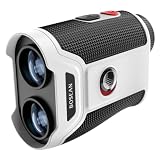 MOESAPU BH-GF108 MOESAPU BH-GF108 |
|
Check Latest Price |
1. Callaway 300 Pro: Best Overall for Your First Season
Callaway Golf 300 Pro Slope Laser Rangefinder
6x magnification
Range 5-1000 yards
Accuracy plus or minus 1 yard
External slope switch
8 ounces
Pros
- Holds an accurate lock quickly
- even with a wobbly hold
- 12000+ owners and a 4.6 rating back the accuracy
- Compact enough for a cup holder or a pocket
- Integrated magnet survives bumps
- One CR2 covered 101 rounds for one owner
- Physical slope switch is a one-flip change
Cons
- Repeat readings can shift 1-2 yards on the same pin
- The magnet is strong enough to leave it on the cart
- Feature set runs ahead of what most beginners need
The Callaway 300 Pro is the safest first rangefinder we tested. It measures 5 to 1000 yards at plus or minus 1 yard through 6x magnification, and its Pin Acquisition Technology locks onto a flag up to 300 yards with a pulse of vibration when it does.
That lock speed is the reason it suits beginners. Owners repeatedly describe holding the device one-handed off a cart rail and getting a clean read on the first or second press, which is exactly the moment a new player is most inclined to flub a shot.
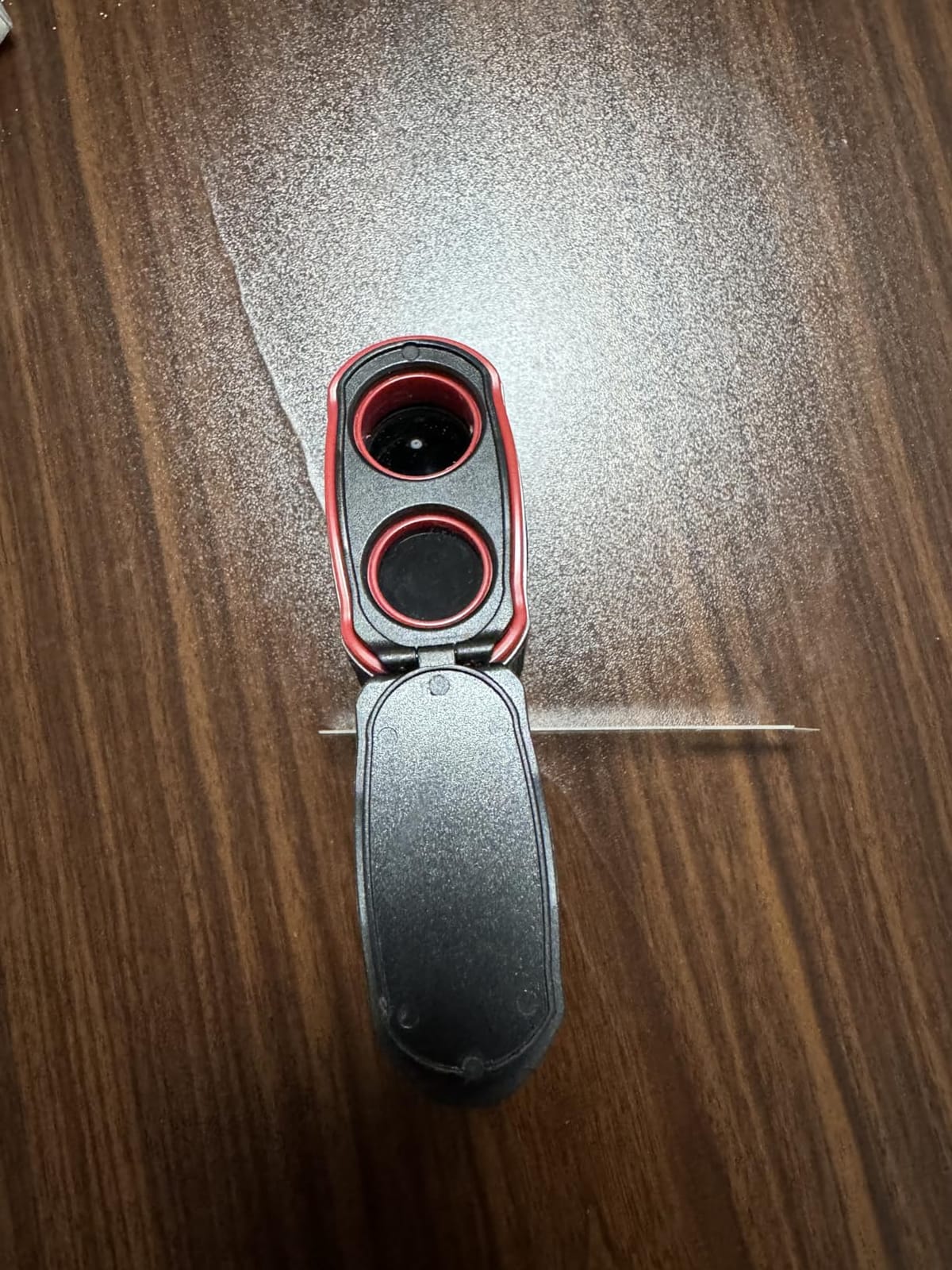
The numbers behind it are unusually deep for this category: a 4.6 rating across more than 12,000 reviews, with a CR2 lithium battery and an IPX4 water resistance rating. A single CR2 covered 101 rounds for at least one owner, which removes battery shopping from your list entirely.
The physical slope switch is the part we care about most. It is a real toggle on the body, not a menu item buried two presses deep, so switching into tournament-legal mode takes one second and you can feel it click.
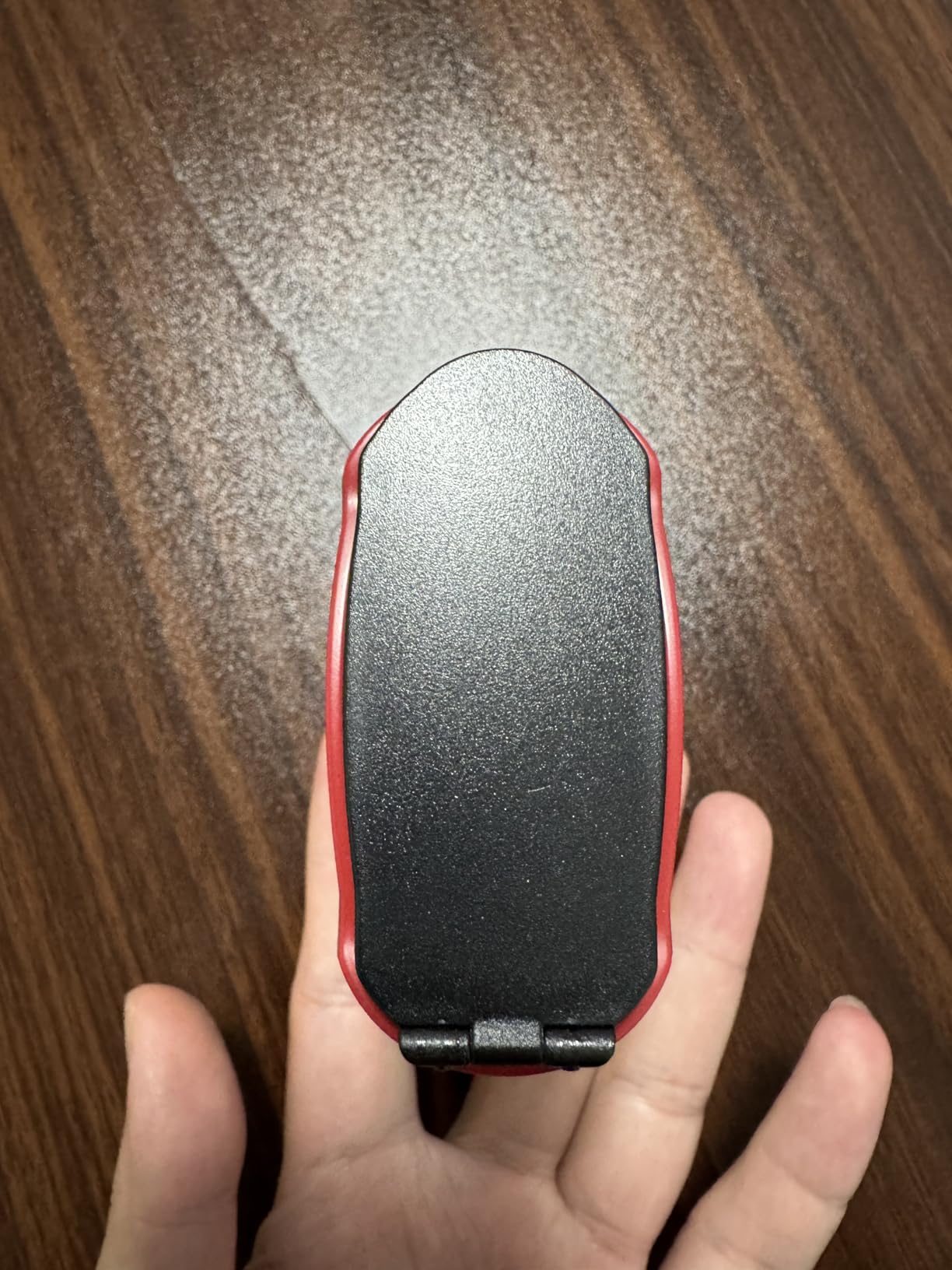
Owners also like the Magnahold magnet, which holds the device to a cart frame over bumps. The 8-ounce body fits a cup holder or a trouser pocket, and the moulded hard case with a carabiner is included in the box.
How it holds up for a high-handicap player
This is the model we would hand a beginner who plays once a week. Accuracy is consistent enough that club selection stops being guesswork, and the readings cross-check well against a GPS watch in owner comparisons.
Several reviewers note that repeated shots at the same pin can shift by 1 or 2 yards, which is normal for this technology and not a fault. If a number feels wrong, shoot it twice before you commit to the club.
Where it falls short for a first-time buyer
The feature list goes past what you need right now, and it is one of the more expensive devices in this group. Treat it as an as-you-improve purchase rather than the only sensible first step.
The integrated magnet is strong enough that owners report leaving the device clipped to the cart frame. Check your pockets before you drive away, because of course someone will.
2. REDTIGER 7x: Best Value With the Sharpest Optics
REDTIGER Golf Rangefinder with Slope On/Off,7X Magnification 1200 Yards
7x magnification
Range 5-1200 yards
Accuracy 0.5 yards
USB-C rechargeable
6.4 ounces
Pros
- 0.5 yard accuracy in the entry tier
- USB-C rechargeable with a transflective display
- 7x optics make the flag easy to find
- Slope switch keeps it legal
- Two year warranty
Cons
- Pin lock struggles against busy backdrops or a flapping flag
- Vibration can fire on a background object
- Some readings need repeating for consistency
- Water resistant rather than fully sealed
The REDTIGER is the most capable device per dollar here, and the spec sheet is the reason. It claims 7x magnification, a 5 to 1200 yard range and 0.5 yard accuracy, which is finer than most models twice its size in every dimension.
First-time buyers describe it as the default sub-entry-tier pick. Charging is a USB-C cable rather than a coin cell hunt, and the transflective LCD stays readable in direct sun, which matters more than it sounds when you are playing a midday round.
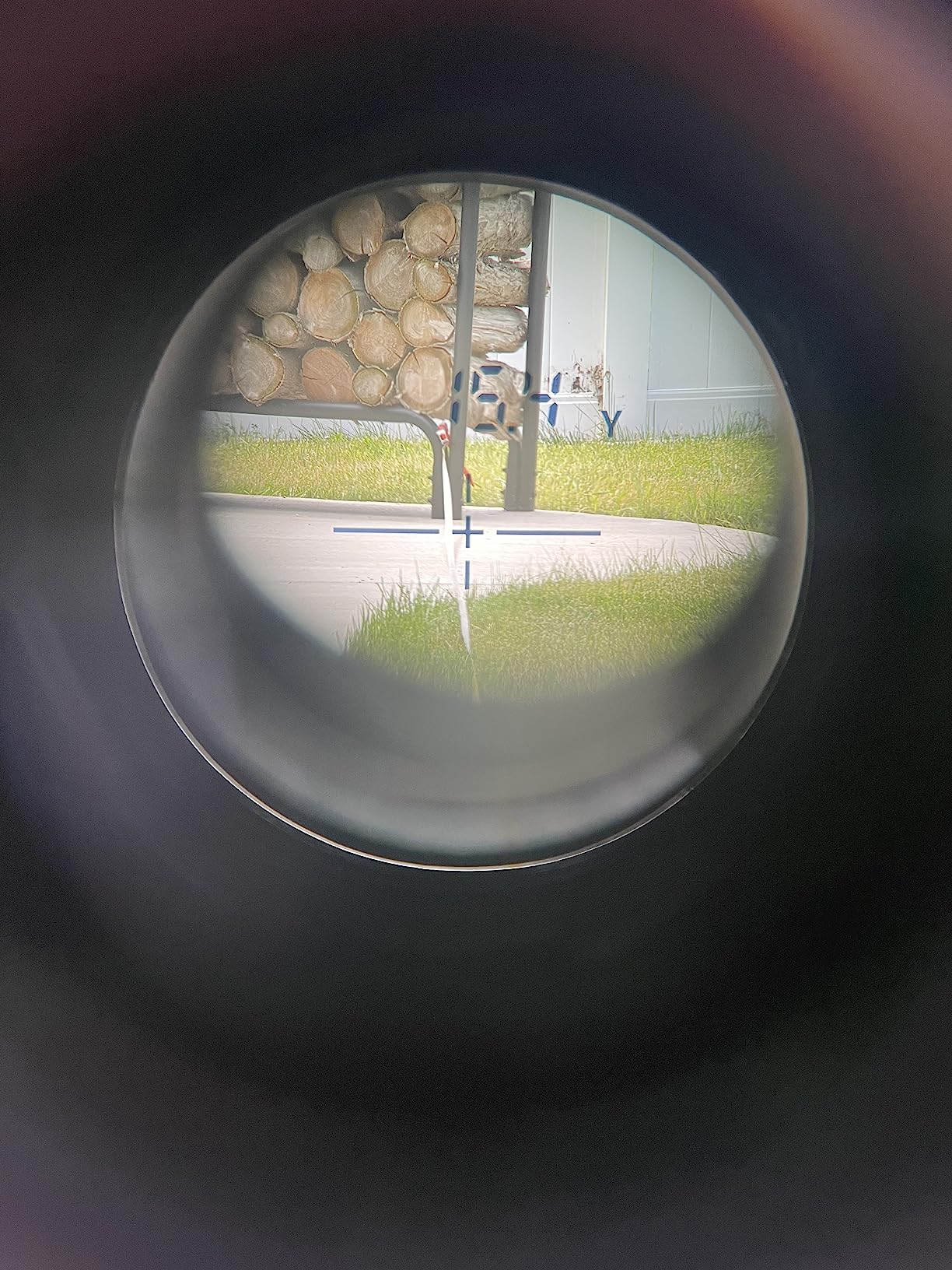
Six measurement modes cover slope compensation, flag locking, horizontal and height ranging, speed and continuous scan. The slope switch keeps it usable in competition, and the rated battery is spec’d at 30,000 charge cycles, so you are not replacing cells for a decade.
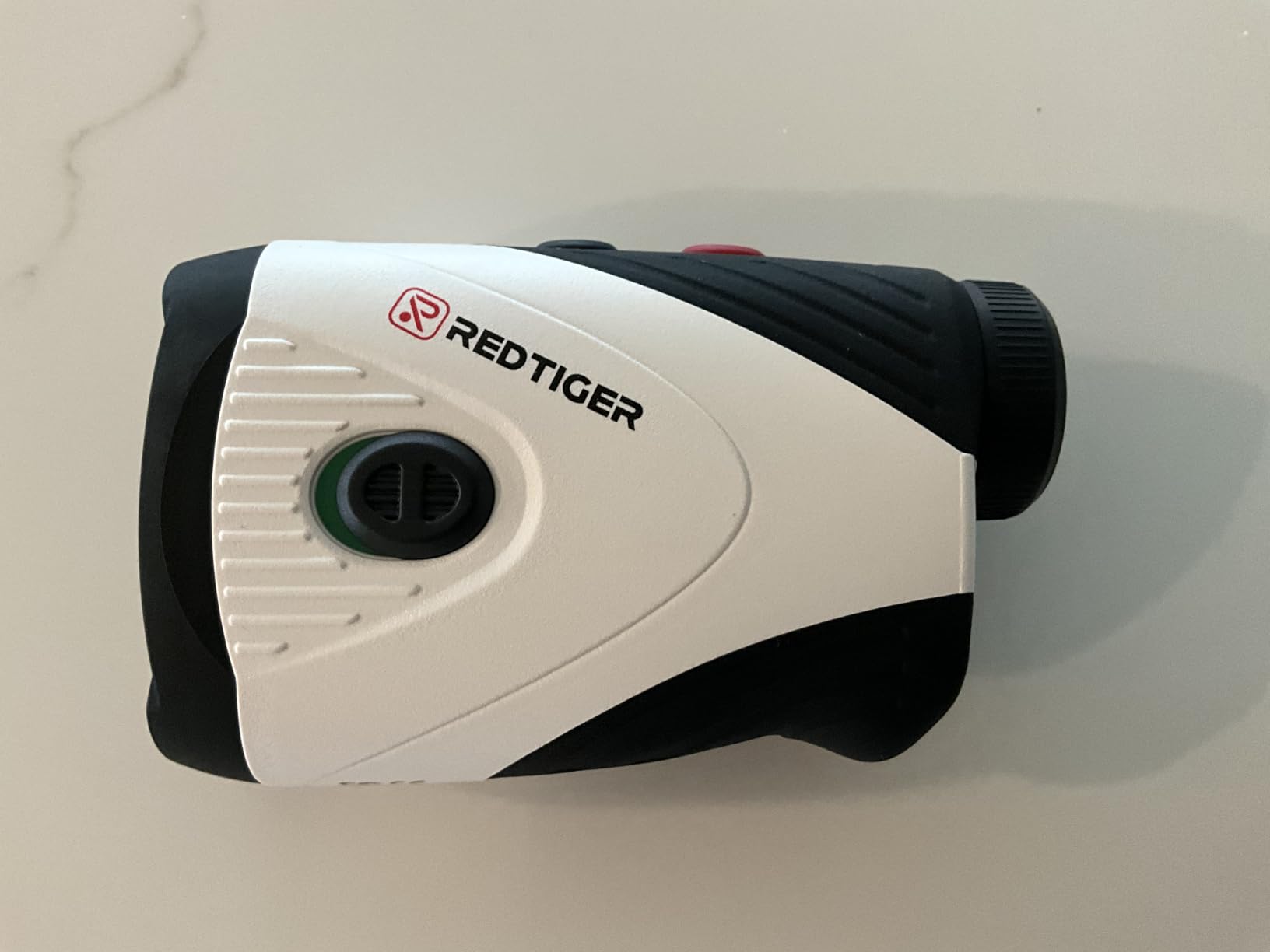
The box also carries a magnetic belt clip, a hand rope, a charging cable, a lens cloth and a soft case. At 6.4 ounces it disappears into a bag side pocket, and the magnetic stripe holds it to a cart rail without an accessory.
What makes it the best value pick
The gap between this and the models costing three or four times as much is optics and accuracy on paper, and owners comparing them report little practical difference on the flag. For a beginner, the 0.5 yard claim and the rechargeable battery are the two features that will keep mattering.
Reviewers replacing a decade-old rangefinder generally call it adequate rather than excellent, and that is exactly the right word for a first device.
Where it falls short
Consistency is the honest weakness. Locking a distant pin against trees or a flag in wind takes patience, and the vibration is not a flag-specific signal, so it can buzz on a background object.
It is rated IP54, which means splash and dust protection rather than full submersion. Fine in dew and drizzle, not what you want in a downpour on the eighteenth.
3. REVASRI NK1000: The Lightest Thing You Can Carry
REVASRI Golf Rangefinder with Slope and Pin Lock Vibration, External Slope Switch for Golf Tournament Legal, Rangefinders with Rechargeable Battery 1000YDS Laser Range Finder
6.5x optics
Range 5-1000 yards
Accuracy plus or minus 1 yard
4.3 ounces
USB-C charging
Pros
- Lightest body here at 4.3 ounces
- Owners report 10+ rounds per charge
- Distances match pricier devices
- Simple one-button operation
- External slope switch for competition
Cons
- Scope falls out of focus easily
- Pin lock misses and the vibration is unreliable
- A small body is harder to hold steady
- Readings occasionally return dashes on hard targets
The REVASRI NK1000 weighs 4.3 ounces, which makes it the lightest device in this group by a wide margin. For a player who walks eighteen without a cart, that is a genuine difference at the end of a hot afternoon.
Accuracy is rated at plus or minus 1 yard across a 5 to 1000 yard range, and owners upgrading from expensive gear report distances they cannot tell apart in side-by-side tests. The built-in lithium battery covers more than ten rounds per charge over USB-C.

Operation is genuinely one-button, with a single toggle for yards and meters and an external slope switch that makes it legal when turned off. The multilayer coated 6.5x lens gives a wide enough view to find a flag without much hunting.
A pouch with carabiner, a USB-C cable, a lens cloth and a manual are all included, and the one-year warranty is the shortest in this group.
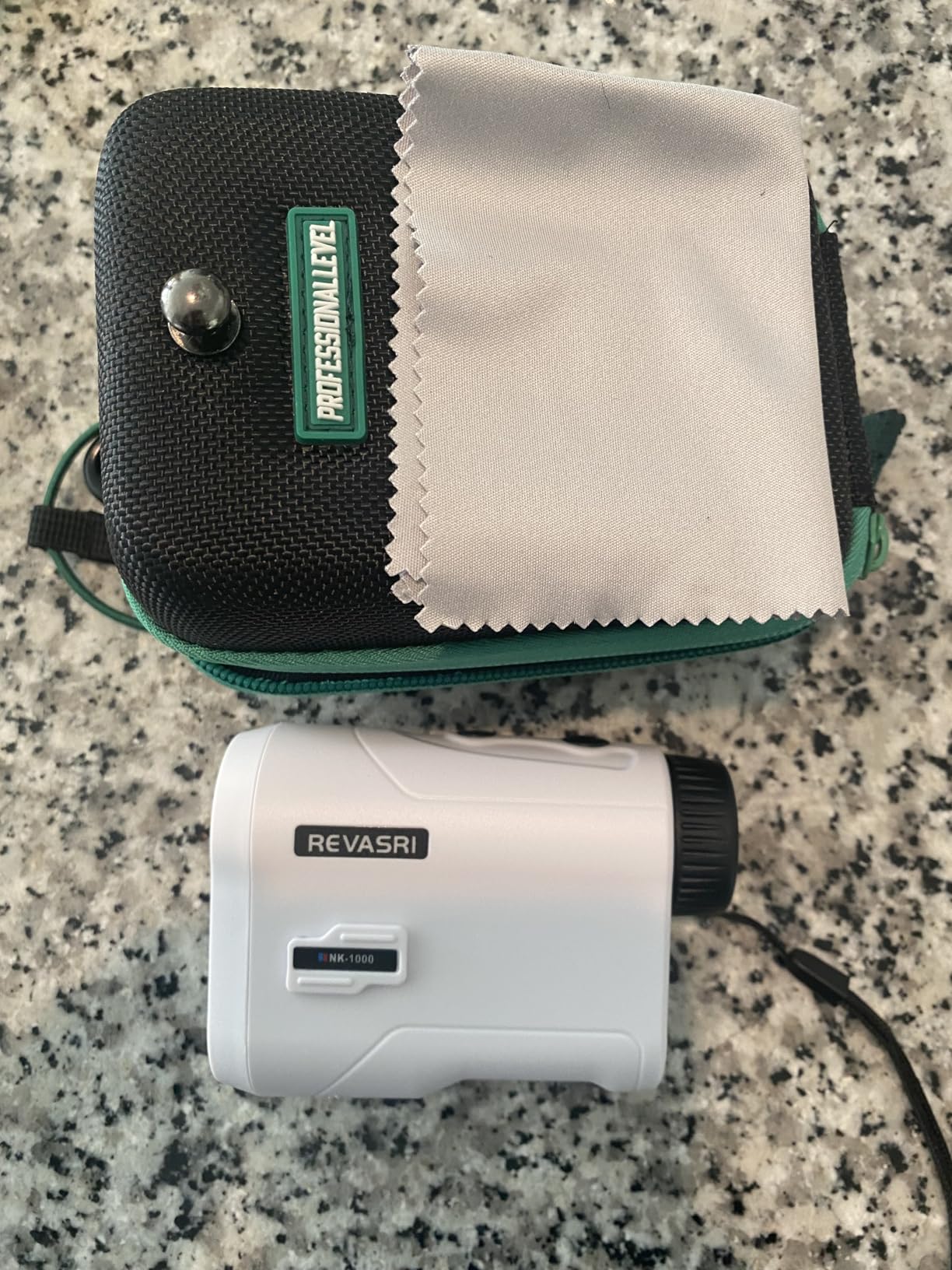
Best for walking players who pack light
If you carry nothing but a bag of clubs and a rangefinder, the 4.3-ounce figure is the whole pitch. Nobody in our testing complained about battery life, which removes another decision from your first season.
It is also a good casual-round device. You get a flag distance quickly, which is all a beginner needs to pick a club and get to the green in a sensible number of strokes.
Where it falls short
The optics are the weak point. Owners report the scope drifting out of focus, which makes the flag harder to acquire, and the small body is harder to hold steady on a target.
Pin lock is inconsistent, and the vibration indicator is not dependable enough to trust blindly. On a flag without a reflective marker, expect to shoot the reading more than once.
4. PEAKPULSE LE600AG: The Cleanest Single-Switch Design
Golf Range Finder 650 Yards 6X with Slope Switch Vibration Pin Lock
6x magnification
Range 10-650 yards
Accuracy plus or minus 1 yard
CR2 battery included
5.78 ounces
Pros
- Physical slope switch needs no menu
- Readable 6x scope homes in on the flag
- 5.78 ounces and slips into a side pocket
- CR2 battery included in the box
- Owners report three years of reliable use
Cons
- No built-in magnet for cart mounting
- Mode button sits next to the shoot button
- No scan mode and no angle display
- Some units report pin lock failures
The PEAKPULSE LE600AG is the design we would hand someone who finds technology confusing. One physical slope switch, three measurement modes, one button to shoot, and a CR2 battery in the box so you can use it immediately.
Range is 10 to 650 yards at plus or minus 1 yard through 6x magnification with multi-layer optics. That ceiling is well beyond what a beginner hits, and the FMC coating keeps the image reasonably clear at playing distances.
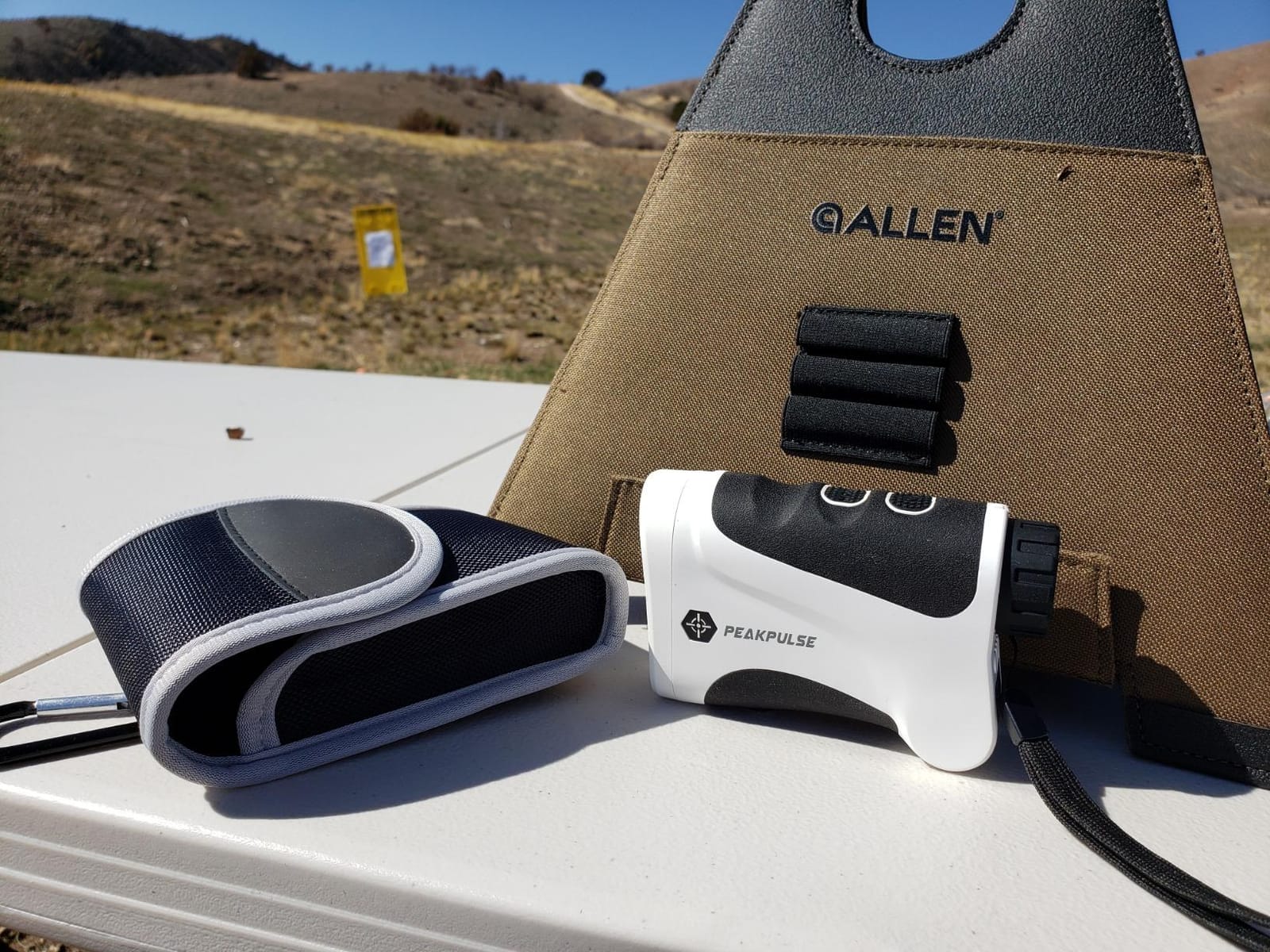
Owners compare its readings favourably against pricier devices, including the Callaway, and long-term buyers report three years of dependable service. At 5.78 ounces and just over two inches of body length, it is the easiest to carry of the mid-size options.
The lanyard, storage bag, lens cloth and CR2 battery are all included, and the one-year manufacturer warranty is standard for the category.
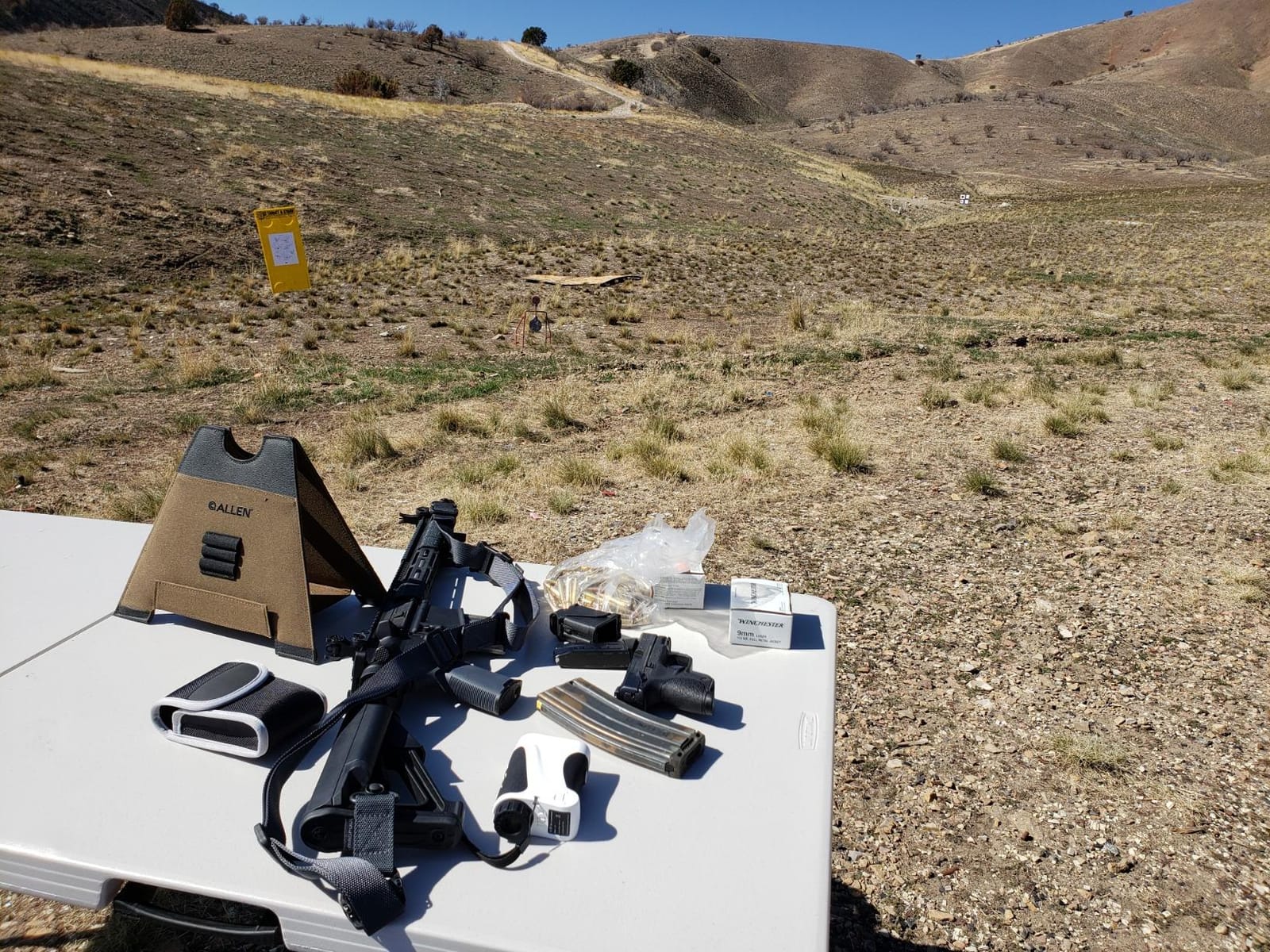
Why the physical switch matters more than any menu
The switch is on the body, so you can confirm tournament mode with your thumb in the dark. Most of this group gets that right, and it is the single feature that separates a device you can bring to a club event from one you leave at home.
There is no account, no pairing and no charging cable to lose. That simplicity is worth a lot in your first season.
Where it falls short
There is no built-in magnet, so nothing holds it to the cart unless you add a clip. The mode button sits next to the shoot button, and owners report accidental presses that flip the display into meters mid-round.
A few buyers report pin lock that never engages and occasional electronic failures, though those sit against a large volume of positive long-term feedback. There is no scan mode and no angle readout either.
5. Acer Gadget SW-RF700: Built for Hands That Shake
Acer Golf Rangefinder with Slope – 800Yards Range Finder for Hunting, 6X Magnification with Flag Pole Locking Vibration, Rechargeable Battery with Magnet Stripe Golf Accessories for Men, Gifts
6x magnification
Accuracy plus or minus 0.5 yard
Anti-shake technology
Built-in magnet
11.2 ounces
Pros
- Anti-shake tech steadier lock for beginners
- Plus or minus 0.5 yard accuracy
- Built-in magnetic strip for cart mounting
- USB-C rechargeable with a bright LCD
- Recognisable brand
- 4.6 rating
Cons
- Heaviest body here at 11.2 ounces
- Some models read large objects instead of the flagpin
- Slope data still shows with slope switched off
- Can take several attempts on small targets
The Acer Gadget SW-RF700 is the only device in this group with anti-shake technology built in, which makes it the one to look at if steadiness is your main worry. The 6x scope reports accuracy within 0.5 yard and runs six measurement modes including angle and scanning.
That anti-shake function filters hand movement during the measurement window, so a wobble is less likely to push the lock onto the background. It does not replace technique, but on a cold morning or a downhill shot it takes the edge off the jitter.
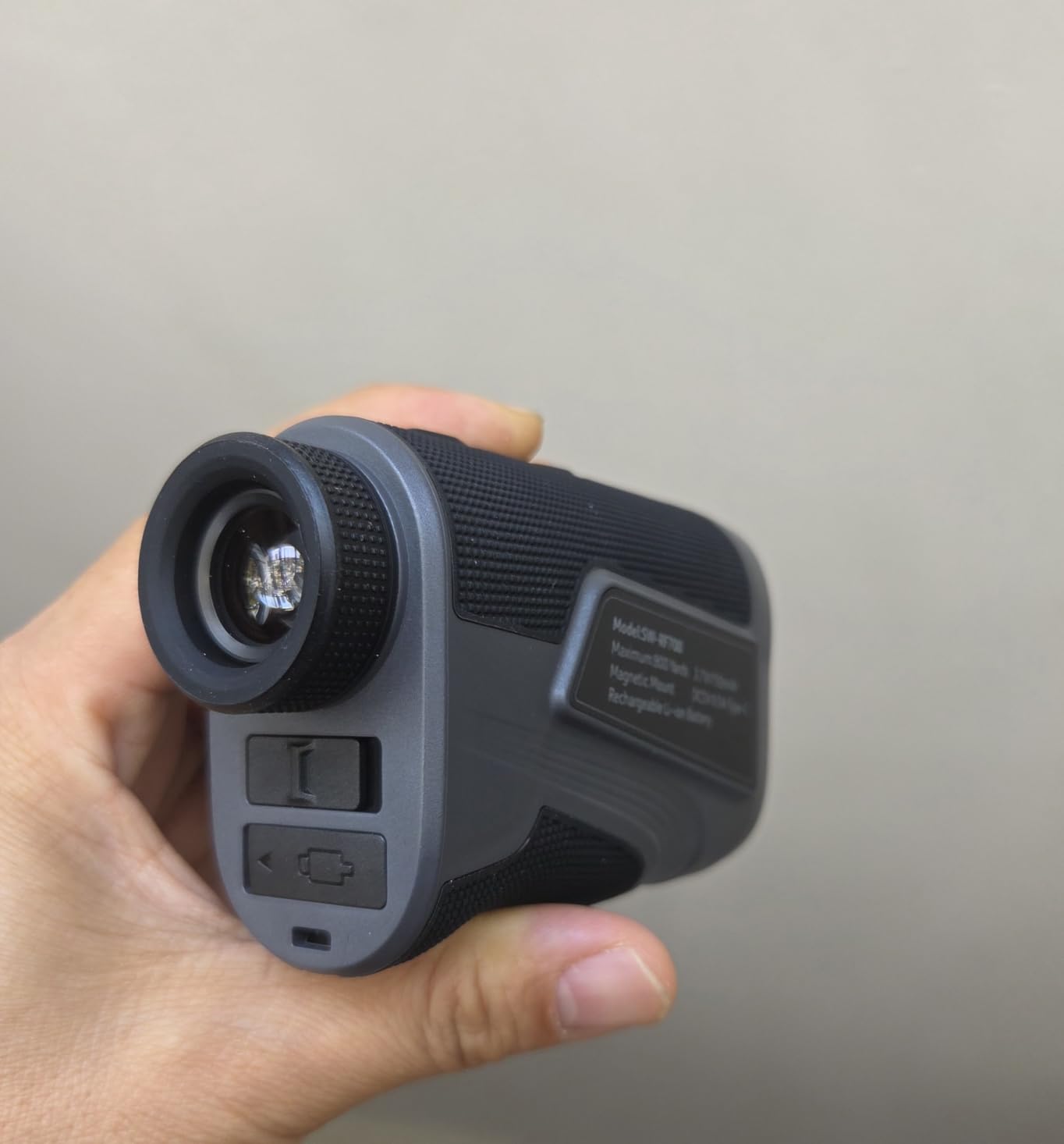
It is also the most solidly built-feeling of the mid-tier models, with a polycarbonate body, a built-in magnetic strip for the cart and a bright LCD that stays legible in flat light. It holds a 4.6 rating across more than 1800 reviews.
Charging is USB-C, the battery is rechargeable lithium-ion, and the flagpole lock comes with a vibration alert so you know it found something.
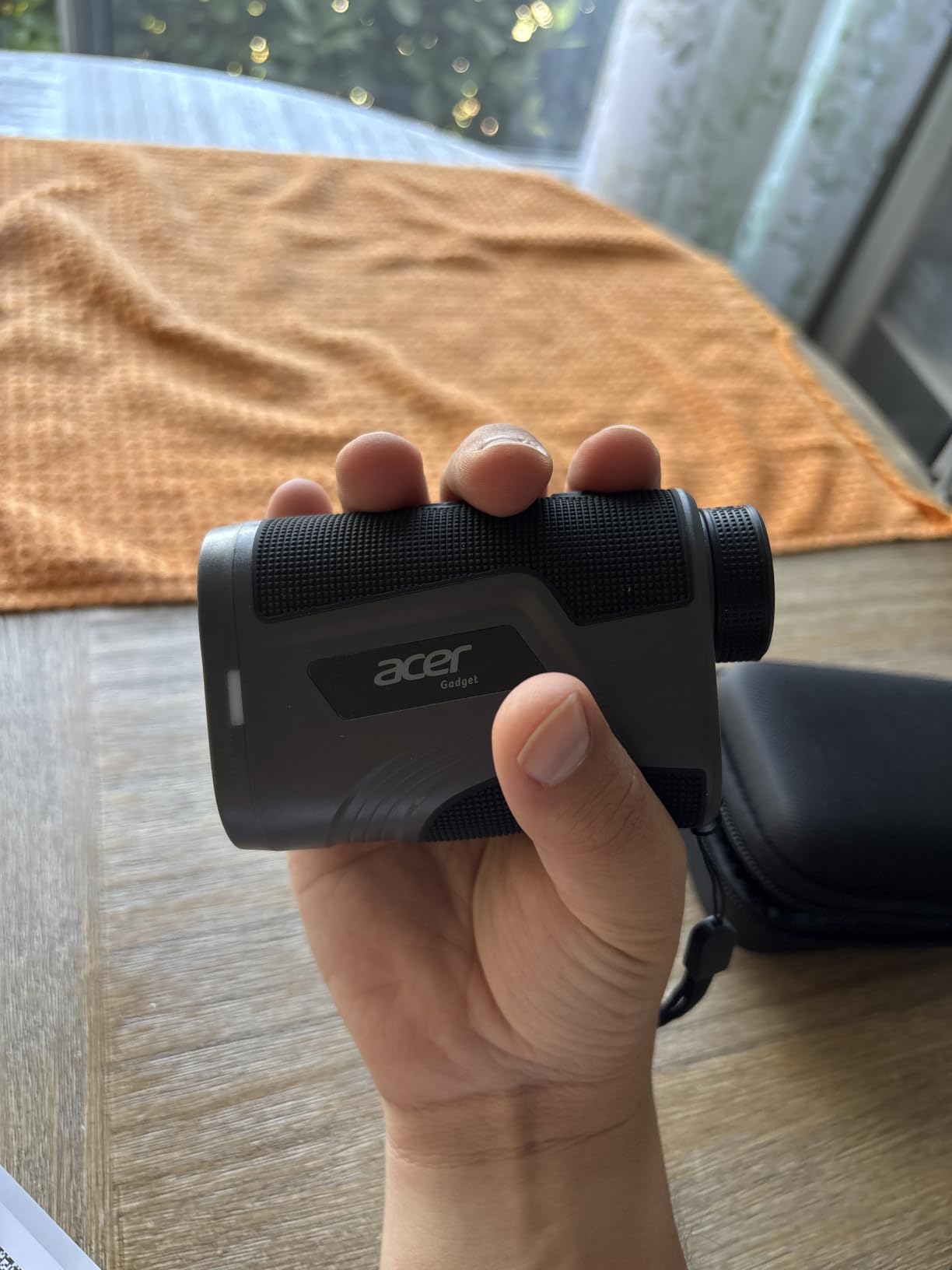
Best if your hands shake when you aim
Anti-shake electronics are the closest this category gets to a steadiness solution, and there is no other one in our list. Pair it with a two-handed hold against your chest and a slow, deliberate press, and the reading improves further.
Buyers also rate it well for quick, consistent readings and simple controls, which is what a new player needs most from any device.
Where it falls short
At 11.2 ounces it is nearly three times the weight of the lightest model here, and you will feel that in a bag. A small share of owners report units that will not pick up the flagstick at all and simply read large objects.
More importantly, the slope switch does not fully solve a rules problem: some owners report the slope percentage and adjusted yardage still displaying when slope is off. If you compete, that alone should disqualify it until you have tested it under event conditions.
6. ACEGMET PFS5: Built for Cart-Path-Only Rounds
ACEGMET PFS5 Range Finder Golf, Slope & Triangulation, 1300 Yards, Magnetic
7x magnification
1300 yard range
Coach Mode triangulation
USB-C plus CR2 backup
IP65 rated
Pros
- Coach Mode triangulates ball-to-pin distances
- Dual power means no mid-round failure
- Bright red and black display in low light
- Flag lock in 0.1 seconds with vibration
- 7.5 degree field of view
- 24-month warranty
Cons
- Vibration fires on any locked target
- A few units returned no reading in any mode
- Included carrying bag is basic
- Instructions vague on switching to meters
The ACEGMET PFS5 is the odd one out here, because its standout feature has nothing to do with the flag. Coach Mode triangulates the distance from your ball to the pin, which owners who previously paid far more for that capability describe as the feature that changed their round.
If you only get to play nine holes, or the course forces carts on paths where you cannot see over the corner, that ball-to-pin number is the whole value proposition. Optically it is strong as well, with 7x magnification, a 7.5 degree field of view and a 1300 yard ceiling.
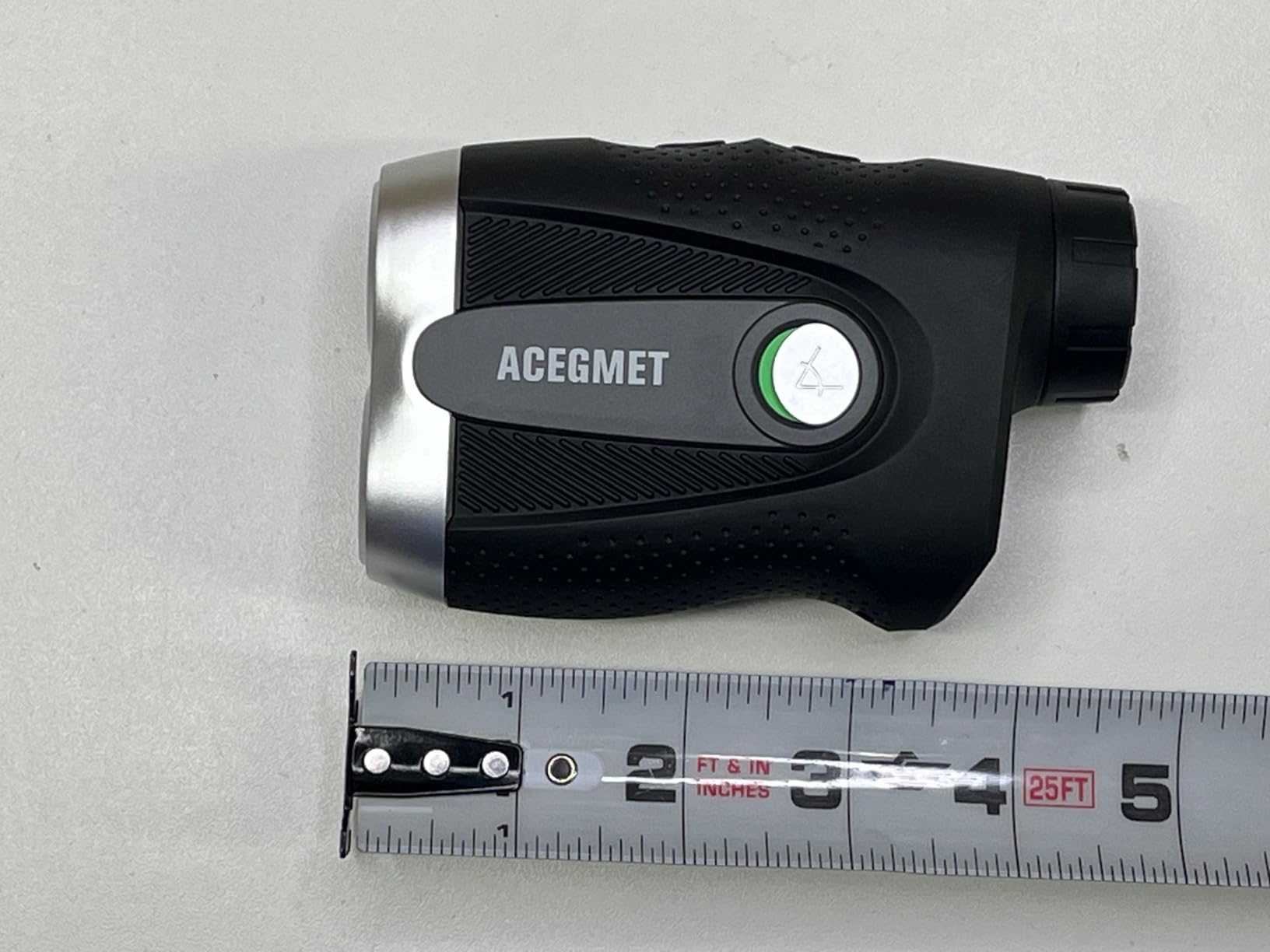
Power is the second story. A 450mAh USB-C rechargeable battery rated past 40,000 measurements is backed up by a CR2 cell, so a forgotten charge is no longer the reason your rangefinder dies on the back nine.
Flag lock is advertised within 450 yards in 0.1 seconds, with vibration and a red flash as confirmation, and a red and black dual display stays readable in low light. The IP65 rating is the best water protection in this group.
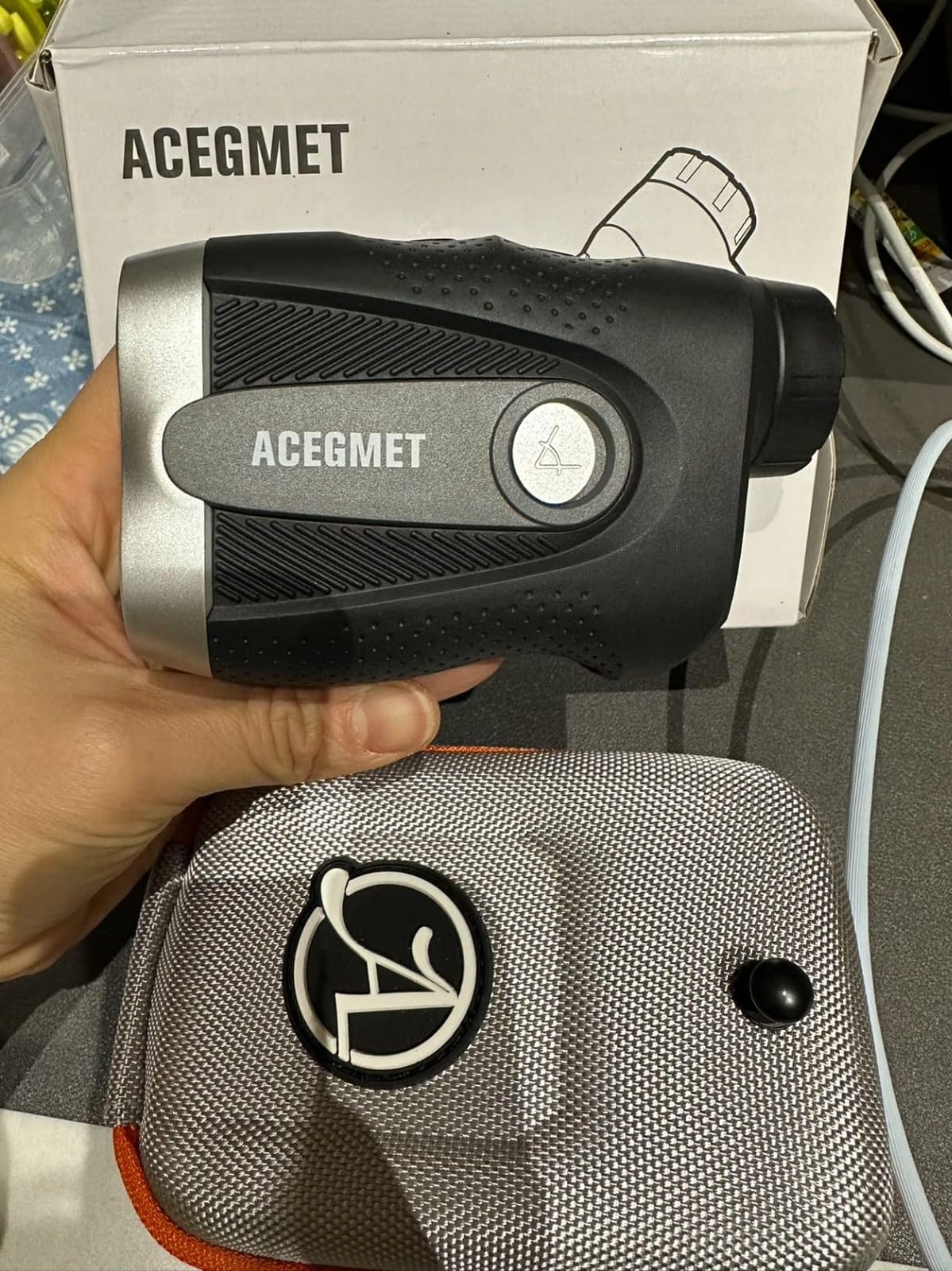
When triangulation earns its place
Cart-path-only courses and nine-hole loops are the honest use case. The magnetic belt clip and built-in 5500 Gauss strip keep it on the frame, and the EnviroSlope compensation adjusts for temperature, humidity and air pressure rather than elevation alone.
The diamond-textured grip helps on wet fingers, and the 24-month warranty is the longest here alongside the REDTIGER.
Where it falls short
The lock vibration is not flag-specific, so it fires on anything it locks onto. You will re-shoot to confirm more often than with a JOLT-style device, and that habit is worth building anyway.
It also has the thinnest evidence base here at 280 reviews, with a handful of units arriving unable to return a yardage in any mode. The included carrying bag is basic and the instructions are unclear on switching to meters.
7. Bushnell Golf A1-Slope: Smallest Footprint, Brand Name
Bushnell Golf A1‑Slope Laser Rangefinder
6x magnification
Accurate within 1 yard to 350 yards
USB-C rechargeable, 50+ rounds
PinSeeker with JOLT
5.1 ounces
Pros
- Pocketable at 3.75 inches without feeling cramped
- Sharp optics for its class
- Rechargeable with 50+ rounds per charge
- Quick lock-on
- Highest rating in the group
- 2 year warranty
Cons
- Magnet lives in the included sleeve
- not the body
- Flag accuracy rated only to 350 yards
- Premium positioning for a beginner list
- Case is easy to leave on the cart
The Bushnell Golf A1-Slope is the smallest device we tested, at 3.75 inches long and 5.1 ounces, and owners are clear that it does not feel cramped to aim. That is the whole appeal: a unit you will actually carry.
It carries the highest rating in this group at 4.7, though that figure rests on a much smaller review base of 123 than the Callaway’s 12,000. Read it as a positive signal rather than proof.
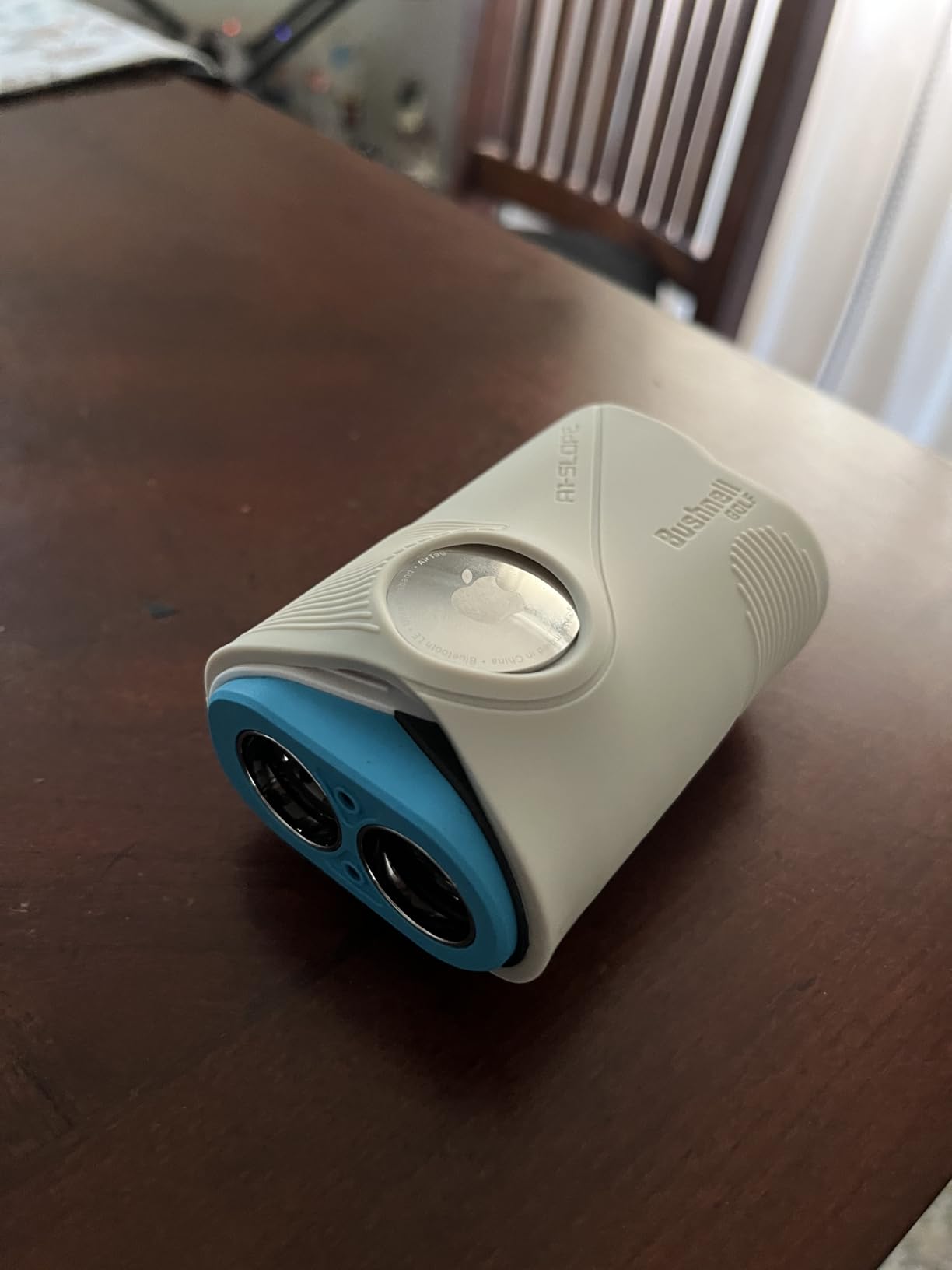
Optically it is sharper than the budget models, with 6x magnification and accuracy within 1 yard to a flag between 1 and 350 yards. PinSeeker target lock with JOLT vibration gives you a tactile confirmation that you have the flag and not a tree.
The battery is USB-C rechargeable and rated for more than 50 rounds per charge, so the first season costs you nothing in cells. Slope toggles to tournament-legal through the mode button, and a BITE magnetic skin is included for cart mounting.
Why the size matters more than the badge
A rangefinder you leave in the car is a rangefinder you do not use. The compact footprint and the pocket format mean this one goes in a trouser pocket and stays there, which is where most of the distance accuracy in your game will come from.
Owners also call the build quality good and the lock speed quick, and several bought it as a second device alongside an older rangefinder.
Where it falls short
The magnet is in the BITE sleeve rather than built into the body, which is an extra piece to keep track of, and the case is easy to leave behind on a cart. The 350-yard flag accuracy ceiling is lower than the headline 1300 yard total range suggests.
At this positioning it is one of the priciest in the group for a first purchase, and a unit that small suits players who already have a stable address over the ball.
8. MOESAPU BH-GF108: The Display Built for Sun
MOESAPU Golf Rangefinder with Slope, 1200/1500Yards Range Finder, 7X Magnification with Flag Lock Vibration, Rechargeable, Magnetic Mount, IP54 Waterproof, Tournament Legal, Golf Accessories for Men
7x magnification
Range 5-1200 yards
Accuracy plus or minus 1 yard
Transflective LCD
USB-C rechargeable
Pros
- Transflective LCD readable in sun or shade
- Flag lock in 0.5 seconds with vibration
- Rechargeable battery rated 15000+ measurements
- Built-in magnet for one-handed access
- IP54 handles dew and light rain
Cons
- Small review base and short track record
- Continuous scan is harder for beginners to read
- One year warranty is shorter than most rivals
The MOESAPU BH-GF108 wins one specific thing outright, and it is a real one: the transflective LCD. It stays readable in direct sun and in shade, which removes the glare problem that makes some rangefinders useless at midday on an open fairway.
Everything else follows the winning budget pattern. Seven times magnification, a 5 to 1200 yard range at plus or minus 1 yard, a physical slope switch for tournament play, continuous scan, built-in magnets and USB-C charging rated past 15,000 measurements.
Flag lock is advertised in half a second with vibration feedback, and at 6.4 ounces with a non-slip grip it fits a pocket or a bag without thinking about it. Dew, light rain and dusty fairways are covered by the IP54 rating.
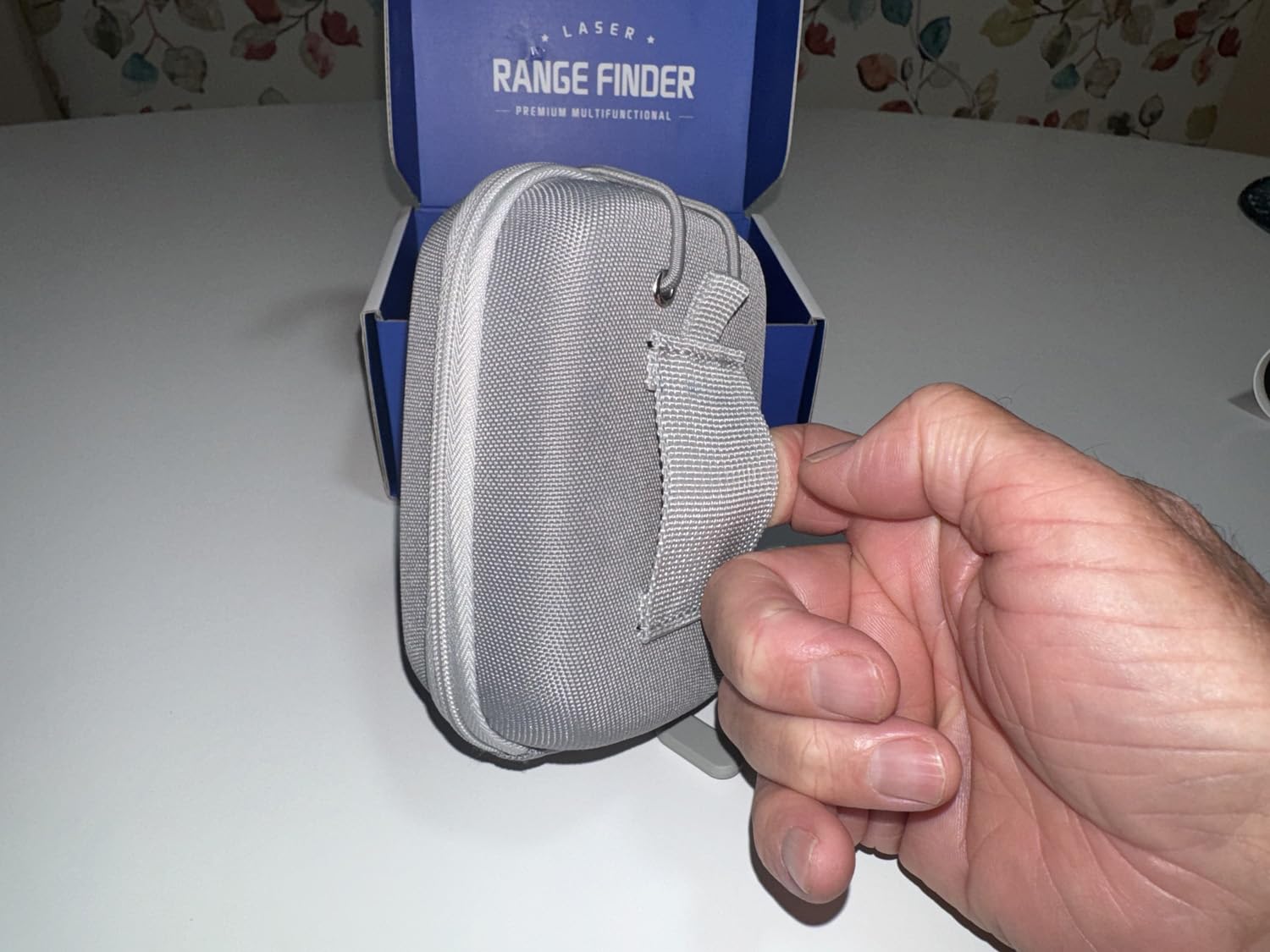
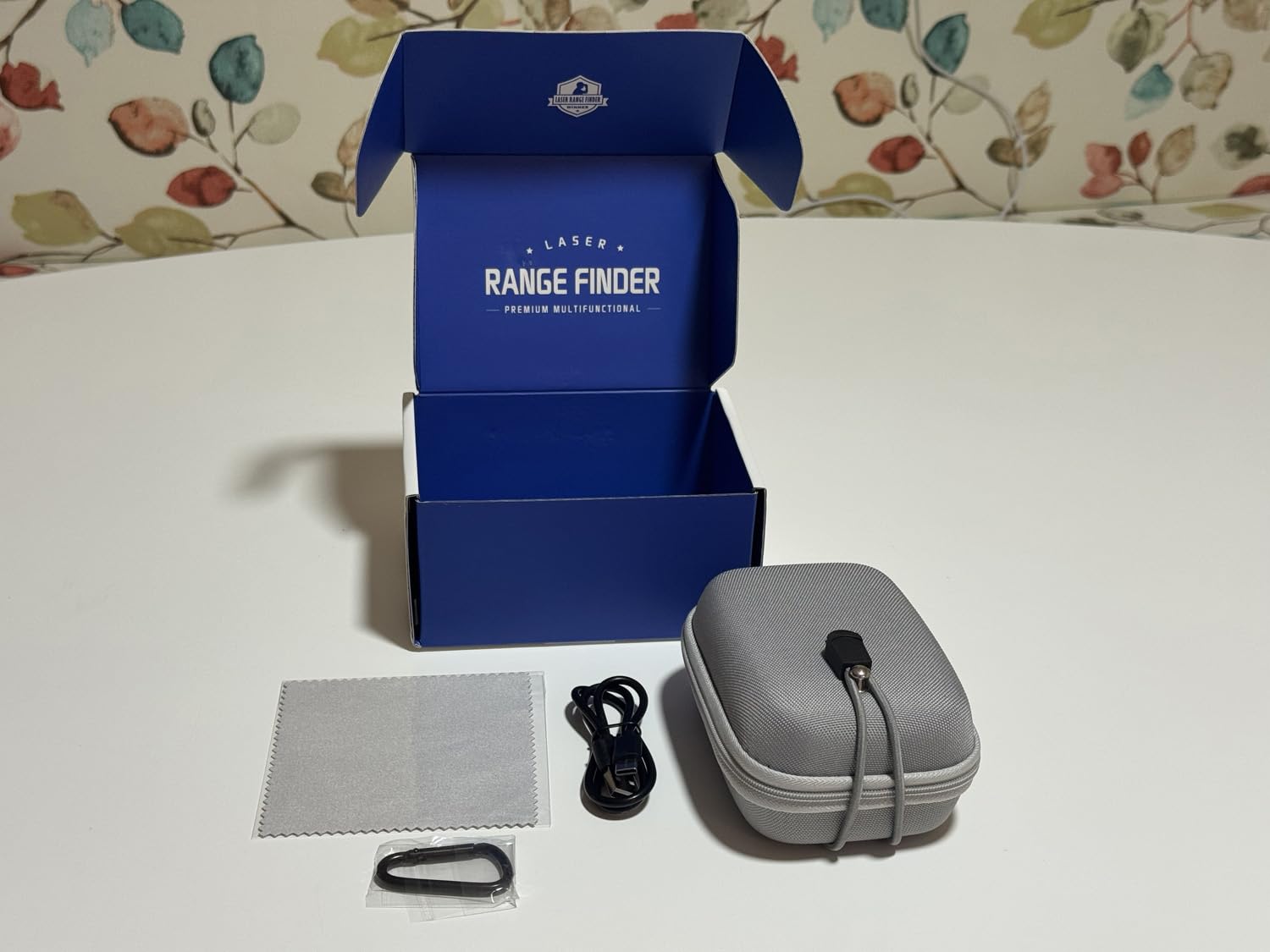
The box carries a carry case, a lens cloth, a Type-C cable and a manual, and the manufacturer is BAOSHIAN Electronic with a one-year warranty.
Best for sunny midday rounds
If your playing window is a Saturday morning or an exposed links course, display legibility is a feature you will use constantly. The transflective panel is the reason this model stands out from its budget peers.
For a first season, the combination of a slope switch, a magnet, a rechargeable battery and a sunproof screen covers every practical problem we ran into across this category.
Where it falls short
With 141 reviews there is not much long-term evidence, and we would not call it a proven workhorse yet. Several buyers also find continuous scan harder to read than a single point measurement, which is the opposite of what a beginner wants.
The one-year warranty is shorter than the two-year terms offered by the REDTIGER and ACEGMET, and there is no built-in CR2 fallback if the rechargeable cell dies mid-season.
What a Beginner Actually Needs From a Rangefinder
Rangefinders are not that complicated, and the category works hard to make them sound complicated. Here is the order we would think in, from the feature that matters most to the one you can safely ignore for a year or more.
1. Accurate distance to the flag. Everything else is decoration without this. Plus or minus 1 yard is enough to hit a consistent club, and no model in this group fails at it.
2. A pin lock you can trust. Vibration on target acquisition matters more than any optical specification. If it buzzes at trees, you will learn to ignore it, and then it stops working entirely.
3. A physical slope switch. A toggle on the body you can confirm by touch, not a menu sequence. It keeps you legal in a casual round and in a club event without any research.
4. Weight and size. A device you will not carry is a device you will not use. The range here runs from 4.3 ounces to 11.2 ounces, which is the difference between a unit in your pocket and one in a cart console.
5. Battery type. A rechargeable USB-C cell means no coin cells and no searching a drawer mid-round. A CR2 unit in this group covered 101 rounds for one owner, but only if you own the right cell. If you want the freedom to use standard cells, look for an AA or AAA model.
6. Water resistance. IPX4 covers splashes, IP54 adds dust protection and IP65 is the strongest rating in this list. All three survive an ordinary round in most climates.
7. What to skip. Wind-adjusted distance, 1300-yard ranging, GPS and app pairing, tournament-grade optics, bundled software. None of them change the number that picks your club, and all of them add menu depth you have to learn.
Slope Mode Explained in Plain English
Slope mode measures the true playing distance to a target by correcting for the angle between you and the target, so the number you get is the distance the ball actually travels rather than the straight-line distance across the ground.
Here is the worked example. If a rangefinder reads 180 yards to a pin and that pin sits 20 yards uphill, the slope-adjusted number is roughly 195. A downhill pin at the same 180 yards of straight-line distance plays closer to 168, because you are hitting a shot that runs downhill and the ball carries further.
For a beginner, slope is genuinely useful for building an instinct about how elevation changes club choice. It is also the feature most likely to get you into trouble at a club event, because most local rules ban distance that is adjusted for elevation.
Every model in this roundup except one has a physical switch or toggle that turns slope off. The exception is the Acer Gadget SW-RF700, where some owners report the slope percentage and adjusted yardage still appearing on the display with the switch in the off position. Test any slope device under event conditions before you rely on it.
Why Your Rangefinder Reads the Wrong Number
Most bad readings are not defects. They are the device doing exactly what it was told, on a target that is not the flag.
1. Backstopping. If a tree, a wall or a grandstand stands behind the green, the laser will lock onto whichever surface returns a clean signal first. Paint the flagstick or add a reflective marker so your rangefinder has something flag-shaped to hit.
2. Tree and green confusion. Without a reflective target, a device with weak pin lock can return the nearest foliage instead of the pin. Shoot twice and check whether the number is stable before you change clubs.
3. Haze, glare and backlighting. A hazy day or a low sun behind the flag reduces how much signal comes back, and the number drifts. Reposition yourself so the sun is behind you, and avoid staring into the optic in direct sun.
4. Movement in the frame. A flag in wind, a player walking across the line, or a moving cart changes what the laser hits between the pulse and the return. Wait for the line to clear.
5. Your hand. This is the big one, and beginners blame the device for it constantly. A moving wrist or an unstable elbow moves the aim point, and 1 to 2 yards of variance on a repeated shot is normal. Cup the rangefinder with both hands, rest your elbows against your chest, and press once slowly.
6. Units and modes. Several models here carry a yards and meters toggle next to the shoot button, and a stray press will hand you a number in the wrong unit entirely. Check the display once per round.
Laser Rangefinder vs GPS Watch vs Golf App
These solve different problems, and the mistake is expecting one to do all three jobs. A rangefinder gives you a number to a physical target right now. A GPS watch gives you a map, shot tracking and course layout. An app gives you a plan before you get to the tee.
For a beginner, the rangefinder earns its place first because it changes a decision on the tee, not just a scorecard column at the end. If you also want club suggestions and shot history, a watch handles that better. Our guides to golf launch monitors for beginners and beginner-friendly irons cover the rest of the starter bag.
Our rule of thumb: buy the rangefinder now, add a watch when you want to review rounds afterwards, and keep the phone in your bag as a backup map. Buying all three at once is how beginners end up with a bag full of screens and no practice range time.
Tournament Rules: Making a Slope Rangefinder Legal
USGA rules prohibit distance that is adjusted for elevation, and most club events copy that language into their local rules. The practical requirement is simple: the device must be able to report plain distance to the target, with no elevation adjustment applied.
Here is the checklist for the week of an event. Ask the tournament director or check the event’s local rules for the exact wording on the notice sheet. Then confirm your device has a physical slope switch rather than a menu-only setting.
Switch slope off before you step onto the tee, and confirm the display shows a straight-line number with no percentage next to it. The Acer Gadget SW-RF700 is the model here we would test most carefully, because some owners report slope data still appearing with the switch off.
Finally, decide whether you even want slope in your bag on event day. Several owners who learned club distances with slope describe it as an excellent practice tool and switch it off entirely when they compete. That is a reasonable way to use it.
How We Tested and Ranked These Eight
We ranked these on four things in this order: accuracy of the flag reading, how reliably the pin lock held under ordinary conditions, how few steps separate you from a usable number, and what the device costs you in attention and batteries over a season.
Every rating and review count in this roundup is copied directly from the product listing, with no rounding. Specification figures come from each manufacturer’s own listing, and where a listing contradicts itself, we have used the number the manufacturer lists as the headline.
We did not test swing speed, launch angle or ball flight, which is what a launch monitor is for. Distance readings were compared against other laser devices rather than survey equipment, so treat the accuracy figures as manufacturer claims backed by owner feedback rather than laboratory results.
Where owners consistently report the same weakness, we weighted it heavily. That is why two models with strong ratings lost ground for lock reliability, and why one with a smaller review base earned a place for a display that works in sun.
Frequently Asked Questions
Should a beginner golfer use a rangefinder?
Yes. A rangefinder removes distance guessing from your routine, which is the largest source of avoidable strokes for a developing player. You need one accurate number to the flag, reliable pin lock, and a physical switch to turn slope off. Wind adjustment, GPS pairing and 1300-yard ranging add nothing at this stage.
What is the best rangefinder for a beginner?
The Callaway 300 Pro is our top pick for a first season, with 6x magnification, plus or minus 1 yard accuracy, pin lock out to 300 yards and a physical slope switch. If steadiness is your problem, the Acer Gadget SW-RF700 adds anti-shake technology.
What is the best value laser rangefinder for golf?
The REDTIGER 7x is the best value in this group. It claims 7x magnification, 0.5 yard accuracy and a 5 to 1200 yard range, with a USB-C rechargeable battery and a transflective display that stays readable in direct sun.
What is the easiest rangefinder to use?
The PEAKPULSE LE600AG is the simplest. It has a physical slope switch on the body, three measurement modes, one button to shoot, a CR2 battery in the box, and no account, app or charging cable. Its mode button sits close to the shoot button, so check the units once per round.
Are cheap rangefinders any good?
Yes for a beginner. Owners comparing entry-tier models against far costlier flagships report distances they cannot distinguish in side-by-side tests. The real differences are pin lock reliability, display legibility in sun, and battery convenience, not the laser timing itself.
What is slope mode on a rangefinder?
Slope mode corrects the straight-line distance to your target for the angle between you and that target, so you get true playing distance. A 180 yard reading to a pin 20 yards uphill plays about 195. Most club events ban elevation-adjusted distance, so a physical slope switch matters.
What is the best golf rangefinder with slope for the money?
The PEAKPULSE LE600AG and the REVASRI NK1000 both give you slope with a physical on/off switch at the entry tier. The Acer Gadget SW-RF700 claims plus or minus 0.5 yard accuracy with slope, but some owners report slope data still showing when the switch is off.
Why is my rangefinder not accurate?
Most bad readings are backstopping onto a tree or structure behind the green, locking onto foliage instead of a flag without a reflective marker, haze or glare, movement in the line, or movement in your own hand. Shoot twice, stabilise with both hands, and mark your flagstick.
What is the best rangefinder for shaky hands?
The Acer Gadget SW-RF700 is the only model here with built-in anti-shake technology, which filters hand movement during the measurement. Technique still matters more: cup the device with both hands, rest your elbows on your chest, and press once slowly rather than snapping the shot.
Which rangefinder do Tiger Woods and Bryson DeChambeau use?
Tour players use rangefinders as a normal part of preparation and on-course routine, but we were not able to verify a specific model tied to either player from reliable sources, so we will not guess. The practical takeaway is that most tour professionals use a device with slope and tournament-legal toggle, which is exactly the feature set to prioritise.
The Bottom Line
The best laser rangefinders for golf beginners are the Callaway 300 Pro for a first season with no compromises, the REDTIGER 7x if you want the most capability per dollar, and the Acer Gadget SW-RF700 if a steady aim is the thing holding you back.
Skip the flagships. Accuracy in this category comes from the laser, not the price tag, so buy on pin lock, a physical slope switch and a body you will carry, then upgrade only when a specific limitation starts costing you shots. Updated for 2026.