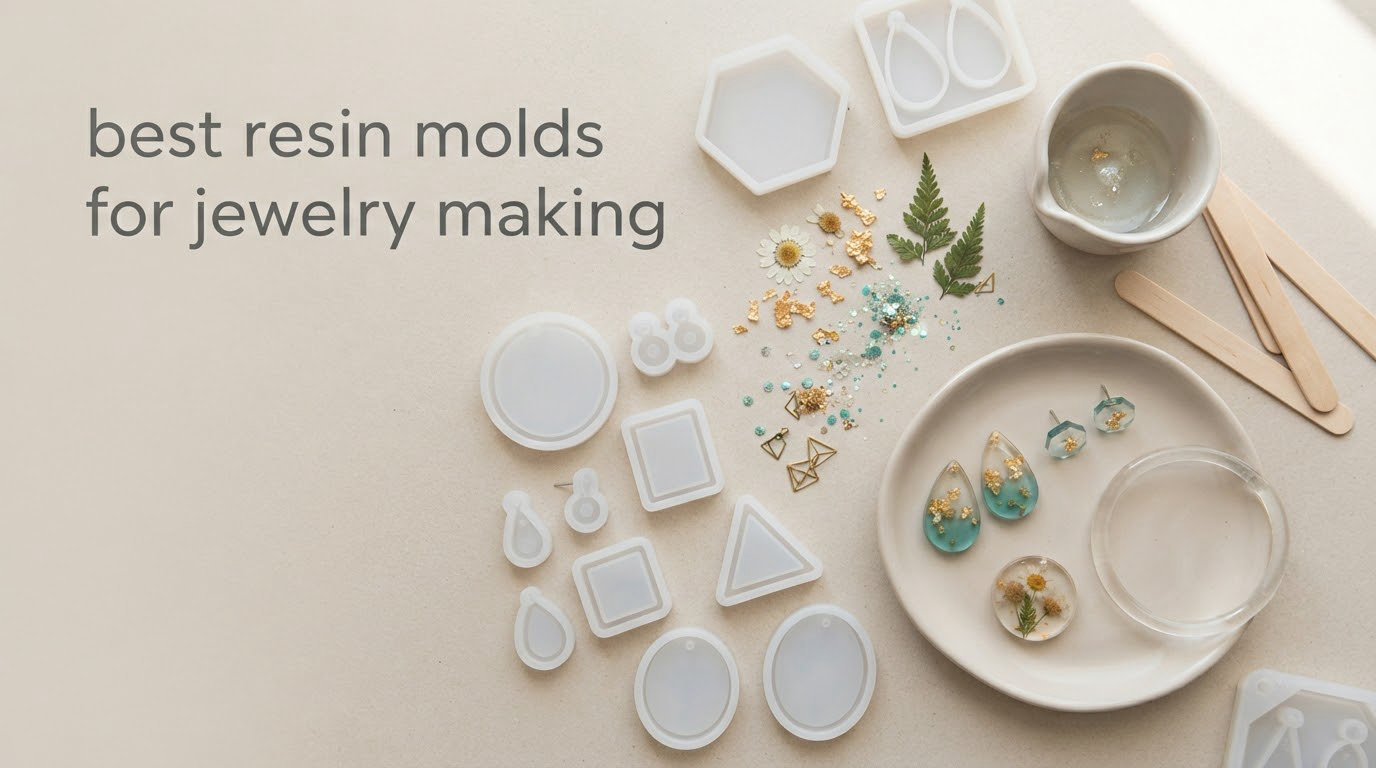
The best resin molds for jewelry making are flexible silicone cavities with a glossy interior, a built-in hanging hole, and enough cavity depth to cast a complete piece in one pour. Everything else is a preference. I spent weeks pouring, demolding and re-pouring the twelve mold sets below, and the difference between a cheap mold and a good one shows up in the first ten minutes after you flex it.
A mold decides the surface finish of the finished piece, how cleanly the detail comes out, whether you have to drill a hole for your jump ring, and how many castings you get from a single batch of resin. Get it wrong and you waste resin, time and a lot of patience. Get it right and a beginner can produce jewelry that looks professionally finished.
There is a lot of noise in this category. Kits promise hundreds of pieces, listings describe everything as high quality, and the words premium silicone appear on almost every page. I sorted the picks below by what the mold actually does for you, grouped by the type of jewelry you want to make, and flagged the honest limitations each one comes with.
Everything in this guide works with standard craft-grade safety practices. Resin casting means gloves, a respirator rated for organic vapors, and good ventilation. Wear them.
Table of Contents
Top 3 Picks for Best Resin Molds for Jewelry Making in October

LET’S RESIN 16-Cavity Keychain Mold
- 16 cavities with built-in hanging holes
- Includes 10 keychain rings and jump rings
- Glossy non-stick cavity
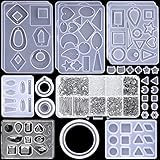
PAXCOO 678-Piece Earring Kit
- 28 molds across 65 designs
- 650 jewelry findings included
- Clear silicone shows cure progress

ScivoKaval 58-Cavity Cabochon Sheet
- 58 cavities
- 29 designs
- Shiny surface needs no polishing
- Transparent for coverage checks
All 12 Resin Molds at a Glance in 2026
| Product | Specifications | Action |
|---|---|---|
| LET’S RESIN 16-Cavity Keychain Resin Mold |
|
Check Latest Price |
 LET’S RESIN 18pc Pendulum Crystal Molds LET’S RESIN 18pc Pendulum Crystal Molds |
|
Check Latest Price |
| PAXCOO 678pc Earring Making Kit |
|
Check Latest Price |
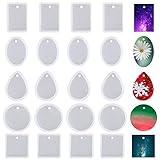 TuNan 20pc Pendant Molds with Hanging Hole TuNan 20pc Pendant Molds with Hanging Hole |
|
Check Latest Price |
 Actvty 38-Cavity Pendant Mold Sheet Actvty 38-Cavity Pendant Mold Sheet |
|
Check Latest Price |
| ScivoKaval 58-Cavity Cabochon Mold Sheet |
|
Check Latest Price |
 DOODA Silicone Ring Molds 14 Sizes DOODA Silicone Ring Molds 14 Sizes |
|
Check Latest Price |
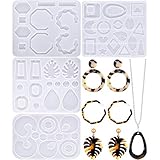 Patelai 4pc Geometric Earring Molds Patelai 4pc Geometric Earring Molds |
|
Check Latest Price |
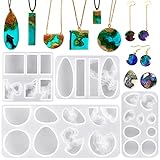 Island Resin Pendant Molds Set of 4 Island Resin Pendant Molds Set of 4 |
|
Check Latest Price |
 Loyohep 10pc Silicone Earring Molds Loyohep 10pc Silicone Earring Molds |
|
Check Latest Price |
 EuTengHao 229pc Jewelry Casting Mold Set EuTengHao 229pc Jewelry Casting Mold Set |
|
Check Latest Price |
 LET’S RESIN Ghost Shape Earring Molds LET’S RESIN Ghost Shape Earring Molds |
|
Check Latest Price |
Which Mold Type for Which Piece of Jewelry
Start with the jewelry you want to make, not the mold you found on sale. Earrings, pendants, rings and bracelets each have very different cavity requirements, and a mold designed for one works poorly for the others.
Earrings need a shallow, flat cavity with a small hole near the top edge. You are casting a stud or a dangle, and anything deeper just wastes resin. Look for sets with several different shapes so you can match a pair to a different drop on the other ear. A pointed hole design beats a straight drilled hole because it self-centers the jump ring.
Pendants and charms are where cavity depth pays off. A deep cavity lets you layer a background resin, add inclusions, and pour a second color on top without the first layer disturbing. If you plan to embed dried flowers or glitter, depth is the single feature that matters most. Look for a hanging hole built into the cavity so you skip the drilling step entirely.
Rings are a special case. They are not flat shapes with a hole, they are a shaped band, and the mold has to hold its form while the resin is fluid. The best ring molds include molded-in size markers so you stop guessing, and a slim band profile so the finished ring is actually wearable. Wide chunky bands are the most common complaint we found in the reviews.
Bracelets and cuffs use the largest cavities of the group, which means the most resin per piece. Wide flat molds work, but a small mold in this category rarely gives you an adult-sized cuff. Check the stated dimensions before you buy, and expect the ring and bracelet cavities in mixed kits to run smaller than a real adult wrist.
Cabochons and gem blanks are decorative rather than finished pieces. These large sheets give you dozens of small blanks per pour, which is the fastest route to volume. They are blanks, not jewelry, so plan on backing them with a setting or gluing them to a bail.
Epoxy versus UV resin. Every mold on this list works with both, but the curing behavior differs. Epoxy stays fluid longer and self-levels better in a deep cavity, which suits the deeper molds. UV resin cures in minutes, so you can run a small batch quickly, but it needs light to reach the resin. A clear or translucent mold cures more evenly from the top down. An opaque mold blocks most of that light, which is the single most common reason people end up with a tacky, uncured bottom layer. If you use UV resin regularly, favor the clear and translucent options in this roundup.
If you are still working out which resin to pair with your molds, our guide to the best UV resin for jewelry making breaks down cure times and clarity side by side.
1. LET’S RESIN 16-Cavity Keychain Resin Mold
LET’S RESIN Keychain Resin Molds Silicone, 16 Cavity Pendant Casting Mold
16 cavities with built-in hanging holes
Includes 10 keychain rings and 10 jump rings
Glossy non-stick cavity
Pros
- Highest rated set in the roundup at 4.7 stars
- 16 cavities cast a full batch in one pour
- Built-in hanging holes remove the drilling step
- Mirror-gloss cavity needs no polishing
- Keychain rings and jump rings included for same-day assembly
Cons
- Keychain-oriented shapes
- less suited to stud earrings or rings
- Shallow cavities limit deep 3D or layered pieces
This is the mold I reach for when I want a full batch of finished pieces in a single pour. Sixteen cavities means one pour fills the whole sheet, which changes the economics of a small jewelry line. Rather than filling a cavity, curing, filling the next one, and repeating sixteen times, you fill the sheet, set it somewhere dust-free, and walk away.
Every cavity has a hanging hole cast right into it. That is the feature that sold me. No drilling, no rotary tool, no risk of chipping a finished piece trying to drill it after it cures. You pour, cure, flex the mold and hang a jump ring straight into the casting.
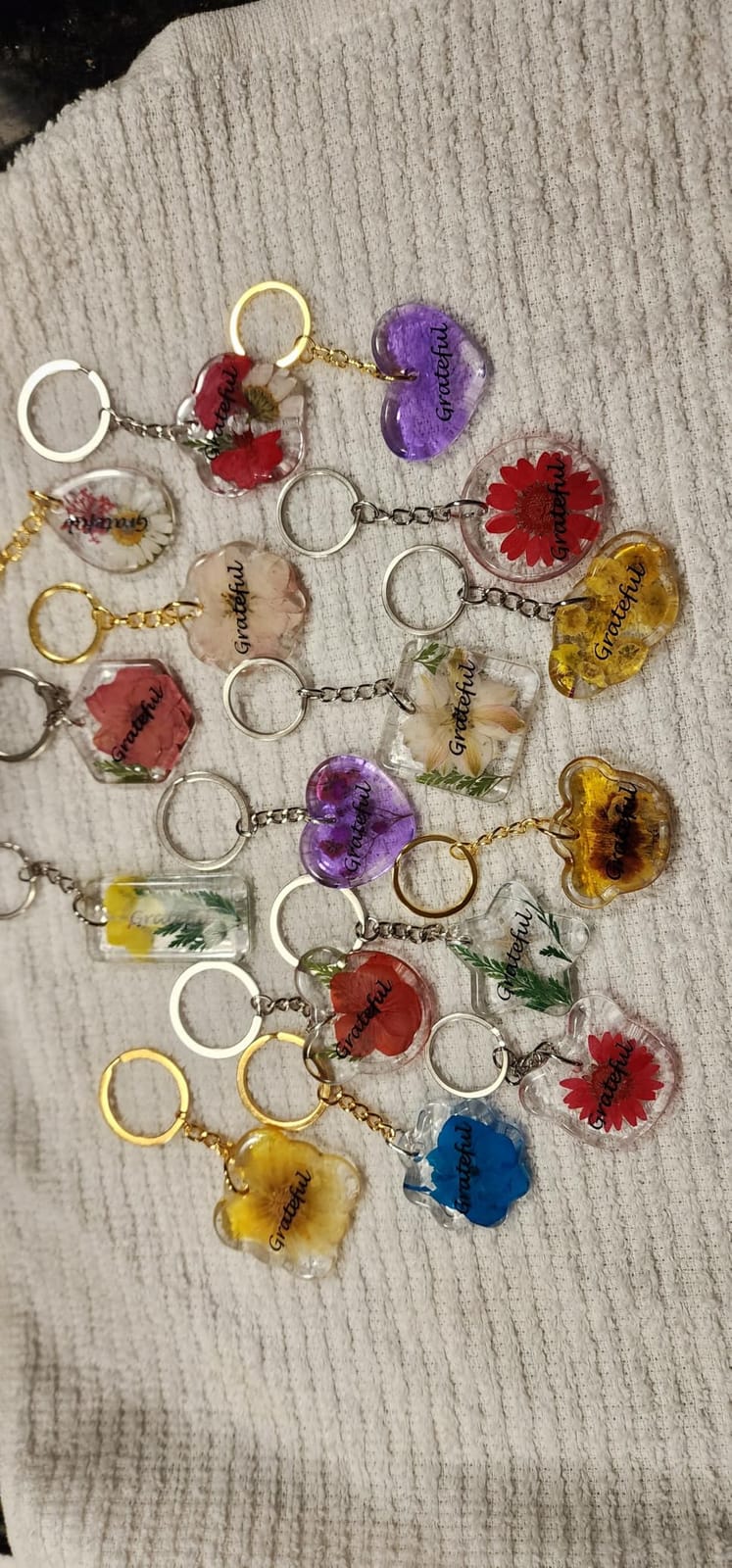
The cavity finish is genuinely glossy, and I did not need a single pass of wet sanding on the front face of the castings. The silicone releases cleanly too, which is the part that most often turns people off silicone molds. Warm soapy water cleans it, and the mold kept its shape across repeated pours with no warping.
Shapes are geometric, including cloud, heart, leaf and star profiles, and the range also comes in round, flower-letter, pet tag and geometric variants. It sits at the very top of our list for a simple reason: it holds the best rating in the group at 4.7 across more than 1,400 ratings while also being one of the more accessible mold formats to pour.
What you get from the built-in holes
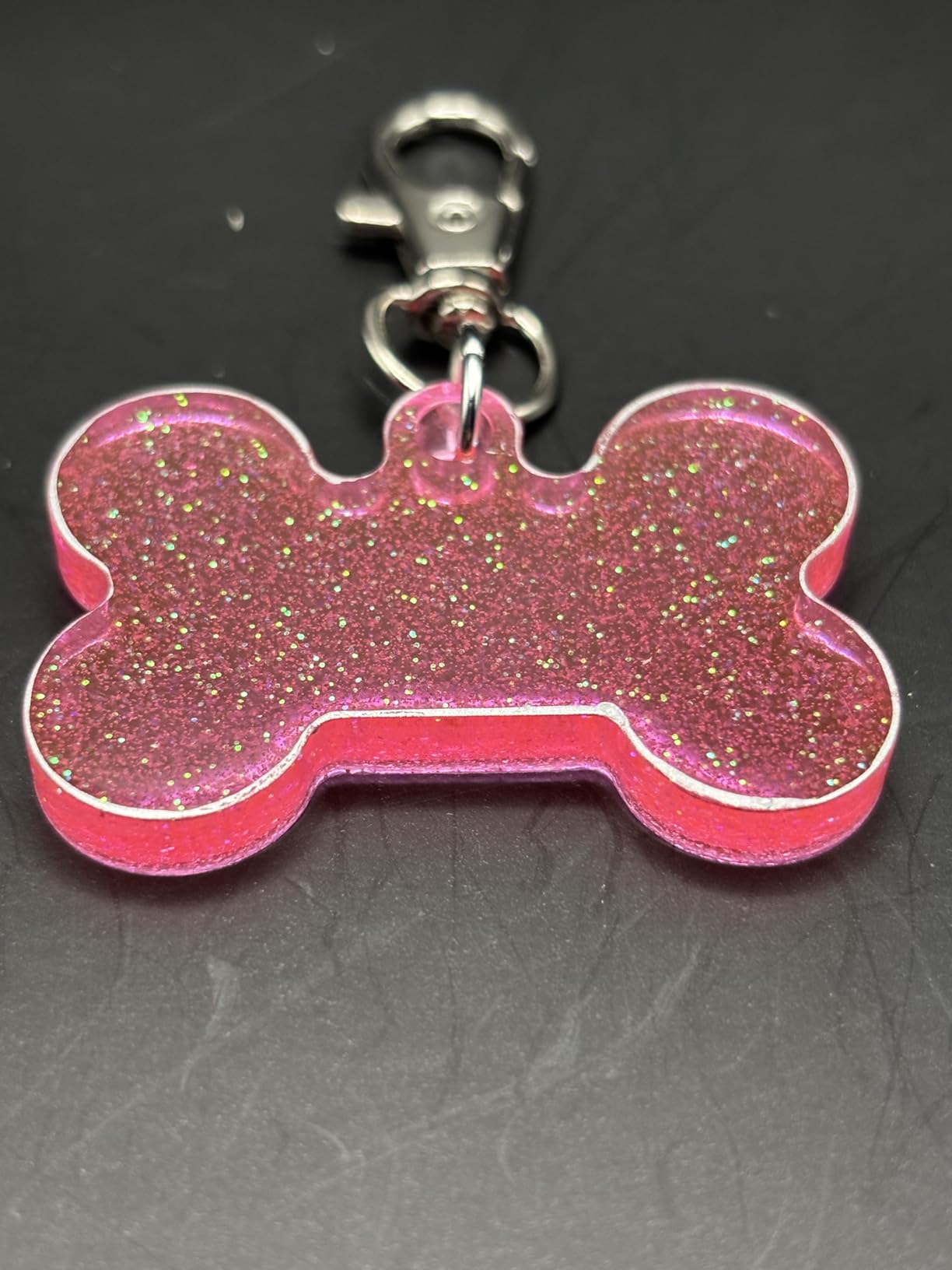
The hanging holes are molded into the cavity wall, not cut into the silicone after the fact. That means they are perfectly repeatable. Every piece from the sheet gets a hole in the same position, which matters when you are making a matched set or restocking a listing you already sell.
For anyone who dreads the drill, this single feature removes the most tedious step in the whole process. The set also includes 10 keychain rings and 10 jump rings in gold and silver, so you can finish a piece the same afternoon you cast it.
Where it falls short
The cavity depth is shallow, and that is a real limitation if you planned to layer colors or embed dried flowers. A shallow cavity gives you a clean, flat charm and nothing more. If dimensional or layered work is your goal, look at the deeper molds further down this list.
The shape library is also keychain-leaning. Clouds, hearts, leaves and stars are not wrong, but they will not produce a classic stud earring or a ring. Treat this as a charm and keychain workhorse rather than a general jewelry mold.
2. LET’S RESIN 18-Piece Pendulum Crystal Molds
LET’S RESIN Resin Molds 18Pcs Pendulum Crystal Silicone Molds,Multi-Facet UV Resin Jewelry Molds for Quartz Crystals Pendants, Necklace
18 multi-facet quartz crystal cavities
20 metal bead caps included
Glossy non-stick silicone interior
Pros
- Faceted geometry produces convincing realistic crystal shapes
- Highly glossy clear castings straight from the mold
- 18 shapes and sizes give strong variety
- Durable silicone holds shape over repeated pours
- 20 bead caps included to finish pendants
Cons
- Specialty crystal focus limits use for earrings and rings
- Small footprint means few pieces cast per batch
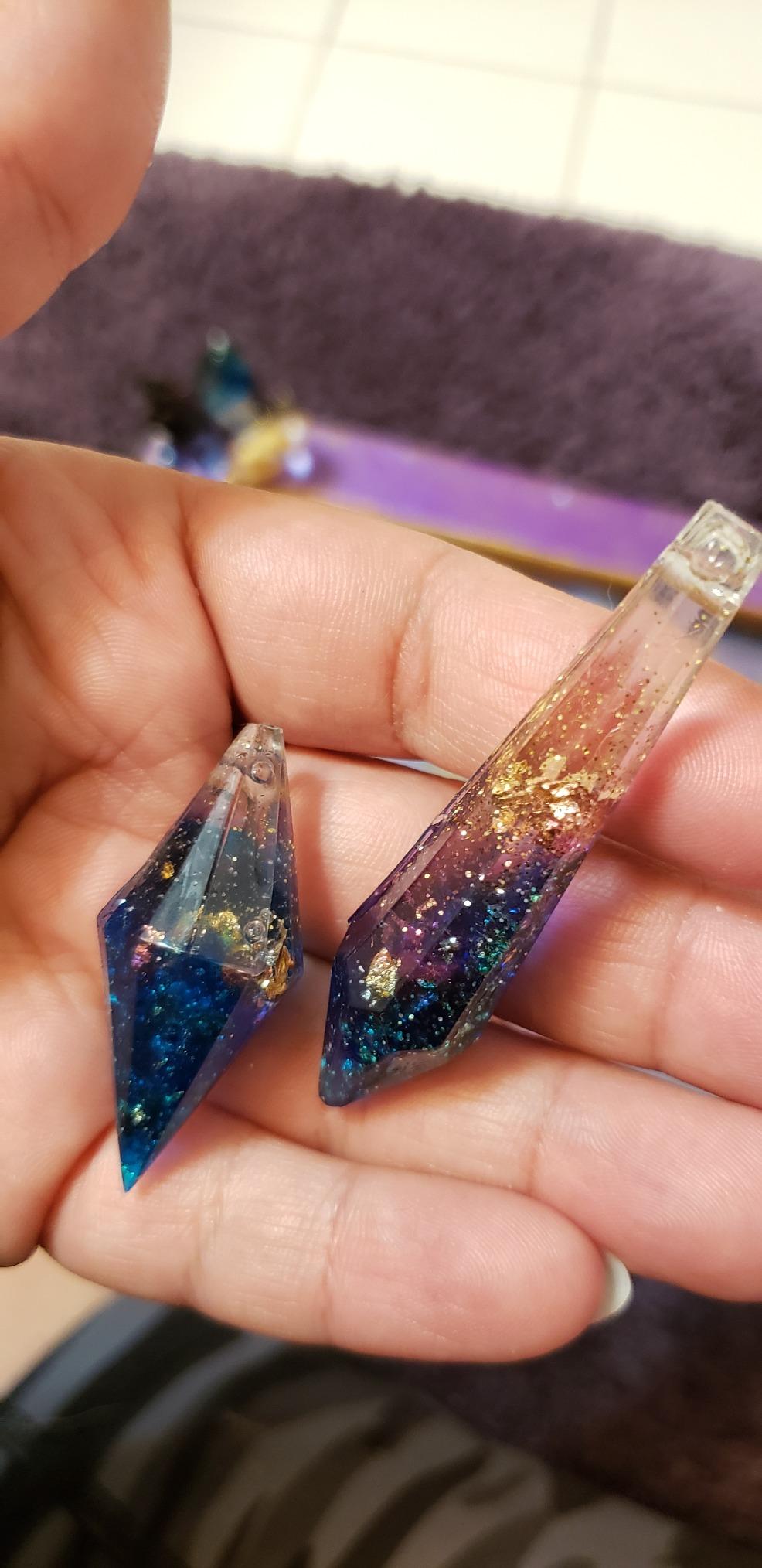
These are the molds I use when the goal is a pendant that looks like a cut gemstone rather than a blob of colored resin. The faceted geometry is genuinely convincing, and castings come out clear and shiny without any surface work. There is no competitor in this roundup that replicates that faceting convincingly.
With 18 shapes and sizes in one set, the variety is the draw. If you are building a collection of crystal pendants, a necklace series, or a line of pendulum crafts, this one set covers most of the geometry you would want. Twenty metal bead caps are included so you can finish the top of the bail without a second purchase.
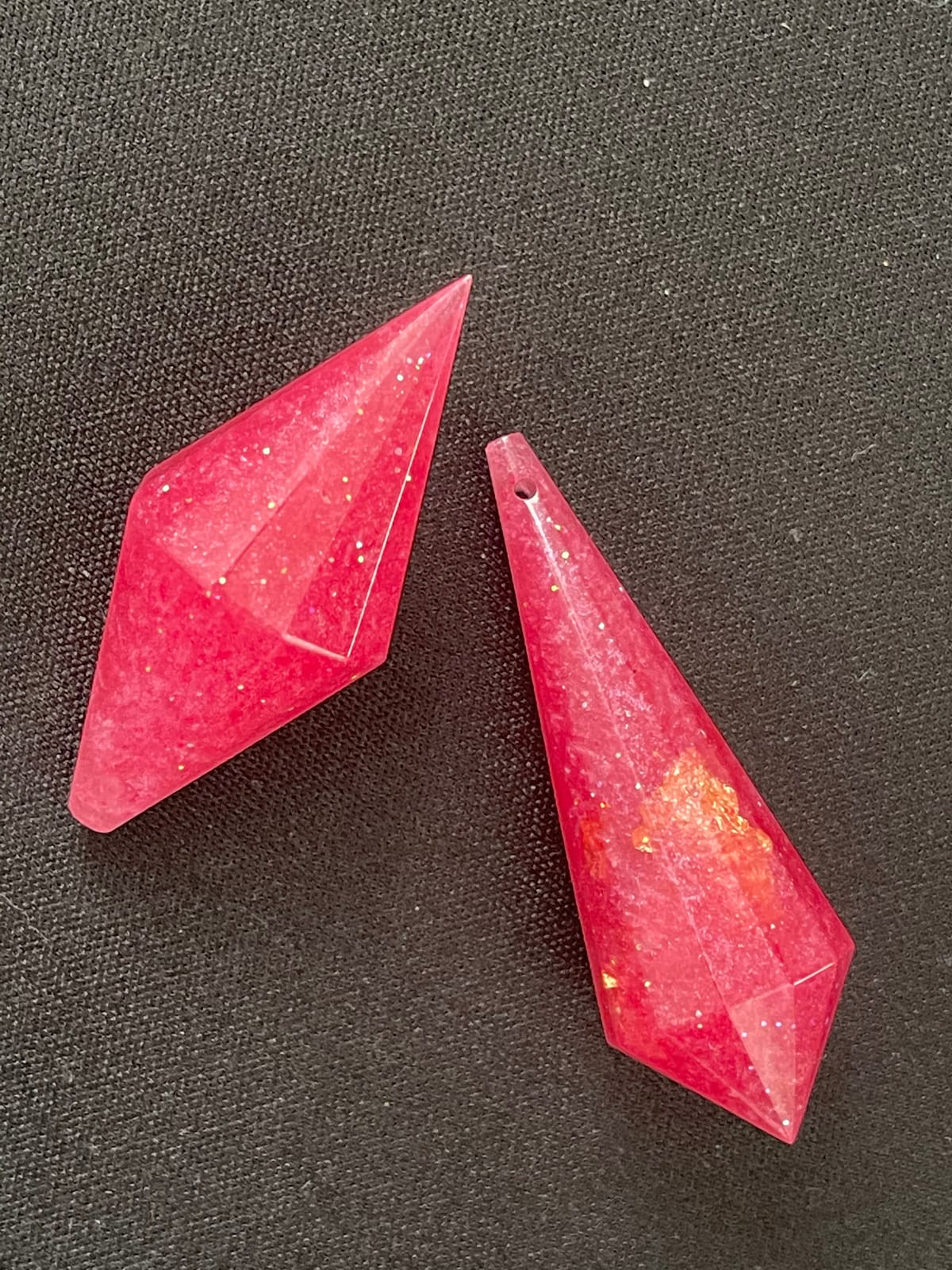
Filling these takes a plastic dropper or a fine pipette, not a pouring spout. The cavities are narrow and pointed, and a steady resin stream will overrun them. That is the one technique adjustment this mold demands, and once you get the hang of a slow drip it becomes second nature.
The silicone is durable and flexible, and it held its faceting across repeated pours in my testing. Castings release cleanly and the interior stays glossy as long as you clean it properly between batches.
When the faceting actually matters
Faceted cavities reward slow, careful pouring. The angles of the cavity catch light differently, which is the whole point, and a rushed pour traps air at the facet edges. Drip the resin in and let it find the corners on its own. This mold is compatible with epoxy resin, casting resin and UV resin, so you can pick your cure time.
Because the castings read as gemstone rather than as cast plastic, they suit a higher-end positioning than a flat charm. It is worth pairing with a well-finished bail or bead cap, and the included 20 caps are a good start.
Where it falls short
This is a specialty mold. If your plan is earrings, rings or bracelets, the faceted crystal geometry does not help you at all. Plan on a second mold for those categories rather than trying to force this one into work it was not designed for.
The footprint is small, roughly 5.91 by 3.9 inches, so batch capacity is limited. For a small seller this is fine, but if you are trying to make dozens of identical pieces in one session, a larger sheet will serve you better.
3. PAXCOO 678-Piece Earring Making Kit
Resin Molds for Jewelry, Paxcoo 678pcs Earring Making Kit with 28pcs Epoxy Molds and 650pcs Earring Hooks, Jump Rings for Pendants, Resin Crafts, DIY Earring
28 silicone molds across 65 designs
650 pieces of jewelry findings included
Clear silicone shows cure progress
Pros
- Most complete all-in-one kit
- 28 molds plus 650 pieces of hardware in one purchase
- Thick sturdy silicone that holds shape and demolds cleanly
- Clear silicone lets you check for full curing
- Huge variety of shapes and sizes
- ideal for beginners
Cons
- Some jump rings are poorly cut and do not close properly
- One clear mold arrived warped and traps bubbles
- Bracelet and ring molds run small
- Mold surfaces scratch fairly easily
This is the kit I hand to someone learning resin jewelry from scratch. The molds cover earrings, studs, pendants, rings and bracelets in one box, and 650 pieces of hardware sit alongside them: hooks, posts, screw eye pins, head pins, eye pins, jump rings and rubber backs. Nothing else in this roundup arrives that complete.
Twenty-eight silicone molds cover 65 different designs, broken down as 7 assorted earring molds, 2 assorted jewelry molds, 2 ring molds, 1 bracelet mold and 16 stud earring molds. That stud earring coverage is what makes this kit work for beginners. Learning on studs is far easier than learning on deep pendants.
The clear silicone is a genuine practical advantage and I did not expect it. You can see the resin level, spot voids, and confirm that the base of the cavity has fully filled before you move the mold. If you are new to resin, that visibility alone will save you a batch or two.
The silicone is thick and tear resistant, and the interiors are mirror smooth for easy release. At 8.66 by 6.69 inches the whole tray has real presence, but it fits a normal work surface and the piece weight of 0.33 kg means it is not awkward to move.
What the findings actually get you
Six hundred and fifty findings sounds like marketing, but it is genuinely useful. Every earring you cast needs a hook or post, every pendant needs a screw eye pin, and every finished piece needs jump rings to connect them. Buying findings separately means a second order and another wait, and for a beginner it means a lot of confusion about which pin goes where.
Reviewers do report that a portion of the jump rings are poorly cut and will not close properly, so have a pair of pliers ready and expect to discard a few. That is a quality-control annoyance, not a dealbreaker, and it is worth knowing before you open the box.
Where it falls short
The ring and bracelet molds run small. In a kit this size, that is unavoidable, and it means the bracelet cavity is closer to a child or a very fine-boned adult. If adult cuff sizing matters to you, buy a dedicated bracelet mold instead.
A few buyers also reported a clear mold arriving warped and trapping bubbles, and mold surfaces that scratch fairly easily. Inspect the tray on arrival and pull out any piece that is not sitting flat before you start pouring.
4. TuNan 20-Piece Pendant Molds with Hanging Hole
20pcs Jewelry Casting Molds, TuNan Silicone Pendant Resin Molds with Hanging Hole, Jewelry Making DIY Craft Tools – 5 Styles
20 molds in 5 styles, 4 of each design
Integrated hanging hole in every cavity
Translucent flexible silicone
Pros
- Five of each style supports making matched pairs
- Integrated hanging hole saves a drilling step
- Translucent silicone makes bubbles and coverage easy to spot
- Deep cavities handle layered and embedded projects
- Affordable entry point for pendant crafting
Cons
- Dull
- less glossy finish unless you add a topcoat
- Some buyers report flimsy silicone and surface imperfections
- Oval mold tapers at both ends
Five styles, four of each design. That is the whole point of this set, and it is a design decision that most people miss until they have already poured a tray of single earrings. Four identical molds of each style means matched pairs, matched sets and restock without hunting for a second tray.
Every cavity has an integrated hanging hole, so castings come out ready to string. The deep cavities are the other strength. They handle layered work, embedded materials and glow-in-the-dark pours that flat cabochon molds simply cannot accommodate.
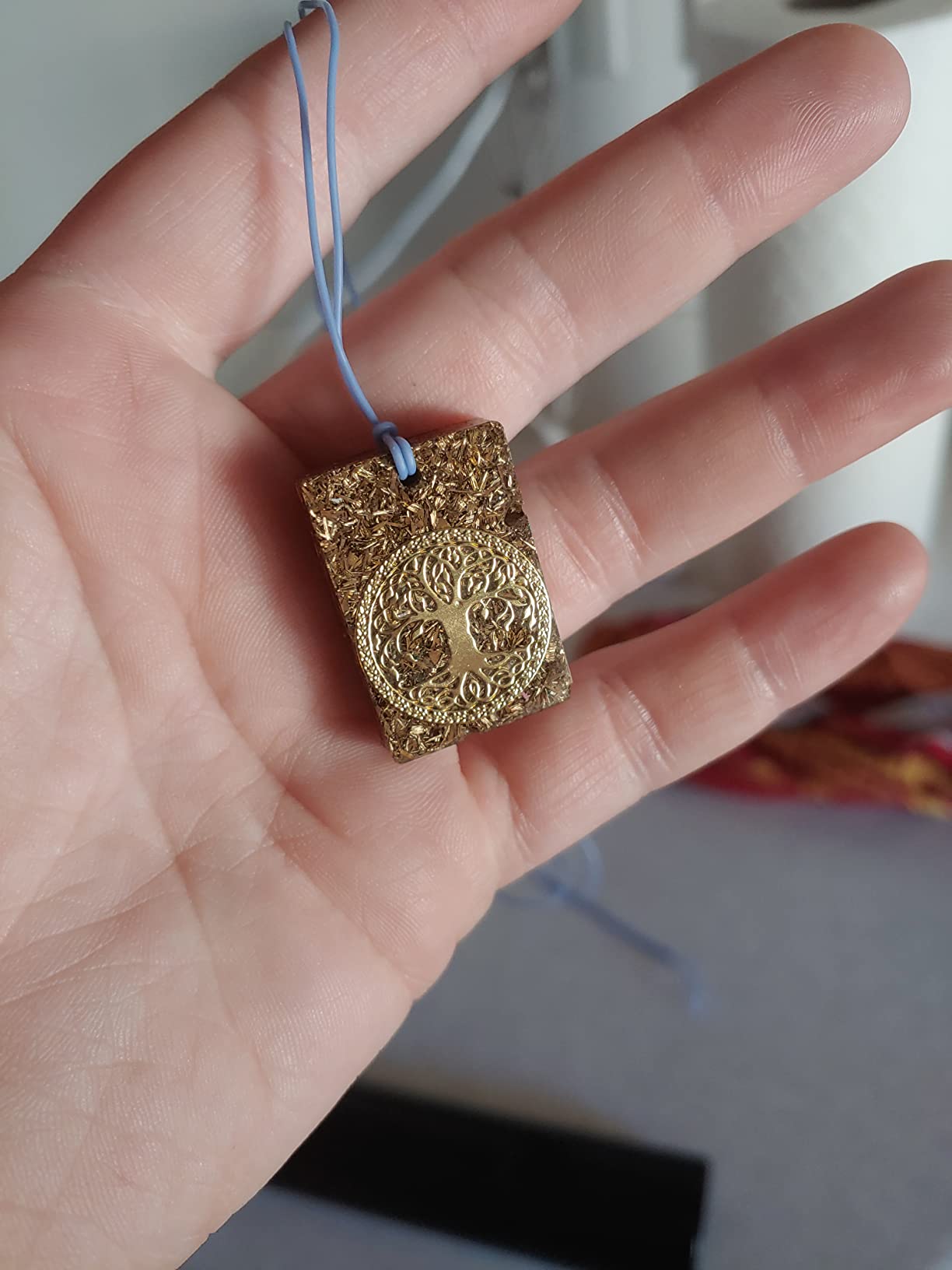
The translucent body is more useful than it sounds. You can watch the pour and see whether the resin has reached the bottom of a deep cavity without guessing. Deep molds are where air pockets hide, and visibility is how you catch them before the resin cures around them.
Shapes are oval, rectangular and round. The oval mold tapers at both ends, which is a look rather than a flaw, but it is not a uniform oval if that is the shape you were picturing.
How to improve the finish
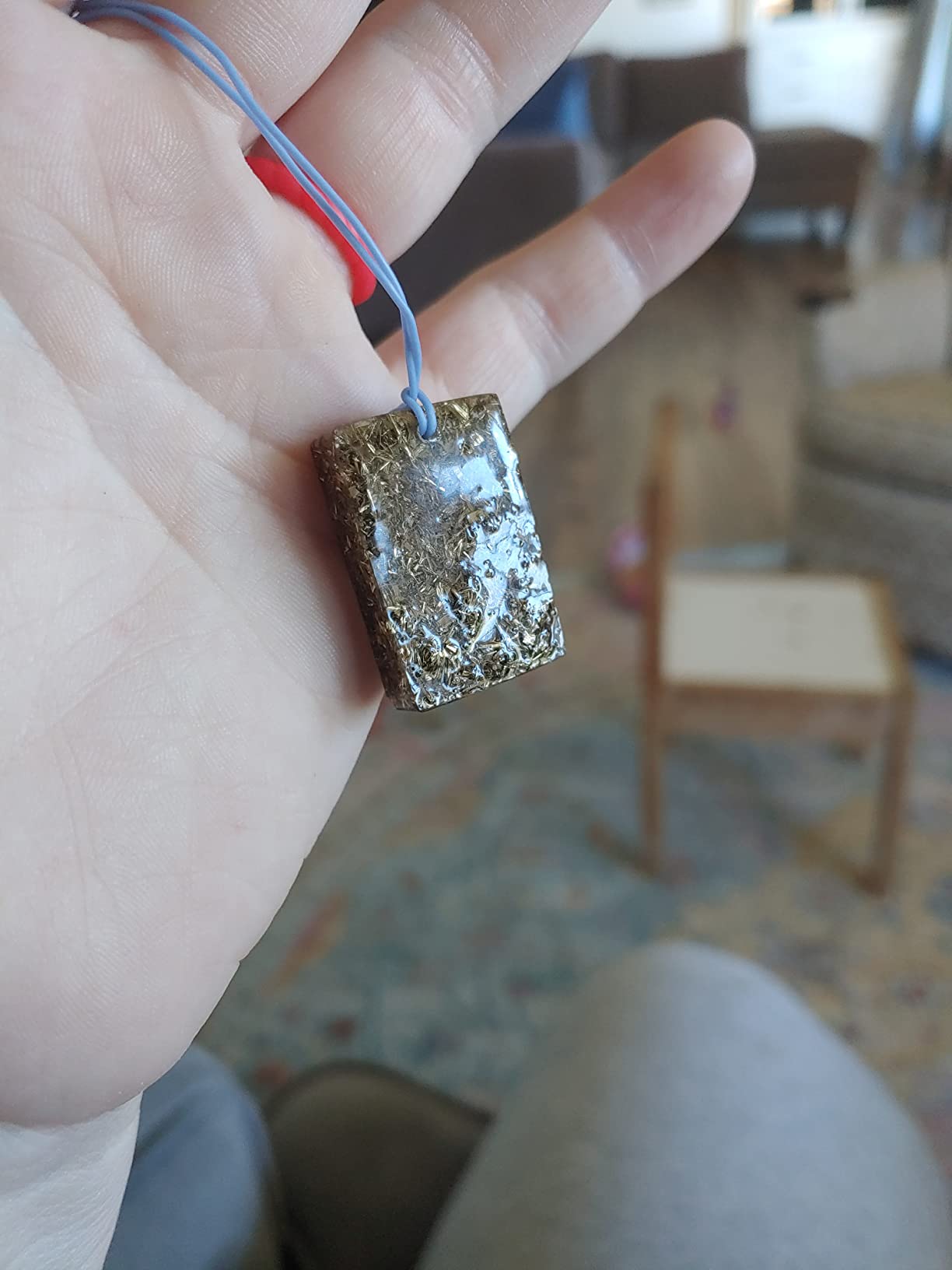
The cavity finish here is noticeably duller than the glossy molds in this roundup, and the fix is a topcoat. A thin flood coat of gloss resin after the piece has fully demolded will give you the same reflective surface as a mirror-finish cavity, and it is a five-minute step per piece.
If you prefer not to topcoat, pour a second clear layer while the piece is still in the mold. Just be aware that the hanging hole may flood if you overfill, and a paper toothpick is the right tool to clear it while the resin is still fluid.
Where it falls short
A minority of buyers report flimsy silicone and surface imperfections, so the mold-to-mold consistency is not as strong as a dedicated resin brand. Check the rim of each cavity for tears before you pour. Deep holes can also close up if you overfill them, and standard jump rings can be too small for thicker pieces cast in these cavities.
5. Actvty 38-Cavity Pendant Mold Sheet
Resin Jewelry Molds for Casting – Silicone Molds for Epoxy Resin, Pendant Mold for DIY Gem Cabochon, Earring, Necklace Jewelry Making
38 cavity designs on one 9 by 8.9 inch sheet
Hanging holes in every cavity
Deep rigid cavities with glossy interiors
Pros
- Deep rigid cavities that resist warping and produce clean castings
- Smooth glossy interior means no sanding on the front face
- Large sheet fits many pieces in a single pour
- Hanging holes built into each cavity remove the drilling step
- Holds up across many pours
Cons
- Only one of each shape
- so pairs require buying a second tray
- Deep cavities may leave extra resin on the back that needs a light sand
- Wide 9 inch sheet takes up workbench space
Thirty-eight designs on a single sheet, and this is the second highest rated set in the roundup at 4.7. What sets it apart from other multi-design sheets is the cavity depth and the rigidity. These walls stay put when they are full, and a deep cavity that flexes while you pour is exactly how you end up with thin, warped castings.
Every cavity has a hanging hole. Thirty-eight shapes covering drop, rectangular, triangle, round, square and long column forms gives you a working library for pendants, earrings and charms in one pour, and the sheet is large enough at roughly 9 by 8.9 inches to handle real batch quantities.
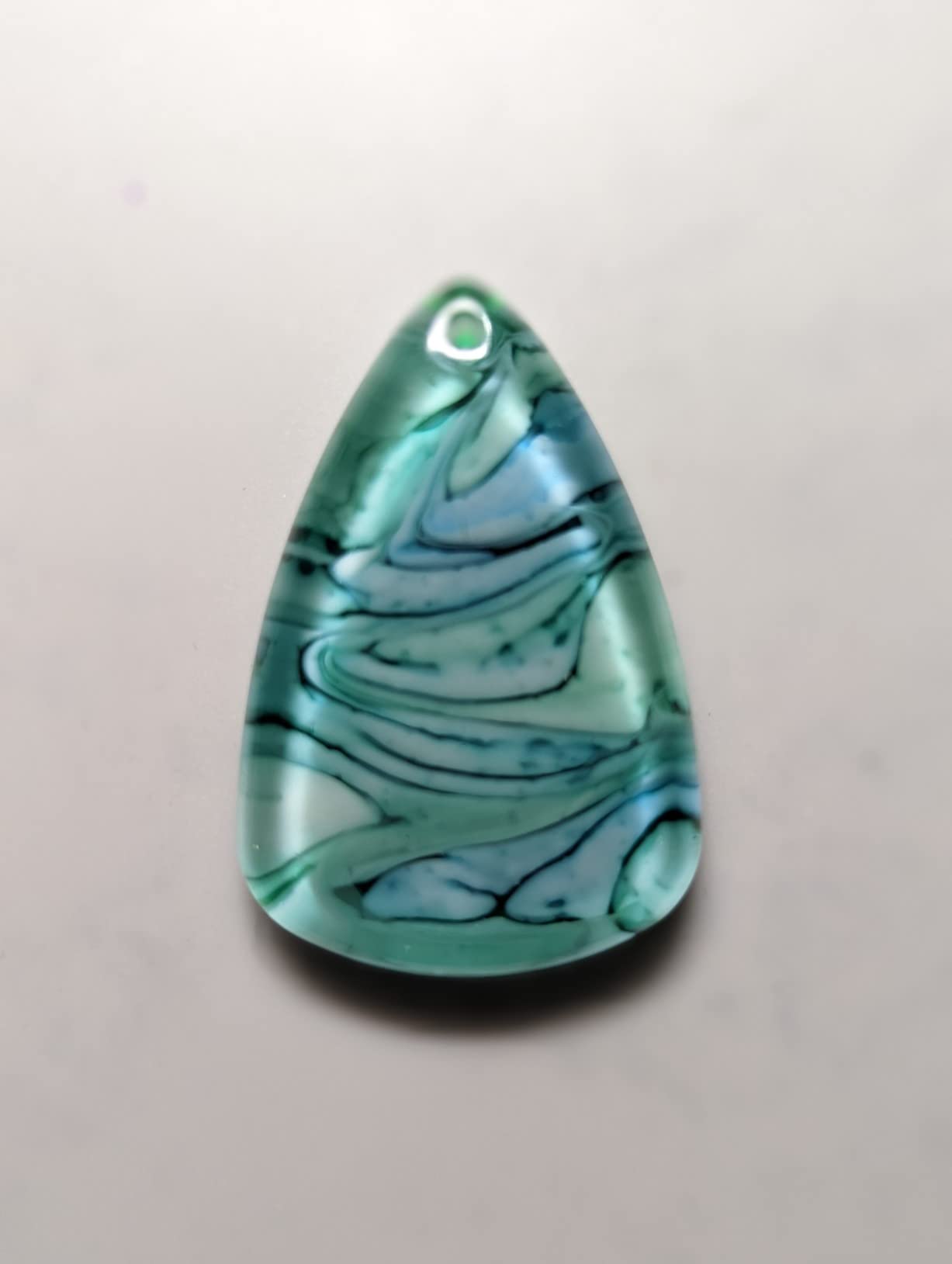
Reviewers repeatedly compare these cavities favorably against thinner, flimsier sets, and in my testing the same held true. The interior is smooth and glossy, so the front face of the finished piece needs no sanding. That is where the time savings actually shows up when you are making 30 pieces in an evening.
It is compatible with epoxy resin, UV resin, cement clay and wax, so the mold is not limited to a single medium. The deep, forgiving cavities make it a good teacher mold as well, because there is more room to correct a fill error while the resin is still moving.
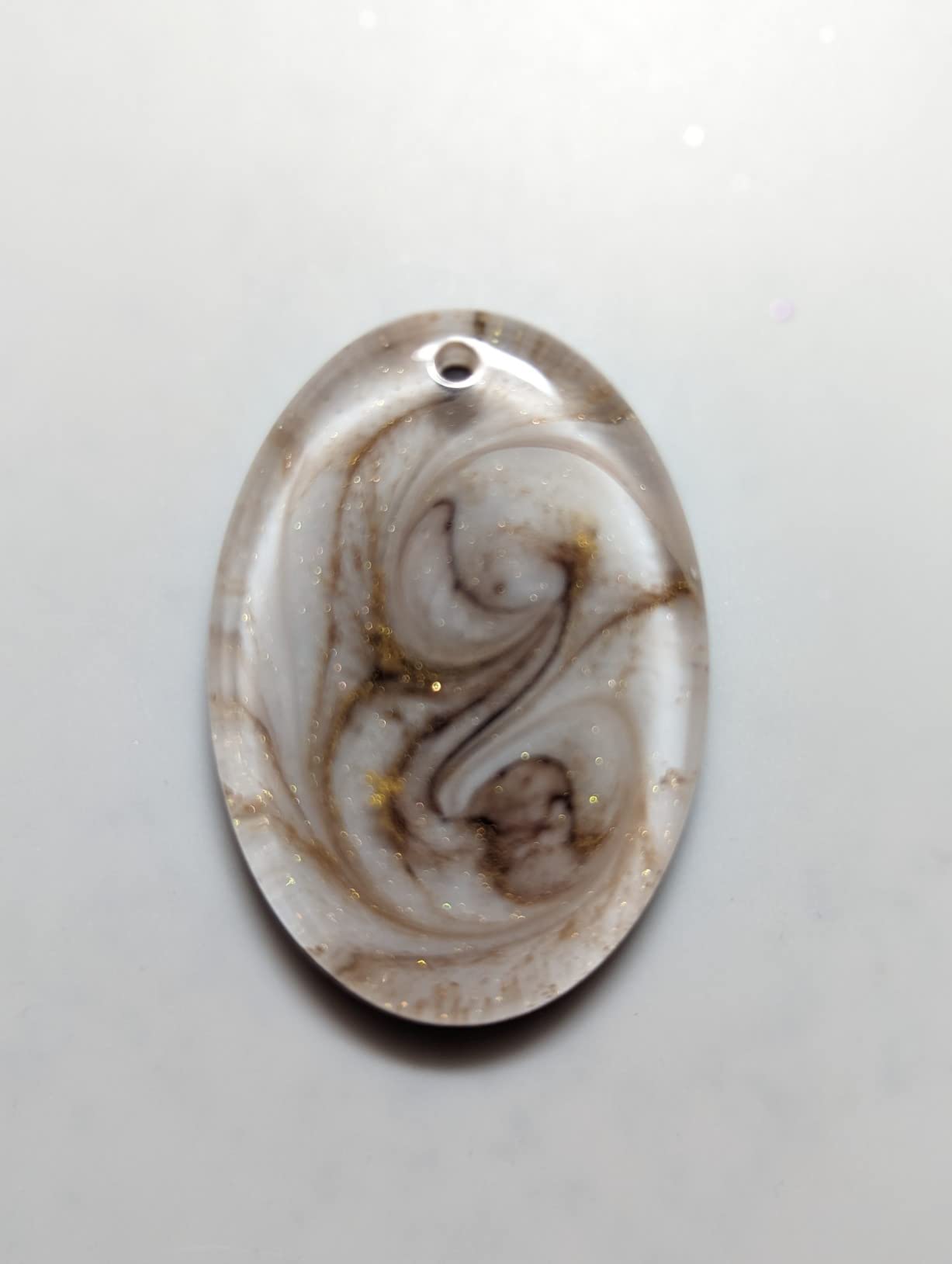
Why cavity depth changes the result
Deep cavities give resin time to settle. Air rises, the surface levels, and inclusions stay where you put them instead of drifting. That is what makes this sheet the better choice for dried flowers, glitter and any layered pour where the second layer needs a flat base to sit on.
The trade-off is finishing. A deep cavity leaves a little extra resin on the back of the casting, and a light sand cleans that up. It is a two-minute job per piece and the front face stays untouched, which is the face that shows.
Where it falls short
You get one of each shape. Making a matched pair means buying a second tray, and there is no way around that with a 38-design layout. If pairs are the core of what you make, choose a set that repeats designs instead.
The wide sheet also claims real bench space. Store it flat and out of the way when you are not using it, and keep something flat on top of it so the sheet does not bow over time.
6. ScivoKaval 58-Cavity Cabochon Mold Sheet
ScivoKaval Cabochon Gem Jewelry Silicone Mold Oval Teardrop Square Heart Round Shapes for Polymer Clay Crafting Resin Epoxy Pendant Earrings Making Casting DIY Craft Mold 29 Design 58 Cavity Large
58 cavities across 29 gem designs
Shiny cavity surface needs no polishing
Large 10 by 6.3 inch translucent sheet
Pros
- Highest cavity count here at 58
- ideal for batch production
- Best value per cavity of any set in the roundup
- Shiny interior surface reduces or eliminates polishing
- Flexible tear-resistant silicone releases more easily than plastic molds
- Transparent so you can verify full coverage at the base
Cons
- Large flat sheet takes up more storage and workbench space
- Cabochon shapes are decorative blanks rather than jewelry with holes
- Thin 0.6 inch depth limits 3D or layered projects
Fifty-eight cavities across 29 designs is the highest cavity count in this roundup, and it is what makes this the value pick. When you divide cavity count against what you pay, nothing else comes close. For anyone producing blanks in volume, this is the sheet that pays for itself fastest.
Shapes cover heart, oval, teardrop, circle, droplet, square and round, in a set of gem and cabochon forms. The cavity surface is shiny, so finished pieces need no polishing. The body is translucent, which lets you confirm the base of each cavity is fully covered during the pour.
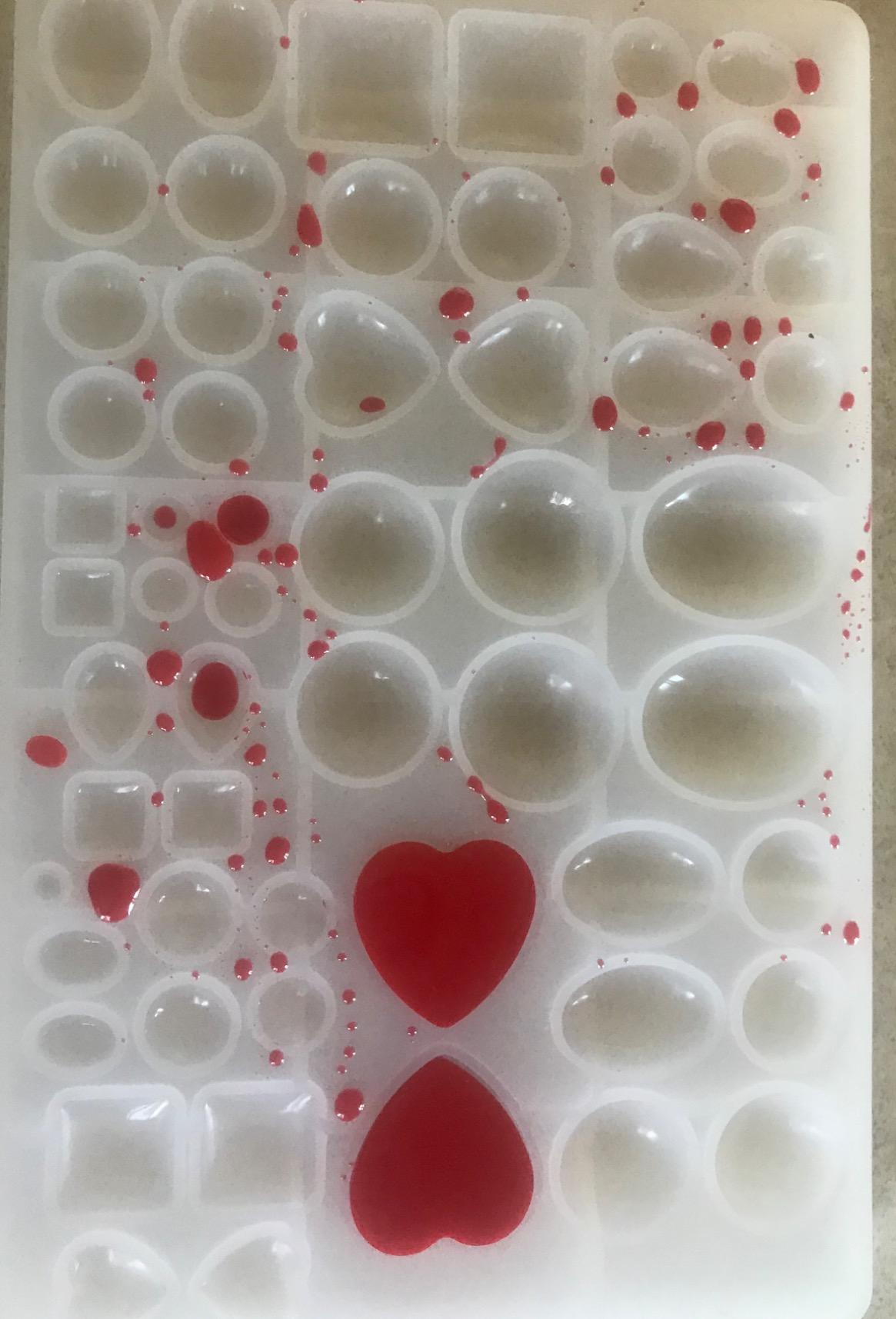
The silicone is flexible and tear resistant, and it releases far more easily than plastic molds of the same style. At 10 by 6.3 inches it is a large sheet, and you will fit a substantial number of castings into a single batch. For batch work this is the practical difference between one pour and several.
It suits resin, epoxy, polymer clay and cabochon work, so it is not limited to jewelry casting if you want to explore other crafts with the same sheet.
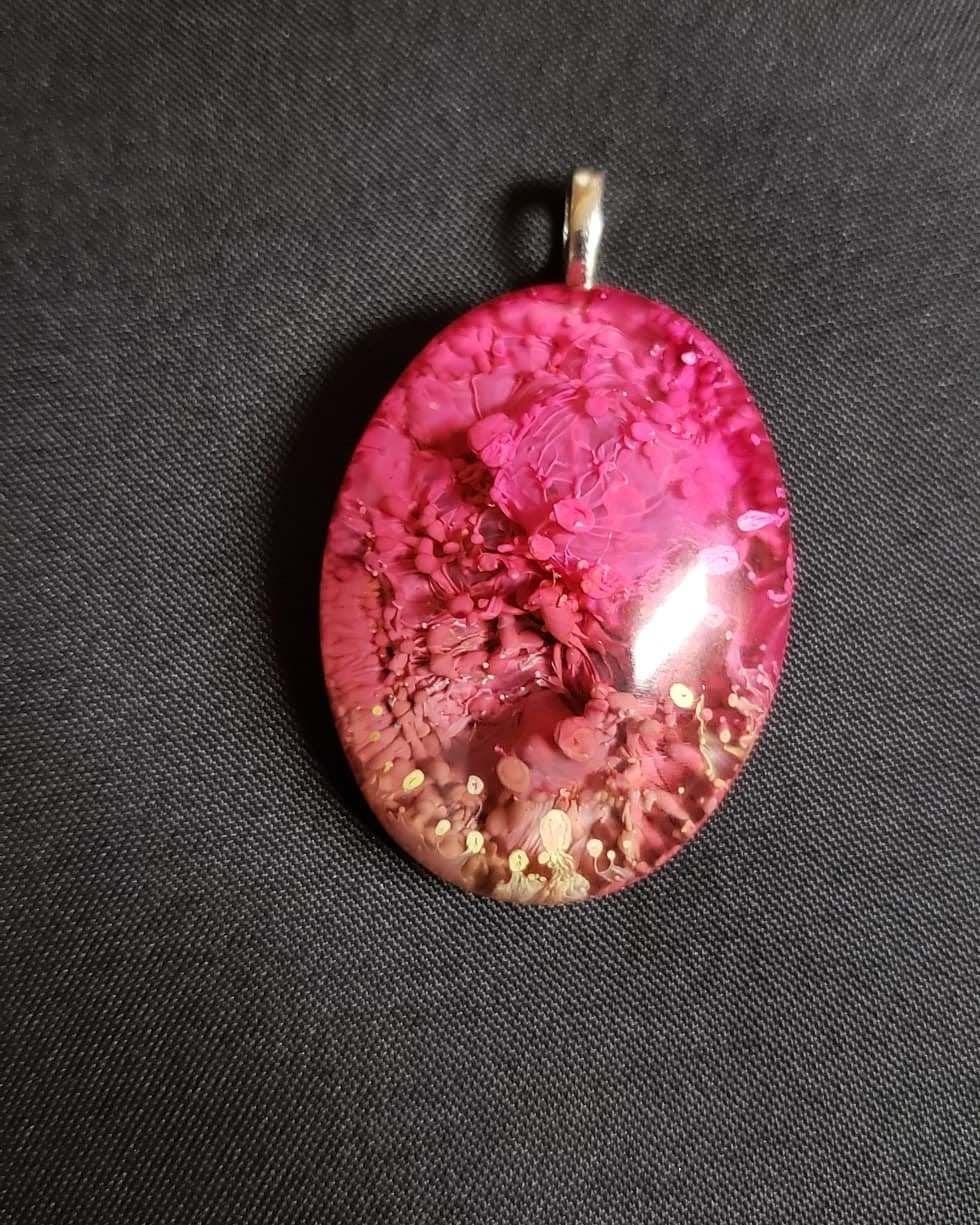
What these blanks are good for
These are decorative gem and cabochon blanks, not finished jewelry. Most people back them with a bezel or cup setting, or glue them onto a pendant base or bail. Plan for that extra assembly step and the economics still work because each piece is so cheap to produce.
They are also the natural companion to the large pendant sheets. Cast a background pendant here, add a cabochon on top, and you have a layered piece without buying a dedicated two-layer mold.
Where it falls short
The 0.6 inch depth is the limit. This sheet is flat, so 3D and layered projects are out of reach and the castings are thinner than most jewelry needs for durability. If you want dimensional work, choose a deeper mold.
The footprint is also the largest in the roundup. It claims a full section of workbench and it needs to be stored flat with nothing heavy on top, otherwise the sheet bows and the cavities distort.
7. DOODA Silicone Ring Molds, 14 Sizes
CCVOCION Silicone Epoxy Resin Ring Molds,14 Sizes(4-17) with Size Markers,5.5mm Width 2mm Thickness,for Women Rings Earrings Pendants DIY Christmas Craft Gifts
Ring sizes 4 through 17 with molded-in markers
5.5mm wide by 2mm thick band profile
Also usable for dainty earrings and pendants
Pros
- Slim 2mm band makes finished rings more comfortable than thick ring molds
- Fourteen sizes with molded-in markers remove sizing guesswork
- Sidewalls stay rigid when filled and peel away easily
- Popular with small jewelry sellers who work multiple sizes
- Textured outer surface gives a decorative finish
Cons
- Small fill aperture makes pouring fiddly
- especially for beginners
- Lowest rating in the roundup at 4.4
- Shallow design limits how much resin you can add
Ring molds are the narrowest category in jewelry resin work, and this is the only dedicated one in the roundup. It covers sizes 4 through 17 with molded-in size markers, so you can see what you are pouring at a glance instead of measuring the finished piece with a ring sizer and re-pouring when it is wrong.
The band profile is the real story. At 5.5mm wide by 2mm thick it is slimmer than the typical 6 by 6mm ring mold, and that difference decides whether the finished ring is comfortable enough to actually wear. A thick band resin ring feels like a piece of plastic on your finger.
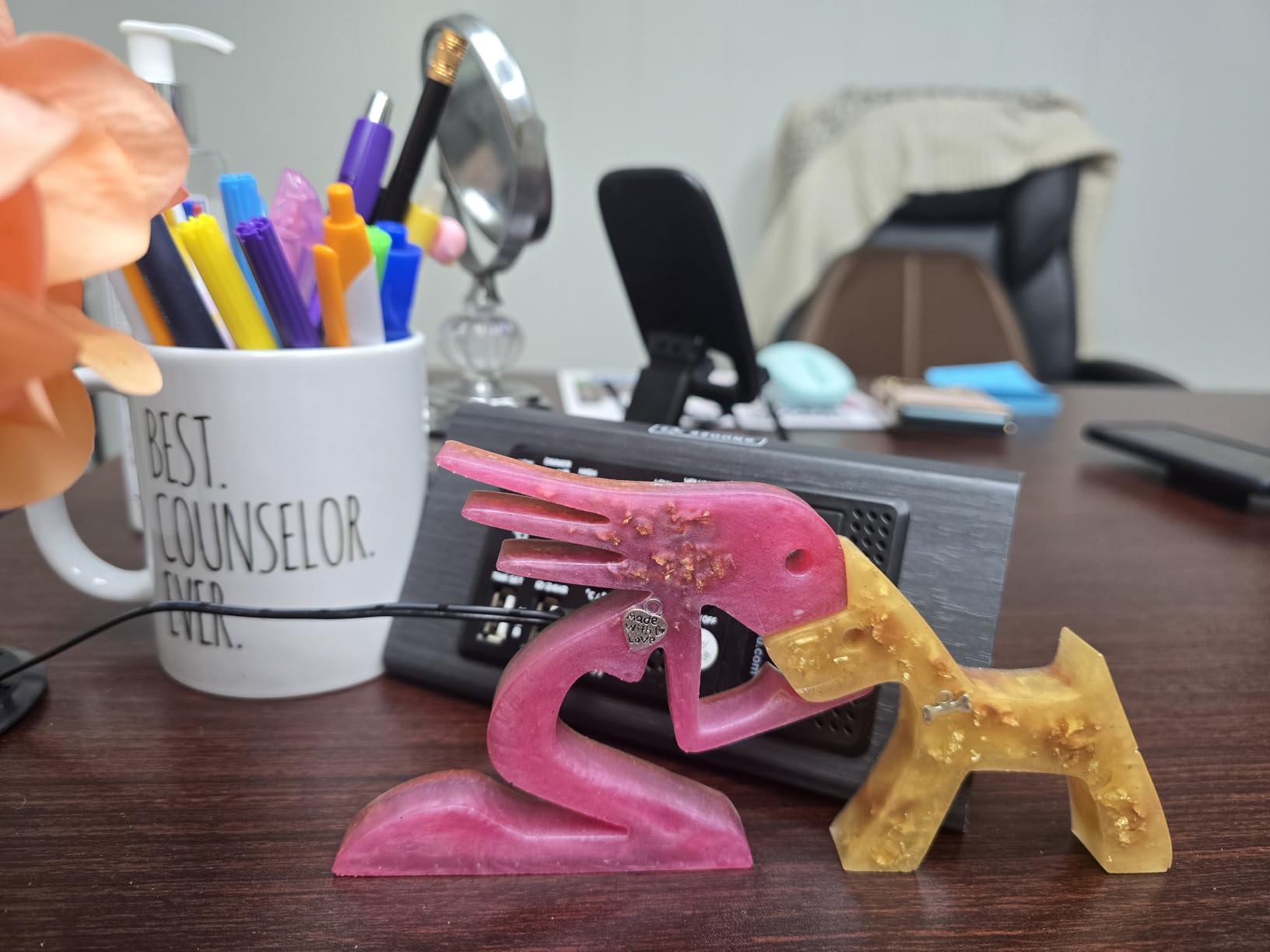
The textured outer surface gives finished rings a decorative look that plain smooth cavities cannot, and the sidewalls stay rigid when filled and peel away cleanly when you demold. Reviewers note that some buyers cut the mold into sections to save workspace and simplify demolding, which is a practical hack if the sheet is bigger than your bench.
Small sellers like this mold for a straightforward reason. Fourteen sizes in one tray means you can work several sizes at once without buying fourteen separate molds, and the molded-in markers keep the sizes straight.
How to pour a ring without frustration
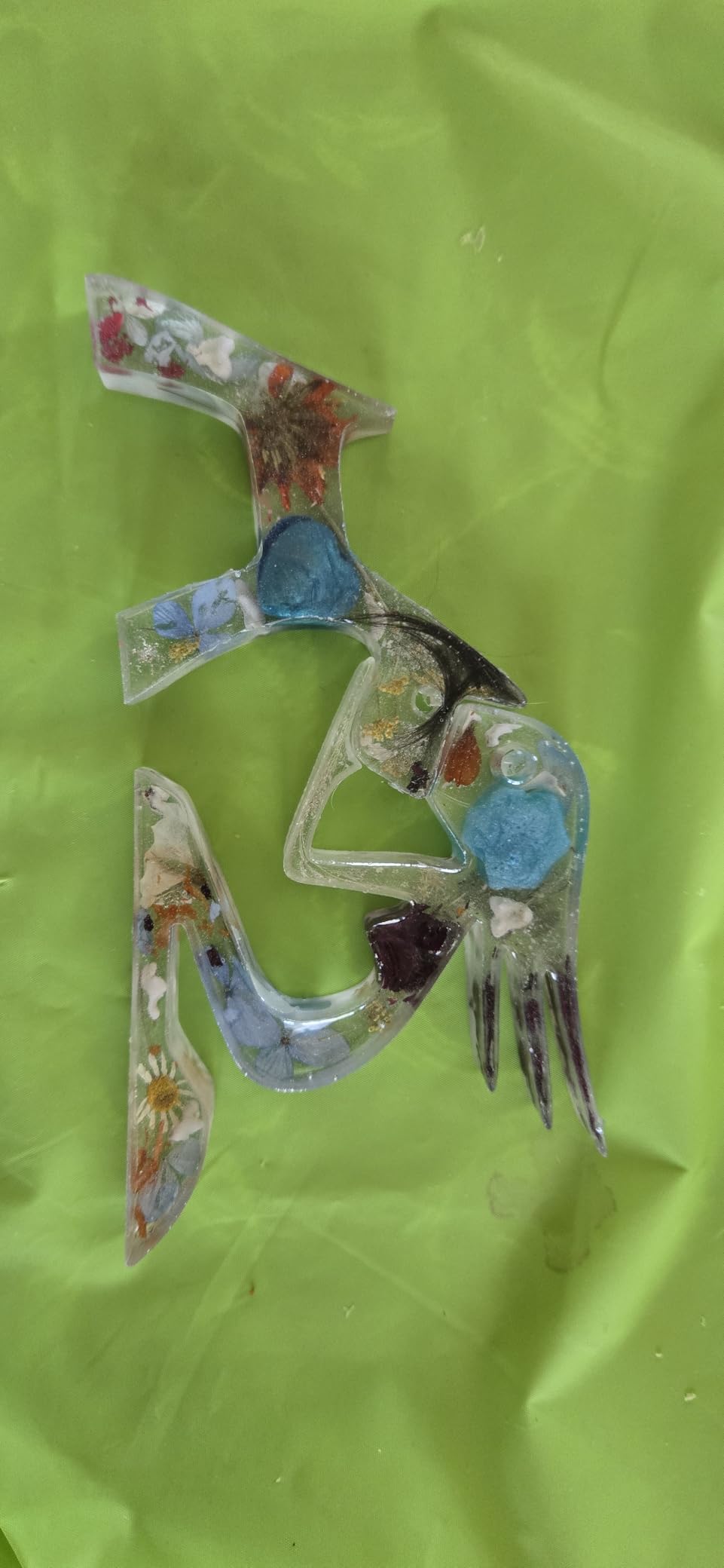
The fill aperture is small, and that is the one genuine learning curve here. Tilt a 0.1ml pipette deep into the opening and let resin run down the side of the cavity rather than dropping it straight in from above. Air trapped at the top of a narrow band is the main reason ring castings end up with bubbles.
The cavity is also usable for dainty earrings and small pendants if you want to stretch the set. It is rated 4.4 from more than 1,100 reviews, the lowest average here, and that rating mostly reflects the fiddly pour rather than any quality problem with the castings.
Where it falls short
Do not expect room for embellishment. The band is shallow, so adding inclusions or a layered second color is difficult. If your ring designs involve a lot of embedded material, you will want a different mold.
Molds of this type wear down with continued use and need replacing periodically. That is normal for thin ring cavities, but if you are producing rings at volume, budget for a second tray rather than expecting one to last indefinitely.
8. Patelai 4-Piece Geometric Earring Molds
Patelai 4 Pcs Resin Earring Molds for Jewelry Making Kit, Geometric
4 earring styles including drop and geometric shapes
Pre-punched holes mean no drilling
Thick deform-resistant silicone
Pros
- Four distinct styles cover drop
- round
- square and irregular earrings
- Pre-punched holes remove the drilling step entirely
- Thick durable silicone that holds shape and cleans up easily
- Works with both UV and epoxy resin
- Good starting point for resin beginners
Cons
- Filling small details such as the hole stub is difficult for first-time users
- Some studs cast thicker than expected
- Only four pieces in the set
- so fewer castings per pour
Four molds, four genuinely different earring shapes, and pointed holes that cast directly into the piece. This is the set I would hand to someone on their fourth resin attempt. It is small, it is simple, and it produces a finished stud or dangle without any drilling.
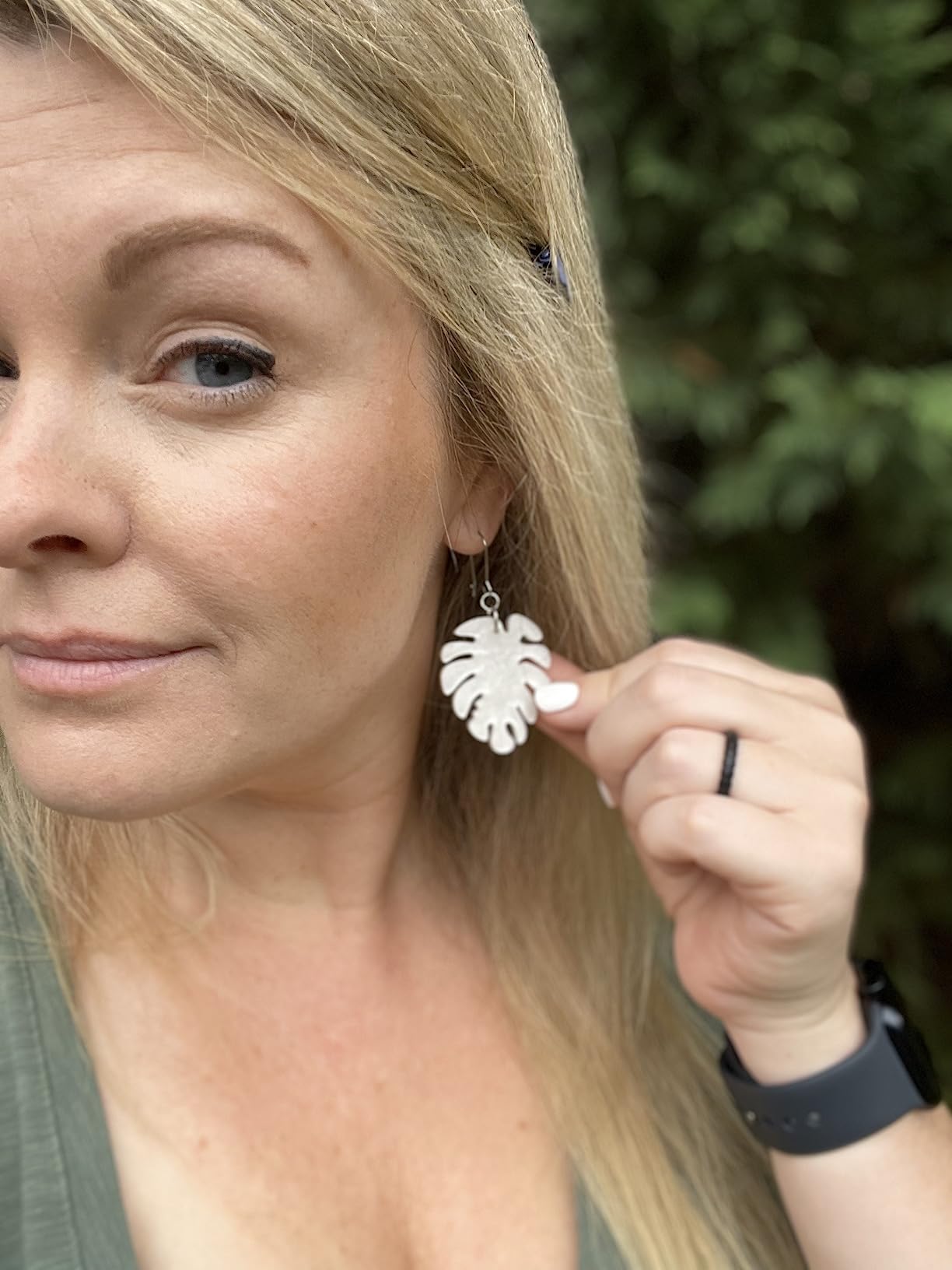
The pointed hole design is better than a straight hole because it self-centers the jump ring when you attach it. On a straight drilled hole, the ring sits at an angle. On a pointed hole, the point guides it into place. Small detail, real difference in how the finished earring hangs.
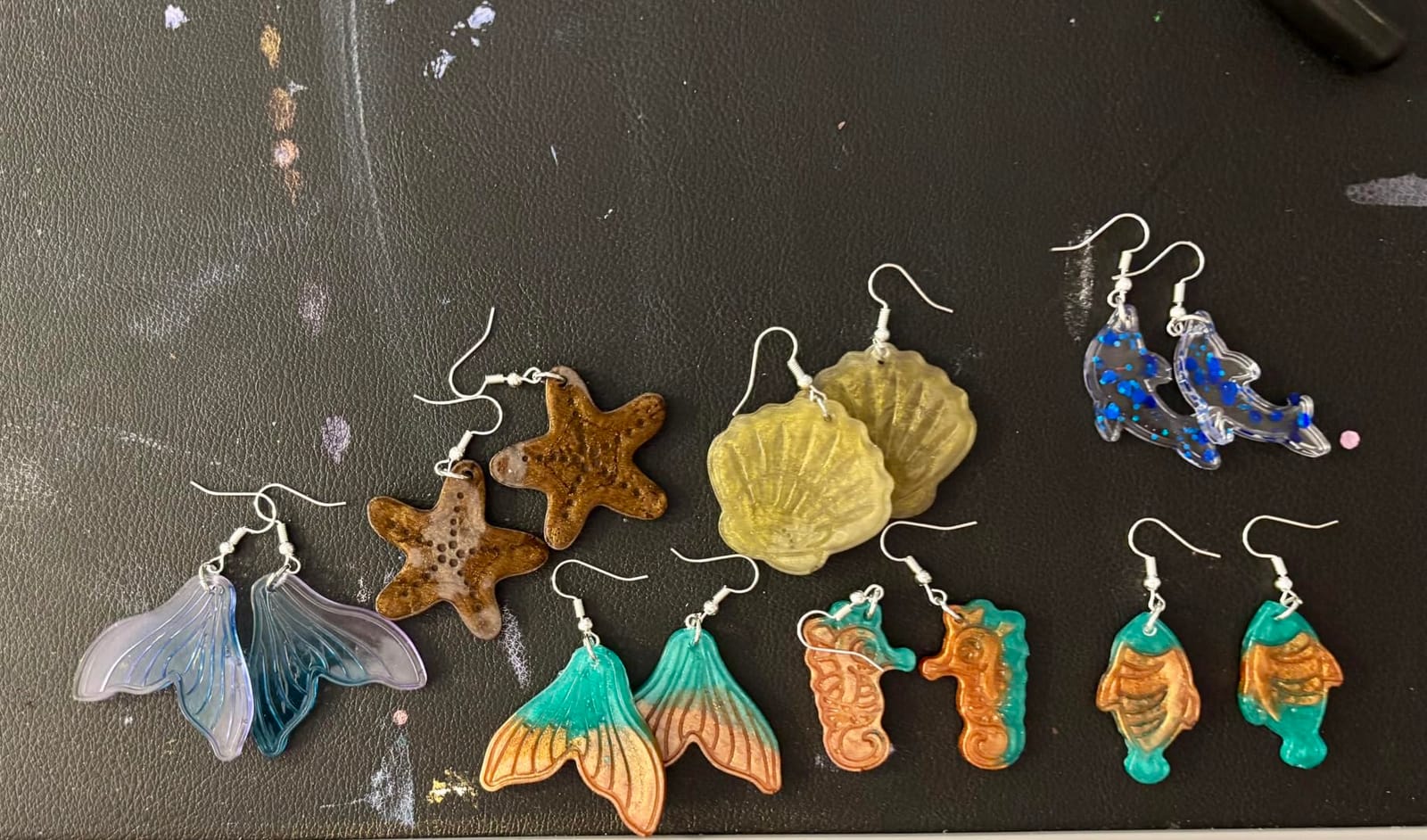
The silicone is thick and resists deformation and breakage, which is what you want from your first earring mold. Thin, floppy silicone is where beginners lose pieces during demolding. Once the resin is fully solid, a twist is enough to release the casting, and the mold cleans up easily afterward.
It is compatible with epoxy resin, UV resin, cement clay, polyester resin, wax and candles, so the set works well beyond jewelry if you want it to. The same range also comes in flower-leaf, mermaid-ocean and geometric variants.
Why the pointed hole matters
Every earring needs a hole, and creating one yourself means drilling cured resin, which means a rotary tool, a steady hand, and a fair chance of chipping a piece you already spent an hour on. The pre-punched hole design removes the entire step. Pour, cure, demold, attach the hook.
For a beginner, that removes the single most common reason people give up on resin jewelry. The skill involved is pouring accurately into a small cavity, which is far easier to learn than drilling cleanly.
Where it falls short
Filling the small detail behind the hole stub is the hard part. That narrow channel is where beginners get frustrated, and it takes a slow, controlled drip rather than a pour. Some studs also cast thicker than expected, so leave a little room in the cavity.
With only four pieces in the set, you get four castings per pour. That is plenty for learning and fine for gifts, but for a jewelry line you will want a multi-cavity sheet like the 38-design or 58-cavity options above.
9. Island Resin Pendant Molds, Set of 4
ZQYSING Island Resin Jewelry Molds for Casting Earring Pendant Set of 4
Two-part island and ocean pour
4 molds included, 2 by 1.5 inches each
Compatible with epoxy, UV resin, plaster, wax and soap
Pros
- Distinctive layered island and ocean effect generic molds cannot achieve
- No thin spots reported so castings release cleanly
- Good durability with thick stable silicone
- Works well for UV resin projects
- Four-mold set allows parallel work on several pieces
Cons
- Two-part pour requires more steps and curing time
- Very narrow single-theme range
- Small dimensions limit pendant size
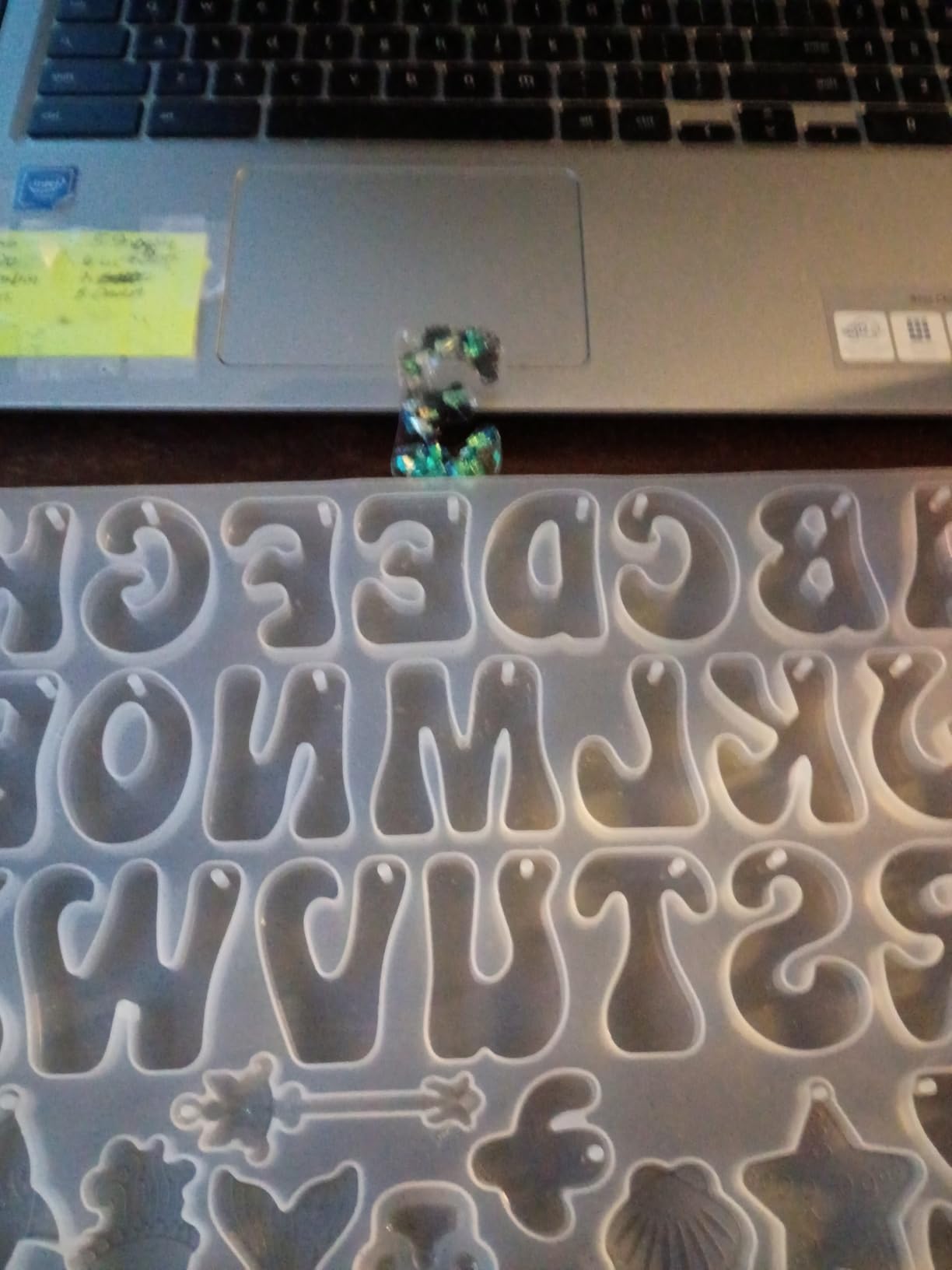
This is the one mold in the roundup that does something structurally different. Instead of a single cavity you pour once, it is a two-part design: cast the island layer, let it cure, then pour the ocean layer on top. No generic mold on this list can produce that effect.
The result is a dimensional pendant with genuine depth rather than a flat shape with a color on it. That is a meaningfully different finished product, and it is the reason this set earns its place despite being the narrowest in the roundup.
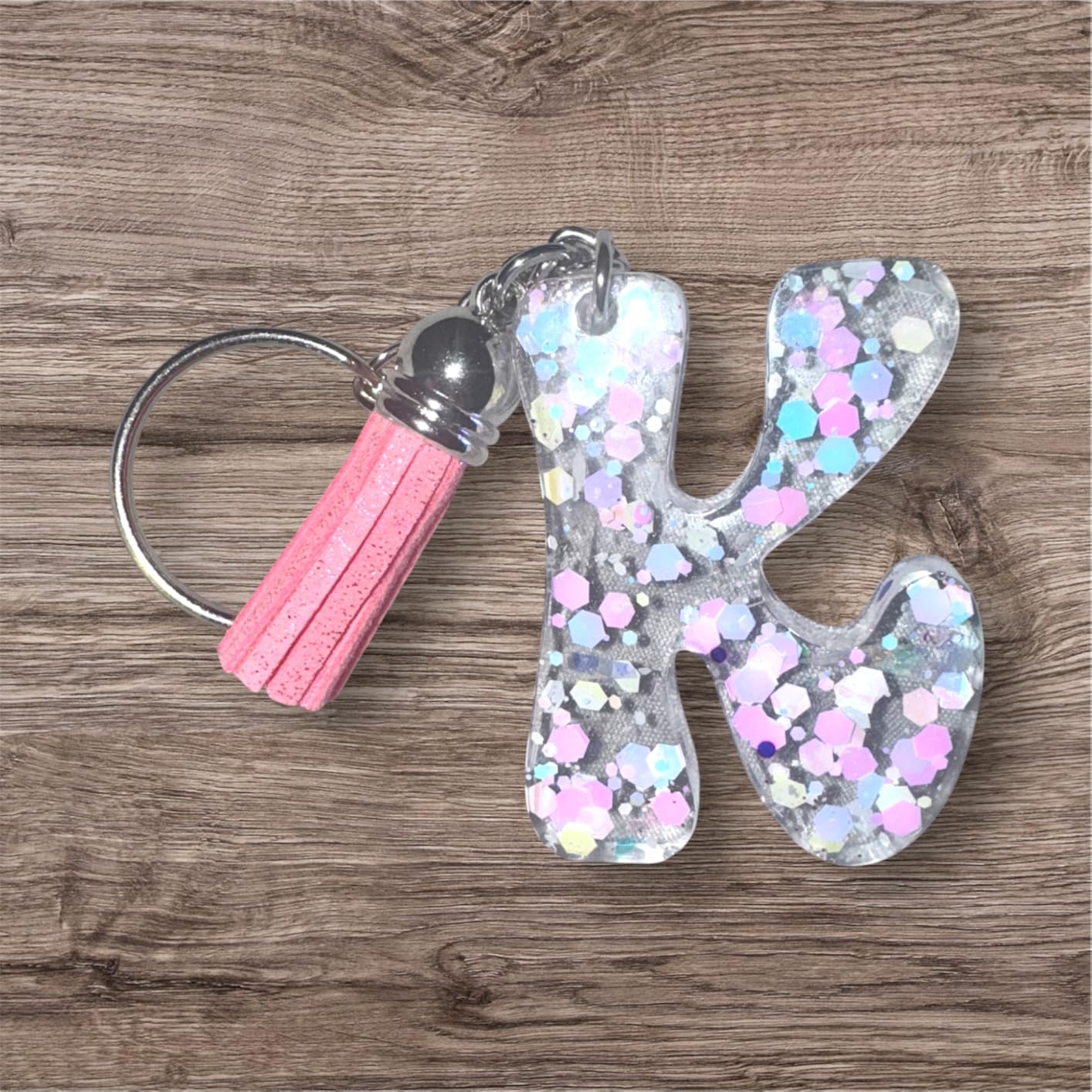
Four molds are included, so you can work on several pieces in parallel while one layer cures. Reviewers report no thin spots or defects, and castings release cleanly, which matters for a two-layer piece where a stuck demold can break the island clean off.
The silicone is flexible and demolds cleanly, and it washes with warm soapy water. It works with epoxy resin, UV resin, casting resin, plaster, wax, soap and polymer clay, so the layering idea transfers to other materials if you want to experiment.
How the two-pour method works
Pour the island layer first, cure it fully, then pour the ocean layer over it. The second pour bonds to the cured first layer. If you are using UV resin, the two-part approach is fast because each layer cures in minutes. With epoxy you are waiting through a full cure between pours, so plan the session accordingly.
Pour each layer thin. Deep pours trap air, and with a layered design any bubble in the ocean layer is visible against the island underneath. Multiple thin pours will always look better than one thick one.
Where it falls short
The theme is narrow. This is an island and ocean pendant mold, and it will not produce a stud earring or a ring no matter how you use it. If layered dimensional pieces are the only thing you want to make, it is a good fit. If you want variety, it is one tool in a much larger kit.
At 2 by 1.5 inches the cavity is small, and the two-part process takes more time and resin than a single-layer mold. Some buyers in the wider range of themed molds also report tearing at stiffer base sections, so demold gently around the base.
10. Loyohep 10-Piece Silicone Earring and Pendant Molds
Loyohep Earring Molds for Epoxy Resin,Resin Jewelry Molds
10 silicone earring and pendant cavities
Classic geometric shape assortment
Includes 40 earring hooks
Pros
- Wide range of classic shapes including round
- oval
- annular
- triangle and rhombus
- Flexible silicone that demolds easily and cleans well
- Glossy cavity surface produces smooth finished earrings
- Works with epoxy
- UV resin
- gypsum
- clay and cement
- 40 earring hooks included to get started
Cons
- Heat guns and torches can damage the silicone
- Small 3 by 3 inch footprint limits cavity size for larger pieces
Ten cavities, ten different classic shapes, and the largest review count of any set in this roundup at more than 3,700 ratings. Round, oval, annular, triangle and rhombus is a well-judged library. It is the shape assortment that makes this set useful rather than the cavity count.
Forty earring hooks are included, which means a beginner can pour a cavity and have a wearable earring the same day. That sounds minor until you are standing at a craft store trying to work out which hook fits which finding.
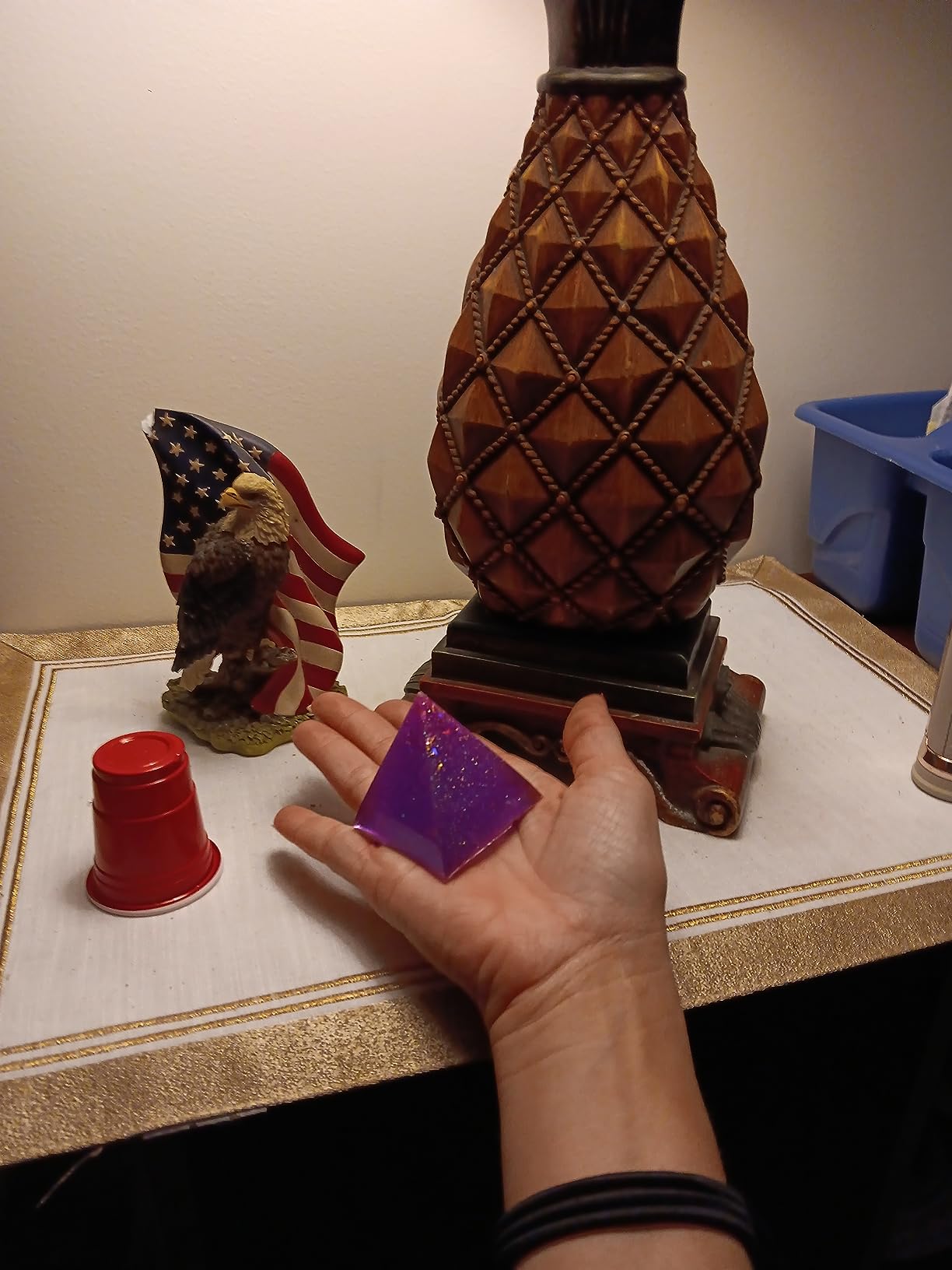
The cavity surfaces are glossy and produce smooth finished earrings without sanding, and the silicone releases and cleans well. It is compatible with epoxy resin, UV resin, gypsum, clay and cement, so the same set covers resin jewelry and basic craft pieces.
At 3 by 3 inches this is the most compact tray here, which makes it easy to store and to work on a small desk. Reviewers consistently praise the clean lines on the finished shapes, and the demolding is straightforward as long as you flex the mold away from the piece rather than pulling straight up.
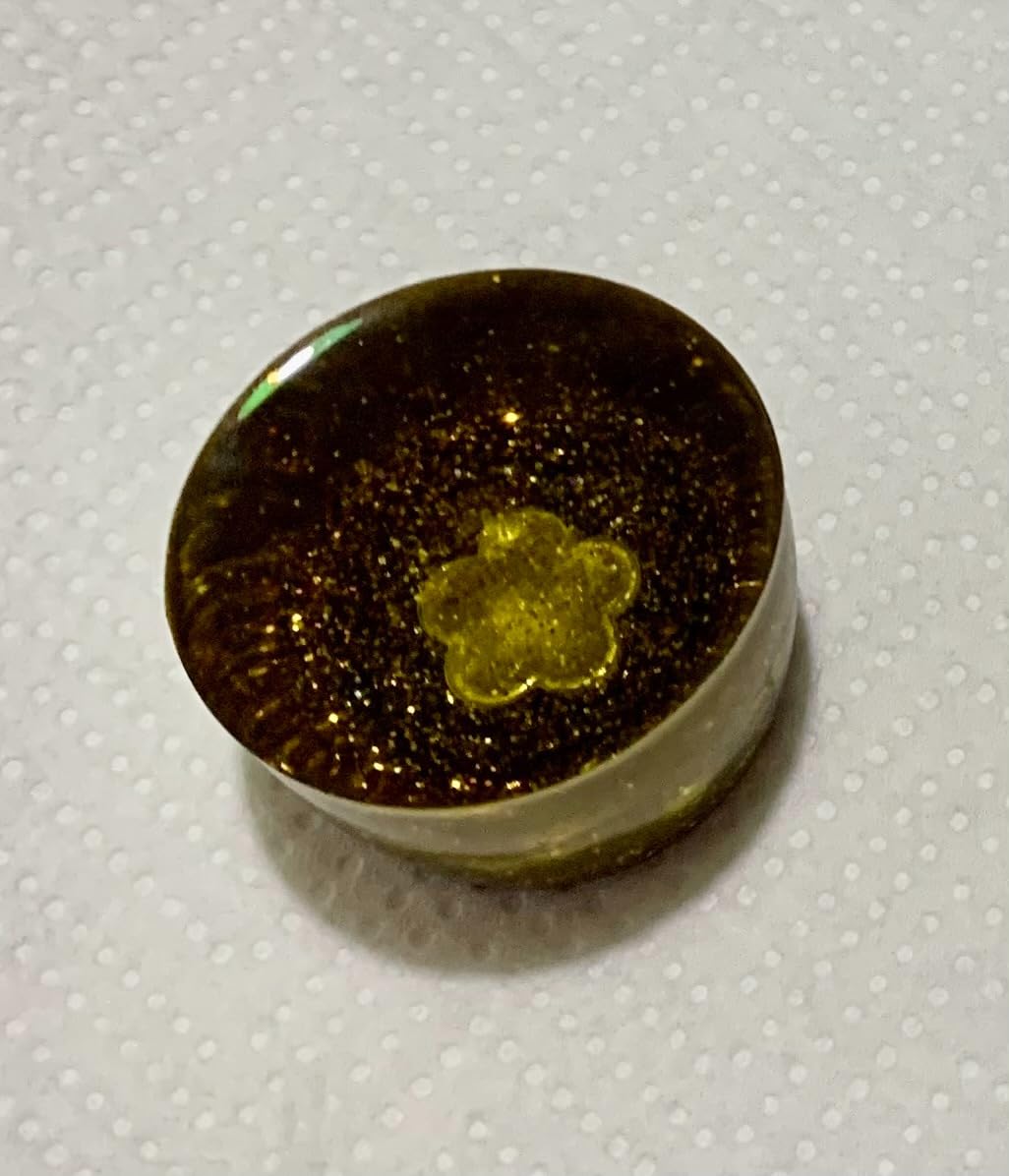
How to avoid damaging the silicone
Do not put a torch or a heat gun near this mold. Silicone softens and can be permanently deformed by direct heat, and a warped cavity produces warped castings from that point on. If you need to speed up curing, use a UV lamp rather than heat.
Beyond that, care is simple. Warm soapy water, a soft brush for the detail lines, and dry it fully before storing. Silicone that is put away damp will stay damp and can pick up dust in the cavity.
Where it falls short
The 3 by 3 inch footprint is the trade-off for the compact storage, and it does mean smaller pieces. If you were hoping to cast statement-size pendants, this tray will not get you there. It is an earring and small charm set.
At 4.5 stars it sits a notch below the rest of the roundup, and the heat sensitivity is the reason. It is still a well-made, popular set, just a less versatile one than the larger cavity trays.
11. EuTengHao 229-Piece Jewelry Casting Mold Set
EuTengHao 229Pcs DIY Jewelry Casting Molds Tools Set More Than 120 Designs Contains 8 Silicone Jewelry Resin with 70 Designs,1 Earring Molds with 25 Designs,2 Necklace Bear Molds,3 Diamonds Mold
229 pieces with more than 120 mold designs
Includes 8 jewelry resin mold sets, tools and a hand drill
200 screw eye pins in gold and silver
Pros
- Largest design library here at more than 120 mold designs
- Bundles casting tools
- droppers
- stirrers and a twist drill with the molds
- 200 screw eye pins in gold and silver for finishing pieces
- Rated for higher heat than most silicone molds
- Suits multiple crafts beyond jewelry
Cons
- Large assortment means individual mold quality and consistency can vary
- Many designs are small and best for simple charms rather than statement jewelry
More than 120 designs across 229 pieces is the largest library in the roundup, and the box is genuinely a full toolkit. It includes plastic stirrers, droppers and spoons, a hand twist drill with two twist bits, and 200 screw eye pins in gold and silver. For a beginner who does not own any of that yet, this replaces three separate purchases.
The mold breakdown covers 8 silicone jewelry resin collections with 70 designs, an earring mold set with 25 designs, 2 necklace bear molds and 3 diamond molds, alongside star, round, heart, cubic, bracelet and assorted animal shapes. The animal and charm library is the widest here.
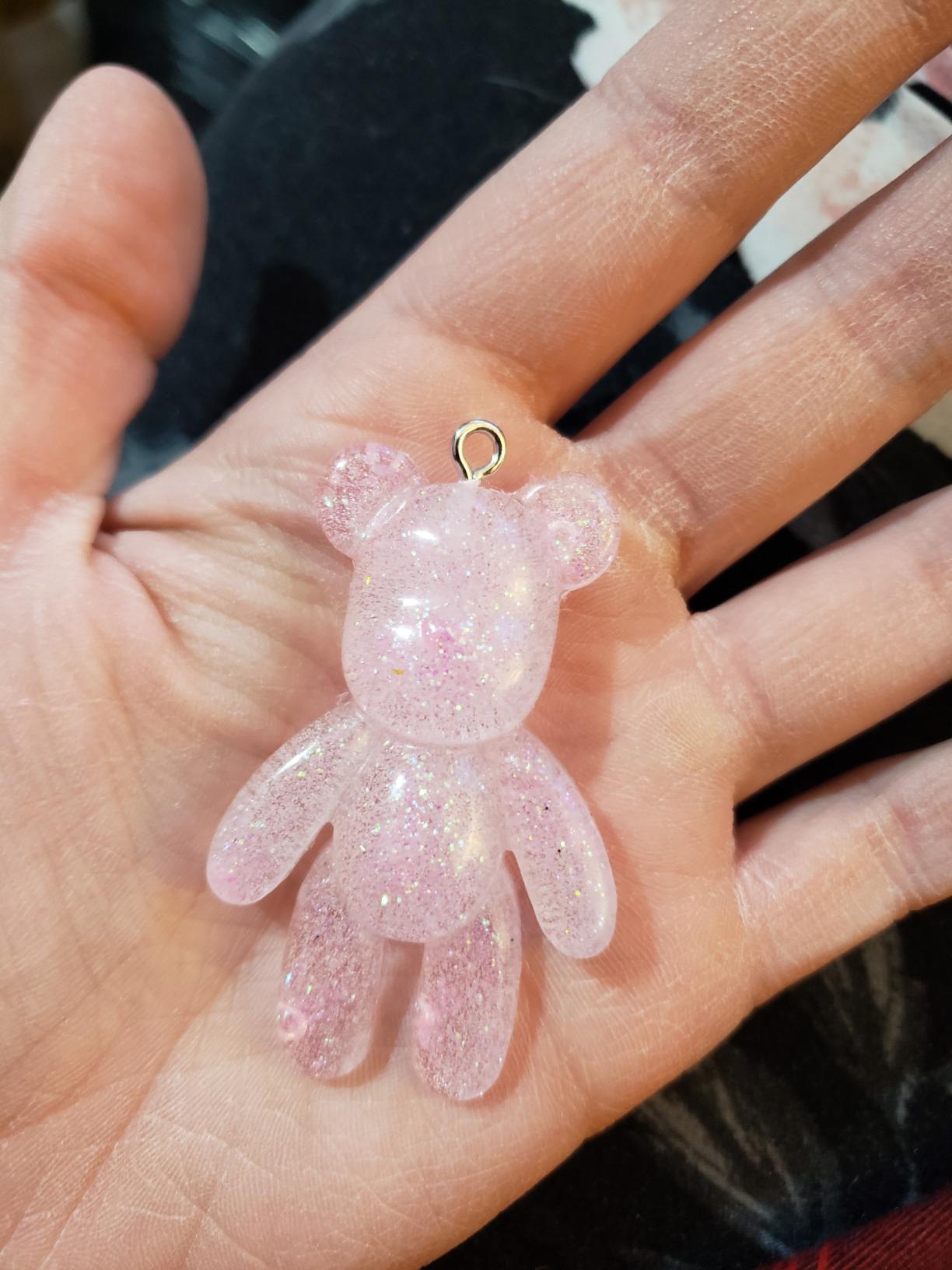
The temperature tolerance is a genuine technical difference. This set is rated to 220 C, or 428 F, which is well above most silicone jewelry molds. That opens up more finishing and casting options than the standard mold in this roundup allows.
At 10 by 8 inches the set has a large footprint and it is worth thinking about storage before you commit. Silicone with that many separate cavities in a large tray tends to flex, so keep it flat and do not stack anything heavy on top.
What you can make with it
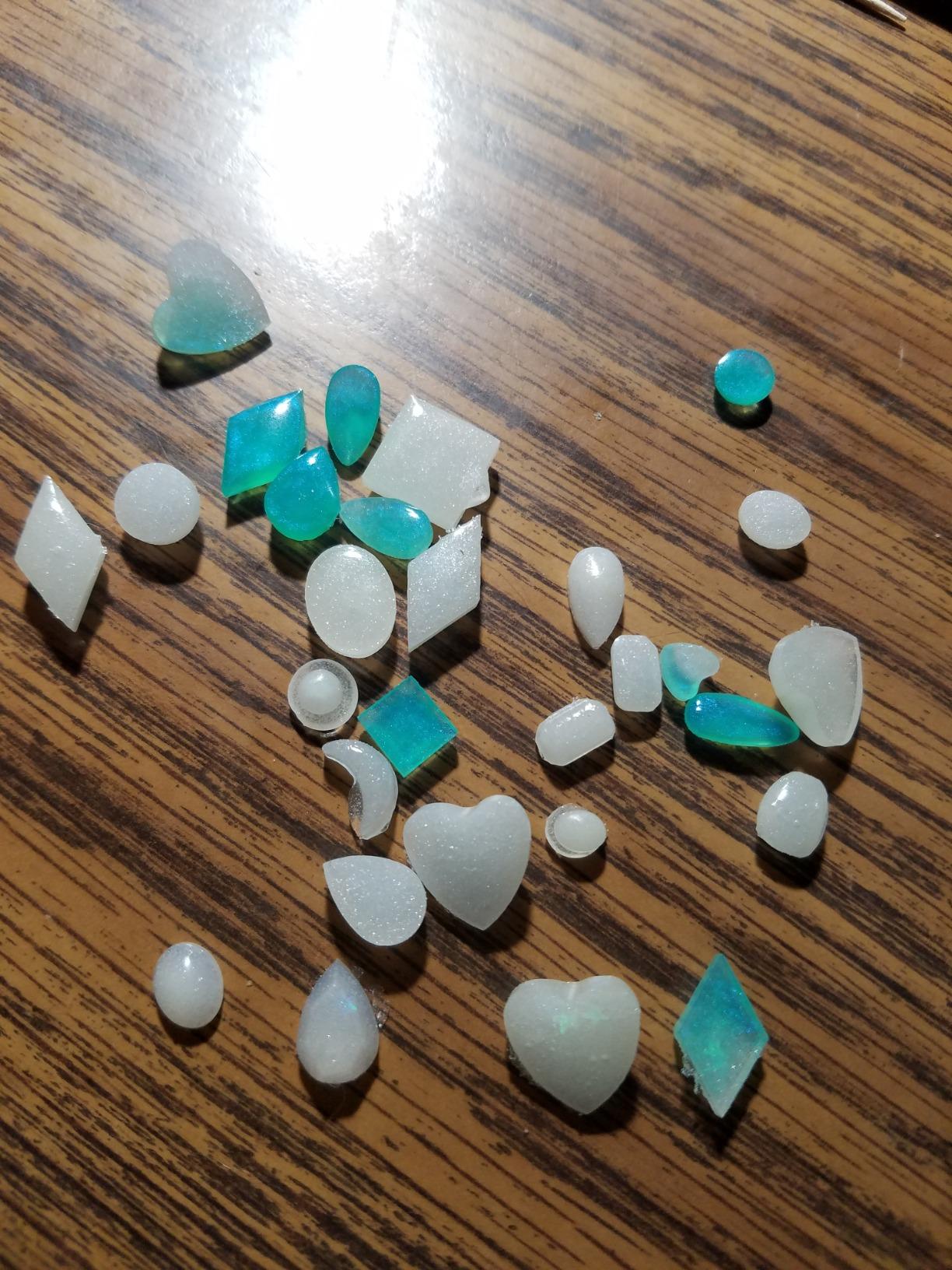
Anything small. Gemstones, resin balls, earrings, pendants, necklaces, bracelets, keyrings and home decor all appear in the design list. The 200 screw eye pins mean you can finish a pendant immediately without sourcing findings separately, which is a real time saver on a large batch.
The twist drill with two bits handles the holes that are not cast into the mold. That is the gap in most other sets on this list, and it is why this one appeals to people making small charms more often than finished component jewelry.
Where it falls short
Volume brings inconsistency. With 120-plus designs in one box, the quality varies from cavity to cavity, and no single cavity will match the finish of a dedicated brand mold. If a flawless glossy surface is the priority, buy a smaller, better set.
Many of the designs are also small. They suit simple charms far better than statement jewelry, so do not expect this tray to cover a chunky or oversized aesthetic on its own.
12. LET’S RESIN Ghost Shape Earring Molds
LET’S RESIN Ghost Shape Resin Earring Molds, Silicone Molds for Epoxy Resin
2 ghost-shaped silicone molds with 18 cavities
Includes hooks, studs, stoppers and 50 jump rings
High tear resistance and easy demolding
Pros
- Crisp fine detail with sharp clean lines in the castings
- High-grade silicone that resists tearing and warping
- 18 cavities plus a full set of earring findings for batch crafting
- Washes clean with warm soapy water
- Fun ghost shapes with expressions that suit seasonal gifting
Cons
- Themed ghost design only suits Halloween projects
- Thick molds hold a lot of material so resin consumption is high
- Applying a torch or heat can permanently damage the silicone
Two molds, eighteen ghost-pattern cavities, and some of the crispest fine detail in the roundup. The facial expressions and edges on these ghosts come through sharp and clean in a way that most small silicone molds do not manage. If crisp detail is what you are after, this set delivers it.
The findings are unusually complete for a themed mold. You get 10 earring hooks, 10 stud earrings, 10 earring stoppers and 50 open jump rings, so a batch of 18 castings can be assembled into finished earrings without another order. For seasonal batch crafting that is a meaningful saving in time.
The silicone has high tear strength and elasticity and does not deform during demolding, which is the failure mode that ruins ghost shapes and other detailed cavities. Warm soapy water cleans it. It is compatible with epoxy resin, casting resin, wax and soap, though it is not intended for coating resin.
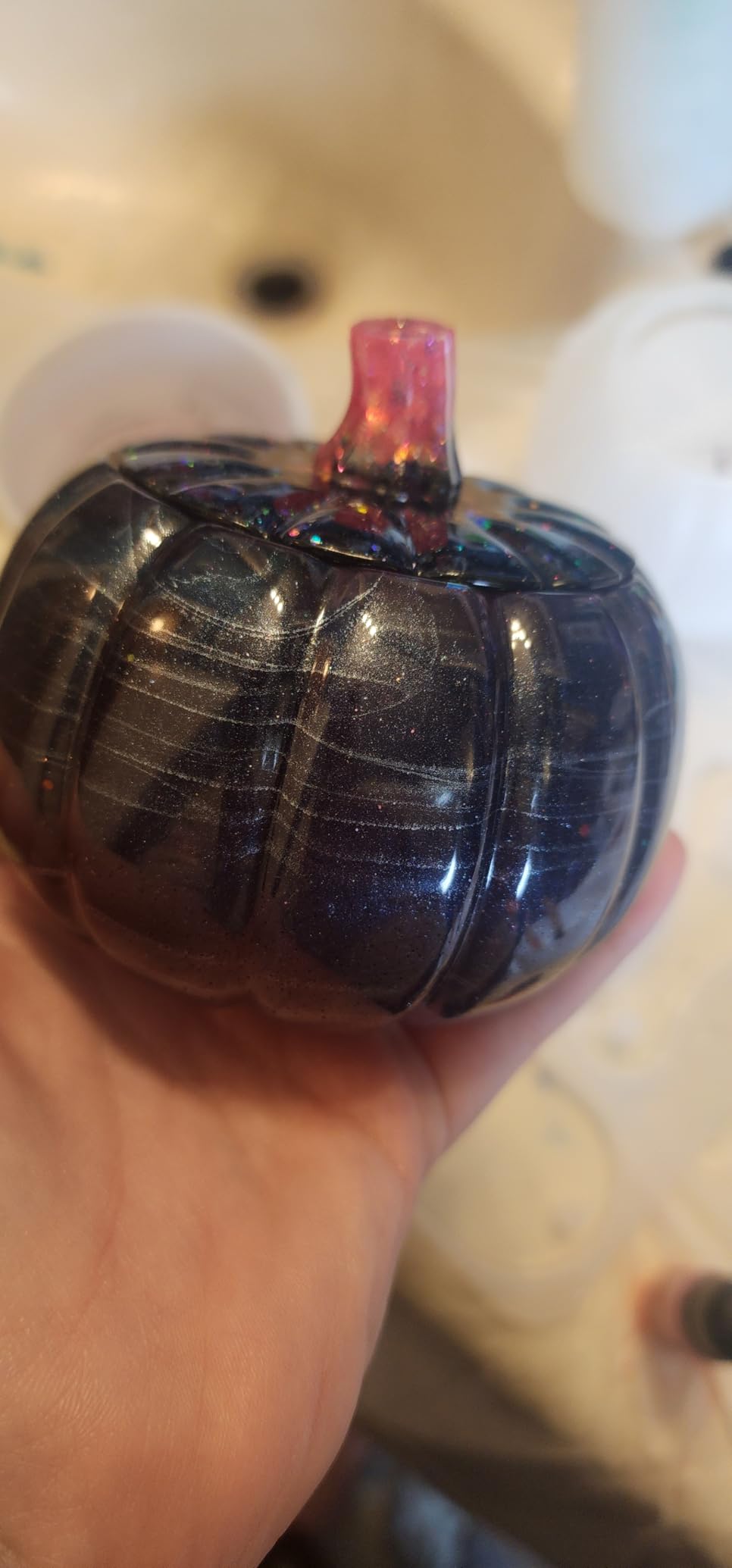
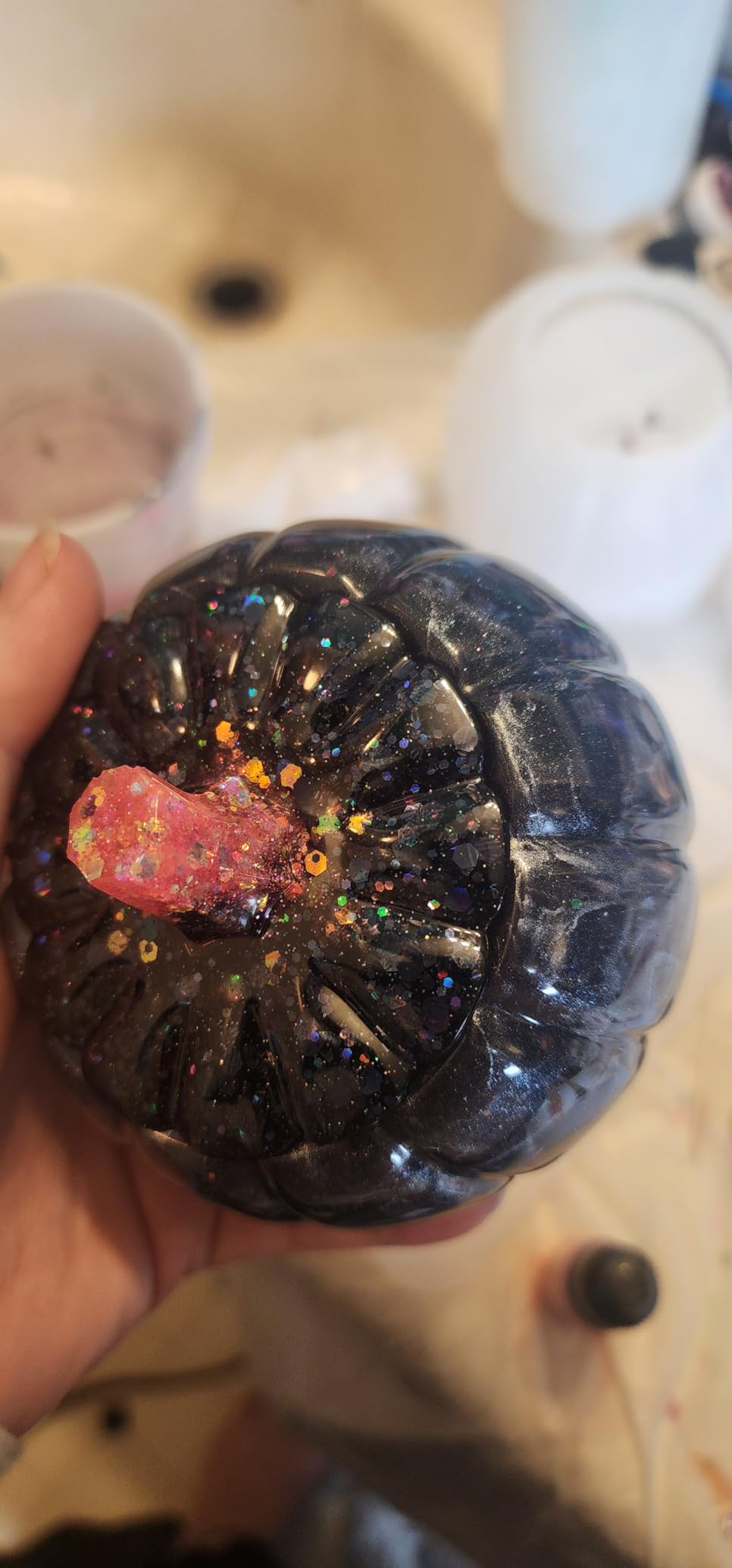
The same range also includes pumpkin ghost, witch cauldron, skull and pumpkin jar variants, so if seasonal crafting is a regular part of your calendar, the brand has covered the other shapes in the same style.
Planning for resin consumption
These are deep cavities in a thick mold body, and deep cavities use a lot of resin. If you are pouring 18 ghosts, measure your batch before you mix. Mixing a full cup and wasting most of it on a single pour is the fastest way to make resin crafting feel expensive.
Mix in small batches instead. Twenty minutes of extra curing time is a fair trade for not pouring a third of a batch down the sink. And keep direct heat away from the mold, since a torch will permanently damage the silicone and warp the detail.
Where it falls short
The theme is the limitation, and it is an honest one. This is a Halloween mold. It will not make an earring for a spring market, and buying it for general jewelry would be a mistake, so consider it a seasonal supplement to your main kit rather than a core mold.
It is also worth noting that the shape library is narrow by design, unlike the large multi-design sheets in this roundup. That is the trade for the detail quality, and for this particular theme most buyers consider it worth it.
How to Choose a Resin Mold for Jewelry
Check the hole design first. A mold with a built-in hanging hole removes drilling from the process entirely. This is the single feature we would pay extra for, because drilling cured resin is slow, needs a rotary tool, and chips pieces. Three of the sets here, including our top pick, cast the hole directly into the cavity.
Look at cavity depth against your design. Flat and shallow cavities are right for studs, charms and blanks. Deep cavities are what you need for layering, embedded flowers and dimensional work. A 0.6 inch sheet is excellent for volume and useless for 3D. Match the depth to the piece, not the other way around.
Choose clear or translucent for UV resin. This is the mistake that produces tacky, uncured pieces. UV resin cures by light, and an opaque mold blocks most of it, so the bottom of a deep cavity never sets. Reviewers on craft forums describe this as the number one reason their pieces stay sticky. The clear, translucent and two-part layered designs in this roundup avoid the problem.
Flex it before you buy it if you can. A good mold is soft and springs back. A bad one is either rock hard or floppy with no memory. If you are buying in person, press the wall and look for a seam line running around the edge. A visible flash line means excess silicone at the parting, and it shows up on every finished piece as a ridge you have to sand off.
Count cavities against your batch size. Four cavities are fine for learning. Sixteen is a comfortable batch. Thirty-eight and fifty-eight are production quantities. Buying two small sets that repeat the same design often beats buying one large sheet with a shape you only need once.
Check the diameter of the hole, not just that it has one. A narrow hanging hole can close up if you overfill, and standard jump rings can be too small for a thick piece cast into a deep cavity. Check the stated cavity dimensions against the jump ring size you plan to use before you commit.
Read the review count, not just the star rating. Every set here sits between 4.4 and 4.7 stars, so the ratings barely separate them. Review counts, which run from 719 to more than 3,700, tell you much more about consistency. Our top pick combines the highest rating in the roundup with a review count well above the middle of the list, which is why it wins.
Know where you are buying. Amazon and Walmart give you fast delivery and easy returns, and that matters most for a first order. Etsy custom mold shops are the route for a unique shape nobody else sells. Brand sites give you the full catalog and the clearest specifications. We have covered the broader tool side in our guides to the best silicone molds for resin casting and the best two-part silicone rubber for making your own molds, and the all-in-one side in our roundup of the best jewelry making kits.
Red flags before you buy. Cloudy silicone, a mold that arrives warped, cavities that are visibly thin at the wall, and a listing with no cavity count and no dimensions. A listing that never states how many pieces are in the set is telling you something. If you want to make your own molds rather than buy finished ones, start with a two-part silicone rubber rated for jewelry work.
Mold Care: Cleaning, Storage and Release
Mold release spray is not required with a good quality silicone jewelry mold. A glossy cavity releases cleanly on its own, and spraying release agent leaves a film on the finished piece that dulls the shine and collects dust. If you are reaching for a release spray, it is usually a sign the mold is low quality or the resin is not fully cured.
Clean molds with warm soapy water and a soft brush. A toothbrush gets into the detail lines without scratching the cavity. Never use a sharp tool to scrape out cured resin, because you will cut the silicone, and a scratched cavity scratches every piece you cast in it afterward.
Dry molds completely before storing them. Silicone stored damp picks up dust in the cavities, and dust ends up embedded in your next pour. Store them flat with nothing heavy on top, and keep them somewhere cool and out of direct sunlight.
Let resin cure completely before you demold. Pulling a piece out early is the most common cause of torn cavities and permanently deformed molds. With epoxy that means the full stated cure time, not a few minutes of surface hardness. With UV resin, check the underside rather than the top, because the top always looks done first.
Keep heat away from silicone entirely. Torches and heat guns will warp a mold permanently, and the warp does not come out. A UV lamp speeds up curing without any risk to the silicone.
Frequently Asked Questions
What is the best resin kit for jewelry making?
The best all-in-one kit for jewelry making is one that includes molds plus the findings you need to finish the pieces. A 28-mold, 678-piece kit covering earrings, studs, pendants, rings and bracelets with hooks, posts, screw eye pins and jump rings lets you cast and assemble a finished piece without a second order. For the best single mold, a 16-cavity set with built-in hanging holes is the strongest starting point.
What type of resin should a beginner use?
Beginners should start with epoxy resin because it self-levels, has a long working time and is forgiving of small mistakes. Pour slowly from the bottom up and let it cure fully before demolding. UV resin cures in minutes, which is useful once you are confident, but it does not self-level as well and needs light to reach the resin, so a clear or translucent mold helps.
Do I need mold release for silicone molds?
No, a good quality silicone jewelry mold does not need mold release spray. A glossy cavity releases cleanly on its own. Release agent leaves a film on the finished piece that dulls the shine and collects dust. If a piece is sticking, the usual causes are pulling before the resin has fully cured, a low quality cavity, or a silicone that is too soft to hold its shape.
How do I clean resin molds?
Clean silicone resin molds with warm soapy water and a soft brush, and use a toothbrush to get into the detail lines without scratching the cavity. Never scrape out cured resin with a sharp tool, because it cuts the silicone and a scratched cavity marks every piece you cast in it afterward. Dry the mold completely before storing it.
Why is my resin not curing in the mold?
The most common cause with UV resin is an opaque mold blocking the light before it reaches the bottom of the cavity, leaving a tacky uncured layer. Use a clear or translucent mold, or cure from underneath. Other causes are pouring too deep in one go, mixing the resin and hardener at the wrong ratio, or demolding before the stated cure time has passed.
Can I use baking molds for resin?
No, do not use baking molds for resin. Most are made from polypropylene or thermoplastic rather than flexible silicone, so they will not release cleanly, they lack a glossy surface, and they can be damaged by the heat resin generates during curing. Flexible silicone jewelry molds are made for the job and give you a finish that needs no polishing.
Conclusion
After working through all twelve, the LET’S RESIN 16-cavity keychain mold is the one I recommend most often. It holds the highest rating in the roundup, it casts the hanging hole for you, and sixteen cavities means a real batch in a single pour rather than one piece at a time.
Pick a different mold when your project demands it. For crystal pendants with real faceting, the 18-piece crystal set is the only option here that delivers it. For a complete first purchase, the 678-piece kit saves you three separate orders. For volume production, the 58-cavity sheet produces more blanks per pour than anything else on the list. For rings, the 14-size set with molded-in markers is the only dedicated tool in the roundup.
Whatever you choose, match the cavity depth to the piece, favor a clear or translucent mold if you use UV resin, and give the resin its full cure time. Those three habits solve most of the problems people run into with resin jewelry. Pick your mold from the list above, start with one cavity to learn the pour, and widen out from there.