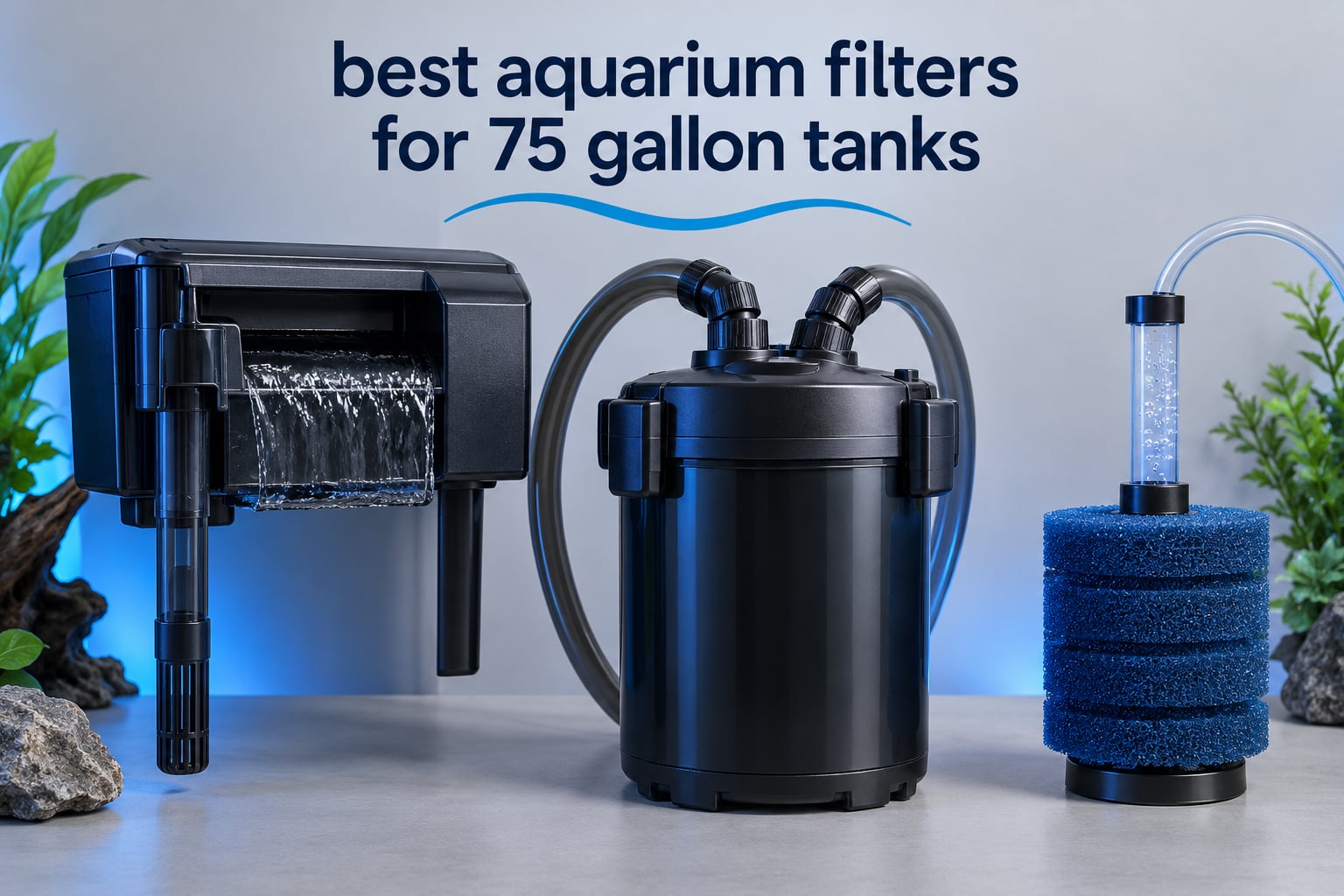
The best aquarium filters for 75 gallon tanks are the Marineland Penguin 375 GPH for the simplest install, the Fluval 407 for the quietest canister, and the Penn-Plax Cascade 1000 for the most filter media for the money. Aim for a filter rated between 300 and 450 GPH, which is four to six turnovers of a 75 US gallon tank every hour. Anything below 300 GPH will struggle on a heavy fish load, and anything far above it usually means paying for head you cannot use.
That is the short version. The longer version is that a 75 gallon tank is the point where filters start to matter. Below about 40 gallons, almost anything works. At 75, the difference between an undersized unit and a properly matched one shows up in cloudiness within a week and in ammonia spikes within a month.
We spent the last few months working through eight of the most-reviewed filters in this size class, reading the long-form owner reports on each one, and checking where the manufacturer’s flow claims hold up once hoses are attached. What follows is the ranking, the flow math behind it, and the maintenance plan that keeps the biology alive.
Before we get into the picks, four flow targets matter for a tank this size:
Light community load — a dozen tetras and a couple of cories: 250 to 300 GPH is workable.
Typical community load — the target most keepers should aim for: 300 to 450 GPH.
Messy fish — goldfish, large cichlids, turtles: 400 to 600 GPH, with room to run a second filter.
Low-flow species — axolotls, bettas, long-finned angelfish: flow you can dial down or diffuse with a spray bar.
If you want the broader picture before you commit to a size, our general aquarium filter roundup covers smaller tanks and the filter families in more depth. For 75 gallons specifically, the differences below are what matter.
Table of Contents
Top 3 Picks for Best Aquarium Filters for 75 Gallon Tanks in 2026
Marineland Penguin 375 GPH
- 375 GPH rated flow
- BIO-Wheel wet/dry bio stage
- Rated up to 75 gallons

Best Aquarium Filters for 75 Gallon Tanks in October
| Product | Specifications | Action |
|---|---|---|
| Marineland Penguin 375 GPH Power Filter |
|
Check Latest Price |
 Tetra Whisper IQ 300 GPH Power Filter Tetra Whisper IQ 300 GPH Power Filter |
|
Check Latest Price |
 Penn-Plax Cascade 1000 Canister Filter Penn-Plax Cascade 1000 Canister Filter |
|
Check Latest Price |
| Fluval 407 Performance Canister Filter |
|
Check Latest Price |
 Marineland Magniflow 400 GPH Canister Filter Marineland Magniflow 400 GPH Canister Filter |
|
Check Latest Price |
 Seachem Tidal 110 HOB Filter Seachem Tidal 110 HOB Filter |
|
Check Latest Price |
 Aqueon PRO QuietFlow Size 75 Power Filter Aqueon PRO QuietFlow Size 75 Power Filter |
|
Check Latest Price |
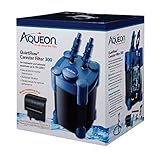 Aqueon QuietFlow Canister 55-100 Gallons Aqueon QuietFlow Canister 55-100 Gallons |
|
Check Latest Price |
1. Marineland Penguin 375 GPH Power Filter
Marineland Bio-Wheel Penguin 375 GPH Power Aquarium Filter
Rated flow 375 GPH
BIO-Wheel wet/dry bio stage
Single unit covers up to 75 gallons
Pros
- Rated for exactly this tank size
- Very quiet when water level is high
- Easy first-timer setup
- Long service life reported by owners
Cons
- Does not self-prime
- Cartridge media needs regular replacement
- Replacement parts cost more than they used to
We put this one at the top because it does the least amount of nothing. The Marineland Penguin 375 is a hang-on-back power filter rated to 375 GPH and sold as a match for tanks up to 75 gallons, which means the box rating and the tank match instead of the box rating being a stretch.
At 375 GPH you get five turnovers an hour on a 75 gallon tank, right in the middle of the range that keeps a community tank clean without whipping the surface apart. The adjustable intake vent lets you aim the return across the back of the tank rather than straight at the glass, which matters if you sit close to it.
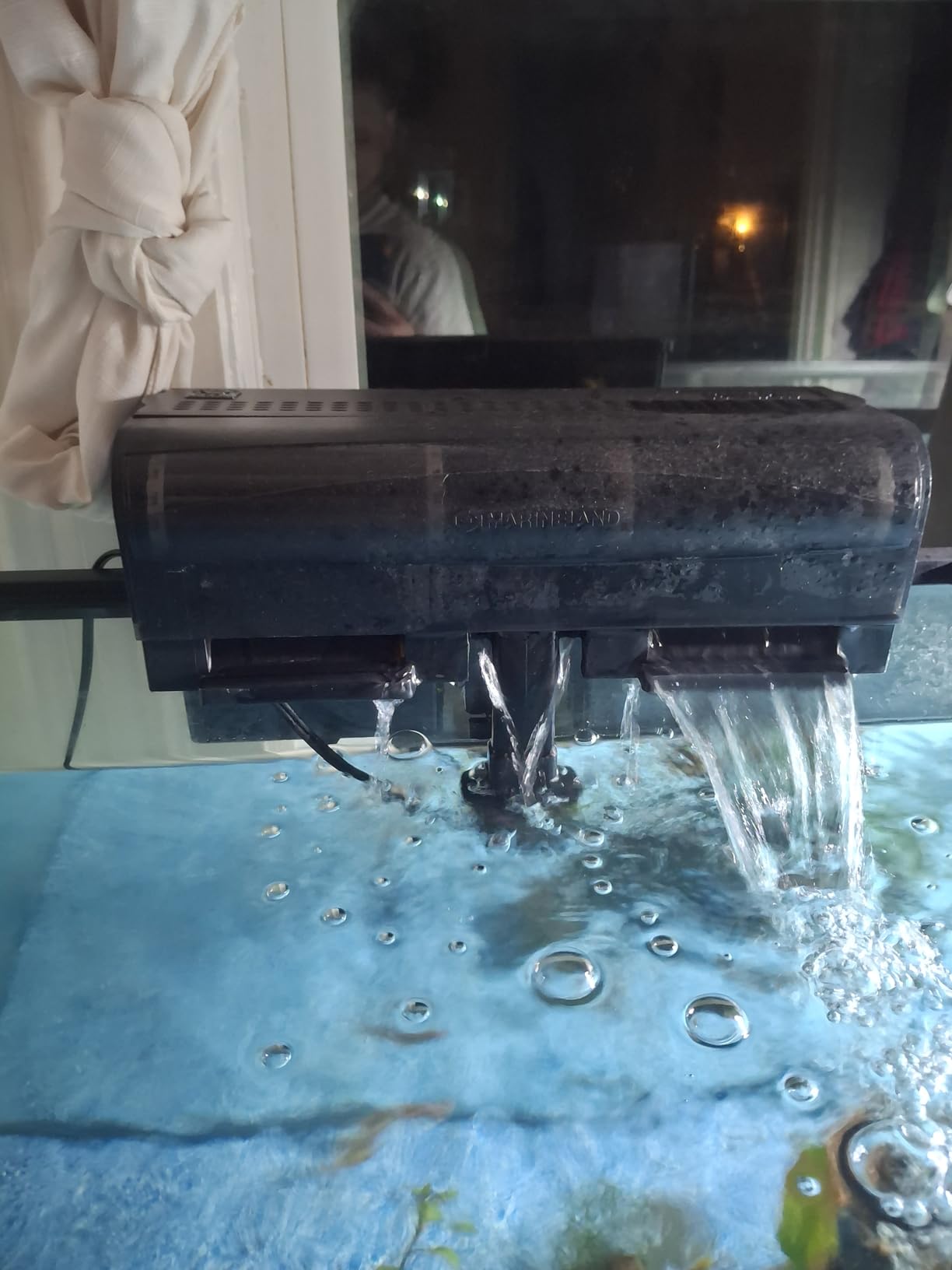
The BIO-Wheel is the part worth understanding before you buy. It is a wet and dry biological stage where water flows over a rotating wheel with a thin water film on part of it. That exposed, oxygen-rich surface gives nitrifying bacteria far more room than a fully submerged block of ceramic media, which is why this style shows up in tanks that need stable ammonia handling.
The trade-off is cartridge media. The Penguin uses Marineland Rite-Size C cartridges, and cartridges are consumables. You will buy them regularly, and the biological benefit depends heavily on how much of the old cartridge you leave in the flow when you swap it.
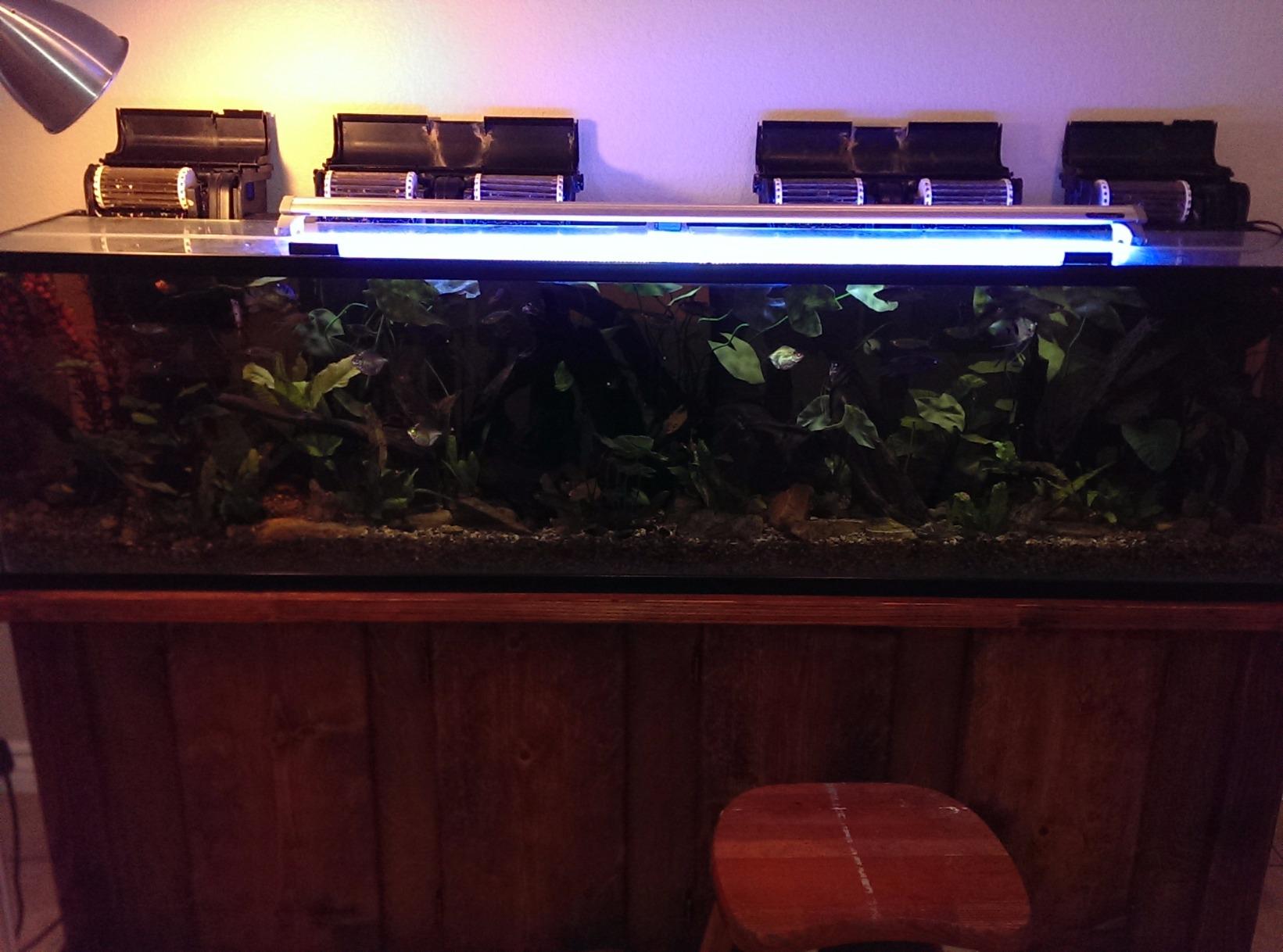
Who the Penguin suits
It suits anyone running a standard freshwater community tank in a 75 gallon footprint, particularly if this is your first tank and you want something that mounts in ten minutes and runs quietly. It also works as the second filter in a dual setup, where its hang-on-back footprint frees up cabinet space a second canister would eat.
Owners consistently report crystal clear water and years of service from the same unit, and the wet and dry wheel handles a moderate bioload without any special media changes. If your tank is heavily planted and you run CO2, you will want to run it on a timer or turn the flow down, because 375 GPH straight into a planted tank will strip carbon dioxide.
Who should skip it
Skip it if you hate cartridge filters or if you are running goldfish, where cartridge changes every few weeks becomes a chore you did not sign up for. The intake also does not self-prime, so after a power cut or a water change you have to fill the reservoir by hand before it starts moving water.
Be aware that impeller rubber parts on this design wear out eventually, and replacement part pricing has climbed. That is a real cost of ownership line item over a five-year life, though most owners replace the impeller long before they replace the motor.
2. Tetra Whisper IQ 300 GPH Power Filter
Tetra Whisper IQ 300 GPH Power Filter For Aquariums
Rated flow 300 GPH
Sound shield under 40 dB
Self-priming submerged motor
Pros
- Self-priming after power cuts
- Sound shield under 40 dB
- Adjustable flow and intake height
- No drip line to route
Cons
- Maker rates it for tanks up to 60 gallons
- Flow dial is very sensitive
- Cartridge refills sold separately
This is the power filter that shows up as the top seller in its category, and the reason is not flow. It is that the motor sits submerged inside the filter housing, so the pump starts itself. No filling a reservoir, no siphoning, no wondering why nothing is happening after a power interruption.
Rated at 300 GPH, that works out to four turnovers an hour on 75 gallons. That is the bottom of the range we would call acceptable, which means the right home for this filter is a community tank with a modest fish load rather than a messy one.
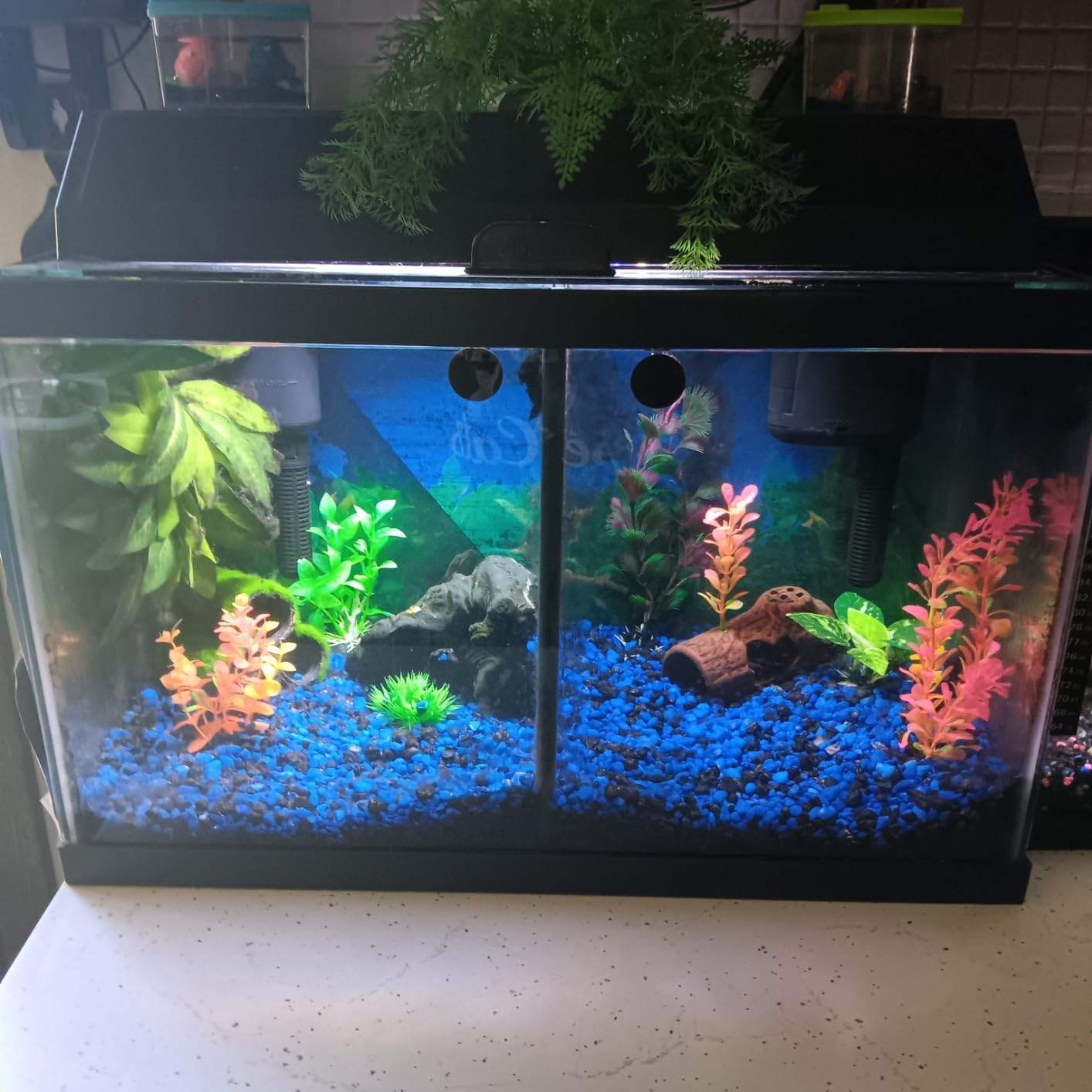
The sound shield is the quiet story here. Owners put it under 40 dB, and since the housing encloses the motor rather than letting it hang off the back on a bracket, vibration transfer into the glass is low. On a bedroom install this is the one we would try first.
There is also a Stay Clean feature designed to hold pH steadier by keeping waste in the water column moving past the media rather than letting it settle. It is not a substitute for water changes, but in practice it slows the rate at which the water needs them.

Who the Whisper IQ suits
It suits small, peaceful fish in a room where pump noise would be annoying. A nano schooling community, a betta or shrimp setup, or a planted low-tech tank where you want gentle flow across the substrate and no splashing at the surface.
The self-priming behaviour is the underrated advantage. Keepers running filters in tanks that see regular power interruptions, or who move tanks around a lot, will feel that difference every single time.
Who should skip it
Skip it for a heavy fish load. The manufacturer rates this unit for tanks up to 60 gallons, so on a 75 gallon tank you are running it outside its intended class, and the 300 GPH rating gives you no headroom if the bioload grows.
The flow control dial is also sensitive. A small twist produces a large change in output, which is a nuisance if you are trying to fine-tune surface agitation around a planted bed. Some owners have also reported the housing separating at the spillway connection and leaking, so keep an eye on that seam during your first few weeks.
3. Penn-Plax Cascade 1000 Canister Filter
Penn-Plax Cascade 1000 Canister Filter – 265 GPH Aquarium Filter for Tanks Up to 100 Gallons – 360 Degree Flow Valves, Poly Fiber Pads, Bio-Sponge & Activated Carbon -Fresh & Saltwater -11.5x10x17in
Rated flow 265 GPH
Three stackable media baskets
Push-button primer, 28.5W
Pros
- Three large stackable media baskets
- Complete media kit in the box
- 360 degree valves ease cabinet routing
- Good value for a canister
Cons
- Lowest flow figure in the roundup
- Plastic hose clamps loosen
- Rigid tubing makes outflow placement awkward
The Cascade 1000 is the value pick, and the reason is media volume. Three stackable baskets with built-in handles is more usable filter capacity than most filters at a higher tier, and capacity is what lets you clean one stage without stripping the entire biological bed at once.
Flow is rated at 265 GPH, the lowest figure in this list. On 75 gallons that is about three and a half turnovers an hour, so it needs help if your fish load is on the heavy side.
The push-button primer takes the intimidation out of canister ownership in a way most canisters do not. Fill the housing, press the button until it stops sucking air, and the pump catches.
It does not always catch on the first try, so have a small water bottle ready to top up the housing and press again.
Two 360 degree rotating valve taps let you swing the intake and outflow to fit a tight cabinet without fighting rigid tubing. Owners running canisters in tight spaces consistently call this out as the reason the routing finally works.
Who the Cascade 1000 suits
It suits a keeper who wants canister media capacity without paying for the premium tier, and anyone who plans to add a second canister later. Because media baskets are large, many owners pair this with a smaller hang-on-back and split the biological load between them.
It also suits anyone breeding or raising fry, where the coarse bio-sponge and floss pads included in the box are a useful starting stack you can add to rather than buy from scratch.
Who should skip it
Skip it if you have goldfish, large cichlids or turtles and only plan to run one filter. At 265 GPH there is simply not enough flow for that bioload, and no amount of media capacity compensates for water that never gets moved.
Replace the plastic hose clamps with metal ones before you install it. They loosen with heat and vibration over time, and a canister leak on a 75 gallon tank is a bad weekend. The rigid tubing also makes it harder to aim the return where you want it, so plan your spray bar position before you plumb it in.
4. Fluval 407 Performance Canister Filter
Fluval 407 Performance Canister Filter – For Aquariums Up To 100 Gallons
eTEC pump technology
EZ-Lift baskets, one-finger removal
Quick-disconnect valves, 9.7 lb
Pros
- eTEC pump rated up to 25 percent quieter
- Exceptional water clarity
- EZ-Lift baskets and quick-disconnect valves
- Handles a heavy fish load
Cons
- Impeller cover design flaw on some units
- Motor head failures recur for a few owners
- Customer service reported as unresponsive
The Fluval 407 is the one we would put on a 75 with a heavy fish load and then stop worrying about. It is rated for tanks up to 100 gallons, so at 75 it has headroom rather than being at its limit, and the build quality stands apart from the rest of this list.
The eTEC pump is the quiet story. Owners describe it as barely audible at normal water levels, and the current generation is rated to run up to 25 percent quieter than the model it replaced. If your tank sits in a living space, that difference is real and it is not marginal.
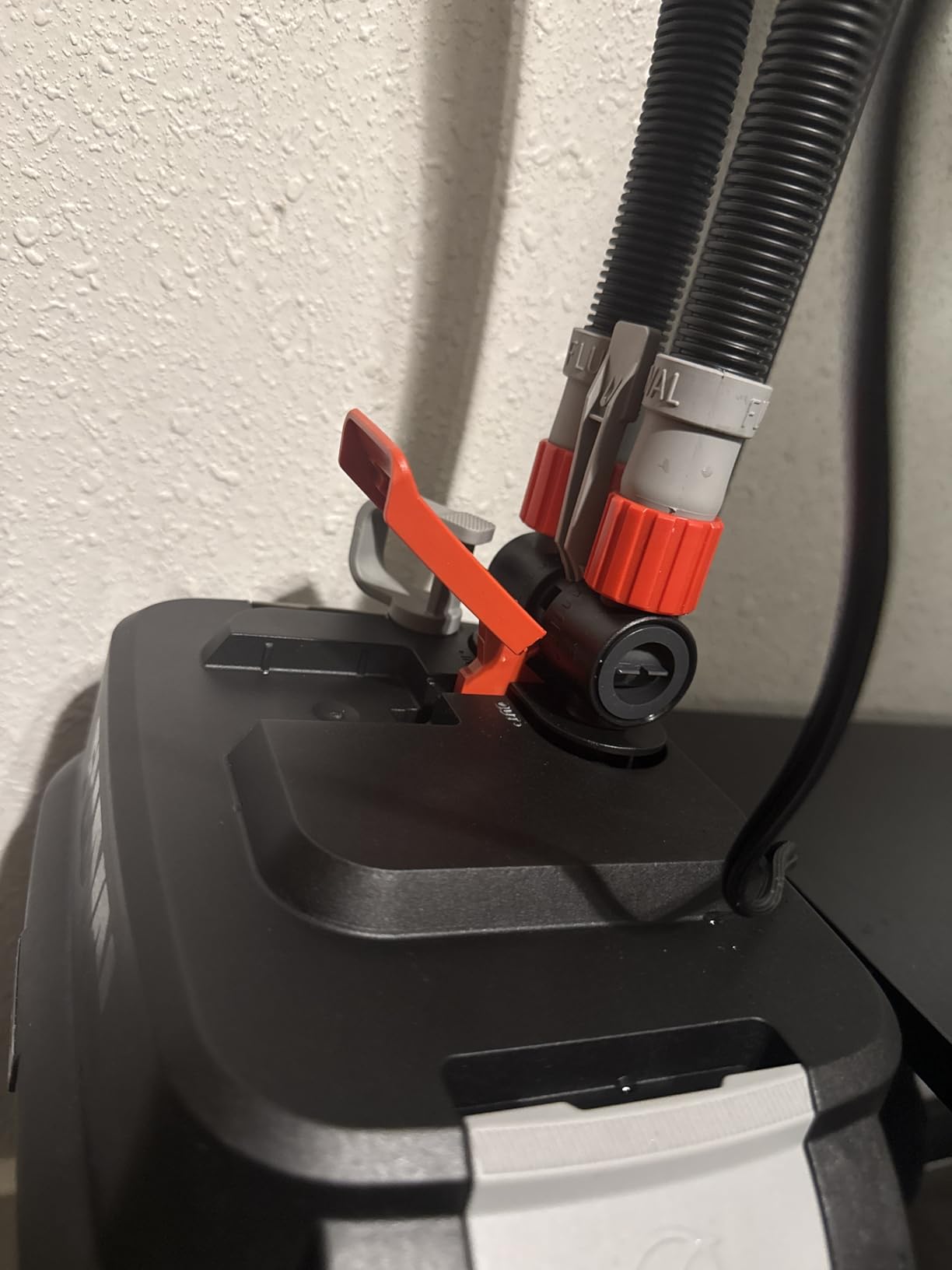
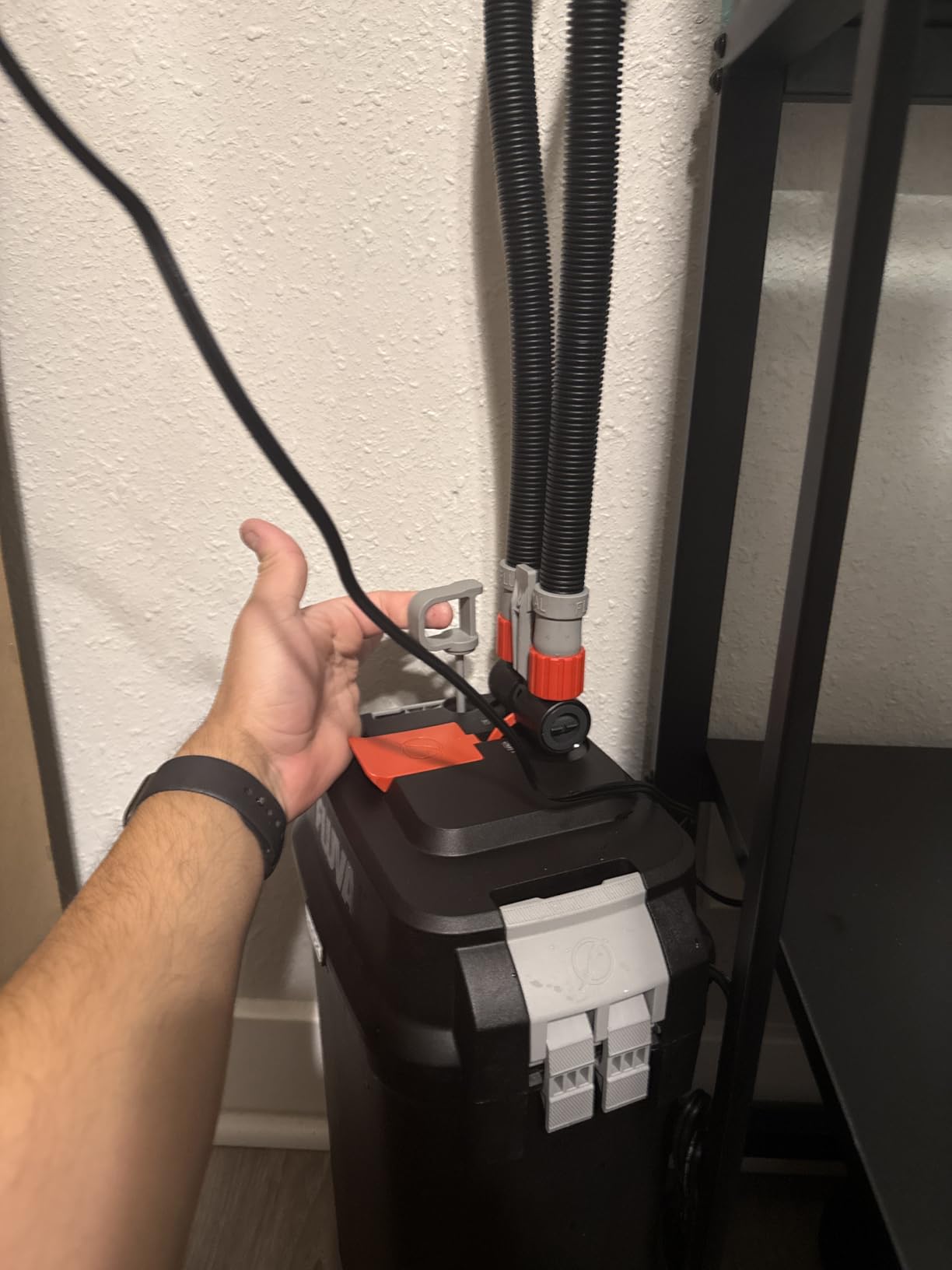
The EZ-Lift media baskets are a small design decision with an outsized effect on how often you actually clean. Each basket lifts out with one finger on a centre handle, so servicing the filter does not involve prying plastic trays out against suction the way cheaper designs require. Quick-disconnect valves on the hoses mean water stays in the tubing when you open the lid.
Owners report crystal clear water within days of a tank reset, and the flow is strong enough for a heavy fish load. Fluval states energy consumption comparable to an LED bulb, which is a fair claim given the motor runs continuously.
Who the Fluval 407 suits
It suits a tank with a heavy fish load, a tank you want to leave alone for weeks at a time, and anyone who cares about noise more than sticker value. It also handles a tank with a sump or a lot of hardscape, where extra head compensates for lift through the plumbing.
For tanks where CO2 is injected, its flow can be dialled back at the spray bar and pointed across the tank rather than straight down, which makes it a workable planted option despite the raw output.
Who should skip it
Skip it if the budget is the deciding factor. Replacement parts on this line are expensive, and the manufacturer has been criticised by owners for slow support on motor head problems.
There is also a specific reported design flaw on this generation: the impeller cover can disengage under pressure, which stops flow. A minority of owners describe repeated motor head failures, some on their fourth or fifth replacement unit. That is a minority pattern and most owners never see it, but it is worth knowing about before you commit, and it is another argument for running a second filter of some kind.
5. Marineland Magniflow 400 GPH Canister Filter
Marineland Magniflow 400 GPH Canister Aquarium Filter
Rated flow 400 GPH
Three Stack N Flo media trays
Quick prime button, 19.27 lb
Pros
- Rated flow of 400 GPH
- Effective on goldfish and heavy fish loads
- Quiet once set up
- Full media kit included
Cons
- Leak reports around gaskets and seals
- Plastic clamps need replacing
- Fixed flow with no adjustment dial
The Magniflow 400 is the flow pick. At 400 GPH it moves more water than any other filter in this roundup, which works out to a little over five turnovers an hour on 75 gallons, and that extra movement is exactly what messy fish need.
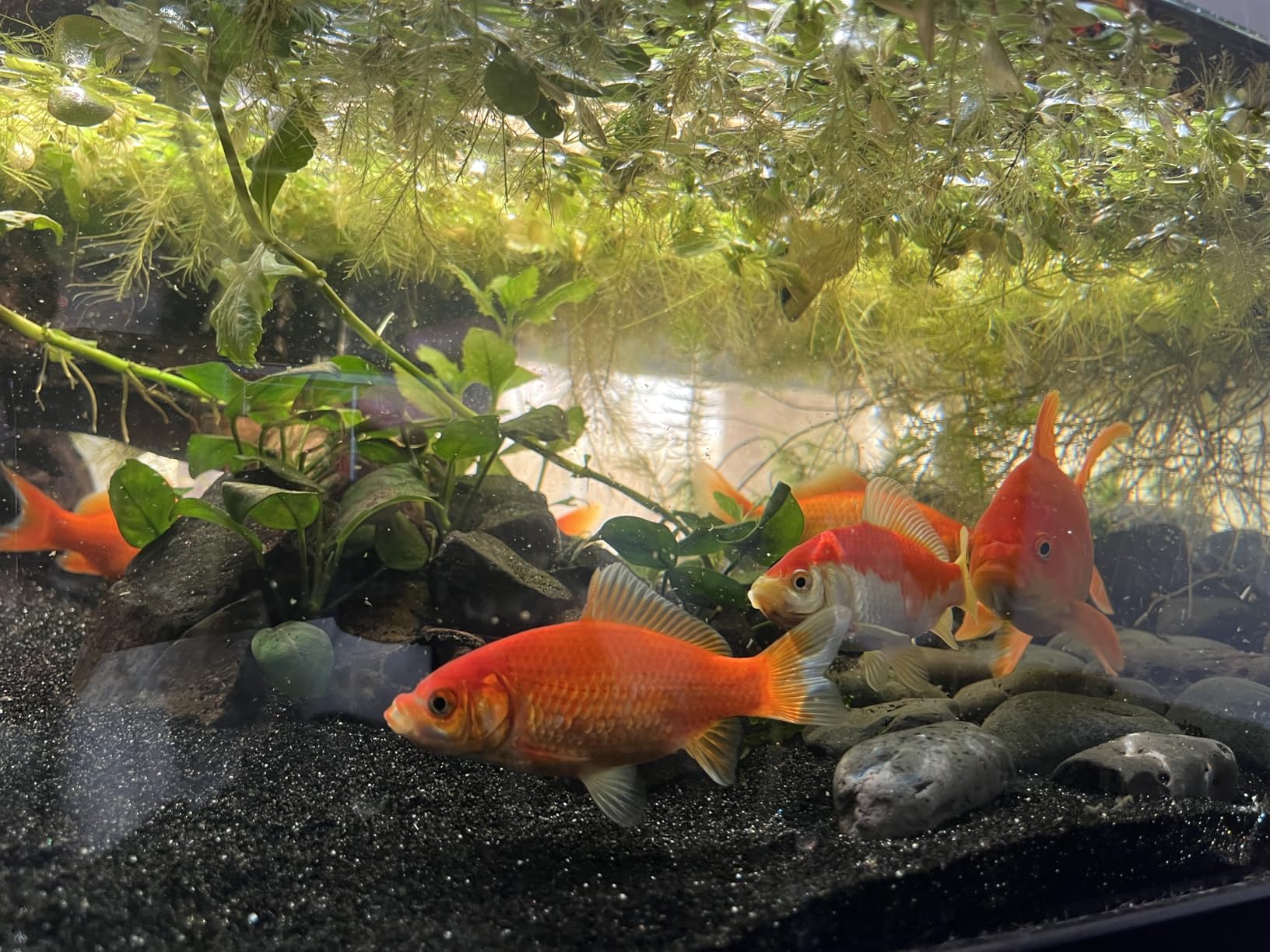
Goldfish and large cichlids produce far more waste than a community tank of the same volume. More flow means waste stays suspended long enough for mechanical media to trap it, instead of falling to the substrate where it decays into ammonia and stirs up when you vacuum.
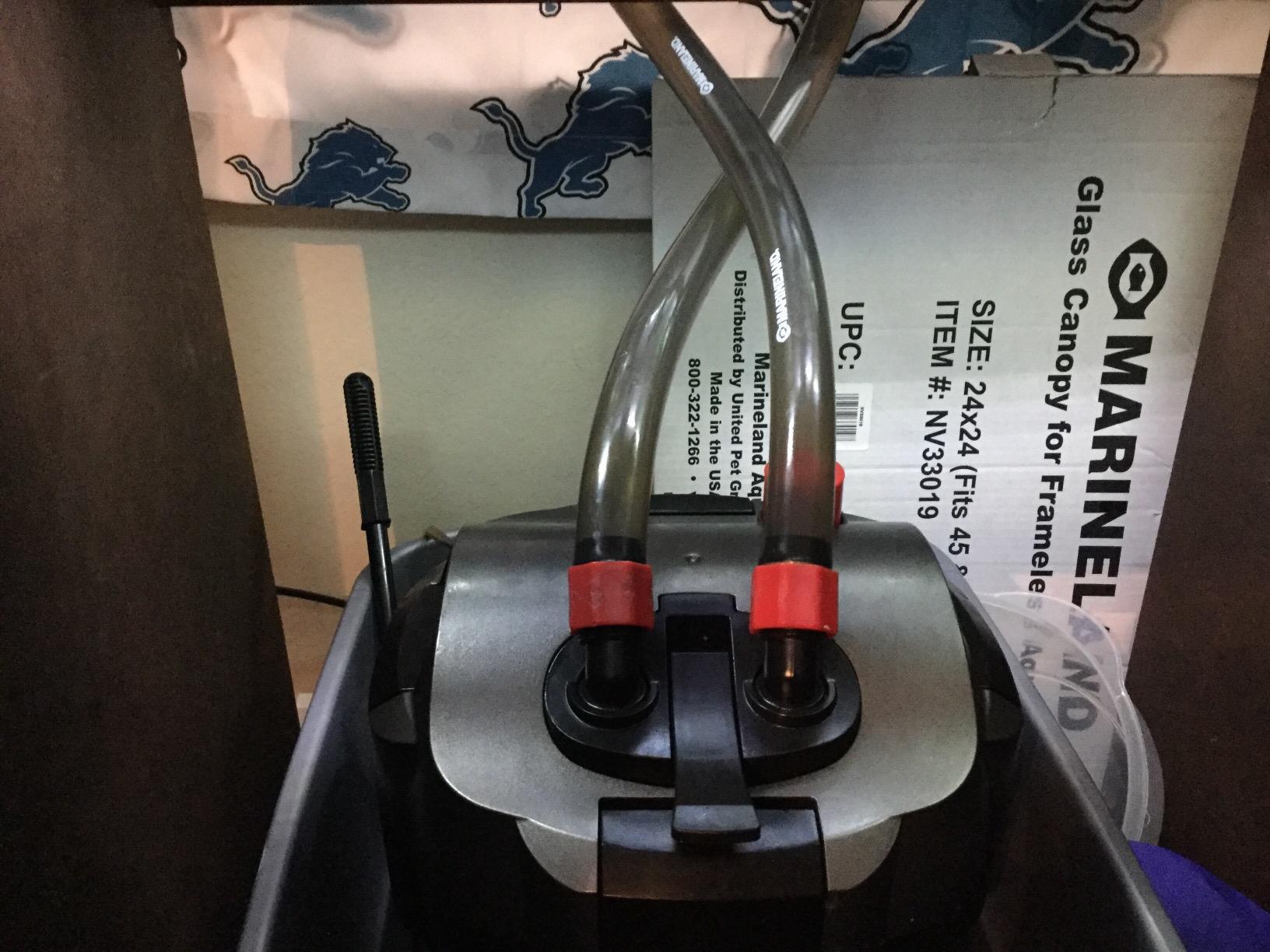
The three Stack N Flo trays force water to pass through each media layer in sequence, which is the right way to stack media. Coarse floss first, then carbon, then biological media at the cleanest end. Owners of cloudy tanks report visible clearing within about a day.
It is also the easiest canister here to set up. Owners describe first-time canister users getting it running in under forty minutes, and the quick prime button does work when you give it several firm presses.
Who the Magniflow suits
It suits goldfish, large cichlids such as oscars and kaisers, and turtle tanks, where waste production is high and the flow rating is the deciding factor rather than media volume. It is also a good second canister for someone who already has a smaller one and is adding a second filter.
The full media kit is genuinely complete, including carbon bags, bio-balls, ceramic rings and polishing pads, so the first service is a media change rather than a shopping trip.
Who should skip it
Skip it if your tank holds low-flow species. There is no flow adjustment dial on this canister, so axolotls, bettas and long-finned angelfish have no way to calm the current except by aiming the return differently. It is also the heaviest canister here at just over 19 pounds, which matters on a standard stand shelf.
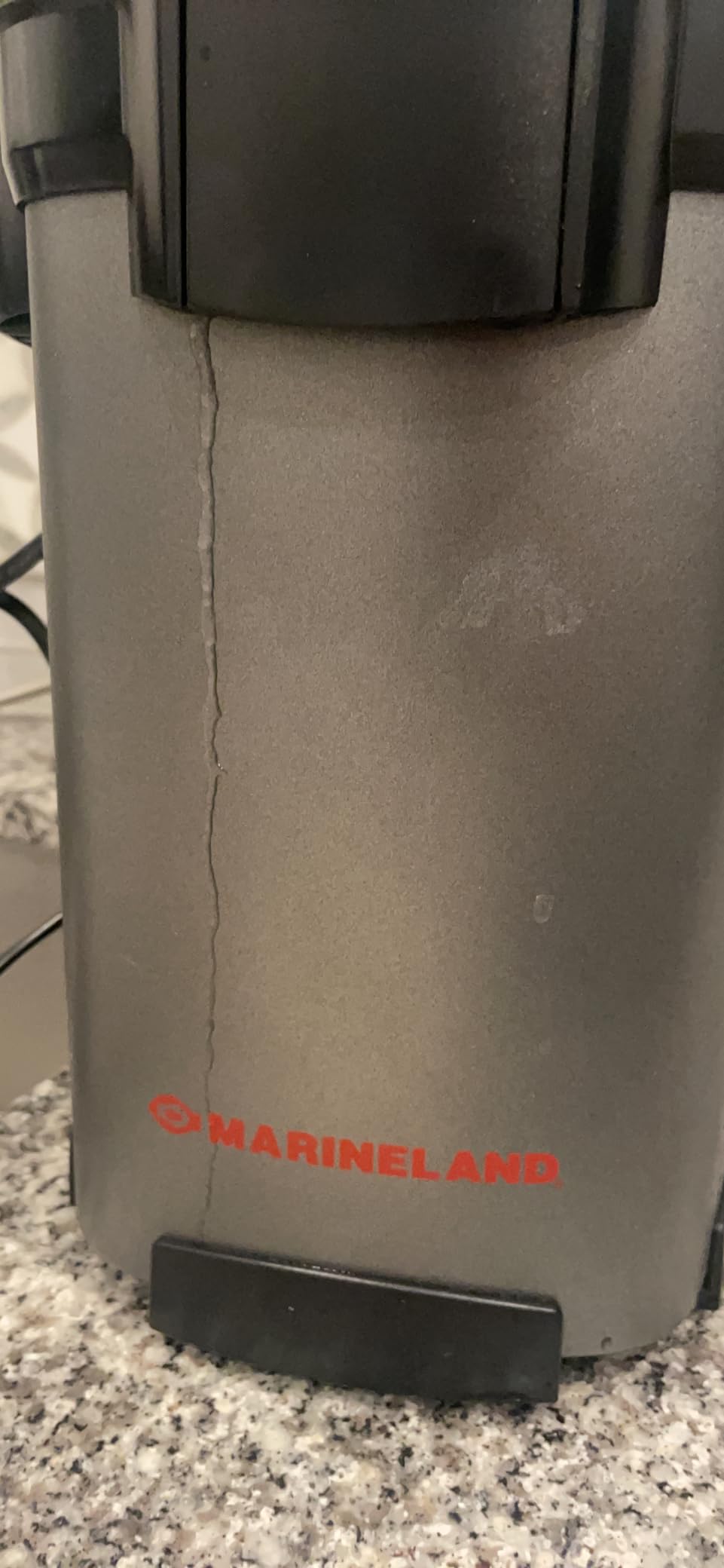
Check the gasket before first filling. Leak reports around the lid seal are the most common complaint, some owners arriving with a missing O-ring, and the fix before anything else is to replace the supplied plastic clamps with metal ones and reseat the seal with the pump running.
6. Seachem Tidal 110 HOB Filter
SeaChem – Large Aquarium Fish Tank Filter, Tidal 110 Gallon (400 Liters) by Sicce
Self-priming pump, self-cleaning impeller
Media tray clips to lid
Surface skimmer included
Pros
- Deep media stack for a rim-mounted unit
- No cartridges
- Starts instantly
- Media tray unclips for cleaning
Cons
- Ceramic dust scratches the housing
- Loud if the tank is not full
- Media changes dump debris back
The Seachem Tidal 110 is the odd one out and the most interesting pick here. It is rated for tanks up to 110 gallons, sits on the back of the tank like a hang-on-back, and holds an unusually deep media stack for a rim-mounted unit.
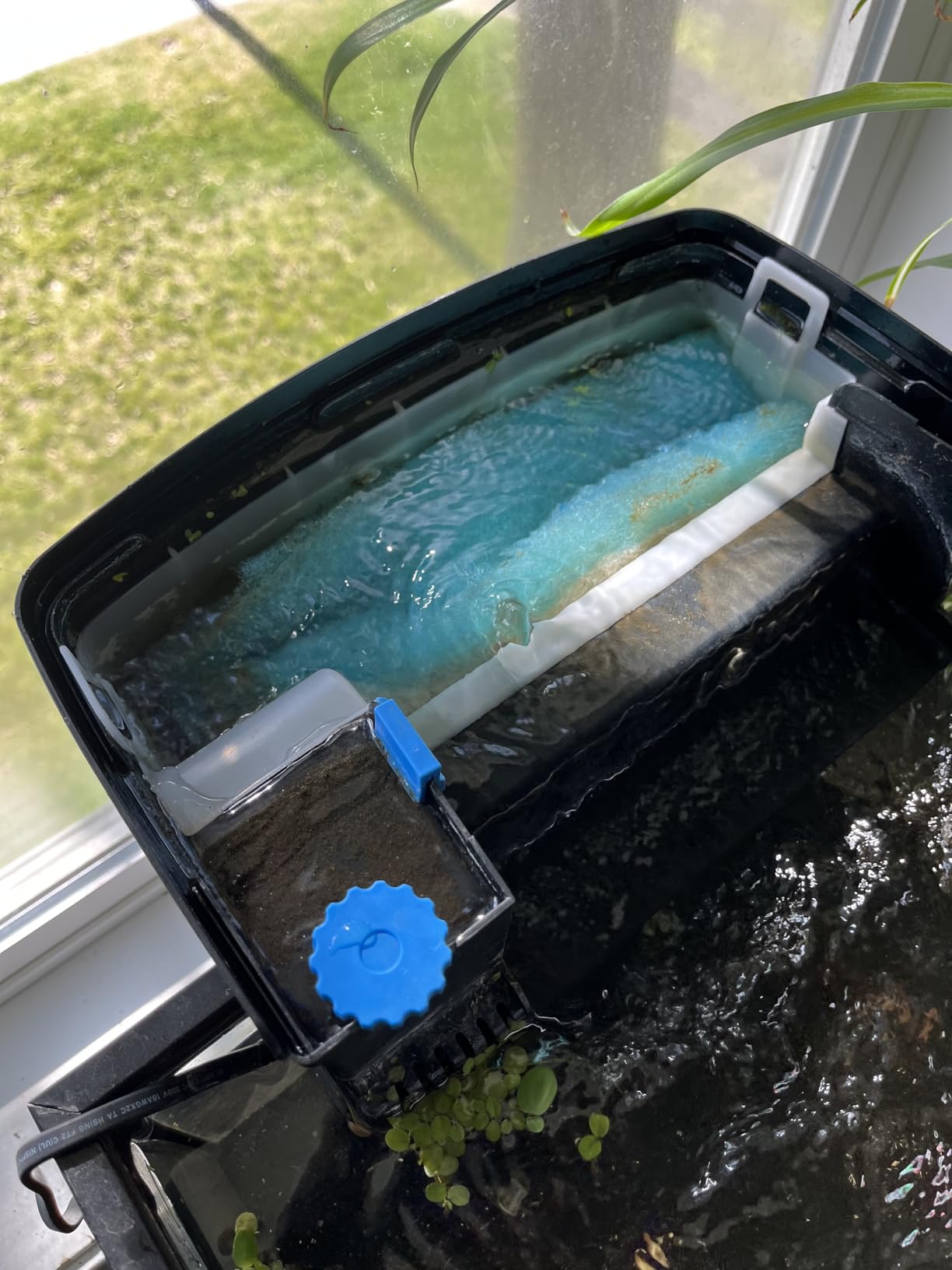
It is built bottom to top. Water enters at the base of the unit, passes up through a deep media stack, and returns at the top through a spray pattern that breaks the surface gently. That vertical layout is what creates the media volume without a canister-sized body.
Two design details change the ownership experience. The media tray lifts out and clips to the lid, so you can carry the whole stack to the sink without media spilling down the back of the tank. And there are no cartridges at all, so you use whatever media you want, which means mechanical, chemical and biological media are all interchangeable.
The pump is self-priming with a self-cleaning impeller, so startup and recovery after a power cut are both immediate. Owners rate flow above the common 110 GPH class of hang-on-back filter that this size is usually compared against.
Who the Tidal 110 suits
It suits anyone who wants canister-class media capacity without hoses running into a cabinet. On a stand with no room behind the tank, or with a solid back panel, this is often the only way to get real media volume at this tank size.
It also suits shallow tanks and low shelving, where a tall canister will not fit. The adjustable levelling device fits a range of rim styles, and the built-in heater holder lets you combine filtration and heating in one footprint.
Who should skip it
Skip it if you are bothered by colour, since the housing uses blue plastic that shows on black trim. Owners also report that ceramic media shipped in the package leaves dust that scratches the housing finish.
The water level sensitivity is the practical issue. This filter gets noticeably loud if the tank is not filled near the rim, and the skimmer will gurgle when the level drops. Run it on a low-water fish tank and you will hear it every day. It also needs frequent cleaning, and lifting the media tray tends to dump debris back into the tank, so have a siphon ready.
7. Aqueon PRO QuietFlow Power Filter Size 75
Aqueon QuietFlow 75 LED PRO Aquarium Fish Tank Power Filter, 90 Gal
Five-stage filtration chain
NoDrip cartridge holster
Internal auto-start pump, 3.8 lb
Pros
- Self-priming and restarts after power loss
- Quiet running
- Customisable specialty pads
- Freshwater and saltwater capable
Cons
- Cartridge refills needed often
- Reliability reports after 7-8 months
- Extra media purchases sometimes needed
The Aqueon PRO QuietFlow Size 75 is the oldest design in this group, on sale since 2010, and that longevity counts for something. It is a proven layout with a large owner base and replacement parts that will still be available in five years.
The internal pump is auto-start, so like the Tetra Whisper IQ it comes back on its own after a power interruption. The size 75 variant is rated for tanks up to 90 gallons, which puts it comfortably in range for this tank size.
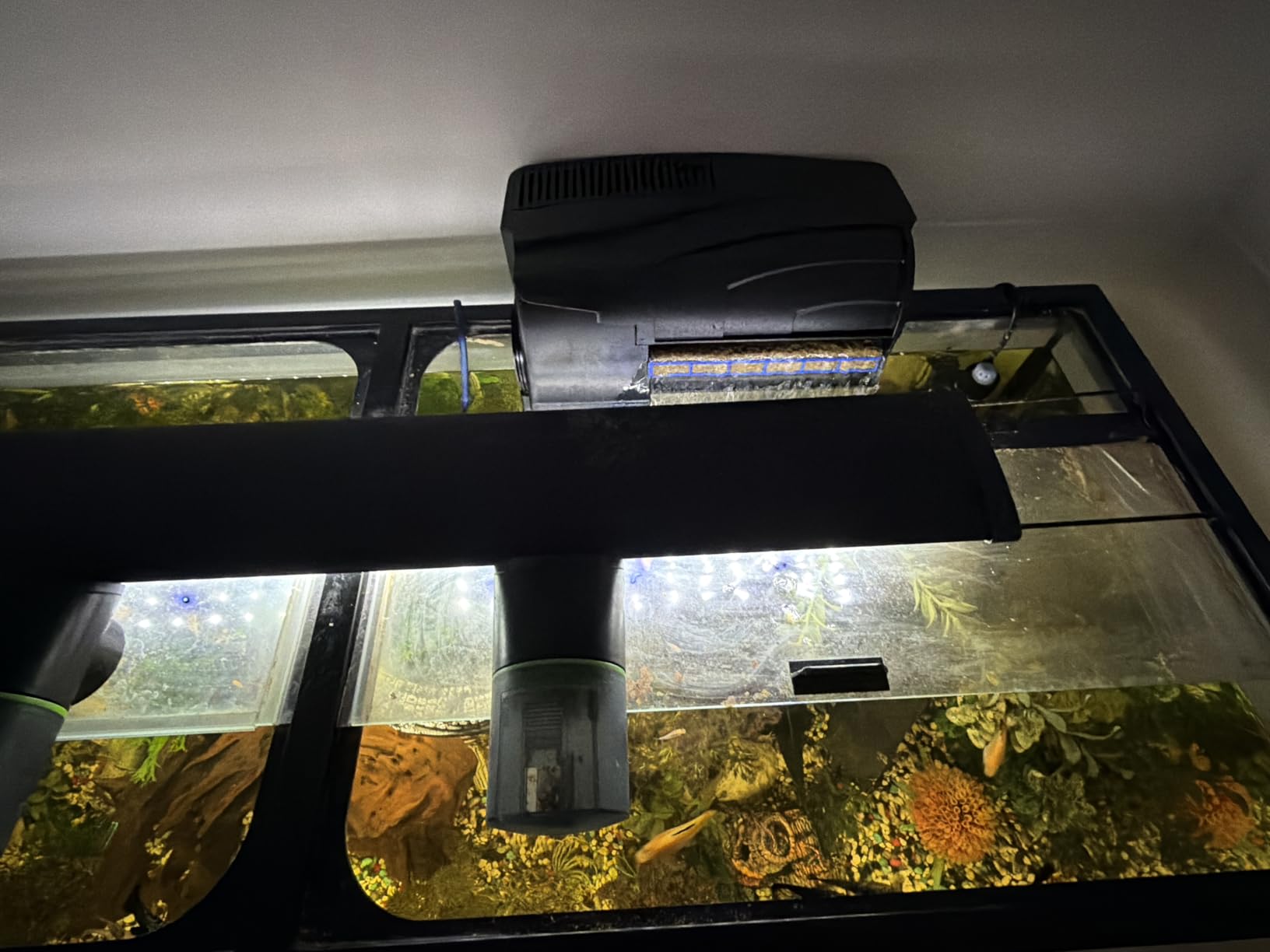
The filtration chain is five stages rather than the usual three: dense floss, carbon, a Bio-Holster stage, a Bio-Media grid, then a specialty pad. That extra stage count gives you a dedicated slot to target a specific problem, like activated carbon after a medication treatment or extra fine pad for a newly cloudy tank.
The NoDrip cartridge and holster design is the practical feature. The cartridge sits inside a sealed holster, so swapping it does not pour dirty filter water down the cabinet. On a filter this size, that saves the two towels you were going to put down first.
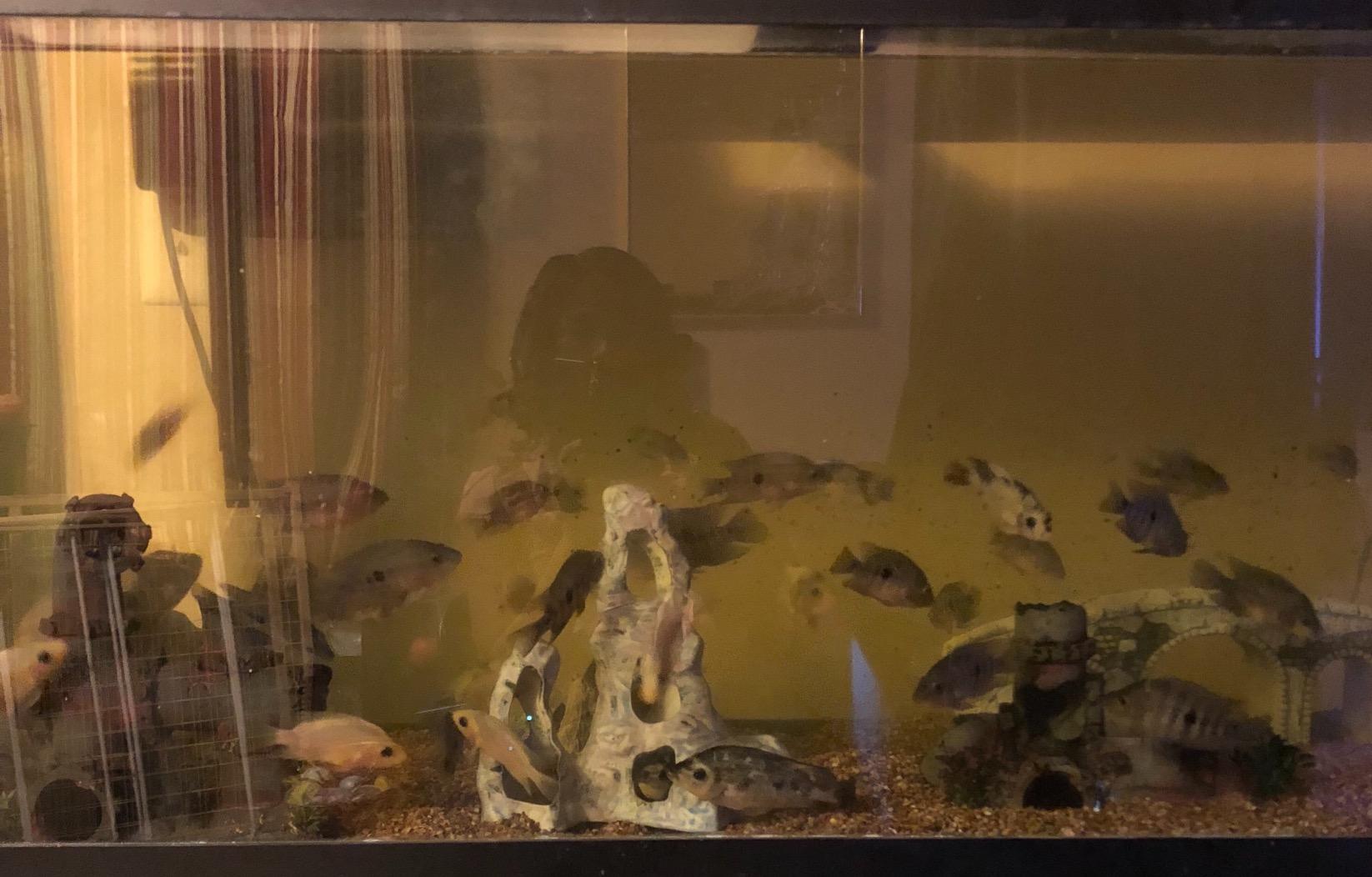
Who the PRO QuietFlow suits
It suits a standard planted or community 75 where you want a quiet, low-maintenance-when-it-works filter with predictable cartridge availability. Owners praise the quiet running, and the specialty pad slot makes it a good platform for temporary problem-solving media.
It also suits anyone who plans to keep this tank for years and wants a design that is not going to disappear from the parts catalogue.
Who should skip it
Skip it if you want to run custom media, because the cartridge format is not modular. You will also buy refills regularly, and the Bio-Holster and Bio-Media grid can need additional media purchases on top of the cartridges.
Reliability is the bigger concern. A fair number of owners report units failing around the seven to eight month mark, and some report difficulty restarting after a cleaning or cartridge change. If you already know you will forget about a filter until something stops, pick a design with fewer consumables.
8. Aqueon QuietFlow Canister Filter, 55-100 Gallons
Aqueon QuietFlow Canister Aquarium Filter, 55-100 Gallons (ECOM)
Rated for 55-100 gallon tanks
Large media baskets, spray bar return
Quick-disconnect valves, 14.9 lb
Pros
- Very quiet after an air purge
- Large baskets
- Three return options included
- Complete media kit supplied
Cons
- Flow is not adjustable
- Two baskets on this size
- Monthly cartridge changes for polishing unit
The Aqueon QuietFlow Canister covers 55 to 100 gallons, which places a 75 gallon tank in the middle of its range rather than at either end. That middle position matters, because a filter is usually happiest when it is not working at the limit of its rating.
What makes it interesting is the included hang-on-back polishing unit. The canister handles the heavy biological work, and the smaller unit on the back of the tank provides a final polish stage using standard Aqueon replacement cartridges. It gives you two filtration stages in different places without buying two full canisters.
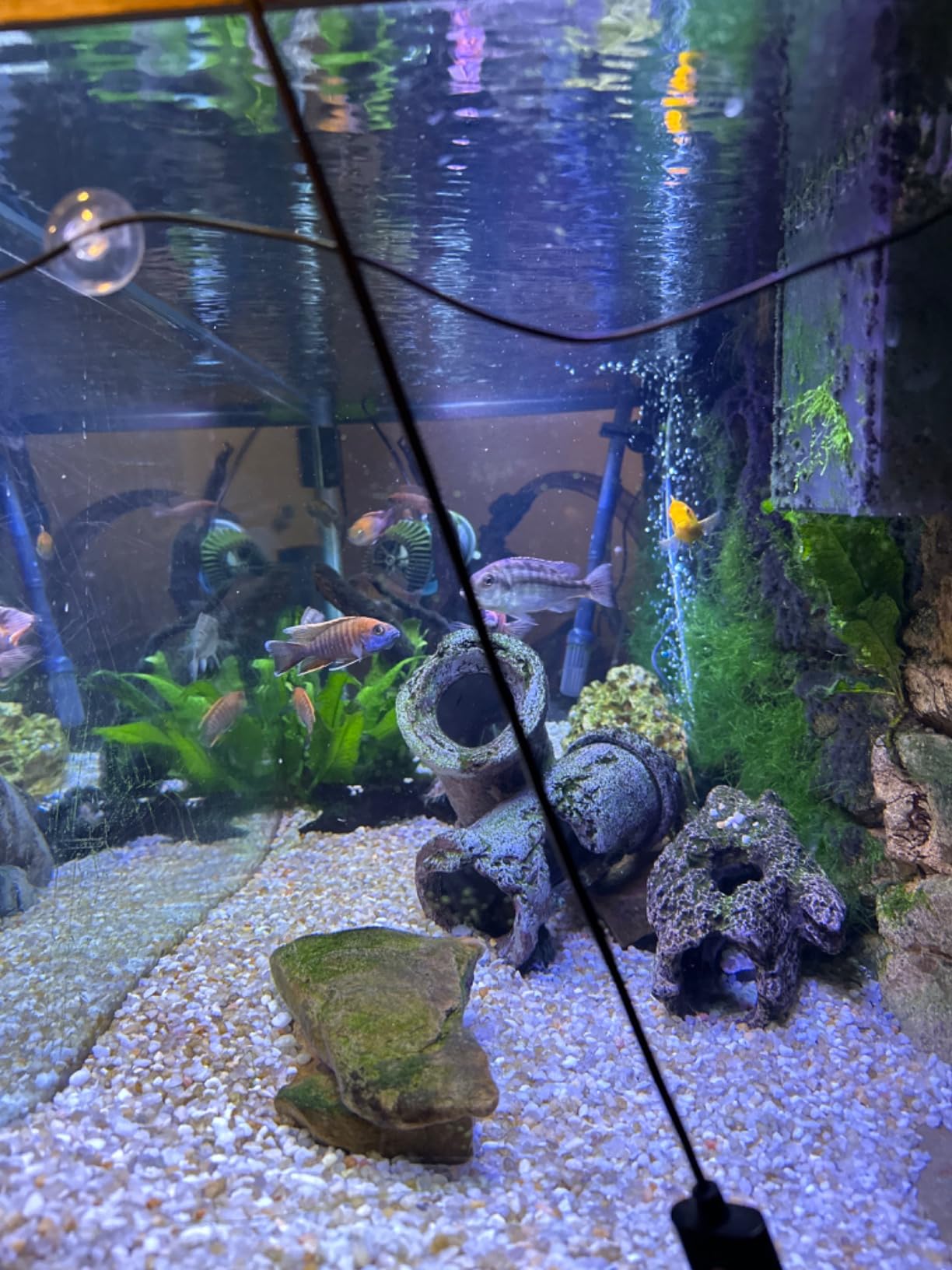
Owners consistently rate it as very quiet after an air purge, which is the standard startup procedure where the housing is filled and the pump is run briefly with the outlet blocked to clear air from the impeller chamber. Once that is done, the unit settles down to a level most owners describe as silent.
Three return options ship in the box: a spray bar for even, gentle distribution, a water director for a concentrated stream, and the polishing unit for secondary filtration. Quick-disconnect valves mean the hoses drain when you open the lid, so servicing happens without a flood.
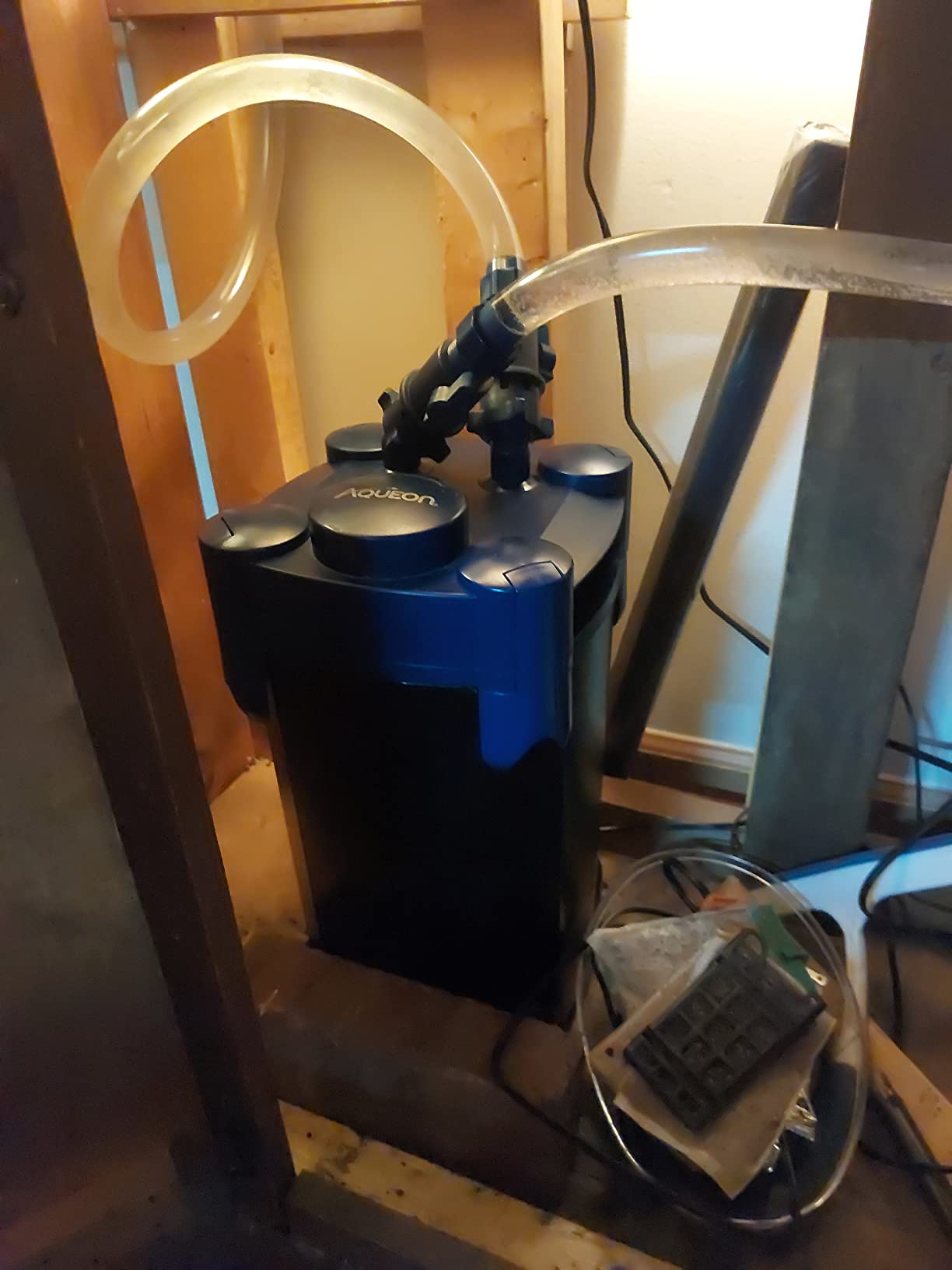
Who the QuietFlow Canister suits
It suits turtle tanks and large messy-fish setups where you want a canister with genuinely large baskets and a second stage of filtration already designed in. Owners of turtle tanks specifically call out the clear water and the low noise.
It is also a strong partner to a hang-on-back if you want dual filtration without two canisters taking up the same cabinet. The canister runs the biology, the smaller unit polishes.
Who should skip it
Skip it for low-flow species. Flow is not adjustable on this canister, so you cannot dial it down for axolotls or long-finned fish. You can change the return fitting, but you cannot change the pump output.
Be aware that this size carries two media baskets rather than three, which is a step down in flexibility from the larger variants. And the polishing unit needs cartridge replacement roughly monthly, which reintroduces the cartridge running cost you were probably trying to avoid by buying a canister.
How much flow does a 75 gallon aquarium filter need?
Turnover rate is how many times your tank volume passes through the filter in one hour. On a 75 US gallon tank, the math is simple: divide the rated GPH by 75.
Marineland Penguin 375 GPH: 5.0 turnovers an hour
Marineland Magniflow 400 GPH: 5.3 turnovers an hour
Tetra Whisper IQ 300 GPH: 4.0 turnovers an hour
Penn-Plax Cascade 1000 at 265 GPH: about 3.5 turnovers an hour
The Seachem Tidal 110, Fluval 407 and Aqueon QuietFlow Canister publish a tank-size rating rather than a flow figure, which is why no turnover number appears for them above. Size ratings and flow ratings are different measurements, and a unit rated for 100 gallons tells you nothing about how many times the water moves through it.
Our working target for a typical community tank is 300 to 450 GPH, or four to six turnovers. Goldfish, turtles and large cichlids push you toward the top of that range or beyond. Axolotls and bettas push you below it, toward any flow you can diffuse.
One more caution that costs many keepers money: the flow number on the box is measured at zero head. Once you attach hoses and lift water to the rim of your tank, actual throughput drops. Hoses that are too long or too narrow cost more than the number suggests, which is a good reason to size up rather than size to the number.
Canister vs HOB vs power filter vs sump
Canister filters hide in the cabinet, give you the most media volume, and take the most effort to prime. They are the right answer for a heavy fish load, for tanks where you want long intervals between services, and for tanks where the cabinet space allows it.
Hang-on-back and power filters mount on the rim, are visible, and service in seconds. They cost less, they use cartridges you buy on a schedule, and their media baskets are small. On a 75 gallon tank, cartridges become a genuine chore, which is the main reason the cartridge-based models here score lower than they otherwise would.
The Seachem Tidal 110 sits between the two categories and resolves the usual complaint about hang-on-backs, which is media capacity. It gives you canister-like volume with rim mounting and no hoses.
Sumps are the most efficient option per watt and the most flexible, and they hold far more water outside the display than any filter on this list. They also cost more, take more plumbing, and need planning. On a new 75 gallon build, a sump is a reasonable choice. As an add-on later, it is a much bigger project.
On when two filters beat one: the most repeated complaint we found across aquarium forums is that filters stop working, usually after a year or two, and a single-filter tank has no answer to that. A medium canister plus a hang-on-back or a sponge filter gives you redundancy, doubles your media volume, and means a failed motor is an inconvenience rather than an emergency. For a 75 with a heavy fish load, that is the arrangement we would build.
For temperature management on large tanks, our notes on aquarium chillers cover the reef side, and controllers cover automation if you are running anything beyond a basic heater.
How we picked these filters
Every filter here has been in production long enough to have a large body of long-term owner reports, which is the only way to find out how a pump behaves after its second winter. We ranked them on six things.
Rated flow against the tank — does the published figure give you four to six turnovers on 75 gallons?
Media capacity — can you clean one stage without destroying the biological bed?
Noise at a realistic water level — not the empty-tank number.
Serviceability — how many tools, drips and awkward steps does a media change take?
Reliability reports — specifically, failures between years one and three.
Running cost — consumables, replacement parts and watts over five years.
We weighted media capacity and reliability highest, because those are what determine whether the tank still looks right in year three. Flow rating decides the ordering within that.
Matching the filter to your fish
A 75 gallon tank can hold anything from a pair of bettas to a rack of large cichlids, and those extremes want opposite things. Goldfish and turtles produce heavy waste and want high flow with big mechanical filtration. Axolotls want low, diffuse flow and a filter they cannot be sucked into.
A planted tank with injected CO2 is the other special case. Strong surface agitation strips carbon dioxide out of the water, which stops plant growth and can encourage algae. Point the return across the surface or use a spray bar to spread the flow instead of aiming it up.
The safest general rule: match the filter to the bioload, not to the glass. A tank’s stated volume tells you the water volume and nothing about how much waste is being produced into it. Keepers running goldfish in a 75 gallon almost always end up adding a second filter within a year.
If you are building a tank around delicate or sensitive species, keep the flow number and the controls together. A filter with an adjustable dial or an intake flow regulator is more forgiving than a fixed-output canister when the fish load changes.
Setup, priming and maintenance schedule
Canisters intimidate people who have never primed one, and the process is genuinely simpler than the reputation suggests.
Fill the housing. Submerge the intake and media baskets fully, then seat the lid with the seal seated flat.
Close the outlet. Block the return with your thumb or a clamp.
Press the prime button. Push until it stops sucking air. If a canister will not catch, fill the housing again and repeat.
Open the outlet. Air purges through the line and flow starts within a few seconds.
Seal the lid. Turn the filter on, check every hose clamp for drips, and confirm the canister lid is tightening against its seal rather than being forced.
Replace the plastic clamps. Use metal clamps. Do this before the first service, not after the first leak.
For maintenance, a rhythm works better than reacting to cloudy water:
Weekly — rinse mechanical media in removed tank water. Never rinse biological media, and never use tap water, which kills the nitrifying colony you are trying to keep.
Monthly — clean carbon and any fine pads. Replace cartridges on a cartridge filter rather than rinsing them forever.
Every three months — full service: open the canister, rinse all mechanical stages, wipe the housing, and replace any biological media that is more than a year old.
Always — change biological media in small batches, staggering changes across separate filters so you never wipe out the entire colony at once.
If a filter does fail mid-run, the priority is keeping nitrifying media wet and oxygenated. Move the media baskets or sponge into a bucket of tank water and set an air stone in it, or transfer them to any working filter, sponge filter, or even a wet sponge sealed in a container with an air stone. Bacteria survive hours in wet, oxygenated media. They do not survive drying out.
Our test kit recommendations cover ammonia and nitrite monitoring, which is how you confirm the colony came through.
Sizing mistakes to avoid on a 75 gallon tank
The most common mistake is buying on the gallons-on-the-box number. A box that says up to 75 gallons tells you the maker’s maximum under ideal conditions, not what the filter delivers in your setup with your hoses and your lift height.
The second mistake is buying one filter and treating it as permanent. Filters do fail, usually in year two or three, and the ones that fail most often are the ones that were already past their limit. Having a second filter of any size is cheap insurance.
The third is confusing media capacity with flow. You can hold a huge amount of media in a filter that does not move enough water to use it, and you can move plenty of water through a filter too small to hold enough biology for your fish load. Both halves of the equation matter.
The fourth is running cartridges forever. A cartridge that has gone from white to grey to brown is a mechanical filter that has stopped catching anything, and it is also the only place a lot of your nitrifying bacteria live. Replacing the whole cartridge strips a chunk of your biology every time.
The fifth is ignoring water level. Several filters on this list, the Seachem Tidal 110 in particular, get noticeably louder when the tank is not filled near the rim. A quiet filter that you top up properly stays quiet.
Frequently Asked Questions
What is the best aquarium filter for a 75 gallon tank?
For most freshwater setups, the Marineland Penguin 375 GPH is our top pick, because its 375 GPH rating matches this tank size and it installs in minutes. The Penn-Plax Cascade 1000 is the best value for media capacity, and the Fluval 407 is the pick if you want canister-level build quality and near-silence.
How many gallons per hour does a 75 gallon aquarium filter need?
Aim for 300 to 450 GPH, which is four to six turnovers of a 75 US gallon tank per hour. Goldfish, turtles and large cichlids want the top of that range or more. Low-flow species such as axolotls and bettas want considerably less, ideally with a spray bar or an adjustable dial.
What canister filter is suitable for a 75 gallon aquarium?
The Penn-Plax Cascade 1000, the Fluval 407, the Marineland Magniflow 400 GPH and the Aqueon QuietFlow Canister are all rated to cover 75 gallons. The Fluval 407 and the Magniflow 400 are rated to 100 gallons and give you the most flow headroom. The Cascade 1000 has the largest media capacity at the lower flow figure.
What size Fluval do I need for a 75 gallon tank?
The Fluval 407 is the right size for a 75 gallon tank. It is rated for aquariums up to 100 gallons, so it runs with headroom rather than at its limit, and its eTEC pump is the quietest in this roundup. The smaller 307 is a step down in flow, while the FX-series models are sized for setups larger than a standard 75.
Is a hang-on-back filter enough for a 75 gallon tank?
Yes, if it is rated for the tank and your fish load is moderate. The Marineland Penguin 375 GPH is rated up to 75 gallons and gives five turnovers an hour. Below 300 GPH, a hang-on-back gets tight on a 75 gallon tank, particularly with messy fish. Fill the tank near the rim to keep surface noise down.
Do I need two filters on a 75 gallon tank?
You do not need two, but it is the setup we would build. Filters commonly fail after one to three years, and on a single-filter tank that means an emergency. A medium canister plus a hang-on-back or sponge filter doubles your media volume and turns a failed motor into an inconvenience. It also gives you a staged way to change biological media without wiping out your bacteria.
How often should I clean a 75 gallon aquarium filter?
Rinse mechanical media weekly in water removed from your tank, and do a full service every three months. Never rinse or replace biological media on the same schedule, since that strips your nitrifying colony. Replace carbon and fine pads monthly, and stagger any biological media changes across separate filters.
Which is better, EHEIM or Fluval?
Both brands build durable canisters and the choice usually comes down to which size and layout fits your cabinet. Fluval is generally quieter and has friendlier maintenance hardware, such as EZ-Lift baskets and quick-disconnect valves. EHEIM Classic models are frequently cited by keepers as the better value, but the specific model and its media capacity matter more than the badge. Fluval also costs more to service, since replacement parts are dearer.
Bottom line
For the best aquarium filters for 75 gallon tanks, our top pick is the Marineland Penguin 375 GPH, because its 375 GPH rating is matched to this tank size and it installs in minutes. If you want canister-level media capacity and near-silence, the Fluval 407 runs it with headroom. If you want the most media volume for the least money, the Penn-Plax Cascade 1000. If your fish produce heavy waste, the Marineland Magniflow 400 GPH moves more water than any other filter here.
Whichever you choose, size the flow to the bioload, budget for a second filter eventually, and never let biological media dry out. Those three habits cover more problems than any single model choice will.
Last updated in 2026. We update this roundup as manufacturer specifications and long-term owner reports change.