If you have been circling the same three tabs for a week, this is the page that settles it. Below are the ten guitar amplifiers in this price bracket that we would actually put in front of a beginner, a bedroom player, or a weekend gigging guitarist, ranked by what each one does well rather than by brand name.
The hardest part of buying an amp on a budget is not finding options. It is telling a solid-state combo apart from a modeling amp apart from a desktop speaker amp when every listing page uses the same cheerful adjectives. We spent weeks putting these ten side by side, checking their specs against owner reviews, and asking one question of each: will a real player be happy with this a year from now?
Every amplifier on this list sits at or below our ceiling, and every price figure below was checked when this guide was last updated. We have split the list across three price tiers, because the honest truth is that the best amp at the low end of the budget is not simply a cheaper version of the best amp at the top. It is a different tool.
At a glance, our shortlist is: the Fender Mustang LT25 for most people, the Positive Grid Spark 40-Watt Combo for players who want an app and USB recording, the Orange Crush 20 for a straightforward all-analog-feeling combo, and the Fender Frontman 10G if you are starting from absolute zero and keeping the spend minimal. For silent practice there is the Positive Grid Spark GO, and for a bedroom player who wants real volume from a small box, the Boss Katana Mini is hard to argue with. If your main instrument is acoustic rather than electric, our acoustic guitar amplifier picks are a better fit for that instrument.
Before the individual reviews, it is worth spending three minutes understanding the four kinds of amp you will see in this price range, because choosing the wrong architecture is the single most common beginner mistake.
Table of Contents
Top 3 Best Guitar Amplifiers Under $300 in 2026

Fender Mustang LT25
- 25 watts with an 8-inch speaker
- 30 preloaded presets
- USB and headphone output

Positive Grid Spark 40W Combo
- Smart Jam AI backing tracks
- 50
- 000+ cloud presets
- USB audio interface for recording

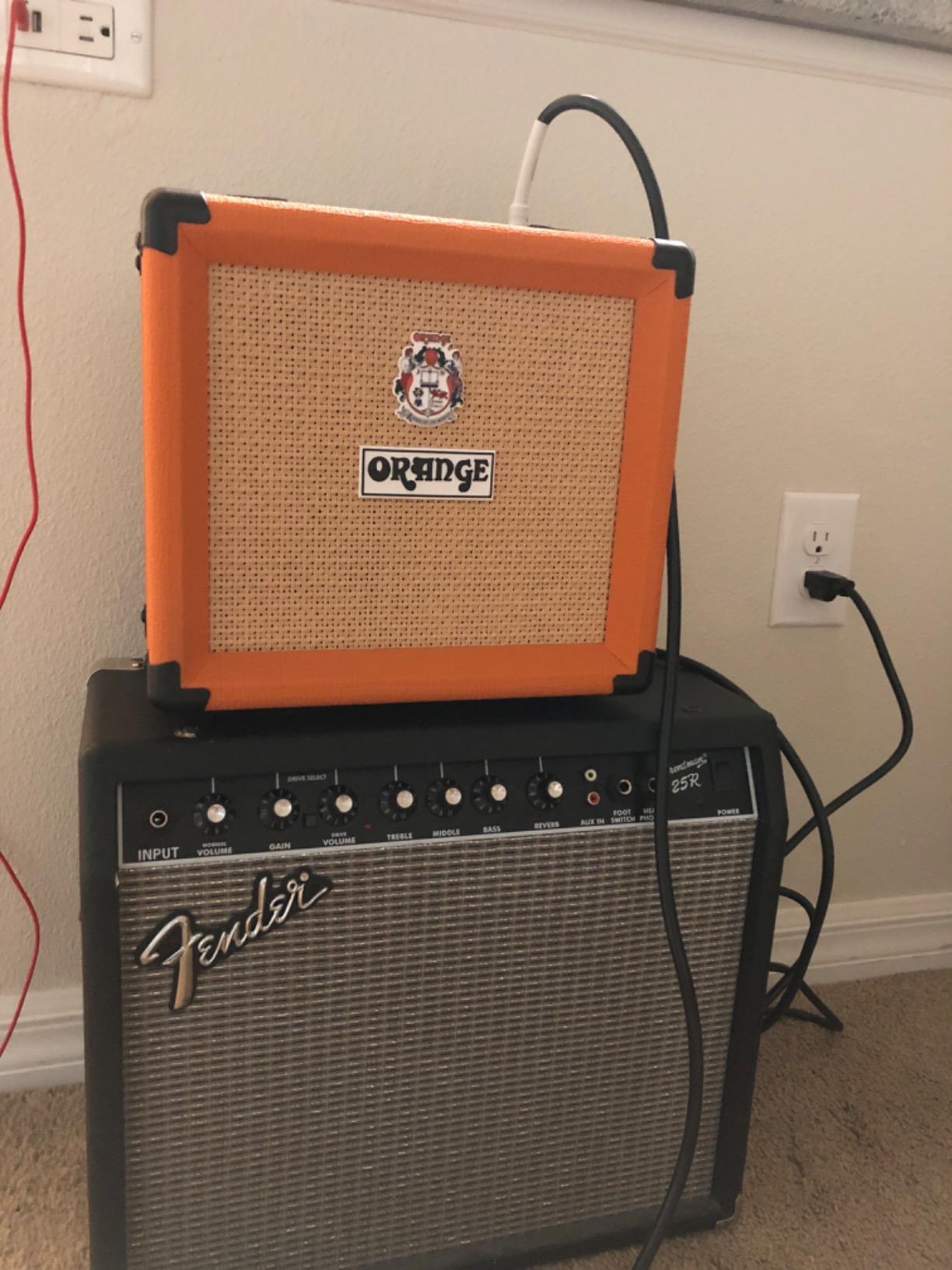
Fender Frontman 10G
- 10 watts with a 6-inch speaker
- Gain overdrive select volume treble bass
- Headphone jack and aux input
All 10 Guitar Amplifiers Under $300 at a Glance in October
Every amp below clears the 300-dollar ceiling. Prices and ratings were checked in 2026 and change often, so use the table as a shortlist rather than a quote.
| Product | Specifications | Action |
|---|---|---|
| Fender Mustang LT25 |
|
Check Latest Price |
| Positive Grid Spark 40W Combo |
|
Check Latest Price |
 Orange Crush 20 Orange Crush 20 |
|
Check Latest Price |
| Fender Frontman 10G |
|
Check Latest Price |
 Orange Crush 12 Orange Crush 12 |
|
Check Latest Price |
 Boss Katana Mini Boss Katana Mini |
|
Check Latest Price |
 Vox Pathfinder 10 Vox Pathfinder 10 |
|
Check Latest Price |
 Positive Grid Spark MINI Vai Positive Grid Spark MINI Vai |
|
Check Latest Price |
 Positive Grid Spark GO Positive Grid Spark GO |
|
Check Latest Price |
 Marshall CODE50 Marshall CODE50 |
|
Check Latest Price |
Solid-State vs Tube vs Modeling vs Desktop Amps, Explained
These four words do not describe quality. They describe four different ways of turning a weak pickup signal into sound, and each one trades something away to get you something else.
Solid-state amps use transistors instead of vacuum tubes. They are rugged, need no warm-up, take no maintenance, and hold their tone at any volume. What you give up is the way tubes compress and interact with the speaker as they push harder, which is a large part of why tube amps feel alive under a player’s hands.
Tube amps use vacuum tubes to amplify. They respond to a light touch on the volume knob, they warm up, and they need periodic servicing and eventually new tubes. Genuine new tube combos land well above this price ceiling, which is why most tube options for a 300-dollar budget are used.
Modeling amps contain no tubes at all. Software recreations of famous preamp circuits are combined with digital cabinet simulations, which is how a single 10-watt box can sound like a Plexi through a 4×12. They are the reason a beginner can dial in a Fender clean, a British crunch and a modern high-gain tone from the same instrument.
Desktop and portable amps push that idea further by replacing the speaker with a small driver and processing everything computationally. They are the best silent-practice option and often double as Bluetooth speakers, but they are not designed to fill a room.
One more term worth defining now: FRFR stands for frequency response, flat, flat, meaning the amp tries to reproduce your guitar signal without colouring it. FRFR amps trade inaccuracy for volume and headroom, which is exactly the wrong trade in a bedroom and exactly the right one on a stage.
1. Fender Mustang LT25 Review: The Best Guitar Amplifier Under $300 for Most Players
Fender Mustang LT25 Guitar Amplifier, 25-Watt Combo Amp with 8″ Speaker
25 watts
8-inch Fender Special Design speaker
30 presets
USB and headphone out
Pros
- Highest rated in this roundup at 4.8 stars from more than 4000 reviews
- Room-filling 8-inch speaker in a 25-watt combo
- USB output for direct recording into a computer
- 30 presets cover clean blues crunch and metal
Cons
- Preset workflow takes a few sessions to learn
- Heavier at 15.2 pounds than smaller practice amps
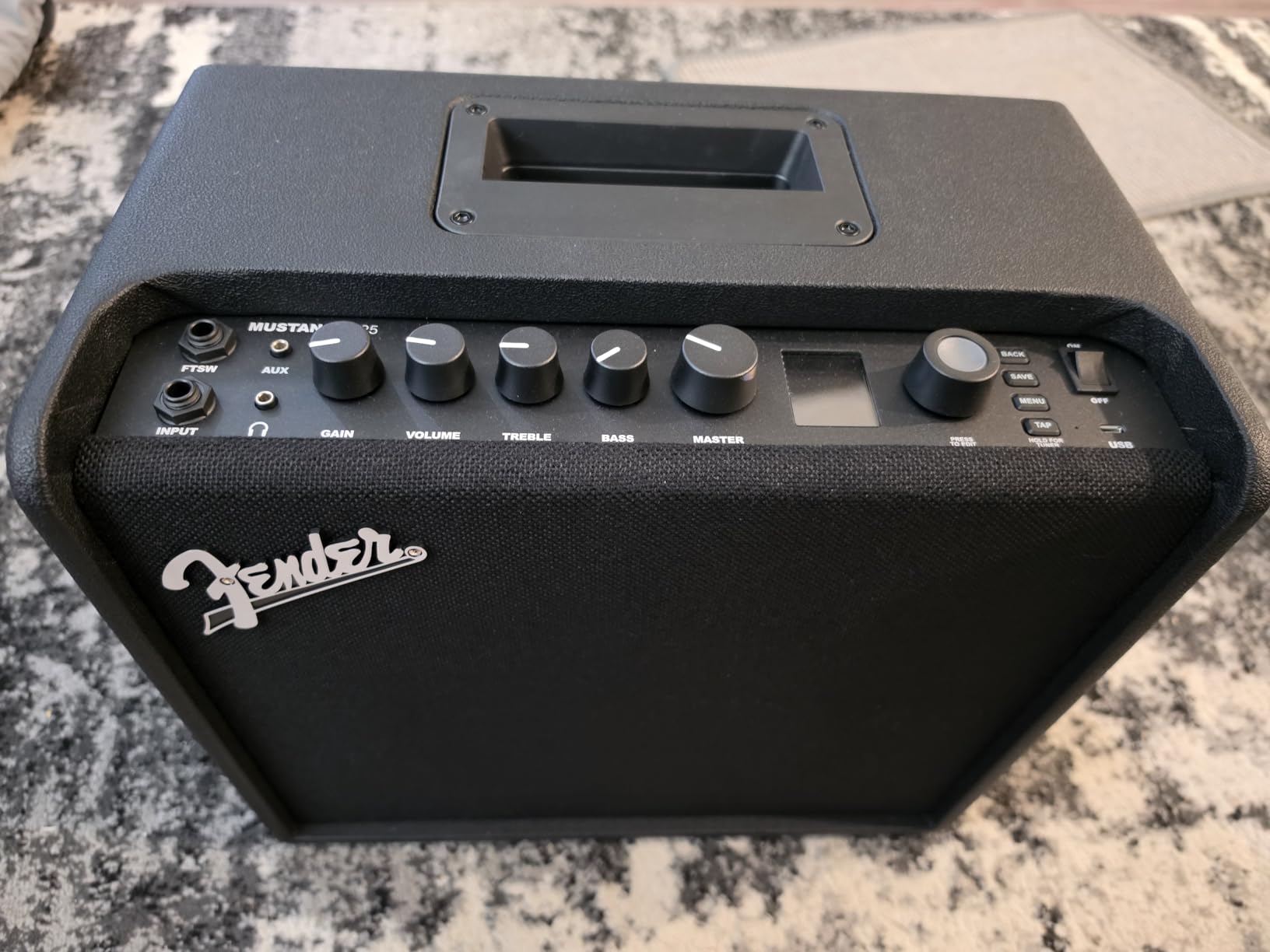
The Mustang LT25 is the amp we keep coming back to, and the reason is boring: it does the ordinary things well without asking you to care about signal chains. Twenty-five watts through an 8-inch speaker is enough to fill a bedroom or a small flat without the neighbors filing a complaint, and the top-mounted control panel is readable at a glance.
Thirty presets are loaded in the factory, spanning clean, blues, crunch and higher-gain territory, and the 1.8-inch color display shows which one you are on. Owners consistently describe the 8-inch driver as the reason the amp sounds bigger than its numbers suggest, which is the same comment we see about the small speaker problem in cheaper combos.
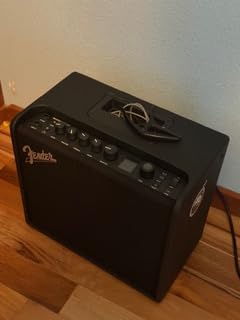
Our favorite detail is the USB output. Plug the LT25 into a laptop with a USB cable and the amp becomes a recording interface, which means you can capture ideas without buying another box. The headphone output carries the same tone, so late-night practice through headphones is genuinely usable rather than an afterthought.
The honest weakness is the workflow. If you have never used a modeling amp, the first twenty minutes can feel like operating a small computer. That resolves quickly, and on Reddit in r/GuitarAmps and r/electricguitar the LT25 keeps surfacing as the go-to first step up from a starter amp, so the learning curve is well trodden.
Who the Mustang LT25 suits
It suits a beginner who wants to hear what an amp can do rather than read about it. Thirty presets give you a vocabulary of tones in the first ten minutes, and the USB port means a bedroom player can start recording the same day.
It also suits an apartment player who needs more volume than a 10-watt mini can give without a huge speaker. And it suits anyone moving up from a starter bundle amp, since the jump in output and speaker size is the single most noticeable upgrade you can hear.
Where the LT25 disappoints
At 15.2 pounds it is a two-handed carry up three flights of stairs, and it is not an amp you take to a park. Reviewers who wanted more than one volume also note that the preset list rewards experimentation more than pedal-based players will enjoy.
2. Positive Grid Spark 40-Watt Combo Review: Best Amp With an App and USB Recording
Positive Grid Spark 40-Watt Combo Practice Guitar Amplifier Electric Bass and Acoustic Guitar Amp with Spark Mobile App
40 watts
Smart Jam AI bandmate
50,000+ ToneCloud presets
USB audio interface
Pros
- Smart Jam builds bass and drum backing that follows your playing
- Real-time chord display for imported songs
- Doubles as a USB audio interface for a DAW
- Onboard tone stack effects tuner and tap tempo
Cons
- Deeper features depend on the Spark app
- Higher outlay than entry-level practice amps
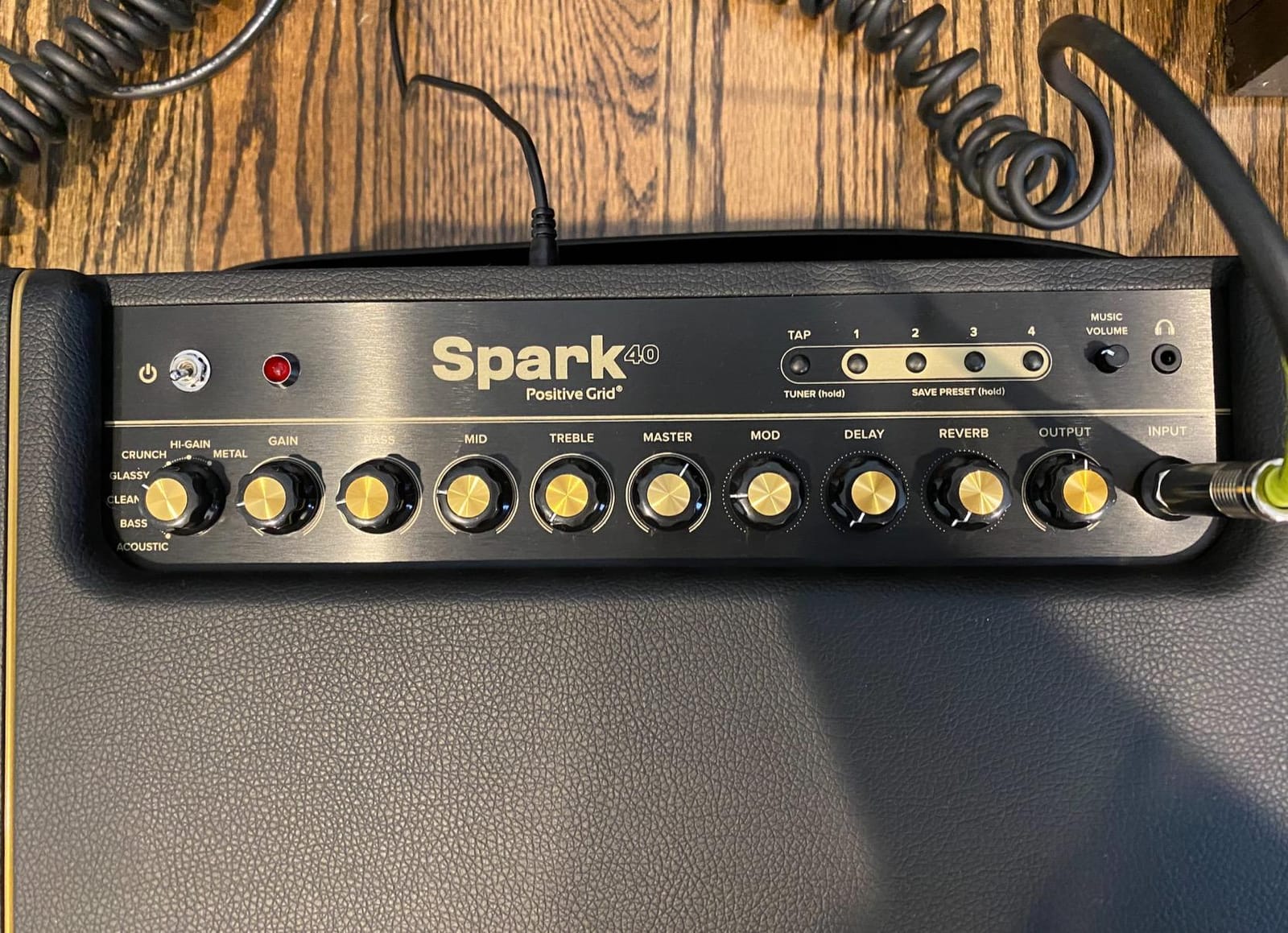
Everything that makes the Spark 40 different starts with the phone. Smart Jam listens to what you play and generates bass and drum parts underneath it, which turns a solo practice session into something closer to playing with a band that never gets tired.
The tone library is where the real value sits. Using BIAS virtual tube amp modelling, the Spark gives you access to a huge catalog of amp and effect presets, and the sound is genuinely good rather than a novelty. Forty watts of output is enough for practice and small rehearsals, which is where this amp earns its place.
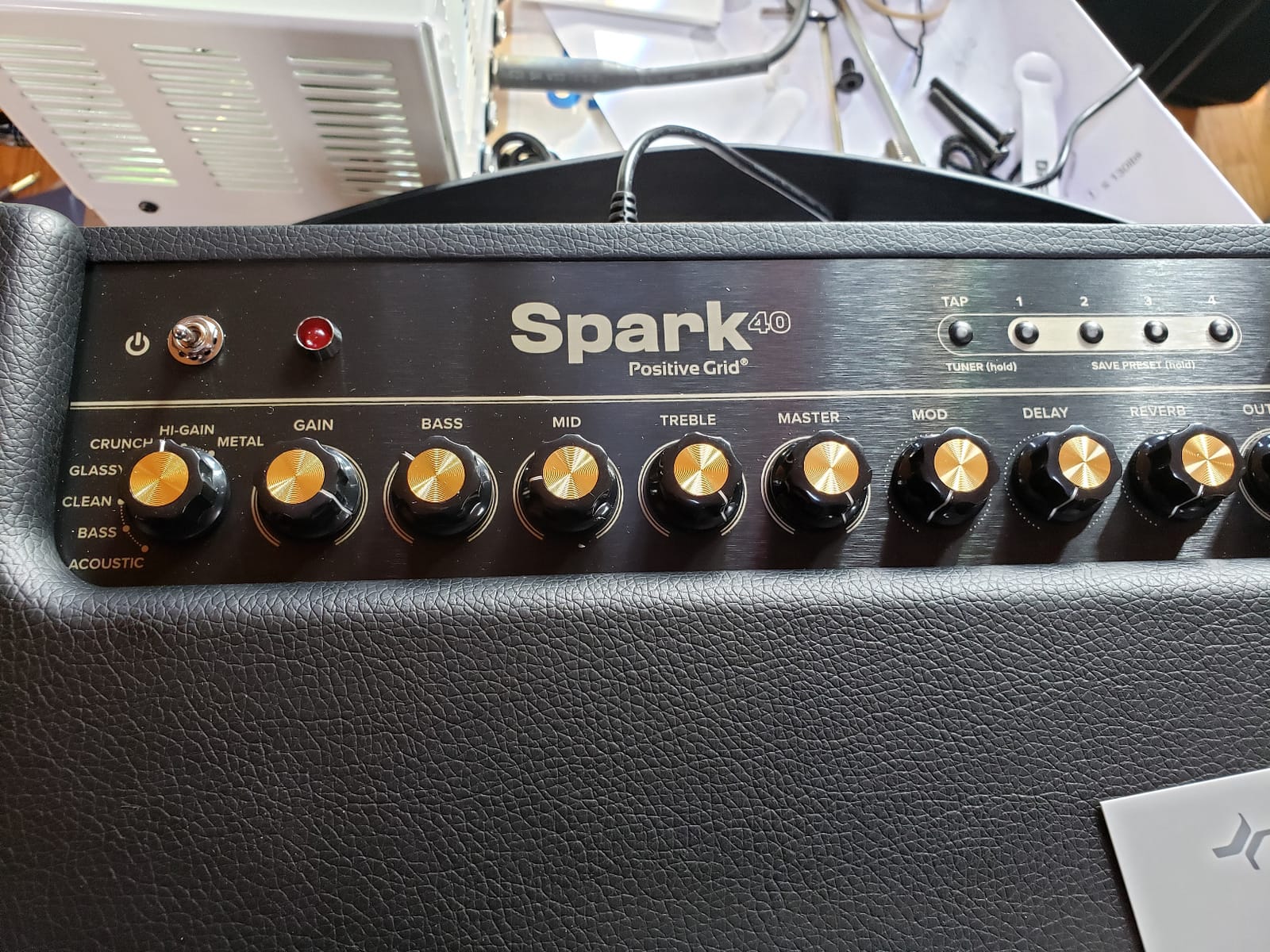
For recording, the USB-C connection makes the Spark a class-compliant audio interface. If you have ever wanted to lay down guitar parts at home without buying a separate interface, this is the cheapest route we found under the 300-dollar ceiling.
The App Chords display is quietly the most useful feature for a beginner. Import a song and the amp shows you the chords as they arrive on screen, so you can learn a piece rather than only wail along with it.
Who the Spark 40 suits
It suits players who are alone a lot and want company. The Smart Jam backing is a real answer to the loneliness of a first amp, and reviewers repeatedly describe playing along with it instead of a metronome.
It also suits the home recorder. A class-compliant USB interface inside a practice amp removes one purchase and one cable from the equation, and the tone library covers more amp flavors than most beginners will ever need.
Where the Spark 40 disappoints
The app is a dependency, not an accessory. Owners who prefer to just play report that the deepest settings require the phone, and the tone is obviously processed rather than the response of a physical analog circuit.
It is also the top of the price range for a modeling combo, and a 40-watt modeling amp is a lot of technology to buy before you know whether you will stick with guitar. Reviewers who bought it as a first amp sometimes admit the feature set was more than they needed at first.
3. Fender Frontman 10G Review: Best Budget Practice Amp Under $300
Fender Frontman 10G Electric Guitar Amplifier, 10-Watt Amp, Black/Silver
10 watts
6-inch Fender Special Design speaker
2-year limited warranty
Headphone jack and aux in
Pros
- Classic Fender clean channel owners of tube amps recognise
- Five clearly labelled knobs with no menus
- Light enough to move between rooms at 11.7 pounds
- Closed-back cabinet gives more low end than open designs
Cons
- Onboard overdrive sounds heavily compressed
- 6-inch speaker gives limited bass at low volume
- Guitar cable not included
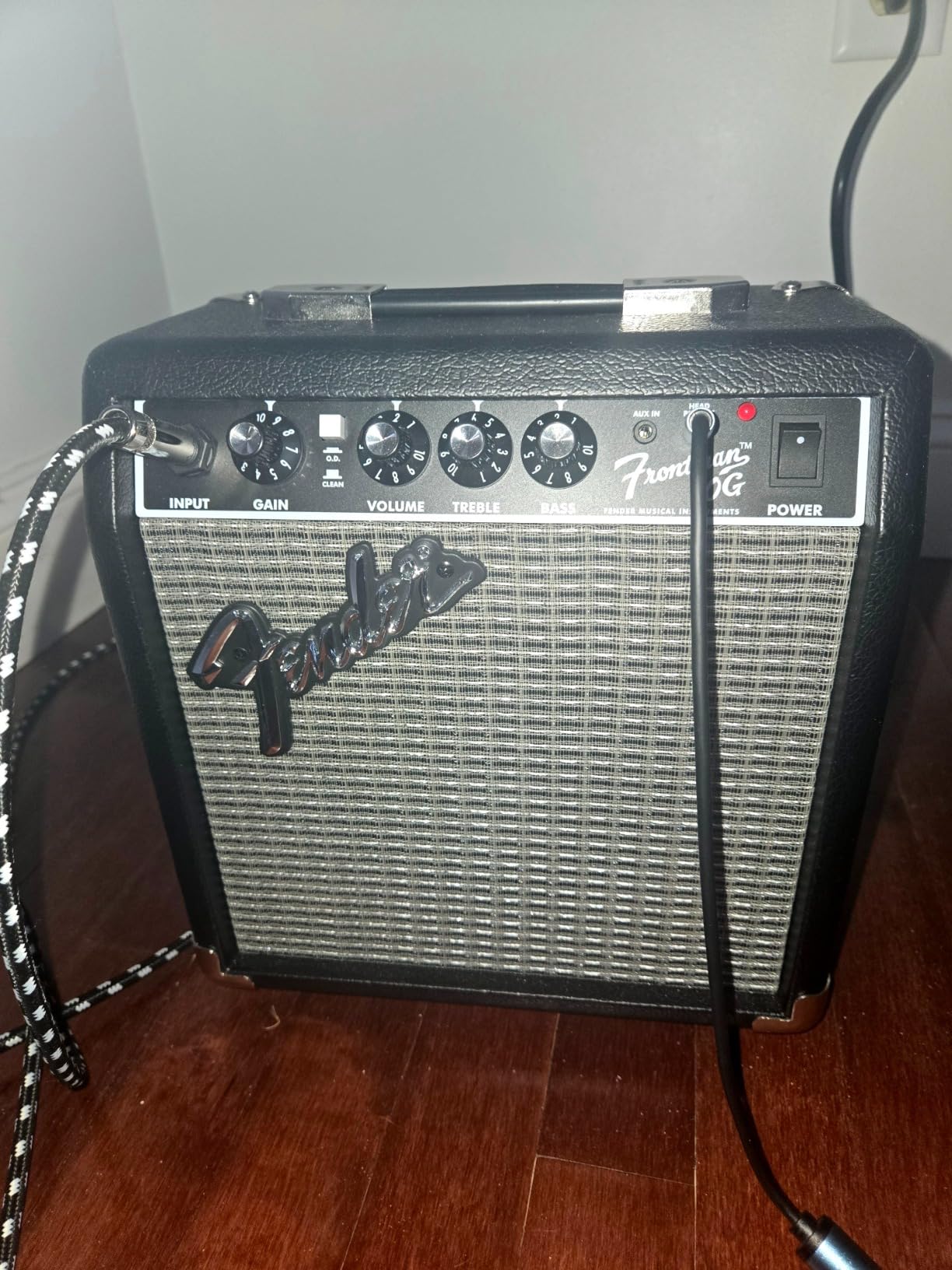
Nothing about the Frontman 10G is clever, and that is precisely why we recommend it. Gain, an overdrive select switch, volume, treble and bass. Five controls, all labelled, no menus and nothing to learn before you can make a sound.
The clean channel is the reason Fender players keep this amp. Owners who own Fender tube amps report that the clean sound is familiar, which is a compliment to a solid-state design, because it means the amp is not fighting the guitar.
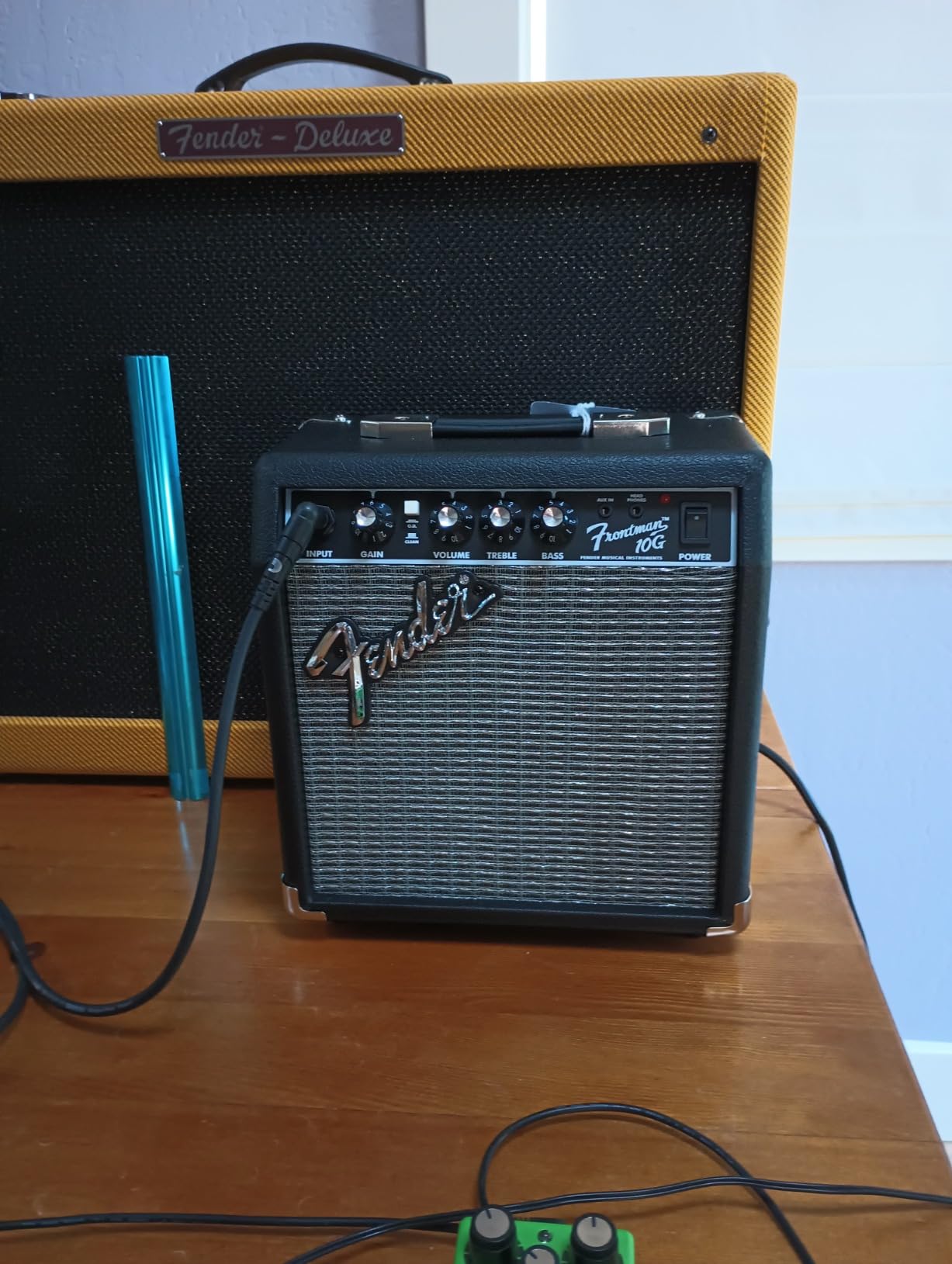
It is also the sturdiest thing on the list in a practical sense, with metal corner protection and a closed-back cabinet that adds low end compared with open-backed budget combos. At 11.7 pounds it is a two-finger carry from the bedroom to the living room.
The headphone jack and aux input are simple additions with real uses: silent practice late at night, or playing along to something while you learn chords. A 2-year limited warranty also outlasts the 1-year coverage most amps in this range carry.
Who the Frontman 10G suits
It suits an absolute beginner who wants zero friction. There is nothing to configure, so you plug in, turn the gain up, and hear an instrument instead of a menu.
It suits players on a hard budget who still want a Fender name on the cabinet and a clean channel they can grow into. It is also a sensible second amp for a bedroom where volume needs to stay low.
Where the Frontman 10G disappoints
The overdrive channel is the weak point, and owners say so plainly. It sounds heavily compressed with little nuance, so if crunch tone is what you are after, this is not the amp.
The 6-inch speaker also limits the low end at low volume, which is the most common complaint, and 10 watts is not enough to cut through a drummer. No guitar cable is included either, so budget for one.
4. Orange Crush 20 Review: Best All-Round Combo Amp Under $300
Orange Crush 20 20W 8″ 2-Channel Guitar Amplifier and Speaker Combo, Orange
20 watts
8-inch speaker
clean and dirty channels
aux in and CabSim phones out
Pros
- Rich British-style tone reviewers rate above the class average
- Loud enough to fill a small room or a small church
- Footswitch input for channel switching
- Runs happily from a power bank
Cons
- No built-in reverb or tuner on this version
- No direct out
- Power switch sits on the rear panel
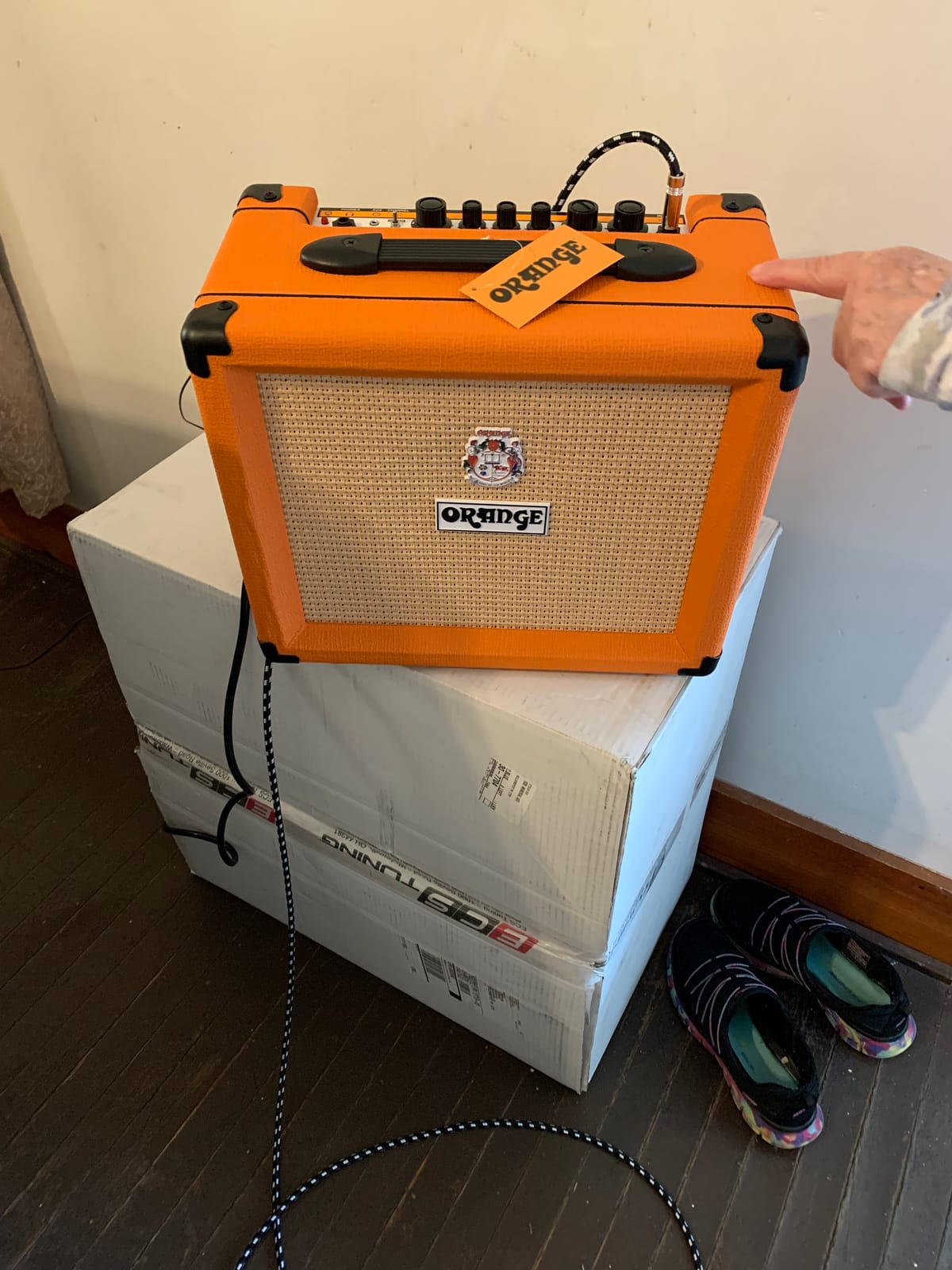
The Crush 20 is the amp we recommend to anyone who wants a real instrument feel rather than a menu of presets. Twenty watts into an 8-inch speaker is a genuinely useful amount of volume for a rehearsal room, a porch, or a small indoor gig.
Two channels, clean and dirty, each with its own gain control, give you the range from edge-of-breakup to high-gain without menus. The 3-band EQ has a midrange that reviewers consistently single out, which is the frequency range that makes a guitar cut through a mix.
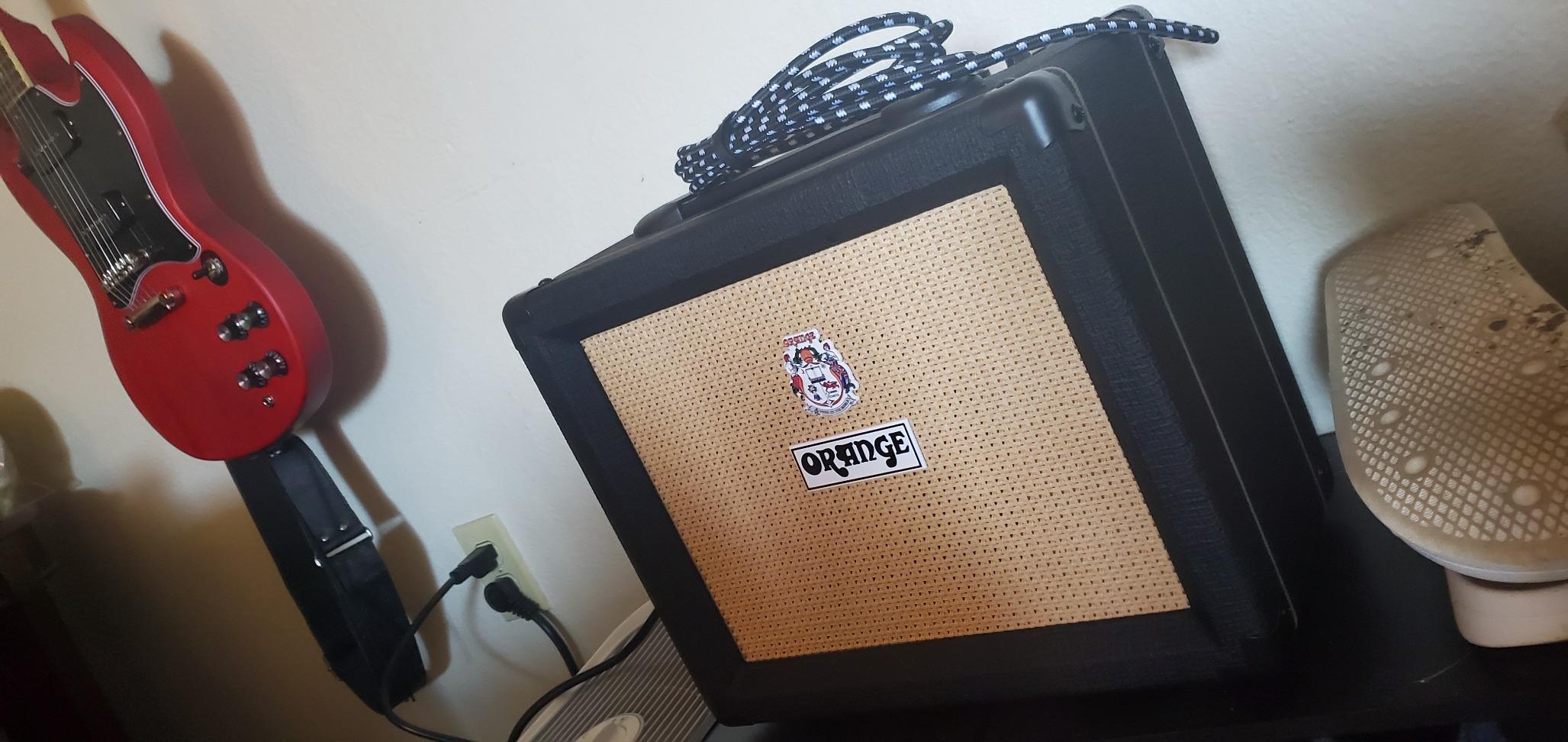
The aux input and CabSim-loaded headphone output cover the two most common practice needs, playing along to something and practising quietly. There is a footswitch input for channel switching, which matters the moment you start using your hands for playing instead of knob-turning.
It is also a low-power amp, and owners note it runs happily from a power bank. That is a small detail that matters for busking or playing somewhere other than a wall socket.
Who the Crush 20 suits
It suits the player who wants one amp to grow into rather than a first step. Twenty watts is enough for a rehearsal space and, with a microphone, enough for a small venue.
It also suits anyone who likes pedals. A footswitch jack and a straightforward input are the right foundation for a pedalboard, and reviewers report years of reliable practice use.
Where the Crush 20 disappoints
This version has no built-in reverb or tuner, so if you want those you need a pedal or a multi-effects unit. There is no direct out either, which limits silent recording options compared with the modeling amps on this list.
The rear-panel power switch is a genuine irritation in a dark room, and the tone is a solid-state interpretation of a British voice rather than anything with tube dynamics.
5. Orange Crush 12 Review: Best Amp for Small Rooms
Orange Crush 12 12W 6″ Guitar Amplifier and Speaker Combo,
12 watts
6-inch speaker
dual gain controls
3-band EQ
Pros
- Warm punchy solid-state tone for the wattage
- Dual gain controls give more shaping than most 12-watt amps
- 6-inch speaker delivers more low end than similar practice amps
- Headphone output with CabSim voicing
Cons
- Single-channel design limits on-board tonal variety
- 12 watts is limited for group playing
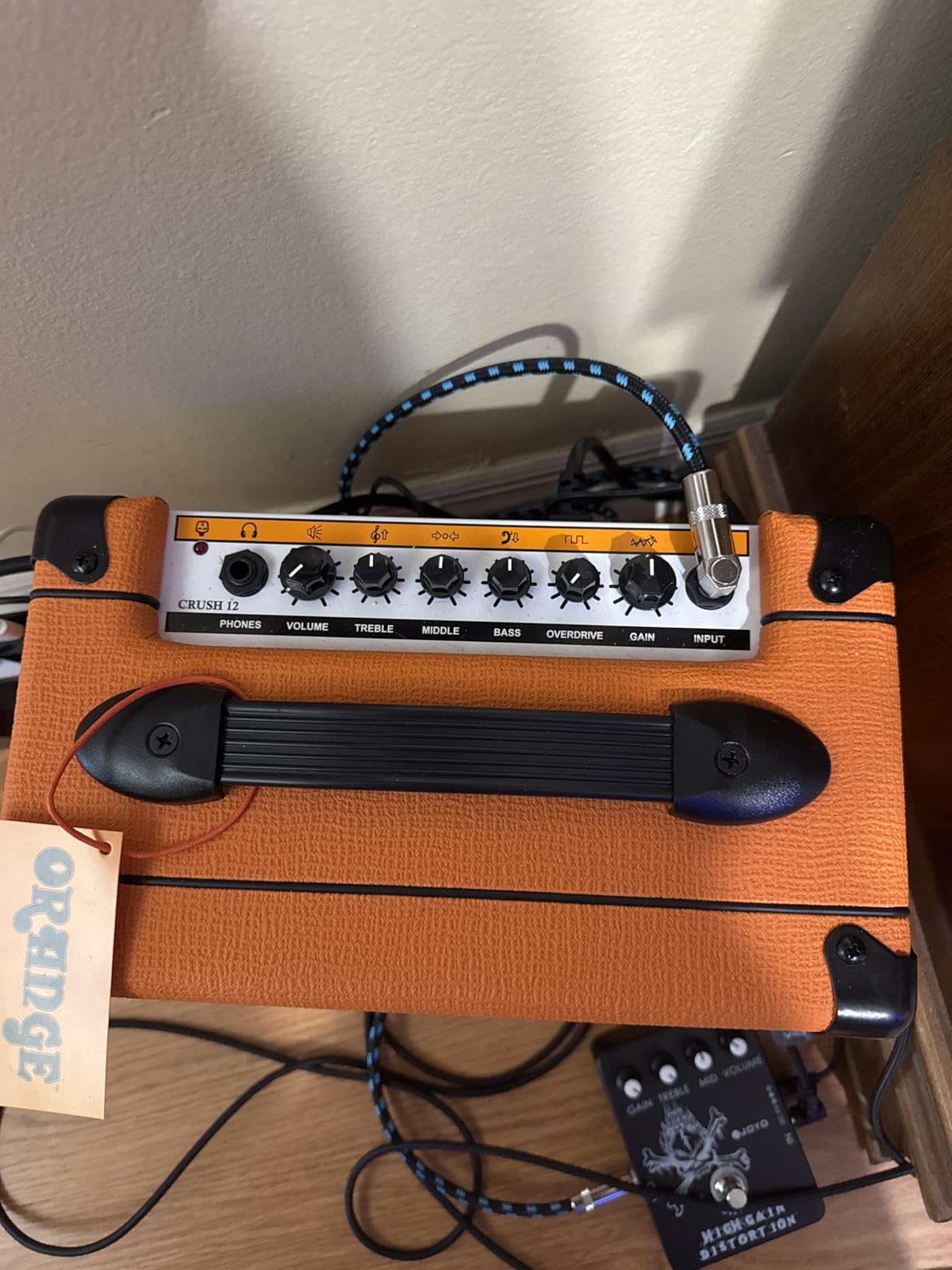
The Crush 12 exists because most practice amps waste the wattage they have. Twelve watts into a 6-inch speaker is enough to hear in a bedroom, and Orange has spent that budget on the tone rather than on effects nobody asked for.
Two gain controls is unusual at this price and power level, and it is the feature that separates this amp from its competitors. Most 12-watt combos give you one gain knob and a switch; here you can dial the attack and saturation separately and get a much wider range of textures.
The 3-band EQ plus master volume give the finishing control. Owners describe it as a durable no-frills workhorse, and on Reddit in r/GuitarAmps the Crush series keeps appearing in beginner recommendations for exactly this reason: it sounds like a guitar amp should.
The headphone output carries CabSim voicing, so what you hear through headphones is closer to what the speaker produces than a raw signal would be. That matters if you plan to record through the phones output.
Who the Crush 12 suits
It suits apartment players who want more than a mini but far less than a rehearsal-room combo. It also suits anyone who likes the idea of pedals but wants a good clean channel to run them into first.
For anyone worried about volume anxiety in a shared home, twelve watts of a well-voiced amp is the sweet spot between inaudible through the wall and unusable in a bedroom.
Where the Crush 12 disappoints
Single-channel means all your tone comes from the preamp controls, so a band rehearsal with a clean and a crunch sound is not on the menu. And twelve watts will not compete with a drum kit in a live room.
There are no onboard effects at all, so reverb and delay require external gear.
6. Boss Katana Mini Review: Best Amp Under $300 for Travel and Tiny Spaces
Boss Katana Mini 7-Watt Combo Amp
7 watts
4-inch speaker
three amp types
AA battery powered
Pros
- Tone punches well above the 7-watt 4-inch speaker class
- Three amp types with a real three-band analog tone stack
- Smooth non-fizzy distortion across the gain range
- Runs on AA batteries so it works anywhere
Cons
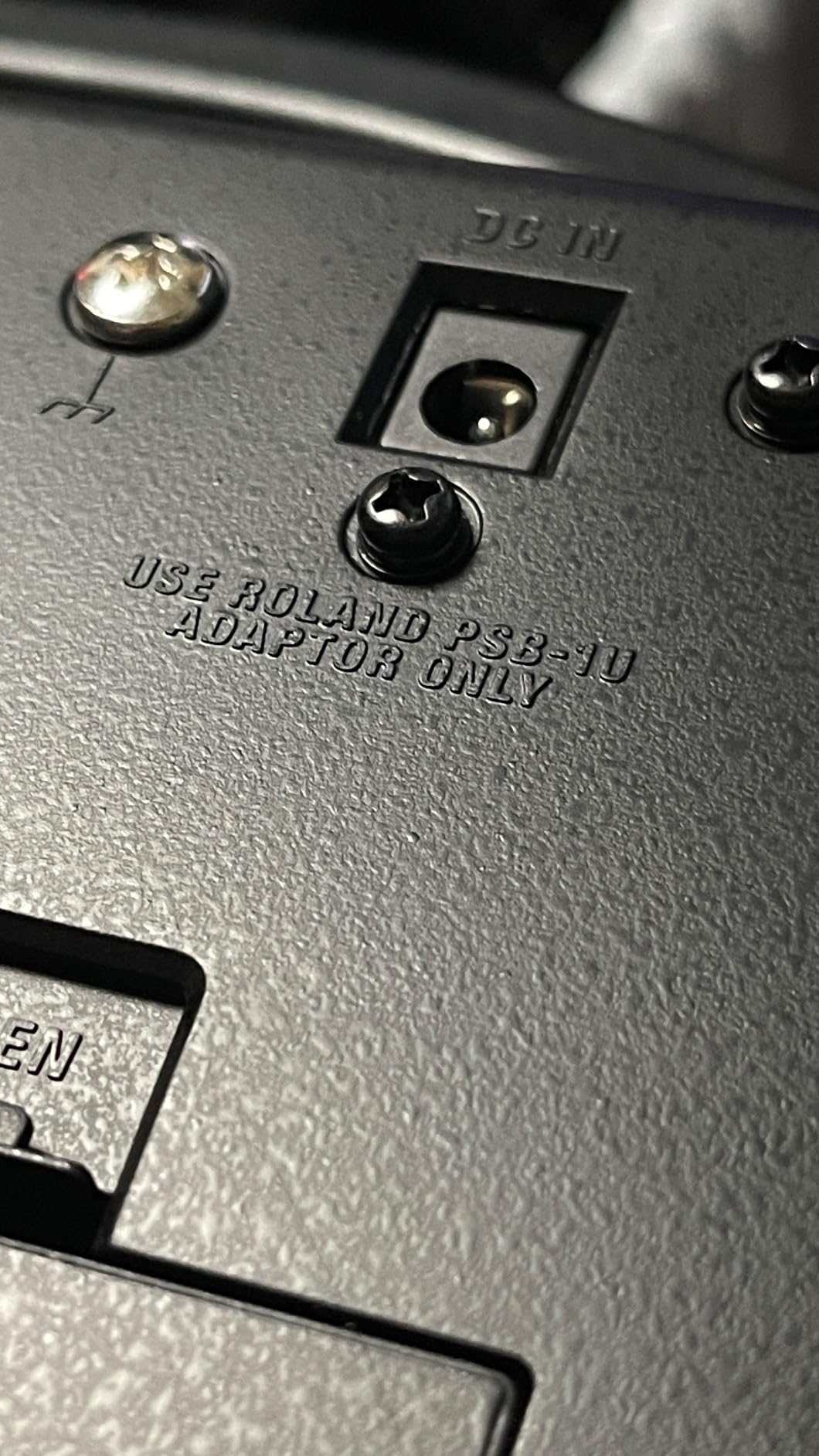
- Power supply not included for mains operation
- Some hum reported with third-party adapters
- Slightly thin character at high gain
The Katana Mini is the amp to buy if your practice space changes. It runs on AA batteries, weighs 1.5 kg, and produces more tone than a 7-watt amp has any right to, which is a direct result of the multi-stage gain circuit and analog tone stack.
Three amp voices, Brown, Crunch and Clean, are selected from the front panel, so you get real changes in character rather than a bank of presets to scroll through. The distortion stays smooth across the gain range, which is where most tiny amps fall apart.
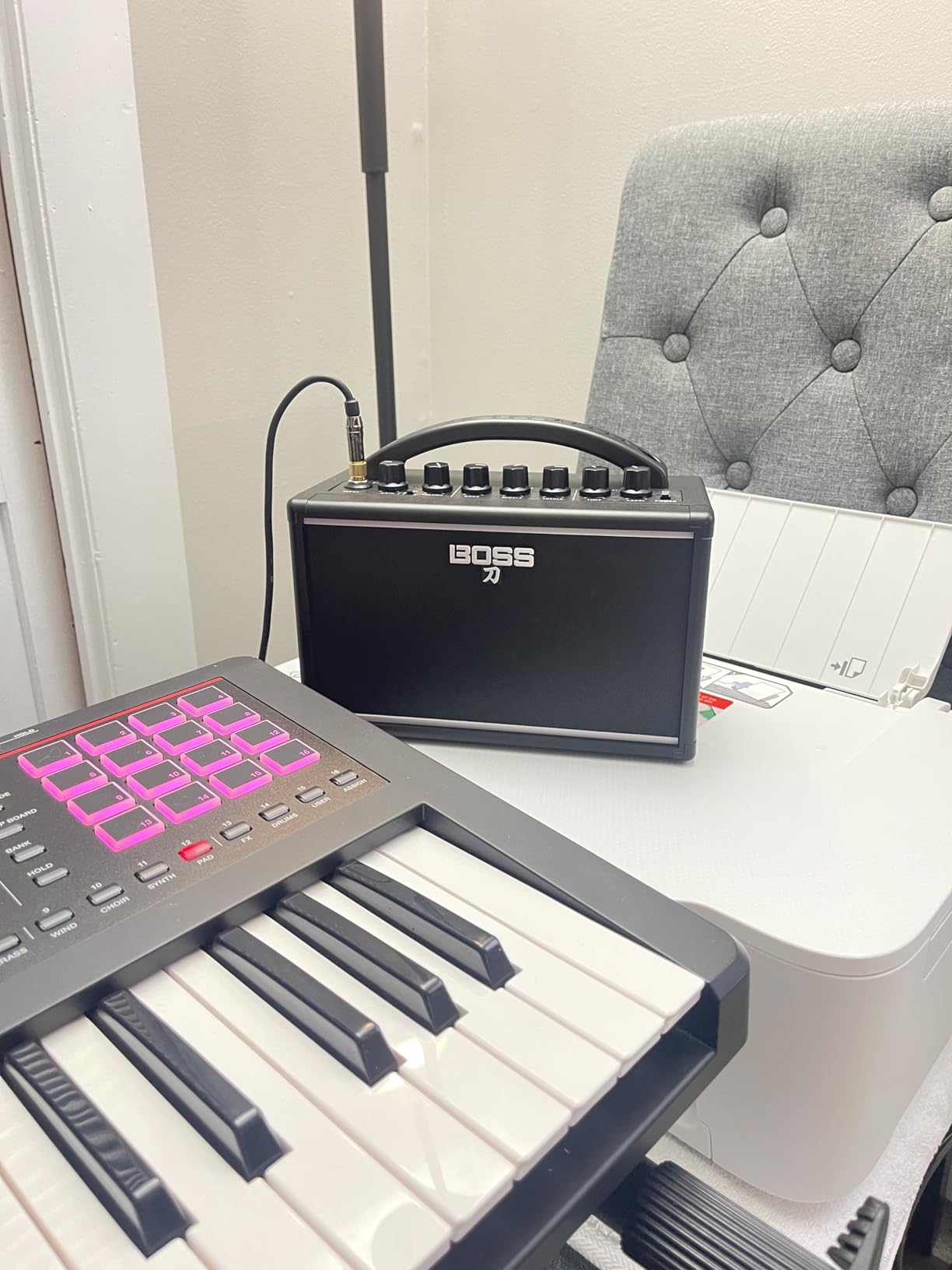
There is a built-in tape-style delay, which is unusual and more useful than it sounds for someone learning to practise without a metronome. Aux input and a headphone output with cabinet voicing round out a very complete feature list for something this small.
It is the amp reviewers describe most often as an ideal bedside or travel practice amp. The caveat about third-party power adapters producing hum is worth knowing before you buy an aftermarket supply. If your practice setup covers more than guitar, our keyboard amplifier picks cover that side of the hobby.
Who the Katana Mini suits
It suits players who practise in short, scattered sessions, and anyone with back or neck problems for whom weight is the deciding factor. At 1.5 kg it is the easiest amp here to carry.
It also suits a beginner who wants three genuinely different amp characters rather than hundreds of presets, since three buttons are easier to learn than a menu tree.
Where the Katana Mini disappoints
The power supply is sold separately, so budget for it if you want to run it from mains rather than batteries. A 4-inch speaker has a limit on low end, and seven watts is not a band-rehearsal volume.
At high gain without a distortion pedal in front, owners describe a slightly thin character rather than saturated crunch.
7. Vox Pathfinder 10 Review: Best Amp Under $300 for a Simple Analog Signal Path
Vox Pathfinder 10 1×6.5 inch 10-watt Combo Amplifier w/ 1 Channel
10 watts
6.5-inch Bulldog speaker
fully analog path
headphone and line out
Pros
- Completely analog signal path with no digital processing
- Clear chimey Vox clean channel owners rate well above the class
- Headphone and filtered line out for practice or feeding a PA
- Responds well to external pedals
Cons
- No onboard reverb
- No tuner or aux input for backing tracks
- Large volume jump when switching to overdrive
The Pathfinder 10 is the counterweight to every modeling amp on this list. There is no software, no display and no processing anywhere in the signal path, which means what you hear is your guitar, an analog preamp and a speaker.
That simplicity is the point. Owners single out the Vox clean channel as exceptionally good for the money, with the bright, chimey top end that Vox circuits are known for, and the 6.5-inch Bulldog speaker stays clear even at full volume.
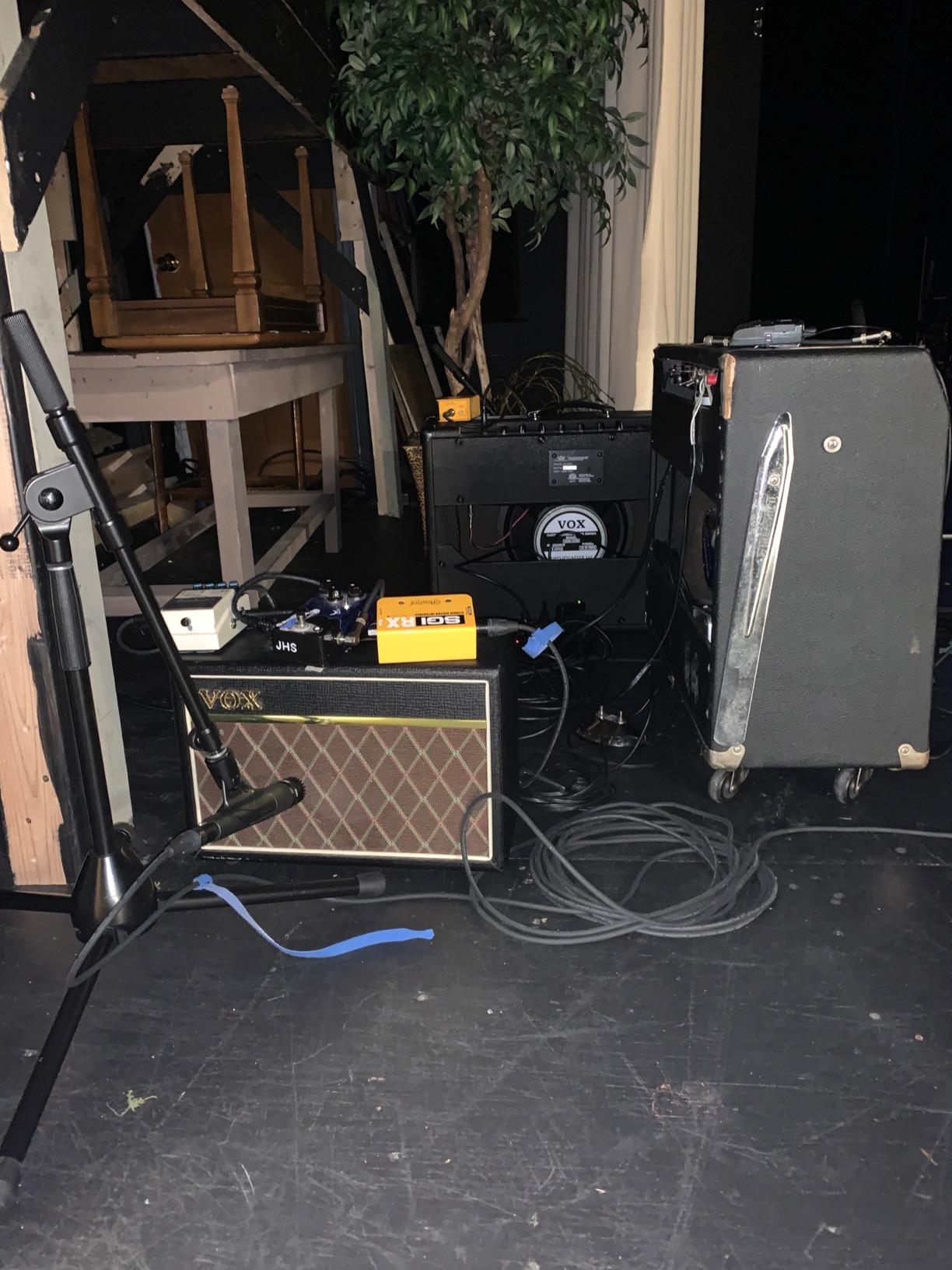
The filtered line output is a genuinely useful feature at this budget. You can feed a PA or a recording device without worrying about speaker simulation, and the headphone jack covers quiet practice. Reviewers also note the amp responds well to pedals and multi-effects units.
A clean and overdrive switch with gain, volume, treble and bass is the entire control set. There is nothing to configure, so it suits someone who wants to turn knobs and play.
Who the Pathfinder 10 suits
It suits players who dislike presets and processing, and anyone who wants to hear how their guitar and their hands affect the sound without an amp making decisions for them.
It also suits a beginner whose main goal is learning, because the simplest possible signal path gives the clearest signal about what they are doing.
Where the Pathfinder 10 disappoints
No reverb, no tuner and no aux input. Those are the three most requested features from owners, and all three mean you need a pedal or a cable of your own.
The volume jump when you switch from clean to overdrive is jarring for a beginner, and there is no headphone cabinet voicing to soften what you hear.
8. Positive Grid Spark MINI (Steve Vai Edition) Review: Best Amp Under $300 for App-Based Players
Positive Grid Spark MINI Vai 10W Portable Smart Amp, Designed by Steve Vai
10 watts
portable desktop body
rechargeable battery
Smart Jam Live
Pros
- Four custom Steve Vai presets included out of the box
- Large tone from a small 10-watt body
- Rechargeable battery gives up to 8 hours of play or listening
- Works with electric
- acoustic or bass guitar
Cons
- Costs more than comparable 10-watt practice amps
- Advanced features depend on the free mobile app
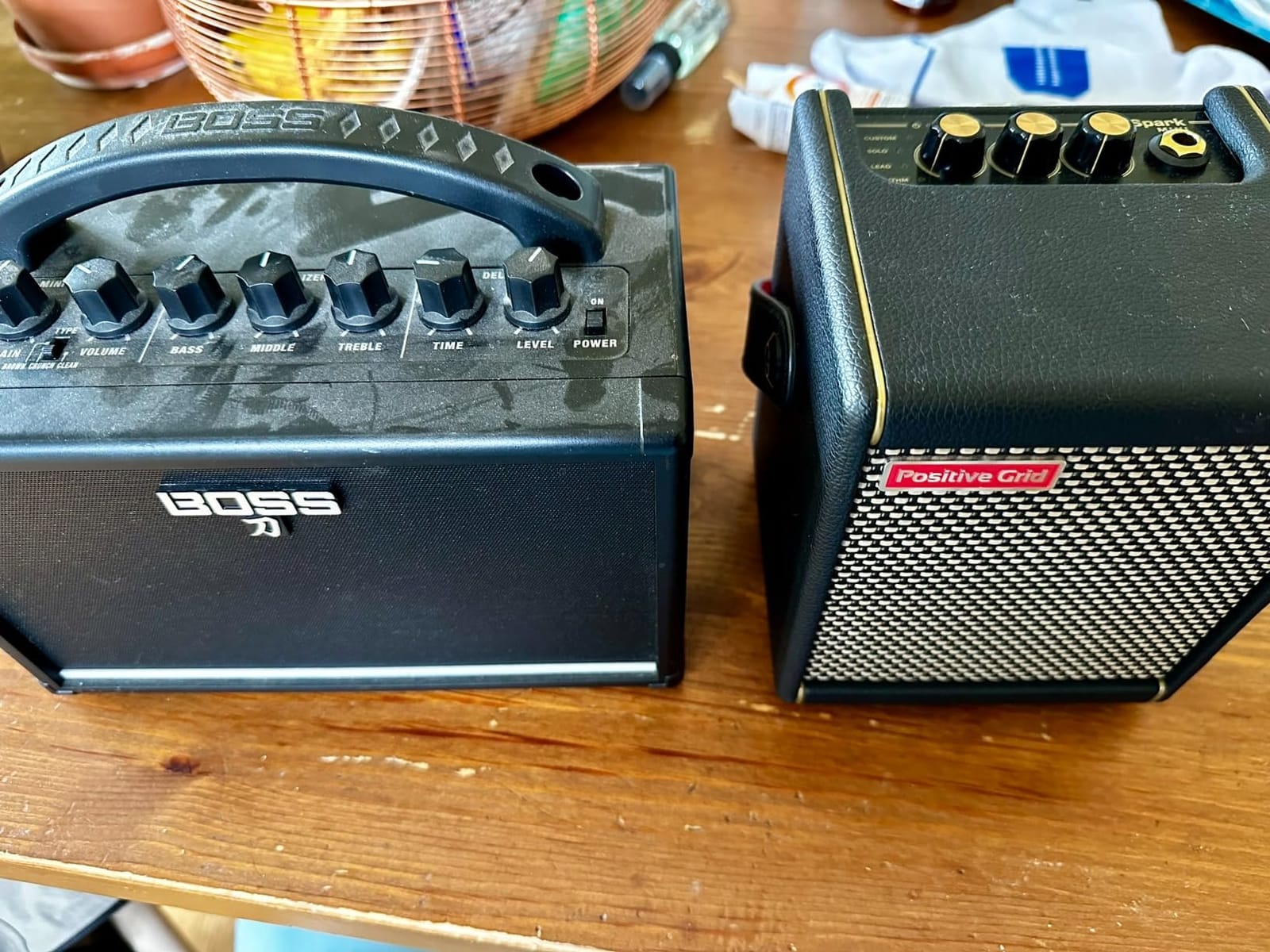
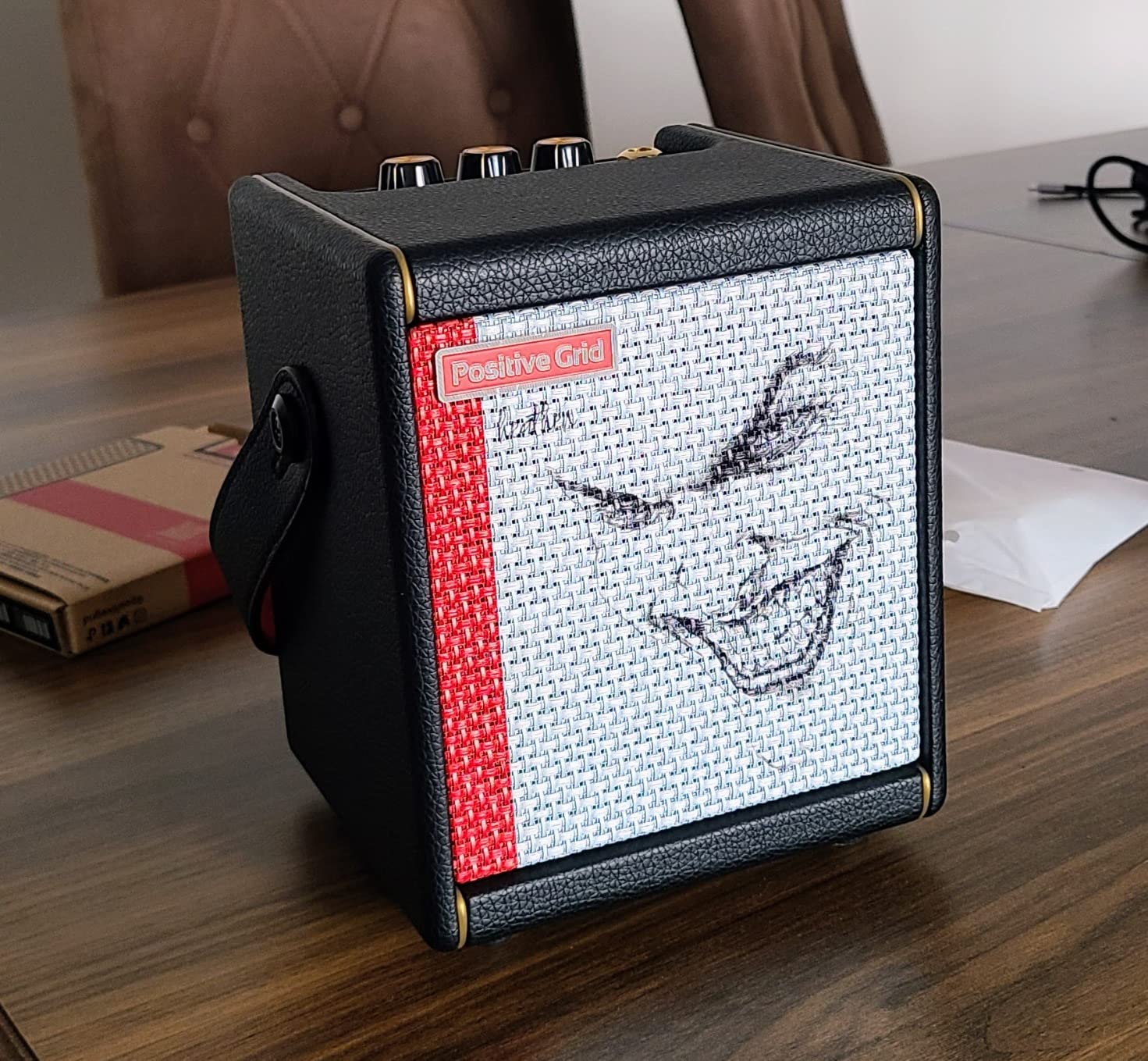
This is a limited Steve Vai edition of the Spark MINI, with a Mandala grille, burgundy tolex and a custom cable, and four Vai presets loaded from the box. For a player who likes the look as much as the sound, that styling matters.
Underneath, it is a 10-watt portable amp with a rechargeable battery lasting up to eight hours, so it moves between a desk and a bedside table without a power lead. Reviewers consistently note how much tone comes out of a body this small.
Smart Jam Live builds bass and drum backing tracks from what you play, and Auto Chords displays chords for imported songs. The tone library holds more than 100,000 presets, and it also works as a Bluetooth speaker.
It handles acoustic and bass guitars as well as electric, which makes it a broader tool than a single-instrument practice amp. That flexibility is part of why we rate it so highly for players who have more than one guitar.
Who the Spark MINI Vai suits
It suits a player who wants a lot of tone variety without spending more, and anyone who values portability over volume. It is also the choice for players whose main instrument is acoustic and who want effects an acoustic amp rarely offers.
It suits a beginner who will use an app for practice songs, because the learning tools are built in rather than something you assemble later.
Where the Spark MINI Vai disappoints
Ten watts is a practice-room volume, not a rehearsal volume, and it will not carry over a drummer. Reviewers also flag the price as high next to comparable 10-watt practice amps, which is largely the cost of the special edition.
The deeper features still live in the app, so the amp is less standalone than its front panel suggests.
9. Positive Grid Spark GO Review: Best Amp Under $300 for Silent Practice
Positive Grid Spark GO 5W Ultra-Portable Smart Guitar Amp & Speaker
5 watts
ultra-portable metal body
USB-C rechargeable
up to 8 hours playback
Pros
- Computational audio delivers a full tone from a 5-watt body
- 33 amp models and 43 effects plus cloud access
- USB-C battery lasts up to 8 hours
- Also works as a Bluetooth speaker
Cons
- 5-watt output limits it to practice and small rooms
- Feature set depends on the accompanying smartphone app
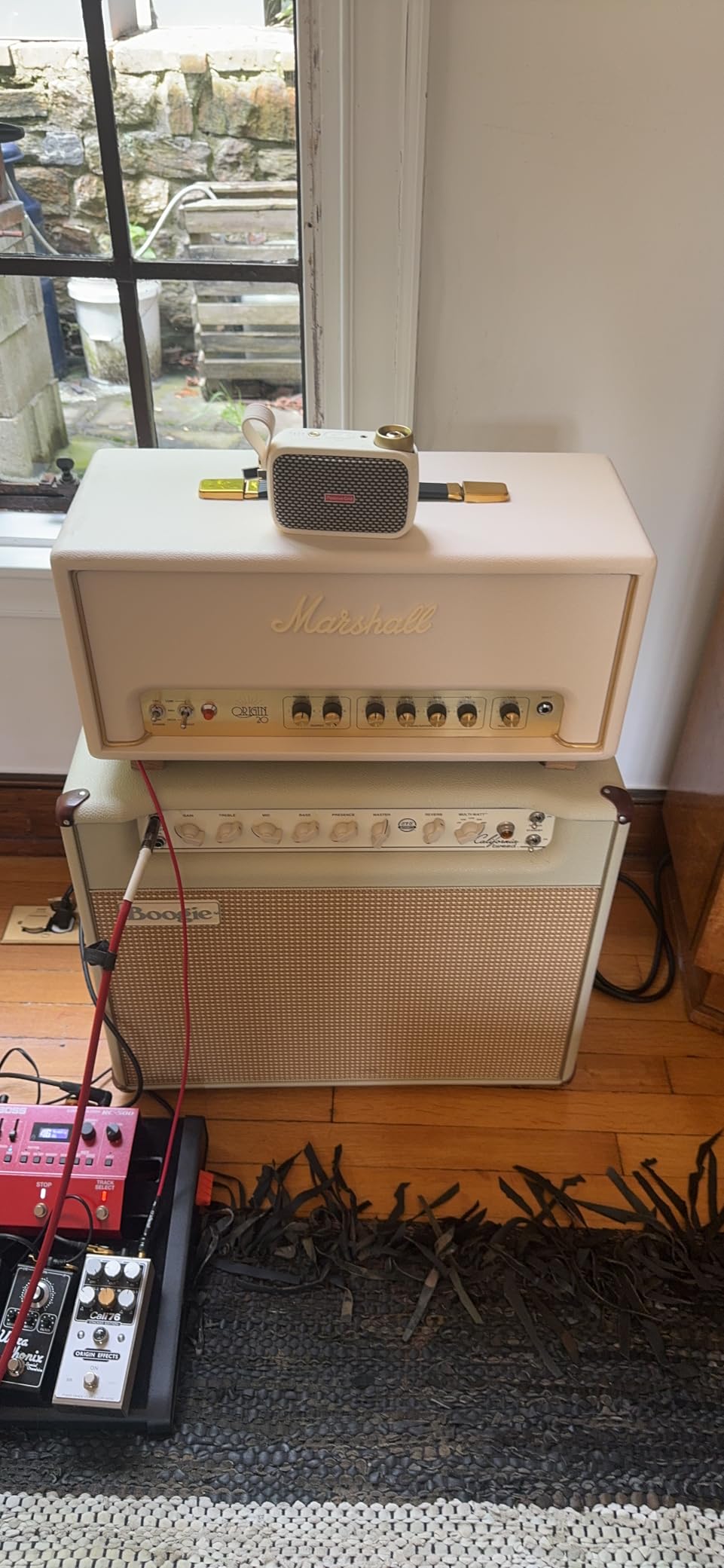
The Spark GO is the smallest amp on this list at under 2 inches tall, and the reason we include it is silent practice. Through headphones, with the processing doing the work, the sound is fuller than 5 watts in a room would ever suggest.
Thirty-three amp models and forty-three onboard effects cover far more ground than a traditional mini amp, and the ToneCloud library extends that considerably. Auto Chords shows you chords as you play, and Smart Jam supplies bass and drums.
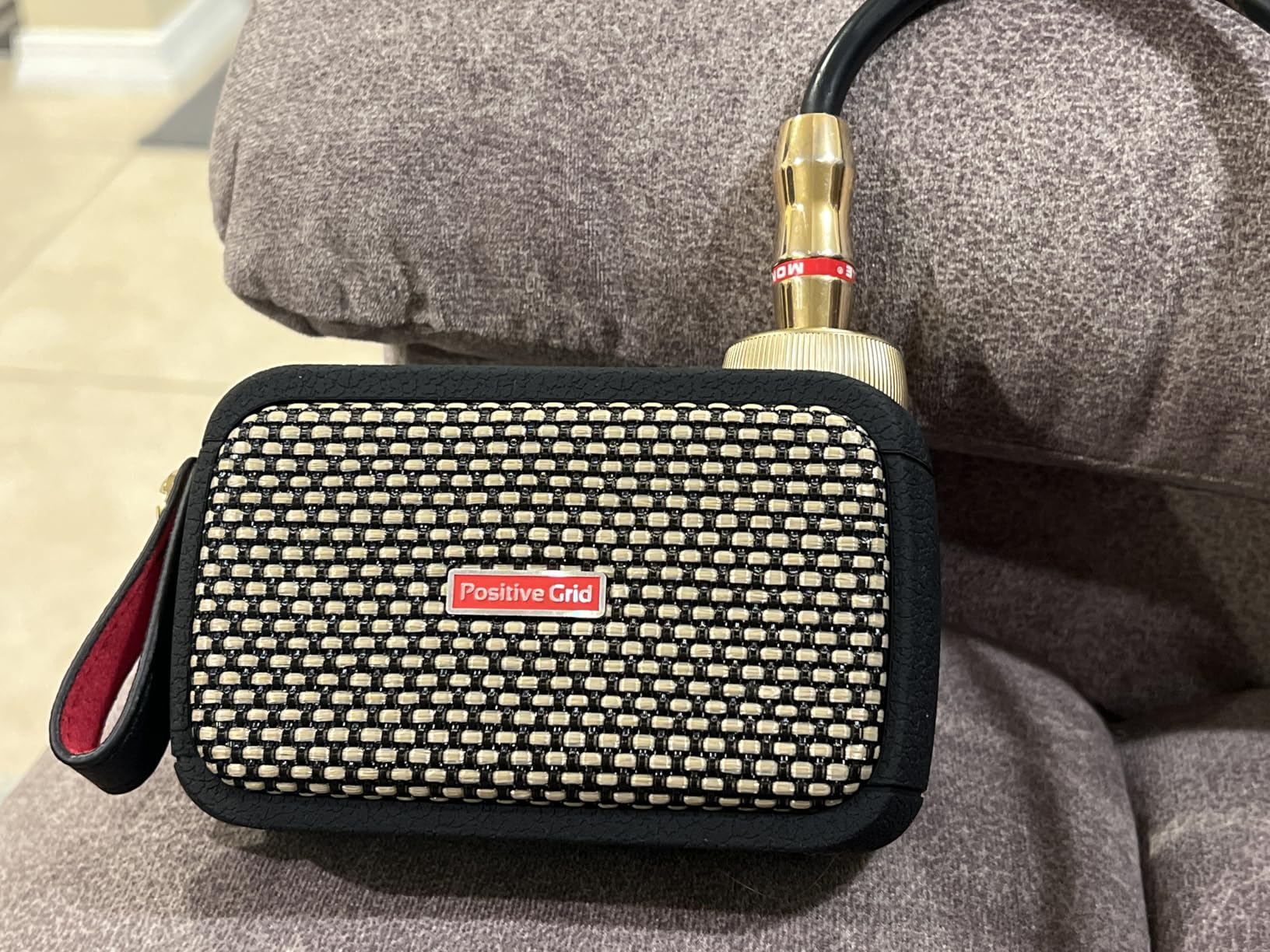
The USB-C rechargeable battery runs up to eight hours of playback, so the amp and a phone fit in a bag for a week of practising anywhere with a socket. It also works as a standalone Bluetooth speaker, which is how it earns its place in a second room.
Owners are clear about the limit, though: this is an amp you wear headphones for. Reviewers describe it as best suited to silent practice, travel and playing along with tracks, not for being heard across a room. If you want a serious silent-practice chain rather than a headphone-only amp, our headphone amplifier guide covers that.
Who the Spark GO suits
It suits apartment players in shared housing where any unmonitored volume is a problem. Headphone practice solves that entirely, and the effects give you a sound far bigger than the room allows.
It also suits the traveller and the commuter, and anyone who wants one small box that is an amp, a speaker and a practice tool with an eight-hour battery.
Where the Spark GO disappoints
Five watts will not fill a room. If you want to practise without headphones and play with other people, this is the wrong amp despite being the most capable one for headphones.
The app dependency returns here, and the metal body means it gets warm in a pocket or bag compared with a plastic-cased amp.
10. Marshall CODE50 Review: Best Amp Under $300 for Band Rehearsal Volume
Marshall CODE50 Digital Combo Electric Guitar Amplifier – Black
50 watts
12-inch Celestion speaker
100+ editable presets
Bluetooth and headphone out
Pros
- Highest wattage and largest speaker on this list
- 14 MST preamp models including Plexi and JVM voicings
- 24 digital effects plus 8 cabinet emulations
- 50 watts through a 12-inch speaker for small venues
Cons
- Editing tones is time-consuming and presets can sound boxed-in
- No effect loop for external pedals with reverb or delay
- Top-mounted controls are awkward to reach
The CODE50 is the amp on this list that can genuinely be amplified in a small venue. Fifty watts through a 12-inch Celestion is real headroom, and at the top of the 300-dollar range it buys you the volume the other nine cannot reach.
Inside, fourteen MST preamp models cover the famous Marshall voicings, from Plexi and JVM to DSL and Silver Jubilee, with four power amp models and eight cabinet emulations on top. Owners who put in the editing time report that the results are convincingly authentic.
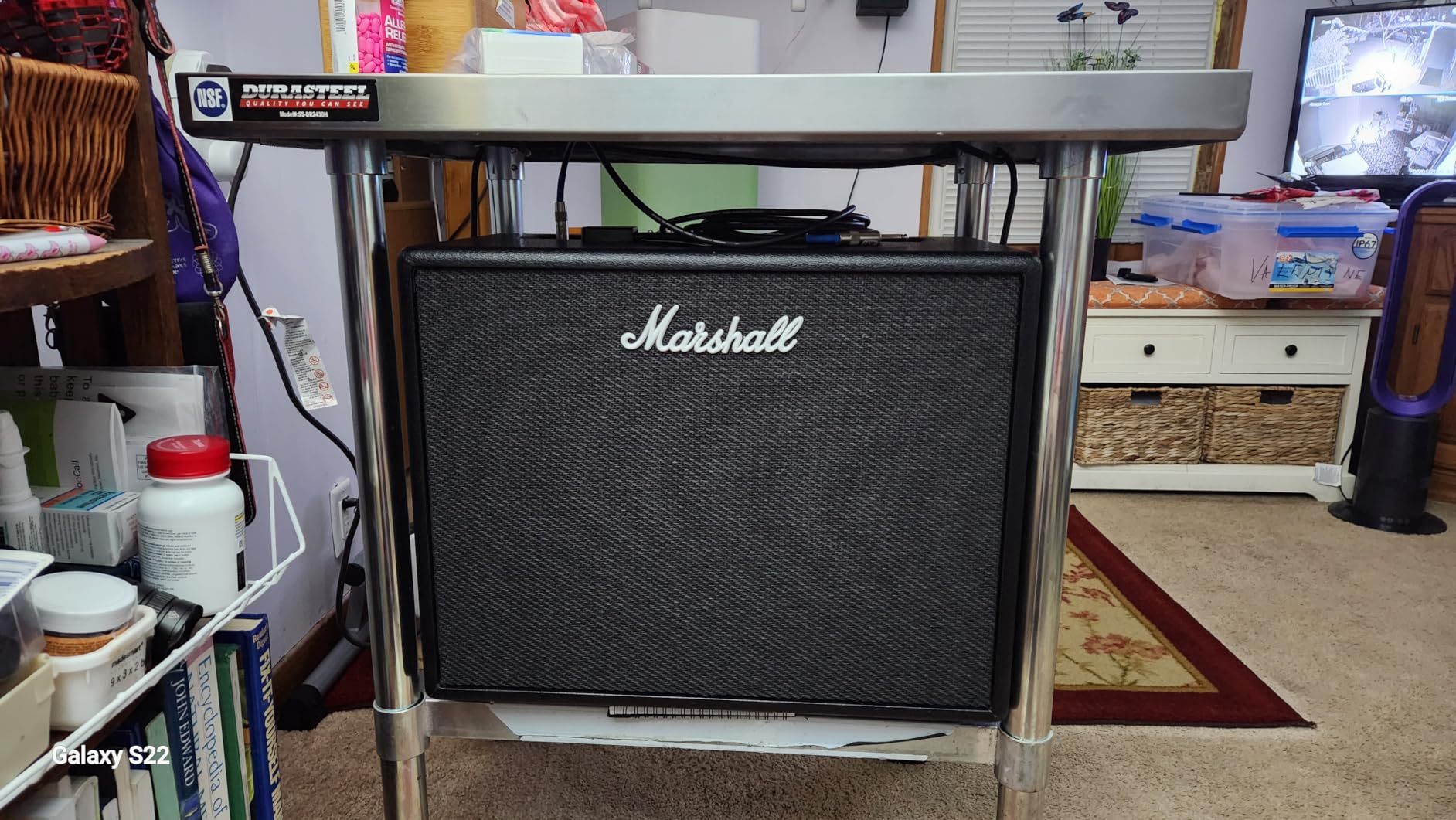
Bluetooth streaming and a headphone output are useful in practice rooms, though reviewers are unkind about playback quality through either. The preset library runs past a hundred editable presets with 24 digital effects covering reverb, delay, chorus, flanger and tremolo.
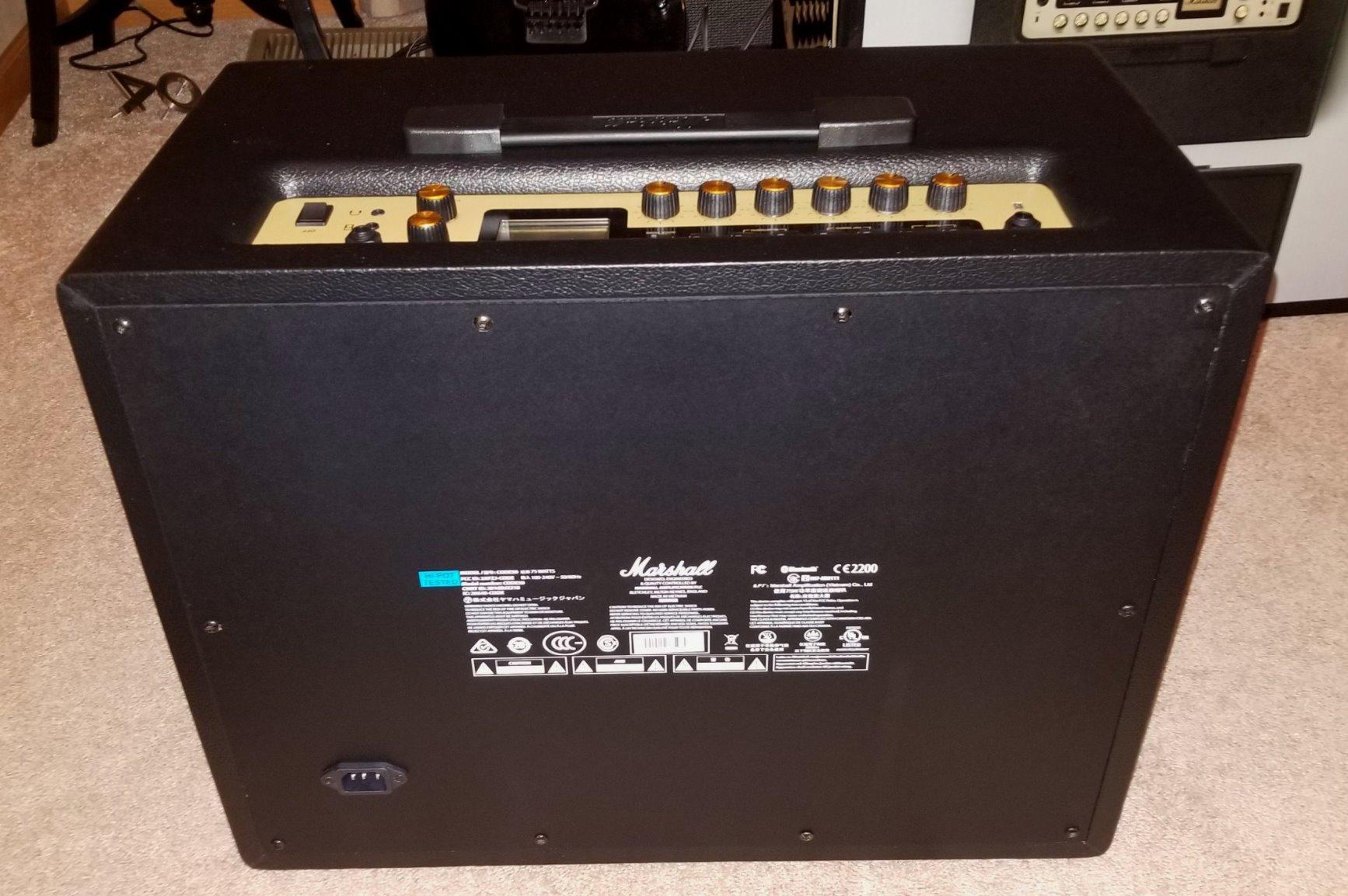
At 28.6 pounds this is by far the heaviest amp here, and the size means it is a home or rehearsal-room instrument rather than something you carry between rooms.
Who the CODE50 suits
It suits a player in a band who rehearses at moderate volume or plays small rooms without a drummer. It also suits a guitarist who wants a Marshall voicing without the price of a Marshall tube amp.
It suits anyone moving from a starter amp to their first proper combo, because 50 watts and a 12-inch speaker is the first step that changes how a rehearsal feels.
Where the CODE50 disappoints
There is no effect loop, so you cannot insert external pedals that need a reverb or delay after the preamp. That is a real limitation for players building a pedalboard.
The out-of-the-box presets sound boxed-in until you edit them, cabinet simulations can sound muffled if left on, and reviewers report some owners seeing Bluetooth cut-outs over long sessions. Twenty-eight pounds is genuinely heavy.
How to Choose a Guitar Amp Under $300
Most buyers make this decision backwards, starting from a brand or a look and working out what they need later. Start from the room instead. Here is how to narrow it down.
1. Match the wattage to the room, not to your ambition
Wattage is the most misunderstood number in amp buying. Perceived loudness does not scale linearly, so doubling the watts does not double the volume. As a working guide: 5 to 10 watts is a bedroom or a kitchen; 10 to 15 watts is a shared flat where you practise with headphones sometimes; 20 watts covers a bedroom, a hallway rehearsal or a small bar with a microphone; and 40 to 50 watts reaches a band rehearsal room.
Beyond 50 watts you are buying headroom and stage volume, which is where the price ceiling bites hardest. No amp under 300 dollars is a gigging amp for a loud club, and any listing that suggests otherwise is selling you a microphone at a bargain.
2. Buy the speaker, not the wattage
The single biggest tonal difference between amps at the same wattage is the size of the speaker. A 6-inch speaker produces a thin, mid-heavy sound that disappears at low volume, while an 8-inch or 12-inch speaker moves air and carries bass. If you are choosing between a 12-watt amp with a 6-inch speaker and a 20-watt amp with an 8-inch speaker, the 20-watt amp is usually the better buy.
This is why the Mustang LT25, the Crush 20 and the CODE50 sound larger than their wattage suggests, and why the Frontman 10G sounds thin in a room even though it is excellent through headphones.
3. Decide how much of the effects budget you want on the amp
Built-in effects are a shortcut. A modeling amp gives you dozens of amp voices and effects from a phone app, which is ideal if you want to move quickly between sounds. An analog solid-state amp with a footswitch jack is better if you plan to grow a pedalboard, because the tone stays simple and predictable.
Do you need pedals if your amp has effects? Not at the start. Most players at this budget do not need a pedalboard, and a modeling amp covers the sounds most beginners want for years. If you do want pedals, check for a footswitch jack and stay away from amps with no effect loop. If the guitar is only half of what you play, our integrated amplifier picks cover the home-listening side.
4. Weigh it before you buy it
Weight is a purchase blocker that people ignore. The Boss Katana Mini weighs 1.5 kg and can be carried in one hand. The Marshall CODE50 weighs 28.6 pounds and needs two. If you have back or neck problems, or you practise in different rooms, weight should narrow your list before anything else.
5. Buy at the right point in the price tiers
Within this ceiling there are three useful tiers. The lowest tier buys you a genuine first practice amp, and reviewers repeatedly recommend spending as little as possible at the start. The middle tier is where you start getting an 8-inch speaker and real headroom, which is the sweet spot for most beginners. At the top of the range you are paying for modeling technology or for the jump to 40 and 50 watts.
Our honest view is that the middle tier buys the most amp for the money. Beyond it you are buying a specific feature, and the feature is only worth it if you know you want it.
6. Know what you are giving up with a modeling amp
The debate between modeling and analog is the most persistent one on amp forums, and the honest answer is that they are different tools. A modeling amp sounds bigger than its size, records easily and gives you access to amps you could never afford. An analog amp responds to your playing in a more direct way and needs no phone, no app and no firmware.
For a beginner, we lean modeling because the range of sounds shortens the distance between playing a chord and knowing what that sound is called. For a player who already knows what tone they want, the analog options here are cheaper and more responsive.
Buying a Used Guitar Amp on a Budget
The most common piece of advice on amp forums is that the same budget buys a much better amplifier used. A combo that would sit above this ceiling new routinely shows up well within it second-hand, and beginners lose very little by buying that way. What matters is what you inspect.
If you are upgrading from a starter or bundle amp, the honest options are to keep it as a spare, or to sell it and put the money toward something with a larger speaker. A starter amp with a 6-inch speaker will never give you the low end you are missing, and no amount of practice changes that.
What to check on a used solid-state or modeling amp
Turn every knob and switch through its full range. Crackling, dead zones or a channel that drops out indicate a failing pot or switch, which is a straightforward repair but still costs money.
Play through the headphone output and the speaker. A faint hum that follows the volume knob is normal; a hum that changes when you touch the input jack is a grounding problem.
Look at the speaker grille from several angles and press gently on the cone. Cracks in the surround or a rattle under bass are replacement, not bargaining points.
Check that the power supply, footswitch and any included accessories are present. Missing a proprietary adaptor is an easy way to lose money on an otherwise good unit.
Confirm the model number on the back plate matches what the seller described, and that the inputs and outputs you need are actually present.
What to check if the used amp has tubes
A tube amp under 300 dollars will always be used, and it needs a more careful inspection. Listen for a fizzy rattle when you strike a note, which usually means a failing tube or a cold solder joint. Smell for burning or ozone. Test at very low volume first and step the volume up gradually, because a power transformer that is about to fail often announces itself with a hum that rises faster than the volume control.
Ask whether the amp has been modified or re-bied, because both can complicate resale and service. Check the cabinet for rust at the seams, and confirm the speaker has not been overdriven into failure. Budget for a tube change and a service, and treat the cost of an inspection as part of the purchase price.
For anyone weighing new against used at this budget, our rule is simple: buy used if the amp is simple solid-state hardware you can test yourself, and buy new if the amp depends on an app, firmware or proprietary accessories you cannot verify from a listing.
Frequently Asked Questions
What is a good budget-friendly guitar amp?
A good budget amp gives you a usable clean channel, a workable overdrive or gain setting, and enough volume for the room you practise in. At this budget, look for at least a 6-inch speaker and a headphone output. The Fender Mustang LT25 and Orange Crush 20 are the two we would start with, because both pair a real amp feel with a speaker that moves air.
Should I buy a tube or solid-state amp?
A solid-state amp needs no maintenance, works instantly and stays at the same volume and tone in any room. A tube amp responds to your touch, compresses as you push it, and needs periodic servicing and new tubes. For most beginners at this budget, solid-state or modeling gives more musical range for the money. Buy used tube only if you specifically want that response and will accept the upkeep.
How many watts do I need for home practice?
Five to ten watts is comfortable in a bedroom, ten to fifteen watts suits a shared flat, and twenty watts will fill a room or a hallway rehearsal. Loudness does not scale linearly with wattage, so a 20-watt amp with an 8-inch speaker sounds bigger than a 40-watt amp with a small speaker. Choose for your smallest practice space and buy a microphone when you need volume for others.
What is the best amplifier for an acoustic guitar?
Look for an acoustic amp or a modeling amp that accepts an acoustic pickup and adds reverb and chorus, which is what an acoustic needs to sound like an acoustic. Among these picks, the Fender Frontman 10G and the Positive Grid Spark GO both rank in the acoustic amplifier category and work well with a piezo-equipped guitar. Dedicated acoustic amps add a soundhole EQ and phase controls that electric amps lack.
How long do guitar amplifiers last?
A solid-state or modeling combo from an established brand will commonly run for a decade or more of regular home practice, and failures are usually a switch, a pot or a cable rather than the amplifier itself. Modeling amps depend on manufacturer software support, so check that the brand still updates its app. Tube amps last too, but need servicing and new tubes along the way.
What speaker size is best for a practice amp?
A 6-inch speaker is clear but thin at low volume, an 8-inch speaker is the best compromise for home practice because it carries more low end without becoming unportable, and a 12-inch speaker gives the fullest sound at the cost of weight and volume. If you can only remember one thing, buy the larger speaker. It changes the tone more than the wattage figure does.
Is it worth buying a used guitar amp?
Yes, and it is the single best way to stretch a limited budget. Popular beginner combos that sit above this ceiling new regularly appear well within it second-hand. Check every knob and switch, listen for hum that rises faster than the volume control, press the speaker cone gently for rattles, and confirm the model number and included accessories. For a tube amp, add a full servicing and tube budget to the price.
Is a modeling amp as good as a tube amp?
For tone variety, features and recording convenience, a modeling amp wins by a wide margin at this budget. For the way an amp reacts to your picking, a tube amp still has an edge that digital modelling only partly reproduces. The practical answer is that a modeling amp is not a compromise at this price, it is a different and often more useful tool.
Our Final Pick for Guitar Amplifiers Under $300 in 2026
The Fender Mustang LT25 is our pick for the best guitar amplifiers under $300 because it is the only amp on this list that gets volume, speaker size, preset range and USB recording into a single package without a weak link. Twenty-five watts through an 8-inch speaker fills a room, and the USB output means you can record the same day you unbox it.
Buy the Orange Crush 20 instead if you want a real amp with two channels and a footswitch jack for a future pedalboard. Buy the Fender Frontman 10G if the budget is the constraint and you want five knobs and nothing else. Buy the Positive Grid Spark GO if the practice happens with headphones, and the Marshall CODE50 if you are rehearsing with other musicians and need 50 watts and a 12-inch speaker.
Whichever you choose, buy the largest speaker you can carry, and be honest about the room you will actually practise in. Prices were checked in 2026 and move constantly, so use the buttons on this page to confirm current figures before you commit.