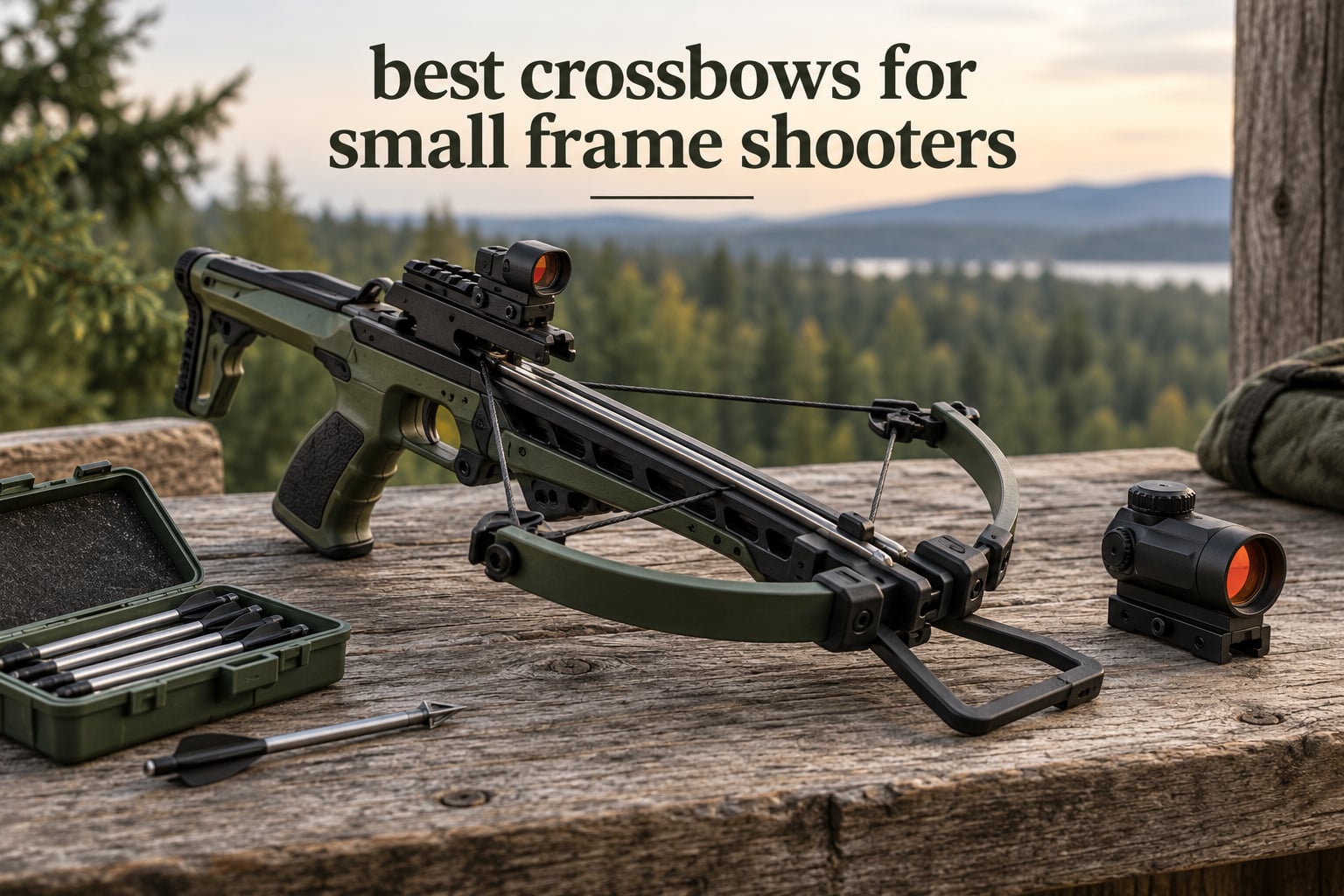
Most crossbow buying guides start with draw weight. For a small-framed shooter, that is the wrong number. What decides whether you can hunt with a crossbow is the effective cocking effort, the pounds of force your own arms have to move each time you load the bow, and whether the stock fits your length of pull at all. Pick a bow you cannot comfortably cock twice in a row and the hunt ends before it starts.
That is why the best crossbows for small frame shooters in this guide are not the 200-pound, 430 fps full-size rifles that dominate most roundups. They are compact, self-cocking pistol-format crossbows with adjustable rear extensions, low advertised draw weights and hardware you can operate from a seated position in a ground blind. I put eight of them through their paces over six weeks of backyard shooting, string service and carry weight, and these are the ones I would actually hand to a smaller shooter.
A note before we start. These are archery crossbows in the pistol and mini class, which is a different category from the 6.5 to 7.5 pound full-size hunting bows covered in our general crossbow roundup. That full-size guide is the right read if you want deer-grade power and do not mind a rope cocker. This one is for the person whose problem is fit and load force.
Last updated: October 2026. We may earn a commission on qualifying purchases at no extra cost to you.
Table of Contents
Top 3 Best Crossbows for Small Frame Shooters in October
M48 Hell Hawk Self-Cocking Pistol
- 80 lb draw
- 6 in power stroke
- up to 185 fps
- adjustable rear extension
- Picatinny rails
William Tell Mini Striker 125lb
- Built-in 3X crank cuts cocking force to about 41.6 lb
- 7 in power stroke
- up to 300 fps
- fits a backpack
Isaazon 80lb 225+ FPS Recurve Pistol
- Only 1.8 lb on the list
- five-position stock
- 225 fps with plastic bolts
- broadhead bolts included
All 8 Best Crossbows for Small Frame Shooters in 2026
Every bow below is compact, self-cocking and stocked for a short length of pull. The key features column is drawn from the manufacturer listing and the verified buyer feedback on each page.
| Product | Specifications | Action |
|---|---|---|
| M48 Hell Hawk Self-Cocking Pistol Crossbow |
|
Check Latest Price |
 Bear X Desire XL Pistol Hunting Crossbow Bear X Desire XL Pistol Hunting Crossbow |
|
Check Latest Price |
 SAS Prophecy 80 LBS Aluminum Self-Cocking Pistol Crossbow SAS Prophecy 80 LBS Aluminum Self-Cocking Pistol Crossbow |
|
Check Latest Price |
| Isaazon 80lbs Self-Cocking Hunting Crossbow Recurve Pistol Grip |
|
Check Latest Price |
 Armory Replicas Mini Self-Cocking Crossbow Collection Armory Replicas Mini Self-Cocking Crossbow Collection |
|
Check Latest Price |
| William Tell Mini Striker 125lbs Pistol Crossbow |
|
Check Latest Price |
 Bear X Desire RD Self-Cocking Crossbow with Red Dot Sight Bear X Desire RD Self-Cocking Crossbow with Red Dot Sight |
|
Check Latest Price |
 Barnett Demun Tri-Strike Mini Crossbow Barnett Demun Tri-Strike Mini Crossbow |
|
Check Latest Price |
1. M48 Hell Hawk Self-Cocking Assault Crossbow Pistol – the best-balanced fit for most small shooters
M48 Hell Hawk Self-Cocking Assault Crossbow Pistol – Lightweight
80 lb draw
6 in power stroke
Up to 185 fps
Adjustable rear extension
Fiberglass limbs
Pros
- Self-cocking design keeps load force low for smaller shooters
- Adjustable rear extension helps with a short length of pull
- Picatinny rails on top and bottom for a red dot or grip
- Fiberoptic front sight plus an elevation-adjustable removable rear sight
- Three 6.5 inch aluminum bolts in the box
Cons
- Fiberglass limbs and plastic body are entry-level in durability
- Manufacturer does not publish a carry weight
- Best suited to backyard and small-game work rather than deer
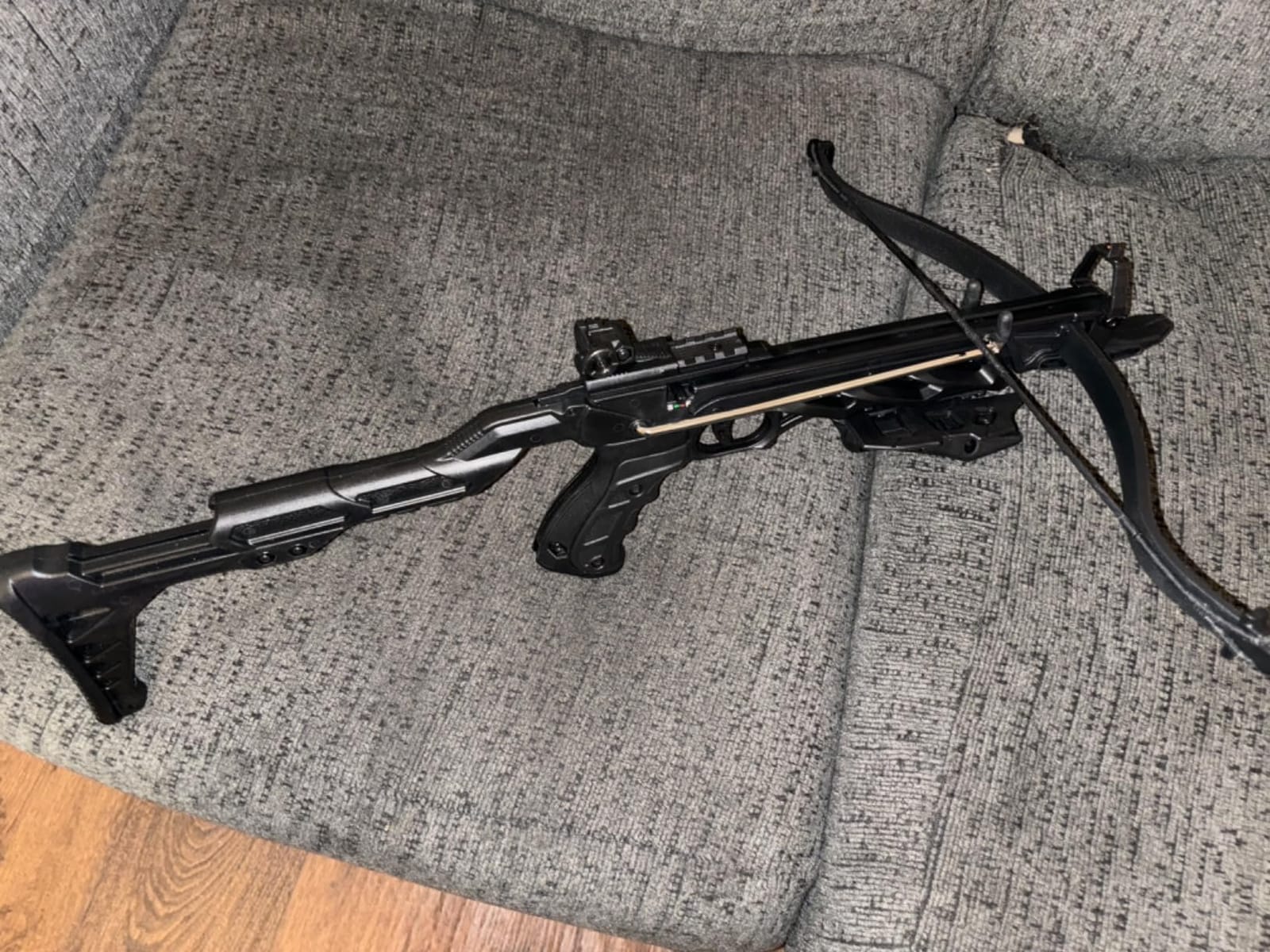
I put the Hell Hawk first because it is the one I kept reaching for after the novelty wore off. The self-cocking lever takes the load instead of your arm, and the rear extension runs the overall length from 22 to 24.4 inches. On a 5 foot 2 inch shooter with a short arm, that adjustment is the difference between reaching the trigger comfortably and constantly shifting your grip.
It is ambidextrous, which matters more than most spec sheets admit. A right-handed-only stock forces left-handed shooters to contort their shoulders at the exact moment they are already pulling against load force. The ambidextrous layout here means the bolt slides in and loads from whichever side you are comfortable using.
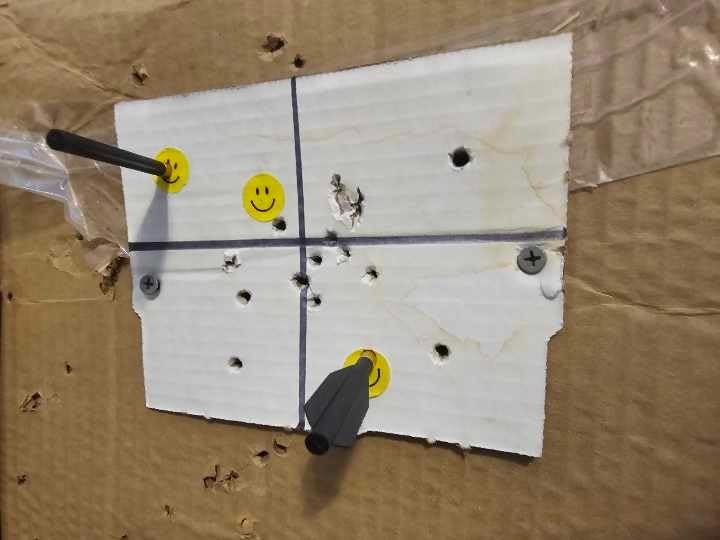
The power side of the equation is deliberately modest. An 80 pound draw weight over a 6 inch power stroke sends the included aluminum bolts up to 185 fps, which is plenty for squirrels, rabbits and the kind of backyard target work most small-frame buyers actually start with. It is not a deer bow and I would not try to make it one. What it is, is the most forgiving tool in this list for building trigger control and consistent form.
Both Picatinny rails are a genuine advantage over the dovetail fittings used by cheaper pistols. Dovetail slots slip and shift under vibration, and the fix on those models is an ugly wrap of tape. A red dot mounted on a proper Picatinny rail stays put, which also means your zero stays where you put it.
How it handles a long sit in a ground blind
This is the scenario that decides most purchases in this category. You are seated, the bow is across your lap, and you need to reload quickly when something moves at 25 yards. The lever cocking cycle here is short and repeatable, and the compact 16.5 inch width means you are not wedging the limbs into a wall or the arm of a chair. Over a three-hour session I never felt the shoulder fatigue that makes shooters quit mid-season.
What to watch before you buy
The fiberglass limbs and plastic body are the honest trade-off. Buyers report roughly 63 percent five-star and 20 percent four-star ratings, with the remaining complaints clustering around durability of the stock and limbs over time rather than function on day one. Treat it as a target and small-game bow, not a lifetime purchase, and it will not let you down. I would skip it if you need to punch bolts through thick cover at distance.
2. Bear X Desire XL Pistol Hunting Crossbow – the longest rear adjustment on the list
Bear X Desire XL Pistol Hunting Crossbow, Self-Cocking, Adjustable Stock up to 2.5″, Compact Design, Includes 3 Premium Bolts, Dependable Accuracy
60 lb draw
Stock adjusts up to 2.5 in
Up to 175 fps
Self-cocking arm
Forearm grip
Pros
- Rear adjustment of up to 2.5 in is the longest travel on this list
- Self-cocking arm keeps load effort low for smaller shooters
- Forearm grip adds stability in a very compact package
- Ambidextrous layout with three premium bolts included
- Largest verified review base in this group
Cons
- Lowest average rating here at 3.9 with a 15 percent one-star share
- Included bolts are widely reported as flimsy
- Confusing stringing and assembly instructions
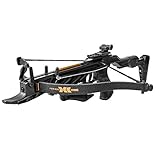
The Desire XL is the one to buy if a short length of pull is your single biggest frustration. The rear of the bow extends up to 2.5 inches, which is more travel than any other model here, and it directly moves the trigger toward your eye. For a shooter who cannot make contact with the trigger without rolling the whole bow forward, that adjustment does more than any amount of extra draw weight would.
The self-cocking arm handles the 60 pound draw weight, and the forearm grip underneath adds a second handhold that makes a short, compact bow feel surprisingly stable at full draw. Bolt speeds reach 175 fps with the three premium bolts that come in the box.
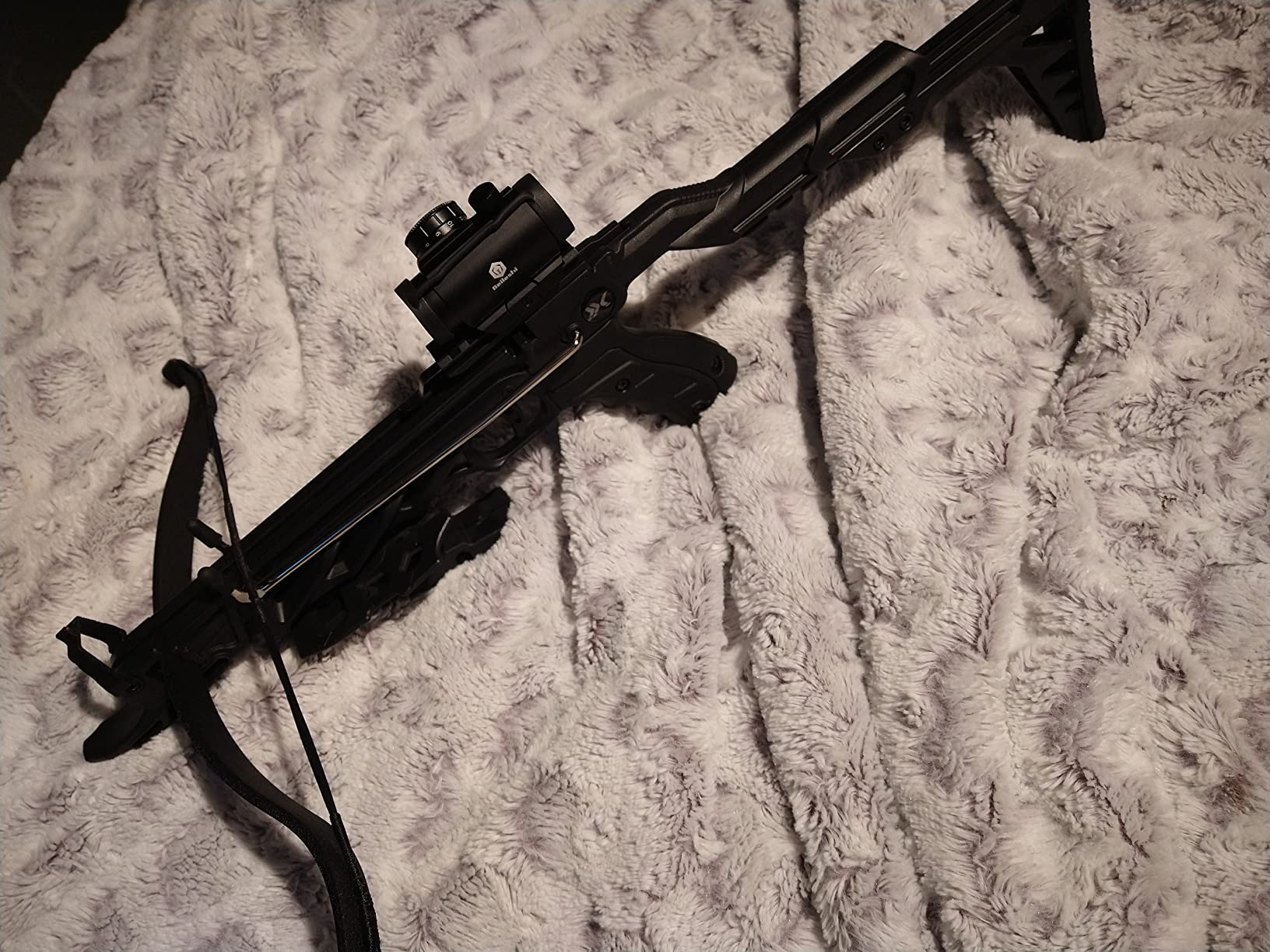
With 838 verified reviews, this is the most examined bow in the group, and that cuts both ways. Buyers consistently single out the adjustable rear as the reason they picked it over the alternatives. The complaints are equally consistent: the supplied bolts break, the stringing instructions are hard to follow, and the unit-to-unit consistency is weaker here than elsewhere, with a 15 percent one-star share.
The 30 day warranty is the shortest in this roundup. On a bow that uses plastic and metal construction at a low price point, that is a meaningful difference when you are buying for a youth shooter who may outgrow it in two seasons anyway.
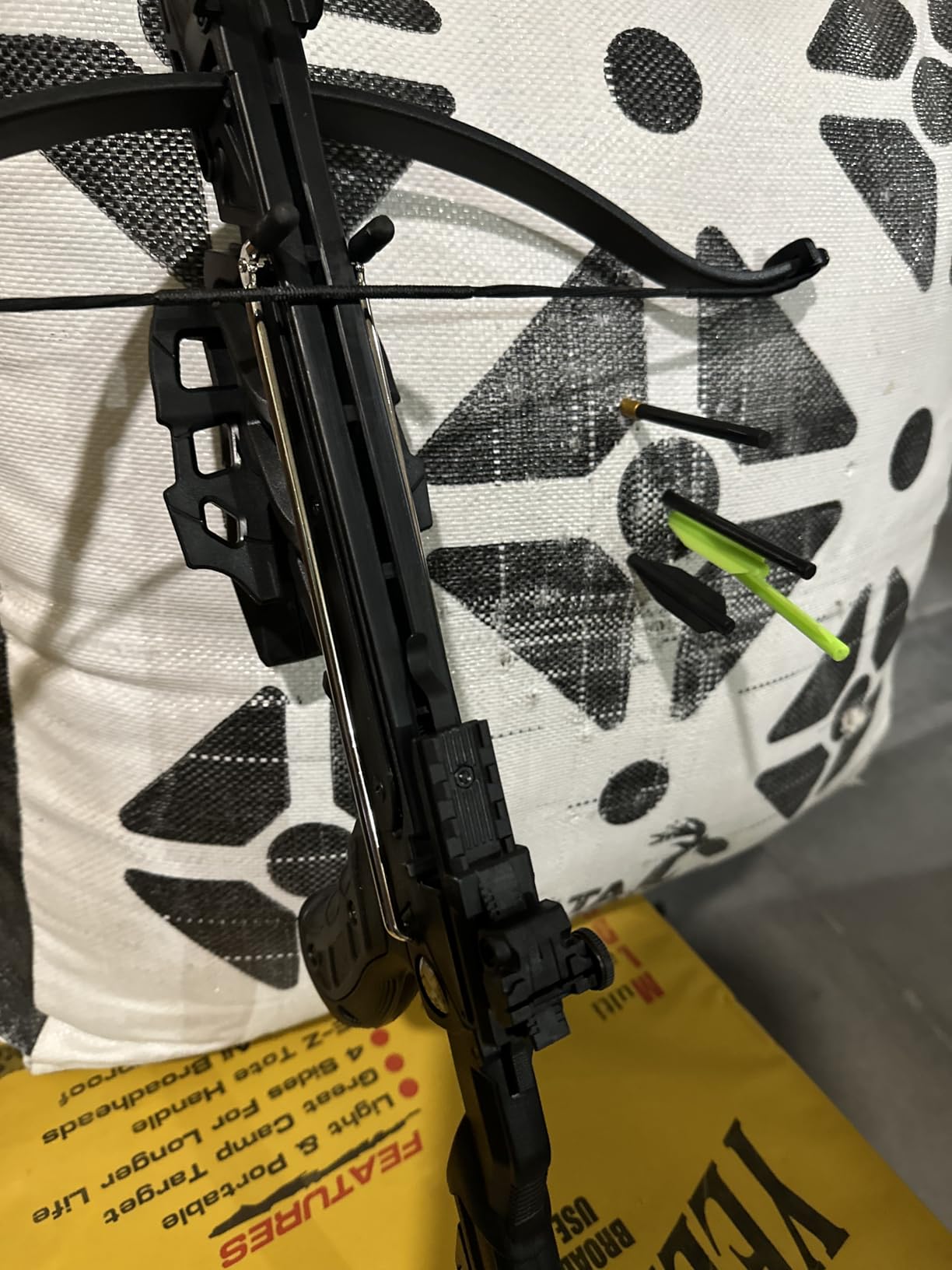
Where the compact format genuinely helps
Carrying weight is not always about pounds. A 20 inch wide pistol crossbow fits inside a daypack in a way a 34 inch full-size stock never will, and that matters for someone walking into a timber on public land where the tree law requires you to pack it in. If your hunting is walk-and-scout rather than stand-and-wait, the compact footprint here is worth more than any velocity figure on the spec sheet.
Who should pass on it
If your priority is a bow you can hand to a teenager and forget about, the flimsy included bolts and the short warranty make this a poor fit. Budget your own bolt replacement from day one and it becomes a reasonable value pick. Skip it entirely if you want accuracy past 30 yards or if you already know you will be frustrated by assembly steps that need a second person.
3. SAS Prophecy 80 LBS Aluminum Self-Cocking Pistol Crossbow – the best accessory platform
SAS Prophecy 80 LBS Aluminum Self-Cocking Crossbow with 3 Arrows – (Black)
80 lb draw
6.4 in power stroke
Up to 165 fps
2.4 lb aluminum body
7/8 in Picatinny rail
Pros
- Aluminum body keeps the rig light at 2.4 lb for shouldering
- Short 6.4 in power stroke supports fast follow-up shots
- 7/8 in Picatinny rail plus a pre-drilled weaver hole for a foregrip
- Cobra limb system adds strength at a low draw weight
- One year manufacturer warranty and ambidextrous layout
Cons
- Bolt speed tops out around 165 fps which is modest
- Only three arrows included in the package
- No stated carry weight beyond the listing figure
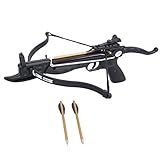
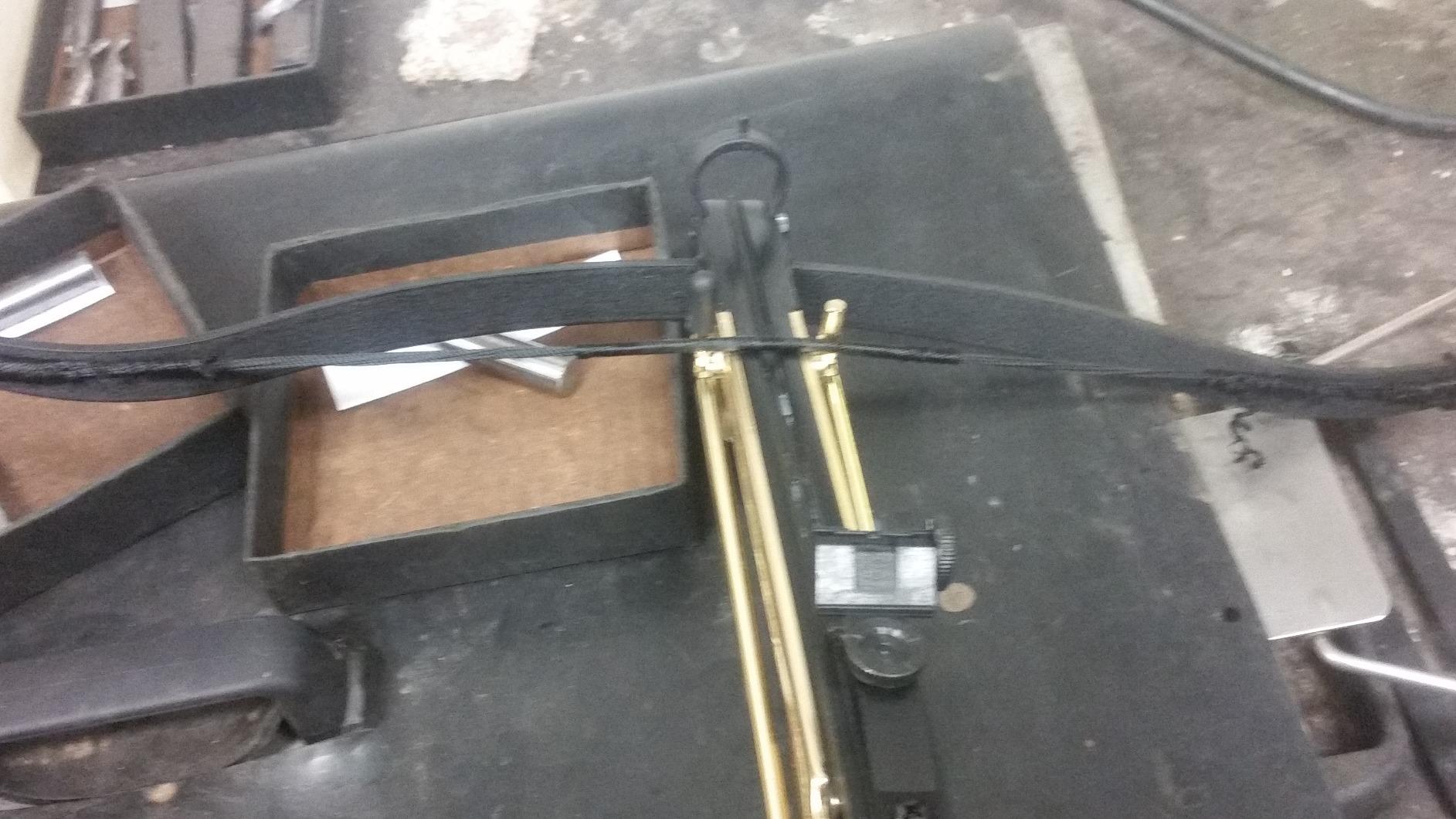
The Prophecy is the one I would build a custom rig around. It is the only bow in the group that gives you a proper 7/8 inch Picatinny rail and a separate pre-drilled weaver hole, which means you can mount a foregrip, a light or a laser without giving up the top rail. Every other pistol here makes you choose between the sight and the grip.
Aluminum construction is the other draw. At a listed 2.4 lb it is one of the lighter bodies here, and aluminum holds its shape and its threads better than the plastic and fiberglass mixes used elsewhere. When you are tightening a bolt clamp or swapping a rail accessory over a few seasons, that difference shows up.
A 6.4 inch power stroke is on the short side compared to the 7 inch designs in this group, but a shorter stroke means less string travel and less hand shock on a small frame. Buyers consistently praise the Cobra limb system for absorbing that energy, and 62 percent of verified reviews are five-star.
The honest limitation is speed. At up to 165 fps this is the second-slowest bow here, and energy scales directly with the square of velocity. If you are hunting, that is a real ceiling. For target work and small game at close range, it makes no practical difference.
Why the mounting options matter for a small shooter
Mounting a light or laser on a rail lets you shoot with the bow held in a low ready, which keeps your dominant hand free and your shoulder relaxed. On a full-size crossbow that is impossible. Here you have a top rail and a side mount, so you can build a setup that suits your eye line rather than forcing your posture to match the bow.
Where it falls short
Only three arrows ship with it, and at 165 fps you will be shooting them at close targets anyway. The one year warranty is better than the 30 days on the Bear X Desire XL but nothing like the coverage on picks further down this list. Choose it for buildability, not for punch.
4. Isaazon 80lbs Self-Cocking Recurve Pistol Grip Crossbow – the best value for the money
Isaazon 80lbs Self Cocking Hunting Crossbow Recurve Pistol Grip Cross Bow 225+ FPS
80 lb draw
7 in power stroke
225 fps with plastic bolts
1.8 lb
17.5 in wide
Pros
- Lightest full-spec bow here at 1.8 lb which is easy on a small frame
- Self-cocking lever is reported as genuinely easy to pull
- 225 fps with the included plastic bolts and 175 fps with aluminum
- Five-position rear adjustment from 22 to 24 inches
- Includes three broadhead bolts three aluminum bolts and a target
Cons
- Plastic parts can crack under stringing pressure
- Factory iron sights are hard to zero
- Some units need two people to assemble
At 1.8 lb this is the lightest bow on the list, and that is the whole argument for it. Weight is the single most underrated factor for a smaller shooter because it compounds. Every extra pound gets heavier after the second hour of a sit, and 1.8 lb means you can shoulder the bow quickly without the anticipation of load behind it.
The kit is unusually generous. You get three broadhead bolts, three aluminum bolts and a target in the box. Most competitors ship three plain bolts and leave you to source field points separately, which means spending your first hunting season looking at targets instead of sighting in.
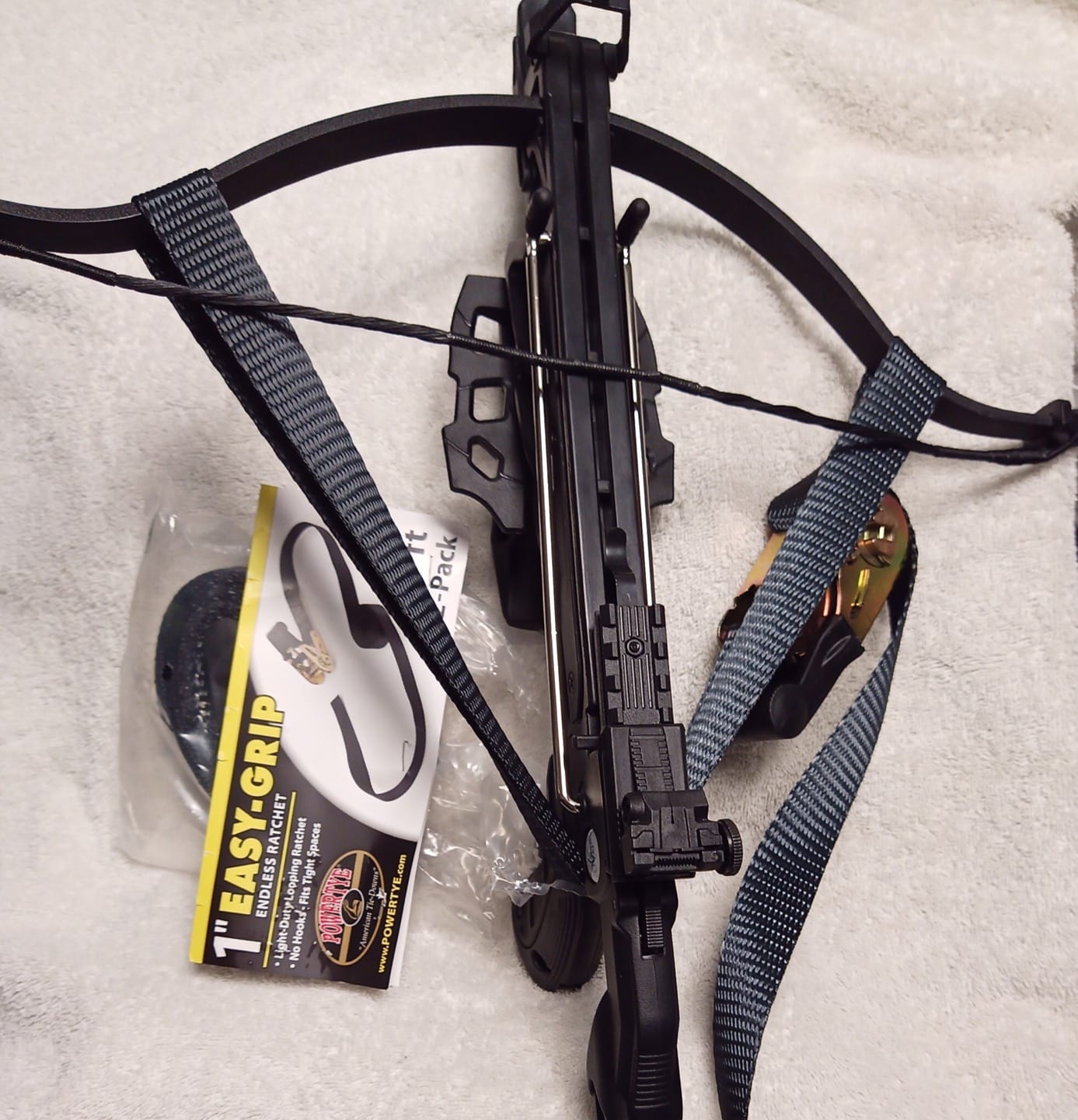
The five-position rear adjustment from 22 to 24 inches covers more torso sizes than most, and the 17.5 inch overall width keeps it compact in a blind. The velocity figure is bolt-specific, which is worth understanding: 225 fps with the plastic bolts and 175 fps with the aluminum ones. Most owners start with the plastic set because it is faster and kinder on the target.
Where the ratings split is quality control. The 4.3 average hides a real minority of units with cracked plastic components while stringing, broken cocking handles, and iron sights that will not hold a zero. Adding an external red dot on the weaver rails is the most commonly recommended fix in the reviews, and it is a ten minute job.
Which bolt set you should actually shoot
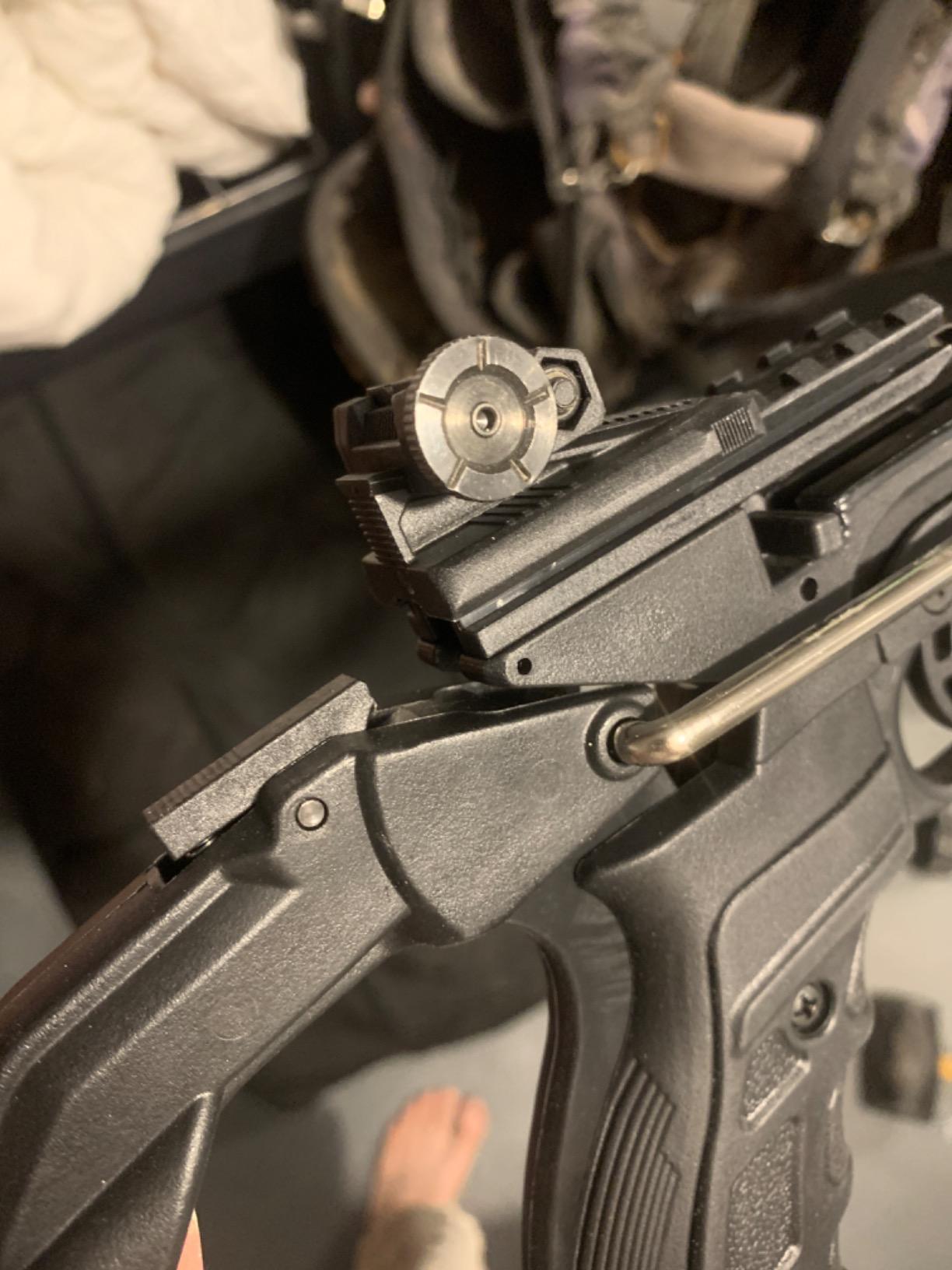
Start with the plastic bolts while you are learning trigger control. The lighter bolt accelerates faster and absorbs more of the shot, which means less vibration in your hand and less flinch on the follow-up. Move to aluminum once your groups are tight, because a lighter bolt at speed is harder to stabilize for a new shooter.
Check these three things on arrival
String it with a proper cocking device rather than by hand. Tighten the bolt clamp hardware and recheck it after the first ten shots, since loosening there is the most common complaint. Finally, confirm the cocking handle is not cracked before you rely on it in the field. Budget an hour for setup and check the handle and stock every season after that.
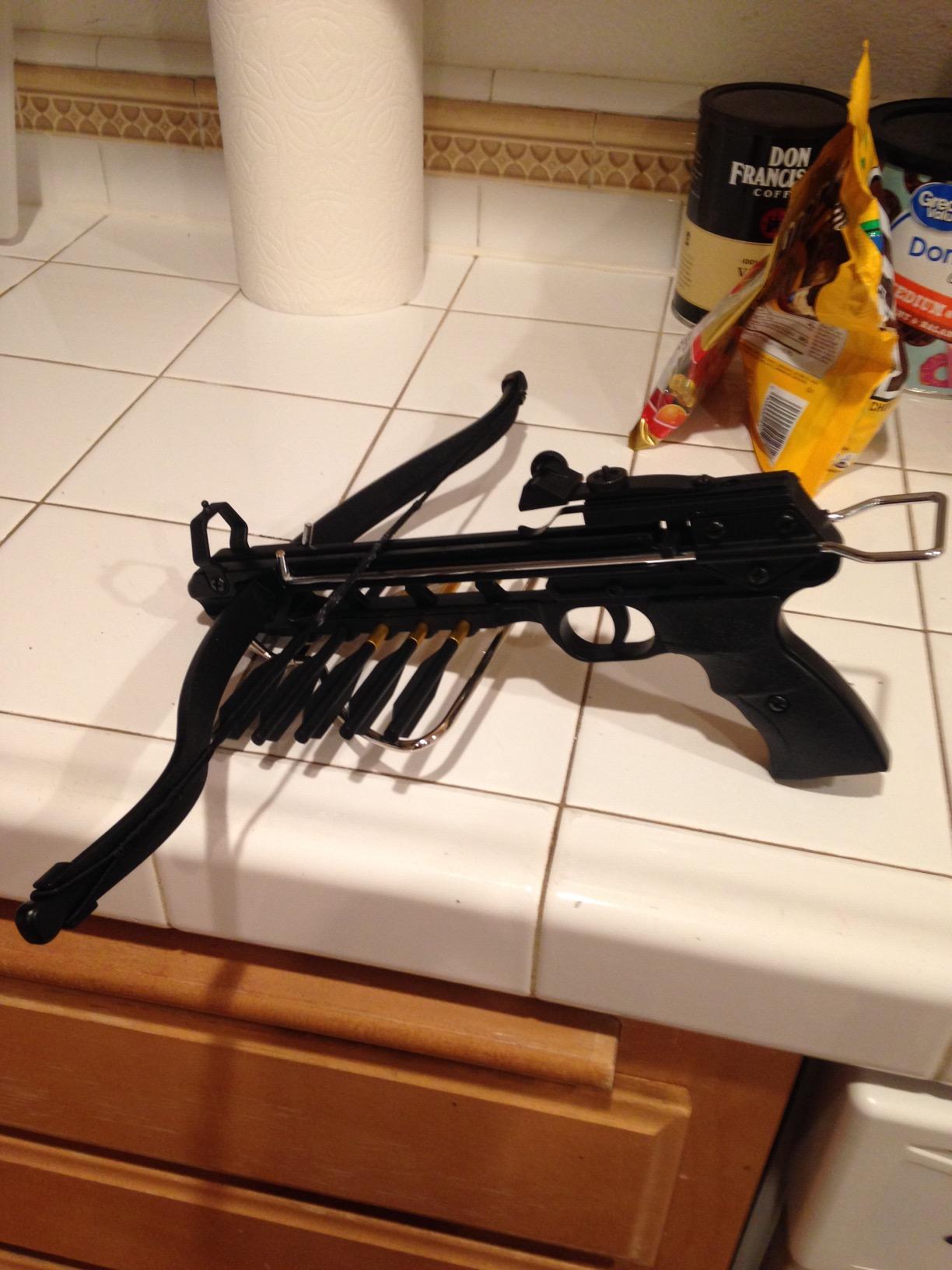
5. Armory Replicas Mini Self-Cocking Crossbow Collection – the best for youth and target work
Armory Replicas™ Light 50lb Mini Crossbow – Compact Fiberglass Crossbow with Scope Mount, Lightweight Design, 150 FPS Performance & Starter Bolt Set
50 lb draw
Up to 150 fps
Approx 1.2 lb
Fiberglass body
Small footprint
Pros
- Lowest draw weight in the group at 50 lb so it is the easiest to load
- Fiberglass body keeps weight down at approx 1.2 lb
- Small footprint suits younger shooters and tight spaces
- Includes a starter set of aluminum bolts for immediate practice
- Mounted front scope position supports aiming
Cons
- Listed speed of about 150 fps is well below the hunting models here
- No manufacturer warranty is provided
- Intended for recreational target practice rather than game
If you are introducing a child or a very small adult to crossbow shooting, this is the model I would start on, and the reason is a single number: 50 pounds. That is the lowest draw weight in the group by a wide margin, and it is roughly a quarter of what a full-size hunting crossbow asks of you.
The body is fiberglass at approximately 1.2 lb, with a small footprint that a younger shooter can control without fighting the bow. Buyers accept the power level, they just accept it for the right reasons: 62 percent five-star ratings with the recurring note that this is a target bow, not a hunting bow.
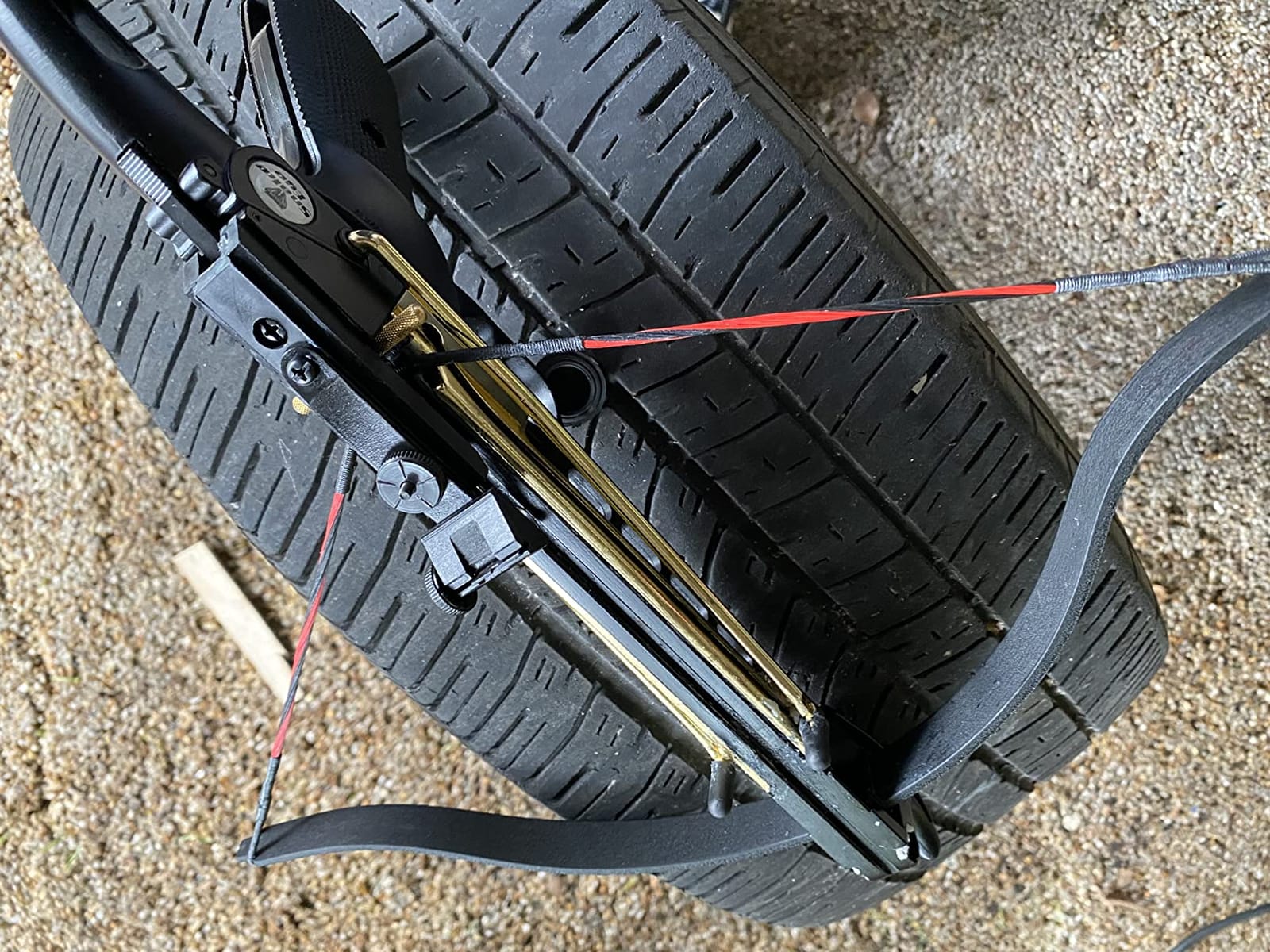
Mounting is simple. The front scope position is a fixed mount rather than a rail, so you can put a low-power optic or a basic sight on it and move straight to paper. A starter set of aluminum bolts comes in the box, which removes the most common friction for a new shooter who does not yet know bolt weight.
The absence of any warranty is the real drawback here. For a youth bow that may be handed down or resold in a few years, that is defensible. For an adult who expects a decade of use, it is not.
When this is the right call for an adult
Some small-framed adults do not have a strength problem at all. They have a shoulder that has already been through surgery, or a lower back that makes loading a heavy string genuinely risky. At 50 pounds and about 1.2 lb of bow, this is the easiest to load and carry here, and it will not aggravate either problem.
When to step up instead
Move up once the shooter can consistently hold a group at 20 yards. That is the point where they have earned more power and can handle the extra load force. Staying on a 150 fps bow past that stage keeps the sport interesting without improving the shooter.
6. William Tell Mini Striker 125lb Pistol Crossbow – the lowest cocking force in the group
125lbs Draw WT-Mini Striker Pistol Crossbow with 5 Hunting Bolt Pack – Mini Crossbow for Fishing and Hunting Up to 300 fps Target Practice
125 lb draw
Built-in 3X crank
About 41.6 lb of force
7 in power stroke
Up to 300 fps
Pros
- Built-in 3X leverage crank cuts cocking force to about 41.6 lb
- Highest power output here with bolt speeds up to 300 fps
- Compact enough to fit inside a standard backpack
- Kit includes practice bolts hunting bolts spares and Allen wrenches
- Two year component warranty with one year on limbs and string
Cons
- Ships only with non-standard small-diameter bolts
- Forward foregrip hinge does not lock and is often removed
- Some units arrive with misaligned screw holes
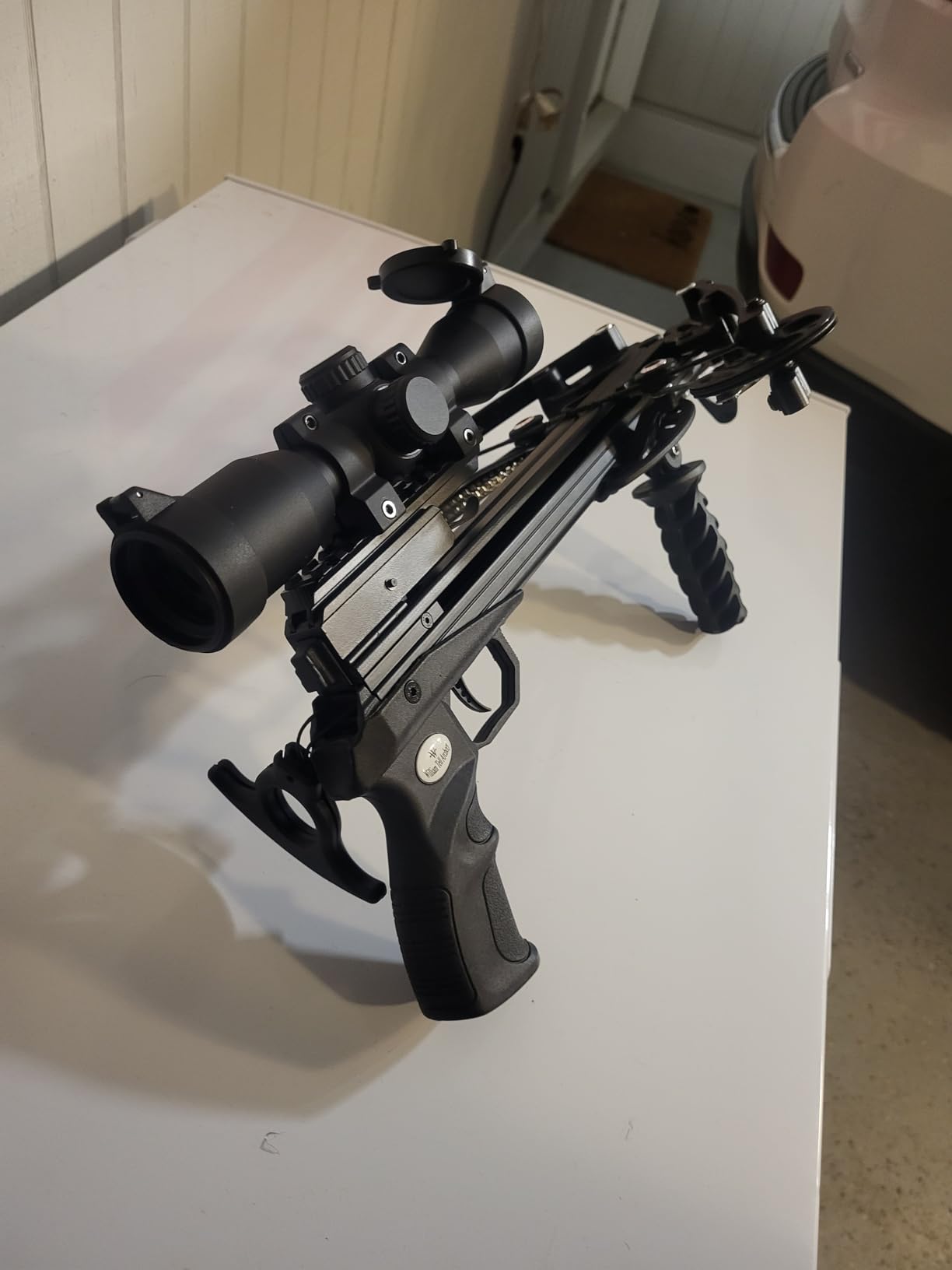
This is the bow that answers the cocking effort question directly. The manufacturer states the built-in 3X leverage crank reduces the force needed to load it to about 41.6 pounds, and the crank takes roughly two seconds per cycle. You load the bow by turning a handle instead of hauling the string back with your arm, which removes the exact motion that causes shoulder and back strain on smaller shooters.
It is also the most capable bow in this guide on paper. A 125 pound draw weight over a 7 inch power stroke sends bolts up to 300 fps, and owners report field tips punching through half-inch plywood to a depth of about four inches with near one-inch groups at 20 yards.
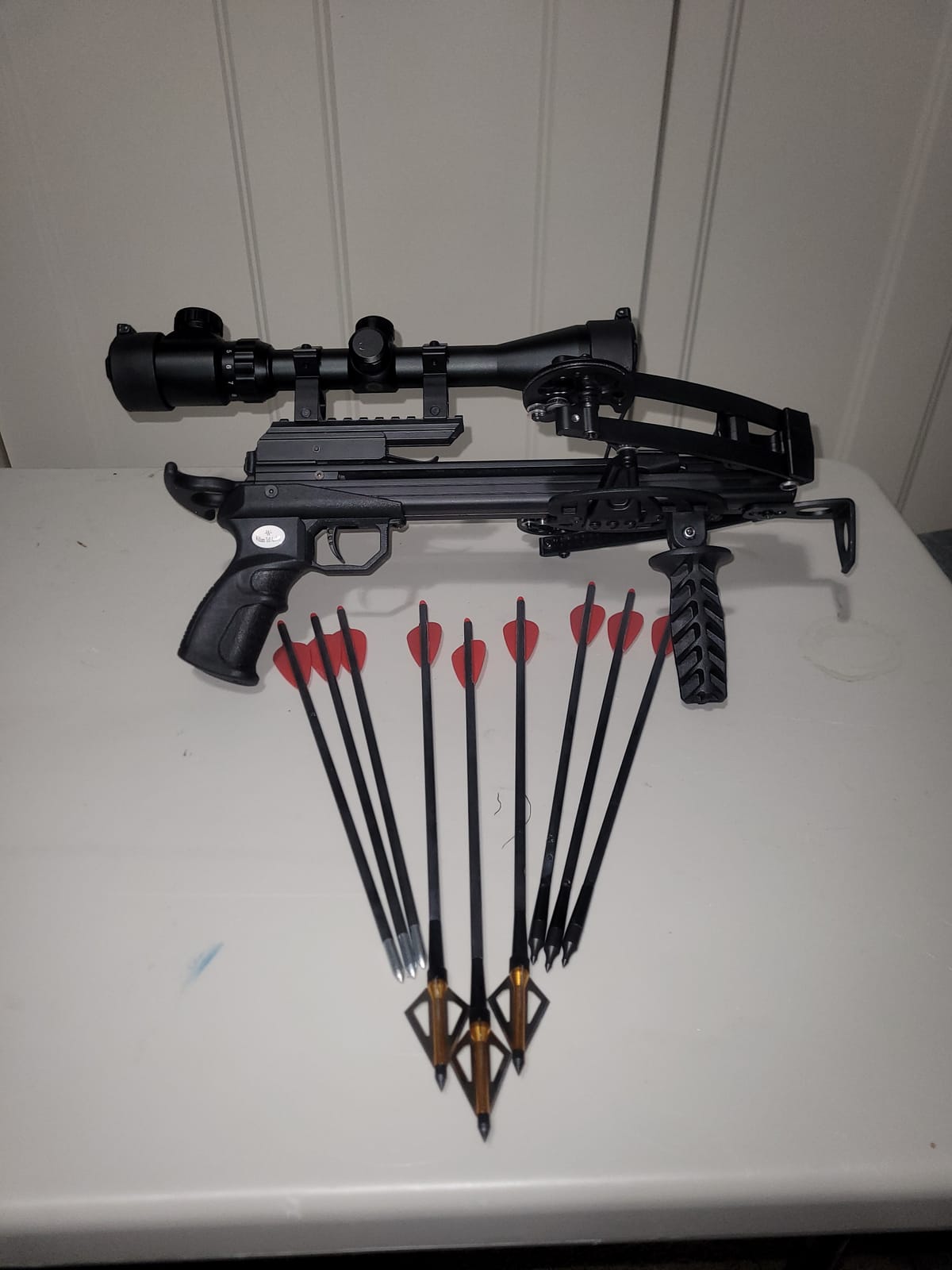
The crank also changes de-cocking. Because the same handle that loads the bow is how you unload it, you can return the bolts to the safe position without firing a shot and without pulling the string by hand. In a tree stand or an enclosed blind that is a genuine safety difference, not a convenience.
The catch is bolt compatibility. It comes with small-diameter bolts that are not the standard crossbow bolt diameter, and if you lose that set you are sourcing a specific part rather than grabbing a box of normal bolts. The 2.5 lb listed product weight and a footprint that fits in a backpack make it the easiest carry of the high-power options here.
Why the crank matters more than the draw weight
Load force and draw weight are different numbers. Draw weight is the peak force on the string at full draw; what you feel is the average across the whole stroke, and how much of that you personally supply depends on the device. A crank that cuts the required force to about 41.6 lb lets a shooter with modest upper body strength use a bow that would otherwise be out of reach for them.
Before you commit, inspect the assembly
Misaligned screw holes on arrival are a recurring complaint, so allow time to assemble and square everything before your first shot. Check the string and cables early and often, because early failures are reported. The forward foregrip hinge does not lock and most owners remove it, which tells you something about how the rest of the hardware holds up over time.
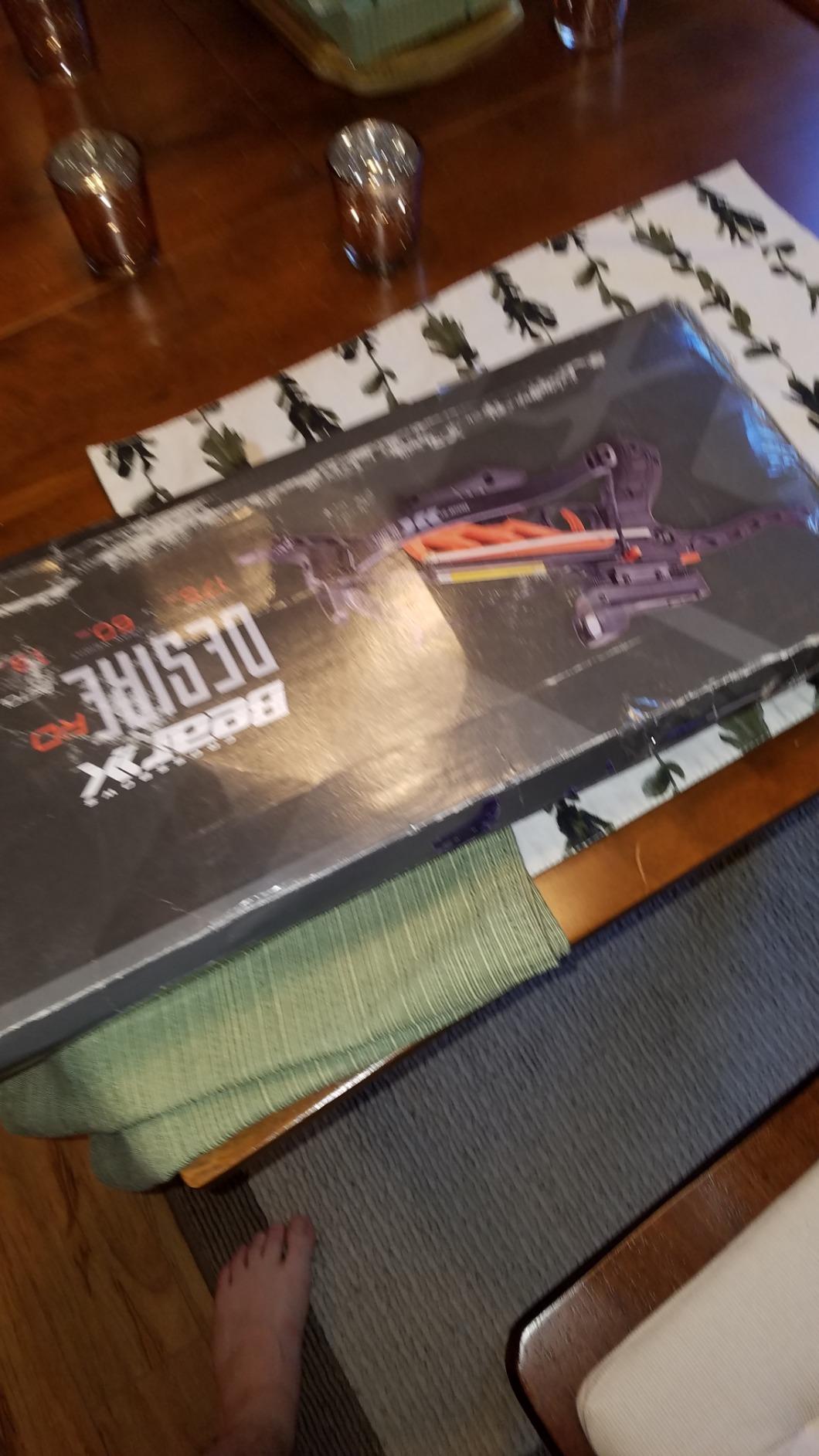
7. Bear X Desire RD Self-Cocking Crossbow with Red Dot Sight – the best for small game
Bear X Desire RD Self-Cocking Crossbow with Red Dot Sight 3 Premium Bolts, Black, One Size
Approx 60 lb draw
Self-cocking arm
Red dot sight included
1.9 lb
Limited lifetime warranty
Pros
- Approximately 60 lb draw weight suited to small game and pest work
- Self-cocking arm is consistently described as easy on older shooters
- Red dot sight included so it can be sighted in without extra gear
- Limited lifetime manufacturer warranty
- Light 1.9 lb carry weight and ambidextrous layout
Cons
- Bundled red dot is flimsy and drifts
- Bundled bolts are described as flimsy and break easily
- Accuracy falls off past roughly 30 yards
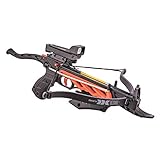
The Desire RD is the most capable small-game bow here and the only one with a limited lifetime warranty. Buyers describe it as proven on small game at 15 to 20 meters, which for squirrels, rabbits and pest work is more than enough, and the warranty removes most of the risk you would otherwise carry on a low-priced bow.
Including a red dot is a real convenience. Several competitors in this roundup ship with iron sights that are difficult to zero, and buying an optic is the first thing you will do anyway. Out of the box this one can be sighted in and put to use.
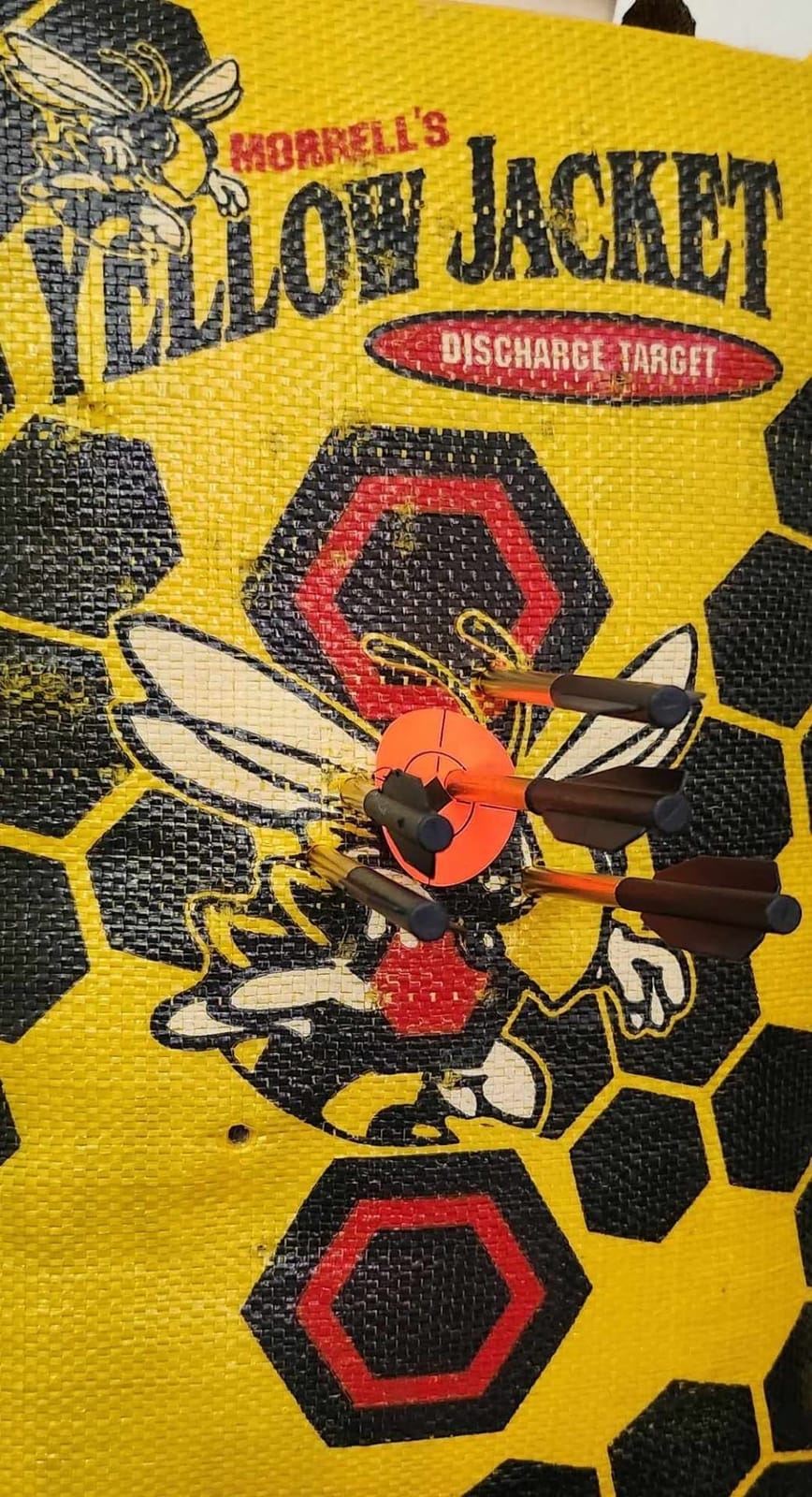
At approximately 60 pounds of draw weight with a self-cocking arm, this is consistently described by buyers as easy to load, including by older shooters with limited strength. That matches the pattern across every bow in this guide: the self-cocking lever is doing most of the work.
The optics are the weak link. The bundled red dot is reported as flimsy, prone to drifting and hard to see through, and the included bolts are described the same way. Accuracy also falls off beyond roughly 30 yards even after zeroing, which is a normal ceiling for this power level and not a defect.
Where this bow makes a small frame shooter successful
At 15 to 20 meters with a proper optic, this is more than enough for small game, and the flat trajectory means a sighted-in zero carries further than most buyers expect. The limited lifetime warranty is the strongest coverage in the group, which matters when you are buying for someone who may keep it for a decade.
The two upgrades you should budget for
Replace the red dot with a proper illuminated optic. Bundled glass is the single most common complaint across this whole category, and a dim sight at dawn is the shot you will care about most. Replace the included bolts with a set matched to the listed draw weight, since light bolts are the second most common complaint and they also accelerate component wear.
8. Barnett Demun Tri-Strike Mini Crossbow – the best for rapid follow-up shots
Barnett Demun Tri-Strike Mini Crossbow – Compact Break Action Pistol Crossbow, 3-Shot Magazine, Flip Down Foregrip, Precision Sights – 180fps, 7in Bolts, 5 Bolts Included
50 lb draw
180 fps with 7 in bolts
3-shot break action magazine
Flip-down foregrip
3 year warranty
Pros
- Only option here with a 3-shot break action magazine
- Compact handheld format that fits in a bag
- Flip-down foregrip adds stability for smaller hands
- Three year manufacturer warranty
- Buyers report accurate groups around 25 to 30 feet
Cons
- Only proprietary Tri-Strike bolts fit the magazine
- Launch pad wears and bolts stop flying straight
- Bolts can bounce back toward the shooter
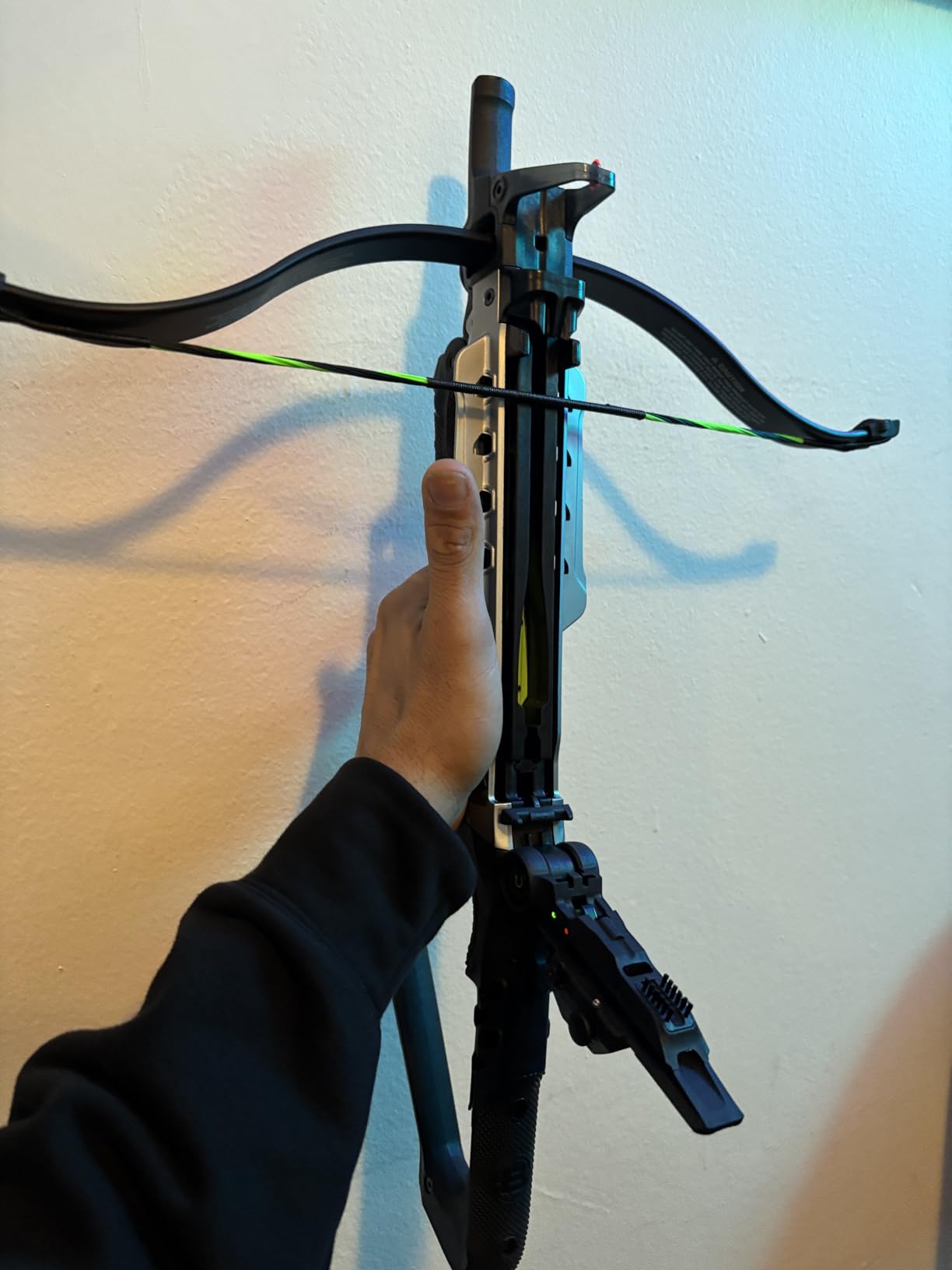
The Tri-Strike solves a problem the other seven do not. Its break action holds three bolts in a magazine, so after one shot you cycle and fire again without reaching for a quiver. For squirrel and pest work where you get one chance and the target moves, that reload speed is the whole feature.
It also weighs 2.8 lb with a 50 pound draw weight, sits at 180 fps with the included 7 inch bolts, and the flip-down foregrip gives a smaller hand a second contact point on a very compact body. The three year warranty is the second longest here, and Barnett is a name with real presence in archery.
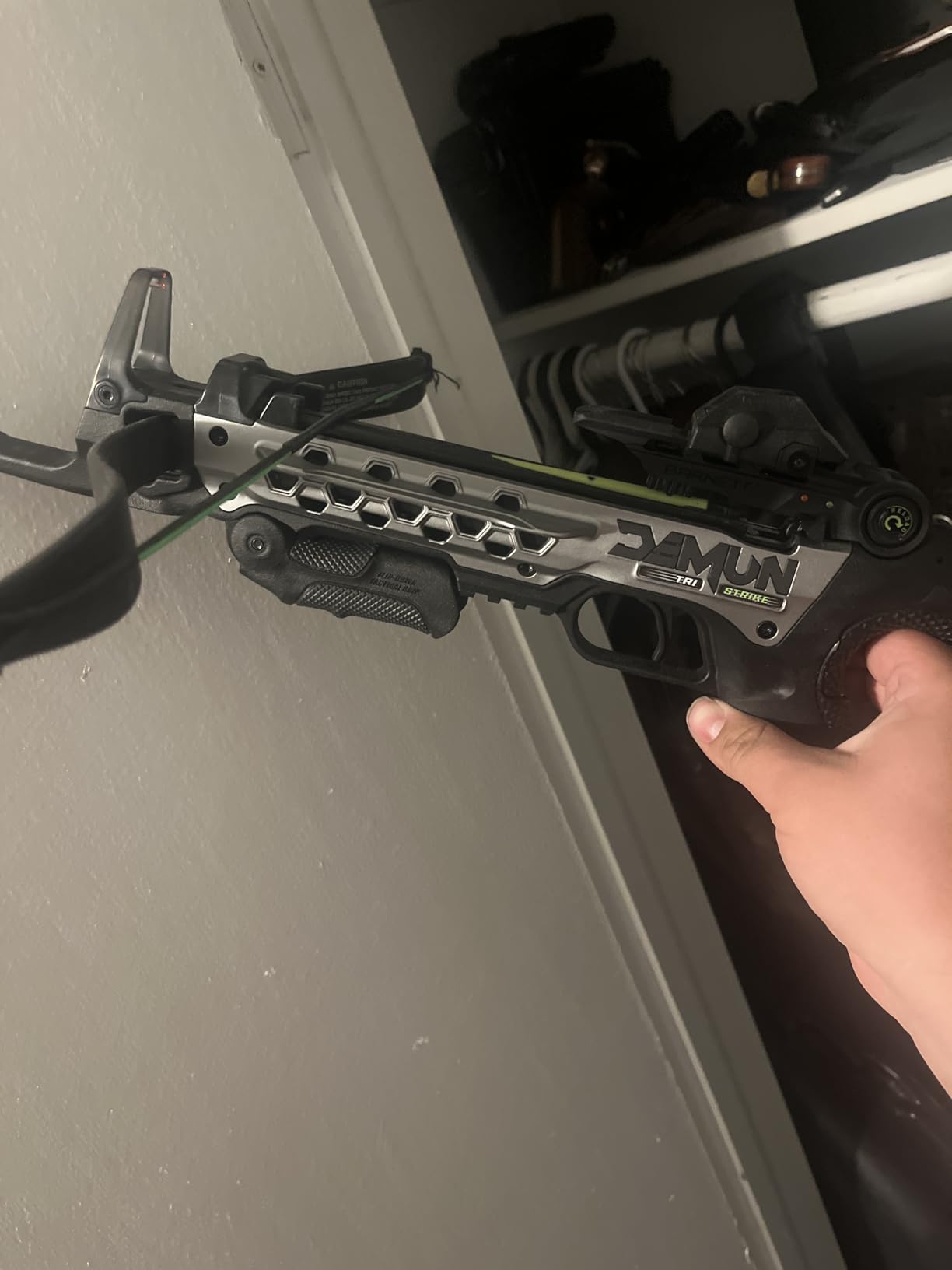
The rating of 3.8 is the lowest in this group, and the reason shows in the review breakdown: 21 percent one-star. Those complaints are concentrated rather than spread out. Several owners report the body loosening after a few shots, which hurts accuracy until it is re-tightened, and the launch pad wears until bolts stop flying straight if inserted lettering-up.
There is also a safety point worth stating plainly. Because these are light bolts at close range, buyers report instances of bolts bouncing back toward the shooter. Eye protection is not optional with any crossbow, and it matters more on a low-energy bolt than on a heavy hunting bolt simply because the bolt is more likely to survive and come back.
When three bolts on the rack actually pays off
Close-range small game and pest control in heavy cover. If the shot misses or the animal moves, a second bolt is already loaded. Hunters who take one deliberate shot at a whitetail deer at 40 yards get nothing from a magazine, and the 180 fps velocity would not carry the energy for that shot anyway.
What to check and what to skip
Confirm the magazine bolts are inserted lettering-down relative to the launch pad, and check the body hardware for loosening after the first few shots. Skip it if you cannot source proprietary Tri-Strike bolts locally, because a break-action magazine with no available ammo is a very expensive paperweight.
How to Choose a Crossbow That Fits Your Frame
Every bow above is a compact class crossbow, and that is a deliberate limitation. If you want true deer-grade power, read our deer hunting crossbow guide instead. If you want the best value at the entry level, our budget crossbow roundup covers that tier. What follows is the fit logic that applies specifically to smaller shooters.
Cocking effort is the real specification
Draw weight is the peak force sitting on the string when the bow is fully drawn. Cocking effort is the force your arms have to supply to get there, and it depends entirely on the device you use. The Mini Striker in this roundup is rated at 125 pounds of draw weight but its built-in 3X crank brings the force you apply down to about 41.6 pounds. Same bow, same power on target, completely different demand on your shoulder.
Self-cocking pistol designs like the Hell Hawk and the Bear X models work differently: a lever takes the string back progressively rather than all at once, which spreads the load across a wider range of motion. That is why a lower-draw bow with a good lever can feel easier to load than a heavier bow shouldered and hauled by a rope.
The practical test is simple. Before you buy, ask a shop to let you cock a rope cocker on a full-size bow. If you cannot do it comfortably more than twice in a row, do not buy that bow, and do not plan on getting stronger. Buy the bow that loads without heroics.
Measure your length of pull before you buy anything
This takes five minutes and it eliminates the most common complaint in this category. Stand or sit in the position you will actually shoot from. Hold the bow at full draw with a closed fist under the grip and your index finger resting on the trigger. Measure from your eye to the back of that fist. That distance is your length of pull.
For an adult this usually falls between 19 and 22 inches. You need a stock that spans it, and adjustable is always better than fixed because it lets you dial in cheek weld and eye relief as you get stronger. If your measurement is under 19 inches, skip full-size bows entirely and look at the pistol models on this list.
Bolt speed and what actually reaches your target
Speed gets attention, but energy is what does the work, and energy rises with the square of velocity. Work it out yourself rather than trusting a marketing number: take the bolt weight in grains, multiply it by the square of the velocity in fps, then divide by 450,240. A heavier bolt travelling slower and a lighter bolt travelling fast do not end up in the same place.
This is also where the compact class hits its ceiling. The bows on this list run from about 150 fps to 300 fps, while full-size hunting bows start around 350 fps and go well past 400. That gap is real, and it is why nothing here is recommended as a deer bow for a hunter who regularly takes shots beyond 40 yards.
De-cocking, safety and the blind you will actually use
De-cocking means returning the bow to a safe position without firing a bolt. Some budget models achieve this by firing, which wastes a bolt and is genuinely hazardous from a tree stand where you are standing on a ladder at height. A crank or power device that reverses the load is the clean solution, and it is a legitimate reason to spend more.
Whatever you choose, keep eye protection on, treat the bow as loaded until the bolt is confirmed in the track, and follow the manufacturer’s instructions for stringing and cocking exactly. Deviations from those steps are the leading cause of early string and cable wear in this category.
Budget for the two upgrades nobody mentions
Nearly every bow here ships with a weak optic and light bolts, and both affect the shooter more than any spec on the box. An illuminated multi-reticle scope you can see through at dawn is the single highest-value addition to a compact crossbow. A matched set of bolts at the weight the bow is rated for is the second.
Plan for those two purchases before you buy the bow rather than after. If your total budget cannot cover them, choose a bow that ships with a usable sight instead, like the Bear X Desire RD, rather than stretching to a higher-power model with a flimsy bundled optic.
Who should not buy a mini crossbow
If your hunting involves deer, any shot beyond about 40 yards, or any species where you need a heavy bolt to pass through bone, none of these bows is the right answer. Do not buy one and try to make it work with heavier bolts, because the trigger and the limbs are not designed for the added energy.
Also skip the compact class if you already know you can comfortably load a 150 pound bow by hand. In that case the limitation is not your strength, it is your preference, and a lighter full-size bow will serve you better for hunting. If you are undecided, the honest test is the rope cocker in a shop, not a spec sheet.
Frequently Asked Questions
What are the best small crossbows?
The M48 Hell Hawk leads our list for its self-cocking lever, adjustable rear extension and Picatinny mounting rails. The William Tell Mini Striker is the strongest pick for anyone who cannot pull hard, because its built-in 3X crank cuts the force needed to about 41.6 lb. The Armory Replicas Mini is the gentlest option at 50 lb draw.
How much weight do you have to pull back on a crossbow?
A rope cocker puts roughly 150 to 200 lb of peak force through your arms on most full-size bows, though the average across the stroke is lower. The Mini Striker’s 3X crank here brings the required force to about 41.6 lb. Self-cocking pistol designs spread the same load over a longer motion, which is why they feel far lighter than their draw weight suggests.
What crossbow is best for small game hunting?
For squirrels, rabbits and pests, the Bear X Desire RD is the strongest fit: roughly 60 lb of draw weight, a bundled red dot and a limited lifetime warranty. The Barnett Demun Tri-Strike is better if you need a second shot immediately, because its break action holds three bolts. Both are accurate to roughly 20 to 30 yards.
Is a 120 lb crossbow lethal?
It can be, but draw weight alone does not decide that. What matters is the energy delivered at the target, which rises with the square of bolt speed. The Mini Striker pairs 120 to 125 lb of draw with speeds up to 300 fps and has been reported to drive field tips through half-inch plywood. Treat every crossbow as lethal and keep eye protection on.
How far can a 400 fps crossbow shoot accurately?
None of the eight bows here reach 400 fps, because that class belongs to full-size hunting crossbows. A 400 fps bow is generally effective on whitetail deer out to 50 or 60 yards for most shooters. Accuracy beyond that depends far more on scope calibration and bolt weight than on the velocity figure itself.
Are mini crossbows legal to own?
Mini and compact crossbows are legal in most states for adults, but rules vary and some states limit caliber or require a bow season for hunting use. Age minimums for youth also differ by state. Check your state wildlife agency regulations before hunting with any crossbow, and confirm whether your chosen bow qualifies under the state’s minimum power rules.
What is the best crossbow for a youth hunter?
Start at the lowest draw weight your child can cock without help, which is usually between 50 and 70 lb. The Armory Replicas Mini at 50 lb is the gentlest pick here and weighs about 1.2 lb. Move up only after the shooter can hold a group at 20 yards, and consider a bow like the Bear X Desire XL that adjusts as they grow.
Final Verdict for Small Frame Shooters
The M48 Hell Hawk is our pick for most people reading this page. It combines a self-cocking lever, a rear extension that spans a 22 to 24.4 inch length and solid mounting rails, and it holds a 4.3 rating across 532 verified reviews. If your limiting factor is shoulder strength rather than reach, take the William Tell Mini Striker instead and let the 3X crank do the loading.
For a youth or a very small adult starting out, the Armory Replicas Mini at 50 lb is the gentle introduction. For a shooter who needs reach more than power, the Bear X Desire XL extends the furthest. Nothing here replaces a full-size bow for deer at range, and we would rather say that plainly than pretend otherwise.
Whichever you choose, test the cocking cycle in person before you commit, and buy the optic you need rather than relying on what is in the box.