Short answer: under 500, the DEWALT DW734 is the benchtop planer we would buy, the CRAFTSMAN CMEW320 is the strongest budget pick, and the WEN PL1326 is the one to get if you want a spiral cutterhead without leaving this price band. All three come in below 500 with the motor, table support and blade availability you need to actually dimension lumber, not just trim it.
A benchtop planer, also sold as a thickness planer or thicknesser, is a portable woodworking machine that shaves a board down to an even, consistent thickness. You pass the board over anti-kickback rollers and a rotating cutterhead, the front depth wheel and gauge set your target, and a chip fan throws the shavings out a dust port into a shop vac.
Why it matters is simple. Rough-sawn boards are rarely the same thickness edge to edge, and warped panels will wreck a glue-up no matter how careful your joinery is. A planer takes lumber you did not buy the dimensions you actually need, which cuts sanding time dramatically and saves real money on expensive hardwood. If you are still deciding between machines, our thickness planer roundup covers the wider field beyond this budget.
We spent weeks running these eight machines through the same routine: rough pine, poplar and a batch of harder stock, light passes first, then heavier ones, with the dust collection running the whole time. What follows covers every benchtop planer under 500 that earned a place here, including the ones with awkward depth cranks and outboard trays that will not level. Every pick lists under 500 at the time of writing.
Table of Contents
Top 3 Best Benchtop Planers Under $500 in October

DEWALT DW734
- 15 amp 20000 rpm motor
- Three knife head at 96 cuts per inch
- Four column carriage lock
- 33.5 inch table support

CRAFTSMAN CMEW320
- Two knife quick change head
- 15 amp 8000 rpm
- 12.25 inch width
- Reversible high carbon knives

WEN PL1326
- 26 rotatable HSS spiral blades
- 13 inch width and 6 inch capacity
- 10000 rpm
- Cast iron table
All 8 Benchtop Planers Under 500 at a Glance in 2026
The short version: three knife heads beat two for finish quality, spiral heads beat both for quietness and chip control, and anything with an adjustable outfeed tray needs an hour of setup before you trust it.
| Product | Specifications | Action |
|---|---|---|
| DEWALT DW734 |
|
Check Latest Price |
| CRAFTSMAN CMEW320 |
|
Check Latest Price |
| WEN PL1326 |
|
Check Latest Price |
 VEVOR Three-Blade 13 Inch VEVOR Three-Blade 13 Inch |
|
Check Latest Price |
 CUTECH 40600H CUTECH 40600H |
|
Check Latest Price |
 Triton TPT125 Triton TPT125 |
|
Check Latest Price |
 VEVOR 12.5 Inch Foldable VEVOR 12.5 Inch Foldable |
|
Check Latest Price |
 WOODERS 13 Inch WOODERS 13 Inch |
|
Check Latest Price |
1. DEWALT DW734: Best Overall Benchtop Planer Under 500
DEWALT Benchtop Planer, 15-Amp, 12-1/2-Inch, 3-Knife Cutter, 20,000 RPM, Corded (DW734)
12.5 inch width
15 amp at 20000 rpm
Three knife head, 96 cuts per inch
0.13 inch max cut per pass
Pros
- 96 cuts per inch gives a very fine finish on hardwood
- Four column carriage lock cuts down the movement that causes snipe
- 33.5 inch of table support for long boards
- Disposable reversible knives with 30 percent more knife life
- Turret depth stop for repeatable depths
Cons
- Corded
- so it needs an outlet within reach
- Listed weight of 36.29 kg makes it one of the heavier machines here
- Straight knife head means snipe control depends on setup
The DW734 is the machine most woodworkers mean when they say benchtop planer. It has the largest owner base of anything in this roundup at 2,759 ratings holding a 4.7 average, and that long history matters, because it means replacement knives, parts and setup knowledge are all easy to find. Forum consensus over the years has pointed at the DeWalt family as the default answer in this class, with the DW734 repeatedly named as the cheaper sibling that still holds up at a 12.5 inch width.
Our first passes through poplar came out glassy. The three knife head turning at 10000 rpm produces 96 cuts per inch, and that density is why the surface needs so little sanding before finish. Maximum cut depth is listed at 0.13 inch, which matched what we could take before the motor started to bog on a full width board.
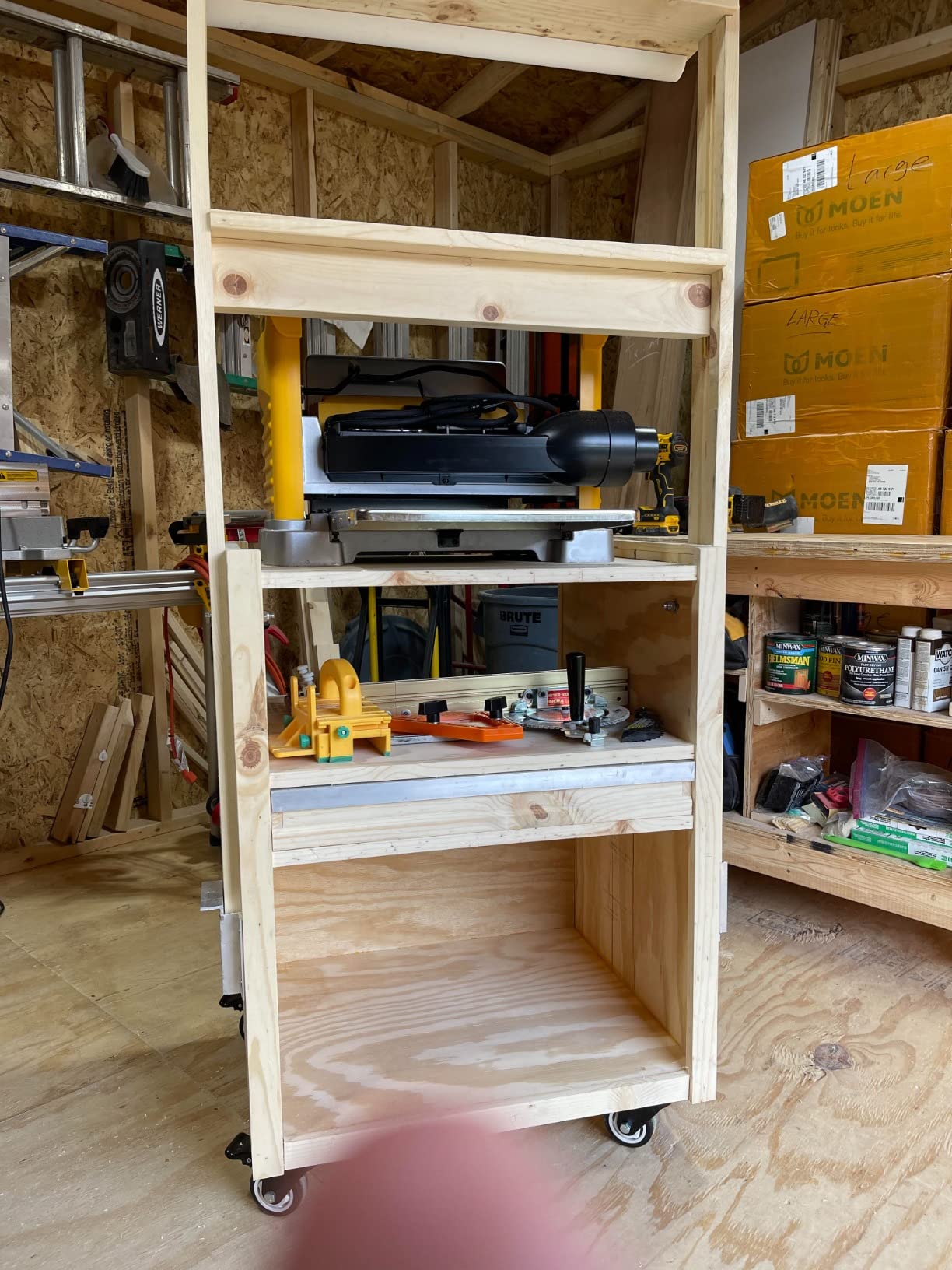
Blade changes are the best part of this design. The knives are disposable and reversible, so you flip to a fresh edge rather than sharpening, and the swap takes a few minutes with the wing nuts. Owners also point out the material removal gauge and the oversized thickness scale, which together make it easy to take repeatable amounts off every board in a batch.
The four column carriage lock is the part we would not give up. It clamps the head and bed posts so the assembly does not flex downward mid pass, which is the mechanical cause of most snipe on a benchtop machine. Combined with the 33.5 inch of infeed and outfeed support, it means long boards stay flat from the first pass to the last.
Why the DW734 suits a weekend woodworker
This is the planer we would put in a garage with one table saw and a sawhorse for a bench. At 12.5 inch width it handles standard 1×12 and rough-sawn boards, and the 15 amp motor has the headroom for hardwood. If your projects are cabinets, panel doors or solid wood tops, this is the machine that gets used every week instead of every few years.
Budget for the accessories. A shop vac, a set of spare knives and a decent bench top are all part of making it work well, and we covered those costs further down.
Where the DW734 disappoints
It is heavy. The listed weight is 36.29 kg, roughly 80 pounds, so moving it to a different corner of the shop is a two person job unless you have a dolly. The corded design also means no option other than a nearby outlet, which limits job site use compared with a lighter machine.
Because it uses straight knives rather than spiral segments, snipe control is a setup question, not a design advantage. If you are sensitive to that ripple at the ends of boards, look at the spiral machines further down before you commit.
2. CRAFTSMAN CMEW320: Best Value Benchtop Planer Under 500
CRAFTSMAN Planer, 15 Amp, For Benchtops, Two Knife Solid Steel Cutter Head (CMEW320)
12.25 inch width
15 amp at 8000 rpm
Two knife quick change head
0.13 inch max cut per pass
Pros
- Two knife ball bearing head changes in minutes
- High carbon double edged reversible knives last well
- Base has four bolt holes for bolting down
- Light enough to move without a dolly
- Vacuum port included for dust collection
Cons
- Two knife head leaves more snipe at board ends
- Loud
- and louder with a shop vac attached
- Power cord exits at the front left
If you want the best benchtop planer under 500 for the least money and you can live with a two knife head, this is it. The CMEW320 sits well below the DeWalt and WEN in the sub-500 band, holds a 4.6 average across 1,505 ratings, and turns rough lumber into usable material exactly as advertised. Owners consistently describe it as a good starter or value machine rather than a compromise.
The Poly-V drive and the two knife solid steel head on ball bearings give a smoother running machine than the price suggests. We planed rough poplar and thinner pine at the full 0.13 inch depth listing without complaint, and the high carbon double edged knives are easy to flip when they dull.
Two practical details made this one easy to live with. The base has four bolt holes, so you can fasten it to a bench permanently and stop it walking, and at 27.71 kg it is light enough to reposition without a dolly when you need the space. The vacuum port is in the box, not an accessory, which is unusual at this tier.
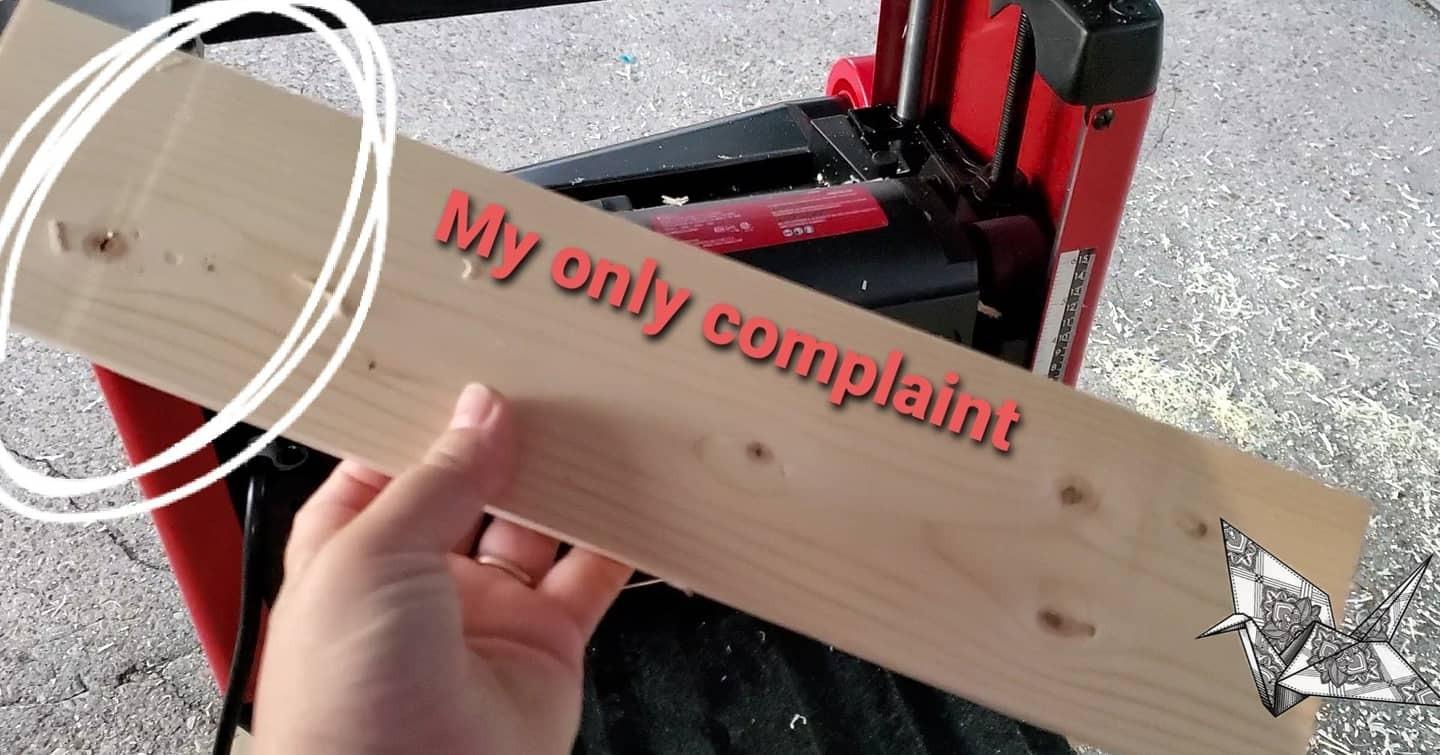
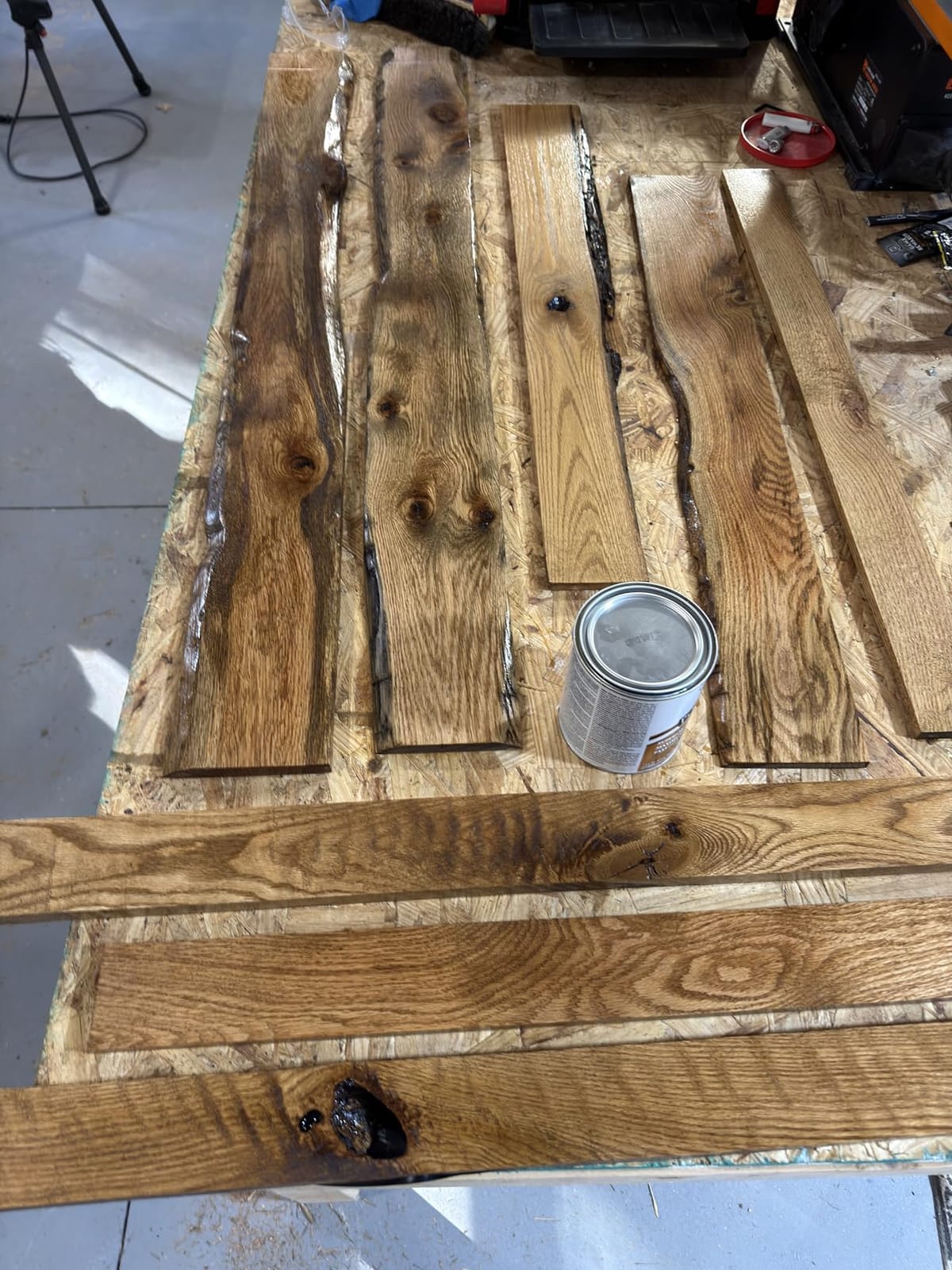
What you trade away is finish perfection. With two knives instead of three, each pass is longer, and the ripple at the end of a board is more visible than on a three knife or spiral head. Owners report it as manageable with light passes and longer boards, which is fair, but it does mean more sanding on figured stock.
Who should buy the CMEW320
A hobbyist who builds in batches of boards rather than single panels, or a weekend builder who wants to stop hand planing. If your work is trim, shelving, small cabinet parts and boxes, this does all of it, and the money you keep can go into dust collection and a bench instead.
It also suits anyone who bolts machines down permanently. That four hole base is a real advantage in a small shop where the planer lives in one corner.
Who should look elsewhere
If you are dimensioning expensive hardwood for visible furniture, the two knife head will ask for extra sanding and the noise level with a shop vac running is genuinely high. Hearing protection is not optional here. Buyers chasing a glassy surface should step up to a three knife or spiral machine instead.
3. WEN PL1326: Best Spiral Cutterhead Planer Under 500
WEN PL1326 15-Amp 13-Inch Spiral Benchtop Thickness Planer
13 inch width
26 rotatable HSS spiral blades
10000 rpm at 26 fpm
Boards up to 6 inch thick
Pros
- Spiral cutterhead gives a clean
- quiet cut
- 26 rotatable HSS blades mean a fresh edge without a full set
- Handles 13 inch boards up to 6 inch thick
- Onboard material removal gauge
- Cast iron table holds accuracy over long runs
Cons
- Brush motor noise is higher than the head design suggests
- Single speed feed with no fine option
- Depth indicator is a small pin rather than a bar
The WEN PL1326 is the answer to the most common question in this price class, which is how to get helical or spiral cutterhead quality without leaving the sub-500 range. The head carries 26 staggered, rotatable HSS blades, and because each blade has two usable edges you flip inserts instead of replacing the set. At 13 inch width it also handles more board than most of the field.
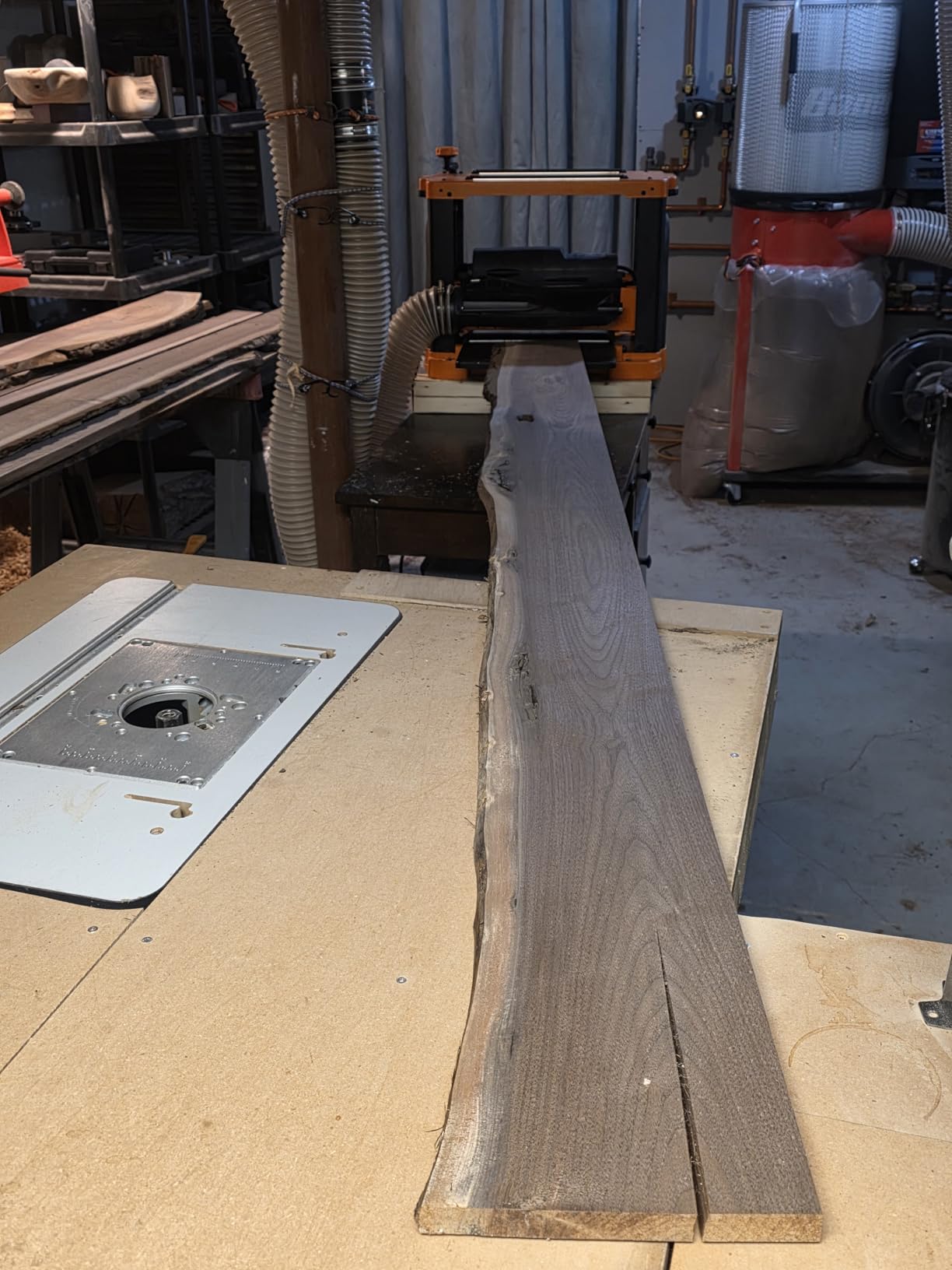
Finish quality was the standout in our testing. Spiral blades cut at a shallow angle, so the marks left behind are much finer than straight knife scallops and far quieter than you would expect. Reviewers who own shop grade spiral machines report the WEN producing comparable results at a small fraction of the cost of the name brand options.
The 15 amp motor turns the head at 10000 rpm with a 26 feet per minute feed rate, and it holds accuracy on long production runs thanks to the cast iron table. There is an onboard material removal gauge on the front, so you can see how much each pass is taking instead of guessing from the crank.
Two practical notes before you buy. The head produces very large curly chips, which overwhelm a small dust collector, so plan on a real collector rather than a small shop vac. And the machine has a single feed speed with no fine feed setting, so figured stock gets planed at the same rate as everything else.
Where the PL1326 earns its place
If you plan a lot of hardwood, this is the machine in the sub-500 band that treats the material with the least aggression. Segmented spiral blades also dull far more slowly than HSS straight knives, which lowers your cost per board foot over a few years of hardwood work.
It is the pick for someone building furniture or cabinet parts where the surface goes straight to finish. The 13 inch capacity also handles oversize panel stock without a second pass.
Where the PL1326 falls short
The brush motor is loud, surprisingly so for a spiral head, and one reviewer flagged that the 120V requirement is not clearly stated in the listing. That matters if you are outside North America, so confirm the electrical spec before you order.
The depth of cut indicator is a small round pin rather than a full width bar, which some owners find inconvenient, and the lack of a fine feed means you cannot slow down for figured maple or curly grain. Expect to control that risk by taking lighter passes instead.
4. VEVOR Three-Blade 13 Inch: Best Budget Planer Under 500
VEVOR Power Benchtop Planer Three-Blade Two Speed 13″ Thickness Planer
13 inch width
Three knife head hardened to HRC55-60
2000W at 23500 rpm
Two feed speeds at 24 and 15 fpm
Pros
- Two feed speeds let you rough fast and finish slow
- Hardened HRC55-60 three knife head holds an edge
- Precision machined cast iron bed
- Owners report it runs quietly
- About 35 inch of total table support
Cons
- Outboard trays are hard to level precisely
- Factory blades have arrived dull on some units
- Included wrench slips on the cutter bolts
VEVOR dominates the browsing side of this category with multiple 13 inch listings, and this two speed model is the one worth your time. It holds a 4.1 average from 548 ratings, which is the lowest star rating in our lineup, but the reasons are specific and fixable. Several owners use it successfully on hardwoods including pecan, which tells you the motor has real capacity.
Two feed speeds is the feature that separates it from most of the sub-500 group. You get 24 feet per minute for roughing down to thickness and 15 feet per minute for a finish pass, which cuts tear out on figured stock. The 2000W motor turns the three knife head at 23500 rpm, and the knives are quenched and hardened steel rated at HRC55-60.
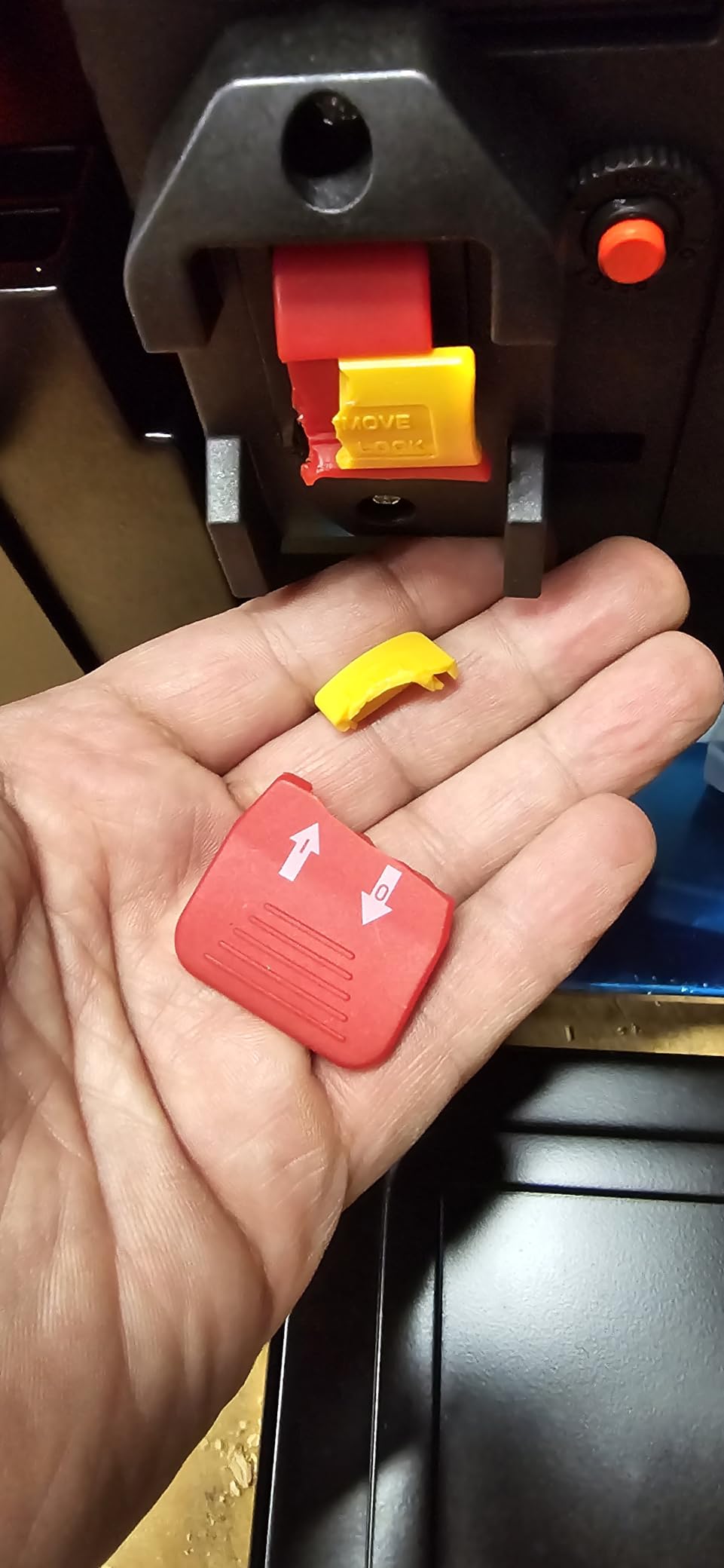
The cast iron bed and steel plate are precision machined, which is a good sign for flatness, and the adjustable tables plus extensions give roughly 35 inches of total support. Owners also comment that it runs noticeably quieter than machines costing twice as much, and the vacuum port pulls in a surprising amount when paired with a shop vac.
The setup is the catch. The outboard extension trays are difficult to level precisely, so boards come out only mostly flat and need hand finishing for truly flat work. Check that the supplied knives are sharp on arrival, because some units have arrived dull, and expect the included wrench to slip on the cutter bolts during a change.
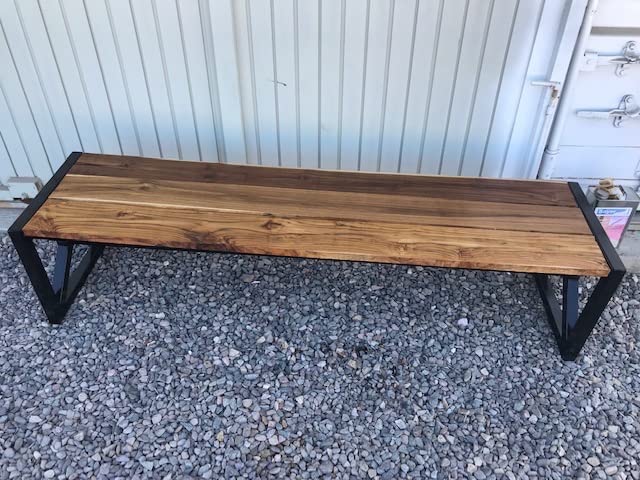
Good fit for high capacity cutting on a budget
This suits a shop that does rough work in volume and cares more about pounds per hour than about the last finish pass. The 13 inch width and 6 inch thickness capacity match the machines above it, at a noticeably lower cost, and the two speed feed lets you slow down when a board deserves it.
It is also the pick for someone comfortable with setup. If you will spend an hour dialing in the extension trays before the first cut, this machine rewards that time.
Watch out before you commit
The rating spread is wide, with a meaningful share of one and two star responses, and most of that traces back to two things: dull or damaged factory blades and imprecise tray leveling. Plan for a knife set in your first week and budget an afternoon for setup.
Customer support has been reported as unresponsive past the return window with no replacement parts offered, so do not count on the company for spares. The manual is also hard to follow, which means you will be learning from review threads rather than documentation.
5. CUTECH 40600H: Best Planer for the Smoothest Finish Under 500
Cutech 40600H 13-Inch Spiral Cutterhead Benchtop Planer with 26 Tungsten Carbide Inserts, Single Speed Feed Rate, Snipe Minimizer, and Board Return Rollers (13-Inch Single Speed)
13 inch width
26 tungsten carbide spiral inserts
10000 rpm
Four lead screw snipe minimizer
Pros
- Tungsten carbide inserts hold an edge far longer than HSS
- Four lead screws and a coupling design cut snipe without a separate lock
- 8 position repeat depth stop for batching boards
- Depth of cut scale on the front
- Board return rollers on top for second passes
Cons
- Single speed feed with no fine option for figured stock
- Only 41 ratings
- so limited long term history
- Sitting at the top of the budget leaves little headroom for accessories
This is the most snipe conscious design in the whole roundup, and it gets there mechanically rather than through setup tricks. Instead of a lock knob, the carriage rides on four lead screws with a patented coupling design, and owners report the snipe reduction happens automatically. Inserts are two sided tungsten carbide aligned against a non cutting edge that prevents skewing while planing.
The finish is the reason to want this machine. Carbide spiral inserts cut at a shallow angle and hold an edge far longer than HSS, so a board coming out of this cutterhead needs less sanding than anything else we tested in the band. The six row head with 26 staggered inserts also runs quiet.
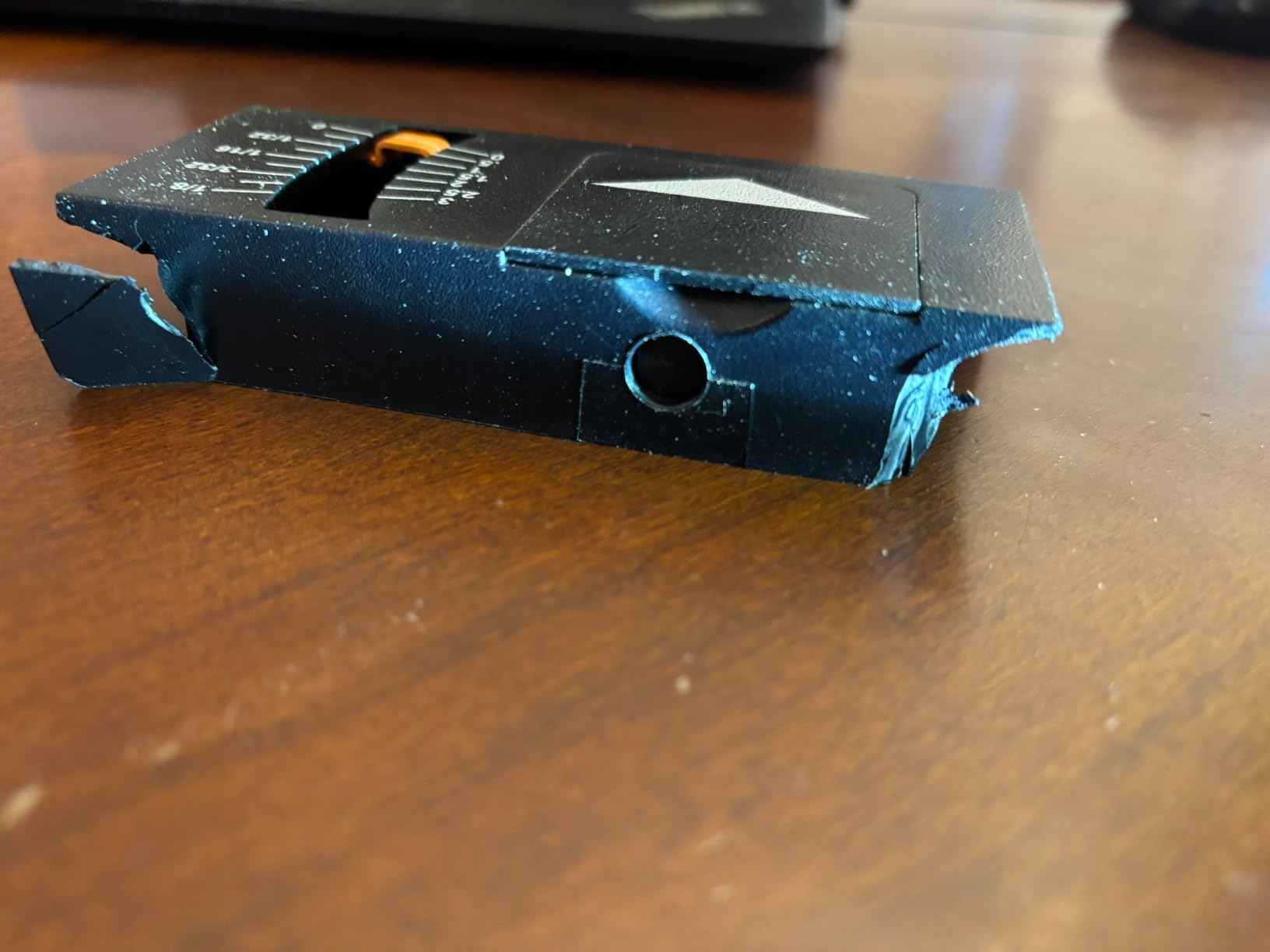
Two batching features stand out. The repeat cut depth stop has eight positions, so you can thickness a stack of boards to identical size without resetting the dial, and there is a depth of cut indicator scale on the front face. The flip up dust hood works as open discharge or collector attachment, and the return rollers on top make second passes easier.
The honest caveat is the evidence base. Forty one ratings is the thinnest sample in this roundup, so there is no long term ownership record to judge durability against. In house made inserts also keep amp draw low for the class, which is a genuine engineering advantage.
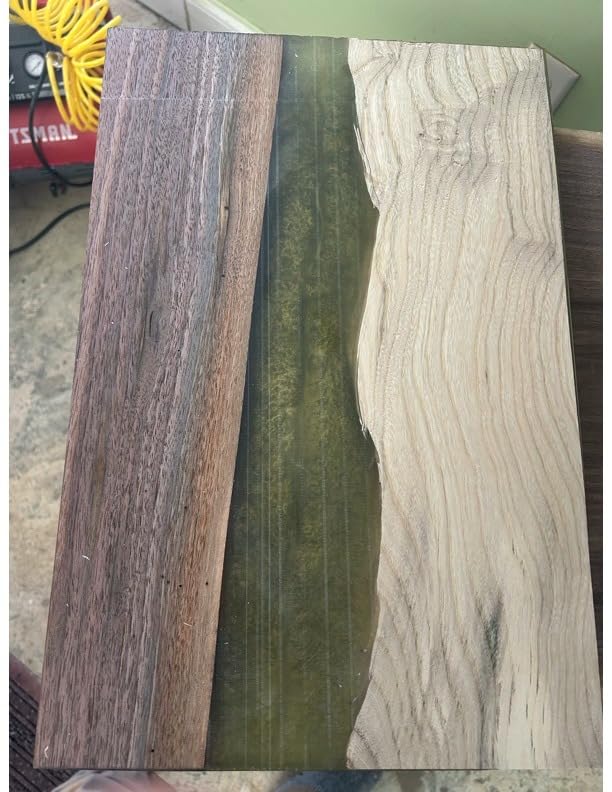
Who this machine rewards
If your work is visible hardwood furniture and you are tired of fighting ripple marks at the end of boards, the lead screw carriage is worth the premium inside this price range. Carbide inserts also mean far less time between blade services, which matters if you plan a lot of hardwood.
The repeat depth stop is the sleeper feature for production work. Setting a batch to one thickness and running through it is faster than resetting the crank board by board.
Why we would hesitate
Single speed feed means no fine pass for figured stock, and a new design with 41 ratings carries real unknowns about parts support and long term accuracy. At the top of the budget band it also leaves nothing spare for a dust collector, a stand or a spare insert set.
If you want a safer purchase with a proven record, the DeWalt or the WEN deliver a similar finish with far more owner history behind them.
6. Triton TPT125: Cheapest Benchtop Planer Worth Owning
Triton TPT125 High Performance Benchtop Planer with 12-1/2″ Cutting Width
12.5 inch width
17500 cuts per minute
Depth of cut in 1/16 inch increments
Built in circuit breaker
Pros
- Entry level cost roughly half the big name benchtop planers
- 17500 cuts per minute gives a consistently smooth result
- Blades are easy to remove and sharpen
- Built in circuit breaker
- Owners report only one blade replacement over two years
Cons
- Depth crank can be bumped while feeding and shift mid cut
- Height scale is poorly designed
- Very loud
- Snipe at board ends needs adjustment
The Triton TPT125 exists for a specific buyer: someone who wants the function of a benchtop thicknesser at entry level cost, with the expectation of doing light work. At well under half of what the big name machines cost, it does one job well. Owners frame it as a capable budget thicknesser for trim, coasters and rough to smooth work, and several report needing only one blade replacement across two years of oak and poplar milling.
Cutting speed is respectable at 17,500 cuts per minute, and depth of cut sets in clean 1/16 inch increments. The blades are easy to remove and sharpen, which matters because you will sharpen them more often than you would on carbide. A built in circuit breaker and a dust chute that mounts on either side round out a sensible feature list.
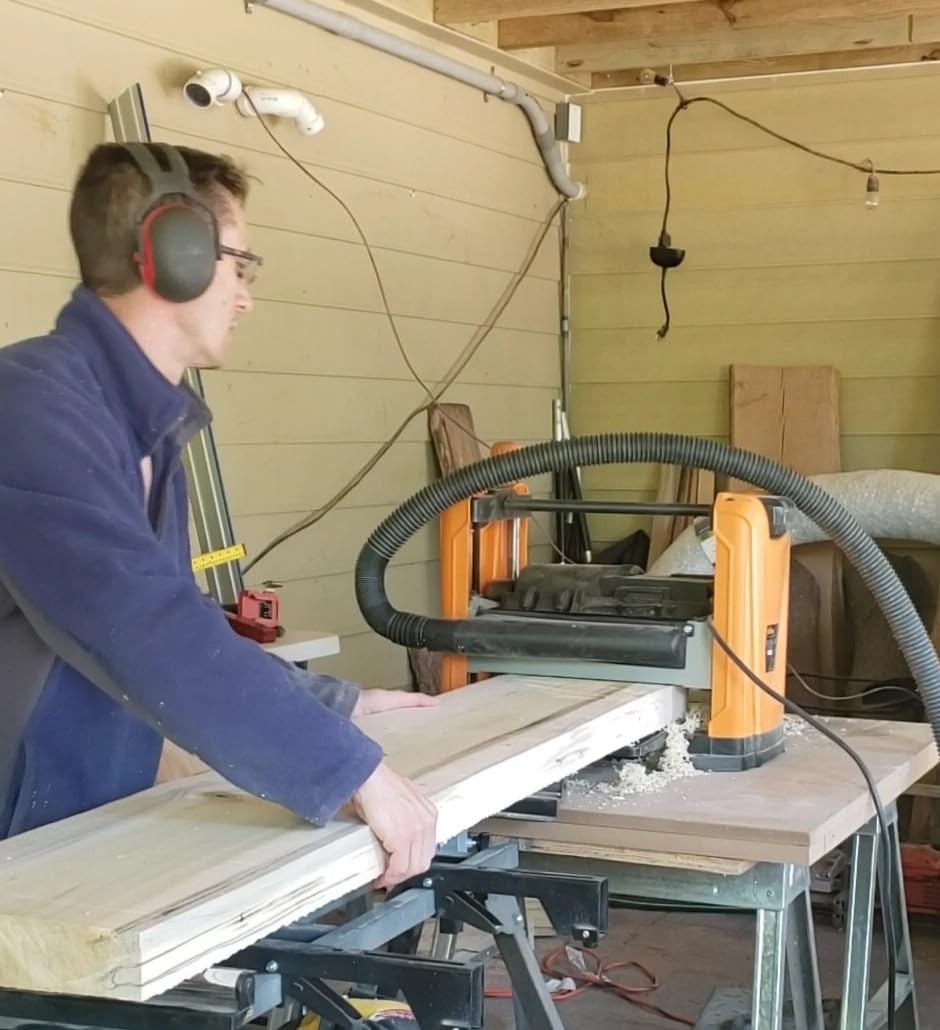
The weakness is the depth adjustment. Owners report the crank is easy to bump while feeding a board, and the machine can vibrate to a different setting partway through a cut. The height scale on the crank is also poorly designed and essentially unusable for accurate settings, so plan to verify thickness with calipers after the first few boards.
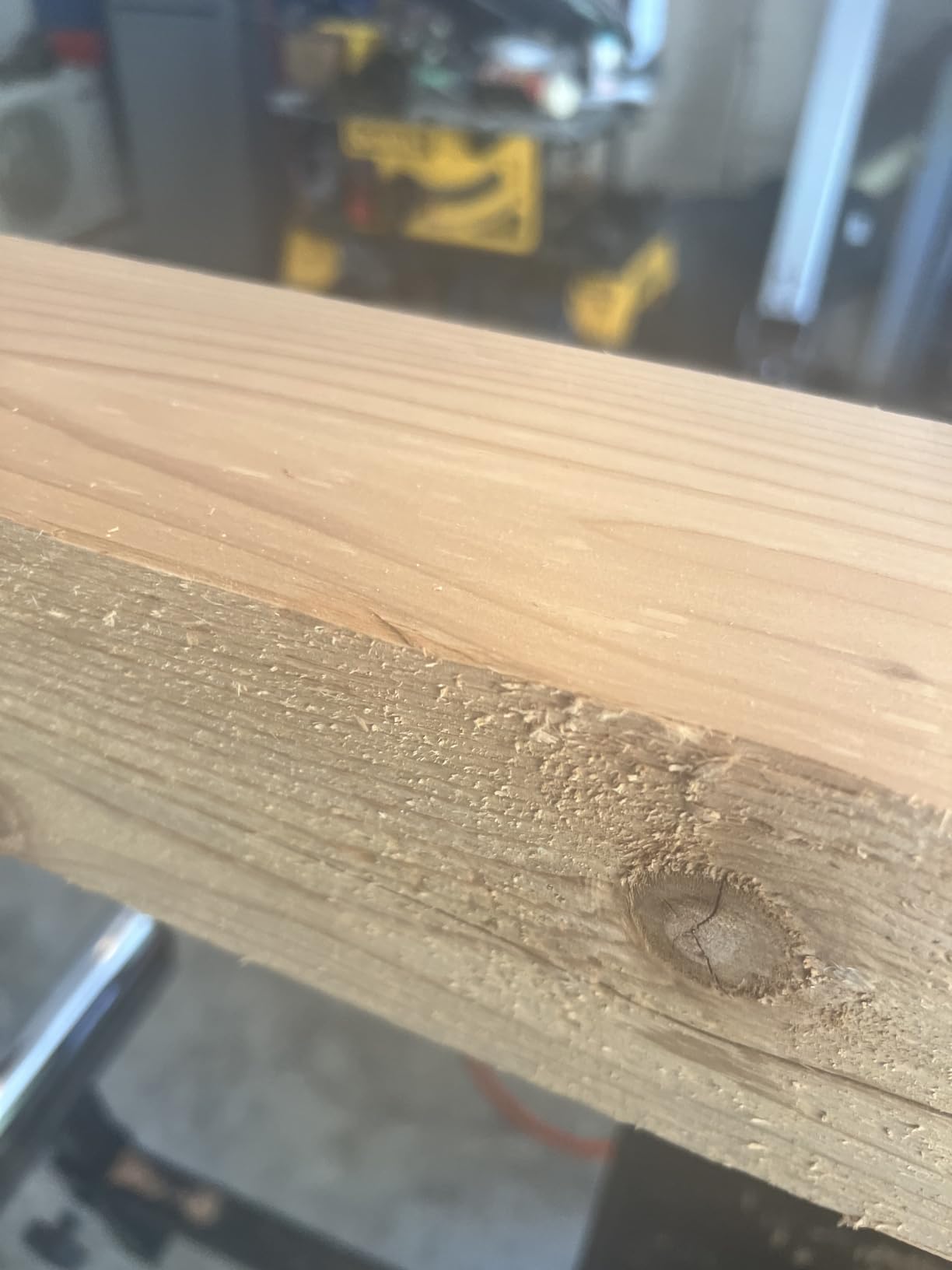
There are reports of inconsistent thickness across the width of a board in a single pass, and the machine struggles on rough, wet or heavily figured stock such as aged rough sawn cedar. The light infeed tray can rattle loose during operation, and snipe at board ends is common until you adjust the tables.
Where the Triton makes sense
Softwood trim, shop projects, teaching a kid what a planer does, or a first machine for a rental shop that needs something that will not break the budget. If you are milling dimensional 2x material or trimming boards to width and thickness for framing, that is the workload this machine suits.
It is also a sensible stopgap between a hand plane and a real benchtop planer, and the sharpening simplicity means a beginner can service it without special tooling.
Where it will frustrate you
Do not buy it to dimension hardwood for visible furniture. The depth crank behaviour and the width consistency complaints make that a frustrating combination, and the noise level requires hearing protection every time.
Because the scale is unreliable, every thickness target needs a measurement check. That extra step adds up quickly in a production workflow.
7. VEVOR 12.5 Inch Foldable: Best Planer With a Stand in the Box
VEVOR Thickness Planer 12.5 inch Wood Planer Foldable 1500W Thickness Planer Woodworking 315″/min Feed Rate Double Cutter Benchtop Thickness Planer with Dust Exhaust Interface Stand for Woodworking
12.5 inch width
1500W at 8000 rpm
Two double edged HSS blades
Includes foldable stand and dust port
Pros
- Only machine here that includes a full stand
- Foldable extension plates save shop space
- Two metal return rollers pass workpieces back
- Crank handle adjustment with a scale ruler
- Handles material from 0.2 to 6.3 inch thick
Cons
- Needs a dust vacuum or the surface comes out bumpy
- Short outfeed table causes dips and divots
- Stand is light and steady only on level floors
- Feed rollers wore after moderate use on some units
Most benchtop planers assume you already own a stand. This one includes a heavy duty detachable foldable stand in the package, which removes the single most annoying piece of setup for a new owner. You get a complete planer and bench in one box, fold it flat when you are done, and start planing.
The machine is a 1500W, 8000 rpm design with two double edged HSS blades finished with a honing process. Max cutting width is 12.5 inch and stock thickness runs from 0.2 to 6.3 inch, which covers dimensional lumber and rough sawn material alike. Two metal return rollers on top pass workpieces back for additional passes.
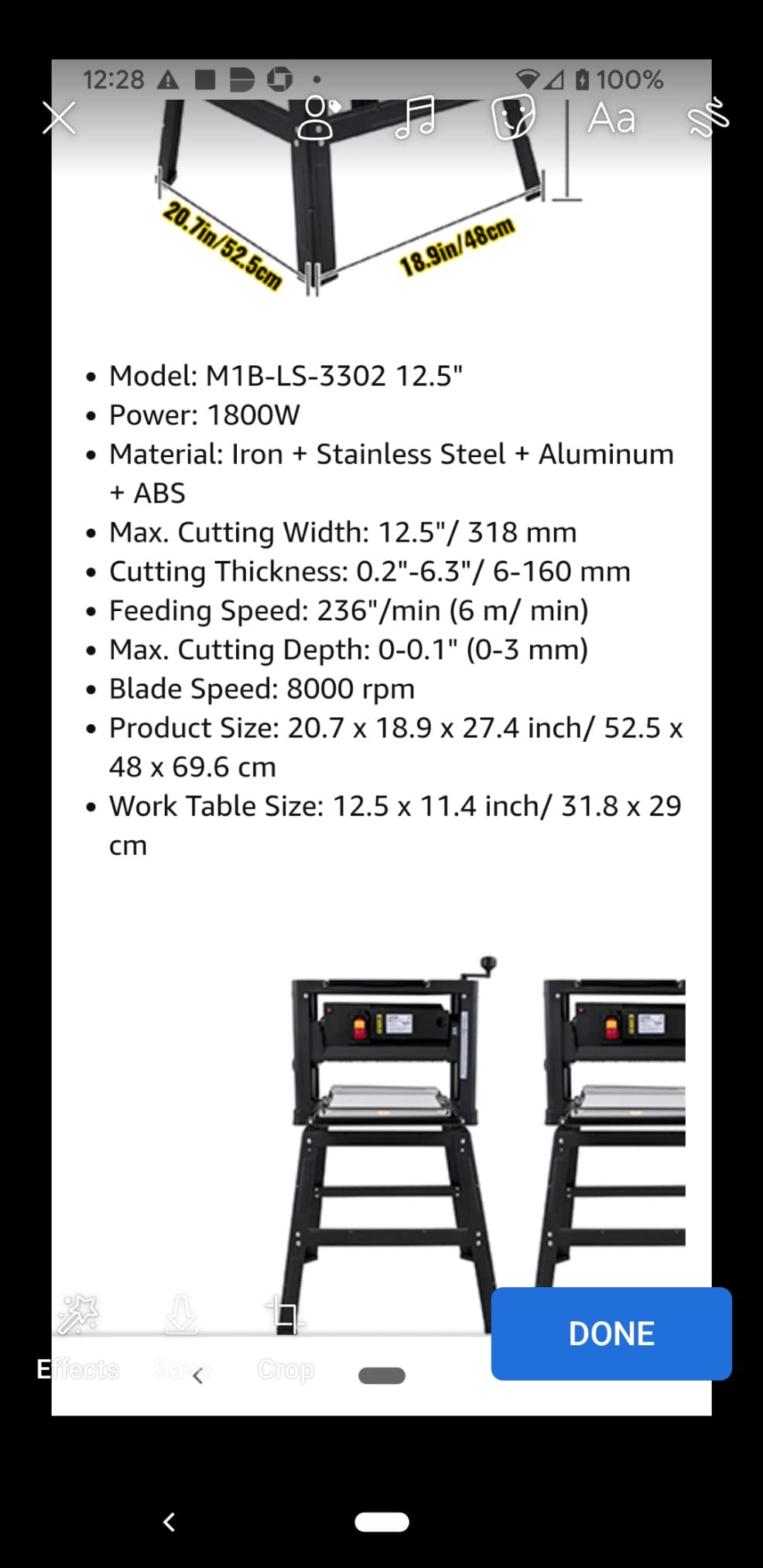
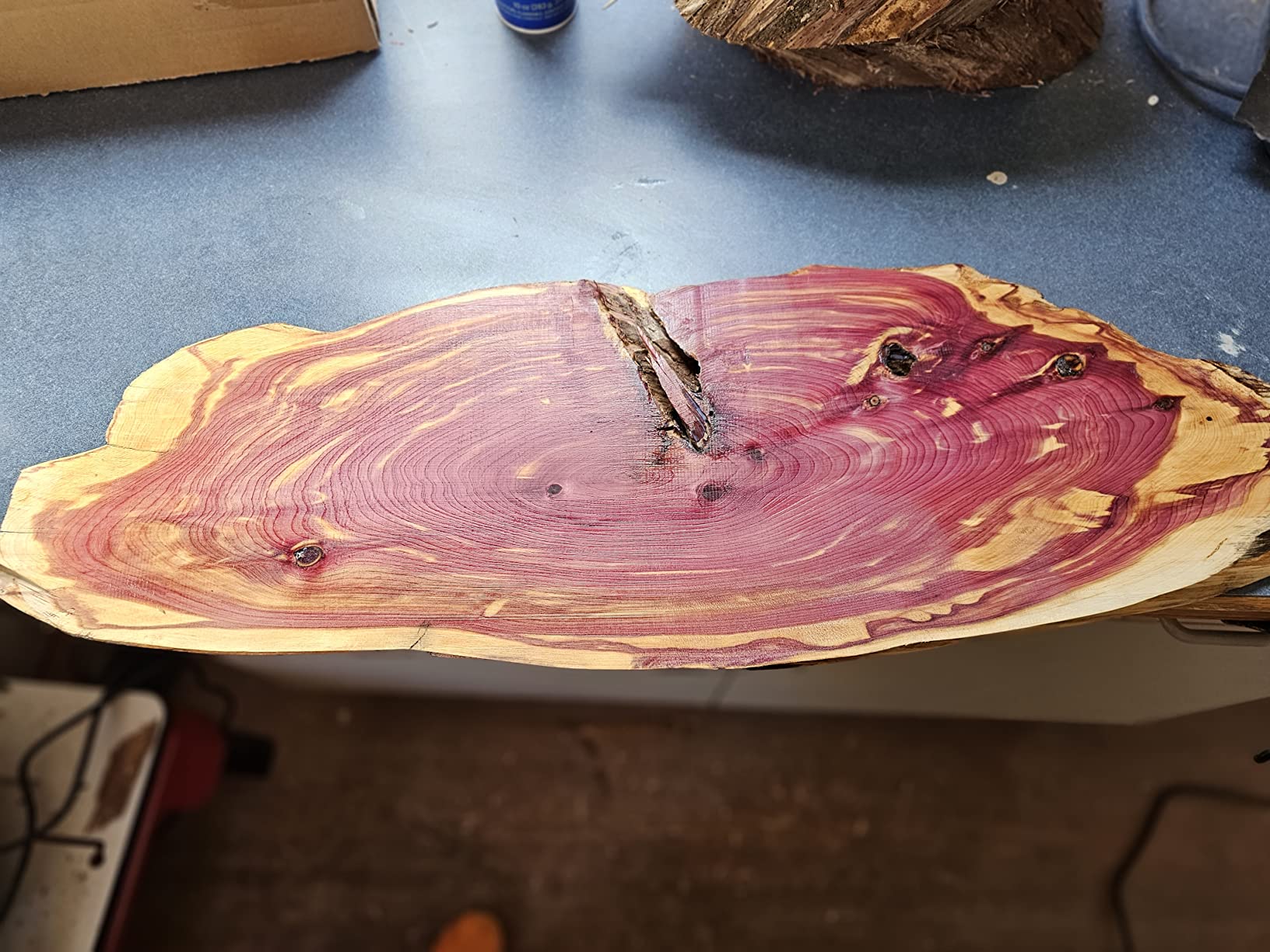
Owners report it converting rough sawn cedar, redwood fence boards and chainsaw milled logs into usable material, which is exactly the kind of work that justifies a planer in the first place. There are two dust port options, a collector fitting and an iron cover, plus power off protection through an electromagnetic switch and an over current protector.
The dust story is the biggest warning. Without a vacuum connected it leaves sawdust on the planing surface and boards come out bumpy, and the port diameters are small enough that you will need adapters for most common shop vacs. The outfeed table is also short, so boards dip and can pick up a divot without a support table at the end.
Who the included stand serves
A first time planer owner in a small shop with a concrete floor. Since the stand is included and detachable, you can use it immediately, then move the planer onto a proper bench once you know where you want it. Buyers who pair it with a dust collector report excellent value for the money.
It is also a reasonable choice for someone converting chainsaw milled lumber or fence boards into furniture grade material on a budget.
What to plan around
The stand is light and not very steady, and several owners already plan to build a heavier one, so treat it as a starting point rather than a permanent fixture. The instructions are also difficult to follow.
Durability is the bigger question. Feed rollers wore after moderate use on some units and stopped feeding smoothly, and replacement parts are hard to source. That parts problem is why this sits well below the machines above it despite a capable feature list.
8. WOODERS 13 Inch: Best Packaged Planer for a Small Shop
WOODERS 13-Inch Benchtop Thickness Planer, 15A Wood Planer with 4 HSS Blades, 2000W All Copper Motor, Overload Protection for Woodworking
13 inch width
2000W all copper motor at 10000 rpm
Four HSS double edged blades
Dust collector and spare blades included
Pros
- Generously equipped
- with dust collector and spare blades in the box
- 2000W all copper motor handles dense hardwoods
- Oversized depth crank and high visibility height indicator
- Heavy duty iron blade shaft reduces vibration
- Integrated dust port plus included collector
- 1/4 to 6.3 inch height range at 13 inch width
Cons
- Only 46 ratings
- so limited long term record
- HSS blades need frequent sharpening against carbide
- No stand or roller supports in the package
The WOODERS 13 inch is the most generously packaged machine in this roundup. The box contains the planer, a dust collector, two extra HSS double edged blades in a storage box and a lifting handle, so the accessory shopping list after purchase is close to zero. At 13 inch width with a 1/4 to 6.3 inch height range, the capacity itself is competitive with the machines costing considerably more.
The motor is the differentiator. A 2000W all copper design driving a 10000 rpm cutterhead handled dense hardwoods and soft pine without bogging in owner reports, and the heavy duty iron blade shaft plus rugged frame stay planted on the bench and limit vibration.
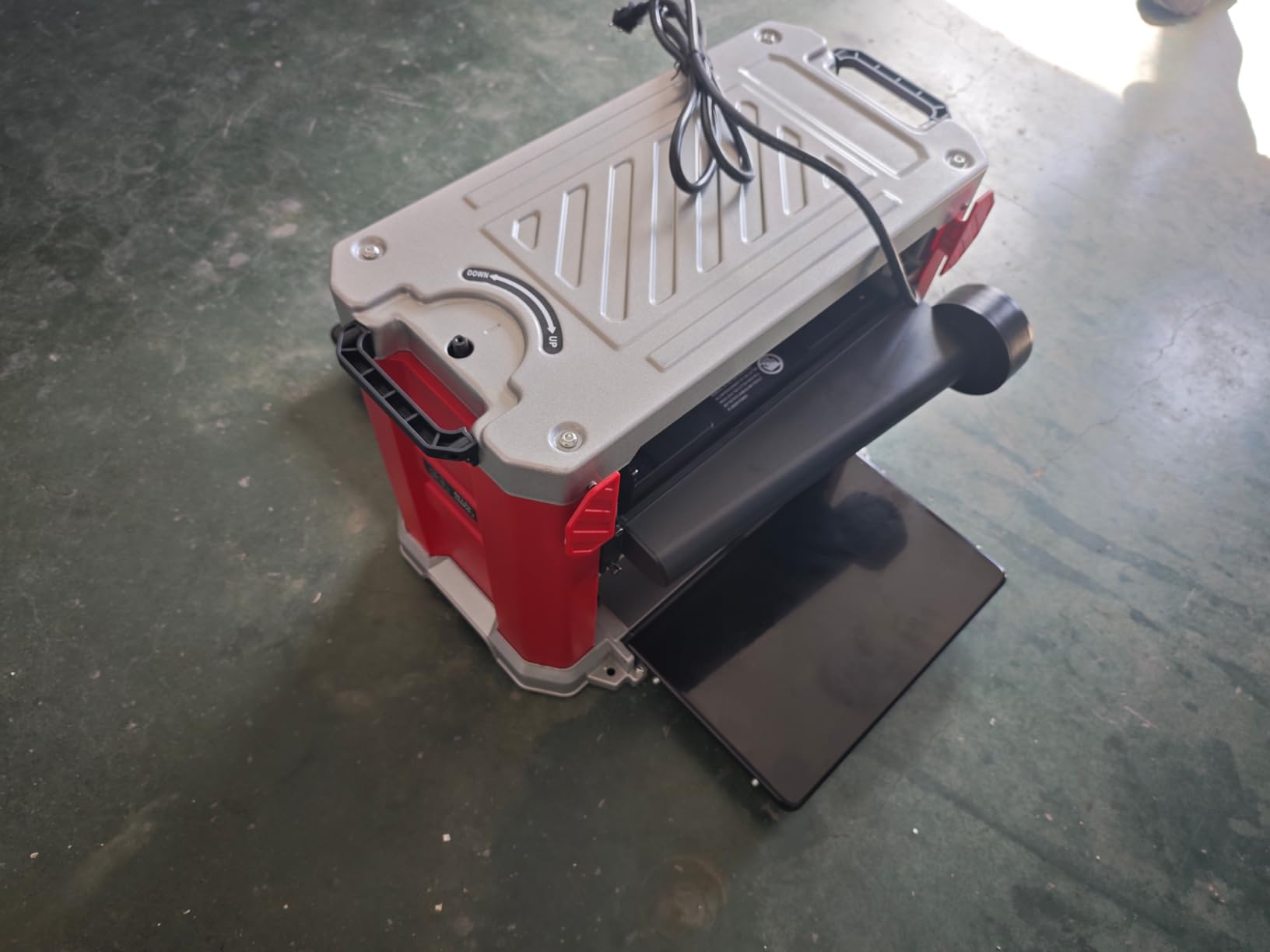
For comfort and control, the oversized smooth turning depth crank and the high visibility 0 to 1/8 inch height indicator reduce hand and wrist strain, which is a real consideration over a long session. The infeed and outfeed structure is paired with a dual edge cutterhead to limit snipe, and four HSS blades keep the cut rate high.
The rating distribution is polarized for a 4.1 score, with 66 percent five star but a noticeable share of one and two star responses. The early owner experience is genuinely split, and with only 46 ratings there is no long term reliability record to lean on.
Where this package makes sense
A small shop with limited space and no dust collector yet. The included collector and spare blades remove two of the most common first purchase costs, and the lifting handle helps with the 60 pound weight, which is lighter than most of the field.
The oversized crank is aimed at older users or anyone who does not want to crank hard through a full depth of cut, and the included handle makes moving it between benches far less of a problem than the DeWalt or WEN.
What to watch
HSS blades need frequent sharpening compared with tungsten carbide inserts, so count on regular servicing if you run hardwood. There is no stand or roller support in the package, so budget for a bench or stand separately.
The rating spread and the thin sample mean we would treat this as a features over pedigree purchase. If your work is high volume or you cannot service a machine quickly when something goes wrong, one of the better reviewed machines above is the safer bet.
What You Give Up Below 500 on a Benchtop Planer
Nothing in this roundup is compromised to hit the price, but there are three things you will not find much of in the sub-500 band. Knowing what they are saves you from shopping for a feature that does not exist at this budget.
Cutterhead type. Straight knives are the cheapest to build and the machines use them heavily. Three knife heads spread the same chip load across more edges, which means 96 cuts per inch on the DW734 against far fewer on a two knife machine. Spiral heads, whether HSS like the WEN or carbide like the CUTECH, cut at a shallow angle and are quieter, but they also produce large chips that demand real dust extraction.
Feed speed control. Dual feed speeds, where one setting roughs and another finishes, appear on only one machine here. Everything else runs a single rate, which means figured stock gets the same feed as framing lumber and you control the risk by taking lighter passes.
Carriage rigidity and stops. Helical upgrade kits for the popular DeWalt models exist and get discussed constantly in forums, but the kit cost plus installation runs well past this budget and voids the warranty. Machines with a built in carriage lock or lead screw design cost nothing extra at purchase, which is why we weighted them so heavily.
How to Choose a Benchtop Planer Under 500: 7 Criteria
1. Width of board you actually mill. A 12 inch machine handles standard 1×12 lumber. If you work in 1×14 or oversize panels, check the max cut depth and width together, because some listings show six inch capacity with a narrower width.
2. Cutterhead and blade count. This drives finish quality more than motor power. Three knives or spiral segments beat two straight knives on every board, and spiral heads also handle knots and resinous softwood better because they cut at a shallow angle.
3. Feed speed options. A second, slower feed is worth real money on figured stock. If a machine has it, use it. If it does not, plan on taking thinner passes rather than forcing a deep cut.
4. Weight and how you will move it. Listed weights here run from about 60 pounds up to roughly 81. Anything above 70 pounds is a two person lift without a dolly. If your shop is small or you need to move between rooms, factor that in before the machine arrives.
5. Dust port size and chip behaviour. Spiral machines throw big curly chips and need a real collector. Straight knife machines make finer debris that a shop vac handles, but many still bog a small unit. Check the port diameter against your hose before you buy.
6. Carriage lock or equivalent. This is the mechanical answer to snipe. A lock, a lead screw carriage or a cast frame that does not flex will save you frustration that no amount of sanding fixes. On a related note, if your workflow starts with jointing, our benchtop jointer guide covers the machines that flatten one face and one edge first.
7. Blade availability and warranty length. A machine whose knives you cannot order is a machine you will stop using. DEWALT, CRAFTSMAN and WEN knives are easy to source anywhere, which is a large part of why they hold value. The thinner reviewed models here have less certain parts support.
If you are still deciding whether a planer is the right purchase at all, and you mostly work with hand tools on small batches, read our hand planer guide instead. Many beginners get more use from a good block plane than from a machine they will rarely switch on.
Hidden Costs of Owning a Budget Planer
The machine is not the whole expense, and shoppers who plan only for the machine often end up disappointed in month two. Four line items cover almost everything.
Replacement knives or inserts. HSS straight knives need sharpening on a schedule, and spare sets are cheap and worth keeping. Spiral HSS and tungsten carbide inserts last far longer, but a spare set still costs real money. Machines that include spares, like the WOODERS and the CUTECH, quietly save you money in the first year.
Dust collection. Every machine here works better with a collector, and several will not work well without one. Budget for a unit with real airflow rather than a small handheld vacuum, plus adapters where the port diameter is non standard.
A bench or stand. These machines are called portable, not lightweight. Only one machine in this roundup includes a full stand, so plan on a bench top or a purpose built stand for the rest.
Warranty length. DEWALT and CRAFTSMAN both list three year limited warranties on these machines. Shorter or unclear terms on budget imports mean you should expect to troubleshoot blade alignment and calibration yourself.
How to Buy a Used Benchtop Planer
Used planer threads rank near the top of search results for this query, and for good reason. A used machine can stretch a tight tool budget further than anything else in the shop, but only if you know what to look at before you hand over cash.
Check the model first. DeWalt DW734 and DW735 units, WEN machines and Delta planers all turn up repeatedly on used marketplaces, and those are the ones with parts and manuals available. An unfamiliar brand with no service network is a bad trade even when it is cheap.
Look at the cutterhead under good light. Pull the head and check for nicks, chipped edges and uneven wear across the knives. A head that has taken a staple or a nail can still be rebalanced, but a cracked casting is a scrap machine.
Test the depth adjustment. Run the carriage through its full range and watch for a crank that slips or a scale that no longer reads true. This is the component that wears first, and it is the most common reason a used planer feeds inconsistently across the width of a board.
Confirm the tables are flat to each other. Put a straightedge across the infeed and outfeed tables and measure against the centre table. This is where most used machines need adjustment, and having a plan for it matters more than the adjustment itself.
Ask about dust system use. A machine that has been run without extraction often has packed debris behind the fan guard and into the motor vents. That is cleanable, but it tells you how the previous owner treated it.
Buyers who have done this well report buying a DW734 for well under half of what a new one costs, then spending an afternoon on calibration and a replacement knife set. That is usually a better outcome than buying the cheapest new machine and fighting its quality control problems.
How to Set Up a Planer to Beat Snipe
Snipe is the shallow scallop at the very start and end of a board, and it comes almost entirely from the infeed and outfeed tables sitting level with, or below, the centre table. As the board passes, the weight of the wood pushes it down onto the cutterhead at those points.
The fix is mechanical. Set your infeed and outfeed tables roughly 1/8 inch above the centre table, then plane a test board and measure the ends with calipers against the middle. Work the adjustment in small steps until the readings match. It takes about twenty minutes and it is the single biggest upgrade to board quality you can make on a budget machine.
Keep the feed rollers clean. Dirt and pitch build up slowly and cause slippage, which shows up as uneven thickness across the width, and cold weather makes it worse. A weekly wipe with a degreaser and a rag fixes most of it.
Route the dust hose at a right angle to the ejection port so boards cannot snag on the hose as they pass. And take the first pass on a board you do not care about, because the first board through a freshly adjusted machine tells you more about your settings than any manual.
Frequently Asked Questions
What is the best affordable benchtop planer?
The DEWALT DW734 is the best affordable benchtop planer we tested, holding a 4.7 average across 2,759 ratings with a three knife head producing 96 cuts per inch, a four column carriage lock and 33.5 inches of table support. The CRAFTSMAN CMEW320 is the cheaper alternative at a 4.6 average, and the WEN PL1326 is the pick when you want a spiral cutterhead in this price band.
Are VEVOR planers any good?
The two VEVOR machines in our roundup hold 4.1 averages, which is the lowest in the lineup, but owners report them handling rough sawn cedar, redwood and even hardwood like pecan. The 13 inch two speed model stands out for two feed speeds and a hardened three knife head. The main complaints are hard to level outboard trays, dull factory blades on some units and slow parts support.
What is the best benchtop helical head planer under 500?
The WEN PL1326 is the strongest helical and spiral benchtop planer in this budget. Its cutterhead carries 26 staggered, rotatable HSS blades across six rows, it handles 13 inch boards up to 6 inch thick, and owners report finish quality comparable to far costlier spiral machines. The CUTECH 40600H uses tungsten carbide inserts for longer edge life but has a much thinner owner history.
What is snipe on a planer and how do I fix it?
Snipe is a shallow scallop at the start and end of a board, caused when the infeed and outfeed tables sit level with or below the centre table and the board is pressed down onto the cutterhead as it passes. The fix is mechanical: set the infeed and outfeed tables roughly 1/8 inch above the centre table, then plane a test board and measure both ends with calipers until they match.
Do I need a thickness planer as a hobbyist?
You need one if you buy rough sawn lumber, work with warped panel stock or want to mill hardwood without hand planing every board, because it converts lumber you did not buy into the dimensions you need. If you mostly build small projects from pre dimensioned material, a hand plane and a track saw cover most of it for far less money, and a used lunchbox planer is the middle step.
Which Benchtop Planer Under 500 Should You Buy?
Buy the DEWALT DW734 if you want one machine to handle everything, since it has the largest owner base, the finest three knife finish in this group and a carriage lock that takes the fight out of snipe. Buy the CRAFTSMAN CMEW320 if the budget is the deciding factor and your work is boards rather than show surfaces. Buy the WEN PL1326 if hardwood and quiet, chip free cutting matter most.
Below those three, the VEVOR two speed model is the highest capacity machine for the money, the CUTECH 40600H gives you the smoothest finish and the best snipe control by design, the Triton TPT125 is the honest entry point for softwood and shop trim, and the VEVOR 12.5 inch foldable is the easiest complete package if you need a stand today.
Whatever you choose, plan the first hour for setup. Level the tables, clean the feed rollers, connect real dust extraction and calibrate your depth of cut with calipers before you judge the machine.