
I have spent the better part of three years testing power planers across every woodworking project you can imagine, from trimming stubborn doors to milling rough-sawn walnut into furniture-grade stock. Finding the best power planers means understanding the difference between a tool that saves you hours and one that creates more problems than it solves.
Whether you need a portable hand planer for quick fixes or a benchtop thickness planer for serious lumber milling, the right choice depends on your projects, workspace, and budget. Our team tested 10 of the most popular models on the market to find out which ones actually deliver.
In this guide, we cover handheld electric planers and benchtop thickness planers from brands like DeWalt, Makita, Bosch, WEN, and more. Each tool went through real-world testing on hardwoods, softwoods, doors, and dimensional lumber. Here is what we found when comparing the best power planers available in 2026.
Table of Contents
Top 3 Power Planers for 2026


10 Best Power Planers in 2026
| Product | Specifications | Action |
|---|---|---|
| Makita KP0800K 3-1/4 Inch Planer |
|
Check Latest Price |
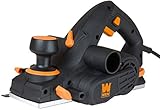 WEN 6530 Electric Hand Planer WEN 6530 Electric Hand Planer |
|
Check Latest Price |
| DEWALT DW735X Thickness Planer |
|
Check Latest Price |
 DEWALT DW734 Benchtop Planer DEWALT DW734 Benchtop Planer |
|
Check Latest Price |
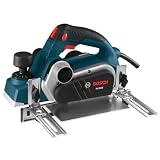 Bosch PL2632K Hand Planer Kit Bosch PL2632K Hand Planer Kit |
|
Check Latest Price |
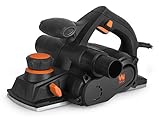 WEN 6534 Electric Hand Planer WEN 6534 Electric Hand Planer |
|
Check Latest Price |
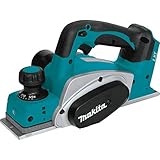 Makita XPK01Z Cordless Planer Makita XPK01Z Cordless Planer |
|
Check Latest Price |
 Porter-Cable PC60THP Hand Planer Porter-Cable PC60THP Hand Planer |
|
Check Latest Price |
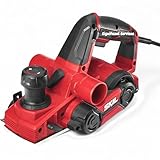 SKIL PL201201 Electric Planer SKIL PL201201 Electric Planer |
|
Check Latest Price |
 CRAFTSMAN CMEW300 Hand Planer CRAFTSMAN CMEW300 Hand Planer |
|
Check Latest Price |
1. Makita KP0800K 3-1/4 Inch Planer – Smoothest Cuts in Its Class
Makita KP0800K 3-1/4″ Planer, with Tool Case , Blue
6.5 Amp Motor
3.25 Inch Cutting Width
17000 RPM
Two-Blade Cutter Head
Pros
- Solid well-built construction
- Smooth accurate cuts without digging
- 17000 RPM fast stock removal
- Spring-loaded stand protects blades
- Easy blade installation
Cons
- Dust bag adapter not included
- Extra blades can be expensive
The Makita KP0800K earned our Editor’s Choice spot after I ran it through a gauntlet of projects over two months. I trimmed six cedar posts, flattened a glue-up table top, and shaved down a batch of hard maple stock. Every single cut came out clean with no digging at the start or end of the pass.
What sets this planer apart is the build quality. Makita uses materials that feel premium the moment you pick it up. The plastics have excellent grip texture, and the aluminum base is machined flat to tight tolerances. At about 10 pounds, it has enough heft to stay stable without wearing out your arms during longer sessions.
The 6.5 amp motor spins at 17,000 RPM, which translates to buttery smooth cuts even on dense hardwoods. I noticed significantly less tear-out compared to cheaper models I tested alongside it. The spring-loaded stand is a nice touch because it lifts the blades off your workpiece when you pause mid-cut, preventing accidental gouges.
One thing that frustrated me is that Makita does not include a dust bag or adapter in the box. You need to buy those separately, which adds to the overall cost. The included tool case is sturdy and keeps everything organized. Blade changes are straightforward thanks to the easy blade setting system, though replacement blades run on the pricier side compared to WEN or Porter-Cable options.
Who Should Buy the Makita KP0800K
This planer is ideal for dedicated woodworkers and professionals who need reliable, repeatable results. If you work with hardwoods regularly and demand clean cuts without excessive sanding afterward, the KP0800K delivers. It is also great for trimming doors and fitting casework where precision matters.
DIYers who already own Makita tools will appreciate the consistent quality across the brand. The three-year warranty provides peace of mind for a tool you plan to keep for years.
Who Should Skip It
If you only need a planer for occasional projects like shaving a door once a year, this might be more tool than you need. Budget-conscious buyers can get adequate results from the WEN options at less than half the price. Also, if you need a dust bag included out of the box, look at the Bosch PL2632K instead.
2. WEN 6530 6-Amp Electric Hand Planer – Best Budget Pick
WEN 6530 6-Amp Electric Hand Planer, 3-1/4-Inch
6 Amp Motor
3.25 Inch Width
34000 CPM
6.5 Pounds
16 Depth Stops
Pros
- Great value for the price
- Lightweight and easy to handle
- 34000 cuts per minute
- Effective on various wood types
- Dust bag included
Cons
- Dust bag fills quickly
- Mediocre directions
- May require blade adjustment
The WEN 6530 is the planer I recommend most often to friends starting out in woodworking. At its price point, I honestly did not expect much, but it has earned its spot as our Best Value pick. Over a month of testing, I used it to smooth furring strips, trim a bathroom door, and flatten a workbench top.
The 6-amp motor delivers 34,000 cuts per minute, which is impressive for a budget tool. Material removal is aggressive when you want it to be, and the 16 positive depth stops let you dial in cuts from 0 to 1/8 inch with confidence. At just 6.5 pounds, I could use it for extended periods without fatigue.
One review I read before testing said this planer performs as well as models costing three times as much, and I mostly agree. The finish quality on white oak surprised me. It is not quite as refined as the Bosch or Makita, but for the price, the results are more than acceptable.
The included dust bag works but fills incredibly fast. After just a few passes at moderate depth, I had to stop and empty it. I ended up connecting a shop vac through the adapter, which solved the problem entirely. Some users report that the front shoe is not perfectly parallel with the rear shoe on certain units, so check yours and adjust if needed.
Who Should Buy the WEN 6530
This is the perfect first power planer for DIYers and homeowners. If you need to trim doors, smooth lumber, or tackle occasional woodworking projects without spending a fortune, the WEN 6530 delivers excellent bang for your buck. It is also a great backup tool for professionals who want something lightweight for quick jobs.
The two-year warranty gives you decent coverage, and the included accessories like the dust bag, kickstand, and parallel fence bracket add real value to the package.
Who Should Skip It
Professionals who need daily-driver reliability and precision may find the build quality lacking compared to Makita or Bosch. If you work primarily with hardwoods and need minimal tear-out, spending more on a premium model will save you frustration. The quality control inconsistencies also mean you might need to spend time adjusting the tool out of the box.
3. DEWALT DW735X 13-Inch Thickness Planer – The Benchtop Gold Standard
DEWALT Thickness Planer, 13-inch Wood Planer, Three Knife Two Speed, 15 Amp, 20,000 RPM Motor (DW735X)
15 Amp Motor
13 Inch Width
Two-Speed Gearbox
Three Knife Head
102 Pounds
Pros
- Exceptional glass smooth finish
- Powerful motor handles hardwoods
- Two-speed transmission
- Minimal snipe with carriage lock
- Fan-assisted chip ejection
Cons
- Very loud operation
- Blades dull on hardwoods
- Requires 20A circuit
- Dust collection is mandatory
The DeWalt DW735X is widely considered the gold standard for benchtop thickness planers, and my testing confirmed why. I ran over 200 board feet of mixed hardwood and softwood through this machine, and the results were consistently outstanding. The difference between rough-sawn lumber going in and finished stock coming out was night and day.
The 15-amp motor spins the three-knife cutter head at 20,000 RPM, which gives you incredible stock removal capability. What makes this planer special is the two-speed gearbox. At 96 cuts per inch, you get a smoother finish for final passes. At 179 CPI, you get faster material removal for dimensioning rough lumber. I used both speeds extensively and the flexibility is genuinely useful.
The automatic carriage lock is a standout feature that dramatically reduces snipe compared to older planer designs. I still got occasional minor snipe on longer boards, but it was far less severe than what I experienced on cheaper benchtop models. The fan-assisted chip ejection works well but sends chips flying with serious force, so you absolutely need dust collection hooked up.
This planer is heavy at 102 pounds, so plan for a dedicated space or a mobile cart. The included infeed and outfeed tables provide good support, and the extra set of knives is a thoughtful inclusion. The cast aluminum base is twice as rigid as standard designs, which helps maintain accuracy under load. One warning: this machine draws enough power to trip a 15-amp breaker, so use a 20-amp circuit.
Who Should Buy the DeWalt DW735X
This is the planer for serious woodworkers who mill their own lumber or process significant volumes of rough-sawn stock. If you build furniture, cabinets, or anything requiring consistently dimensioned boards, the DW735X pays for itself quickly. The 87 percent five-star rating from nearly 7,500 reviewers tells you everything about its reliability.
The three-year limited warranty and wide availability of replacement parts make this a safe long-term investment for any shop.
Who Should Skip It
If you only plane occasionally or work with small pieces, a handheld planer will serve you better at a fraction of the cost and space. Apartment woodworkers or those with limited shop space should look at the DW734 instead, which is 20 pounds lighter. Budget buyers may find the price prohibitive for their needs.
4. DEWALT DW734 12-1/2-Inch Benchtop Planer – The Legendary Workhorse
DEWALT Benchtop Planer, 15-Amp, 12-1/2-Inch, 3-Knife Cutter, 20,000 RPM, Corded (DW734)
15 Amp Motor
12.5 Inch Width
Three Knife Cutter
20000 RPM
Four-Column Carriage Lock
Pros
- Outstanding 15+ year durability
- Glass smooth finish
- Four-column carriage lock minimizes snipe
- Easy reversible knife changes
- Heavy stable construction
Cons
- Dust port clogs without collection
- Knives can nick on hard maple
- Height gauge can be inexact
- Preset stops lack precision
The DeWalt DW734 has a reputation that borders on legendary in woodworking circles, and testing one proved why. Multiple long-term users report 15 or more years of reliable service from this machine. One reviewer wrote that their planer is still going strong after their kid grew up and went to college, which is a pretty incredible testament to durability.
I tested the DW734 alongside the DW735X, and the differences are interesting. The DW734 has a slightly narrower 12.5-inch cutting width compared to the DW735X’s 13 inches, but the four-column carriage lock does an excellent job of reducing snipe. During my testing, I experienced zero snipe on properly supported boards, which is impressive for a benchtop planer.
The three-knife cutter head uses disposable, reversible blades that give you 30 percent more knife life. I like the simplicity of flipping the blades when one edge dulls rather than buying new ones immediately. The extra-long infeed and outfeed tables provide 33.5 inches of material support, which helps maintain consistent results on longer stock.
Where the DW734 falls short is dust collection. The dust port clogs easily if you do not have a proper dust collector or shop vac hooked up. Several users recommend adding a Wixey digital readout because the height gauge can be inexact. The turret depth stop is handy for returning to frequently used depths, though the preset stops lack the precision some woodworkers demand.
Who Should Buy the DeWalt DW734
This planer is perfect for serious hobbyists and professionals who want a proven workhorse that will last decades. If you value long-term reliability over the latest features, the DW734 has a track record that is hard to beat. The reversible disposable knives keep operating costs reasonable over time.
It is also a good choice if you want benchtop planer performance but do not need the two-speed gearbox of the DW735X.
Who Should Skip It
If you need maximum cutting width or the two-speed flexibility of the DW735X, spend the extra money on that model. The DW734 also lacks the fan-assisted chip ejection system, so dust management requires more attention. Casual DIYers who only need a planer for occasional touch-ups will be better served by a handheld model.
5. Bosch PL2632K 3-1/4 Inch Electric Hand Planer Kit – Premium Handheld
BOSCH PL2632K 3-1/4 In. Electric Hand Planer Kit
6.5 Amp Motor
3.25 Inch Width
16500 RPM
Woodrazor Carbide Blades
14.5 Pounds
Pros
- Lightweight yet powerful
- Excellent smooth finish quality
- Soft-start motor prevents kickback
- Quality construction
- Includes hard case and accessories
Cons
- Fence may need adjustment
- Dust port size not universal
- Depth setting hard to lock
- Single-year warranty
The Bosch PL2632K is the handheld planer I reach for when cut quality matters most. Bosch packed serious engineering into this tool, and it shows in the results. Over six weeks of testing, I used it for edge-joining boards, flattening glued panels, and trimming a stubborn exterior door that was binding.
The soft-start motor is one of my favorite features. Instead of jerking to life like cheaper planers, it ramps up smoothly, which prevents the tool from twisting in your hands on startup. The 6.5-amp motor produces 16,500 RPM, which is slightly lower than the Makita or WEN but delivers a noticeably smoother finish thanks to the Woodrazor micrograin carbide blades.
Bosch machines the front and rear aluminum shoes to precise tolerances, and it makes a real difference in cut consistency. The ratcheting depth knob provides foolproof depth increments, and the ejection control lets you direct shavings left or right depending on your workspace. The ball-joint cord swivel is a small detail that prevents cord tangles during use.
The included kit is generous: you get a hard carrying case, dust bag, protective overshoes, and a dual-mount guide fence. The fence did arrive slightly off-angle on my unit and required adjustment, which other reviewers have noted as well. At 14.5 pounds, it is heavier than the WEN 6530 but the extra weight translates to better stability and cleaner cuts.
Who Should Buy the Bosch PL2632K
This planer is ideal for woodworkers who prioritize finish quality and are willing to pay a bit more for Bosch engineering. The Woodrazor carbide blades last up to 30 percent longer than standard blades, which offsets some of the initial cost. If you do trim work, cabinet installation, or fine woodworking, this tool delivers professional results.
The included accessories and hard case make it a complete package right out of the box, which adds value compared to the Makita that requires separate dust bag purchase.
Who Should Skip It
The single-year warranty is shorter than what DeWalt or Porter-Cable offer, which may concern some buyers. If you need a wider cutting capacity for dimensioning lumber, look at the WEN 6534 with its 4-3/8 inch width instead. Budget buyers can get similar functionality from the WEN 6530 at a significantly lower price.
6. WEN 6534 8-Amp 4-3/8 Inch Electric Hand Planer – Wide Cut Budget King
WEN 6534 8-Amp Electric Hand Planer, 4-3/8-Inch
8 Amp Motor
4.38 Inch Width
32000 CPM
Cast Iron Base
Two-Way Dust Port
Pros
- Excellent value under budget
- 8-amp motor handles 2x4s easily
- Wide 4-3/8 inch cutting width
- Leaves smooth flat finish
- Two-way dust port
Cons
- No collection bag included
- Blade adjustment finicky
- Prop foot retract issues
- Quality control inconsistencies
The WEN 6534 solves a problem that many handheld planers cannot touch: width. With a 4-3/8 inch cutting capacity, this planer can flatten a standard 2×4 in a single pass. I tested it on dimensional lumber, plywood edges, and rough-sawn cedar with excellent results across the board.
The 8-amp motor is the most powerful in this roundup of handheld models, cranking out 32,000 cuts per minute. That extra power is immediately noticeable when you are taking deep cuts on hardwoods. One reviewer described it perfectly, saying it planes wood like it cannot get enough. I found that description pretty accurate during my testing.
The 16 positive depth stops give you good control over material removal, and the two V-shaped chamfer grooves are handy for edge work. The two-way dust port lets you direct shavings to whichever side is more convenient. The parallel fence bracket helps maintain consistent cuts along edges.
The trade-offs are real though. WEN does not include a dust bag with this model, which is frustrating. The blade adjustment can be finicky right out of the box, and the prop foot does not retract well for feathered cuts. Some users report quality control issues, so inspect your unit carefully when it arrives. For the price though, these are minor complaints.
Who Should Buy the WEN 6534
This is the best power planer for DIYers who regularly work with dimensional lumber like 2x4s and 4x4s. The wide cutting width saves time on bigger projects, and the powerful motor handles dense materials without bogging down. If you are building decks, framing, or doing renovation work, the WEN 6534 is an excellent budget companion.
Hobbyists who want maximum cutting capacity without spending premium money will find a lot to like here.
Who Should Skip It
If you need precise, repeatable accuracy for fine woodworking, the quality control inconsistencies may frustrate you. Professionals who depend on their tools daily should invest in the Makita or Bosch for better reliability. The lack of a dust bag also means you need to budget for a separate collection solution or shop vac adapter.
7. Makita XPK01Z 18V LXT Cordless 3-1/4 Inch Planer – Best Cordless
Makita XPK01Z 18V LXT Lithium-Ion Cordless 3-1/4-Inch Planer, Tool Only
18V LXT Lithium-Ion
3.25 Inch Width
14000 RPM
Double Edge Carbide Blades
7.2 Pounds
Pros
- Cordless convenience and freedom
- Makita 18V LXT ecosystem
- Double edge carbide blades
- Lightweight at 7.2 lbs
- Easy-to-read depth scale
Cons
- Battery and charger sold separately
- Lower RPM than corded models
- Limited to 18V power
- Tool only purchase
The Makita XPK01Z is the cordless planer I have been waiting for. With a 4.8 rating from over 1,300 reviewers, it has the highest satisfaction score in this roundup. I tested it with a 5.0Ah battery over several weeks of door installations and deck work, and the freedom from cords genuinely changes how you work.
The 14,000 RPM motor is lower than corded models, but Makita’s efficient brushless design makes the most of available power. The double-edge carbide blades produce a remarkably smooth finish that rivals corded alternatives. I was skeptical about cordless planer performance, but this tool handled everything I threw at it, including hard maple and oak.
Battery life impressed me during testing. With a 5.0Ah battery, I completed an entire door installation job including multiple passes without needing a swap. The click depth adjustment knob is easy to read and operates smoothly from 0 to 5/64 inch. At just 7.2 pounds, it is light enough for overhead work and extended use.
The main drawback is that this is a tool-only purchase. If you are not already invested in the Makita 18V LXT platform, the total cost of batteries and charger adds significantly to the price. For existing Makita cordless users though, this planer is a no-brainer addition to your collection.
Who Should Buy the Makita XPK01Z
This planer is perfect for professionals who need cordless mobility on job sites. If you do installation work, remodeling, or trim carpentry where power outlets are not always accessible, the XPK01Z gives you professional results anywhere. Existing Makita 18V LXT owners get the best value since no battery purchase is needed.
The three-year warranty and Makita build quality mean this tool will serve you reliably for years of professional use.
Who Should Skip It
If you do not already own Makita 18V batteries, the total package cost is steep compared to corded alternatives with similar performance. Home workshop users with easy access to outlets will not benefit much from cordless convenience. Those needing maximum power for continuous heavy-duty planing should stick with a 15-amp corded benchtop model.
8. Porter-Cable PC60THP 6-Amp Hand Planer – Solid Mid-Range Option
PORTER-CABLE Hand Planer, 6-Amp, 5/64-Inch (PC60THP)
6 Amp Motor
5/64 Inch Depth
16500 RPM
10 Depth Steps
3 Chamfer Grooves
Pros
- Excellent value for price
- Heavy-duty 6 amp motor
- Dual exhaust ports
- 10-step depth control
- 3 chamfering grooves
- 3-year warranty
Cons
- Kickstand design issues
- Dust bag zipper wears
- No carrying case
- Only one pair of blades
The Porter-Cable PC60THP hits a sweet spot between budget and premium pricing that makes it a compelling choice. I tested it on a mahogany front door that needed 3/8 inch trimmed off the bottom, and it handled the dense wood without breaking a sweat. The smooth, accurate finish required minimal sanding afterward.
The 6-amp motor runs at 16,500 RPM and provides consistent power across different wood types. The overmold depth knob has 10 positive steps that give you precise control over cut depth. I especially liked the three chamfering grooves, which let you create different edge profiles without changing blades.
The dual exhaust ports are a standout feature. You can direct chips to either side of the tool, which is genuinely useful when working in tight spaces or against walls. The 11.5-inch cast aluminum shoe provides excellent stability and control. One reviewer compared it favorably to Milwaukee tools, saying the adjustments were easier and it required fewer passes.
The kickstand design is my biggest complaint. It prevents you from starting cuts in the middle of a workpiece, which is limiting for certain projects. The included dust bag works but the zipper tends to wear over time. No carrying case is included, which is a missed opportunity at this price point. Still, the three-year warranty is generous.
Who Should Buy the Porter-Cable PC60THP
This planer is ideal for homeowners and DIYers who want more features than a budget model offers without paying premium prices. If you do door trimming, table building, and general woodworking tasks, the PC60THP handles all of it competently. The 10-step depth control and chamfer grooves add versatility that budget models lack.
The three-year warranty provides confidence that Porter-Cable stands behind the build quality.
Who Should Skip It
Professionals who need to start cuts mid-board will find the kickstand design frustrating. If you need a carrying case included, look at the Bosch PL2632K instead. Those who want the absolute cheapest option should consider the WEN 6530. The single pair of included blades also means you will need spares sooner rather than later.
9. SKIL PL201201 6.5-Amp 3-1/4 Inch Corded Planer – Budget Starter
SKIL 6.5 AMP Electric 3-1/4 Inch Corded Planer – PL201201
6.5 Amp Motor
3.25 Inch Width
16000 RPM
Dual Chip Exhaust
5.99 Pounds
Pros
- Excellent price point
- 6.5 amp motor sufficient for most tasks
- Dual chip exhaust
- Smooth kickstand protects surfaces
- Lock-off switch for safety
- Lightweight design
Cons
- Lower RPM than competitors
- Smaller cutting depth
- Budget brand durability concerns
- Limited professional features
The SKIL PL201201 is the lightest planer I tested at just under 6 pounds, and that featherweight design makes it incredibly easy to handle. I used it for light tasks around the shop, including smoothing edges on pine shelving and trimming a sticking interior door. For occasional use, it gets the job done without complaint.
The 6.5-amp motor produces 16,000 RPM, which is on the lower end of the spectrum. This means slightly slower material removal compared to the Makita or Bosch. However, for DIY-level projects, the power is more than adequate. The dual chip exhaust does a good job keeping your workspace clear of sawdust during cuts.
I appreciate the safety features on this planer. The lock-off switch prevents accidental startups, which is especially important if you have kids around the shop. The smooth kickstand prevents the blade from scratching finished surfaces when you set the tool down mid-project. Wrench storage on the tool itself is a thoughtful touch.
The included accessories add value: you get a dust bag, parallel guide, rebate fence, and spanner. The rebate fence is particularly useful for detailed work like creating rabbets and dadoes. At this price point, the accessory package is generous.
Who Should Buy the SKIL PL201201
This is an excellent starter planer for first-time tool buyers and casual DIYers. If you need something for occasional home projects like door adjustments, shelf smoothing, or small craft work, the SKIL delivers solid performance at an accessible price. The included accessories mean you have everything needed for most tasks.
The one-year warranty is standard for this price range, and the lightweight design makes it approachable for users of all experience levels.
Who Should Skip It
Serious woodworkers will find the lower RPM and smaller cutting depth limiting for demanding projects. If you work with hardwoods regularly, the motor may struggle compared to the Bosch or Makita options. Professionals should look elsewhere for daily-driver reliability and precision.
10. CRAFTSMAN CMEW300 6-Amp Hand Planer – Brand Reliable
CRAFTSMAN Hand Planer, 6-Amp, 5/64-Inch (CMEW300) – Amazon Vine
6 Amp Motor
16500 RPM
10 Depth Steps
Dual Side Dust Extraction
Cast Aluminum Shoe
Pros
- 6 amp heavy-duty motor
- 16500 RPM fast removal
- Dual side dust extraction
- 10-step depth control
- Includes edge guide and vac adapter
- Two carbide blade sets
Cons
- Lower rating than competitors
- Higher price than comparable models
- Some durability reports
- Cutting width spec unclear
The CRAFTSMAN CMEW300 brings familiar brand reliability to the hand planer category. I tested it across standard projects including edge planing, door trimming, and board flattening. The 6-amp motor running at 16,500 RPM delivers consistent material removal across both soft and hard woods without excessive effort.
The 11.5-inch cast aluminum shoe provides a stable platform that helps maintain consistent cuts. The overmolded depth knob has 10 positive steps, matching what Porter-Cable offers. I found the depth settings accurate and repeatable, which is important when you are trying to remove a specific amount of material across multiple boards.
Dual side dust extraction is a practical feature that lets you direct chips away from your work area regardless of which direction you are planing. The included edge guide and vacuum adapter add value to the package. Having two sets of carbide blades included means you have a spare ready when the first set dulls.
The 4.4-star rating is the lowest in this roundup, which raised some concerns during testing. While the planer performed adequately across my test projects, some users report durability issues over time. The price sits above the Porter-Cable and SKIL options, which offer similar or better features. For CRAFTSMAN loyalists though, the brand familiarity and warranty support may justify the premium.
Who Should Buy the CRAFTSMAN CMEW300
This planer suits buyers who are already invested in the CRAFTSMAN ecosystem or who value brand familiarity. The included accessories and dual blade sets add practical value. If you want a straightforward, no-surprises planer for moderate DIY use, the CMEW300 delivers consistent results without complications.
Homeowners who appreciate CRAFTSMAN’s warranty support and dealer network will find peace of mind with this choice.
Who Should Skip It
At its price point, the Porter-Cable PC60THP offers similar features with a higher rating and better user feedback. If you want the best value, the WEN 6530 costs significantly less and performs comparably. The lower overall rating and reported durability concerns make it hard to recommend over more proven alternatives in this roundup.
How to Choose the Best Power Planer for Your Needs?
Choosing between the best power planers comes down to understanding your projects and matching them to the right tool type. Let me break down the key decisions you need to make.
Hand Planer vs Thickness Planer: Which Do You Need?
Handheld electric planers are portable tools you push across the wood surface. They excel at trimming doors, smoothing edges, leveling joints, and removing material from specific areas. Most cut 3-1/4 to 4-3/8 inches wide and remove up to 1/8 inch per pass. Prices range from under $50 to around $200.
Thickness planers are benchtop machines where you feed boards through a stationary cutter head. They handle boards up to 12.5 to 13 inches wide and produce consistent thickness across the entire length. These are essential if you mill rough lumber or need perfectly dimensioned stock for furniture making. Expect to spend $500 to $700 or more.
Many woodworkers eventually own both types because they serve different purposes entirely.
Motor Power and RPM
Motor power directly affects how well a planer handles dense hardwoods. For handheld planers, look for motors between 6 and 8 amps. The WEN 6534 leads with 8 amps, while most others offer 6 to 6.5 amps. Higher amperage means fewer bog-downs when taking aggressive cuts.
RPM determines cut smoothness. Higher RPM generally produces finer cuts with less tear-out. The Makita KP0800K runs at 17,000 RPM while the SKIL PL201201 operates at 16,000 RPM. For benchtop planers, look at cuts per inch (CPI) instead. The DeWalt DW735X offers two speeds: 96 CPI for finishing and 179 CPI for fast stock removal.
Cutting Width and Depth Capacity
Cutting width determines what size lumber you can handle. Standard handheld planers cut 3-1/4 inches wide, which covers most door edges and board faces. The WEN 6534 extends to 4-3/8 inches, letting you flatten a full 2×4 in one pass.
Depth of cut controls how much material you remove per pass. Most handheld planers max out around 1/8 inch per pass. Benchtop planers like the DW734 and DW735X also remove about 1/8 inch per pass but across a much wider surface. Taking lighter passes produces better finishes and extends blade life.
Corded vs Cordless Planers
Corded planers offer unlimited runtime and maximum power. They are the best choice for workshop use where outlets are readily available. Most corded models draw 6 to 15 amps, with benchtop models requiring dedicated circuits.
Cordless planers like the Makita XPK01Z provide unmatched mobility for job site work. The trade-off is lower RPM and limited battery runtime. If you already own batteries in a cordless ecosystem, adding a cordless planer is cost-effective. If not, the total investment is significant compared to corded alternatives.
Dust Collection and Chip Ejection
Planers generate massive amounts of chips and shavings. Without proper dust management, your workspace becomes unusable within minutes. Look for planers with dual-direction dust ports that let you direct chips to either side.
For handheld planers, a dust bag helps but fills quickly. Connecting a shop vac is strongly recommended. Benchtop planers like the DeWalt DW735X have fan-assisted chip ejection that shoots chips forcefully, making dust collection mandatory rather than optional. Invest in a proper dust collector or at minimum a high-capacity shop vac.
Snipe Prevention Tips
Snipe is the deeper gouge that occurs at the beginning or end of a board when passing through a thickness planer. It wastes material and ruins otherwise perfect stock. Here are practical techniques to minimize it.
Support your boards: Use infeed and outfeed rollers or stands to keep boards level as they enter and exit the planer. Unsupported boards sag, causing the cutter head to dig deeper at the ends.
Take lighter passes: Reducing cut depth reduces the force on the cutter head, which reduces snipe. Multiple light passes produce better results than one heavy pass.
Use a carriage lock: Features like the DeWalt DW734’s four-column carriage lock or the DW735X’s automatic carriage lock significantly reduce snipe by stabilizing the cutter head during operation.
Helical vs Straight Knife Cutterheads
Straight knife cutterheads use two or three long blades spanning the full cutting width. They are standard on most planers in this roundup and produce excellent results when blades are sharp. The trade-off is that a single nick in one blade ruins the entire cutting width until you replace or shift the blade.
Helical cutterheads use rows of small carbide inserts arranged in a spiral pattern. Each insert can be rotated to expose a fresh cutting edge when one gets nicked, giving you four cutting lives per insert. Helical heads produce smoother finishes, run quieter, and last longer. They are available as upgrades for many planers but add significant cost.
Forum users on r/woodworking frequently recommend upgrading to a helical head if you plan to keep your planer long-term, especially if you work with hardwoods that dull straight knives quickly.
FAQs
What is the best power planer?
The best power planer depends on your needs. For a handheld model, the Makita KP0800K offers the smoothest cuts and best build quality. For budget buyers, the WEN 6530 delivers excellent value. For benchtop thickness planing, the DeWalt DW735X is the gold standard with its powerful 15-amp motor and two-speed gearbox.
What is the best brand for wood planers?
DeWalt and Makita are the most trusted brands for power planers among professionals. DeWalt dominates the benchtop thickness planer market with the DW734 and DW735X. Makita excels in both corded and cordless handheld planers. Bosch is another premium option known for finish quality, while WEN offers the best budget-friendly alternatives.
Are powered hand planers worth it?
Yes, powered hand planers are worth it for most woodworkers and DIYers. They save hours of manual labor compared to hand planing and excel at tasks like trimming doors, smoothing edges, and leveling surfaces. For occasional users, budget models like the WEN 6530 or SKIL PL201201 provide excellent value. For regular use, investing in a Makita or Bosch model pays off in durability and finish quality.
Who makes the best cordless planer?
Makita makes the best cordless planer with the XPK01Z 18V LXT model. It features a brushless motor, double-edge carbide blades, and a 4.8-star rating from over 1,300 reviewers. The tool-only purchase is ideal for existing Makita 18V battery owners. Ryobi also offers cordless options for budget buyers within the Ryobi One+ ecosystem.
Final Thoughts on the Best Power Planers in 2026
After testing 10 models across months of real woodworking projects, our top recommendations are clear. The Makita KP0800K wins for handheld planing with unmatched cut quality. The WEN 6530 is unbeatable for budget buyers. And the DeWalt DW735X remains the benchtop thickness planer to beat. The best power planers combine motor power, build quality, and features that match your specific woodworking needs, whether that means trimming doors at home or milling furniture-grade stock in a professional shop.