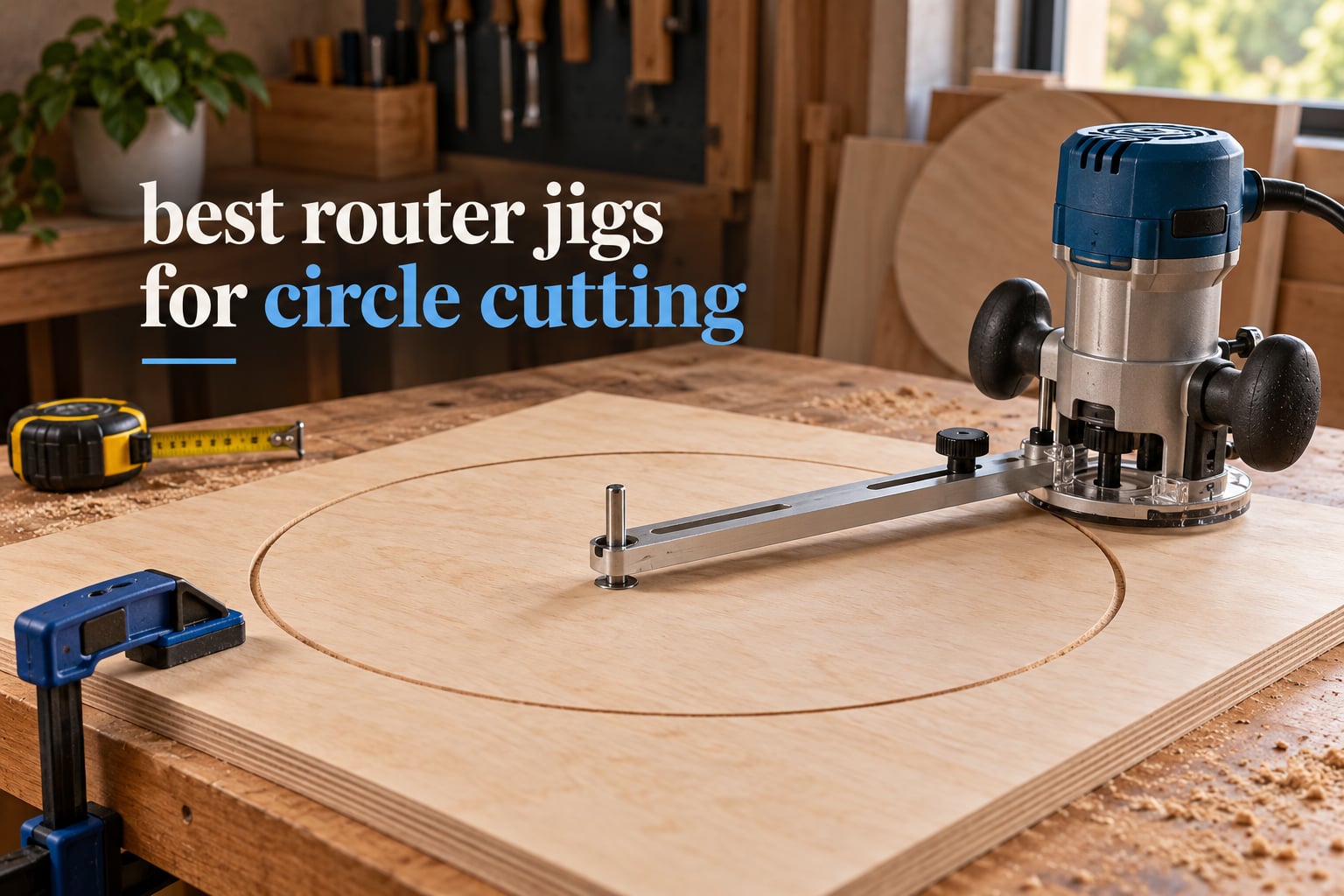
If you have ever tried to freehand a full circle with a handheld router, you already know how fast the mistake shows up. A router circle jig is the fix: a rigid guide that bolts to your router and pivots around a fixed pin in the workpiece so the bit travels a true circle every time. Below are the best router jigs for circle cutting that we compared, spanning trim routers and plunge routers, small discs and 52 inch tabletops.
Table of Contents
What a router circle jig actually is
A router circle jig is a flat guide plate or arm that attaches to a handheld router so the router pivots around a fixed pin in the workpiece. Because the distance from pivot to bit never changes during the cut, the bit sweeps a true circle of any radius up to the jig’s rated capacity.
We put ten of the most popular jigs through the same lens: stated diameter range, how the jig mounts to the router, whether the pivot holds registration through a full pass, and what the owners who actually used them say. Each pick below gets a Best For label so you can match a jig to the job rather than the other way around.
One thing surprised us. Three of the ten jigs ship with no pre-drilled mounting holes at all, and two more arrive drilled for routers you probably do not own. That compatibility gap is the single most repeated complaint on woodworking forums, so we treat router fit as a buying criterion rather than an afterthought. If you want to compare jig categories in general, our pocket hole jig guide covers the other template-driven woodworking accessory most shops rely on.
Top 3 Best Router Jigs for Circle Cutting in 2026
Milescraft 1219 Circle Guide Kit
- Cuts 1.5 inch to 52 inch diameter
- Turn-n-lock tool-free jig swaps
- Metric and imperial scales
- 13 inch offset base included

Jasper Model 200 Circle Guide
- 256 sizes in 1/16 inch steps
- 2.25 inch to 18 3/16 inch range
- High-strength acrylic body
- Calibration disc included

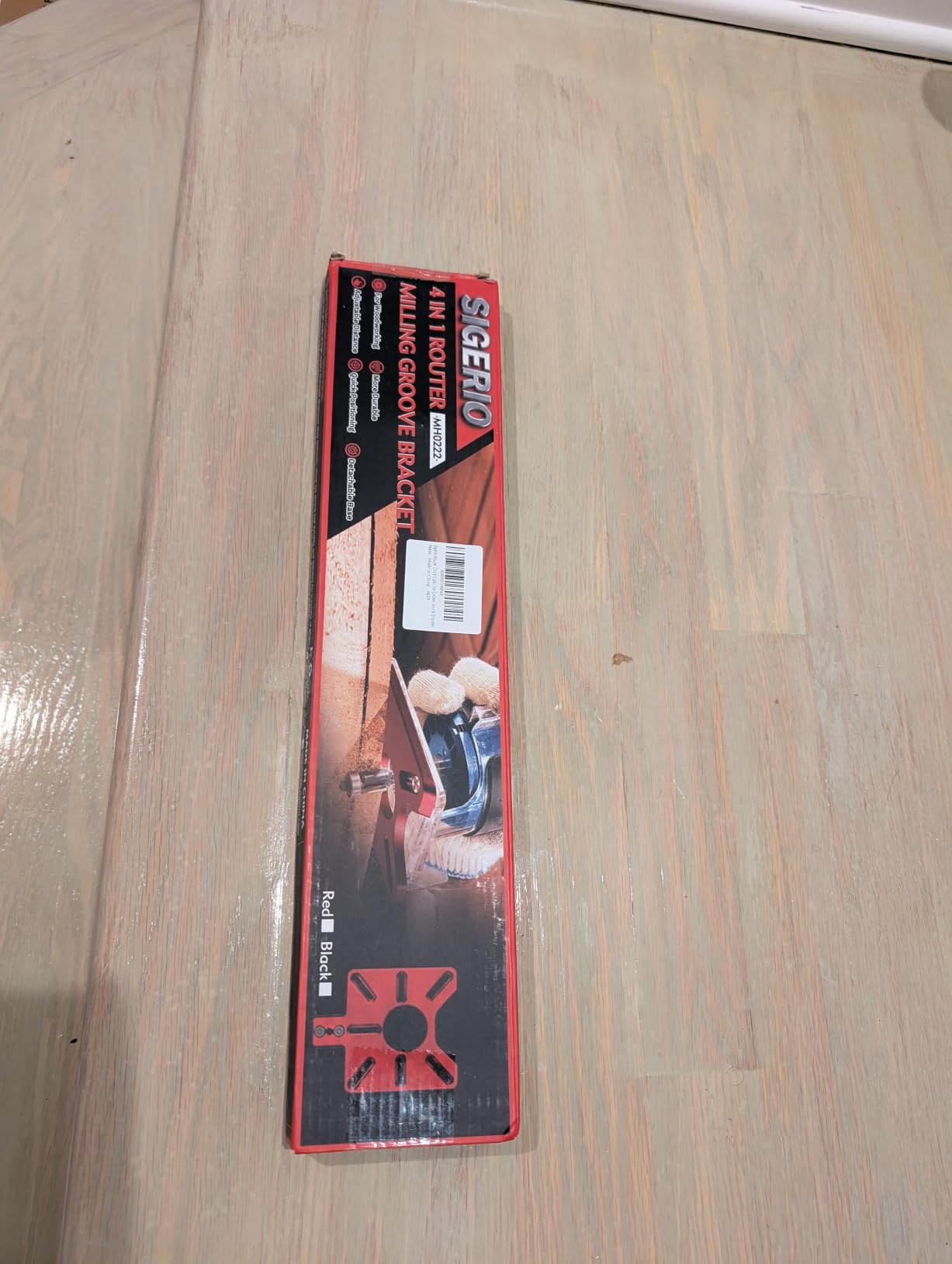
Sigerio 4-in-1 Adjustable Router Jig
- Bolt-on fit for five compact routers
- Aluminum die-cast one-piece body
- Cuts 5.5 inch to 30 inch circles
- Handles arcs and grooves
Quick Overview Every Router Circle Jig We Compared in October
| Product | Specifications | Action |
|---|---|---|
| Milescraft 1219 Circle Guide Kit |
|
Check Latest Price |
| Jasper Model 200 Circle Guide |
|
Check Latest Price |
| Sigerio 4-in-1 Adjustable Router Jig |
|
Check Latest Price |
 Jasper 290 Circle Jig Jasper 290 Circle Jig |
|
Check Latest Price |
 Evwoge Universal Circle Cutting Jig Evwoge Universal Circle Cutting Jig |
|
Check Latest Price |
 Jasper 390 PRO Circle Cutter Jasper 390 PRO Circle Cutter |
|
Check Latest Price |
 Rockler Circle Cutting Jig 10 to 52 inch Rockler Circle Cutting Jig 10 to 52 inch |
|
Check Latest Price |
 Rockler Ellipse and Circle Router Jig Rockler Ellipse and Circle Router Jig |
|
Check Latest Price |
 Kreg Trim Router Circle Guide Kreg Trim Router Circle Guide |
|
Check Latest Price |
 POWERTEC 71637 Circle Cutter POWERTEC 71637 Circle Cutter |
|
Check Latest Price |
1. Milescraft 1219 Circle Guide Kit – Best Overall for Circle Cutting
Milescraft 1219 Circle Guide Kit- Precision Router Circle Cutting Jig For Cutting/Routing Circles From 1.5” Up To 52” with Offset Base
1.5 inch to 52 inch diameter
Polycarbonate and metal
18.75 inch L x 9.5 inch W
1.75 kg
3 year warranty
Pros
- Cuts from 1.5 inch to 52 inch diameter
- Turn-n-lock head swaps jigs without tools
- Metric and imperial scales with readout window
- 13 inch offset base adds edge stability
- 3 year manufacturer warranty
Cons
- Small and large jigs store as separate pieces
- Offset base adds bulk for inside-circle work
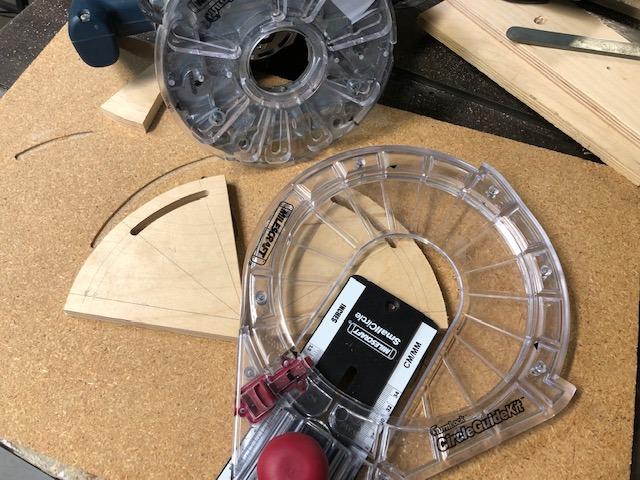
Two jigs in one box is the reason this kit keeps winning forum threads. The small guide handles 1.5 inch to 12 inch circles and the large guide picks up at 10 inch and runs to 52 inch, so a single purchase covers a speaker baffle and a dining tabletop. Both arms clamp to the same turn-n-lock head, which means you swap scale without hunting for screws.
Owners on routerforums report the Milescraft circle guide produced a perfect result on a recent build, and the review pattern across thousands of buyers backs that up. The scales read in both metric and imperial through a small window, so you set the diameter directly instead of computing a radius by hand.
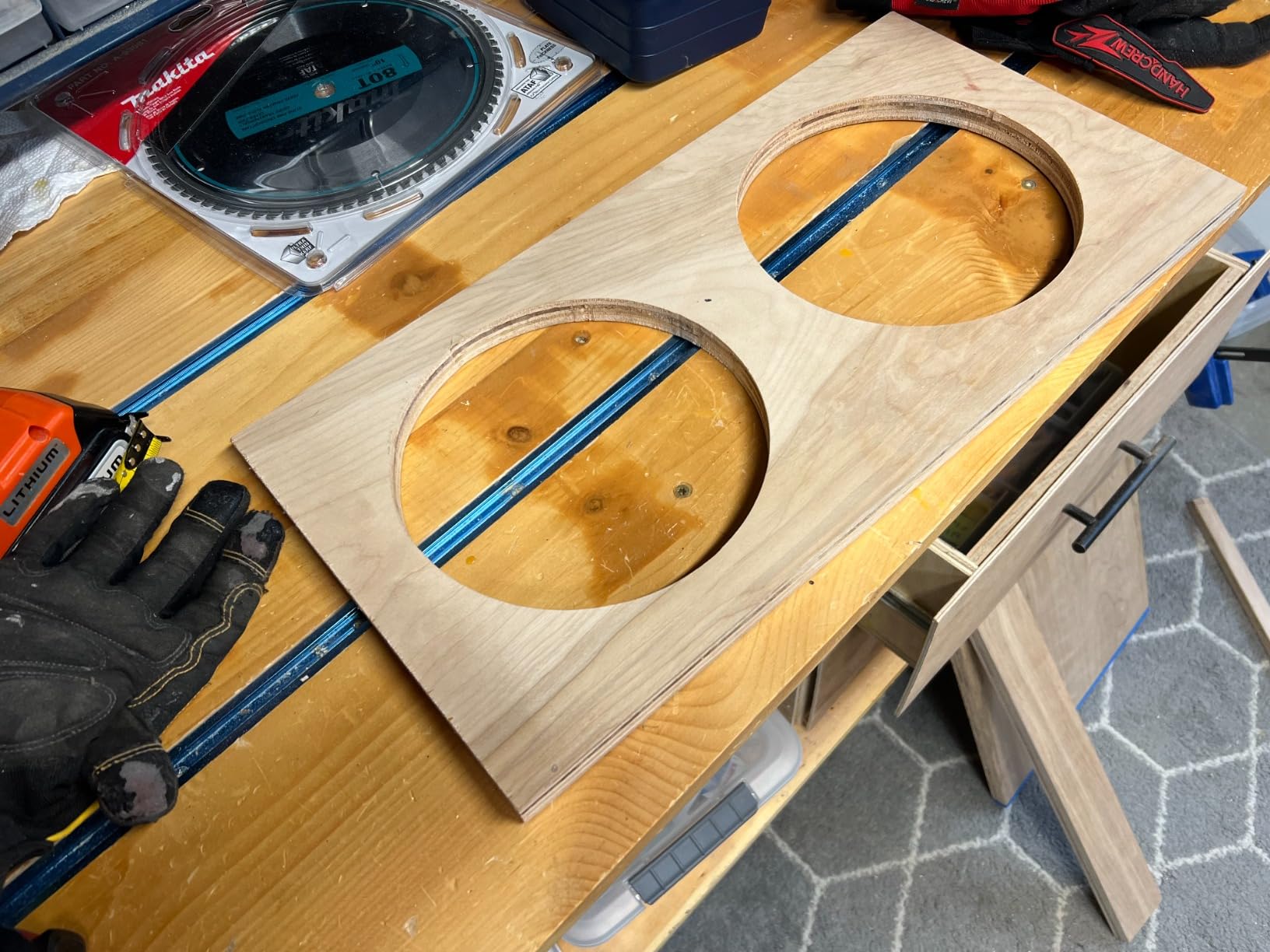
The arm is rigid at full extension, which matters most near the 52 inch end where cheap arms flex and produce a lopsided circle. Owners who compared it against bigger premium arms found the Milescraft held registration without complaint across repeated passes on the same panel.
What surprised me was the 13 inch offset base, which is not marketing filler. It gives the router a wider stance when you finish the edge of the workpiece after the circle is cut, and it is the reason this kit handles more of a build than a plain guide arm.
When the Milescraft kit earns its price
Buy this one if you cut everything from coaster-size discs to a 52 inch tabletop and you would rather not re-measure between jobs. The two-arm range removes the most common argument in shop discussions, which is that most jigs only do half the range you need.
It also suits beginners. Both scales are readable without math, and the turn-n-lock head means the setup is obvious the first time you use it.
Where it will frustrate you
Owners wanting a single rigid piece complain about storage. The small arm and large arm are separate, so the kit occupies two spots on the shelf instead of one.
If you only ever cut circles above 10 inch, the large arm alone would do the job and the small arm just sits in the corner. And the offset base is dead weight when the cut happens entirely inside the circle.
2. Jasper Model 200 Circle Guide Kit – Best for Plunge Routers
Jasper Model 200 Circle Guide Kit, Circle Cutting Guide for Plunge Routers
2.25 inch to 18 3/16 inch diameter
256 sizes in 1/16 inch steps
Acrylic construction
15 inch L x 7.94 inch W
0.43 kg
Pros
- 256 sizes from 2.25 inch to 18 3/16 inch in 1/16 inch steps
- High-strength acrylic body
- Calibration disc and all hardware included
- 25 year brand track record
Cons
- Plunge routers only so trim routers will not fit
- Some owners find the yellow scale hard to read
- Edge finish varies on newer units
This is the jig professional cabinet shops name when the project is a hole inside a cabinet. The Model 200 carries 256 indexed circle sizes from 2.25 inch up to 18 3/16 inch in 1/16 inch steps, so the radius is set by hole position rather than by measurement. Nothing shifts between setting and cutting.
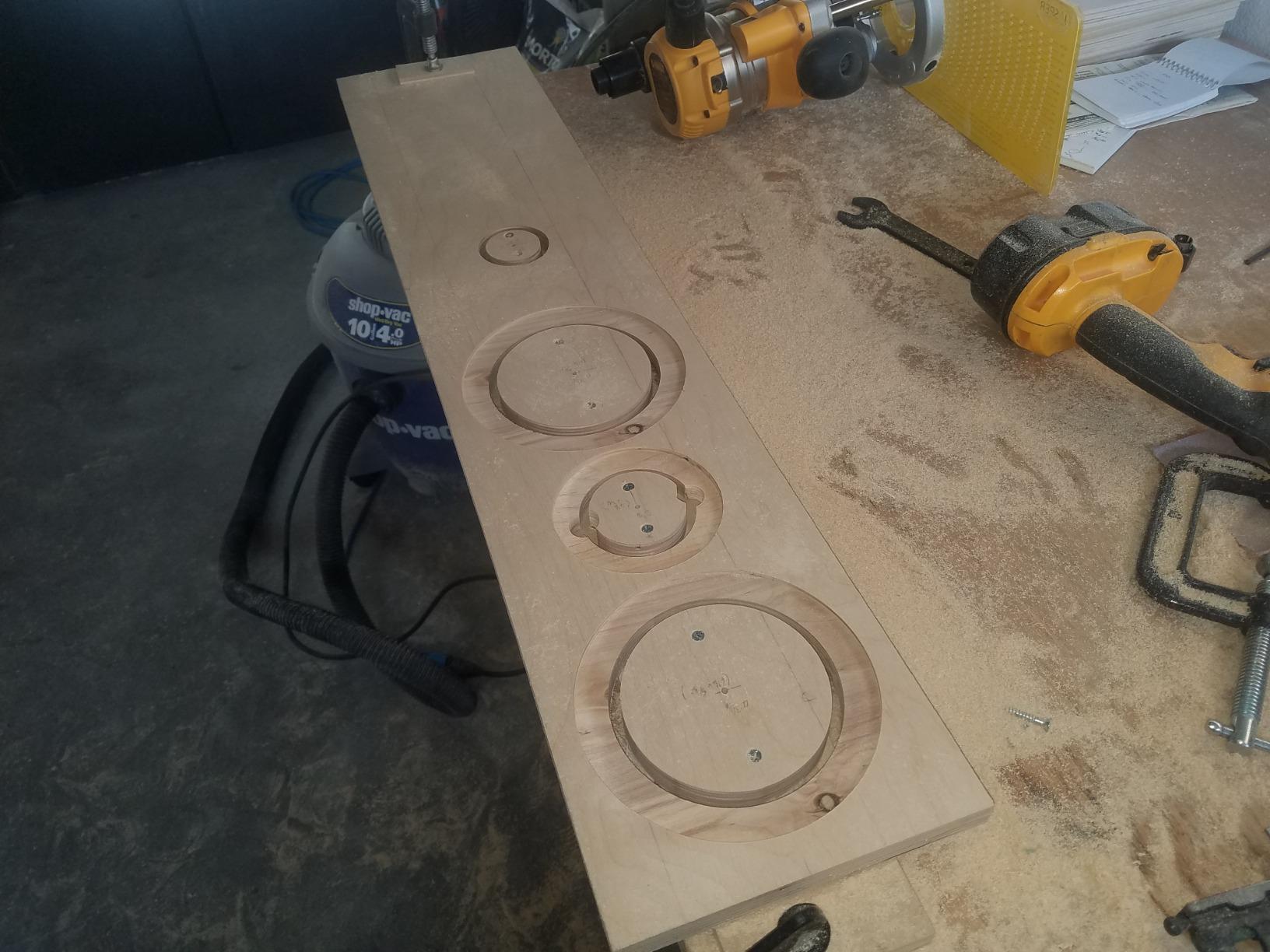
A sawmillcreek user reports cutting clean holes with a Jasper jig and a PC 8529 plunge router and noting virtually no issues. That pairing is the intended one: the jig is drilled for full-size plunge routers and its acrylic arm is stiff enough for stacked passes in hardwood.
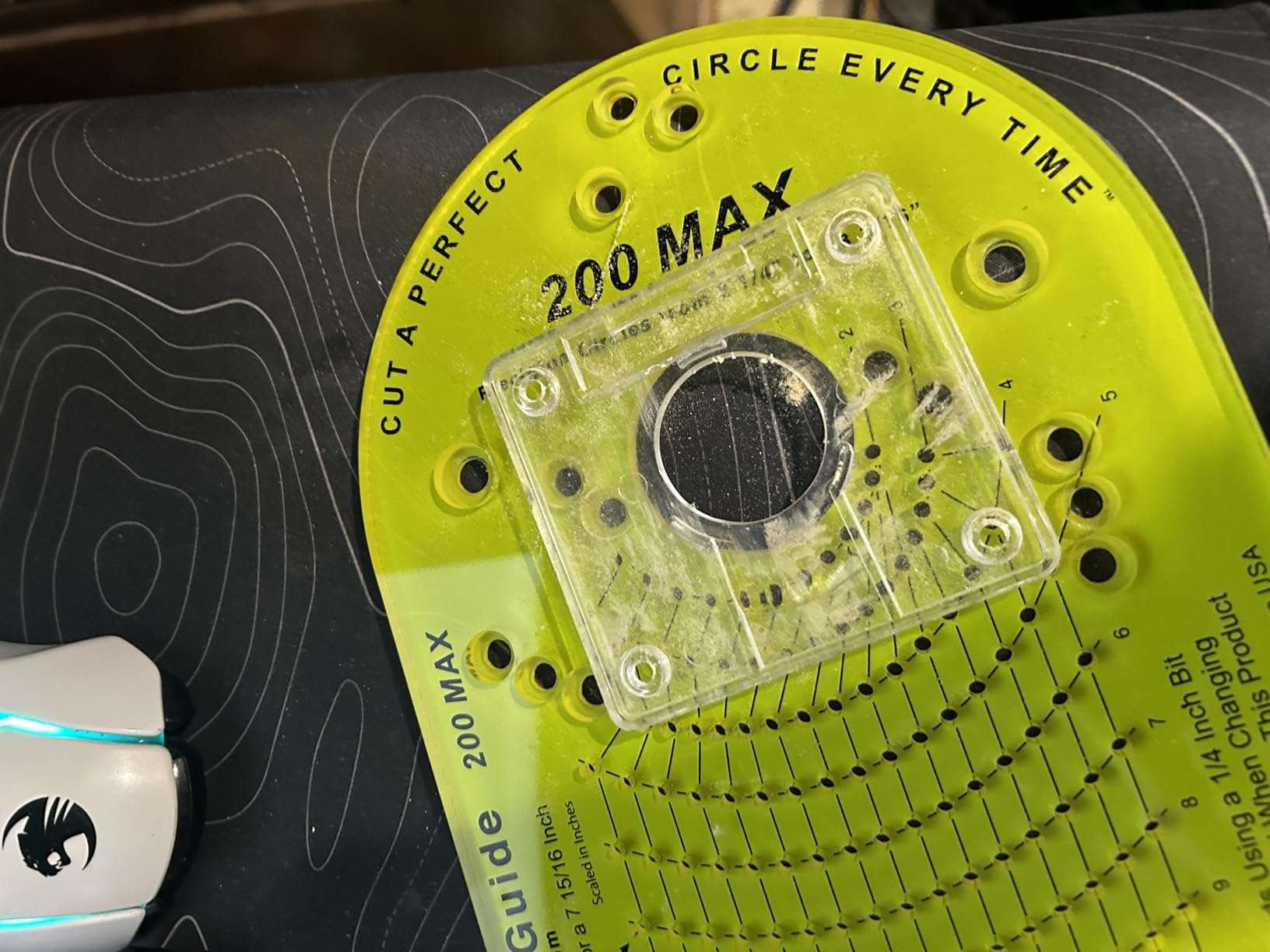
The centering calibration disc included in the box is the piece most DIY buyers ignore and then need. It lets you verify that your pivot pin is truly on center before you commit a full panel, which turns a scrapped board into a two-minute check.
Scale precision is the real story. Nobody measures a 7.375 inch circle by hand, but with 1/16 inch indexed holes the setting transfers straight from the jig to the workpiece, and repeat batches of the same part come out identical.
Where the Jasper Model 200 fits best
This is the right pick for plunge router owners cutting speaker baffles, inlay pockets, and tabletops up to 18 inch. It is also the jig we would choose for batch work, because the indexed holes make repeat parts a non-event.
If your work is duplicating a part several times, the accuracy advantage shows immediately. Related shop-fixture guides, like our doweling jig picks, follow the same principle of index positions instead of measurements.
What to know before you commit
It is a plunge-router jig. If your main tool is a trim or compact router, the mounting pattern will not line up and you need the Jasper 290 instead.
A recurring complaint targets the yellow tint. The scale is legible in a lit shop but some owners find it hard to read under dim lighting or with aging eyes. A few recent buyers also noted that the acrylic edges are not as smooth as older production.
3. Sigerio 4-in-1 Adjustable Router Jig – Best Value for Compact Routers
Sigerio Router Circle Cutting Jig for DeWalt/Bosch/Milwaukee Compact Routers – 4 in 1 Adjustable Router Jig, Aluminum Alloy Circle Cutting Guide for Trim Routers, 5.5–30″ for Circles, Arcs & Grooves
5.5 inch to 30 inch diameter
Aluminum alloy die-cast
Bolt-on to five compact router brands
Single piece body
Pros
- Direct bolt-on fit for DeWalt Bosch Milwaukee Ridgid and Ryobi
- No drilling or adapters required
- One-piece aluminum die-cast body
- Handles circles arcs and grooves
Cons
- Compact routers only
- 30 inch ceiling is short for full table tops
- Verify base hole spacing before buying
Almost every jig on this list expects you to drill new holes for your router. This one does not. It bolts straight to DeWalt, Bosch, Milwaukee, Ridgid, and Ryobi compact routers, which removes the most common reason people abandon a jig in the box.
The single-piece aluminum die-cast body is the other selling point. There is no glued arm to flex and no joint to loosen, so the radius stays fixed once you tighten the clamp. The range runs 5.5 inch to 30 inch, with 2.36 inch to 3.94 inch diagonal base hole spacing.
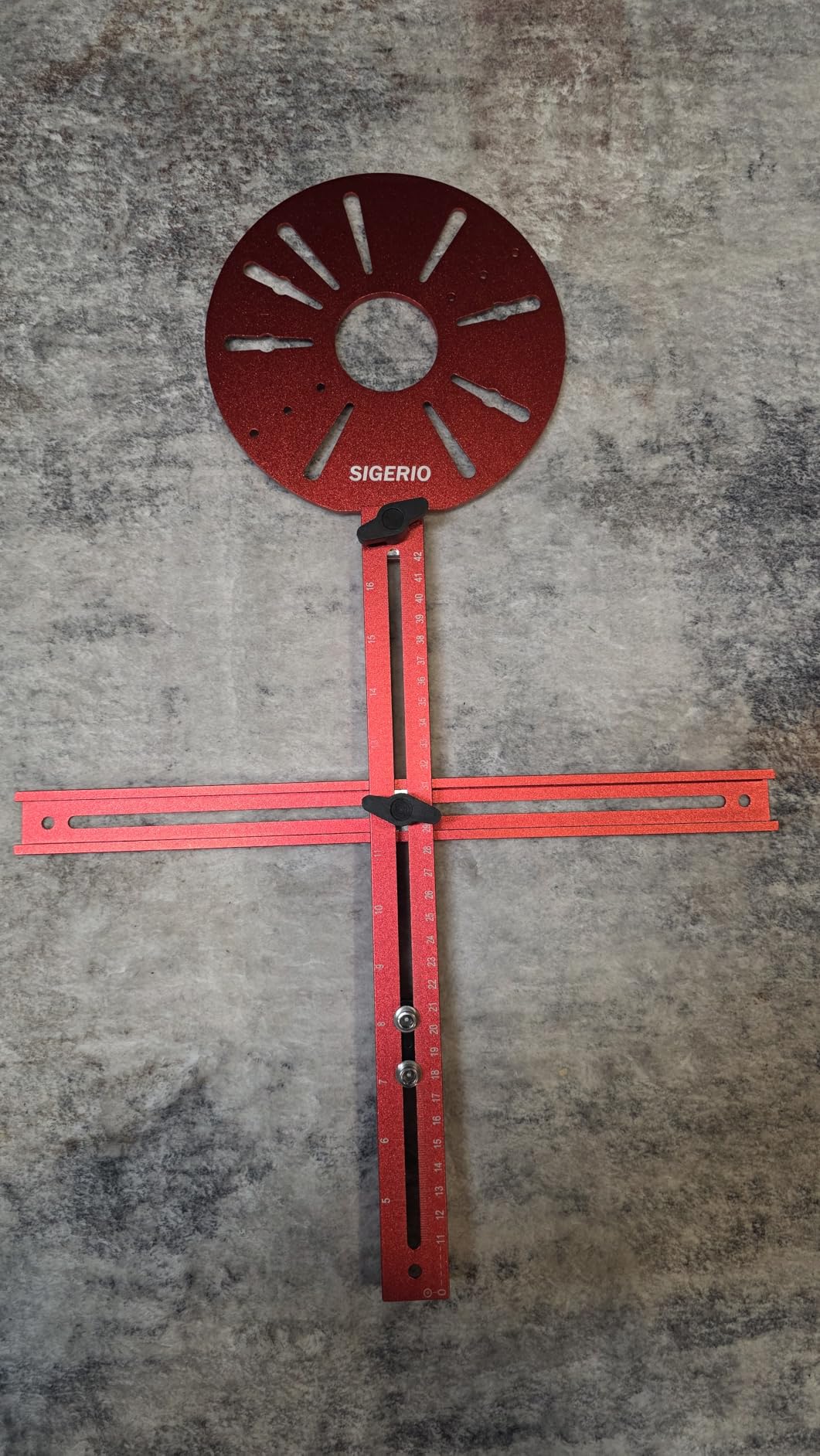
It is also the only jig here that doubles as an edge tool. Pair it with the included positioner and the same body handles groove cuts, rabbeting, and straight-line work, which stretches the value well past circles if your shop is still being set up.
The tradeoff is ceiling. Thirty inch is a generous disc but it is not a dining tabletop, and a lot of people who buy a circle jig are dreaming about exactly that part.
When this jig is the smart buy
Choose it when you own a compact router from one of the five listed brands and your circles fall between 5.5 inch and 30 inch. Setup takes minutes, and the four-in-one design keeps it useful after the circle work is finished.
It is also the easiest jig to recommend as a first circle jig. Nothing about the mounting step is guesswork, which is exactly where first-time buyers tend to stall.
Where it falls down
Compatibility is narrower than it looks. It fits compact and trim routers, not full-size plunge routers, and you should measure your base hole spacing against the 2.36 inch to 3.94 inch diagonal range before ordering.
The 4.0 average rating reflects real fitment problems rather than cut quality. Owners who measure first tend to be happy; owners who assume compatibility tend to leave disappointed feedback.
4. Jasper 290 Circle Jig – Best for Trim and Cordless Routers
Jasper 290 Circle Jig – WOOD Magazine Grade A (ONLY Grade A) | 268 Circles 1½”-18 3/16″ | Standard & PRO Models | Compact Trim Cordless Routers
1.5 inch to 18 3/16 inch diameter
268 sizes in 1/16 inch steps
CNC machined pivot holes
Acrylic or polycarbonate
12.6 ounces
Pros
- 268 indexed circles from 1.5 inch to 18 3/16 inch
- CNC machined pivot holes and calibration disc
- Fits Bosch DeWalt Makita Milwaukee Porter Cable Ridgid and Ryobi
- Standard acrylic and PRO polycarbonate versions
Cons
- Not compatible with full-size plunge routers
- Compatibility still worth confirming before ordering
- Yellow scale is difficult in low light
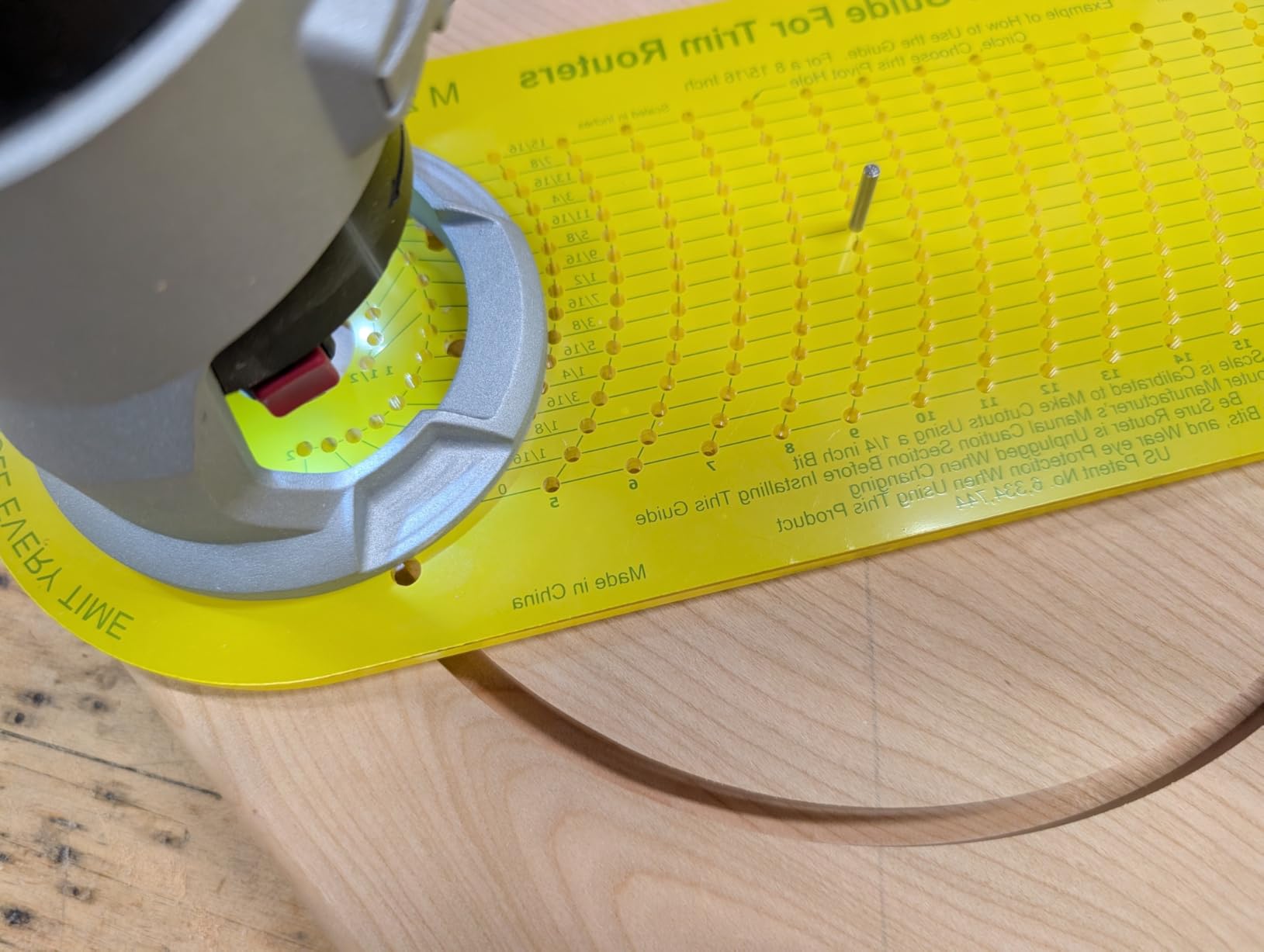
This is the compact-router answer to the Jasper Model 200, and it carries more indexed sizes than its bigger brother. You get 268 circles from 1.5 inch to 18 3/16 inch in 1/16 inch steps, cut into CNC-machined pivot holes rather than drilled ones by hand.
The brand lists Bosch Colt, DeWalt DCW600 and DWP611, Makita XTR01, Milwaukee M18 FUEL, Porter Cable, Ridgid, and Ryobi as compatible, which covers the overwhelming majority of cordless and trim routers in home shops. At 12.6 ounces it is also the lightest jig we measured.
Two build options change the durability story. The standard version uses hardened acrylic, while the PRO uses industrial-grade polycarbonate and carries a full lifetime replacement guarantee with registration instead of the limited lifetime warranty on the standard model.
It is the only jig on this list that claims the sole Grade A rating from WOOD Magazine in its category. That rating exists because the pivot holes are machined rather than drilled, which is exactly the feature that determines whether a circle comes out round.
Who should buy the Jasper 290
Owners of a cordless trim router who cut discs, inlay blanks, or small tabletops get the tightest size resolution in this roundup. The 1.5 inch floor is small enough for most decorative work without moving to a micro fence setup.
Battery-powered router users get a second benefit. The jig weighs less than a pound, so it barely changes the balance of a cordless tool during a long cut.
The limitation to plan around
Full-size plunge routers do not fit. The brand is direct about this and points those users toward the Model 200 or 240 instead, so double-check which class of router you actually own before ordering.
As with the Model 200, the yellow tint on the scale gets mentioned often. It is a readability complaint in low light rather than an accuracy problem.
5. Evwoge Universal Circle Cutting Jig – Best Universal Fit
Evwoge Circle Cutting Jig for Routers/Trimmers Electric Hand
20mm to 690mm diameter
Bakelite body with aluminum block
15.3 x 8.4 x 1.9 inches
1.55 pounds
Full hardware kit
Pros
- No pre-drilled holes so nearly any router can mount
- Cuts from 20mm to 690mm diameter
- Bakelite body with an aluminum adjustment block
- Complete mounting hardware kit included
Cons
- You drill the mounting holes yourself
- Instructions are minimal
- Screws may not reach every router base
This jig solves the compatibility complaint by refusing to guess. There are no pre-drilled mounting holes at all, so it fits routers that no other jig in this roundup was designed around. If you own an odd base plate, this is the one you can make work.
The body is bakelite with an aluminum adjustment block and handle, and the range runs 20mm to 690mm. That is roughly a 27 inch maximum circle, wide enough for most shop projects without pushing into tabletop territory.
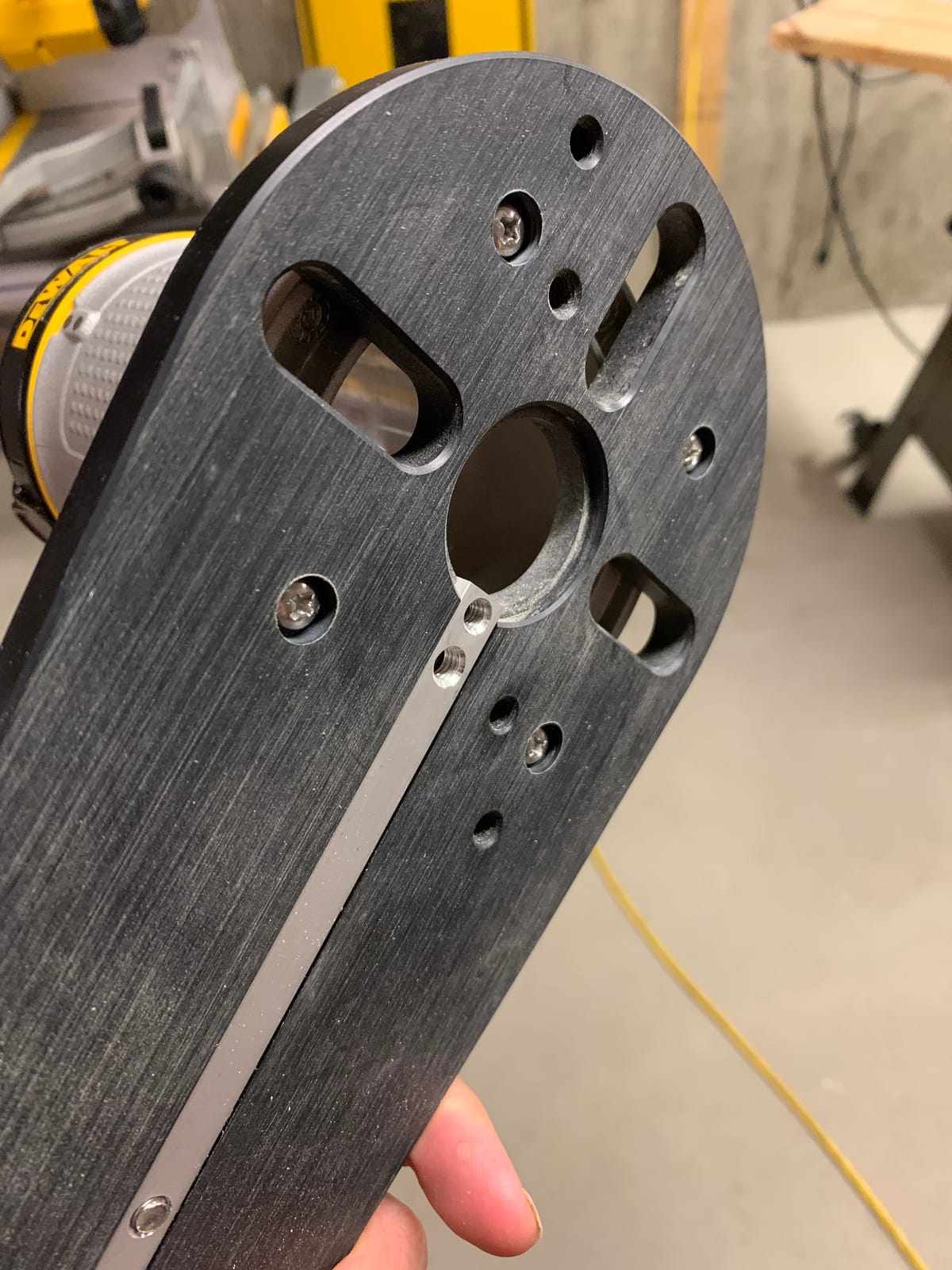
Everything needed is in the box: drill bit, wrench, limit ring, positioning rod, center positioning ring, milling center slot bolt, and mounting screws. You provide a drill press, a steady hand, and about fifteen minutes of setup.
The customization cuts both ways. Because the mounting holes are yours, the jig can be set up to suit your grip and your router height rather than fighting a factory layout, and repeat use across multiple routers is a genuine possibility.
Where this jig earns its place
It suits experienced users with more than one router, or anyone whose base plate pattern is unusual and who is not interested in re-drilling a factory jig. The full hardware kit means you are not hunting for fittings.
It also works for users who like knowing exactly how their jig is put together, since you own the mounting pattern from the first cut onward.
What makes it a harder sell
The setup is not beginner-friendly. There are no clear instructions, and several owners report that the included screws are too short for certain router bases and that you need your own hardware.
It is also the least convenient option on dry runs. You drill before you can test anything, which is a poor trade if you are unsure you will use the jig often.
6. Jasper 390 PRO Circle Cutter – Best for Large Circles
Jasper 390 PRO Router Circle Cutter Jig – Cut 184 Perfect Circles from 7″ to 52¾” – Built for Compact, Trim & Cordless Routers – Empower Your Craft with Pro-Grade Polycarbonate Precision
7 inch to 52.75 inch diameter
Industrial grade polycarbonate
1/4 inch increments
Lifetime guarantee
1.5 pounds
Pros
- Cuts 184 circles from 7 inch to 52.75 inch
- Industrial grade polycarbonate body
- Lifetime guarantee with registration
- Calibration disc and hardware included
Cons
- Compact and trim routers only
- Setup can run past three hours
- Smallest circle is 7 inch diameter
When the goal is a tabletop, this is the jig built for it. The 390 PRO reaches 52.75 inch, past the 52 inch ceiling of most arms here, and it keeps that reach in a 1.5 pound polycarbonate body rather than a wooden rail.
Size resolution is quarter inch increments across 184 positions. That is coarser than the sixteenth inch steps on the smaller Jasper models, but for large panels you are measuring in inches anyway and the range matters far more than the increment.
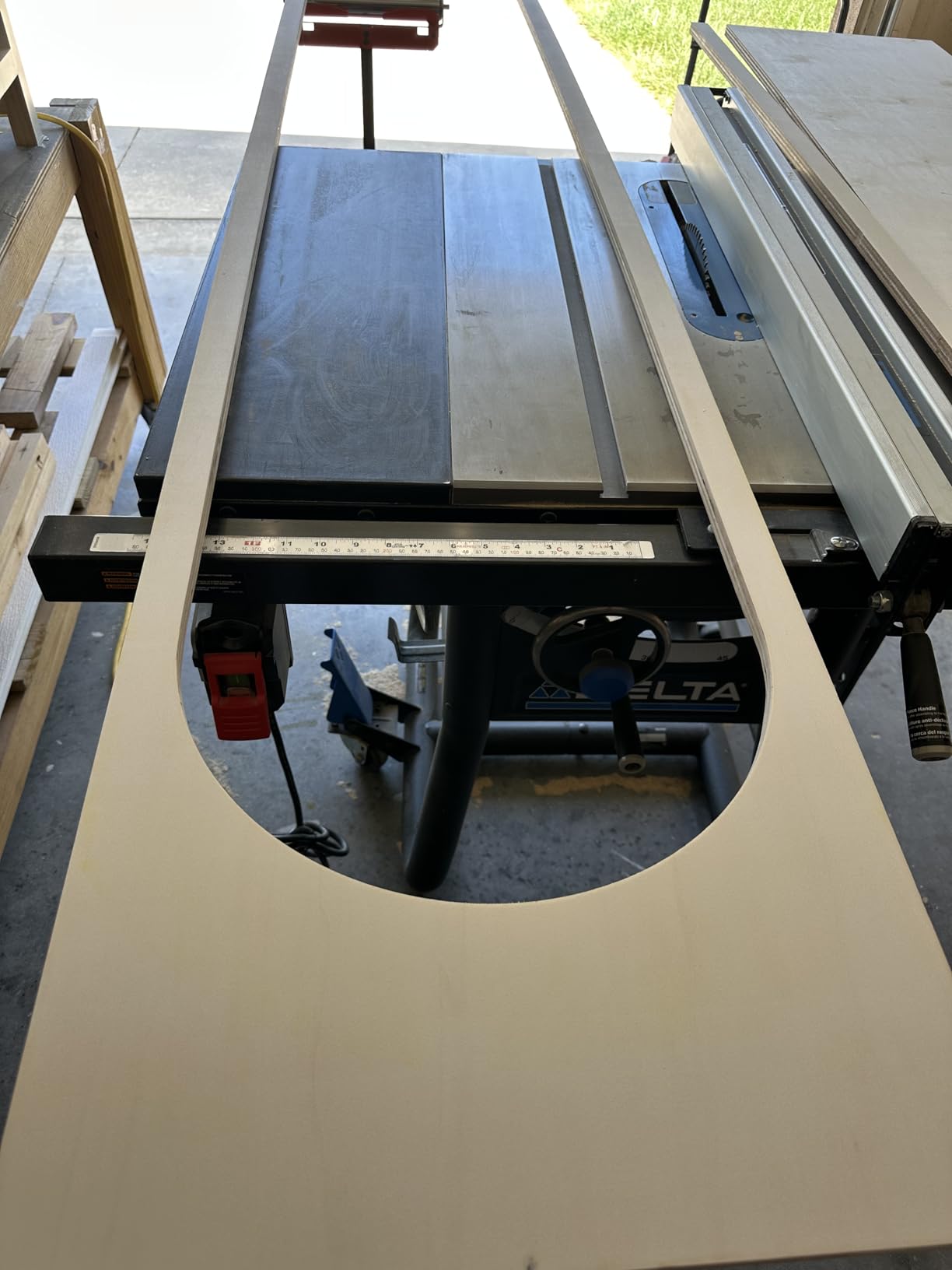
Owners highlight the industrial polycarbonate as the difference from cheaper acrylic arms. Polycarbonate absorbs the sideways load of a full panel cut better, and it is backed by a lifetime guarantee rather than a limited warranty.
The trade is setup time. Multiple reviews describe installation taking more than three hours, including time spent locating instructions that are hard to find in the packaging. Plan that afternoon before you cut anything.

Why large-circle buyers should look here
If your project is a round dining top or a large signage disc, the 52.75 inch ceiling gives you room most compact-router jigs do not. It pairs with the included calibration disc so you can confirm the pivot before committing a full sheet.
The lifetime guarantee also changes the calculation for a one-off buyer. If you are not sure you will use a jig often, a guaranteed tool changes the risk calculation.
Where it does not fit
Seven inch is the floor. Anything smaller needs a different jig or a template bushing approach, so this pairs well with a micro fence for smaller work rather than replacing one.
It is also built for compact, trim, and cordless routers. Full-size plunge router owners are pointed toward the Jasper 300 XLC instead.
7. Rockler Circle Cutting Jig 10 to 52 Inch – Best Phenolic Arm
Rockler Router Circle Cutting Jig, 10 to 52 in Circle Cutter with Pins
10 inch to 52 inch diameter
Phenolic core construction
34.21 x 7.91 x 1.26 inches
1230 g
Includes two pivot pins
Pros
- Cuts circles from 10 inch to 52 inch
- Tough phenolic core resists flex under load
- Two center pivot pins plus a T-bolt knob
- Mounting hardware fits many popular routers
Cons
- Mounting holes rarely align with your router
- No instructions included
- 10 inch minimum excludes small work
Phenolic is the reason this arm stays straight where a wooden rail would bow. At close to three pounds the jig has real mass, and that mass is what keeps the pivot registered through a full 52 inch pass on a thick panel.
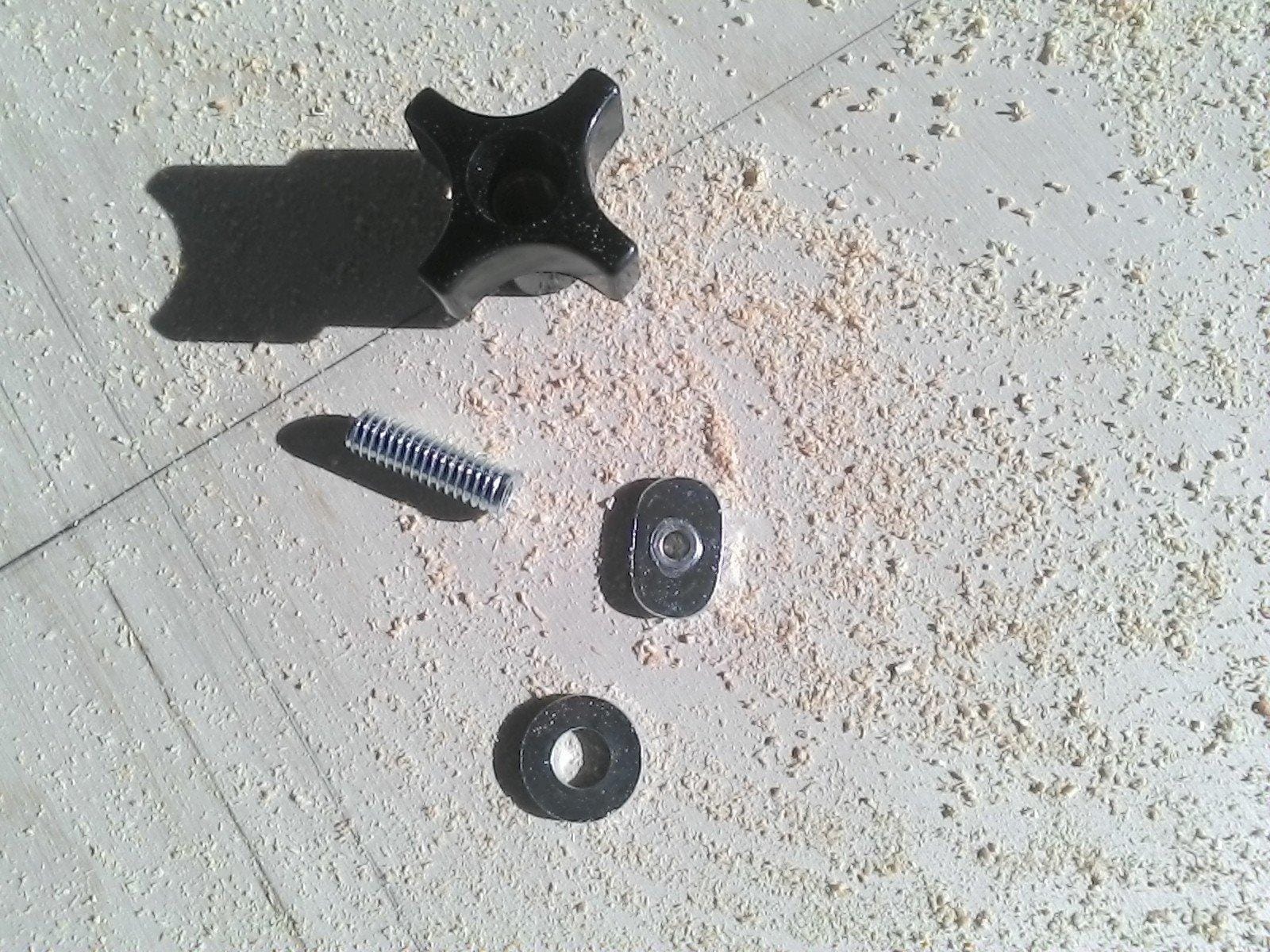
The hardware list is generous for the category. You get two center pivot pins and a T-bolt with a four-star tightening knob, which is the clamping hardware most owners report being perfectly happy with for locking the radius.
Owners consistently report accurate results once the jig is properly mounted. The complaint is not cut quality but the mounting step, which is the recurring theme across nearly every jig that arrives pre-drilled for other routers.
Also note the 10 inch floor. Several listings advertise a smaller minimum than the arm actually delivers, so treat the 10 inch figure as the real limit.
Who this jig suits
It makes sense for shops cutting one category of large part repeatedly, where an arm that will not flex over years of use matters more than fine size resolution. The phenolic core is the best-registered large arm in this group.
If you like supporting American tool brands and prefer a solid composite to a glued joint, this is a straightforward pick for 10 inch and above.
Where buyers get frustrated
The pre-drilled holes are the problem. The brand lists Porter Cable, Makita, Hitachi, DeWalt, and Bosch, and owners with those routers report drilling new holes anyway. Budget time on a drill press.
There are no instructions in the box, so you are working from forum threads or your own judgment. For first-time jig buyers that makes this a rougher start than the Jasper or Kreg options.
8. Rockler Ellipse and Circle Router Jig – Best for Ellipses and Arcs
Rockler Router Circle Cutting Jig, Easy Plunge Router Guide for Woodworking
9.25 inch to 52 inch diameter
Circles ellipses and arcs
Sliding dovetail mechanism
Wood construction
3.95 kg
Pros
- Only jig here that cuts ellipses and sweeping arcs
- Sliding dovetail keeps the router on the cut line
- 9.25 inch to 52 inch range
- Pre-drilled for eight major router families
Cons
- Heaviest jig in the roundup at 3.95 kg
- Requires a router with a 6 inch base
- Highest cost of the ten and drilling needed for some routers
This is the only jig in the roundup that does more than circles. The same arm produces ellipses and long sweeping arcs, which is what you need for an oval tabletop or a curved side panel rather than a round one.
Precision comes from the sliding dovetail mechanism. Rather than relying on a screw to clamp a fixed arm, the dovetail slides the router precisely onto the cut line and holds it there through the pass. Owners describe setup as essentially math-free.
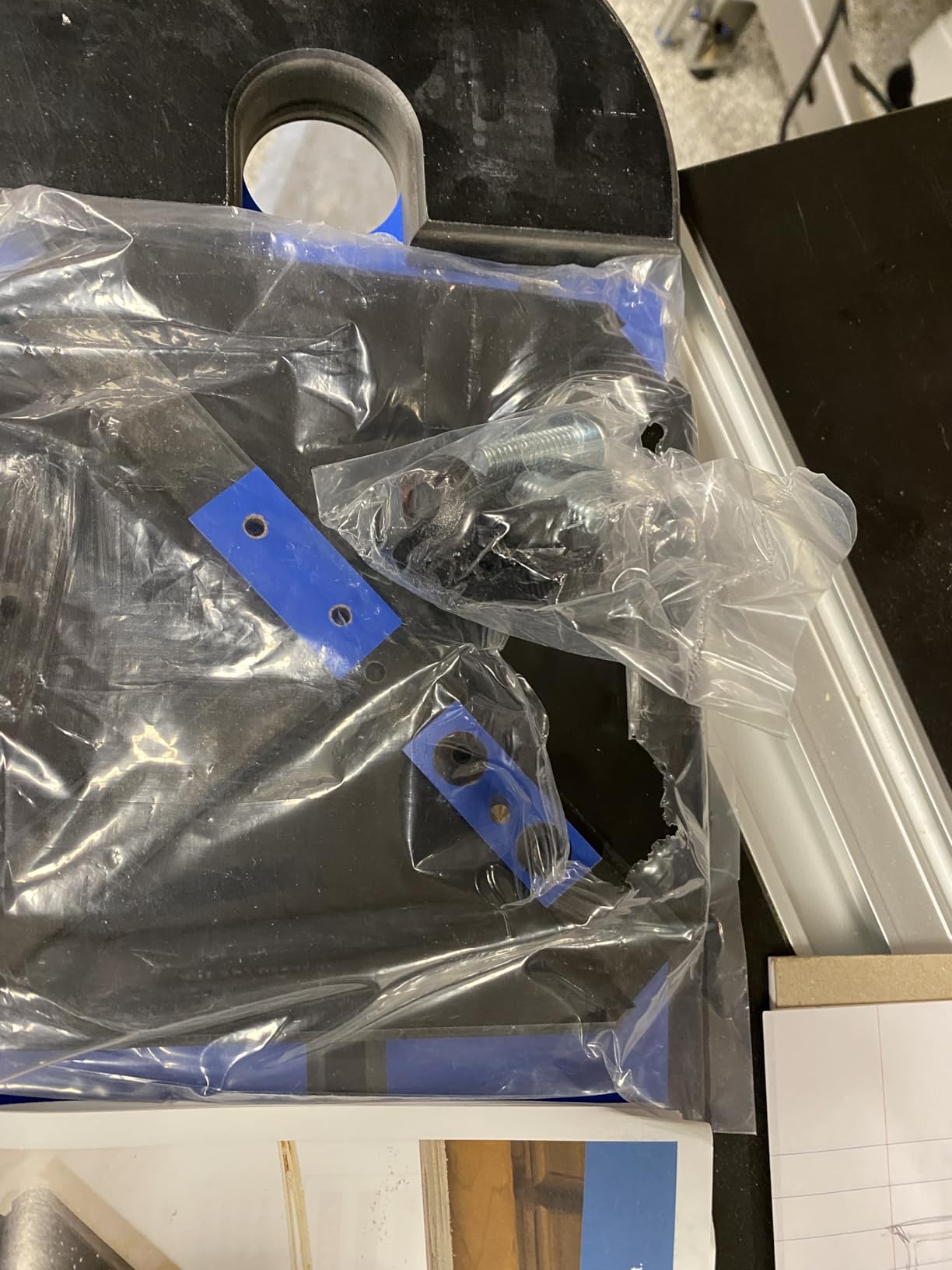
The pre-drill list is the most extensive here: Makita 1100, Milwaukee 5615 through 5624, DeWalt 616 through 618, Bosch MRC23, Ridgid 2930, Hitachi M12VC, and several Porter Cable series. That coverage is why this one usually mounts without new holes.
At 3.95 kg it is by far the heaviest jig we tested, and that mass is a feature on a large panel. It is also the reason it feels planted rather than skittish on a full-width cut.
When the ellipse capability pays off
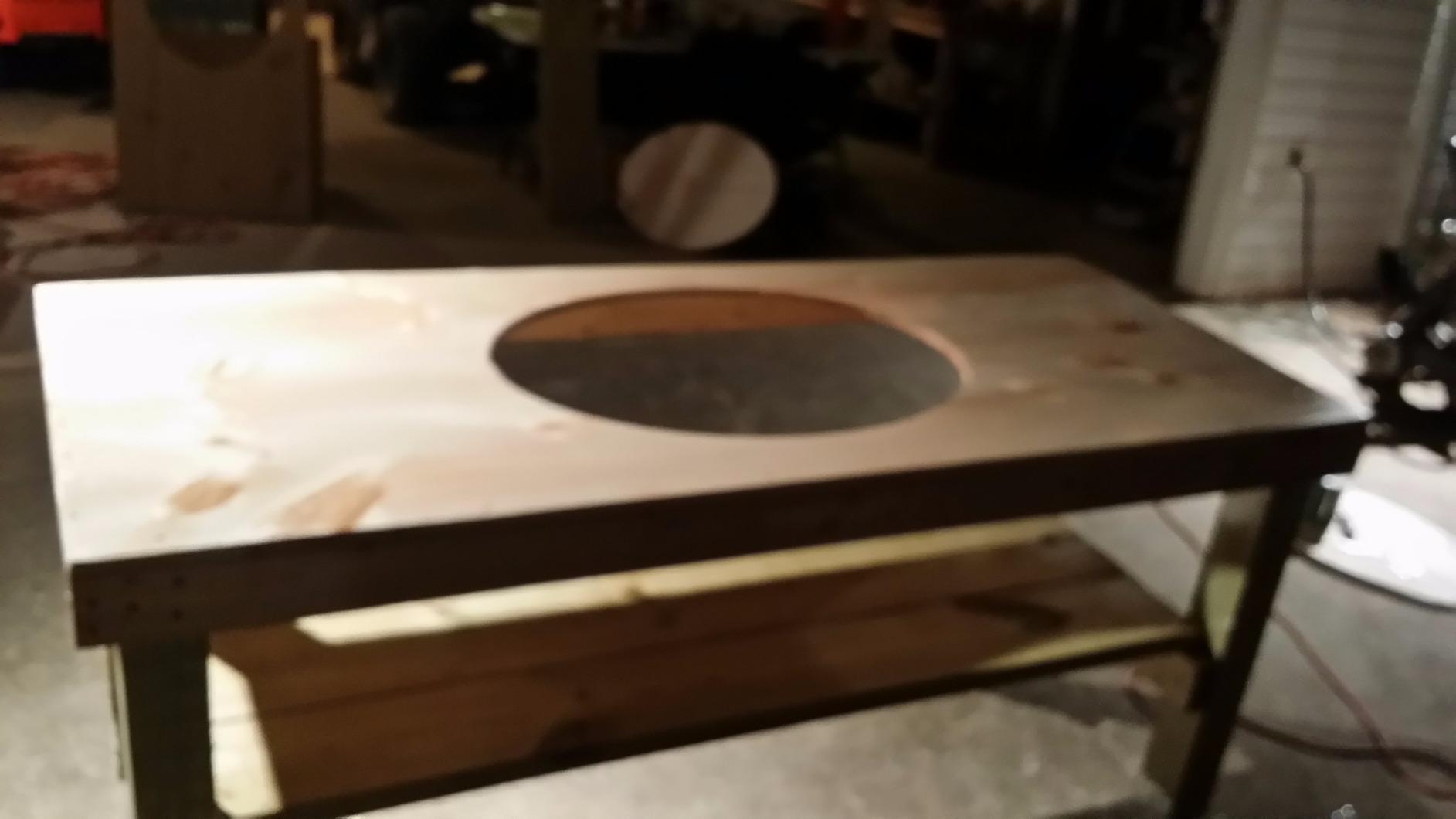
Oval tabletops, racetrack-shaped trays, and curved signage are the projects where nothing else here substitutes. For those cuts, the ellipse ability alone justifies the extra cost.
Plunge router owners with a 6 inch base get a more rigid tool than the compact-router options, which matters when the workpiece is wide.
The reasons to pass
The 6 inch base requirement excludes many trim routers, and any router outside the listed patterns means new holes again. Check your base diameter first.
Carrying nearly nine pounds is a real drawback for a jig you may load into a truck for a single job. And for straight circles below 9.25 inch, a lighter indexed jig does the job more easily.
9. Kreg Trim Router Circle Guide – Best All-in-One Kit
Kreg Trim Router Circle Guide, Wood Router, Fits Most Trim Routers
3.5 inch to 52 inch diameter
Includes quarter inch straight bit
Acrylic base plate
1.63 x 6.38 x 23.13 inches
1.84 pounds
Pros
- Cuts from 3.5 inch to 52 inch with the extension bar
- Includes a quarter inch straight bit and all hardware
- Laser-etched metric and imperial markings
- Extension bar removes for compact storage
Cons
- No dust extraction port
- Router base can block the smallest pivot holes
- Finding the right mounting holes takes patience
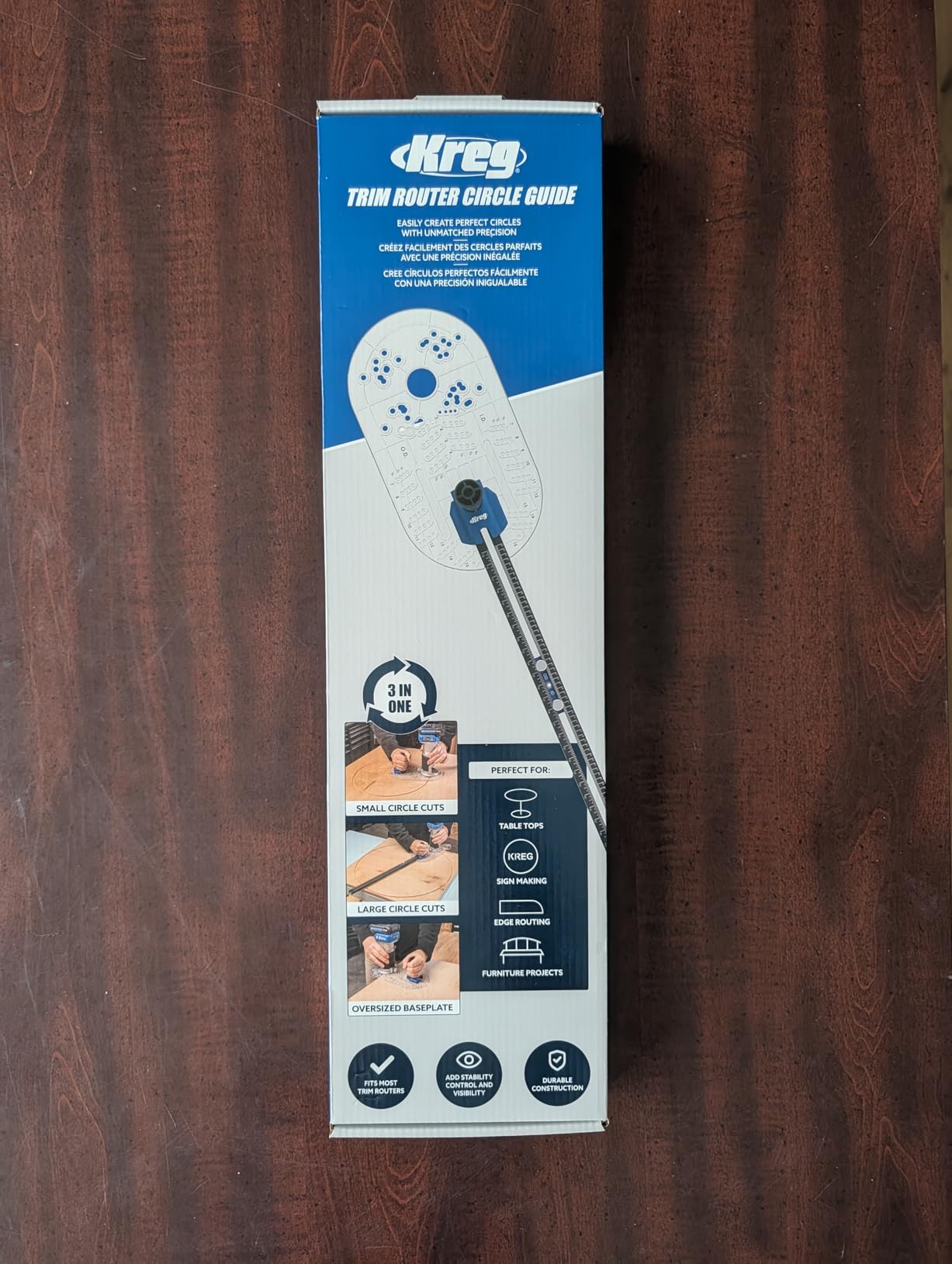
The Kreg guide is the most complete single box here. You get the jig, the extension bar, all mounting hardware, and a quarter inch straight router bit, so there is nothing to buy separately before the first cut.
Range is 3.5 inch to 52 inch, and the extension bar is what gets you there. It detaches for compact storage, which matters more than it sounds if the jig lives in a drawer between projects.
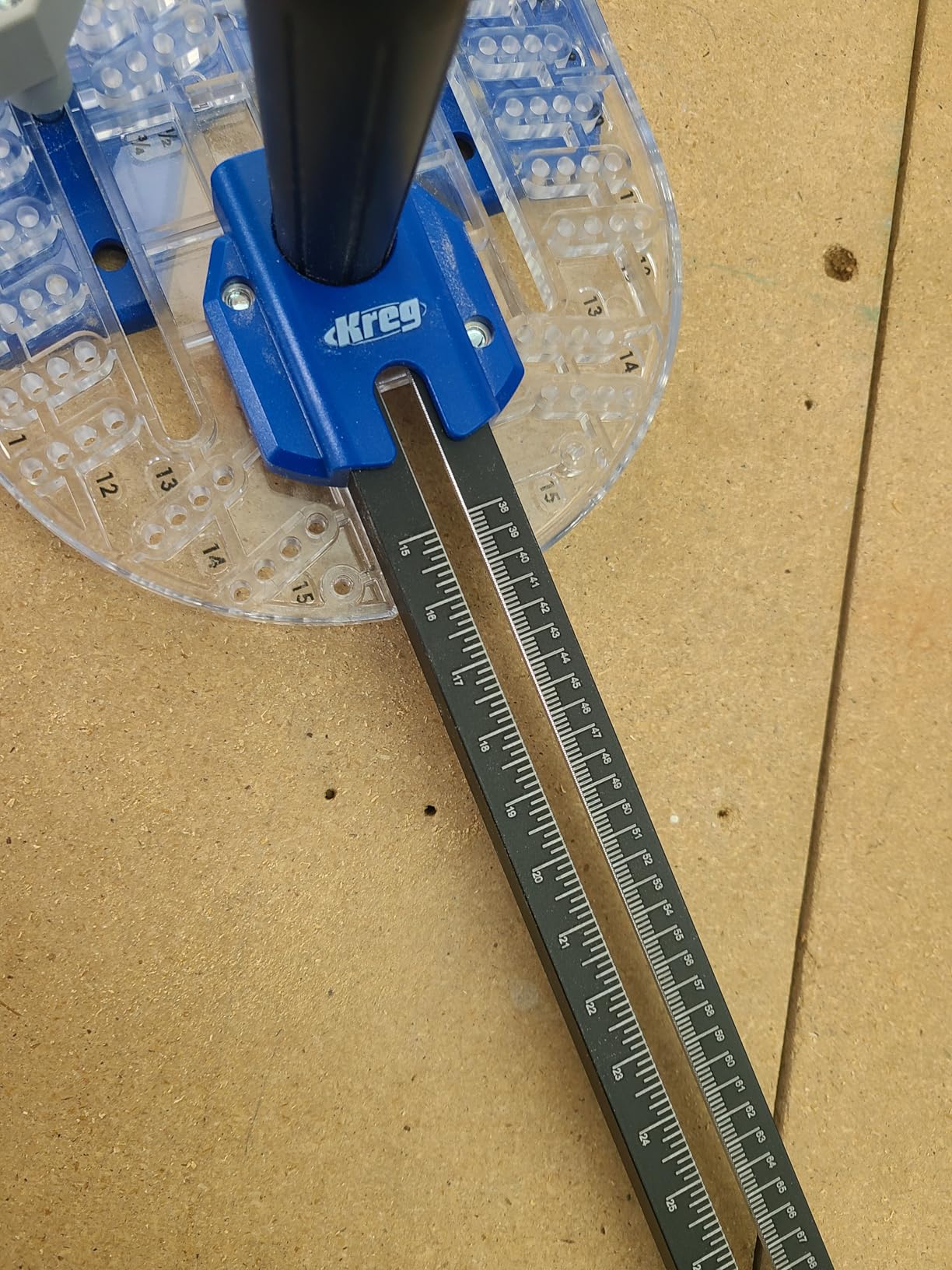
The markings are laser-etched in both metric and imperial rather than printed, which is a small durability upgrade that keeps the scale legible after years of handling. The base plate also doubles as a mounting point for other Kreg accessories.
One handle serves as both grip and clamp, which reduces fatigue on long passes and keeps the operator’s second hand free to hold the work steady.
Who benefits most from the Kreg kit
New router owners get the most value because the included bit and hardware remove the first-purchase guesswork. Anyone who already owns Kreg jigs gets a base plate that works with the rest of the system.
Owners with a small shop also like the removable extension bar, since it turns a 23 inch tool into something that stores flat.
Where it leaves gaps
There is no dust extraction port, so extraction depends on a shop hose positioned nearby. Expect to manage chips yourself on long cuts.
The router base can physically block the smallest pivot holes, so the advertised 3.5 inch minimum is harder to reach than the number suggests on some router models. Instructions are also described as less than clear.
10. POWERTEC 71637 Circle Cutter – Best for Visibility
POWERTEC Circle Cutter Router Jig, 10″ to 48″ Cutting Range (71637)
10 inch to 48 inch diameter
Clear acrylic body
31.69 x 7.25 x 1.19 inches
1.6 pounds
Dual pivot pin system
Pros
- Clear acrylic body keeps the pivot and bit in view
- Dual pivot pin system with visible and hidden center holes
- Recessed groove for smooth sliding adjustment
- Pre-drilled for Bosch Makita DeWalt Porter Cable Milwaukee and Craftsman
Cons
- Acrylic can crack if over-tightened
- Some units reported as flexing
- 48 inch ceiling is below the leaders
Transparency is the concept here. The clear acrylic body lets you watch the pivot pin and the bit edge at the same time, which turns a step you normally do by feel into a step you can see. On a first circle cut that matters.
The dual pivot pin system is the clever part. Some center holes are visible on top of the arm and others are hidden underneath, so the same jig works whether the workpiece is face-up or turned over.
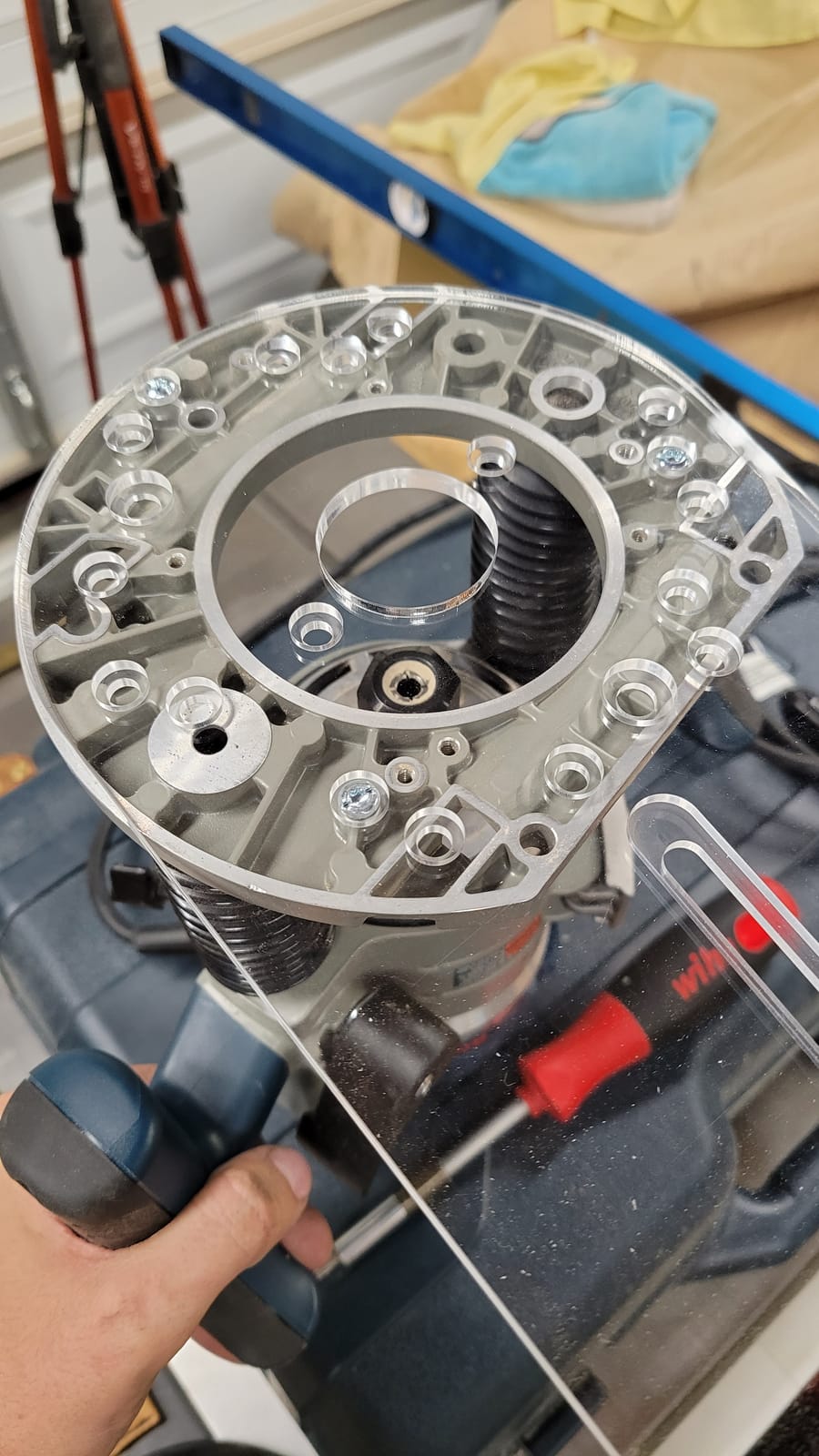
The recessed adjustment groove is a genuine improvement over a flat surface, because the arm slides smoothly while you dial in the radius instead of catching on the edge of the slot.
Hardware covers Bosch, Makita, DeWalt, Porter Cable, Milwaukee, and Craftsman, and the additional holes can be customized for almost any router with a drill press.

Where visibility earns its keep
New users and anyone cutting visible faces benefit most, since you can confirm bit alignment and pivot registration before you commit to the cut. The dual pin system also makes the jig usable on both sides of a panel.
Acrylic is also easier to machine than MDF if you want to add your own router holes later, and it resists chipping that MDF edges suffer.
What to watch out for
Acrylic is rigid but brittle. Tightening the mounting screws hard enough to chase zero play is the fastest way to crack it, so snug is enough.
A small number of owners report flex in the arm and fitment that does not match the listed brands, and the 48 inch ceiling sits below the leaders. With 85 reviews behind it, the long-term track record here is thinner than the ratings alone suggest.
How to Choose a Router Circle Jig
Match the jig to your router class first
Every jig on this list is built for one of three router classes, and buying the wrong class is the mistake that ends a purchase. Trim and cordless routers need a jig drilled to the compact base pattern. Full-size plunge routers need a jig with the larger 6 inch base pattern. Palm routers generally fit neither, and there is no circle jig in this roundup for them.
Next comes the mounting question, and this is the part forums complain about most. Six of these ten jigs arrive with pre-drilled holes for specific models, which means you should assume you will be marking and drilling new holes for your own router unless your model is on the list. A drill press turns that job into about fifteen minutes, which is exactly how the lazyguydiy approach adapted a Rockler jig to a Ryobi and a Makita.
Two jigs here avoid the problem entirely. The Sigerio bolts straight to five compact router brands, and the Evwoge has no pre-drilled holes at all so you machine your own pattern. If your router is unusual, start with those two.
Read max and min diameter the way the brand means it
Max diameter tells you the largest circle the arm can reach, and the range across this roundup runs from 27 inch to 52.75 inch. Min diameter is the number most misleading in this category: it depends on the bit you use and on whether your router base physically blocks the pivot holes.
That is why the indexed jigs publish so many sizes. The Jasper Model 200 offers 256 positions and the Jasper 290 offers 268, because the true diameter produced depends on the bushing, the bit diameter, and the mounting offset rather than on a single printed number.
If you mostly cut small discs, a jig with an indexed low end beats a longer-armed one. If you cut tabletops, reach matters more than resolution.
Bushing diameter and pivot registration decide roundness
The pivot is the point everything revolves around, and it is where cheap jigs fail. A pin that shifts a fraction mid-cut produces a circle that is complete but visibly out of round, which is the failure FineWoodworking described when it recommended a jig whose pivot registers securely rather than popping off the part.
Two design details reduce that risk. CNC-machined pivot holes, as on the Jasper 290 and 390 PRO, hold a pin far better than hand-drilled holes. Rigid one-piece bodies, as on the Sigerio, remove the flex that lets a pin walk out of a hole under load.
On bushing selection, the rule is simple: match the bushing diameter to your bit and follow the brand’s chart for the offset. For circles below roughly 1 inch, most jigs here cannot help you, and festoolownersgroup members point to a micro fence jig, which handles circles down to half inch, while the circle jig takes over from about 6 inch upward.
Construction material predicts longevity
Material maps directly to durability. Solid phenolic, as on the Rockler 10 to 52 inch arm, resists flex and is the most likely to still be straight in five years. One-piece aluminum die-cast, as on the Sigerio, is even more rigid but limited to compact routers. Acrylic and polycarbonate sit in between, with polycarbonate favored on the Jasper PRO models. Thin plywood arms are the ones that wobble and drift.
Weight follows the same line. The heaviest jig here is nearly nine pounds and the lightest is under a pound, and on large panels mass works in your favor by resisting sideways load.
Which bit to pair with each jig
An upcut spiral bit is the general recommendation for clean circles, and a routerforums and Reddit thread on circle routing both land on it for good reason. It shears rather than smears and leaves a finish that needs minimal sanding on the top surface.
A straight cut bit gives the flattest bottom but the worst tear-out on the exit side of the cut. A downcut bit is the mirror image, cleaner on the exit but prone to burn marks on top, which makes it a poor default for a visible face. The Kreg kit ships with a quarter inch straight bit, which is convenient but not the best starting choice for appearance work.
Whichever bit you use, run multiple shallow passes rather than one deep cut. That reduces the sideways force the pivot has to resist and protects both the bit and the jig.
Consider dust extraction and shop-built jigs
Most circle jigs have no extraction port at all, including the Kreg. Chips gather under the arm and on the workpiece, so plan on a shop vacuum positioned nearby rather than expecting the jig to collect anything.
Building your own remains a real option. woodweb cabinetmakers report shop-built jigs from quarter inch Plexiglas with a T-slot and thumb-screw locking, reaching radii of about 14 feet, and they consider store-bought versions too small for their work. If your circles exceed 52 inch regularly, that route is worth the setup time. For anything smaller, the ten jigs here cover the range without a build.
If you are still deciding between jigs and other guided cutting tools, our guide to circle cutter tools for scale models covers the precision end of the market, where tolerances work differently. For a broader look at clamping and holding jigs, see our modeling clamps and jigs picks.
Frequently Asked Questions
What is a good jig to cut circles with a router?
The Milescraft 1219 Circle Guide Kit is the strongest all-round choice, covering 1.5 inch to 52 inch circles with two arms and a tool-free head swap. For plunge routers the Jasper Model 200 offers indexed sizing down to 2.25 inch, and for compact routers with no drilling required the Sigerio jig bolts straight on.
What is the best router jig for cutting precise circles?
Precision comes from indexed pivot holes rather than a measured radius, so the Jasper 290 and Jasper Model 200 lead this category with 268 and 256 CNC-machined positions in 1/16 inch steps. Pair either with an upcut spiral bit, a template bushing matched to the bit, and multiple shallow passes.
How accurate are router circle jigs?
An indexed acrylic or polycarbonate jig holds size within a sixteenth inch step across repeated cuts of the same setting, because the pivot hole position does not change between setups. Loose screws, a flexing arm, or a pin that walks out of its hole will open that gap quickly, so registration matters more than the printed tolerance.
What router bit is best for cutting circles?
An upcut spiral bit is the best general choice because it shears cleanly and leaves a finish that needs little sanding. A straight cut bit gives the flattest bottom but tears out on the exit side, and a downcut bit is clean on exit but burns the top surface. Multiple shallow passes beat one deep cut with any of them.
Can a circle jig work with any router?
Nearly all of them can with fifteen minutes at a drill press. Most jigs arrive drilled for specific models, so mark your router base, transfer the pattern, and drill new mounting holes. Two options skip that step entirely: the Sigerio jig bolts directly to five compact router brands, and the Evwoge jig ships with no pre-drilled holes at all.
What is a good jig for cutting with a circular saw?
Circle jigs in this guide are built for handheld routers, not circular saws. Circular saws need a different class of guide, and cut diameter is limited by blade depth rather than by an arm. For small wooden discs, a jigsaw with a circle attachment or a band saw scrolling guide covers the same need.
Final Verdict: Which Router Jig Should You Buy in 2026?
The Milescraft 1219 Circle Guide Kit is our pick for the best router jigs for circle cutting because it is the only kit here that covers 1.5 inch to 52 inch with two arms and one head, and it arrives with the offset base and bit to finish the job. Owners rate it 4.7 out of 5 across more than 2,800 reviews, and the forum reports of clean, round results match our own read of the design.
If you own a full-size plunge router and cut holes in cabinet parts, the Jasper Model 200 gives you 256 indexed sizes and repeatable batch work. If your router is a cordless trim model and you want the tightest resolution under 18 inch, the Jasper 290 is the pick. For a large tabletop on a compact router, the Jasper 390 PRO reaches 52.75 inch with a lifetime guarantee.
The one choice we would make without hesitating for a first-time buyer on a budget is the Sigerio jig, purely because it bolts on without drilling and doubles as an edge guide. Whichever you settle on, measure your router base first, match the bushing to your bit, and take shallow passes.