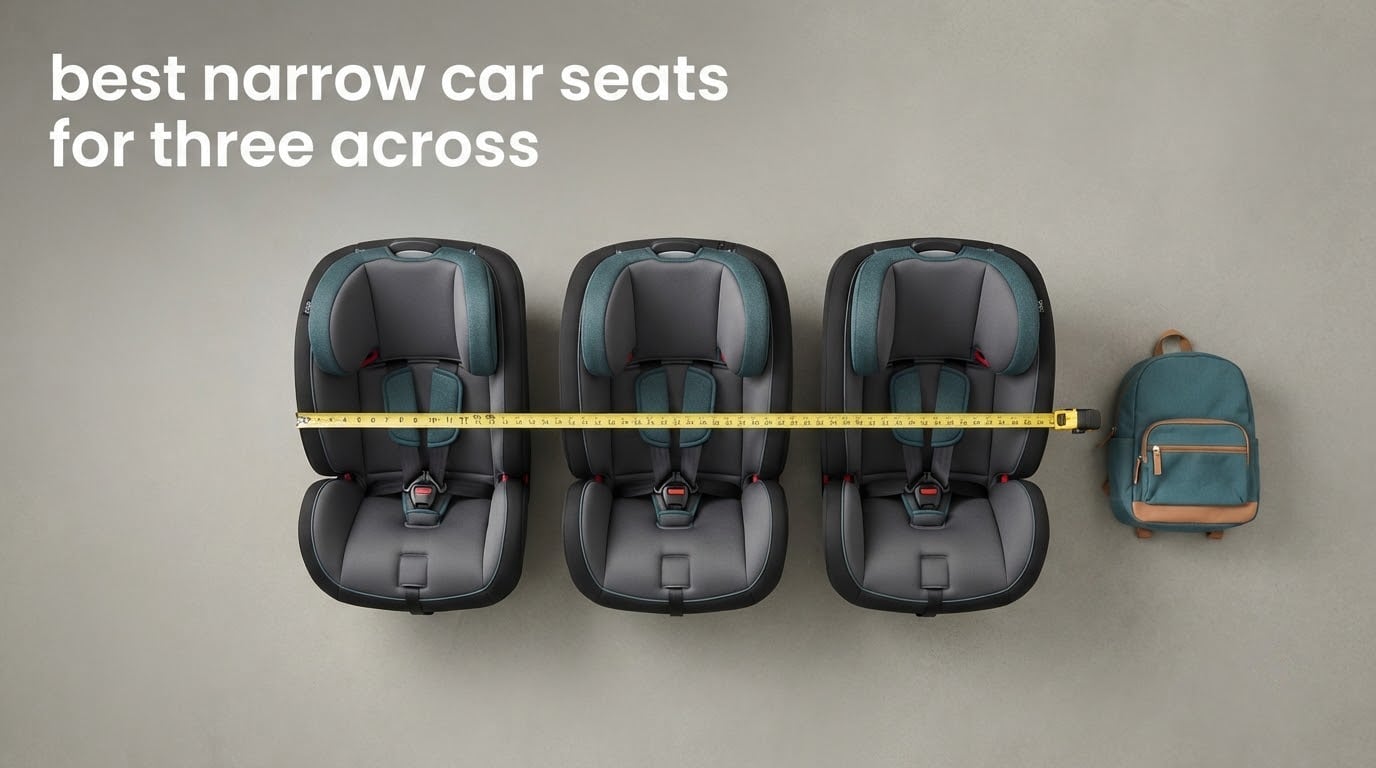
The narrowest car seat width we could confirm in published specifications is 16.7 inches, and that number belongs to the Graco SlimFit3 LX. Add a 16.7 inch seat plus two more and you are looking at roughly 50 inches of back seat, which is what most midsize sedans and many compact SUVs can actually give you. That is the whole math behind the best narrow car seats for three across: every inch of shell width you remove is an inch you get to keep in the row.
Width is only half of it, though. A seat can measure 17 inches at the belt path and still ruin a three-across layout because of a bulky side bolster, a cup holder that does not fold away, or a headrest that widens as your child grows. I spent the last several weeks comparing slim seats by width, shape, install method, and how much room is left for a kid to reach their own buckle, and the pattern was clear: the seats that actually work three-across are the ones with straight, tapered shells and hardware that disappears when you do not need it.
Below I break down 12 of the slimmest car seats you can buy right now, from steel-framed convertibles to inflatable boosters that pack into a carry-on. I grouped them by the job each one does in a three-child row, and I flagged the real complaints owners report rather than the marketing language. If you are starting from scratch, our broader car seat buying guide covers the fundamentals of harness levels and age stages before you worry about width at all.
One note before you start shopping: the federal side-impact standard for child restraints was updated with an effective date of June 30, 2025, and it tightened the performance requirements that narrow seats must meet. Seat lineups shift when standards change, so confirm that the model you are buying is currently certified rather than trusting a roundup written years ago, including this one.
Table of Contents
Top 3 Best Narrow Car Seats for Three Across in October
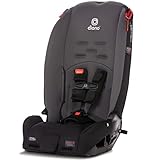
Diono Radian 3R Convertible
- Fits 3-across slim design
- Reinforced steel core shell
- 5-120 lb across four modes
- Folds flat for travel

Graco SlimFit3 LX
- 16.7 inches wide
- Rear-facing 5-40 lb
- Forward-facing 26.5-65 lb
- High-back booster 40-100 lb

Chicco KidFit ClearTex Plus
- Folding dishwasher-safe cup holders
- DuoGuard head and torso support
- Removable backrest for backless mode
- Flame retardant-free ClearTex fabrics
If you want one seat per position and no guessing, start with the Diono Radian 3R in the center position. It carries a 4.7 rating across more than 7800 reviews and holds a child from 5 to 120 pounds without being swapped out, which means the three-across row stays intact as your kids grow.
The Graco SlimFit3 LX is the one to pick when you want the slimmest confirmed width with a genuinely comfortable seat pan rather than a compromise. The Chicco KidFit ClearTex Plus earns its spot for the opposite reason: its cup holders fold flat, so the middle booster gives up almost no width once the kids are buckled in.
All 12 Narrow Car Seats Compared in 2026
| Product | Specifications | Action |
|---|---|---|
| Diono Radian 3R Convertible |
|
Check Latest Price |
| Graco SlimFit3 LX |
|
Check Latest Price |
 Safety 1st Grow and Go 2-in-1 Safety 1st Grow and Go 2-in-1 |
|
Check Latest Price |
| Chicco KidFit ClearTex Plus |
|
Check Latest Price |
 Safety 1st TriMate 3-in-1 Safety 1st TriMate 3-in-1 |
|
Check Latest Price |
 Diono Connect3 R Diono Connect3 R |
|
Check Latest Price |
 Safety 1st Ellaris Safety 1st Ellaris |
|
Check Latest Price |
 BubbleBum Inflatable Booster BubbleBum Inflatable Booster |
|
Check Latest Price |
 Diono Cambria LE Diono Cambria LE |
|
Check Latest Price |
 Baby Trend Trooper Slim Baby Trend Trooper Slim |
|
Check Latest Price |
 Hiccapop UberBoost Hiccapop UberBoost |
|
Check Latest Price |
 Baby Trend Protect Slim Baby Trend Protect Slim |
|
Check Latest Price |
Width figures in the table come from the manufacturers and are only as useful as the measurement point. Two seats that both claim 17 inches can behave very differently once the headrest is raised, so treat that column as a starting filter and a tape measure as the final word.
1. Diono Radian 3R – Steel-Frame Convertible That Really Fits Three Across
Diono Radian 3R, 3-in-1 Convertible Car Seat, Rear Facing & Forward Facing, 10 Years 1 Car Seat, Slim Fit 3 Across, Gray Slate
5-120 lb weight range
Rear-facing up to 50 lb
4 modes in one seat
Folds flat for travel
Pros
- Genuinely fits three across in compact SUVs and sedans
- Steel-reinforced shell feels durable
- Grows from birth to 120 lb in one seat
- Straps adjust evenly so kids can self-buckle
- Machine-washable cover
Cons
- Very heavy steel frame is awkward to move between vehicles
- Mode-switching rules are complex
- Steep rear-facing recline pushes the front seat forward
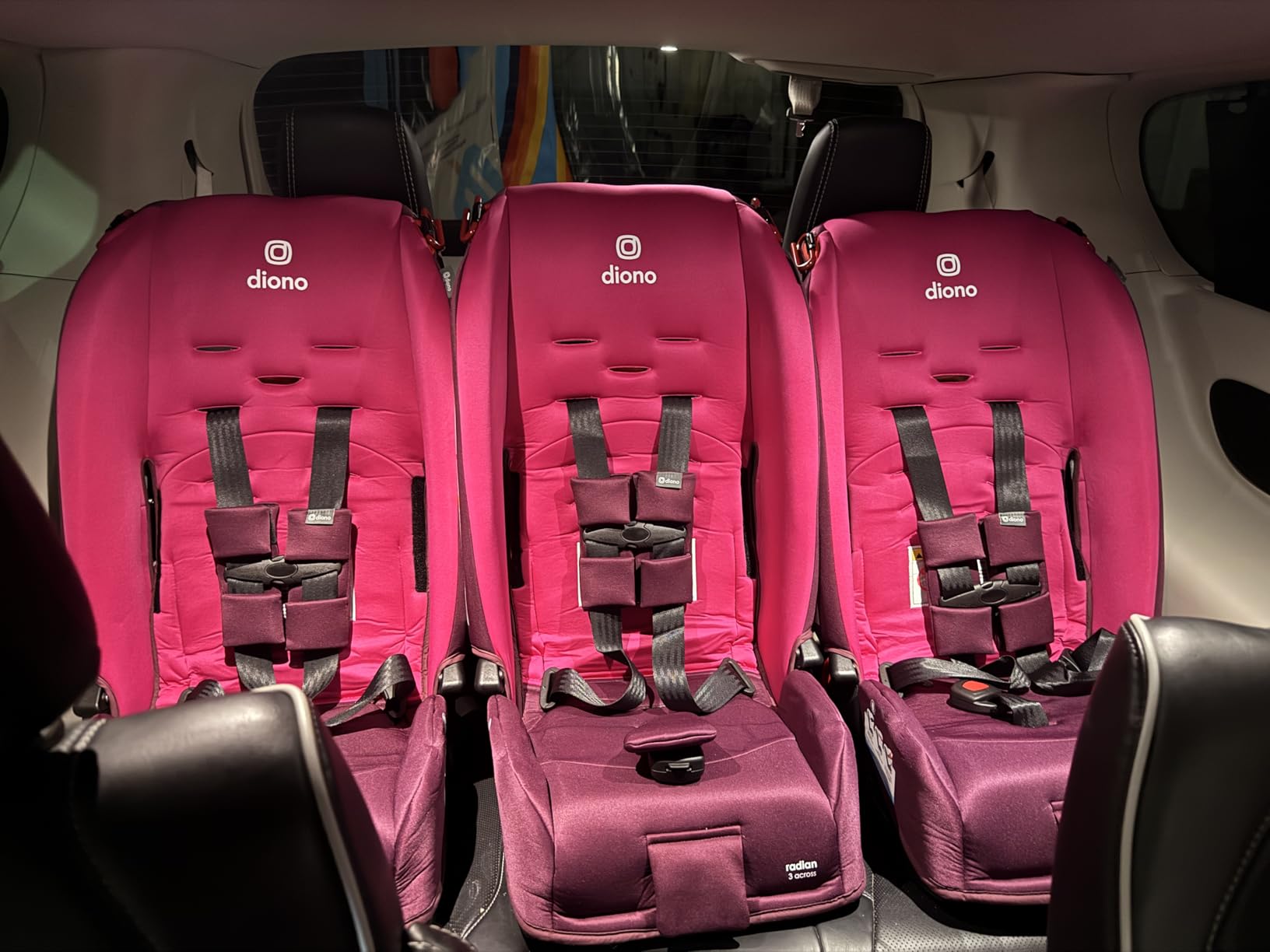
The Diono Radian 3R is the seat I keep coming back to for a three-child row, and the reason is longevity rather than a headline width number. One seat covers 5 to 120 pounds across four modes, so the middle position never has to be emptied out and refilled as your youngest moves from rear-facing to forward-facing to booster.
Owners consistently describe it as the narrowest-feeling seat they have owned even in third rows. The steel core shell gives it a solid, un-yappy feel in the car that plastic-framed competitors do not match, and parents like that the harness straps feed smoothly enough for a small child to reach the buckle.
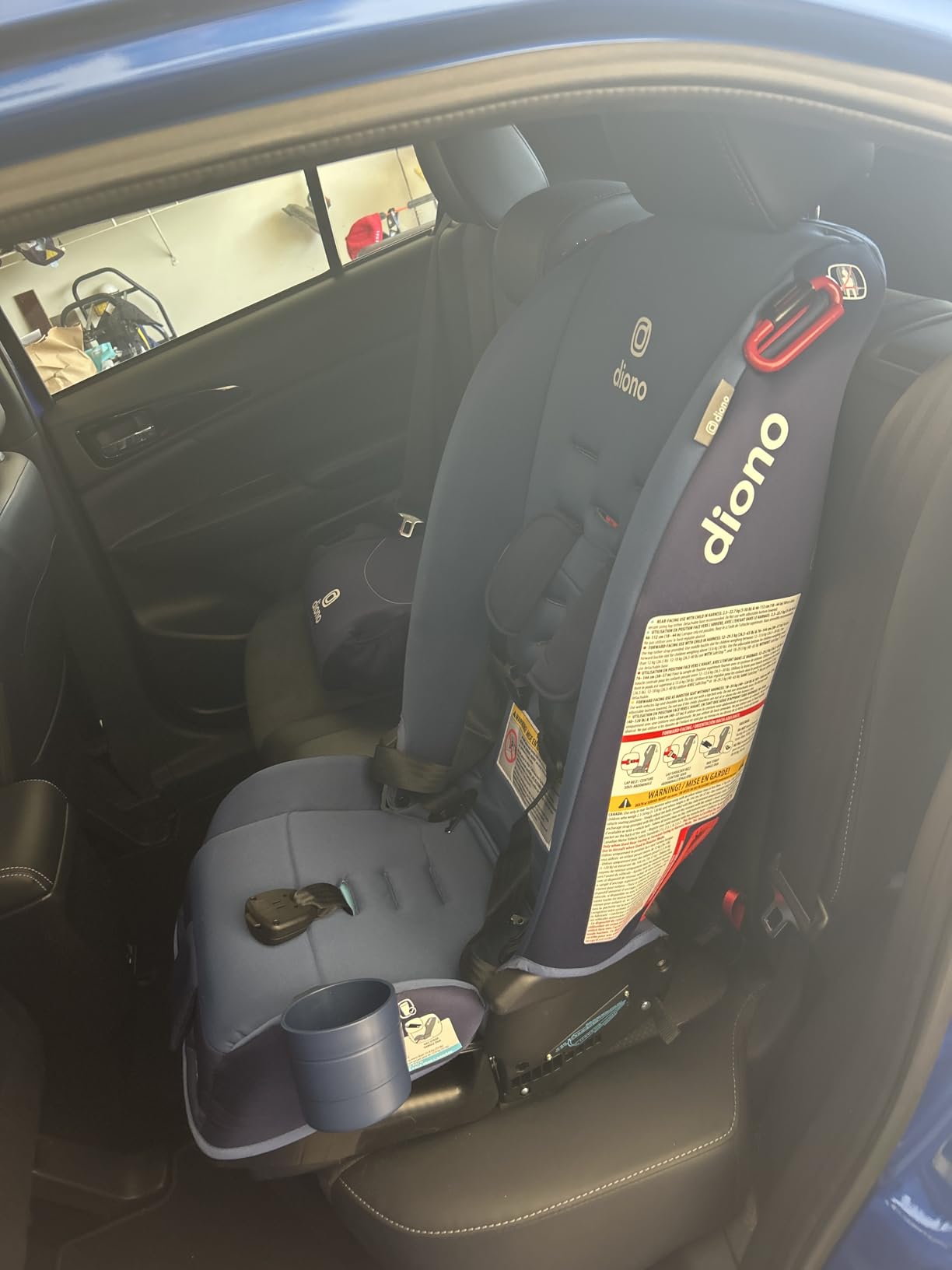
What you give up for that shell is weight. This is not a grab-and-go seat, and anyone managing a childcare handoff between two vehicles will feel it in their back after the first week. Several reviewers also urge consulting a certified Child Passenger Safety Technician because the rules for switching modes are more involved than a typical convertible.
The rear-facing recline is the other recurring complaint. It sits steep, which is good for a newborn’s head control but means the front passenger seat has to slide well forward, and in a sedan that can leave the adult in the back row genuinely uncomfortable on a long drive.
Who this seat suits best
This is the pick for families with a newborn, a toddler, and a preschooler who all need seats at the same time, because it removes the reshuffling cycle entirely. It is also one of the few narrow seats that folds flat and carries FAA approval for airline use, so a single seat can cover the airport run as well as the school drop-off.
Mixed-brand configurations work in practice: pair it with a booster in the outboard positions and the three-across math still holds. Our convertible car seat guide has more detail on when rear-facing past 40 pounds makes sense for a bigger child.
Who should pass on it
Skip it if you move between vehicles daily, share a vehicle with a front-seat adult who needs legroom, or want a seat you can install in under two minutes without reading the manual. Families who are on a vehicle upgrade cycle rather than keeping the same car for years may find a lighter, less capable seat a better use of space.
Also consider the Diono Cambria LE later in this list for the booster stage. Many Radian 3R owners hand the rear-facing years down to a younger sibling and move the older child onto a dedicated booster so they stop carrying the steel frame twice a day.
2. Graco SlimFit3 LX – 16.7 Inches Wide With a Roomy Seat Pan
Graco SlimFit3 LX 3-in-1 Convertible Car Seat, Katrina
16.7 inches wide
Rear-facing 5-40 lb
Forward-facing 26.5-65 lb
High-back booster 40-100 lb
Pros
- Highest rated in this group with 90 percent five-star reviews
- Genuinely slim at 16.7 inches with a spacious seat pan
- No-rethread harness adjusts one-handed
- ProtectPlus side-impact engineering
Cons
- Costs more than most slim three-across competitors
- Sits at the top of the price range for a convertible
The SlimFit3 LX is the only seat in this roundup with a manufacturer-published width that low, and it does not feel like it was built by shaving everything off. The seat pan stays wide enough that older forward-facing kids are not sitting with their knees at their chin, which is where a lot of ultra-slim designs quietly fail.
Graco engineered the side-impact protection to the newest federal testing standards, which matters more than usual in a three-across row because the middle child sits between two seats rather than next to a door. The 10-position no-rethread harness is a small thing that parents notice every single day.
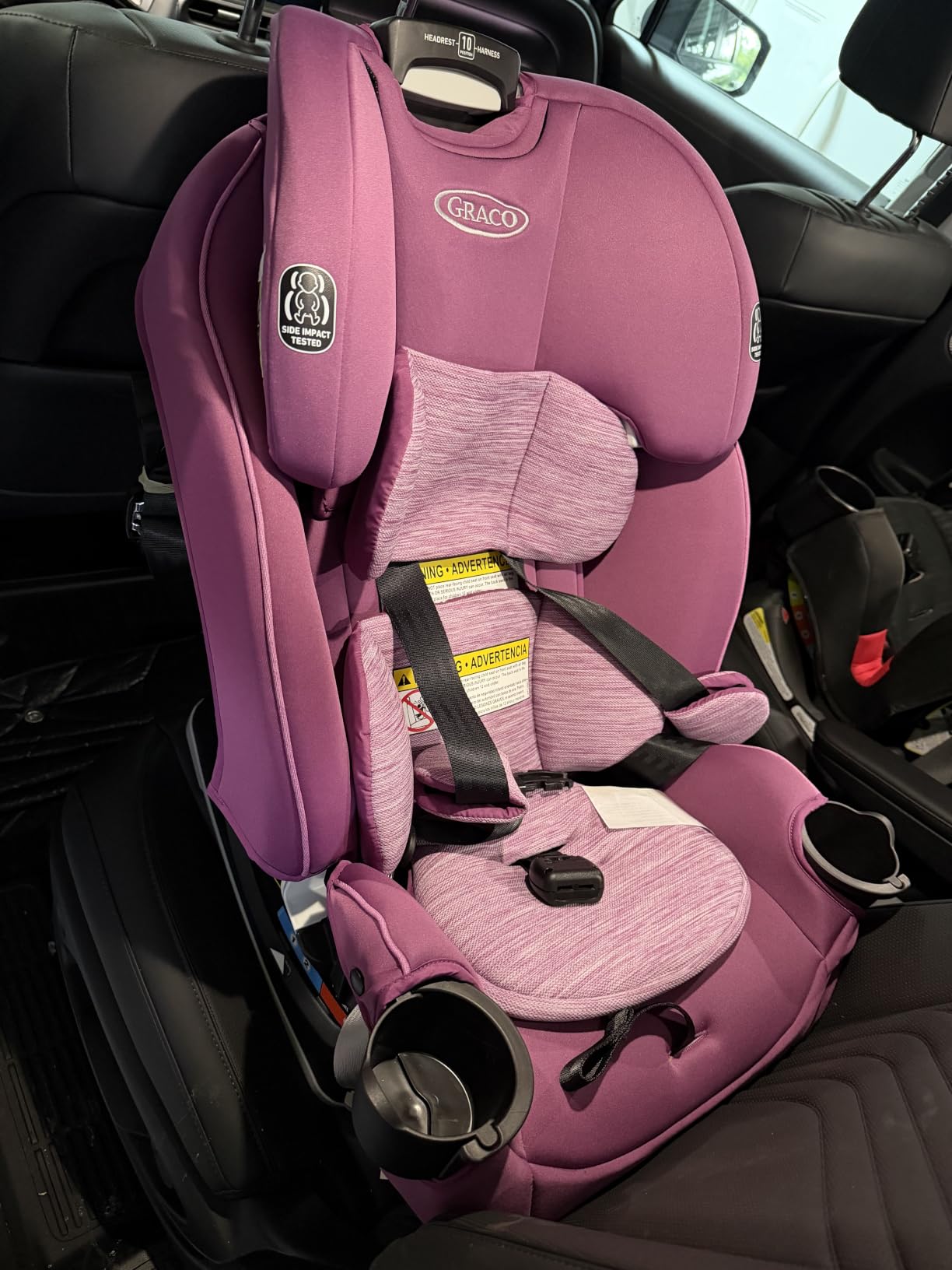
The reservation owners voice is straightforward: this is a premium price for a slim convertible, and buyers notice they are paying for the width engineering. Set that against the alternative, which is a wider seat plus a smaller vehicle or a third row you were hoping to avoid, and the math usually favors the SlimFit3 LX.
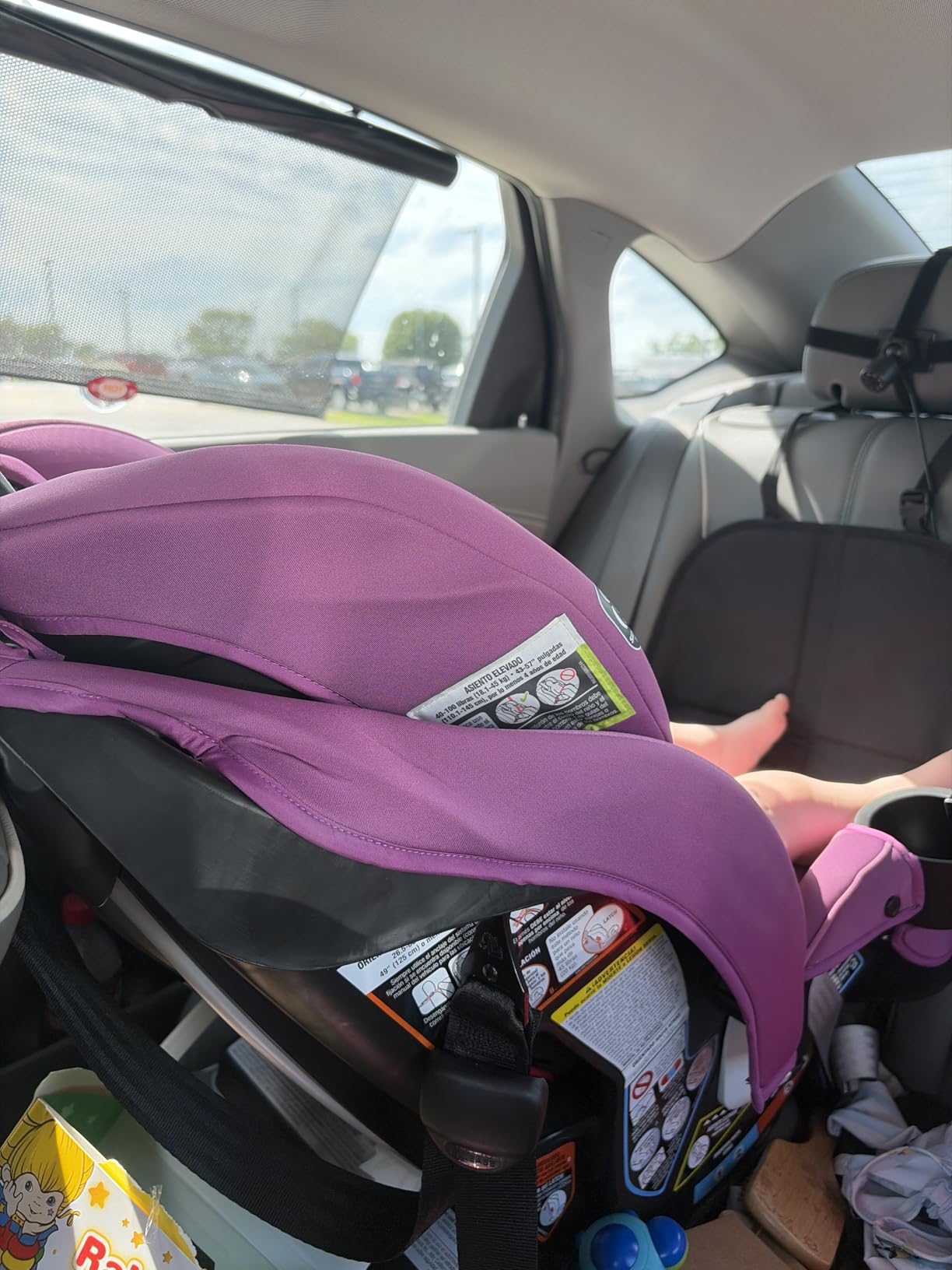
Rear-facing capacity tops out at 40 pounds and forward-facing harness mode carries up to 65 pounds before it converts to a high-back booster. That is a normal three-stage range rather than an extended one, so plan on the booster transition at the four-to-five-year mark.
What you gain in the center seat
At 16.7 inches, this is the seat that makes the math work in a midsize sedan where a 19-inch convertible simply will not go. Because it is narrow without being cramped, it is also the realistic middle-position choice when the child in the center is rear-facing, which is the hardest configuration in the whole category.
If your youngest is still in an infant carrier, the middle position theory gets complicated fast, and our infant car seat guide covers the carrier-versus-convertible decision in more depth.
Where it falls short
Graco does not publish an overall weight for this model in the listing, and buyers moving it between vehicles should confirm the weight themselves. It is also a heavier commitment than a single-purpose booster if your only real need is the booster stage for one child.
One more practical note: the three-across fit is measured across the seat itself, and cup holders add effective width depending on how far they are extended. Retracting them before you measure the row is a small habit that saves a lot of frustration.
3. Safety 1st Grow and Go 2-in-1 – Foldable Booster for Splitting Time Between Cars
Safety 1st Grow and Go 2-in-1 Booster Car Seat with ComfortWings, Converts High-Back to Backless, 19″ Wide, Fits 3 Across, Lightweight, Foldable, Easy-Clean, Cup Holders, 40-100 lbs, Beach Wave
High-back to backless booster
40-100 lb and 43.4 to 57 inches
Expands to 19 inches wide
Foldable and lightweight
Pros
- Light enough to move between vehicles in seconds
- Folds into two pieces for compact storage
- Headrest adjusts high for larger children
- Holds large metal water bottles
- Wipes clean easily
Cons
- Does not latch to the vehicle seat
- Unoccupied booster can move in a sudden stop
- Straightforward rather than plush
The Grow and Go is built for a specific family situation: two households, one booster, and a lot of driving between them. It folds into two pieces and is light enough that you can move it in a single trip, which is the difference between a workable split-custody schedule and a constant negotiation.
It converts from a high-back belt-positioning booster to a backless booster, so it covers the full booster stretch rather than a slice of it. Belt guides help kids get the shoulder and lap belt positioned correctly, and that matters more than it sounds when a five-year-old is buckling themselves in the middle of a row.
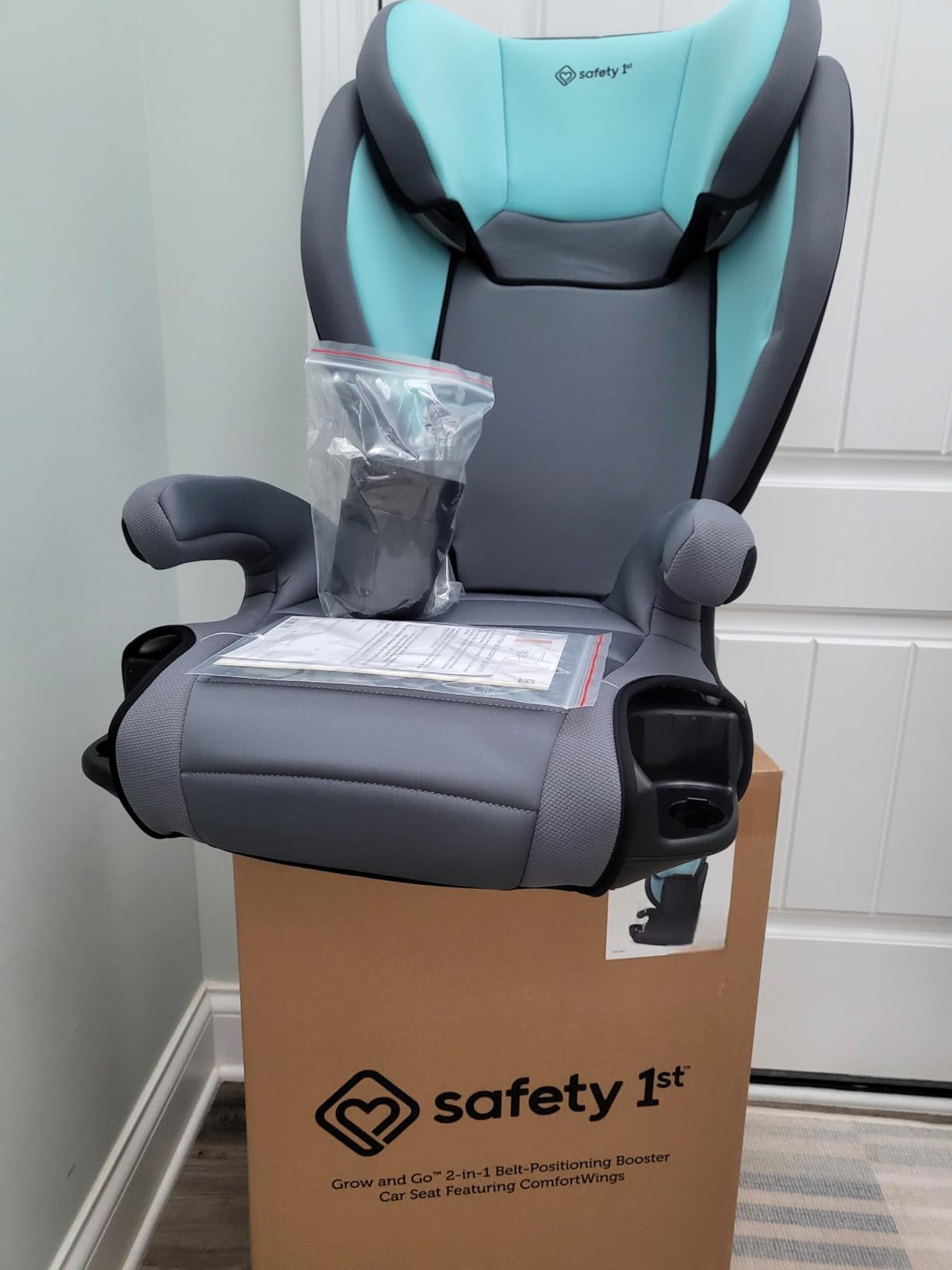
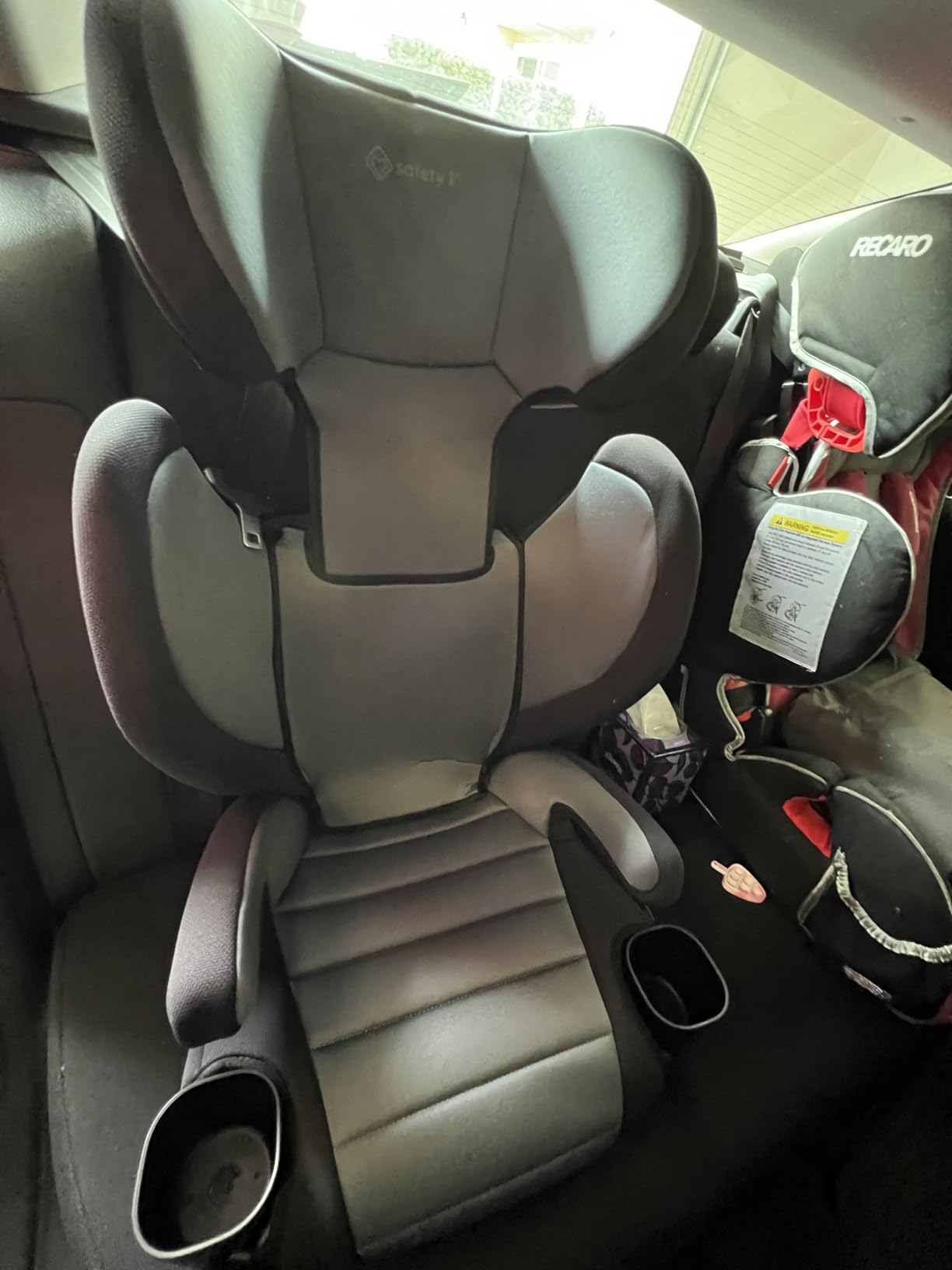
The honest limitation is the width growth. The ComfortWings backrest expands to 19 inches of total seat width as the headrest rises, so a seat that fits comfortably with a four-year-old may not fit with a seven-year-old sitting next to another booster. Measure at your tallest child’s head position, not at the base.
There is no LATCH-style connector, so the booster rests on the vehicle cushion rather than clipping into it. Owners treat this as normal for boosters, but a parent who has used a LATCH-anchored model can find the unanchored version slightly less reassuring during the buckle-in moment.
Where this booster earns its spot
It is the right answer for a family with one older child who splits time between a sedan with a tight back seat and a larger vehicle. The fold is the feature that makes the three-across setup portable rather than permanent, and the machine-washable pad survives the reality of shared custody.
It also works well as the third position behind two forward-facing harnessed seats, where the middle booster does not need head support to the same degree. Our booster seat guide breaks down high-back versus backless choices by age.
When to choose something else
Choose a fixed narrow booster instead if you are staying in one vehicle and want the smallest possible footprint permanently, or if your child is a heavy sleeper who needs a headrest that does not move. The width expansion is the deciding factor in most three-across failures we heard about.
Skip it if your outboard seats already fill the row. At 19 inches at full extension, this is a compact-friendly booster, not a competition seat.
4. Chicco KidFit ClearTex Plus – Booster Whose Cup Holders Fold Out of the Way
Chicco KidFit ClearTex Plus 2-in-1 Belt-Positioning Booster Car Seat
High-back to backless booster
DuoGuard head and torso support
Premium LATCH with SuperCinch
ClearTex flame-free fabrics
Pros
- Cup holders fold away to free up width in a tight row
- LATCH plus SuperCinch tightener adds real stability
- One-hand quick release for fast transfers
- Backrest removes for backless mode
- Flame retardant-free washable fabrics
Cons
- Head and torso support makes it wider than a pure backless booster
- Escape-prone children can partially climb out
The KidFit ClearTex Plus solves the three-across problem in a way most boosters do not: its cup holders fold out of the way when nobody is using them. In a row that is already at the limit, reclaimed half an inch on each side is often the difference between a clean fit and a permanently wedged install.
It is also one of the few boosters here with real LATCH hardware, including a SuperCinch one-pull tightener and a one-hand quick release. That gives the seat something to clip into while your child climbs in, and it makes transfers between a family car and a caregiver vehicle fast.
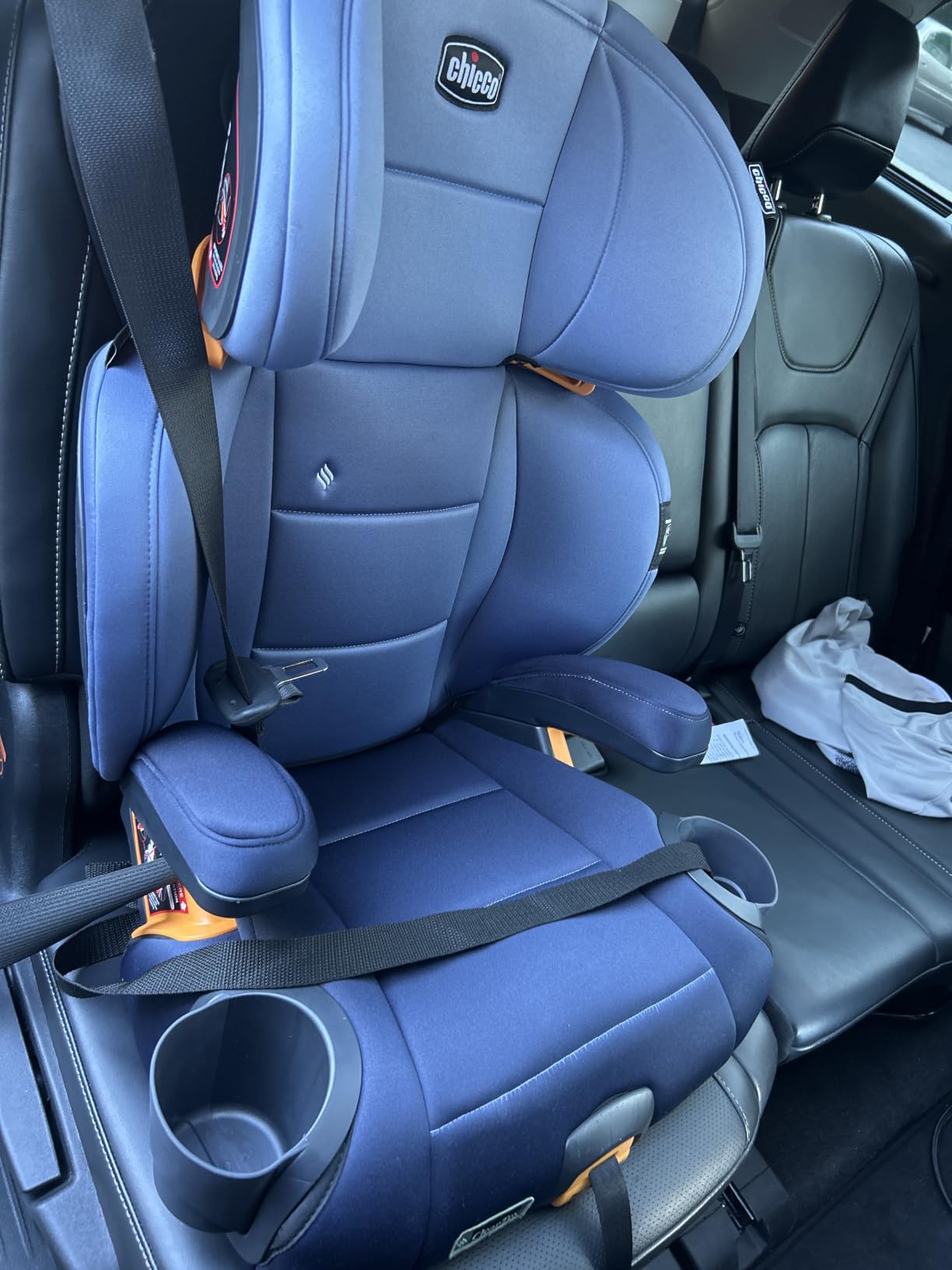
On the materials side, this is the pick if you are avoiding flame retardant chemicals. The ClearTex fabrics meet federal flammability requirements without them, and every fabric piece including the armrests comes off and goes in the washing machine, which matters more than usual with three kids sharing a back seat.
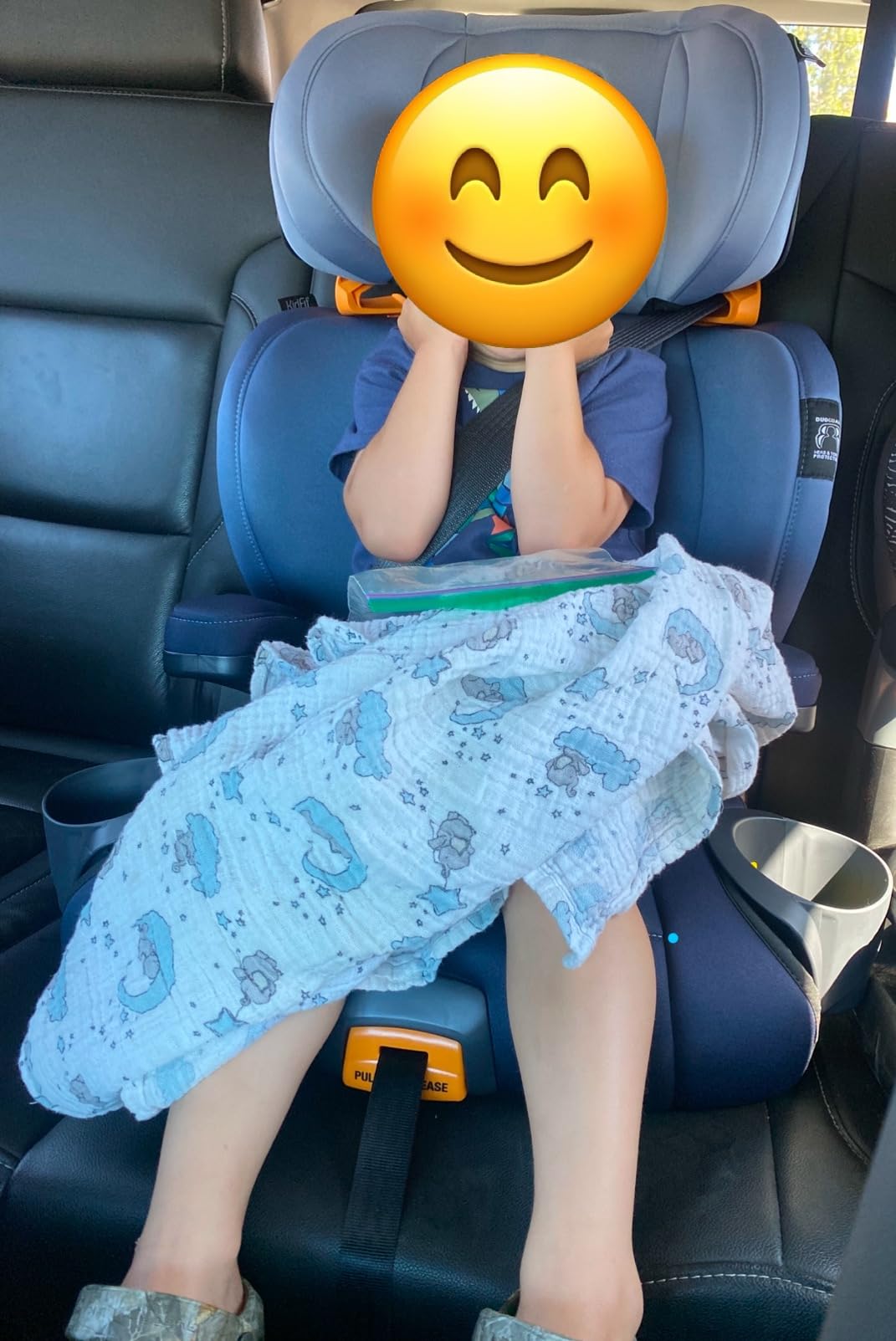
The trade-off is width. DuoGuard head and torso support means it is wider than a pure backless booster, so it is a middle-position-friendly seat rather than an outboard-first choice. A parent also flagged that a child near the top of the height range could still partially climb out, so this is not the seat for an escape-prone kid.
Why it works in the center seat
The middle position is the hardest booster spot because the child has to reach a buckle that is pinched between two other seats. With the armrests and cup holders retracting, a KidFit leaves a usable hand gap that a bulkier high-back booster does not.
Because the backrest removes for backless mode, you can also drop the profile once your child is a confident belt wearer, which is the single most effective way to reclaim three-across space in a sedan.
What to watch out for
Check the armrest and cup holder position before you commit to a layout, because a cup holder left extended on one side quietly undoes the savings. Measure the row with everything retracted, which is how the seat is actually used day to day.
If your child climbs out of seat belts, stay in high-back mode and accept the extra width, or look at a backless booster in the list below that has no head support to escape from.
5. Safety 1st TriMate 3-in-1 – Convertible Under 19 Inches Across
Safety 1st TriMate 3-in-1 Convertible Car Seat, Slim Fit, Infant to Big Kid Car Seat, Easy-Install Harness, Machine-Washable Cover, Dishwasher-Safe Cup Holders, 5-100 lbs, Sharkskin
Under 19 inches without cup holders
5-40 lb rear-facing
40-100 lb booster
One-hand 8-position headrest
Pros
- Owners confirm three across in a compact wagon
- Intuitive no-rethread harness
- One of the easiest seats to clean
- Memory-foam infant insert and adjustable base
- Good value across a 5-100 lb range
Cons
- Install is reported as hard to get tight
- Shoulder foam pieces detach and get lost
- Some riders found the harness uncomfortable
The TriMate is the seat to look at when the driver is genuinely small, because the memory-foam infant insert and three-position adjustable base are designed for a newborn through a 40-pound rear-facing stage. In a three-across row, having a slim seat that starts at a 5-pound rear-facing minimum changes your vehicle shortlist a lot.
Owners verify the three-across fit in real vehicles, including a compact wagon that has almost no room to spare. It is a 3-in-1 covering rear-facing 5 to 40 pounds, forward-facing 30 to 65 pounds, and belt-positioning booster 40 to 100 pounds, which covers the full arc for a single child.
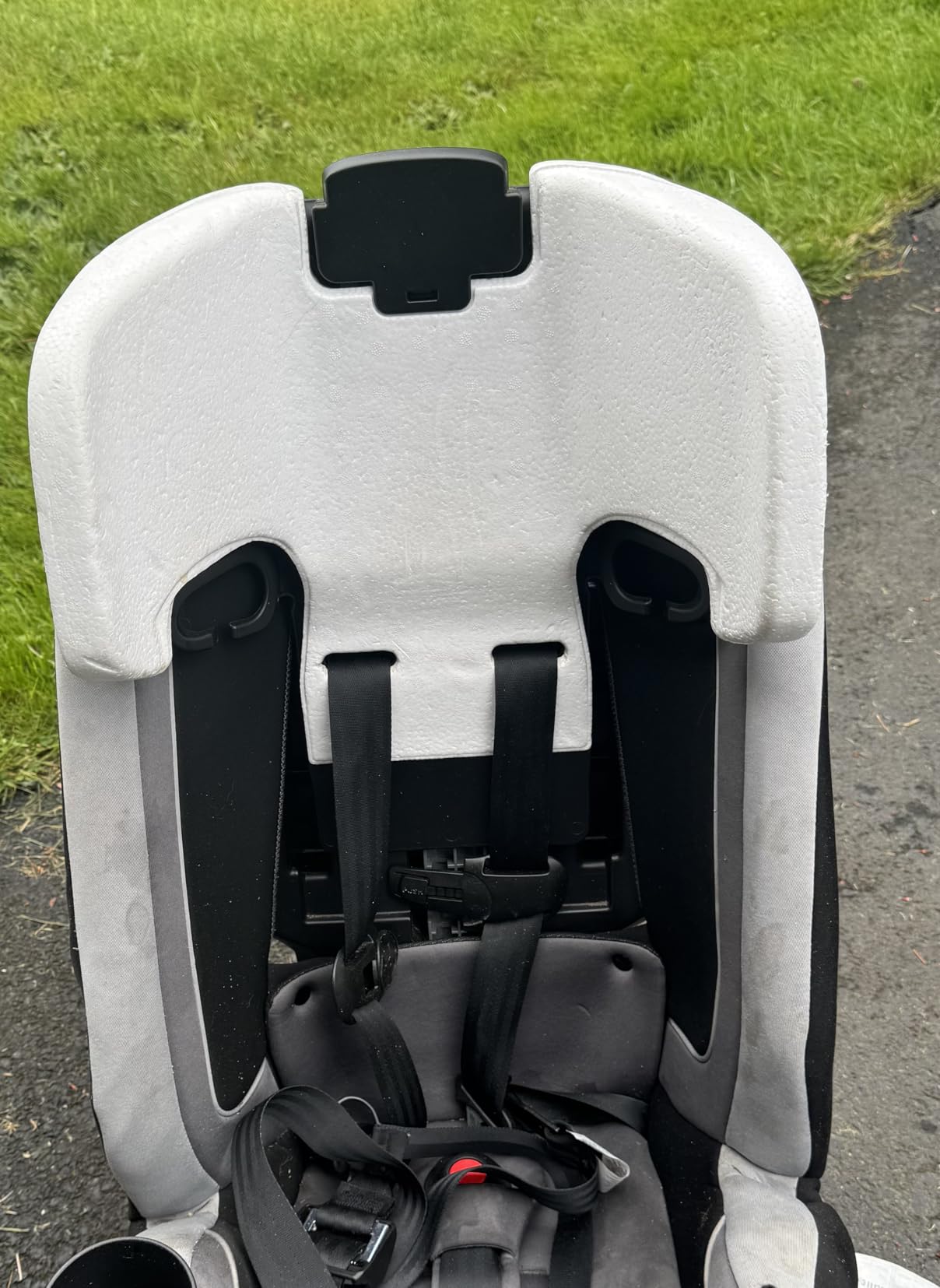
Cleaning is a genuine strength here. The cover and pad come off without undoing the harness, and the cup holders are dishwasher-safe, which is worth more than another inch of width once three kids are eating in the back seat. The no-rethread harness and one-hand headrest are intuitive from the first install.
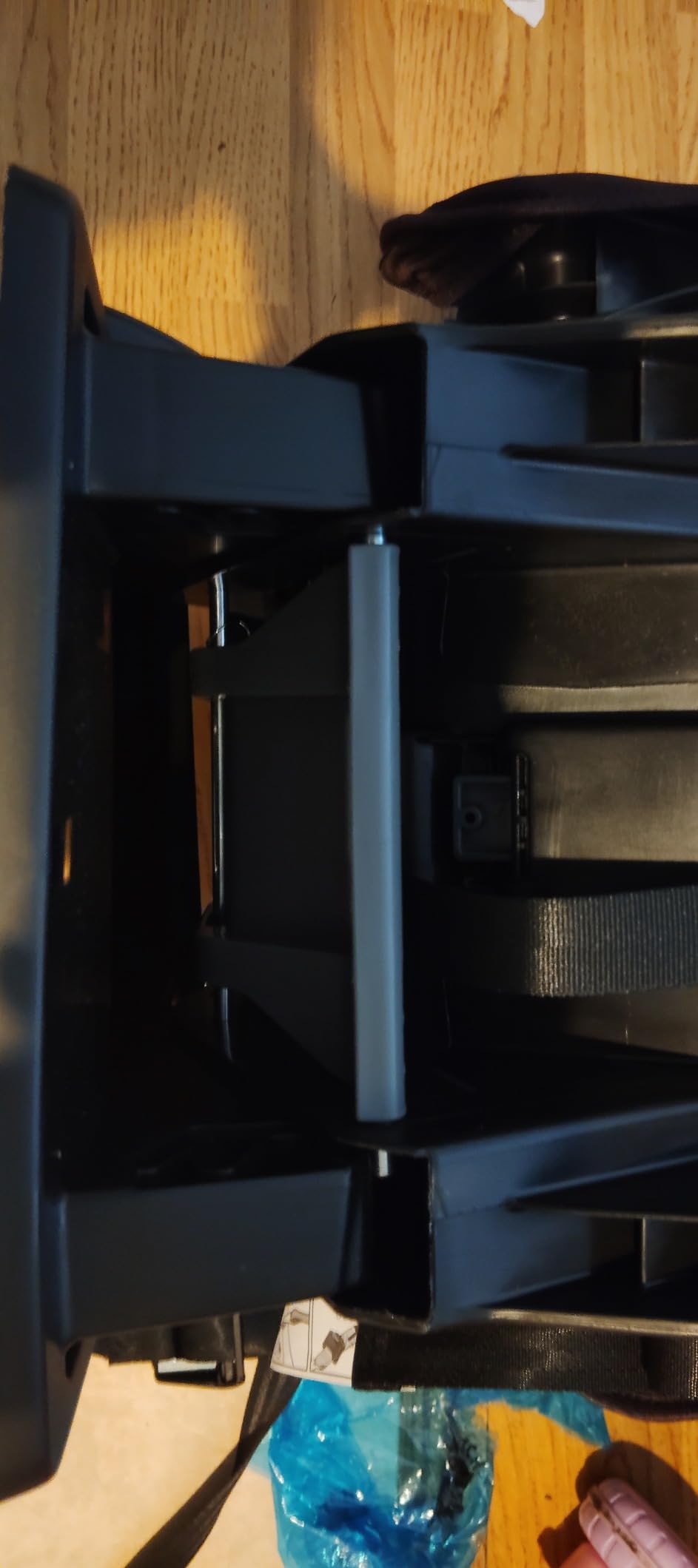
The reason this seat sits at 4.4 rather than higher is installation. Owners describe the install as rough and sometimes hard to get tight, and a few report more movement than they would like once seated. In a three-across row, tightness matters more than usual, so budget time for this one and check the fit before every use.
Why it suits a newborn-plus-toddler-plus-preschooler row
This is the configuration the seat was designed around, and the sub-19-inch footprint without cup holders is what makes it possible. Put the memory-foam insert in for the smallest child, and the same row can later absorb a booster when that child is ready.
It also meets the federal side-impact standard, which matters in the middle position where there is no door next to the child. The adjustable base lets you raise the shell rather than tilting it, which keeps the harness angle workable as your child grows.
Where it frustrates owners
The detachable multi-stage pieces are a recurring complaint. Shoulder foam protectors and inserts come loose and go missing, and with three-across installs you do not want to discover a missing piece at 7 a.m. on a school run.
Comfort reports are mixed at the top of the harness range, with a few children trying to remove the straps themselves. If that sounds familiar, test the harness fit early and be prepared to move up a size sooner.
6. Diono Connect3 R – Under 17 Inches With Built-In Buckle Access
Diono Connect3 R 2-in-1 High Back Booster, Slim Fit 3-Across in Many Mid-Sized Sedans and SUVs, for Children from 40-120 lbs., Lightweight with Cupholder, Blue Razz Ice
Less than 17 inches wide
40-120 lb booster
11-position headrest
Removable nesting cup holder
Pros
- Children can fit their hands between seats to buckle themselves
- Patented contour around belt guides for buckle access
- Fits tight back seats in newer vehicles
- Converts to backless with a carry handle
- Ventilated head and backrest
Cons
- Belt path is tricky and kids need reminding
- Cup holder sometimes missing from the box
- Top and bottom sections separate easily in transit
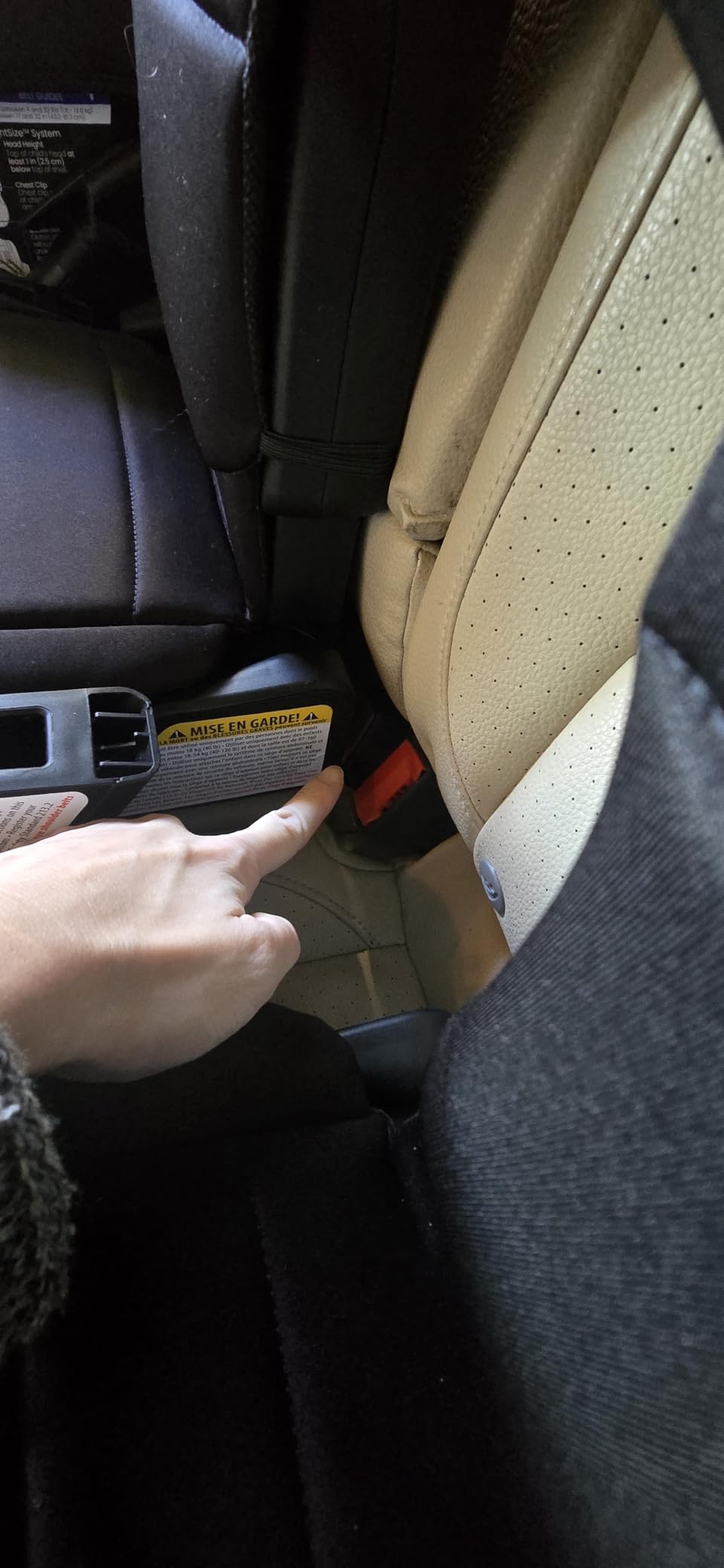
The Connect3 R is the booster I would put in the middle position of a genuinely cramped row, because the manufacturer engineered the shape around the buckle rather than around the styling. A patented contour around the EasyPath lap belt guides leaves a channel where a child’s hand can actually get to the belt, which is the exact failure point of most booster installs.
At less than 17 inches, it fits back seats in newer compact vehicles where bulkier boosters simply will not go. It covers 40 to 120 pounds, converts to backless, and the 11-position headrest has real adjustment rather than a token top setting.

The cup holder is removable and designed to nest between Connect3 seats, which is a thoughtful answer to the width problem and stores under the seat when unused. Owners also mention the SleepyCheek headrest angle in positive terms, since booster-age kids routinely fall asleep in the back row.
The complaints are about consistency rather than design. The belt path must go in front of the armrests, and children need reminding of that every single time. A few units arrive without the cup holder even though the box shows it, and the top and bottom sections separate easily, so this is not a seat to check as luggage.
What makes the buckle access work
Boosters fail at buckle access because the armrest sits between the child’s hand and the belt, and the child gives up or waits for an adult. The Connect3’s contoured guide area removes that barrier, and owners specifically report kids buckling themselves in a three-across row.
That independence matters more in the middle seat, where neither neighboring caregiver can reach over to help. Our broader guide to car seats for every stage covers when a child is actually ready for a booster.
Trade-offs to accept
Expect to explain the belt path more than once. Budget a minute at the start of each drive while the habit forms, and check the cup holder is actually in the box when it arrives.
If you move between vehicles often, the two-piece construction is a genuine drawback. Keep it installed rather than carrying it, or look at a one-piece booster with a fixed base.
7. Safety 1st Ellaris – Airplane-Ready Convertible That Measures Wider Than Advertised
Safety 1st Ellaris 3-in-1 Convertible Car Seat, Slim Fit Design, Rear & Forward-Facing, 5-Position Headrest, Travel-Friendly with Machine-Washable Seat Pad, Peacock Blue
Rear-facing 5-40 lb
Forward-facing 30-65 lb
5-position headrest
Compact airplane-ready design
Pros
- Lightweight for a full convertible
- Easy to install with manageable straps
- Headrest adjusts in one motion
- Sturdy build
- Good value next to convertibles costing far more
Cons
- Measures a little over 19 inches installed
- Headrest feels wiggly with more play than Graco seats
- Strap adjust button is hard to reach at first
The Ellaris is marketed as a slim design, and it is a good seat in most respects: lightweight for a full convertible, easy to install, and one of the few in this roundup with an airplane-ready compact build for families who fly with a toddler.
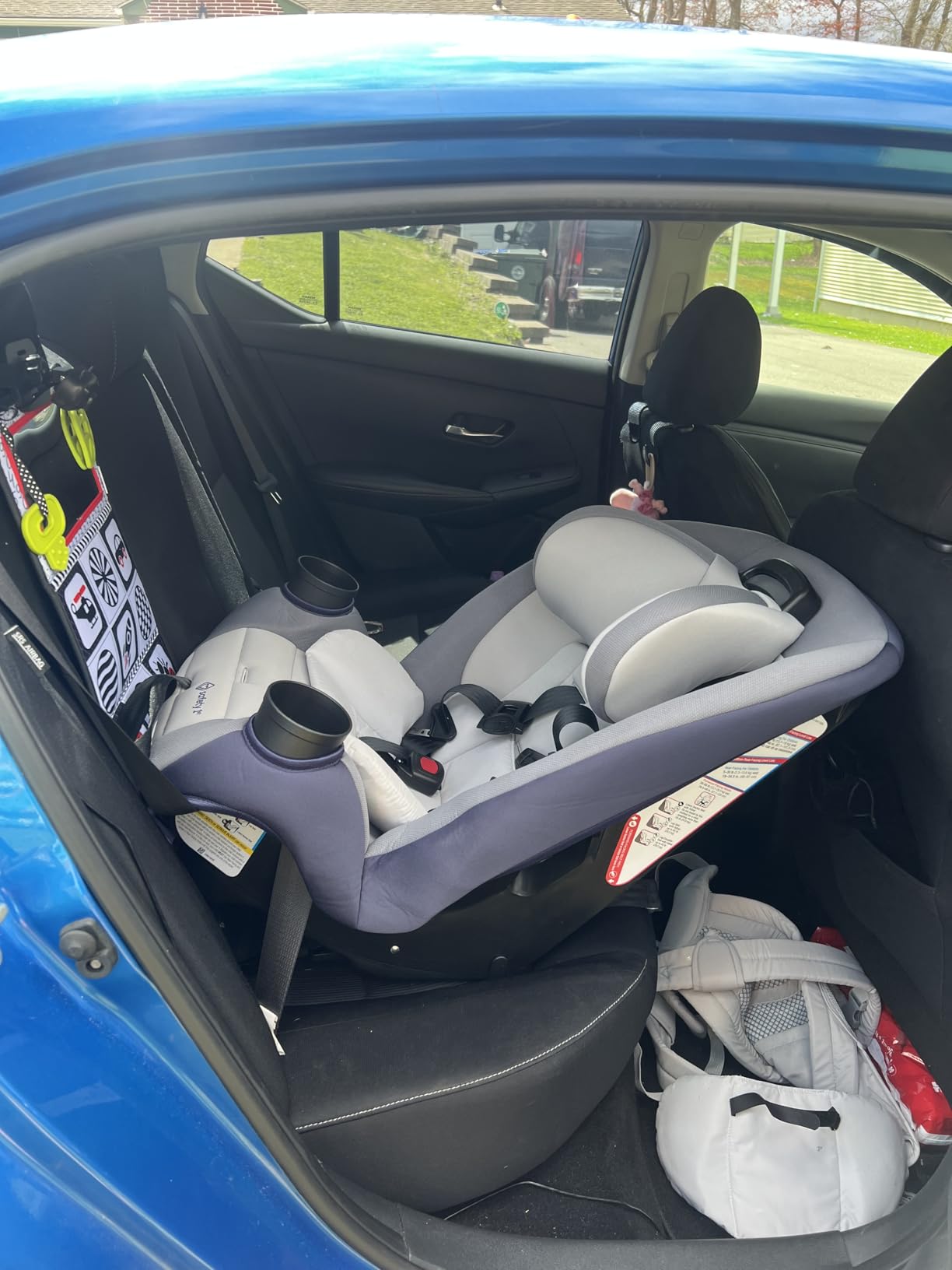
The honest headline is that owners who bought it specifically for a three-across layout report that it measures a little over 19 inches installed, wider than they expected. That is exactly the wrong direction for this topic, and it is the single most important thing to know before buying it for that purpose.
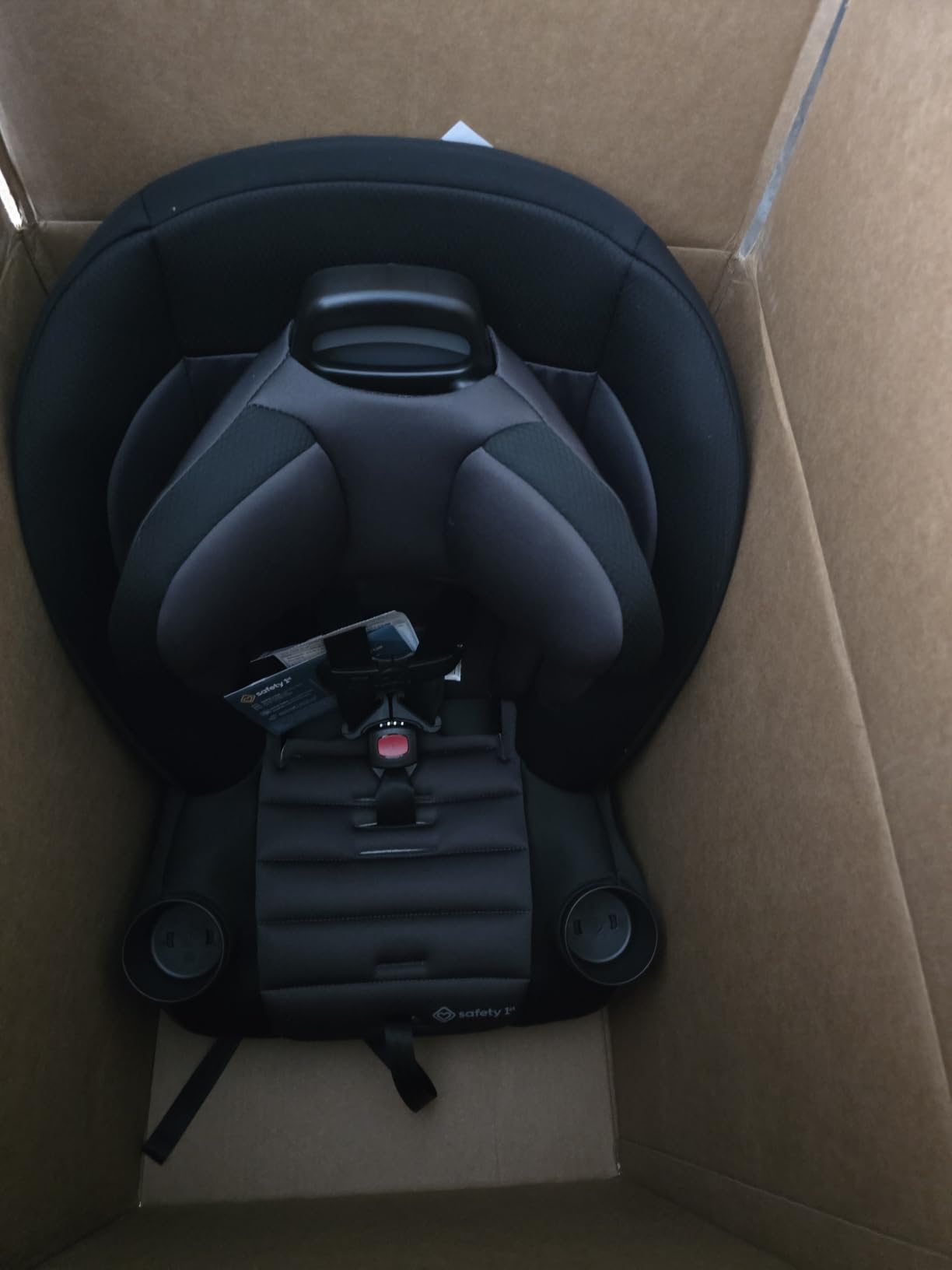
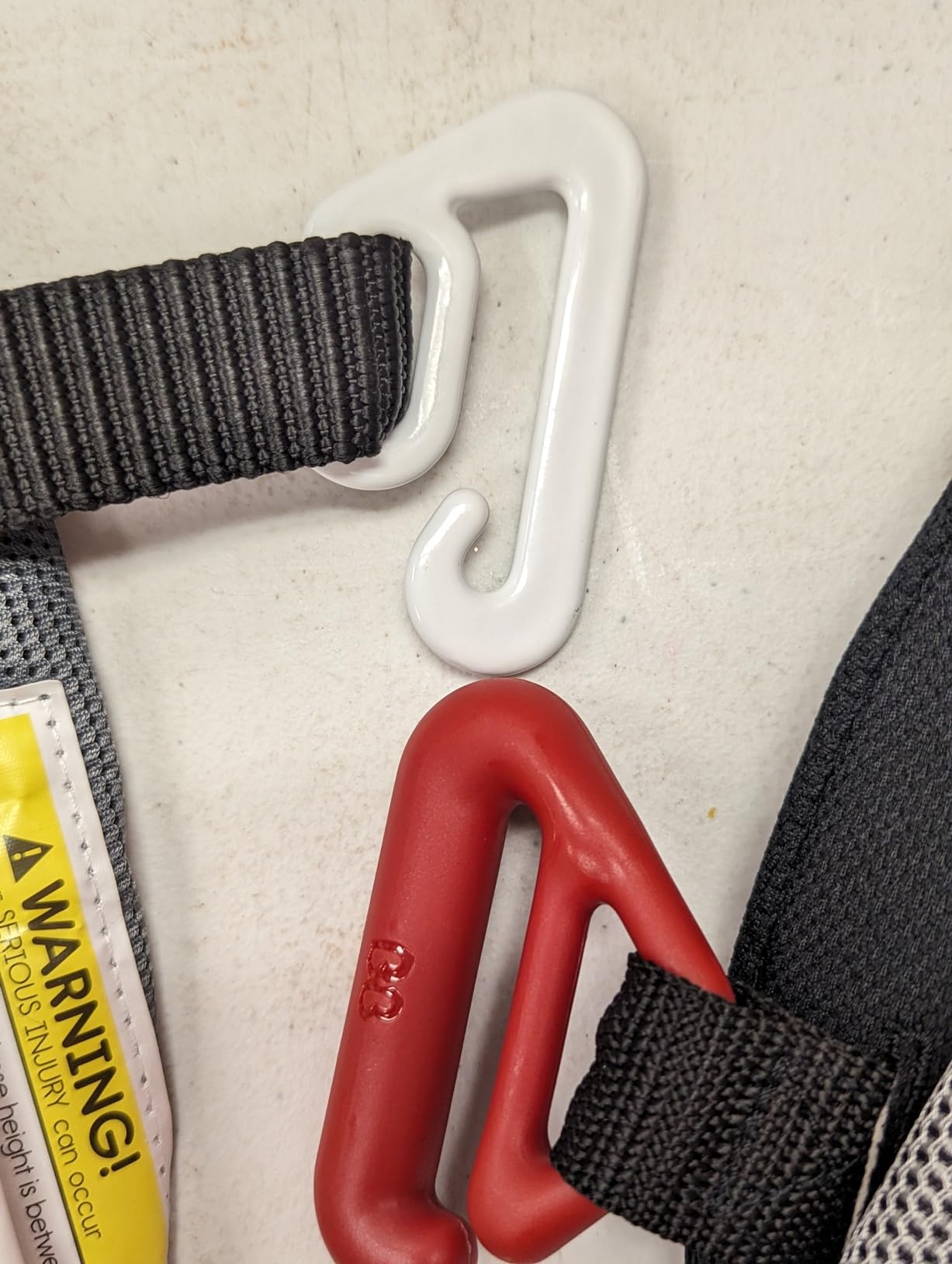
It covers rear-facing infant 5 to 30 pounds, rear-facing toddler 30 to 40 pounds, and forward-facing 30 to 65 pounds, with hook-style LATCH and a five-position headrest. The seat pad is machine-washable and dryer-safe, and the two cup holders are removable and dishwasher-safe.
Fit and finish are good for the tier. The headrest adjusts in one motion without re-threading, the recline is easy to set, and several owners note it is sturdier and better made than convertibles costing twice as much. The wiggly headrest and a hard-to-reach strap button are the small annoyances that show up in reviews.
When it still makes sense
Buy the Ellaris when you are choosing on weight, price, and simplicity rather than on width, and your vehicle has a little slack in the row. It is a strong pick for a family flying regularly who wants a single convertible that handles both the airport and the school run.
It also works well as a second or third harness seat when the other two positions are already committed to slimmer hardware. Just do not build a three-across plan that depends on all three of them being narrow.
Why some families returned it
The 19-plus inch installed width is the reason behind most of the one-star and two-star reviews from three-across shoppers. If your back seat is already at capacity, this seat pushes the problem rather than solving it.
Also worth knowing: the deeper side bolsters are less comfortable for smaller children over long trips than the slimmer shells on the convertibles above it. Measure your row width at the widest point of the headrest before ordering.
8. BubbleBum Inflatable Booster – Packs Flat to 12 x 6 x 4 Inches
BubbleBum Inflatable Travel Booster Car Seat, Narrow Backless, 40-110 lbs
Backless inflatable booster
40-110 lb ages 4-11
Packs to 12 x 6 x 4 inches
Inflates in about 20 seconds
Pros
- Inflates in about 20 seconds with no pump
- Packs into a purse
- backpack or carry-on
- Narrow profile fits three across
- No hardware needed beyond the vehicle belt
- Wipes clean with a damp cloth
Cons
- Air-filled cushion gives less side support than a rigid booster
- Must be inflated at every use
- Not for use without a lap-and-shoulder belt
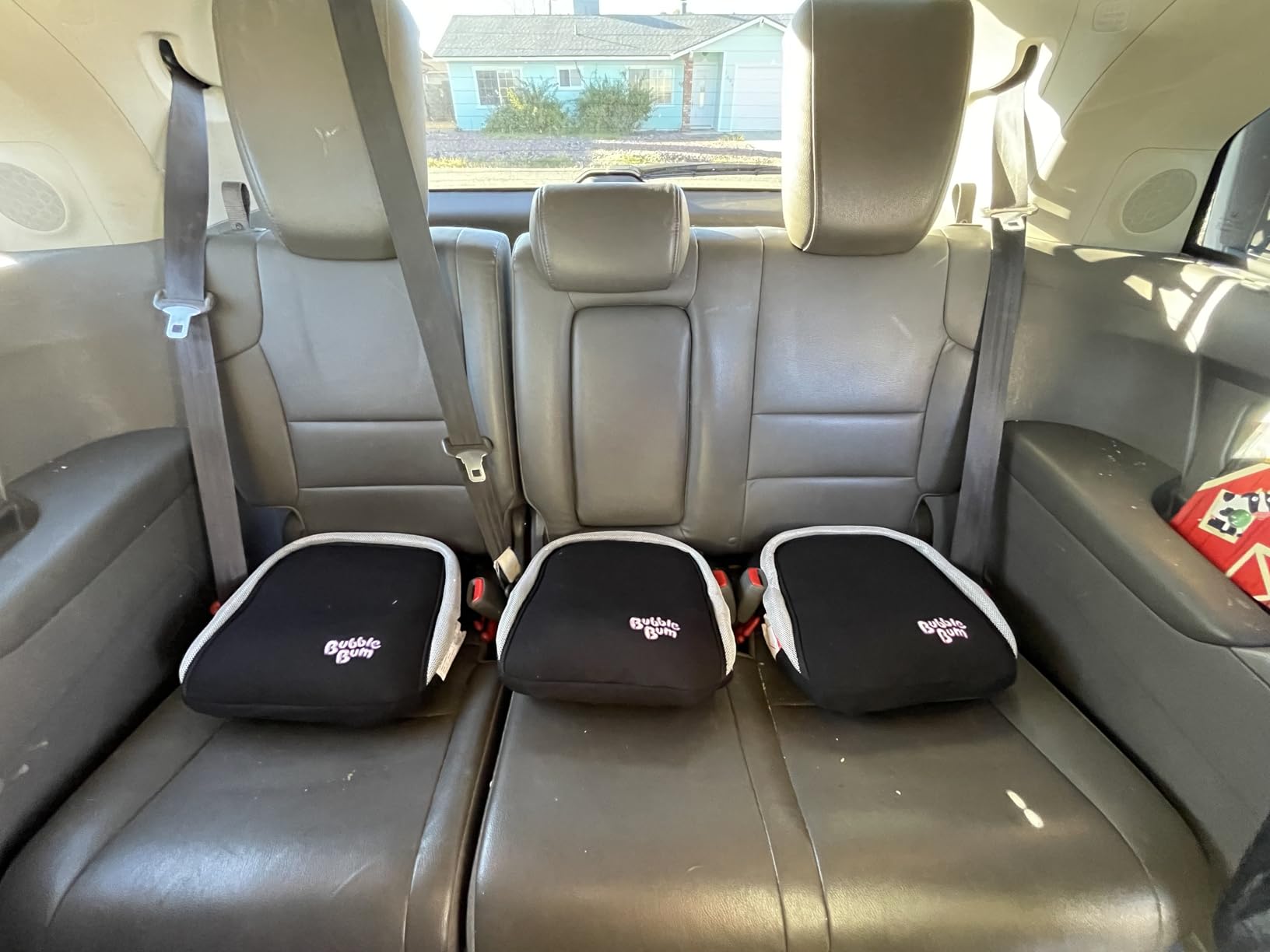
The BubbleBum answers a different question than the other eleven: not how narrow can a car seat be, but how small can it get when it is not being used. It deflates to 12 by 6 by 4 inches, which is a carry-on, and inflates by mouth in about 20 seconds with no pump.
It is independently crash tested to exceed the FMVSS 213 federal standard, fits children 40 to 110 pounds, and needs nothing beyond a standard three-point vehicle belt. For rental cars, taxis, rideshares, and grandparent pickups, that combination is hard to argue with.
The soft cushion is comfortable on long drives, and owners rate the material as wiping clean with a damp cloth, which matters if the booster is going into somebody else’s vehicle. The slim profile is designed to fit three across or to slot one inflatable between two rigid seats.
What you give up is structure. Air-filled construction provides noticeably less side support than a rigid molded booster, and it has to be inflated every single time, which makes it a poor daily carpool solution even though it is excellent for travel. It also cannot be used without a lap-and-shoulder belt.
Where an inflatable booster earns its place
Travel-first families love it, and the review base reflects years of use. It is also a genuinely useful third-position filler: parents with two forward-facing harnessed seats and a visiting child often need one booster that adds almost no width and no hardware conflict.
It also solves the multi-household problem cheaply. Instead of buying a second rigid booster, you carry one inflatable and inflate on arrival.
When a rigid booster is the better buy
Choose a rigid booster if the seat will be used every day, if your child tends to slump or sleep without support, or if you want something that stays anchored in one place. The inflatable fits in a bag; the rigid one fits a child.
Keep in mind that the daily-inflate requirement is a real friction point. A booster that takes 20 seconds and a few breaths every morning gets skipped on rushed school-run mornings, and a skipped booster is a seat belt used incorrectly.
9. Diono Cambria LE – 17 Inches With LATCH on Both Sides
Diono Cambria LE, 2-in-1 Belt Positioning Booster Seat,Backless and High-Back Booster seat for Children from 40—120 lb,17″ Wide,6 Headrest Positions,Lightweight with Latch,Black
17 inches wide
40-120 lb up to 63 inches
12 lb seat weight
High-back to backless
Pros
- LATCH connectors on both sides keep the booster anchored
- Only 12 lb so transfers are effortless
- Open-loop belt guides hold the belt correctly
- Roomy seating for older booster-age kids
- Two layers of side impact protection
Cons
- Wider than the Connect3 and can block fold-down seatbacks
- LATCH connectors feel loose
- Back section is awkward to attach
The Cambria LE is the only booster in this roundup with LATCH connectors on both sides and a front-accessible tightening strap. In a three-across row, that matters because it gives you a way to anchor the middle booster to the vehicle seat while your child climbs in, and it is a real advantage over floating boosters.
At 17 inches and 12 pounds, it is still narrow and genuinely light. Two layers of side impact protection and open-loop belt guides keep the vehicle belt across the child’s strongest body parts, and the six headrest positions give up to 6.5 inches of one-hand height adjustment.
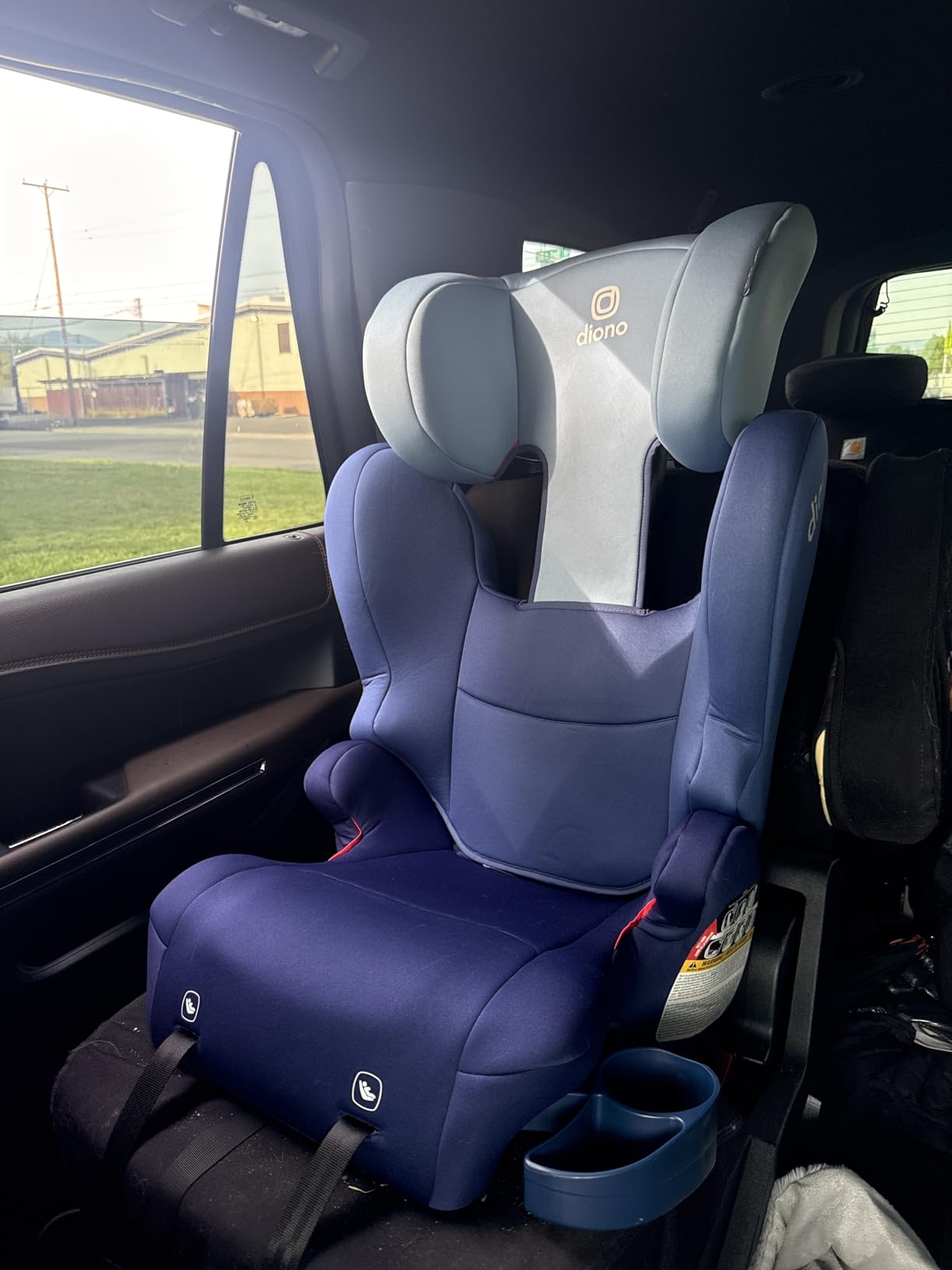
It covers 40 to 120 pounds up to 63 inches tall, converting from high-back to backless, and the seating area is roomy for kids still in the booster stage. Parents of older children specifically call out the wide, comfortable sitting space as an upgrade from slimmer boosters.
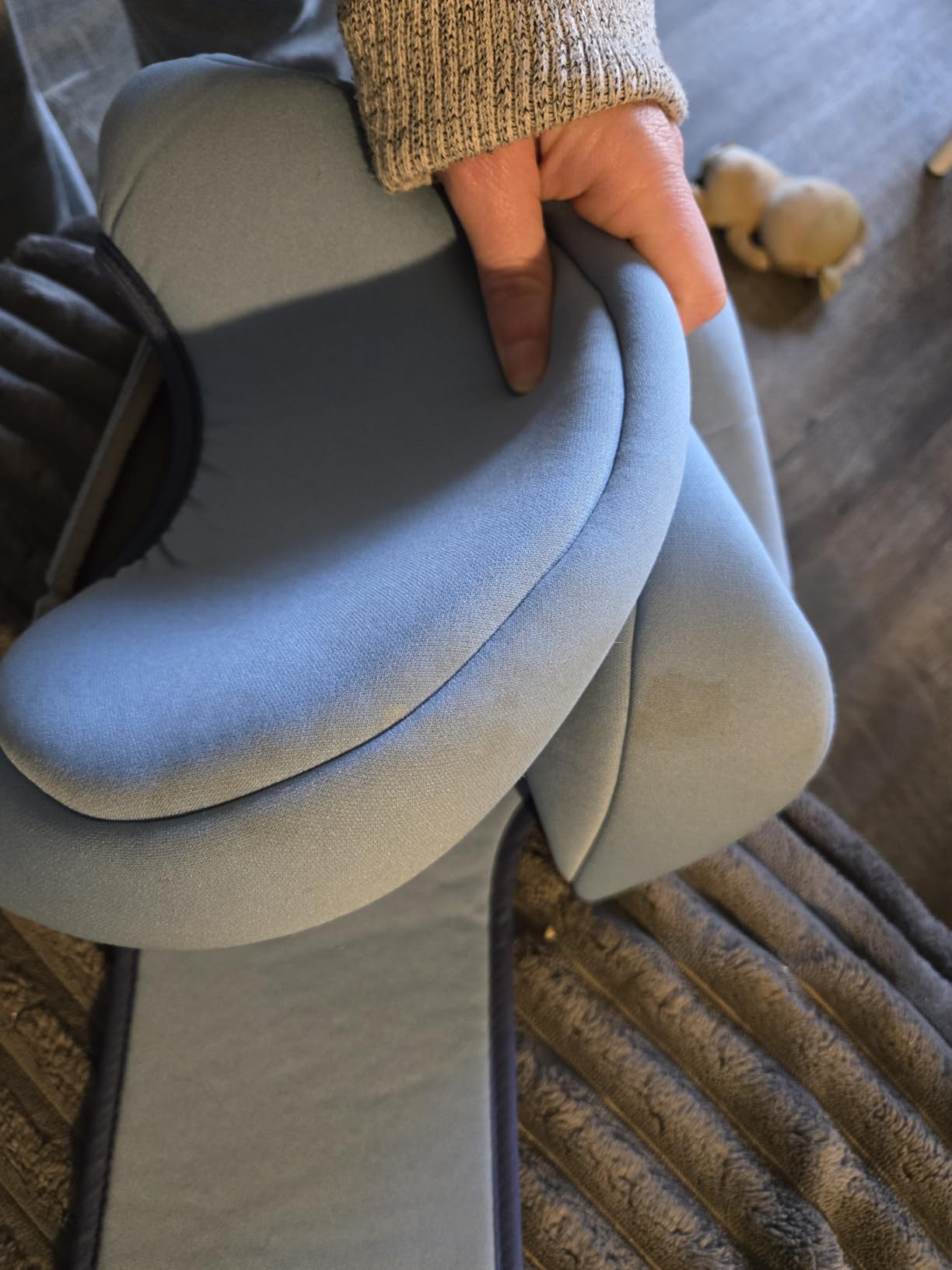
The recurring negatives are hardware related. Some owners report the headrest adjustment spring or lever breaking within the first year, the LATCH connectors feeling loose, and the back section being difficult to attach to the base. Inspect both parts early and keep an eye on them.
Why the two-sided LATCH is worth the width
A booster that clips into the vehicle seat stays put. That gives your child a step to push off from, keeps the belt guides aligned after you clip in, and stops the booster from shifting when the door opens on a curve. For a middle-position booster that a child uses daily, those are not small things.
Because it is 12 pounds, transferring the whole seat to another vehicle is a one-hand job, which makes it a reasonable choice for blended custody.
The compromise to understand
At 17 inches it is wider than the Connect3 R, and some owners report it interfering with fold-down rear seatbacks in SUVs. If your row is truly at the limit, the narrower booster without LATCH is the safer bet.
Teach the belt path. The routing is awkward for children to thread on their own, so a little instruction early on prevents a daily argument and a belt worn in the wrong place.
10. Baby Trend Trooper Slim – Lightweight Convertible With a Wide Recline
Baby Trend Trooper™ Slim 3-in-1 Convertible Car Seat, Dash Black – Slim Fit, 3-in-1 Growth Modes, Lightweight Design, Adjustable Comfort Padding
Slim-profile 3-in-1 design
Rear-facing, forward-facing, booster
Lightweight build
Adjustable headrest and harness
Pros
- Slimmer than many comparable seats in a cramped row
- Easy to install with a highly adjustable recline
- Light enough to move between vehicles
- Holds the child's head back during naps
- Sturdy and roomy feel
Cons
- Harness straps tighten unevenly
- Harness buckles twist constantly
- Can feel loose rear-facing without wedging
The Trooper Slim is the lowest-rated seat in this roundup, and I am including it because the slim profile genuinely works in cramped rows and the price point matters. It is a 3-in-1 convertible with an adjustable headrest and harness, built to maximize back-seat space in compact vehicles and multi-seat installations.
Owners confirm the slim footprint works, even in a tightly packed van, and the recline range is among the most adjustable here. It is light enough to move between vehicles easily and holds a sleeping child’s head back rather than letting it flop sideways.

The problems are with the harness, not the frame. Owners report straps that tighten unevenly across the chest, harness buckles that twist constantly, and a rear-facing install that can feel insecure unless the seat is wedged against the front seat back. Several parents ended up stitching their buckles to keep them straight.
It is also described as taller than the larger Graco and Chicco seats, which pushes the front passenger seat forward in exactly the situation where you are already short on room. Some riders find it runs small, and the fabric snagged after about a week of use.
Where it is still a reasonable buy
It makes sense for a family that needs a full convertible, values a very light seat for two-vehicle use, and has a row with genuine slack. Parents who value a wide recline for a small newborn will also appreciate the adjustment range.
It is worth considering as the third seat in a row where the other two positions are fixed slim hardware and this one has room to be slightly larger.
Why we would look elsewhere first
Harness quality is safety-critical, and the reports here are specific enough that we would not build a three-across plan around this seat when better-fitting options exist. The twisting buckle issue in particular is a recurring, unresolved complaint rather than an isolated one.
If you choose it anyway, test the harness with your tallest child before committing, and re-check the rear-facing tightness at every install. Our full convertible seat comparison covers slimmer options with cleaner harness systems.
11. Hiccapop UberBoost – Inflatable Booster for the Middle Position
UberBoost Inflatable Booster Seat for Car, Travel Booster Seat, Black/Gray
Inflatable belt-positioning booster
Meets or exceeds FMVSS 213
Deflates into its own travel bag
Non-skid base
Pros
- Inflates in under 20 seconds and packs into a carry-on
- Narrow enough for three across or between two rigid seats
- Non-skid base stays steady without marking upholstery
- Comfortable on long drives
- Long-established compliance record
Cons
- Less side support than a rigid molded booster
- Must be inflated at every use
The UberBoost shares the pack-it-anywhere logic of the BubbleBum but has the longer track record and the stronger rating, with 4.5 stars across more than 7600 reviews. It meets or exceeds the FMVSS 213 federal car seat standard, installs with a vehicle belt alone, and needs no LATCH.
Its specific strength is the middle position. Owners use it exactly as the space filler it is designed to be, slotting one inflatable booster between two traditional car seats, which is the classic three-across configuration with a newborn or toddler plus two older kids.
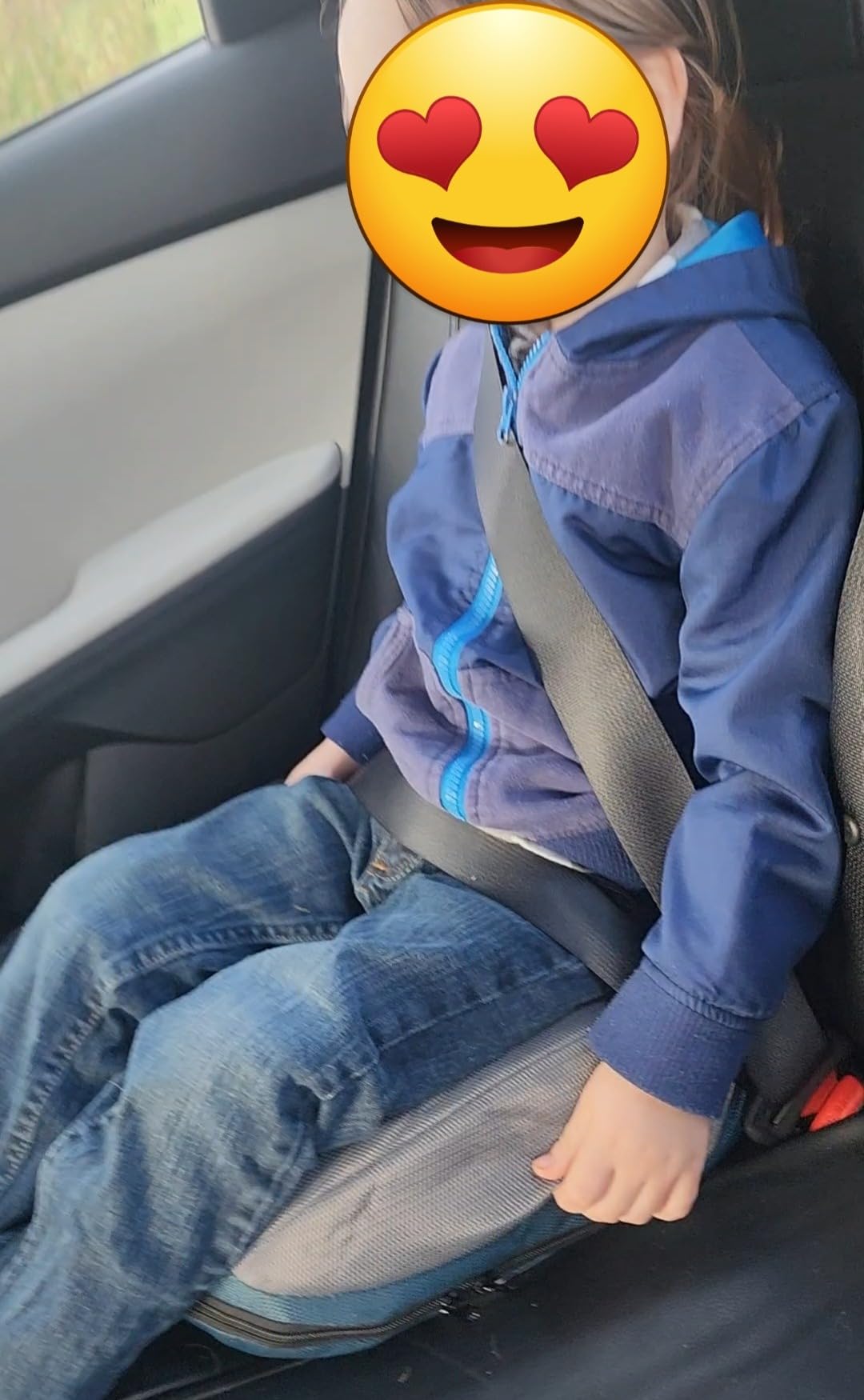
Positioning clips hold the belt across the child’s lap rather than letting it dig into the stomach, and the non-skid base sits steady on leather, vinyl, or cloth without marking the upholstery. That matters if the booster lives in a car you do not own.
Like any inflatable, it needs inflating at each use and gives less lateral support than a rigid molded booster, so it complements a daily booster rather than replacing one. The trade is straightforward: total portability in exchange for structure.
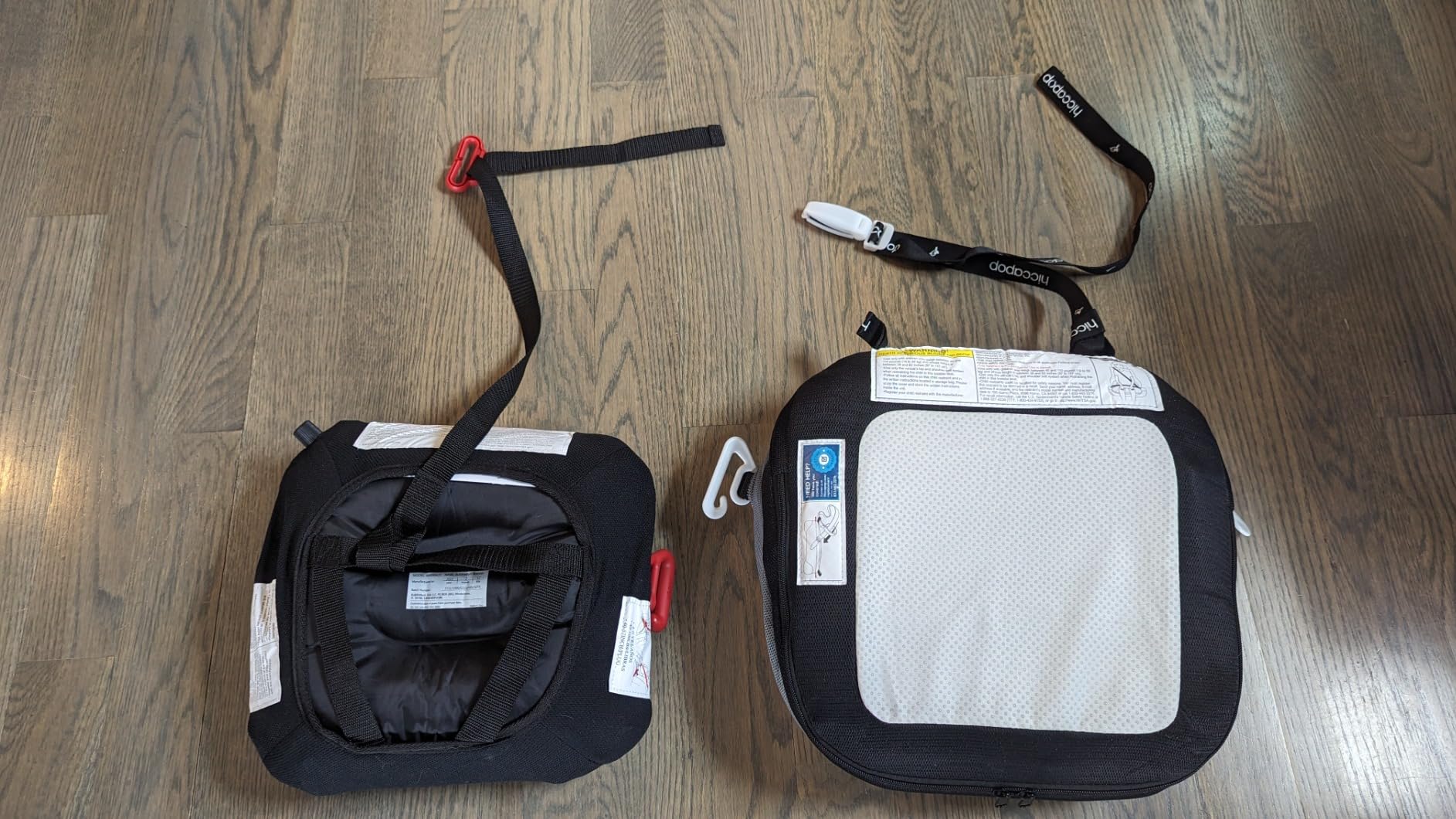
Why the middle spot suits it best
An inflatable has no hard shell to worry about, which means the child sitting in the middle can lean against either neighbor without the same contact concerns as a rigid booster. It also does not fight with adjacent seats for width, since there is no headrest or side wing to interlock.
For a caregiver, a grandparent, or a carpool driver, it is one object that solves the booster problem without leaving a seat installed permanently in a vehicle that is not theirs.
Where the inflatable approach falls short
Daily carpool use is the weak point. Inflating every morning is a step people skip, and a booster that is skipped is a child riding on a misplaced belt. If the seat will be used four or five days a week, a rigid booster is the more reliable choice.
Also weigh side support if your child is a heavy sleeper or tends to slump. Air-filled cushions move more than rigid ones on longer drives.
12. Baby Trend Protect Slim – Backless Booster for the Tightest Rows
Baby Trend Protect Slim Backless Booster Seat, Madrid Grey
Slim backless booster
Belt-positioning guides
Dual cup holders
Cushioned seating
Pros
- Slim backless design among the tightest three-across fits
- Very light and easy to move between cars
- Dual cup holders are rare at this width
- Cushioned seating comfortable on everyday rides
- Inexpensive way into booster seating
Cons
- No head or back support for sleeping riders
- No connector to anchor the booster to the vehicle seat
The Protect Slim is the seat to buy when the row is at absolute capacity and nothing else will physically fit. Backless and slim by design, it removes the headrest, side wings, and high-back shell entirely, which is exactly the space you are short on in a sedan with two harnessed seats already installed.
It has dual cup holders, which is unusual at this width, and belt-positioning guides that support correct shoulder and lap belt placement. The cushioned seat keeps an everyday ride comfortable, and at this price it is the most accessible entry point into proper booster seating.
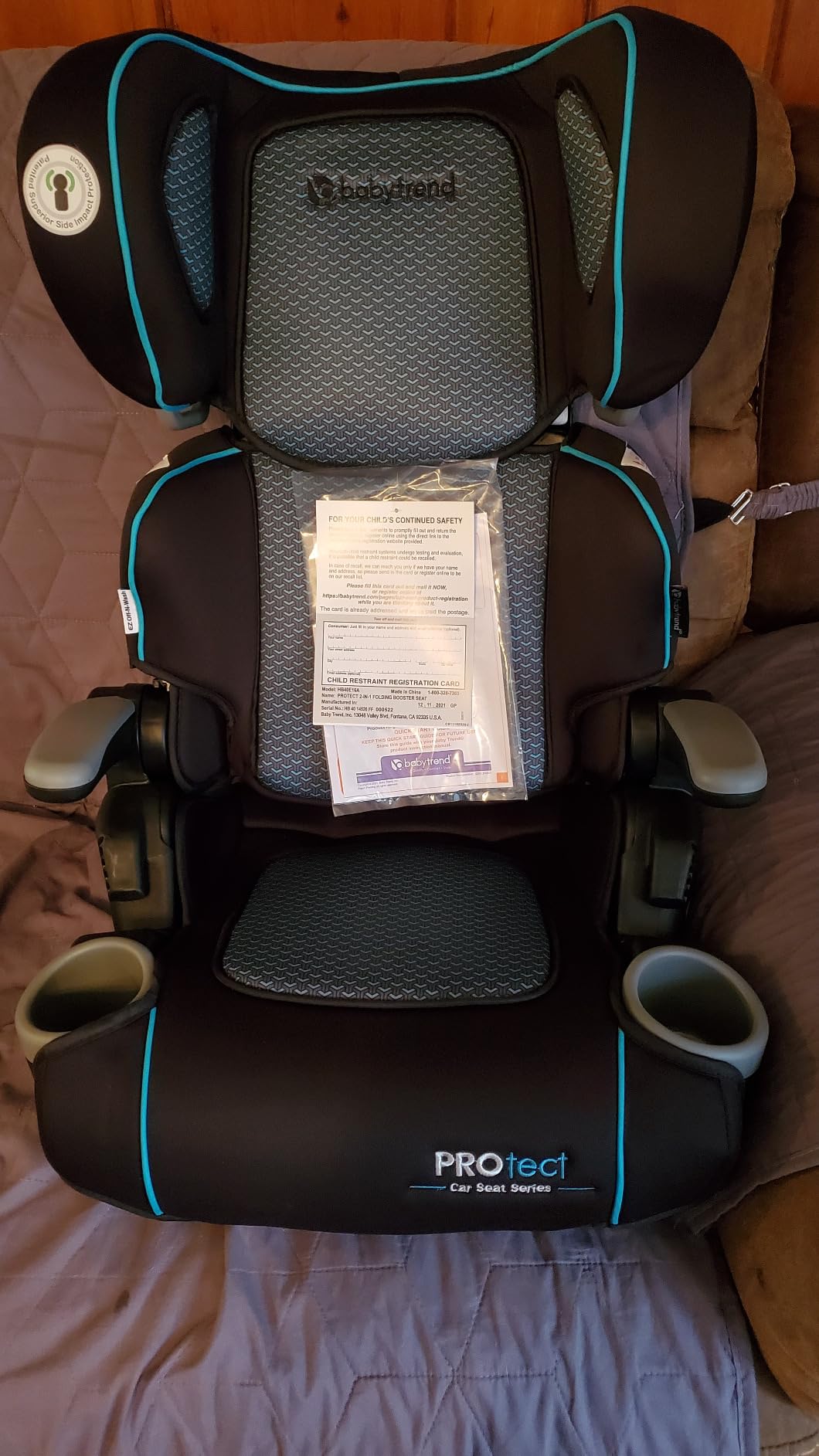
Buyers value the footprint most: several owners bought it specifically to squeeze a third child into a back row where wider boosters had already failed. It is light enough to move between cars in one hand, which matters for split custody and shared pickups.
The limitations are inherent to the backless format. There is no head or back support, so a sleeping rider has nothing to rest against, and there is no connector to anchor the booster to the vehicle seat, so it relies on the belt alone to stay positioned.
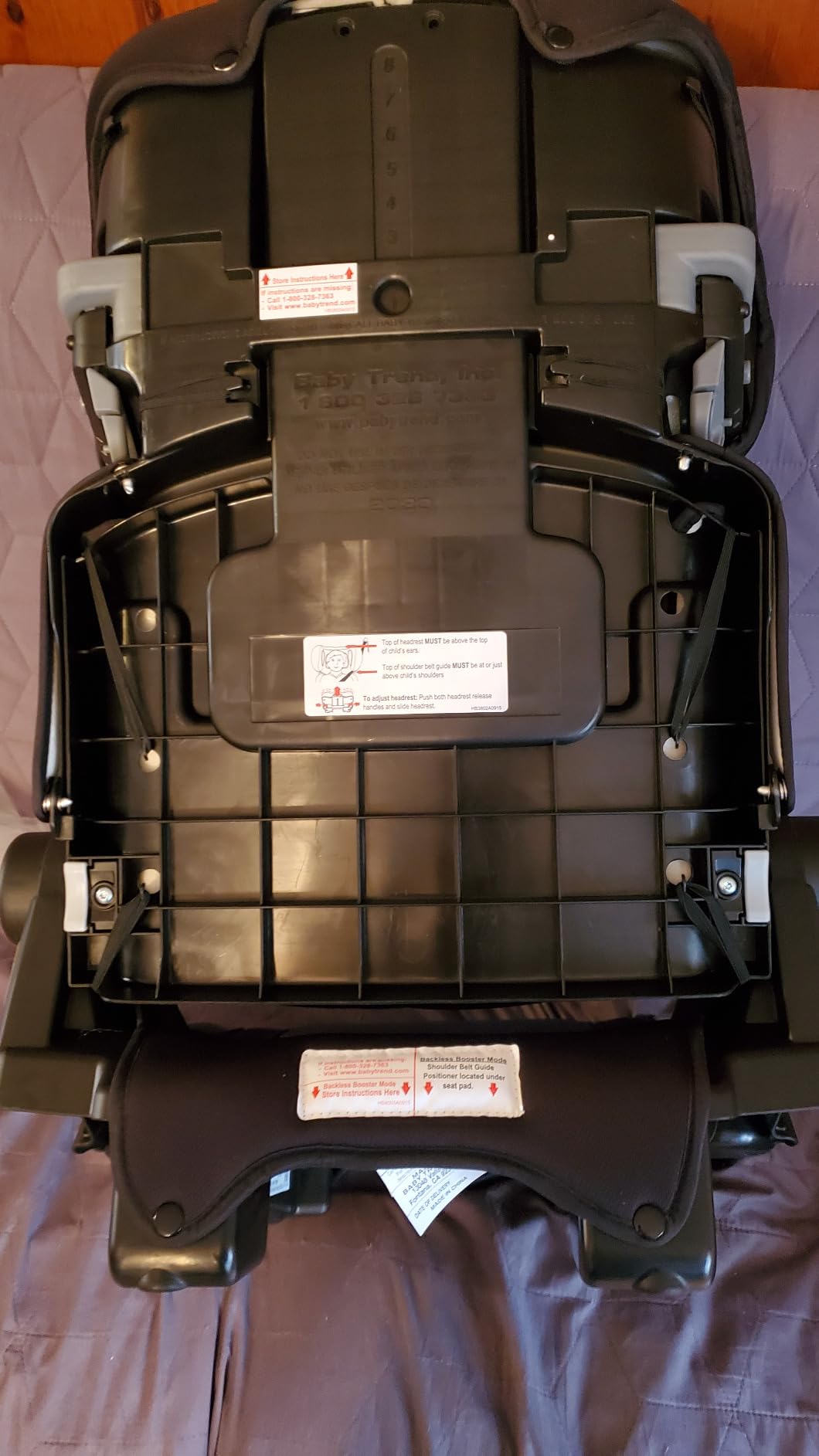
When backless is the right call
Go backless when your child is a confident belt wearer who can stay buckled for the length of the drive, and when your vehicle simply has no room for anything with a headrest. In a sedan carrying two forward-facing harnessed siblings, a backless booster is often the only configuration that closes at all.
It is also a good top-of-the-booster-stage choice: buy the backless seat now, and move up to a high-back booster later if your child needs the support for sleeping.
When your child needs more support
Choose a high-back booster instead if your child falls asleep on every drive, slouches, or cannot yet manage the lap belt position without help. The support is not a luxury on a long school run or a road trip.
There is also no way to latch it in place, so it cannot be used to give a child a foothold while buckling in. Seat the child first, then buckle the booster, and keep the belt snug through the guides every time.
Why Fitting Three Car Seats Across Is So Hard
Width is the easy number and the misleading one. A manufacturer measures the seat at its narrowest point, which is usually the belt path or the base, while the part that stops two seats from sitting side by side is the widest point at headrest height. Seats with adjustable headrests grow as your child grows, so the measurement that let three fit on day one may not hold three years later.
Shape matters as much as size. A seat with tapered sides and a straight shell nests against its neighbor, while a seat with deep side wings or angled head wings creates a puzzle fit where every millimeter matters and nothing is adjustable. Measure across the row at the height of the headrest, not the base.
Buckle access is the second challenge, and it only shows up once children are in boosters. An adult can lean across a row and reach a belt, but a seven-year-old in the middle seat cannot if the armrests of two adjacent seats close the gap. Boosts that shape the shell around the buckle path solve this better than boosters that do not.
Vehicle hip room determines whether the three-across setup is realistic at all. A midsize sedan gives you more than a compact, a minivan third row gives you the least, and an SUV third row varies enormously by model. The same three seats that fit easily in one vehicle can be impossible in another, which is why a tape measure beats any roundup including this one.
Seat belt overlap in the center position is a common surprise. Some vehicles route the center belt across a single surface that the center seat can straddle, while others route it so the belt sits in a gap between two outboard seats. Check the belt path before committing to a center-position seat with a specific belt-routing feature.
Finally, the regulatory picture shifted with the updated federal side-impact standard carrying an effective date of June 30, 2025. Tighter performance requirements narrow the pool of shells that qualify, and some previously popular ultra-narrow models are no longer being produced. Confirm current certification for any model you are considering.
How to Install Three Car Seats Across One Row
Start with the center position. The middle seat usually has the least shoulder-belt room and no dedicated lower anchors in many vehicles, so if your narrowest or most restrictive seat will not work there, no other arrangement will save you. Fit the center seat first, then work outward.
Install with the seat belt rather than the lower anchors wherever possible. Belts do not compete for anchor space, they work in positions your vehicle’s anchors do not cover, and manufacturer guidance generally favors the belt method when both are available. It also avoids the question of whether the center position has anchors at all.
Borrowing lower anchors from the neighboring outboard seats is prohibited by most vehicle manufacturers, so treat any informal arrangement as off the table. If the center position has no anchors, the belt is your only option, and that is a normal three-across situation rather than a compromise.
Check top tether anchors for each position you can reach, particularly for rear-facing seats and forward-facing harnessed seats. Where a tether anchor is not available, confirm your seat can be installed according to its manual without one.
Each seat must be independently tight. With three seats touching, it is easy to think a neighbor is holding the gap closed, so test each one at its belt path before you count on it, and tighten the middle seat first since the outer seats are installed against it.
Finish with a buckle access test. Have your child climb in and buckle themselves in the middle position without help. If they cannot reach, adjust the neighbor seat positions, retract cup holders, or convert a high-back booster to backless mode to create the gap.
Buying Guide: What Matters for a 3-Across Fit
Measure before you shop, and measure the right thing. You need the usable back-seat width at the shoulder-belt line, the distance between lower anchor bars if you plan to use them, the location of top tether anchors, and the width of the center seat. Write the numbers down and take them with you.
Match seat types to children, not to a uniform look. A rear-facing convertible in the center with two boosters in the outboard positions is a common and workable mix. So is an infant carrier in the center, though carriers add width and reduce head support.
Plan for growth. A seat that fits three across with a four-year-old may not with a seven-year-old, and headrests grow with children. Check each seat’s headrest-height width claim, and prefer seats with narrow base growth over seats with wide, fixed wings.
Think about vehicle body style. Compact sedans and small wagons are the hardest environments for this purchase, compact SUVs give moderate room with good hip room, and minivan second rows usually work with any of the seats here. Third rows are the tightest and the most unforgiving of accessories on the headrest side.
Cleaning is not a detail with three kids in a row. Favor machine-washable, dryer-safe covers, removable seat pads that come off without undoing the harness, and dishwasher-safe cup holders. A seat you will not clean gets dirty, and a dirty seat gets a seat belt routed over grime.
Check expiration dates and consider expiration when shopping used. Seats carry a manufacture date, and most have a service life of about six to ten years depending on the model. Confirm the date on the seat you are buying, and do not assume a narrow-looking secondhand seat is a good deal if its history is unknown.
On secondhand narrow seats, the risk is structural rather than cosmetic. A seat that was in a crash, is missing its tether strap, or has no readable manufacture date is not worth the savings, and cleaning does not reset the expiration clock. If you buy used, verify the date, check for crash history, confirm all parts are present, and consider a harness whose straps have not been pulled with force in a crash.
Finally, if you fly regularly, treat airplane certification as a deciding factor. Rear-facing convertible seats with a compact shell travel better than seats with tall headrests or large head wings, and backless or inflatable boosters add almost nothing to your load. A seat that packs flat on airplanes can be the only reason a three-across road setup is manageable on a trip home.
Frequently Asked Questions
Can three car seats really fit across in a sedan?
Yes, in many midsize and larger sedans, as long as you use narrow seats and install with the seat belt. Budget roughly 17 inches per seat, measure the usable back-seat width at the shoulder-belt line, and install the center position first because it usually has the least room and the fewest lower anchors. Compact sedans and small wagons are considerably harder than midsize models.
Can car seats touch each other in a three-across setup?
Yes. The federal standard is independent tight installation, which means each seat must be secure on its own without relying on a neighboring seat to hold it in place. Touching is normal and expected in a three-across row. If a seat is only tight because its neighbor is pressing against it, it is not properly installed, so check each seat at its belt path individually.
Can an infant seat go in the middle of the back seat?
The middle position is the safest place for an infant seat, but it is the hardest position to fill in a three-across row because it has the least space and often no dedicated lower anchors. Install the infant carrier with the vehicle seat belt rather than lower anchors, and check that the center belt routing is compatible with the carrier. Many families place the carrier in the center with two boosters or harnessed seats outboard.
Can you use LATCH or lower anchors for all three car seats across?
In most cases, no. Lower anchors are rarely available in all three positions, and borrowing an outboard seat’s inner anchor for the center seat is prohibited by most vehicle manufacturers. Install with the vehicle seat belt where you can, since the belt works in positions the anchors do not cover and does not compete for anchor space across the row.
How do car seat expiration dates work, and is a used narrow seat worth buying?
Each seat carries a manufacture date and most have a service life of roughly six to ten years depending on the model. A secondhand seat with an unknown history, a missing tether strap, or any evidence of crash involvement is not worth the savings. Verify the manufacture date, confirm all parts are present, and remember that cleaning does not reset the expiration clock.
Conclusion
The Diono Radian 3R is the pick for a family that wants one seat to cover the whole arc from birth to booster, and its steel frame and three-across reputation are why it leads this roundup. The Graco SlimFit3 LX wins on confirmed slimness at 16.7 inches with a roomy seat pan, and the Chicco KidFit ClearTex Plus wins the middle booster spot because its cup holders fold away when nobody needs them.
Measure your back seat before ordering anything, install the center position first, and use the seat belt rather than lower anchors wherever you can. Those three steps solve more three-across problems than any specific model. For more on choosing by life stage rather than by width, our full car seat reviews cover the seats that work when you are not constrained by inches.
Whichever seats you choose in 2026, re-check the fit and the headrest width as each child grows, because the row that worked this year is the row that fails next year.