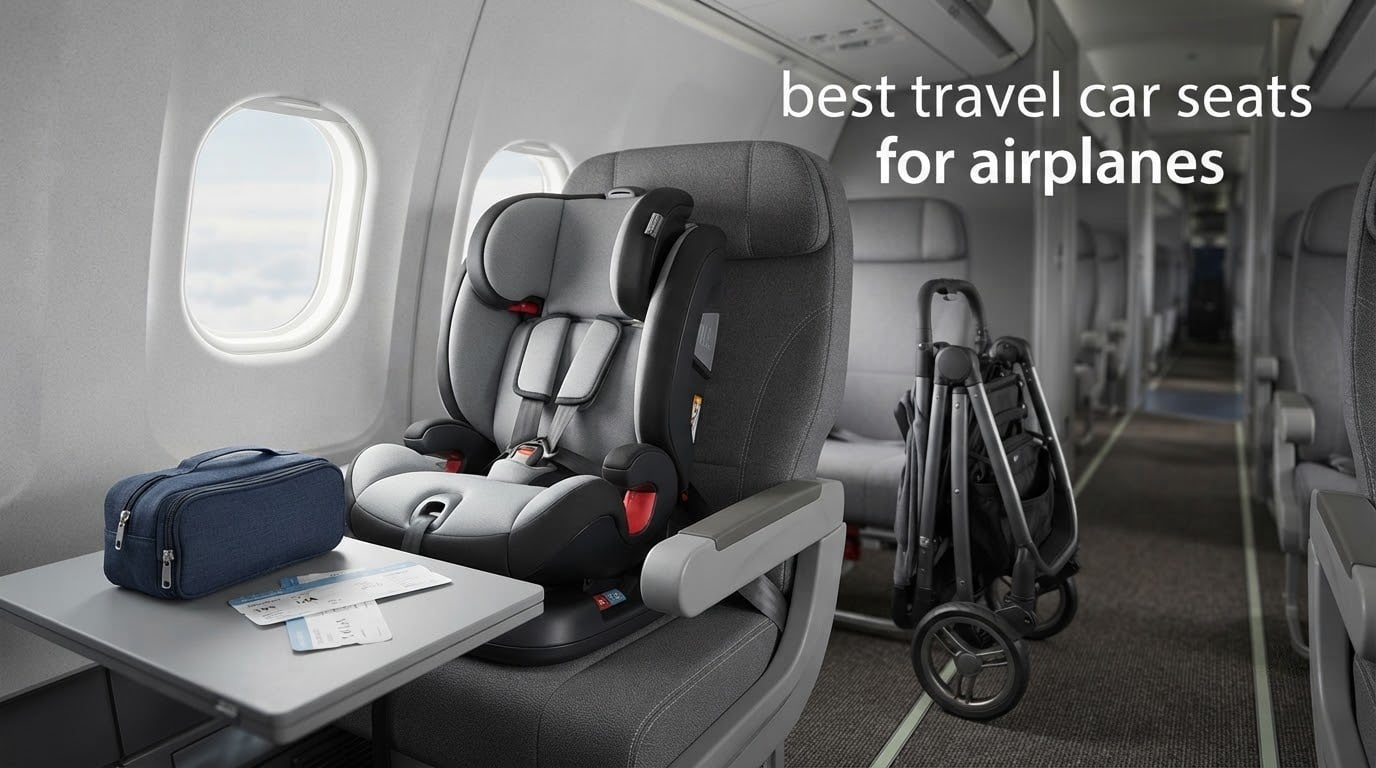
Most parents do not decide against flying because their child is hard to travel with. They decide against it because of the thirty-yard walk from the gate to the aircraft door, with a child who has just fallen asleep. That single scene decides which travel car seats for airplanes are actually worth owning, and the best travel car seats for airplanes in 2026 are the ones that survive it.
Two rules shape everything below. First, you must buy a seat for your child if you want them in a car seat rather than on your lap, and second, that seat has to go in a window or middle position so it does not block the row exit. Airlines also ask you to notify them in advance that a car seat is coming, and most will carry it down the aisle for you if the crew know you are coming.
Not every seat on the market is legal in the air. The FAA approves a specific label that reads that the restraint is certified for use in motor vehicles and aircraft, and that label is the only thing a gate agent needs to see. Several seats in this roundup carry it. Several do not, and we say so plainly, because guessing at the gate is how families end up boarding with a seat they cannot use.
Our team weighed every option against the things that actually matter on a plane: how heavy it is, how narrow it is, whether it folds, whether it has a belt path, and whether it still works in a rental car at the other end. We also grouped them by child stage, because a seat that flatters a five-year-old is useless to a fifteen-month-old. If you are still choosing a seat for everyday driving, start with our full car seat roundup and come back here for the flight-specific shortlist.
Table of Contents
Top 3 Best Travel Car Seats for Airplanes in 2026

Doona Car Seat and Stroller
- FAA and TUV approved
- One-click conversion to stroller
- Rear-facing 4 to 30 lb
- 17.2 lb seat weight
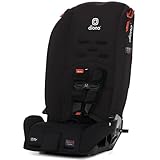
Diono Radian 3R Convertible
- Four modes from 5 to 120 lb
- Rear-facing to 50 lb
- Folds flat
- FAA approved

Safety 1st Grand 2-in-1
- Harness 40-65 lb then booster to 100 lb
- Slim three-across profile
- Lightweight and portable
Best Travel Car Seats for Airplanes in October
The table below is the short version. Every seat listed as FAA approved carries the aircraft certification label; the ones marked as boosters or as ground-only are included because you will still need them in a rental car, and we explain the in-flight limits in the booster section further down.
| Product | Specifications | Action |
|---|---|---|
| Doona Car Seat and Stroller |
|
Check Latest Price |
 CARES Aviation Restraint System CARES Aviation Restraint System |
|
Check Latest Price |
 Mifold Hifold High Back Booster Mifold Hifold High Back Booster |
|
Check Latest Price |
 Graco Slimfit 3-in-1 Jarret Graco Slimfit 3-in-1 Jarret |
|
Check Latest Price |
| Diono Radian 3R Convertible |
|
Check Latest Price |
 Safety 1st Ellaris 3-in-1 Safety 1st Ellaris 3-in-1 |
|
Check Latest Price |
| Safety 1st Grand 2-in-1 |
|
Check Latest Price |
 Graco Tranzitions Harness Booster Graco Tranzitions Harness Booster |
|
Check Latest Price |
 Hiccapop UberBoost Inflatable Hiccapop UberBoost Inflatable |
|
Check Latest Price |
 BubbleBum Inflatable Booster BubbleBum Inflatable Booster |
|
Check Latest Price |
 Mifold Comfort Backless Booster Mifold Comfort Backless Booster |
|
Check Latest Price |
 Diono Solana Backless Pack of 2 Diono Solana Backless Pack of 2 |
|
Check Latest Price |
1. Doona Car Seat and Stroller: Best All-Round Travel Seat
Doona Car Seat & Stroller, Nitro Black – All-in-One Travel System
Rear-facing 4-30 lb
FAA and TUV approved
17.2 lb plus 9.7 lb base
Folds to 17.4 x 26 x 22.4 in
Pros
- Converts from rear-facing car seat to stroller in seconds
- FAA and TUV aircraft approved
- Three-layer side impact protection with anti-rebound bar
- Ergonomic infant insert supports a newborn back and neck
- Washable materials with water-repellent canopy
Cons
- Rear-facing only so it cannot grow with a larger toddler
- Heaviest option in this roundup once the base is added
- Higher cost than a conventional convertible
The Doona is the only seat here that solves the airport problem rather than just surviving it. The wheels fold into the shell in a couple of seconds, so you go from a stroller on the concourse to a rear-facing car seat in the aircraft seat without waking your child or finding somewhere to leave the frame. That single feature is why it takes the top spot.
It is also genuinely certified, carrying both TUV and FAA aircraft approval for a weight range of 4 to 30 pounds. Installation uses the LATCH belt or the aircraft belt, and the 5-point harness plus three-layer side impact protection mean you are not trading safety for convenience the way an inflatable booster does.
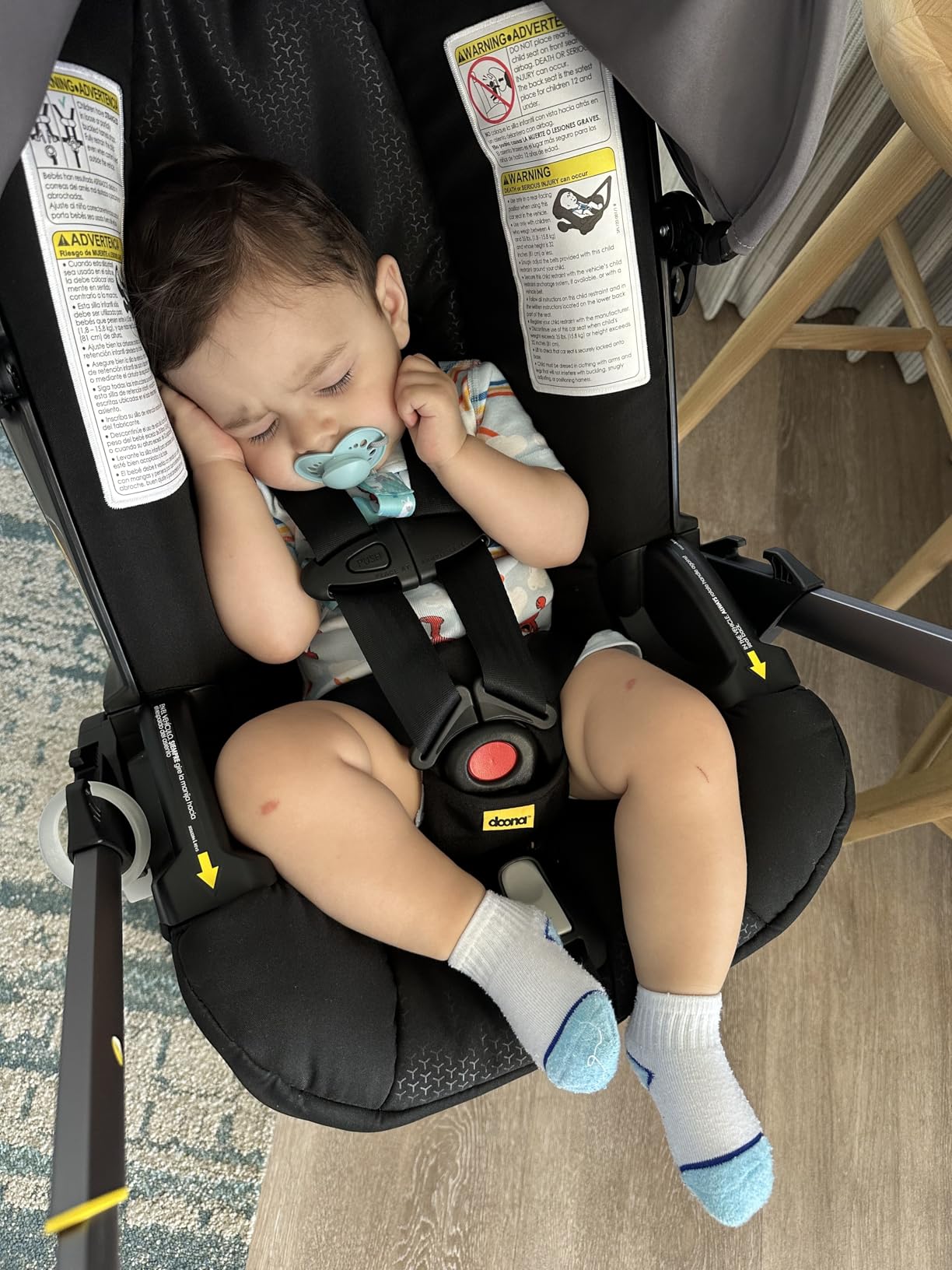
The honest drawback is weight. At 17.2 pounds for the seat, plus a separate 9.7 pound LATCH base, this is the heaviest setup we tested, and parents on travel forums consistently flag the base as the piece that makes airport walking harder. The counterargument is that the stroller wheel kit replaces the need for a separate travel stroller frame, which usually weighs as much on its own.
It is also rear-facing only, capped at 30 pounds. That is a real ceiling for a toddler who eats well, and it means you are buying a second seat later rather than passing this one down.

When the Doona makes sense
For a baby under about 18 months who is still rear-facing anyway, the stroller conversion is worth more than any weight saving. Families who fly with a newborn, or who use ride services and taxis constantly, get the most out of it.
If you only fly twice a year and rent a stroller on arrival, the extra weight is harder to justify. In that case the Diono below covers a much wider weight range in a seat you keep in a car.
When to look elsewhere
Skip it if your child is over 30 pounds, or if you need a forward-facing harness. There is no mode switch, so there is no version of this seat that grows up with a preschooler.
Also skip it if you plan to carry a seat alone through a long connection. The base adds a second bulky item that cannot go in the overhead bin with the seat.
2. CARES Aviation Restraint System: Best Plane-Only Pick
Child Airplane Travel Harness – Cares Safety Restraint System – The Only FAA Approved Child Flying Safety Device
Aircraft use only
FAA approved child restraint
Fits carry-on or backpack
Quick seat attachment
Pros
- The only FAA-approved child restraint designed specifically for aircraft
- Fits carry-on luggage backpacks or a diaper bag
- Attaches to standard airplane seats in minutes
- Keeps the child positioned through takeoff landing and turbulence
Cons
- Aircraft only so you still need a car seat on the ground
- No rigid shell so side impact protection is limited
- Fit and comfort disappoint a noticeable share of buyers
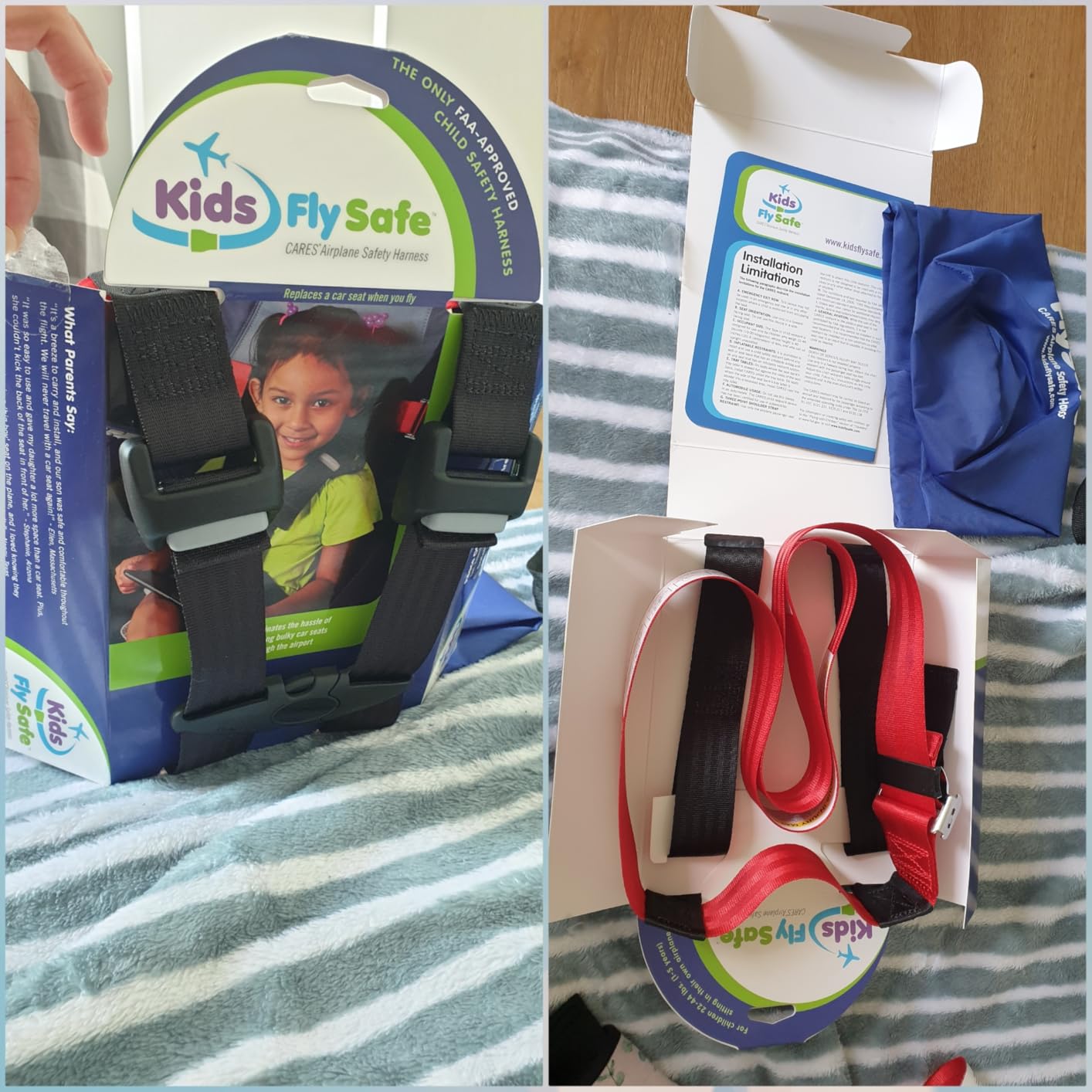
When the destination has no car and no rental, the CARES harness is the honest answer. It is a wrap-around restraint that straps your child to the aircraft seat itself, and it weighs effectively nothing, so it disappears into a backpack instead of becoming a second piece of luggage.
Installation takes a few minutes once you have done it once, and the top strap routes around the seat back, which is the part families rarely expect. That upper strap is also the main practical conflict: the passenger behind cannot use their tray table while it is in place, and some crews ask you to remove it after takeoff. Budget for that rather than treating it as a defect.
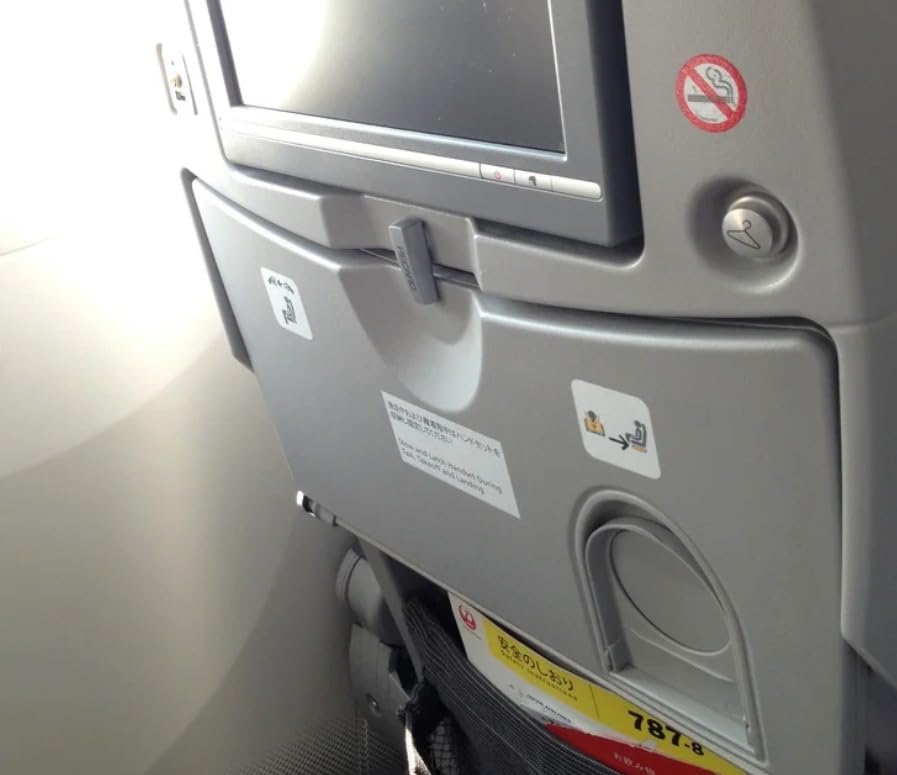
Owners frequently mention that fitting the harness to a narrower aircraft seat takes practice, and the 4.4 average across more than 2,600 reviews reflects that. It is a restraint, not a car seat, so there is no head support comparable to a convertible and no recline for sleep.
Who should buy the CARES harness
Children roughly 1 to 4 years old travelling on a plane with no car at either end, especially frequent flyers who have given up on hauling a seat through terminals. It is also the easiest option for a family with several children and one pair of hands.
If you land somewhere with a rental car or your own car waiting, this solves nothing. You will still need a full seat for the ground.
Limitations to weigh
It is aircraft-only, so treat it as an addition to your existing seat rather than a replacement. Only 70 percent of its reviews are five-star, and the complaints cluster around fit on narrow seats and getting the straps snug enough.
On a long-haul flight the lack of recline is the bigger issue. A sleeping child in a rear-facing seat is far easier to settle than one strapped upright.
3. Mifold Hifold: Best Foldable Booster for Older Kids
Mifold Hifold Adjustable Kids High Back Booster Car Seat with Strap – Slate Grey
Belt-positioning booster
Ages 4 to 12, 40-100 lb
Weighs 10 lb
Folds to 10.7 x 13.5 in
Pros
- 243 fit settings across four adjustment zones
- Weighs only 10 lb with a built-in carry strap
- Folds to 10.7 x 13.5 in
- Meets or exceeds FMVSS 213b
Cons
- Belt-positioning booster only with no harness for younger children
- Not approved for use in Australia or Taiwan
- Adjustments across four zones take longer than a single-lever headrest
The Hifold is the most substantial booster in this roundup and the one that holds a growing child properly rather than just lifting them. It adjusts in four separate zones, and for a child moving through the 40 to 100 pound range that precision is the whole point: the shoulder belt has to sit in the right place or the booster is decoration.
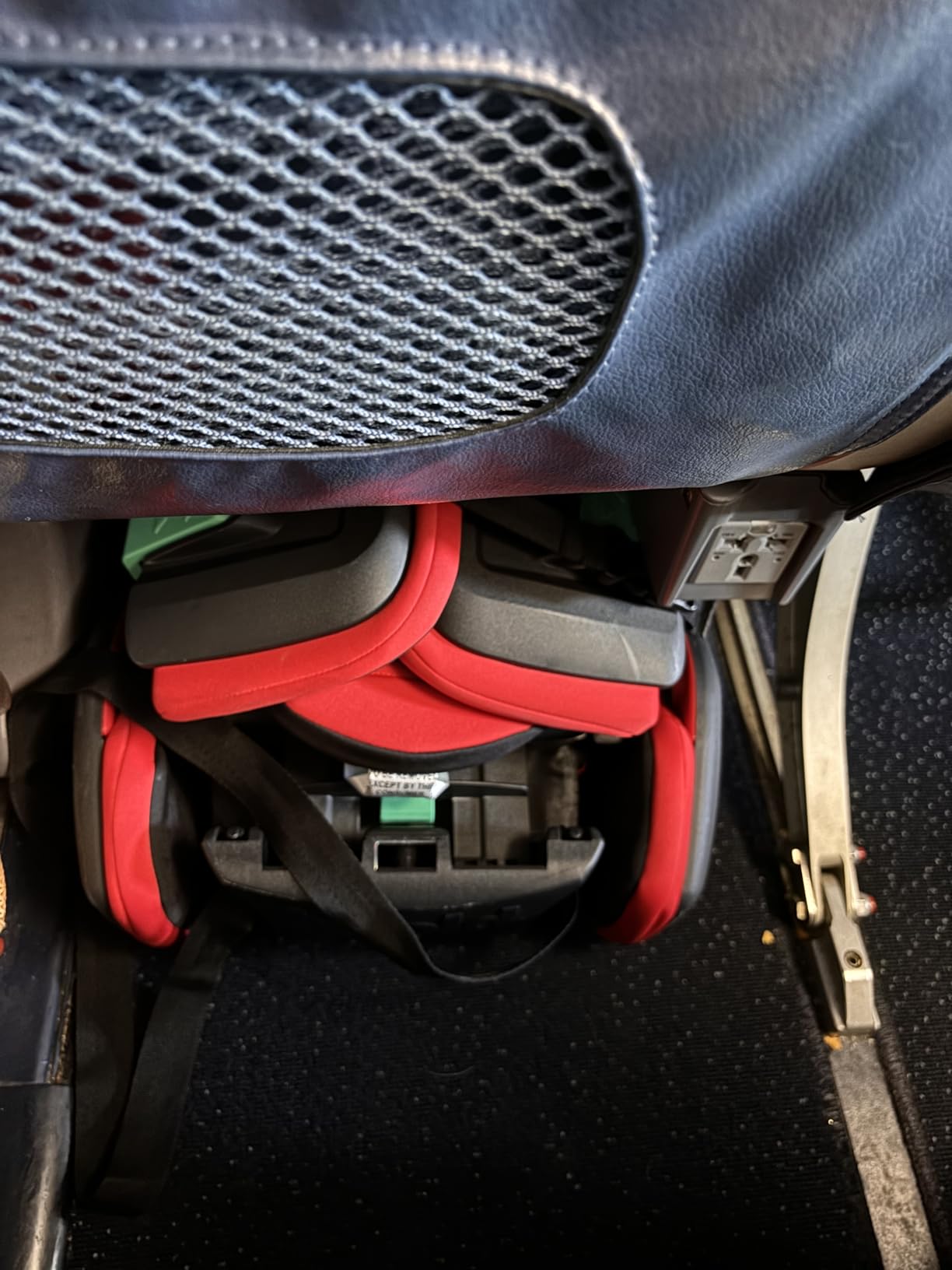
It weighs 10 pounds and folds to 10.7 by 13.5 inches, so it fits in an overhead bin or under a seat and comes with its own carry strap. Unlike the inflatable options here, it stays in the car as a permanent installation, so there is nothing to inflate at the rental counter.
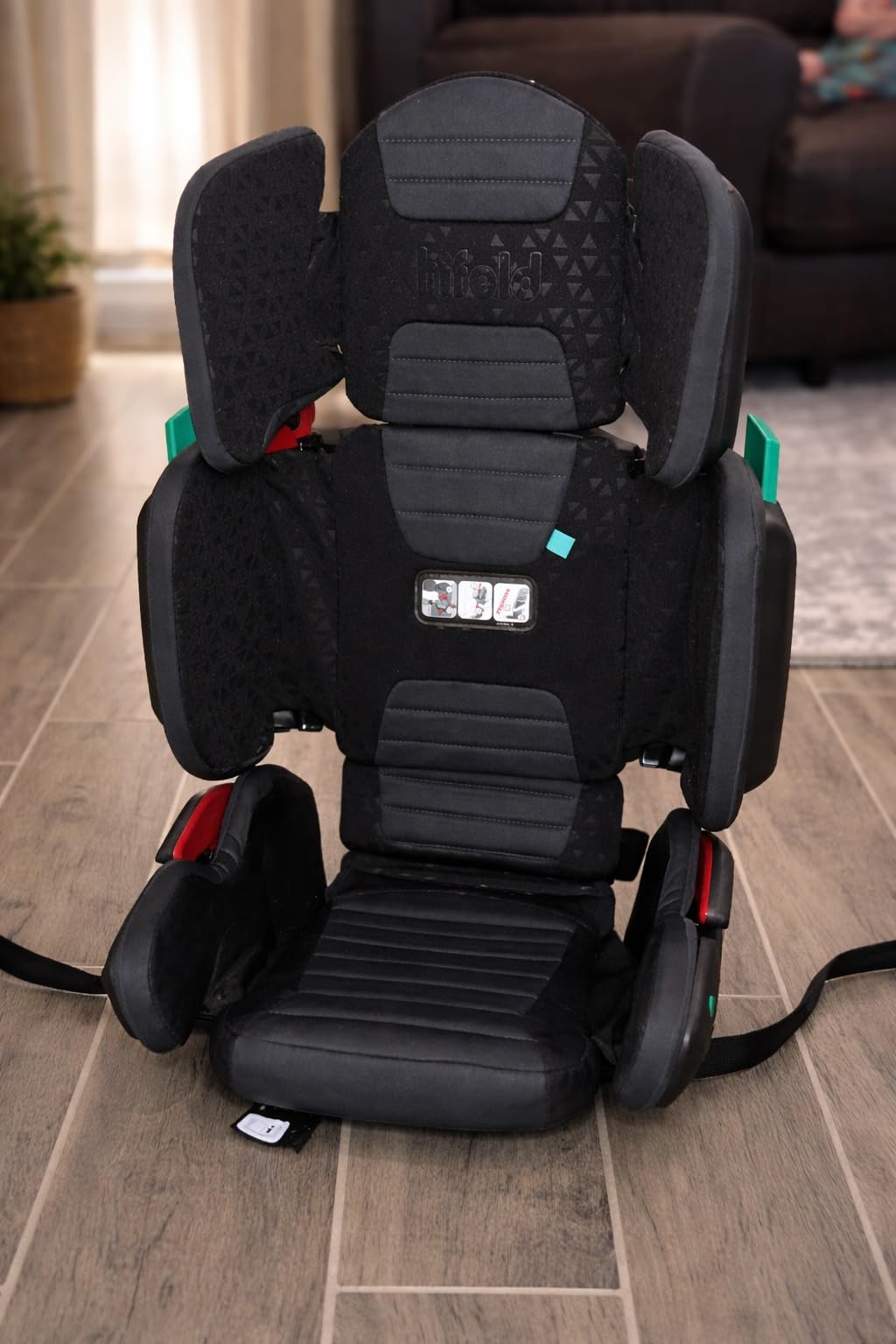
It is worth being clear that this is a ground-only seat. As a belt-positioning booster it is not approved for use in aircraft, so it is a companion to a car seat rather than a substitute for one. Our booster roundup covers that distinction in more depth.
Reviewers like the adjustment range and the light foam that gives impact resistance without bulk. The complaints are about time: four adjustment areas means a longer setup, and the 4.3 average is the lowest among the highly rated boosters here.
Where the Hifold earns its place
Children 4 and up, 40 to 100 pounds, who need a real high-back seat on the ground and who are travelling with a harness seat or a lap infant in the air. The multi-fold design makes it realistic to move between two cars without a fight.
It is also the better long-term choice for frequent international travel, where you will be buckled into rental cars repeatedly rather than occasionally.
Where it falls short
It does nothing for a child under 40 pounds, because there is no harness. If your child is still in a five-point harness, you need one of the convertibles earlier in this list.
It is also excluded in Australia and Taiwan, so if you are based in or relocating to those regions, pick a locally approved booster instead.
4. Graco Slimfit 3-in-1: Best Narrow Convertible for Plane Rows
Graco Slimfit 3-in-1 Convertible Car Seat, Jarret
Rear-facing 5-40 lb
Forward-facing to 65 lb
Booster to 100 lb
10 percent slimmer profile
Pros
- Slim 10 percent narrower profile fits three across
- Grows from 5 lb rear-facing to a 100 lb booster
- No-Rethread headrest and harness adjust in one motion
- Owners report tight installation with no sliding
- Removable washable covers with rotating cup holders
Cons
- Deep side bolsters and thick padding run warm in hot climates
- Rear-facing recline is not obvious and can need a technician
- Side openings let air conditioning blow onto the child
Aircraft seats are narrow, and a wide convertible is the single most common reason a family gets bumped to a different plane or told to gate check. The Slimfit was designed around that constraint, coming in 10 percent slimmer than the standard Graco convertible with cup holders that rotate away.
It covers the full range most families need: rear-facing harness from 5 pounds, forward-facing harness to 65 pounds, then high-back booster to 100 pounds. The No-Rethread headrest and harness adjust together in a single motion, which matters when you are doing it in an aircraft seat with a tight belt path.
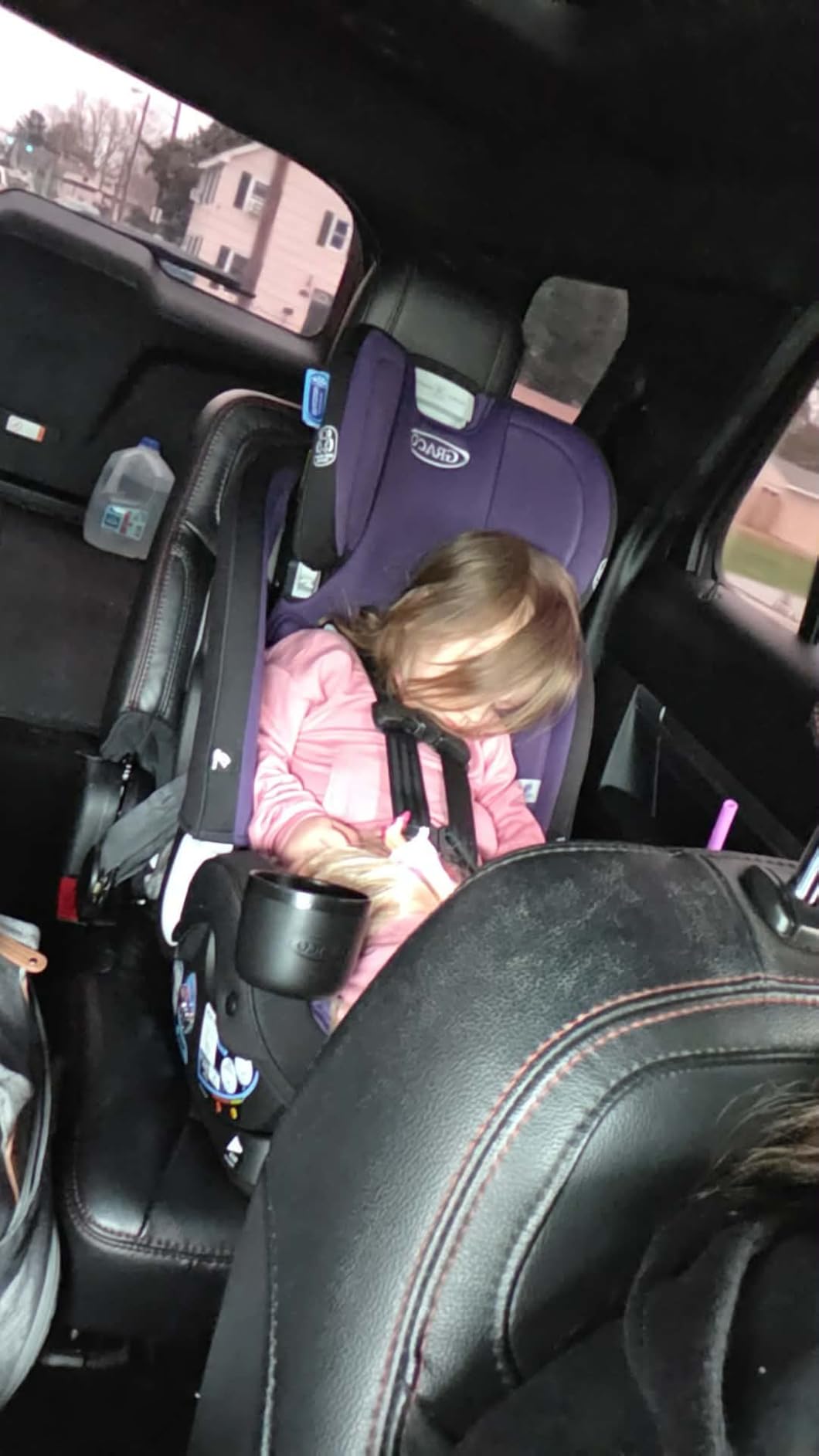
Owners single out the slimness as the deciding factor, describing it as the seat that let them fit three across in a Mustang and a small sedan. Installation is reported as tight with virtually no sliding, and 89 percent of reviews are five-star, the strongest distribution in this roundup.
The recurring complaint is heat. Deep side bolsters and thick padding trap warmth, and several owners in hot climates report a sweating child, plus openings in the seat sides that let cabin air blow straight onto legs.
Why the slim profile matters in the air
Width is the number to check before you fly, and slim seats like this one are far more likely to be accepted in a standard row without negotiation. It is a rare example of a design choice that helps in the cabin and in a crowded back seat at home.
It is our pick for families who fly with a convertible in the cabin rather than gate checking, because the airline is far less likely to raise a size objection.
Things to know before you buy
The rear-facing recline is not obvious from the seat itself and some owners needed a technician to set it correctly. Check it before you rely on it for a sleeping toddler on a long flight.
The padding that makes it comfortable in a car also makes it warm in a cabin, so pack a light blanket rather than a thick one.
5. Diono Radian 3R: Top Rated Long-Term Travel Convertible
Diono Radian 3R, 3-in-1 Convertible Car Seat, Rear Facing & Forward Facing, 10 Years 1 Car Seat, Slim Fit 3 Across, Jet Black
Four modes 5-120 lb
Rear-facing to 50 lb
Folds flat for travel
FAA approved
Pros
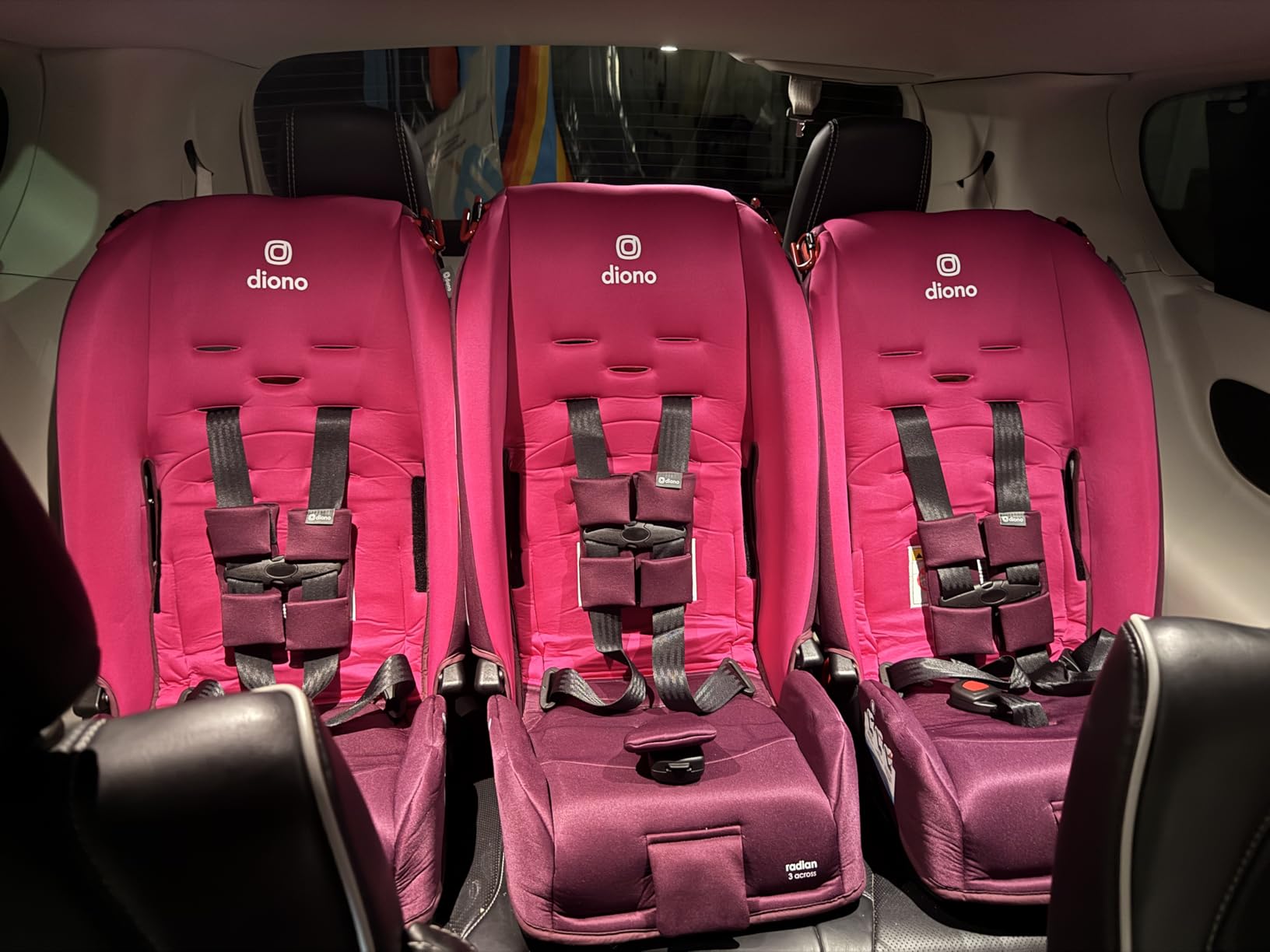
- Fits three across in a sedan or compact SUV
- Four modes cover 5 to 120 lb
- Rear-faces up to 50 lb
- Folds flat and is FAA approved
- Machine-washable covers with smooth harness tensioning
Cons
- Heavy steel frame is hard to move between vehicles
- Rear-facing recline is deep and pushes the front seat forward
- Four modes can be misused without careful reading
The Radian 3R is the only seat here that both folds flat and carries the full ten-year weight range, which makes it the closest thing to a one-seat solution for a family that flies regularly and rents cars at the far end. Four modes take your child from 5 to 120 pounds, and it rear-faces to 50 pounds, longer than most convertibles.
It is FAA approved for airline use, and the fold is a genuine flat fold rather than a partial collapse, so it drops into a trunk or a luggage compartment in a way most convertibles cannot. Slim 3-across geometry means it fits three per row if you need that at home.
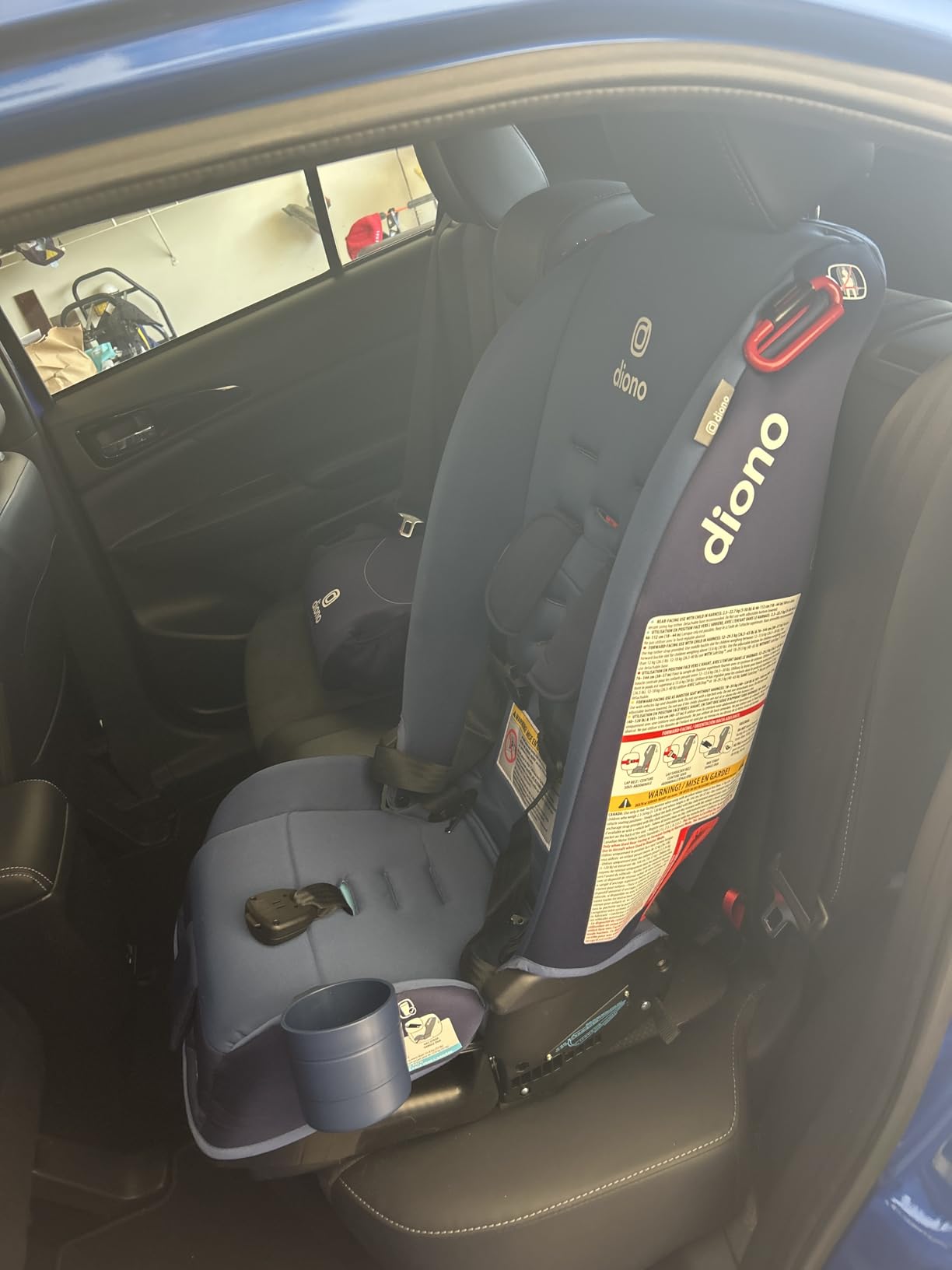
The steel-reinforced frame is the reason it is heavy, and weight is the reason r/CPST commenters warn parents off it for travel. A forum parent put it plainly when describing a different 55 pound seat: there is no way we can fly with it. The Radian is not quite that extreme, but it is not a grab-and-go seat either.
What owners do praise is solidity. Several report that a child barely moved in a real accident, and 7,880 reviews at 4.7 stars is the second-largest base among the convertibles we looked at.
Reasons to pick the Radian 3R
Families who fly several times a year, carry one seat for one child across multiple destinations, or want a single seat to last from infancy to booster mode. The fold also means it lives in a closet between trips instead of staying installed in one car.
Rear-facing to 50 pounds is the standout spec here, since it buys extra months in the safest position for a heavier toddler.
Reasons to skip it
If you fly solo with one child and hand luggage, the weight is the deal-breaker. The deep rear-facing recline also pushes your front seat forward, which matters in a rental car where you may share with an adult.
Four facing and weight modes is a genuine safety risk if you set it up from memory. Read the manual, and if you are unsure, have a certified technician check the installation at home before you fly.
6. Safety 1st Ellaris: Best Value Airplane-Ready Convertible
Safety 1st Ellaris 3-in-1 Convertible Car Seat, Slim Fit Design, Rear & Forward-Facing, 5-Position Headrest, Travel-Friendly with Machine-Washable Seat Pad, Smokey Haze
Rear-facing 5-40 lb
Forward-facing to 65 lb
Airplane ready
3 modes with 5-position headrest
Pros
- Airplane ready with a compact travel profile
- Three modes covering rear-facing and forward-facing
- Five-position headrest adjusts without rethreading
- Machine-washable and dryer-safe seat pad
- Dishwasher-safe removable cup holders
Cons
- Marketed as slim but measures over 19 inches installed
- Headrest has noticeable play compared with similar Graco seats
- Harness tension button is hard to reach
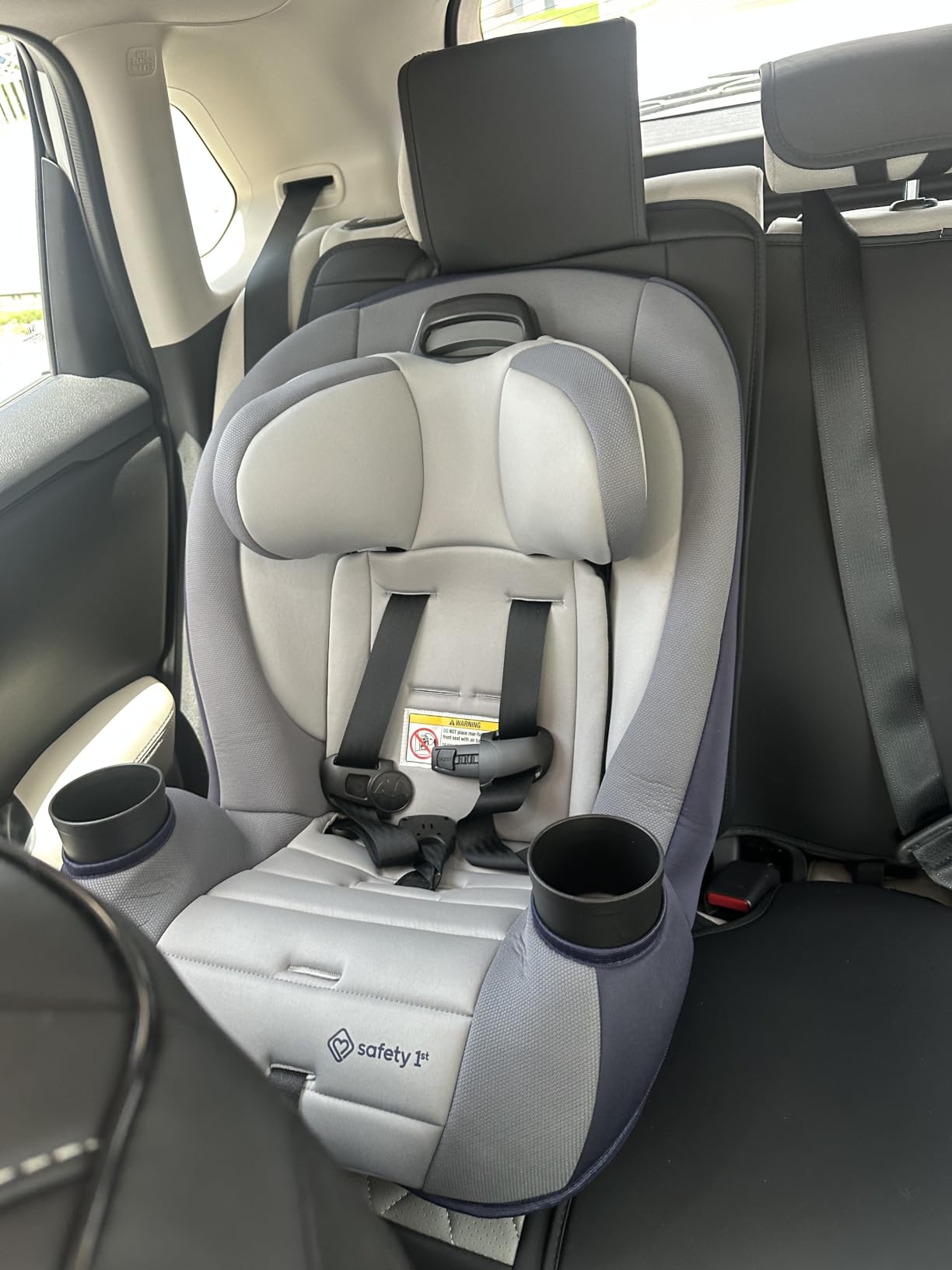
The Ellaris is the value pick for a family that wants a genuine convertible in the cabin without moving up to a premium shell. It is marketed as airplane ready with a compact profile, three modes from rear-facing infant through rear-facing toddler to forward-facing harness, and a 5-position headrest that adjusts without rethreading straps.
Cleaning matters more than usual after a trip, and this one handles it well: the seat pad is machine-washable and dryer-safe and the cup holders are dishwasher-safe. Owners with several children rate it as the best convertible in its price bracket.
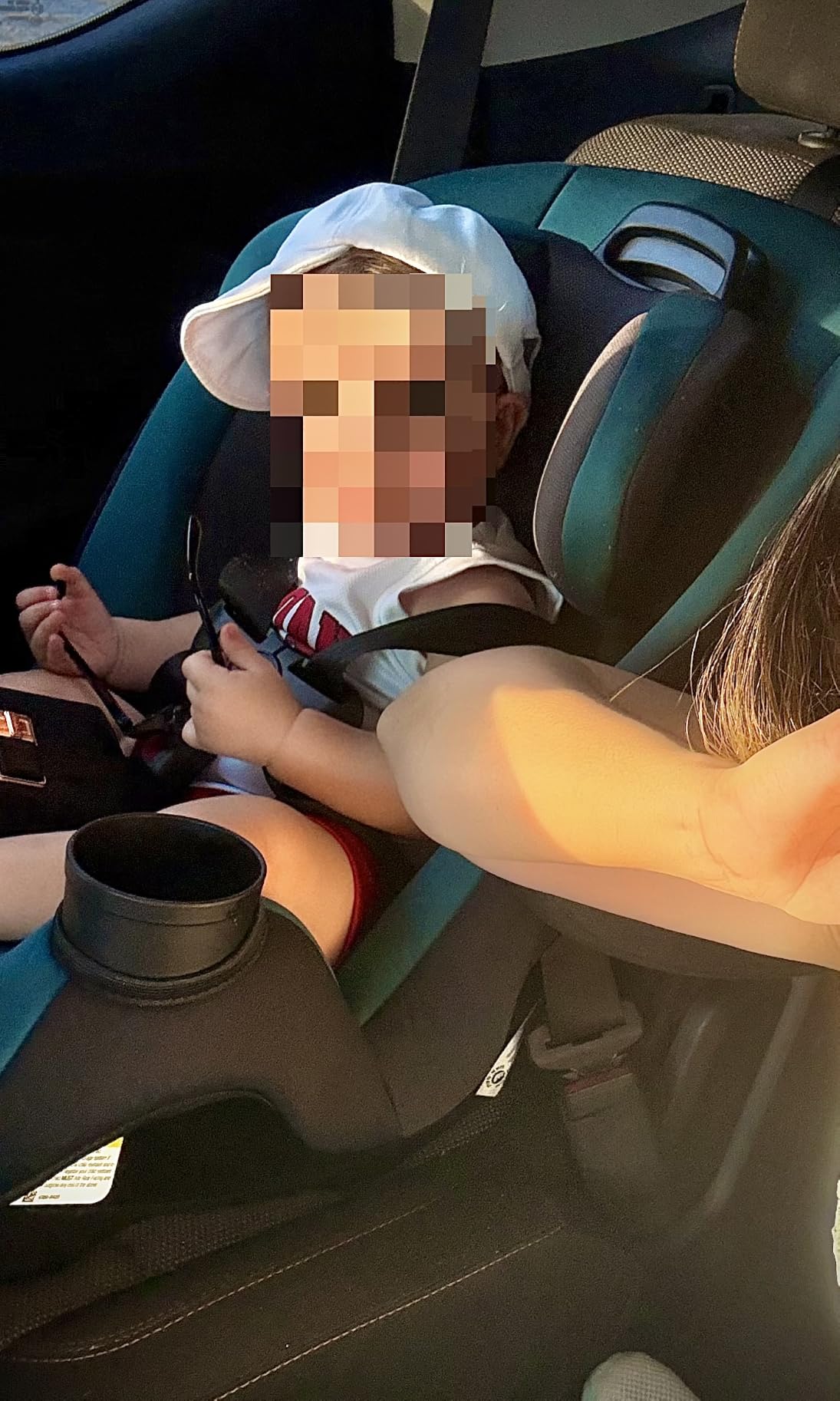
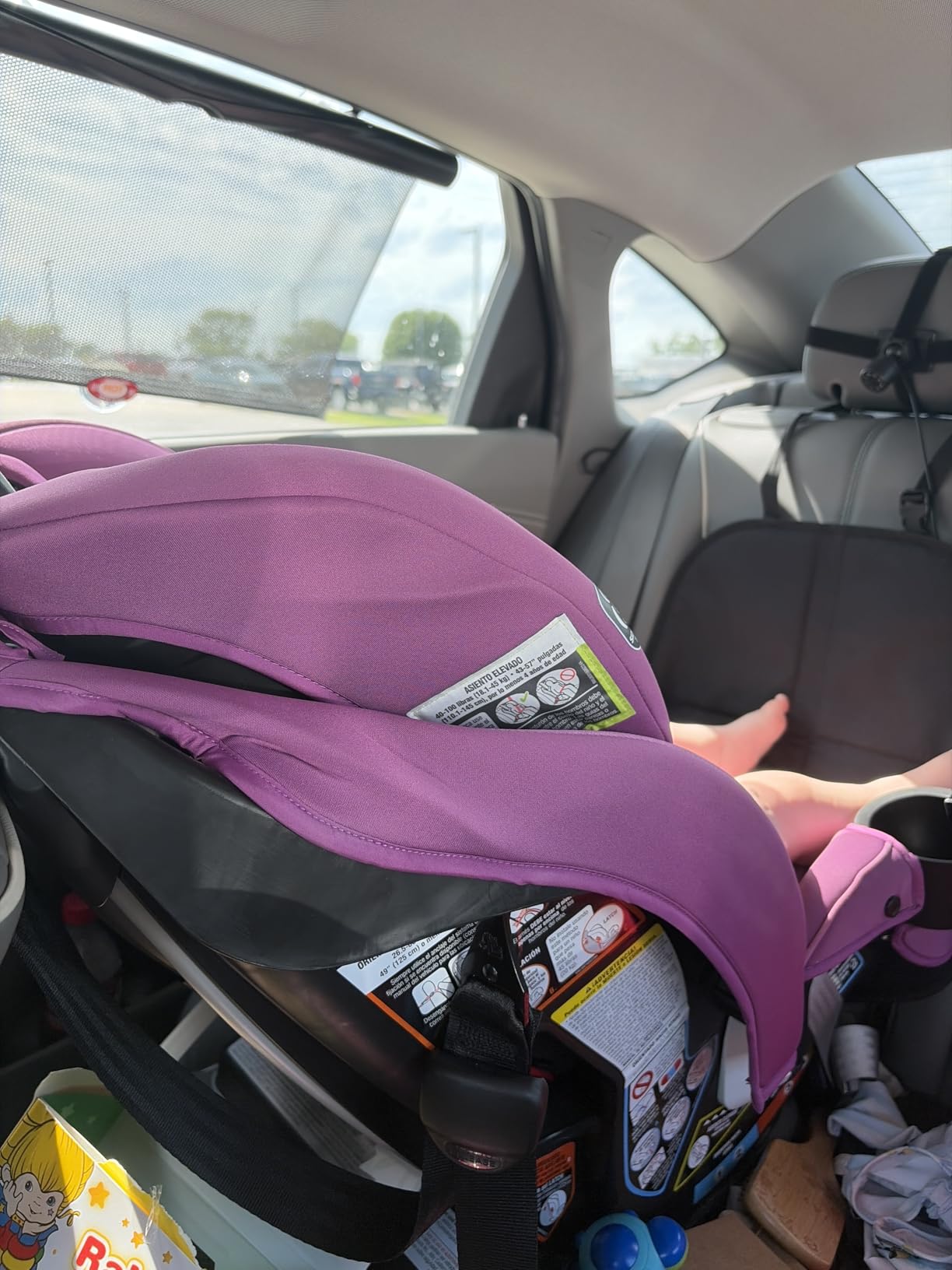
Two cautions before you commit. The slim label oversells it: owners have measured it at over 19 inches installed, deeper sided than mainstream slim seats, so do not assume three will fit across a narrow back seat. The headrest also has noticeable play, more than twice that of comparable Graco models.
At 4.3 stars with only 72 percent five-star, this is the most mixed rating profile among the convertibles here. The complaints are about the harness tension button being hard to reach and general bulkiness rather than any safety concern.
Who the Ellaris suits
Budget-conscious families flying domestically a couple of times a year who want a full convertible with a real aircraft-approved installation rather than a belt-positioning add-on. It also works as an everyday car seat, which removes the two-seat problem entirely.
It is a sensible choice for a second child, where you need a working seat now and the third one can wait.
Where it will frustrate you
If your vehicle or your airline cabin is tight, the actual width is the deciding factor, and this seat does not deliver on the slim promise. Check your own measurements rather than trusting the category label.
The hard-to-reach tension button is a daily irritation during travel too, when you are adjusting a harness in a cramped row with a sleeping child.
7. Safety 1st Grand 2-in-1: Most Compact for Three-Across Families
Safety 1st Grand 2-in-1 Booster Car Seat, Converts from High Back to Belt-Positioning Booster, High Back Seat for Kids 40-65, and Belt-Positioning 40-100 Pounds, Black Sky
Forward-facing harness 40-65 lb
Belt-positioning to 100 lb
Slim three-across
Lightweight and portable
Pros
- Converts from 5-point harness booster to belt-positioning high back
- Slim enough to fit three across in most vehicles
- Lightweight and easy to move between cars
- Adjustable headrest grows with the child through 40-100 lb
- Over 10700 reviews at 4.7 stars
Cons
- No harness below 40 lbs so it cannot be used from infancy
- Upper weight and height limits are lower than most convertibles
- Manufacturer notes actual fit varies by child
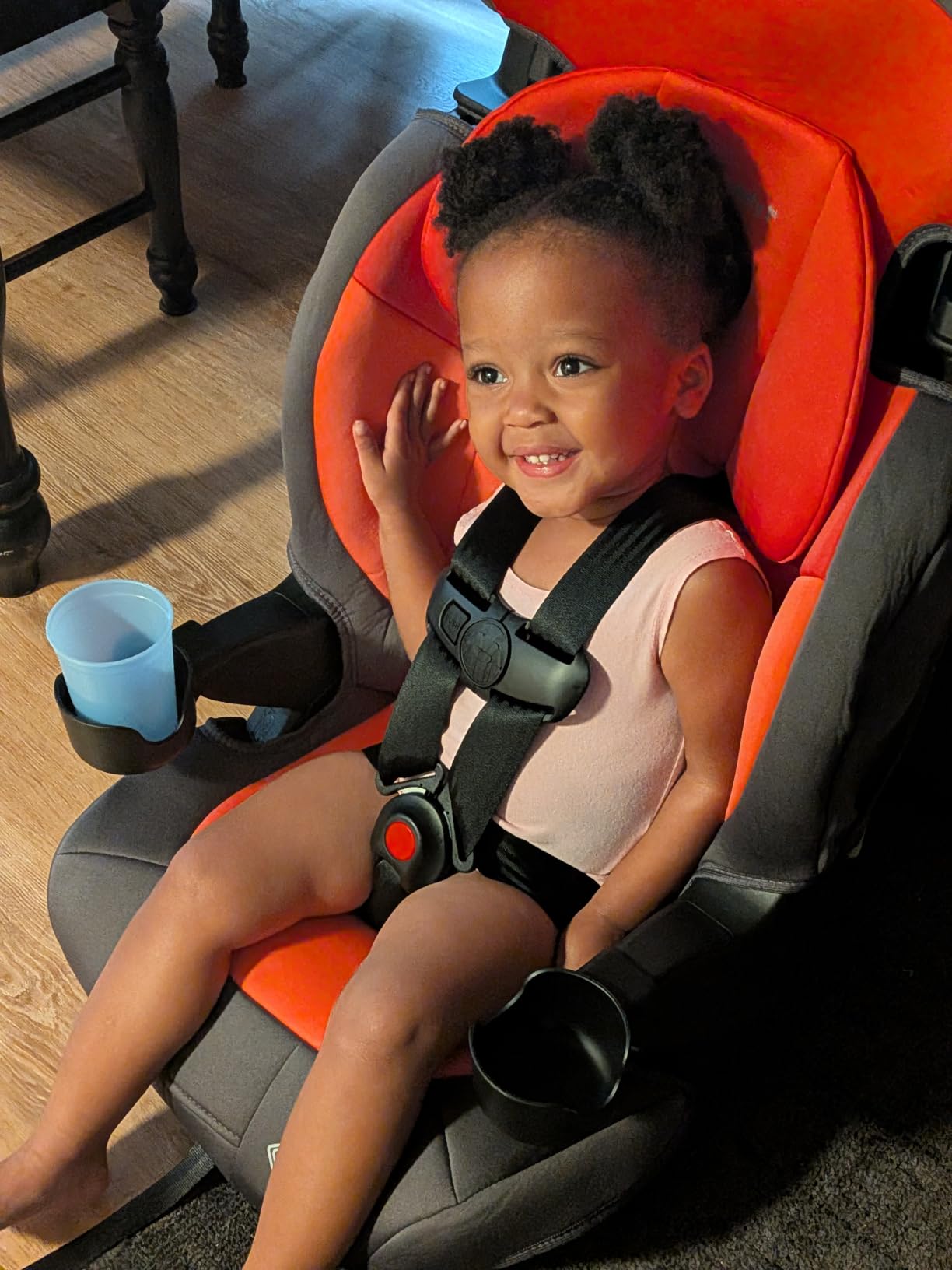
With more than 10,700 reviews at 4.7 stars, the Grand has the broadest owner base of any seat in this roundup, and the feedback is unusually consistent. Buyers emphasise three-across slimness, how easily it moves between vehicles, and the simple conversion from harness booster to high-back belt-positioning mode.
For travel specifically, the lightweight build is the reason it earns a place in a flight-focused list. It moves between a car, a carpool and a rideshare without the logistics problem that heavier convertibles create, and it can live in the vehicle rather than coming out of a bag.
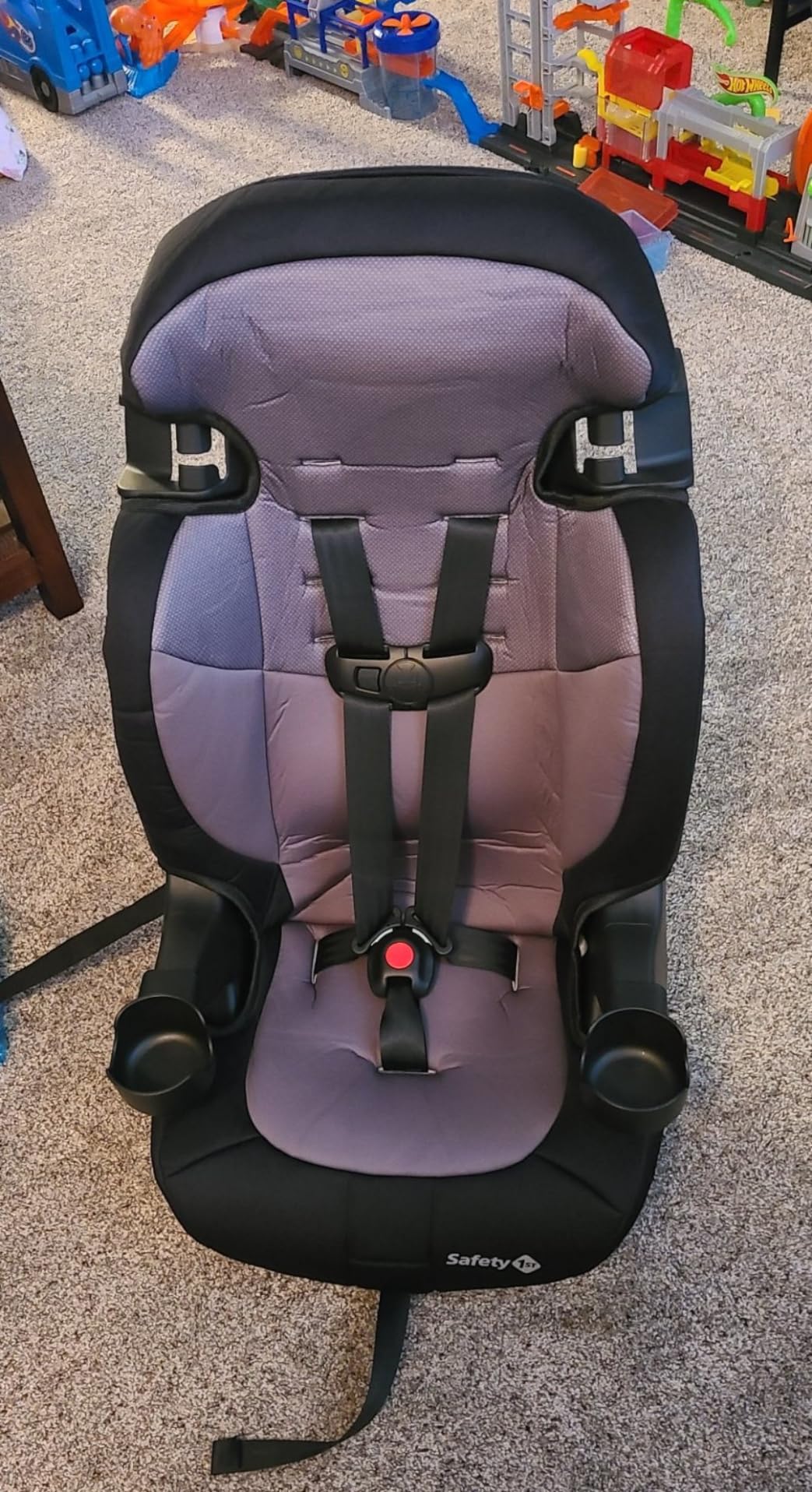
Understand the ceiling before you buy. The harness mode starts at 40 pounds, so this is not a seat for a toddler, and the top of the range is lower than many convertibles, with the manufacturer explicitly noting that not all children fit the listed limits.
It is also a booster once converted, which means it is not approved for aircraft use. Read the booster section below before treating it as flight equipment.
Where the Grand 2-in-1 works best
Families with two or three children in the back seat who need the narrowest possible profile, and anyone who shuttles between multiple vehicles. The conversion means one seat replaces two purchases as your child grows from 40 to 100 pounds.
Made in Columbus, Indiana, with washable covers and dishwasher-safe cup holders, it is straightforward to keep clean after a long trip.
Where it does not apply
It starts at 40 pounds, which rules out every child under four who is still in a harness. For younger children, choose one of the convertibles earlier in this roundup.
Booster mode is ground-only, so if your child is already tall enough for the belt, this seat will not get them onto a plane in their own restraint.
8. Graco Tranzitions: Best Forward-Facing Harness for Toddlers
Graco Tranzitions 3-in-1 Harness Booster Car Seat, Proof
Forward-facing harness 26.5-65 lb
High-back and backless booster modes
9-position headrest
Lightweight and portable
Pros
- Three modes from forward-facing harness to backless booster
- No-Rethread headrest and harness adjust in one motion
- Lightweight and portable for travel and multiple cars
- One-hand 9-position headrest adjustment
- 86 percent of reviews are five-star
Cons
- Booster modes now need a 40 lb minimum
- Forward-facing harness only so no rear-facing use
- Not specified as FAA approved for aircraft use
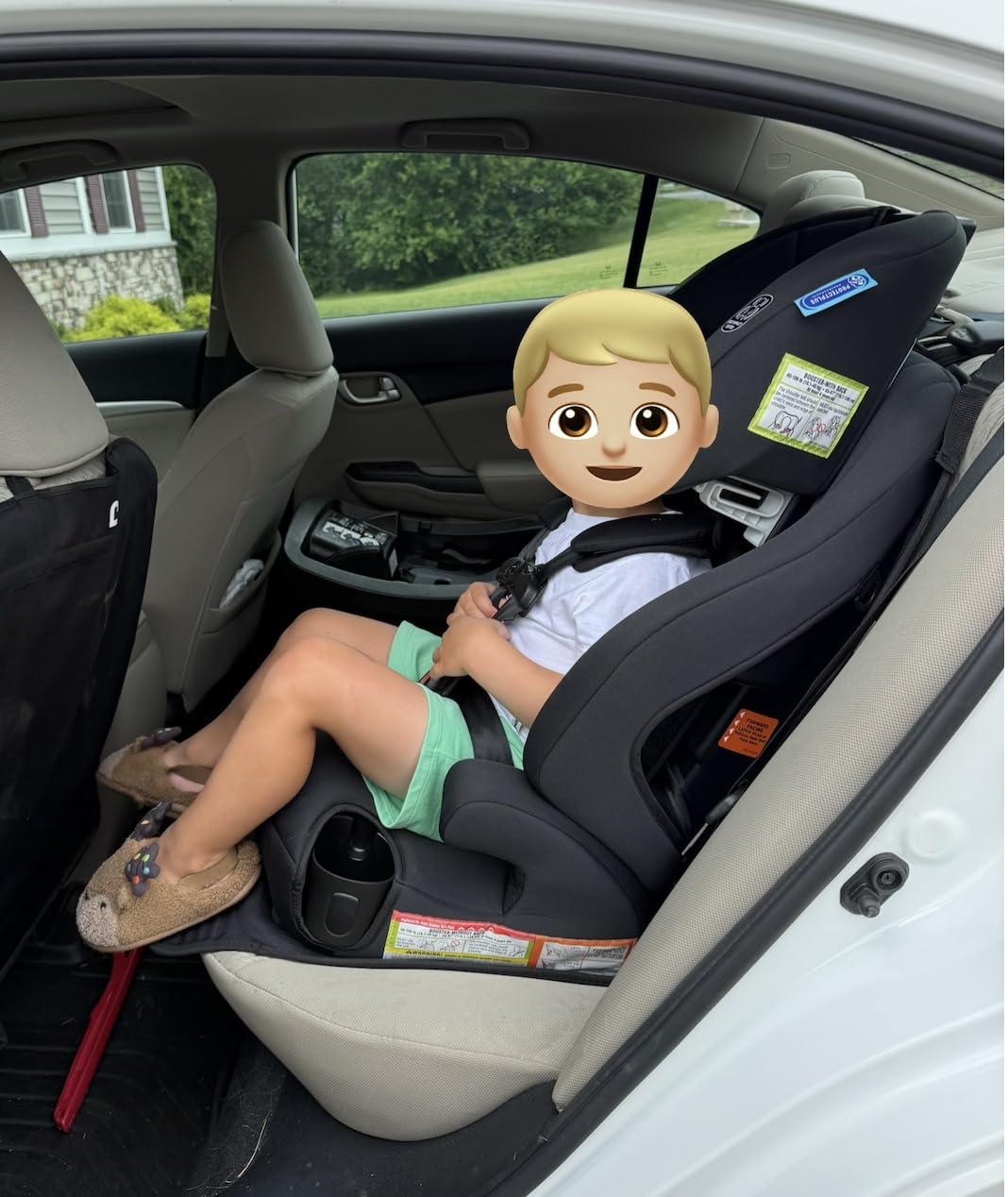
The Tranzitions fills a specific gap: a toddler who has outgrown rear-facing but is not big enough for a booster. The forward-facing harness mode runs from 26.5 to 65 pounds, and the seat then converts to a high-back and then a backless booster as your child grows.
What makes it travel-friendly is the weight and the no-rethread adjustment. The headrest and harness move together in one motion, so a single-handed adjustment works in a car, at a carpool and eventually in a rental car, without taking the seat apart. Owners specifically call out its suitability for travel and moving between vehicles.
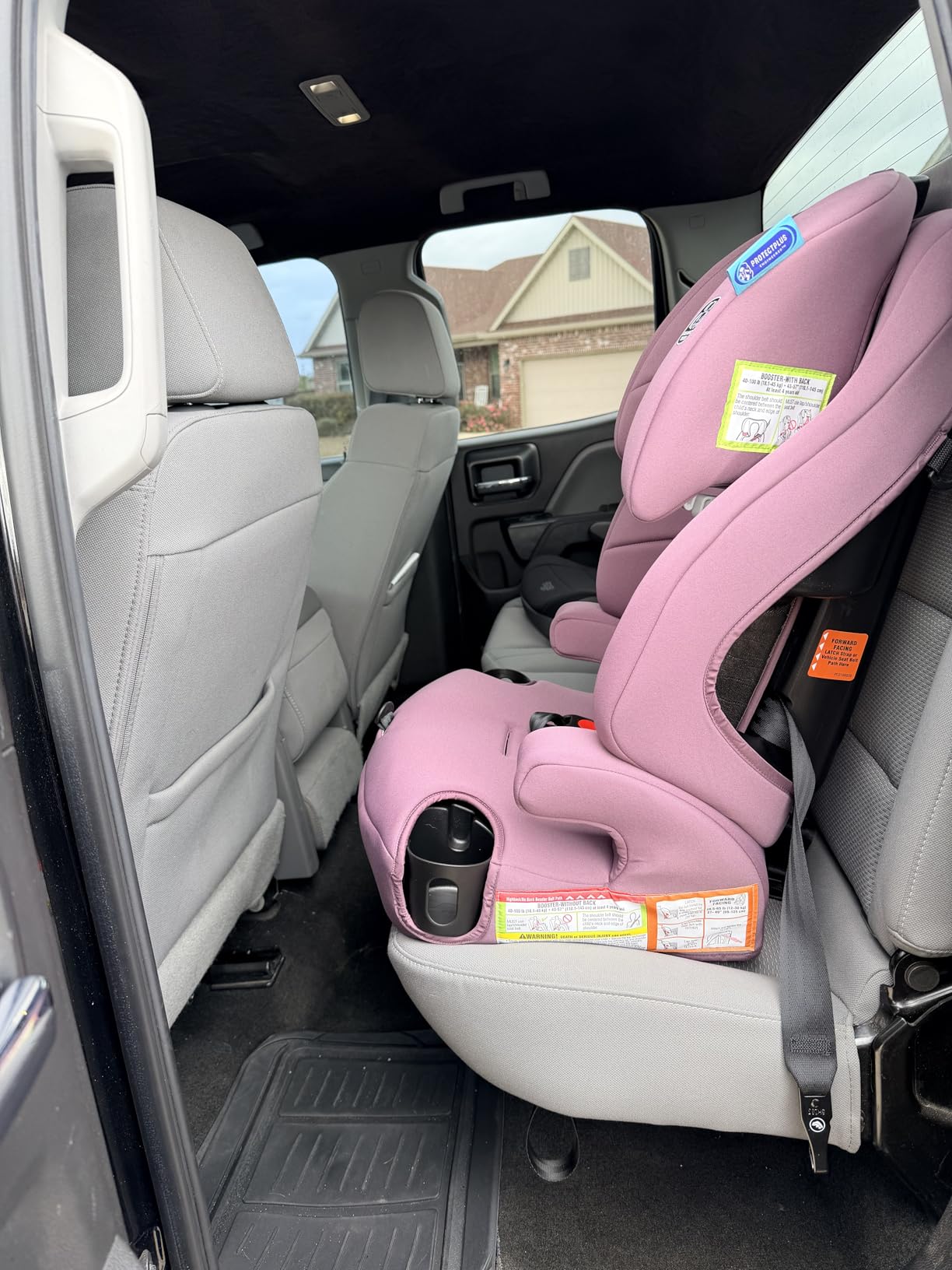
There is one regulatory change worth knowing. Graco raised the booster minimum from 30 to 40 pounds to keep pace with industry standards, so if you were counting on using it as a booster for a smaller child, that option is gone.
More important for this roundup: the seat is not specified as FAA approved for aircraft use. Treat it as ground equipment, and pair it with a harness seat that carries aircraft certification if your child will fly in their own restraint.
When the Tranzitions is the right age
A child between roughly 18 months and four years, forward-facing and above 26.5 pounds, who is ready to move up from rear-facing. It is the bridge seat, and the 4.7 rating across 1,162 reviews reflects owners who got that transition right the first time.
It also works for grandparents who need a seat for a weekend rather than a full-time installation.
What to know before you fly with it
It is forward-facing harness only, so it cannot be used rear-facing, and it is not certified for aircraft. If you need an in-cabin seat, look at the Slimfit, the Radian 3R or the Ellaris instead.
Confirm the harness height is correct for your child’s shoulders before you rely on it in any vehicle, since an outgrown forward-facing harness is the most common error we see in this age group.
9. Hiccapop UberBoost: Best Inflatable Booster to Pack
UberBoost Inflatable Booster Seat for Car, Travel Booster Seat, Black/Gray
Inflatable belt-positioning booster
Meets FMVSS 213
Deflates into its own travel bag
Non-skid base
Pros
- Inflates in under 20 seconds with no pump
- Meets or exceeds FMVSS 213
- Deflates into its own bag for a suitcase or backpack
- Non-skid base sits firm and is gentle on upholstery
- Positioning clips keep the lap belt off the stomach
Cons
- Air-filled cushion gives less support than a rigid shell
- Inflate and deflate every use adds friction
- Booster only so it needs a child ready for the vehicle belt
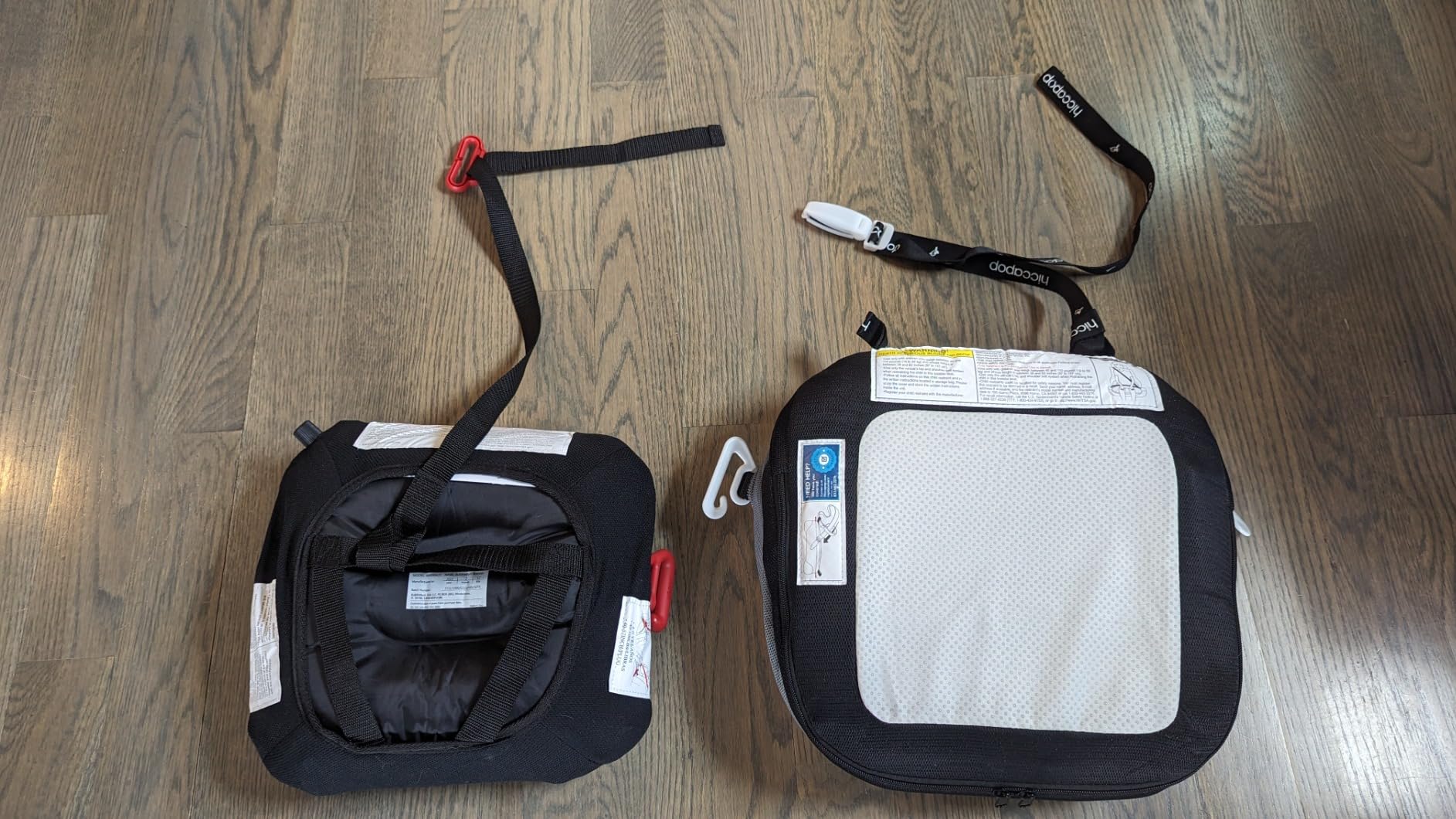
The UberBoost answers a problem rigid seats cannot: how to get a booster across an airport without a second checked bag. It inflates by mouth in under twenty seconds, no pump needed, and deflates into its own travel bag small enough for a suitcase, a carry-on, a large purse or a backpack.
It meets or exceeds FMVSS 213, the same federal standard that applies to rigid car seats, and the non-skid base sits firmly on leather, vinyl or cloth without marking upholstery. The narrow profile also allows three across, or one fitted between two conventional car seats, which is genuinely useful in a rental car.
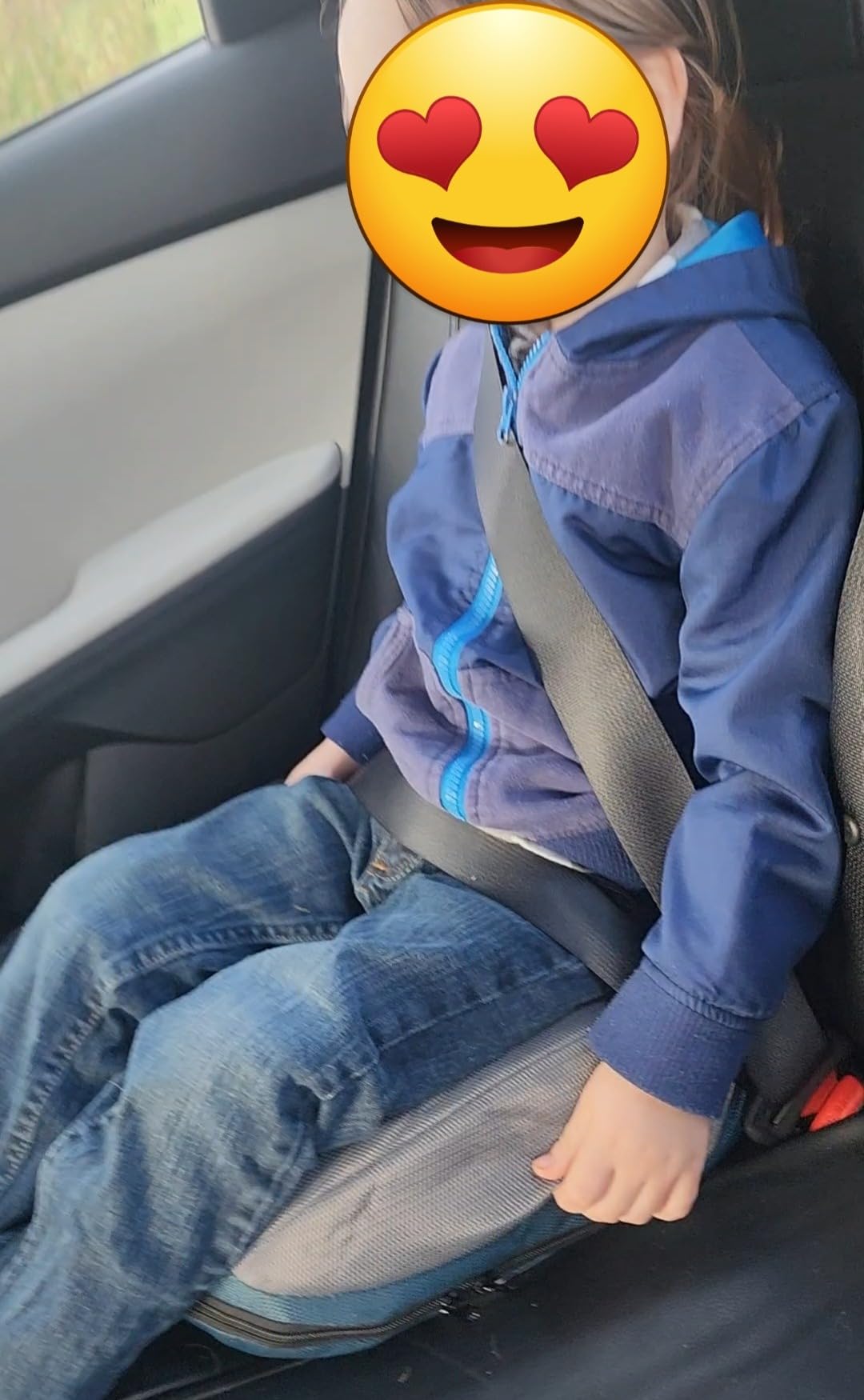
What you give up is structure. An air-filled cushion is less supportive than a rigid shell for a child who falls asleep on a long drive, and the positioning clips that keep the lap belt correctly placed take a moment to get right on a squirming child.
With 7,614 reviews at 4.5 stars, the feedback is consistent: owners buy it for travel, rental cars and rideshares, and they accept the inflate-and-deflate routine as the cost of that portability.
Why the UberBoost fits air travel so well
There is no weight to manage through the terminal and nothing to gate check, because it fits in the bag you already have. For a family carrying a stroller, a car seat and a cabin bag, removing one bulky item from the equation changes the whole airport experience.
It is also the simplest option for a child who already travels with a car seat, because the booster is for the ground end of the trip rather than the flight.
Limits worth knowing
It is a belt-positioning booster, not a harness seat, so it only works once your child can reliably use the vehicle belt. It is ground-only and is not approved for use in aircraft.
Inflating at the roadside every time is a real daily friction point, so it is better suited to occasional travel than to everyday driving.
10. BubbleBum Inflatable Booster: Best Smallest Carry-On Booster
BubbleBum Inflatable Travel Booster Car Seat, Narrow Backless, 40-110 lbs
Backless inflatable booster
40-110 lb, ages 4-11
Deflates to 12 x 6 x 4 in
Over FMVSS 213 tested
Pros
- Inflates by mouth in about 20 seconds
- Deflates to 12 x 6 x 4 in for a carry-on or backpack
- Independently crash tested to exceed FMVSS 213
- No LATCH or special hardware needed
- Narrow enough for three across
- Wipes clean with a damp cloth
Cons
- Air-filled cushion gives less support for a sleeping child
- Requires inflation for every use
- Booster only so it cannot be used under 40 lbs
Where the UberBoost stays bulky when inflated, the BubbleBum disappears. Deflated it measures 12 by 6 by 4 inches, which fits in a purse, a backpack or a carry-on without a dedicated bag, and it inflates by mouth in roughly twenty seconds.
It is independently crash tested to exceed FMVSS 213 and installs with nothing but a standard three-point seat belt, no LATCH anchors or adapters. That makes it the fastest option at a rental car counter, and the narrow profile fits three across in compact cars, SUVs and minivans.
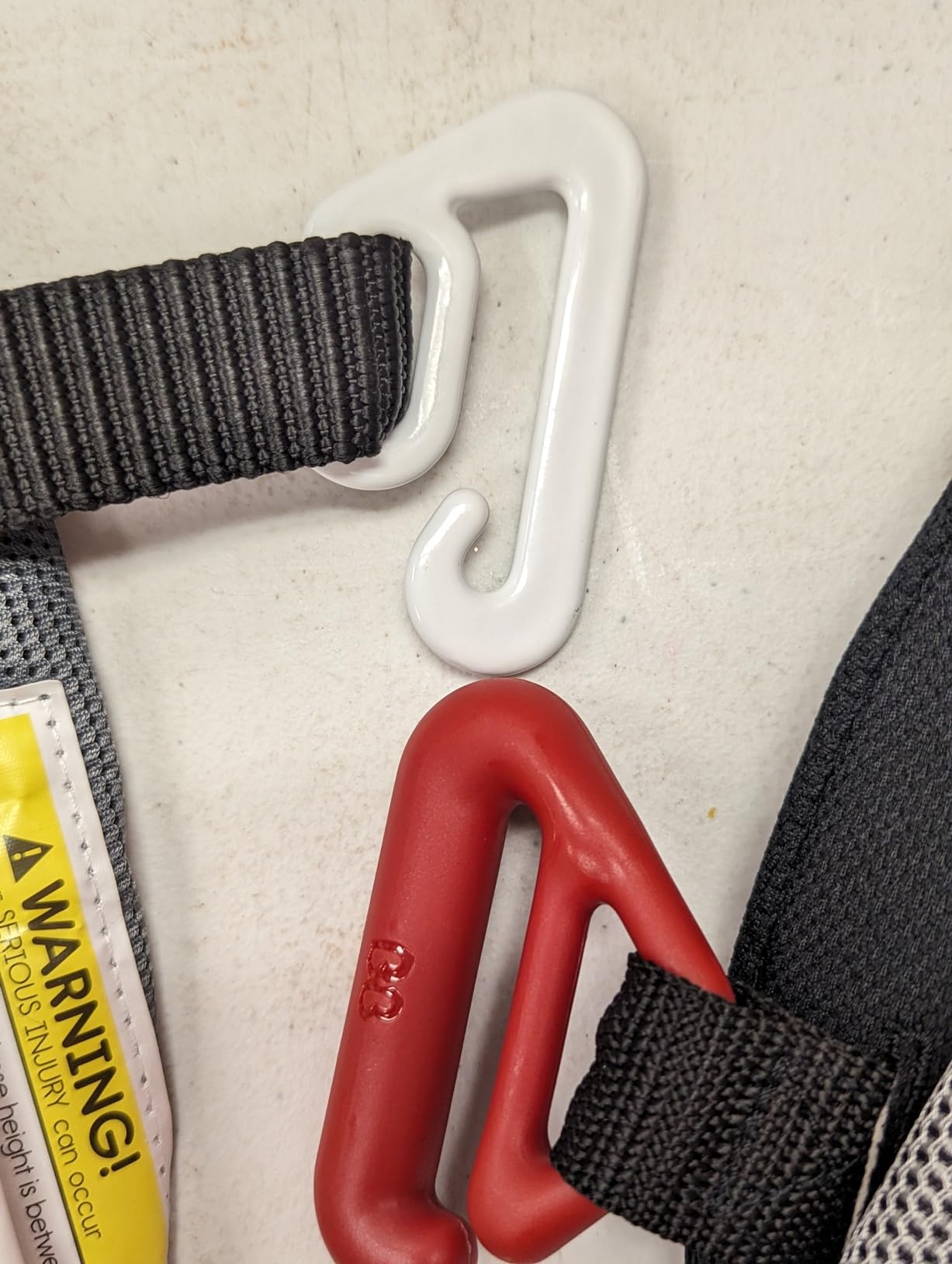
It suits children 40 to 110 pounds and ages 4 to 11, which is one of the wider ranges among the backless options here. Families with older children often pick it precisely for that headroom, since a lot of backless boosters top out around 100 pounds.
The 4.3 average across 6,866 reviews is lower than the rigid boosters, and the complaints cluster around limited side support on long trips and inflating at the roadside. It also carries the highest one-star share among the well-reviewed boosters in this roundup.
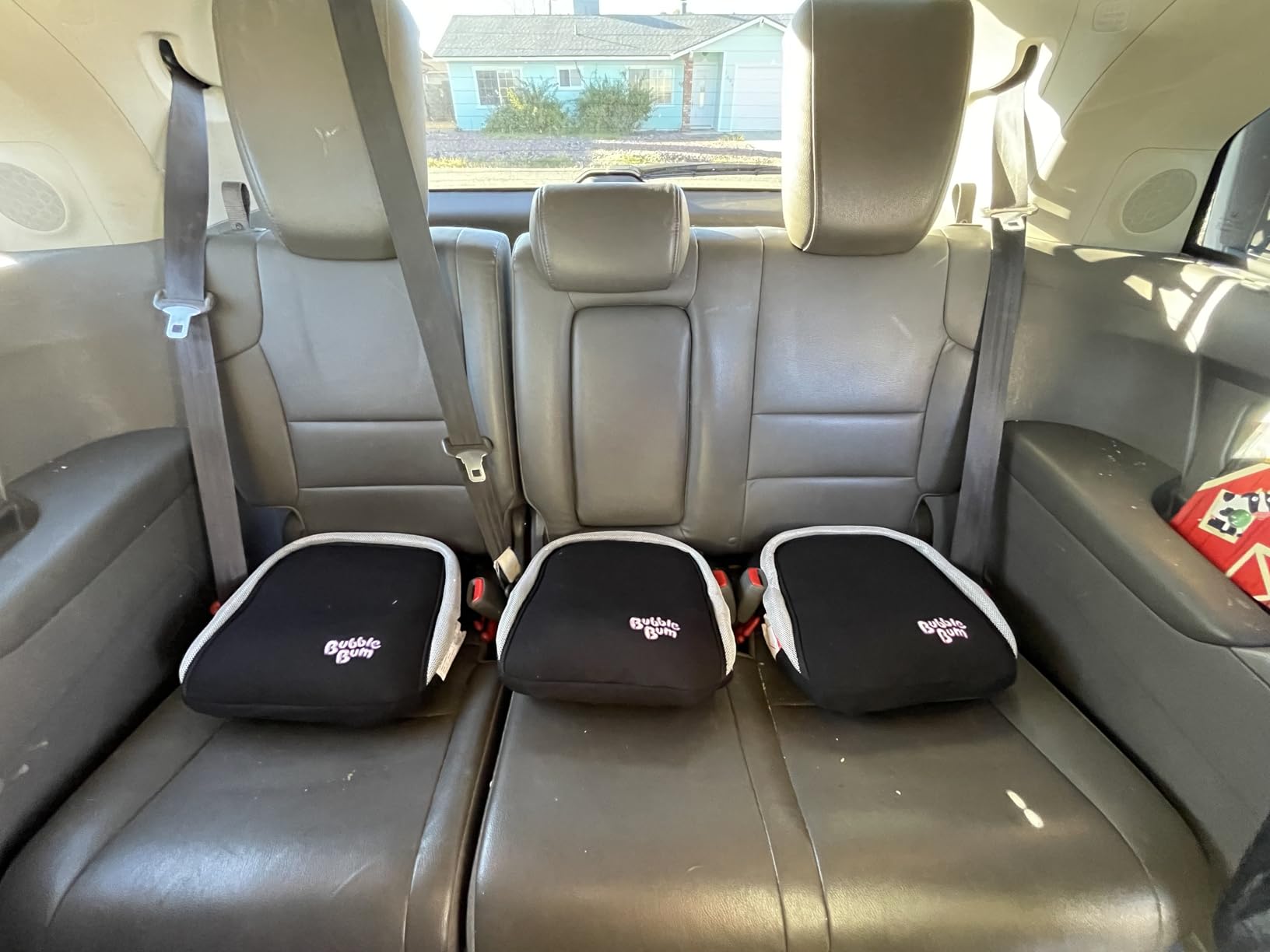
The BubbleBum case
Budget-conscious families who fly with hand luggage only, or who need a booster at the far end of a trip without a second checked case. The 110 pound ceiling and the no-hardware installation make it the most flexible backless option for older children.
Cleaning is trivial after travel, since a damp cloth is the entire maintenance routine, and the company backs the seat with a lifetime support commitment.
Where it falls down
For a child who sleeps in the car, the air cushion is the weak point. On a six-hour drive you will feel the difference against a rigid high-back booster such as the Mifold Hifold.
And again, it is a booster. It is ground-only, not approved for aircraft, and useless below 40 pounds.
11. Mifold Comfort: Best Backless Booster for Carpooling
New Mifold Comfort Grab-and-go Car Backless Booster Seat-Compact and Portable for Every Day, Carpooling, Travel, Charcoal Grey
Backless belt-positioning booster
40-100 lb, 43.5-59 in
Fits a backpack or glove box
No installation needed
Pros
- Fits a regular backpack or glove box
- Narrow profile for carpooling and three-across
- Works in any car with a standard 3-point belt
- Adjusts the adult belt down onto the child
- Anti-slip pads and a shoulder belt guide
- Includes a Compact Comfort padded cushion
Cons
- Backless design has no head support or side impact protection
- Lowest rating in the roundup at 4.2 stars
- Belt routing takes practice and is hard for a child to self-buckle
The Comfort is the smallest rigid booster here, and its selling point is stated plainly in the product line: it fits into a regular backpack or a glove box. For a parent who moves between a carpool, a rideshare and a rental car several times a week, that size is the whole proposition.
Installation is nothing at all. You place it, drop the adult seat belt down onto your child through the shoulder guide, and the anti-slip pads keep it in place. The included Compact Comfort cushion is an update over earlier versions and adds padding for longer rides.
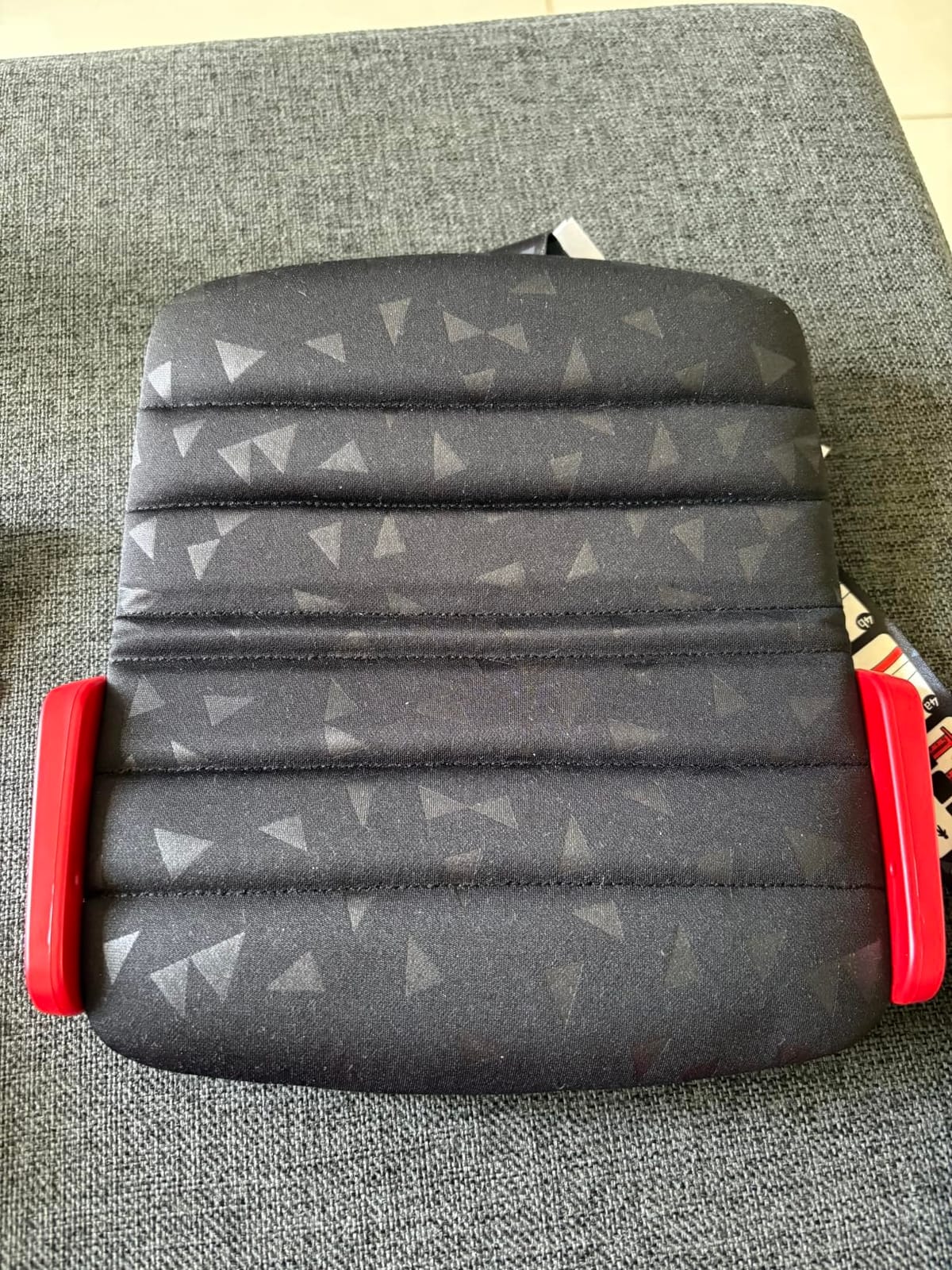
At 4.2 stars across 3,942 reviews, this is the lowest-rated seat in the roundup, and the reviews concentrate on fit and sizing rather than any safety issue. Only 63 percent are five-star, with 8 percent one-star, so expect some trial and error on the belt routing.
The backless design is the structural limit. There is no head support and no side-impact protection, and a child working out the belt buckle for the first time will struggle more than they would in a high-back seat.
Where the Mifold Comfort fits
Children 4 and up, 40 to 100 pounds and 43.5 to 59 inches, who are ready for the vehicle belt and whose week involves a lot of short car trips. Backpack portability beats every other consideration in that use case.
It is also a good secondary booster to keep at a grandparent house, since it stores in a cupboard and works in any car with a three-point belt.
Reasons to step up instead
If your child is on long trips, or not yet confident with the buckle, the extra support of a high-back booster such as the Mifold Hifold or the Safety 1st Grand is worth the extra bulk.
As with every booster in this roundup, it is ground-only. It cannot be used in flight.
12. Diono Solana: Best Booster Pair That Stows Under the Seat
Diono Solana, No Latch, Pack of 2 Backless Booster Car Seats, Lightweight, Machine Washable Covers, Cup Holders, Pink
Pack of two backless boosters
40-120 lb
Vehicle belt installation
Removable washable covers
Pros
- Sold as a pack of two
- Lowest cost per seat in the roundup
- Weight range of 40 to 120 lb is wider than most backless boosters
- Light enough to carry onto a flight
- Fits under the seat on an airplane
- Removable machine-washable layered foam covers
Cons
- No LATCH hardware
- Backless design has no head or side-impact support
- Elastic cup holders are tight for small children
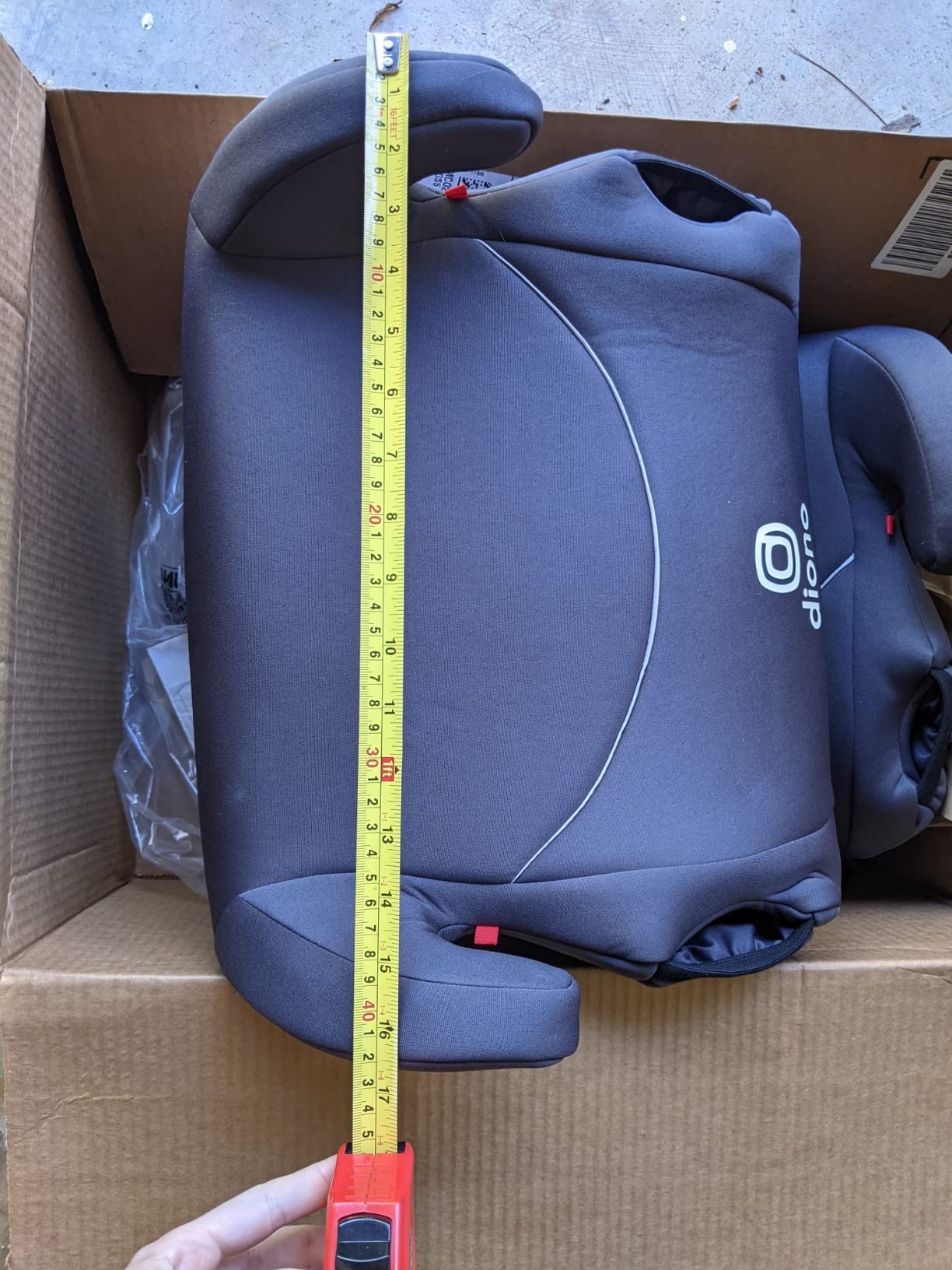
The Solana is sold as a pair, and for a family with two children ready for the vehicle belt it is the most practical travel booster in this roundup. A 4.7 rating across 2,850 reviews on a backless booster is unusual, and owners repeatedly describe it as the ideal travel booster.
Two details make it flight-friendly even though it is ground-only equipment: a luggage strap so you can secure it to a rolling bag, and a loop for a luggage tag. Owners travelling with twins confirm that the seats stow under an aircraft seat rather than in the overhead bin, which keeps them with you instead of in the hold.
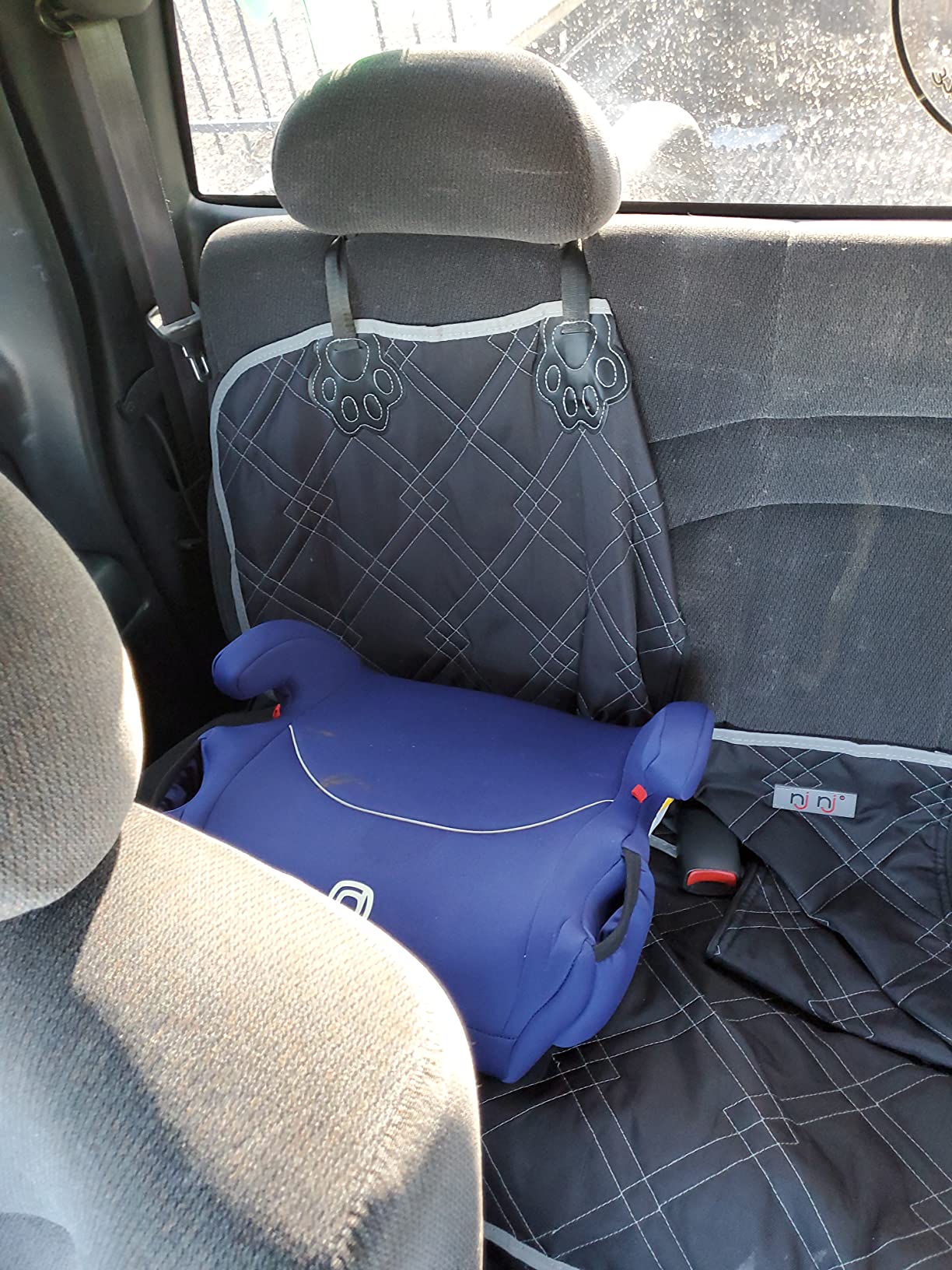
The weight range runs 40 to 120 pounds, wider than most backless boosters, and the contoured layered foam covers are removable and machine washable, which matters after a long trip. Two elastic cup holders handle drinks and snacks without needing an armrest.
The shoulder belt positioner helps a child self-buckle, and reviews call that out as a real difference for a kid sitting in the back of a car alone. The gripes are minor: tight cup holders for small children and a narrow seat that larger kids find uncomfortable.
Why pairs make sense here
Two children in the 40 to 120 pound range is exactly the use case this pack was built for, and it halves the number of separate boosters you carry. The shoulder belt positioner also makes it workable for kids sitting independently rather than next to a parent.
For one child, the price per seat is not the advantage it is here, so a single backless booster may make more sense.
What to keep in mind
There is no LATCH hardware at all, so installation is entirely with the vehicle belt. That is a plus for travel and a reminder to check belt fit every time your child moves up a size range.
Like the rest of the boosters here, it is not approved for aircraft use. Use it in the rental car, and bring a certified harness seat for the flight itself.
How to Check If a Car Seat Is FAA Approved
Look for a round or rectangular label on the seat itself, not on the box. On most seats it sits on the back of the shell, on the underside, or inside the seat leg, which is exactly why gate agents sometimes struggle to find it. Parents on travel forums describe being asked for the label on a seat that was fully compliant, with the sticker printed on the underside.
The wording you are looking for states that the restraint is certified for use in motor vehicles and aircraft. If your seat carries only a motor vehicle certification, it is not approved for flight, full stop. There is no partial approval and no airline override.
Canadian buyers hit this most often. Seats certified only to CMVSS 213 carry a different label, and international carriers frequently refuse them even though the underlying standard is comparable. If you are crossing a border, confirm your seat has the aircraft certification specifically, and keep a photo of the label on your phone for the gate.
For everything else in this roundup, our convertible car seat guide and infant seat guide explain the mode changes and weight limits in more detail.
Airline Rules for Bringing a Car Seat on a Plane
You must purchase a seat for your child to use a car seat in the cabin. A lap infant is permitted for small babies but carries no restraint of its own, and the FAA, the AAP and safety technicians all advise against it as a first choice.
The seat goes in a window or middle position, never an aisle seat, so it does not block the row exit. Most carriers also ask you to notify them in advance that you are travelling with a car seat, and that notification is what triggers the crew to meet you at the jet bridge and carry it down.
Gate checking is always free, but it means your child travels without a seat and the restraint goes in the hold. Families report being asked to gate check a convertible that would have fitted, so if you have a narrow model, check with the airline in writing before you fly.
Individual carriers also publish their own size rules, and these are where parents get caught out. Parents on travel forums report Turkish Airlines requiring a seat no larger than 40 by 40 centimetres, which rules out most full-size convertibles. If your carrier publishes a dimension limit, measure your seat at home and compare before you commit.
Can You Rear-Face a Car Seat on a Plane?
Yes, and for a long-haul flight it is usually the better position. A rear-facing car seat installed on an aircraft seat gives the child more recline, which means a sleeping toddler, and the head support is better suited to their proportions than a forward-facing harness.
The FAA approval label is not facing-specific, so a seat approved in either direction stays approved on the aircraft. Installation is identical: the belt goes through the same aircraft belt path, tightened the same way.
The practical catch is width. A rear-facing seat in an aircraft seat takes up the same row space as a forward-facing one, so a narrow profile such as the Graco Slimfit is the seat to look at if you want rear-facing in the cabin. Parents on child safety forums describe rear-facing installation on a plane as straightforward once you know the belt path.
Booster Seats Cannot Be Used on a Plane
This is the most common and most consequential misunderstanding in this category. A belt-positioning booster simply raises your child so the aircraft seat belt fits better, and that is the only thing it does. The FAA does not certify boosters for aircraft use, and a child in a booster with only a lap belt is unprotected in exactly the way a lap infant is.
That covers most of this roundup by design. The CARES harness is the one product here that is a genuine aircraft restraint but is ground-useless, and the Mifold, UberBoost, BubbleBum, Mifold Comfort, Diono Solana, Safety 1st Grand and Graco Tranzitions boosters are all ground equipment that earns its place in a rental car at the far end.
For a child too large for a harness but who still wants their own restraint in the air, the realistic options are to keep using a five-point harness seat within its limits, or to use a lap infant only as a last resort for a child under the carrier’s weight threshold. Our booster roundup covers the ground-side decision in full.
How to Install a Car Seat on an Airplane
First, check the aircraft belt. Older aircraft use a lap-only belt, which cannot secure a car seat, so ask the airline before you fly and request a seat on a row with a three-point belt if the route includes older equipment.
Second, position the car seat in a window or middle seat, with the aircraft seatback upright. There is no recline to adjust on most aircraft, which is one of the reasons rear-facing matters.
Third, route the aircraft belt through the car seat’s belt path, which is usually marked in blue on the shell. Do not use the LATCH belt on a plane: the aircraft belt is the only restraint that anchors the seat to the aircraft structure.
Fourth, tighten the aircraft belt following the seat’s instructions, which usually means pulling the belt through until snug and then locking the retractor. Press the car seat down firmly into the aircraft seat as you tighten.
Fifth, do the one-inch movement check. Grip the seat at the belt path and pull; it should not move more than one inch in any direction. Ask a flight attendant to check it with you if you are installing alone.
Sixth, ask a flight attendant to confirm the installation before takeoff. That is a normal request, they have seen it hundreds of times, and it is far better than discovering a loose belt at rotation. In a rental car, the same seat installs with the vehicle belt or the LATCH system, and our main car seat guide covers that step in more detail.
Frequently Asked Questions
What kind of car seats can you bring on a plane?
Only a child restraint carrying an FAA aircraft approval label stating it is certified for use in motor vehicles and aircraft. That means convertibles, all-in-one travel seats and the CARES harness. Belt-positioning boosters are not approved for flight. You must buy a seat for your child and install it in a window or middle position.
What is the best foldable car seat for taking on an airplane?
The Doona is the strongest all-round option at 17.2 pounds because it converts from a rear-facing car seat to a stroller in seconds. The Diono Radian 3R folds flat and covers 5 to 120 pounds but is heavier. Among boosters, the Mifold Hifold folds to 10.7 by 13.5 inches at 10 pounds, though it is ground-only.
Is it worth bringing a car seat on a plane?
It is worth it if you land somewhere you need one, or if you want your child properly restrained for takeoff and landing. It is not worth carrying a heavy convertible for a two-hour domestic hop on a carrier that will let you gate check it. The CARES harness covers the in-flight need at almost no weight if you already have a seat at both ends.
Does my 3 year old need a car seat on an airplane?
A child that age can legally sit in a car seat, a booster or a lap infant, but only an FAA-approved car seat actually restrains them. Boosters are not approved for aircraft. Most carriers also require you to buy a seat for a lap infant, and the FAA advises against lap travel as a first choice.
What is the best car seat to travel with on airplanes?
For most families the Doona wins on convenience, because it folds into a stroller and carries TUV and FAA approval for 4 to 30 pounds rear-facing. For a wider weight range, the Diono Radian 3R covers 5 to 120 pounds and folds flat. For the narrowest aircraft row, the Graco Slimfit fits three across in a car and stays compact in the cabin.
Which car seats are airline compatible?
Any seat with the FAA aircraft approval label on the shell. Check the back of the seat, the underside, or inside the seat leg, since that is where most parents miss it. Canadian CMVSS 213-only seats are not automatically accepted by international carriers, so verify the aircraft wording specifically and keep a photo of the label for the gate.
Conclusion: The Best Travel Car Seats for Airplanes
The Doona takes our best travel car seats for airplanes verdict because it is the only seat that turns the airport walk into a non-event, and it carries both TUV and FAA approval. If your child is past 30 pounds, the Diono Radian 3R is the better long-term answer, and the Graco Slimfit is the one to buy when aircraft row width is tight.
Use the boosters for the car at the other end, not for the flight itself, and check the FAA label before you leave the house. That single minute of checking will save you a boarding problem in 2026.