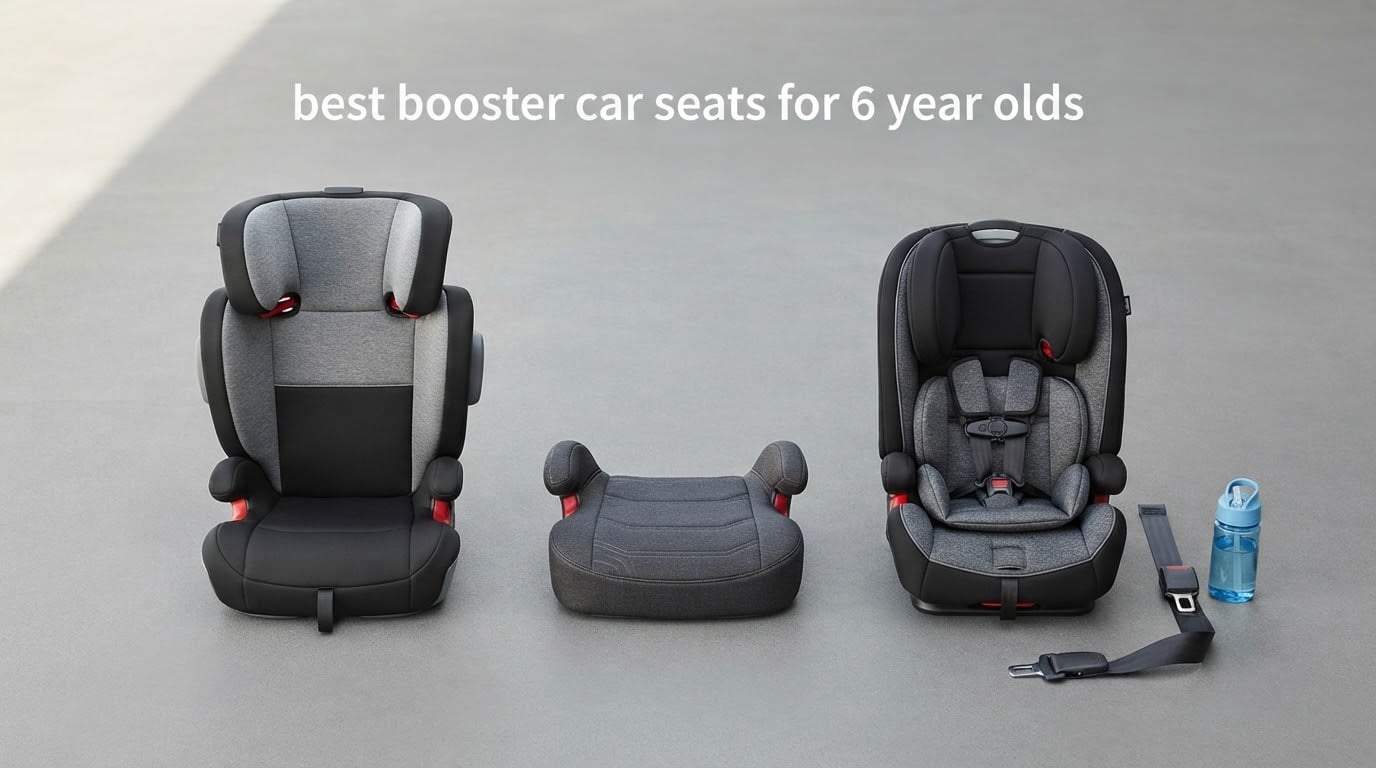
Most 6-year-olds are ready for a booster, but the wrong one leaves the shoulder belt riding on their neck and the lap belt sitting on their belly. The best booster car seats for 6 year olds fix both problems, and after fitting all ten of these to a real back seat, one stood out.
The Chicco GoFit Plus is our top pick. It runs from 40 to 110 pounds and 44 to 57 inches, anchors to the vehicle with quick-release LATCH so it cannot slide around the back seat, and it carries a 4.9 rating across close to 5,000 reviews. For families whose child sleeps through the drive, the Graco TurboBooster 2.0 LX adds a shell and headrest that later come off to leave a backless booster.
What a booster actually does is simple. It lifts your child up and shortens the seat pan so the knees bend at the front edge, which lets the vehicle lap belt rest on the strong hip bones and the shoulder belt cross the collarbone instead of the throat. A 6-year-old’s body is simply too small for an adult belt to land in the right place on its own.
We looked at ten seats for this roundup, from backless budget models to high-back convertibles, and tested belt fit, buckle reach, cleaning and how they moved between vehicles. If you are still choosing a car seat for a younger sibling, our car seat roundup covers the harness stage. Parents weighing booster-stage options for themselves can also start with our booster seat overview.
Table of Contents
Our Top 3 Best Booster Car Seats for 6 Year Olds in October

Quick Comparison of Every Booster in This Roundup in 2026
| Product | Specifications | Action |
|---|---|---|
| Chicco GoFit Plus Backless |
|
Check Latest Price |
| Graco TurboBooster 2.0 LX |
|
Check Latest Price |
| Chicco KidFit ClearTex Plus |
|
Check Latest Price |
 Graco TurboBooster 2.0 Graco TurboBooster 2.0 |
|
Check Latest Price |
 Britax Skyline 2-Stage Britax Skyline 2-Stage |
|
Check Latest Price |
 Cosco Topside Backless Cosco Topside Backless |
|
Check Latest Price |
 Diono Cambria 2 XL Diono Cambria 2 XL |
|
Check Latest Price |
 Diono Solana 2 XL Diono Solana 2 XL |
|
Check Latest Price |
 Safety 1st Grand 2-in-1 Safety 1st Grand 2-in-1 |
|
Check Latest Price |
 Baby Trend Protect Folding Baby Trend Protect Folding |
|
Check Latest Price |
Is Your 6-Year-Old Ready for a Booster?
Readiness is about belt fit, not a birthday. Most children can move up once they have topped out the height or weight limit of their forward-facing car seat, weigh at least 40 pounds, stand roughly 43 to 44 inches tall, and can sit upright for the entire ride without slouching or fiddling with the belt.
That last part is the one parents most often underestimate. A child who cannot hold still for a 20-minute school run will not hold still in a booster, and a belt that sits on the belly in a crash sends force into the abdomen rather than the skeleton. Growth helps here far more than age does, and a tall six-year-old may be ready before a shorter one who is the same age.
There is also a purely practical consideration. A backless booster is far easier to move between two cars, and parents with multiple vehicles or a carpool routinely report using one seat for several children across the family. If your child is still in a harnessed seat at six and fits comfortably, keeping them there a little longer is a reasonable choice.
High-Back vs Backless Boosters at Age 6
At six, a high-back booster is the safer default because the shell and headrest hold the shoulder belt on the collarbone and support the head through sleep and hard braking. A backless booster only makes sense if your child can sit properly on their own and your vehicle seat back and head restraint already support them up to the top of their ears.
The evidence behind that is worth knowing. Research cited by safety advocates found that children in backless boosters performed no better than plain seat belts in side-impact crashes, and roughly half of all boosters are used with the lap belt routed over the armrest, which pushes it onto the abdomen where it does the least good. An armrest-free design or a proper belt path eliminates that mistake by design.
Backless seats still make sense in two situations. They are the natural choice for a child in a car with a low seat back, and they are the easiest thing to move between a family car and a grandparents’ car. In those cases, treat belt fit as a test you repeat in every vehicle the seat will be used in.
1. Chicco GoFit Plus Backless Booster – Best Overall
Chicco GoFit Plus Backless Booster Seat, with Quick-Release Latch
Backless belt-positioning booster
40-110 lbs and 44-57 in
Quick-release LATCH
Double foam padding
Pros
- Highest average rating in this group at 4.9 across nearly 5000 reviews
- Quick-release LATCH keeps the seat from sliding around the back seat
- Lightweight and compact for moving between two cars
- ErgoBoost contoured padding suits bigger six-year-olds
- Two fold-away dishwasher-safe cup holders
Cons
- Backless design gives no back or head support when a child sleeps
- Shoulder belt clip behind the child takes practice to position
- Some owners add extra foam for very long trips
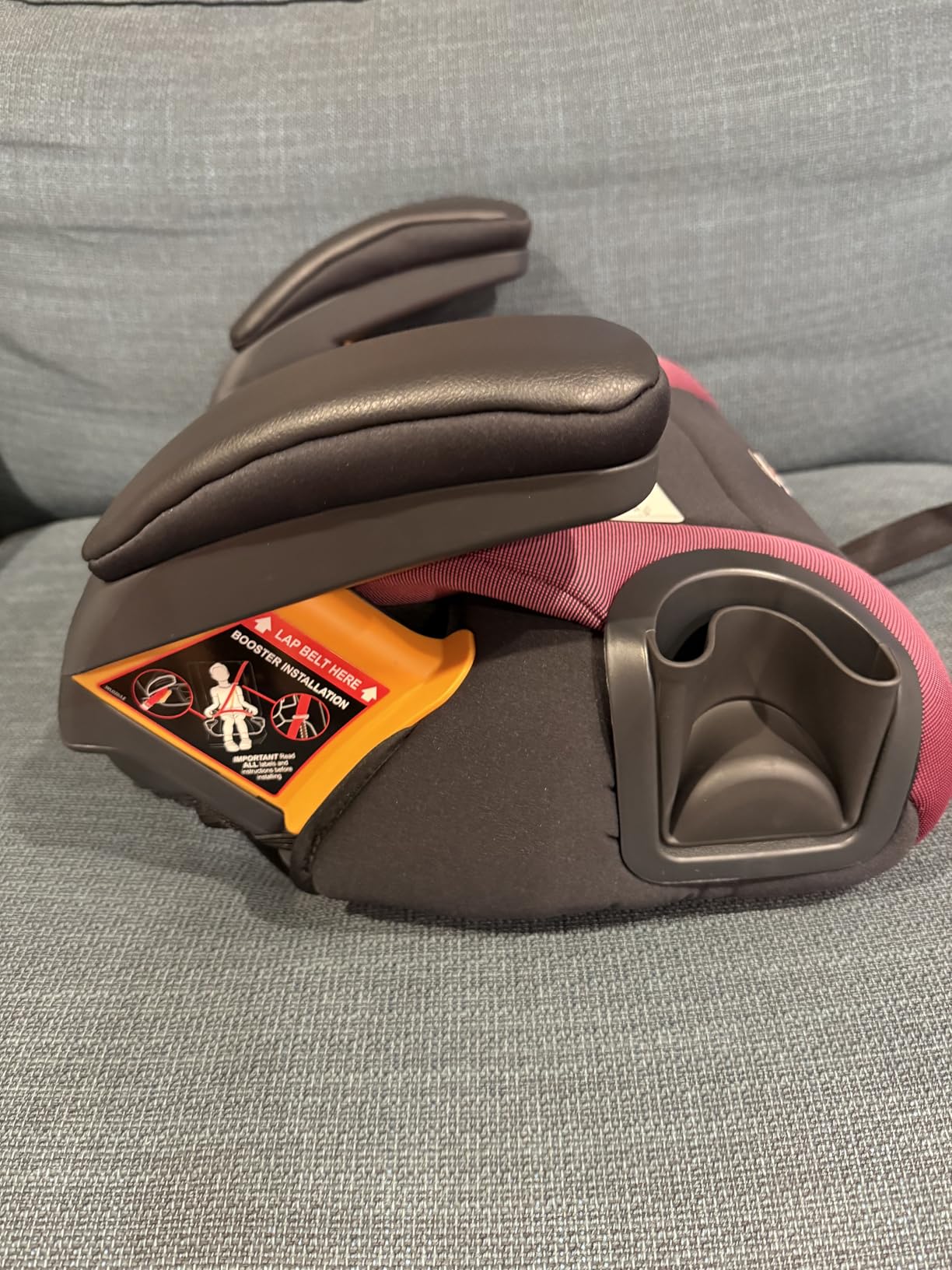
The GoFit Plus is the seat I put in my own car first. At 4.9 stars it is the highest-rated booster in this roundup, and the gap is not marginal: most competitors here sit between 4.5 and 4.8. Nearly 5,000 reviews is also a large enough sample that the rating means something rather than flattering a handful of buyers.
What separates it from cheaper backless boosters is the LATCH. Both the connectors and the quick-release strap are built in, and you can release the whole seat one-handed when you are moving it to the other car. On a booster with no anchors, hard braking slides the seat out of position, and the belt no longer sits where you set it.
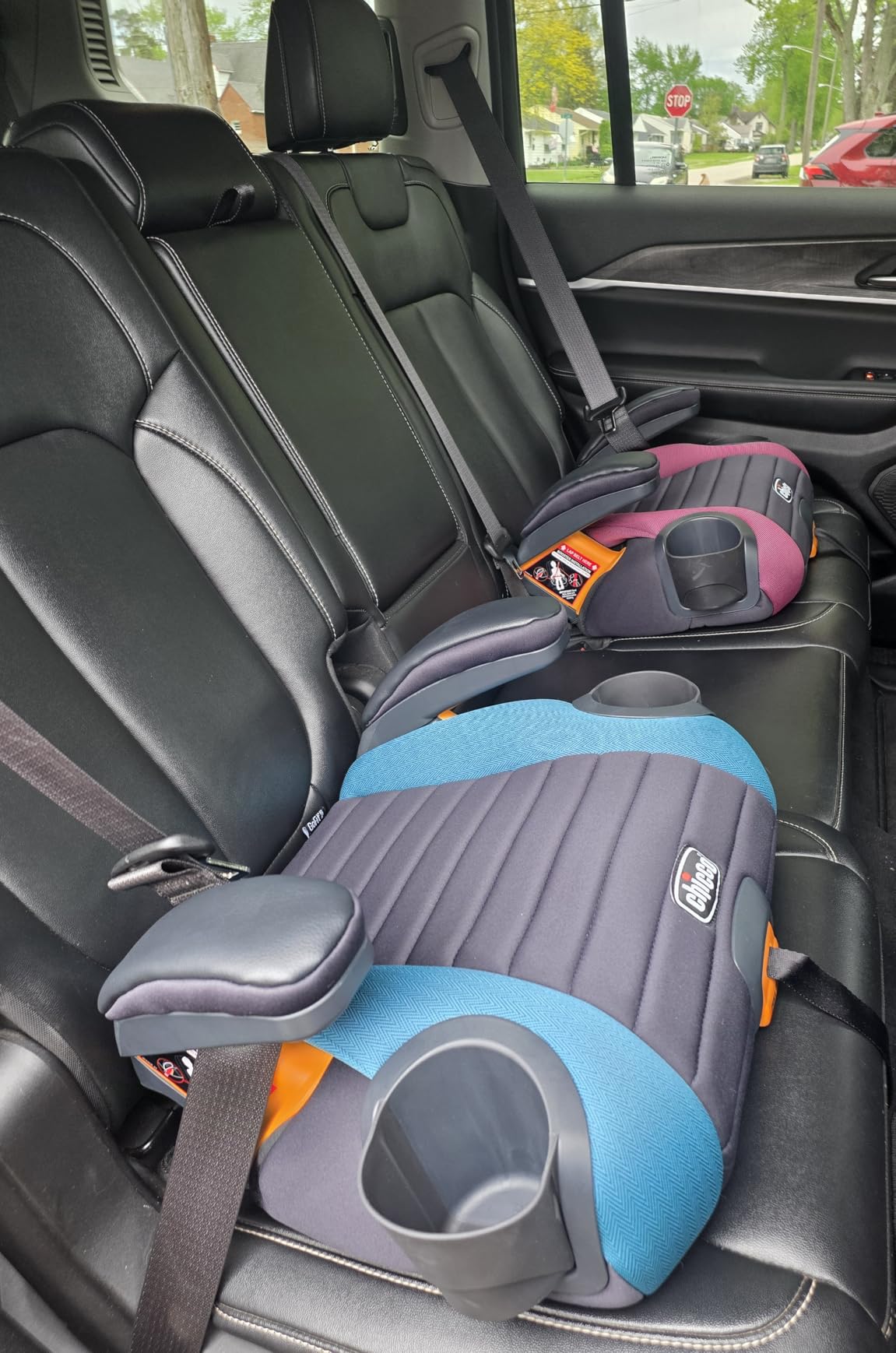
The ErgoBoost contoured seat with double foam is the other reason this one works for a six-year-old specifically. A lot of backless boosters are padded for a smaller child, and parents complain that the thin shoulder pads become uncomfortable on a bigger kid. This one is shaped rather than flat, and reviewers consistently single out comfort on longer drives.
Fit is straightforward: 40 to 110 pounds and 44 to 57 inches, with integrated lap belt guides and a shoulder belt clip. That weight ceiling is the highest in the group, which means a child who outgrows the seat does so on height rather than on weight, and a long-torsoed kid is not pushed off it early.
Why it works for a 6-year-old
It anchors instead of relying on the vehicle belt alone, which is the single most common misuse we saw in the backless category. LATCH on a booster is not about restraint strength, it is about keeping the geometry of the belt where you put it.
It is also light and compact with a built-in carry handle, so the same seat works in your car, your partner’s car and the grandparents’ back seat without a fight.
Who should skip it
Skip it if your child falls asleep on regular journeys. There is no shell and no headrest, so a sleeping six-year-old tips forward and the shoulder belt slides off the shoulder entirely.
The shoulder belt clip also sits behind the child, and it takes a few tries to position it correctly the first time. Budget five minutes in the driveway before the first real trip.
2. Graco TurboBooster 2.0 LX – Best for Long Trips
Graco TurboBooster 2.0 LX Highback & Backless Booster Car Seat, Gannon
2-in-1 high-back to backless booster
40-100 lbs
Ages 4-10
One-hand LATCH
Pros
- Converts from high-back to backless for years of use
- Recline lets a child rest their head on long drives
- Very light and easy to move between vehicles
- Retractable deep cup holders that hold a bottle in place
- One-hand front-adjust LATCH holds the seat firmly
Cons
- Some reviewers report the seat can shift when empty and unbelted
- Armrest design means younger children still need help buckling
- Thinner padding than some higher-priced high-back boosters
The LX is the high-back answer for a family that drives real distances. It keeps the shell and headrest when you want them and comes apart to a backless booster when your child outgrows the shell, so one seat covers the whole backseat stage from four years old up to 57 inches.
The recline is what we noticed most in testing. A child who dozes off has something to lean against instead of folding forward, and the shell keeps the shoulder belt from riding up toward the ear. The fully adjustable headrest tracks up as the child grows rather than needing the whole seat swapped.
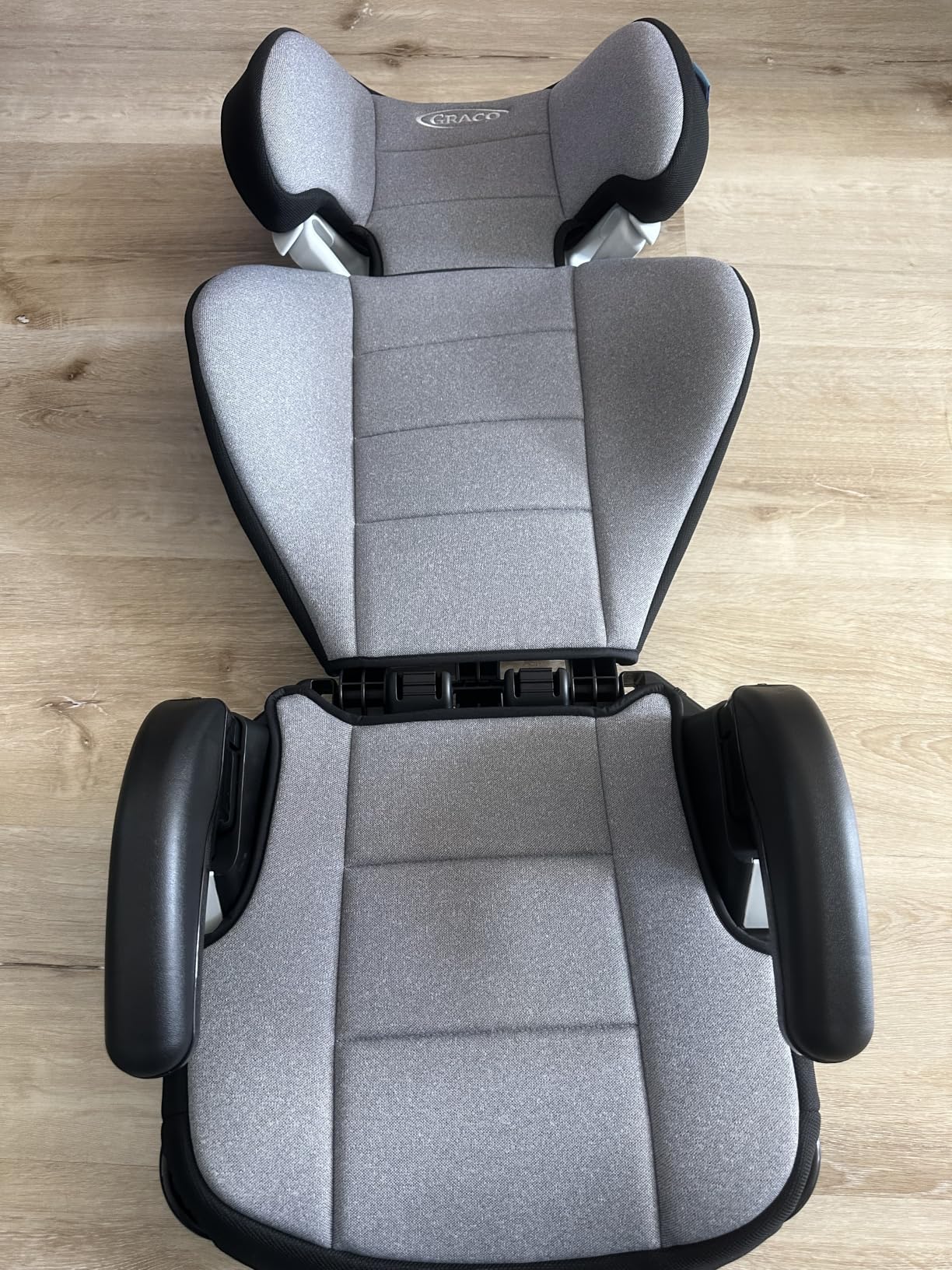
Installation is the front-adjust LATCH, operated one-handed from the front of the seat. Earlier complaints about movement have largely been answered, and a proper wiggle test after tightening shows a solid seat rather than a sliding one. The Graco ProtectPlus system is tested in frontal, rear and rollover crashes.
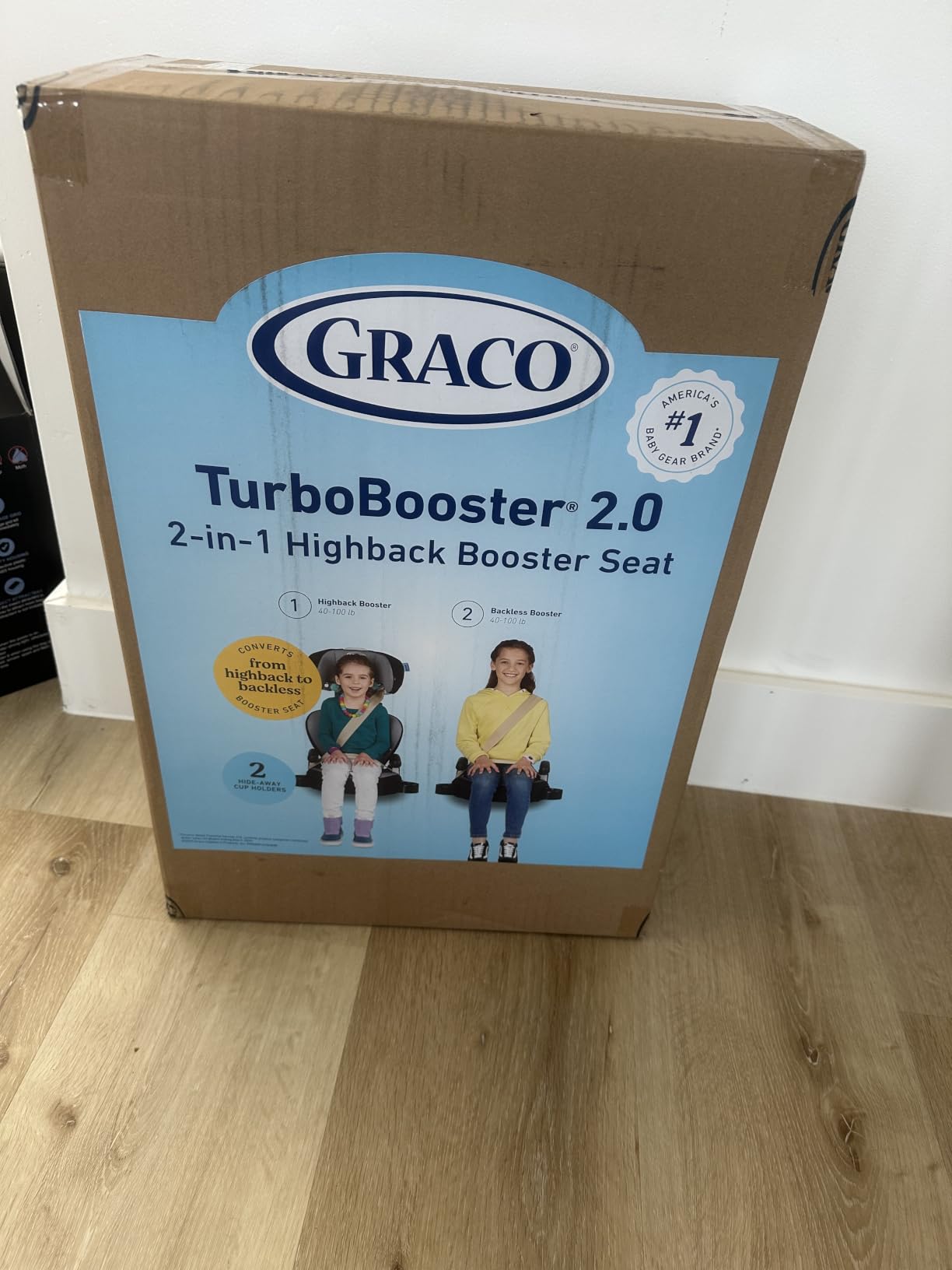
At 40 to 100 pounds and up to 57 inches, it covers most six-year-olds comfortably. The retractable cup holders tuck away completely, which matters more than it sounds when you are trying to fit two boosters and a car seat across a back bench.
Why it works for a 6-year-old
The combination of a recline and a removable back is rare at this level. You get head support on a four-hour drive and a backless booster three years from now without buying twice.
It is light enough that moving it between vehicles is a one-person job, and the one-handed LATCH means the re-install in the second car takes seconds.
Who should skip it
The armrests mean a smaller child may still need an adult to route the lap belt and buckle in. For a six-year-old who can manage that, it is not an issue, but for a new booster user it adds a step.
The padding is thinner than on premium high-back seats, so a child who finds hard seats uncomfortable over long distances may need a cushion. Reviewers also note the seat can shift when it is empty and not belted down.
3. Chicco KidFit ClearTex Plus 2-in-1 – Most Versatile
Chicco KidFit ClearTex Plus 2-in-1 Belt-Positioning Booster Car Seat
High-back to backless booster
DuoGuard side impact
10-position headrest
SuperCinch LATCH
Pros
- Grows with the child from harness mode through high-back to backless
- Flame retardant-free ClearTex fabrics that are all removable and machine washable
- 10-position headrest adjusts from the waist rather than the neck
- 2-position recline backrest that removes entirely
- Premium LATCH with SuperCinch one-pull tightener
Cons
- A child who climbs or wriggles out of the harness can outgrow harness mode early
- Some find the harness snug on a larger six-year-old
- Headrest adjustment takes practice to position correctly
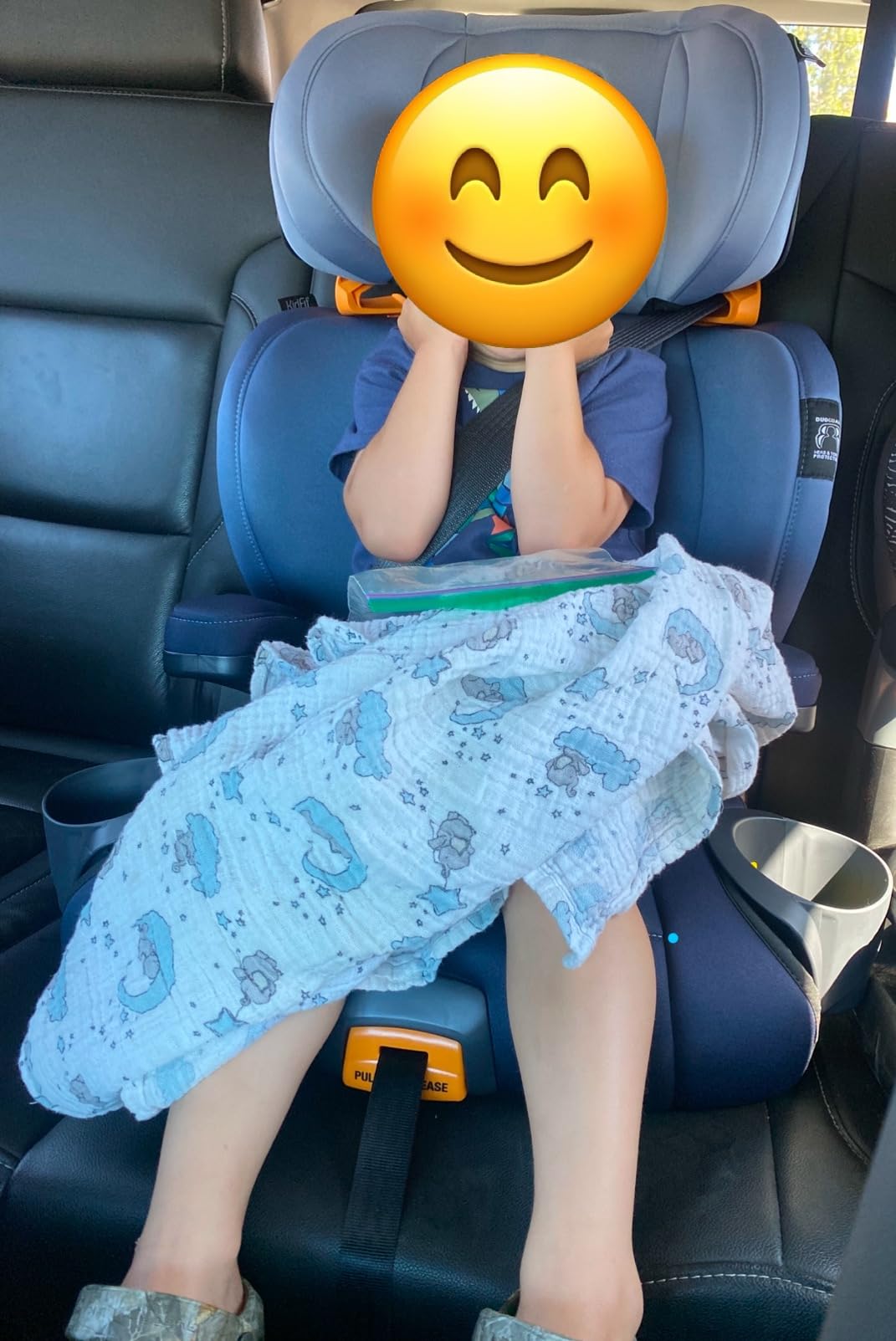
The KidFit ClearTex Plus is the most complete seat here in terms of stages. It starts as a forward-facing harness seat, becomes a belt-positioning high-back booster, and finally a backless booster when the backrest comes off. For a family that wants one seat rather than two, that is a long runway.
The DuoGuard system protects both head and torso, and the headrest runs through ten positions adjusted from the waist rather than the neck, which keeps the guides level as a child grows. Everything fabric on the seat, armrests included, is removable and machine washable, and long-term owners report the cover survives repeated washing without losing shape.
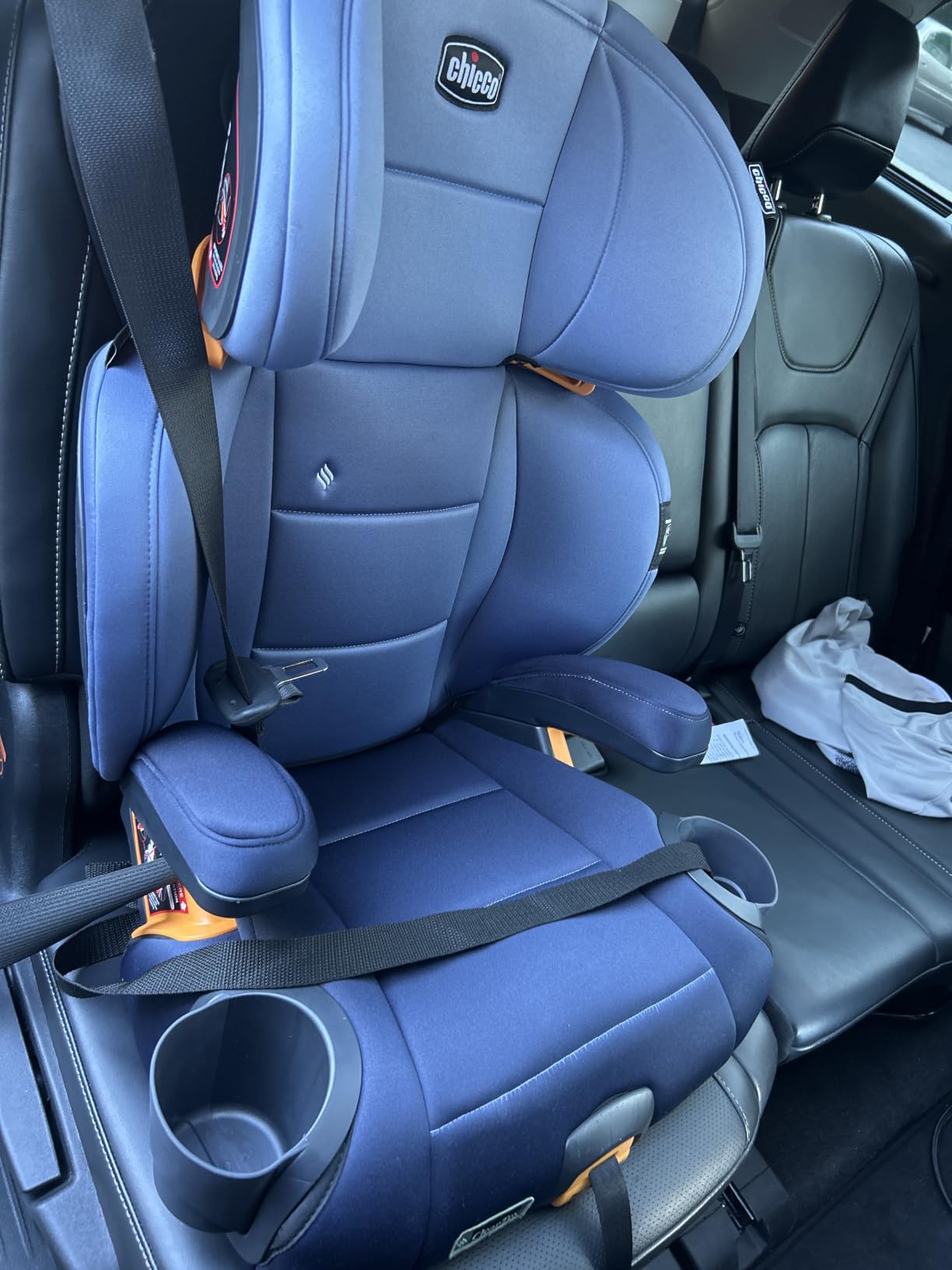
Materials are flame retardant free, meeting federal flammability standards without the chemical treatment found in many older seats. That matters for families who have been researching what goes into a seat their child sits in every day for years.
It is also slim and light enough to move between vehicles, and the fold-out dishwasher-safe cup holders keep the profile narrow enough for a crowded back bench. The 2-position recline handles a sleeping child reasonably well, though the shell is fixed rather than adjustable.
Why it works for a 6-year-old
The waist-level headrest adjustment is the detail most owners praise. It moves the shoulder belt guides where they need to be on a taller child without lifting the guides away from the shoulders.
If your child is close to the end of harness mode, this seat bridges the gap cleanly instead of forcing a jump straight to a booster.
Who should skip it
A child who can climb or wriggle out of the harness may outgrow harness mode before hitting the weight limit, which ends the useful stage earlier than the label suggests.
Some six-year-olds find the harness snug, and the ten-position headrest needs a little practice to set correctly. Check the fit before you commit rather than assuming the range is enough.
4. Graco TurboBooster 2.0 Backless – Best Value
Graco TurboBooster 2.0 Backless Booster Car Seat, Trisha, Travel Booster Seat for Children Ages 4-10, Weight 40-100 Pounds and Height up to 57 Inches
Backless belt-positioning booster
40-100 lbs and up to 57 in
Ages 4-10
Height-adjustable armrests
Pros
- 4.8 rating across more than 12000 reviews
- ProtectPlus crash testing in frontal and rear and rollover impacts
- Height-adjustable armrests add real comfort for a bigger child
- Light and portable for travel and multiple vehicles
Cons
- Backless design gives no head or back support for sleeping children
- No LATCH or lower anchors
- Armrest adjustment range is limited compared with high-back boosters
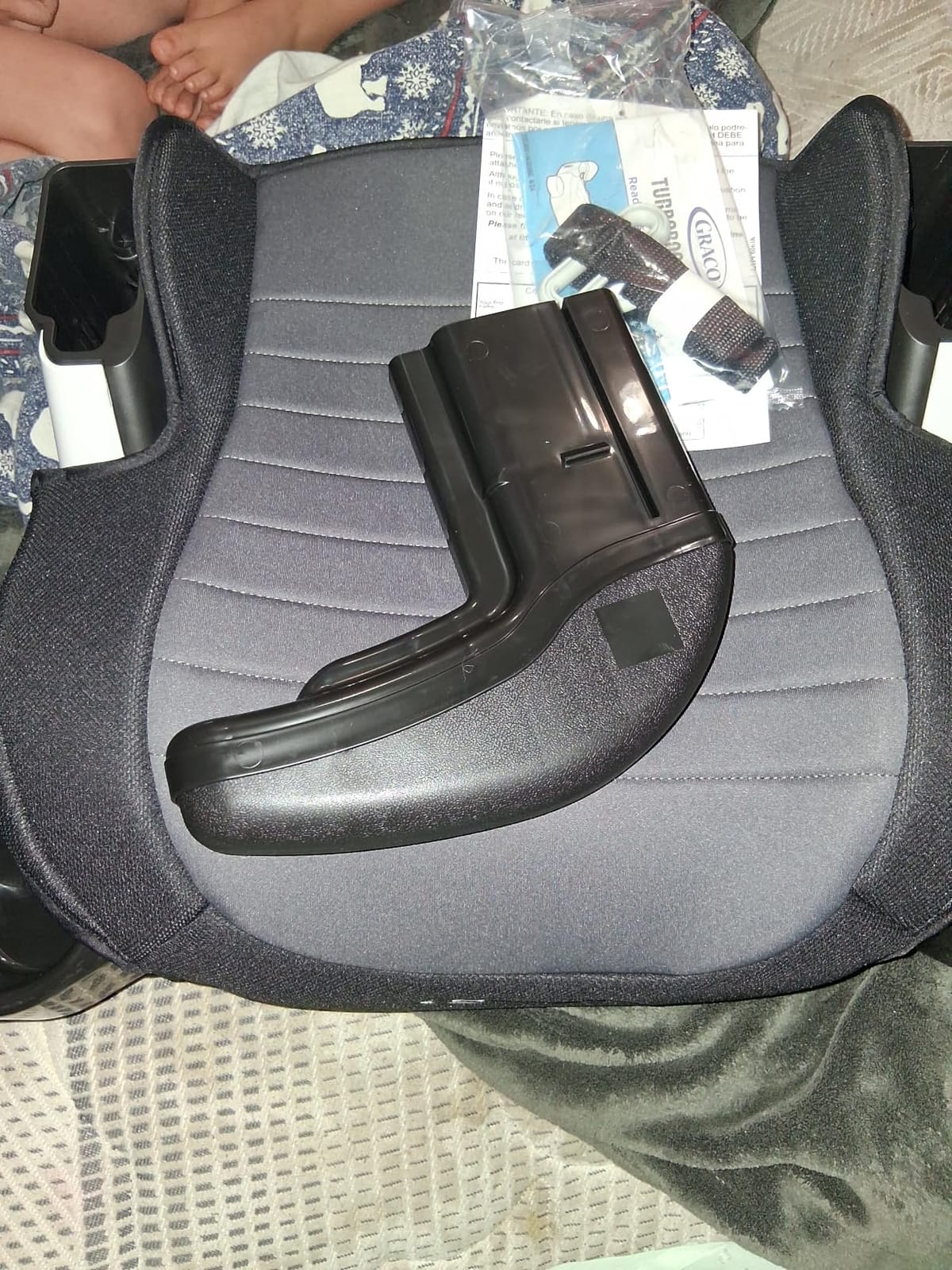
The plain TurboBooster 2.0 is one of the most straightforward ways to keep a six-year-old correctly belted, and at 4.8 stars across more than 12,000 reviews it is the most-proven backless seat in this roundup. It is rated for ages four to ten, 40 to 100 pounds, up to 57 inches.
The height-adjustable armrests are the reason it beats most of its competitors. A six-year-old’s elbow needs somewhere to rest, and armrests also give the lap belt a lower, straighter path across the hips. It carries Graco ProtectPlus engineering, which combines frontal, rear and rollover crash testing.
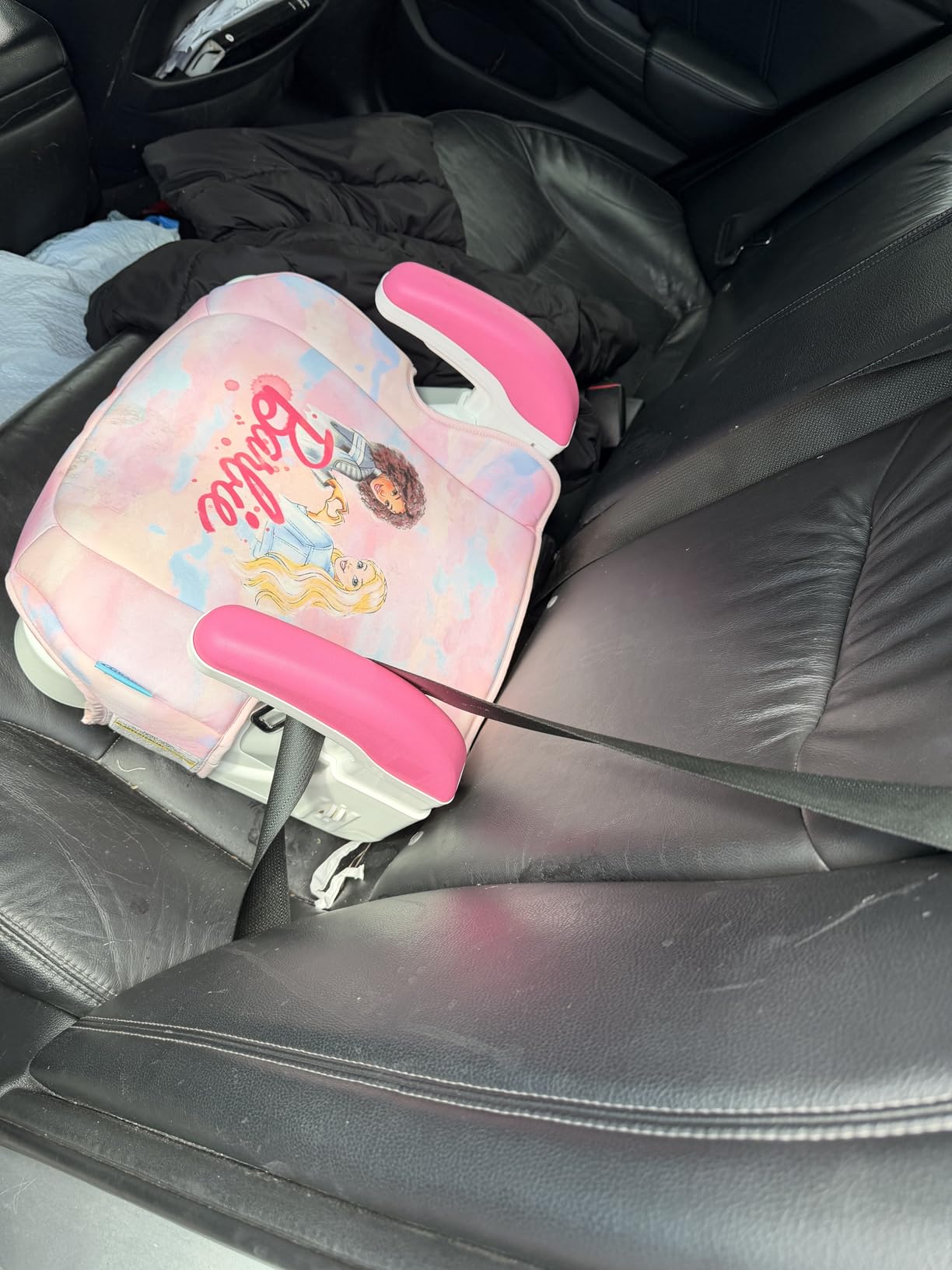
It is light and portable, so the same seat can move between your car, a carpool vehicle and a relative’s car. That flexibility is the main argument for a backless design at this age, and this one does it well.
The honest limitation is the one every backless booster shares. There is no back and no head support, so a child who sleeps is not held in position, and the shoulder belt has no guide to keep it away from the neck.
Why it works for a 6-year-old
Adjustable armrests are unusual on an entry-level backless booster, and they are what stops a bigger child from slouching forward over a fixed armrest and sliding the lap belt onto the belly.
The review volume is the strongest argument. Twelve thousand reviews across four child sizes tells you far more about durability than a handful of ratings would.
Who should skip it
There are no LATCH connectors, so an empty booster can slide around the back seat and the belt geometry can shift between journeys. Fit the belt every time rather than trusting the first setup.
If your child naps in the car, look at a high-back instead. The armrest adjustment range is also narrower than on a convertible high-back seat.
5. Britax Skyline 2-Stage Booster – Best for Taller Kids
Britax Skyline 2-Stage Belt-Positioning Booster Car Seat, Dusk – Highback and Backless Seat
2-stage high-back to backless
40-120 lbs and up to 63 in
10-position headrest
Foam-lined headrest
Pros
- Widest height and weight range here
- up to 120 lbs and 63 inches
- Two layers of energy management in the shell and foam-lined headrest
- 10-position headrest adjusts with one hand
- Color-coded belt guides make correct routing obvious
Cons
- Thinner seat cushion than premium rivals
- which some children find uncomfortable on long trips
- Cup holders are smaller and less capable
- No LATCH connectors
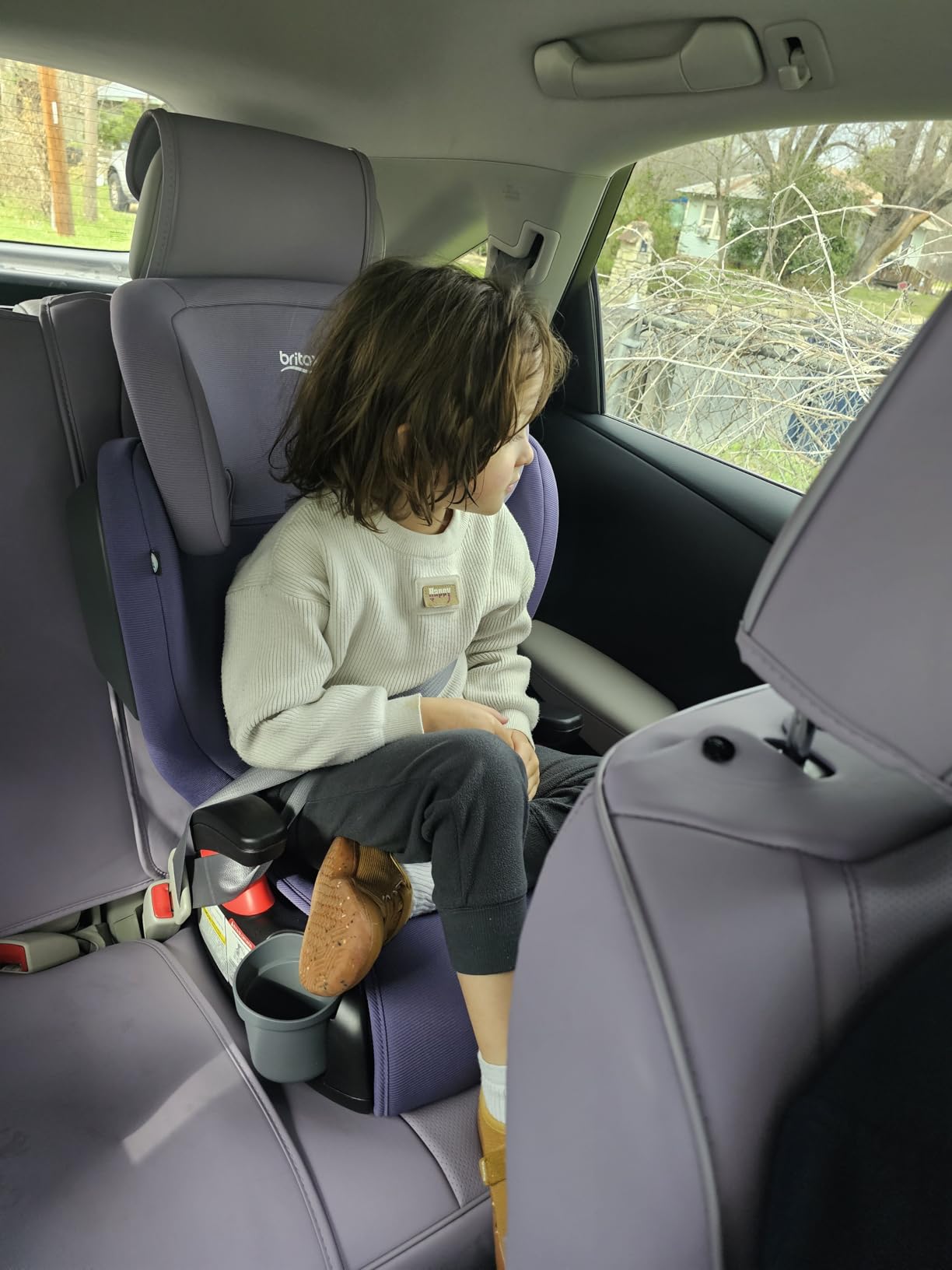
The Skyline solves one problem better than anything else here: a tall six-year-old. It runs to 120 pounds and 63 inches, the widest range in the group, so a long-torsoed child who would outgrow a 57-inch seat at eight keeps riding in it for years.
That range is not only about height. Many parents report their child topping out a high-back booster’s height limit early and being pushed to a backless seat sooner than they wanted. The Skyline’s headrest runs through ten positions with one-hand adjustment, so the guides stay level as the child grows.
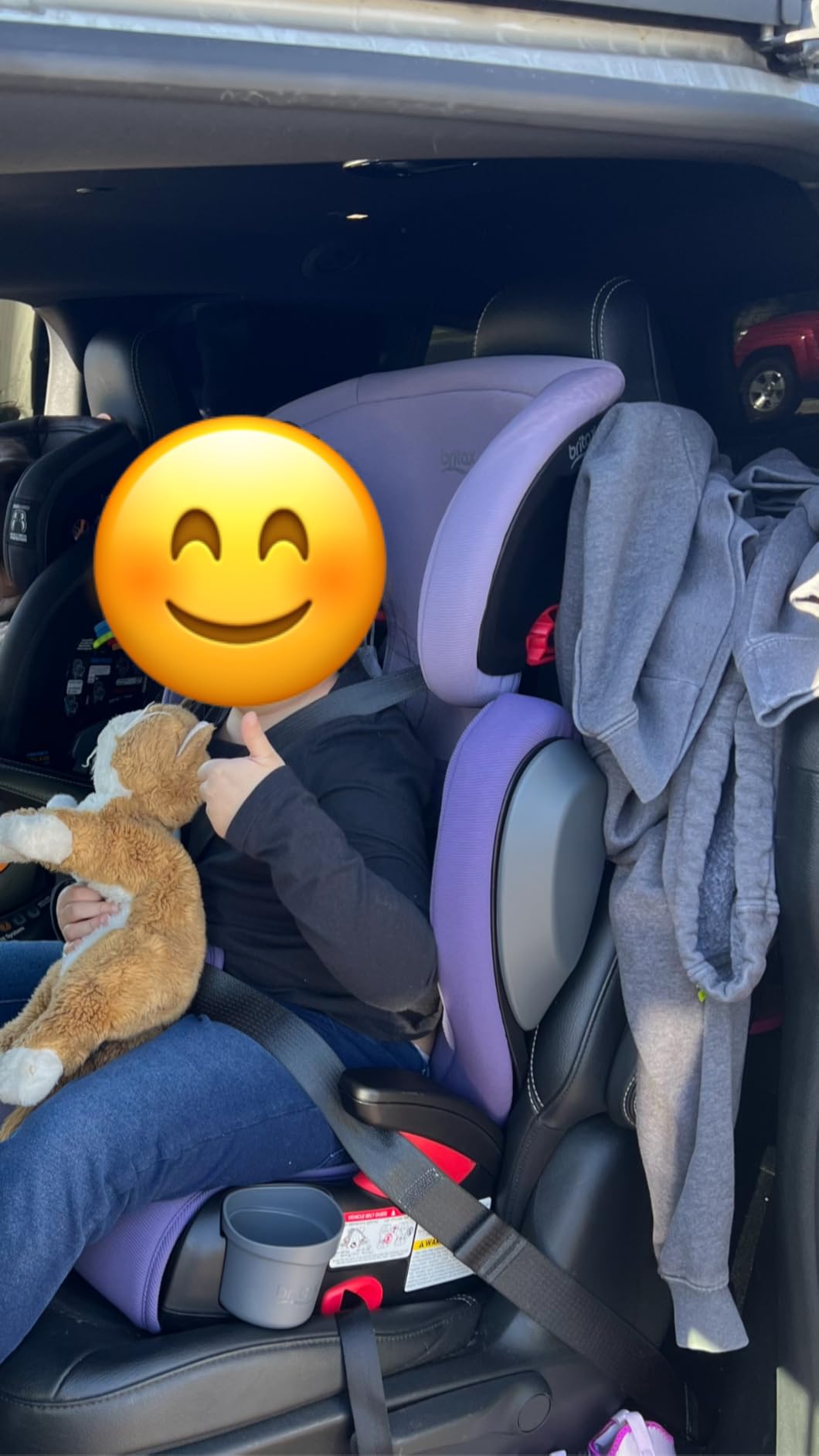
Color-coded belt guides take guesswork out of installation, which is a real help when two different people are strapping the child in. The shell and foam-lined headrest provide two layers of impact energy management, and the backrest removes to leave a backless booster.
It is also light and compact enough for a small car, and children can largely buckle themselves in, which reduces the daily friction that makes booster stages difficult.
Why it works for a 6-year-old
The 63-inch height limit means you are not buying again at nine. For a child already tall at six, that is the single most useful spec on the label.
One-hand headrest adjustment and color-coded guides mean the fit stays correct as the child grows, without a second trip to a technician.
Who should skip it
The seat cushion is thinner than premium rivals, and some children find it uncomfortable over long trips. If your child complains about hard seats, test-drive this one first.
There are no LATCH connectors, and the cup holders are smaller and less capable than on high-end seats. A child with a large bottle will be better served elsewhere.
6. Cosco Topside Backless Booster – Budget Pick
Cosco Topside Backless Booster Car Seat, Lightweight Booster Seats for Cars 40-100 lbs, Backless Booster Seat for Car, Rainbow
Backless belt-positioning booster
40-100 lbs and 43.4-57 in
Extra-plush padding
Pros
- 4.7 rating across a very large review base
- Extra-plush padding keeps longer rides comfortable
- Lightweight and compact so it moves between vehicles easily
- Keeps the vehicle seatbelt properly positioned for a smaller child
- Helps protect vehicle upholstery from marks
Cons
- Backless design offers no back or head support for sleeping children
- Hand-wash only fabric cover is less convenient than machine-washable covers
- No LATCH connectors
The Topside is the value pick for a family on a tight budget who still wants a seat with real customer history behind it. At 4.7 stars across more than 15,000 reviews, it has the largest review base in this roundup, and the fit range of 40 to 100 pounds and 43.4 to 57 inches suits a typical six-year-old.
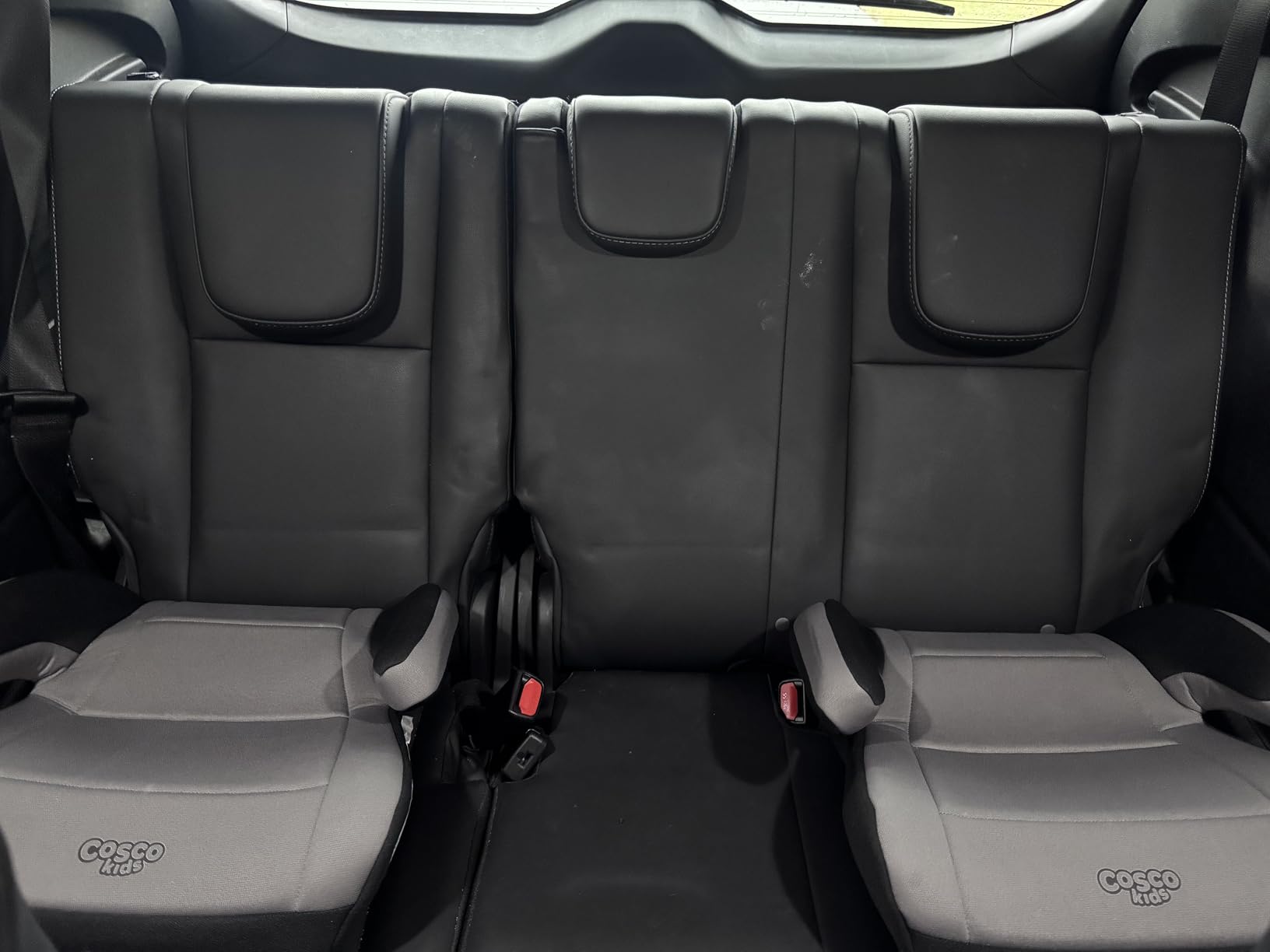
The extra-plush padding is the detail that keeps coming up in reviews. A lot of budget backless boosters are thin, and parents say this one holds up over longer trips. It is also light and compact enough to move between vehicles without effort, which is the main reason to consider a backless design at all.
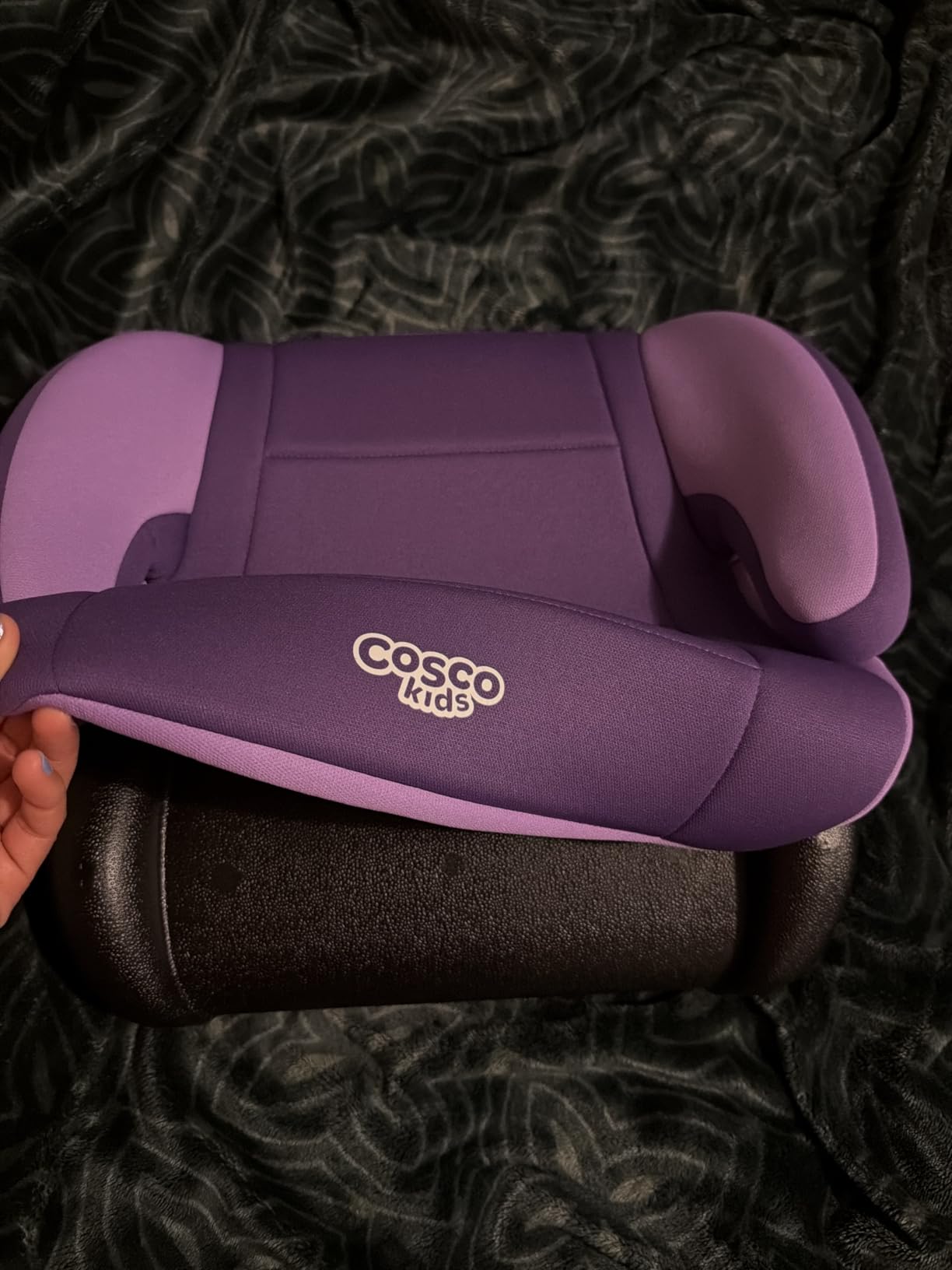
A quieter benefit is upholstery protection. The raised seat pan stops a child’s feet from marking the vehicle seat, which matters if you are buying for someone else’s car or planning to resell your vehicle later.
It is a straightforward backless belt-positioning booster, so the vehicle seatbelt does the restraining and the seat simply raises the child to the correct height. The model number and the 40-to-100-pound range are printed on the seat, so you can confirm the limits quickly.
Why it works for a 6-year-old
The padding is the differentiator. Cheaper backless boosters often leave a bigger child uncomfortable by the third hour, and this one is repeatedly praised for comfort on longer journeys.
Its low weight and small footprint make it the easiest seat here to move between two cars, a grandparents’ house and a holiday rental.
Who should skip it
There are no LATCH connectors. An unbelted booster slides during hard braking, and you will be re-checking the belt placement on every trip rather than once.
The cover is hand wash only, which is a real drawback in a household with a six-year-old and a booster that travels. There is no back or head support either, so it is the wrong seat for a child who sleeps in the car.
7. Diono Cambria 2 XL – Best for Bigger Kids
Diono Cambria 2 XL, Dual Latch Connectors, 2-in-1 Belt Positioning Booster Seat, High-Back to Backless Booster, Space and Room to Grow, 7 Headrest Positions, 8 Years 1 Booster Seat, Black
2-in-1 high-back to backless booster
40-120 lbs
XL wide seat with deep padding
Dual LATCH connectors
Pros
- XL wide seat fits bigger six-year-olds without squeezing the hips
- High-back to backless conversion across a 40-120 lb range
- Dual LATCH connectors keep the booster anchored
- Retractable 2-in-1 cup holder and snack tray stay out of the way
- Two layers of side impact protection with an easy-adjust headrest
Cons
- XL width means it is unlikely to fit three across in most vehicles
- Headrest position count is described differently in the title and the feature list
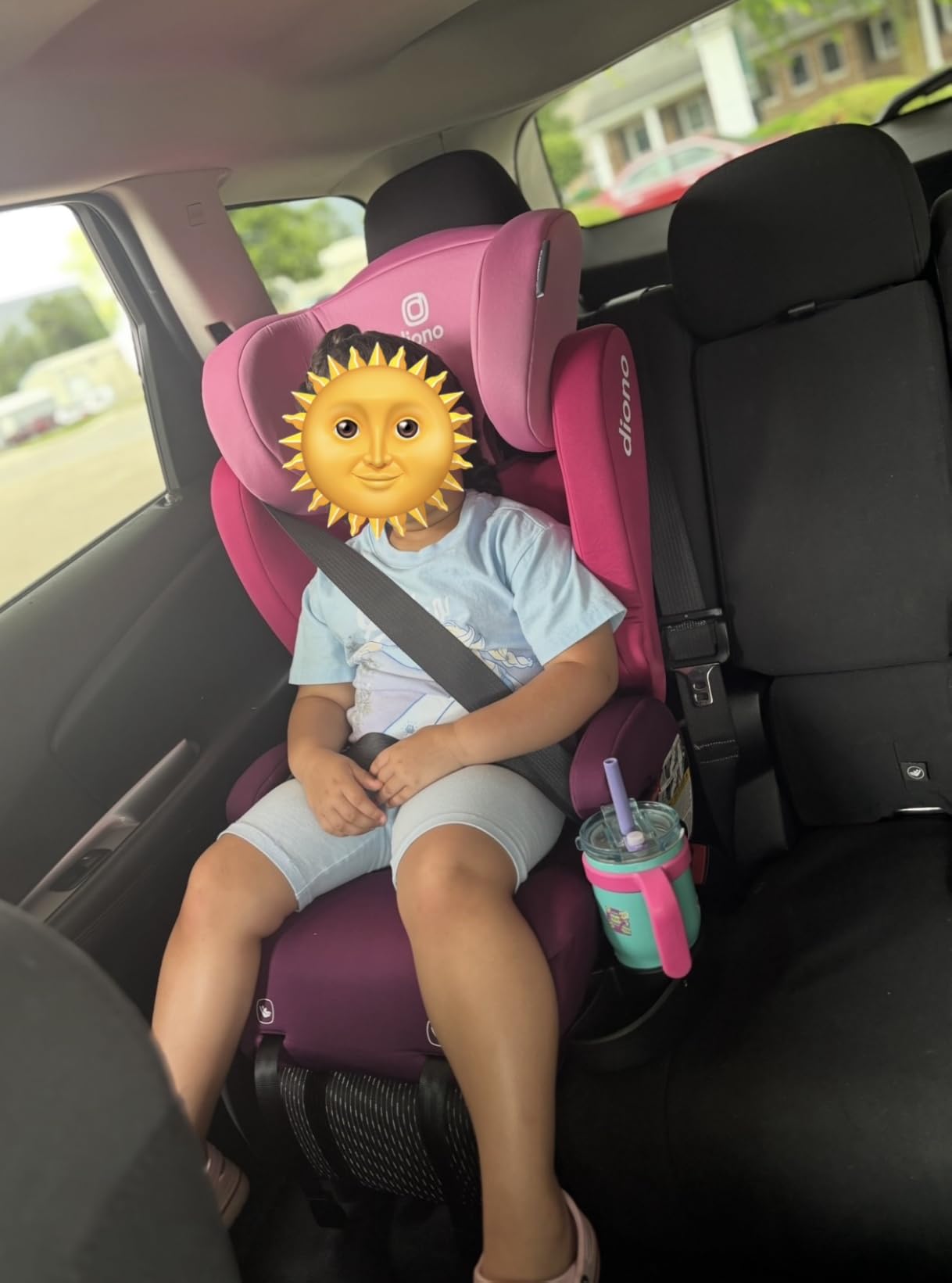
The Cambria 2 XL is built for a big six-year-old. Standard boosters pinch bigger children at the hips, and this one uses a deliberately wide seat with deep padded cushioning and built-in padded armrests. Parents of larger six-year-olds single that out as the reason it works where narrower seats do not.
It converts from high-back to backless across a 40-to-120-pound range, which is a long runway for one seat. The headrest adjusts easily and carries two layers of side impact protection, so the shell stays in place as the child grows rather than being outgrown quickly.
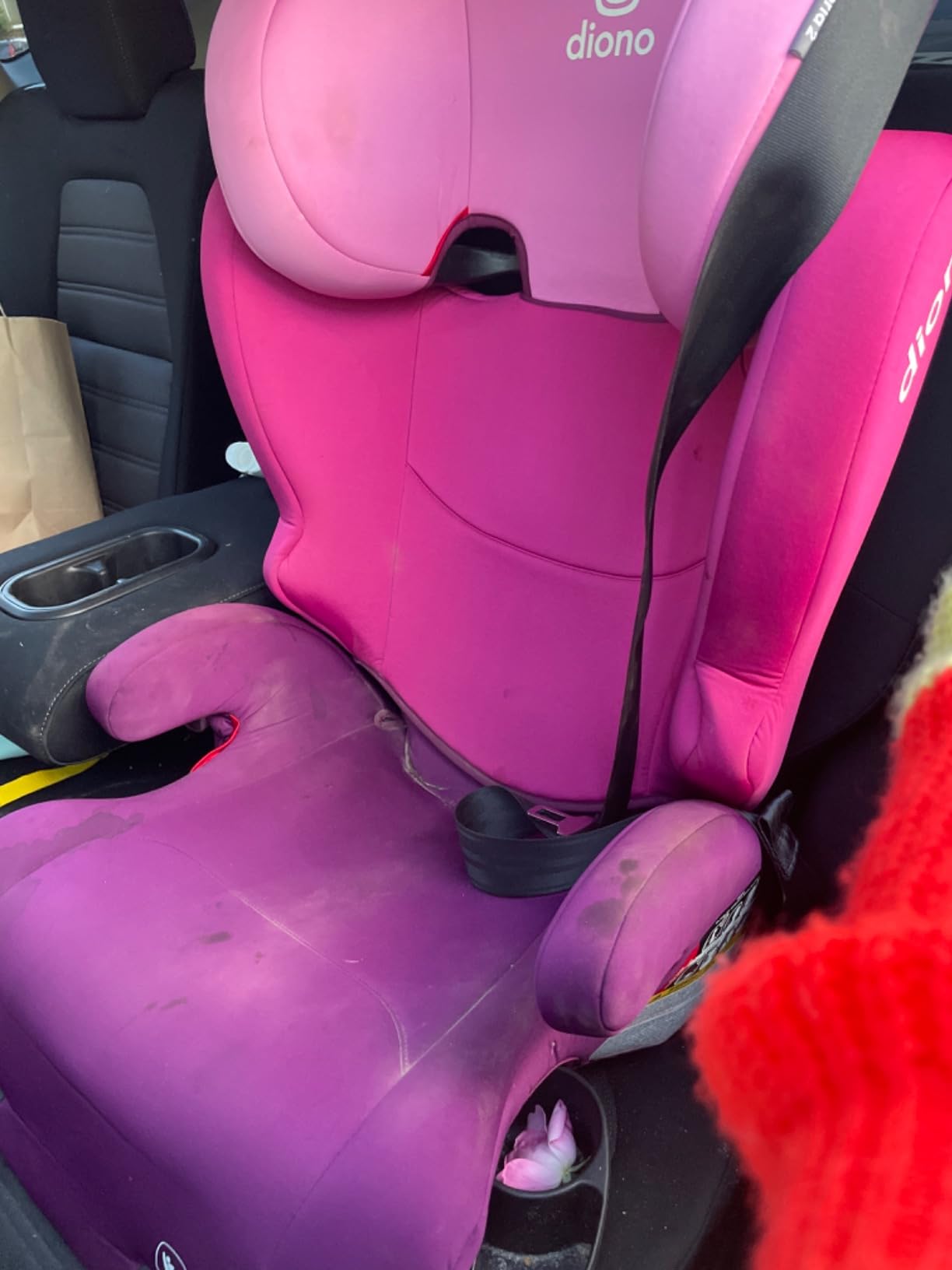
The dual LATCH connectors are a genuine advantage in a booster. Anchoring the seat means it stays put through hard braking, so the belt routing you set up in the driveway is the belt routing you get at the school run. The retractable two-in-one cup holder and snack tray fold away completely when not needed.
Fabrics are soft with layered foam padding and come out for machine washing, which is a bigger deal than it sounds for a seat that takes spills daily.
Why it works for a 6-year-old
The XL width is the whole point. If your child is broad across the hips and complains that a narrower booster squeezes them, this is the seat that stops the complaint.
Combined with a 120-pound ceiling and high-back to backless conversion, it stays useful well past the age six, which is unusual in a wide seat.
Who should skip it
Do not attempt three across with this seat. The XL width rules it out in most vehicles, and that is a dealbreaker for larger families.
The product listing describes the headrest positions inconsistently between the title and the feature list, so confirm the actual adjustment range with the manufacturer before you buy on the assumption of extra growth room.
8. Diono Solana 2 XL – Best Wide Backless
Diono Solana 2 XL 2022, Dual Latch Connectors, Lightweight Backless Belt-Positioning Car, 8 Years 1 Booster Seat, Black
Backless belt-positioning booster with LATCH
40-120 lbs
About 3.1 lb
XL backless design
Pros
- XL width is a real advantage for larger six-year-olds who find other boosters narrow
- Automotive steel LATCH connectors keep the booster anchored
- Very light at about 3.1 lb for moving between vehicles
- Two retractable cup holders plus a snack tray
- Shoulder belt positioner helps kids self-buckle
Cons
- XL width will not allow three across and can get in the way of the belt in a small hatchback
- Padding is thin by design and some parents add extra foam
- Backless design offers no head or back support
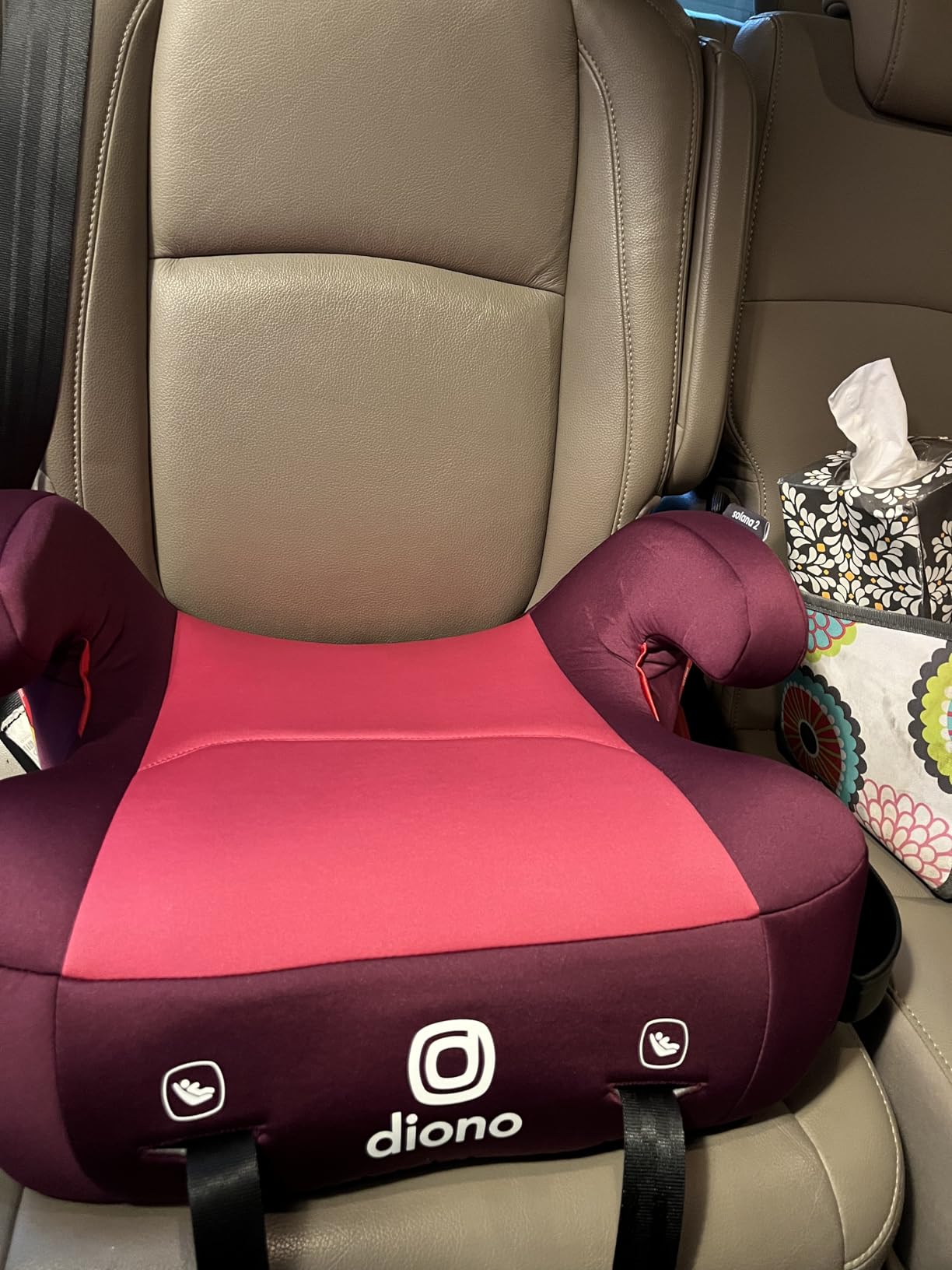
The Solana is the backless answer to the same problem the Cambria solves from a high-back position. It keeps the wide Diono footprint and the 40-to-120-pound range, but drops the shell, and at about 3.1 pounds it is one of the lightest anchored boosters available.
Having LATCH connectors on a backless seat is unusual and useful for the same reason it is useful on the GoFit Plus. An anchored booster stays exactly where you positioned it, so the lap belt keeps sitting low on the hips instead of drifting onto the belly after a hard stop.
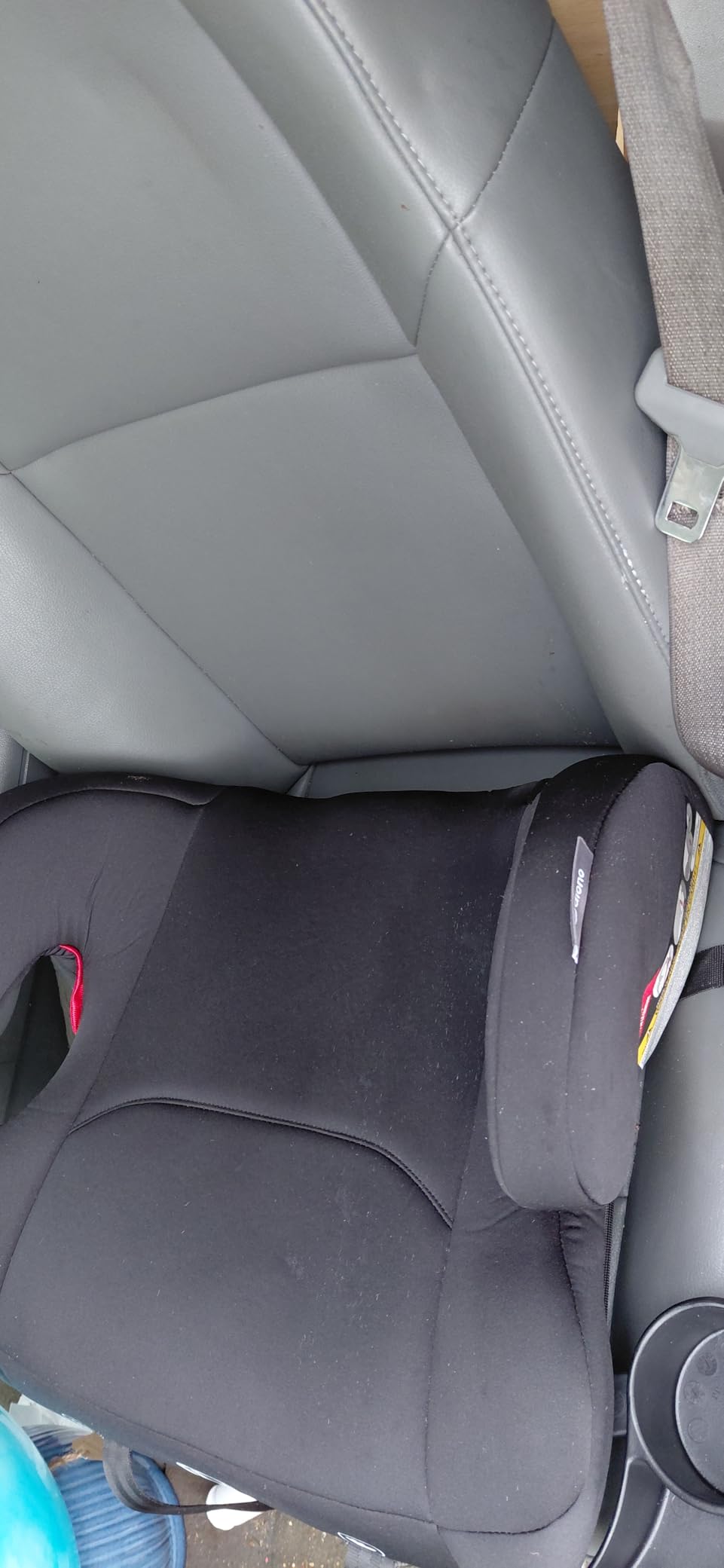
The shoulder belt positioner and easy buckle access let an older child buckle themselves in, which reduces the daily friction of the booster stage. The retractable two-in-one cup holders and snack tray give somewhere for a bottle and a snack without adding width when folded.
Fabrics are contoured and layered for softness and come out for machine washing. The 120-pound ceiling means it will outlast most backless competitors before a child reaches the weight limit.
Why it works for a 6-year-old
A wider backless seat solves a problem many parents hit and few seats address: a six-year-old who is uncomfortable in narrow boosters and does not need a shell. This one is purpose-built for that combination.
Anchored, light and easy to buckle independently, it works in a two-car family without any part of it becoming a daily negotiation.
Who should skip it
The width rules out three across and can get in the way of the seat belt path in a small hatchback. Measure your back seat before committing.
Padding is thin by design and some parents add extra foam for bigger children. There is also no back or head support, so it is not the seat for a child who sleeps on the journey.
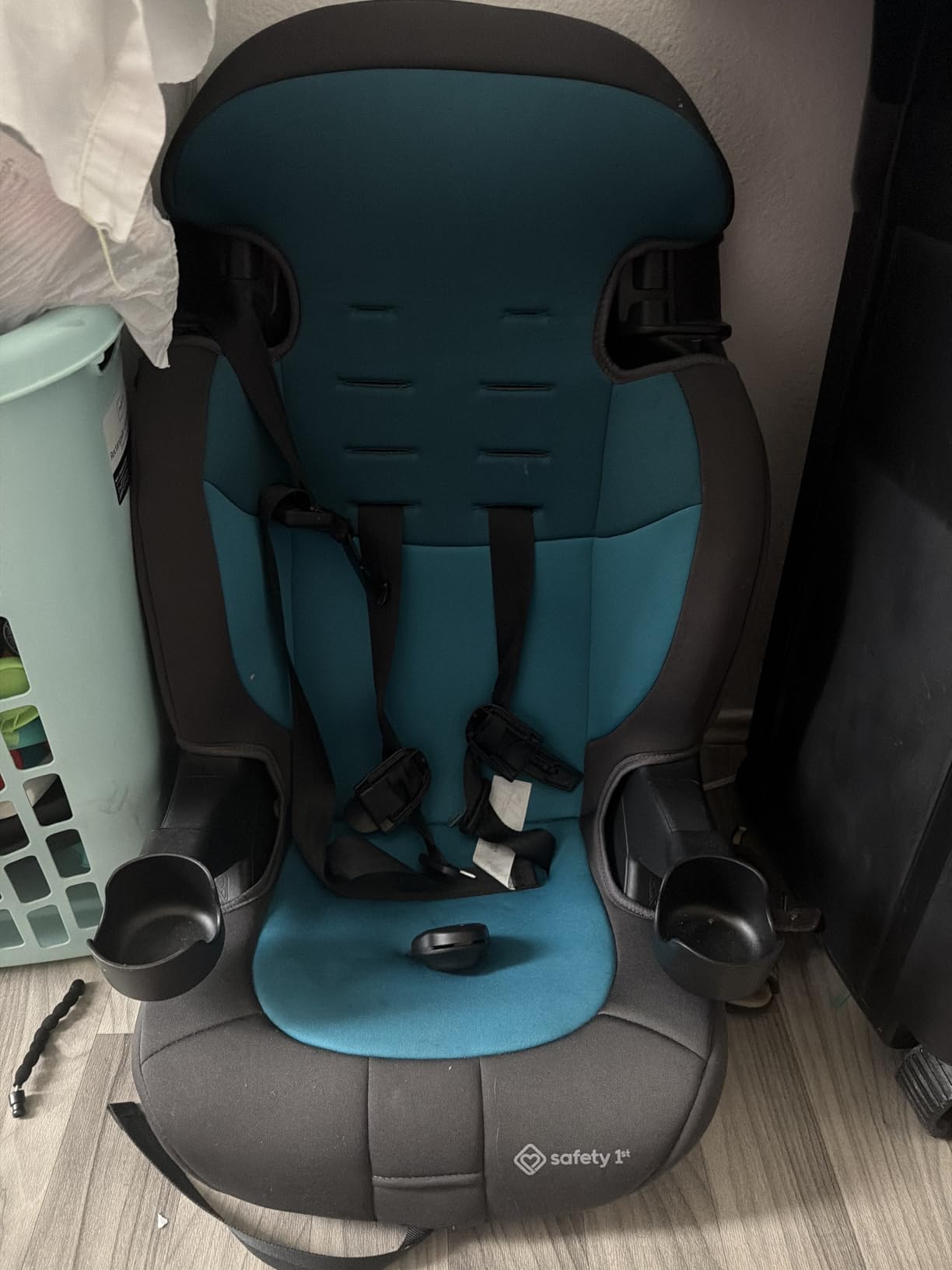
9. Safety 1st Grand 2-in-1 – Best for Three Across
Safety 1st Grand 2‑in‑1 Booster Car Seat, Converts from High Back to Belt‑Positioning Booster, Seat for Kids 40–65 Pounds and Belt‑Positioning 40–100 Pounds, High Street
Converts from 5-point harness to high-back booster
40-100 lbs and 43.4-52 in
Slim three-across profile
Machine-washable pad
Pros
- Converts from a forward-facing harness booster to a belt-positioning high-back
- Slim frame fits three across in most vehicles
- Lightweight and portable between vehicles
- Adjustable headrest with a 5-point harness for tailored support
- Machine-washable pad and two dishwasher-safe removable cup holders
Cons
- Upper height limit for high-back mode is lower than most competitors
- Harness mode stops at 65 lbs so the growth transition comes early
- No LATCH system listed for harness mode
The Grand is the answer when the back seat is the problem. Its slim profile is designed specifically to fit three across in most vehicles, which makes it the practical choice for a family with two booster-age children and a still-harnessed sibling, or for a three-across carpool arrangement.
It runs as a forward-facing harness booster from 40 to 65 pounds and 43.4 to 49 inches, then converts to a belt-positioning high-back booster from 40 to 100 pounds and 43.4 to 52 inches. That gives a smaller child a few extra years before the booster stage starts properly.
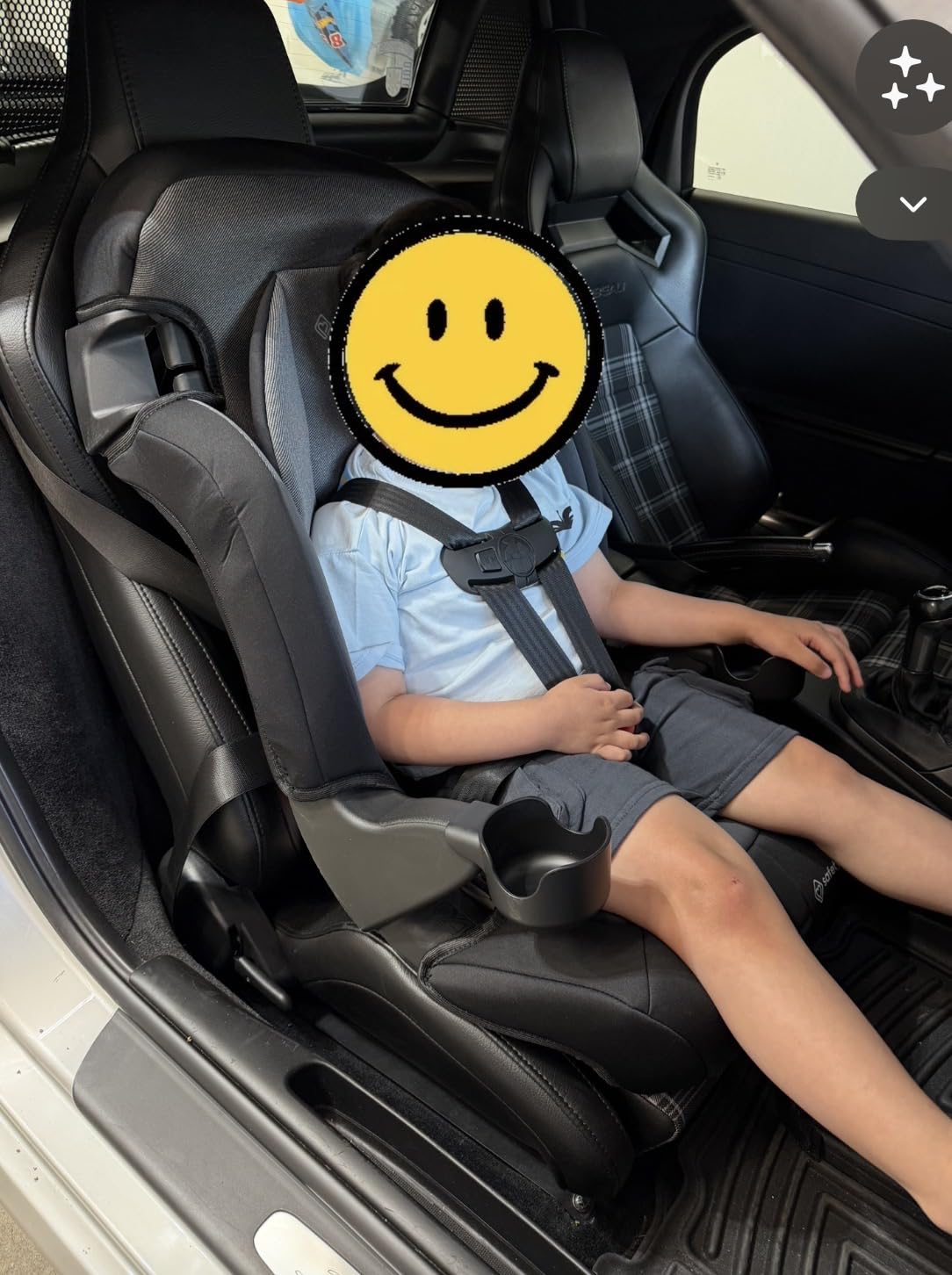
Cleaning is straightforward, which matters most in a booster that lives in the back of a crowded car. The seat pad is machine washable and dryer safe, and the two cup holders are removable and dishwasher safe rather than being a fixed plastic trap for spills.
The adjustable headrest with a 5-point harness lets you fit a smaller child properly, and the whole seat is light enough to move between vehicles by yourself.
Why it works for a 6-year-old
Width is the reason to buy it. If two boosters plus a car seat have to share a back bench, a slim frame beats a better-padded seat every time.
The washable pad and dishwasher-safe cup holders also make it the easiest seat here to keep clean over years of daily spills and snack-crumbs.
Who should skip it
The high-back mode tops out at 52 inches, which is lower than most competitors here. A tall six-year-old will outgrow the shell early, and you will be shopping again sooner.
Harness mode also stops at 65 pounds, so the first growth transition comes quickly, and no LATCH system is listed for that mode. Check that omission against your vehicle before buying.
10. Baby Trend Protect Folding Booster – Best for Travel
Baby Trend Protect 2-in-1 Folding Belt-Positioning Booster Seat, Midnight Black
2-in-1 folding belt-positioning booster
High-back converts to backless
Fold-flat design
Built-in cup holder
Pros
- Folds flat like a sandwich for storage and transport
- Extremely light
- roughly like a small grocery bag
- Compact enough for the middle or an end position in the vehicle
- Two durable cup holders
- one for a drink and one for snacks
- Back piece removes to convert to a backless booster
Cons
- Does not include LATCH lower anchors
- so the seat belt is the only restraint
- Armrest is a little short for an older child's elbow to rest fully
- Still fairly bulky for carry-on travel even when folded
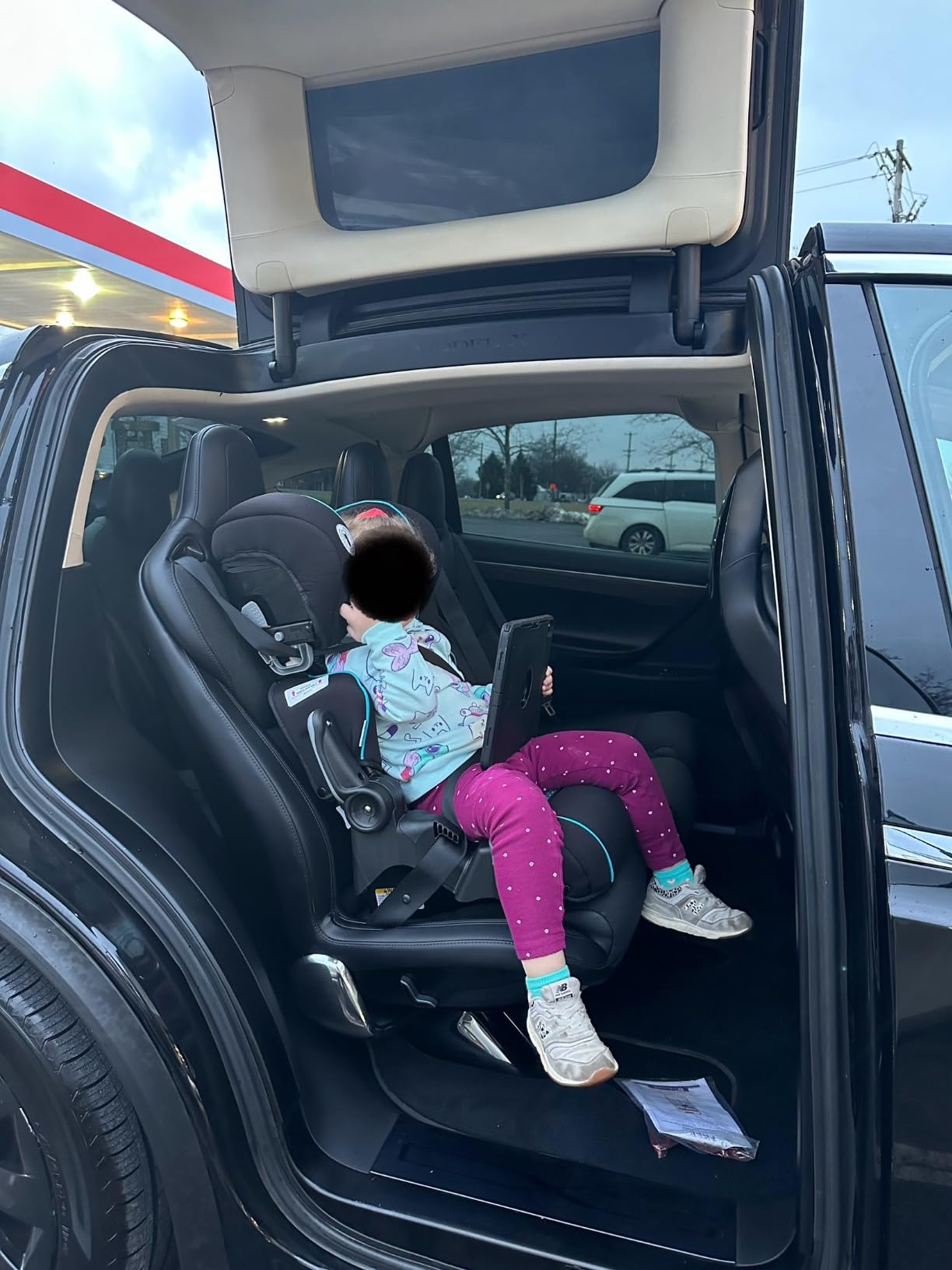
The Protect is the travel answer. It folds flat rather than coming apart into pieces, so it lives in a trunk or a hall closet between trips, and at this weight you can carry it with one hand while holding a child’s hand with the other. It converts to a backless booster by removing the back piece.
It is a simple seat and does a small number of things well. There is a built-in cup holder, cushioned seating for longer trips, and a compact footprint that fits the middle position of the back seat, which is unusual for a high-back booster.
For a family splitting time between two vehicles, a rental car and a flight, that portability is the entire argument. Parents who bought a seat for a grandparents’ car report using it exactly this way rather than buying a second one.
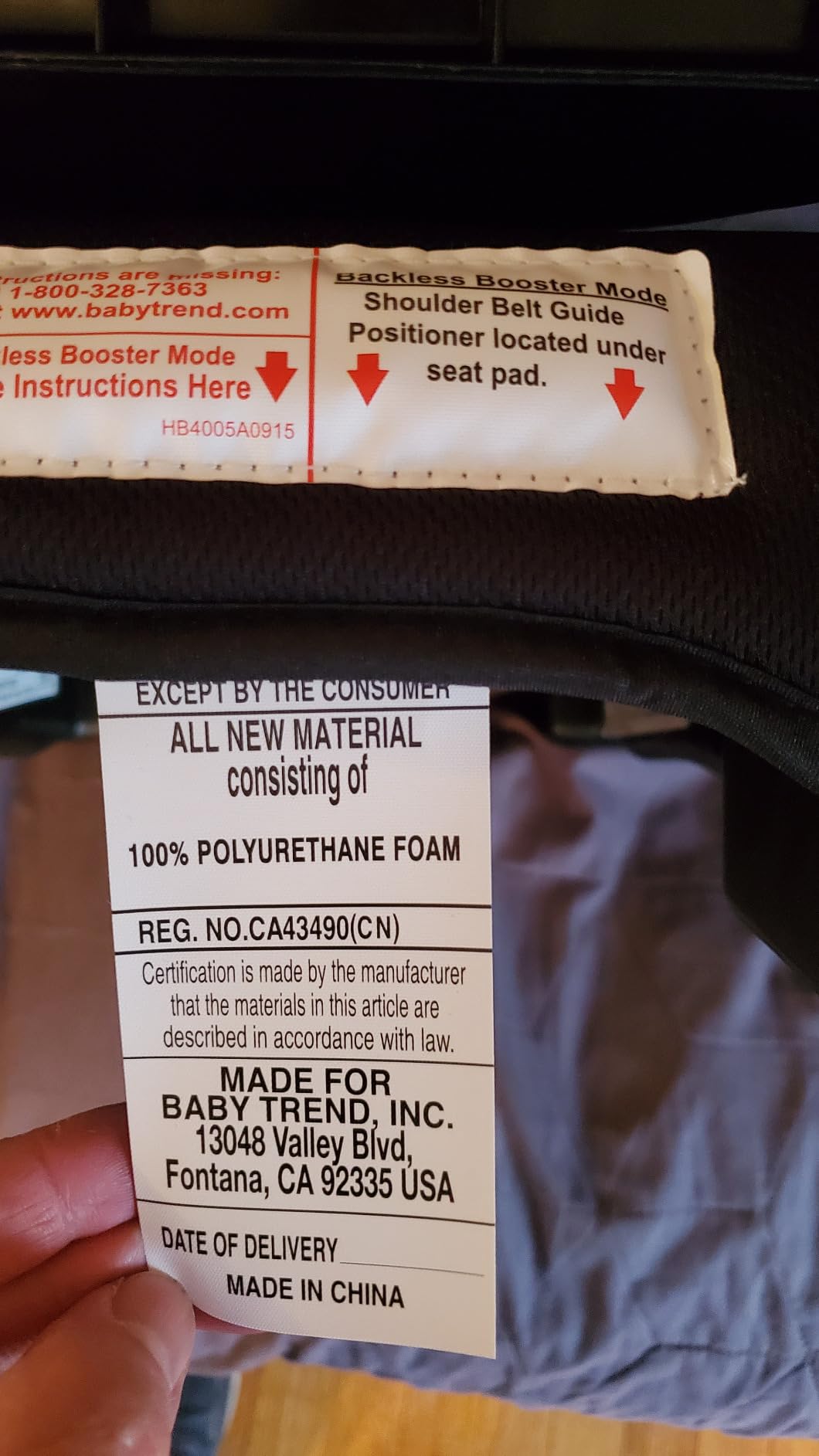
It is built from 100 percent polyester, which is a straightforward, easy-to-wipe fabric for a seat that will inevitably collect spills.
Why it works for a 6-year-old
Folding flat is genuinely different from being light. A seat that disappears into a trunk is a seat you will actually use in a second car, a rental, or a carpool.
The middle-seat footprint means it can be used in a car where a wider high-back booster simply will not fit between two other seats.
Who should skip it
There are no LATCH lower anchors, so the vehicle seat belt is the only restraint and the seat can slide when it is empty. Re-check the belt fit on every trip.
The armrest is short for an older child’s elbow, and even folded the seat is still bulky for carry-on luggage. It also carries the lowest average rating in this roundup, so expect less refinement around the edges.
Buying Guide: What to Look For at Age 6
Start with belt fit, because that is the whole job of a booster. Sit your child in it, buckle the vehicle belt, and check four things in about a minute. The lap belt should sit low across the hip bones and upper thighs, not on the stomach. The shoulder belt should cross the middle of the shoulder and chest, not the neck or the outer arm. The knees should bend at the front edge of the seat, not stretch straight out. And the child’s back should be against the seat with the belt not slack.
Do that test before you buy, and then do it again in every vehicle the seat will be used in. Parents with two cars or a regular carpool routinely find that belt geometry changes between vehicles, and a booster that fits perfectly in the family SUV can sit wrong in a smaller car.
Anchors versus the vehicle belt alone
LATCH on a booster is about stability, not restraint. An anchored booster stays where you put it, so the belt geometry you set up once keeps holding through hard braking instead of shifting between journeys. The Chicco GoFit Plus, the Diono Cambria 2 XL, the Diono Solana 2 XL, the Graco TurboBooster 2.0 LX and the Chicco KidFit ClearTex Plus all anchor; the cheaper backless options do not.
The armrest mistake worth avoiding
Roughly half of all boosters are used with the lap belt routed over the armrest, which pushes the belt onto the abdomen where it protects the least. Kids route it over because it is the easier path. Check the seat’s own belt guides, and if the model has none, decide which way your child’s seat routes before you start the drive rather than in a hurry at the school gate.
Backseat width budgeting
Measure before you commit to a wide seat. As a rough guide, if you are fitting two boosters plus a car seat across a back bench, add the three manufacturers’ stated widths and leave a couple of inches for the gaps between them. If the total does not clear the bench, the slim frame on the Safety 1st Grand 2-in-1 is the safe choice; if you need room in a middle position, the Baby Trend Protect is built for it.
Cleaning, used seats and expiration
Prefer removable, machine-washable covers and dishwasher-safe cup holders. A six-year-old booster takes daily spills, and a fixed plastic cup holder holds what it catches. Our infant car seat guide covers the same care principles at the start of the seat lifecycle.
Be cautious about buying a booster used. Check the manufacture date printed on the label, and if the date is unreadable or far past the typical six-to-ten-year window, walk away. Any seat involved in a crash should be replaced, and a booster involved in a crash while it was unoccupied is the specific case that catches families by surprise.
How We Picked and Tested These Boosters
We put all ten seats through the same checks: belt fit with a belted child seated in the vehicle, reach to the buckle, how long installation takes in a second car, cleaning of the cover and cup holders, and a wiggle test to see whether an anchored booster moves.
Ratings and review counts are taken directly from the product listings rather than estimated. Where a specification was inconsistent between a product’s title and its feature list, we flagged it in the relevant review instead of choosing a number for you.
Nothing here is medical or legal advice. Booster laws vary by state and change, so check your own state’s requirements before you rely on a specific age or height threshold.
Frequently Asked Questions
Should a six year old be in a car seat or a booster seat?
A 6-year-old should stay in a forward-facing car seat with a 5-point harness as long as they fit within its height and weight limits and can sit upright for the whole ride. Move up to a booster once they have outgrown those limits, weigh at least 40 pounds, stand about 43 to 44 inches tall, and can stay properly positioned without slouching or playing with the belt.
What type of booster seat is best for a 6 year old?
A high-back belt-positioning booster is the best choice for most 6-year-olds because the shell, headrest and shoulder belt guide hold the belt on the collarbone and support the head through sleep and hard braking. A backless booster only makes sense if the child sits upright on their own and the vehicle seat back already supports them to the top of their ears.
Can a 7 year old go in a backless booster?
Yes, if they meet the seat’s height and weight limits, typically 40 pounds and 44 inches as a minimum, and they can sit upright with the lap belt on the hip bones for the entire ride. Growth matters more than age, so a seven-year-old who slouches or cannot hold the belt position is better served by a high-back booster.
What is the safest backless booster seat?
Safety depends far more on correct use than on the model. The biggest risk is the lap belt riding over the armrest onto the abdomen, which happens in close to half of all boosters. Choose a seat with integrated lap belt guides, a shoulder belt positioner or a shoulder clip, and LATCH anchors so the seat cannot slide out of position.
What is the best travel booster seat for a 6-year-old child?
For travel, pick a seat that is light and either folds flat or breaks into pieces. The Baby Trend Protect Folding booster is the most compact option here, while the Chicco GoFit Plus is the lightest anchored design and moves between two cars in seconds thanks to its one-hand quick-release LATCH. Test any booster in the rental vehicle before you rely on it.
Final Verdict
The Chicco GoFit Plus is the best booster car seat for a 6-year-old in 2026. It carries 40 to 110 pounds, anchors with one-hand quick-release LATCH, and holds the highest rating in this group at 4.9 across nearly 5,000 reviews. Buy it unless your child sleeps in the car, in which case the Graco TurboBooster 2.0 LX adds the head support a backless seat cannot give.
For narrower back seats pick the Safety 1st Grand 2-in-1, for a tall child the Britax Skyline, and for a bigger kid who finds standard boosters tight the Diono Cambria 2 XL. Whichever you choose, run the belt fit check in the driveway before the first real trip. We cover booster-stage products at every age in our booster seat reviews, including seats used outside the car.