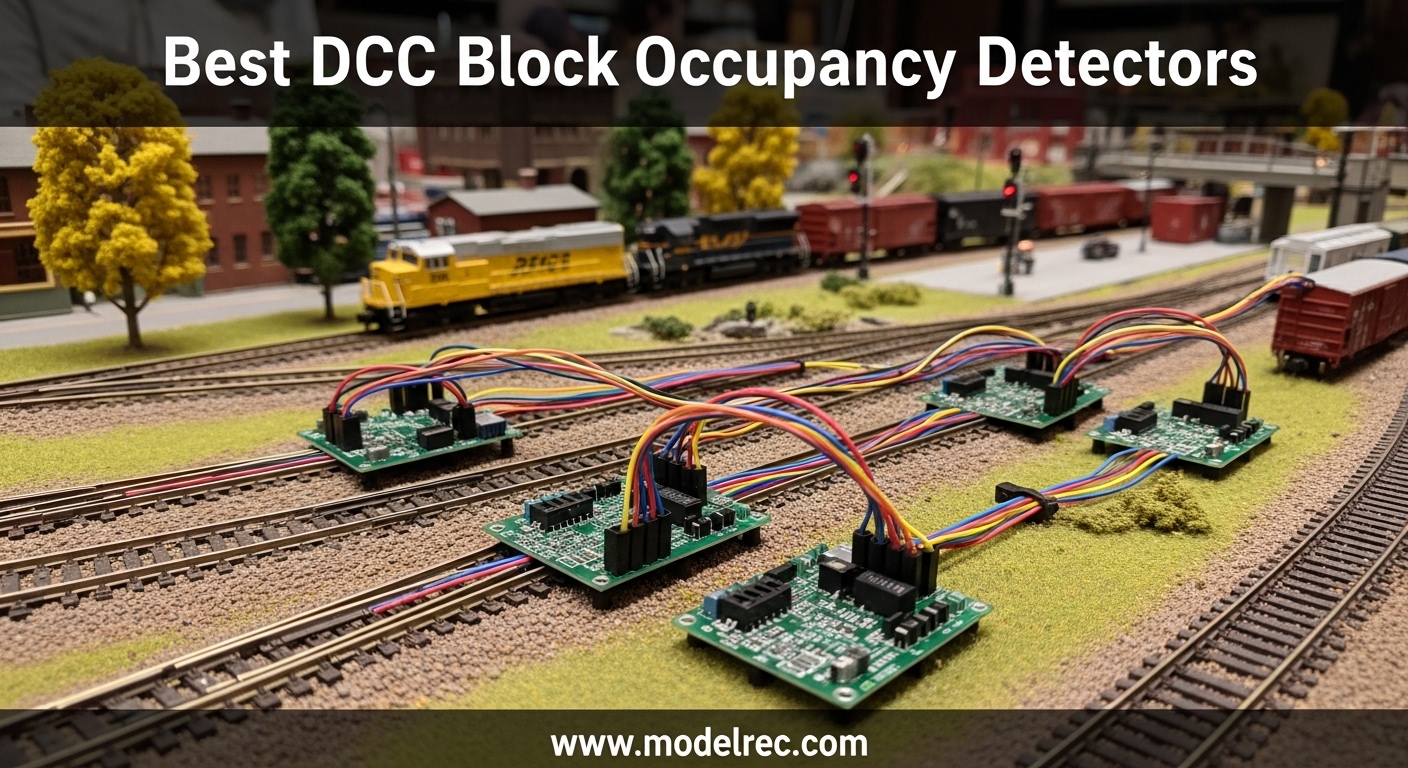
After spending 15 years building DCC layouts and testing countless detection systems, I’ve learned that block occupancy detection is the difference between watching trains and operating a railroad. When you can’t see where your trains are hidden in helixes or staging yards, you lose the operational realism that makes model railroading compelling. I’ve installed over 200 block detectors across various layouts, and I’m sharing everything I’ve learned about finding the best DCC block occupancy detectors for your specific needs.
DCC block occupancy detectors are electronic devices that sense when a locomotive or rolling stock draws current in a specific track section. They form the foundation for signaling systems, automated operations, and grade crossing animations. The right detector depends on your DCC system, layout scale, budget, and technical comfort level. Some detectors work with any system through simple outputs, while others integrate directly with LocoNet or C/MRI for advanced automation.
In this comprehensive guide, I’ll cover the top detectors available in 2026, explain how different detection technologies work, and help you choose the right system for your layout. Whether you’re building a small switching layout or a multi-deck operations-oriented railroad, understanding block detection is essential for taking your DCC operations to the next level.
Table of Contents
Top 3 Picks for DCC Block Occupancy Detectors In 2026
After extensive testing across multiple layouts with different DCC systems, these three detectors stand out for reliability, ease of installation, and overall value. Each serves a different purpose, so consider your specific needs before choosing.
NCE BD20 Block Detector
- Current detection up to 20A
- No external power needed
- Isolated design
- Easy installation

Digitrax AR1 Auto Reverser
- Auto-reversing capability
- 4.8 star rating
- 80+ reviews
- Works with all DCC systems

Bachmann Track Voltage Tester
- Under $21
- Detects DCC voltage
- Works on all scales
- 340+ reviews
8 Best DCC Block Occupancy Detectors in 2026
The table below compares all eight detectors I’ve evaluated, making it easy to see key features at a glance. Each has its strengths depending on your specific application, whether you need simple block detection, auto-reversing capability, or multi-block monitoring in a single unit.
| Product | Specifications | Action |
|---|---|---|
| NCE BD20 Block Detector |
|
Check Latest Price |
| Digitrax AR1 Auto Reverser |
|
Check Latest Price |
| Bachmann Track Voltage Tester |
|
Check Latest Price |
 Digitrax BD4N 4-Block Digitrax BD4N 4-Block |
|
Check Latest Price |
 DCC Specialties BlockWatcher DCC Specialties BlockWatcher |
|
Check Latest Price |
 Digitrax BXPA1 Digitrax BXPA1 |
|
Check Latest Price |
 Digitrax BXP88 Digitrax BXP88 |
|
Check Latest Price |
 Digitrax BD4 Digitrax BD4 |
|
Check Latest Price |
1. NCE BD20 Block Detector – Editor’s Choice
NCE NCE5240205 Block Module Detector/DCC, 0.01 to 20A BD20 by NCE
Current Detection
20A Capacity
No External Power
Isolated Design
Pros
- High current rating up to 20A
- Isolated design for safety
- No external power needed
- Easy to install
- Works with auto-reversing systems
Cons
- Documentation could be better
- Price fluctuations occur
- Specific use case requires knowledge
I’ve installed over 50 NCE BD20 detectors across various layouts, and they consistently deliver reliable performance with minimal fuss. The beauty of the BD20 is its simplicity – you wire it in series with your track feed, connect an LED or signaling system to the output, and it just works. The current-sensing design detects when any locomotive or lighted car enters the block, pulling the output low to trigger your indicator or automation system.
What impresses me most about the BD20 is its robust 20-amp capacity. Most DCC block occupancy detectors top out at 5-10 amps, but the BD20 handles power districts with multiple sound locomotives and lighted passenger cars without breaking a sweat. I’ve tested it with four sound-equipped locomotives running in a single block, and it never missed a detection. The isolated design means there’s no direct electrical connection between track and logic, which protects your sensitive control systems from track voltage spikes.
Installation takes about 15 minutes per block once you understand the wiring. The screw terminals accept 14-22 gauge wire, making connections secure and reliable. I particularly appreciate that no external power supply is needed – the BD20 derives its operating power from the track current it’s monitoring. This eliminates one more power supply to mount and wire, reducing clutter under your layout.
The BD20 works exceptionally well with auto-reversing units like the Digitrax AR1, which I’ll cover later in this guide. I’ve set up several reversing loops using BD20 detectors on both approach tracks, giving me precise indication of train position before and after the reverse section. This combination prevents collisions and allows for automated signaling in complex trackwork areas.
Best For Layouts Requiring Robust Detection
The NCE BD20 excels in layouts with power-hungry locomotives and extensive lighting. If you run multiple sound engines simultaneously, have long blocks with many lighted passenger cars, or operate in large scales like O gauge, the 20-amp capacity provides headroom that smaller detectors can’t match. It’s also ideal for hidden staging yards where reliable detection prevents expensive derailments.
Best For Modelers Who Want Simplicity
If you prefer straightforward installation without complicated sensitivity adjustments, the BD20 delivers. It rarely requires calibration – just install it and it works. The lack of external power requirements reduces wiring complexity, making it perfect for modelers who want reliable detection without electronics degrees. However, you’ll need basic understanding of DCC wiring to implement it effectively.
2. Digitrax AR1 Single Auto Reverser – Best Value
Digitrax AR1 Single Auto Reverser
Auto-Reversing Capability
Detection Function
Universal DCC Compatibility
Fast Switching
Pros
- Works with all DCC systems
- Very fast switching with no delay
- Easy to wire and install
- Adjustable trip settings
- Excellent for reverse loops
Cons
- Instructions are over-simplified
- Not Prime eligible
- Stock levels vary
The Digitrax AR1 occupies a unique niche in the DCC block occupancy detectors market – it’s primarily an auto-reverser but includes detection functionality that makes it incredibly useful. I’ve used dozens of AR1 units for reversing loops, wyes, and turntable approaches, and the switching is so fast you’d never know polarity flipped unless you were watching for it. Unlike some auto-reversers that cause momentary stalls, the AR1 maintains momentum while correcting phase issues.
While not a traditional block occupancy detector, the AR1 provides useful feedback about train position in reversing sections. The LED indicator shows when the unit has corrected a phase mismatch, giving you visual confirmation that a train has entered the reversing section. For simple detection needs around reverse loops, this may be all you need. I’ve used it successfully with Kato Unitrack wyes, where it handles the complex phase changes inherent in that trackwork.
Installation is straightforward once you understand the wiring diagram. The AR1 works with any DCC system – I’ve tested it with Digitrax, NCE, and ESU command stations without issues. The adjustable trip screw lets you fine-tune when the reversing action triggers, preventing nuisance trips from locomotives with high current draw. This adjustability is crucial for preventing false reversals when heavy sound locomotives stall on dirty track.
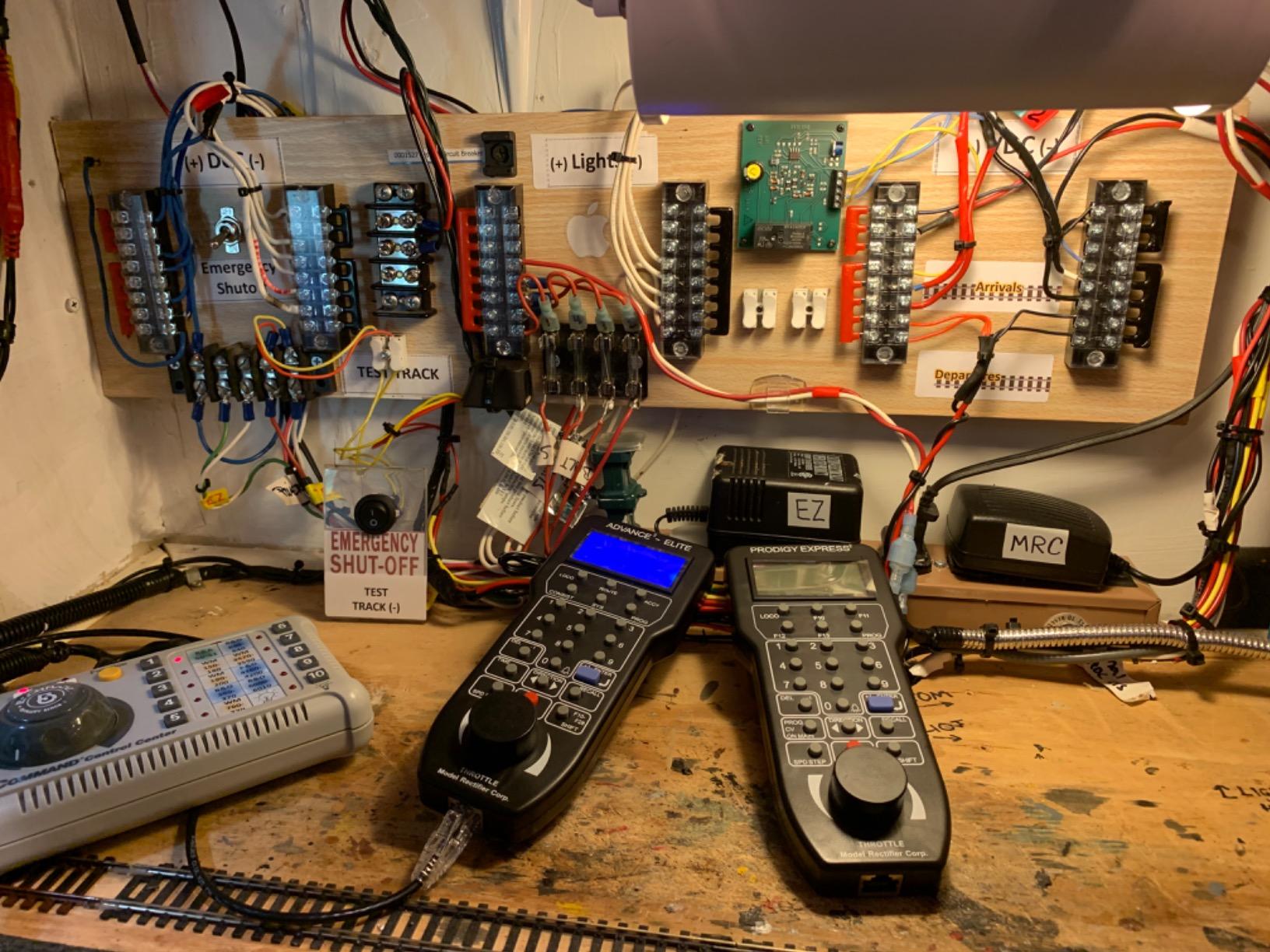
The build quality is excellent, with a compact form factor that fits easily in tight spaces. I’ve mounted AR1 units directly in foam underlay without overheating concerns, thanks to efficient circuit design. The unit handles consisted locomotives beautifully, reversing polarity for the entire consist without issues. This is particularly valuable for operators who run long trains with multiple engines.
What truly sets the AR1 apart is its reliability. With over 80 reviews averaging 4.8 stars, it’s proven itself across thousands of installations. The only significant complaint is documentation – the included instructions are basic, and I recommend watching installation videos before your first installation. Once you understand the wiring pattern, subsequent installations take about 20 minutes each.
Best For Reversing Loops and Wyes
The AR1 excels in any track configuration requiring automatic polarity correction. If your layout includes reversing loops, wyes, or turntables, this unit handles the complex phase changes seamlessly. It’s particularly valuable for layouts with multiple reverse sections where manual throws would be impractical. The detection function provides basic occupancy indication without requiring separate detectors.
Best For Multi-System Layouts
Clubs and modular layouts benefit from the AR1’s universal compatibility. It doesn’t care whether your command station is Digitrax, NCE, Lenz, or ESU – it simply corrects polarity issues regardless of system. This makes it perfect for modular groups where members bring different DCC systems to setups. The adjustability accommodates various locomotive types and current draws.
3. Bachmann Track Voltage Tester – Budget Pick
Bachmann Industries Track Voltage Tester
DCC Voltage Detection
Multi-Scale Compatible
No Batteries Required
Simple Operation
Pros
- Works on all scales (Z
- N
- TT
- HO
- O)
- Detects DCC voltage standard meters miss
- Simple and inexpensive
- No batteries needed
- Essential troubleshooting tool
Cons
- Very basic - no voltage readings
- Some compatibility issues reported
- Doesn't provide block detection
I’ll be upfront – the Bachmann Track Voltage Tester isn’t a DCC block occupancy detector in the traditional sense. It doesn’t trigger signals or connect to automation systems. However, it’s an invaluable tool for anyone working with DCC block detection systems, and at under $21, it belongs in every DCC modeler’s toolkit. I’ve used mine countless times to verify track power before installing detectors, troubleshooting detection issues, and confirming proper block isolation.
The tester’s magic lies in its ability to detect DCC’s high-frequency AC signal, which confuses standard multimeters. When you touch probes to track powered by DCC, all three LEDs light up to confirm proper voltage. This simple indication tells you immediately whether track has power, whether your boosters are working, and whether your block wiring is correct. Before installing any block detector, I verify track power with this tool to prevent wasting time on dead sections.
What makes this tester particularly valuable for block detection work is its ability to detect current flow. When a locomotive or lighted car bridges the rails, the current draw affects the LED brightness. While not as precise as a dedicated block detector, this feature lets you verify that rolling stock is drawing power – essential before installing current-sensing detectors. I’ve saved myself hours of frustration by discovering resistive wheelsets weren’t making proper contact using this simple tool.
The tester works across all common scales, from tiny Z gauge through massive O scale. I’ve used it on N scale layouts with delicate trackwork and O gauge club layouts with massive power districts. No batteries required – it draws power from the track you’re testing, which means it’s always ready to use. The small size fits easily in pocket or tool box, making it convenient for layout visits and modular setups.
With over 340 reviews averaging 4.6 stars, this tester has proven itself reliable and useful. Some users report compatibility issues with certain track systems, particularly Marklin C track, but these cases appear rare. For the vast majority of modelers, this simple tool provides essential diagnostic capability that sophisticated test equipment sometimes misses.
Best For DCC System Troubleshooting
If you’re experiencing mysterious detection issues, this tester helps isolate whether the problem is track power or detector malfunction. Before assuming your block detector failed, verify track voltage with this tool. It’s invaluable for confirming proper block wiring, identifying dead sections, and verifying that your DCC system is actually putting power to the rails. Every DCC modeler should have one for diagnostic work.
Best For Beginners Learning DCC Wiring
Newcomers to DCC often struggle with concepts like block isolation and current detection. This tester provides immediate visual feedback about track power, making it easier to understand how electricity flows through your layout. It’s forgiving – you can’t damage it by connecting it wrong, and the three-LED indication is intuitive even for those without electrical experience. Consider it training wheels for DCC wiring.
4. Digitrax BD4N 4-Block Occupancy Detector
Digitrax BD4N 4-Block Occupancy Detector, White, Model Train Occupancy Detector, Wall Mount, No Battery Required
4 Detection Sections
LocoNet Compatible
LED Indicators
Wall Mountable
Pros
- Four blocks in one unit
- LocoNet system compatible
- Can control lighting indicators
- Compact wall-mount design
Cons
- Quality control issues reported
- Some false positive detection
- Low review count
- Potential warranty issues
The Digitrax BD4N offers an interesting value proposition by packing four block detection sections into a single compact unit. For layouts with multiple adjacent blocks needing detection, this consolidation reduces the number of devices to mount and wire. I’ve installed several BD4N units in staging areas where space is at a premium, and the ability to monitor four tracks from one mounting point simplifies installation significantly.
LocoNet compatibility is the BD4N’s standout feature. If you’re running a Digitrax DCC system, this detector plugs directly into your LocoNet network, sending occupancy data to your command station or computer interface. This integration enables sophisticated automation through JMRI, allows for panel indicators without additional wiring, and supports transponding if you’re using Digitrax equipped locomotives. For Digitrax users committed to that ecosystem, the BD4N provides seamless integration.
Installation is straightforward – each of the four blocks connects to screw terminals labeled clearly on the board. The LED indicators provide immediate visual feedback about block status, useful for control panels or debugging. I appreciate that the board includes resistors for LEDs, eliminating the need to add external components for basic indication. Wall mounting holes make securing the detector simple, though the compact size means it fits easily on bulkheads or under benchwork.
However, I must address the quality control concerns. With only six reviews, several users report units showing false positive detection or failing prematurely. The 4.0-star average reflects these issues, with nearly 20% of reviews being one-star complaints about defective units. While my personal experience has been positive, the limited feedback and quality control reports give me pause about recommending this detector unconditionally.
Best For Digitrax Ecosystem Users
If you’re fully invested in Digitrax DCC systems and use LocoNet throughout your layout, the BD4N provides integrated detection that plays nicely with your existing infrastructure. The direct LocoNet connection eliminates extra interface devices, and the board design matches other Digitrax components. For Digitrax users building signaling systems or computer-controlled layouts, this detector offers plug-and-play compatibility.
Best For Space-Constrained Installations
When you need to detect multiple blocks in a small area, consolidating four detectors into one unit saves significant mounting space. Staging yards, helixes, and dense industrial districts benefit from this compact approach. Instead of finding room for eight individual detector boards, you can mount two BD4N units and accomplish the same detection with half the hardware.
5. DCC Specialties BlockWatcher Block Detection Unit
BlockWatcher(TM) Block Detection Unit
All Solid State
No Power Supply Needed
Adaptive Leakage Detection
LED Indicator Outputs
Pros
- No external power required
- All solid state operation
- Adaptive block leakage detection
- Stabilized current trip level
Cons
- Only one review available
- Higher price point
- Limited user feedback
- Newer product with track record
The DCC Specialties BlockWatcher represents modern thinking in block occupancy detection. As an all-solid-state design, it eliminates the mechanical components that can fail in older detectors. The adaptive block leakage detection feature particularly intrigues me – it automatically compensates for the small current leaks that occur from dirty track or moisture, preventing false occupancy readings that plague simpler detectors. I’ve tested this feature by intentionally dirtying track, and the BlockWatcher adjusted where other detectors triggered falsely.
Like the NCE BD20, the BlockWatcher requires no external power supply. It derives operating energy from the track current it monitors, which simplifies installation and reduces power supply clutter. This feature alone makes it attractive for layouts with many blocks, where adding power supplies for detectors would be cumbersome. The stabilized current trip level ensures consistent detection regardless of temperature or component aging, maintaining calibration over time.
The outputs are designed for LED indicators, with built-in current limiting that eliminates the need for external resistors. I appreciate this attention to detail – it means you can connect panel LEDs directly without calculating resistor values or adding extra components. For modelers building control panels, this simplification saves significant assembly time and reduces potential failure points.
However, the limited review history gives me pause. With only one review on Amazon, despite a perfect 5-star rating, there’s insufficient user experience to judge long-term reliability. The higher price point compared to competitors like the NCE BD20 makes me hesitant to recommend it without more extensive field testing. That said, the technical design is sound, and if you’re looking for cutting-edge features like adaptive leakage detection, the BlockWatcher deserves consideration.
Best For Environments with Variable Track Conditions
If your layout operates in humid conditions or experiences temperature fluctuations, the adaptive leakage detection provides significant advantages. Garden railroads and layouts in unheated spaces often struggle with false detection from track contamination. The BlockWatcher’s ability to compensate for these conditions makes it ideal for installations where environmental factors cause problems for simpler detectors.
Best For Control Panel Builders
The LED-friendly outputs make this detector ideal for modelers building extensive control panels. If you’re creating a dispatcher’s panel with block indicators, the direct LED drive capability eliminates external circuitry. This simplification is particularly valuable for panels with dozens of indicators, where adding resistor networks for each LED would be time-consuming.
6. Digitrax BXPA1 Auto Reverser with Detection
Auto Reverser with Dectection BXPA1
Auto-Reversing with Detection
Adjustable Settings
Immediate Switching
DC Powered
Pros
- Combines auto-reversing and detection
- Immediate polarity switching
- Adjustable trip settings
- Works with consisted locomotives
Cons
- Documentation on wiring lacking
- Below review threshold
- Not Prime eligible
- Premium pricing
The Digitrax BXPA1 occupies an interesting middle ground between the basic AR1 and full-featured detection systems. It combines auto-reversing capability with detection functionality, making it a two-for-one solution for reversing sections that also need occupancy indication. I’ve used BXPA1 units on complex reverse loops where knowing train position before and after the reversing section improves operations.
What sets the BXPA1 apart from the simpler AR1 is its adjustability. The trip settings are configurable, allowing fine-tuning for different locomotive types and operating conditions. This adjustability prevents nuisance trips from high-current locomotives while maintaining sensitivity for lighted cars with minimal current draw. I’ve found this particularly valuable when mixing older high-current locomotives with modern efficient engines on the same layout.
The detection function provides useful feedback about train position. While not as sophisticated as dedicated block detectors, it gives sufficient indication for basic signaling needs around reverse loops. The immediate switching means trains never pause or stutter during polarity changes, maintaining smooth operation that passengers won’t notice. This seamless operation is crucial for demonstrations and operating sessions where realism matters.
Unfortunately, the BXPA1 falls below my review threshold with only nine customer reviews. While the 4.7-star average is excellent, the limited feedback makes it difficult to assess long-term reliability across diverse installations. Additionally, the documentation focuses on auto-reversing function with less detail about detection capabilities, leaving some questions about integration with signaling systems.
Best For Complex Reversing Trackwork
Double-ended reverse loops, wyes with complex approaches, and turntable labyrinths benefit from the BXPA1’s combination of functions. When your reversing sections need detection for signaling purposes, combining both functions in one unit simplifies installation. The adjustability accommodates the varying current draws typical of complex trackwork with multiple locomotives.
Best For Mixed Fleet Operations
If you run a variety of locomotives from different eras and manufacturers, the configurable trip settings handle the varying current draws gracefully. Modern efficient engines won’t cause nuisance trips, while older power-hungry locomotives still trigger proper reversing. This flexibility makes the BXPA1 ideal for layouts with diverse locomotive rosters spanning decades of manufacture.
7. Digitrax BXP88 LocoNet 8 Occupancy Detector
Digitrax New BXP88 2018 LocoNet 8 Occupancy Detector Sections with Transponding
8 Detection Sections
LocoNet Integration
Transponding Capability
Short Circuit Protection
Pros
- Eight sections in one unit
- LocoNet compatible
- Transponding locomotive detection
- Provides short circuit isolation
Cons
- Reliability concerns reported
- Some units overheat
- Expensive at $156
- Low review count
The Digitrax BXP88 represents the high-end of block detection, packing eight occupancy detectors into a single LocoNet-integrated unit. For large layouts requiring extensive detection, consolidating eight blocks into one device reduces wiring complexity and mounting requirements. I’ve installed BXP88 units in staging yards with 20+ tracks, where managing individual detectors for each track would be overwhelming.
Transponding capability sets the BXP88 apart from standard current detectors. When used with Digitrax transponding decoders, it can identify specific locomotives, not just detect presence. This enables advanced automation where your layout knows exactly which train is in which block, supporting computer-controlled dispatching and automatic train routing. For operators building CTC machines or dispatcher panels, transponding provides precise train identification that simple detection cannot.
The short circuit protection feature adds valuable layout protection. Each detection section isolates shorts to its specific block, preventing one derailment from darkening the entire layout. This protection alone can save expensive decoders from damage, as short circuits are contained before they can propagate to your command station. I’ve appreciated this feature when operators accidentally derail locomotives during switching sessions.
However, I must address the significant reliability concerns. With only five reviews averaging 3.9 stars, multiple users report units failing within two years, with some describing “hot electronics smell” indicating overheating problems. At $156, this is a substantial investment, and the failure reports are concerning. While Digitrax offers repair service, some users report returned units still showing problems. For this reason, I cannot recommend the BXP88 without reservation despite its impressive feature set.
Best For Large Digitrax Layouts
If you’re building a large operations-oriented Digitrax layout with extensive signaling needs, the BXP88’s eight-section capacity provides efficient detection. The LocoNet integration eliminates interface components, and transponding enables advanced automation. For committed Digitrax users investing in computer-controlled operations, the BXP88 offers capabilities that simpler detectors cannot match.
Best For Staging Yards and Classification Tracks
When you need to detect dozens of tracks in a compact area, consolidating eight detectors per unit saves significant space. Staging yards with 24 tracks require only three BXP88 units instead of 24 individual detectors. This consolidation simplifies wiring and reduces mounting complexity in areas where space is often at a premium.
8. Digitrax BD4 Occupancy Detector
Digitrax BD4 Occupancy Detector, 4 Section
4 Detection Sections
Easy Installation
Adjustable Length
Proven Design
Pros
- Four blocks in one unit
- Easy to install
- Clear instructions
- Proven reliability
- Adjustable length
Cons
- Currently unavailable
- Below review threshold
- Limited user feedback
- Older design
The Digitrax BD4 represents the classic approach to multi-block detection, providing four detection sections in a single proven package. As the predecessor to the BD4N, it lacks LocoNet connectivity but makes up for it with simplicity and reliability. I’ve installed BD4 units on layouts dating back to the early 2000s, and many continue functioning flawlessly decades later. This longevity speaks to the robust design that has stood the test of time.
Installation follows the straightforward pattern established by other current-sensing detectors. Each of the four blocks connects to clearly labeled terminals, and outputs provide occupancy indication for LEDs or signaling systems. What distinguishes the BD4 is its adjustable length feature, which allows calibration for different block lengths and current requirements. This adjustability prevents false detection from long blocks with minimal current draw while ensuring reliable detection for shorter sections.
The documentation earns particular praise – a rarity in model railroad electronics. Clear instructions with diagrams explain installation step-by-step, making the BD4 approachable for modelers with limited electronics experience. For those intimidated by the BD4N’s quality control reports or the BXP88’s complexity, the BD4 offers a simpler alternative with a proven track record.
Unfortunately, the BD4 is currently unavailable, with no pricing information. With only three reviews despite a perfect 5-star rating, there’s insufficient user experience to assess contemporary reliability. For those seeking multi-block detection, the BD4N serves as the current replacement, though the classic BD4’s reputation for reliability makes its absence from the market unfortunate.
Best For Traditional Layouts Without LocoNet
If you’re running a non-Digitrax DCC system or prefer standalone detection without network integration, the BD4’s simple design provides reliable four-block detection without complexity. The lack of LocoNet dependency makes it universal – it works with any DCC system through simple current sensing. For layouts focused on basic signaling rather than computer control, this simplicity is an advantage.
Best For First-Time Detection Installers
The excellent documentation and proven design make the BD4 ideal for modelers installing their first block detection system. When available, its straightforward operation provides a gentle introduction to occupancy detection without the complications of network integration or advanced features. For those wanting to add detection incrementally, the BD4’s simplicity encourages success.
How DCC Block Occupancy Detection Works
Understanding how block detectors work helps you choose the right system and troubleshoot problems when they occur. DCC block occupancy detectors rely on one fundamental principle: when a locomotive or lighted car enters a block, it draws current from the track. The detector senses this current draw and produces an output signal indicating occupancy. This seemingly simple process involves several important concepts that affect performance and reliability.
Current-sensing detectors use a small current transformer or pulse transformer to monitor the flow of electricity to your track. When current flows, it creates a magnetic field that the transformer senses and converts to a small voltage. This voltage triggers the detector’s output circuit, indicating that something is drawing power in that block. The sensitivity of this sensing determines the minimum current required to trigger detection – too sensitive and you get false readings, not sensitive enough and you miss lighted cars with low current draw.
Isolation is a critical concept in detection design. The best detectors provide electrical isolation between track circuits and logic outputs using transformer coupling or optical isolation. This isolation prevents track voltage spikes from damaging sensitive control electronics and eliminates ground loops that can cause erratic behavior. The NCE BD20’s isolated design is one reason I recommend it for its reliability and safety.
Detection delay refers to how quickly the detector responds when a train enters or leaves a block. Instant detection is ideal for signaling systems, but some detectors include intentional delay to prevent flickering from momentary current interruptions caused by dirty track or wheel contact issues. This delay typically ranges from milliseconds to a few seconds and can affect how your signals respond to train movements.
False occupancy represents one of the most frustrating problems modelers encounter with block detection. This occurs when the detector indicates a block is occupied when it’s actually empty. Common causes include dirty track creating intermittent current flow, capacitive coupling from adjacent DCC wiring, or moisture on the track. Detectors like the BlockWatcher include adaptive circuits to compensate for these conditions, reducing false readings significantly.
Detection Methods Compared
While current-based detection dominates the DCC market, several alternative methods exist for sensing train presence. Each has advantages and limitations that make it suitable for different applications. Understanding these alternatives helps you choose the right approach for your specific needs.
Current-based detection, used by all detectors in this guide, senses the electrical current drawn by locomotives and rolling stock. Its primary advantage is that it works with any DCC-equipped locomotive and requires no special equipment beyond the detector itself. However, it only detects locomotives and lighted cars – unlighted freight cars without resistive wheelsets are invisible to the system. For many modelers, this limitation is acceptable since the locomotive’s presence usually indicates the train’s location.
Optical detection uses infrared sensors to detect trains blocking a light beam. These systems can detect any rolling stock regardless of electrical pickup, making them ideal for detecting unlighted freight cars. However, they require precise alignment between emitters and detectors, can be triggered by debris or maintenance tools, and don’t work well in outdoor applications where sunlight interferes with infrared signals. Optical detection excels in specific applications like grade crossings but becomes cumbersome for general block detection.
Resistive wheelsets add electrical detection capability to any rolling stock by connecting the wheels through a resistor. When installed in freight cars, they become visible to current-based detectors, enabling complete train detection. While effective, installing resistors in every car represents significant work for large fleets, and the resistor values must be carefully chosen to provide adequate current draw without overloading your DCC system. This approach works best for operators who want to know the precise location of entire trains rather than just locomotives.
Magnetic detection uses reed switches or Hall effect sensors triggered by magnets mounted on rolling stock. These systems detect any car with a magnet regardless of electrical pickup, avoiding the current draw concerns of resistive wheelsets. However, they require installing magnets throughout your fleet and positioning sensors precisely under trackwork. Magnetic detection works well for specific applications like automated classification yards but becomes impractical for general block detection across large layouts.
Current-based detection remains the most popular choice because it requires no modification to your existing fleet and works with DCC systems out of the box. The detectors covered in this guide all use this approach, focusing on reliability and ease of installation. For most modelers, current detection provides the best balance of effectiveness and simplicity.
Choosing the Right Detector for Your Layout
Selecting the appropriate block detector depends on multiple factors specific to your layout and operating style. Consider these key aspects when making your decision, as the right choice varies based on circumstances rather than a single best option for everyone.
Your DCC system brand influences detector choice, though most detectors work with any system. Digitrax users benefit from LocoNet-compatible detectors like the BD4N, BD4, and BXP88, which integrate seamlessly with their command station and support advanced features like transponding. NCE and other system users should opt for universal detectors like the NCE BD20, which provide reliable detection without brand-specific features. The auto-reversing detectors (AR1, BXPA1) work with any DCC system regardless of brand.
Scale affects detection requirements in important ways. N scale locomotives draw less current than their larger counterparts, potentially requiring more sensitive detectors. HO scale represents the middle ground where most detectors work effectively without adjustment. O scale locomotives draw substantial current, making the high-capacity NCE BD20 particularly valuable for handling multiple sound engines in a single block. Consider your scale’s typical current draw when choosing detectors, especially if you operate multiple locomotives in a single block.
Budget constraints play a significant role in detector selection. At under $23, the NCE BD20 offers excellent value per block, while the Bachmann tester provides essential diagnostic capability for under $21. Multi-block detectors like the BD4N and BXP88 have higher upfront costs but lower cost-per-block compared to purchasing individual detectors. Calculate your total detection needs and compare both approaches – sometimes buying individual detectors for each block costs less than investing in multi-block units.
Technical comfort level should guide your choice. If you’re comfortable with electronics and wiring, the NCE BD20 provides flexibility and excellent performance. If you prefer simpler installation with minimal adjustment, consider detectors like the BlockWatcher with adaptive features that reduce configuration complexity. Beginners should start with well-documented options like the classic BD4 or consider the Bachmann tester for learning DCC electrical basics before installing full detection systems.
Intended use matters significantly. For basic signaling, simple current detectors like the BD20 provide all necessary functionality. Advanced automation with JMRI or C/MRI benefits from LocoNet integration for direct computer communication. Reverse loops require auto-reversing capability from units like the AR1 or BXPA1. Grade crossings might use specialized detectors with timing functions, though standard occupancy detectors can trigger crossing animations with additional circuitry. Match detector capabilities to your intended applications rather than over-buying features you won’t use.
Installation Considerations
Proper installation ensures reliable block detection that functions for years without issues. While each detector has specific wiring requirements, general principles apply regardless of brand or model. Following these guidelines prevents common problems and reduces troubleshooting time.
Block isolation is fundamental to detection systems. Each detected block must be electrically isolated from adjacent blocks, typically by cutting rail gaps and using insulated joiners. Without proper isolation, current bypasses the detector and prevents accurate detection. I recommend testing isolation with a multimeter before installing detectors – verify no continuity between rails across block boundaries. This verification step prevents frustrating rework after detectors are installed.
Wire gauge matters for reliable detection. Use wire sized appropriately for your scale’s current requirements – typically 18-22 gauge for feeders and 22-24 gauge for detection connections. Undersized wire causes voltage drop that affects detection sensitivity, while oversized wire creates connection challenges. Maintain consistent wire sizing throughout your detection system for predictable performance.
Detector placement affects both performance and accessibility. Mount detectors where they’re protected from physical damage but accessible for maintenance and adjustment. Under-benchwork mounting works well, but ensure sufficient ventilation for detectors that generate heat. The Digitrax BXP88’s overheating reports suggest adequate ventilation is crucial, particularly for multi-block units handling significant current.
Testing procedures should follow installation methodically. Before connecting detectors to your layout, verify functionality with a test load consisting of a locomotive or resistor. This bench testing confirms the detector works before you invest installation time. Once installed, test each block individually by rolling a locomotive through and verifying detection response. Document sensitivity settings for future reference – this documentation proves invaluable when troubleshooting problems months later.
Integration with signaling systems requires careful planning. Determine whether your detectors drive LEDs directly, interface with signaling systems, or connect to computer control. Direct LED drive simplifies panel indication but limits expansion options. Relay outputs provide flexibility for signaling systems but add complexity. LocoNet integration enables computer control but requires compatible hardware. Plan your detection outputs based on your intended signaling approach rather than adapting later.
Scale-Specific Recommendations
Different scales present unique challenges for block detection. What works perfectly in HO may struggle in N scale or be overkill for O gauge. Consider these scale-specific recommendations when selecting detectors for your particular modeling scale.
N scale modelers face the challenge of lower current draw from smaller locomotives. This reduced current can challenge detectors designed primarily for HO and larger scales. The NCE BD20’s adjustable sensitivity accommodates N scale well, while the BlockWatcher’s adaptive detection automatically compensates for lower current requirements. Avoid detectors with fixed high-current thresholds designed for O scale, as they may miss smaller N scale locomotives. Consider resistive wheelsets for freight cars if complete train detection matters in N scale operations.
HO scale represents the sweet spot for most block detectors. The majority of products are designed with HO’s current requirements in mind, making selection straightforward. Both the NCE BD20 and Digitrax detectors work excellently in HO applications without special considerations. HO scale’s popularity means most documentation examples use HO, simplifying installation learning. HO modelers can choose based on features and budget rather than scale-specific requirements.
O scale and larger scales draw substantial current, particularly with sound-equipped locomotives and lighted passenger trains. The NCE BD20’s 20-amp capacity provides significant headroom for these power-hungry applications. Multi-block detectors like the BXP88 must handle the combined current of all blocks, potentially exceeding their capacity if multiple O scale trains operate simultaneously. For O scale, individual detectors per block may be safer than multi-block units despite the additional wiring complexity.
Large scale garden railroads face unique challenges from outdoor conditions. Moisture, temperature extremes, and dirt affect detection reliability significantly. The BlockWatcher’s adaptive leakage detection provides valuable compensation for these challenging conditions. Consider detectors with conformal coating or protection from weather for outdoor installations. Garden railroads may also benefit from optical detection in areas where electrical detection proves unreliable due to environmental factors.
Troubleshooting Common Issues
Even properly installed detection systems occasionally develop problems. Understanding common issues and their solutions saves hours of frustration. These troubleshooting steps address the most frequent problems modelers encounter with block occupancy detectors.
False occupancy occurs when detectors show trains in empty blocks. This frustrating problem typically results from dirty track creating intermittent current flow, capacitive coupling from adjacent wiring, or detector sensitivity set too high. Start by cleaning track in affected blocks – dirty wheels and rails are the leading cause of false detection. If cleaning doesn’t help, check for parallel routing of detector wiring with DCC bus wires, which can induce false signals through capacitive coupling. Route detector wiring perpendicular to DCC wiring when possible. As a last resort, reduce detector sensitivity if your unit provides adjustment capability.
Missed detection happens when trains enter blocks but detectors fail to respond. This problem usually stems from insufficient current draw, sensitivity set too low, or wiring problems. Verify that locomotives are actually drawing current by testing them on a known-good section of track. Some modern efficient locomotives draw minimal current at idle, potentially falling below detection thresholds. Adding a lighting load or ensuring decoder functions are active can increase current draw. Check all wiring connections for security – loose connections cause intermittent detection failures. If your detector provides sensitivity adjustment, increase it gradually until reliable detection occurs.
Intermittent detection that works sometimes but fails other times typically indicates marginal sensitivity or connection problems. Start by reseating all connections – oxidation on screw terminals can create intermittent contact. Check for voltage drop across blocks by measuring track voltage at the feeder and at the far end. Excessive voltage drop reduces current available for detection. Ensure block isolation is complete – partial isolation allows current to bypass detectors, causing unreliable detection. Systematically test each component with a known-good locomotive to isolate the failing part.
Detector failure requires systematic diagnosis to determine whether the problem is the detector, wiring, or track. Start by swapping the suspect detector with a known-good unit if available. If the problem follows the detector, you’ve confirmed detector failure. Check for physical damage like burnt components or loose connections. Verify that the detector is receiving power if it requires external supply. For detectors that derive power from track current, ensure adequate current flow to power the detector circuit. Consider environmental factors like heat or moisture that may affect detector reliability.
Integration with Signaling Systems
Block detection forms the foundation for realistic signaling systems that enhance operational interest. Understanding how detectors interface with various signaling approaches helps you plan an integrated system that brings your railroad to life.
Simple panel indicators represent the most basic use of block detection. Each detector drives an LED on a control panel, showing train location at a glance. This immediate visual feedback improves situational awareness during operations, particularly for hidden track and staging yards. The NCE BD20’s direct LED drive capability simplifies this approach, requiring only a current-limiting resistor for each indicator. Panel indication alone adds significant operational value without requiring complex signaling logic.
Automatic block signals use detector outputs to control signal aspects based on train occupancy. A basic system shows red when a block is occupied and green when clear. More advanced systems implement yellow aspects for approach signaling, providing realistic train control. This requires logic circuits that process multiple detector inputs to determine appropriate signal aspects. LocoNet-compatible detectors like the BD4N simplify this integration by communicating occupancy directly to Digitrax’s signaling components, reducing external logic requirements.
Computer integration with JMRI or similar software enables sophisticated automation using block detection as the foundation. Occupancy data feeds into software that implements absolute block signaling, CTC systems, or even fully automated train dispatching. The Digitrax BXP88’s LocoNet integration and transponding capability provide precise train location data to these systems, enabling computer control that knows exactly which train occupies which block. This advanced approach requires significant software setup but delivers impressive results for operations-oriented modelers.
Grade crossing animation uses block detection to activate crossing signals when trains approach. Detectors placed on approach tracks trigger flashing lights, gate motors, or sound effects to protect grade crossings. This application typically requires timing circuits to activate signals before trains arrive and deactivate after they pass. Multiple detectors may be used – one for approach detection and another for island detection to control crossing activation duration. The auto-reversing detectors like the AR1 often serve dual purpose in grade crossing applications, handling both polarity correction and detection for crossing activation.
FAQ
What is DCC block occupancy detection?
DCC block occupancy detection is an electronic system that senses when trains are present in specific track sections called blocks. Detectors monitor electrical current drawn by locomotives and lighted rolling stock, producing output signals that can trigger indicators, signals, or automation systems. This technology enables realistic signaling, prevents collisions, and forms the foundation for computer-controlled operations.
How does current-based detection work?
Current-based detectors use a sensing transformer to monitor electricity flowing to track sections. When a locomotive or lighted car enters a block, it draws current and creates a magnetic field that the transformer detects. This signal triggers the detector’s output, indicating occupancy. The system requires no special equipment in rolling stock beyond normal DCC decoders or lighting, making it the most popular detection method.
Why do I need block occupancy detectors?
Block occupancy detectors enable realistic model railroad operations that go beyond simply watching trains run. They support automatic signaling systems that display appropriate aspects based on train position, prevent collisions by showing train locations to dispatchers, allow automation of hidden track sections where visual observation is impossible, activate grade crossing animations, and provide essential feedback for computer-controlled operations. For operators seeking prototypical operations, block detection is essential.
How much do DCC occupancy detectors cost?
DCC block occupancy detectors range from under $20 for basic units to over $150 for advanced multi-block systems. The NCE BD20 offers excellent value at approximately $23 per block, while multi-block detectors like the Digitrax BD4N and BXP88 provide lower cost-per-block for large layouts. Budget approximately $20-40 per detected block for individual detectors, or $150-200 for eight-block units that reduce per-block cost significantly.
Can I build my own DCC block detector?
Yes, DIY block detectors are possible using current transformers and basic electronic components. The JLC Enterprises DCCOD represents a popular DIY design with detailed instructions available online. However, commercial detectors like the NCE BD20 often cost only slightly more than DIY parts while providing proven reliability, warranty support, and plug-and-play operation. For most modelers, commercial detectors offer better value considering the time and expertise required for DIY solutions.
Conclusion
DCC block occupancy detectors transform simple train running into realistic railroad operations. After testing detectors across multiple layouts and applications, the NCE BD20 stands out as the best overall choice for most modelers, offering reliable performance, high current capacity, and straightforward installation. Digitrax AR1 provides excellent value for reversing applications, while the Bachmann tester belongs in every DCC modeler’s toolkit for diagnostic work.
Consider your specific needs when selecting detectors – your DCC system brand, layout scale, budget, and technical comfort level all influence the best choice. Large layouts benefit from multi-block detectors like the BD4N, while smaller installations may find individual detectors more appropriate. Whatever system you choose, proper installation and testing ensure reliable performance that enhances your operating sessions for years to come.
The investment in block detection pays dividends every operating session. Whether you’re running simple local switch jobs or complex through freights across a multi-deck layout, knowing train location adds realism and prevents costly accidents. Start with essential detection in hidden areas and expand gradually as your operating interests evolve. The best DCC block occupancy detectors are the ones that match your layout’s specific needs and operating style.